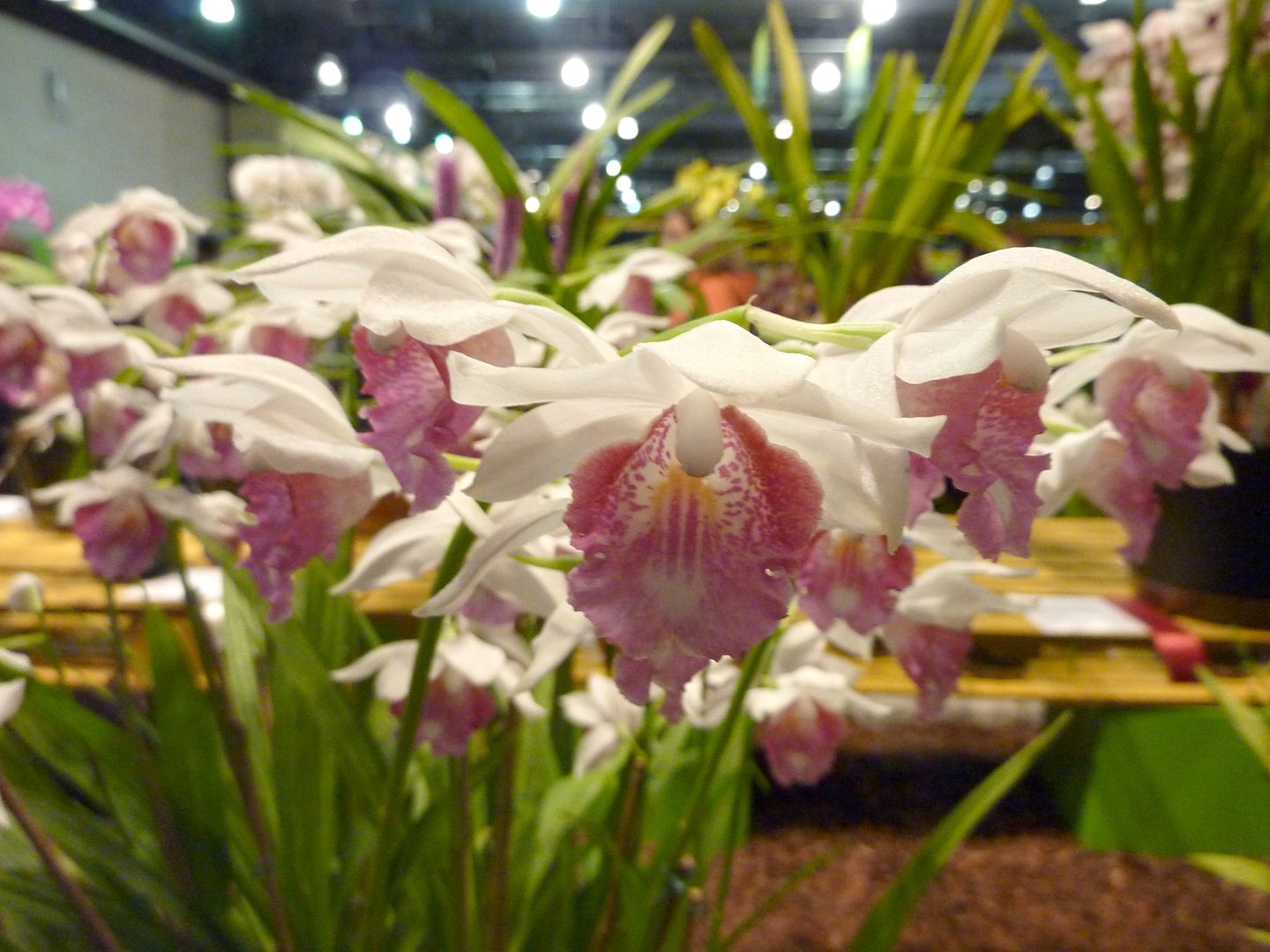
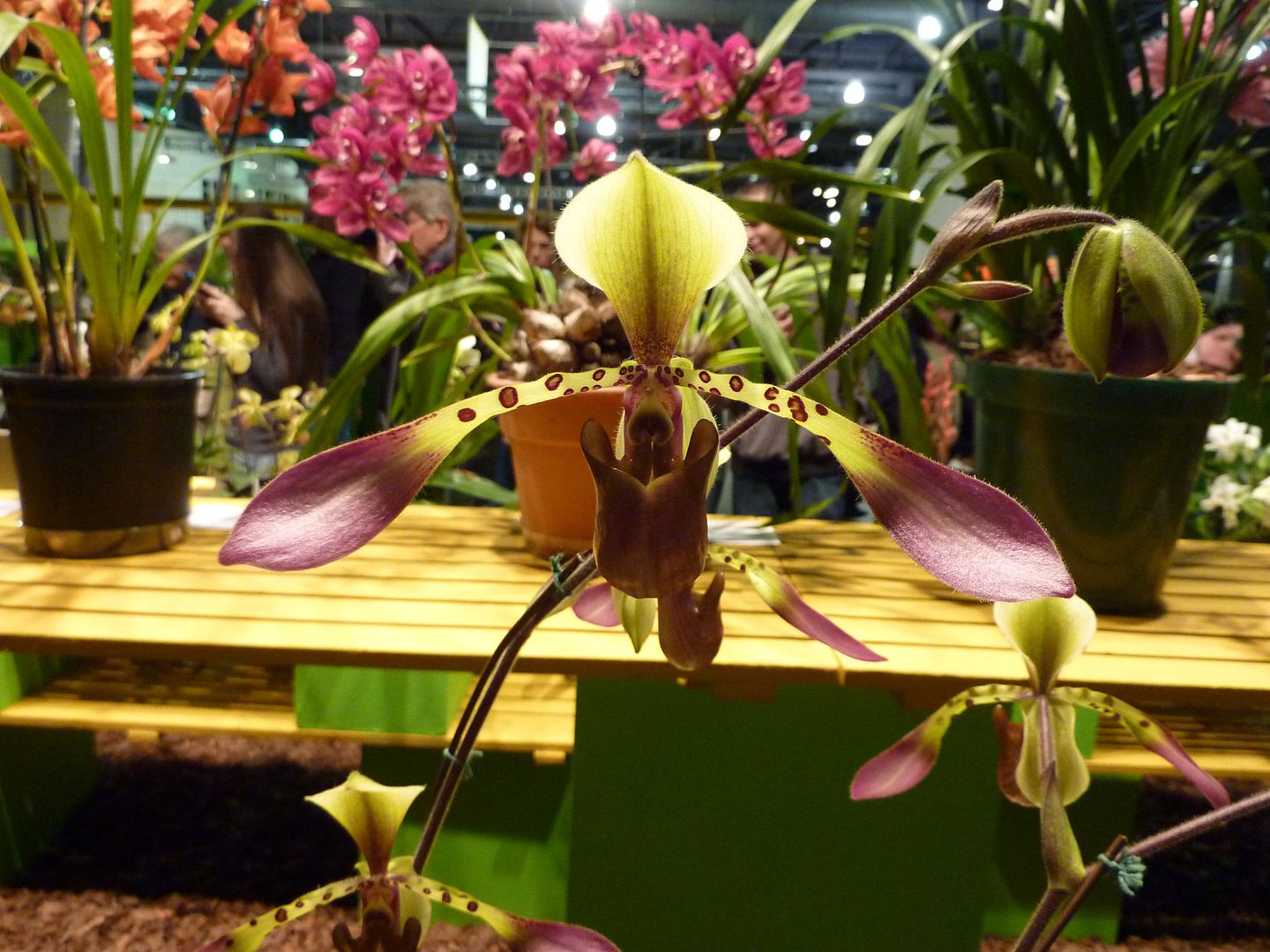
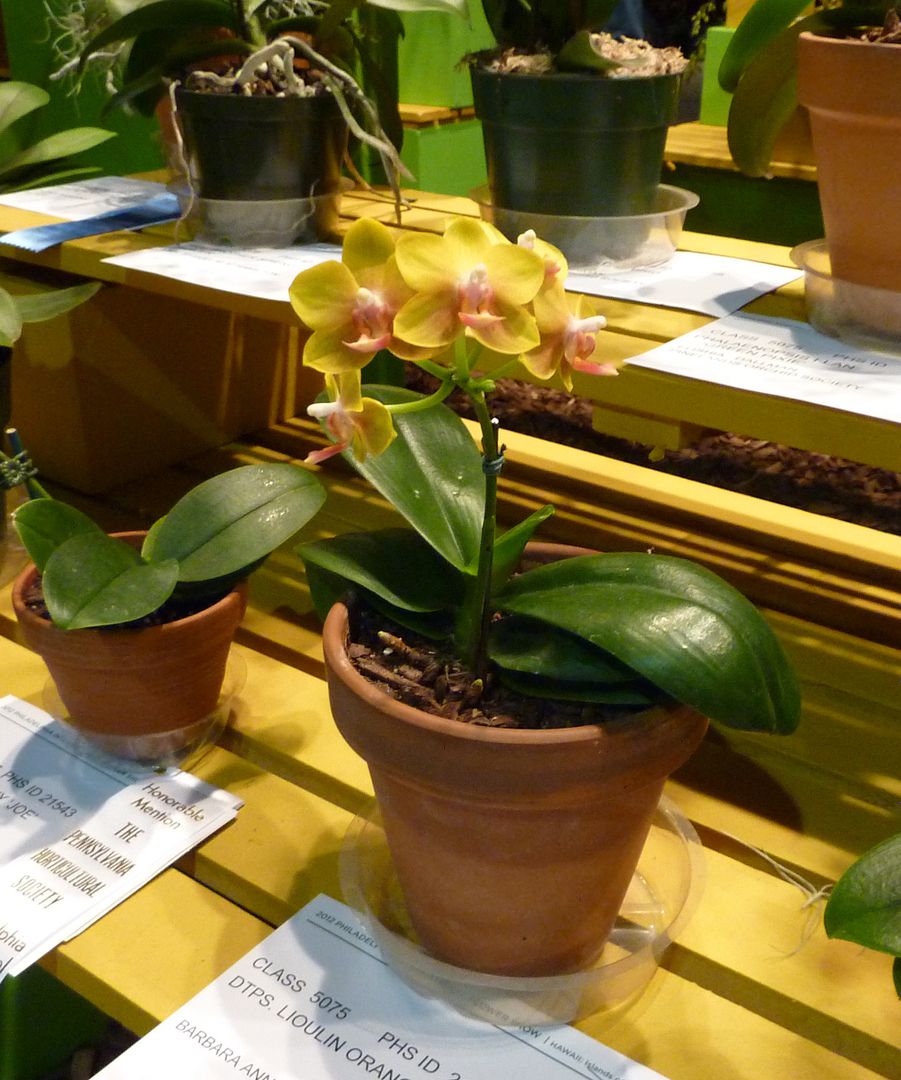
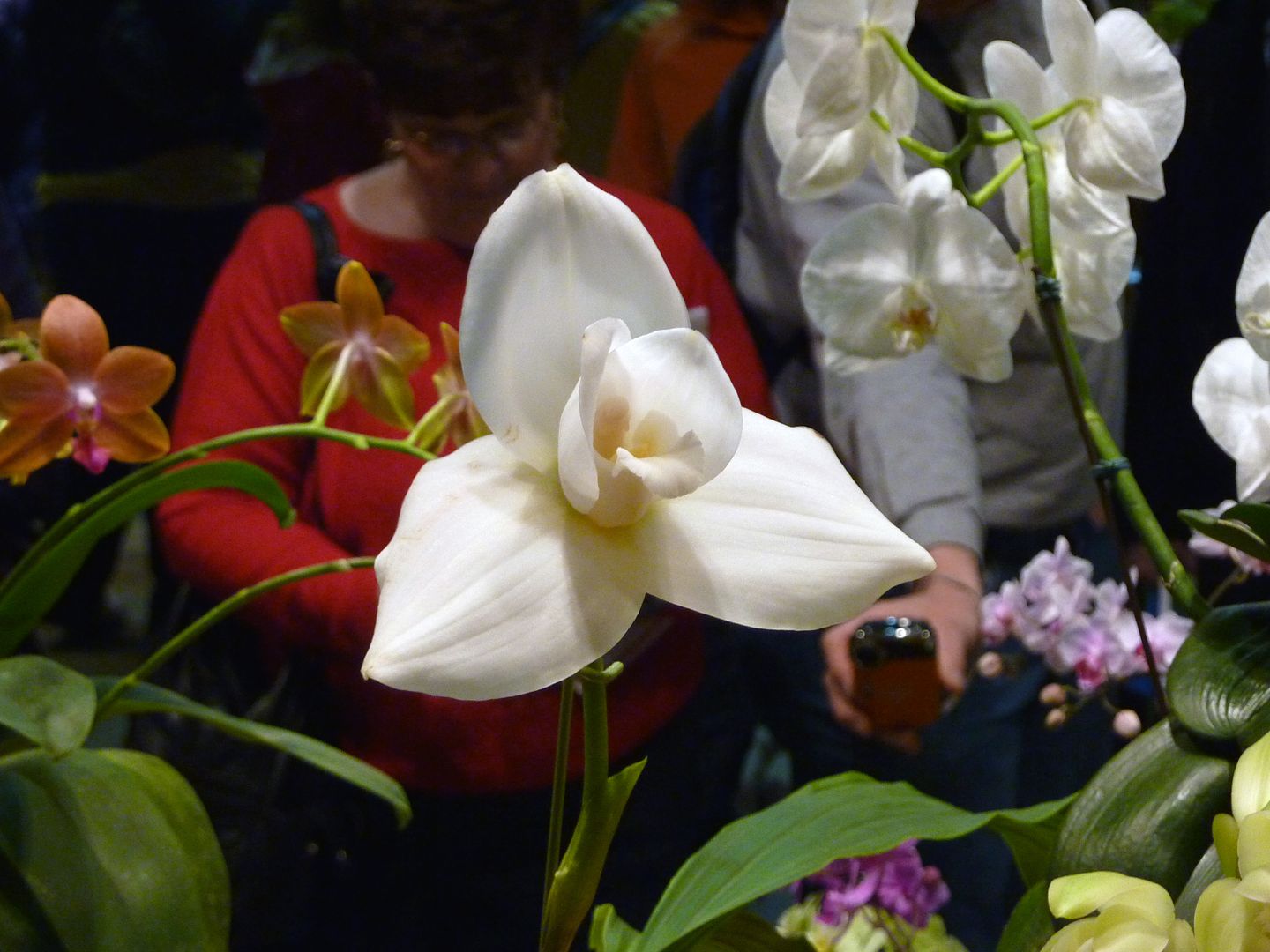
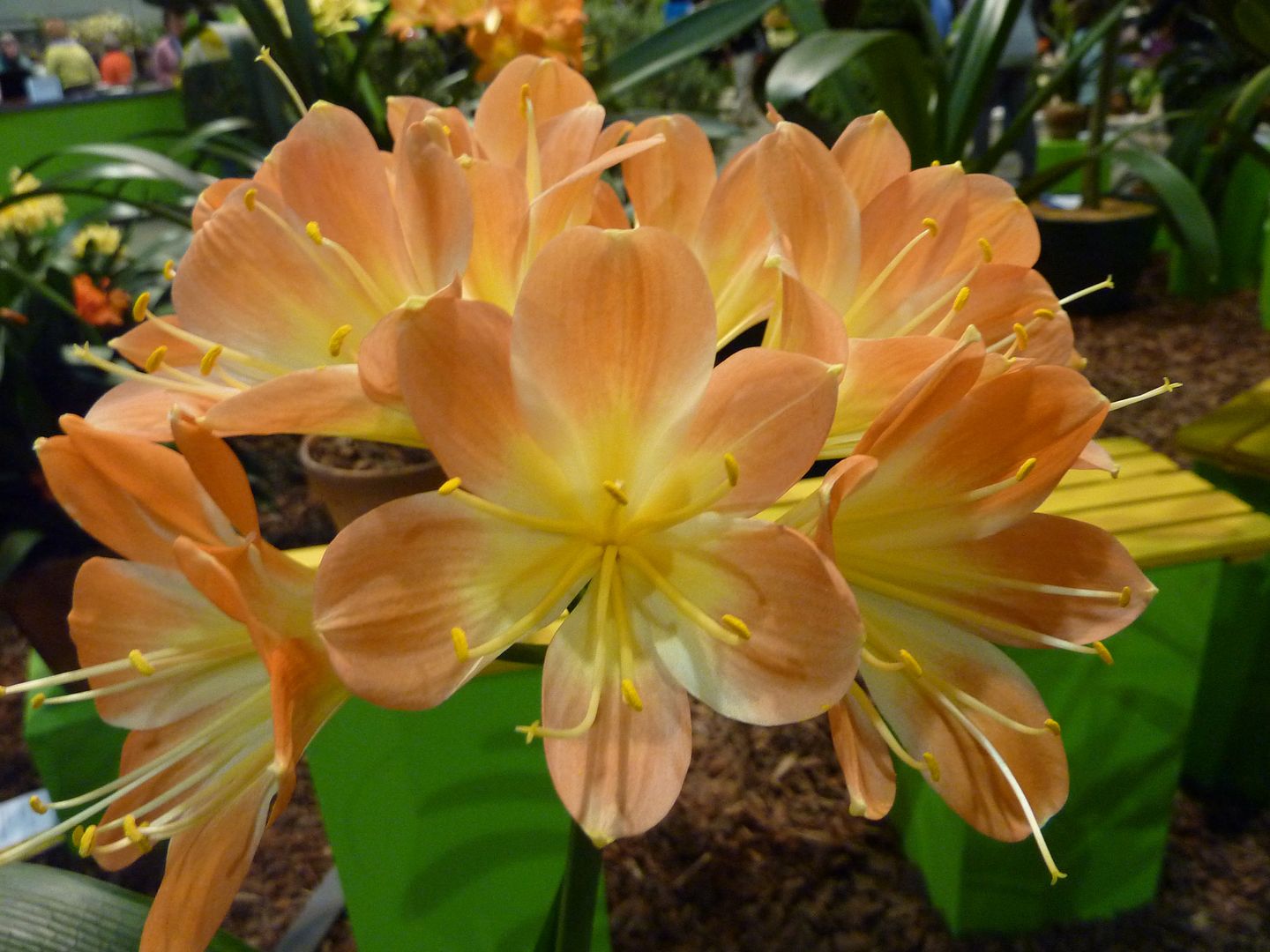
So maybe two years ago I was at the Philadelphia International Flower Show and one of the vendors was this French women selling nothing but Lilies. As the show takes place over the winter they were all in the form of bulbs. I forget how much they cost but apparently I came home with five of them. Last year they didn't do anything; this year they're up with force and flowering.
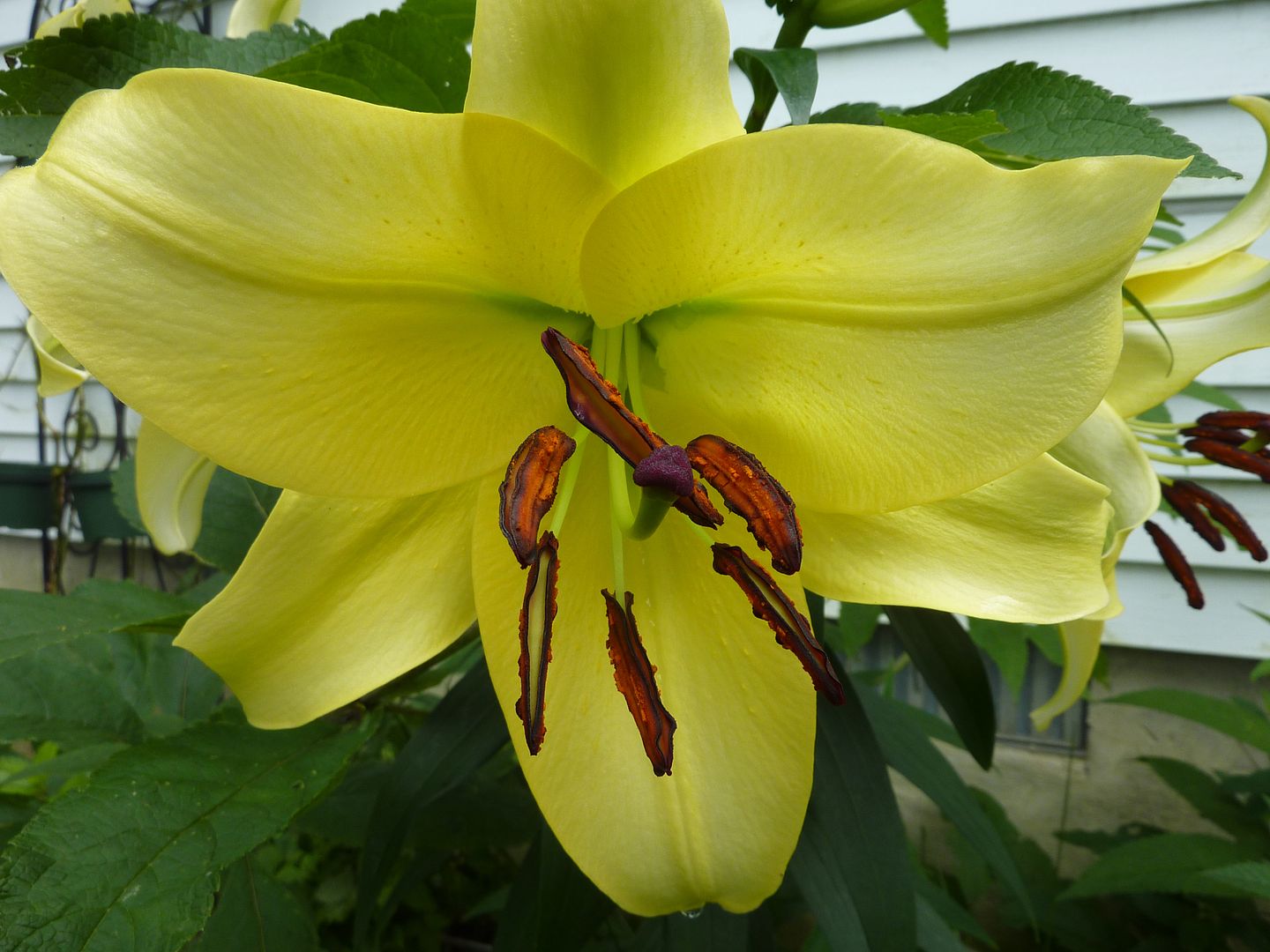
Dear god! This monstrous flower is larger than any Amaryllis I've ever grown. It's supposed to be some kind of lily but the flower is enormous, and the anthers are longer than my fingers. My brother's bride to be took one look at them and demanded she walk down the isle with a bouquet of them.... tragically the wedding is in October so that's not really doable but I'm sure a floret will have something nice.
So this clearly isn't a native plant. True they look lovely and any gardener would be happy to have them growing in their garden. But as I'm committed to the native theme I feel it might be best if I dig up the bulbs later this winter and give them to my brother's bride as a gift. She seemed to enjoy the flower more than me and I know she loves cut flowers. They're fragrant by the way.
Personally I try to garden with the theme that it's one thing to be pretty but quite anther to be pretty useful. Right now I'm at a loss to imagine what could pollinate them. Maybe half a dozen swallowtails and hummingbirds could probably fit in it all at once to sip nectar. There's enough pollen on the anthers to stain everything they touch. Any who, I'm sure she'll be thrilled with the gift.
Showing posts with label nonnative. Show all posts
Sunday, July 7, 2013
Monday, September 17, 2012
Praying Mantises in a Meadow
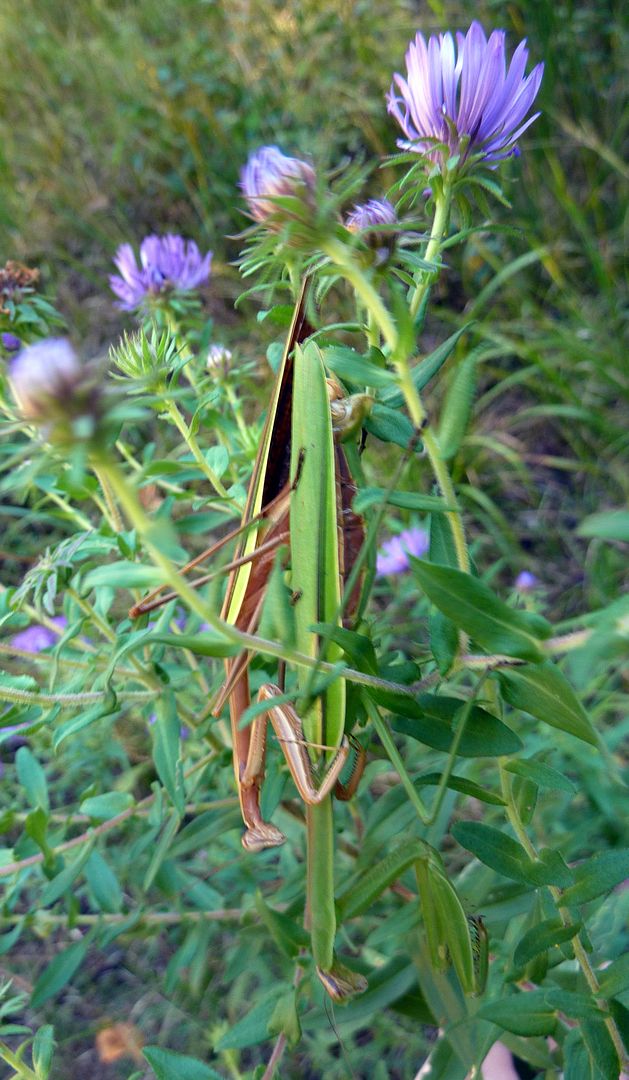
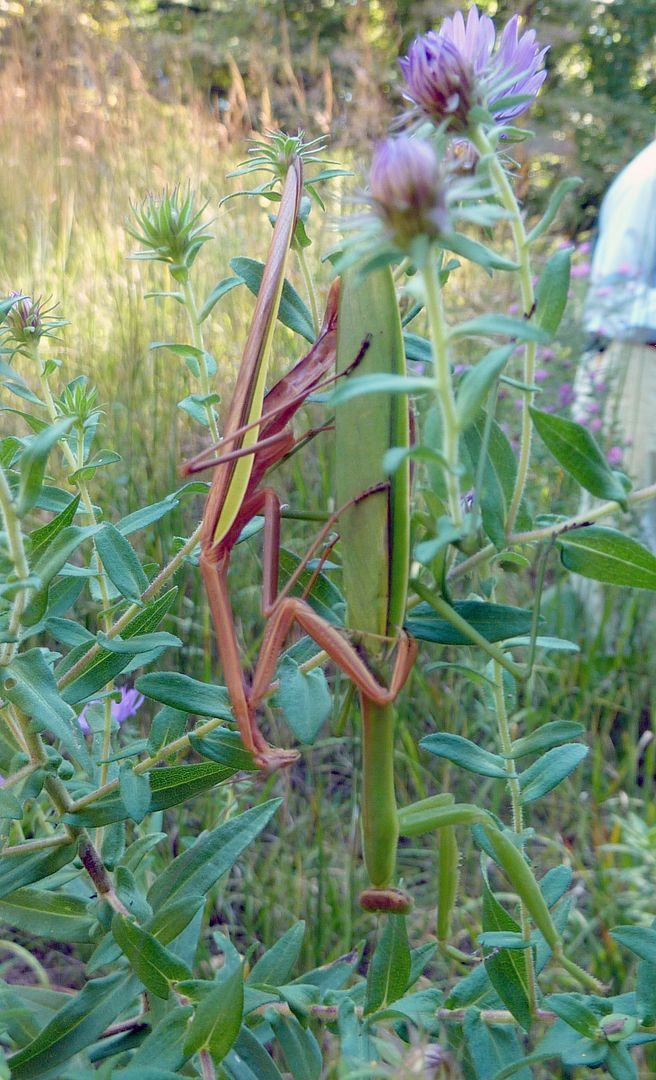
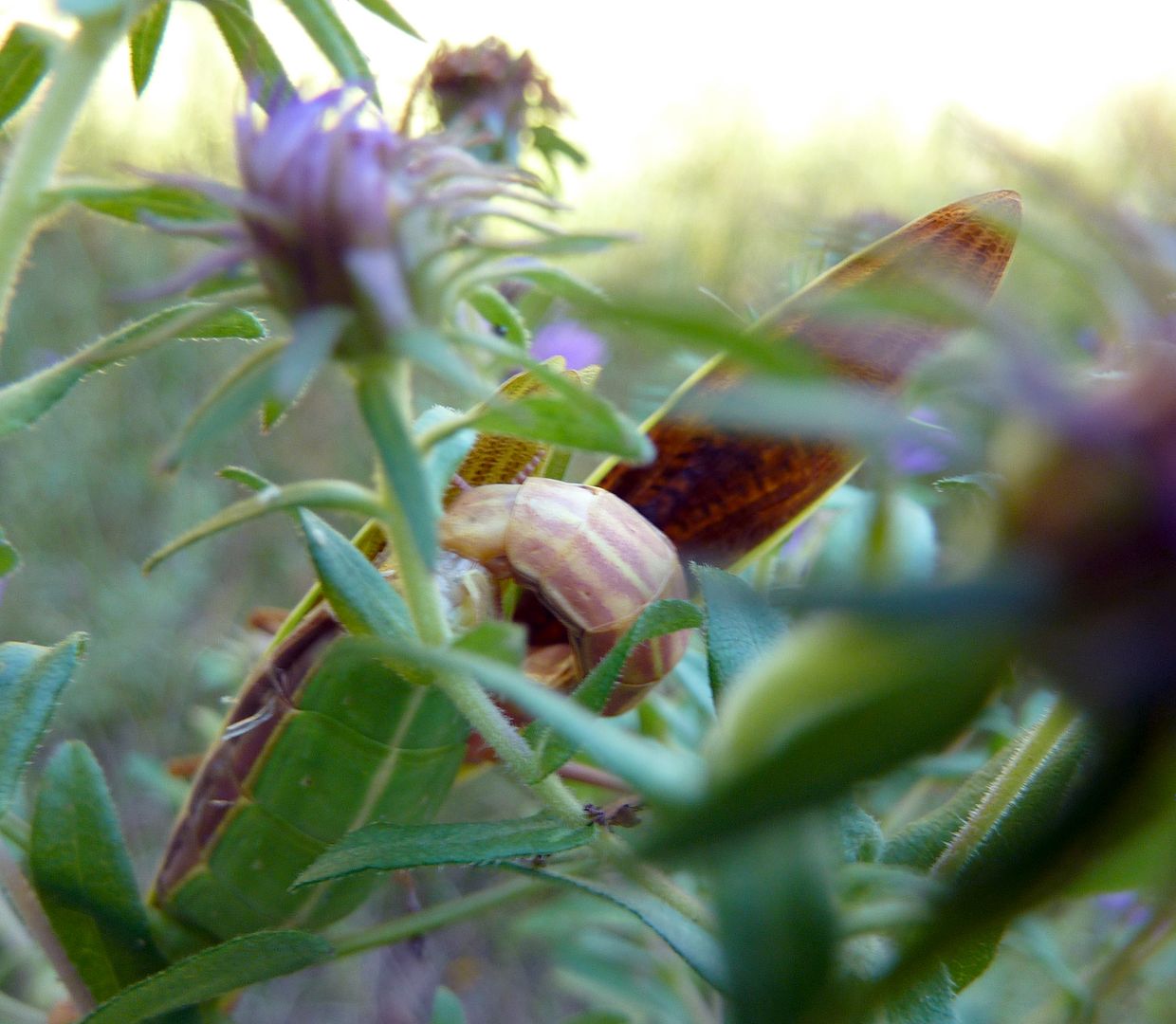
Two Chinese Mantises, Tenodera sinensis, mating on a New England Aster. I actually like both of these pictures. The one on the right for the inclusion of the blue flowers, and the one on the left for the golden meadow background and better stance of the male. Yes the brown one is the male in this case.
At least I'm assuming that's the case here.
I took these while at the Mt. Cuba Center on Saturday. Around this time of year mating and laying eggs is just about all mantises are doing. Eggs are laid on tall grasses or plant stems in sunny spots, often along a forest edge. And maybe a higher concentration next to late flowering perennials who's pollinator activity sustained the female during her last few days.
Thursday, April 12, 2012
Some Wild Bees
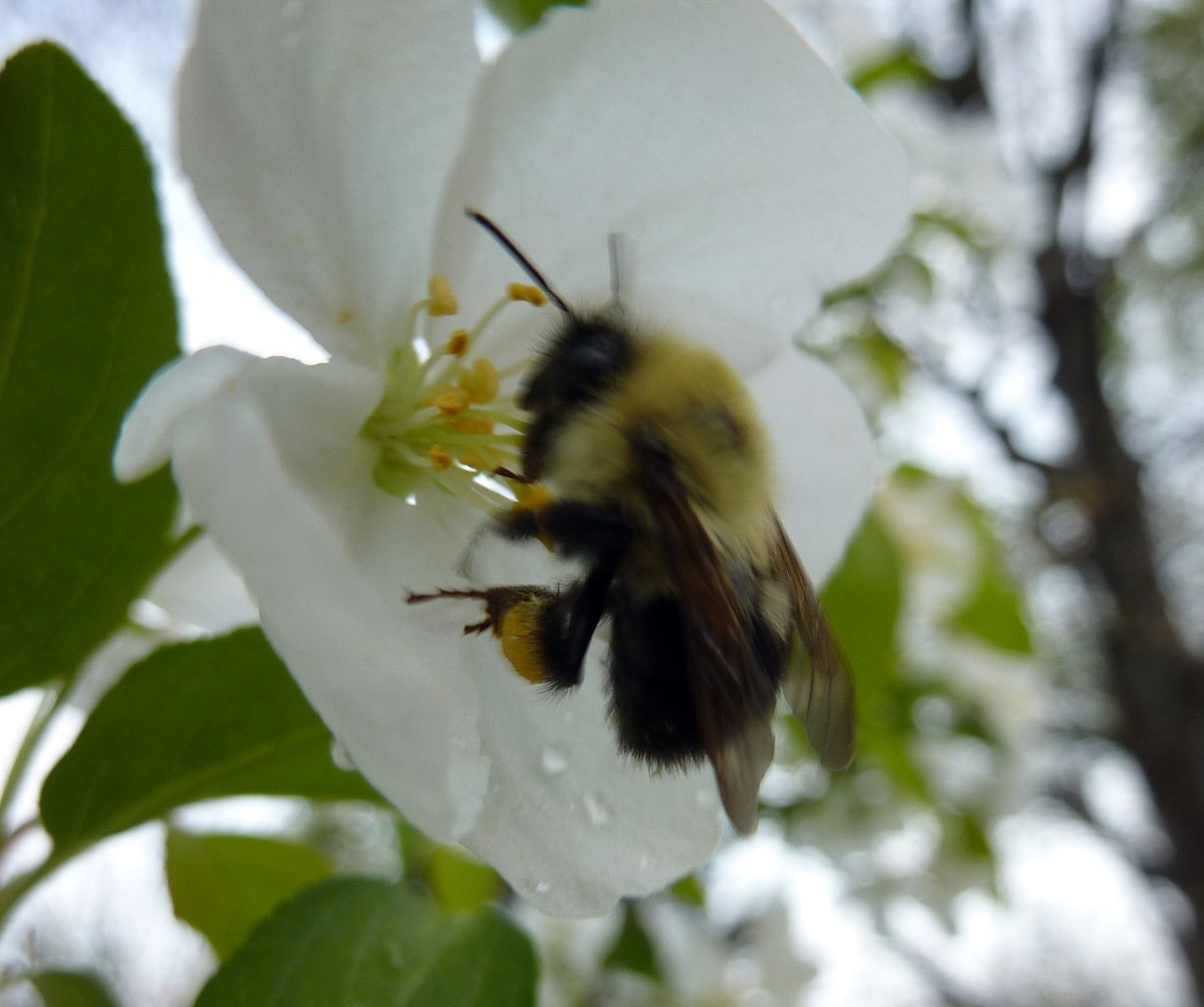
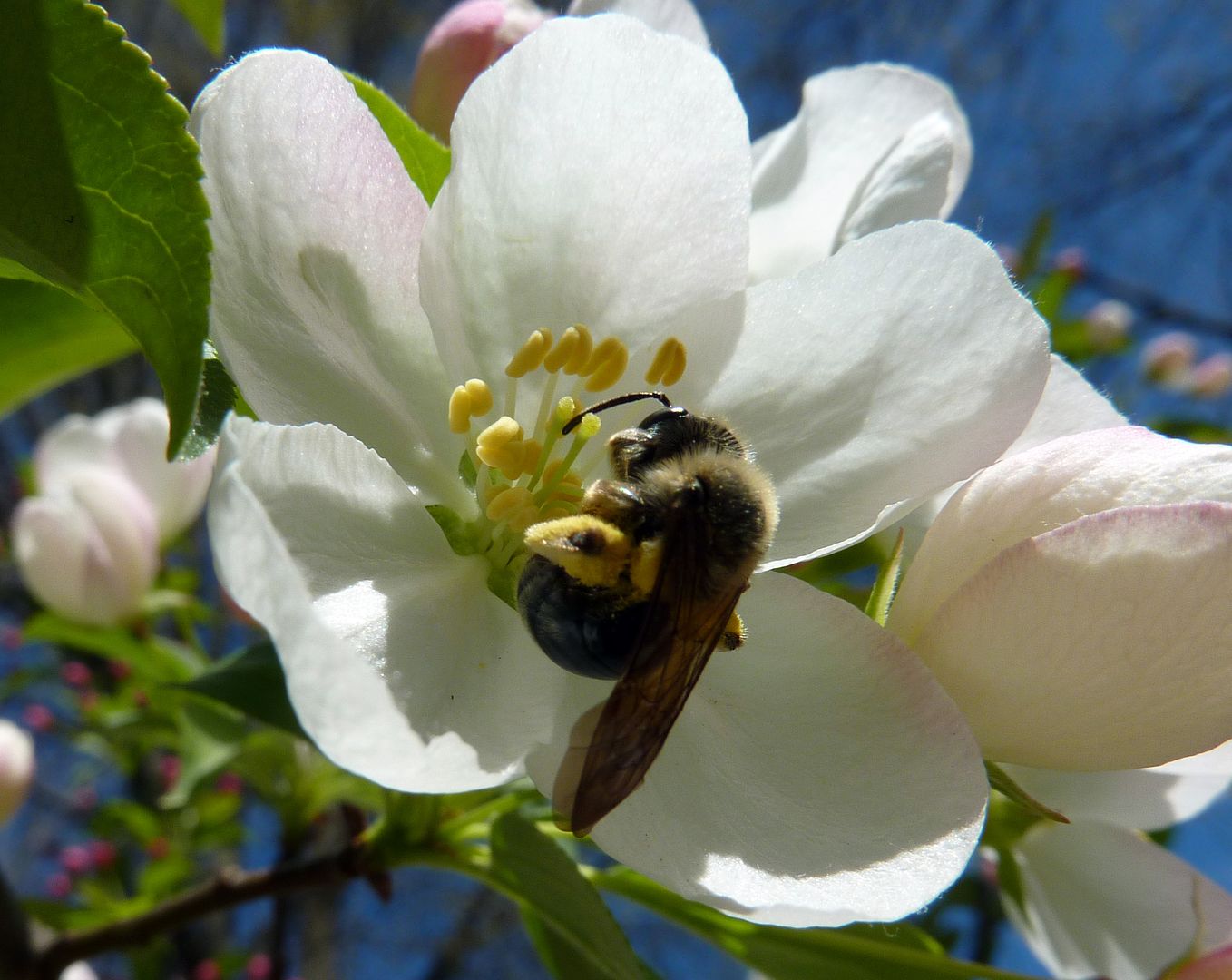
My friend tells me this is a worker bumblebee, most likely Bombus bimaculatus. This warm year seems to have sped up their cycle somewhat so it's a little early to see workers flying about in April. Even so, this is one of the shorter lived species, with hives normally petering out in July. They make their reproductives and the colony soon falls apart for the year leaving loan males and young queens out in the wild waiting until the end of summer, all of autumn and most of winter to pass before starting a hive of the own. I'd be curious to know if this year's hives grow larger than usual or perhaps makes reproductives sooner than normal.
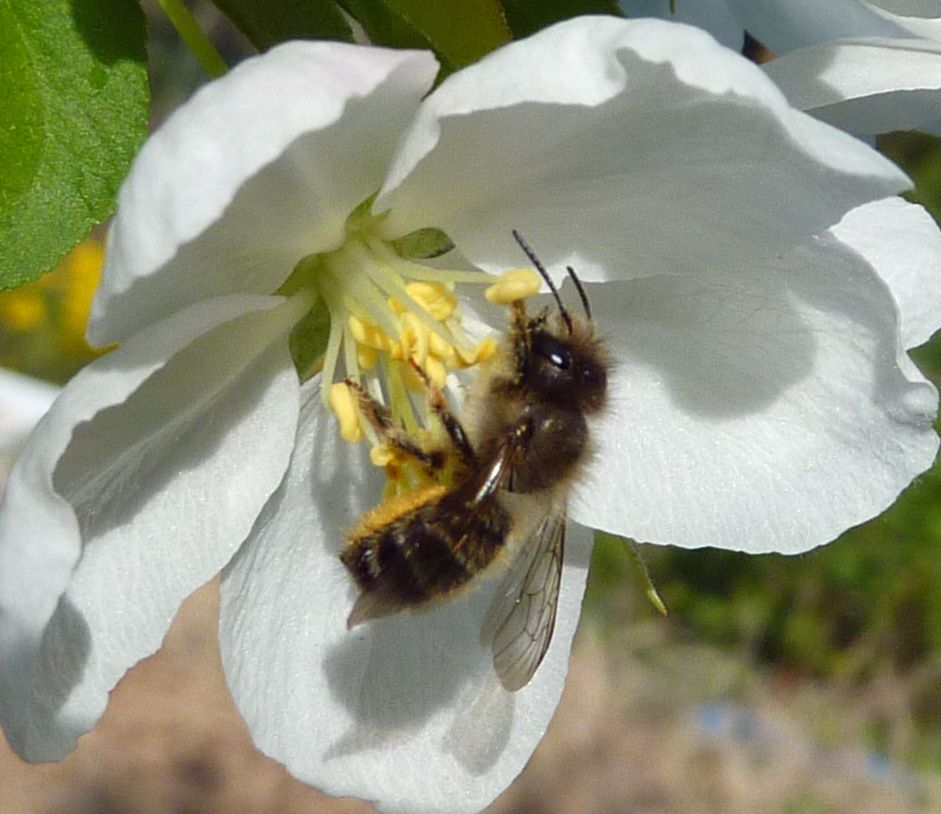
Osmia lignaria, The Blue Orchard Mason Bee, is one of the few bees I can identify on my own. I believe the reason might be because it's somewhat unique looking. This is a type of Mason bee which lives in preexisting, tube shaped, cavities that only have one entrance. That sounds like a long list of requirements but the structure occurs naturally in nature all the time: wood boring beetle grubs emerging from a tree, or last year's hollow stemmed herbaceous perennials for example.
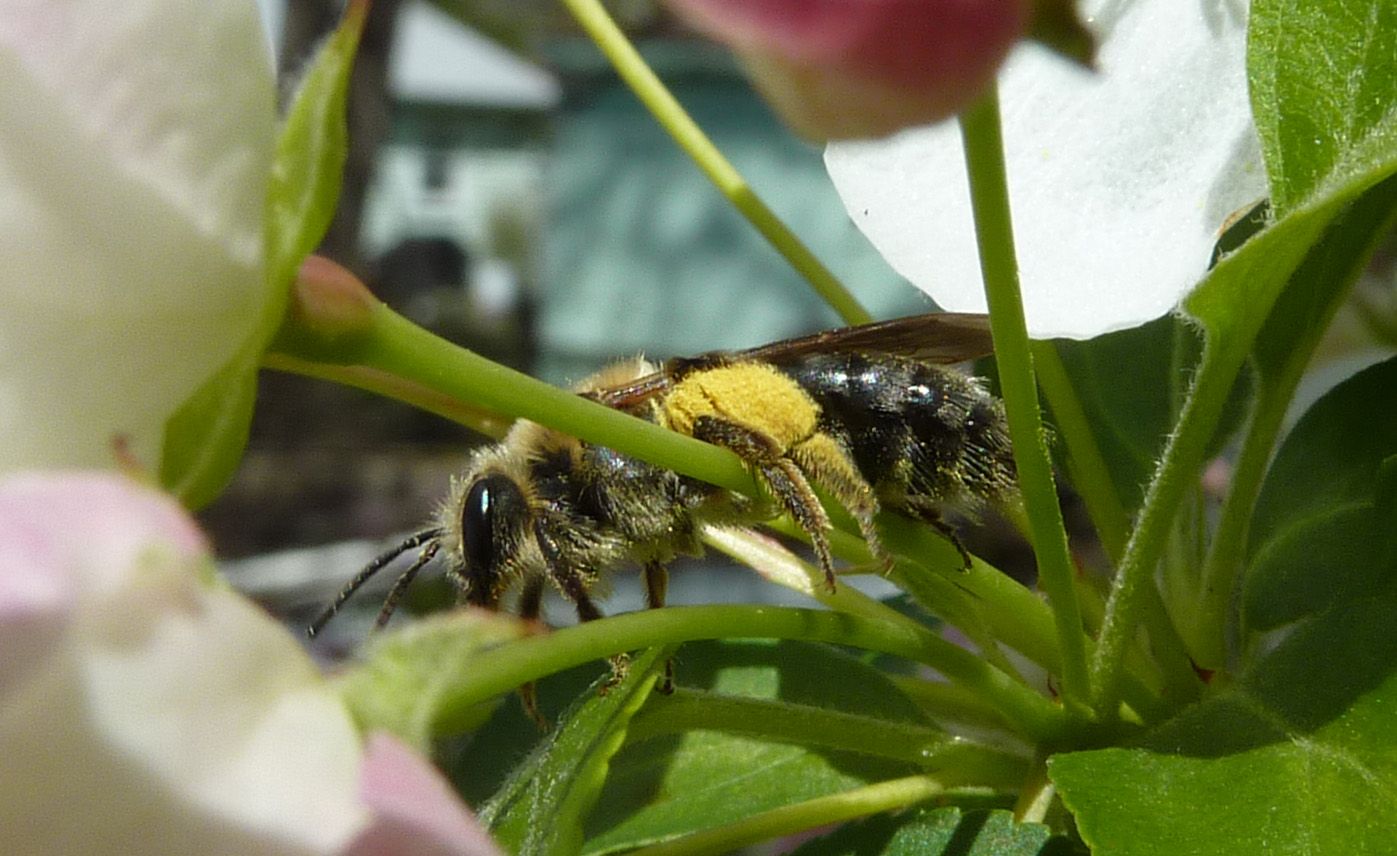
This Andrena sp. is a type of mining or digger bee. Both common names work as they nest underground no matter what you call them. Unlike Mason bees they collect pollen on their legs, while Masons store it under the abdomen. I'm not sure why this is though perhaps it has something to do with digging requires thick sturdy legs with hairs to aid in moving the soil. These same hairs likely double as pollen collectors.
Osmia taurus, an introduced species that's displacing some of our natives. Because of this and other introduced mason bees, most experts seem to be on the fence about recommending Mason Bee Tubes (such as those sold by Knox Cellars Native Pollinators). The idea being such sites would allow the nonnatives to gain access to other locations they haven't reached. At the same time though they provide nesting for natives as well. Unfortunately this is a topic that needs more study. O. taurus is abundant in my area but I still have native species, and presumably 2 other species nesting alongside them.
A major reason to discourage nonnative bees is they sometimes specialize in pollinating noxious weeds. The Giant Resin Bee, Megachile sculpturalis, is an introduced species from Asia. It's basically an overgrown leaf cutter bee that goes right for plant resin instead of cutting leaves. It's also a more suited pollinator of the dreaded Kudzu, Pueraria montana. Kudzu used to rarely produce seeds as very few of our native pollinators were managing to pollinate the flowers, though I'm sure many were able to steal nectar from it.
As things leaf out we'll start to see real leaf cutter bees flying around. These nest in both underground holes and in preexisting tubes. They're set apart from digger and mason bees in that they cut slices out of leaves to make chambers, instead of using mud or simply burying their young. Over the summer I'll also be keeping an eye out for Squash Bees, Sunflower Bees, and Rose Mallow Bees. Also buzzing about now should be Blueberry Bees; all of whom specialize in flower shapes that their common names suggest.
Osmia lignaria, The Blue Orchard Mason Bee, is one of the few bees I can identify on my own. I believe the reason might be because it's somewhat unique looking. This is a type of Mason bee which lives in preexisting, tube shaped, cavities that only have one entrance. That sounds like a long list of requirements but the structure occurs naturally in nature all the time: wood boring beetle grubs emerging from a tree, or last year's hollow stemmed herbaceous perennials for example.
Osmia taurus, an introduced species that's displacing some of our natives. Because of this and other introduced mason bees, most experts seem to be on the fence about recommending Mason Bee Tubes (such as those sold by Knox Cellars Native Pollinators). The idea being such sites would allow the nonnatives to gain access to other locations they haven't reached. At the same time though they provide nesting for natives as well. Unfortunately this is a topic that needs more study. O. taurus is abundant in my area but I still have native species, and presumably 2 other species nesting alongside them.
A major reason to discourage nonnative bees is they sometimes specialize in pollinating noxious weeds. The Giant Resin Bee, Megachile sculpturalis, is an introduced species from Asia. It's basically an overgrown leaf cutter bee that goes right for plant resin instead of cutting leaves. It's also a more suited pollinator of the dreaded Kudzu, Pueraria montana. Kudzu used to rarely produce seeds as very few of our native pollinators were managing to pollinate the flowers, though I'm sure many were able to steal nectar from it.
As things leaf out we'll start to see real leaf cutter bees flying around. These nest in both underground holes and in preexisting tubes. They're set apart from digger and mason bees in that they cut slices out of leaves to make chambers, instead of using mud or simply burying their young. Over the summer I'll also be keeping an eye out for Squash Bees, Sunflower Bees, and Rose Mallow Bees. Also buzzing about now should be Blueberry Bees; all of whom specialize in flower shapes that their common names suggest.
Wednesday, March 21, 2012
The Prairie War
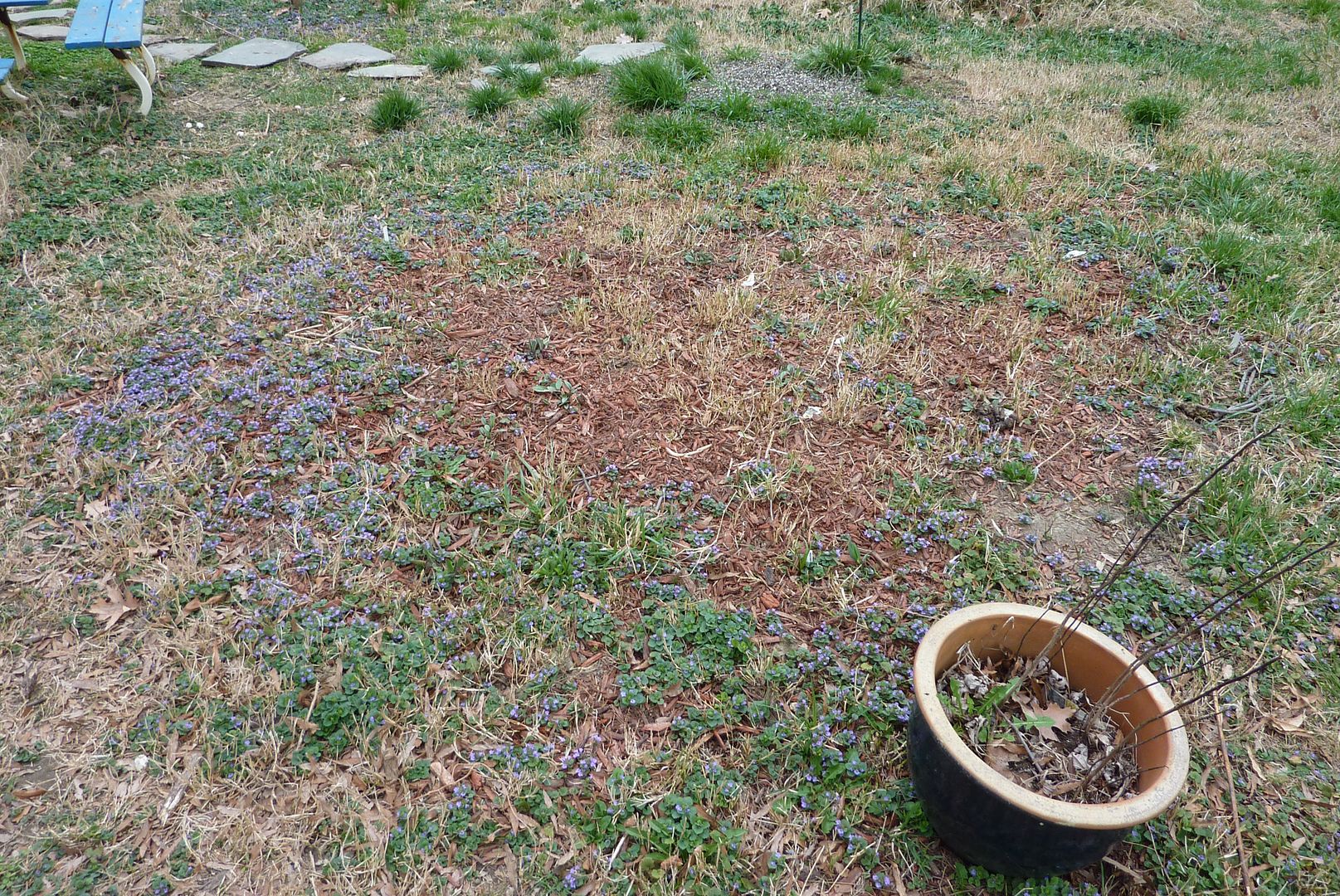
While it might not look it, the prairie is actually coming back to life. It's a little taken over at the moment by Creeping Charlie, Glechoma hederacea, which is the creeping plant with the bright blue flower. It's not native but I tolerate it because my honeybees like it. It's also very easy to weed out as it has a shallow root system.
So far everything except the Milkweed seems to be emerging. Here I think we're looking at Blue False Indigo, though it's a little hard to tell. The Spiderwort looks like it's reseeded, some of the Asters are coming back aggressively, the coneflowers are sending up their first leaves, and it won't be long before the Jacob's Ladder will be flowering.
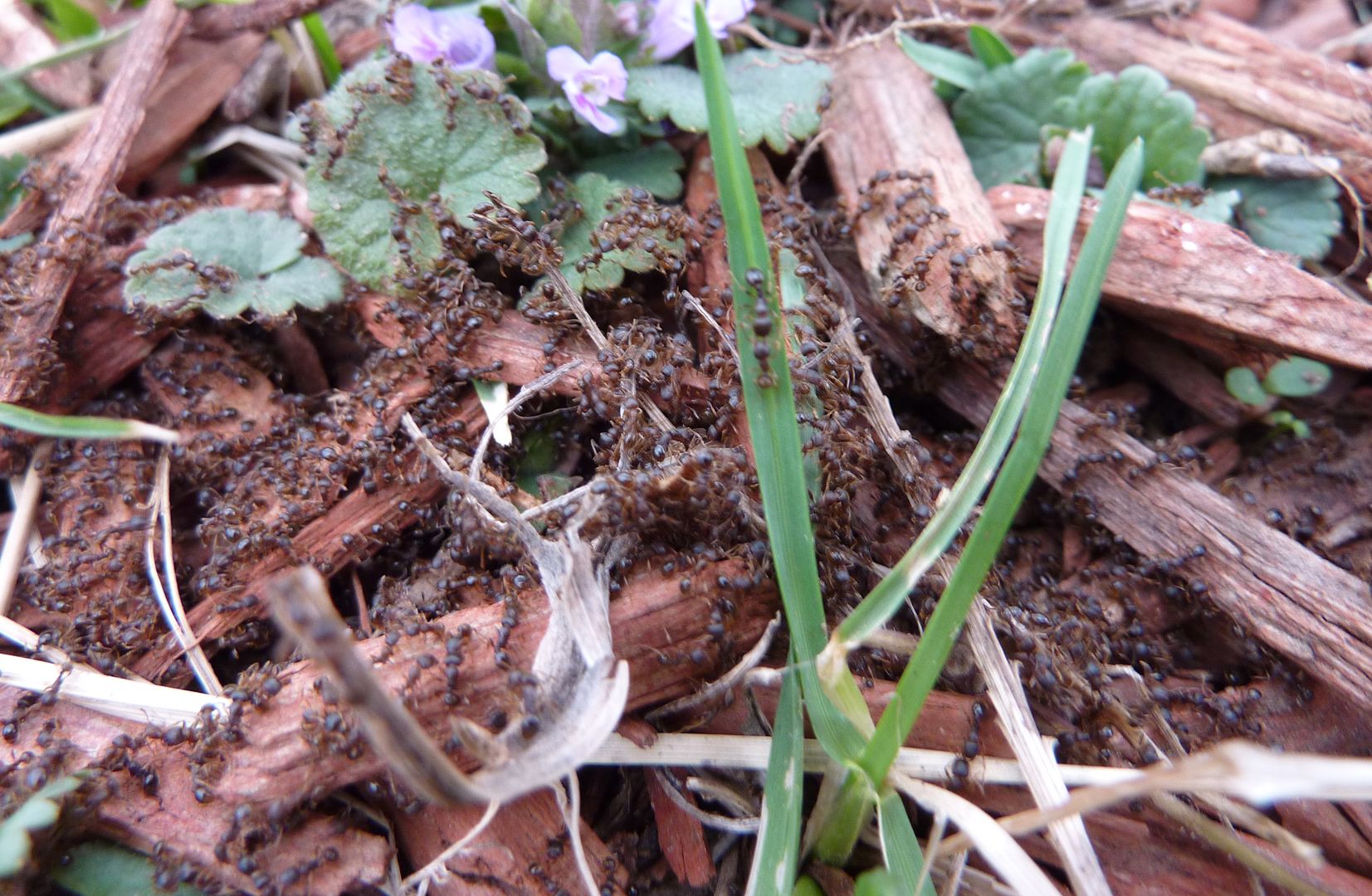
Something that shocked me was the Pavement Ants have already started fighting over territory. They're nonnative species that's "invasive" in that it displaces some species of Formica. Not the worst species in the world and they're almost control their own population thanks to wars like this. Their colonies can get huge, 80,000 or so, and they fight over sunny exposed areas to incubate their brood and speed up worker production. Often the losing colony is destroyed or crippled for the season.
So hopefully once all the native plants here in my monarch meadow get growing they'll be able to better fend off these foreign invaders.
So far everything except the Milkweed seems to be emerging. Here I think we're looking at Blue False Indigo, though it's a little hard to tell. The Spiderwort looks like it's reseeded, some of the Asters are coming back aggressively, the coneflowers are sending up their first leaves, and it won't be long before the Jacob's Ladder will be flowering.
Something that shocked me was the Pavement Ants have already started fighting over territory. They're nonnative species that's "invasive" in that it displaces some species of Formica. Not the worst species in the world and they're almost control their own population thanks to wars like this. Their colonies can get huge, 80,000 or so, and they fight over sunny exposed areas to incubate their brood and speed up worker production. Often the losing colony is destroyed or crippled for the season.
So hopefully once all the native plants here in my monarch meadow get growing they'll be able to better fend off these foreign invaders.
Sunday, March 4, 2012
Philadelphia International Flower Show 2012
I just got back from the Philadelphia International Flower Show 2012. This year's theme was an Orchid Orgasm!
Actually this year's theme was Hawaii: Islands of Aloha, which is news to me because up until I arrived I thought it was Waves of Change or something. Anyhow this is easily the best flower show I've gone to so far.
Let's begin by discussing my strategy of showing up as early as possible. Despite being Sunday morning I was surprised to see how many old ladies skipped out on church to come see the show. Even then the crowds weren't as awful as they have been in the past and I wish the best of luck to anyone thinking they're going to be able to walk comfortably after twelve noon. The main theme exhibits are where all of the traffic jams occur. Supposedly more than 10,000 people are expected to show up the first day, and I can say from past experience that it's not an unrealistic goal for weekdays either. One women was practically forcing my hand into her purse as she pushed me out of the way to take a photo. The artistic, floral, and educational exhibits don't draw nearly as big of a crowd, so beyond the main exhibit everyone disperses nicely.
Actually this year's theme was Hawaii: Islands of Aloha, which is news to me because up until I arrived I thought it was Waves of Change or something. Anyhow this is easily the best flower show I've gone to so far.
Let's begin by discussing my strategy of showing up as early as possible. Despite being Sunday morning I was surprised to see how many old ladies skipped out on church to come see the show. Even then the crowds weren't as awful as they have been in the past and I wish the best of luck to anyone thinking they're going to be able to walk comfortably after twelve noon. The main theme exhibits are where all of the traffic jams occur. Supposedly more than 10,000 people are expected to show up the first day, and I can say from past experience that it's not an unrealistic goal for weekdays either. One women was practically forcing my hand into her purse as she pushed me out of the way to take a photo. The artistic, floral, and educational exhibits don't draw nearly as big of a crowd, so beyond the main exhibit everyone disperses nicely.
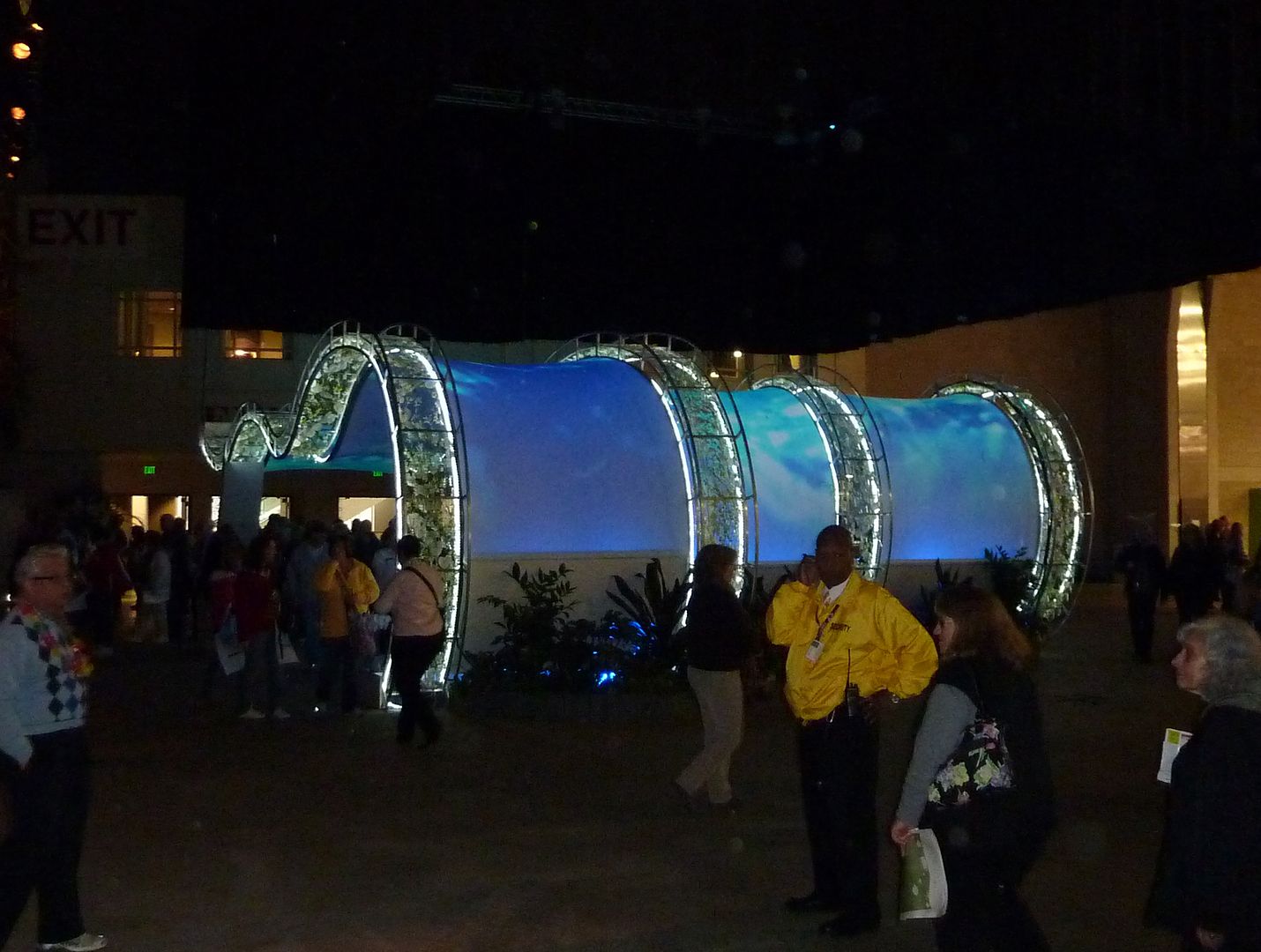
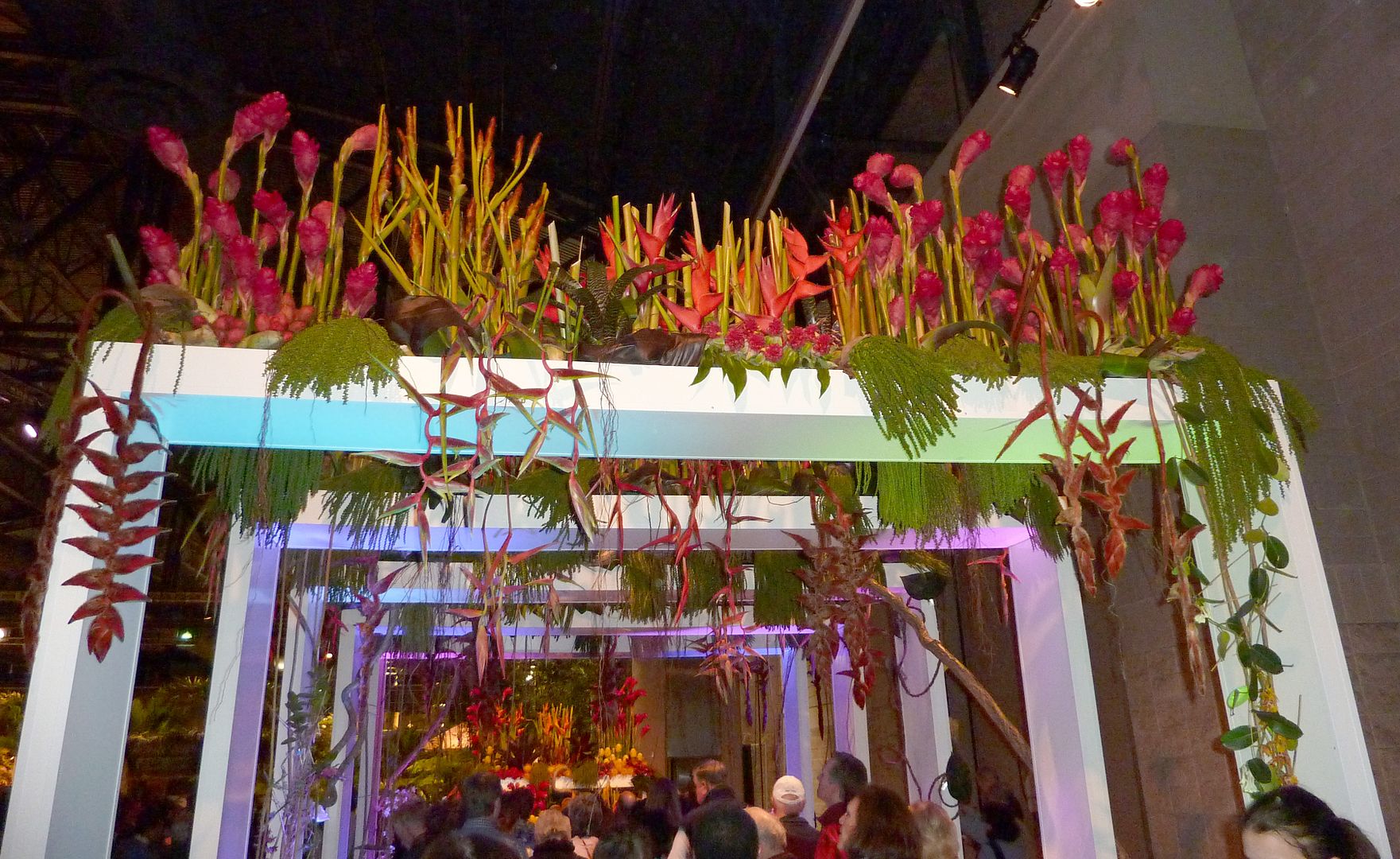
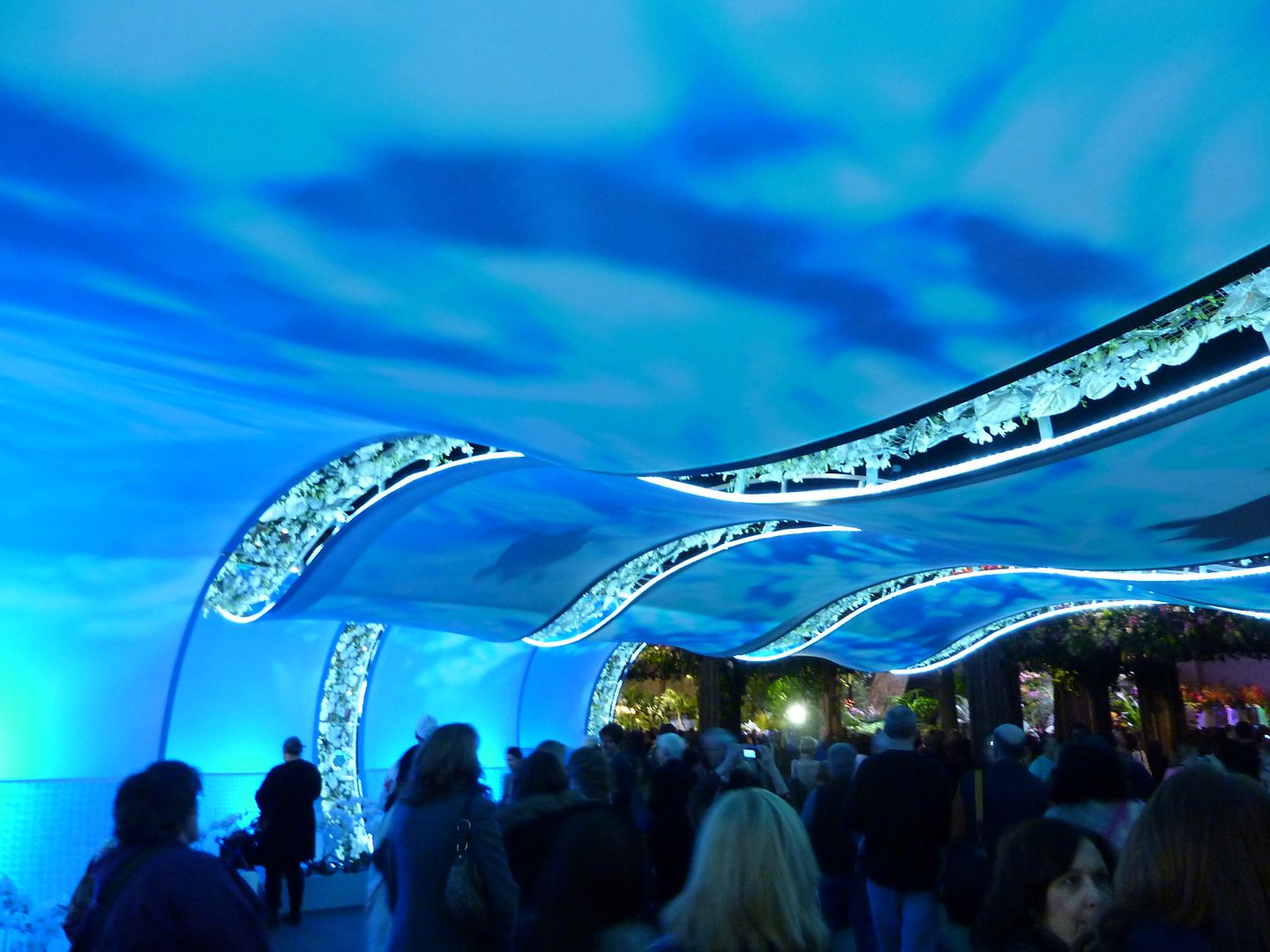
You enter the show under curved view screens that display waves which help set the tone. They're lined with white orchids and something else that's rich with the fragrance of pollen. This sudden hit of fragrance at the entrance has always been a key point to making a good show, but wasn't as strong as in past years.
From behind, the big wave isn't nearly as impressive but it's nice to see the use of technology.
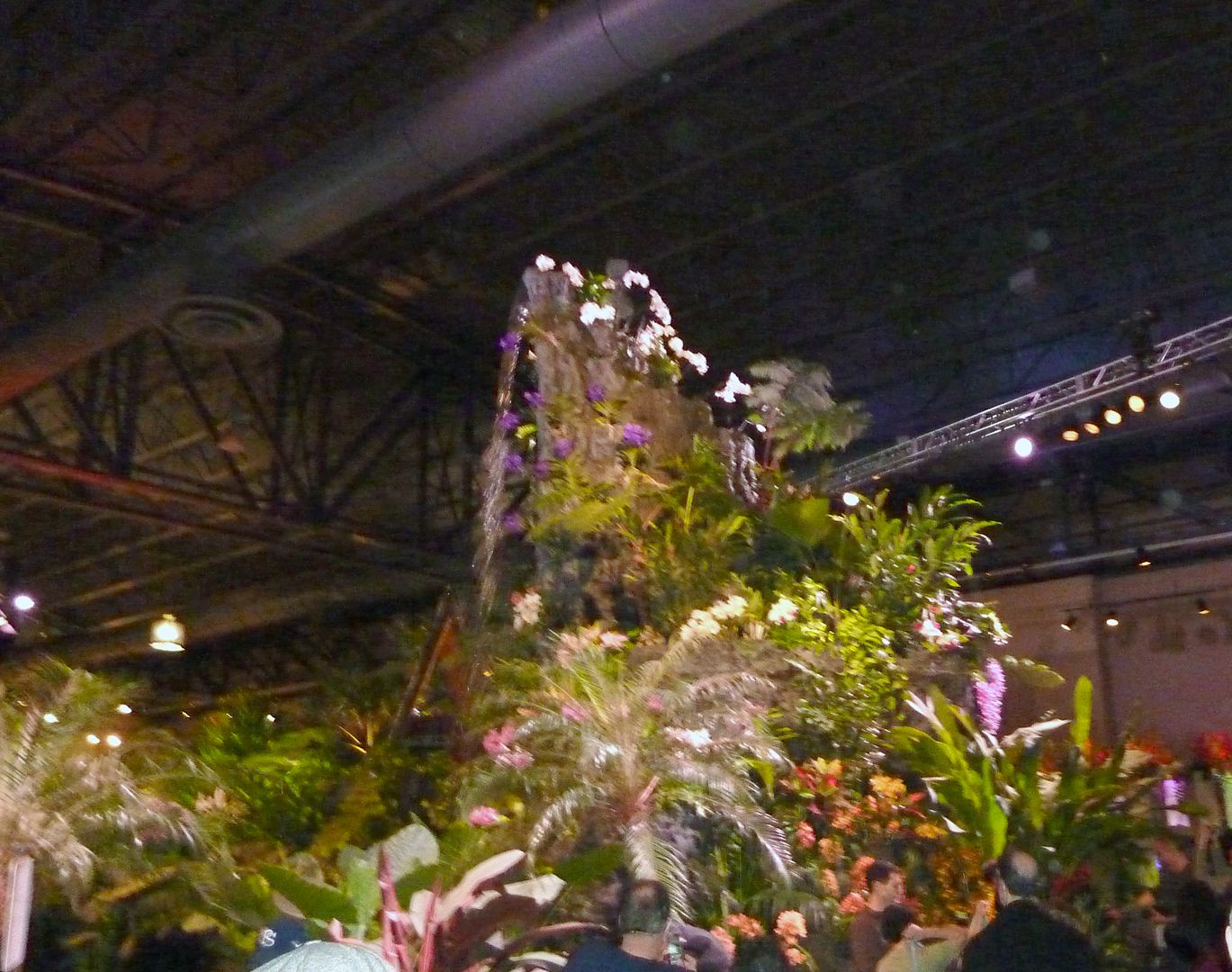
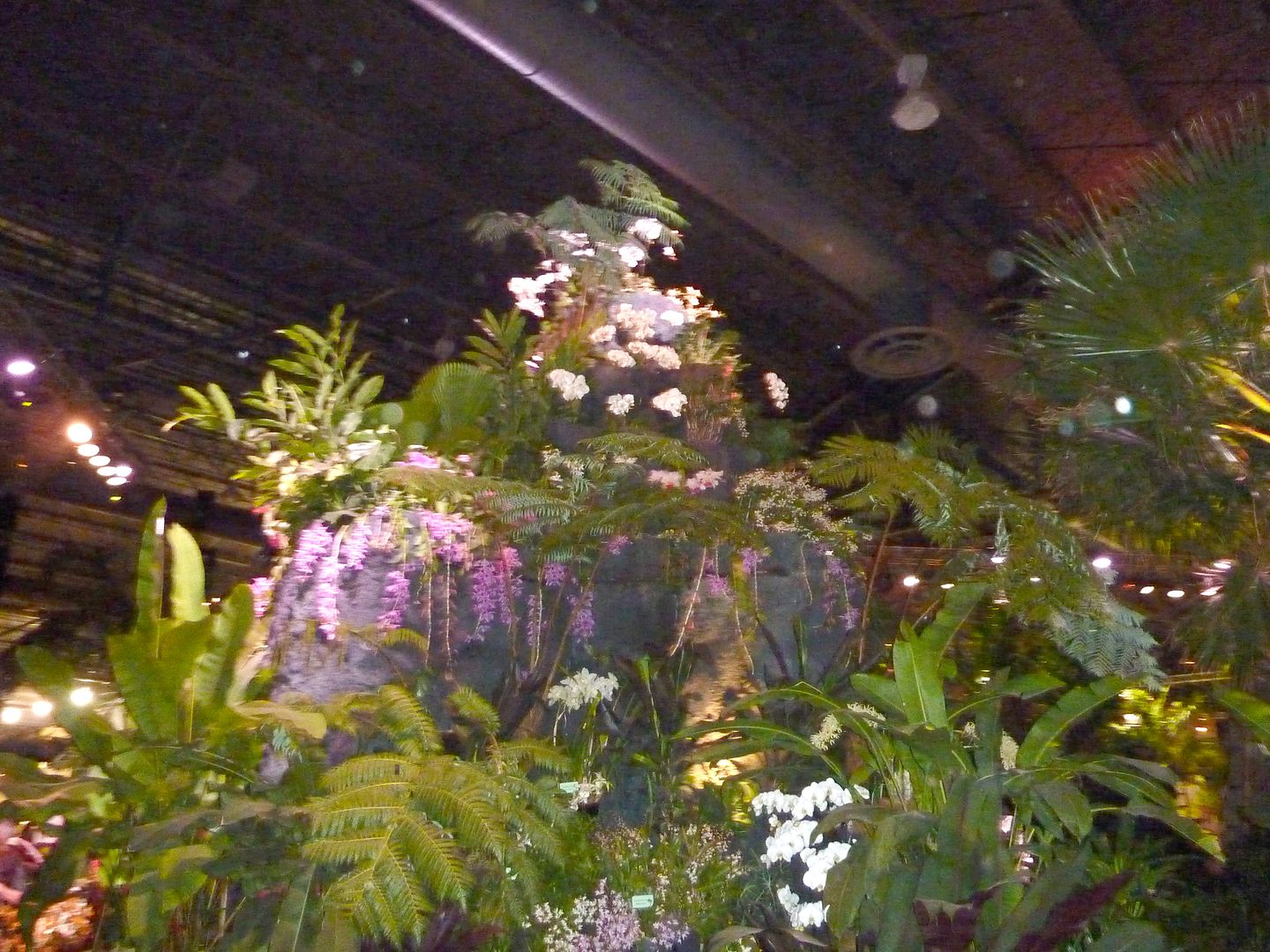
The main theme exhibit is a massive waterfall which I wasn't able to do justice to. It's as tall as the Aggro Crag but covered in Orchids and has a waterfall down the front!
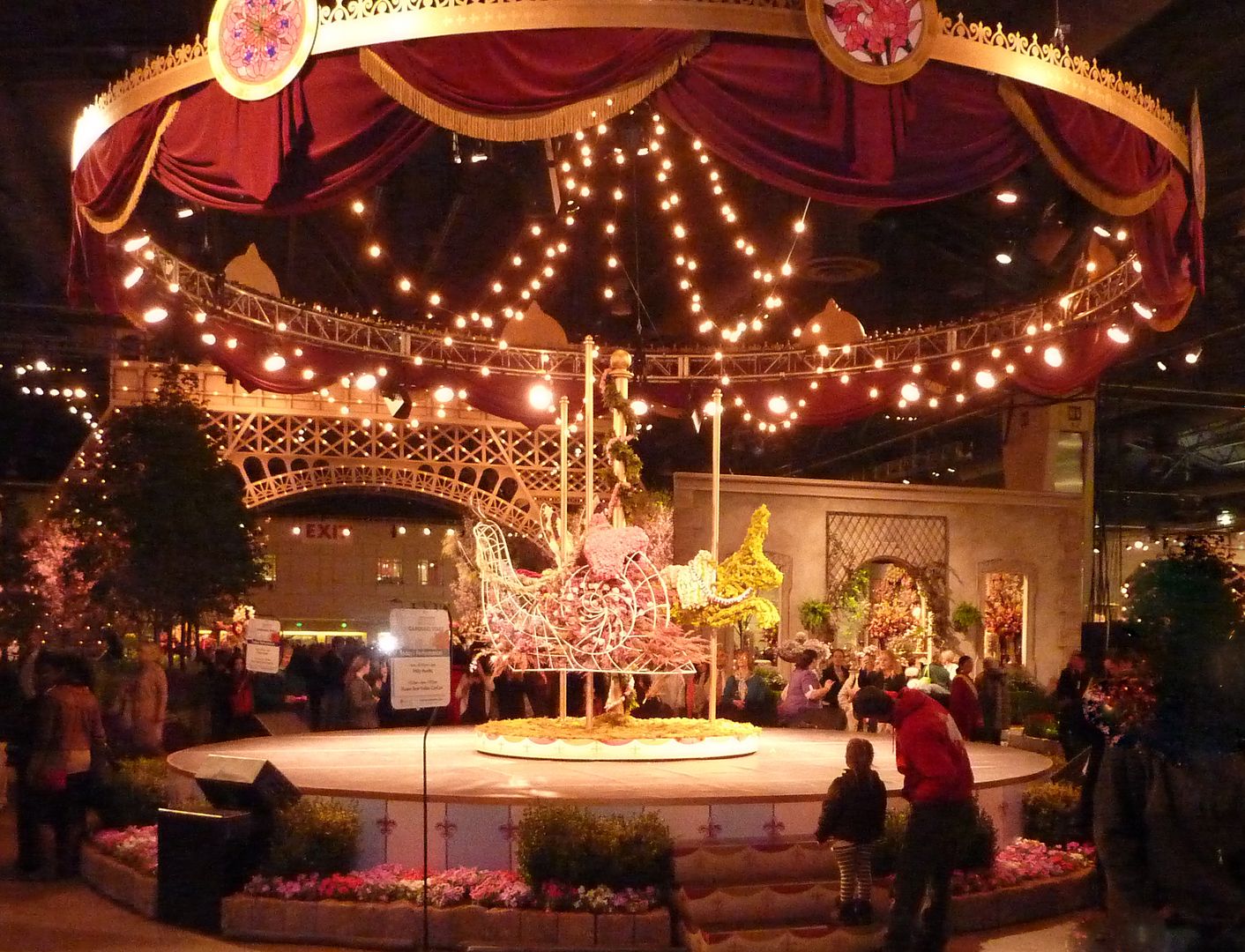
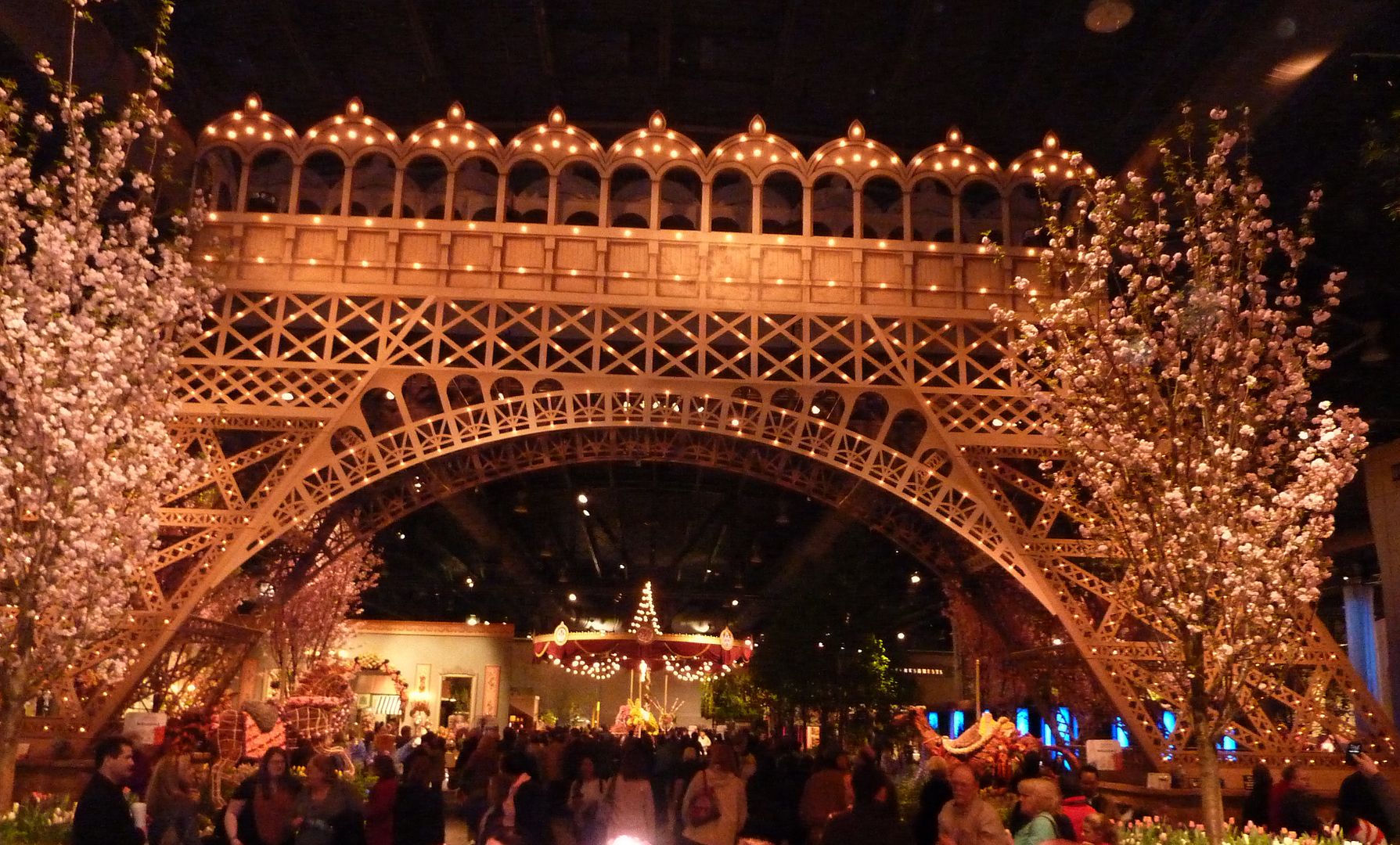
This is so much more impressive than a mary-go-round and two legs of the Eiffel tower that highlighted last year's show.
Orchids take the place of Rhododendrons which where almost completely absent from the show itself. And it took me a good hour of walking before I saw my first bulb which is really saying a lot for the designers of this year's show.
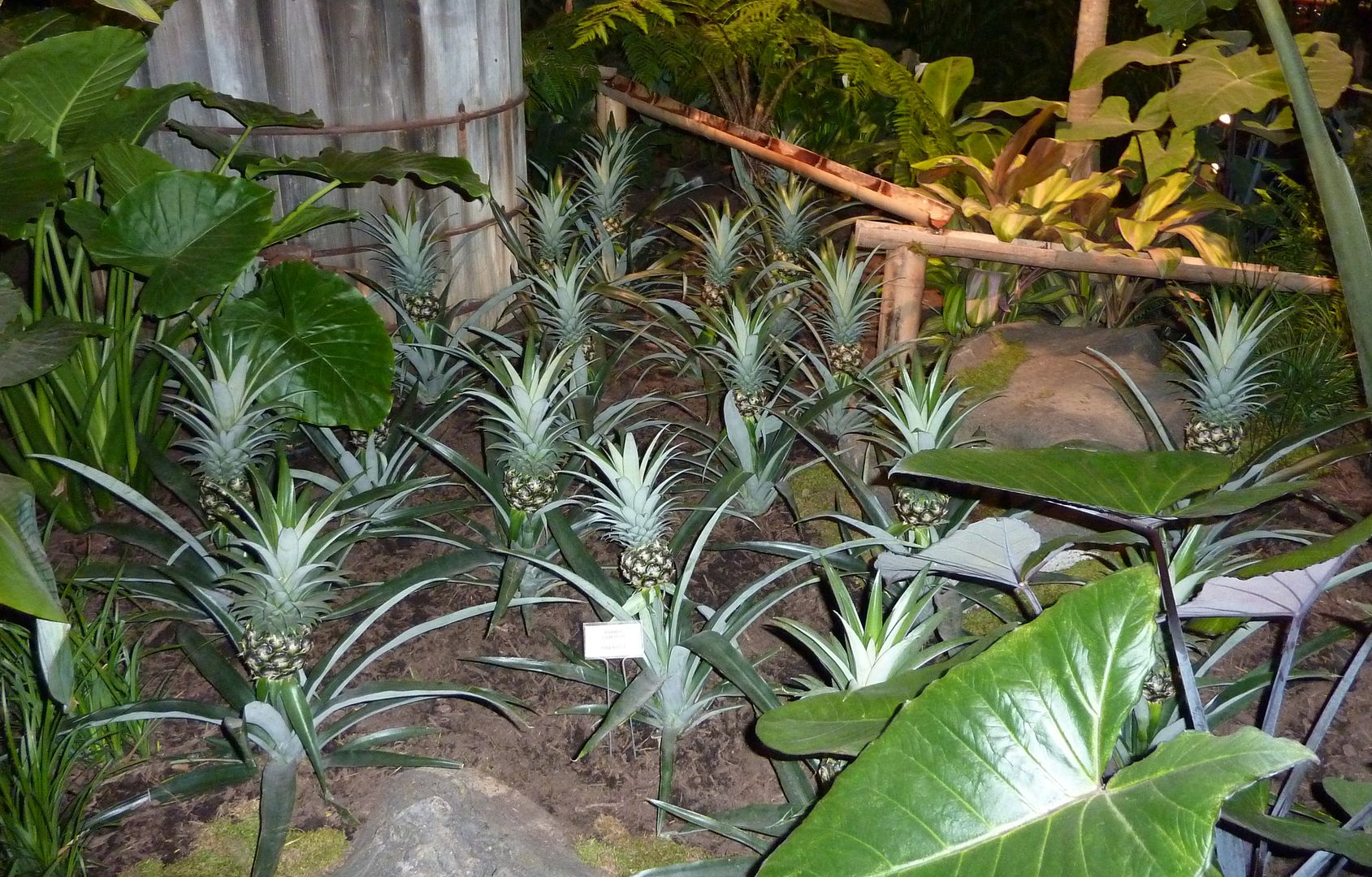
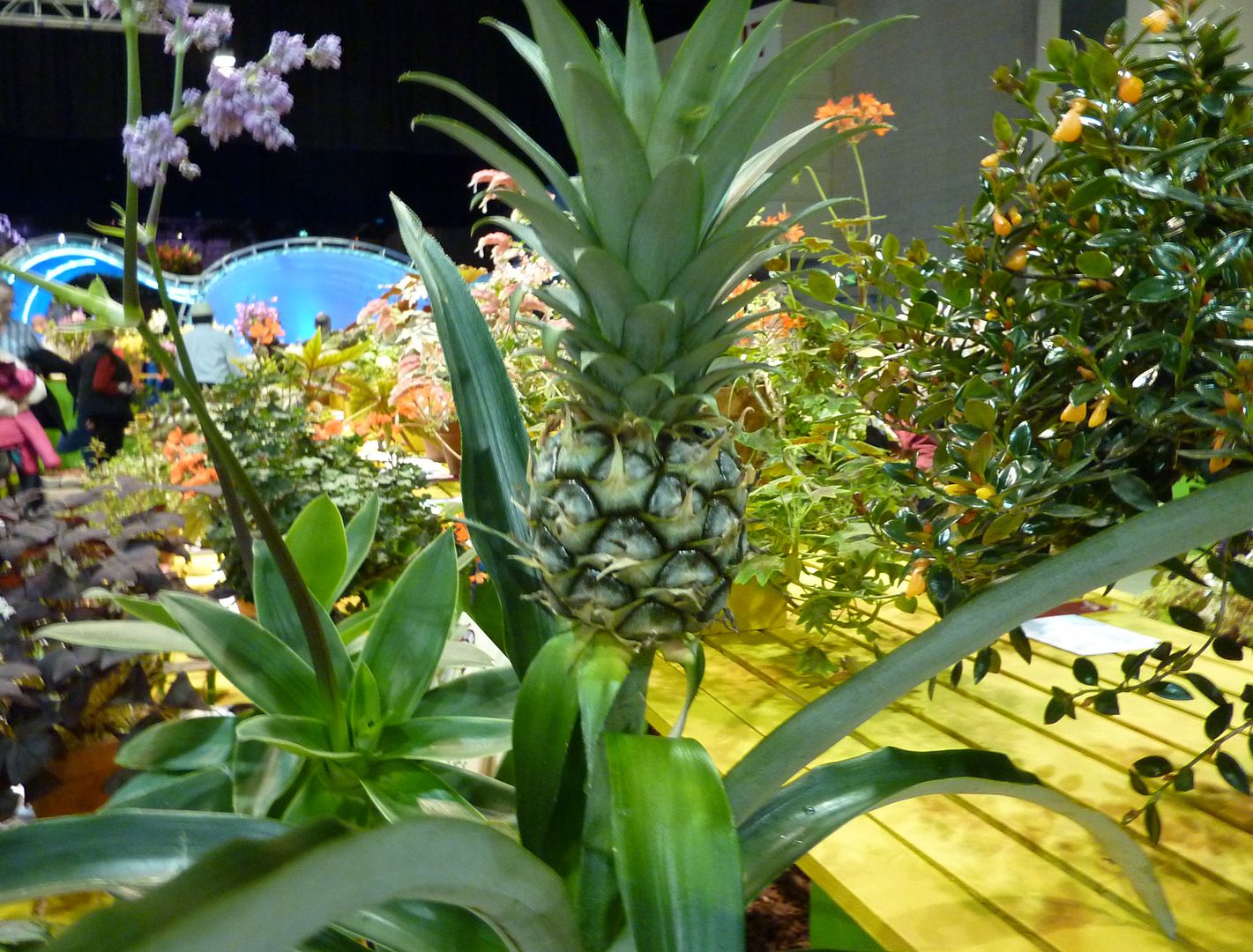
Exhibits were happily growing pineapple right in the scenery.
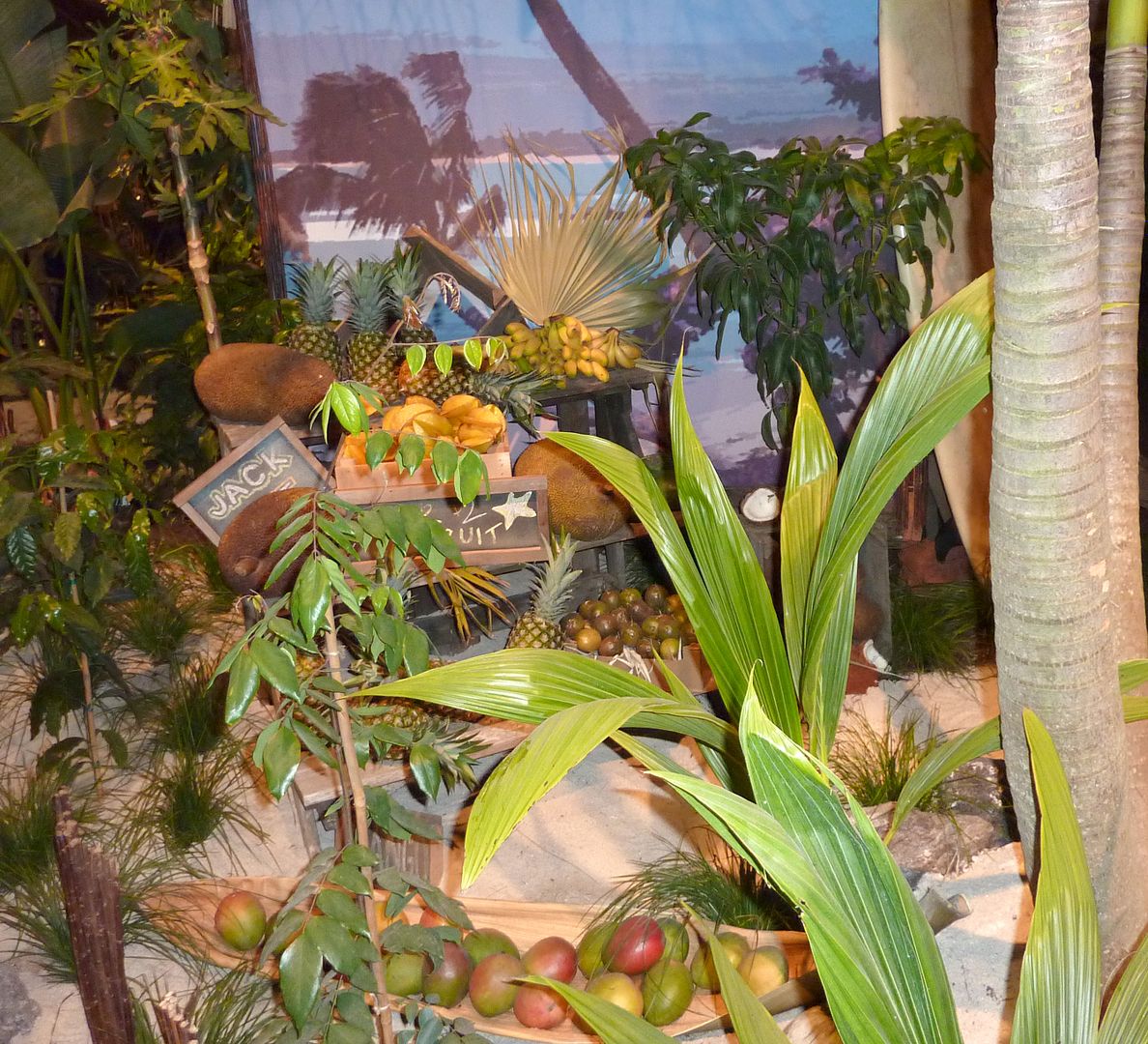
Star Fruit, Honey Melon, Bananas, I love it when food plants are used in these displays. (I would have centered this picture better but there was this women in a wheel chair who fought a lot harder than me to get a better angle.)
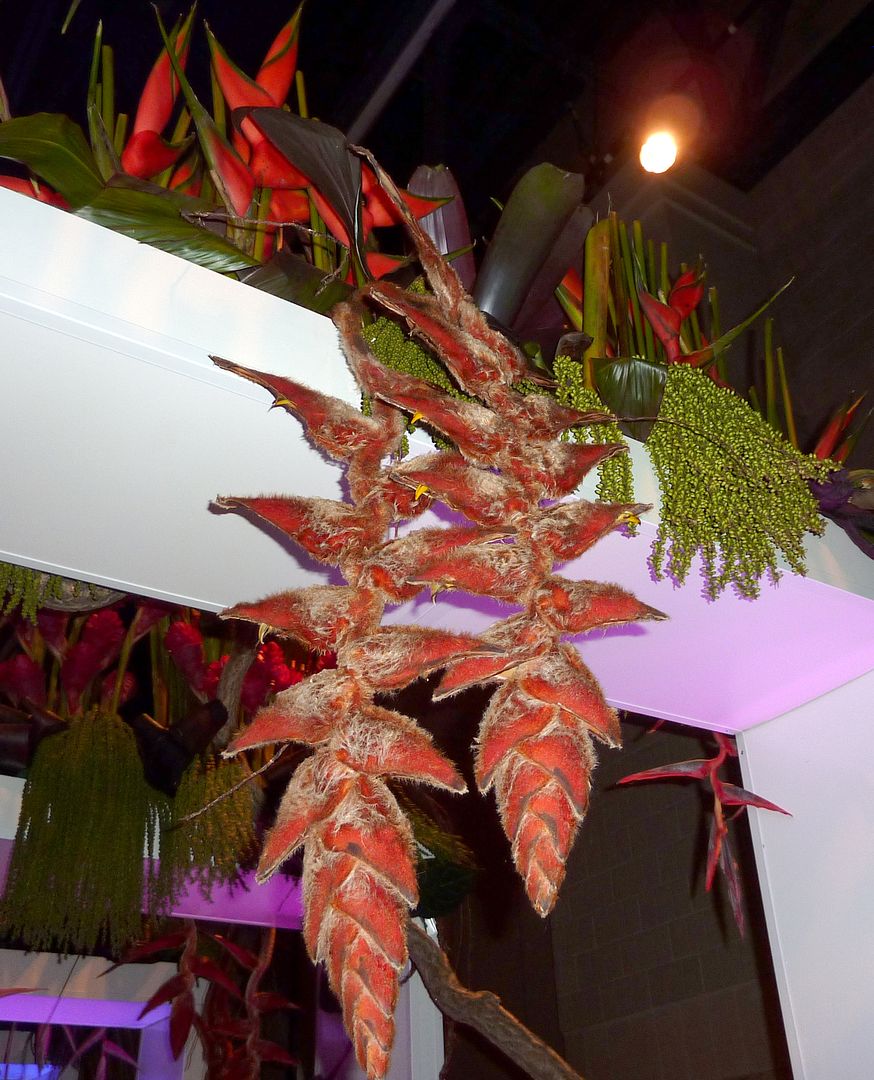
All I recognize here are Paradise Flowers and I'm not even confident with that ID.
I'm also unsure why some of them were growing hair.
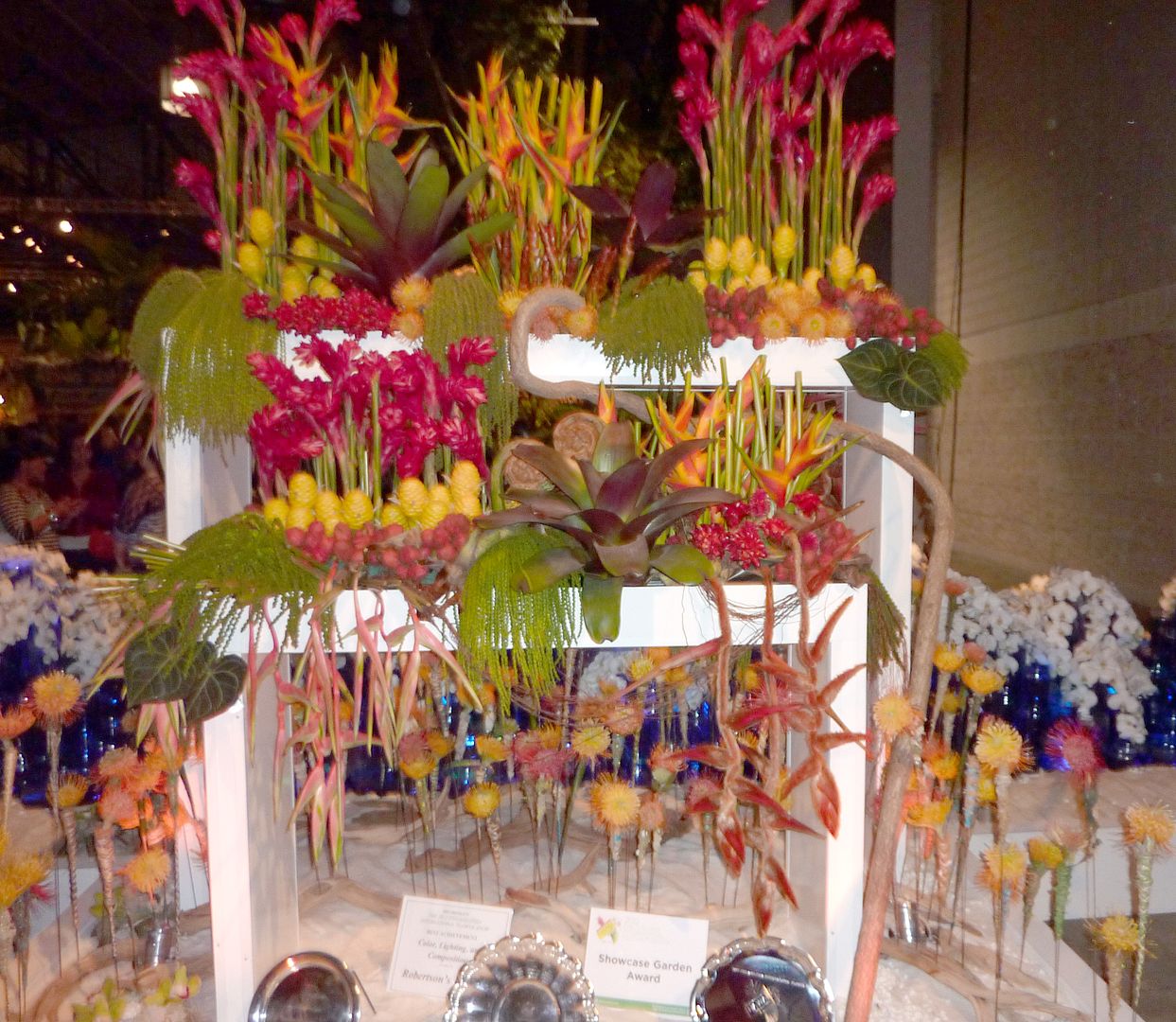
Apparently this table won some awards. I have to admit I'm completely ignorant to the judging process or even what categories there are. Stopping to read anything just isn't practical at these crowded shows.
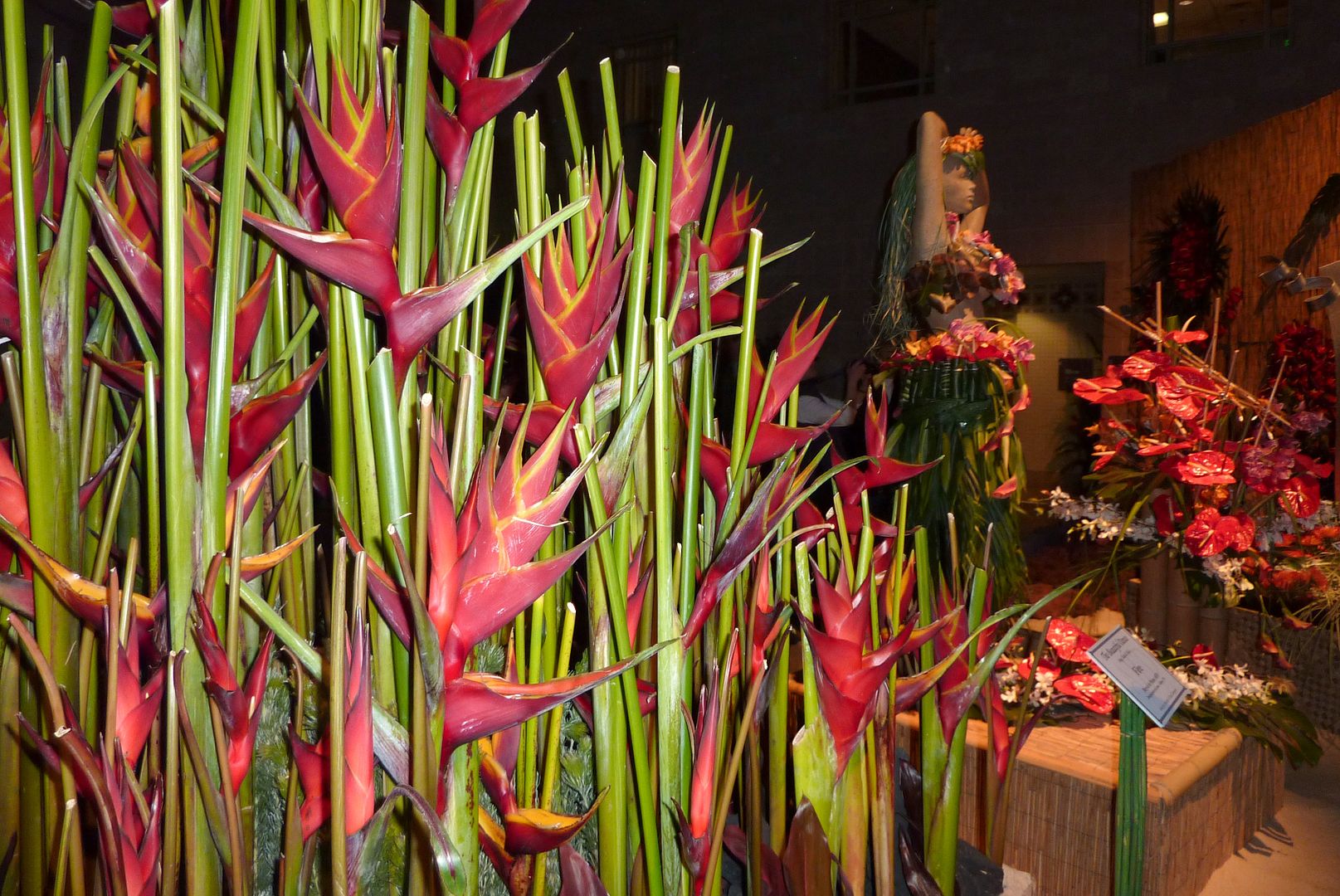
This is the end of an exhibit who's line was moving to slow to even bother with. I liked the flowers here but the rest was manikins dressed in native Hawaiian attire standing around huts and surf boards, and at a glance looked stereotypical and offensive, despite its educational attempt.
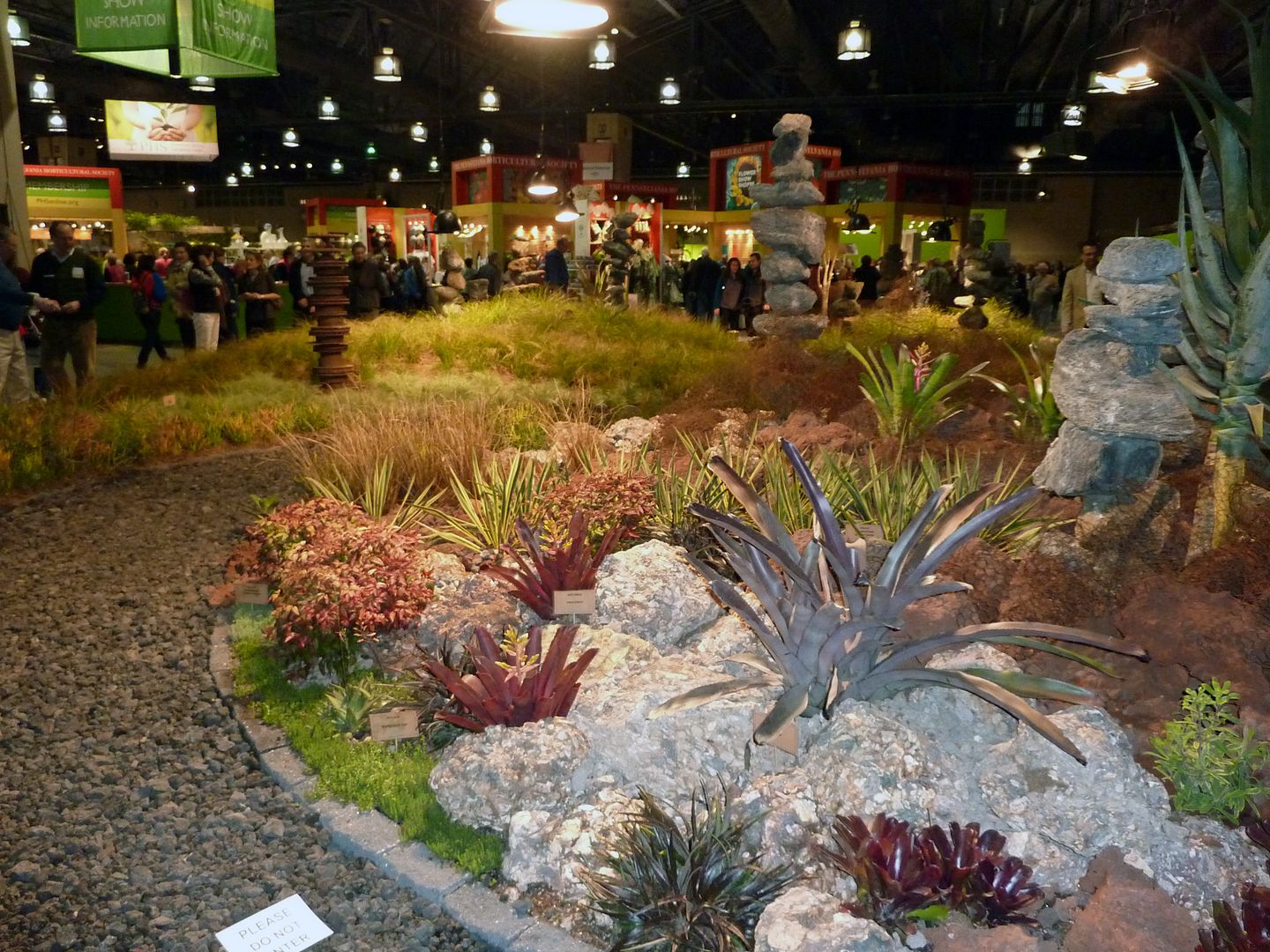
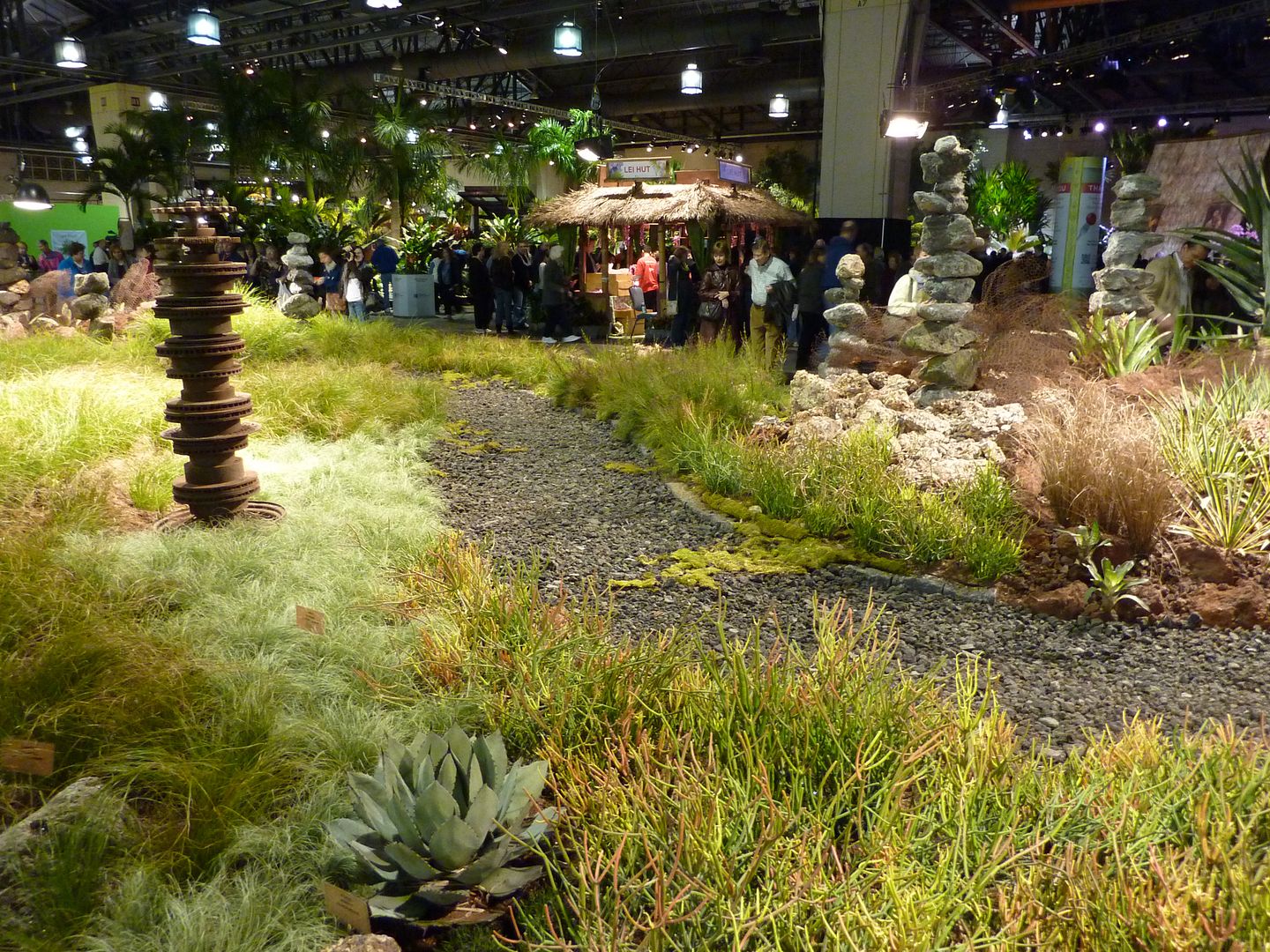
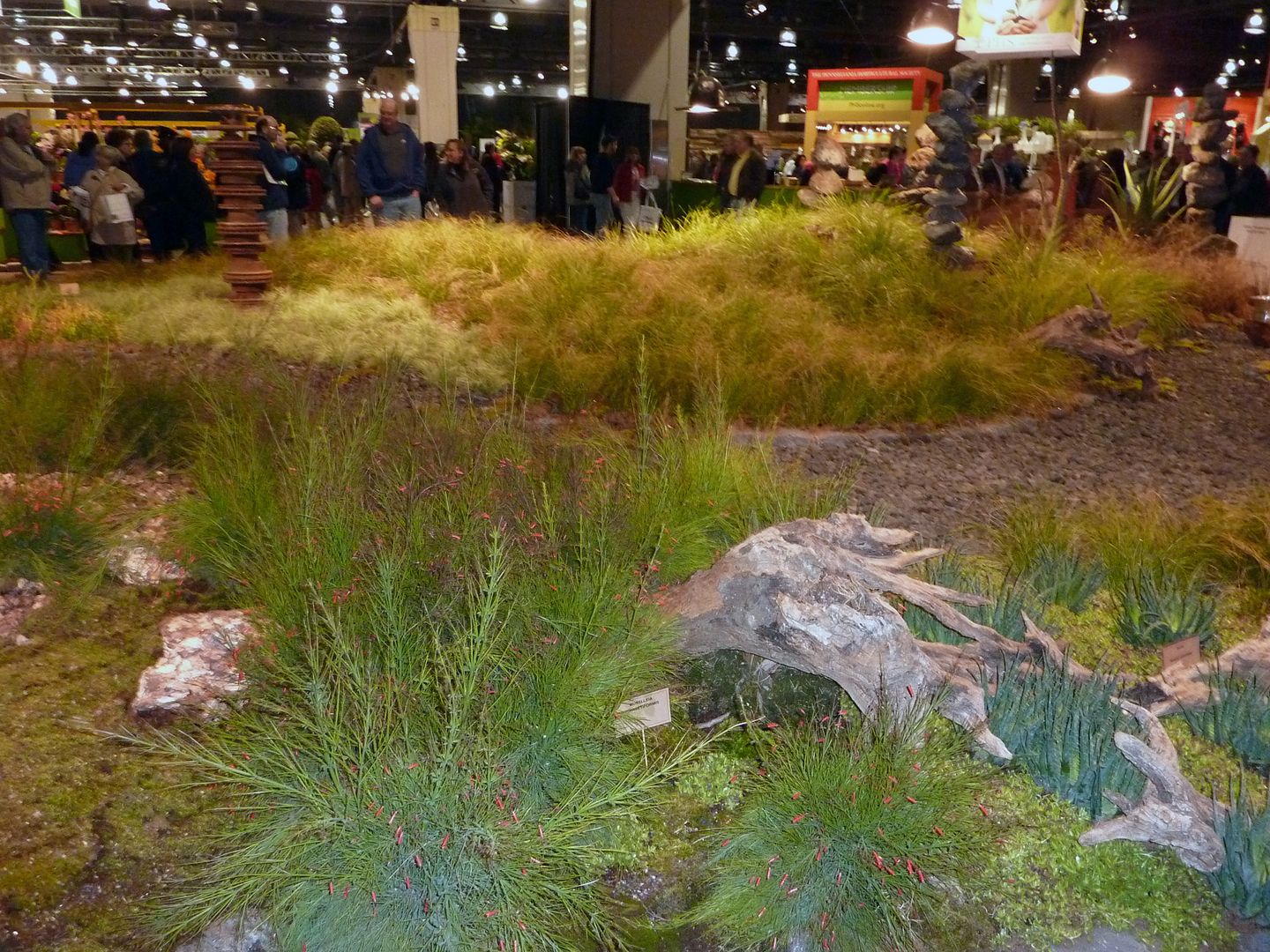
Despite the lack of flowers here, this was one of my favorite of the theme displays.
It shows more of a Hawaiian badlands area. Actual volcanic rocks were used throughout. The large tower to the left is made of stacked break pads and train wheel-like parts.
It's reminiscent of a meadow and I think that's why I like it so much.
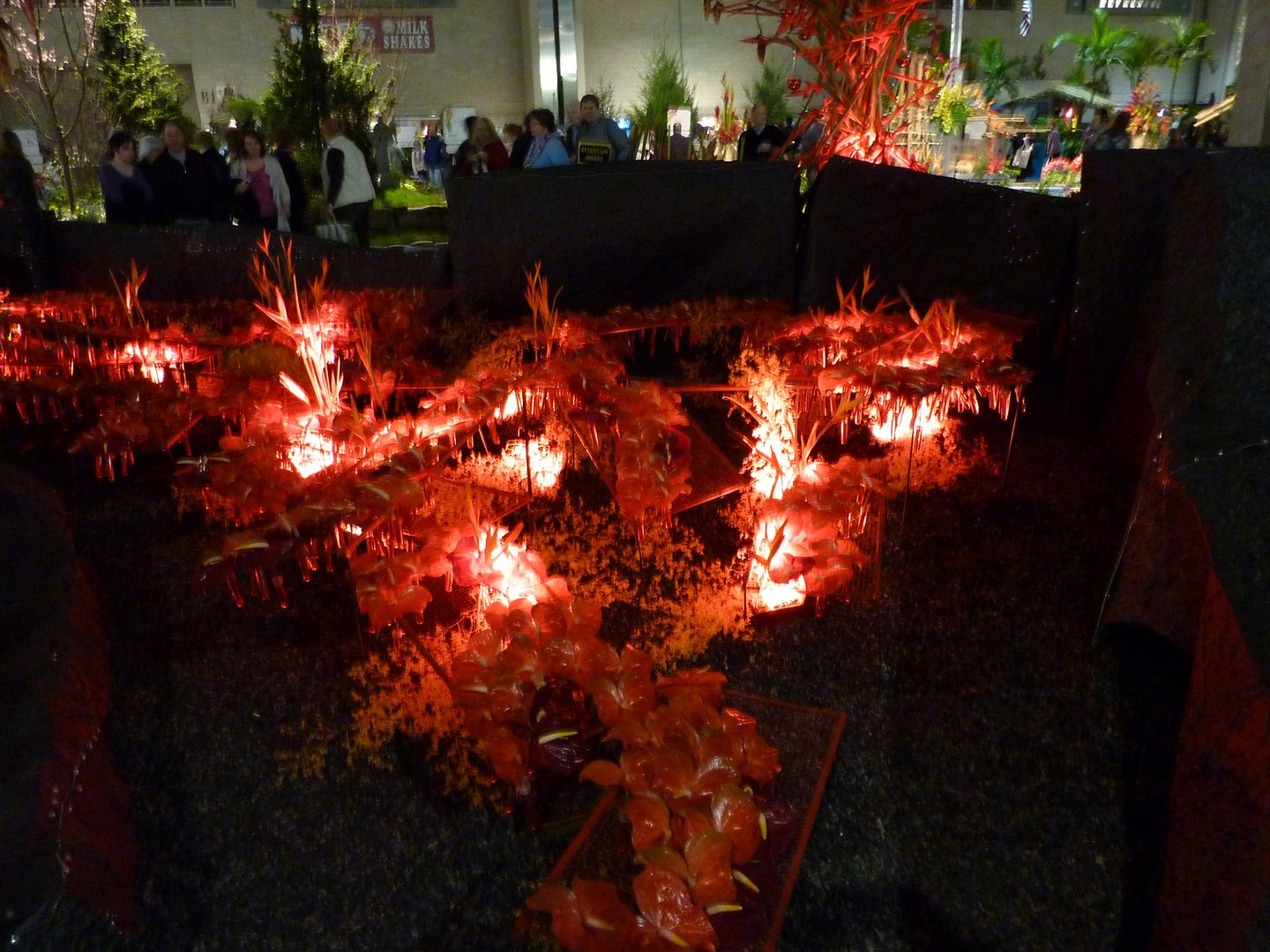
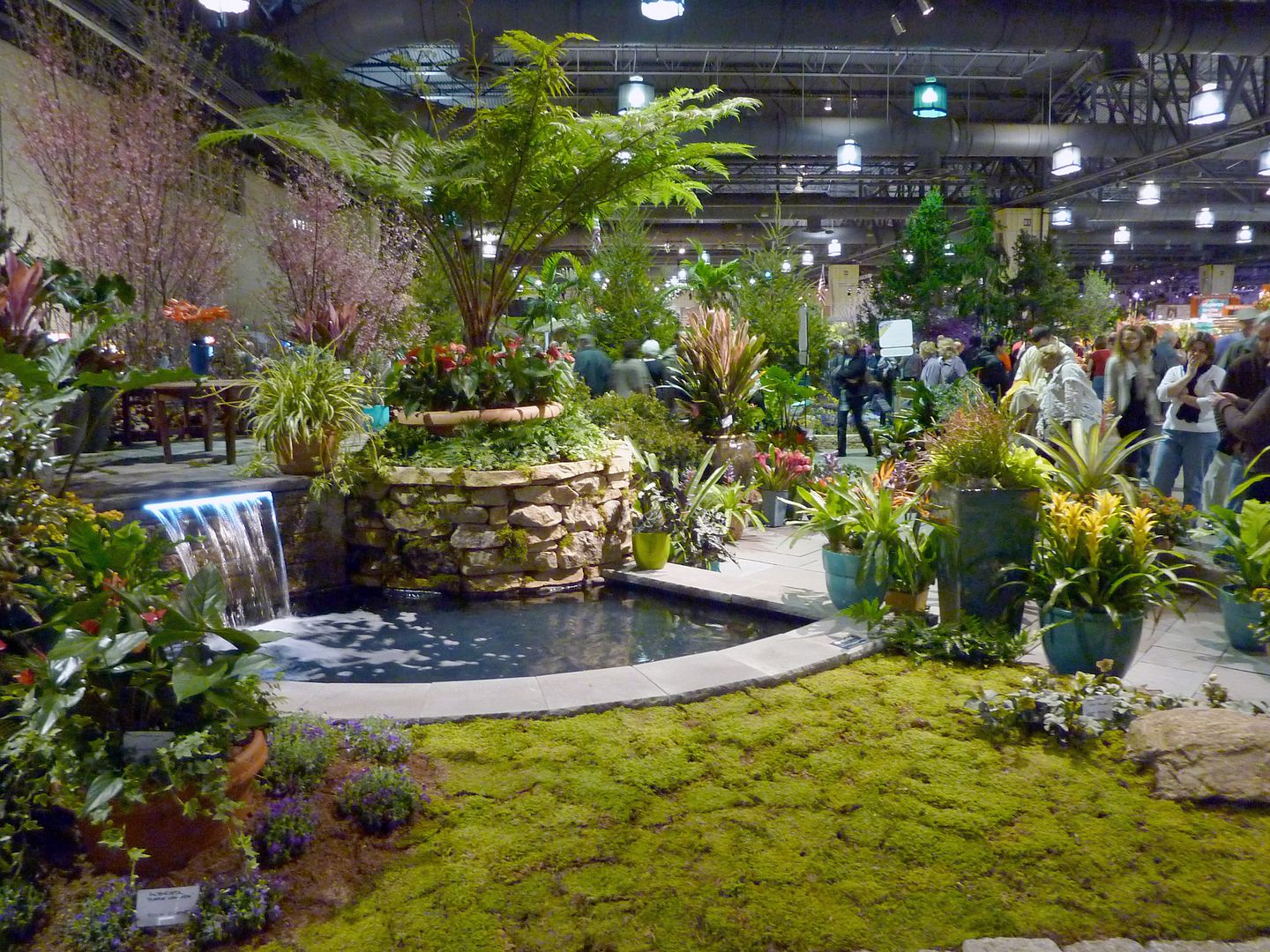
The landscapers this year seemed to be confused where to focus their attention. The main theme of the show is tropics so they have the option of going with that theme or staying true to what works around here. I might be mistaken and this could be an artistic exhibit but they've tried to create a lava effect. (My map has this labeled as a landscaping exhibit though.)
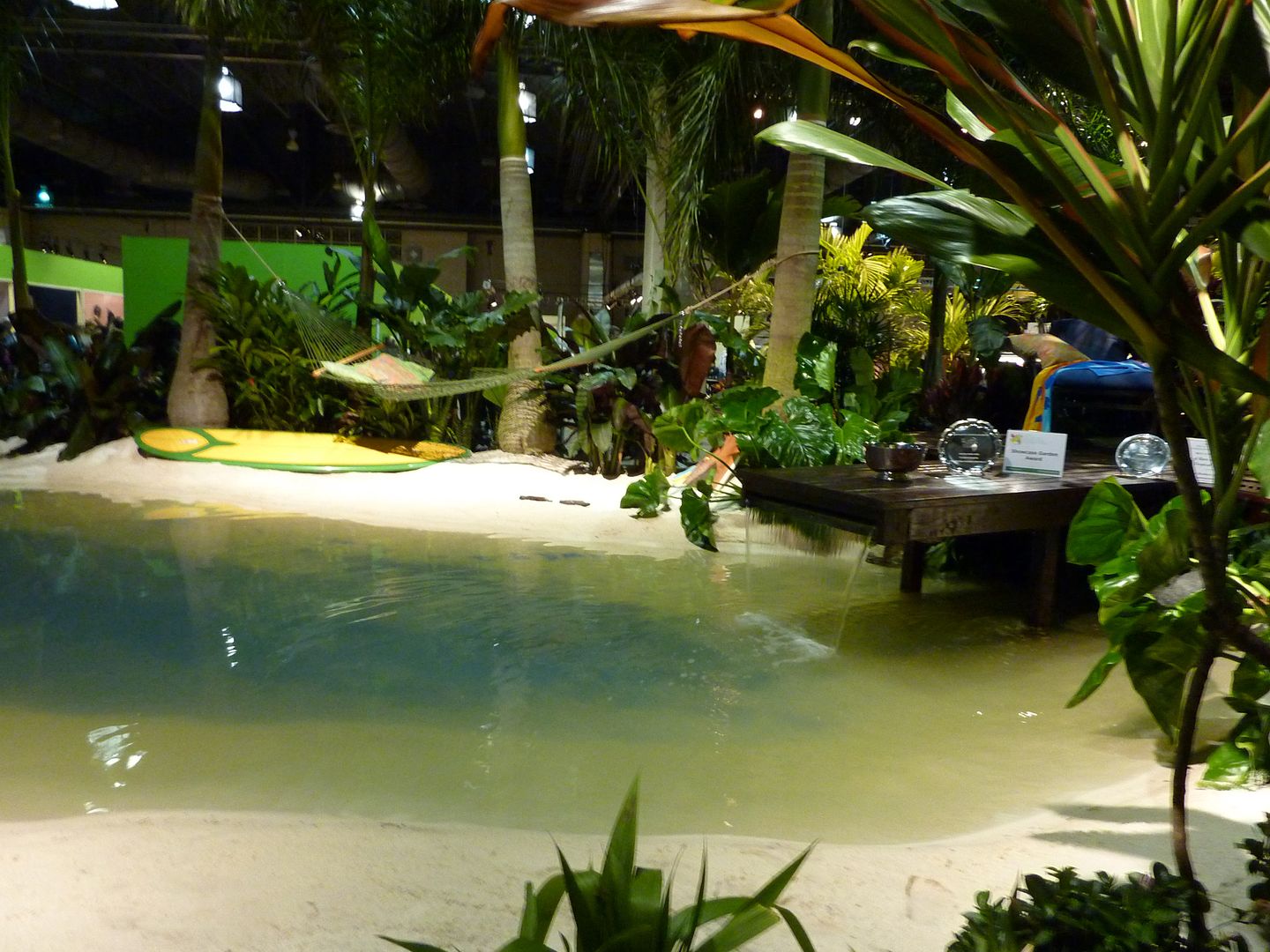
For lack of a better image I like how this one was more casual in showing off an ideal back yard get away. They used actual white sand for their entire exhibit which expands far off to the right out of frame.
This was probably the smartest of the designs, as far as stirring up local business is concerned. Change out a few of the plants and I could see this being someone's back yard.
Also something I noticed about exhibits with ponds in them. Everyone keeps throwing money in them!
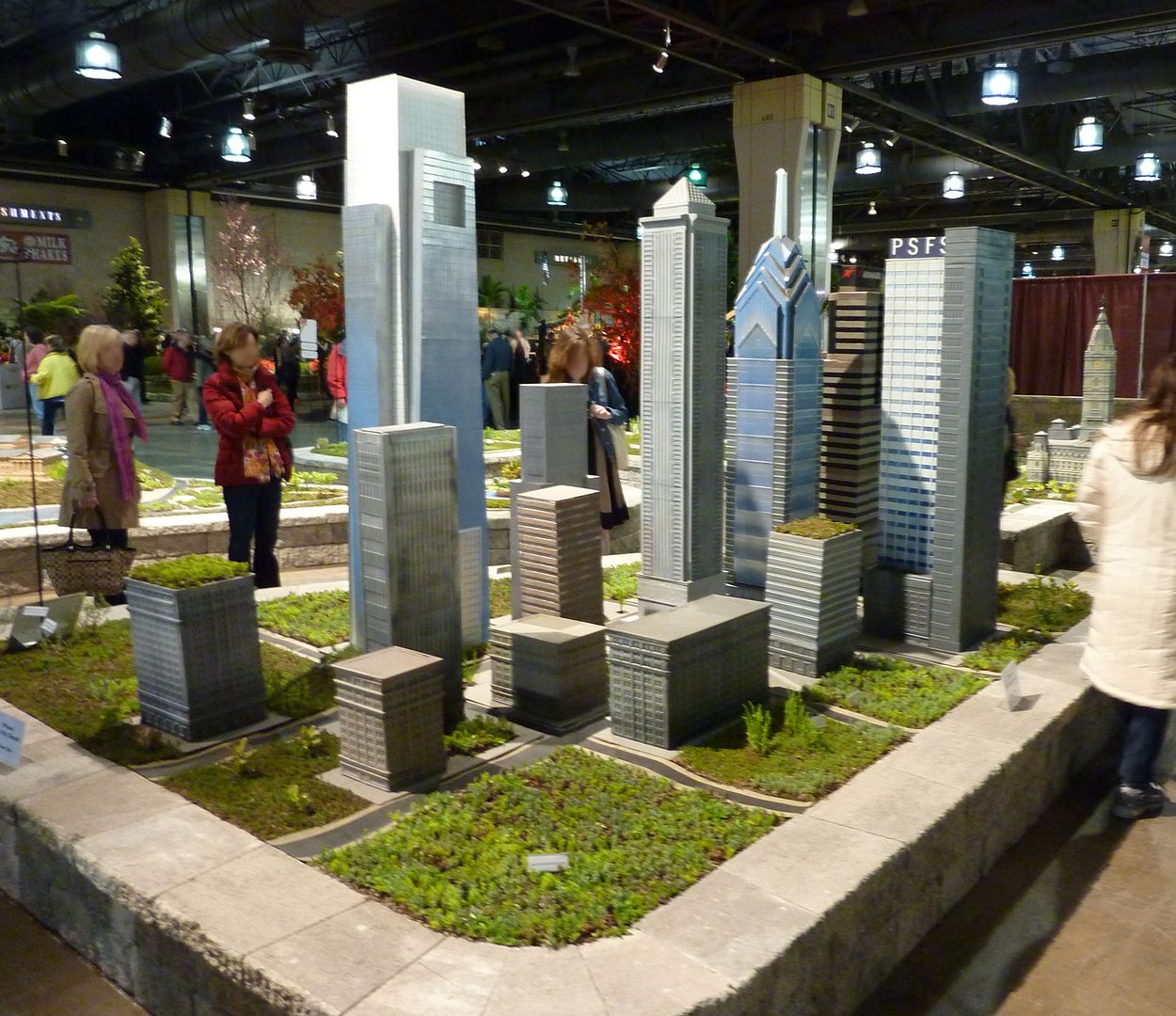
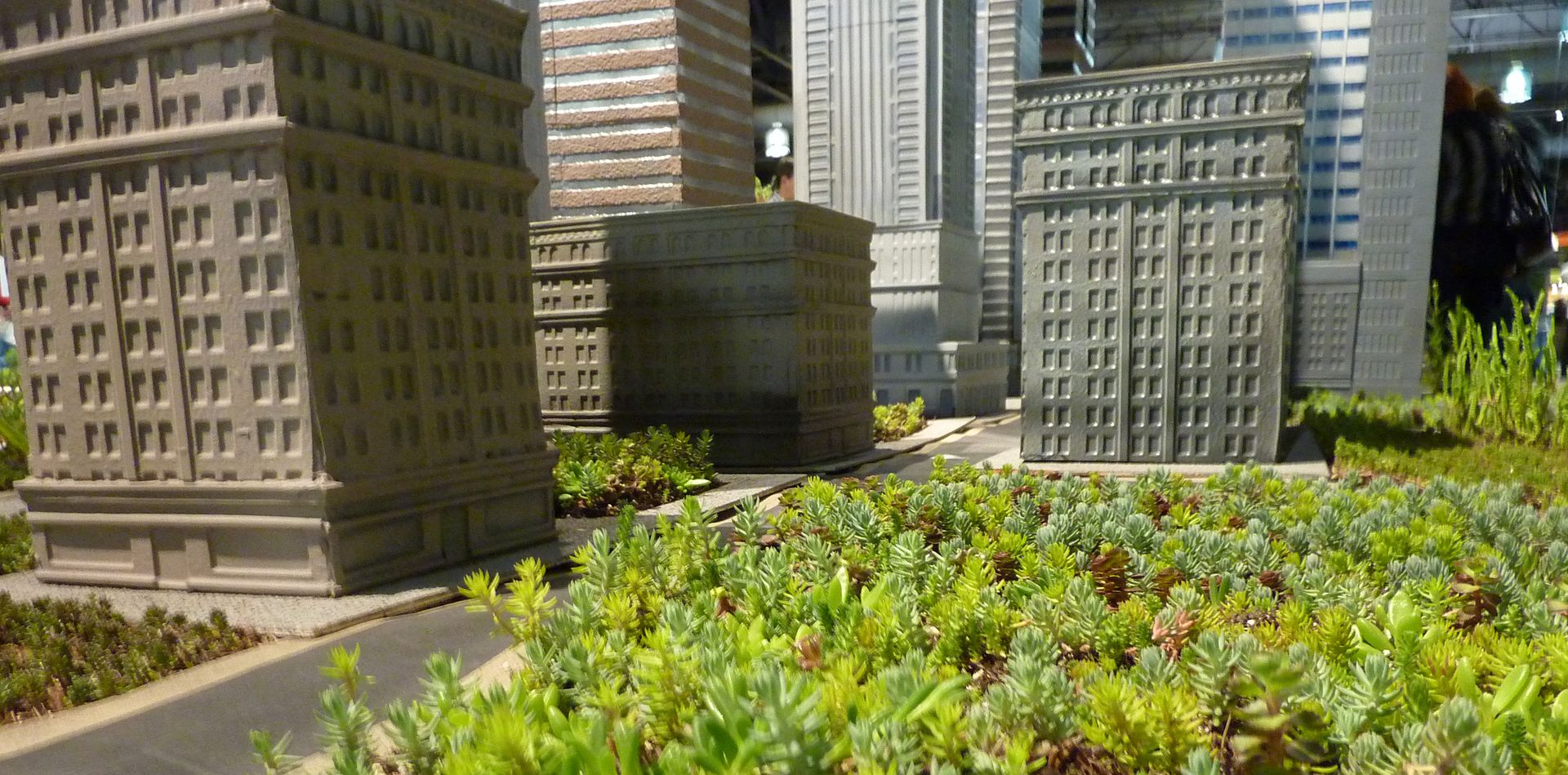
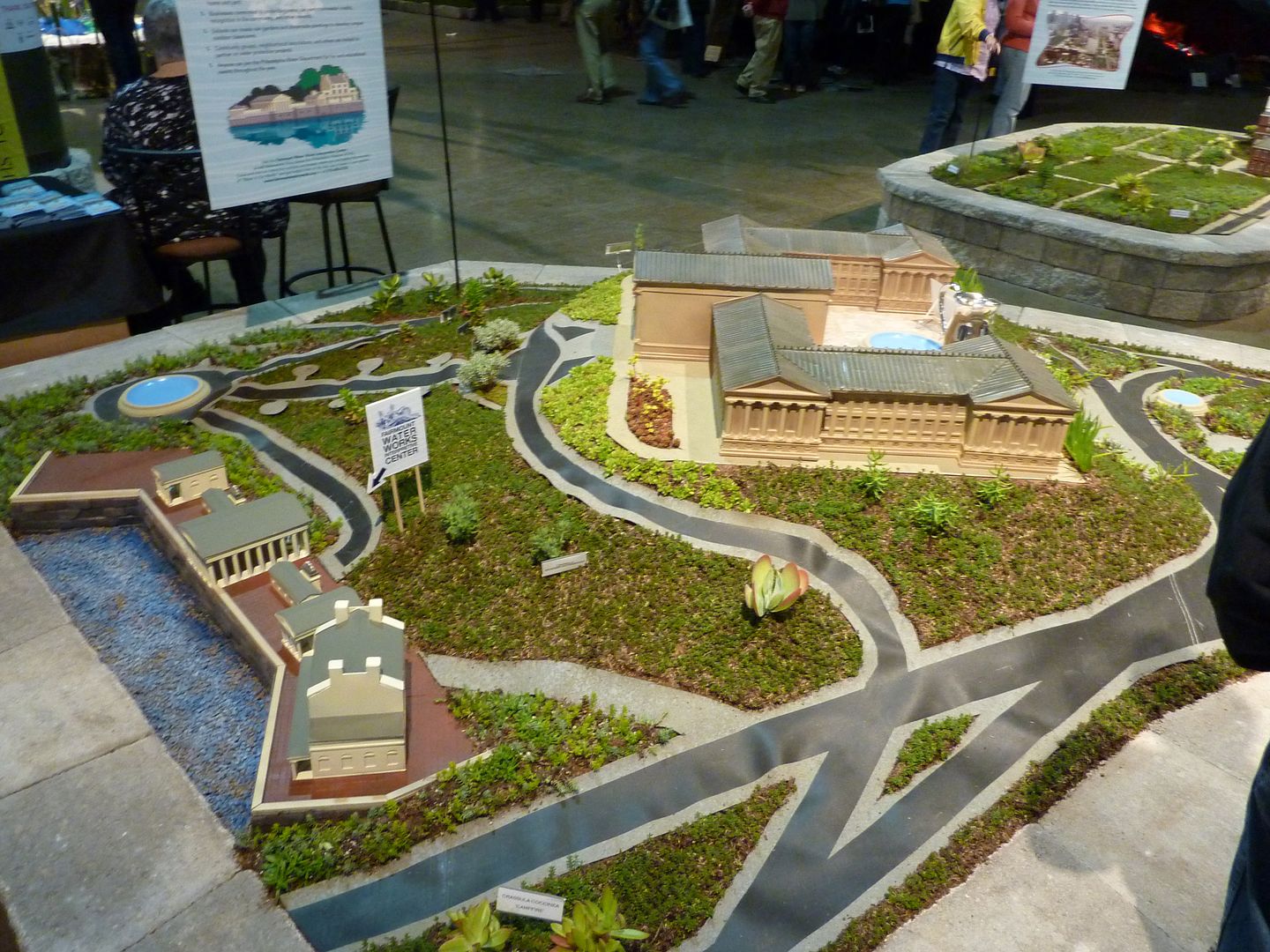
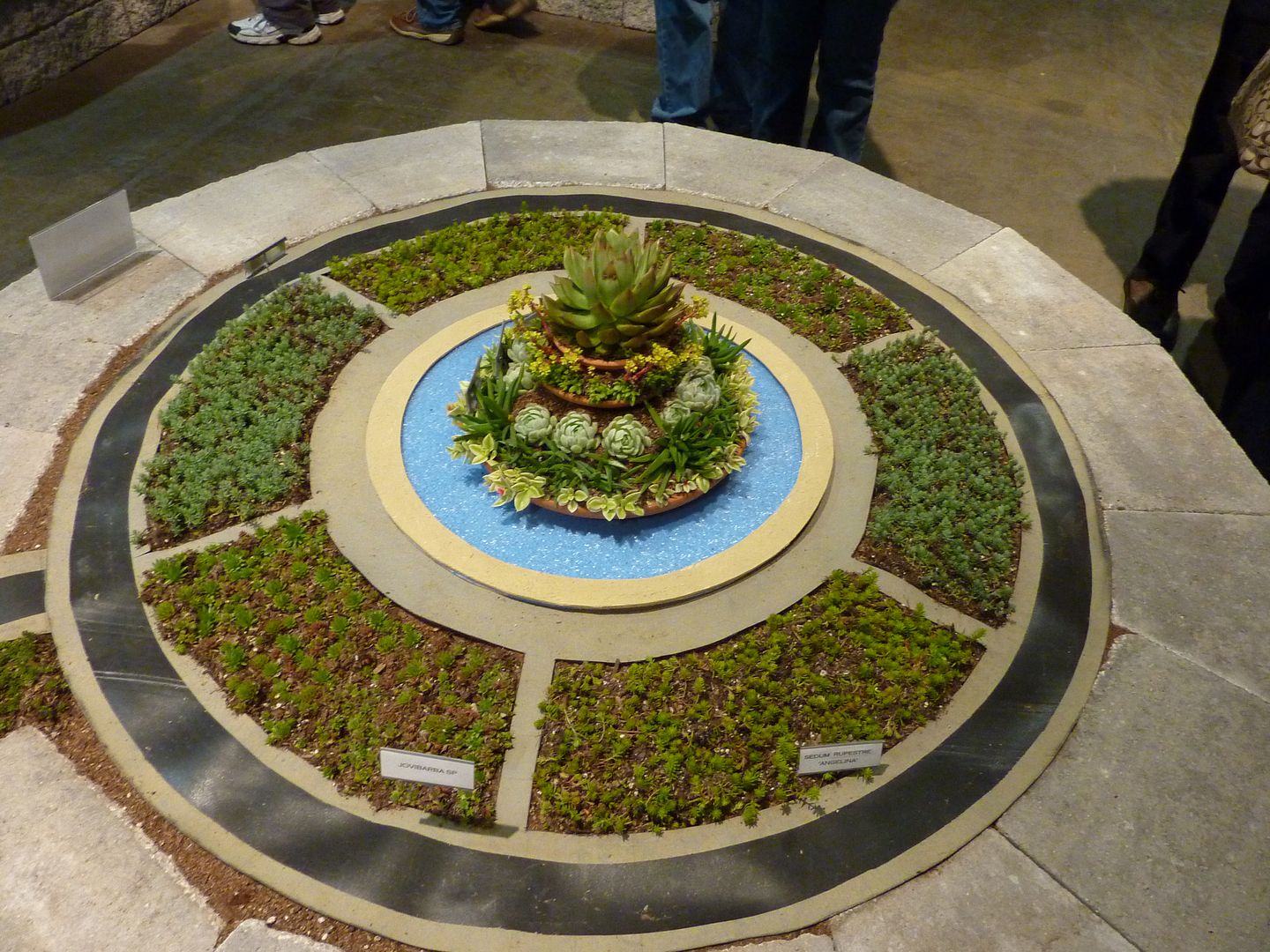
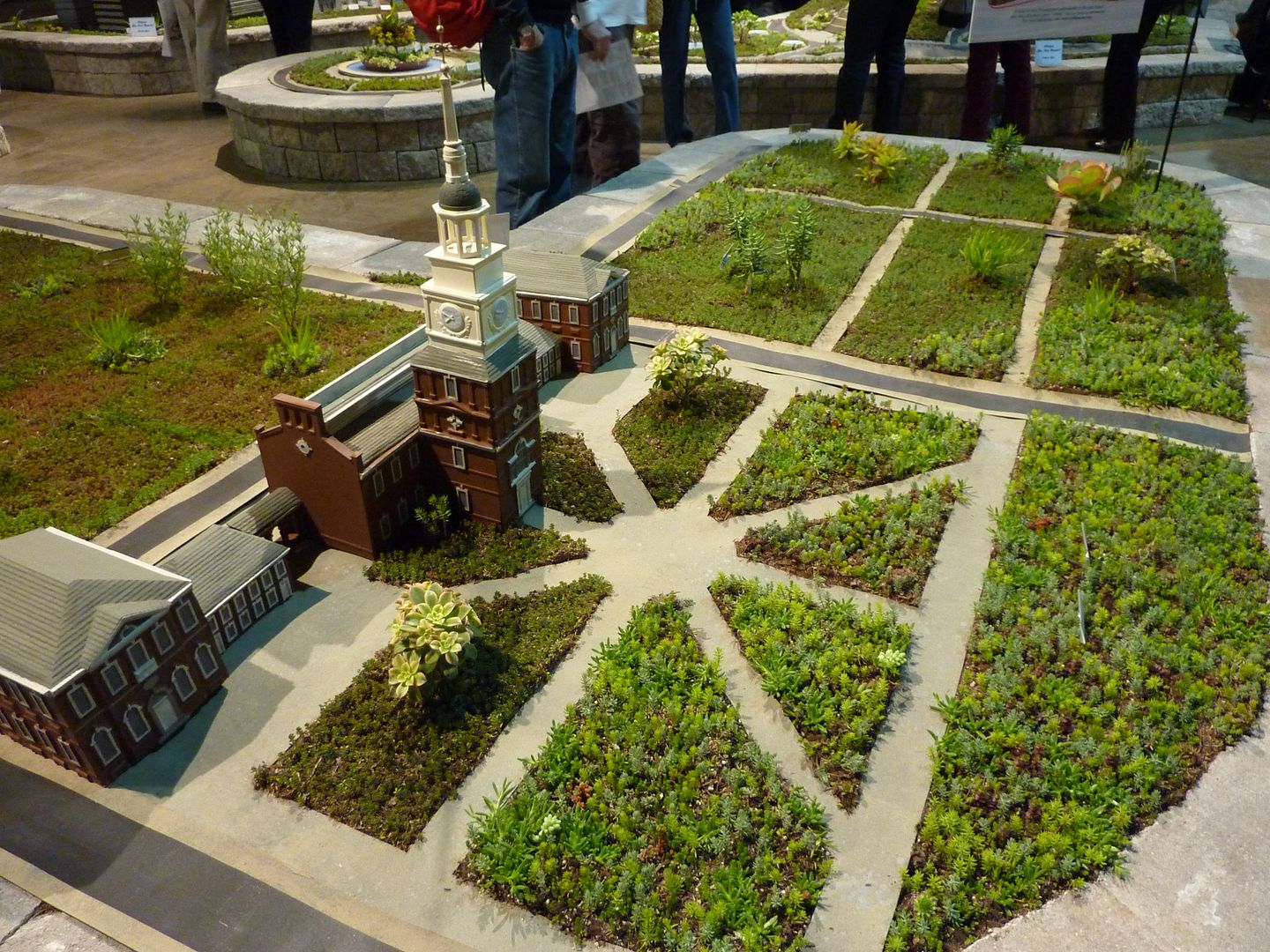
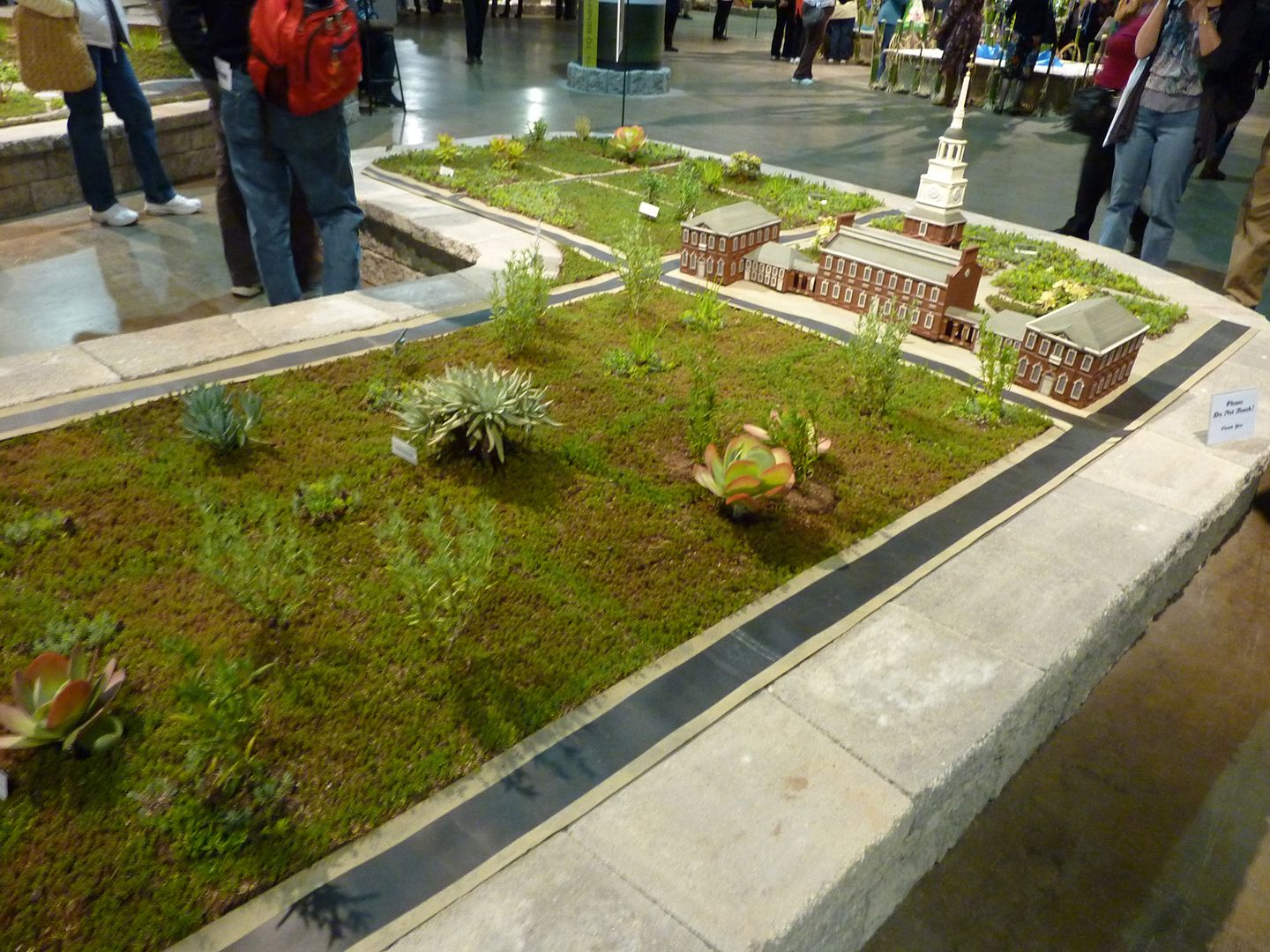
To me this was as eye catching as the main theme exhibits. Note that some of the buildings have rooftop gardens. It's begging for a topiary Godzilla ... or lawn mower... or topiary Godzilla vs. the Lawnmower!
The models are well made, and the tiny plants are almost perfectly scaled to be trees.
Sure the roads look a little cheap but that's a pretty good representation of the Philadelphia Museum of Art.
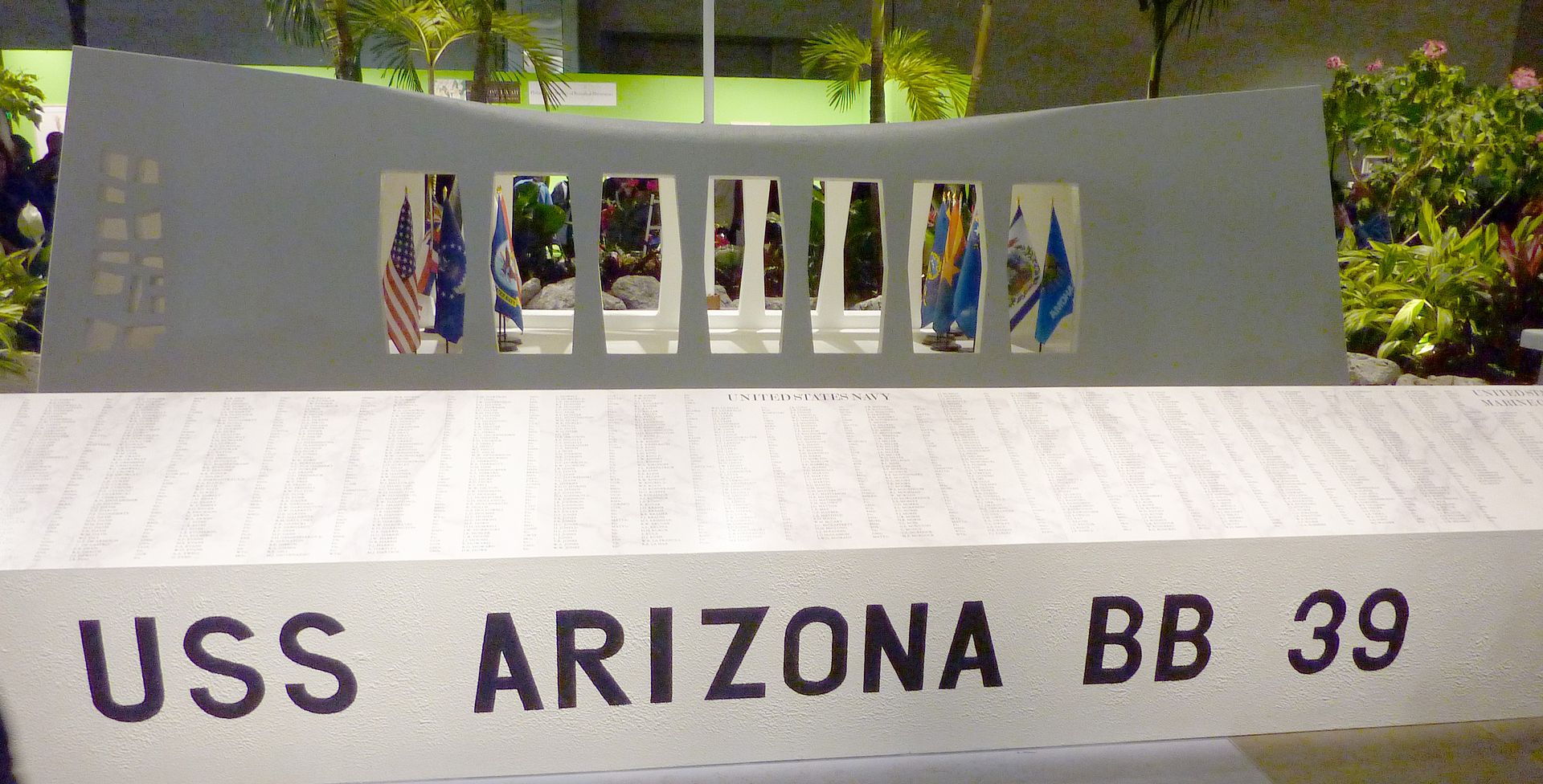
There was one there which a memorial to the Battleship Arizona, complete with names of the officers who died as the focus of their design.
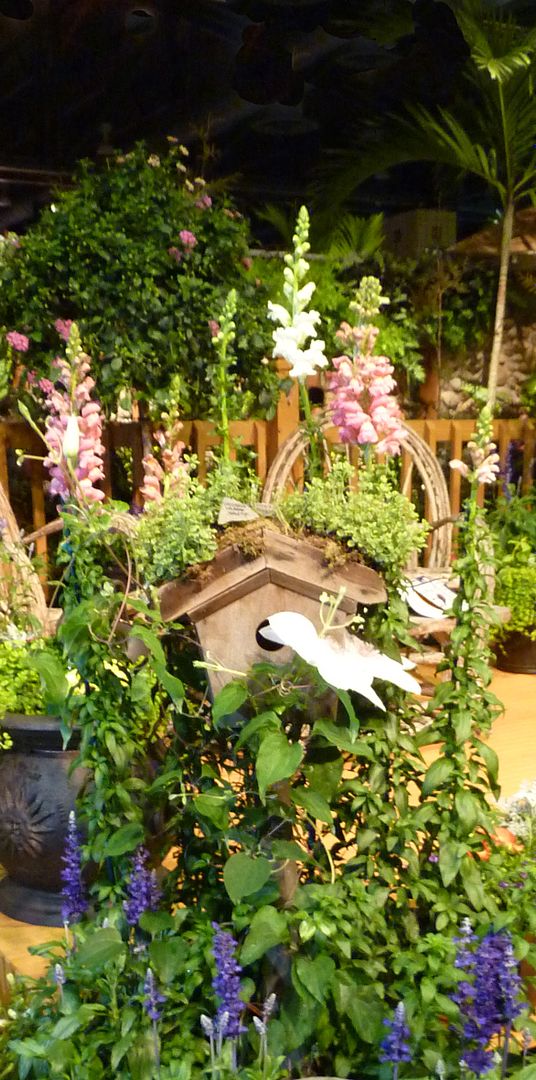
As a side note I noticed the really tall Snapdragons were in one of the artistic exhibits.
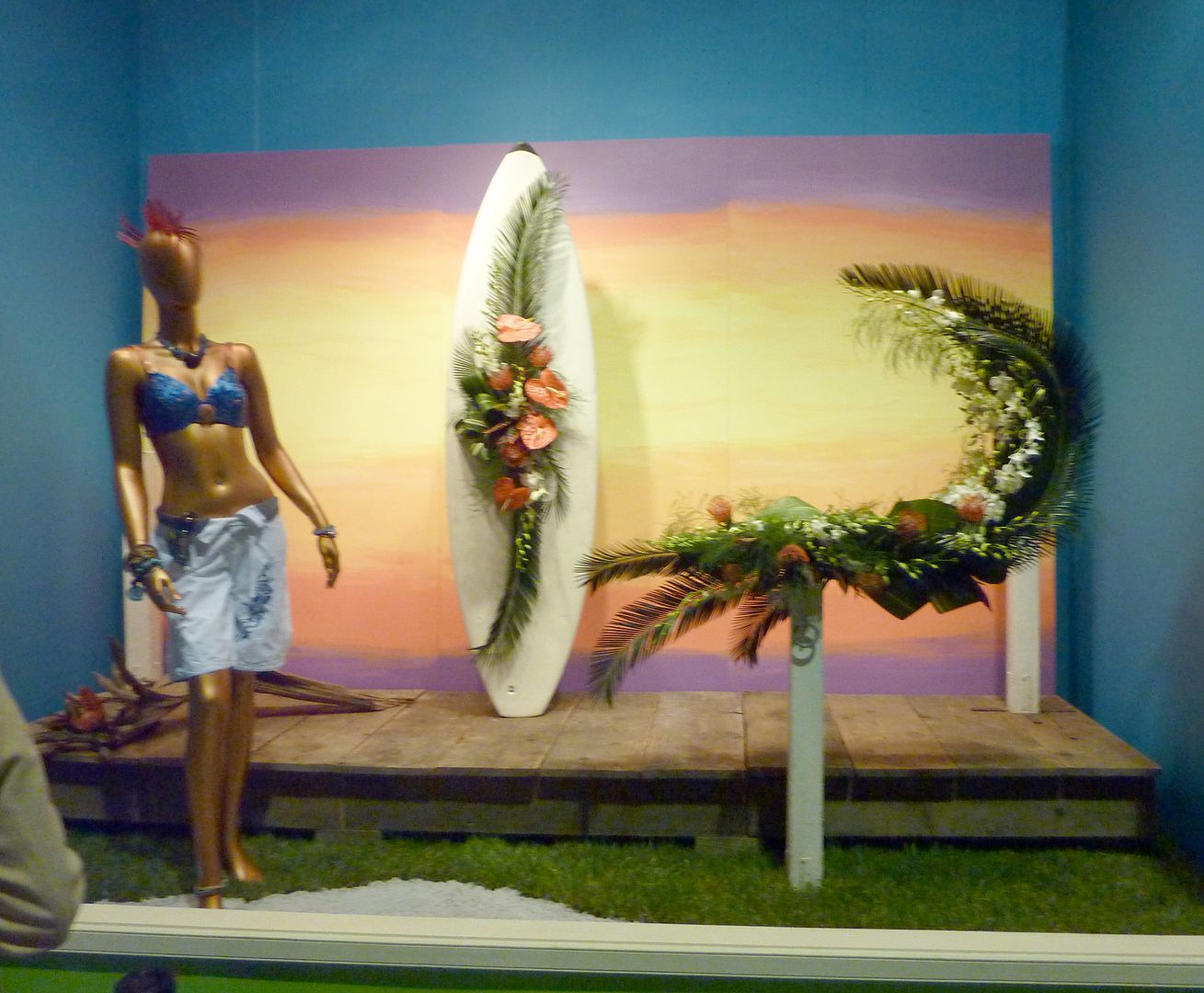
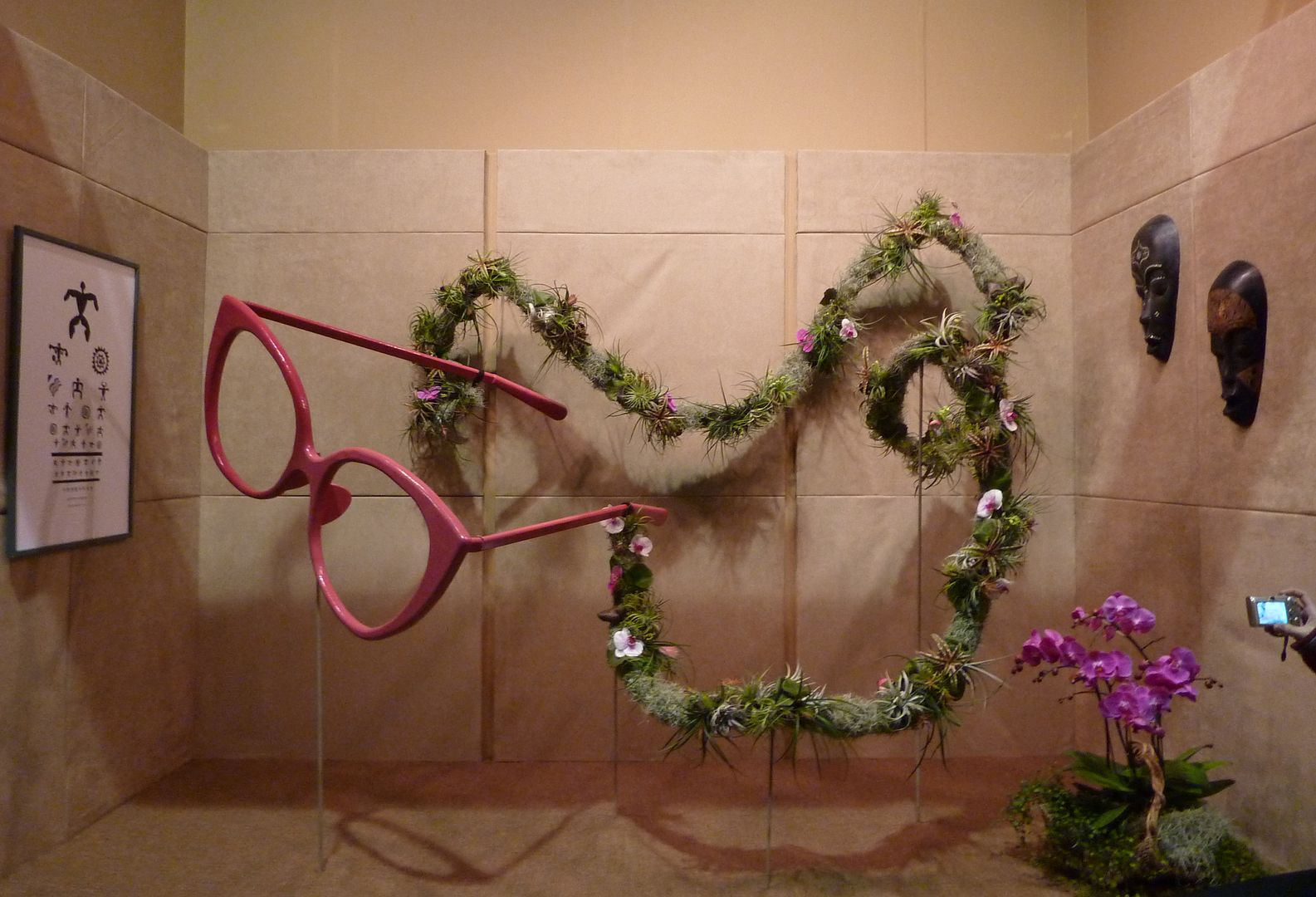
These are my two favorite staged designs. There were other art exhibits surrounding but I don't follow them that much. Paintings of flowers, dresses made of flowers, tiny window boxes of flowers... it all starts to look the same after a while.
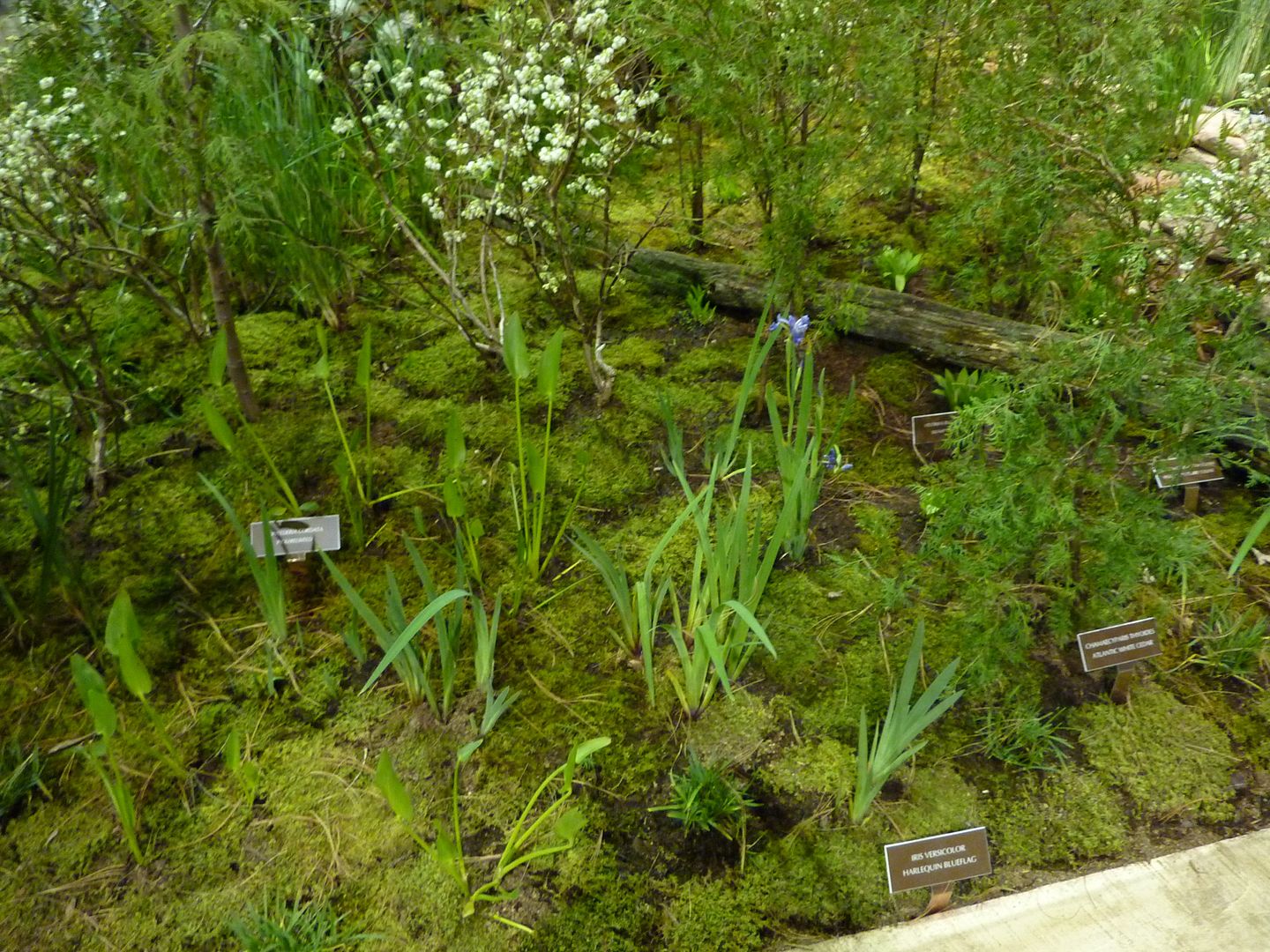
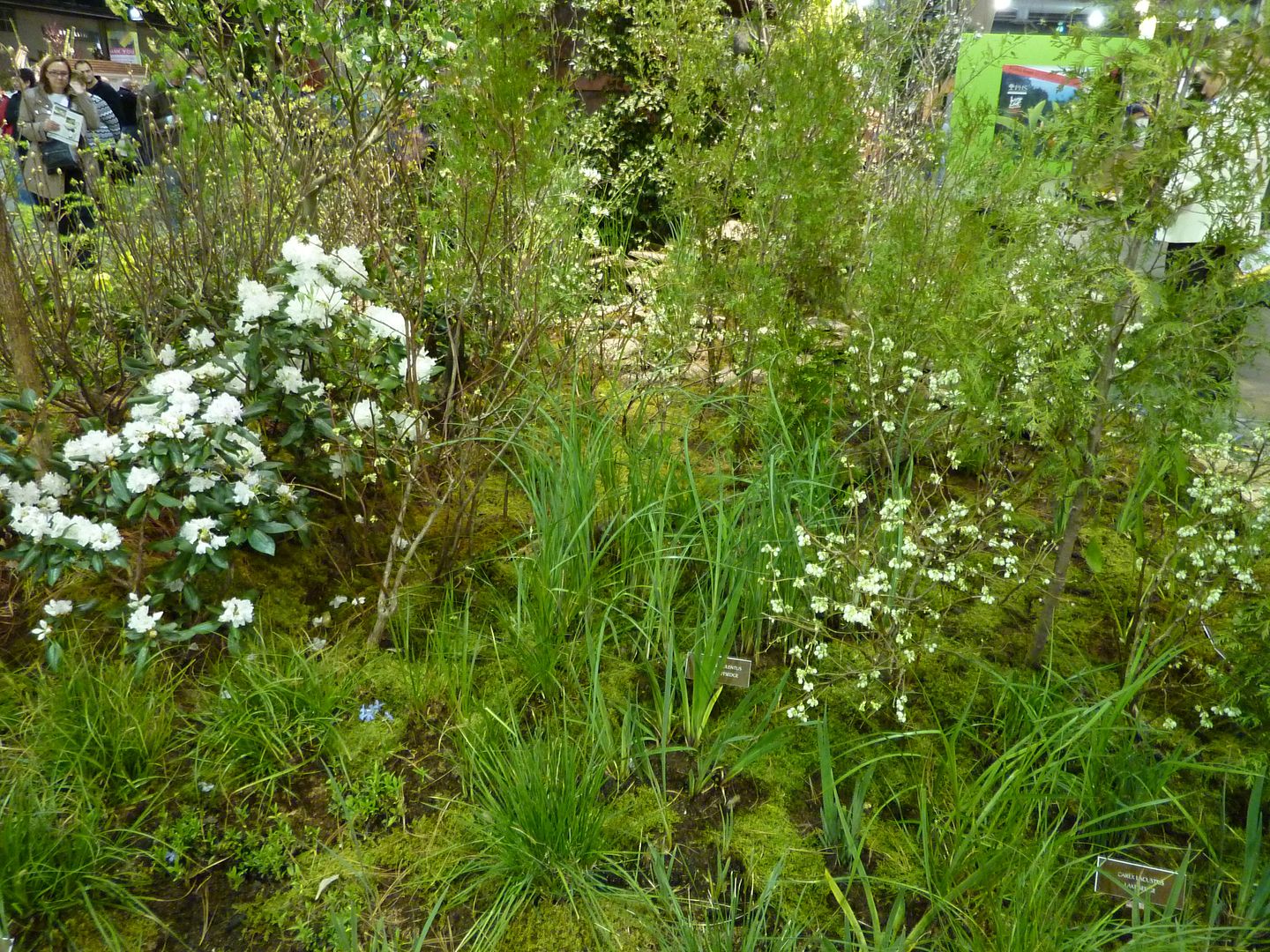
The EPA had an exhibit on display featuring all native plants! I didn't have time to stop and read the labels to all of them but there were lots of small blue phlox coming into bloom.
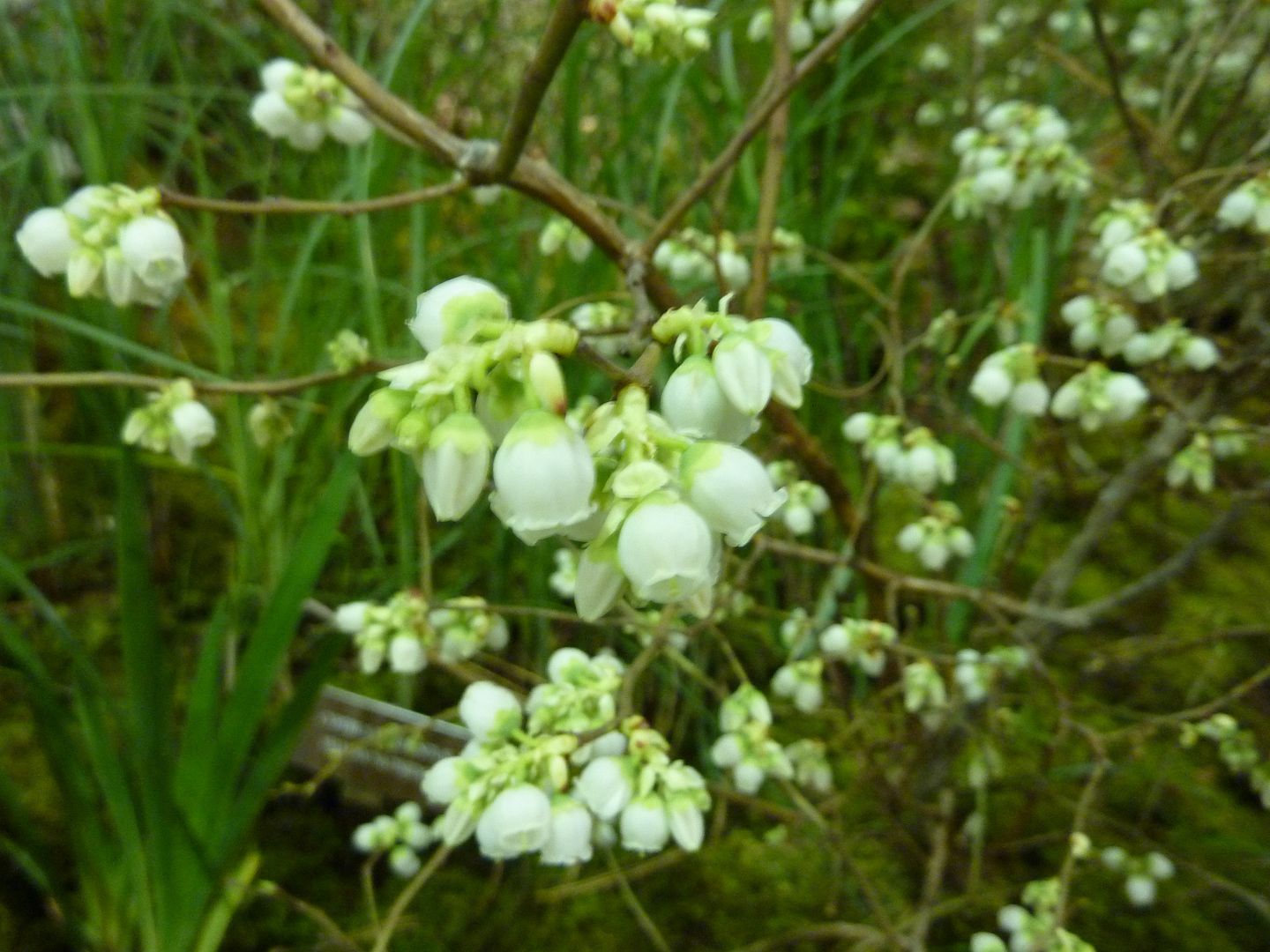
Rhododendrons (I think the only ones to appear at this year's show) were also part of their exhibit along side blueberry plants in flower.
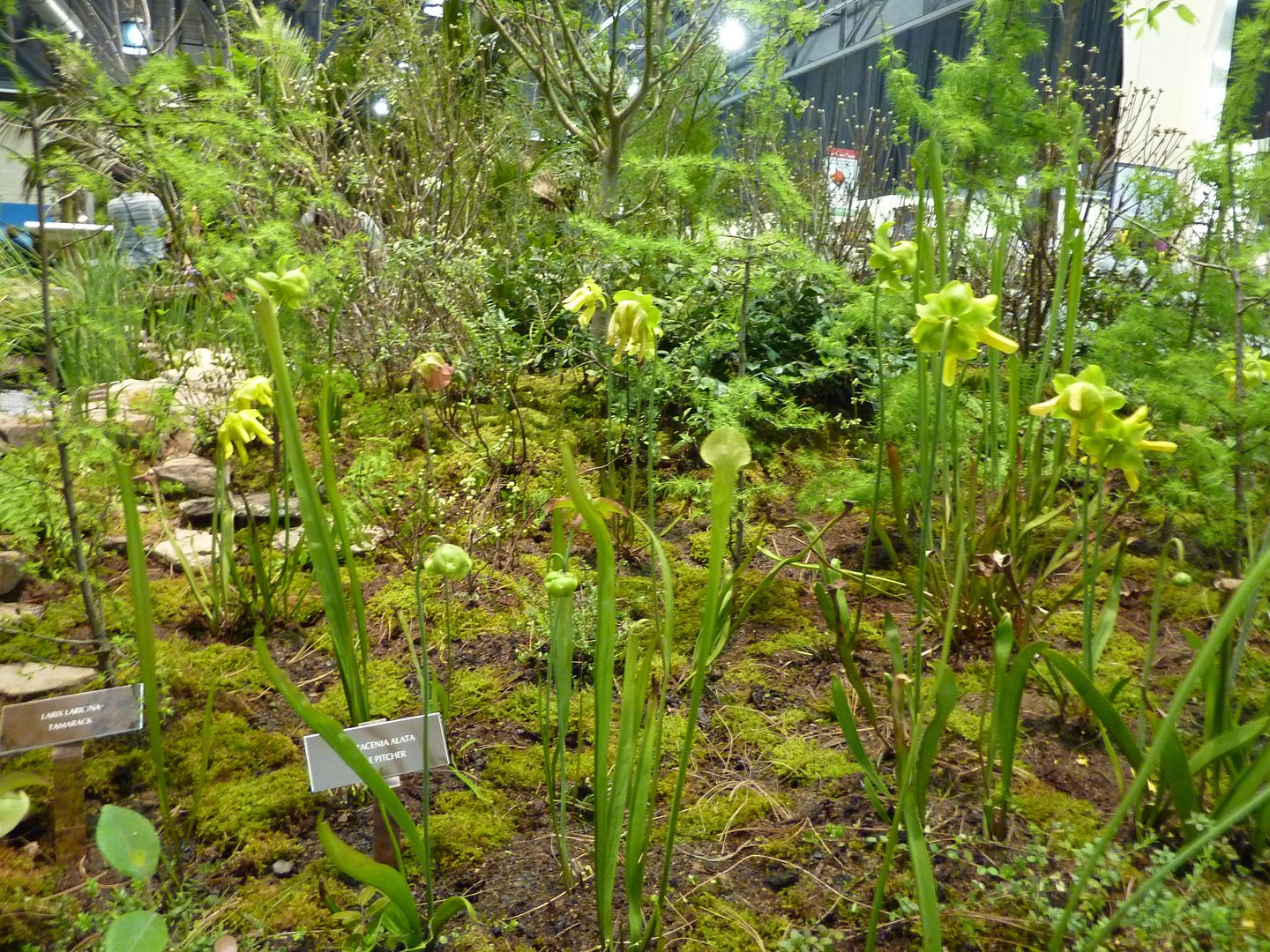
Carnivorous pitcher plants were also flowering.
Blueberries in flower.
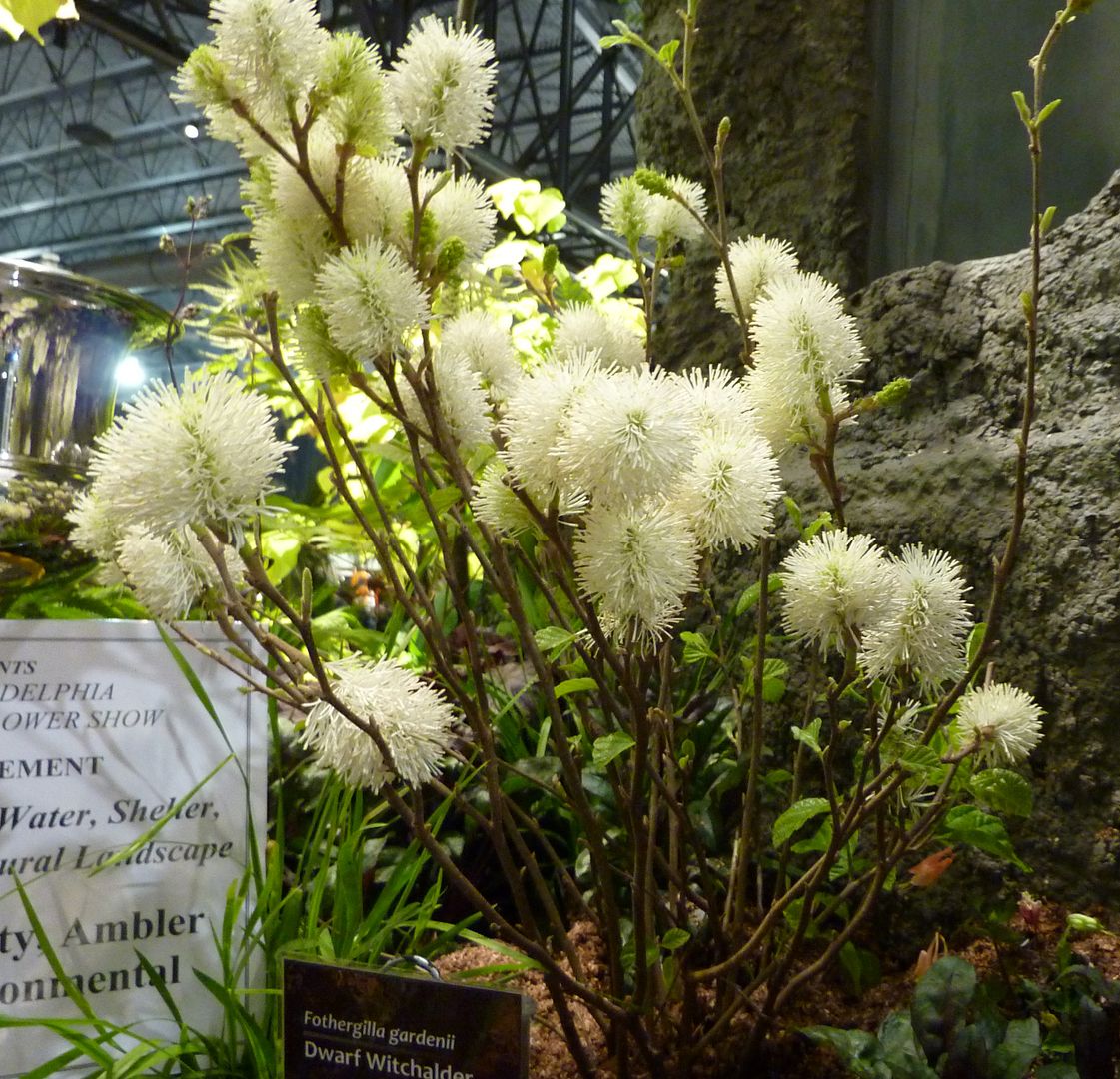
Fothergilla grande.
An issue with using natives is fewer nurseries grow them and aren't willing to expend their stock by forcing them to flower out of season. The result is often green and brown being the most common colors at this time of year. In years past I think they used witch hazel, and berry plants in their exhibit.
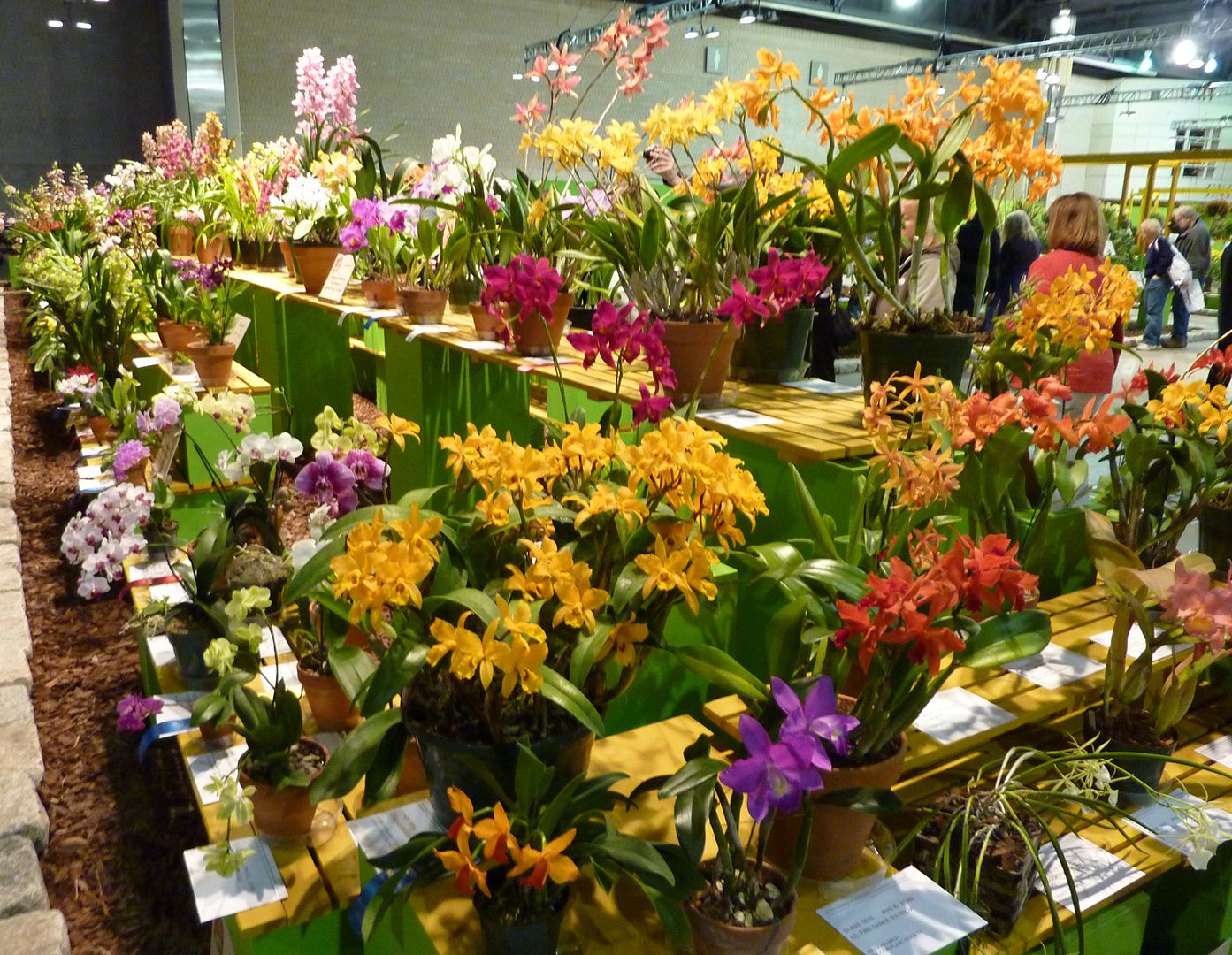
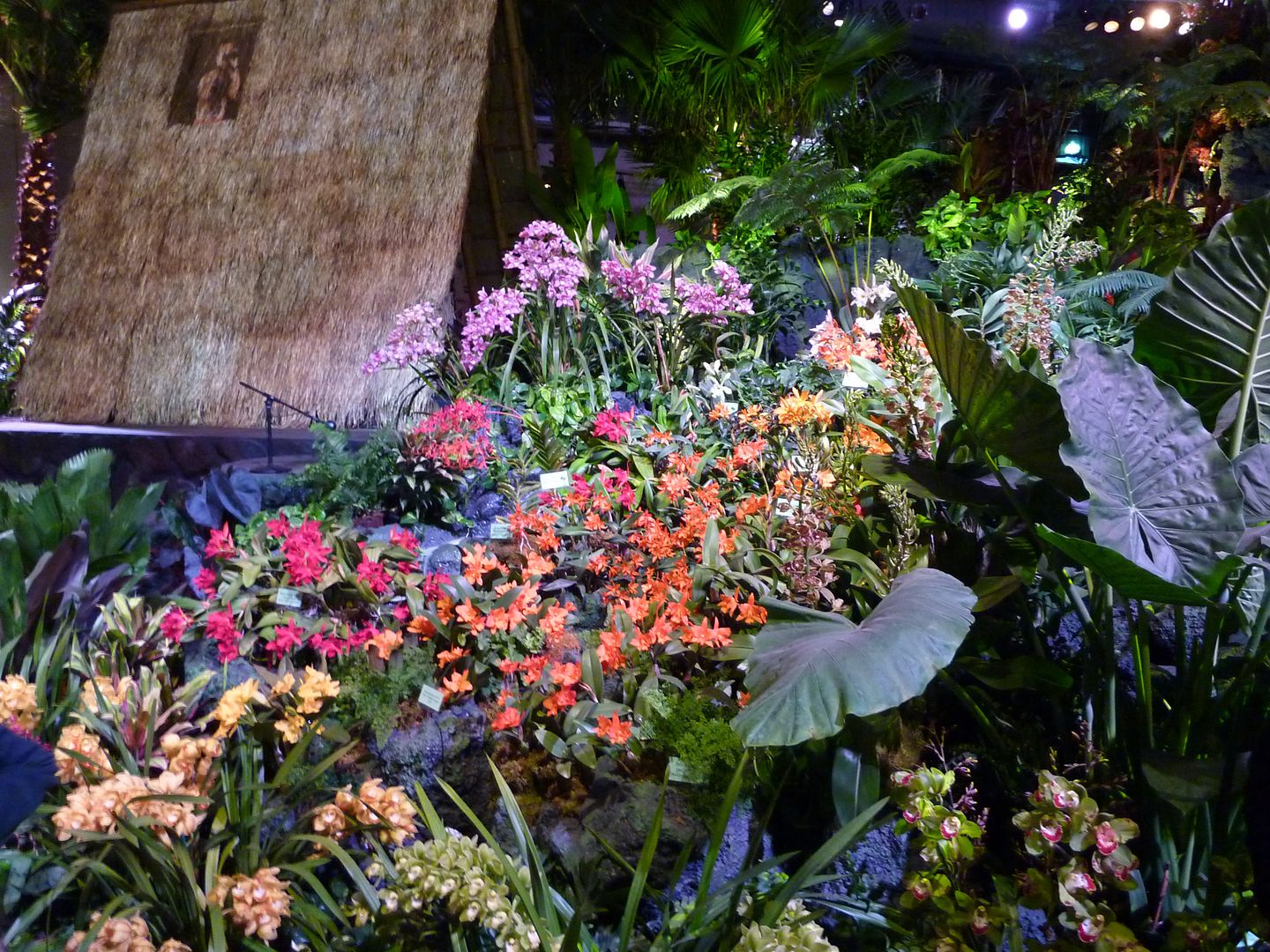
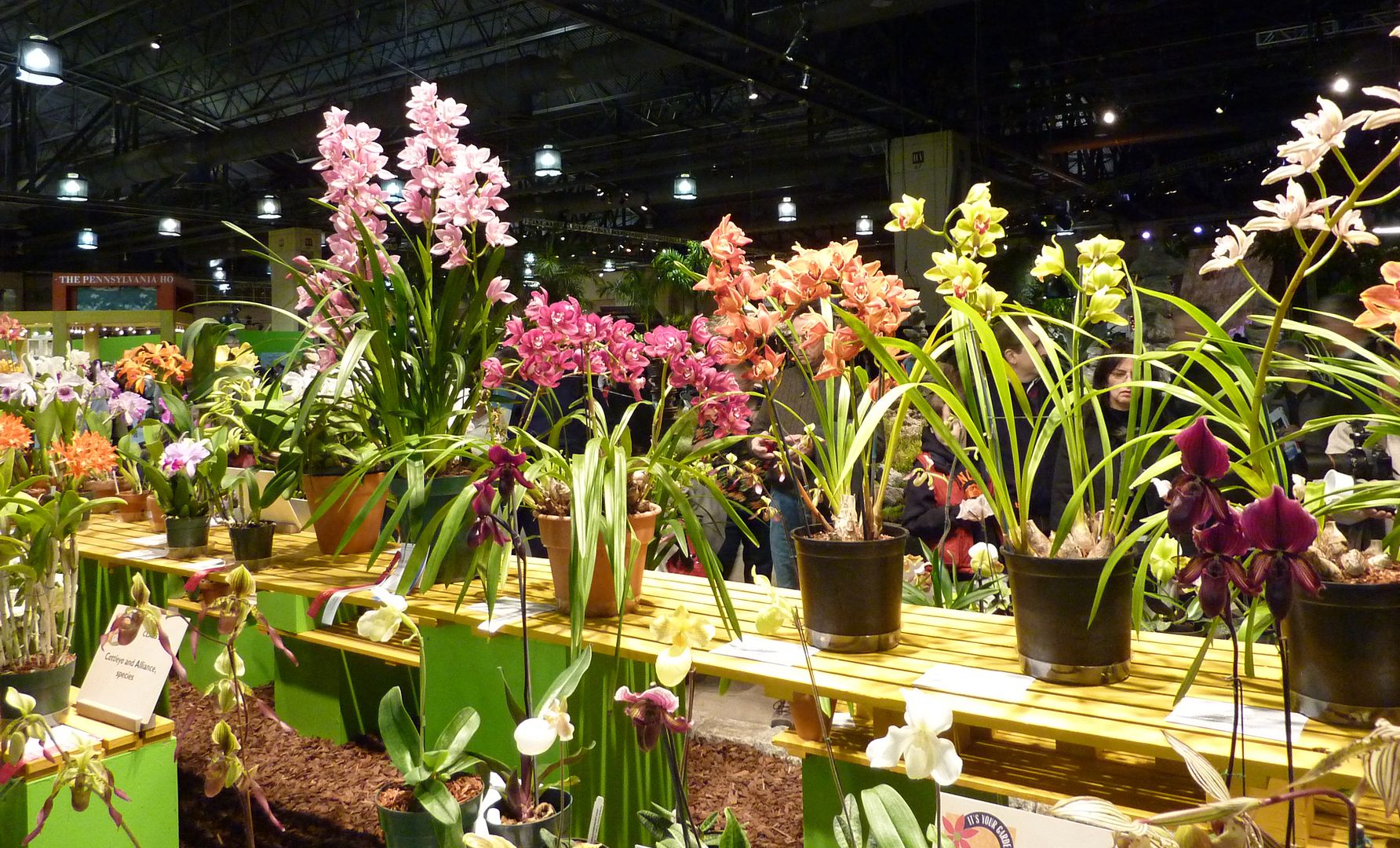
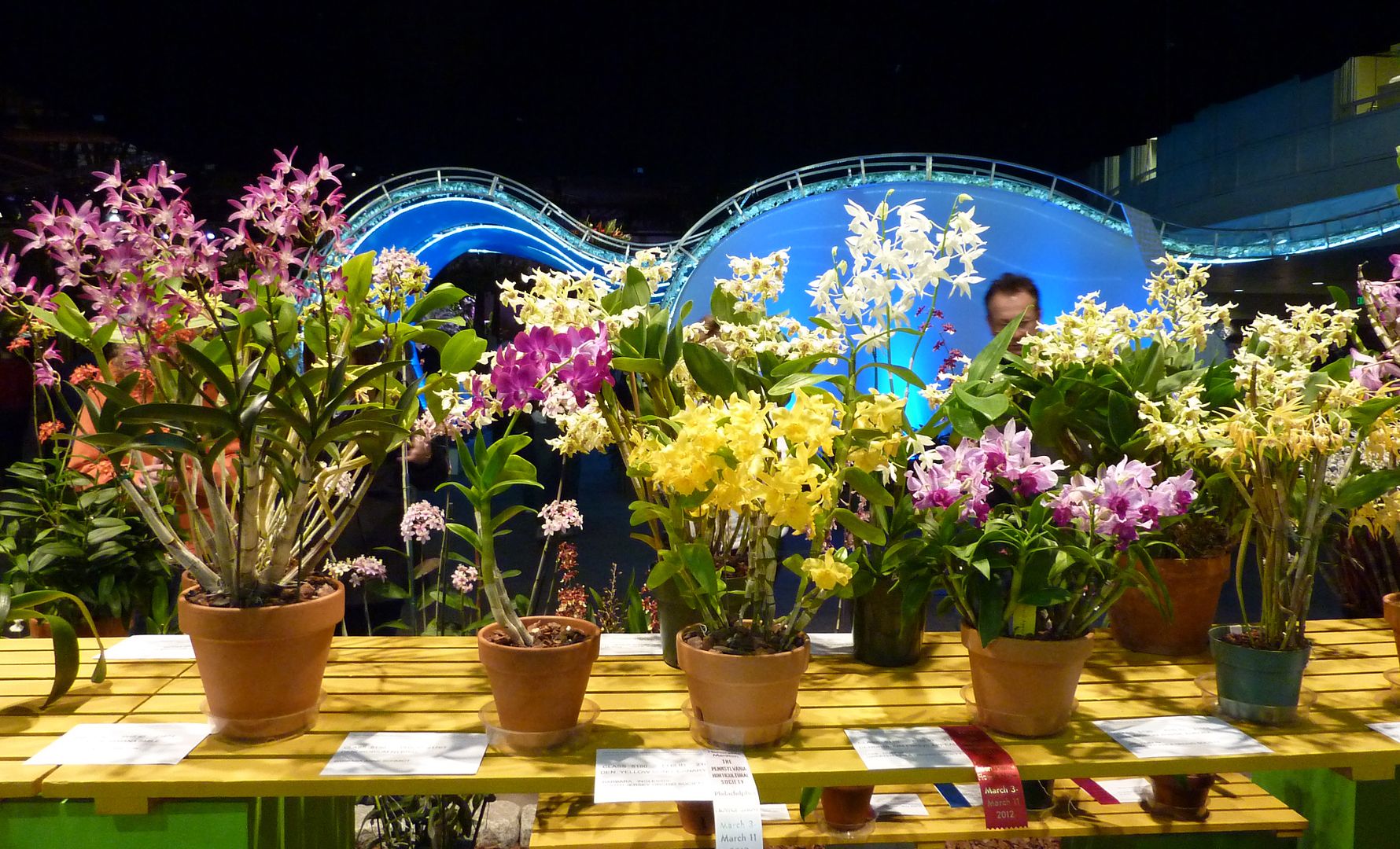
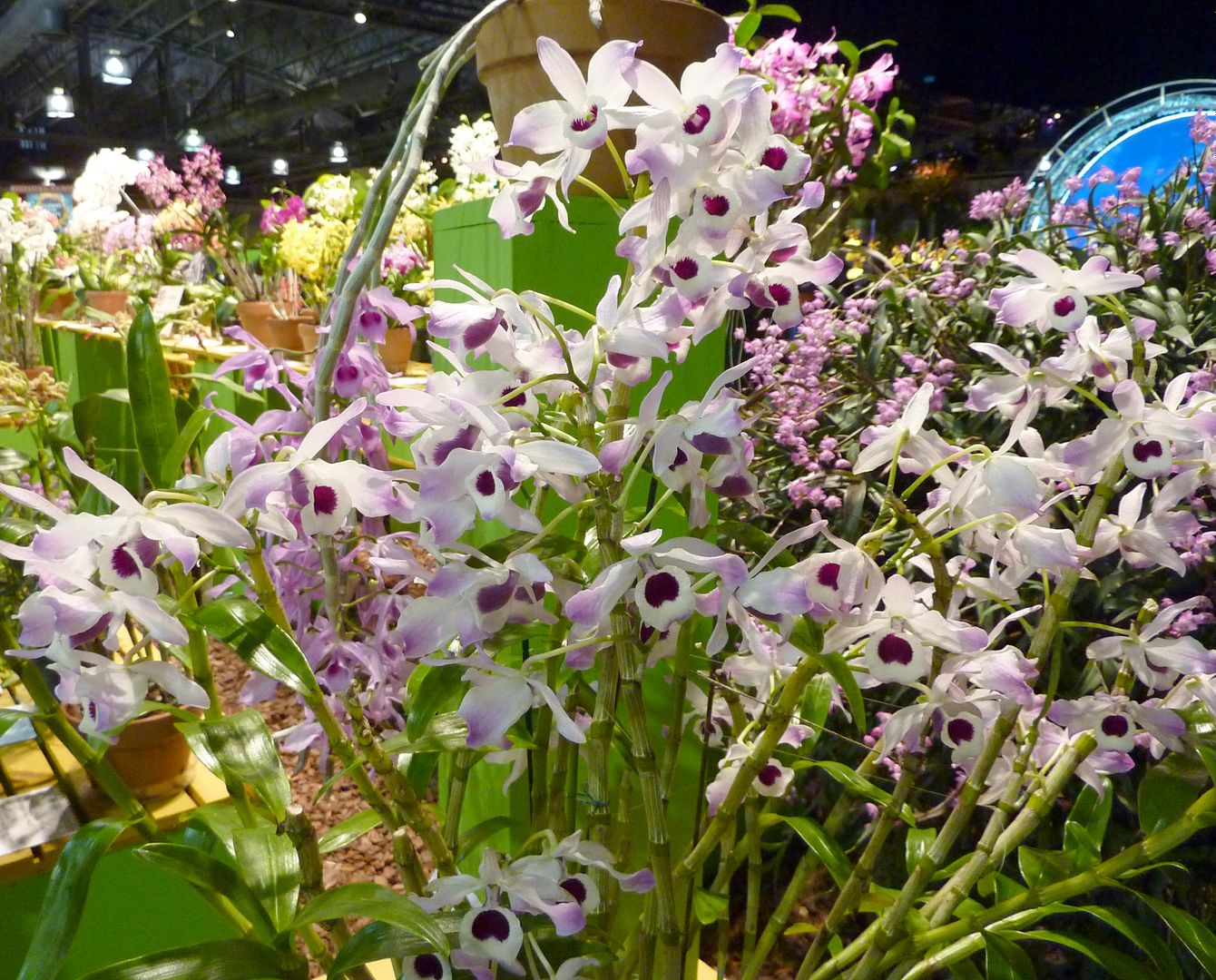
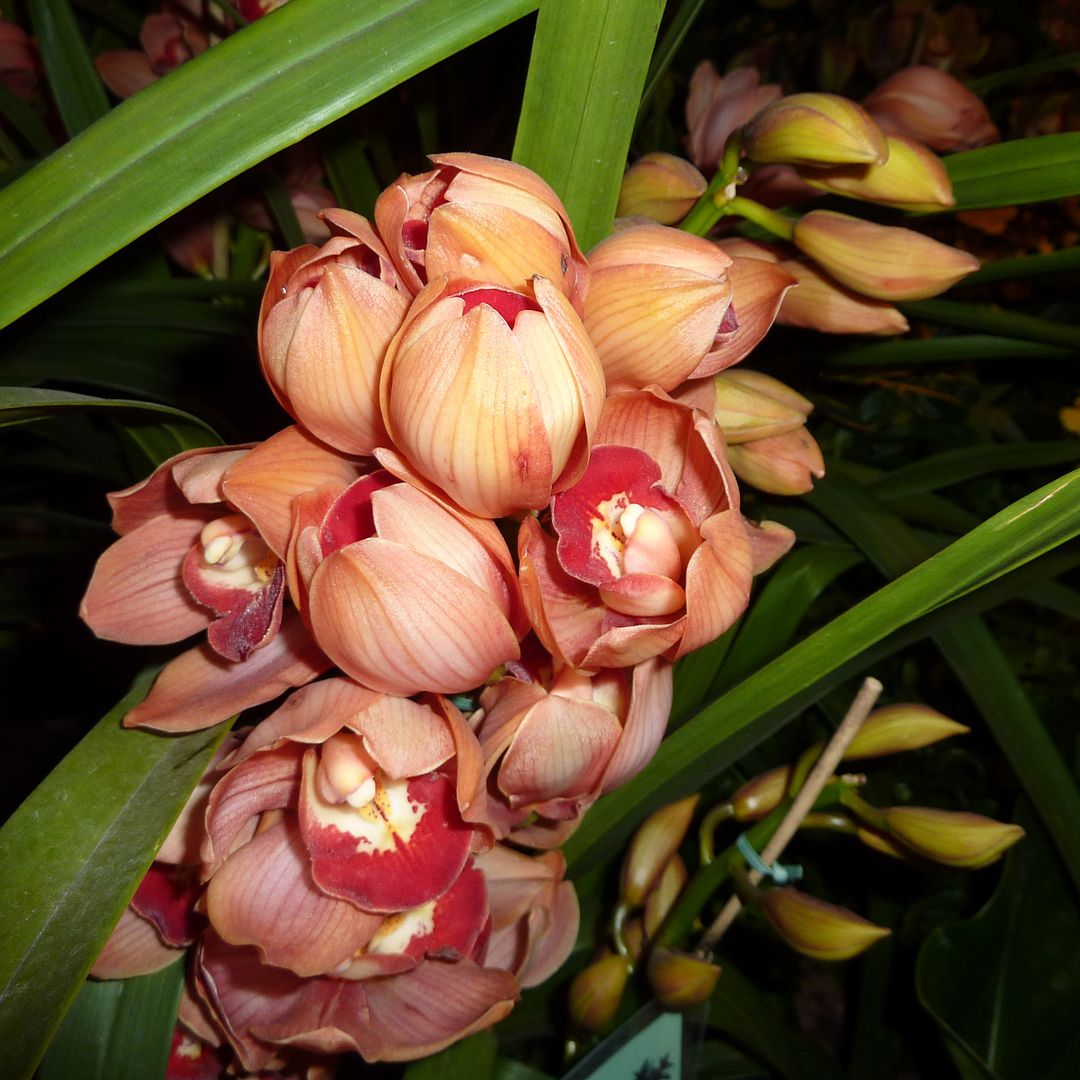
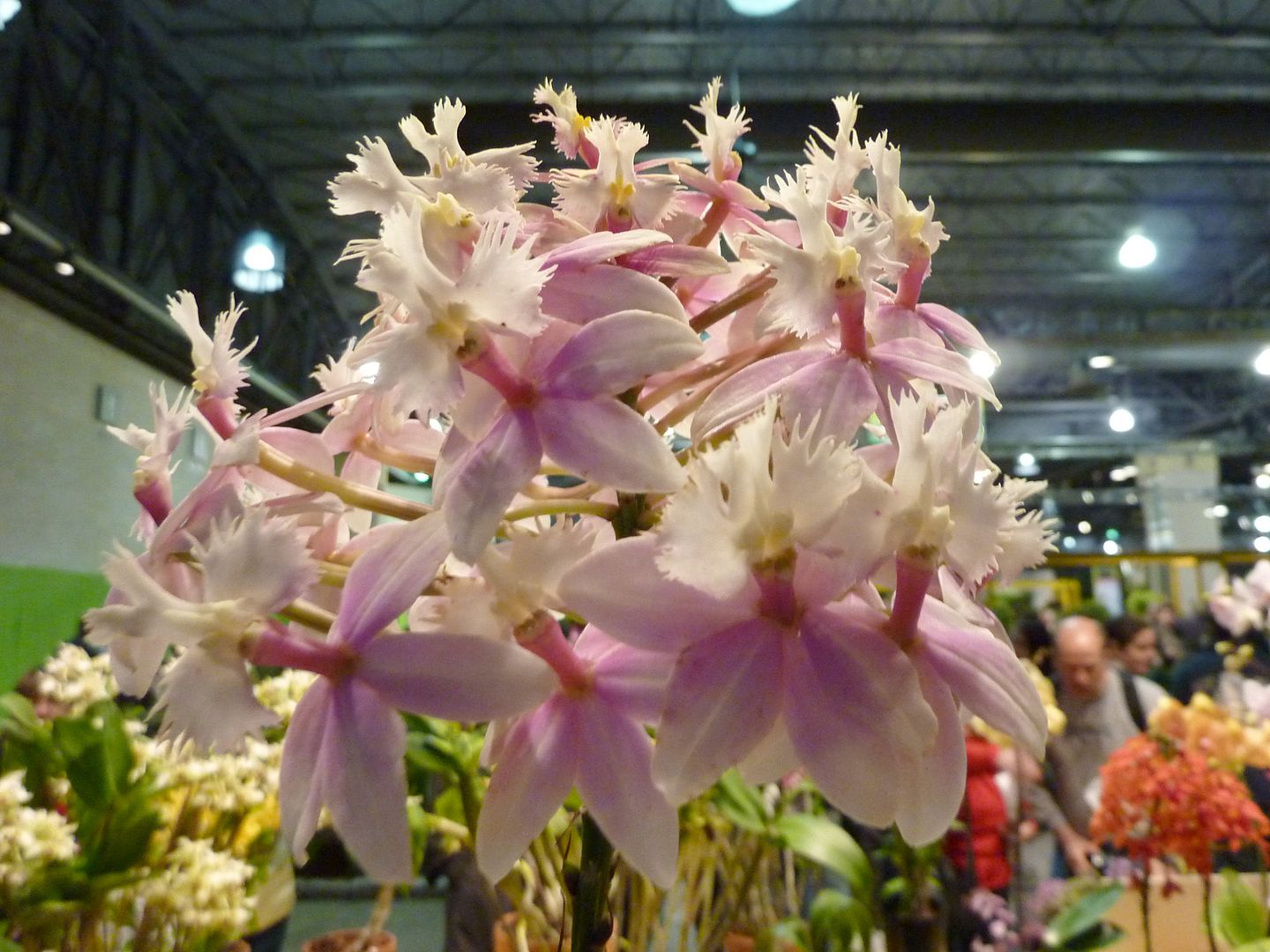
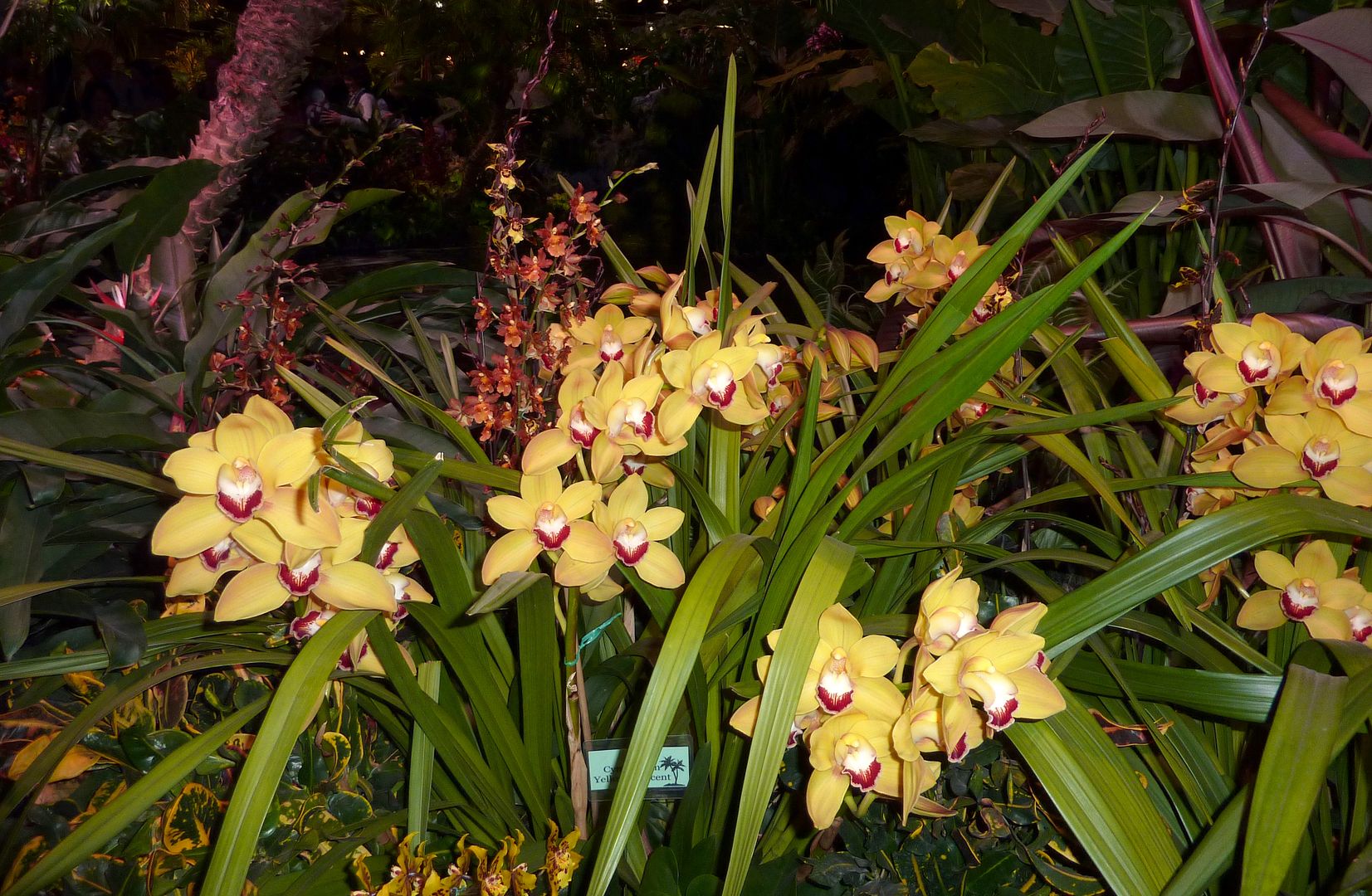
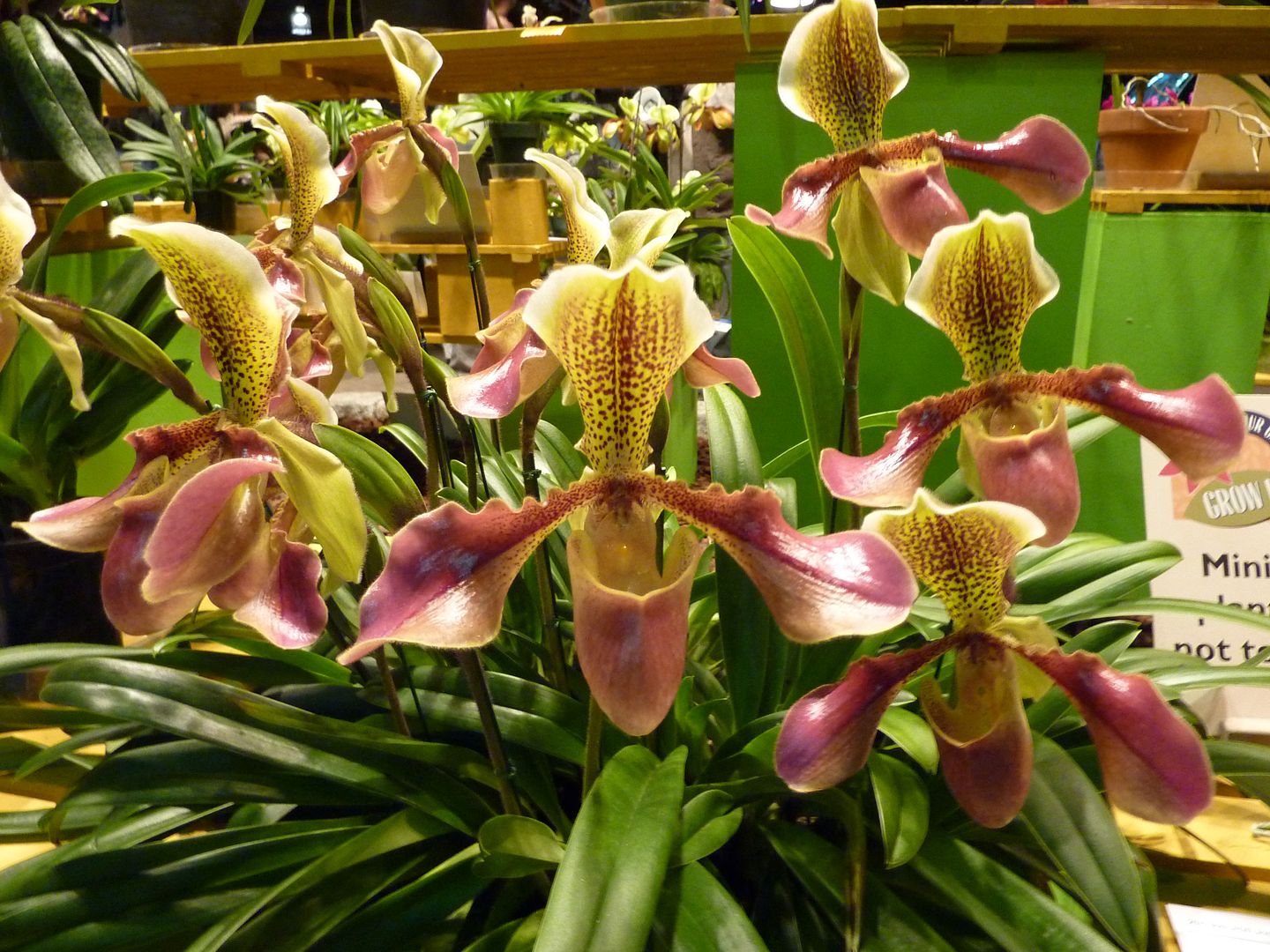
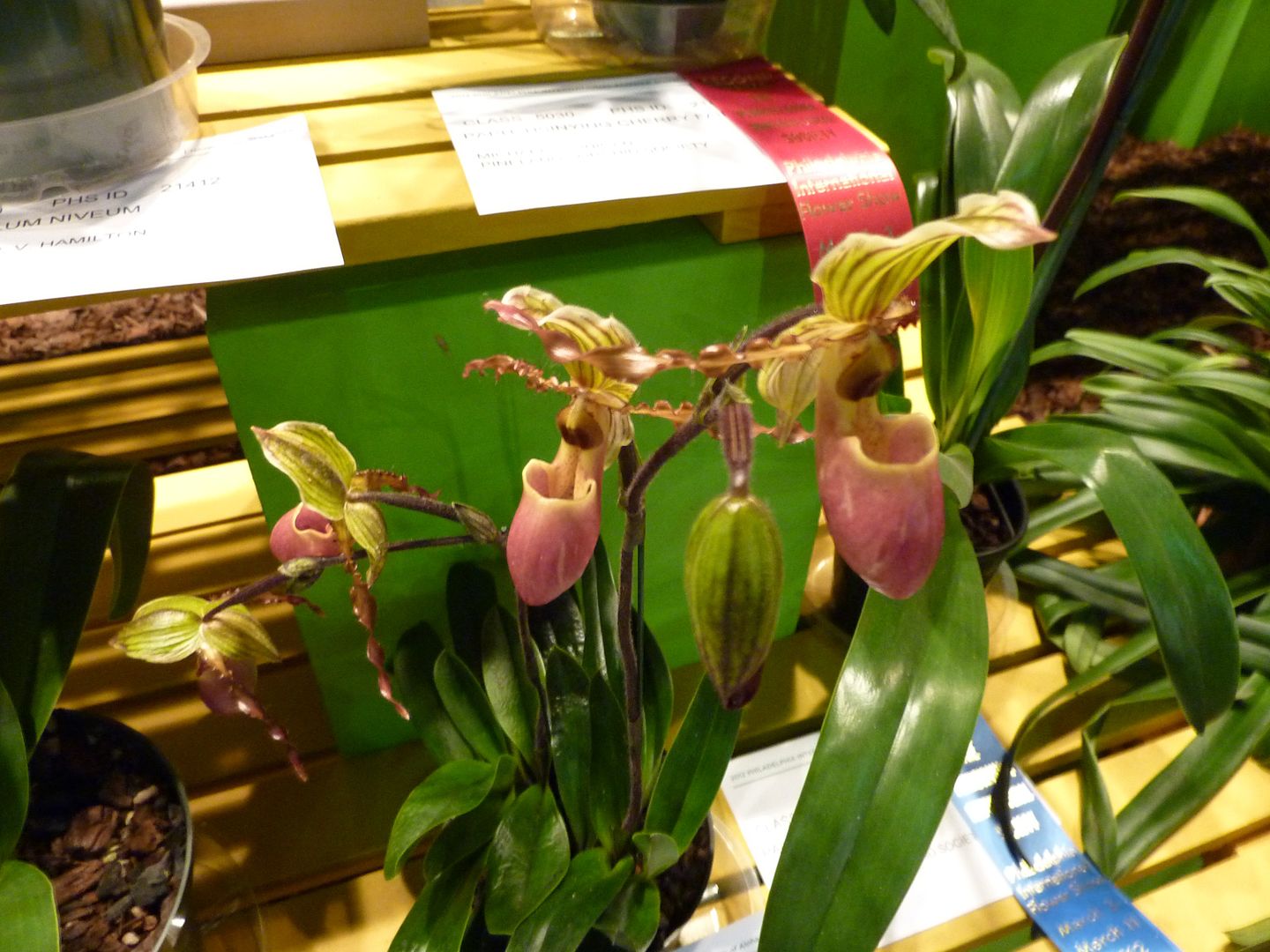
Onto what I'm calling the orgasm of orchids. What seemed like more than a third of the Horticultural part of the show was comprised of nothing but Orchids!
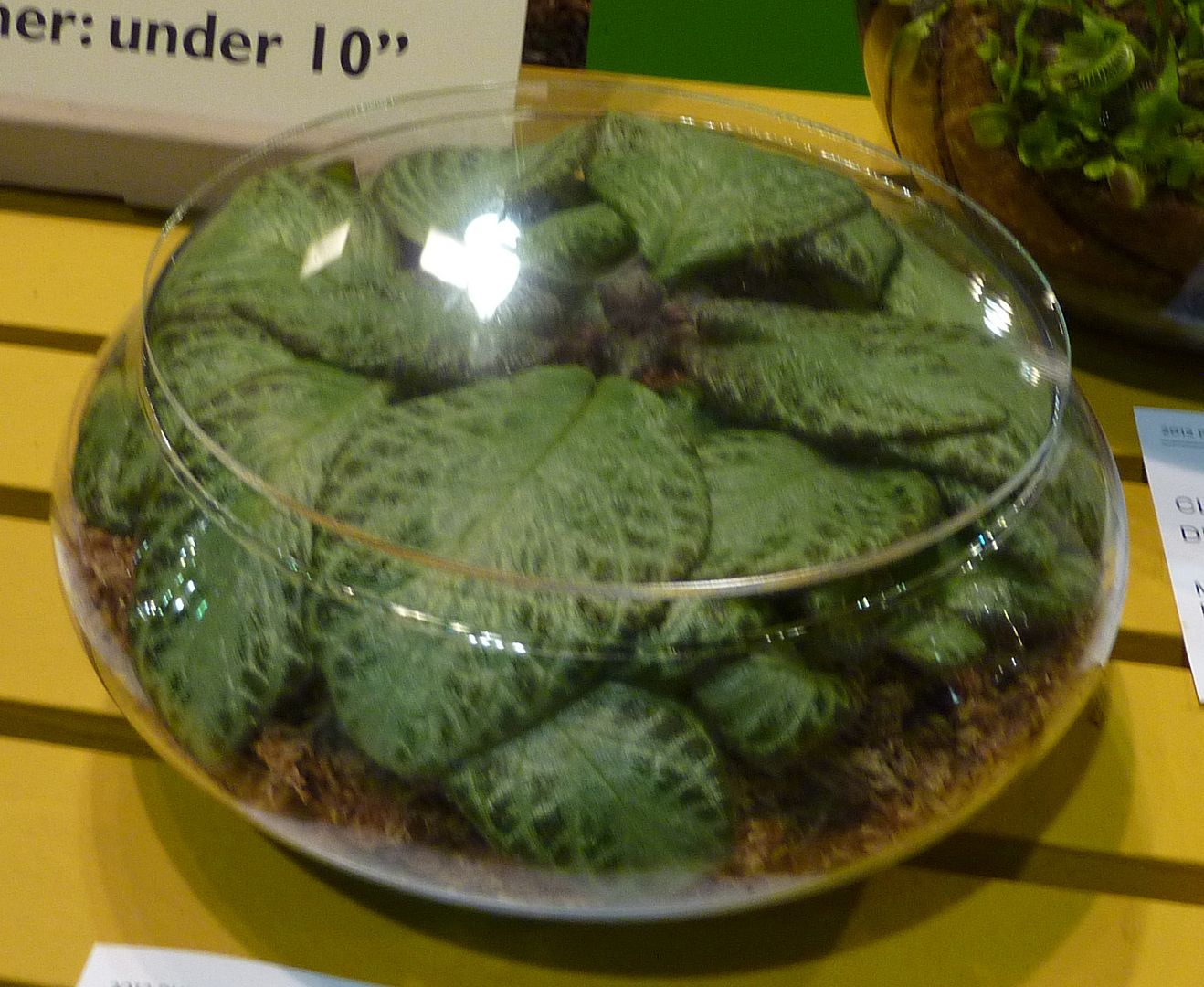
I knew this was a big family of plants but there was a ridiculous amount of variety here.
One of the prettiest pictures I took at the show.
This one actually grew like a tree or Rhododendron with all it's flowers atop the taller stems.
Here's an Orchid that wants to be a Trillium.
Talk about out growing its pot.
Pineapple!
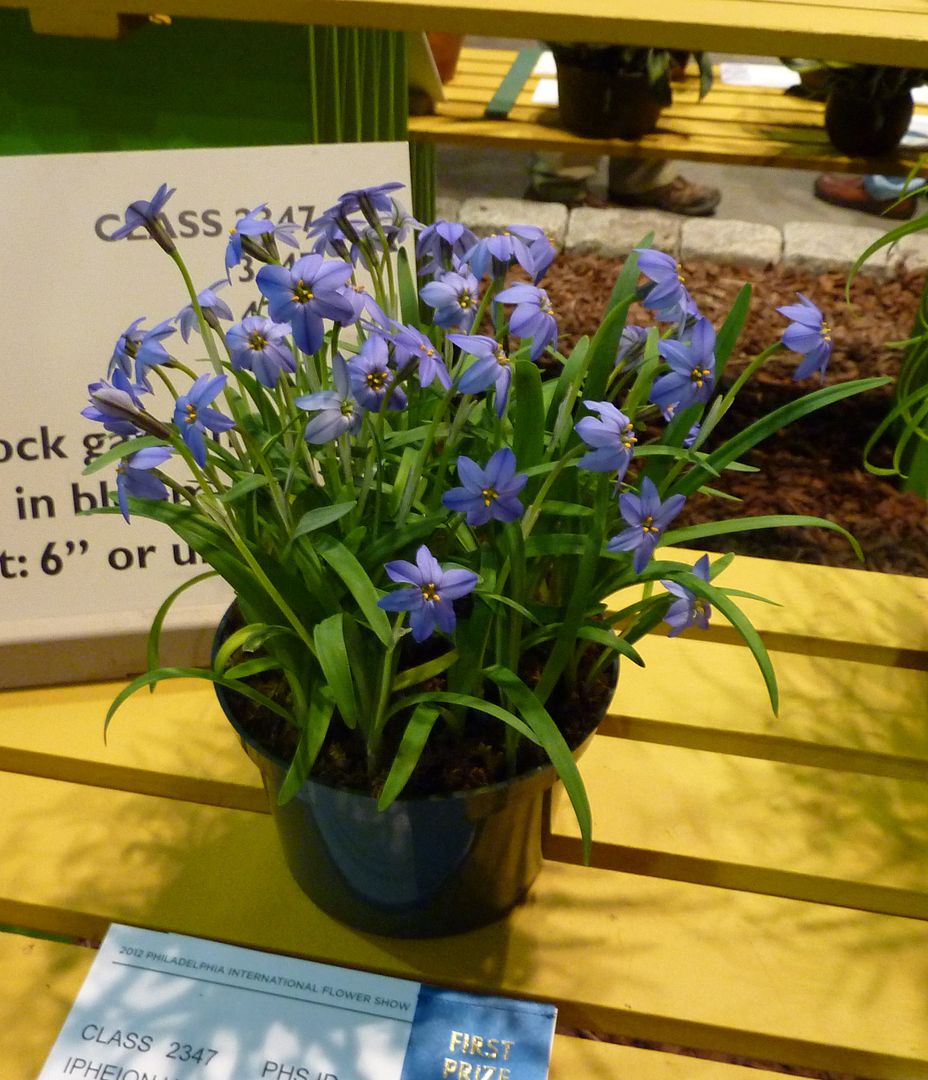
Ipheion... Why don't people just use Blue Eyed Grass?
Didn't get the name of this one but it's nice.
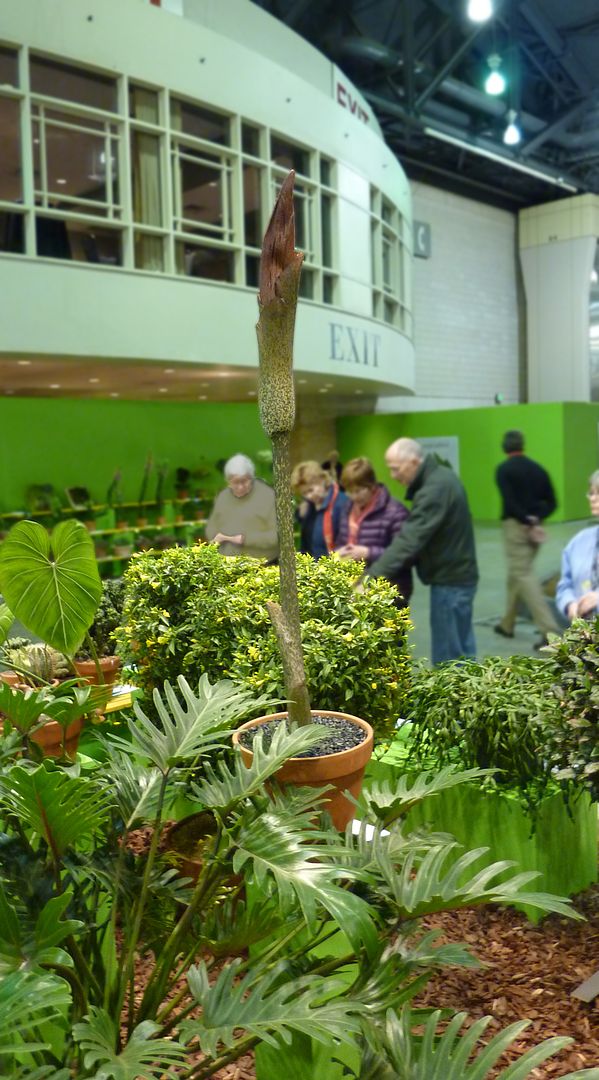
Someone had an Amorphophallus titanum at the show! This is a great big tropical plant that takes something like 50 years to make a very awful smelling flower.
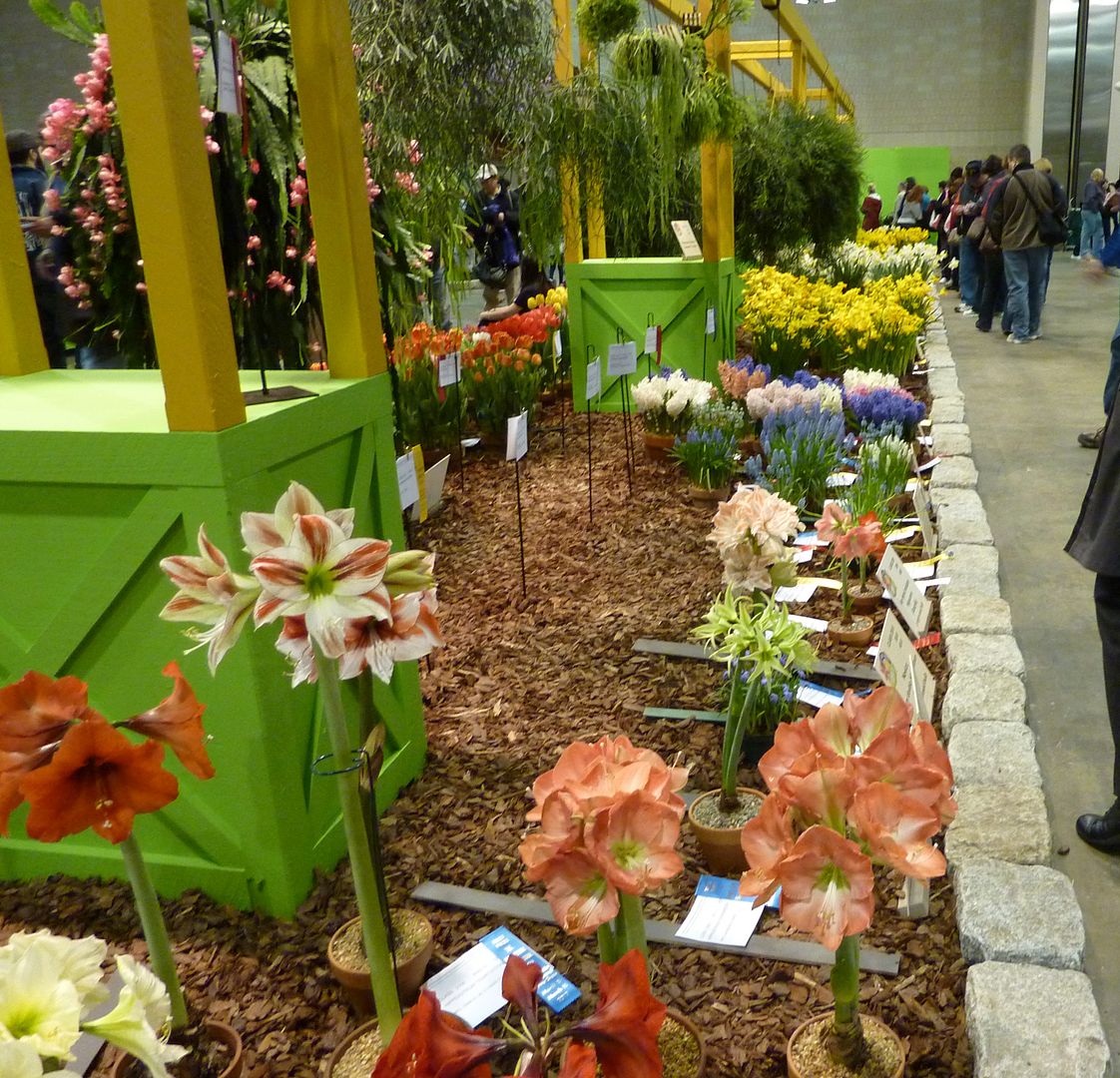
And last of all there's the area reserved for the usual crap. Crocuses, Daffodils, Irises, Narcissus, Tulips, Hyacinths have all been included in the main theme exhibits in the past 4 years that I've gone to the show. While there's something wonderful to say that you can see them in professional designs buy them at any garden center, it eventually begs the question why anyone would ever pay money to see them at a show if that's all they're going to use. The fact that they were didn't use them at all is what makes this the best flower show I've ever been to.
Now a brief moment of shopping.
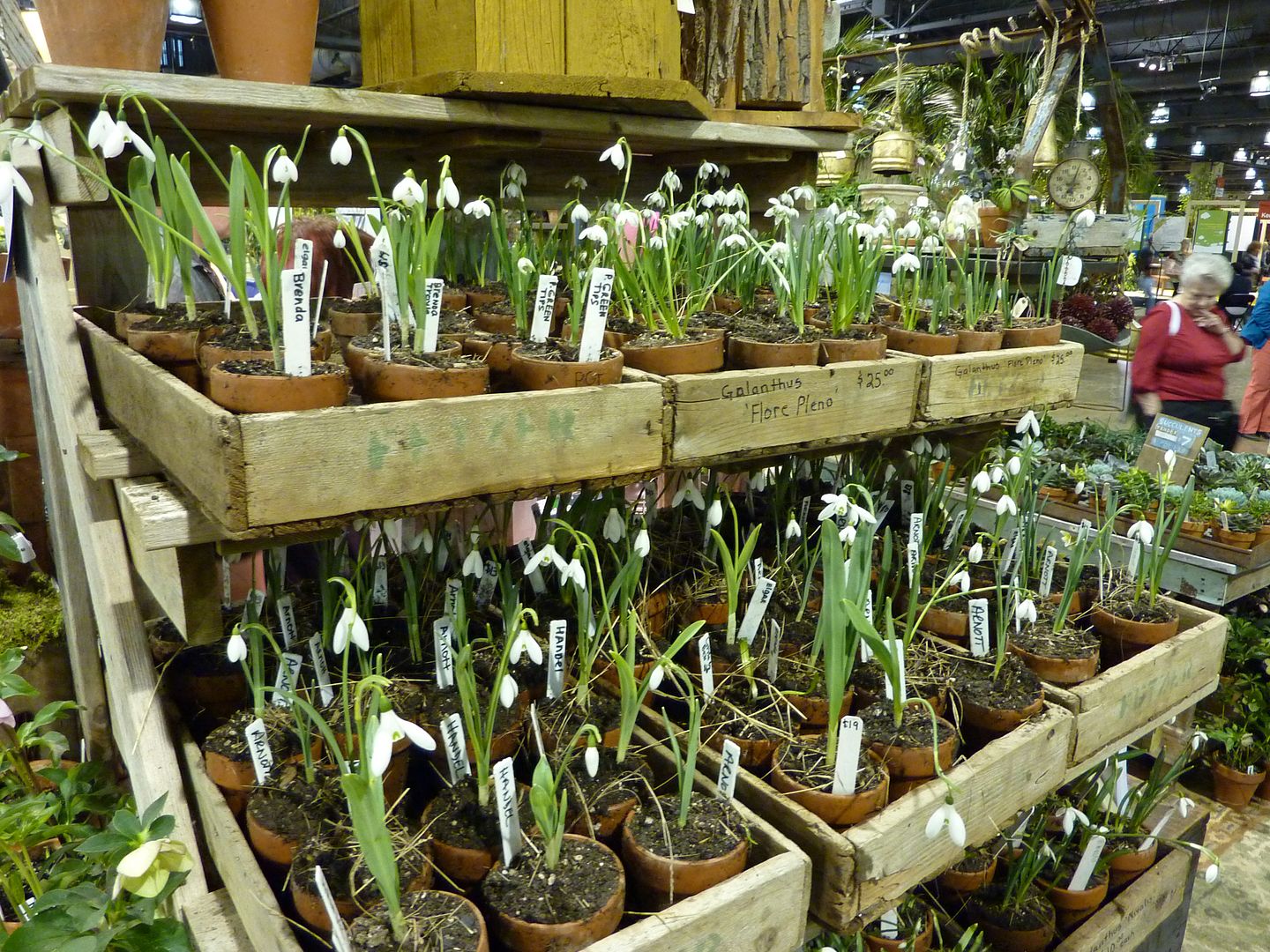
This vender was a crazy person. They're selling snowdrops in individual pots. You can buy them normally at any garden center by the bag for a few dollars. Some of them are 'cultivars' but it's hard to justify buying them this way. The pot and dirt are probably more expensive than the bulb inside of them. Having slightly more green spots, or a stem that's slightly shorter than normal on a plant that's barely noticeable to begin with ... Like do any of these honestly look that different from the norm!? They're Snowdrops! It's not uncommon for them to flower in the snow. No one is laying down in the mud or snow just to see how this cultivar differs. The effing flower even faces the ground! I don't even think they're double flowering!
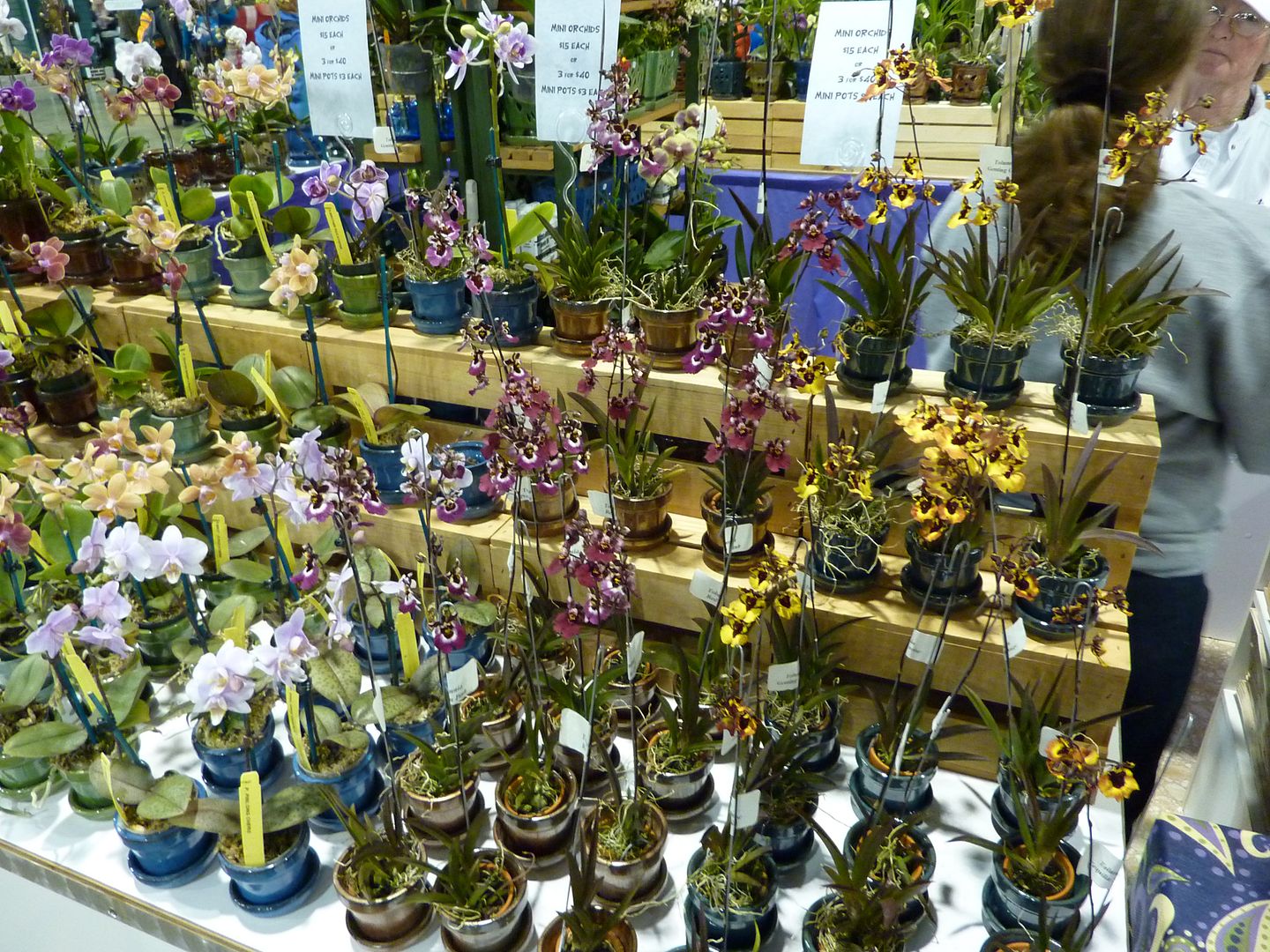
Orchids, 3 for $20. If I knew how to grow them these properly that sounds like a great deal.
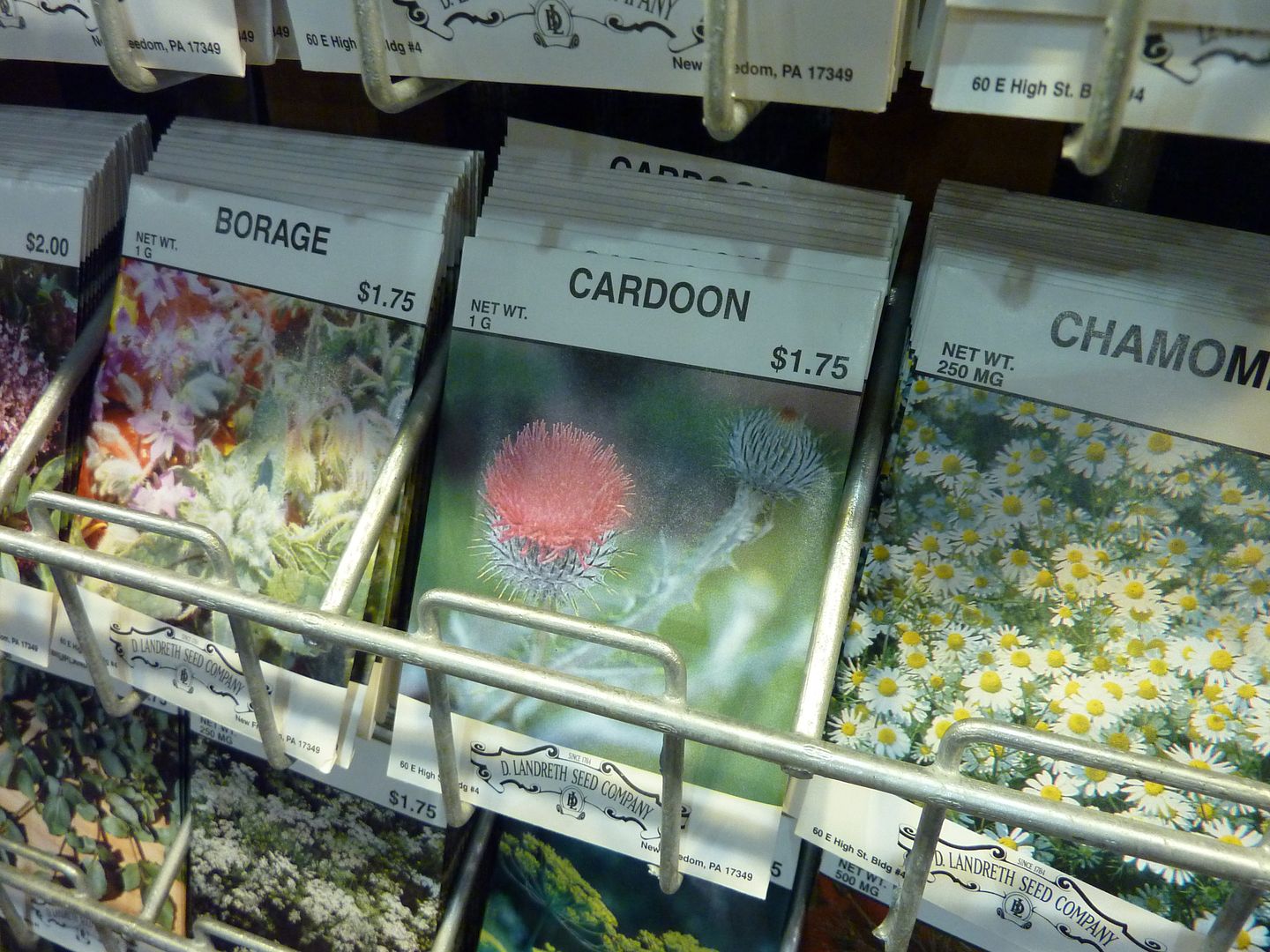
Seed packets for Thistle. It's a nonnative currently invading the west coast but thistle all the same.
My only real complaint was that I didn't get laid at the show, though they were selling them. So that was the show this year. LOVED IT!
Also Fun Fact: A Hawaiian Luau doesn't get the same result as Mardi Gras beads.
Subscribe to:
Posts (Atom)