Showing posts with label Nuptial Flight. Show all posts
Monday, April 1, 2019
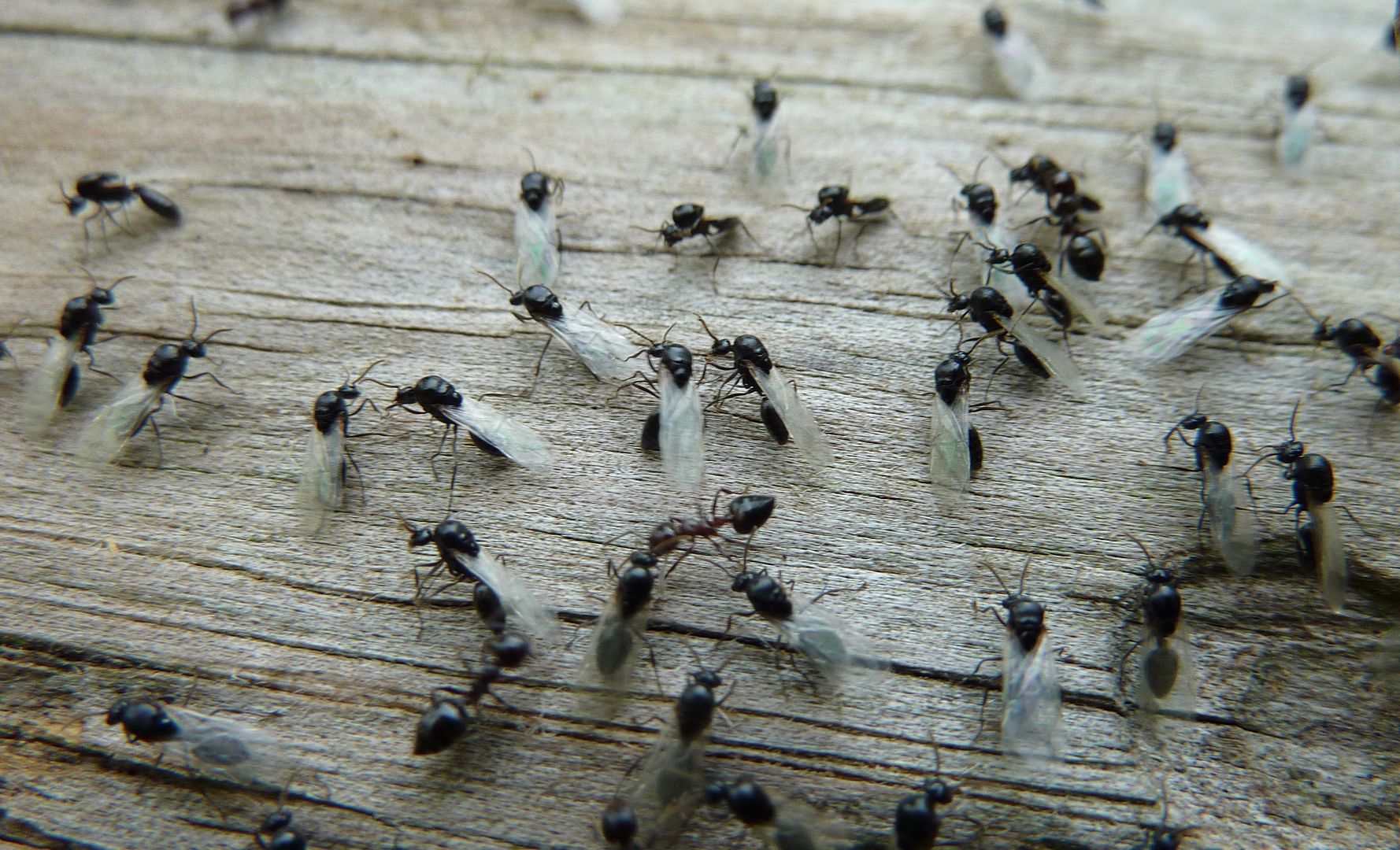
This Week in Anting 04/01/2019 Winter Ants Flying
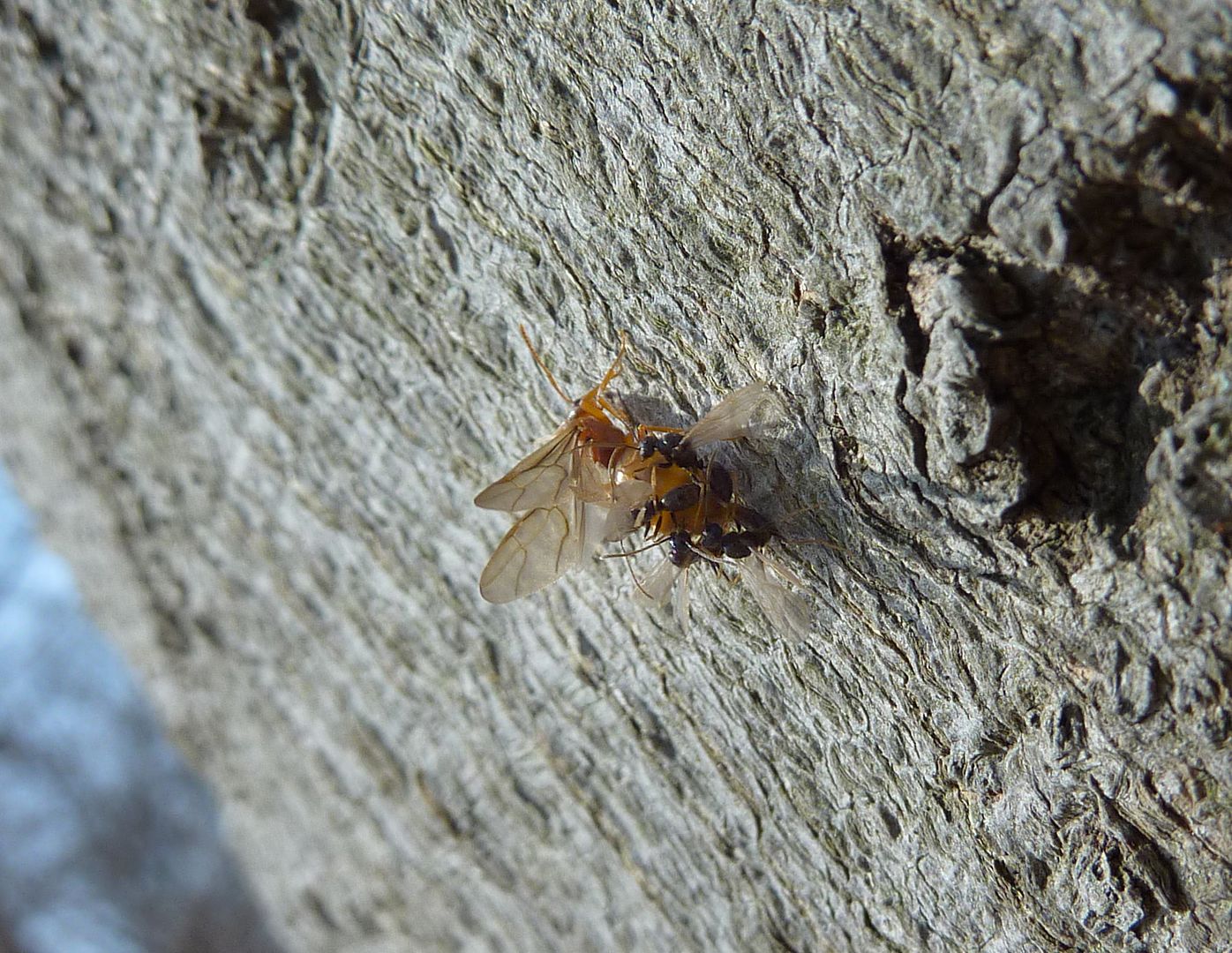
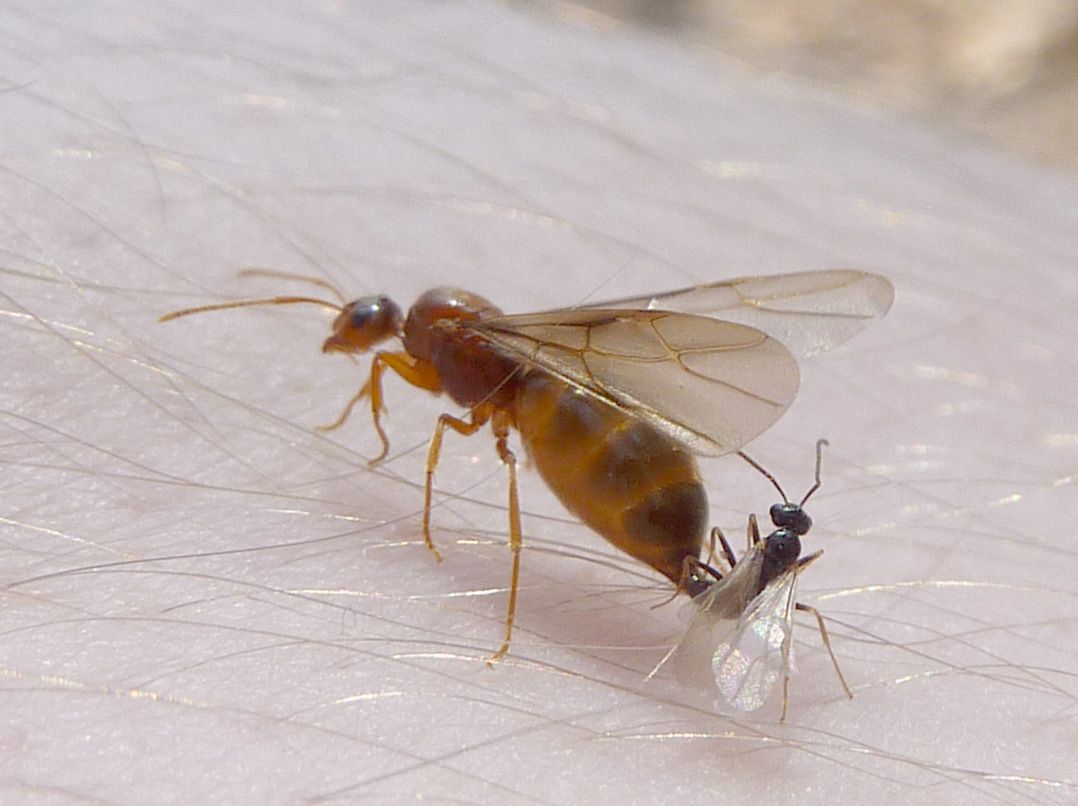
Sorry about the wind in some scenes. These ants don't mind flying on days with 60mph gusts. Indeed it's probably part of why their swarms gather around trees with large trunks, or shrubs or fences and so on. The males gather around these wind breaks to better establish a swarm that attracts the queens.
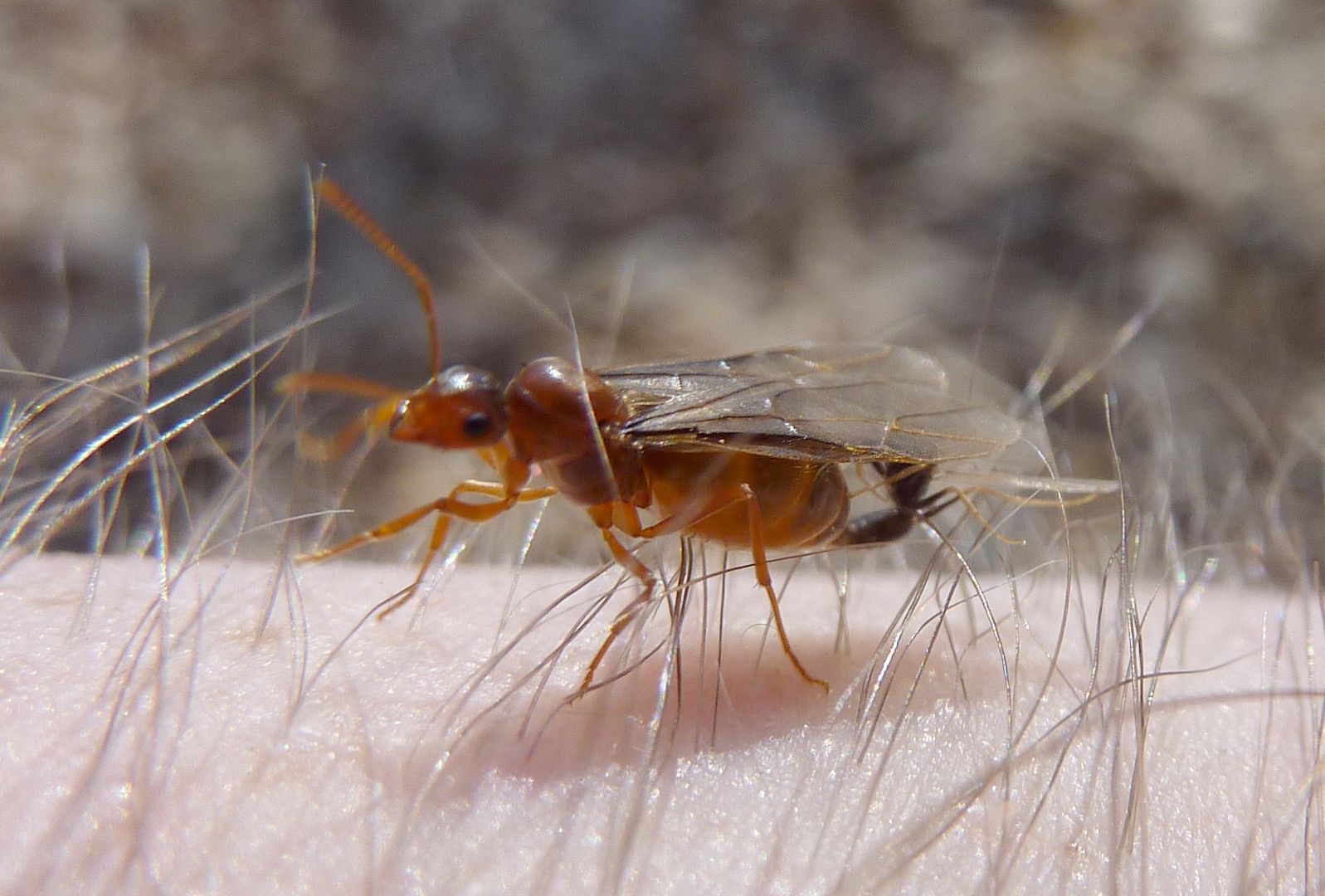
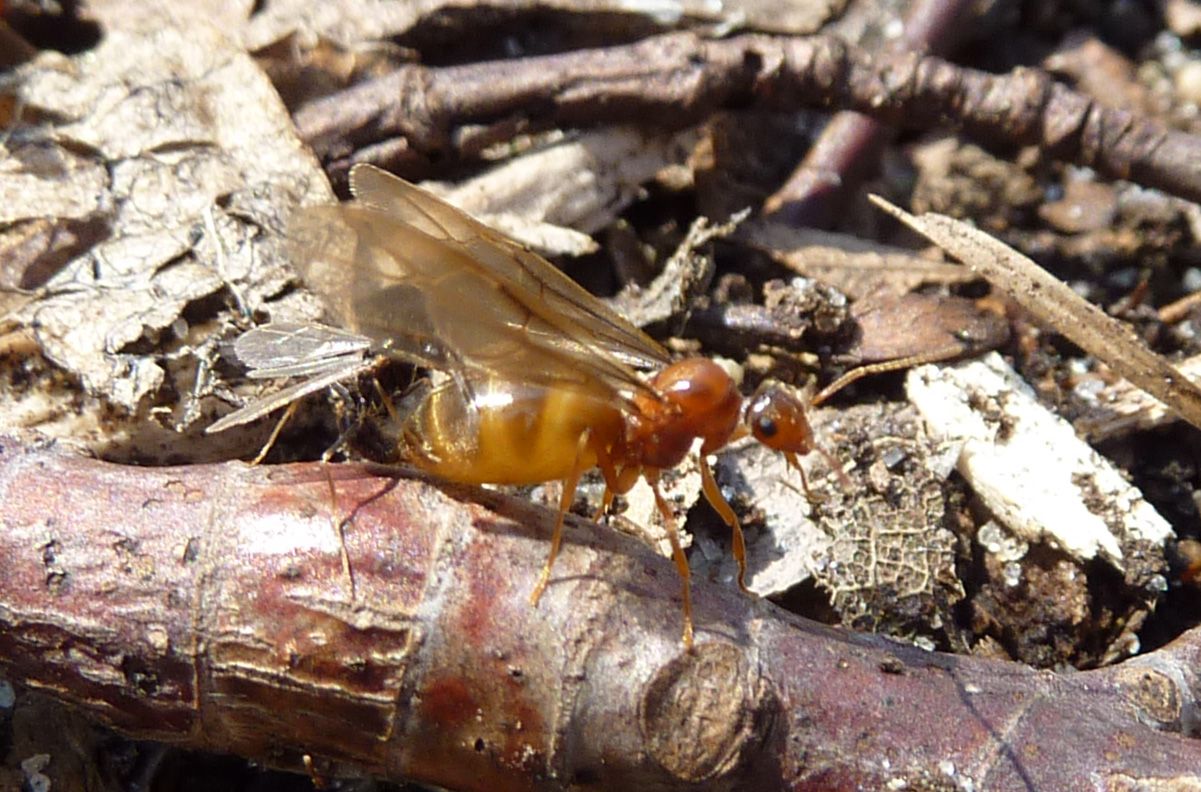
I was fortunate enough to get one queen to pose for me quite gracefully for a short while.
I was able to get some great shots of the head and body.
And she couldn't have picked a better perch to stand on.
The colors of the log and the green of the background really help show just how pretty this ant is.
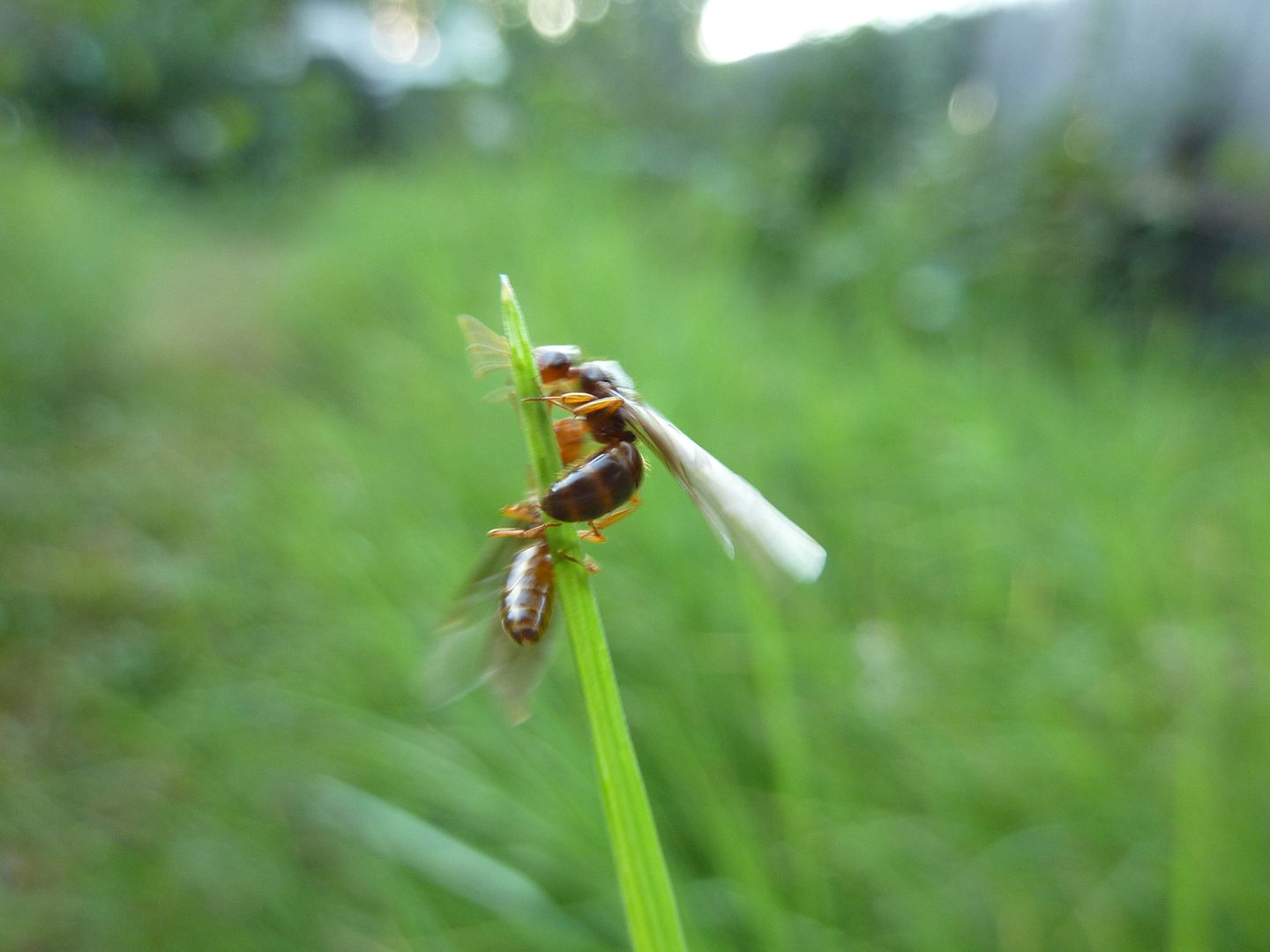
Also surprising was finding this Camponotus subbarbatus queen. It's much to early for them to fly and she looks malnourished. Usually the gaster is twice the size and with more of the yellow bands of color (common in this species) showing! I suspect she must have flown last May and failed to found a colony but managed to survive the winter. I'm going to try and feed her to see if I can get her to rebound.
Saturday, October 3, 2015
Strumigenys Nuptial Flight in Day Light
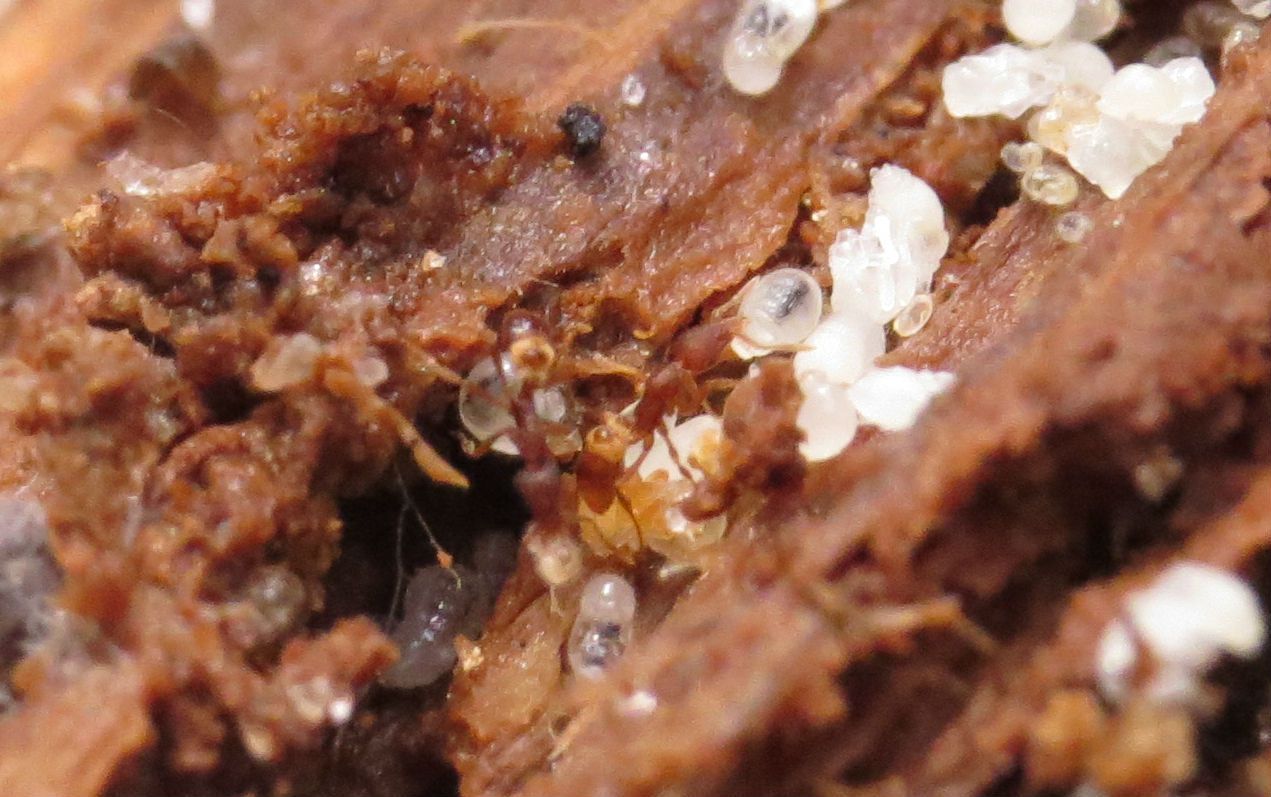
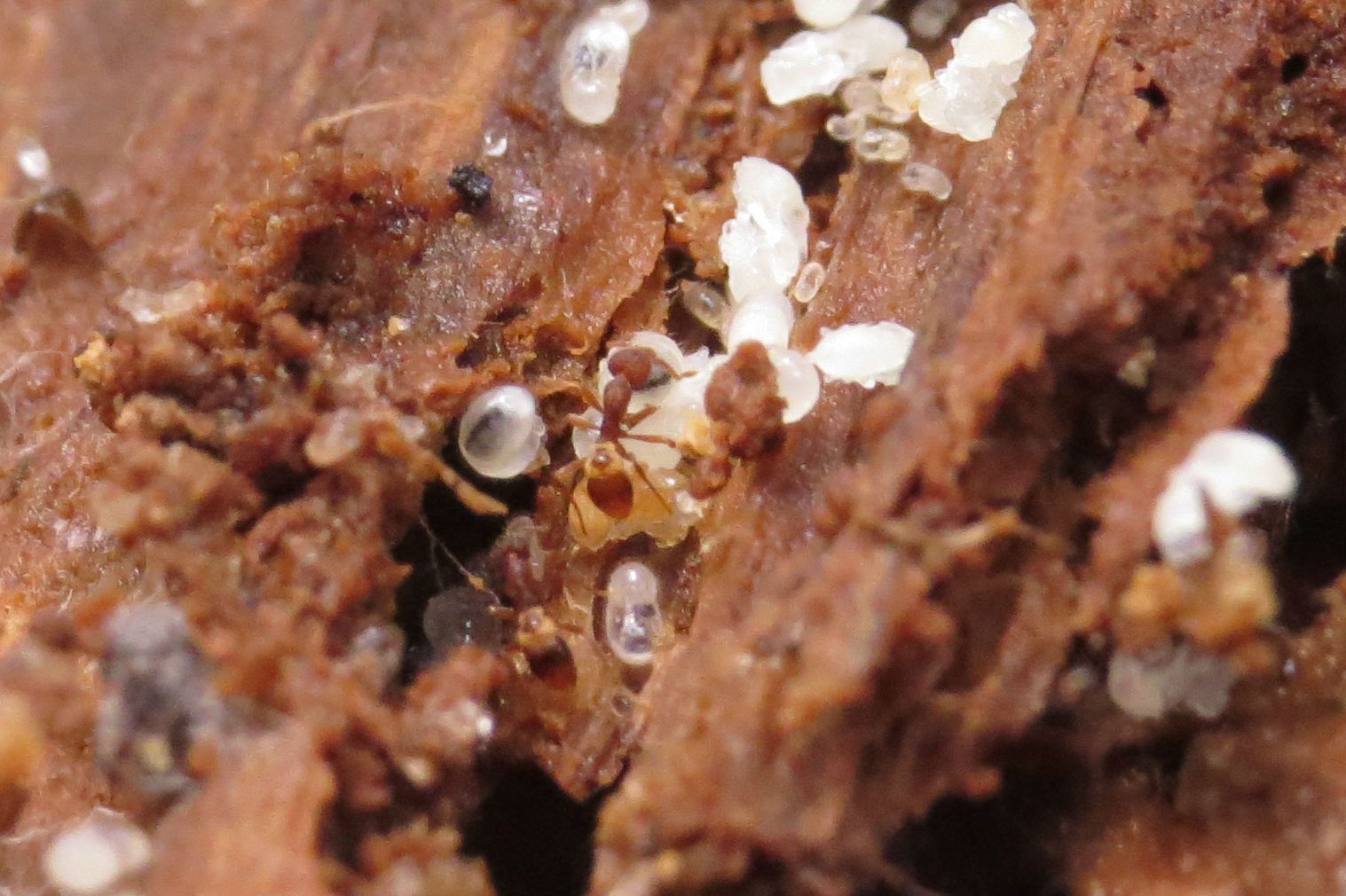
Strumigenys is a diverse genus in North America with almost 50 species. Despite this diversity though, the genus is almost exclusively encountered by Myrmecologiests and those in other scientific fields that involve sifting through leaf litter and dead wood.
They're so small that they're hardly noticeable, and they look so strange compared to other ants that most people would likely be confused that they were even looking at an ant.
For better close ups, here's a link to Ant Web's specimens, and Alex Wild's album of the genus. Notice the odd petal-like structures that cover the body. These are modified hairs which I believe are used help cloak the ants as they hunt. Some species in the genus have long mandibles similar to a Trap Jaw ant's. These are used to allow oils (and fungi?) which make the ant less noticeable while hunting.
They're primarily predators of springtails which are small, mite or termite-looking insects often found in decaying wood. Truthfully though these ants are more than happy to kill any sort of soft bodied invertebrate.
These ants require "cool" conditions in order to survive. In the wild they always nest inside the damp and decaying media within the hollow of a tree, or in a soggy log that's often well shaded and rotting. Other species are at home nesting in soil and leaf litter, but good luck finding those. Colonies do not make mounds of any kind, entrance holes are often cryptic at best, and populations tend to range around 200 individuals that could happily fit on a US. Quarter.
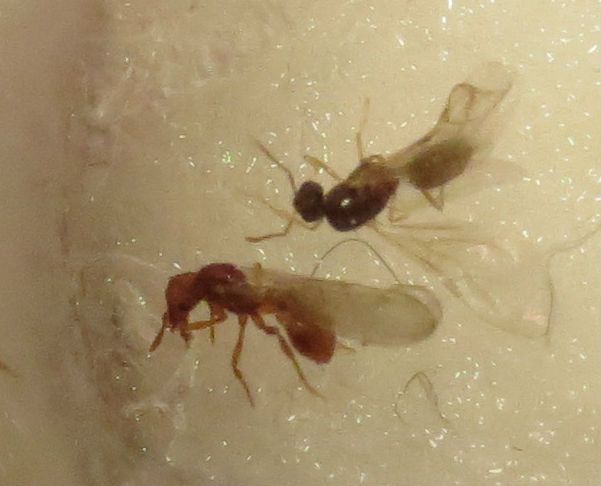
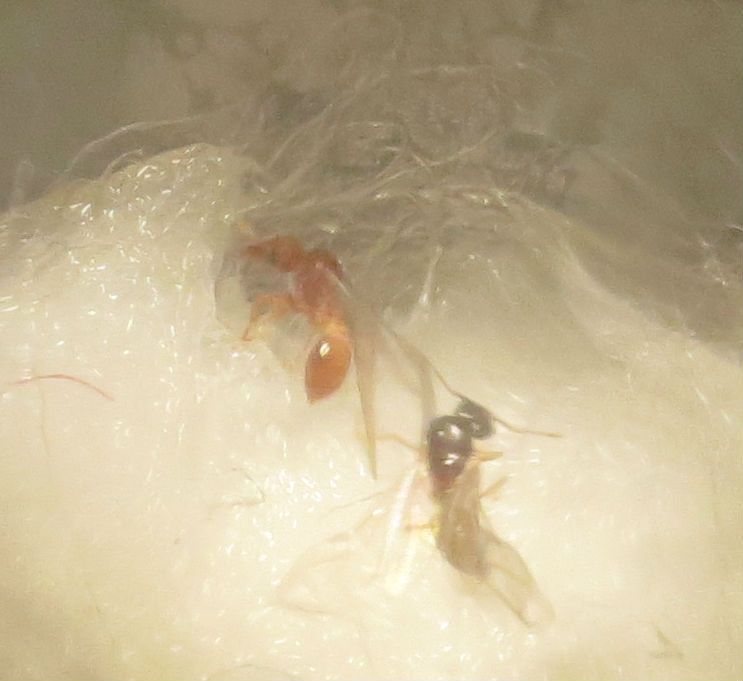
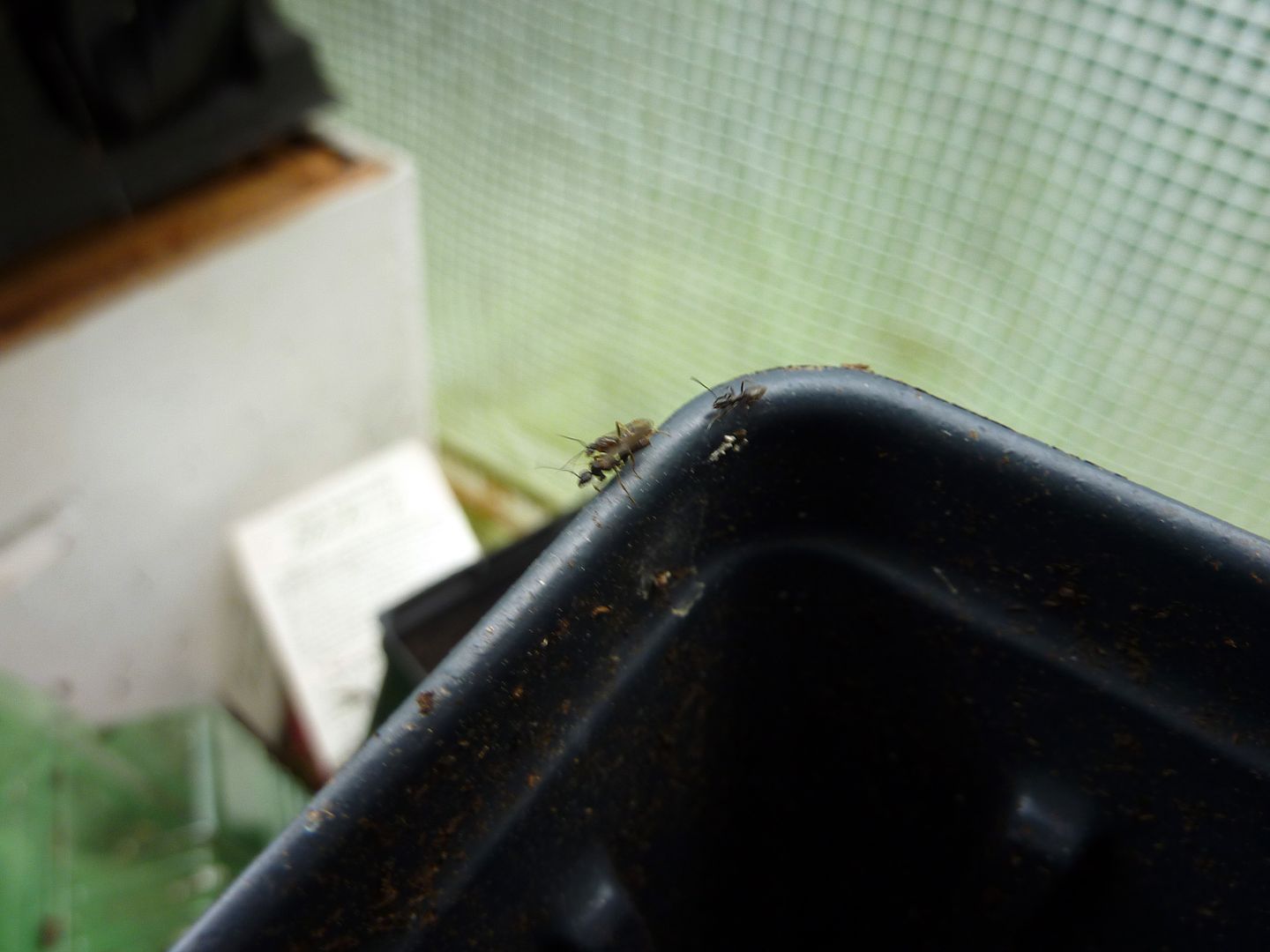
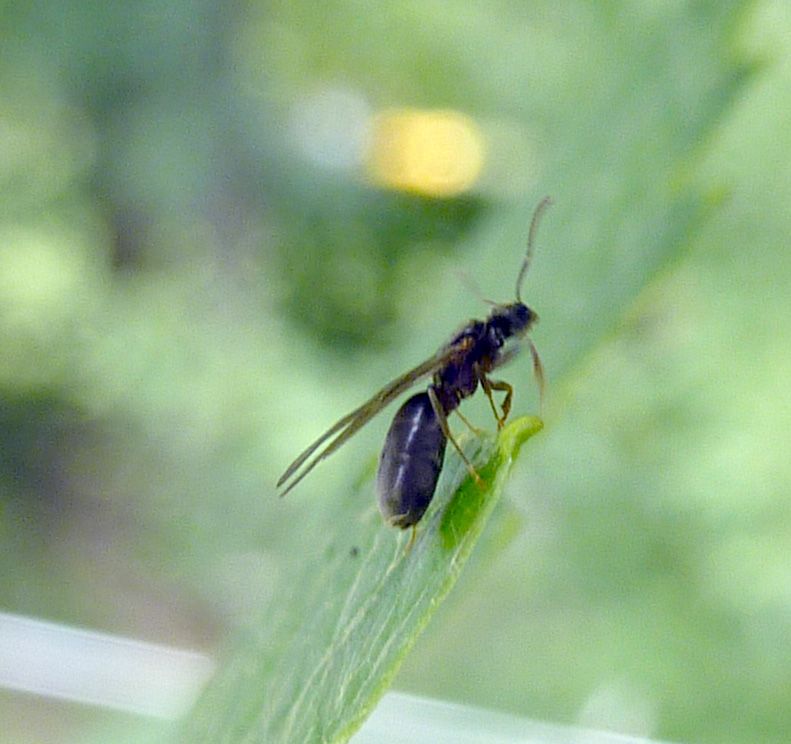
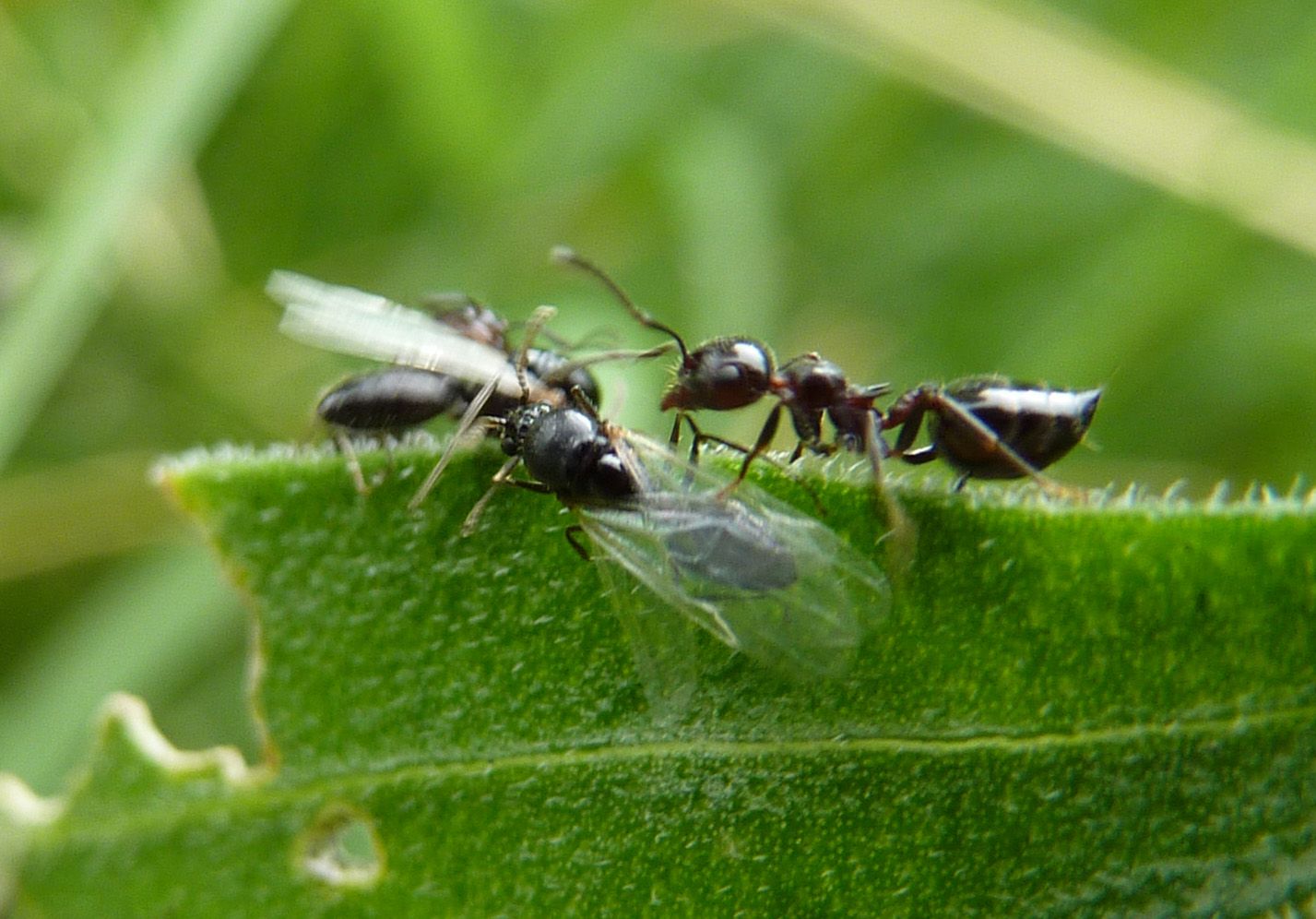
Curiously I discovered these ants hold nuptial flights in the day time but under specific conditions. Here in New Jersey it's the calm before the storm as Hurricane Joaquin moves up the coast. The sky has been solid grey clouds for as far as the eye can see for a few days now, and raining has been off and on. It's been cool out too, around 55F but on the day that it was still 77F I happen to find a few alates to this genus landing on my car.
Ants being attracted to bodies of water, parking lots full of cars, and other reflective surfaces isn't anything new, but the fact that this genus flies in the day time is! Everything about their nesting habits has been cold and shaded, and it's entirely possible to accidentally kill them if they get too much sun. So I find it odd that they wouldn't hold nuptial flights at night.
Regrettable I couldn't locate a colony sending alates into the air. Their colonies are just too hard to find. But I was successful in catching a queen and male. I've no idea if she managed to mate or not (leaning towards no) and it's rare for ants to mate in captivity, especially after being collected. All the same, I'll give her a shot and see if she's able to produce any workers. If not then I'll have to store her in alcohol and eventually pin her for my collection.
Monday, October 13, 2014
Rover Ant Nuptial Flight
Brachymyrmex (Rover Ants) is a genus of mostly tramp species that have spread across the globe by human commerce. Colonies are more than happy to move into potted plants and are then transported around, usually a short distance but sometimes all over the place. It's not uncommon to bring a few colonies indoors in the winter time on accident either and species can be found in greenhouses throughout the world.
Despite a lot of nonnatives species in the genus spread around the world, they're not invasive. Colonies remain small and don't seem to displace other ant species.
Flights happen in late afternoon along side Lasius claviger, but seem to favor muggy days with an over cast to them and a slight chill in the air. Around 70 degrees is ideal of course but this species seems to be cold hardy, like Prenolepis imparis. They tend to favor nesting spots in damp, sandy soil, and go unnoticed on account of their size. Any mound formed around the entrance is usually insignificant, and on par with what a Monomorium would make, lots of extremely tiny dirt partials, unlike what a Lasius or Dorymyrmex species would produce.
Saturday, October 19, 2013
Lasius claviger Flying Day and Night
Lasius claviger is holding their nuptial flights this week. This is an ant few people tend to notice. Their workers are a pale orange color and colonies remain subterranean for almost the entire year. Workers farm root aphids and rarely venture to the surface.
This species is a social parasite, which means queens require a host colony in order to start a colony of their own. After mating they have to find a colony of Lasius neoniger, or Lasius alienus and replace its queens. The host workers then raise the L. claviger brood as their own and the colony becomes self sufficient from there. Because this has a low success rate, Lasius claviger has to send out 10 times as many queens and males each year as either of their hosts.
Nuptial flights take place in the afternoon, with swarms gathering at about 200' in the air. If you stand so that your head is just in the shade and look up at the sun, you can sometimes see the dazzling display of their wings darting about that high up. Once the sun goes down though, they get disoriented, and are drawn towards lights. In the video above I found millions of them gathered in the parking lot to a fast food restaurant. They were still trying to fly around the lights there, and even swarmed about inside the building.... of which I was apparently the only person who noticed. A friend of mine said just down the street there was another store that got swarmed much worse.
Labels:
Ants,
claviger,
Lasius,
Nuptial Flight,
Video
Thursday, June 13, 2013
Ants Swarming in My Green House
After all this rain we've been getting, I went out to the green house to find a nuptial flight of Odorous House Ants, Tapinoma sessile, trying to take off.
Queens are only a hair bigger than the workers. This ant is a minor annoyance in homes, despite being a native species. Colonies often have multiple queens, and divide as needed. It's been noted that colonies are enormous in urban settings, sometimes taking up several city blocks, while suburban and rural settings yield much smaller colonies, often only a few thousand ants.
Despite their name, Odorous House Ant, they are only odorous if squished, and can be discouraged out of homes simply by sealing up holes they happen to be coming in through. This is sometimes easier said than done. They're opportunistic nesting and find the hollow space behind a loose kitchen back splash very appealing. Resorting to baits might be called for if they're out staying their welcome.
Out in the green house they nest right the flats to my plants as well as the loose space inside of pots along the outer edge of the soil. I'm certain I've divided this colony a few times simply by planting seedlings out in the garden.
I've also been noticing termite alates flying out and about in the yard. The Robins in particular are enjoying them.
Friday, September 28, 2012
Lasius neoniger Nuptial Flight
My friend out in Indiana found a Lasius neoniger nuptial flight happening. They're called the Labor Day Ant because their mating season normally takes place around the same time. This video was taken two days ago so they're still finishing up. This is a common grassland ant found all over North America.
Queens in this genus will sometimes band together during the founding stage to better ensure a successful colony. Workers however, will only tolerate one queen in the nest so after 4 weeks or so they'll slowly start killing off the submissive ones. The advantage to a single queened colony is order. Workers will be better able to fatten up the reproductives produced from one queen as opposed to a multi queen nest which won't be able to feed their reproductives anywhere as well.
Friday, March 16, 2012
Ant Chat 37: Flight of the Winter Ant
In summary, the earliest days of the year where it's 70F out are typically when this ant flies. They may be found flying as late as April but that tends to be the most northern part of their range, where as groups farther south can fly as early as February. Swarms gather around trees and shrubs, but aren't picky. The same day as this video I found males swarming around telephone poles and even specimen trees in my back yard. Forests tend to be abundant with swarming males which typically means more queens will show up. Queens are greatly out numbered and show up one at a time, every 5 minutes to a half hour.
Males are quick to locate them as they arrive. Once the queen has, we'll call it "tagged in," she'll try to climb up high and fly away, often a male or two will still be with her. As the day progresses wingless queens can be found wondering around looking for places to make nests, though in my experience these are harder to find than queens are arriving to the swarm to mate.
Can you find the queen ant? I think the bright oranges, blonds, and browns are intended as a sort of camouflage against birds. (At the same time though I believe males are drawn to her flashy colors. I recall in my youth finding a hot yellow toy shovel that was covered in male ants and I couldn't explain why. I didn't care about ants then as much as I do now. )
Colonies are easy to start in test tubes, however this is one of the more boring species to keep. Queens only lay eggs at one time of the year and if the batch fails that's it for the year. Even so they're a fun ant to come across and learn about.
Thursday, November 3, 2011
Worst Lasius claviger Flight Ever
Well I was holding onto these in favor of a more noticeable flight but it seems the heat of summer hindered the alate development some and now we have the snow. What is typically several dozen colonies in my yard sending out alates was only one this year, and it wasn't impressive at all.
Lasius claviger holds their nuptial flights at this time of year. Normally they have huge flights in the afternoon which are very noticeable. Their wings catch the afternoon sun in such a way that it becomes very apparent that they're flying around. Occasionally, when standing just in the shade if you were to look into the sun the effect of glowing wings can sometimes be viewed high above in the air.
As I said though weather conditions seem to be forcing these ants into either holding off on their flights or canceling them all together. It wouldn't surprise me to learn there was a rise of flights happening indoors as they sometimes do over the winter.
Lasius claviger holds their nuptial flights at this time of year. Normally they have huge flights in the afternoon which are very noticeable. Their wings catch the afternoon sun in such a way that it becomes very apparent that they're flying around. Occasionally, when standing just in the shade if you were to look into the sun the effect of glowing wings can sometimes be viewed high above in the air.
As I said though weather conditions seem to be forcing these ants into either holding off on their flights or canceling them all together. It wouldn't surprise me to learn there was a rise of flights happening indoors as they sometimes do over the winter.
Wednesday, July 6, 2011
Crematogaster cerasi Flying Early
Early one morning recently I discovered what I think is Crematogaster cerasi flying.
Normally I find their nuptial flights in August or September. I guess they're ready to fly in July but typically at this time of year we get a 4 week long drought. They've never done it this early in years past. A good rain fall came through the area and triggered the whole thing. The colony I found was sending up only males, a tactic done to prevent inbreeding. Colonies will only produce either males or queens, or lean heavily towards one gender or the other each year.
They fly early in the morning and are typically done by noon. Queens look rather bulky, only slightly bigger than a pavement ant queen, Tetramorium.
Normally I find their nuptial flights in August or September. I guess they're ready to fly in July but typically at this time of year we get a 4 week long drought. They've never done it this early in years past. A good rain fall came through the area and triggered the whole thing. The colony I found was sending up only males, a tactic done to prevent inbreeding. Colonies will only produce either males or queens, or lean heavily towards one gender or the other each year.
They fly early in the morning and are typically done by noon. Queens look rather bulky, only slightly bigger than a pavement ant queen, Tetramorium.
Sunday, June 5, 2011
Ant Chat Episode 31: Some Spring Flying Ants
This is basically a rundown of the species I've found flying here in my yard. I'm thrilled to report I've lost count as to how many ant species are found in my yard. Counting ant species is a slightly better way of measuring biodiversity in an area than say beetles, moths, and butterflies. Counting everything of course is probably best, but ant colonies are for the most part stationary, rather than just passing through.
Stenamma is the most recent genus found outside. I honestly didn't think they occurred in New Jersey, let alone my yard. Workers are really small and, I think, easy to mistake for Temnothroax as I have been apparently doing all my life. After the Stenamma queen I find what I thought was a Leptothorax species but after doing some research I find those are most common on the west coast, so that's likely a Temnothorax, or less likely, a Formicoxenus.
Alex Wild tells me that North American species of Stenamma have a narrower section of the petiole as it comes off the mesosoma, see here. I should probably qualify this as one of those "most of the time it's true" statements. Just glancing over some of the Ant Web specimens I found a Temnothorax or two with the same trait. For the most part though, Temnothorax have don't have this smooth poll-like portion of the petiole; I'd say over all the majority have this section as an angular section. Stenamma seem to have smaller eyes which are also flatter to the head, while most Temnothorax seem to have larger eyes that dome outward somewhat. Again though there is a Stenamma or two that have very Temnothorax-like eyes. I'm not even going to throw Formicoxenus and Leptothorax into the mix but you get this idea, identifying something can be a pain in the ass.
While I have the genus down for that queen, I don't have the species. Stenamma have cryptic nests underground where I've read they are almost certainly predators of small arthropods.
Also above I found a Camponotus castaneus queen starting out. I'd already found a queen to this species behind work. Finding a new queen trying to start her colony in my yard is very rewarding. I made the decision to not catch her because the current adult colony that's out there really isn't doing so hot this year. They may be coming to the end of their colonies natural lifespan and I think it's important to allow some queens to get away. As another example there are some parts of my yard that I just don't look for ants and otherwise never disturb.
Saturday, March 19, 2011
Ant Chat Episode 25 Prenolepis imparis Nuptial Flight
Wow, I come off as a total pervert toward the end of this. But it's all in good fun despite not sounding very scientific. But hay that's nature.
Prenolepis imparis, The Winter Ant, holds it's nuptial flights sooner than most other species in North America, with the exception of a few ants in the south west and tropical regions. This is just a video showing what their nuptial flight looks like.
Subscribe to:
Posts (Atom)