Showing posts with label Black-Eyed Susan. Show all posts

Monday, September 2, 2013

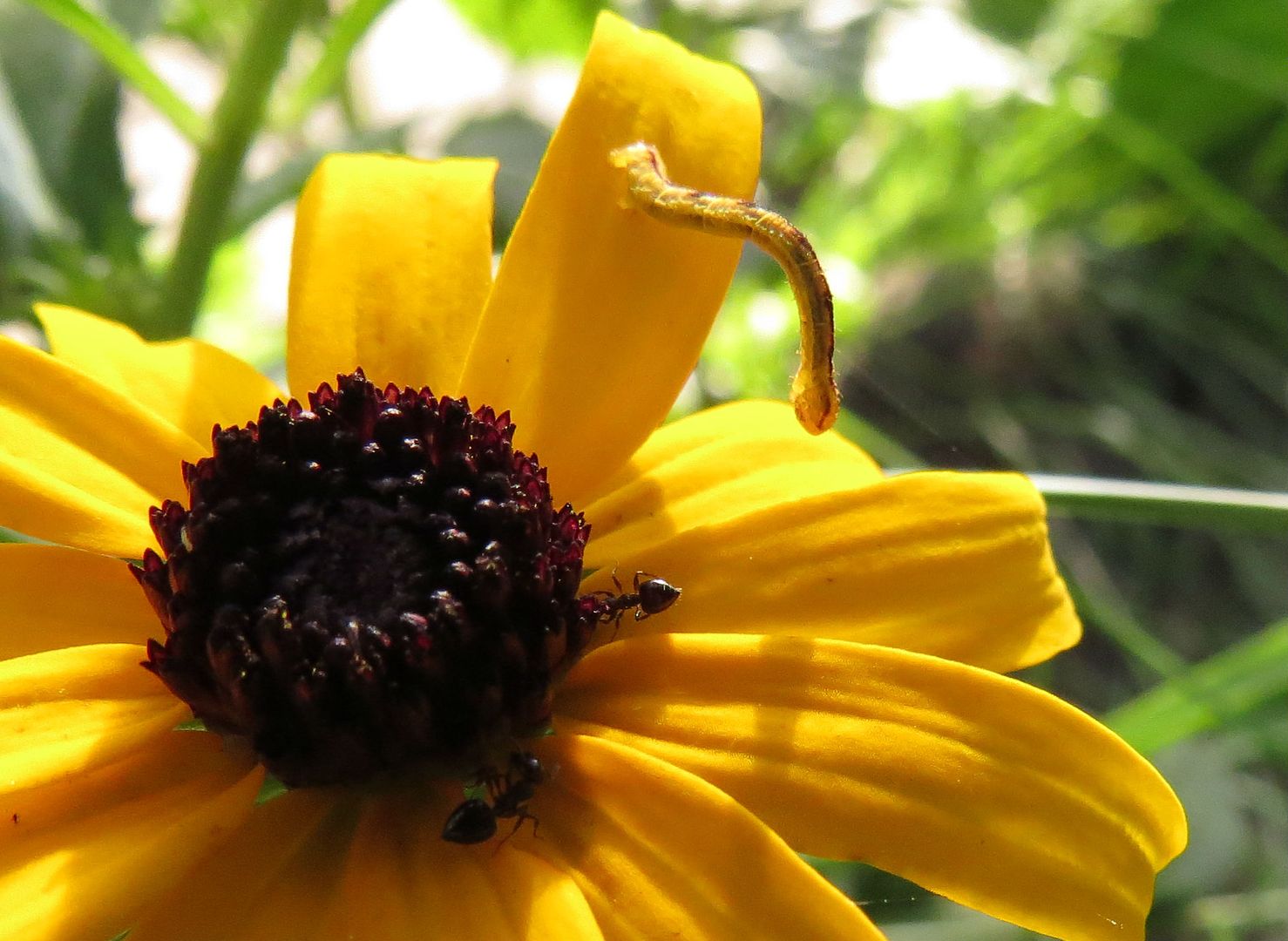
Rudbeckia Seed Aphids


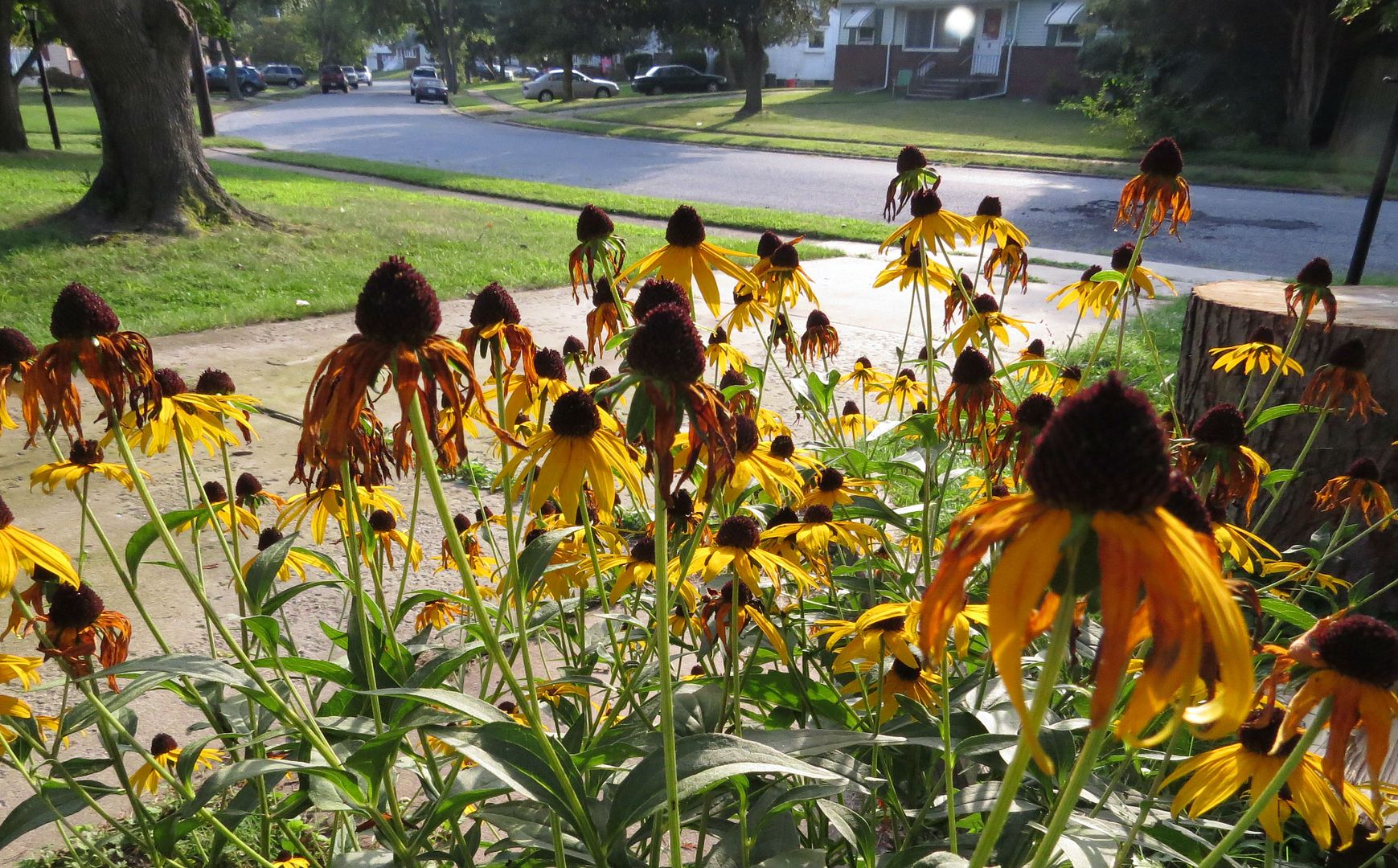
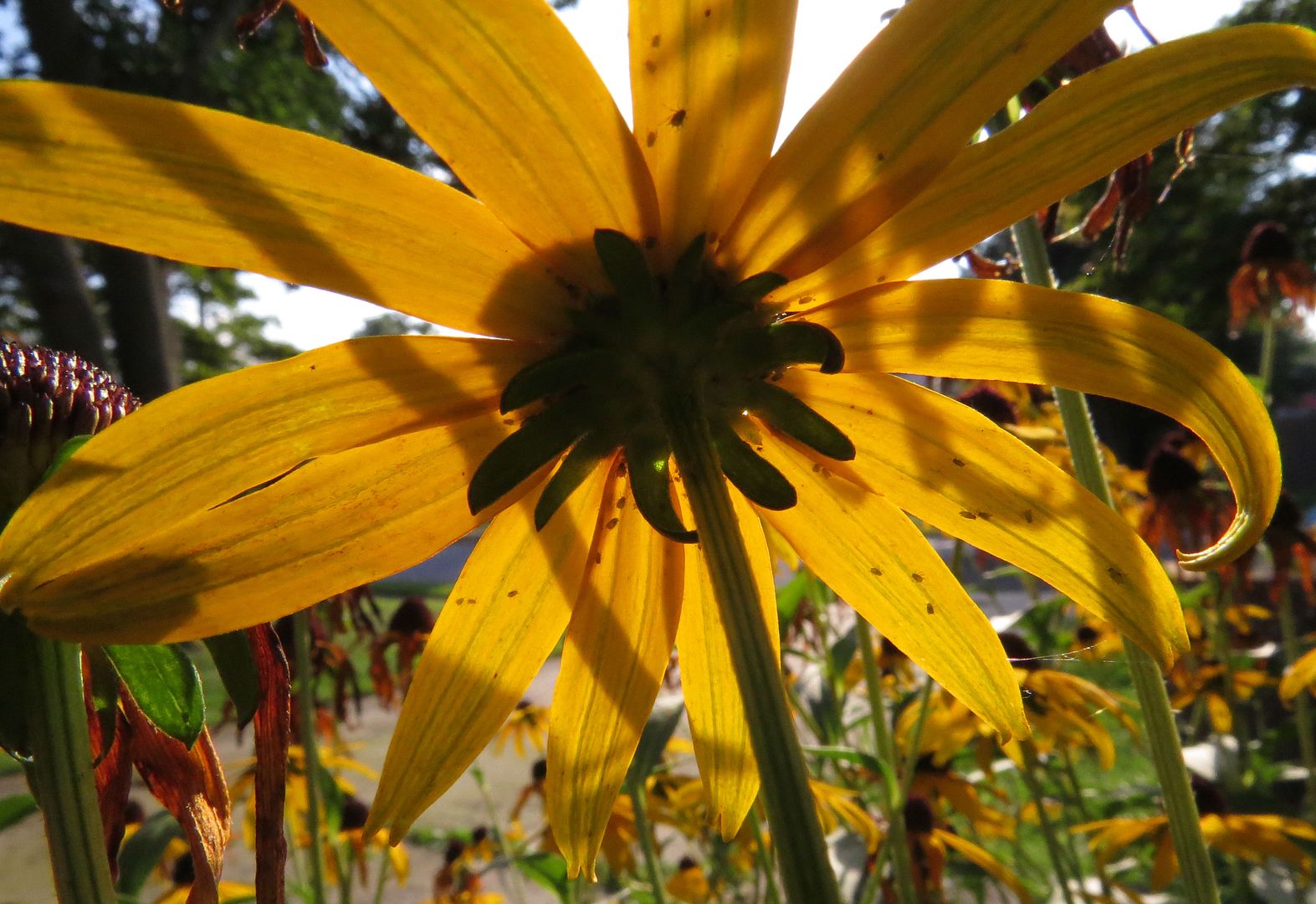
 I realized earlier that there were aphids on the developing seeds to the Black Eyed Susans I have in the front yard.

 They're also under the flower somewhat. They used to only be here but have since moved up to the seeds and within spent florets.

What's odd is that the ants are tending them and this is boarder line an in-between with tending aphids and nectar thieves. It's odd finding aphids filling this roll.

Tuesday, April 23, 2013

Some Meadow Musings

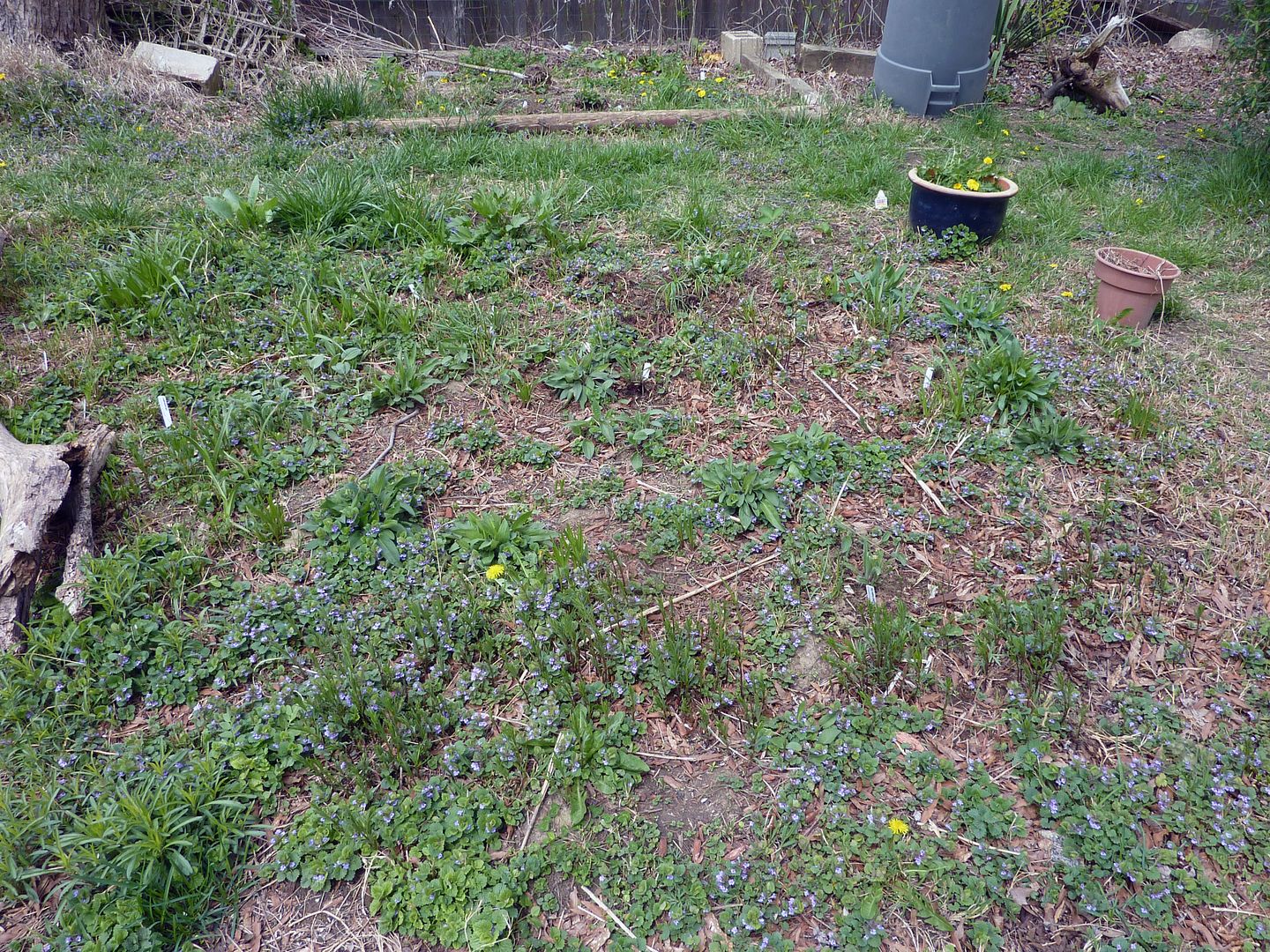
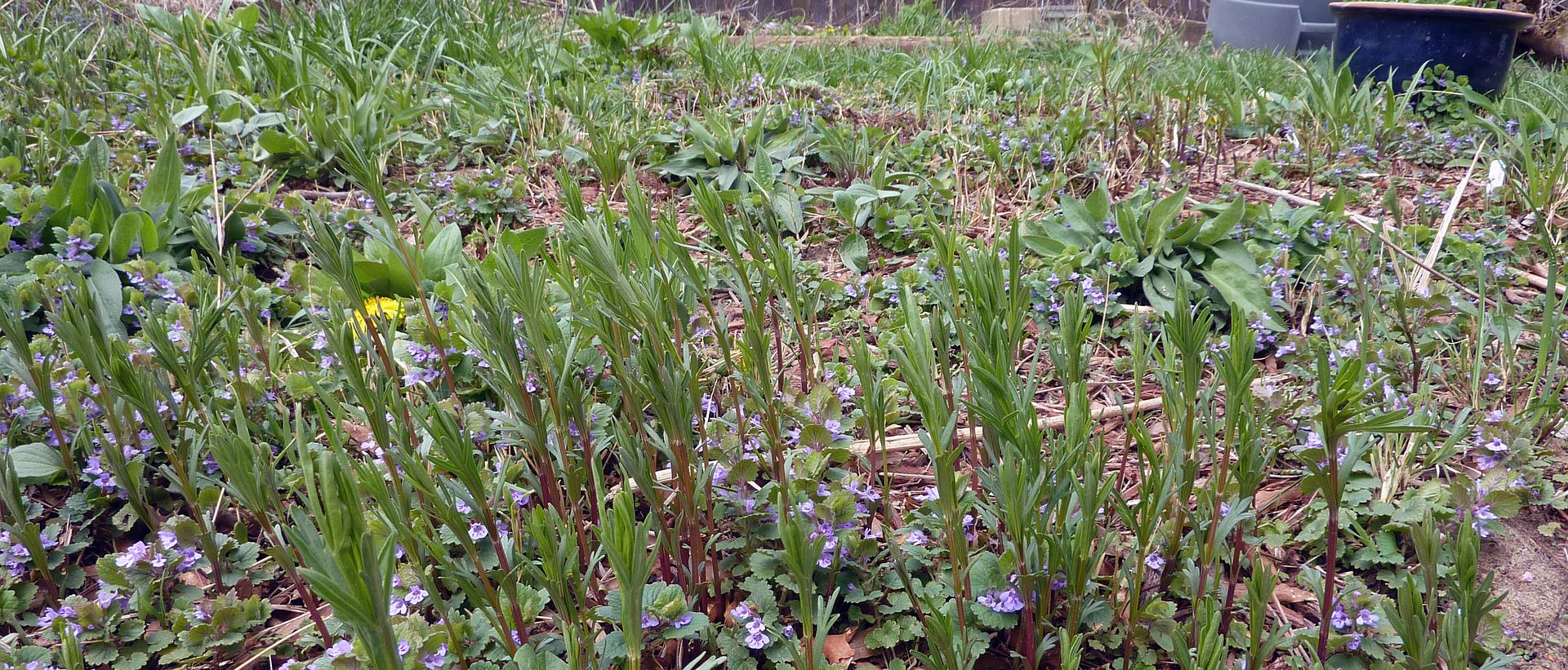
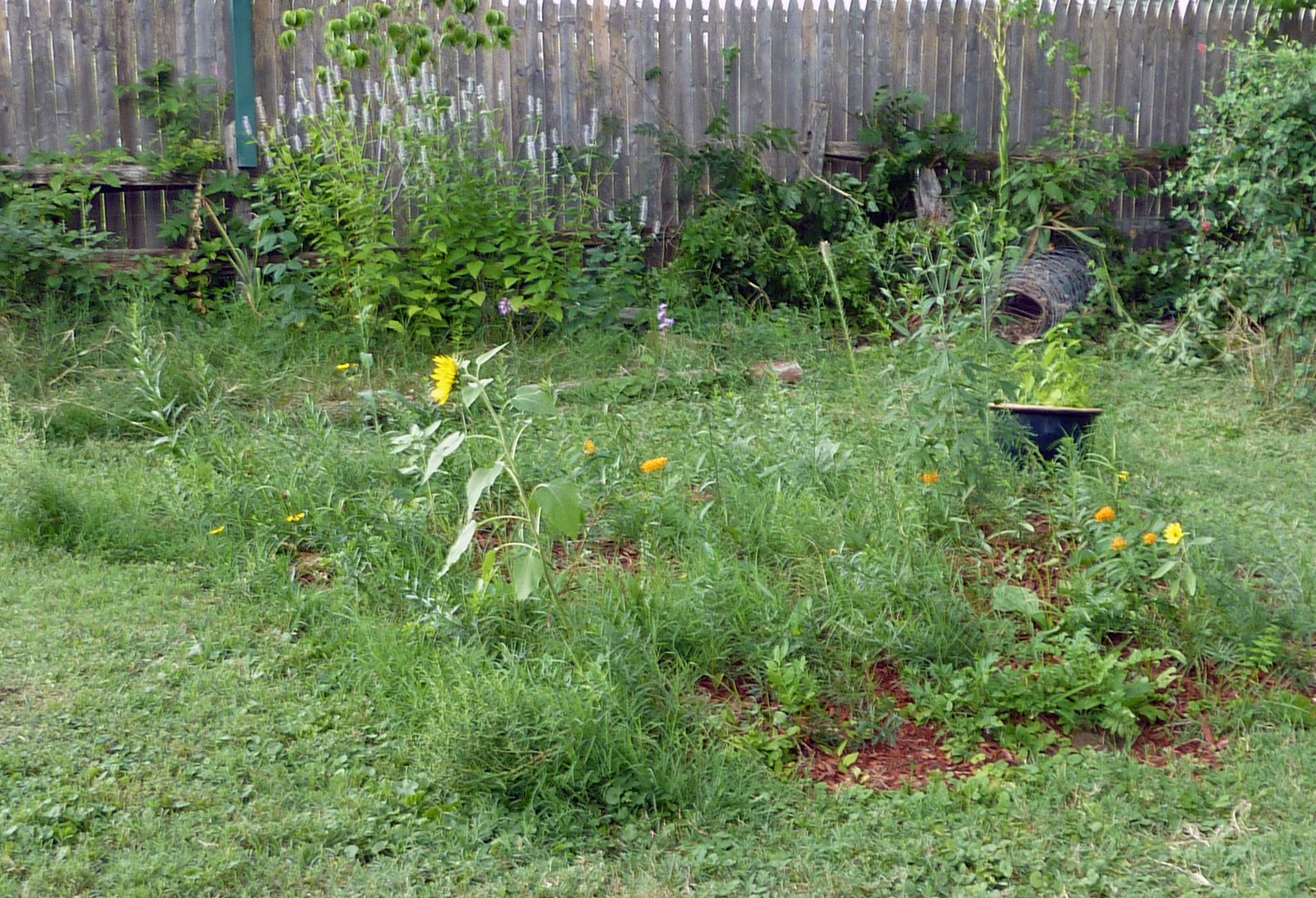
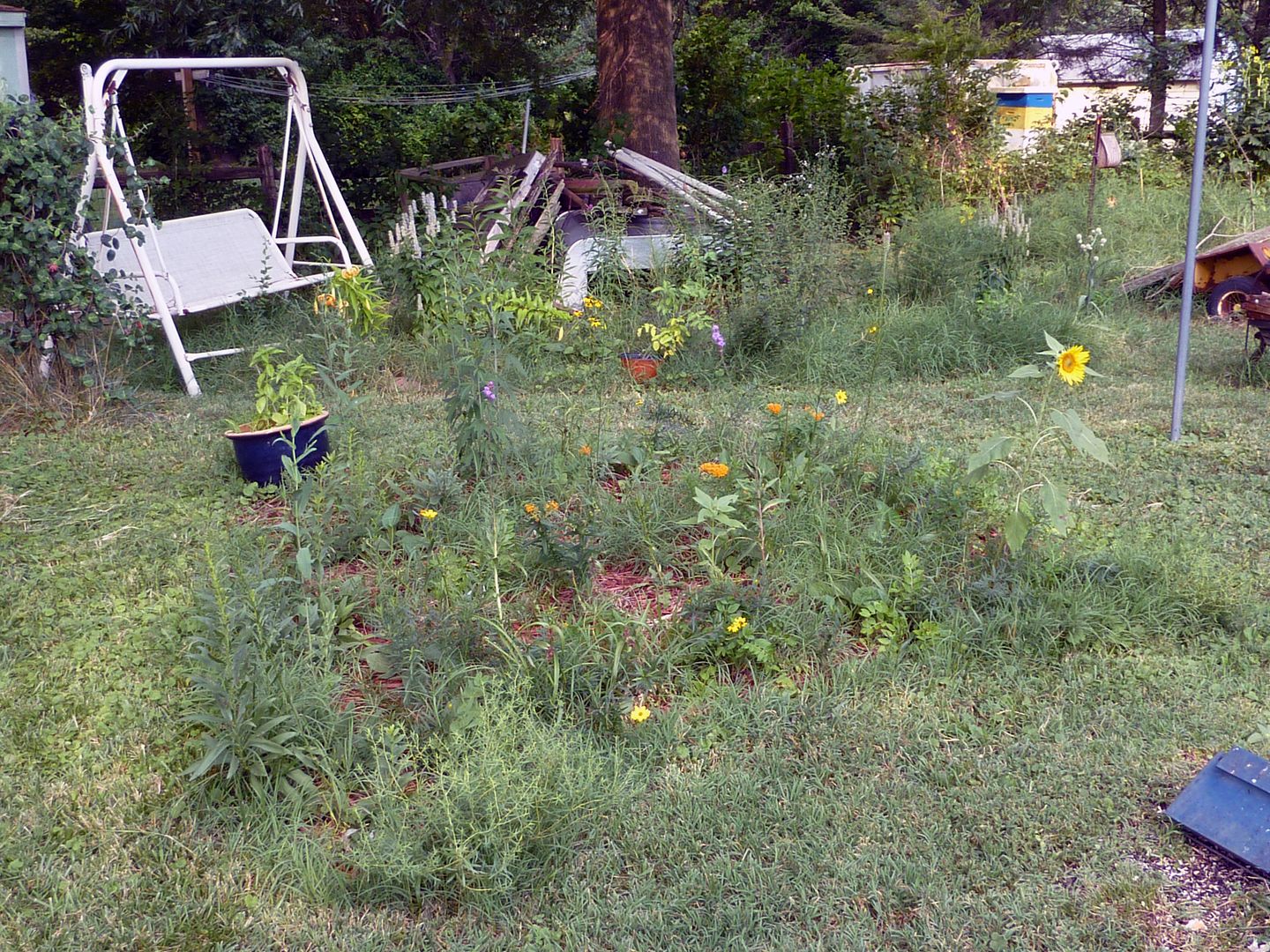
My little meadow garden has been waking up the past few weeks. Milkweeds aren't up yet and False Indigo has just poked out but Coreopsis, Spiderwort, assorted Rudbeckia and Asters have all started growing. There are plenty of weeds in there too such as Dandelion,  Creeping Charlie, and a rather aggressive spreading grass. I find these weeds useful because they mark where I haven't planted natives yet, and it's usually easy enough to replace the unwanted plant with a plug or something that I bought. 

Stiff Coreopsis, C. palimata, is particularly abundant thanks to underground rhizomes. It's a Midwest native that's been spreading steadily. They tend to flower before all the Black-Eyed Susan's do which is handy but they're never as dense or showy looking. What I find neat is that I started with maybe 10 plants and they've spread pretty well on their own. Black-Eyed Susans have seeded prolifically too, despite the slight amount of wood mulch. Neither is pushing out the unwanted weeds yet but they're approaching the point where I may have to start thinning them out or transplanting. 

Thursday, January 31, 2013

Some Yard Clean Up and Chores

Yesterday was finally warm enough for me to break hibernation, get outside and do some yard work.

I discovered a mantis egg right on the Alternate-leaf Dogwood.

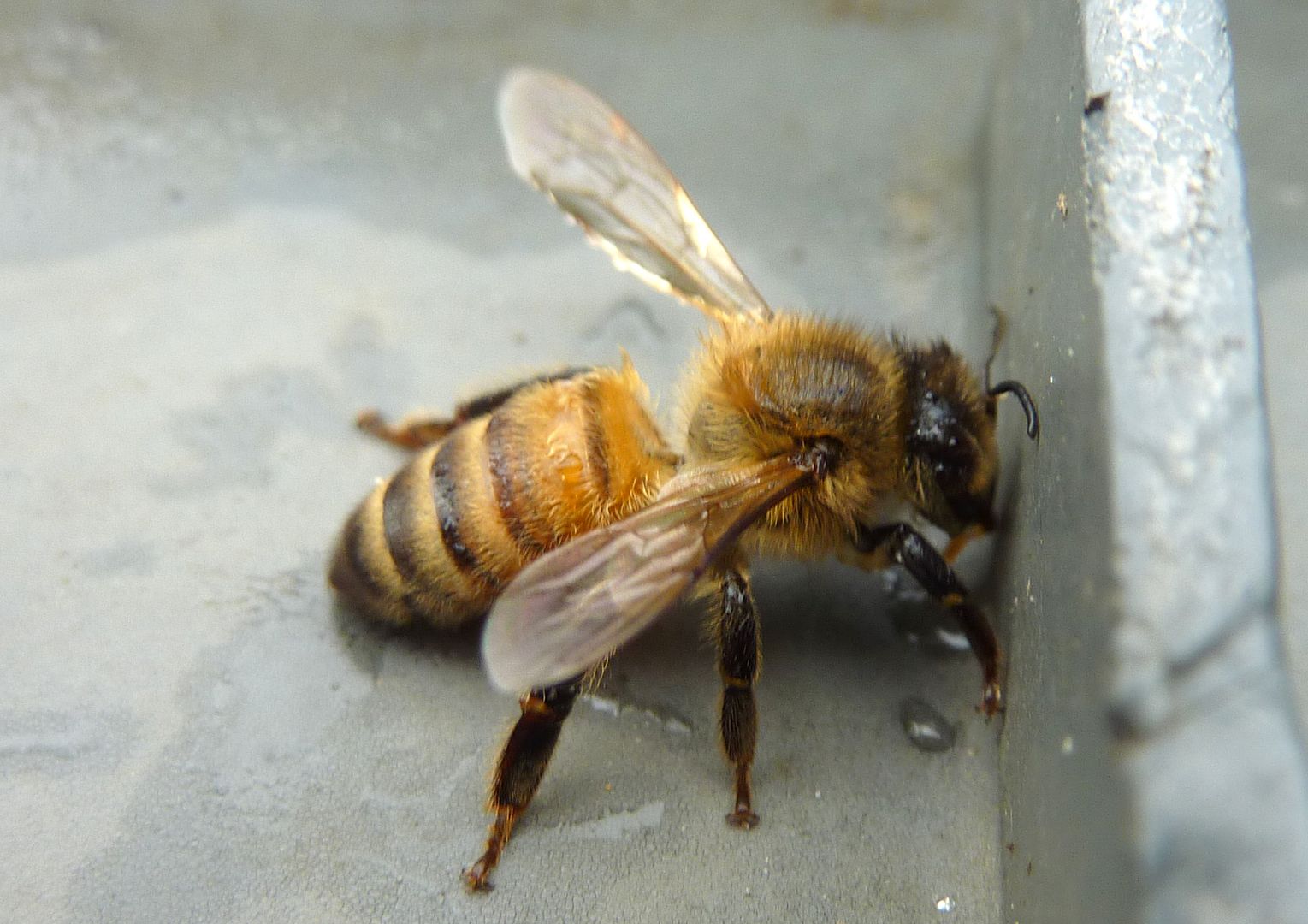
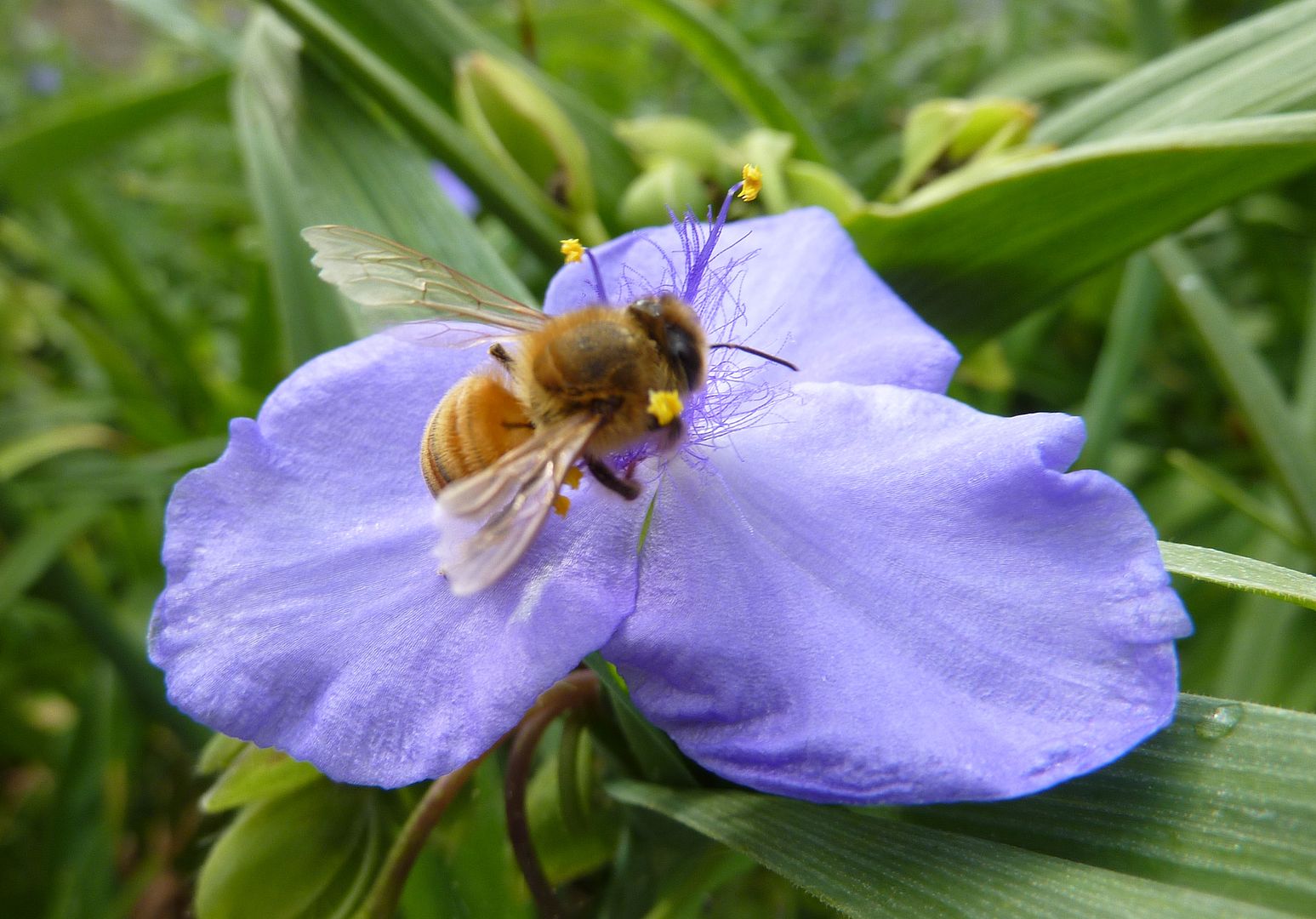
My honeybee hives were active and buzzing around. This one was drowning so I saved it and thought the colors and hairs looked great. There aren't to many bright colors to photograph at this time of year.

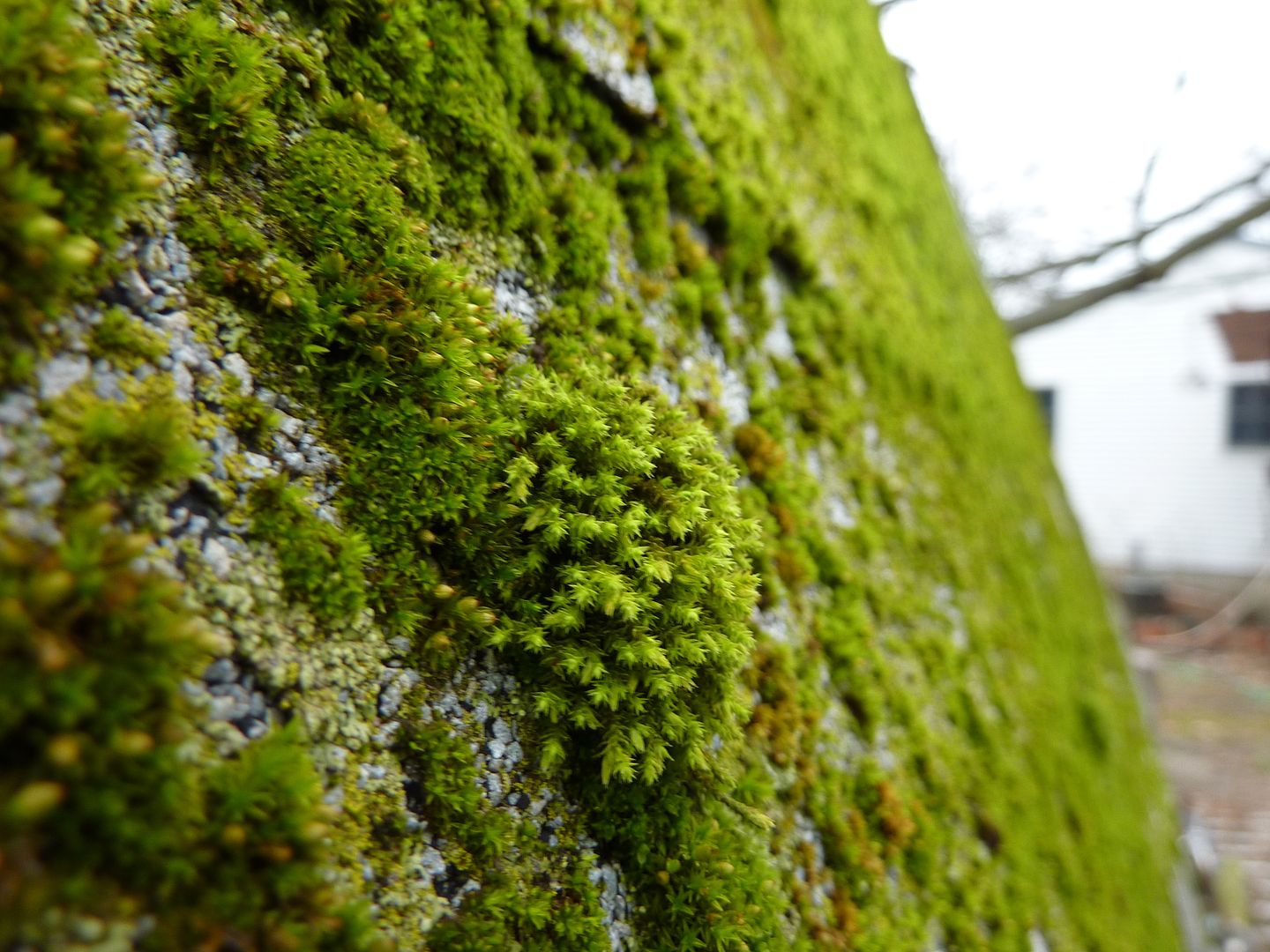
I was near the hives putting sugar water on them when I realized the moss on our shed has grown out of control. I'm not sure if that's bad or not but I think I could probably transplant some of it elsewhere.

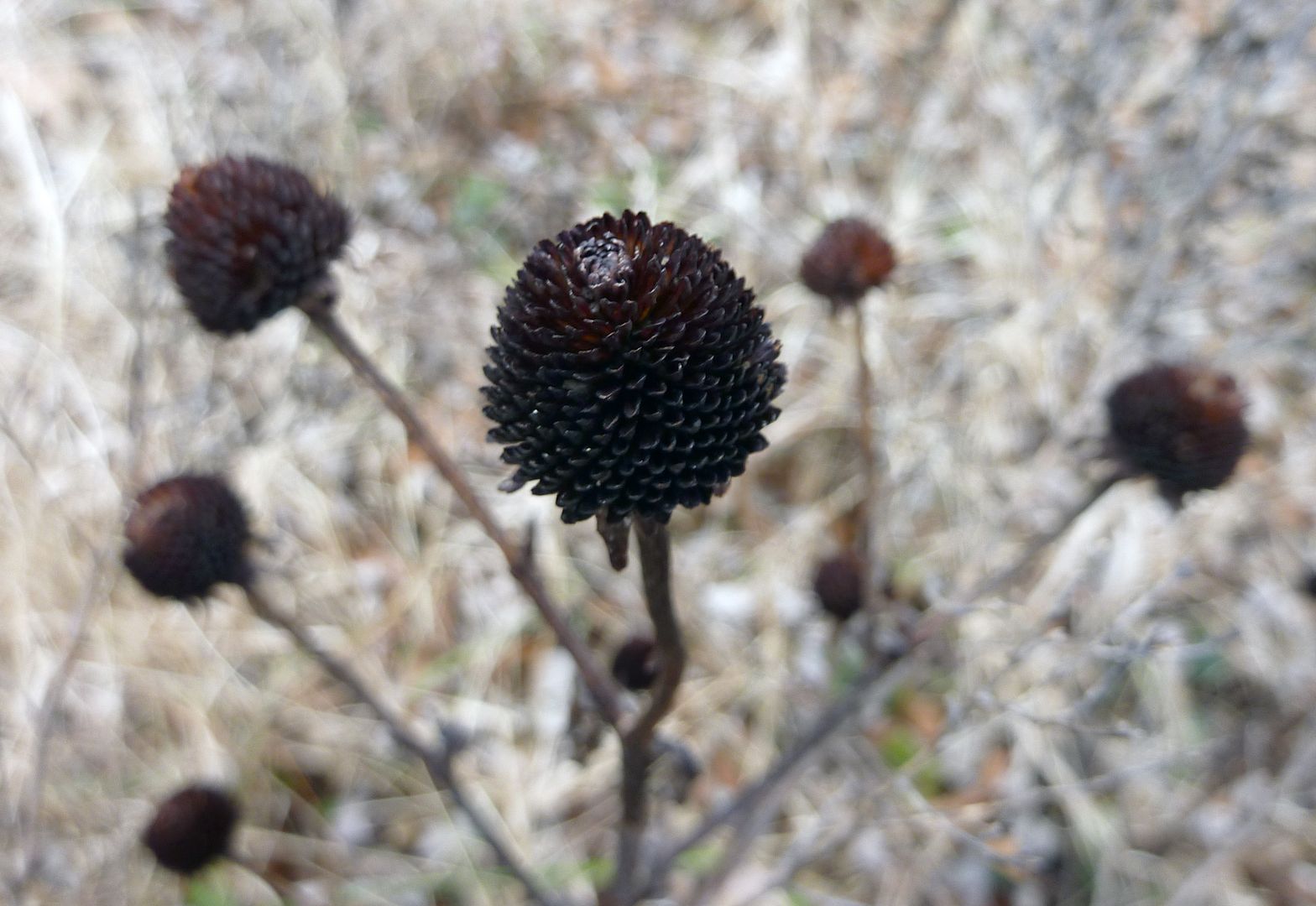
As much as I dislike Rudbeckia plants, I actually think their seed pods are a highlight out in the meadow garden. They're a nice easy filler plant with a good burst of color, but I roll my eyes at the lack of pollinators they get. Maybe that will change as they spread, and I look forward to them spreading, but right now I just think of them as being only pretty and not good for anything else.

Sunday, September 16, 2012

Sunflowers and Susans at the Mt. Cuba Center

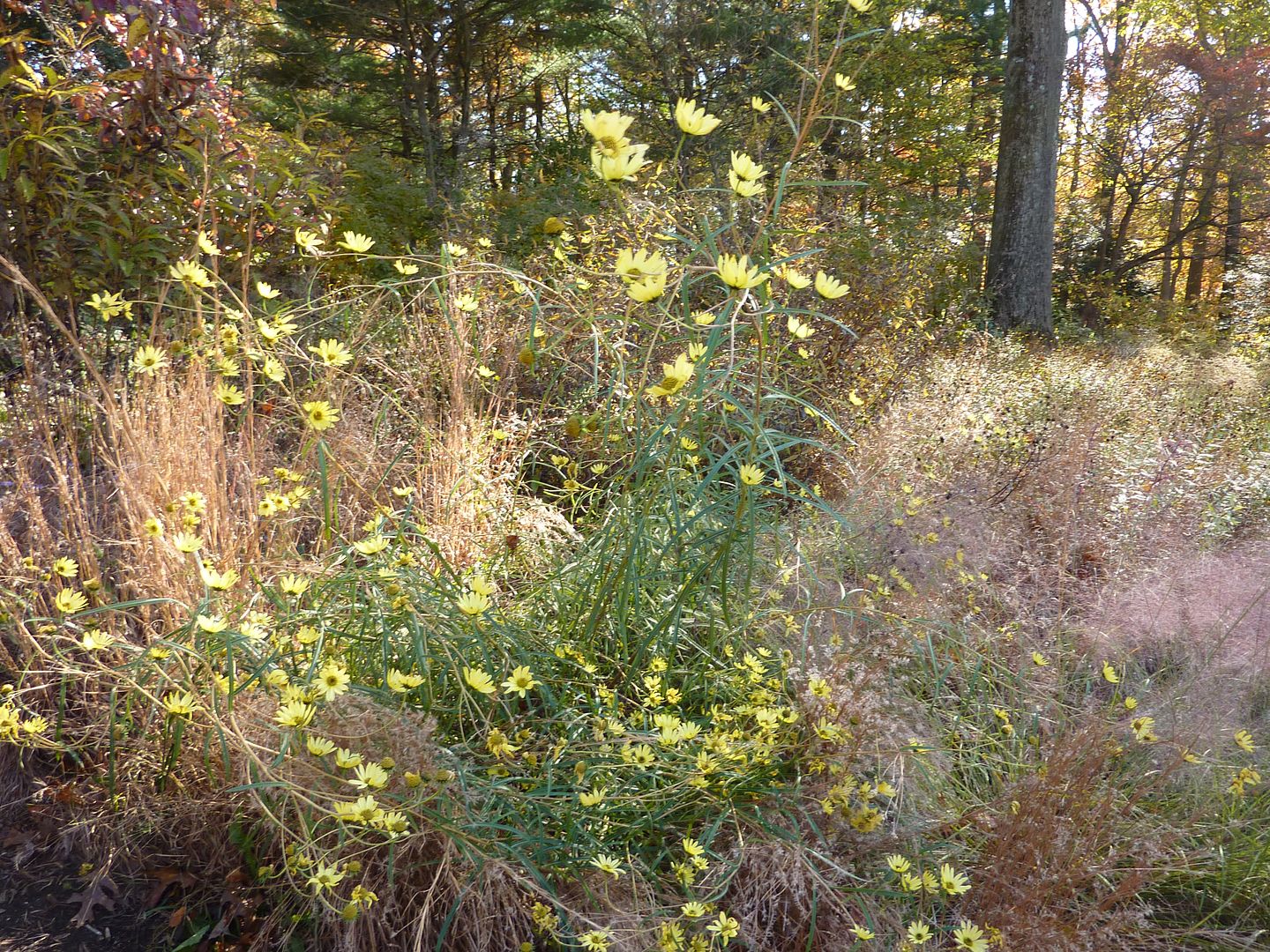
Last year the at the Mt. Cuba Center they had this wonderful perennials sunflower that I just loved the moment I saw it. First off note that everything is pretty much dead in the photo except for it. That's because it was probably late September or October when it was taken.

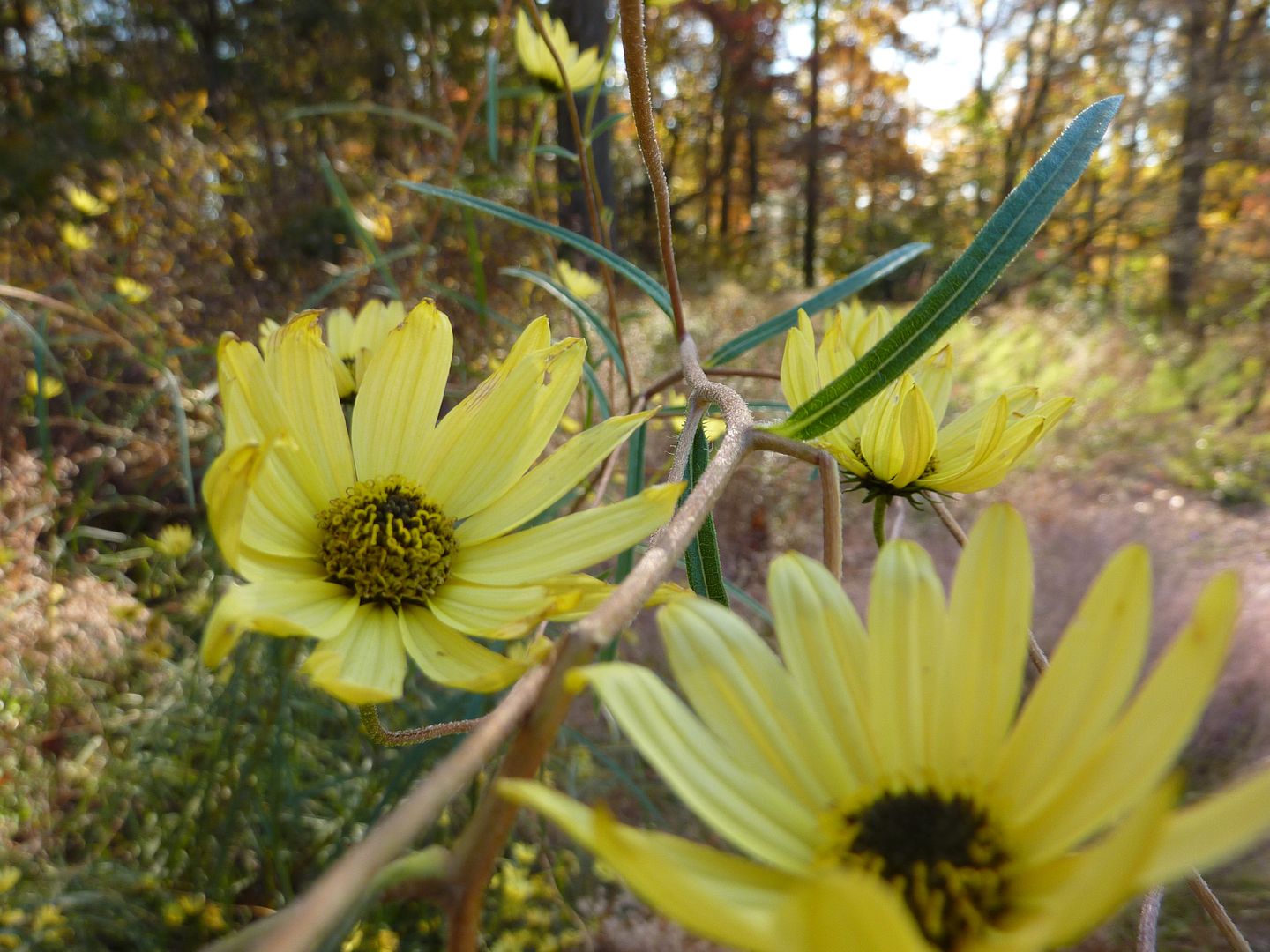
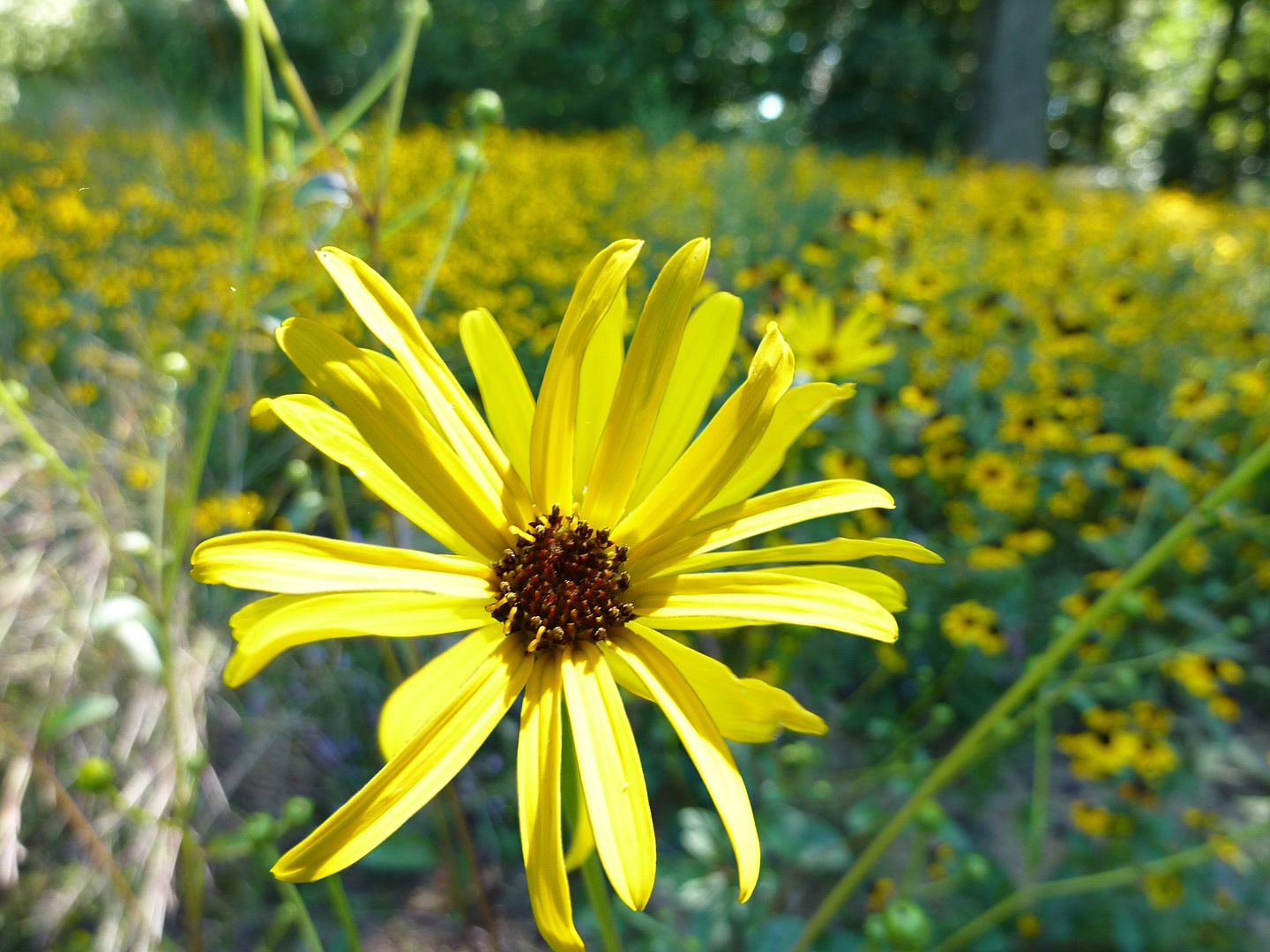
This is Narrow-Leaf Sunflower, Helianthus angustifolius 'Mellow Yellow' which is also called Swamp Sunflower because it likes to grow in slightly wet conditions. The Narrow-Leaf name is fitting because pretty much all of the leaves are thin. 1cm is probably the thickest you'll find them on the plant. The 'Mellow Yellow' cultivar is nice because you get that yellow color without it being too flashy against the autumn sun. It's more of a fall color anyhow. The true species is much brighter and on par with what you see in pretty much every other Helianthus species around.

Also take one last quick glance at the background in both photos. 

Here we are this year on the 15th of September. This was for their class on the Asteraceae plant Family, and that's the instructor, David Korbonits standing next to the same plant before it's flowered. I loved this plant when I saw it last year. This year so far it hasn't fallen over or done anything crazy. And as it so happens This Was The Plant They Gave Out For Taking The Course!!! And they asked me to take two of them home! I was Thrilled! (Also note the background and how much more abundant the Black-Eyed Susans are!)

First off Helianthus is a fair sized genus with lots of perennial sunflowers in it, but almost no one is selling them. The ones I do see getting sold are almost always followed by the warning "This plant likes to spread by rhizomes and is not suitable for small gardens." I hate this warning so much because I really don't get the idea of what they mean by a small garden. Compare for a moment how much fuller this plant is from the first photo at the top to the one just above. That's one year's difference and I fell like I can honestly live with that. But its kind of obvious that it's sending up a few dozen more stems.

Presumably the narrow leaves of the plant don't shade out what's growing under or through it. Whether it's growing up through something or falling over on them I don't see this plant shading anything out. I report in later years on if that's the case or not.

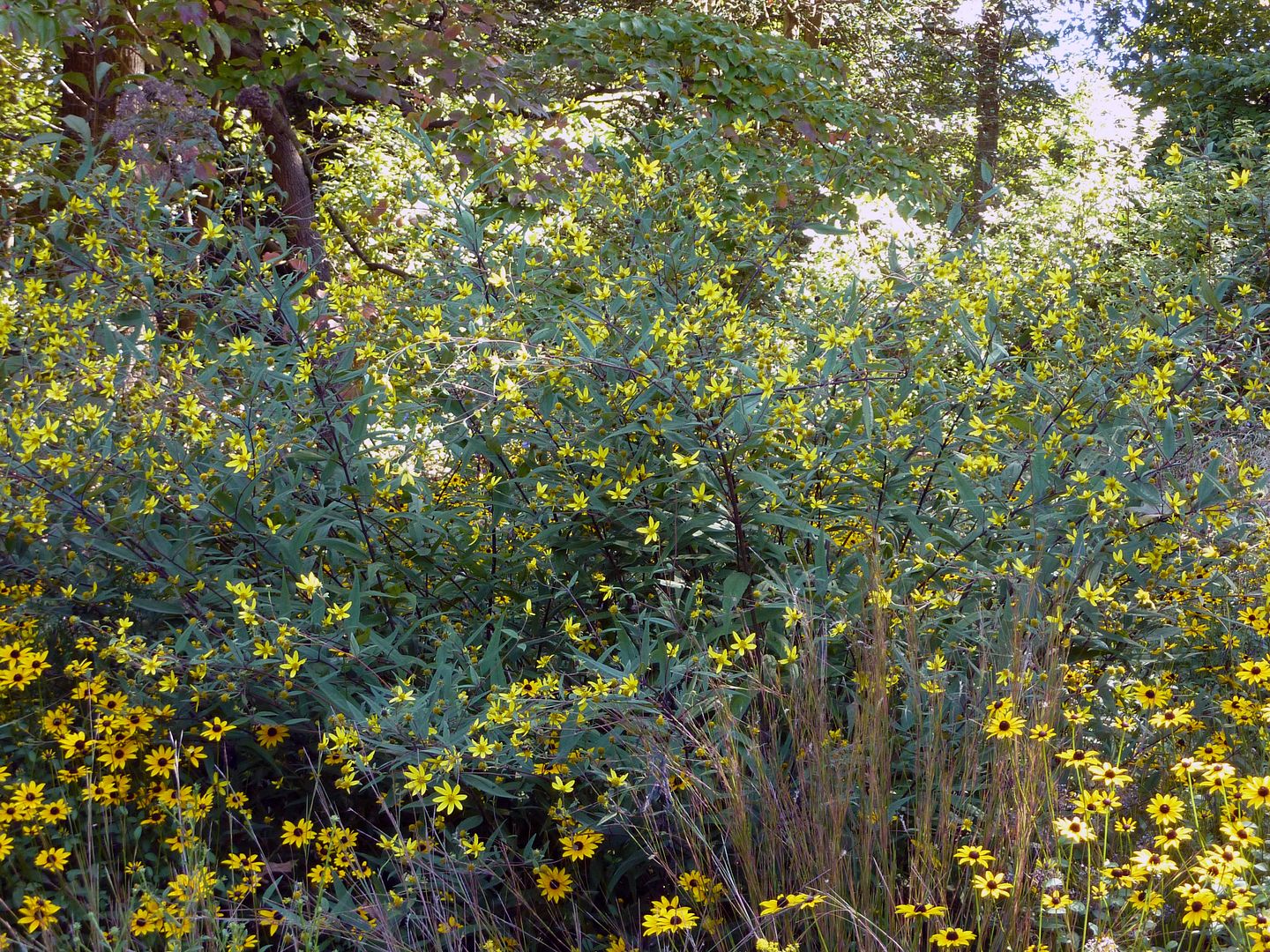
Another perennial sunflower that caught my eye was Small Wood Sunflower, Helianthus microcephalus, who's flowers are tiny but very numerous on the plant. Black-Eyed Susans are growing all around them to give you an idea of how small the flowers are. But this one sunflower plant was clearly the pollinator favorite. There were lots of bumblebees all around it. It's another one I'll have to look into. Currently I'm interested in Ox-Eyed Sunflower, Heliopsis helianthoides, which spreads more by seeds and not by rhizomes which presumably makes it easier to control.

Purple-Disk Sunflower, Helianthus atrorubens, was a shorter sunflower at around 4' tall. The stem was somewhat red or burgundy farther down the plant, but I'm told that's not true for all plants of this species. Even so at that height this might be a more garden appropriate species. The Purple comes from a slight illusion when looking at the flowers at the right angle with the right lighting, I otherwise didn't see it. (Also note the background.)

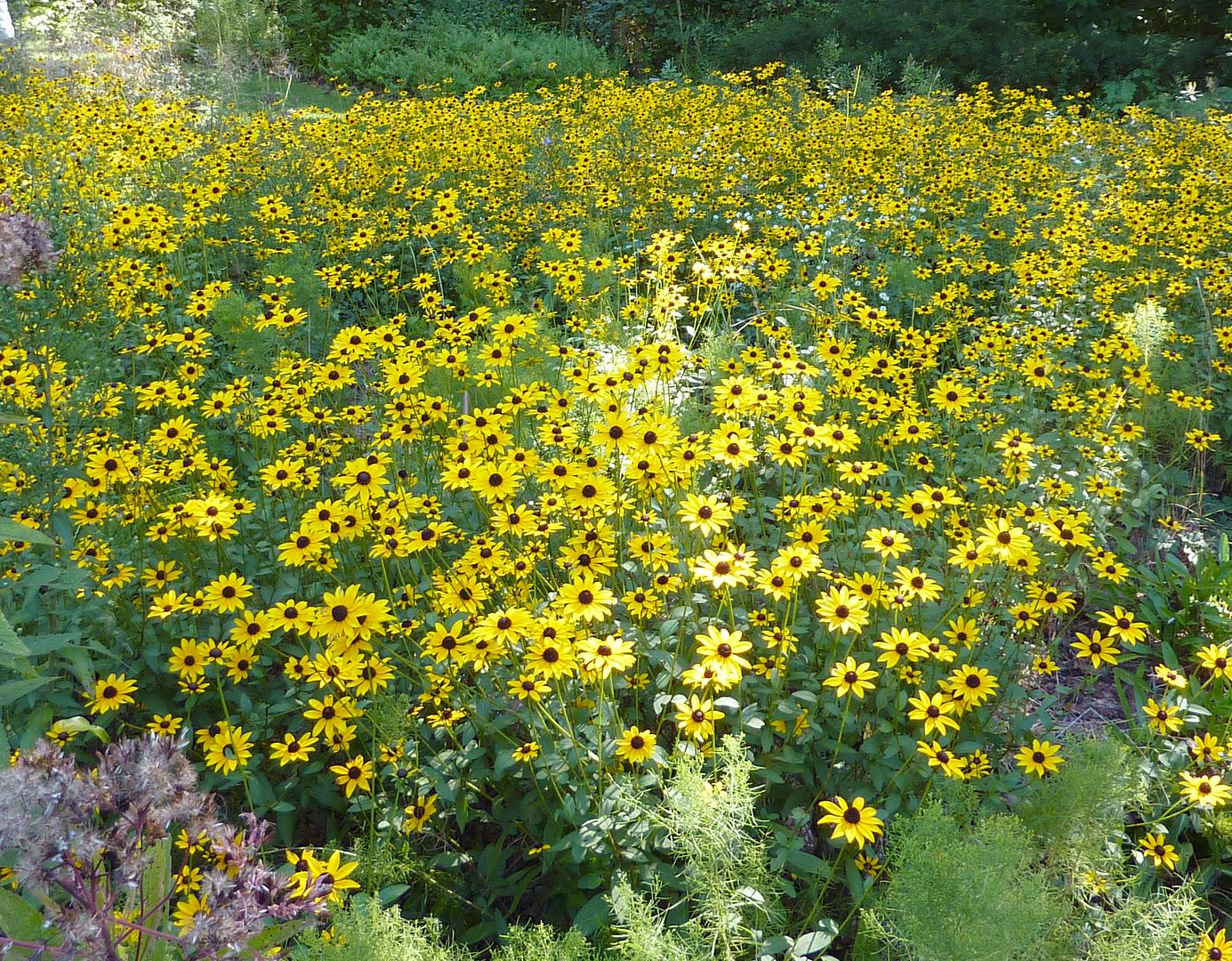
So last year there wasn't anywhere near this many Black-Eyed Susans growing and they've just completely filled in every nook free in the garden. Also I'm giving myself an A+ for this photo.


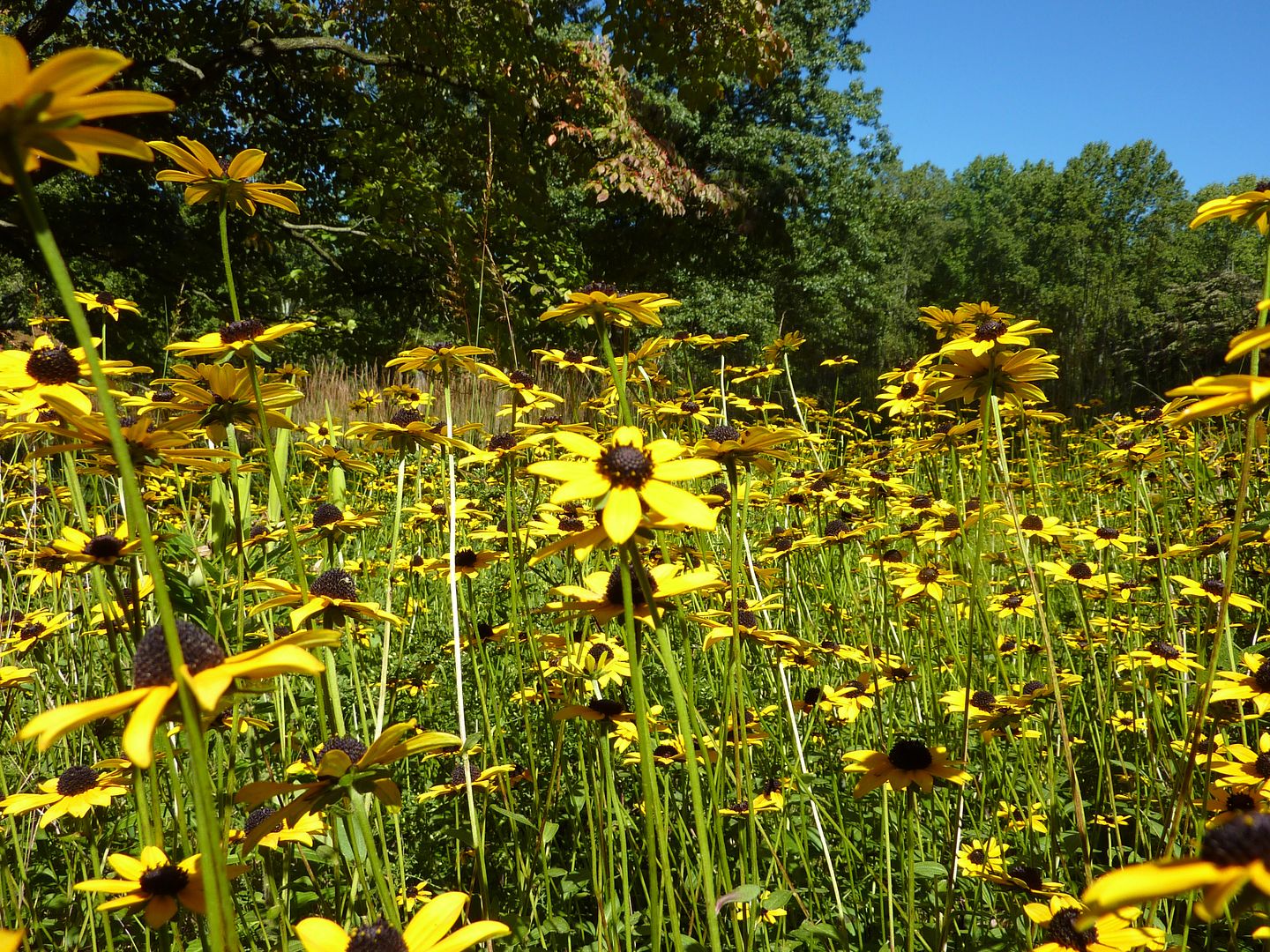
I forget if Rudbeckia fulgida or Rudbeckia hirta was the dominant species, but R. hirta is an annual/biannual while R. fulgida tends to be a perennial. I get so annoyed by seeing this many wonderful flowers and not seeing a single bee on them! I know I've seen tiny Sweat Bees and the occasional Honeybee work them but even in bulk like this, and in a massive native plant garden too almost nothing is pollinating them for long. Clearly it doesn't take much to initiate pollination because they're spreading so well, so maybe the temperature has to be right or something.

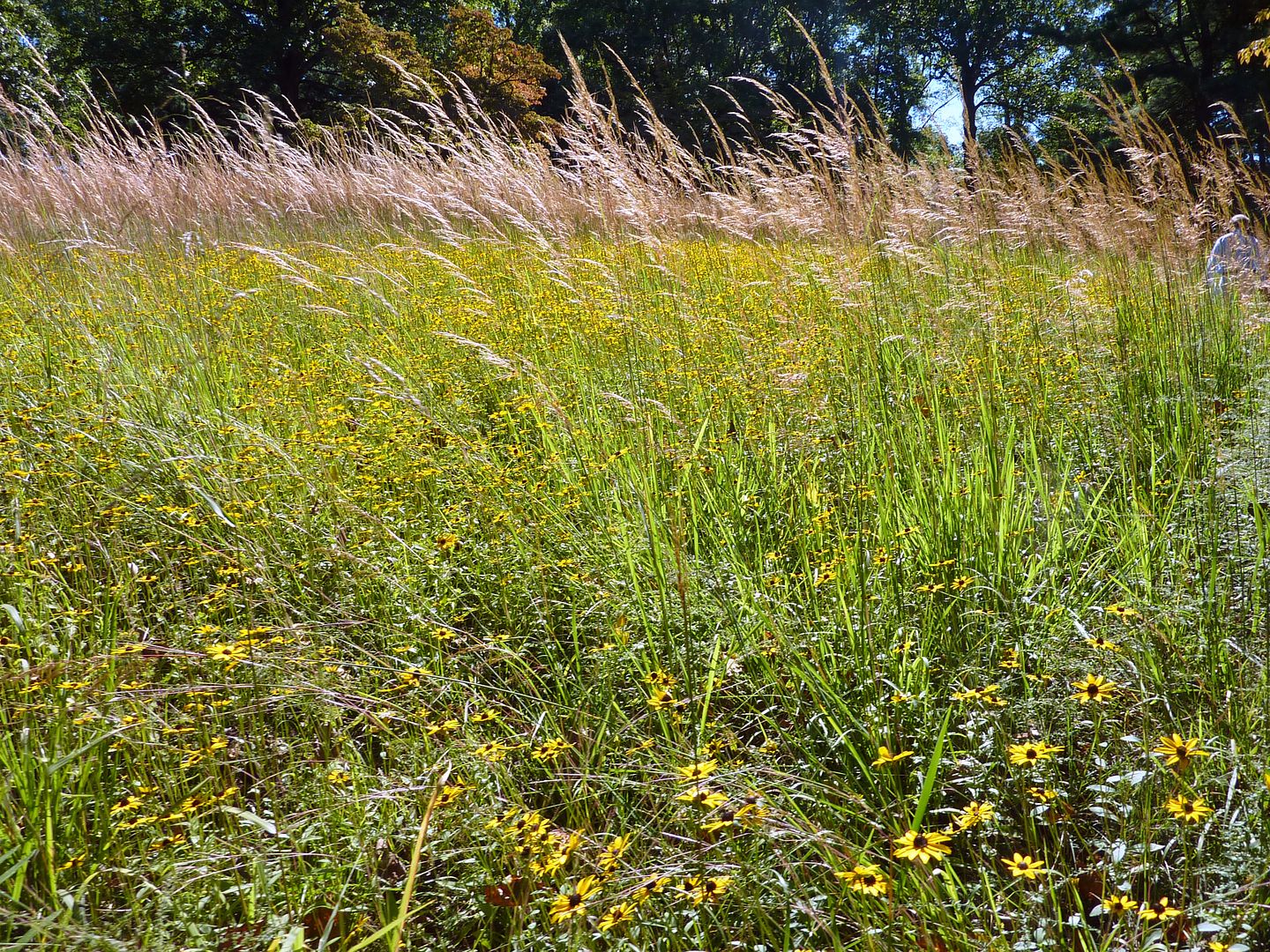
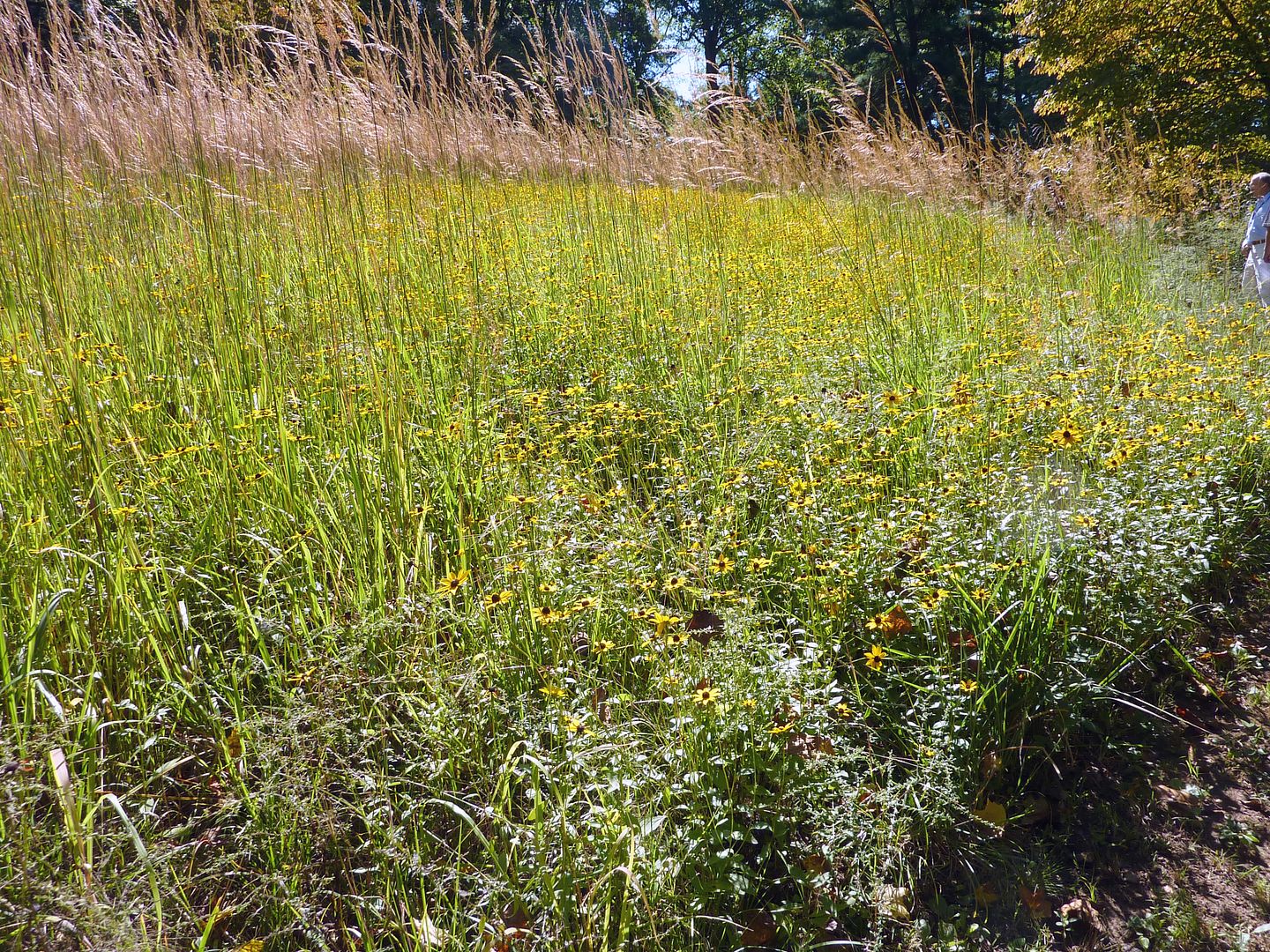
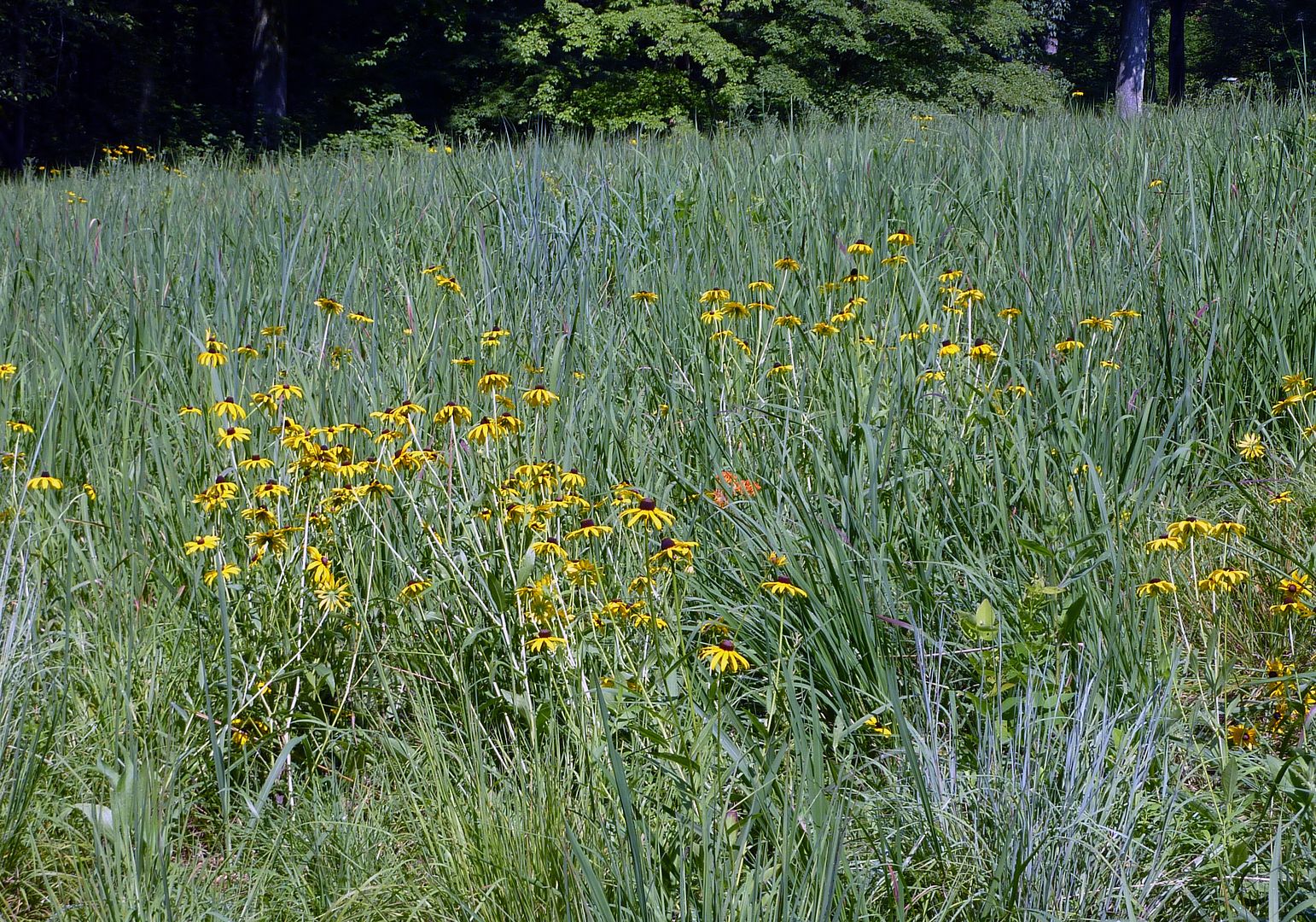
In parts of their meadow garden they grow like crazy even with the towering grasses hanging over them. All of the yellow in these two shots are Rudbeckia flowers!

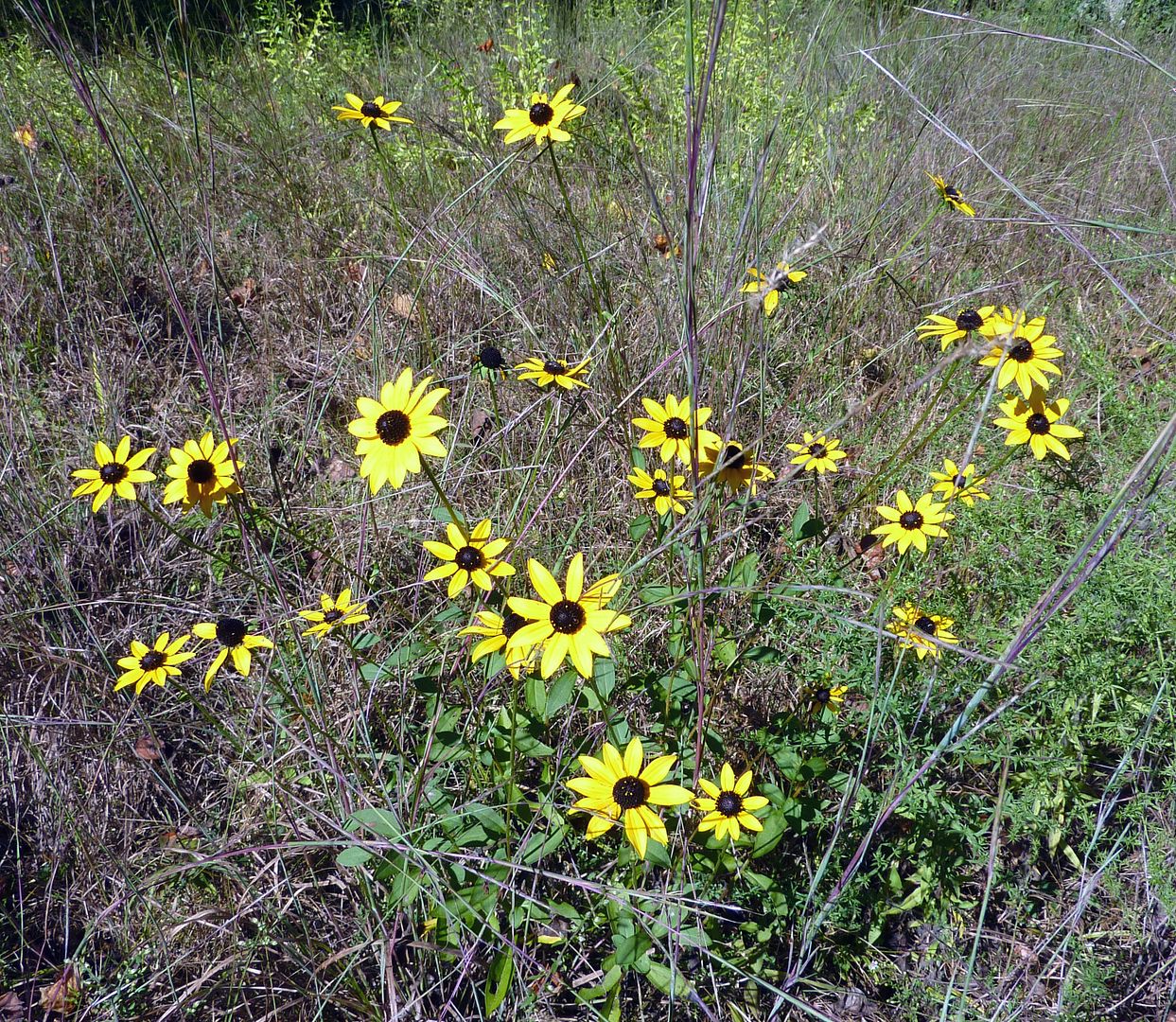
Getting away from the main clumps there were a few coming up sporadically. Dave who manages the meadow garden mentioned they might be thinning them out next year. Assuming they're perennial they might as well pot them up and hand them out at the next years Wildflower Festival, though that might be a little boring.

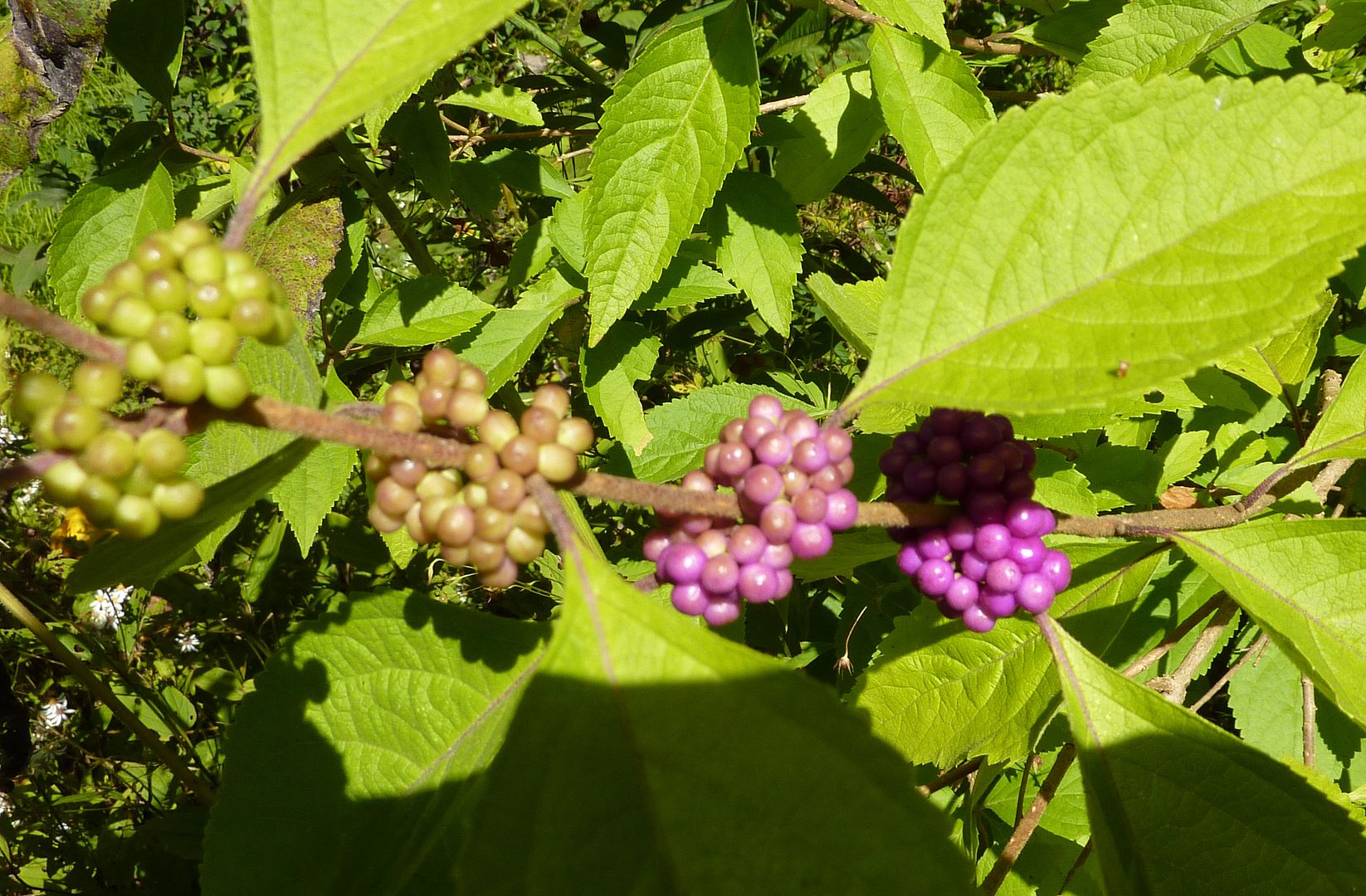
American Beauty Berry, Callicarpa americana, were starting to ripen. Of all the berry plants that ripen now I'm told this is among the first the birds go after. 


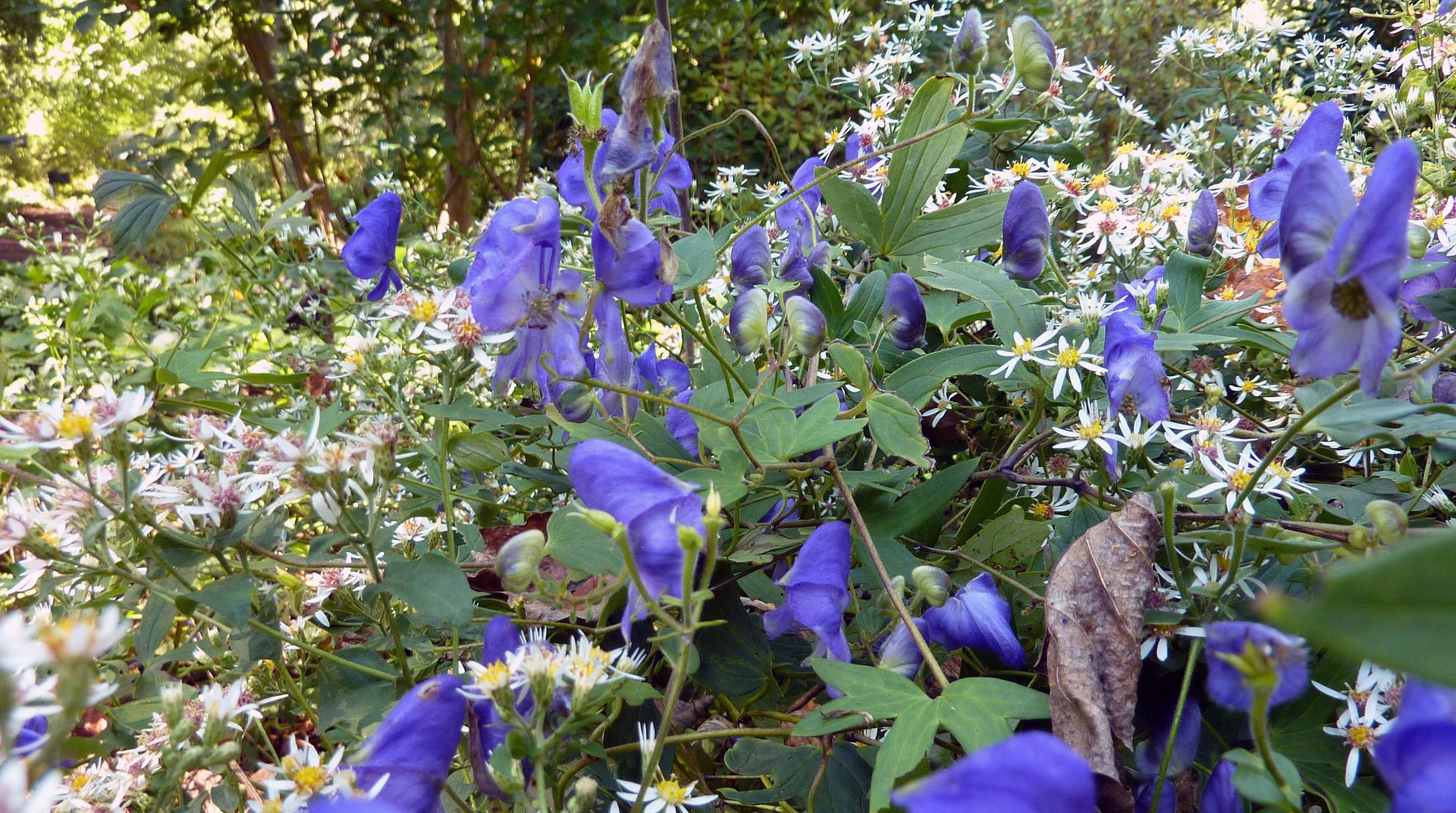
Southern Blue Monkshood, Aconitum uncinatum, was in bloom and it's always one I love to highlight. Don't get me wrong, it's a deadly poison that will kill you if you eat any part of it. But it's also the only plant that gives you this color in the shade at this time of the year. I've seen Monarchs on it too! Bees love it.

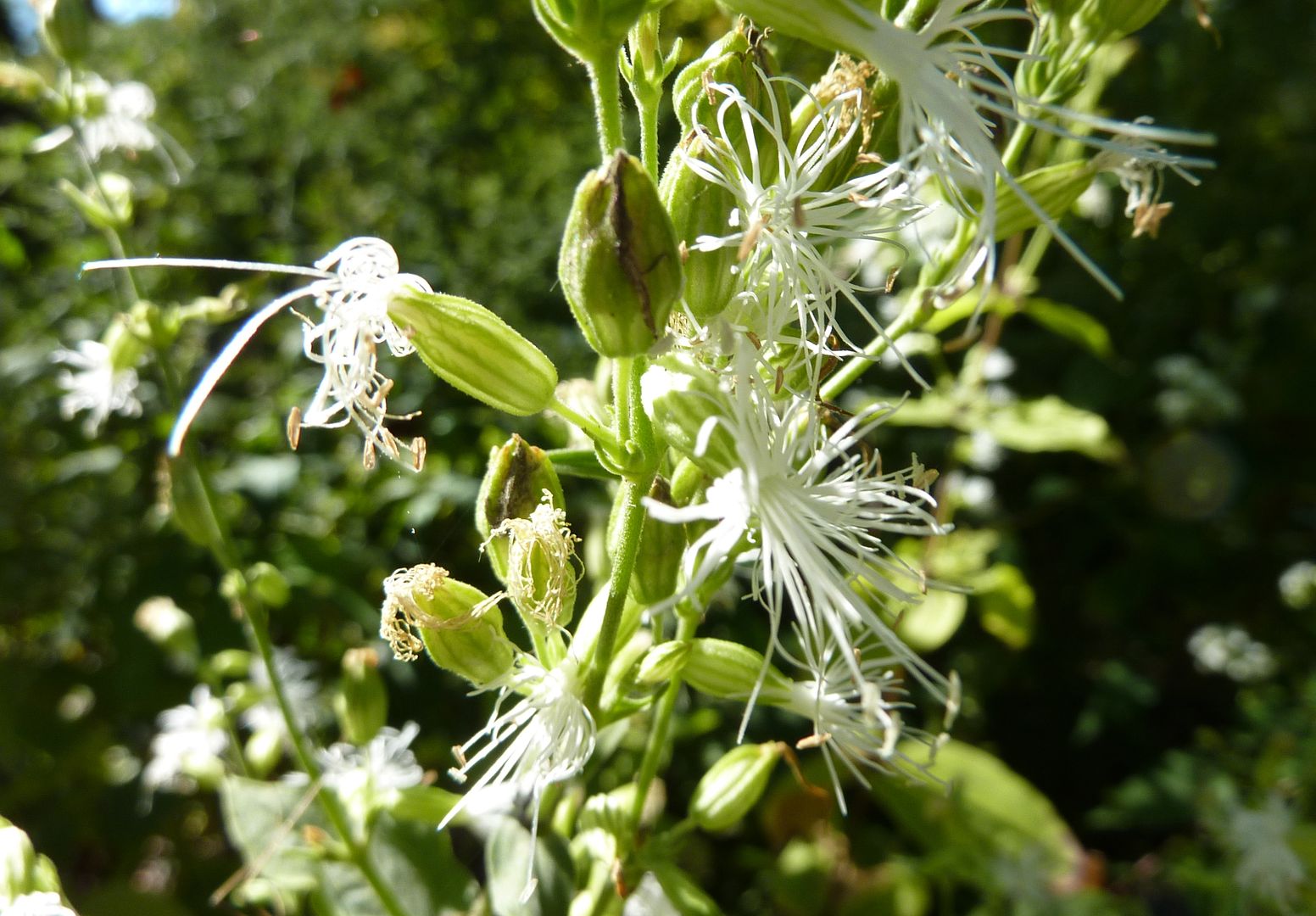
I forgot what this one was but it just looked neat.

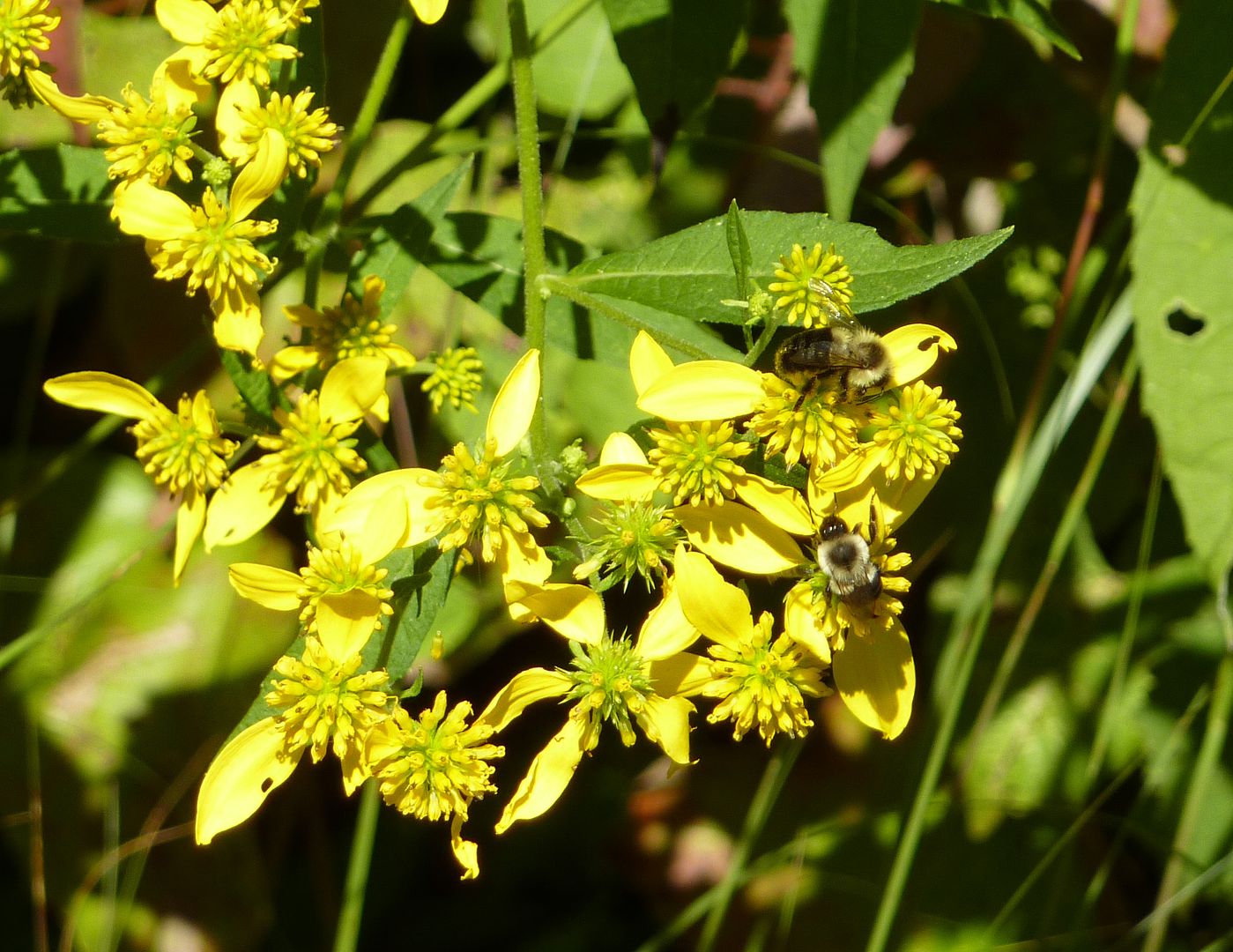
I forgot this one too but apparently it's good at attracting Blister Beetles, which drip a powerful skin irritant that causes some god awful welts, soars, and discoloration. Not something you want to have in the garden ... at least not right up front. The bees were enjoying it though.

Friday, July 29, 2011

Some Summer Flowering Forbs

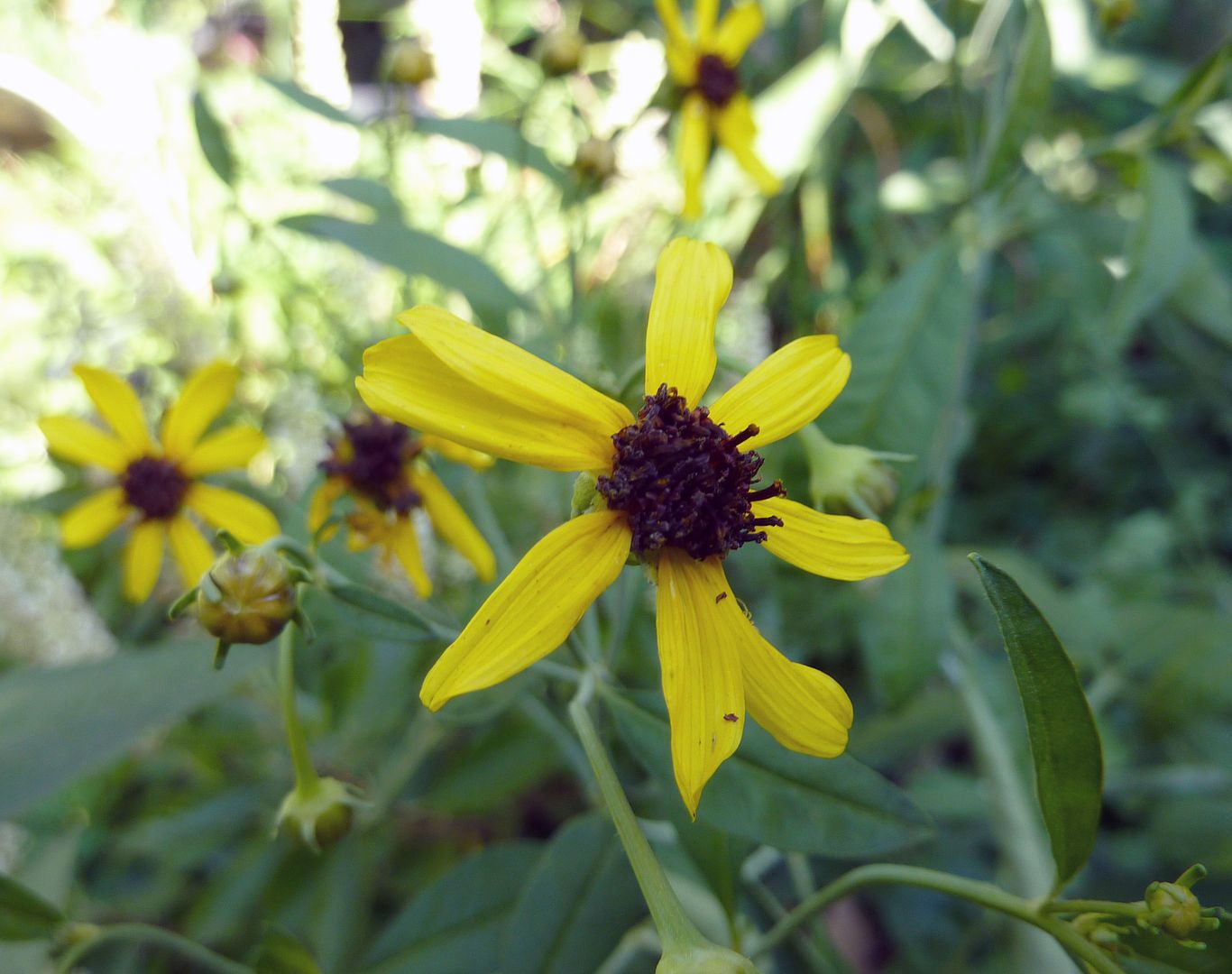
Tall Coreopsis is flowering! Coreopsis tripteris. I planted this in two locations this year. The first I bought from an online nursery as a bare root plant and it's gotten to be about 4' tall. No flowers open yet but there are buds. The second location was from a 3 gallon pot I found among the massive inventory Popes' Gardens has. They're a local nursery about the size of a farm that sells at least one of everything. I wish they stocked more natives but they have such a huge selection that it's easy to overlook things like Tall Coreopsis. I kind of jumped up and gasped when I saw they sell it. The one from their nursery is flowering now, with it's blooms pictured above.

To be more accurate, 3' high isn't very tall at all but that should change next year. An unfortunate side effect of nursery grown can be stressed roots, either from growing in a pot to long or being divided off an adult plant. This stress limits the natural growth and disrupts the normal cycle of growing. This isn't necessarily bad for the plant though, it encourages early flowering is all. Next year it should grow to a more normal size of 5' to 8' tall.
 
To talk a little bit more about stressed plants, it's almost standard practice in the nursery trade. Think about how many trees being sold are taller than you are and yet they sit in pots where their root structure is little more than the size of a basket ball. Ideally you should grow everything from seed, or at least only plant things that are about knee high, so the root structure is more evenly balanced with the top growth. Time is the issue though as many of those potted trees are likely 5 to 10 years old.

The flowers to Tall Coreopsis aren't very showy, but frankly that's normal for a Coreopsis. The real show will hopefully happen next year when the plant isn't as stressed. Tearing out some of the tangled roots before planting encourages them to grow out and get a firm grip on the surrounding soil. Next year they should reach 5' to 8' tall and flower much more heavily. I have a Perennial Sunflower planted right next to this one (not in the photo) and the contrast of flower size should be neat to see.

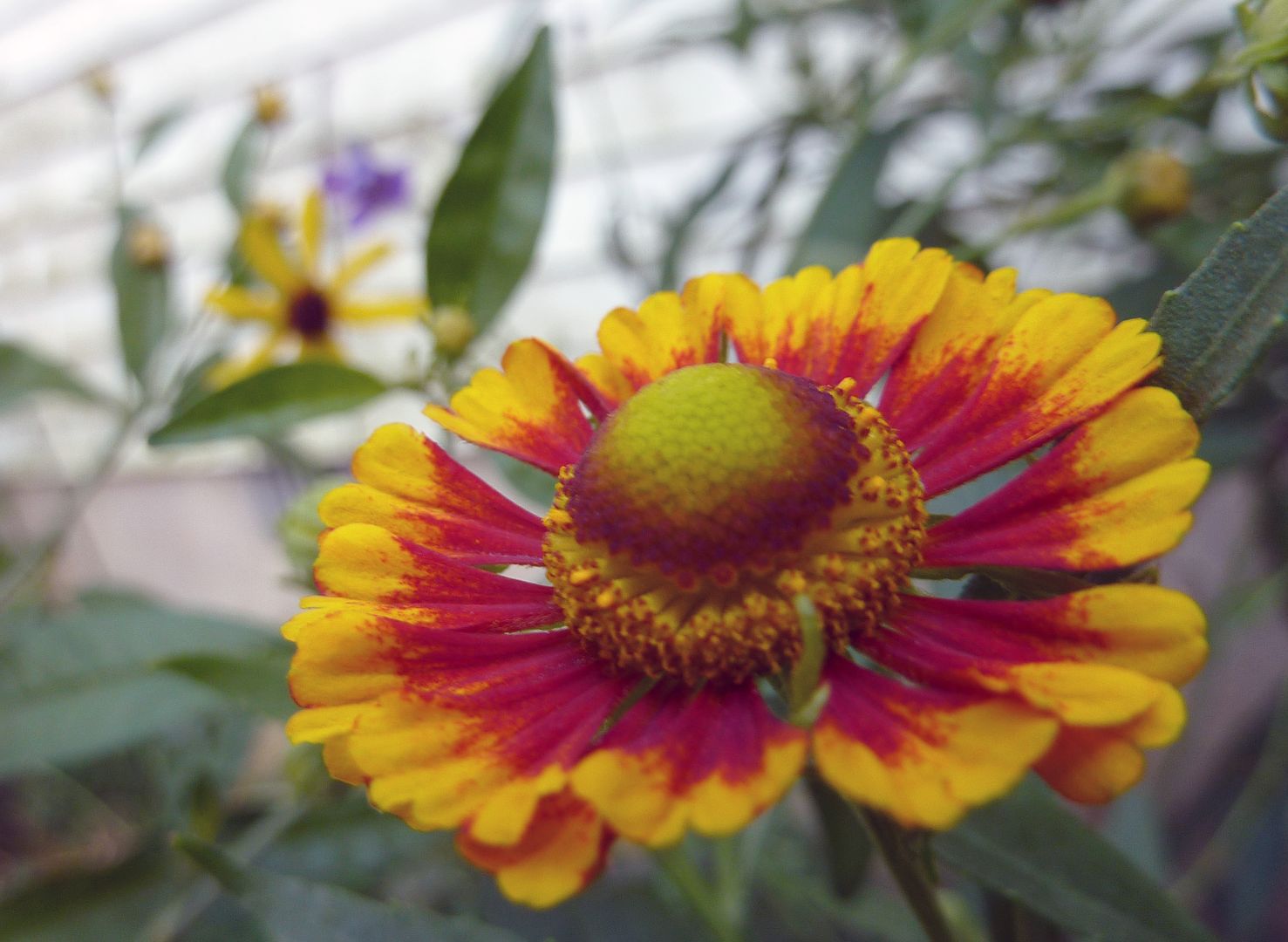
Also flowering now is Sneezeweed. I can't remember why I bought this plant honestly. I've never been happy with the amount of pollinators on it. I hate the red ring around the flower, it really annoys me when plants have this. I'd rather the bloom be totally red or not at all. Red is to showy of a color and it can easily contrast with green in irritating ways. It's not that I hate red flowers, but it's the hardest flower color to ignore and can be very distracting when seen in the background. It just takes the eye off the focus, say a butterfly on a flower... on and then there's that big red glob in the background. I'd get rid of the thing but it's filling in a bare spot and nothing seems to survive very well there anyhow. I used to have a totally yellow form but it seems to have died off.

Black-Eyed Susans, Rudbeckia hirta, are also flowering finally. In the past I've listed this on plants honeybees love. I still stand by that but I really need to stress the following: You need a field, like a 10' by 10' area of just this plant (and maybe related or similar flowering species) all in bloom to really get honeybee attention. They otherwise ignore it completely along with most other pollinator. This little sweat bee (right?) so far is the only thing I've seen working the flowers all year. I know something likes pollinating them because they keep coming back year after year. Black-Eyed Susans are biannual! The nonflowering leaves poking out of the ground are next year's blooms waiting to happen. Occasionally there is a perennial in the mix but those aren't the standard.

What's great about this plant is it's a pioneer species. The seeds germinate in response to sunlight so you'll find this plant reseeding itself where there are bare patches of soil. If there's to much organic matter laying about then this species slowly dies out in the field. After a good swift burning all the plant debris shrivels up into ash and allows more light to hit the soil. Within two years they're back at it flowering in all their glory. Of course if you're haying the field once a year, that is removing your lawn clippings instead of mulching them back into the land, then they don't really go away.

Generally they're one of the easier plants to spread around by seed. After the plant pretty much dies back and you're left only with the dead stems, cut off a few seed heads and sprinkle their contents about in open bare soil in a full sun location. Next year if they germinate you should be able to see a leaf or two poking out of the soil, and the year after that they should be of flowering age. Some seeds won't germinate until the next year, so you'll get fluctuation in how lush and full their patches are unless you keep at it reseeding them around.

As far as nectar and pollen go, you'll get far more interesting things happening with Sunflowers, Liatris, Coneflowers, and many others. It's just nice to have a few plants not covered in bees now and again. Some Fritillary Butterflies use Rudbeckia as a host plant as well, though it's vital to their populations to leave the plant stems where they are until next spring. The caterpillar pupa over winter on the stem and preemptive burning or mowing can decimate their population locally.

Sunday, July 17, 2011

My Prairie Update

Alright I've spend enough posts about other gardens, how's my prairie project going?

It's at least colorful looking minus all the clutter laying around. It's weird nice I think my yard looks in person. There's something about posting photos of it on the internet for all to see that really brings out the clutter.

Here it is from another angle. One of the species of Coreopsis has gone completely dormant/dead. All of the Western Spiderwort seems to be dying back after they flowered. The milkweed is doing great, they have flowers and are sending up even more shoots, with at least 3 or 4 of the 12 plants flowering at any given time. Next year everything should go extremely well.

I've since been transplanting some Liatris into the garden from elsewhere in the garden. I find Liatris to be neat as they don't have much of a root structure but moving them triggers flowering to start immediately.

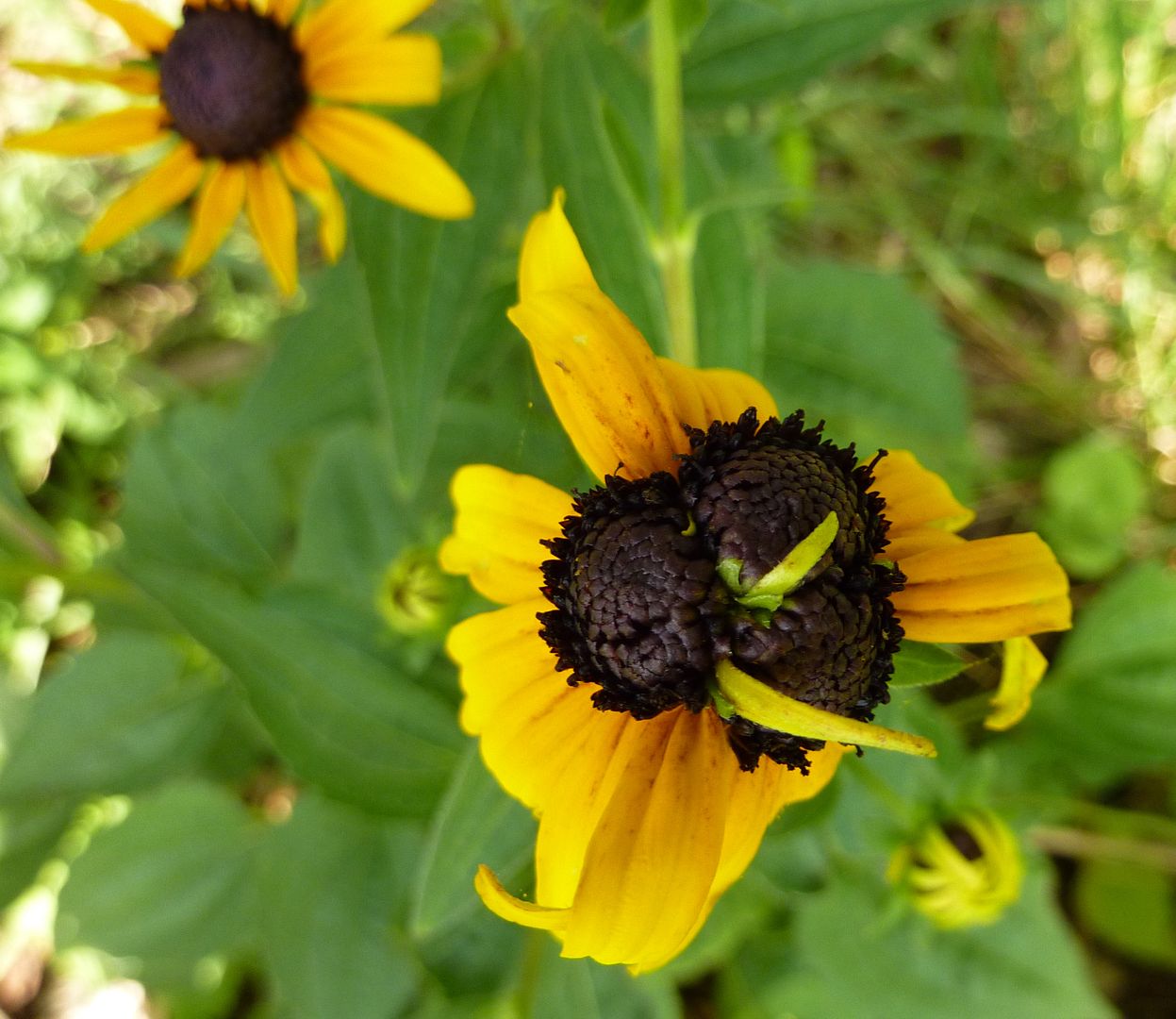
There's a nice patch of Black Eyed Susan in the older prairie garden next to the tree. They're as mutated as ever naturally. 

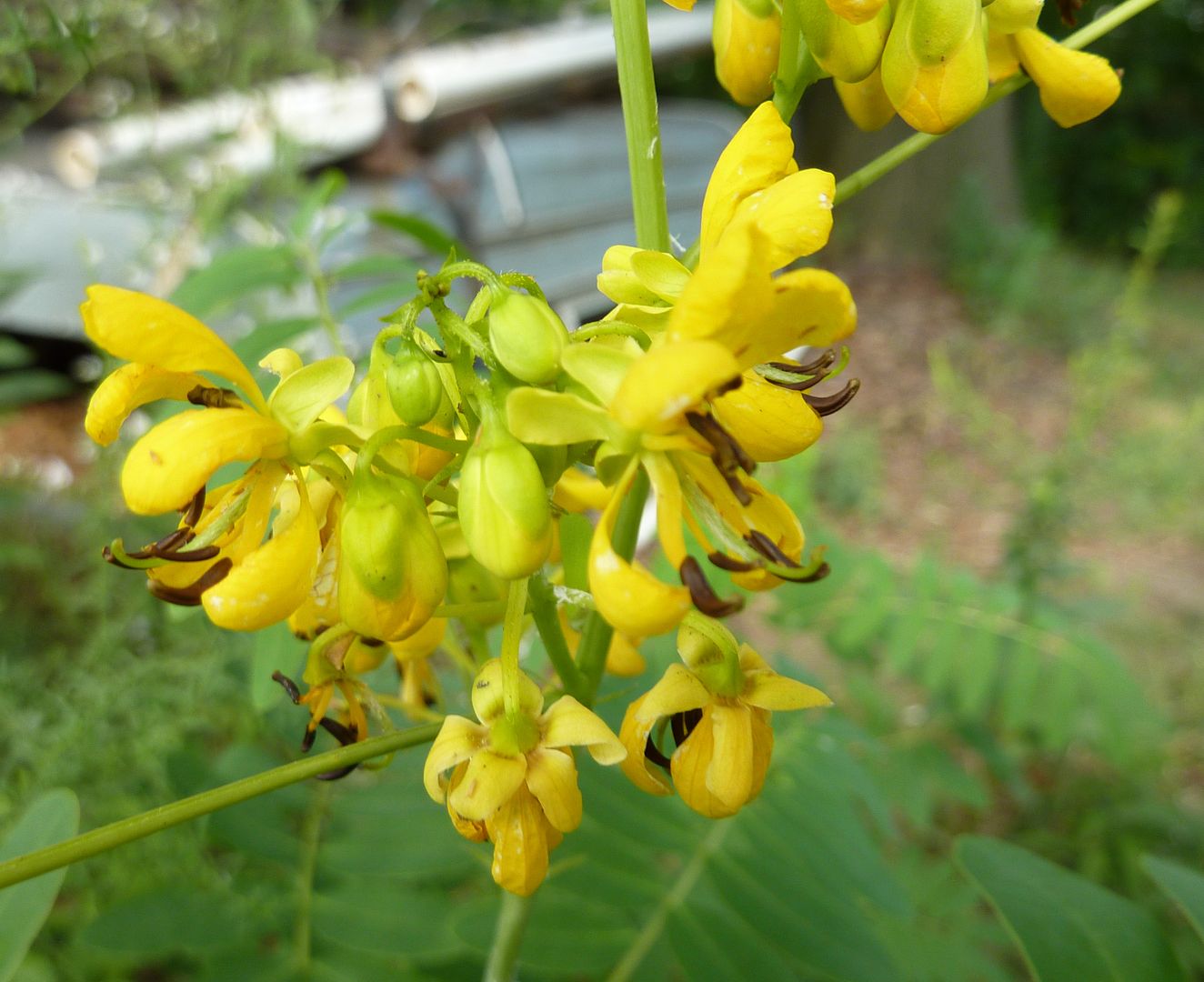
Cassia hebecarpa, Wild Senna, has started flowering. This is a host plant to the Cloudless Sulphur Butterfly, Phoebis sennae with emphasis on the flowers and seed pods. Leaves are mostly a secondary option for caterpillar consumption. I'd like to plant more of this as the butterfly is quite nice looking.

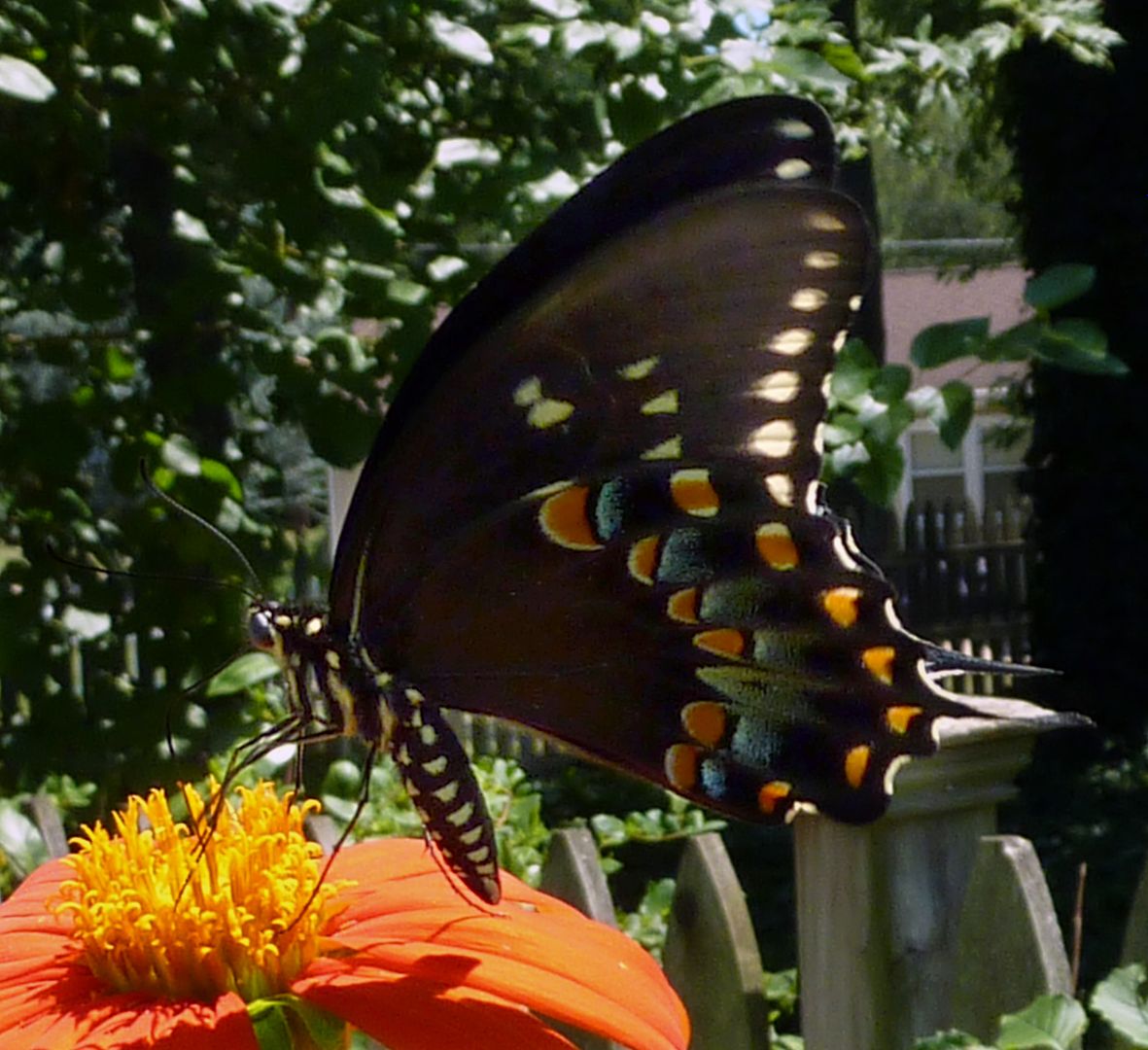
And speaking of butterflies I've attracted to the yard. Here is either the Spicebush Swallowtail or Black Swallowtail. I have a spicebush but it's very tiny. I have lots of things in the carrot family about which are what black swallowtails love. I'm not certain which this is but I found a picture of a spicebush swallowtail that matches this one perfectly and that's what I'm siding with. It's a shame I don't have a more suitable host plant for it though.
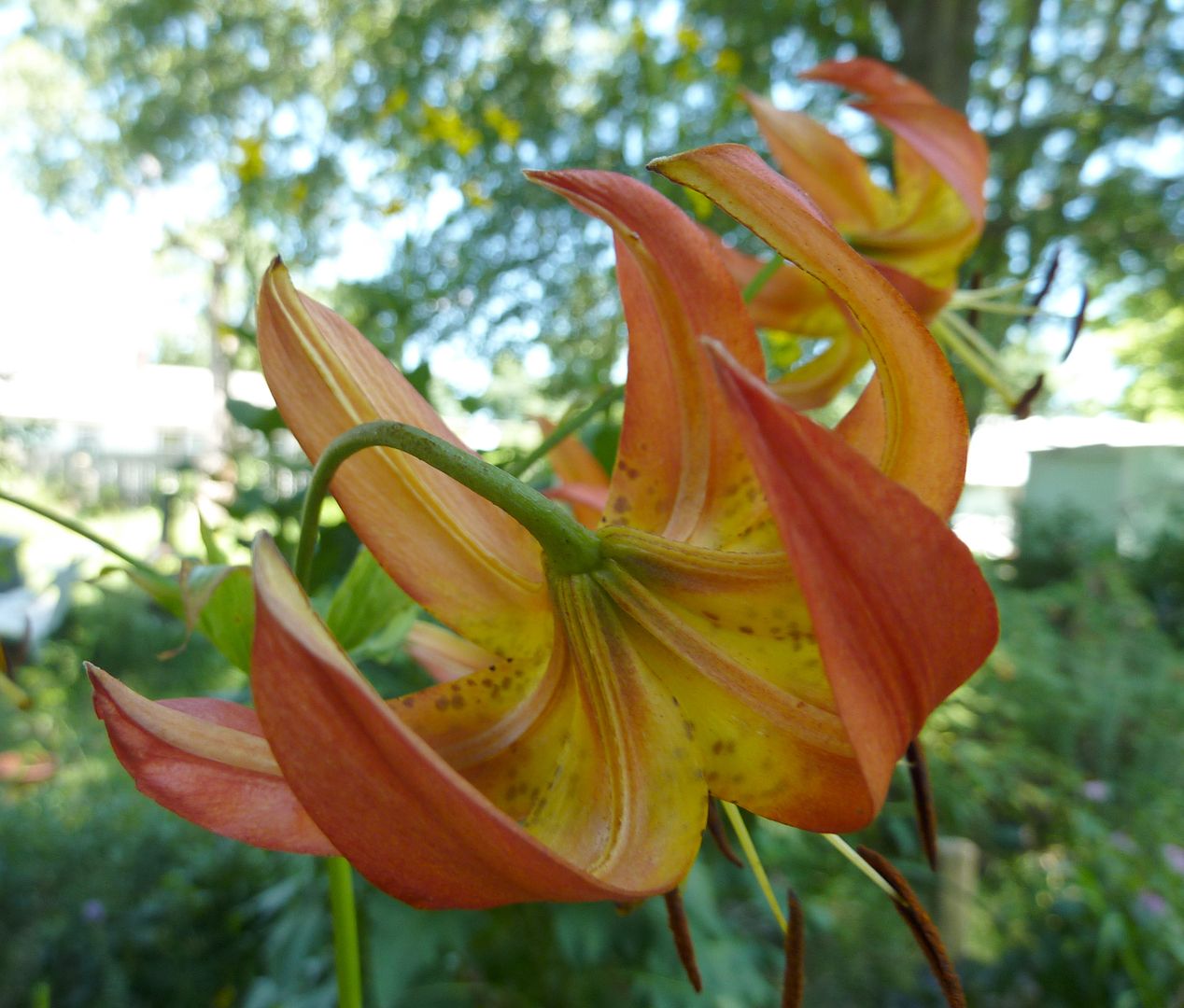
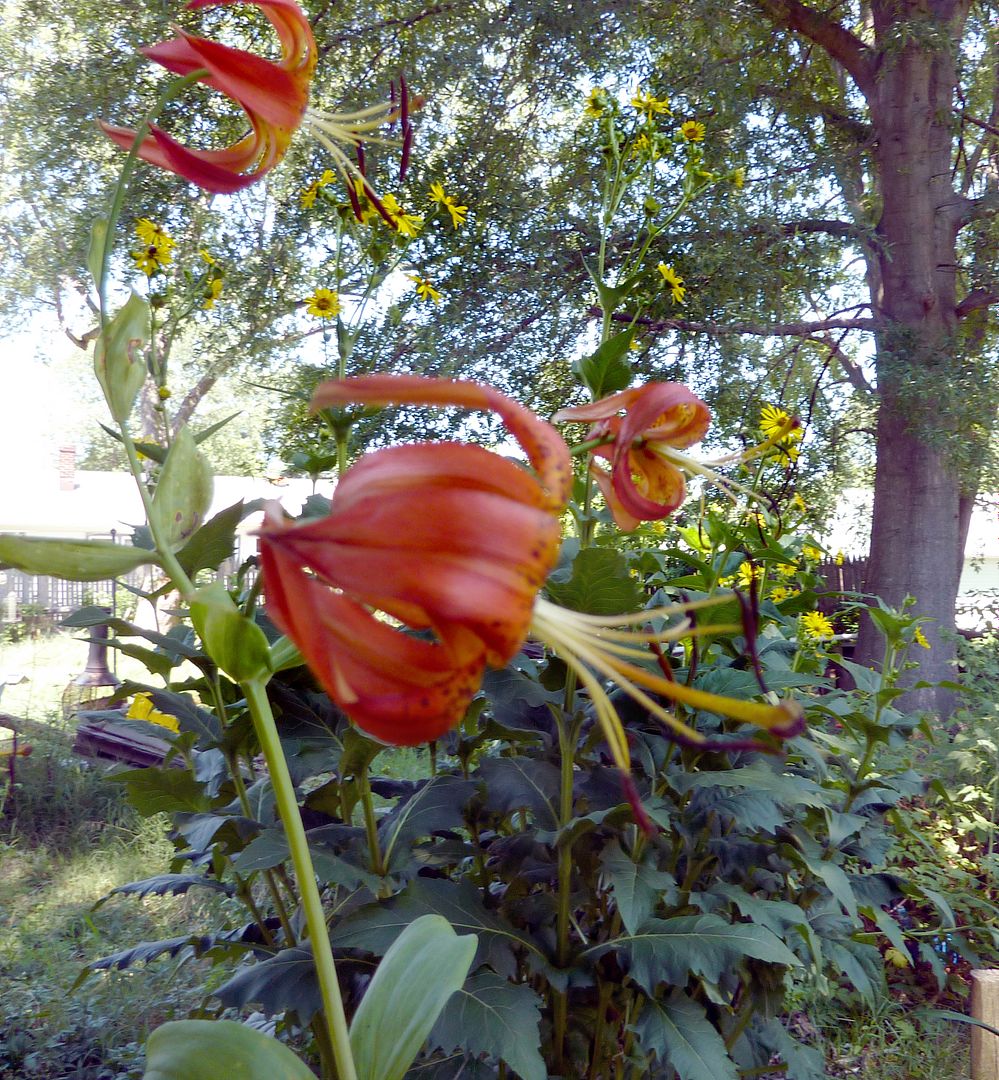
Lilium superbum, Turks Cap Lily, started flowering elsewhere in the garden. I have a cultivar of this in the prairie garden but frankly it looks as effed up looking as that black eyed susan flower. Not sure who thought the thing was pretty enough to cultivate, as the true species lacks random growths and tendril-like flaky structures on the flower. 

While the wind was blowing one day I realized how perfect a companion they are to the cup plant. Both are almost as tall as one another, the flower color goes great, they're different enough to not be redundant, everything sounds perfect. I will certainly be planting some bulbs around this fall.

Tuesday, July 12, 2011

Meadow "Garden"

Earlier in the week I attended a course at the Mt. Cuba Center on Meadow Studies. First off I need to put a little disclaimer here; I made like 3 wrong turns getting there and arrived 10 minutes late for the class. I found the title of the course to be a little misleading but the description was accurate. It basically boiled down to "Hay here are some plants blooming now. Let's go look at them."  And there's nothing wrong with that but I feel the tone was a little off for a class on meadows.

After reading books like The Ecology and Management of Prairies in the Central United States (Bur Oak Book) by Chris Helzer, who blogs by the way, I came into the course expecting things to be different.

Basically a healthy meadow consists of 150 to 300 plant species. The Mt. Cuba Center seems to run their meadow differently. I think it's correct to say they're trying to maintain a specific look rather than allowing it to go through a natural succession. Other than removing trees now and again I'd say they don't allow their plant species to change over time. 


By design they favor grass species over forbs. Here you can see an abundance of Little Bluestem, Schizachyrium scoparium, which is a grass that ranges from blue-green to green in color. There were lots of other grass species present but only 4 or so were highlighted. To some people this might look boring but grasses really don't shine in the meadow until the autumn and winter. There is something so majestic and calming about watching a field of tall grasses sweep with the wind. When the sight takes up your entire field of vision there's nothing quite like being there in person. It really is something you have to see in person to appreciate; cameras do not capture the effect at all.

To comment on the tone of the course a little I noticed there was almost no talk of succession. The instructor mentions the Rudbeckia hirta, Black-eyed Susan, will reseed itself around but they didn't mention why. Again this leads me to believe they're more interested in maintaining a certain look as opposed to being a course on prairie preservation. There is a follow up course I'm attending next month so I might be wrong about this.

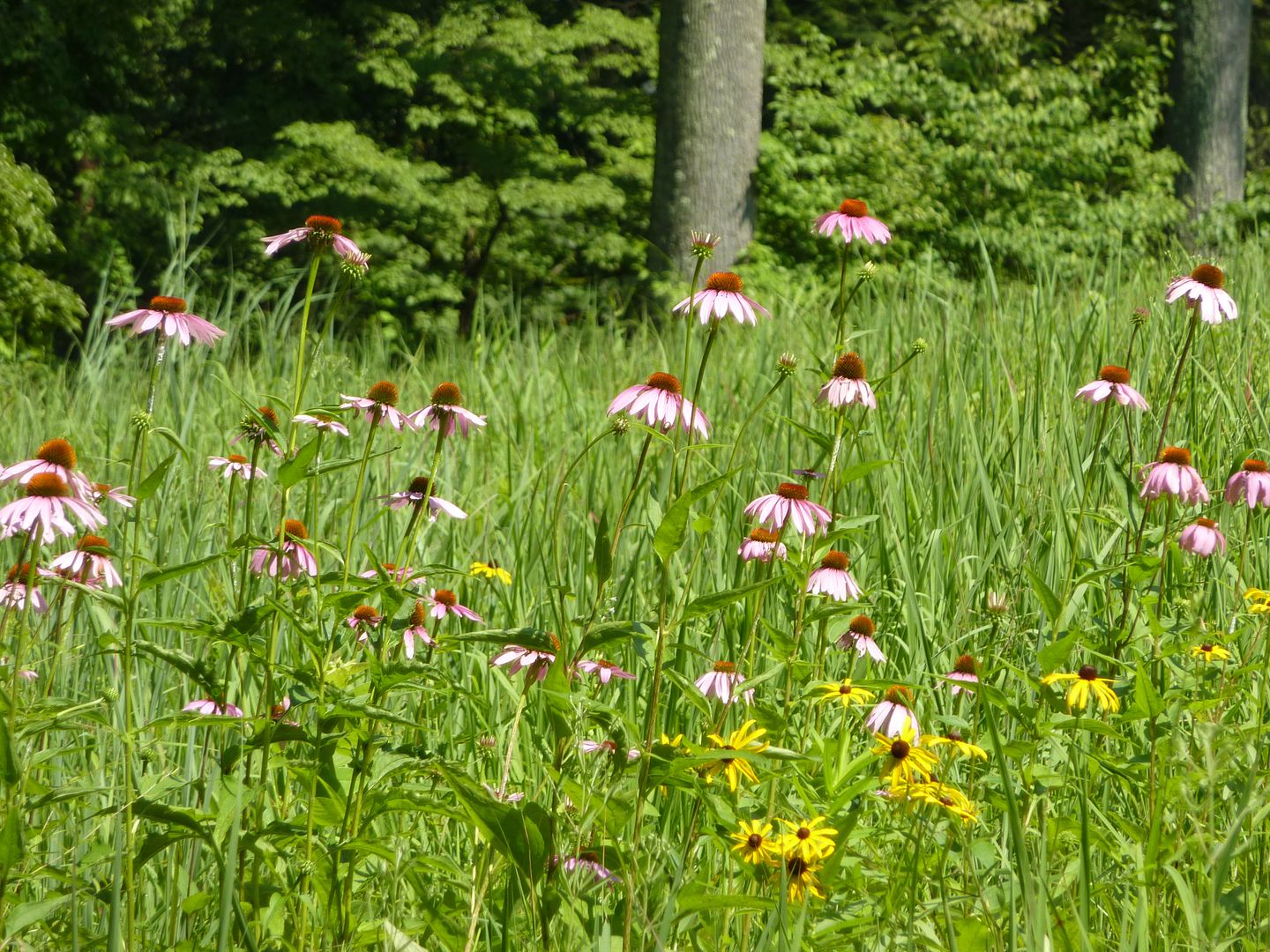
In truth things like Black-eyed Susan have seeds that germinate when in the sun. Thus they are a pioneer species. If a tree falls in the woods, their seeds will germinate. If there's lots of sun hitting the ground, their seeds will germinate. However, several years later this is unlikely the case. All the grasses and forbs in a meadow die back to the ground each year leaving lots of dead stems. Slowly but surely this abundance of organic matter shades out the seeds or prevents them from touching the soil. They're slowly replaced by things like Echinacea purpurea, Purple Coneflower, which are more perennial.

There was a discussion on installation of a meadow and some good pointers given by the instructor but this was only after someone asked about it. Not planting plugs to warm season grasses in the fall was among the smarter things mentioned. As these species only grow when the soil is warm they won't do anything in the fall or winter and typically die as a result.

I look forward to the second course next month. Again, I showed up 10 minutes late so there could be a whole discussion I missed. For a good read, if not a little boring though I recommend The Ecology and Management of Prairies in the Central United States (Bur Oak Book).

Monday, June 14, 2010

Touring a Pollinator Garden

The second half of the meeting was devoted to Gardening for Pollinators. So naturally our hostess had a good pollinator garden setup.

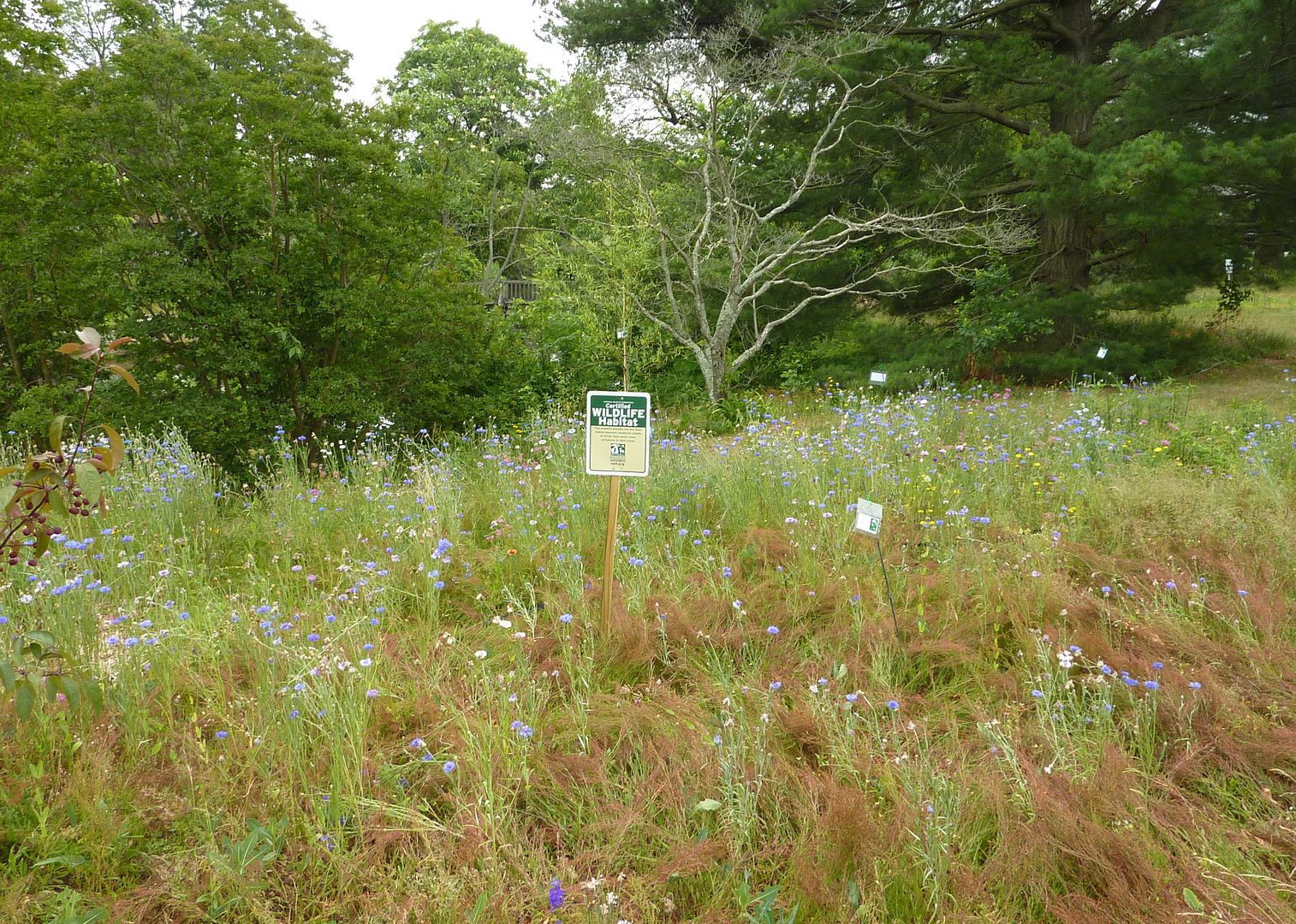
Let me start by saying how hilarious placing this sign in a patch of Bachelor Buttons is. Bachelor Buttons, aka Cornflower (not Coneflower) are a common road side weed. Other members of this genus are called knapweed. Very few are native, and the majority are invasive.

This isn't the worst invasive and to her credit it was being controlled. Her property is located in the middle of farm country and apparently they hose down the road sides with Round Up annually. I'm not kidding, they just hose down the road sides with this stuff. It helps control weeds and keeps farm crops that would otherwise spread wildly under control. Signs all over her gardens had them marked as Don't Spray and Don't Mow.

There were several patches of this flower about. The sad truth right now is we're in a bit of a low point. There are very few late spring flowering plants, and only a hand full of early summer flowering plants that are native. Filling the gap with a few nonnatives is acceptable I suppose.

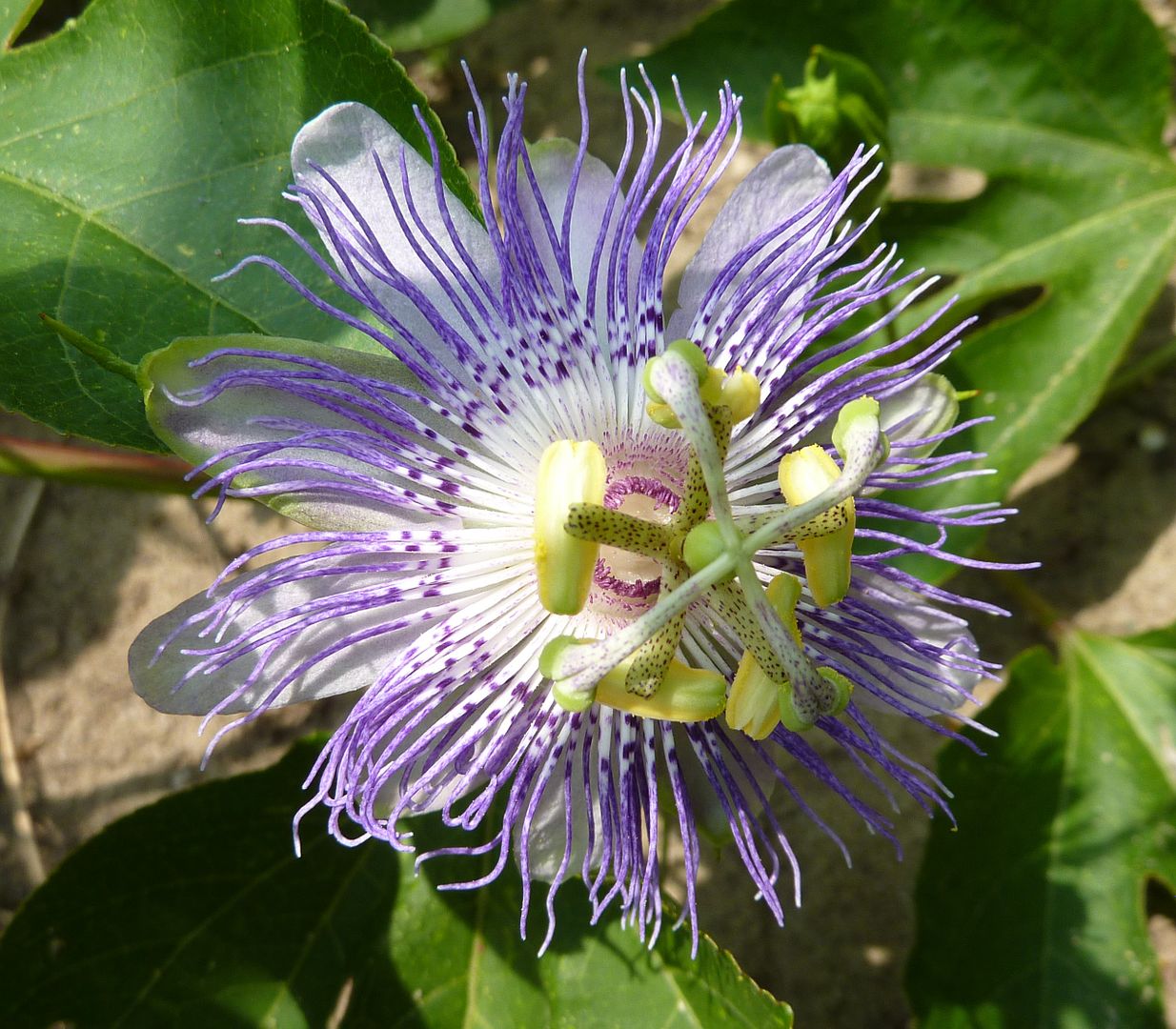
Passiflora incarnata (our native passion flower) was growing like a weed on her property. Carpenter bees I think are the ideal pollinator for this plant but I didn't see any around.

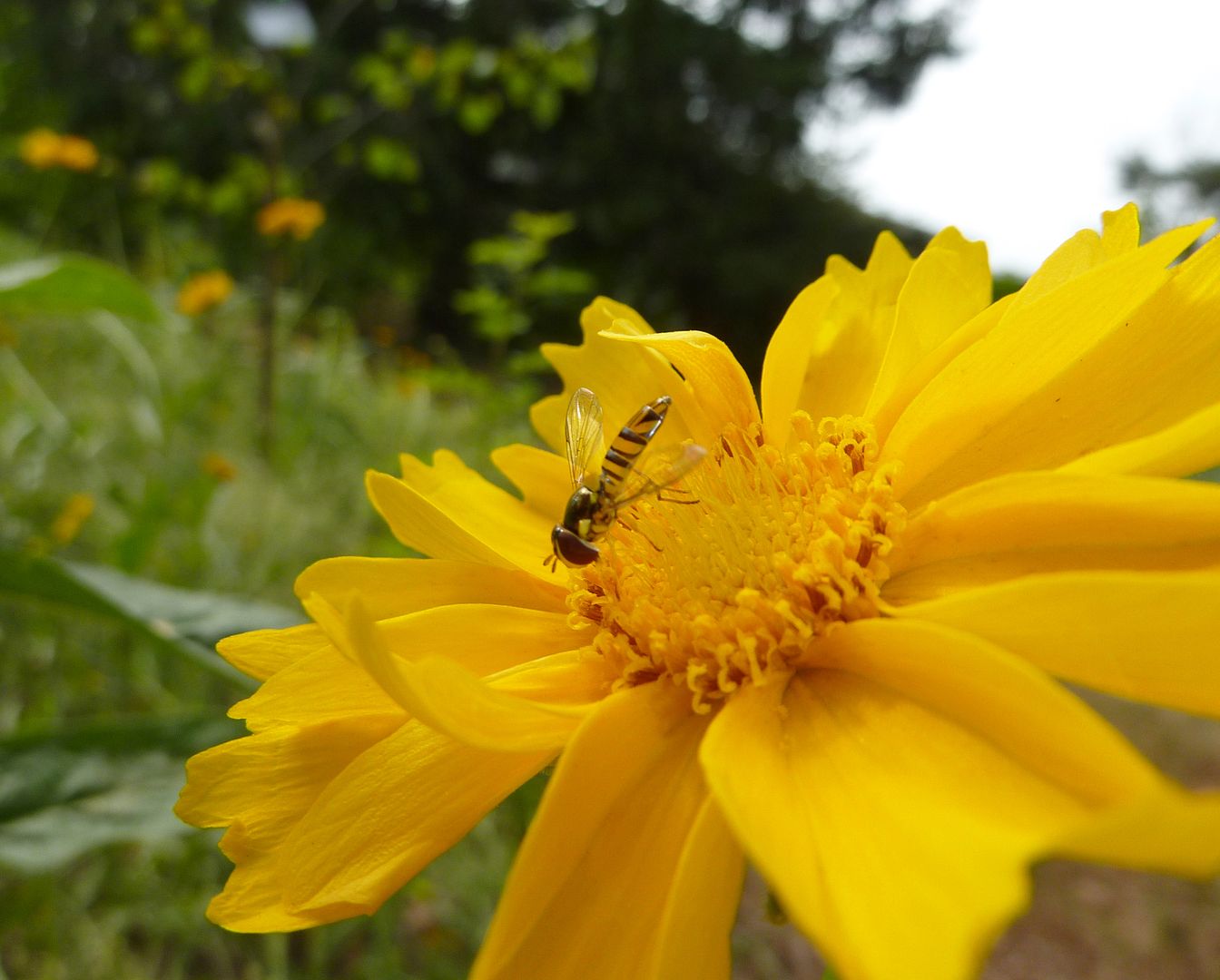
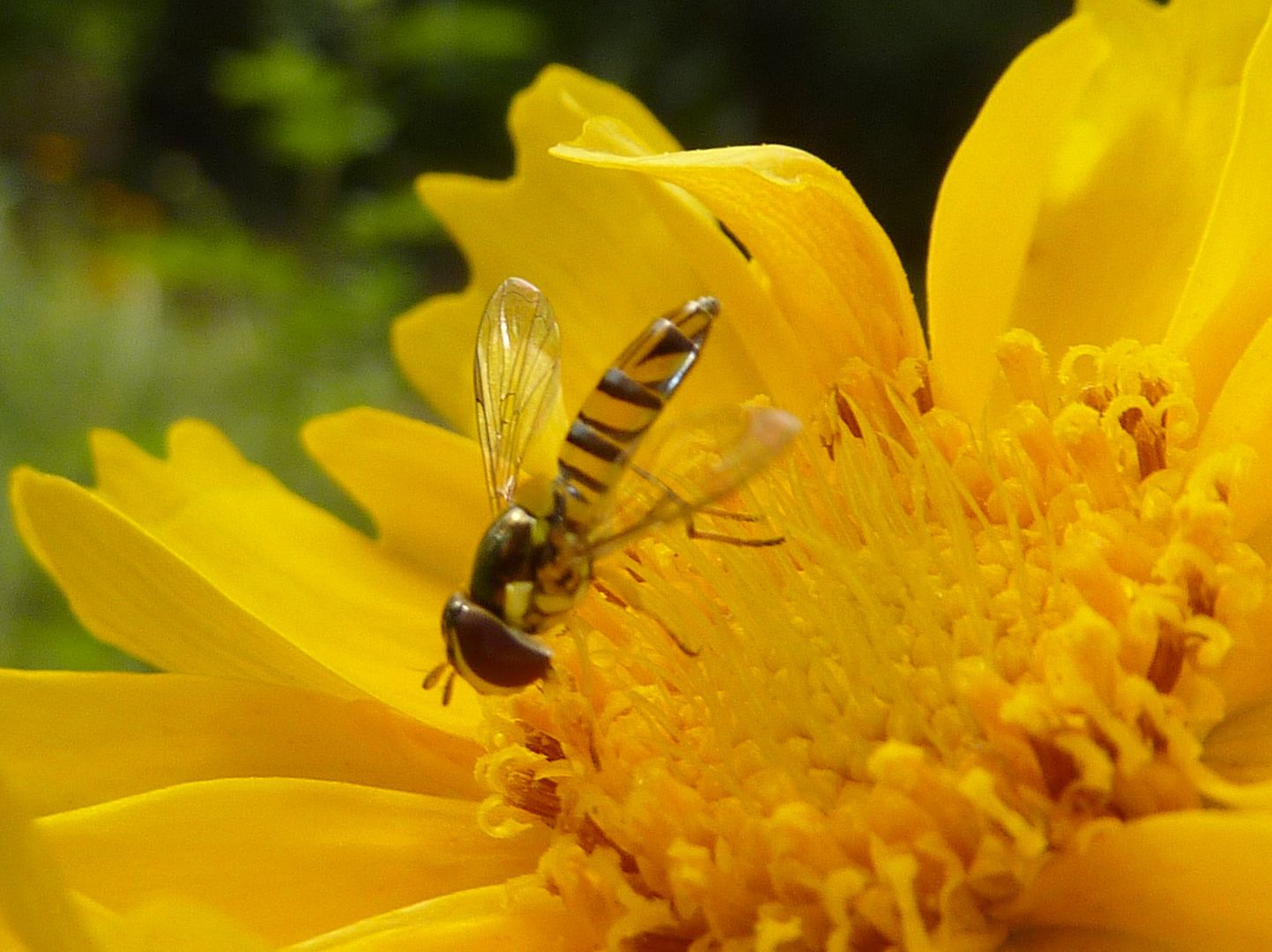
Coreopsis were blooming all over the yard. And were the perfect draw to the hover fly.

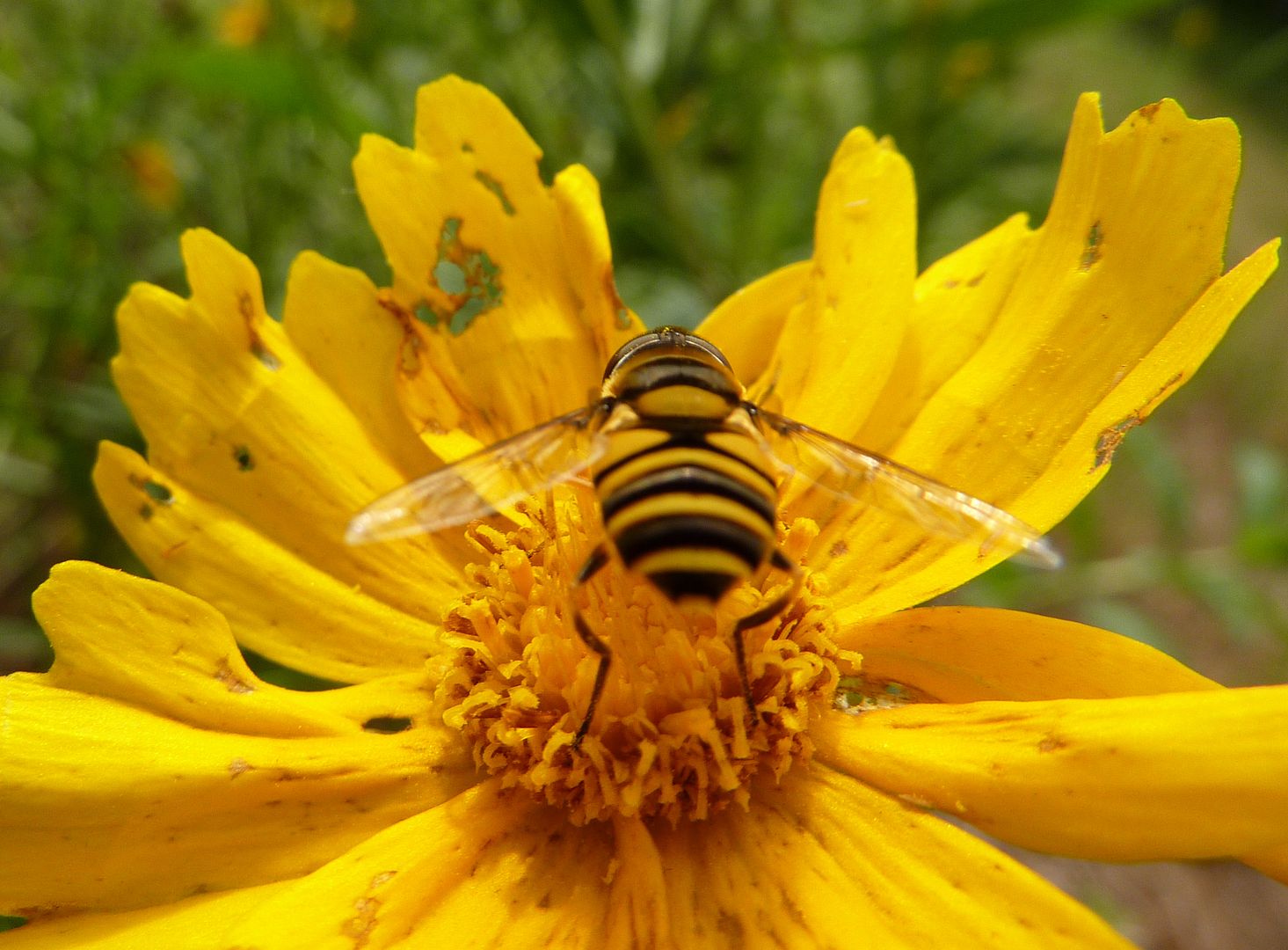
These beneficial insects double as both pollinator and pest control. The larval stage eats aphids.

A Flower Fly on a Coreopsis that's seen better days.

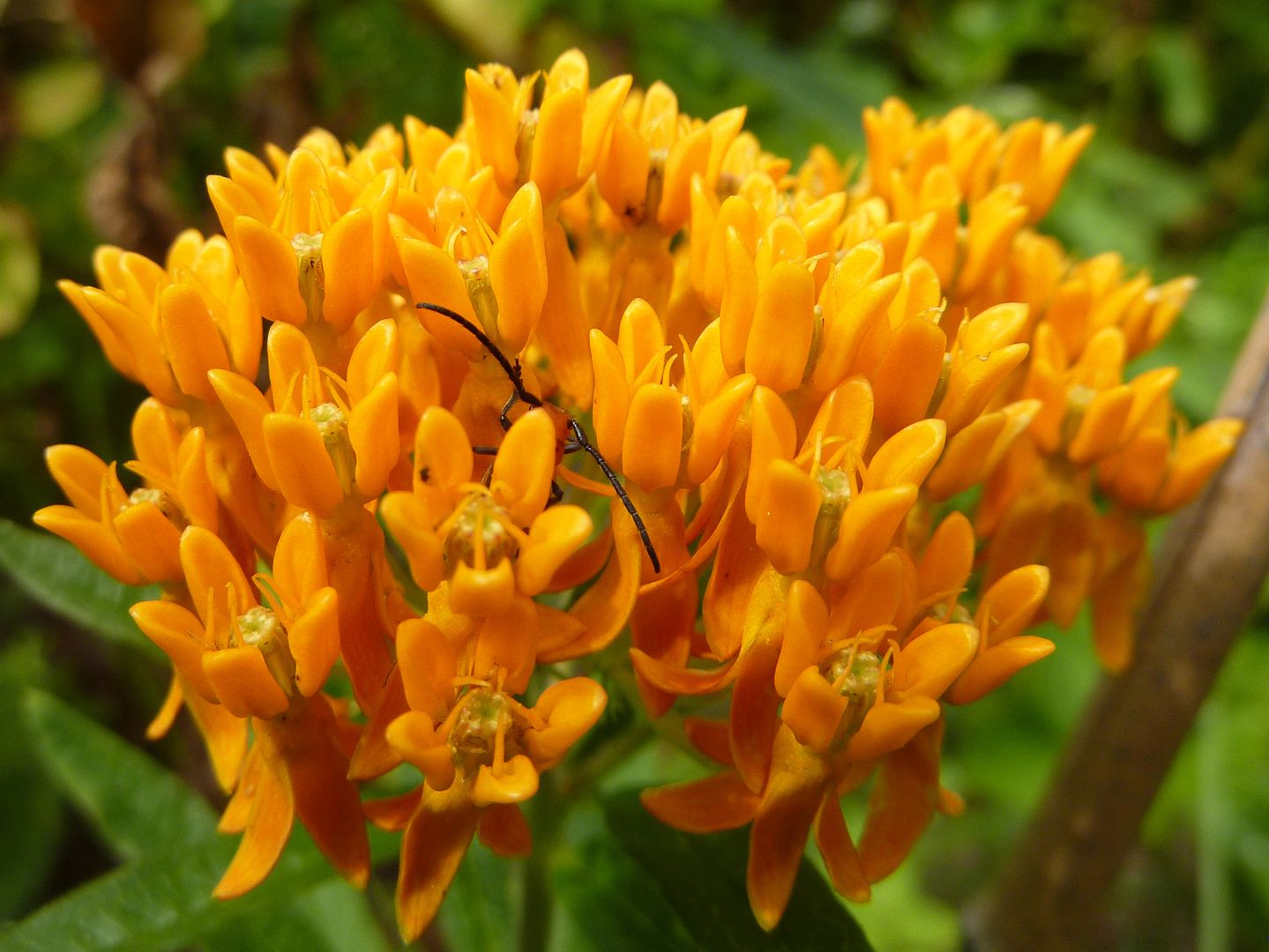
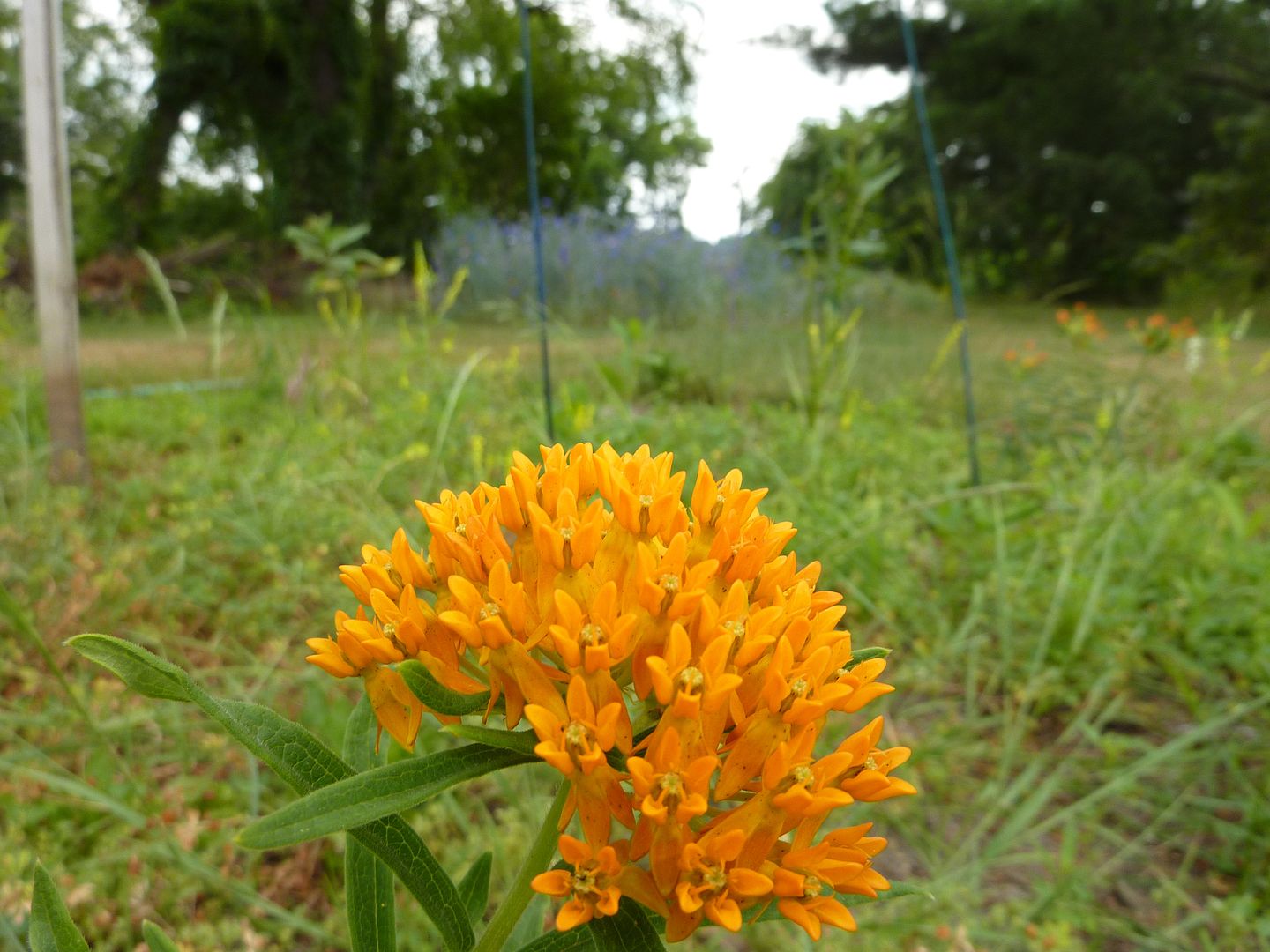
A Milkweed Beetle (Four Eyes) working it's way through some Butterfly Weed, Asclepias tuberosa. This is the first time I've seen this beetle and I didn't realize what it was when I took this shot. They get the common name four eyes because the antenna comes right out of the head in the middle of the eye. This divides each compound eye in half. BugGuide

Milkweed is my favorite flower I think. There's just something about the little fangs that I love.

A number of plants were scattered around the yard. There was even a patch designated as a Monarch Rest Stop.

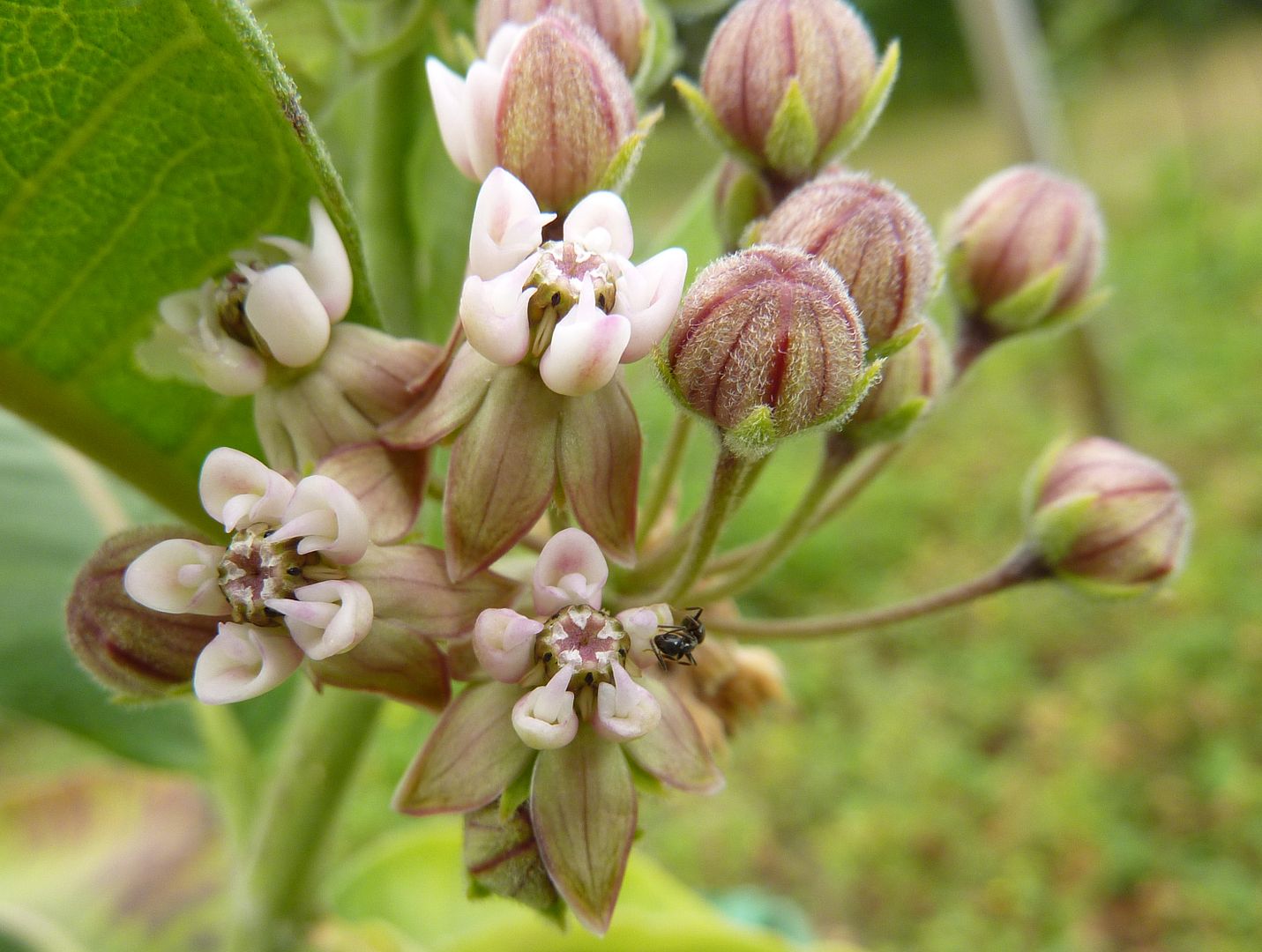
Common Milkweed, Asclepias syriaca, was sort of blooming. You can really make out the fangs on these slightly larger flowers, and they're fragrant too! The only issue with this garden was most of the plants were considerably young. They only had one cluster of flower if any at all and none were taller than 18 inches. I didn't see to many fall nectar sources either.

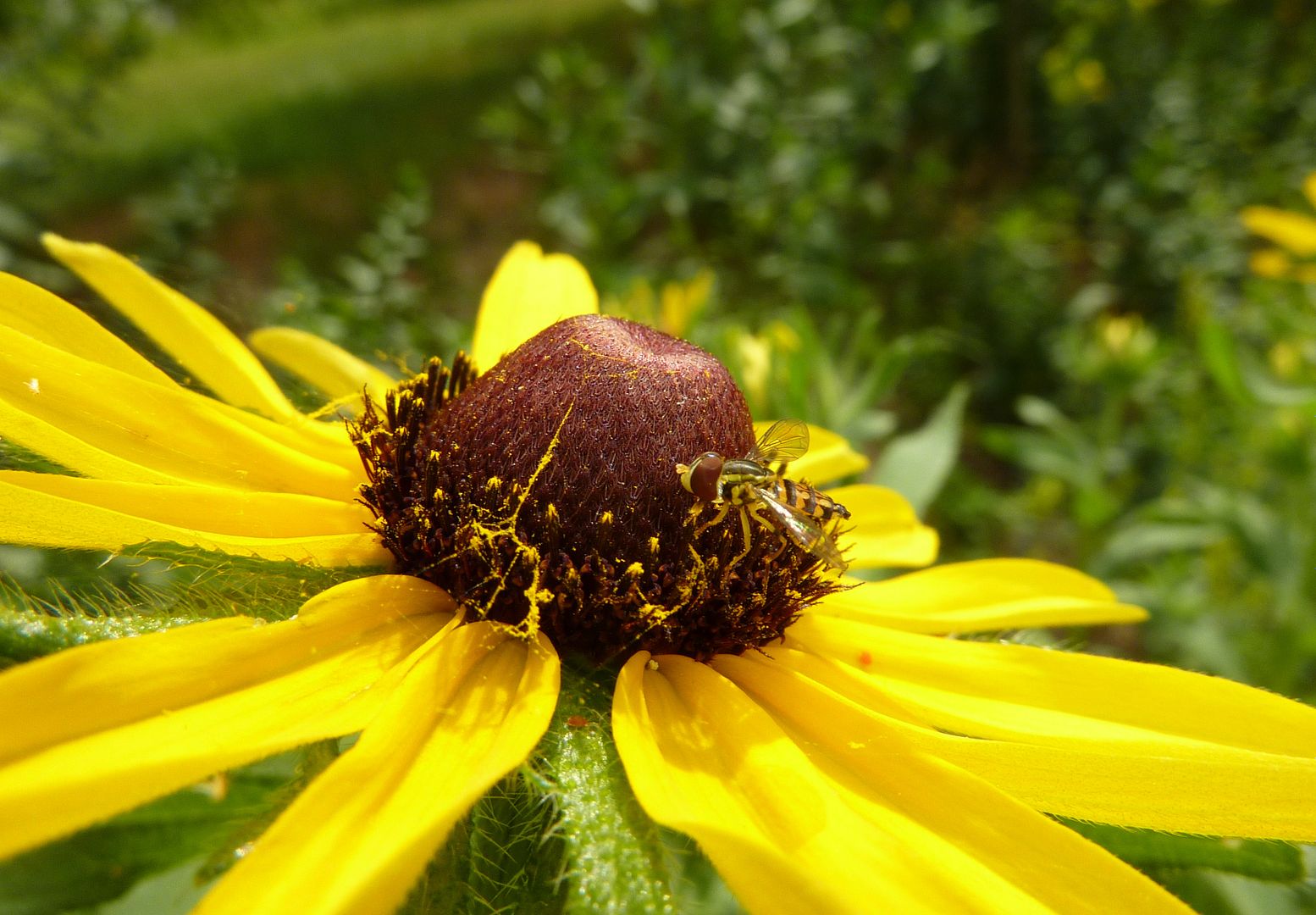
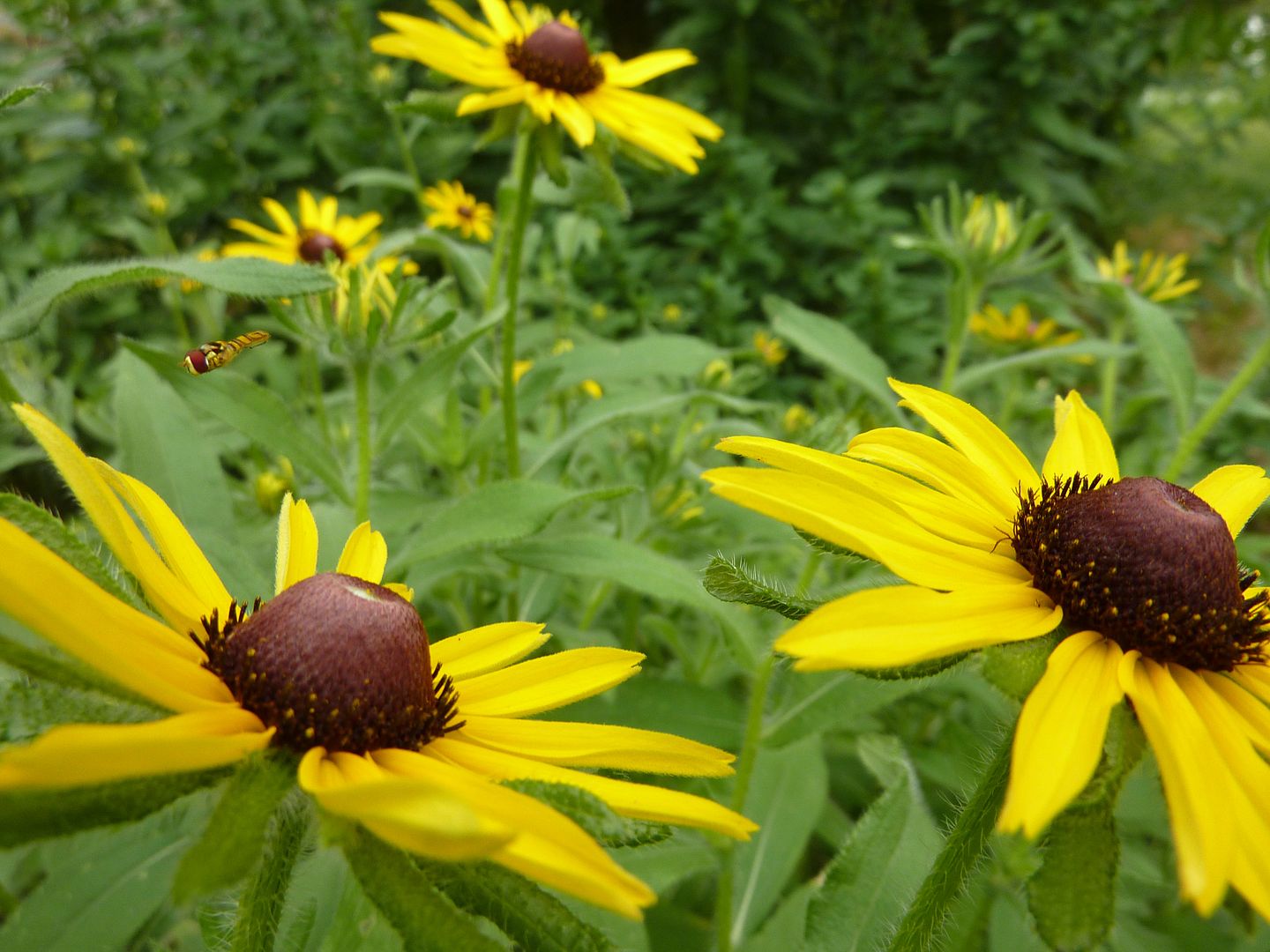
Black-Eyed Susans were also in bloom. Rudbeckia hirta. There were a few others like Brown-Eyed Susan too but I honestly can't tell the difference. You can tell from the silky threads on the flower that a caterpillar of some sort has inhabited the plant. Similar to Milkweed Rudbeckia are host to a number of Lepidoptera. The issue is they're all small and nibble mostly on the flowers. They're no where near as showy as the Monarch either.


The Hover Fly was dead center when I took this shot I swear. It darted just a bit to quick for me but still came out in perfect focus somehow a few inches to the left.

The only real plant I don't have a lot of was the Spiderwort. There was loads of this in the front garden and the bees were working it fair enough. I want to say planting more of this would help fill the gap in bloom between spring and summer.