Canon PowerShot SX50 HS 12MP Digital Camera with 2.8-Inch LCD (Black)
Which I bought because it topped the list of a few macro point and shoot though really it seemed to be a narrow margin between that and the next four below it. Sadly it doesn't have any port to plug in a portable flash, (at least not that I've found).
Also it does NOT come with the USB cord required to get images off of the camera and onto the computer! Thankfully my first camera years ago was a Canon and I still had a cord laying around.
Raynox DCR-250 Super Macro Snap-On Lens
I also bought this which might have been the better buy because it's almost universally able to attach to any point and shoot camera.
All of which came at the recommendation by Alex Wild, a professional photographer in the scientific world who teaches classes around the world with emphasis on photographing insects. (Though he's more so a professor at one of the Universities I believe.)
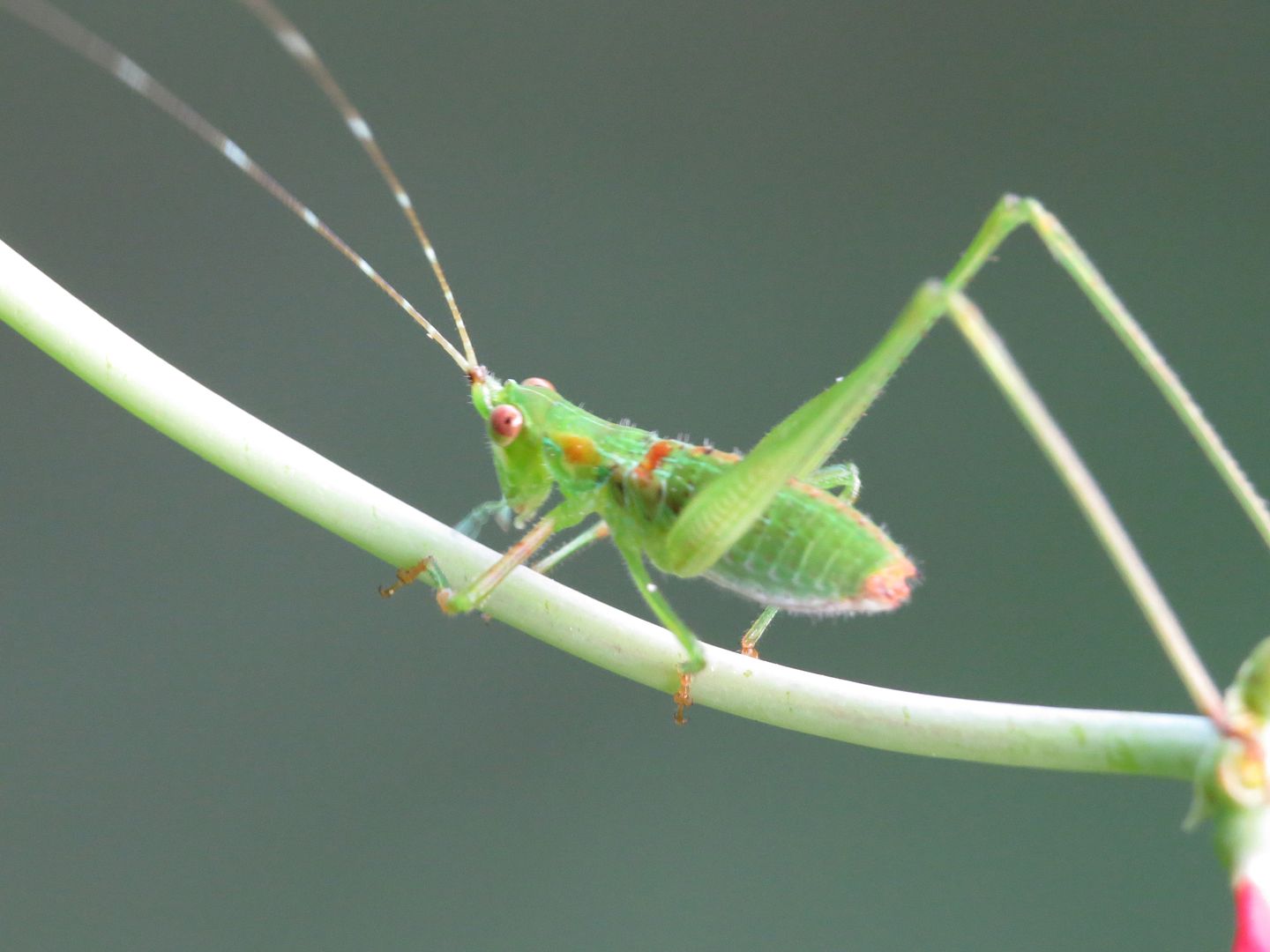
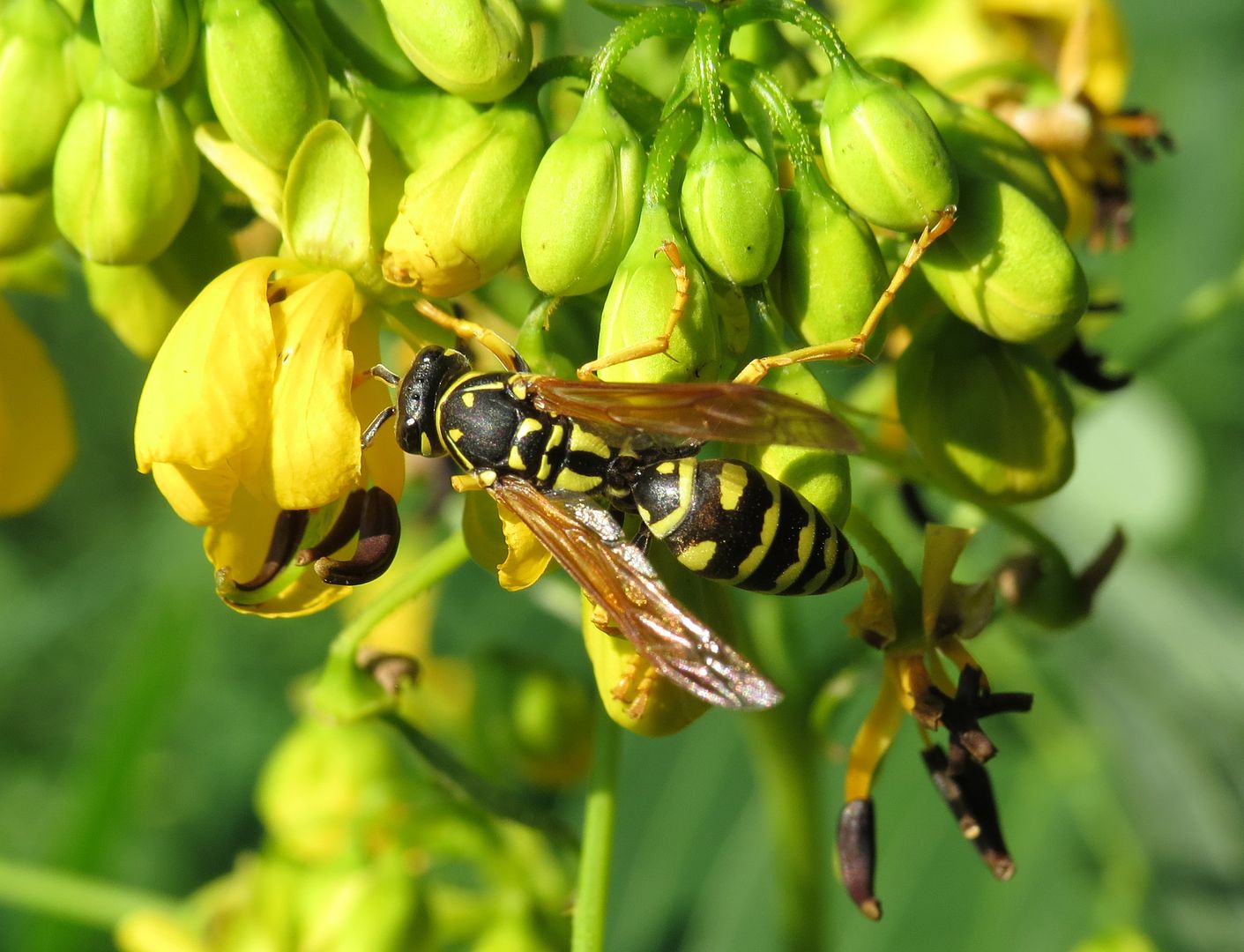
So after a day of shooting here's some of what I came up with.
Showing posts with label Bugs. Show all posts
Wednesday, July 17, 2013
Monday, July 1, 2013
More Ant Plant Relations
Ants marching around on plants is something of a common sight in my yard.
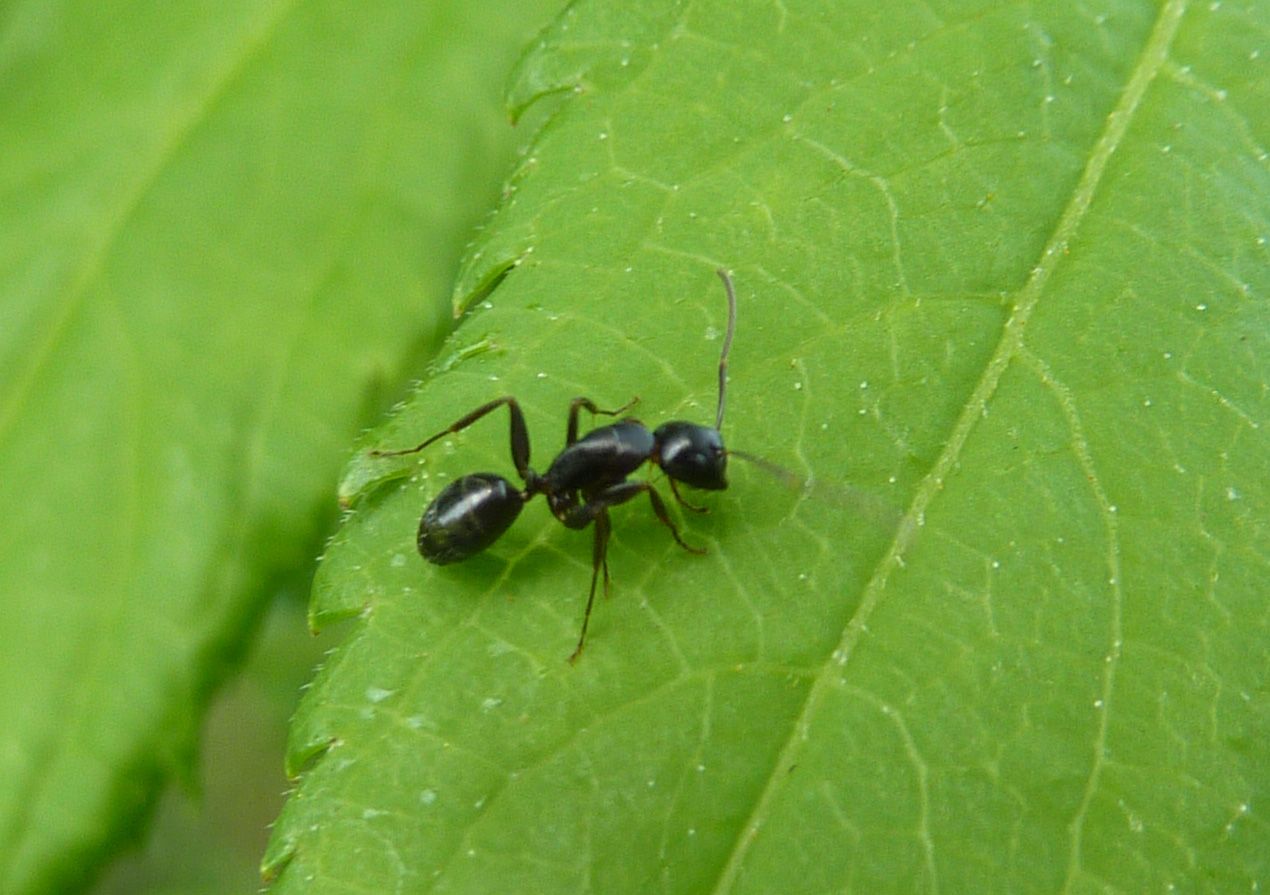
Here a Camponotus nearcticus worker explores the leaves to a cup plant. Likely she's interested in small amounts of pollen or sweetness on the leaves or simply foraging for some insect or some other resource for the colony. Occasionally aphids will drip honeydew down onto lower leaves and it's this that ants go for, but that's not the case here. I've actually never found aphids on cup plants before. Cup Plants are related to Perennial Sunflowers which produce extra floral nectar so I suspect that might be what's going on.
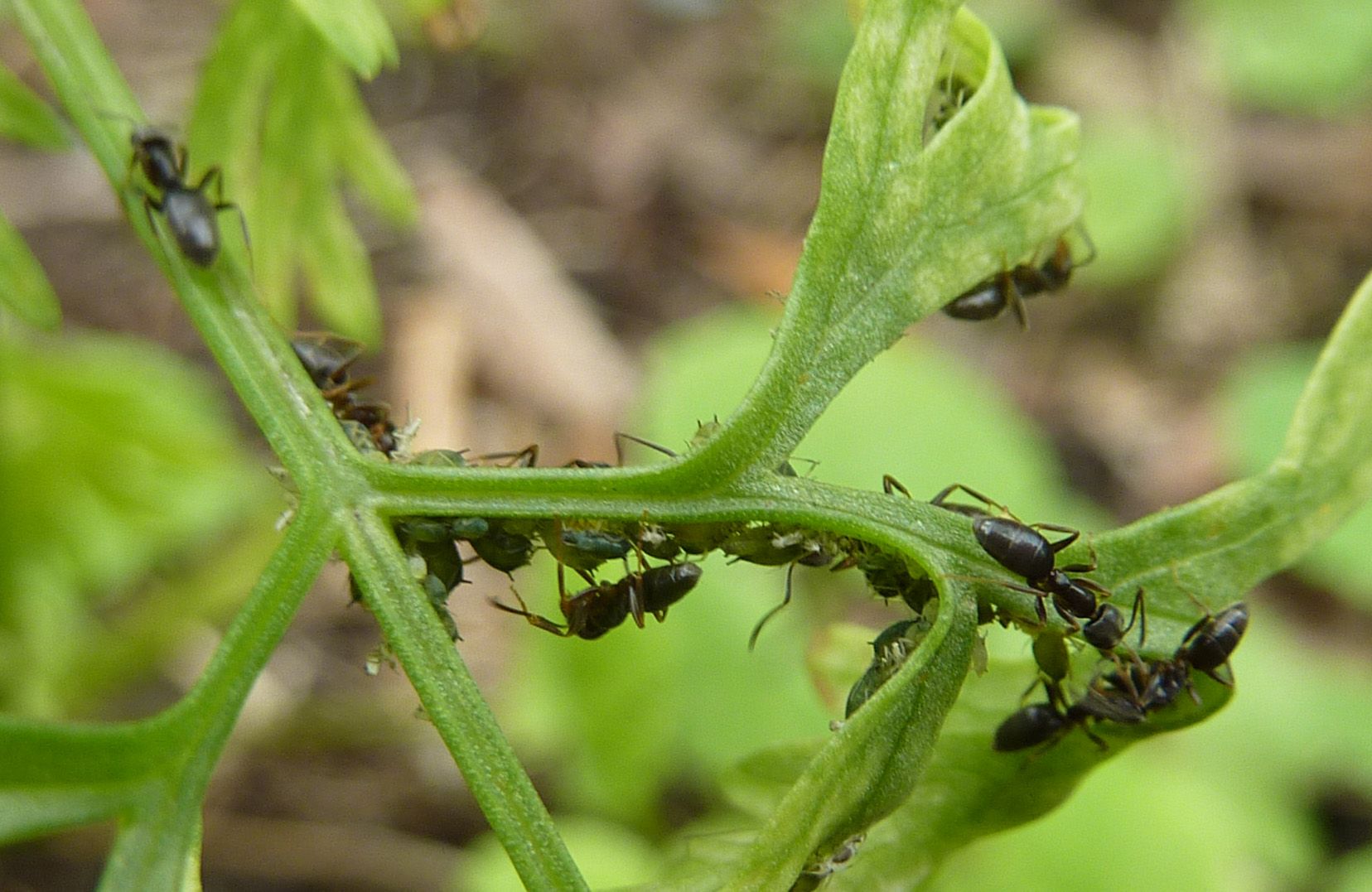
I'd never found aphids on parsley before either but that's happened this year. Sometimes aphids don't afflict the same host plants each year or at least don't do so as badly as on previous years. The ants here are Tapinoma sessile which has become one of the most common ants in my yard. I believe my use of a green house to grow seedlings is the cause. Because their colonies move into the flats I effectively divide the colony every time I plant something in the yard.
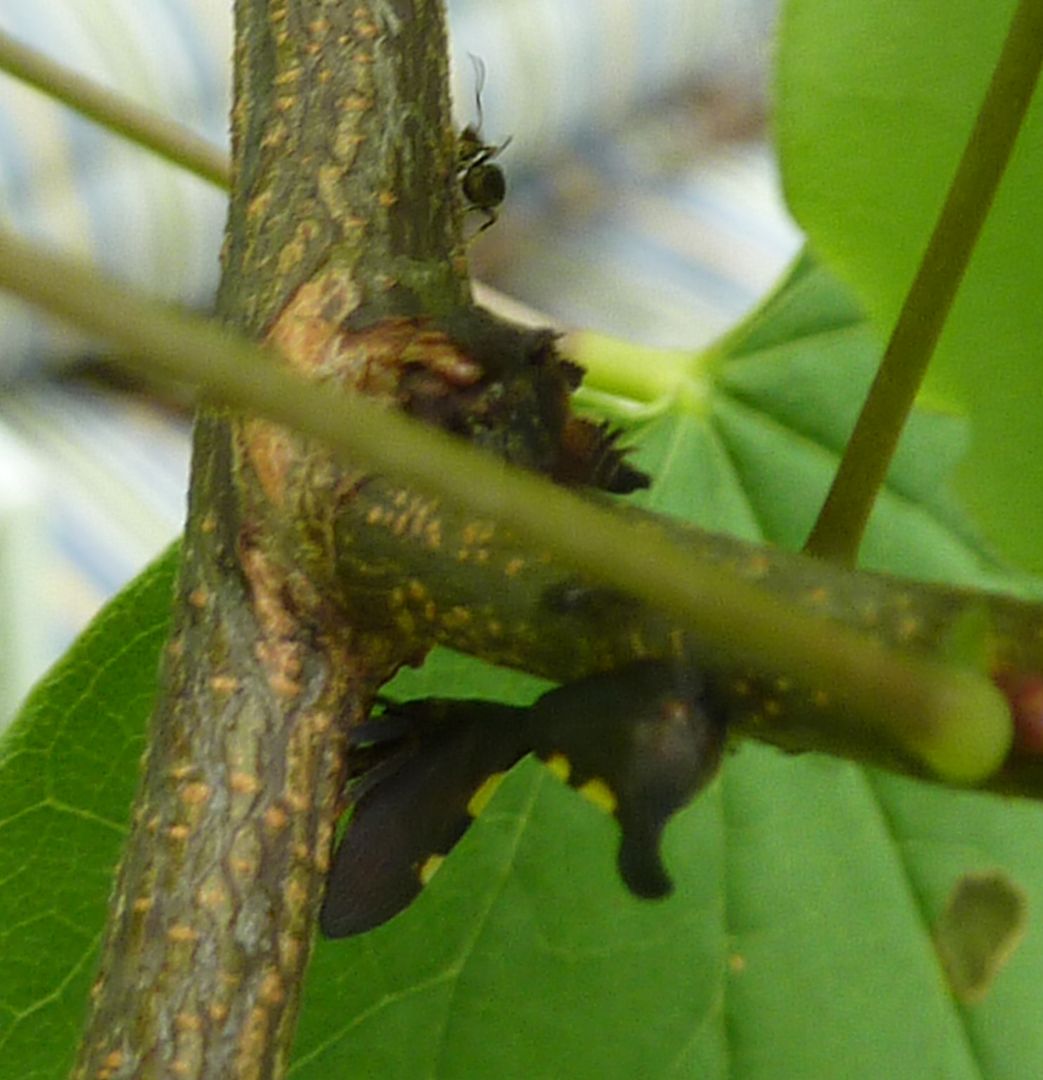
Some insects only require the protection from ants during the early stages. Here is a bad photo of some Leaf Hoppers. The younger nymphs are tended by ants but older ones, who've gained their hood, "wings", and brighter color, tend away from this relation. They become fidgety and are quick to flee when predators approach, something aphids don't do.
In the absence of aphids ants and free sources of nectar, ants will out right steal it from flowers. Here a tiny Nylanderia faisonensis worker explores the fanged flowers of an Asclepias tuberosa plant. They're a rather small ant that's able to get into the deep crevices.
Oddly enough the flowers of Swamp Milkweed, Asclepias incarnatta, are even smaller and I found them being robbed out by a much larger species of ant, Camponotus pennsylvanicus. I suspect the large mandibles of this carpenter ant aid in their ability to get at the nectar somehow but I haven't had the time to inspect the flowers for damage.
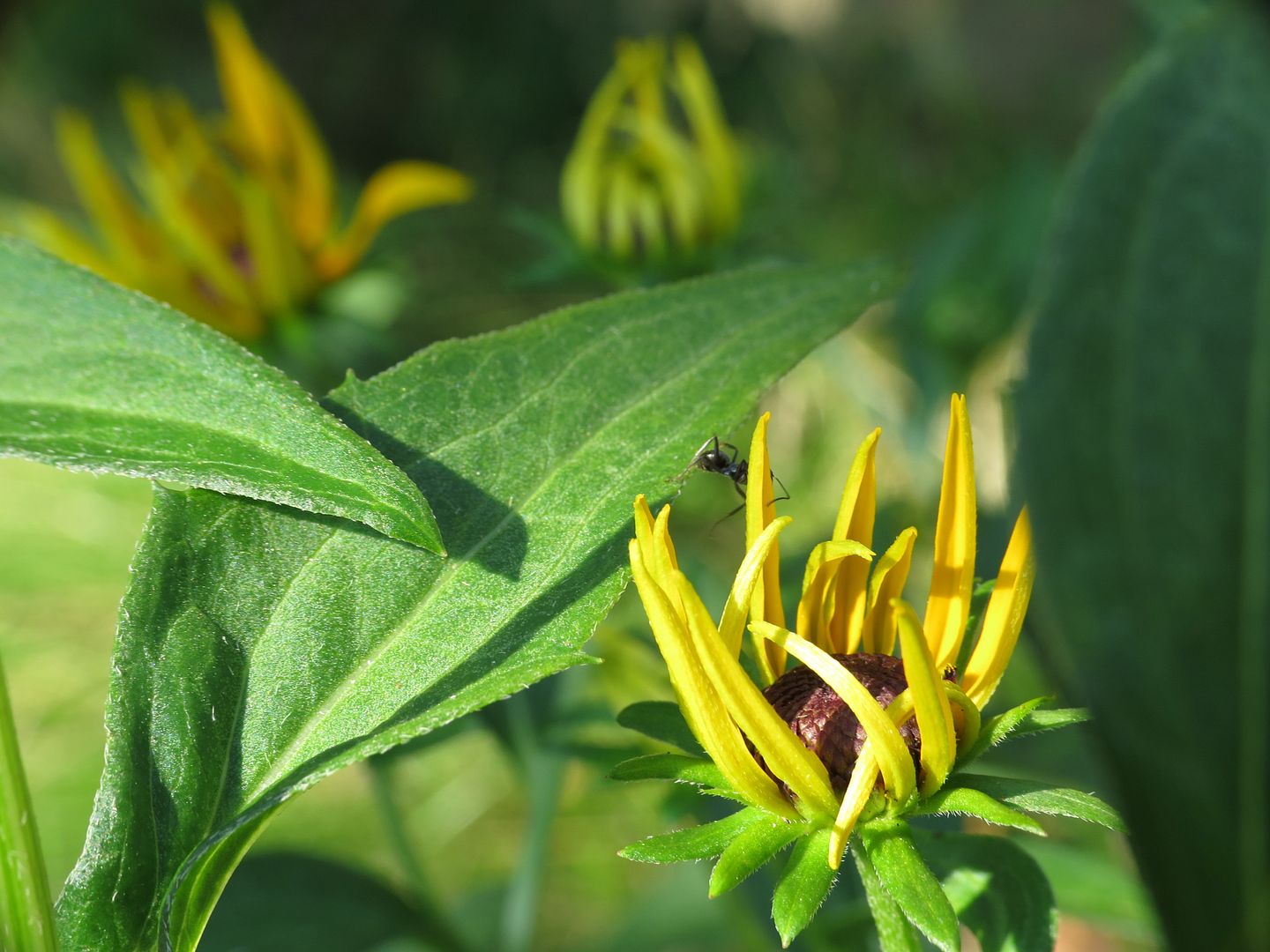
Here a Camponotus nearcticus worker explores the leaves to a cup plant. Likely she's interested in small amounts of pollen or sweetness on the leaves or simply foraging for some insect or some other resource for the colony. Occasionally aphids will drip honeydew down onto lower leaves and it's this that ants go for, but that's not the case here. I've actually never found aphids on cup plants before. Cup Plants are related to Perennial Sunflowers which produce extra floral nectar so I suspect that might be what's going on.
I'd never found aphids on parsley before either but that's happened this year. Sometimes aphids don't afflict the same host plants each year or at least don't do so as badly as on previous years. The ants here are Tapinoma sessile which has become one of the most common ants in my yard. I believe my use of a green house to grow seedlings is the cause. Because their colonies move into the flats I effectively divide the colony every time I plant something in the yard.
Some insects only require the protection from ants during the early stages. Here is a bad photo of some Leaf Hoppers. The younger nymphs are tended by ants but older ones, who've gained their hood, "wings", and brighter color, tend away from this relation. They become fidgety and are quick to flee when predators approach, something aphids don't do.
In the absence of aphids ants and free sources of nectar, ants will out right steal it from flowers. Here a tiny Nylanderia faisonensis worker explores the fanged flowers of an Asclepias tuberosa plant. They're a rather small ant that's able to get into the deep crevices.
Oddly enough the flowers of Swamp Milkweed, Asclepias incarnatta, are even smaller and I found them being robbed out by a much larger species of ant, Camponotus pennsylvanicus. I suspect the large mandibles of this carpenter ant aid in their ability to get at the nectar somehow but I haven't had the time to inspect the flowers for damage.
Labels:
Ants,
Aphids,
Bugs,
Camponotus,
flowers,
Nylanderia,
Tapinoma
Tuesday, July 5, 2011
Some Summer Insect Highlights
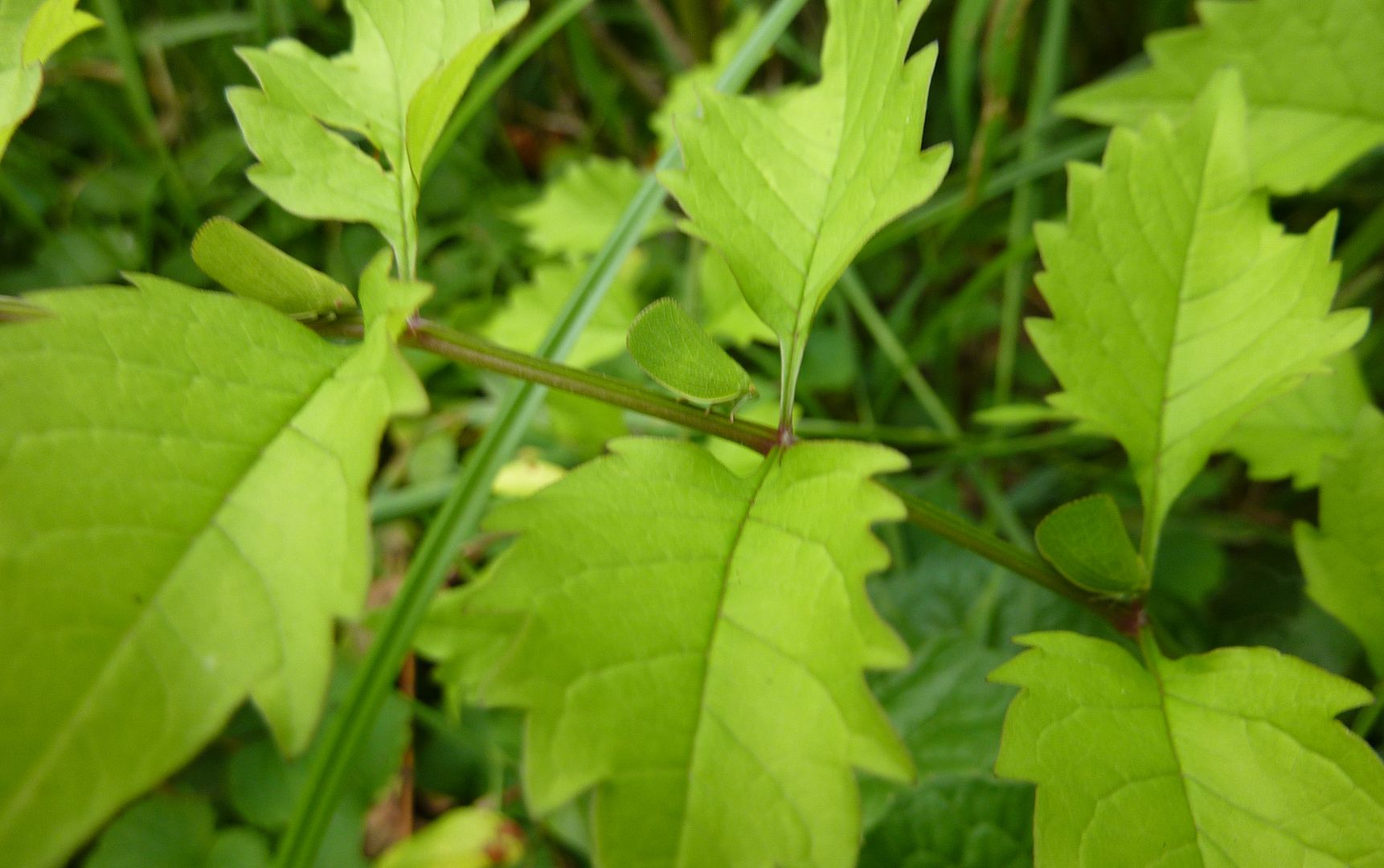
Leaf Hoppers, Acanalonia sp, have started becoming common out in the garden. They mimic the leaves or seed pods to assorted plants, often they'll arrange themselves with the leaves as seen above. To avoid predation they have this wonderful habit of side stepping left or right so they are out of view of the predator. This habit can be exploited nicely to get them to line up nicely for a photo, but I didn't have to use that here.
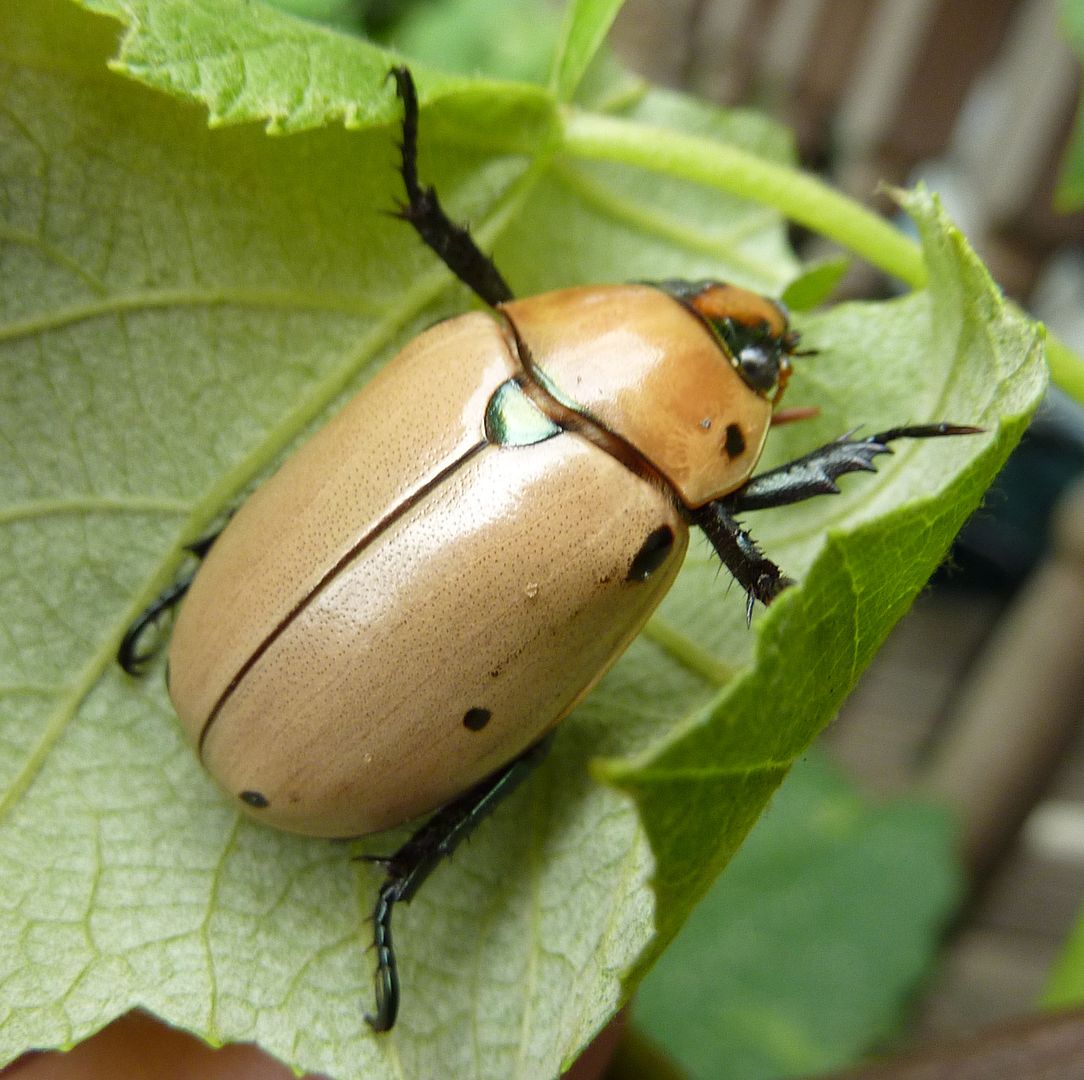
The Grape Vine Beetle, Pelidnota punctata, is also out at this time of year. Though less common than the leaf hopper, be sure to look for them on any grape vine. I've only ever found this beetle once each year, they eat a leaf or two off the grape vine and then they seem to wonder off, not what I'd call a pest that needs worrying about. They are nice sized beetles and also go by the name Spotted June Beetle/Bug. The grubs feed on dead wood and are beneficial in the decaying process.
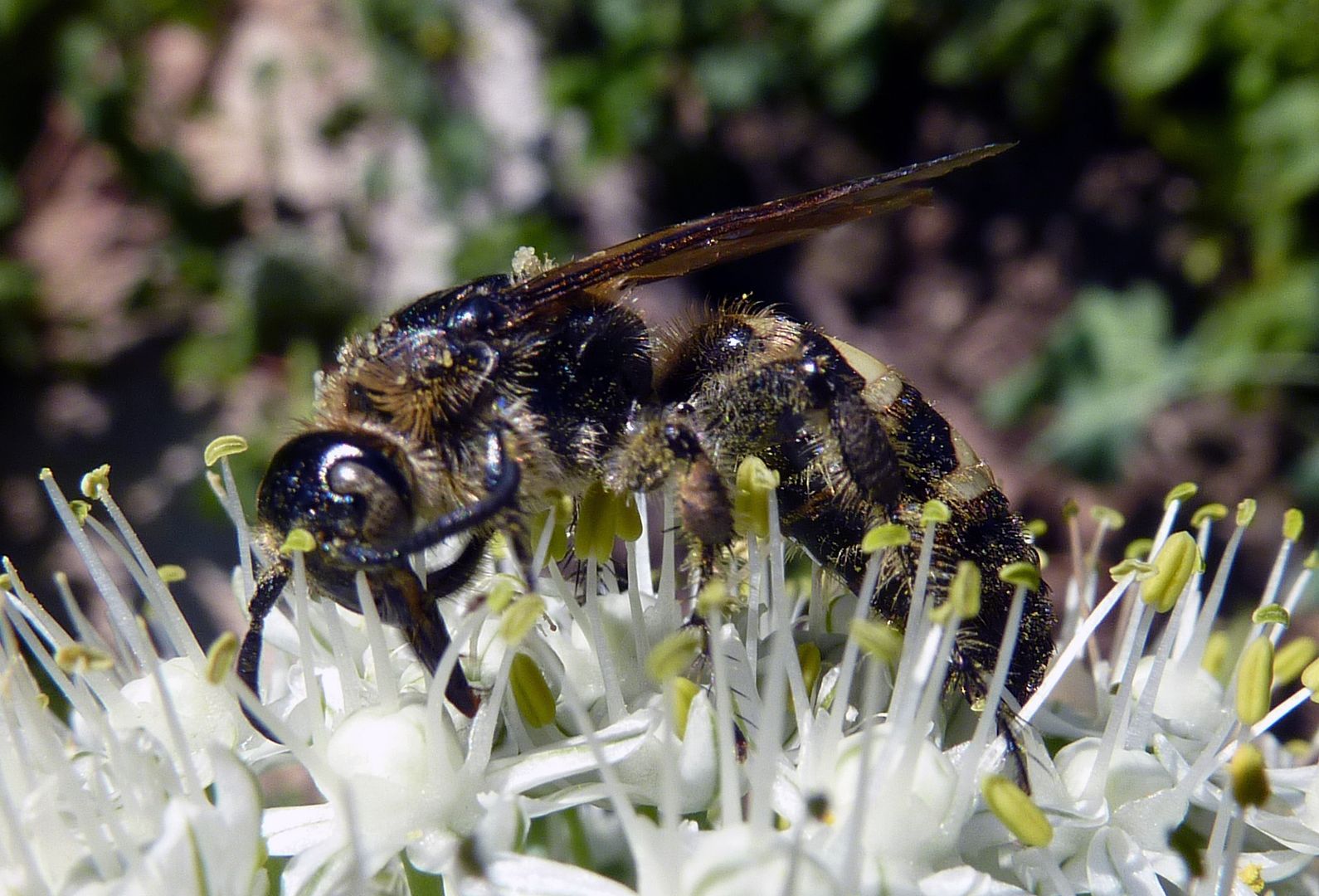
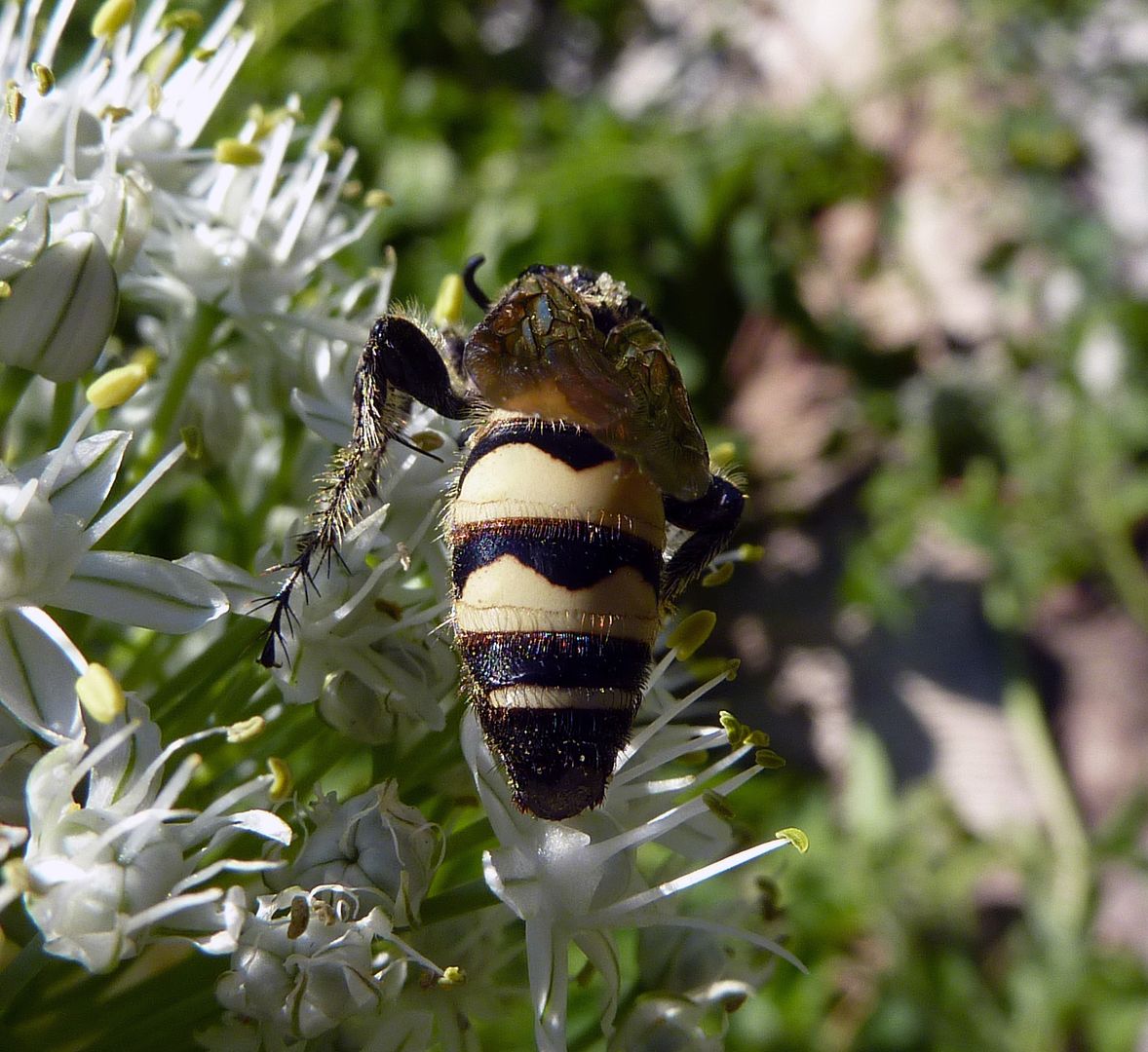
Another one to look out for are the Scoliid Wasps. In this case Campsomeris plumipes. These and other Scoliid wasps tend to be more colorful or with uncommon stripe patterns than the usual yellow jackets, hornets, and paper wasps. Along with being proficient pollinators, they typically hunt beetle grubs that are otherwise causing damage to your lawn. The issue here though is this massive wasp has to burrow into the ground just to find their pray item. This is discouraging to home owners despite their benefit.
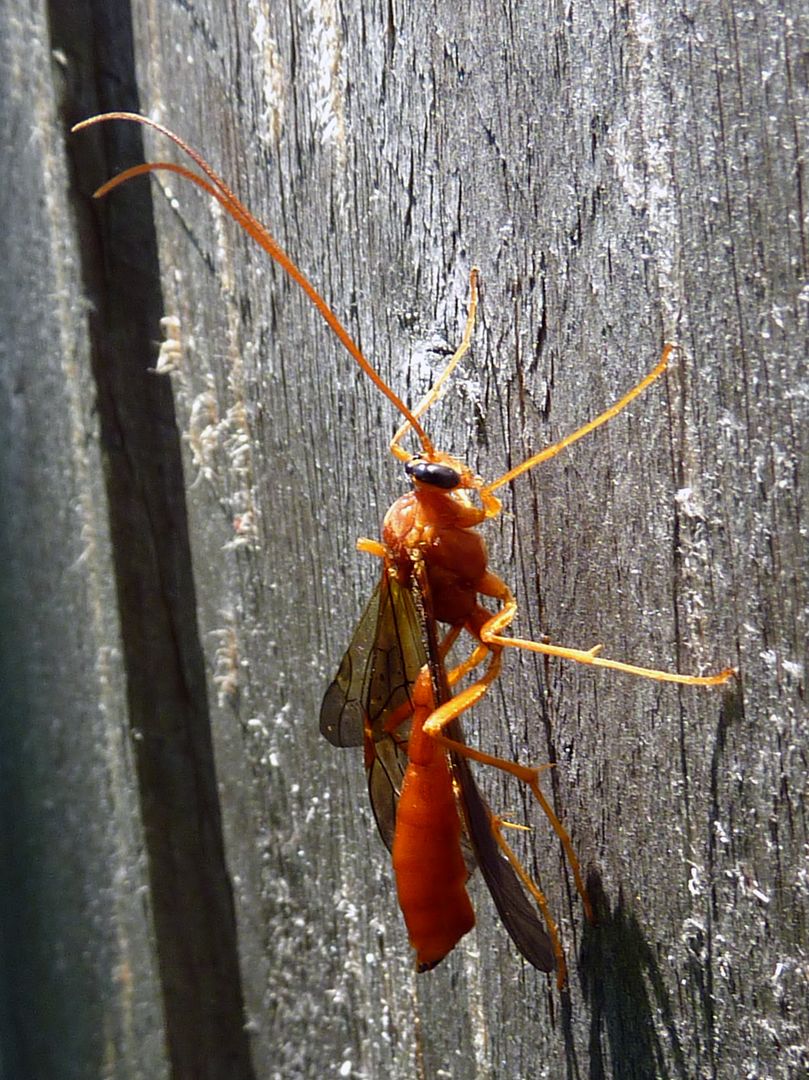
Ichneumon wasps are more to the point, and go about injecting pray items or paralyzing spiders far more cleanly. Within this group there is a lot of variety and some truly showy colored individuals. They can get quite big as well but most species are small. Each species is very select in what they consider a host though.
The Grape Vine Beetle, Pelidnota punctata, is also out at this time of year. Though less common than the leaf hopper, be sure to look for them on any grape vine. I've only ever found this beetle once each year, they eat a leaf or two off the grape vine and then they seem to wonder off, not what I'd call a pest that needs worrying about. They are nice sized beetles and also go by the name Spotted June Beetle/Bug. The grubs feed on dead wood and are beneficial in the decaying process.
Another one to look out for are the Scoliid Wasps. In this case Campsomeris plumipes. These and other Scoliid wasps tend to be more colorful or with uncommon stripe patterns than the usual yellow jackets, hornets, and paper wasps. Along with being proficient pollinators, they typically hunt beetle grubs that are otherwise causing damage to your lawn. The issue here though is this massive wasp has to burrow into the ground just to find their pray item. This is discouraging to home owners despite their benefit.
Ichneumon wasps are more to the point, and go about injecting pray items or paralyzing spiders far more cleanly. Within this group there is a lot of variety and some truly showy colored individuals. They can get quite big as well but most species are small. Each species is very select in what they consider a host though.
Wednesday, November 17, 2010
The Large Milkweed Bug
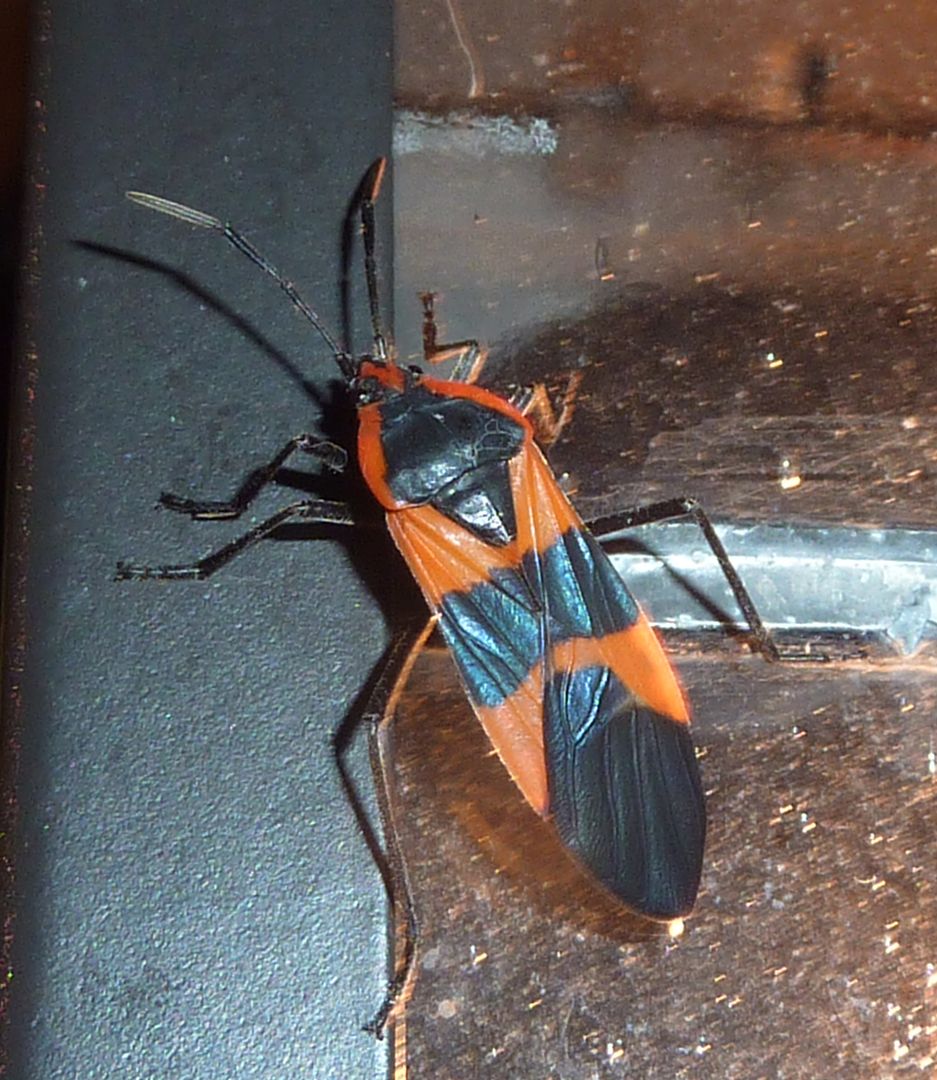
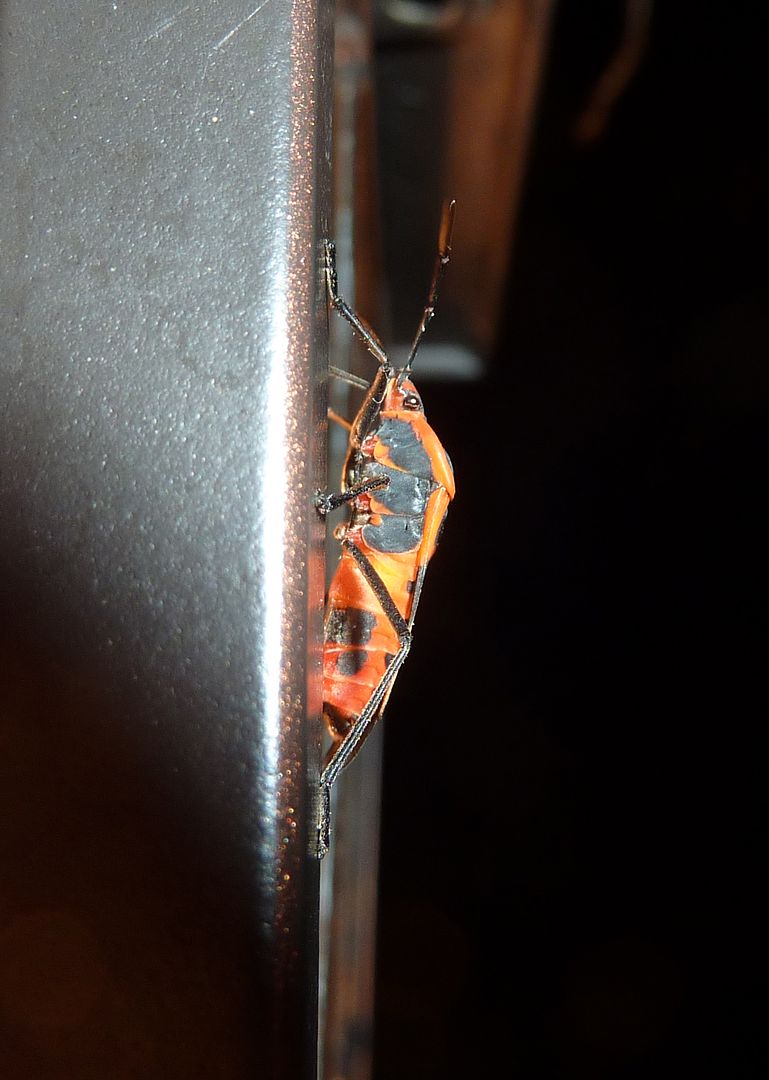
This striking bug is the Large Milkweed Bug, Oncopeltus fasciatus. If I'm not mistaken it's one of the four main insects trying to get into homes at this time of year. The other three are lady bugs, stink bugs, and I think the fourth is a walking stick but you have to live around the right forests for them.
This lone bug was at our street light one day. As colorful as they are I'm happy I only saw one of them. This insect, along with a few others, feed on milkweed seeds and when they hit, they can hit big. They crawl all over the plant to meet members of the opposite sex and occasionally certain plants will get mobbed by them. So while it's neat to see one or two of them, a small swarm can be quite the nuisance in the garden.
Something I wish I had a picture of though is their young on a plant. Young nymphs to this species actually look like milkweed seeds. And when a fresh milkweed pod opens the young bugs will enter and line themselves up, usually all in the same direction, and as they feed they actually mimic the cluster of seeds they're feeding on.
Apparently these insects can be bread in captivity and fed a steady diet of opened (unsalted) sunflower seeds.
Monday, May 31, 2010
Ants on Fruit
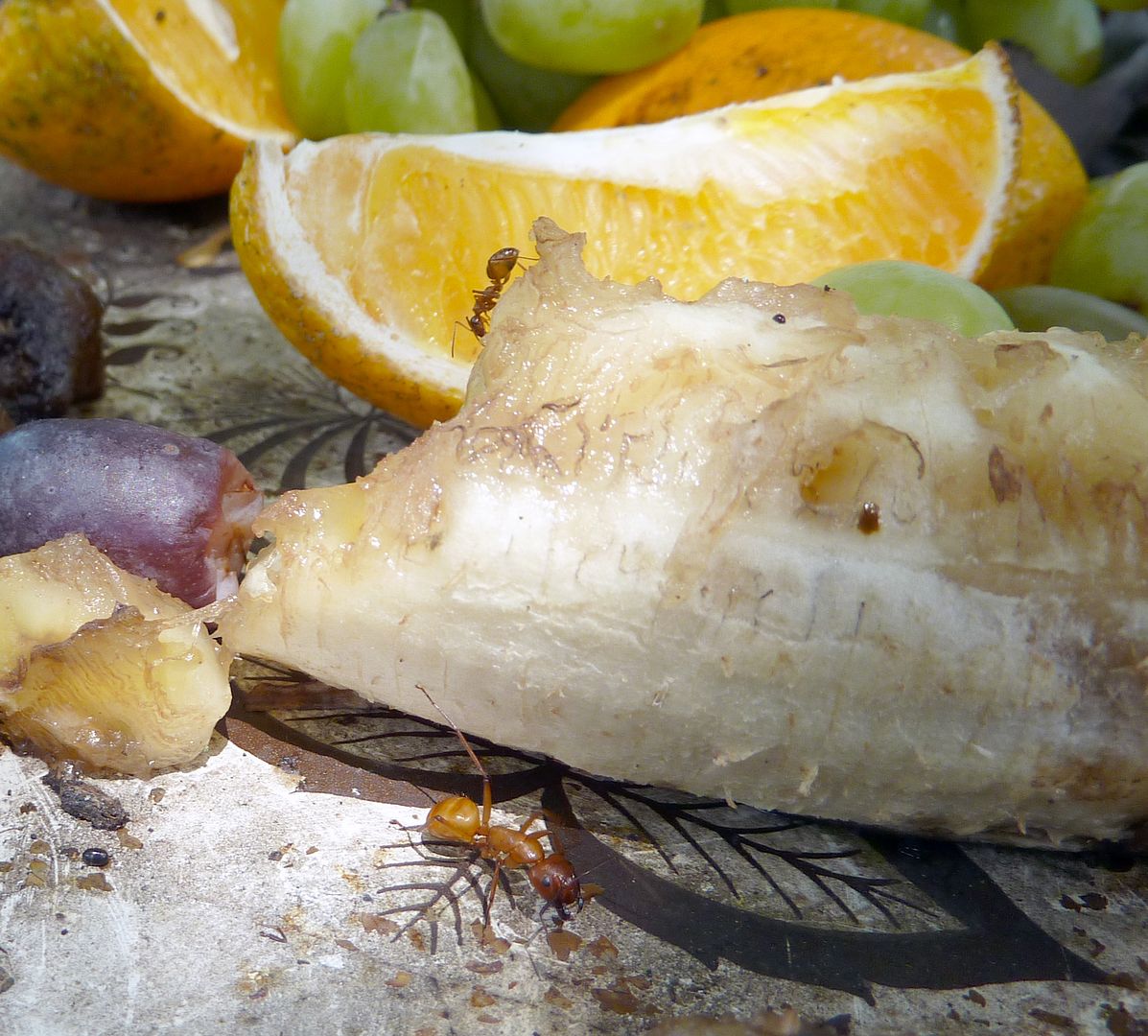
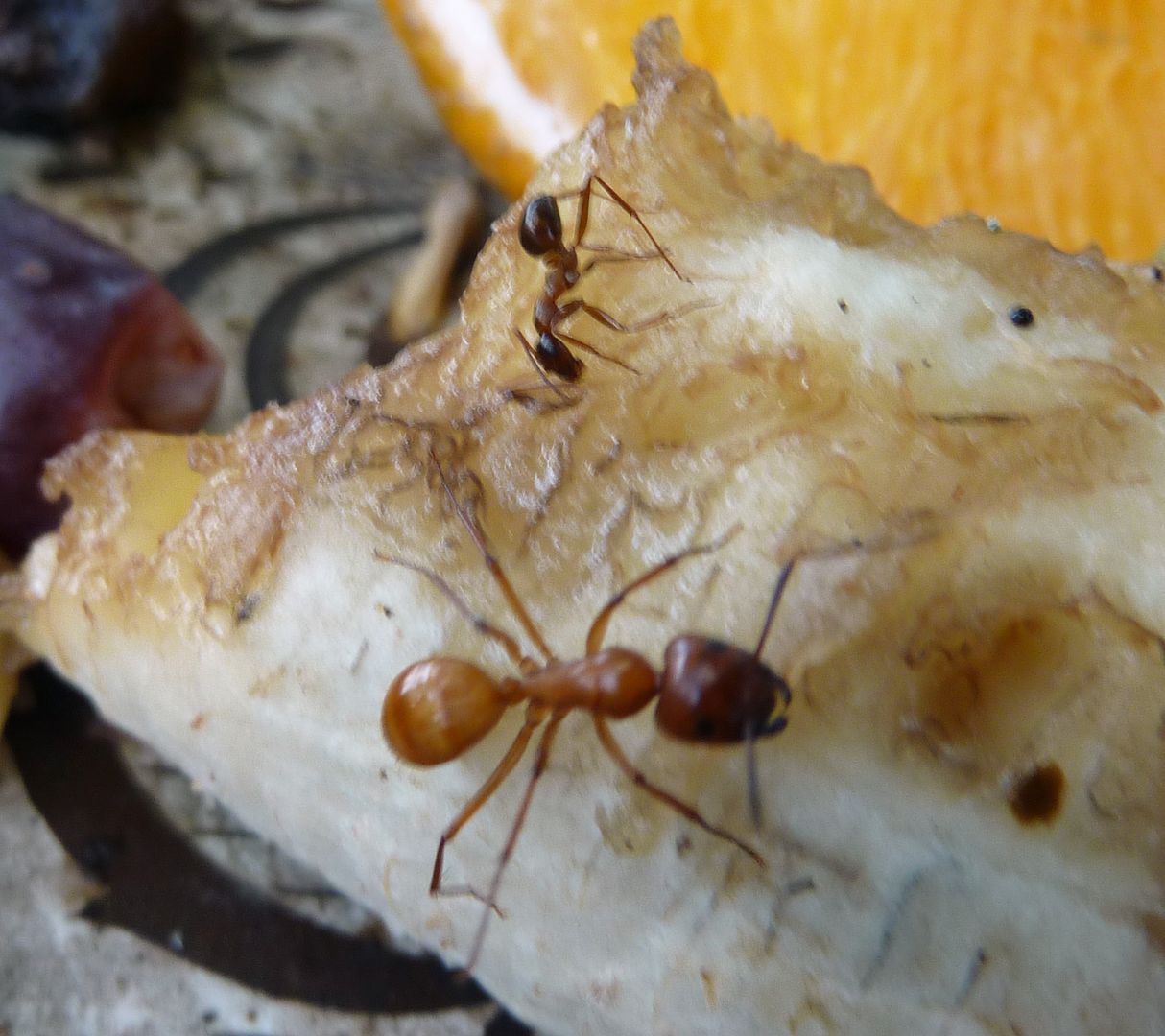
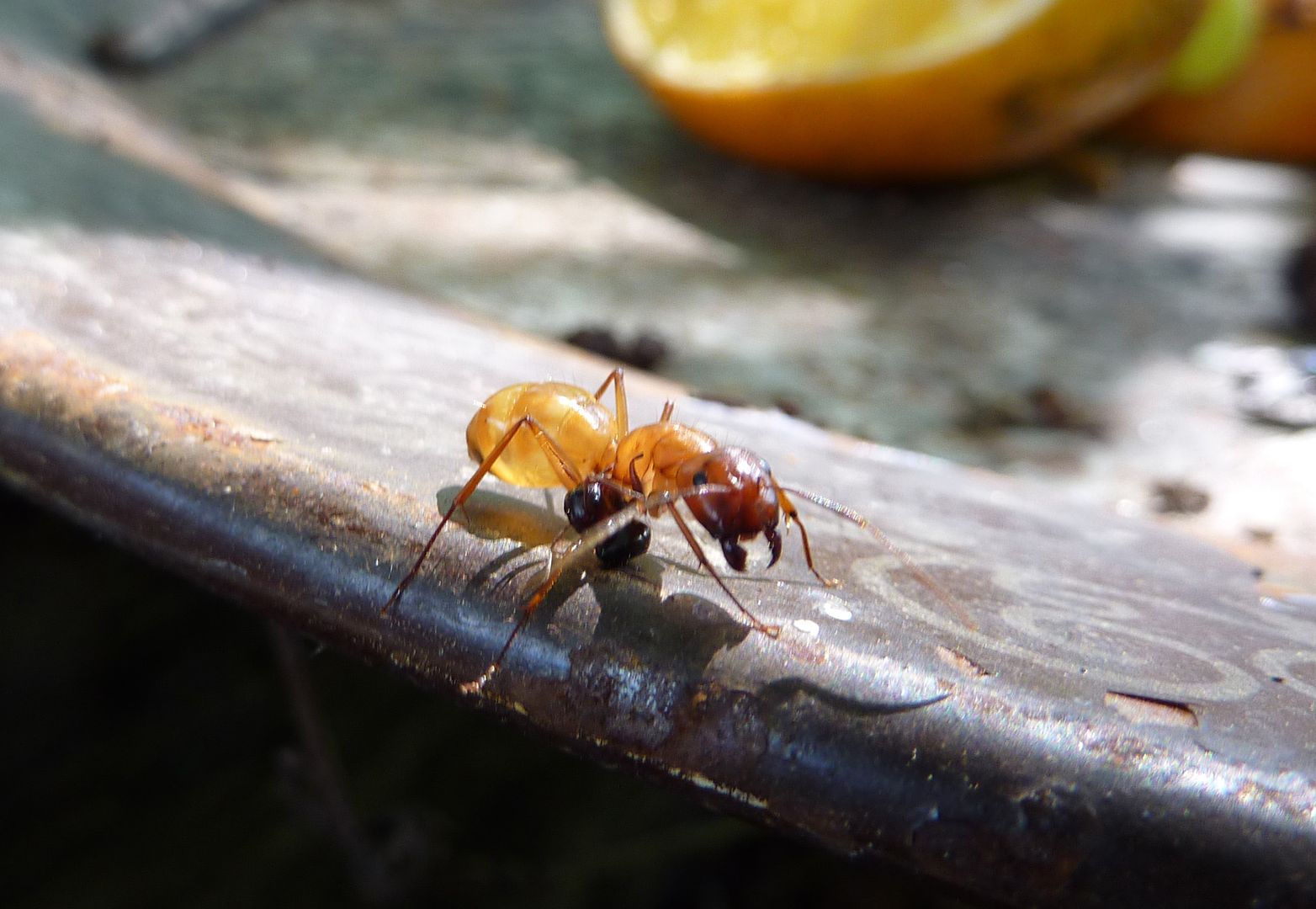
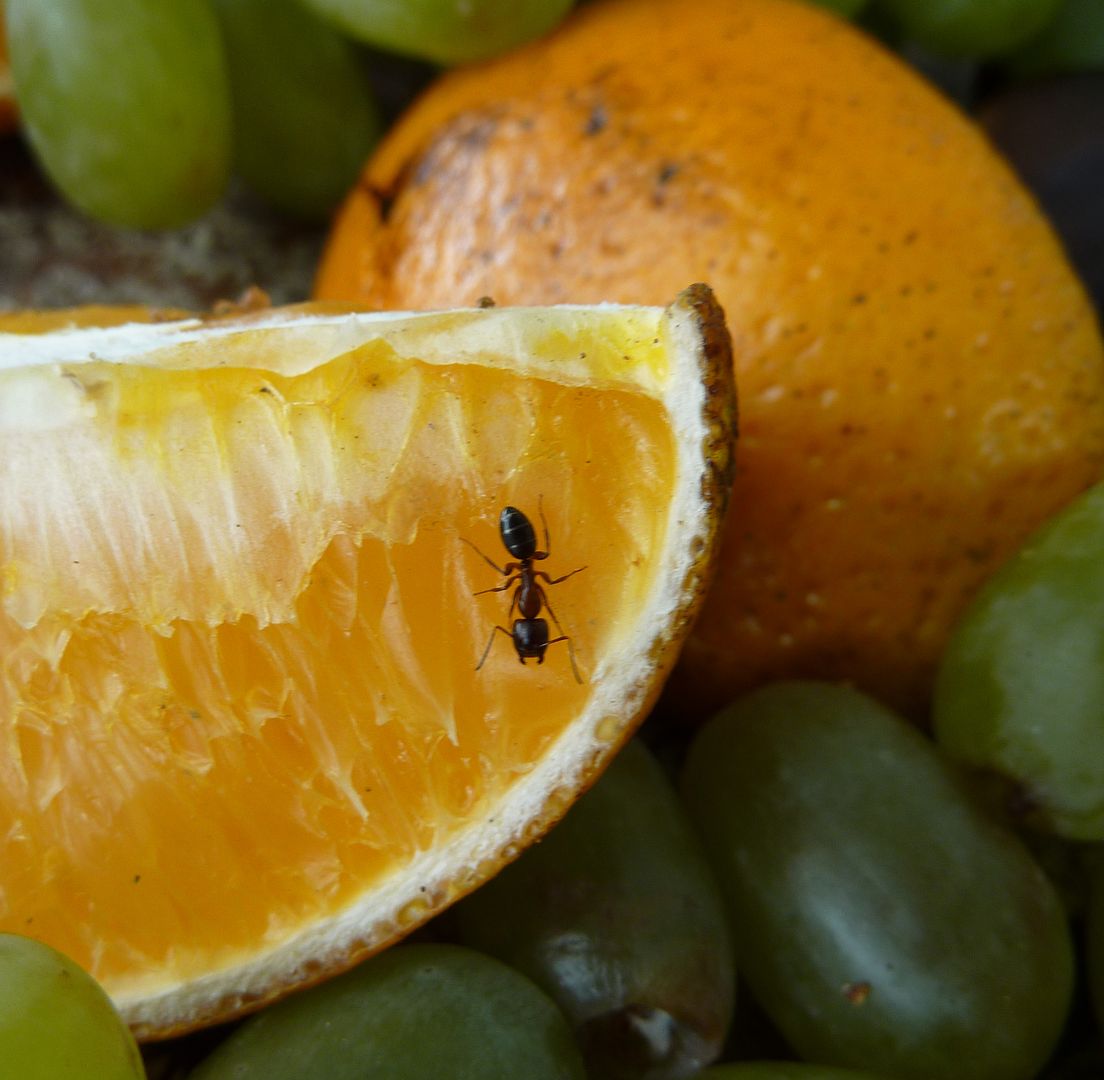
About a week ago I set out a tray of rotting fruit hoping to get pictures of some Red Admirals and American Ladies during their migration north. Maybe the fruit isn't rotten enough because I haven't seen a single butterfly on the thing. Ants, however, seem to love the stuff.
Fruit


A good example of size difference between Camponotus (bigger) and Formica (smaller).

A smaller Camponotus was also present and here one is tackling the leg to this great big C. castaneus major.

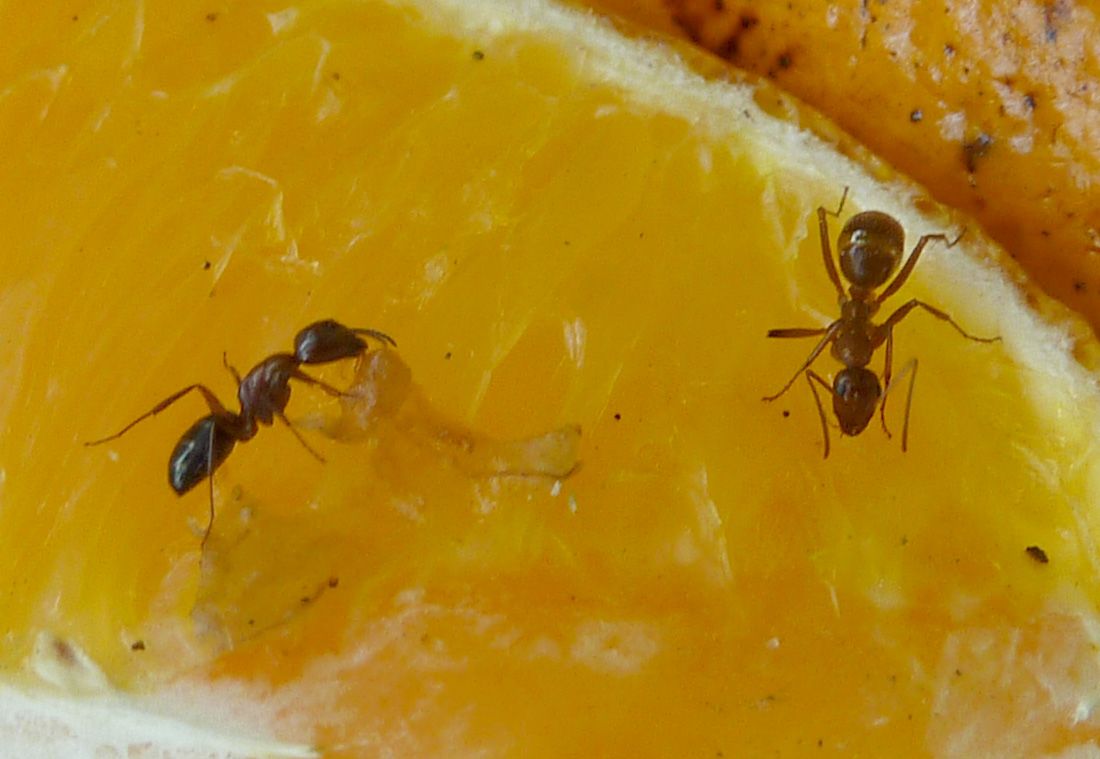
Smaller Camponotus (I haven't been able to ID yet,) on an orange.

The smaller Camponotus (left) next to the Formica (right).
Protein

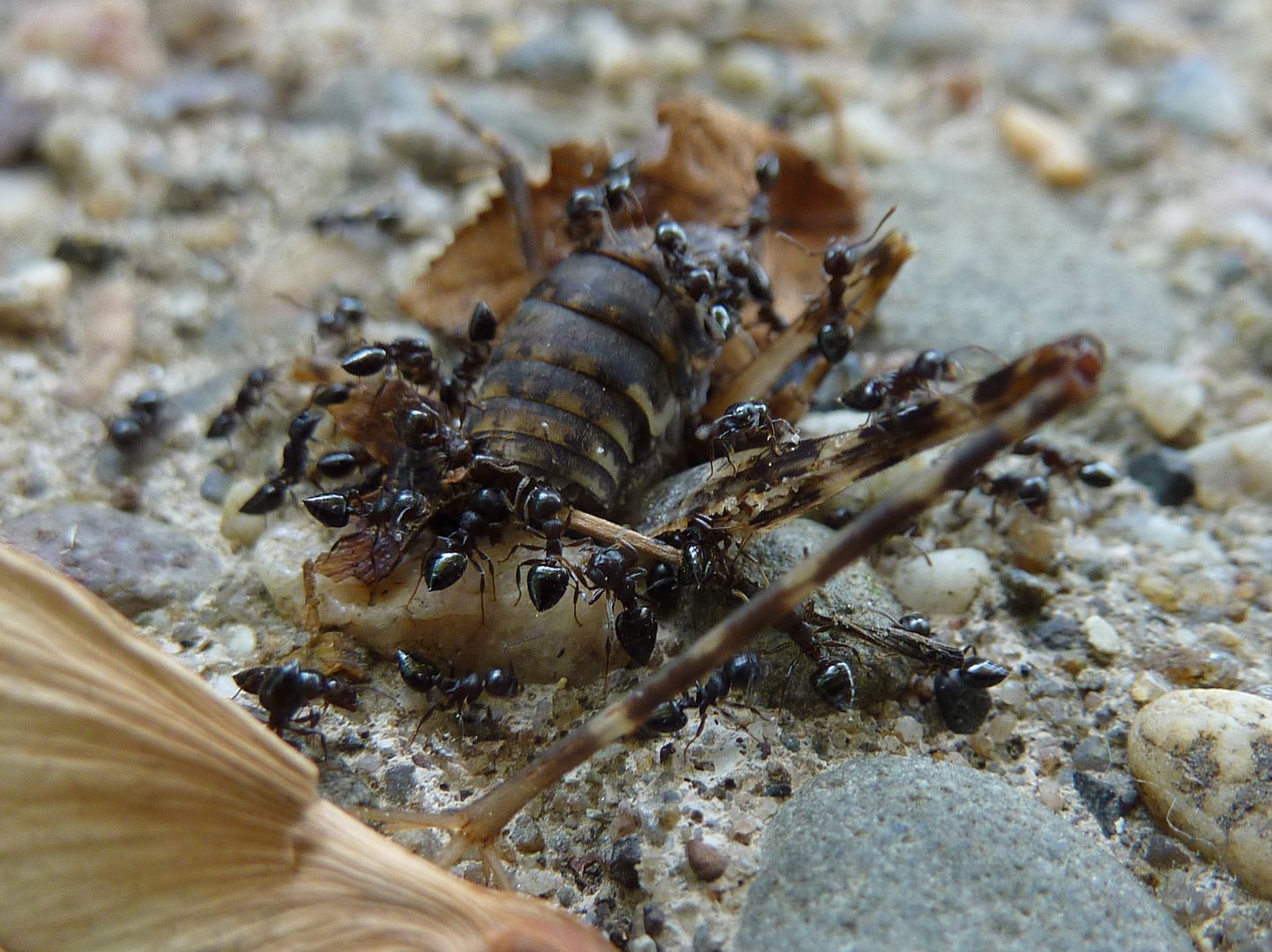
Some Crematogaster working a cave cricket I probably stepped on the night before.
Fruit


A good example of size difference between Camponotus (bigger) and Formica (smaller).

A smaller Camponotus was also present and here one is tackling the leg to this great big C. castaneus major.

Smaller Camponotus (I haven't been able to ID yet,) on an orange.

The smaller Camponotus (left) next to the Formica (right).
Protein

Some Crematogaster working a cave cricket I probably stepped on the night before.
Monday, April 12, 2010
Weed Busters
Weed Busters
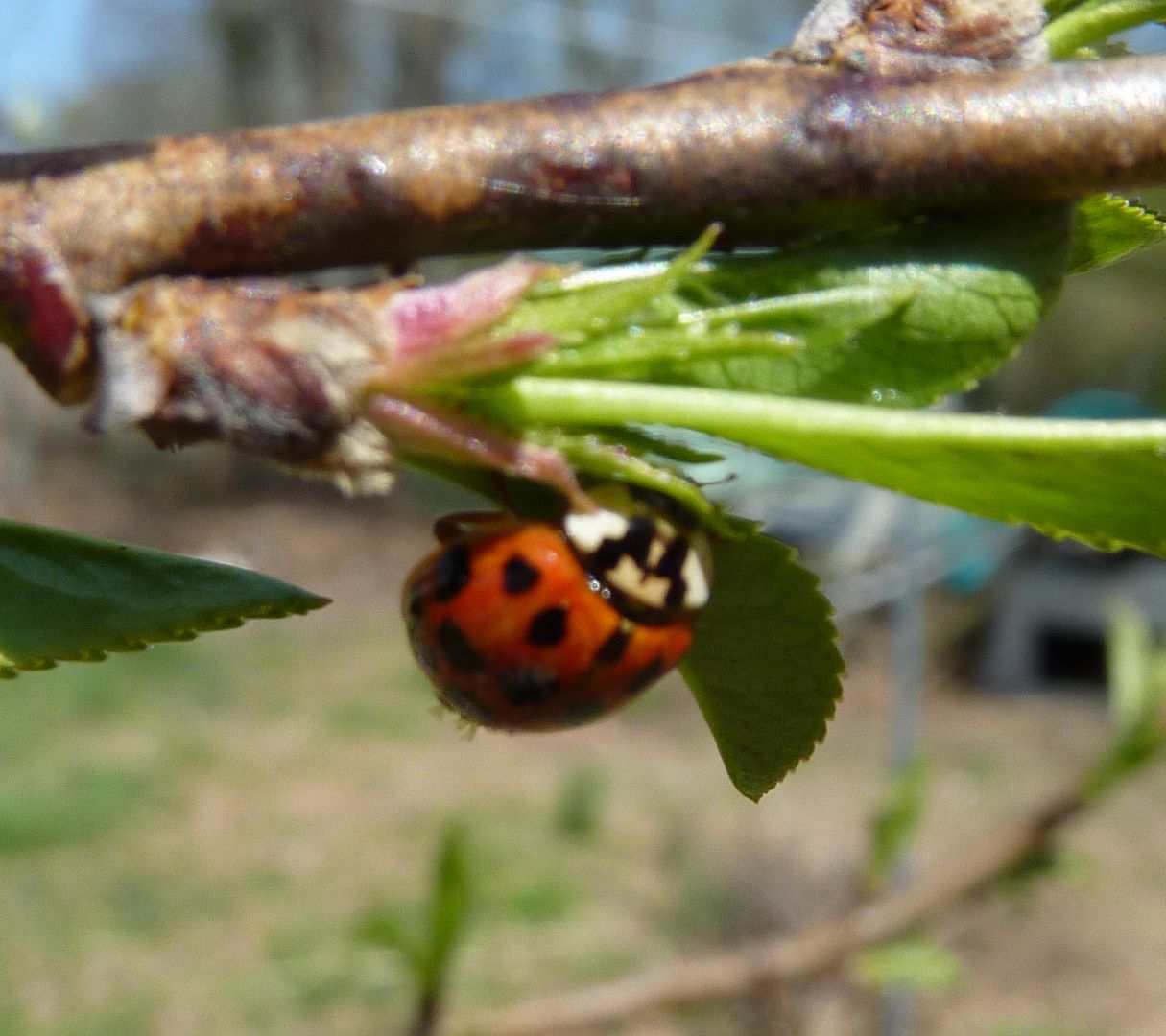
See this lady bug inspecting a tree I have out in the yard. I didn't pay one cent for it, and I'm fairly certain it's the Asian Multicolored Lady Bug which is an invasive species. Why people buy these in stores is anyone's guess; why farmers import them by the barrel is another mystery. The concept of buying insects that are going to show up anyhow is just mind blowing to me. It's like someone selling Monarch Butterflies to lay eggs on their host plant, Milkweed which they are naturally drawn to and completely dependent on for reproduction.
Now send me money and seeds to your alternative salad green will blow into your lawn shortly.
So your business is catching bugs that the government releases to help control noxious weeds, and sell them to people who have noxious weeds they want to get rid of. It is safe to call anyone a doing this a selfish idiot. Preventing a biological control from doing it's job should be a federal crime. And what's more idiotic is that people are buying them. This is as stupid as people buying and selling lady bugs. I'm going to start a business that specializes in growing Dandelions just to prove how stupid people are. (They would probably sell too if I marketed them as an alternative salad green.)
Using cloth nets resembling butterfly nets, the boys collect thousands of leafy spurge flea beetles and knapweed flower weevils as they wade through dense patches of weeds. The knapweed root weevils are tougher to collect as they live on the ground. To round up these weevils, the boys built a 30-by-30-foot bug corral using galvanized metal flashing.
The bugs live comfortably in old ice cream containers stored in the family refrigerator until they are sold. Typically, customers are seeking an alternative to chemical herbicides. The going rate is $100 for 100 root weevils, 200 flower weevils, or 1,000 flea beetles.
See this lady bug inspecting a tree I have out in the yard. I didn't pay one cent for it, and I'm fairly certain it's the Asian Multicolored Lady Bug which is an invasive species. Why people buy these in stores is anyone's guess; why farmers import them by the barrel is another mystery. The concept of buying insects that are going to show up anyhow is just mind blowing to me. It's like someone selling Monarch Butterflies to lay eggs on their host plant, Milkweed which they are naturally drawn to and completely dependent on for reproduction.
However, the boys are careful to warn people that biological control agents are not a quick fix for weed infestations. The bugs do not kill the weeds, which are both their home and food, but instead stress the weeds, making them more susceptible to other weed management tools. Sheep grazing, competitive plants and even herbicides are needed to knock back the weeds. It usually takes several years to see results, but they can be dramatic.They're even honest about how ineffective their bug method works. Yes the bugs help keep the plant under control but they would have shown up to do that anyhow. This is like people who spray weed killer to get rid of an unsightly problem. Rather than pulling the weed out of the ground, weed killer is sprayed on the plant. After a few days the green eye soar is a brown eye soar... didn't exactly get rid of the problem did it?
Now send me money and seeds to your alternative salad green will blow into your lawn shortly.
Subscribe to:
Posts (Atom)