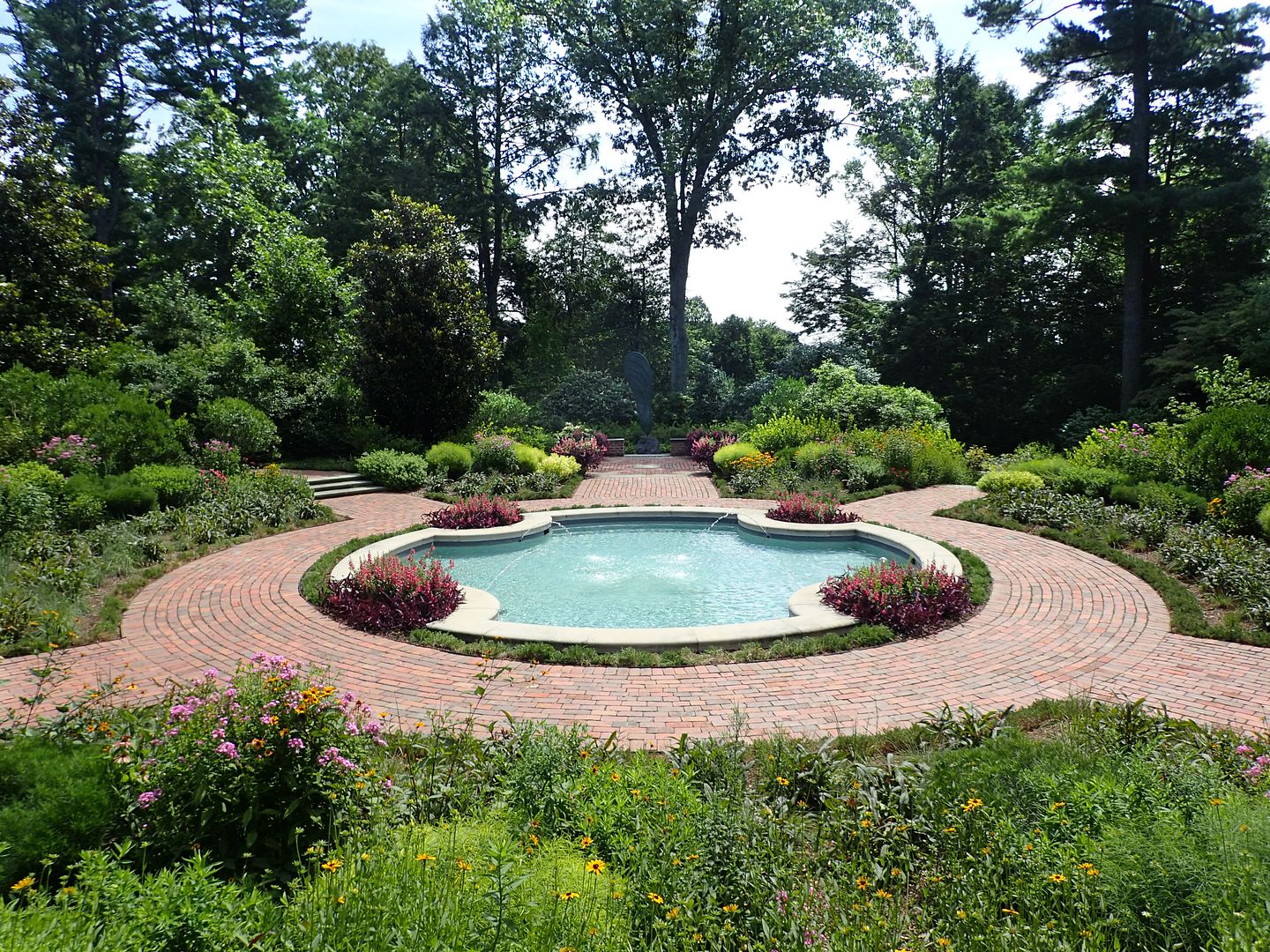
I was at the Mt. Cuba Center a few weeks ago and was glad to see all the different plants in bloom. Some of these I had never seen flowering before and was quite amazed to realized I'd been walking past shrubs and plants at the Mt. Cuba Center I'd never seen flowering all because I'd never visited on a certain week.
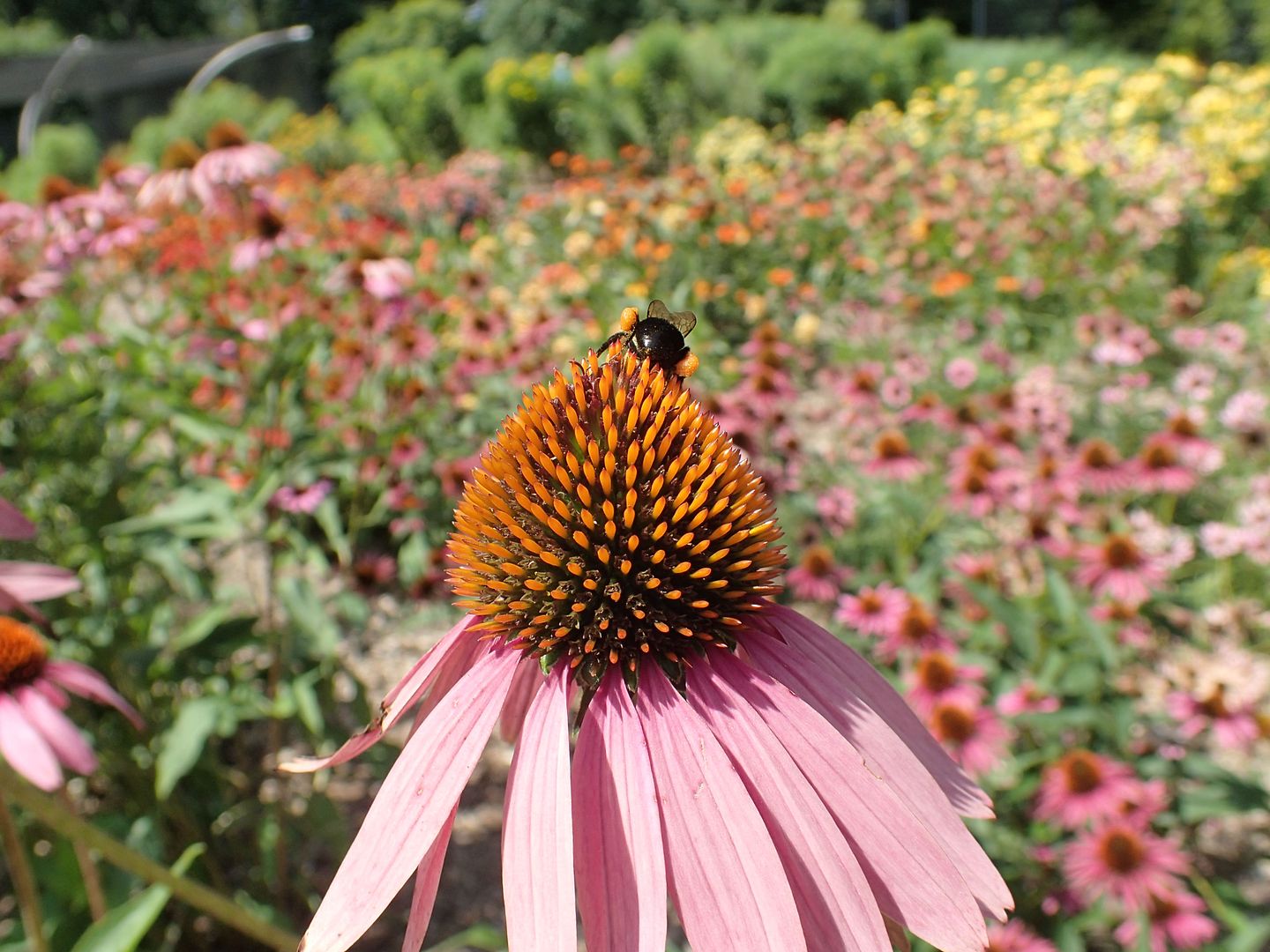
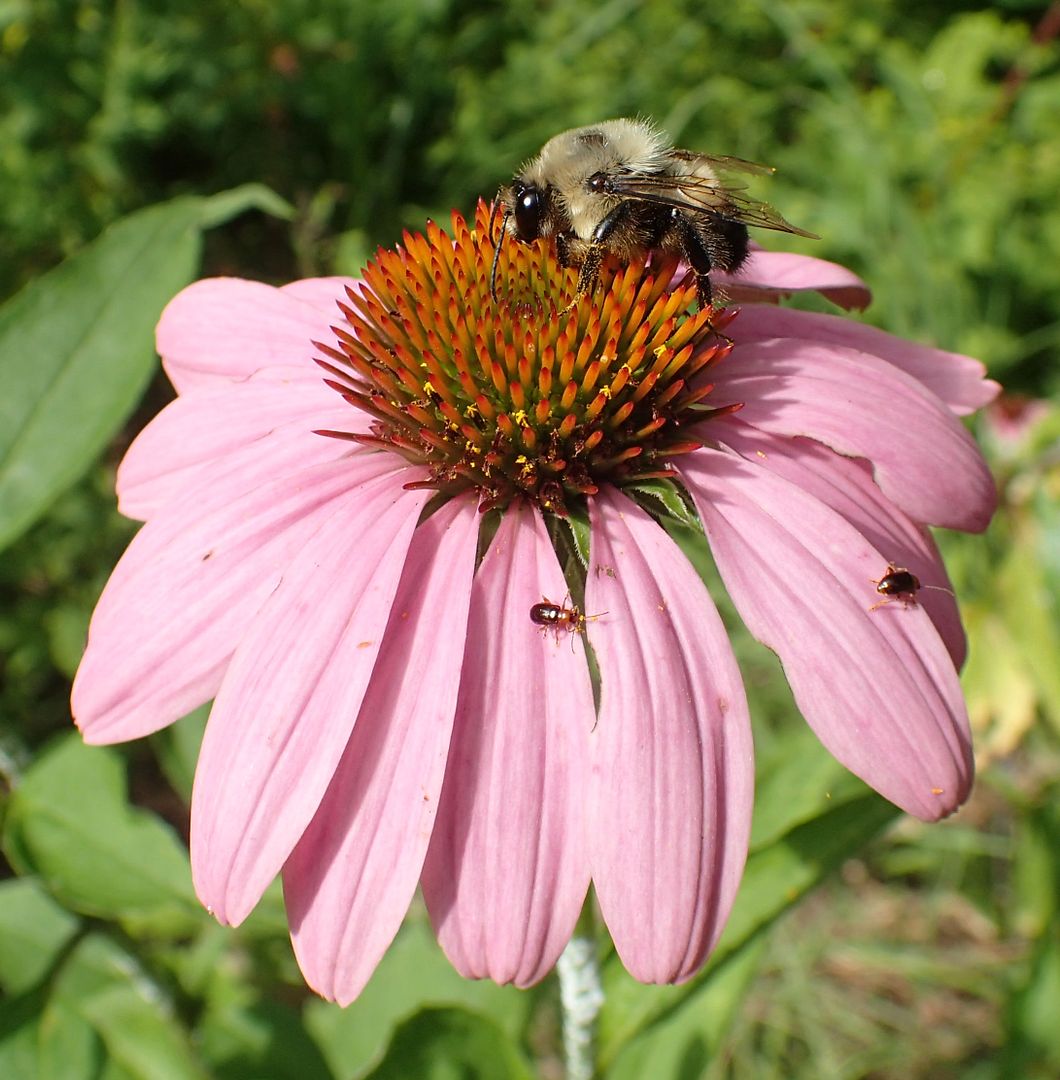
First though, while around the Round Garden, I paid a visit to the adjacent Trial Garden where they seem to be revisiting Coneflowers. They had already done these a few years back but I think they had different criteria back then. I know in recent trials with Monarda, and Phlox, they mention which ones Hummingbirds, Butterflies, and Bees favor so that would be a nice thing to know when deciding which of the hundreds of different Coneflower varieties they like.
So this is a fairly standard coneflower. I don't know if it's the true species or a cultivar but it's close enough. I recall looking around at all the colorful and wondering why they hadn't included 'Rainbow Marcella' which I bought this past spring.
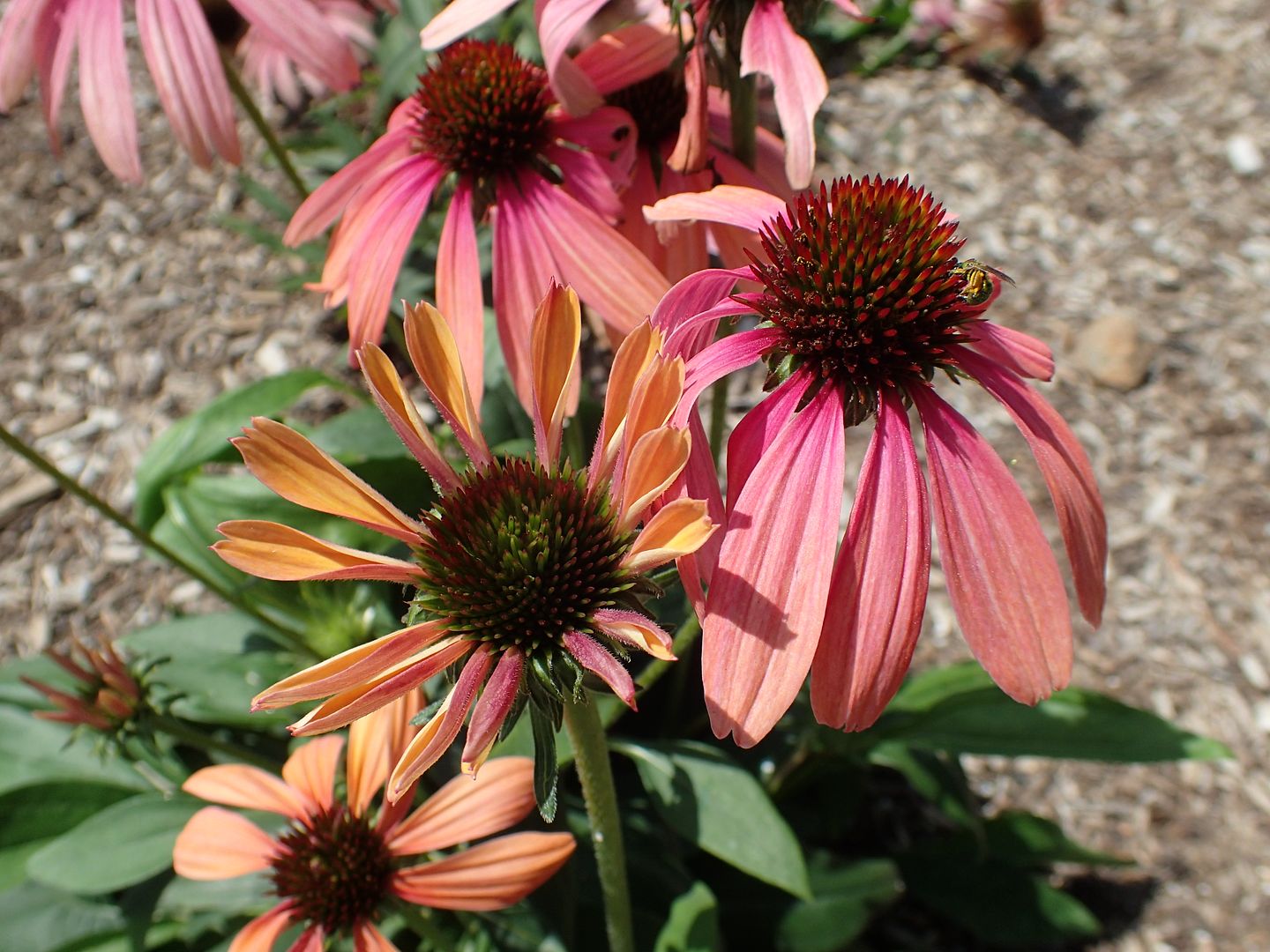
This is a plant back in my garden and the flower which the squirrels damaged but I was otherwise pleased with them. Now of 6 plants only 4 have flowers but only 1 of them has the cultivar color as advertised. I'd been thinking I was ripped off.
Well then I found it in the Mt. Cuba Center trial garden and realized the orange in the petals quickly fades out of the flowers. Also of all the cultivars in their trial it was among the shortest and I believe 1 of the 5 plants they had was already dead. :(
But once their trial ends, I'll be sure to read over the results carefully and if there's a particular cultivar or true species that does well I'll be sure to add it.
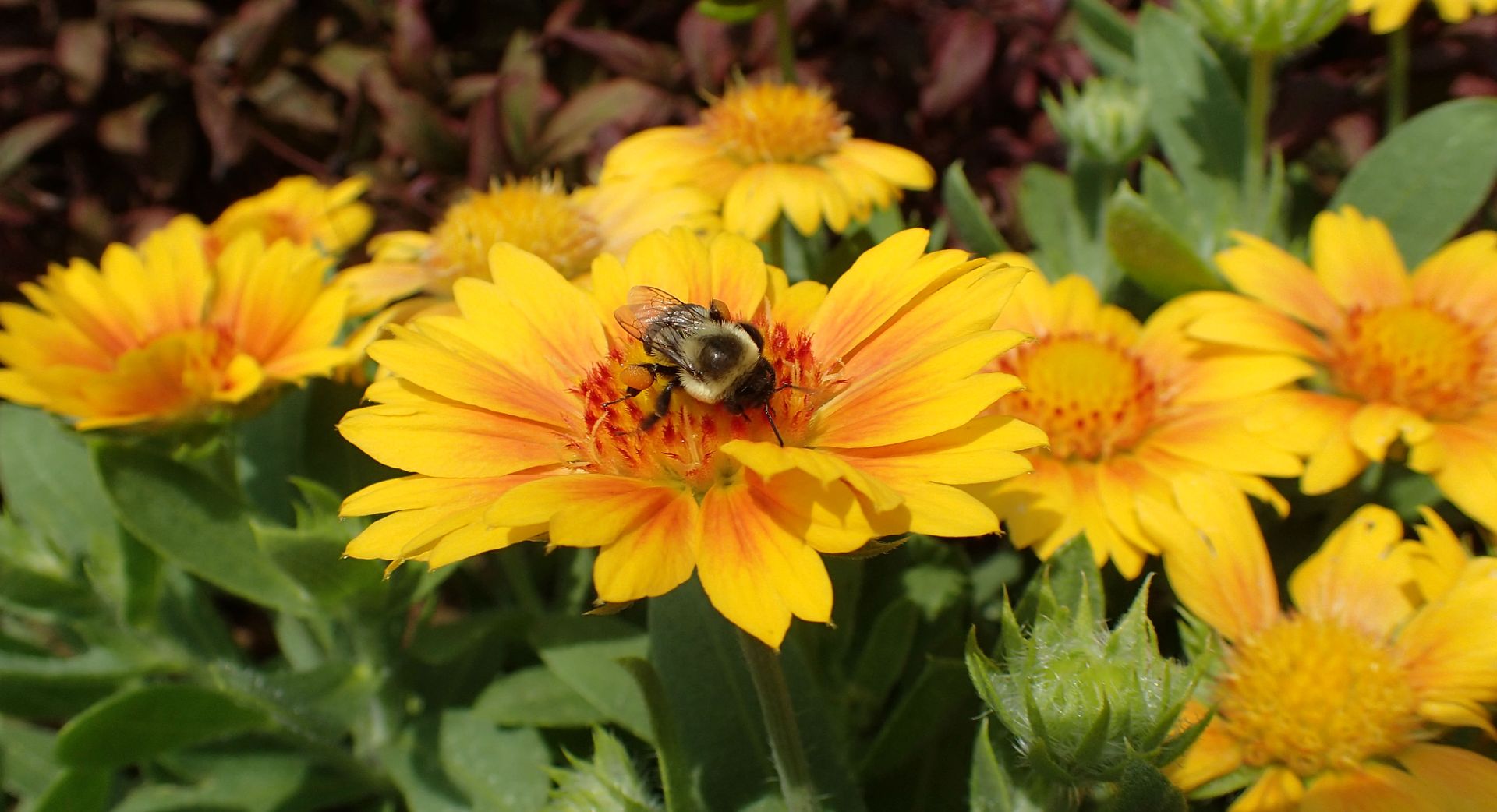
Two natives I've overlooked in my perennial garden are Blanket Flower (seen above) and Stokes' Aster which I wasn't able to photograph well. I installed a perennial garden in the front yard this year, right up against the side walk so people walking by can admire the flowers. If it were just a little bit longer I would fill it in these two plants for sure.
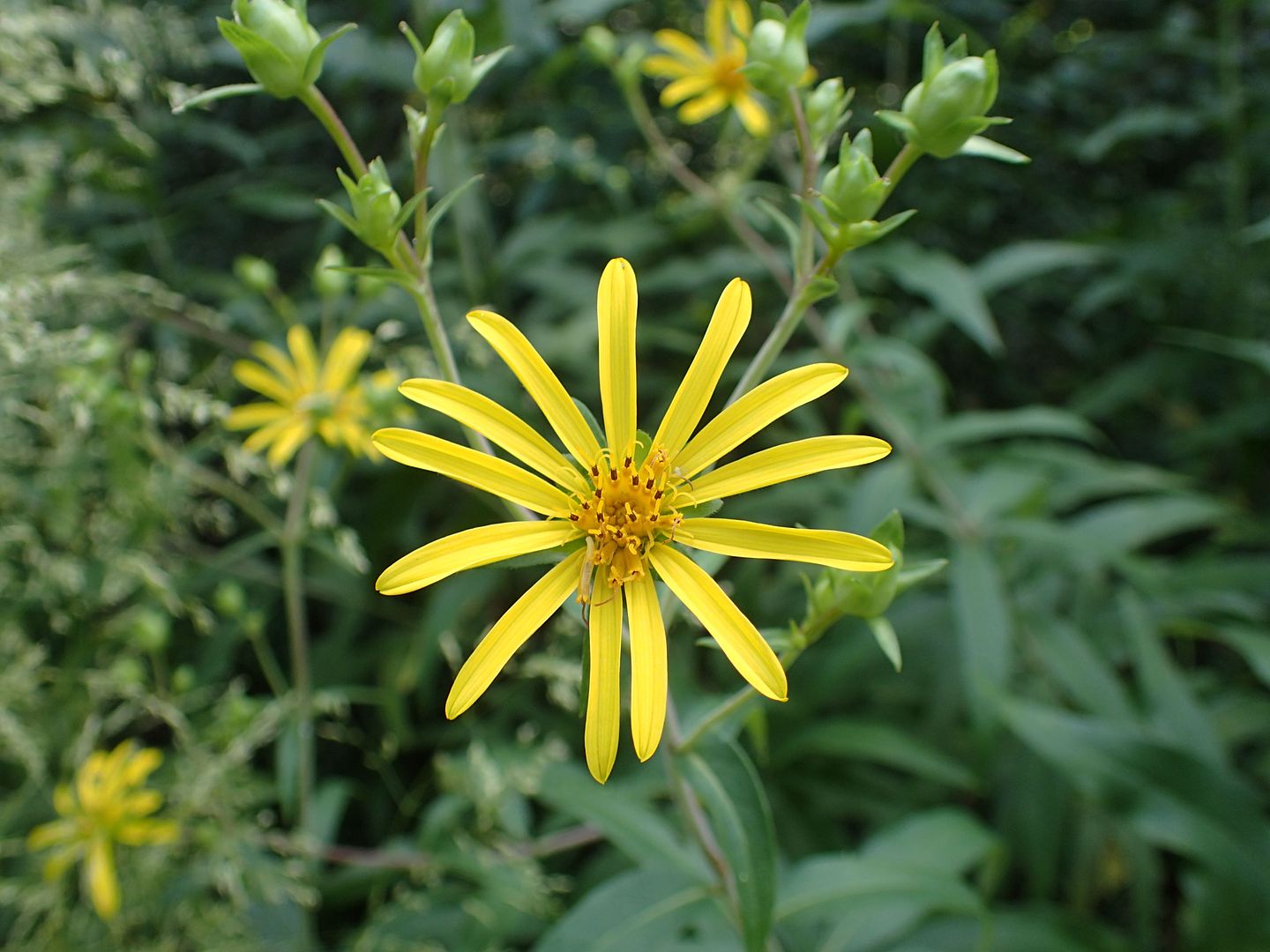
There were lots of different Silpheum species flowering there. Many of which I can't identify off hand, and actually I was surprised to learn there were more than 4.
Mohr's Rosinweed I did recognize though. Silphium mohrii has lighter yellow flowers and the foliage has white hairs too, giving the stem and leaves a pale appearance. This was also the first place I ever encountered the plant. On previous visits with actual classes the gardener, David, had been reluctant to point this very obvious plant out. It's not exactly native to Delaware nor commercially available. It was a gift from someone which they planted and grow in the meadow. Considering the norther most range for the species is a population in Tennessee I imagine they were surprised to discover it's cold hardy.
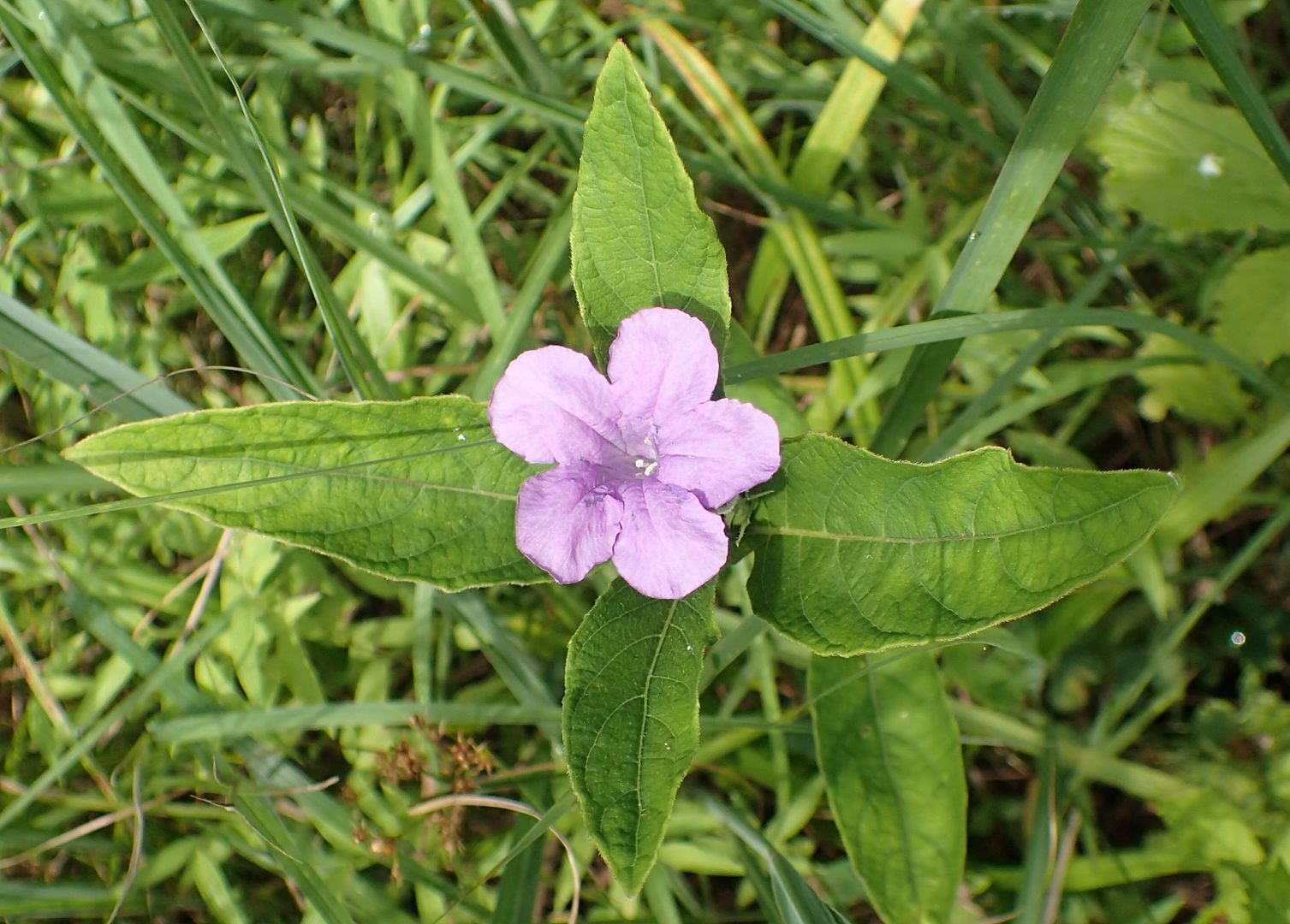
Wild Petunia, Ruellia humilis. To be perfectly honest, if this wasn't flowering I'd have never even noticed it. This is one of those native plants that you have to plant ~25 of right next to one another to form any sort of an impact because each individual plant on it's own is kind of pathetic. Sometimes they'll have a cluster of 4 flowers on them but that's about the most they'll ever have at one time. So when grown as if it were a clumping aster the impact is easier to appreciate. This one may have been a seedling that came up on its own.
Meadow Beauty, Rhexia virginica. I wish I could say more about this one because the flower is interesting. It's a pond plant, or maybe riparian plant that has a wonderful pink flower.
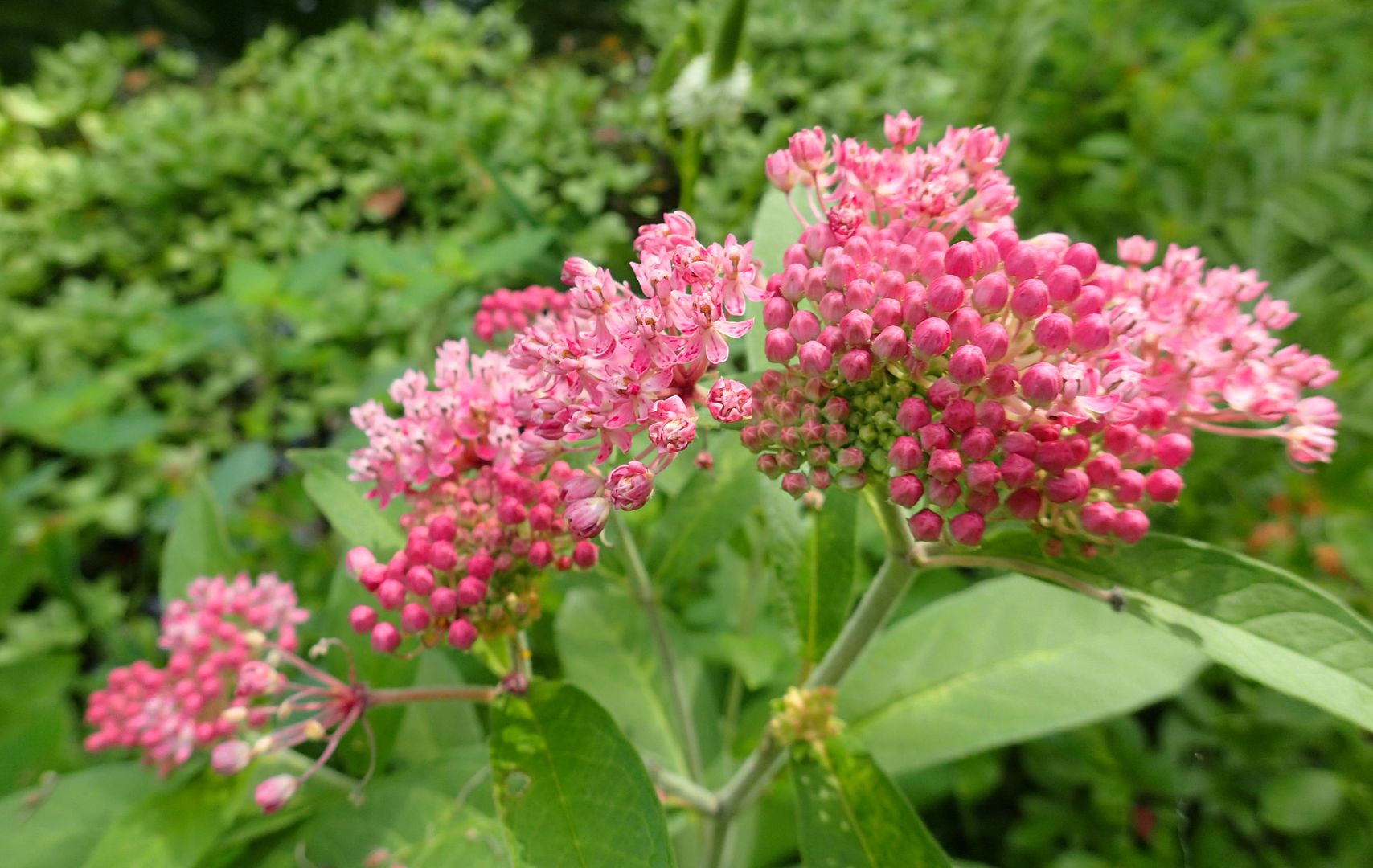
Asclepias incarnata. I always love wild strains of Swamp Milkweed. They seem to grow more vigorously and branch out more at the top of the plant than traditional plants sold in stores. Also the flower color is more wild. Some of this one even has pink spots on the flowers while other parts of it are more uniformly patterned.
And of course there were Monarchs swooping about along with Tiger Swallowtails, Red Admirals, and a few other butterflies. I found a Monarch Caterpillar chomping away on a plant of milkweed.
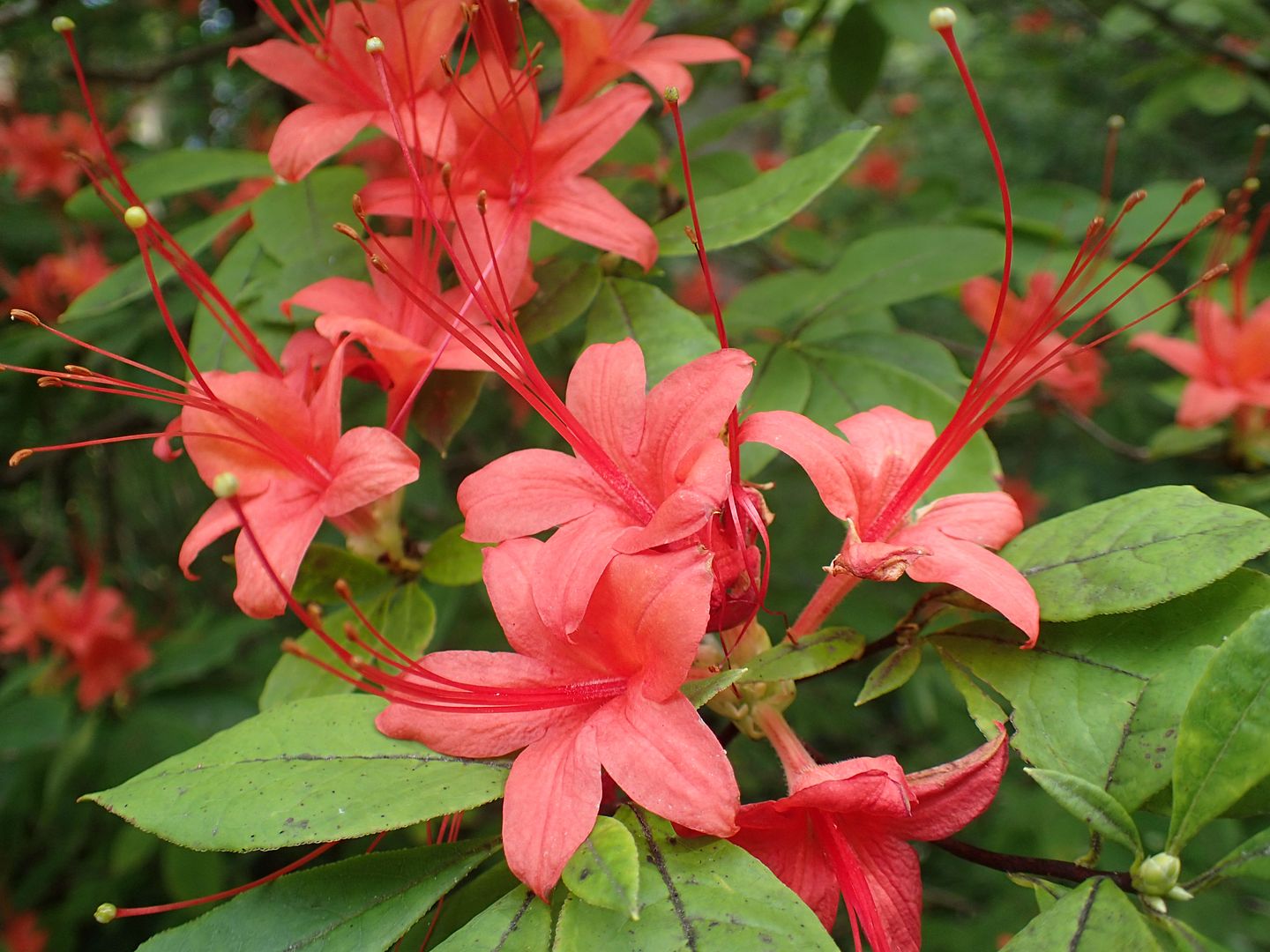
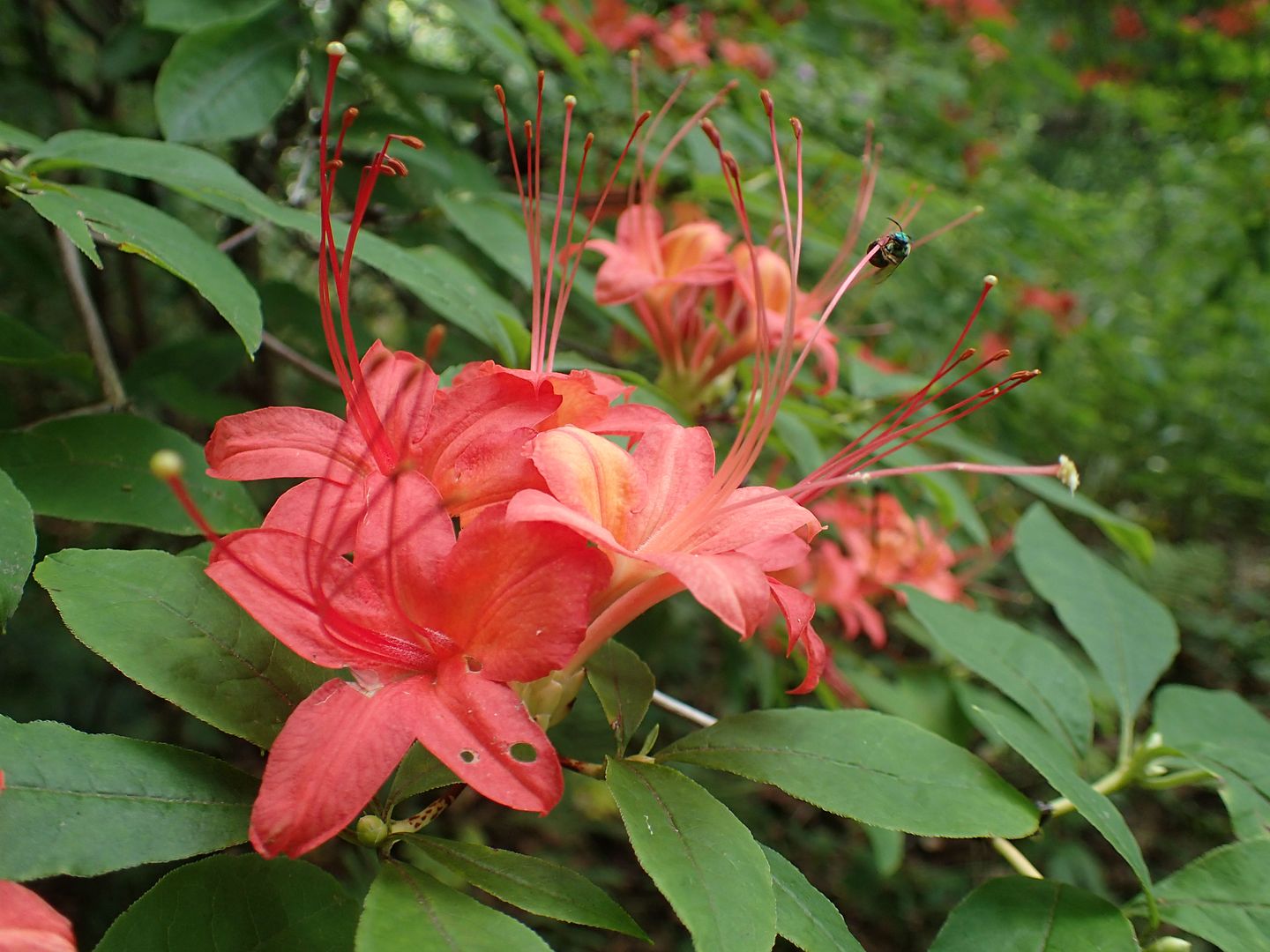
Plum Leaf Rhododendron, R. prunifolium, was a real stand out at the gardens. Partly because of their size and partly because of the display they were putting on. This is a species native to a very narrow strip between Georgia and Alabama and yet they still manage to achieve 10' tall growing in Delaware. (I've purchased two of these via an online dealer to see if they're hardy in zone 7).
The Mt. Cuba Center has about a dozen shrubs planted around its property and each one was covered in large clusters of orange/salmon-colored flowers. Some hued more red while others were orange but salmon-ish was the norm.
There wasn't a whole lot of pollinator activity with them but that's generally the case with Rhododendrons. They're ideally pollinated by large swallowtail butterflies who's wings rub against the pollen anthers and then the stigma to ensure pollination. Hummingbirds might also do something similar but I don't think this has been scientifically proven (though it likely happens).
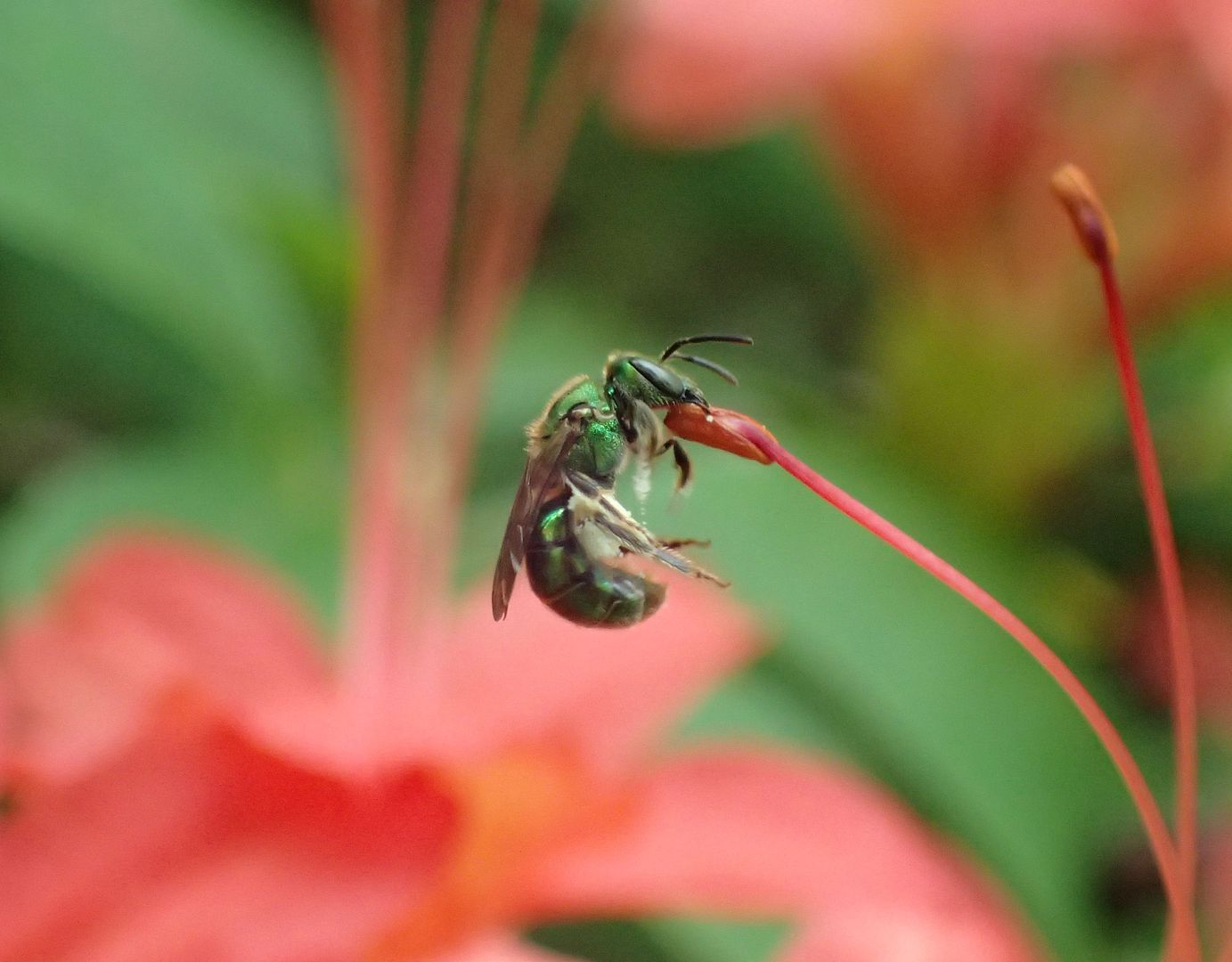
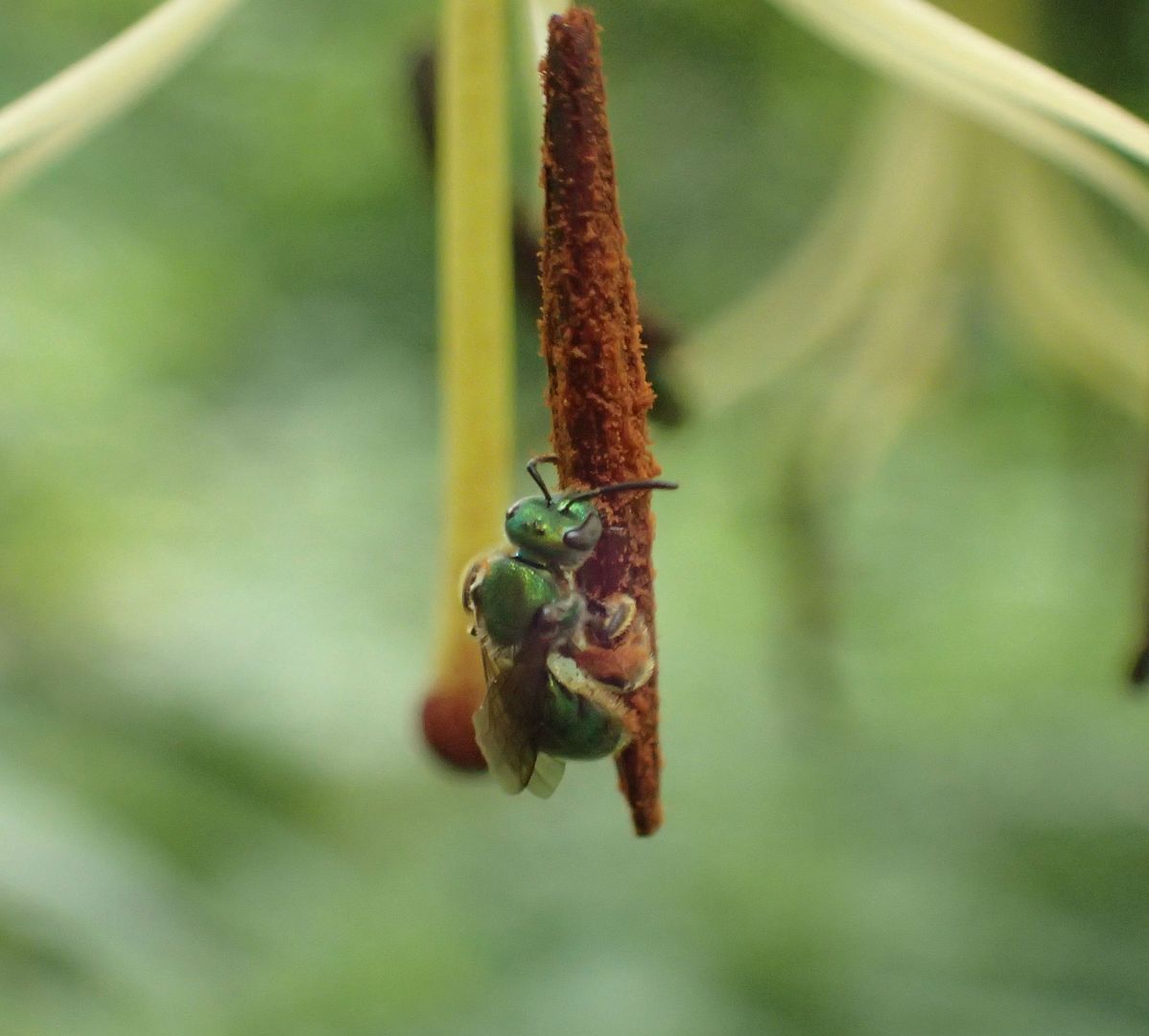
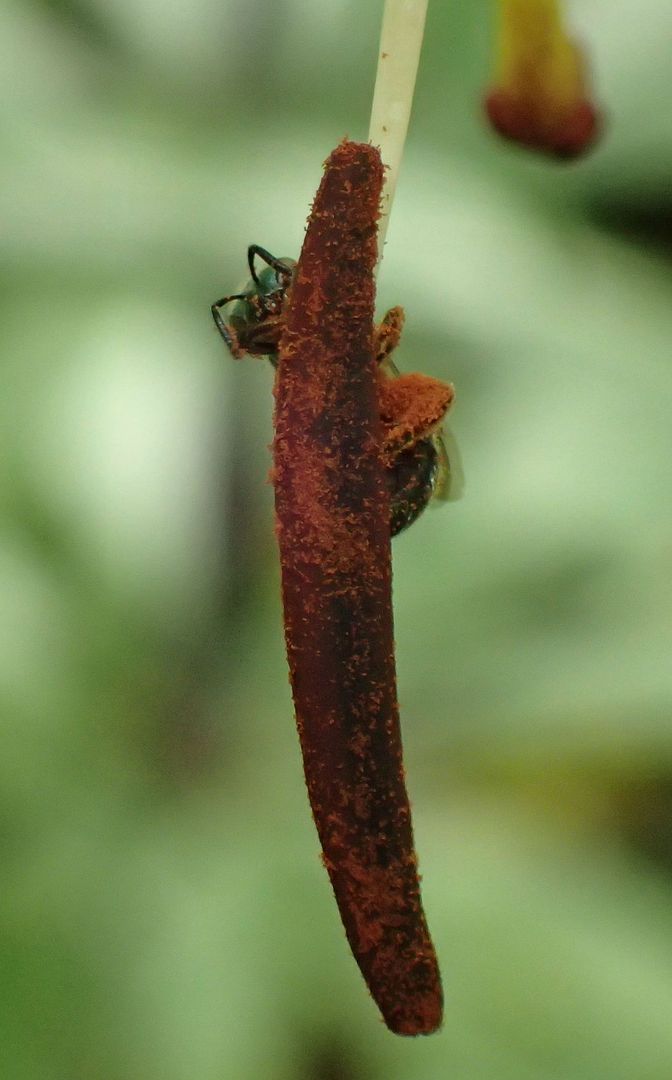
The only bees I saw taking an interest in the flowers were these tiny sweat bees who couldn't help but take advantage of all the pollen being offered.
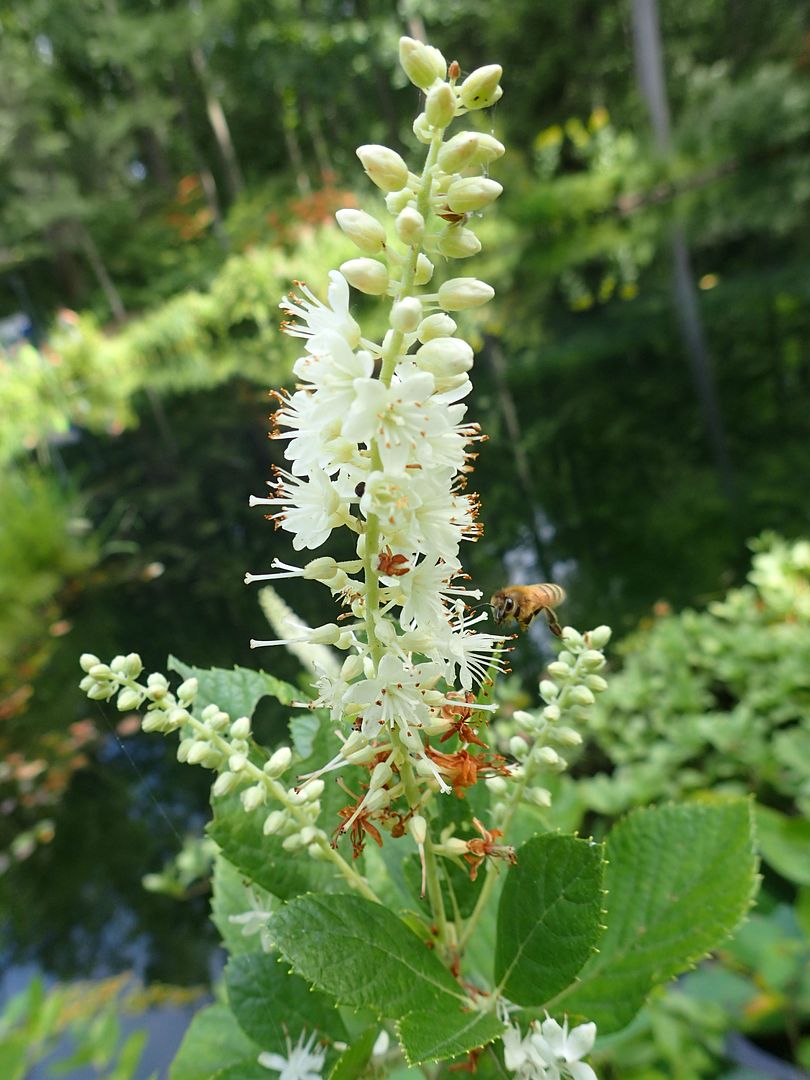
Another large shrub that was flowering heavily was Summer Sweet, Clethra alnifolia which is seen here on the background with all the white flowers.
Summer Sweet is sometimes called Sweet Pepper Bush because of the seed heads looking like peppercorns waiting to be ground, though you'd never want to do that with Clethra. It's not poisonous but isn't pepper either.
Another name it goes by is Sailor's Delight referring to it's sweet
fragrance which is know to travel a great distance in the right
conditions. This plant is at home in a damp forest understory or along
water ways and like filtered to full sun.
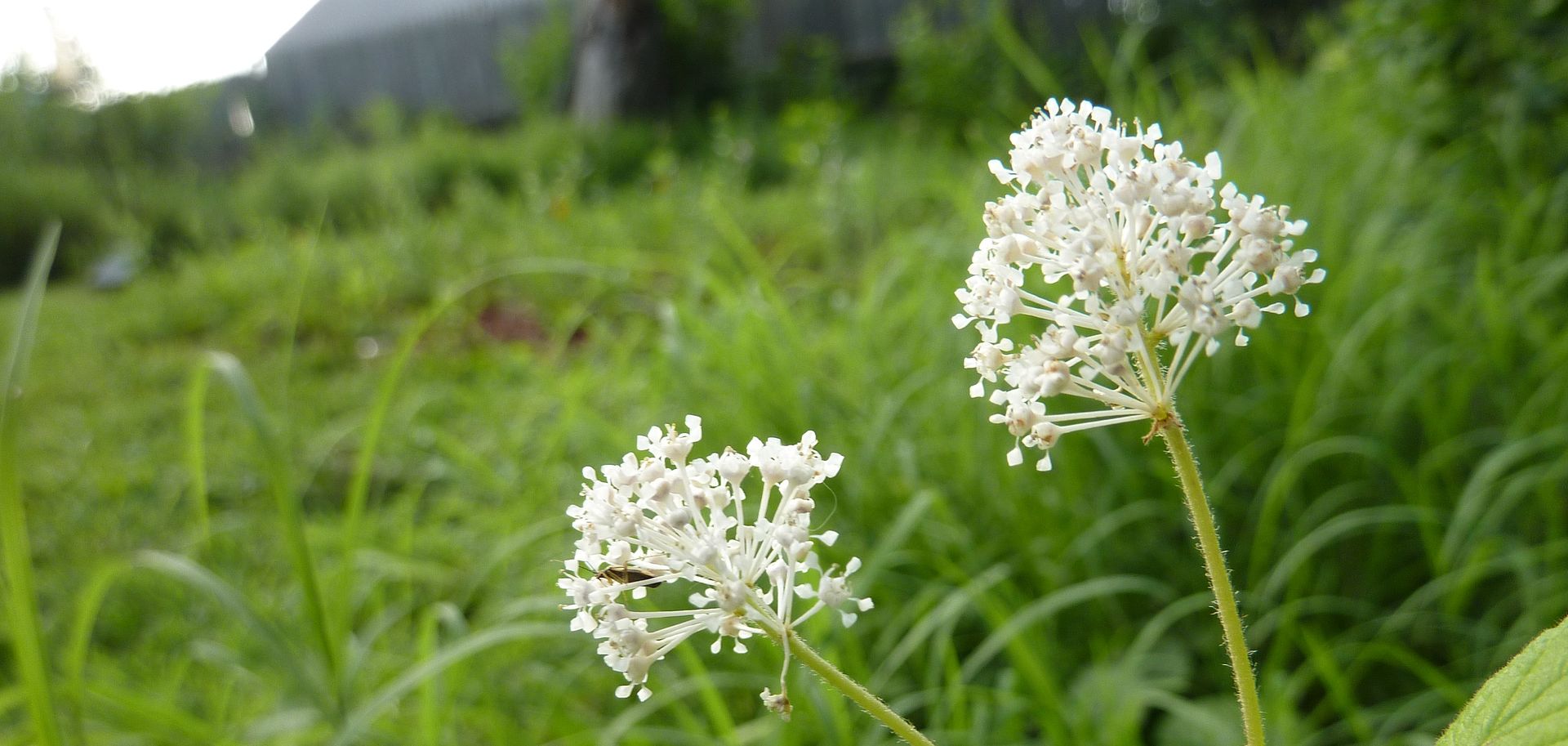
I couldn't tell if this was Bugbane or Doll's Eyes. Both are fairly similar-looking and I think in the same genus, Actaea. Some of these used to be in Cimicifuga but I believe they've been consolidated.
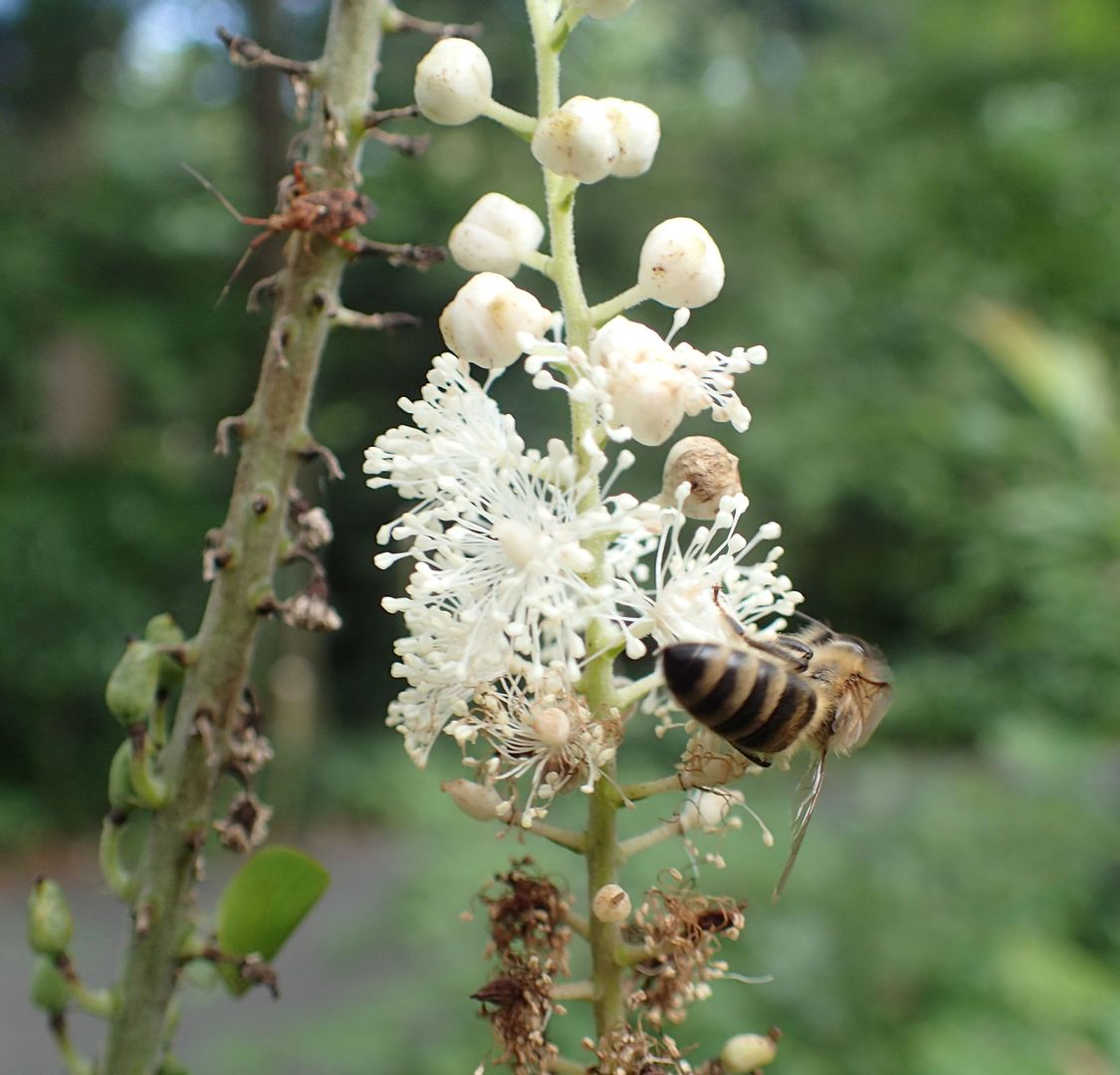
Honeybees work both Clethra and Actaea but I don't think they're very happy about Actaea. Likely something about the irritating smell of Actaea seems to make them angry while working this plant. They are obviously more on edge and seem to fly directly into other bees working the flowers. Things are more calm and easy going around Clethra.
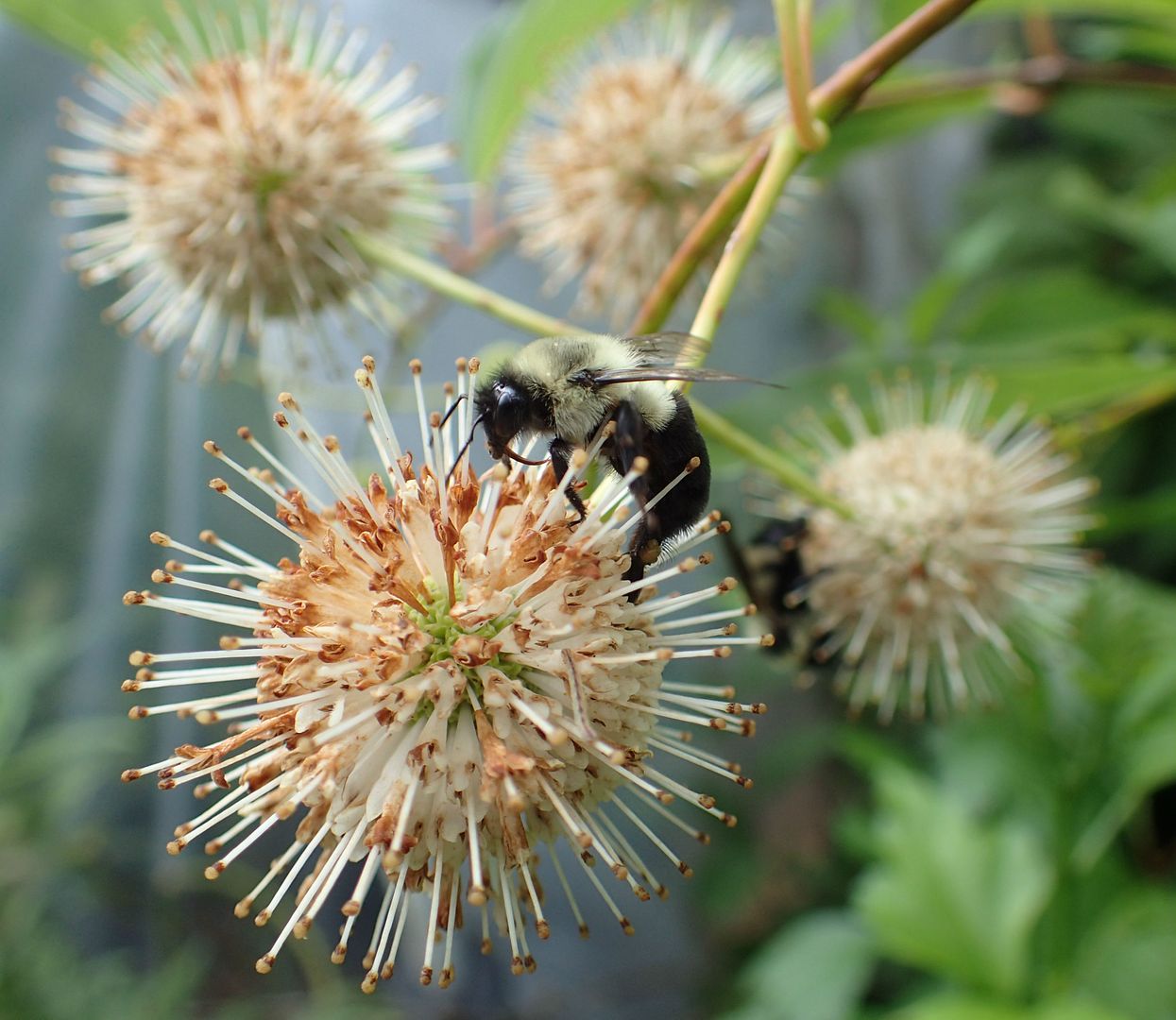
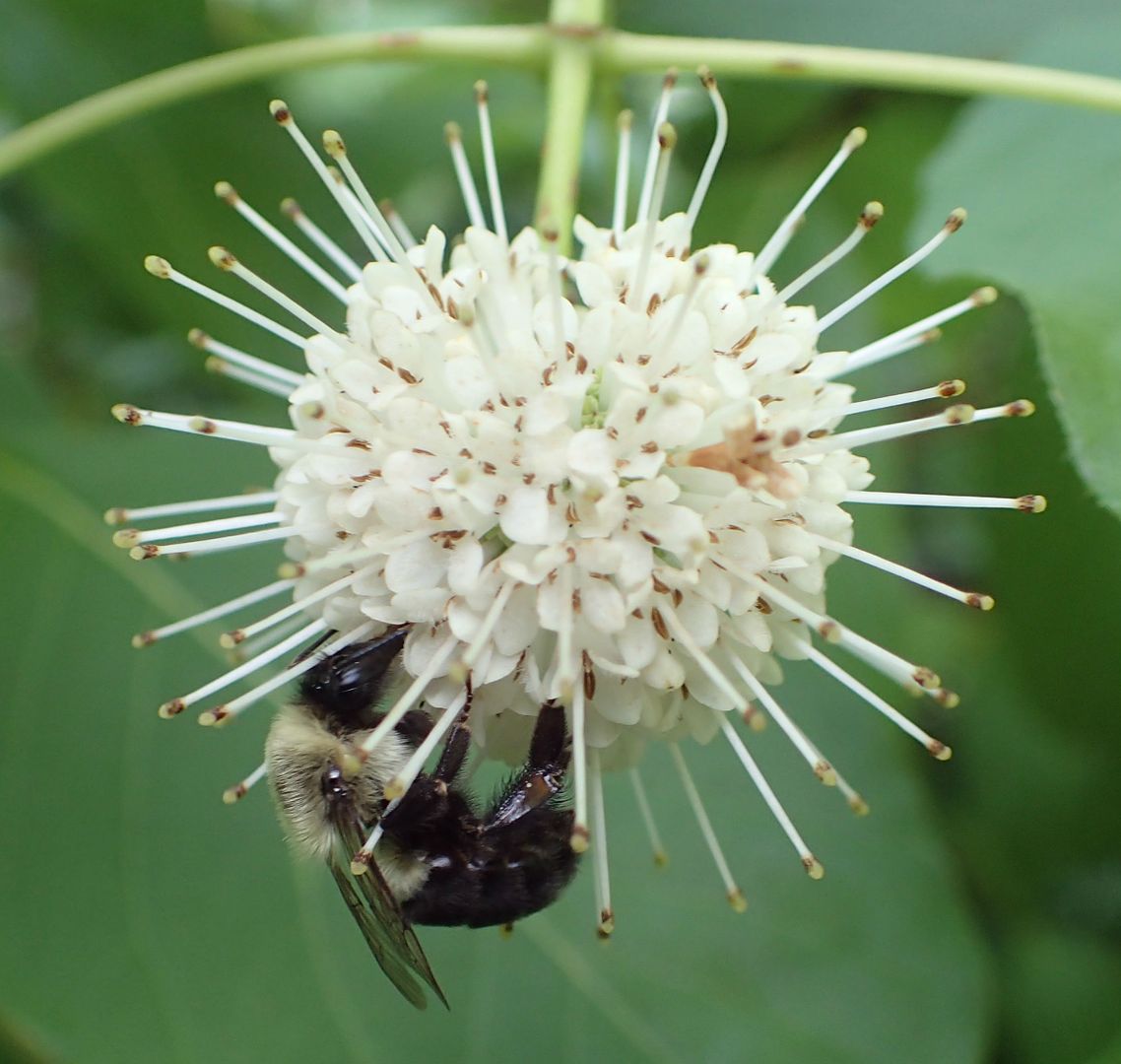
Buttonbush, Cephalanthus occidentalis, was another bustling hub of bees. These photos were actually taken at my house where I grow 3 of these wonderful shrubs. In talking with the gardeners at the Mt. Cuba Center I often ask them why they don't have certain things. And walking the gardens this past weekend I was happy to see they have added this one!
I took pictures of the flowers from the shrubs in my yard in New Jersey though because curiously enough they weren't flowering there in Delaware... So next weekend I'm sure their button bush plants will be blooming.
Although I have to say they weren't planted where I would have planted them. They're at the top of their meadow garden. (top of a hill that is.) Whereas in nature they usually occur growing along the banks of lakes and streams. Where they have them isn't a bad location, just not where they'd be found in the wild. Their meadow garden, I believe because of the slope, allows them to grow things that like water along it. For example they have Joe Pye Weed at the top too as well as by the ponds and it does fine in both locations.
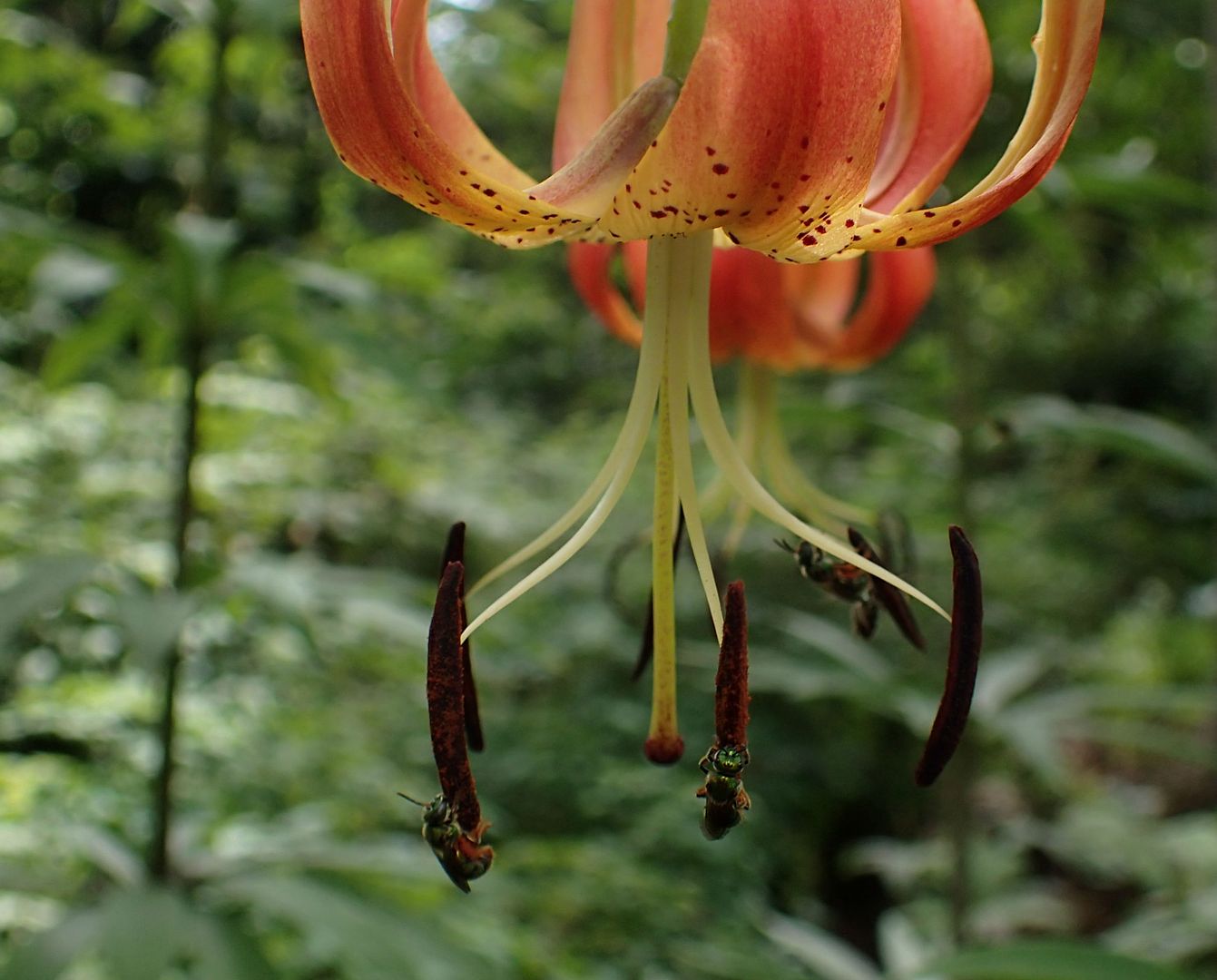
Along their forest path they had some native Lilies growing. And these are some of the harder ones to grow in my experience. The Mt. Cuba Center makes it look easy as they have several nice big plants, each with lots of blooms to them. In general the plant opens one flower at a time, but because a plant might have 15 flower buds on it, this prolongs the bloom.
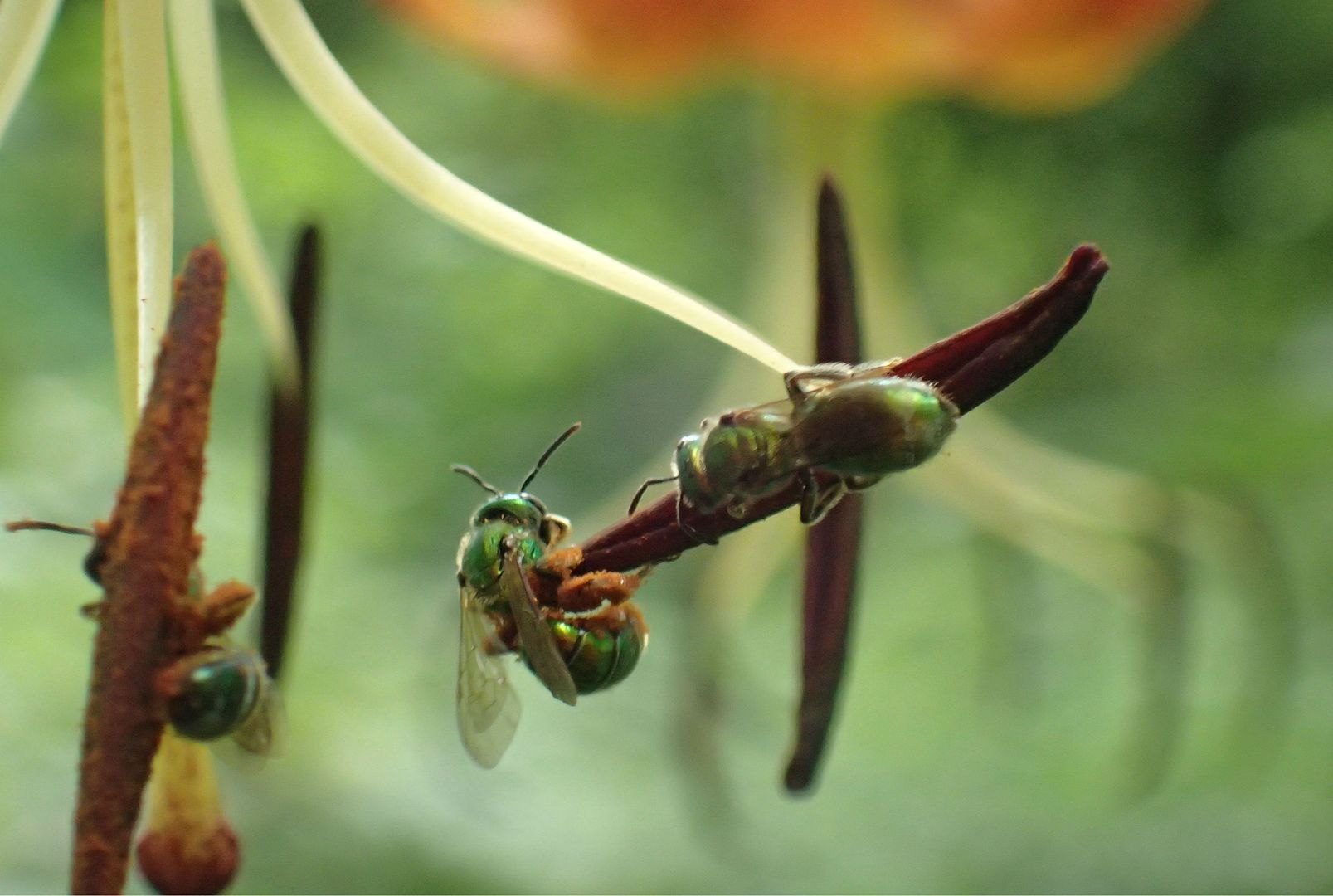
Ideally they're pollinated by large swallowtail butterflies and possibly hummingbirds whose' wings and feathers brush up against the pollen anthers and make contact with the stamen. While I didn't witness that I did see loads of little sweat bees stealing the pollen. What were clearly females were becoming covered in pollen and what were likely males kept pouncing upon them to mate.
These actually aren't pollinating the flowers because they're not making any contact with the stamens.
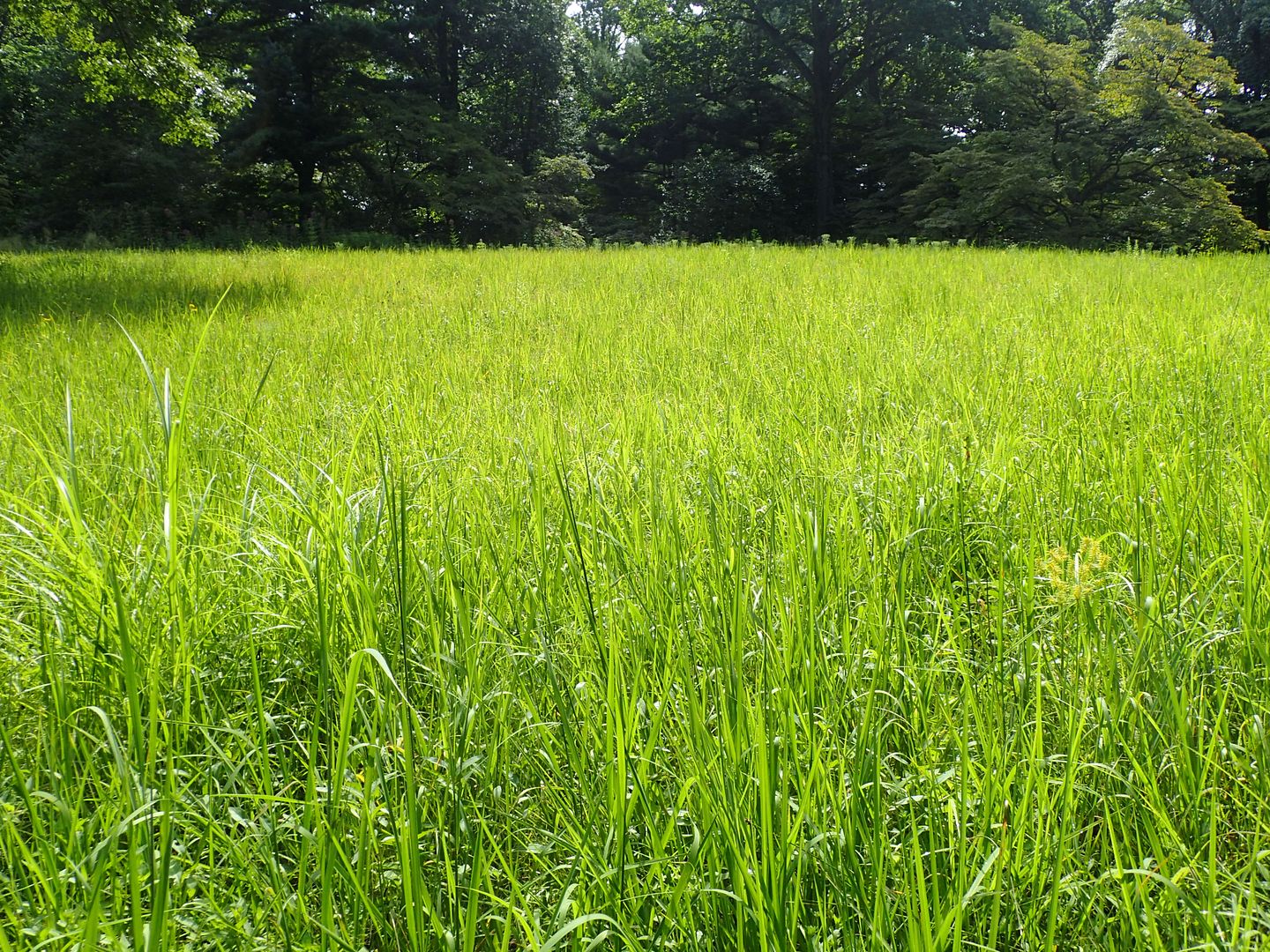
Their meadow garden was growing nicely. This is a combination of Little Blue Stem, Big Blue Stem, Indian Grass, and a few dozen others. This main section is mainly comprised of grasses though. Flowering plants were kept to a minimum on purpose because the late Mrs. Copeland felt there were few things as calming as seeing the wind casting waves across a grassy meadow. And honestly I think she was right.
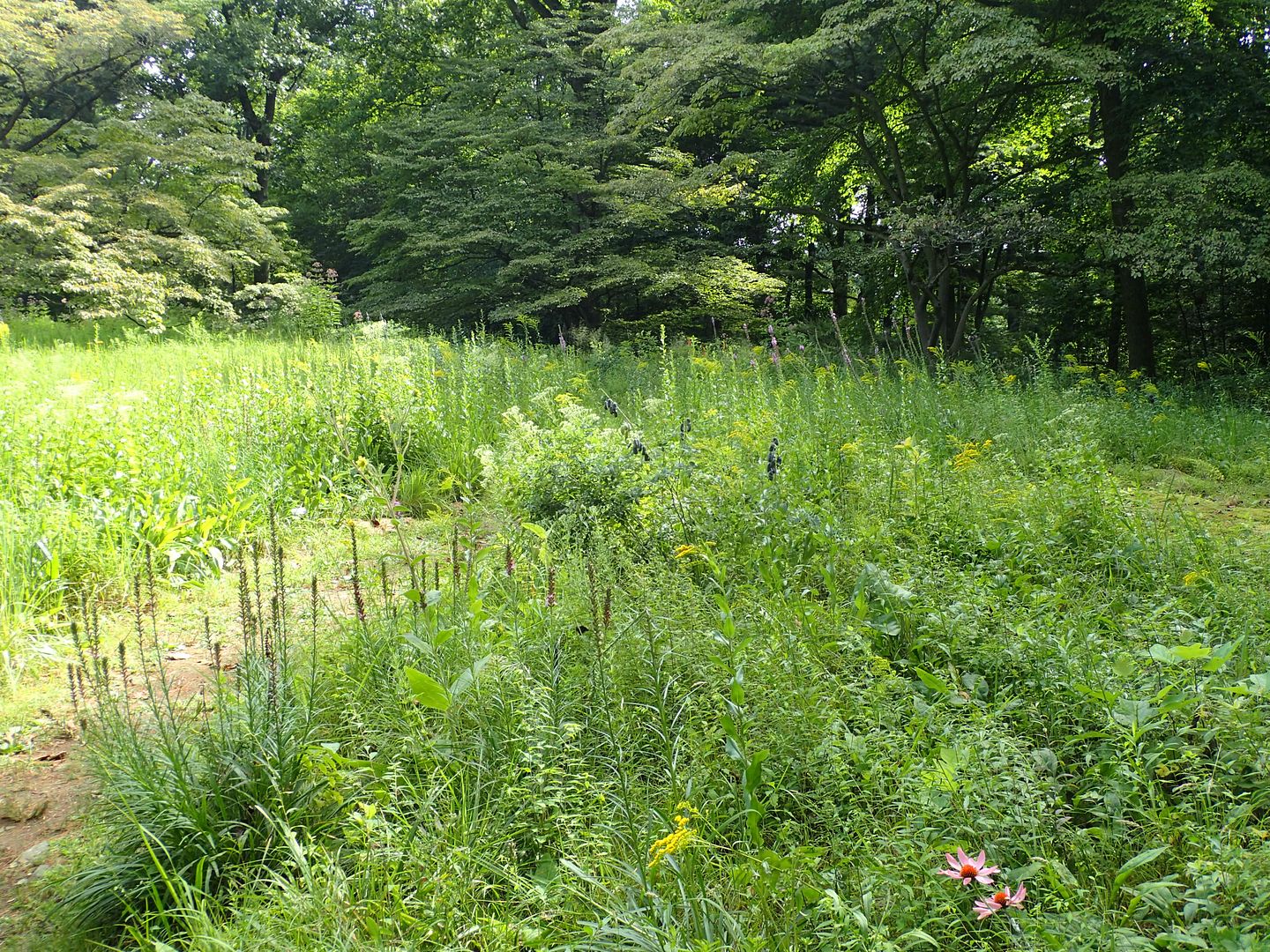
Becasue flowering plants are obviously a big part of a meadow they're grown mostly at the top of the hill, out of view from the lower areas. They have a great collection here but early summer isn't the best time to view them. Goldenrods, Liatris, Perennial Sunflowers, Wild Senna, Black-eyed Susans, Joe Pye Weed, Milkweeds and loads of Asters all grow among the grasses.
Showing posts with label Lily. Show all posts
Wednesday, August 29, 2018
Tuesday, April 12, 2016
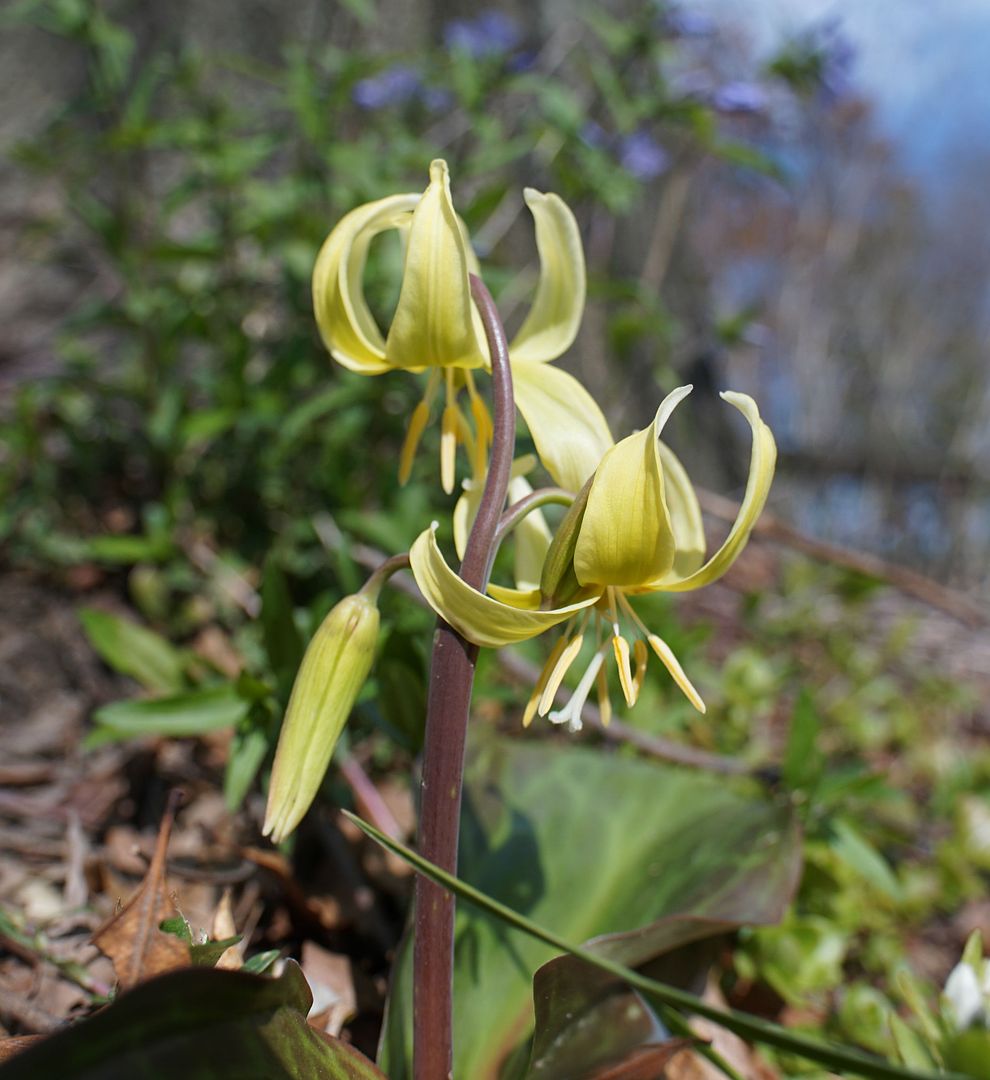
Erythronium 'Pagoda' A Western Native
Normally I'm not one for cultivars but I made an exception in this case. I've had Trout Lilies growing in the garden for almost 10 years now and they have yet to flower! Erythronium americanum much prefers to clone itself under the soil sending up a small carpet of roots everywhere. I've ready that on average only 5% (of what might be considered individual plants) in a given population will flower. Blooming seems to be triggered by the tap root finally reaching a certain distance down, or perhaps because it's become stressed from hitting rocks and things. I've been told that they're more likely to flower if rocks are placed just under the bulb to help stress the plant into sending its energy elsewhere but have yet to try this.
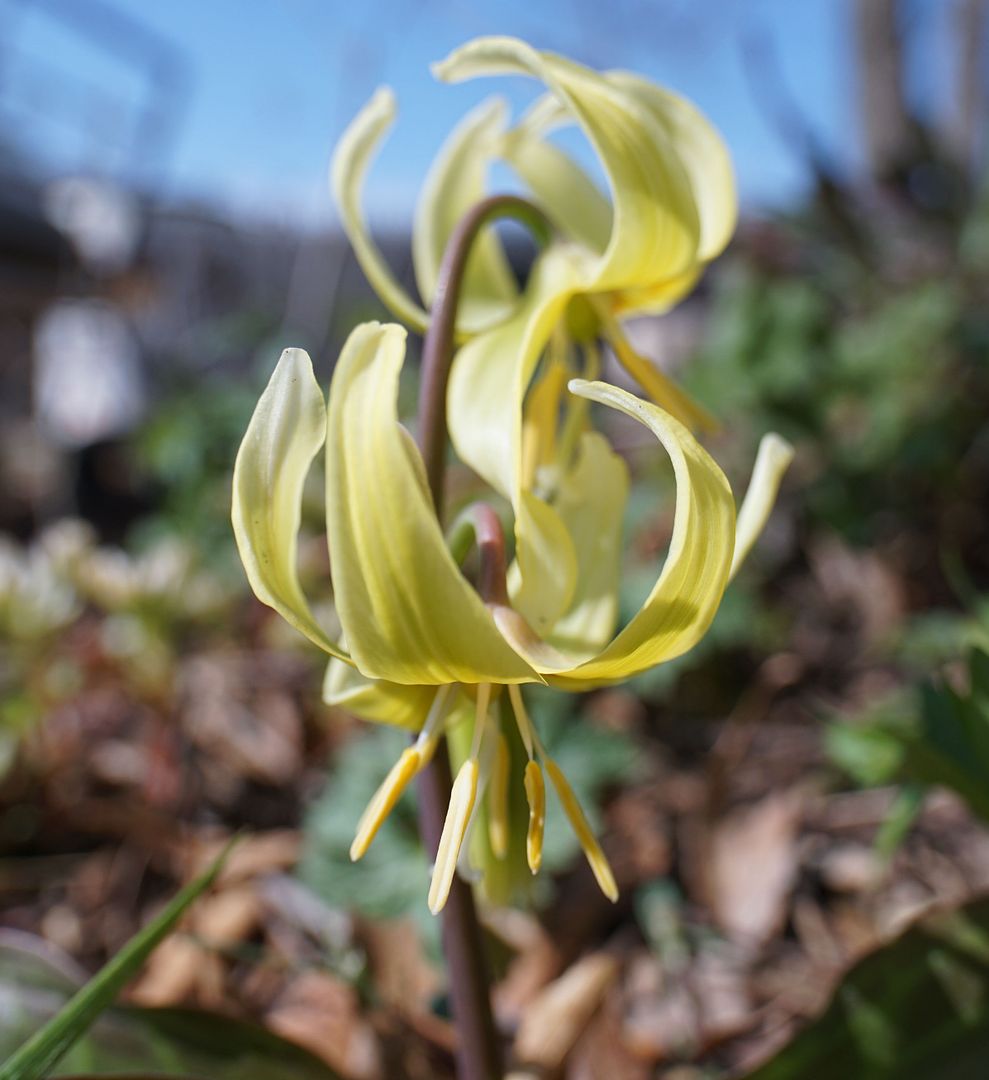
So I bought a cultivar called, Erythronium 'Pagoda' which is a hybrid of two species native to the western United States. I gather both are better about flowering and this hybrid cultivar seems to be no exception. It's parents are E. revolutum and E. tuolumnense.
E. revolutum goes by Pink Fawn Lily, and seems to show through in the cultivar by the matting on the leaves. E. tuolumnense goes by Tuolumne's Fawn Lily, and seems to show through in the flower color (yellow).
Of three plants I have, all of them have produced flowers, which all have multiple buds on a single stem, making this a superior plant to the more indigenous native in a garden setting at least. After a decade I expend at least one of them to flower, and thus far the best I've gotten is one to produce two leaves, meaning that it's thinking about flowering, so maybe next year. For now though I'm enjoying these.
Trout Lilies all seem to spread their seeds about by ants, which is what got me interested in growing so many wildflowers in the first place. I'm eager to see if this cultivar does the same. And perhaps if the seeds are viable, see whether the diversity of the two species are still there. I may end up with a pink flowering one in a few years or maybe ones which lack matting on the leaves. Normally hybrids are sterile though, so it's likely this one is only maintained by division. Still though it will be interesting to see what happens.
So I bought a cultivar called, Erythronium 'Pagoda' which is a hybrid of two species native to the western United States. I gather both are better about flowering and this hybrid cultivar seems to be no exception. It's parents are E. revolutum and E. tuolumnense.
E. revolutum goes by Pink Fawn Lily, and seems to show through in the cultivar by the matting on the leaves. E. tuolumnense goes by Tuolumne's Fawn Lily, and seems to show through in the flower color (yellow).
Of three plants I have, all of them have produced flowers, which all have multiple buds on a single stem, making this a superior plant to the more indigenous native in a garden setting at least. After a decade I expend at least one of them to flower, and thus far the best I've gotten is one to produce two leaves, meaning that it's thinking about flowering, so maybe next year. For now though I'm enjoying these.
Trout Lilies all seem to spread their seeds about by ants, which is what got me interested in growing so many wildflowers in the first place. I'm eager to see if this cultivar does the same. And perhaps if the seeds are viable, see whether the diversity of the two species are still there. I may end up with a pink flowering one in a few years or maybe ones which lack matting on the leaves. Normally hybrids are sterile though, so it's likely this one is only maintained by division. Still though it will be interesting to see what happens.
Labels:
Lily,
native,
Trout Lily,
Wildflowers
Saturday, July 5, 2014
A Trip to Longwood Gardens
I spent yesterday, July 4th, at Longwood Gardens, though not for the fireworks. Really the place was a bit of a disappointment and ran differently than I expected.
For starters the ticket system is confusing. You buy tickets to arrive at a specific time in half hour intervals but you can stay as long as you want and I didn't understand why this was necessary at all. What's wrong with just selling tickets and having a recommended time of arrival? Their parking lot is big enough for special events like the 4th of July, there were even people setting up camp outside on the hills around the parking lot having little BBQ's of their own.
Getting inside and walking the gardens for a day I started to realize why they limit the number of tickets they sell in half hour intervals. There is ONLY ONE place that sells food and drinks for people to eat lunch or dinner. Now they were holding a special event for fireworks and additional vendors were setup but they were all in one area! So you can't get a drink if you visit the entire right side of the facility or walk all the way out into the meadow garden other than a public water fountain they have hidden way back in this end building. I almost died of dehydration walking around this place.
Finally I found some sort of delicious-looking BBQ happening but this was only for people who spent the money on the fireworks show happening later that night. I asked the girl if I could upgrade to get some real food, and she said Nope! So inside the regular building I went where I paid $8 for the smallest peperoni pizza in the world that tasted like air. And the glass they gave me was tiny, like what they sell as a Small everywhere else, which was only about $2 though. And it came with "unlimited refills" but frankly there didn't seem to be anyone watching the drink area; it's all self serve so I could have fill up a 2 liter for all they knew.
They should be selling collectable water bottles that come with free refills the day you buy it and setup more stations around the park where people can buy and refill them, similar to how an amusement park does it. I should be able to upgrade my dinning choice right then and there to special BBQ's, Buffets, and wine tastings etc... instead of having to walk all the way back to the main entrance for a wrist band.
I would have voiced all this to the little suggestion survey card but someone made off with the pen or pencil for doing so... so I just tossed a blank card inside to show what I thought of the place which was not much.
Most of the gardens were vast stretches of lawn with plantings only right next to the pathways. These plantings did look nice and worked well with a corridor effect (looking down the hall). There were points of interests such as sculptures and fountains and the occasional neat plant they highlighted but the amount of lawns this place has really drags the whole place down.
For starters the ticket system is confusing. You buy tickets to arrive at a specific time in half hour intervals but you can stay as long as you want and I didn't understand why this was necessary at all. What's wrong with just selling tickets and having a recommended time of arrival? Their parking lot is big enough for special events like the 4th of July, there were even people setting up camp outside on the hills around the parking lot having little BBQ's of their own.
Getting inside and walking the gardens for a day I started to realize why they limit the number of tickets they sell in half hour intervals. There is ONLY ONE place that sells food and drinks for people to eat lunch or dinner. Now they were holding a special event for fireworks and additional vendors were setup but they were all in one area! So you can't get a drink if you visit the entire right side of the facility or walk all the way out into the meadow garden other than a public water fountain they have hidden way back in this end building. I almost died of dehydration walking around this place.
Finally I found some sort of delicious-looking BBQ happening but this was only for people who spent the money on the fireworks show happening later that night. I asked the girl if I could upgrade to get some real food, and she said Nope! So inside the regular building I went where I paid $8 for the smallest peperoni pizza in the world that tasted like air. And the glass they gave me was tiny, like what they sell as a Small everywhere else, which was only about $2 though. And it came with "unlimited refills" but frankly there didn't seem to be anyone watching the drink area; it's all self serve so I could have fill up a 2 liter for all they knew.
They should be selling collectable water bottles that come with free refills the day you buy it and setup more stations around the park where people can buy and refill them, similar to how an amusement park does it. I should be able to upgrade my dinning choice right then and there to special BBQ's, Buffets, and wine tastings etc... instead of having to walk all the way back to the main entrance for a wrist band.
I would have voiced all this to the little suggestion survey card but someone made off with the pen or pencil for doing so... so I just tossed a blank card inside to show what I thought of the place which was not much.
Most of the gardens were vast stretches of lawn with plantings only right next to the pathways. These plantings did look nice and worked well with a corridor effect (looking down the hall). There were points of interests such as sculptures and fountains and the occasional neat plant they highlighted but the amount of lawns this place has really drags the whole place down.
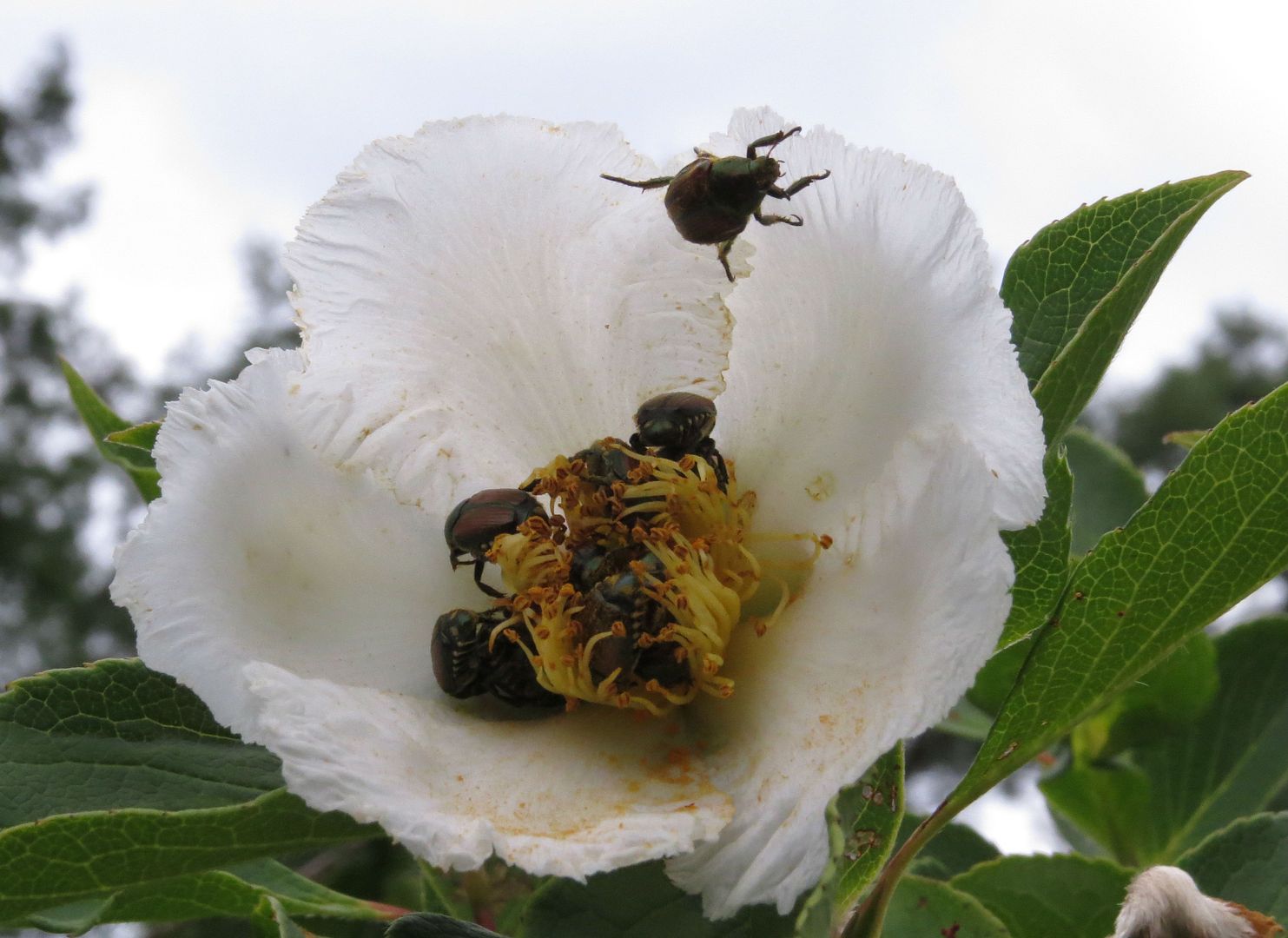
There was a Japanese Stewartia that was absolutely infested with Japanese Beetles.. which might not be a bad thing but generally no one wants this pest insect.
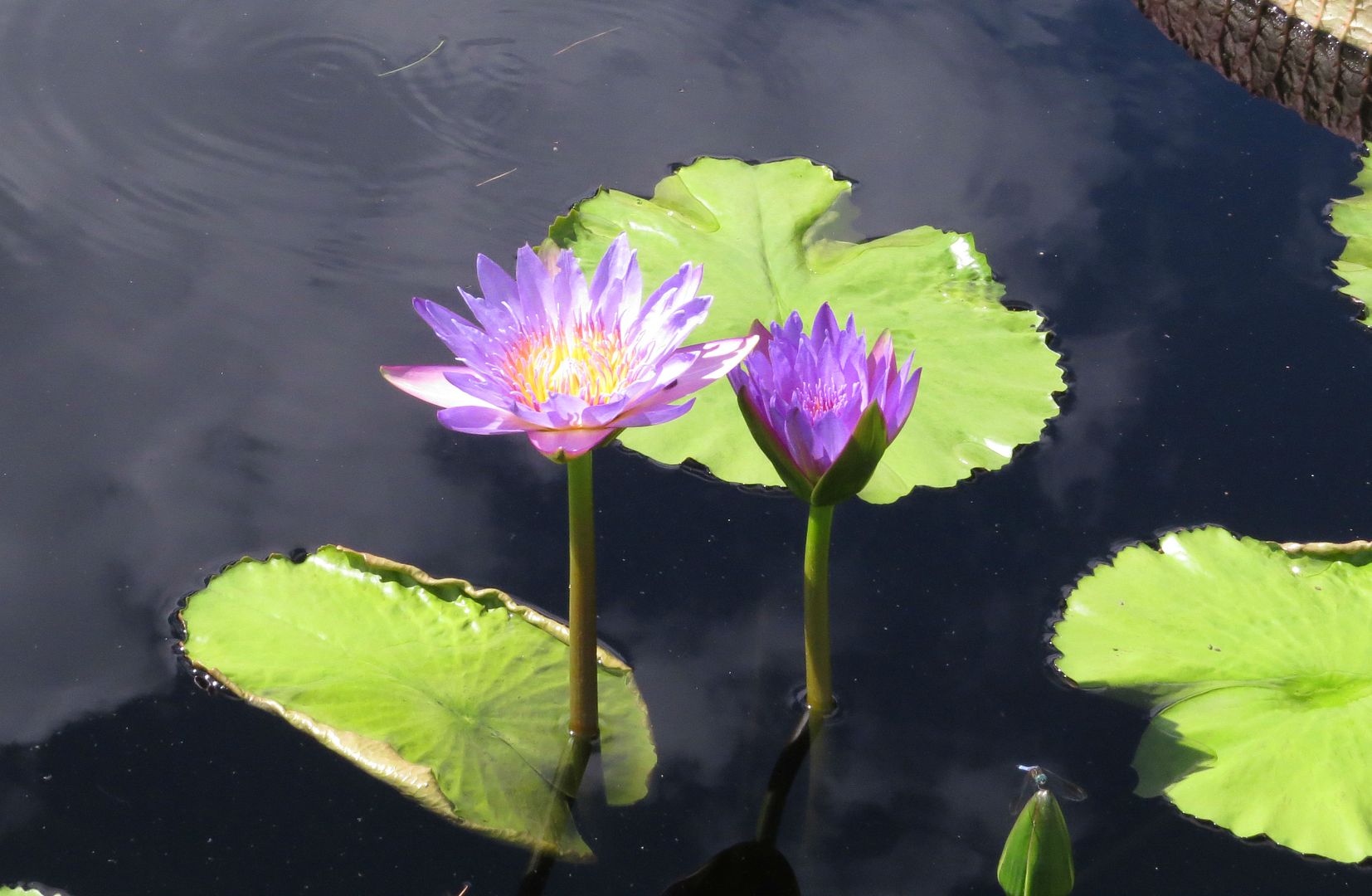
There's a main conservatory that's full of all sorts of tropical plants, and even included a rather nice pond section but it would have benefited from a guide or two or audio tour like a museum exhibit to highlight what I'm looking at and why it's important.
Something where they'd put a number on the plant tag and you could listen to a botanist, curator, landscape designer, translator, or voice actor, talk about why the plant or feature is so impressive. They could rotate which ones are of interest in and out or limit it to specific gardens. Generally without the information and history behind it, it's really just another pretty flower among hundreds.
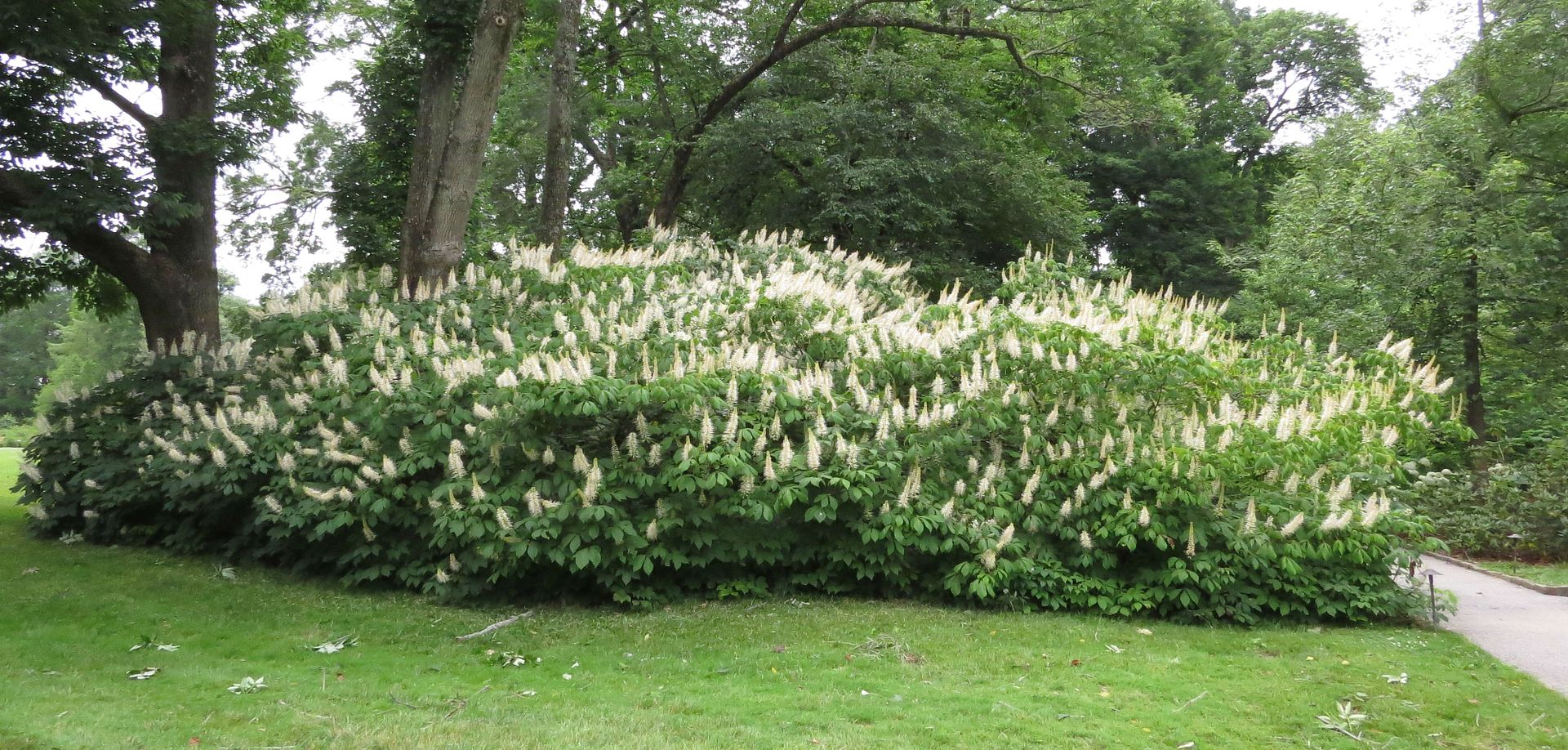
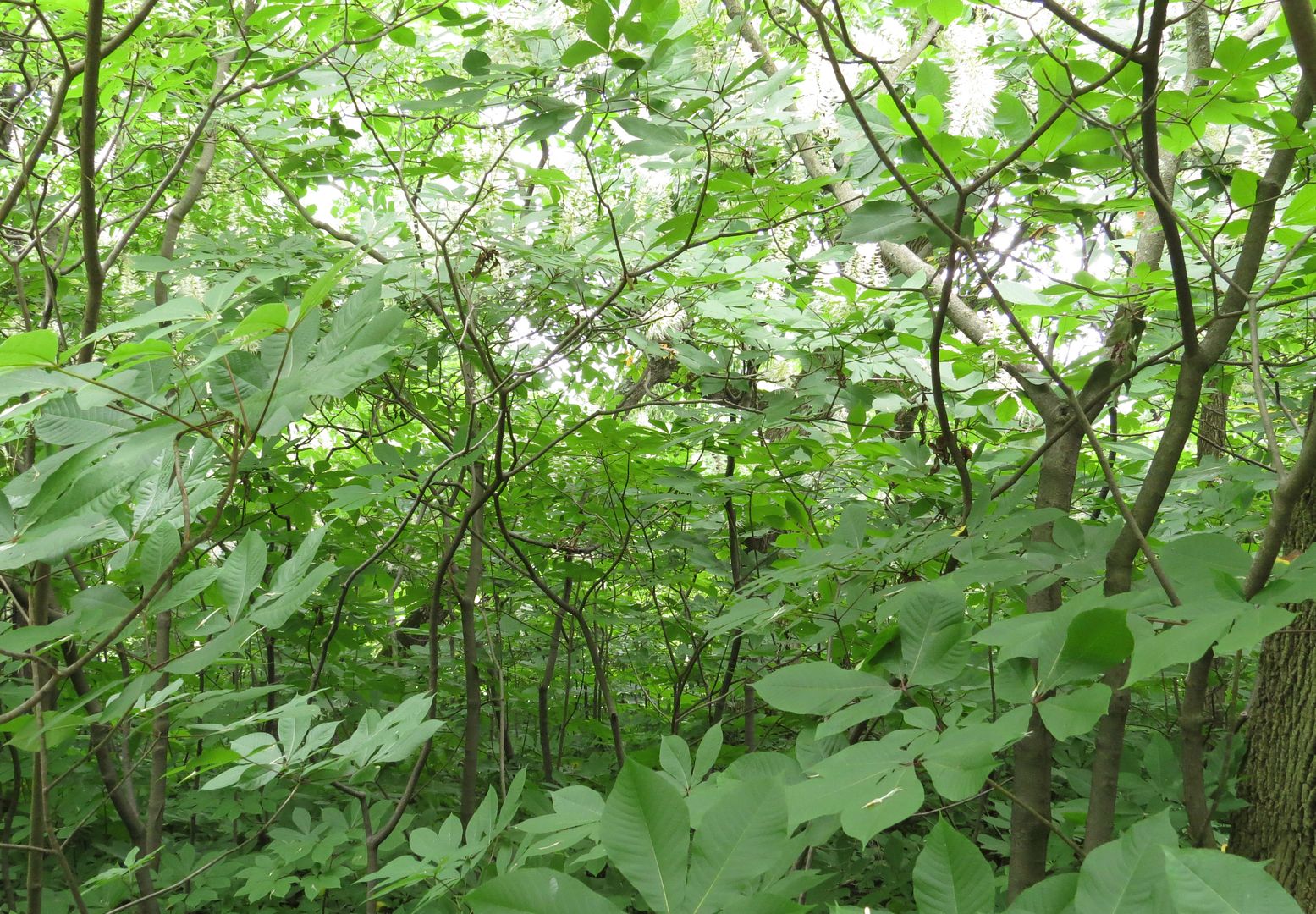
I was happy to see a grove of Bottlebrush Buckeye but disappointing to see absolutely nothing was pollinating them. Actually there were almost no butterflies flying about at all. The only ones I saw were out in the meadow garden and I know from the Mt. Cuba Center that this plant is normally covered in hummingbirds, and large butterflies. They're growing it correctly at least. The plant wants to push up an
army of suckering stems to form it's own grove which was extensive. The
photo above was taken at the top of a hill and they extended all the way
down around the pathway.
This is what it was like looking in.
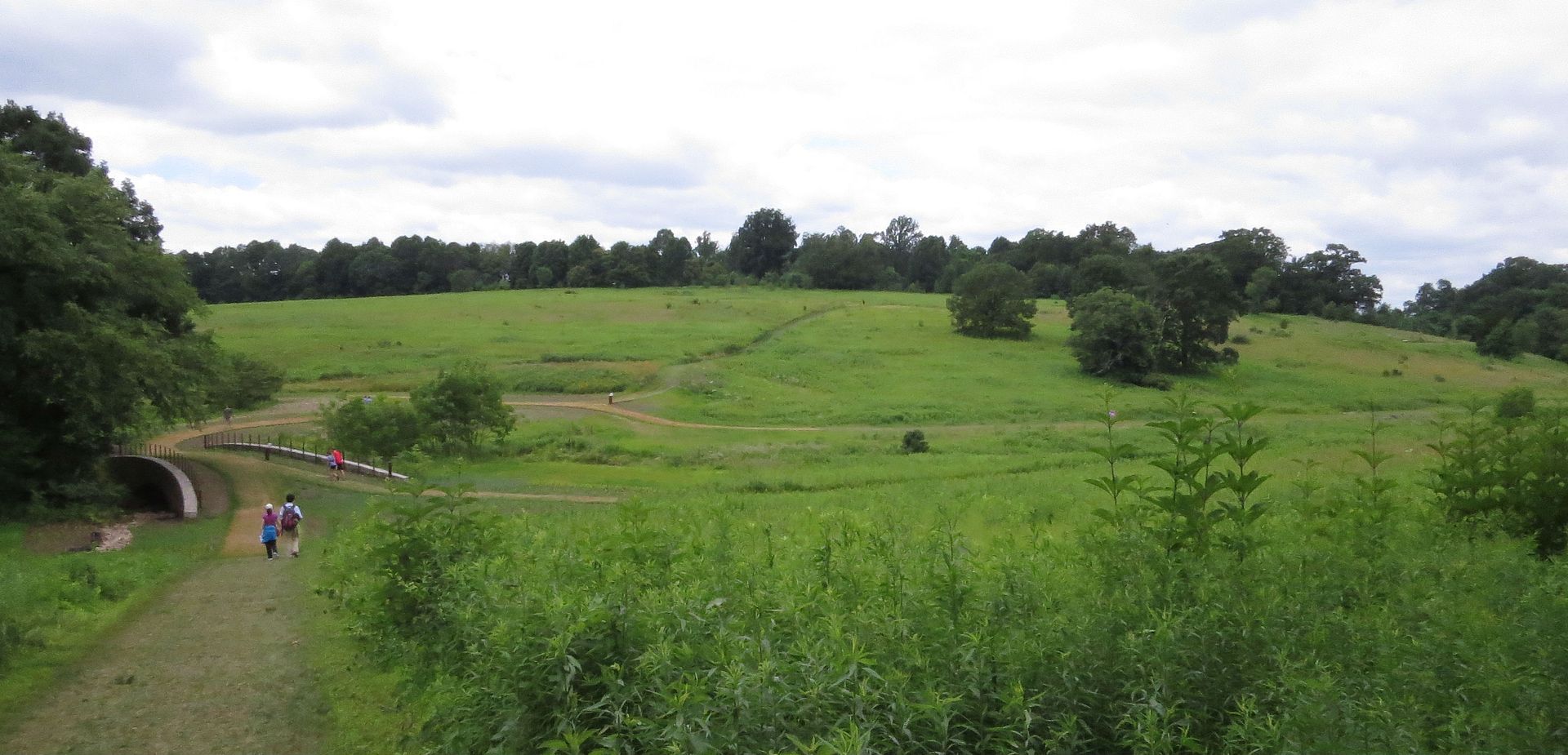
But the real reason for going was for the newly installed Meadow Garden, which I'm happy to say was drawing a decent crowd. All of the bird watchers and generally non-handicap guests were at least giving one pathway a stroll.
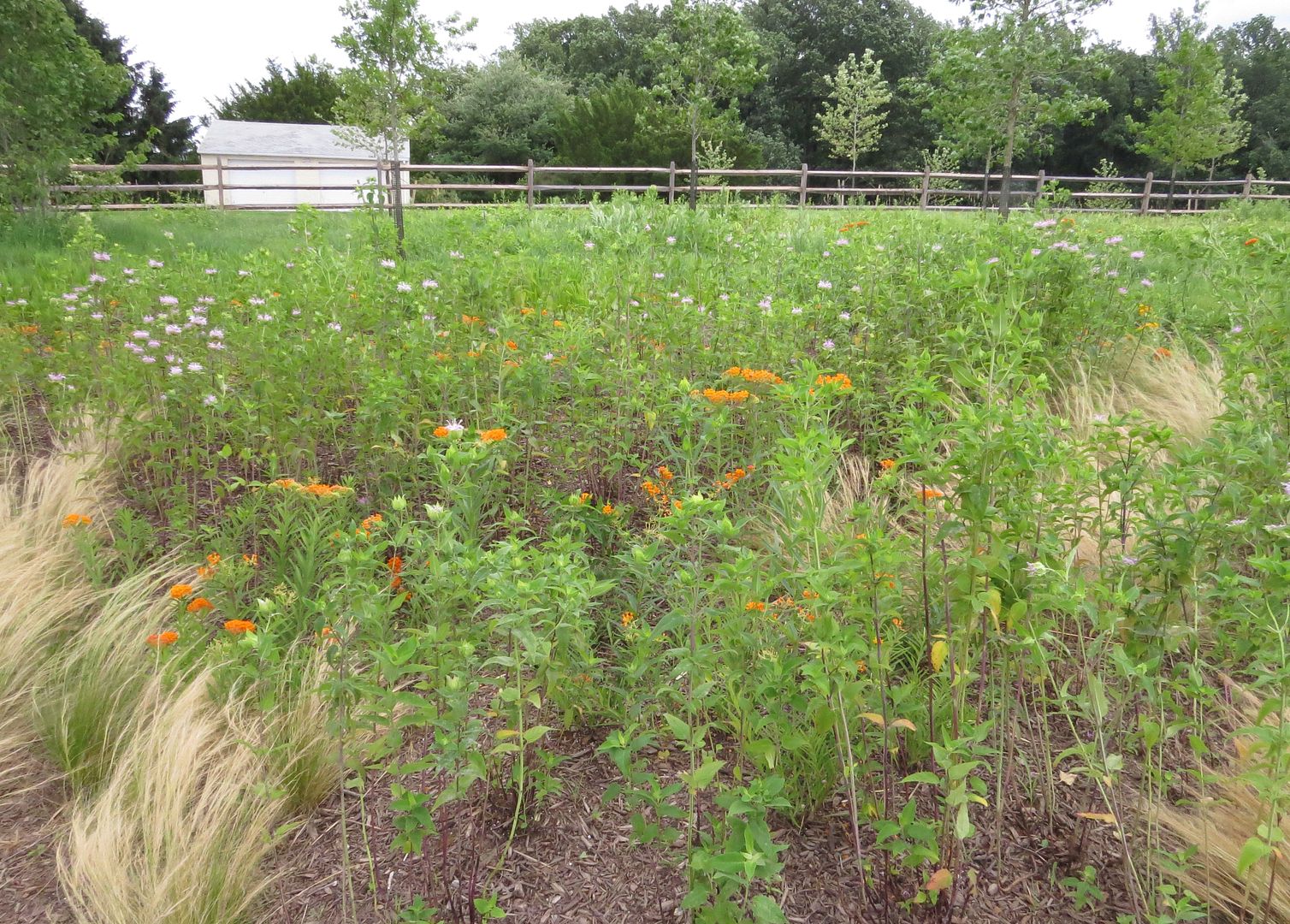
Early on I was a little confused though. I thought they had sprayed Round UP on the pathways which is why they looked like dead grass but then I realized, nope, someone started to roll out the sod for god knows why and it's just dying from lack of water. A bizarre choice but perhaps it was something left over from last year. A good design choice I thought were these corner sections where instead of seeding in plants randomly, they had plugs to specific plants. Eventually this will ensure guests get to see specific plants up close and personal.
Another specific plug planting next to one of the rest and viewing areas. Behind me there were some benches, sheltered by the sun with built in telescopes for everyone to look out upon the meadow.
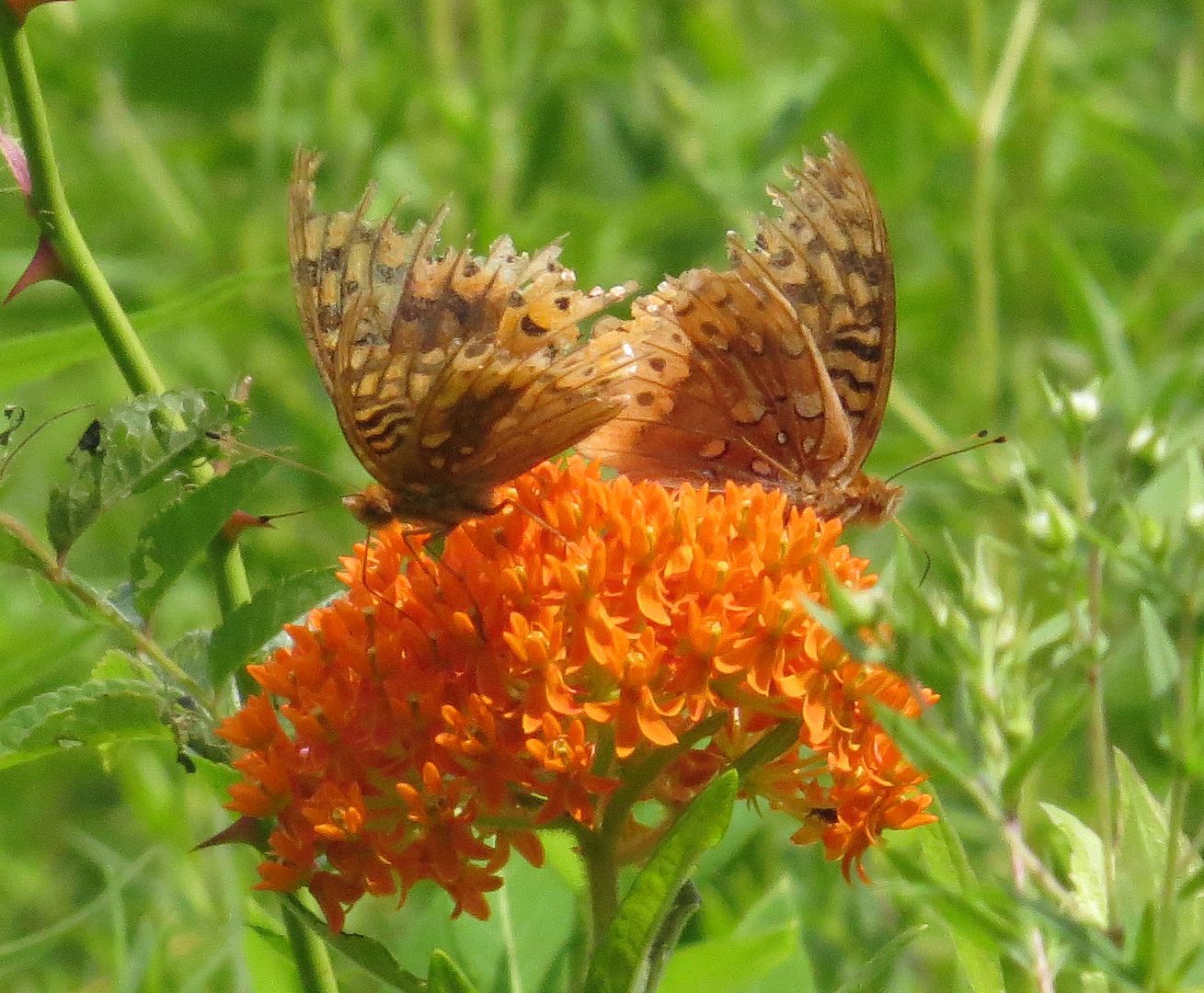
The occasional butterfly would flap about but for the most part they found a bit of butterflyweed and clung to it.
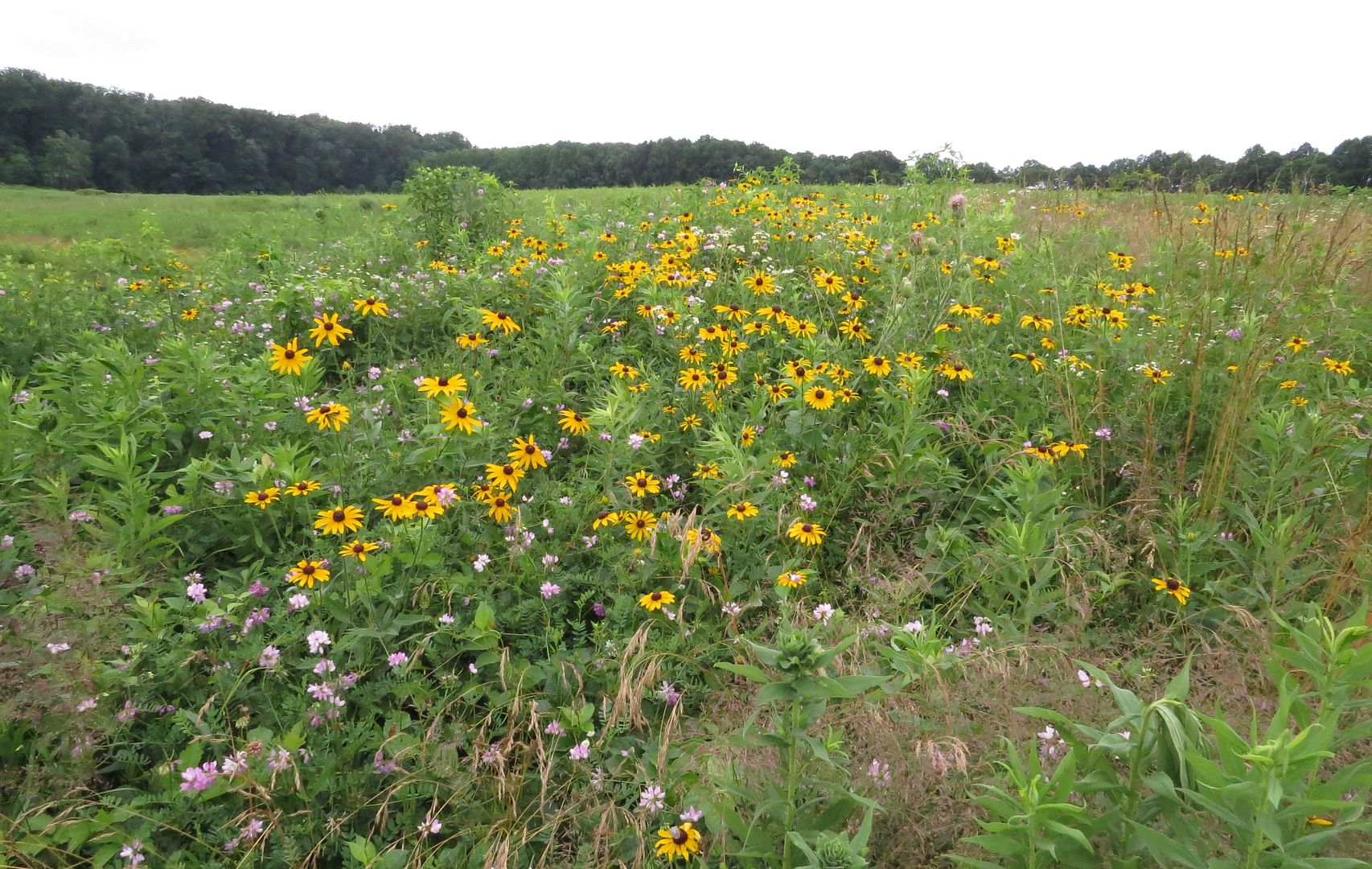
Black-eyed Susans speckled parts of the meadow with their little yellow disks.
There were a few places where they seemed to be better established and taller.
Red-winged Blackbirds fluttered about the meadow and all the bird watchers seemed to enjoy them particularly. I accidentally interrupted more than one person trying to take a photo I'm sorry to say.
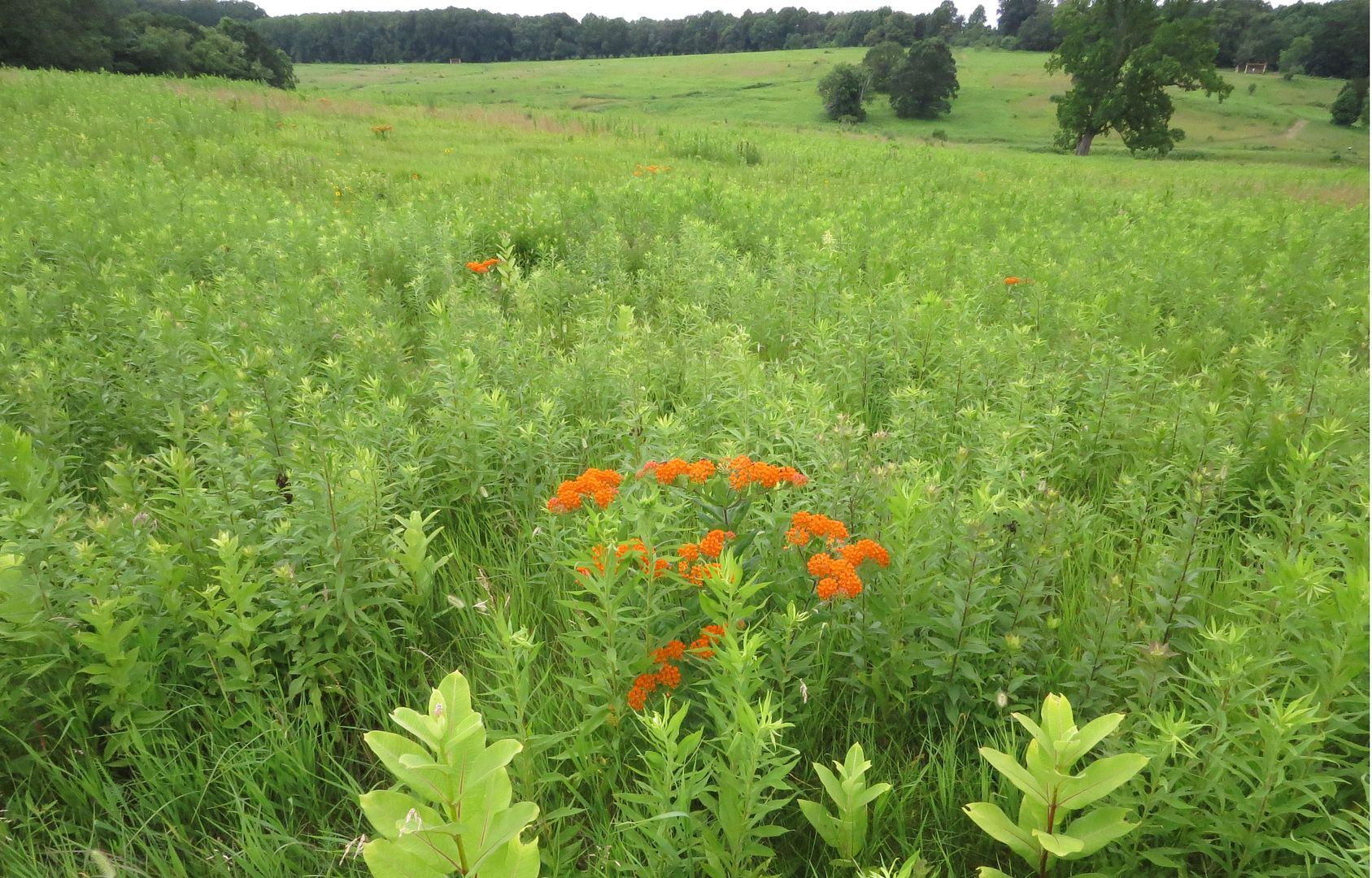
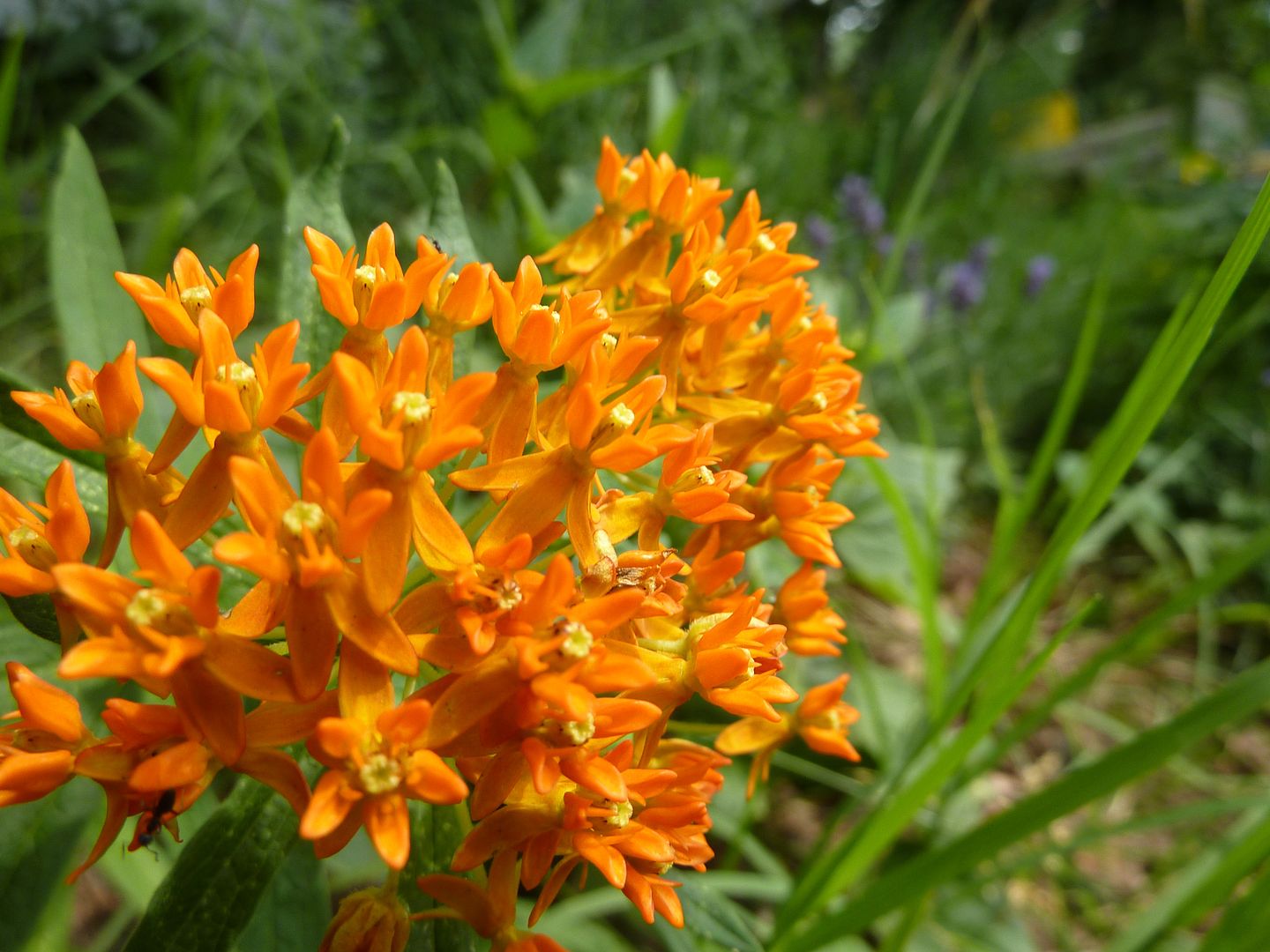
Butterflyweed, Asclepias tuberosa, was a real highlight here.
I love the way the color of the dried grasses adds to this, still blowing with the breeze along with the green, and still with yellow flowers dotting all over.
False Sunflower, Heliopsis helianthoides, was another draw but mostly for bumblebees.
I really enjoyed the meadow garden a lot because there weren't big boring patches of lawn. If you're going to have big sweeps of lawn, at least do something with them; maybe even take that "golf course look" literally and maybe a mini-golfing or croquet. Or even make it more perfect than it already looks? A large carpet of moss maybe?
So the Meadow garden has my interest enough that I think I'll return sometime, maybe in September and I'll be sure to give the whole place another chance.
Sunday, July 7, 2013
A Nonnative Treat
So maybe two years ago I was at the Philadelphia International Flower Show and one of the vendors was this French women selling nothing but Lilies. As the show takes place over the winter they were all in the form of bulbs. I forget how much they cost but apparently I came home with five of them. Last year they didn't do anything; this year they're up with force and flowering.
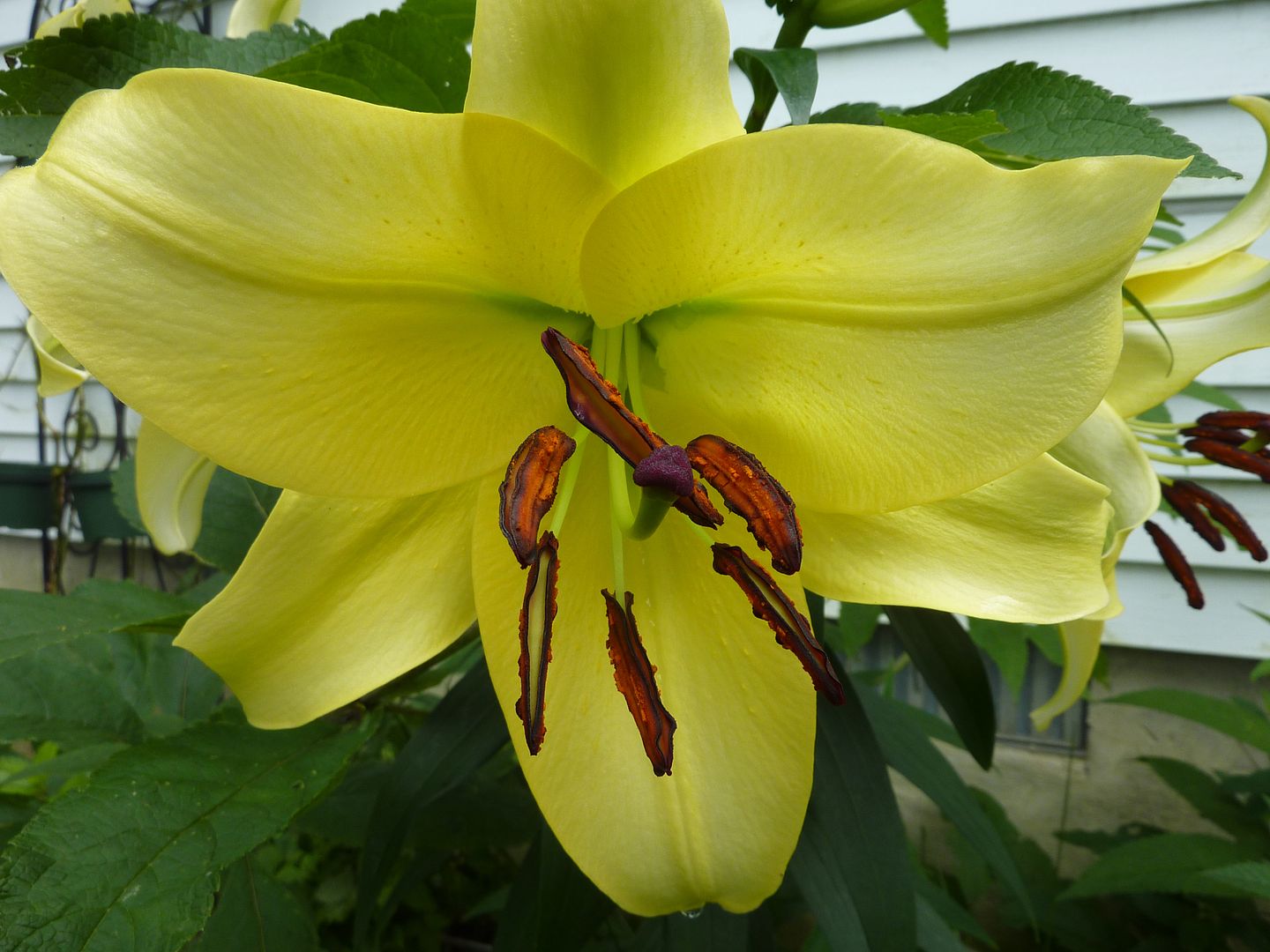
Dear god! This monstrous flower is larger than any Amaryllis I've ever grown. It's supposed to be some kind of lily but the flower is enormous, and the anthers are longer than my fingers. My brother's bride to be took one look at them and demanded she walk down the isle with a bouquet of them.... tragically the wedding is in October so that's not really doable but I'm sure a floret will have something nice.
So this clearly isn't a native plant. True they look lovely and any gardener would be happy to have them growing in their garden. But as I'm committed to the native theme I feel it might be best if I dig up the bulbs later this winter and give them to my brother's bride as a gift. She seemed to enjoy the flower more than me and I know she loves cut flowers. They're fragrant by the way.
Personally I try to garden with the theme that it's one thing to be pretty but quite anther to be pretty useful. Right now I'm at a loss to imagine what could pollinate them. Maybe half a dozen swallowtails and hummingbirds could probably fit in it all at once to sip nectar. There's enough pollen on the anthers to stain everything they touch. Any who, I'm sure she'll be thrilled with the gift.
Dear god! This monstrous flower is larger than any Amaryllis I've ever grown. It's supposed to be some kind of lily but the flower is enormous, and the anthers are longer than my fingers. My brother's bride to be took one look at them and demanded she walk down the isle with a bouquet of them.... tragically the wedding is in October so that's not really doable but I'm sure a floret will have something nice.
So this clearly isn't a native plant. True they look lovely and any gardener would be happy to have them growing in their garden. But as I'm committed to the native theme I feel it might be best if I dig up the bulbs later this winter and give them to my brother's bride as a gift. She seemed to enjoy the flower more than me and I know she loves cut flowers. They're fragrant by the way.
Personally I try to garden with the theme that it's one thing to be pretty but quite anther to be pretty useful. Right now I'm at a loss to imagine what could pollinate them. Maybe half a dozen swallowtails and hummingbirds could probably fit in it all at once to sip nectar. There's enough pollen on the anthers to stain everything they touch. Any who, I'm sure she'll be thrilled with the gift.
Tuesday, December 13, 2011
Best of Nature 2011
This catagory is generally reserved for plants and animals that don't fit in the other areas. This past year was a big one for this group as I decided to install a small prairie and visited the Mt. Cuba Center far more often.
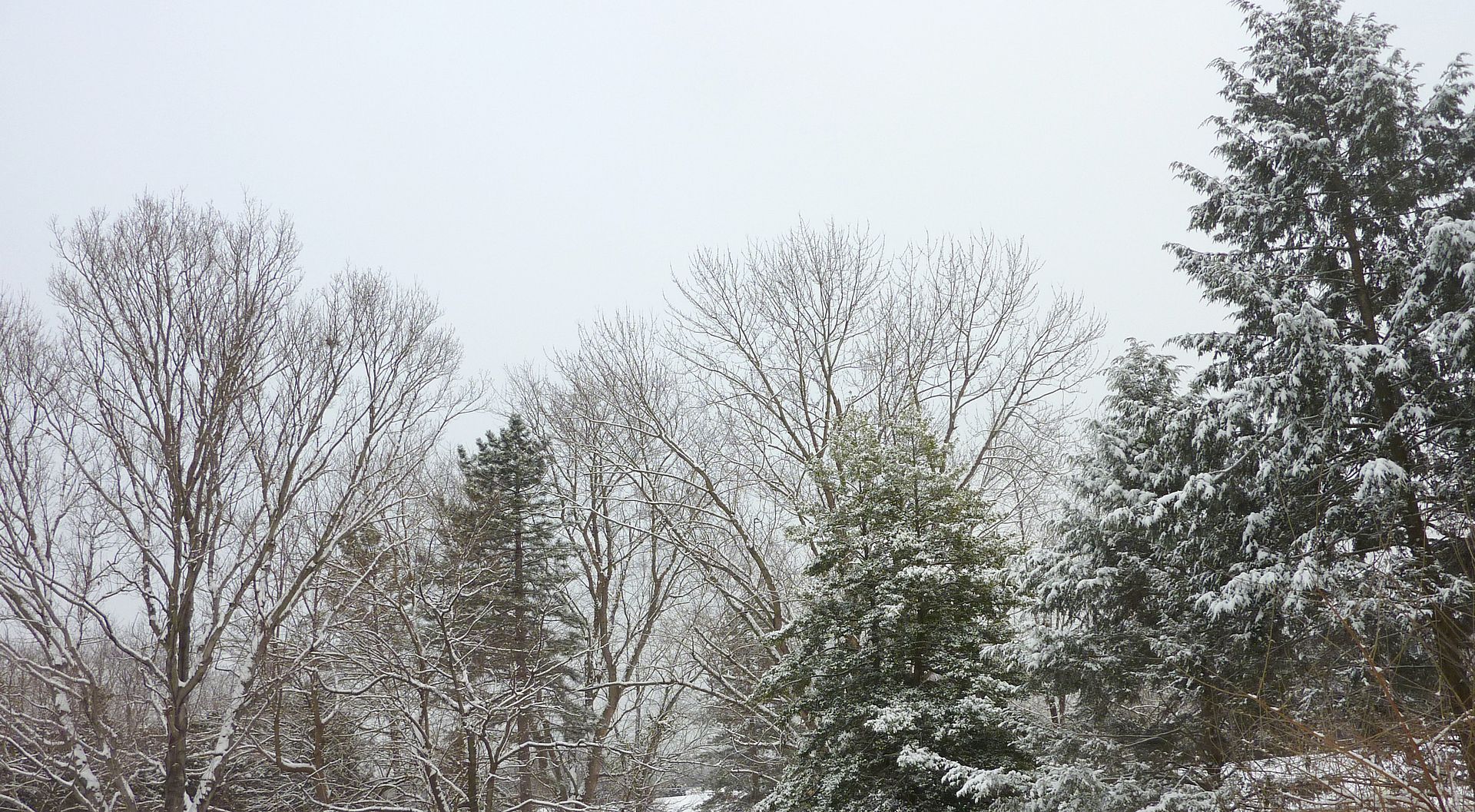
The trees in winter. This is just behind my house.
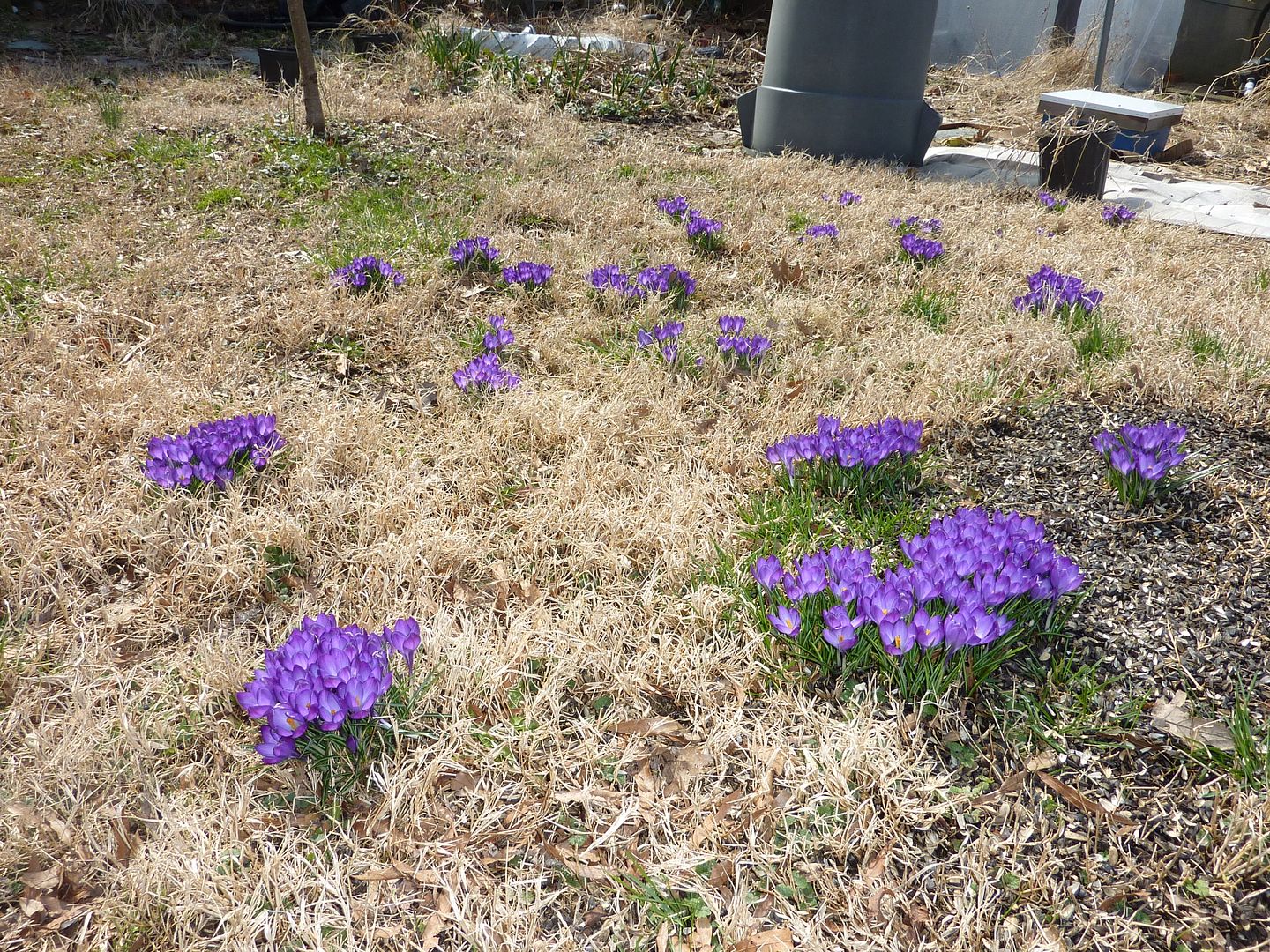
Crocuses in our lawn provide an early splash of color. They do best in the driest parts that are otherwise bone dry over the summer. They're not native to North America and I'm at a loss to name anything flowering when they do that would work well in a lawn setting.
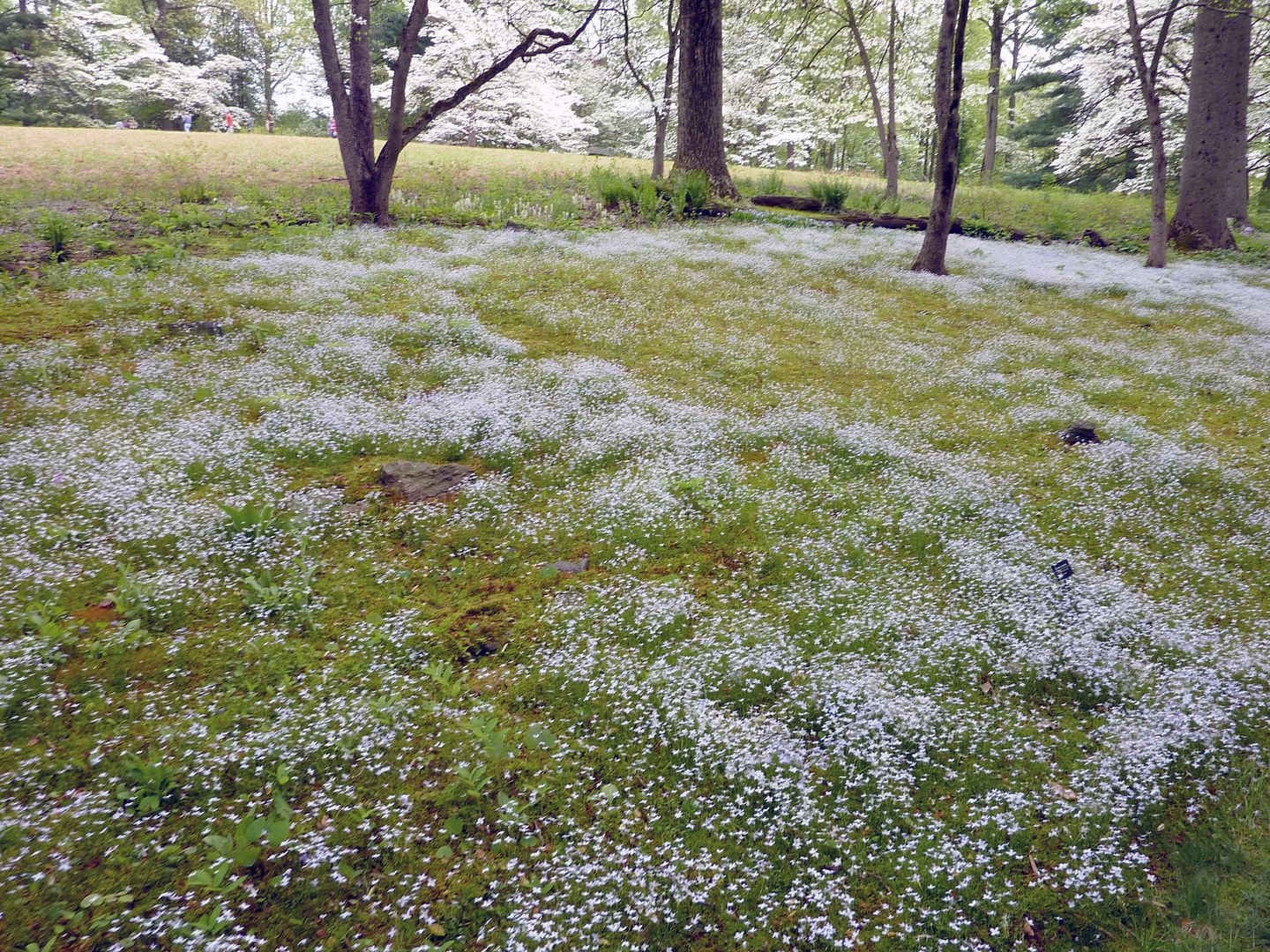
Bluets, Hedyotis caerulea, would be a nice choice but this is my first year with them. What they need to grow seems to be questionable. Pictured above is the patch at the Mt. Cuba Center which seem to grow great in partial to full shade among the moss. Other sources tell me they need to be bone dry and in full sun. Regardless, they actually don't do that well in areas where grasses will out compete them. I actually don't know what pollinates them.
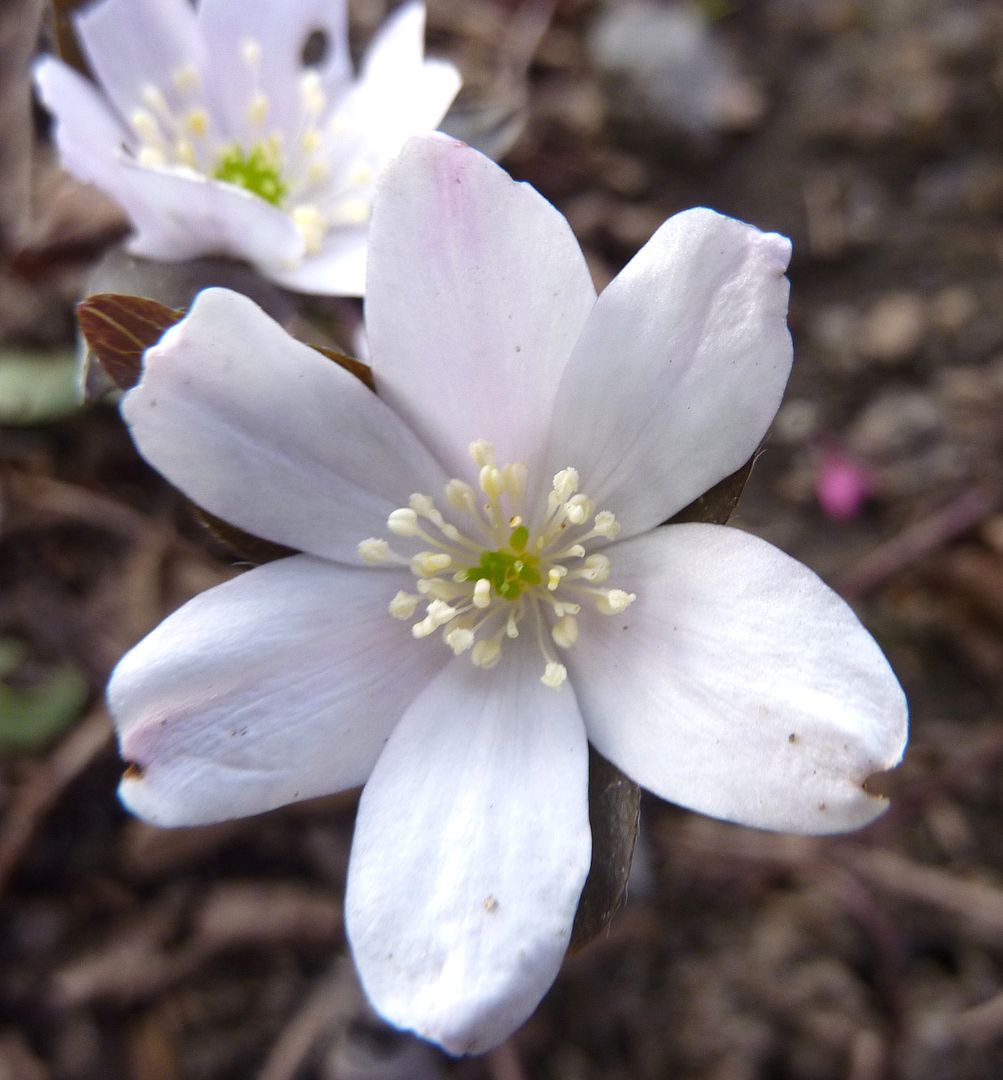
Hepatica is quickly becoming one of my favorite spring blooms. They're kind of like bluets but the flower is larger. They have semi-evergreen foliage too, where new leaves are produced every spring to replace older ones.
Twinleaf, Jeffersonia diphylla. If I were rich, I'd plant more of these. Of three plants only one flowers, and that flower only lasts 8 hours at most. Online pictures show that multiple plants will all flower on the same day so I'd be curious to find out if different patches of these plants would bloom on different days. That is to what degree do they synchronize their bloom? It's pretty for a day but not something I'd recommend starting out. They're really more of a collector's item.
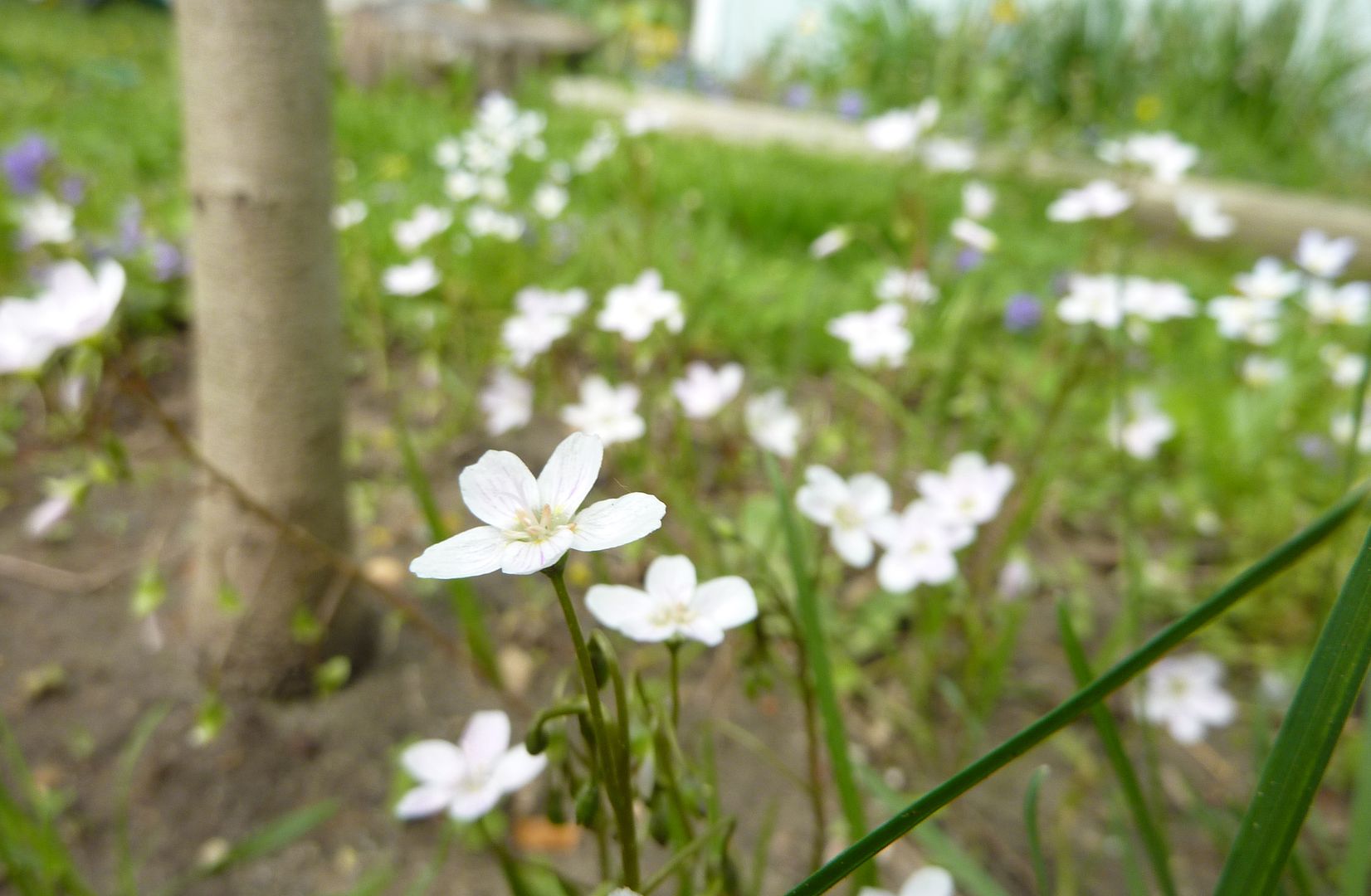
Spring Beauty, Claytonia virginica, flowering among some bluets. They're not as pink as I expected them to be.
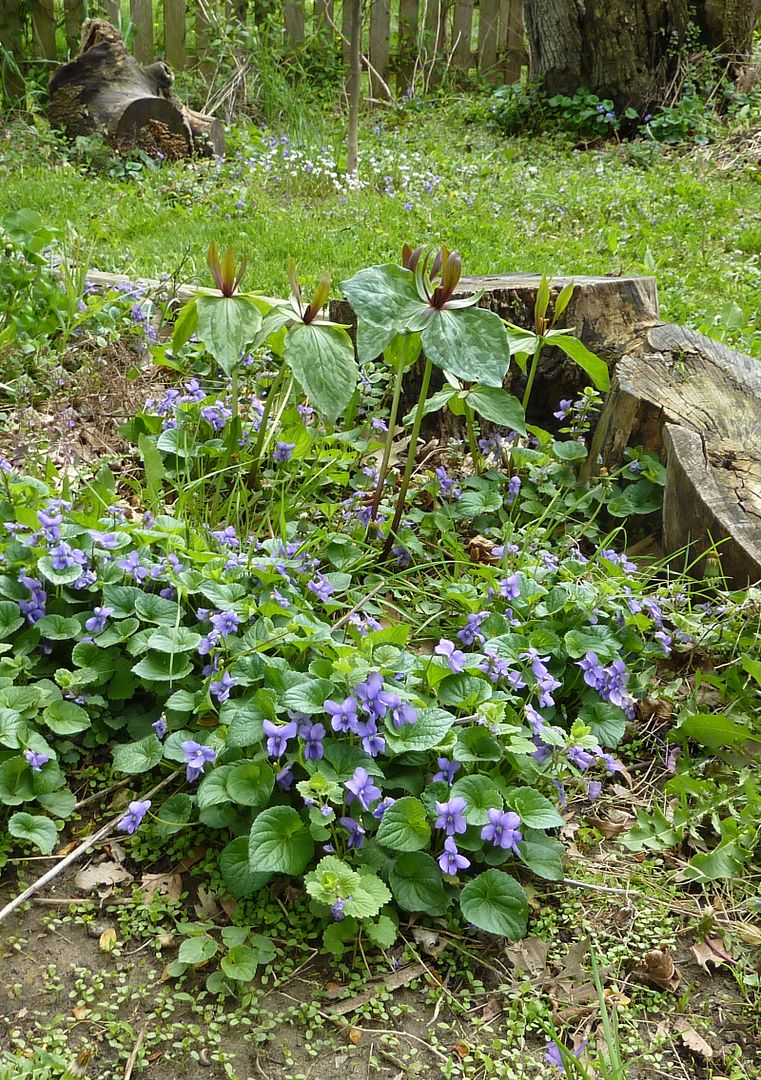
Violets and Trilliums. Violets are supposed to have ants carry their seeds off... clearly the ants aren't doing a good job. All of the small green sprouts in the lower portion of the pictures are violets. Trilliums on the other hand take 5 years before they really get as big. I've found the two can grow well together as most Trilliums are taller than the clumps of violets growing below.
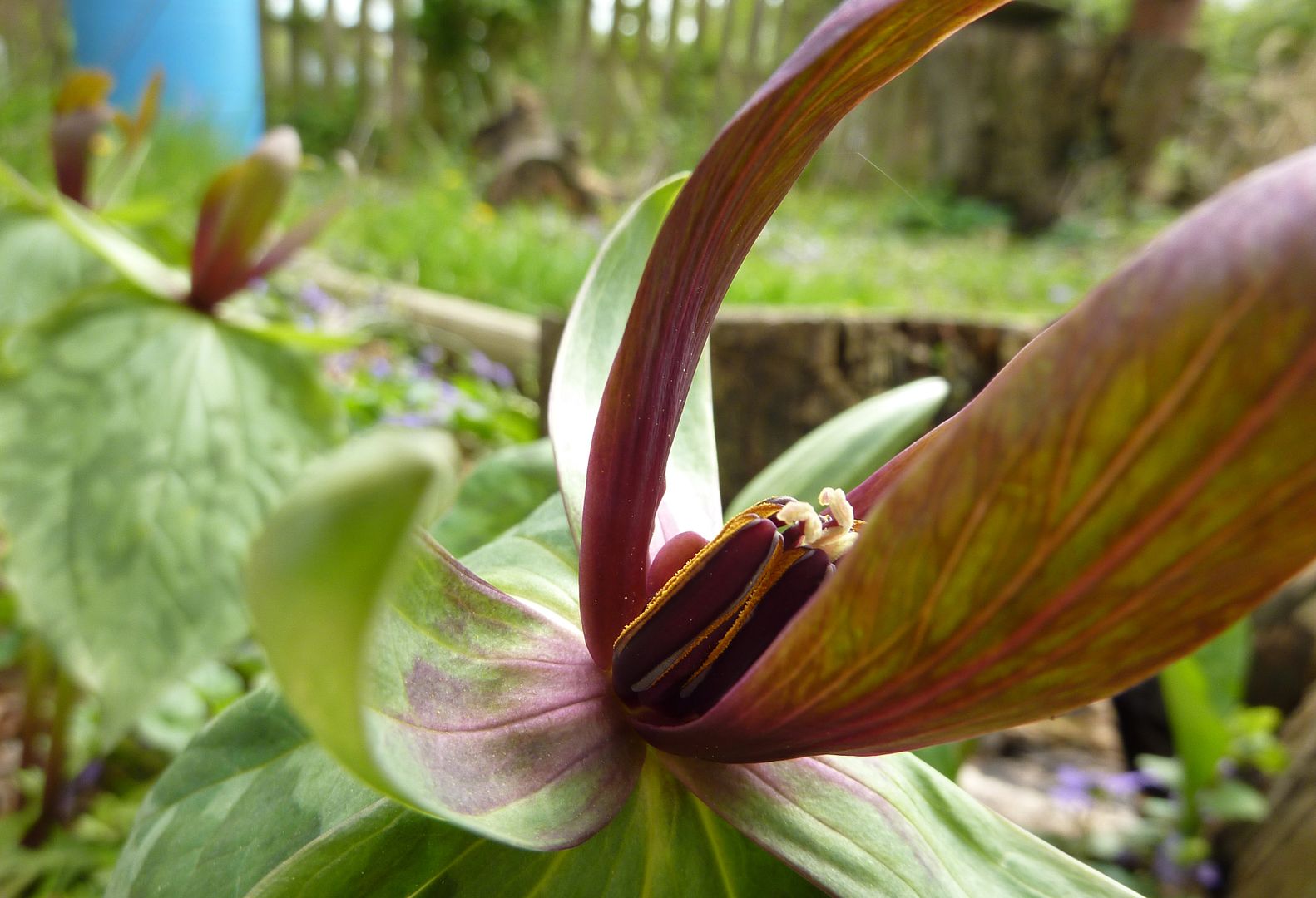
Playing with angles and the Trillium flowers.
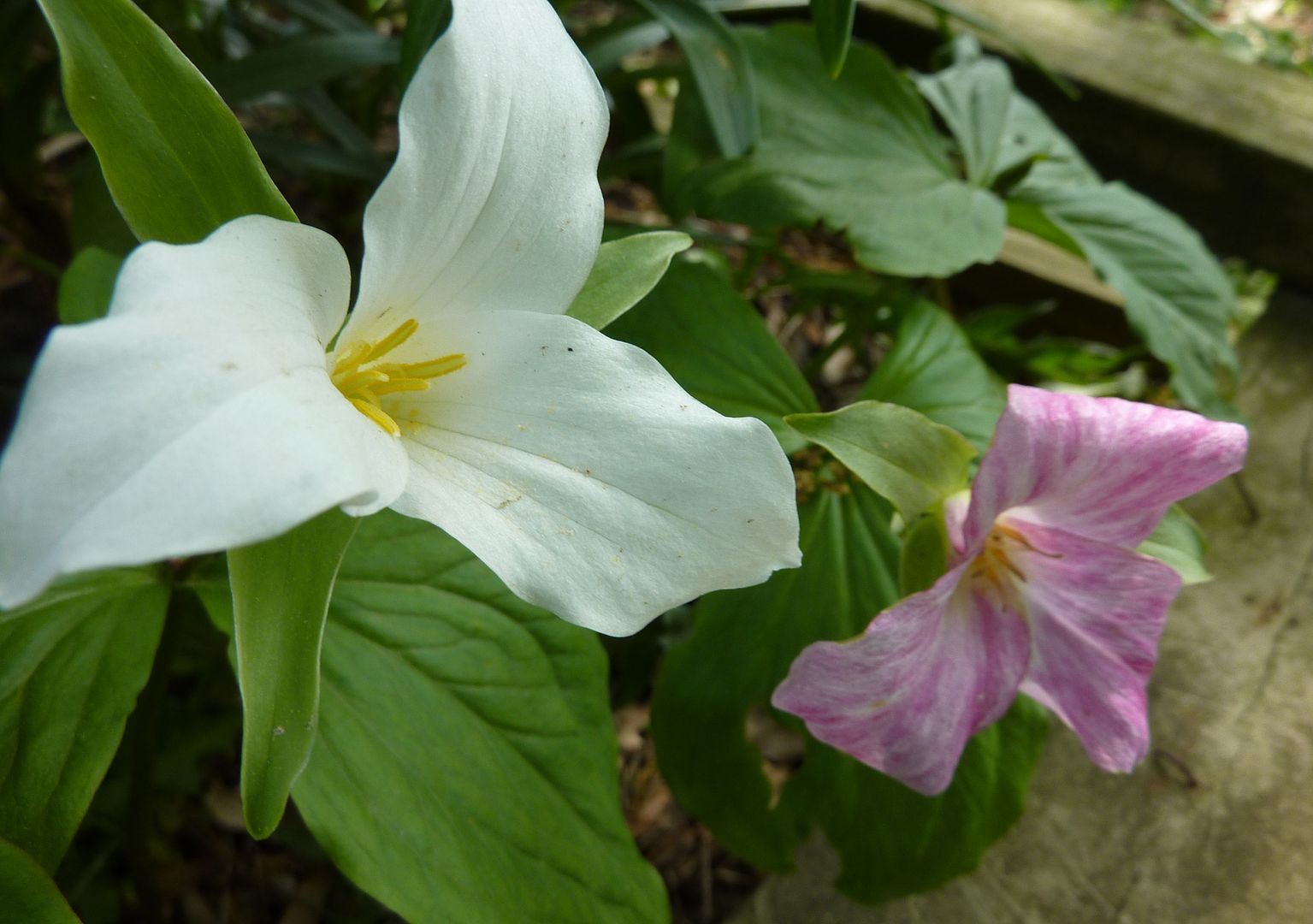
Trillium grandiflorum is an excellent spring ephemeral. For the first week of flowering they are all white. Slowly over the second week, depending on age and pollination, the flowers fade pink and magenta.
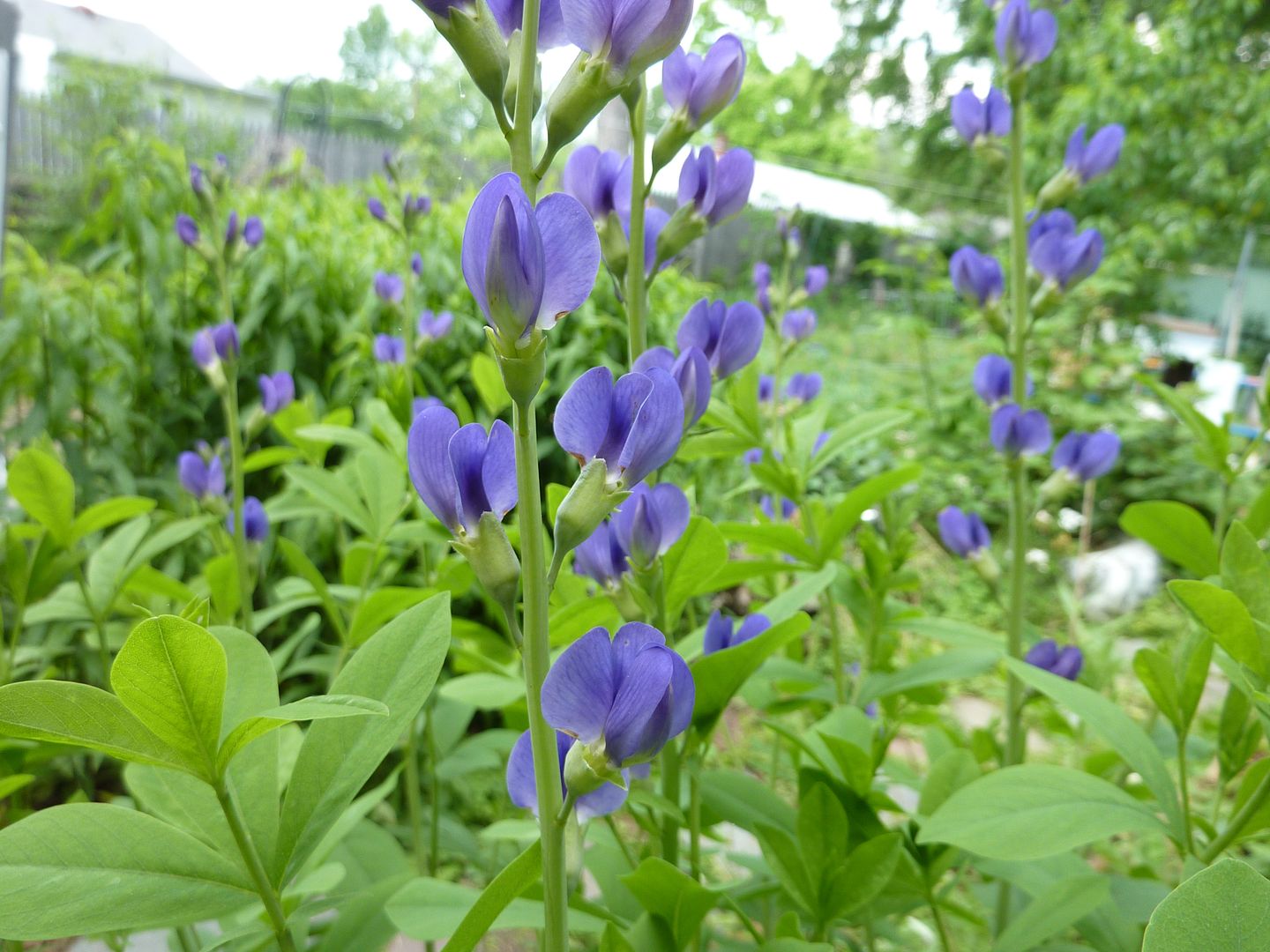
Blue False Indigo, Baptisia australis. This flowered much sooner than I expected it to. The flowers are almost exclusively pollinated by bumblebees. Despite this though they are a very stately plant, good as a hedge, a clump of 3 or more, or specimen.
New Jersey Tea, Ceanothus americanus. I have 4 of these small shrubs which are all nowhere near their full size, but I'm happy to see say all of them are flowering this year. This shrub is in something of a nation wide decline and the range to the dozen or so Lepidoptera that depend on it have been suffering for it. Some of these are endangered species. I encourage anyone willing to give this shrub a try. The flower clusters are small but supposidly buzz with insect activity when in abundance. None of my plants are old enough for that activity yet but hopefully I'll get to see it in years to come.
If nothing else, let it be known that this was the year I went nuts with milkweed. I bought a couple dozen plants from either Prairie Moon Nursery or Prairie Nursery. I forget exactly which one provided these plants. (I have an awful habit of spending ~$500 every year on plants.)
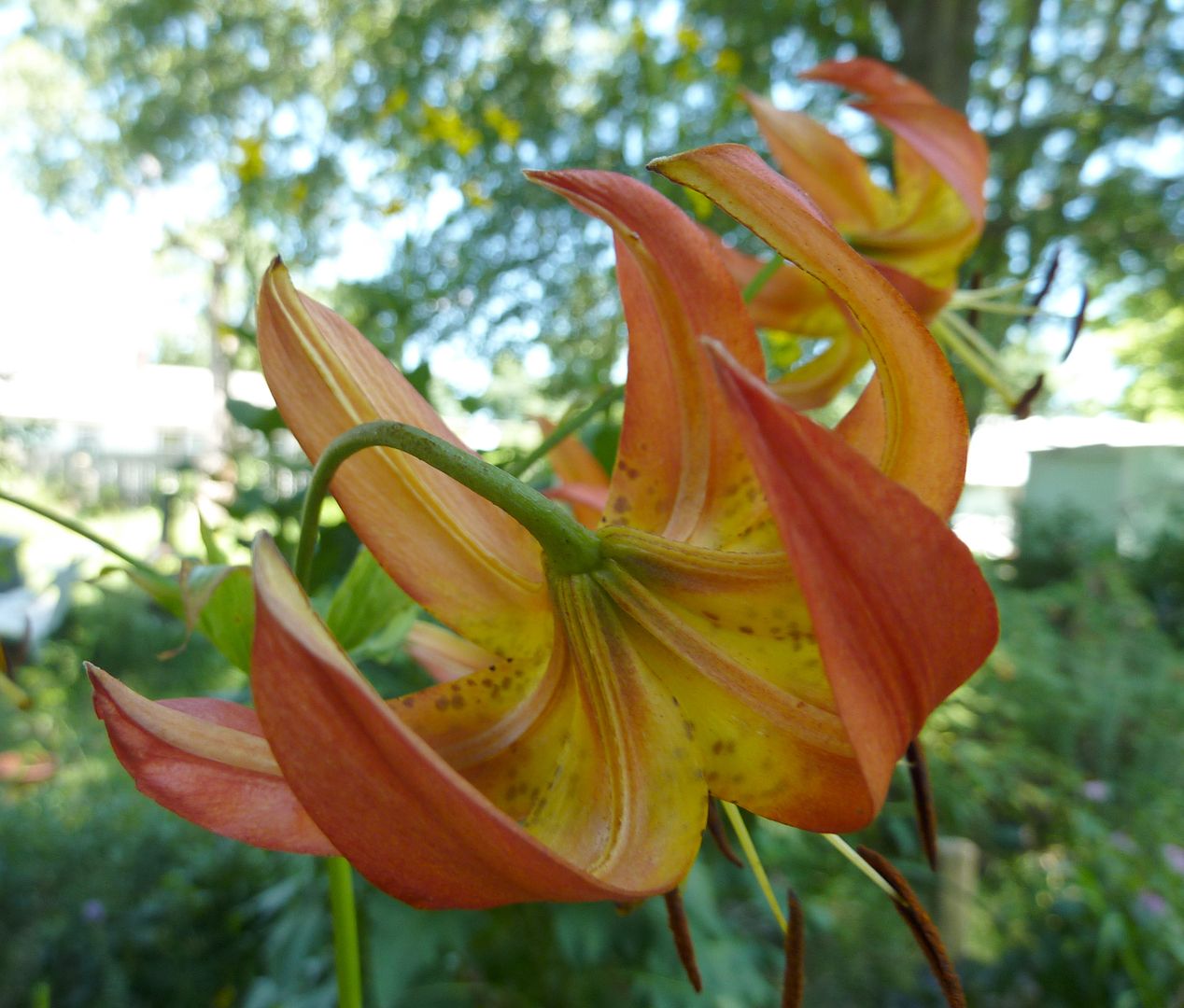
Turk's Cap Lily, Lilium superbum. I'm thrilled to see not only are my plants producing more flowers but they also seem to be reproducing a little. Lilies are one of those weird flowers that require a swallowtail butterfly to hang upside down from them in order to pollinate it. This isn't a common sight so having more flowers increases the chances of it happening while I'm around.
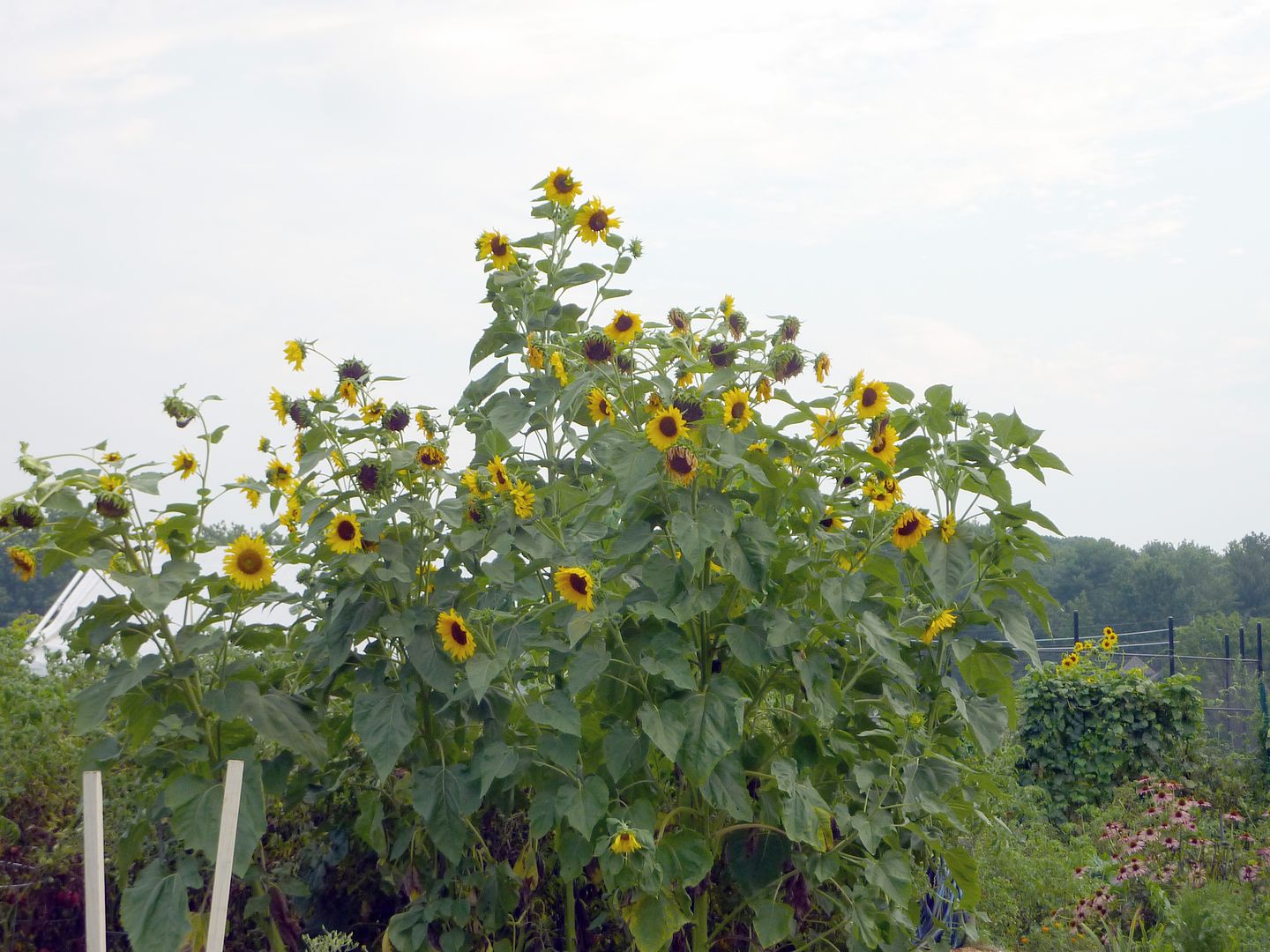
I wasn't very successful with sunflowers this year but at the local community garden they've mastered growing them. Most of these flowers are coming off of 3 or 4 plants. Some of them there had 50 flowers open at a time. The structure looked more like a Christmas tree than your typical annual sunflower.
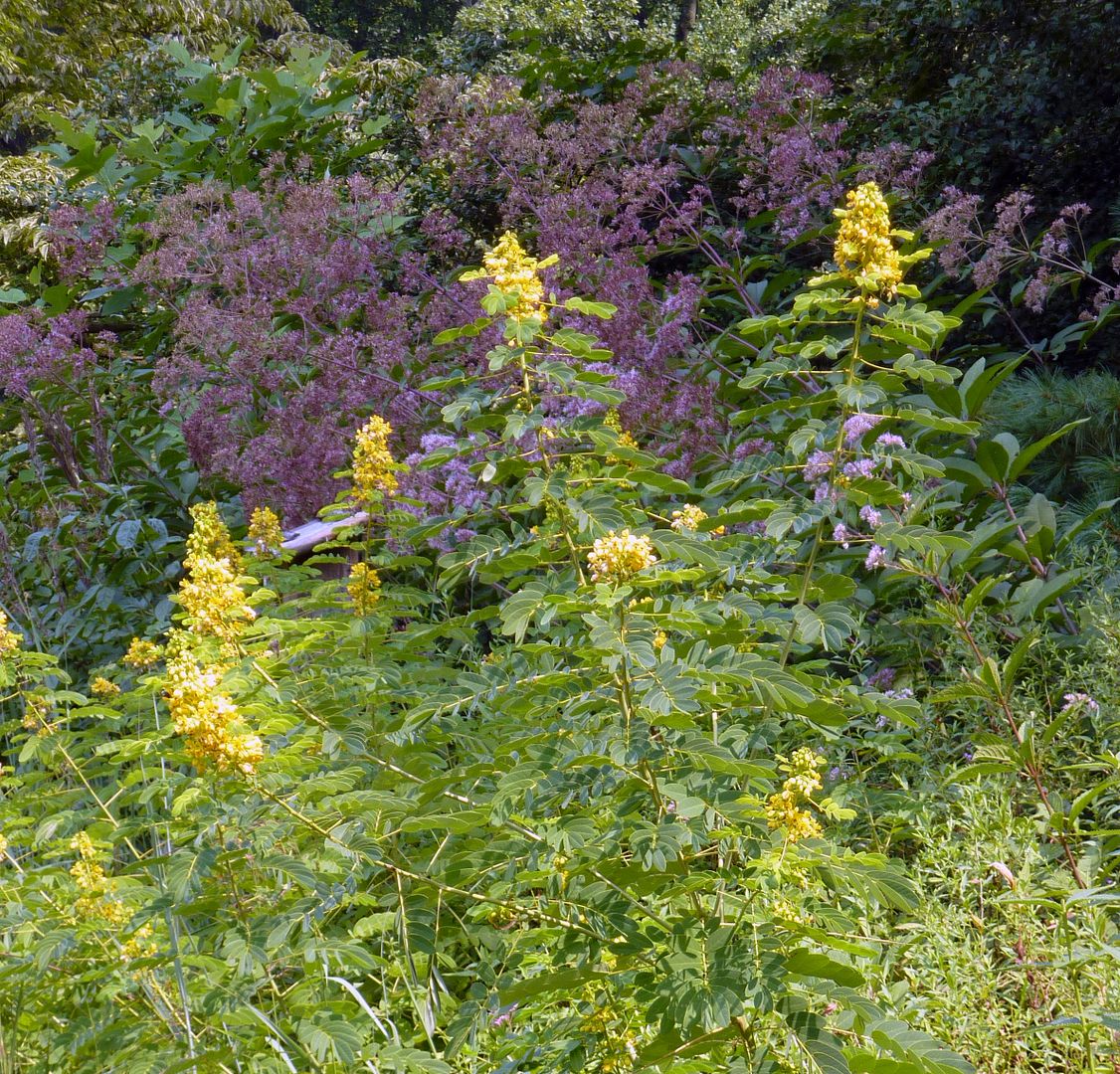
Wild Senna, Senna hebecarpa, growing in front of Joe Pye Weed, which are now in the genus Eutrochium.
Nymph Milkweed Bugs, Oncopeltus fasciatus, huddling together on their host plant. None of my plants seem to get swarmed the way I see some do. I've seen plants that were overrun with these bugs. It got to the point where they were spilling off onto other plants.
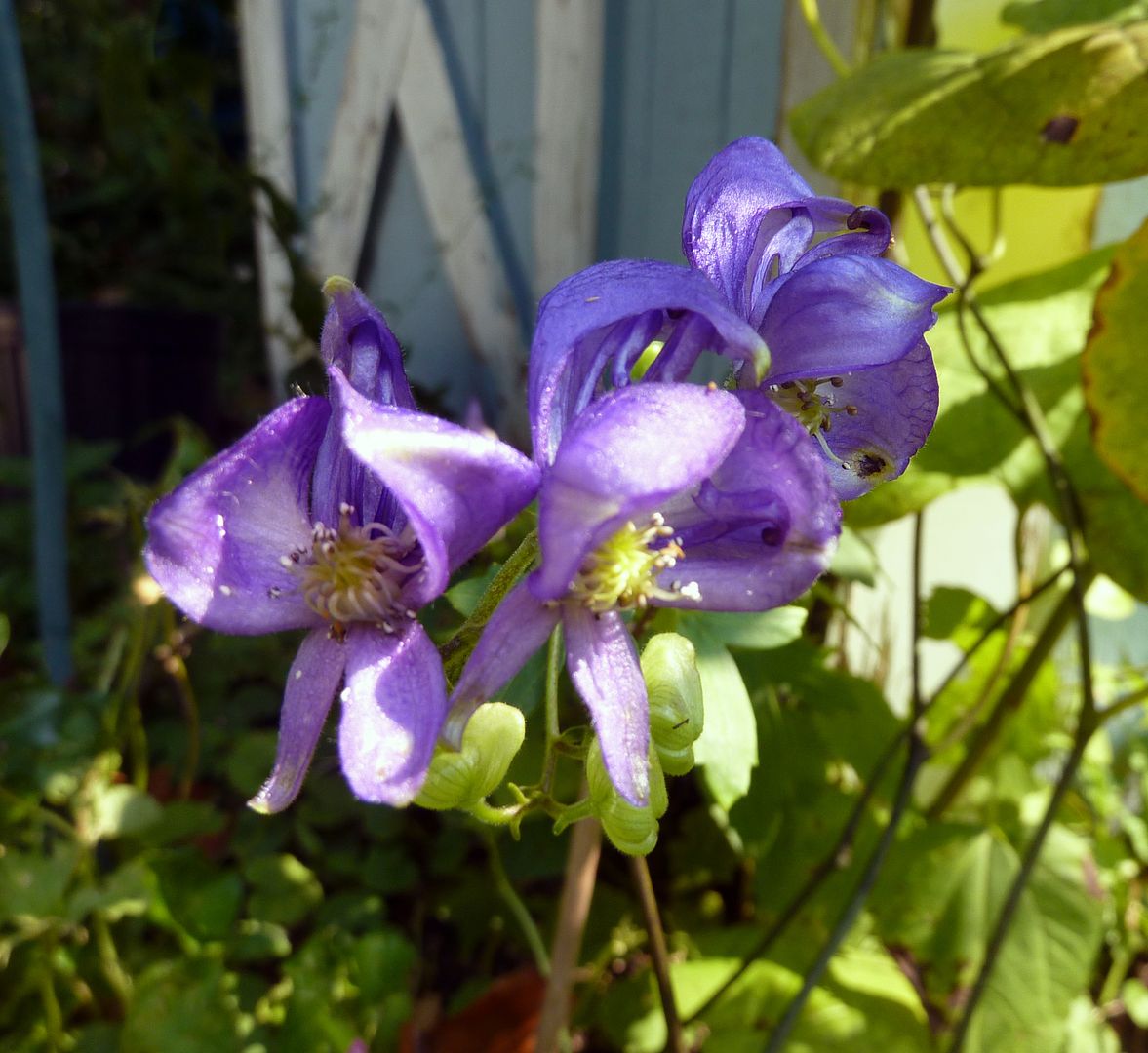
Blue Monkshood, Aconitum uncinatum. When people think of monkshood usually they think of an upright perennial. North America has a species or two of it's own though. This species in particular grows as a vine that only reaches 5' tall. They die back to the ground each year so they stay in check. In the absence of anything to climb on they'll grow along the ground. They don't set down roots as they like but the rhizome will send up more and more shoots each year as an expanding clump. For most of the year they're nothing special. When they flower in late summer though they have loads of flowers all over.
Something I noticed with the Mt. Cuba Center, They seem to be going a little nuts with these plants, along with Bugbanes, Cimicifuga species. There aren't a whole lot of flowering perennials for full shade in the summer months so they are almost stock piling these plants in their wooded area. Personally I'd love to include more of both in my garden.
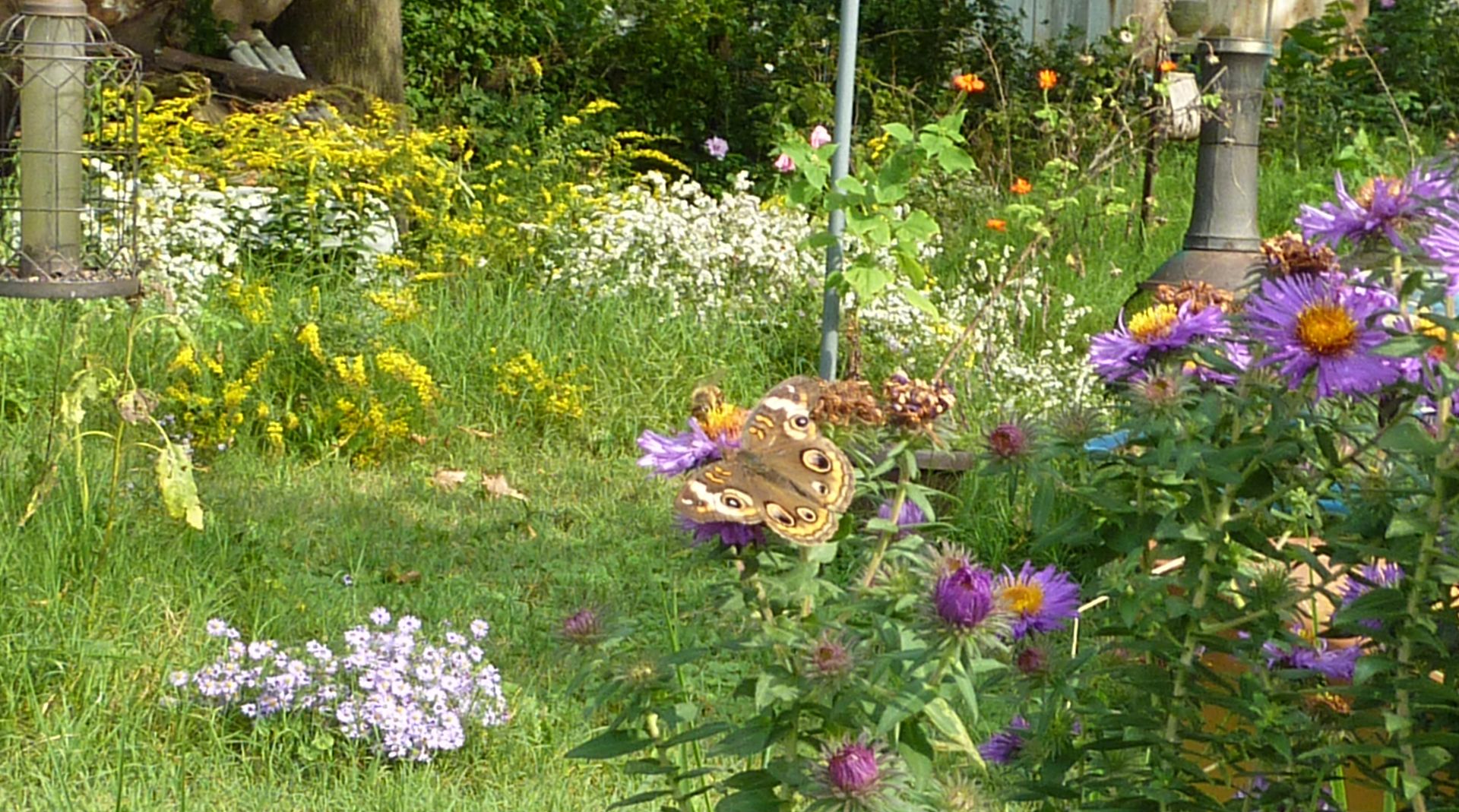
Full sun areas over the summer show a different story. Flowering plants are abundant and in assorted colors.
This was a great year for Monarchs as well as Hummingbirds. Both took to the plants I started growing this year nicely.
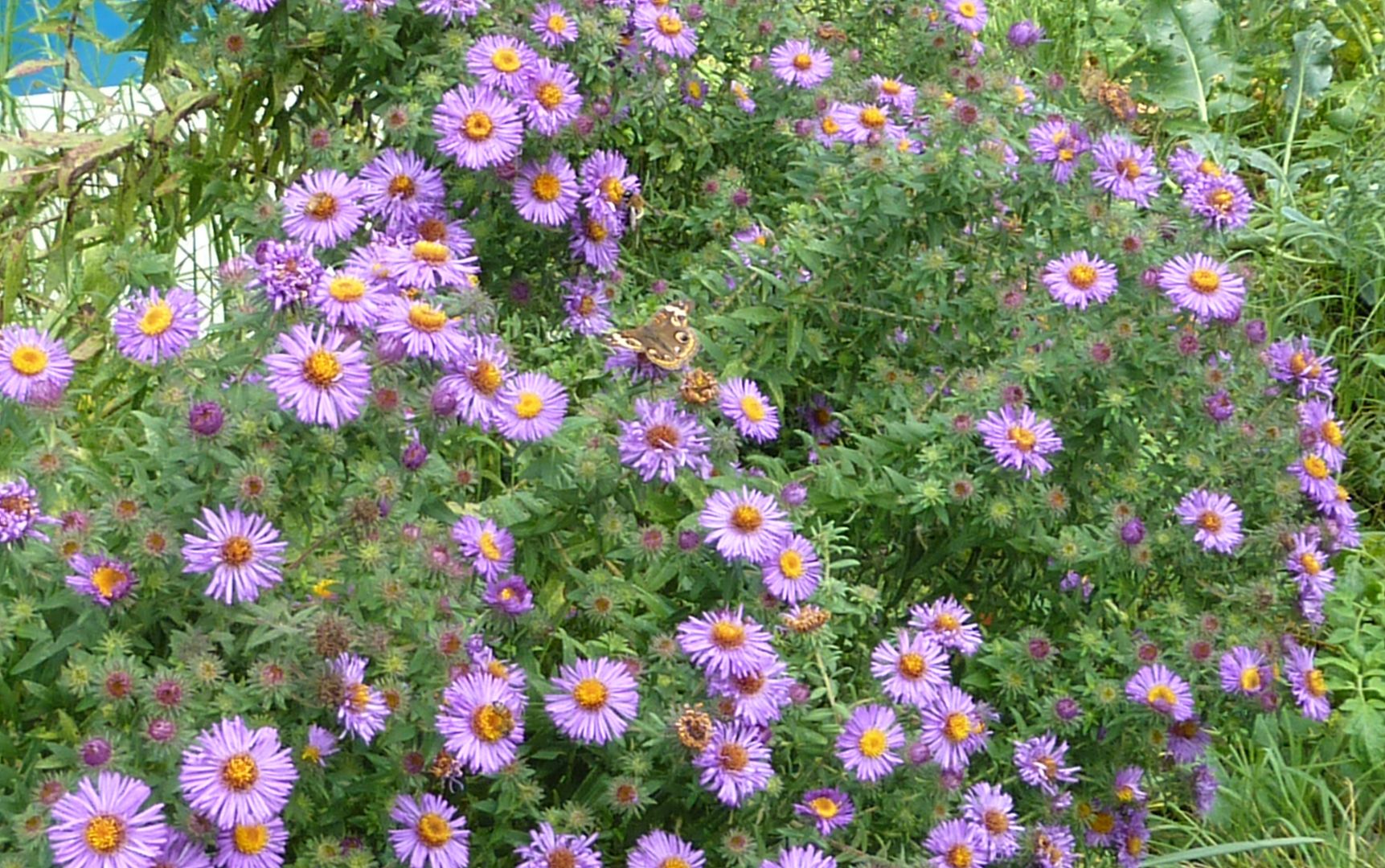
As autumn rolls in the asters bloom out. New England Asters, Symphyotrichum novae-angliae, are among the best at getting pollinator activity.
And so is the goldenrod. This is the first year I've ever seen a Monarch on my Tall Goldenrod, Solidago altissima. Normally it blooms to late in the year, just after most of the Monarchs have passed through my part of New Jersey.
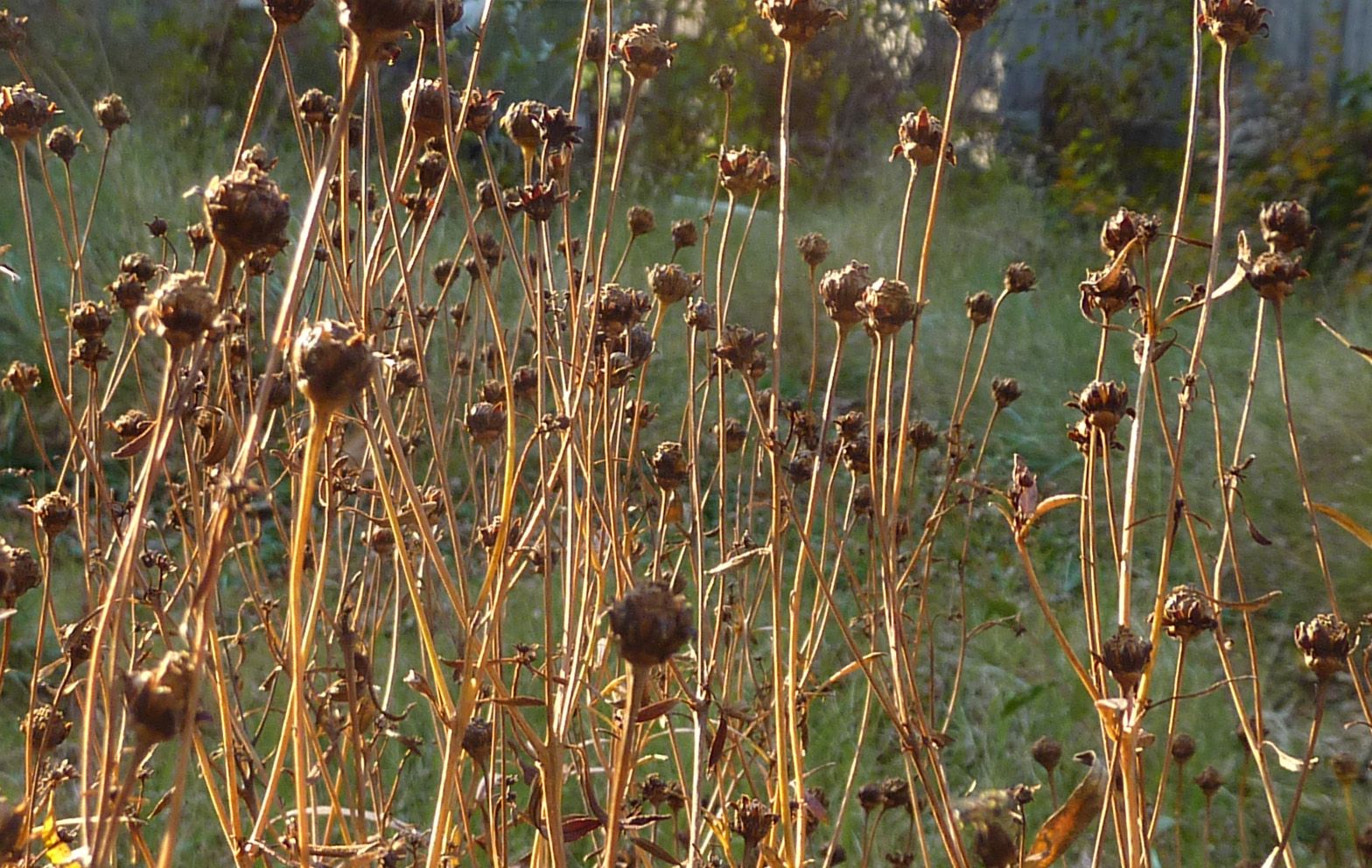
The seed heads to Tall Coreopsis, Coreopsis tripteris.
The trees in winter. This is just behind my house.
Crocuses in our lawn provide an early splash of color. They do best in the driest parts that are otherwise bone dry over the summer. They're not native to North America and I'm at a loss to name anything flowering when they do that would work well in a lawn setting.
Bluets, Hedyotis caerulea, would be a nice choice but this is my first year with them. What they need to grow seems to be questionable. Pictured above is the patch at the Mt. Cuba Center which seem to grow great in partial to full shade among the moss. Other sources tell me they need to be bone dry and in full sun. Regardless, they actually don't do that well in areas where grasses will out compete them. I actually don't know what pollinates them.
Hepatica is quickly becoming one of my favorite spring blooms. They're kind of like bluets but the flower is larger. They have semi-evergreen foliage too, where new leaves are produced every spring to replace older ones.
Twinleaf, Jeffersonia diphylla. If I were rich, I'd plant more of these. Of three plants only one flowers, and that flower only lasts 8 hours at most. Online pictures show that multiple plants will all flower on the same day so I'd be curious to find out if different patches of these plants would bloom on different days. That is to what degree do they synchronize their bloom? It's pretty for a day but not something I'd recommend starting out. They're really more of a collector's item.
Spring Beauty, Claytonia virginica, flowering among some bluets. They're not as pink as I expected them to be.
Violets and Trilliums. Violets are supposed to have ants carry their seeds off... clearly the ants aren't doing a good job. All of the small green sprouts in the lower portion of the pictures are violets. Trilliums on the other hand take 5 years before they really get as big. I've found the two can grow well together as most Trilliums are taller than the clumps of violets growing below.
Playing with angles and the Trillium flowers.
Trillium grandiflorum is an excellent spring ephemeral. For the first week of flowering they are all white. Slowly over the second week, depending on age and pollination, the flowers fade pink and magenta.
Blue False Indigo, Baptisia australis. This flowered much sooner than I expected it to. The flowers are almost exclusively pollinated by bumblebees. Despite this though they are a very stately plant, good as a hedge, a clump of 3 or more, or specimen.
New Jersey Tea, Ceanothus americanus. I have 4 of these small shrubs which are all nowhere near their full size, but I'm happy to see say all of them are flowering this year. This shrub is in something of a nation wide decline and the range to the dozen or so Lepidoptera that depend on it have been suffering for it. Some of these are endangered species. I encourage anyone willing to give this shrub a try. The flower clusters are small but supposidly buzz with insect activity when in abundance. None of my plants are old enough for that activity yet but hopefully I'll get to see it in years to come.
If nothing else, let it be known that this was the year I went nuts with milkweed. I bought a couple dozen plants from either Prairie Moon Nursery or Prairie Nursery. I forget exactly which one provided these plants. (I have an awful habit of spending ~$500 every year on plants.)
Turk's Cap Lily, Lilium superbum. I'm thrilled to see not only are my plants producing more flowers but they also seem to be reproducing a little. Lilies are one of those weird flowers that require a swallowtail butterfly to hang upside down from them in order to pollinate it. This isn't a common sight so having more flowers increases the chances of it happening while I'm around.
I wasn't very successful with sunflowers this year but at the local community garden they've mastered growing them. Most of these flowers are coming off of 3 or 4 plants. Some of them there had 50 flowers open at a time. The structure looked more like a Christmas tree than your typical annual sunflower.
Wild Senna, Senna hebecarpa, growing in front of Joe Pye Weed, which are now in the genus Eutrochium.
Nymph Milkweed Bugs, Oncopeltus fasciatus, huddling together on their host plant. None of my plants seem to get swarmed the way I see some do. I've seen plants that were overrun with these bugs. It got to the point where they were spilling off onto other plants.
Blue Monkshood, Aconitum uncinatum. When people think of monkshood usually they think of an upright perennial. North America has a species or two of it's own though. This species in particular grows as a vine that only reaches 5' tall. They die back to the ground each year so they stay in check. In the absence of anything to climb on they'll grow along the ground. They don't set down roots as they like but the rhizome will send up more and more shoots each year as an expanding clump. For most of the year they're nothing special. When they flower in late summer though they have loads of flowers all over.
Something I noticed with the Mt. Cuba Center, They seem to be going a little nuts with these plants, along with Bugbanes, Cimicifuga species. There aren't a whole lot of flowering perennials for full shade in the summer months so they are almost stock piling these plants in their wooded area. Personally I'd love to include more of both in my garden.
Full sun areas over the summer show a different story. Flowering plants are abundant and in assorted colors.
This was a great year for Monarchs as well as Hummingbirds. Both took to the plants I started growing this year nicely.
As autumn rolls in the asters bloom out. New England Asters, Symphyotrichum novae-angliae, are among the best at getting pollinator activity.
And so is the goldenrod. This is the first year I've ever seen a Monarch on my Tall Goldenrod, Solidago altissima. Normally it blooms to late in the year, just after most of the Monarchs have passed through my part of New Jersey.
The seed heads to Tall Coreopsis, Coreopsis tripteris.
Subscribe to:
Posts (Atom)