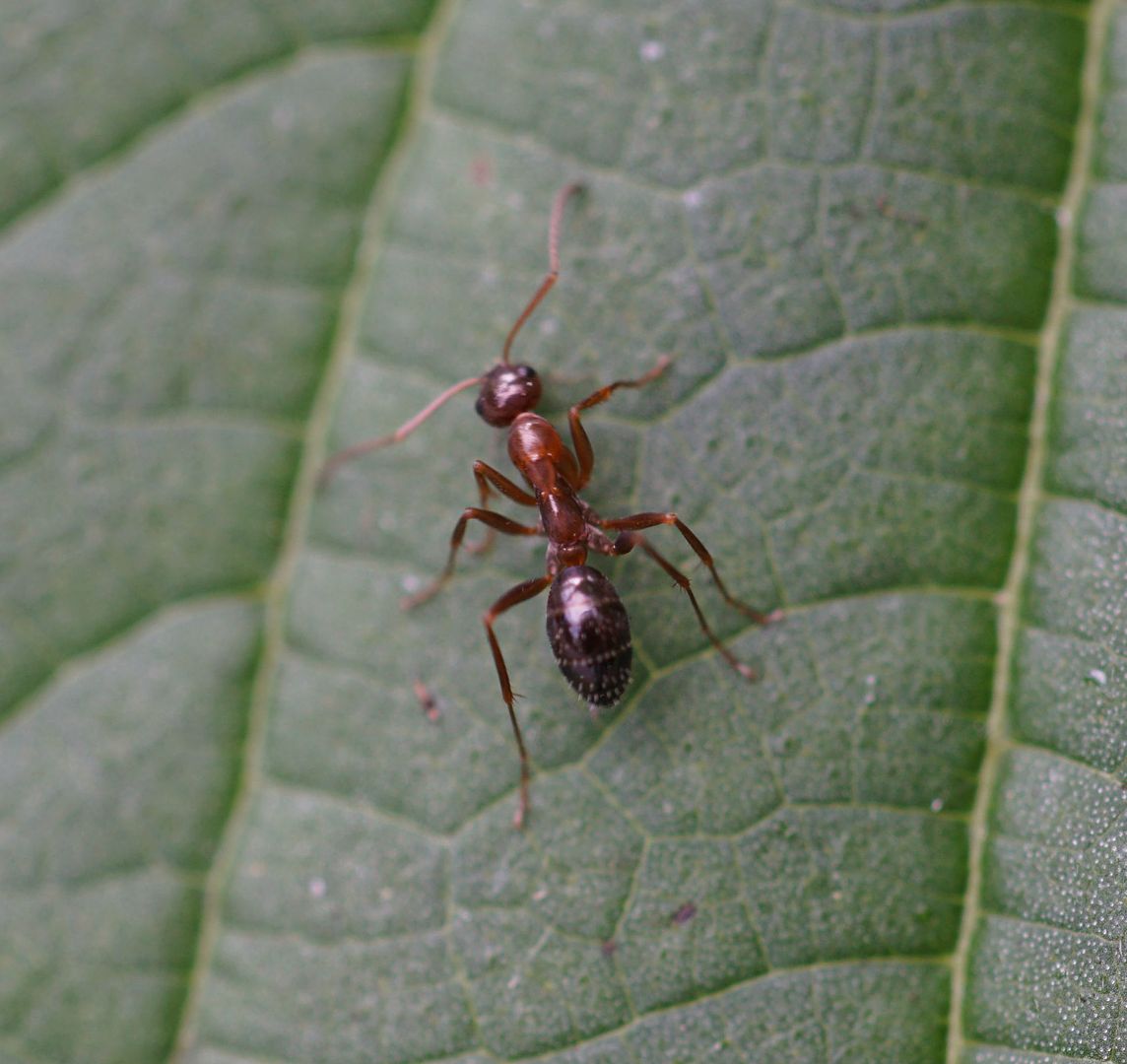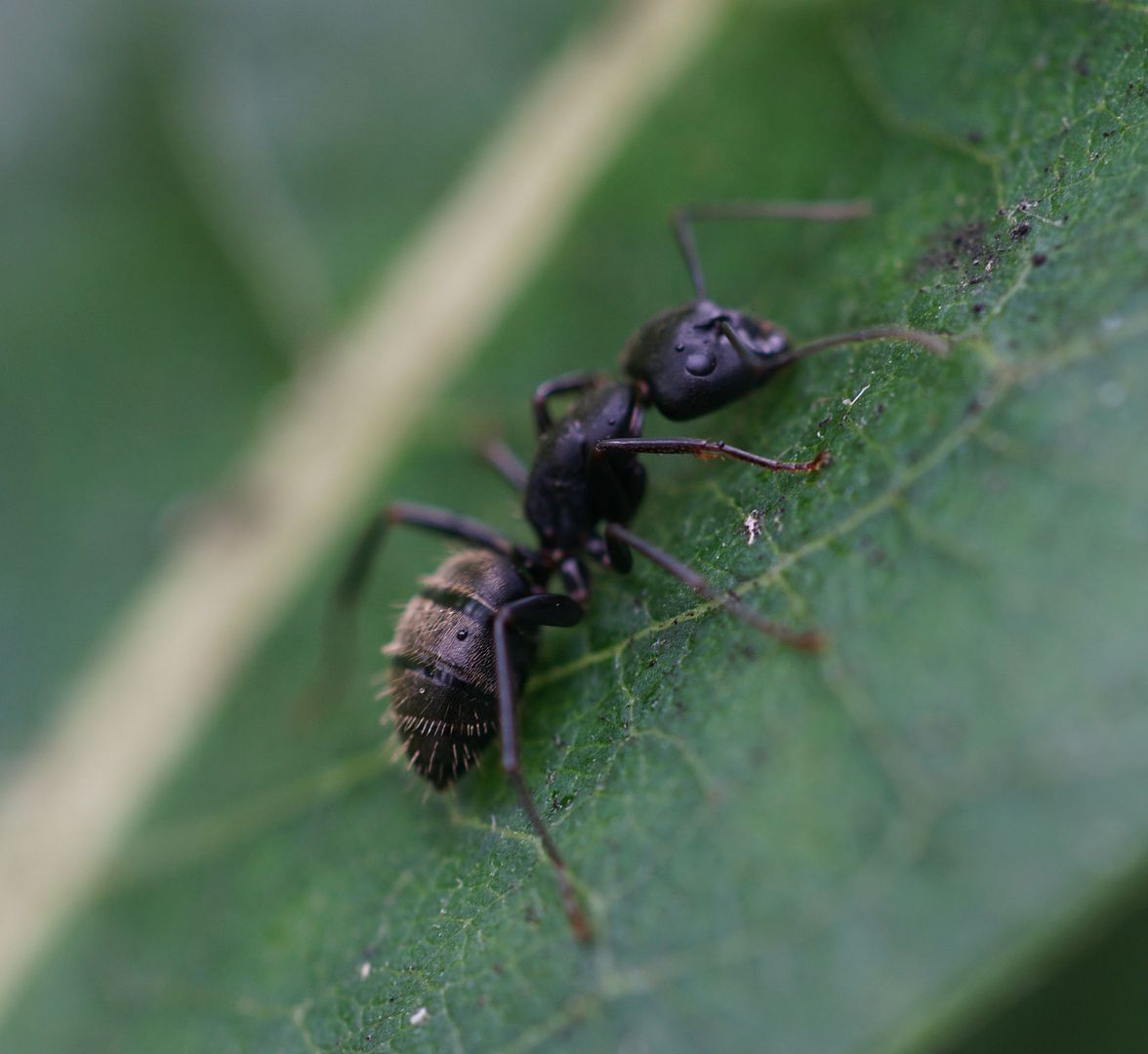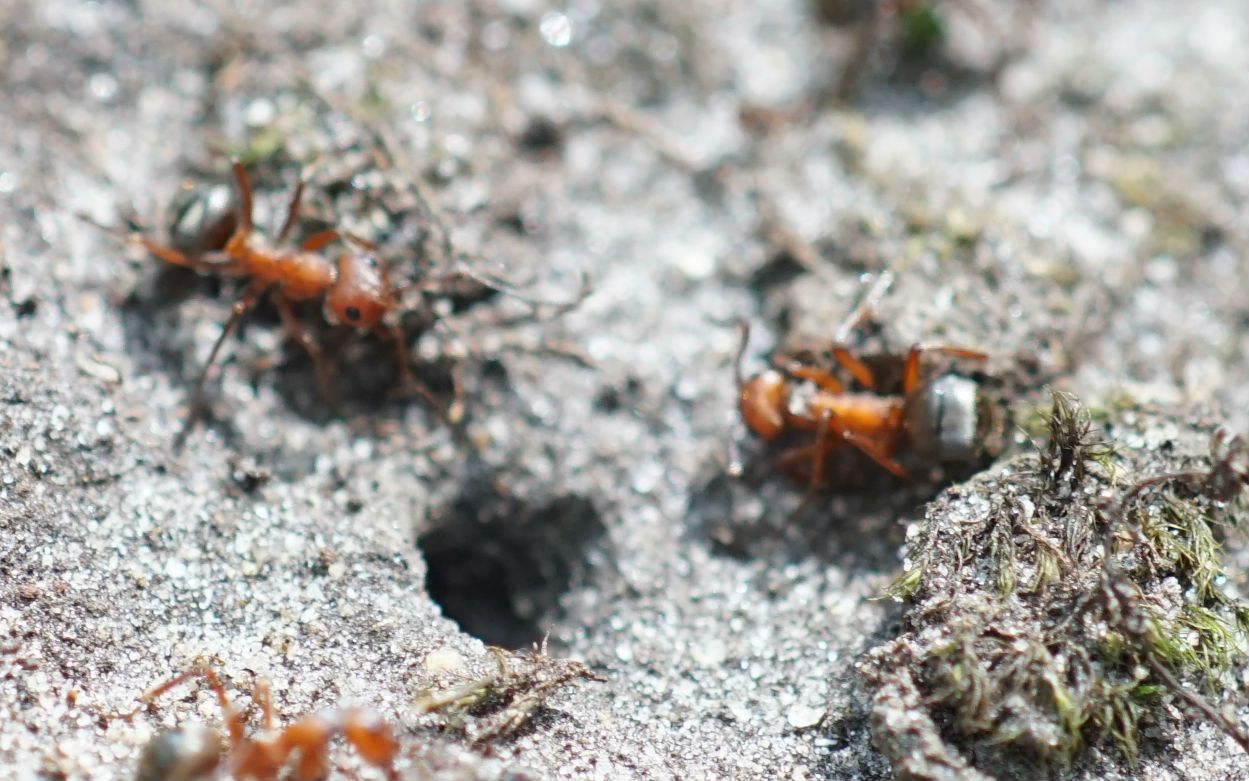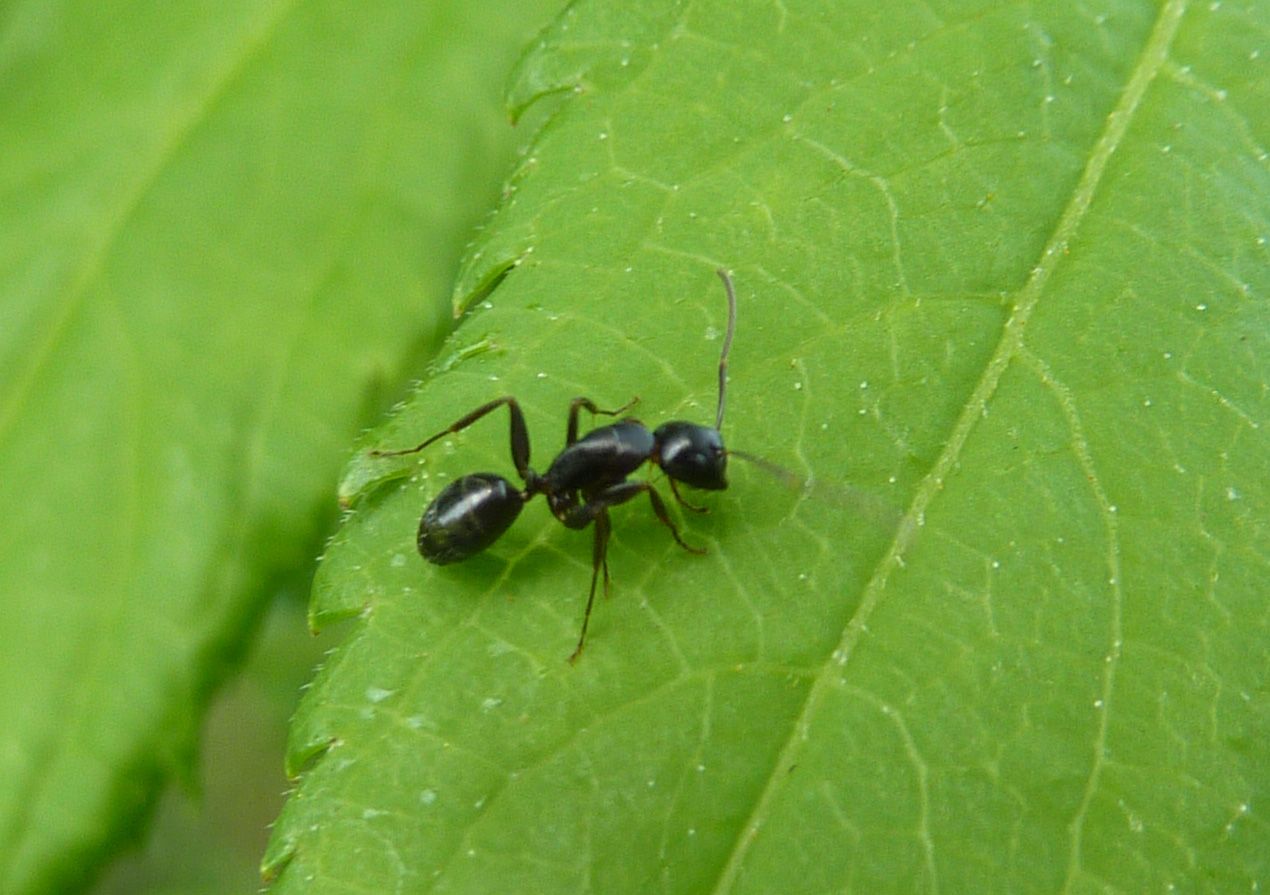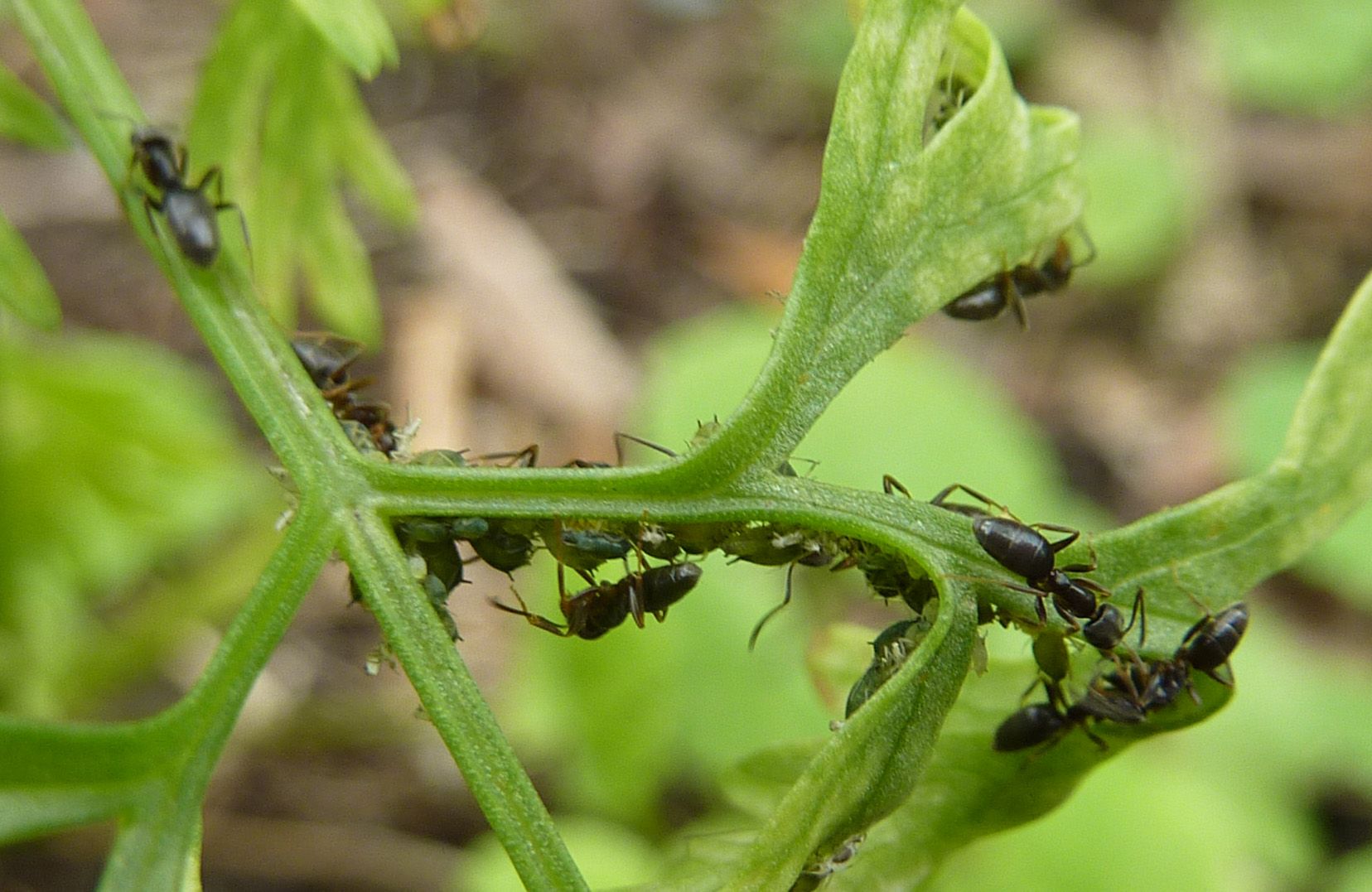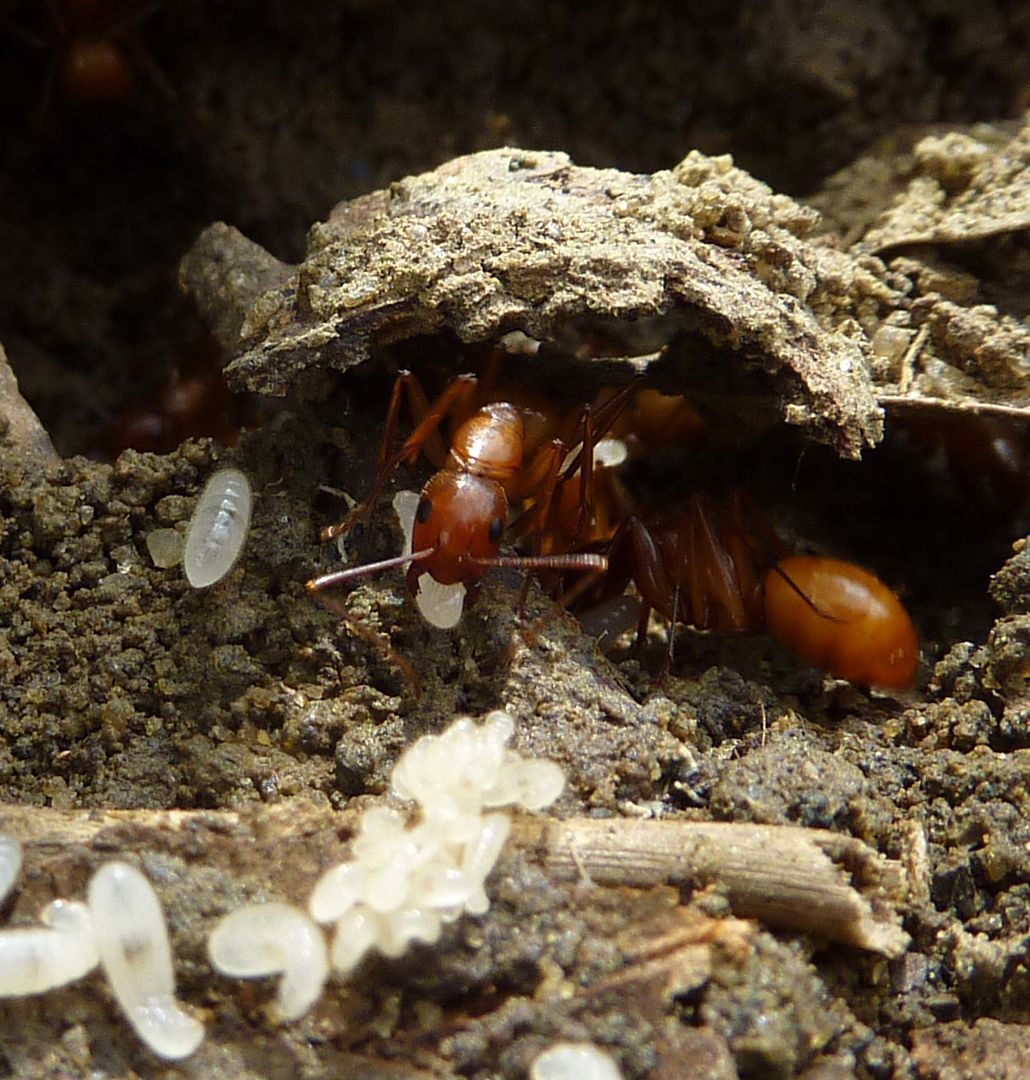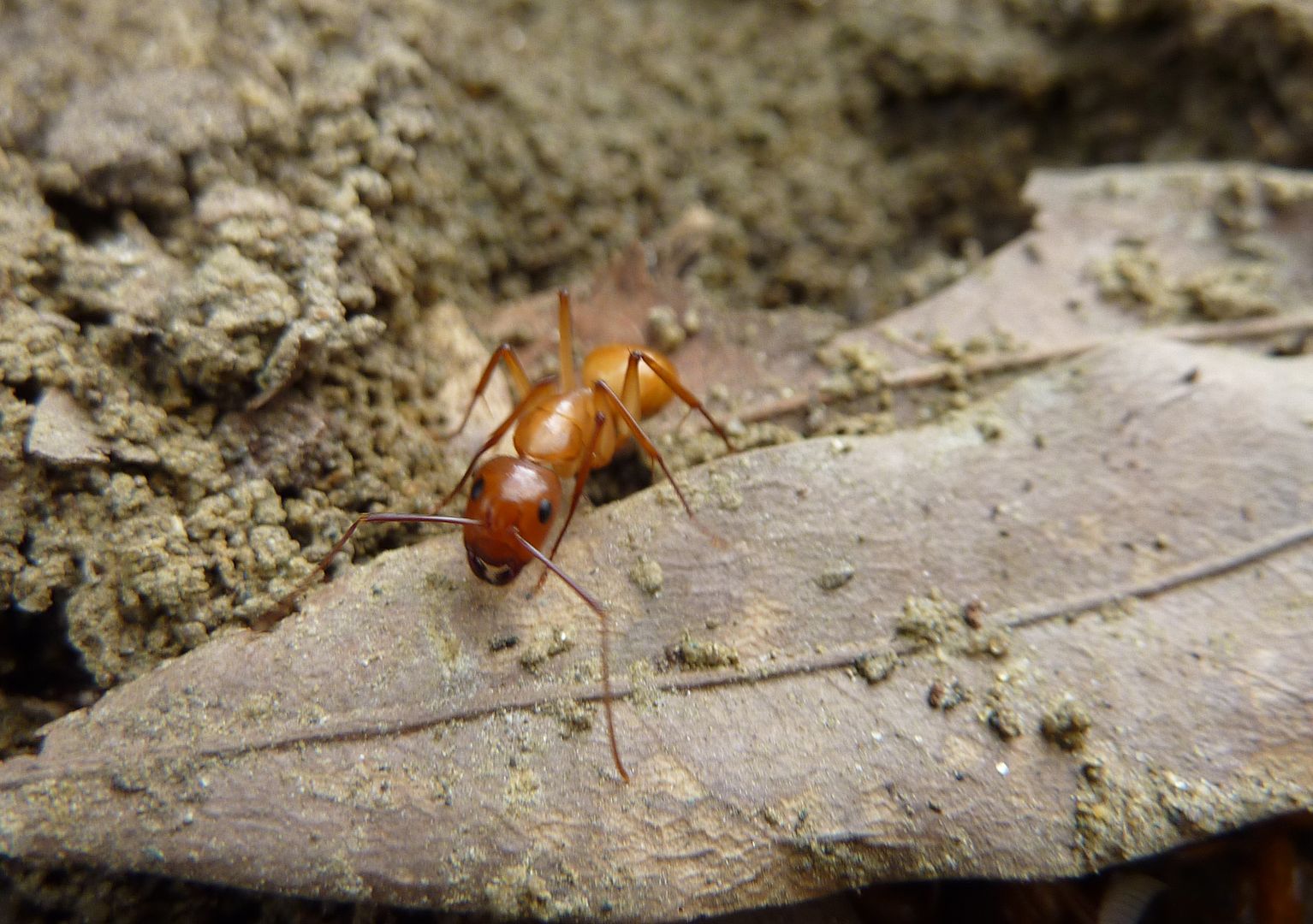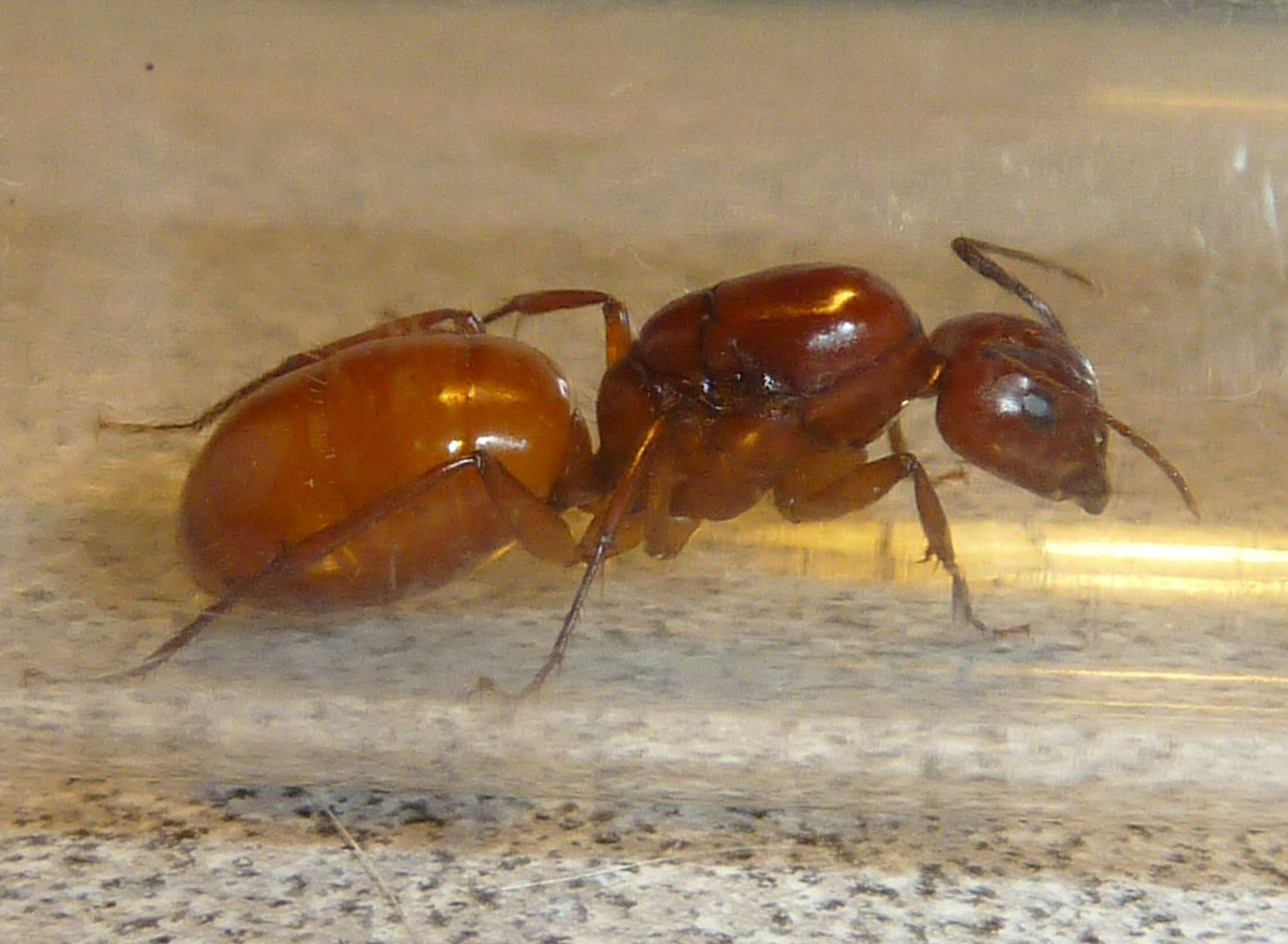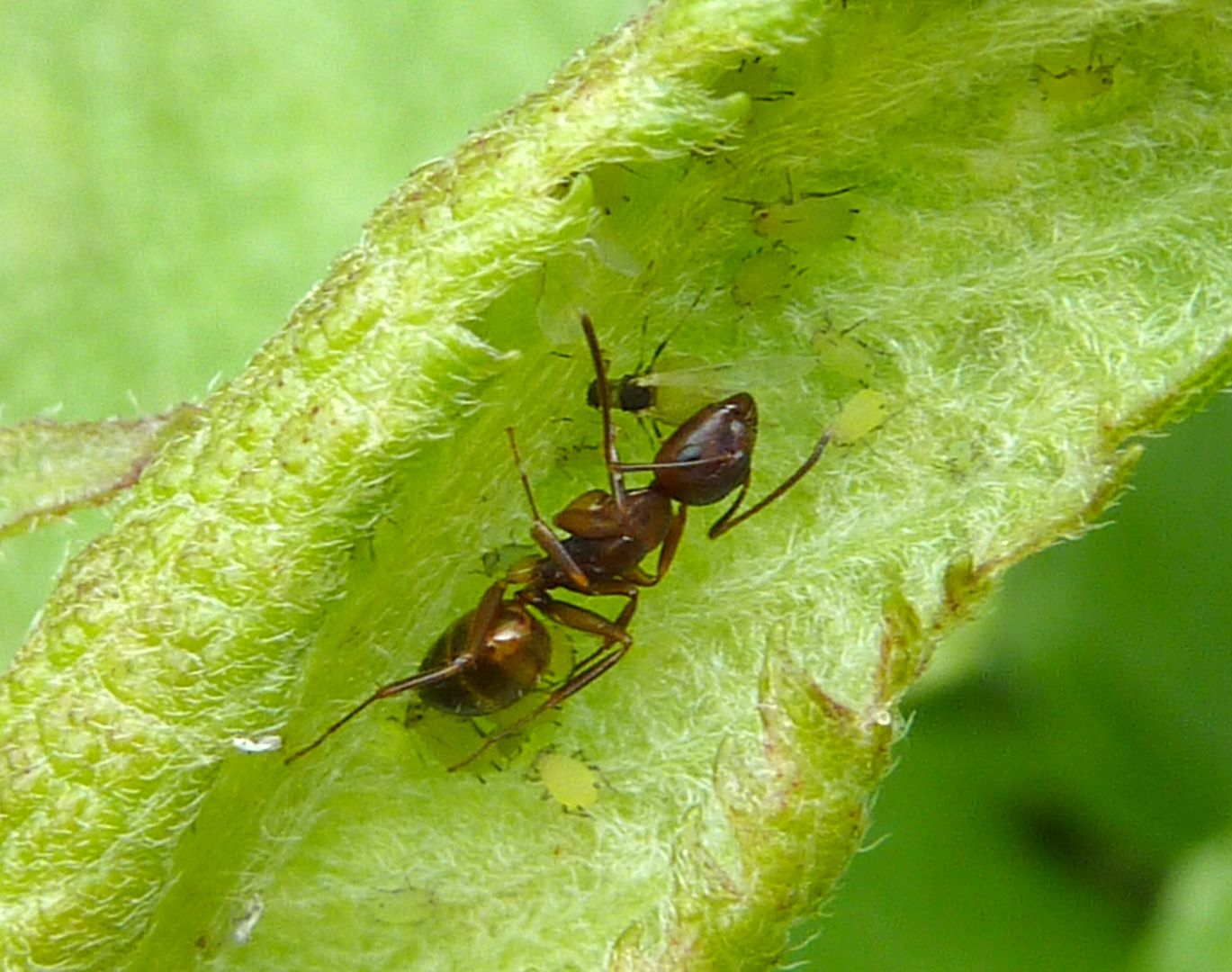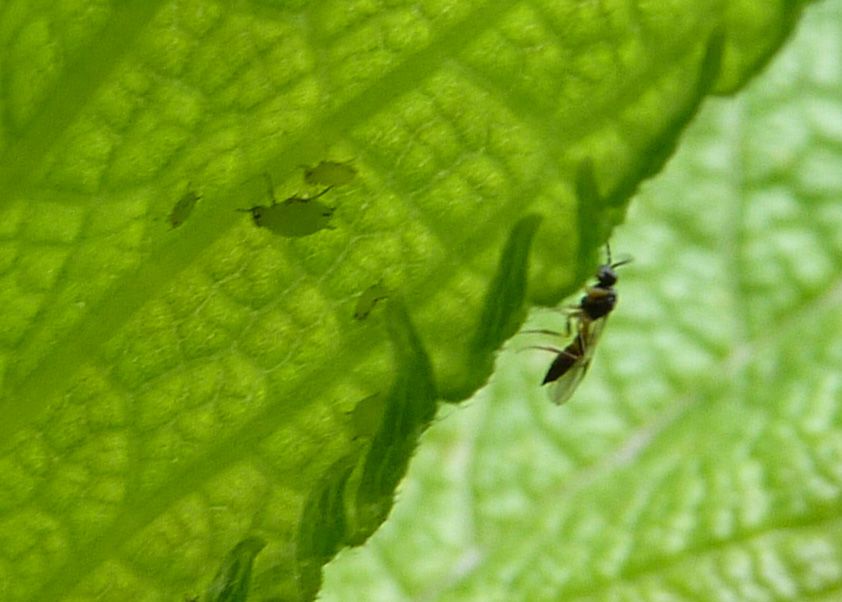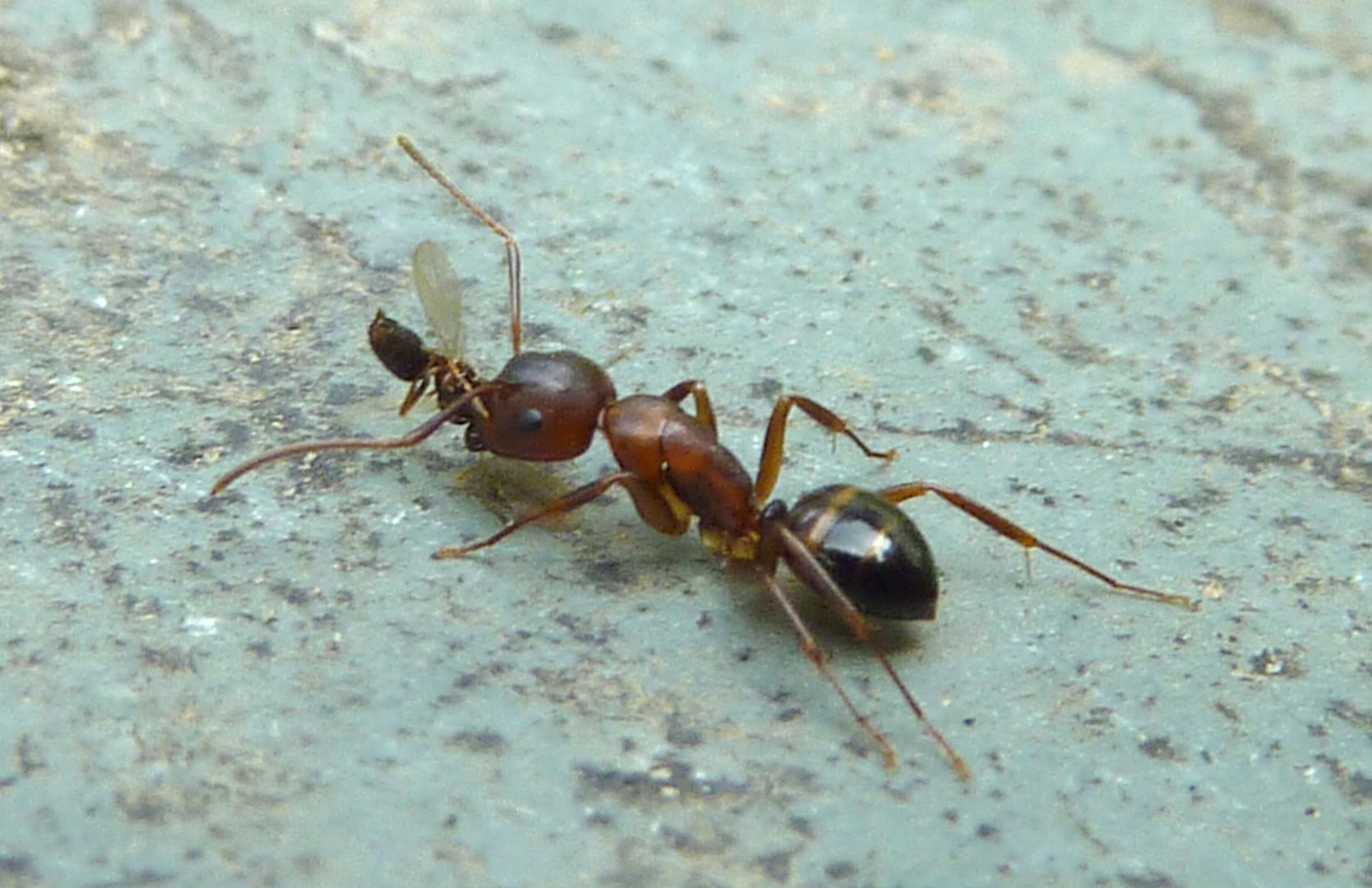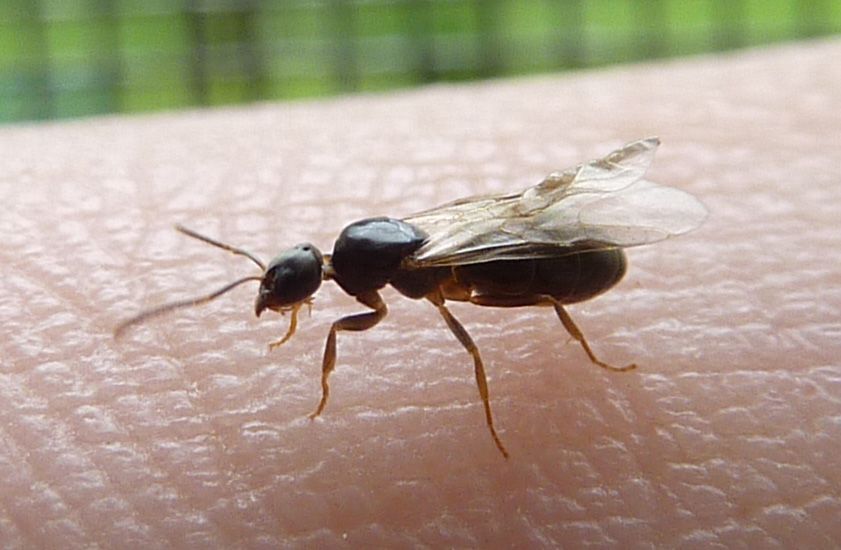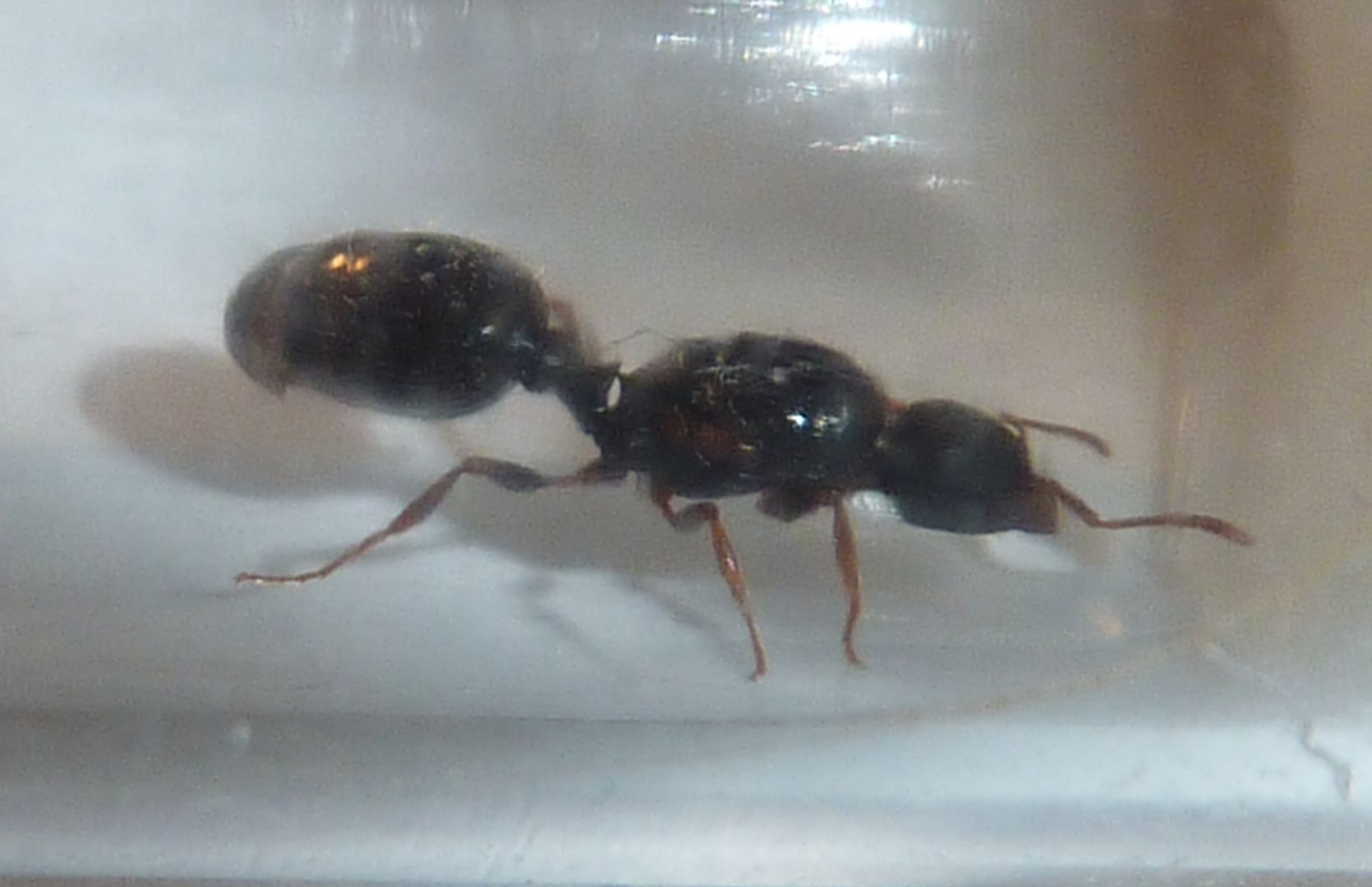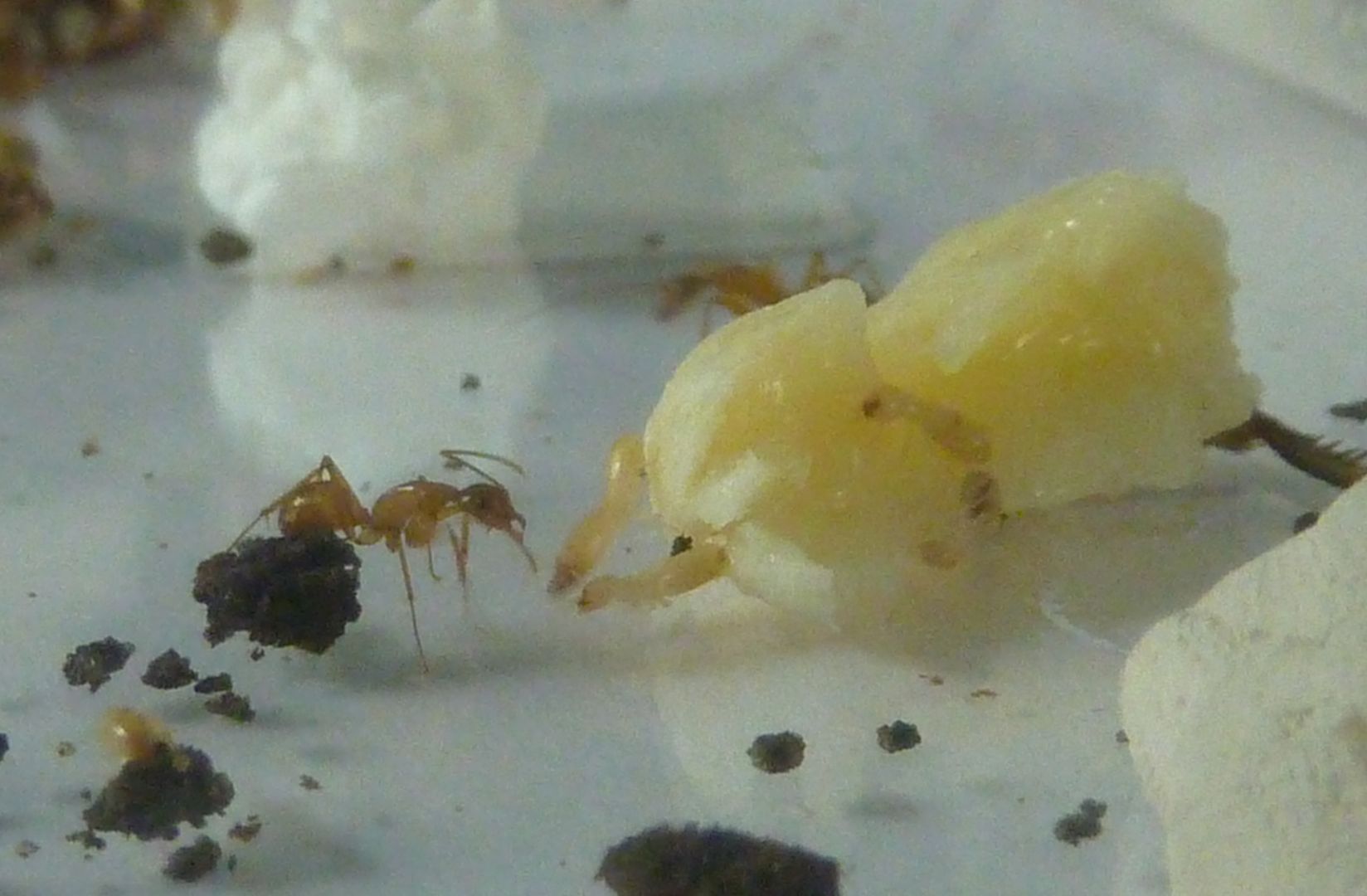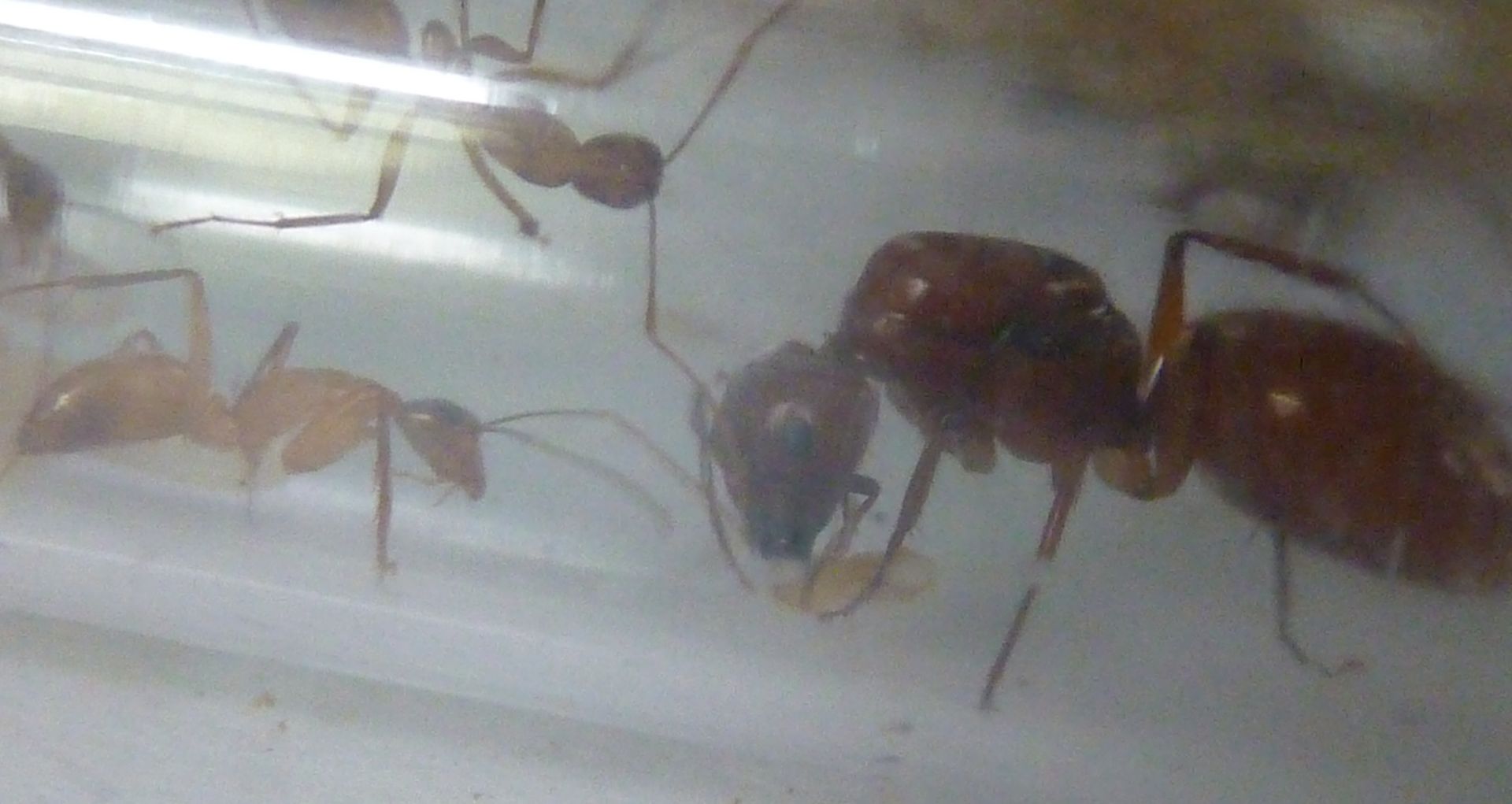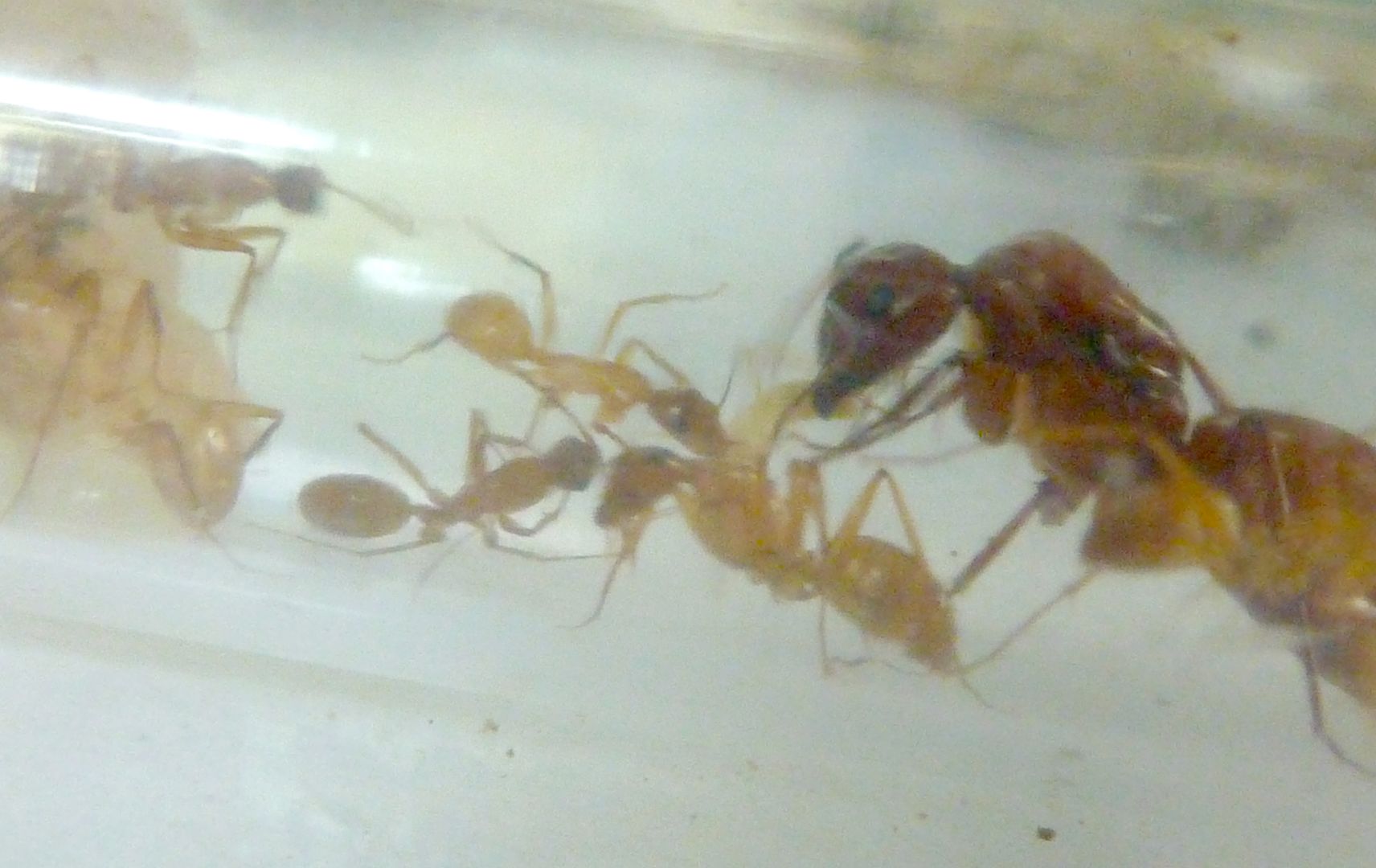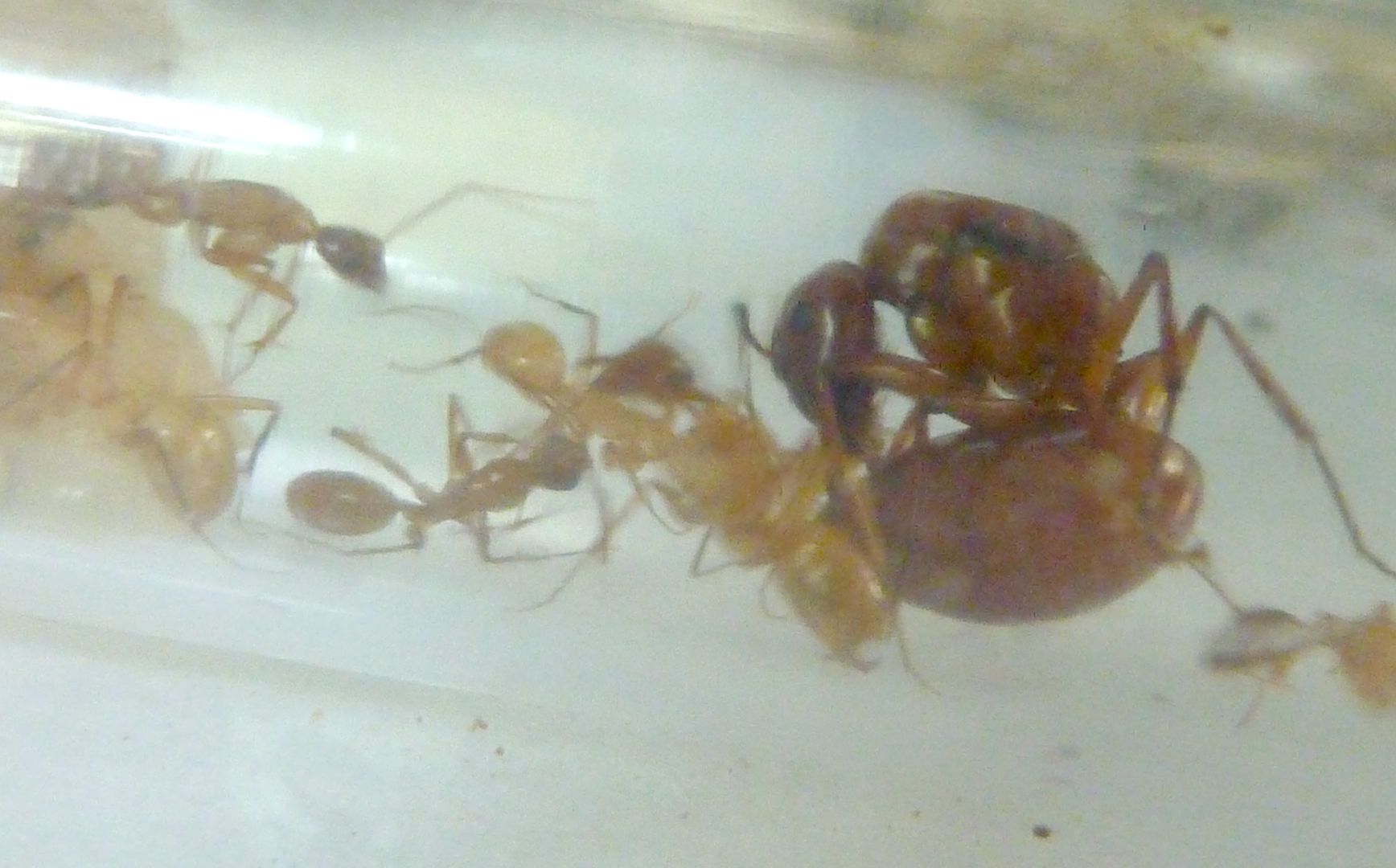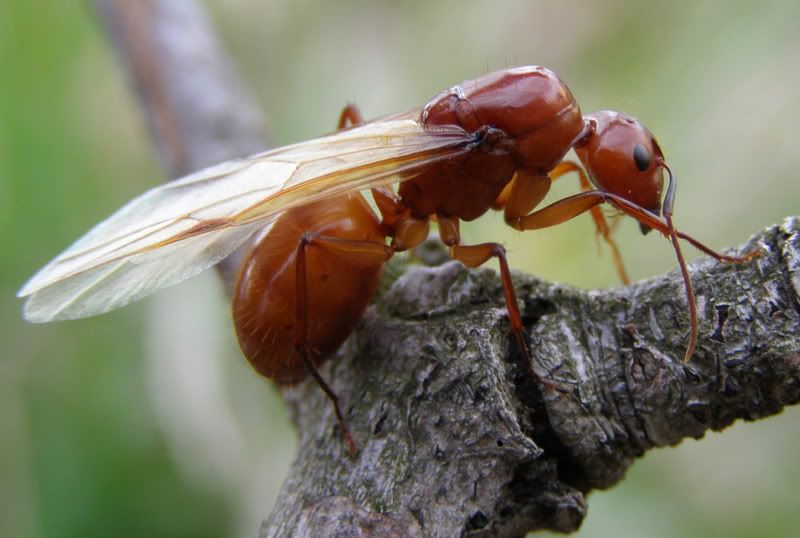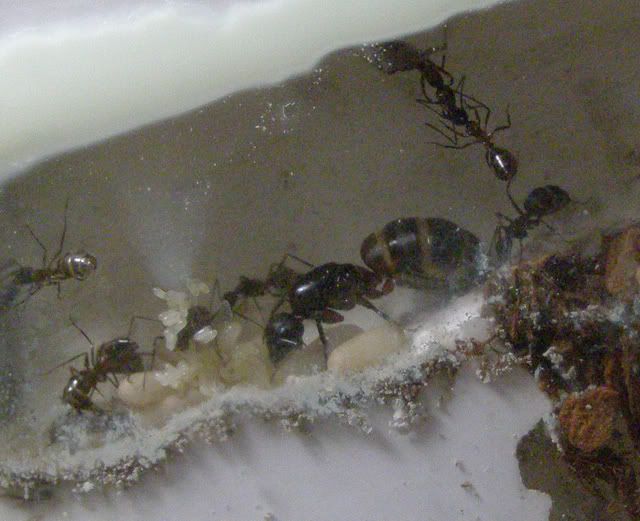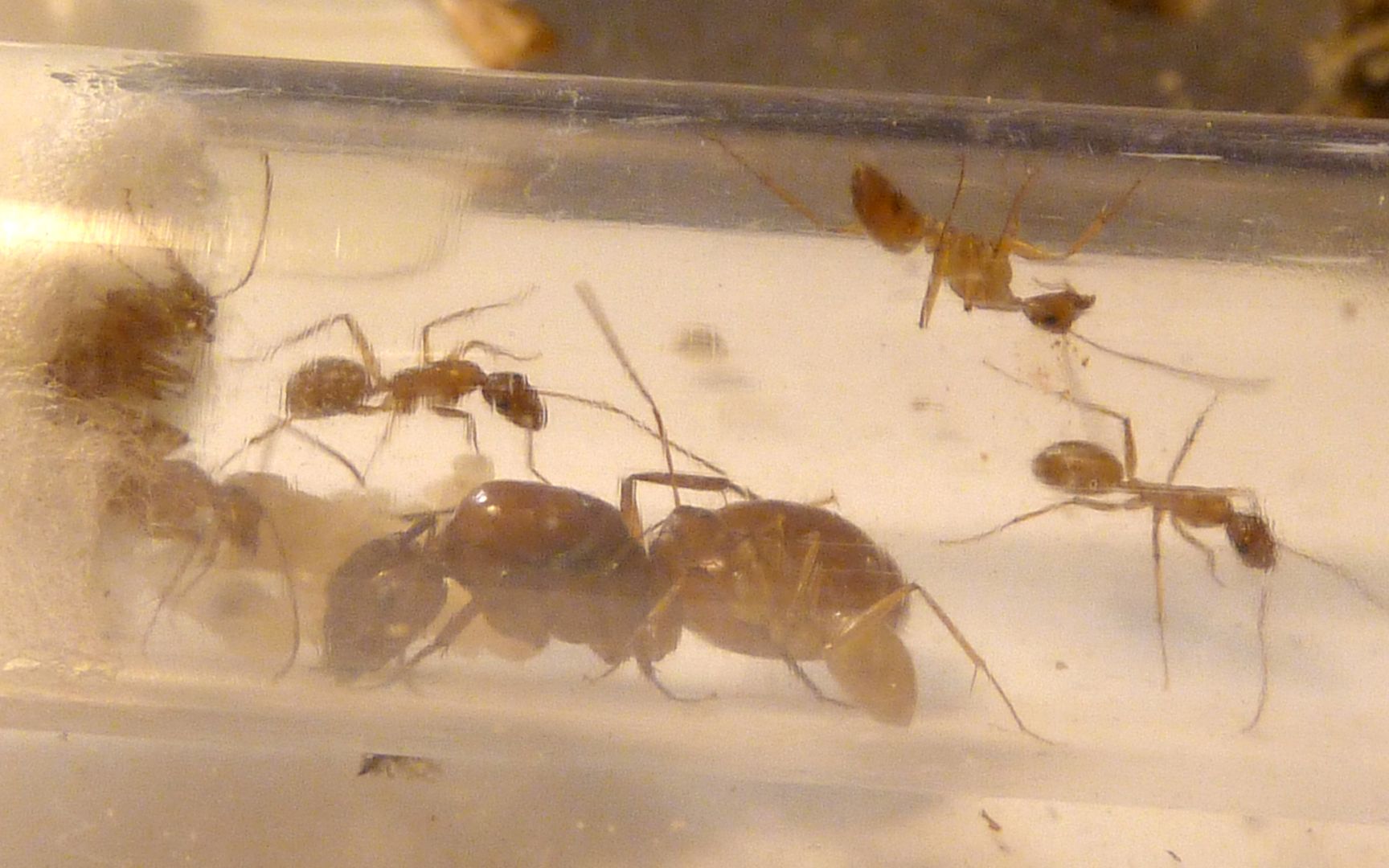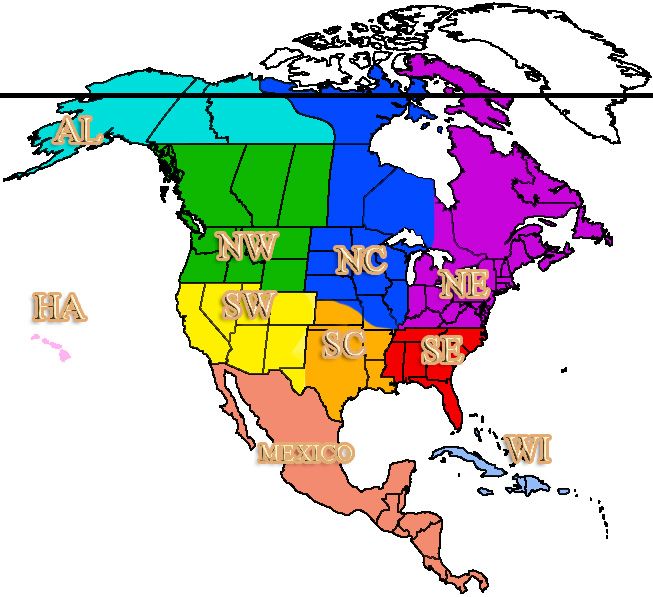
Camponotus is the second largest genera in the world and it's no surprise it's among the largest in North America as well. To help make identification easier scientists recognize a number of subgenera within this genus. Nine of which are found in North America, with a total of 59 species (of roughly 300 world wide). Because life is ever changing and it's more than likely new species will be reported (mostly by accidental introduction) this should be considered a work in progress.
Emphases was placed on making this a simple key that can easily be read by anyone. Most features pointed out don't require a microscope but having one sure doesn't hurt.
You will need a major worker to use this key. Major workers have the most pronounced traits and are largest ants in the colony besides the queen. Queen ants are a close second when trying to identify ants in this genus but remember the thorax will look different and other traits may be slightly off. Minor workers look far to different and don't have enough traits to accurately show the diverse extremes within the colony for most species. Things like hair, thorax curves, color, and head shape aren't as consistent and can look totally different than the major workers of the same species even in the same colony.
A Brief Look at Each Group
True Camponotus and Tanaemyrmex. The majority of ants in this group range from 6 to 20mm long. True Camponotus species have a lot in common with the Tanaemyrex subgenus. So much so that I've grouped them together. The festinatus complex in the south west US and Mexico actually contains members from both groups, to give an example why. Color is surprisingly useful for this group and they've been divided as such. Darker species tend to be the wood nesting true Camponotus while lighter colored soil nesting species tended to be Tanaemyrmex. Tanaemyrmex is said to have a thinner and longer head but this isn't consistent for all members of the colony.
Myrmentoma, Myrmobrachys, Myrmothorix, and Myrmosphincta are smaller versions of True Camponotus and Tanaemyrmex. They range from 3 to 7mm long about. They tend to be opportunistic nesting, often found in hallow galls, dead wood, and empty voids. Colonies to all groups are rarely more than few hundred workers.
Colobopsis and Myrmaphaenus are what I've labeled Door Ants. The major workers and sometimes queens in these groups have flat heads that they use to block off entrances for defense. They're small as in the other group ranging from 3 to 7mm about.
True Camponotus and Tanaemyrmex
Black Species: The primary color to the head, thorax, and abdomen is black.
Camponotus (Camponotus) pennsylvanicus (2) (3) (4) (5) SW, SC, SE, NC, NE (Not found west of the rocky mountains!)
The most common Camponotus in the US. Nest in rotting logs, stumps, and structures. In spring time colonies sometimes divide to maintain sub-colonies in available sites of dead wood. This ant is strictly monogynous and occasionally found to be oligogynous. Probably because sub-colonies are abandoned in the fall time and overwinter in one or two structures. Having more than one queen in a colony is usually settled within 3 months to 1 year. (This is the first native ant described in North America.) Lots of yellow gray hairs on the abdomen make it easy to recognize. Queens sometimes have red on the lower propodum, just above where the legs connect but are otherwise uniform black. Queens resemble C. herculeanus queens and are hard to distinguish. C. herculeanus can have more red in the thorax but can also be just as black. Supposedly the two species can hybridize but not much is known.
Camponotus (Camponotus) modoc (2) (3) SW, NW, NC (Not found far east of the rocky mountains!)
Considered a subspecies of C. pennsylvanicus. Nest in rotting logs, stumps, and structures. Monogynous and oligogynous colonies have been found. They have the yellow gray hair on the abdomen too, but it's said to be shorter. Colonies tend to be much bigger and can reach 50,000 ants or more. Unlike C. pennsylvanicus they have red legs. The mandibles can also be red but this is said to be inconsistent.
Camponotus (Camponotus) laevigatus (2) (3) (4) SW, NW
Nest in rotting logs and stumps of oak trees. Usually found above 6000 feet. Jet black in color and very shiny with lots of short white hairs all over the body.
Camponotus (Camponotus) laevissimus NW
Camponotus (Camponotus) quercicola (2) (3) SW, NW Now a junior synonym with C. laevigatus.
Said to only nest in the limbs of the California Live Oak, Quercus agrifolia. The North West sighting is presumably the result of someone planting the host tree up north. Very shiny just as C. laevigatus is but lacks the white hairs all over the body.
There is also a black color form of Camponotus (Tanaemyrmex) vicinus (2) (3) SW, SC, NW, NC, but this ant is otherwise mixed black and red. The full description is listed down below.
Red Species: These are lighter colored ants that have red in them, but yellow still wasn't the strongest color.
Camponotus (Camponotus) herculeanus (2) (3) Alaska, SW, NW, NC, NE
Most common ant in forests of boreal and alpine North America. Nest in rotting logs and stumps. Monoynous and oligogynous colonies have been found. Thought this ant can be fairly dark the thorax is usually lighter than the head and abdomen, sometimes red in color. Cheeks look swollen from front face view. Scape is said to be short and unable to extend beyond the back of the head, it's unclear if you need a live specimen to observe this or not. No hairs on the sides of the head. Queens resemble C. pennsylvanicus queens and are hard to distinguish. C. herculeanus can have more red in the thorax but can also be just as black. Supposedly the two species can hybridize but not much is known.
Camponotus (Camponotus) chromaiodes (2) (3) (4) SE, SC, NE, NC
Mixed nests either in or under dead wood, stumps, and sometimes structures. The propodeum, waist segment, base of abdomen, and the legs are always red. Coxa to legs (segment that meets the thorax) are sometimes yellow. The rest of this ant is dark in color. Lots of erect golden hairs can be found on the abdomen. Queens have this color pattern too but the gold hairs isn't always as pronounced.
Camponotus (Camponotus) novaeboracensis (2) (3) SC, NW, NC, NE
This is called The New York Carpenter Ant because it's the most common Camponotus in that state. It's range extends up somewhat into Canada, and is found sporadicly everywhere else. Nest in logs and stumps. Colony size reaches 10,000 ants. Hair and pubescence is reasonably sparse, and short especially compared to C. pennsylvanicus and C. chromaiodes. Hair is pale yellow or white/gray in color. A front view of the head can reveal a faint red blushing but this can be hard to see and may not be as consistent as previously thought. Similar to C. chromaiodes but hair isn't as dense, the thorax is always all red or bright orange in color and the abdomen is always black or dark in color. The color doesn't bleed over as it does with C. chromaiodes. Queens are almost all black except for red splotches on the thorax that ranges from faint lines to bright orange all over the thorax.
Camponotus (Tanaemyrmex) vicinus (2) (3) SW, SC, NW, NC
Mixed nests in soil or rotting wood. One of the few polygynous species of Camponotus, it's not surprising their colonies get to 100,000 ants or more. Pubescence is sparse, especially on the abdomen. Erect yellow (sometimes white) hairs are all over the body. Very similar to Camponotus noveboracensis but erect hairs are not as long or abundant. The red thorax isn't as consistent either, occasionally the red to C. vicinus will spill over to the abdomen as seen in C. chromaiodes. Differs from C. chromaiodes by not having anywhere near the amount of hair on the abdomen. Queens can be all black in color and shiny, other color forms are not well known but typically some red is included around the waist segment. NOTE: There is also a black color form.
Camponotus (Camponotus) maritimus SW (California)
Nest under stones in oak woodlands. Similar to C. vicinus but usually smaller in size ranging 6 to 10mm, queens as long as 12mm. A lot shinier too. Similar looking to C. dumetorum (below) but much smaller in size.
Camponotus (Tanaemyrmex) maccooki Mexico
This species was thought to occur in the U.S. for the longest time when actually C. semitesceus (a lighter species in the next section) was being mistaken for it. Similar to C. vicinus but antennal scape are said to be thicker at the tips? Pilosity is the same but the pubescence is less developed and inconspicuous. No hair on the cheeks.
Camponotus (Camponotus) schaefferi (2) SW, SC
Nest in dead oak limbs around 5000 and 8000 feet. Originally described as a Myrmentoma group but is clearly to big for that. Body color is almost uniformly blood red sometimes red yellow.
Camponotus (Tanaemyrmex) dumetorum (2) SW (California)
Found in Chaparral areas where it is the dominant ant. Nests in soil. Lots of long erect hairs all over the body. Similar looking to C. maritimus but much bigger in size.
Camponotus (Tanaemyrmex) sansabeanus (2) (3) SW, SC, SE
Nest in soil under stones. Similar to C. maccook (above); or possibly C. semitestaceus (below) because I don't know what ant they were referring to; but stouter and more heavy set looking. Has a bigger head and shorter legs. Clypeal carina (which I believe is the bottom part) is blunter too, with a seashell-like wavy curve to it. Cheeks have more erect hair on them too.
Major worker head is always a very dark black as with the rear of the gaster. Media and minor worker heads are dark brown or deep red, with the larger being darker. ALSO SEE var. torrefactus (right below).
Yellow Species: These are even lighter colored ants that leaned towards yellow.
Camponotus (Tanaemyrmex) sansabeanus var. torrefactus SW, SC, SE
One of the few named varieties of ants. I'm highlighting it because antweb has pictures. This is Camponotus sansabeanus (see above) but it's the orange form of the ant. It has everything in common with the true species but the primary color is completely different, favoring more yellow and orange than red and brown.
*Queens tend towards the being almost completely black but have slight flourishes of yellow on the gaster and legs. However, I'm not sure if this is consistent with between both forms.
Camponotus (Tanaemyrmex) semitestaceus (2) (3) (4) SW, SC, NW
Mistaken for C. maccooki for the longest time in the US. Nest under stones. Cheeks and Gula (under and behind the head) have pilosity and very short bristols. Color varies slightly with this species. The thorax seems to always be deep orange in color which can bleed somewhat into the abdomen or not at all. Images of the winged alate are unconfirmed if they are this species or not, but I trust the source.
Camponotus (Tanaemyrmex) socius (2) SE
Nest in rotting logs in sandy soil. I imagen nesting in both does occur but references were unclear. Dorsum of thorax is almost perfectly convex. Erect hairs and pubescence is yellow in color and found all over the body except for the scape. Abdomen is black or darker than the rest of the body with a gold yellow spot on each segment, or at least the first two.
Camponotus (Camponotus) americanus (2) (3) SC, SE, NC, NE
Nests in soil usually under stones and mixed when under dead wood. Ranges farther north than C. castaneus and is said to be more common. Unlike C. castaneus this ant has hair on the cheeks and can have black patches all over the body. Can appear similar in color as C. castaneus but usually not as light.
Camponotus (Tanaemyrmex) castaneus (2) SE, SC, NC, NE
Nest in ground in open soil, under stones, logs, and in stumps. They occasionally enter homes looking for food but are not a real pest. Yellow erect hairs sparsely found on clypeus but not the cheeks or sides of the head. Most commonly seen as an orange ant with a darker head and or abdomen. The darker color is usually dark orange ranging right up to red and almost black. It varies from colony to colony. For Queens the darker color is usually the head and thorax with the abdomen as a lighter color... sometime this is the reverse though. Males are always yellow-orange in color which can help distinguish them from C. americanus. (not sure what's up here.)
Camponotus (Camponotus) texanus (2) (3) SC (Texas)
Nest in dead oak. 10 to 12mm long. Originally described as a Myrmentoma group. As far as I can tell no one's bothered studying them since. From what I can tell they're a very shiny species. This overall smoothness makes their color seem faded in the right light, which allows the bright yellows and soft reds to come through. Hairs are modestly long and seem to only be abundant on the gaster where they line each tergite.
Camponotus (Tanaemyrmex) acutirostris (2) SW, NC
Nest in soil under stones. Similar to C. vicinus but it has a smaller head. Clypeus border is said to be pronounced in front at a pointed angle and is slightly turned up at the tip. I think the "lip" that's described can be seen from the side view of the head. Cheeks with short erect hairs. Pubescence is very short and diluted except on the scape.
Camponotus (Tanaemyrmex) ocreatus (2) (3) SW, SC
Nest under stones. Head is shiny. Scattered punctures on the sides of the head are smaller and less numerous. Major workers also seem uniquely colorful with lots of vibrant reds surrounding the darker areas. Queens have a black head and mesosoma with the gaster a bright orange occasionally tipped with black at the end.
Camponotus (Tanaemyrmex) tortuganus (2) (3) SE (Florida)
Nest in soil under stones and rotting logs. head is long and narrow even in queens. This is probably the only Tanaemyrmex where a long narrow head seems to be consistent for every caste. Eyes too. Legs are fairly long. Thorax has a rough texture with yellow hairs. No hair on cheeks but there are some short strands on the clypeus. Pubescence is sparse.
Camponotus (Tanaemyrmex) incensus SE
As far as I can tell there are no pictures of this ant online. (makes me wonder why I put it with the yellow species in the first place.) Not abundant. Similar to C. tortuganus (10 to 11mm) but smaller (6 to 7mm).
Camponotus (Tanaemyrmex) variegatus (2) (3) Hawaii
Somehow this is the only Camponotus reported on any of the islands of Hawaii. That is remarkable considering this is the second largest genus of ant in the world. Originally described as a Formica, it is redish brown in color.
Camponotus festinatus complex (Still in the Yellow Species group)
Camponotus (Tanaemyrmex) festinatus (2) (3) (4) (5) SW, SC
Most commonly found in oak forests. Nest in the ground under stone, logs, and, interestingly enough, dried cow dung. Scapes have several erect hairs with no pubescence! Minors head is always longer than wide. Scape has few erect hairs, usually none at all, with no pubescence! Both castes have suberect/erect hairs along the entire head margin (front view is best). Sometimes they have faint yellowish spots on the abdomen. This species gets less brown as towards Texas.
Camponotus (Camponotus) absquatulator SW (California)
Mixed nests either in or under dead wood. Similar to C. festinatus but slightly smaller in size. Lacks erect hairs along the head above where the antenna connect (front view is best).
Camponotus (Camponotus) fragilis (2) (3) SW
Nest in soil under stones and dead wood. Similar to C absquatulator but erect hairs are present along entire head margin. Similar to C. festinatus but lacks standing hairs on side of the pronotum (top view of thorax might be needed).
Camponotus (Camponotus) microps SW (Arizona)
Found in mixed pine forests. Nest in fine sandy soil. Different than C. festinatus by the small eyes. Head doesn't narrow at the mandibles as much. Workers have smaller eyes and supposidly have a "posteriorly more strongly strongly narrowed head." - Roy Snelling page 91 right hand side.
Camponotus (Camponotus) pudorosus (2) Mexico (and possibly California)
Formerly called C. picipes. Nest in soil under stones. Similar to C. festinatus but slightly smaller. Scape has lots of subappressed to suberect hairs. Hair also found on cheeks the entire length of the head that range from erect to suberect.
Camponotus (Tanaemyrmex) vafer SW (Arizona)
Nest in soil under stones. Majors and queens have broadly and weakly excised anterior clypeal margins. And longitudinally microrugose mandibles merging into coarser rugae near teeth. Minor workers, not so much, but scape has lots of erect hairs both long and short.
Myrmentoma, Myrmobrachys, Myrmothorix, and Myrmosphincta
These are all fairly small ants in this genus. The last three seem to be tropical and probably imported but established. Because of their unique traits we'll rule them out first.
Myrmosphicta
Camponotus (Myrmosphincta) sexguttatus (2) SE (Florida), Costa Rico, Puerto Rico
South American ant found in various islands and southern Florida. Has only been collected a hand full of times. This ant is mostly black, fairly shiny, and has lots of white/pale yellow hairs all over it's body.
Myrmothorix
Camponotus (Myrmothorix) atriceps (2) SC, SE, Mexico
Though antweb features this as a black ant, there is also a brown form. This ant is similar looking to C. floridanus (below) but is covered with more hairs, especially around the entire head margin (front view is best). Males apparently are quite colorful.
Camponotus (Myrmothorix) floridanus SE (Florida)
The most common Camponotus in Florida. Similar to C. atriceps but lacks hair around the head margin (frong view is best).
Myrmobrachys
Camponotus (Myrmobrachys) mina SW (Arizona), Mexico
Body is covered in lots of white hairs. Not as much on the antenna segments. Workers have very large eyes compared to the size of the head. The same texture for the compound eyes can be found all over the head and thorax.
Camponotus (Myrmobrachys) trepidulus SW
Similar to C. mina with the white hairs all over the body, but the eyes aren't as big compared to the head. Hair is also present on the antenna segments.
Camponotus (Myrmobrachys) plantus SC, SE, Mexico
Lots of white hairs all over the body, including the antenna segments which covers the abdomen more densely than the other two species. Oh and the head and thorax are red.
Camponotus (Myrmobrachys) novogranadensis SE (Florida), Mexico
Similar to C. plantus but differing in color, as an all black species, and having fewer erect hairs on the body.
Myrmentoma What I call Smaller Carpenter Ants
Camponotus (Myrmentoma) caryae SC, SE, NC, NE
More common in the Eastern regions. Associated with trees, especially Hickory, Carya genus. Uniformly dark brown or black, unlike C. discolor. There is little difference between the two species otherwise. Unlike C. nearcticus they have hair on the cheeks.
Camponotus (Myrmentoma) discolor SC, SE, NC, NE
More common in the Central regions. Nest in hallow cavities, dead wood or stumps. Questionably differs from C. caryae. Assosiated with Oak, Hickory, Willow, and Cottonwood. Hybrids between C. discolor and C. caryae might be present in the area of Ohio, Iowa, and Georgia, where the two species supposidly over lap in range.
Camponotus (Myrmentoma) nearcticus (2) SW, SC, SE, NW, NC, NE
Nest in living and dead wood, hallow plant cavities including galls, under bark, or in pine cones. Can be all black/dark brown in color but sometimes has red on the mesosoma in the form of slight blushing towards the head or being totally red. Unlike C. caryae they don't have hair on the cheeks. (In southern states some experts argue the redder forms of C. nearcticus to be color variations of C. decipiens. The key difference is that C. nearcticus always has a dark brown/black head where C. decipines does not. C. nearcticus has more erect hairs on the clypeus than C. decipines does but not that many!)
Camponotus (Myrmentoma) subbarbatus (2) SC, SE, NC, NE
Nest in hallow plant cavities, twigs, branches, sometimes under bark etc... Distinctive gold yellow stripes go around the abdomen! This isn't just the membrane under the abdomen tergits, it's actual color on the tergits themselves. Majors and Queens have it especially, workers not so much.
Camponotus (Myrmentoma) anthrax SW (California)
Only found in California. Nest in soil under stones. Easily recofnised by the sexdentata mandible on both worker and queens. From side view lots of long erect hairs.
Camponotus (Myrmentoma) clarithorax SW, NW
Found in chaparral and in coastal scrub habitats. Nest in dead branches to Oak, Quercus sp. Similar to C. caryae but fewer erect hairs. Not that it matters because C. caryae doesn't occur that far west.
Camponotus (Myrmentoma) cuauhtemoc SC (Texas), Mexico
Rare. Found at high elevations between 3500 and 6000 feet. Nest in oak trees, Quercus sp. Different from C. anthrax by lots of white hairs on the abdomen. Dull red in color. Texture on abdomen like bumps.
Camponotus (Myrmentoma) decipiens SC, SE, NC
Nest in hallow plant cavities. This species is more common in the Eastern part of it's range. Very similar to C. sayi but has a broader mesosoma where the middle and rear legs are. Waist segment, when looked at from behind or above will be rounded and fan like. C. sayi is narrower. Very similar to C. snellingi but the gaster is totally black.
Camponotus (Myrmentoma) sayi SW, SC, SE, (NC Nebraska)
Nest in living and dead wood. Hallow plant cavities such as galls, under bark, rotting logs, and stumps. This species is more common in the West. Similar to C. decipiens but thorax is less bulky looking where the middle and rear legs are. Has a distinctively deep groove dead center of the face. Looks similar to C. snelling but the body color is yellow orange instead of red brown. C. essigi also looks similar but the texture and body proportions are way off.
Camponotus (Myrmentoma) essigi SW, NW
Found in chapparral, oak and pin fir woodlands. Nests in dead branches and cynipid galls, mostly in oak, but also pine, cottonwood, cedar, and manzauita. Can be full black in it's northern range. Can be orange red in the southern parts with abdomen only half black. Dorsum of thorax is smooth for the most part. The pronodum is slightly convex and drops off toward the waist segment.
Camponotus (Myrmentoma) hyatti SW, NW, Mexico
Nest in yucca stalks and in soil under dead juniper limbs, (which is odd because I've never known juniper to have large limbs,) oaks, manzanita, chemise, sage brush stems and roots. Dorsum of thorax is smooth except for the pronodum which is very convex.
Camponotus (Myrmentoma) bakeri SW (California)
Only found in California. Nest in soil. Head, thorax, appendages, and 2/3rds of the first abdomen segment are red orange! Dorsum of thorax segments are well divided and each is convex.
Camponotus (Myrmentoma) snellingi (2) SC, SE, NC
Formerly called C. pavidus. SC, SE, (No Images Available) this species is described as follows: The head, mesosoma, and petiole are yellow to yellowish red with the appendages somewhat darker. The first two tergites of the gaster are almost always yellow or at least have a yellow staining with the rest of the gaster being totally black. The yellow on the gaster can be used to distinguish this species from C. decipiens.
Colobopsis and Myrmaphaenus
These are small like the other group but all of the major workers to a species have flattened heads.
Myrmaphaenus species are the more exotic of the two and should be ruled out first. These are just like Colobopsis but the clypeus is not as pronounced.
Camponotus (Myrmaphaenus) ulcerosus (2) SW, (SC Texas)
Nest in soil under stones. "A carton shield is constructed at the nest entrance with the opening the same size as the major's head." The body is all black in color except for a brown orange patch on the face. Minor workers seem to all lack this patch of color. Both are covered in short white hairs.
Camponotus (Myrmaphaenus) yogi SW (California)
Nest in twigs mostly those belonging to Haplopappus pinifolius which is some type of sedge I can't find much information on. Body is very shiny with lots of reds and browns from head to thorax that gradually turns black on the abdomen. Legs are lighter in color leaning towards yellow.
Colobopsis Door Ants. These can be hard to identify at first glance. A good clear side view of the thorax is vital to a correct identification. These have been arranged by which have the smoothest dorsum of the thorax.
Camponotus (Colobopsis) etiolatus SC (Texas), Mexico
Nest in galls and twigs. Pale color. Thorax profile is fairly smooth with light indentations separating the prenodum, mesonotum, and propodeum.
Camponotus (Colobopsis) papago SW (Arizona), Mexico
Nest in limbs of mesquite trees. Texture on head is almost certainly distinctive with an embossed effect. Hairs on clypeus, mandables, and malar area (cheeks) are fan like at the tips. Body is otherwise very shiny.
Camponotus (Colobopsis) mississippiensis SC, SE, NC, NE
Has only been found nesting in live twigs to White Ash Trees, Fraxinus americanus. Said to be the most common species in the state of Mississippi. Dorsum of thorax is smooth.
Camponotus (Colobopsis) impressus (2) SC, SE, NC, NE
Nest in sedge culms. Very odd place. There is an indent/keel that runs down the entire clypeus and middle of the head.
Camponotus (Colobopsis) hunteri (2) SC (Texas)
Nest in twigs of pecan trees but possibly others too. Unique in color. Yellow or pale orange brown thorax, waist segments, and appendages. Head slightly darker. Abdomen paler than thorax before becoming full black at the tip.
Camponotus (Colobopsis) obliquus (2) SE
Nest in hickory nuts, sticks, twigs and gulls. Similar to C. impressus but has more hair along sides of the head. Has more texture along the head. Pronodum is convexly pointed. Thorax lacks the flat area between the mesonotum and pronodum as seen in other Colobopsis.
Camponotus (Colobopsis) pylartes SC, SE
Nest in twigs, trees, and shrubs. Don't let the color fool you. They can be just as dark as C. impressus. Pronotum and mesonotum slightly smaller than C. impressus.
Camponotus (Colobopsis) cerberulus Mexico
Sources
Deyrup, M., Belmont, R. A. 2013. First Record of a Florida Population of the Neotropical Carpenter Ant Camponotus novogranadensis (Hymenoptera: Formicidae). Florida Entomologist 96(1):283-285. 2013 doi: http://dx.doi.org/10.1653/024.096.0148
Smith, M.R. 1954. A new Camponotus in California apparently inhabiting live oak, Quercus sp (Hymenoptera, Formicidae). Journal of the New York Entomological Society 61: 211-214
Snelling, R.R.; (2006) Taxonomy of the Camponotus festinatus complex in the United States of America (Hymenoptera: Formicidae) Myrmecologische Nachrichten, 8, 83-97
Snelling, R.R.; (date not listed Taxonomic Notes on Nearctic Species of Camponotus, Subgenus Myrmentoma (Hymenoptera: Formicidae) Advances in Myrmecology, 7, 55-78
Ward, P. S. 2005. A synoptic review of the ants of California (Hymenoptera: Formicidae). Zootaxa 936: 1-68.
Wheeler, W.M. A list of the ants of Florida with descriptions of new forms. Journal of the New York Entomological Society 40: 1-17
Wheeler, W. M. 1910. The North American ants of the genus Camponotus Mayr. Annals of the New York Academy of Sciences 20: 295-354
Wheeler, W. M. 1904. The American ants of the subgenus Colobopsis. Bulletin of the American Museum of Natural History 20: 139-158