With the majority of summer blooming flowers going to seed or fruit, there's now a new cast of flowering plants coming into bloom. And the Mt. Cuba Center is nothing if not inspiring to see what's flowering and when. I strain to think of species they don't have growing somewhere on their property; Campanula americana comes to mind but really few others. In fact I'd say going there has broadened my knowlage of plant species. At times it feels as though I'm walking through Donald Leopold's "Native Plants of the Northeast" which few other gardens can do.
I've been to Longwood Gardens several times and they should really change their name to Long Lawn Gardens. They have long pathways that go on quite a ways with flowers lining the side, but the trouble is it's the same 5 to 10 species or cultivars repeated over and over again, making it about as exciting as watching a copy machine pump out page after page. Their green house has an impressive collection of plants but are setup like museum dioramas without the fake cave men and stuffed animals. Their meadow is the only real highlight I'd say worth going to because of the wildlife factor which at times even out shines the Mt. Cuba Center.
At the Mt. Cuba Center meadow there's still plenty of wildlife flying around but mostly in bug form.
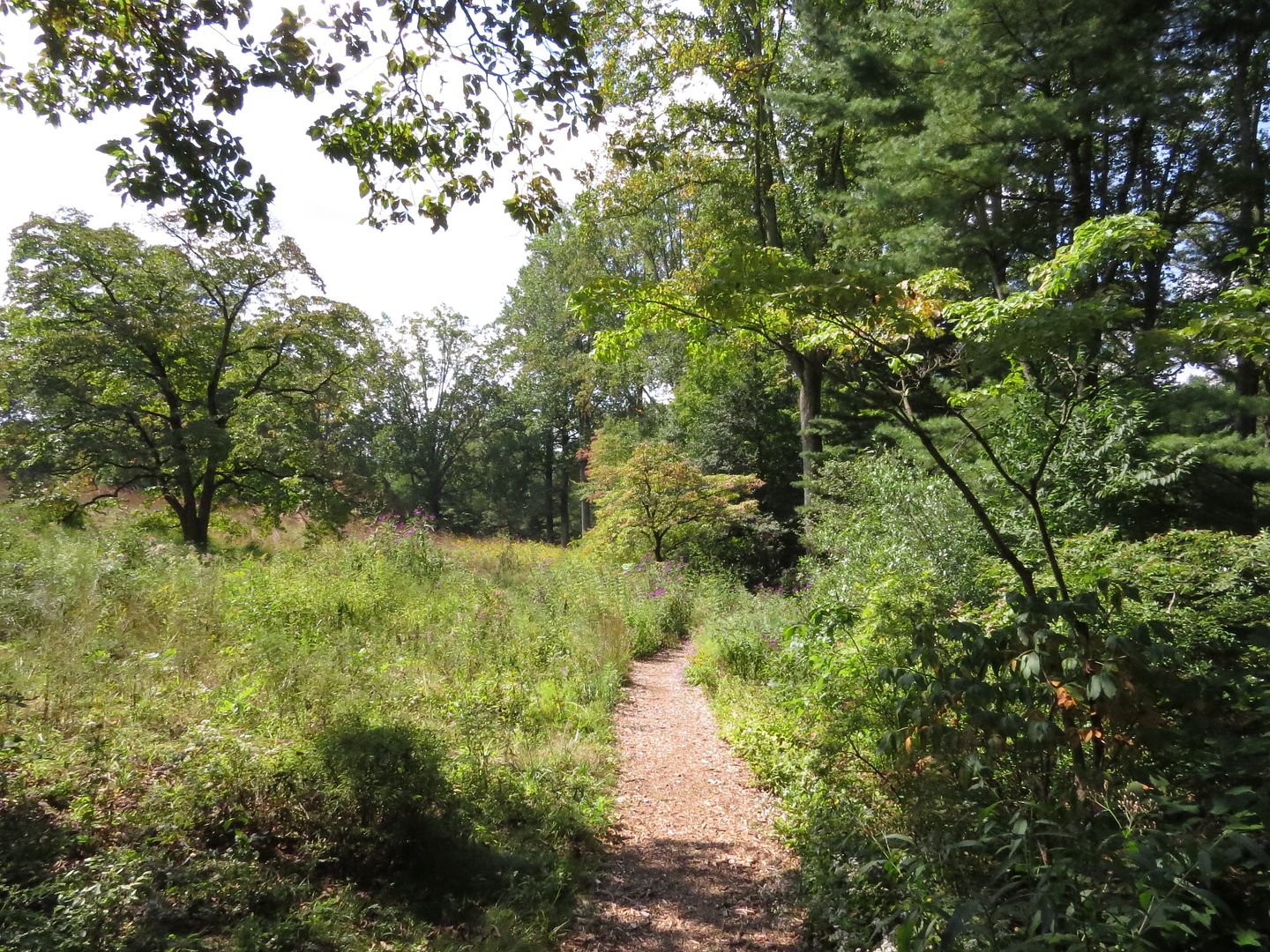
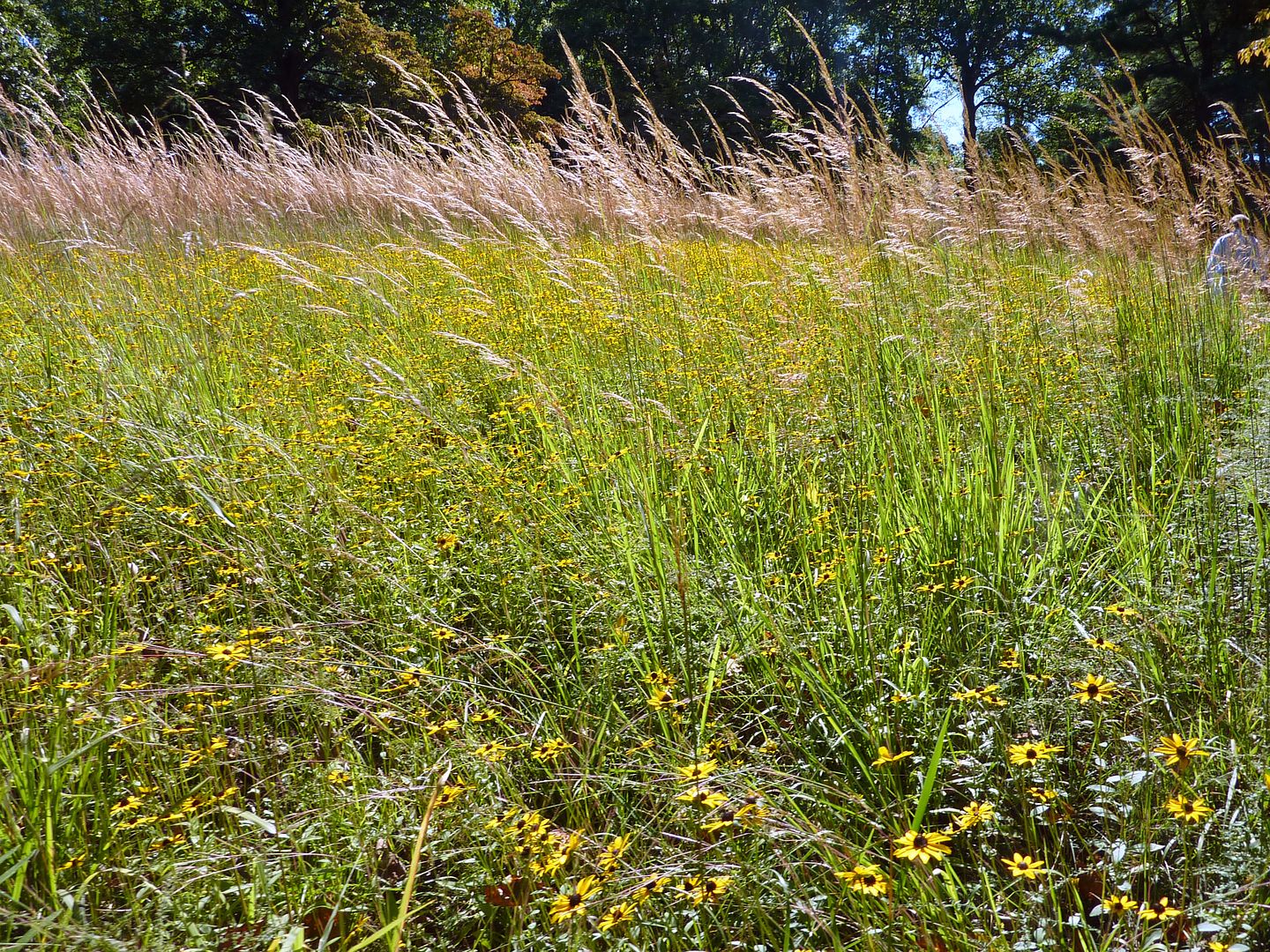
The natural approach looks better, though I know lots of people won't like this. I just love the sweeping effect of color and the movement of the grass as the wind blows over the field. They do have sections where they specifically put in a plant so when they do tours they can show it front and center.
The late Mrs. Copeland strongly believed that a meadow should primarily be made up of grasses. I do see the beauty in that, but frankly I find such meadows to be boring. Grasses are almost exclusively wind pollinated so you don't get the bees and butterflies that you get when incorporating wildflowers.
At the top of the meadow is the wildflower bed, which you can't see from the bottom. Beyond that line of tall grasses is a hill that gradually slopes down to the ponds where there is a gazebo for sitting. The meadow looks wonderful from that spot, and they try to maintain the primarily grass feel of it down there.
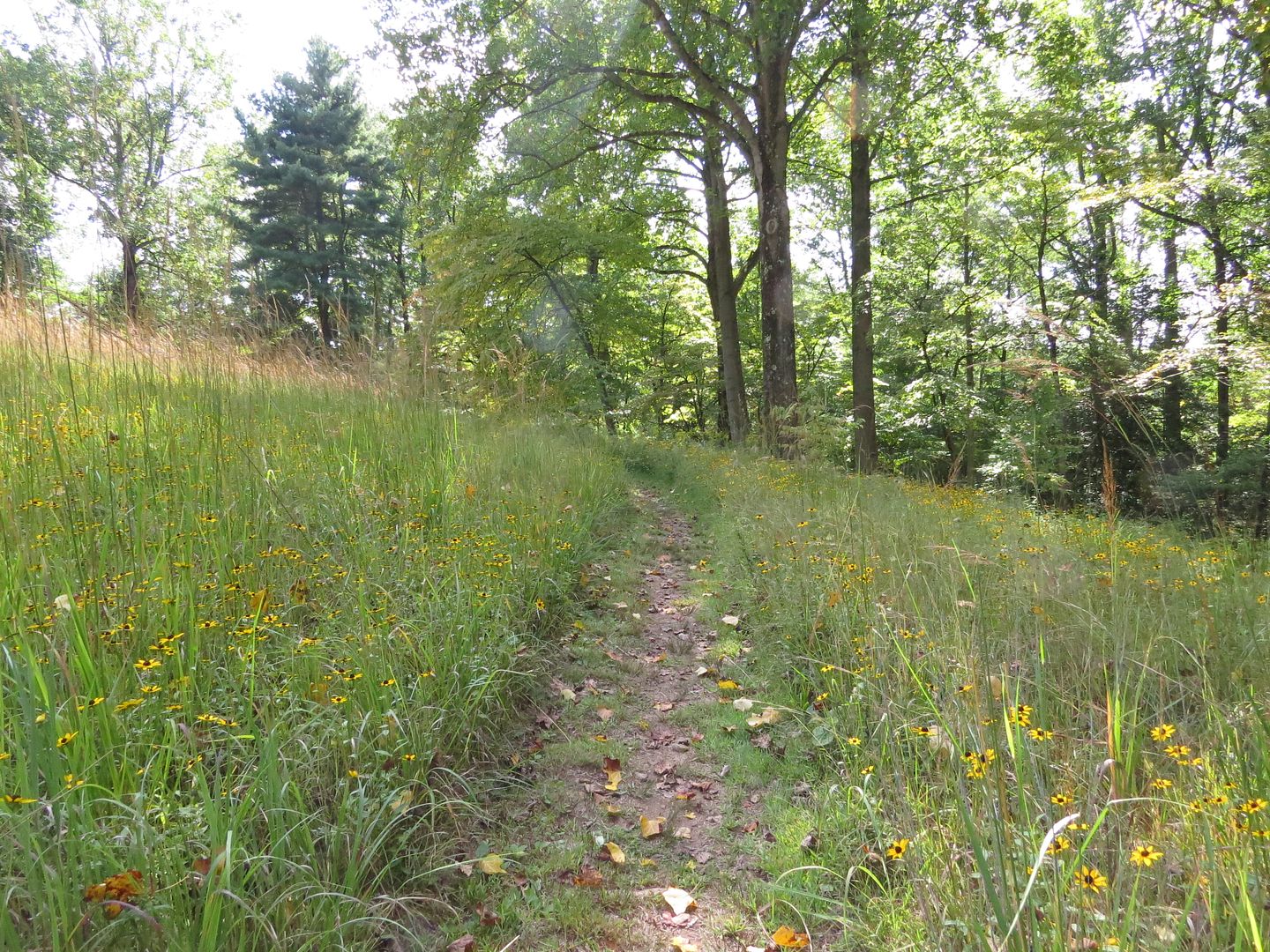
Upon closer inspection though it becomes obvious that several wildflowers have crept down the hill. Black-eyed Susan primarily but also a small amount of Butterfly weed. Both of which I believe were intentional.
Pearl Crescents, common in some gardens, rare in others. These are one of the few butterflies I find drawn to Black-eyed Susans. They host on an assortment of Asters. I believe they're in the habit of laying a single egg here and there, thus it takes a lot of Asters scattered around a forest edge to get them to flourish.
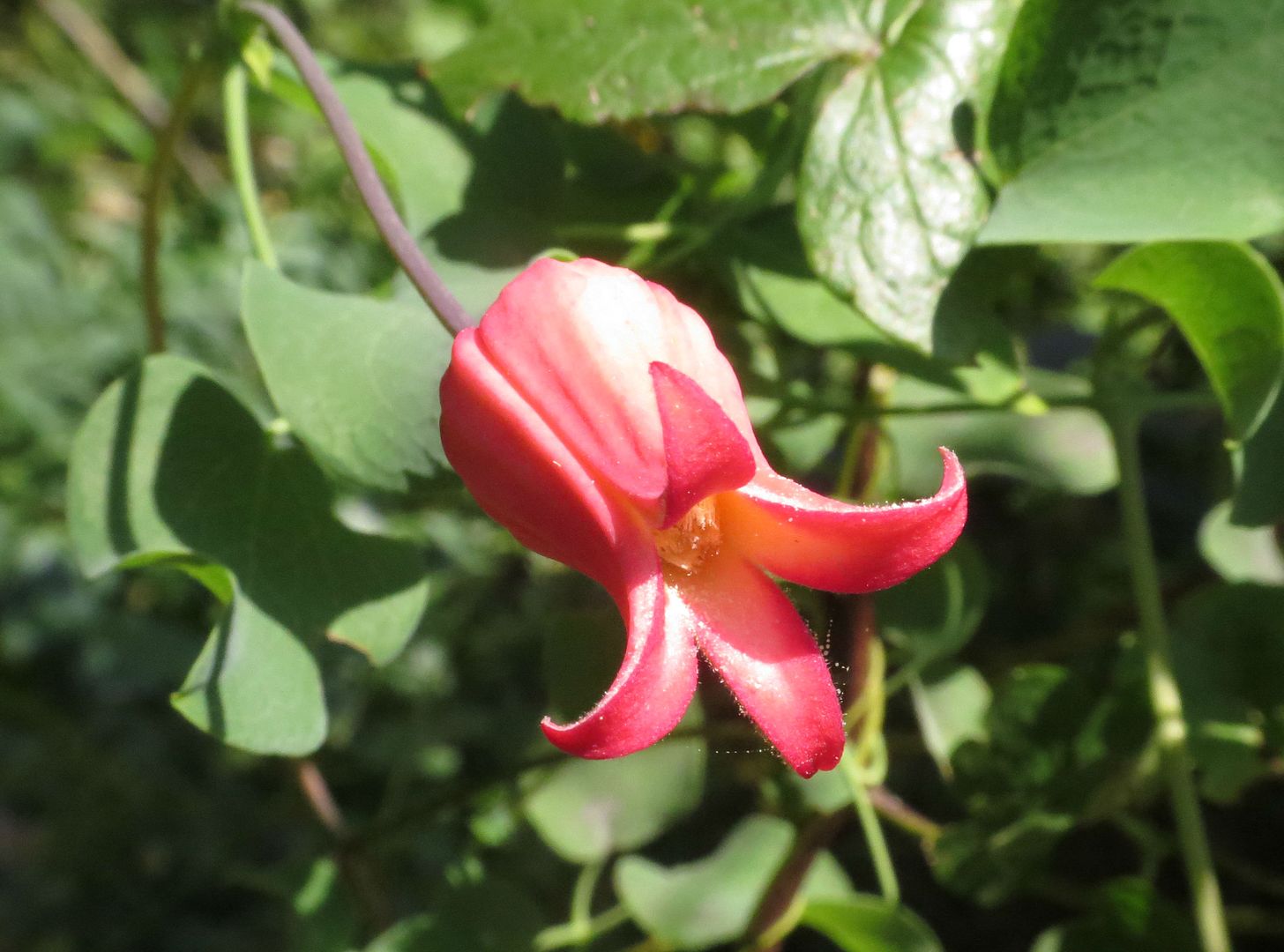
The Mt. Cuba Center was where I first learned what a Leather Flower was. Turns out our native Clematis are rather pretty-looking. They're almost like a fat honeysuckle, and they're good about growing through other plants. Unlike a lot of vines, I believe they die back to the ground each year.
Jewelweed grows like a weed all along the roadsides of that part of Delaware. They include a few plants in their gardens, but I'm sure they also must weed a fair amount of it out.
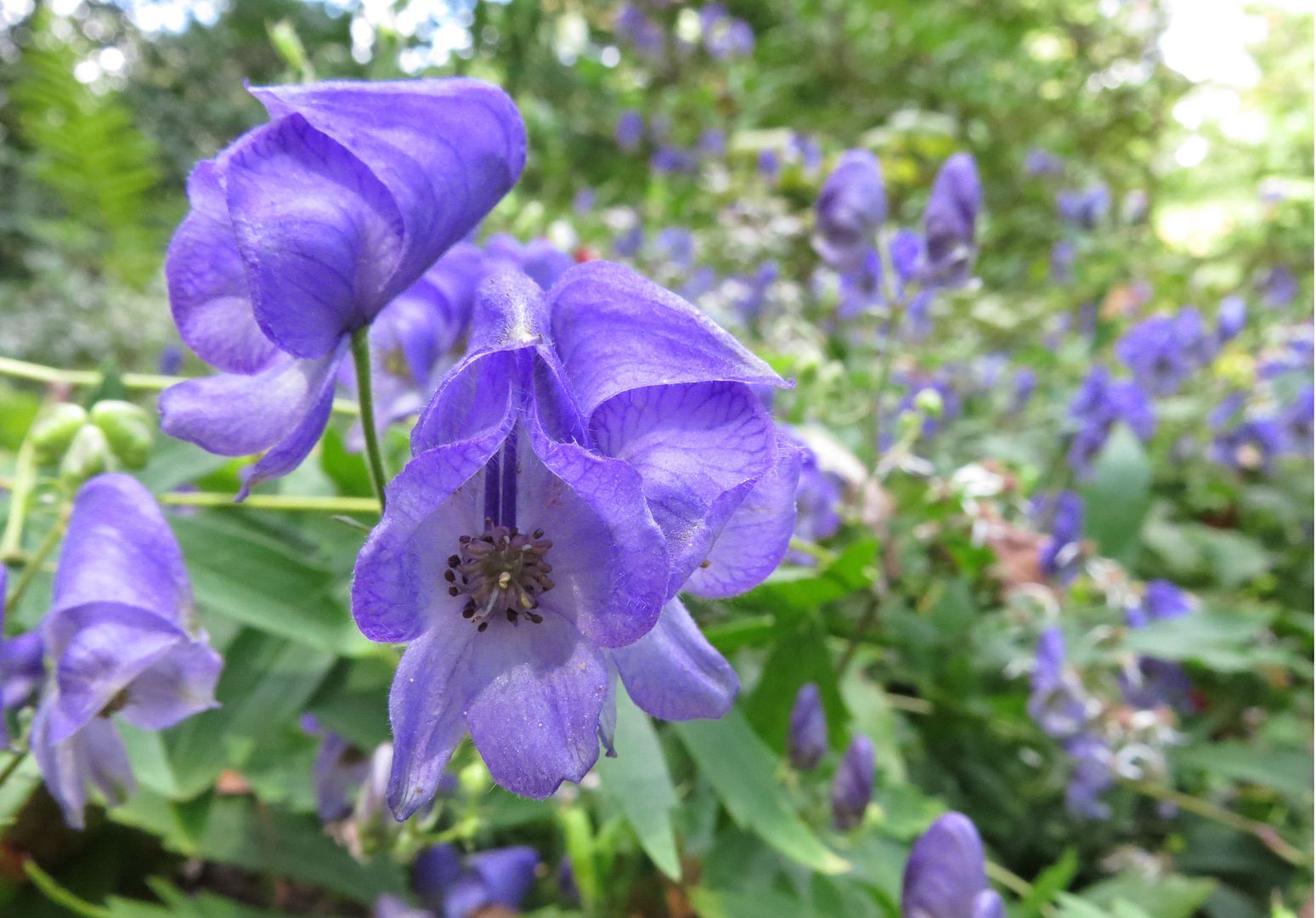
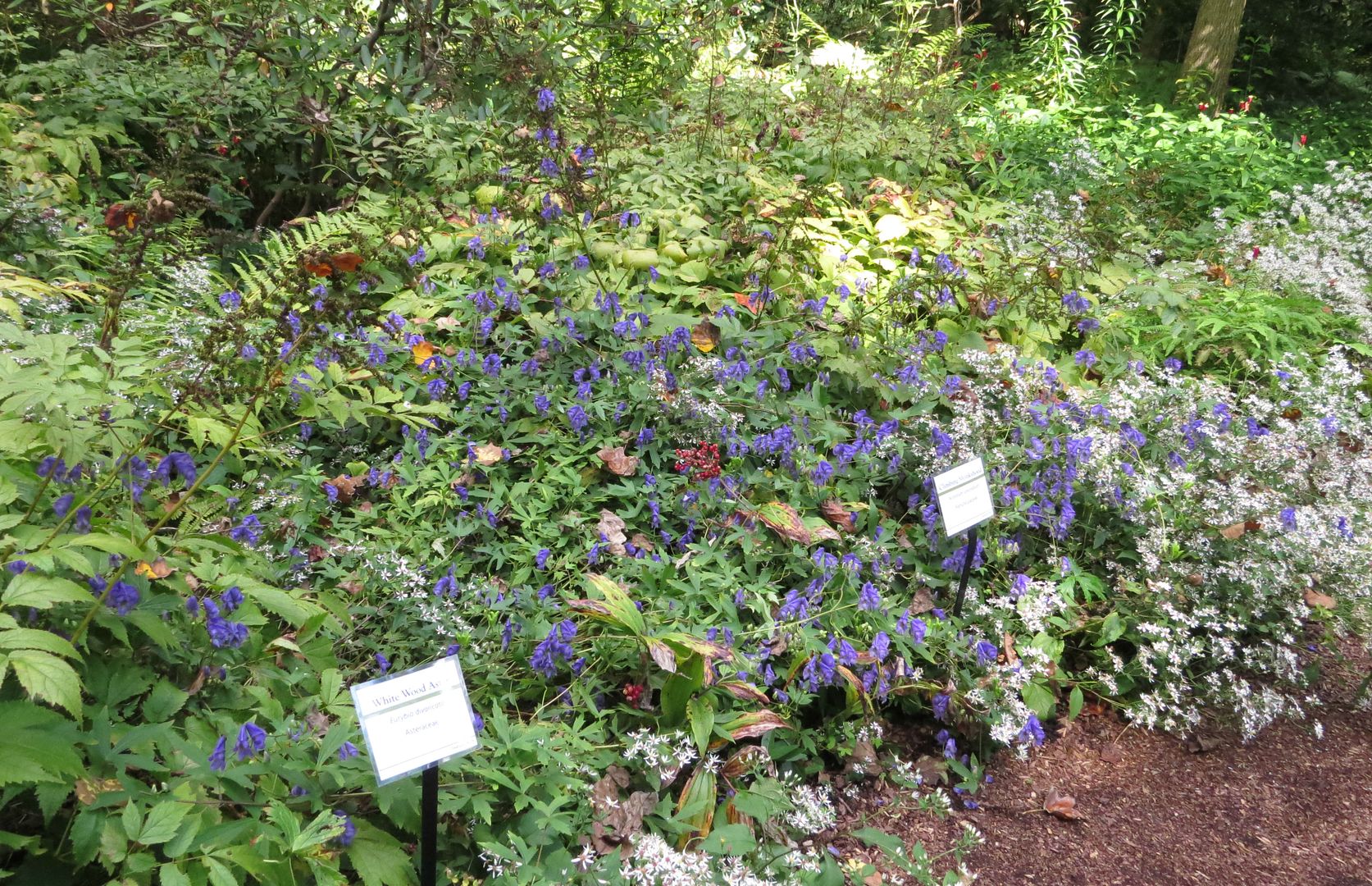
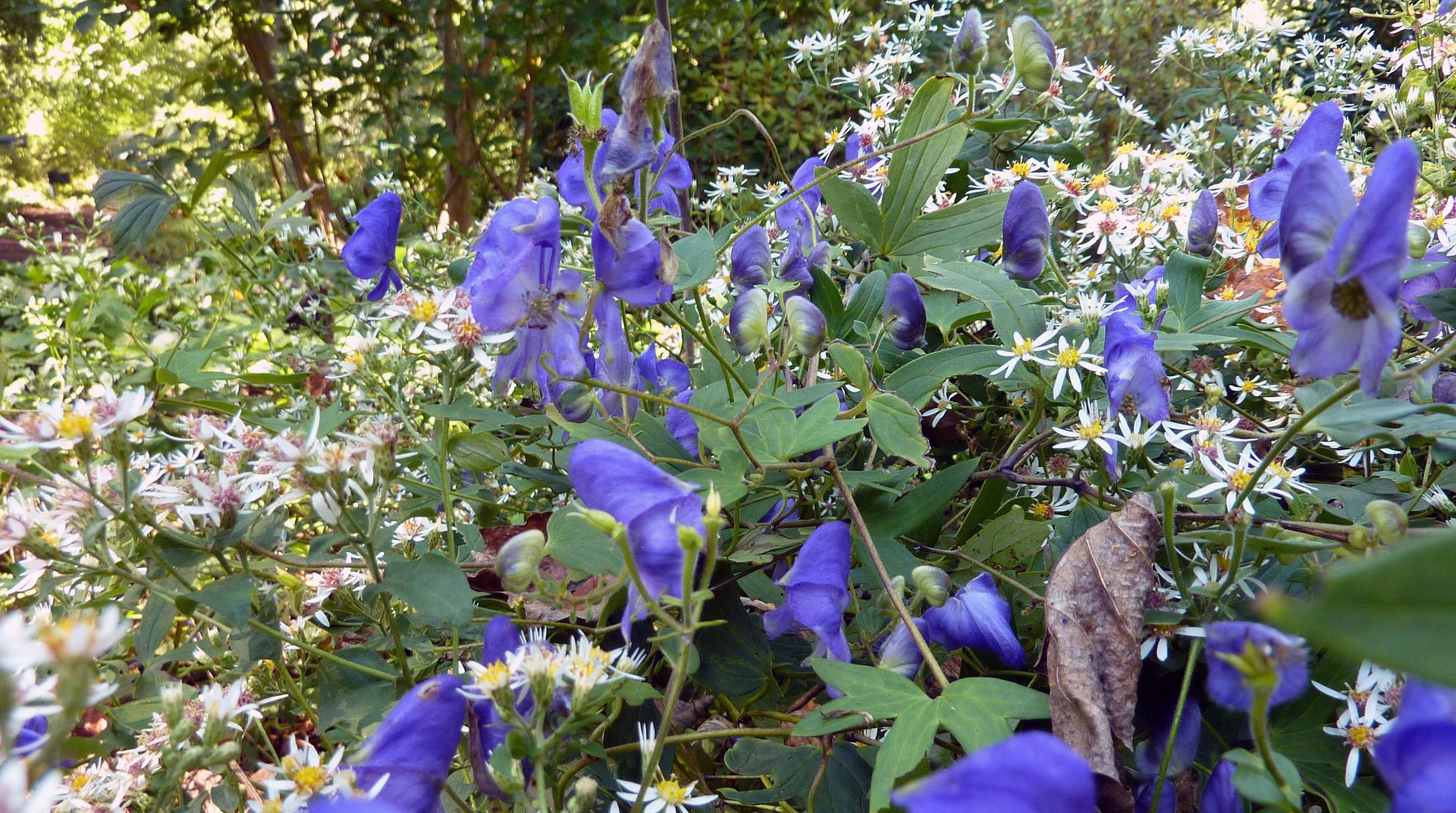
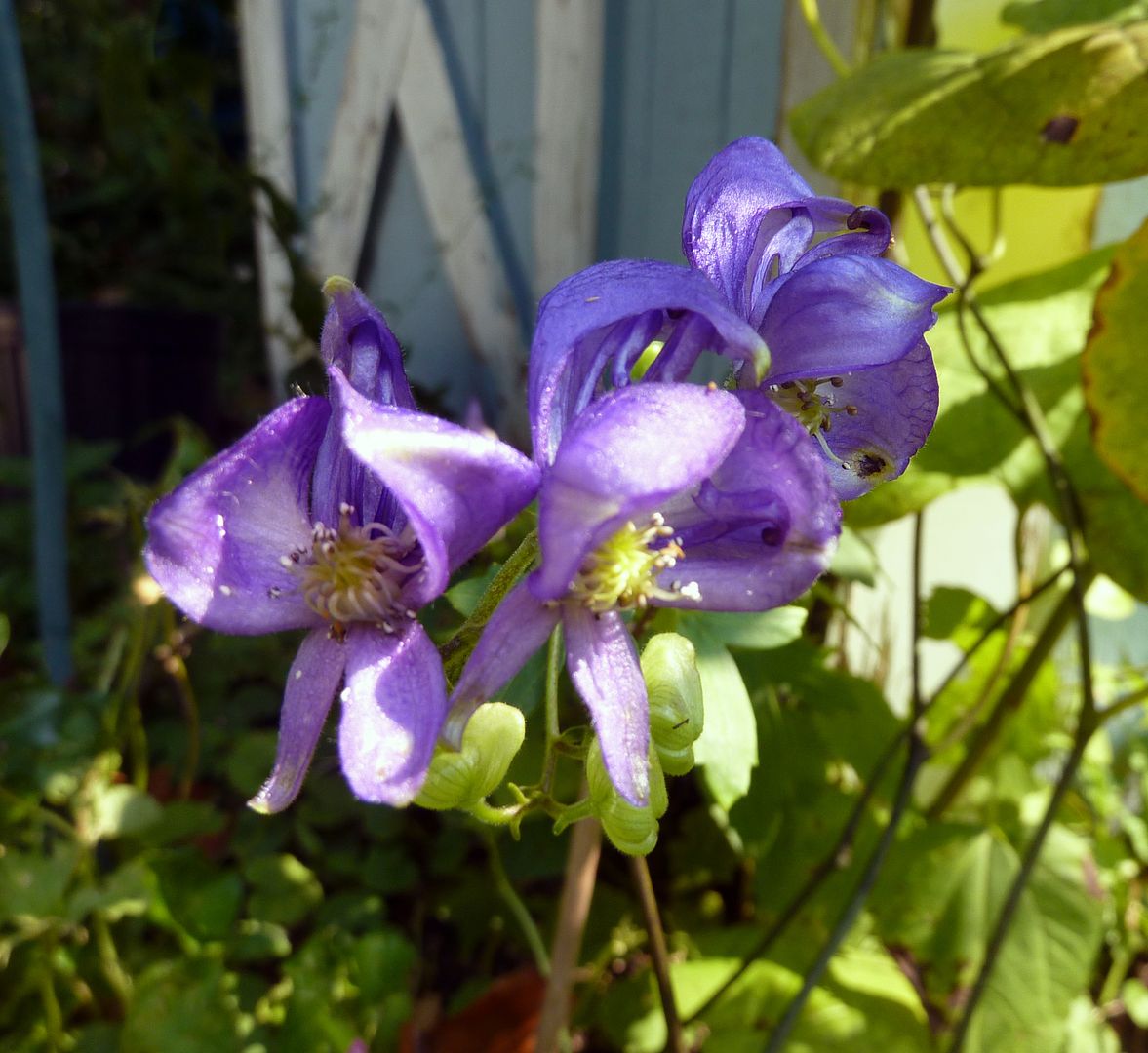
They make Southern Blue Monkshood look so easy to grow. Aconitum uncinatum, is another vine that dies back to the ground. They have it growing in patches and individual specimens, each time though the foliage is usually hidden with whatever plant they're growing up, through, or laying on. It's only after the plant flowers that anyone really bothers to notice it.
The plant I have in my garden is maybe a single stem with a single cluster of flowers at the end of it. Here though, they have plants that send up dozens of stems that spread out and climb up other plants to bloom all over the place.
This is also one of those deadly plants native Americans used to poison their arrows with so maybe it's good that it's not growing in big patches in my yard.
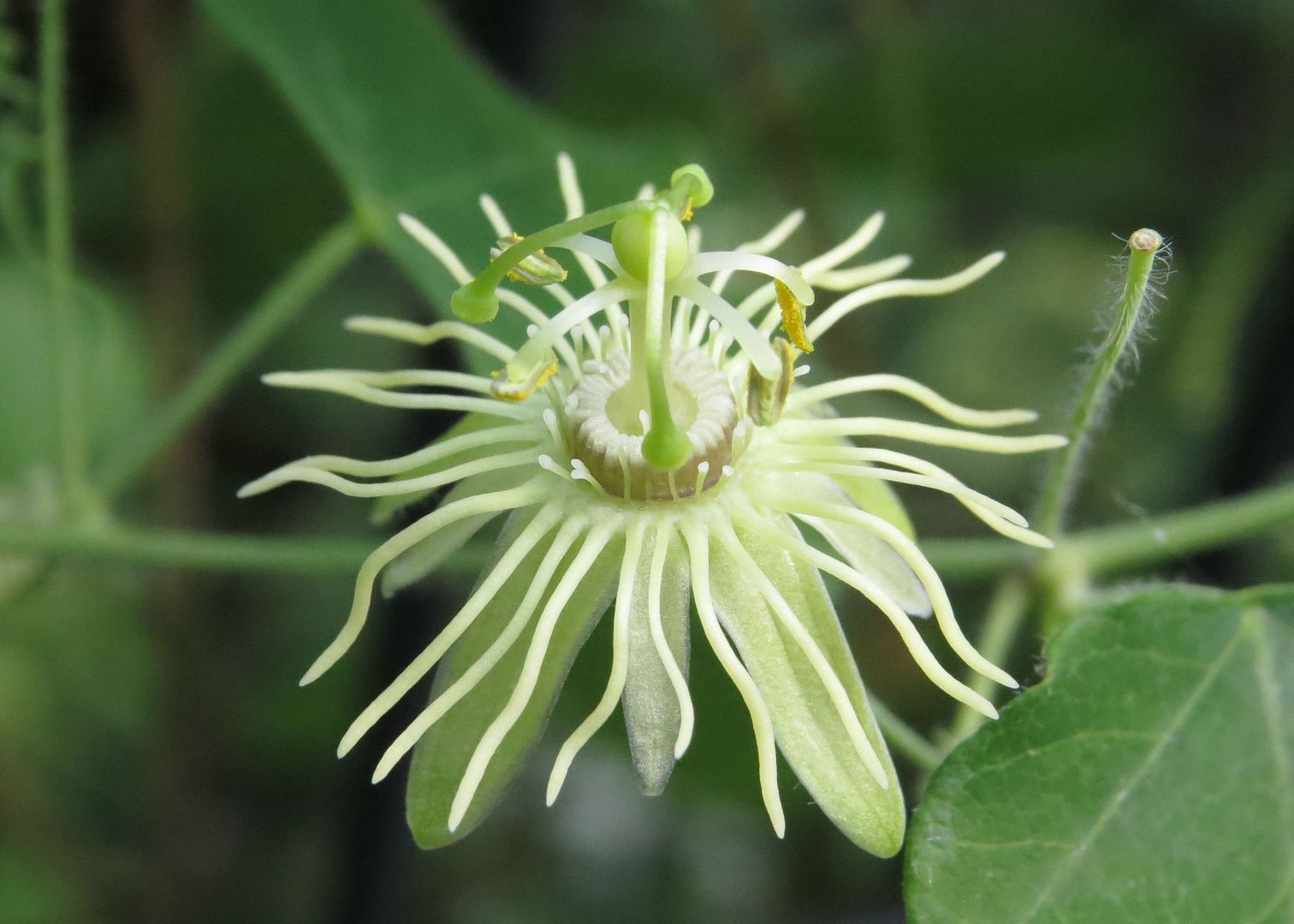
Yellow Passionflower, Passiflora lutea. This plant has the most charming little leaves I've ever seen on a plant, and the flowers are so tiny compared to other passion vines. This could be replacement for English Ivy in some scenarios.
I had a Yellow Passion plant in my garden that would come up as a single stem, make a few flowers and die off. The Mt. Cuba Center though has one that's taken over the corner fence of their Trial Garden and is loaded with blooms and berries.
Showing posts with label Monkshood. Show all posts
Saturday, September 26, 2015
Sunday, September 16, 2012
Sunflowers and Susans at the Mt. Cuba Center
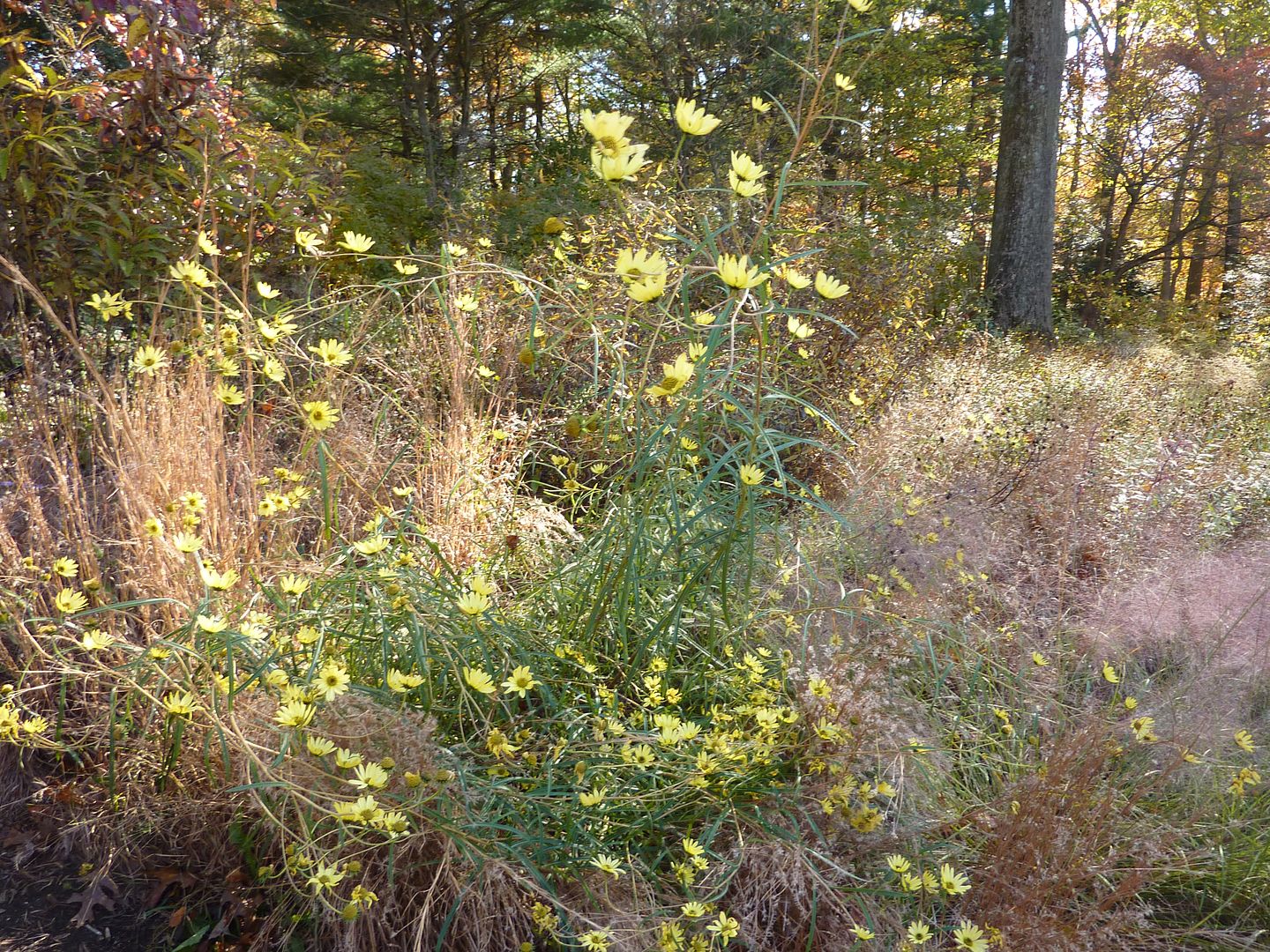
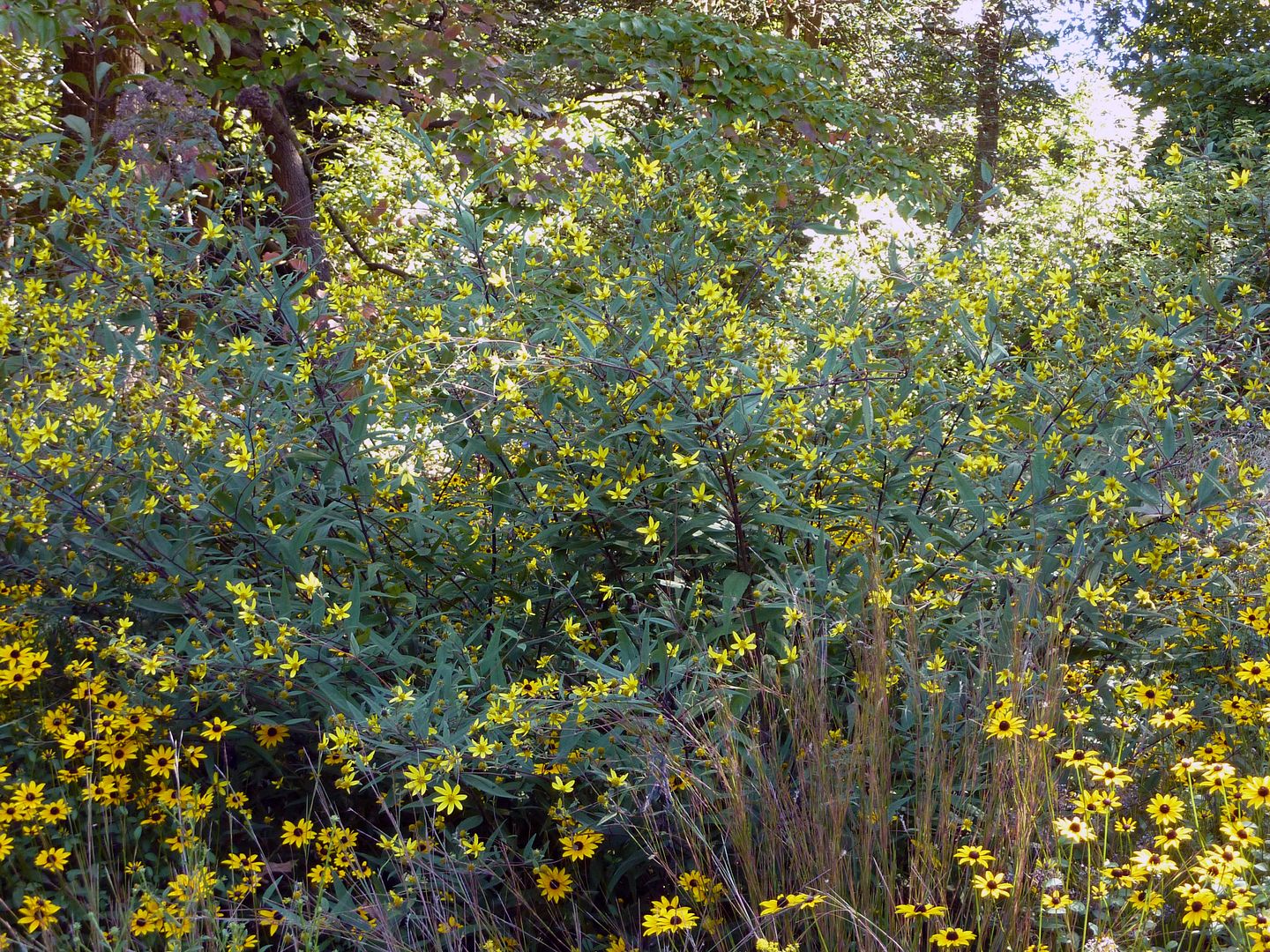
Last year the at the Mt. Cuba Center they had this wonderful perennials sunflower that I just loved the moment I saw it. First off note that everything is pretty much dead in the photo except for it. That's because it was probably late September or October when it was taken.
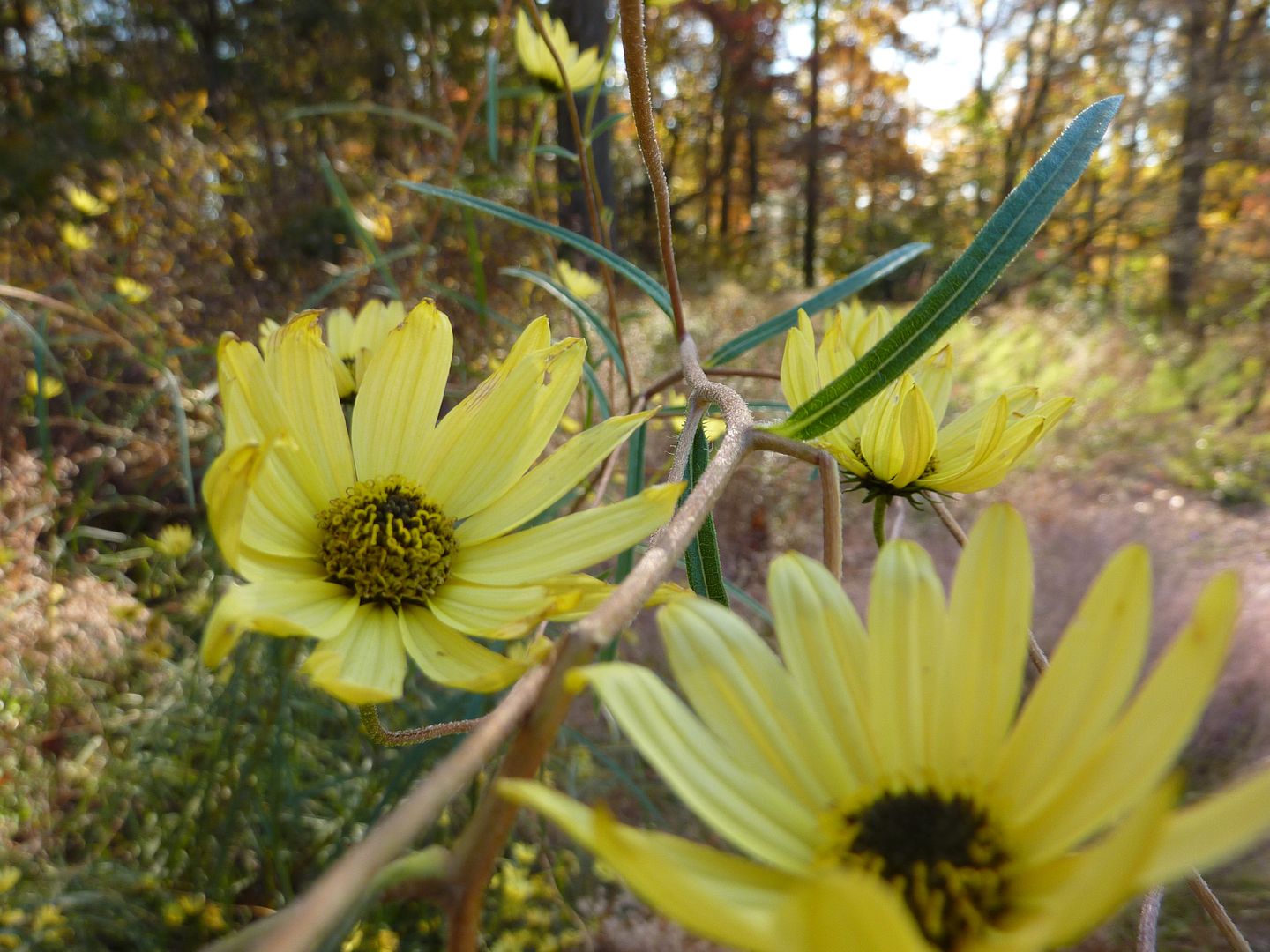
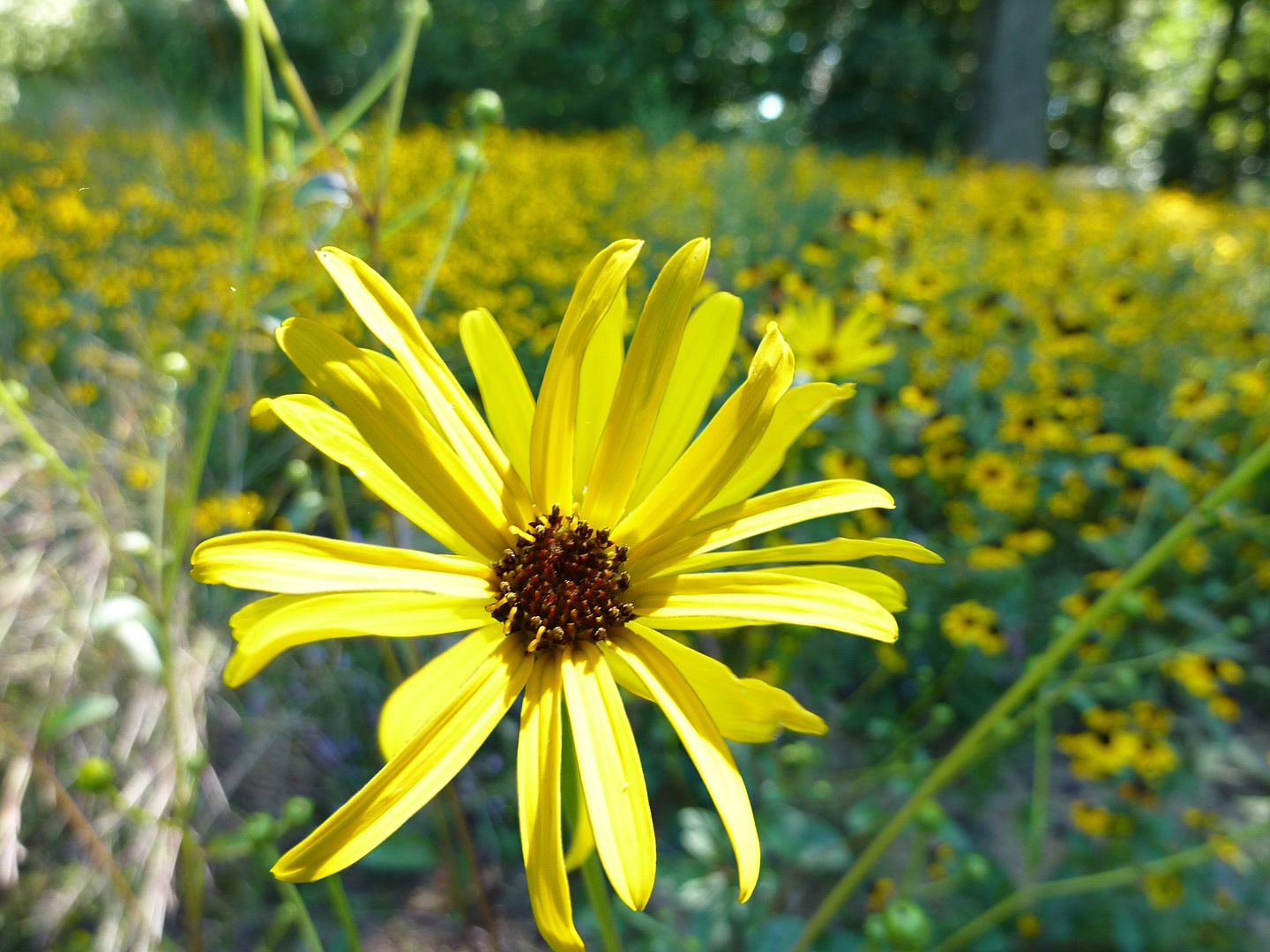
This is Narrow-Leaf Sunflower, Helianthus angustifolius 'Mellow Yellow' which is also called Swamp Sunflower because it likes to grow in slightly wet conditions. The Narrow-Leaf name is fitting because pretty much all of the leaves are thin. 1cm is probably the thickest you'll find them on the plant. The 'Mellow Yellow' cultivar is nice because you get that yellow color without it being too flashy against the autumn sun. It's more of a fall color anyhow. The true species is much brighter and on par with what you see in pretty much every other Helianthus species around.
Also take one last quick glance at the background in both photos.
Here we are this year on the 15th of September. This was for their class on the Asteraceae plant Family, and that's the instructor, David Korbonits standing next to the same plant before it's flowered. I loved this plant when I saw it last year. This year so far it hasn't fallen over or done anything crazy. And as it so happens This Was The Plant They Gave Out For Taking The Course!!! And they asked me to take two of them home! I was Thrilled! (Also note the background and how much more abundant the Black-Eyed Susans are!)
First off Helianthus is a fair sized genus with lots of perennial sunflowers in it, but almost no one is selling them. The ones I do see getting sold are almost always followed by the warning "This plant likes to spread by rhizomes and is not suitable for small gardens." I hate this warning so much because I really don't get the idea of what they mean by a small garden. Compare for a moment how much fuller this plant is from the first photo at the top to the one just above. That's one year's difference and I fell like I can honestly live with that. But its kind of obvious that it's sending up a few dozen more stems.
Presumably the narrow leaves of the plant don't shade out what's growing under or through it. Whether it's growing up through something or falling over on them I don't see this plant shading anything out. I report in later years on if that's the case or not.
Another perennial sunflower that caught my eye was Small Wood Sunflower, Helianthus microcephalus, who's flowers are tiny but very numerous on the plant. Black-Eyed Susans are growing all around them to give you an idea of how small the flowers are. But this one sunflower plant was clearly the pollinator favorite. There were lots of bumblebees all around it. It's another one I'll have to look into. Currently I'm interested in Ox-Eyed Sunflower, Heliopsis helianthoides, which spreads more by seeds and not by rhizomes which presumably makes it easier to control.
Purple-Disk Sunflower, Helianthus atrorubens, was a shorter sunflower at around 4' tall. The stem was somewhat red or burgundy farther down the plant, but I'm told that's not true for all plants of this species. Even so at that height this might be a more garden appropriate species. The Purple comes from a slight illusion when looking at the flowers at the right angle with the right lighting, I otherwise didn't see it. (Also note the background.)
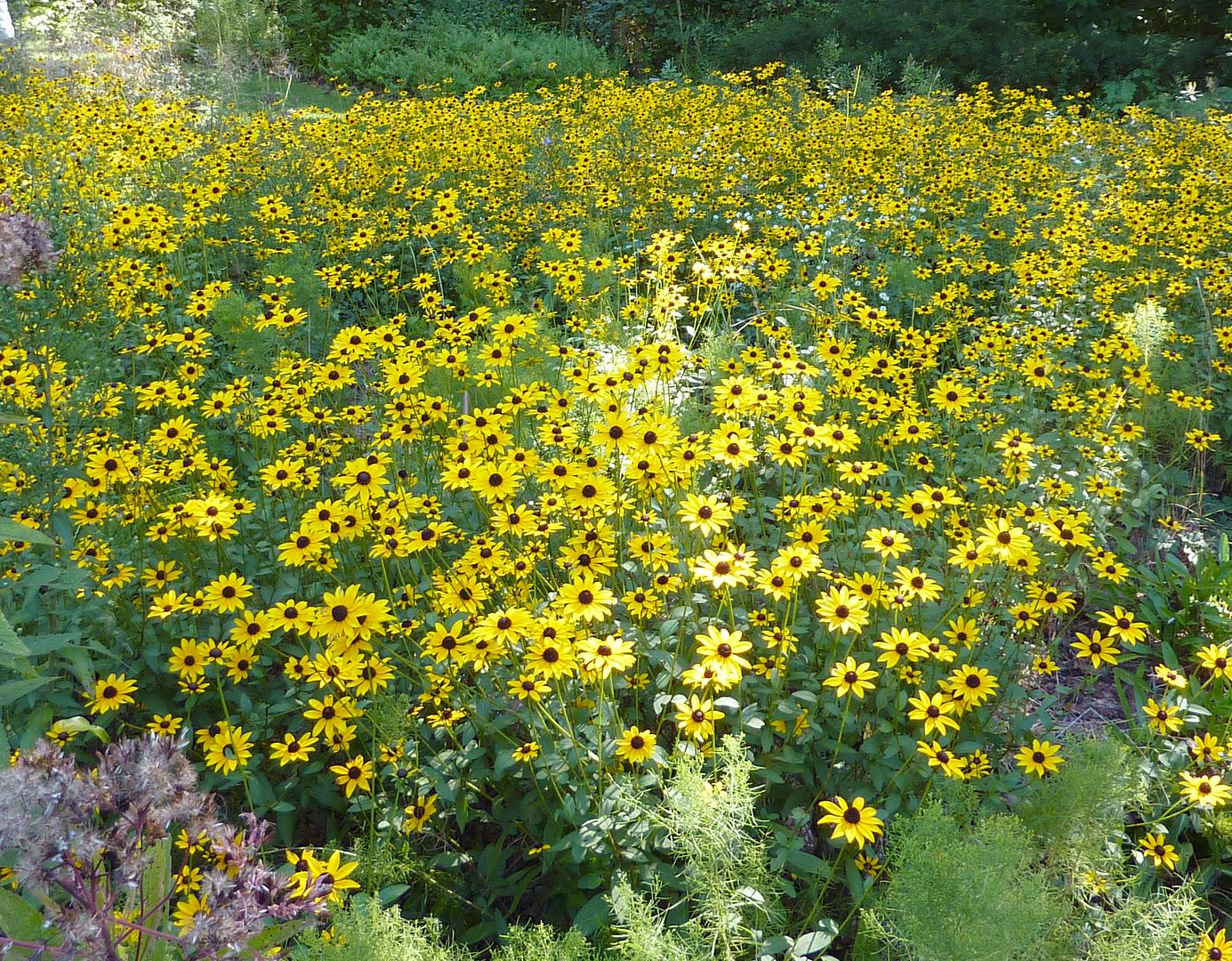
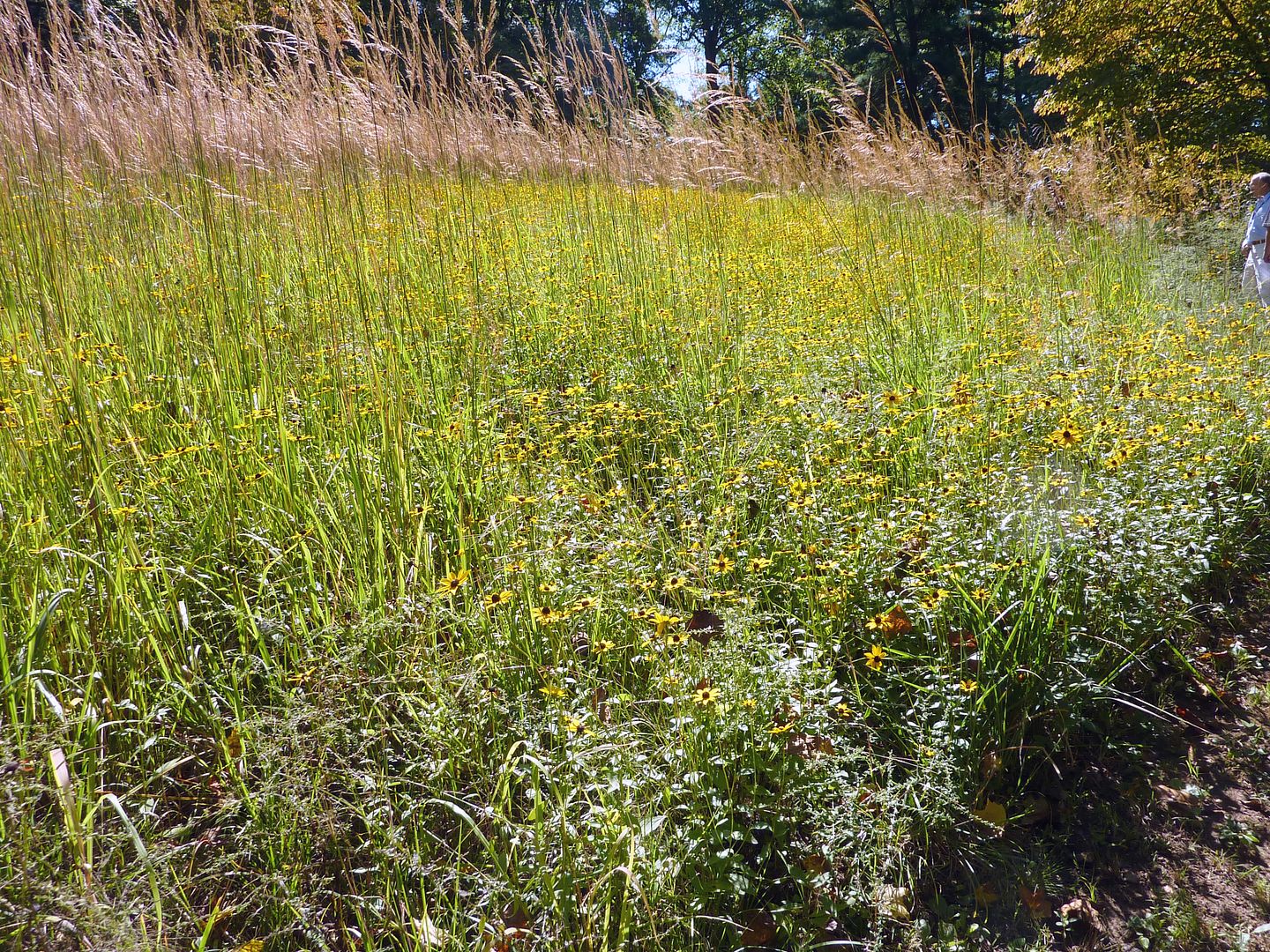
So last year there wasn't anywhere near this many Black-Eyed Susans growing and they've just completely filled in every nook free in the garden. Also I'm giving myself an A+ for this photo.
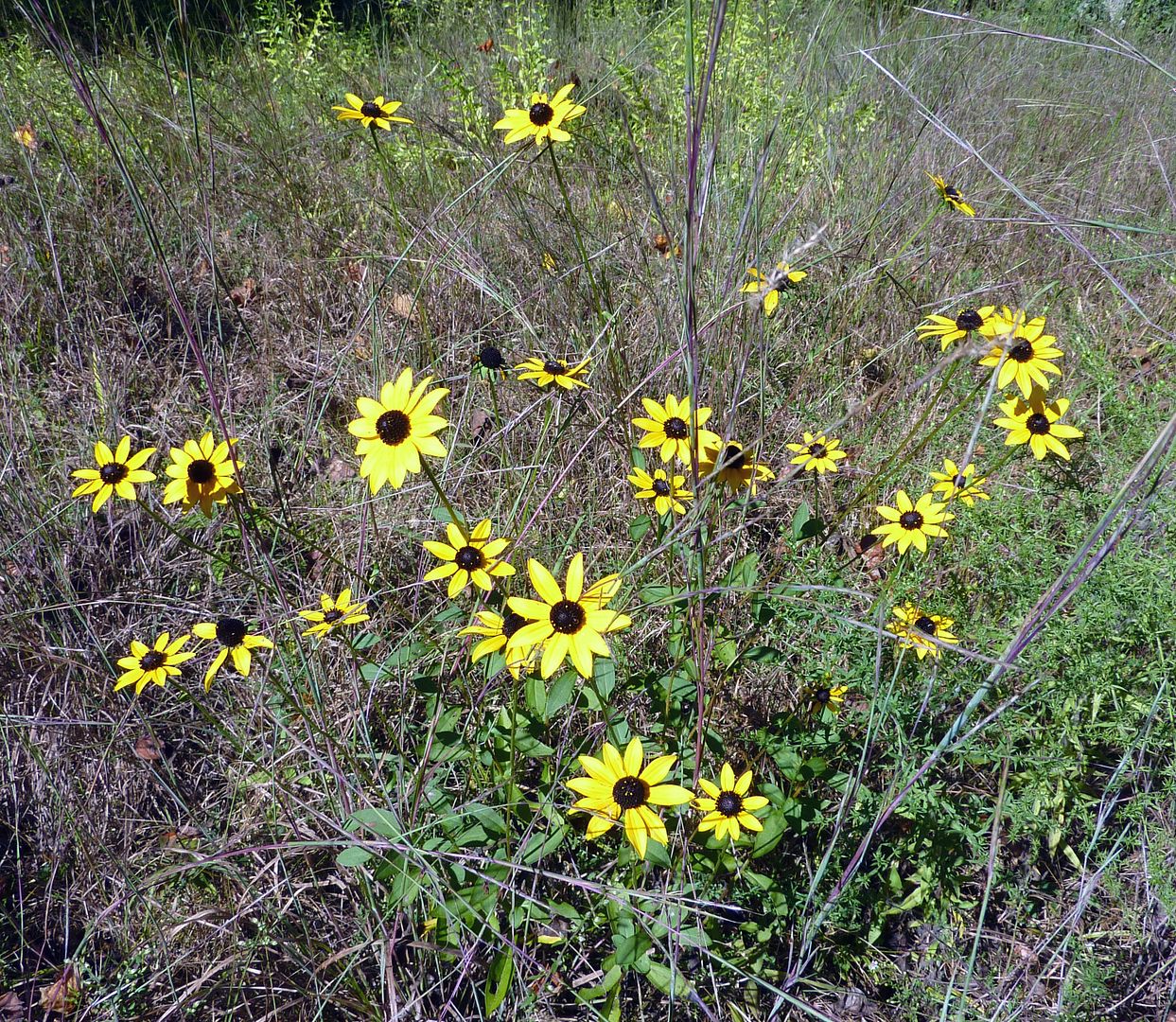
I forget if Rudbeckia fulgida or Rudbeckia hirta was the dominant species, but R. hirta is an annual/biannual while R. fulgida tends to be a perennial. I get so annoyed by seeing this many wonderful flowers and not seeing a single bee on them! I know I've seen tiny Sweat Bees and the occasional Honeybee work them but even in bulk like this, and in a massive native plant garden too almost nothing is pollinating them for long. Clearly it doesn't take much to initiate pollination because they're spreading so well, so maybe the temperature has to be right or something.
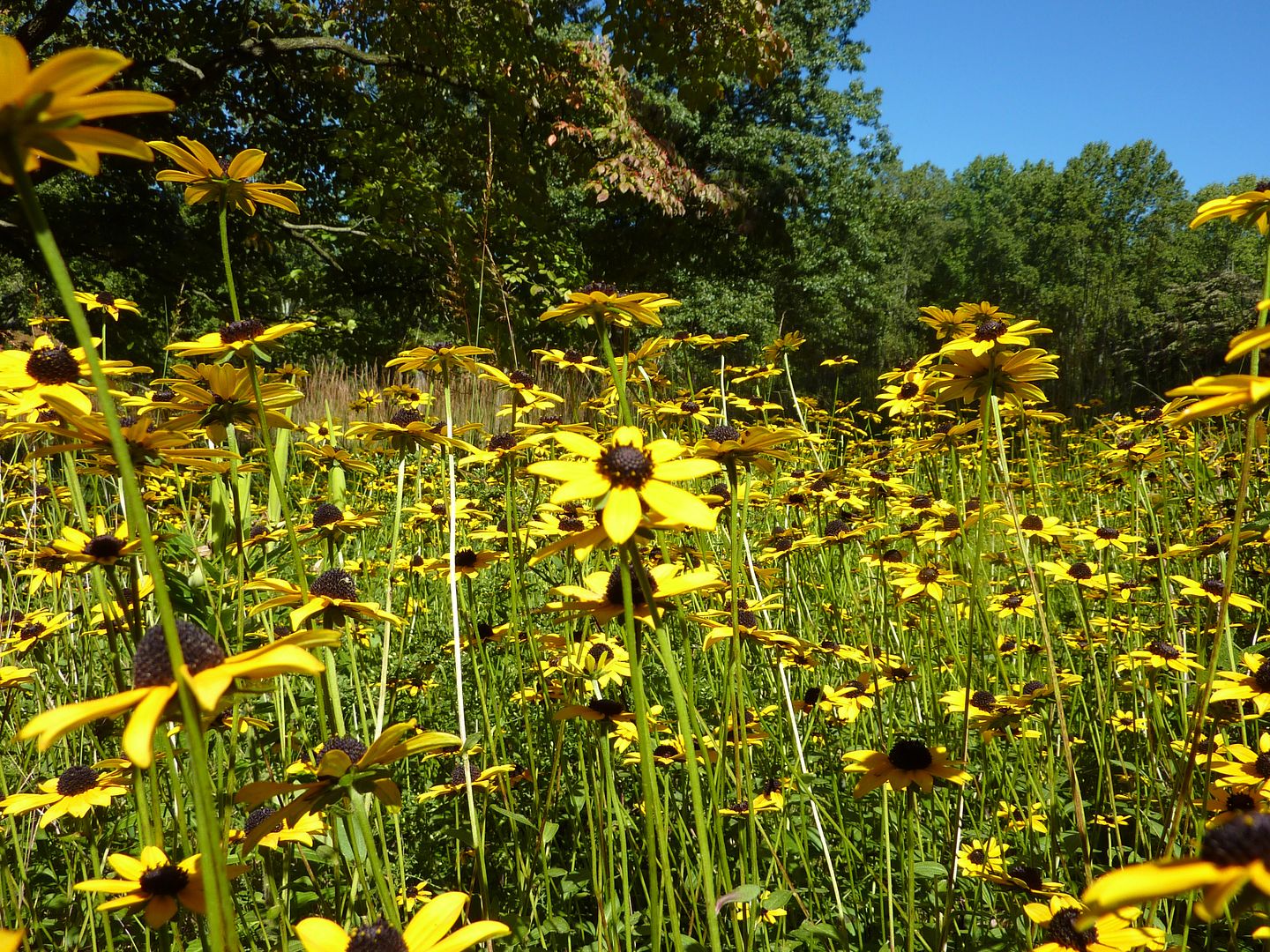
In parts of their meadow garden they grow like crazy even with the towering grasses hanging over them. All of the yellow in these two shots are Rudbeckia flowers!
Getting away from the main clumps there were a few coming up sporadically. Dave who manages the meadow garden mentioned they might be thinning them out next year. Assuming they're perennial they might as well pot them up and hand them out at the next years Wildflower Festival, though that might be a little boring.
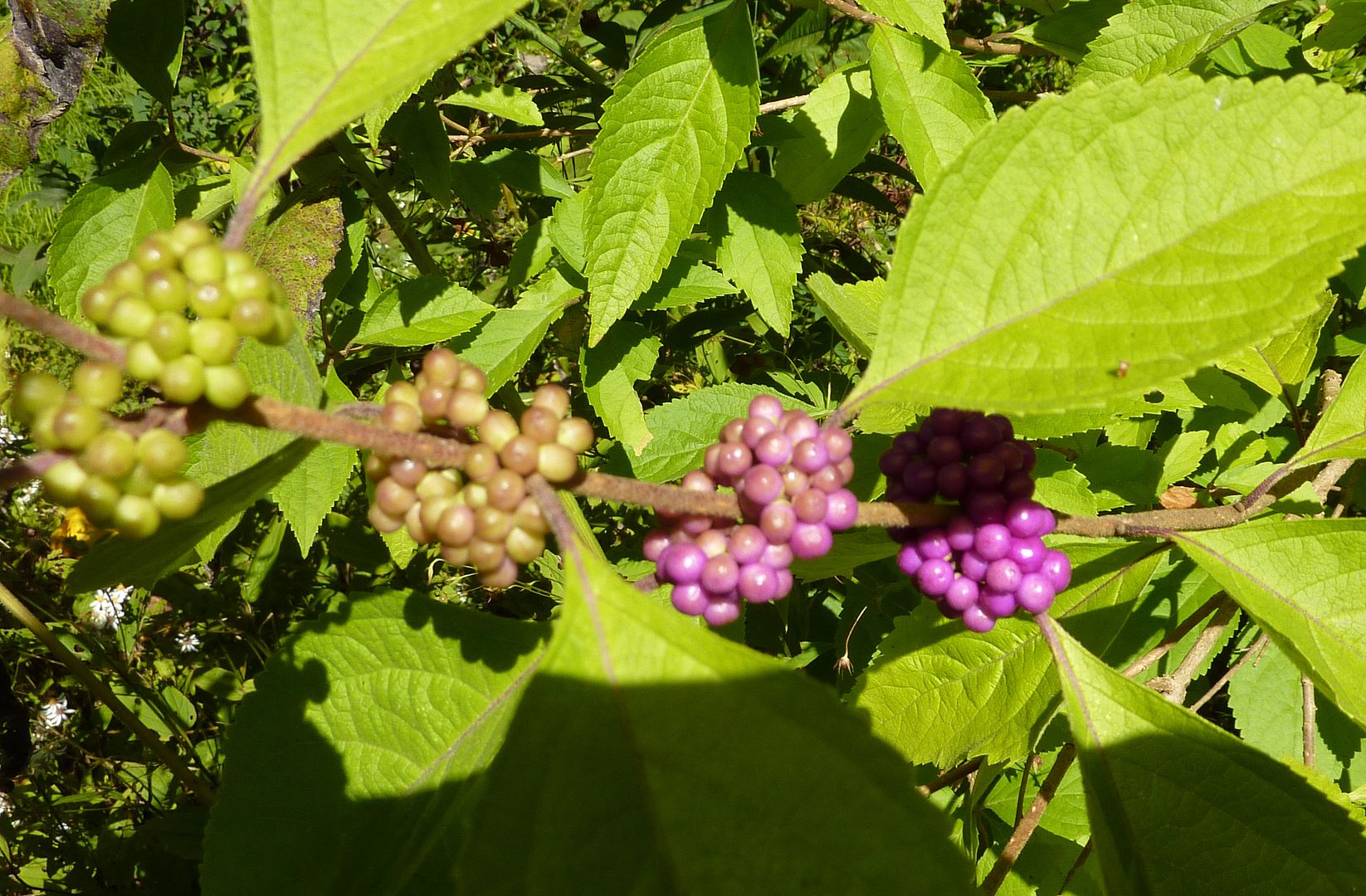
American Beauty Berry, Callicarpa americana, were starting to ripen. Of all the berry plants that ripen now I'm told this is among the first the birds go after.
Southern Blue Monkshood, Aconitum uncinatum, was in bloom and it's always one I love to highlight. Don't get me wrong, it's a deadly poison that will kill you if you eat any part of it. But it's also the only plant that gives you this color in the shade at this time of the year. I've seen Monarchs on it too! Bees love it.
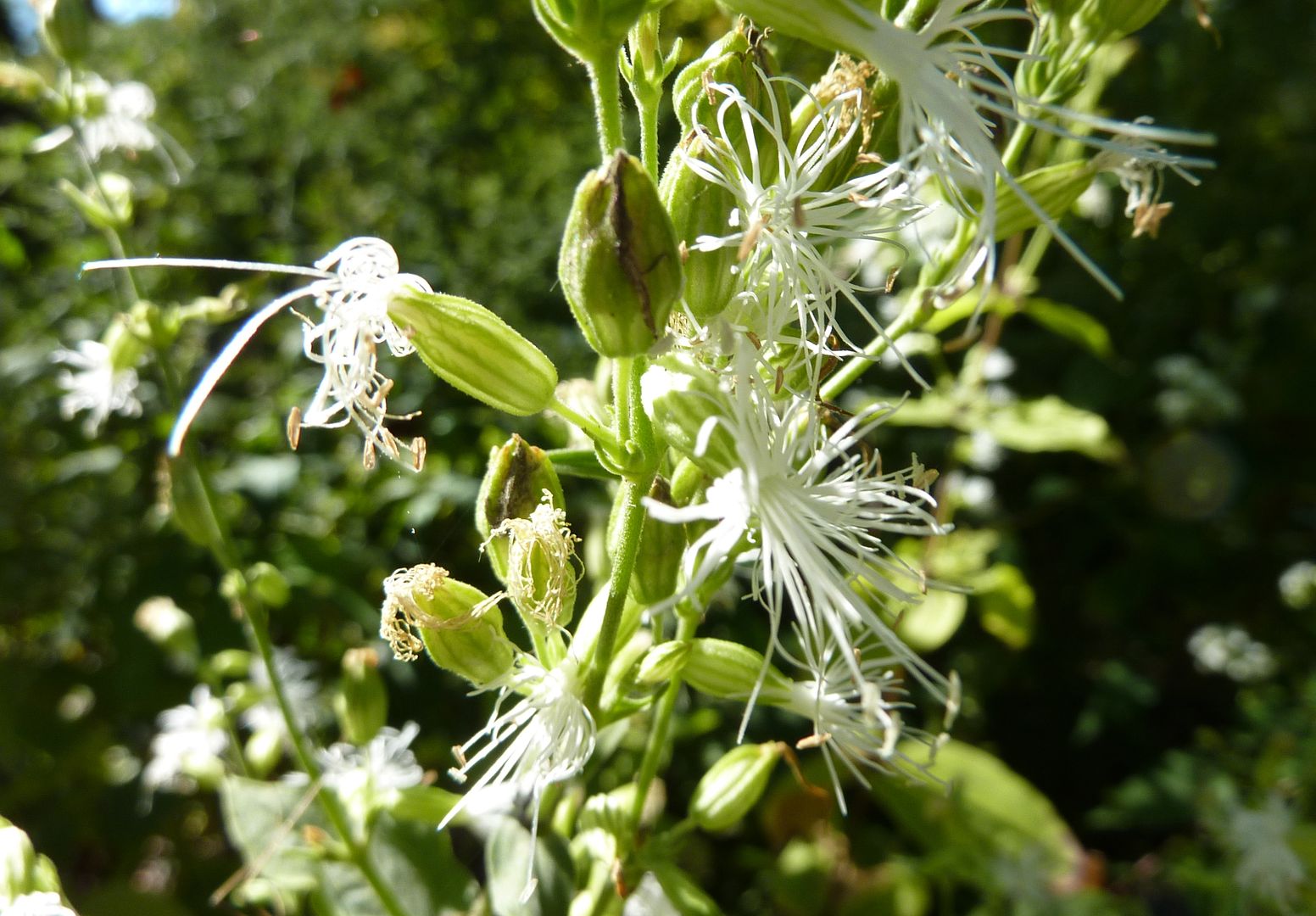
I forgot what this one was but it just looked neat.
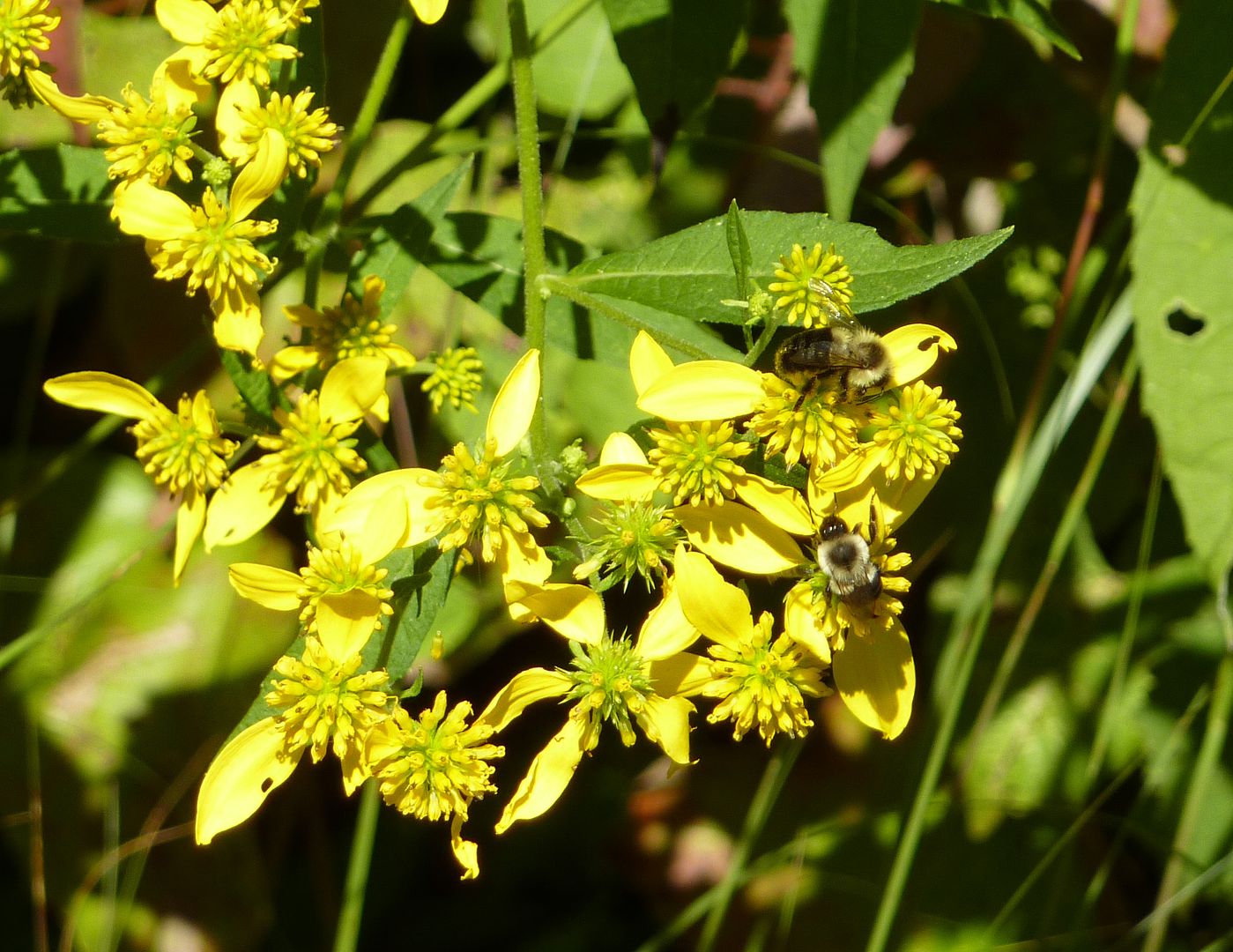
I forgot this one too but apparently it's good at attracting Blister Beetles, which drip a powerful skin irritant that causes some god awful welts, soars, and discoloration. Not something you want to have in the garden ... at least not right up front. The bees were enjoying it though.
This is Narrow-Leaf Sunflower, Helianthus angustifolius 'Mellow Yellow' which is also called Swamp Sunflower because it likes to grow in slightly wet conditions. The Narrow-Leaf name is fitting because pretty much all of the leaves are thin. 1cm is probably the thickest you'll find them on the plant. The 'Mellow Yellow' cultivar is nice because you get that yellow color without it being too flashy against the autumn sun. It's more of a fall color anyhow. The true species is much brighter and on par with what you see in pretty much every other Helianthus species around.
Also take one last quick glance at the background in both photos.
Here we are this year on the 15th of September. This was for their class on the Asteraceae plant Family, and that's the instructor, David Korbonits standing next to the same plant before it's flowered. I loved this plant when I saw it last year. This year so far it hasn't fallen over or done anything crazy. And as it so happens This Was The Plant They Gave Out For Taking The Course!!! And they asked me to take two of them home! I was Thrilled! (Also note the background and how much more abundant the Black-Eyed Susans are!)
First off Helianthus is a fair sized genus with lots of perennial sunflowers in it, but almost no one is selling them. The ones I do see getting sold are almost always followed by the warning "This plant likes to spread by rhizomes and is not suitable for small gardens." I hate this warning so much because I really don't get the idea of what they mean by a small garden. Compare for a moment how much fuller this plant is from the first photo at the top to the one just above. That's one year's difference and I fell like I can honestly live with that. But its kind of obvious that it's sending up a few dozen more stems.
Presumably the narrow leaves of the plant don't shade out what's growing under or through it. Whether it's growing up through something or falling over on them I don't see this plant shading anything out. I report in later years on if that's the case or not.
Another perennial sunflower that caught my eye was Small Wood Sunflower, Helianthus microcephalus, who's flowers are tiny but very numerous on the plant. Black-Eyed Susans are growing all around them to give you an idea of how small the flowers are. But this one sunflower plant was clearly the pollinator favorite. There were lots of bumblebees all around it. It's another one I'll have to look into. Currently I'm interested in Ox-Eyed Sunflower, Heliopsis helianthoides, which spreads more by seeds and not by rhizomes which presumably makes it easier to control.
Purple-Disk Sunflower, Helianthus atrorubens, was a shorter sunflower at around 4' tall. The stem was somewhat red or burgundy farther down the plant, but I'm told that's not true for all plants of this species. Even so at that height this might be a more garden appropriate species. The Purple comes from a slight illusion when looking at the flowers at the right angle with the right lighting, I otherwise didn't see it. (Also note the background.)
So last year there wasn't anywhere near this many Black-Eyed Susans growing and they've just completely filled in every nook free in the garden. Also I'm giving myself an A+ for this photo.
I forget if Rudbeckia fulgida or Rudbeckia hirta was the dominant species, but R. hirta is an annual/biannual while R. fulgida tends to be a perennial. I get so annoyed by seeing this many wonderful flowers and not seeing a single bee on them! I know I've seen tiny Sweat Bees and the occasional Honeybee work them but even in bulk like this, and in a massive native plant garden too almost nothing is pollinating them for long. Clearly it doesn't take much to initiate pollination because they're spreading so well, so maybe the temperature has to be right or something.
In parts of their meadow garden they grow like crazy even with the towering grasses hanging over them. All of the yellow in these two shots are Rudbeckia flowers!
Getting away from the main clumps there were a few coming up sporadically. Dave who manages the meadow garden mentioned they might be thinning them out next year. Assuming they're perennial they might as well pot them up and hand them out at the next years Wildflower Festival, though that might be a little boring.
American Beauty Berry, Callicarpa americana, were starting to ripen. Of all the berry plants that ripen now I'm told this is among the first the birds go after.
Southern Blue Monkshood, Aconitum uncinatum, was in bloom and it's always one I love to highlight. Don't get me wrong, it's a deadly poison that will kill you if you eat any part of it. But it's also the only plant that gives you this color in the shade at this time of the year. I've seen Monarchs on it too! Bees love it.
I forgot what this one was but it just looked neat.
I forgot this one too but apparently it's good at attracting Blister Beetles, which drip a powerful skin irritant that causes some god awful welts, soars, and discoloration. Not something you want to have in the garden ... at least not right up front. The bees were enjoying it though.
Friday, September 16, 2011
Southern Blue Monkshood, Aconitum uncinatum
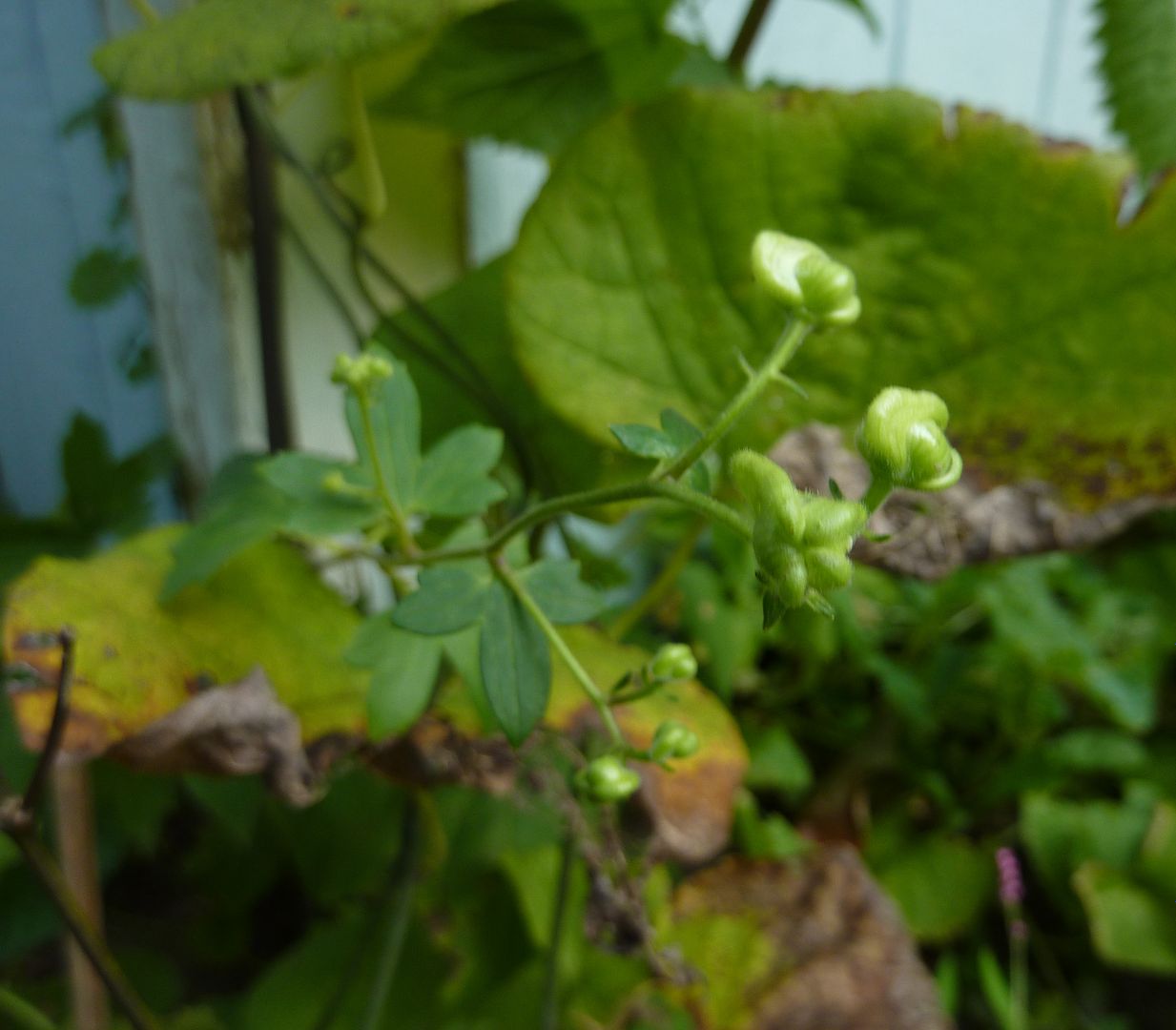
I planted 3 plugs in the spring of Southern Blue Monkshood, Aconitum uncinatum. One kept getting dug up by the wildlife and died. Another is still alive but got nibbled off at the tip, so it's stopped growing. The last impresses me the most though as it's only reach 1' tall and decided to flower.
The flowers have slightly blued up since this photo. Technically this plant is a vine but I'd described it more as a bramble. I've seen mature plants at the Mt. Cuba Center. They send out lots of soft canes that spread and climb up other plants when they can. They don't get taller or spread more than 5' feet before flowering in the late summer. Each winter they die back to the ground, making this a well behaved vine. They grow in partial sun to full shade, like it a little on the wet side I think, and I've seen Monarch butterflies visit the flowers along with bees and hover flies.
Nonnative Monkshoods are more commonly sold. They're not vines or brambles though, but rather up right perennials on par with a snapdragon or lupine. It seems our natives are the only ones that grow to be semi-vines. They're a real treat to have because the foliage stays hidden for most of the year. Our natives are not widely sold but I got mine from Toadshade Wildflower Farm, direct link.
The flowers have slightly blued up since this photo. Technically this plant is a vine but I'd described it more as a bramble. I've seen mature plants at the Mt. Cuba Center. They send out lots of soft canes that spread and climb up other plants when they can. They don't get taller or spread more than 5' feet before flowering in the late summer. Each winter they die back to the ground, making this a well behaved vine. They grow in partial sun to full shade, like it a little on the wet side I think, and I've seen Monarch butterflies visit the flowers along with bees and hover flies.
Nonnative Monkshoods are more commonly sold. They're not vines or brambles though, but rather up right perennials on par with a snapdragon or lupine. It seems our natives are the only ones that grow to be semi-vines. They're a real treat to have because the foliage stays hidden for most of the year. Our natives are not widely sold but I got mine from Toadshade Wildflower Farm, direct link.
Subscribe to:
Posts (Atom)