Showing posts with label New Jersey Tea. Show all posts

Wednesday, June 19, 2019

Ants and Azure Caterpillars.

 
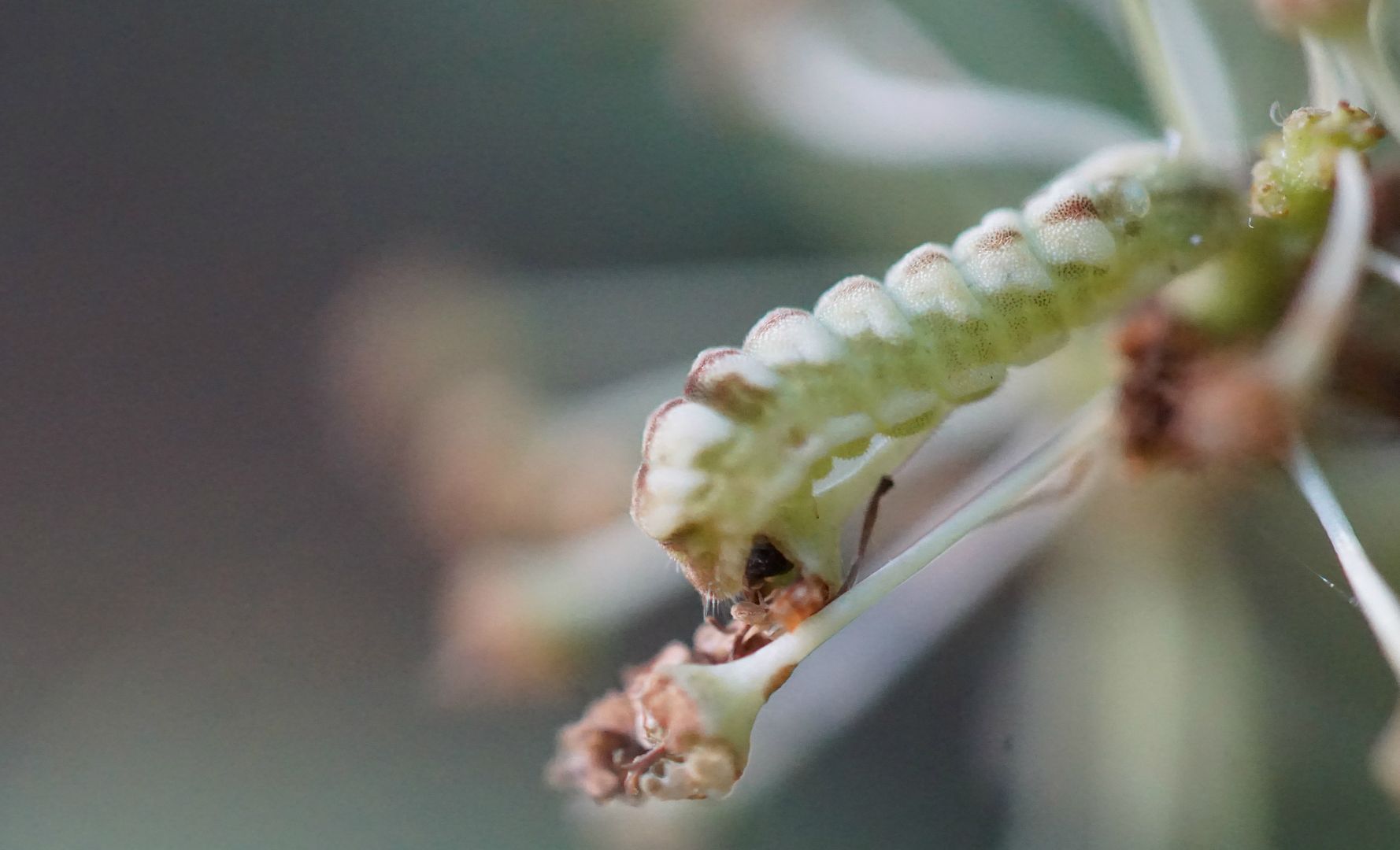
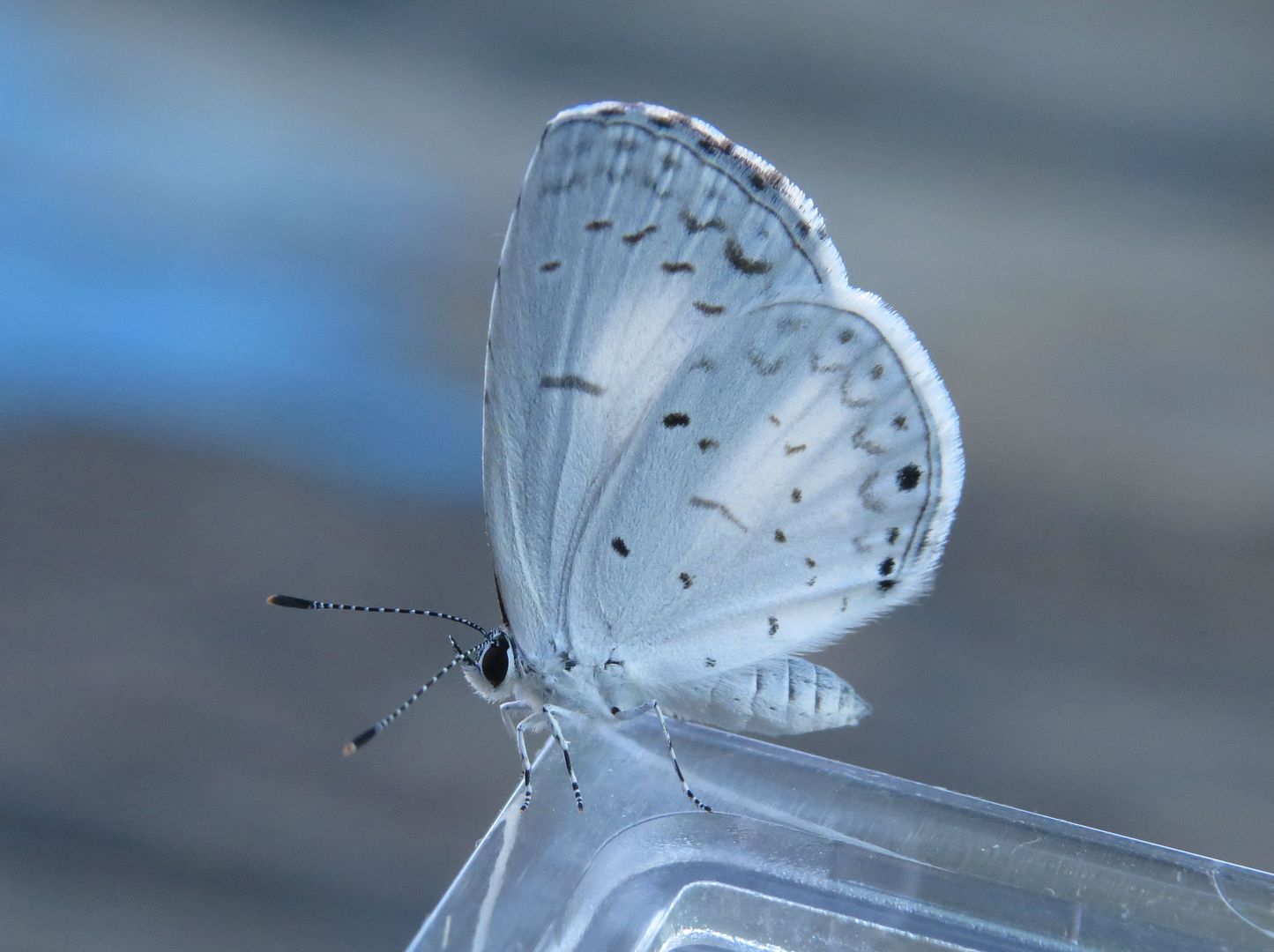
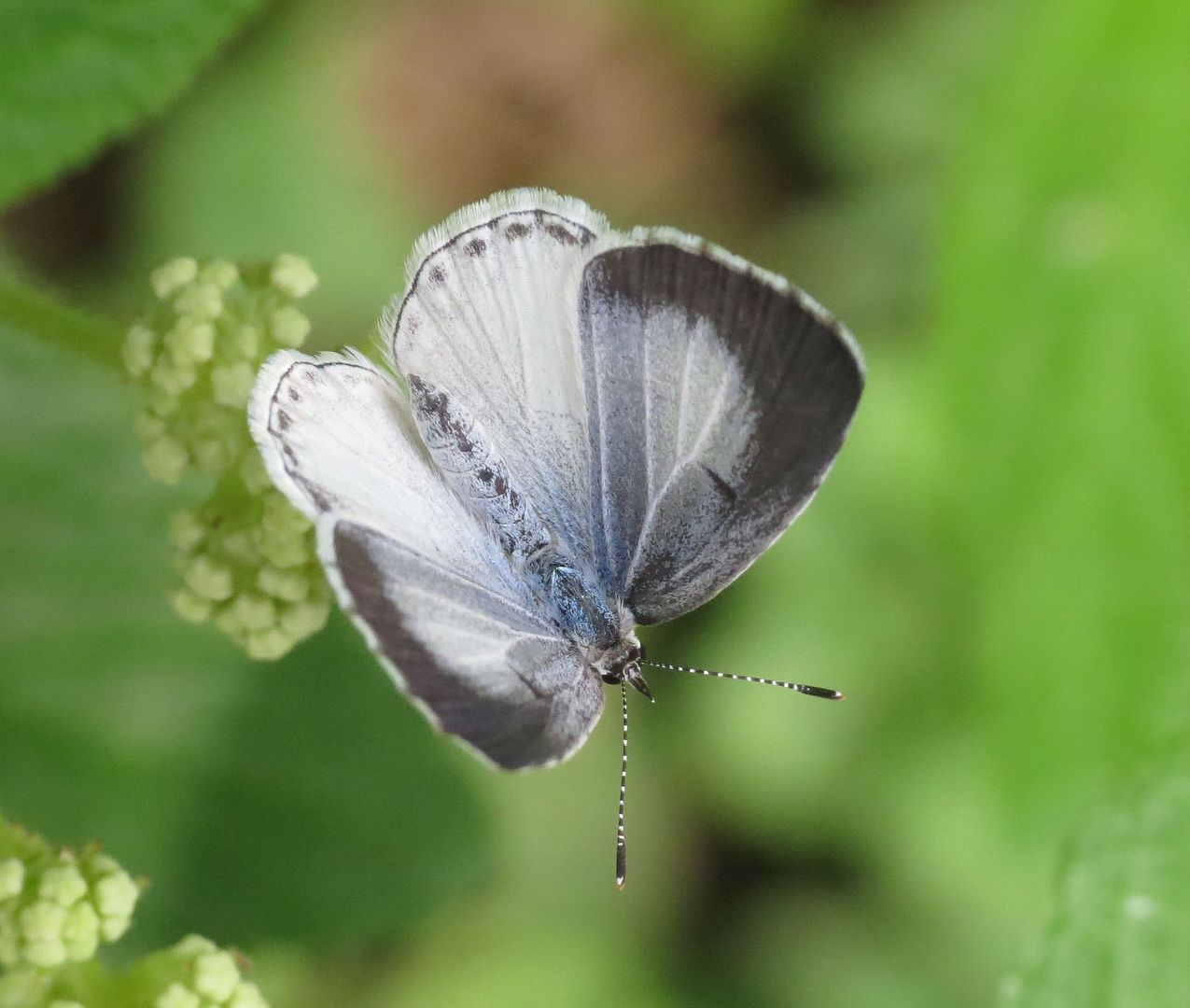
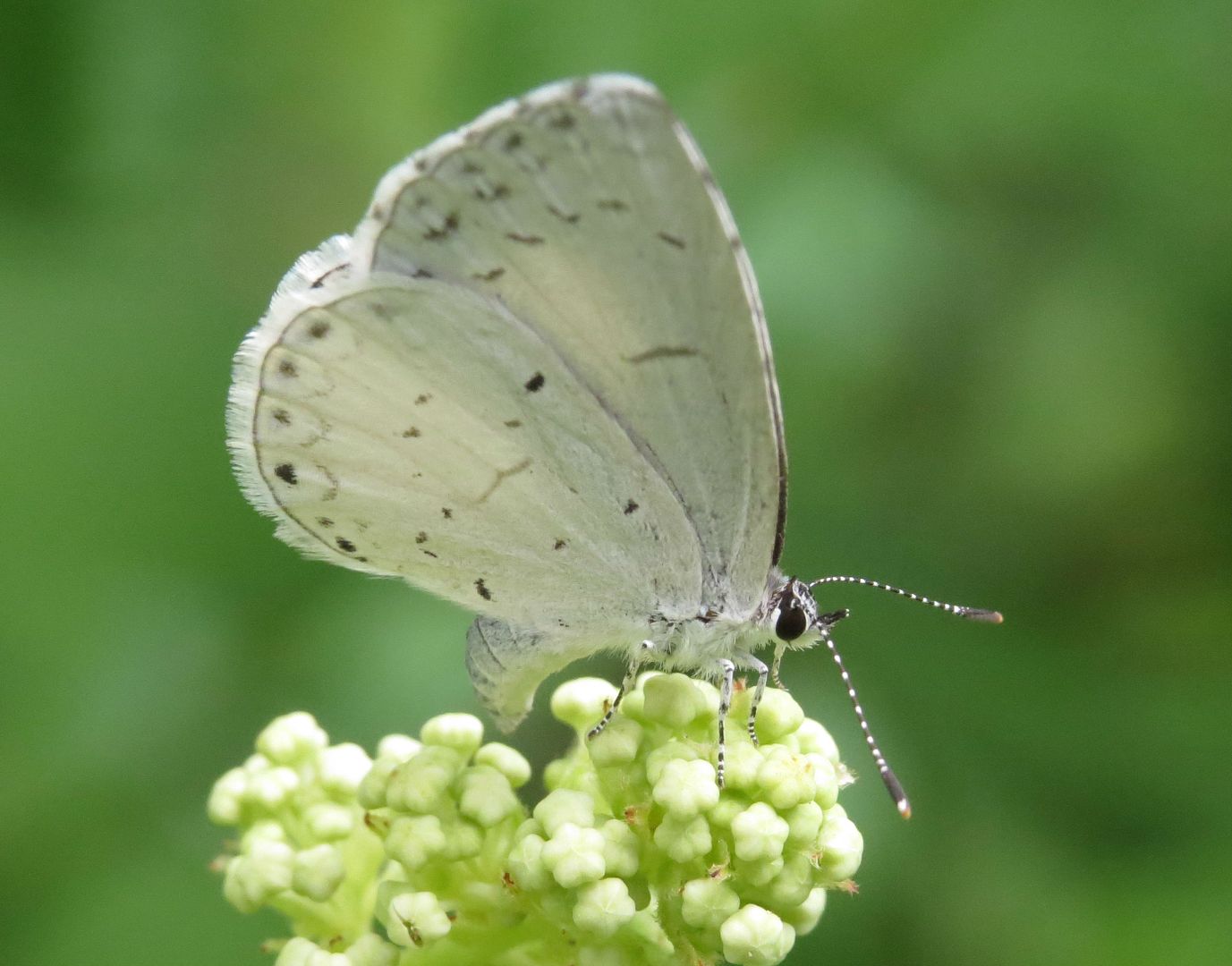
 A couple of weeks ago (about three) the Spring/Summer Azure butterflies were out and I managed to find one laying some eggs on the New Jersey Tea, Ceanothus americanus. I'm calling it a Spring/Summer Azure because my understanding is that both Spring and Summer Azure butterflies are species complexes, meaning several nearly identical-looking species that scientists have been taking for granted as being the one or fewer species.

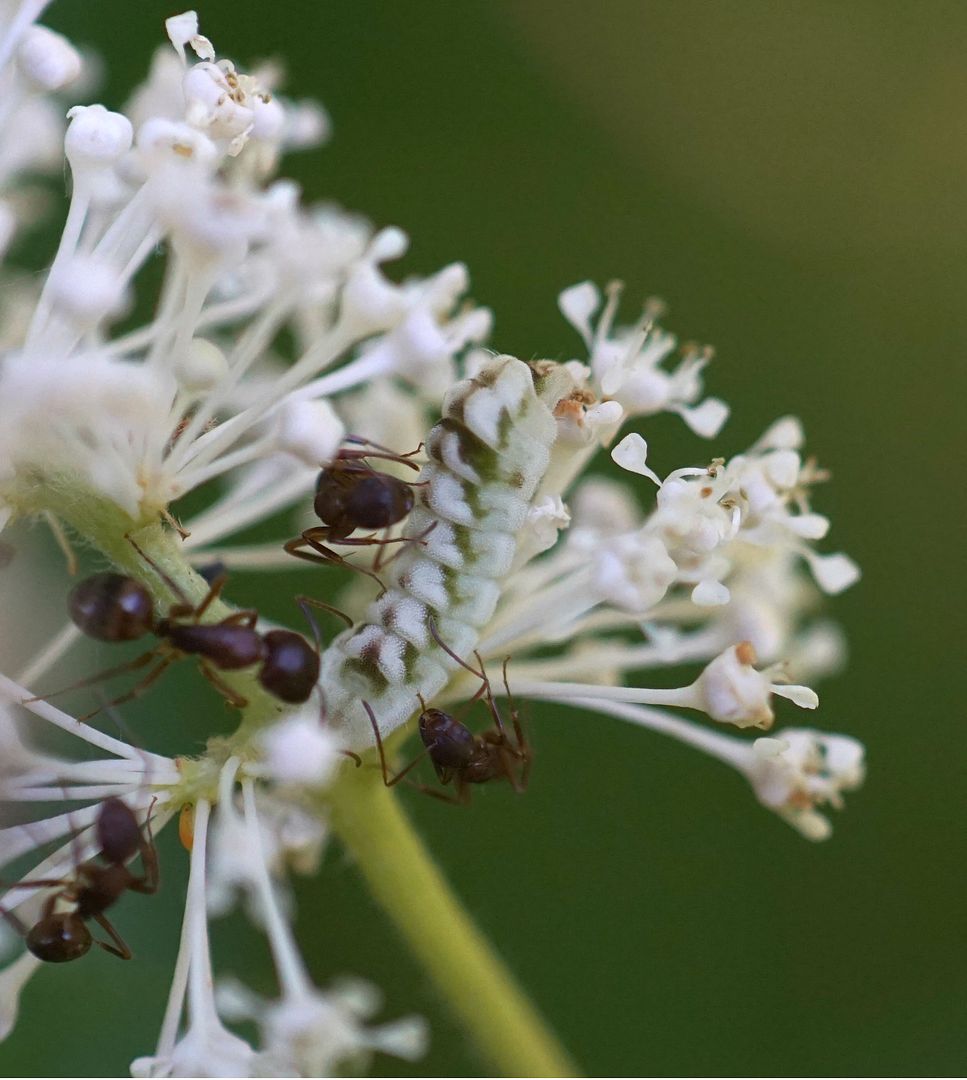
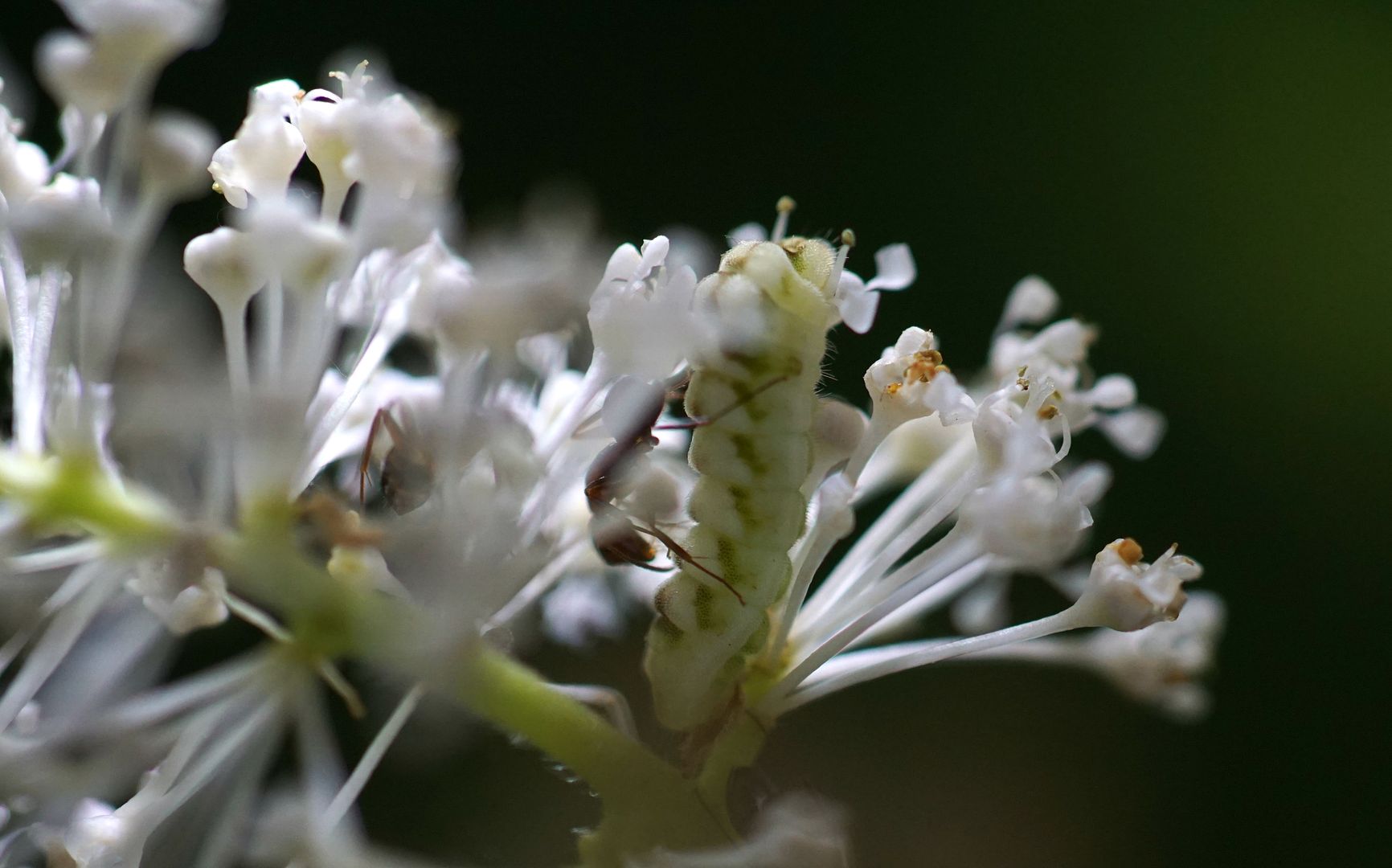
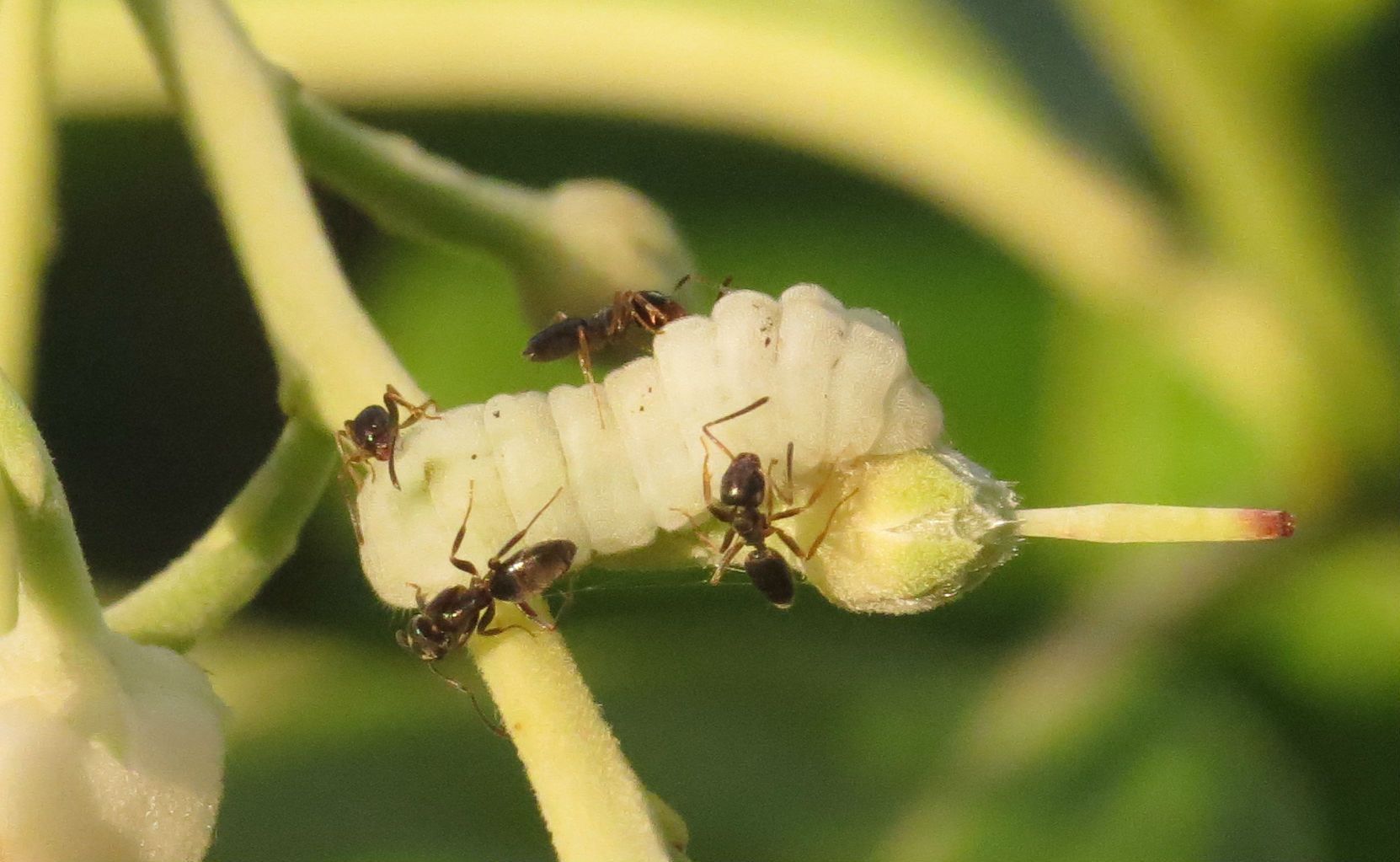
 The resulting caterpillars mostly hatched and chewed on the flowers. They take on a white coloration and blend in with the petals near perfectly. This would be the perfect camouflage were it not for the huge orange ant tending it. 


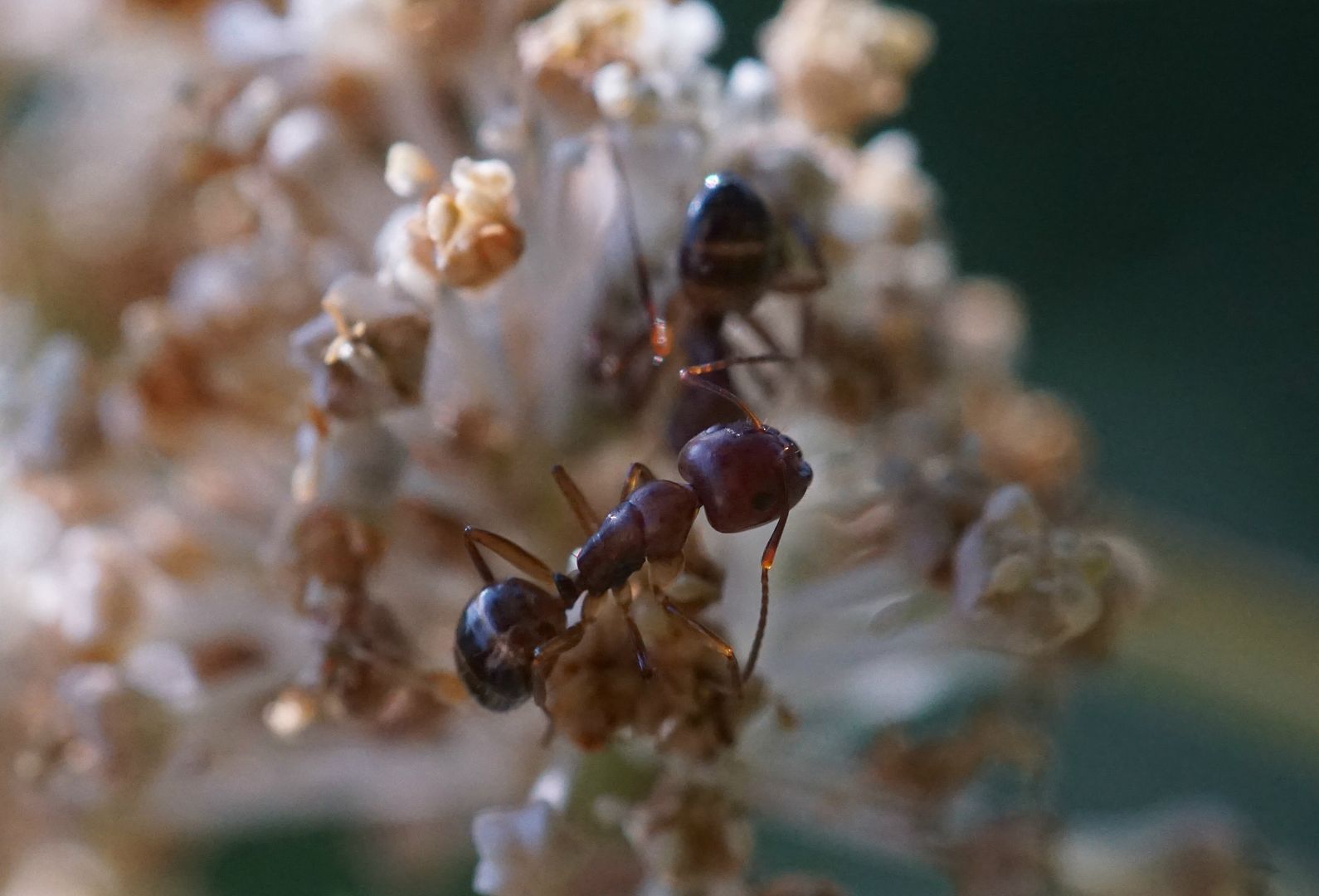
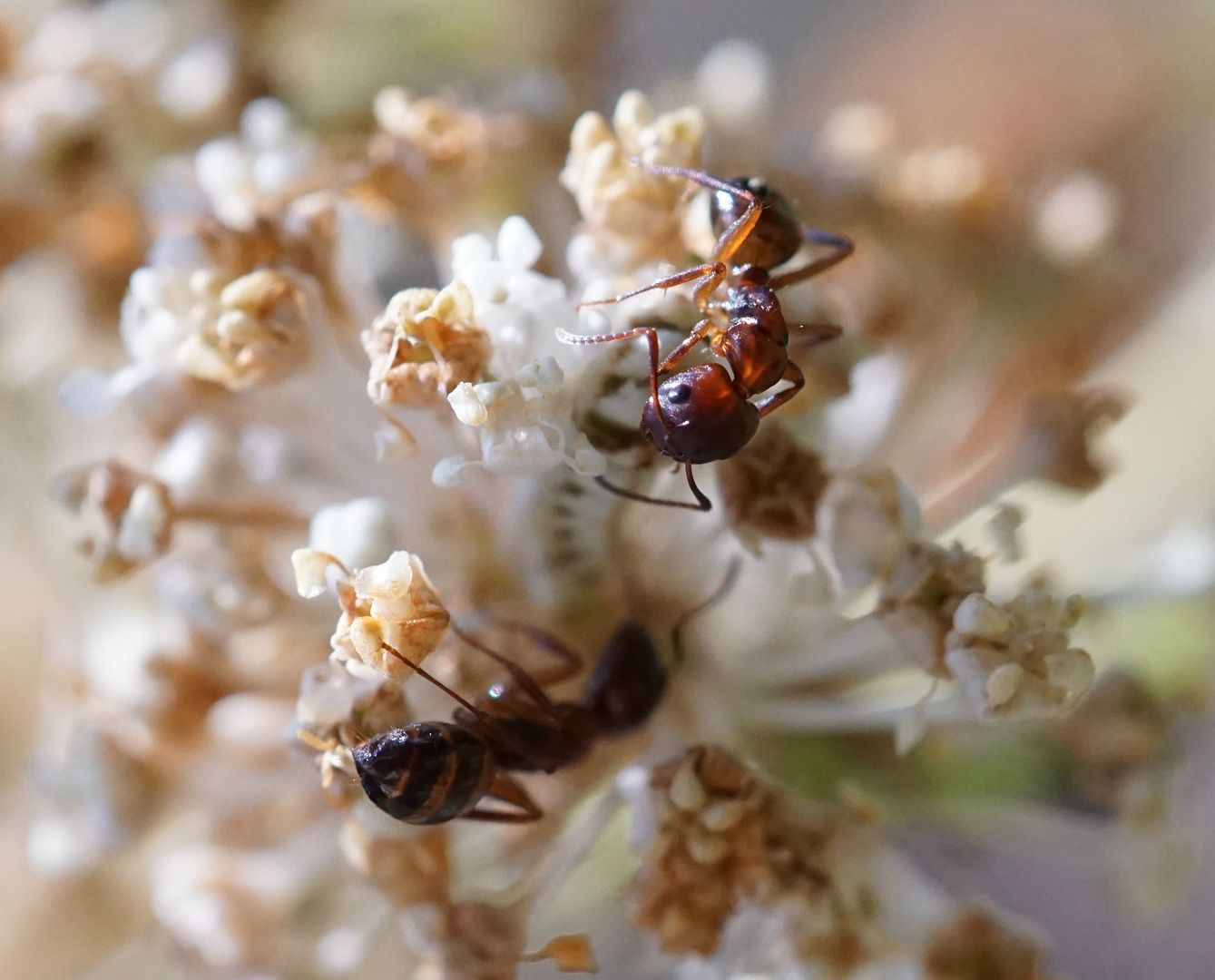
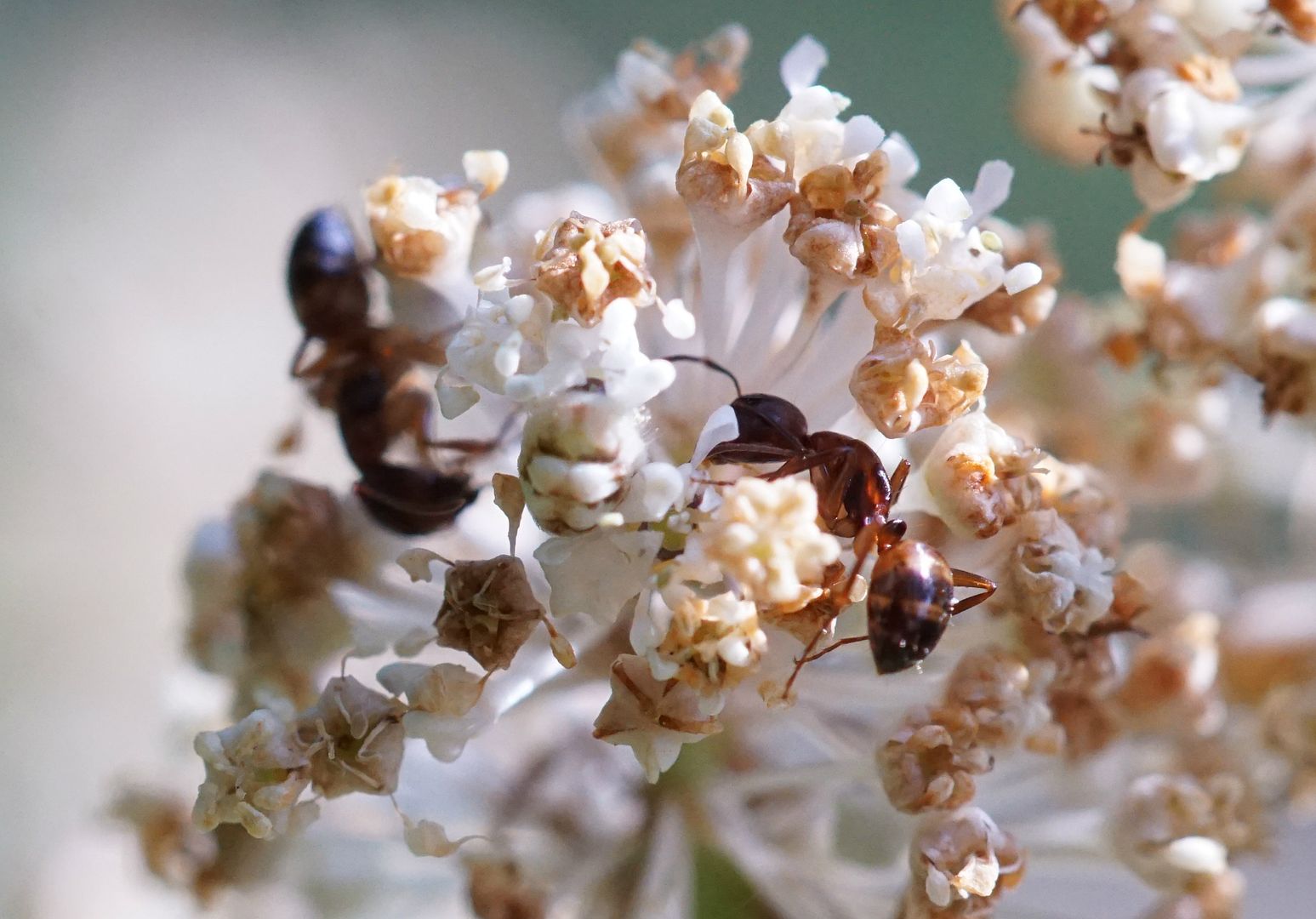
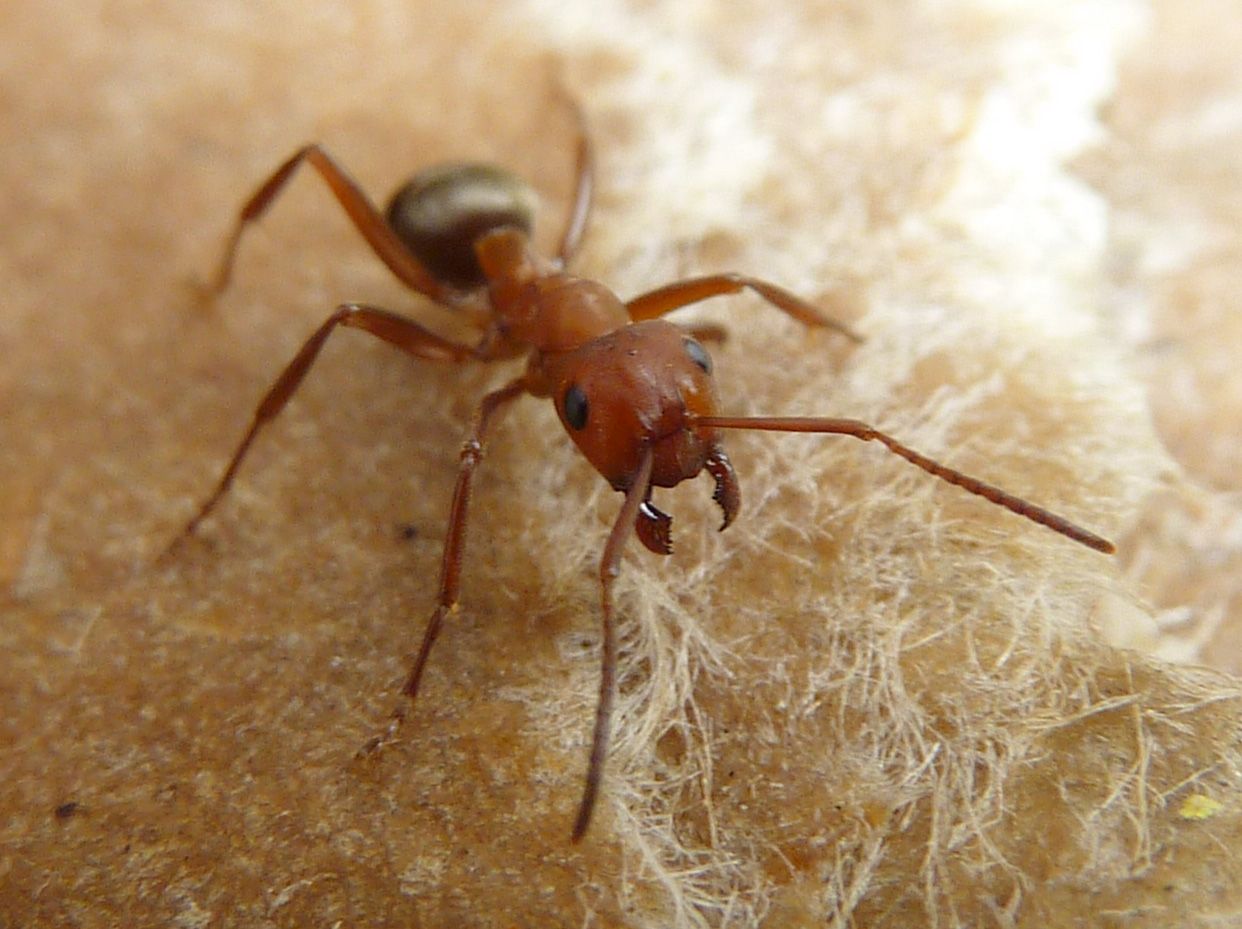
This is a Camponotus castaneus worker. It's a ground nesting species we have in the eastern United States and Canada. Normally they only come out and forage at night but I'm guessing these caterpillars are producing a noise similar to a queen ant or larva when they require tending to.

I'm not certain on the noise aspect for this species though but some members of this family do. They require a special microphone to hear also and are really just a series of muffled clicks and chirping sounds.

What I am certain of is the caterpillar produces nectar on occasion which the ant is sipping at. This can actually change the ant's behavior making them guard the caterpillar instead of steal nectar from the flowers. Ants do steal nectar from Ceanothus flowers but not all of them will the caterpillars oddly enough and I don't know why this is. 


In years past I've seen Lasius americanus, Camponotus subbarbatus, and Tapinoma sessile tending the caterpillars. But on the same plants I find Temnothroax curvipinosus workers nectar scraping, stealing nectar from flowers, and generally foraging on the plant. Oddly enough I've never found them tending an Azure caterpillar. This might just be because the other species mentioned would easily conquer them for supremacy over the right to occasionally drum their antenna on the caterpillar. Clearly this is an experiment I should preform but I don't think I'm equipped I test out any of the findings beyond saying "Yeah they will tend them in the absence of other ants," or "no they don't bother with them."

Also on the topic of Caponotus castaneus, they've been fly the past week and I managed to find a queen under a rock in the yard.

Wednesday, June 21, 2017

Spring/Summer Azure Caterpillars on New Jersey Tea

My New Jersey Tea plant, Ceanothus americanus, is full of Spring/Summer Azure caterpillars. Their strategy to not get eaten is to produce honeydew to entice ants into protecting them. In this case the ants are Camponotus subbarbatus (a.k.a. "The Slightly Bearded Carpenter Ant" a common name referring to the slightly hard to see small hairs on their cheeks that lots of other ants also have... and not the more obvious yellow bands very easily seen on queens and larger workers that's almost never seen on other ant species in their range.)

The caterpillars gain the pigment and to some extent the texture of whatever they happen to be eating. In this case it's the flowers. Doing this helps them blend in with the plant, however the gangs of ants constantly hanging around them gives them away.

The butterflies are common where they occur and fairly wide spread across the north east, but the need for ants along with host plants can make some members of this genus uncommon.

The Karner Blue Butterfly is likely endangered because not only do they require wild lupins as a host plant. They also need ants to protect them and bring them back into the nest. Once inside they turn carnivorous and begin consuming the ant's brood for food, all the while still producing sweet honeydew for the ants to feed on. This isn't that bad though as ants often consume their own eggs or feed larva to one another, and the caterpillar itself isn't much bigger than two or three adult ants.

Spring and Summer Azures aren't as finicky. They can be found on a wider array of plants and don't need to be brought into an ant nest at all. (During the winter, they may survive better underground inside of an ant's nest where they form a chrysalis but I'm not sure they do this.) 

Host plants include the New Jersey Tea, as seen above, some Dogwoods, Collinsia sp, and Spiraea salicifolia. I've also found them consuming the flowers to Sourwood trees. They always start on the flowers to these plants which tend to be soft and tender (and likely lack any defensive chemicals the plant might be producing in its leaves) before moving onto consuming the leaves themselves if they need to. They take on the color of the flowers they consume so they're usually pink on Spiraea salicifolia, and can be sort of purple on Collinsia sp. and then turn green when they start eating the leaves.


Flowers are a good place to start because there's often ants stealing nectar from them already. Oddly enough once the ants find the caterpillar and taste the honeydew they produce, they will stop stealing nectar from the flowers and focus entirely on tending them. The caterpillars will also produce noises like a queen ant would make. 

Another benefit of having ants around is they protect against parasitic wasps that try to jam eggs in them. Ones that get parasitized will hatch out as wasps instead of butterflies after the chrysalis phase.

The New Jersey Tea shrubs I own are now finished flowering and most of their blooms are falling fast. The caterpillars are now moving on to consuming the leaves. 

I'll be rearing a few indoors to ensure they survive. I'm curious to see if any wasps emerge.

Their chrysalis's are extremely tiny and can be made on something as small as a blade of grass. Rearing them myself will help ensure I don't run them over with the mower.

Monday, January 25, 2016

Gardening Goals and Achievements

 
When I first started gardening my initial goal was to provide nectar sources for my honeybees. Early attempts were an abysmal failure as I relied upon plants that simply looked pretty from a local nursery. The issue of course being that most nurseries sell cultivars with looking pretty in mind, instead of plants that are pretty useful. They do sell some useful plants but not as many as they should.

Realizing I would have to do some research, I started to set goals of what I wanted to get out of the garden. Along the way my focus changed from simply providing nectar fro my bees towards seeing what ecological effects my garden could have. I wanted to see how much biodiversity I could fit into one acre of land. Nothing was measured scientifically (I'd likely need at least 30 yards to make any conclusions,) but my achievements are as follows.

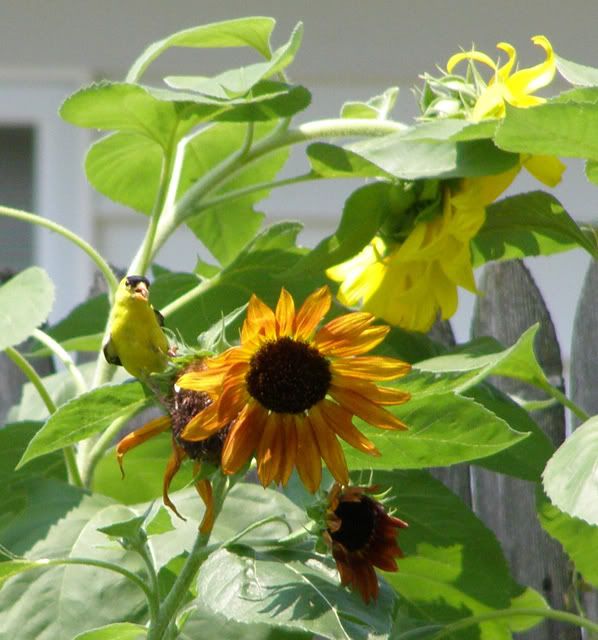
Probably the simplest achievement with gardening came in the form of a simple pack of sunflower seeds. They're the favorite food of the Eastern Goldfinch (The state bird of NJ) and their beaks are actually the ideal size and shape to dislodge a sunflower seed from the flower disk. Planting $5 worth of seeds not only brings in the pollinators but also a very attractive bird as well.

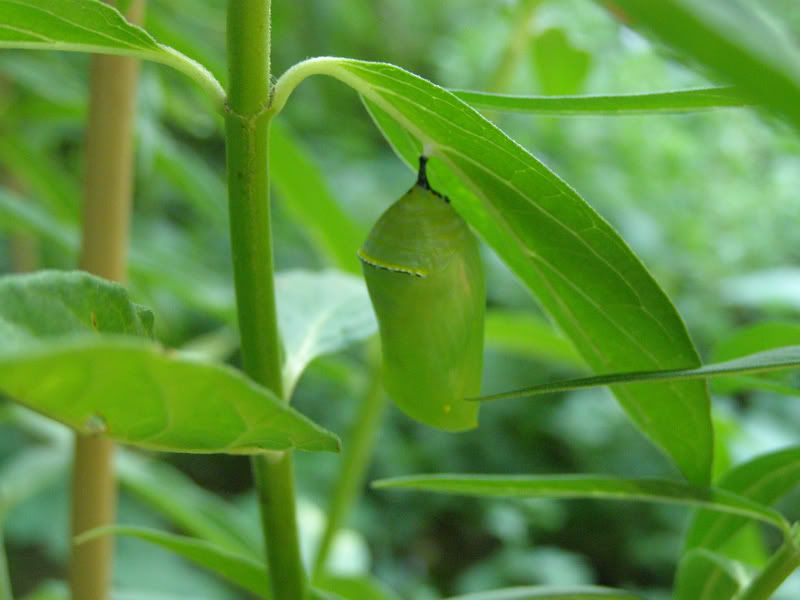
The next major milestone for my garden really had all the stars aligning perfectly. I met a fellow beekeeper who was really into native plant gardening but also advocated nonnatives like Catmint and Salvia. One of the plants that really caught my eye was his clump of Butterfly Weed which he grew along side an impressive clump of Lavender. I wanted to copy his garden as much as I could but chose a different species, Asclepias incarnata, Swamp Milkweed, or Fragrant Milkweed as I like to call it. I had no idea at the time, but Monarchs favor laying their eggs on the plant. The leaves are less tough than Common and Butterfly Weed, and because it tends to grow in moist soil the humidity in the air is more favorable to insects in flight. What's more the first chrysalis I found was on the host plant, which is uncommon. Normally the caterpillars abandon the host plant to get out of the way of the next generation. And again 10 days to the hour I first found the chrysalis I watched as it hatched into a beautiful butterfly.

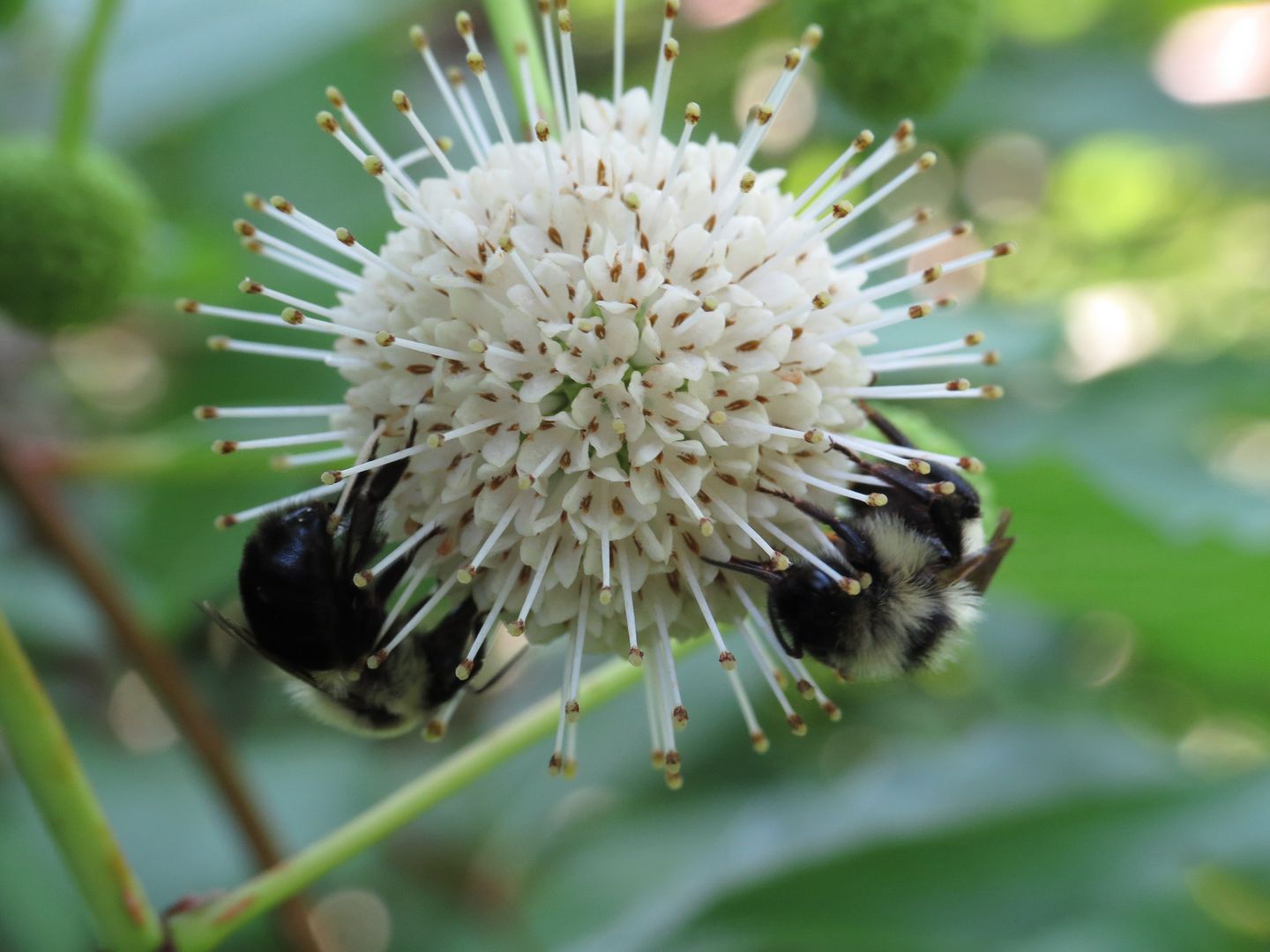
Over the past several years now I've started to go after some of the more obscure natives that not a lot of people grow. For example, I'm the only person I know who has a Button Bush, and I'd love to grow more of them but I just don't have the space.

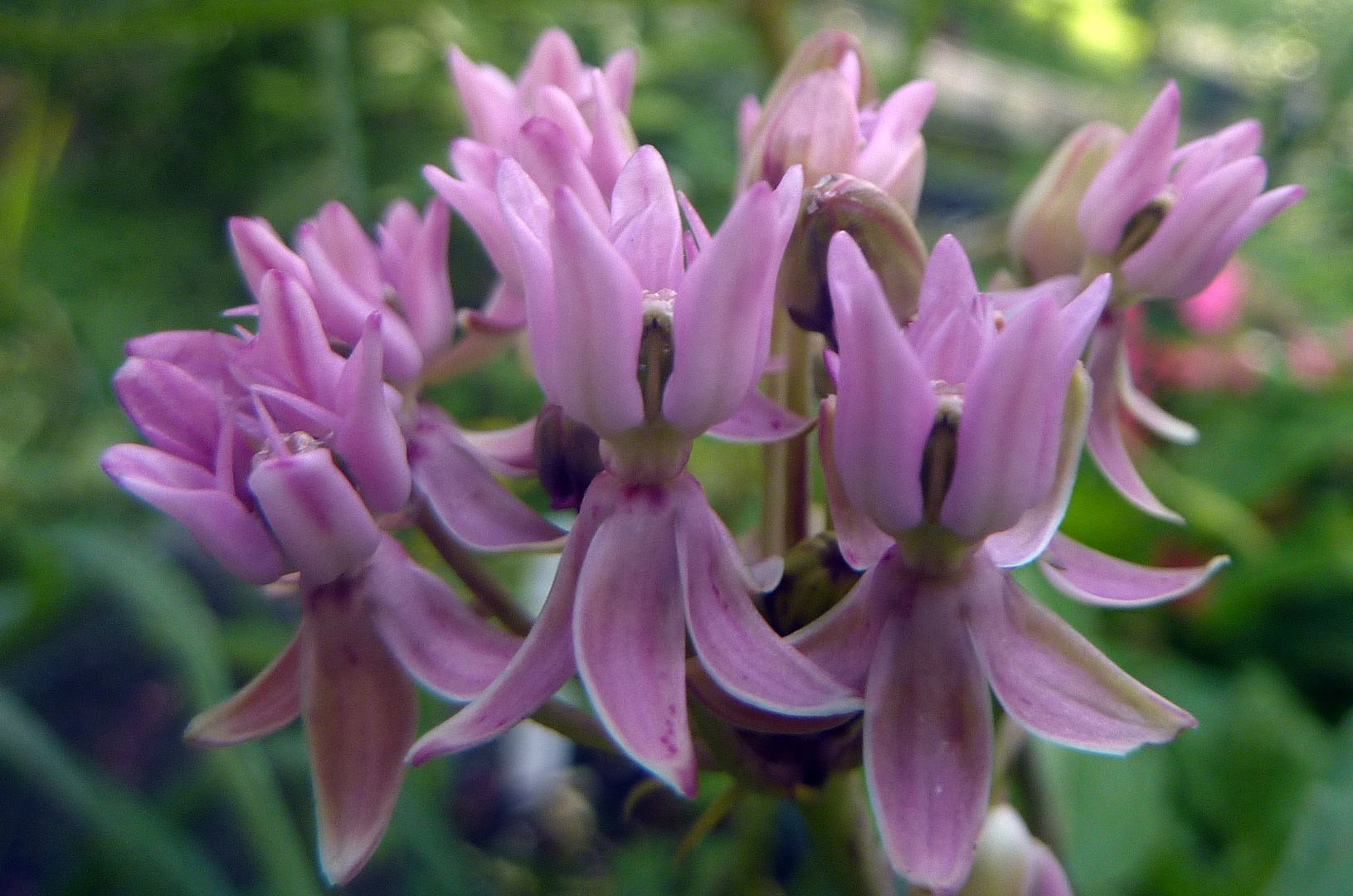
Purple Milkweed, while commercially available, doesn't seem to be grown by a lot of people. As I've discovered though, that's probably a good thing. Unlike Butterfly Weed, Swamp Milkweed, and Common Milkweed, this species requires cross pollination in order to produce viable seed. Individual plants don't produce as many flowers as other species. And tragically, the wildlife people grow milkweeds to attract target the flowers and seed heads first! You basically need to remove Monarch caterpillars, Milkweed Beetles, Milkweed Seed Bugs, Four-eyed Beetles, and keep the stems completely free of Oleander Aphids for this plant to do well! Of course it doesn't help that when it does successfully flower ants come and steal the nectar!

Purple Milkweed still grows in my yard but I've not been able to get it to flower again because pests keep eating it!

Rarer Still, I tried growing the true Red Milkweed, Asclepias rubra. I call it the true Red Milkweed because one of the major mail order nurseries has started calling Asclepias incarnata, Red Milkweed. They're wrong of course as is whoever came up with the common name for this species. The flowers are clearly a shade of pink! The plants I bought (and suspect were dug out of the wild) grew well the first year and flowered but have yet to emerge again. The roots are still in the soil, still slightly green or white if you cut into them, still fleshy like an ordinary rhizome but for some reason they don't produce any shoots or green growth of any kind. Very odd. If I locate them again I'll move them to an even wetter spot of the garden. I'm pretty sure they're a bog species.

This is an achievement for me in that I got to photograph it flowering. I have no plans of trying to grow it again as all the sources for plants at this time I suspect might be from plant poachers.

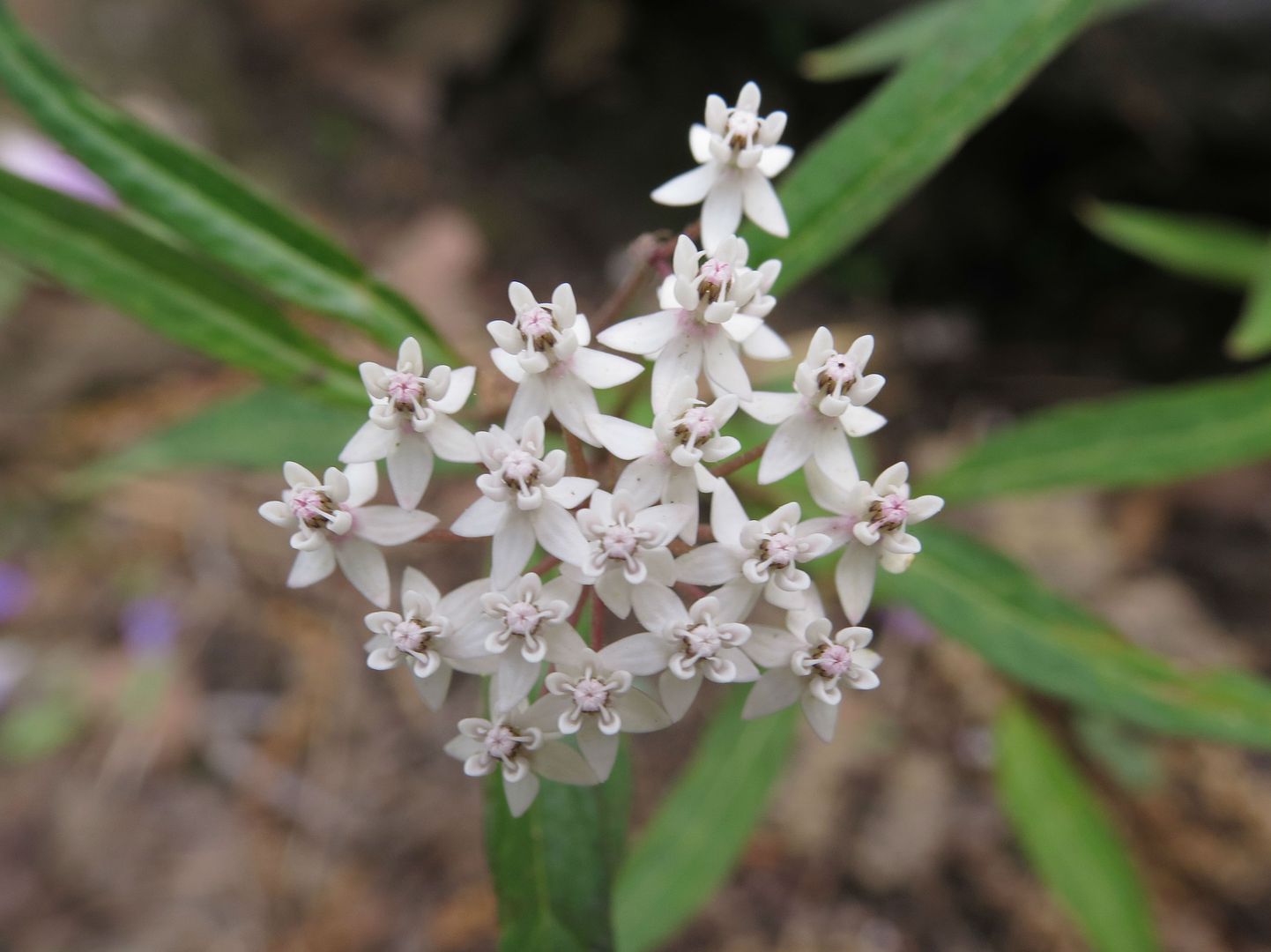
Aquatic Milkweed, Asclepias perennis. This is you can buy on the internet easy enough but it didn't do well in my yard because all the wet bog-like places are already have lots of weeds and plants growing in them. It's a small species with some of the smallest flowers in the genus too. I was hopeful that it would be successful in my garden but it wasn't. I may try planting more of this again in a true bog garden some day, but for right now, I'm just glad I was able to photograph it flowering.

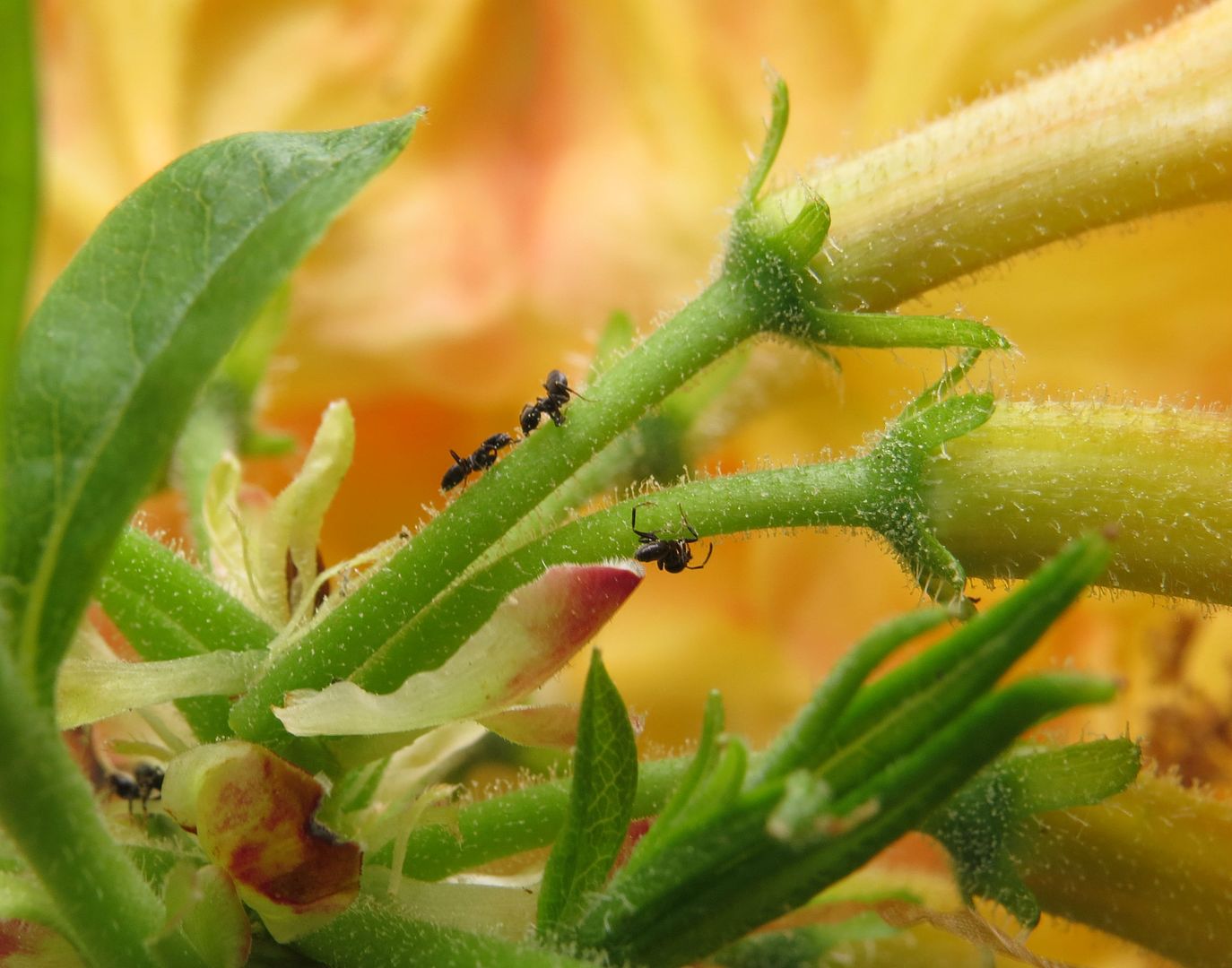
Discovered Flame Azaleas are semi-carnivorous. Actually they're not carnivorous at all but to protect their flowers from nectar thieves, their stems have hairs on them that dispense a type of glue to stop ants dead in their tracks. Now when the hummingbirds come to feed at the flowers they can find an added tasty treat clinging to the stem.

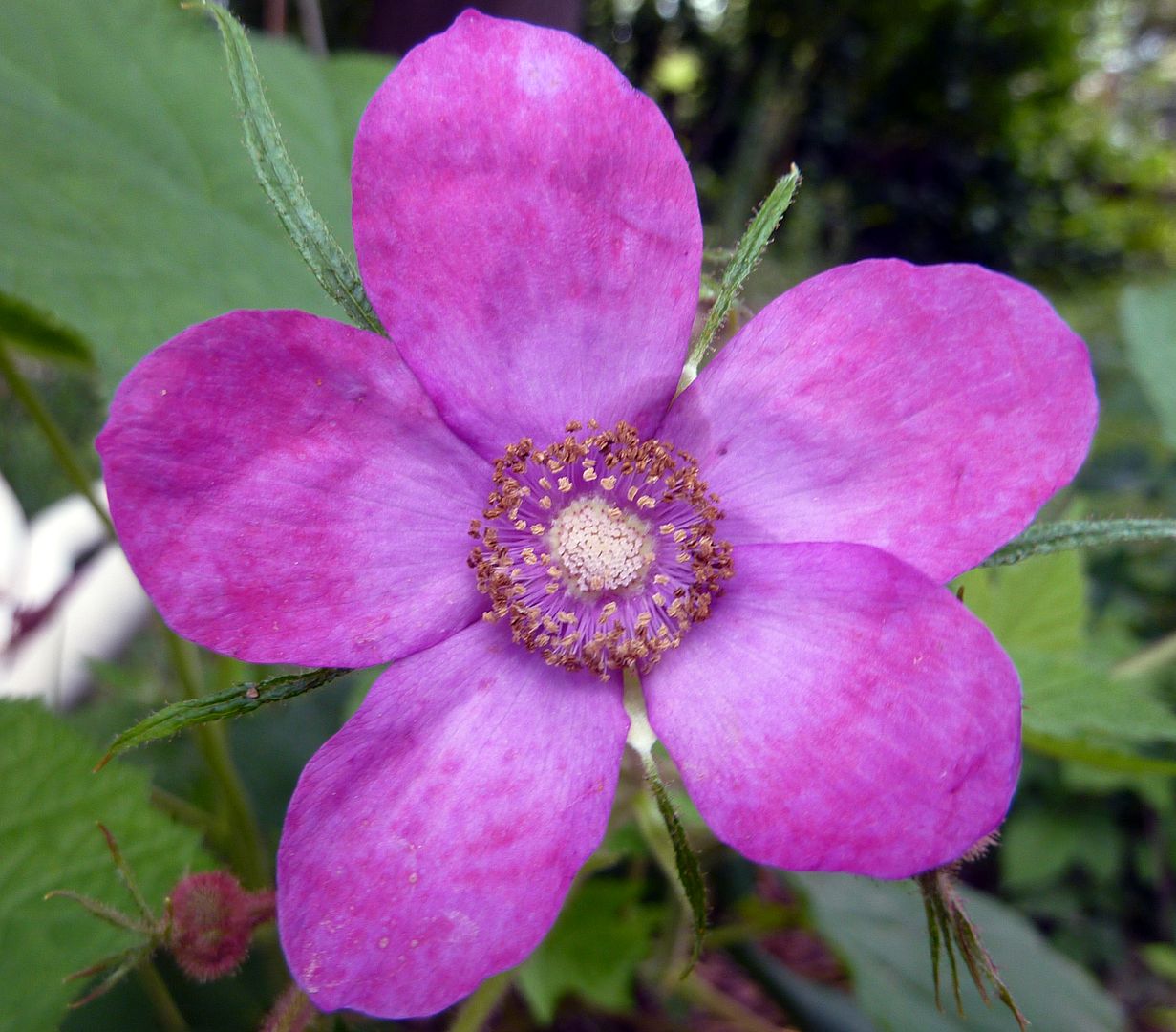
Red Flowering Raspberry. This plant was a huge surprise. The flowers are as pretty as our native roses, though they're also a poor replacement for a rose. You can't really use them for a cut flower, and they're short lived. The stems lack any prickers and instead have a sticky feel to them. They have yet to produce fruit but I believe that's a cross pollination issue I'm hopefully fixing in the coming year. I've planted three more specimens that should flower. If they don't produce fruit then I'll likely move them some place else so I can plant things that are more productive. But man, look how pretty that flower is!

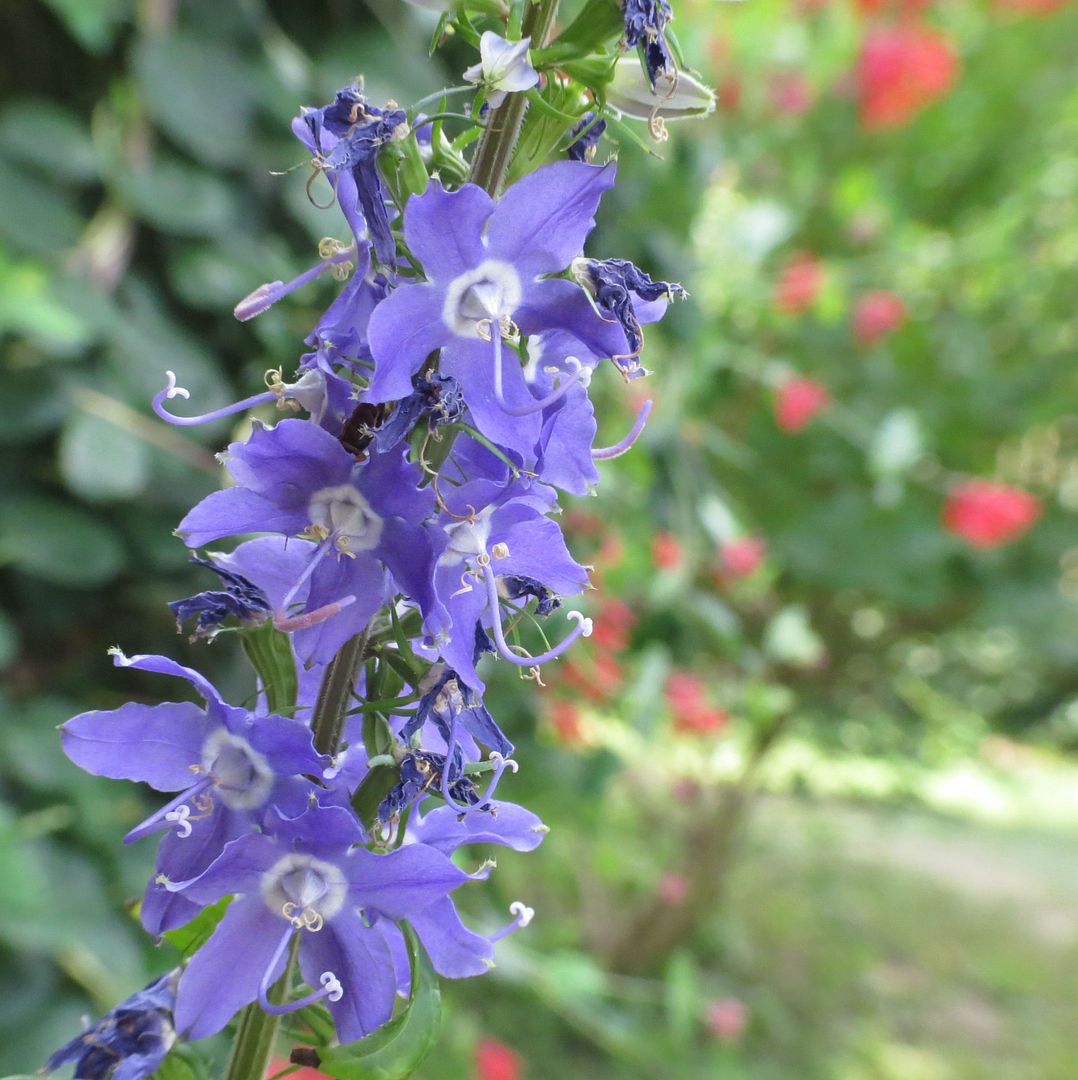
Companula americana. This is a biannual I decided to try one year and it's easily my new favorite plant for dry shade. It grows in bone dry soil, in full shade conditions! The first one I got growing grew 7' tall and flowered robustly from June to frost. It got to the point where it was making bloom and buds on existing seed pods because the stem had become so overcrowded with flowers. I've never seen anything like it. The following year's plants weren't as great, but they're biannuals so they take an added year. Then on the year past we had new windows installed, and one of the workers took a rake to the garden and got rid of all my plants while cleaning up! Good to know they're easy to control if they get out of hand but I was hoping for a whole backdrop in the garden of 5 to 7' tall spires of blue flowers. Hopefully I'll get to see that happen this year because I emptied a pound of seed or two in the spot.
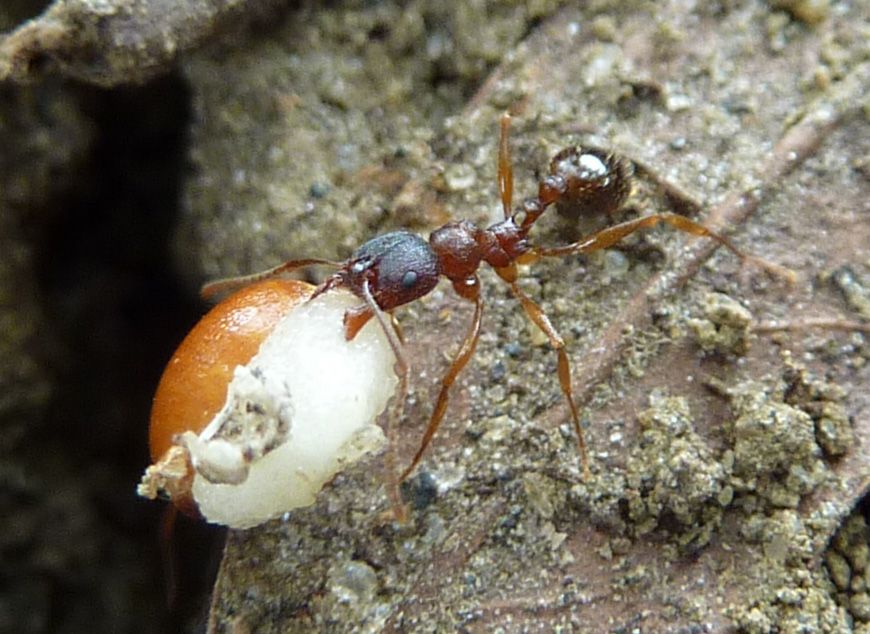
A lot of the ephemeral plants I grow disperse their seeds with the aid of ants. I'm overjoyed that I was able to not only grow a few species of Trilliums and other plants that have elaiosome on their seeds but also able to witness the behavior in my own backyard. And I've also realized I'm probably the only person in North America who's bothering to photograph this behavior!

Very recently I was approached by a museum about using one of my photos for an exhibit. Unfortunately I'm not a professional photographer (Yet!) and don't normally save images in as high a resolution as their project required. Still, to have been asked was an honor!

Roughly 40% of our native ephemeral wildflowers disperse their seeds this way and most gardening books treat the topic like a cliff note... There isn't a whole lot to tell, but I've found certain species of ants favor certain plant species and some are better about dispersing them a greater distance than other.  

Getting Wildflower to reproduce, and ephemerals at that! This is huge because some of these plants I buy cost $25 each, and they're not always successful! Knowing that the plant is happy enough to do what it would normally be doing in nature, in my yard, it the best compliment a plant can give you. (Or the worst if it's invasive.) Now if my rare Trilliums would just stop reseeding in the lawn I'd be in business.

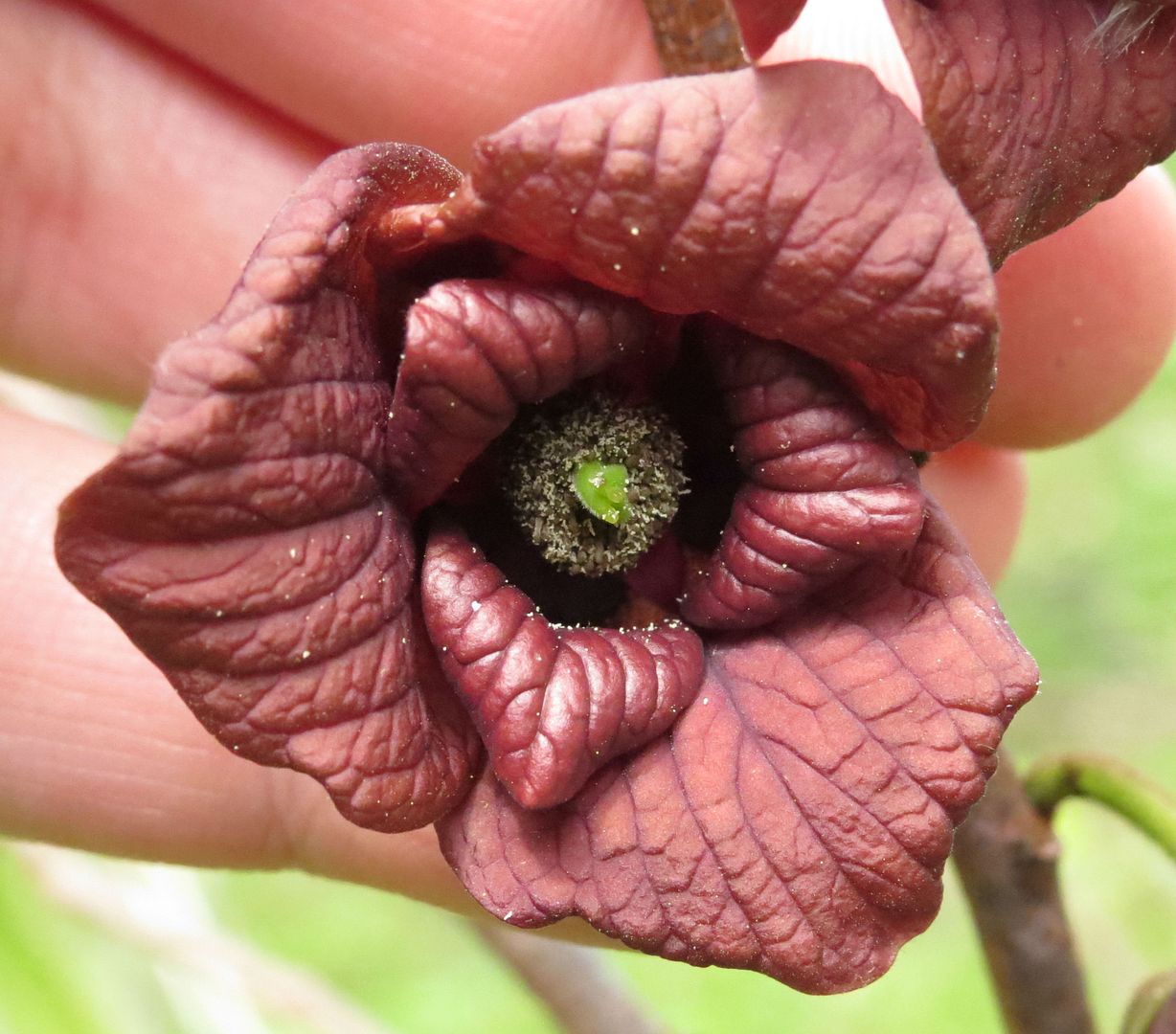
Getting my Paw Paw tree to flower. For years I'd been planting saplings of this species all over my yard and for one reason or another they just couldn't survive the winter. It's annoying! Finally I found a spot where they get enough water in the summer and don't burn up in the heat, and are sheltered in the winter enough to survive. And I immediately planted a second one right next to it. So one tree is of a flowering age, now I just need the second one so they can cross pollinate and maybe I'll get some fruit.

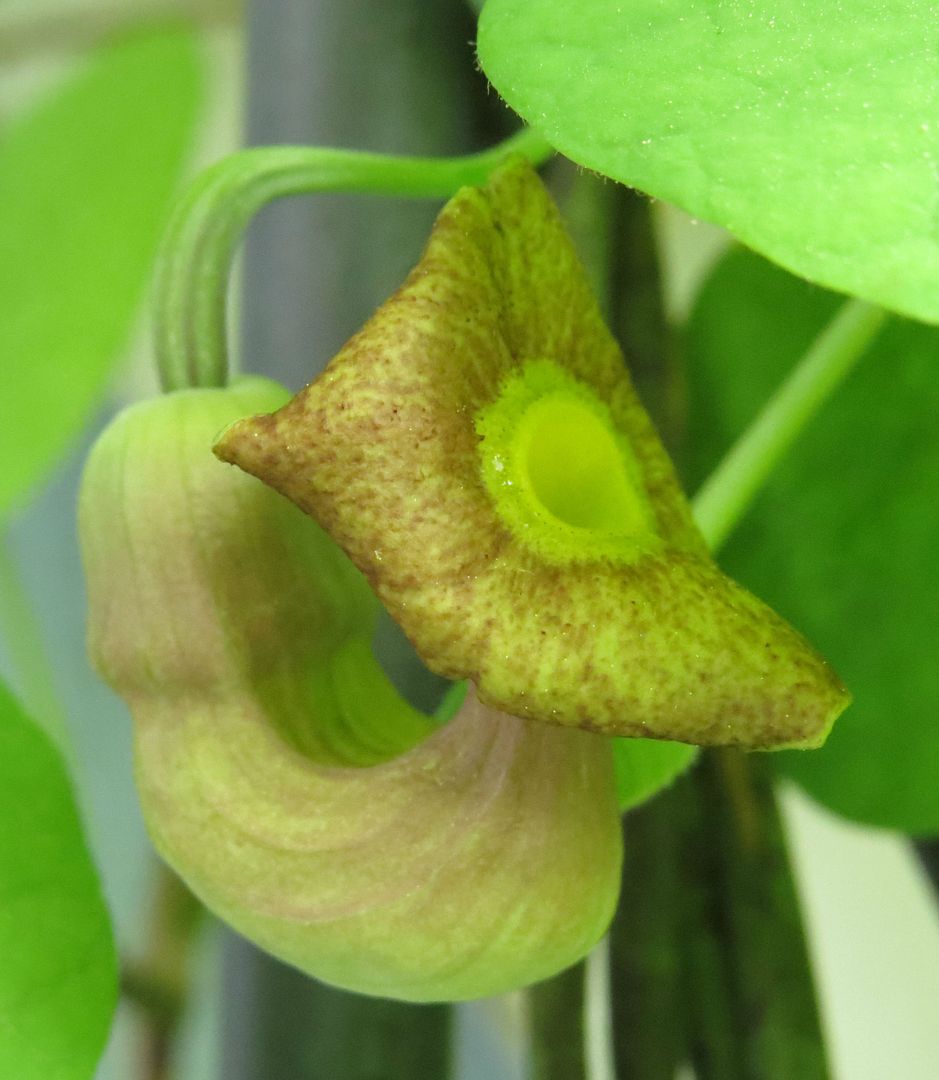
Dutchmen's Pipe. I've had this vine growing for a good 7 years at least and it finally decided to start flowering... Not the prettiest things but I had a theory that the seeds to this plant have elaiosome on the seeds so I'm eager to see if that's true. Unfortunately they seem to require cross pollination, so I won't know that until several years later when the vine's counterpart I planted finally reaches of age.

I planted this as a host plant for the Pipe Vine Swallowtail and I'm still waiting for them to find it. :( though this seems a common problem among butterfly gardeners.

Yellow Passionflower, Passiflora lutea, is another species I'm proud to say I grow. Unfortunately it seems I don't grow enough of it. This is a plant they tell you to grow in the shade and let it grow up the stems and branches of another plant. There's nothing wrong with that, but the absolutely charming leaves, flowers, and fruit get completely lost in the foliage. I have a vine of this in my garden still, I think. But now that I've seen it growing at the Mt. Cuba Center, clearly I'm growing it wrong. It still gets lost, but they have it growing right on a fence in full sun where it thickly covers the fence almost like an ivy. It's a great little vine that doesn't get out of hand, and I'm curious to see if Fritillary Butterflies use it as a host.
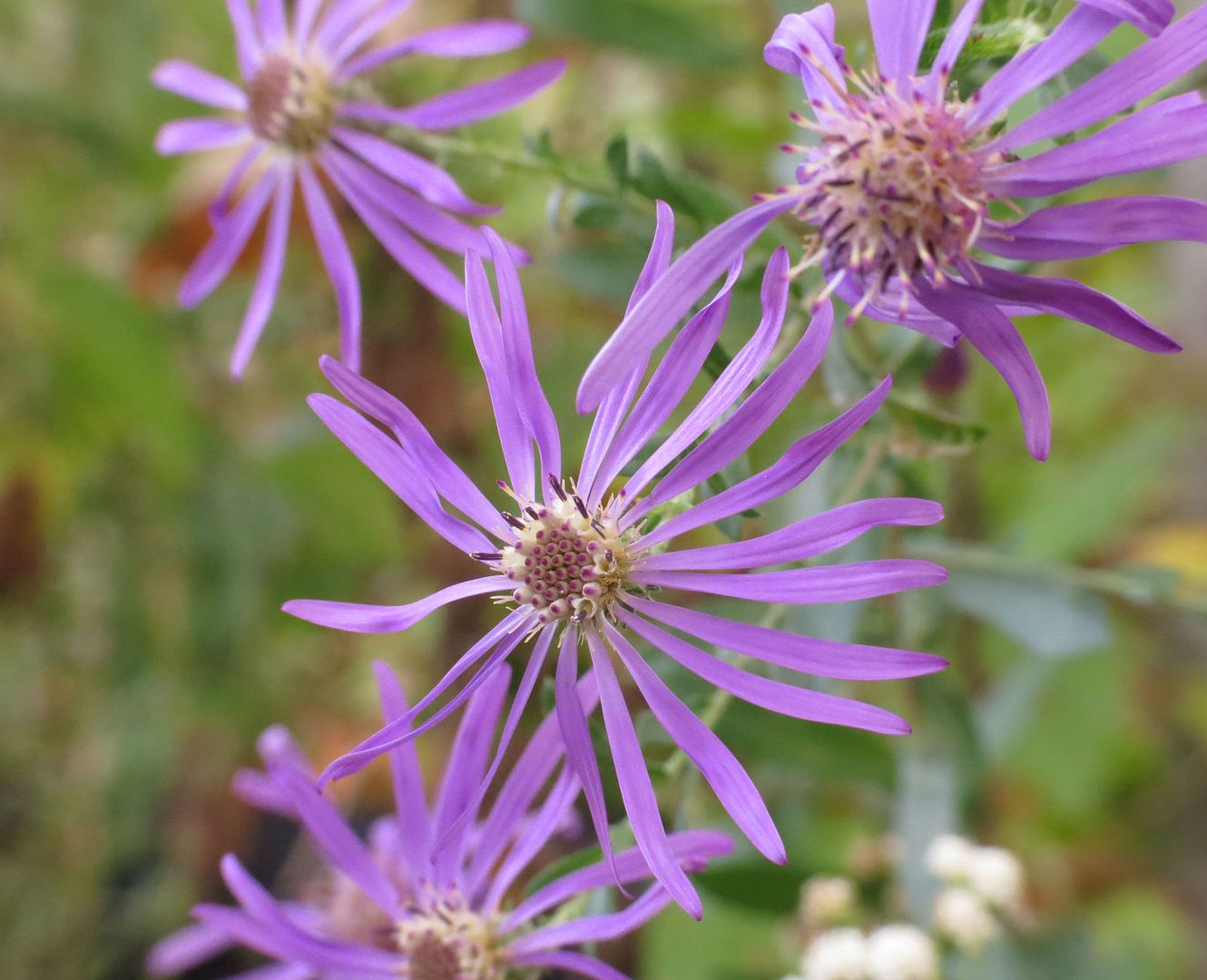
Georgia Aster, probably the last plant in temperate North America to stat blooming aside from Witch Hazel and Heathers. This is a plant I look forward to every year now. I've only been growing it for three years, it's flowered the past two. This year I collected seeds and hopefully I'll get a lot more of it to grow. The flowers are nice and large, and the purple is a great contrast of the leaves from fallen trees, which are shades of yellow, red, or brown.  

Discovering that Black Swallowtails do use Golden Alexander as a host plant was sort of a happy accident. I planted these as a host plant but later learned they rarely use it! Seems they heavily favor Parsley. But I've noticed that Golden Alexander has more foliage to offer early in the year before Parsley really gets going, so it's likely used as one of the earliest hosts then they switch over to Parsley with subsequent generations.

Adding all these native plants of course had an effect on the insect life. More herbivore insects means more sources of nectar, protein, and seeds. The increase in resources caused the colonies of Formica incerta and Formica pallidefulva to expand and get even larger than before. That got the attention of a slave making member of the genus, Formica pergandei. Seen above a colony of F. pergandei (bicolored) has invaded a colony of F. pallidefulva (copper tone).

Formica pergandei, is one of many slave making and parasitic species in the Formica genus, the largest ant genus in North America. They are completely devoted to maintaining their Formica hosts to maintain their own colony. F. pergandei workers don't forage at all. They spend their time raiding other colonies of Formica for brood and often do a complete invasion where the whole F. pergandei colony moves in and kills the host queen(s) and reproductives. They take over the current work force, and all the new workers born into their nest become part of their colony. The host species do all the foraging and nest building but eventually die off, so the F. pergandei workers are always looking to invade the next nest.

It's hard to say that F. pergandei wouldn't have found the colonies in my yard eventually. But in all the years I've lived here never noticed the species. They may have eventually come and moved on, as they did, but I believe the increase in resources made the F. pallidefulva and F. incerta colonies a bigger target. 

New Jersey Tea. This is one of those plants they're always touting for all its benefits but no one ever grows. Part of the problem is it seems to only ever be sold in plugs.... Why? It's a shrub. It should be a large or medium sized pot at least. I planted dozens of these over the years and ran over all but one of them with the lawn mower. Well I'm happy to say that after several years, it's now flowering robust enough to get honeybee attention.

As an added bonus it's a host plant to Spring and Summer Azures. And.....

I found that Sourwood trees are also a great honeybee plant. Which....

Is also a host plant for Spring and Summer Azures. And the caterpillars to this group of Butterflies are tended by ants for protection.

And I raised the caterpillar in captivity to see what it would become. Sure enough it's an Azure.

Early on in gardening I had dreams of sweeping meadows full of Lupins to see this behavior of ants, plants, and butterflies. I'm happy I already have plants doing this for me. As I've found out Lupins require full sun and basically want to grow in 80% sand.

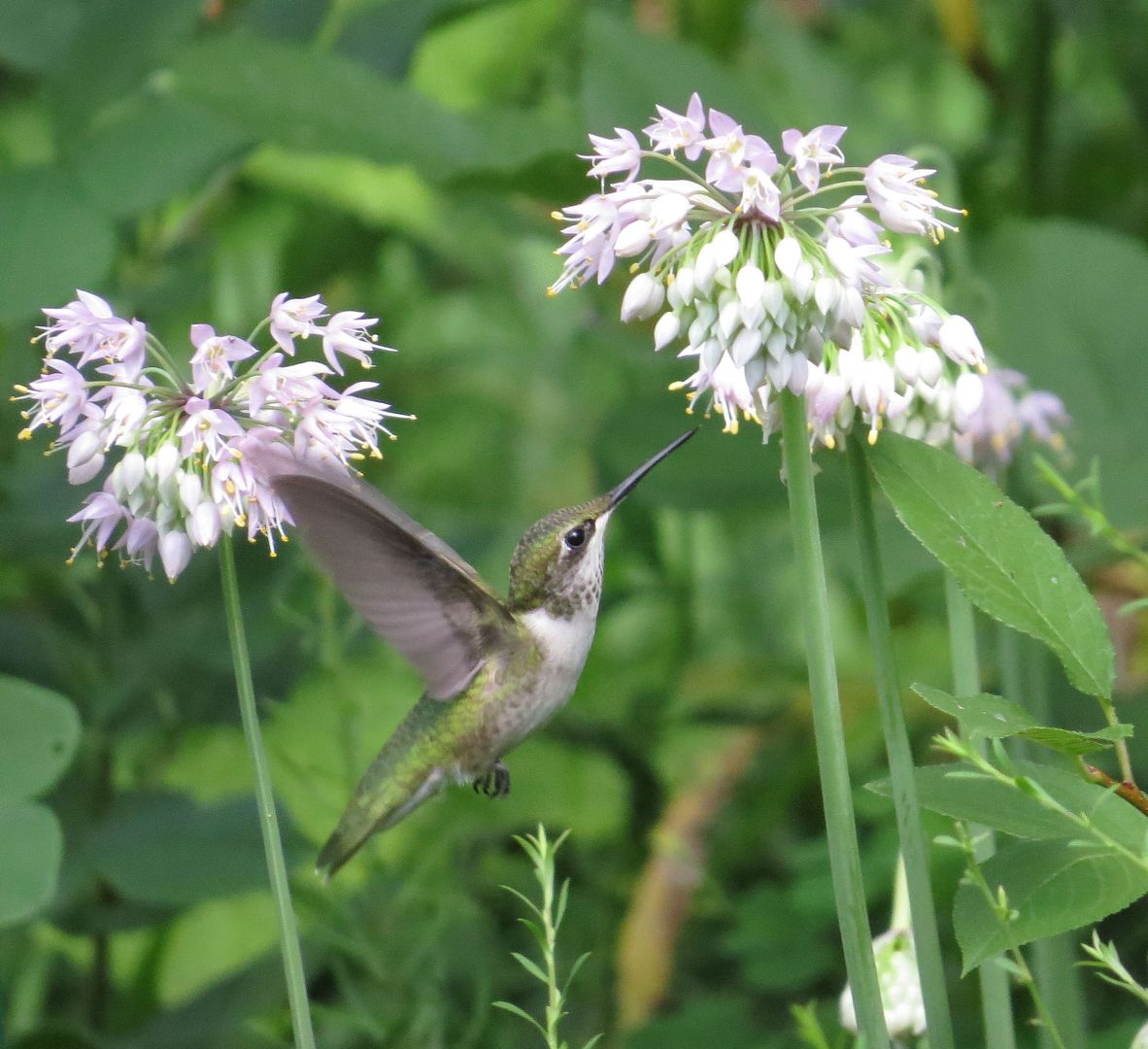
Lastly, my yard is becoming something of a hummingbird hot spot. Not year round though, we usually get one or two of them flying about intermittently over the summer, and then several of them consistently for a full week... presumably fledgling birds following their parents around.

Saturday, June 6, 2015

New Jersey Tea: Honeybees, and Holly Blues

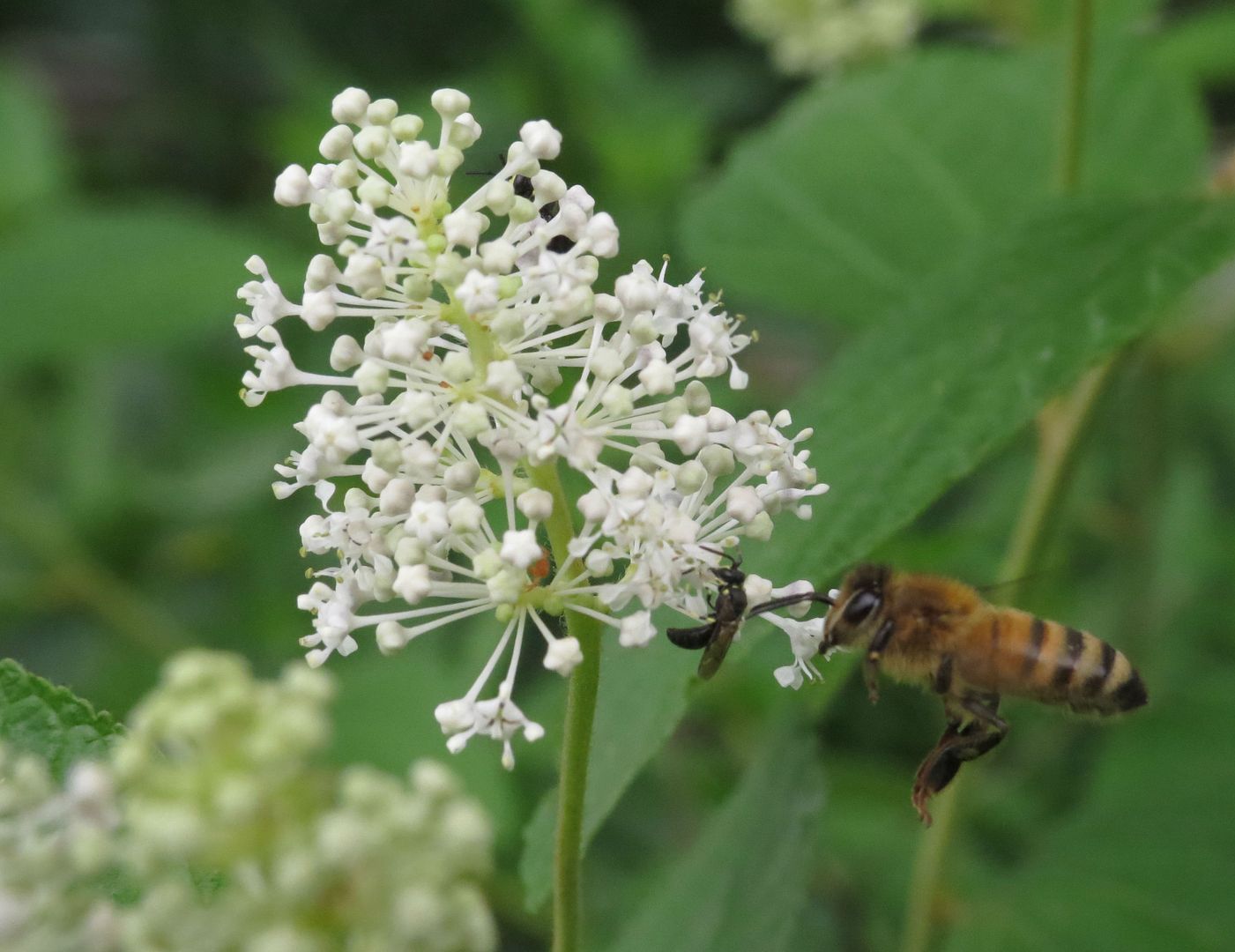
Years ago I planted a New Jersey Tea sapling, Ceanothus americanus. It's such a shame most of the mail order nurseries sell this shrub as a 4inch plug. It would really be nice to get it as a quart or gallon size pot instead of treating this like something you'd install in a meadow garden, to be mowed or burned at a later date. NJ Tea is a nice little shrub with a 2' to 3' round habit. It's touted as a hummingbird plant, not because of the flowers, but because of the droves of tiny insects that come to pollinate it. When flowering, these plants are absolutely swarming with little bees and solitary hunting wasps that are overall beneficial to have in the garden. Sadly, despite distribution charts showing how common this species is all across the eastern US, it's in something of a dramatic decline and becoming very hard to find in the wild. 

Part of the problem was that farmers used to believe this plant was a sign of good soil and bulldozed whatever habitats it grew in for farm land. Where it still grows today, it's easily shaded out by tall perennials and encroaching forest land.

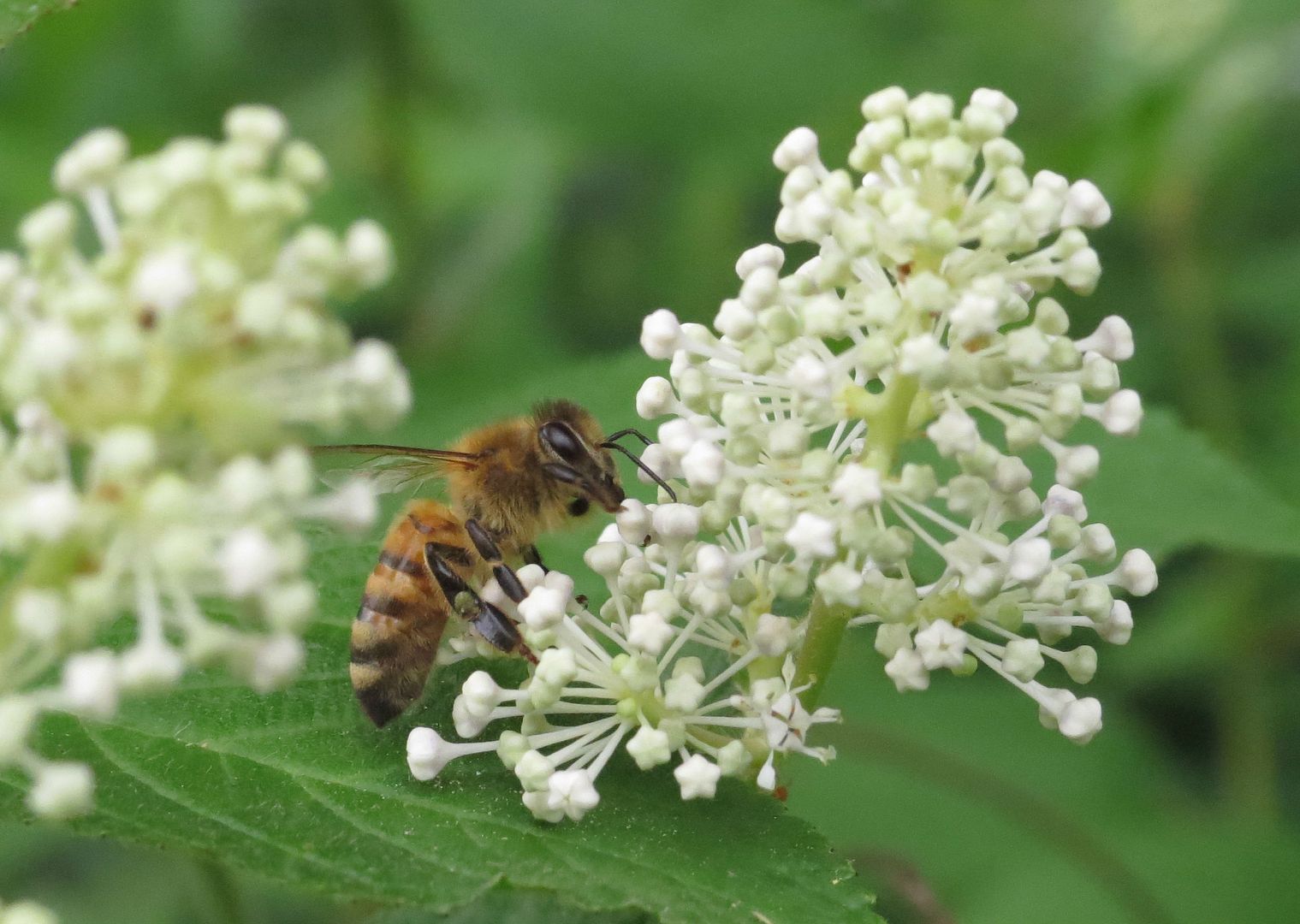
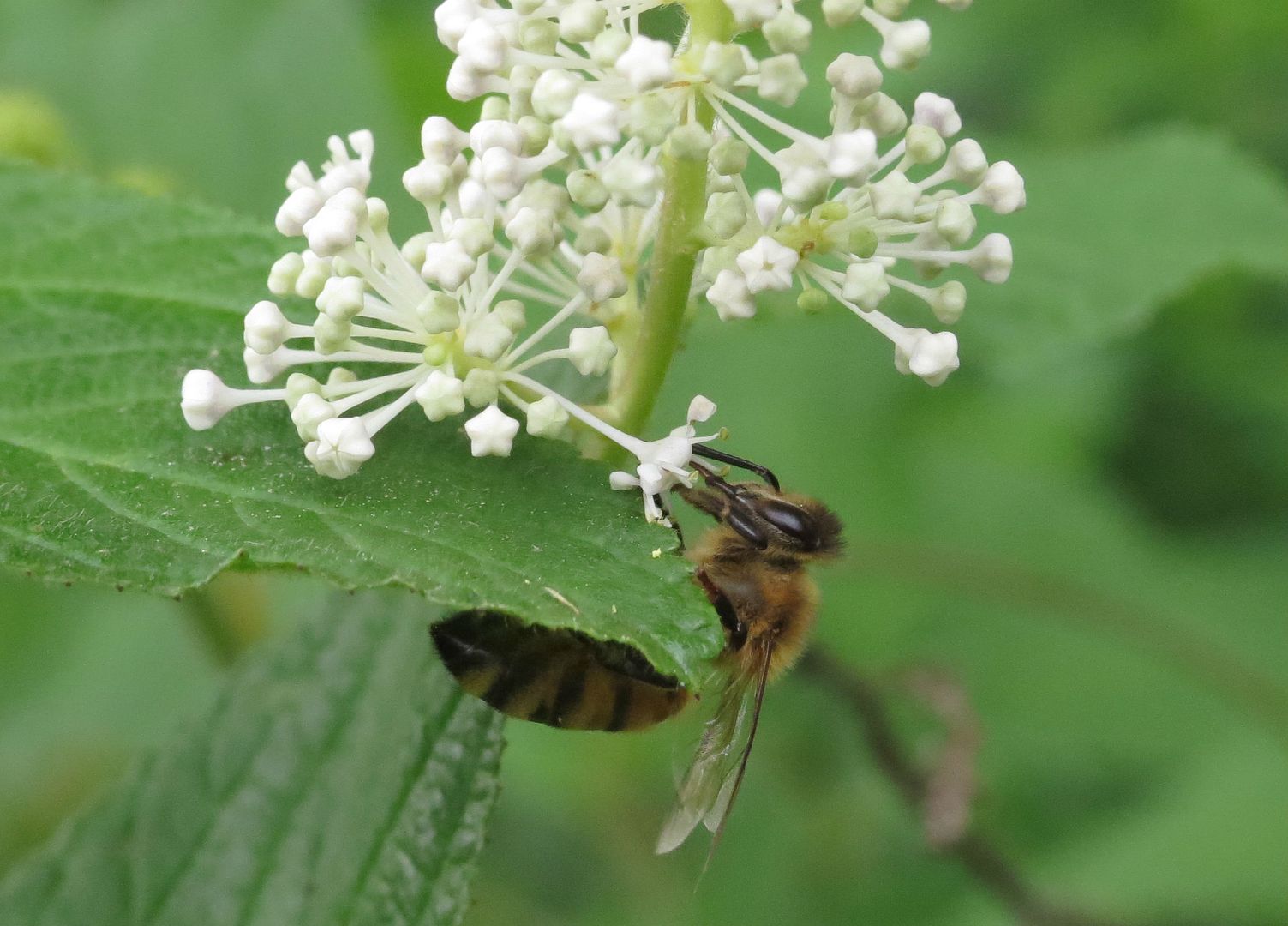
What makes it worth blogging about today for me is the fact that my honeybees started working it. This is odd because I almost never see honeybees bothering with plants who's flower shape and nectar is gear more towards wasps and smaller bees (as seen above).

Most of the flowers aren't open yet so it's not bustling with swarms of other pollinators just yet, (and I've never seen a hummingbird go near the thing,) so I'll see if this wasn't just a curious couple of foragers or if the honeybees really do want to work this plant.

Honeybees working a native plant isn't always a good thing for nature. Many conservationist view this as stealing food from the native bees. I'm not sure of any specialists pollinators of this plant though.

Western Ceanothus species and their bright blue flowers tend to get a lot more honeybee attention so I guess this isn't entirely unexpected. Sadly I don't know of any western Ceanothus that's hardy in New Jersey or I'd have tried growing it by now.

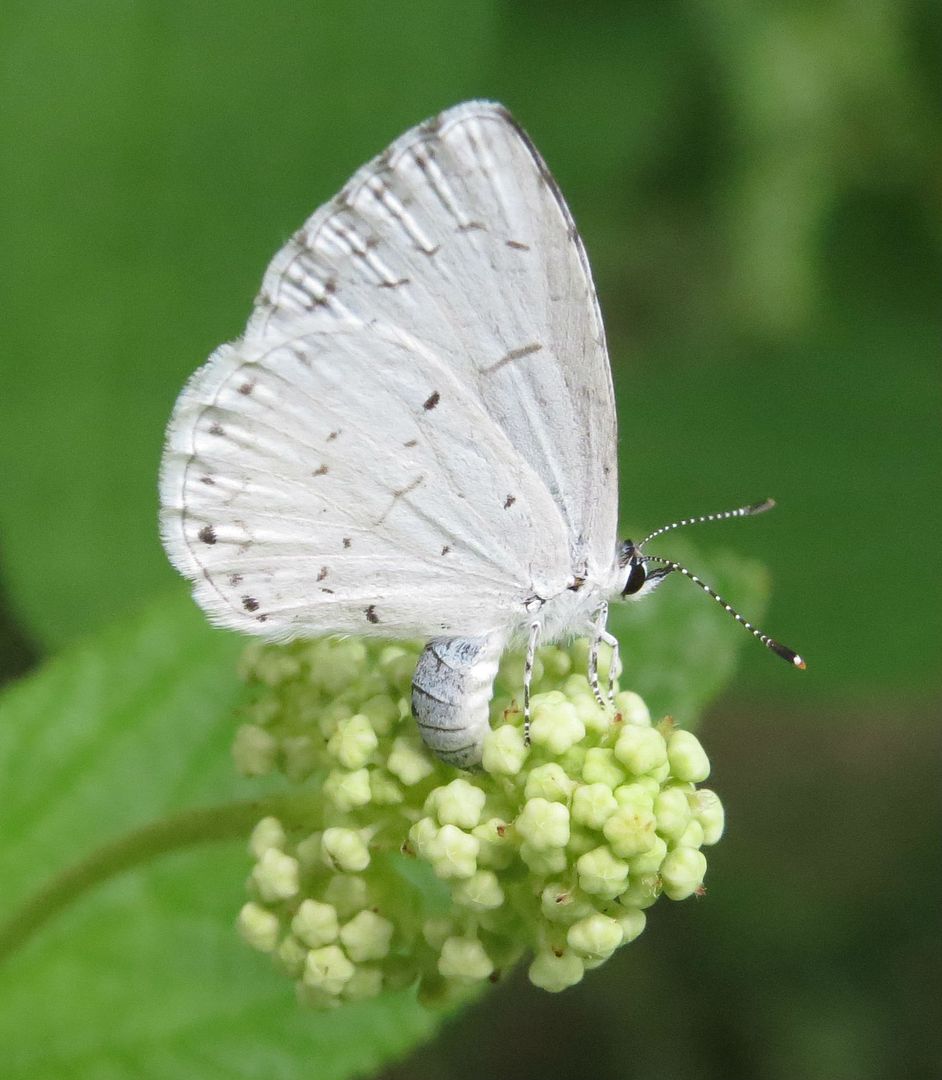
Also while photographing the honeybees I noticed what I believe to be a Holly Blue butterfly, and she was laying eggs!

Blue's and Azures are neat butterflies because the caterpillars have special relationships with ants. A failing of most butterfly species is they fall prey to ants all too often. They'll strip the eggs right off the host plant before they hatch, young instars which haven't developed a defense strategy or adaptation yet are an easy meal. I've seen whole clutches of hatching giant silk moth caterpillars get chewed up into a gooey pulp by a single carpenter ant which then carried the mess of caterpillar goo back to the nest. 

This genus (family?) has a different strategy though. For starters they lay their eggs among the unopened blooms on the plant, which is good enough camouflage. Early instars need to eat a little but quickly start to secrete a sugary substance to feed the ants. The caterpillar also "sings" to the ants, making sounds and vibrations like a queen ant might produce. The ants will hang around the caterpillar as it feeds and helps protect it against other predators. Some species will actually overwinter inside ant's nest, either mimicking the larva or a queen ant, which then pupates over the winter and emerges from the colony next spring. 

It's a complex life style for sure. I theorize that not all species of ants are ideal to overwinter inside of. Some of the species that are more finicky about their host plants are uncommon or endangered, such as the Karner Blue Butterfly, which only lays eggs on Lupinus perennis.

So if I get a chance to I'll try and photograph the caterpillars, ideally with ants tending them but I can't promise anything. The eggs she laid were almost microscopic and the caterpillars are absurdly small. Also later instars might prefer consuming ant eggs once they're inside a nest so I may have to setup a fragment colony.

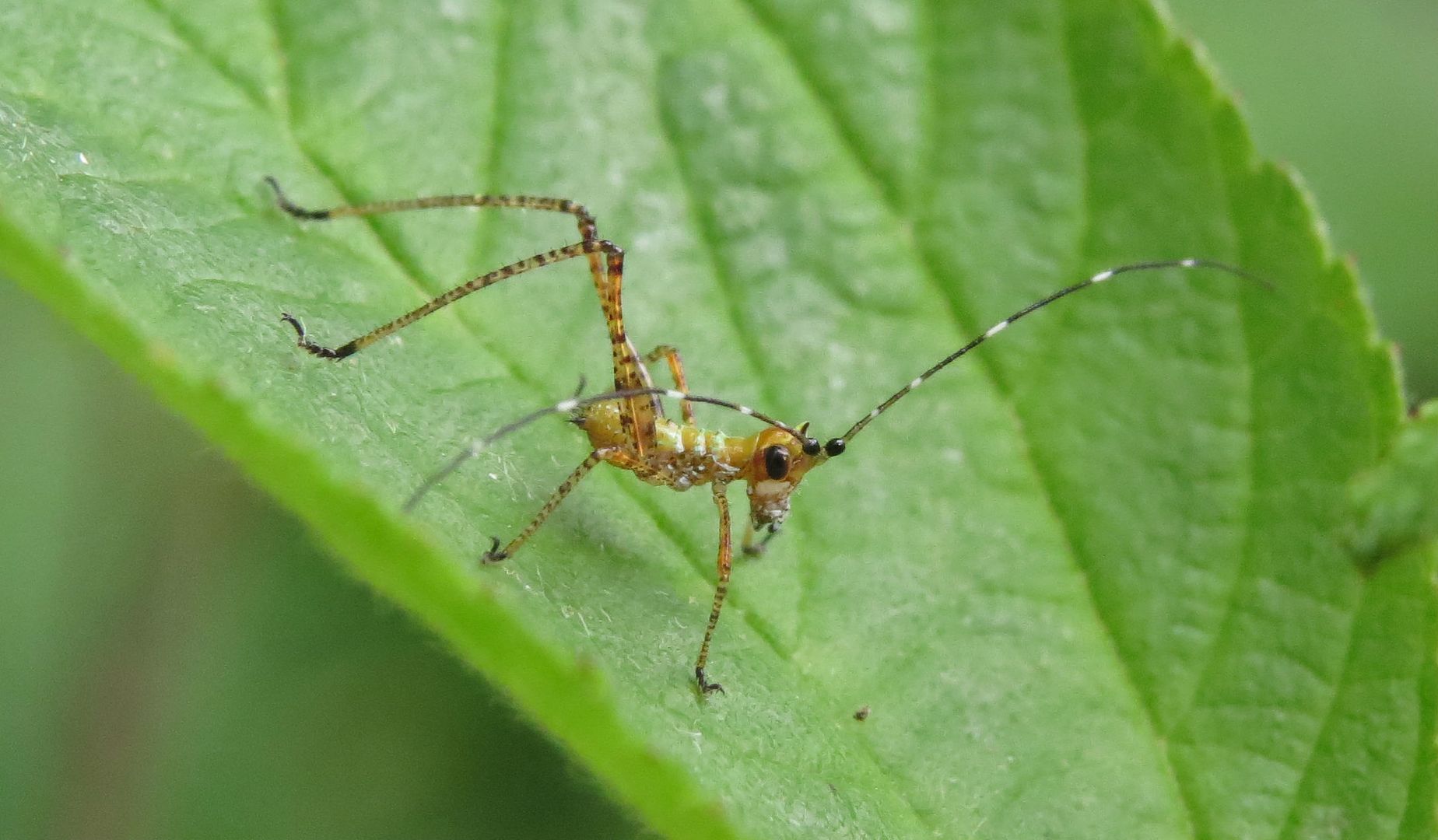
Keeping an eye out for chewed up foliage can help home in on where the caterpillars are. Though finding a Katydid nymph on the plant suggests that might not be the best strategy. I'm tempted to go out and snip off a few flower heads where I know eggs were laid and put them in the outdoor butterfly cage to raise myself. I've never kept a species so small though.  

Sunday, June 16, 2013

My Meadow Garden

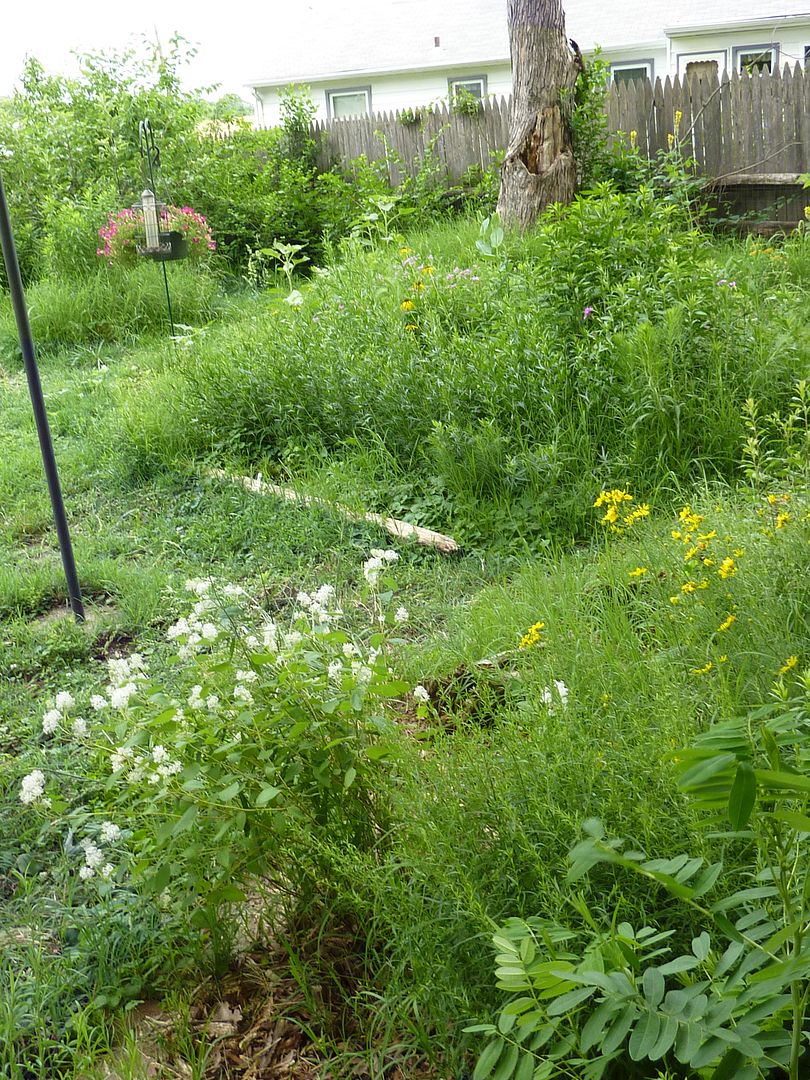
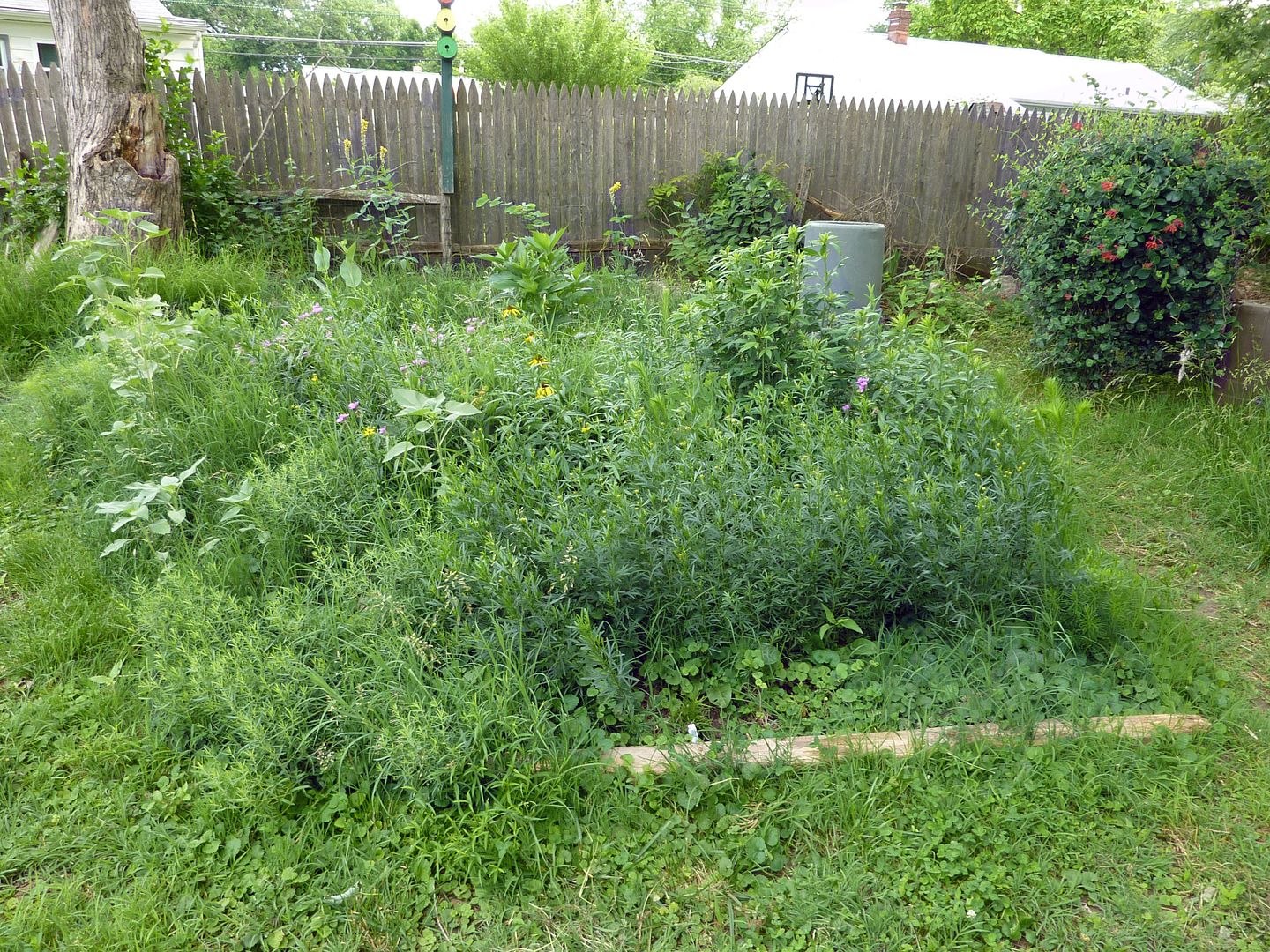
 Being the compulsive plant shopper that I am, I'm so thrilled with the way the meadow garden has turned out this year. I started this project back in 2011, and they say it takes three year before a meadow really takes off. What's odd though is they say that about meadows started by seed because nothing really flowers until year two or three and then some don't flower until year seven or beyond. Meadows otherwise look like a bunch of weeds their first, and sometimes second year.

To avoid the weedy look, I decided to skip seeds and jump right into plugs. Presumably this would let me skip that first weedy year and jump right into to the more established second and third year. While many of the plugs did flower the first year, I have to say it still took three years before the meadow really became thick looking, full and established.

Another reason seeds wouldn't have worked was that my lawn is basically made up of crab grass, which my dad "thinks" he may have planted on purpose years ago becuase it naturally spreads by runners and fills in an area. His theory being that this would lead to a nice thick lawn. While many lawn grasses do this, this crab grass in particular is the most annoying plant I've ever had to deal with. Along the roots it produces corms that are thorn shaped thus pulling them out of the ground often results in me being stabbed and pricked in uncomfortable ways.

To it's benefit though, it does fill in, my meadow is lacking grasses, and it basically marks where I haven't planted things yet.

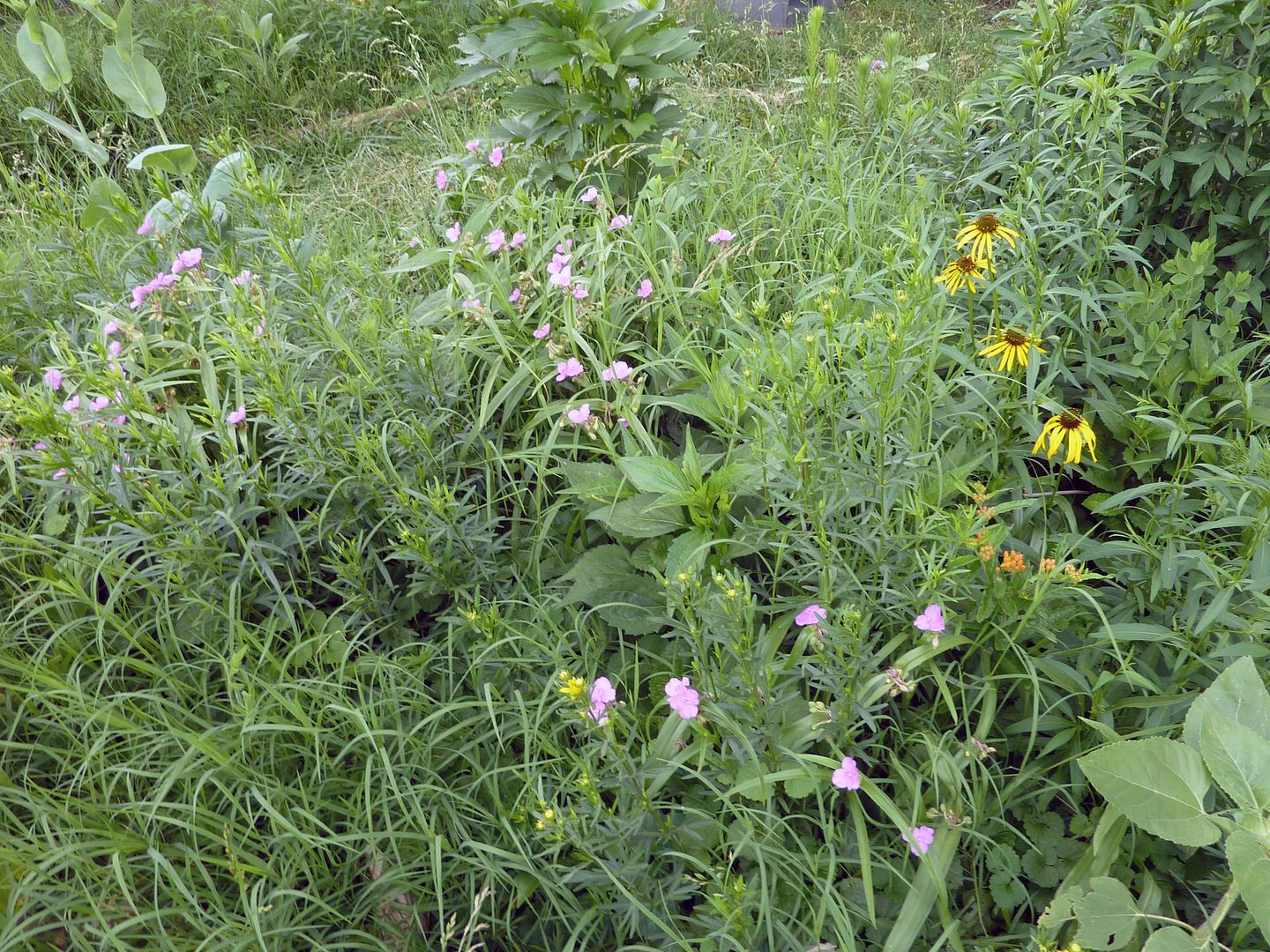
So here's a short list of what's blooming now.

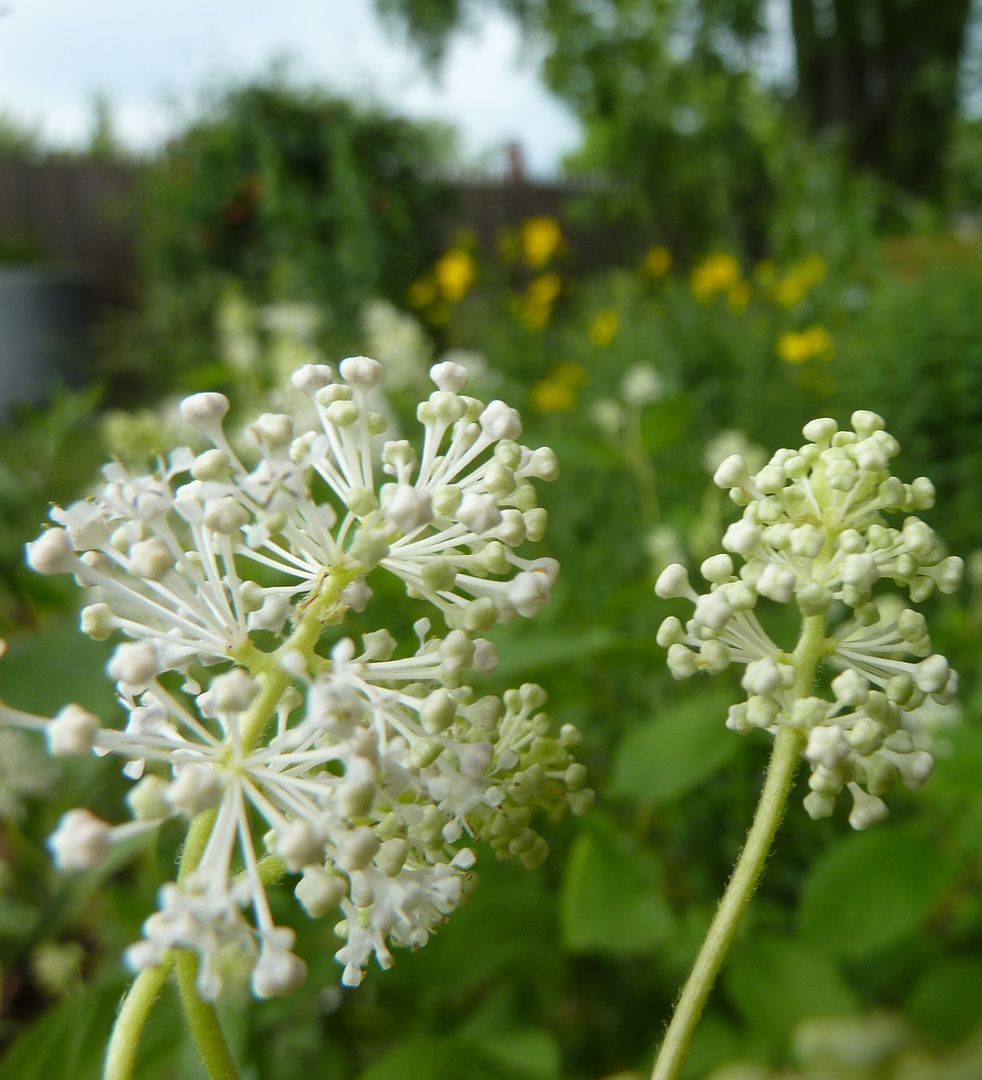
New Jersey Tea, Ceanothus americanus, which is actually a low 3' tall shrub that's covered in little white puffs of flowers. This is the only plant I need to remember not to mow over with the lawn mower each year and it's bright yellow stems really make it stand out. It's often praised as a good hummingbird plant, not because of the flowers, but because of the swarms of tiny bugs that go for the flowers. It's taken three years but sure enough I'm starting to see in the late afternoon this plant is bustling with tiny gnat-like insects. I haven't seen hummingbirds going for them yet but I'm sure it's only a matter of time. During the hotter times of the day nonsocial wasps tend to pollinate it. These types of wasps are beneficial because they're often specialized predators or parasites of beetle grubs, spiders, and caterpillars.

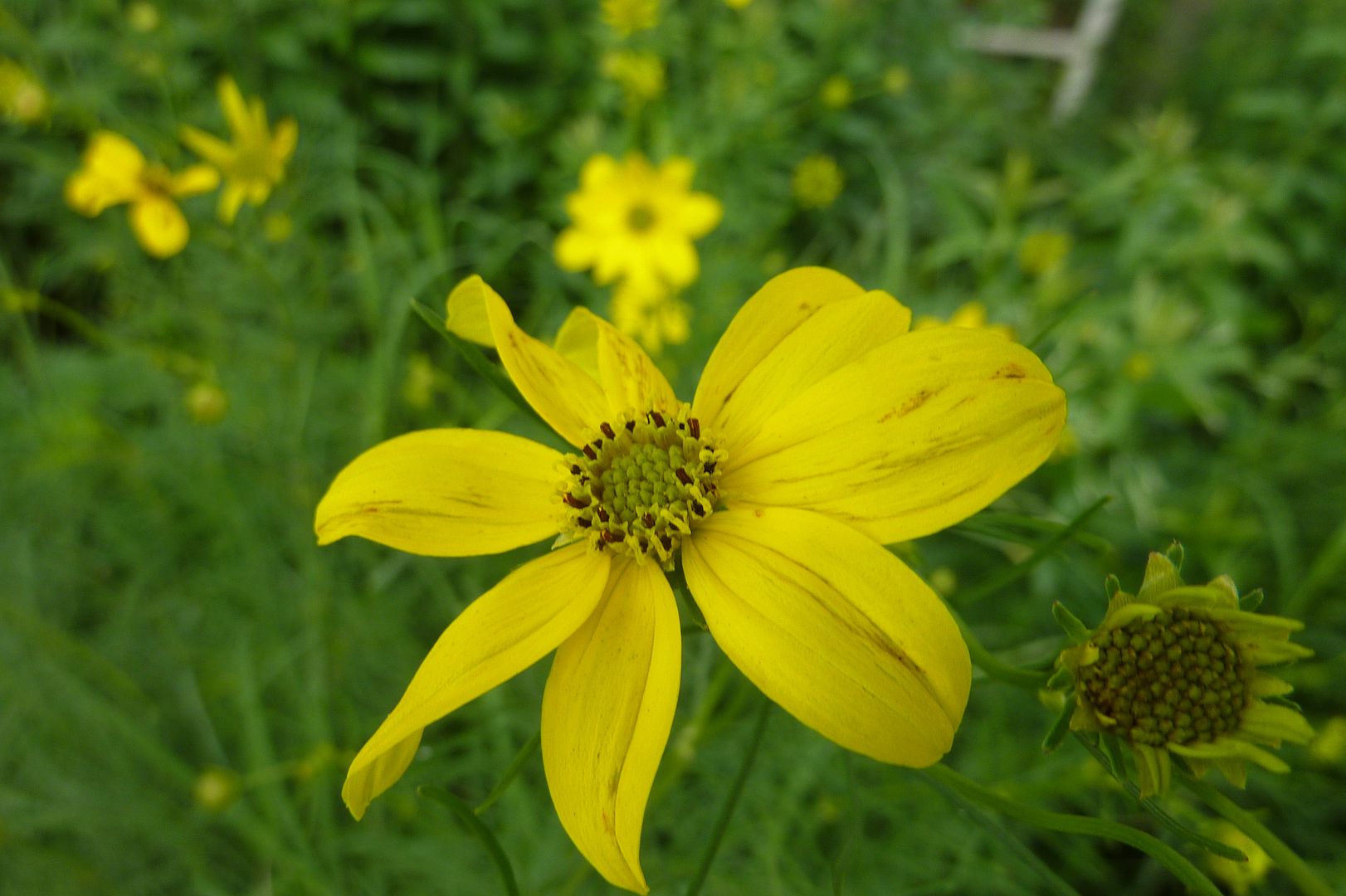
Whorled or Thread-leaf Coreopsis, Coreopsis verticillata, is growing right behind it. It doesn't get that much attention but I'm sure that may change in a few years. This started out as one plant, that is to say one stem that grew up to about 3' tall and produced maybe four flowers in it's first year. It's since reseeded in a non-aggressive way onto adjacent bare soil. This was the first of my native plants that I realized was not only growing happily but also self seeding around. Before then there had been this fear that maybe I'll rip up the lawn, plant everything, but only to watch it all die out slowly over the next ten years. This plant cured me of that fear.
Butterfly Weed, Asclepias tuberosa, these flowers are now open but I thought it was a neat shot. This is the host plant to the Monarch Butterfly among a few other things we don't hear enough about. Drought tolerant, loves growing in dry locations, and boasts brilliant orange flowers.

Ozark Coneflower, Echinacea paradoxa, this was a surprise this year because I'd planted this species a year or two ago and it died out. Coneflowers have never done well in my meadow and I'm not sure why that is. So this year I ordered Pale Purple Coneflower, Echinacea pallida, to give that species a try. Well what arrived grew better than anything had before, and when I saw the flower buds I was thrilled... but then the petals were yellow! So so one of the nurseries I ordered Pale Purple Coneflowers had mix up and they'd sent me Ozark Coneflower instead. 
I'm not complaining. These plants seem to be a lot healthier than the first batch of Ozark Coneflowers I tried years ago. I initially wanted that species because the yellow went so well with the orange Butterfly Weed. We'll see if these are better able to establish.