Showing posts with label Thistle. Show all posts
Friday, July 16, 2010
Good Pollinator Plants for the Summer
Though not native and the very definition of "weedy looking," Blue Globe Thistle, Echinops ritro, gets a fair amount of pollinator action. That said it's an awful weed and serious measures should be taken to dead head the things. Those leaves are razer sharp and can draw blood. You don't want this escaping into your yard. It really raises a lot of questions as to how it ended being sold as an ornamental. I guess blue flowers are so prized that exceptions are made in the otherwise well manicured ornamental industry.
Cup Plant, Silphium perfoliatum, is native but it's also pretty weedy. Plant with caution. a good alternative would be the classic patch of Sunflowers. To give you the idea of how weedy this plant is, I only had 4 of these plants last year.... As you can see they've spread out to form their own clumps just as Goldenrod does.
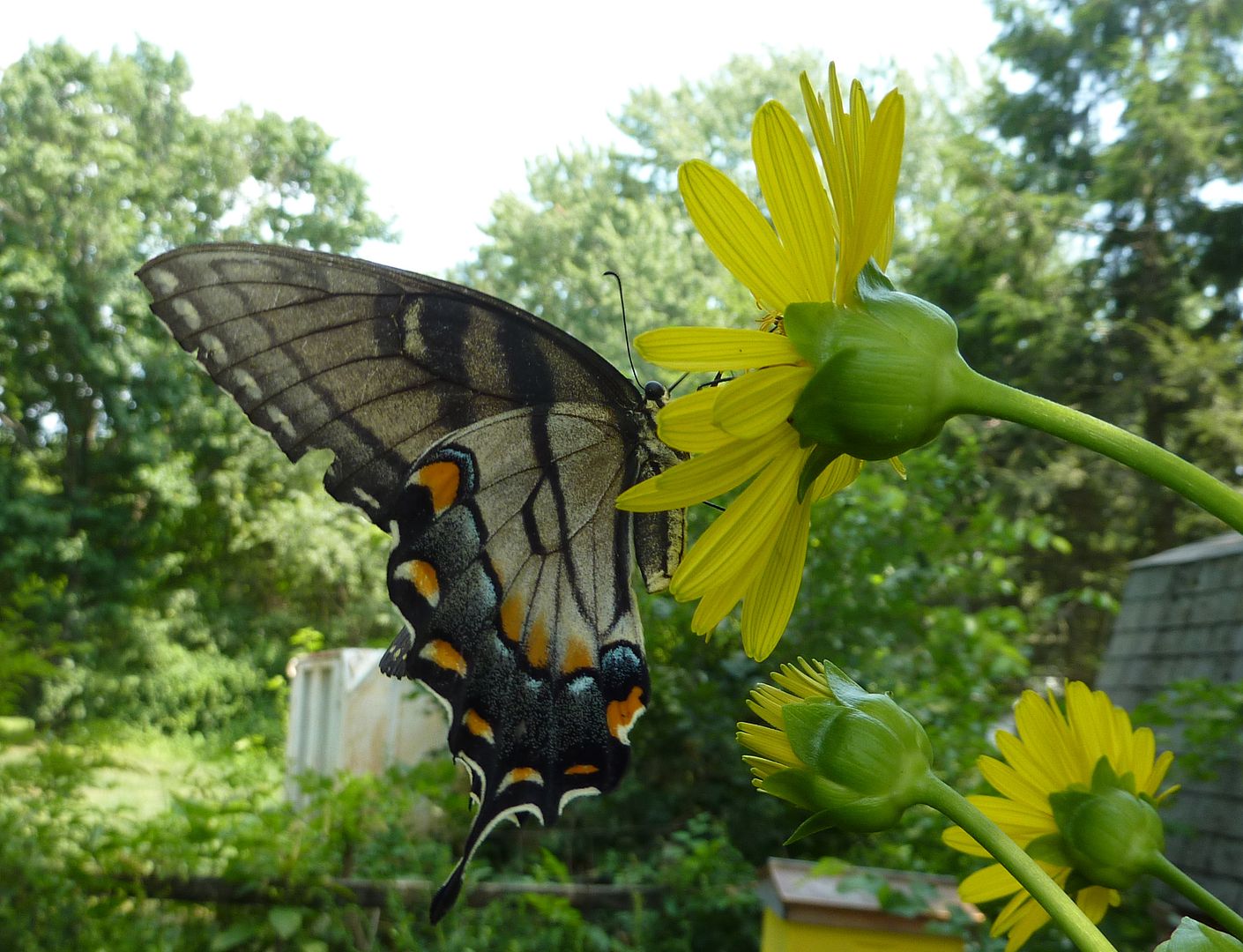
Swallowtail butterflies also love them.
Anise Hyssop, Agastache foeniculum, is by far one of the best sources at this time of year. They're a native perennial, will reseed in the right type of soil, and look great in the garden.
Sunday, June 6, 2010
Some Weeds are for the Birds
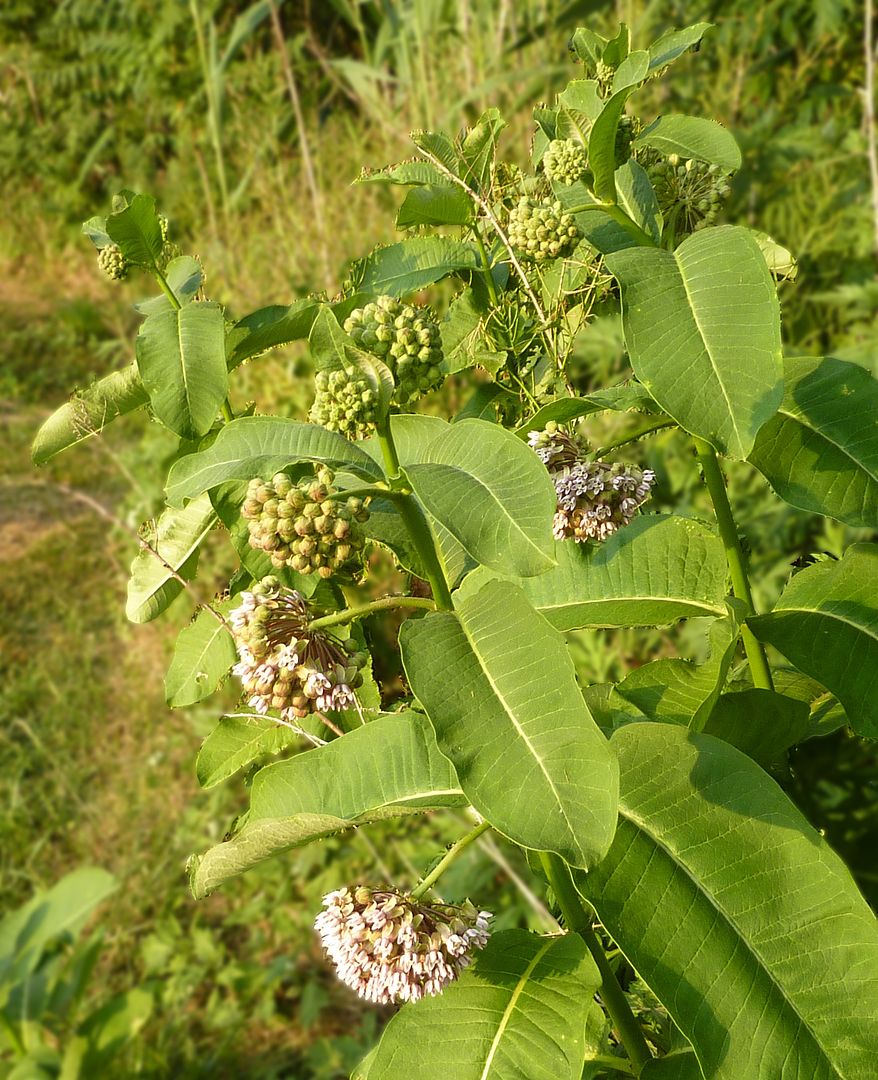
Common Milkweed, Asclepias syriaca, has started blooming. Although it is the earliest one I've seen bloom I'm reminded that it's June now and thus the year is half over. It's really strange realizing it's all down hill from here and yet the prairie hasn't even begun to bloom.
The pink flowers to this species are supposidly scented but I've yet to smell anything from them. This is probably because it was the afternoon when I found it. The ants walked right past the hairy defense on the stem that's supposed to stop ants from stealing nectar. These flowers were loaded with them.
While roaming around the field I found a Goldfinch. I don't see these up here until the sunflower patch goes to seed. I'm not sure what these guys were eating but I'm glad I got to see some this year. My sunflower patch isn't doing to good at all :(
Goldfinches kind of relate to milkweed because they've been known to use the down (milkweed seeds have feather-like fans attached to them) to make a nest out of. Actually people used to stuff pillows with milkweed down. Where goldfinches get milkweed seeds this early though is a mystery to me. I suspect it happens more commonly in the south.
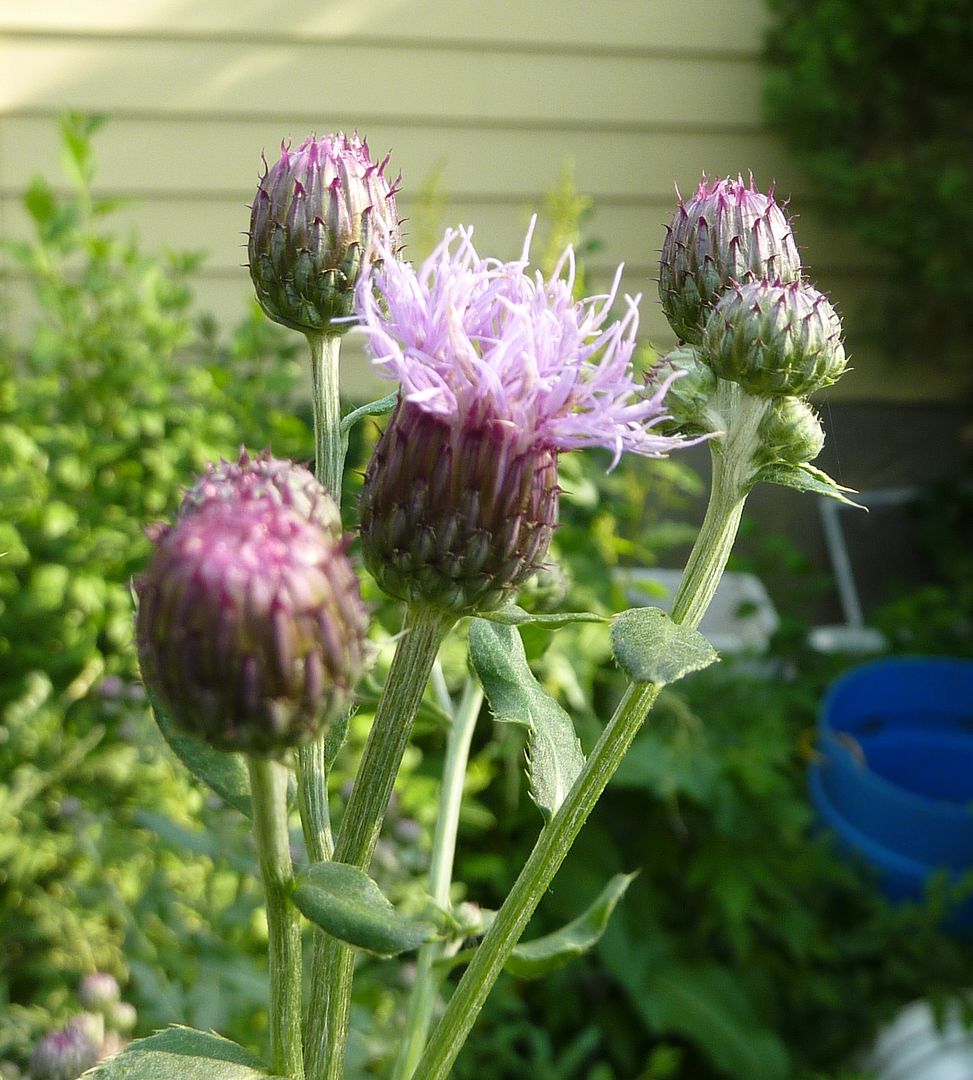
I'm toying with the idea of letting the thistle go to seed to help make up for it. Though frankly I've been doing a lot to get rid of this stuff. It's covered in thorns and hurts just to brush against it. It's also very invasive. I found it growing one year, let it go to seed and had over 100 plants coming up the fallowing year. Slowly I've been uprooting them and occasionally using round up on the stubborn ones, but even that doesn't always help.
The pink flowers to this species are supposidly scented but I've yet to smell anything from them. This is probably because it was the afternoon when I found it. The ants walked right past the hairy defense on the stem that's supposed to stop ants from stealing nectar. These flowers were loaded with them.
While roaming around the field I found a Goldfinch. I don't see these up here until the sunflower patch goes to seed. I'm not sure what these guys were eating but I'm glad I got to see some this year. My sunflower patch isn't doing to good at all :(
Goldfinches kind of relate to milkweed because they've been known to use the down (milkweed seeds have feather-like fans attached to them) to make a nest out of. Actually people used to stuff pillows with milkweed down. Where goldfinches get milkweed seeds this early though is a mystery to me. I suspect it happens more commonly in the south.
I'm toying with the idea of letting the thistle go to seed to help make up for it. Though frankly I've been doing a lot to get rid of this stuff. It's covered in thorns and hurts just to brush against it. It's also very invasive. I found it growing one year, let it go to seed and had over 100 plants coming up the fallowing year. Slowly I've been uprooting them and occasionally using round up on the stubborn ones, but even that doesn't always help.
Subscribe to:
Posts (Atom)