Showing posts with label Sunflower. Show all posts

Tuesday, December 11, 2012

Best of Bees 2012

This year's best of bees is somewhat topical as I'm writing a book relating to the topic. It's about honeybees which are nonnative, but by planting native plants as the nectar and pollen plants I believe that the conservation of native bees will come naturally. Even if you're not putting out mason bee nest boxes, or bumblebee homes (which don't work as often as I'd like them to), the fact that we're increasing pollen and nectar sources will benefit things that eat pollen and nectar. So there's this sort of idea that conservation will come naturally, especially when we're talking about flying insects.  

The thing about honeybees is they go for abundant sources of pollen and nectar and communicate where the food is by means of a waggle dance. So a maple tree that's 60' tall is likely going to win out to an apple tree that's only 15' tall. There is more to forage on the maple tree and more bees are waggle dancing about it too. Bees are loyal to one particular plant species when they go foraging, and rarely change plants mid foraging trip. This is why you never see honeybees... bees in general with multicolored baskets of pollen on their legs or under the abdomen.

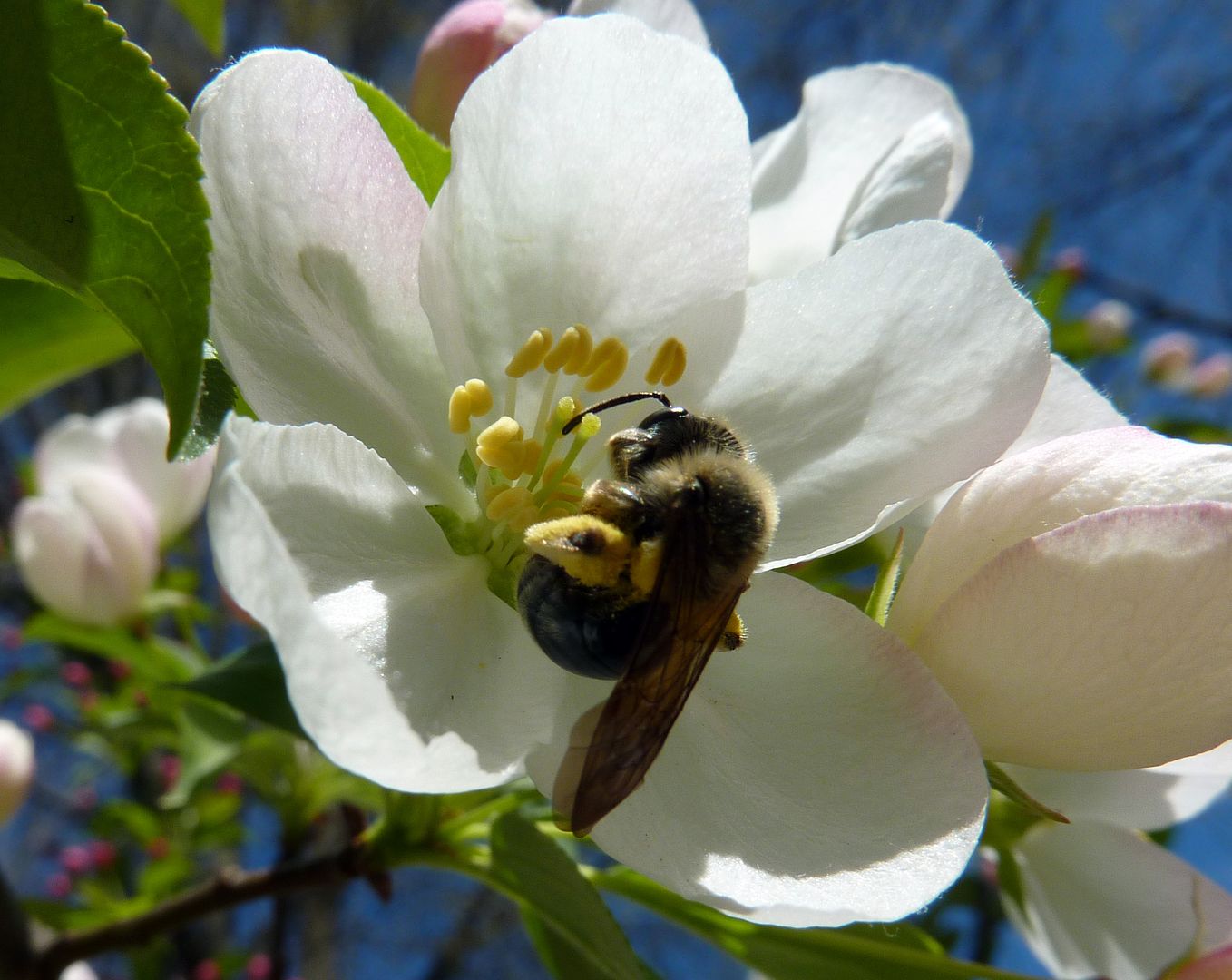
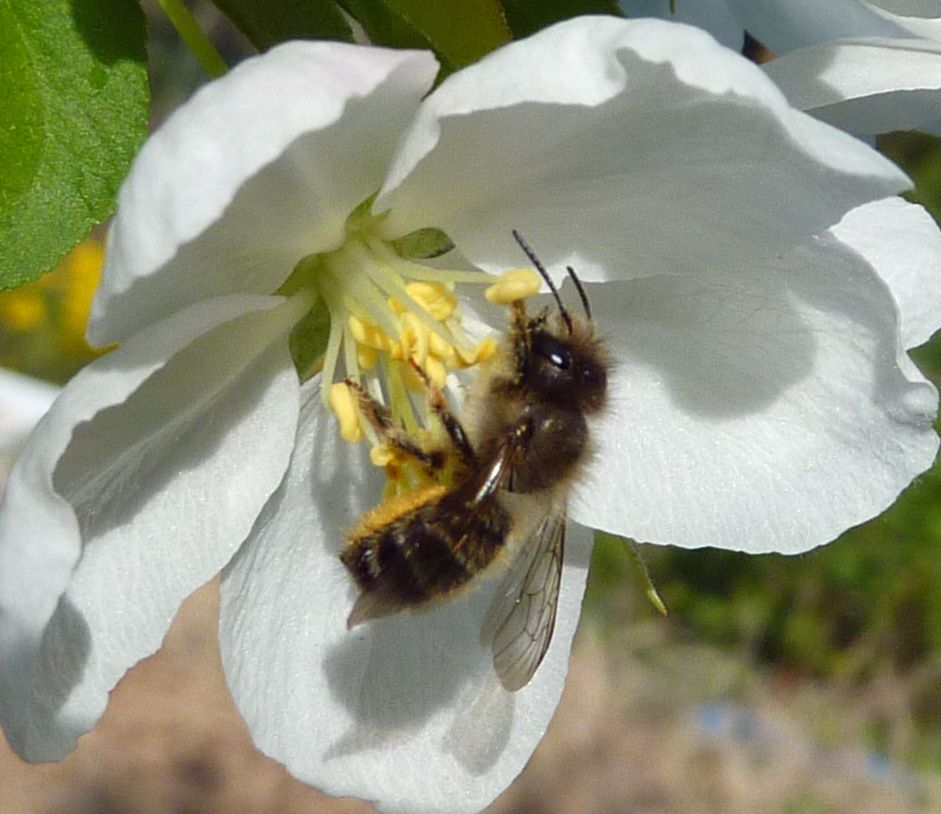
So early on, I find lots of native/solitary bees on my apple and other fruit trees because they're barely taller than I am. If I had an orchard of maybe 6+ trees of one species all flowering at once, and in close proximity of each other, they'd stand a better chance of getting honeybees. Not that it's horribly important to do this, as long as my honeybees are working something does it really matter? The fact that Blue Orchard Masonbees, Osmia cf. lignaria,  and a diversity of other bees are visiting my trees isn't a bad thing either. 
I get so annoyed by scientists who say honeybees are bad for the environment. In most of North America this really isn't true as much as that general statement leads us to believe. There are plenty of other nonnative bee species that are replacing our natives. Honeybees are cavity nesting and only displacing other cavity nesting bees out of nesting sites; most of which happens in Central and South America as far as the new world is concerned. (Another issue is that Beekeepers down there are farming Africanized Honeybees which is a headache all on its own.)

As far as nectar goes, honeybees seem to only be an issue when they visit plants that they:  1) Don't pollinate, and 2) Actively steal the nectar and pollen in cases where there are bees that Do pollinate them. When this is the case then yes they are stealing from native bees and populations suffer. I strain to think of particular examples but I know they're out there.

More commonly I hear examples of native bees being "Better" pollinators of certain plants. The Sunflower Bee, Squash Bee, and Rose Mallow Bee can be found on a variety of flowers but all specialize on feeding pollen to their brood of which the plants they are named after. Well Duh! I'd hope such bees that specialize in one type of pollen would at least pollinate the plant.

Most of the time when this argument is used, it's usually about food crops so maybe scientists have a point. Alfalfa Bees are better pollinators than Honeybees but farms overall aren't designed with native bee populations in mind. Honeybee hives help to pollinate the middle of the fields where natives don't fly to as much.

It's not a fair argument to compare 1 bee species to 4,500 others. This is like comparing your grades in school to 4,500 other students in your class. (Chances are you sucked at least one subject in school or our right avoided some like music, art, gym, computer programming, other languages, shop, sex ed, driver's ed, or some other class. Maybe its your own fault for not having hair, or lack there of, on the right part of your body?)

Anyhow, pretty pictures.

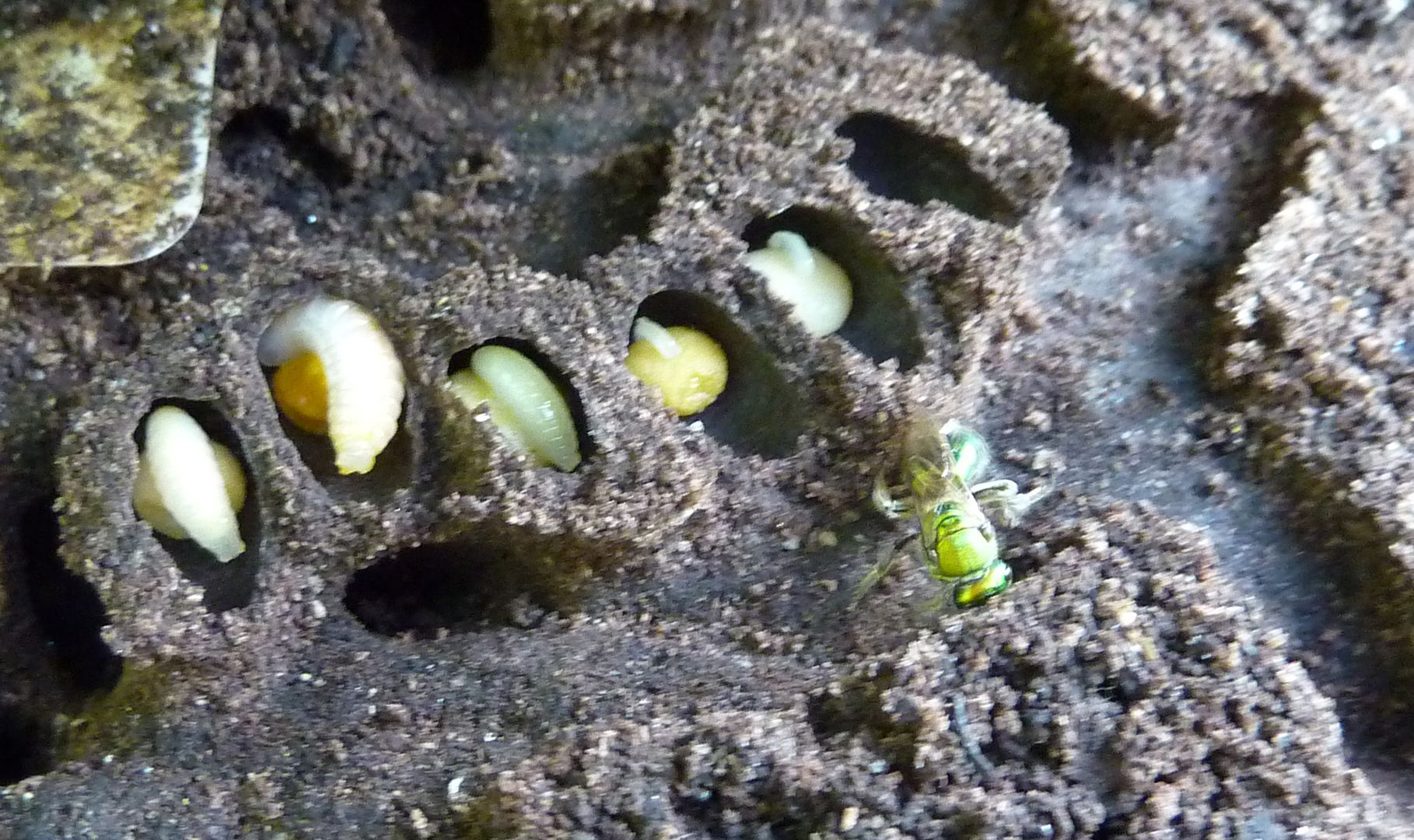
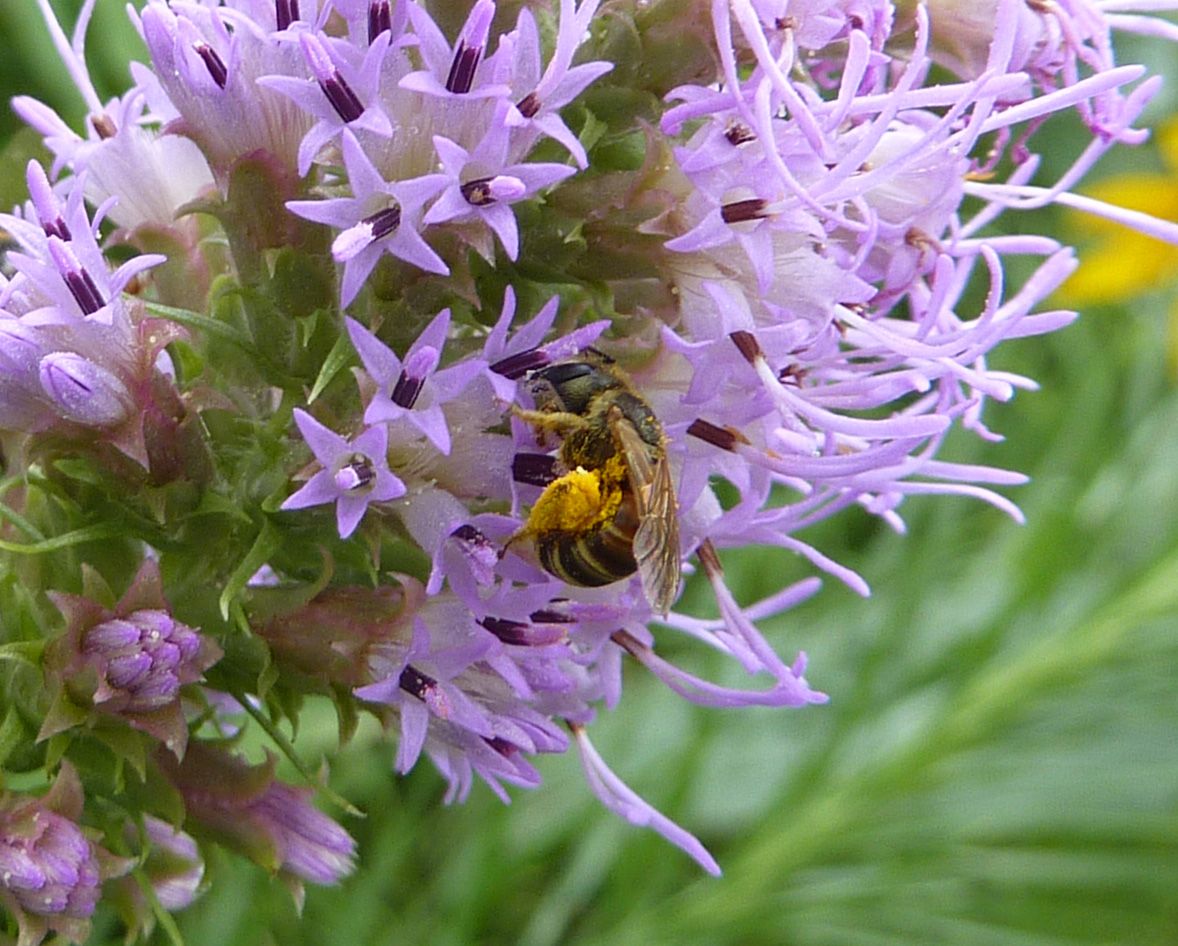
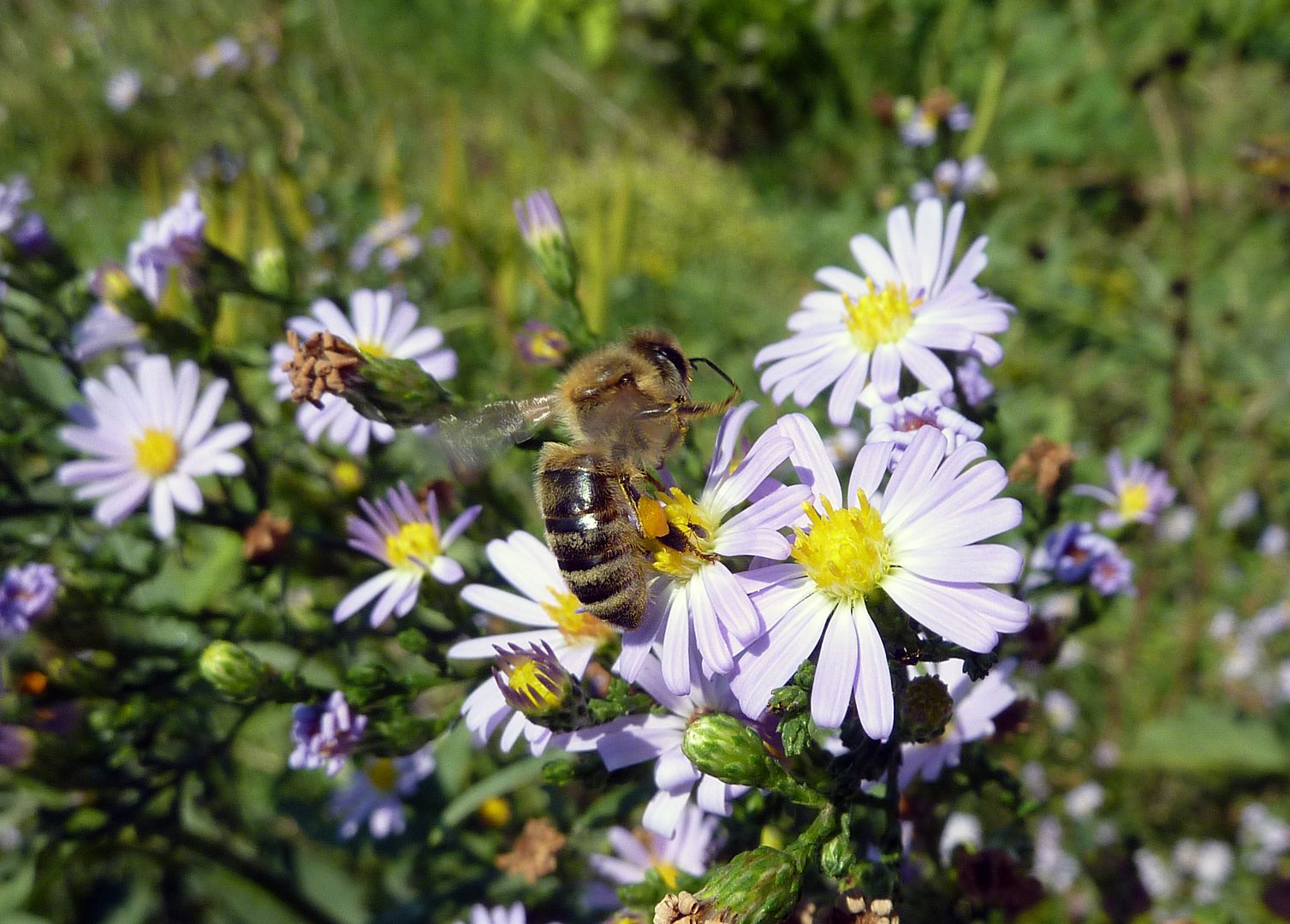
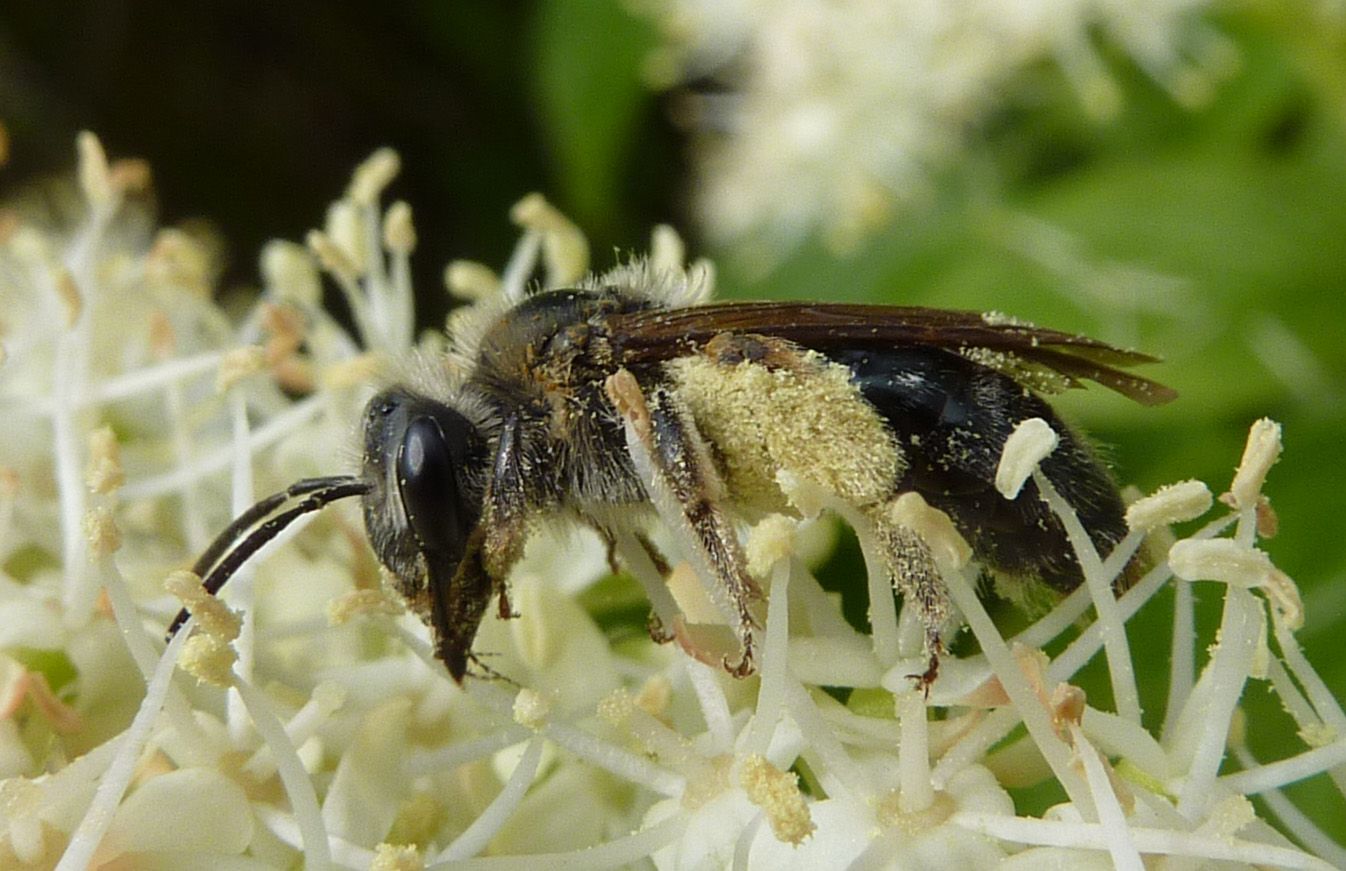
This image demonstrates the plant loyalty I was talking about. See how each pollen ball is pretty much one color. The sweat bee here deposits an egg on each one to consume it all. Which makes me wonder what the nutritional value of each plant's pollen is comparatively, and maybe this is why some bees have decided to specialize in giving only one type to their young.

The honey produced by many plants varies considerably. With honeybees plants like Sneezeweed, Helenium autumnale, produce copious amounts of pollen, however the honey produced by this plant is described as tasting so f***ing awful that it tents to ruin all other types of honey its mixed with.

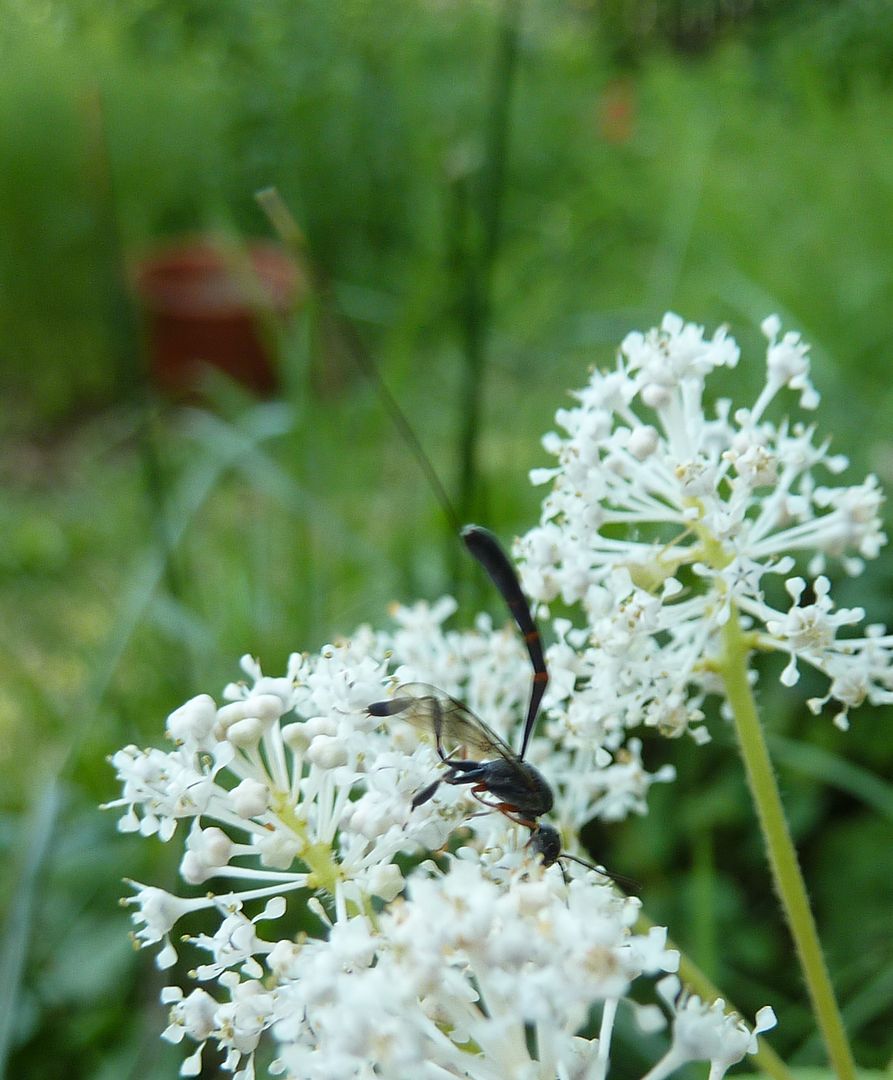
As mason and carpenter bees get themselves situated for the year their natural parasites begin to emerge. Though to be fair I haven't ID'd this one (partaking of New Jersey Tea) and it may very well use beetle grubs as a host. Parasites like these are signs of a healthy ecosystem, at least for whatever species they use as hosts.

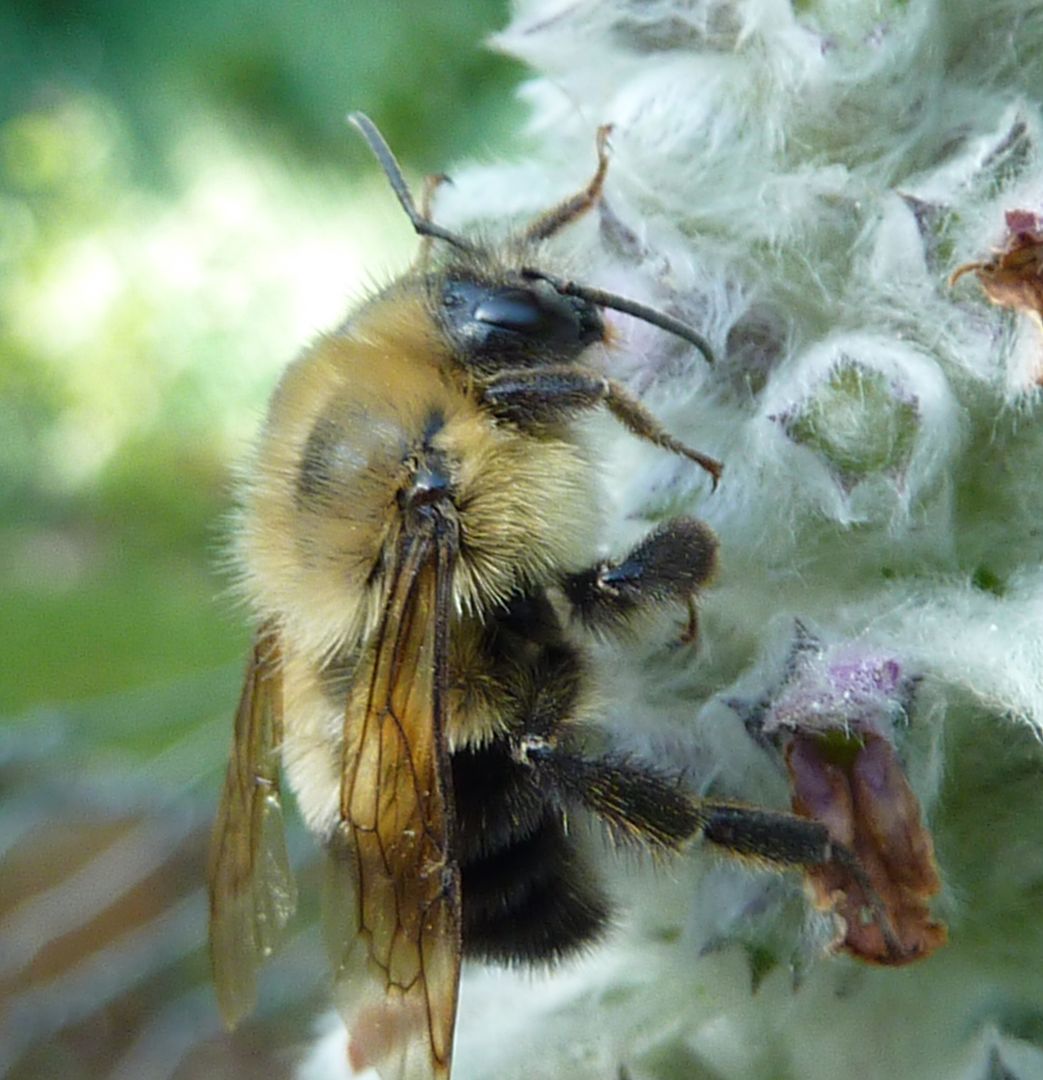
If I remember right this was a Male Bumblebee I found in early July. Many bumblebee hives actually complete their life cycle early in the year. I know one species is done by June, and calling it "social" is almost a joke when we consider others last well into August. 

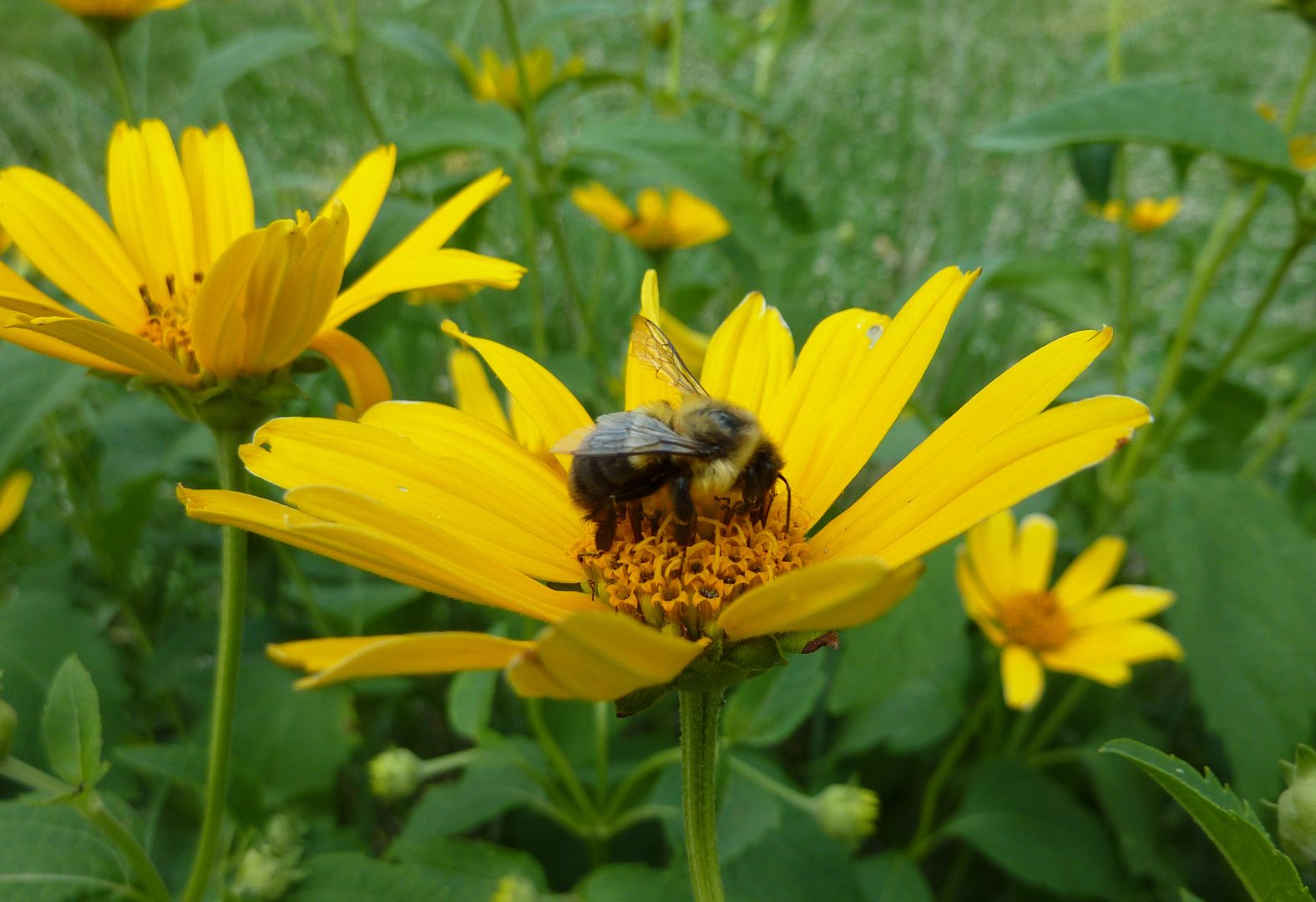
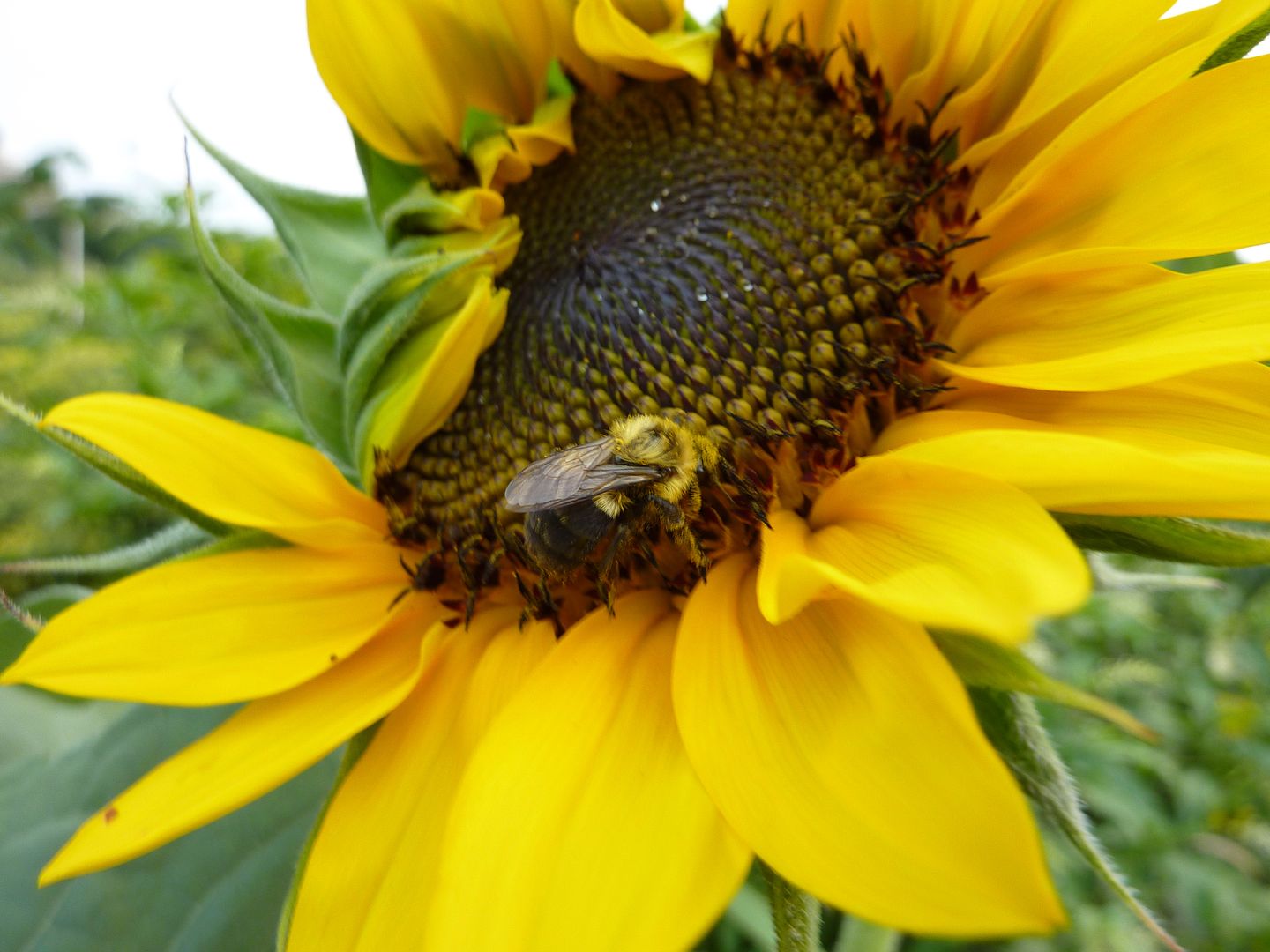
Bumblebee on Ox Eye sunflower. This isn't a true sunflower and the main difference is the petals can develop into seeds where as true sunflowers can not. You can't see it in this photo but there are tiny pollen anthers at the base of each petal. 

As summer rolls in, big flowering trees become rare and we see more honeybees on low growing shrubs and full sun perennials that bloom at this time.

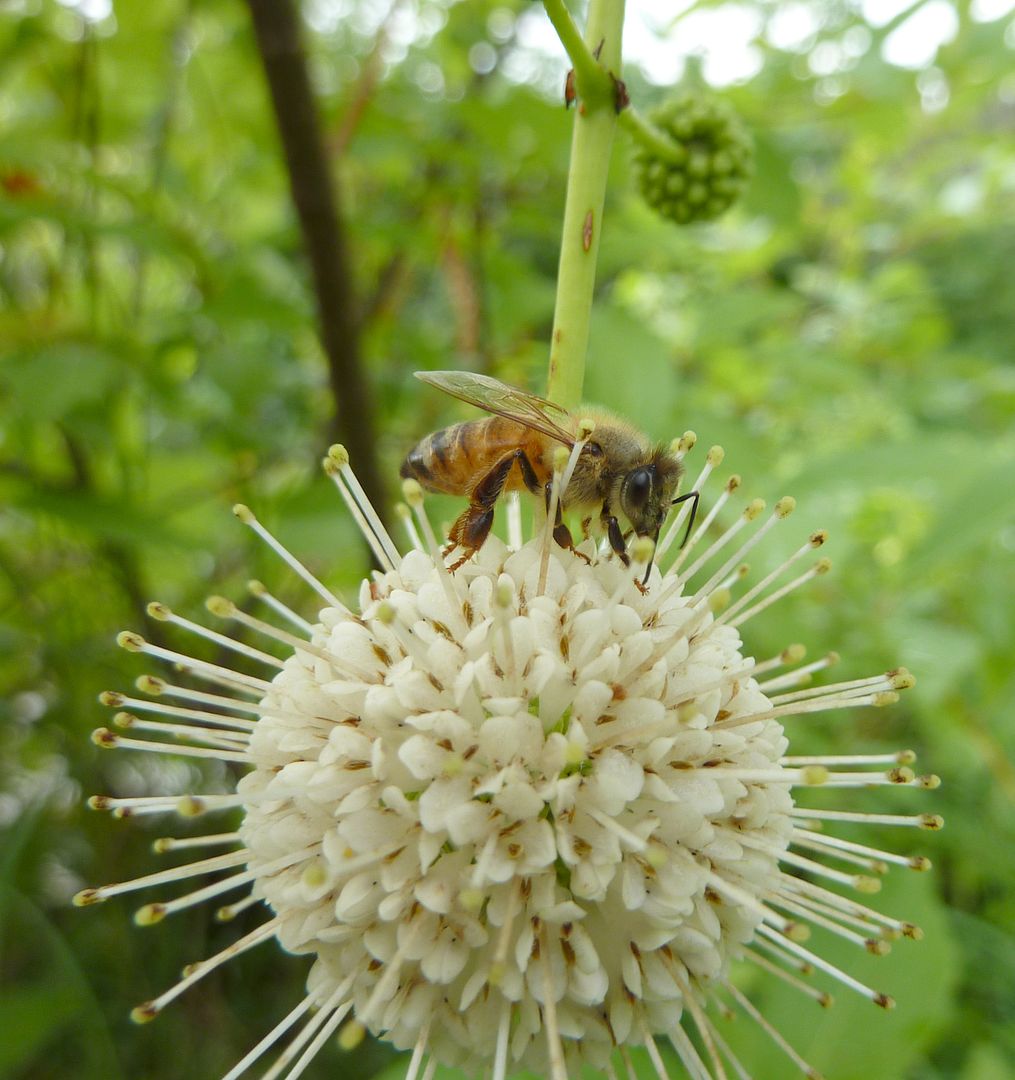
My bees found the buttonbush hard to let go of. They worked the flower balls well after the petals turned rotted looking. Part of this plants allure is that the honeybee tongue is 6mm long where as the florets on each ball are 9mm deep. This means honeybees rarely get all the nectar and likely why we see them working the flowers after they're past their prime.

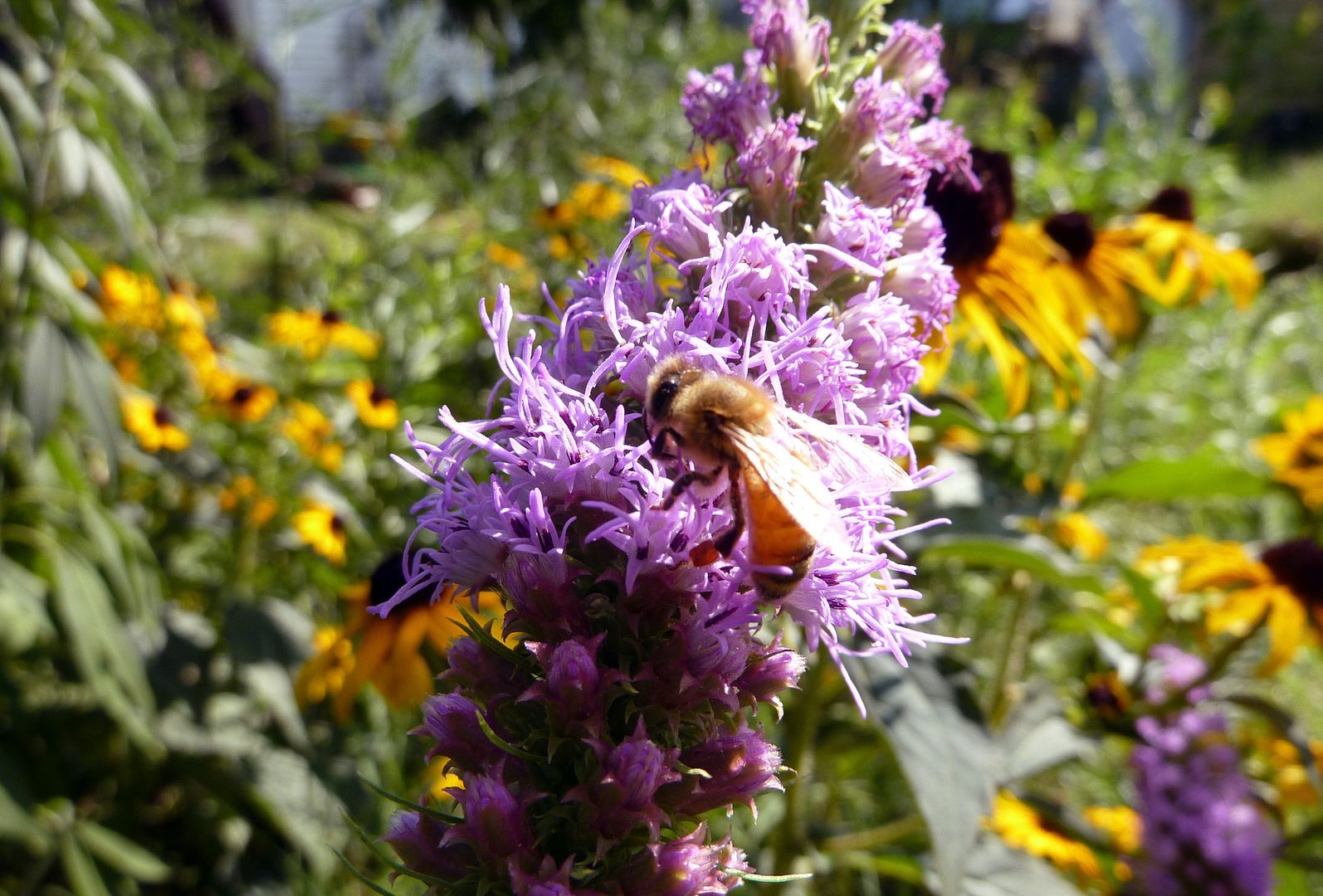
Liatris wasn't quite as popular as Mountain Mint and Anise Hyssop, but it got a hell of a lot more attention than the Black Eyed Susans did. Rudbeckia in general is a genus of easy to grow forbs but most of them seem to only produce pollen or so little nectar that I rarely see bees working them. They're a nice filler plant for a great pop of yellow over the summer but otherwise go for Coreopsis, or better yet Coneflowers, or better still, Milkweed.

Liatris make for a much needed splash of pink and purple in the prairie garden. And many species are popular with butterflies as well as native bees.

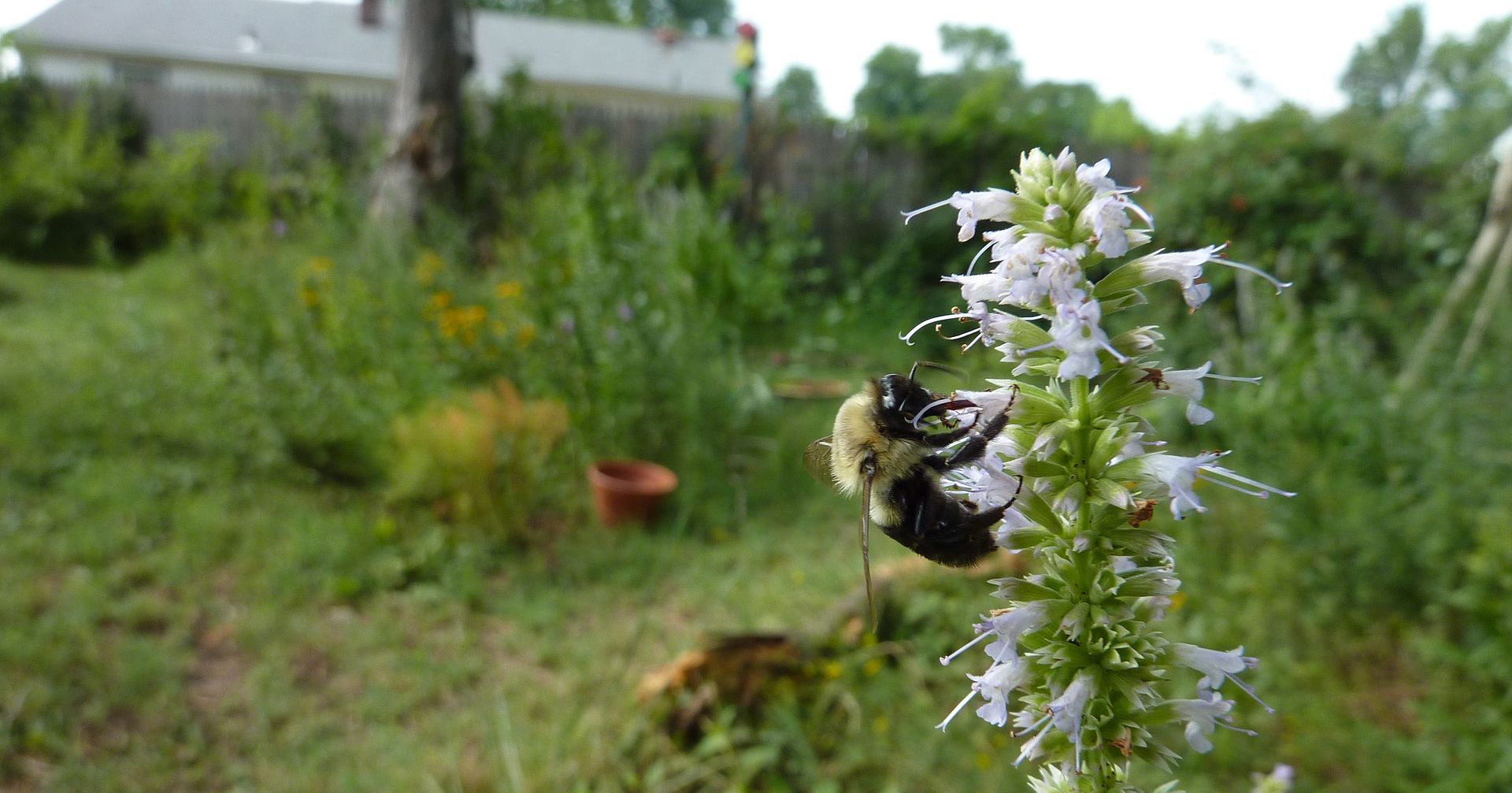
Anise Hyssop is so loved by bees. I recommend it over the Butterfly Bush which blooms for about the same amount of time. Mountain Mint is an improvement still that flowers about a month sooner and continues to do so well into frost. It does spread by root suckers but these are easily plucked from undesired areas.

Asters are a late season delight though most species have to be planted in bulk to get honeybee attention. Usually this isn't a problem as Asters are diverse enough that there's usually one species growing as prolific as a weed somewhere. And if not them then Goldenrods are doing it for sure. 

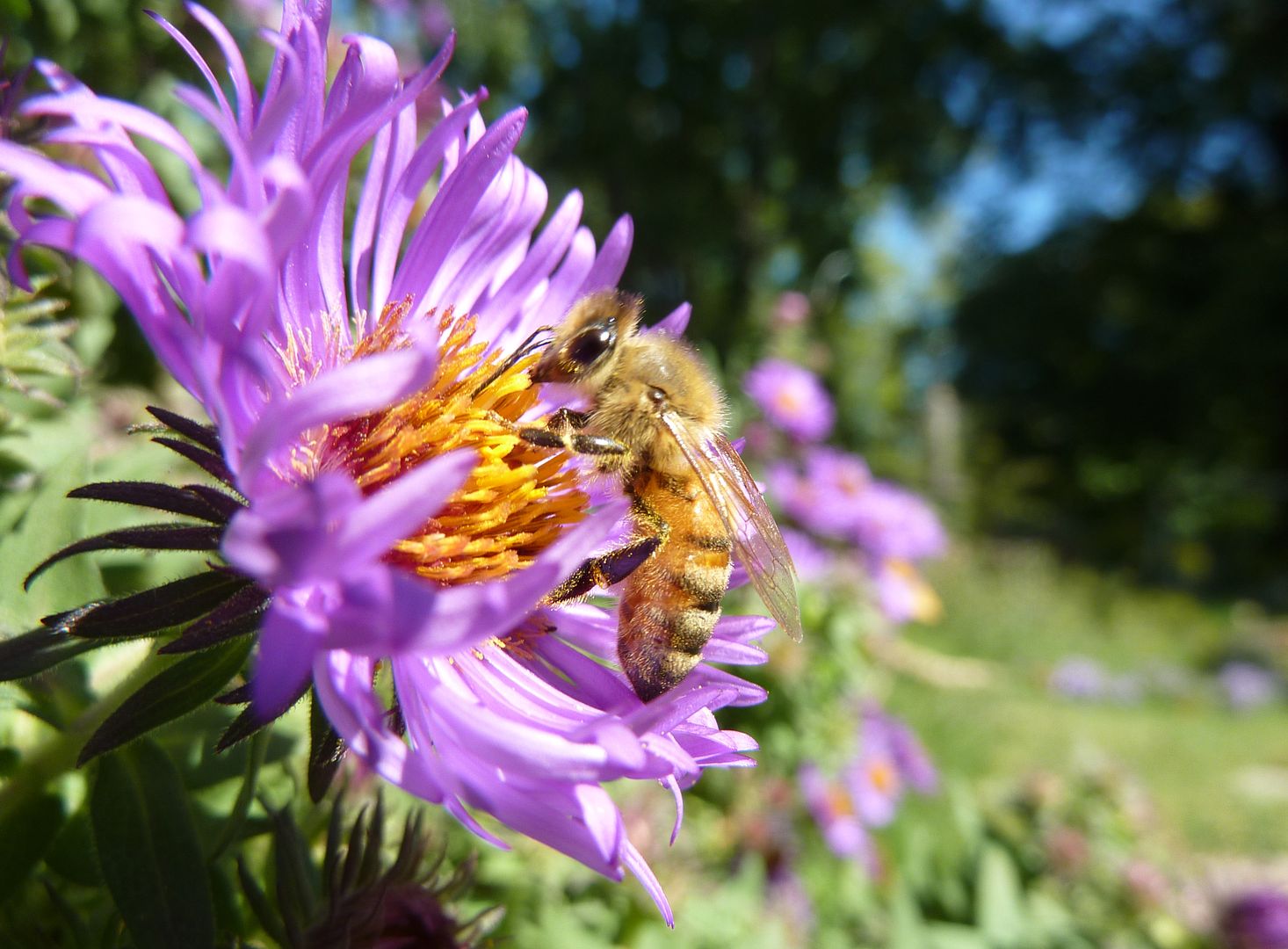
We end with a honey bee on a New England Aster, Symphyotrichum novae-angliae. Of the 8 Aster genera found in North America (The Alpine Aster is still in the true Aster genus as I learned,) Symphyotrichum is probably the most prized by honeybees. New England Asters in particular seem to take the fewest number of plants to attract copious numbers of them too. Another fun fact, this is the image I decided to use for the cover of my book.
Monday, October 1, 2012

Swamp Sunflower

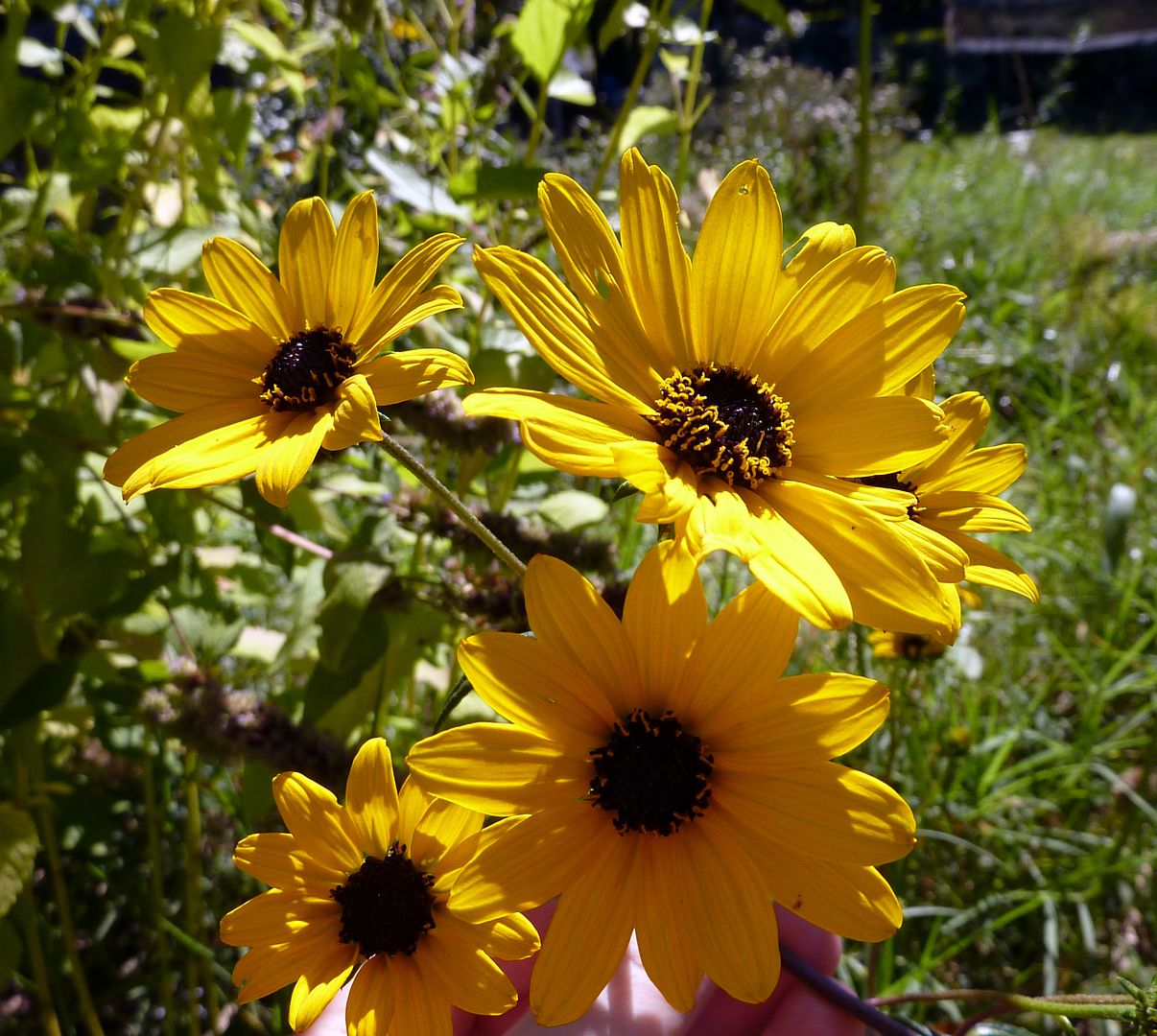
Swamp Sunflower, Helianthus angustifolius, started flowering today. This is the latest flowering of our native sunflowers. This is a young plant I got from my recent trip to the Mt. Cuba Center, but despite it's age and limited flowers finding bees on it isn't uncommon. Sadly it's still rare enough that I can't get a good picture. Flowers are about the size of a Black-eyed Susan but I've read the plant itself can grow to be around 8' tall. Next year I'm expecting this to be a real show stopper. The flowers are so bright and happy looking they stand out even more than the Goldenrods in my garden.

Another trait I like is the dark center of the flower. I also have Helianthus maximiliani but I find the flowers to be boring because the centers are either yellow, orange, or a pale brown at best.

This species also goes by the name Narrow-leaf Sunflower because the leaves are narrow and grass-like. Here you can barely make them out with some of the overgrown toughs of lawn along the garden boarder.

Seeds to perennial sunflowers are an important food sources to over wintering birds. Sadly almost all of our native sunflowers are aggressive spreading plants and may require thinning our ever few years.

Monday, August 15, 2011

The Meadow at Mt. Cuba

I attended another Meadow Studies class at the Mt. Cuba Center this month. The previous one from last month I found to be a little boring. Their their meadow is primarily grasses, and rather few plants were blooming at the time. To their credit I am bias against grasses, and generally anything wind pollinated. Lush grassy meadows have their place, but during the month of July they look like a lawn in desperate need of mowing. As the year progresses though species like Big Bluestem, Andropogon gerardii, and Yellow Indian Grass, Sorghastrum nutans, come into their own. These tall grasses grow to be 6' high and there's nothing more majestic looking that watching their seed heads flowing with the wind. The whole meadow comes alive swaying with every gust like an ocean of plants.  Unfortunately the effect doesn't photograph well, at least not with my camera, and the perspective seems to always be off somehow.

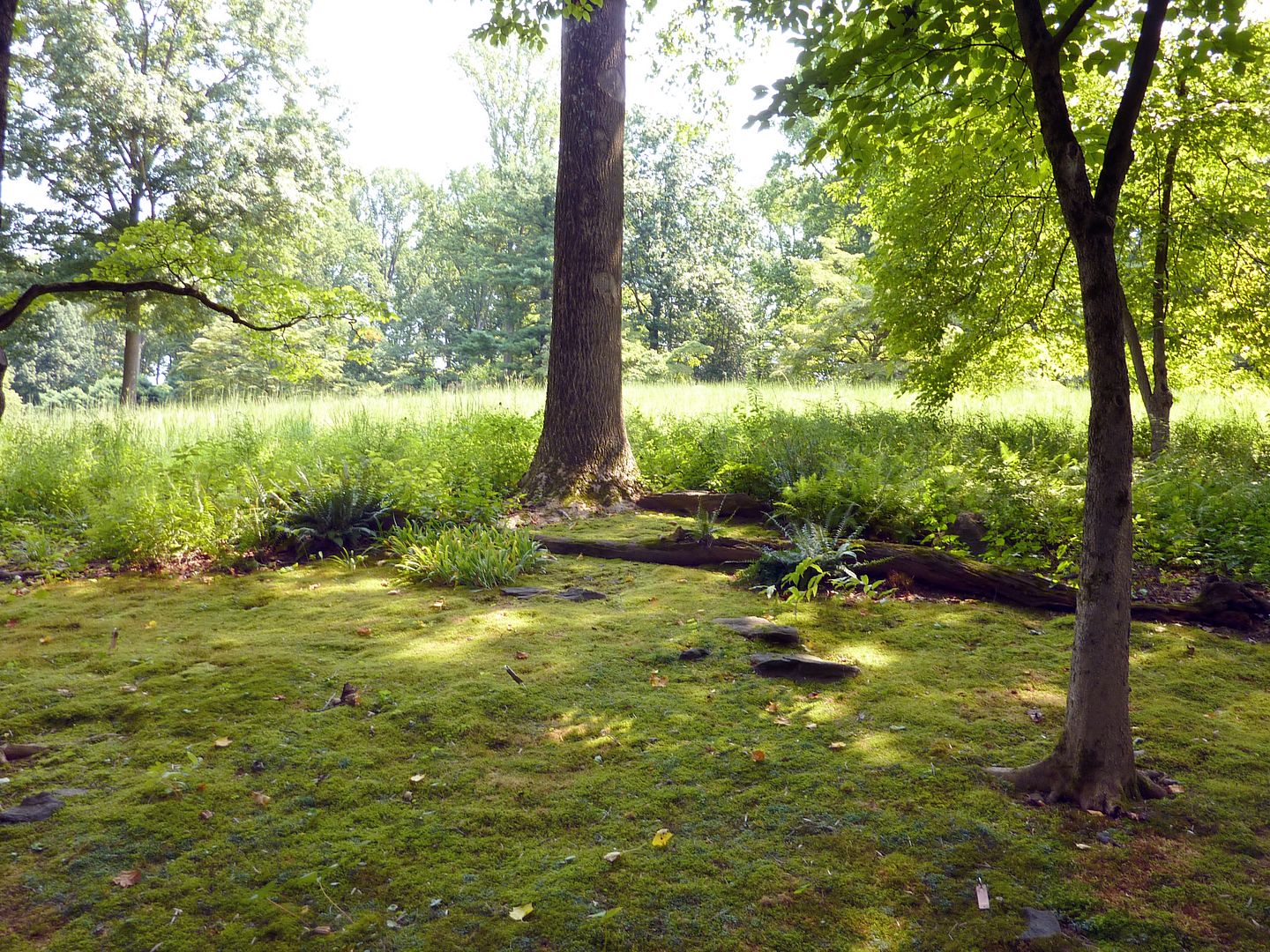
Even here peering through a mossy clearing the grasses barely look 3' tall. As the grasses grow taller they become easier to appreciate.

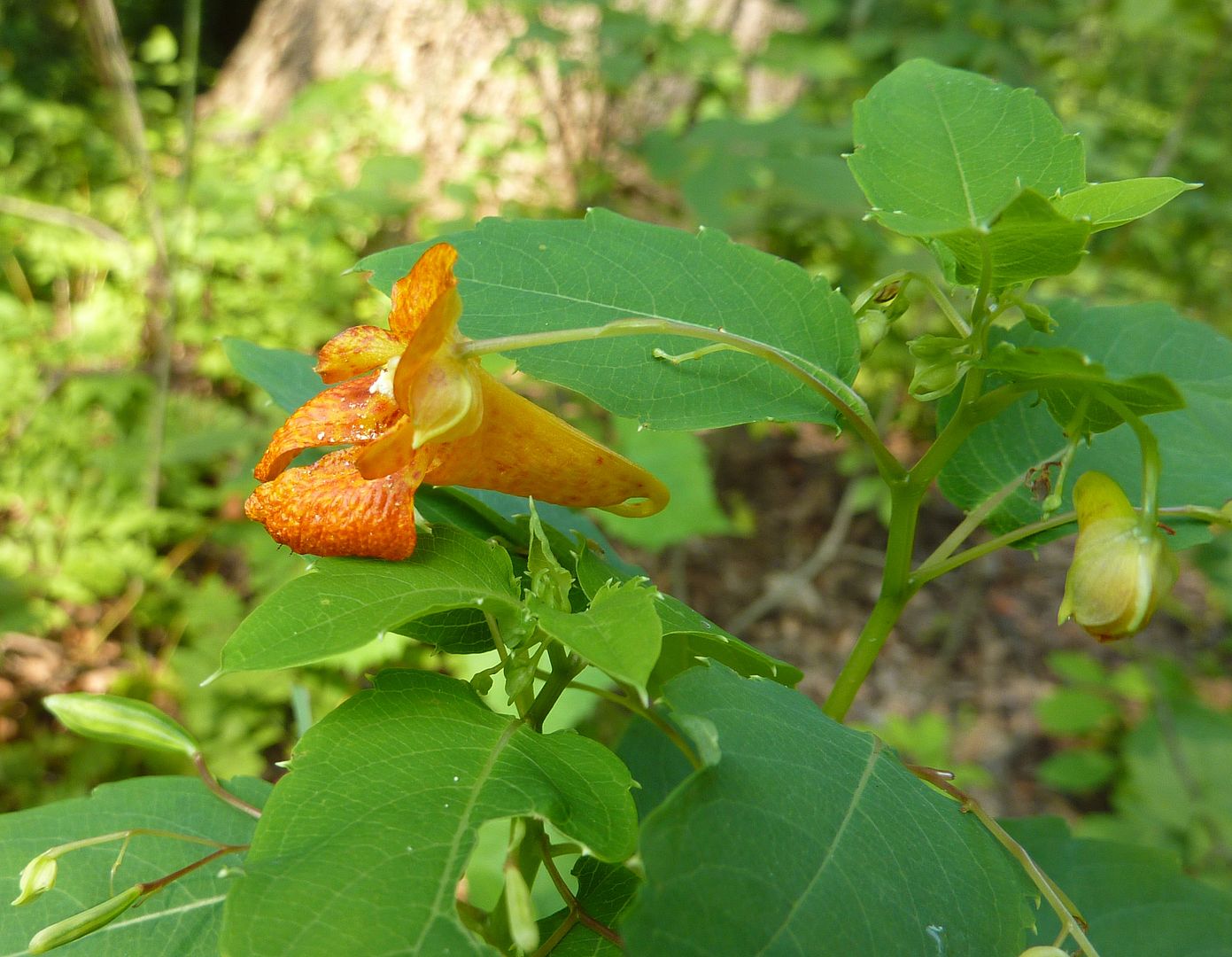
Before going to the meadow they had patches of Spotted Touch-me-not, Impatiens capensis, flowering. This native Impatient is anything but. Seeds germinate after 2 winters and the resulting plant is an annual. They're fun plants because of their exploding seed pods, but if you're looking for any sort of predictability as to where they'll come up, you need to plant seeds in the same spot 3 years in a row. From there they're a delightful weed, growing in wet spots, and attracting hummingbirds. (Supposedly the sap helps clear up poison ivy but I'm not advocating holistic remedies. I would be willing to try it out though.)

Bottle Gentian, Gentiana andrewsii, was also in bloom. These flowers are fussy and hard for most bees to open. The idea with the tight petioles is to discourage ants from stealing nectar. As you can see, carpenter bees and perhaps others, have little issue just cutting holes right through the flowers to get the nectar. This happens to a lot of tube and bell shaped flowers.

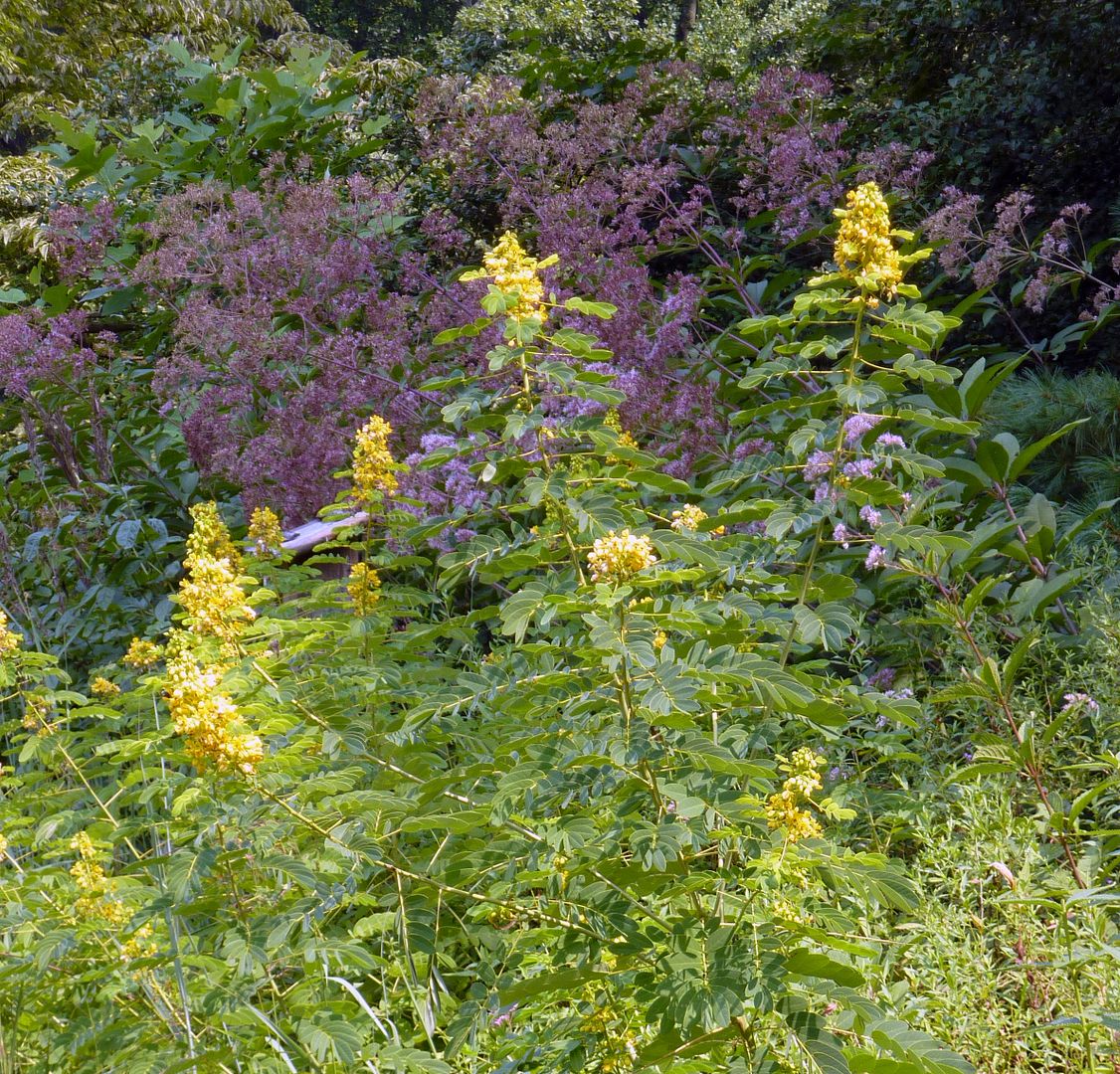
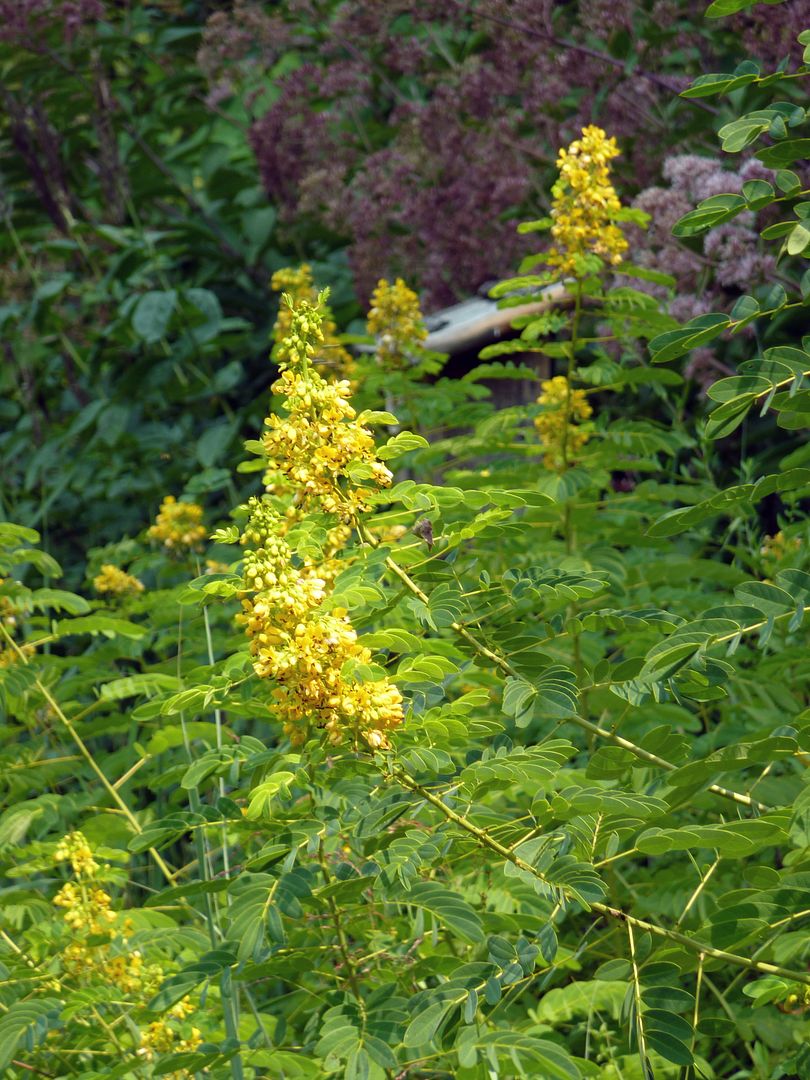
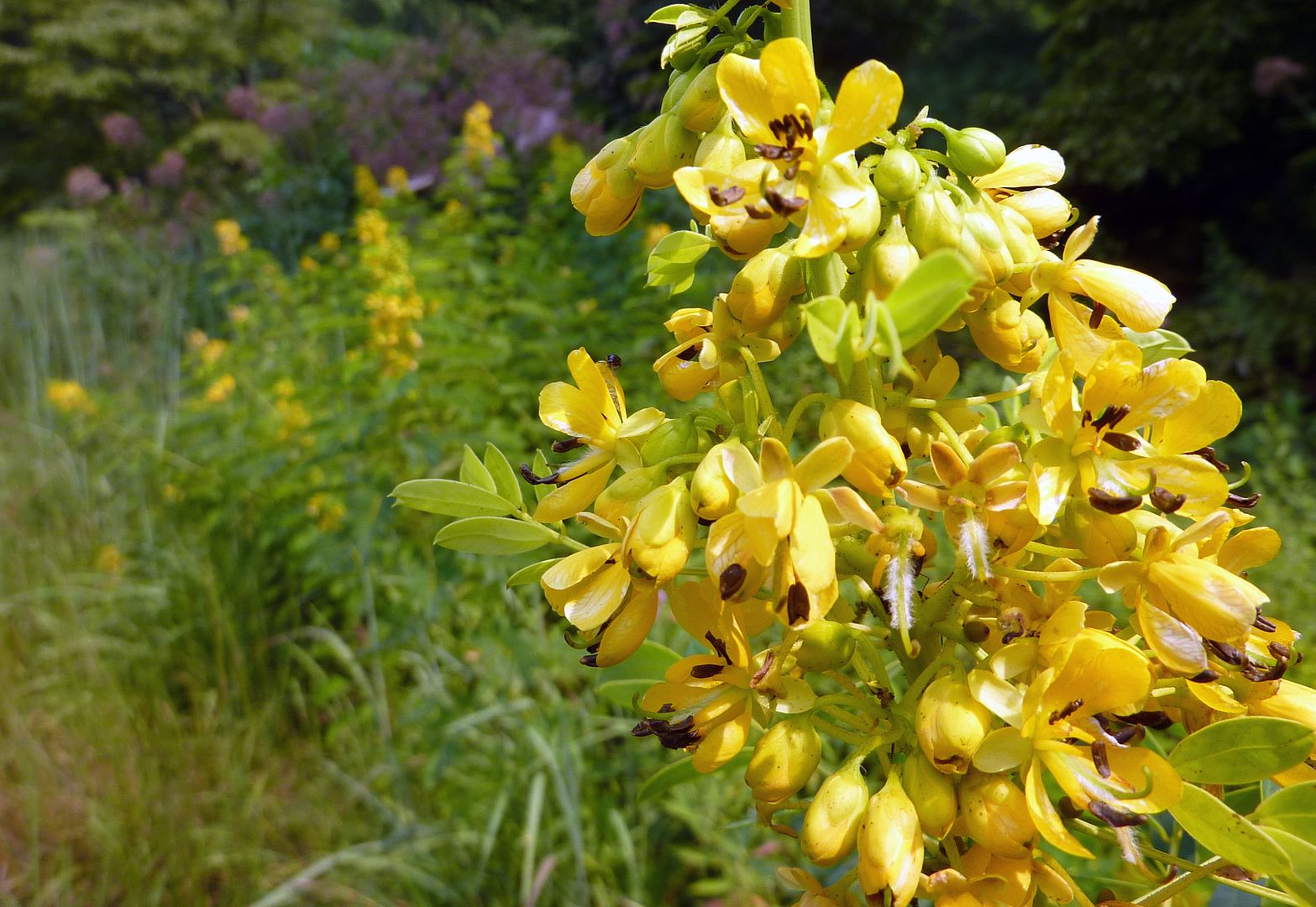
Moving out into the meadow, the real highlights were the Wild Senna, Cassia hebecarpa, and assorted Joe Pye Weeds, Eutrochium fistulosum and Eutrochorium maculatum.  

Note: Joe Pye Weed was formerly in the genus Eupatorium. That genus still exists but I believe it consists mostly of the taller white flowering species that aren't Boneset. Eutrochium includes all purple/pink flowering members of Eupatorium now. Personally I think this is a conspiracy concocted by the plant labeling community. 

Anyway, I feel like they understated their Wild Senna a bit. It was in full bloom and not really mentioned until I asked. They did this with a number of plants but it's not like it was a bad tour. Actually we got up close and personal with 25 meadow species with lots of other goodies along the way. The instructor was more than happy to talk about all plants in the gardens people asked about. 

This is the host plant to the Cloudless Sulphur, Phoebis sennae, which isn't the most common butterfly around, but it's certainly unique enough looking to warrant their host plant in any butterfly garden. The pea-like seeds are also an excellent food source for certain birds.


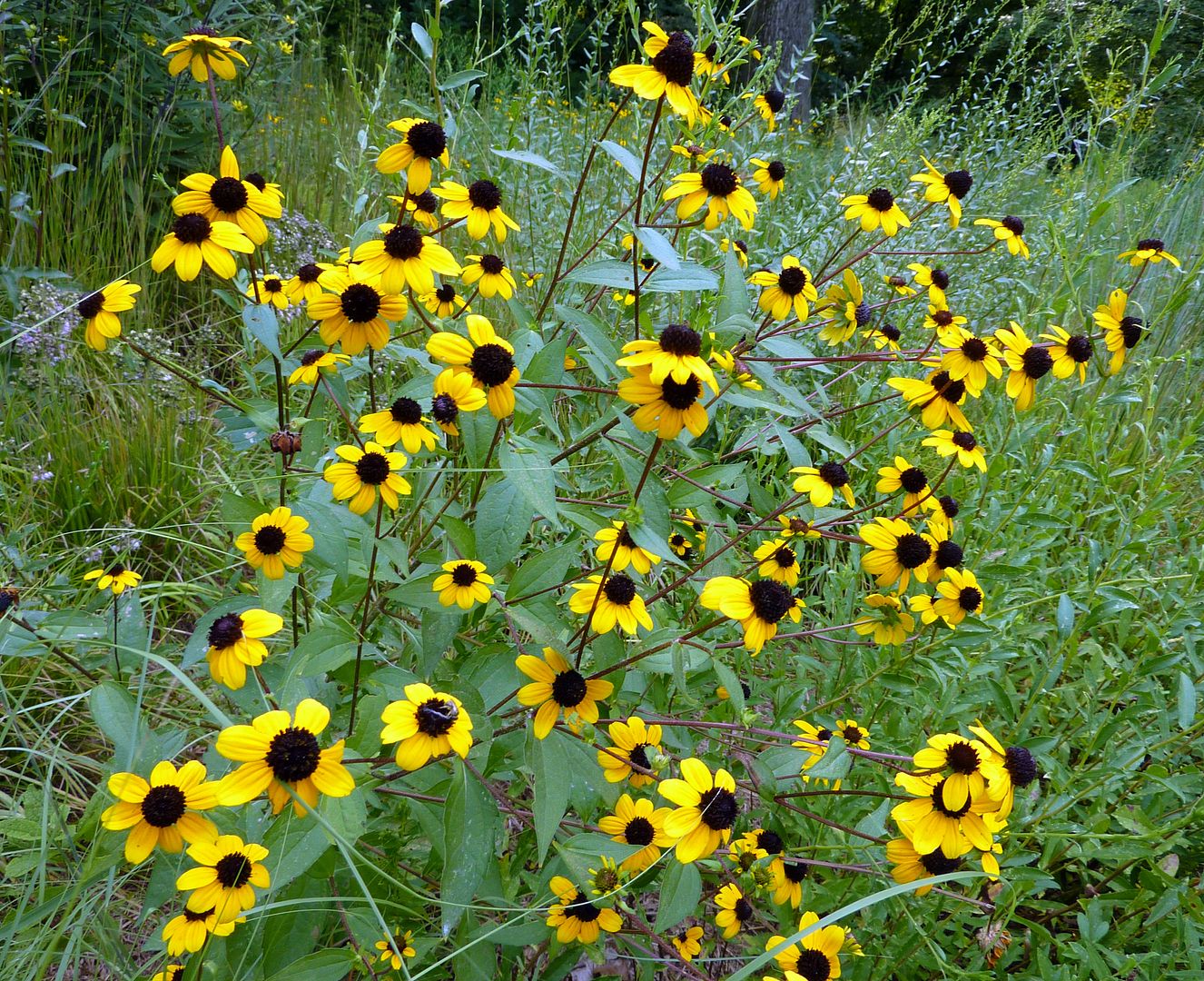
Brown-Eyed Susan, Rudbeckia triloba. This is also called Thin-leaved Coneflower, but I feel that implies a different genus. It didn't seem to be spreading around like the other Rudbeckia species in their meadow.


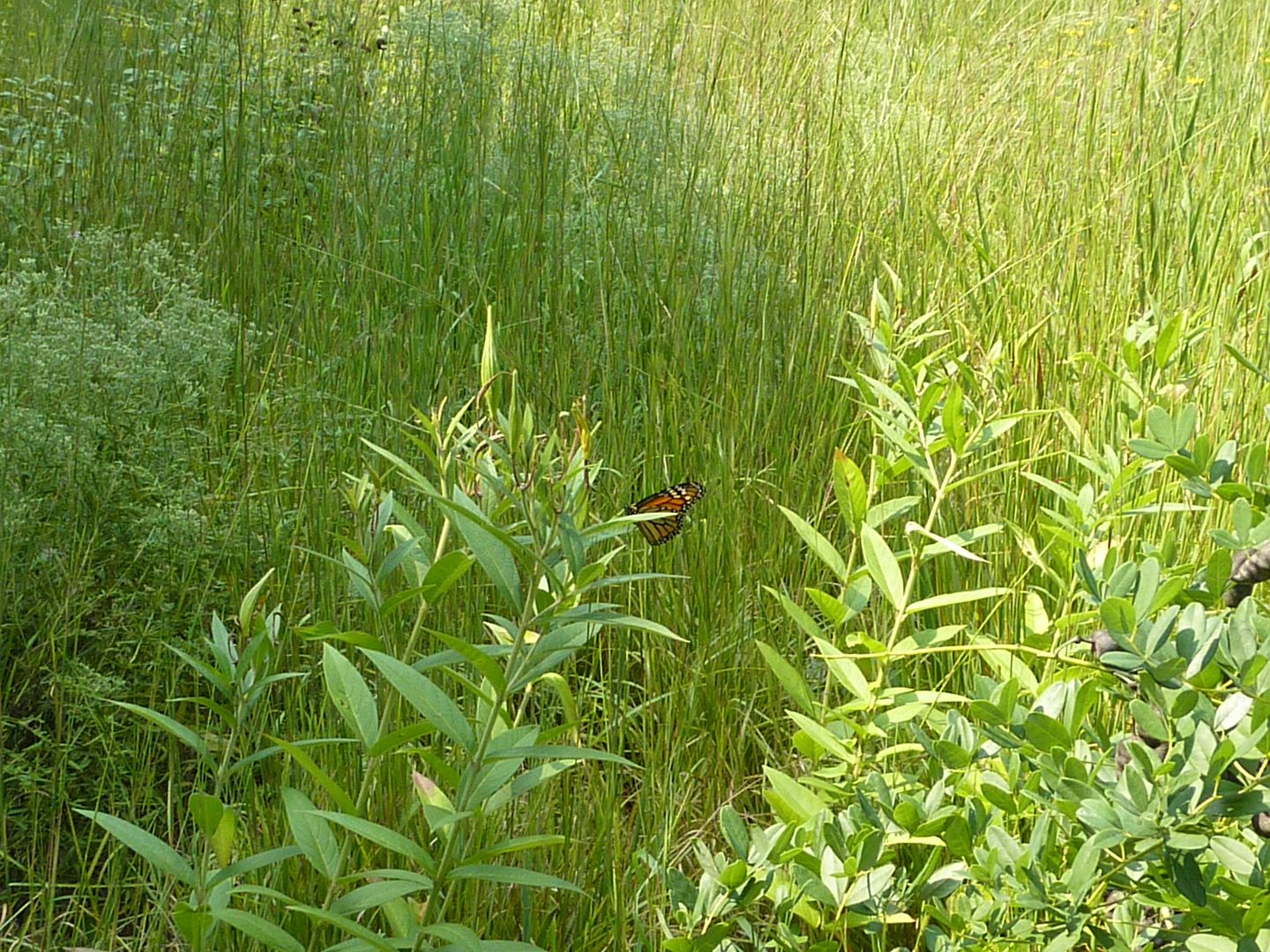
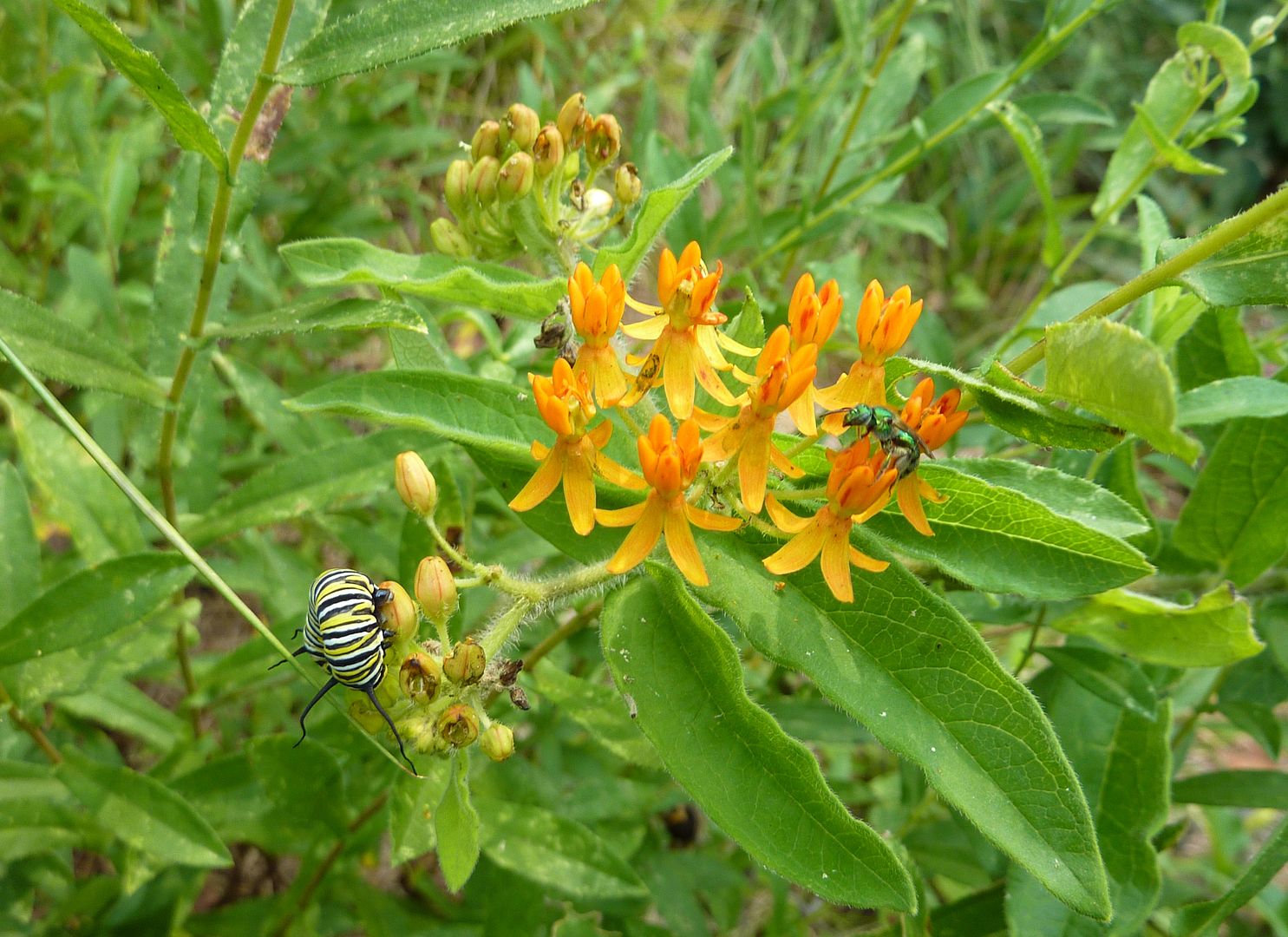
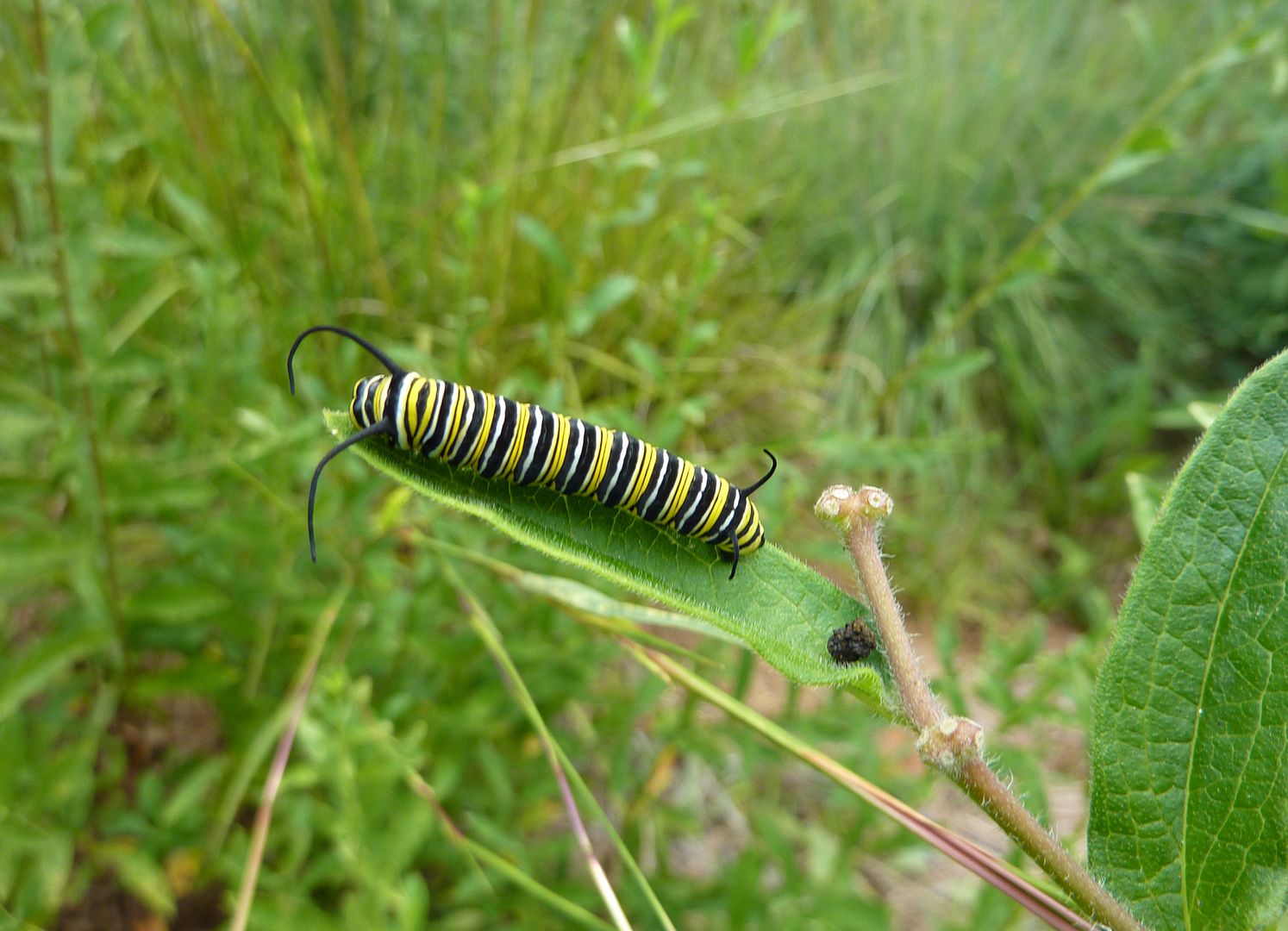
Monarchs were all over their milkweed. They have lots of species of milkweed there but most of it is well past flowering. Also an abundance of insects that help nibble the plants to the ground were starting to show up. 


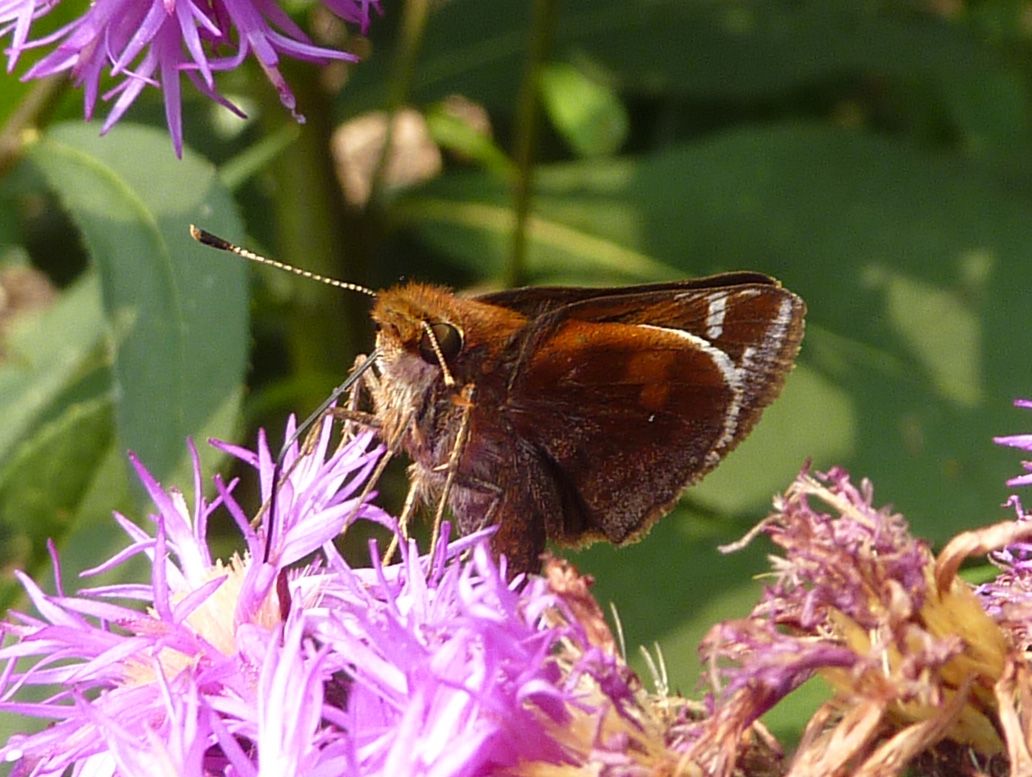
I found this skipper on their Ironweed, Vernonia noveboracensis, to be rather attractive. The colors reminded me of a robin or some sort of bird.

Here is a some type of cultivated Coneflower from one of their other gardens. The tube shaped flowers almost imply hummingbirds should drink from them. 


There were many other things flowering in their meadow, it's just I'm not into things like Obedient plant, Physostegia virginiana, and some type of perennial sunflower, Helianthus microcephalus. There were some early Goldenrods too.

Wednesday, August 10, 2011

What Grows Around a Community Garden

Well established community gardens are amazing, especially ones that have been around for years. As each new crop of gardeners go to plant their goods what happens is they typically find seeds and perennial crops from the person before. Unwanted plants seem to have been transplanted to the outskirts along the garden. And over the years a couple of species in particular seem to have flourished here.

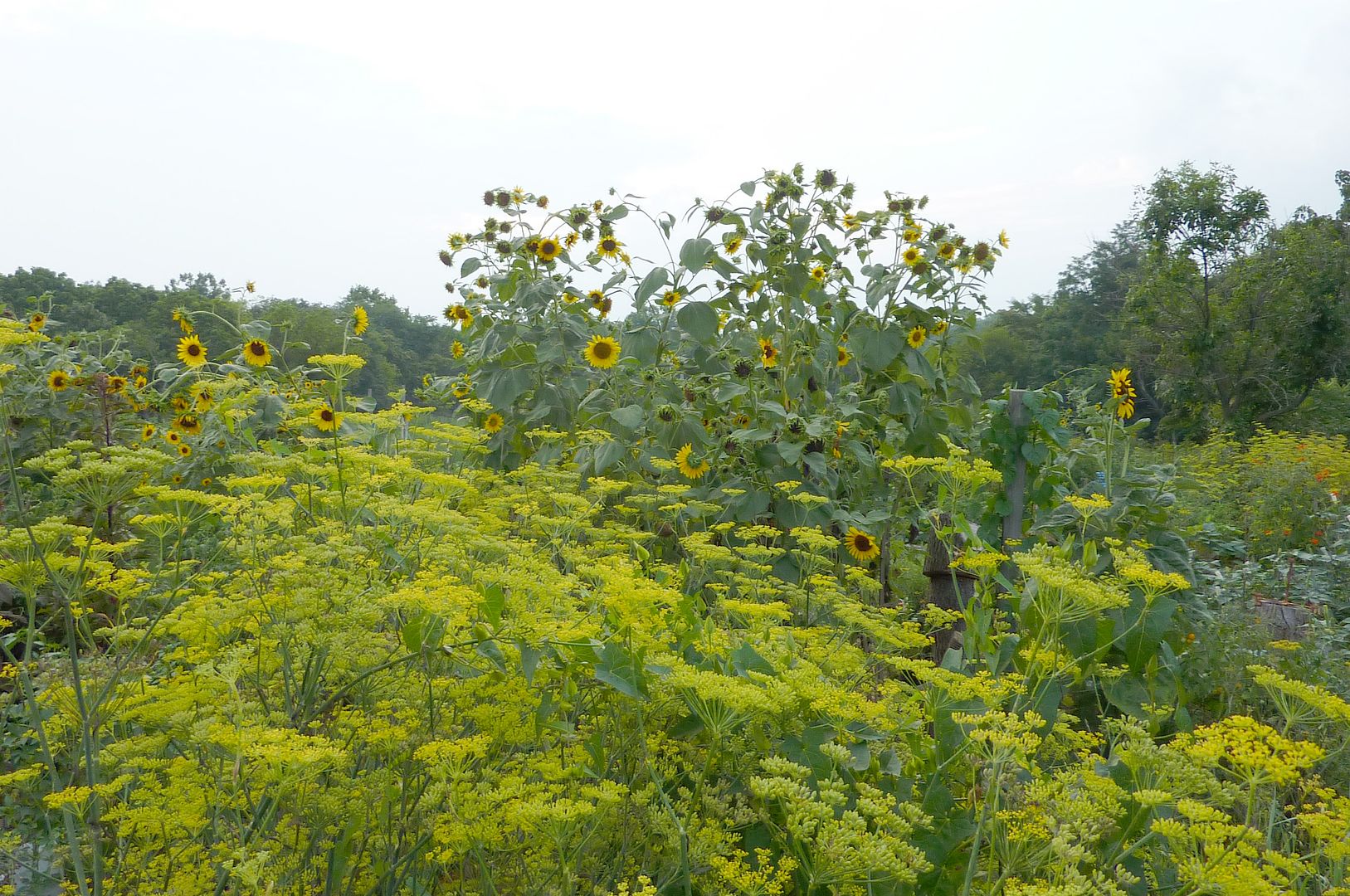
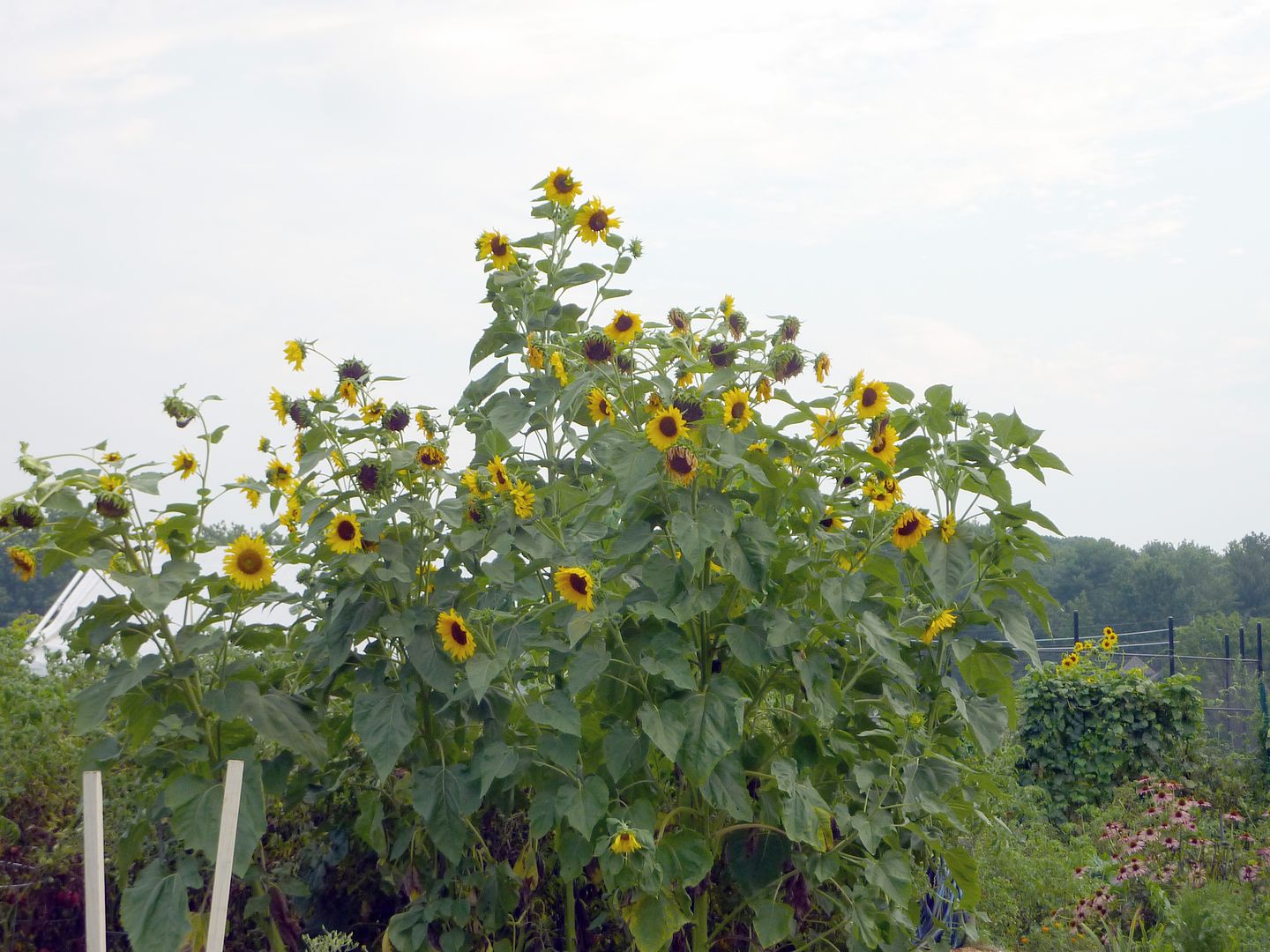
There are hedges of cup plant, prairie coneflower, what I'm guessing is fennel in flower, a yellow flowering yarrow, and they had the most amazing sunflowers I've ever seen. It's like someone loved the color yellow and planted everything they could get to grow 5' or taller.  

Most of this is one sunflower! The one stem was about 6" thick and had branches coming out of each node, where the leaves are formed. There were leaves on the lower ones at one point but they slowly die off over the year. So this massive sunflower had branches of other sunflowers coming out of it. It's amazing to think earlier in the year this was just a 1cm seed. 

There weren't as many bees flying around as you might think. There were lots of bumblebees around but nothing I hadn't seen before. 
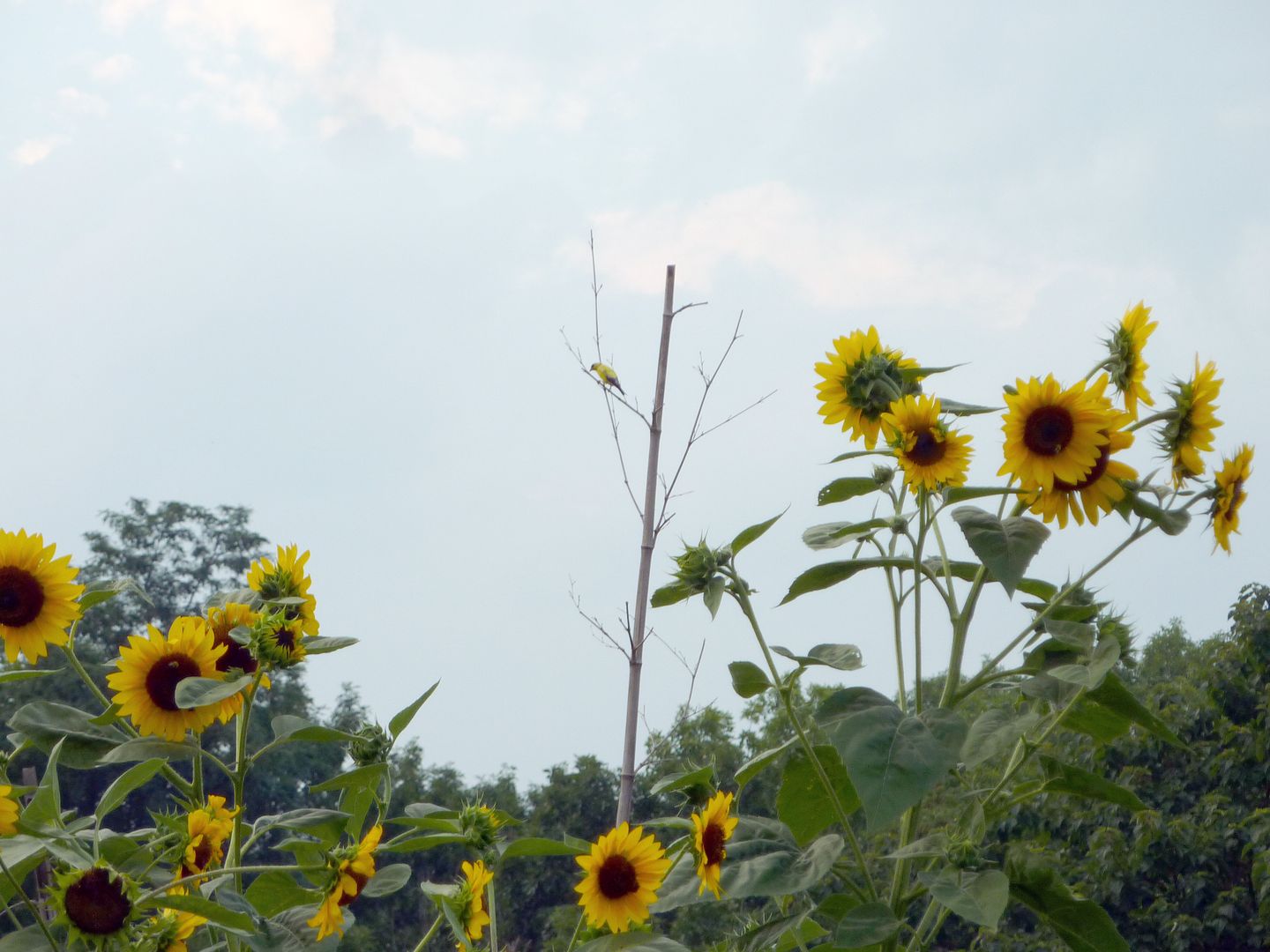
There were a bunch of goldfinches flying around too but they were doing their best to dodge me at every turn.

I'm actually not doing this place justice because they were growing lots of other goodies, like Corn and just about everything else someone can grow.

Thursday, July 14, 2011

More Early Summer Blooms

Here are some other plants I saw at the Mt. Cuba Center. They were in their Prairie Garden but more located along a path at the top and growing individually or in clumps for educational purposes.

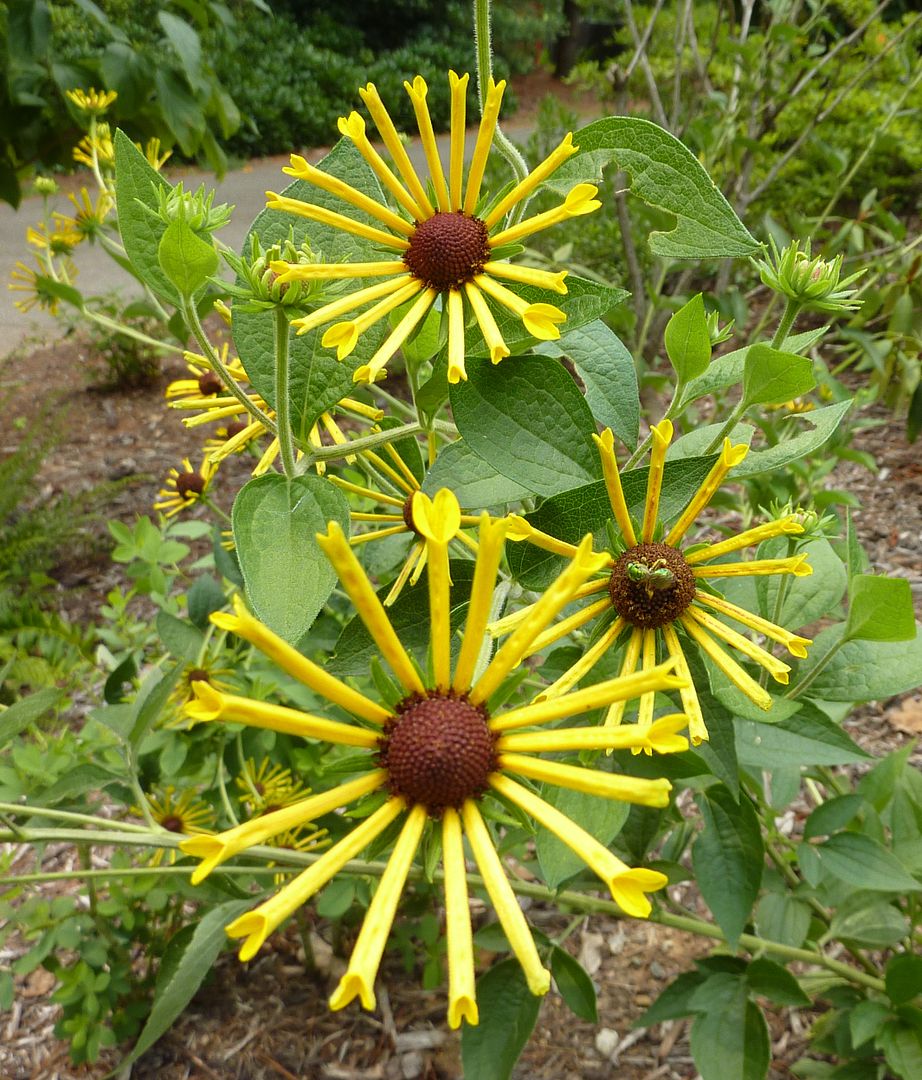
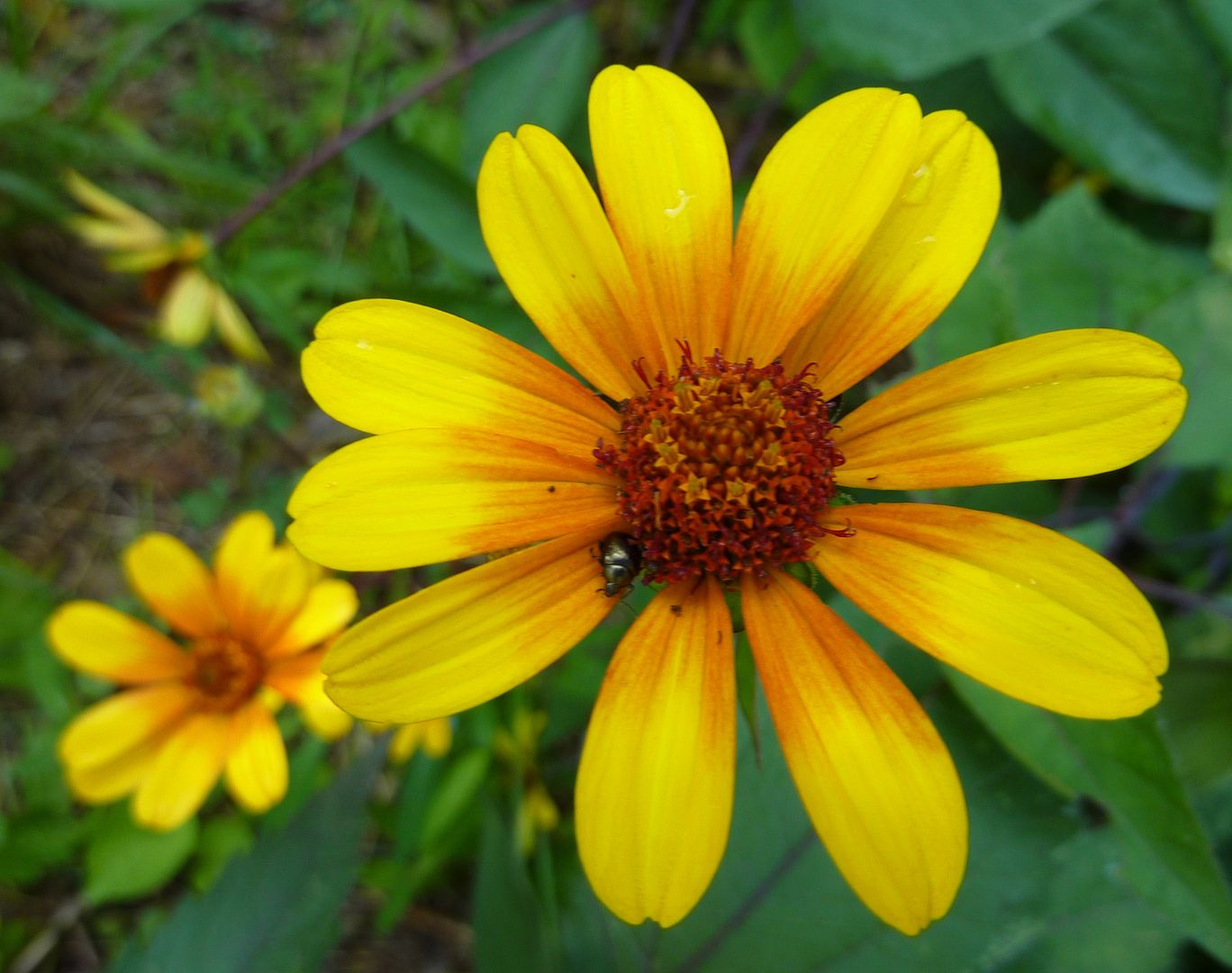
Heliopsis helianthoides var. scabra 'Summer Nights' is the orange ringed form of Western Sunflower or Ox-Eye Sunflower. The true species lacks the orange color and is a more solid yellow. This was definitely an eye catcher, with it's dark foliage and bright flowers, which cover the plant. I read that this species can be aggressive spreading but it's unclear weather that's by rhizomes or by seed. It's pretty enough that I might be willing to find out.

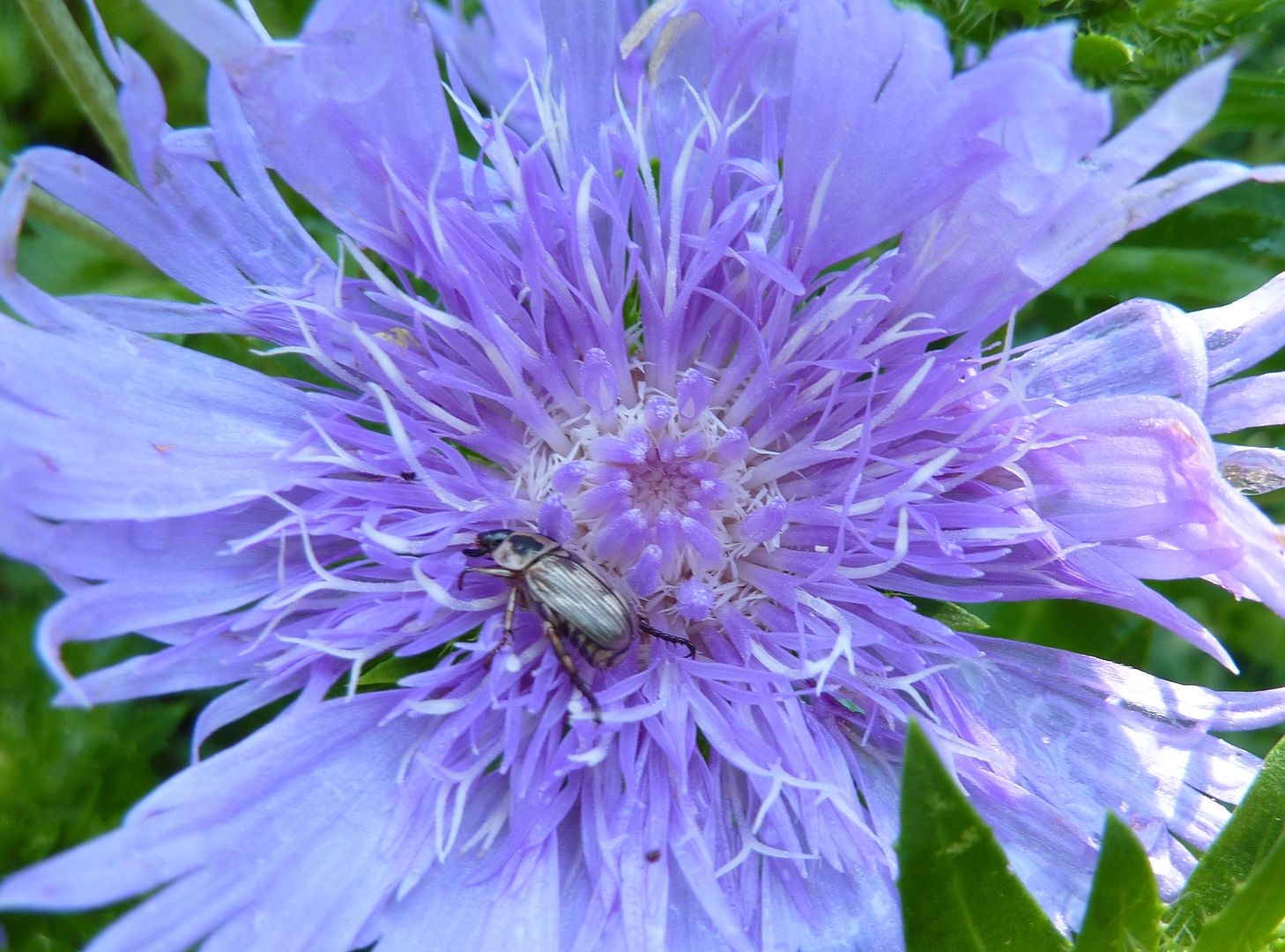
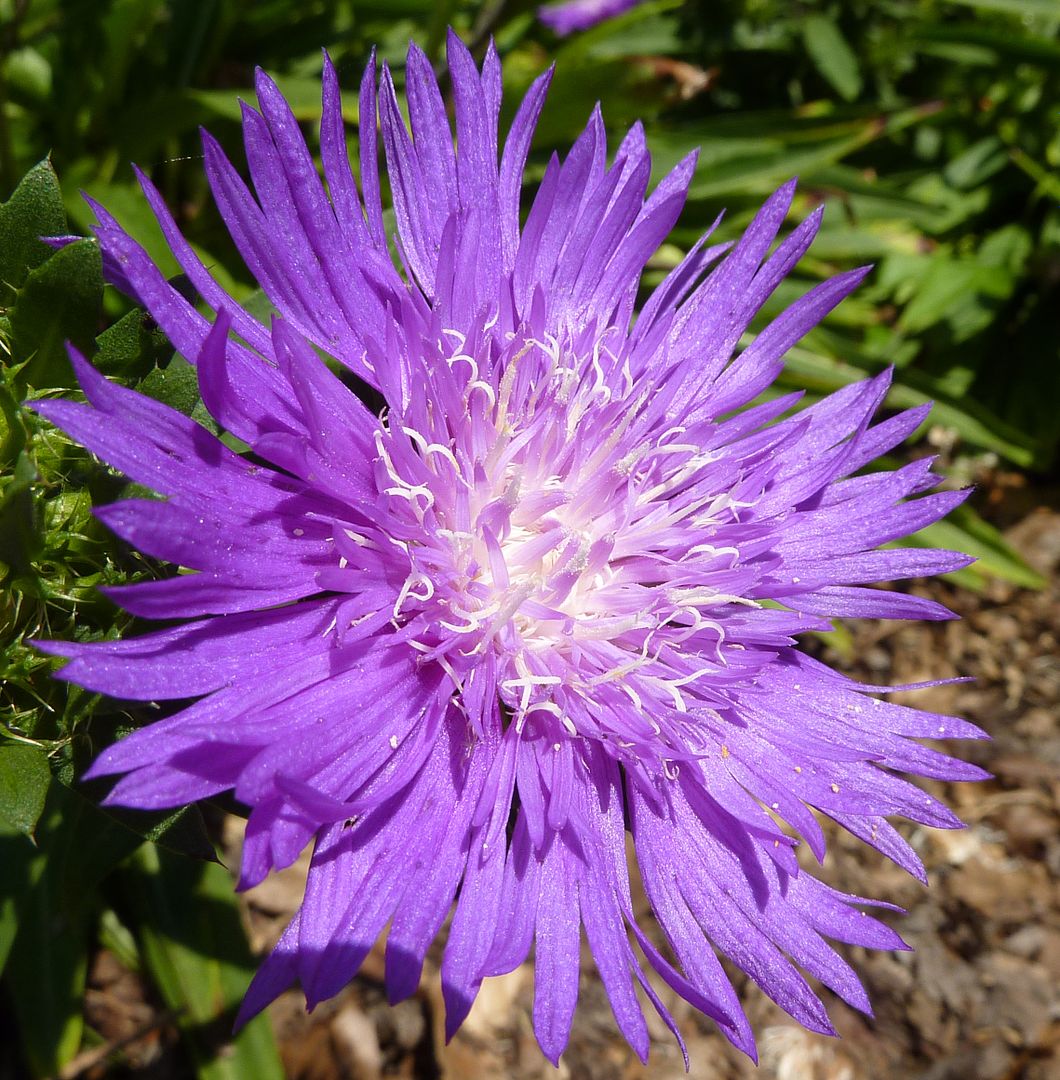
Stokesia laevis, Stokes' Aster. I was growing this in my garden for a time but it died out on me. They benefit from acidic soil apparently. Personally I don't know why this isn't planted instead of Bachelor Buttons. The flowers look similar enough in both shape and color. At least here you have a much bigger flower. 

Stokes' Aster 'Peachie's Pick' is a purple flowering cultivar. I think they also come in white as well.

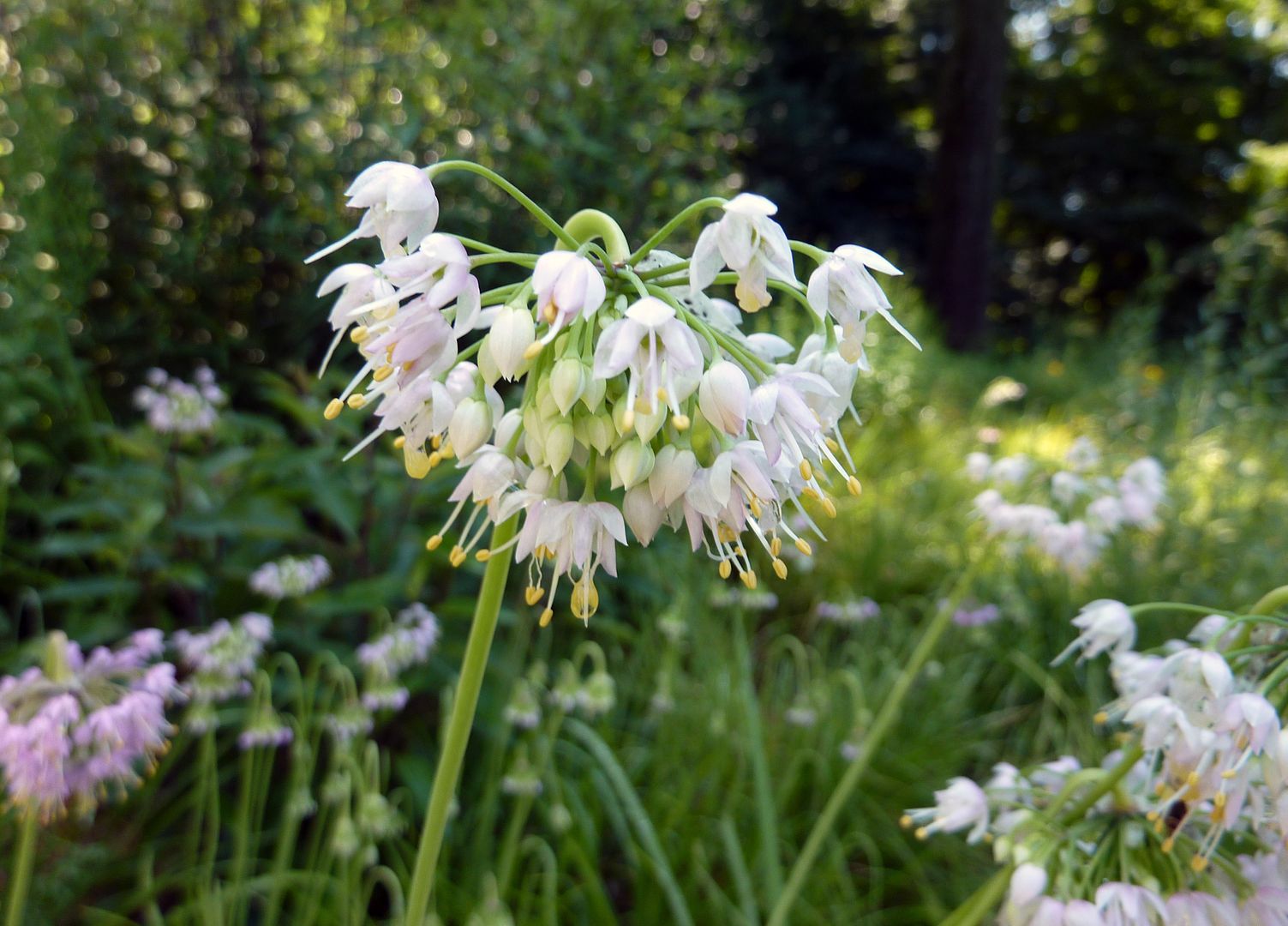
Allium cernuum, Nodding Onion. This wild onion is said to have an overpowering smell and taste, and thus it's culinary potential has been overlooked in favor of the varieties we use today. The wild onion still grows in the wild but can make a nice addition to the garden too. Personally I'm not a fan of this plant but I may one day get around to getting some. It's just not on the top of my list.

They had a lot more stuff flowering there but I don't always take good photos. Their forest was absolutely blooming with Black Cohosh or Bug Bane, I forget which flowers sooner. I have Bug Bane but it rarely does well in my garden.

Thursday, October 1, 2009

The Winter Ant

As Winter sets in plant life slowly dies back and focuses it's energy into growing roots rather then green growth. (I'm not sure what evergreens do but it can't be much.) As this food source dries up all the herbaceous insects go dormant. Butterflies and caterpillars all die back. Aphids lay eggs that over winter while the entire adult generation dies off. Protein foods don't store well over the winter so Ants are forced to focus more on carbohydrates.


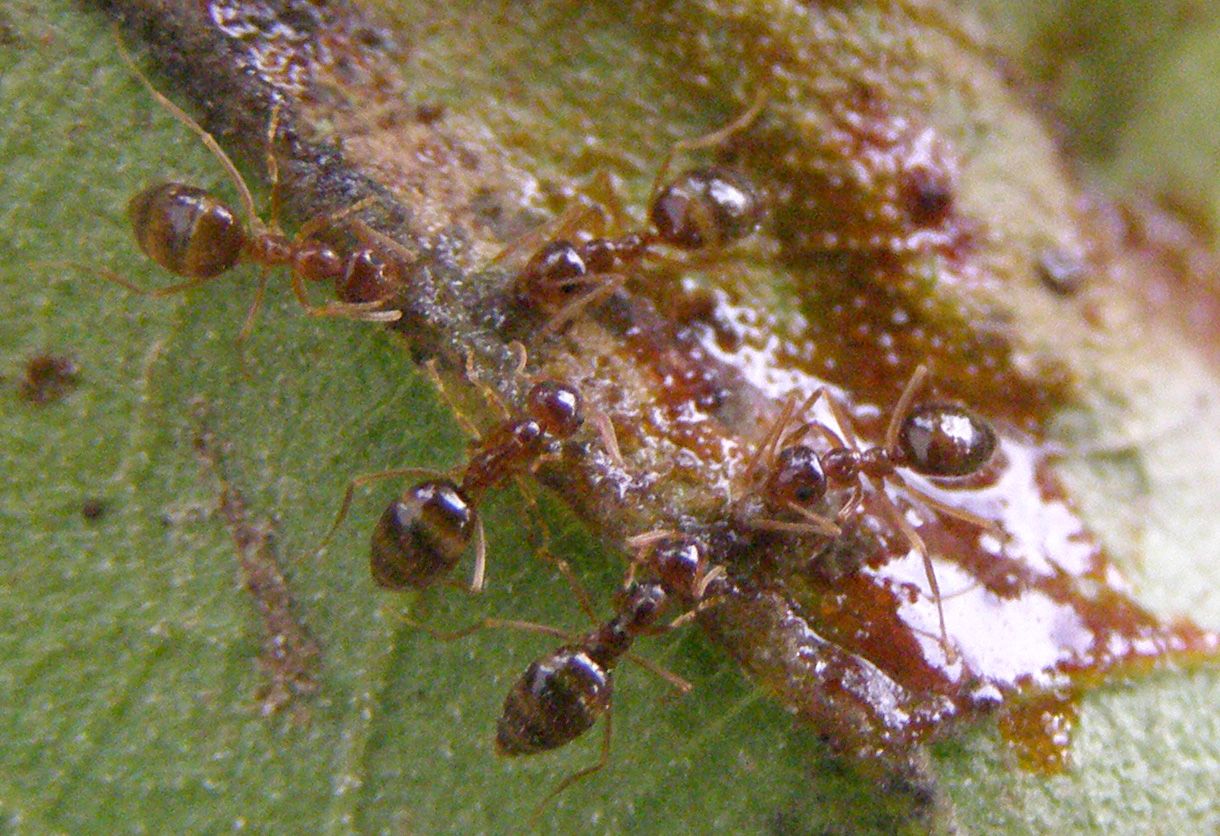
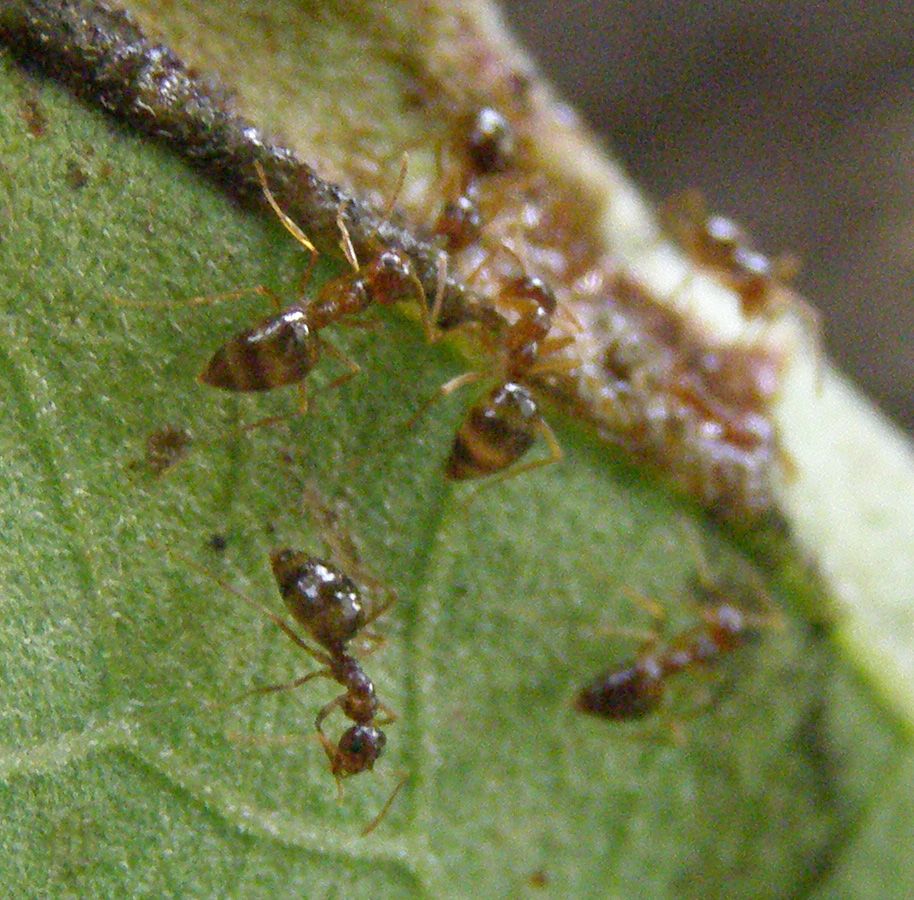
The Winter Ant, Prenolepis imparis, has the advantage when it comes to foraging in the Fall, Winter and Spring. Any day where it's above freezing out these ants are able to forage carefree. They can do this because every enzyme in their body is built to work in cold temperatures.


The food source at this time is usually tree sap. In this case damaged sunflowers. Colonies don't get horrible huge, maybe 12,000 ants. But their colonies can be abundant. Their ability to forage during the warmer parts of winter puts them on a whole different level. They go dormant over the summer when there's more competition for food. But during the winter they're likely the only species foraging.


The Pest Control industry has deemed them The Small Honey Ant or False Honey Ant. Treating colonies is easily done. But frankly why would you want to? They're not an indoor pest as far as I know. I have colonies all over my yard and have never seen so much as a worker wonder inside (that wasn't from a colony I had in captivity,) and they're don't do property damage. They can make a mound but it's not above the grass line. I could understand if your lawn was nothing but moss or a putting green but you really have to hate ants.

Look for their brightly colored queens on the first warm day or two of March and April in the late afternoon. (I've seen flights as early as February 11th but March is more common.)