Showing posts with label Aster. Show all posts
Showing posts with label Aster. Show all posts
Friday, October 20, 2017
Sunday, January 22, 2017
The Plant List, So Far
Around this time each year I start to form a plant list. I don't bother with a whole lot of seeds except for annuals like Sunflowers and filler annuals I like more for sentimental reasons and color. The focus is more on plugs and bare roots, often things that will flower in late summer and autumn.
Phlox 'jeana'
I don't have actual photos of this cultivar, but I was at the Mt. Cuba Center in the fall where they're currently doing a trial run of basically all the true species and cultivars on the market today. They said of all of the verities available this one had twice as many butterflies on it compared to all the rest. They noted the flowers were smaller than most other Phlox which likely makes it easier for the butterflies to work, but other factors like nectar quality and fragrance probably also play a roll. A failing might be that it's otherwise fairly average besides. Flowering wise I'm told other verities did better at offering blooms later int he year so it's still good to diversify. I'm looking forward to their complete trial when it's released in the next year or two.

Ironweed, Vernonia angustifolia 'Plum Peachy'
This perennial turns into a bush of purple flowers in late summer.
I tried planting it in the autumn once but it failed to survive the winter. I think if I plant it in the spring it will have a better chance of establishing.
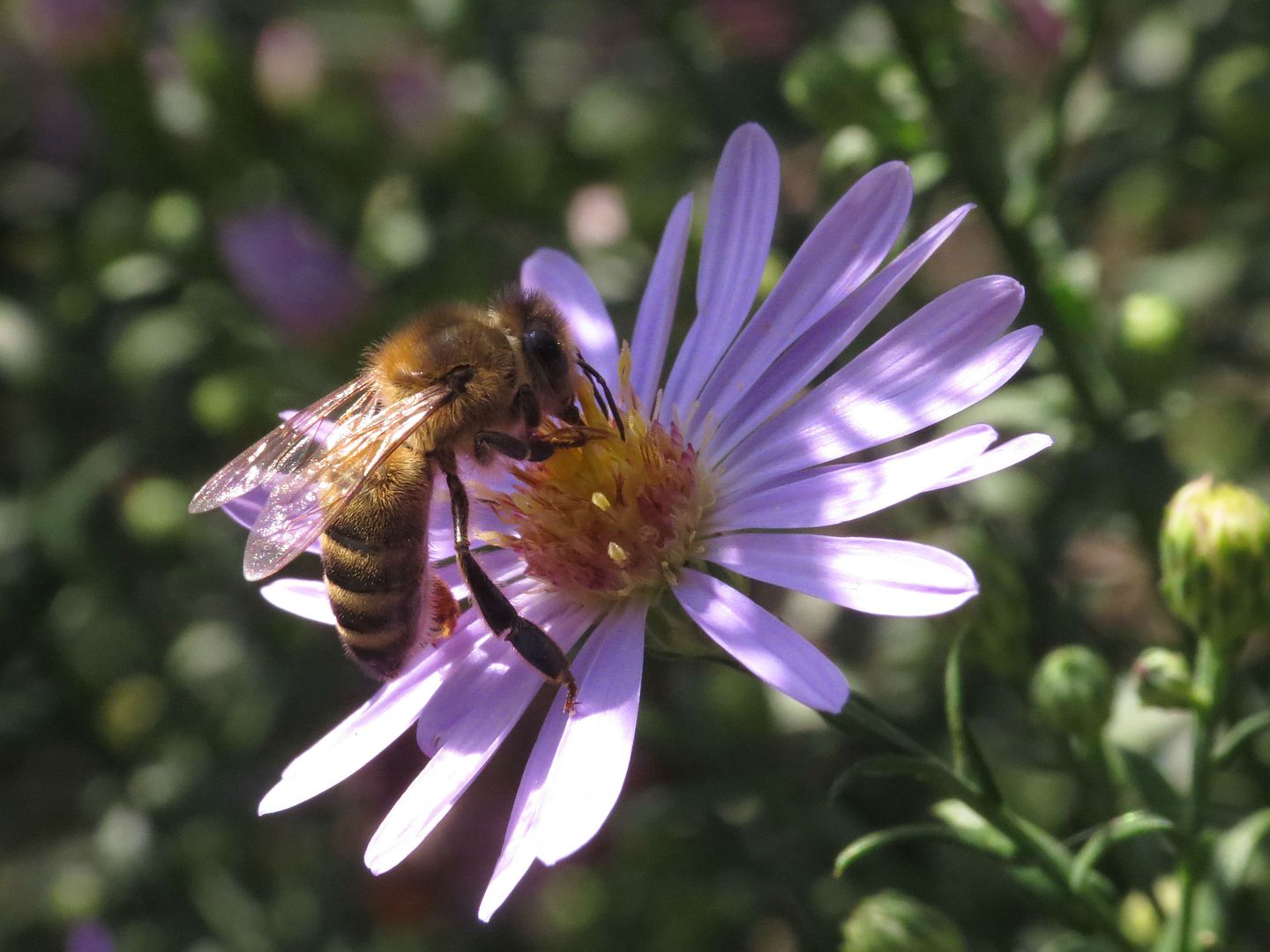
Aster leavis, 'Bluebird' (actually this is Symphyotrichum leavis but no one seems to care.)
My picture really doesn't do this plant any justice. I have a few planted and love them all, sadly they're not in the most photogenic of places. The one I have nest to a tree with a bird feeder next to it so the squirrels are always snapping the stems off the thing. Even with several dozen stems snapped though it still manages to impress me with tall pyramids of flowers. The perfect compliment to Showy Goldenrod.
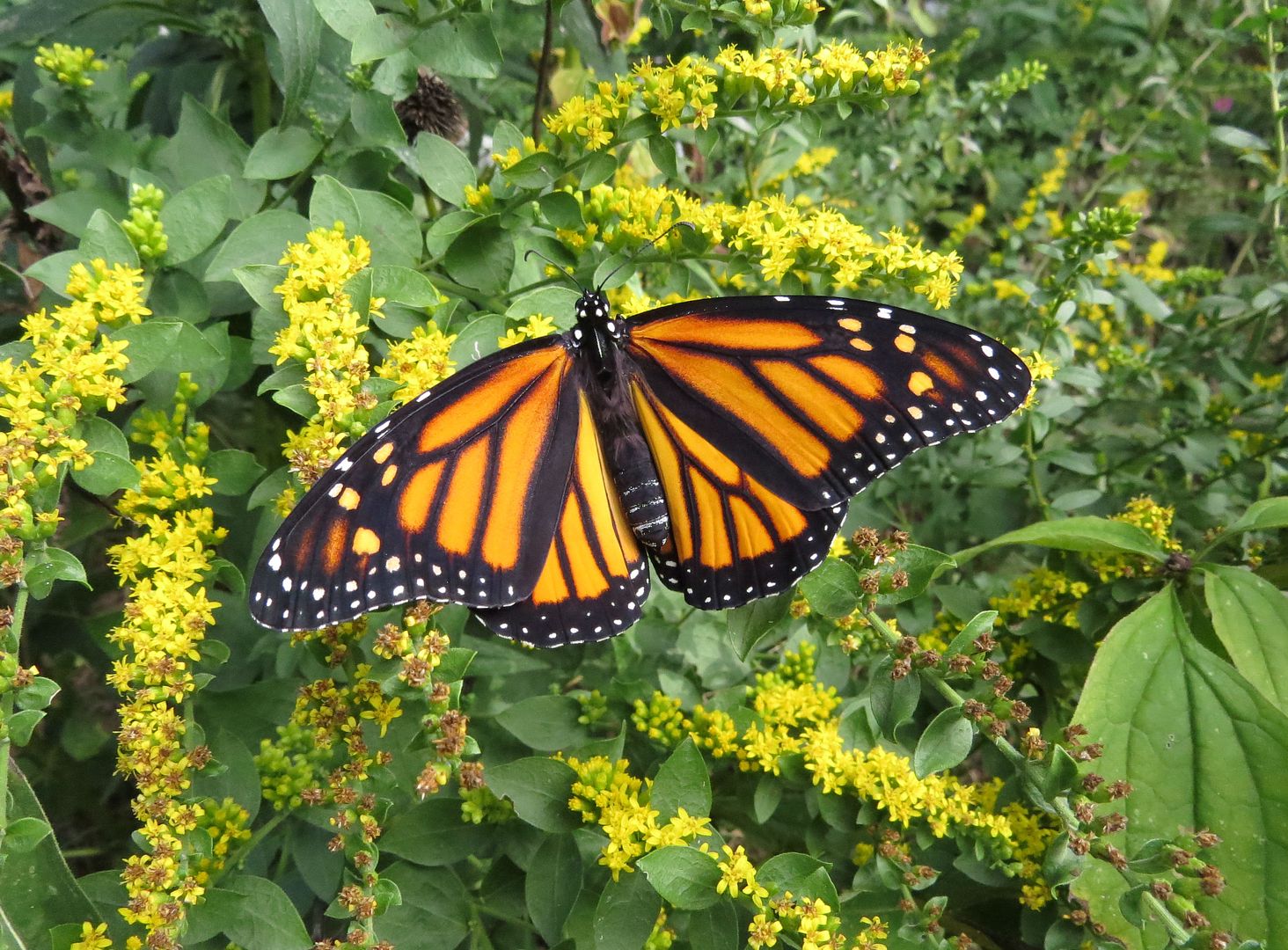
Cliff Goldenrod, Solidago drummondii
I bought this plant from some random nursery online and didn't expect much of it. Now that it's established I'm surprised it's not more popular. A failing, if you can call it that, is it forms a rosette of leaves with a couple dozen stems arching out in all directions. The stems tend to get a little long and arch all the way to the ground. I think it's because of the soil I'm growing it in though, too rich. In nature I believe this is meant to be a rock garden plant (hence the name) where the soils tend to be nutrient deprived.
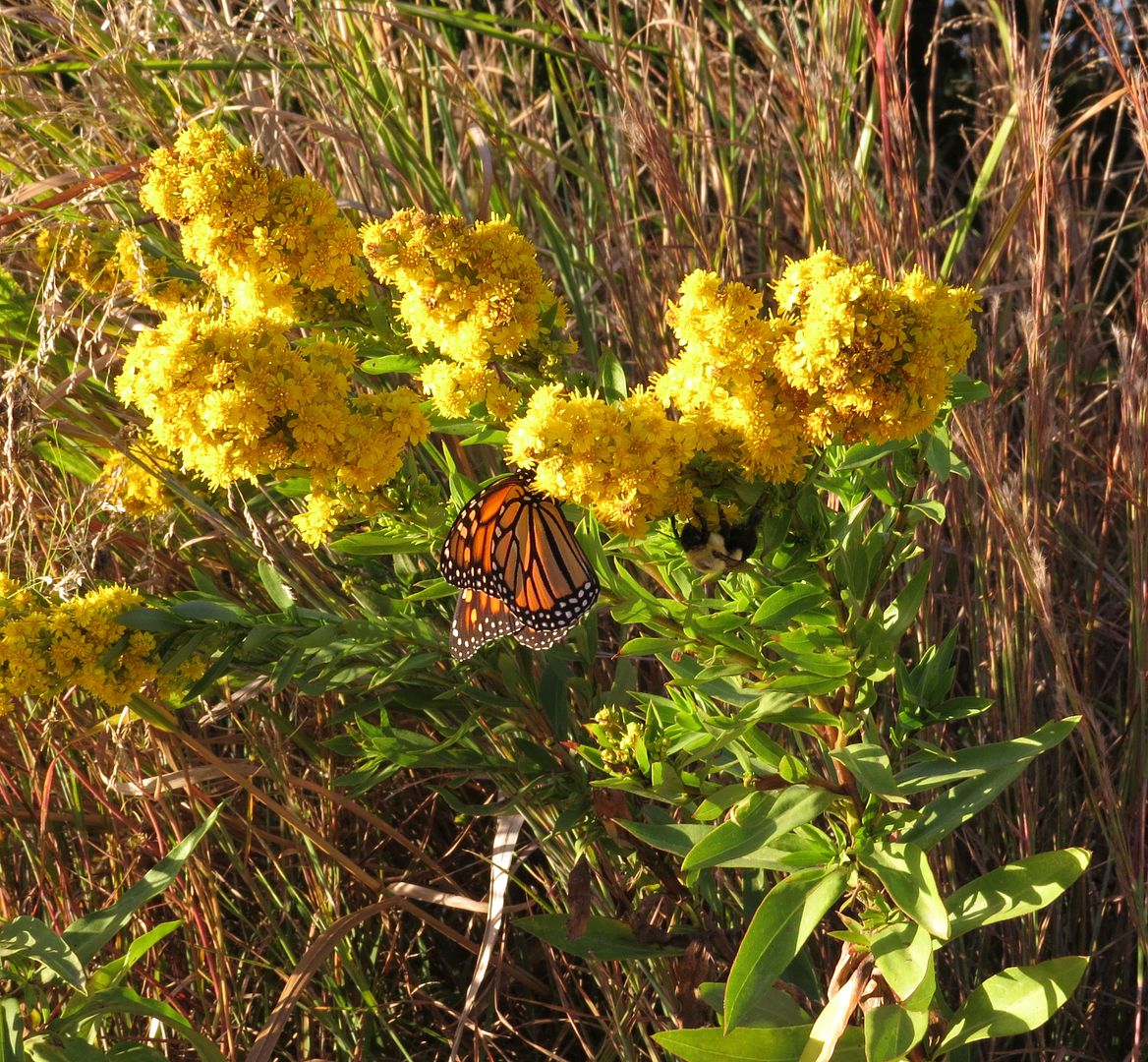
Stiff Goldenrod, Solidago rigida, Actually what's pictured above is Seaside Goldenrod but the two species look similar. They still have broad leaves at the bottom, but Stiff Goldenrod has more flat top flower heads.
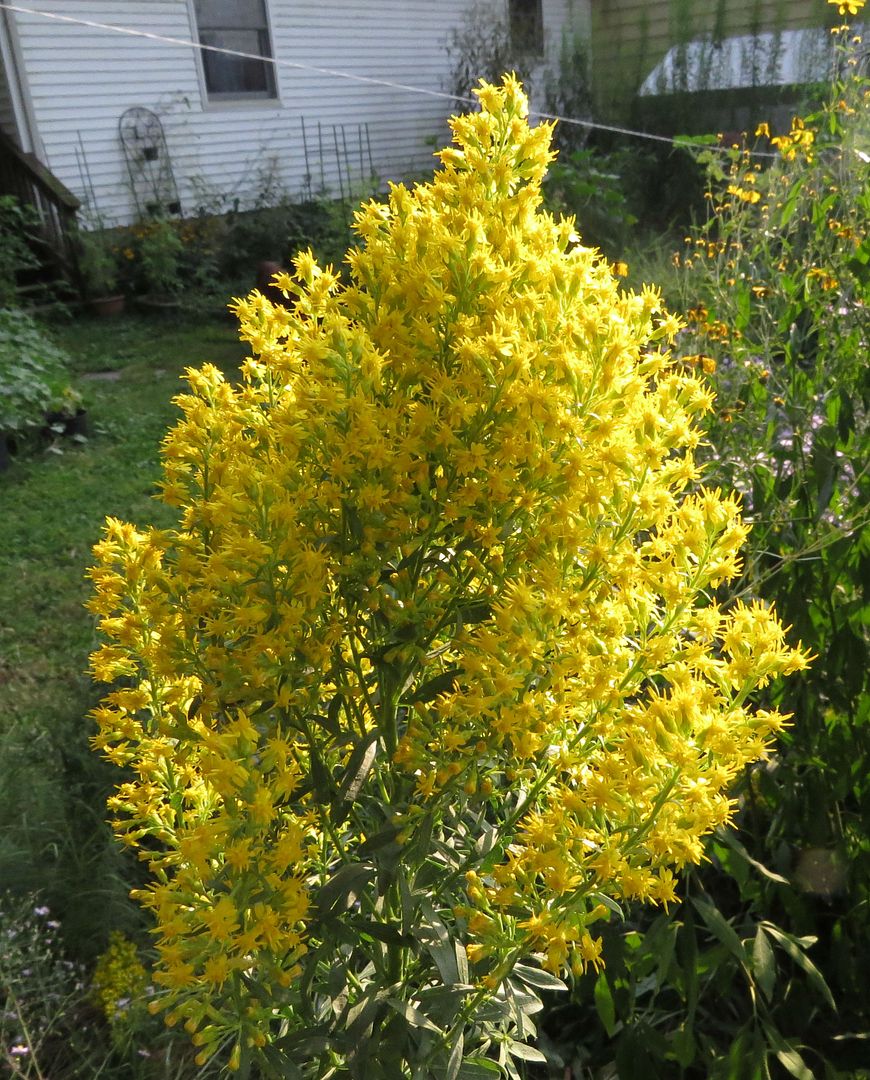
Showy Goldenrod, Solidago speciosa
This plant lives up to its name very well.... when it grows right. I bought it because I needed plants for my meadow garden which is dry clay but after flowering great for two years the plants slowly petered out. It's either a short lived perennial or benefits from slightly wetter conditions. Whatever the case I'm willing to give it another chance, perhaps in a more formal setting.
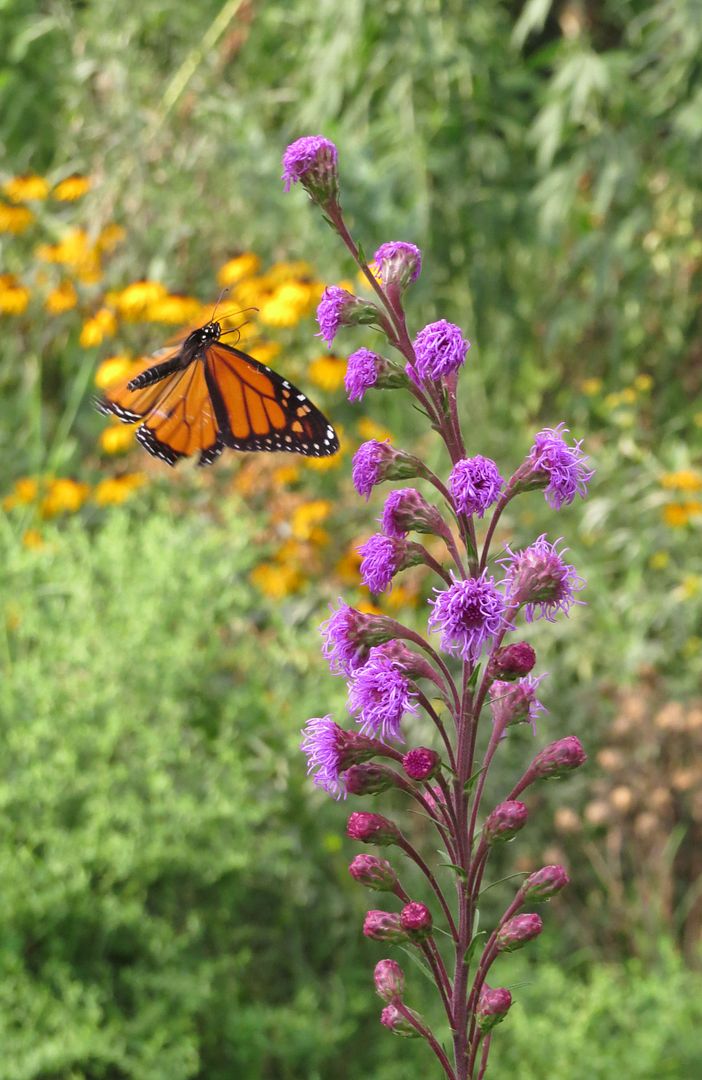
Meadow Blazing Star, Liatris ligulistylis
Same issue as the Showy Goldenrod. I plant these in the Meadow Garden and they do great for two years (being a biannual) but don't reseed on their own. I do have one that has lasted the test of time but it's planted next to our pond. So I'm thinking if I plant more of them in slightly wetter locations, they'll do better.
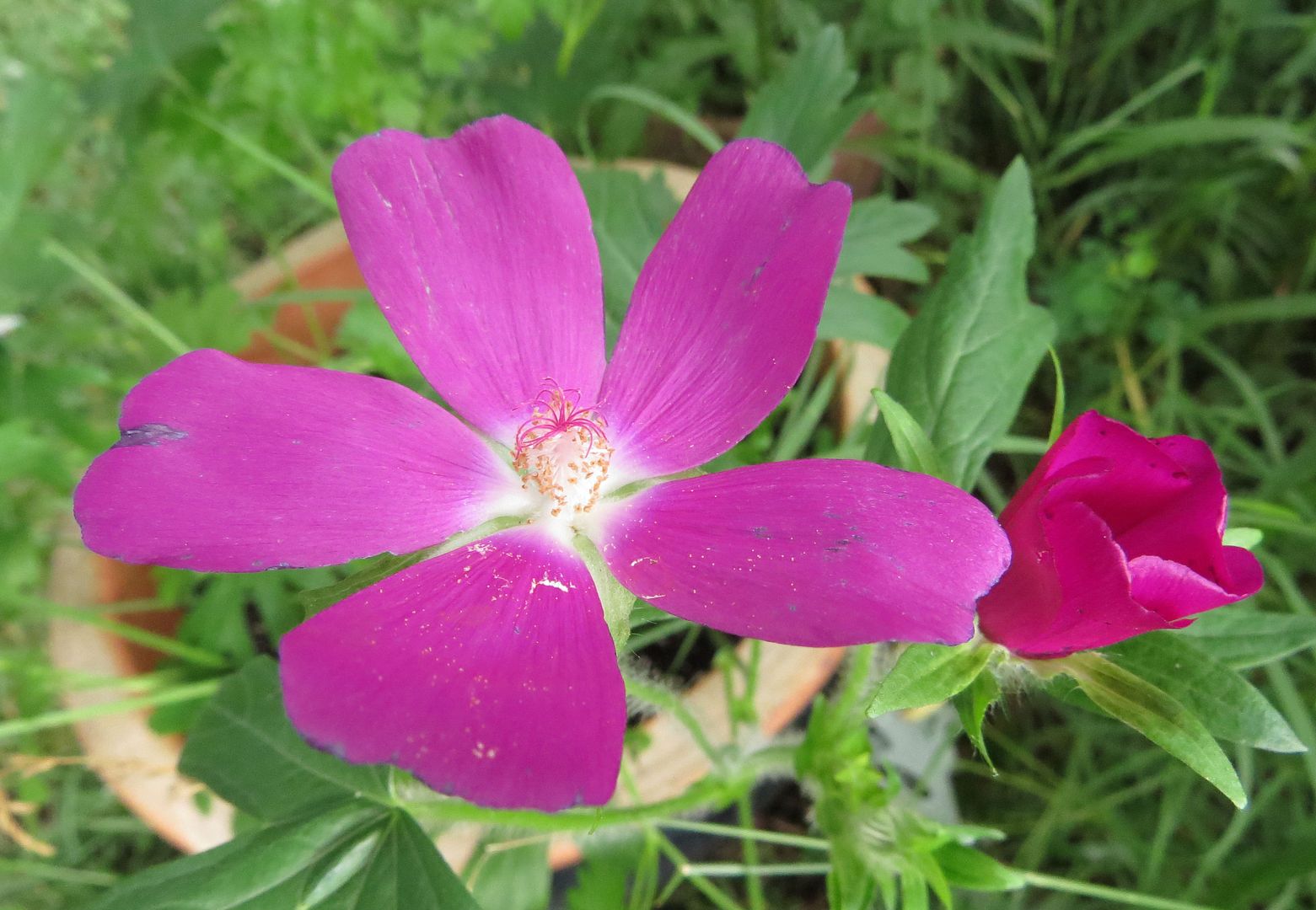
Bush's Poppy Mallow, Callirhoe bushii
This is a fantastic burst of color. Originally I was against planting these because it's not really a true meadow plant, at least not a plant everyone instantly thinks of when they think of a short grass prairie. Their distribution threw out the US is somewhat limited as well (to the point of being threatened in the wild). Something I noticed about the plant though is that they do well in dry conditions.... making it the perfect candidate for my meadow garden where few other natives seem to be able to establish.
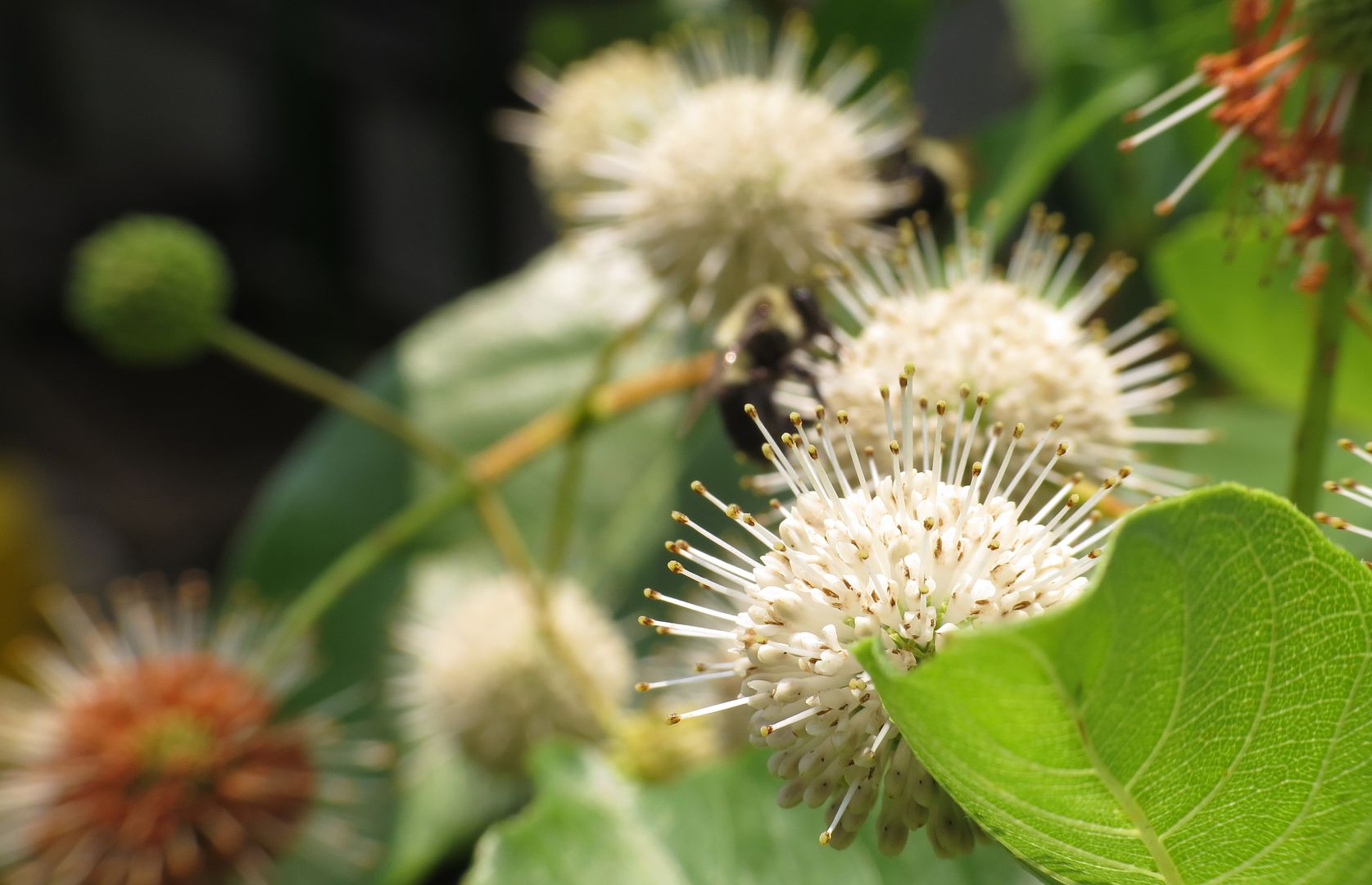
I'm also tempted to buy a second Button Bush. The one I currently have is doing okay, but has a dead limb or two I need to cut out. Also I saw it advertised for in an actual garden brochure I got in the mail. This species is rarely sold and I'd like to support that. I would liken it to Butterfly Bush in terms of attention but it has a far more limited bloom time.
Phlox 'jeana'
I don't have actual photos of this cultivar, but I was at the Mt. Cuba Center in the fall where they're currently doing a trial run of basically all the true species and cultivars on the market today. They said of all of the verities available this one had twice as many butterflies on it compared to all the rest. They noted the flowers were smaller than most other Phlox which likely makes it easier for the butterflies to work, but other factors like nectar quality and fragrance probably also play a roll. A failing might be that it's otherwise fairly average besides. Flowering wise I'm told other verities did better at offering blooms later int he year so it's still good to diversify. I'm looking forward to their complete trial when it's released in the next year or two.
Ironweed, Vernonia angustifolia 'Plum Peachy'
This perennial turns into a bush of purple flowers in late summer.
I tried planting it in the autumn once but it failed to survive the winter. I think if I plant it in the spring it will have a better chance of establishing.
Aster leavis, 'Bluebird' (actually this is Symphyotrichum leavis but no one seems to care.)
My picture really doesn't do this plant any justice. I have a few planted and love them all, sadly they're not in the most photogenic of places. The one I have nest to a tree with a bird feeder next to it so the squirrels are always snapping the stems off the thing. Even with several dozen stems snapped though it still manages to impress me with tall pyramids of flowers. The perfect compliment to Showy Goldenrod.
Cliff Goldenrod, Solidago drummondii
I bought this plant from some random nursery online and didn't expect much of it. Now that it's established I'm surprised it's not more popular. A failing, if you can call it that, is it forms a rosette of leaves with a couple dozen stems arching out in all directions. The stems tend to get a little long and arch all the way to the ground. I think it's because of the soil I'm growing it in though, too rich. In nature I believe this is meant to be a rock garden plant (hence the name) where the soils tend to be nutrient deprived.
Stiff Goldenrod, Solidago rigida, Actually what's pictured above is Seaside Goldenrod but the two species look similar. They still have broad leaves at the bottom, but Stiff Goldenrod has more flat top flower heads.
Showy Goldenrod, Solidago speciosa
This plant lives up to its name very well.... when it grows right. I bought it because I needed plants for my meadow garden which is dry clay but after flowering great for two years the plants slowly petered out. It's either a short lived perennial or benefits from slightly wetter conditions. Whatever the case I'm willing to give it another chance, perhaps in a more formal setting.
Meadow Blazing Star, Liatris ligulistylis
Same issue as the Showy Goldenrod. I plant these in the Meadow Garden and they do great for two years (being a biannual) but don't reseed on their own. I do have one that has lasted the test of time but it's planted next to our pond. So I'm thinking if I plant more of them in slightly wetter locations, they'll do better.
Bush's Poppy Mallow, Callirhoe bushii
This is a fantastic burst of color. Originally I was against planting these because it's not really a true meadow plant, at least not a plant everyone instantly thinks of when they think of a short grass prairie. Their distribution threw out the US is somewhat limited as well (to the point of being threatened in the wild). Something I noticed about the plant though is that they do well in dry conditions.... making it the perfect candidate for my meadow garden where few other natives seem to be able to establish.
I'm also tempted to buy a second Button Bush. The one I currently have is doing okay, but has a dead limb or two I need to cut out. Also I saw it advertised for in an actual garden brochure I got in the mail. This species is rarely sold and I'd like to support that. I would liken it to Butterfly Bush in terms of attention but it has a far more limited bloom time.
Friday, October 30, 2015
Georgia Aster
Symphyotrichum georgianum, is easily one of the latest flowering perennials in the temperate US. Both a failing and a highlight of this species is that they start blooming right after the trees have dropped a lot of their leaves. Goldenrod and other Asters are all usually past the half way mark in their bloom by the time this species even starts to flower. So a lot of the plant be beneath a pile of leaves leaving mostly just the flowers poking up among the fall color.
This is also an endangered species in the wild but nurseries are easily able to propagate it by seeds and cuttings, as I intend to do with the few plants I have in my yard.
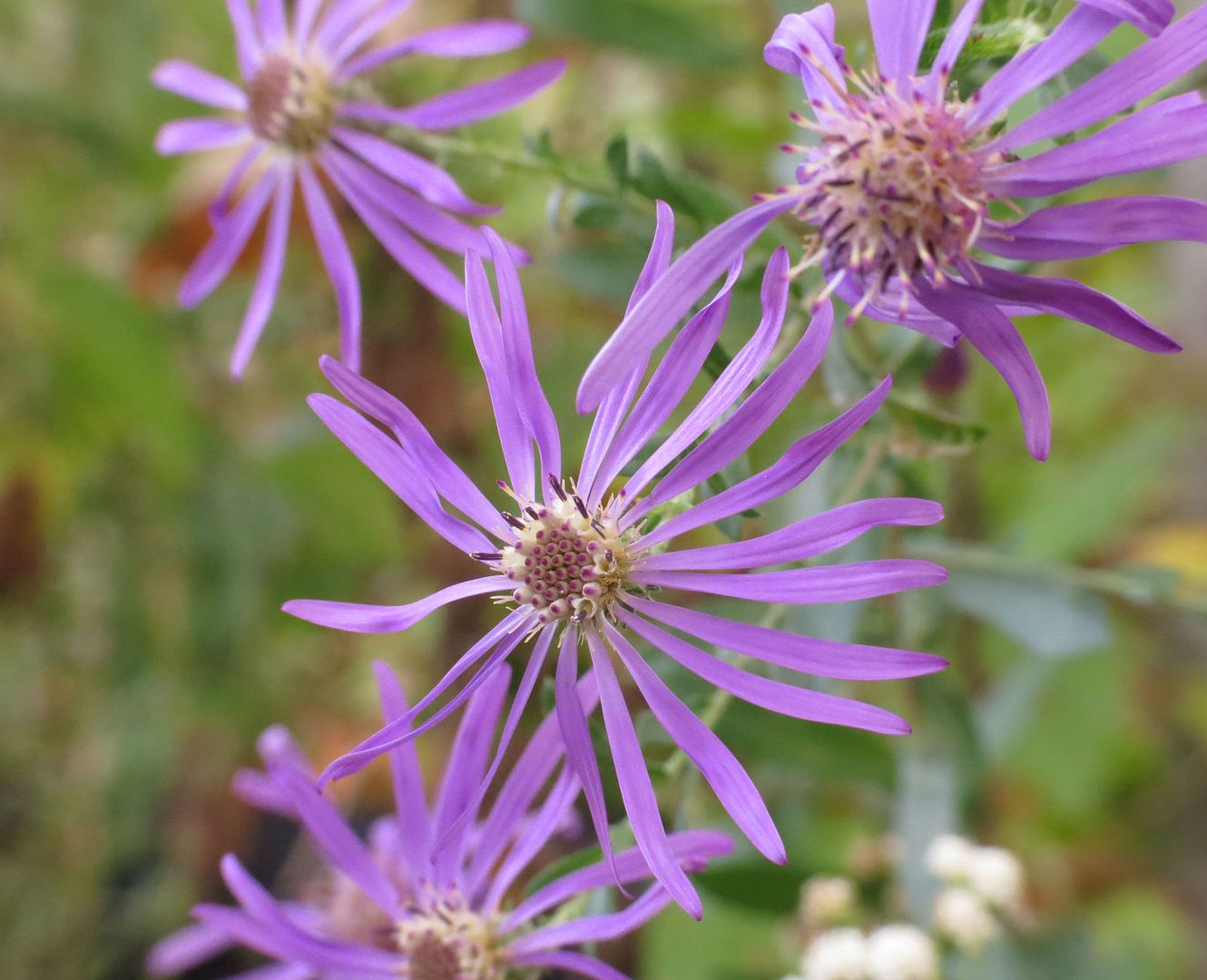


Older specimens can be quite floriferous, turning more bush-like, similar to but not quite like Aromatic Aster, Symphyotrichum oblongifolium. If you're going for a low bushy boarder of flowers though you should probably just plant S. oblongifolium, and really unless you have a nice population of New England Asters going, there isn't much reason to plant Georgia Aster. Everything that is going to over winter is pretty well fed already. But if you're still looking for something that flowers this late in the year then by all means give S. georgianum a try.
Monday, September 28, 2015
Other Caterpillar Activity
Also happening with Caterpillars this autumn, I'm attempting to raise a
Red Spotted Purple or two. I eyed a female out in the yard laying eggs,
curiously on two nonnatives, which the caterpillars seem to be eating. A
Snowdrift Crab Apple but they're in the genus Malus so I'm doubt native
or not really matters in that case. The other was a Japanese Weeping
Cherry, but that's also a Prunus so maybe that doesn't matter as much?
Still though I don't see Tiger Swallowtails or Silk Moths laying on the
tree so I'm sure the native Black Cherry is the superior host plant. In
the short amount of time I've had the sapling Black Cherry I can say
I've already found way more caterpillars on it than the ornamental
Weeping Cherry.
In the wild Red Spotted Purples always lay eggs towards the tip or ends of leaves. Ideally it's the tip but I've seen some of the more spiky edged host plants confuse them when laying and eggs are off center to the side.
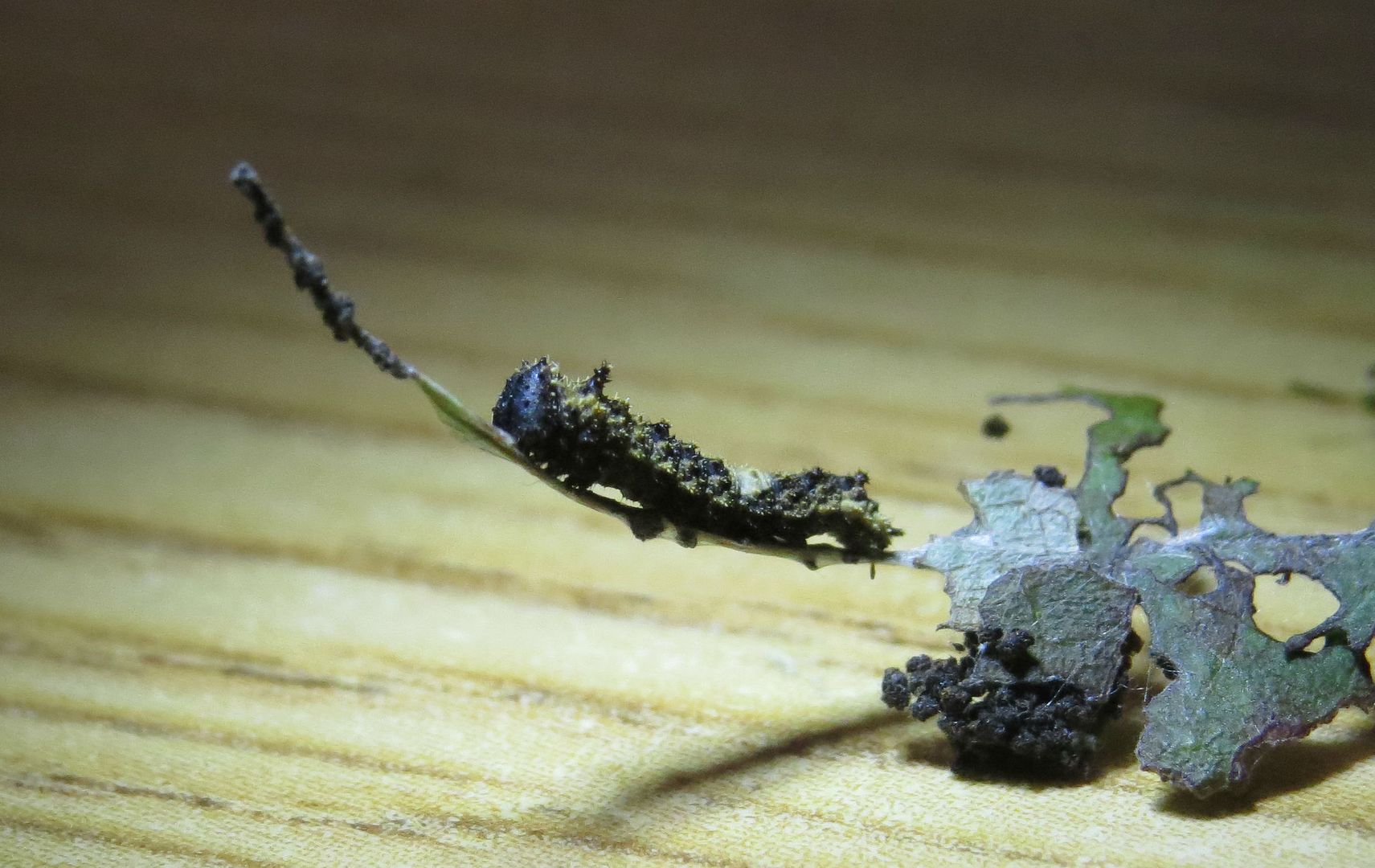 Upon hatching, what seems like 7 days later, the caterpillar begins constructing a "stick" or poll out of its own frass and silk which it hangs out on so ants don't eat them.
Funny enough EcoBeneficial interviewed Doug Tallamy about this topic. I have the same Lepidoptera species laying eggs on my Black Cherry sapling, but because I have a happy colony of Camponotus subbarbatus living in a log to that flower bed, my tree still has all its leaves! Every leaf on this plant has a nibble taken out which I would characterize as standard first instar caterpillar bites. But nothing beyond that! No branches stripped, no missing leaves, no half munched bites taken out of the leaves. Because I have this ant colony foraging on the tree, the caterpillars never make it beyond the first or second instar. Even the Red Spotted Purples don't seem to live long enough to make their first poo stick.
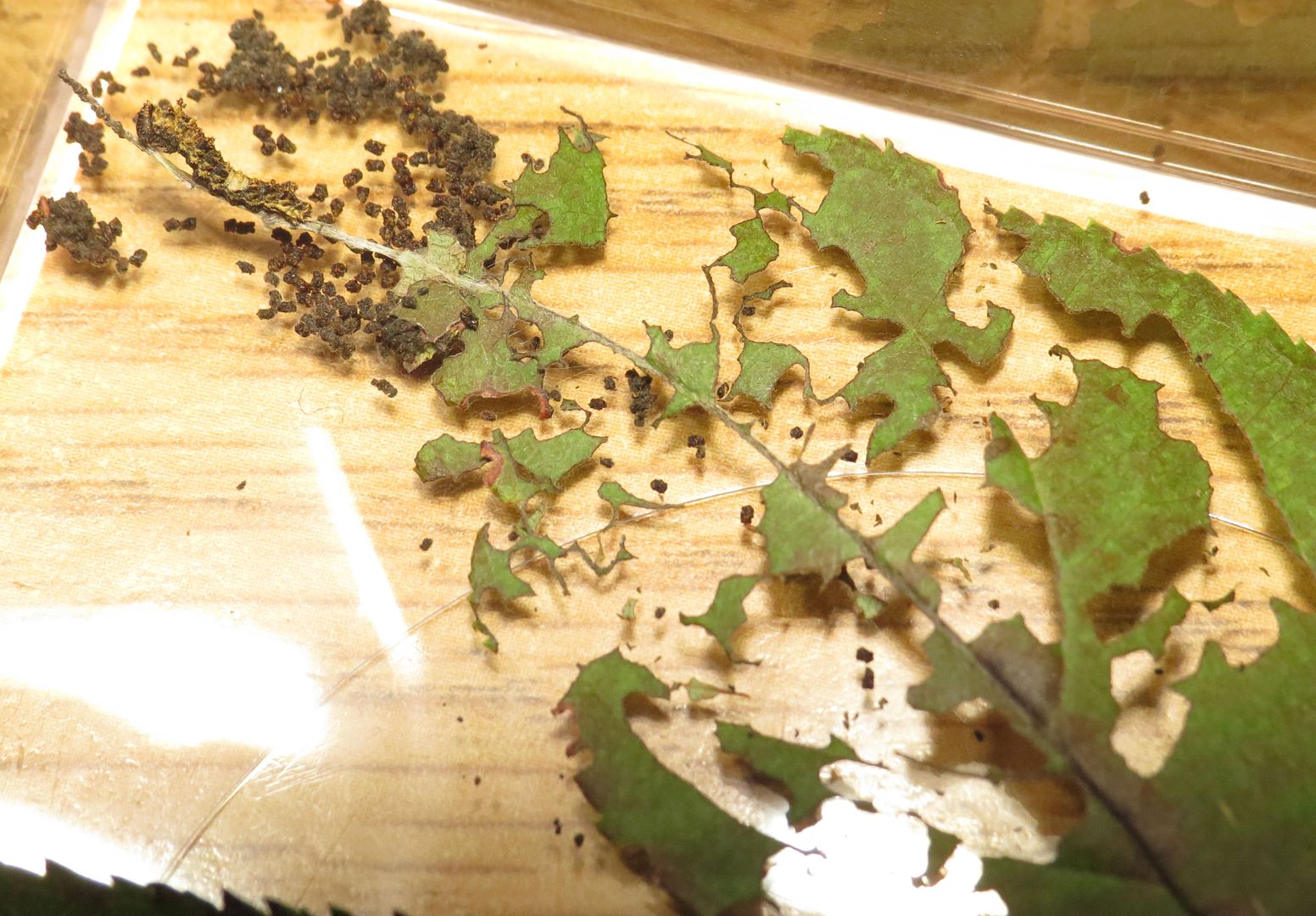 After making the poo stick, they're free to feed on the leaf little by little and always have something to run back to.
A complication with keeping this species in captivity is that they over winter in the caterpillar stage. In the wild they spin silk around a leaf or two to build a "shed" that they nestle into until the tree leafs out again next spring. (Perhaps consuming the flowers in the case of apple trees?)
So a friend suggested to me to keep them in the fridge when all the leaves fall of the tree. Hopefully that will be enough get them to survive the winter and I can continue to photograph their life cycle next spring.
 Also out in the garden I found an Arcigera Flower Moth, Schinia arcigera, which is a daytime flying moth that lays its eggs in the flowers to members of the Aster family. They nectar on open flowers but lay the eggs into the buds that have not opened.
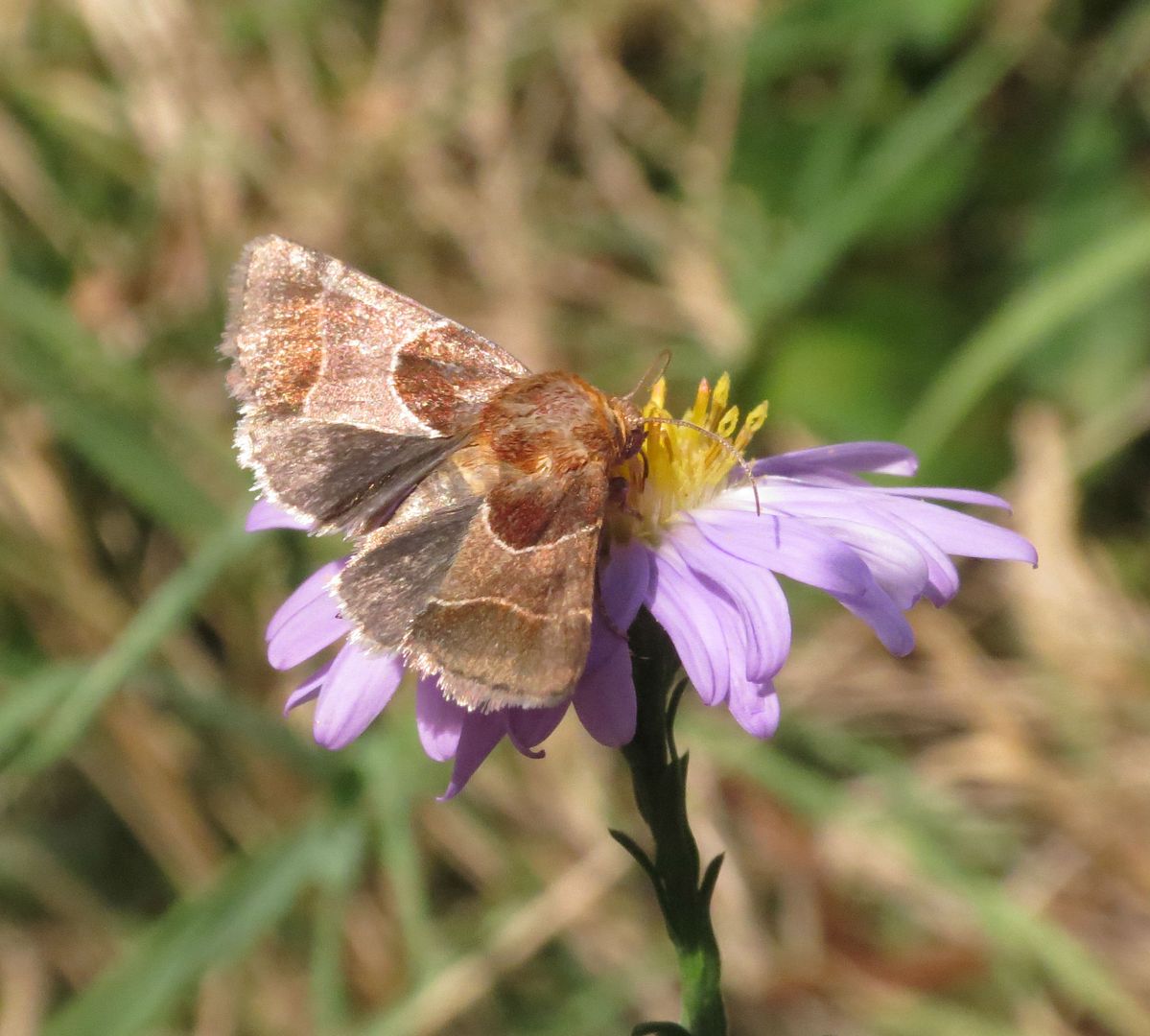 It was a little hypnotic just watching this one hover about the asters. She took a liking to the Aster 'October Sky' which has become my favorite cultivar I think. I should really find another Aster cultivar that has a slightly different color to it so I can mix and match.
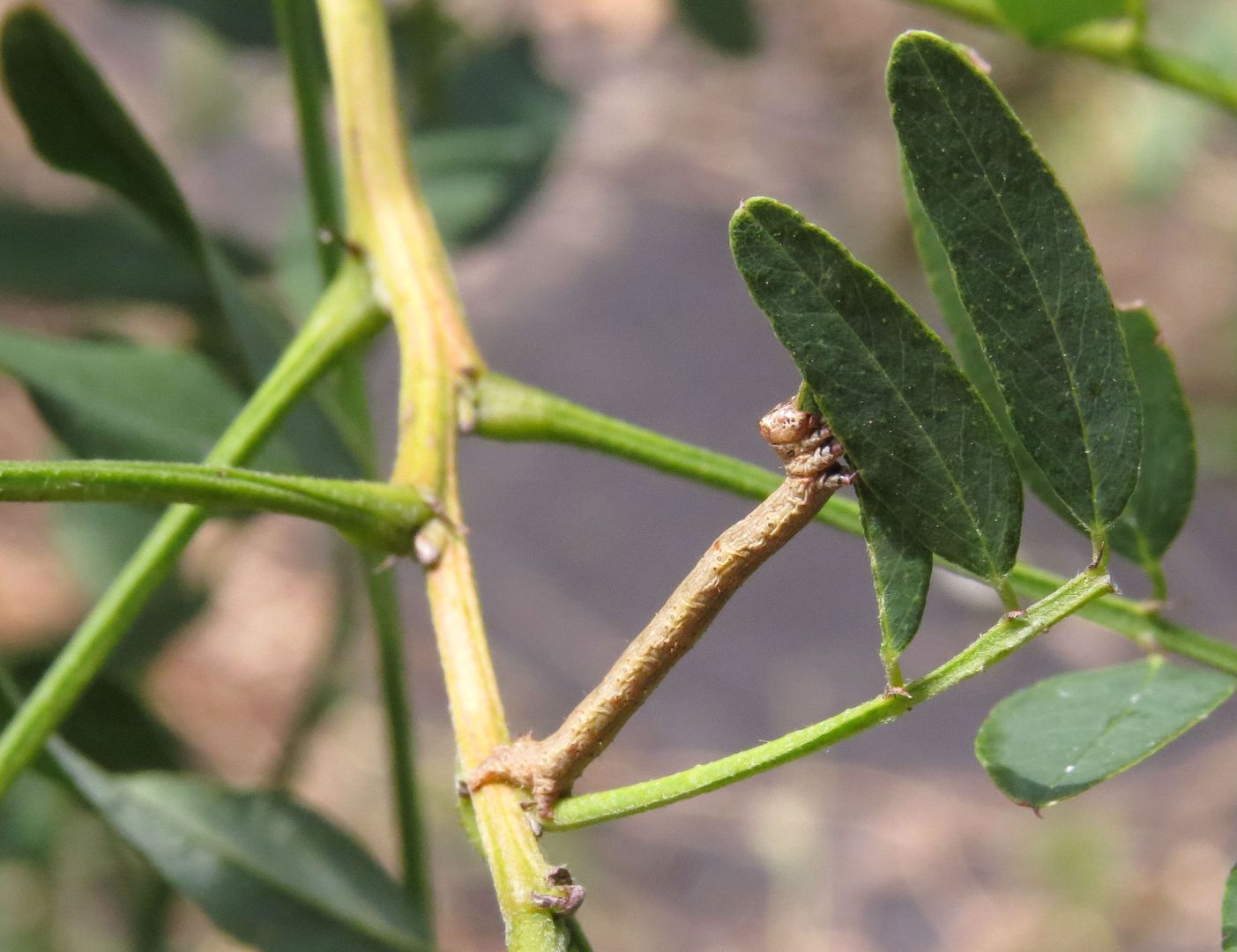 Also saw this one on the False Indigo Bush. I had to prune off the bulk of the foliage to this plant because it was top heavy and going to tip over. It's already sent up a new stem that's just as tall as the old growth was. A friend who operates the Shaw Nature Preserve in Missouri says he cuts them to the ground each year after flowering. In nature he tells me it's common for them to become top heavy and fall over, often snapping the stem/trunk completely. It seems evolutionary this species is stuck between being a soft wooded tree and a herbaceous perennial.
In the wild Red Spotted Purples always lay eggs towards the tip or ends of leaves. Ideally it's the tip but I've seen some of the more spiky edged host plants confuse them when laying and eggs are off center to the side.
Funny enough EcoBeneficial interviewed Doug Tallamy about this topic. I have the same Lepidoptera species laying eggs on my Black Cherry sapling, but because I have a happy colony of Camponotus subbarbatus living in a log to that flower bed, my tree still has all its leaves! Every leaf on this plant has a nibble taken out which I would characterize as standard first instar caterpillar bites. But nothing beyond that! No branches stripped, no missing leaves, no half munched bites taken out of the leaves. Because I have this ant colony foraging on the tree, the caterpillars never make it beyond the first or second instar. Even the Red Spotted Purples don't seem to live long enough to make their first poo stick.
A complication with keeping this species in captivity is that they over winter in the caterpillar stage. In the wild they spin silk around a leaf or two to build a "shed" that they nestle into until the tree leafs out again next spring. (Perhaps consuming the flowers in the case of apple trees?)
So a friend suggested to me to keep them in the fridge when all the leaves fall of the tree. Hopefully that will be enough get them to survive the winter and I can continue to photograph their life cycle next spring.
Monday, January 6, 2014
2013 Best of Butterflies

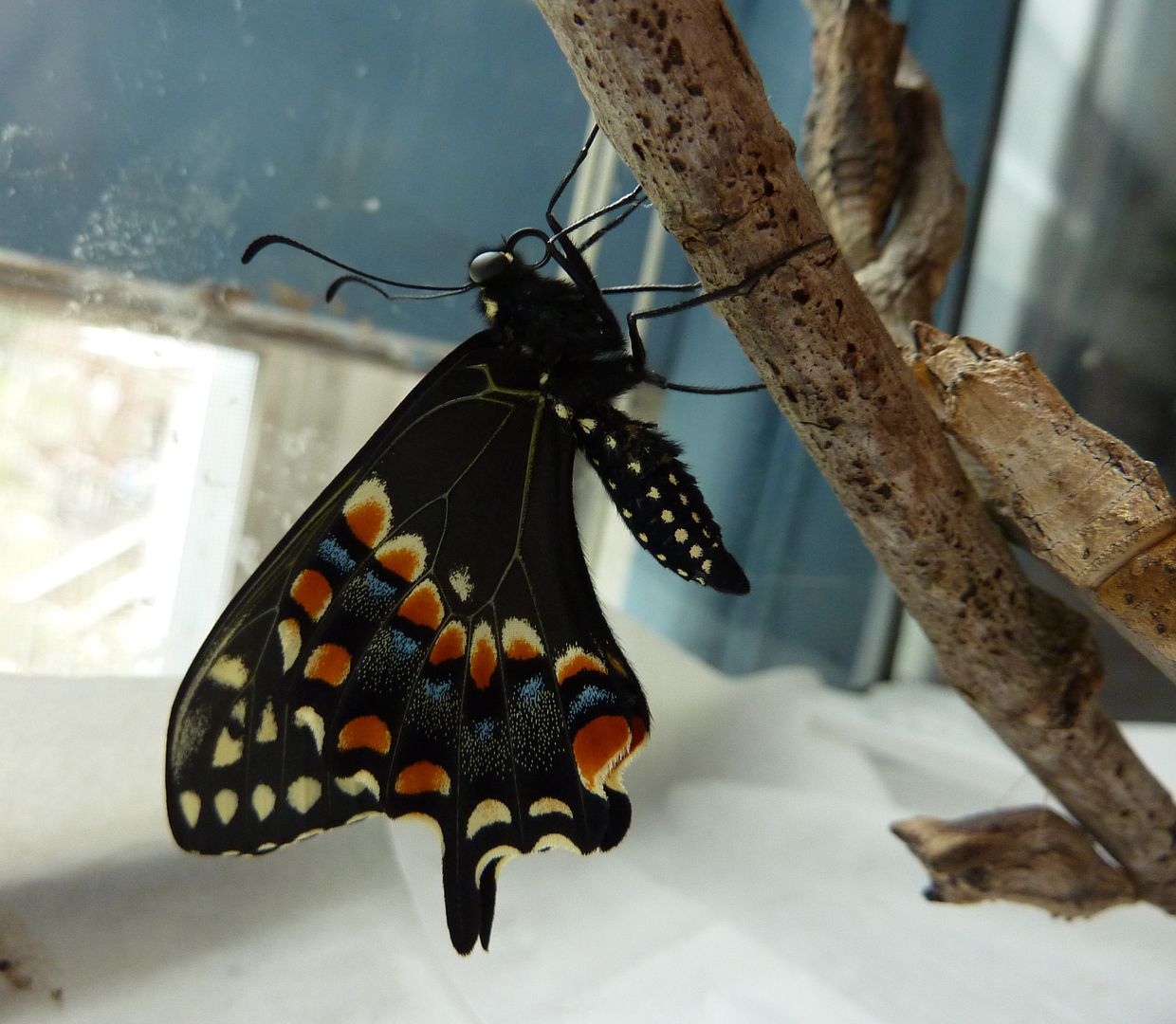
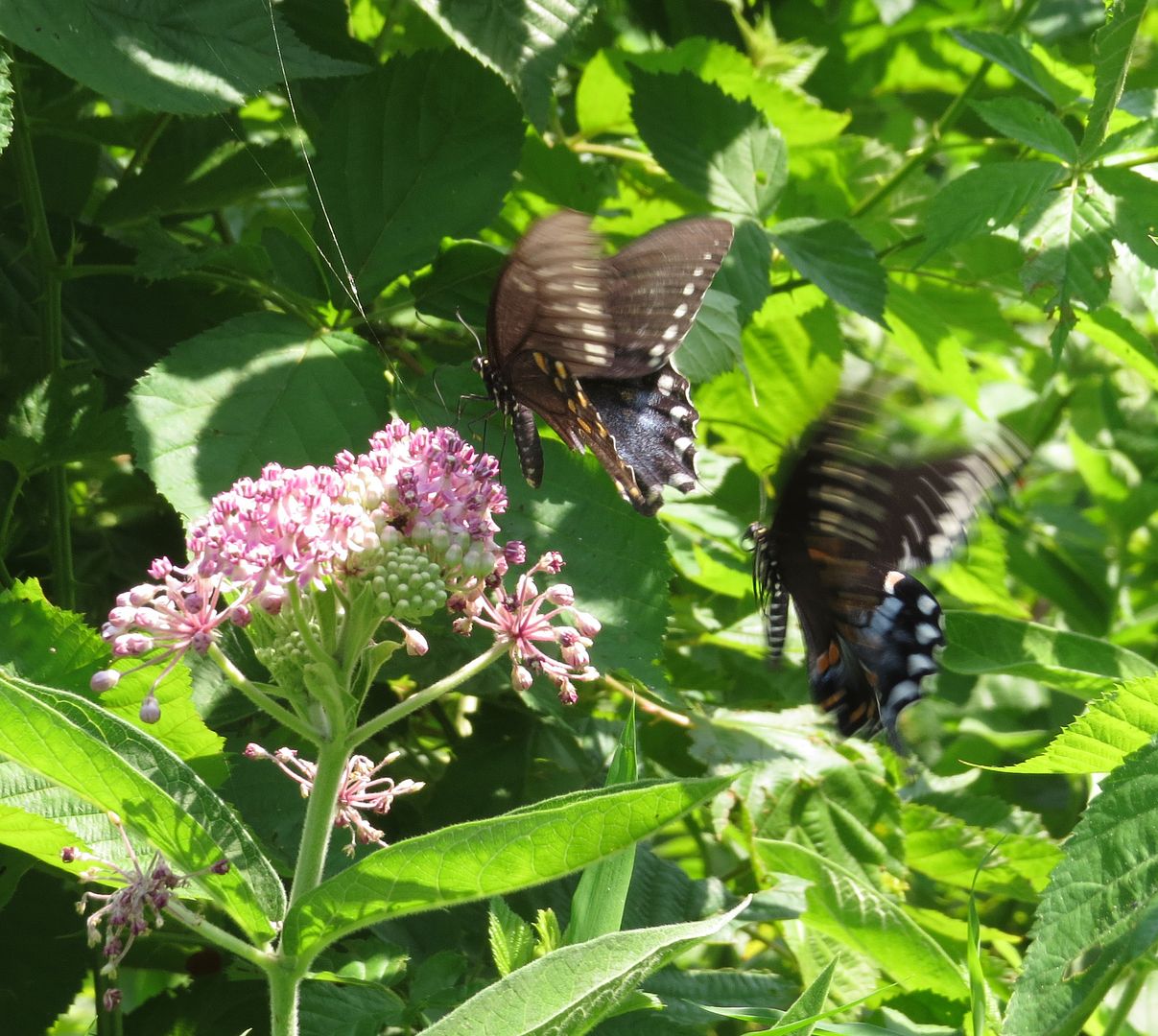
From the previous year, my butterfly season started with a series of Black Swallowtail Chrysalises over wintering in a cage I kept down in my basement. Well one emerged prematurely which lead to this shot.
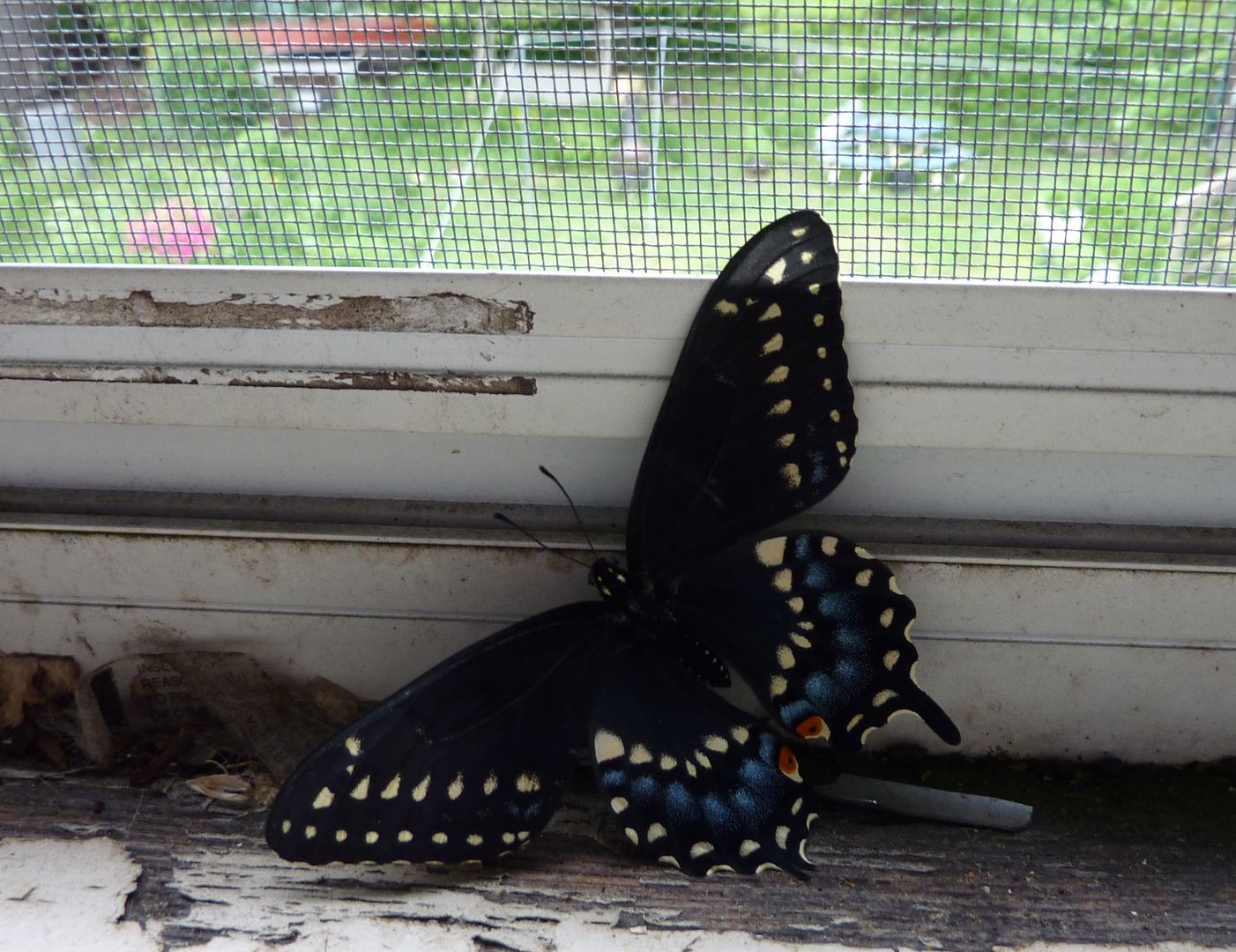
Now I don't think I did anything particularly bad. Even around carrot farms this species is not considered a pest. For whatever reason they just don't spread dramatically in huge numbers.

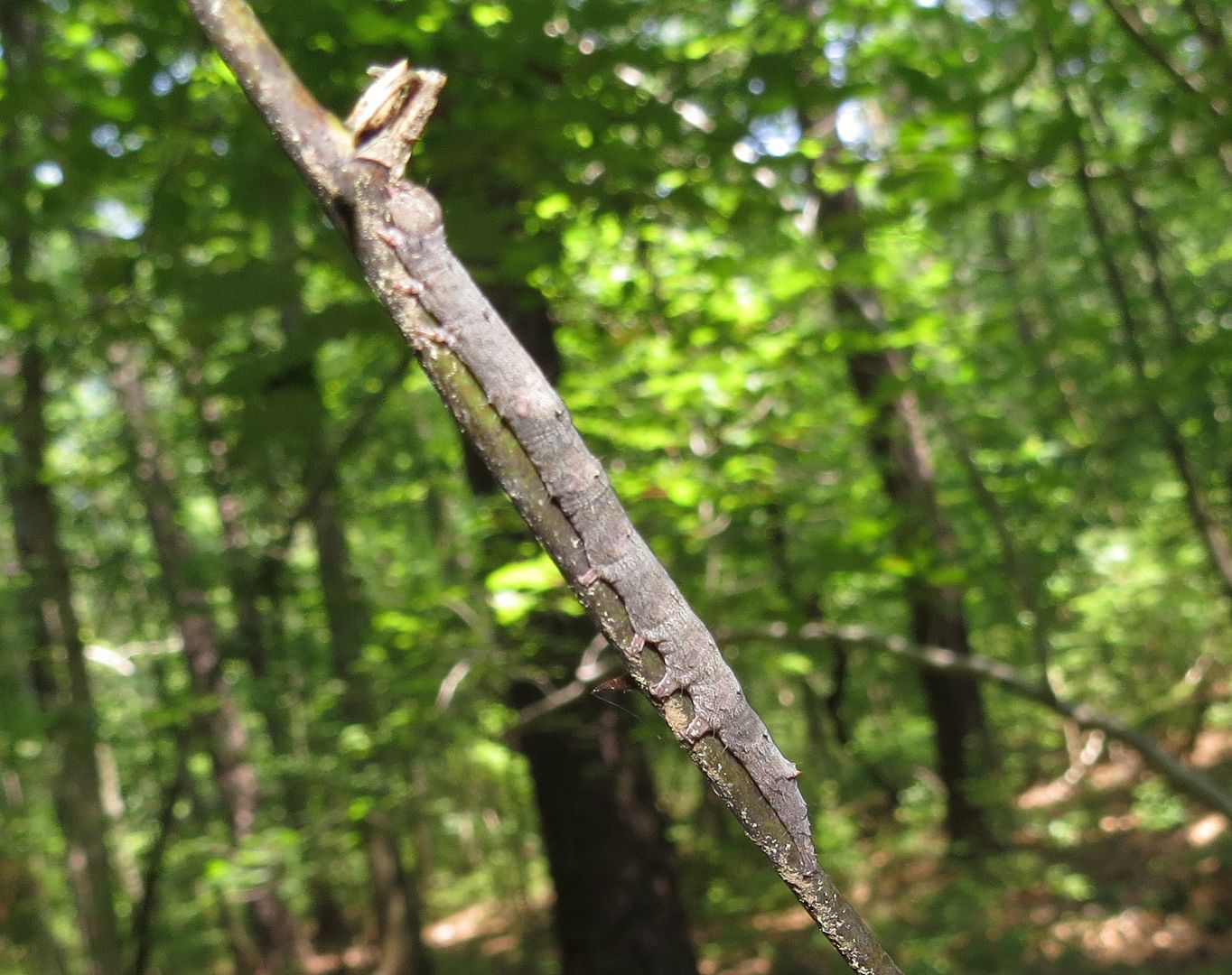
I found this Silver Spotted Skipper Caterpillar nestled on my False Indigo tree. It's a new plant I'm trying out, which will hopefully flower this year. Sadly I think a bird ate this little guy.
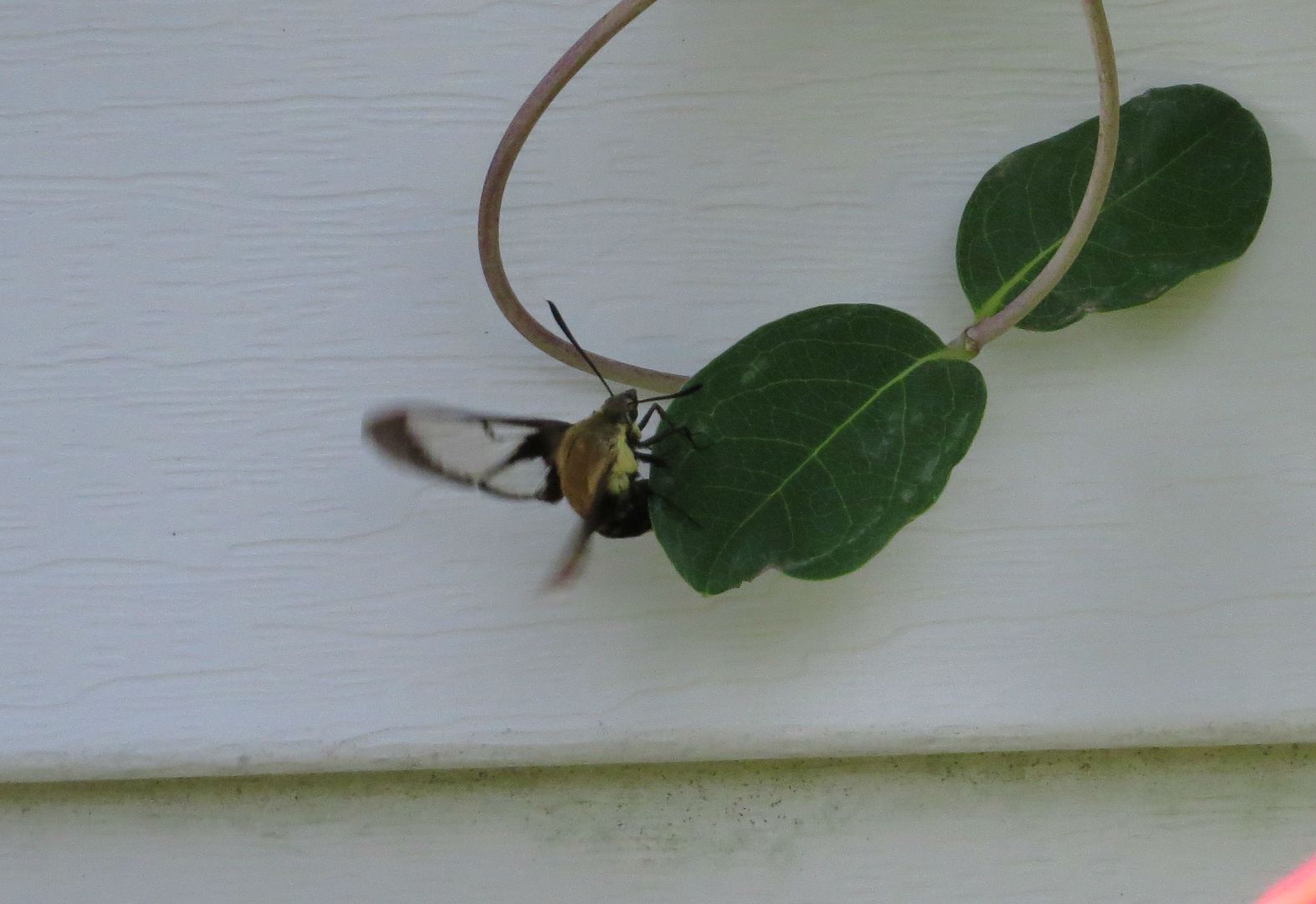
Hummingbird Moth laying eggs on my Coral Honeysuckle.
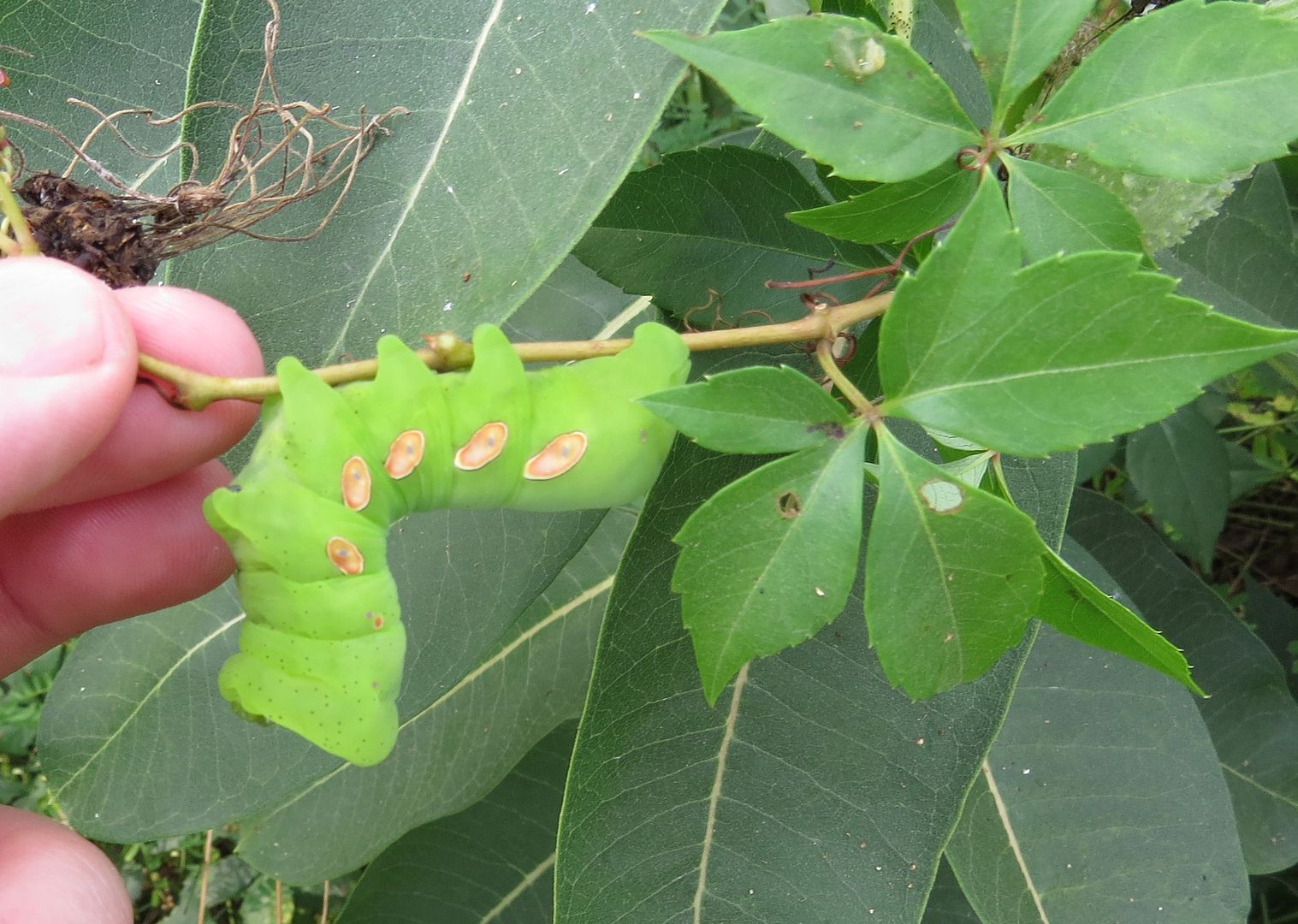

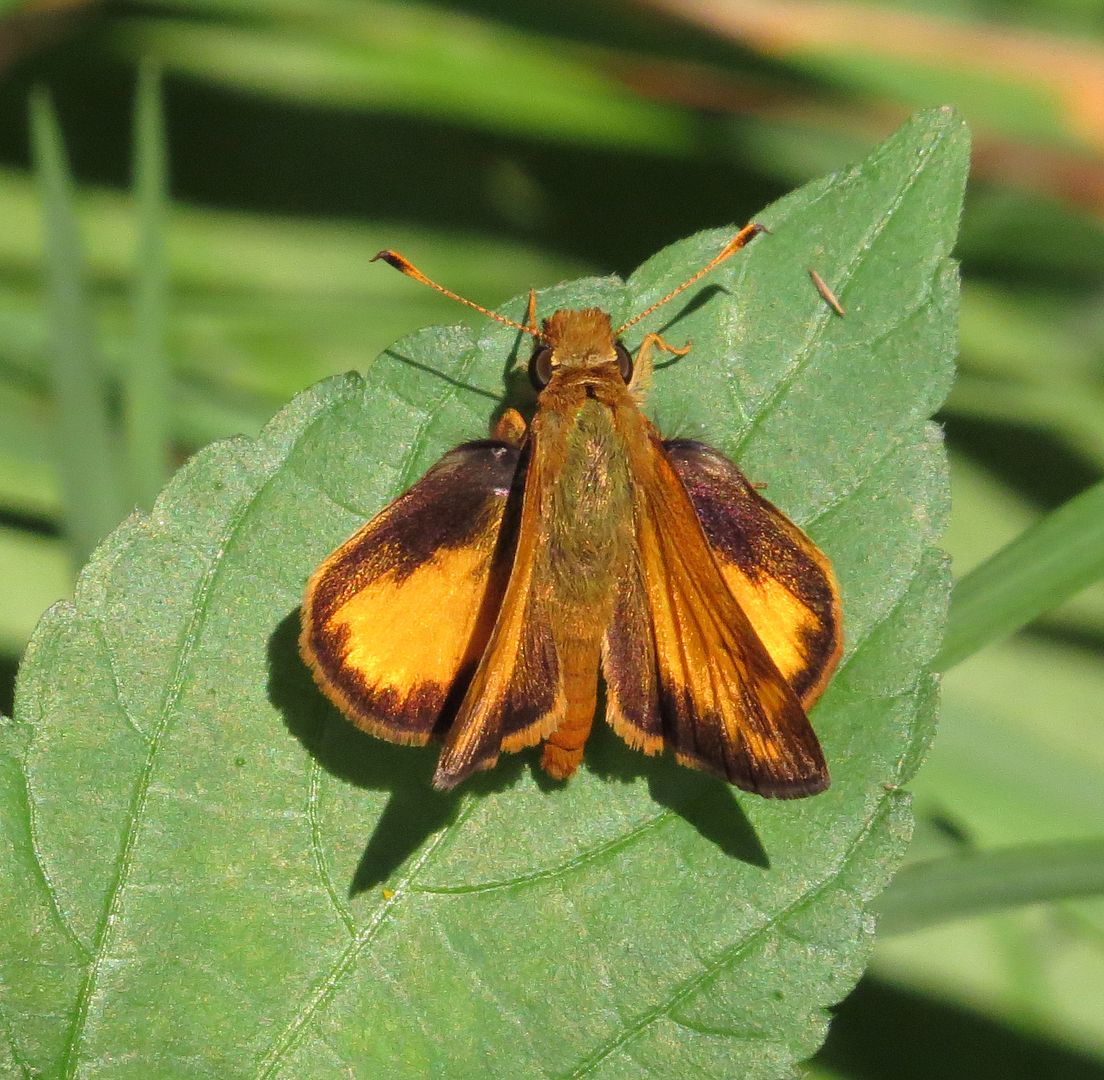
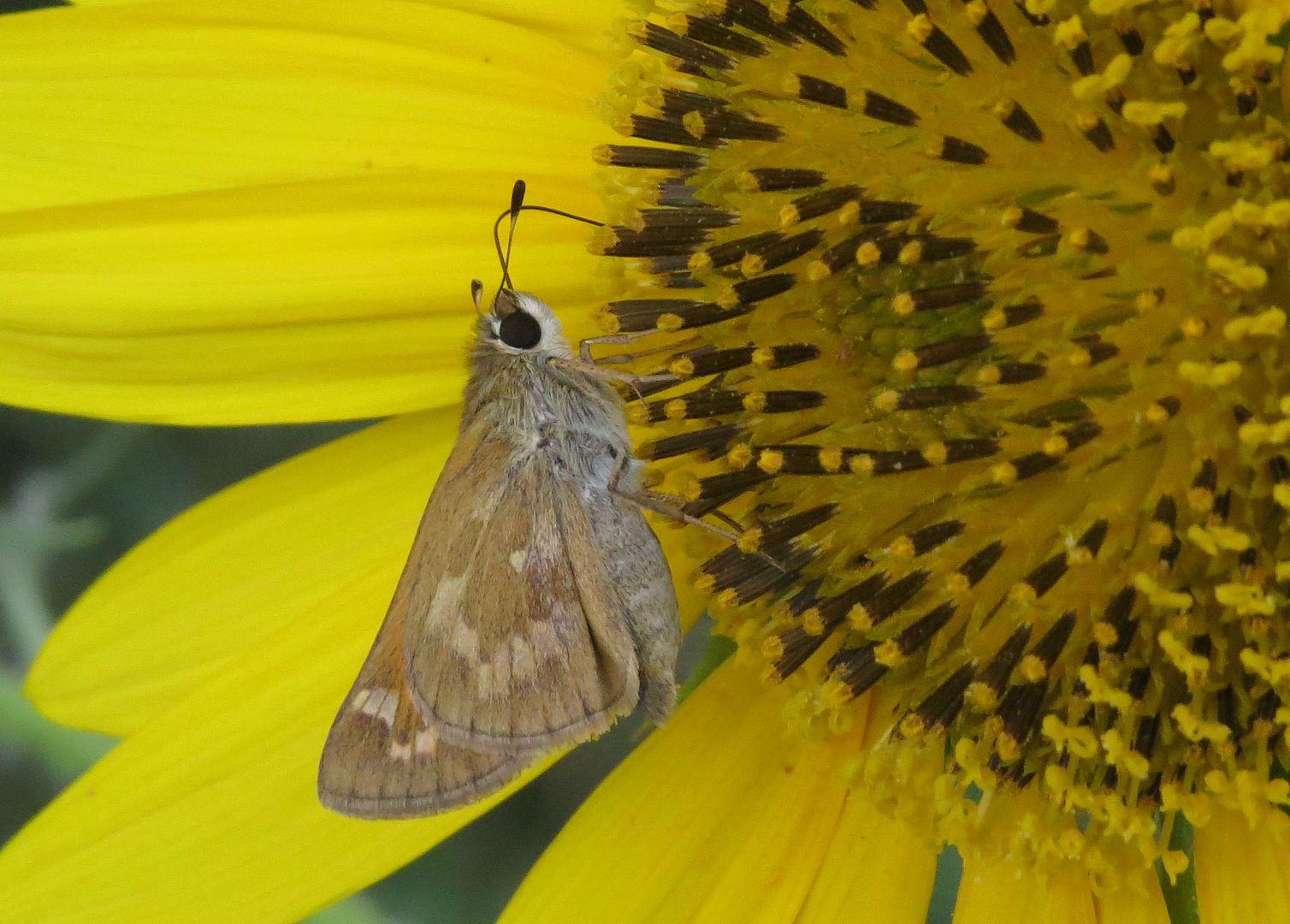
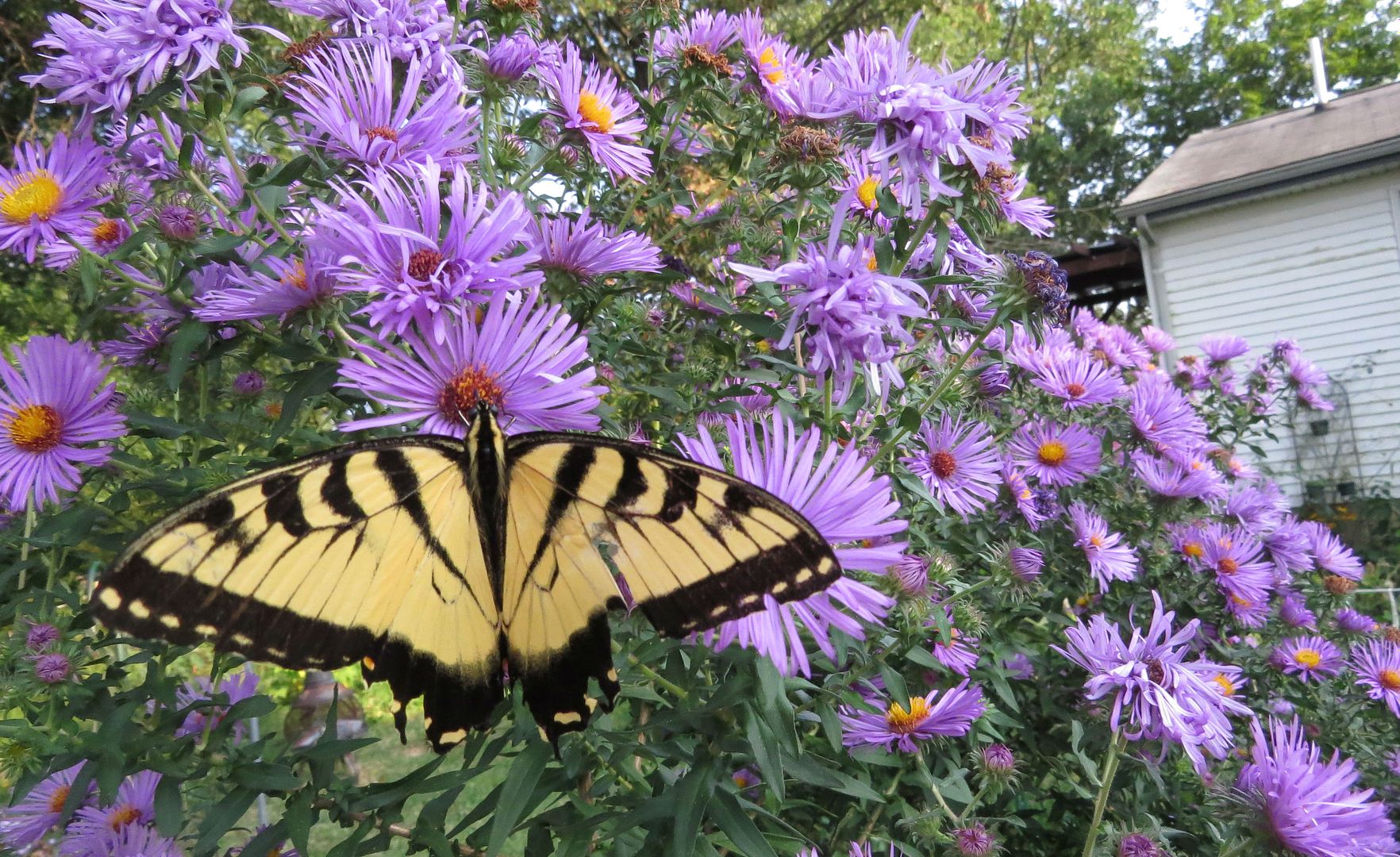
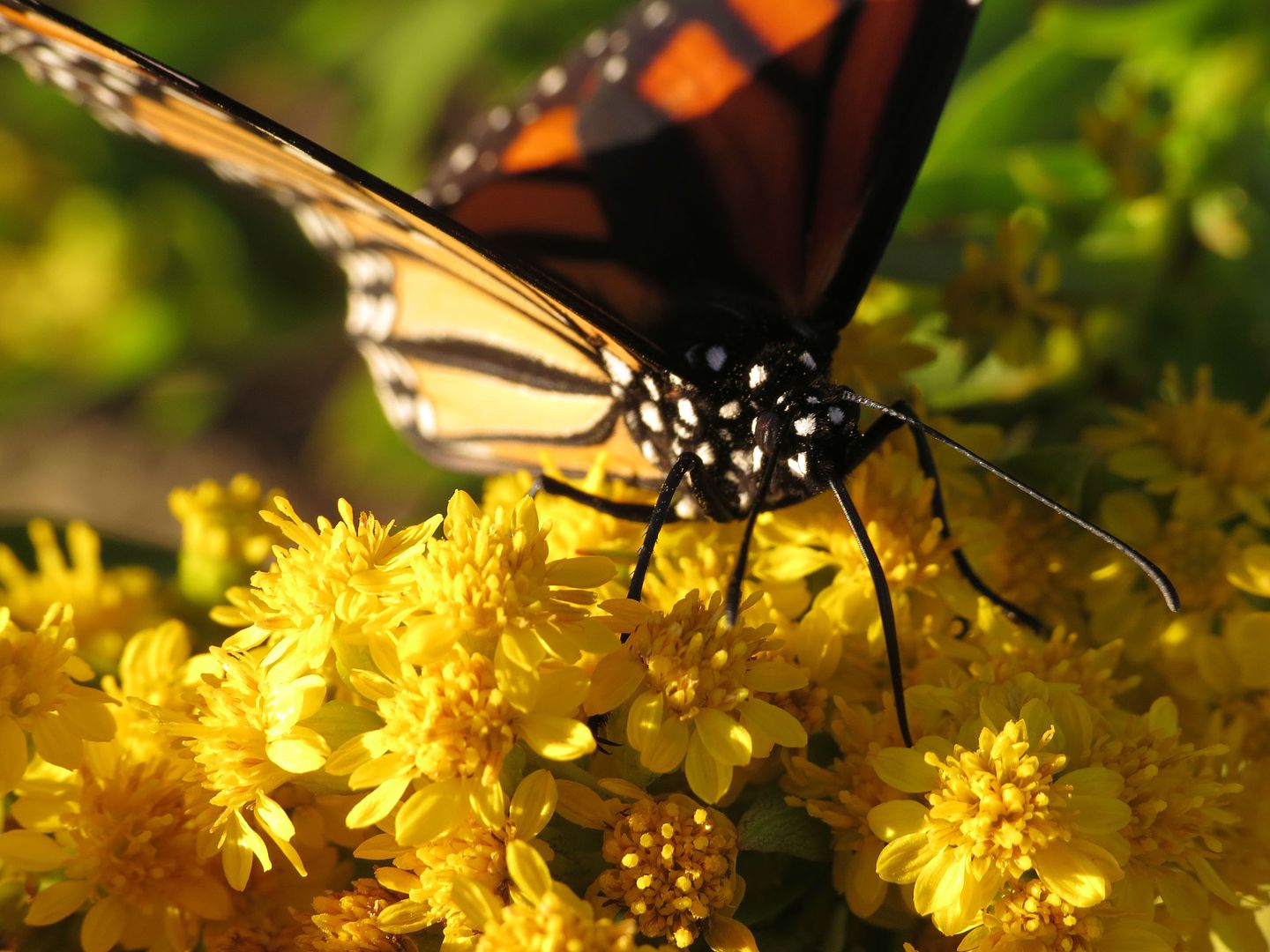
It wasn't until I took a trip to Cape May with a few friends that I really saw them this year. There were stands of Seaside Goldenrod planted all along the beach specifically to help the Monarch migration. While I saw a few dozen flying around it really wasn't enough to give me any sort of hope that their population was doing well at all.
I know that they're by no means endangered. It's simply that the population that migrates through the eastern half of North America will be lost. They're doing okay out in California, apparently there's a population that migrates through South America as well, but what a shame it would be to never see the butterfly that inspired me to garden to ever flutter through my yard again.
Sunday, September 15, 2013
Autumn Native Plant Garden Tour 2013
Mountain Mint, Pycnanthemum sp.
Wild Senna, Senna hebecarpa (seed pods)
New England Aster, Symphyotrichum novae-angliae (Pink and Purple)
Goldenrod 'fireworks' Solidago rugosa 'fireworks'
Perennial Sunflower, Helianthus maximiliani
Small Woodland Sunflower, Helianthus microcephalus
Anise Hyssop, Agastache foeniculum
White Woodland Aster or Heath Aster, Eurybia sp.
False Sunflower or Early Sunflower, Heliopsis helianthoides
Northern Blazingstar, Liatris scariosa (might be Liatris borealis)
Threadleaf Ironweed, Vernonia lettermanii
Showy Goldenrod, Solidago speciosa
Smooth Blue Aster, Symphyotrichum laeve
Sky Blue Aster, Symphyotrichum oolentangiense
Purpledisk Sunflower or Appalachian Sunflower, Helianthus atrorubens
Western Sunflower, Helianthus occidentalis
Cutleaf Coneflower, Rudbeckia laciniata
This video features both Swamp Sunflower, Helianthus angustifoliu and Narrow-leaf Sunflower, Helianthus salicifolius. I'm confused as to which is which. The tallest one at the end is supposedly a true species of H. angustifolius, while all the others are supposedly cultivars of H. salicifolius, however I find the same cultivar names listed as H. angustifolius species but never at the same nursery. What's more the two species can also hybridize and often grow in the same locations in the wild.... H. salicifolius supposedly just doesn't get as tall... but I'm unaware of any other differences between the two species, so I'm starting to feel it really doesn't matter which species you have. Even the flowers to both look the same.
Tuesday, December 11, 2012
Best of Bees 2012
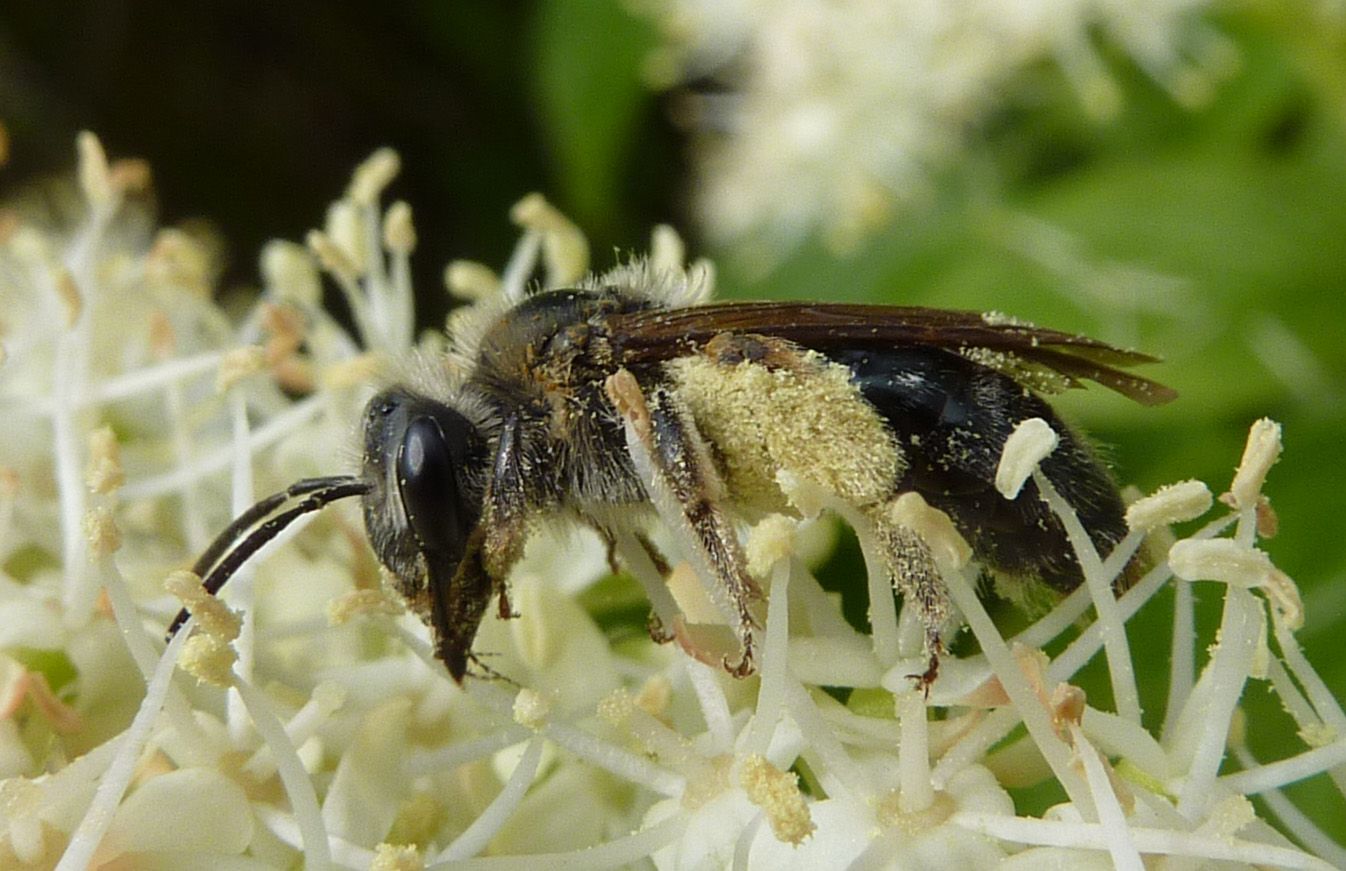
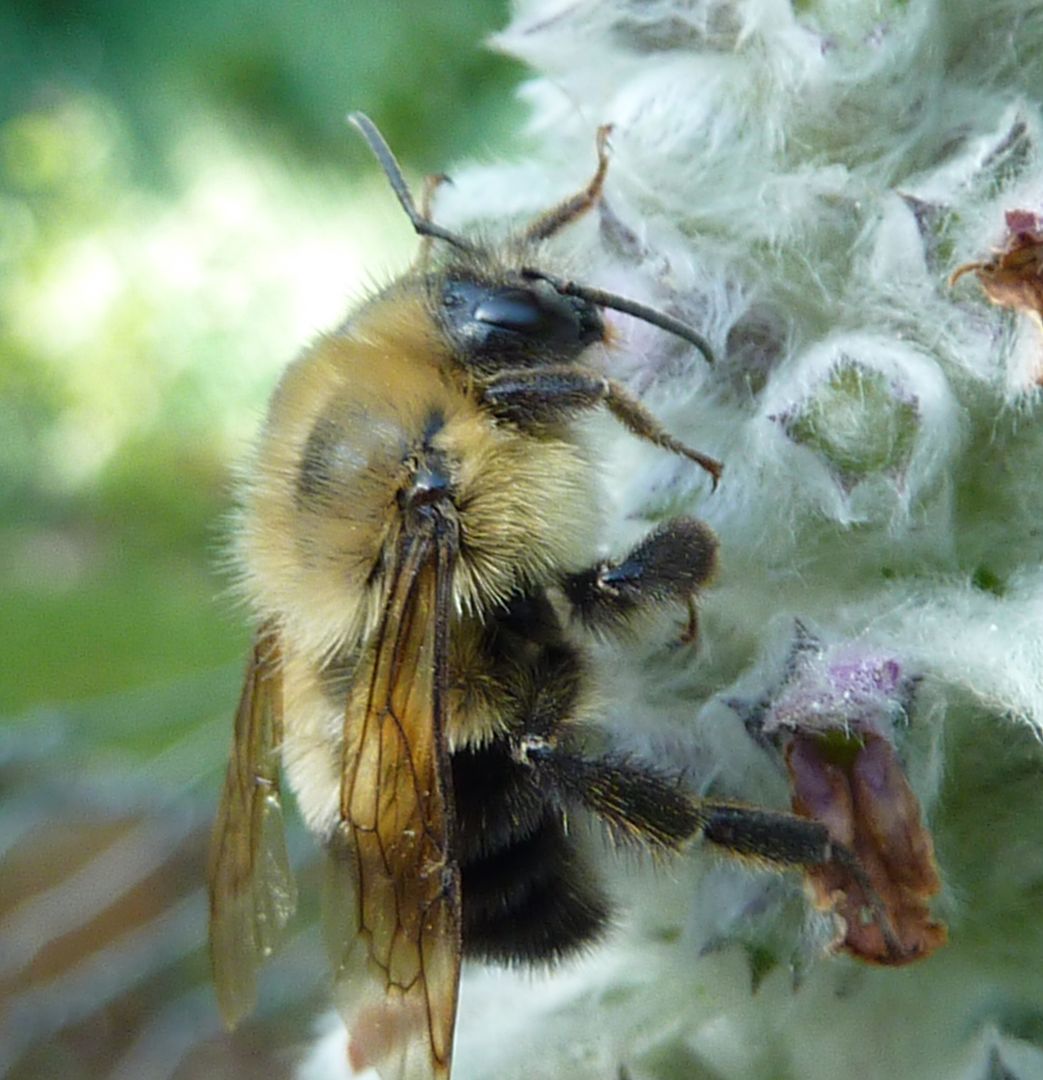
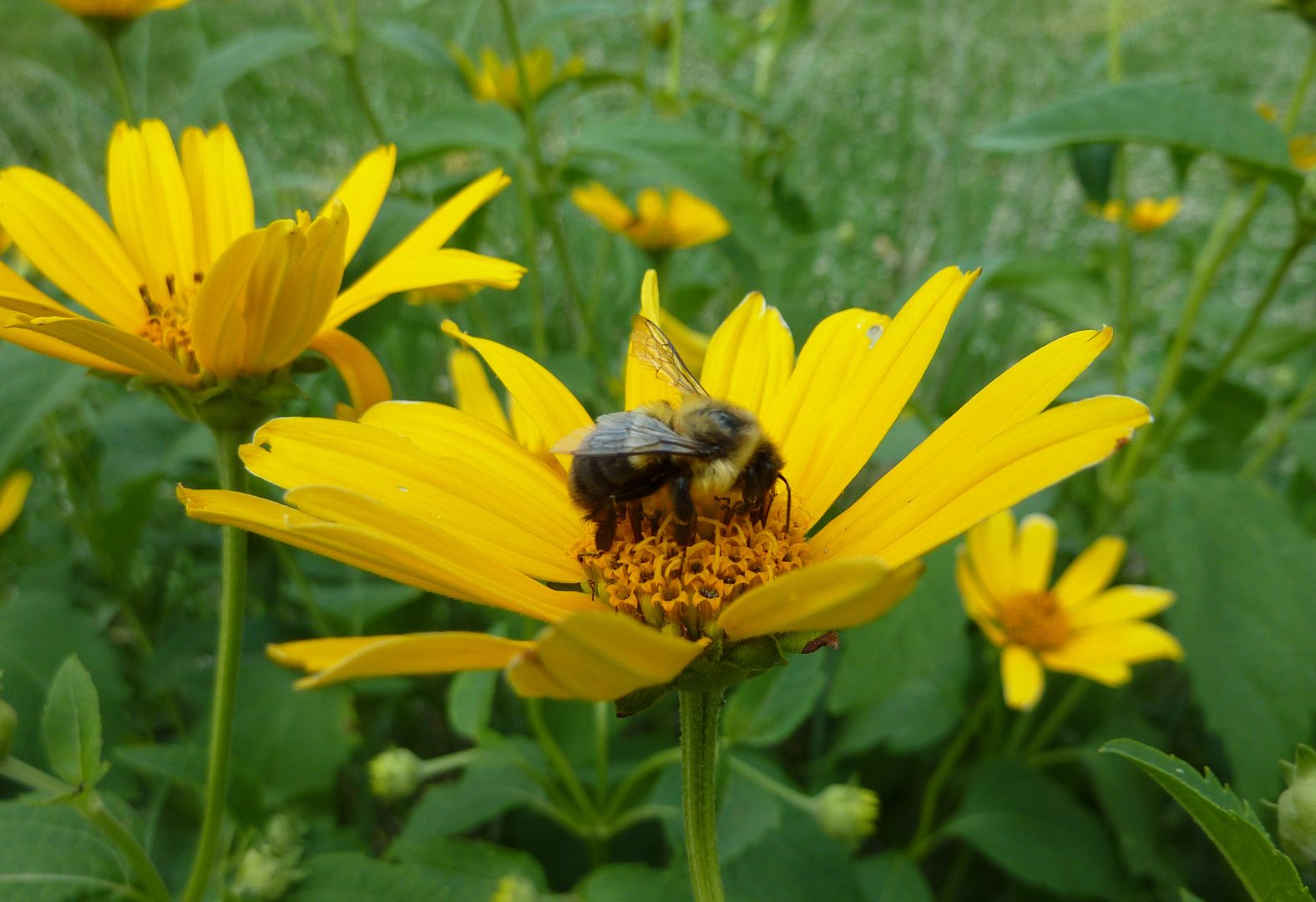
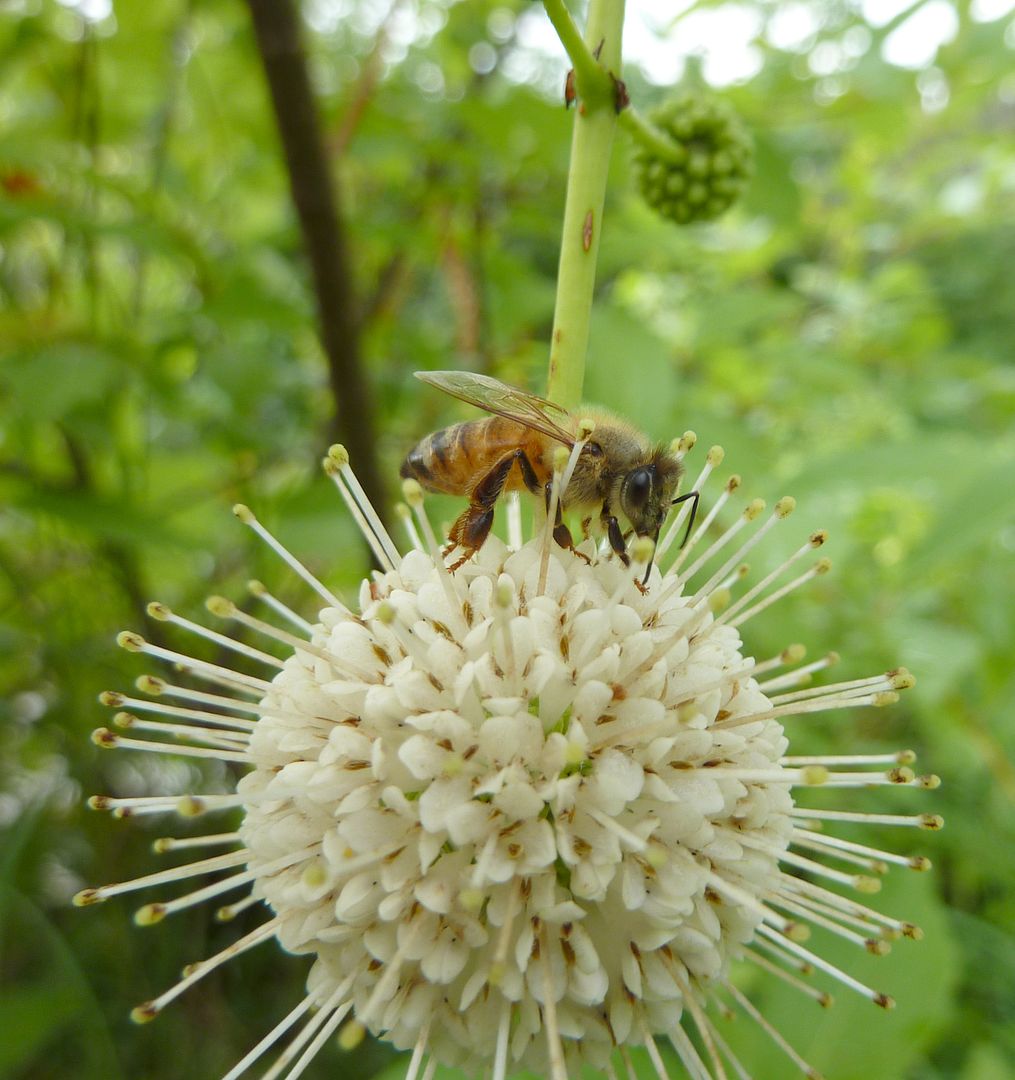
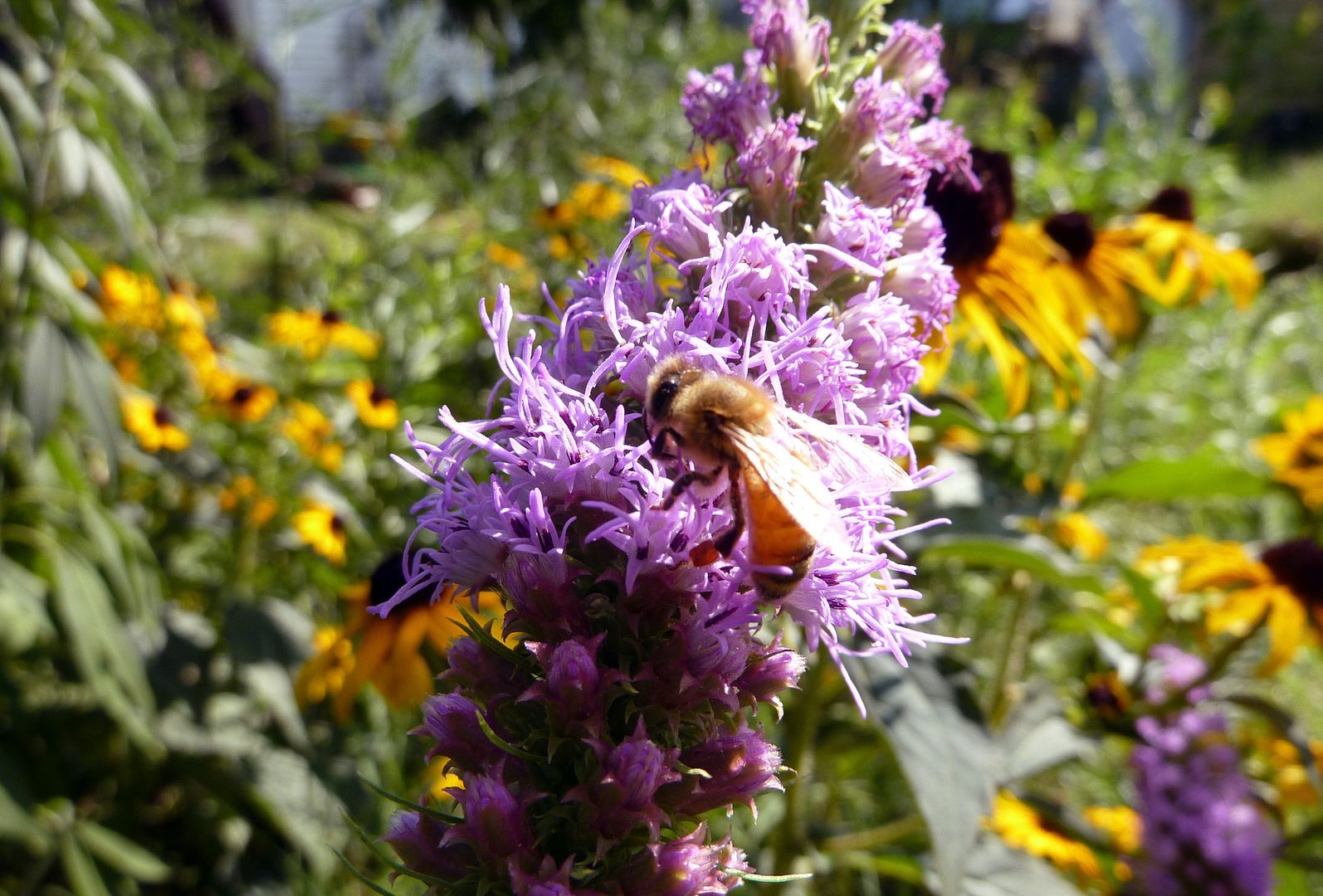
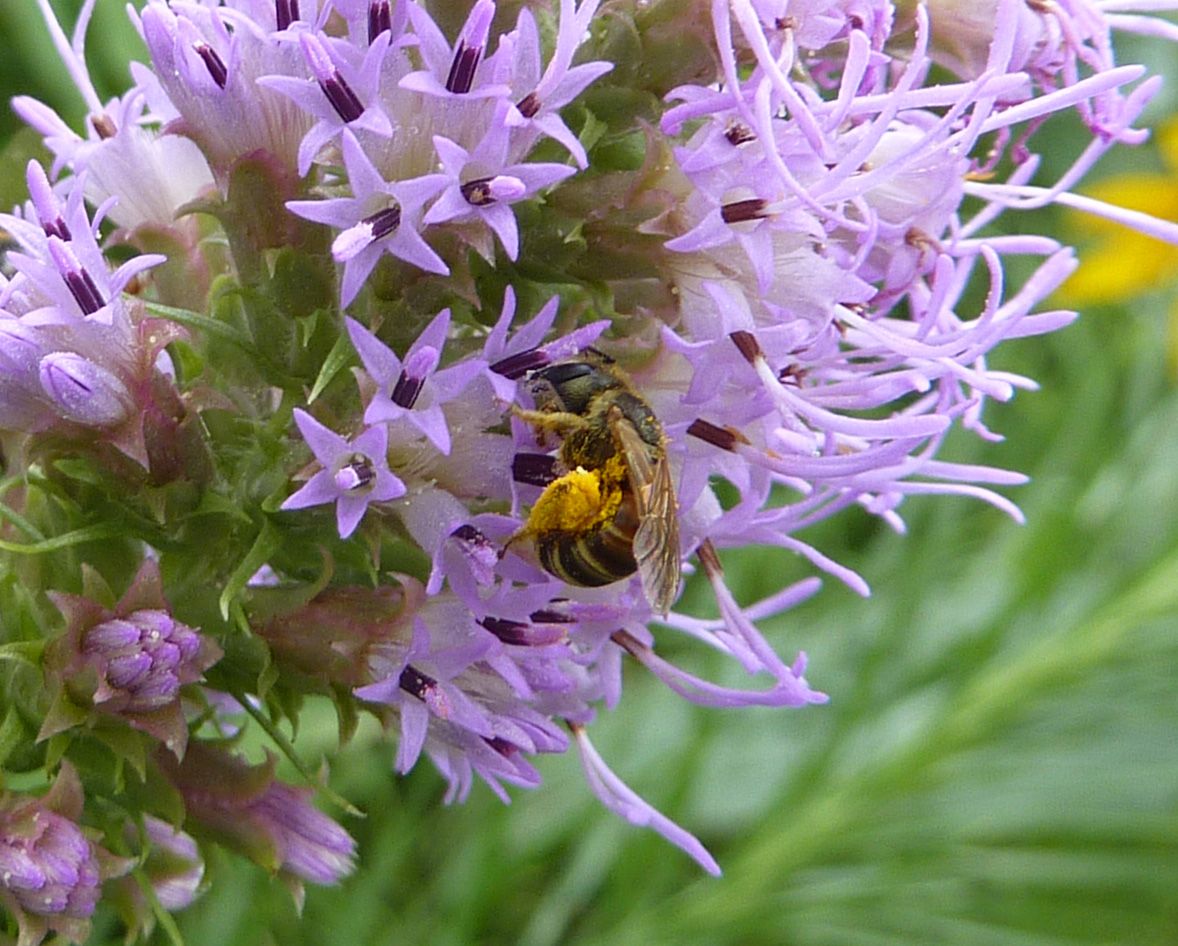
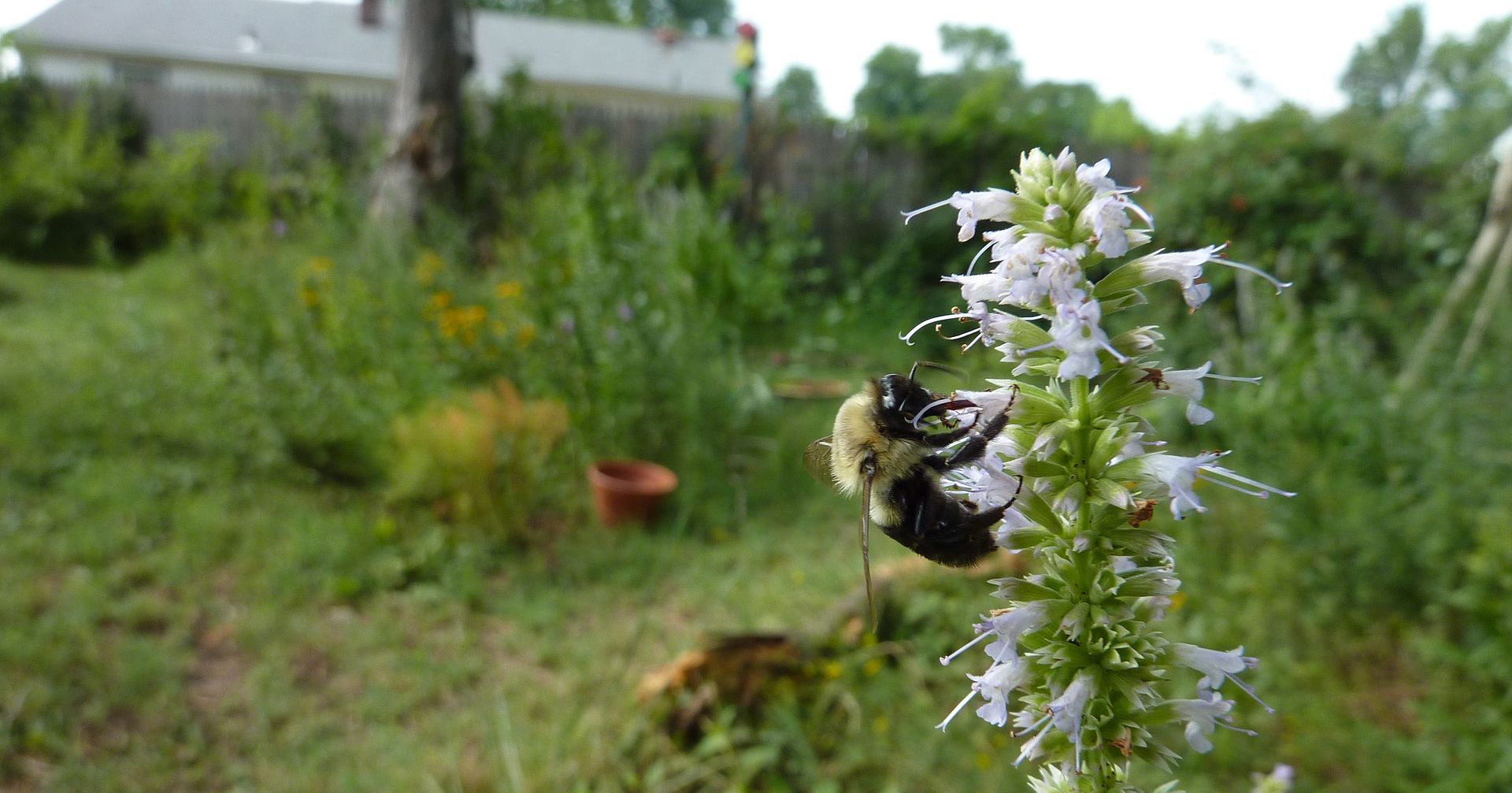
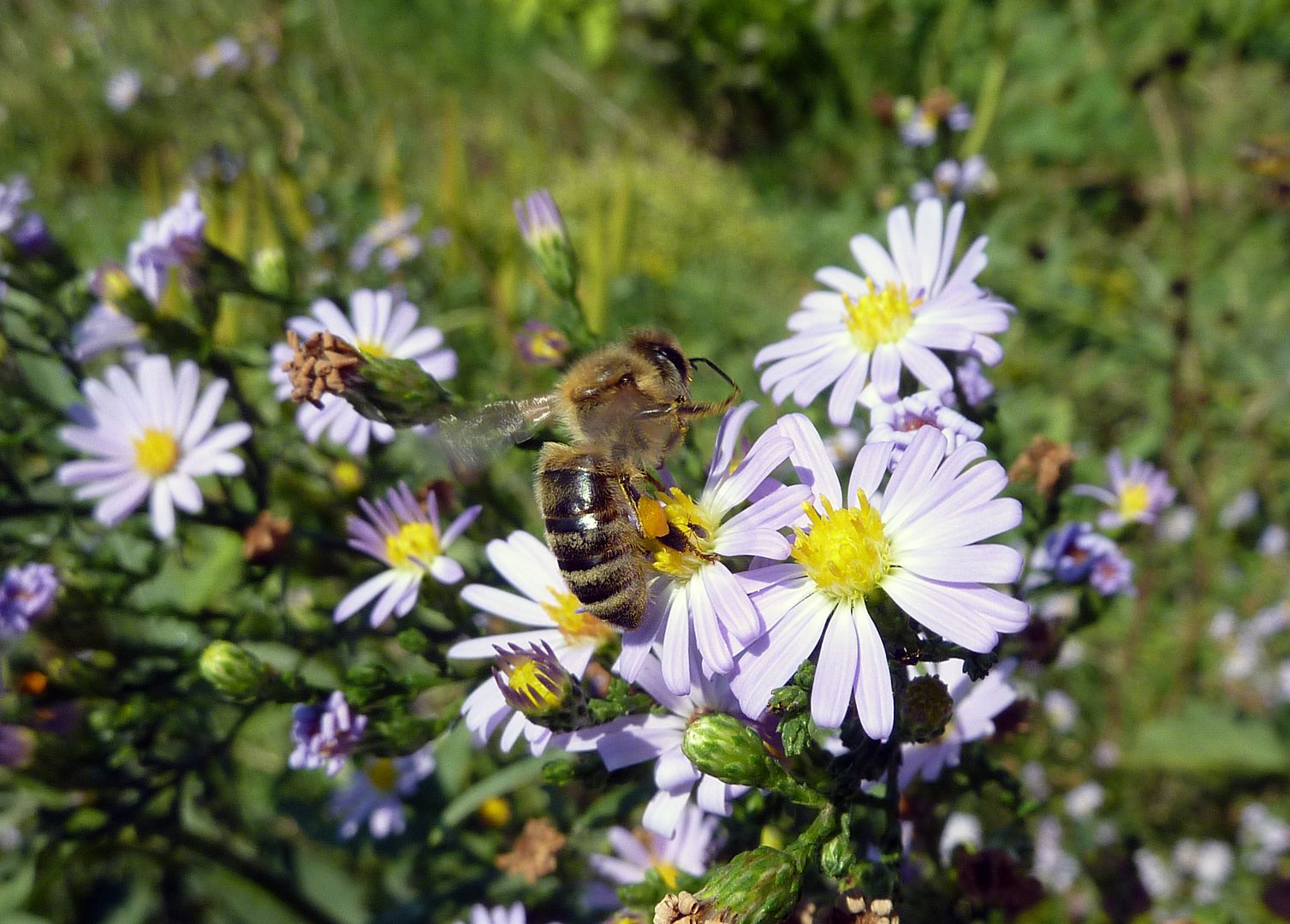
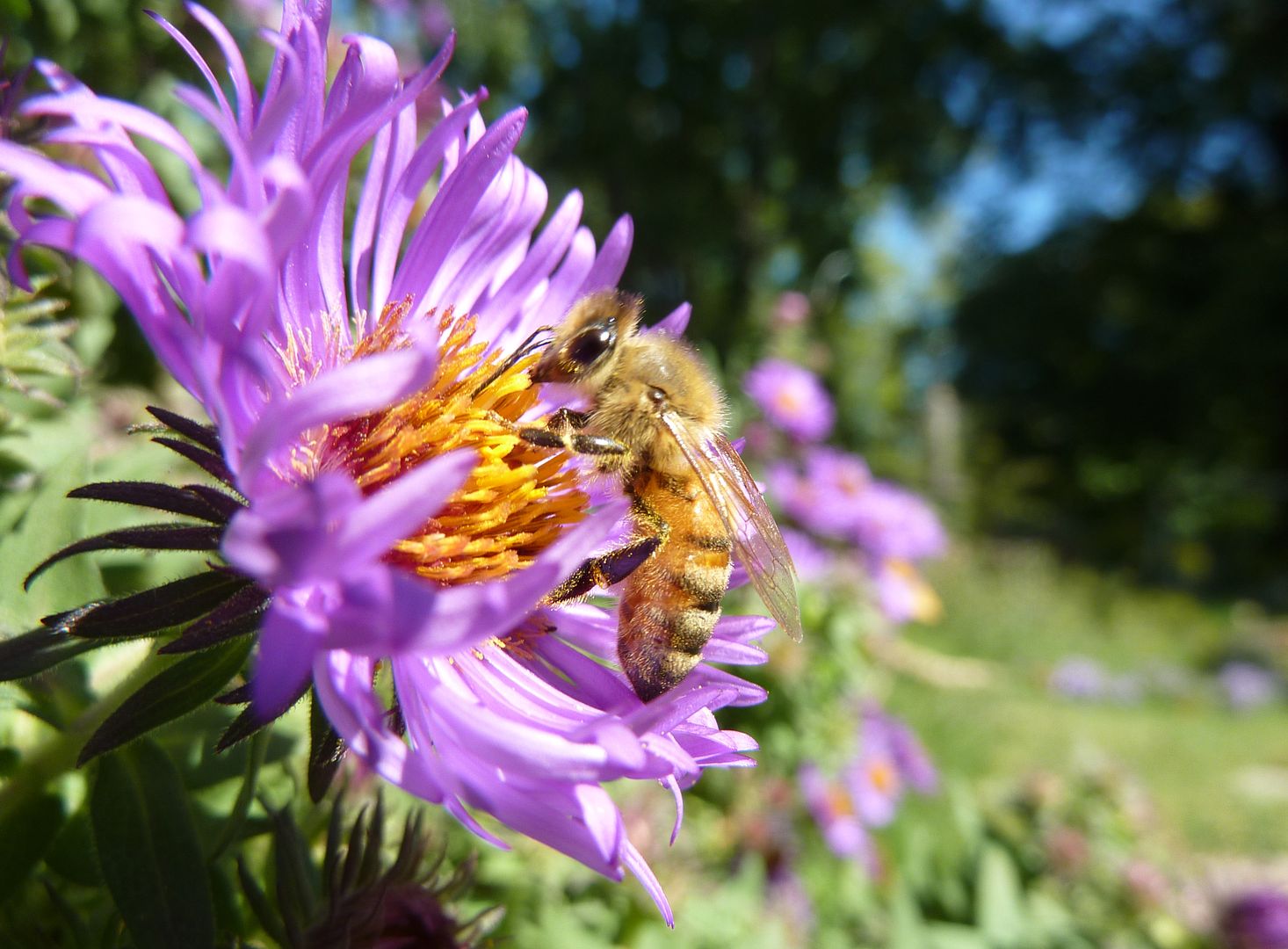
The thing about honeybees is they go for abundant sources of pollen and nectar and communicate where the food is by means of a waggle dance. So a maple tree that's 60' tall is likely going to win out to an apple tree that's only 15' tall. There is more to forage on the maple tree and more bees are waggle dancing about it too. Bees are loyal to one particular plant species when they go foraging, and rarely change plants mid foraging trip. This is why you never see honeybees... bees in general with multicolored baskets of pollen on their legs or under the abdomen.

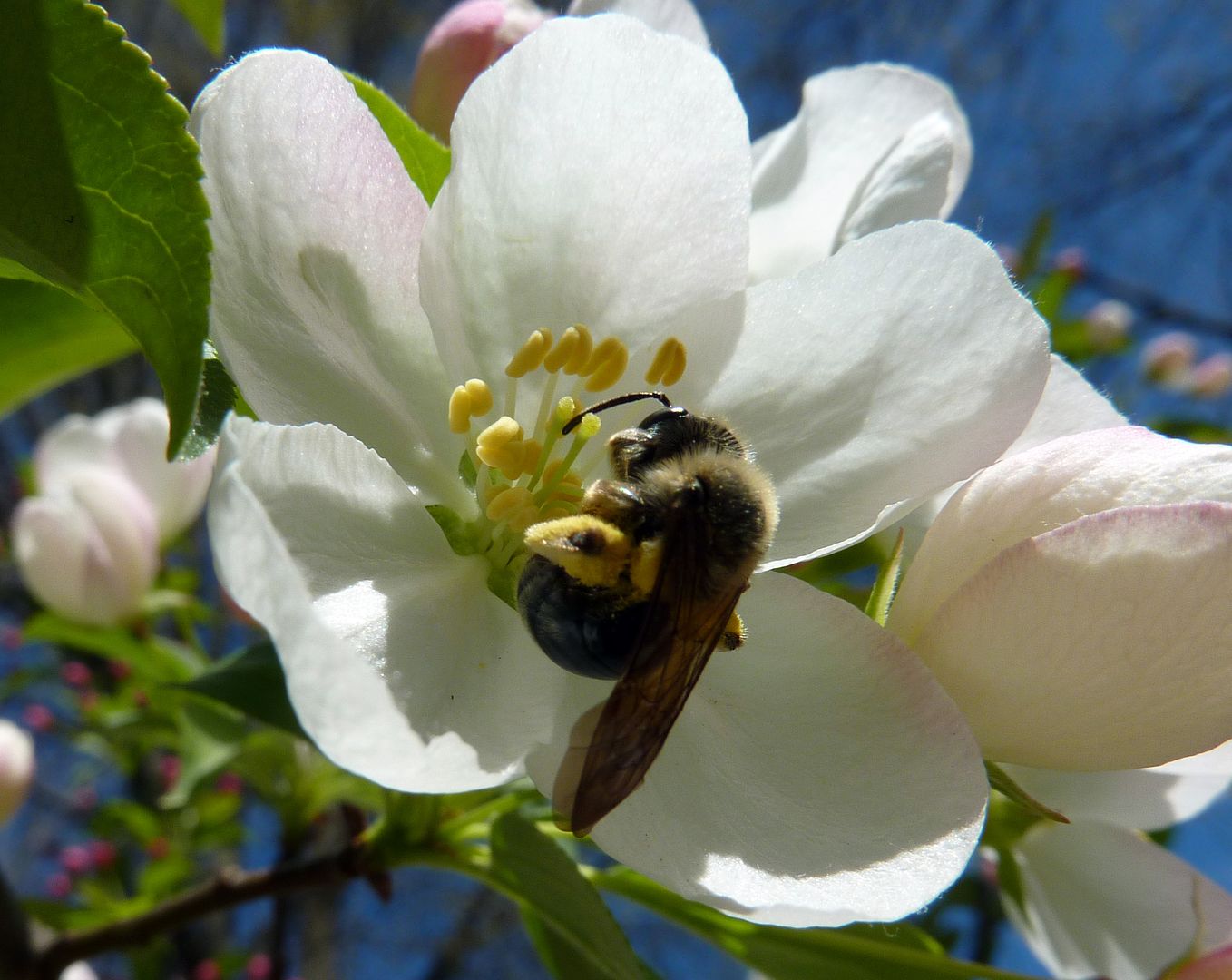
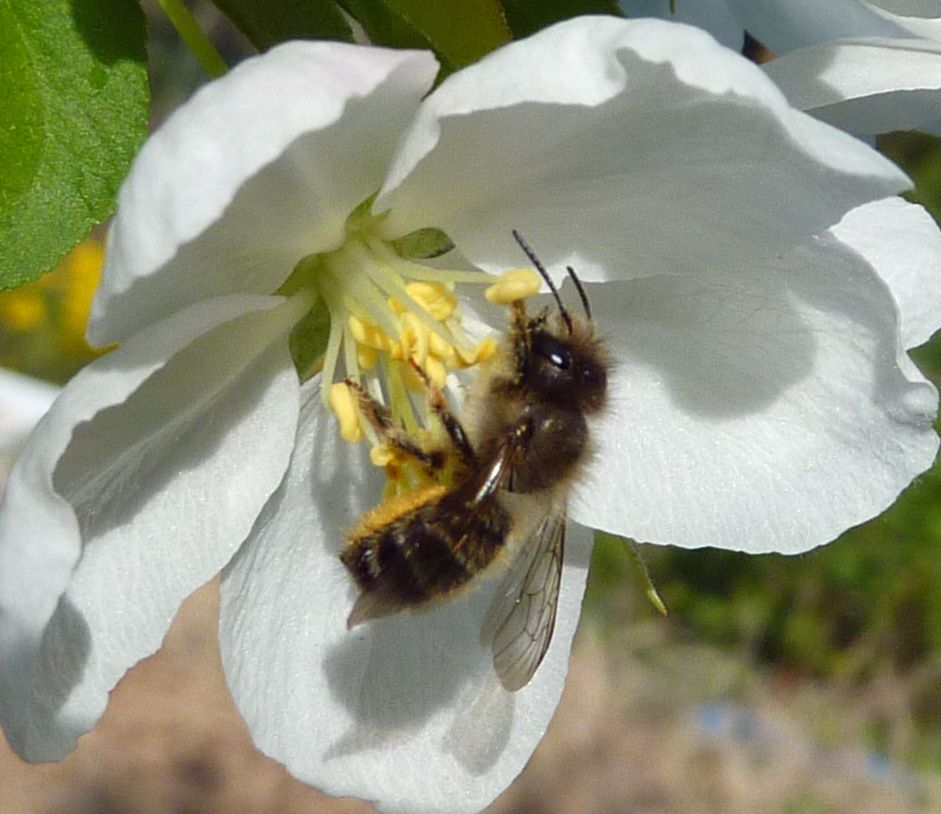
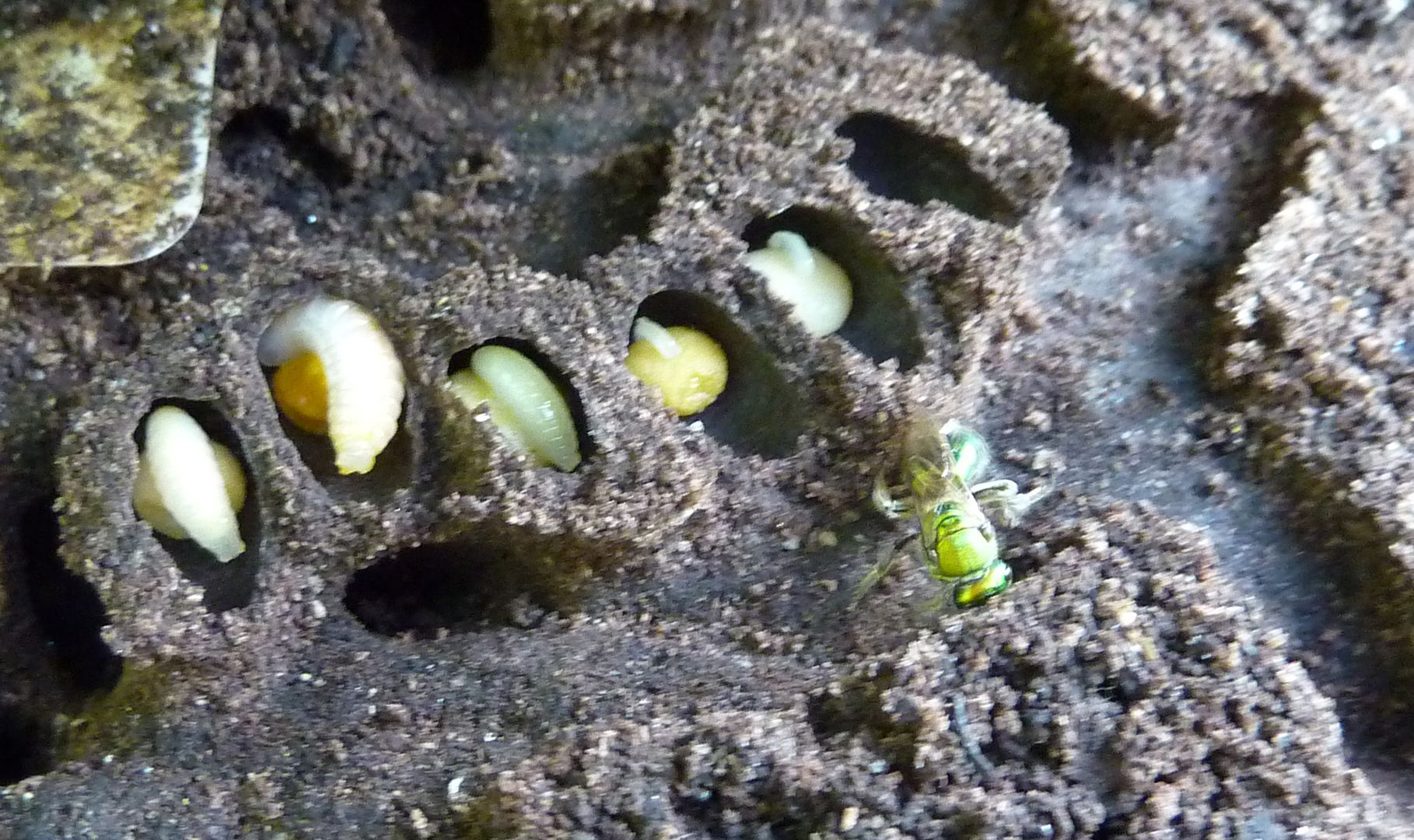
More commonly I hear examples of native bees being "Better" pollinators of certain plants. The Sunflower Bee, Squash Bee, and Rose Mallow Bee can be found on a variety of flowers but all specialize on feeding pollen to their brood of which the plants they are named after. Well Duh! I'd hope such bees that specialize in one type of pollen would at least pollinate the plant.
Most of the time when this argument is used, it's usually about food crops so maybe scientists have a point. Alfalfa Bees are better pollinators than Honeybees but farms overall aren't designed with native bee populations in mind. Honeybee hives help to pollinate the middle of the fields where natives don't fly to as much.
It's not a fair argument to compare 1 bee species to 4,500 others. This is like comparing your grades in school to 4,500 other students in your class. (Chances are you sucked at least one subject in school or our right avoided some like music, art, gym, computer programming, other languages, shop, sex ed, driver's ed, or some other class. Maybe its your own fault for not having hair, or lack there of, on the right part of your body?)
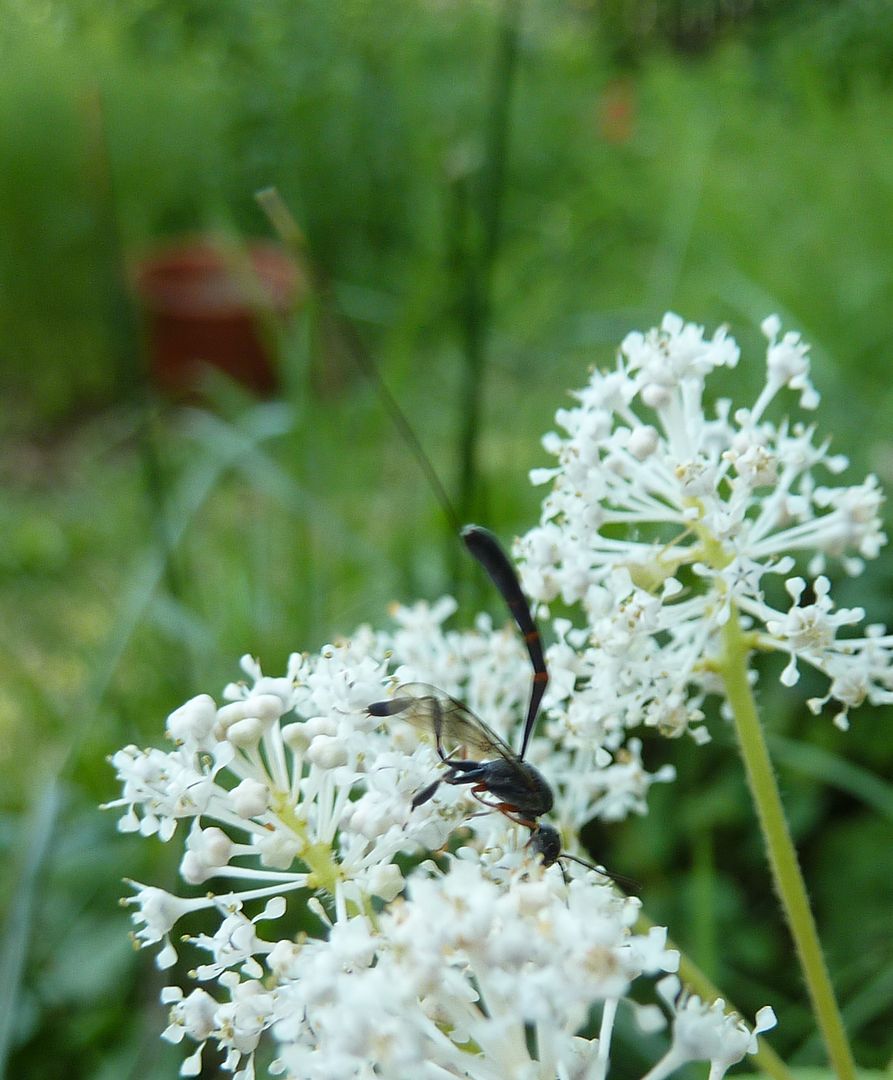
The honey produced by many plants varies considerably. With honeybees plants like Sneezeweed, Helenium autumnale, produce copious amounts of pollen, however the honey produced by this plant is described as tasting so f***ing awful that it tents to ruin all other types of honey its mixed with.

Tuesday, November 20, 2012
Some Neat Natives
While researching plants for the book I've come across a lot of really cool native plants that are very much outside the norm of what's sold at native plant nurseries. (I get tired of constantly seeing the same plants year after year and frankly I wish they'd sell more than just the same 3 species of milkweed, to give you an idea of what I mean by norm).
Red Flowering Raspberry, Rubus odoratus, has gorgeous 2" flowers that come in a narrow range of purples pinks and reds. The fruit I read is either just as tasty or slightly less than the normal raspberries sold in stores. It's not often sold but I was able to find a few places selling it.
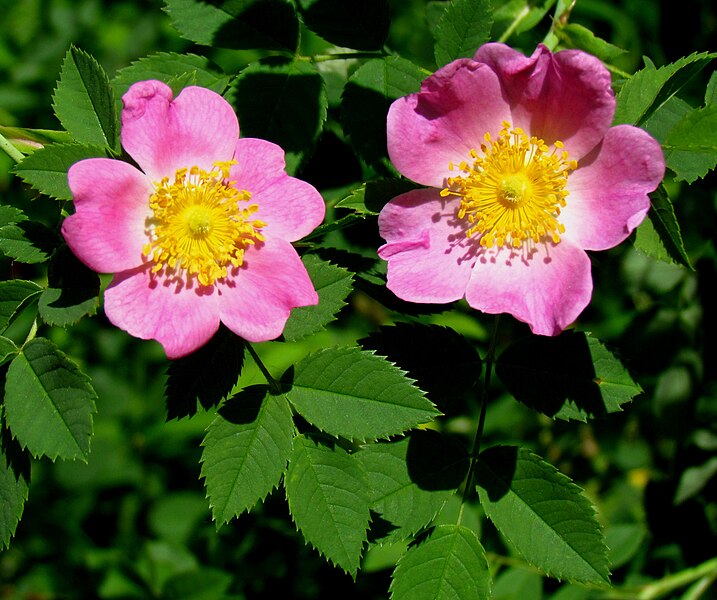
Compare that to our native Rose, and you can seem more than a passing resemblance; as far as the flower is concerned anyway. I've always wanted to grow one of our native roses but frankly I'm not open to the idea of eating rose hips and I think they're too thorny and aggressive of a plant to grow just for the birds. So growing the Red Flowering Raspberry is a handy food producing alternative. Both plants spread by root suckers/rhizomes, both have thorns or prickers on the stems, and both grow to be just about the same height. (I've never thought to use Raspberries as a cut flower before but they may even do good in a vase.)
 |
| Image from Wikipedia |
 |
| Image from Wikipedia |
 |
| Image from Wikipedia |
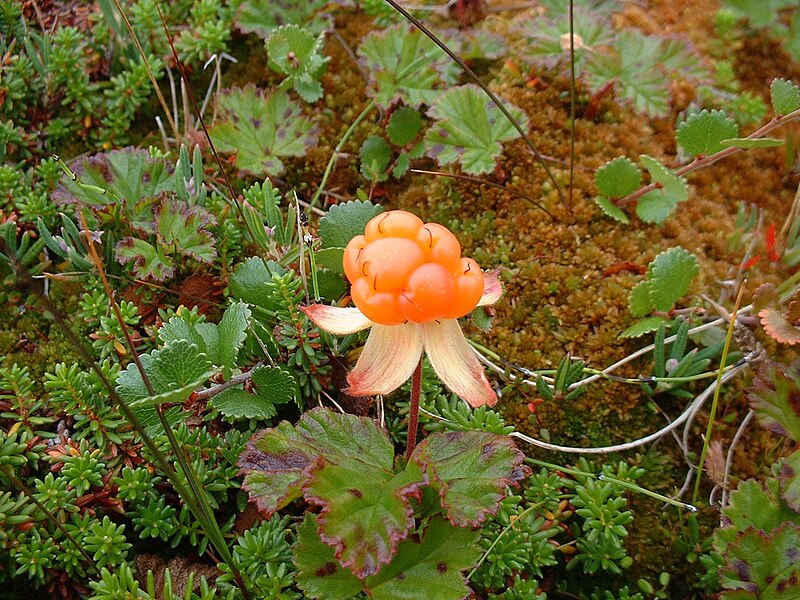
Cloudberry, Rubus chamaemorus, is a low growing alpine raspberry. This image doesn't do it justice compared to other google search images. They're low growing and are reminiscent of a strawberry patch. The fruit is said to taste a little starchy (lacking somewhat in flavor), but I just think the novelty of a dwarf yellow raspberry is neat. There are actual yellow fruiting raspberries that are probably better worth you time but this was an oddity I thought worth mentioning.
 |
| Image from Wikipedia |
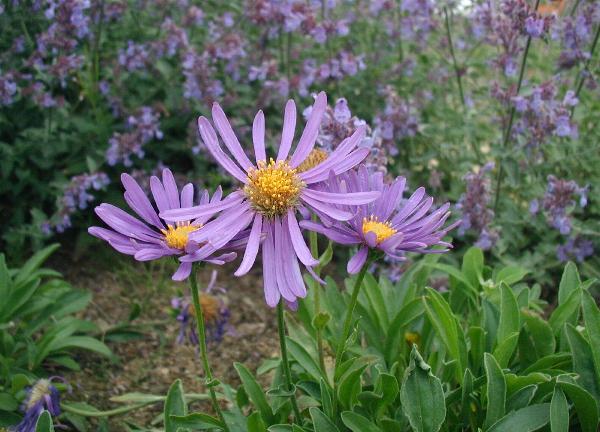
Alpine Aster, Aster alpinus, is a true aster that flowers in May! As far as I can tell this is the ONLY aster species native to North America that wasn't move out of the true Aster genus. And oddly enough this plant grows more like a spring bulb than a perennial you'd expect sold at a nursery. They emerge each spring and flower before going dormant sometime over the summer. It's a really bizarre growth habit for the genus... though I guess maybe it isn't. What are other true Asters like around the world? Seeds are available for sale but no one seems to sell the full plants. I'm tempted to buy some and give them a shot. Being an alpine plant I wonder if anyone can really grow them that far south of Canada. There is a patch of them in the rocky mountains though so maybe an ideal addition to a rock garden. Check them out on Google too!
Not to be out done, there's also the Climbing Aster, Symphyotrichum carolinianum, (which some people have labeled as Ampelaster carolinianus, not sure who's right but it looks like a Symphyotrichum to me. Maybe the climbing aspect is why its in a different genus but I still think Symphyotrichum is right). As the common name implies, this is a vine the rambles all over and grows into a massive 6' - 10' long clump of flowers. They seem to bloom unusually late in the year too, and prefer growing in wet sunny conditions. I believe this is one plant that shouldn't be cut all the way to the ground but rather trained up a fence or trellis and cut back as needed.
So those are a few of the neat plants I found and I hope to add more later on.
Monday, October 22, 2012
Monarchs Wave Good Bye
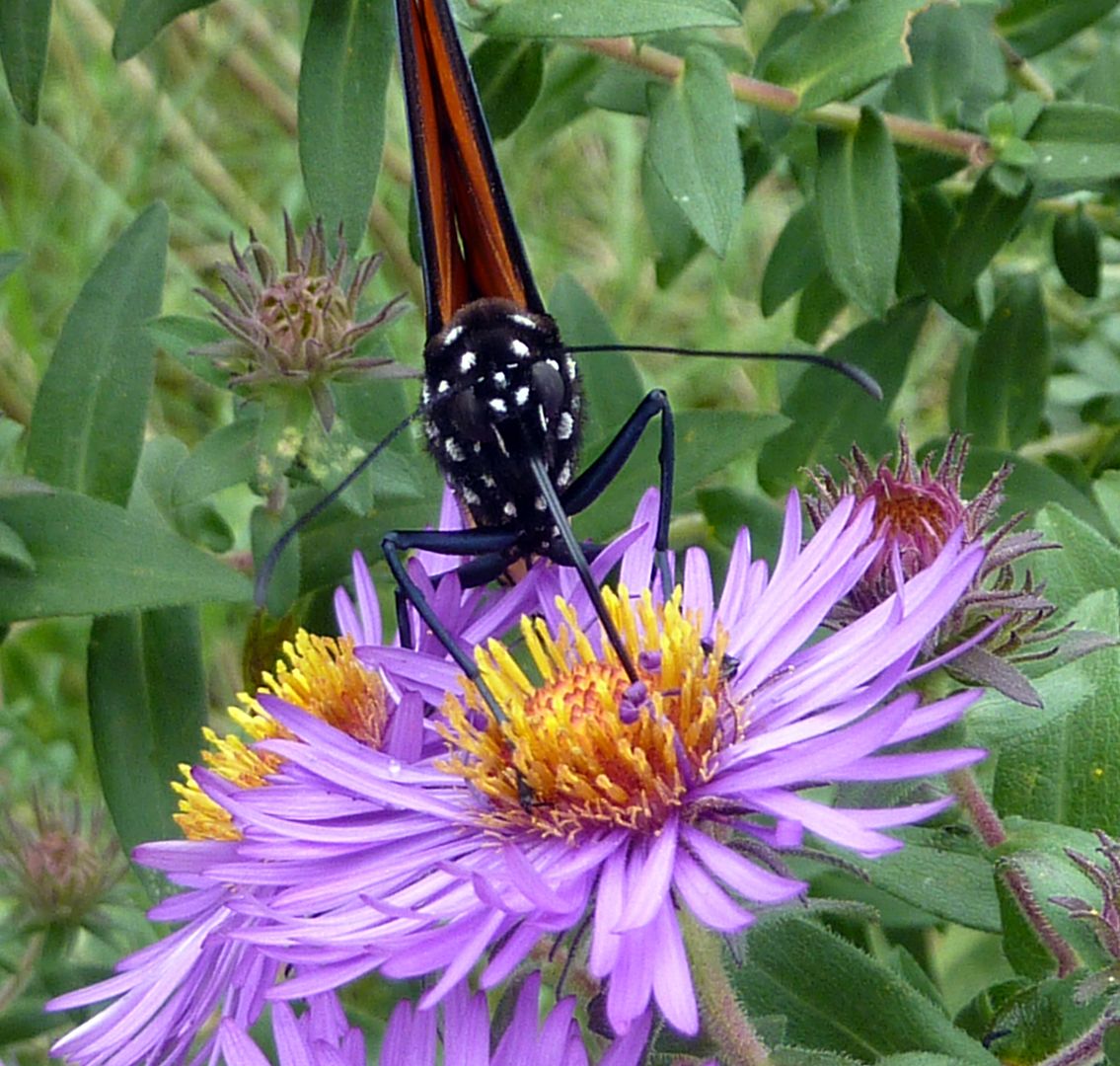
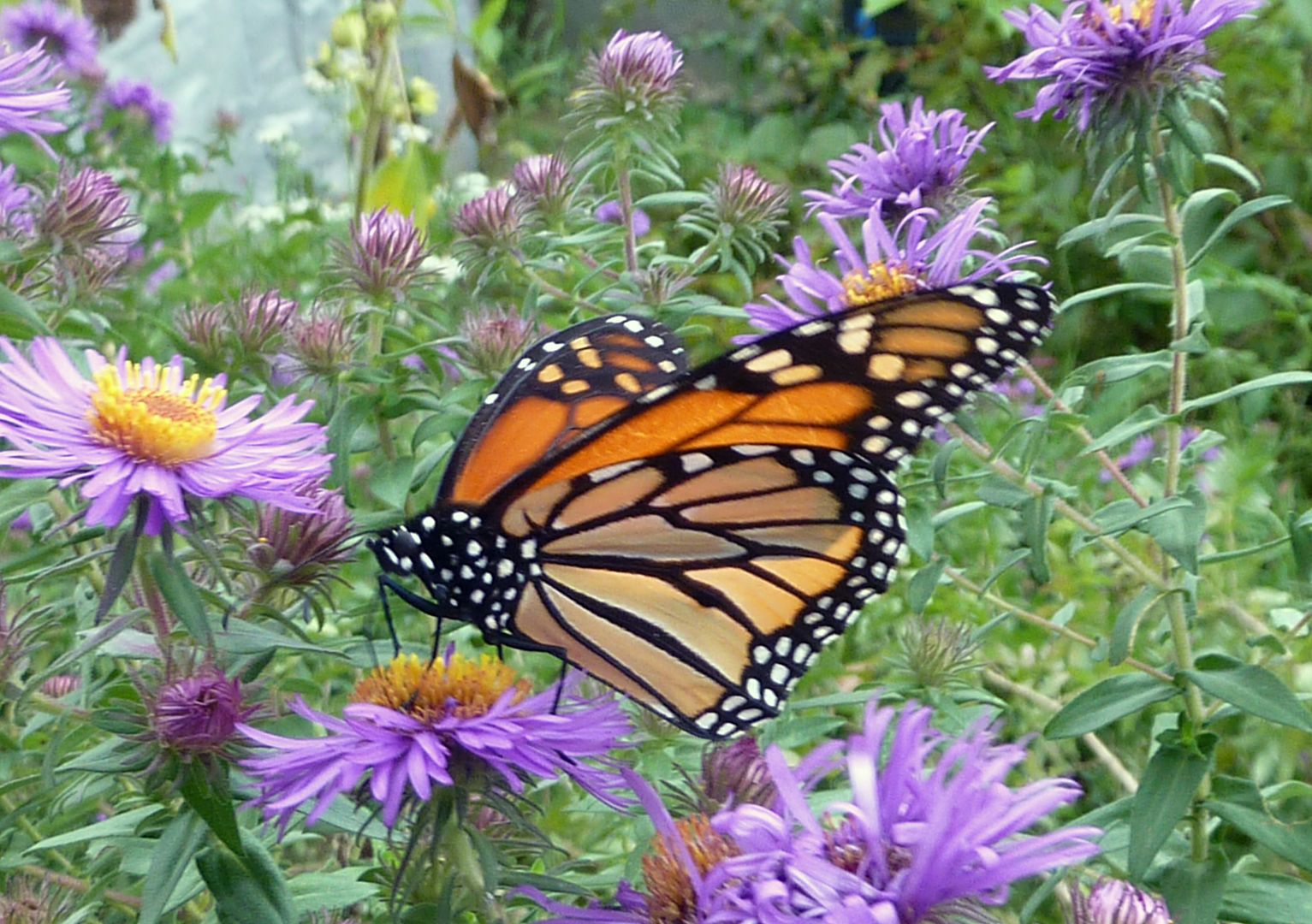
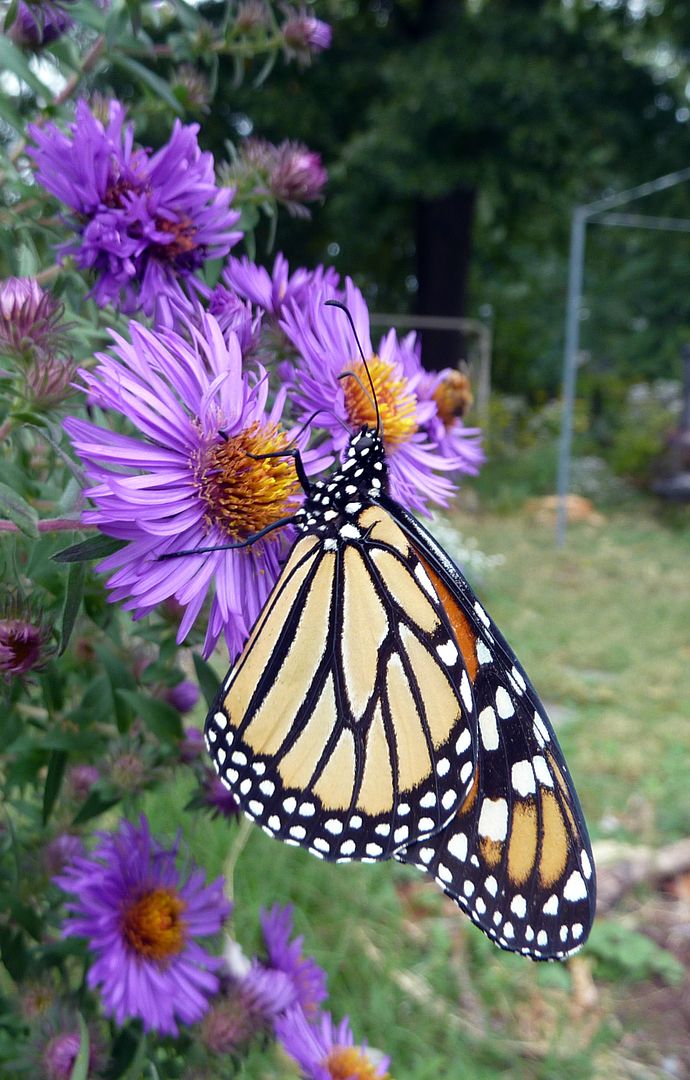

News of their migration this year has been confusing. Early reports varied from Record High Numbers to Record Low Numbers. Currently the Record Low reports seem to have won out.
Subscribe to:
Posts (Atom)