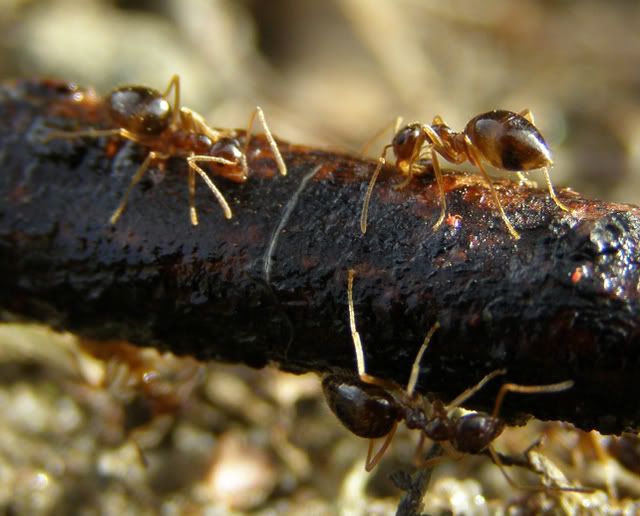
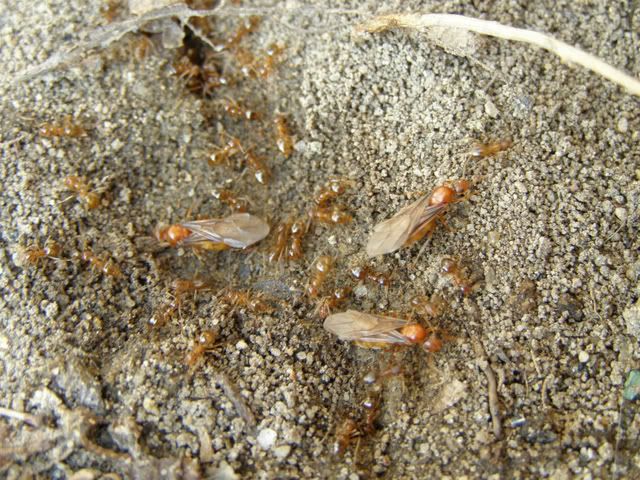
Earlier this week a colony of Odorous House Ants, Tapinoma sessile, attempted conducting a nuptial flight inside my house. They failed miserably and I was greeted by the occasional alate (winged ant) every few minutes. They climbed up from wherever the colony is and made their way across the computer table to the window and eventually found freedom. Clearly anting season is here, which begs the question, what else is flying?
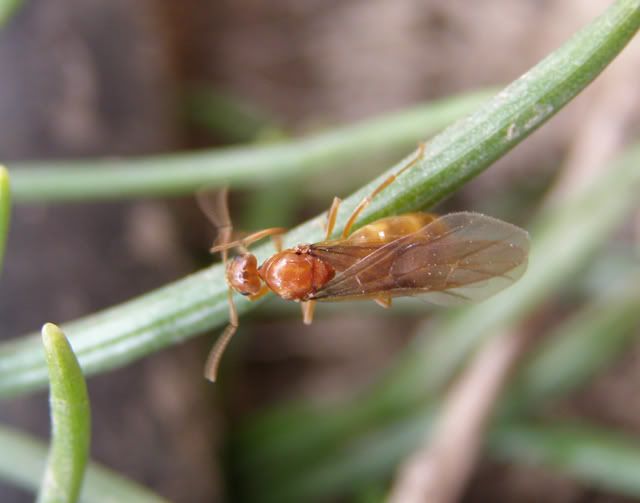
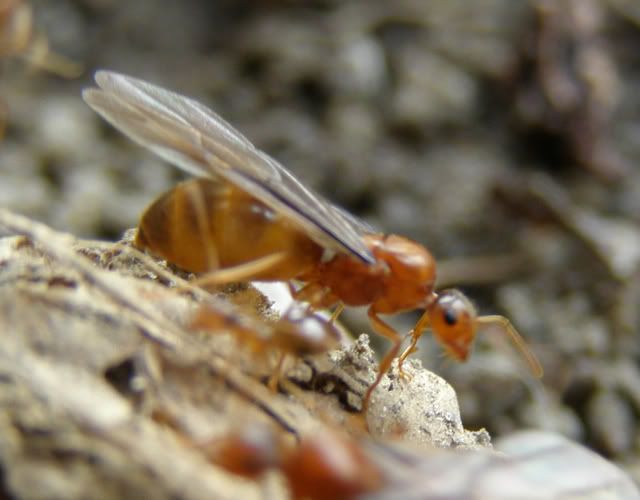
First incredibly hot night of the year that lacked any wind or in coming cold fronts treated me to a full pallet of what's flying now. The main ant for my area is Camponotus castaneus, pictured above and previously here on the blog. Males are hard to identify but I'm reasonably sure C. castaneus is the only one (for my area) that has orange males. This is uncommon for ants across the board. Usually male ants are black regardless of the species color. There were other Camponotus males there that were black but without knowing what the queen or workers look like an ID can't really be made. At least not by me. There is also a Lasius species that seems to over winter it's alates, instead of flying in the fall like most of the other species.
This is an awful picture of male Tetramorium males. They're suspended in a spider web which is a good way to see what was flying the night before.
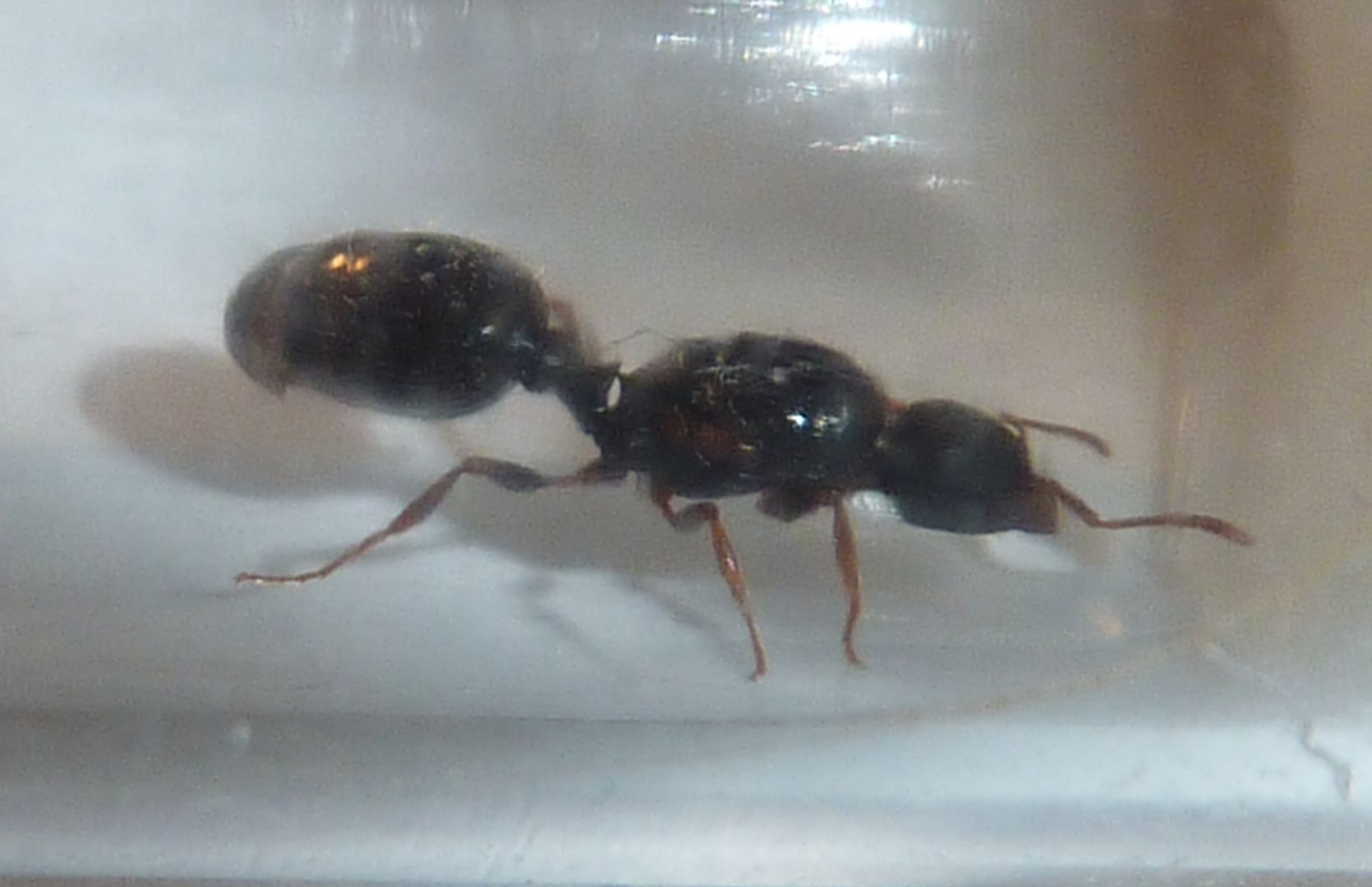
That night I found a Tetramorium queen, Pavement Ant. These didn't fly until midnight.
So there's a full succession of flights based on the hour of the day. Early on Nylanderia, Tapinoma, and I've found a few Myrmica (with wings) this early in the year before. As the afternoon comes and night falls Camponotus, and Lasius seem to fly next. And very late at night and probably well into the morning Tetramorium fly.
You could argue there's to much to do in the day for someone interested in ants. Thankfully I've found there is roughly a 24 hour period after a flight that queens seem to be abundant and about. Making a habit of checking under the same rocks, logs, flower pots, etc... can yield results.
Showing posts with label Flight. Show all posts
Tuesday, June 1, 2010
Friday, April 2, 2010
Nuptial Flights of Spring Ants
This video shows a nuptial flight that recently happened in California to the widely distributed Prenolepis imparis. The common names are False Honey Ant if you're down south or from an arid area, or Winter Ant if you're up north where it's more temperate.

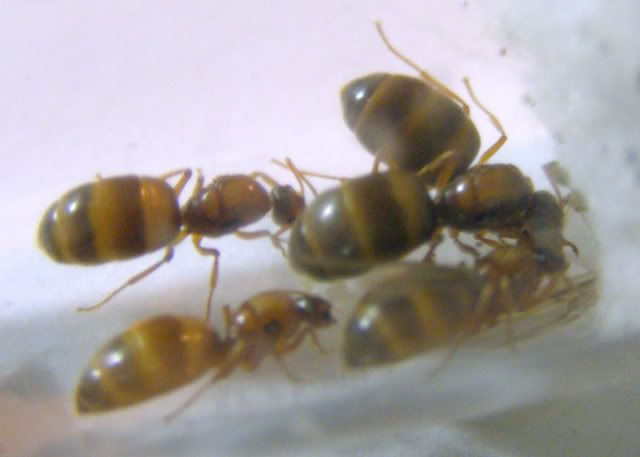
Queens are very Lasius like in appearance. Abdomen color ranges from dark amber to blondish brown and yellow. Thorax is a very noticeable pink salmon like color. Occasionally they're a little darker but almost imposable to mistake for anything else running around this time of year. At least in North America.
With such a wide distribution though genetic mutations are to be expected. All of these queens above were caught locally and you can see they differ in color and somewhat in size. (This group of 5 queens failed to produce any workers. Since then I've drawn the line at 4.)

Workers also differ somewhat. All across their range there are several noted varieties of this species. Color varies and I'm sure other features must as well. The two varieties near me tend to be pale brown or deep black. Searching for images on bugguide.net shows us everything in between, including a group that leans more toward being red. This shows how useless color is when identifying ants but it has it's uses all the same. An interesting thing to note though is that P. imparis colonies can have multiple queens in them, AND I have never found a colony that was comprised of two varieties. So this difference in color suddenly suggests P. imparis could be more than one species or hybrids there of.
To anyone planning on starting a colony, I wish you the best of luck. Late afternoon is best, if you can find a swarm as in the video above, even better. And you have until the end of April. Down south you may have missed them for the year, but Camponotus and Nylanderia have likely started up, (as well as a few spring flying Myrmica but fall is the season when most species fly I think).
Subscribe to:
Posts (Atom)