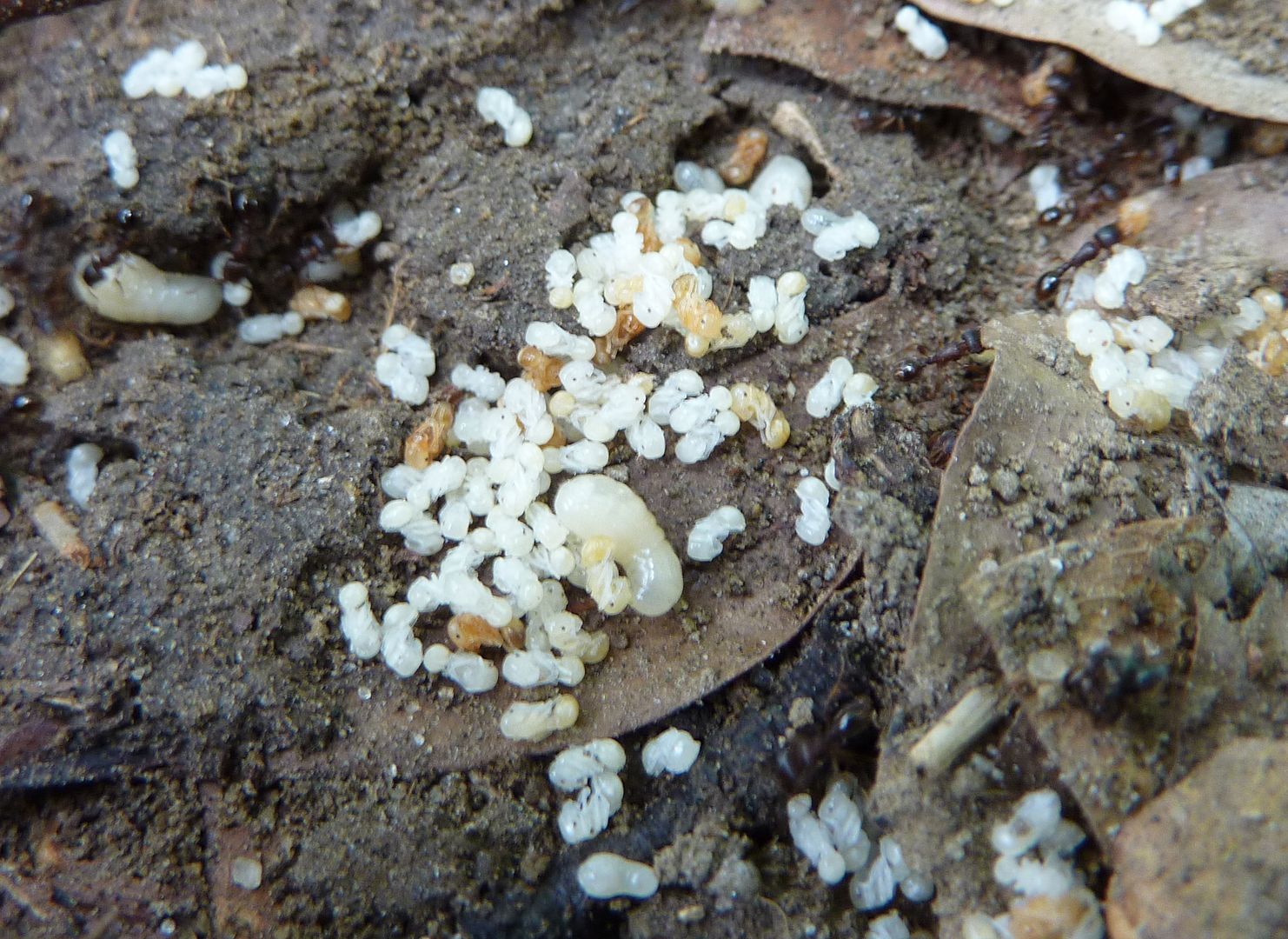
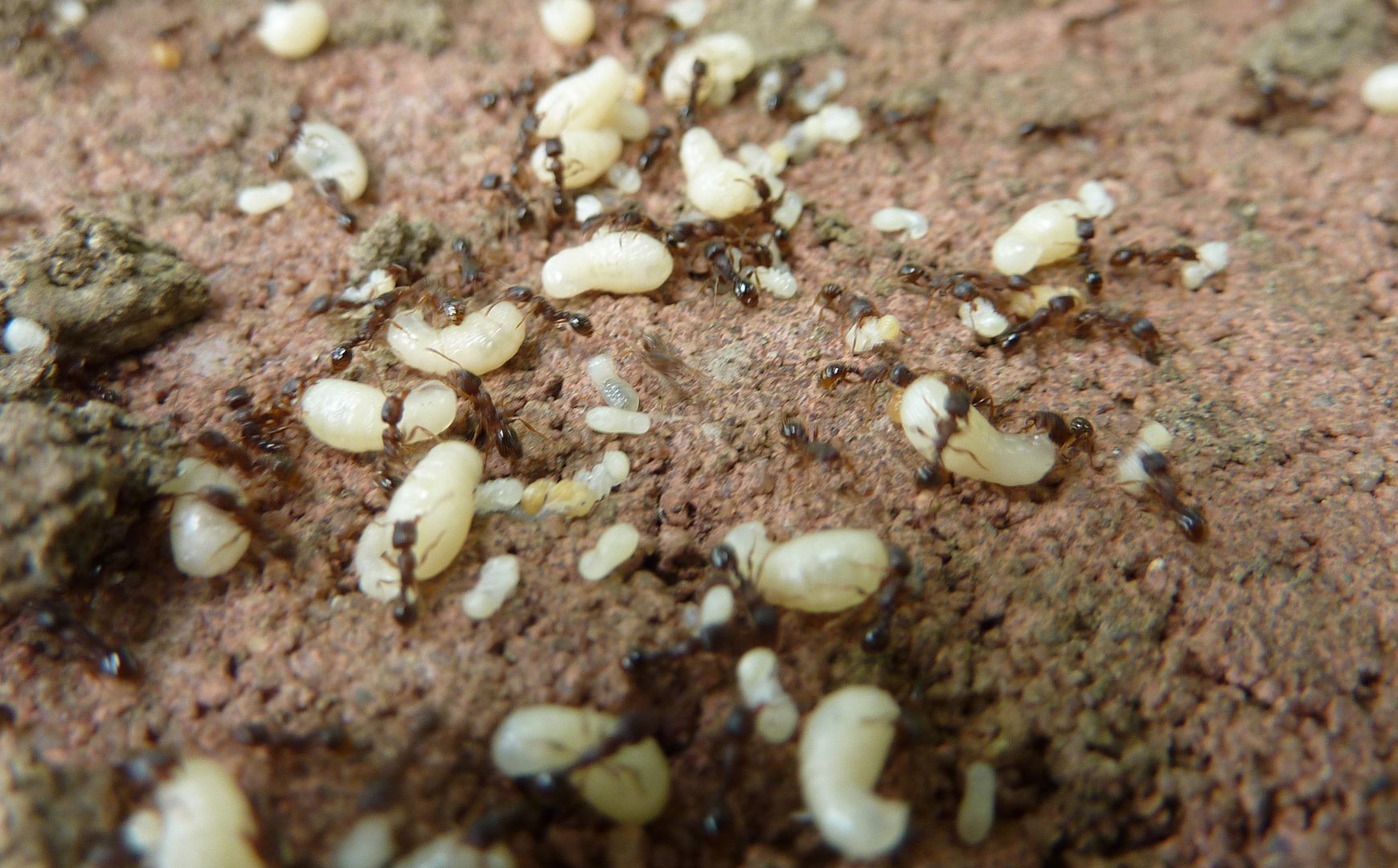
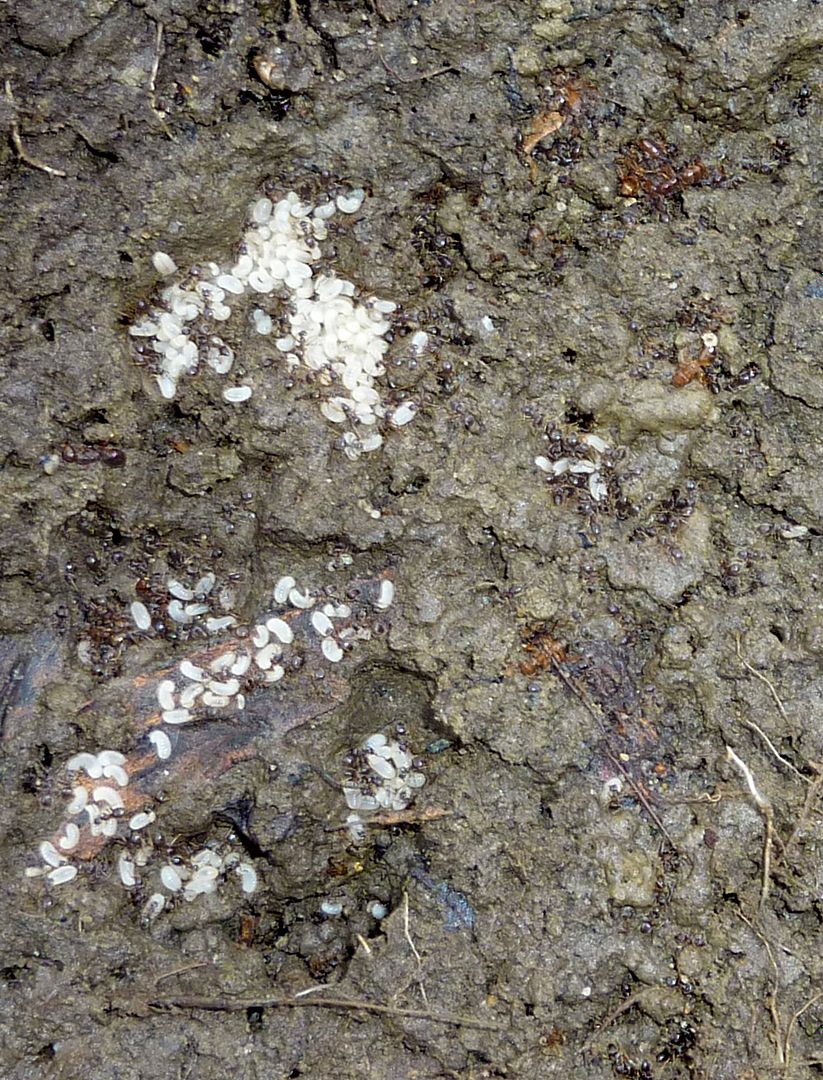
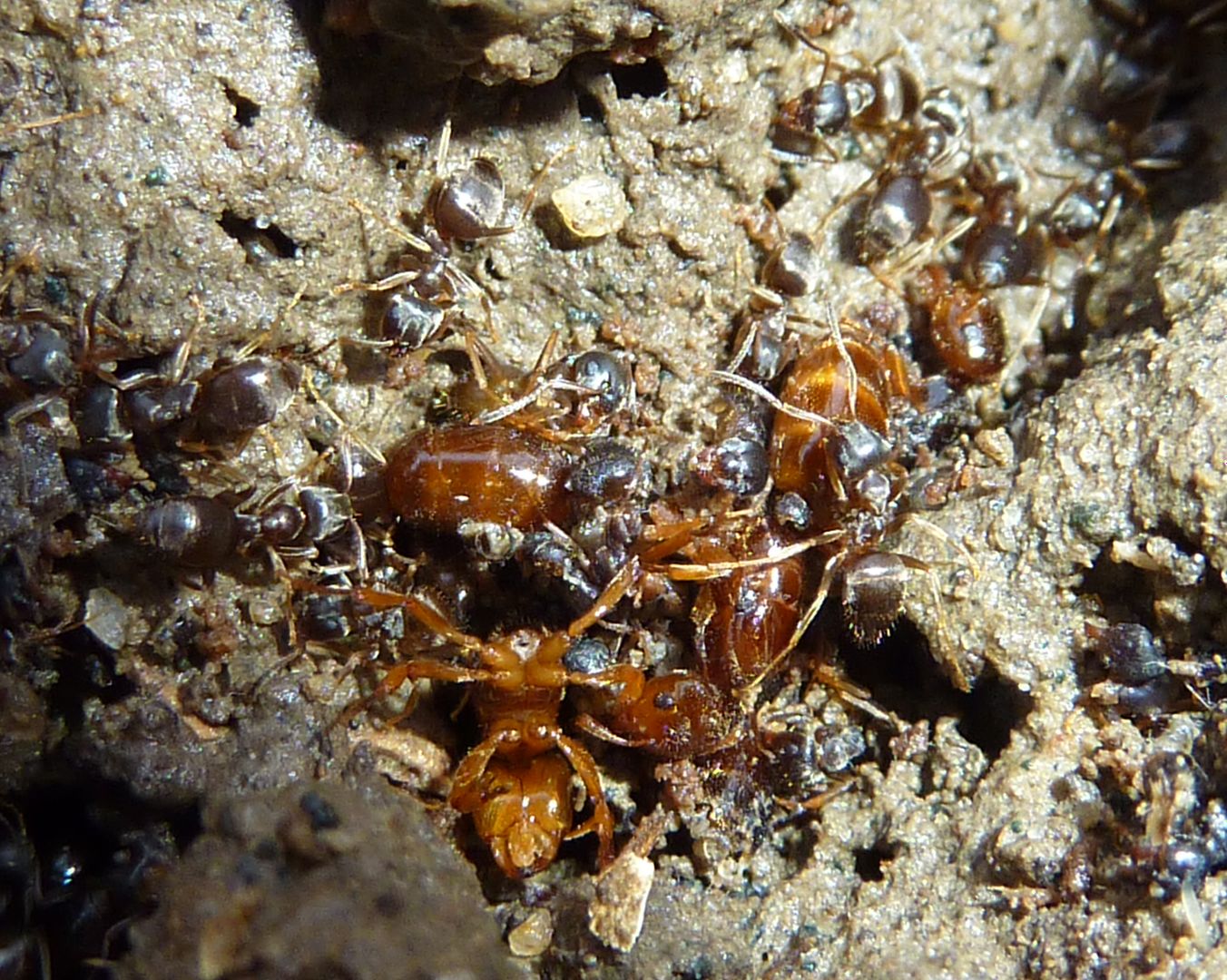
Although Tetramorium, pavement ants, have started flying it has been noted that they have a long season. And upon lifting a stone with a colony under it, you'll likely be greeted with a mass of brood.
The smaller larva and pupa will become workers but the larger of these will be new queens and males. They're almost three times as big as the workers that tend to them. After the pupa stage the young alates will slowly gain their dark color and reach sexual maturate all in a matter of days. It's interesting that they are so young when they have sex and yet they know how to do it and are successful all in one go. The males die within a few days while the queens go on to make a new colony.
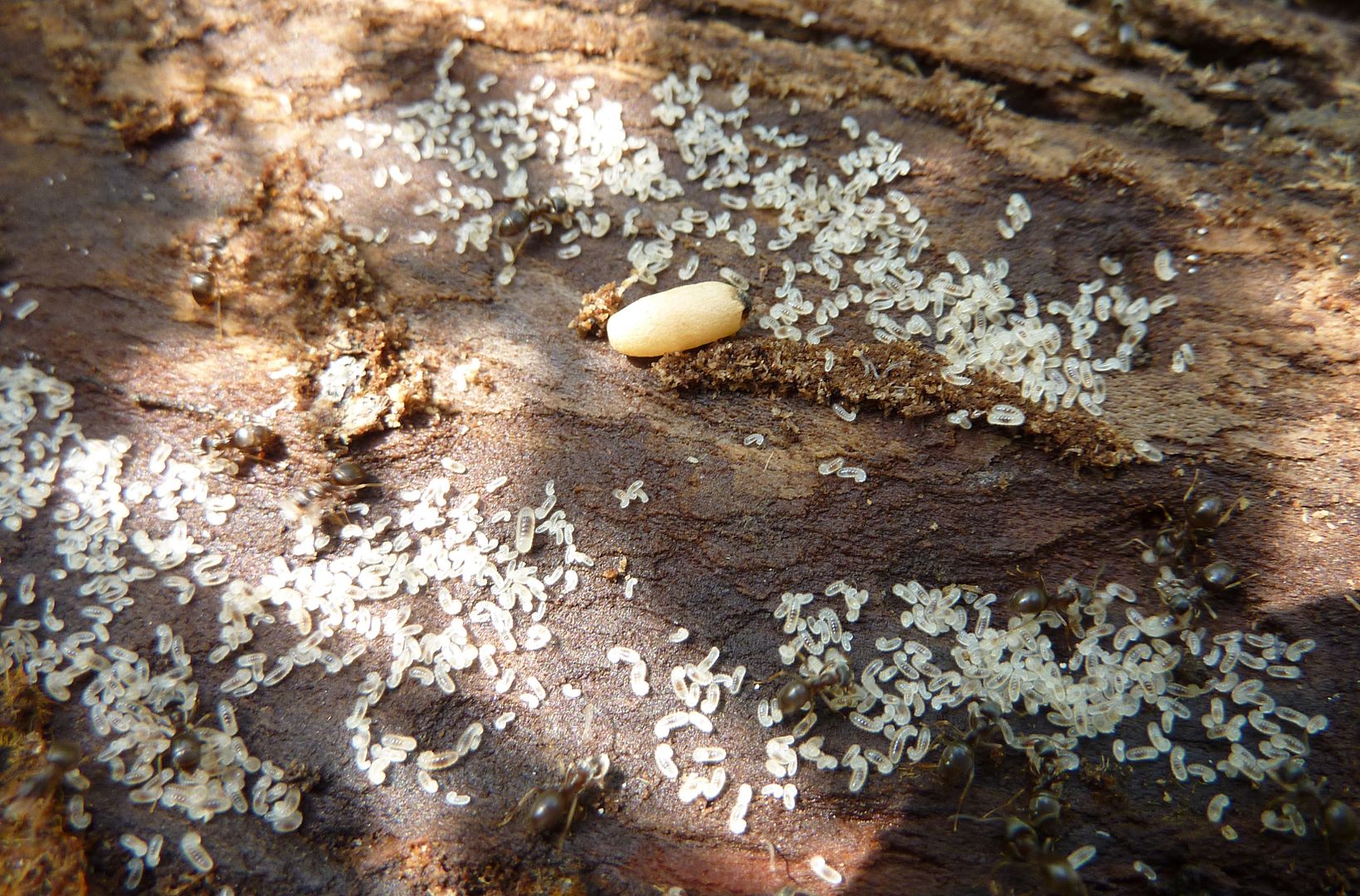
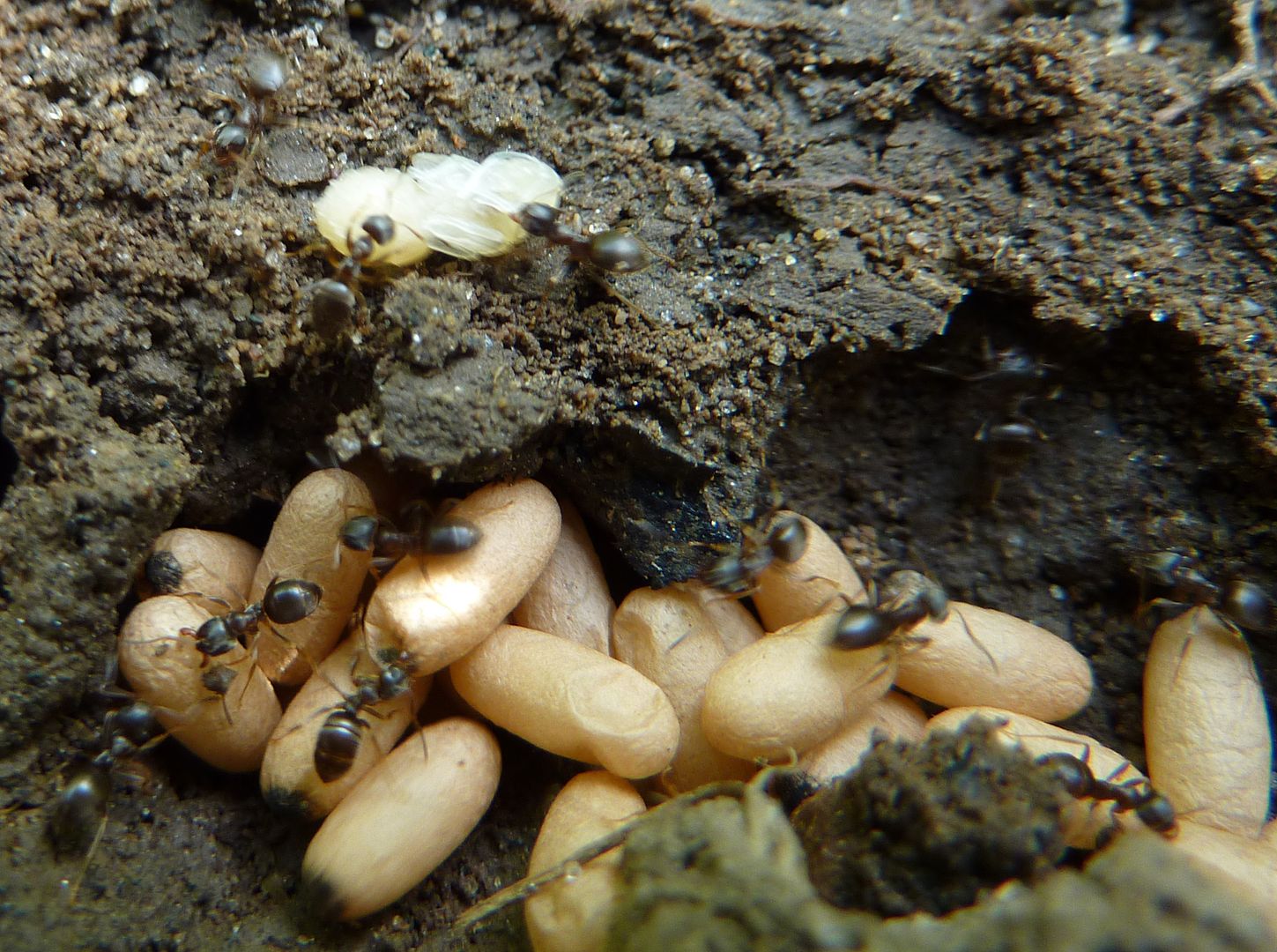
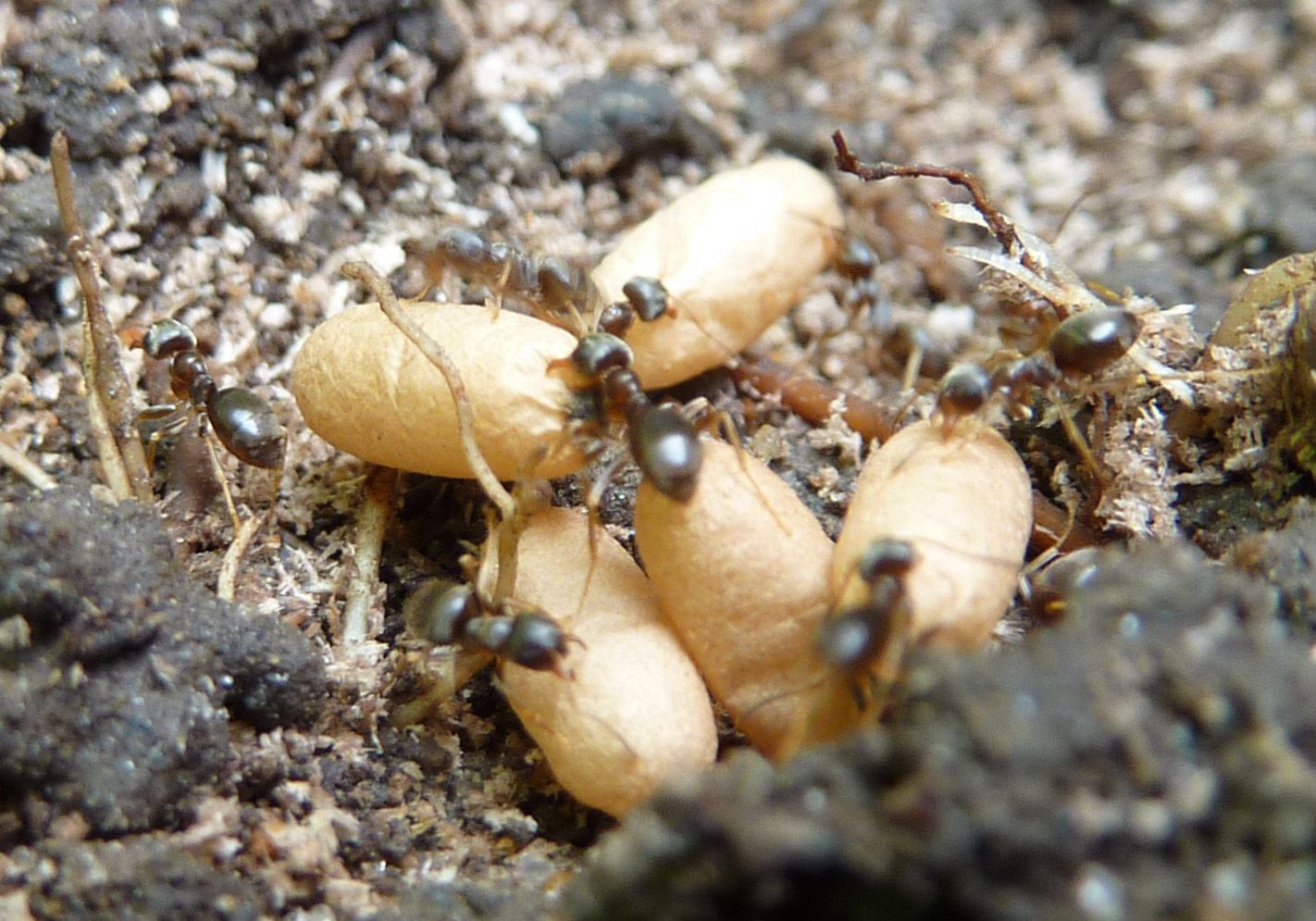
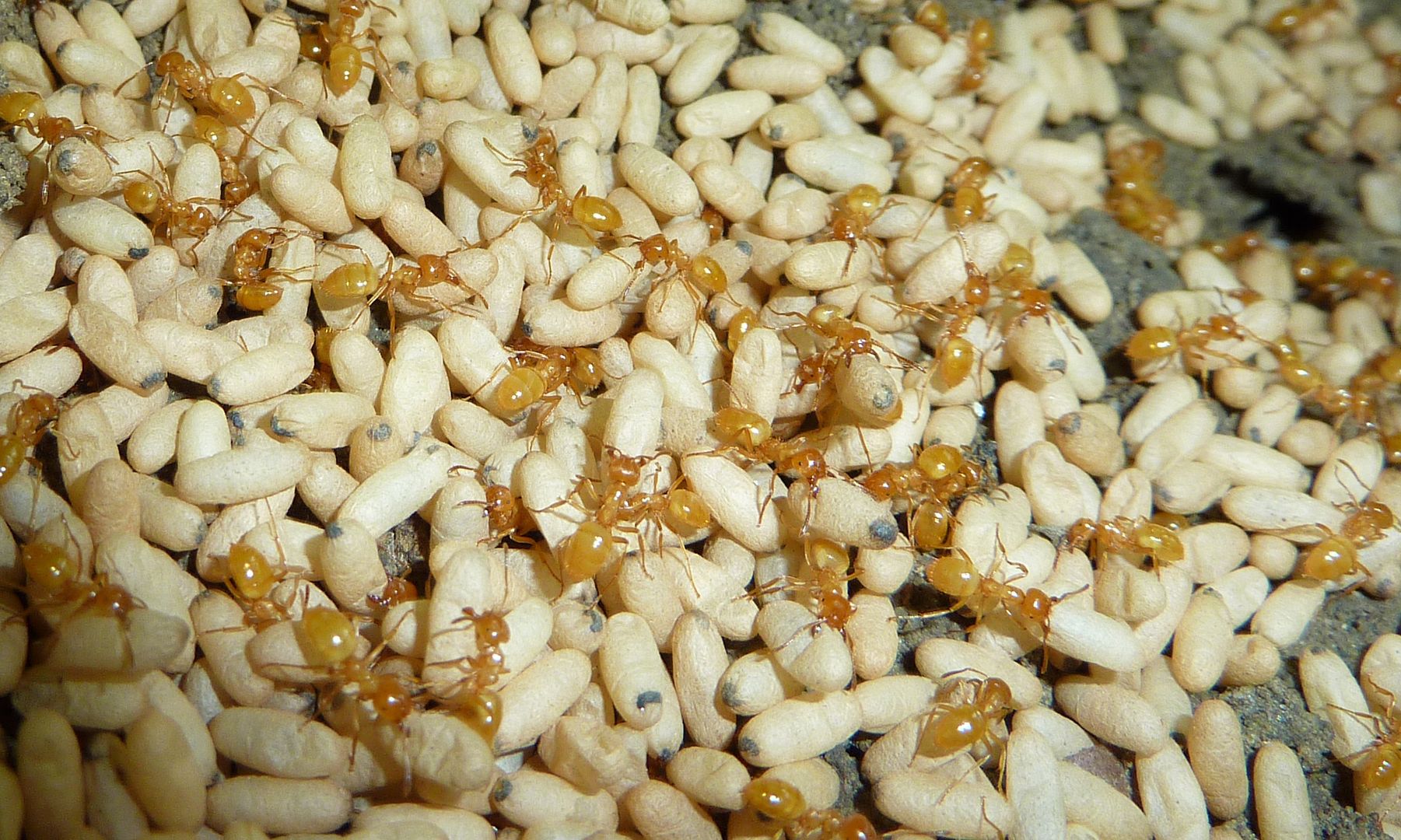
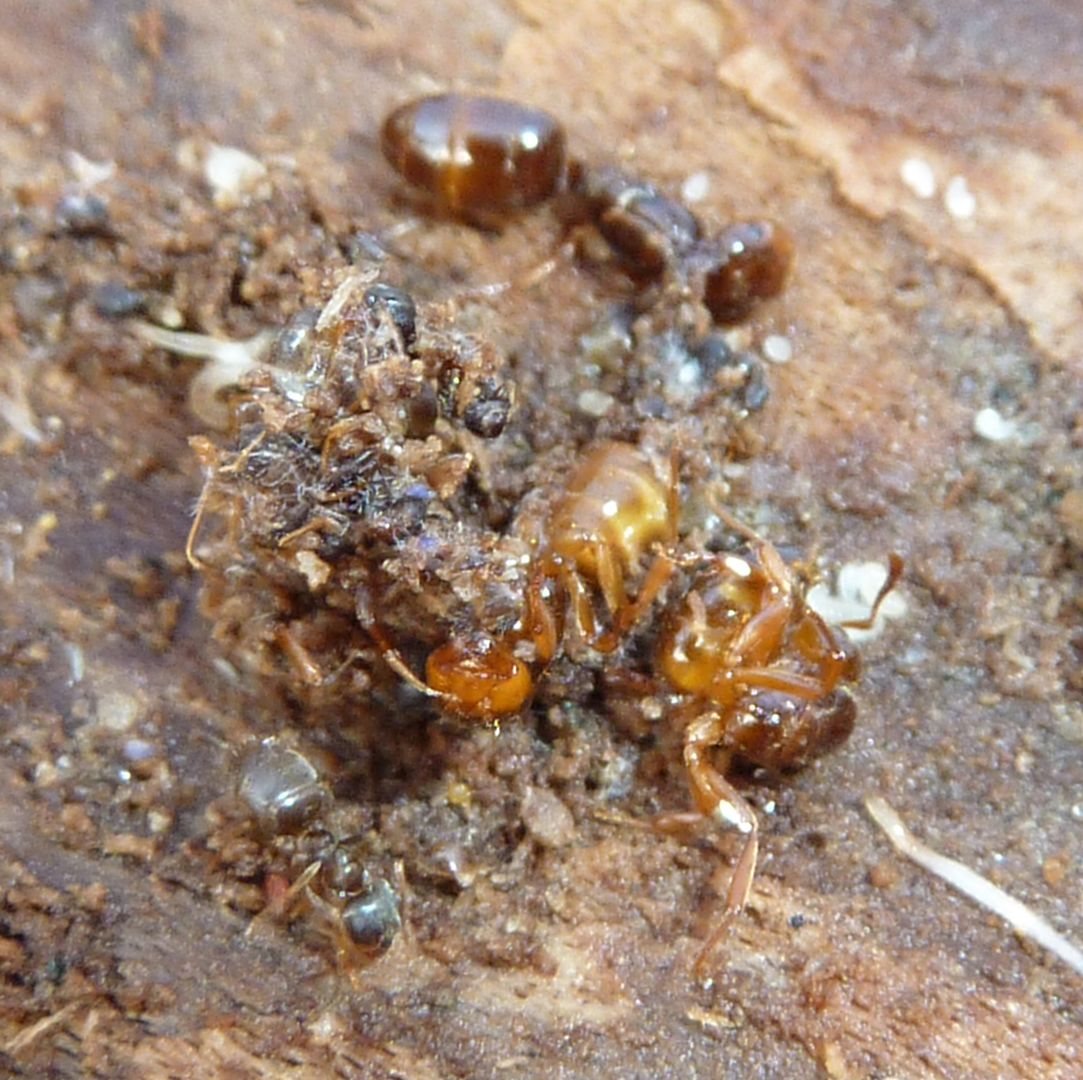
Open a log containing a colony of Lasius alienus and you'll probably find the larva and cocoons to their alates. Though most of the smaller ones here will become workers or males the large cocoon is going to be new queen.
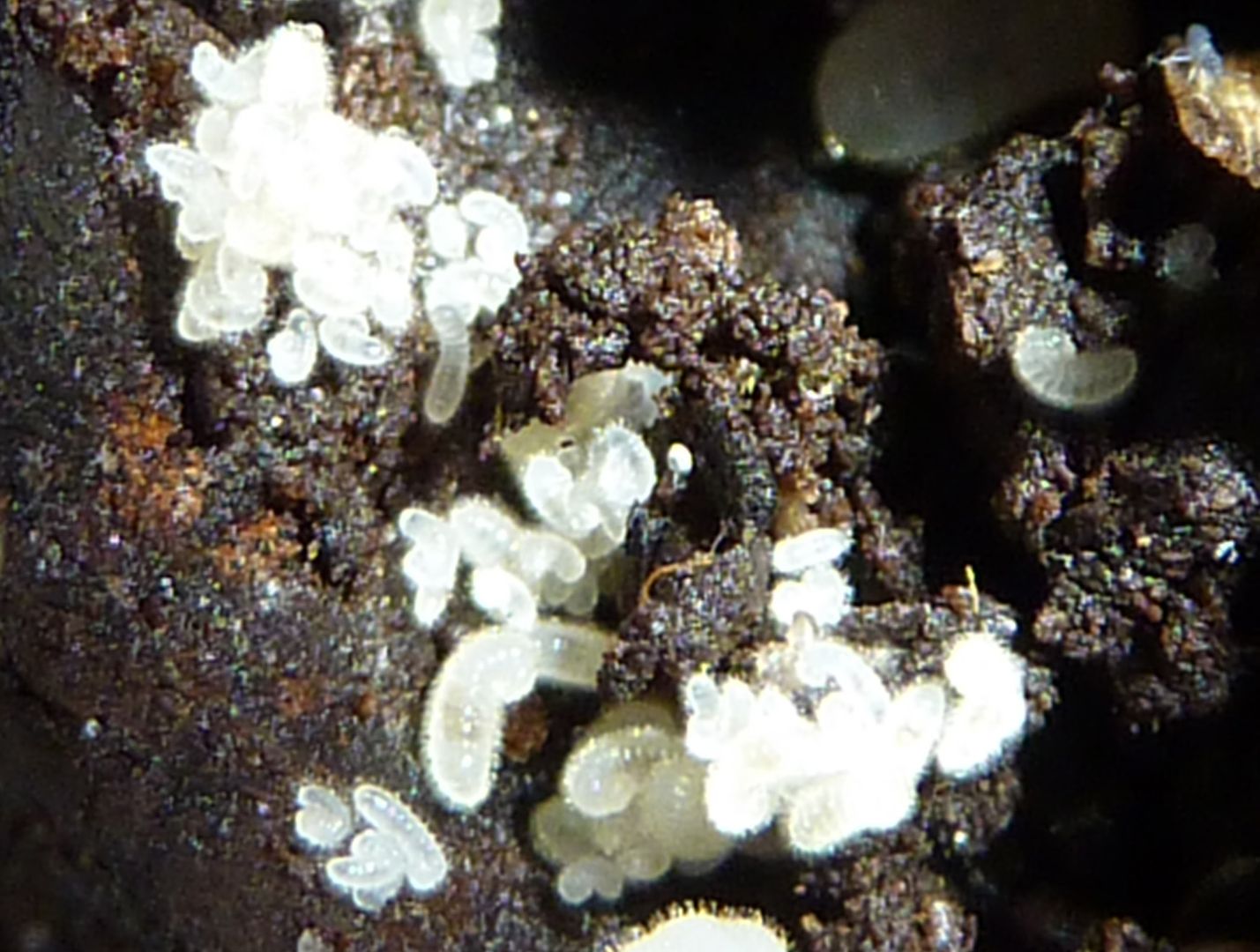
Unlike the Tetramorium, Lasius larva usually spin a cocoon before going on to the pupa stage. Calling it the cocoon or pupa stage is the same thing but cocoon is only appropriate if there is one. Occasionally though a larva doesn't spin a cocoon at all. The cocoon is a protective layer that may help with incubation too. Sometimes larva don't know what they're eating and nibble at nearby brood, usually eggs, but sometimes developing bits of pupa nearby. It doesn't happen often to pupa but isn't uncommon.
Cocoons to queens are almost three times as big as the workers.
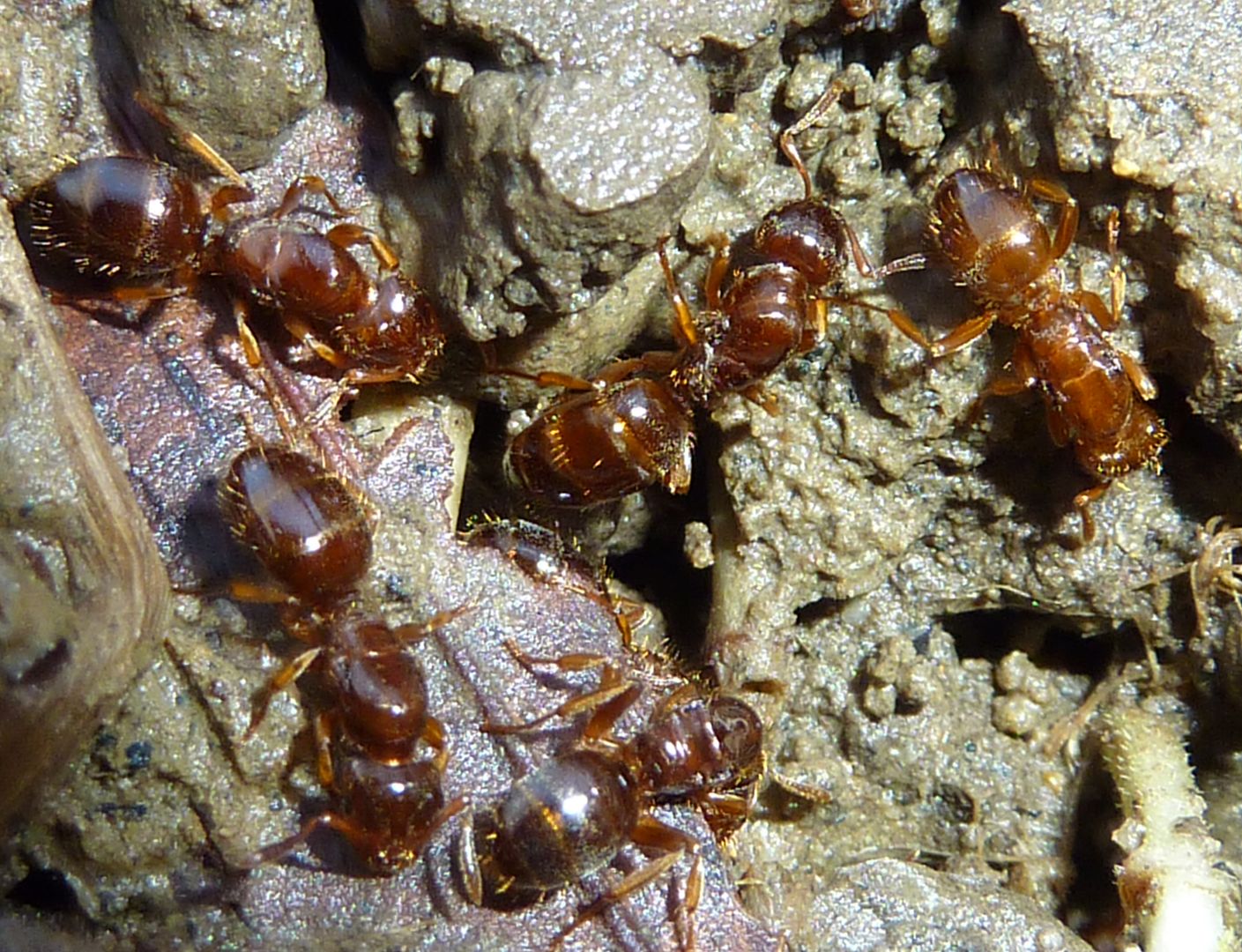
Other Lasius species will start flying later in the year but few of the orange species (which are typically parasitic towards the darker ones) have produced alates. There is one species in the area that has over wintered their queens and I'm eager to find out what it is. Unfortunately I haven't been able to find a colony.