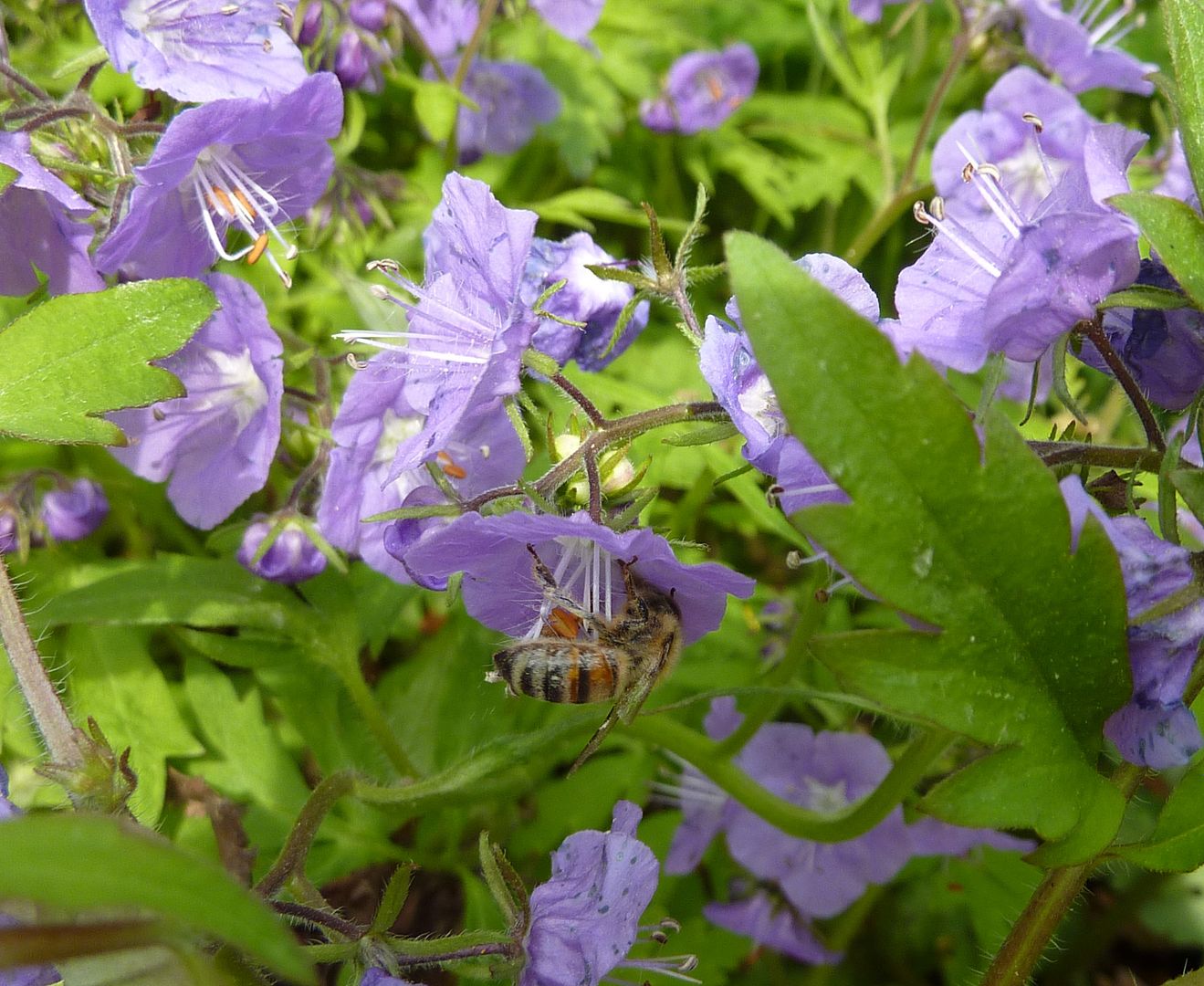
For bees I was thrilled to find Honeybees working Fern Leaf Phacelia this year. Beekeepers are always gushing over the Phacelia flowers for their bees but always had to rely on the western native annuals.
Phacelia bipinnatifida, is an aggressive biannual that grows abundantly in woodlands, going as far as carpeting the forest floor with puffy clouds of purple flowers. This shot was at the Mt. Cuba Center and I picked up a few plants to hopefully establish in my yard but I'm not entirely confident it's going to work. Here's hoping I can get a population going.
I noticed a queen bumblebee earlier in the year. Honestly I can't remember where this image was taken or what she's even on. On a positive note though this was a stellar year for bumblebees. They were easily the most abundant pollinator in my garden this year.
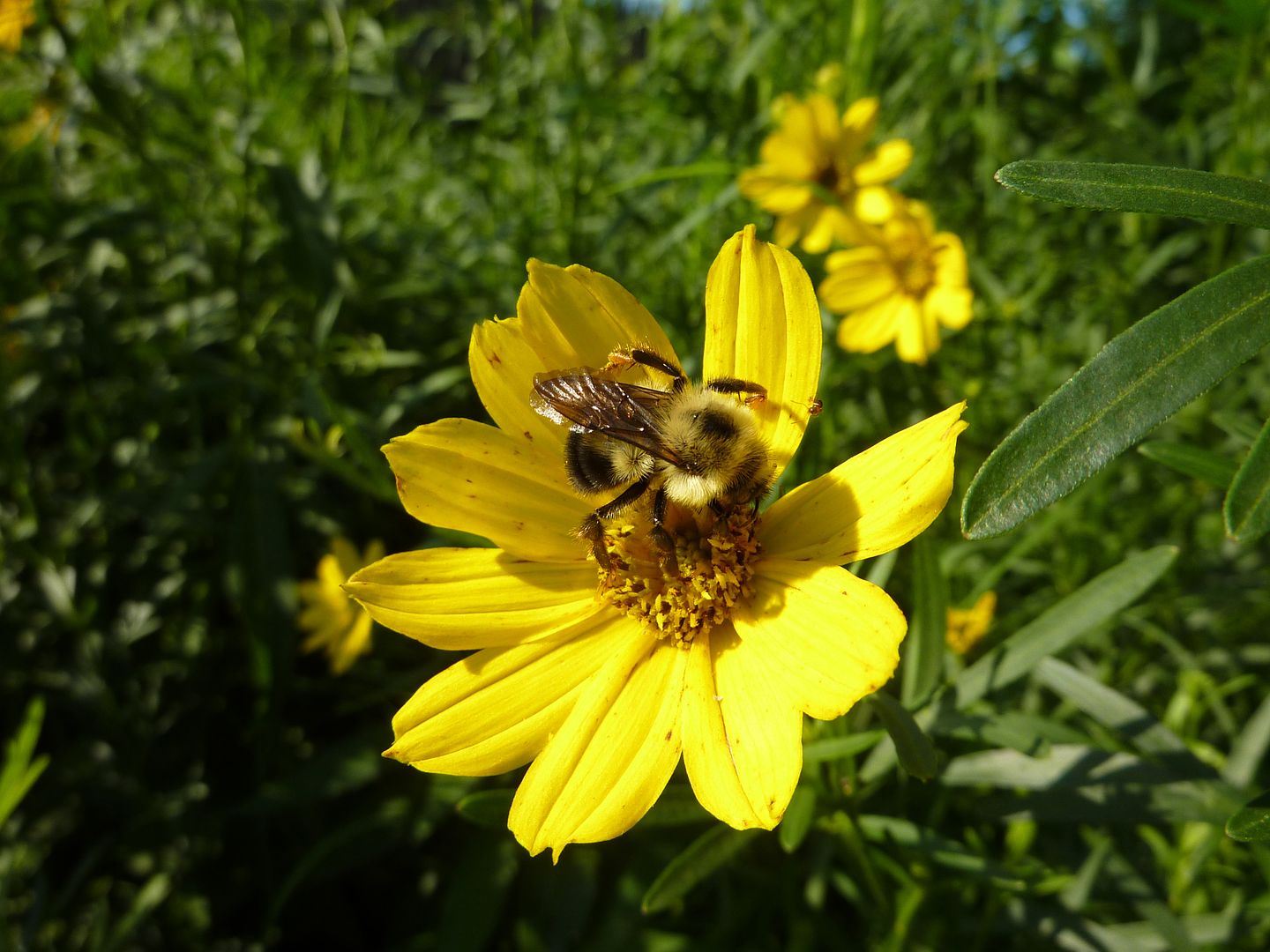
Stiff Coreopsis put on a huge display. This is a slightly aggressive species which spreads by root suckers out in all directions, though they invasion is slow going. They really just push out 3 to 6 inches. They're not as floriferous as I would like them to be, other species of Coreopsis can be covered in flowers where as these seem to space it out.
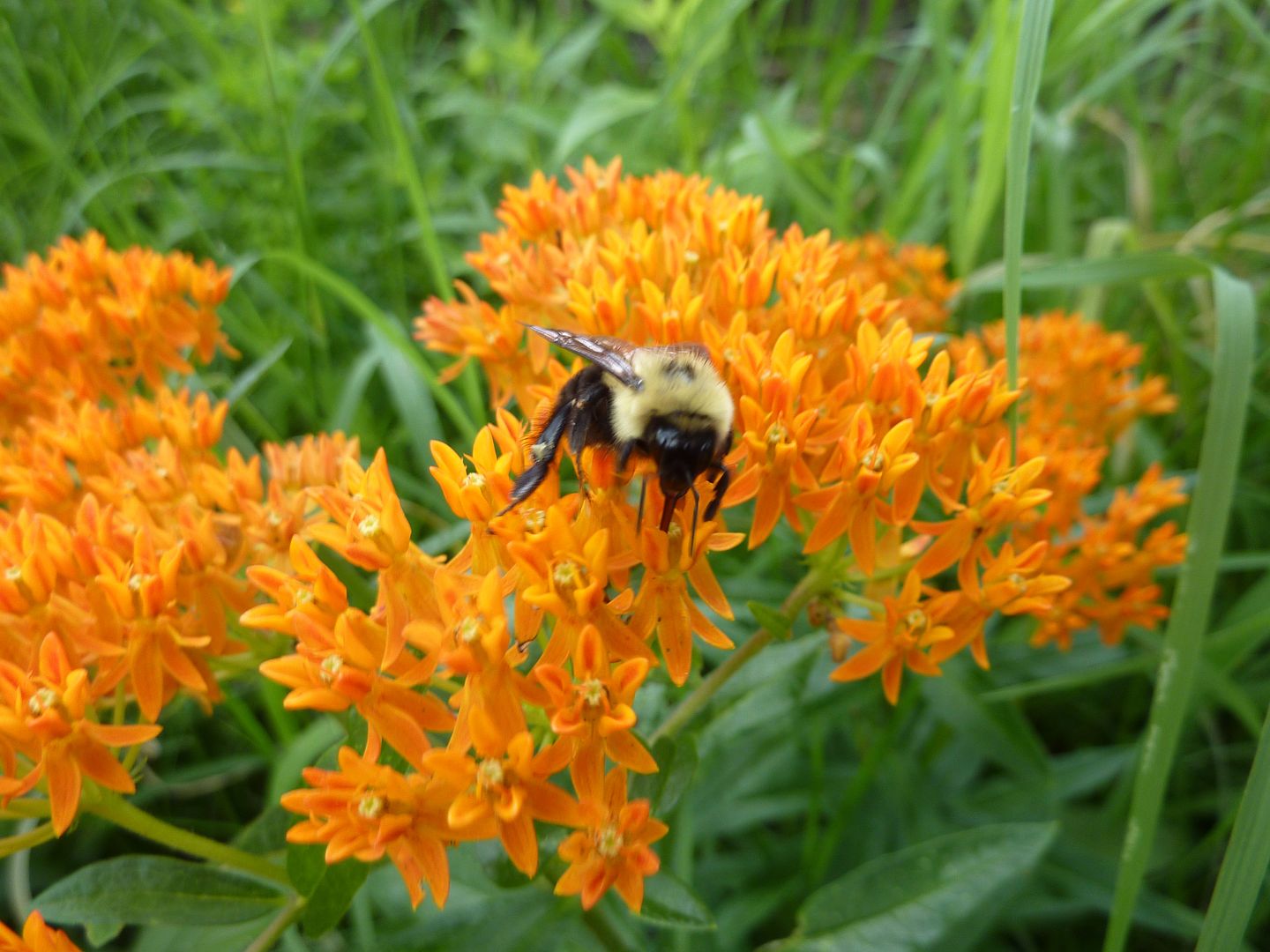
Another queen out on Butterfly Weed,
Asclepias tuberosa. Eventually they stop foraging all together but this year I was seeing them well into the end of June and mid July.
This is the yellow variety of Butterfly Weed. It seems to be a bigger hit with pollinators.
Honeybees go to the yellow ones more it seems. I have seen patches of orange Butterfly Weed that were covered in honeybees but none of my plants seem to have any luck.
A sweat bee on Stiff Coreopsis.
Here another species of Bumblebee is working one of my rare plants,
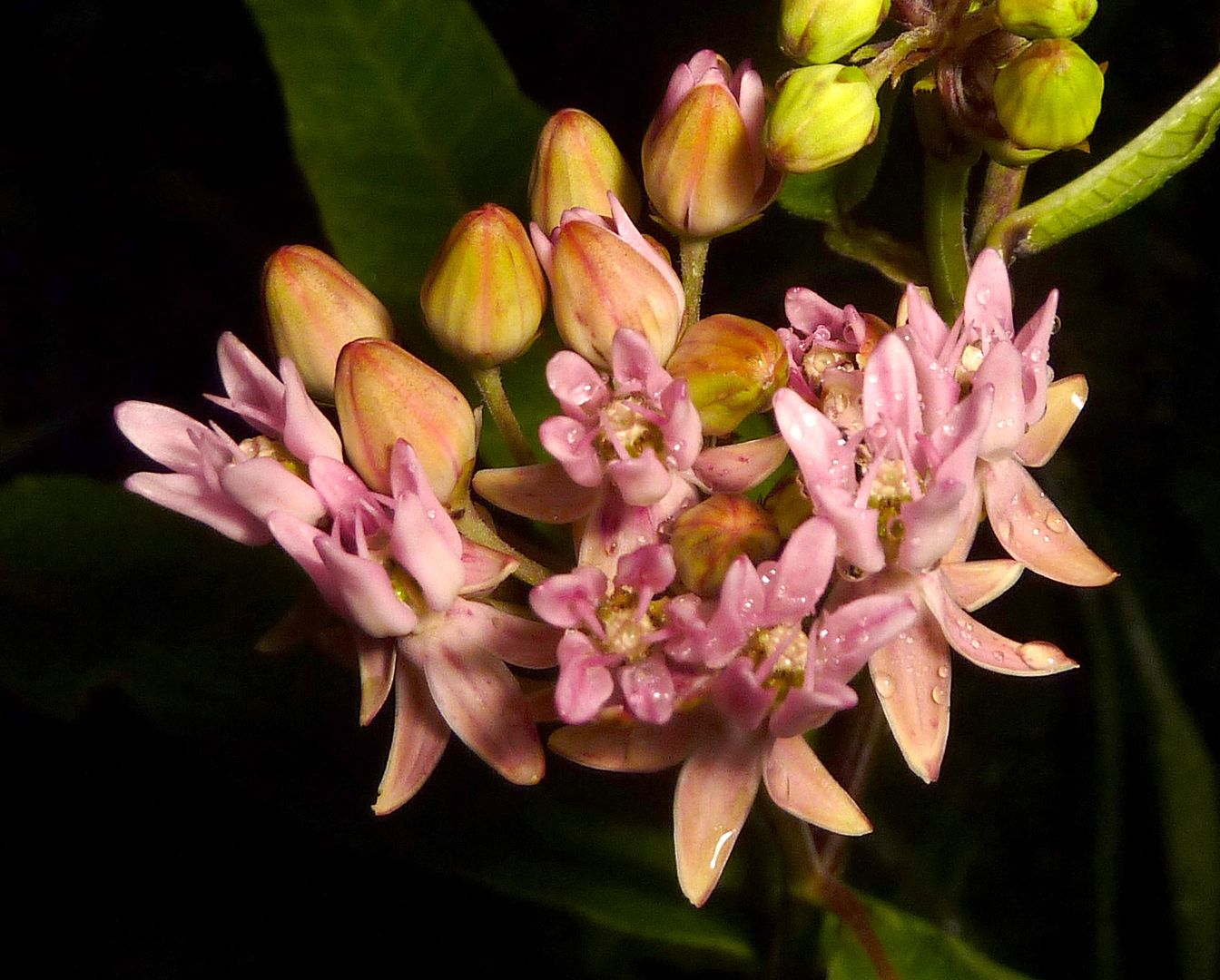
Asclepias rubra. This is called Red Milkweed but annoyingly enough I believe Prairie Moon Nursery has started calling Swamp Milkweed Red Milkweed. This demonstrates how unreliable common names are.
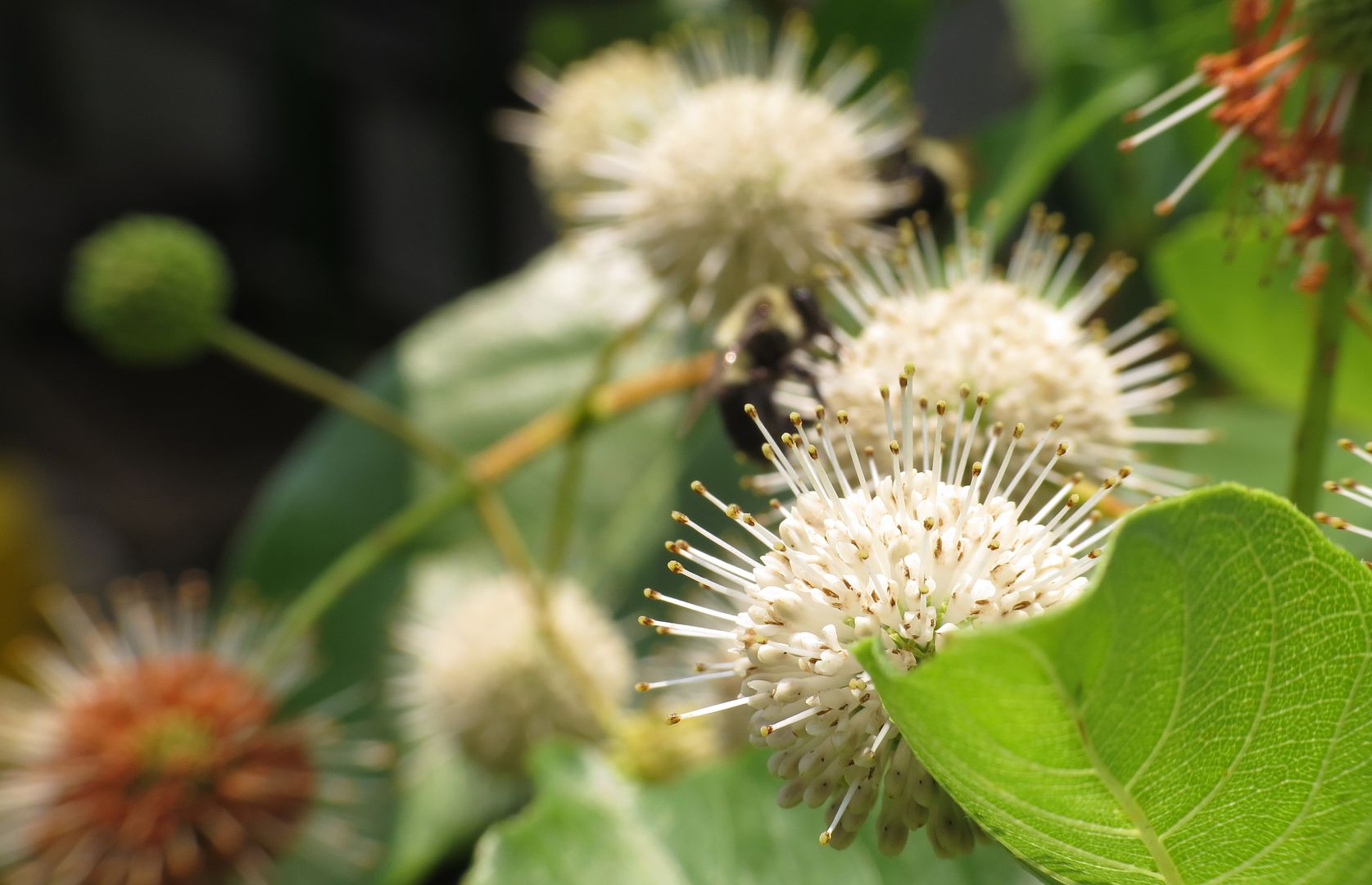
Bumblebees bustling around the Buttonbush.
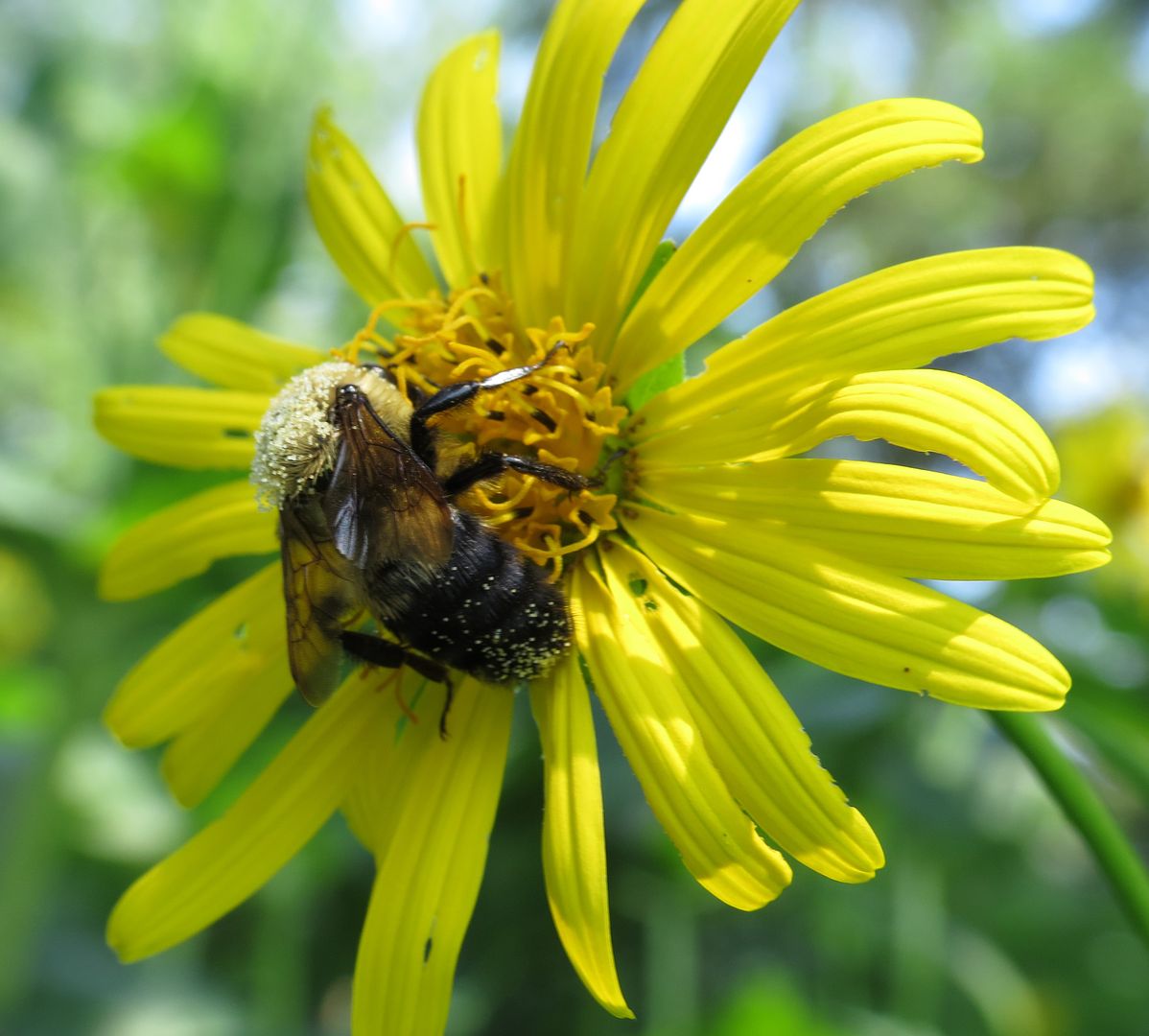
Cup Plant. This is when I got my new camera. Notice how much clearer the subject is and how much more blurry the background appears.
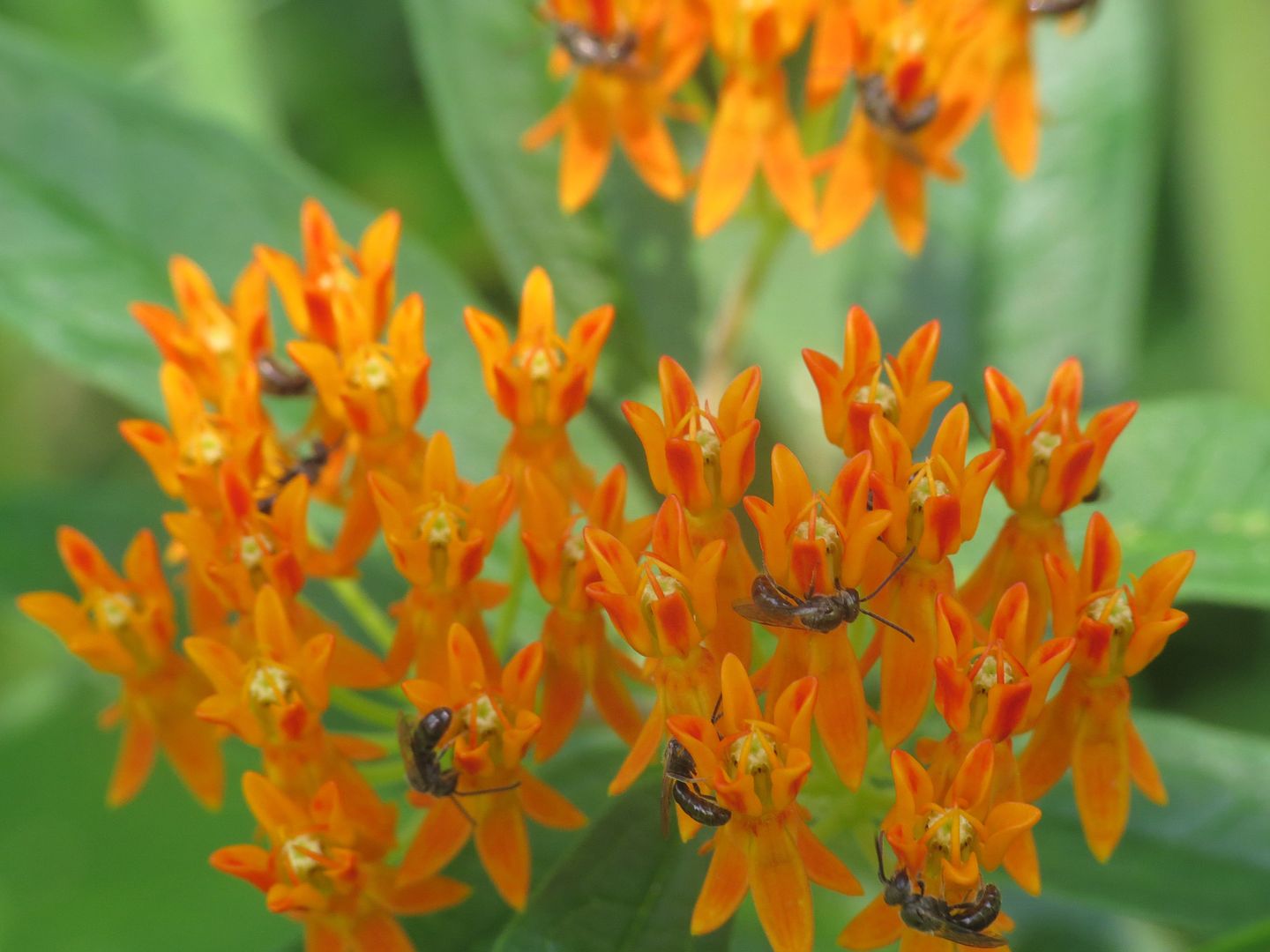
A group of sweat bees socially foraging on Butterfly Weed.
Joe Pye Weed.
Another Oh HA! moment when my new camera became worth every penny. Now if only the darn bee were facing the camera.
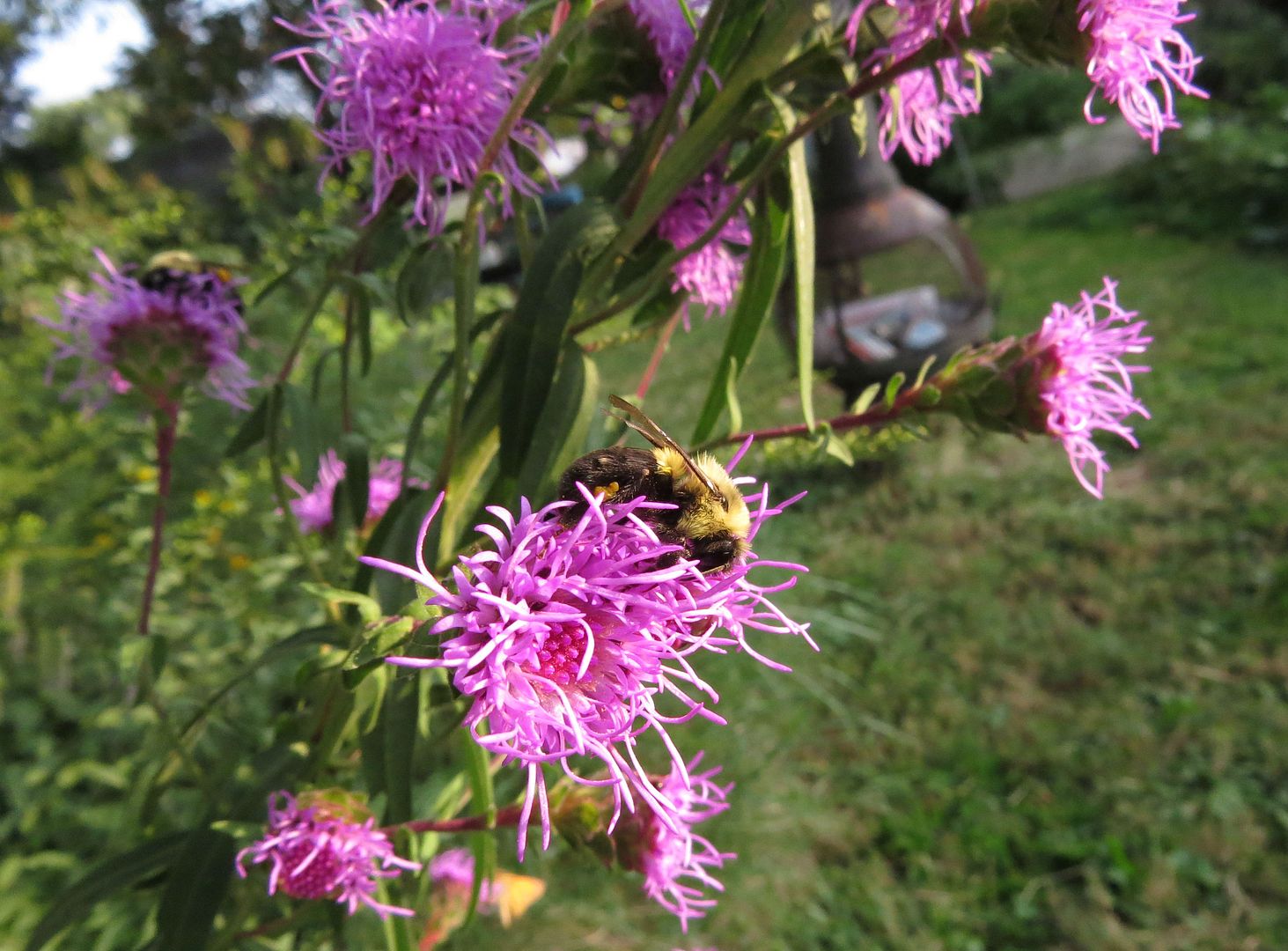
Here a few bumblebees work a species that I think might have been mislabeled. It's supposed to be Northern Blazing Star but I'm not so sure anymore. It's supposed to only reach 3' but this one shot up to 5'.
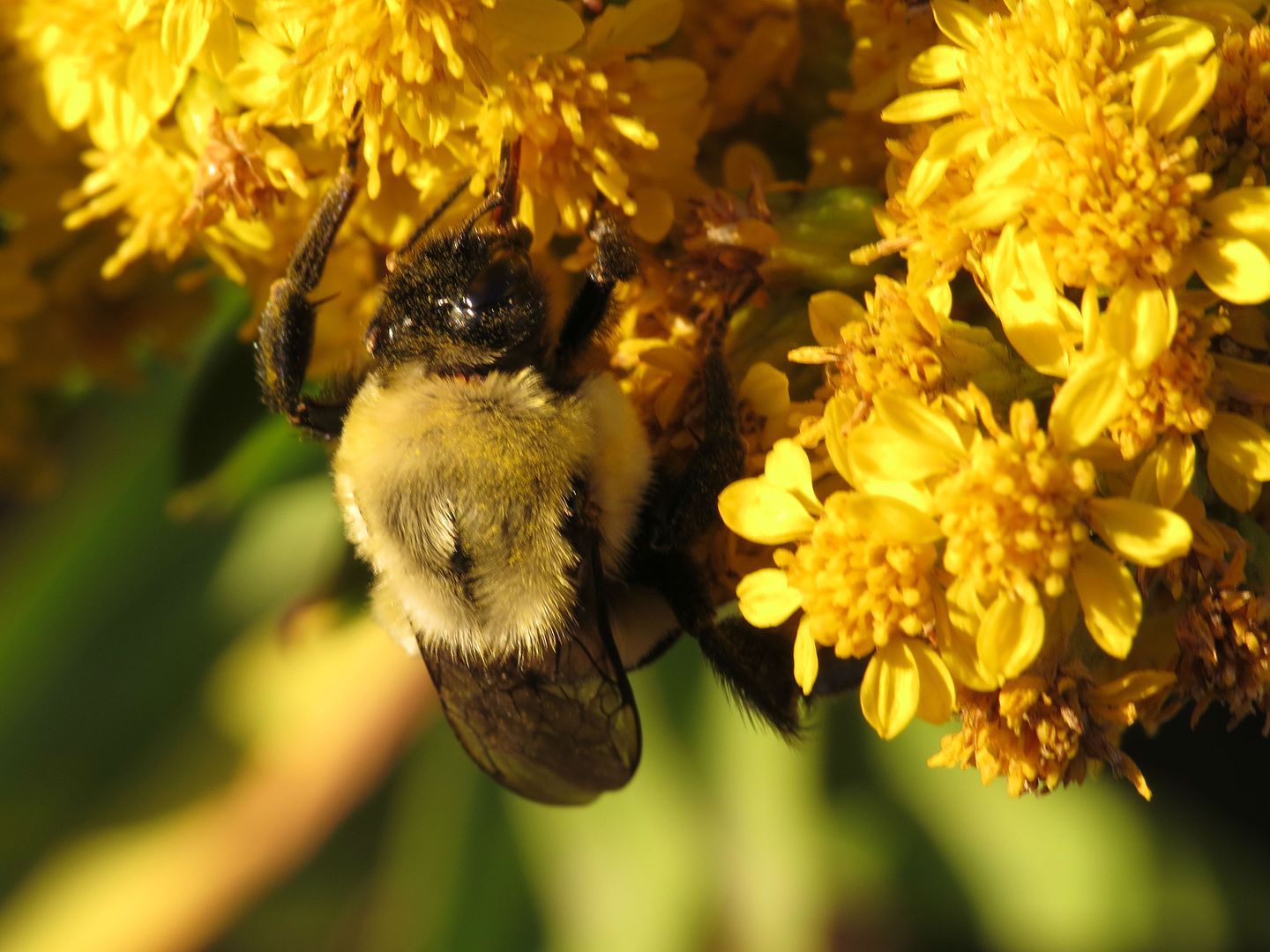
And lastly I was down at the shore later in the year where stands of Seaside Goldenrod provided food for migrating Monarchs and next year's generation of queen bumblebees.