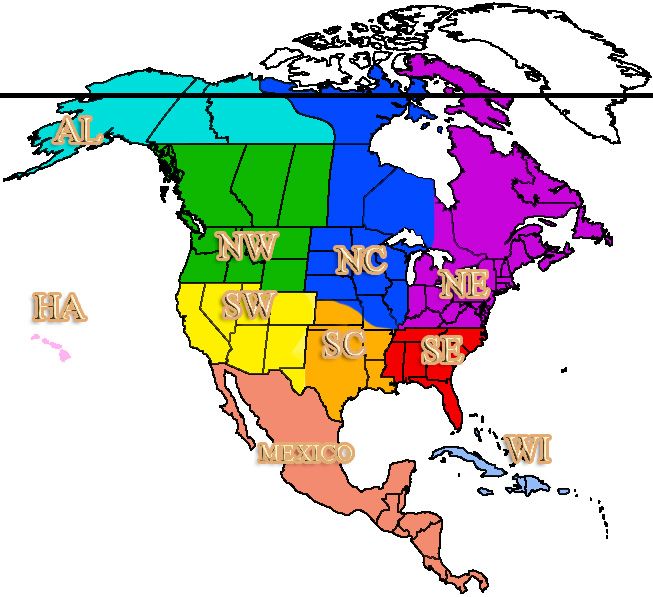
Formica is the largest genus in North America with almost 100 described species in total. Many of those in the fusca group and rufa group are species complexes that are virtually imposable to distinguish. It doesn't help that I read in some of the more modern studies some species were misidentified in older studies. There are yet more unnamed species (at least in Latin) pictured on antweb. All things considered I feel I did the best I could for now and this is serious work in progress. In the future I will certainly revisit this genus.
There are 7 subgroups within this genus. They are pallidefulva, neogagates, fusca, sanguinea, microgyna, rufa, and exescta. The first three, pallidefulva, neogagates, fusca, serve as host species for the other four, sanguinea, microgyna, rufa, and exescta. From an evolutionary stand point this genus could be described as a constant battle between standard colony founding and social parasites. Each are brought to both extremes. To understand this though the environment has to be taken into account as well.
The
pallidefulva group is a strictly North American group with only 5 species. Habitat preferences and nesting are as follows (Note, eastern US means from the East Coast to the 100th Meridian.) There is a notable tendency for species in this group to be in sandy habitats, but the first two (most widely distributed) species, are also found in loamy and less often, in clayey soils (but usually those with good drainage).
F. pallidefulva has the broadest range and habitat, nesting in the ground in open grassland or scrubland from southeastern Canada to Florida and west to New Mexico and Alberta.
F. pallidefulva is also found in heavier soils and in woodlands and mesic forests, where it nests in soil beneath leaf litter, at the base of grasses or sedges, or in and under logs and stumps.
F. incerta is a native grassland, meadow, or old field species of the eastern US (north of the Gulf Coast states), and southeastern Canada, that nests in well-drained soil, often among the roots and basal growth of a clumping grass.
F. biophilica has similar habitat preference to
F. incerta in the northern half of its unglaciated eastern US range, but is found in moister and / or shadier habitats farther south, including bogs, spring-fed meadows, loblolly pine swamps, and irrigated parks and campuses. It nests in soil, or in fens and wet meadows, it nests in the organic matter of tussocks formed by perennial growth of sedges.
F. dolosa is found nesting almost exclusively sandy soils throughout eastern US. Finally,
F. archboldi nests in sandy soils of open woodlands and in low, moist areas within sandy scrubland in Florida and near portions of adjacent states. All the species are flighty and non-aggressive. They visit honeydew-excreting hemipterans and extrafloral nectar sources, but do not vigorously defend them, and as often, they feed on the run off that falls down on lower leaves and beneath the plant. All are also scavengers and predators of small invertebrates.
The other two free living groups,
neogagates (also strictly North American) and
fusca (well-developed in both North America and Eurasia), inhabit a wide array of habitats, and some inhabit unique or extreme environments (mineral deposits, dry or wet extremes, and unique plant life). They typically do a better job of protecting honeydew producing aphids, and take advantage of other food sources as well. Queens in these groups are fully capable of starting colonies on their own. I will note though that some of them are not opposed to accepting new queens back into the colony, resulting in colonies with 2 to a few queens. Colony budding and occupation of multiple nests by a single colony is uncommon in these groups.
The parasitic species, sanguinea, microgyna, rufa, and exescta groups, engage in multiple types of colony founding. Social parasitizing a host species is required in order to found a new colony. From there "slave" raiding of other host colonies can be optional in some species but vital to others. Those that have it as optional typically reproduce more by colony budding and accepting queens of their same species back into the nest. Some species may have even dropped slave raiding entirely or do so only on very rare occasions. Species that require slaves for survival are more likely to move their nest around or inhabit multiple nesting sites. Those that do not require slaves typically go on to produce larger colonies and because of frequent budding they can push the boundary of becoming a super colony (depending on your definition).
Species in at least the rufa and exescta group I noticed seem to demand a richer environment. Or that is to say they have heavy demands on insect life and dew producing insects, and this implies a healthy environment rich in native plants or trees with notorious pest problems. Regardless of what plant life is available this organic debris is also used to form a mound among other things on top of the nest itself. This creates an incubation area for the brood to develop. These are tantalizing targets for larger mammals such as bears, skunks, badgers, ground hogs... etc which are also found in somewhat diverse environment. The mound also offers height for the ants to more easily spray formic acid up the nose and in the eyes of the animal. It is important to note that formic acid can cause blindness if sprayed in the eyes!
Basics on Formica Anatomy
These are a few things that I feel can be glanced over as they tend to be the same for all species in this genus.
1: Erect hairs are almost always longer under the gaster or at least as long as those elsewhere on the body.
2: Some Formica ants can have small notches or grooves along the dorsum of the petiole. I don't think these are consistent though throughout the colony. At least that seemed to be the case with Formica pergandei. Only some of the ants had little groves while others did not and I can't say there was much size difference between those that did and didn't. Maybe it's more consistent in other species but I pretty much ignored it when reading through all the studies. Things like the petiole's height from side view and perhaps it's shape and angle are better to go by.
3: Online pictures of specimens don't represent the full color range within a species! Specimens can be faded from their living counterparts. Also ignore the different sizes the gasters have. Gaster size can vary between small and large workers and even depends on how much food the ant has stored in it's crop. Pay attention to the general placement of erect hairs, as well the density or sparseness of hairs overall.
4:
Formica subpolita has a very Camponotus looking head. Just something to look out for if you're on the west coast.
Key: Hosts and Parasites.
The Hosts: Pallidefulva, Neogagates, and Fusca
Members of the pallidefulva group all have narrow heads, long antenna, long legs, and fairly large compared to other groups, though I don't have exact measurements. Roughly they're larger than 4mm to about 10mm. Unlike the neogagates group they have a modest amount of pubescence but not as much as the fusca group. They also tend to be larger.
Members of the neogagates group are all tiny. Workers are 2.5 to 6.5mm long, queens up to 8mm. The body is always shiny and pubescence (the shorter hairs that created a sheen over the body) is extremely short in all cases besides the occasional patch on the gaster.
Members of the fusca group all range in size. Workers from 2.5 to 7mm long, queens up to 10.5mm. The eyes, in comparison to the head, for most species, tend to be much larger than in other groups. Pubescence is typically strong and dense on most species.
The Parasites: Sanguinea, Microgyna, Rufa, Exescta.
Members of the sanguinea group all have a medial clypeal notch. (This is found at the lowest boarder of the clypeus, and falls dead center! This has nothing to do with where the antenna connect to the head, this is below that.) Here is an example of a deep clypeal notch,
Formica gynocrates. See how the clypeus curves inward right at the center lined with two teeth-like tips. Here is an example of a shallow clypeal notch,
Formica subintegra. See how it's pretty flat and not coming to any point anywhere. Most species in this group lean towards a shallow notch which is hard to make out.
Formica manni is a neogagates species that used to be in this group on the assumption that it was parasitic. To confound the matter I think it looks more like a pallidefulva species however it lacks even the slightest amount of pubescence to be in that group. If you are unsure then this might be a good spot to start. Workers range from 4 to 8mm long, queens up to 9mm.
Members of the exescta group actually come at the end of this key as they have everything in common with the rufa group. What sets these three species apart though is the shape of the head. The head has two concave bumps with a convex grove between them, seen
here. I'm mentioning this now because
Formica gynocrates also has this trait, however the clypeal notch voids this and makes it a member of the sanguinea group. It's good that F. gynocrates is one of those species that has a deep one or this would certainly cause a lot of confusion.
Members of the group are known for making large thatch mounds above their nests, and often a single colony will inhabit multiple nesting sites. They have heavy demands on dew producing insects and appropriate host trees and shrubs are vital to their long term establishment.
Member of the microgyna group, as the name suggest, have small queens. (Micro = small, Gyna = female.) They are never more than 5.5mm in length and often have a worker-like appearance to them, though not necessarily of their own species. Typically they resemble workers of their host species which likely helps gain access to the nest. An odd case is mentioned though where one species had multiple reproductive queen castes. Where one was a larger, more normal looking, queen, and the other the worker-like form. There may be something to this as the source went on to say they'd seen similar things in Lasius, and Aphaenogaster. However, another possibility is they saw
Formica talbotae, a worker-less inquilin parasite of Formica (rufa) obscuripes colonies. Yet another possibility is peaceful cohabitation of two separate species in the same colony, which is rare but occasionally known to happen as most of the host species are down right timid. Microgyna workers range from 3 to 7.5mm long, as mentioned queens only 5.5mm long or shorter.
Members of the rufa group are hard to distinguish between those of the microgyna group. The only real difference is the queen size, larger than 5.5mm and that rufa tend to make larger colonies. It's hard to gage what a large colony is though with both groups as both are in the habit of adopting queens back into the nest and budding from there. Perhaps it could be said that most rufa take more advanced thatch mounds but this doesn't happen with all of them.
Pallidefulva Group
Formica pallidefulva SW, SC, SE, NW, NC, NE
Found in open fields and forests with sand, loam, or sometimes clay soil types. Nest underground, or rarely in rotting wood in contact with the soil. Of all the pallidefulva subgroup species this is the most common and lacks pilosity on the dorsum of the mesosoma. Hairs on the gaster are very short but abundant. Body color varies greatly: in Canada and higher elevations southward they tend to be uniformly dark brown, and become more copper yellow and bicolored (darker gaster) the farther south and lower the elevation. Colonies are said to be monogynic colonies containing the full range of colors do occur along a 300 mile wide band along the Mason-Dixon Line (on a globe, not a girl). Northern populations tend to have a shorter scape. Pupa are more likely to lack a cocoon than in other species. Individual erect hairs seem to vary in thickness and color too.
Thin and faint, and
thick and bold seem. Queens don't have the 3 spots on the mesosoma as mentioned for
Formica incerta queens. Instead the mesosoma is
more uniform in color. Both F. pallidefulva and F. incerta often occur in the same fields. F. pallidefulva is more commonly found in lawns or fields with low diversity.
*They make no effort to protect hemipterans (aphids, leaf hoppers, mealy bugs etc...) but rather patrol the leaves and below the plant collecting the runoff. They don't feed directly from the hemipterans as seen in other ant species.
*Some speculation on my part: Colonies are not always monogynic but I believe this is the most common form. Perhaps colonies nesting in clay are more inclined to accept new queens back into the nest and engage in budding activity. I can attest that clay soil in the summer time can be as hard as cement and it's hard imagining a queen burrowing in it. Budding may also help defend against slave raiding species.
*Formica pallidefulva is the host species to Polyergus lucidus montivagus. F. creightoni raid them for slaves where F. neogagates is absent. F. pergandi also uses them for raids. Formica rubicunda also raid their colonies but only as a food source.
*Tetramorium tsushimae colonies tend to displace this species but surprisingly Solenopsis invicta, S. richteri, and the hybrid there of, do not. Or at least not as effectively.
Formica incerta SE, SC, NE, NC
Found in mesic to dry grassland. Nests underground. The head is more rounded towards the mandibles than in F. pallidefulva. Overall color tends to be lighter than that of F. pallidefulva too. Pubescence is also denser on the dorsum of the gaster. Unlike other queens of this group they are distinct in having
3 dark spots on the mesosoma. Really these aren't spots so much as darker patches of color, one to the front and two along the sides. These can be large patches connecting and taking up most of the mesonotum, or reduced to faint marks in which case the mesosoma would look lighter than the body. Alates develop a few weeks later than that of F. pallidefulva and are reported as being "nervous" and are
rarely successful in captivity.
*They are more abundant in fields with somewhat diverse plant life ranging form slightly more than the average lawn all the way up to tall grass prairie which typically has 150 to 300 plant species per acre. Both F. pallidefulva and F. incerta often occur in the same fields. F. pallidefulva is more commonly found in lawns.
*They collect extrafloral nectar from sunflowers and partridge peas and others. Though it's unclear if this is in a different fashion than F. pallidefulva scurrying along a plant or tending to a certain pore on the plant. They will tend hemipterans and protect them too but only in the absence of more aggressive Formica species and likely other ants too. When this is the case their foraging habbits change to that of F. pallidefulva where runoff is collected on lower leaves and below the plant.
*F. incerta is host to both F. difficilis and F. pergandei and is the only host of Polyergus lucidus lucidus.
Formica dolosa SE, SC, NE, NC
Found in well drained prairies, barrens, and open oak and pine forests. Nests underground in poor acid rich soil. Of all the pallidefulva species this has the most pubescence, is the least shiny, and tends to be uniformly reddish yellow in color. Long erect hairs cover the body.
Formica biophilica (2) SE, SC
Found in wetlands, moist grasslands, and occasionally open woodland. But never in poor acidic soil as F. dolosa does. Nest underground. Not as hairy as F. dolosa, or as bright in color.
Formica archboldi SE (mainly just Florida)
Found in moist sites, often swamp land. Nest underground in sandy, loamy soil, located in clumps of grass. Of all the pallidefulva species this one has the
largest eyes in comparison to the head. Body color ranges from
reddish to
blackish. There is a fair amount of erect hair about the body but not as much as F. biophilica. They will protect hemipterans well but it's likely they abandon them in the presence of more aggressive Formica species as they're not described as aggressive.
Neogagates Group
Formica manni SW, NW
Workers 3.5-4.5mm long, queens 6-7mm. Found in dry, often sandy soils. Nests underground. Erect hairs are whitest, long, and sparse on the body. Pubescence is very short and sparse. Boy color is red with a black gaster. Legs are paler hinting more towards yellow. Smaller workers tend to be darker overall with more brownish tones. This ant was originally classified as a member of the sanguinea group due to a very shallow clypeal notch that may or may not exist, and certainly doesn't online. It's not a parasitic species either and is rightfully placed here in this group. To me they have more in common with the pallidefulva group but the pubescence is to sparse.
Formica perpilosa (2) SW, SC, NW
Workers 3-5.5mm long, queen 7.5-9mm, males 7-8mm. Found nesting at the base of shrubs and trees where they form small crater nests. Unusually aggressive for this group. Erect
hairs are extremely long, whitish, and cover the body. Pubescence is sparse. Body is reddish yellow with a black gaster. Smaller workers have darker areas on the head and mesosoma, or at least more so than the larger workers.
Formica neogagates (2) SW, SC, SE, NW, NC, NE
Workers 2.5-5.5mm long, queens 6-8mm, males 6-7.5mm. Found in dry stony terrain. Common out west between 6000-8000ft. above sea level, more sporadic and rarer in the east. Nest underground and under stones. Erect hairs are white, long and scattered all over the body. Pubescence also white and very sparse but longer on the gaster and legs. Body color is very dark brown with some brown red on the mesosoma and petiole.
Formica lasioides (2) SW, NW, NC, NE
Workers 3.5-4.5mm long, Queen 6-8mm, Male 6-7.5mm. Nests under stones in open places. Similar to F. neogagates but shorter legs and antennae. Pubescence is very short and sparse. Erect hairs are whitish and abundant more so than typical neogagates. Body color ranges from
uniformly dark brown to blackish brown with lighter legs; or with
lighter patches on the malar area and mesosoma, and with lighter legs as in F. vinculans.
*var. vetula is described as being 2.5-5.5mm long, has erect hairs on anterior surfaces of the antenna scape.
Formica oregonensis NW
Workers 4.5-6.5mm long. Body color is "
Carob Brown" or chocolate-like, with legs and mesosoma somewhat lighter. Hairs are yellowish and sparse.
Formica vinculans NC, NE
Workers 2.5-4.5mm long, Queens 6mm. Found in dry grasslands and sandy fields. Slightly more erect hairs that typical neogagates group. Pubescence is also notable on the gaster and mesosoma. Body color is yellowish red with a dark brown to black gaster. Often the head is darker than the body (sometimes as dark as the gaster) but the
malar area is lighter.
Formica bradleyi SW, SC, NW, NC
Workers 3-4mm long, Queens 6mm. Body color is reddish to brownish yellow. Legs and antennae are often a paler yellow. Slightly more erect hairs than typical neogagates group. *I find it strange how no one described it as
Bright Orange.
Formica limata SW, SC, NW, NC
Workers 3.5-5mm long. Found in dry, stony slopes in full sun locations. Nests under stones or openly in small crater nests.
Eyes are large in comparison to the head as in fusca species. Much shinier than F. neogagates. Hair and pubescence is very sparse and yellow in color. Body color is brownish yellow with a dark brown gaster. The head and mesosoma have darker patches all over them. Legs and antenna are lighter than the body with the legs usually lightest of the two.
Fusca Group
In all honest I don't feel my key contributes in any way to literature that already deals with identifying ants in this group. For a more positive ID you should look through this key.
Francoeur, A. 1973. Revision taxonomique des especes nearctiques du group fusca, genre Formica (Hymenoptera: Formicidae). Memoires de la Société Entomologique du Québec 3: 1-316 I haven't had time to study through it yet, but I plan to when revisiting this genus. I notice though that some of the conclusions use the former names which are not listed on my chart. A quick google search "Formica ------ ant web" usually brings up the current synonym name though. For example
Formica pilicornis ant web bring up
Formica franceoeuri.
Taxonomic History (provided by Barry Bolton, 2011)
francoeuri. Formica francoeuri Bolton, 1995b: 195. Replacement name for pilicornis Emery, 1893i: 664. [Junior primary homonym of pilicornis Roger, 1859: 228.] For previous history see under pilicornis Emery.
Another source you could try is
antmacroecology but it goes off of scientific papers and where the species was described. The thing is their chart goes against what I read about Formica subsericea and Formica fusca itself. Time and time again while reading studies on new species I kept reading the fact that most species have been mistaken as F. fusca at one time or another. I don't know if they compensate for this or not. To be honest I'm not sure that I even compensated for it but I think the general nature of my chart is helpful to open up some possibilities though, tedious as it may be to rule some out.
Members of the fusca group can at least be put into two color categories; those that are
black and those that are more
colorful.
Black Fusca Species
Formica fusca (2) SW, SC, SE, NW, NC, NE
Workers 4-6.5mm long, Queens 7-10mm, Males 8-9mm. Nest underground with small mounds or under logs and stones. Body color is black. Pubescence is grayish silver creating a sheen all over the body. Erect hairs are sparse. Antennia and lower portions of the legs are lighter in color.
*Considering the name of this species one would think it were the most common but that's not the case. Formica subsericea is the most common of the black fusca species. Telling the two apart is challenging. To my eyes they only differ in that F. subsericea has a slightly larger queens and males, and pubescence looks woollier which might make the bands on the gaster seem thinner but I don't have confidence in any pictures on the internet with this group other than those linked here.
Formica subsericea SC, SE, NC, NE
Workers 4-7mm long, Queens 8-10.5mm wings are dark, Males 9-10.5mm. Nest in sunny places under stones with low flat mounds. In every way shape and form identical to F. fusca itself, except the pubescence is woollier looking. This can create the illusion that the bands around the gaster are thinner than they actually are than in F. fusca. Formica subsericea is far more commonly encountered.
Formica glacialis NC, NE
4-6.5mm long, queen 7-9mm, male 8-9mm. Found in gardens and meadows, with preference for lowlands. Nests underground with small mound unless the land is to dry in which case nesting is entirely subterranean. Similar to F. fusca but typically not as dark black in color, leaning more towards dark brown. Pubescence is slightly longer and more abundant. Antenna and lower portions of the legs are also paler and more yellowish or redder.
Formica argentea (2) SW, SE, NW, NC, NE
4-7mm long, queen 8-10.5 wings are clear, male 9-10mm. Found in colder climates of the temporate zone. Out west it prefers the mountains between 7,000 to 11,000feet above sea level. Found more sporadic in the eastern part of it's range. In New England (New York and northern states) it can be found nesting in sand dunes along beaches. Similar to F. subsericea but pubescence is whiter. Mandables and appendages are more red or even yellow in color. Legs are said to be slightly longer than F. subsericea as well with the tips occasionally darker.
*var. blanda is said to be 3-3.5mm long and more reddish brown.
Formica accreta SW, NW
4-7mm long. More aggressive than the average fusca species. Body color is black to brownish black. Erect hairs are very sparse. Pubescence is very short, and silvery in color.
Formica fuliginothorax (no image) Canada
4-7mm long. Found in "short turf or crumbling banks." Not a well described species and may actually be a variety of F. accerta. Body color is brownish black in color. Alates and online pictures are unknown.
Formica fusca marcida SW (Arizona)
2.5-4.5mm, Queen 7-8mm. Pubescence is very short and sparse. Body is black with flurishes of dark reddish brown. Appendages lighter in color. This is a very small Formica species.
Formica hewitti SW, NW, NC, NE
5-6mm long, queen 7mm, male 5.6mm. Erect
hairs are yellow and sparse. Pubescence is very short but uniform all over the body. Body color is black. Scape and legs are a deep red color, sometimes the petiole too.
Formica microphthalma SW (California)
about 4mm long. Eyes are smaller than the average fusca species. Pubescence is white in color, short in length, but abundant all over the body. Erect hairs are sparse on the body, only really accumulating on the face and gaster. Body color is black to dark brownish black. Scape and legs are lighter in color.
Formica occulta SW, NW
about 4mm long. Erect hairs are sparse. Pubescence is abundant but short and not very noticeable except on the gaster. The entire body is uniformly black to blackish brown, with antenna being slightly lighter, but not by much.
Formica podzolica (2) SW, NW, NC, NE, All of Canada, Alaska
about 4mm long. This ant is associated with coniferous forests where "
Podzolic" soil typically occurs. It's a combination of a bleached white layer of organic matter and deposits of iron and aluminum. This is found several inches below the top soil layer. Body color ranges from all black, to dark brown, to head and gaster darker with mesosoma yellowish-brown. Legs and antenna usually lighter in color. Erect hairs are sparse except on the gaster, and pubescence is average.
Formica sibylla (2 cf) SW (California and Nevada)
5-6.5mm long, male 9-10.5mm. Nests under logs, maybe other places too.
Eyes are smaller in comparison to the head, than the typical fusca species. Erect hairs are fairly sparse. Pubescence is dense and short. Body is black but said to have a bronze-like shine, but only in the right light.
Formica subelongata SW, NW
about 4mm long. Erect hairs are sparse.
Pubescence is slightly gold in color. Body color is black to blackish brown. Legs and antenna are lighter in color.
Formica subcyanea (2) Mexico
Found only above 9,000 feet in mountain ranges of Mexico. I believe this is the most southern known Formica species. Not much is known about it other than it's all black in color and said to have blue-black shine. Nothing else is mentioned. The only online picture I could find of it, (2) shows brown or deep red could be in it's color scheme. By my observations I'd say erect hairs look average, and probably lean more yellow in color than white. Pubescence looks very short but abundant all over the body.
Uniform in Color but Not Black
Formica canadensis SW, SC, NW, NC
4.5-6mm long, queen 9-9.5. This is said to be a subspecies of F. altipetens (found below.) I'm not sure why so it might be better to ignore this. Body color is blackish brown to all black with reddish brown flurashes at joints, legs, and petiole. Erect hairs are long and average. Pubescence is abundant.
Formica subaenescens SW, NW, NC, NE
4-7mm long, queen 8-10mm, male 8-10mm. Most commonly found i cold shady woods at high altitudes and sporadicly at lower land, nesting undertones. Body color is blackish bronze. Pubescence is sparcer than F. subsericea. Hairs over all are yellowish. Mandables and appendages lighter in color. Bronze color and pubescence vary slightly in this species. Both are more noticable in Central and Eastern locations and somewhat less so out West.
Formica longipilosa SW (California)
about 4mm long. Similar to F. aerata (found below) but more uniform "champaign-like" color. It's like a dull reddish brown with an almost pinkish reflection to it. Legs and antenna are lighter in color. Erect hairs are more abundant all over the body than F. aerata. Pubescence is slightly denser too.
Colorful Fusca SpeciesFormica aerata SW, NW
about 5mm long. The common name is Gray Field Ant for their dence white/gray pubescence and numerous erect white hairs all over the body. Body color is a dull brownish red with darker patches on the head and mesosoma. The gaster is black. This ant is highly beneficial as a natural control against the Peach Twig Borer,
Anarsia lineatella, which actually feed on a wide variety of fruit trees including peaches, nectarines, apples, cherry, plums, prunes, and apricots.
Formica altipetens SW, NW, NC
3.5-6mm long, queen 7mm, male 7-8mm. Found in alpine meadows. Nests in large dirt mounds and under stones. There is a
fair amount of erect hair on the body. Pubescence is light but dense. Body color is brownish red with appendages lighter.
Formica foreliana SW (Arizona)
4-6mm long. Found between 4,500-5,600 feet. Erect hairs are golden yellow in color, fairly long, but sparse to average along the body; they are somewhat abundant on the gaster though. Pubescence is grayish, very fine, and dense on the gaster. Body color ranges from brownish red to yellowish brown with darker patches sometimes on the head and mesosoma. Legs are sometimes lighter with the hind pair typically darker than the front pair. The gaster is black or brownish black in color.
Formica lepida SW, NW
3.5-6.5mm long.
Lots of long erect hairs cover this all. Pubescence is dense and glistening white. Body color is reddish yellow with dark spots on the head and gaster. The gaster is sometimes uniformly brownish black also.
Mandable area is yellowish in color.
Formica francoeuri SW (California)
3-7mm, queen 8-10mm, male 8-9mm. Found at low elevations in sandy soil. Nests under stones with crater-like mounds. Similar to F. lepida but with
even more erect hair! Pubescence is denser too! Body color is brownish red with a darker patch on head. The gaster is brownish black.
Mandibles area sometimes yellowish in color
but not always.
Formica moki (2) SW, NW
4-5.5mm long, queen 10-11mm. Found at low altitudes. Nests under stones in open live oak groves and on warm slopes. Unusually aggressive for a fusca species. Pubescence on gaster is silver and dense. Mesosoma has few if any erect hairs on it. They are sparse on the body otherwise. Body color is red with the gaster and
spot on head brownish black. Legs and lower part of the head colored the same as the mesosoma if not darker.
Formica xerophila (2) SW, NW
5-6mm long. Found in both pine and chaparral habitats. Nests in open areas, and has been found beneath piles of cow dung. Pubescence is denser than F. moki and creates a metallic-like sheen. Body color is a dull yellowish red with lots of dark patches all over the head and mesosoma. The gaster is blackish brown to black.
Formica gnava (2) SW, SC
3.5-6mm long, queen 7-8mm, male 7-8mm. Found at low altitudes. Nests under stones in shady canyons. Unusually aggressive for a fusca species. Body color varies from light to dark shades of brownish red with spots on the head and mesosoma; the gaster is black. Smaller workers tend to be darker than larger ones. Hairs are sparse except on the gaster. Pubescence is short. Supposedly this ant produces a distinct odor, but there's no description on what it is.
Formica montana SC, NW, NC
3-6mm long, queen 8-10mm, male 7-8mm. Found in meadows and bogs. This species is especially fond of nesting right in bog "
Hummocks" which are small hills of earth often covered in moss and occasionally carnivorous plants. They otherwise nest underground with flat or low mounds. Similar to F. gnava but with more erect hairs on the body. Pubescence is long and dense. Body color is reddish brown with lots of dark patches on the head and mesosoma. Appendages are lighter in color. The gaster is black. Erect hairs are yellowish in color and slightly more so when not nesting in a bog. It's unclear why this is.
Formica neoclara (2) SW, SC, NW, NC, NE
3-6mm long, queen 7-8mm, male 7-8mm. Found below 7,000feet. nests in sandy soil near rivers. Mounds are flat or low to the ground. Erect hairs are yellow and sparse
except on the gaster. Pubescence is dense and rather long. Wheeler describes the color as "Pale Red." Online images show everything from almost uniformly orange-brown to dark reddish brown to a mix of both with the head and gaster darker.
*var. lutescens supposidly has the bicolored body color but with a dark spot on the mesosoma.
Formica neorufibarbis (2) SW, SC, NW, NC, NE
2.5-6mm long, Queen 6-8mm, Male 6-7mm. Found in shady woods and forest edges. Nests under stones and in logs. Mesosoma is reddish brown to yellowish orange, occasionally with a
dark patch especially at higher altitudes. Head and Gaster are darker, ranging from
black to
reddish brown. Appendages are lighter in color or similar to the mesosoma. Face sometimes with lighter patches on malar area (cheeks). Pubescence and erect hairs similar to F. fusca.
Formica pacifica SW, NW
Favors urban "habitats" and is common along roadsides. Nests "normally" between cracks in concrete.
Body color is yellowish brown with legs and antenna lighter and gaster brownish black to black. A darker patch on the head is the same color as the gaster or about as dark, creating the
light yellow cheek effect in the malar area. Even the dorsum of the mesosoma has a slight darker area ranging to a more solid dark spot. Erect hairs are yellow and average in both height and abundance. Pubescence is abundant.
Formica subpolita SW, NW
3-6.5mm long, queen 8-10mm, male 8-9mm. Found in grassy places. Nests under stones.
This is a very shiny ant! Pubescence is short and very sparse! Erect hairs are yellow and average. The
head on the largest workers is easily mistakable for a Camponotus species. There was once even an accepted variety name called var. camponoticeps but this is no longer accepted today. Body color ranges from brownish red to chestnut brown. Legs are paler and more yellow. The gaster and patch on head are black in color. Mandibles sometimes bright red.
Coccids and
pseudoscorpionids have been known to inhabit their nests.
Formica transmontanis SW, NW
about 4mm long.
Body color is reddish brown with a dark patch on the head the same color as the gaster, black. Mesosoma sometimes with a dark patch as well. Cheeks are lighter in color,
often yellow. Legs and antenna lighter. Erect hairs are numerous all over the body, and slightly longer on the gaster.
Pubescence is dense on the gaster as well.
Sanguinea Group: F. subintegra, F. pergandei, and F. rubicunda are the three main species in this group, though not always the most common. They are the only three with hair on the gula area (under the head and up more toward the neck) though it's only a few hairs and admittedly hard to notice sometimes. All other species are said to not have hair in this location. They use members of the pallidefulva, neogagates, and fusca groups as hosts.
F. emeryi, and F. puberula vary somewhat in that they need slaves but have a preference for what group they go for. F. emeryi prefers members of the neogagates group, while F. puberula goes more for fusca and pallidefulva. Presumably they sometimes use chemical warfare while raiding.
F. gynocrates, F.creightoni, F curiosa, and F. wheeleri only use members of the neogagates group as hosts. This is believed to be because during raids these ants don't always use chemical warfare in raids. This has only been seen in F. gynocrates though, and is unconfirmed in the other three.
F. aserva, and F. obtusopilosa do not need slaves to maintain a colony long term but do occasionally use them. Members of the fusca group are the only ones reported.
Formica rubicunda (2) SW, SC, SE, NW, NC, NE
5-8.5mm long, queen 7-9mm, male 7-9mm. Clypeal notch is rather shallow. Erect hairs are yellow in color and sparse to average on the body with a few occurring on the gula, but still having more than F. aserva. Pubescence is sparse, but still having more than F. aserva. Petiole is somewhat thin looking toward the tip.
*Queens have been seen stealing brood from host colonies in order to start nests. It's unknown if they out right gain entry into host colonies and replace their queen as other social parasites do. Adult colonies however will raid host colonies for brood and it is absolutely vital for their survival to have hosts. Host include: F. subsericea, F. neogagates, F. pallidefulva.
Formica aserva (2) SW, SC, NW, NC, NE
4-8mm long, queen 7-9mm, male 8-9mm. Clypeal notch is rather shallow. The body is typically bicolored and occasionally with dark patches on the head and mesosoma. Hairs are sparse and usually absent entirely from the mesosoma but occasionally occur there in very small numbers. Pubescence is sparse, but still having less than F. rubicunda. Petiole is somewhat fat looking with more girth occurring towards the tip.
*Queens are social parasite of F. fusca, F. subsericea, F. argentea, F. subaenescens, F. neorufibarbis. No slaves are needed after colony founding, but they do occasionally raid colonies for hosts.
Formica pergandei (2) SE, NE
5.5-6.5mm long, queen 8-9mm. Clypeal notch is shallow. Erect
hairs are thin and more abundant than F. rubicunda. Pubescence is slightly longer than that of F. rubicunda, or at least longer on the largest workers and queen. Petiole is narrow and pointed towards the tip. Queens occasionally have 3 dark spots or patches on the mesosoma but this isn't consistent. *Hosts include F. subsericea, and F. pallidefulva.
*I have personally found this ant in person. They raided a colony of F. pallidefulva and pretty much moved into the host nest for most of the week before abandoning it for another location.
Formica gynocrates (2) SW, SC, NW, NC, NE
About 7mm long. Nest in open sites with exposed ground. Other openings near grasses have been found too and are used for alates to leave. Small mounds to house aphids and incubate brood are also reported. This is a similar looking species to F. pergandei but duller looking, body color is pales too. ranging from red to yellowish. The scape are much shorter than F. pergandei too! The gaster is black. The
head shape is rather wide with convex sides. Curiously it's reported that the male head size varies somewhat.
*Hosts include: F. vinculans, F. lasioides, All neogagates group. They don't bother with members of the fusca group. Slave raiding is optional after colony founding. This ant is more heat tollerant than other members of this group and were found to continue raiding later in the afternoon than other members of this group.
Formica subintegra (2) (3) SC, SE, NC, NE
4-7mm long, queen 7-9mm, male 7-8mm.
Pubescence is unusually yellowish in color, giving this ant a coppery patina especially on the gaster. The
head is somewhat more rounder looking than other species in this group. Body color is a typical bi-color but this ant is also described as being almost solid yellow with darker patches all over the body, no pictures seem to exist of this lighter form. Queens occasionally have 3 darker spots or patches on the mesosoma but this isn't consistent.
*Host include F. fusca, F. subsericea, F. subaenescens, F. montana, F. neogagates, F. pallidefulva, and F. incerta. Queens have been reported stealing brood and hosts are required to maintain an adult colony.
Formica emeryi SW, SC, NW, NC
4.5-6mm long, queen 7-7.5mm. Pubescence is extremely short and inconspicuous all over the body and appendages. This gives the gaster a somewhat metallic look. The body is otherwise rather dull looking. The
head sometimes has a black or dark patch of color on it,
queens too.
*F. neogagates is used as a host species.
Formica puberula SW, SC, NW, NC
4-6mm long, queen 7-8mm, male 7-8mm. This is mostly a western species found at low altitudes.
Clypeal notch is broad and rather deep.
Erect hairs are individually thin looking, overall sparse to average on the body. Pubescence is average. It's worth noting this ant is very shiny looking. Despite the picture on ant web, the most common color form for this ant is more bi-colored looking with the gaster a more solid looking dark brown to black color.
*Hosts include F. argentea, F. subaenescens, F. montana, and F. pallidefulva.
Formica wheeleri SW, SC, NW, NC
About 6mm long, queen and male closer to 8mm. Similar to F. puberula except eyes are larger in comparison to the head.
Head color is darker than the mesosoma, and in
larger workers and
queens this is exaggerated to being a dark patch of color. Gaster is black. Pubescence appears sparse. Erect hairs seem sparse to average, and are slightly yellow in color.
Formica creightoni SC, NC, NE
5.8-7.4mm long, male 5mm. The
head is somewhat more maintains between the smallest and largest members of this species. Meaning smaller workers don't have a slightly more narrow head and larger workers don't have a wider head. It's more a standard in this species with less variation than normal. The
cheeks are just slightly bigger in the largest workers.
Pubescence is sparse. Erect hairs are short and sparse as well. The
petiole is broad and fan-like, often lacking a slight notch or indent as seen in other species. Body color is typically dull, leaning more towards brown than red. The head is usually darker than the mesosoma as in F. emeryi and F. wheeleri. The gaster is black or at least dark brown.
*F. neogagates is the host species.
Formica obtusopilosa (2) SW, SC, NW, NC
5-7mm long, queen 7.5-8mm. Nest in grassy fields supposidly above 6,000 feet. This ant has
lots of white hairs all over the gaster and sparely everywhere else! The color of the gaster ranges from black to brown, but is typically always darker than the mesosoma.
*New queens are said to be social parasites but don't seem to target any species in particular. Members of the fusca group is all that's mentioned. Adult colonies do not require a host species, but that is not to say they don't raid colonies now and then.
Formica curiosa NW
About 5.5mm long. Eyes are large in comparison to the head. This ant is somewhat more uniform looking in color. The gaster is typically yellowish red, rarely brown, and never black. Overall
body color tends to be in the yellow or orange spectrum, perhaps some red too. Erect hairs are average and somewhat long looking. Pubescence is average as well.
*The pale body color might suggest a nocturnal foraging habit, but that's speculation on my part and has not been confirmed.
Exsecta Group: All of these have
a slight convex depression along the top of their head. They also lack any signs of a clypeal notch, and instead come to a nice point or are otherwise rounded at the tip.
Formica exsectoides (2) (3) SW, SC, SE, NC, NE
Nest underground beneath stones in dry grassy areas.
Erect hairs are sparse all over the body. Pubescence is average. Petiole is about as hight as the propodeum. Color wise the propodeum is particularly bright on ants that lack a dark area on the mesosoma. Body color is usually a brilliant red orange, and sometimes with dark patches on the head and mesosoma. Sometimes all of the mesosoma will be much darker than the head as well. The Gaster is always black.
*This ant occasionally builds what I call "Foraging tunnels" which act as protected highways that occasionally emerge to the surface and go back down again. These are use to connect multiple nesting sites, and lead to foraging grounds, where honeydew-excreting hemipterans, extrafloral nectar sources, and pray items are abundant. These occasionally follow tree roots, and vegetation may even be stripped away, marking it's path.
Formica opaciventris SW, SC, NW, NC
Nest underground with either a dirt or thatch mound above.
Yellow erect hairs lining the body are sparse to average. Pubescence is average too. Petiole is about as high as the propodeum. Body color seems to be yellowish red with the gaster black.
*Surprisingly I couldn't find much on this ant.
Formica ulkei NW, NC, NE
Nest underground in mounds occasionally covered in debris. Always in moist soil, usually near water, and always in full sun locations. It is important that they have trees or shrubs around infested with hemipterans. Erect hairs are sparse on the body. Pubescence is averate. Petiole is just as high as the propodeum. Body color is reddish orange mostly with darker patches on the head and mesosoma. Legs and lower parts of the mesosoma also tend to be dark. The gaster tends to be brownish black or black in color. Occasionally only the head and gaster are dark. *Regardless of color variations,
the clypeus is never black, and tends to be reddish brown at it's darkest. Compare with
F. lugubris.
Truncorum Group (Rufa and Microgyna):
Workers in these groups look almost identical. The queens are what really separates this group into two. Microgyna queens are all small and never longer than 5.5mm. By comparison rufa queens can be 10mm long.
These can also be somewhat grouped together by coloration. The standard pattern in my mind is where the head and mesosoma are a red or yellow color and the gaster is either black or dark brown. What I would call colorful species can have the standard patter but often have more elaborate dark patches on the head and mesosoma, sometimes the head is just as dark as the gaster, and this varies greatly with members of the same colony.
Standard Two Color Pattern: most often the head and mesosoma are red or yellow, and the gaster is black or dark brown. It is still worth comparing these species to more colorful forms as the more colorful ones can have colony members that are still two colored.
Formica (microgyna) impexa NC, NE
3.3-6mm long. Erect hairs completely cover the body, especially on the gaster. Body color is red with the gaster black.
Formica (microgyna) nepticula NC, NE
4-6mm long, queen 4-5mm, male 6.5-7mm. Hairs are sparse all over the body except for a few rows on the gaster. Similar to F. nevadensis but not as red, and usually doesn't have any dark patches on the head or mesosoma. At least not as dark as F. nevadensis.
Formica (microgyna) spatulata NW, NC
?-7mm long, queen 5.7mm, male 7mm. Nearly all surfaces are dull looking except for the head and gaster which can have a slight shine to them. The gaster more so from the sheen given off by the
abundant amount of pubescence. Erect hairs are short but numerous all over the body.
The tips to some hairs are notably frayed or wider at the tips! The head and mesosoma are an orange red color, with the gaster black. Apparently the brightness of the color depending on the age of the individual.
*Hosts are believed to be F. subsericea and F. argentea.
Formica (rufa) coloradensis SW, NW
4-9mm long, queen 9-10mm. Associated with pine forests, and high elevations 8,500-9,000 feet. Nest under stones and logs, filling empty cavities and mounding the outside with thatch.
Hairs are abundant all over the body, very thin looking, and yellow in color.
They even occur on the compound eyes! Small and large workers don't vary in color as often seen in other species. Body is bright red with the gaster a dark brown color.
Formica (rufa) comata SW, SC, NW, NC
4.5-7mm long, queen 7.5-8mm, male 8-8.5mm. Does not typically build a mound above the nest. Erect hairs are sparse but abundant on the gaster. Similar to F. ciliata but legs are paler, and body is hairier. Similar to F. obscuripes bu has less hair on head and mesosoma. Head and mesosoma are red with the gaster is black.
*Potentially this is a hybrid between F. ciliata and F. obscuripes, though honestly I have no idea how this is determined.
Formica (microgyna) knighti NC, NE
?-7.5mm long. Found in dry mesic prairies, typically dominated by
little bluestem, or in sandy pine Barrens. Nest are constructed with thatch-like mounds from clumping vegetation.
Eyes have lots of erect hairs above them. Erect hairs cover the rest of the body, even on the entire mesosoma. (Often in other species either the mesonotum or propodium will lack erect hairs here.) Over all erect hairs are short and yellow in color. Body is very dull except frontal areas, such as the head. Body color is yellowish red with a very dark brown to almost black gaster. Similar to F. postoculata but nowhere near as hairy, and no where near as large. Very similar to F. impexa but different color. F. impexa is a deeper red color. F. impexa also has a smaller petiole.
Formica (rufa) ferocula NC, NE (Illinois)
3.5-6mm long. Found in dry open fields among the roots of plants.
Canadian fleabane is mentioned among other weeds.
Erect hairs are yellow, short and numerous on the gaster and mesosoma. Body color is bright yellowish red. Legs can be darker but usually not by much. The gaster is dark brown. Smaller workers typically have a darker petiole and legs. This species is similar to F. comata, F. criniventris, F. ciliata, and F. oreas but the hairs are arranged differently.
Formica (rufa) integroides SW, NW
3.5-8mm long, queen 8mm. Found along coastal mountains. Nest in open woods in stumps and logs which accumulate thatch mounds.
Hairs are short, yellow, and moderate in amount. Color is light yellowish red to brown with the gaster brown to black.
Formica (rufa) ravida SW, NW, NC
4-9mm long, queen 9-10mm, male 8mm. Found at high elevations between 8,100-8,500 feet. Nest under stones and in logs filling empty cavities and mounding the outside with thatch.
Has less hair than F. integroides (above). Body is bright red and with the gaster brown. Small and large workers are uniform in color.
Petiole is thiner looking form above than F. integra though not necessarily the same shape between workers!
Formica (rufa) integra NC, NE
4-8mm long, queen 8-9mm, male 7-8mm. Found in rich open woods in hilly regions. Nest under stones, and in stumps and logs. A colony can consist of multiple nesting sites. Similar to F. ravida but
petiole is much wider looking from above, though not necessarily the same shape between workers! Pubescence is sparse on the gaster and very find overall. Body color is bright red with the gaster black. Smallest workers will rarely be darker than the larger ones.
*The farther north this species is the darker red they get, and with less pubescence.
Formica (rufa) subnitens SW, NW, NC
Nest underground without any mound or covering typically.
Erect hairs are very sparse and not often found on any dorsal surfaces. (There are of course some around the mandibles and under the gaster but frankly every Formica has these.) Mesosoma will occasionally have up to 12 very short erect hairs but online specimens sometimes don't seem to have any. Similar to F. integroides (above) but has a shinier head and isn't as hairy.
Formica (rufa) mucescens SW, SC, NW, NC
3.5-7mm long, queen 6.5-8mm, male 7-8mm. Found at high altitudes between 5,000-7,000 feet. Nests in open places under stones bank with debris.
Erect hairs are very abundant, short looking, and easily confused with the pubescence which is rather long on the gaster but less so the rest of the body! Body color is yellowish red to reddish orange, with the gaster either brown or dark brown. Smaller workers tend to be darker.
Formica (rufa) oreas SW, NW, NC
4.5-7mm long, queen 7.5-9mm, male 7mm. A single colony can consist of multiple nesting sights in open sunny places. Nests usually under stones with debris mounded about. Hairs are white and all over the body and gaster. Legs are darker than the body. Head and mesosoma are red or yellowish red, gaster is black. Head occasionally with a small dark spot around the ocelli.
Formica (rufa) prociliata NE, NC
6-8mm long, queen 9mm, male 10-11mm. Nest in open bluegrass carpeted forests dominated by oak and black walnut. Erect hairs are yellow, short, and all over the body. Pubescence is long and abundant on the gaster. No hairs on the eyes.
Petiole is short and not higher than the propodium. Body color is red and described as "Pinkish Red" though I'd say salmon might be more accurate. The gaster is black with pubescence forming a gray sheen. The smallest workers are usually darker in color, dark brown. Some intermediate sized workers will have darker heads and redder mssosoma. Similar to F. comata but redder, where as F. comata is yellower. Hairier than F. criniventris. Petiola is shorter than F. oreas and erect hairs aren't white either. Very similar to f. ferocula which nests in craters and is more yellow in color with red at the base of the gaster.
Formica (rufa) propinqua SW, SC, NW, NC
Erect hairs are yellow and of moderate length. They occur sparsely on the body but numerous on the gaster, and not in the eyes. Some grayish pubescence. Body color is a brownish red to reddish orange. The gaster is brownish black. Legs can be darker but sometimes slightly lighter too. Minor workers tend to be darker than the majors.
Formica (microgyna) querquetulana SW, SC, SE, NW, NC, NE
4-5.5mm long, queen 5.5mm if not smaller. Found in dry areas in open forests and forest edges, presumably dominated by oak trees, hence the species name,
Quercus.
Juniper virginiana thickets are also mentioned. Nest underground or in rotting wood, often with a small mound of thatch over and piles of debris near the entrance. Eyes are parted slightly on the head more so than in other species. The body is not shiny at all, except on the gaster. Erect hairs are sparse, somewhat long and gold yellow in color, as in F. postoculata (below). The mesosoma and legs are a reddish to yellowish brown with the head slightly darker. Gaster ranges from black to reddish brown.
Formica (rufa) calviceps SW, SC
5.2-8mm long. The
eyes on the largest workers tend to be parted and occur far back on the head in face view. This is similar to F. querquetulana but that's a much smaller species. Erect hairs are yellow and sparse.
Formica (rufa) ciliata SW, SC, NW, NC
Thatch is sometimes used to mound over the nest.
Erect hairs are yellow, short, and somewhat numerous around the body. Body color is reddish yellow with the gaster brown. Petiole is short and slightly lower than the propodium from side view but not by much.
One Main Color: Species that can have darker or lighter body segments but the overall difference weak.
Formica (rufa) reflexa NC
4.5-5.5mm long, queen 5-6.5mm, male 6.5-7.5mm.
Erect hairs are numerous, short, yellow in color, and cover the body.
Some even occurring in the compound eyes! Petiole is rather small and lower that the propodium from side view. Body color is reddish brown with the gaster brownish black. Legs can be darker.
*The host species is Formica subsericea and often it's a 7 to 1 ratio and it's easy to mistake the colony for F. subsericea itself! F. reflexa is described as running much faster than their host however and quickly retreat into the colony faster than their hosts. Efforts to bring the brood to safety are left to the host species.
Formica (microgyna) dirksi NE (Main)
about 4mm long, queen 5mm. Body color is uniformly brownish. It's likely larger workers and queens have more yellow in their color pattern. Hair on the body are sparse except on the gaster.
*Host is Formica subaenescens.
Formica (microgyna) morsei NE (Massachusetts)
3.5-5.5mm long. Reddish yellow in color with darker patches all over the body. Lots of really short erect hairs mostly on the gaster and sparsely everywhere else.
*Either the ant web specimen is faded or deep yellows are also in the color scheme.
Colorful: Species with more complex color patterns, often with darker patches all over the body. Colonies are often mixed.
Formica (rufa) dakotensis SW, SC, NW, NC, NE
3.5-7mm long (4-6mm is more typical though), queen 7-8mm, male 6.5-7mm. Erect hairs are sparse. Pubescence is sparse too but occurs on the legs and gaster in such a way that a "watered" silk effect is created. There are almost no erect hairs on the dorsal surfaces of the body. Head and mesosoma are red, with legs and gaster ranging from darker to full on black.
*Host is F. subsericea.
*var. montingena is said to be darker and with slightly more erect hairs on the body. 3.5-6.5 is the more typical size range for workers. Hosts include F. subsericea, F. pallidefulva, and F. incerta.
*var. specularis has a narrower and somewhat more pointed head looking. The Gaster is paler. 5-7mm is the more typical size range for workers. Host it F. subsericea.
Formica (microgyna) postoculata NC, NE
4mm long. Found in open fields. Nest under stones with mounds of dirt banked beside them.
The mesosoma is dull, while the head and gaster are glossy. Erect hairs are sparse, somewhat long and gold yellow in color, as in F. querquetulana (above). Color pattern ranges from being
almost uniformly brown to
more colorful like a subdued version of F. adamsi (below). Head can be reddish brown and darker at the eyes and above, and
sometimes with yellow cheeks. The mesosoma can either be pale brown with dark flourishes or red orange in color. The gaster is either dark brown or black.
*Supposedly the species name refers to the erect hairs behind the eyes... however none of the online specimens seem to have this trait.
Formica (microgyna) adamsi SW, NW, NC
3.5-5mm long. Dull overall except for the mandibles and there about on the head. Erect hairs are sparse except on the abdomen. Hairs are short in length and yellow in color. Color appears to be somewhat unique in how soft and gradual the tones blend into one another. Smaller workers lean more yellowish red and larger members tend to be darker.
Formica (rufa) adamsi whymperi SW, NW
3.5-6mm long. Nest under stones and logs with soil banked along side. The gaster is black, not dark brown as the true F. adamsi. The head and mesosoma spots can be darker in color but not necessarily bigger than those on true F. adamsi.
Formica (microgyna) adamsi alpina SW, SC, NW, NC
Similar to F. adamsi but lack the brighter yellows from their color scheme.
Formica (microgyna) alpina
(1) (2) (3) SW, SC, NW, NC
Erect hairs are yellow and average in abundance and height. Pubescence is average looking too.
Antenna are fairly long looking. Petiole from above is small and thin, but normal in height form side view. Body color is a deep red color with dark patches on the head and mesosoma. There are some slight flourishes of yellow there too. Legs and antenna darker than the body. The gaster is black.
Formica (microgyna) difficilis SC, SE, NC, NE
4-6mm long, queen 5.5-6mm, male 5.5-6mm. Found in grasslands. This species has the most southern distribution of the eastern species; at least in hilly regions, e.g. Georgia, Arkansas. Head is contrastingly shinier than the rest of the body, thus easier to recognize than other "microgynas" species. Erect hairs are short, yellow, and sparse except on the gaster. Color is yellowish red with the gaster dark brown. Occasionally there are dark spots on the head and mesosoma.
*This species is a temporary social parasite of F. incerta.
Formica (microgyna) microgyna SW, SC, NW, NC (Despite being in four regions this ant is only found around Colorado!)
3.5-6.5mm long, queen 4-4.5mm, male 5-5.5mm. Nests under stones with debris mounded about. Erect hairs are all over the body but fairly short. They are easily rubbed off so use a young worker when possible. Legs are darker. Body color is yellowish to reddish in color with the gaster black or dark brown.
*It is worth mentioning Gynandromorphs have been found in this species. This is when the ant is half one caste and half another. These are very uncommon though.
Formica (microgyna) densiventris (2) SW, NW
4-6.5mm long, queen 5-5.5mm, male 6-6.5mm. A single colony can occupy multiple sites. Nests under stones with debris mounded up. Supposedly this is a variety of F. microgyna itself, and it certainly has much in common. The erect hairs are the same but slightly longer in length, but there are fewer of them. This species is more common and more wide spread than F. microgyna which is only found near Colorado.
*Ant Web lists this as a fusca species for some reason in their Taxonomic History section. They have it correctly named however up above. I'm not sure why this is.
Formica (microgyna) nevadensis SW, NW
4.5mm long. Erect
hairs are white, short, and sparse to average on the body. Body color is always red with a black gaster. Sometimes there are dark patches or spots on the head or mesosoma.
Formica (rufa) criniventris SW, SC, NW, NC
4.5-7mm long, queen, 6.5-7mm. Does not typically make a mound. Erect hairs are virtually absent except for a few rows on the gaster and mandibles. Body color is yellowish red, with the gaster a dark reddish brown. Dark spots sometimes on mesosoma and head. Similar to F. oreas and F. ciliata by the lack of hair on the body and less on the gaster. These hairs are easily rubbed off of the body so it's important to ID with a young worker.
*Potentially a hybrid between F. oreas and F. ciliata.
Formica (microgyna) indianensis NC, NE
6mm long, male 5.5mm. Body is not shiny besides somewhat on the gaster. Erect hairs are very sparse, and very short looking. Pubescence is very fine and all over the body. Body color is described as "Hay's russet" ... whatever that means. Online pictures of specimens show a dingy brownish to yellowish orange. Legs are said to be darker or perhaps follow the darker color scheme more. The Gaster is described as "liver brown" which might be brown but with hints of red or purple in them I imagen.
Formica (rufa) fossaceps SW, NW, NC
3.5-8mm long, queen 7-8mm, male 8mm. Erect hairs are absent on most body surfaces. Pubescence is very short and sparse.
Petiole is rather large and in side view is slightly higher than the propodium. Body color is reddish brown with the gaster brownish black.
Formica (rufa) lugubris NE, Alaska, (All of Canada?)
This ant is known to make super colonies! These are massive interconnected nesting sites covered in thatch mounds and debris. Finding smaller colonies isn't out of the question either though. Erect hairs are yellow and occur all over the body in moderate amounds. No hairs on the eyes. Pubescence is gray and seems to vary somewhat between colony members. Body color varies greatly! The base color to the head and mesosoma ranges from reddish orange, to yellowish brown, to red brown, and with darker markings, spots and patches all over.
The center of the clypeus is usually darker than the sides! The
legs and petiole are always darker than the body. The gaster is always black. This species differs from F. ulkei (above in exsecta group) in that the clypeus has dark patches on it.
*Colonies of
Formicoxenus have been found nesting in their mounds, and are undisturbed by the colony.
Formica (rufa) obscuripes SW, SC, NW, NC
3.8-8mm long. Found at high altitudes, 6,000-8,000 feet above sea level. Other sources say as high as 11,300! Found in semi arid regions out west. Nest underground with thatch mounds that stand up to strong winds. This is one of the most common rufa group species out west. They have a fondness for
sage bushes and are somewhat detrimental to the plants. They sometimes kill the plant by spraying acid in cuts they make to encourage the bush to drop more of it's tiny compact leaves which the ants use to increase the size of their mound. Erect hairs are somewhat long, rather thin looking, whitish silver in color, and abundant all over the body.
Some hairs even coming out of the compound eyes! Body color ranges somewhat from reddish orange to dark brown or black. Towards the head usually has the lighter of the two colors, and towards the gaster is always darker. Legs are the same color as the mesosoma if not a little darker. Body texture is rough looking but still somewhat shiny.
*var. aggerans, 3.5-8.5mm long, queen 8-9mm, male 7-9.5mm. Has more hair, and a grayer looking gaster.
*var. melanotica, 4-8mm long, queen 8mm, male 8mm. Red headed workers with mesosoma and gaster black. The head is sometimes darker. Hairs as in var. aggerans but gaster is shinier.
*var. clivia, workers average as smaller and darker than the true species. Most have a distinct dirt yellow colored collar-like band on the mesosoma. They are otherwise the same color. Queens are said to be duller in color and with longer hair than the true species.
Formica (rufa) laeviceps SW, SC, NW, NC
Nest underground, beneath stones, and in thatch to sage brush.
Erect hairs are yellow, and moderately abundant. Head and mesosoma are red, the gaster is black. Similar to F. obscuripes (above) but doesn't have as much hair. Legs are darker than body but not as much as in F. obscuripes.
Formica (rufa) planipilis SW, SC, NC
Found at high altitudes between 7,500 and 8,000 feet (it's odd that they're not found higher or lower and I wonder if this is being too general.) Nest underground openly beneath thatch mounds of sage brush. Lots of hairs all over the body like F. obscuripes (above) but these are yellow and not quite as many or as long. This varies slightly but is consistent enough to be reliable.
The eye in F. planipilis is slightly larger in comparison to the head than in F. obscuripes too.
Formica (microgyna) talbotae NC, NE
This is a worker-less parasite of Formica obscuripes colonies. The body is uniformly medium brown with flourishes of lighter brown along sides of the head and more so on the pronotum. The body is covered in lots of thick fan-like hairs. This species is listed as threatened and should be left alone when encountered as well as local populations of their host F. obscuripes.
*I'm not sure weather to call this an inquilin or social parasitic relationship. F. obscuripes often has multiple queens in the nest and these are driven away from parts of the nest where the F. talbotae queens are located.
Formica (rufa) obscuriventris SW, SC, SE, NW, NC, NE
5-7mm long, queen 7.5-8mm. Found in shaded woodlands. Nests in mounds connected by ant highways.
Lots of short, fine hairs occuring evenly all over the body. Body color ranges from yellow to dark red with dark patches on the head and mesosoma. Gaster is black. Legs and petiole are darker. See F. talbotae below.
Formica (rufa) aterrima (no images) SW, SC, NW, NC
For whatever reason there is a better description of the male to this species than the worker.
See here. Apparently they're black.
Undescribed Species
There are at least 11 species Ant Web lists that seem to be undescribed. Thankfully their distribution seems to be limited. These are just options to consider or look out for. Some of them may turn out to be actual species, while others perhaps are uncommon color forms of those listed above.
Arizona
Formica az01
Formica az02
Formica az03
Formica az04
Colorado
Formica co01
Formica co02
Formica co03
Formica co04
Formica co05
California
Formica ca01
A work in progress....
Sources
Blacker, N. C. 1992. Some ants (Hymenoptera: Formicidae) from southern Vancouver Island, British Columbia. Journal of the Entomological Society of British Columbia 89: 3-12.
Buren, W. F. 1968. Some fundamental taxonomic problems in Formica (Hymenoptera: Formicidae). Journal of the Georgia Entomological Society 3: 25-40.
Buren, W. F. 1944. A list of Iowa ants. Iowa State College Journal of Science 18: 277-312.
Creighton, W. S. 1940. A revision of the North American variants of the ant Formica rufa. American Museum Novitates 1055: 1-10.
Cole, A. C. 1954. Studies of New Mexico ants. XI. The genus Formica with a description of a new species (Hymenoptera: Formicidae). Journal of the Tennessee Academy of Science 29: 163-167.
Cole, A. C. 1940. A new ant from Indiana. American Midland Naturalist 23: 224-226.
Cole, A. C. 1938. Descriptions of new ants from the western United States. American Midland Naturalist 20: 368-373.
Francoeur, A. 1973. Revision taxonomique des especes nearctiques du groupe fusca, genre Formica (Hymenoptera: Formicidae). Memoires de la Société Entomologique du Québec 3: 1-316.
Kennedy, C. H. and C. A. Dennis. 1937. New ants from Ohio and Indiana, Formica prociliata, F. querquetulana, F. postoculata and F. lecontei, (Formicidae: Hymenoptera) Annals of the Entomological Society of America 30: 531-544.
Smith, M. R. 1939. Notes on Formica (Neoformica) moki Wheeler, with description of a new subspecies (Hymenoptera: Formicidae). Annals of the Entomological Society of America 32: 581-584.
Trager, J. C., MacGown, J. A., Trager, M. D. 2007. Revision of the Nearctic endemic Formica pallidefulva group, pp. 610-636. In Snelling, R. R., B. L. Fisher, and P. S. Ward (eds). Advances in ant systematics (Hymenoptera: Formicidae): homage to E. O. Wilson - 50 years of contributions. Memoirs of the American Entomlogical Institute, 80.
Wheeler, W. M. 1917. The mountain ants of western North America. Proceedings of the American Academy of Arts & Sciences 52: 457-569.
Wheeler, W. M. 1913. A revision of the ants of the genus Formica (Linné) Mayr. Bulletin of the Museum of Comparative Zoology of Harvard College 53: 379-565.
Wheeler, W. M. 1909. A decade of North American Formicidae. Journal of the New York Entomological Society 17: 77-90.
Wheeler, W. M. 1906. New ants from New England. Psyche 13: 38-41.
Wheeler, W. M. 1905. New species of Formica. Bulletin of the American Museum of Natural History 21: 267-274.
Wheeler, W. M. 1904. A new type of social parasitism among ants. Bulletin of the American Museum of Natural History 20: 347-375.
Wheeler, W. M. 1903. Extraordinary females in three species of Formica, with remarks on mutation in the Formicidae. Bulletin of the American Museum of Natural History 19: 639-651.
Wheeler, W. M. 1902. The occurrence of Formica cinerea Mayr and Formica rufibarbis Fabricius in America. American Naturalist 36: 947-952.
Wilson, E. O. 1977. The first workerless parasite in the ant genus Formica (Hymenoptera: Formicidae). Psyche 83: 277-281.