Showing posts with label Colony. Show all posts
Showing posts with label Colony. Show all posts
Friday, September 28, 2012
Lasius neoniger Nuptial Flight
My friend out in Indiana found a Lasius neoniger nuptial flight happening. They're called the Labor Day Ant because their mating season normally takes place around the same time. This video was taken two days ago so they're still finishing up. This is a common grassland ant found all over North America.
Queens in this genus will sometimes band together during the founding stage to better ensure a successful colony. Workers however, will only tolerate one queen in the nest so after 4 weeks or so they'll slowly start killing off the submissive ones. The advantage to a single queened colony is order. Workers will be better able to fatten up the reproductives produced from one queen as opposed to a multi queen nest which won't be able to feed their reproductives anywhere as well.
Monday, January 9, 2012
Tuesday, July 5, 2011
Combining Winter Ant Colonies
This is an experiment that I did with my colonies of Prenolpis imparis I was able to rear this year. (See here, but be warned there's some suggestive language towards the end.) In North America there are 10 accepted varieties of this one species, and it's hard to believe some of them don't deserve species status. I'm not here to set the record straight though so that's just something to bare in mind should you try this with your own colonies of Prenolepis imparis.
In years past, locally, I have noticed Prenolepis imparis queens come in at least 2 sizes, and workers have at least 3 or 4 color patterns. I have tried this in years past with a slightly larger variety (the true species?) and it did not end well at all. On contact workers started fighting and killing one another, they stole the brood and out right murdered the queen to the weaker colony.
This is a bad reaction in captivity because it lowers the number of queens and colonies. Out in the wild though it's successful because it allows one colony to take over a nice patch of land where they don't need to fear much competition from their own species unless a larger colony already has claim to the territory.
Abstract
Nuptial flights usually result in queens scattering areas looking for potential nesting sites. Occasionally ideal sites are limited and more than one queen may start a nest there. When workers emerge these become delicate situations. Populations are low and every worker is important to a young colony. How species handle this situation is key to the colonies' survival. Here I decided to recreate what happens with this species, at least one variety, in captivity.
Experiment
Of 5 queens caught in March, only 4 successfully reared workers. (The last one died) Given how young the colonies are it is hard to say which variety I have, but given the options I'd say the closest variety they fit in with is the rare Prenolepis imparis var. minuta which is colored the same as the true species but overall smaller by about 2mm. I did not take this into consideration at the time of this experiment, if I had, I would have done this in two groups. Life is full of regrets.
 Anyhow, considering I did this last year with poor results I decided that feeding them might help the colonies merge. Pictured above are 2 of 4 colonies (all four were laid out next to each other inside a container,) where the open ends touch a rolled up tissue sliver soaked in 1:1 sugar water. Workers quickly found the sugar water and began bringing it back to the nest. Exploring soon followed with interesting results.
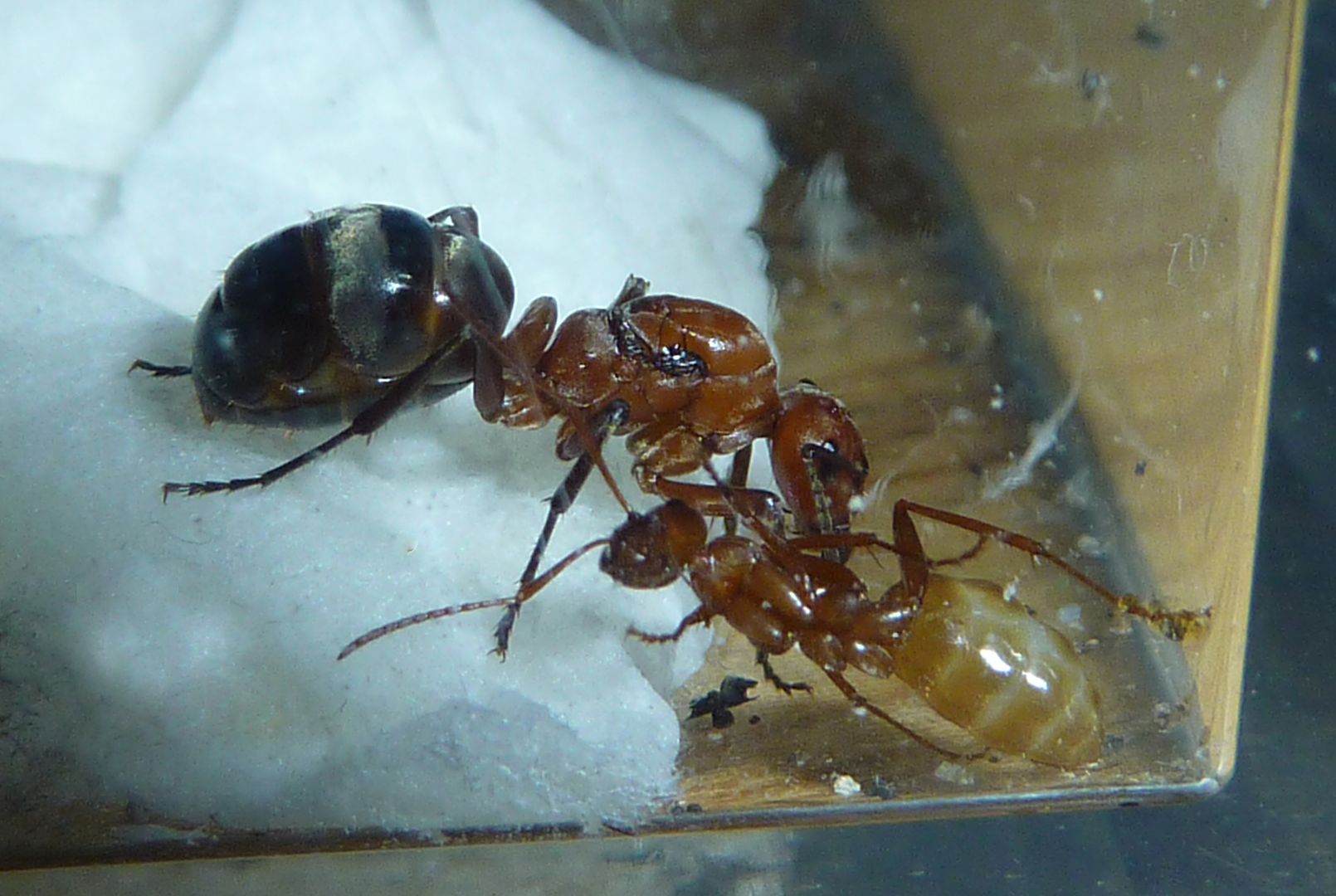
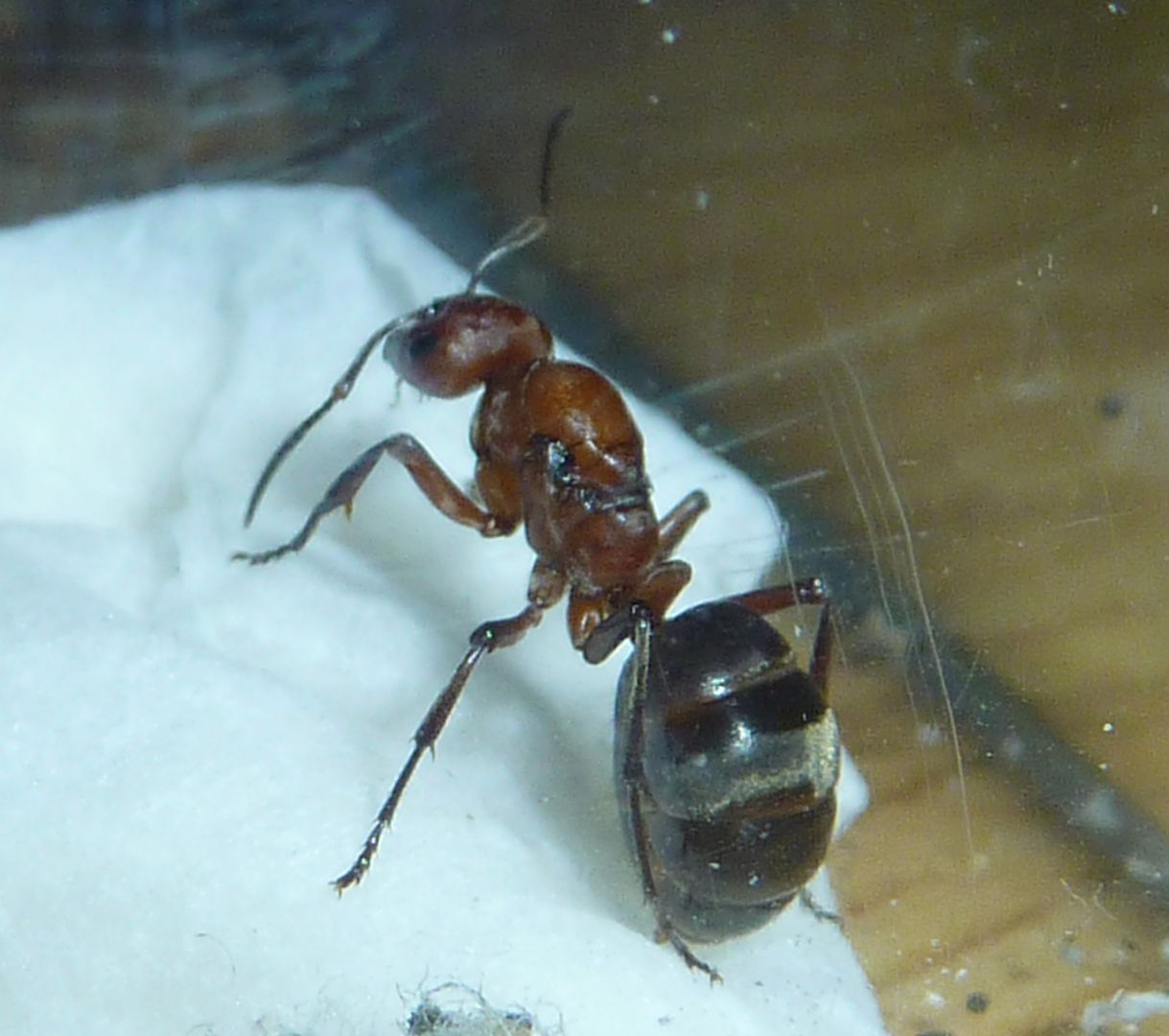
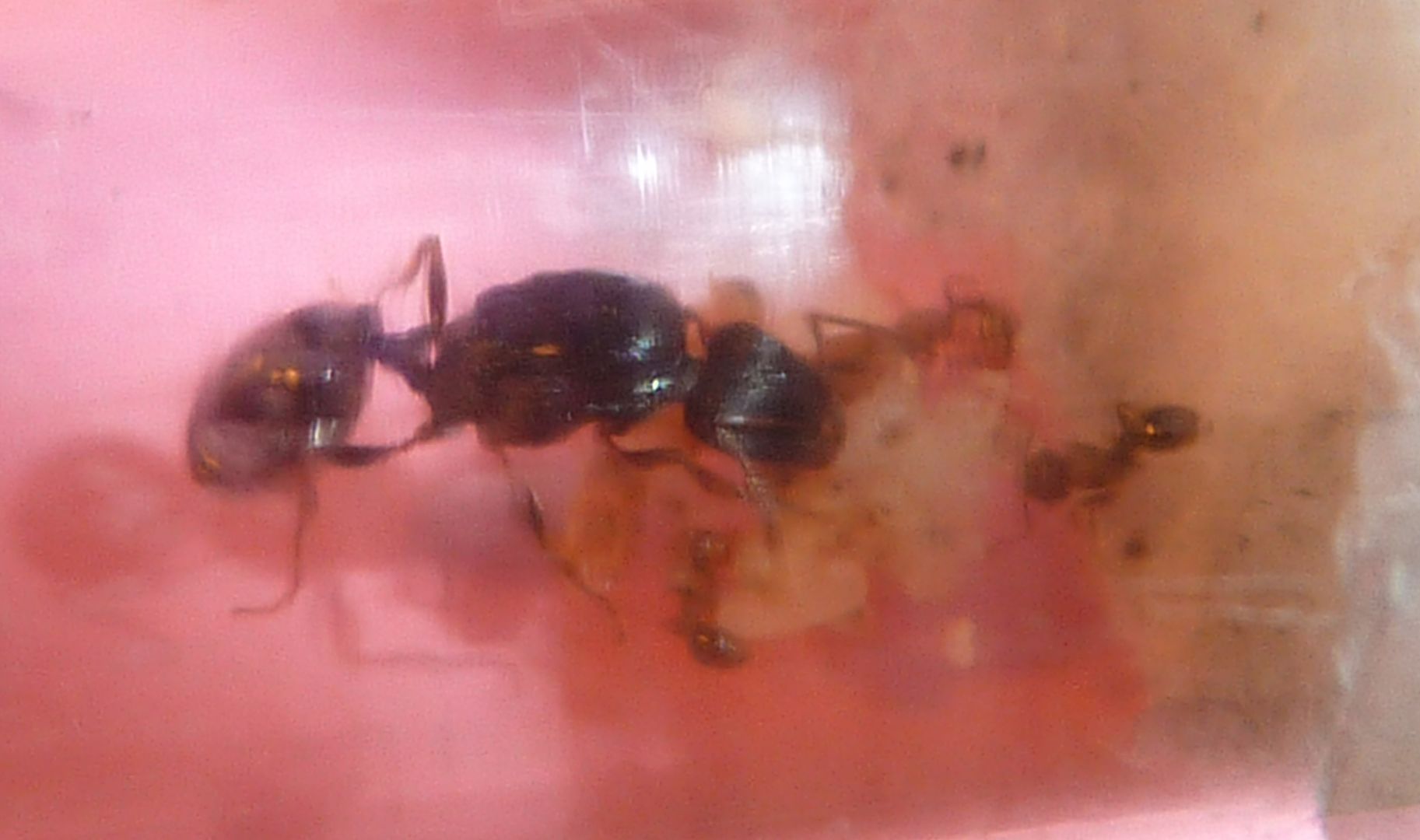
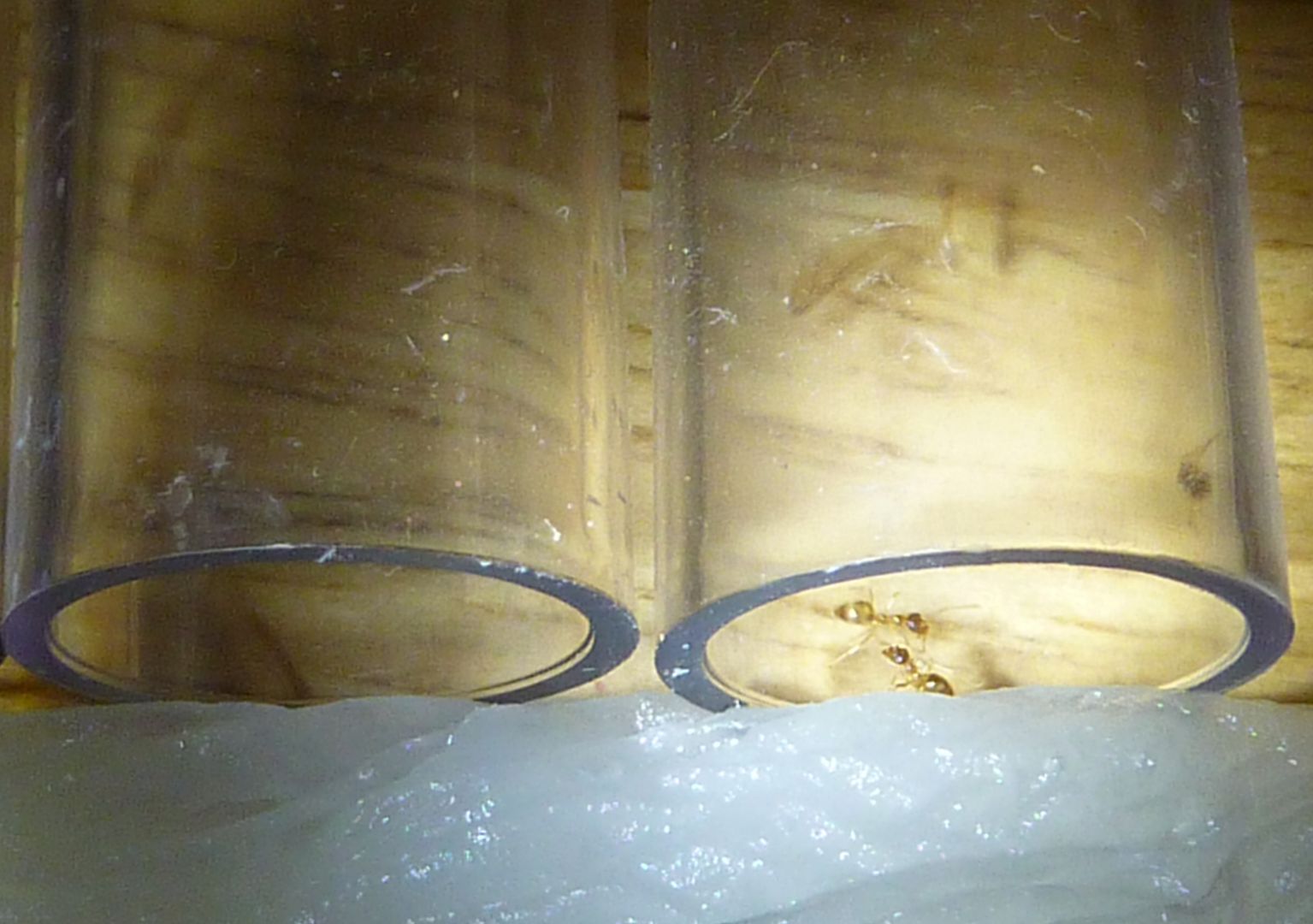 It's hard to tell here but both workers are from different colonies. I didn't get good pictures of it but generally one worker would assume an aggressive stance, mandibles open and gaster turned ready to fire off some chemical. Rather than return the aggression, the threatened worker started feeding the other. The aggressor would lower their guard. The two workers eventually went their separate ways.
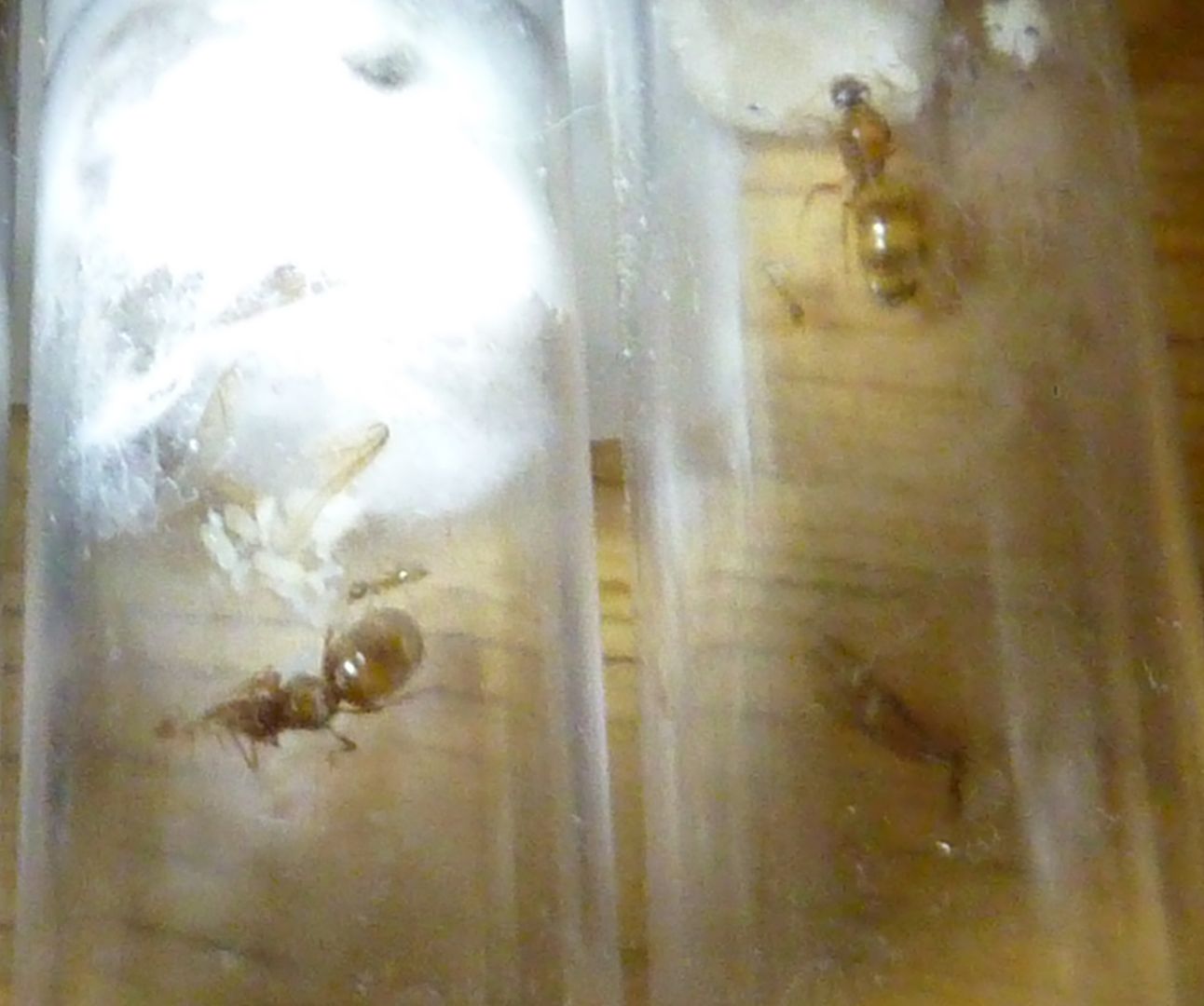 Here on the lower left a worker from the colony on the right has located the other's queen. The worker preformed the aggressive stance like before only to have the queen start feeding it to lower it's guard. After this is done the worker continues to wonder around freely in the other colony, eventually wondering back home.
This is either a series of muggings or from the other view, some kind of weaponized liposuction. I don't know how else to describe it. As with Honey Bees that swarm many of the individuals are to fat with honey to sting. Could the same be true for Prenolepis imparis repletes? Could making the other ant to fat to attack be the key to peace?
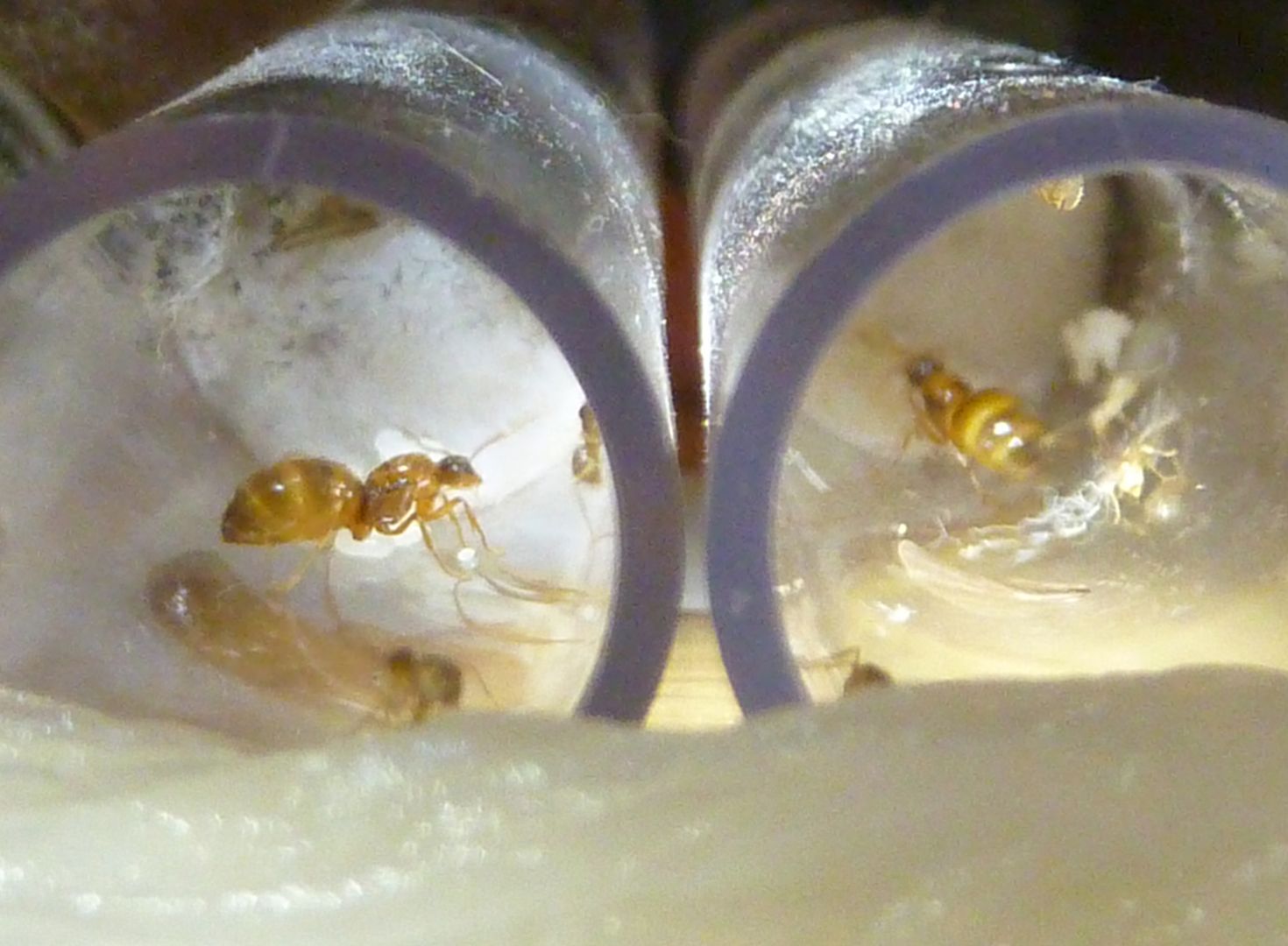 Workers between both colonies slowly become more and more indistinguishable as they roam freely between each colony. Mugging for food eventually stops all together. Of the two colonies that started doing this first, the one pictured on the right had more adult workers (those that had gained their full color).
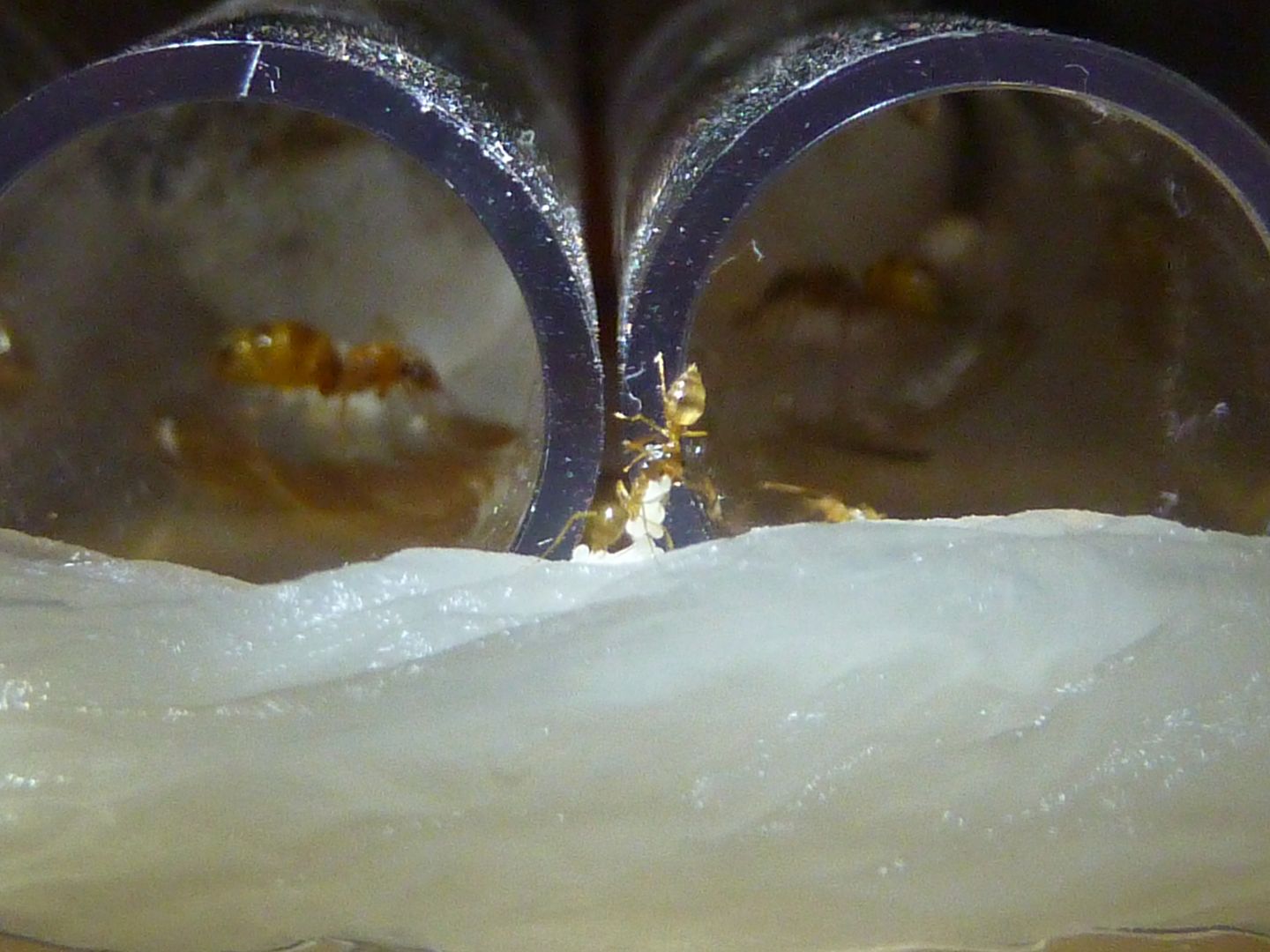 Eventually the dominant colony, or at least the one with more adult workers, started transporting brood from the other colony to their own.
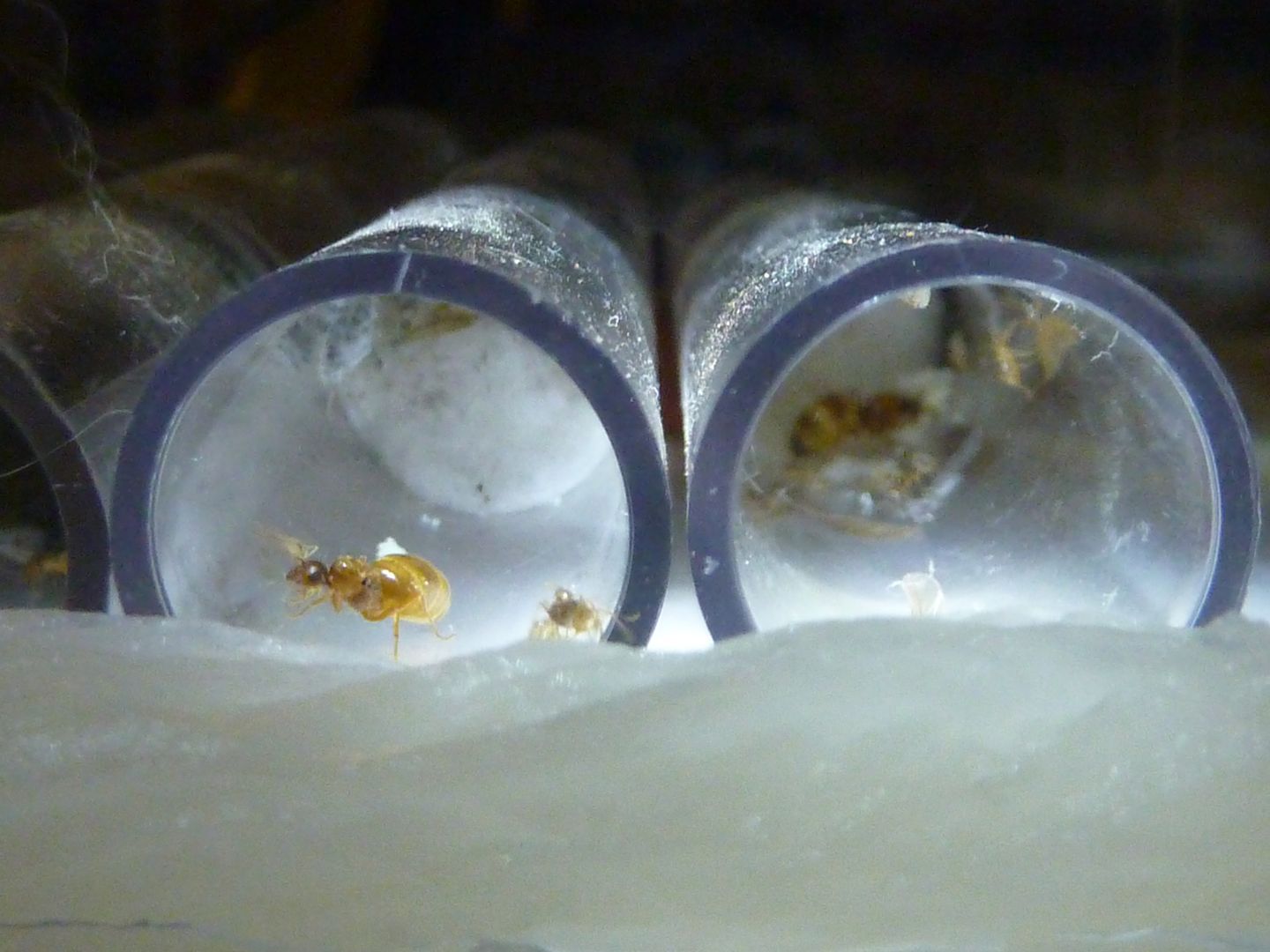 The queen to the colony on the left was curious where all her workers had gone and started roaming about. Upon finding brood scattered in her tube this left her wandering in confusion for a bit.
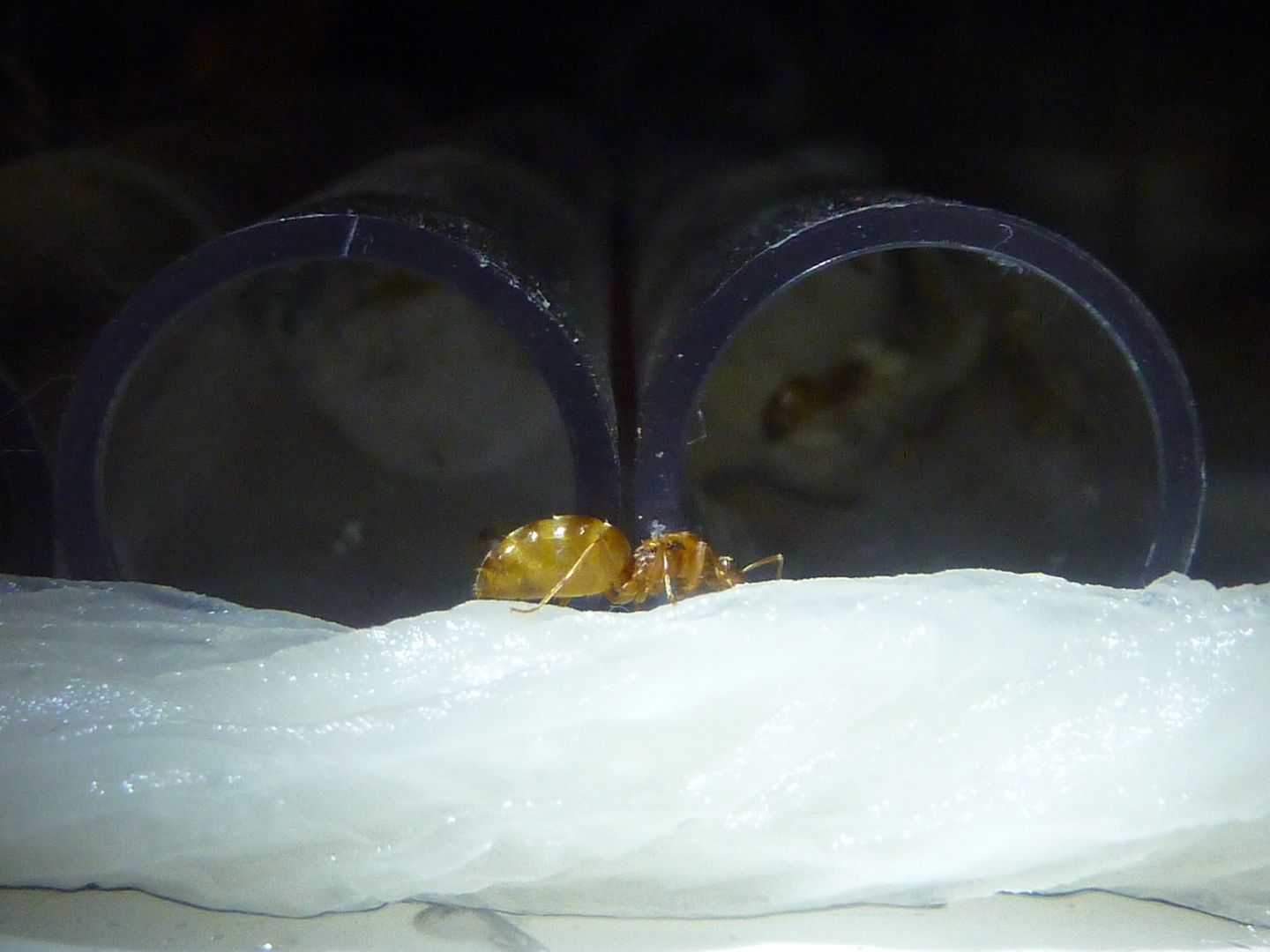 Eventually she got the idea and followed the thin trail of workers moving all her eggs into the other tube.
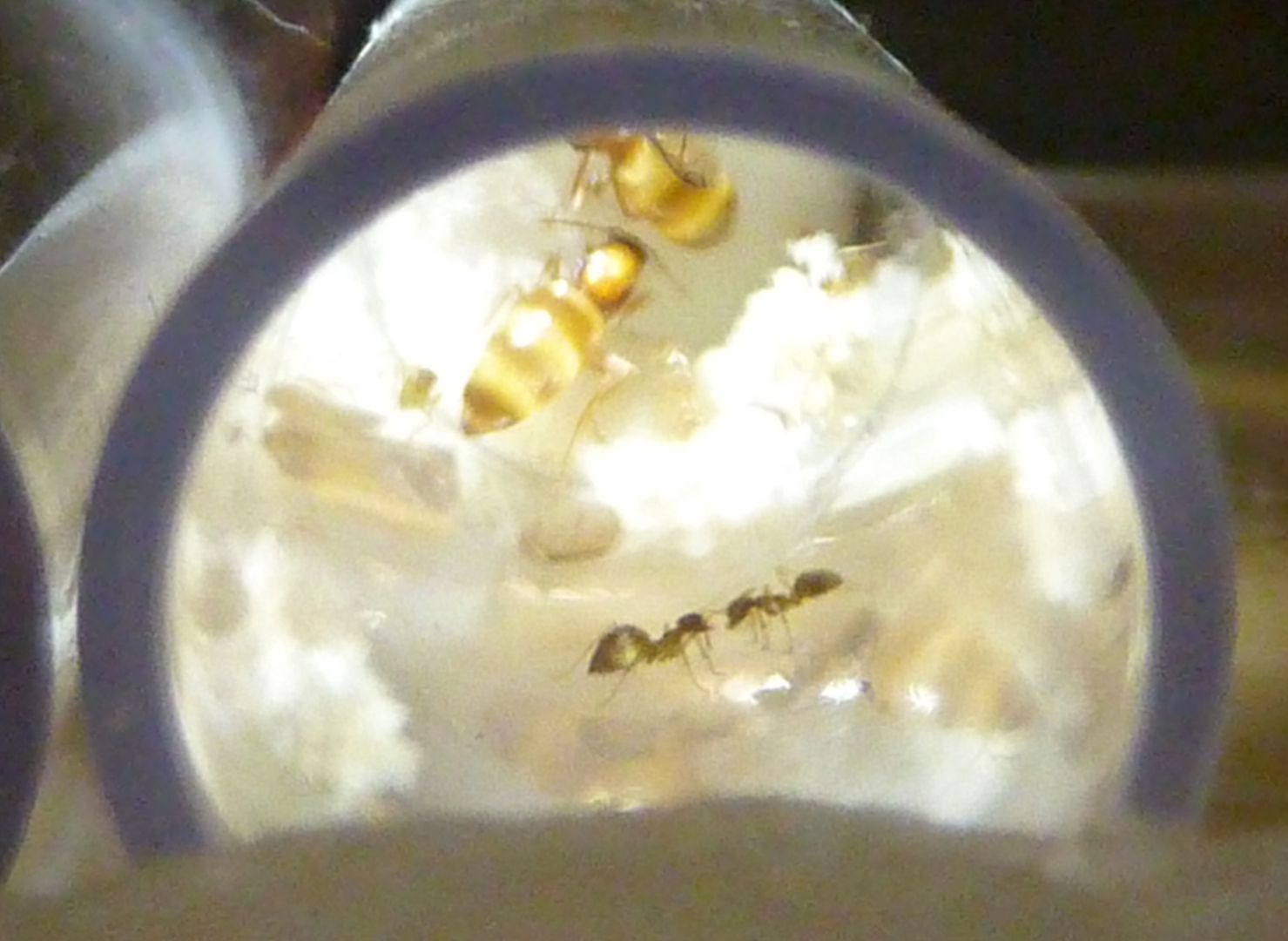 The two queens met one another without incident. The brood pile doubled in size thanks to the two colonies combining.
Over night this process was repeated with the other colonies in this setup and the result was one colony with four queens.
If I could do this experiment again I would repeat the same as above with 2 colonies. But with the other 2 I would try not feeding them at all. I'm curious to know weather or not exchanging food is important for a peaceful colony merging. What's more I'm curious to know if this is important with other P. imparis varieties as well other species. When the colonies are starving is it possible for two colonies to still find piece and not look at one another as food items?
In years past, locally, I have noticed Prenolepis imparis queens come in at least 2 sizes, and workers have at least 3 or 4 color patterns. I have tried this in years past with a slightly larger variety (the true species?) and it did not end well at all. On contact workers started fighting and killing one another, they stole the brood and out right murdered the queen to the weaker colony.
This is a bad reaction in captivity because it lowers the number of queens and colonies. Out in the wild though it's successful because it allows one colony to take over a nice patch of land where they don't need to fear much competition from their own species unless a larger colony already has claim to the territory.
Abstract
Nuptial flights usually result in queens scattering areas looking for potential nesting sites. Occasionally ideal sites are limited and more than one queen may start a nest there. When workers emerge these become delicate situations. Populations are low and every worker is important to a young colony. How species handle this situation is key to the colonies' survival. Here I decided to recreate what happens with this species, at least one variety, in captivity.
Experiment
Of 5 queens caught in March, only 4 successfully reared workers. (The last one died) Given how young the colonies are it is hard to say which variety I have, but given the options I'd say the closest variety they fit in with is the rare Prenolepis imparis var. minuta which is colored the same as the true species but overall smaller by about 2mm. I did not take this into consideration at the time of this experiment, if I had, I would have done this in two groups. Life is full of regrets.
This is either a series of muggings or from the other view, some kind of weaponized liposuction. I don't know how else to describe it. As with Honey Bees that swarm many of the individuals are to fat with honey to sting. Could the same be true for Prenolepis imparis repletes? Could making the other ant to fat to attack be the key to peace?
Over night this process was repeated with the other colonies in this setup and the result was one colony with four queens.
If I could do this experiment again I would repeat the same as above with 2 colonies. But with the other 2 I would try not feeding them at all. I'm curious to know weather or not exchanging food is important for a peaceful colony merging. What's more I'm curious to know if this is important with other P. imparis varieties as well other species. When the colonies are starving is it possible for two colonies to still find piece and not look at one another as food items?
Saturday, May 21, 2011
Formica pergandei Give a Head Start
I have two Formica colonies started from queens last year. One is Formica pallidefulva and she started laying eggs maybe a month and a half to two months ago. She's already got some fresh workers born for the year and it looks like the colony will continue to grow well into the autumn. The other colony I have is interesting though, Formica pergandei.
Formica pergandei is a social parasite of other Formica species. That is F. pergandei queens can't start a colony on their own. They have to invade established colonies of hosts and replace it's resident queen, usually by assassination and stealing the colony odor by rolling in the queen's juices, etc... so the host workers don't turn on here.
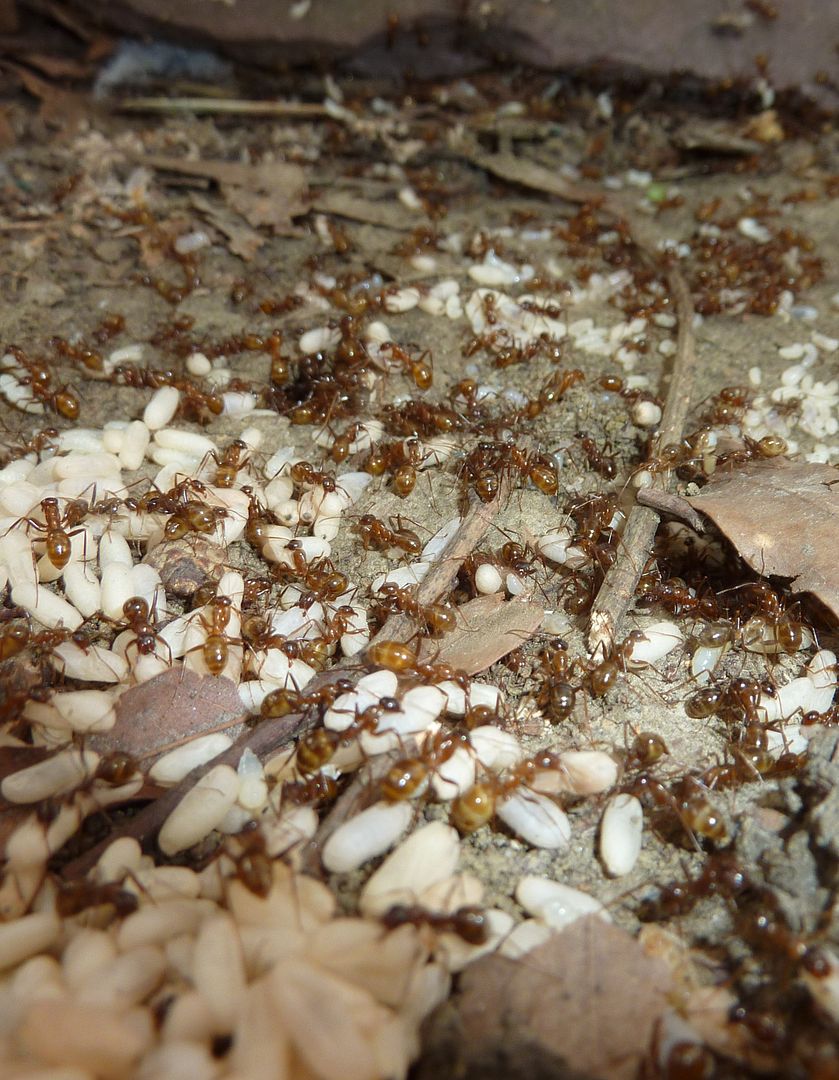
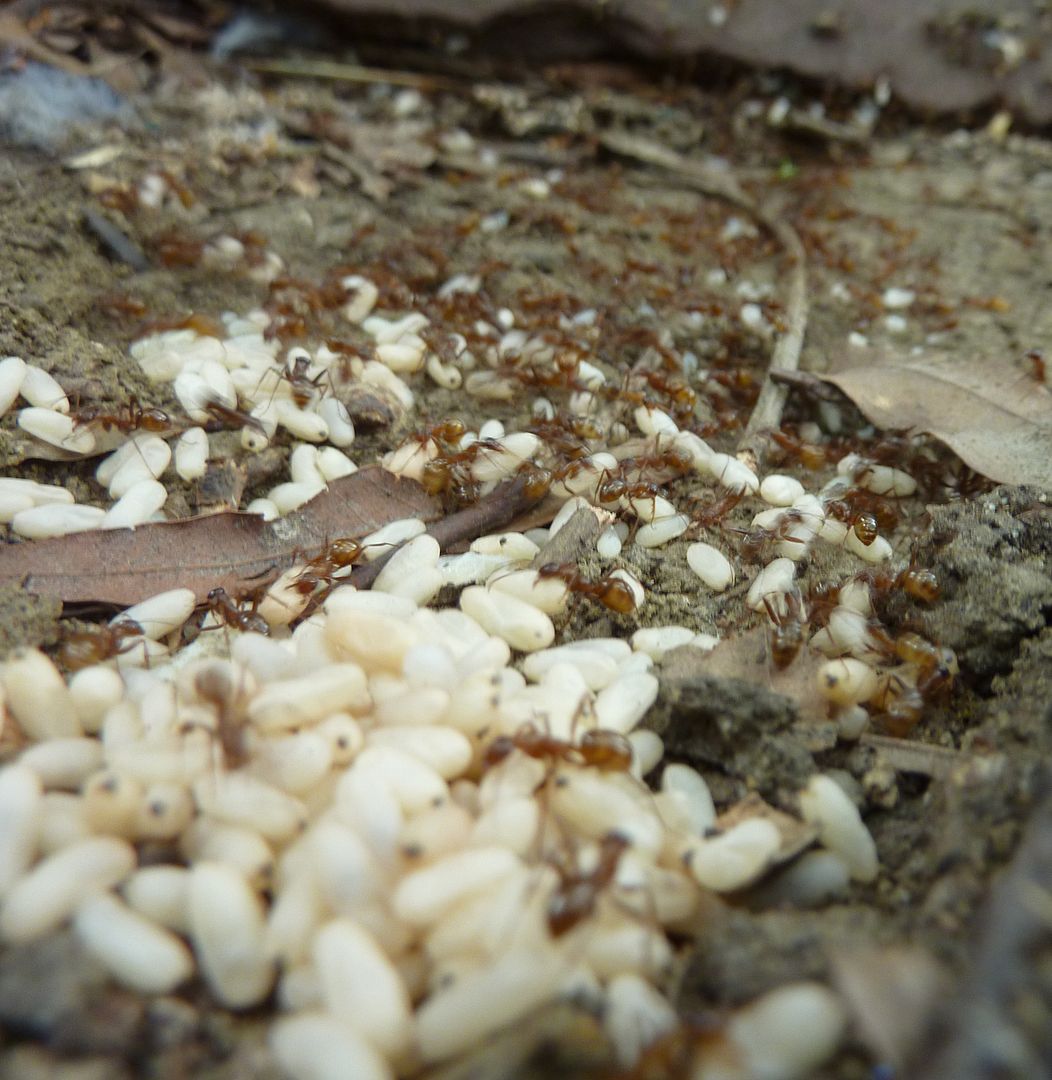
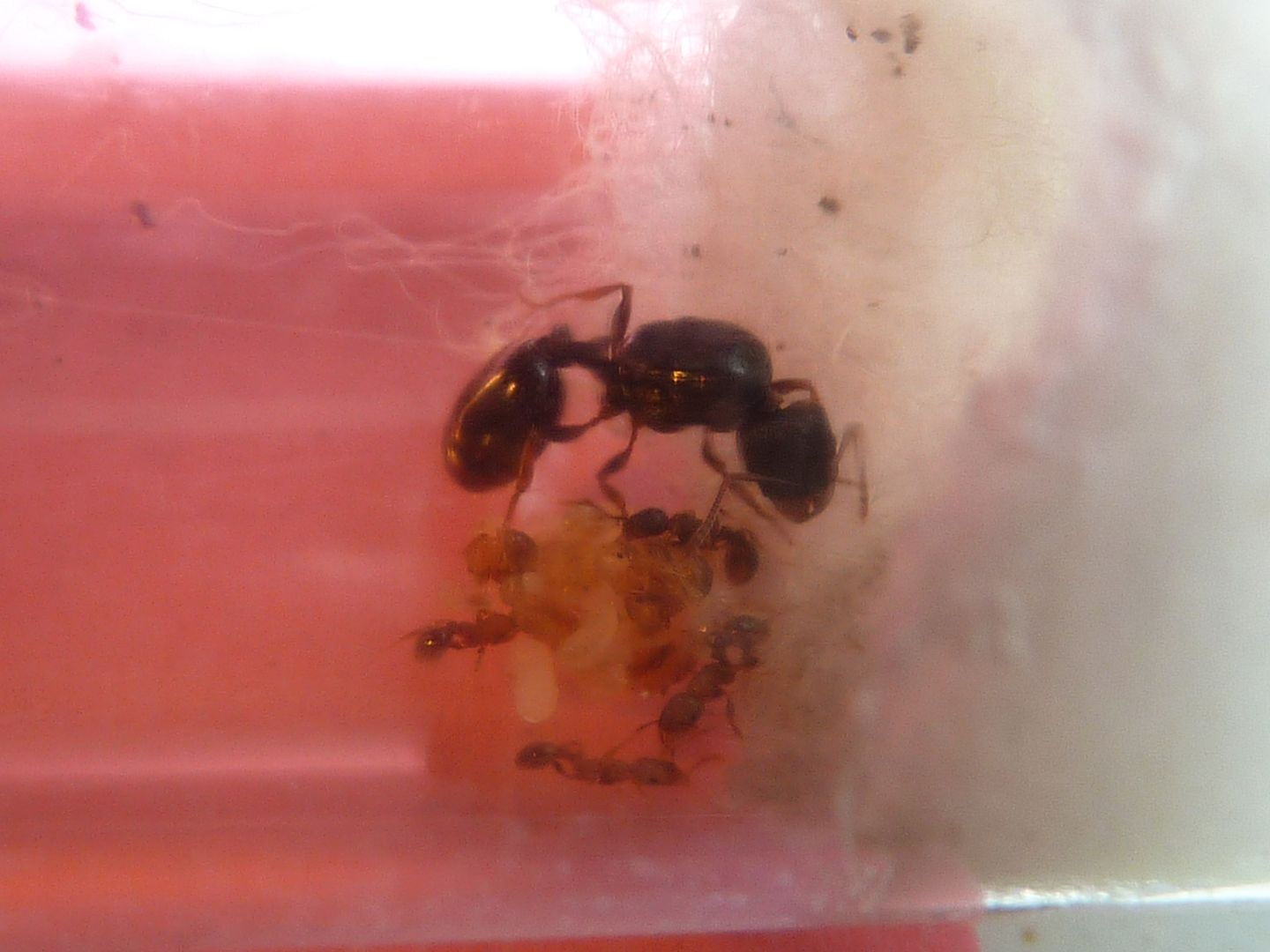
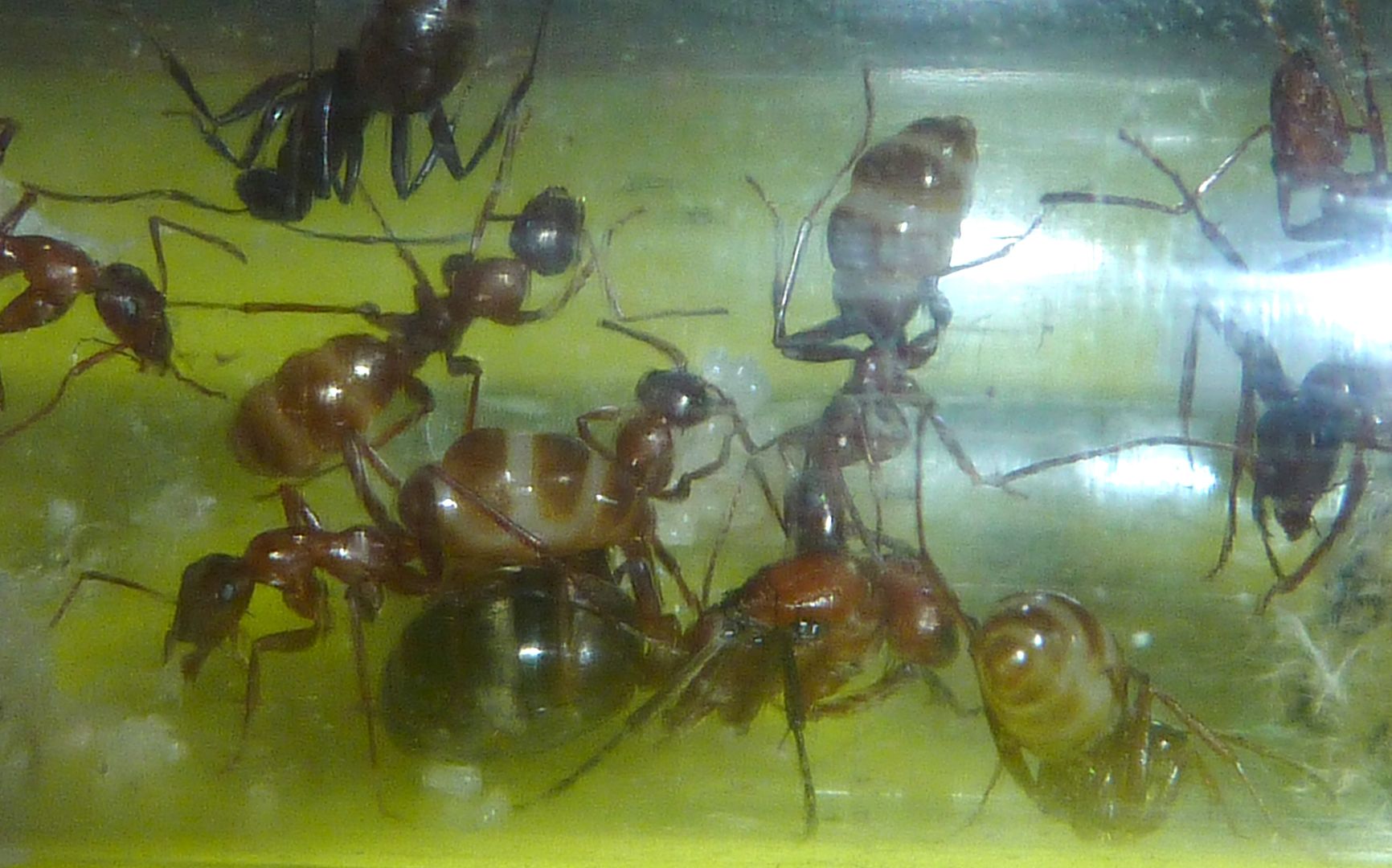 This picture was taken yesterday. Note the eggs scattered about as well the large clutch the worker in the middle is holding. As a social parasite she started laying eggs about a month later than the host species.
 She may produce workers but sometimes social parasites are so dependent to their host species that they're required for their survival. The trouble is the F. pergandei queen had to replace the F. pallidefulva queen in order to start her colony, so they're eventually going to run out of host workers.
 F. pergandei colonies get around this by raiding established host colonies for brood. Occasionally I believe host colonies are out right overrun by the F. pergandei as they move their entire nest into the new location. It's a vicious cycle but at least the F. pergandei are giving their hosts a chance to get a head start. Come summer though the F. pergandei will be born and raids will begin.
Formica pergandei is a social parasite of other Formica species. That is F. pergandei queens can't start a colony on their own. They have to invade established colonies of hosts and replace it's resident queen, usually by assassination and stealing the colony odor by rolling in the queen's juices, etc... so the host workers don't turn on here.
Monday, August 16, 2010

Sunday, July 25, 2010
Tetramorium Colony

Monday, November 23, 2009
Pheidole pilifera (journal)
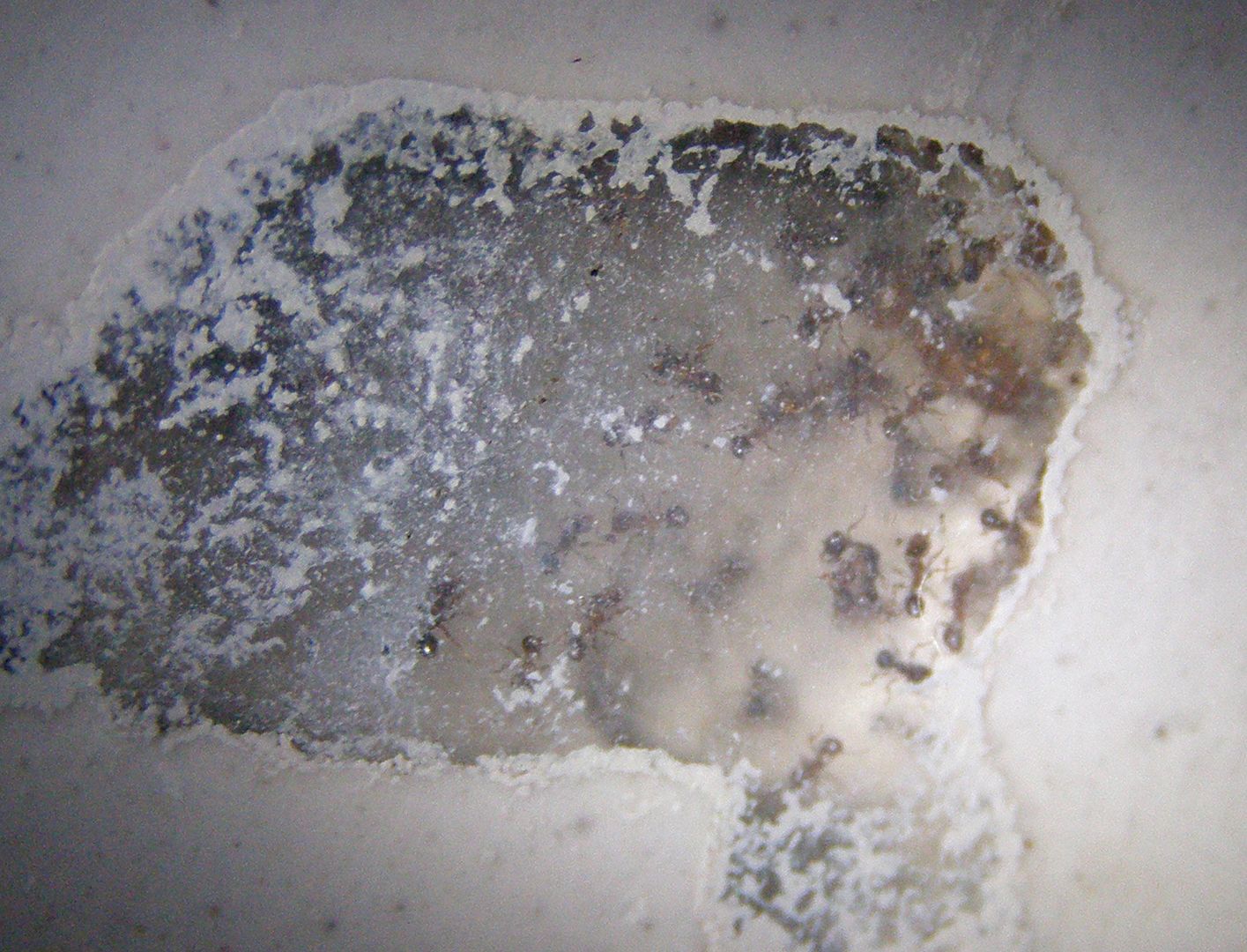
My Pheidole pilifera colony. Not that you can tell what they are though from this photo. These ants are incredibly small and normally nest in sand. This is the whole colony and they could all easily fit on the tip of my thumb. They're not digging into the plaster but are able to nibble at it. They do this mostly as a reaction to water, or in this case condensation that sometimes forms on the side. They probably won't dig tunnels into the plaster until they've expanded into the other chambers. That's a long ways off though.

They're in the middle chamber to the far right. The Test Tube is no longer in there of course, this is an old pic from the summer. I keep the surface area clean as best as I can. Black patches of mold grow if food is left there. It scrapes off easily though. I don't think I'm damaging the plaster at all. I'm really surprised that that's the only place where mold is growing. The whole setup is basically a sponge and only the parts with open access to air are really growing. Plaster setups really only last 2 years anyhow and it will be easy enough to move the colony.
Subscribe to:
Posts (Atom)