Showing posts with label Digger Bees. Show all posts

Friday, April 25, 2014

Spring Pollinators

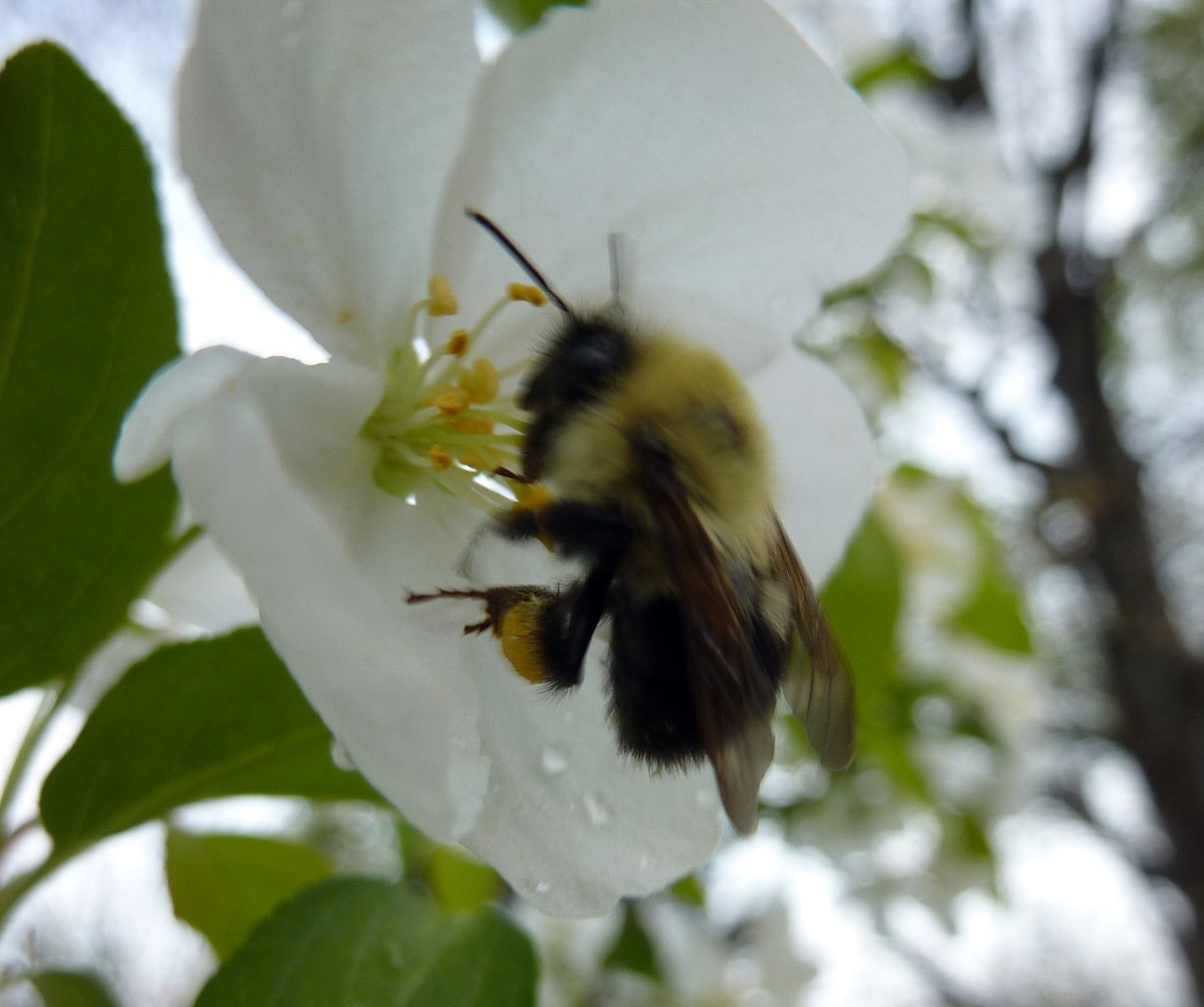
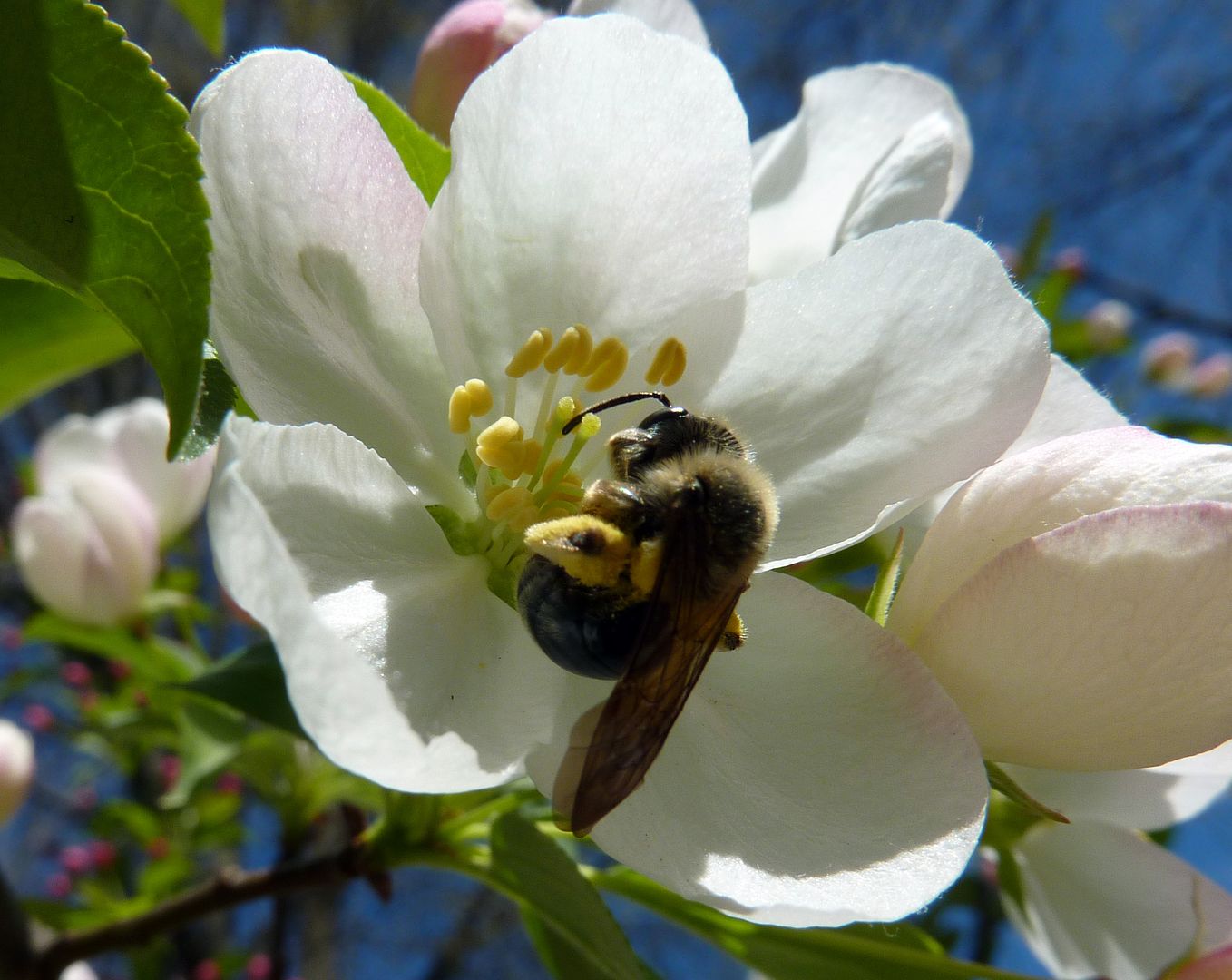
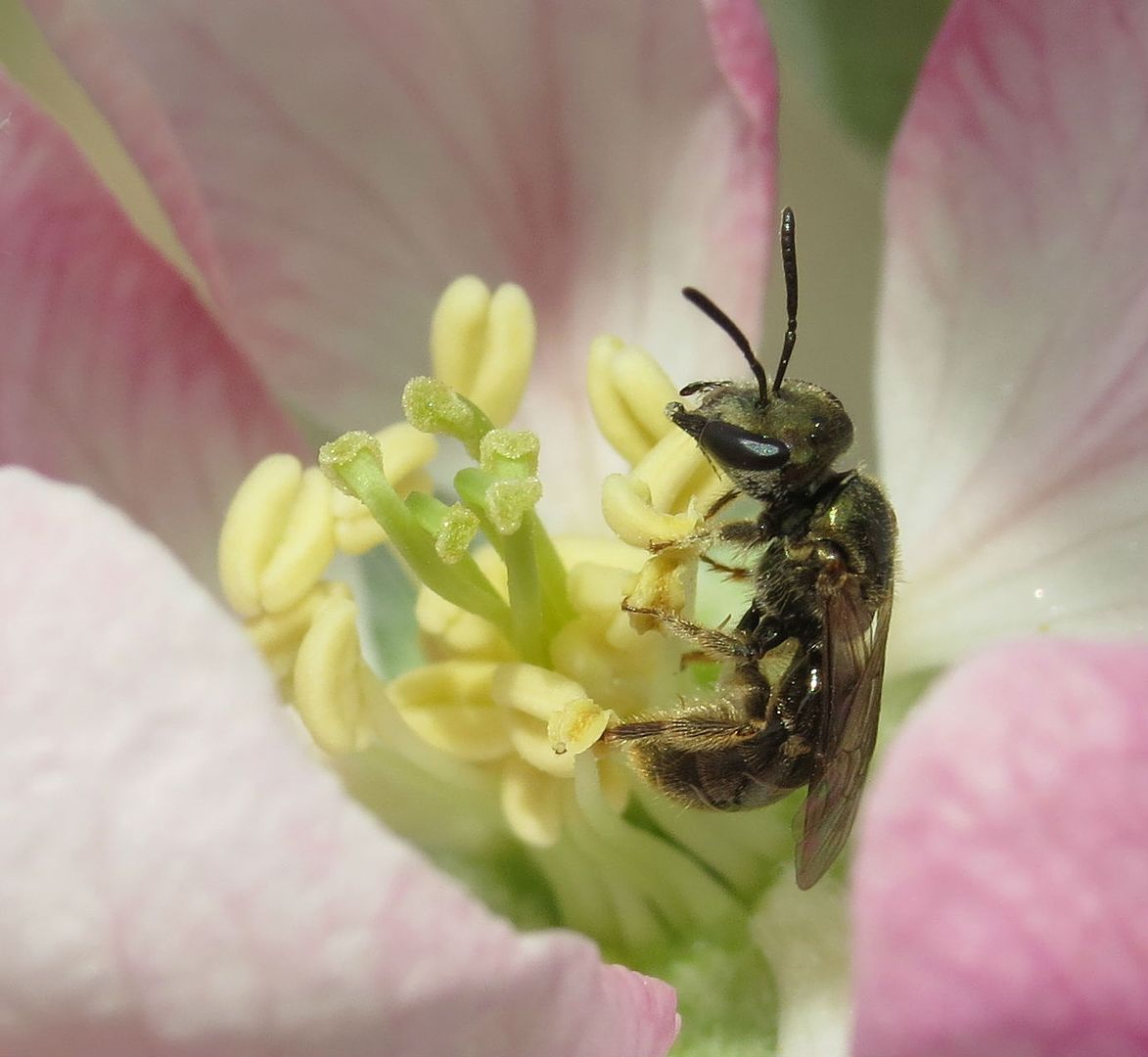
Although it was a breezy cool day in the 60's, I managed to have some fun with my camera today. Here is a sweat bee taking refuge from the chilly air in the flower to an apple tree. They were collecting pollen but a few, (males?) that were hanging out in the flowers. Apples aren't quite at their peak here. 

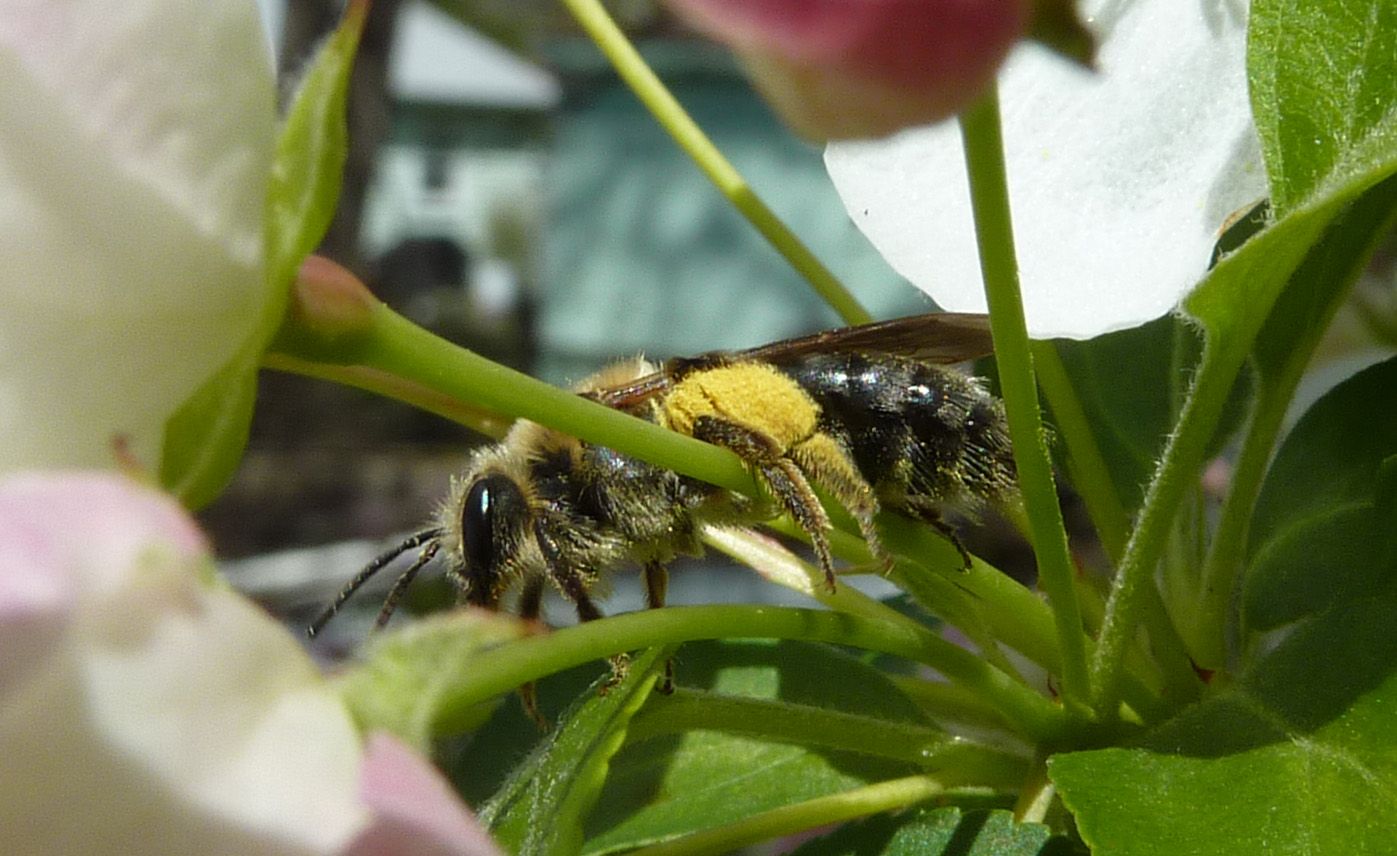
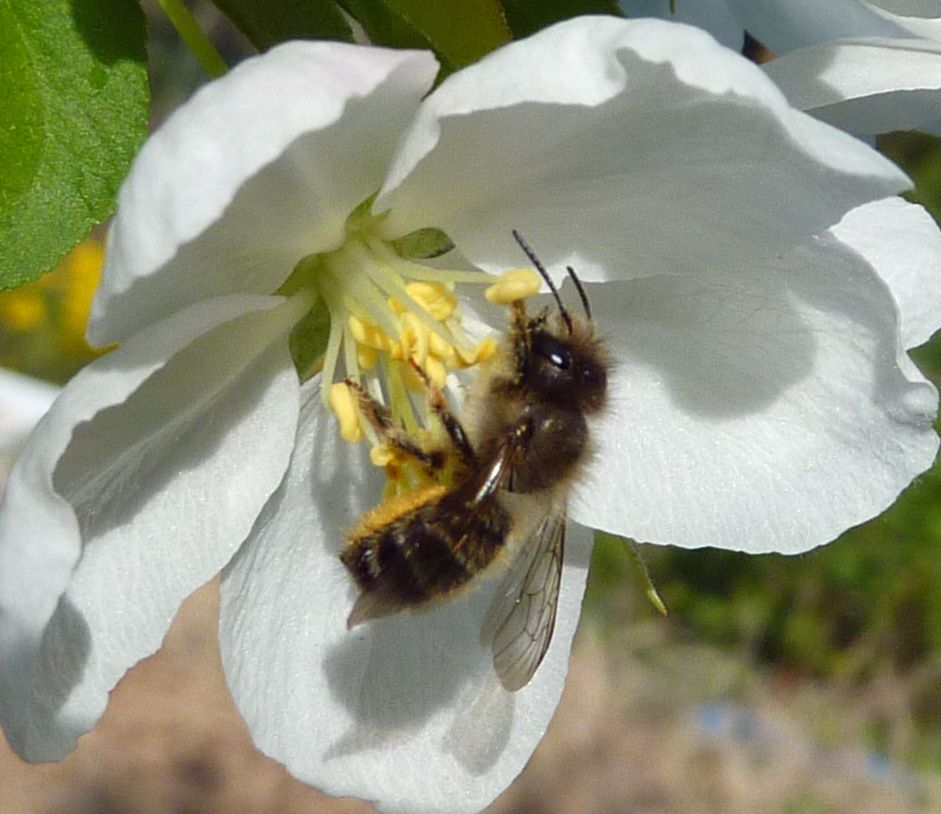
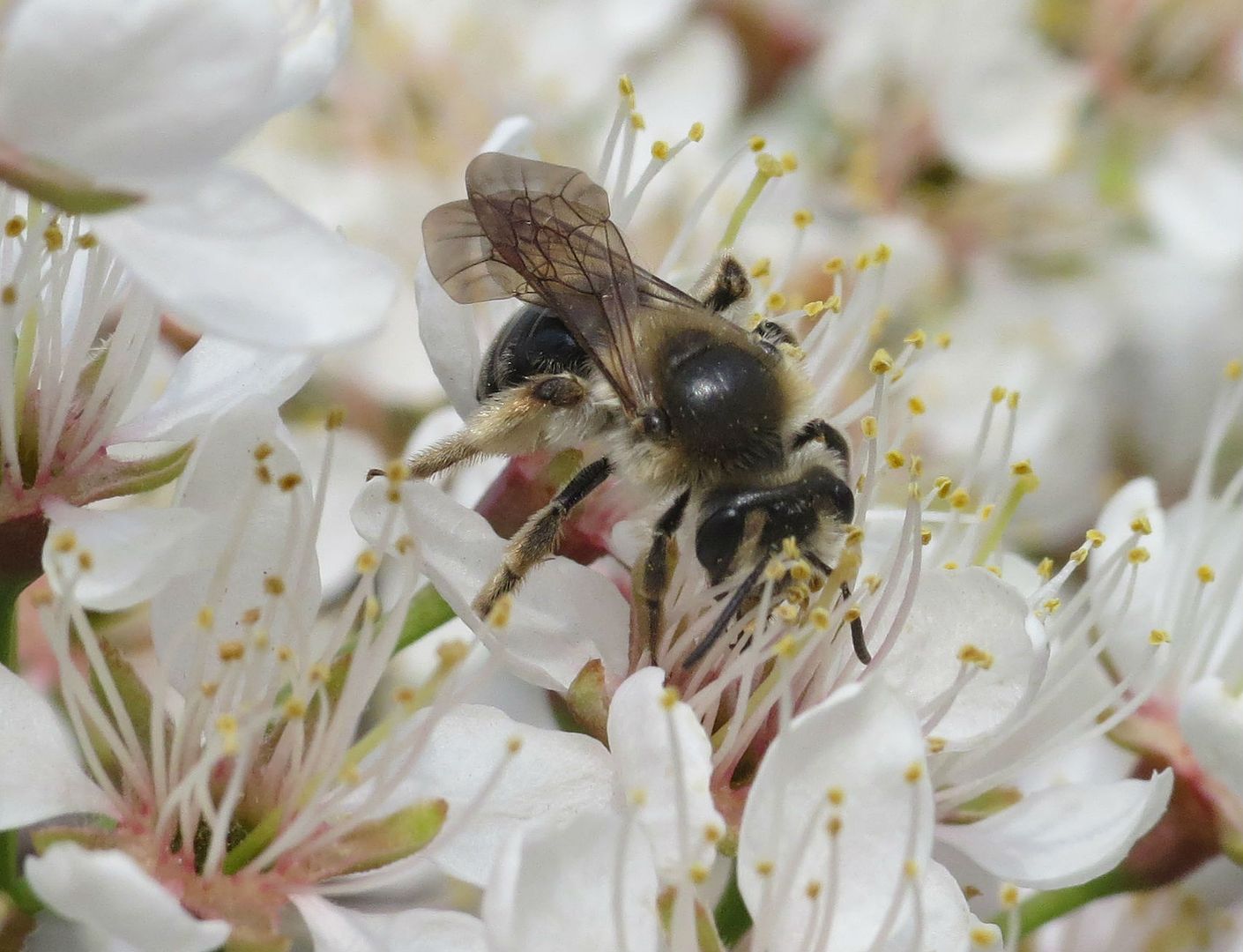
Here is what I believe is a mining bee working the native plum trees. There are tons of flowers on the trees this year so I should get another bumper crop like I did two years ago. I was pulling 800+ plums off of each tree, though native plums are small and bite sized. Still though, it was quite a lot of fruit for a first year's flowering.

These types of bees like to burrow in sandy hillsides usually clear of tall foliage; often in full sun, though the early species/generations work do full shade just fine because the trees haven't filled in yet. I'm not sure how successful these shaded burrows turn out though compared to ones in full sun. But of course tall grasses and forbs may grow more abundantly on sunny locations.

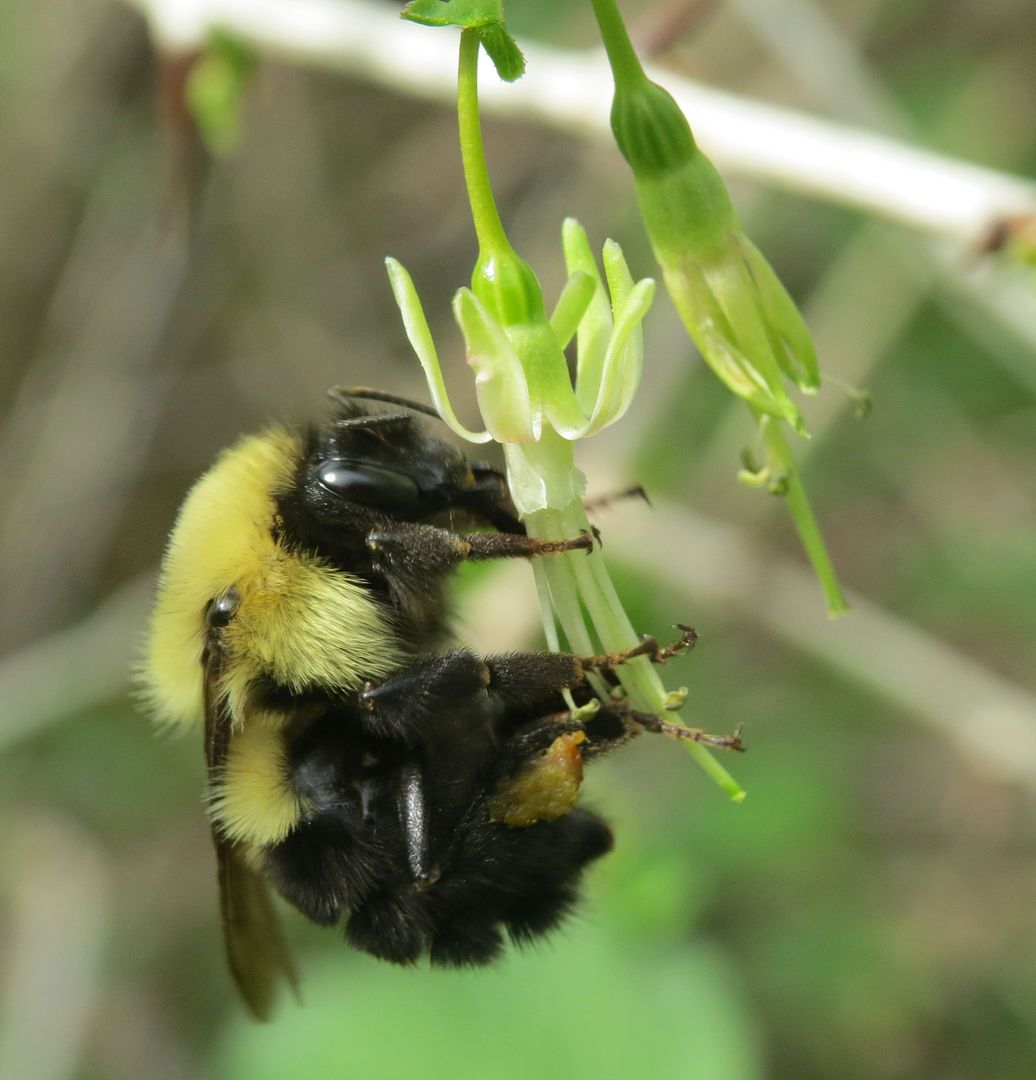
Last week I saw all the queen bumblebees flying about looking for nest locations. And now I see they've all settled in it seems. Bumblebee queens that are collecting pollen are committed to starting a nest. Pollen if fed to developing brood while the nectar of the flower feeds the adults. Some nectar is turned into honey too and also fed to the brood but bumblebee honey is runny and contains high amounts of pollen anyway. 

Here I watched a queen visit the flowers to our gooseberry/currant. It was neat watching her work these small, inconspicuous flowers, when the native plum, apple, and peach trees are all right beside them. She was devoted to visiting each and every flower on this shrub, ignoring ones she already visited. I did see her fly to the plum tree once, but that was very clearly an accident on her part, as she virtually walked right over the flowers in search of the gooseberry she'd been working. Bees are often devoted to the pollen of the type of plant they work because the nutritional value can vary greatly from plant to plant. It's best to raise brood on one type of pollen to perhaps judge the results, or maybe it's detrimental to mix and match pollen types? Whatever the case, this devotion to one type of plant is what makes them excellent pollinators.

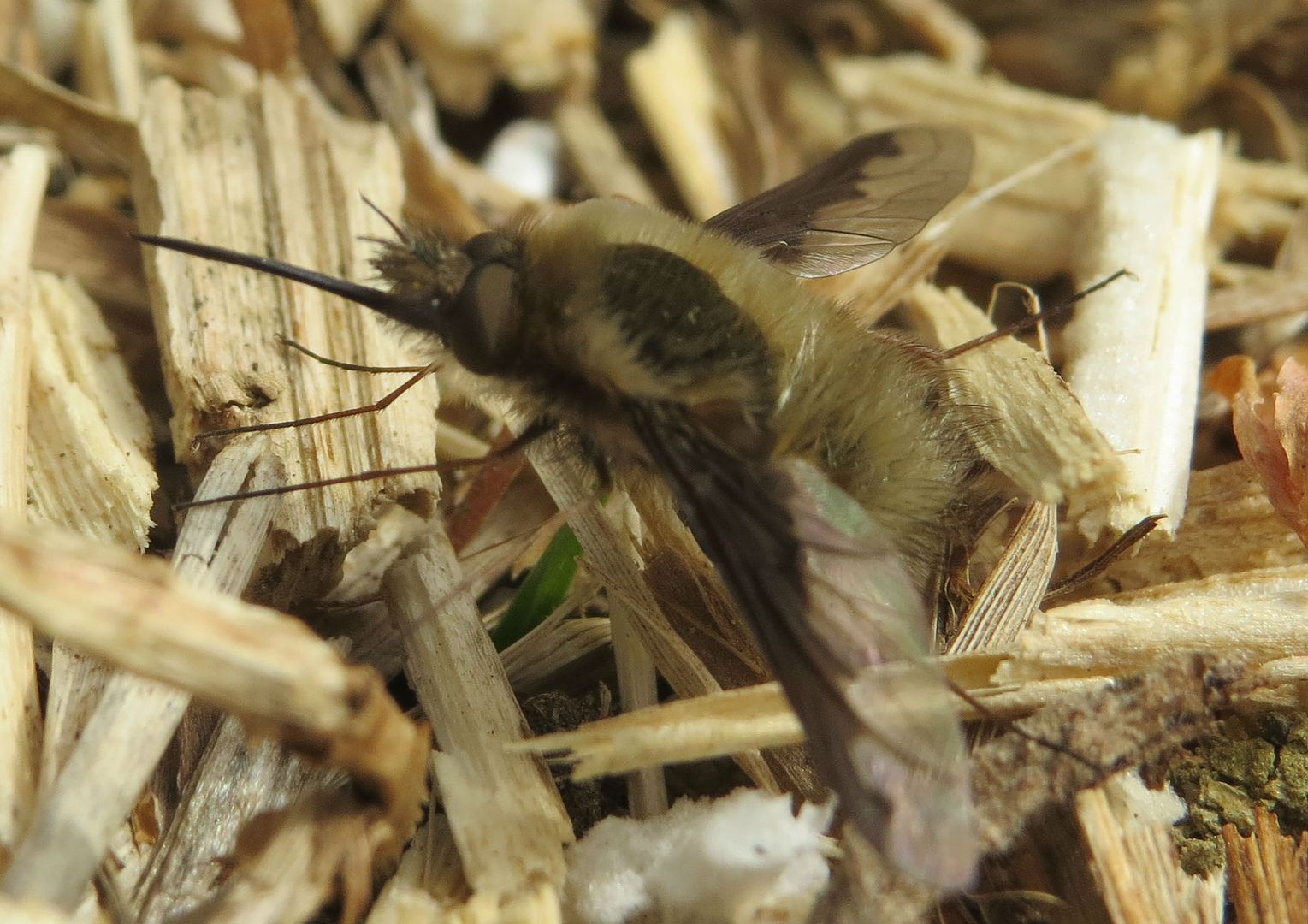
Also buzzing about were the beeflies. These do visit flowers, though the ones I saw seemed to be more interested in sunny themselves on the mulch. These mimic bumblebees to gain entry into the nest and lay their eggs in the hive. I don't believe all beeflies do this, others simply lay their eggs adjacent to the nest and the resulting maggots crawl inside, or have some other host/parasite relationship worked out with other things. I don't see them that often honestly. 

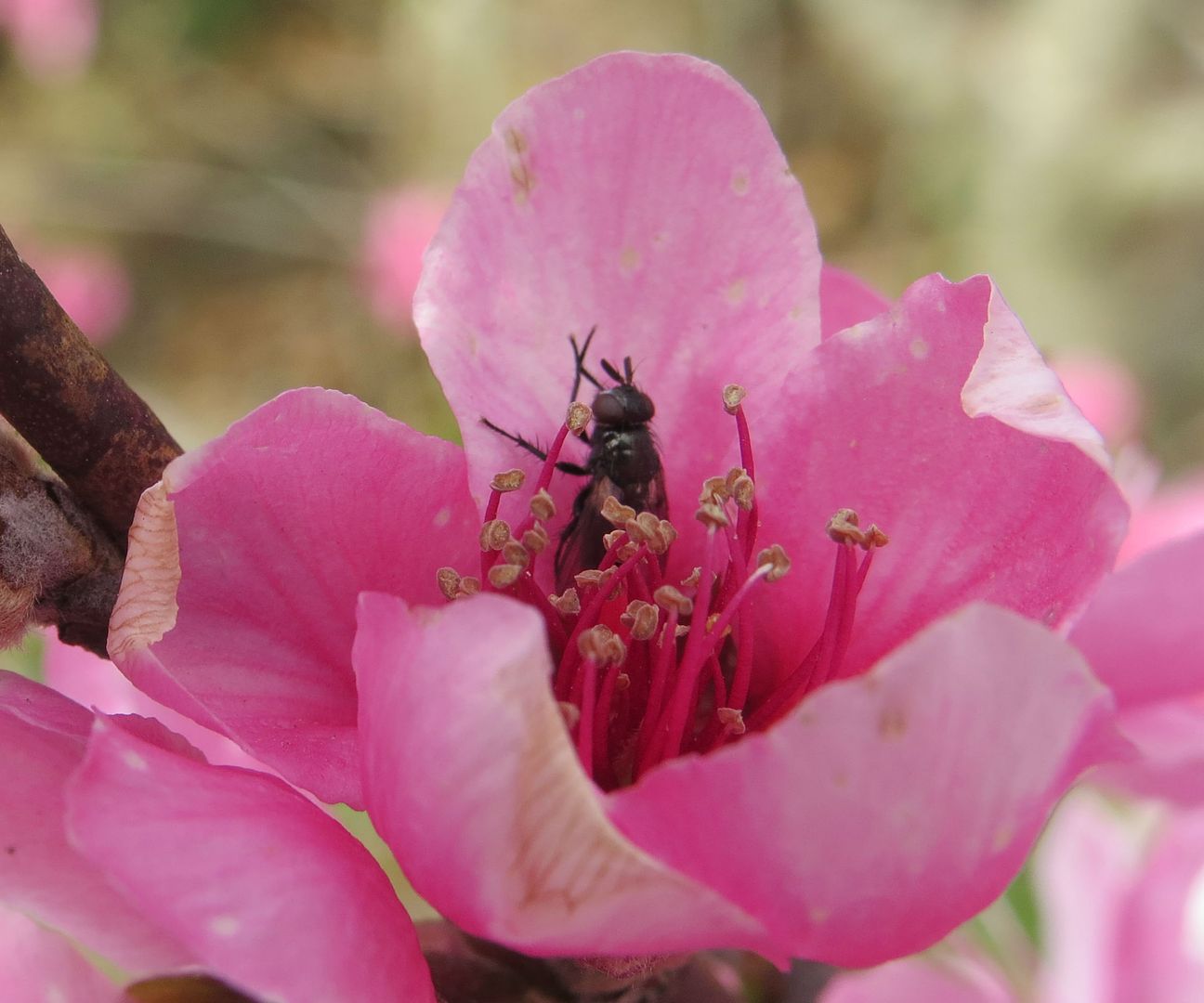
And lastly I thought it was interesting to see some actual flies doing some pollinating. This was on our peach tree, which the honeybees were also working in favor of the plum and apple. However, it was just cold enough that the honeybees weren't out in abundance for me to photograph. Flies though seem better weathered about the cold and were flying from flower to flower. This one was sipping at the nectar in the flowers it visited before turning around and darting off. To be honestly though it reminds me of a parasitic fly, so perhaps they were laying eggs or something as they visited the flowers. 

Thursday, April 12, 2012

Some Wild Bees

My friend tells me this is a worker bumblebee, most likely Bombus bimaculatus. This warm year seems to have sped up their cycle somewhat so it's a little early to see workers flying about in April. Even so, this is one of the shorter lived species, with hives normally petering out in July. They make their reproductives and the colony soon falls apart for the year leaving loan males and young queens out in the wild waiting until the end of summer, all of autumn and most of winter to pass before starting a hive of the own. I'd be curious to know if this year's hives grow larger than usual or perhaps makes reproductives sooner than normal.

Osmia lignaria, The Blue Orchard Mason Bee, is one of the few bees I can identify on my own. I believe the reason might be because it's somewhat unique looking. This is a type of Mason bee which lives in preexisting, tube shaped, cavities that only have one entrance. That sounds like a long list of requirements but the structure occurs naturally in nature all the time: wood boring beetle grubs emerging from a tree, or last year's hollow stemmed herbaceous perennials for example. 

This Andrena sp. is a type of mining or digger bee. Both common names work as they nest underground no matter what you call them. Unlike Mason bees they collect pollen on their legs, while Masons store it under the abdomen. I'm not sure why this is though perhaps it has something to do with digging requires thick sturdy legs with hairs to aid in moving the soil. These same hairs likely double as pollen collectors.


Osmia taurus, an introduced species that's displacing some of our natives. Because of this and other introduced mason bees, most experts seem to be on the fence about recommending Mason Bee Tubes (such as those sold by Knox Cellars Native Pollinators). The idea being such sites would allow the nonnatives to gain access to other locations they haven't reached. At the same time though they provide nesting for natives as well. Unfortunately this is a topic that needs more study. O. taurus is abundant in my area but I still have native species, and presumably 2 other species nesting alongside them.

A major reason to discourage nonnative bees is they sometimes specialize in pollinating noxious weeds. The Giant Resin Bee, Megachile sculpturalis, is an introduced species from Asia. It's basically an overgrown leaf cutter bee that goes right for plant resin instead of cutting leaves. It's also a more suited pollinator of the dreaded Kudzu, Pueraria montana. Kudzu used to rarely produce seeds as very few of our native pollinators were managing to pollinate the flowers, though I'm sure many were able to steal nectar from it.

As things leaf out we'll start to see real leaf cutter bees flying around. These nest in both underground holes and in preexisting tubes. They're set apart from digger and mason bees in that they cut slices out of leaves to make chambers, instead of using mud or simply burying their young. Over the summer I'll also be keeping an eye out for Squash Bees, Sunflower Bees, and Rose Mallow Bees. Also buzzing about now should be Blueberry Bees; all of whom specialize in flower shapes that their common names suggest.
Saturday, October 29, 2011

Native Bee Class

Sorry for not blogging anything for the past week. Basically the weather here has been miserable and in fact it's snowing right now. Hopefully the following post makes it up to you all.

I spent the day at the Mt. Cuba Center for their class on Native Bees. I can't recommend courses at the Mt. Cuba Center highly enough. That place should be a national treasure. That said though I felt today's course could have been structured slightly better. The first half was done well enough the instructor started going into common bee genera and it wasn't very apparent that they were in any logical order, or at least as logical as it should have been. The real issue I think was that the class and material he usually gives takes 5 days to complete, and he had to sum it all up in 3 hours. 

He didn't go over different nesting type or habitats. Most surprisingly of all, he suggested that it might be bad to put out mason bee nest blocks because it helps the spread of an two invasive species. Putting out the nesting blocks is like a double edged sword. He didn't really go into it as much as I'd have liked. Though personally I'd need the 5 day version of the course to learn all the taxonomy.

What he did cover was excellent and mostly focused on how flower shape and color have shaped their pollinator bee counterparts. He mentioned studies that show getting rid of the pollinator doesn't cause the plant to vanish typically, but getting rid of the plant can get cause the specialist bee to vanish.


North American is not a very species rich continent, but when it comes to bees, we're one of the top continents in the world. Because of these specialist relationships with plants, especially in the south west where mountain ranges keep lots of arid micro-habitats isolated. The diversity of plant species there have greatly increased the diversity of bees who pollinate them. 

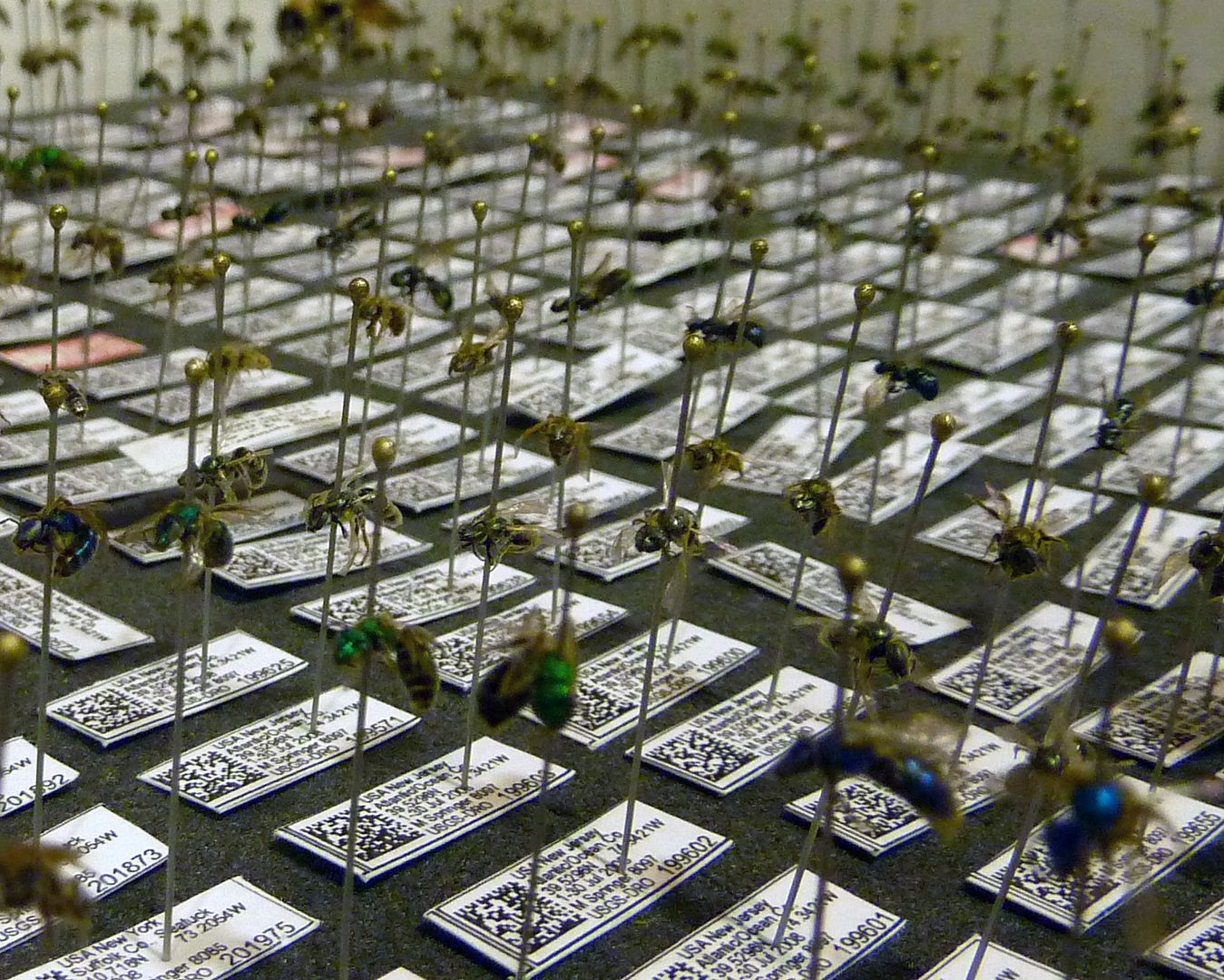
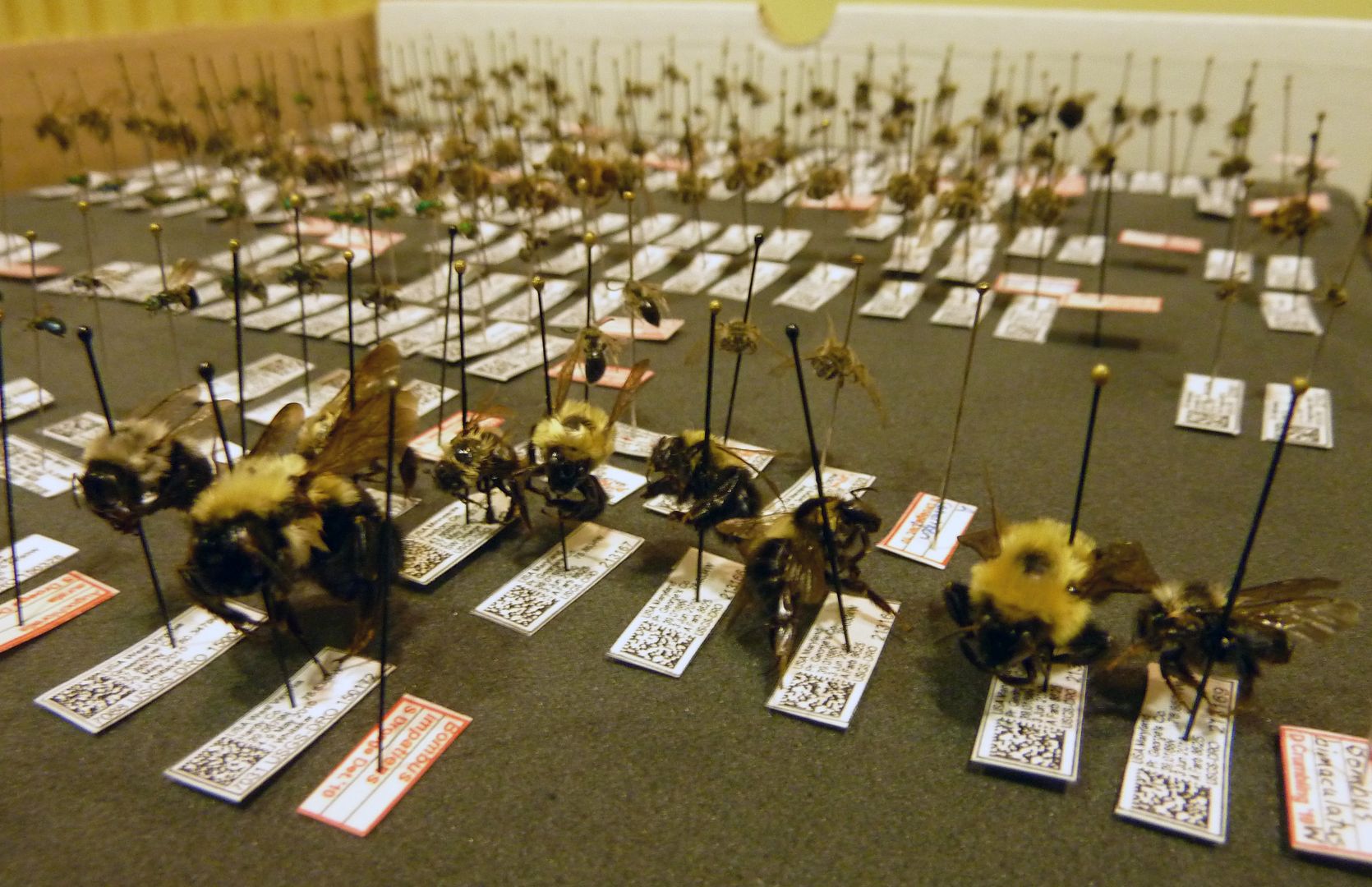
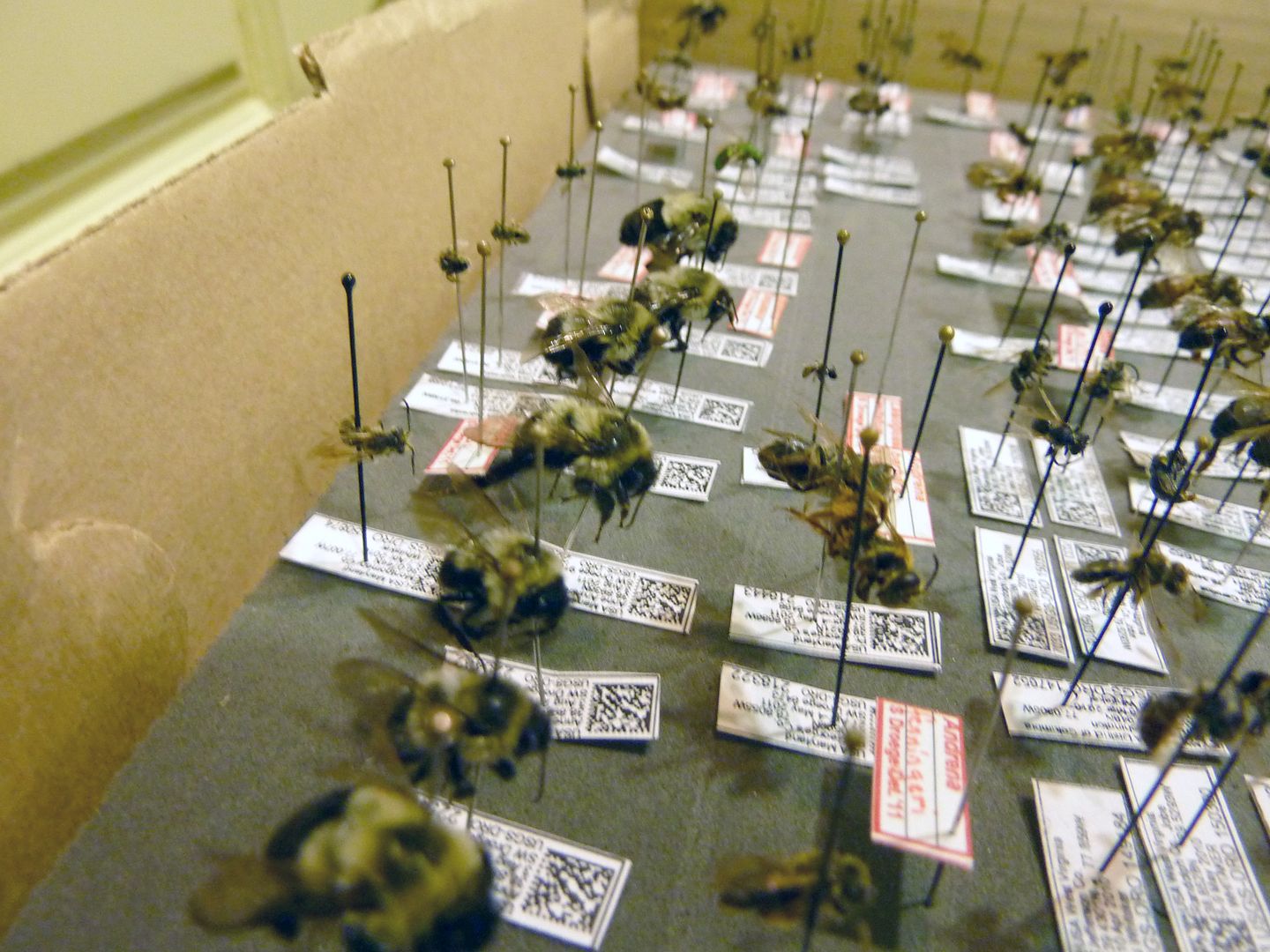
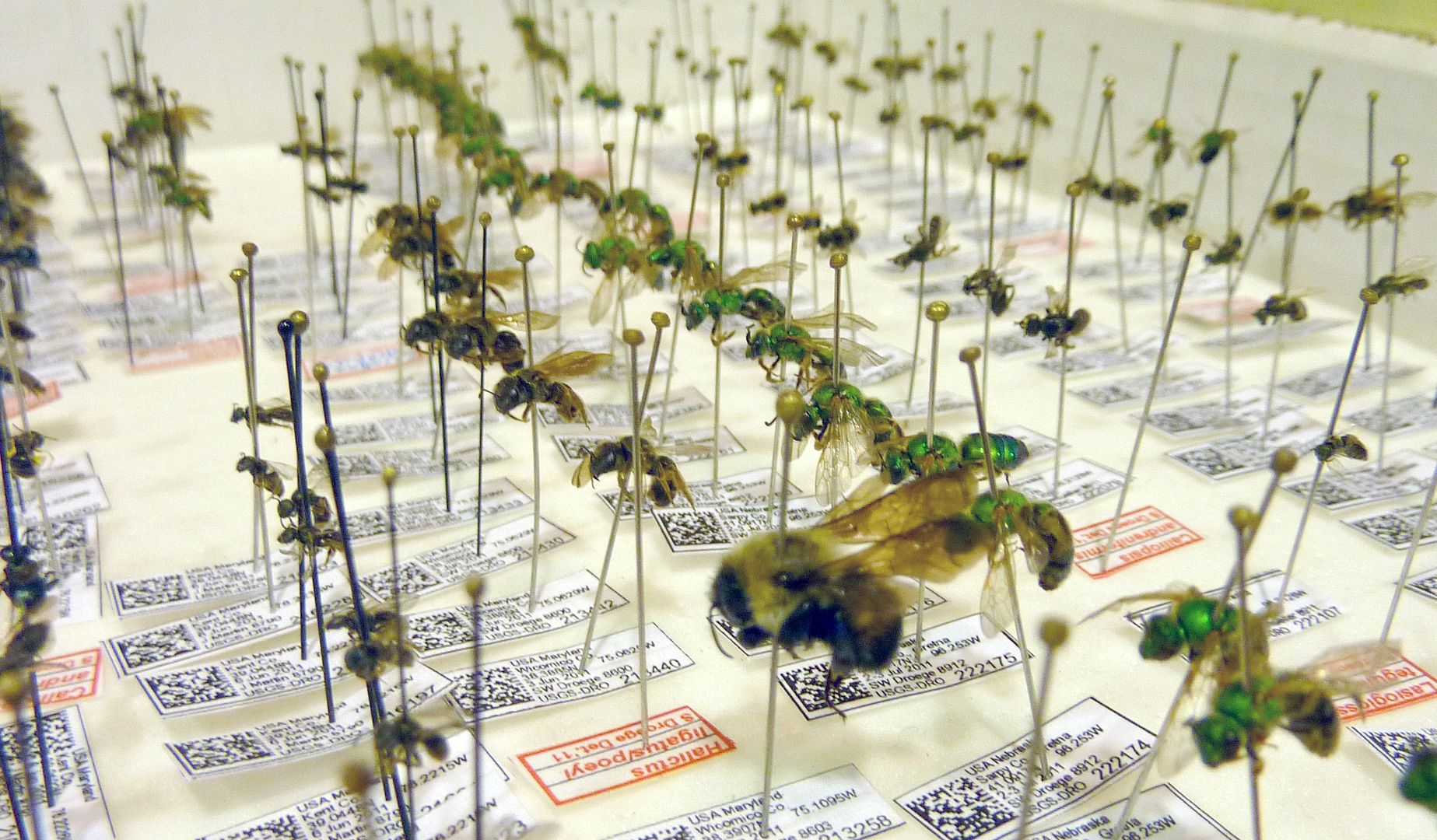
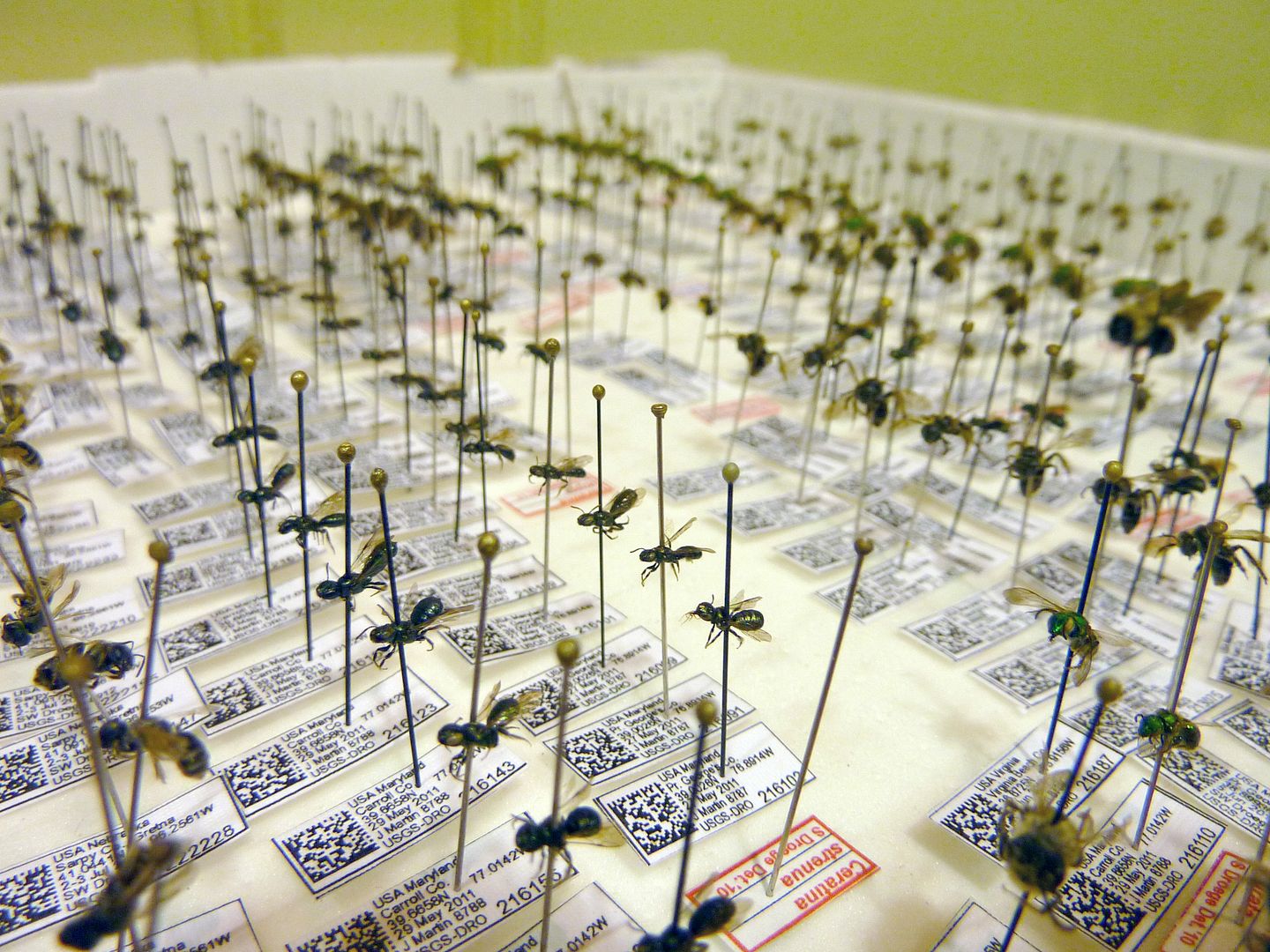
The focus on the class was on species found in Maryland and Delaware area. I noted though some specimens were collected from New Jersey, and New York. 

Dissecting scopes and microscopes were on hand to view these up close. All the species present were common enough that anyone attending the class was allowed to take some home.

Despite a lot of these being repeats of the same species, there certainly are a lot of them here. Of the 10 or so trays (medium sized pizza boxes with foam in the bottom) there were about 75 species represented.


One species not prescient went back to the association with specific plants. There's an alien species of Centaurea (Bachelor Buttons) which is spreading along rail road tracks and highway mediums. An introduced pollinator is spreading along with it, but the trouble is it's a carpenter bee without a preference for soft wood. Wooden houses where the plant and bee are present get riddled with holes on the outside more severely than any of our native and introduced carpenter bees. It just goes to show why native plants are important. What's more, it's neat to think this bee can be controlled simply by weeding out the introduced alien plants.

Tuesday, July 13, 2010

Digger Bees Moving In

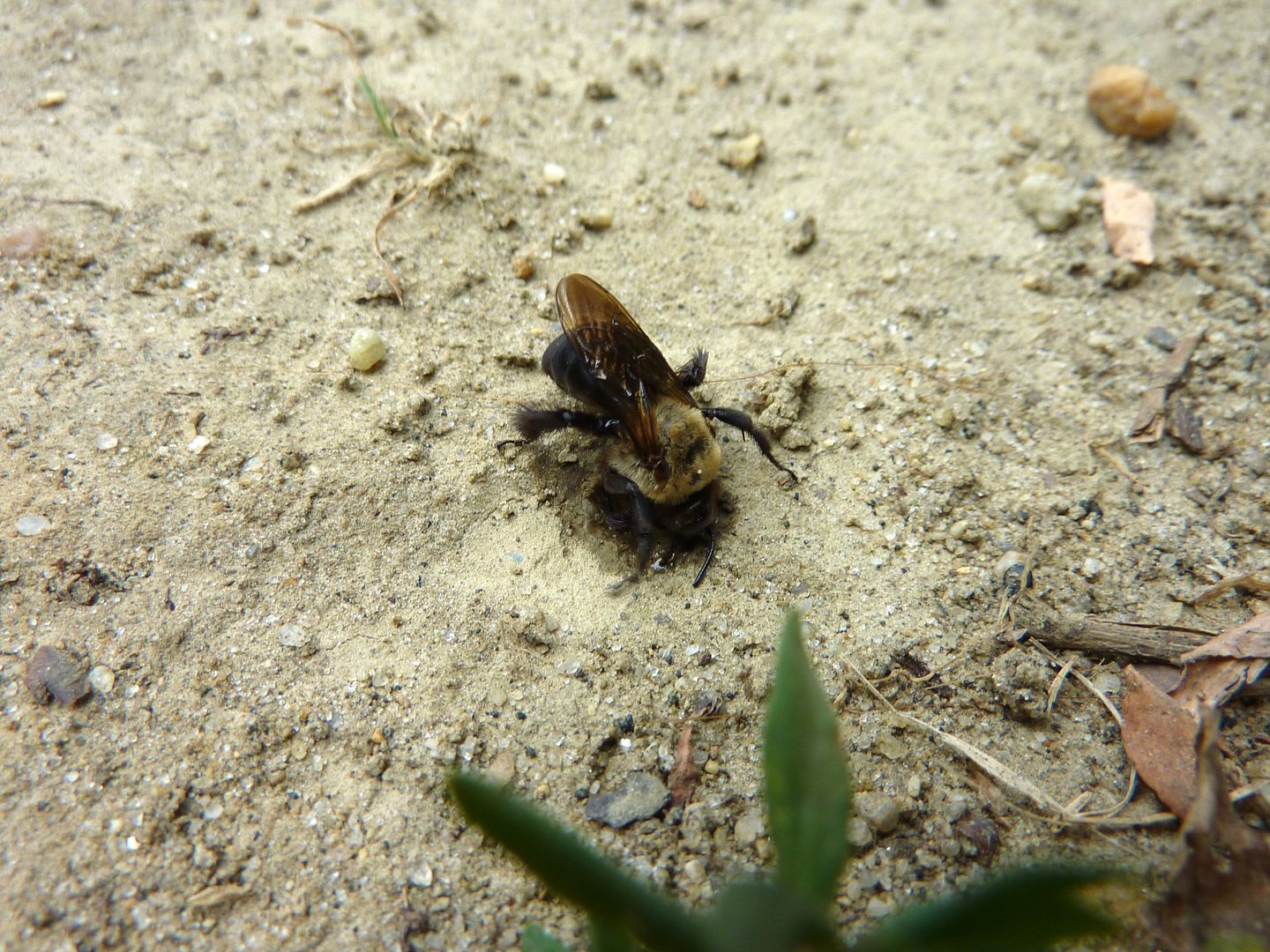
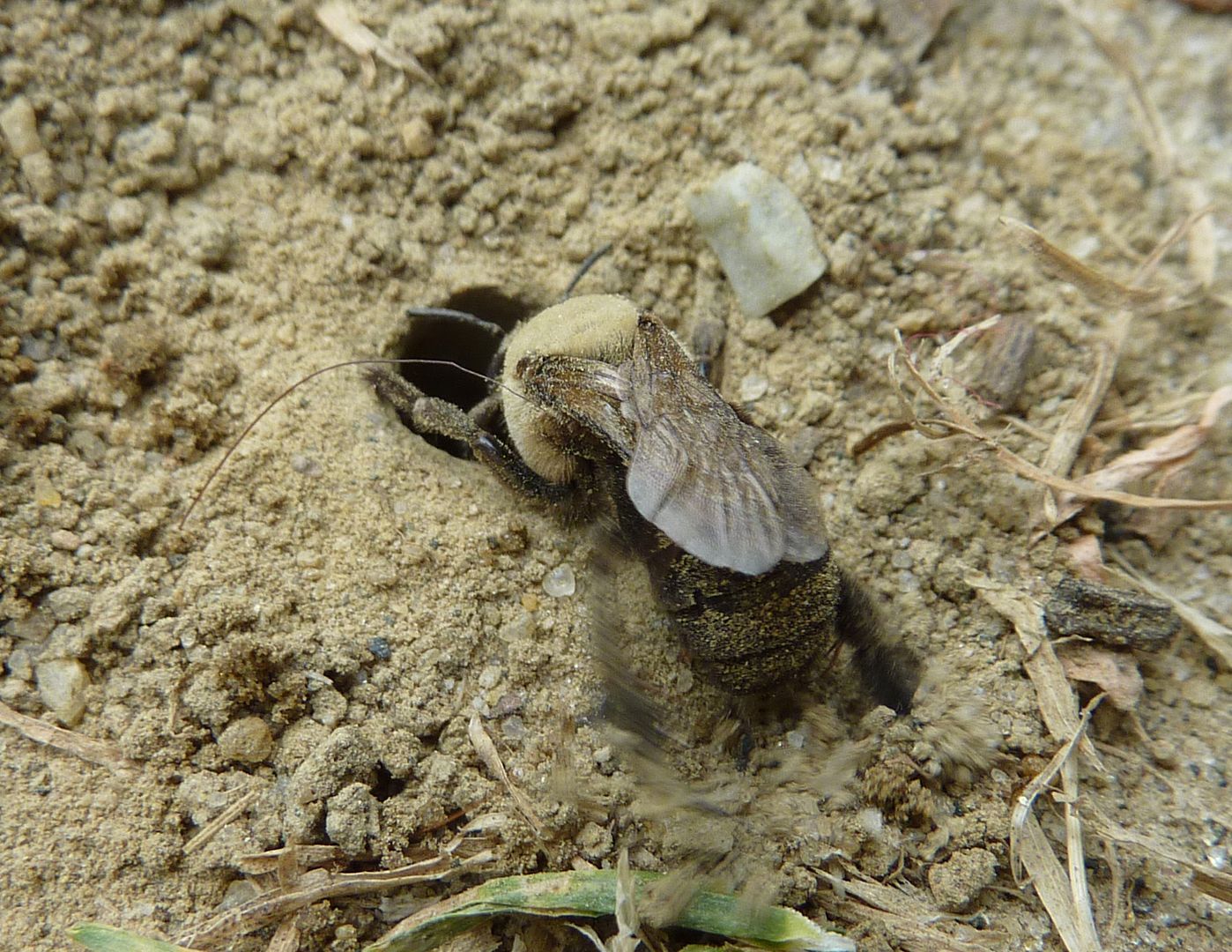
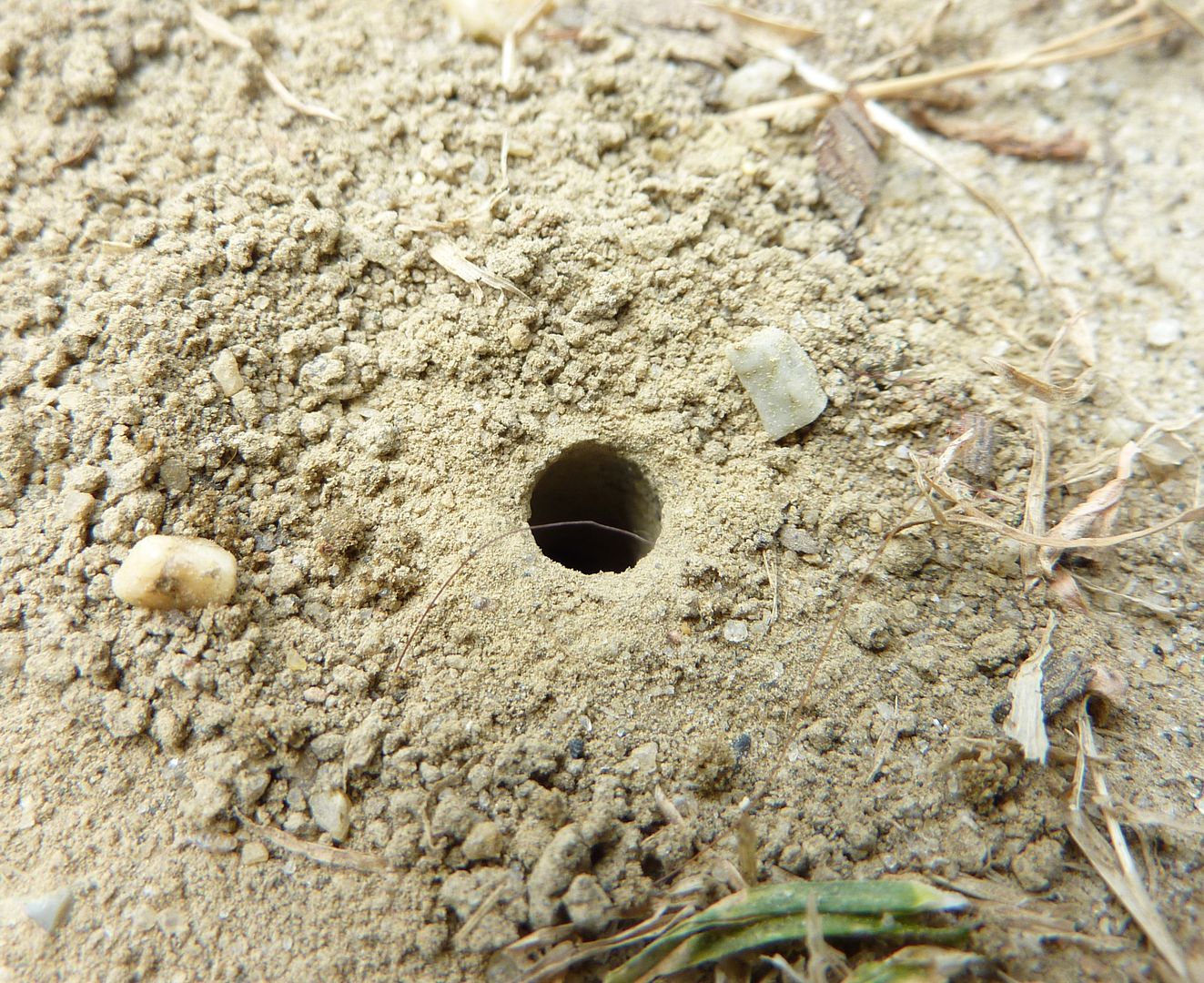
Once again there's a species of digger bee trying their luck with the dry patch in my yard.

The last species landed directly on our pond to collect water in order to burrow their way through the solid clay. This species is thinner and might have better luck with it. The last species dug a few burrows but would give up after only a few inches down.

They're already having better luck as I see several burrows have already been constructed. Gardeners normally hate bees like this because they ... I guess because they're bees. They're burrows aerate the soil, they're offer free and convenient pollinator, because they're solitary they're less likely to be aggressive. Besides a few "unsightly" burrows in what was already a "not so lush" lawn a few bees aren't very noticeable.