I guess everyone is so sick about hearing Covic-19 news that they forgot the Asian Murder Hornet thing HAPPENED LAST YEAR. In fact, as far as I know, as of the publishing of this article, no hives or individuals have been found in the U.S. or Canada in 2020. Now it's still early in the year, so that could easily change. But until it does every article going viral at the moment is just fear mongering or responding to fear mongering.
So here's the issue, lots of these articles are titled something like Asian Murder Hornets Discovered In US For First Time. They are all published within the past week or so but also quote a few people who encountered them last year... So this is actually old news that no one really cared about ~8 months ago. Then they usually play up how just how dangerous these Asian MURDER Hornets are, OMG!!! And there's this implication that they're going to be everywhere by the end of the year.
What's lacking though is anything current. Their hives are annual, growing to a great size by the autumn months and dying out completely from lack of food. It's only through a new generation of queens that survive the winter that they species survives each year. So if they are in the U.S. and Canada still, their hives currently aren't that big. And even if surveys don't come up with anything this year, no one can really say with confidence that they're not here until about 5 years of no sightings. They might be establishing someplace outside of where the surveys are taking place, they might not be doing that great here, they might be able to make it out of the traps being setup, lots of issues could be going on.
Articles from colleges and scientific outlets are adding damage control to the theme. The U.S. and Canada already several native Hornets, Yellow Jackets, European Hornets (which are a problem in themselves), Cicada Killers, and even Bumblebees that the general public is more than likely going to assume are Asian Murder Hornets thanks to sensationalist articles.
Again this is all because a total of ~4 hives were found in 2 locations. I actually couldn't find a good source on this because one article included someone finding all of their honeybees dead and just assumed it was them. There was no information given as to what destroyed this hive or even what condition it was in.
Assuming they are found and do establish, it will be quite a few years before they make it to the east coast. The new queens each year are only going to fly X amount of miles each year so their range is going to slowly expand unless they tuck themselves away in fire wood or something that's being transported, for example.
Some people have contacted me saying they're are worried about what they can do to help Beekeepers defend against them. Honestly we're not quite there yet. But their fear mostly comes from a clip from a National Geographic documentary that's often linked with these articles. It shows these hornets destroying a hive of Honeybees.
Well here's the thing with that; throughout Europe and Asia, there are Beekeepers. And there are hives of Honeybees that are bred to have a defense against these hornets. They actually ball up around the scout hornet marking their nest and cook it with heat generated from their wing muscles until it's dead. Alternatively a small strip of metal screen the hornets can't fit through stapled over the entrance also works. It's like a $5 fix. Somehow that didn't make it into the documentary though.
As for the threat of a hornet nest (Asian, European, or Native) posing a threat to people... there is a whole industry of exterminators and several well stocked shelves of pesticides at your local hardware, garden center, and in most grocery stores that can take care of that.
Showing posts with label Honeybees. Show all posts
Thursday, May 7, 2020
Monday, January 25, 2016
Gardening Goals and Achievements
When I first started gardening my initial goal was to provide nectar sources for my honeybees. Early attempts were an abysmal failure as I relied upon plants that simply looked pretty from a local nursery. The issue of course being that most nurseries sell cultivars with looking pretty in mind, instead of plants that are pretty useful. They do sell some useful plants but not as many as they should.
Realizing I would have to do some research, I started to set goals of what I wanted to get out of the garden. Along the way my focus changed from simply providing nectar fro my bees towards seeing what ecological effects my garden could have. I wanted to see how much biodiversity I could fit into one acre of land. Nothing was measured scientifically (I'd likely need at least 30 yards to make any conclusions,) but my achievements are as follows.
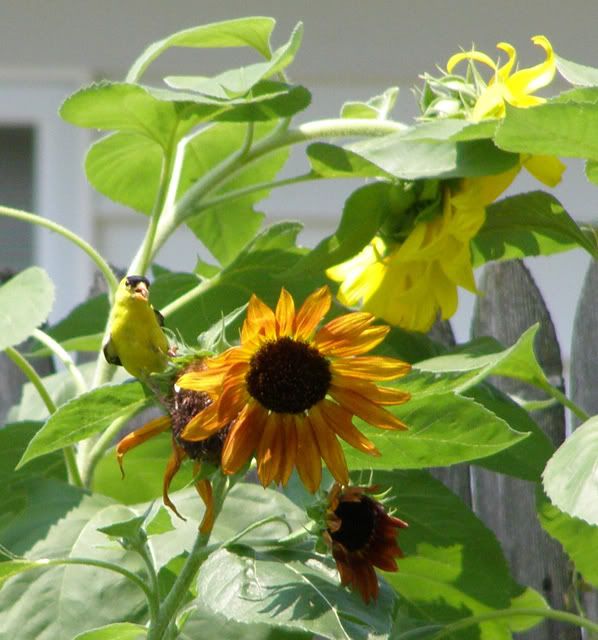
Probably the simplest achievement with gardening came in the form of a simple pack of sunflower seeds. They're the favorite food of the Eastern Goldfinch (The state bird of NJ) and their beaks are actually the ideal size and shape to dislodge a sunflower seed from the flower disk. Planting $5 worth of seeds not only brings in the pollinators but also a very attractive bird as well.
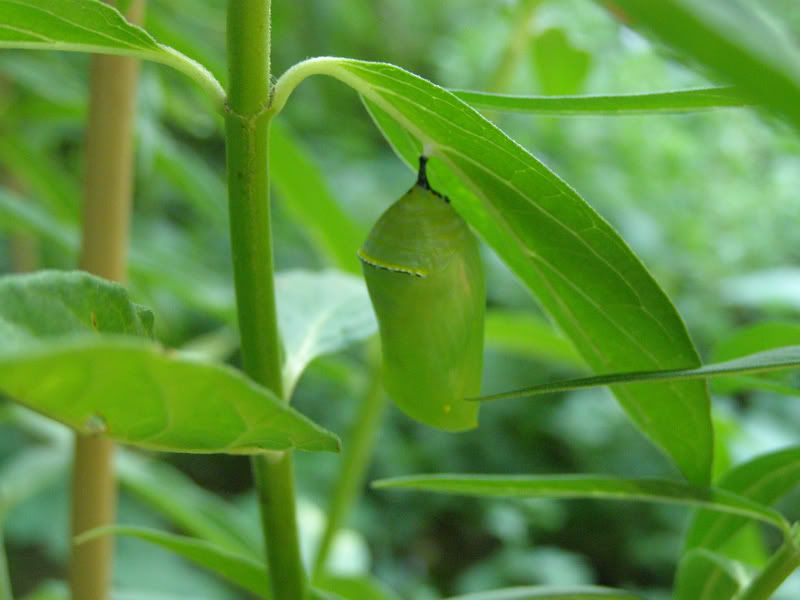
The next major milestone for my garden really had all the stars aligning perfectly. I met a fellow beekeeper who was really into native plant gardening but also advocated nonnatives like Catmint and Salvia. One of the plants that really caught my eye was his clump of Butterfly Weed which he grew along side an impressive clump of Lavender. I wanted to copy his garden as much as I could but chose a different species, Asclepias incarnata, Swamp Milkweed, or Fragrant Milkweed as I like to call it. I had no idea at the time, but Monarchs favor laying their eggs on the plant. The leaves are less tough than Common and Butterfly Weed, and because it tends to grow in moist soil the humidity in the air is more favorable to insects in flight. What's more the first chrysalis I found was on the host plant, which is uncommon. Normally the caterpillars abandon the host plant to get out of the way of the next generation. And again 10 days to the hour I first found the chrysalis I watched as it hatched into a beautiful butterfly.
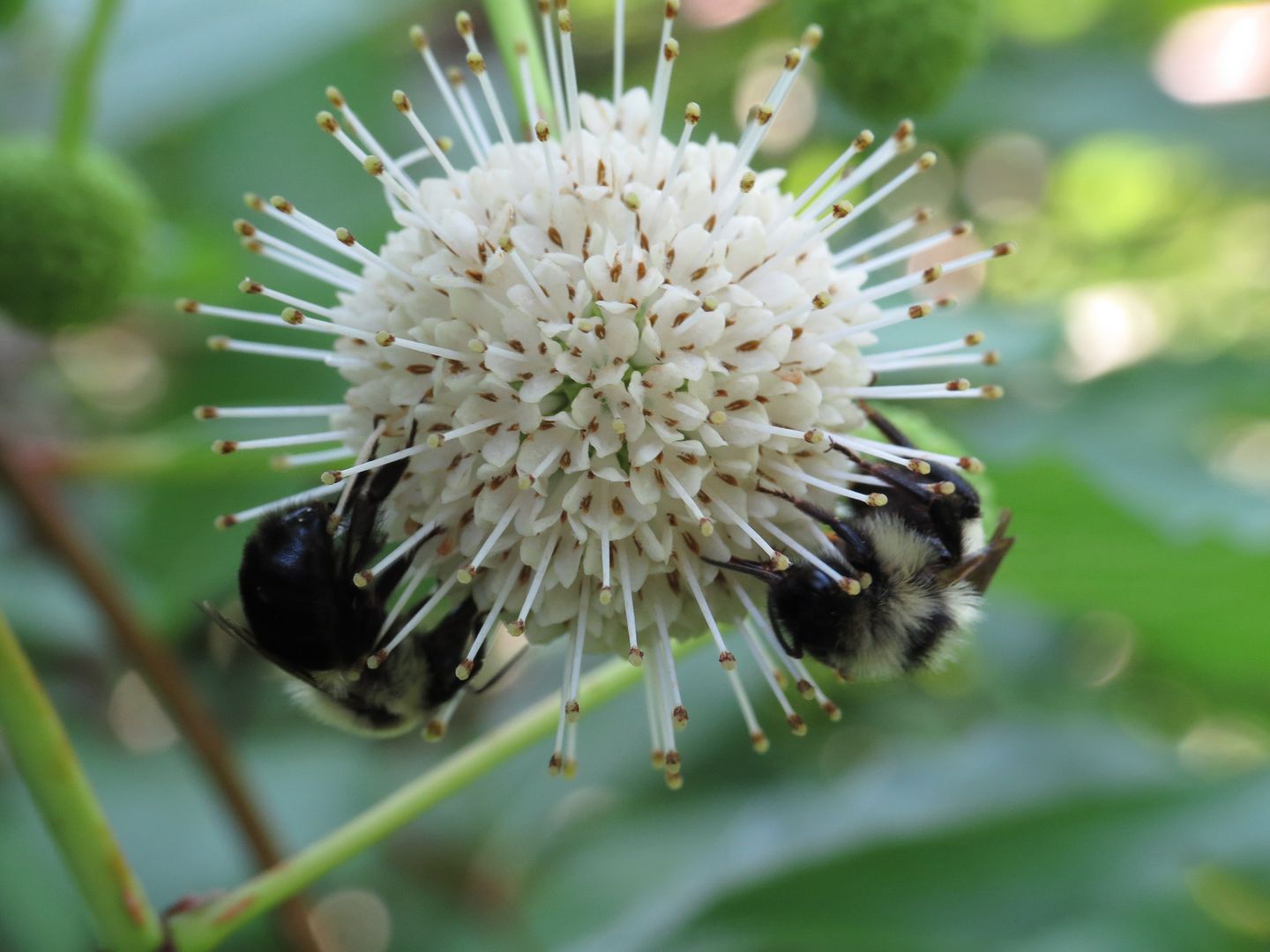
Over the past several years now I've started to go after some of the more obscure natives that not a lot of people grow. For example, I'm the only person I know who has a Button Bush, and I'd love to grow more of them but I just don't have the space.
Purple Milkweed, while commercially available, doesn't seem to be grown by a lot of people. As I've discovered though, that's probably a good thing. Unlike Butterfly Weed, Swamp Milkweed, and Common Milkweed, this species requires cross pollination in order to produce viable seed. Individual plants don't produce as many flowers as other species. And tragically, the wildlife people grow milkweeds to attract target the flowers and seed heads first! You basically need to remove Monarch caterpillars, Milkweed Beetles, Milkweed Seed Bugs, Four-eyed Beetles, and keep the stems completely free of Oleander Aphids for this plant to do well! Of course it doesn't help that when it does successfully flower ants come and steal the nectar!
Purple Milkweed still grows in my yard but I've not been able to get it to flower again because pests keep eating it!
Rarer Still, I tried growing the true Red Milkweed, Asclepias rubra. I call it the true Red Milkweed because one of the major mail order nurseries has started calling Asclepias incarnata, Red Milkweed. They're wrong of course as is whoever came up with the common name for this species. The flowers are clearly a shade of pink! The plants I bought (and suspect were dug out of the wild) grew well the first year and flowered but have yet to emerge again. The roots are still in the soil, still slightly green or white if you cut into them, still fleshy like an ordinary rhizome but for some reason they don't produce any shoots or green growth of any kind. Very odd. If I locate them again I'll move them to an even wetter spot of the garden. I'm pretty sure they're a bog species.
This is an achievement for me in that I got to photograph it flowering. I have no plans of trying to grow it again as all the sources for plants at this time I suspect might be from plant poachers.
Aquatic Milkweed, Asclepias perennis. This is you can buy on the internet easy enough but it didn't do well in my yard because all the wet bog-like places are already have lots of weeds and plants growing in them. It's a small species with some of the smallest flowers in the genus too. I was hopeful that it would be successful in my garden but it wasn't. I may try planting more of this again in a true bog garden some day, but for right now, I'm just glad I was able to photograph it flowering.
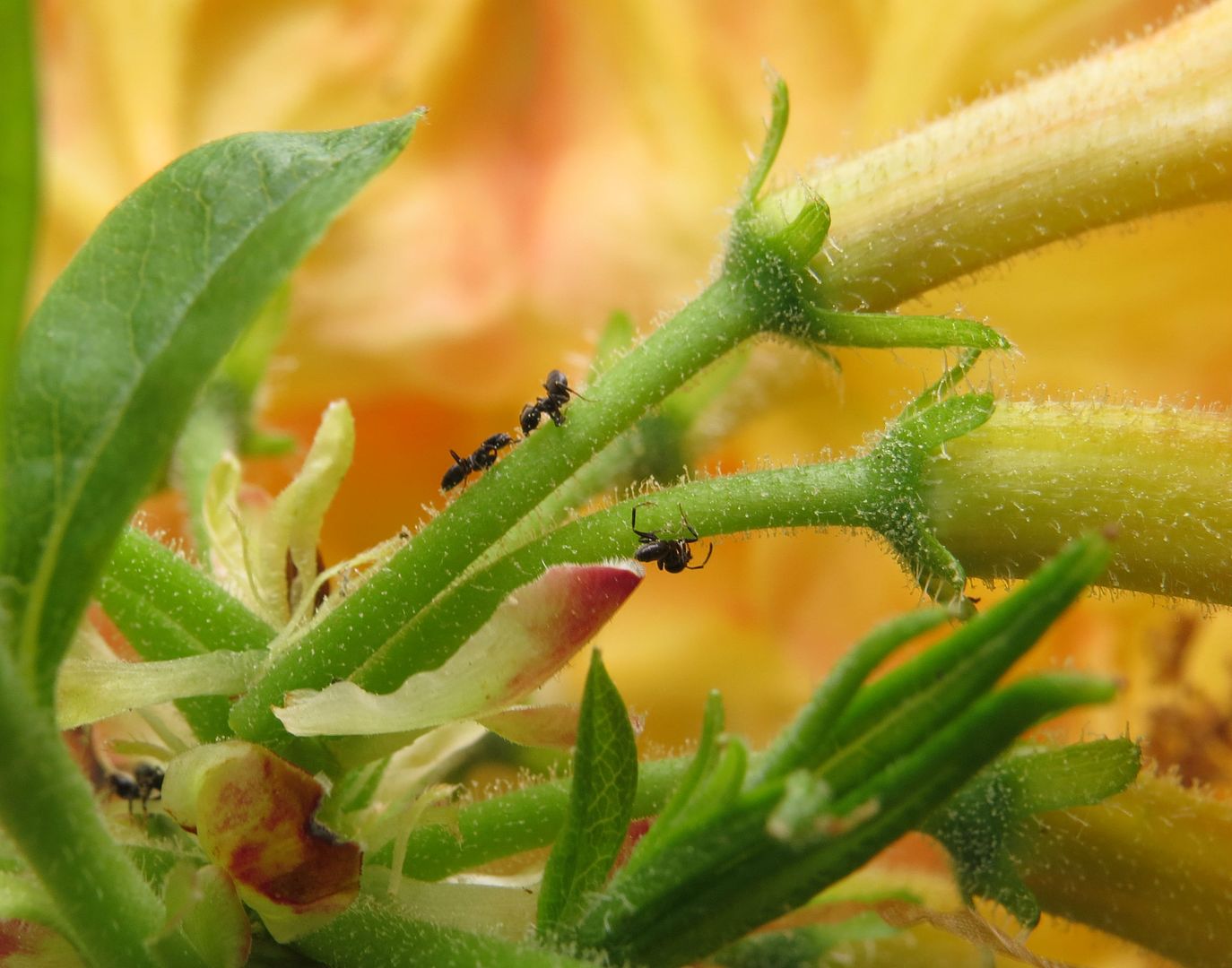
Discovered Flame Azaleas are semi-carnivorous. Actually they're not carnivorous at all but to protect their flowers from nectar thieves, their stems have hairs on them that dispense a type of glue to stop ants dead in their tracks. Now when the hummingbirds come to feed at the flowers they can find an added tasty treat clinging to the stem.
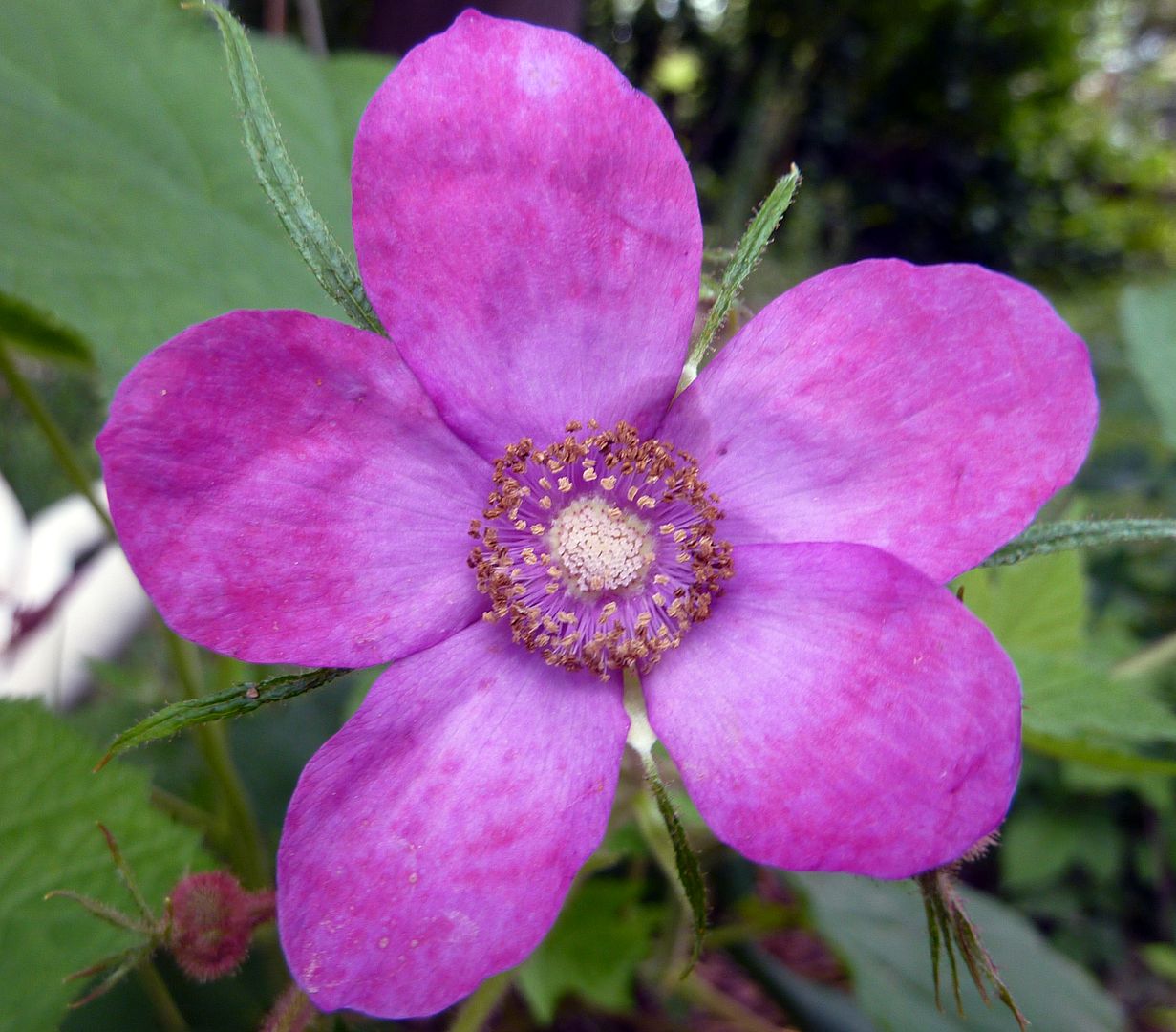
Red Flowering Raspberry. This plant was a huge surprise. The flowers are as pretty as our native roses, though they're also a poor replacement for a rose. You can't really use them for a cut flower, and they're short lived. The stems lack any prickers and instead have a sticky feel to them. They have yet to produce fruit but I believe that's a cross pollination issue I'm hopefully fixing in the coming year. I've planted three more specimens that should flower. If they don't produce fruit then I'll likely move them some place else so I can plant things that are more productive. But man, look how pretty that flower is!
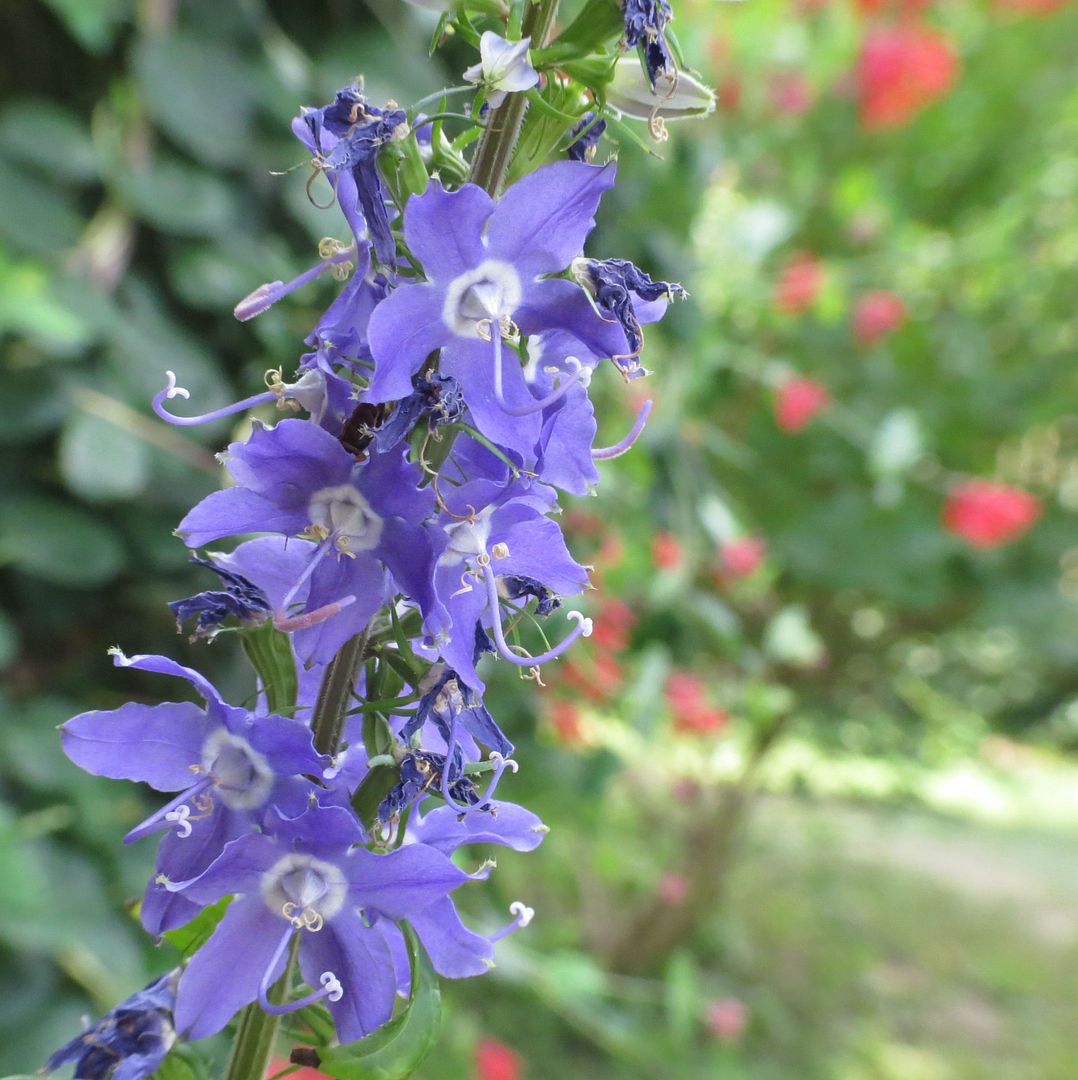
Companula americana. This is a biannual I decided to try one year and it's easily my new favorite plant for dry shade. It grows in bone dry soil, in full shade conditions! The first one I got growing grew 7' tall and flowered robustly from June to frost. It got to the point where it was making bloom and buds on existing seed pods because the stem had become so overcrowded with flowers. I've never seen anything like it. The following year's plants weren't as great, but they're biannuals so they take an added year. Then on the year past we had new windows installed, and one of the workers took a rake to the garden and got rid of all my plants while cleaning up! Good to know they're easy to control if they get out of hand but I was hoping for a whole backdrop in the garden of 5 to 7' tall spires of blue flowers. Hopefully I'll get to see that happen this year because I emptied a pound of seed or two in the spot.
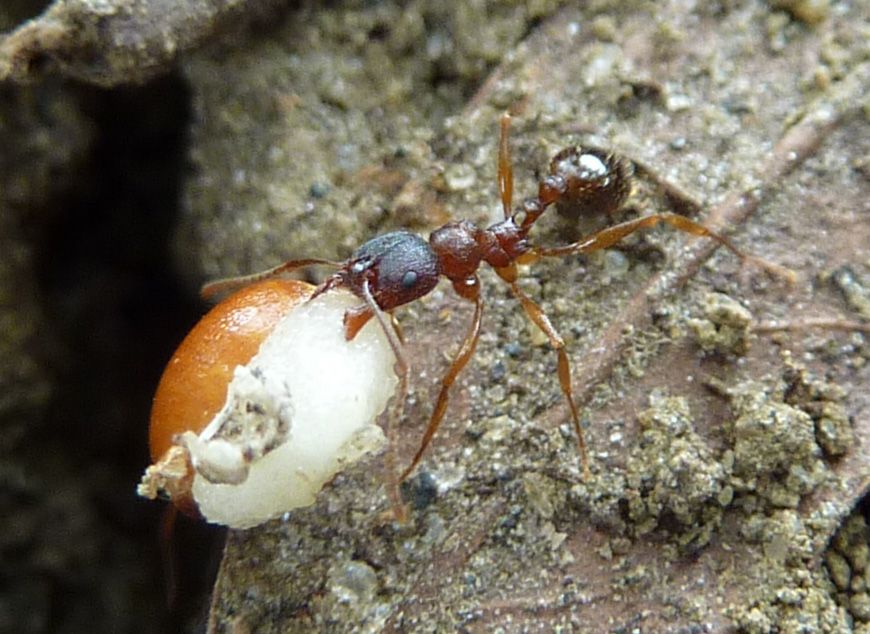
A lot of the ephemeral plants I grow disperse their seeds with the aid of ants. I'm overjoyed that I was able to not only grow a few species of Trilliums and other plants that have elaiosome on their seeds but also able to witness the behavior in my own backyard. And I've also realized I'm probably the only person in North America who's bothering to photograph this behavior!
Very recently I was approached by a museum about using one of my photos for an exhibit. Unfortunately I'm not a professional photographer (Yet!) and don't normally save images in as high a resolution as their project required. Still, to have been asked was an honor!
Roughly 40% of our native ephemeral wildflowers disperse their seeds this way and most gardening books treat the topic like a cliff note... There isn't a whole lot to tell, but I've found certain species of ants favor certain plant species and some are better about dispersing them a greater distance than other.
Getting Wildflower to reproduce, and ephemerals at that! This is huge because some of these plants I buy cost $25 each, and they're not always successful! Knowing that the plant is happy enough to do what it would normally be doing in nature, in my yard, it the best compliment a plant can give you. (Or the worst if it's invasive.) Now if my rare Trilliums would just stop reseeding in the lawn I'd be in business.
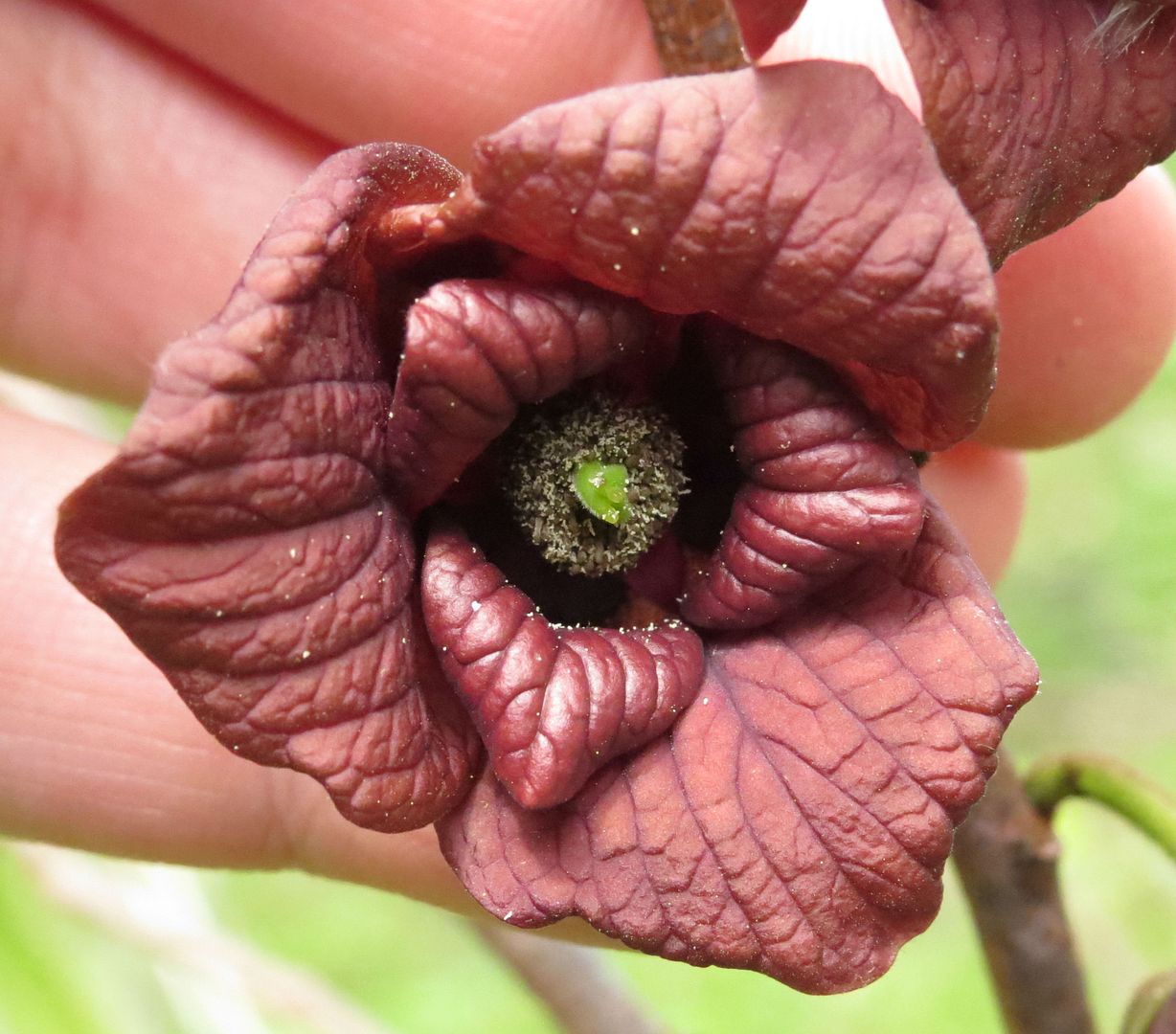
Getting my Paw Paw tree to flower. For years I'd been planting saplings of this species all over my yard and for one reason or another they just couldn't survive the winter. It's annoying! Finally I found a spot where they get enough water in the summer and don't burn up in the heat, and are sheltered in the winter enough to survive. And I immediately planted a second one right next to it. So one tree is of a flowering age, now I just need the second one so they can cross pollinate and maybe I'll get some fruit.
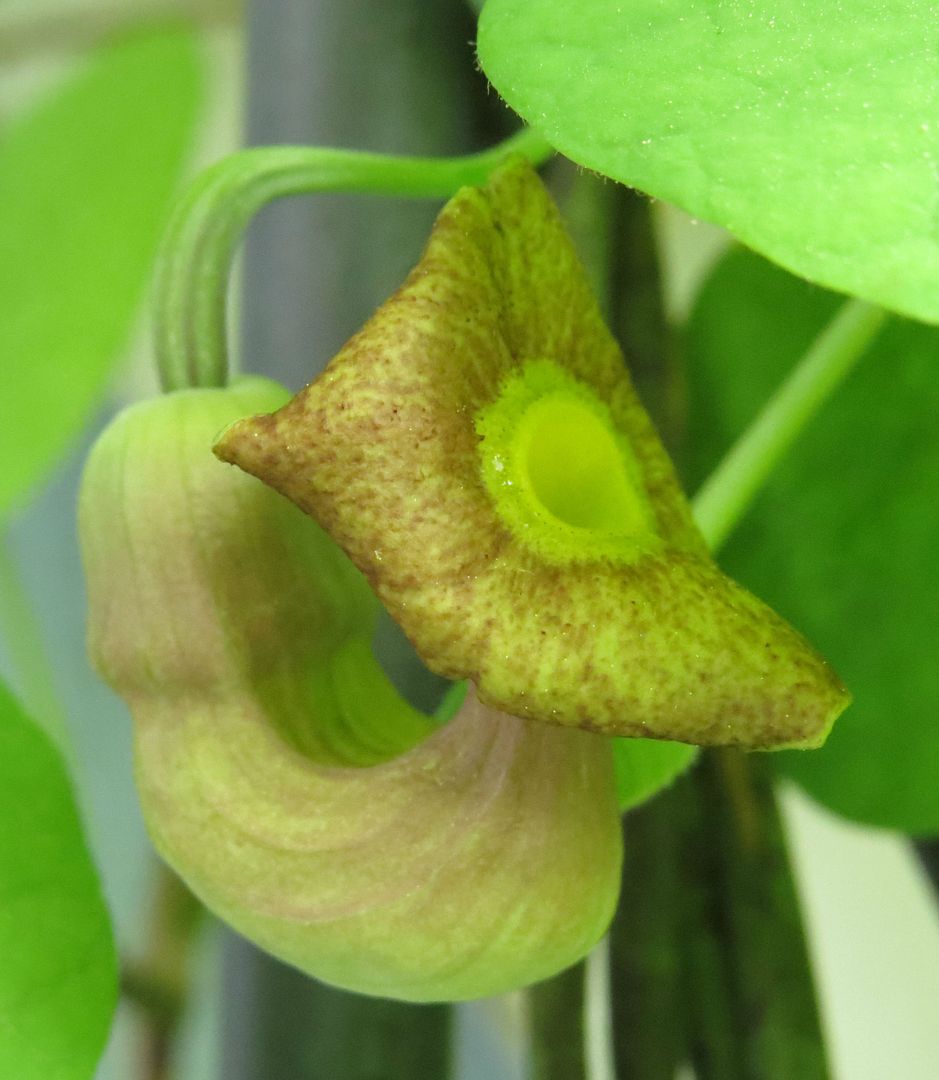
Dutchmen's Pipe. I've had this vine growing for a good 7 years at least and it finally decided to start flowering... Not the prettiest things but I had a theory that the seeds to this plant have elaiosome on the seeds so I'm eager to see if that's true. Unfortunately they seem to require cross pollination, so I won't know that until several years later when the vine's counterpart I planted finally reaches of age.
I planted this as a host plant for the Pipe Vine Swallowtail and I'm still waiting for them to find it. :( though this seems a common problem among butterfly gardeners.
Yellow Passionflower, Passiflora lutea, is another species I'm proud to say I grow. Unfortunately it seems I don't grow enough of it. This is a plant they tell you to grow in the shade and let it grow up the stems and branches of another plant. There's nothing wrong with that, but the absolutely charming leaves, flowers, and fruit get completely lost in the foliage. I have a vine of this in my garden still, I think. But now that I've seen it growing at the Mt. Cuba Center, clearly I'm growing it wrong. It still gets lost, but they have it growing right on a fence in full sun where it thickly covers the fence almost like an ivy. It's a great little vine that doesn't get out of hand, and I'm curious to see if Fritillary Butterflies use it as a host.
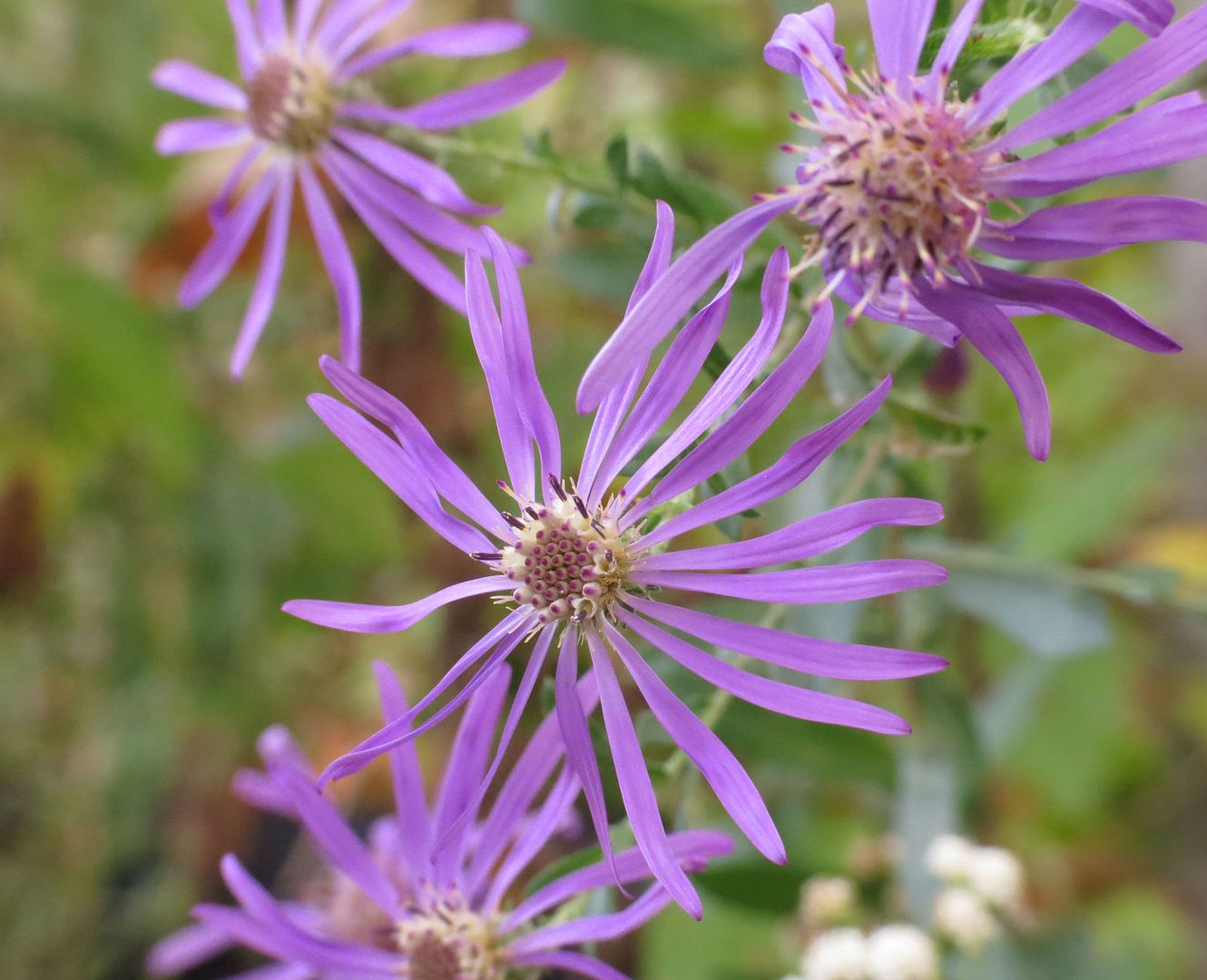
Georgia Aster, probably the last plant in temperate North America to stat blooming aside from Witch Hazel and Heathers. This is a plant I look forward to every year now. I've only been growing it for three years, it's flowered the past two. This year I collected seeds and hopefully I'll get a lot more of it to grow. The flowers are nice and large, and the purple is a great contrast of the leaves from fallen trees, which are shades of yellow, red, or brown.
Discovering that Black Swallowtails do use Golden Alexander as a host plant was sort of a happy accident. I planted these as a host plant but later learned they rarely use it! Seems they heavily favor Parsley. But I've noticed that Golden Alexander has more foliage to offer early in the year before Parsley really gets going, so it's likely used as one of the earliest hosts then they switch over to Parsley with subsequent generations.
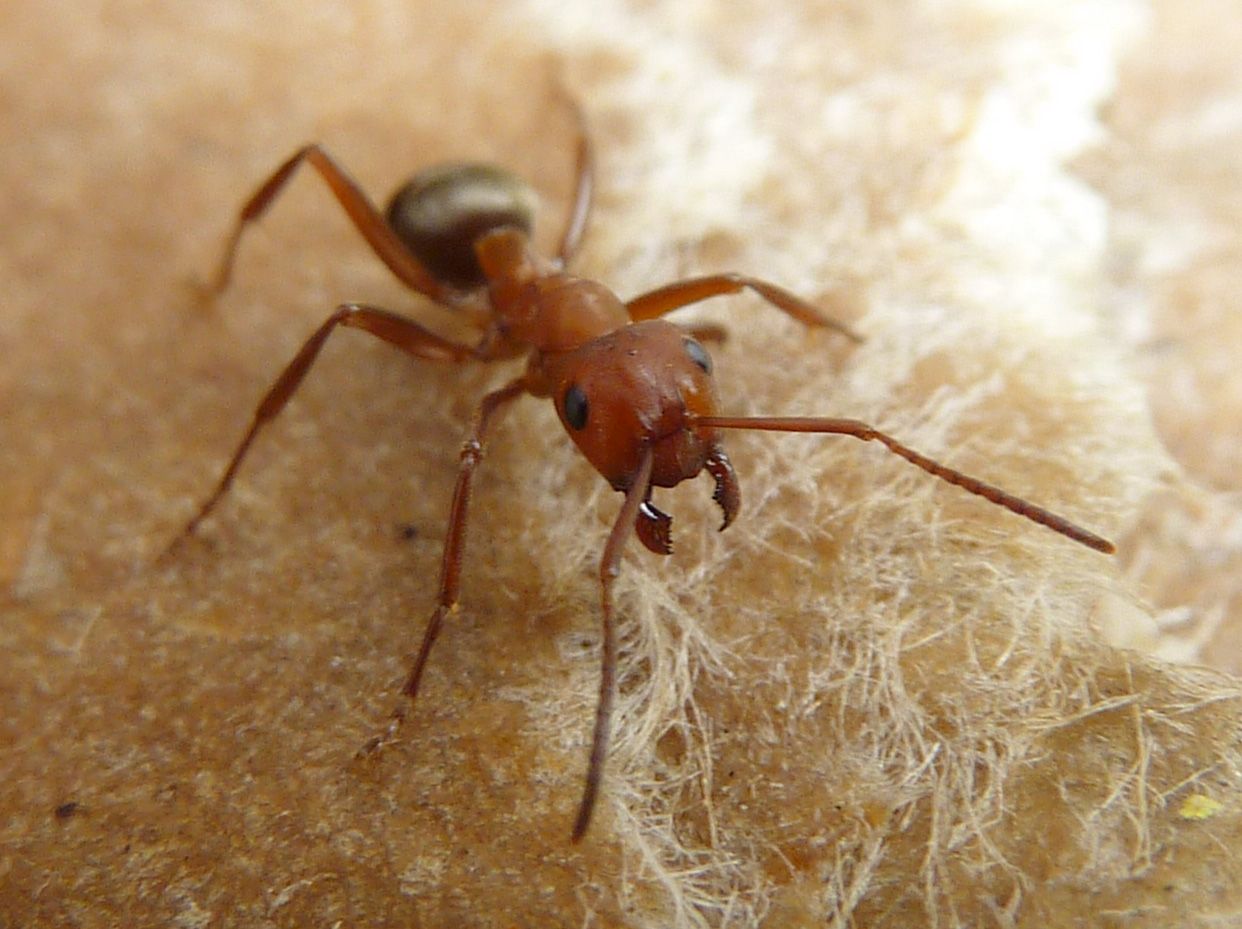
Adding all these native plants of course had an effect on the insect life. More herbivore insects means more sources of nectar, protein, and seeds. The increase in resources caused the colonies of Formica incerta and Formica pallidefulva to expand and get even larger than before. That got the attention of a slave making member of the genus, Formica pergandei. Seen above a colony of F. pergandei (bicolored) has invaded a colony of F. pallidefulva (copper tone).
Formica pergandei, is one of many slave making and parasitic species in the Formica genus, the largest ant genus in North America. They are completely devoted to maintaining their Formica hosts to maintain their own colony. F. pergandei workers don't forage at all. They spend their time raiding other colonies of Formica for brood and often do a complete invasion where the whole F. pergandei colony moves in and kills the host queen(s) and reproductives. They take over the current work force, and all the new workers born into their nest become part of their colony. The host species do all the foraging and nest building but eventually die off, so the F. pergandei workers are always looking to invade the next nest.
It's hard to say that F. pergandei wouldn't have found the colonies in my yard eventually. But in all the years I've lived here never noticed the species. They may have eventually come and moved on, as they did, but I believe the increase in resources made the F. pallidefulva and F. incerta colonies a bigger target.
New Jersey Tea. This is one of those plants they're always touting for all its benefits but no one ever grows. Part of the problem is it seems to only ever be sold in plugs.... Why? It's a shrub. It should be a large or medium sized pot at least. I planted dozens of these over the years and ran over all but one of them with the lawn mower. Well I'm happy to say that after several years, it's now flowering robust enough to get honeybee attention.
Early on in gardening I had dreams of sweeping meadows full of Lupins to see this behavior of ants, plants, and butterflies. I'm happy I already have plants doing this for me. As I've found out Lupins require full sun and basically want to grow in 80% sand.
Lastly, my yard is becoming something of a hummingbird hot spot. Not year round though, we usually get one or two of them flying about intermittently over the summer, and then several of them consistently for a full week... presumably fledgling birds following their parents around.
Realizing I would have to do some research, I started to set goals of what I wanted to get out of the garden. Along the way my focus changed from simply providing nectar fro my bees towards seeing what ecological effects my garden could have. I wanted to see how much biodiversity I could fit into one acre of land. Nothing was measured scientifically (I'd likely need at least 30 yards to make any conclusions,) but my achievements are as follows.
Probably the simplest achievement with gardening came in the form of a simple pack of sunflower seeds. They're the favorite food of the Eastern Goldfinch (The state bird of NJ) and their beaks are actually the ideal size and shape to dislodge a sunflower seed from the flower disk. Planting $5 worth of seeds not only brings in the pollinators but also a very attractive bird as well.
The next major milestone for my garden really had all the stars aligning perfectly. I met a fellow beekeeper who was really into native plant gardening but also advocated nonnatives like Catmint and Salvia. One of the plants that really caught my eye was his clump of Butterfly Weed which he grew along side an impressive clump of Lavender. I wanted to copy his garden as much as I could but chose a different species, Asclepias incarnata, Swamp Milkweed, or Fragrant Milkweed as I like to call it. I had no idea at the time, but Monarchs favor laying their eggs on the plant. The leaves are less tough than Common and Butterfly Weed, and because it tends to grow in moist soil the humidity in the air is more favorable to insects in flight. What's more the first chrysalis I found was on the host plant, which is uncommon. Normally the caterpillars abandon the host plant to get out of the way of the next generation. And again 10 days to the hour I first found the chrysalis I watched as it hatched into a beautiful butterfly.
Over the past several years now I've started to go after some of the more obscure natives that not a lot of people grow. For example, I'm the only person I know who has a Button Bush, and I'd love to grow more of them but I just don't have the space.
Purple Milkweed, while commercially available, doesn't seem to be grown by a lot of people. As I've discovered though, that's probably a good thing. Unlike Butterfly Weed, Swamp Milkweed, and Common Milkweed, this species requires cross pollination in order to produce viable seed. Individual plants don't produce as many flowers as other species. And tragically, the wildlife people grow milkweeds to attract target the flowers and seed heads first! You basically need to remove Monarch caterpillars, Milkweed Beetles, Milkweed Seed Bugs, Four-eyed Beetles, and keep the stems completely free of Oleander Aphids for this plant to do well! Of course it doesn't help that when it does successfully flower ants come and steal the nectar!
Purple Milkweed still grows in my yard but I've not been able to get it to flower again because pests keep eating it!
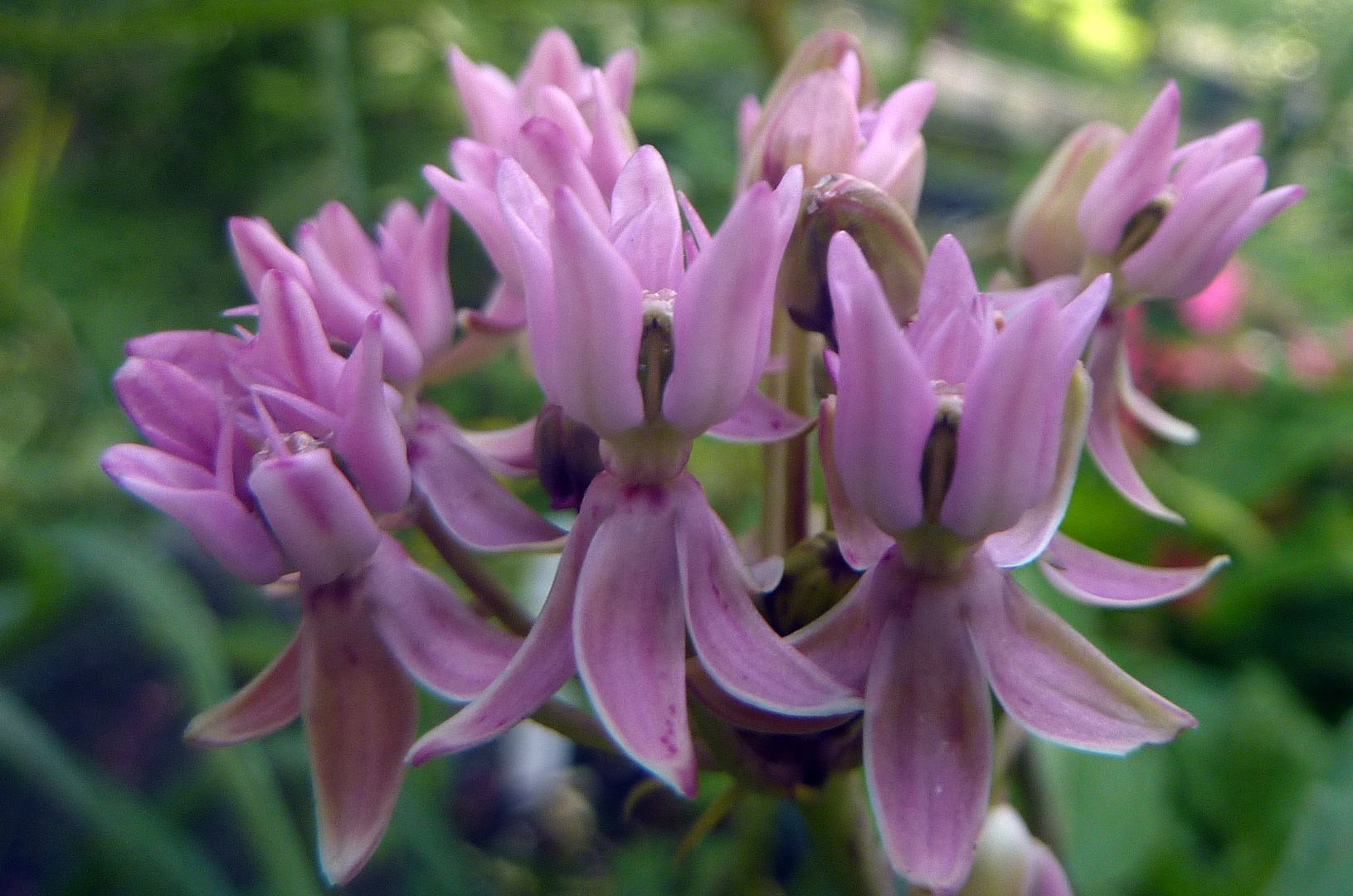
Rarer Still, I tried growing the true Red Milkweed, Asclepias rubra. I call it the true Red Milkweed because one of the major mail order nurseries has started calling Asclepias incarnata, Red Milkweed. They're wrong of course as is whoever came up with the common name for this species. The flowers are clearly a shade of pink! The plants I bought (and suspect were dug out of the wild) grew well the first year and flowered but have yet to emerge again. The roots are still in the soil, still slightly green or white if you cut into them, still fleshy like an ordinary rhizome but for some reason they don't produce any shoots or green growth of any kind. Very odd. If I locate them again I'll move them to an even wetter spot of the garden. I'm pretty sure they're a bog species.
This is an achievement for me in that I got to photograph it flowering. I have no plans of trying to grow it again as all the sources for plants at this time I suspect might be from plant poachers.
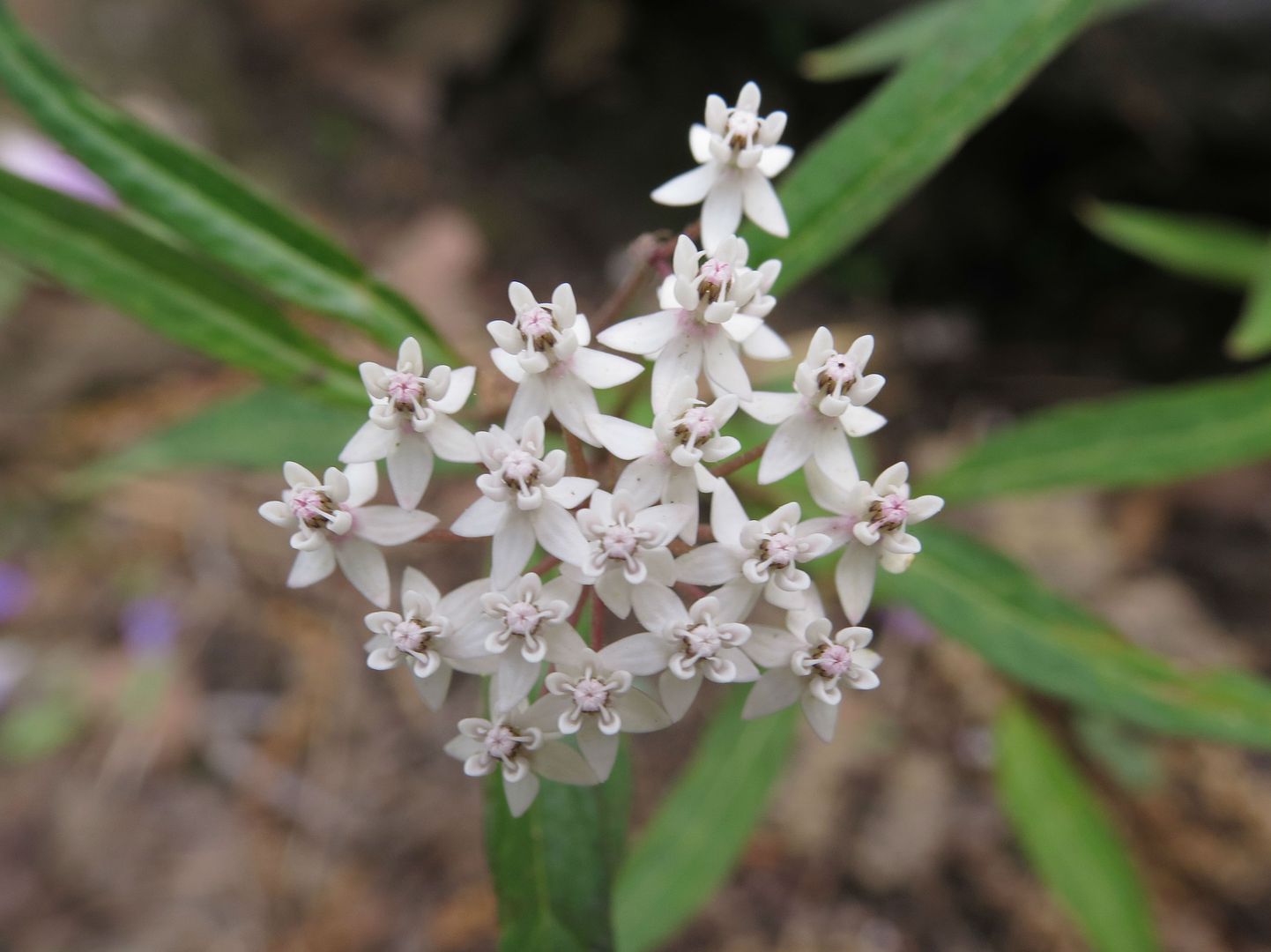
Aquatic Milkweed, Asclepias perennis. This is you can buy on the internet easy enough but it didn't do well in my yard because all the wet bog-like places are already have lots of weeds and plants growing in them. It's a small species with some of the smallest flowers in the genus too. I was hopeful that it would be successful in my garden but it wasn't. I may try planting more of this again in a true bog garden some day, but for right now, I'm just glad I was able to photograph it flowering.
Discovered Flame Azaleas are semi-carnivorous. Actually they're not carnivorous at all but to protect their flowers from nectar thieves, their stems have hairs on them that dispense a type of glue to stop ants dead in their tracks. Now when the hummingbirds come to feed at the flowers they can find an added tasty treat clinging to the stem.
Red Flowering Raspberry. This plant was a huge surprise. The flowers are as pretty as our native roses, though they're also a poor replacement for a rose. You can't really use them for a cut flower, and they're short lived. The stems lack any prickers and instead have a sticky feel to them. They have yet to produce fruit but I believe that's a cross pollination issue I'm hopefully fixing in the coming year. I've planted three more specimens that should flower. If they don't produce fruit then I'll likely move them some place else so I can plant things that are more productive. But man, look how pretty that flower is!
Companula americana. This is a biannual I decided to try one year and it's easily my new favorite plant for dry shade. It grows in bone dry soil, in full shade conditions! The first one I got growing grew 7' tall and flowered robustly from June to frost. It got to the point where it was making bloom and buds on existing seed pods because the stem had become so overcrowded with flowers. I've never seen anything like it. The following year's plants weren't as great, but they're biannuals so they take an added year. Then on the year past we had new windows installed, and one of the workers took a rake to the garden and got rid of all my plants while cleaning up! Good to know they're easy to control if they get out of hand but I was hoping for a whole backdrop in the garden of 5 to 7' tall spires of blue flowers. Hopefully I'll get to see that happen this year because I emptied a pound of seed or two in the spot.
A lot of the ephemeral plants I grow disperse their seeds with the aid of ants. I'm overjoyed that I was able to not only grow a few species of Trilliums and other plants that have elaiosome on their seeds but also able to witness the behavior in my own backyard. And I've also realized I'm probably the only person in North America who's bothering to photograph this behavior!
Very recently I was approached by a museum about using one of my photos for an exhibit. Unfortunately I'm not a professional photographer (Yet!) and don't normally save images in as high a resolution as their project required. Still, to have been asked was an honor!
Roughly 40% of our native ephemeral wildflowers disperse their seeds this way and most gardening books treat the topic like a cliff note... There isn't a whole lot to tell, but I've found certain species of ants favor certain plant species and some are better about dispersing them a greater distance than other.
Getting Wildflower to reproduce, and ephemerals at that! This is huge because some of these plants I buy cost $25 each, and they're not always successful! Knowing that the plant is happy enough to do what it would normally be doing in nature, in my yard, it the best compliment a plant can give you. (Or the worst if it's invasive.) Now if my rare Trilliums would just stop reseeding in the lawn I'd be in business.
Getting my Paw Paw tree to flower. For years I'd been planting saplings of this species all over my yard and for one reason or another they just couldn't survive the winter. It's annoying! Finally I found a spot where they get enough water in the summer and don't burn up in the heat, and are sheltered in the winter enough to survive. And I immediately planted a second one right next to it. So one tree is of a flowering age, now I just need the second one so they can cross pollinate and maybe I'll get some fruit.
Dutchmen's Pipe. I've had this vine growing for a good 7 years at least and it finally decided to start flowering... Not the prettiest things but I had a theory that the seeds to this plant have elaiosome on the seeds so I'm eager to see if that's true. Unfortunately they seem to require cross pollination, so I won't know that until several years later when the vine's counterpart I planted finally reaches of age.
I planted this as a host plant for the Pipe Vine Swallowtail and I'm still waiting for them to find it. :( though this seems a common problem among butterfly gardeners.
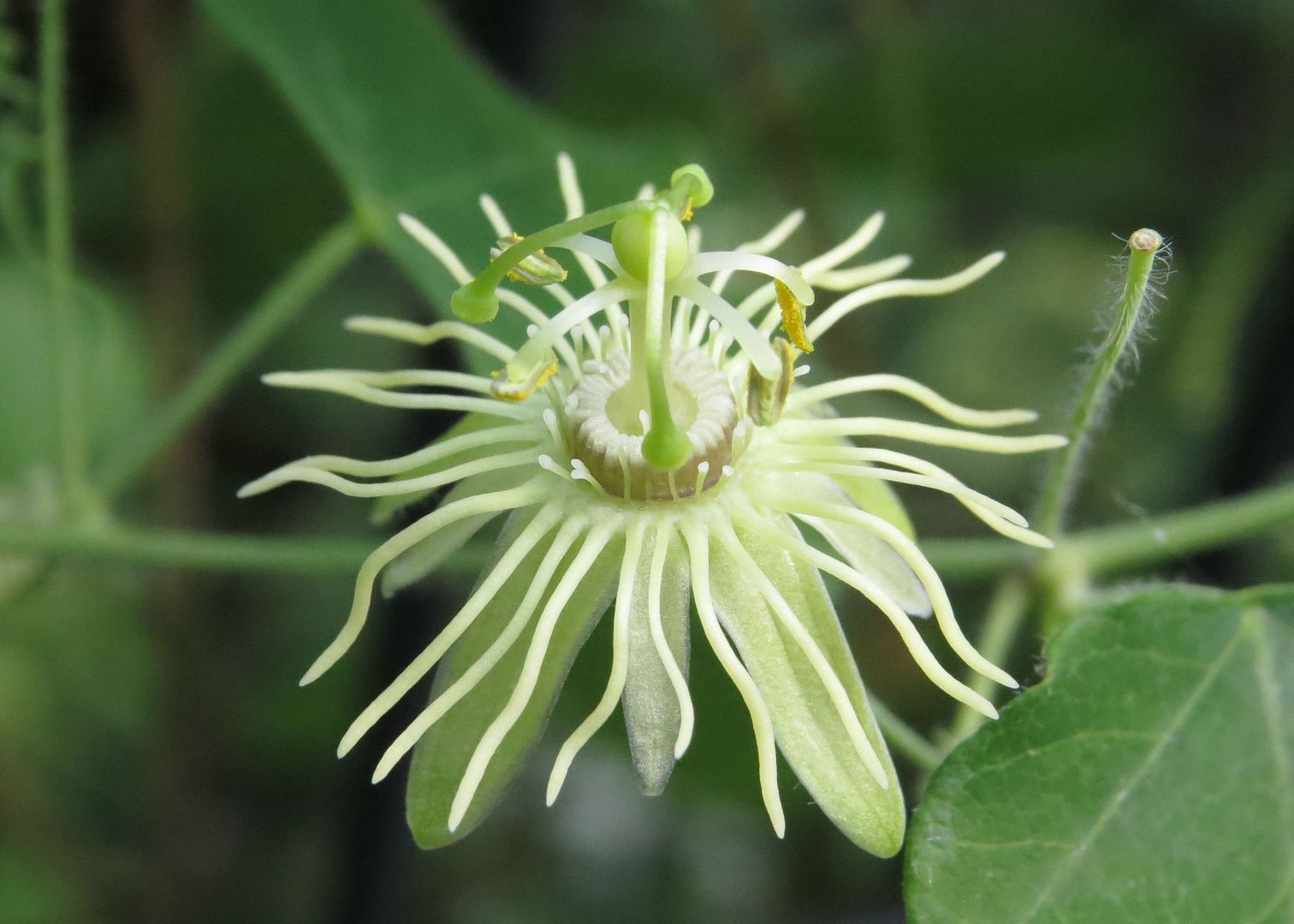
Yellow Passionflower, Passiflora lutea, is another species I'm proud to say I grow. Unfortunately it seems I don't grow enough of it. This is a plant they tell you to grow in the shade and let it grow up the stems and branches of another plant. There's nothing wrong with that, but the absolutely charming leaves, flowers, and fruit get completely lost in the foliage. I have a vine of this in my garden still, I think. But now that I've seen it growing at the Mt. Cuba Center, clearly I'm growing it wrong. It still gets lost, but they have it growing right on a fence in full sun where it thickly covers the fence almost like an ivy. It's a great little vine that doesn't get out of hand, and I'm curious to see if Fritillary Butterflies use it as a host.
Georgia Aster, probably the last plant in temperate North America to stat blooming aside from Witch Hazel and Heathers. This is a plant I look forward to every year now. I've only been growing it for three years, it's flowered the past two. This year I collected seeds and hopefully I'll get a lot more of it to grow. The flowers are nice and large, and the purple is a great contrast of the leaves from fallen trees, which are shades of yellow, red, or brown.
Discovering that Black Swallowtails do use Golden Alexander as a host plant was sort of a happy accident. I planted these as a host plant but later learned they rarely use it! Seems they heavily favor Parsley. But I've noticed that Golden Alexander has more foliage to offer early in the year before Parsley really gets going, so it's likely used as one of the earliest hosts then they switch over to Parsley with subsequent generations.
Adding all these native plants of course had an effect on the insect life. More herbivore insects means more sources of nectar, protein, and seeds. The increase in resources caused the colonies of Formica incerta and Formica pallidefulva to expand and get even larger than before. That got the attention of a slave making member of the genus, Formica pergandei. Seen above a colony of F. pergandei (bicolored) has invaded a colony of F. pallidefulva (copper tone).
Formica pergandei, is one of many slave making and parasitic species in the Formica genus, the largest ant genus in North America. They are completely devoted to maintaining their Formica hosts to maintain their own colony. F. pergandei workers don't forage at all. They spend their time raiding other colonies of Formica for brood and often do a complete invasion where the whole F. pergandei colony moves in and kills the host queen(s) and reproductives. They take over the current work force, and all the new workers born into their nest become part of their colony. The host species do all the foraging and nest building but eventually die off, so the F. pergandei workers are always looking to invade the next nest.
It's hard to say that F. pergandei wouldn't have found the colonies in my yard eventually. But in all the years I've lived here never noticed the species. They may have eventually come and moved on, as they did, but I believe the increase in resources made the F. pallidefulva and F. incerta colonies a bigger target.
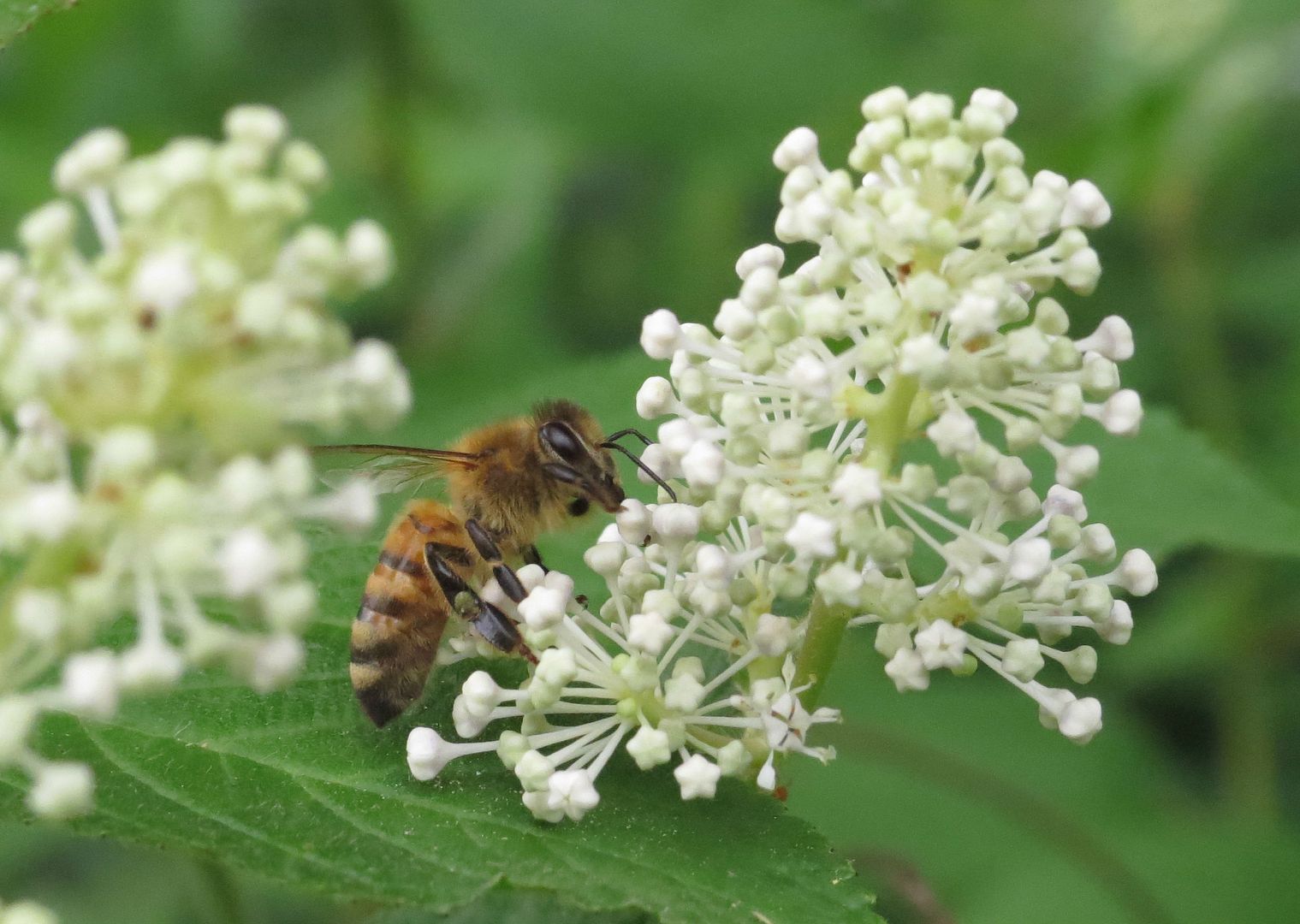
New Jersey Tea. This is one of those plants they're always touting for all its benefits but no one ever grows. Part of the problem is it seems to only ever be sold in plugs.... Why? It's a shrub. It should be a large or medium sized pot at least. I planted dozens of these over the years and ran over all but one of them with the lawn mower. Well I'm happy to say that after several years, it's now flowering robust enough to get honeybee attention.
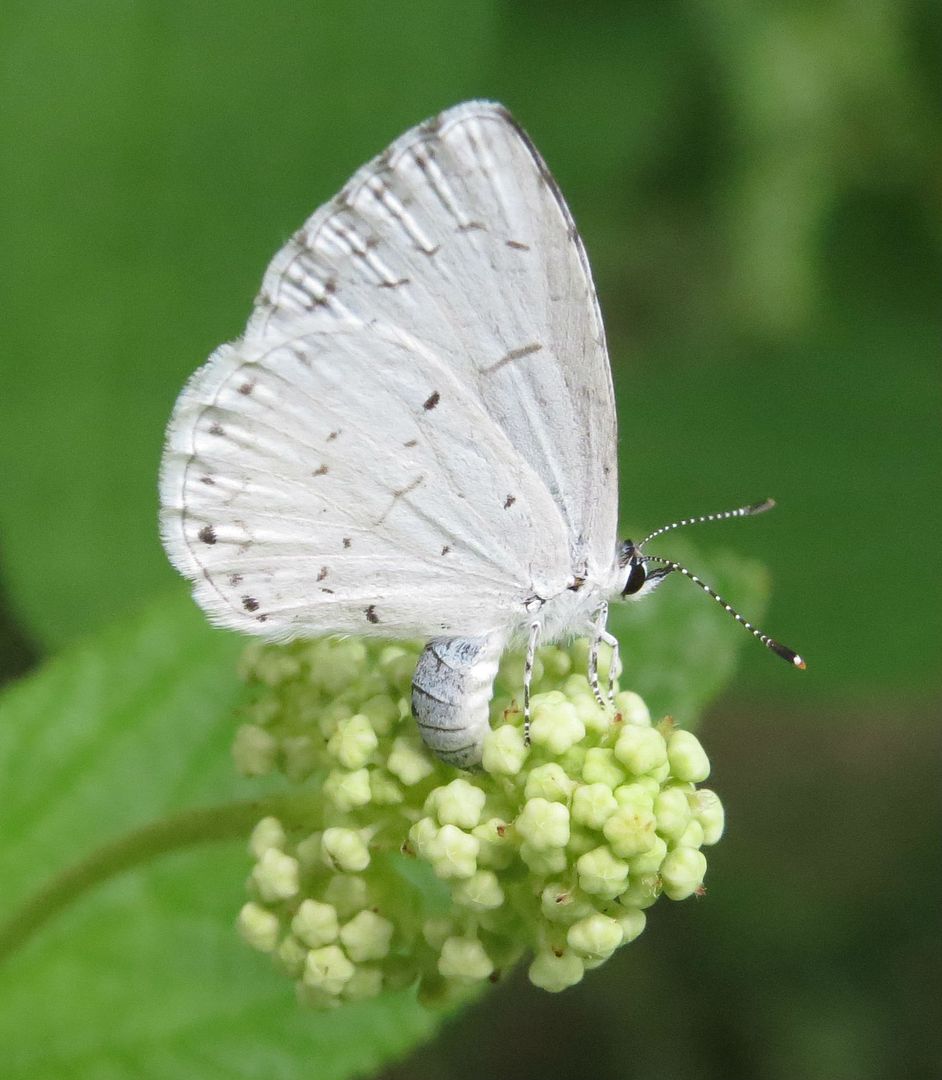
As an added bonus it's a host plant to Spring and Summer Azures. And.....
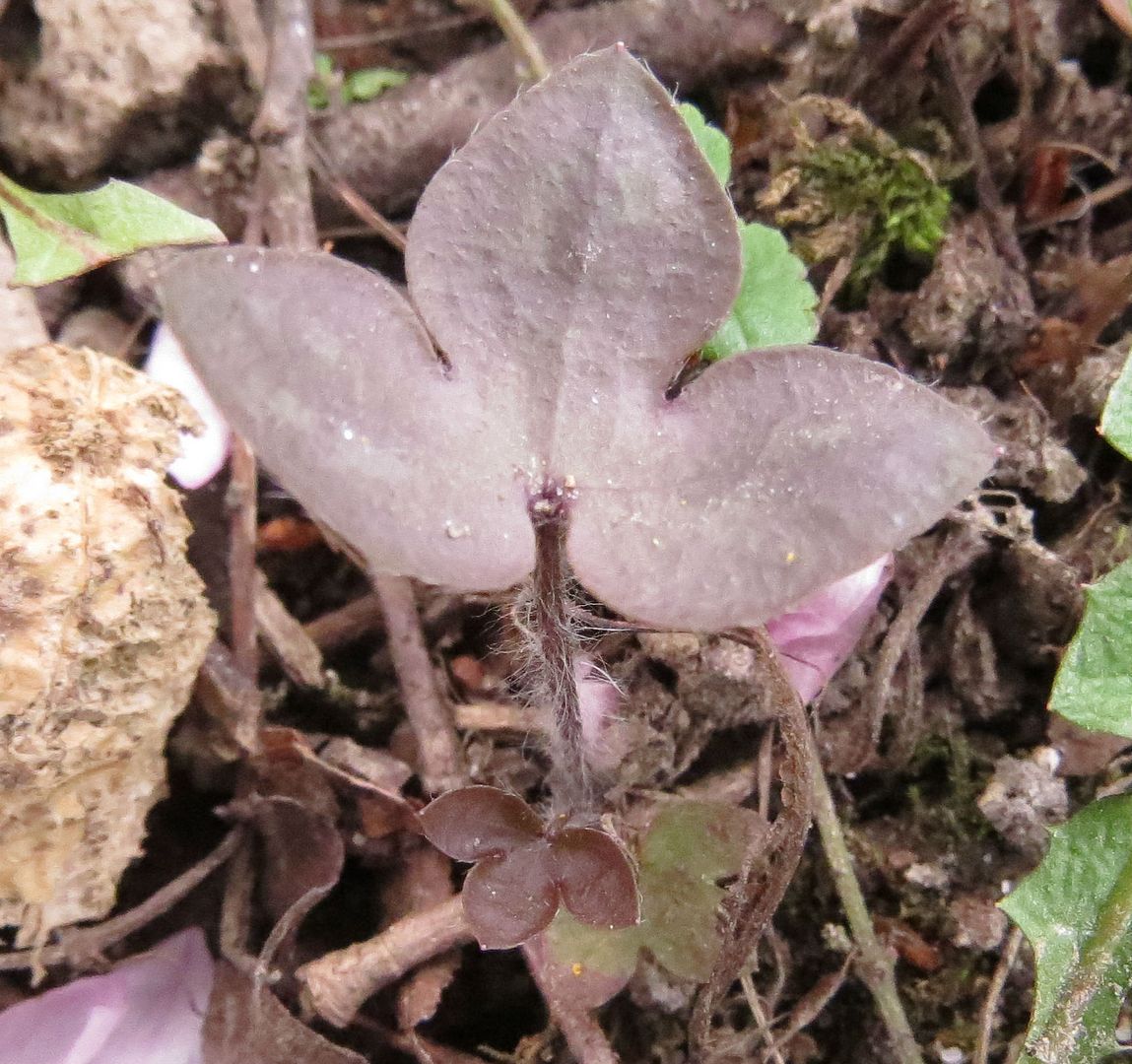
I found that Sourwood trees are also a great honeybee plant. Which....
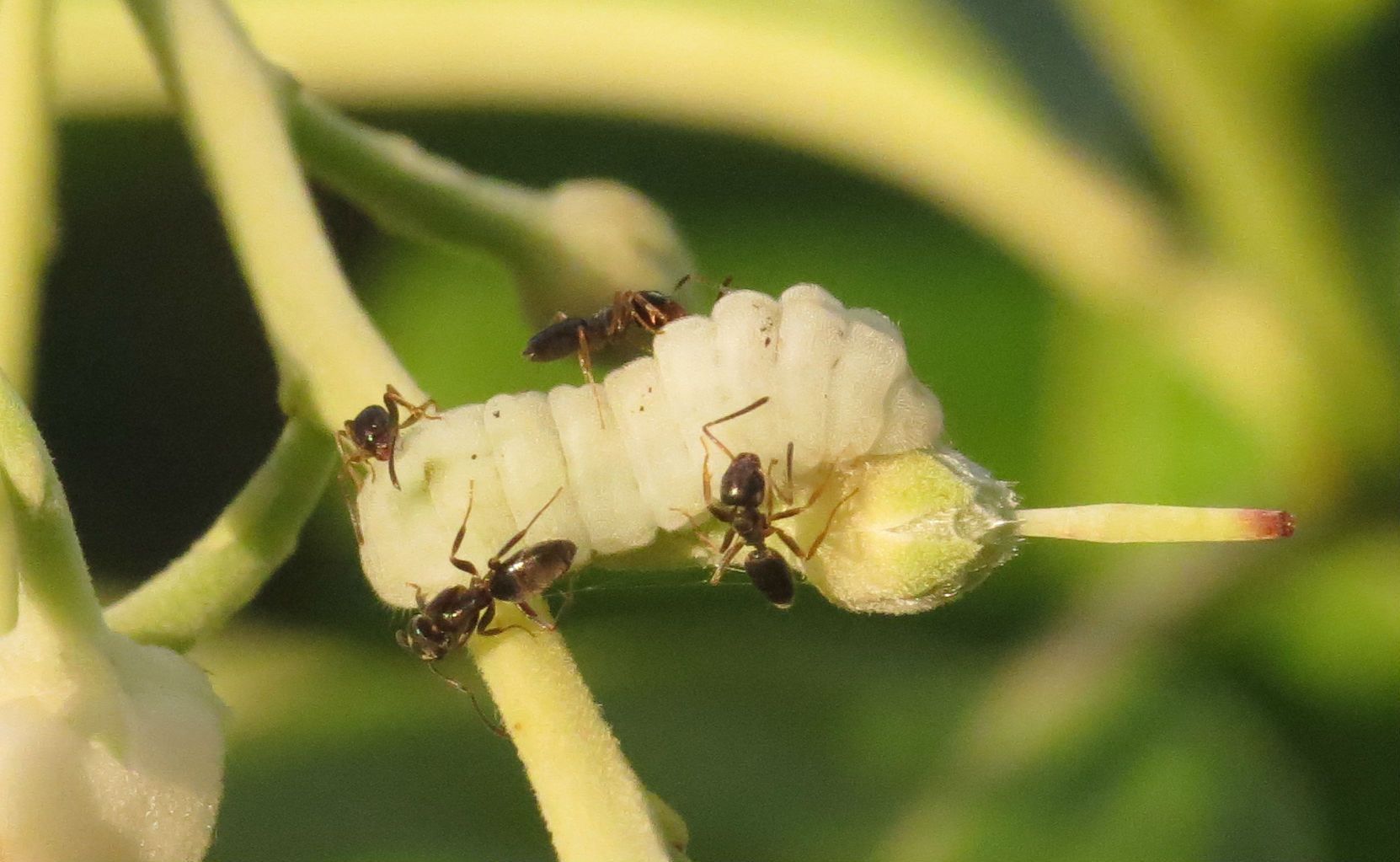
Is also a host plant for Spring and Summer Azures. And the caterpillars to this group of Butterflies are tended by ants for protection.
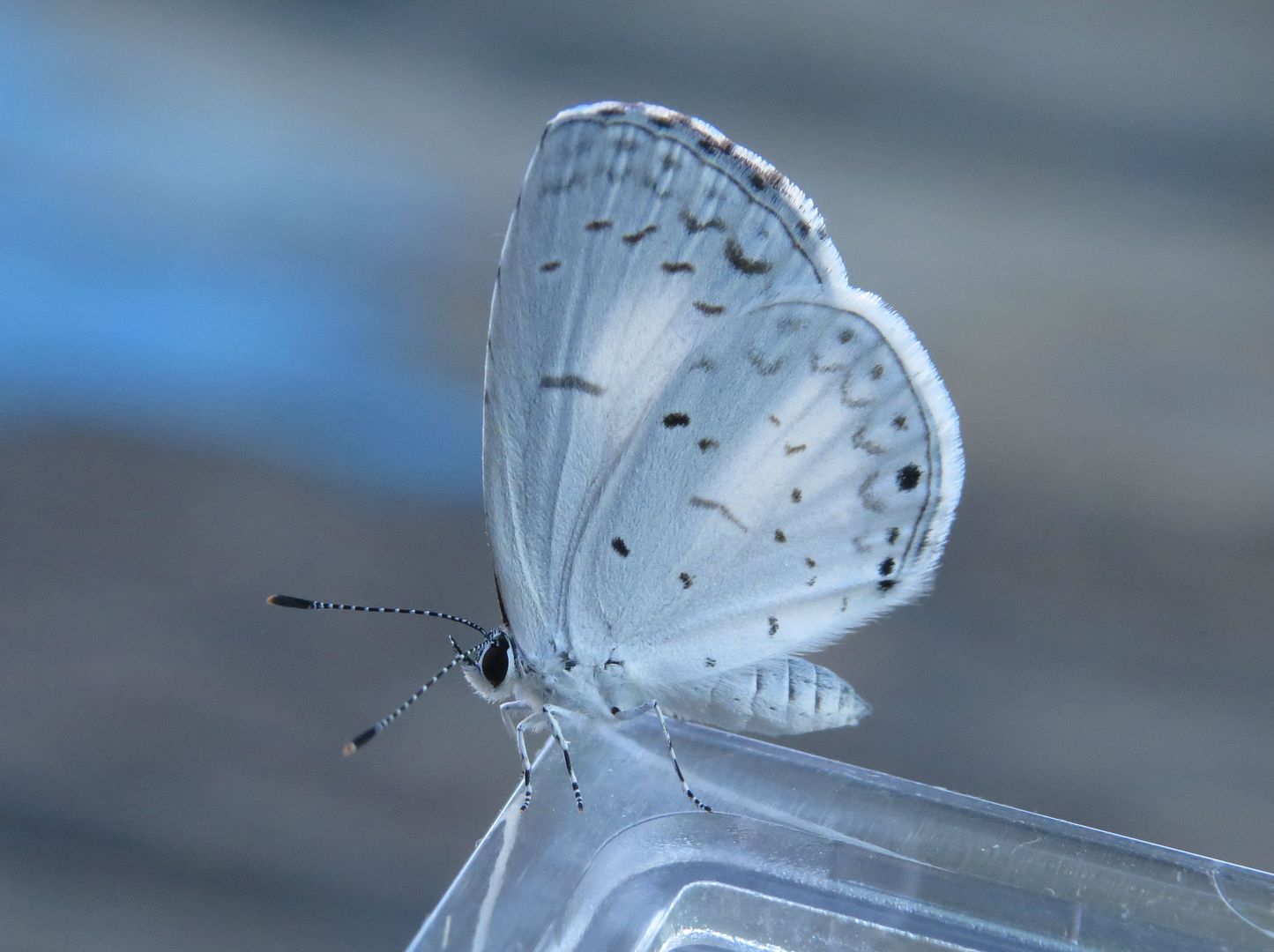
And I raised the caterpillar in captivity to see what it would become. Sure enough it's an Azure.Early on in gardening I had dreams of sweeping meadows full of Lupins to see this behavior of ants, plants, and butterflies. I'm happy I already have plants doing this for me. As I've found out Lupins require full sun and basically want to grow in 80% sand.
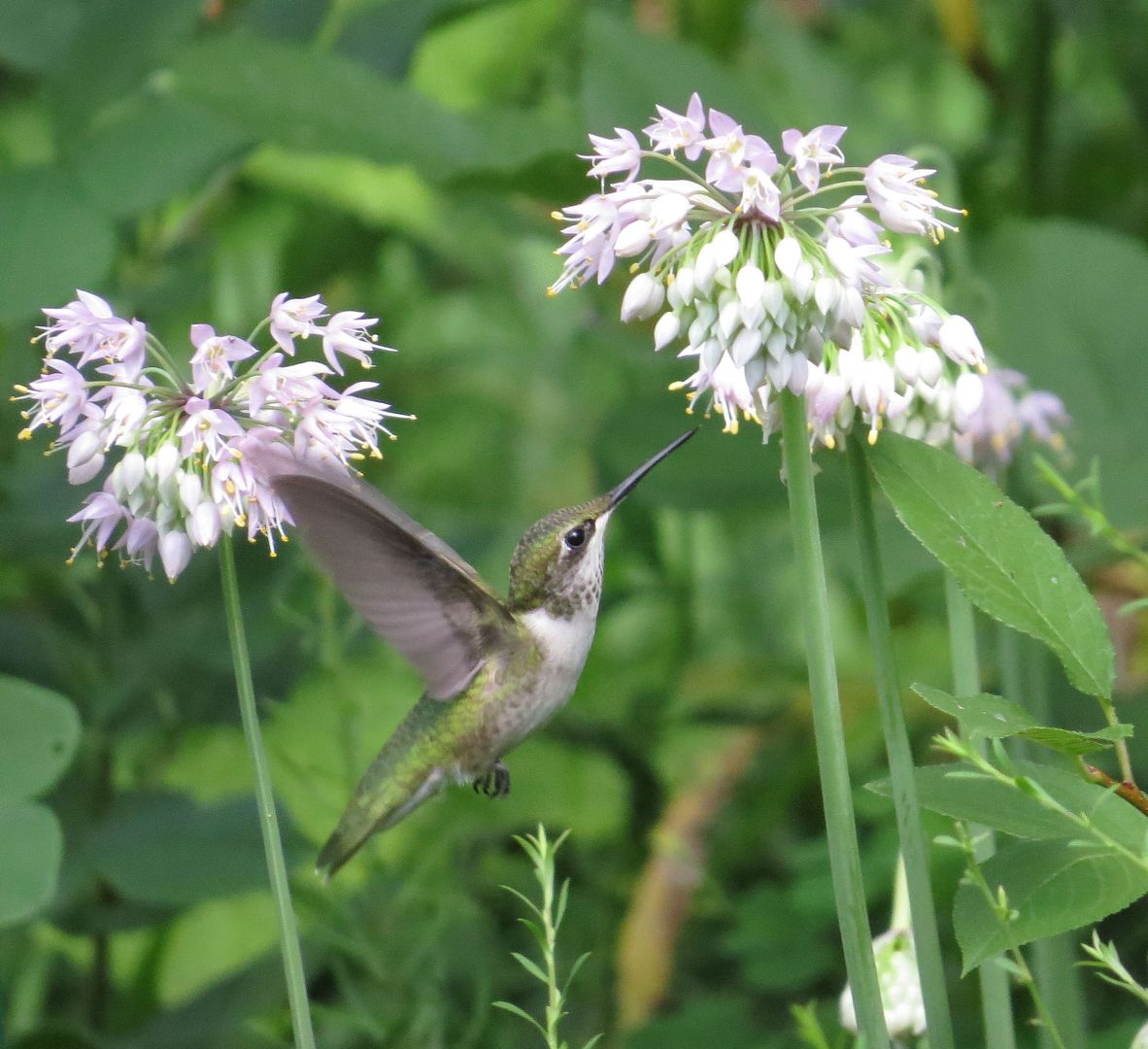
Lastly, my yard is becoming something of a hummingbird hot spot. Not year round though, we usually get one or two of them flying about intermittently over the summer, and then several of them consistently for a full week... presumably fledgling birds following their parents around.
Tuesday, September 22, 2015
Honeybees on Fall Flowers
While visiting the Mt. Cuba Center this past weekend I was treated to a variety of fall wildflowers with fall colors right around the corner.
The gardeners there do such an amazing job, and they've introduced a number of cultivars over the years that I find well worth the effort in tracking down.
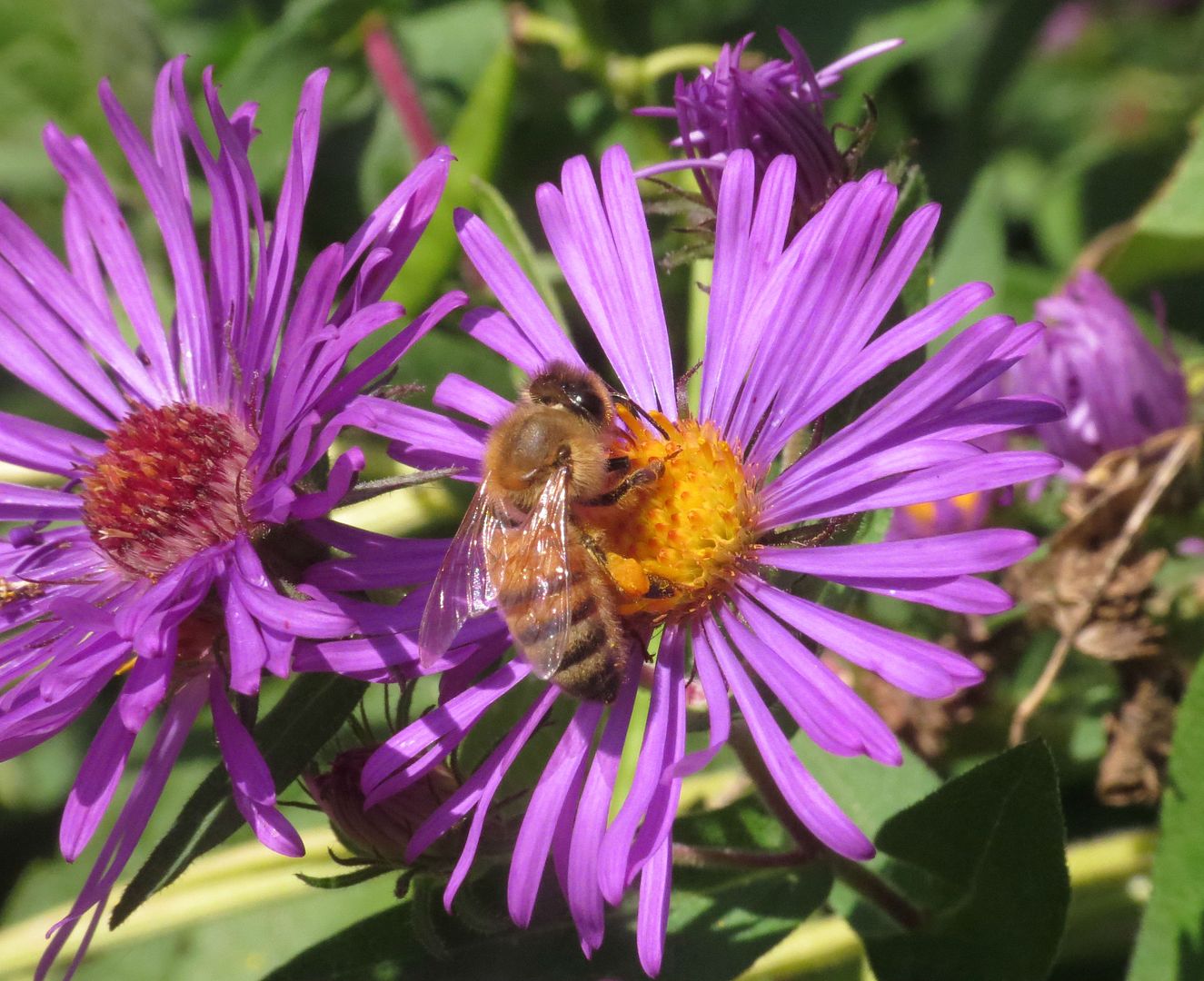
And of course now that they have a few honeybee hives on the property it's become far more apparent what native plants the bees really love. Now that Mountain Mint has finished blooming, I believe the winner of most perennial beds will be the common New England Aster, Symphyotrichum novae-angliae.
New England Asters come in a variety of colors but I've found the purple to be the most common. Pink, brilliant shades of Red, White and everything in between are also possible. Lost of cultivars are available on the market today and they're pretty easy grow by division or spreading seeds in pots of dirt outside over the winter. They can be slightly weedy but sometimes it's worth it to let them flower before pulling. A friend of mine had New England Asters take over his meadow garden but now he has every color in the rainbow.
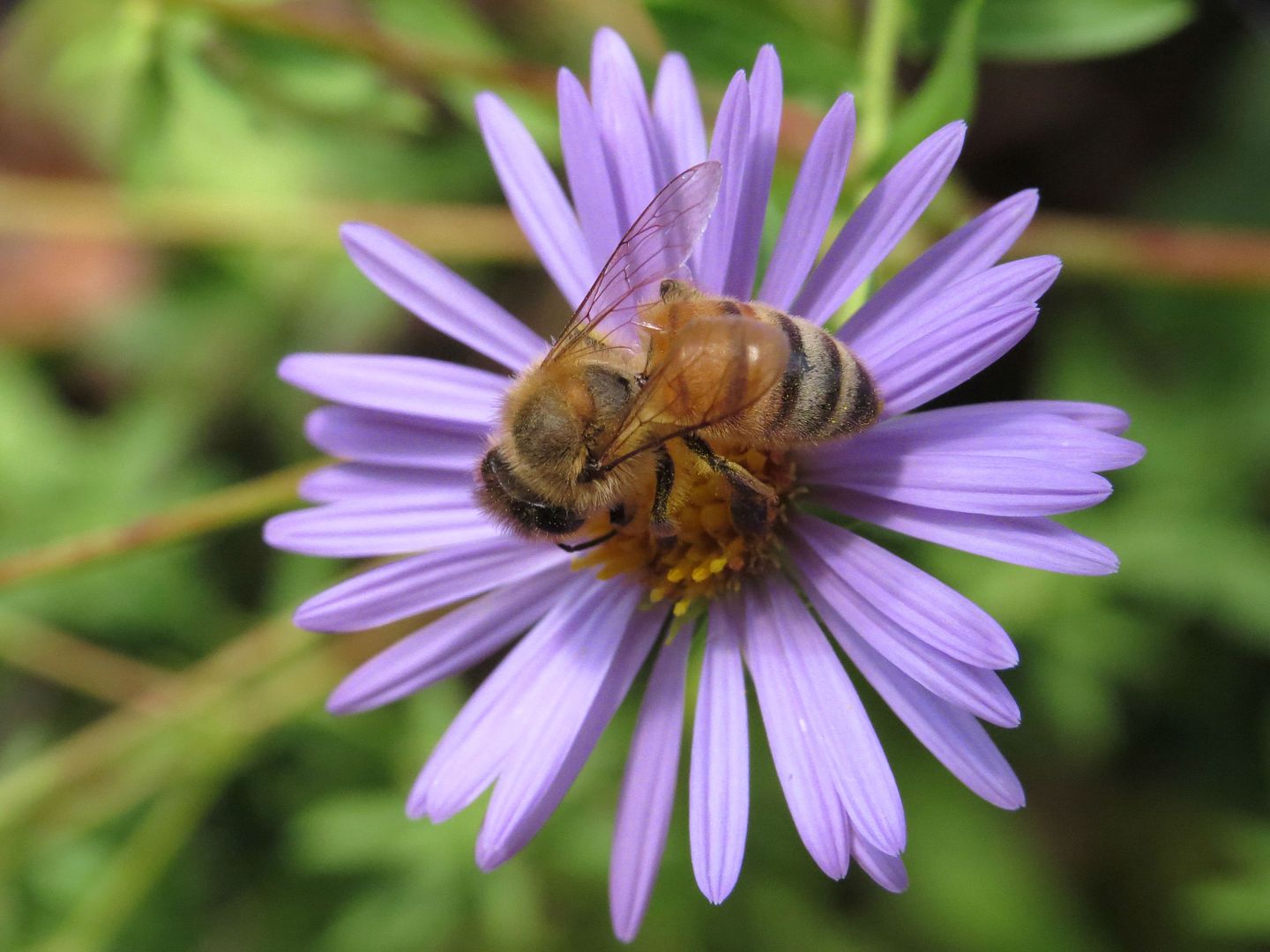
Symphyotrichum laeve 'Bluebird' is an up right perennial that grows more flowers than the true species. This is because it's actually a hybrid with another species, though I don't know the particulars on that. They look great if you can grow them. I've tried in the past and believe they benefit from regular watering, and or mulch, as opposed to testing out their drought tolerance. I don't believe this cultivar is prolific by seed, but they are pretty when grown beside other asters or goldenrod of similar height.
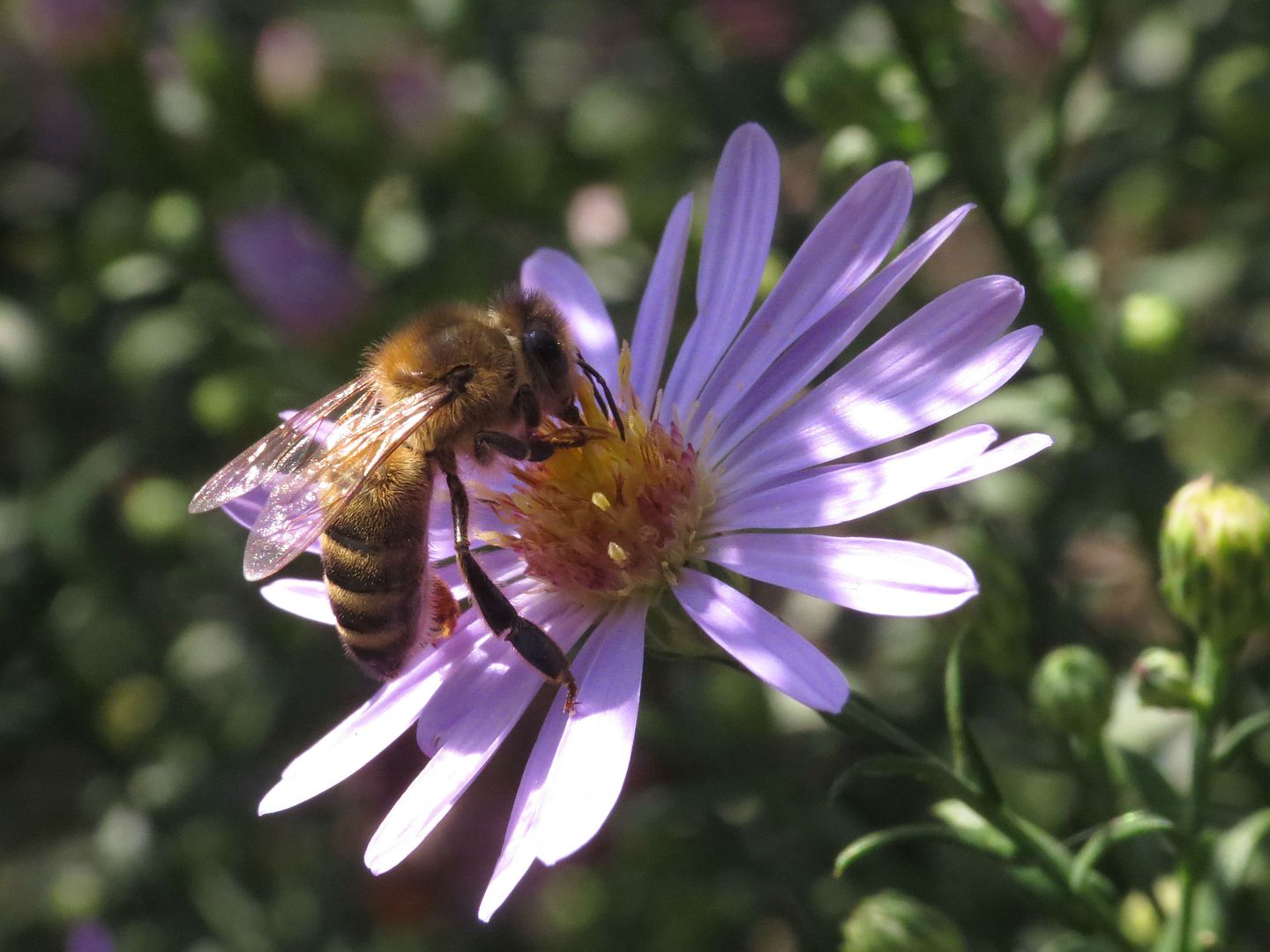
Aromatic Aster 'October Skies' is wonderful in mass plantings. A cultivar of Symphyotrichum olongifolium, this is a low growing aster which lays on the ground forming thick cloud-like pillows of flowers. Perfect at the edge of a flower bed or scattered among a meadow/garden of low plants.
White Woodland Aster... actually I'm a little unclear what species this one in particular is. It's one of the lower growing species with masses of white blooms. Oddly enough I have a species or two of these that come up wild in my yard and I only rarely see honeybees take a liking to them. At Mt. Cuba the clumps they had growing in the sparse woodland were getting a decent amount of attention. Not as much as any of the other asters but certainly more than anything else flowering in the woods.
Vernonia angustifolia 'Plum Peachy' is a form of Narrow-leaf Ironweed with darker foliage and is more compact than the wild species. I believe it may also have flowers more evenly spread around it as opposed to just at the tips of stems but I could be confusing that with another the Mt. Cuba Center has/is working on.
I didn't think to take photos of the foliage at the time but it has nice narrow leaves and looked similar to other cultivars of ironweed I'd seen in local nurseries. It was getting a decent amount of attention, slightly more so than the goldenrods growing around it but I know honeybees don't go nuts for goldenrod until after the peak Aster blooms. I'm planting three of these this fall and putting them right in next to my narrow-leaf Amsonia to see if they grow well at all.
Stiff Goldenrod, Solidago rigida, was blooming well. This was the first time I've ever seen this species and I was taken by how big and fat the flower petals are which you usually don't even notice on Goldenrods. They had a patch of 50 or so plants, or at least that's about how many flowering stems there were.
Just thought this was a good shot. Had the bee been posed a little better I'd go as far to say excellent.
Noticed some spittle bugs on the stem. They produce a foam or "spit" to hide within while they feed on the plant much like an aphid.
Solidago 'Fireworks' was also flowering, though not getting as much attention as I've seen it get in the past. (The huge hungry mantis about to lay an egg casing might have something to do with that.) It's also not quite at its peak bloom yet and that's really when honeybees tend to take over such nectar sources.
Obedient Plant is typically swarming with pollinators but I didn't find that to be the case that day. At least it wasn't for the patch that was next to the path. They also have it planted out in the meadow itself for a lovely pink effect but I didn't notice much flying around.
Mistflower, Conoclinum coelestinum. I was slightly surprised to see honeybees on this one. First off I've never been able to get this species to grow in my yard. They have water requirements that are somewhat finicky; too wet and they don't survive the winter, too dry and they won't reproduce. I read they're ideally a shade plant and the more sunlight they receive the more moisture they require. The Mt. Cuba Center had them in full sun, at the bottom of a slope.
Honeybees use other plants that were formerly in the Eupatorium genus. Pretty much all of Joe Pye Weeds are a hit with them, but only some of the Boneset species.
Our native Blue Lobelia, Lobelia siphilitica, is an upright, sometimes hard to establish and other times weedy perennial, with tube shaped pale blue flowers. I observe that while this is a wetland species, specamins growing closest to the water are among the shortest at around 2' at most while those growing farther away could reach up to 5' though 3 and a half certainly seemed more the norm.
Honeybees are perfectly capable of working the flowers but I noticed none of them were bothering to do so. The only flowers they visited were ones which carpenter bees had already chewed holes in.
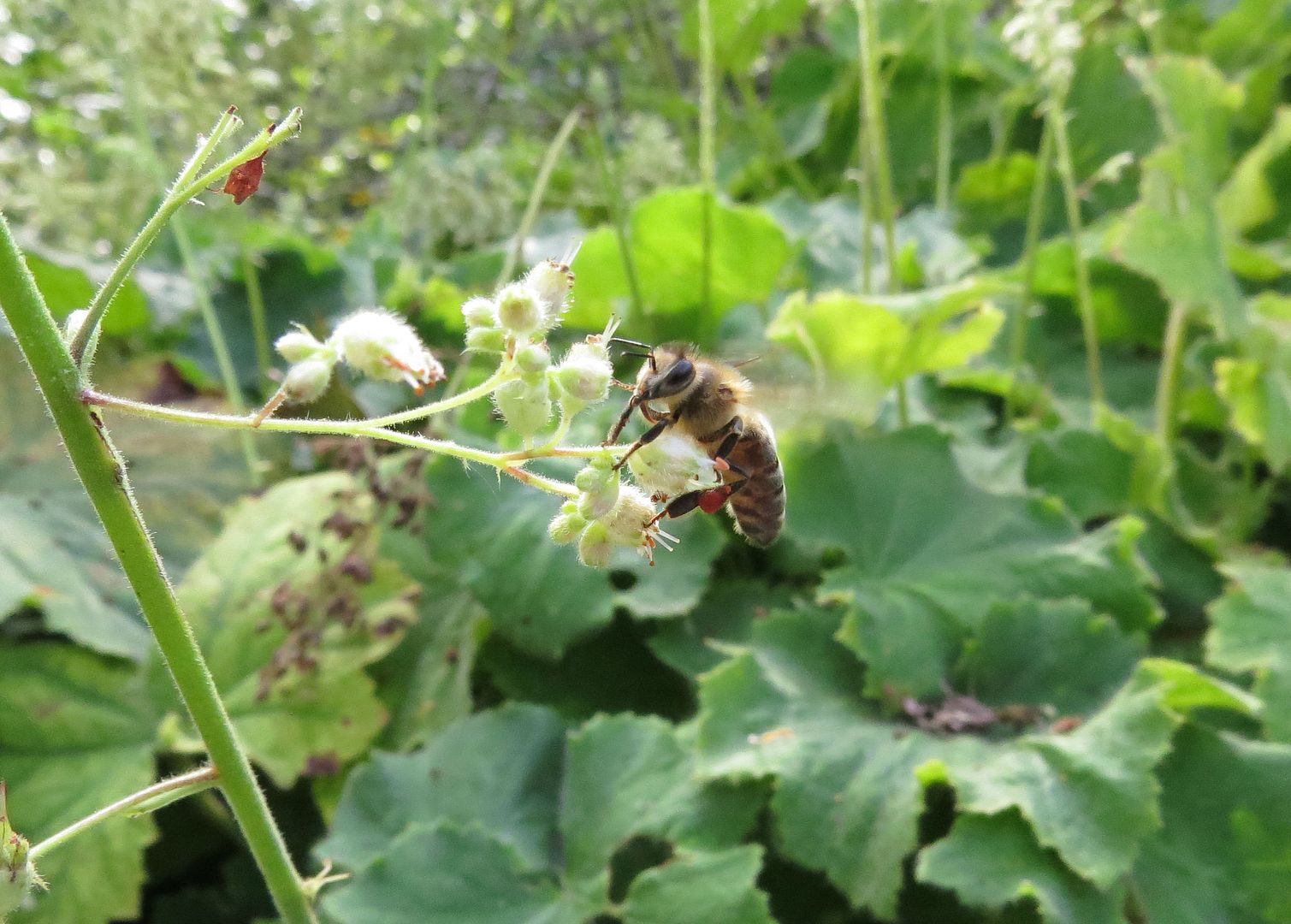
And lastly, I noticed honeybees working one of the Heucheras. This is a genus of plants with hundreds of cultivars that offer every color imaginable. They're mostly pollinated by flies but a certain few, typically ones with larger (for the genus) white flowers are visited by bees.
This particular species was mass planted near the Round Garden and the bees were gathering up nectar, and just look at that wonderful deep red pollen.
The gardeners there do such an amazing job, and they've introduced a number of cultivars over the years that I find well worth the effort in tracking down.
And of course now that they have a few honeybee hives on the property it's become far more apparent what native plants the bees really love. Now that Mountain Mint has finished blooming, I believe the winner of most perennial beds will be the common New England Aster, Symphyotrichum novae-angliae.
New England Asters come in a variety of colors but I've found the purple to be the most common. Pink, brilliant shades of Red, White and everything in between are also possible. Lost of cultivars are available on the market today and they're pretty easy grow by division or spreading seeds in pots of dirt outside over the winter. They can be slightly weedy but sometimes it's worth it to let them flower before pulling. A friend of mine had New England Asters take over his meadow garden but now he has every color in the rainbow.
Symphyotrichum laeve 'Bluebird' is an up right perennial that grows more flowers than the true species. This is because it's actually a hybrid with another species, though I don't know the particulars on that. They look great if you can grow them. I've tried in the past and believe they benefit from regular watering, and or mulch, as opposed to testing out their drought tolerance. I don't believe this cultivar is prolific by seed, but they are pretty when grown beside other asters or goldenrod of similar height.
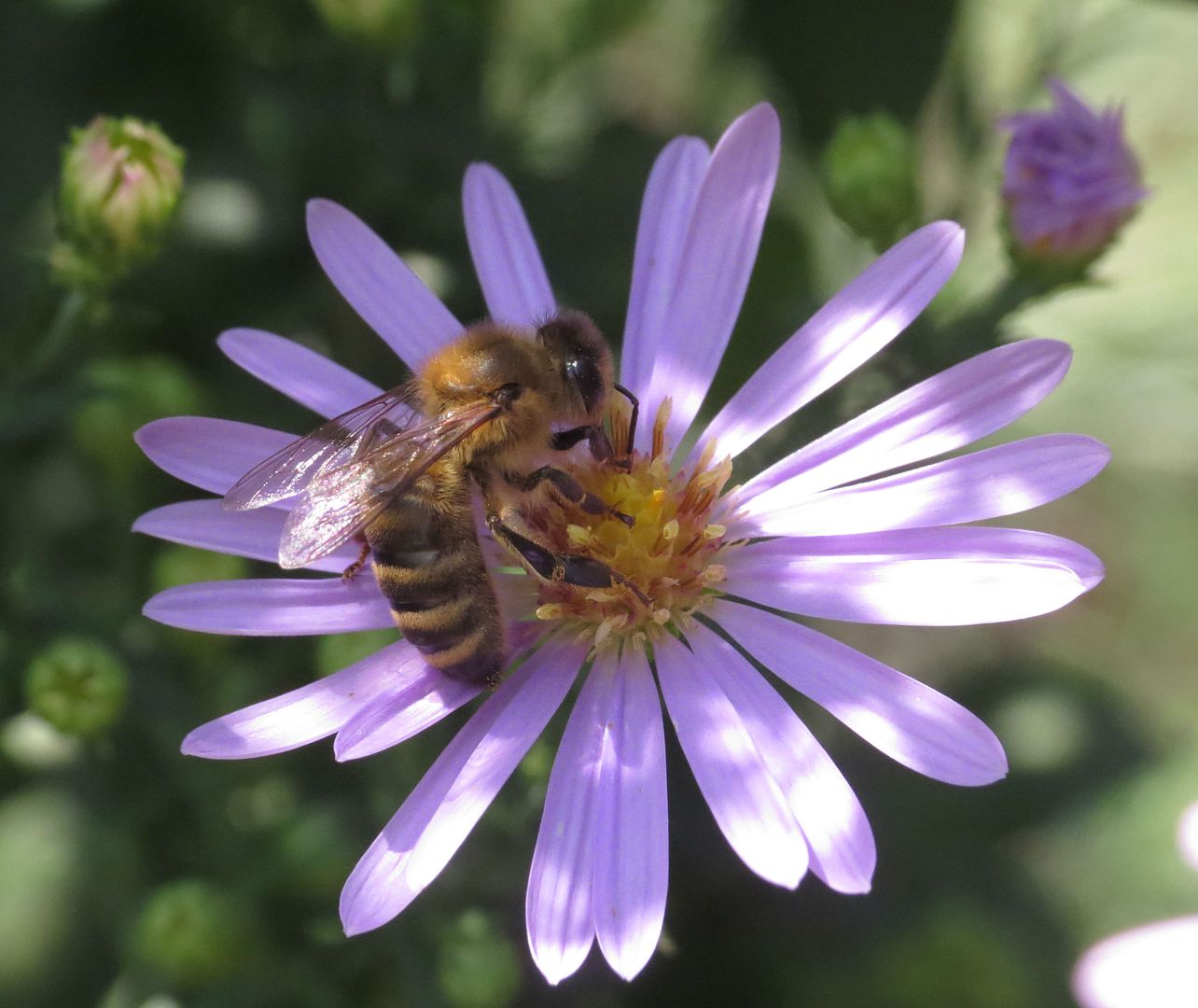
Aromatic Aster 'October Skies' is wonderful in mass plantings. A cultivar of Symphyotrichum olongifolium, this is a low growing aster which lays on the ground forming thick cloud-like pillows of flowers. Perfect at the edge of a flower bed or scattered among a meadow/garden of low plants.
White Woodland Aster... actually I'm a little unclear what species this one in particular is. It's one of the lower growing species with masses of white blooms. Oddly enough I have a species or two of these that come up wild in my yard and I only rarely see honeybees take a liking to them. At Mt. Cuba the clumps they had growing in the sparse woodland were getting a decent amount of attention. Not as much as any of the other asters but certainly more than anything else flowering in the woods.
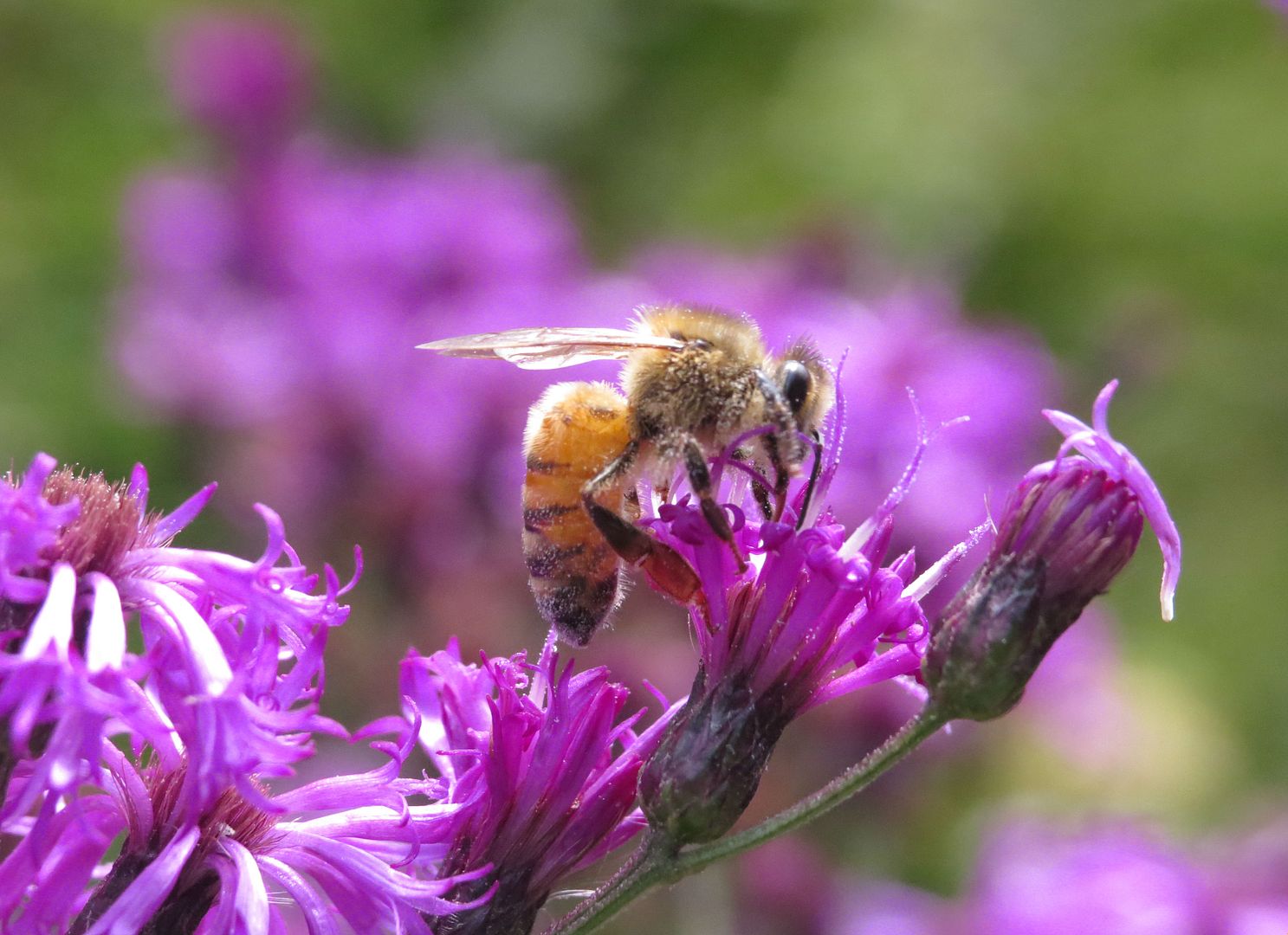
Vernonia angustifolia 'Plum Peachy' is a form of Narrow-leaf Ironweed with darker foliage and is more compact than the wild species. I believe it may also have flowers more evenly spread around it as opposed to just at the tips of stems but I could be confusing that with another the Mt. Cuba Center has/is working on.
I didn't think to take photos of the foliage at the time but it has nice narrow leaves and looked similar to other cultivars of ironweed I'd seen in local nurseries. It was getting a decent amount of attention, slightly more so than the goldenrods growing around it but I know honeybees don't go nuts for goldenrod until after the peak Aster blooms. I'm planting three of these this fall and putting them right in next to my narrow-leaf Amsonia to see if they grow well at all.
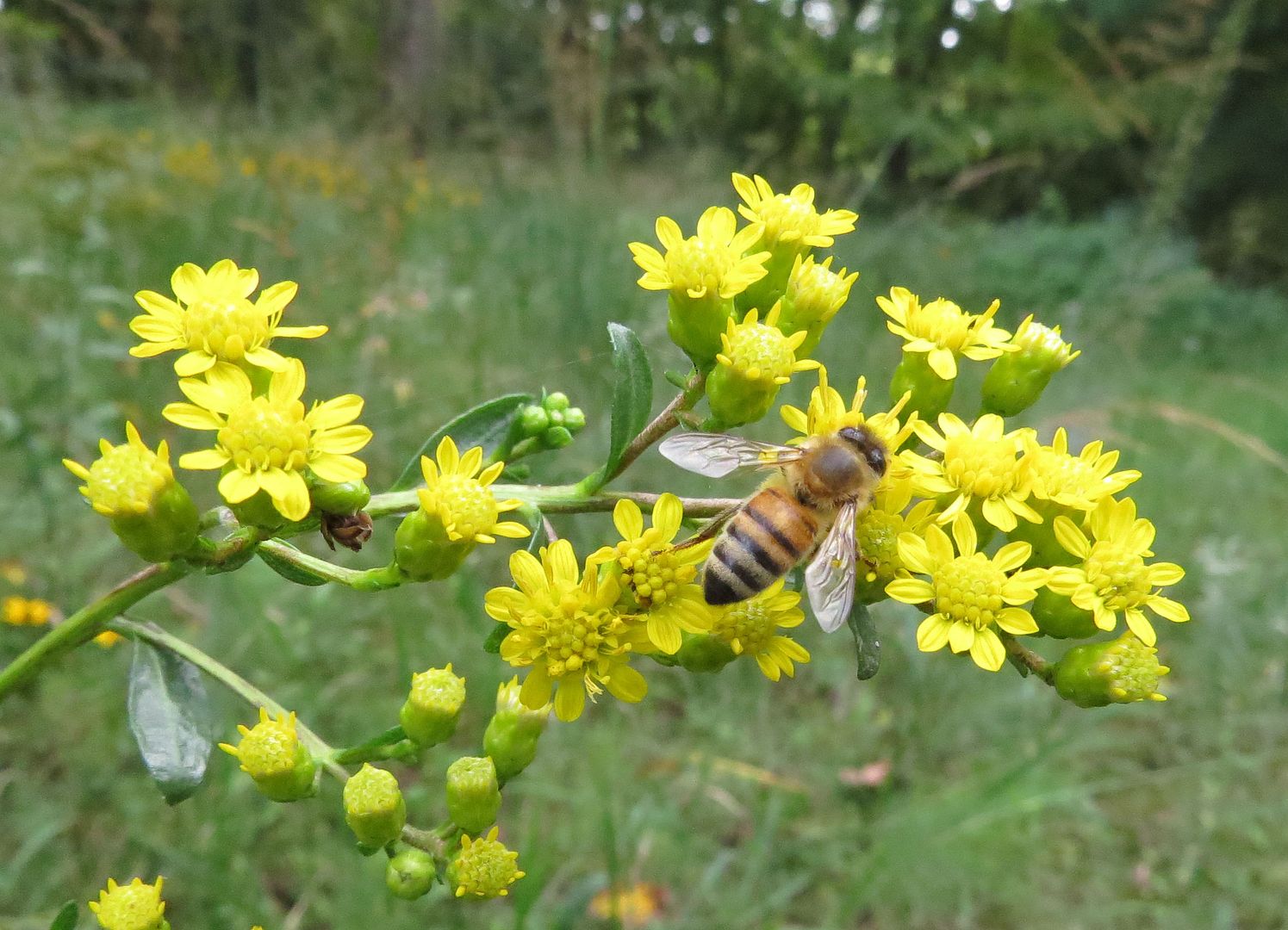
Stiff Goldenrod, Solidago rigida, was blooming well. This was the first time I've ever seen this species and I was taken by how big and fat the flower petals are which you usually don't even notice on Goldenrods. They had a patch of 50 or so plants, or at least that's about how many flowering stems there were.
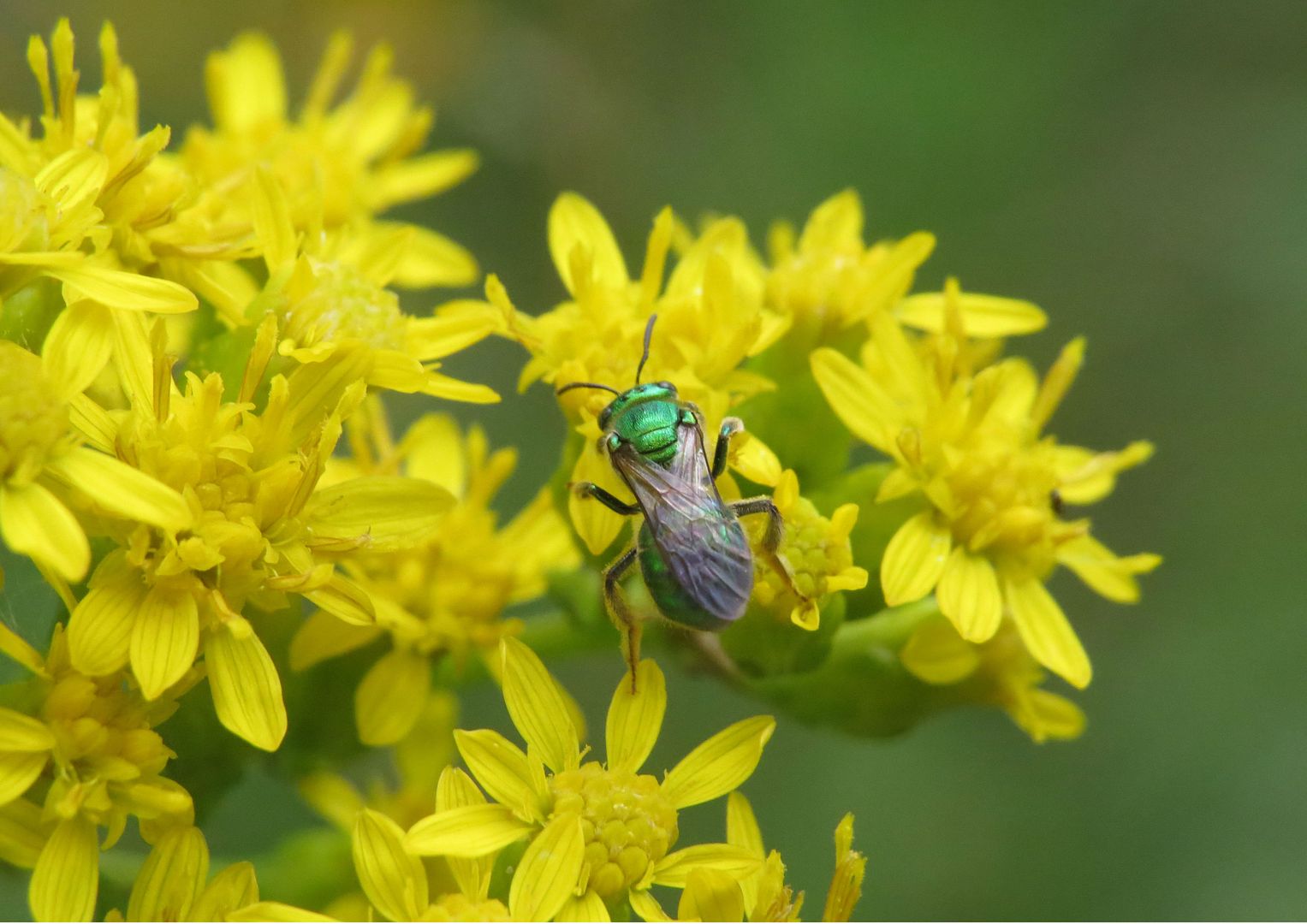
Just thought this was a good shot. Had the bee been posed a little better I'd go as far to say excellent.
Noticed some spittle bugs on the stem. They produce a foam or "spit" to hide within while they feed on the plant much like an aphid.
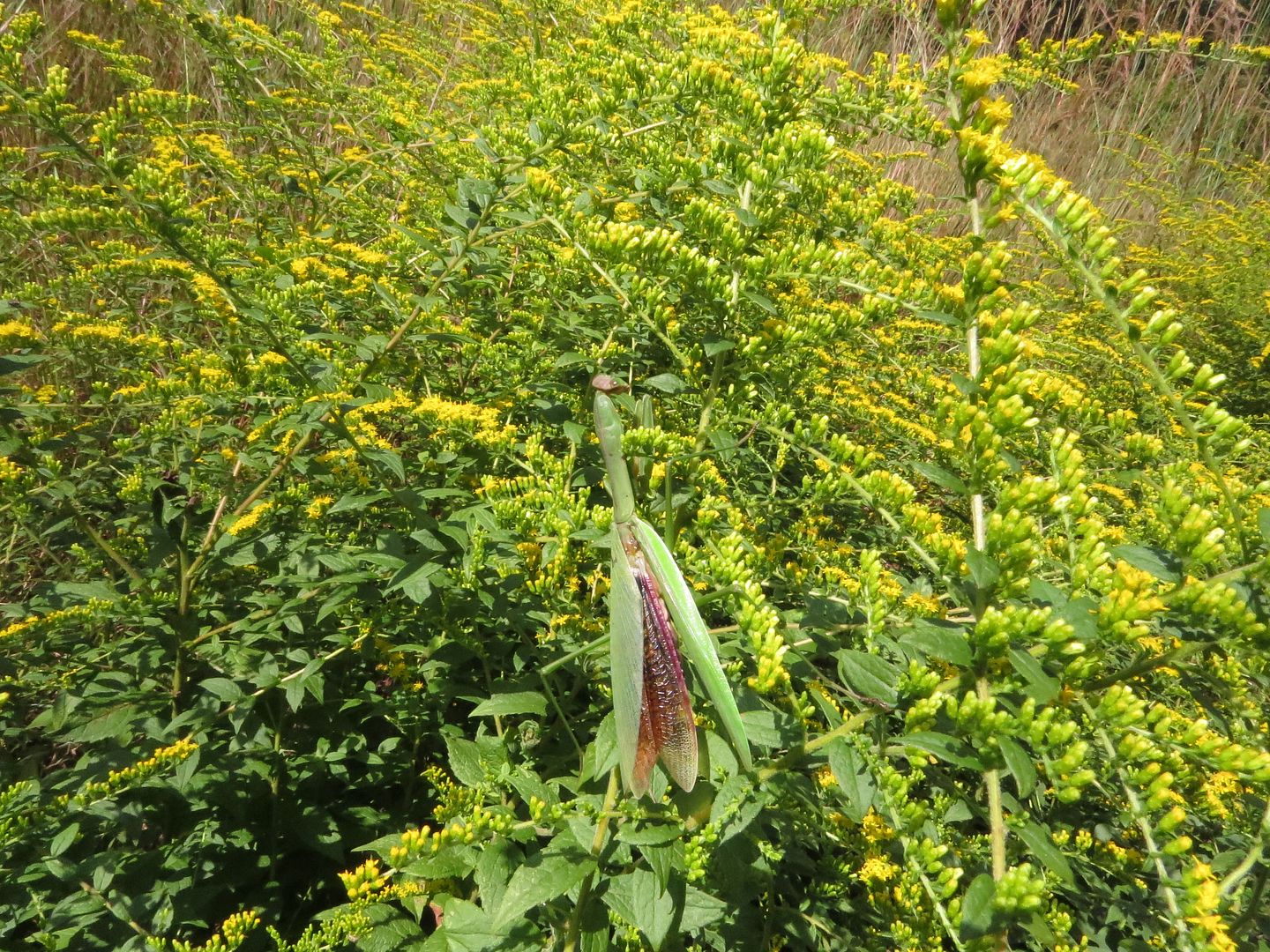
Solidago 'Fireworks' was also flowering, though not getting as much attention as I've seen it get in the past. (The huge hungry mantis about to lay an egg casing might have something to do with that.) It's also not quite at its peak bloom yet and that's really when honeybees tend to take over such nectar sources.
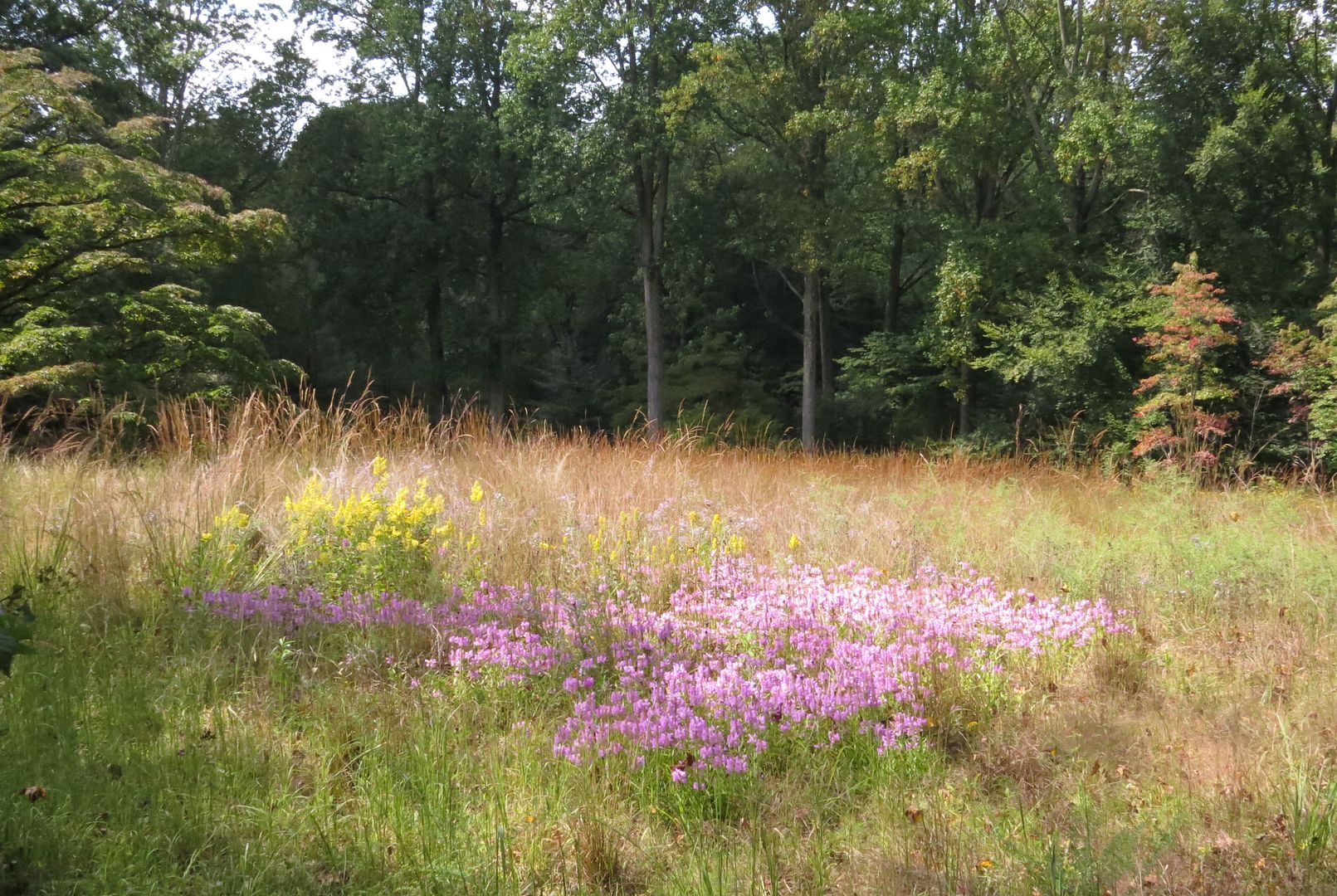
Obedient Plant is typically swarming with pollinators but I didn't find that to be the case that day. At least it wasn't for the patch that was next to the path. They also have it planted out in the meadow itself for a lovely pink effect but I didn't notice much flying around.
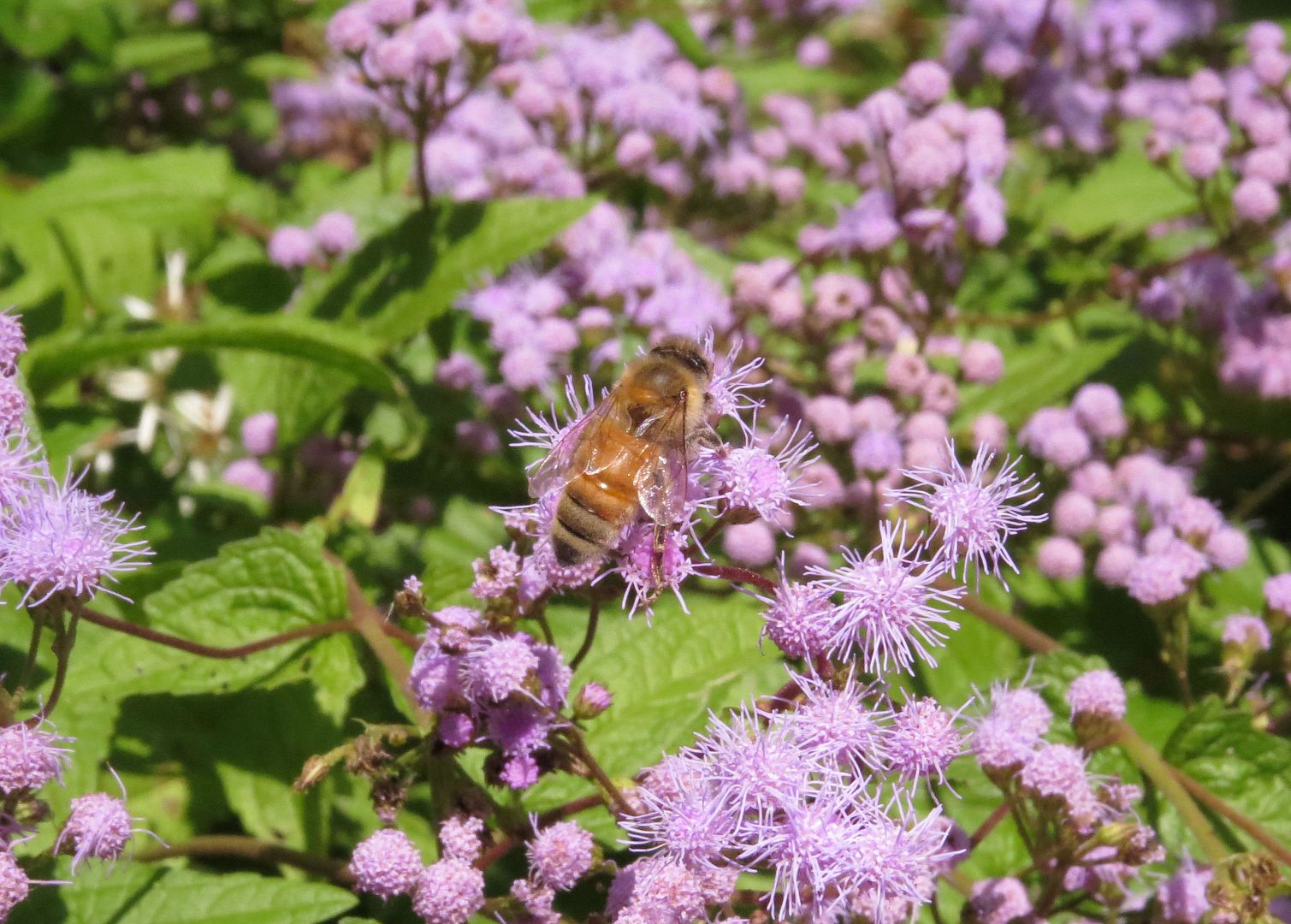
Mistflower, Conoclinum coelestinum. I was slightly surprised to see honeybees on this one. First off I've never been able to get this species to grow in my yard. They have water requirements that are somewhat finicky; too wet and they don't survive the winter, too dry and they won't reproduce. I read they're ideally a shade plant and the more sunlight they receive the more moisture they require. The Mt. Cuba Center had them in full sun, at the bottom of a slope.
Honeybees use other plants that were formerly in the Eupatorium genus. Pretty much all of Joe Pye Weeds are a hit with them, but only some of the Boneset species.
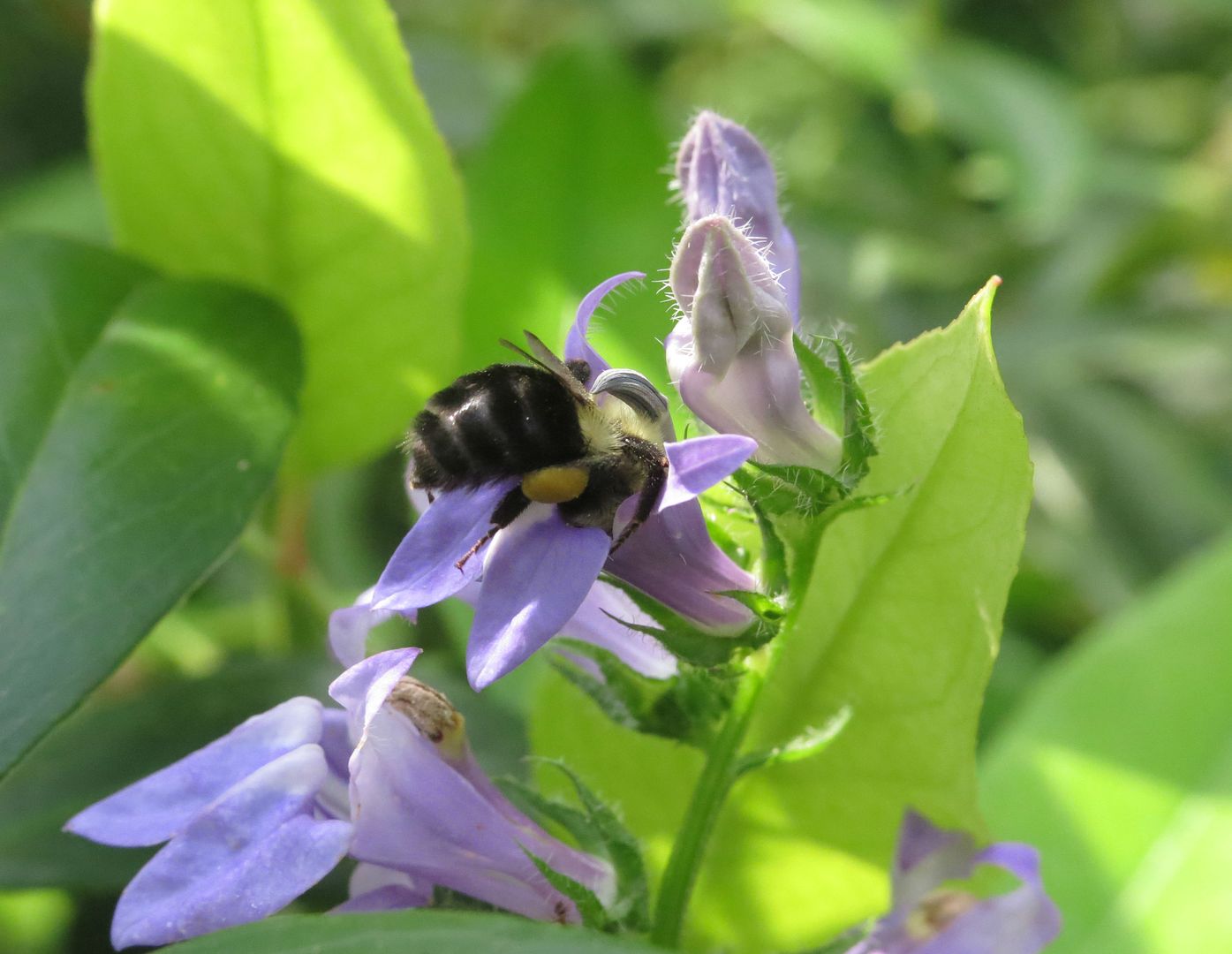
Our native Blue Lobelia, Lobelia siphilitica, is an upright, sometimes hard to establish and other times weedy perennial, with tube shaped pale blue flowers. I observe that while this is a wetland species, specamins growing closest to the water are among the shortest at around 2' at most while those growing farther away could reach up to 5' though 3 and a half certainly seemed more the norm.
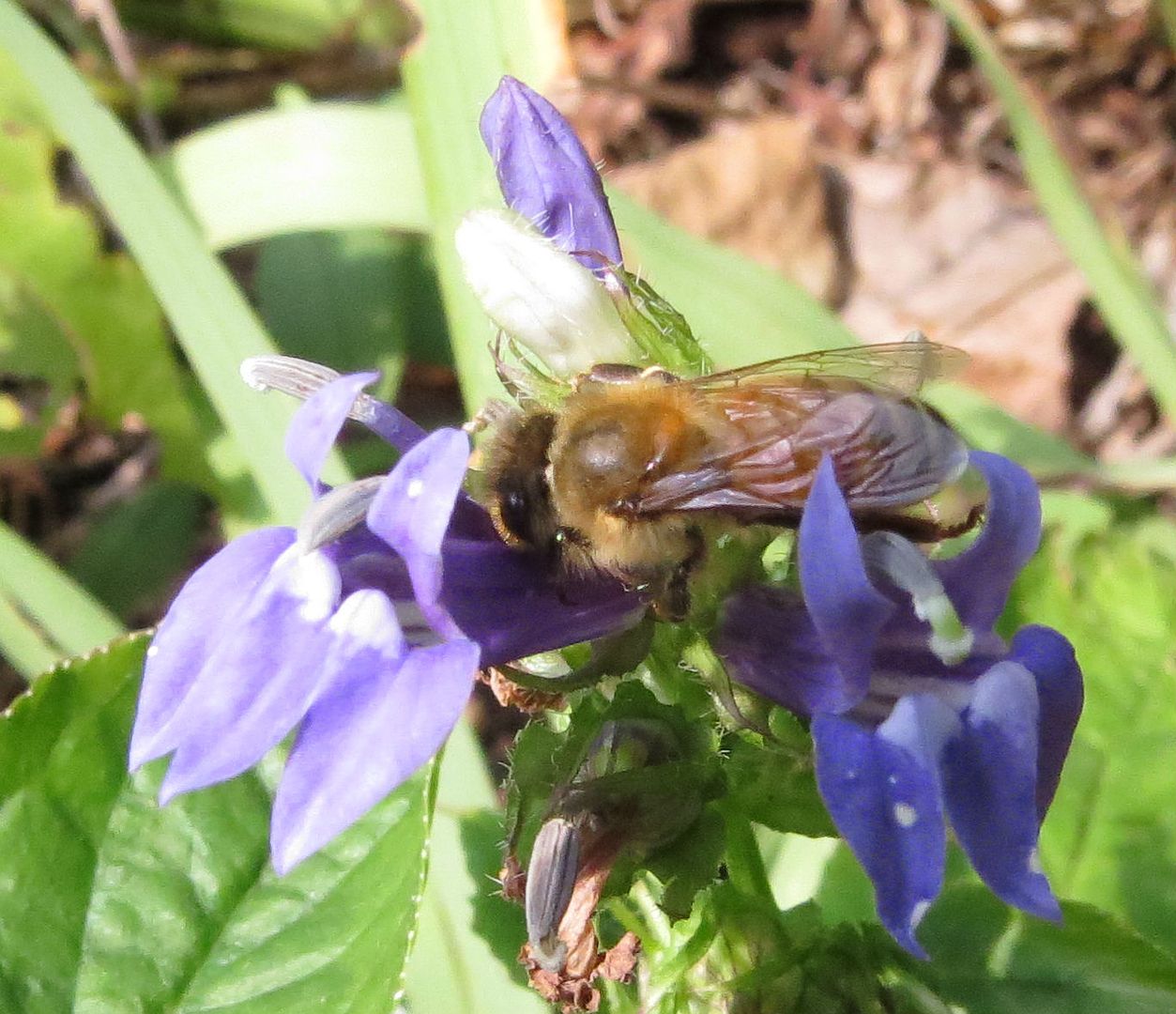
And lastly, I noticed honeybees working one of the Heucheras. This is a genus of plants with hundreds of cultivars that offer every color imaginable. They're mostly pollinated by flies but a certain few, typically ones with larger (for the genus) white flowers are visited by bees.
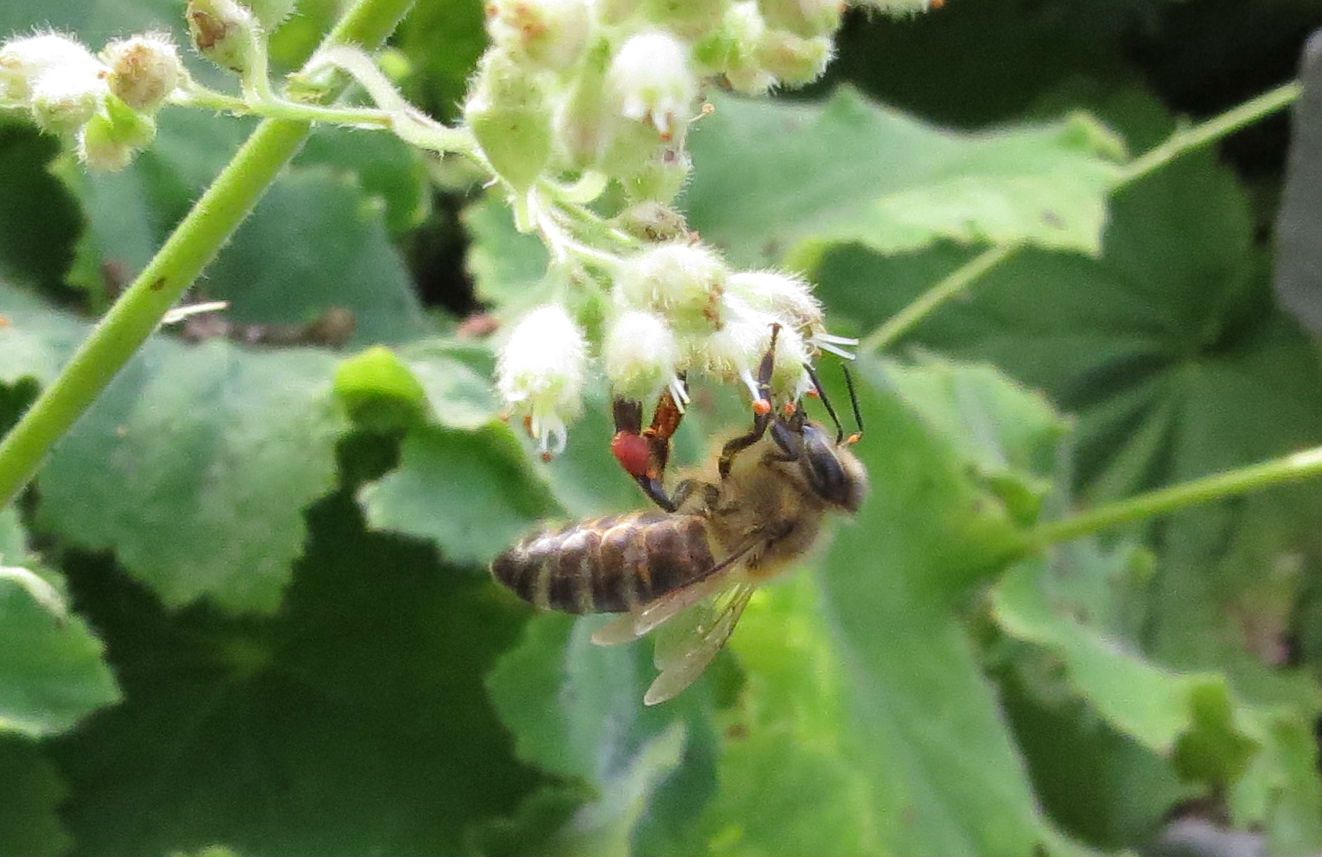
This particular species was mass planted near the Round Garden and the bees were gathering up nectar, and just look at that wonderful deep red pollen.
Saturday, September 19, 2015
Honeybees on Black-eyed Susan
I've never seen Honeybees bothering with Black-eyed Susans before, even bumblebees won't bother with them. But on my recent visit to the Mt. Cuba Center in DE, sure enough I found some working the plants. But they were only working the ones in a huge patch at the top of the hill where assorted Asters and Goldenrod were planted around. Others planted out in the grassy meadow received no attention at all, though I'll concede they were not planted as densely. What I think is happening is the honeybees that found the asters took the sweet nectar home and did a waggle dance to tell their fellow bees where the sweet nectar was. So the new foragers coming to locate the source of the nectar mostly found the Black-eyed Susans instead of the Asters.
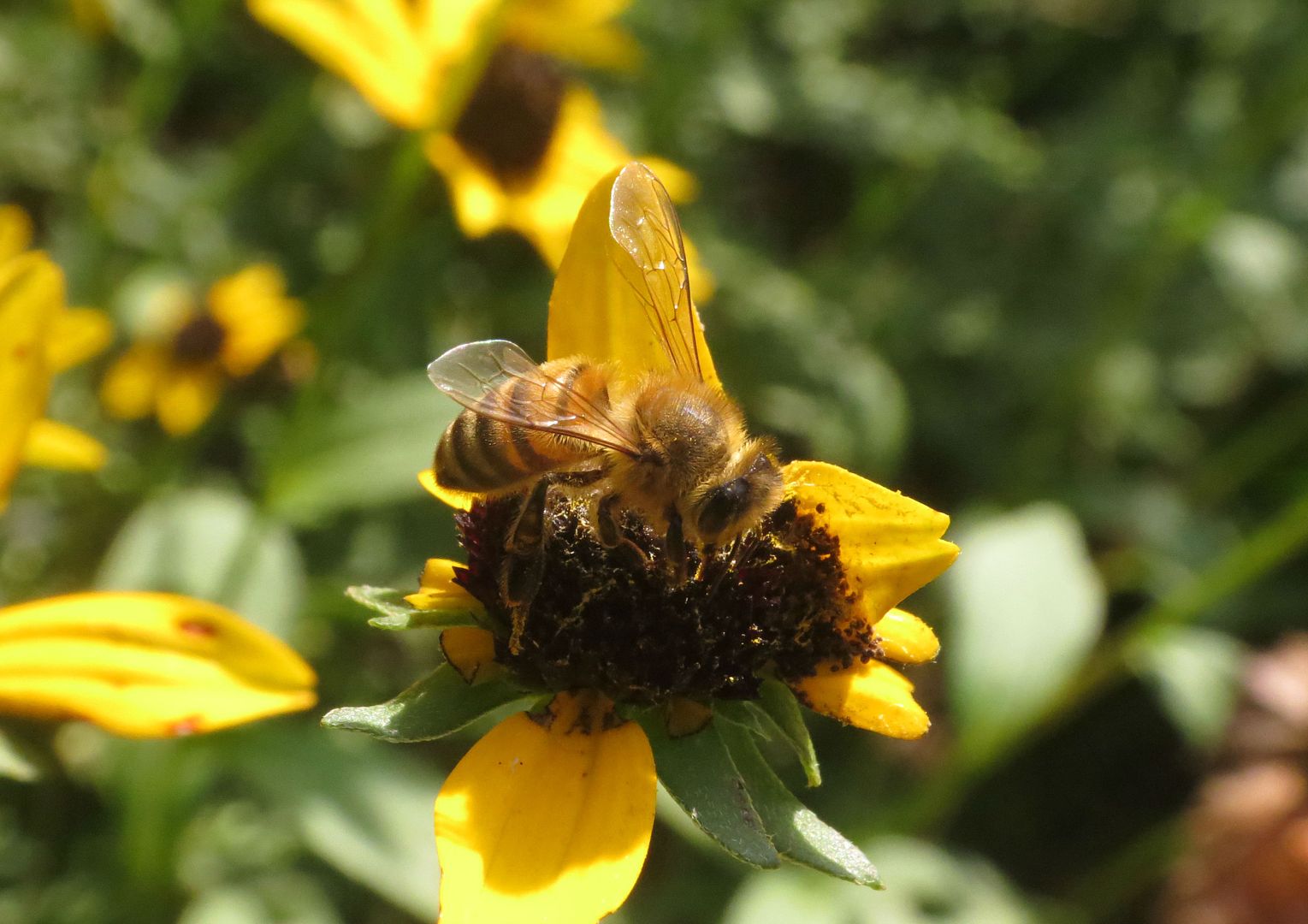
On rare occasions when I do find honeybees working Black-eyed Susans, away from other nectar plants, it's usually on the cultivars that have enormous flowers compared to the true species, seen above, which doesn't always have its petals.
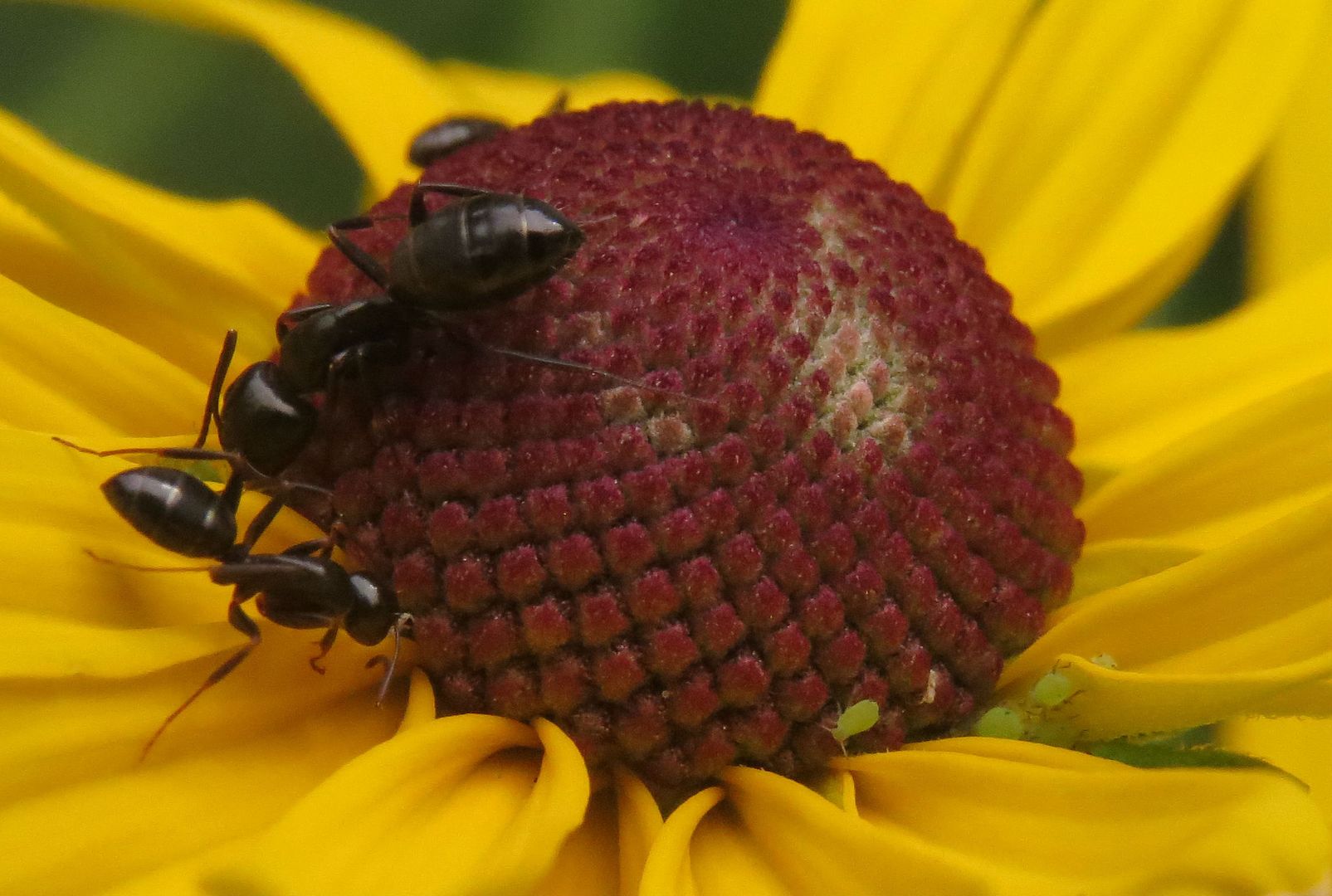
I'm half tempted to say the bees were tending aphids that sometimes infest the flowers to various Rudbeckia species but I know that wasn't the case.
I also spotted a Pearl Crescent fluttering about on the flowers. I wonder if the Mt. Cuba Center's new hybrid aster 'Bluebird' is a host plant for this species. It's a hybrid between two Asters but only Symphyotrichum laeve is listed as a host.
Saturday, August 1, 2015
Honeybees on Nodding Onion
My little patch of Nodding Onions has started to get more attention than hummingbirds. With more than 45 plants in bloom, my honeybees have started to take an interest. This is good because their focus has otherwise been completely devoted to the patch of mountain mint in an adjacent garden bed. Mints, while rich nectar sources, I've found can sometimes add their flavor of the honey which some folks don't like. They're also starting to work the Anise Hyssop, Joe Pye Weed as well the Buttonbush and Clethra alnifolia now that they're all in full bloom. Nodding onions were a surprise though. I had assumed they'd be treated like purple cone flowers, one or two bees per 50 blooms, but these are getting slightly more attention than that.
Another thing is that I've realized I probably ordered about 32 plants two years ago, and now I have almost 50 flowering... so they've clearly reproduced. There's the main clump I have in a sandy patch which is how they grow them at the Mt. Cuba Center. Bulbs (onions) benefit from drainage in the soil, so when I read that they will also grow in clay, I'm skeptical. Yes they might grow and flower in clay but I suspect they won't reproduce as well or last as many years as they would in sandy spots.
Granted the ones I have planted in clay are doing perfectly fine. In fact, at the risk of calling myself a hypocrite, the main patch I first planted in the sand seemed like it went through shock. The plants were lanky, wilted, seemed to demand more water. But that was the first year, now that they've got their roots established they seem to be growing equal to if not better than the ones I started in clay.
Sorry for photographing pretty much the same bee over and over again. My camera was out of batteries from another project, and I only had my cell phone to work with. I'll try and get more picks to better diversify my angles and bees, etc...
Along with the main patch, I have a few plants scattered in other gardens and along pathways but nowhere near as densely planted. While walking the garden I noticed the honeybees had found these plants too which is a little odd. Generally when a bee does a waggle dance in the hive to give the coordinates about this awesome source of food they found, they normally wouldn't be finding these random plants away from the main patch. It's as though they're finding the main patch of onions and then exploring a bit to find plants that aren't getting as much attention. Normally when I see bees foraging in, say a field, you find them on the plants where the flowering is the most dense, rarely in the smaller patches forming the outskirts, if you understand what I mean.
I'm taken by the lack of info there is on this plant as a nectar and pollen source for honeybees. It's generally agreed upon that bees like the plant, as well as everything in the Allium family (Garlic, Chives, other Onions) and if hummingbirds are using it as a nectar source you can be sure it's of high quality.
In the book "Honey Plants of North America" they generalize onions into a simple paragraph, almost treating them like a cliff note. Granted the book was published in 1926 but it's still a publication well worth owning (though their taxonomy is almost 100 years out of date). In it they write, "Valuable for honey when grown for seed... ...The honey is amber-colored, and the peculiar onion odor and flavor almost disappear as it ripens. The flowers are white." But this refers to Allium cepa the common white onion grown the world over, not our native Allium cernuum and they pretty much skip over every other species though I think it's safe to say bees like all members of this family.
Another thing is that I've realized I probably ordered about 32 plants two years ago, and now I have almost 50 flowering... so they've clearly reproduced. There's the main clump I have in a sandy patch which is how they grow them at the Mt. Cuba Center. Bulbs (onions) benefit from drainage in the soil, so when I read that they will also grow in clay, I'm skeptical. Yes they might grow and flower in clay but I suspect they won't reproduce as well or last as many years as they would in sandy spots.
Granted the ones I have planted in clay are doing perfectly fine. In fact, at the risk of calling myself a hypocrite, the main patch I first planted in the sand seemed like it went through shock. The plants were lanky, wilted, seemed to demand more water. But that was the first year, now that they've got their roots established they seem to be growing equal to if not better than the ones I started in clay.
Sorry for photographing pretty much the same bee over and over again. My camera was out of batteries from another project, and I only had my cell phone to work with. I'll try and get more picks to better diversify my angles and bees, etc...
Along with the main patch, I have a few plants scattered in other gardens and along pathways but nowhere near as densely planted. While walking the garden I noticed the honeybees had found these plants too which is a little odd. Generally when a bee does a waggle dance in the hive to give the coordinates about this awesome source of food they found, they normally wouldn't be finding these random plants away from the main patch. It's as though they're finding the main patch of onions and then exploring a bit to find plants that aren't getting as much attention. Normally when I see bees foraging in, say a field, you find them on the plants where the flowering is the most dense, rarely in the smaller patches forming the outskirts, if you understand what I mean.
I'm taken by the lack of info there is on this plant as a nectar and pollen source for honeybees. It's generally agreed upon that bees like the plant, as well as everything in the Allium family (Garlic, Chives, other Onions) and if hummingbirds are using it as a nectar source you can be sure it's of high quality.
In the book "Honey Plants of North America" they generalize onions into a simple paragraph, almost treating them like a cliff note. Granted the book was published in 1926 but it's still a publication well worth owning (though their taxonomy is almost 100 years out of date). In it they write, "Valuable for honey when grown for seed... ...The honey is amber-colored, and the peculiar onion odor and flavor almost disappear as it ripens. The flowers are white." But this refers to Allium cepa the common white onion grown the world over, not our native Allium cernuum and they pretty much skip over every other species though I think it's safe to say bees like all members of this family.
Subscribe to:
Posts (Atom)