While chatting with a friend the topic of good nectar and pollen plants came up. He and I have a competitive friendship when it comes to gardening. Not that we argue at all, I think it's more that we share opinions about our experiences with native plants. The current conversation was focused on Honeybees as I'd just written an article for the New Jersey Native Plant Society News Letter. I'll be posting it here later on. And I realized I'd forgotten to mention a plant. Corn!
Honeybees love corn! Despite being wind pollinated, the anthers to the plant are way up high and out in the open for all to see. The female part of the plant is down about half way to the ground and requires pollen to drop down onto it, preferably from neighboring plants.
As with willow trees bees can't help but take advantage of the free pollen. In theory they're helping the pollination by flapping their wings about and freeing it into the air, but I imagen they're eating more than they're blowing about.
The best part is you get a crop out of this plant. You'll read in books that it's best to have at least a 5 by 5 block of 25 plants to get good pollination. In truth all you need is 2 plants and you can just shake them when they're flowering. There is so much pollen up top that doing this creates a visible cloud of pollen dispersing down. I recommend for the home gardener willing to try this to stick with planting 10 to 15 plants at first and maybe again in 2 to 4 weeks time for a later harvest. It's hard enough to eat 25 ears of corn all in one sitting so it's a good idea to break it up a little.
Here is a video showing how all the pros pollinate their crops...
By renting a helicopter!
So if the honey bees die out completely I shell be investing heavily in helicopter pollination services.
Showing posts with label Honey Bees. Show all posts
Showing posts with label Honey Bees. Show all posts
Friday, April 15, 2011
Monday, February 28, 2011
Prenolepis imparis on a Bee Hive
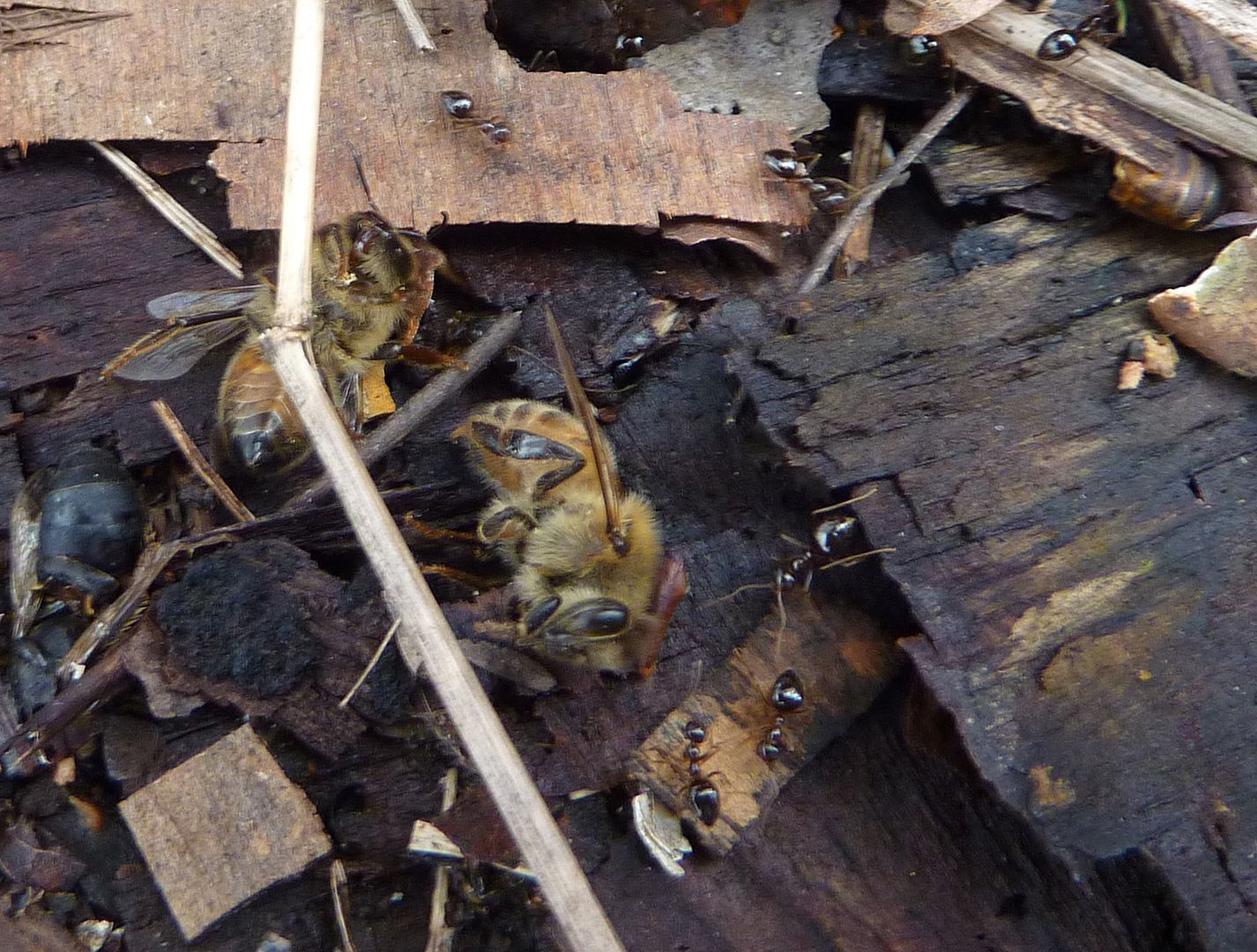
I noticed some winter ants, Prenolepis imparis, scurrying about one of our beehives today and decided to film a brief inspection. Beekeepers I talk to always seem annoyed with ant entering the hive. To be honest I'd say almost all of the ant species in the US don't do any harm. Most of them just enjoy the environment in the hive attic and use it to incubate their brood. A few of the wood nesting species though can do some damage to the hive but it's nothing compared to normal ware and tear of the wood from prying it open constantly. There are a few tropical species of ants that will kill a beehive but nothing for the local beekeeper to be concerned with.
In this case the P. imparis workers were merely interested in nibbling at the propolis and bits of wax along the side. Ants use tree sap (propolis) as an antibacterial agent. They also have a fondness for the smell of honey I'm sure. I have never found P. imparis colonies to be more than a slight nuisance to my bee hives.

Friday, October 22, 2010
Talking About the Image
Friday, October 8, 2010
Busy Bees on New England Aster
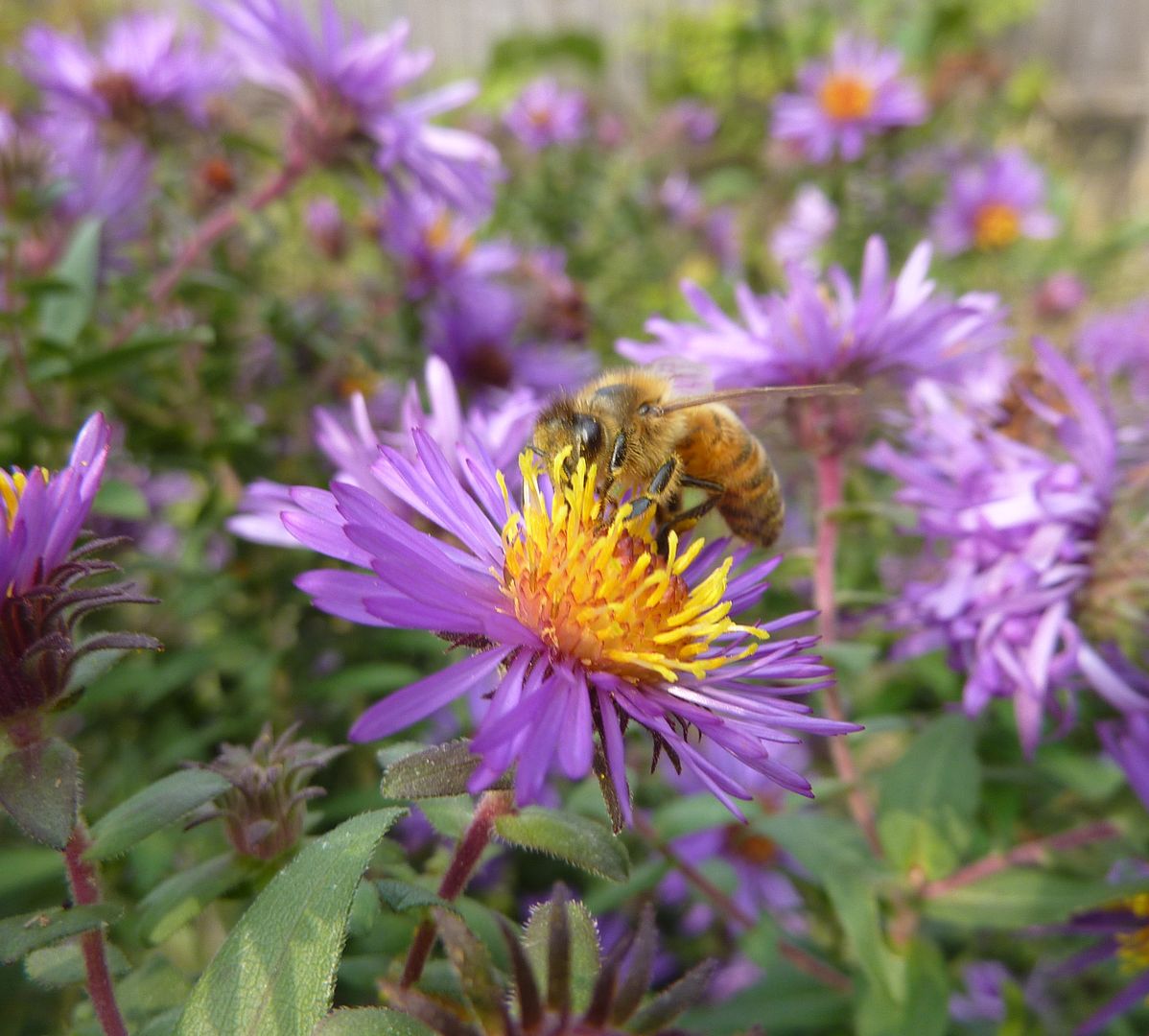
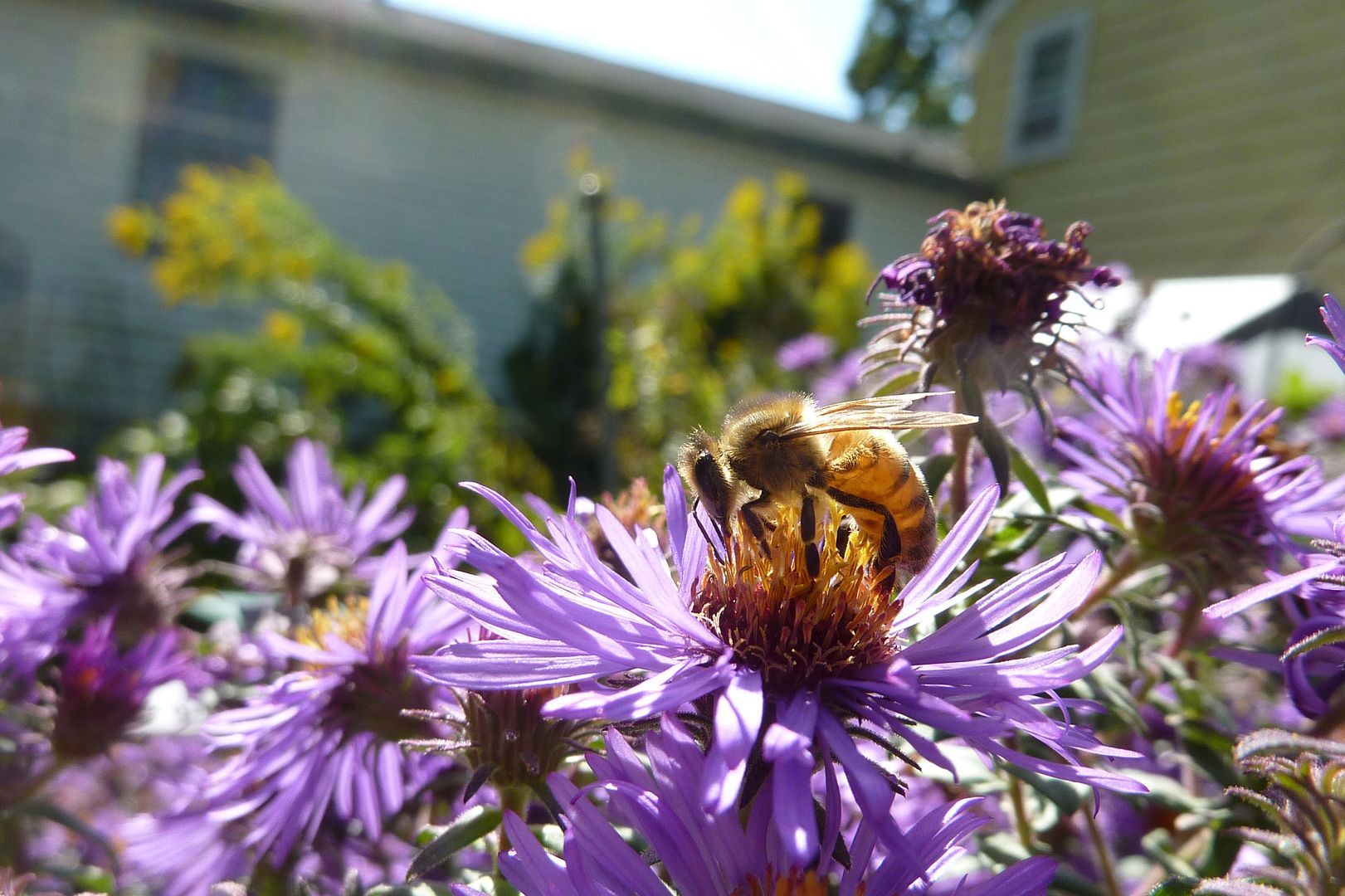
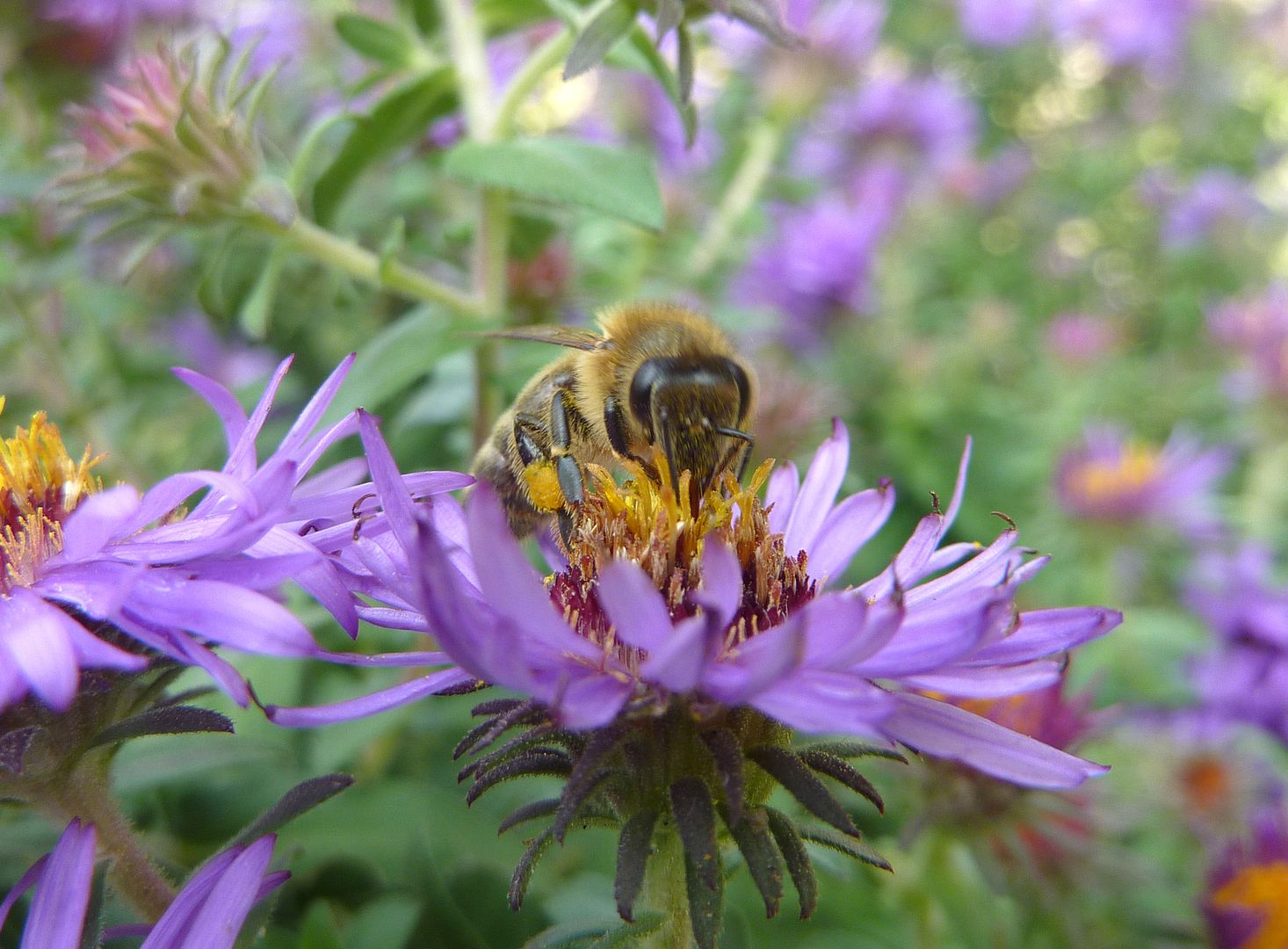
Well the New England Aster, Symphyotrichum novae-angliae, has started blooming up a storm. This plant comes in other colors as well including red, pink, purple and pale or intense versions of those. What's great though is you always get the intense yellow anthers inside the flower that play off the color so nicely, even against spent flower heads that are brown and going to seed. The only down side as you can see in the video is the plants can get to tall and fall over. This is usually avoided at the nursery because the plants will have been cut back to a few inches in June or July. This promotes the compact flowering part to form closer to the ground.
 |
| A Honey Bee working a New England Aster |
 |
| A Honey Bee working a New England Aster |
 |
| A Honey Bee working a New England Aster |
 |
| A Green Sweat Bee working a New England Aster |
Friday, August 6, 2010
Thursday, July 1, 2010
St. John's Wort Buzzing
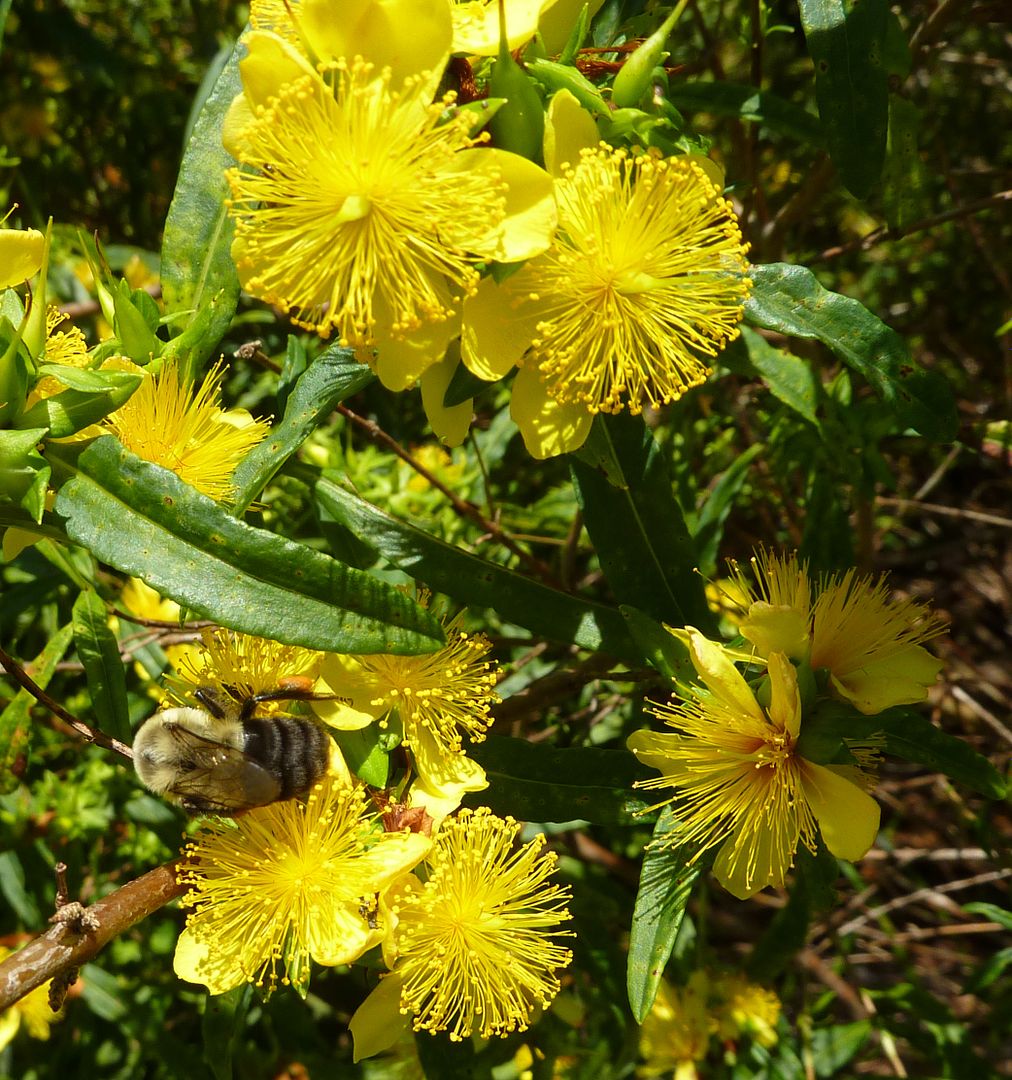
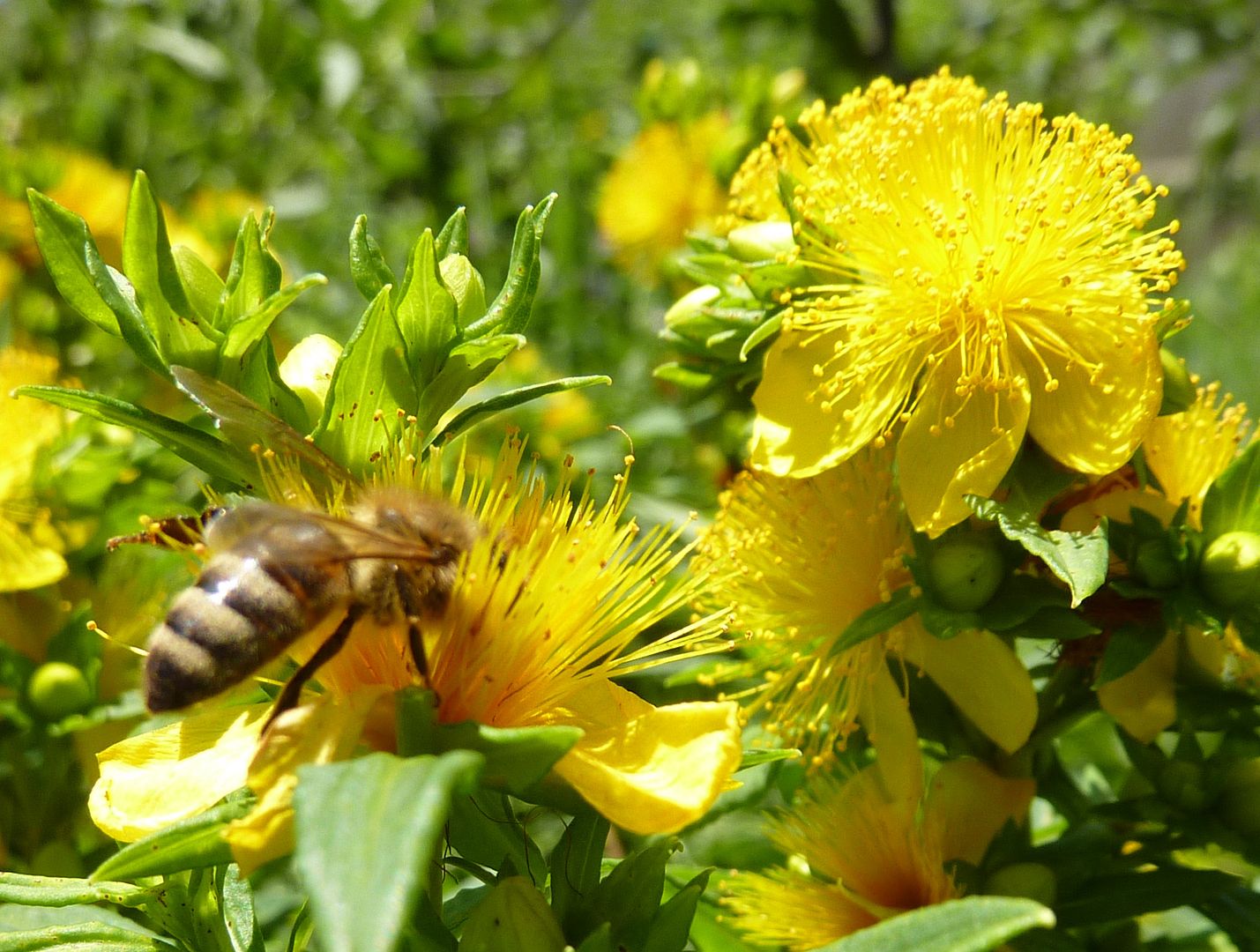
This was a fantastic shrub I caught sight of at my favorite nursery. They had one planted in their landscaping area and it was buzzing with bumblebees. Enough so that I bought one, took it home and planted it! ($15 for a 3 gallon potted shrub is a good price too.)
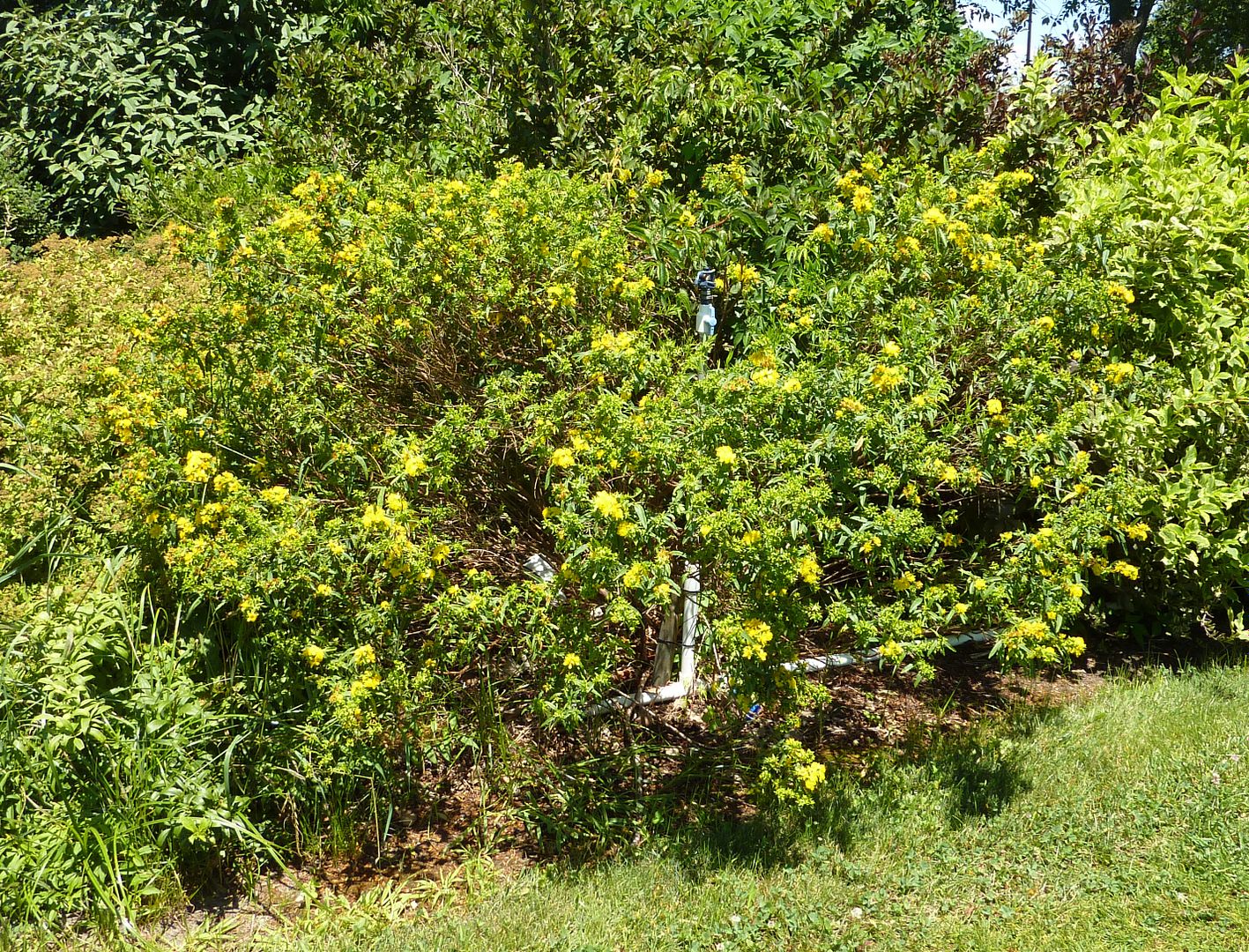
Though I'm unsure of the species name I know it gets about 4' tall and maybe 6' wide. Loves full sun and dry conditions. Hypericum is a genus of a couple dozen native species, and two or three wide spread imports.

Wednesday, June 23, 2010
Butterfly Weed Honey Bees
This is the yellow form of Asclepias tuberosa, aka Butterfly Weed. It's taken a few days but the communicative effect of bees flying to love this plant has taken off. Two days ago there was just one bee on it at almost all hours of day light. The next day had 2, then later that night had 3. And now it's full out buzzing with bees, upwards a dozen or so from dawn to dusk. And this will keep up for the week or two that this plant is at full bloom.
Milkweeds double as host plants for Monarch butterflies throughout their range. There are also about 11 other Lepidoptera that use it as a host plant.
Subscribe to:
Posts (Atom)