Showing posts with label False Indigo. Show all posts

Monday, September 28, 2015

Other Caterpillar Activity

 Also happening with Caterpillars this autumn, I'm attempting to raise a Red Spotted Purple or two. I eyed a female out in the yard laying eggs, curiously on two nonnatives, which the caterpillars seem to be eating. A Snowdrift Crab Apple but they're in the genus Malus so I'm doubt native or not really matters in that case. The other was a Japanese Weeping Cherry, but that's also a Prunus so maybe that doesn't matter as much? Still though I don't see Tiger Swallowtails or Silk Moths laying on the tree so I'm sure the native Black Cherry is the superior host plant. In the short amount of time I've had the sapling Black Cherry I can say I've already found way more caterpillars on it than the ornamental Weeping Cherry.

 In the wild Red Spotted Purples always lay eggs towards the tip or ends of leaves. Ideally it's the tip but I've seen some of the more spiky edged host plants confuse them when laying and eggs are off center to the side.

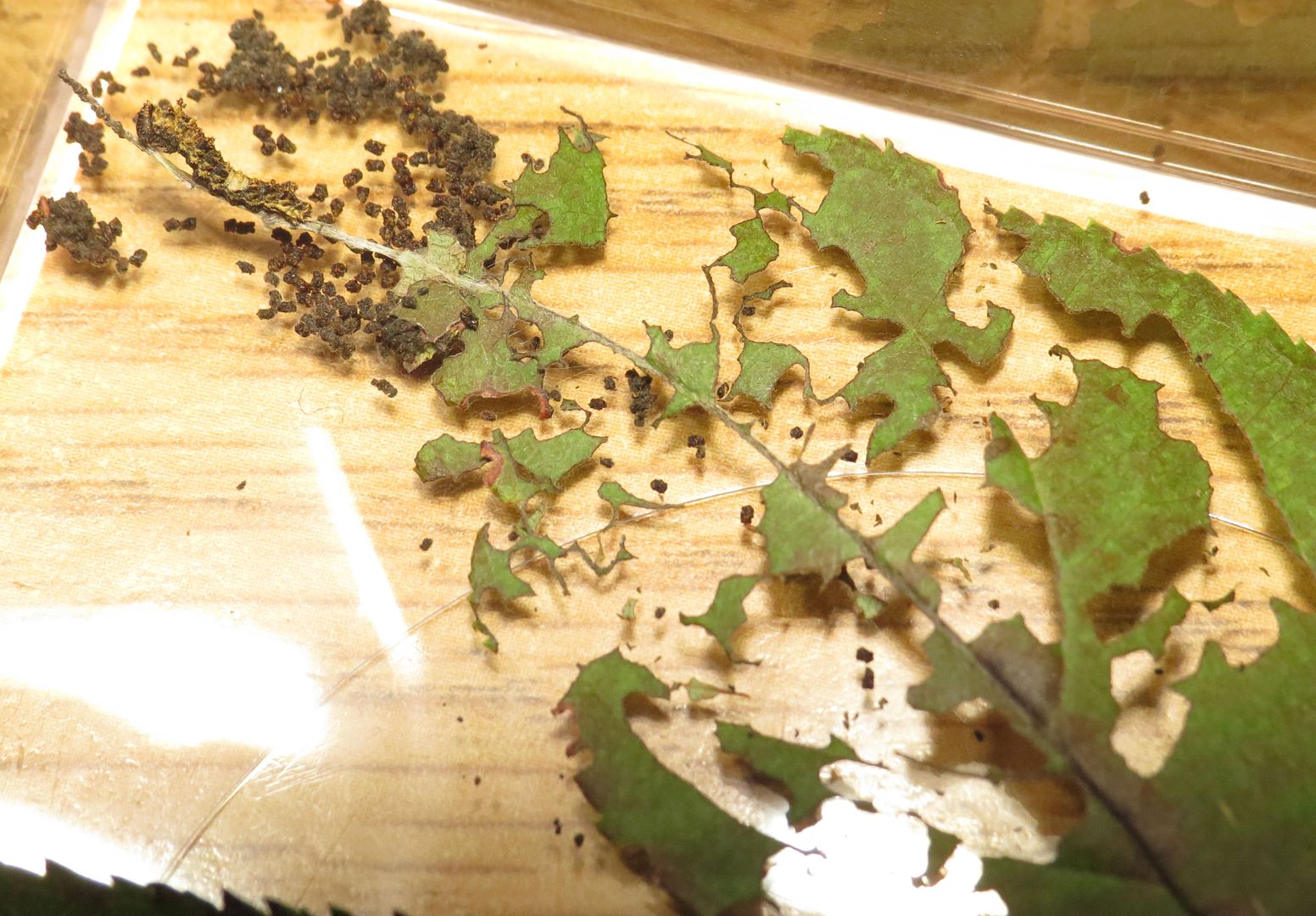
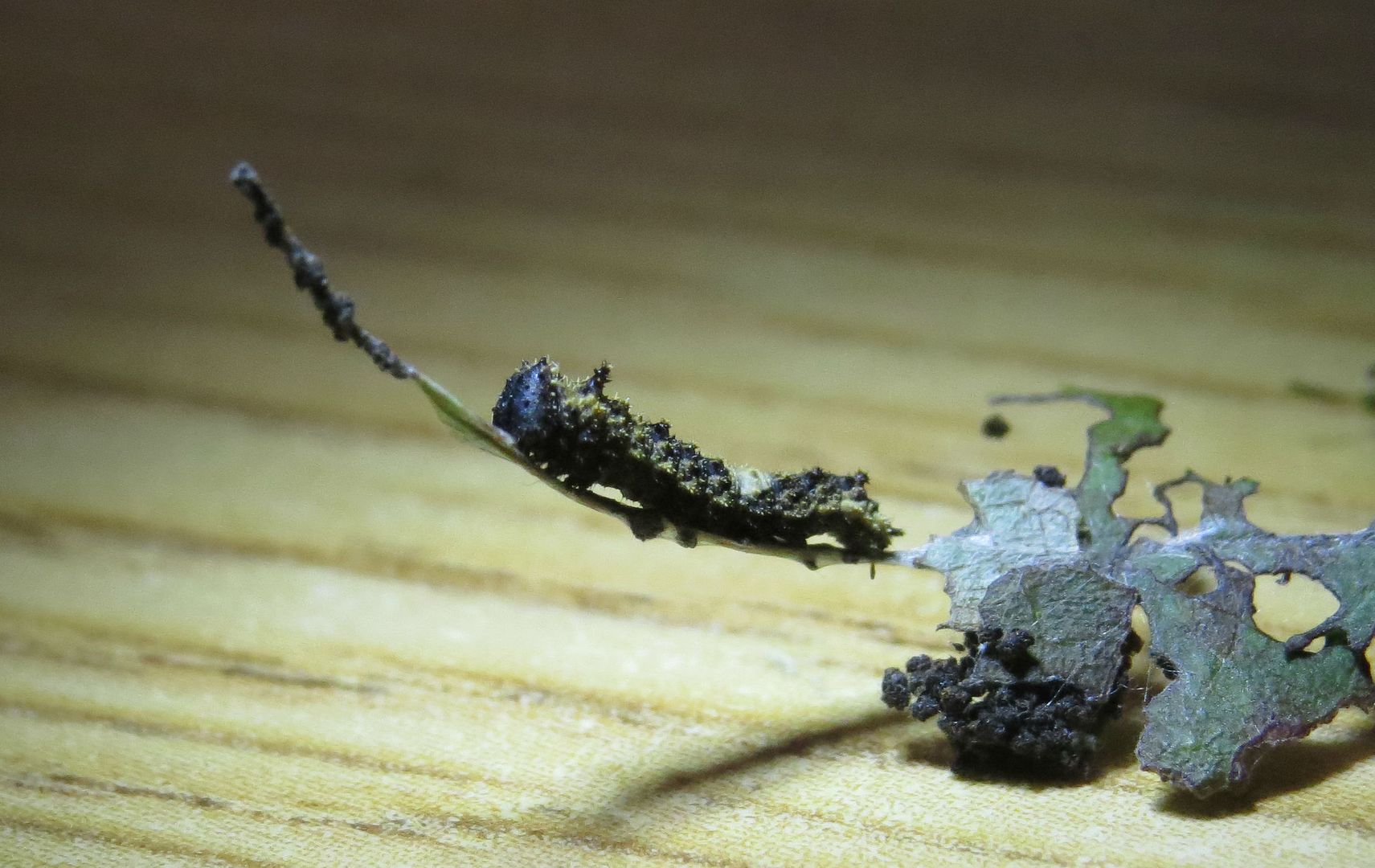
Upon hatching, what seems like 7 days later, the caterpillar begins constructing a "stick" or poll out of its own frass and silk which it hangs out on so ants don't eat them.


Funny enough EcoBeneficial interviewed Doug Tallamy about this topic. I have the same Lepidoptera species laying eggs on my Black Cherry sapling, but because I have a happy colony of Camponotus subbarbatus living in a log to that flower bed, my tree still has all its leaves! Every leaf on this plant has a nibble taken out which I would characterize as standard first instar caterpillar bites. But nothing beyond that! No branches stripped, no missing leaves, no half munched bites taken out of the leaves. Because I have this ant colony foraging on the tree, the caterpillars never make it beyond the first or second instar. Even the Red Spotted Purples don't seem to live long enough to make their first poo stick.

After making the poo stick, they're free to feed on the leaf little by little and always have something to run back to.

 A complication with keeping this species in captivity is that they over winter in the caterpillar stage. In the wild they spin silk around a leaf or two to build a "shed" that they nestle into until the tree leafs out again next spring. (Perhaps consuming the flowers in the case of apple trees?)

So a friend suggested to me to keep them in the fridge when all the leaves fall of the tree. Hopefully that will be enough get them to survive the winter and I can continue to photograph their life cycle next spring.

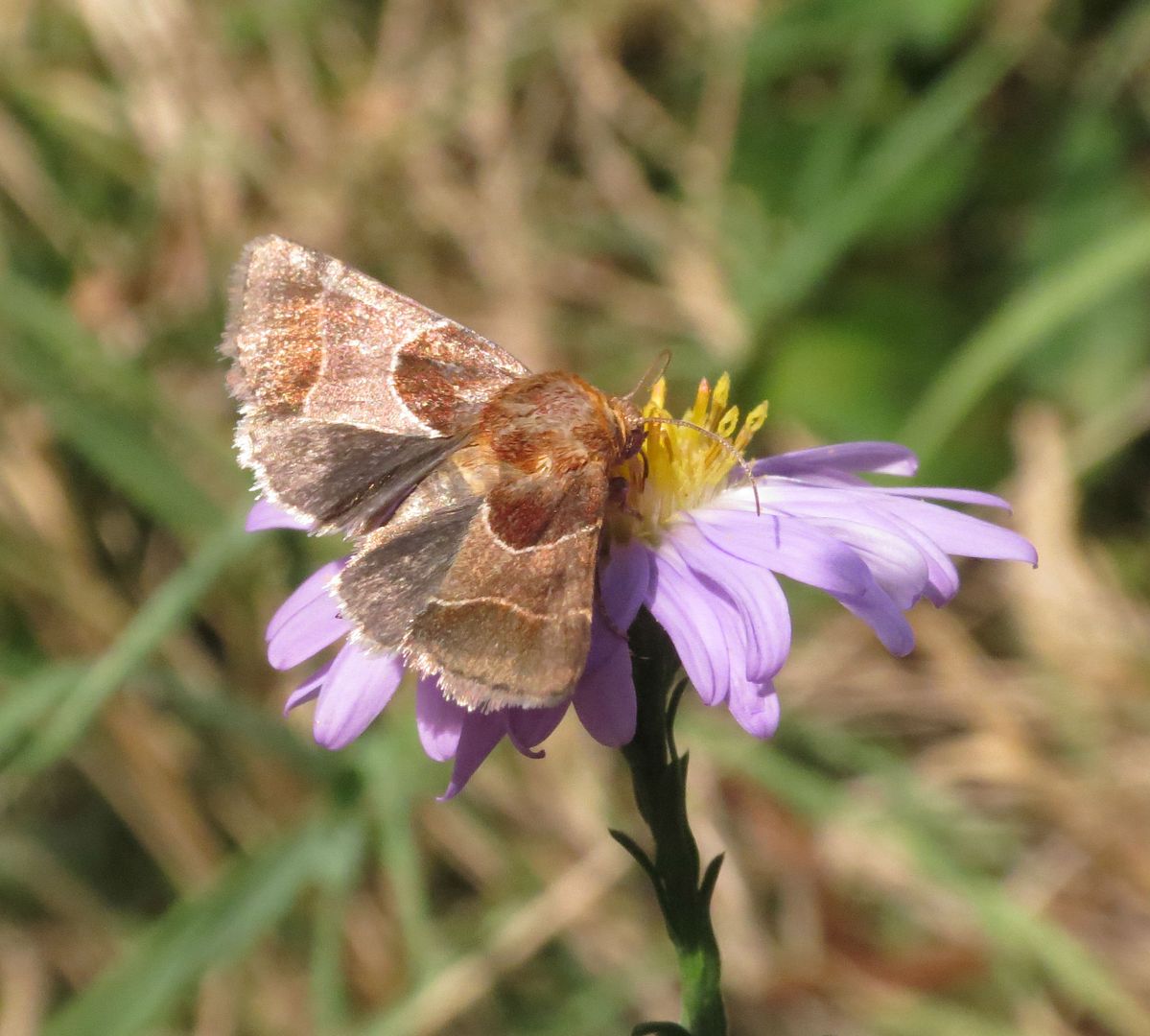
Also out in the garden I found an Arcigera Flower Moth, Schinia arcigera, which is a daytime flying moth that lays its eggs in the flowers to members of the Aster family. They nectar on open flowers but lay the eggs into the buds that have not opened.

It was a little hypnotic just watching this one hover about the asters. She took a liking to the Aster 'October Sky' which has become my favorite cultivar I think. I should really find another Aster cultivar that has a slightly different color to it so I can mix and match.

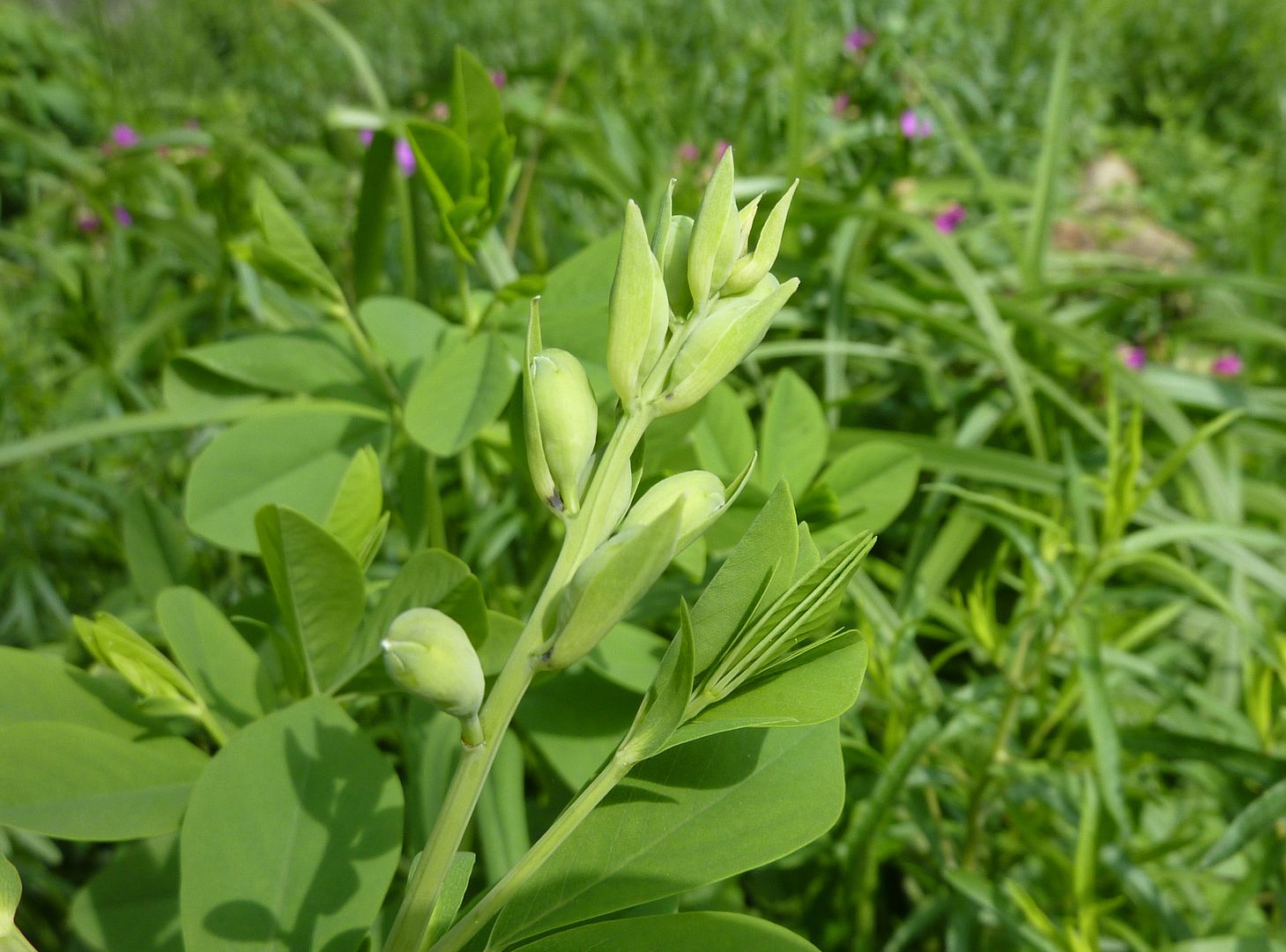
Also saw this one on the False Indigo Bush. I had to prune off the bulk of the foliage to this plant because it was top heavy and going to tip over. It's already sent up a new stem that's just as tall as the old growth was. A friend who operates the Shaw Nature Preserve in Missouri says he cuts them to the ground each year after flowering. In nature he tells me it's common for them to become top heavy and fall over, often snapping the stem/trunk completely. It seems evolutionary this species is stuck between being a soft wooded tree and a herbaceous perennial.

Friday, June 20, 2014

Caterpillar Season

A few days ago it was unbearably hot and humid out, but I was enjoying it nonetheless because this seemed to bring out all the ants and other bugs of interest. There were so many types of ants wondering all over my plants that I was tempted to make a video about them all but the mosquitoes got the better of me.

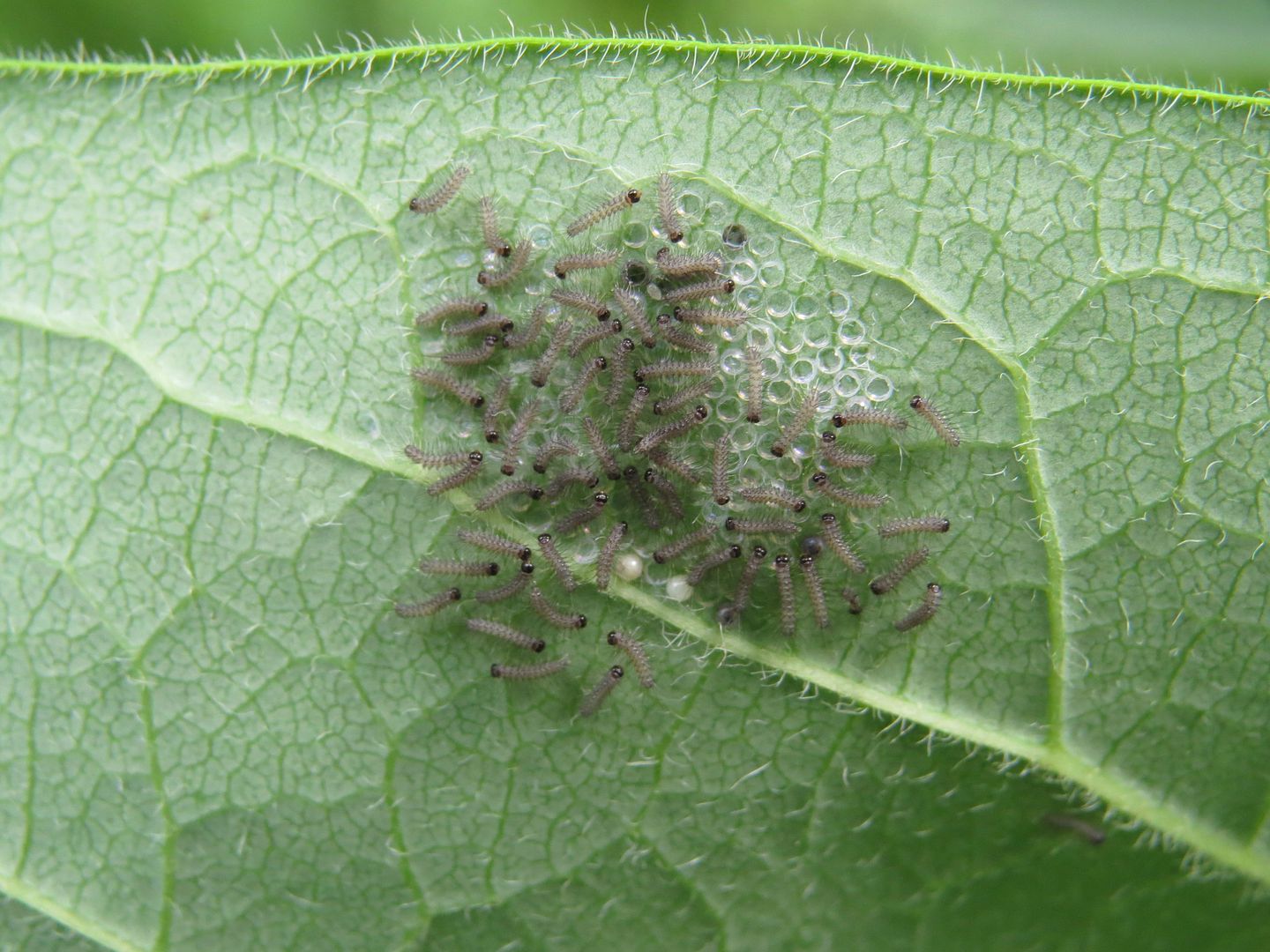
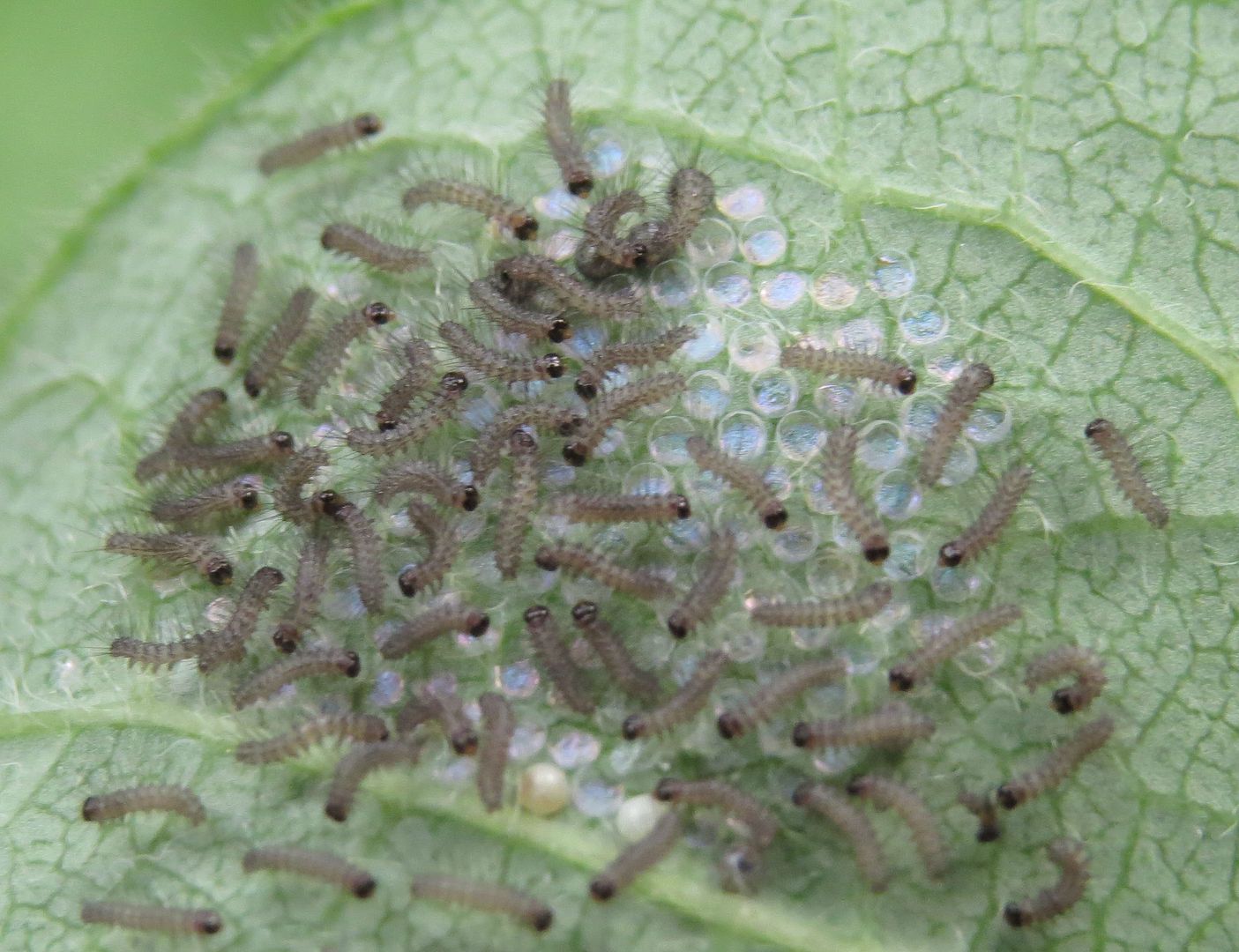
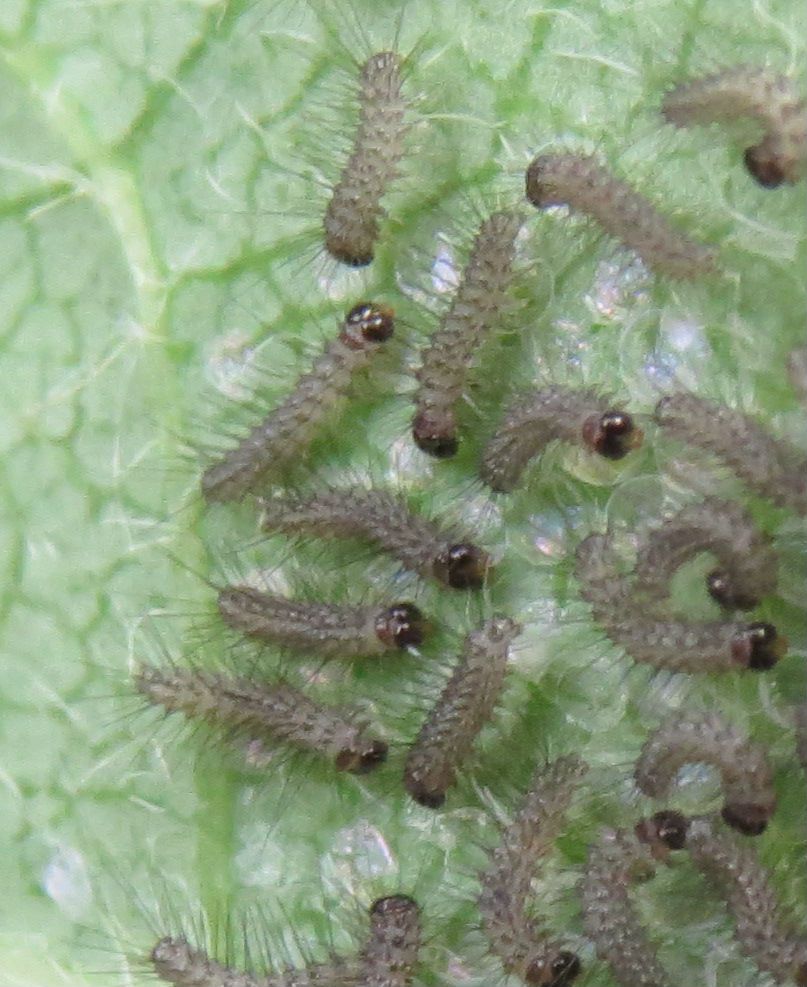
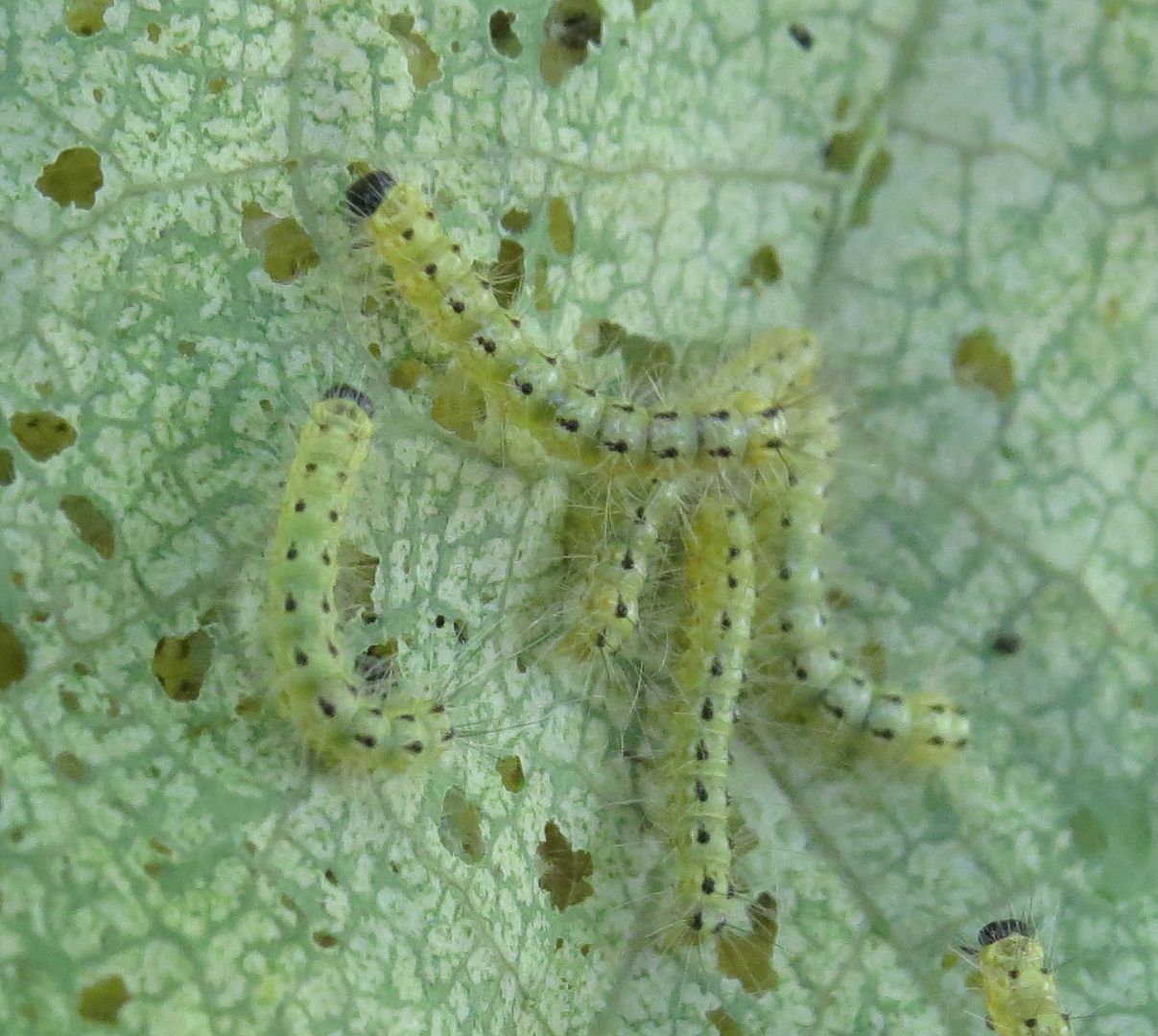
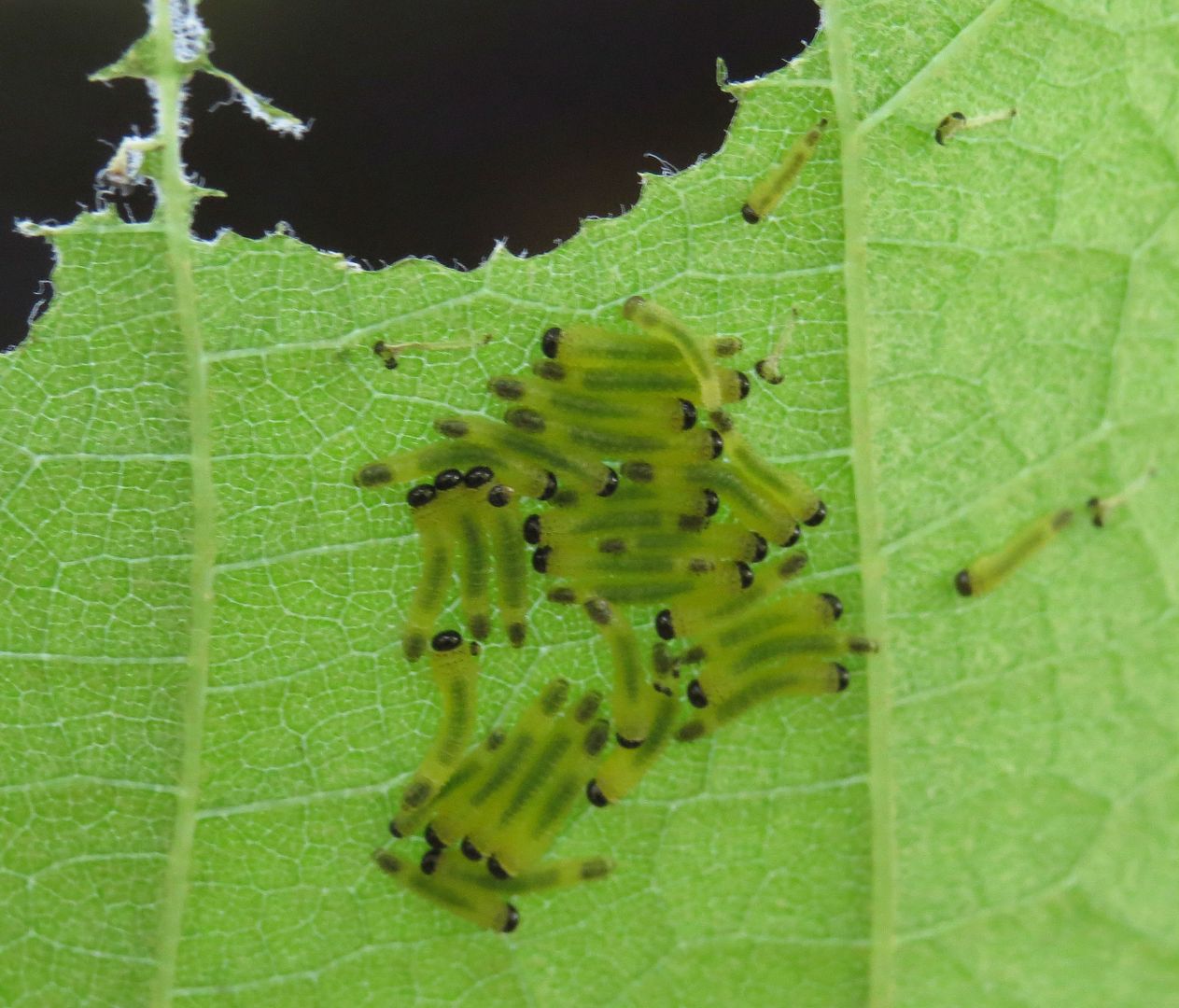
One thing I had to photograph was this patch of caterpillars on my Persimmon tree. My assumption was they were some type of giant silk moth but I don't believe that to be the case.

Unfortunately they were all dead the next morning. No doubt a large black carpenter ant, Camponotus pennsylvanicus, came along and chewed them all up into mush as there were several of those out on the tree. The whole clutch of them could have fit on a quarter, they were that tiny. I'm kicking myself for not removing the leaf and placing them into the butterfly cage.

I've no idea what they were, other than they were on Native Persimmon, they're were sort of hairy, and that I live in New Jersey. If anyone out there wants to take a crack at identifying them, be my guest. 

So I then realized this week, there are a lot of caterpillars in my yard! 


The Eastern Redbud has Fall Webworm, Hypantria cunea, which are poorly named because it's clearly the start of summer.

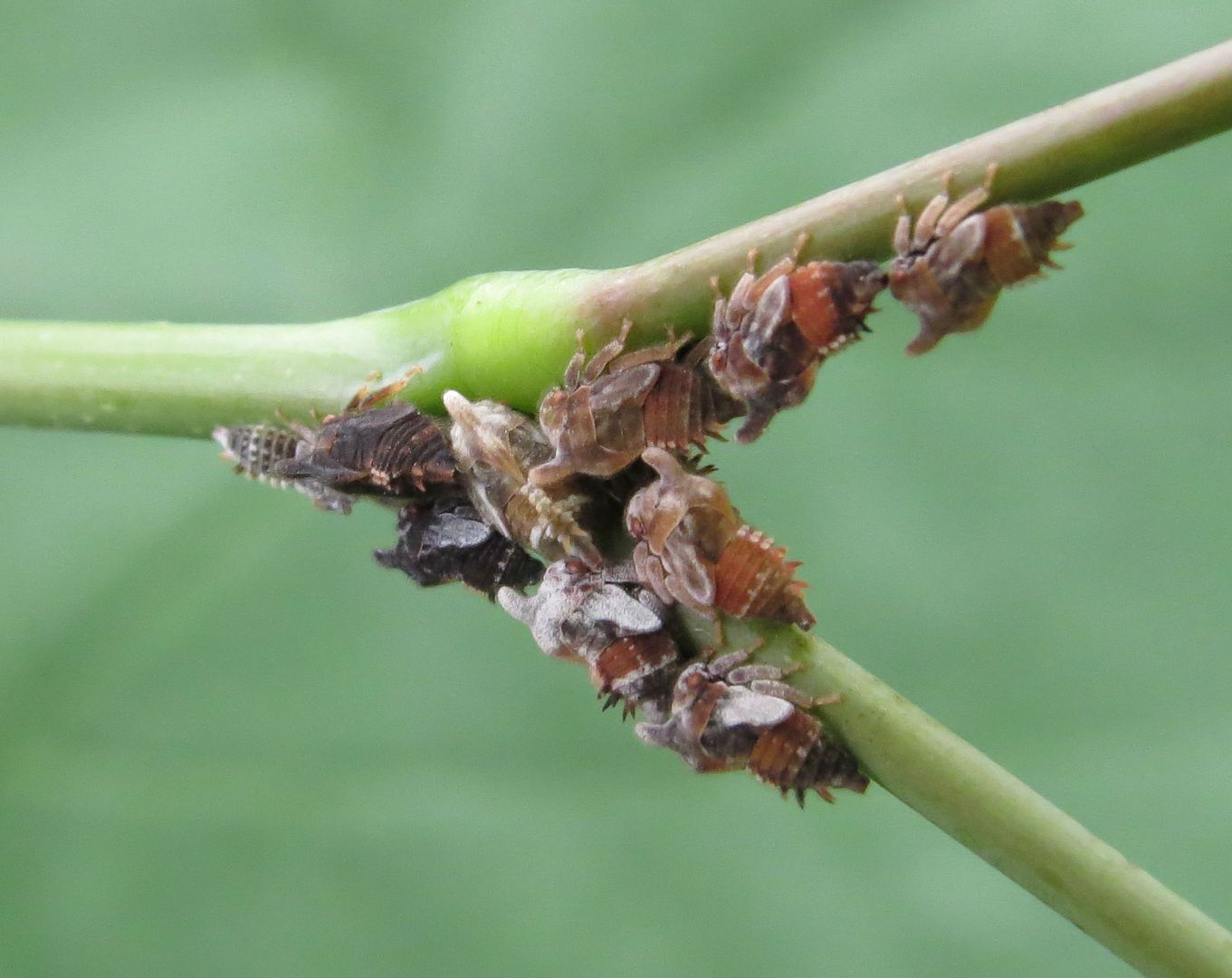
The tree also has treehoppers and a few aphids which are attracting ants that are supposed to help prevent insect herbivores or at least discourage and harass them onto other plants. It's not a perfect system but it does have an effect.

Fall Webworms get around this though by sticking together in a small group and forming webs around the leaves they eat for protection.

They do this until they're big enough to take on a few ants or develop other defenses. I'm not sure what they are for this species but I know long hairs, tasting bad, chemical weaponry, are a small taste of what some caterpillars do for protection. It's the early instars when the caterpillars have basically just hatched and don't have these defenses when they're picked off by everything, like the ones I found on the Persimmon tree.


The Eight-Spotted Forester is a day-flying moth (not quite a butterfly) that hosts on grape vines. The adult has black wings and eight cream/white or pail blue spots on the wings, hence the name.

Caterpillars are somewhat colorful looking and are in the habit of jumping ship upon disturbance, often leaving a silk lasso behind so they can climb back up. Grape Vines are very aggressive growing and often the caterpillars don't effect the yield of the crop.

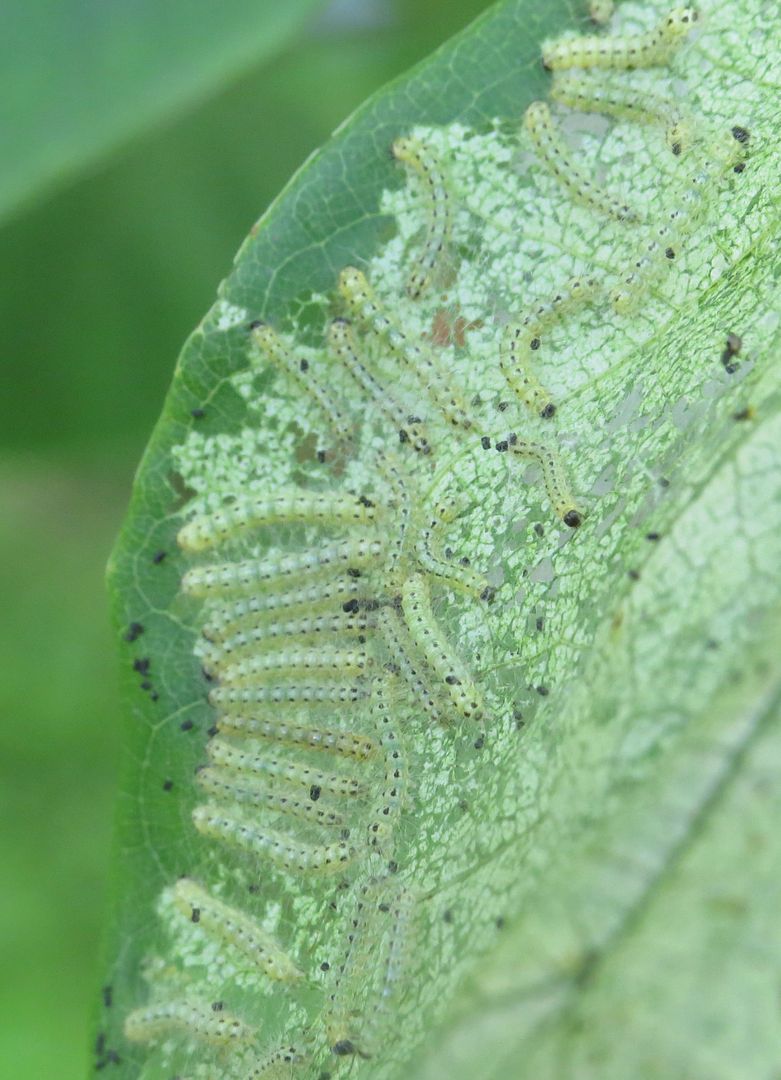
Now I tried looking up what young Eight-Spotted Foresters look like, and I don't think these are them. What interests me is that the grape vine doesn't have any pores that produce extra floral nectar or attract aphids and other insects to do that for the plant. So that means the only ants walking over the plant are simply foraging for the sake of it, meaning fewer ants compared to a plant that's gushing out food to encourage them. So I'm curious to see how far these guys get.

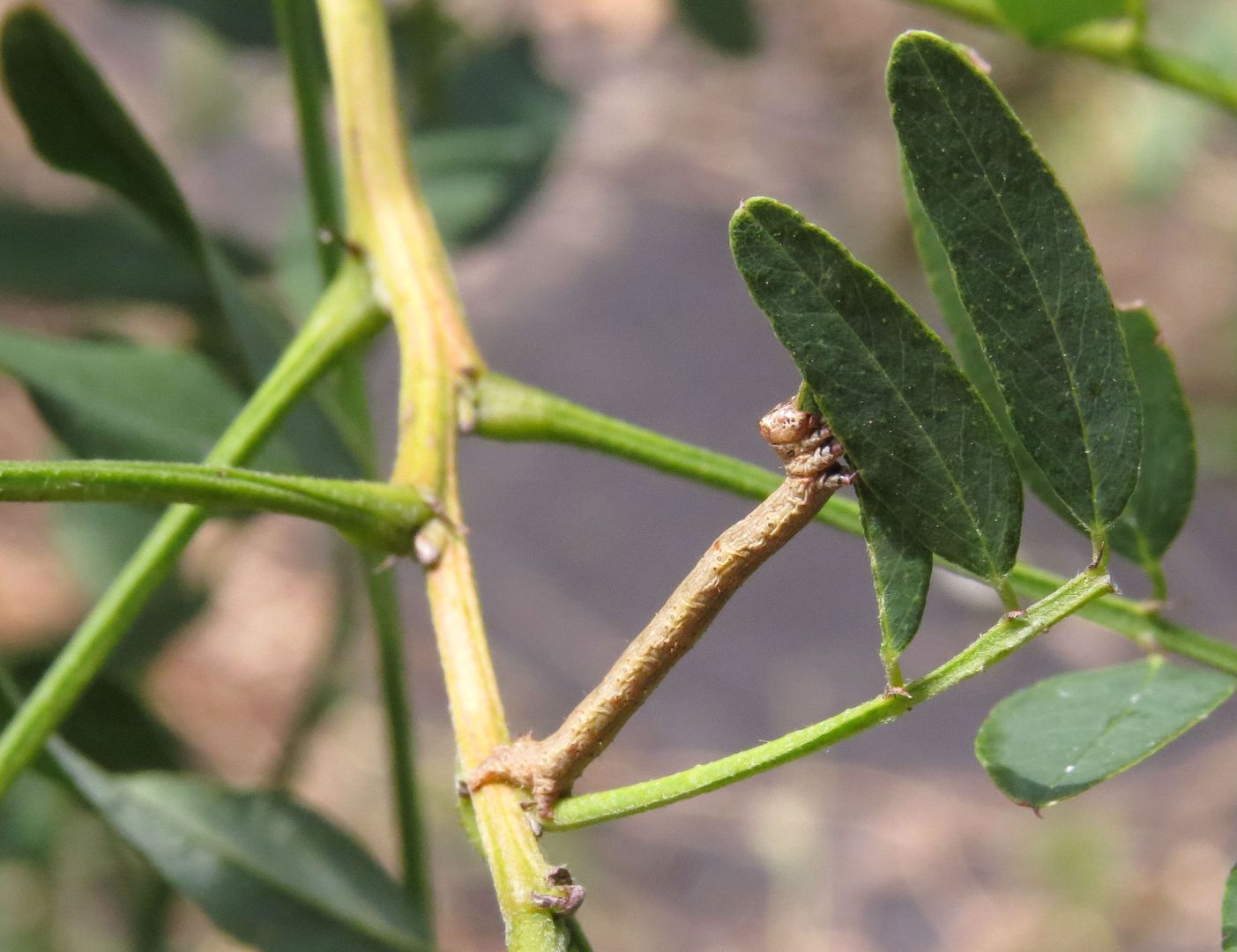
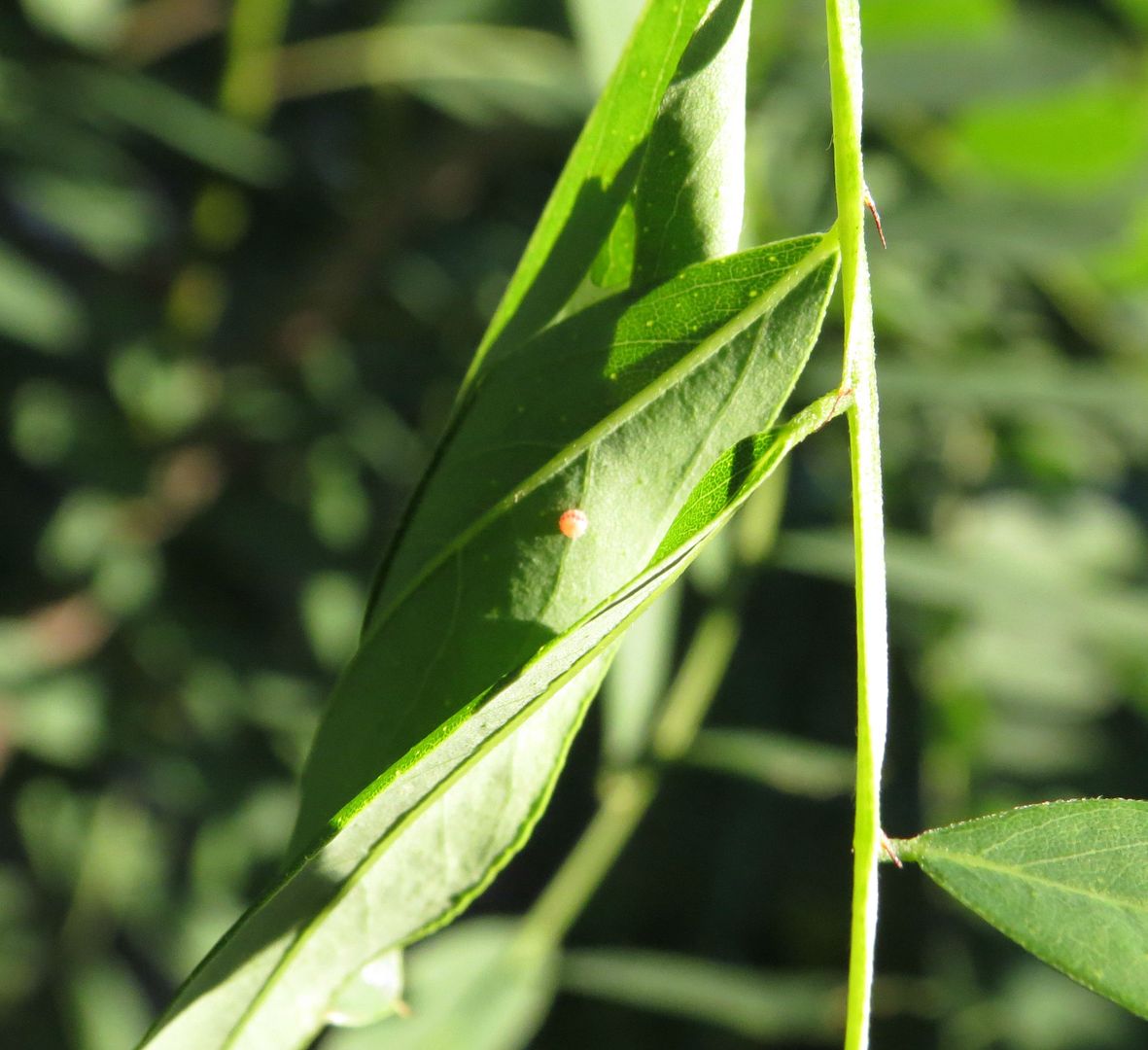
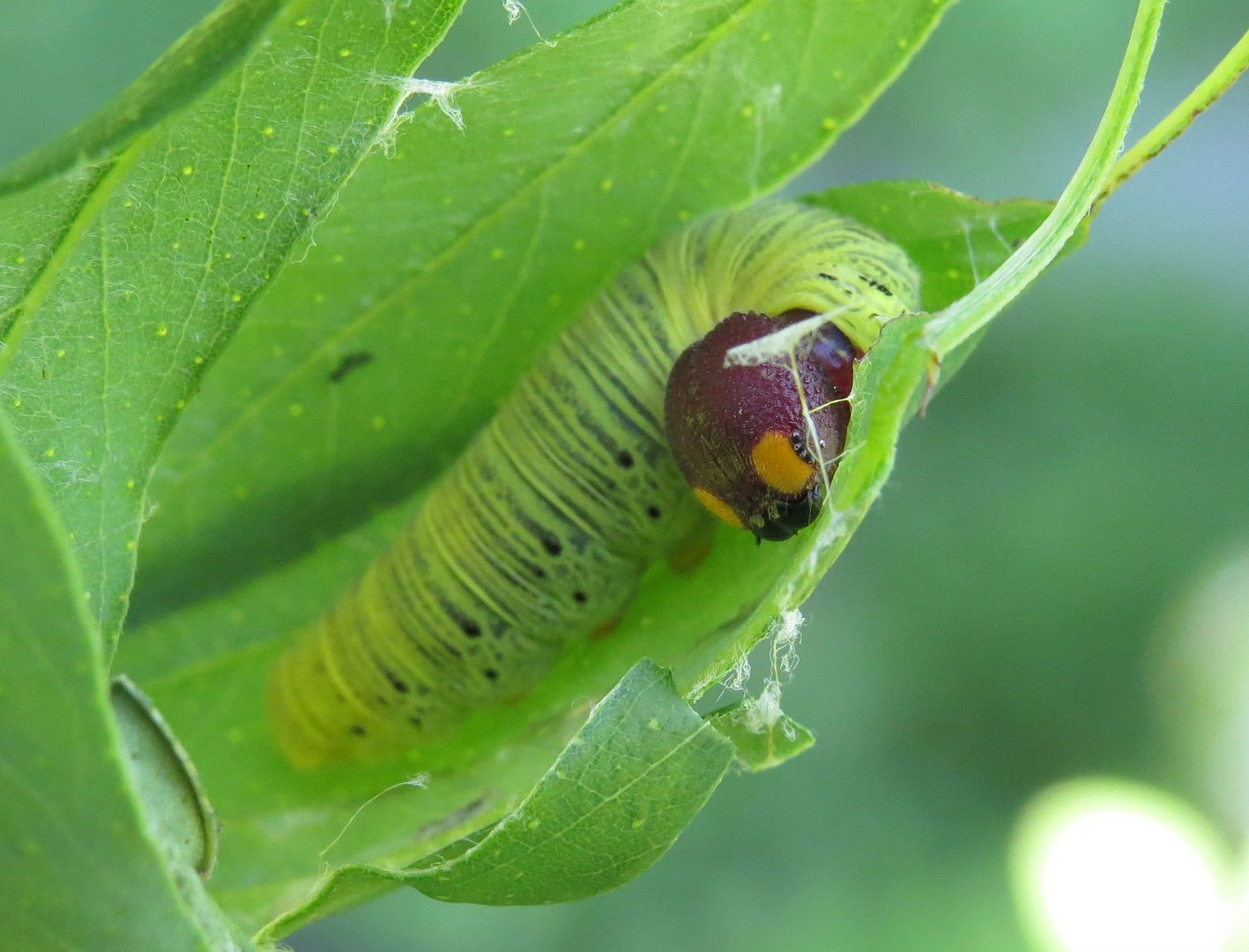
And lastly the False Indigo Bush, Amorpha fruticosa, has not only eggs but fully grown caterpillars on it.

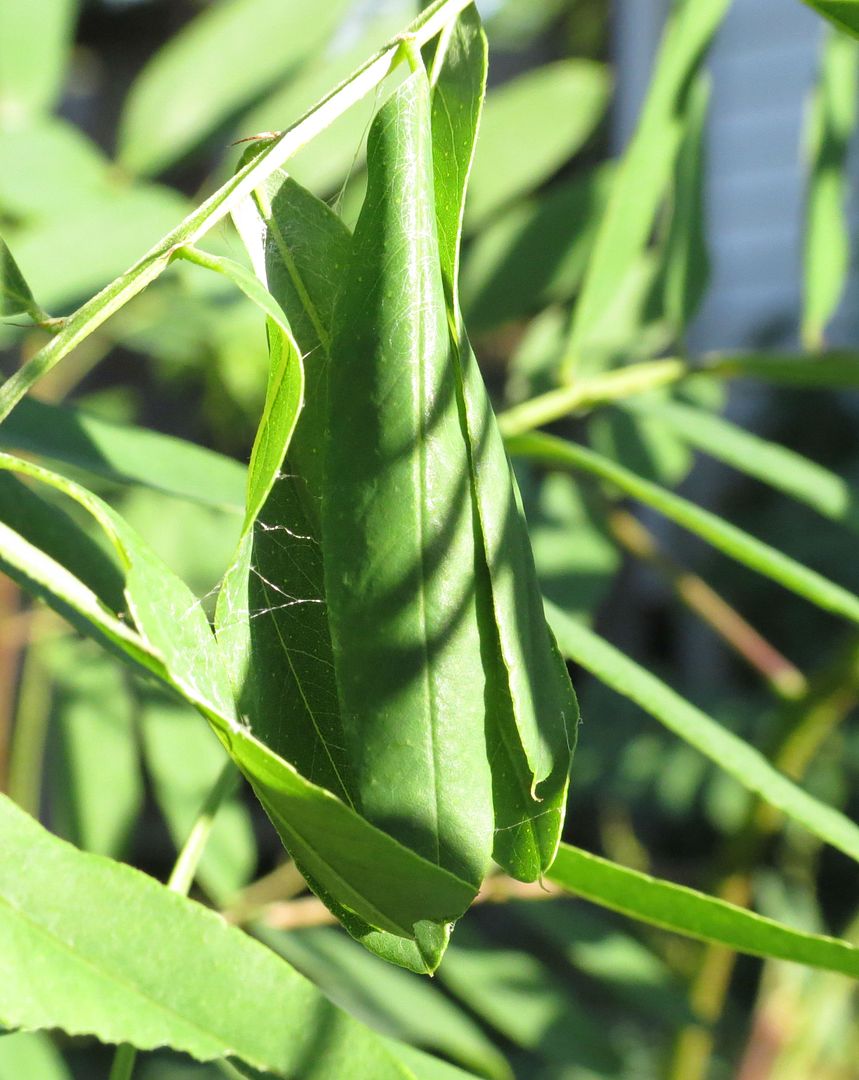
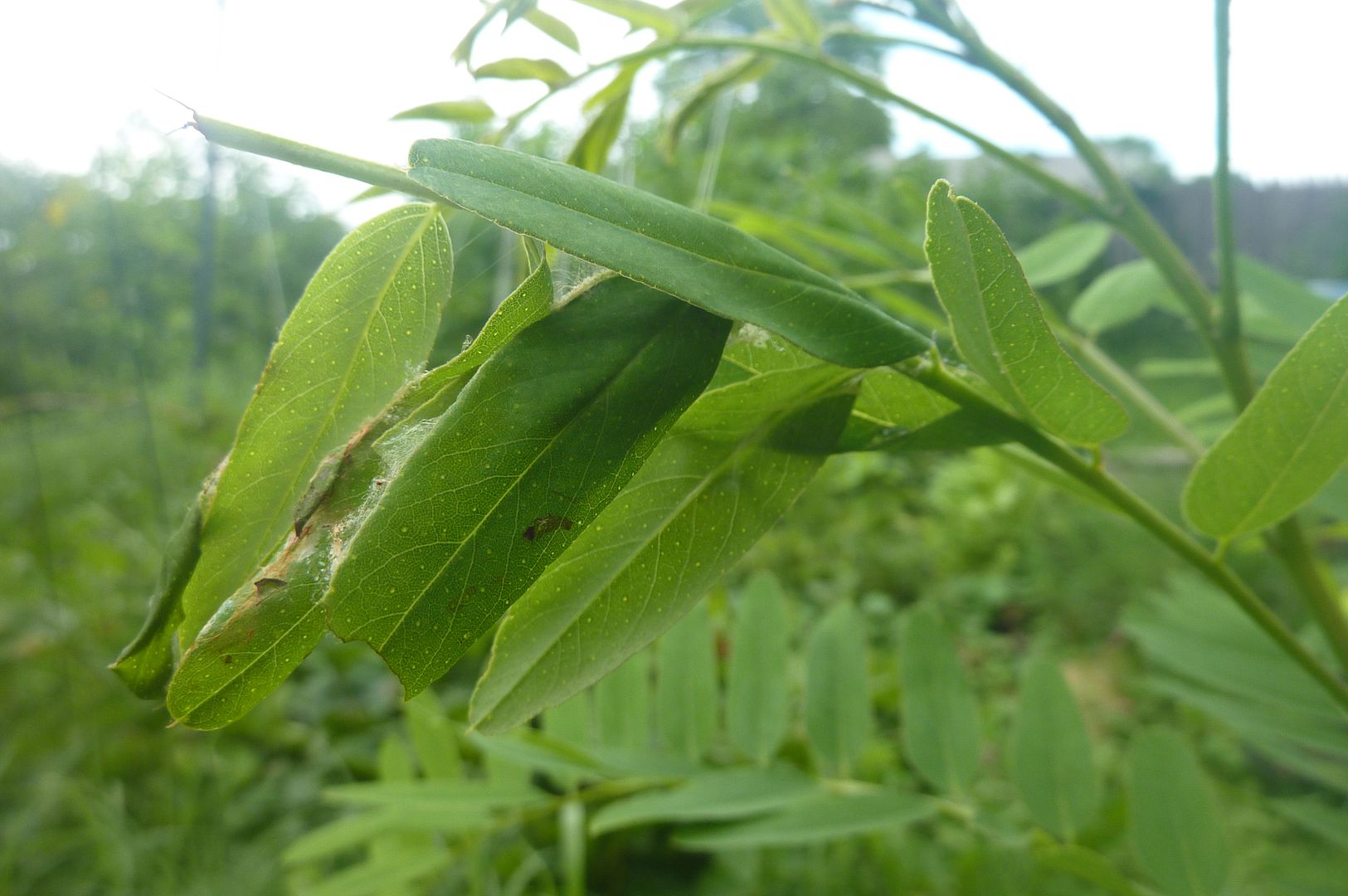
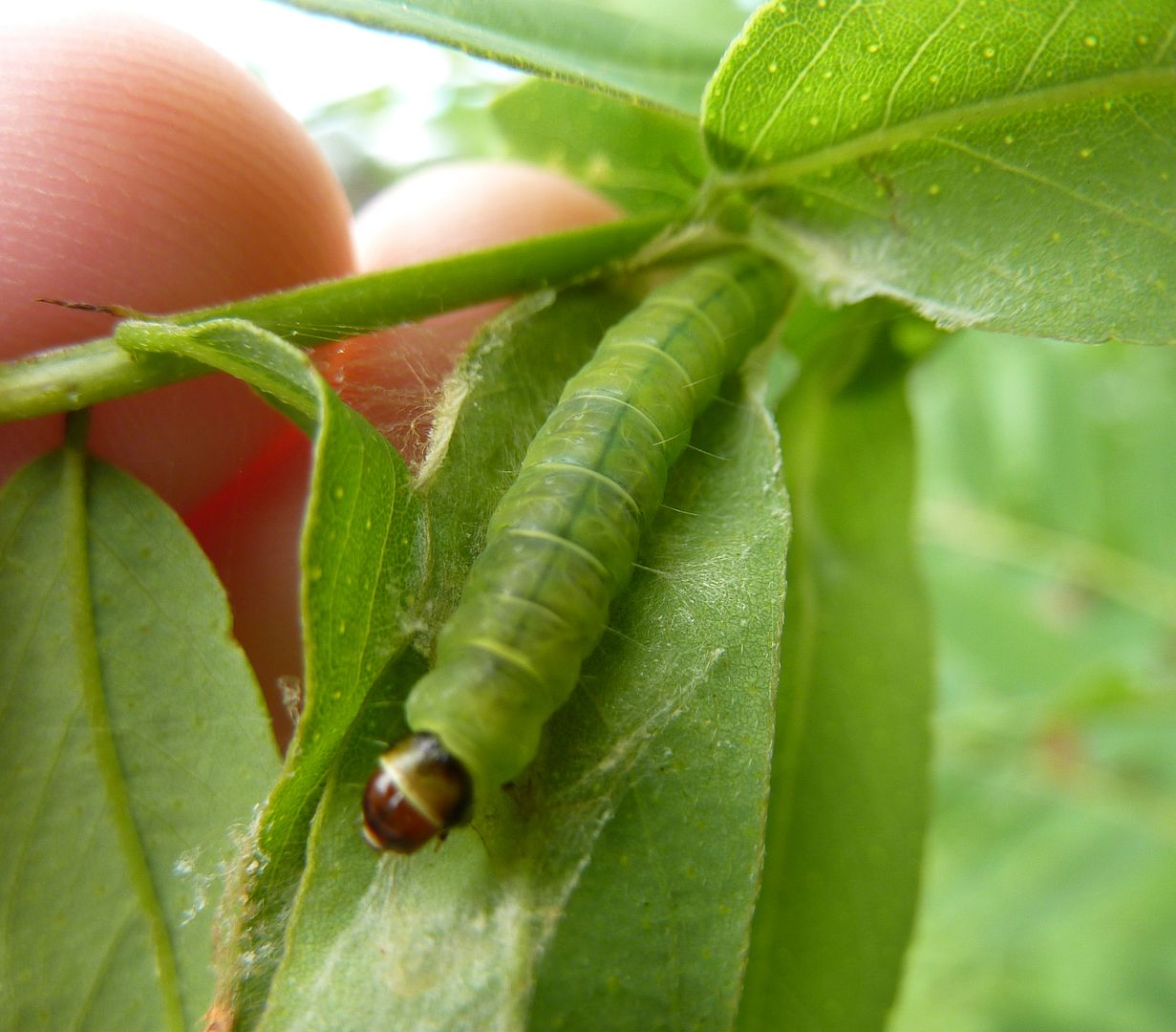
Silver Spotted Skippers, Epargyreus clarus, forage at night, making them hard to spot. During the day they stay inside a small "shed" of leaves they've woven together to hide from birds. Smaller caterpillars simply chew a section of a single leaf and fold it over with silk.

This is another case of the plant not attracting ants, other than letting them steal nectar from the flowers, but even this isn't a popular practice compared to other plants.

The caterpillars are a decent size and employ an additional tactic to hide from ants. One of the things ants look when hunting is insect frass; when they find it they know an insect can't be far. In this case though the caterpillars actually launch their frass pellets several feet away from them. They also lay silk down on just about everything they walk on to discourage ants from following them.

Monday, June 2, 2014

Major Nectar Flows of the North East United States (May/June)

Okay where to begin.

About a month ago all the dogwoods were flowering, and while people are very familiar with the main two Cornus florida and Cornus kousa (not native) I've never really been impressed by the attention they get by bees. These are the big flowering dogwoods with the really big white "petals" which are actually bracks, modified leaves that are white or pink colored to act like flower petals. But unlike flower petals, they're able to produce chlorophyll to a degree where as true petals and rays do not.

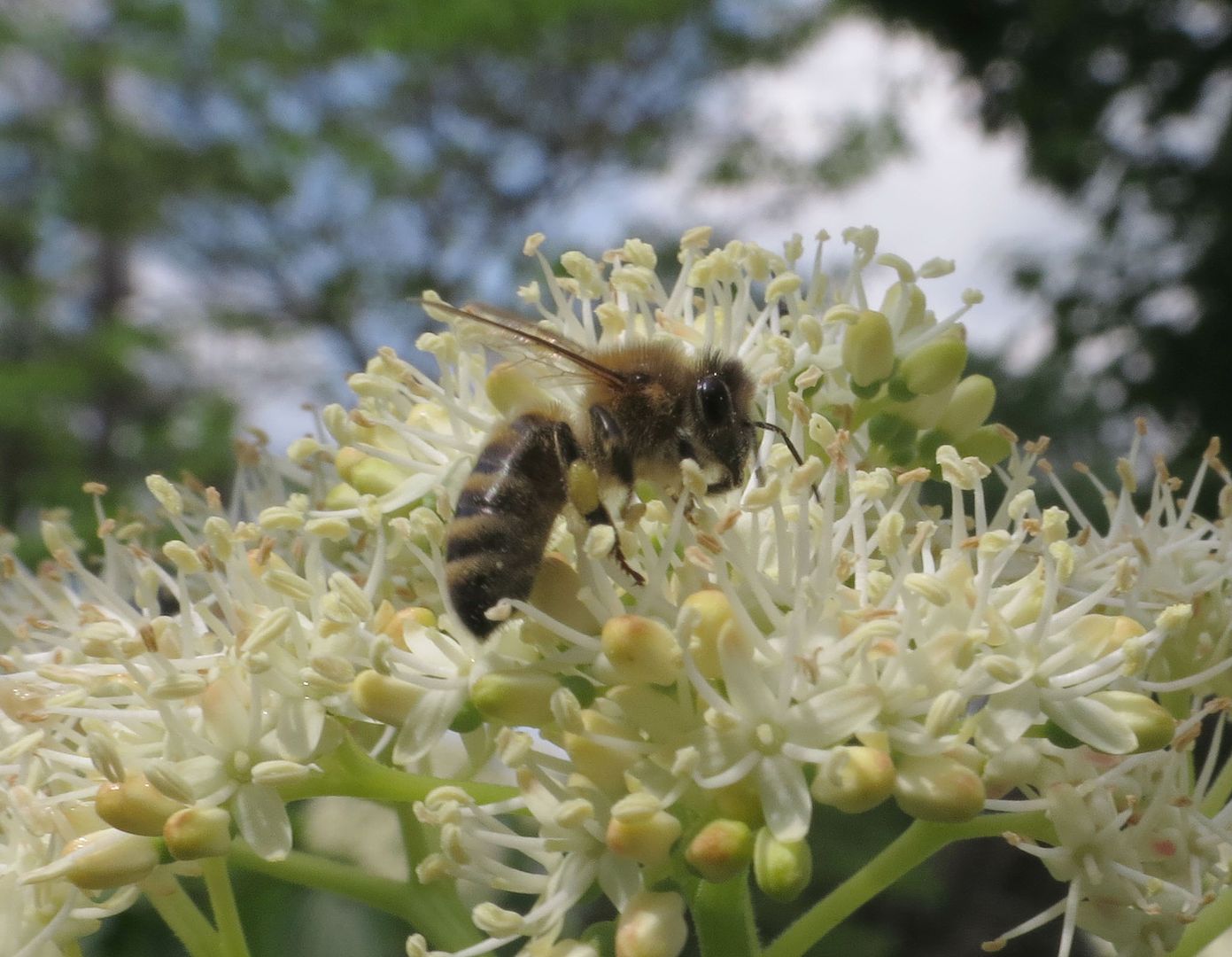
Pictured above is the Alternate Leaf Dogwood, Cornus alternifolia. This species lacks the big showy white bracks of its cousin and instead easily produces ten times more flowers! This makes them extremely popular with pollinators, and honeybees are no exception. One failing though is I believe the plant is only used for pollen (or otherwise produces an insignificant amount of nectar for bees to bother with) but it's certainly a powerhouse at doing so. Growers will be impressed with the flowering display of saplings and every year they become more and more showy.


Other dogwoods, such as the Red Twig Dogwood, Cornus sericea, take on more of a shrub habit. They have similar flower displays to C. alternifolia but nowhere near the amount of flowers, and thus have to grow considerably larger to get the same pollinator attention.

White Dutch Clover, Trifolium repens, this is a common lawn "weed" that I'm all for planting. It's hard to remain a native plant purest with a plant that spices up the nonnative American lawn. You can buy seeds to this plant by the pound which have about a 40% success rate when seeded into an established lawn. Plants produce their own fertilizer too and are fairly hardy. Even with large patches of this plant in bloom though you only see a hand full of bees even bothering with them. What makes them so successful as a nectar plant though is the fact that almost every lawn has them.

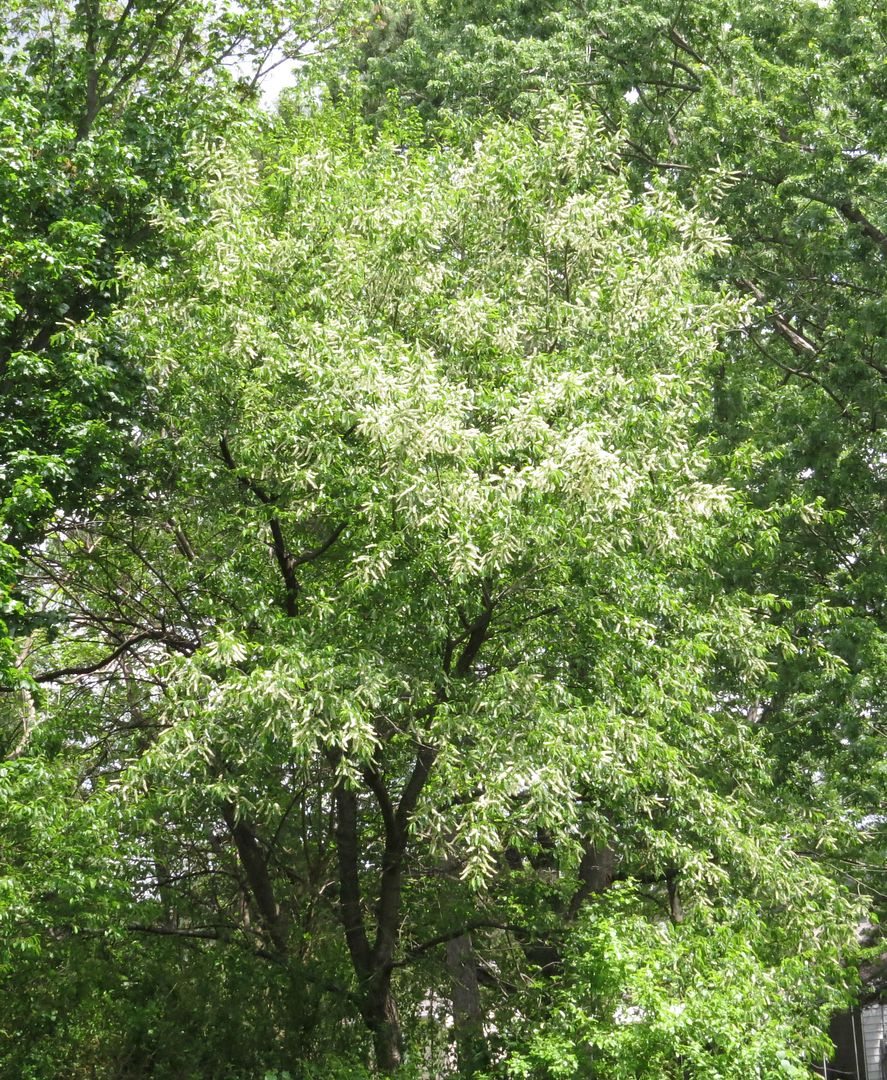
Black Cherry, Prunus serotina. Truth be told, this isn't a very popular plant with any pollinators, but it's bloom time, along with other cherry/plums, fills a gap between a few others. It's also a host plant for the Tiger Swallowtail Butterfly, the berries are edible though perhaps better used for pies and jam making, or left to the birds as it's one of the earliest to ripen.

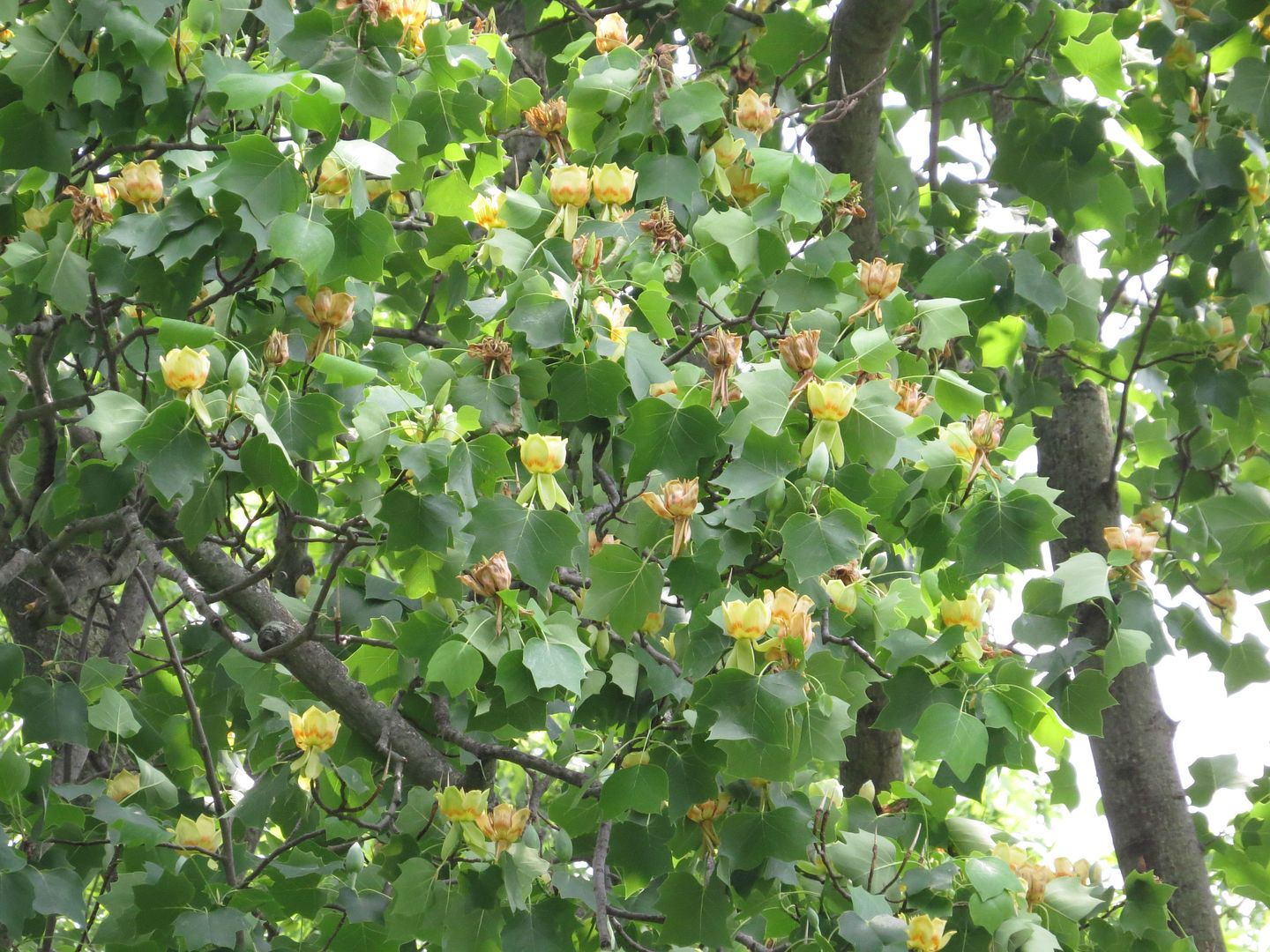
Tulip Tree, Liriodendron tulipifera. Not to be confused with Magnolias, this is one of the fastest growing and tallest trees in the forest. A dozen or so honeybees can work a single flower at a time, though it's not every year that it's flowers are prized. As odd as it sounds, honeybees will only work this tree intensely on years when the blooming is later than usual but also preceded by a rain storm. Rain causes most trees to produce three times as much nectar so on wet years a hive will produce a lot more honey. This tree is also a host plant for Tiger Swallowtails, so it's well worth planting if you've got the space.

Hop Tree, Ptelea trifoliata. This tree has become somewhat uncommon which is a shame because bees go nuts for it. The foliage superficially resembles poison ivy, and can have a displeasing odor when disturbed. They can grow in full shade or full sun, but of course flower best in full sun. Also I've noticed that bees only work the flowers that are in full sun, often high up in the tree. (I would have gotten pictures of honeybees on this one but this isn't my tree and I didn't have a ladder accessible.) Another trait one might be on the fence about; this is the host plant to the Giant Swallowtail Butterfly, which is the largest butterfly in North America. The caterpillars mimic bird droppings and have been known to completely defoliate whole shrubs and trees of this plant! So gardeners need to choose between a good nectar plant (assuming it's in full sun) or living with flocks of the largest butterfly in North America flying through their yard. 
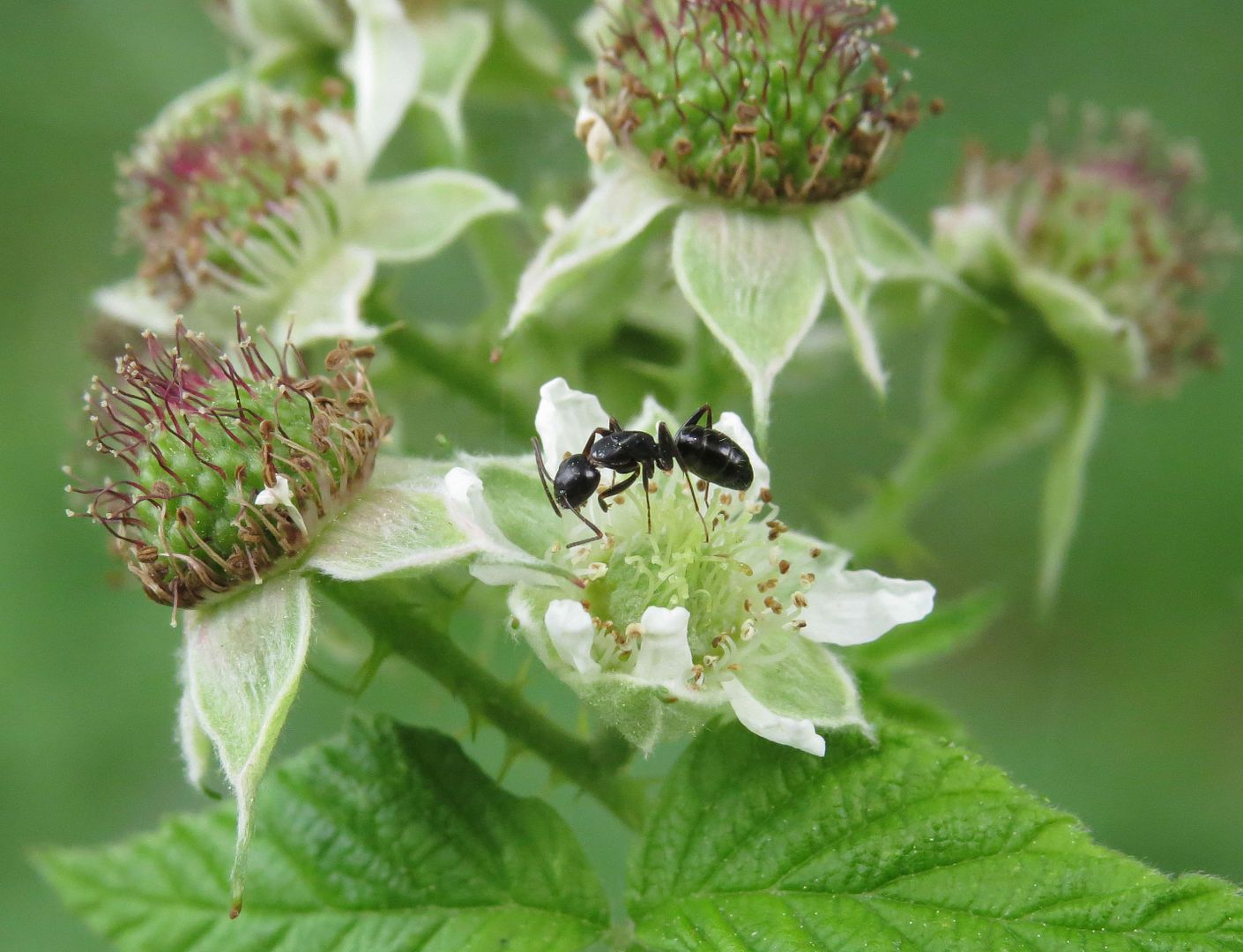

Okay that's an ant, not a bee, but even they like to steal the nectar from some of these plants. Members of the Ribes genus are high up on the pollinator list. Red Raspberries in particular are beloved by honeybees but only when allowed to grow into a nice sized patch. Blackberries get a silver medal, maybe bronze compared to the classic Red Raspberries but are still worth growing. 


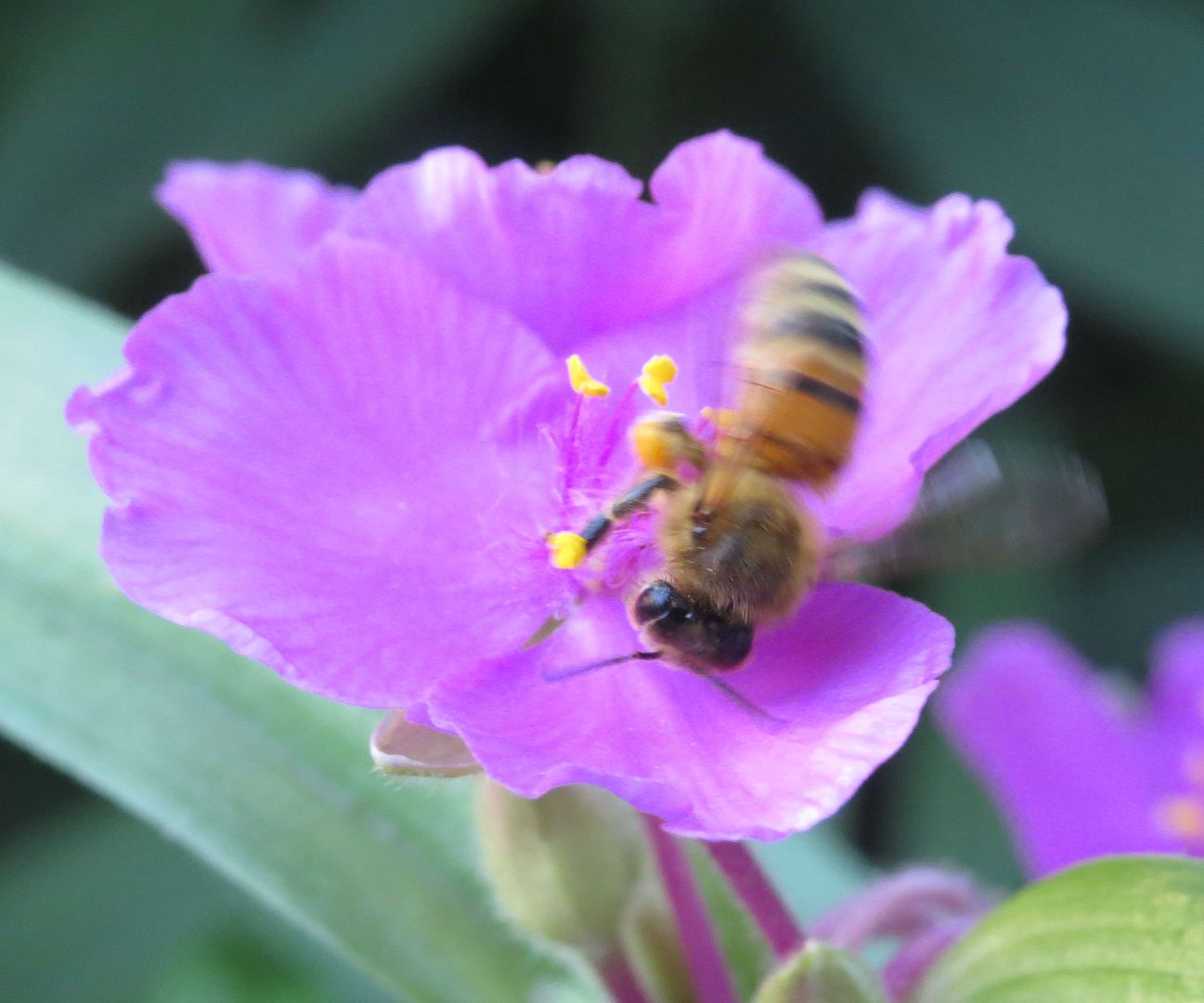
Spiderwort, Tradescantia sp., these only open in the daylight hours, and are usually closed by 4:00pm. Honeybees work them, usually before noon time when the pollen is fresh. Patches of this plant need to be at least two feet around in order for honeybees to bother with them though. I planted a few dozen plants three years ago and it's taken that long for them to even take notice. Thankfully spiderwort is one of those care free natives that grows, spreads, and goes dormant with almost no maintenance or care. 

Black Locust is another one that's flowering now. It's a medium sized tree with chains of white, wisteria-like flowers on it. I've been unable to find time to get pictures of it so far. The same goes for Catalpa Trees which are also flowering, and have great big white trumpets for blooms.

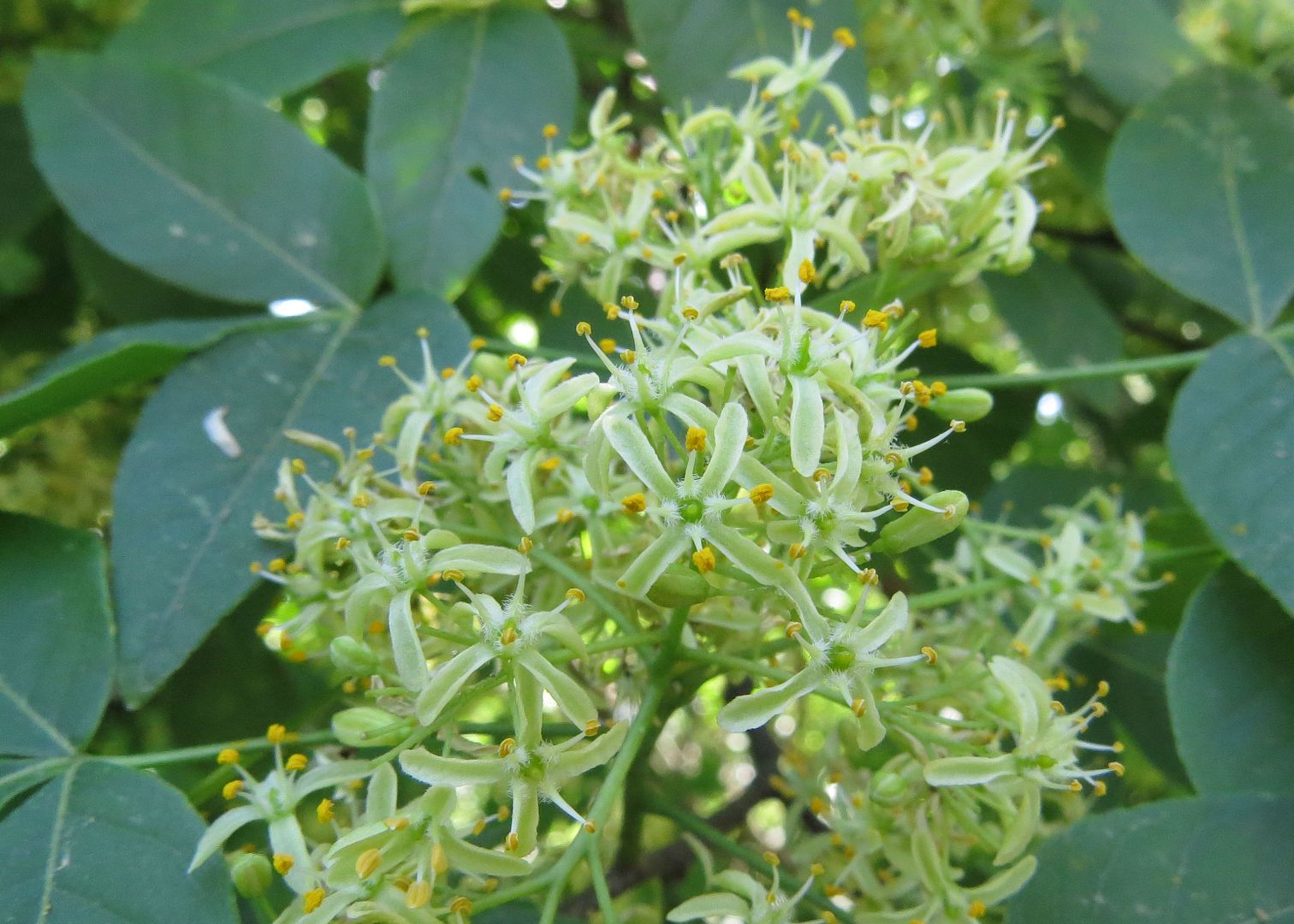
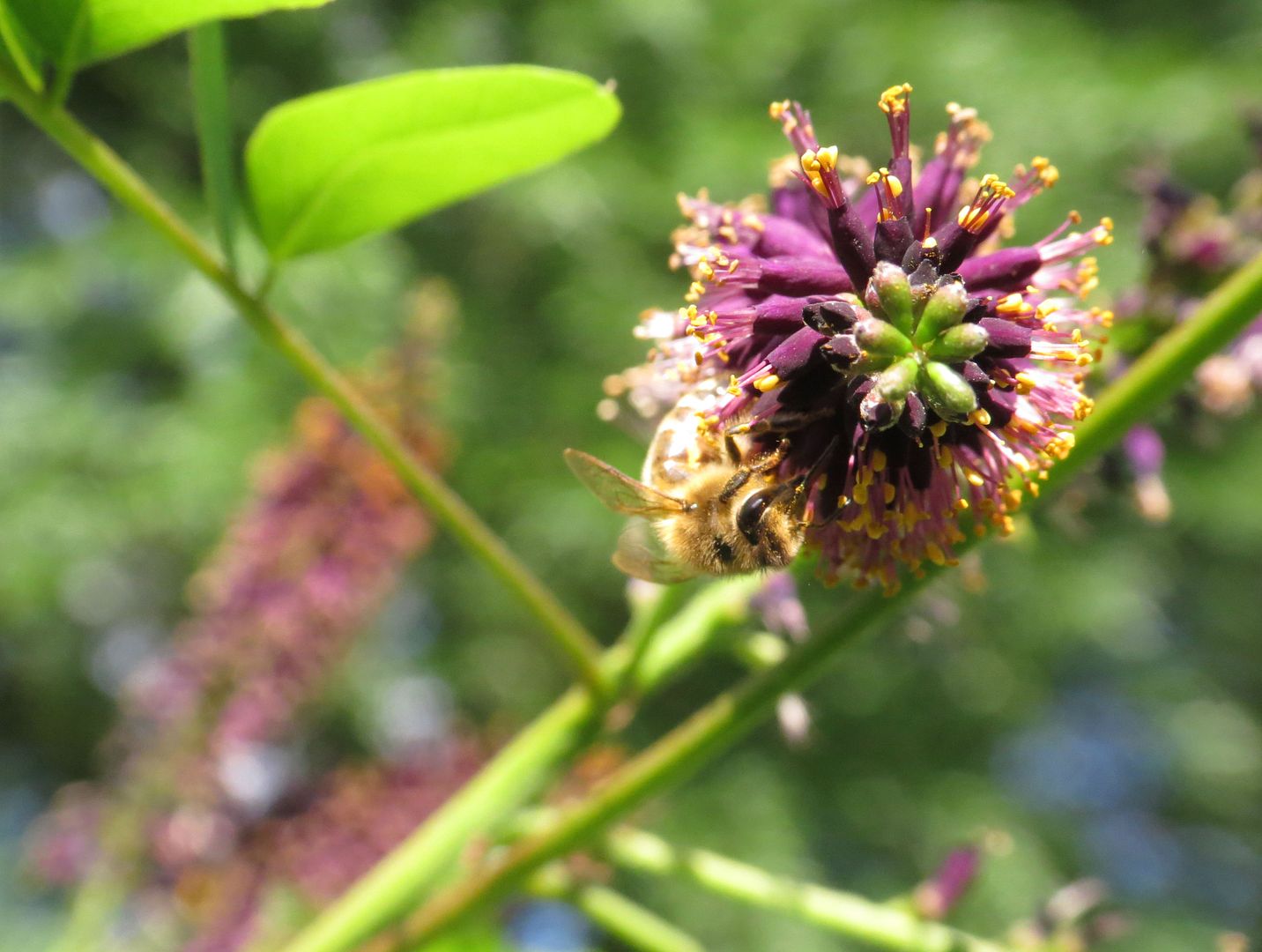
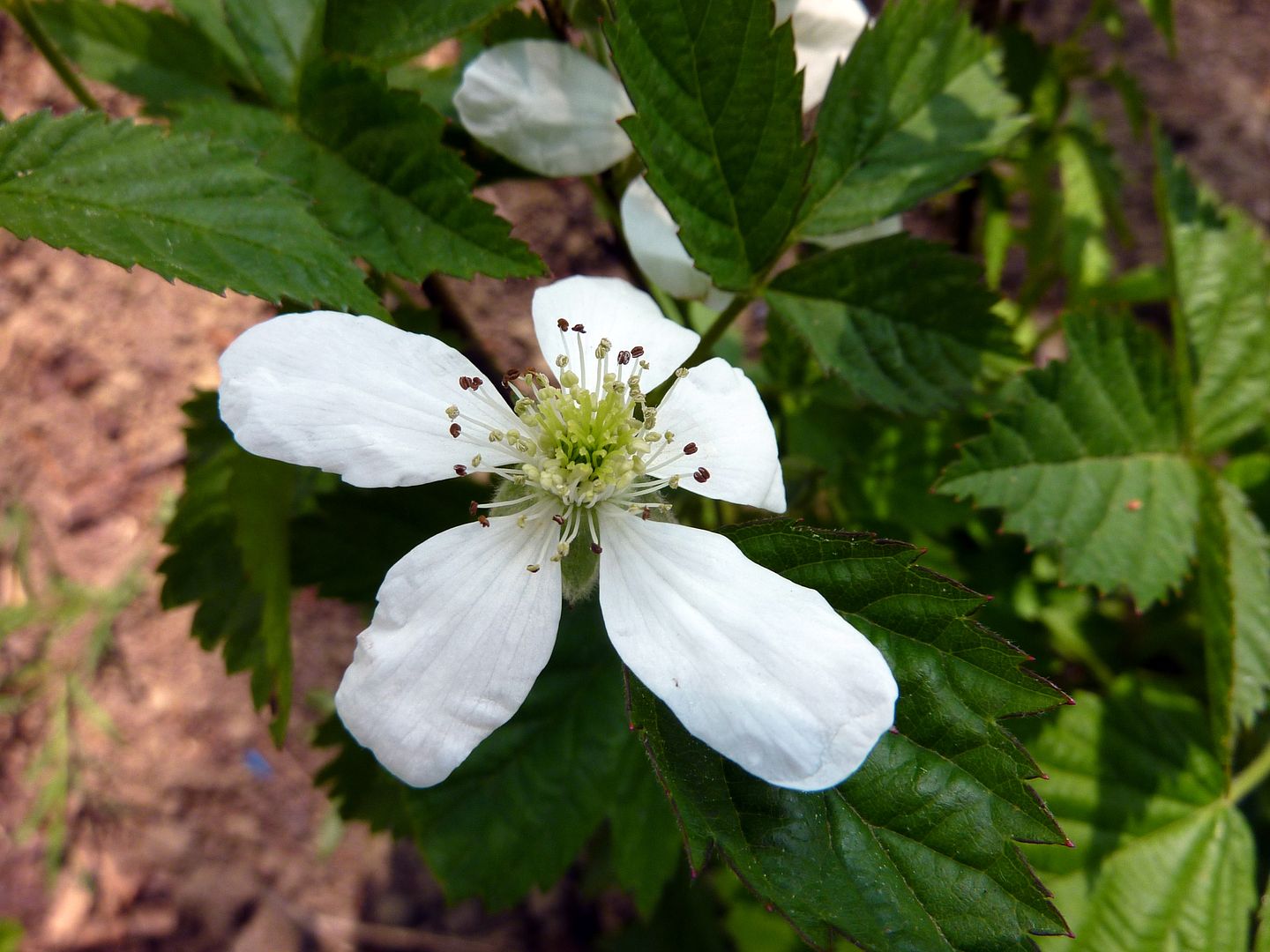
False Indigo Shrub, Amorpha fruicosa, this is another one that's not often planted. The flowers are fragrant, plum colored with bright orange pollen, and appear similar to Butterfly Bush, but better smelling and with an open habit.

This is another nitrogen fixing plants that produces its own fertilizer. It produces part shade beneath it too so you can grow it fairly close to a vegetable garden with little impact on the crops below.

It's also a host plant for the Silver Stripe Skipper, the largest of the skippers of North America. Unlike other supposed host plants of that butterfly, I've actually found the caterpillars on the plant! 

And a reminder that I wrote a book titled "Native Plants for Honeybees" last year on that topic. Word of warning, it's self published, and thus not on the best quality of paper. I encourage you to give the free preview a try before commuting to purchase. Reading through some of the negative reviews I see not everyone thinks my opinion on plants was worth their time, also one seemed against self published in general. 
Wednesday, July 3, 2013

Silver-spotted Skipper Caterpillar on False Indigo Bush


I found the tent to a Silver-spotted Skipper, Epargyreus clarus, on the False Indigo Bush, Amorpha fruticosa, today. I'd planted the sapling last fall as a nitrogen-fixing shrub/small tree right next to the vegetable garden. Their leaves decompose as a natural fertilizer and their roots enrich the soil somewhat. Though spraying Miracle Grow is certainly more effective.


Inside the little tent (or shed as it's called for reasons that escape me) I found the little caterpillar tucked away. They hang out here and feed at night so they're less likely to be eaten by birds.


Unfortunately when I tore it open initially I'd expected to find a spider. Oops. So the little guy jumped ship after I left. I tried putting the leaves back over it but he didn't repair it at all. 
So this had me thinking I should inspect some of my other plants for caterpillars, such as Wild Senna, which they also might use. Sadly I didn't find anything else but this one caterpillar. It's great that this sapling got me success on the first years though. I'm still debating if I should prune it into a shrub or a small tree.

Thursday, June 6, 2013

Spring Wildflowers Fade Away

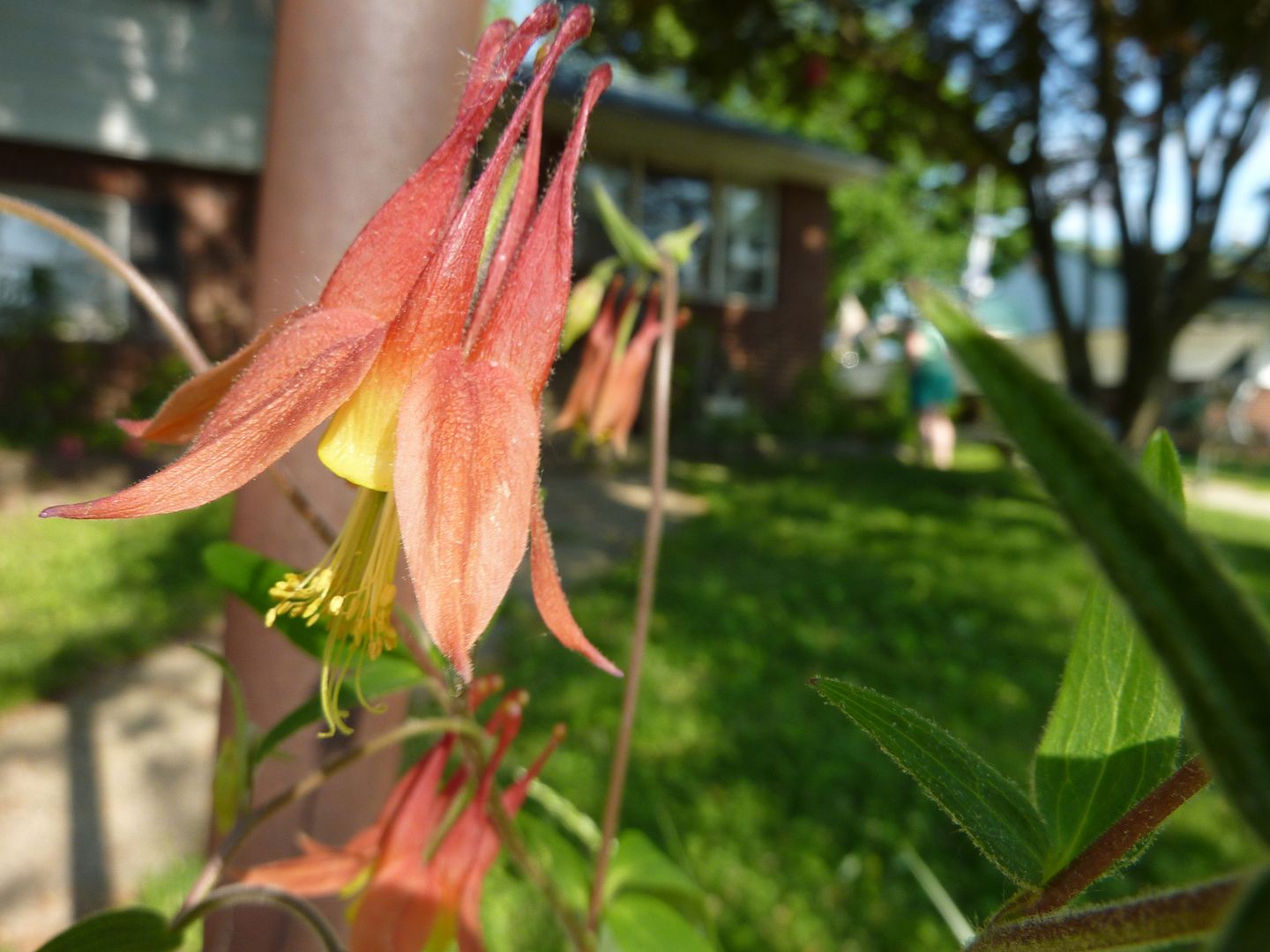
The heat of June has started to set in and all our ephemerals are finishing up their show. The Eastern Red Columbine in the front garden looks as amazing as ever. This plant started as just a plug I bought one year and has since seeded itself all over in the tamest way possible. It filled out the garden I planted it initially and despite me spreading seeds all over other gardens, it only ever comes up in inhospitable places, such as in old flower pots I have stacked up and don't water. This year I think I'll try spreading them in a flat out in the green house to see if they'll grow.

Flame Azalea, Rhododendron calendulaceum, gave me a wonderful week of fragrant yellow flowers. It doesn't flower as well as I'd like it to but I'm chocking that up to it still establishing some.

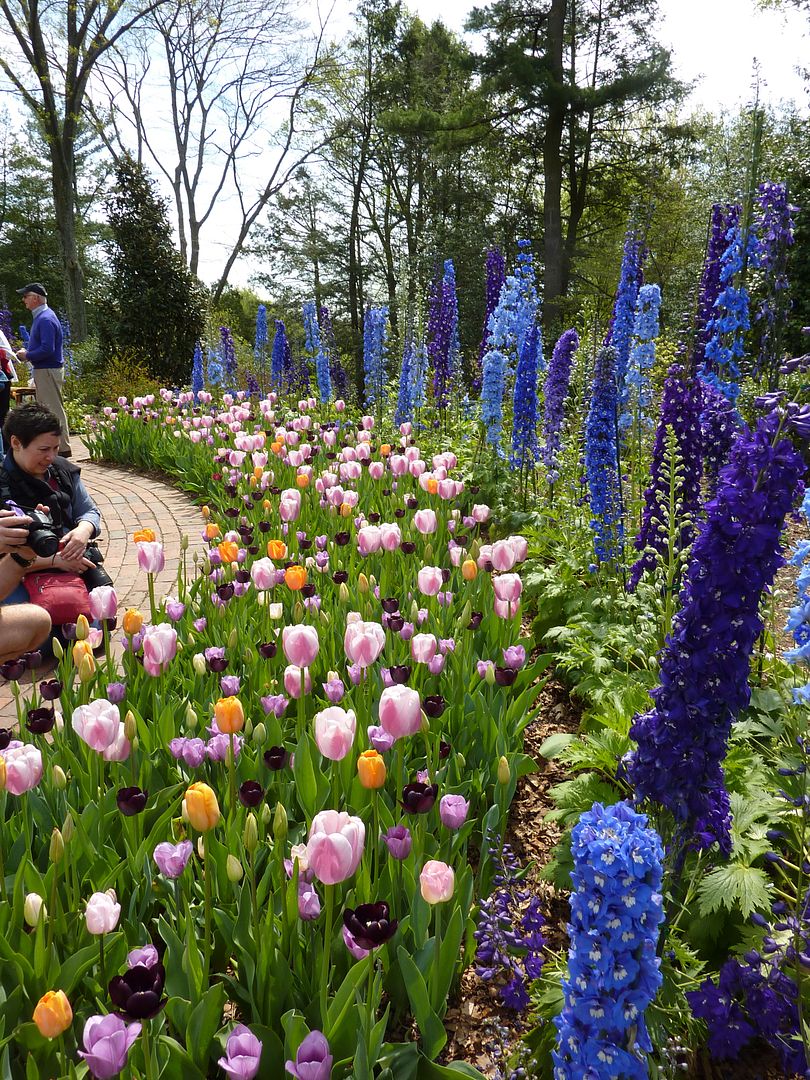
Blue False Indigo, Baptisia australis, has been showing off some nice columns of flowers this year. I've learned a few things about this plant this year. (1) They can be divided, if they shoot is old enough to flower, then it's old enough to be separated from the rest of the plant with a good sharp shovel. (2) They can be an okay cut flower, which was surprising to me. I don't recommend it becuase pollinating doesn't always happen well with these and seedling production should be promoted. But sometimes you find a color combination or hybrid you really really like, so dividing and propagating that way can allow you to keep some interesting results. 

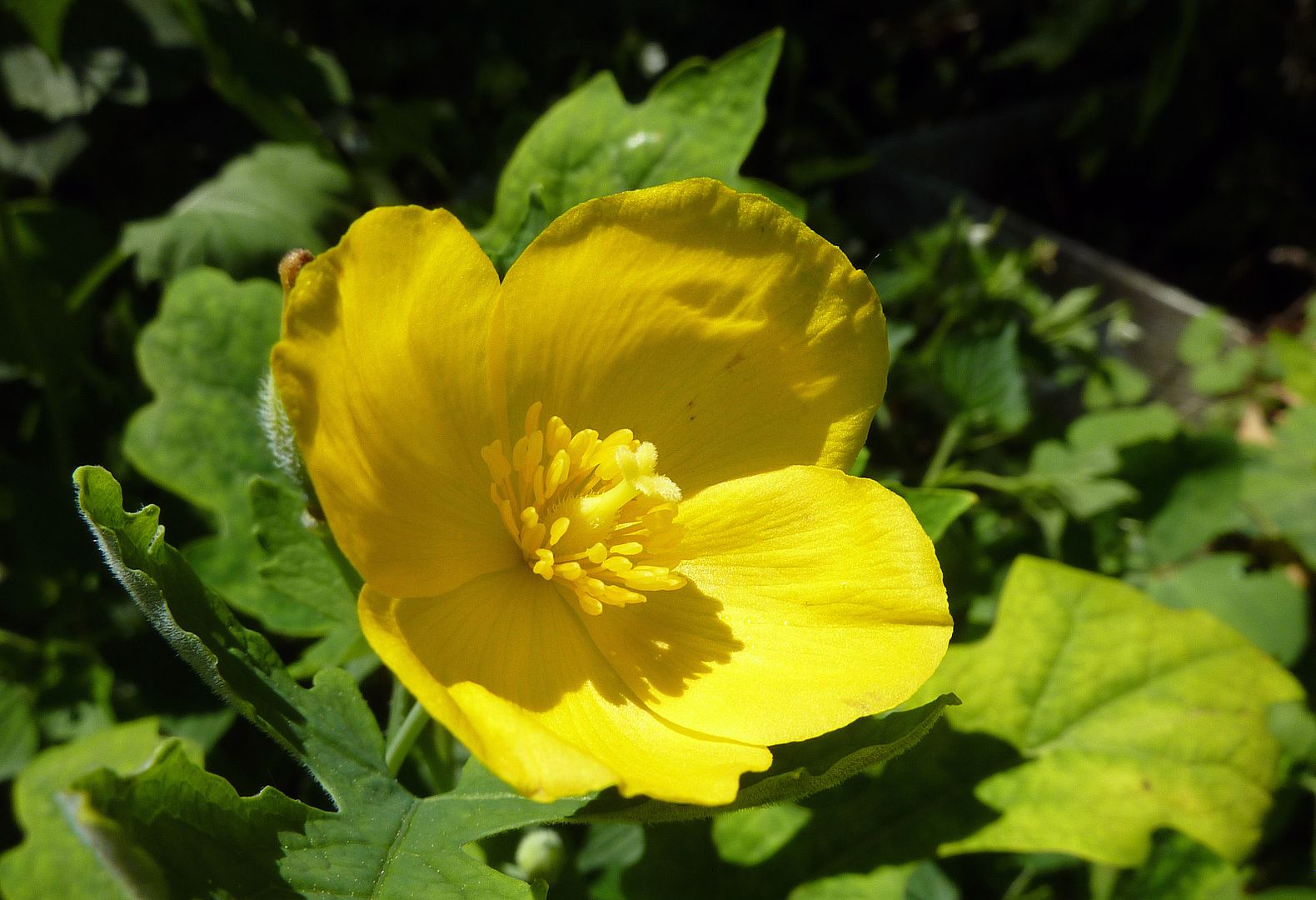
Lastly I discovered a Woodland Poppy that's still pushing out flowers, Stylophorum diphyllum. Most of these have finished up for the year, but I'm happy seeing this one still going.

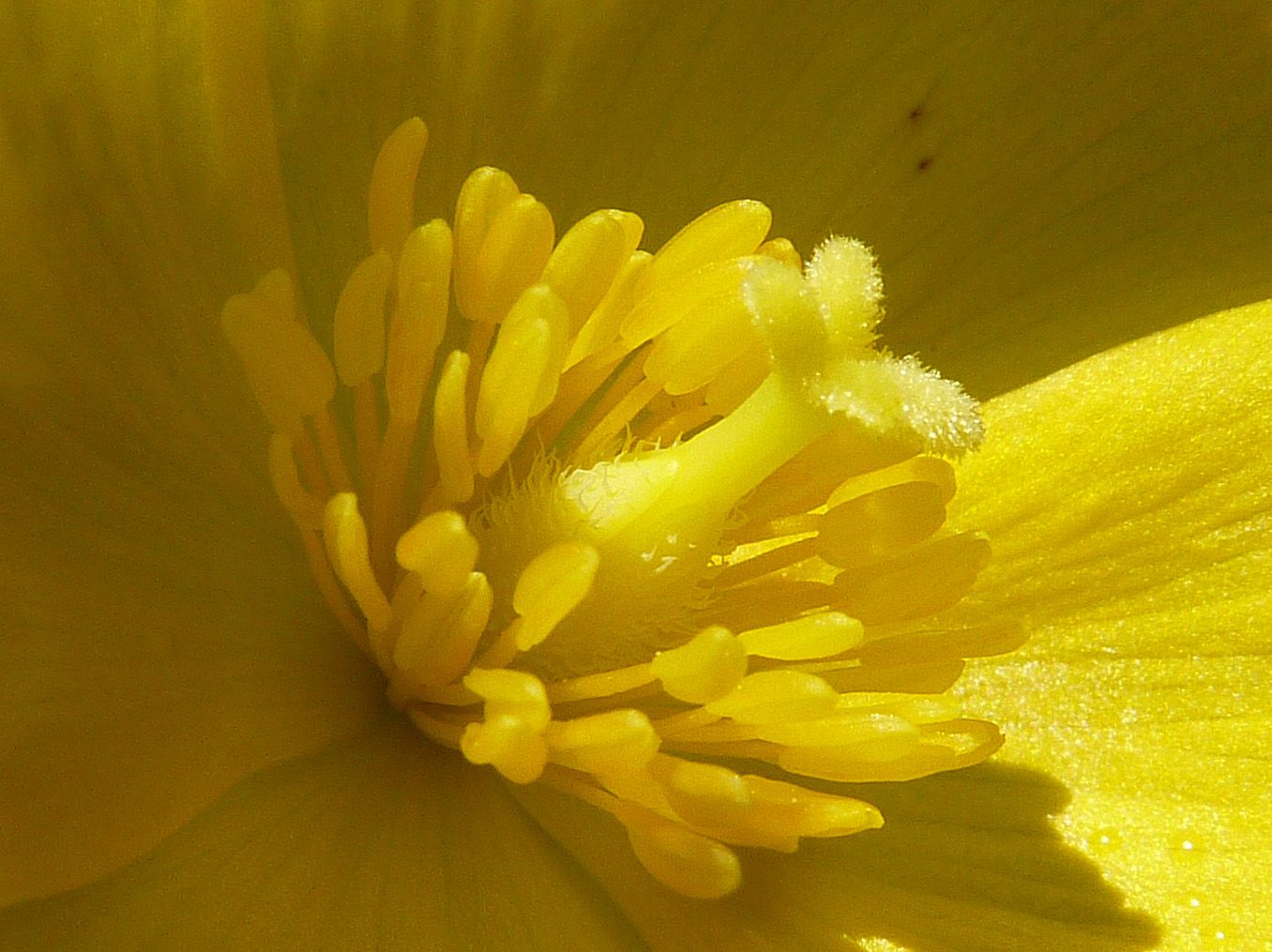
Close up of the flower.

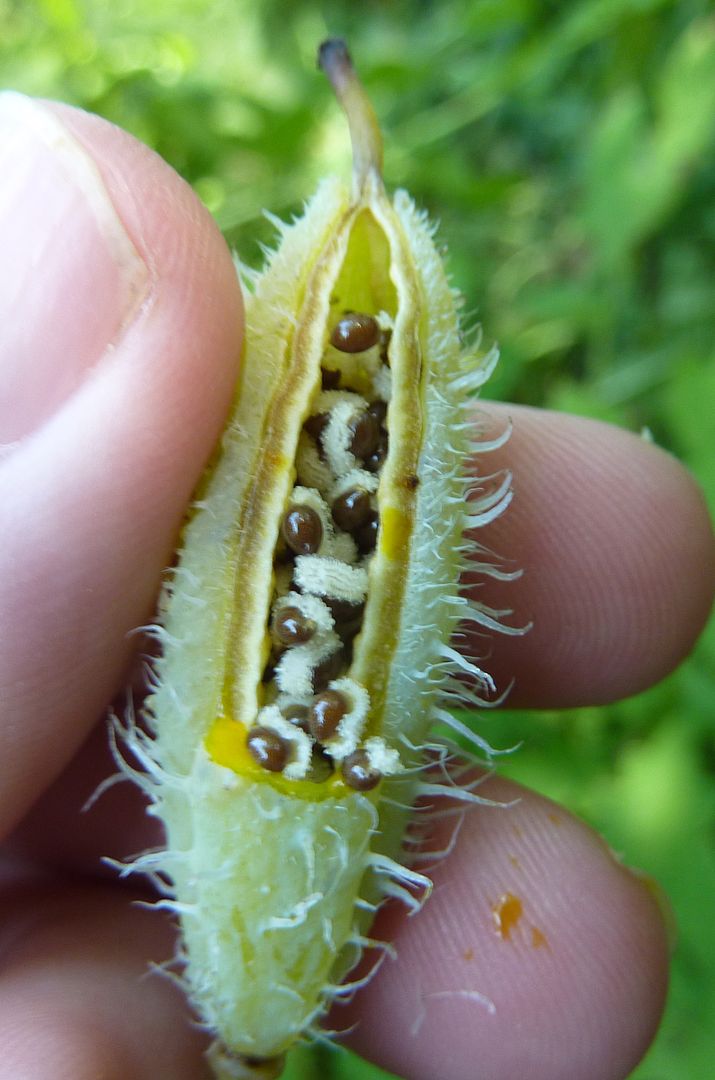
The earliest seed pods to this species have started to pop open, and I'm finding them full of ants who are too eager to eat the elaiosome from the seeds. I'm starting to find this wildflower growing out from under rocks and logs too, generally places where ants nest. This is another wildflower I'm going to try growing in flats this year, though I think they might require a cold period to germinate.

Tuesday, May 21, 2013

Life in the Meadow Garden

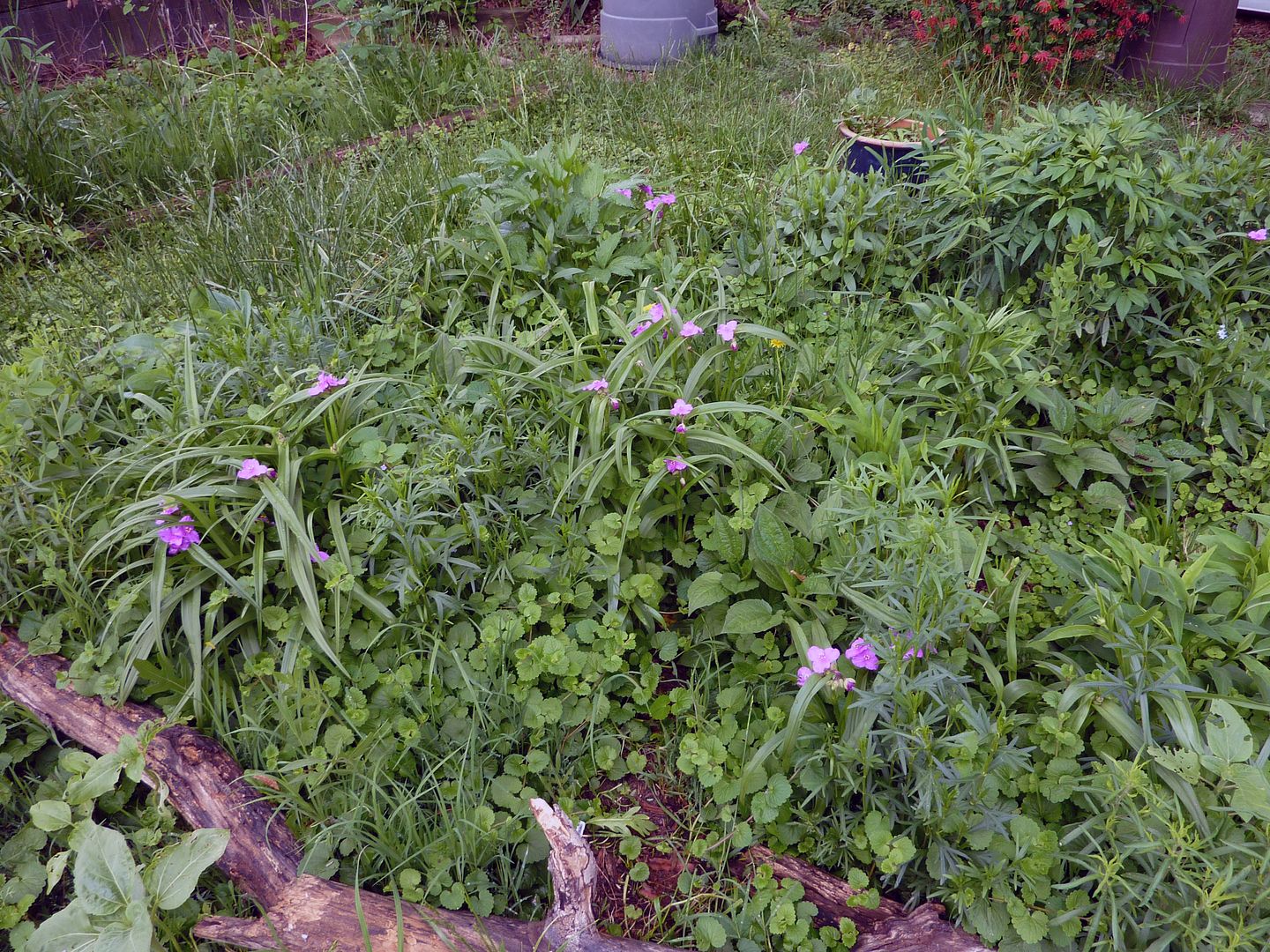
My little meadow garden is much farther along this year than it was this time last year. Mostly this is due to plants spreading both by seed and underground rhizomes, bulbs, and other such root divisions. I need to weed out some of the Creeping Charlie becuase it's climbing all over everything. But otherwise it's fairly weed free. Rudbeckias are coming up all over the place and should form a nice carpet of yellow later in the year, but for now I have the bright pink blooms of Western Spiderwort, Tradescantia occidentalis, to enjoy.

The earliest bumblebee workers as well as an assortment of hover flies have been pollinating them. I love how soft looking the pollen anthers look; as if they were made out of foam or something.


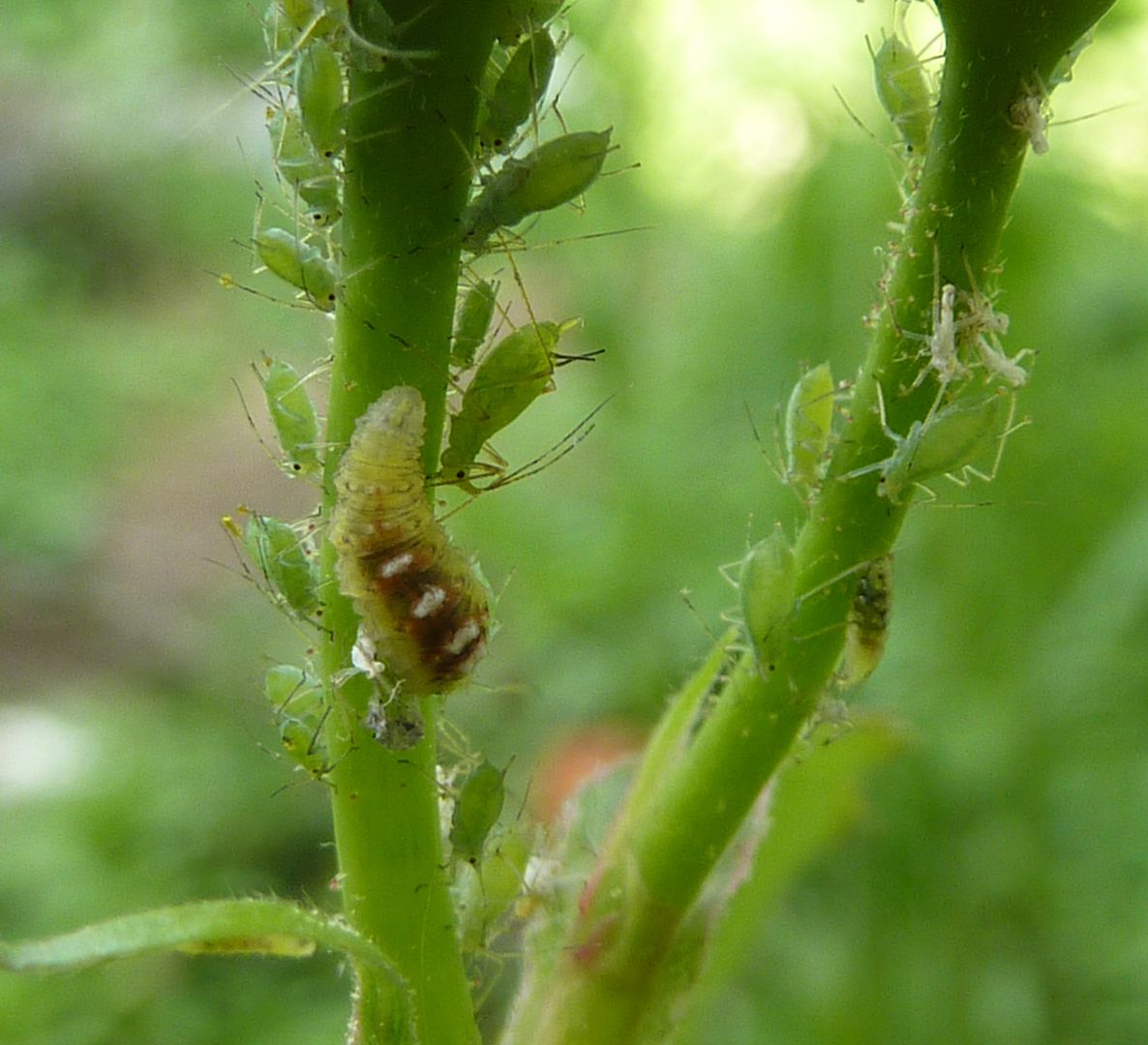
Elsewhere in the garden hover fly larva feed on aphids, and somehow go unnoticed by ants or even other aphids.

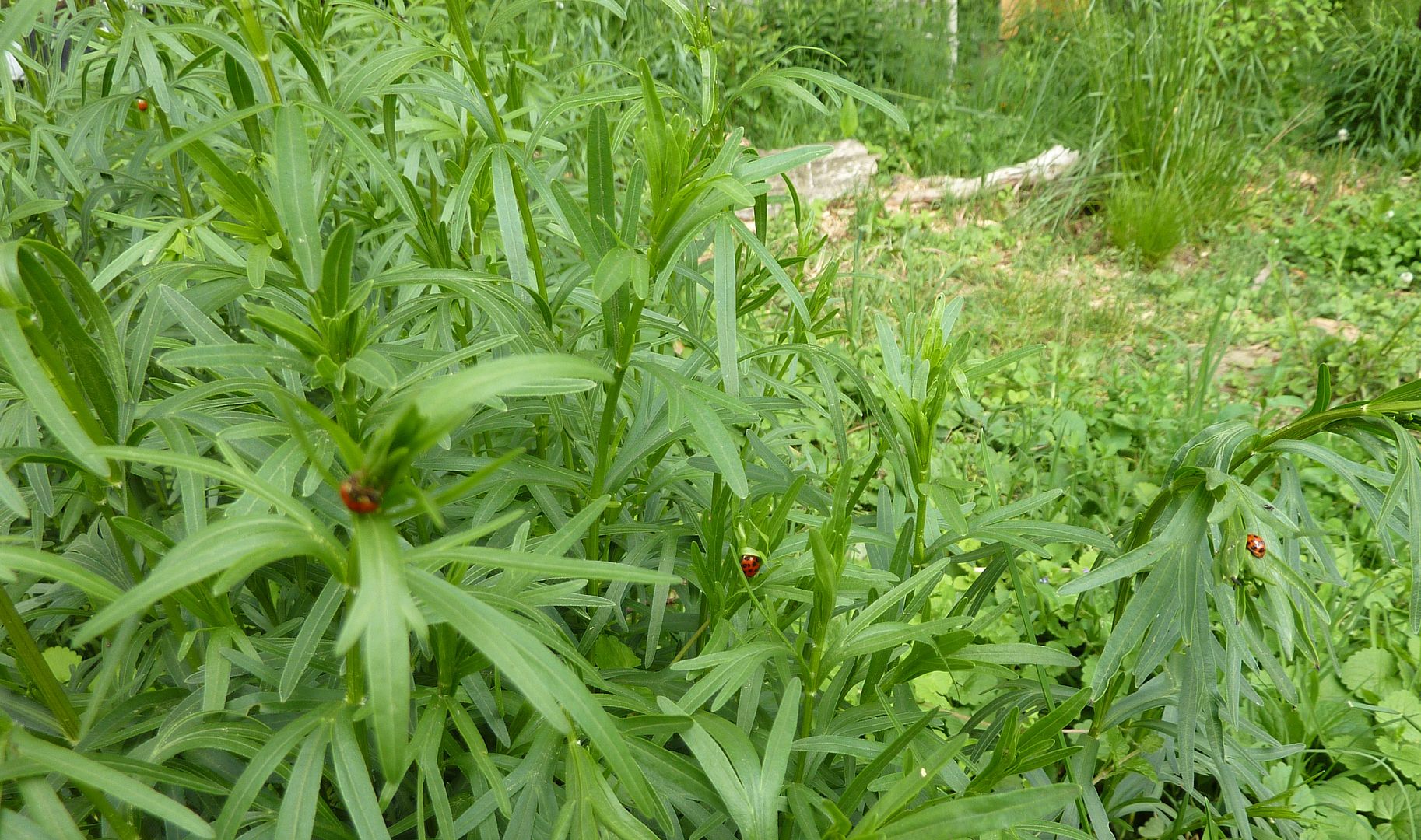
Along the Coreopsis tips a plethora of lady beetles have landed (free of charge) and help to control the aphid numbers. There are four of them in this picture alone.

Pavement Ants, Tetramorium species E. have taken to tending some of the aphid herds. This is somewhat unusual becuase pavement ants don't usually climb plant life to obtain a meal, at least it seems less in their nature as seen in other ant species.


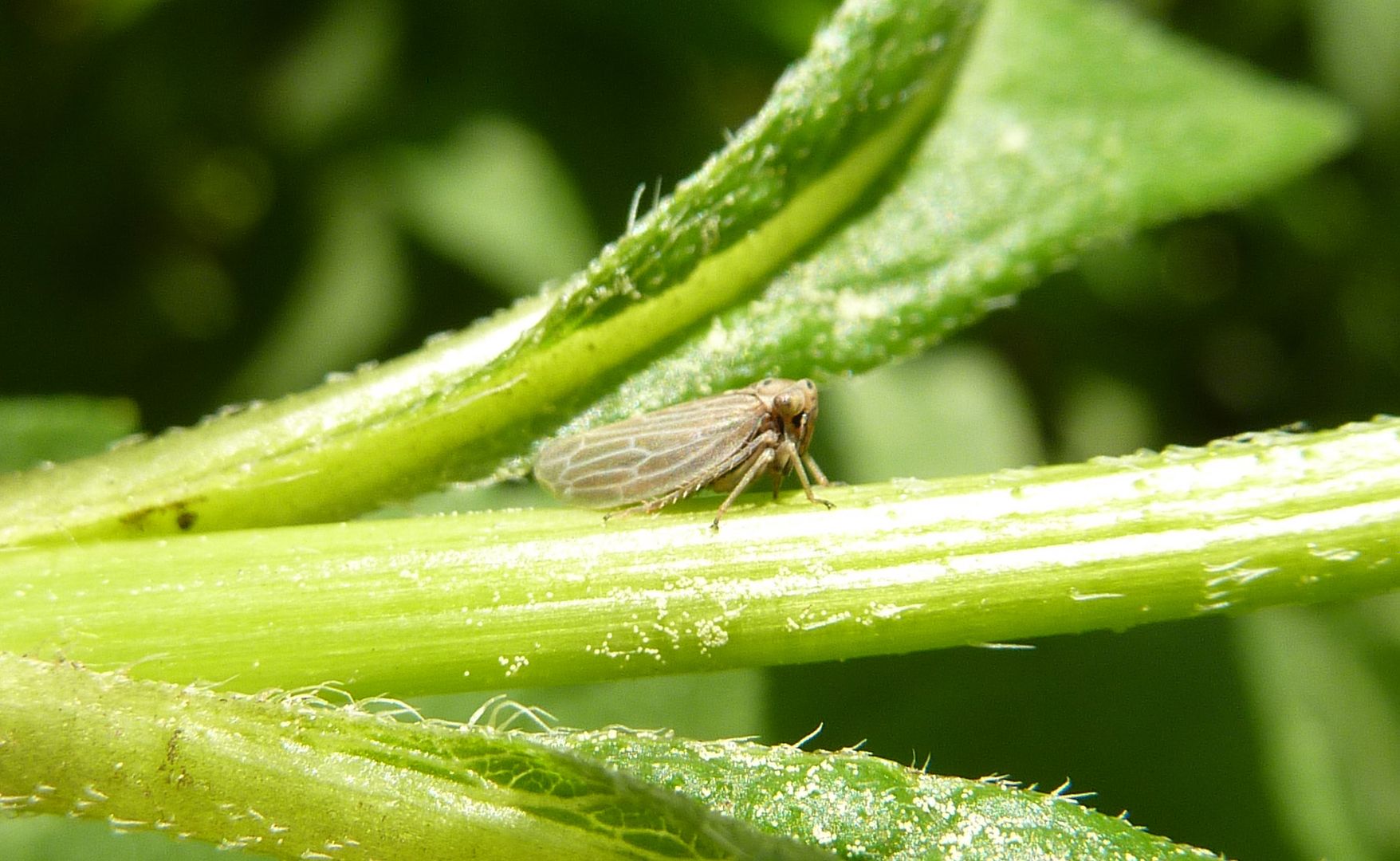
Leaf Hoppers are a distant cousin to the aphid, but they've opted for mobility and don't have as many associations with ants.

Young Baptisia alba, plants I'd started as plugs when I first planted the meadow garden three years ago are finally going to flower. I'm not sure if the addition of this plant was a good idea or bad. Because they produce their own fertilizer, they're nitrogen fixing, and encourage certain types of plants to grow better than others.

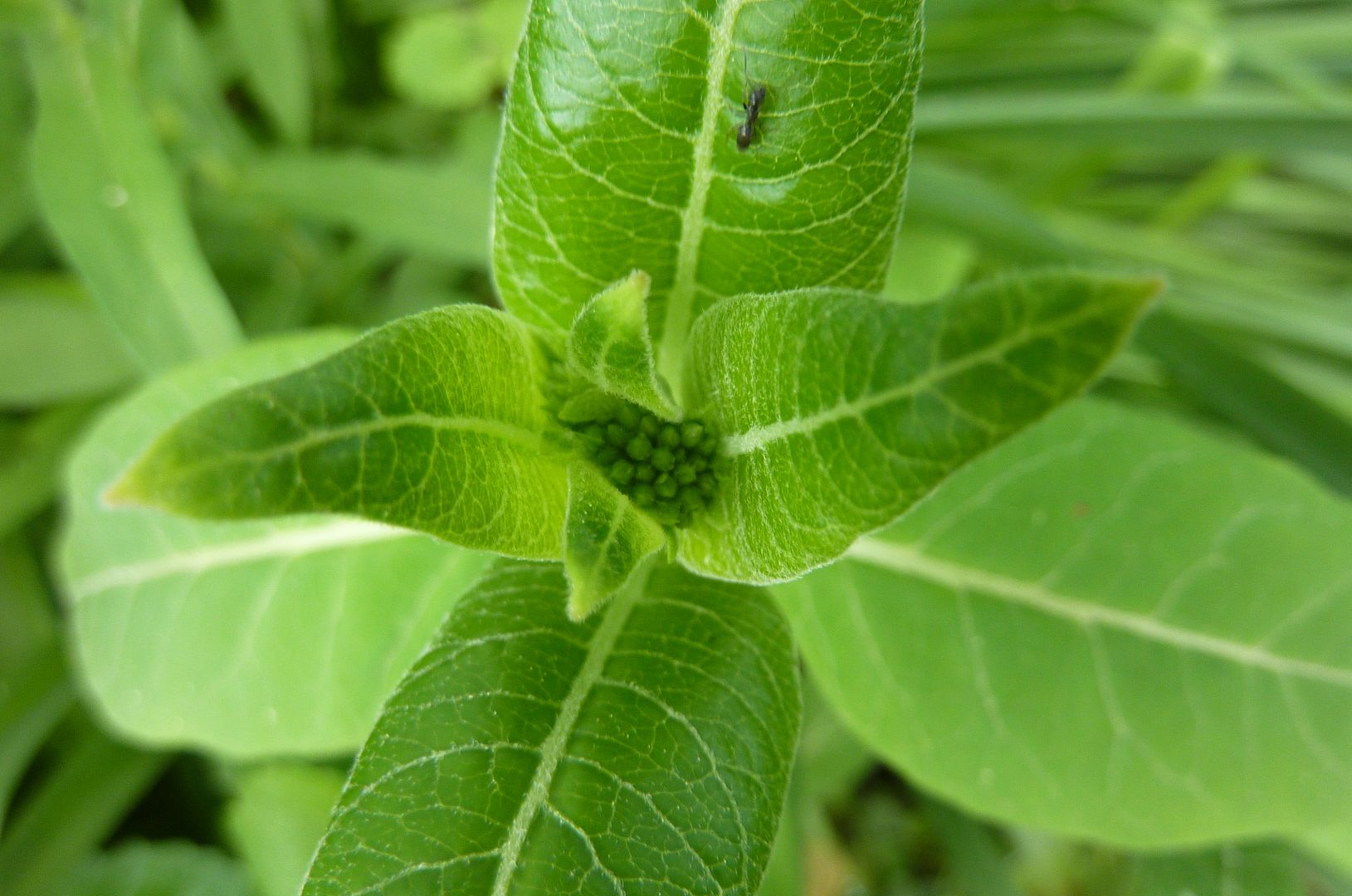
Also flowering for the first time this year is Purple Milkweed, Asclepias purpurascens.

Monday, April 29, 2013

Mt. Cuba Center's 9th Annual Wildflower Celebration (3 of 3)


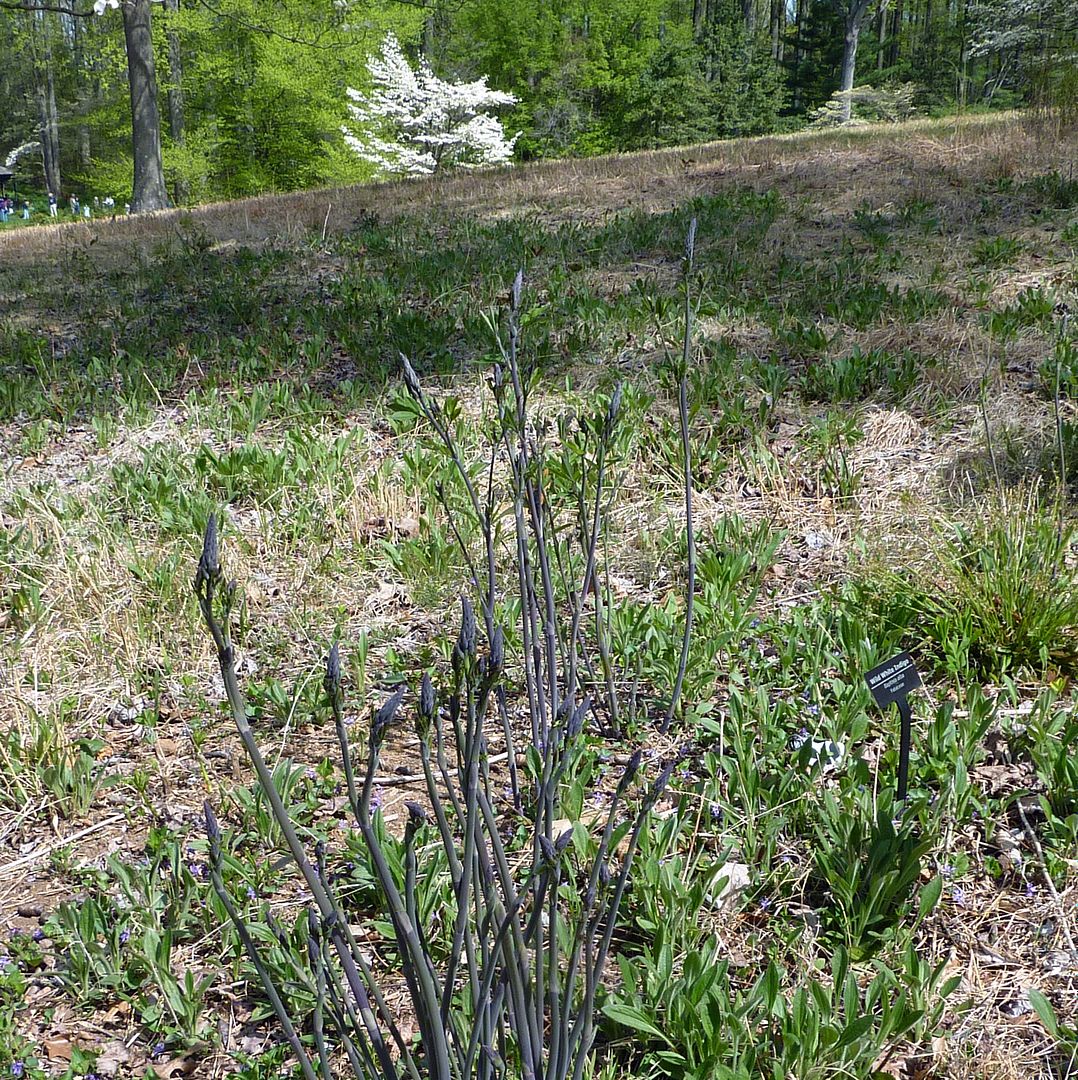
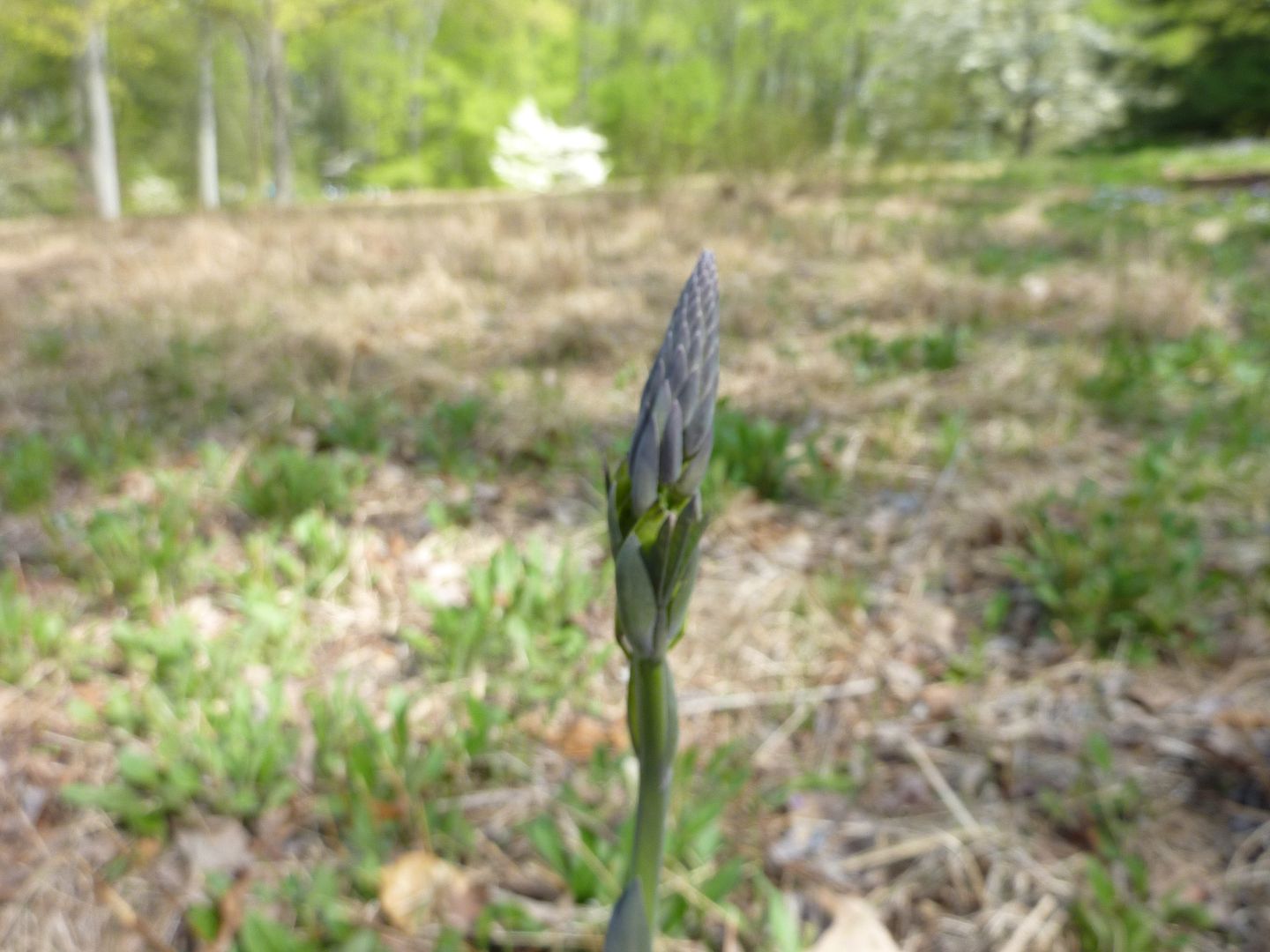
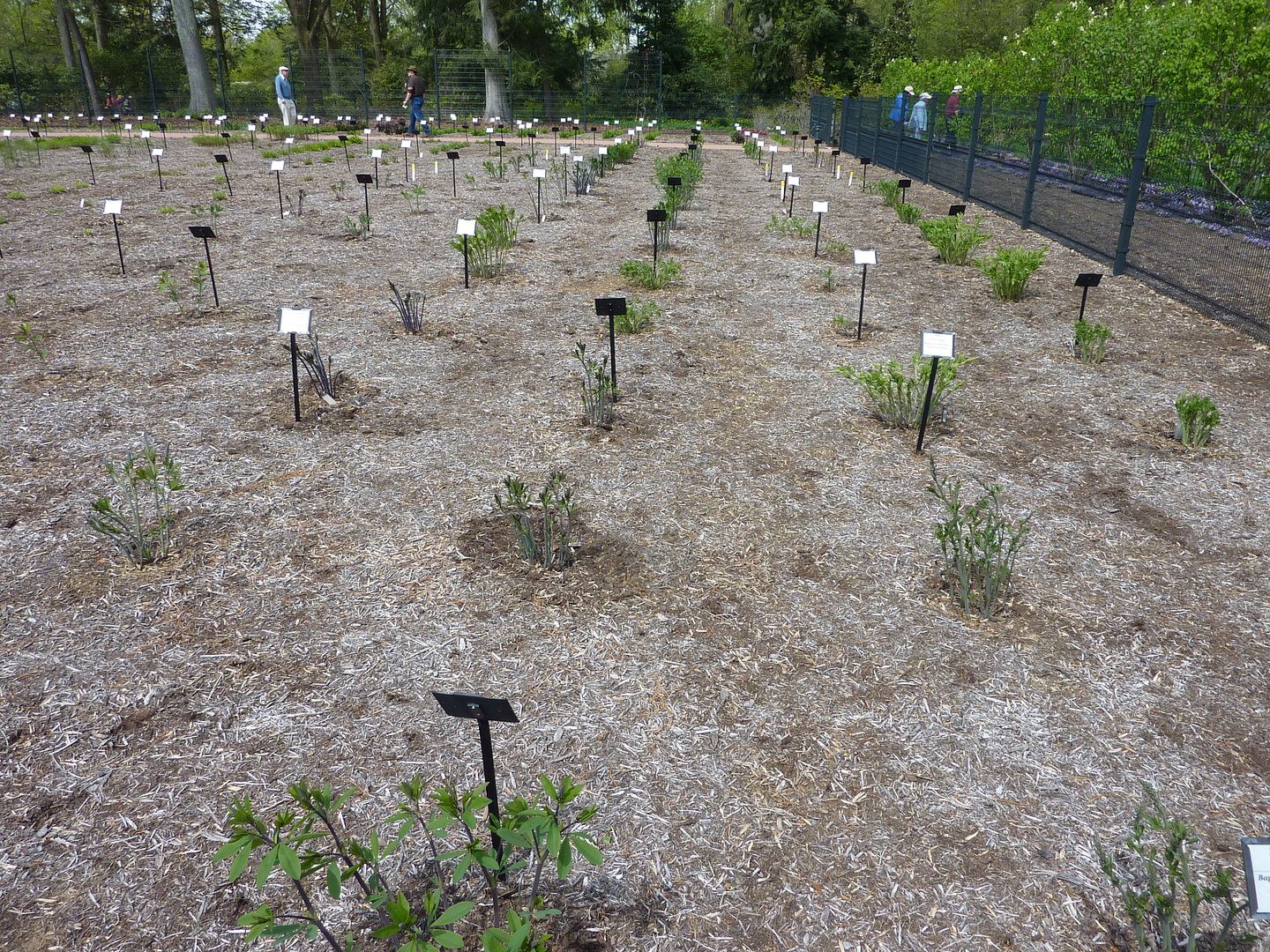
False Indigo, Baptisia australis, was just poking up out of their prairie.

These should quickly open up into the foliage and the flowers.

They're doing a trial on a bunch of cultivars available and I hope to be attending the class there at the Mt. Cuba Center. It falls on my birthday, May 16, so it's my way of treating myself.

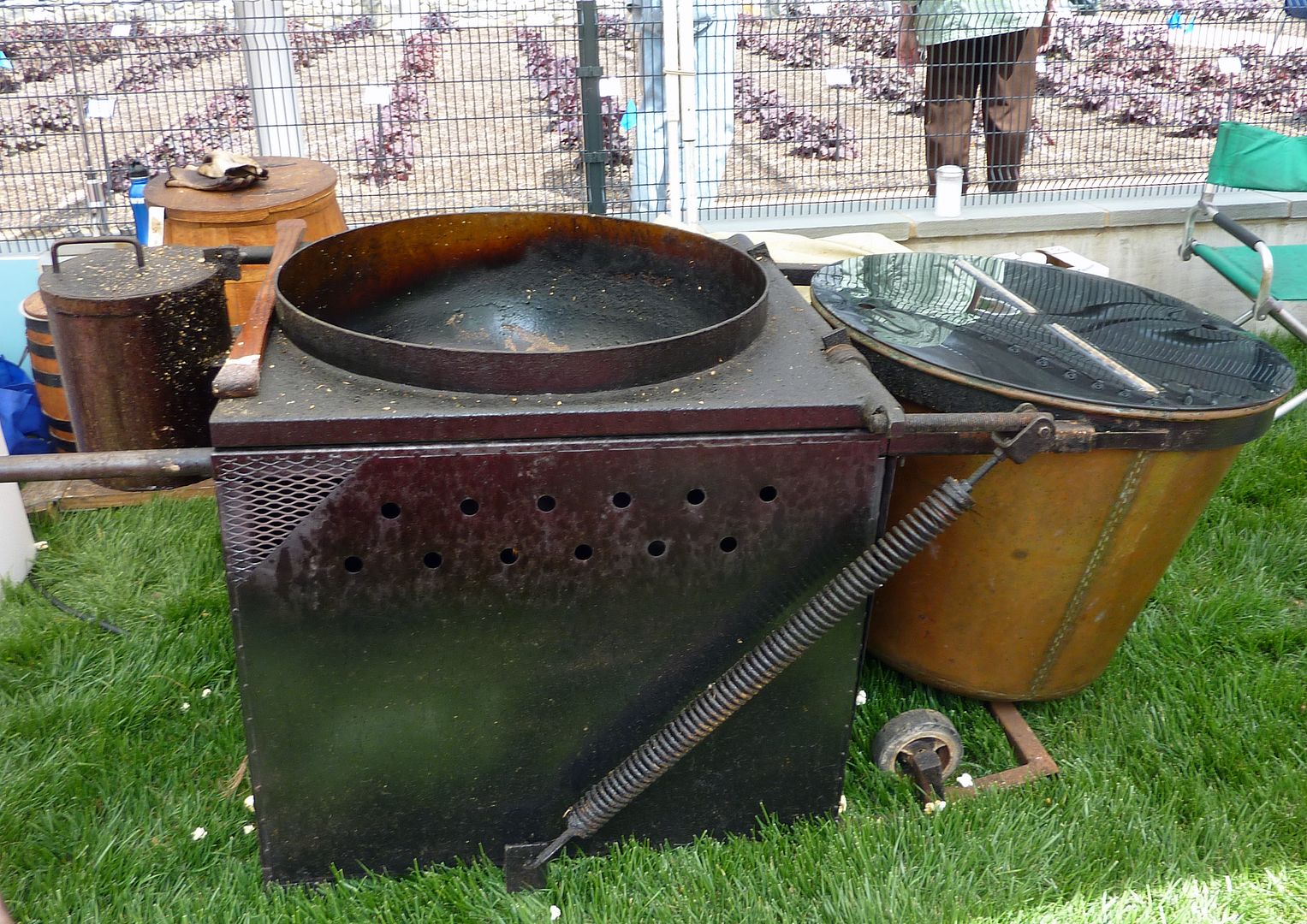
One of the concession vendors had a popcorn maker that looked like it may have been the model-T of its day. I got to taste a little and wasn't impressed. The popcorn was fairly flavorless, didn't seem to be salted, and they'd used caramelized sugar (which was burned by just a hint) instead of butter or canola oil. Still it was good to see and try.

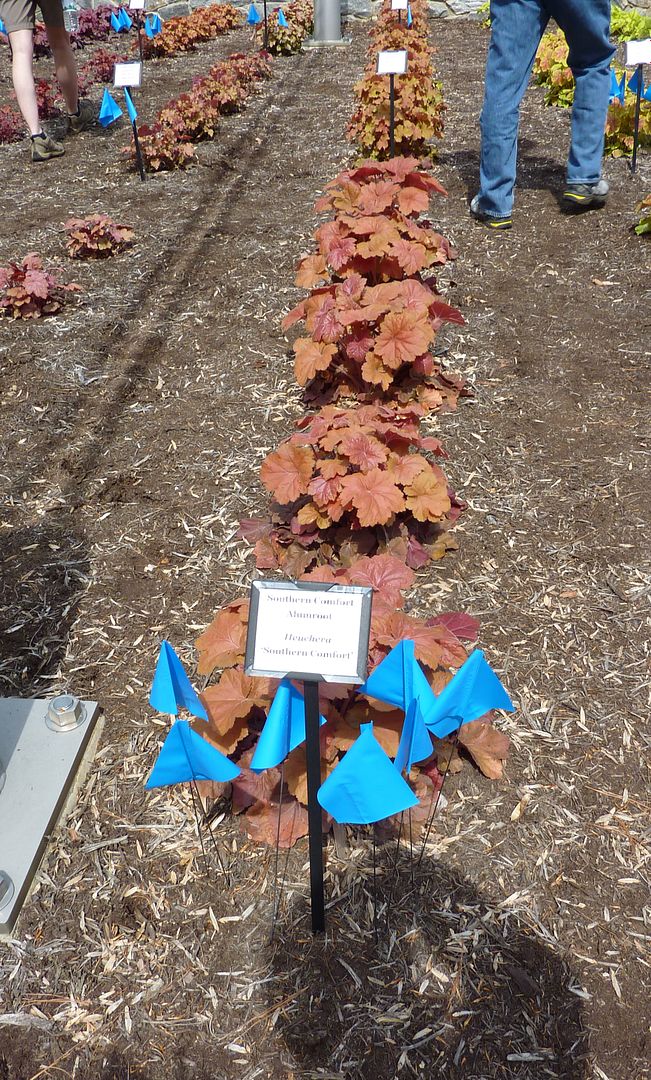
Elsewhere in the Trial Garden they were still running their Heucheras from last year. I was handed a flag and asked to put it next to which one I thought was the best. Heucheras aren't something I'm drawn to as most of them are either wind pollinated or only visited by flies, but many gardeners love them for their wonderful foliage and diversity of leaf color. For whatever reason, I seemed to be drawn to this copper colored one, Heuchera 'Southern Comfort' and I wasn't alone in my decision.

The forest edge garden is home to many dogwoods, elderberries, redbuds that are actually red flowering, and a fair number of other plants I'm sure.

Directly across from this garden was a kids event. In years past they'd focused on caterpillars, but this year they focused on ants and plants that disperse their seeds with packets of elaiosome! Best of all, they were given fruit snacks for carrying their seeds through an obstacle course!

The Round Garden was filled with dozens of nonnative plants being used as nonnatives should be, as ornaments to accent our native plants, rather than being the standard in our landscapes.

An Anemone caught my eye just down the way, but I don't think it's a native one. I could be wrong.

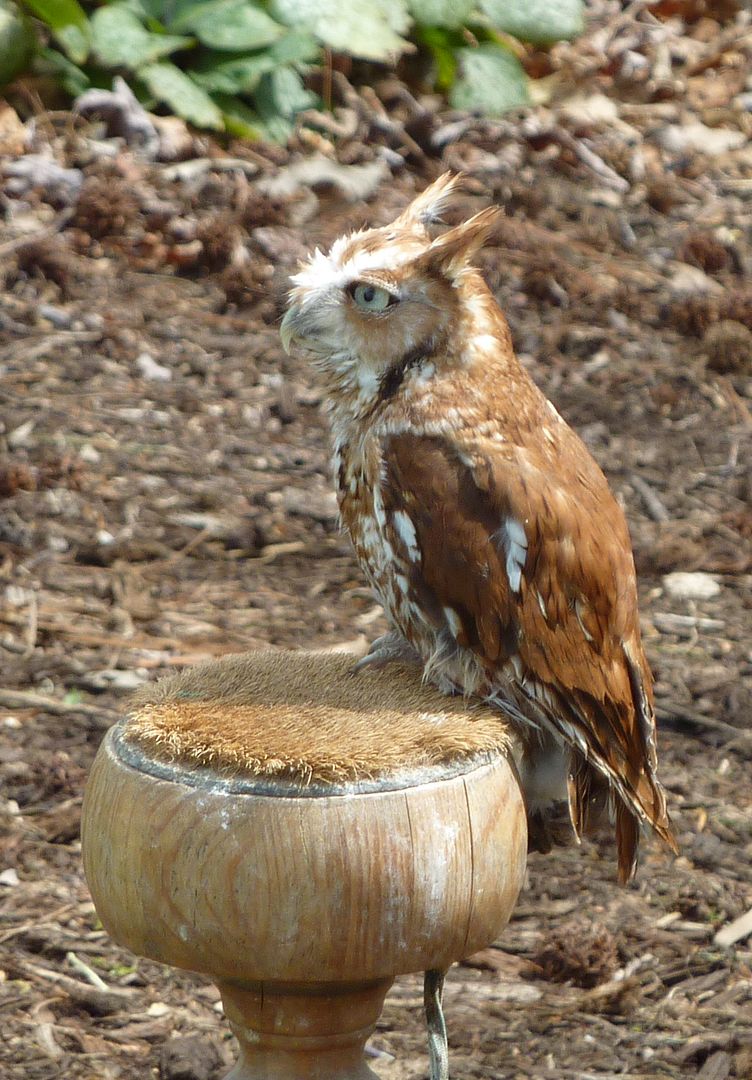
Also on the day of the Wildflower Celebration was a Raptor Bird Demonstration. Here a Screech Owl was placed upon a perch for visitors to take pictures of. Later on they had this little guy out when they talked about them but I don't believe we ever got to see him fly (they're nocturnal anyhow).

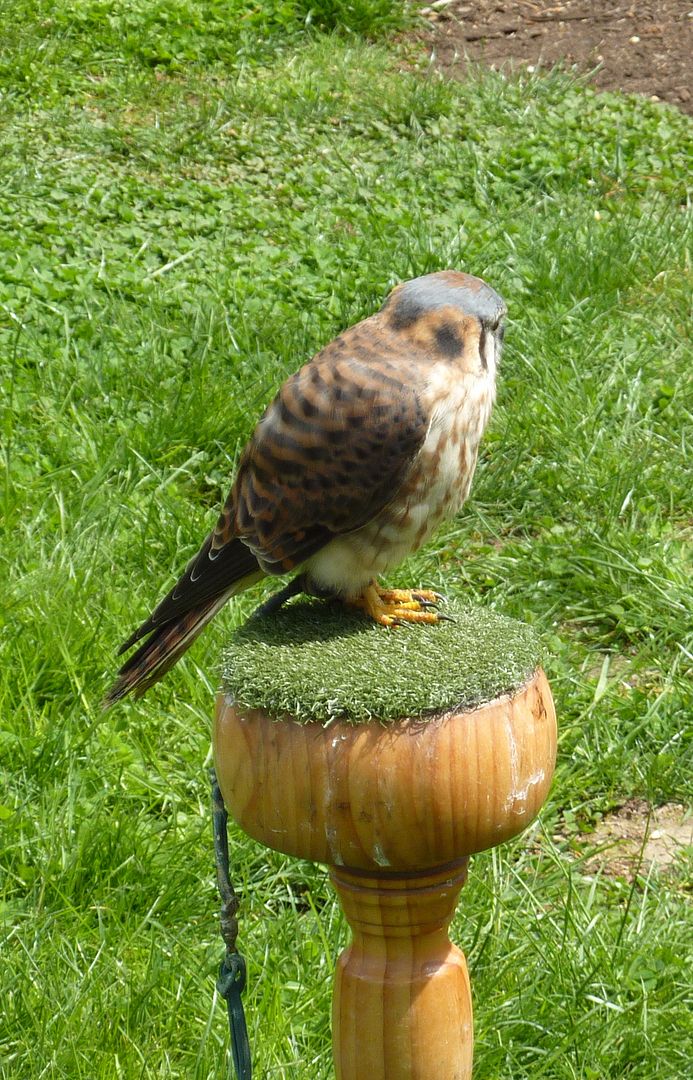
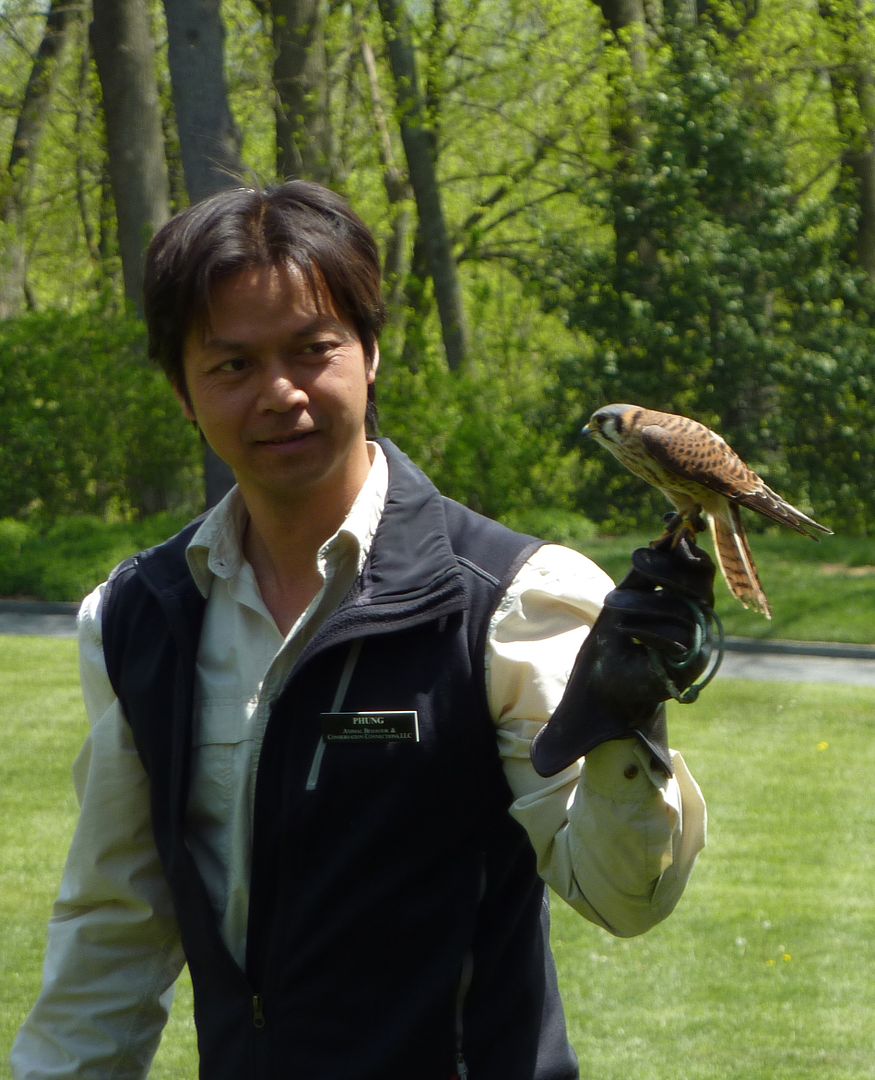
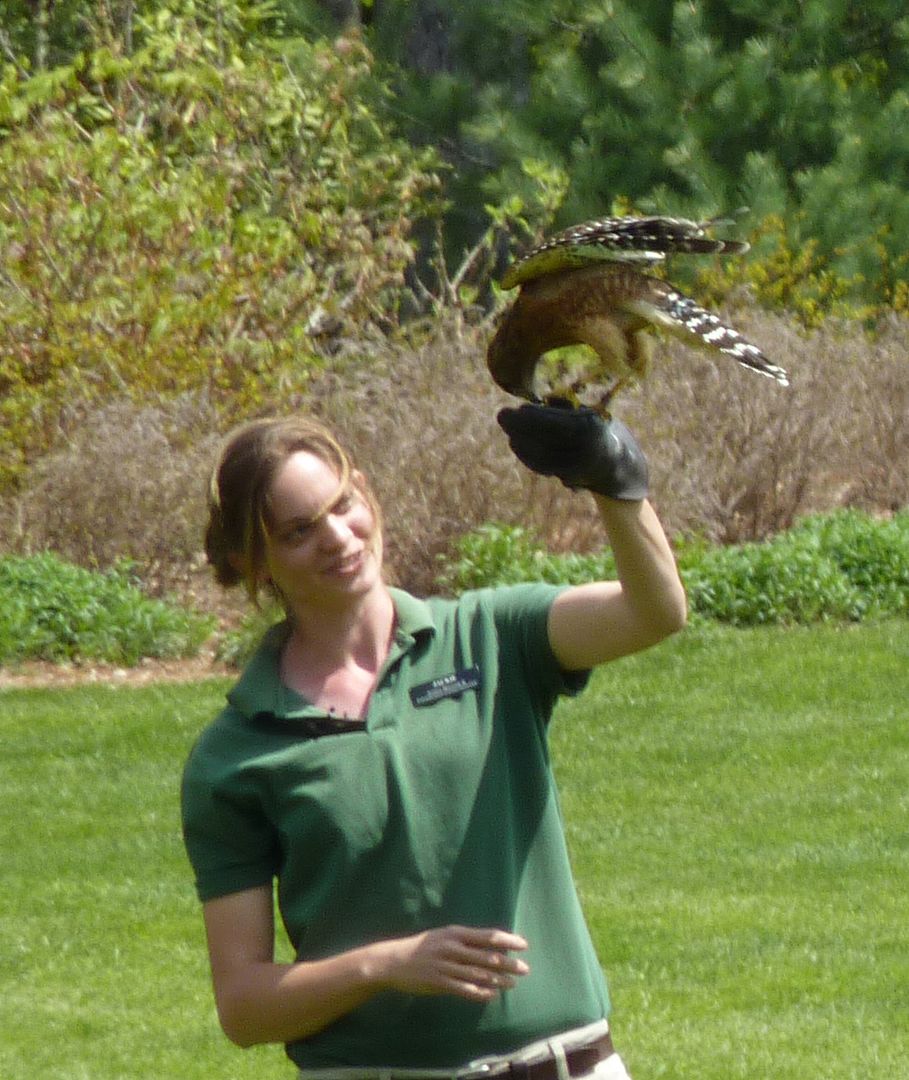
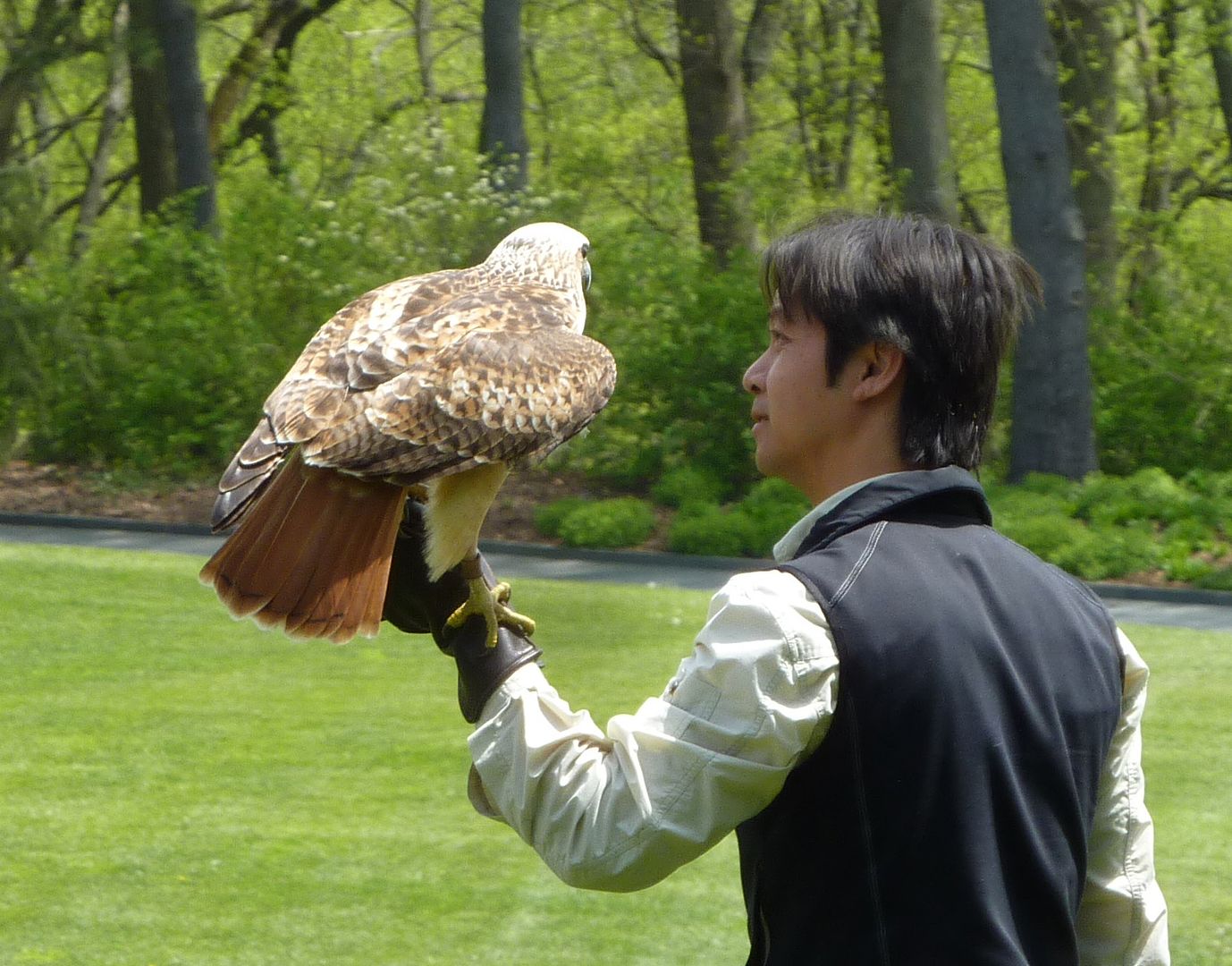
This was a Hawk (of some sort), forgive me, we were actually shown five or six different types of birds and I can't recall the names of them all.

All of these birds were rescues or born with defects. And rather than having them put down they're used for demonstration and educational purposes.

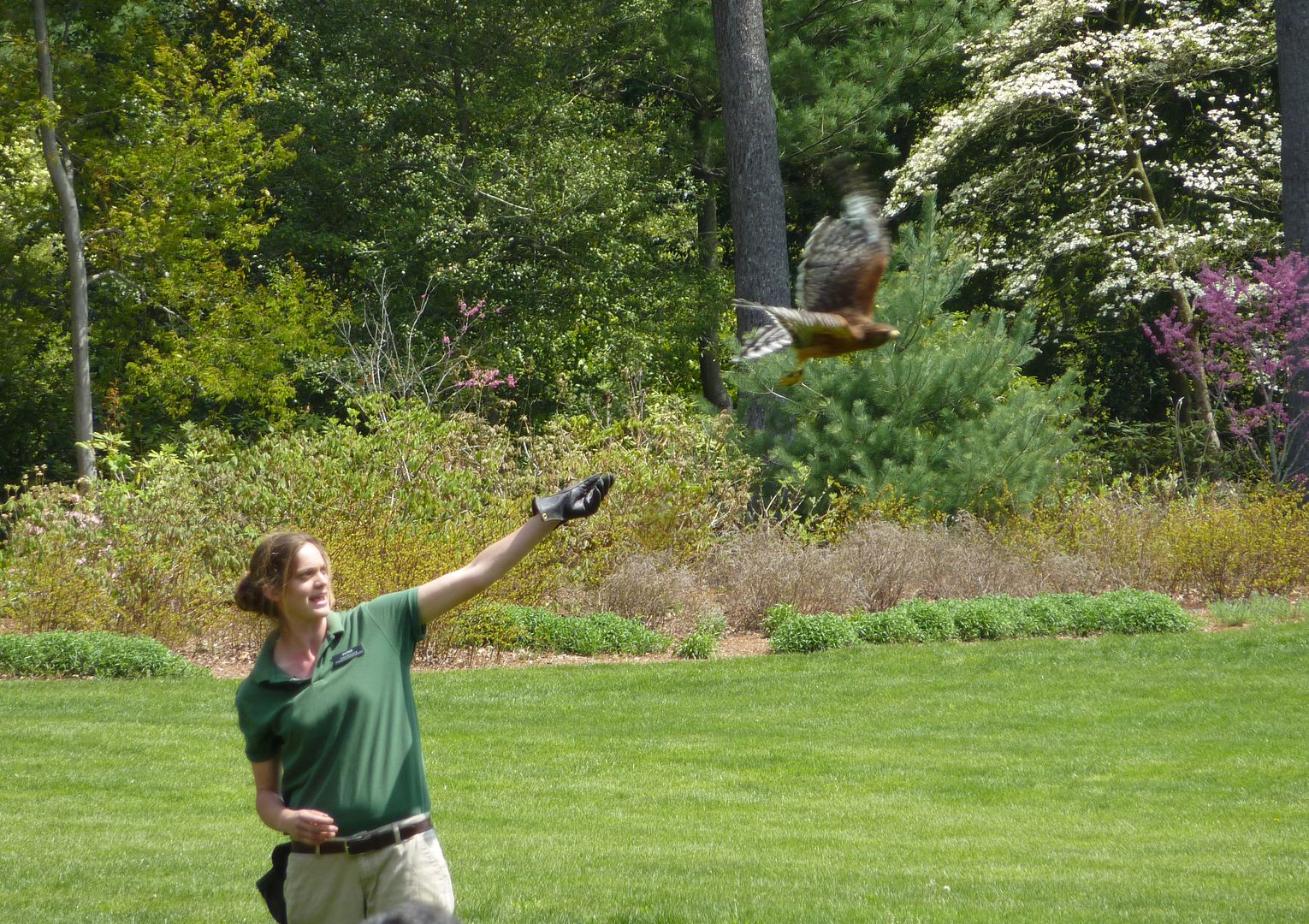
A few of them got to fly around. Mostly this was to and from trainers, and various stands they'd setup for them to land on.

I think this was a Red Shouldered Hawk.

This was a Red Tailed Hawk.

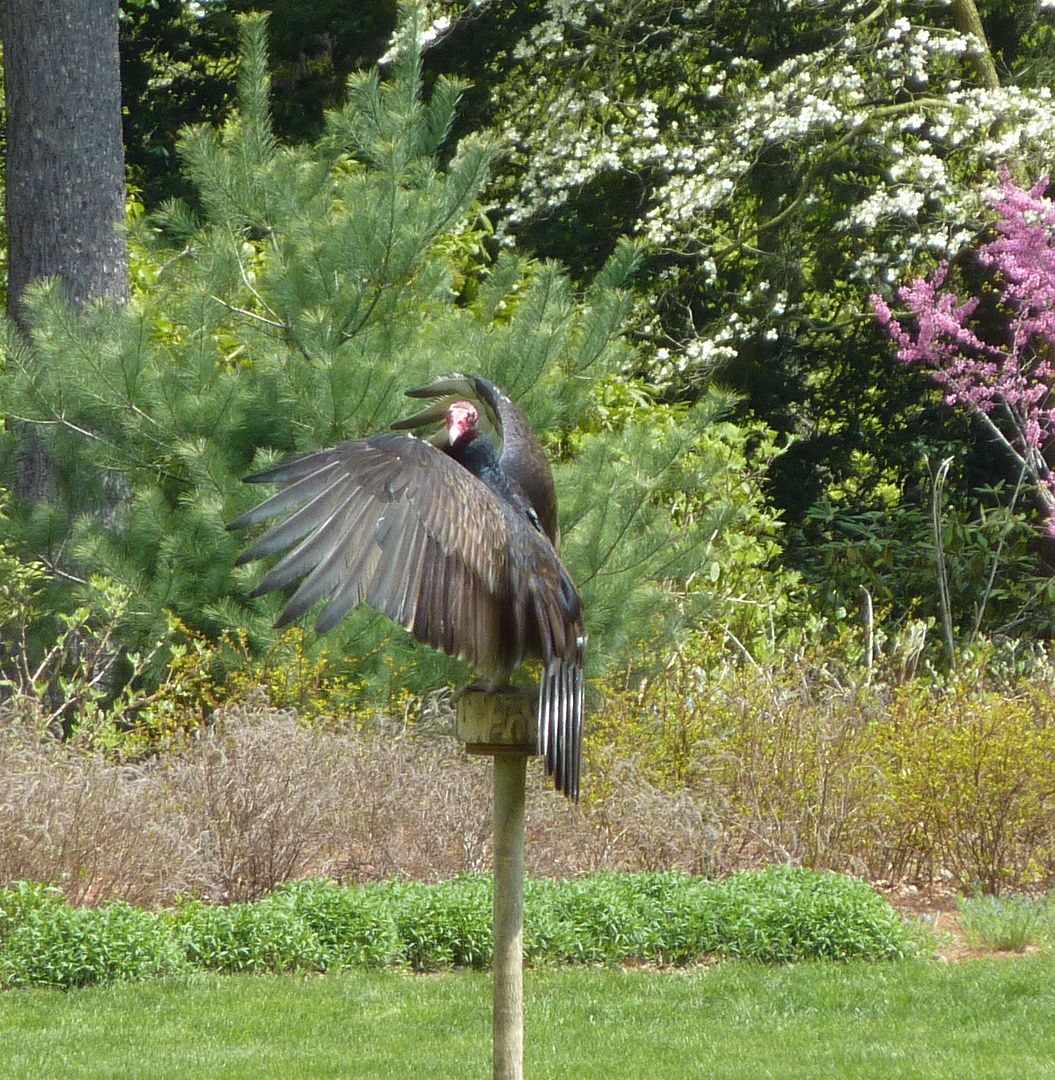
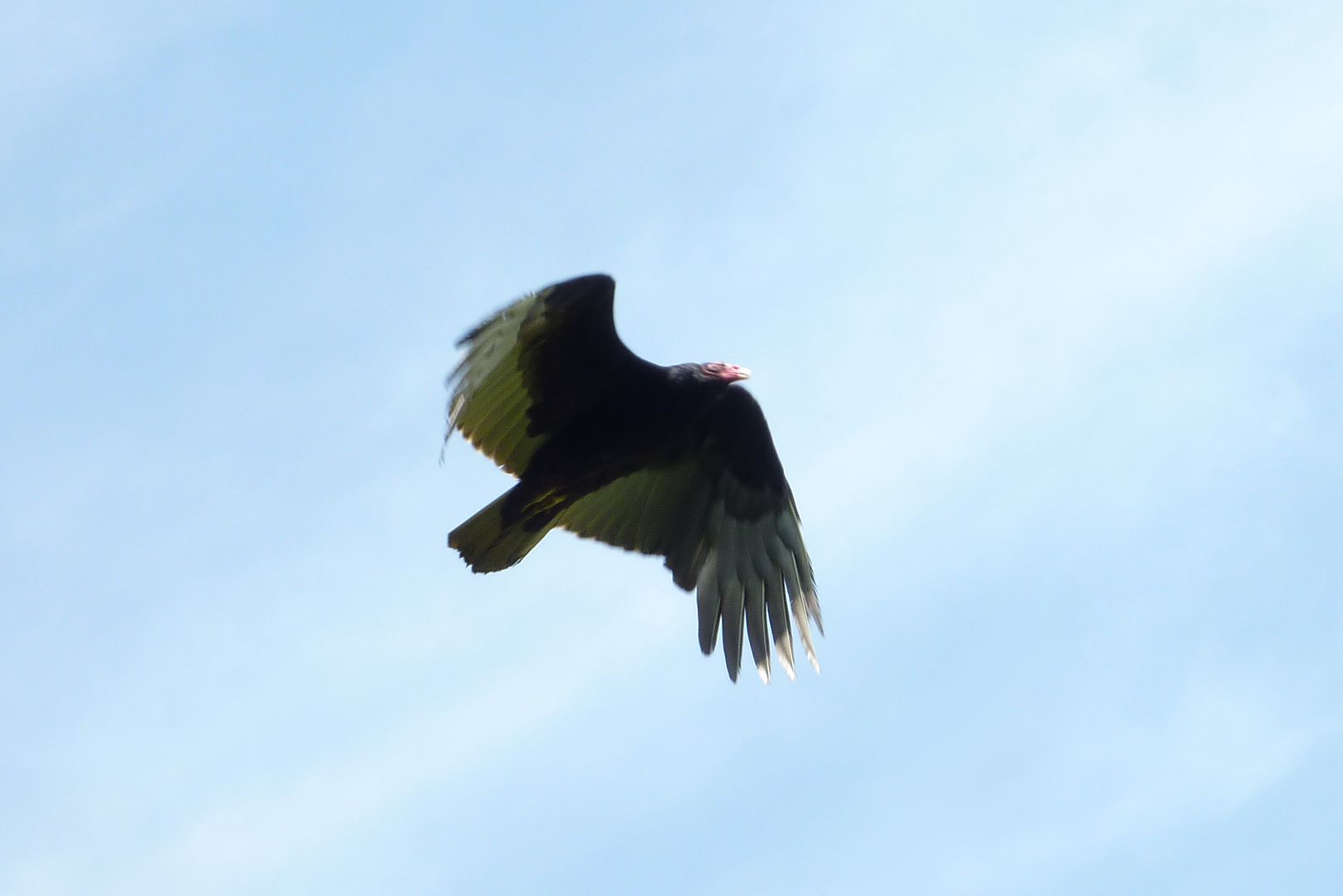
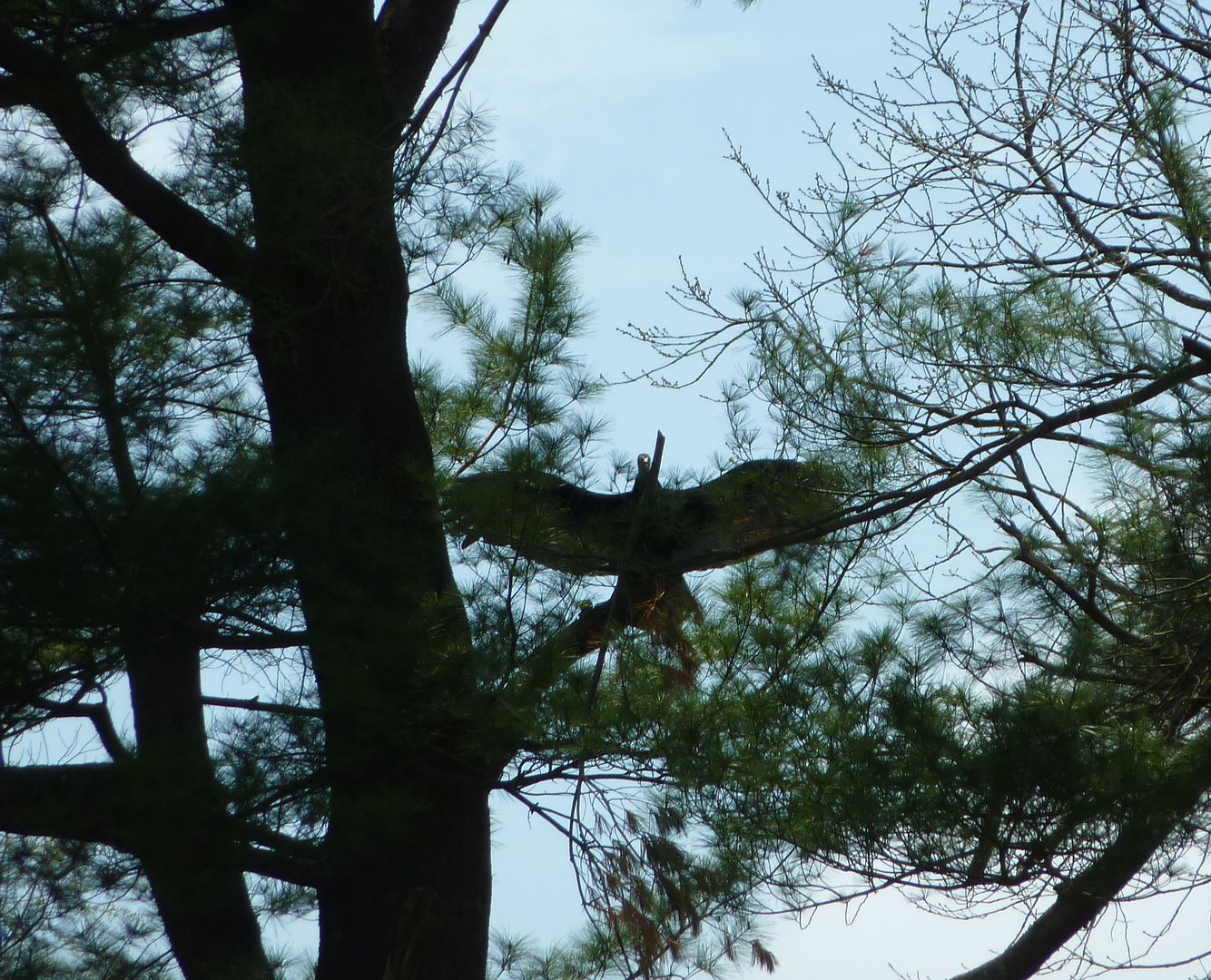
Here is a Turkey Vulture. This guy was quite the character. Prior to the show, the speaker had explained their birds might take off and land in the trees or venture about the area a little, and that this was fine. Mostly these birds don't get the chance to do this much flying in a given day and when they do they don't usually have this much open space to practice in.

Well after taking off he decided to land up in a tree, and then instead of returning to the trainer he flew up onto the main house.

And as he'd done this, he'd attracted the attention of other Vultures in the area which decided to fly down closer to see what was going on.

He took off and landed in a great big pine tree, and the other Vulture actually came down and landed in it with him. And I thought this was all amazing.

Did I mention this entire day was free and open to the public?