Showing posts with label Brachymyrmex. Show all posts

Saturday, September 16, 2017

This Week in Anting 09/16/2017


 This week I got to try PawPaws for the first time ever and Lasius neoniger flew! 

Asimina triloba is the northern most member of the custard apple family which is largely tropical. This is the only species native to the United States and one of the few host plants to the Zebra Swallowtail Butterfly. The flowers are pollinated by small vinegar flies and are supposed to require a second cultivar or genetically different tree of the same species in order to produce fruit.... but this is the only tree in my yard and probably the only tree in the whole county. It would seem this cultivar is semi-self fertile. The tree is roughly 12' tall and produced 12 sizable fruits though not on every branch that flowered. Presumably had there been a genetically different tree nearby it would have made even more fruit. (It's either 'Sunflower' or 'Pennsylvania Gold')

The smell is amazing when ripe or slightly damaged. The fruits perfume the air with a fragrance that leaves one assuming some sort of Banana and Orange factory has exploded somewhere. It's very potent and alerts the homeowners, hikers, and wildlife that the fruit is ready. 

The inside texture is somewhat gooey verging on vanilla pudding except for the fairly large and flat seeds with are like skipping stones or pebbles. The taste of a slightly unripe one is that of bananas with hints of cantaloupe (or musk melon as it's known in most of the world). A fully ripe one tastes more like a really sweet banana with a candy-like quality to them. It's a shame this fruit has such a short shelf life of about a day and a half because that's been the main reason it hasn't become main stream. (When they are for sale they can sometimes go for $15 a pound!)


 Fruit such as this is intended to be eaten by animals and carried away from the tree in the wild. If it just falls to the ground though it falls on other creatures to then remove the fruit and free the seeds within. Fungus and mold will do the job otherwise but may also destroy the seeds within.

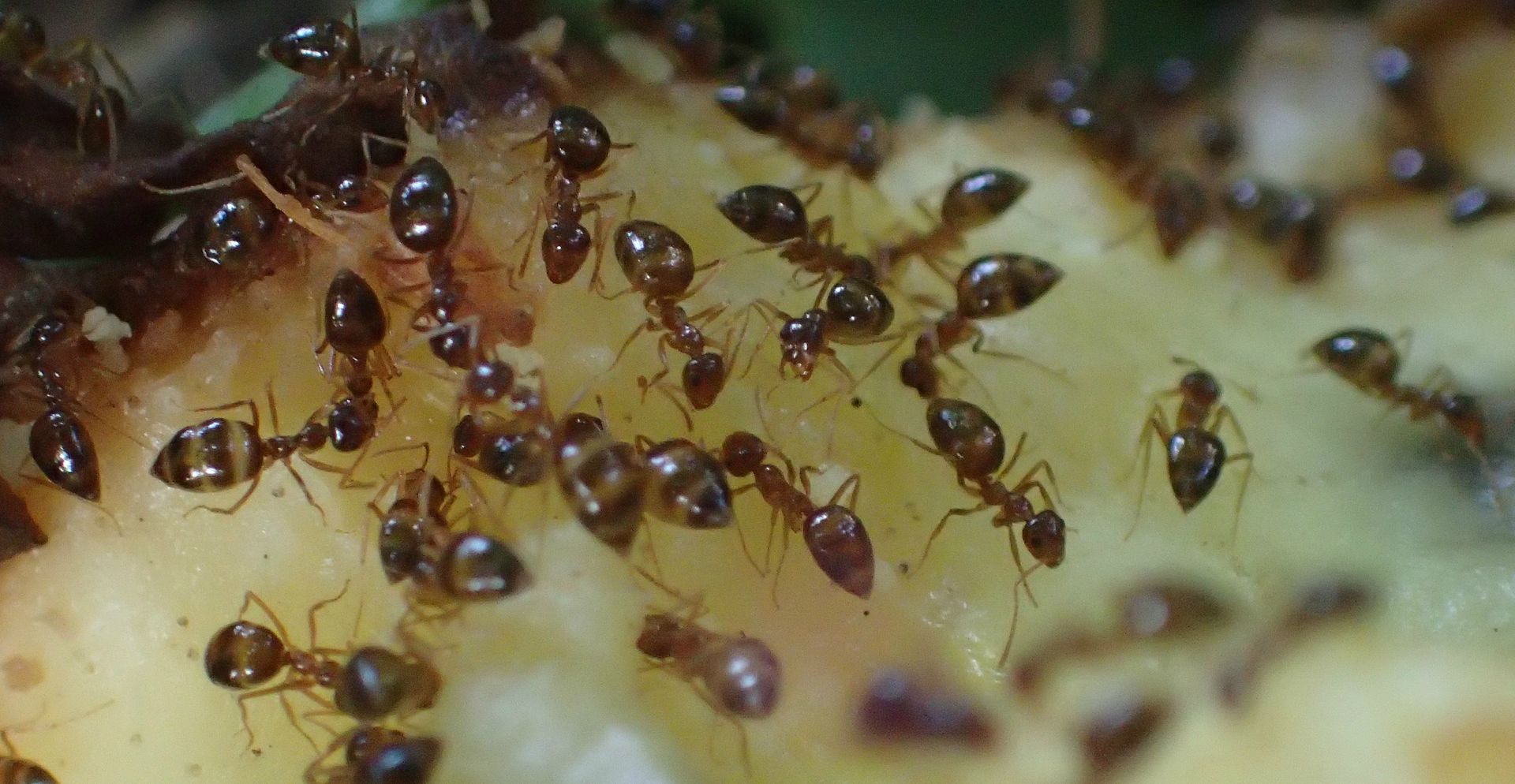
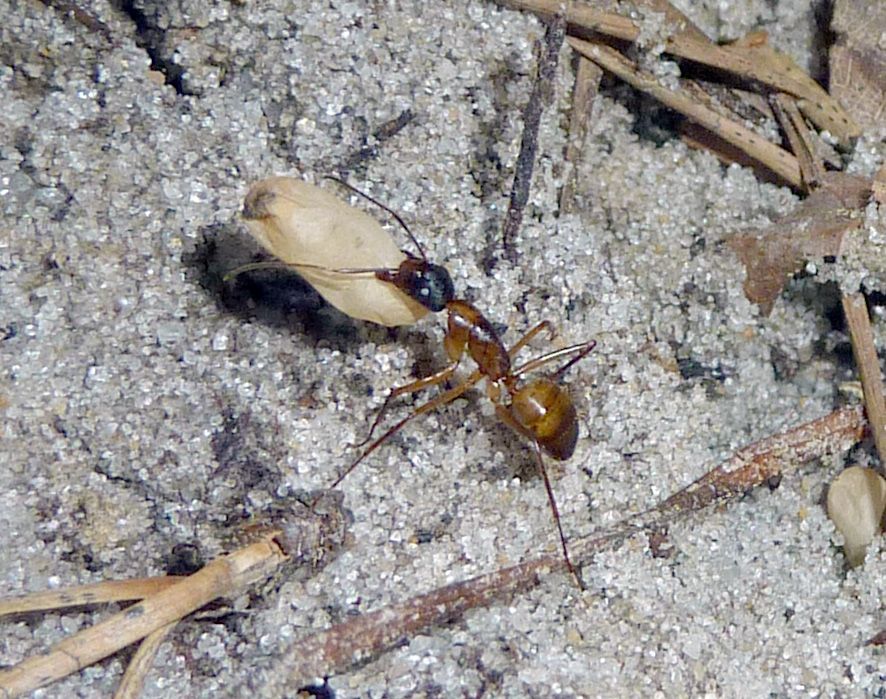
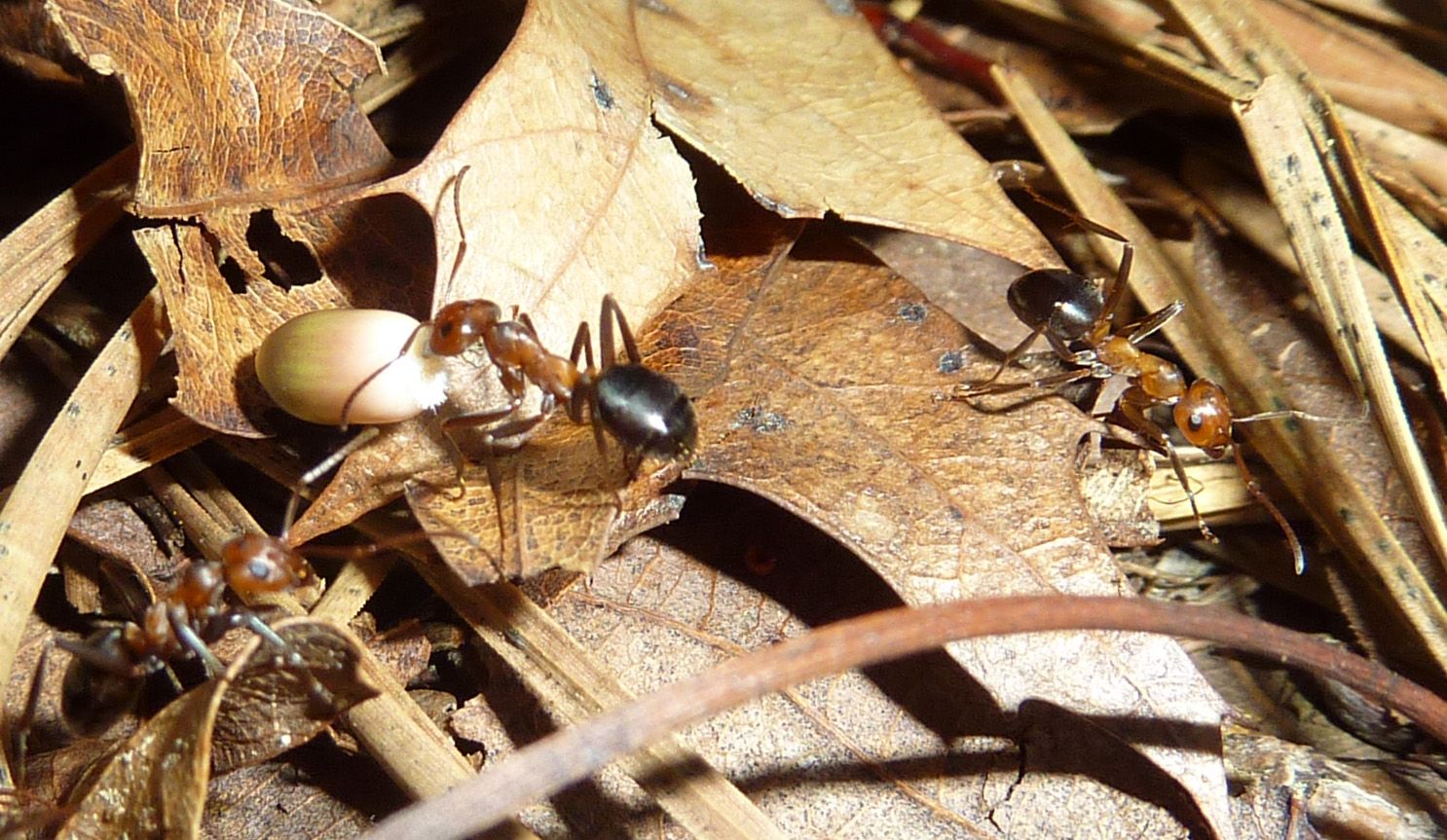
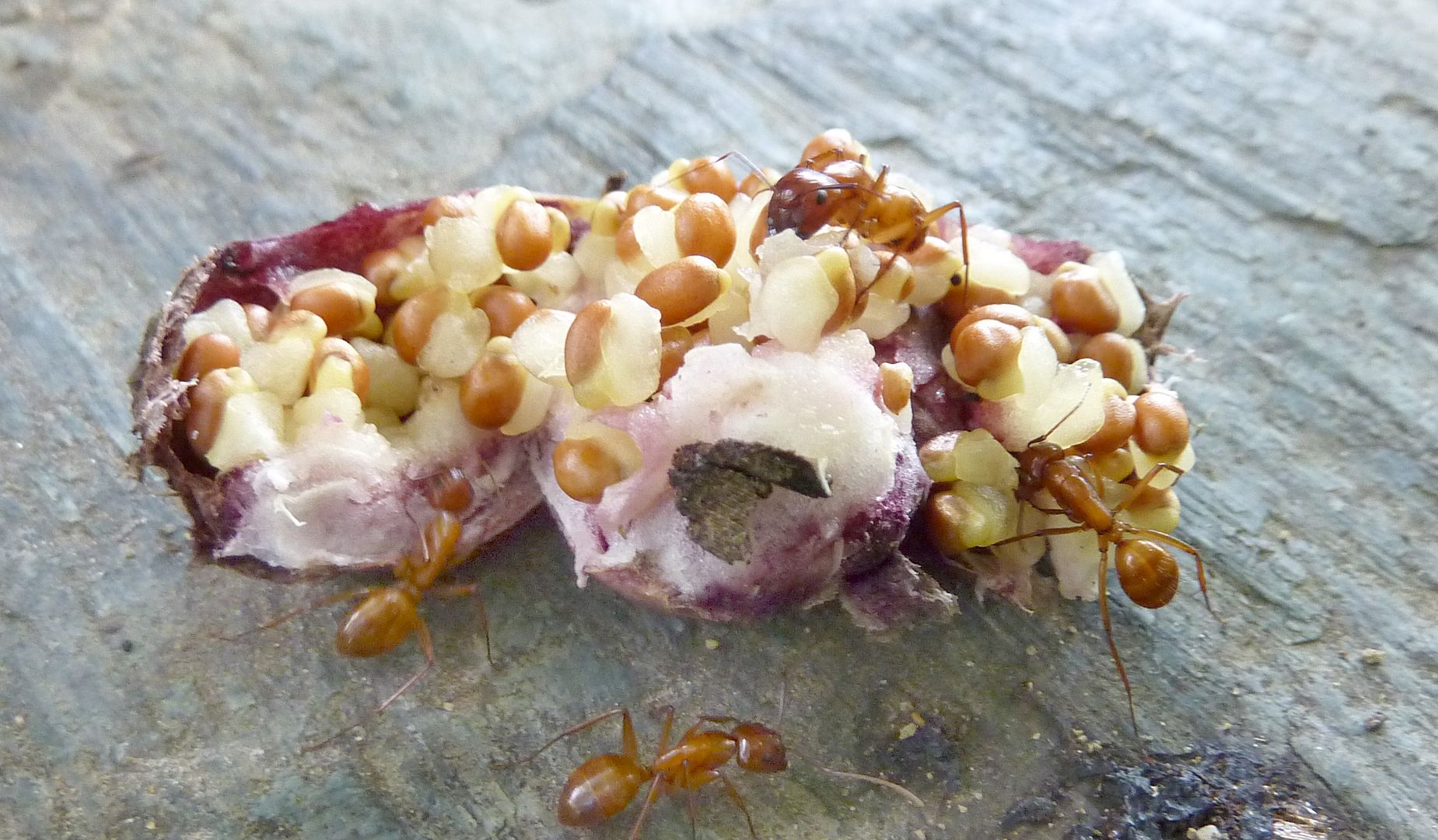
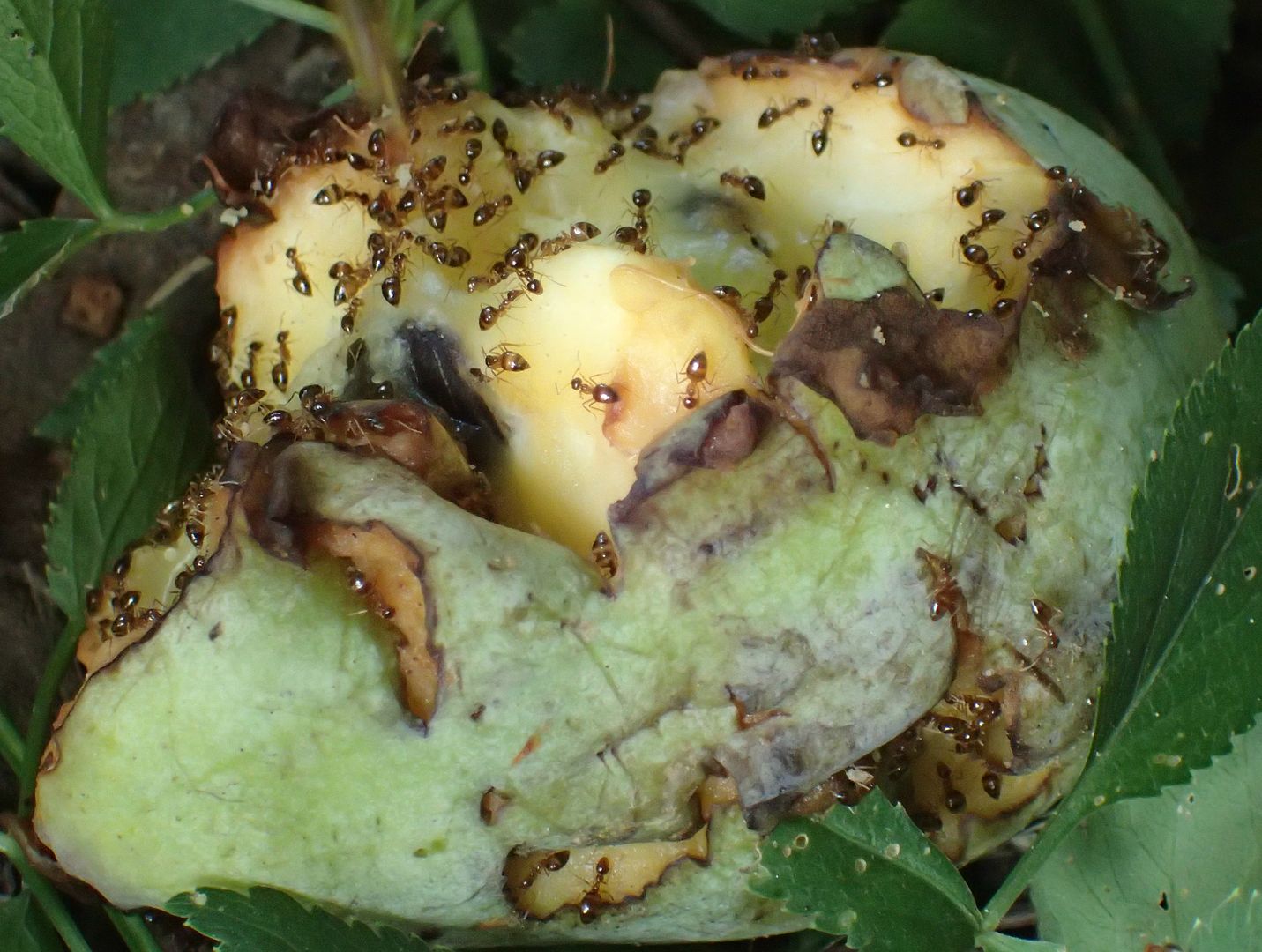
 Members of what must be a very happy Prenolepis imparis colony spent the day cutting up the fruit and hauling it home after most of the workers had engorged themselves on it.


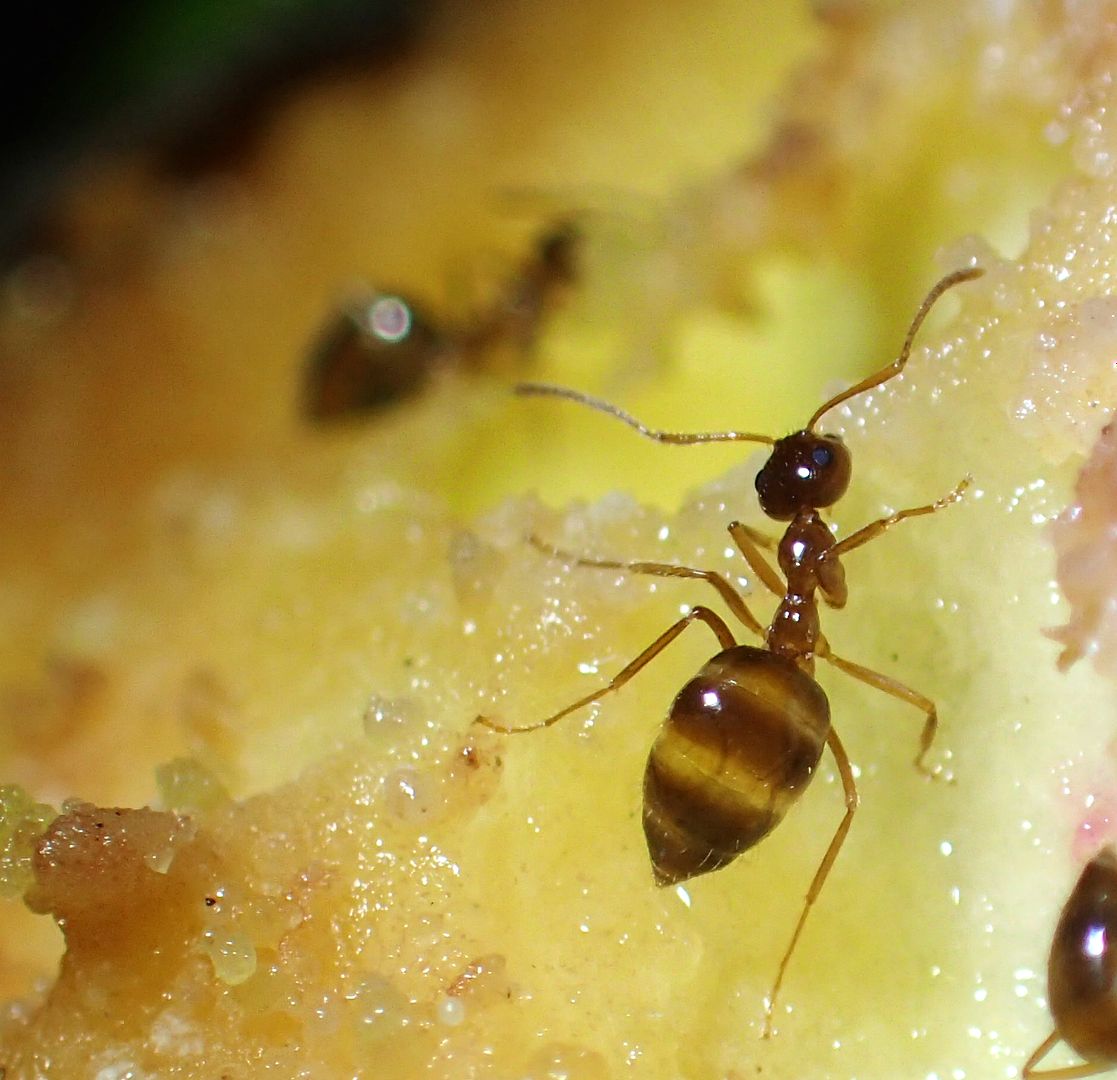
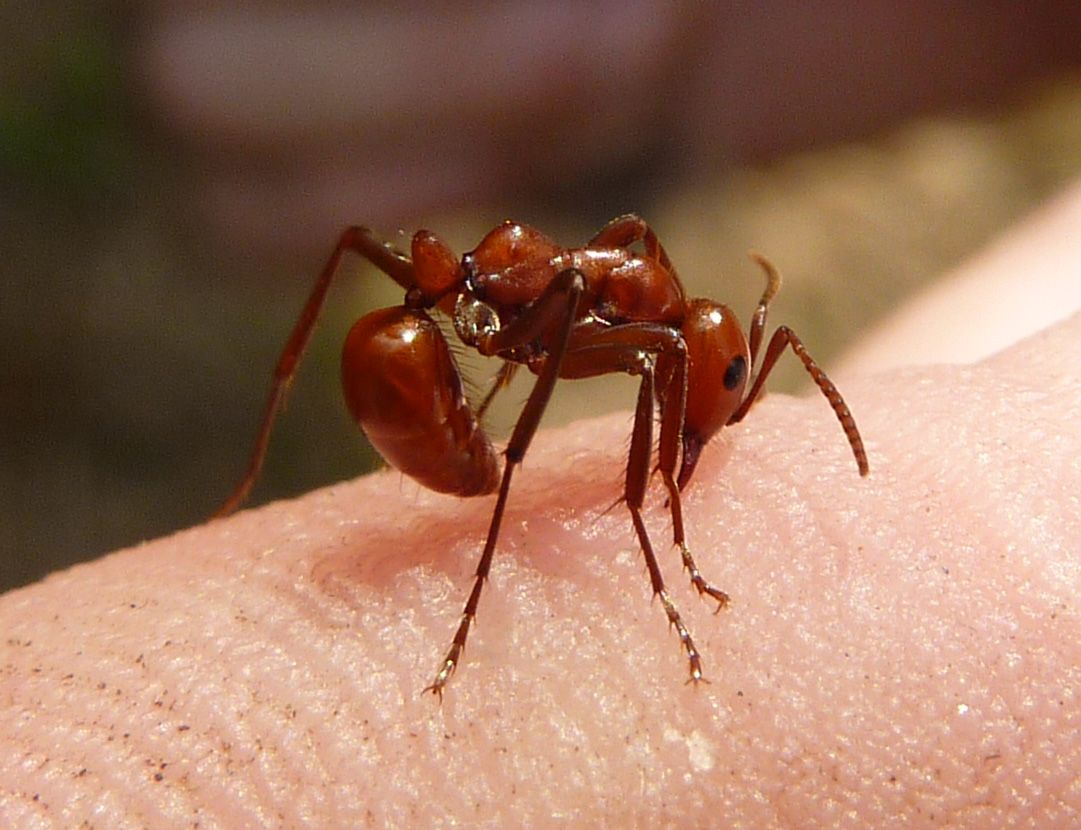
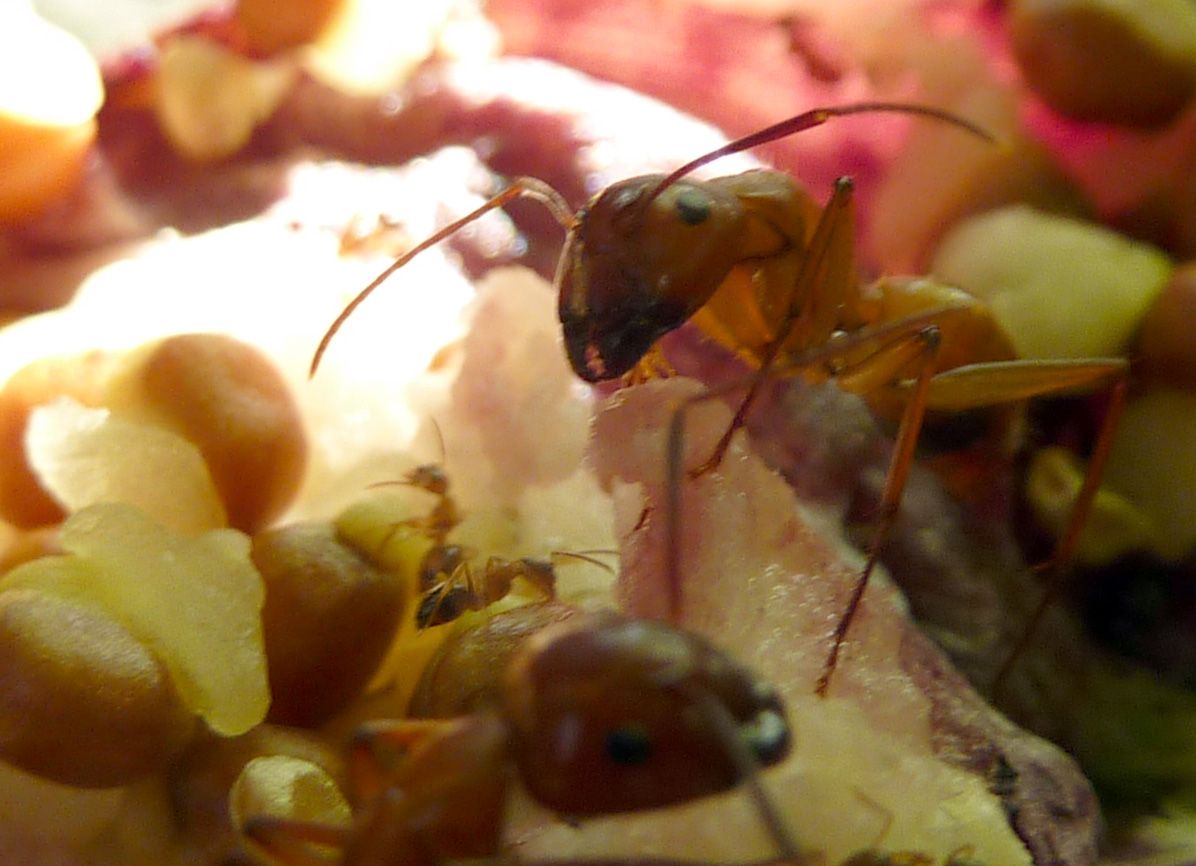
 A fairly decent anatomy pic showing off the acidopore, a slightly tuft of hairs at the tip of the gaster/abdomen. This is a key trait when identifying ants in the subfamily Formicinae and a conclusive way to tell them apart from members of Dolichoderinae.

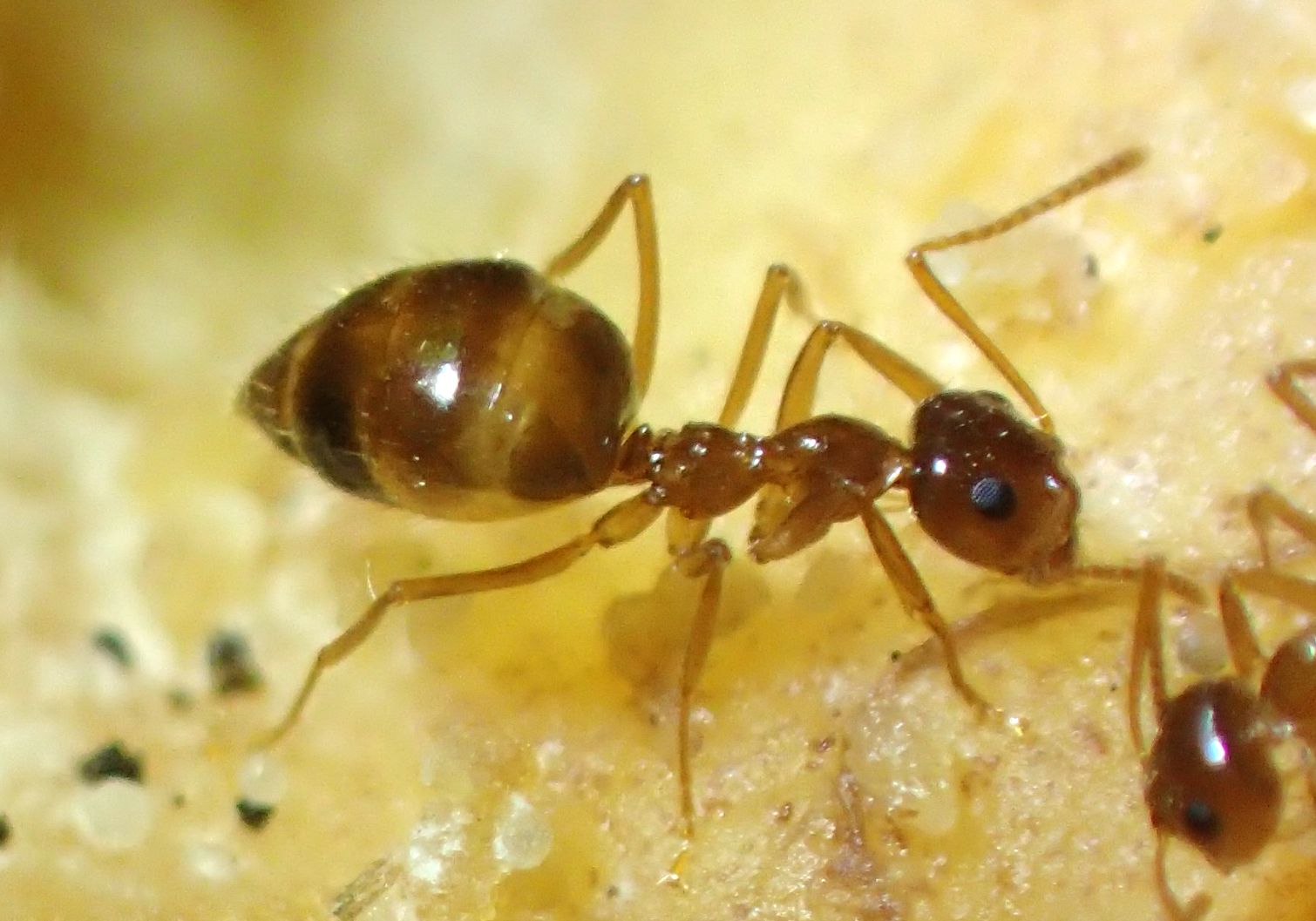
 Another good anatomy shot. Here the tiny waist segment is clearly visible separating the gaster from the mesosoma.

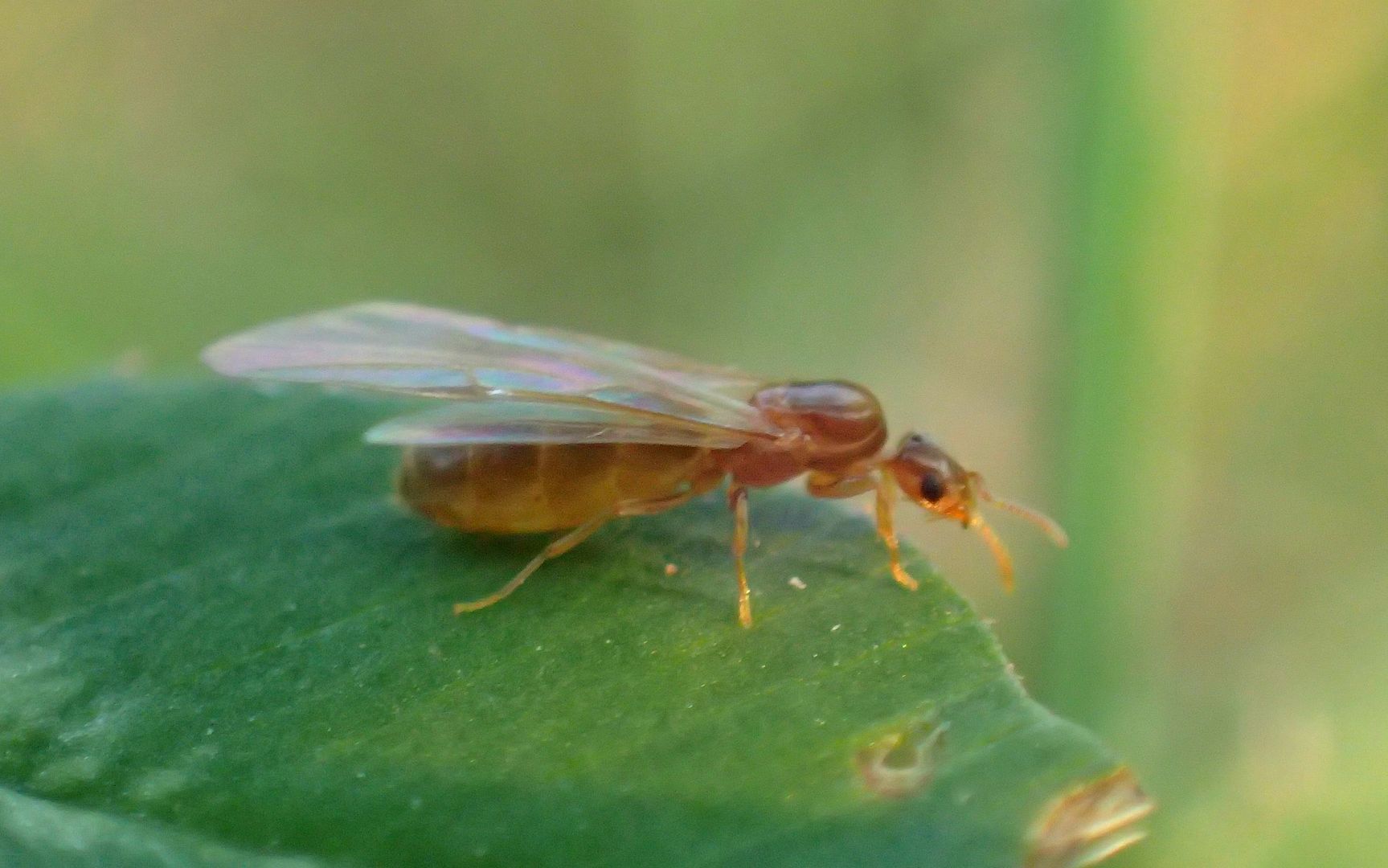
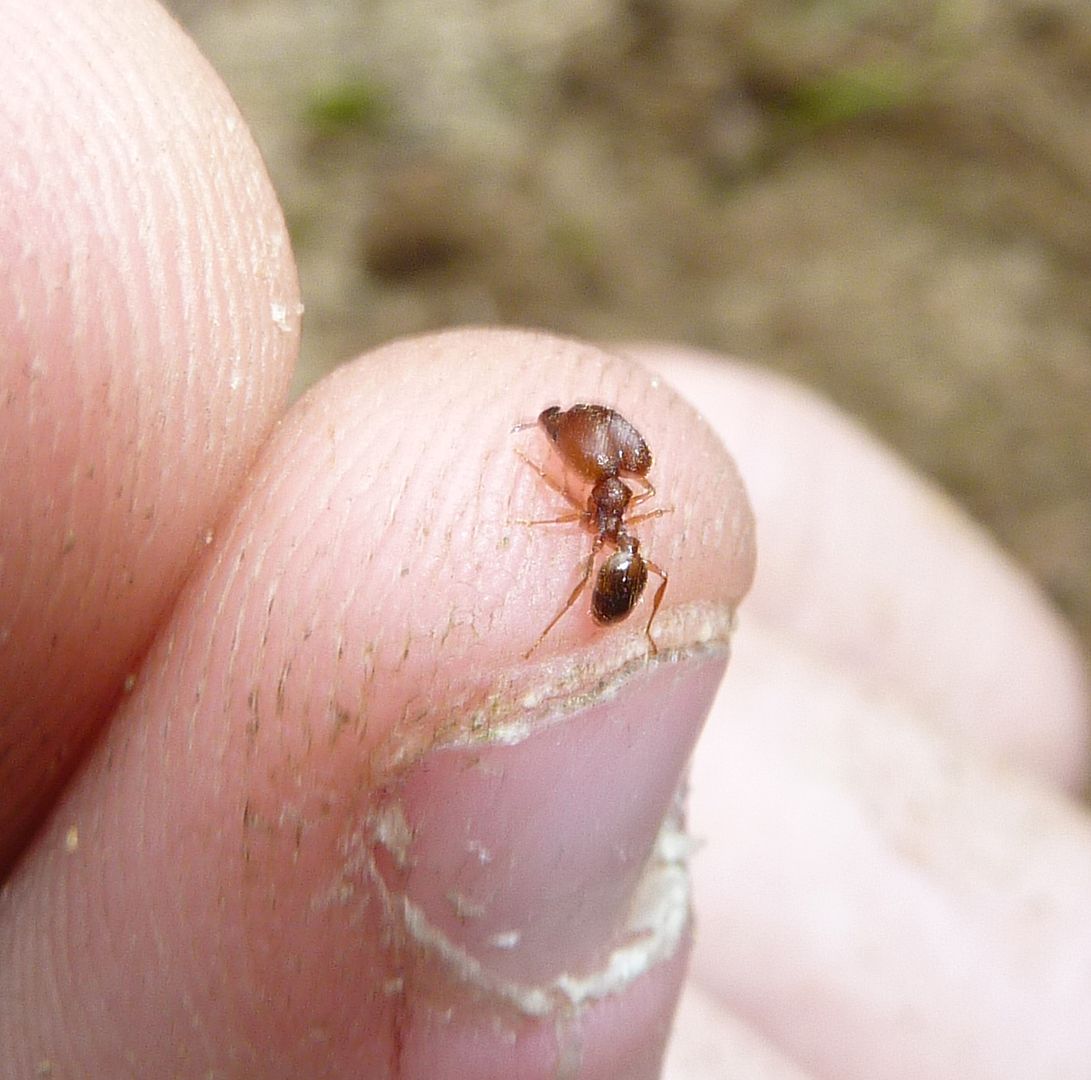
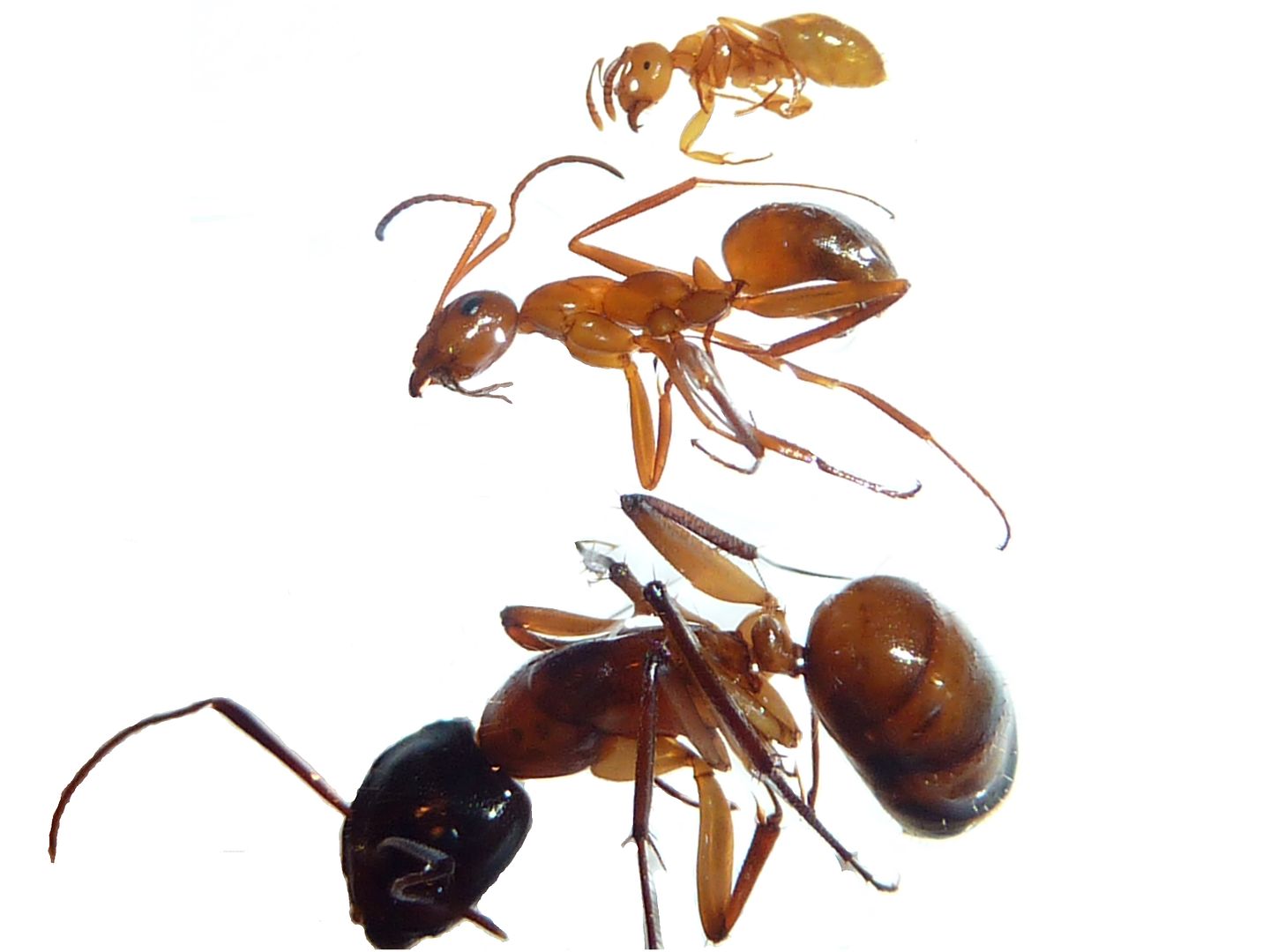
 Brachymyrmex dipilis was also flying that day. This is one of the smallest ants in the U.S.


Monday, October 13, 2014

Rover Ant Nuptial Flight


Brachymyrmex (Rover Ants) is a genus of mostly tramp species that have spread across the globe by human commerce. Colonies are more than happy to move into potted plants and are then transported around, usually a short distance but sometimes all over the place. It's not uncommon to bring a few colonies indoors in the winter time on accident either and species can be found in greenhouses throughout the world.

Despite a lot of nonnatives species in the genus spread around the world, they're not invasive. Colonies remain small and don't seem to displace other ant species.

Flights happen in late afternoon along side Lasius claviger, but seem to favor muggy days with an over cast to them and a slight chill in the air. Around 70 degrees is ideal of course but this species seems to be cold hardy, like Prenolepis imparis. They tend to favor nesting spots in damp, sandy soil, and go unnoticed on account of their size. Any mound formed around the entrance is usually insignificant, and on par with what a Monomorium would make, lots of extremely tiny dirt partials, unlike what a Lasius or Dorymyrmex species would produce.

Friday, December 7, 2012

Best of Ants 2012

Alright I do this every year. I go through the albums I made over the year on Ants, Bees, Butterflies, and Nature.

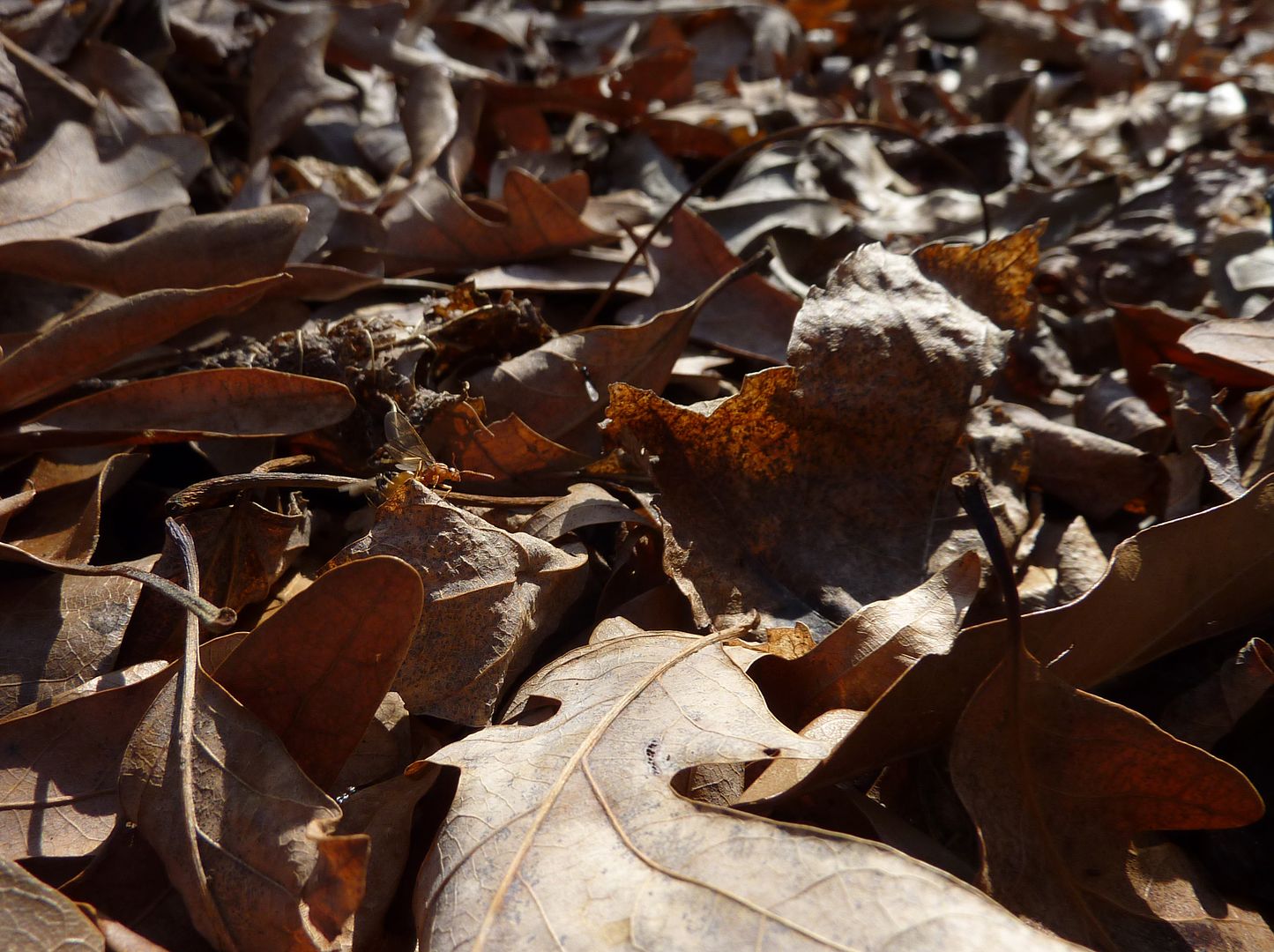
We start with an awful image of the forest floor I took back in March. Up in the trees the Winter Ants, Prenolepis imparis, were swarming. Normally they fly on the first warm day of the year above 70F, but this year they held off for some reason. Hidden among the leaf litter is a P. imparis queen and a few males. This sums up what a pain it is to find ants among leaves (and tall grass).

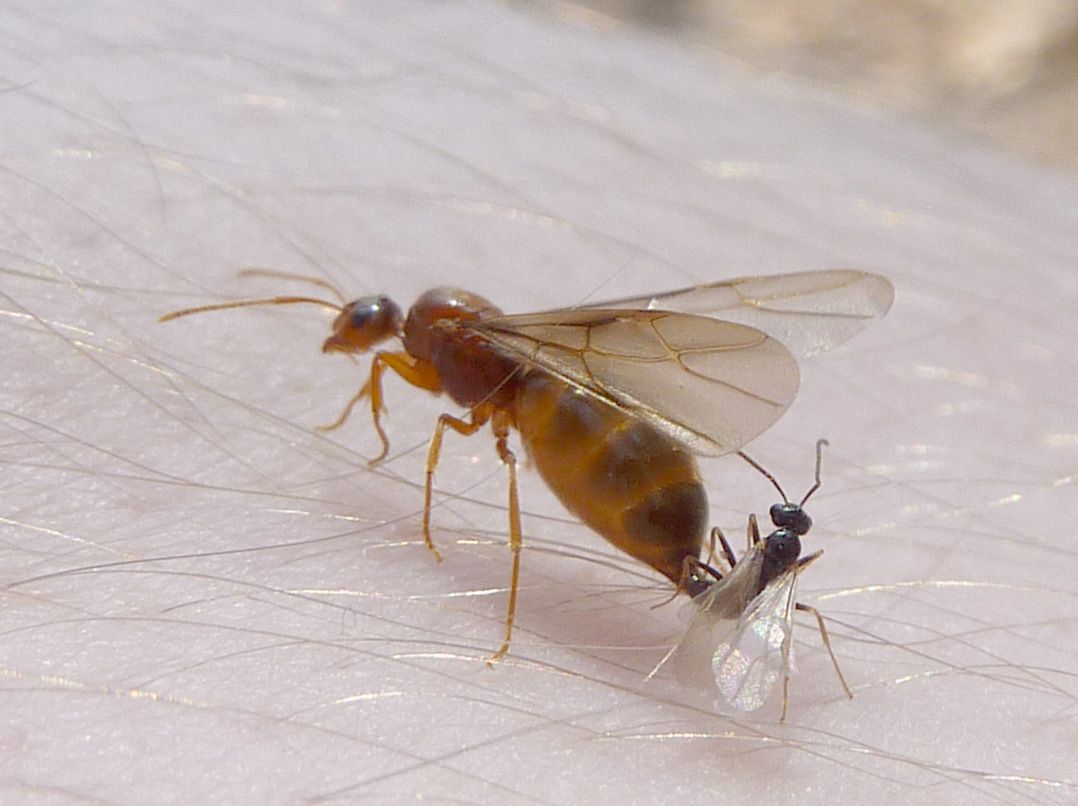
They're so much easier to photograph when they land on your arm.

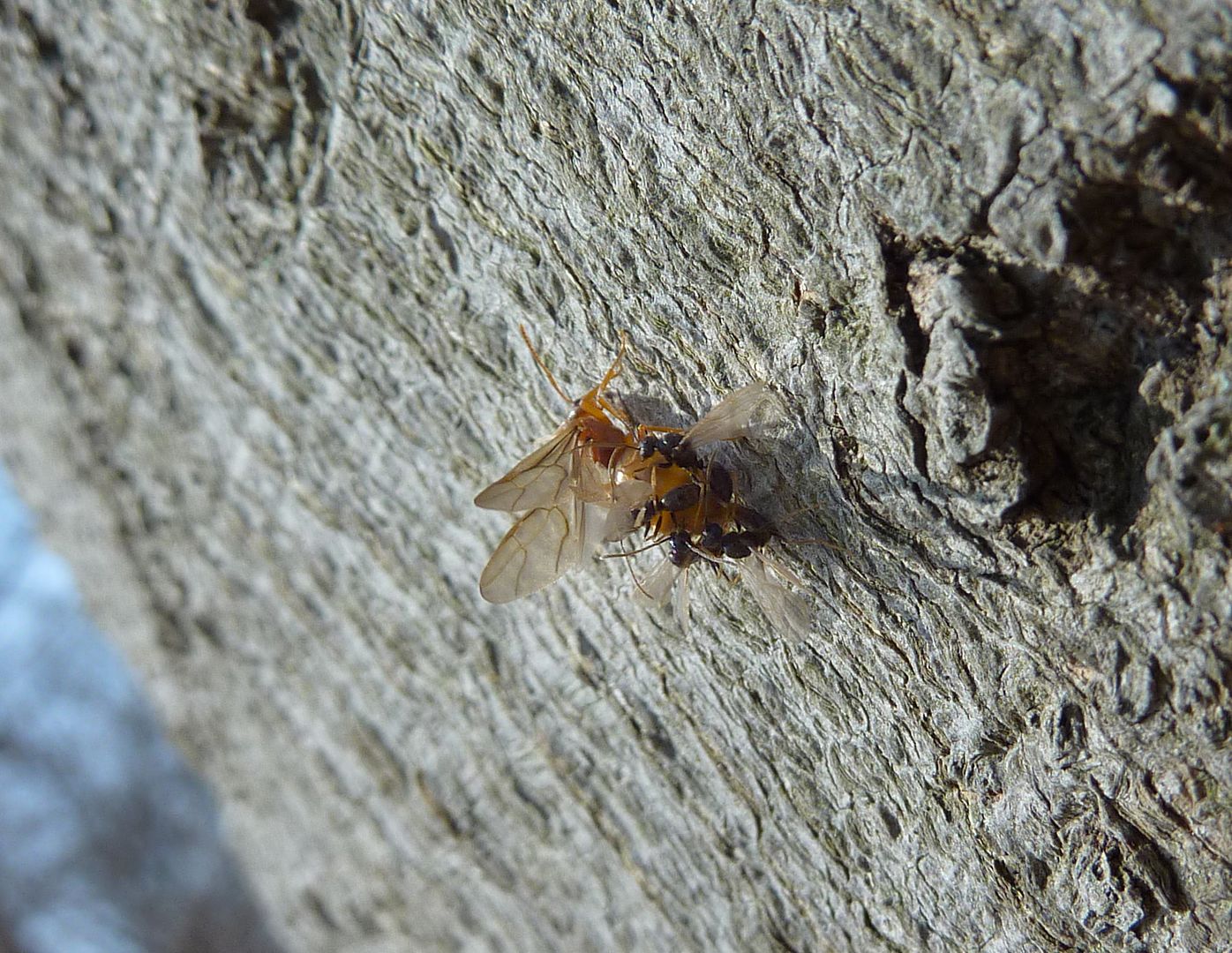
The males swarm around trees and wait for new queens to arrive. I like this because she actually made it up the tree to a considerable height. The swarms go all the way up the tree and usually queens get tackled by so many males they don't make it past 6' up.

 
As plants leaf out, aphids, leaf hoppers, and scales become active and provide food for ants. In this case a Lasius alienus worker. This is on a redbud tree and I notice aphids seem to only take hold right at the node where the leaf attaches to the stem.

Stealing nectar from flowers is the other option. In this case it's the Odorous House Ant, Tapinoma sessile, which I've found to be notorious for stealing nectar. I find them in more flowers than any other species, even in those with noted defenses that evolved to prevent ants from stealing from their flowers.  

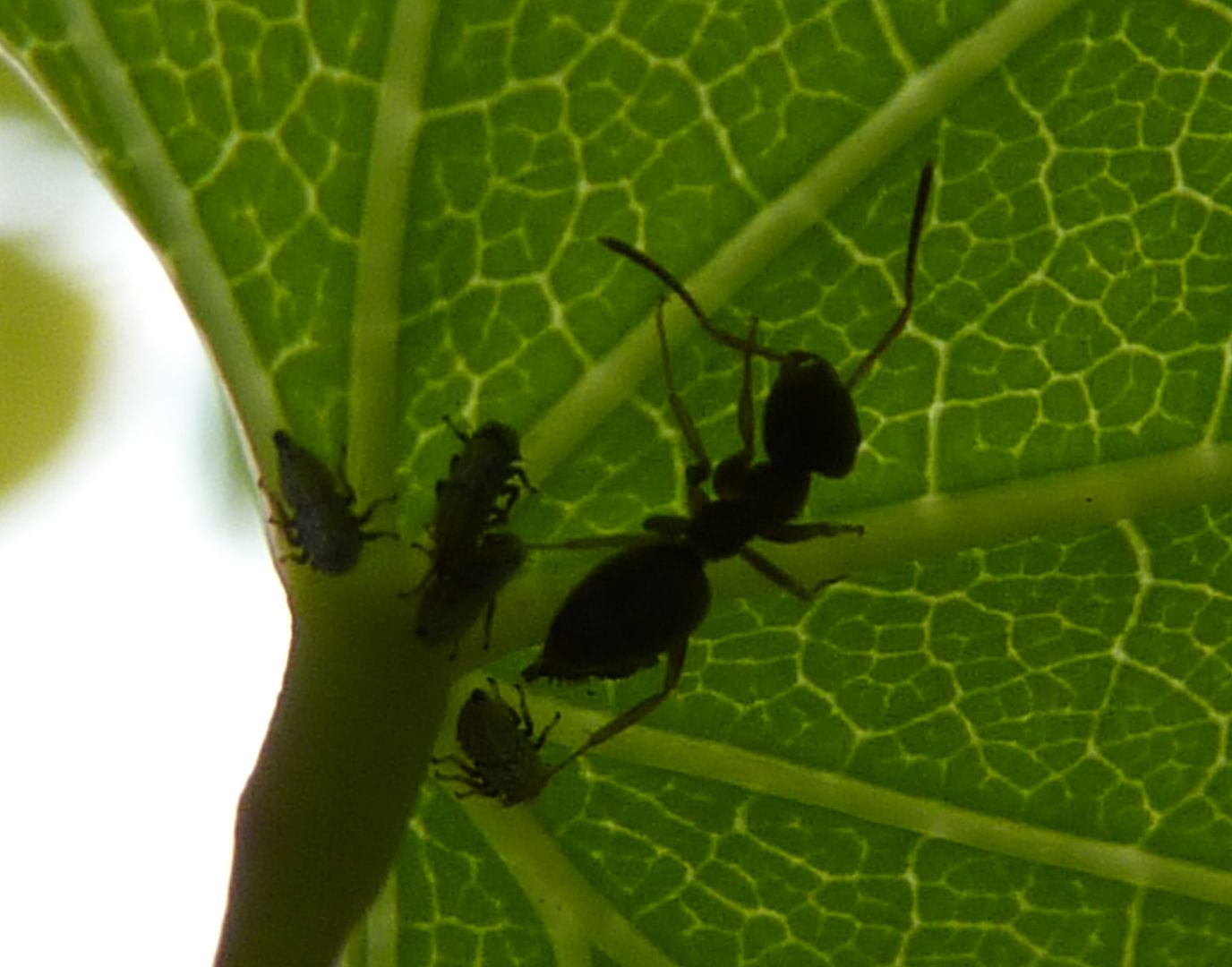
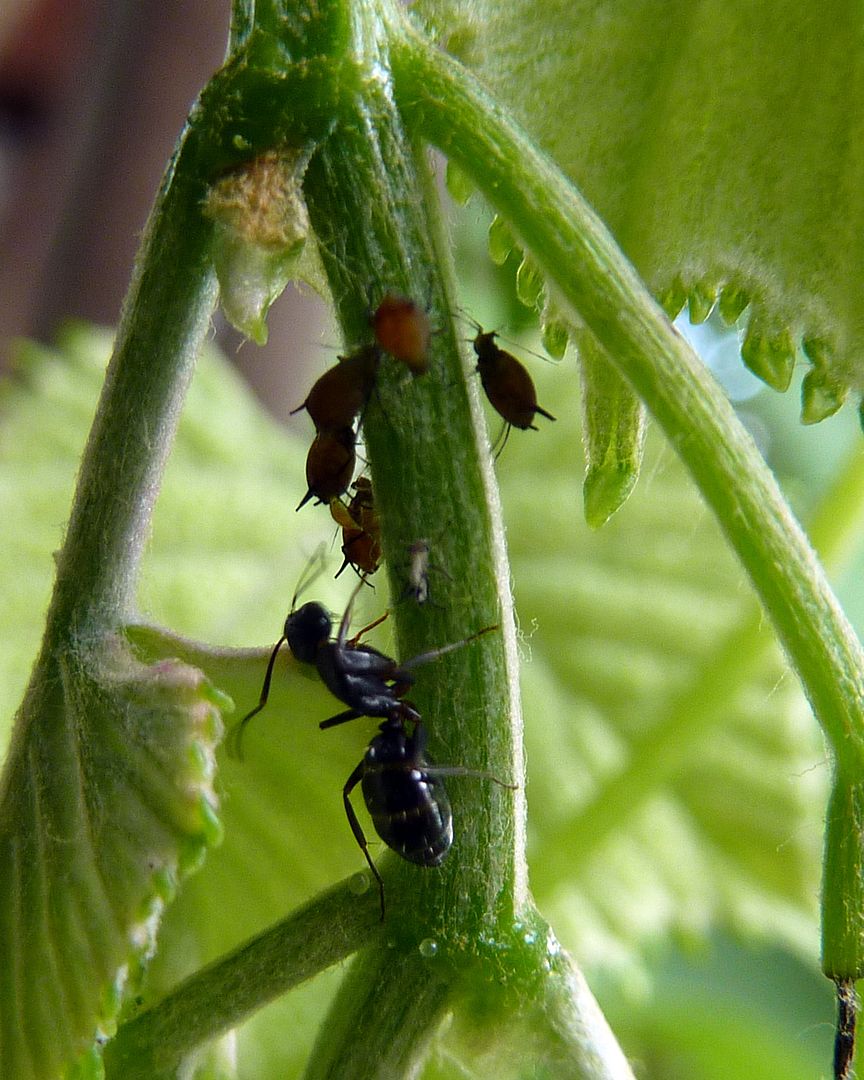
Aphids make ants so much easier to photograph. Any food really that has the ants holding still. Here a Camponotus sp. tends some on our grape vine.

This year also marked the first time I Hosted/Attended the First Annual New Jersey Ant Together. We came across a Camponotus americanus colony which I don't encounter as much as the brighter colored Camponotus castaneus. So that was nice.

The Formica exsectoides mounds we encountered were awesome! The largest were two mounds next to each other that had to be 3' worth of mounded soil. Their mounds lined a pathway of considerable length all they way down at the Turkey Swamp Park here in NJ.

There were so many F. exsectoides workers pouring in and out of these mounds that you could actually hear the leaves rustling from them all rushing about.

Pheidole have always been a small mystery to me. Small ants in general always are. We have three species in New Jersey and they are all really tiny. This is a Pheidole bicarinata major worker. They're about three times as large as the workers which make them easier to identify of the three.

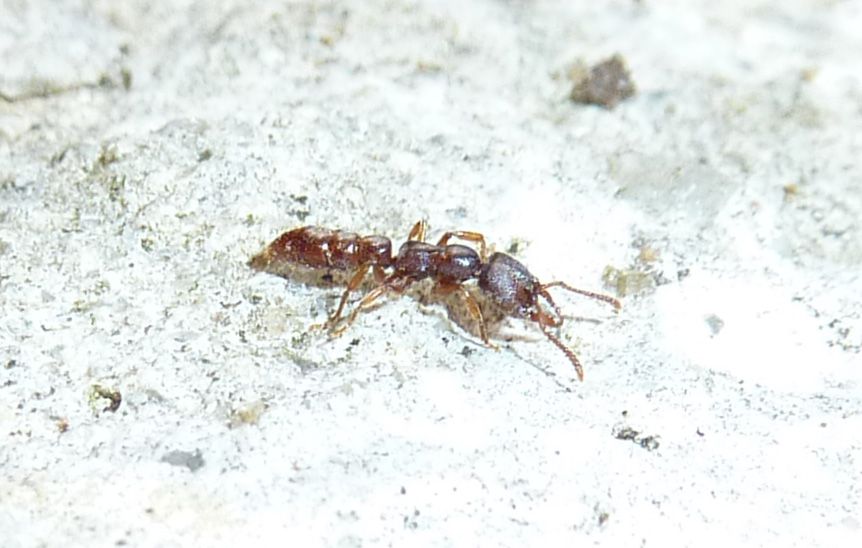
Pyramica is another rare ant almost never encountered. Seriously if you're not covered in chiggers, ticks, and poison ivy by the end then you're not looking hard enough typically. We found this colony under a rotten log that was near a creek and in a shady area. Apparently a problem with this species is they over heat easily in sunny spots so even dappled shade could be an issue for them. They're also predators of springtails so rotting plant matter is a must. I didn't expect to find an ant this cool after just 3 hours but there they were. I have occasionally found these in my yard.

Polyergus is another fun find. They're not "uncommon" but you don't find them everywhere. They're slave making ants of Formica species, which happen to make them very common all over the US and Canada. This was a first time encounter for me.

Amblyopone pallipes was another cool find, and a first for me. They're called Dracula Ants because they puncture their own developing brood in nonlethal ways to feed. Not a great photo at all compared to what's on the internet, but we held this thing for like 30 seconds before it crawled off and got lost in the pine brush.

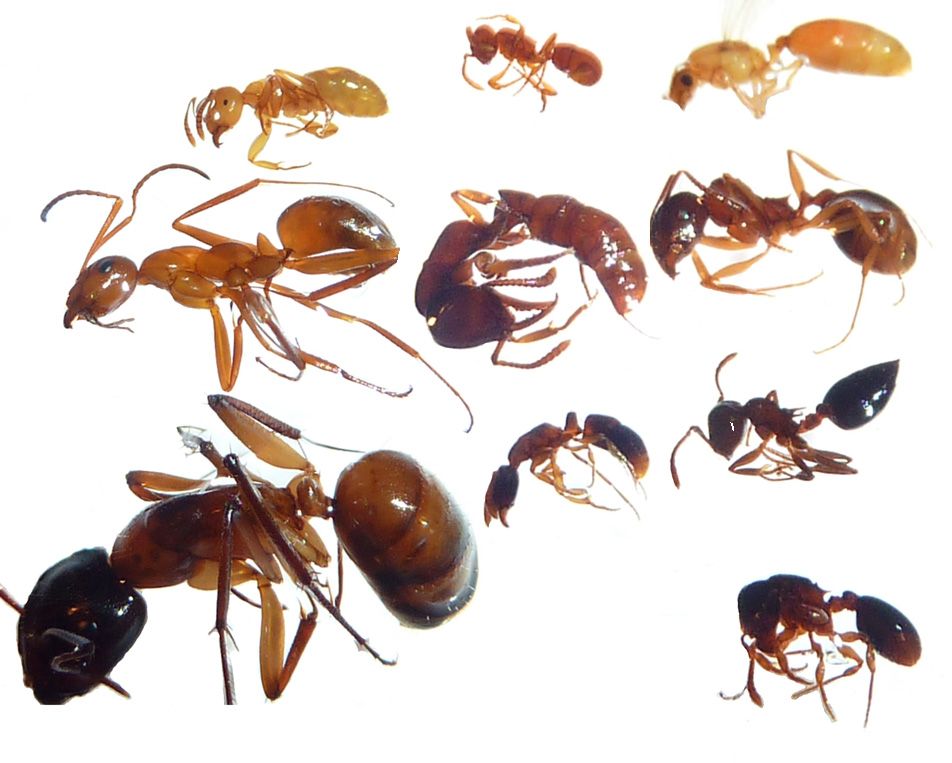
This is a distorted angle but these are some of the specimens we collected while on the trip. 

The droughts of summer always limit ant activity but one thing I've always looked forward to is harvesting my Trillium seeds and presenting them to the ants. This year I got a lot more Camponotus castaneus workers at them than ever before. Nylanderia flavipes workers also showed up as they always do. You can really see the drastic difference in size between the two species.


I started work making my own key but never got around to finishing it. The project was going to be an interactive video on youtube where I'd have arrows and Annotation Boxes you could click on to take you elsewhere in the video. It's quite an undertaking and I'm not up to finishing it this year. Hopefully in the future something will come of it.


A Camponotus americanus worker on a Narrow Leaf Sunflower. Two of my most favorite things.

They were actually working tiny aphids but these weren't all that common on the plant. Despite the narrow leaves the aphids did a good job of hiding.

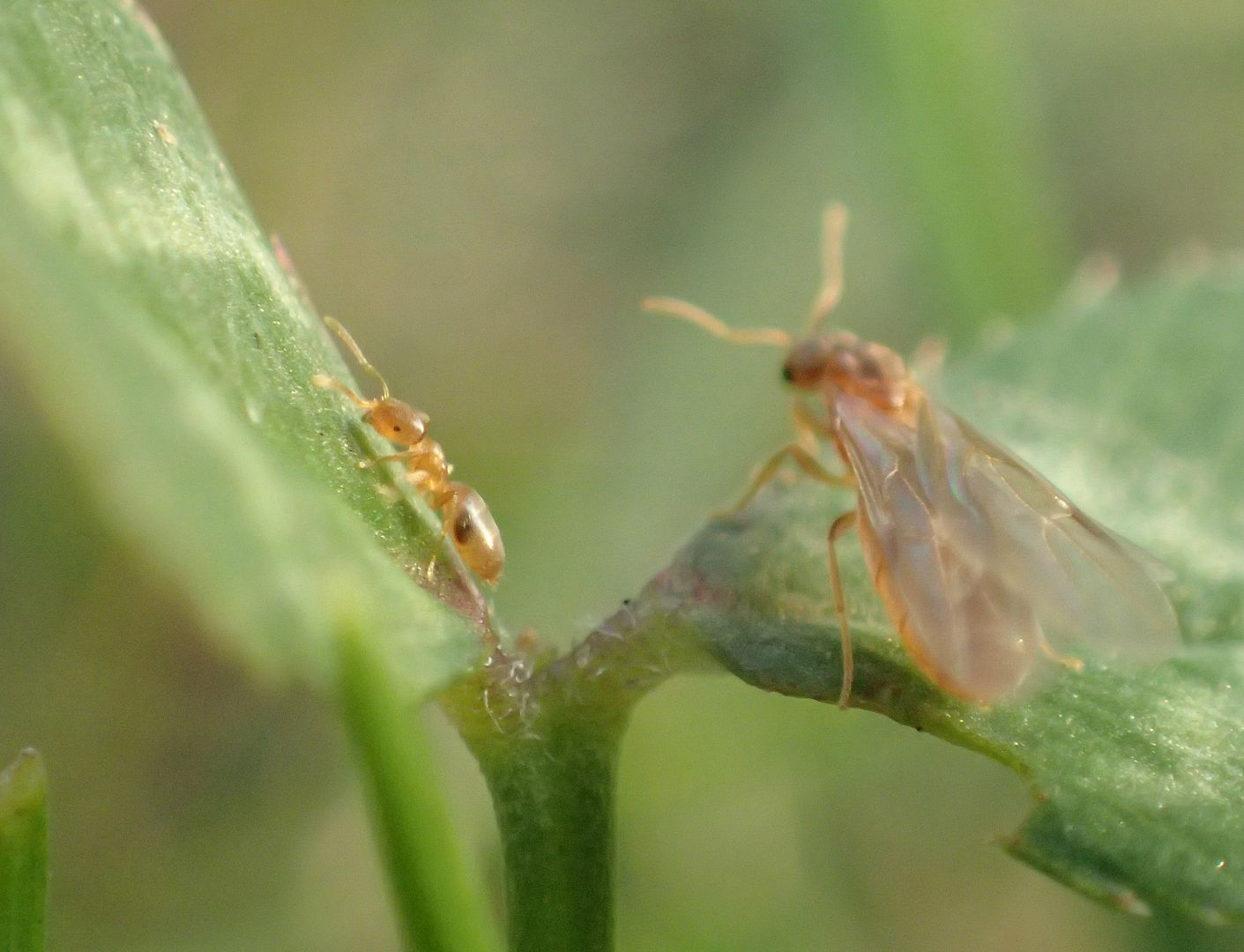
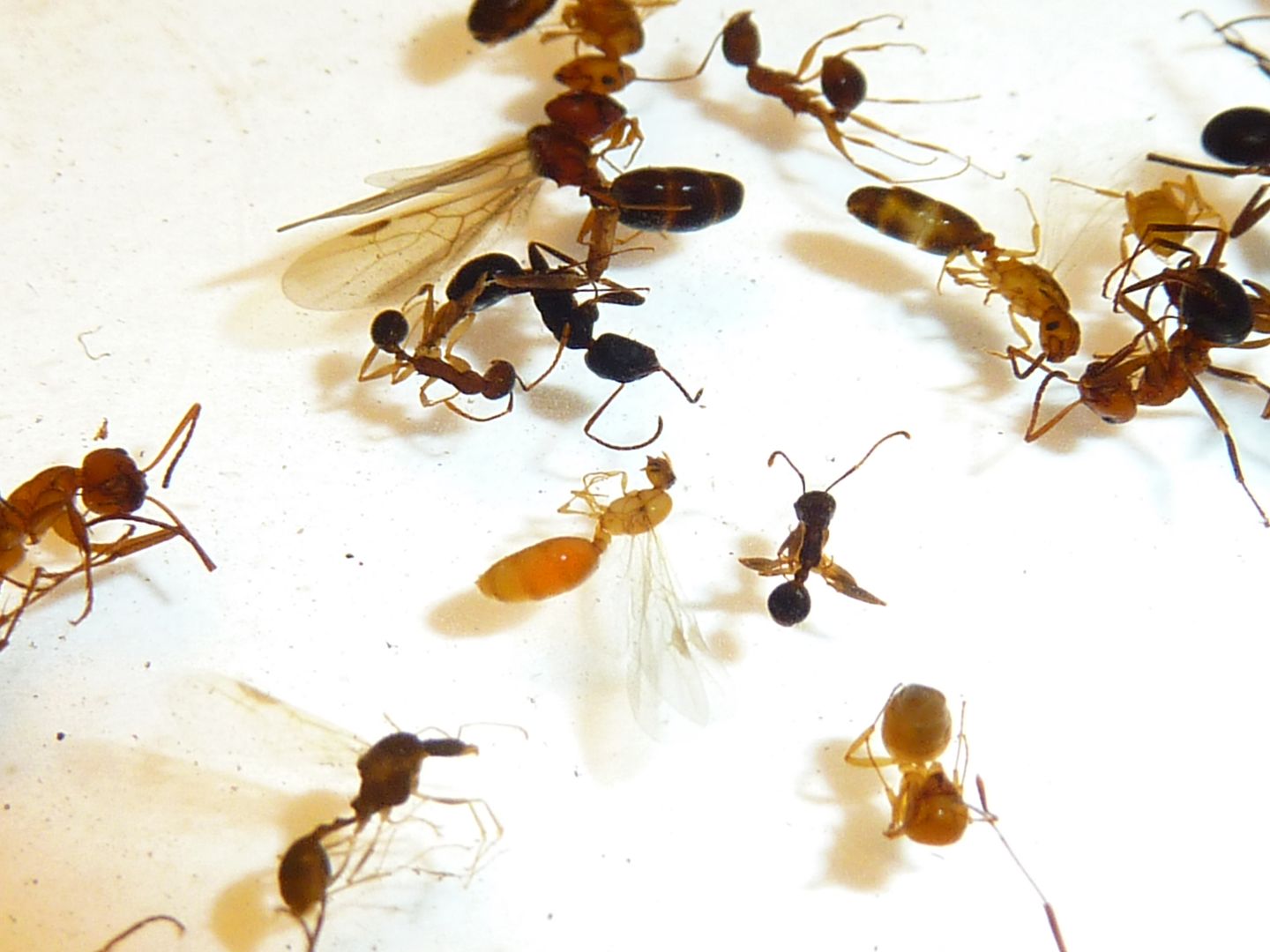
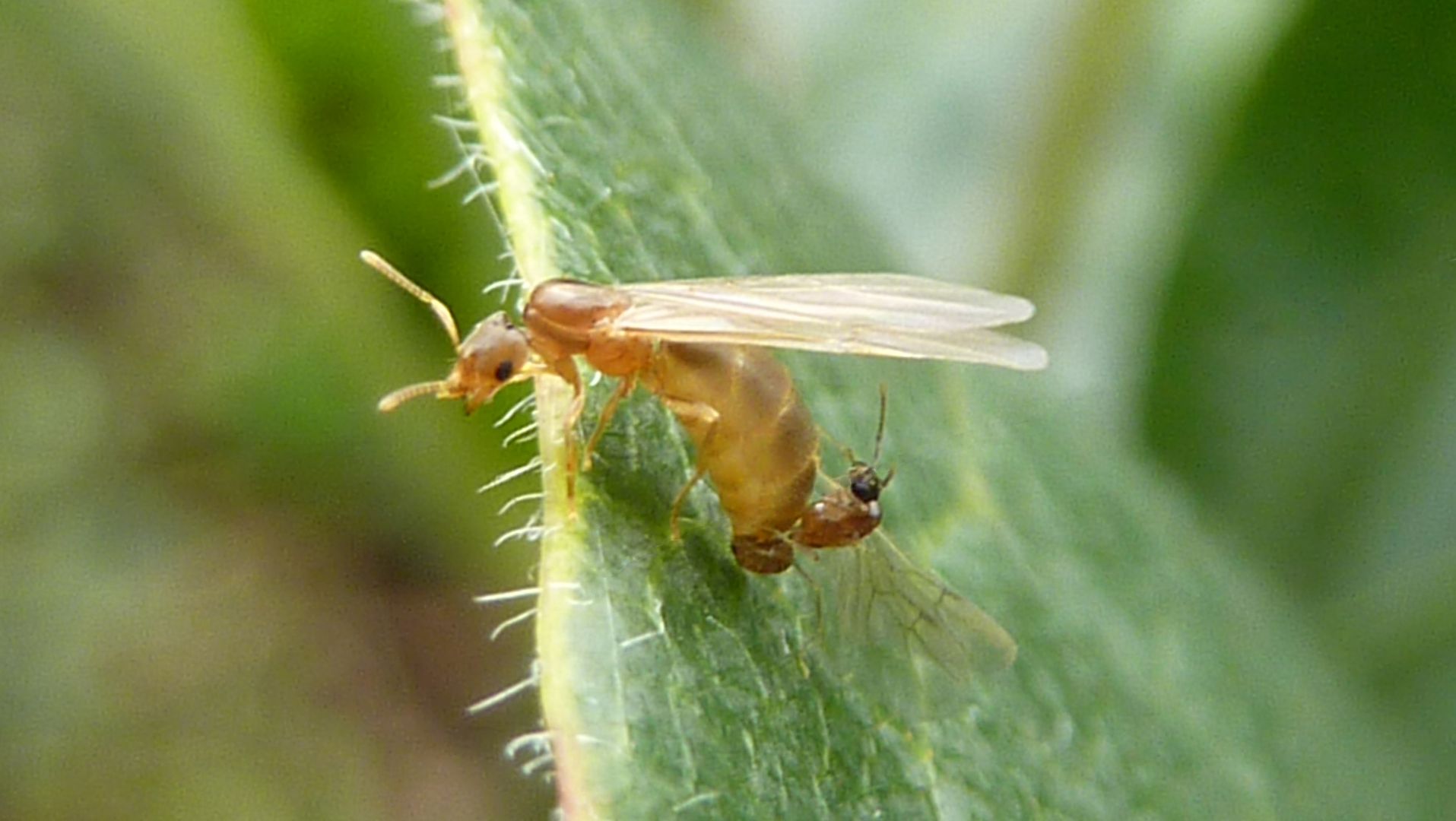
And the last ant photo I took this year that I'm really happy with is this Brachymyrmex queen and male, namely because of how tiny these ants are and how well this came out. 
Thursday, September 27, 2012

Fall Flying Ants (Video)


Brachymyrmex depilis is among the easiest ants for someone to step right over in the garden. The genus contains some of the smallest ants in the world, though I don't know how this species stacks up to it. Alates are flying from the nests now and I particularly find them  right after its rained outside, though I've never located them exiting a colony. Their colonies are also pretty hard to spot. Something about their alates though is they are notorious for landing in pools of water and it's not an uncommon sight to find queens using expired males like a raft.

In contrast, Lasius claviger colonies are just as unseen over the year except for now. They're a social parasite of other Lasius species and produce 10 times as many alates as their hosts do to make sure successful colonies happen. In the afternoon hours colonies will erupt with tens of thousands of queens and males (usually favoring one gender heavily). Despite their numbers I've seen people walk right through thousands of them without even noticing. Sometimes I'll be in a field full of them, and people will walk up to me becuase I'm "doing something odd" and not even realize the ants even after they've started crawling up their legs, and landing on them.