Showing posts with label Butterflies. Show all posts

Tuesday, February 27, 2024

Last Year's Pipevine Swallowtails!!!

 So, I have been growing Woolly Pipevine for at least 14 years. I went with Aristolochia macrophylla over A. tomentosa because it's less aggressive.... or at least, it's easier to control. A. tomentosa sends up new stems from everywhere its roots spread out, so just one plant can take over a whole garden bed with new stems poking up and climbing all over the plants that grow there. A. macrophylla doesn't do this. It's just the one main trunk and lots of stems that come off of that and climb all over whatever. Put another way, the roots stay where you planted them. 

I initially planted this as a host plant for the Pipevine Swallowtail Butterfly. But this isn't a species very common to my area. They are found in New Jersey and have been sighted in my county, but there aren't any large populations nearby. The reason for this is there aren't many host plants around. Black Swallowtail are abundant because they're a generalist on the carrot family, so every field that's been invaded by Queen Anna's Lace, or home gardener growing Parsley, Carrots, Fennel, Dill and so on are helping this species thrive. Tiger Swallowtails are even more common thanks to Tulip Trees, Black Cherry, and what remains of the Ash population being staples in the patchwork of our local forest lands. 

The nearest sighting of the Pipevine Swallowtail to me is about a 30 minute drive from my house. So for 14 years the vine pretty much went unused aside for the occasional Robin's nest, and Ant which used it to get from our shed to the Redbud it's latched onto. 

Ohh yes, the shed. The vine is slowly consuming it on both sides, though hasn't quite taken over the roof yet. The shingles still get too hot for its stems to lay but each year I see it adding another layer as the leaves it makes up there grow larger and larger and shade out enough for new stems to safely sit without getting baked off. 

I'd been thinking about pruning it back but then one day last July I went out there and noticed these clusters of little orange eggs. "OH MY FUCKING GOD!!!" I shouted.

A female Pipevine Swallowtail had found our vine and graced it with four clusters of eggs. Sadly one of them was on a vine that stuck out into the path and I was going to prune off. Raising butterflies in captivity is normally frowned upon but I decided to make an exception here, and this would let me better document their life cycle. And for the record, the majority of the egg clusters I left outside. It was just a cluster of 9 eggs that I brought in and raised in a butterfly cage. Also a few days later I discovered additional egg clusters that seem to have been laid after the first four clusters, so I guess she came back or a second female flew by. 


Outside I noticed all of the egg clusters were laid on the newest growth. This is likely because the toxin in the leaves will be at the lowest here and the caterpillars will be better able to handle it.


After a few days, they entered the "Forbidden Gummy Worm" phase of development. Seriously though don't eat these. The toxin pipevine plants make, and caterpillars eventually store in their bodies, is an actual carcinogen. This is likely why the plant fell out of favor among gardeners. 

I was making a mistake with raising the ones indoors. You're not supposed to bring them inside it seems as this throws off their natural rhythm. Should I do this in the future I'll be sure to keep the butterfly cage outside. 

It was neat having them inside though. Their constant chewing is loud and with nine of them going at it there was an ambient Yule Log effect going on. I wish I had recorded it.

Being Swallowtails, this meant their caterpillars have "horns" this yellow/orange tongue-like appendage that comes out of their head and sprays a kind of formic acid or foul smelling chemical out. The idea is should a bird try and pick one up, BAM!!! Awful Perfume Sample right in the eyes! The caterpillar will likely die soon after this happens but rest assured, that bird certainly won't be picking one of these up to feed to their kids. 

All that being said, I had to poke this thing with a pencil for a good ten minutes or so just to get him angry. 

Large black worms with orange dots all over them don't exactly blend in. It's almost like they're asking to be eaten. And as it turns out, this is exactly what they're doing. This is the same/similar strategy the Monarch Butterfly uses. Monarch caterpillars are black, white and yellow, and they actively feed in the day in full view of predators. They taste nasty though and have bad chemicals in them that might kill a baby bird. Eventually through repeated predator, the birds learn not to feed these caterpillars to their babies. The trouble with this strategy is there's always a new generation of birds to teach but eventually the local population learns to leave them alone and the caterpillars thrive.

 
It's around now that I noticed none of the outdoor caterpillars have survived past the second or third instar. This makes me glad I at least brought a few indoors. Maybe I'm greedy but I didn't want to wait another 14 years to photograph them. Also as far as caterpillars go, they look really cool.

 Chrysalis Day!

 One by one, they all shed their last layer of skin off and formed a chrysalis. 

10 to 14 days later, they started to emerge. 

BTW I have no idea how you tell the gender in this species. Some people say the females are this navy blue color while males are more of a green... but uhhh.

This is the same butterfly as the navy blue one pictured just above. I don't think the color thing is accurate. Either that or I somehow managed to hatch 8 girls. (1 did not emerge from its chrysalis at all. I'm assuming it's going to hatch out sometime this Spring.)

I released all 8 of them once their wings were expanded and they were able to fly. Sometimes they would hang out on the flowers I put them on but not for long. Within the hour they were fueled up and flew out into the world. 

A few days releasing them all though, I was delighted to come home and find one in my garden. This wasn't staged at all. I had to pull out my phone and quickly snap a picture. 

Hopefully they'll find my garden again this year. And hopefully more people will give Pipevine a try so this butterfly becomes a more common sight every year.

Monday, September 3, 2018

Raised some Monarchs

I'm finally getting a bumper crop of Monarchs this year. Despite growing several species of milkweed they don't always seem to find my garden every year. When I speak with friends out in Missouri and Illinois they're surprised that I don't really see Monarchs here in New Jersey until August. On some years if I drive out and about I do see the occasional Monarch in June but usually not in my county. It's as if the females don't want to waste their time with anything less than a huge field of common milkweed.

Geographically speaking I also feel they don't fly through my area until they're migrating south again. I live in Camden County, New Jersey which is on the Delaware River side of the state, but we're somewhat inland. I suspect as they're flying north they're reluctant to cross the river and on the occasion that they do, they're more inclined to visit open fields as opposed to suburban gardens.

As the summer presses on the populations that were established extend outward as patches of milkweed are devoured. Then heading as they all start heading south a wave of Monarchs in the New England area all follow the coast line. Cape May, NJ. is a fantastic spot to see them passing through. A few years back I was there and saw they'd planted a huge stand of Sea Side Goldenrod, Solidago sempervirens, which was in spectacular bloom when I visited but is likely now all died out.

Sea Side Goldenrod is a fantastic plant that can take a beating. It's able to grow in 100% sand at the beach! I don't think it survives the tide coming in but it can take high levels of salt. Thing is, it also grows a lot better in clay soil and garden soil too. And I find it's that way with a lot of plants that are supposedly tough to kill, hardy, drought tolerant.

 
One key plant I feel that helps draw in the Monarchs is Meadow Liatris, Liatris ligulistylus. Tragically this is a biannual that doesn't reseed well in my garden. I have several of these though in a pot that came back from last year so maybe that's the key. They were part of a flat of 50 plants and all the ones I placed into the ground died!

This is easily their favorite nectar plant until it finally stops blooming. There's always at least one or two out there fighting over it. 


Joe Pye Weed is another native though certainly not high on the list. At last not in my garden. The plants at the Mt. Cuba Center got more attention than mine but they don't have any Meadow Liatris around.

Buttonbush, Cephalanthus occidentalis, might as well be marketed as White Butterfly Bush. For years I've thought this was one of the best nectarine plants North America had to offer. There really isn't a kind of bee or butterfly I haven't seen on it. And for years I thought what a shame it only blooms for a week or two... but this year something neat happened with one of my plants. Mysteriously it leafed out in an odd pattern with the lower branches becoming fully green before the ones higher up and then also produced newer branches up at the top. The result was that these locations all produced flower buds a week apart from one another and then bloomed first on the old growth and worked it way up to the new. So this year I got about three weeks of flowering out of it. Apparently older shrubs do this, which makes me glad I planted 2 more around the house.
 
Besides the Liatris I'd say the Mexican Sunflowers is the Monarch's second favorite nectar plant. And once the Liatris finished flowering they were all over these in my yard, favoring them over the Joe Pye Weed, Buttonbush, Phlox and Ironweed. They still visited all of these plants but I could always guarantee to find a Monarch on the Mexican Sunflowers whereas sometimes I'd walk my garden and rarely see them on any of the others.

Common Milkweed was the host plant of choice. I grow Swamp Milkweed, Butterfly Weed, Purple Milkweed, and Sullivan's Milkweed too and haven't found a Monarch on any of them.
Actually I worry about the Butterfly Weed I bought from Home Depot. I found eggs on the leaves but not one caterpillar!!! When I bring in sprigs of this plant to feed to caterpillars I have in small plastic cages they refuse to eat it. I don't know if it's just because it's a different kind of milkweed than they're used to eating or because they're spraying them with a systemic pesticide and the caterpillars are somehow picking up on that. Either way I'd love to know just to put my mind at ease, cause it's an awful shame if Home Depot was selling whole racks of tables full of 3 gallon sized pots of beautiful orange Butterfly Weed that was coated in poison.

Any who, all the eggs and small caterpillars I've been finding on Common Milkweed I've been bring inside and letting them develop that way. The plants outside have holes in the leaves indicating that young caterpillars had tried to eat the leaves but were nowhere to be found. Naturally as ant friendly as my yard is the plants are crawling with them which are likely responsible for these missing caterpillars. 

 ~9 to 14 days later a batch of Monarchs are born. Everywhere online says 10 to 14 days, but I think this is 10 days starting from when they hang upside down and make a J shape as seen 3 photos up.

 And from here I let them go.

As a bit of controversy I posted these images on facebook and a friend on there commented. "Wouldn’t think you’d be into this." Which I mistook to mean he thought it was odd a grown man would be into raising butterflies. I replied that I was a native plant gardener so why wouldn't I be into this? And then he made his point clear. 

Basically he thought it was unnatural of me to bring the caterpillars inside and nurture them into adulthood. In his view I should have left them outside on the plants to be eaten by birds, ants, and spiders so that nature can take its course. Which I admit he has a point but he also implied that because I had helped a few caterpillars along I was actually doing a disservice to them. Somehow in his view because I had increased the population of the Monarch Butterfly by 5 I had in fact decreased it.... 
This argument bewildered me as it's the first time I've ever heard it. In fact the internet is filled with hundreds of How To Raise Monarch Butterfly websites. The only thing close to what this person is saying on any of them is to keep an eye out for certain diseases, though all the ones that I know of for Monarch Butterflies either terminate them in development or leave their wings so deformed that euthanizing them is really the only option. 

I could make further arguments toward this person as it's sort of similar to the anti-vaccination movement that's bringing back diseases long thought rare and uncommon. Shouldn't we let nature take it's course? 

I didn't make this exact argument to the person as it's the kind of thing that would have made me unfriend them. I did put it another way. Basically I asked shouldn't I have not gone out of my way to plant Milkweed in the first place? Shouldn't I have just let whatever weeds decide to show up there grow be thankful nature took its course. 

Oddly enough this individual changed his line of thinking when it came to plants. He told me plants are different... and then he said something about meadows and gardens that didn't really make senses. This annoyed me because, plants are not different, they pollinate, and reproduce, and if one were to help the seeds along by putting them in the ground, watering and feeding them, how is that any different from me bringing in some milkweed leaves with eggs on them, putting them in containers and letting the resulting caterpillars develop into adulthood?  

Has anyone else come across the Let Nature Be types out there?  

UPDATE: Apparently there are people who raise 100+ Monarchs (and likely other butterflies) indoors all year.... I'm not doing that!

Saturday, September 17, 2016

Late Summer Mt. Cuba Center Visit

I was at the Mt. Cuba Center last weekend for a little late summer photo stroll. Here are a few of the sights I saw.

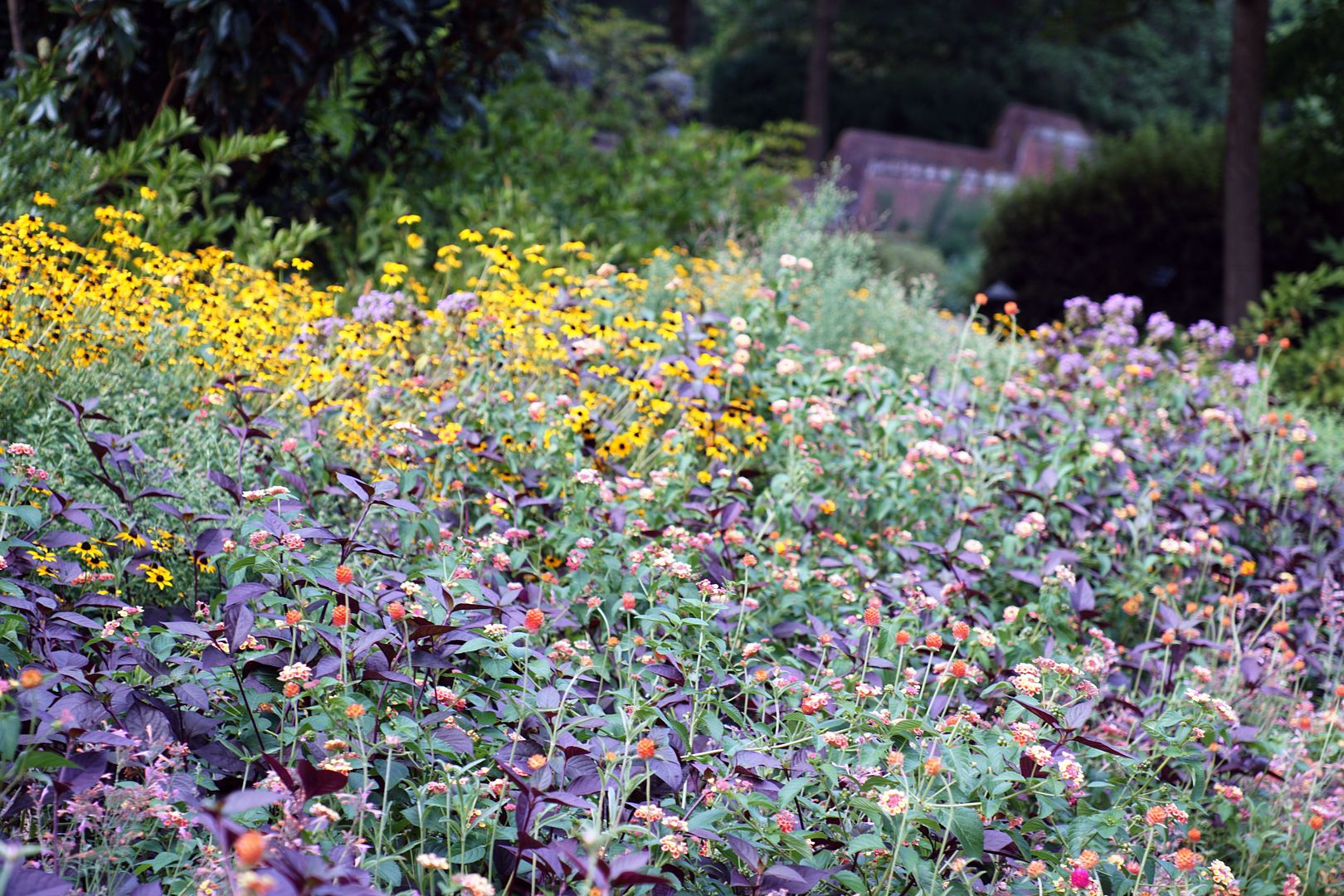
The round garden perhaps off from the main house is a dazzling array of color now, though perhaps a little busy for some. While it's comprised of mostly nonnative annuals, it serves as a bustling stop for an assortment of butterflies who's host plants are all around some ~650 acres of fairly well kept wilderness and native plant gardens. 

I'm not sure what the purple plant is but it's foliage contrasts well with the brightness of the Lantana in bloom among other flowering plants. Here some skippers flutter about. Among them were an assortment of Swallowtails, Monarchs, and Fritillary Butterflies that proved too quick for me to photograph. 

Elsewhere in a native flower bed the Swallowtails were a bit more cooperative. Here two Tigers sip at an Ironweed, I believe the cultivar is Vernonia angustifolia 'Plum Peachy' which is like 'Iron Butterfly' but about twice as tall. 


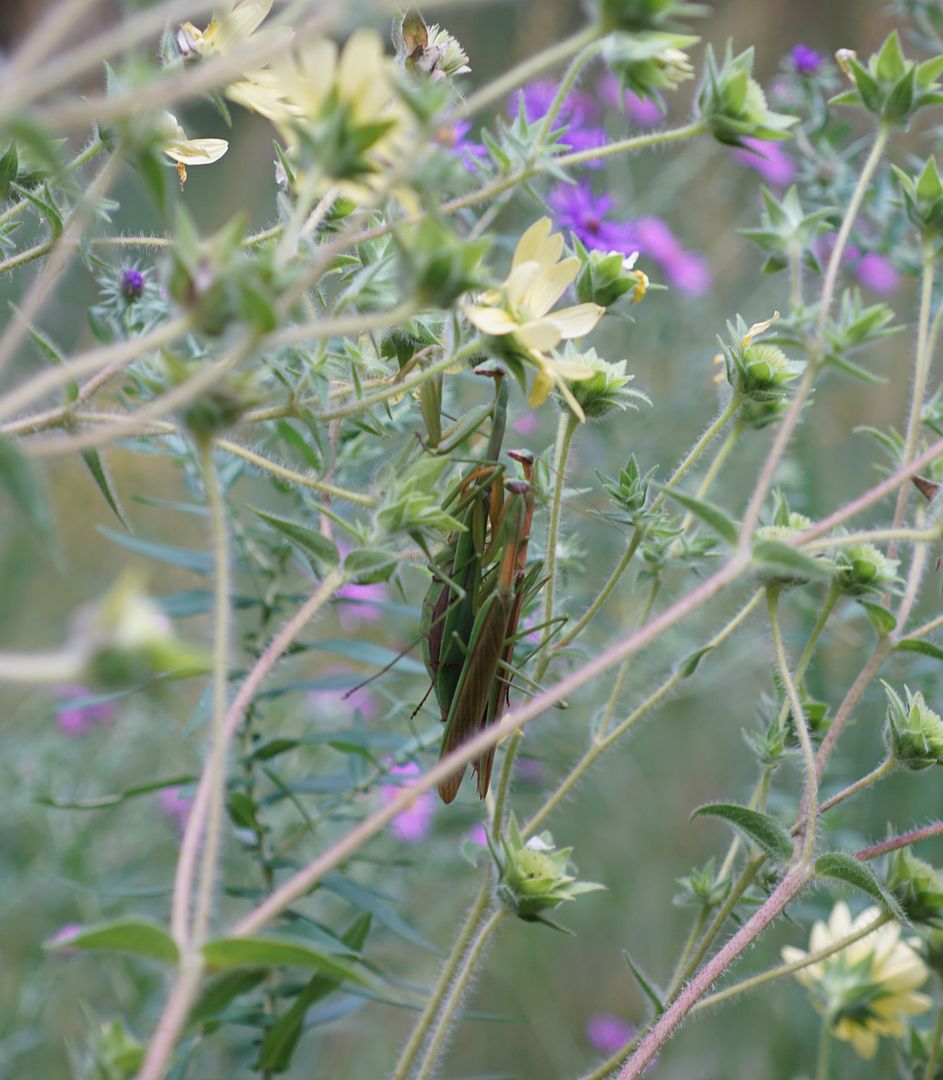
Praying Mantises were abound in the meadow garden. Not only were females laying eggs but also in the act of mating... some with more than one partner courting them at the same time. 

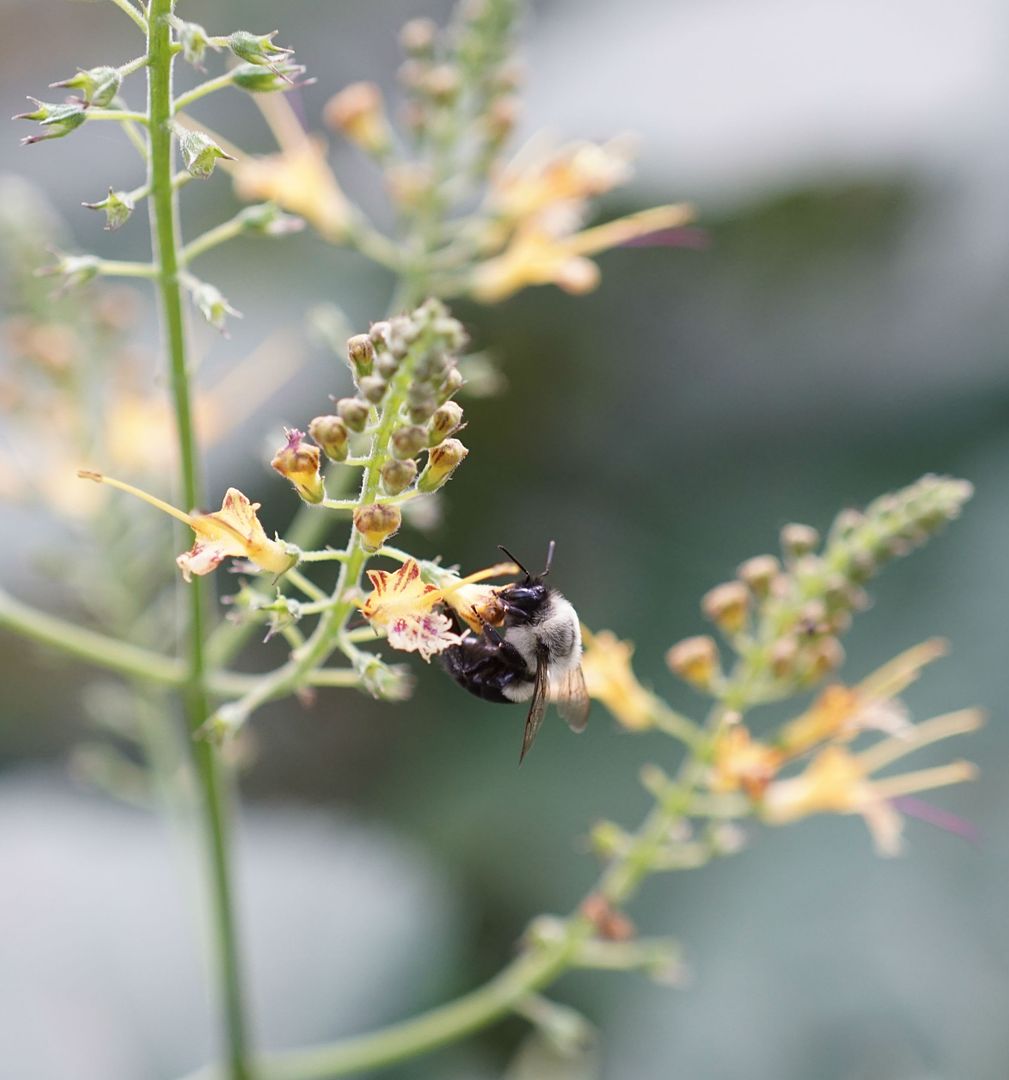
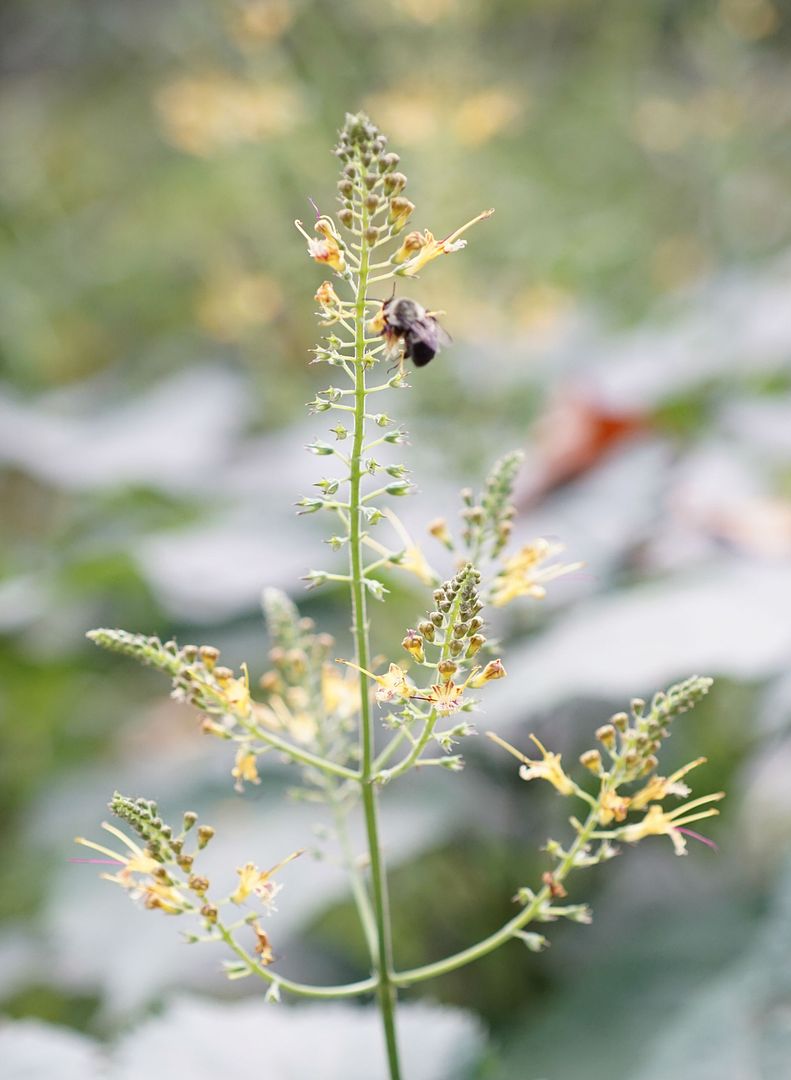
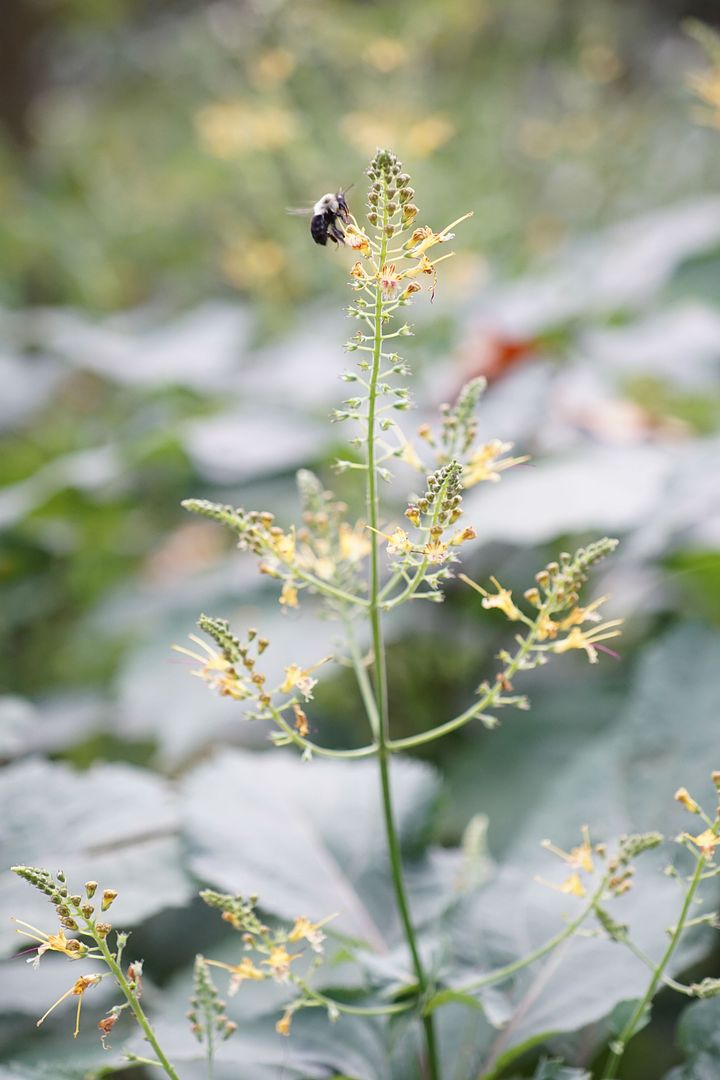
Though the woodland was filled with an assortment of Woodland Asters, I found the Richweed, Collinsonia canadensis, to be particularly interesting.

Though common in woodland areas across the eastern United States, it's not something a lot of people stop to look at.

Part of the issues that it's not a more mainstream plant is likely due to the large leaves of the plant, compared to the fairly delicate flower stalks that come above. The flowers are small and not entirely noticeable either. I actually walked past the patch of these plants twice before I even noticed it. It's plants like this where interesting leaves or flower shapes from cultivation would benefit to get it sold and brought into the main nursery trade.

Saturday, September 19, 2015

Honeybees on Black-eyed Susan


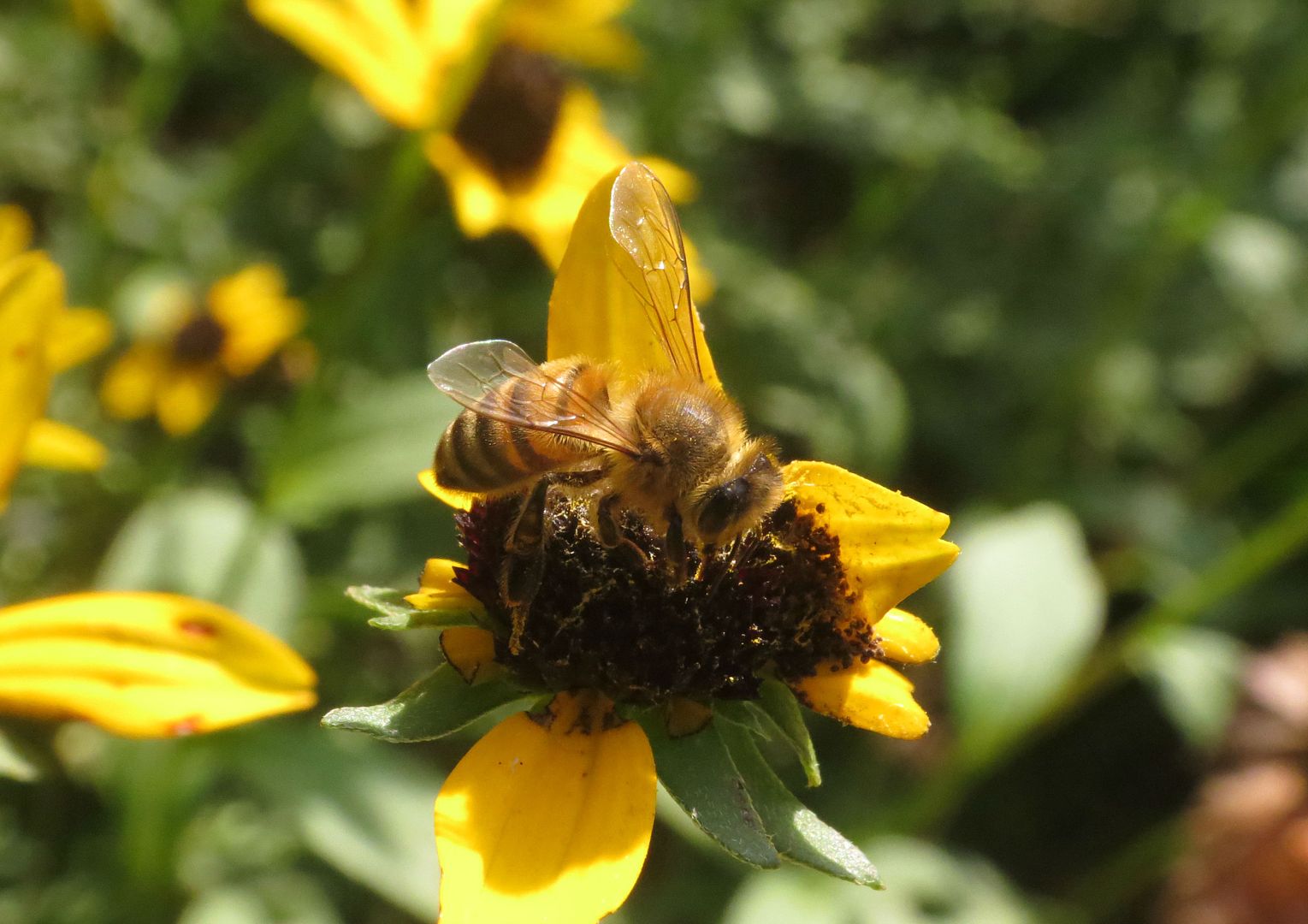
I've never seen Honeybees bothering with Black-eyed Susans before, even bumblebees won't bother with them. But on my recent visit to the Mt. Cuba Center in DE, sure enough I found some working the plants. But they were only working the ones in a huge patch at the top of the hill where assorted Asters and Goldenrod were planted around. Others planted out in the grassy meadow received no attention at all, though I'll concede they were not planted as densely. What I think is happening is the honeybees that found the asters took the sweet nectar home and did a waggle dance to tell their fellow bees where the sweet nectar was. So the new foragers coming to locate the source of the nectar mostly found the Black-eyed Susans instead of the Asters.


On rare occasions when I do find honeybees working Black-eyed Susans, away from other nectar plants, it's usually on the cultivars that have enormous flowers compared to the true species, seen above, which doesn't always have its petals.

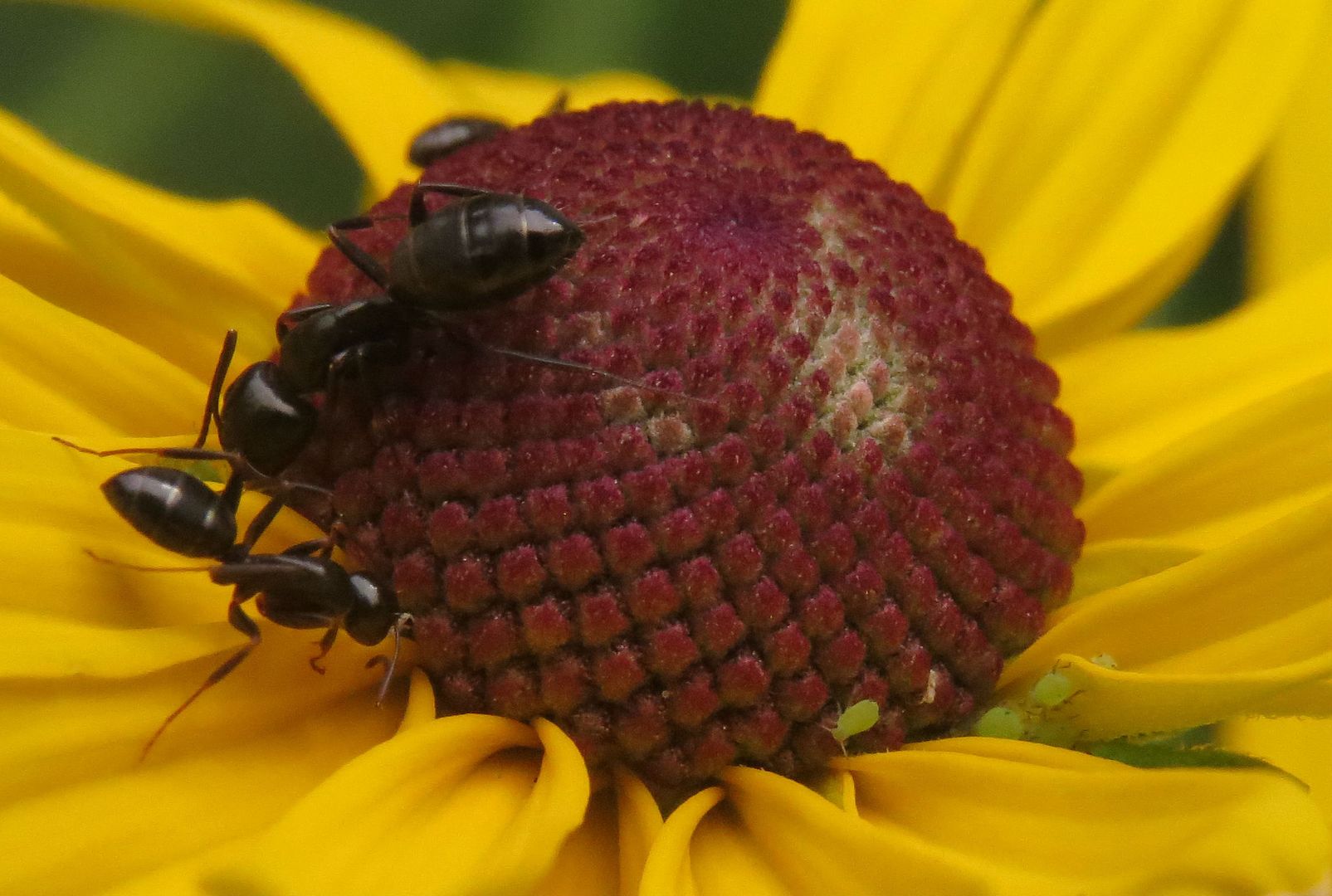
I'm half tempted to say the bees were tending aphids that sometimes infest the flowers to various Rudbeckia species but I know that wasn't the case.

I also spotted a Pearl Crescent fluttering about on the flowers. I wonder if the Mt. Cuba Center's new hybrid aster 'Bluebird' is a host plant for this species. It's a hybrid between two Asters but only Symphyotrichum laeve is listed as a host.

Sunday, September 21, 2014

Black Swallowtail Caterpillars (2014)

This year's crop of Black Swallowtail Caterpillars is shaping up to be a nice one. I have at least 15 caterpillars all coming of age to form their chrysalises. The had ignored my yard all year until a month ago, despite having 8 full clumps of parsley and a patch of Golden Alexander going strong. And it all seems to be thanks to one female flying through the yard one day.

I'm going to leave these outside in a sheltered cage for the winter. Hopefully I'll have better luck than I did two years ago when I raised them in a cold basement room. They started emerging in February and in batches every two weeks after that. I doubt they'd like to fly when there's snow on the ground.

I have read that butterflies like Gatorade and will drink it in place of nectar or rotting fruit, however I was never able to get it to work. Captive butterflies just don't seem interested in feeding, though I'm sure I was doing something wrong.

Saturday, July 5, 2014

A Trip to Longwood Gardens

I spent yesterday, July 4th, at Longwood Gardens, though not for the fireworks. Really the place was a bit of a disappointment and ran differently than I expected.

For starters the ticket system is confusing. You buy tickets to arrive at a specific time in half hour intervals but you can stay as long as you want and I didn't understand why this was necessary at all. What's wrong with just selling tickets and having a recommended time of arrival? Their parking lot is big enough for special events like the 4th of July, there were even people setting up camp outside on the hills around the parking lot having little BBQ's of their own.

Getting inside and walking the gardens for a day I started to realize why they limit the number of tickets they sell in half hour intervals. There is ONLY ONE place that sells food and drinks for people to eat lunch or dinner. Now they were holding a special event for fireworks and additional vendors were setup but they were all in one area! So you can't get a drink if you visit the entire right side of the facility or walk all the way out into the meadow garden other than a public water fountain they have hidden way back in this end building. I almost died of dehydration walking around this place.

Finally I found some sort of delicious-looking BBQ happening but this was only for people who spent the money on the fireworks show happening later that night. I asked the girl if I could upgrade to get some real food, and she said Nope! So inside the regular building I went where I paid $8 for the smallest peperoni pizza in the world that tasted like air. And the glass they gave me was tiny, like what they sell as a Small everywhere else, which was only about $2 though. And it came with "unlimited refills" but frankly there didn't seem to be anyone watching the drink area; it's all self serve so I could have fill up a 2 liter for all they knew. 

They should be selling collectable water bottles that come with free refills the day you buy it and setup more stations around the park where people can buy and refill them, similar to how an amusement park does it. I should be able to upgrade my dinning choice right then and there to special BBQ's, Buffets, and wine tastings etc... instead of having to walk all the way back to the main entrance for a wrist band.

I would have voiced all this to the little suggestion survey card but someone made off with the pen or pencil for doing so... so I just tossed a blank card inside to show what I thought of the place which was not much.

Most of the gardens were vast stretches of lawn with plantings only right next to the pathways. These plantings did look nice and worked well with a corridor effect (looking down the hall). There were points of interests such as sculptures and fountains and the occasional neat plant they highlighted but the amount of lawns this place has really drags the whole place down.

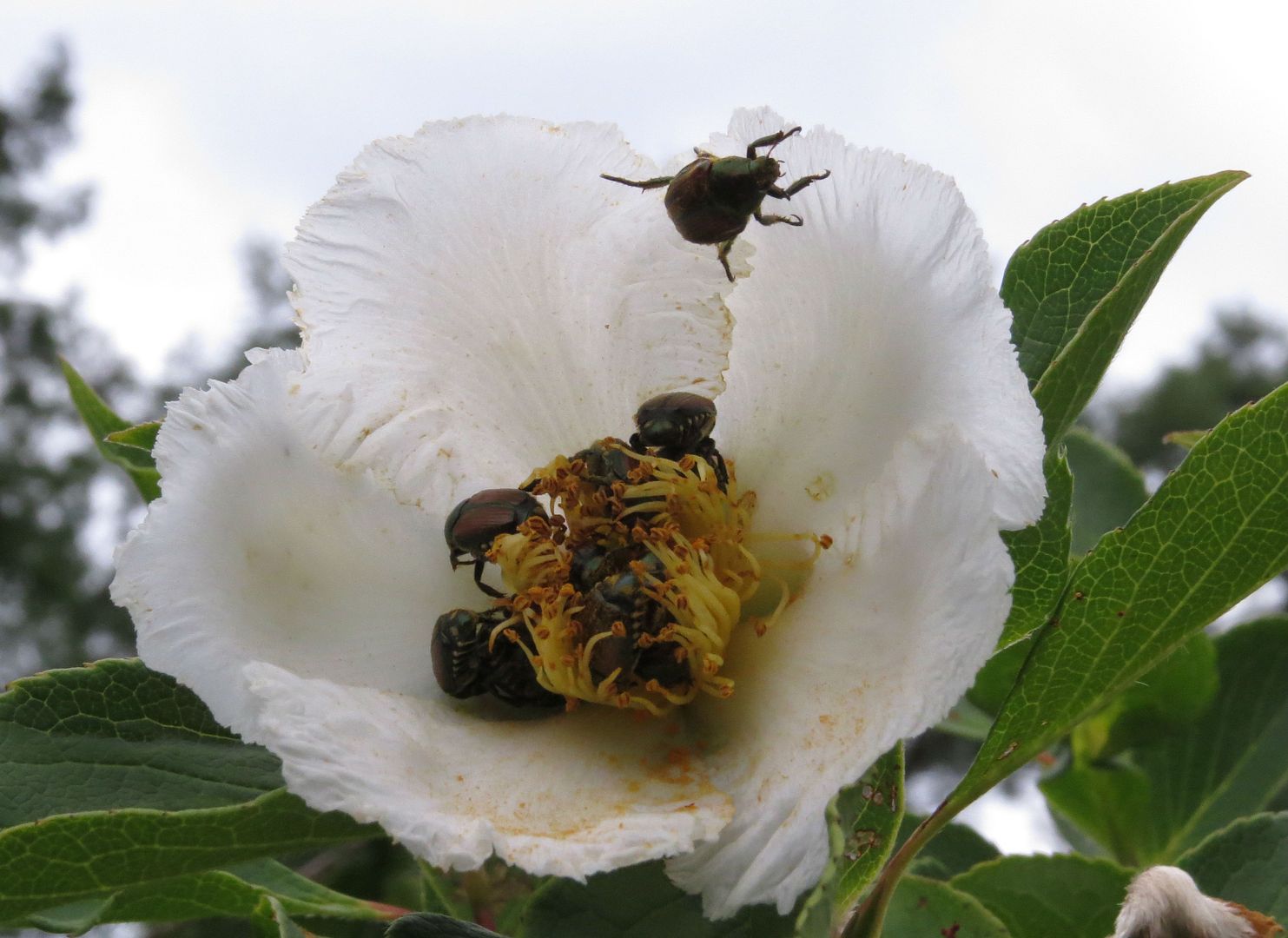
There was a Japanese Stewartia that was absolutely infested with Japanese Beetles.. which might not be a bad thing but generally no one wants this pest insect.

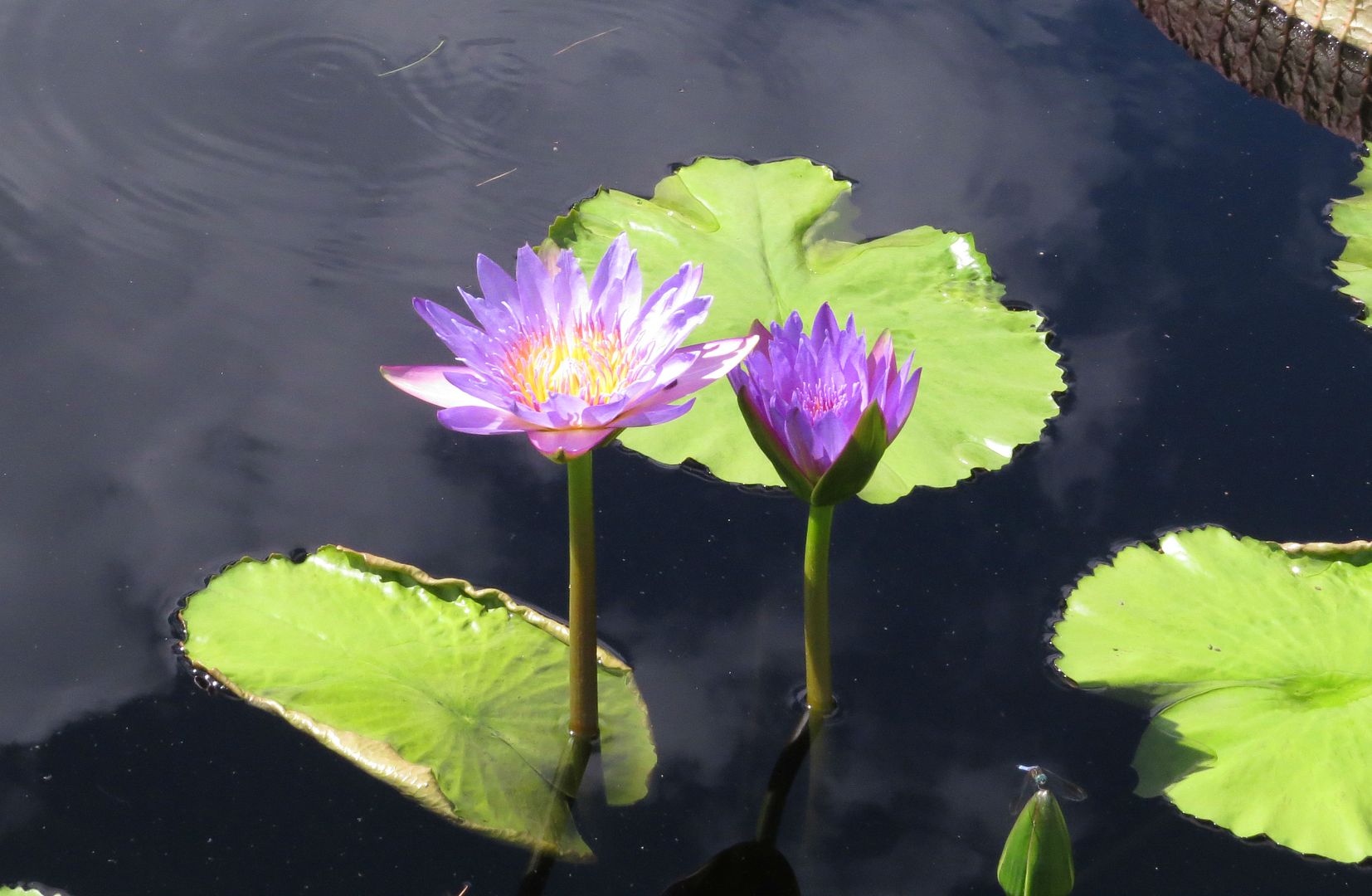
There's a main conservatory that's full of all sorts of tropical plants, and even included a rather nice pond section but it would have benefited from a guide or two or audio tour like a museum exhibit to highlight what I'm looking at and why it's important. 

Something where they'd put a number on the plant tag and you could listen to a botanist, curator, landscape designer, translator, or voice actor, talk about why the plant or feature is so impressive. They could rotate which ones are of interest in and out or limit it to specific gardens. Generally without the information and history behind it, it's really just another pretty flower among hundreds. 

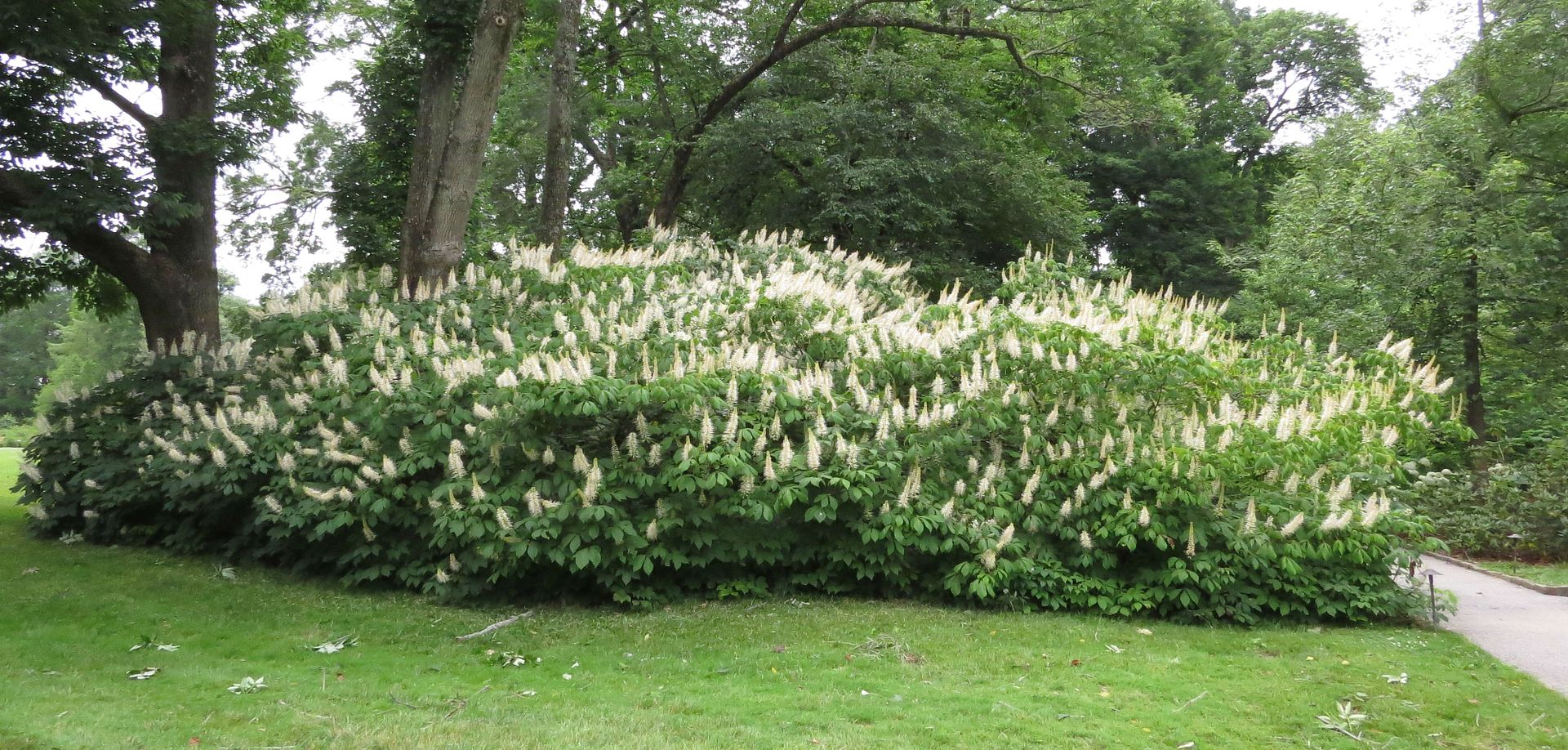
I was happy to see a grove of Bottlebrush Buckeye but disappointing to see absolutely nothing was pollinating them. Actually there were almost no butterflies flying about at all. The only ones I saw were out in the meadow garden and I know from the Mt. Cuba Center that this plant is normally covered in hummingbirds, and large butterflies. They're growing it correctly at least. The plant wants to push up an army of suckering stems to form it's own grove which was extensive. The photo above was taken at the top of a hill and they extended all the way down around the pathway.

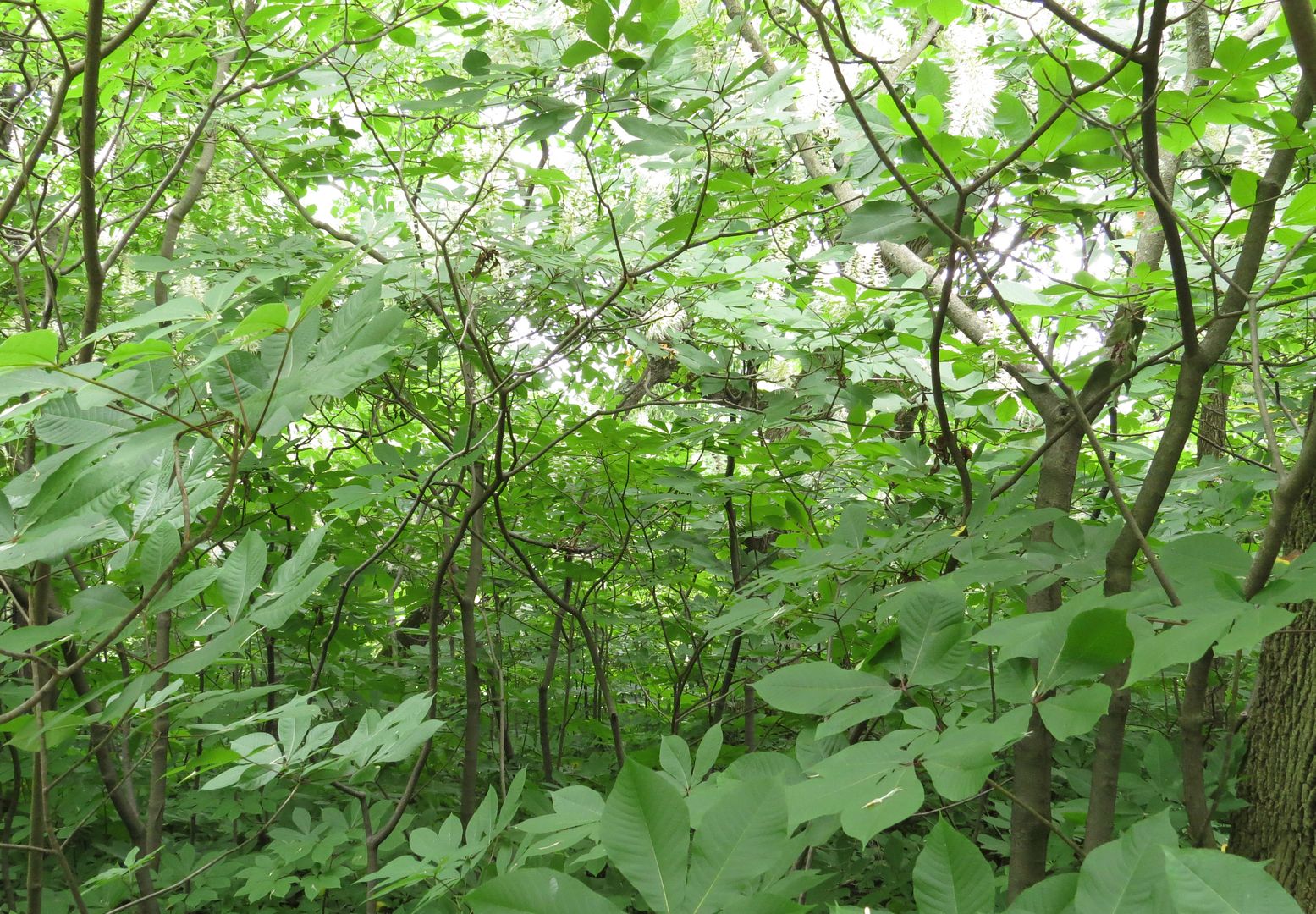
This is what it was like looking in. 

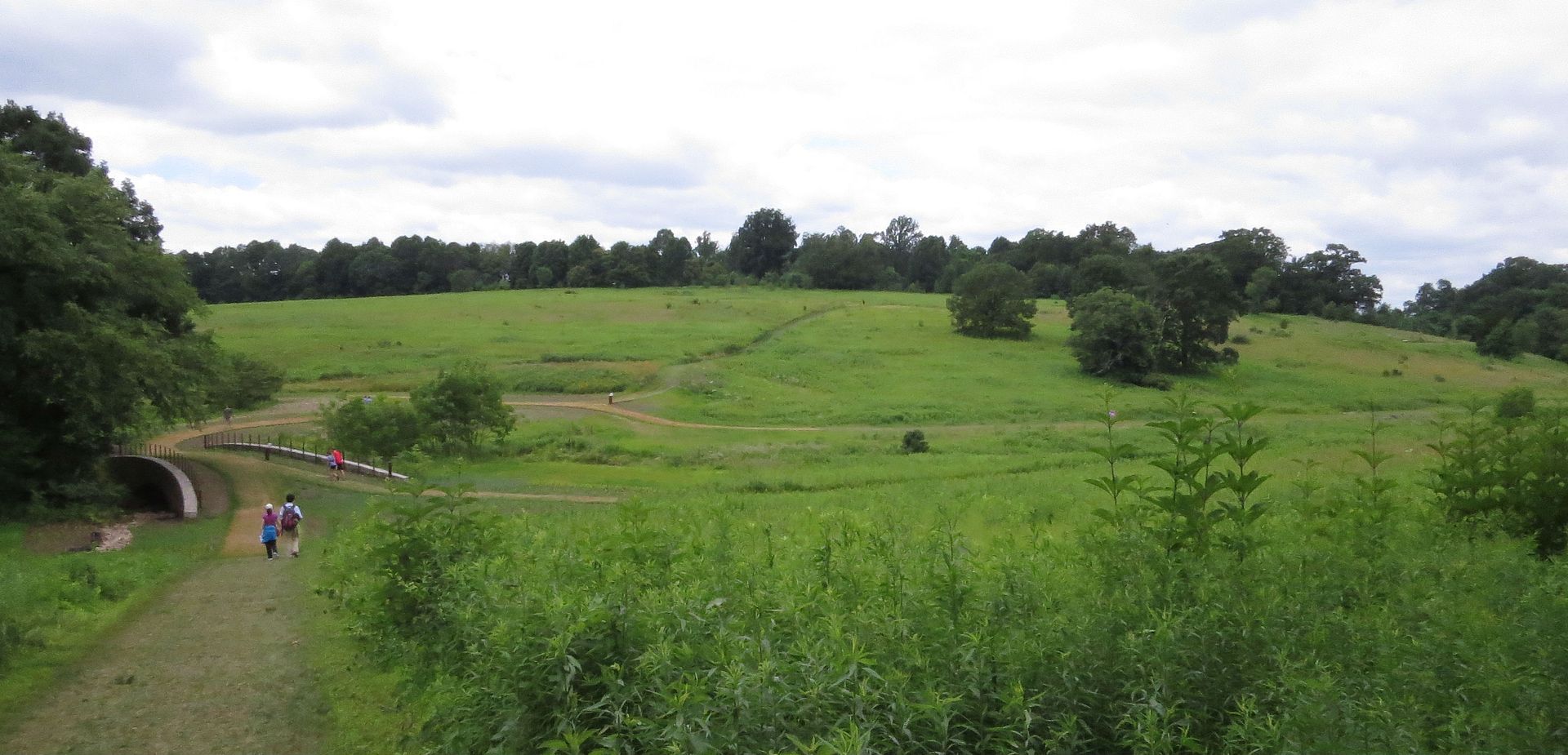
But the real reason for going was for the newly installed Meadow Garden, which I'm happy to say was drawing a decent crowd. All of the bird watchers and generally non-handicap guests were at least giving one pathway a stroll. 

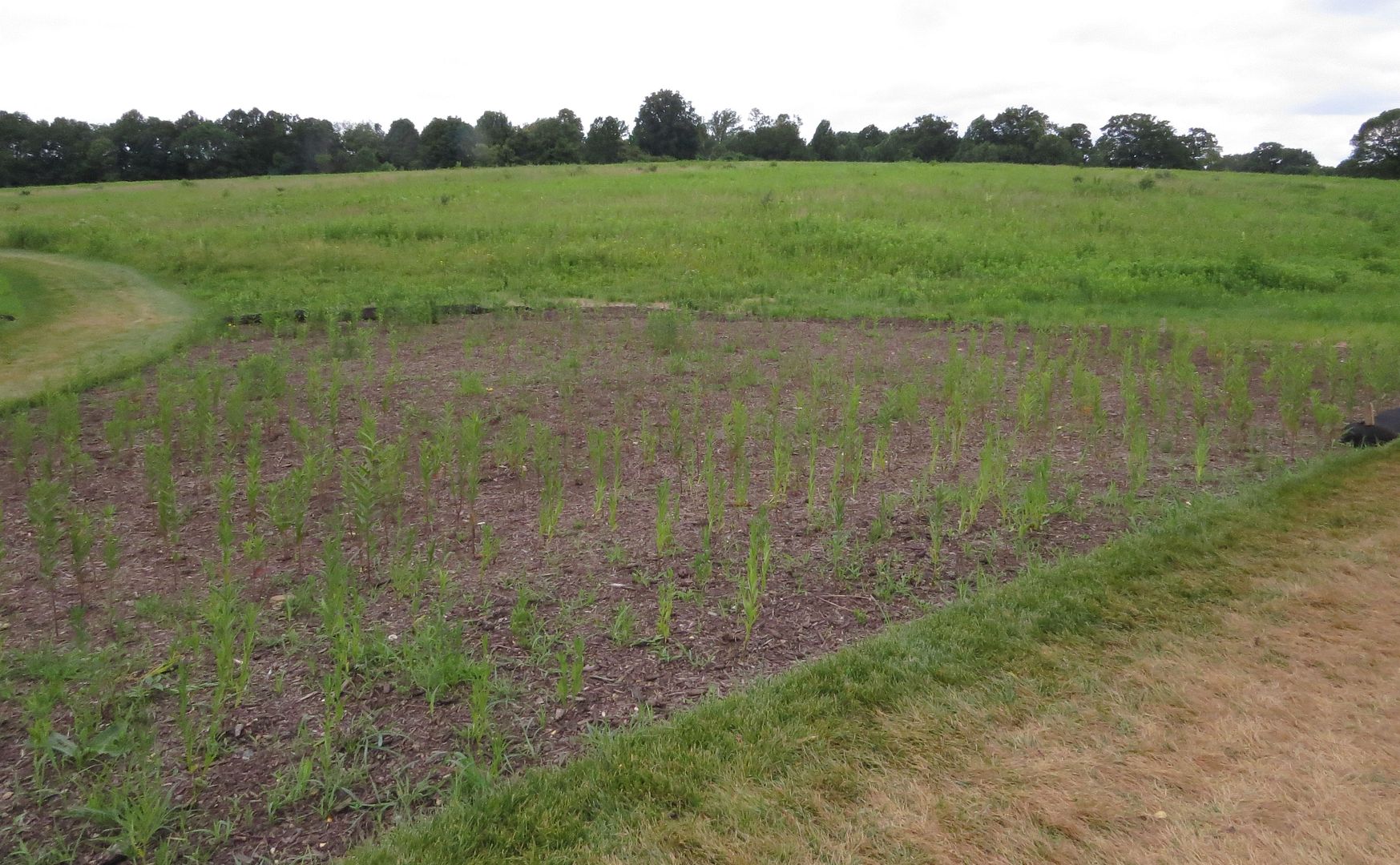
Early on I was a little confused though. I thought they had sprayed Round UP on the pathways which is why they looked like dead grass but then I realized, nope, someone started to roll out the sod for god knows why and it's just dying from lack of water. A bizarre choice but perhaps it was something left over from last year. A good design choice I thought were these corner sections where instead of seeding in plants randomly, they had plugs to specific plants. Eventually this will ensure guests get to see specific plants up close and personal.

Another specific plug planting next to one of the rest and viewing areas. Behind me there were some benches, sheltered by the sun with built in telescopes for everyone to look out upon the meadow. 

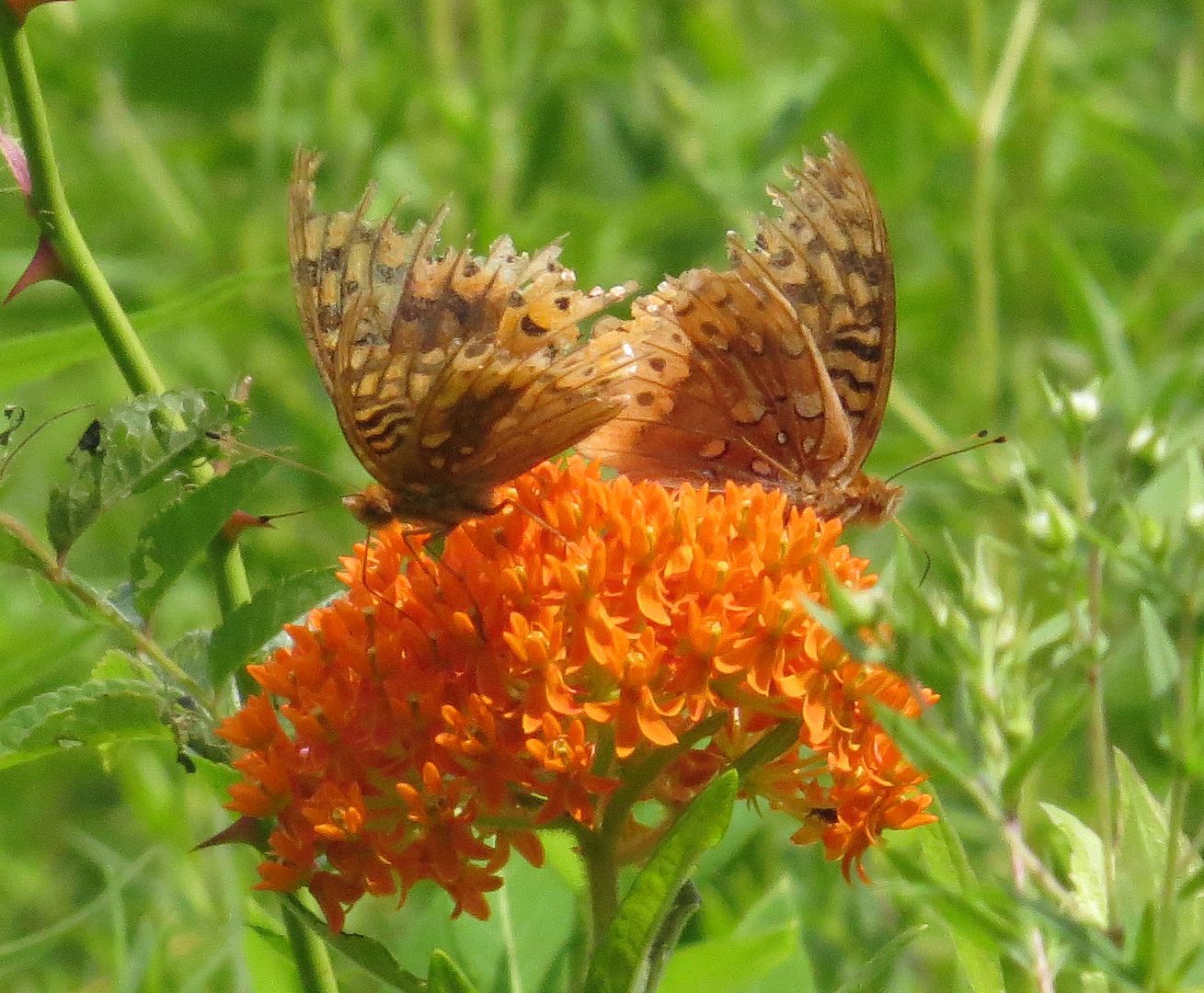
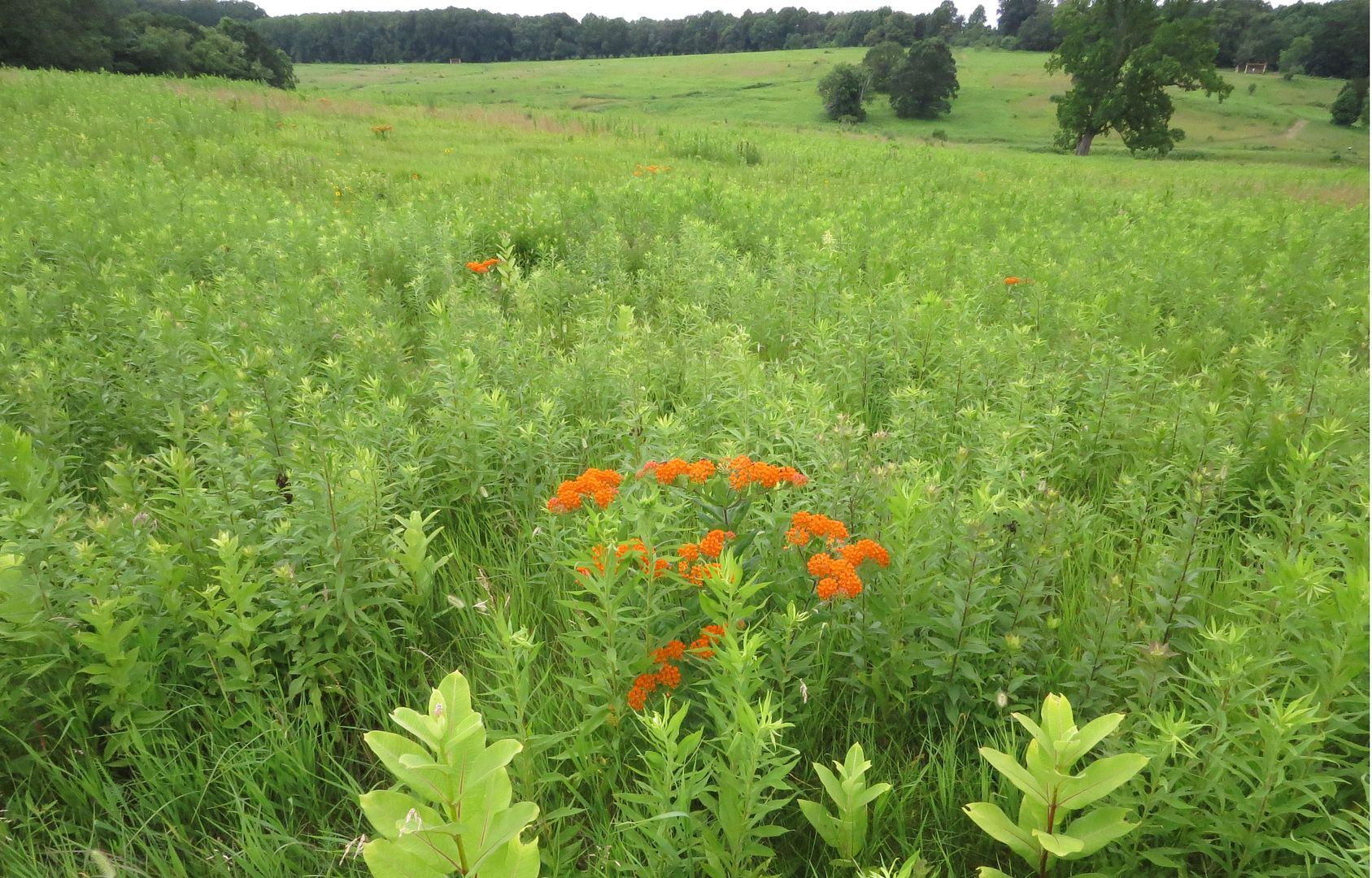
The occasional butterfly would flap about but for the most part they found a bit of butterflyweed and clung to it.

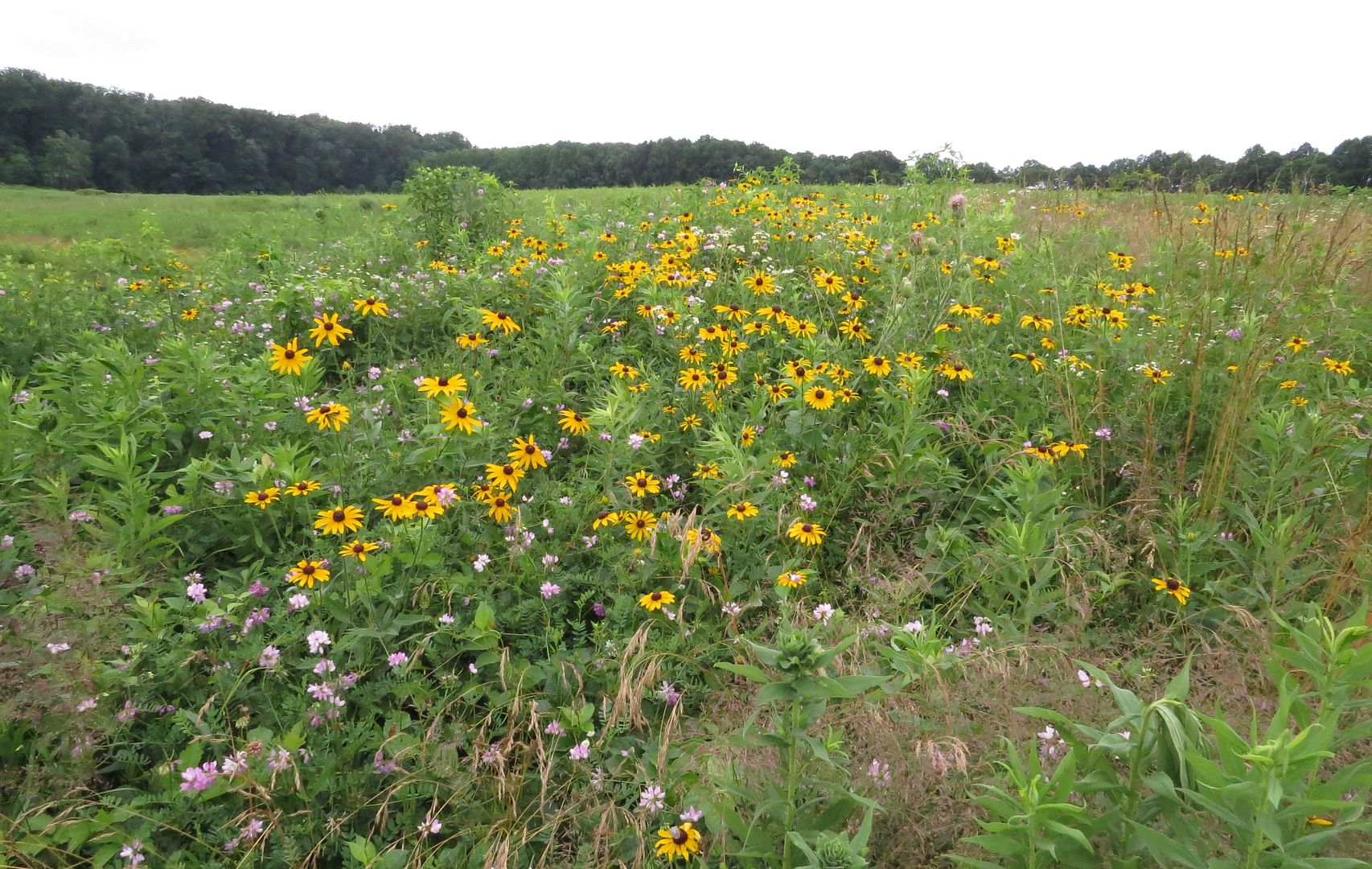
Black-eyed Susans speckled parts of the meadow with their little yellow disks.
There were a few places where they seemed to be better established and taller.


Red-winged Blackbirds fluttered about the meadow and all the bird watchers seemed to enjoy them particularly. I accidentally interrupted more than one person trying to take a photo I'm sorry to say.


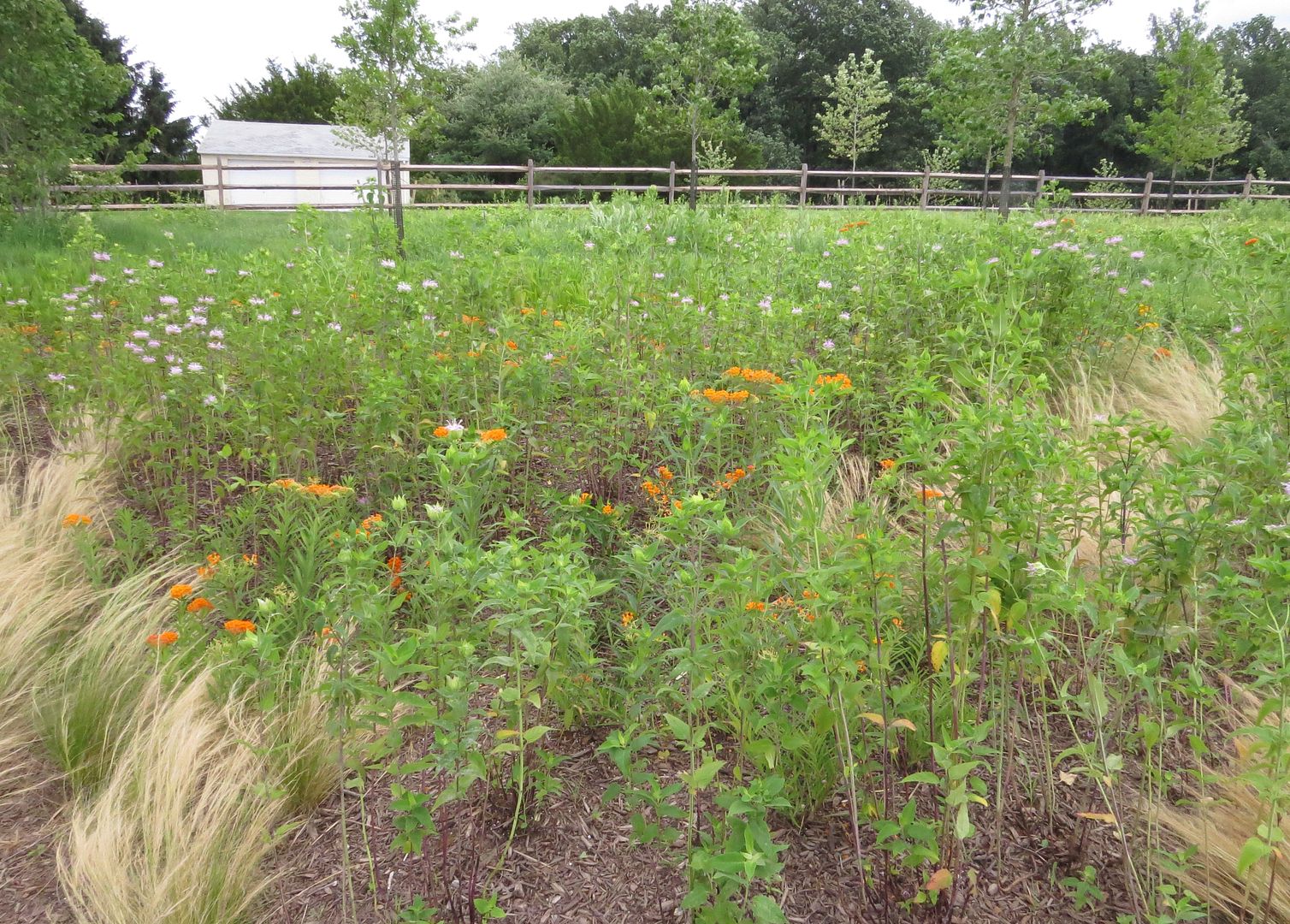
Butterflyweed, Asclepias tuberosa, was a real highlight here.

I love the way the color of the dried grasses adds to this, still blowing with the breeze along with the green, and still with yellow flowers dotting all over.

False Sunflower, Heliopsis helianthoides, was another draw but mostly for bumblebees.

I really enjoyed the meadow garden a lot because there weren't big boring patches of lawn. If you're going to have big sweeps of lawn, at least do something with them; maybe even take that "golf course look" literally and maybe a mini-golfing or croquet. Or even make it more perfect than it already looks? A large carpet of moss maybe?

So the Meadow garden has my interest enough that I think I'll return sometime, maybe in September and I'll be sure to give the whole place another chance.