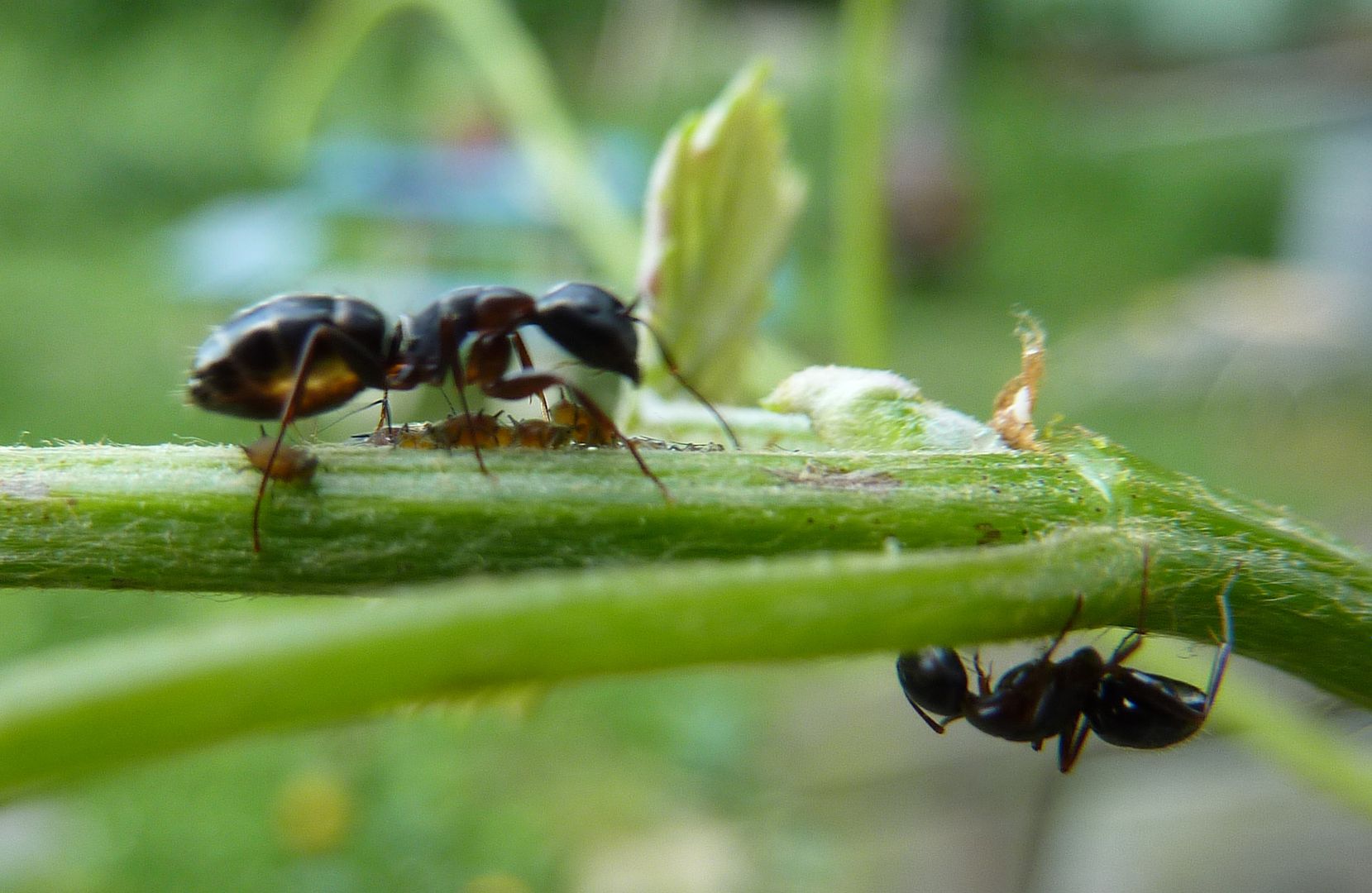
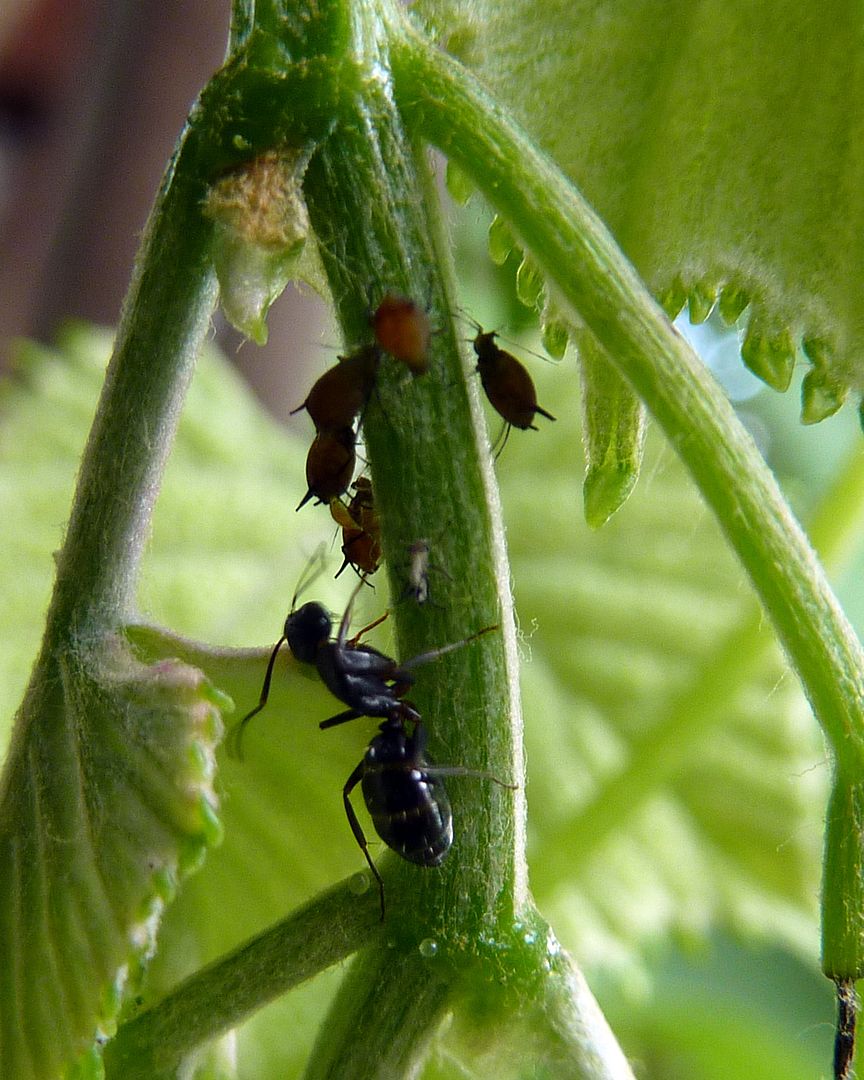
A few days ago it was unbearably hot and humid out, but I was enjoying it nonetheless because this seemed to bring out all the ants and other bugs of interest. There were so many types of ants wondering all over my plants that I was tempted to make a video about them all but the mosquitoes got the better of me.
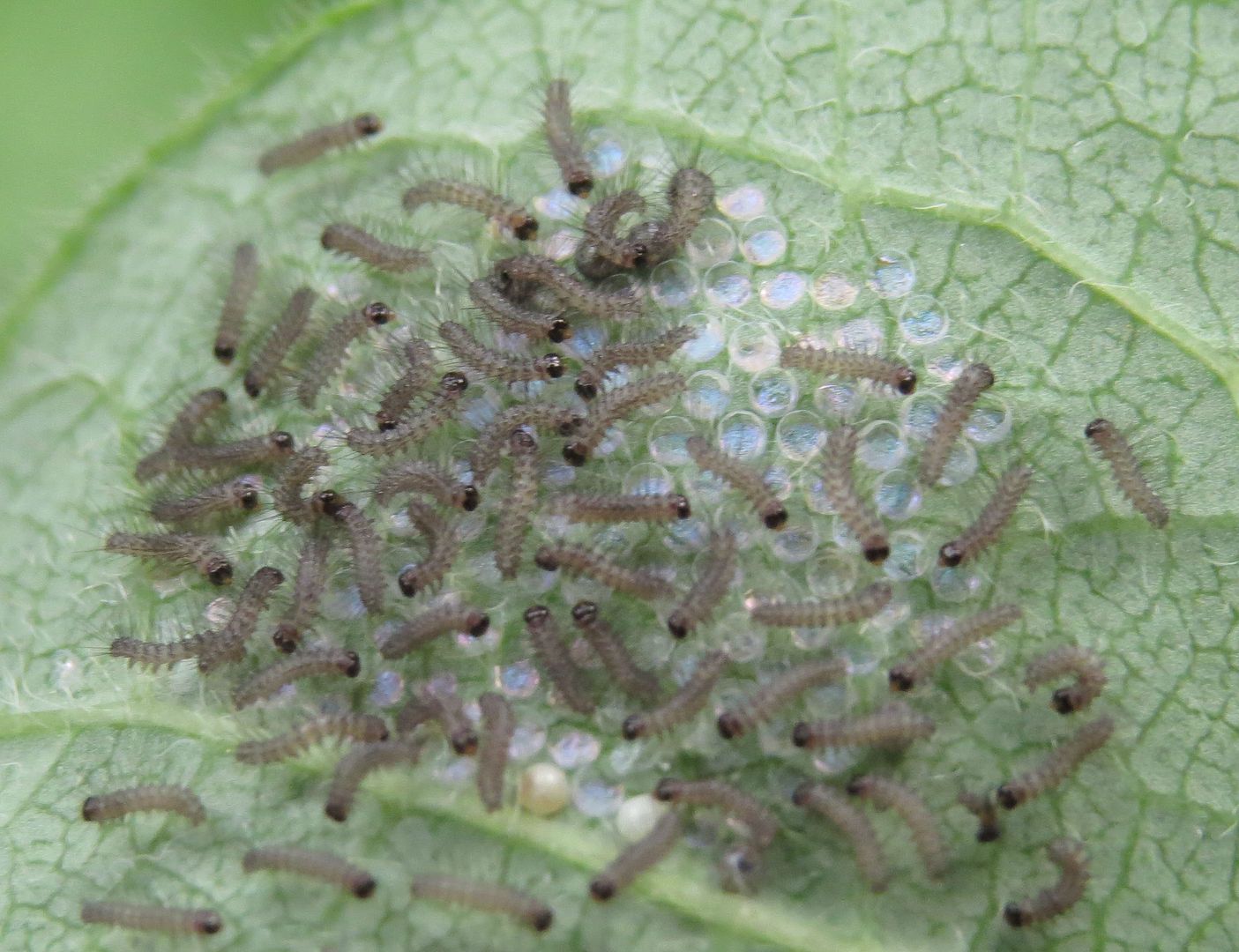
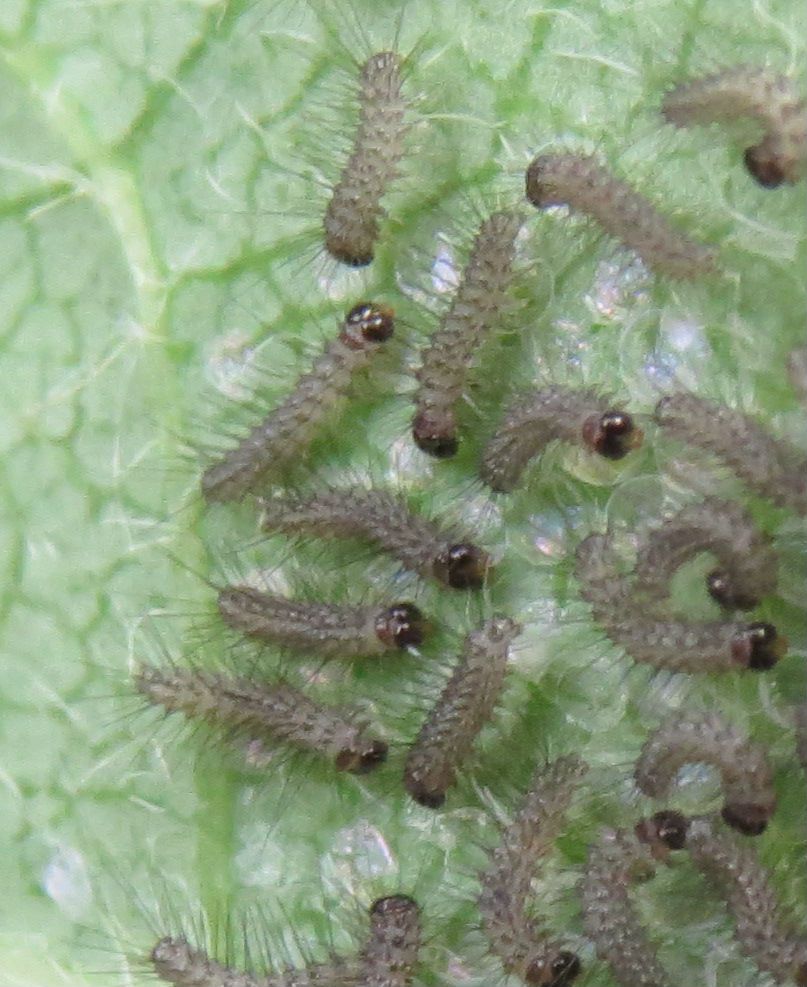
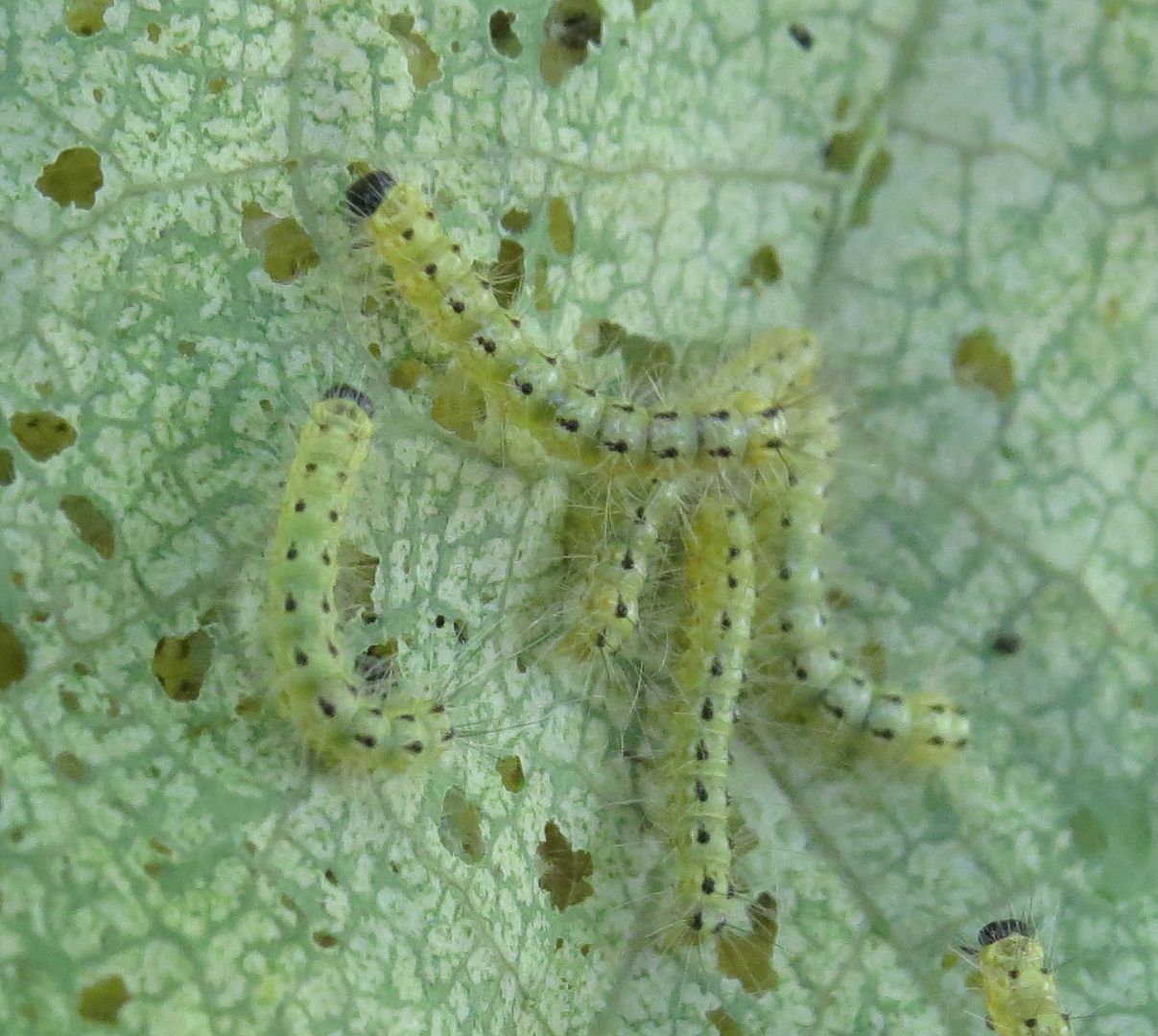
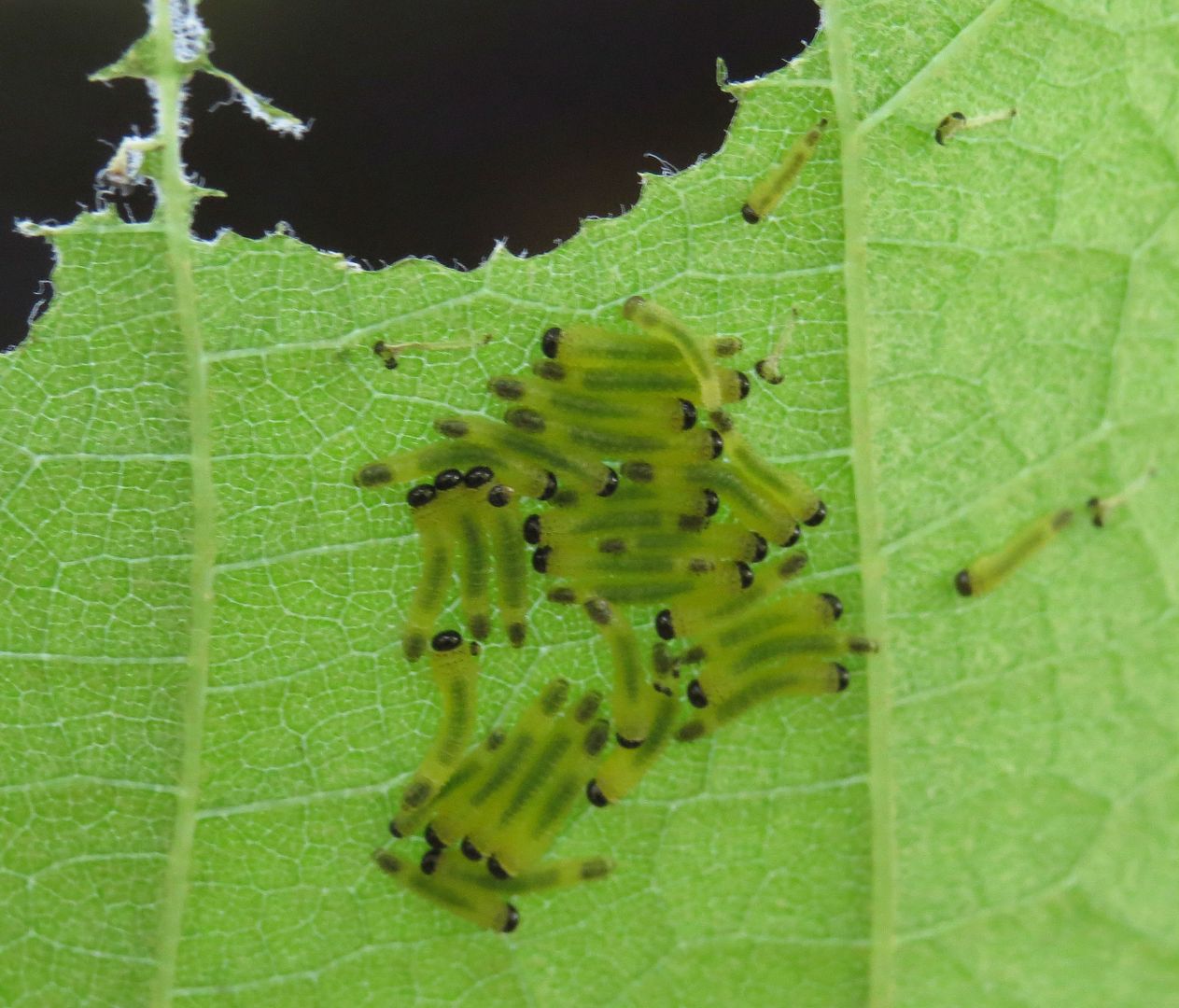
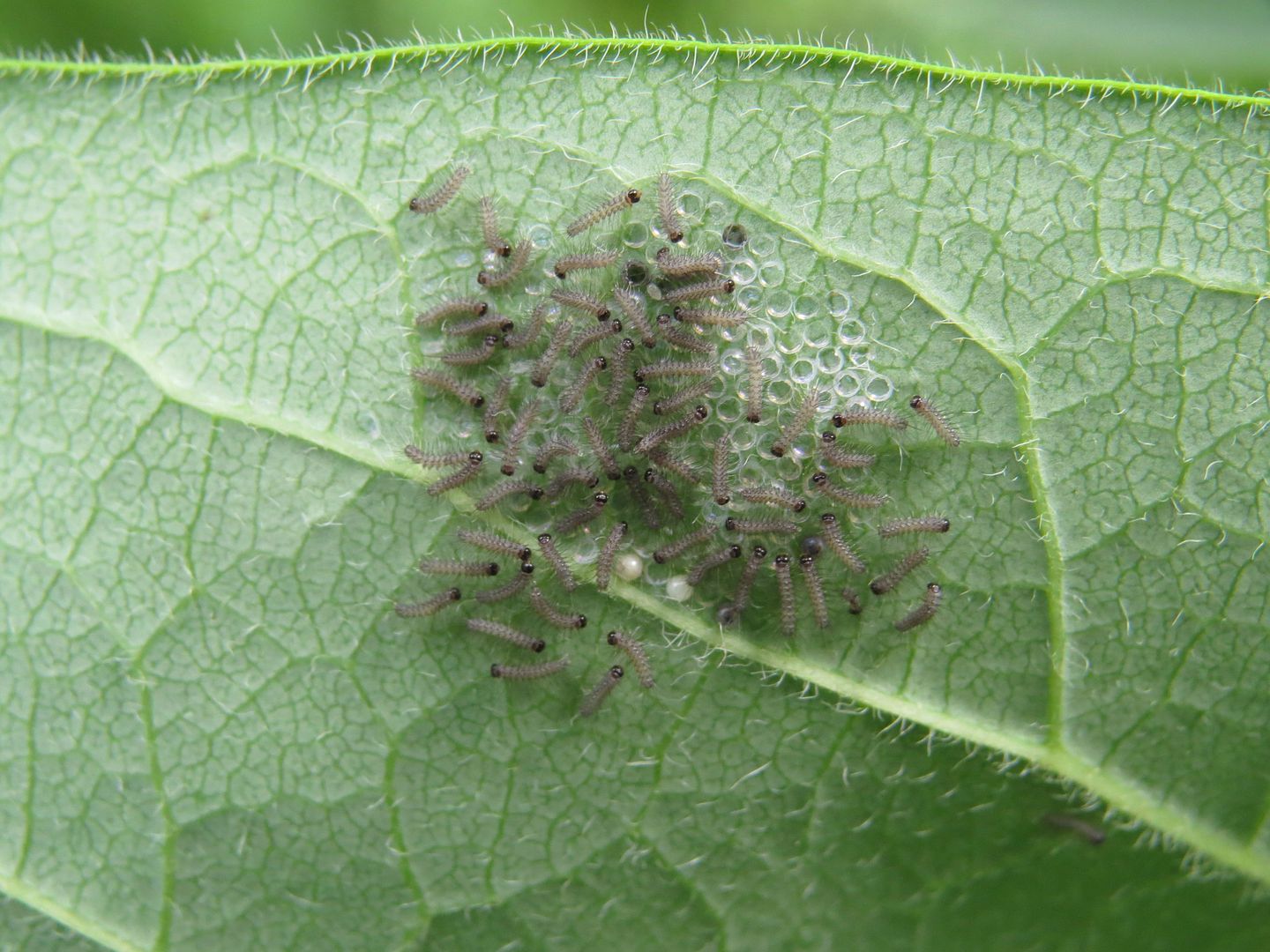
One thing I had to photograph was this patch of caterpillars on my Persimmon tree. My assumption was they were some type of giant silk moth but I don't believe that to be the case.
Unfortunately they were all dead the next morning. No doubt a large black carpenter ant, Camponotus pennsylvanicus, came along and chewed them all up into mush as there were several of those out on the tree. The whole clutch of them could have fit on a quarter, they were that tiny. I'm kicking myself for not removing the leaf and placing them into the butterfly cage.
I've no idea what they were, other than they were on Native Persimmon, they're were sort of hairy, and that I live in New Jersey. If anyone out there wants to take a crack at identifying them, be my guest.
So I then realized this week, there are a lot of caterpillars in my yard!
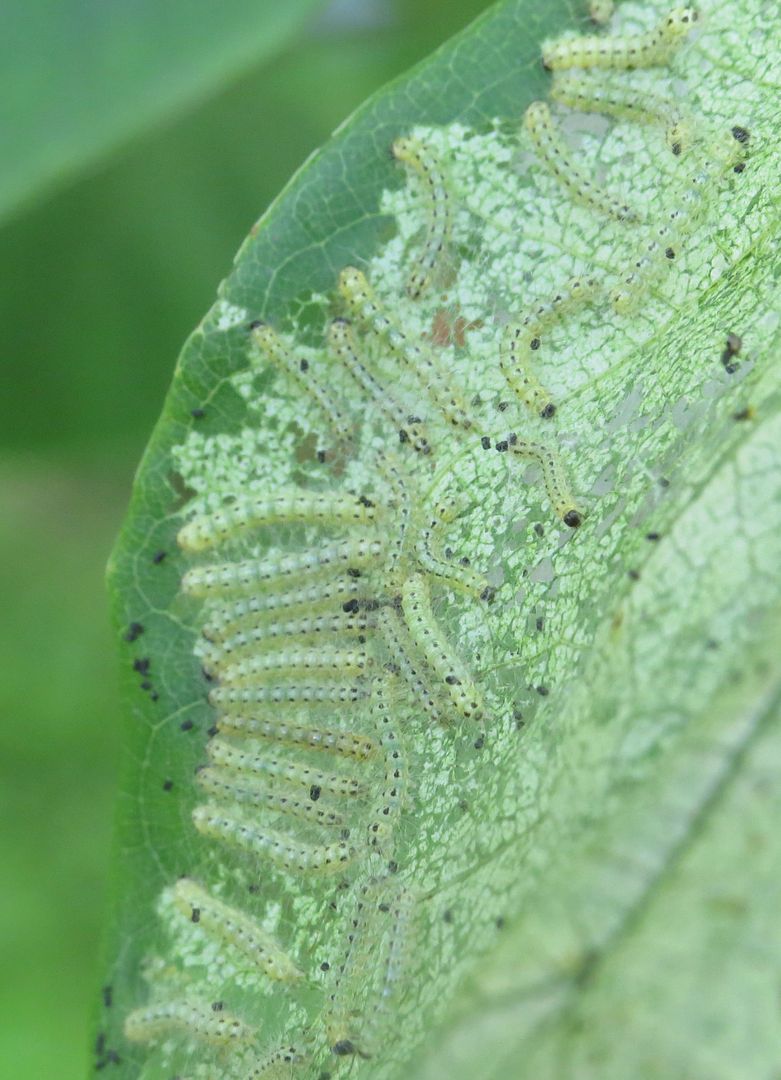
The Eastern Redbud has Fall Webworm, Hypantria cunea, which are poorly named because it's clearly the start of summer.
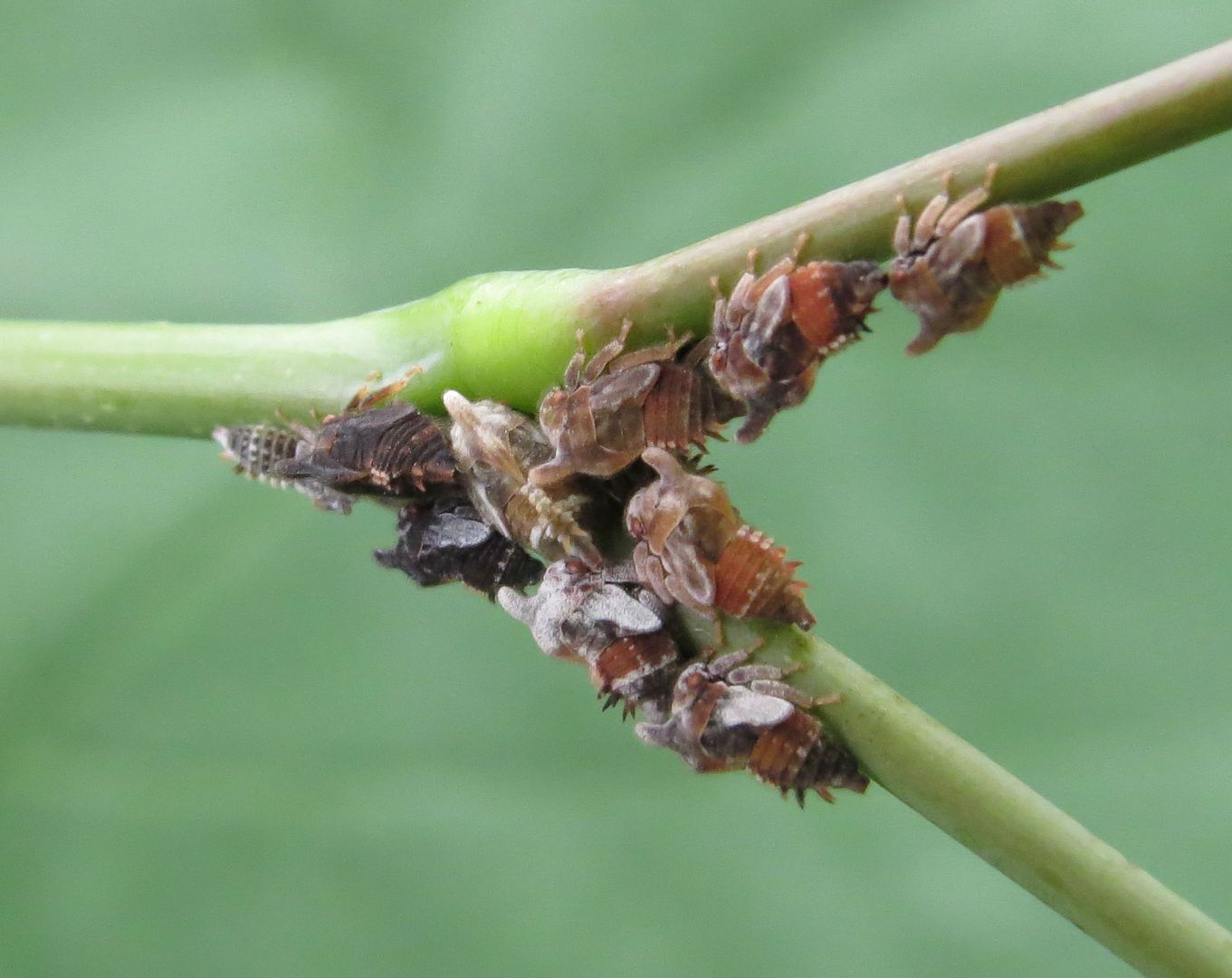
The tree also has treehoppers and a few aphids which are attracting ants that are supposed to help prevent insect herbivores or at least discourage and harass them onto other plants. It's not a perfect system but it does have an effect.
Fall Webworms get around this though by sticking together in a small group and forming webs around the leaves they eat for protection.
They do this until they're big enough to take on a few ants or develop other defenses. I'm not sure what they are for this species but I know long hairs, tasting bad, chemical weaponry, are a small taste of what some caterpillars do for protection. It's the early instars when the caterpillars have basically just hatched and don't have these defenses when they're picked off by everything, like the ones I found on the Persimmon tree.
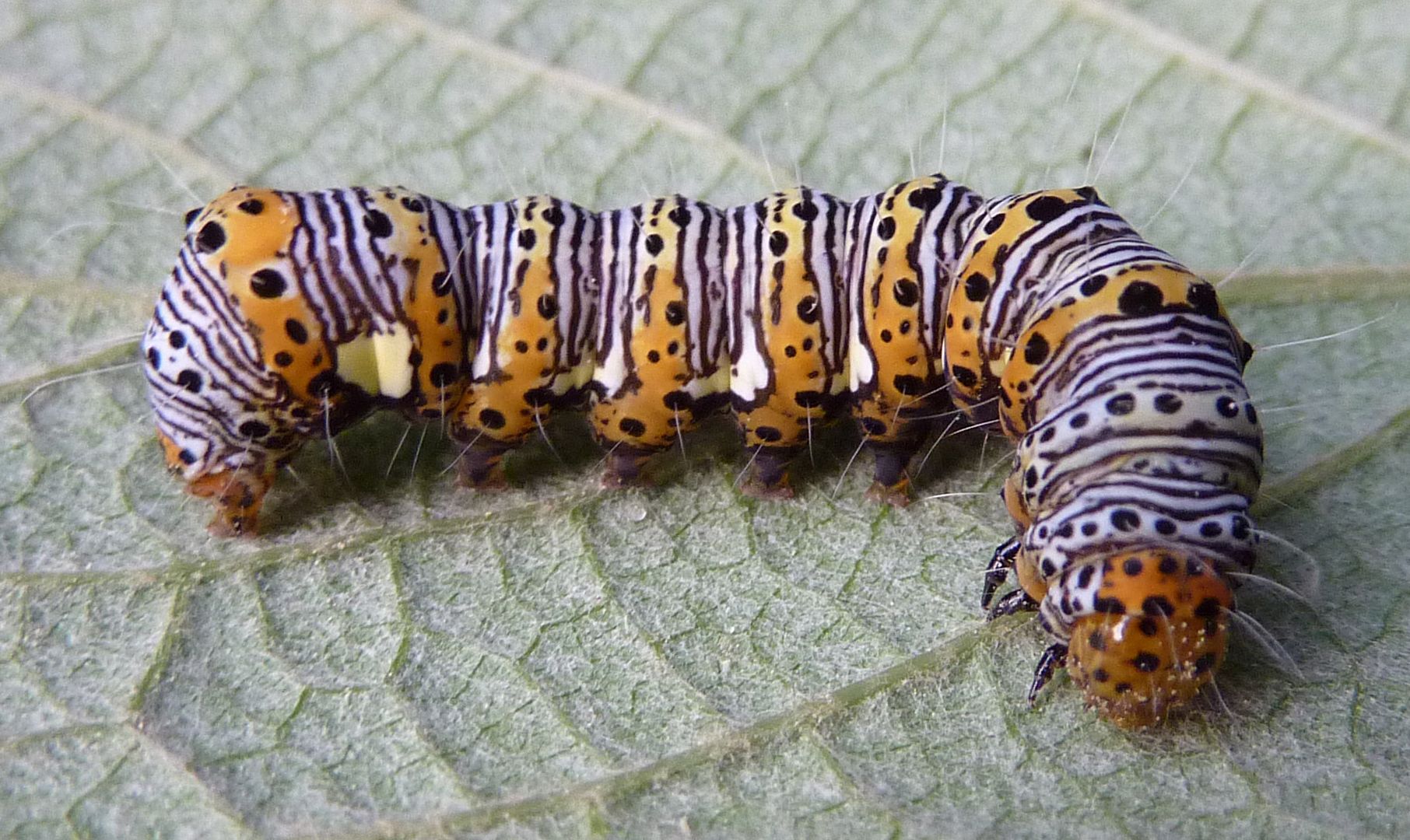
The Eight-Spotted Forester is a day-flying moth (not quite a butterfly) that hosts on grape vines. The adult has black wings and eight cream/white or pail blue spots on the wings, hence the name.
Caterpillars are somewhat colorful looking and are in the habit of jumping ship upon disturbance, often leaving a silk lasso behind so they can climb back up. Grape Vines are very aggressive growing and often the caterpillars don't effect the yield of the crop.
Now I tried looking up what young Eight-Spotted Foresters look like, and I don't think these are them. What interests me is that the grape vine doesn't have any pores that produce extra floral nectar or attract aphids and other insects to do that for the plant. So that means the only ants walking over the plant are simply foraging for the sake of it, meaning fewer ants compared to a plant that's gushing out food to encourage them. So I'm curious to see how far these guys get.
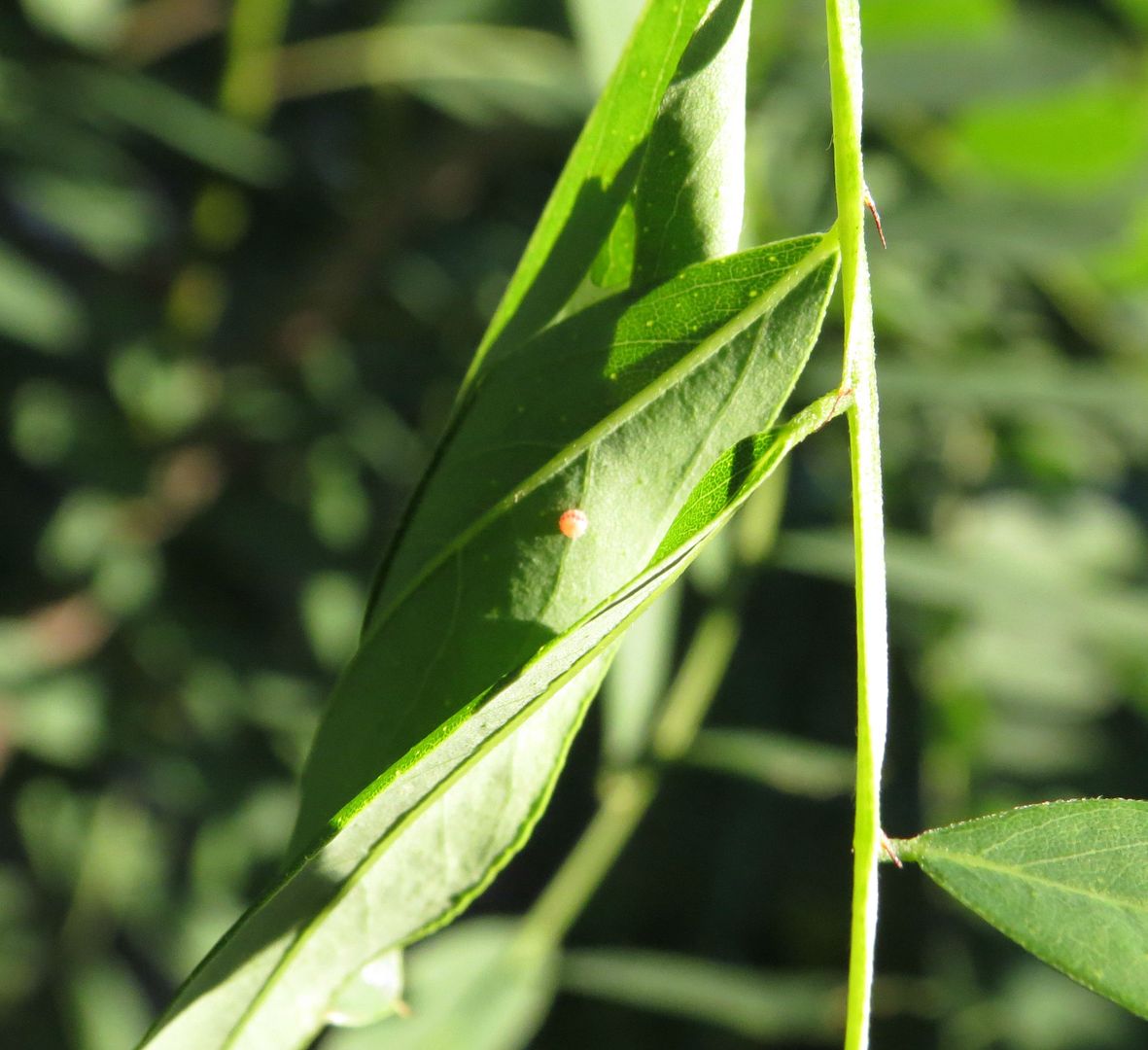
And lastly the False Indigo Bush, Amorpha fruticosa, has not only eggs but fully grown caterpillars on it.
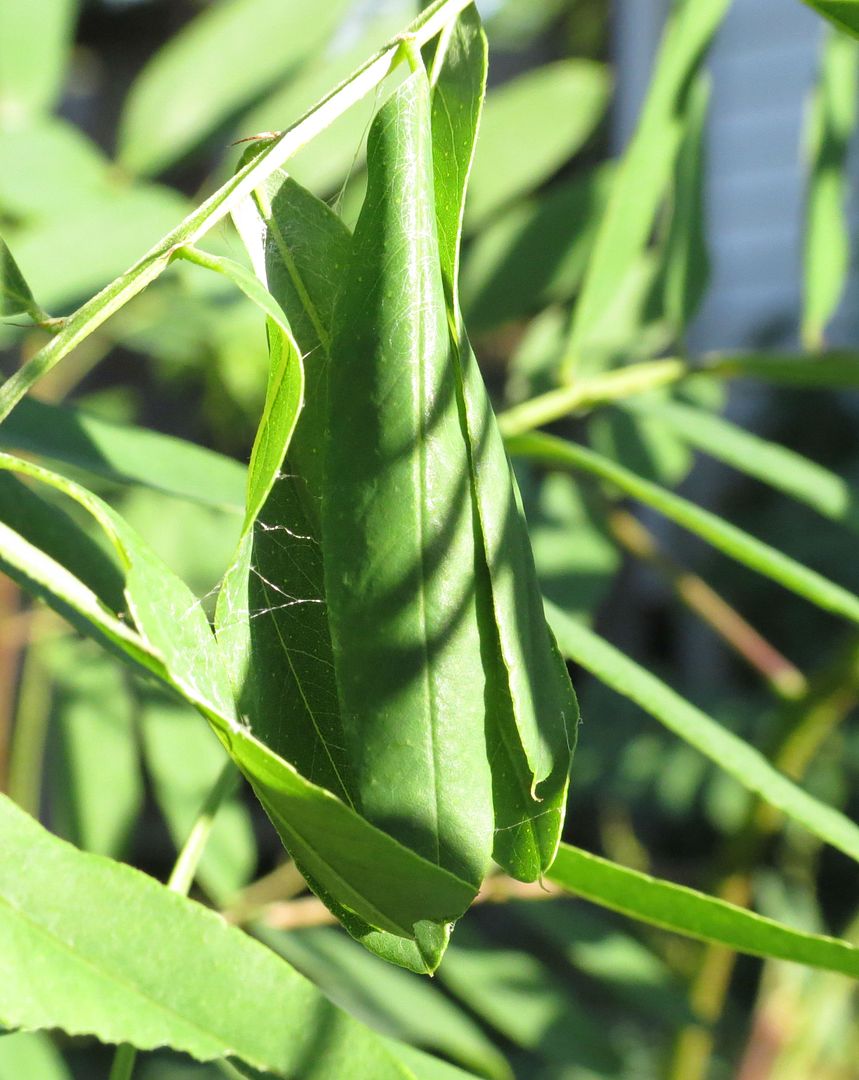
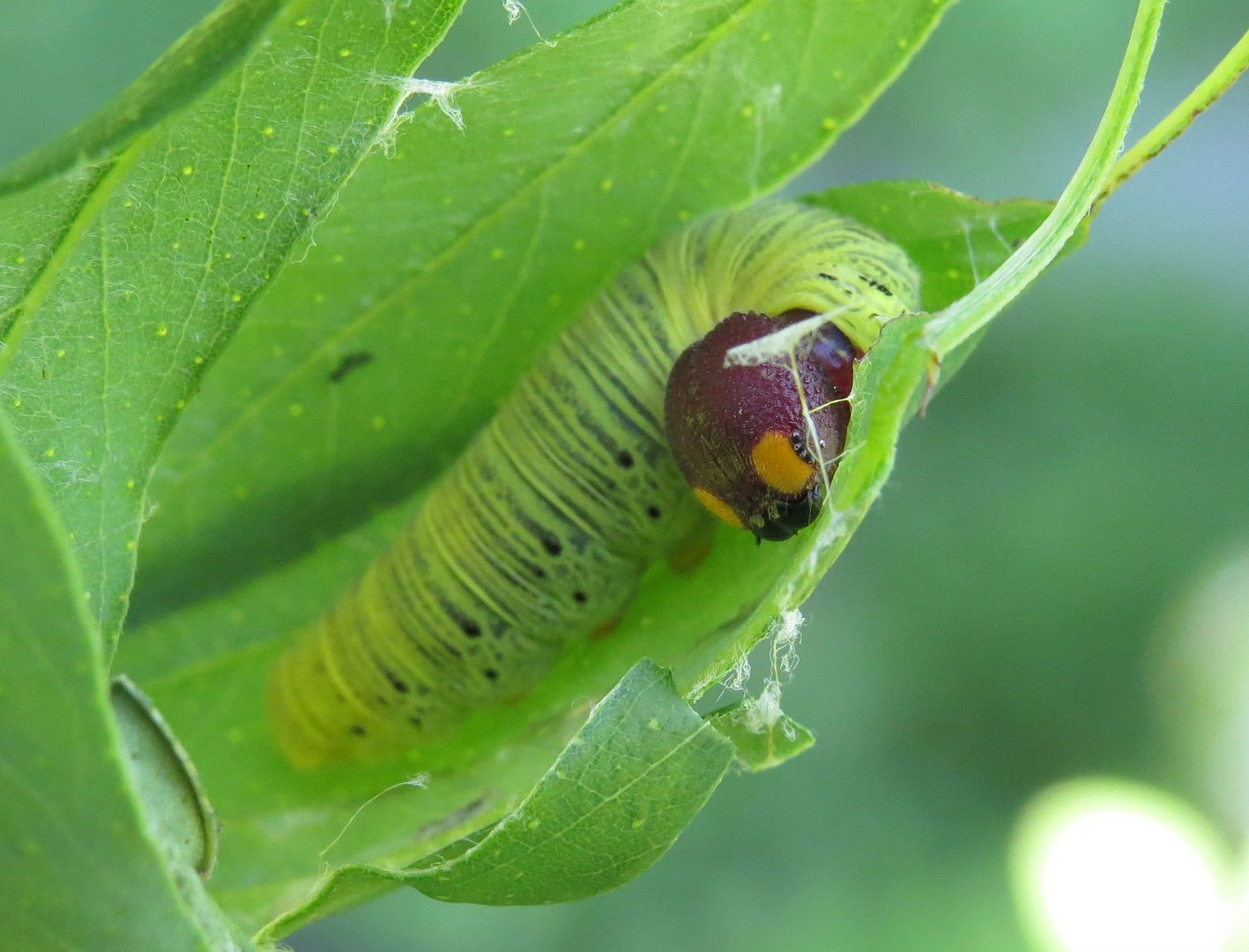
Silver Spotted Skippers, Epargyreus clarus, forage at night, making them hard to spot. During the day they stay inside a small "shed" of leaves they've woven together to hide from birds. Smaller caterpillars simply chew a section of a single leaf and fold it over with silk.
This is another case of the plant not attracting ants, other than letting them steal nectar from the flowers, but even this isn't a popular practice compared to other plants.
The caterpillars are a decent size and employ an additional tactic to hide from ants. One of the things ants look when hunting is insect frass; when they find it they know an insect can't be far. In this case though the caterpillars actually launch their frass pellets several feet away from them. They also lay silk down on just about everything they walk on to discourage ants from following them.
Showing posts with label Grapes. Show all posts
Friday, June 20, 2014
Friday, October 18, 2013
The Wildlife Gardener's Meetup (Part 3)
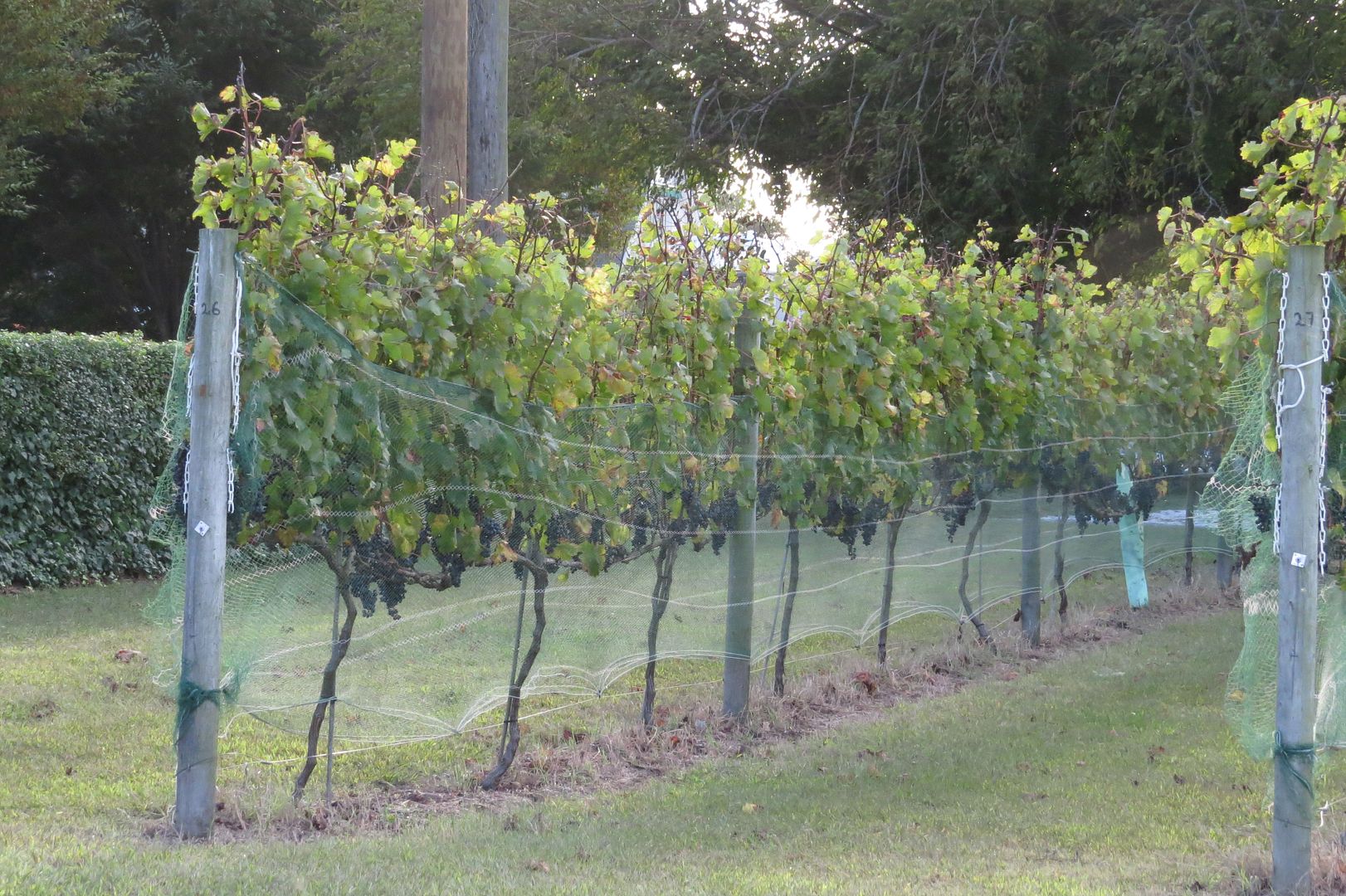
On the last day of the Wildlife Gardener's Forum meetup, we went to Cape May, NJ. I had never been there before but always heard good things. On the way there we came across a grape farm (vineyard?) which still had grapes growing. It was neat to see how they protect the fruit with lines of cloth. I'll have to mimic this method myself somehow.
Also before we got there, there was a group of photographers all standing in the road, cameras focused on a tidy little garden they have down there. These people were blocking the road and all anxiously awaiting for something to happen. Apparently some west coast hummingbird species had been spotted there the previous night and everyone was standing there waiting for it to show again... we stopped a moment to think if that would be worth our time but decided it was not. While leaving we asked if it had shown and it hadn't.
Cape May is the southern most point of New Jersey which also bottle necks into a peninsula, making it ideal for viewing most things that migrate at this time of year. It was a little late though so we caught the tail end of the Monarch Migration and little else.
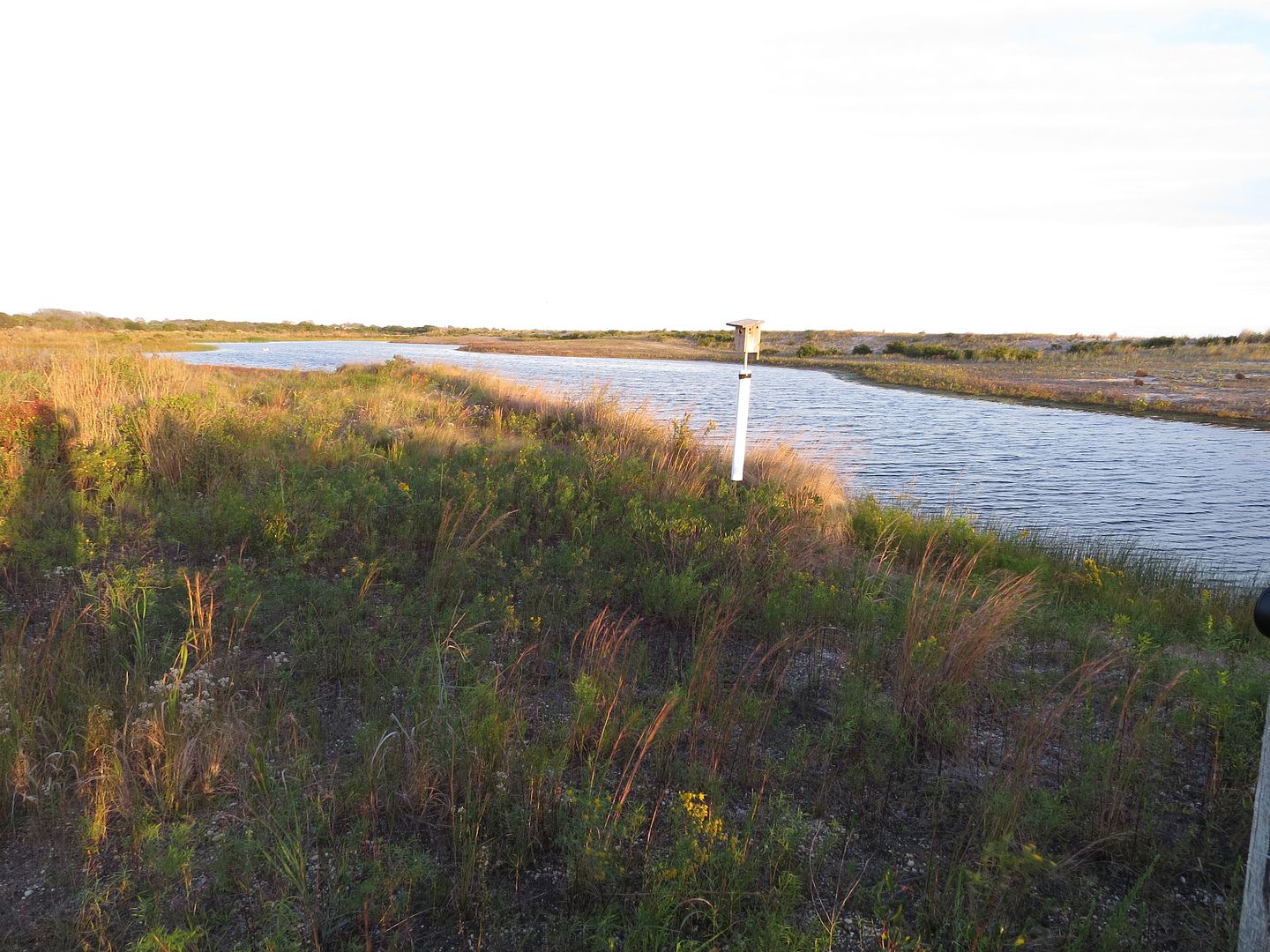
The park was a nice wetland area with trails leading all up and down the bays and beaches there.
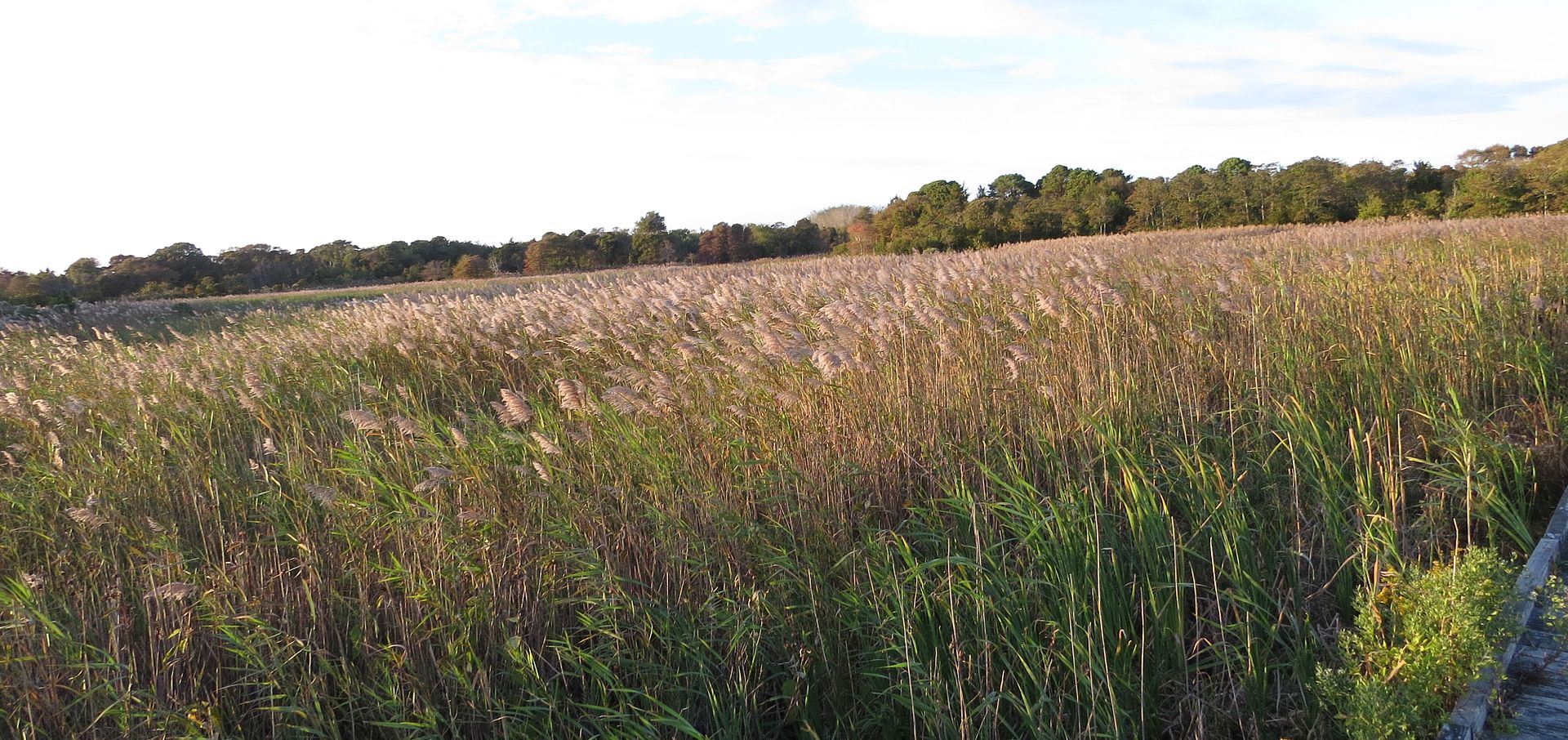
The least interesting parts were those overrun with the invasive Common Reed Grass, Phagmites australis. This grass can be drown as a method of control, and though it likes growing in wetlands it's very growing habit slowly generates new land. They push up so much top growth every year that it doesn't decompose until several years more, thus the ground is slowly raised. Seeds are air born, and once established they will send out runners several feet away, making them quick to colonize.
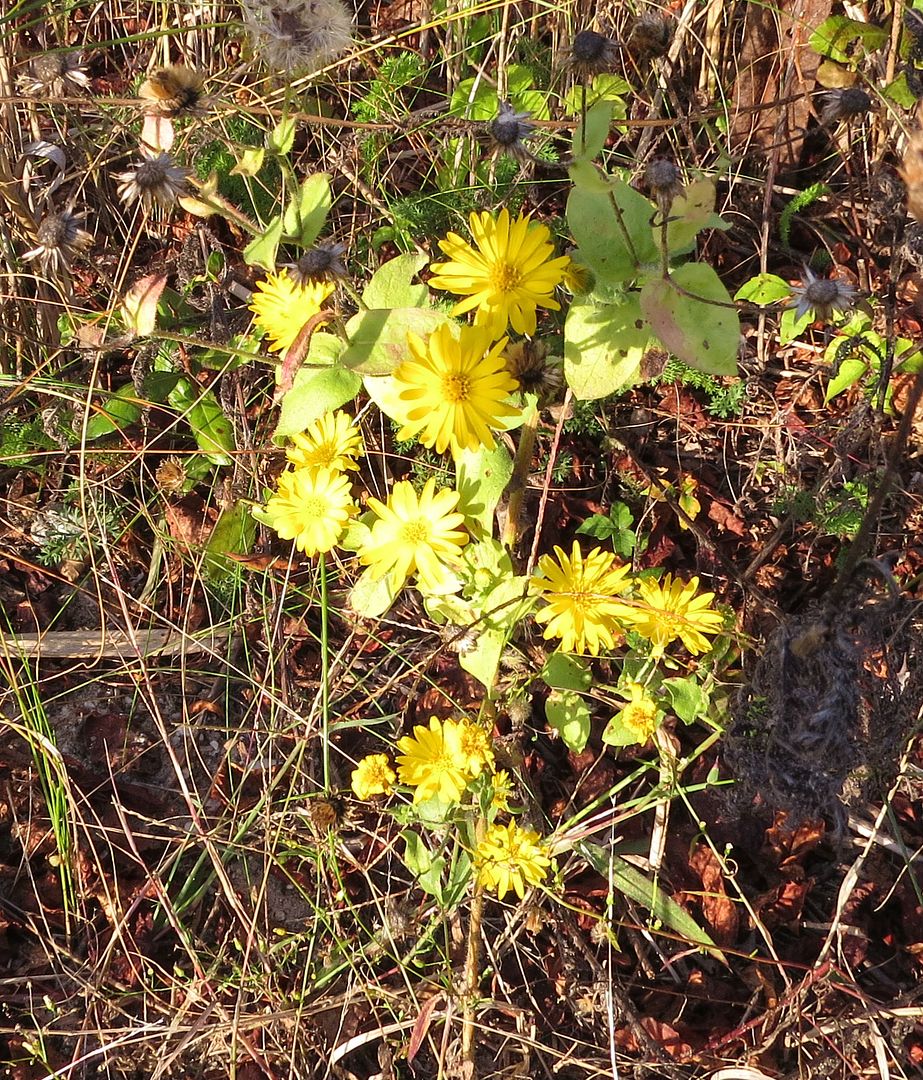
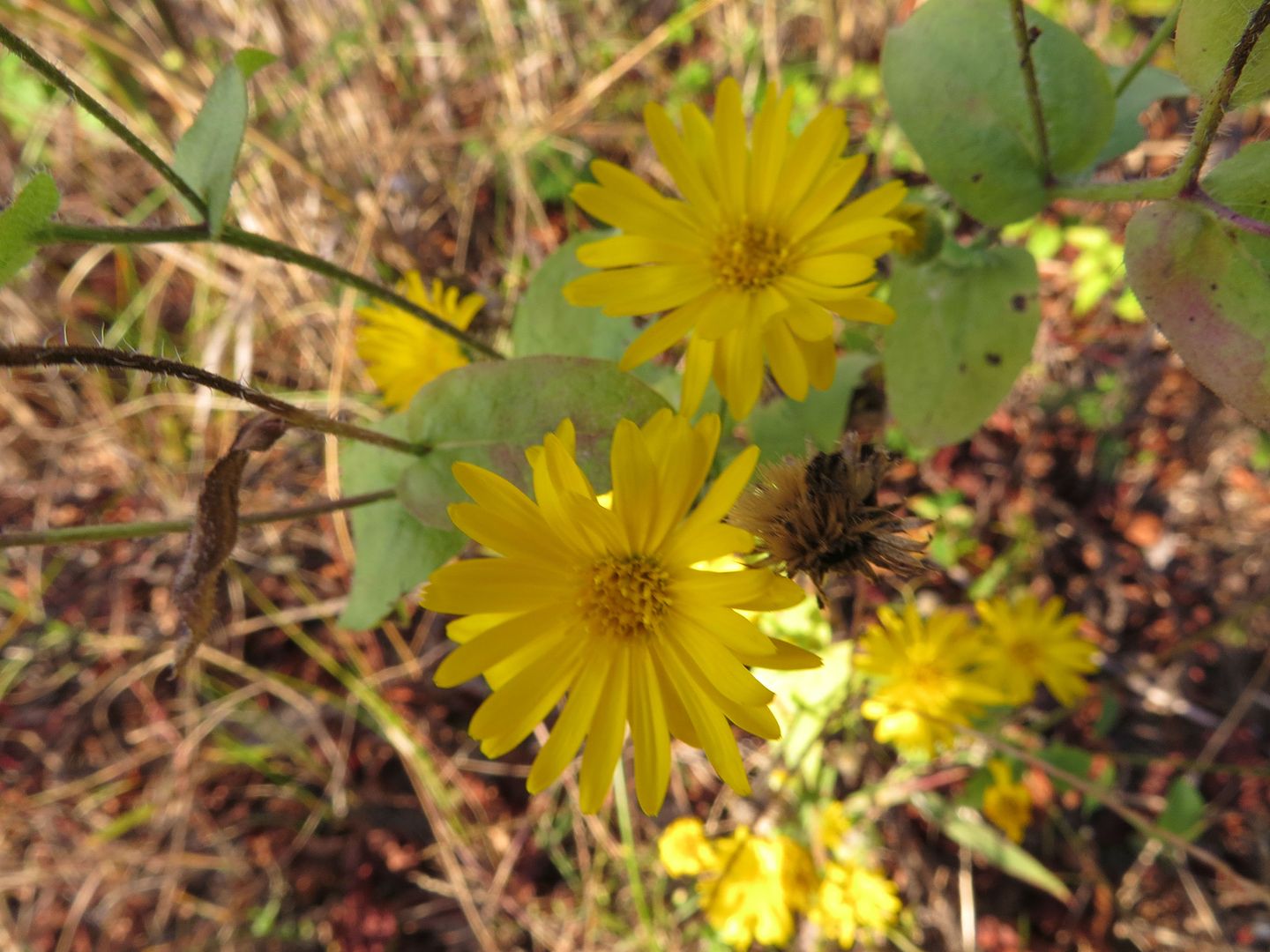
The occasional Golden Aster, Heterotheca and Chrysopsis sp. grew in places. Overall it was a rare plant but still a nice one to see.
I don't think it's Maryland Golden Aster, but certainly something in that genus, (or the other one).
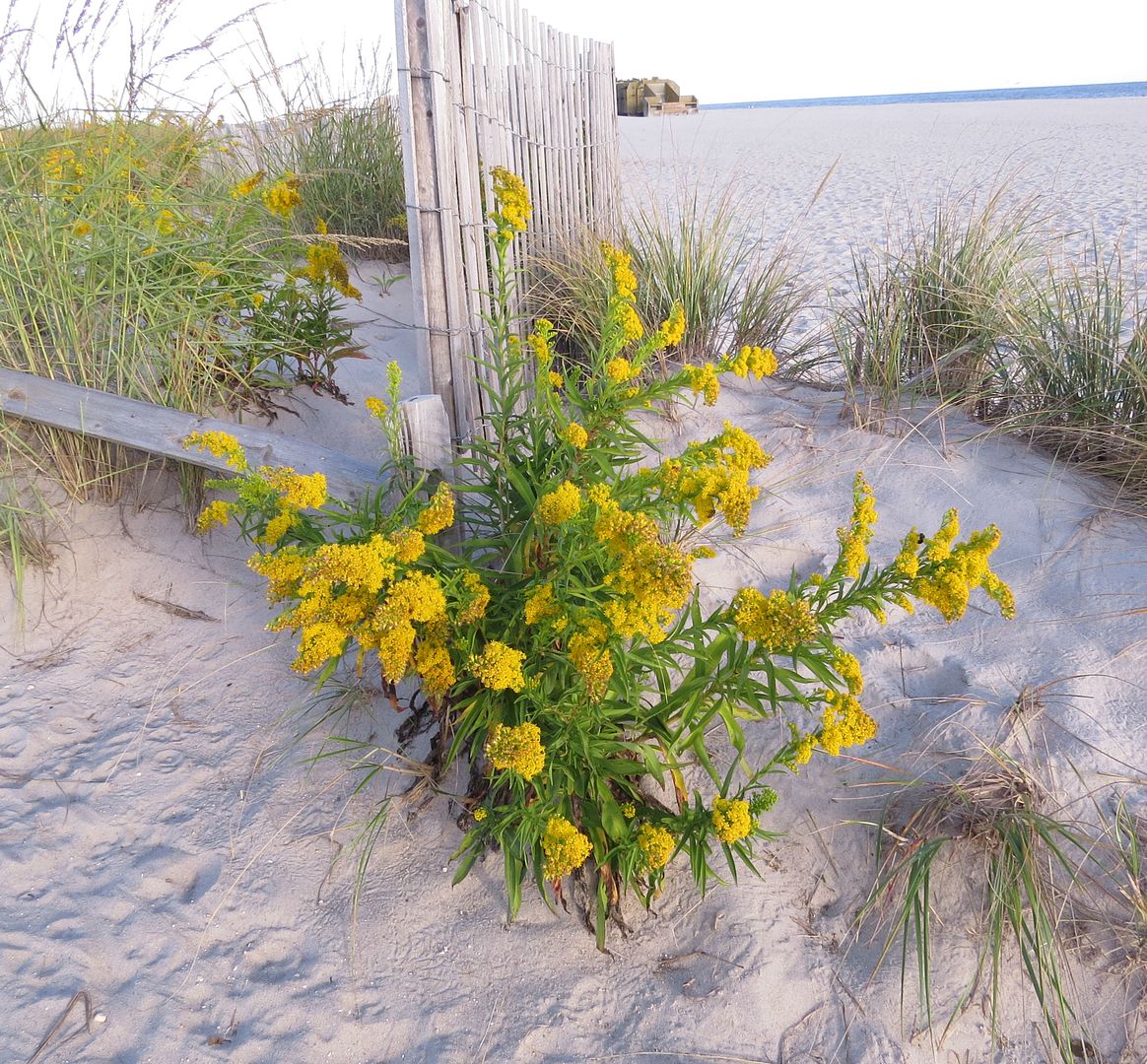
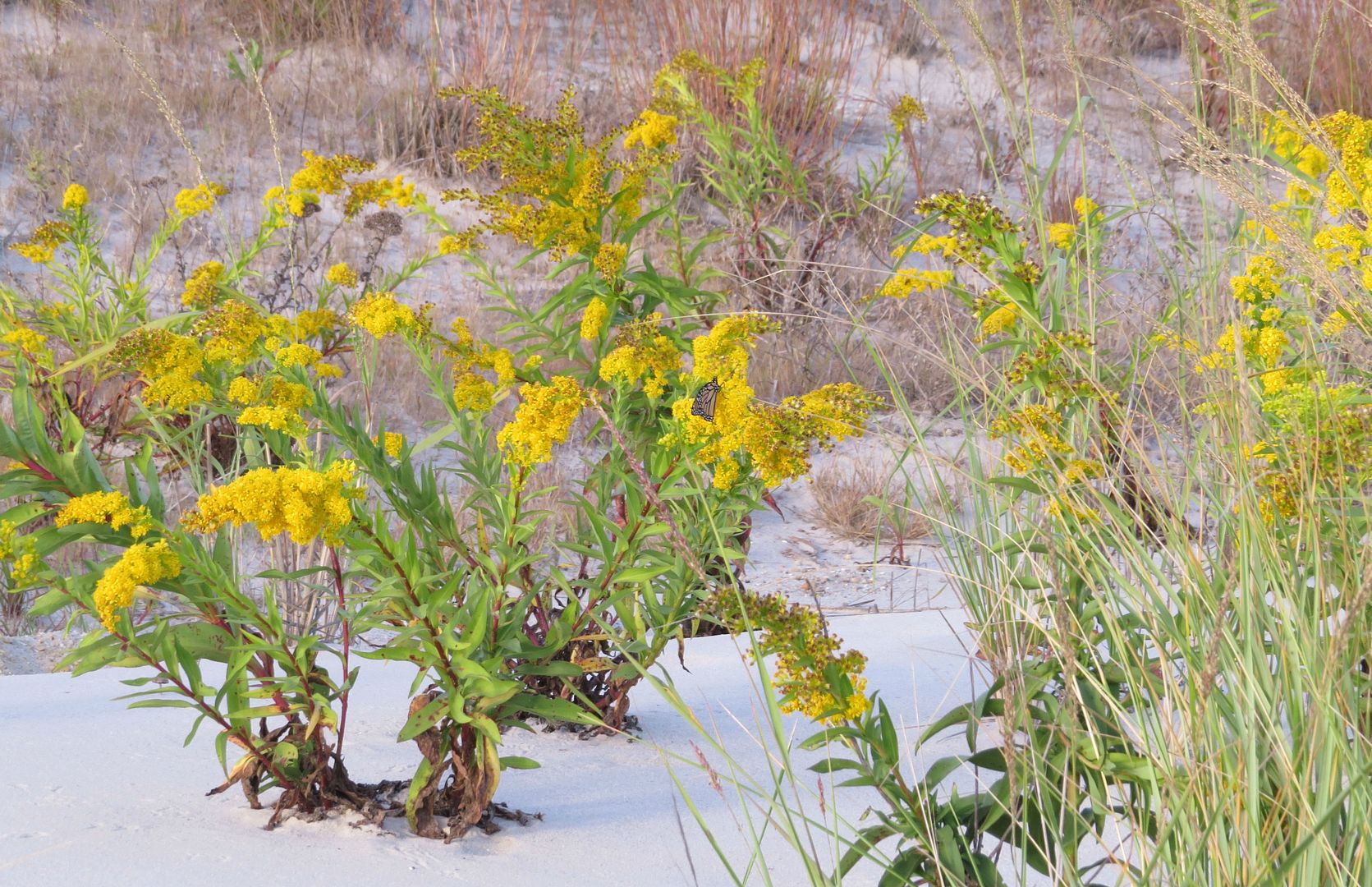
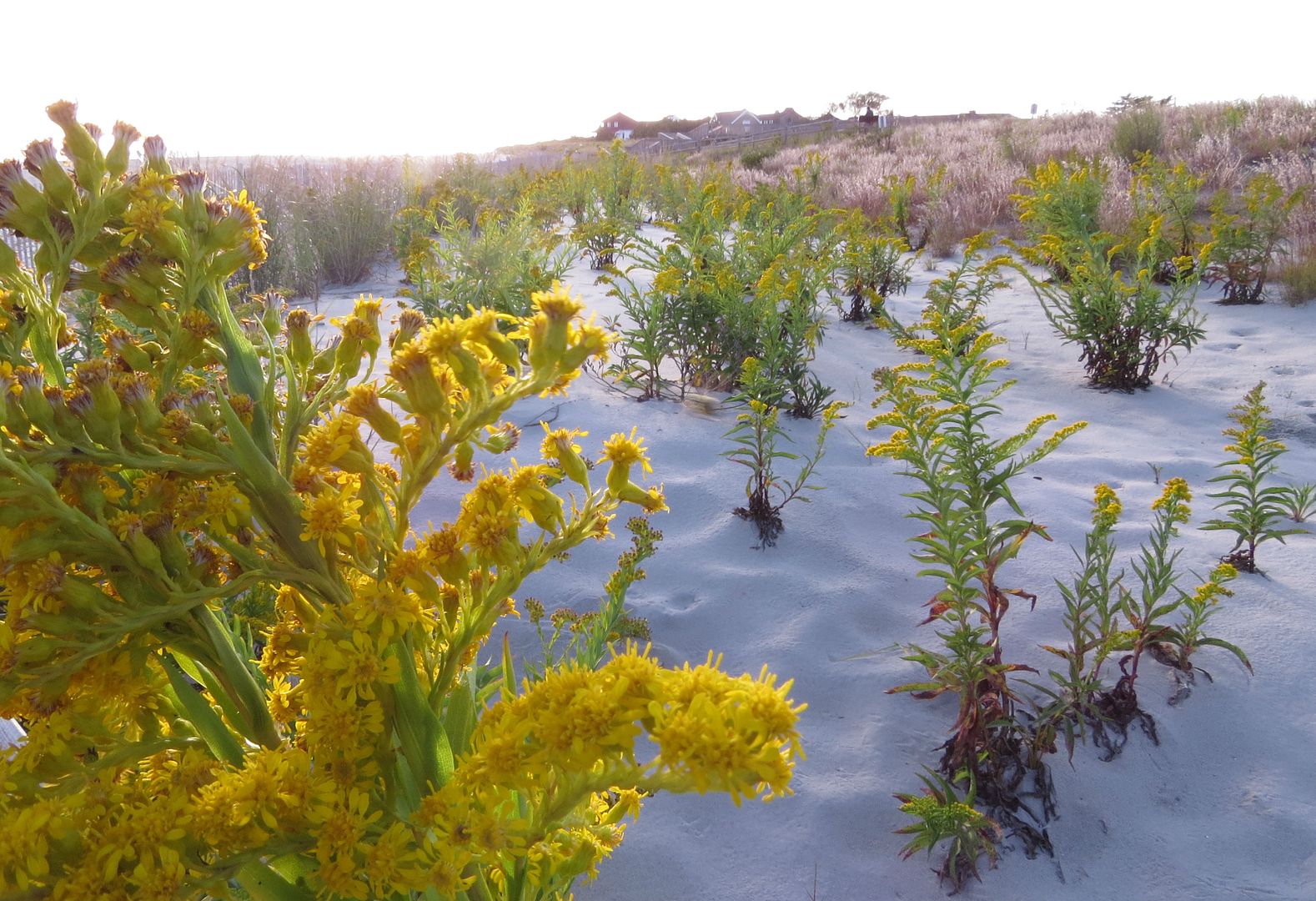
Along the beach there seemed to be some sort of restoration project. There had to be a few thousand plants of Seaside Goldenrod, Solidago sempervirens, and what might be Little Blue Stem, or it's sand and salt water tolerant counterpart.
This is a fantastic goldenrod species. If I had a dune of 100% sand in my yard I'd certainly be trying to grow it! The plant is a good size, they don't seem all that aggressive, and the flowers are as nice and showy as Showy Goldenrod.
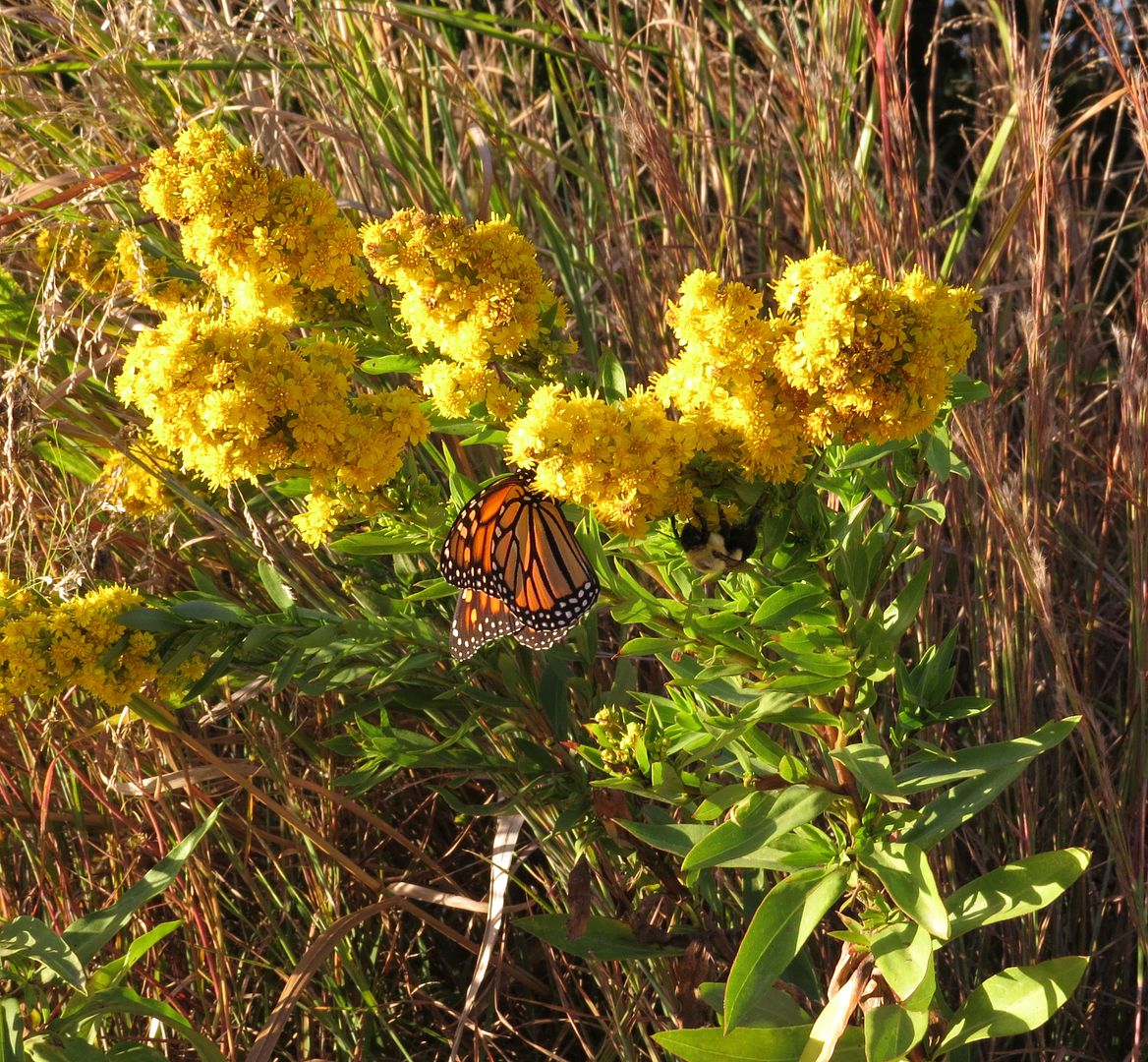
Monarch Butterflies swooped about from plant to plant. Most of them seemed to be having difficulty staying with the plant from the force of the wind though. As I mentioned earlier this was the tail end of their migration so we really only saw a few dozen. But that's a lot more than I had in my yard this year or had seen flying around.
Beautiful Plant.
They were less common inland where the soil turned more rocky than sandy, but Monarchs found them all the same.
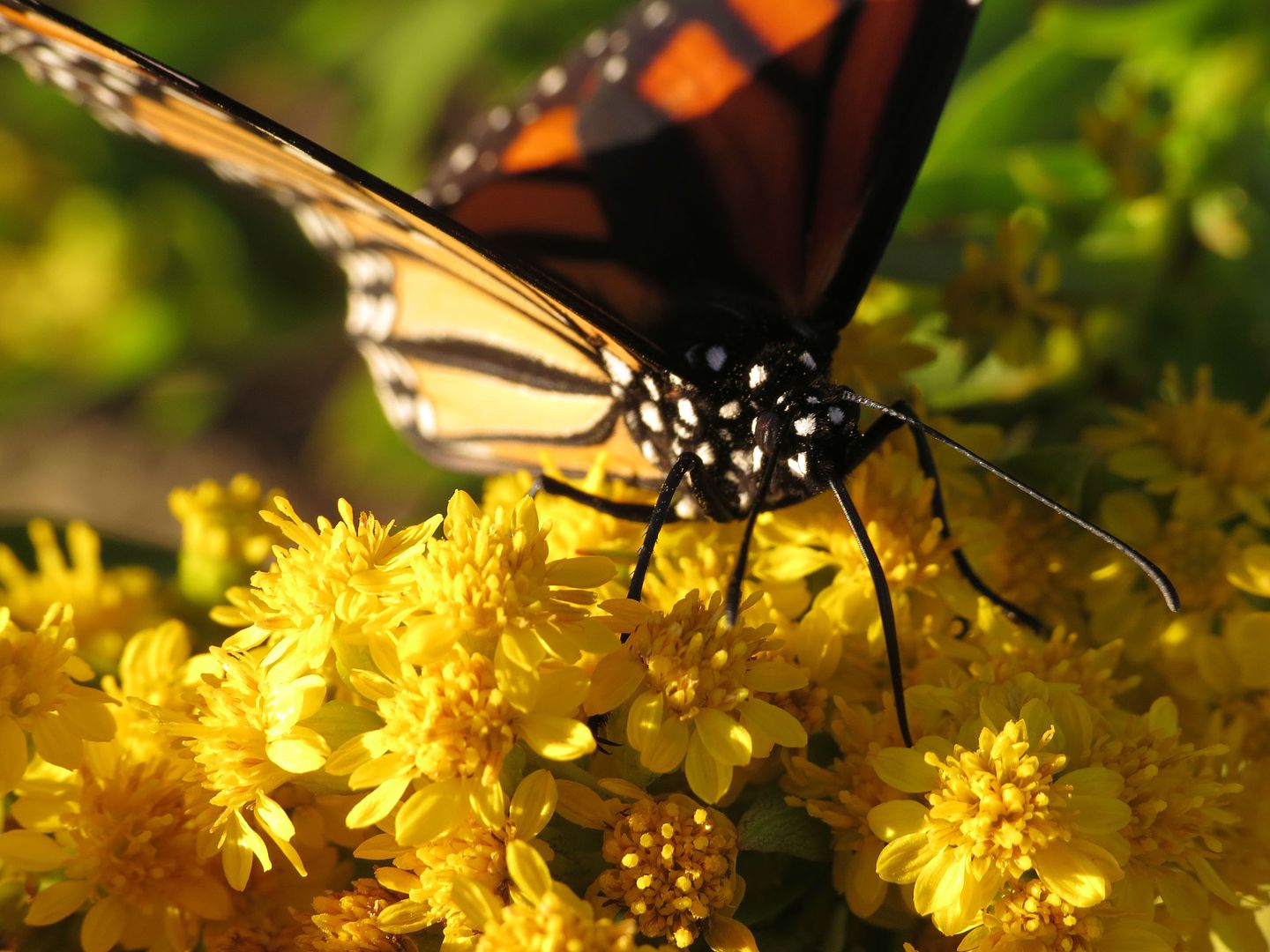
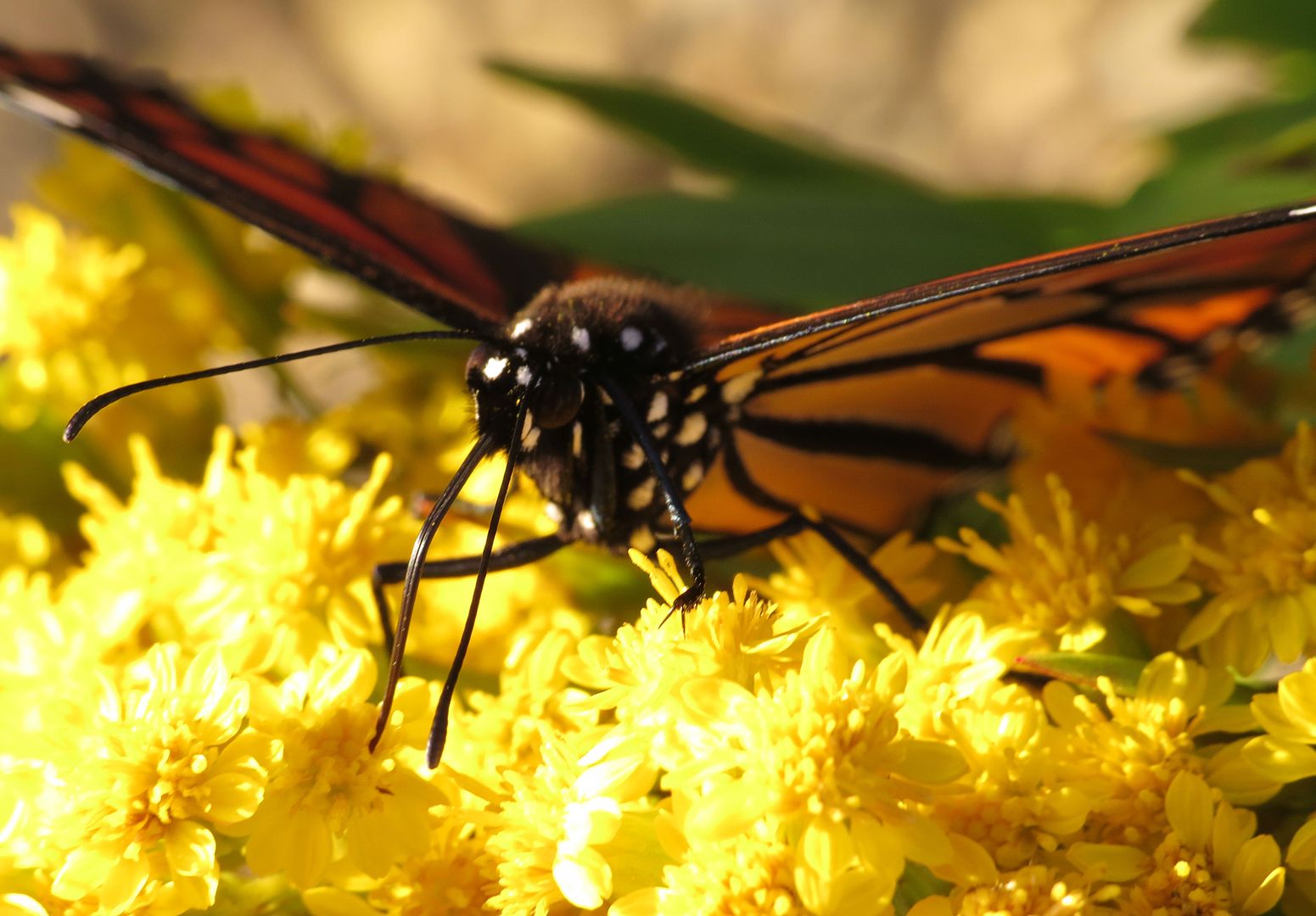
I got to test out my new Raynox DCR-250 Super Macro Snap-On Lens with some Monarchs and in such beautiful lighting! This little snap on works with just about any camera that has a clip on lens cap, and is well worth the money.
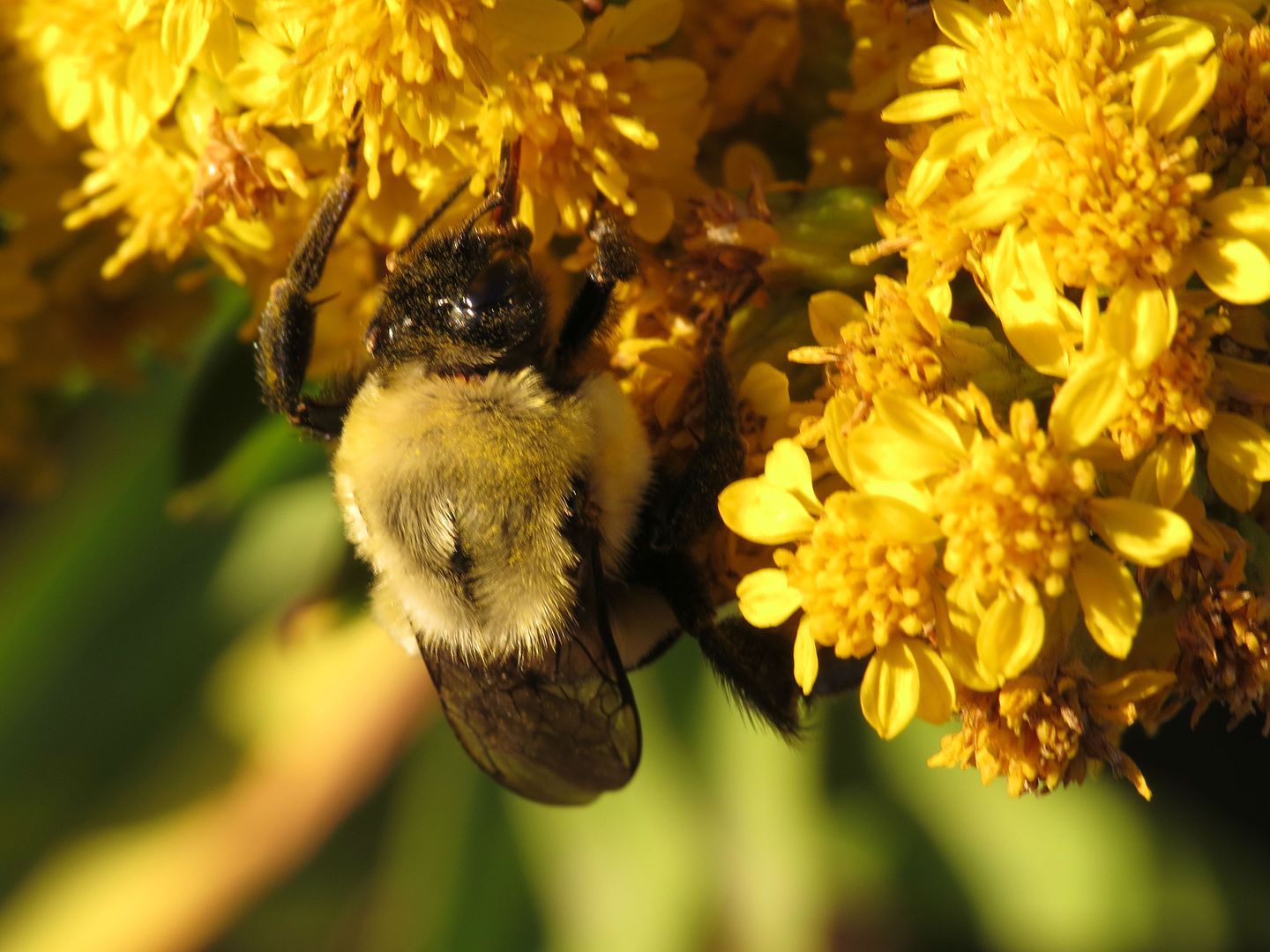
A queen bumblebee. She won't start a nest until next year but in the mean time they fuel up on nectar.
This one fooled me a bit because the bee that it was mimicking were on other plants.
This is a bee mimicking flower fly. They do this to be left alone, and sometimes to sneak into bumblebee nests to lay their eggs upon the decomposing parts of the nest. I don't think they're a pest to bumblebees (though I might be wrong) but this camo also means fewer predators will mess with them.

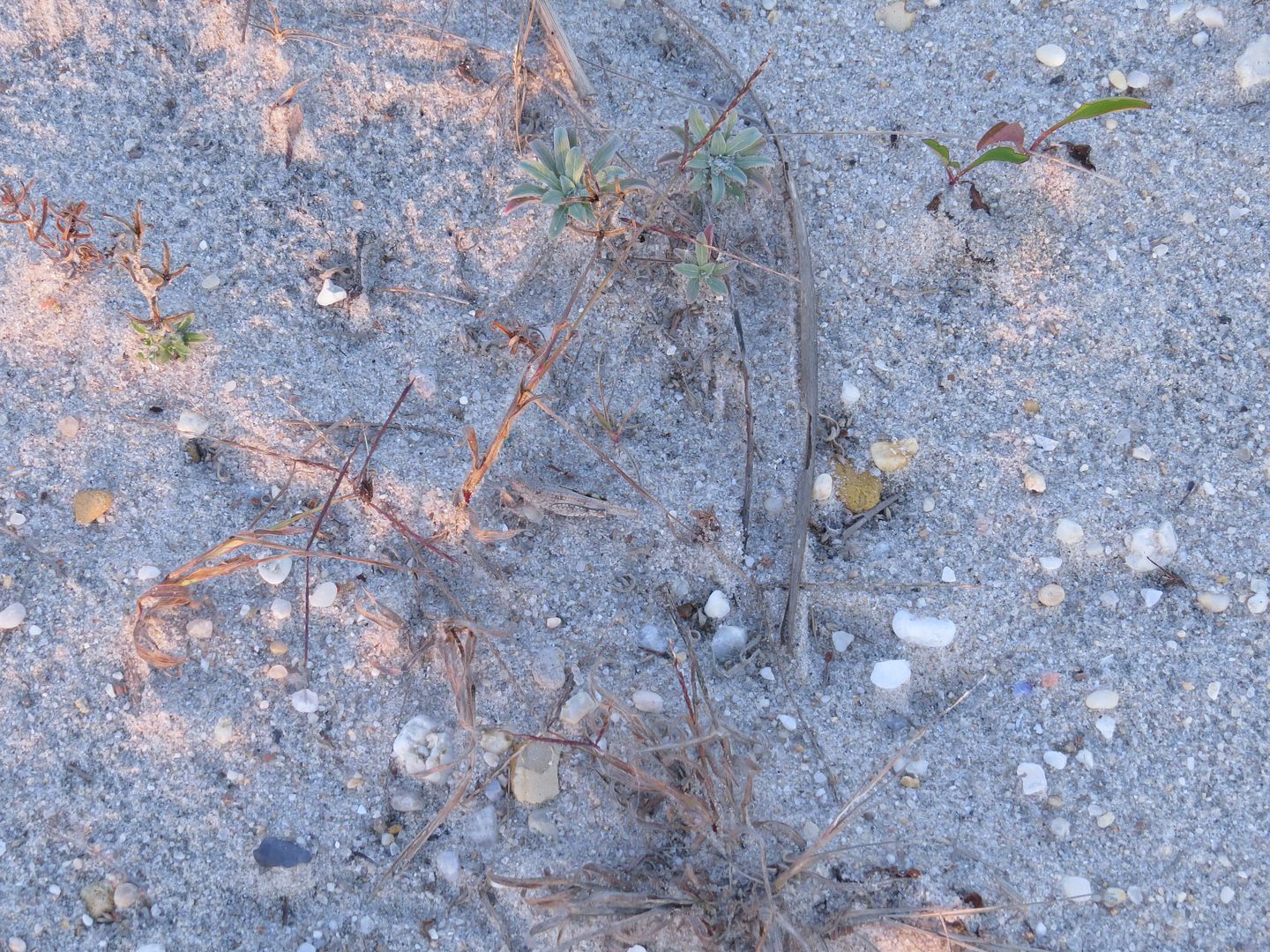
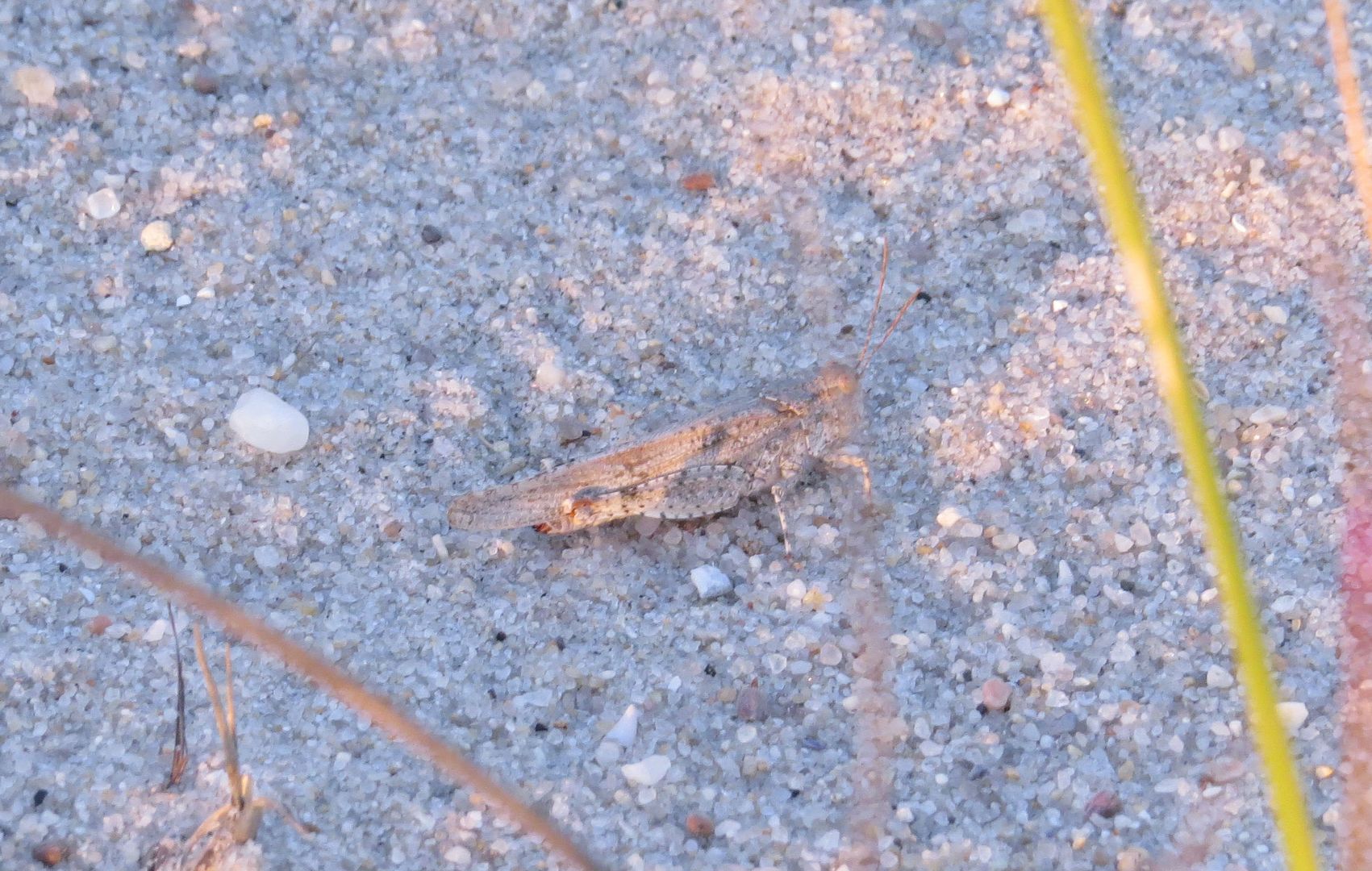
Back at the beach there were other critters in camo. Can you see it?
This grass hopper is perfectly colored to blend in with the beach.
The sky away as we looked away from the sun.
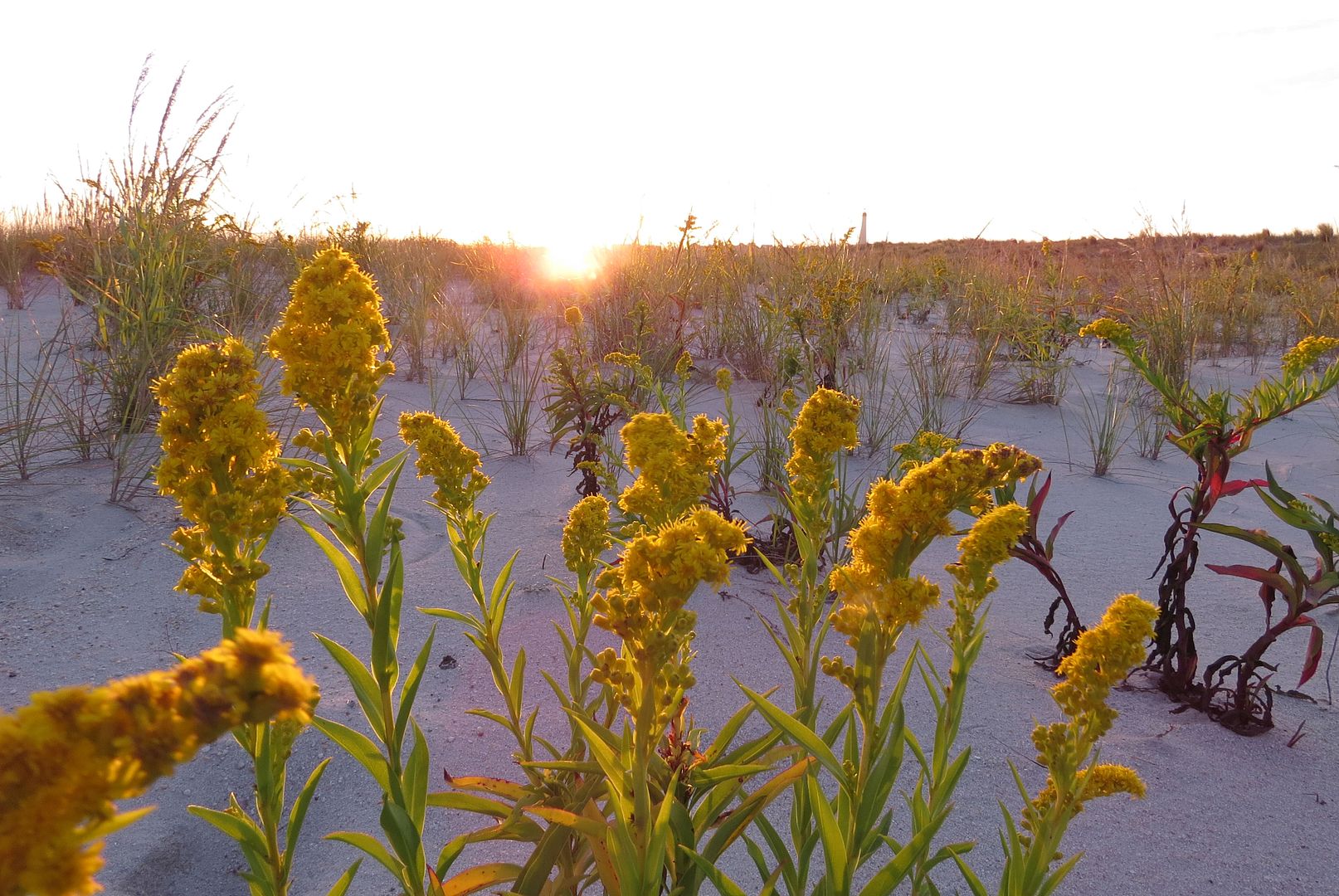
Goldenrod as we looked toward the sun.
... we were parked over by the light house.
Walking back to the car proved to be one of the prettiest moments of the whole day. I'll have to do this again next year.
Also before we got there, there was a group of photographers all standing in the road, cameras focused on a tidy little garden they have down there. These people were blocking the road and all anxiously awaiting for something to happen. Apparently some west coast hummingbird species had been spotted there the previous night and everyone was standing there waiting for it to show again... we stopped a moment to think if that would be worth our time but decided it was not. While leaving we asked if it had shown and it hadn't.
Cape May is the southern most point of New Jersey which also bottle necks into a peninsula, making it ideal for viewing most things that migrate at this time of year. It was a little late though so we caught the tail end of the Monarch Migration and little else.
The park was a nice wetland area with trails leading all up and down the bays and beaches there.
The least interesting parts were those overrun with the invasive Common Reed Grass, Phagmites australis. This grass can be drown as a method of control, and though it likes growing in wetlands it's very growing habit slowly generates new land. They push up so much top growth every year that it doesn't decompose until several years more, thus the ground is slowly raised. Seeds are air born, and once established they will send out runners several feet away, making them quick to colonize.
The occasional Golden Aster, Heterotheca and Chrysopsis sp. grew in places. Overall it was a rare plant but still a nice one to see.
I don't think it's Maryland Golden Aster, but certainly something in that genus, (or the other one).
Along the beach there seemed to be some sort of restoration project. There had to be a few thousand plants of Seaside Goldenrod, Solidago sempervirens, and what might be Little Blue Stem, or it's sand and salt water tolerant counterpart.
This is a fantastic goldenrod species. If I had a dune of 100% sand in my yard I'd certainly be trying to grow it! The plant is a good size, they don't seem all that aggressive, and the flowers are as nice and showy as Showy Goldenrod.
Monarch Butterflies swooped about from plant to plant. Most of them seemed to be having difficulty staying with the plant from the force of the wind though. As I mentioned earlier this was the tail end of their migration so we really only saw a few dozen. But that's a lot more than I had in my yard this year or had seen flying around.
Beautiful Plant.
They were less common inland where the soil turned more rocky than sandy, but Monarchs found them all the same.
I got to test out my new Raynox DCR-250 Super Macro Snap-On Lens with some Monarchs and in such beautiful lighting! This little snap on works with just about any camera that has a clip on lens cap, and is well worth the money.
A queen bumblebee. She won't start a nest until next year but in the mean time they fuel up on nectar.
This one fooled me a bit because the bee that it was mimicking were on other plants.
This is a bee mimicking flower fly. They do this to be left alone, and sometimes to sneak into bumblebee nests to lay their eggs upon the decomposing parts of the nest. I don't think they're a pest to bumblebees (though I might be wrong) but this camo also means fewer predators will mess with them.

Back at the beach there were other critters in camo. Can you see it?
This grass hopper is perfectly colored to blend in with the beach.
The sky away as we looked away from the sun.
Goldenrod as we looked toward the sun.
... we were parked over by the light house.
Walking back to the car proved to be one of the prettiest moments of the whole day. I'll have to do this again next year.
Labels:
Beach,
Bumblebees,
Coastal,
Colors,
Fly,
Golden Aster,
Goldenrod,
Grapes,
Grass,
Lighthouse,
Monarch
Saturday, June 9, 2012
Abbott Sphinx
Ohh Abbott Sphinx, Sphecodina abbottii. That's what was eating my concord grape vine. The skin eventually turns brown leaving large evenly spaced green spots all along its body. I suppose it's mimicking a snake that way.
Since the day I took this photo I haven't been able to find it again so hopefully a bird didn't get it. I've read they can be very uncommon in their range, but I know the forests here are all abundant with grape vines. I'd say most forests have a Vitis species in them it's just that they don't produce a lot of fruit unless you prune them severely each spring.
Labels:
Caterpillar,
Grapes,
Lepidoptera,
Moth
Wednesday, May 30, 2012
Caterpillar Season is Open
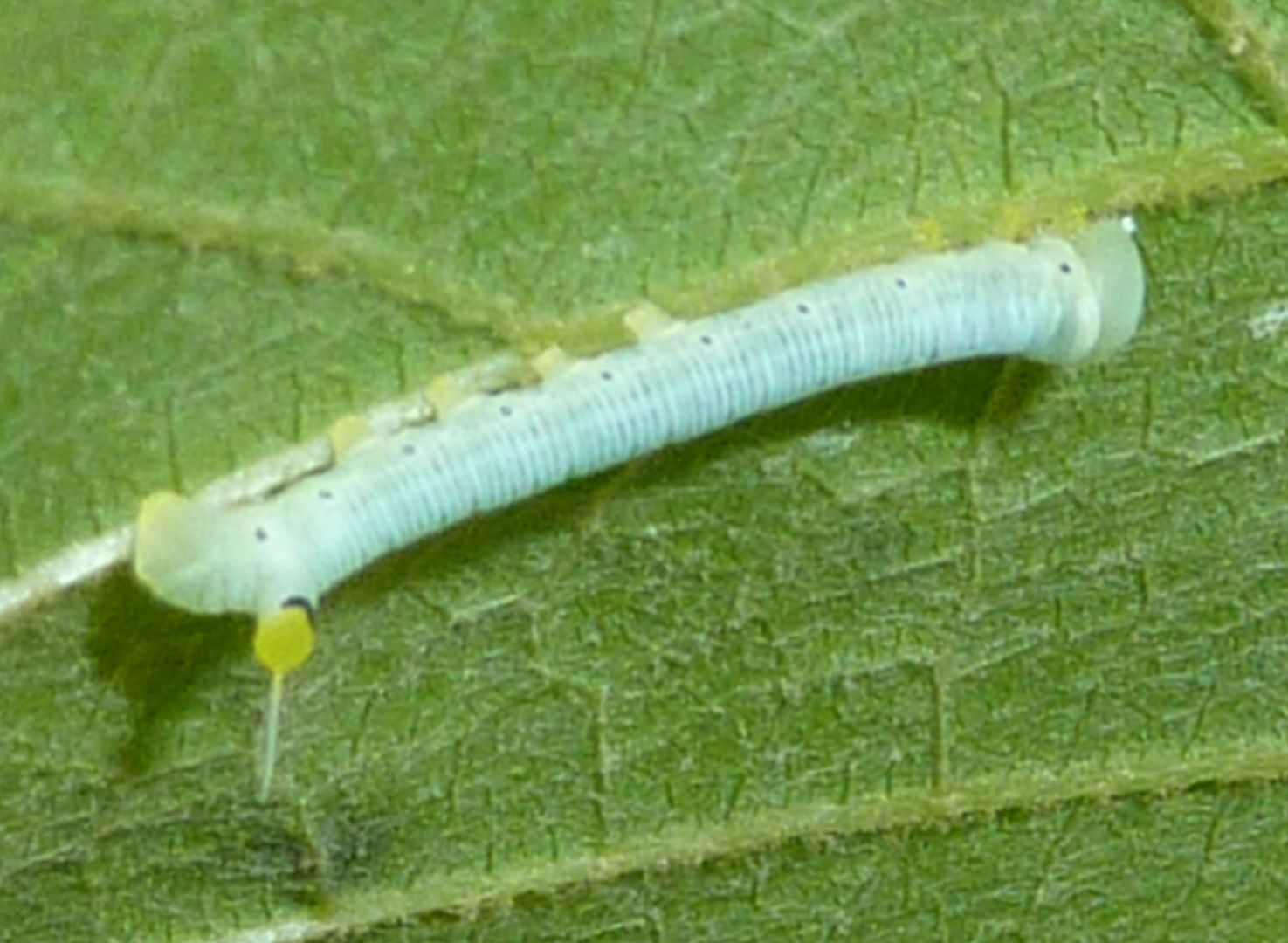
I found this caterpillar on my Asparagus this morning. I don't believe it's big enough for my to ID yet.
On our Concord Grape Vine there is yet another caterpillar I can't ID yet. I believe it's a sphinx moth of some sort, but other than that I'll have to keep an eye on it.
What I can ID though is Eight-Spotted Forester, Alypia octomaculata.This is a day time flying moth that I occasionally see flying around. It's no where near as common as I'd like though and they don't seem to have a favorite flower either. The caterpillars are neat looking with orange stripes and big white hairs. Despite the warning colors though, they spend most of their time under the Concord Grape Vine leaves. When disturbed they abandon the host plant either by a silk safety line or out right diving off. When handled they wiggle about relentlessly and vomit a brown/green liquid.
This is one that needs access to loose soil or wood chips in order to pupate. I placed a few into a cage and hopefully I'll be able to get shots of the adults if they're successful.
On our Concord Grape Vine there is yet another caterpillar I can't ID yet. I believe it's a sphinx moth of some sort, but other than that I'll have to keep an eye on it.
What I can ID though is Eight-Spotted Forester, Alypia octomaculata.This is a day time flying moth that I occasionally see flying around. It's no where near as common as I'd like though and they don't seem to have a favorite flower either. The caterpillars are neat looking with orange stripes and big white hairs. Despite the warning colors though, they spend most of their time under the Concord Grape Vine leaves. When disturbed they abandon the host plant either by a silk safety line or out right diving off. When handled they wiggle about relentlessly and vomit a brown/green liquid.
This is one that needs access to loose soil or wood chips in order to pupate. I placed a few into a cage and hopefully I'll be able to get shots of the adults if they're successful.
Labels:
Caterpillar,
Grapes,
Host,
Lepidoptera,
native,
Plants
Sunday, May 27, 2012
Concord Grapes and Aphids
As my Concord Grape vine grows I've found that aphids have started occurring on the tips of the new growth. Concord Grapes are not one I recommend, unless you're experienced with canning and making jam. They taste exactly like jelly right out of the jar.
The ants here are Camponotus nearcticus is the ant species looking over the aphids. Notice how the major worker above is so full of honeydew that her gaster has expanded to become transparent in places. The soft membrane under her exoskeleton stretches out to allow for more room. Major workers are often used as food carriers in the colony as they can hold a greater capacity than their smaller counterparts.
This isn't an infestation by any means. Along the entire vine that stretched around our entire back deck I was only able to find two clusters of them. I'd be worried if they were infesting places where the plant was fruiting but so far that's not the case. At their worst aphids tend to only hinder 15% of the year's growth. Some species can cause feather problems by raining down honeydew all over the plant, allowing diseases to spread easy, but this isn't one of them.
The ants here are Camponotus nearcticus is the ant species looking over the aphids. Notice how the major worker above is so full of honeydew that her gaster has expanded to become transparent in places. The soft membrane under her exoskeleton stretches out to allow for more room. Major workers are often used as food carriers in the colony as they can hold a greater capacity than their smaller counterparts.
This isn't an infestation by any means. Along the entire vine that stretched around our entire back deck I was only able to find two clusters of them. I'd be worried if they were infesting places where the plant was fruiting but so far that's not the case. At their worst aphids tend to only hinder 15% of the year's growth. Some species can cause feather problems by raining down honeydew all over the plant, allowing diseases to spread easy, but this isn't one of them.
Subscribe to:
Posts (Atom)