Showing posts with label Winter. Show all posts

Saturday, March 24, 2018

Winter 3 Finally Coming to an End

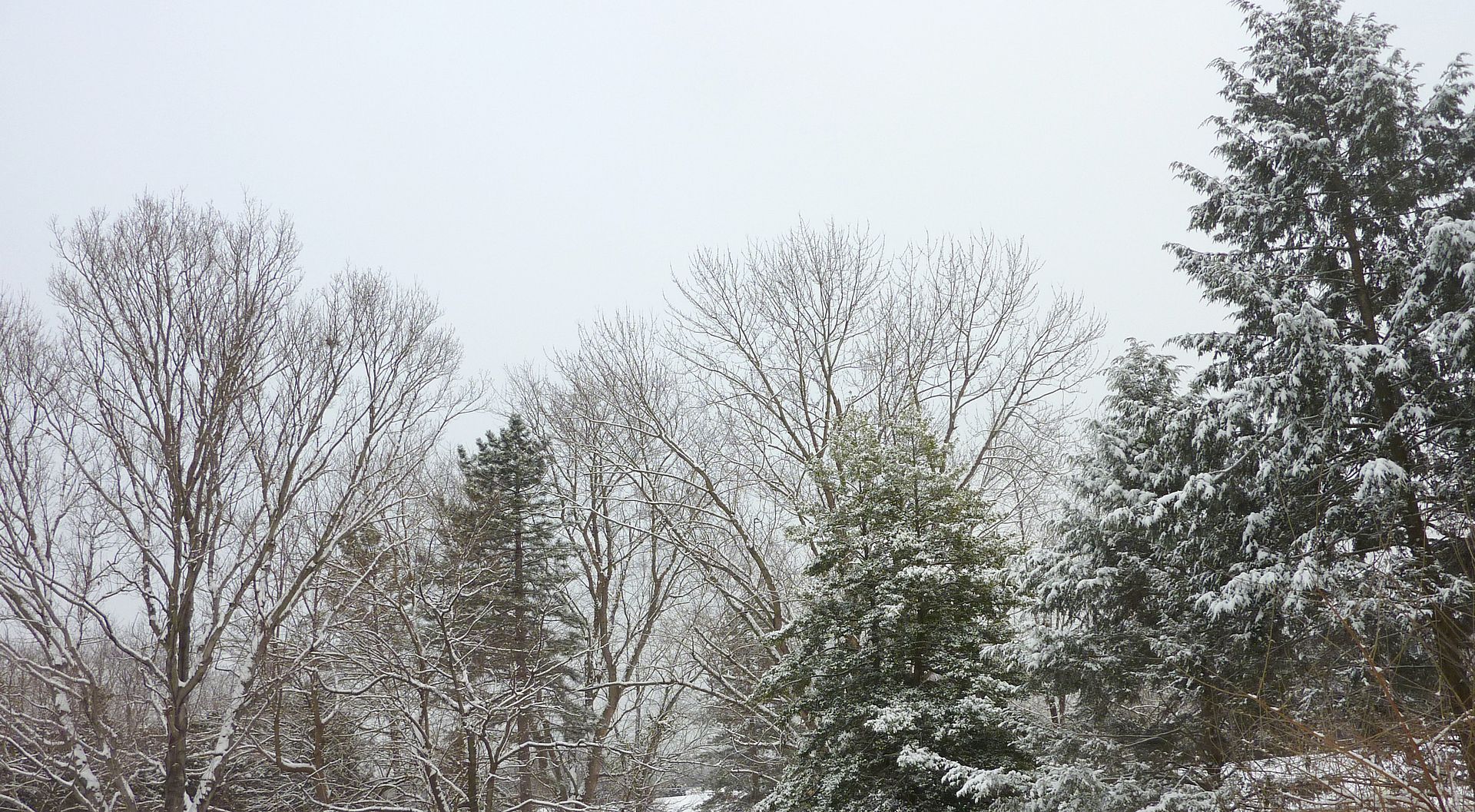
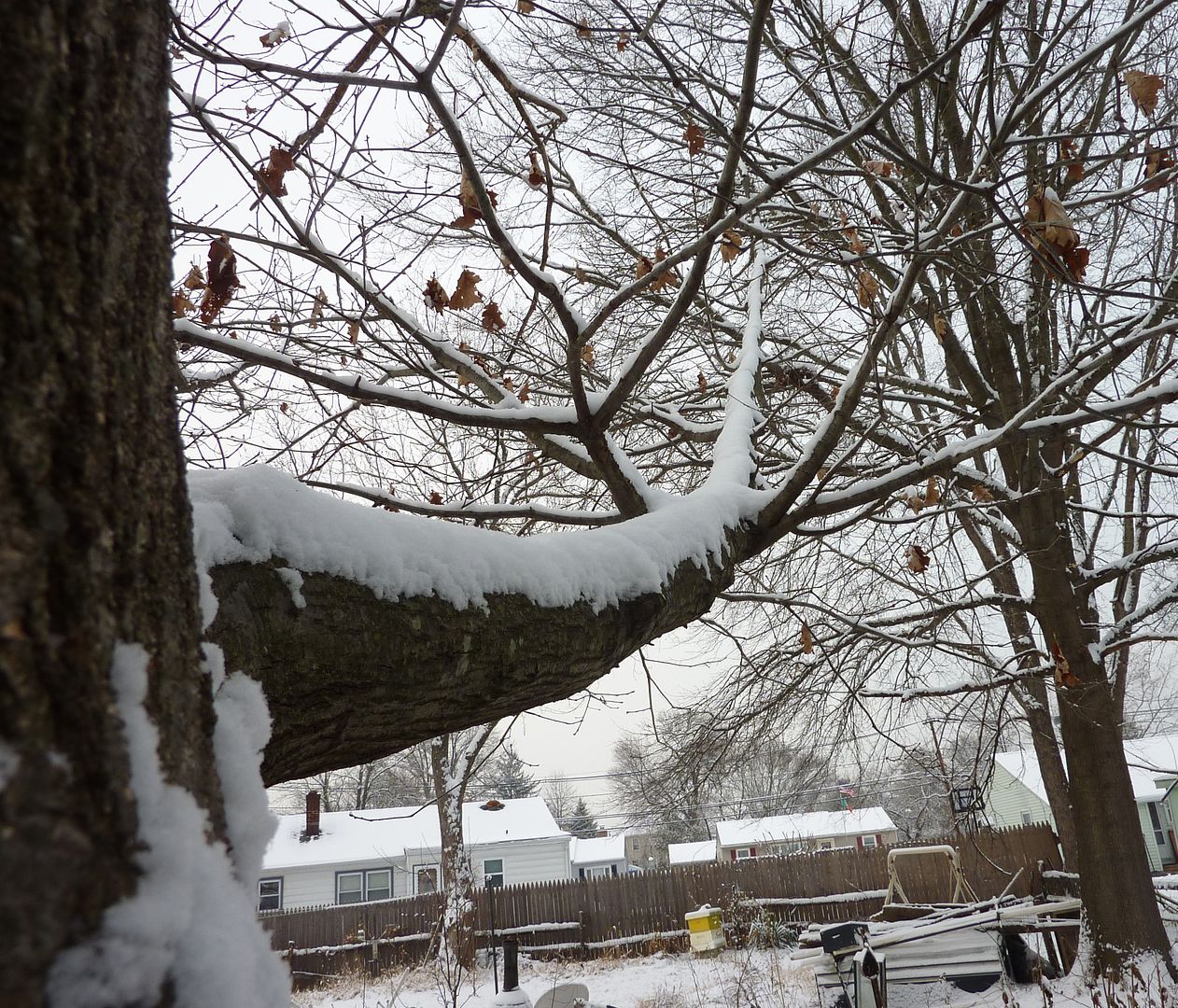
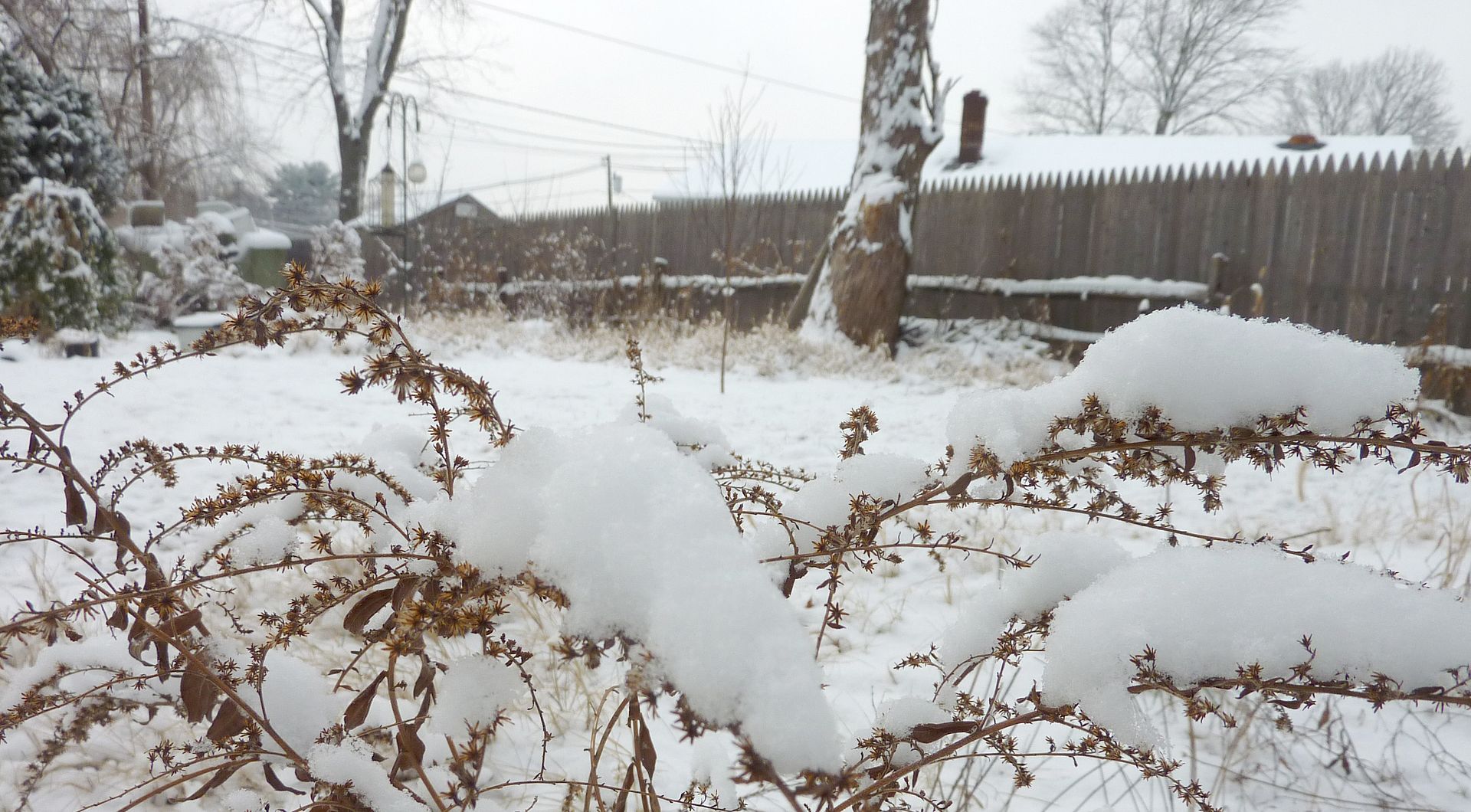
A week ago the weatherman announced "Winter is coming... again!" and we got a nor'easter that brought up to 18 inches in some places. Between my home in Somerdale, NJ and where I work in Cinnaminson we got between 4' and 12'. What makes the storm odd though is because we're so late into March, the next three days had a high above 50 degrees Fahrenheit. So this was something of a freak, late season storm. In spite of this though not much was damaged.

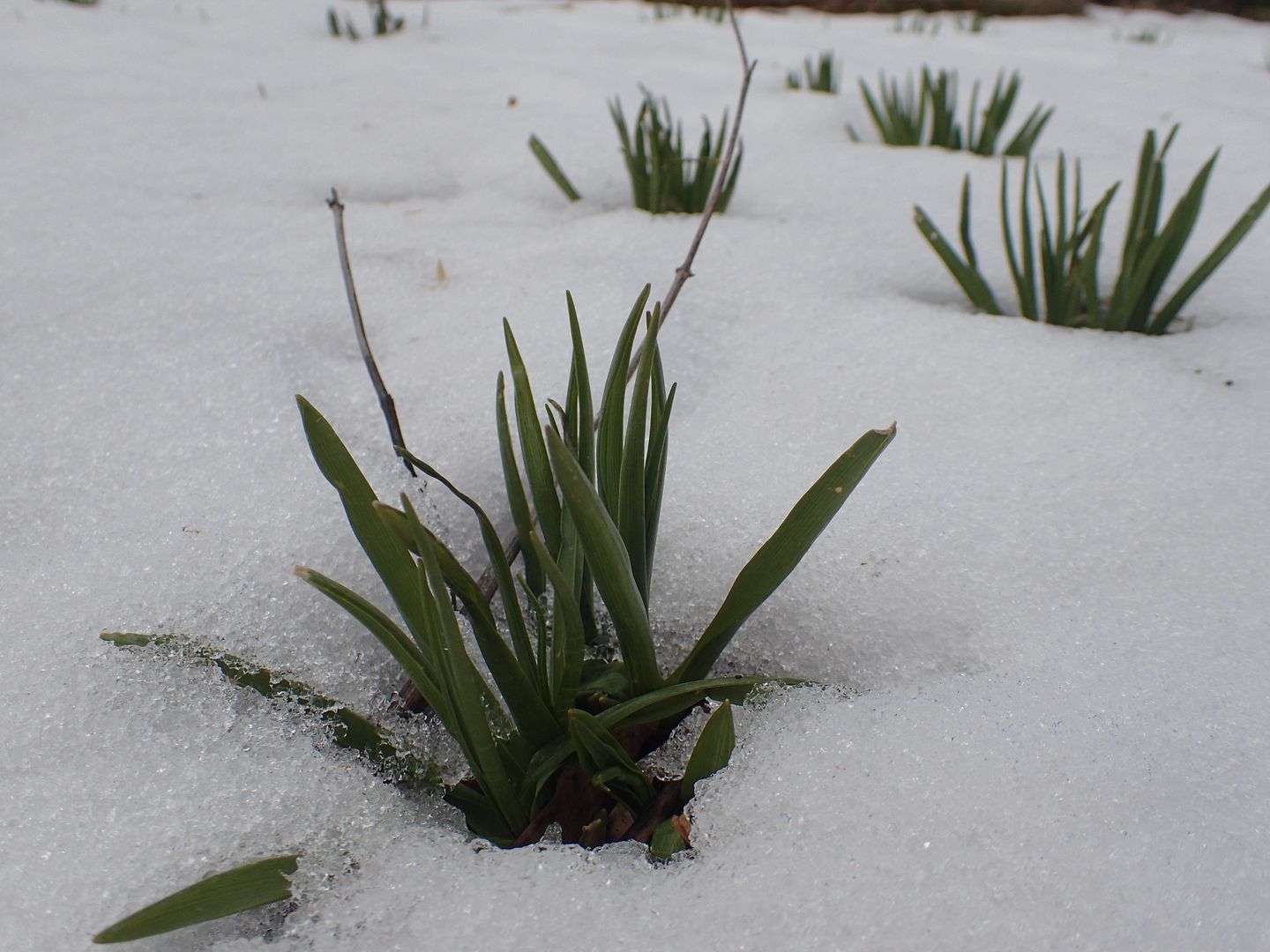
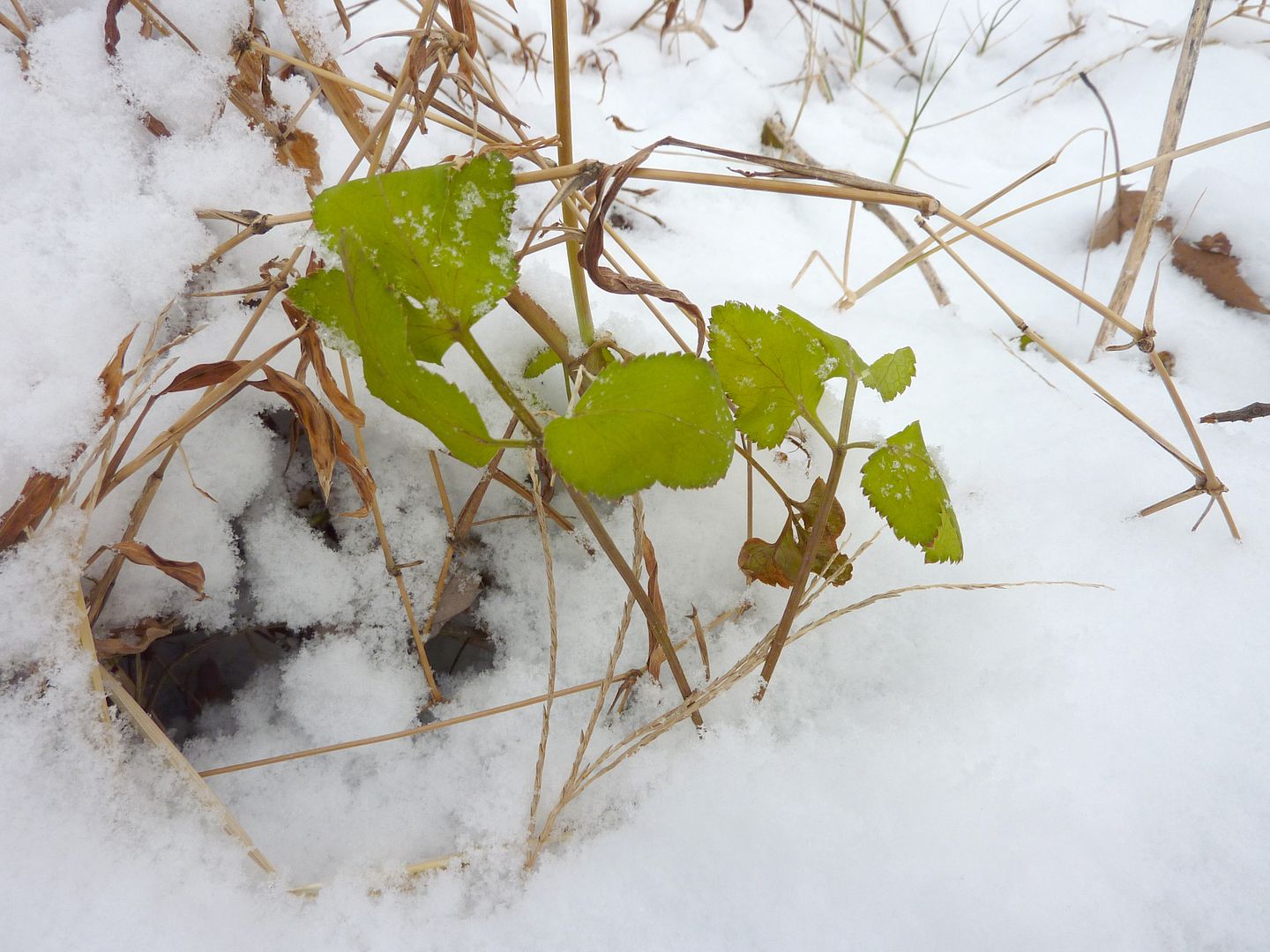
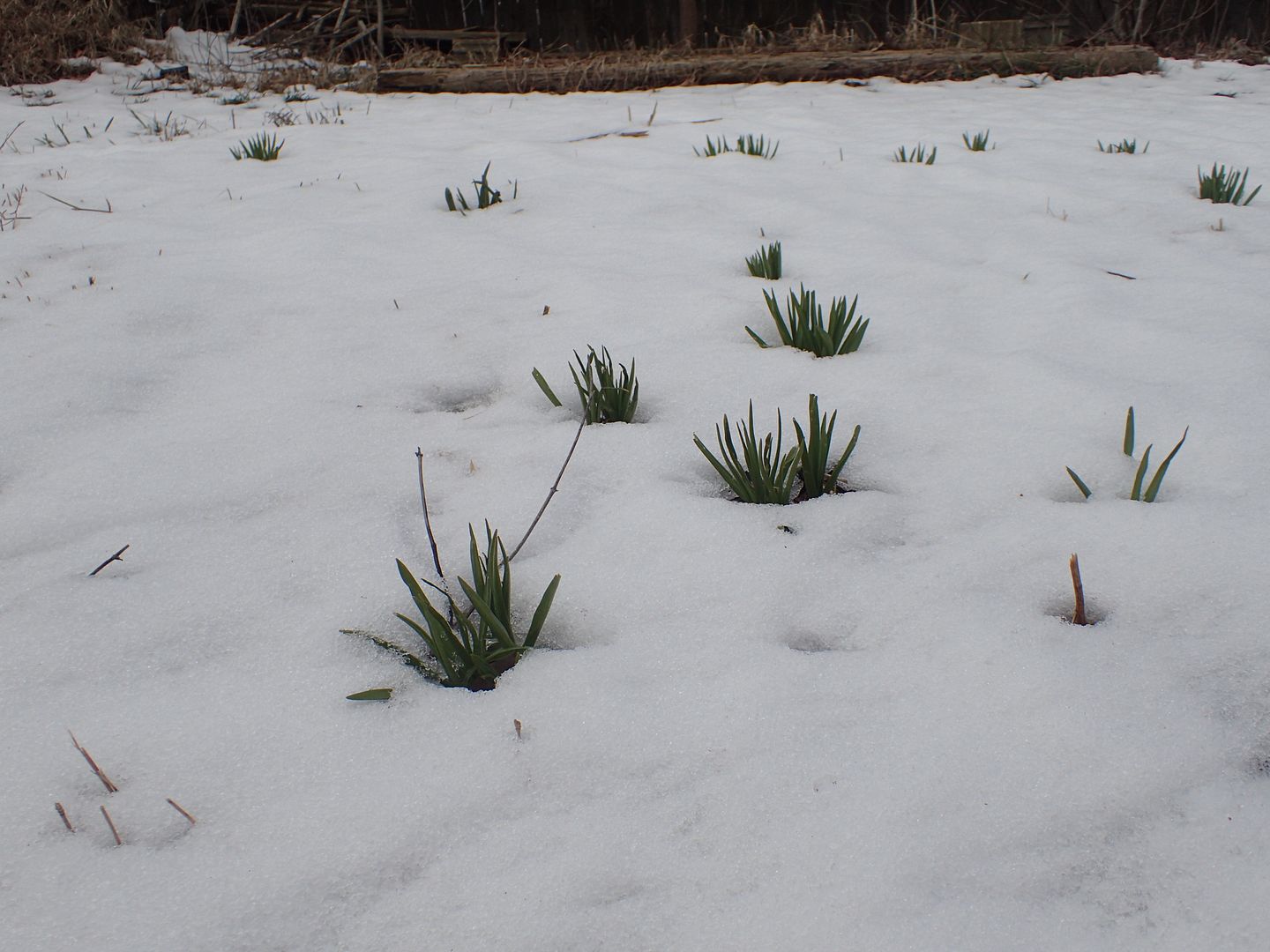
Out in the meadow garden the Camassia, Wild Hyacinth, have been giving off their own heat and melting the snow around them.

Once the ground is exposed around them the snow will melt more quickly as the ground warms up.

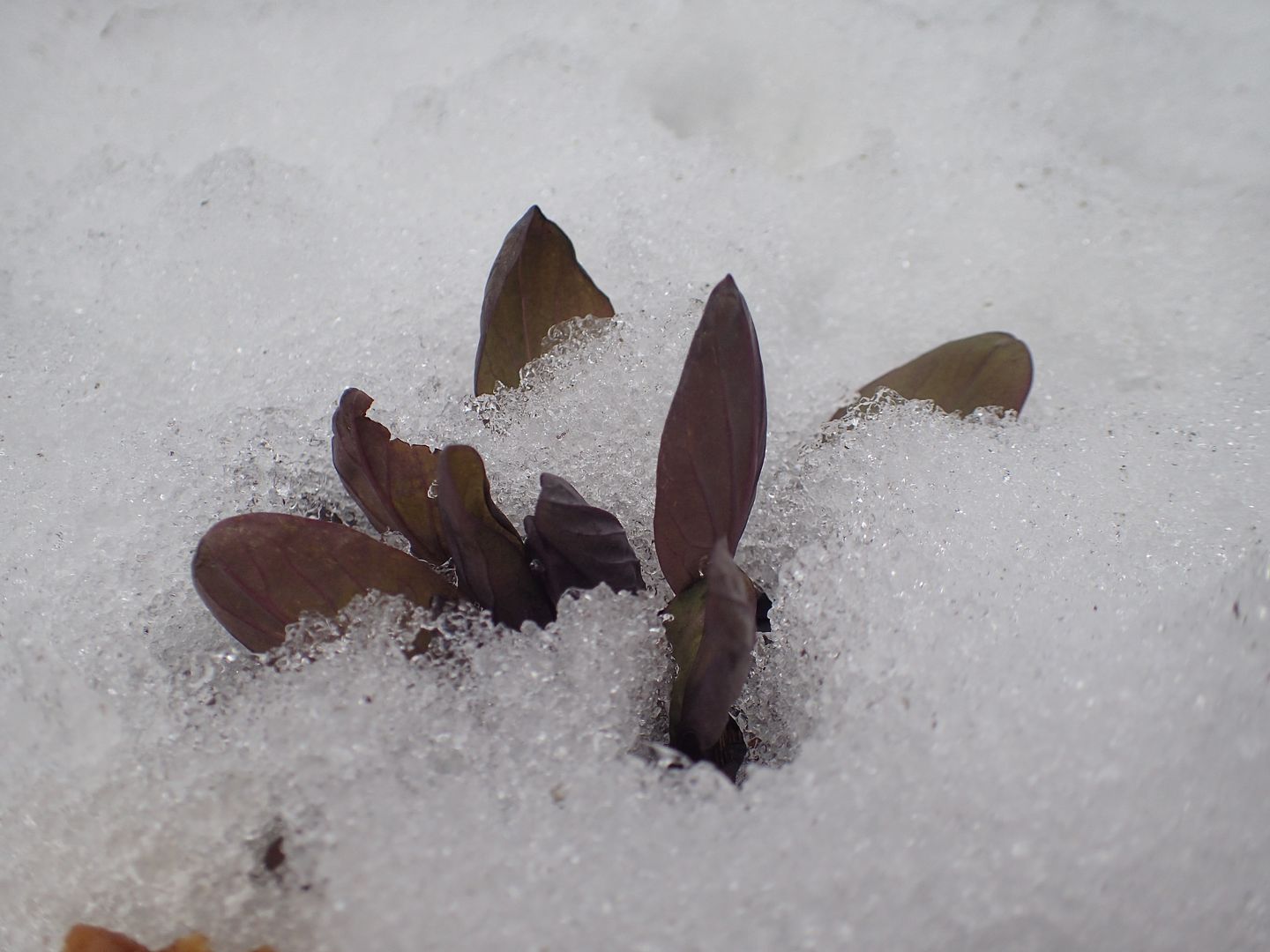
Virginia Bluebells, Mertensia virginica, doesn't do this as well but also doesn't seem that effected by the snow.

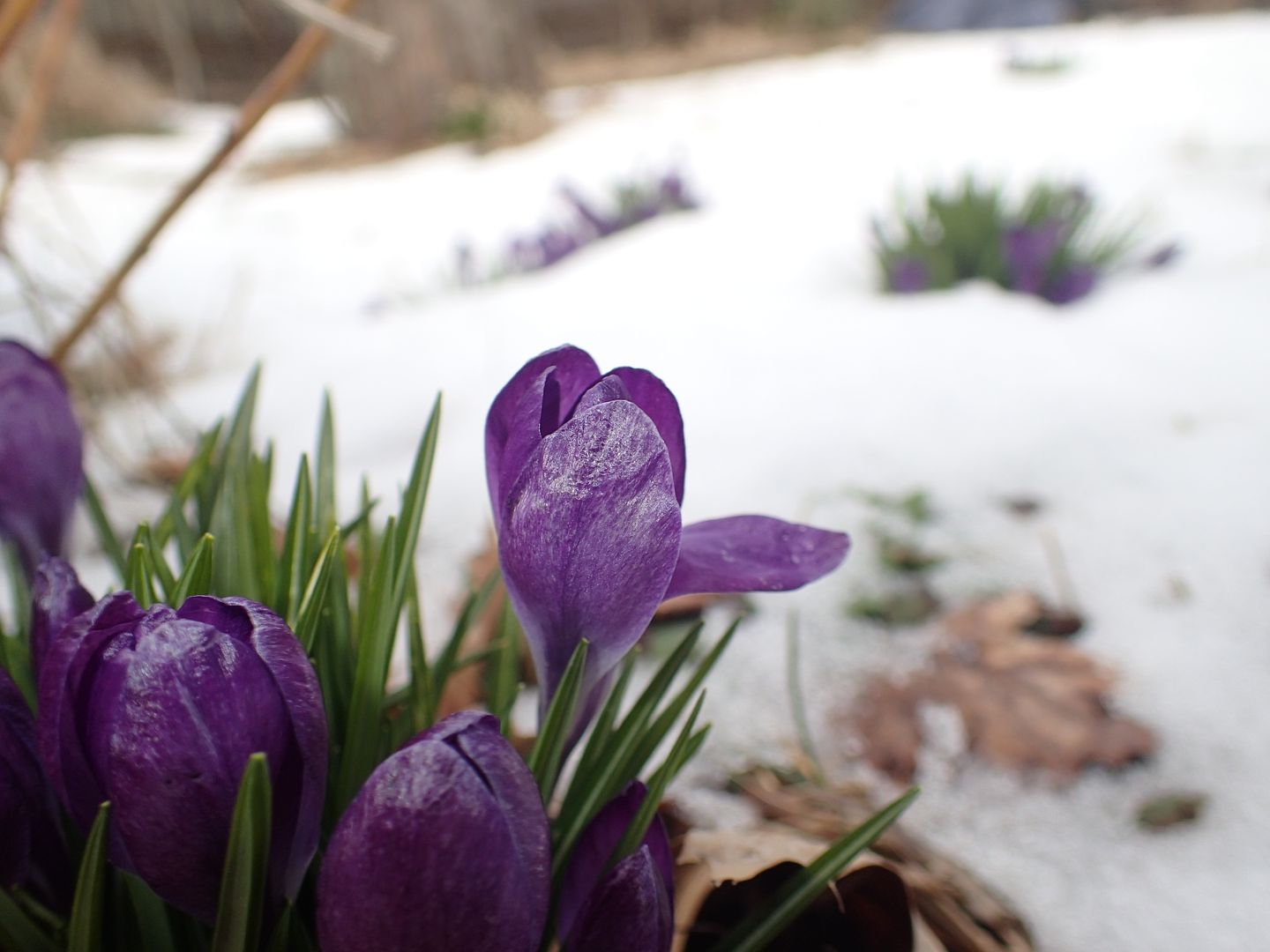
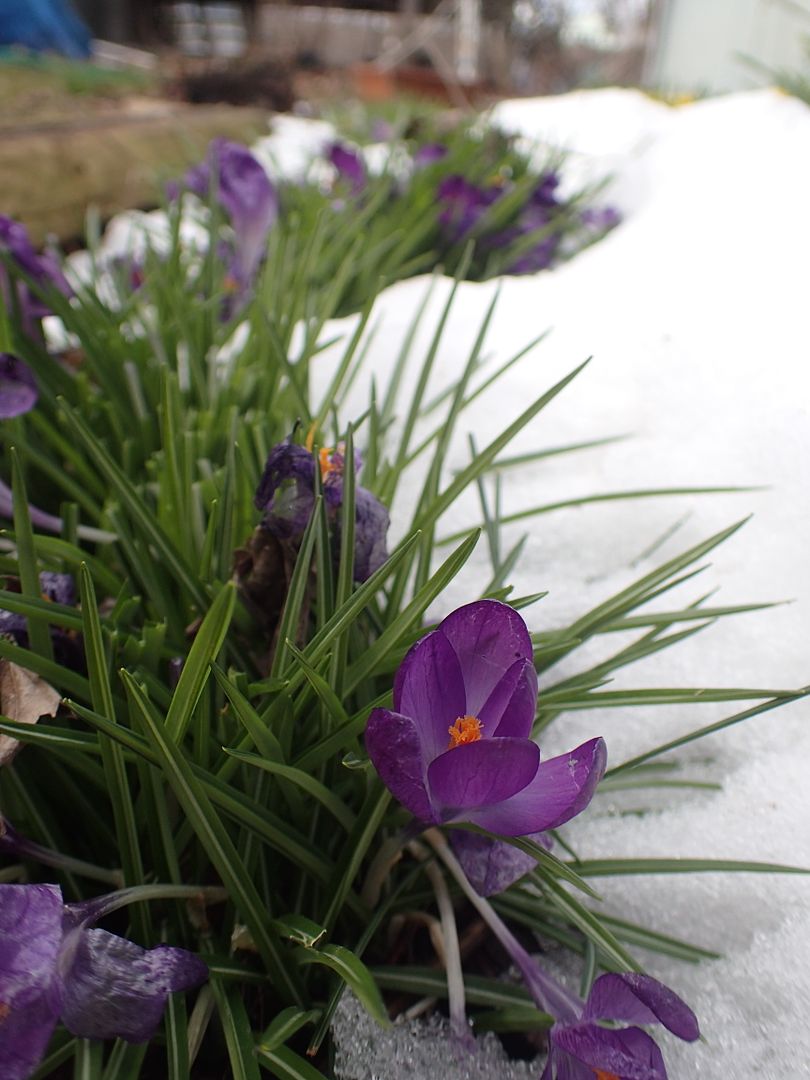
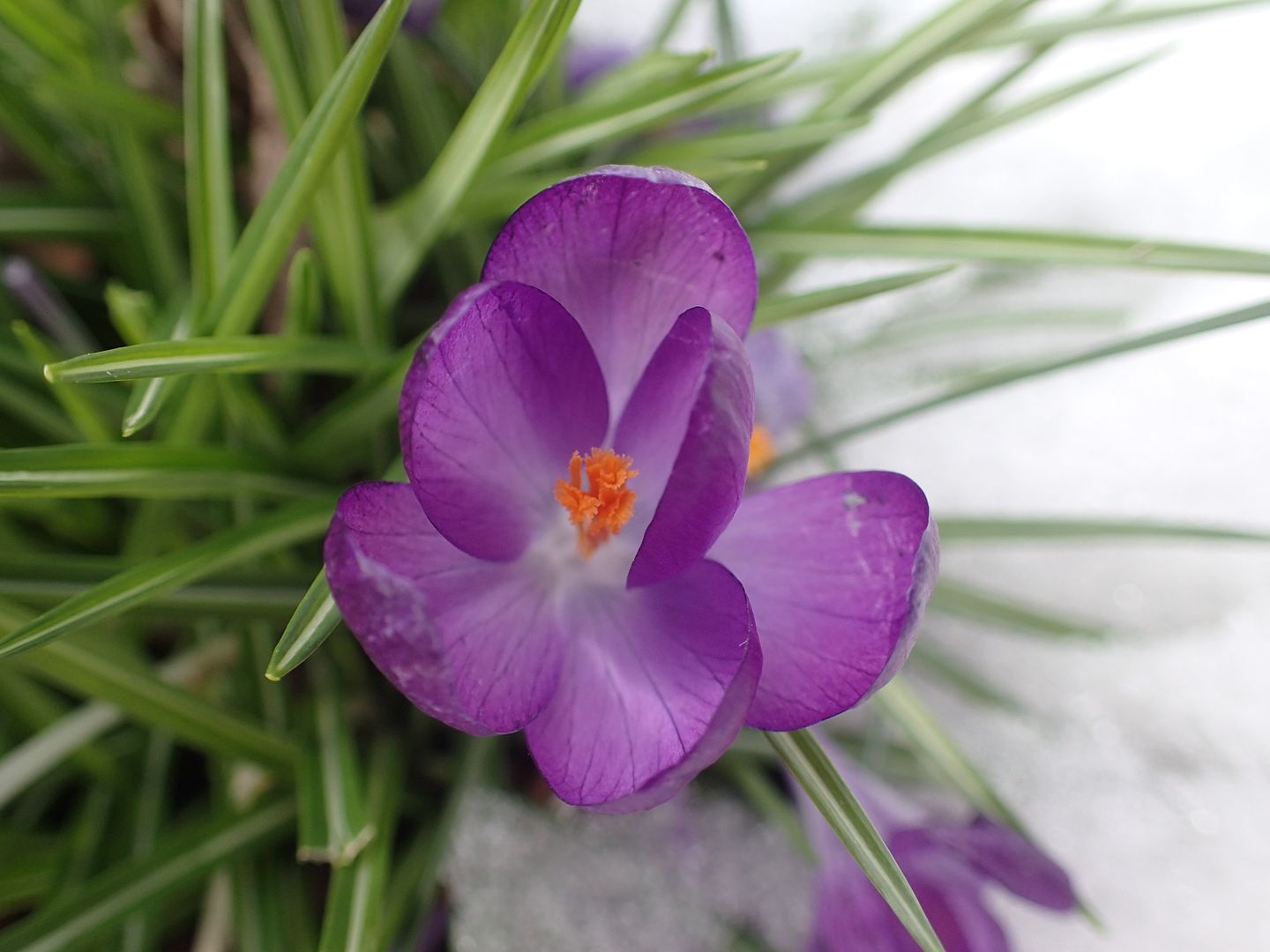
Crocuses have been flowering in force and were in full bloom when the snow started to fall. Most of the flowers were damaged to some degree as they had to remain closed up until the snow melted around them.

They're not native to North America but do well here in both lawns and gardens. They're indigenous to the mountains of northern Europe and are often seen flowering when early in the season when weather conditions force other plants to stay below ground.

Though pretty, at some point I intend to move them all out of the garden and into the lawn. After flowering their grass-like foliage blends right in with the other grasses. And they hold up to mowing for a time as well. Eventually they do go dormant over the summer but in the spring time the foliage gets in the way of other plants I'd like to be growing and need to find space for.

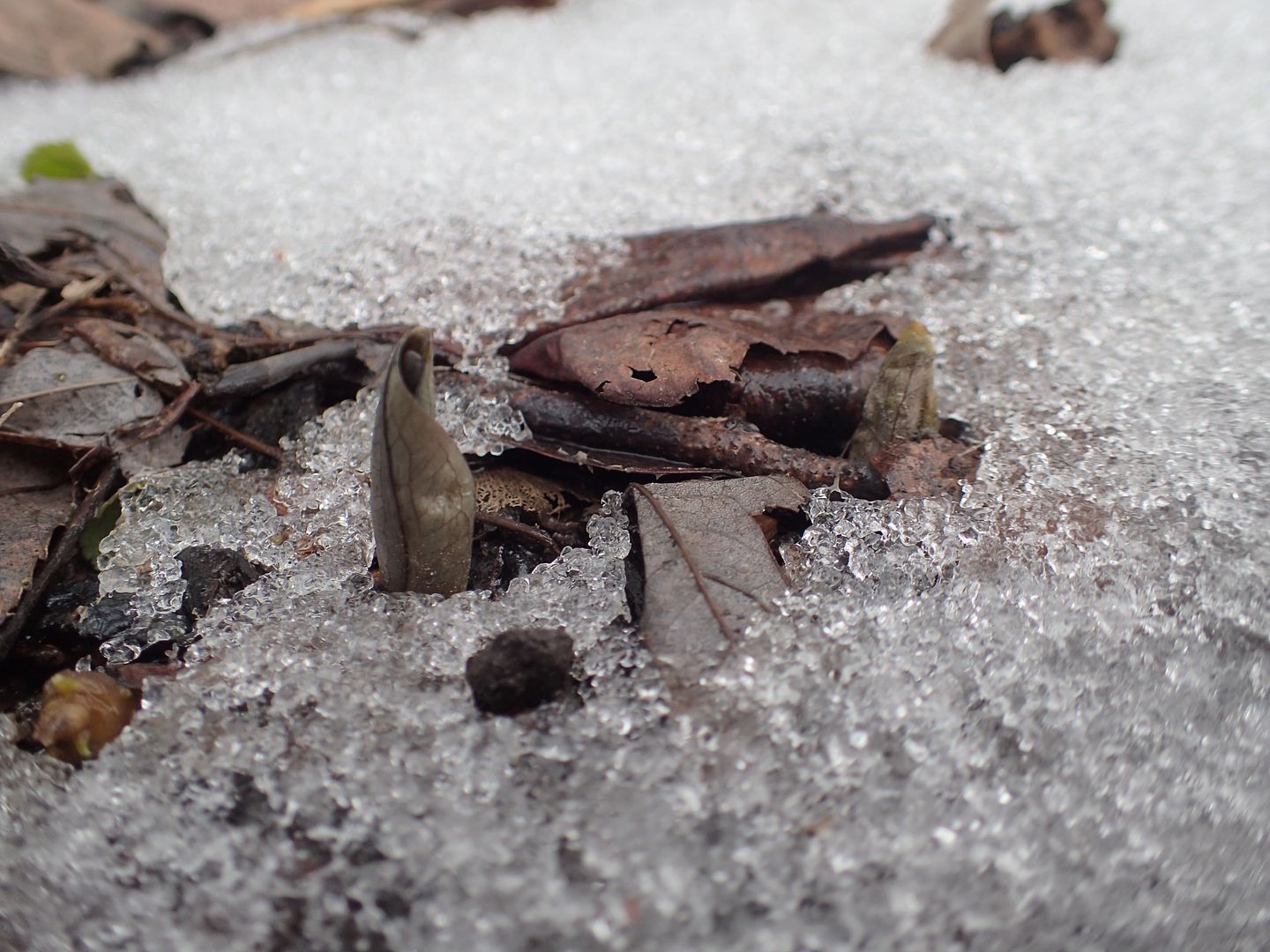
Trilliums are one such plant I think are more worthy of the garden and have been coming up through the snow just as well. The three leaves to each plant remain tightly coiled around the precious flower bud within. They're mono-floral, meaning one flower per plant, per year so it's protection is of the upmost importance. 

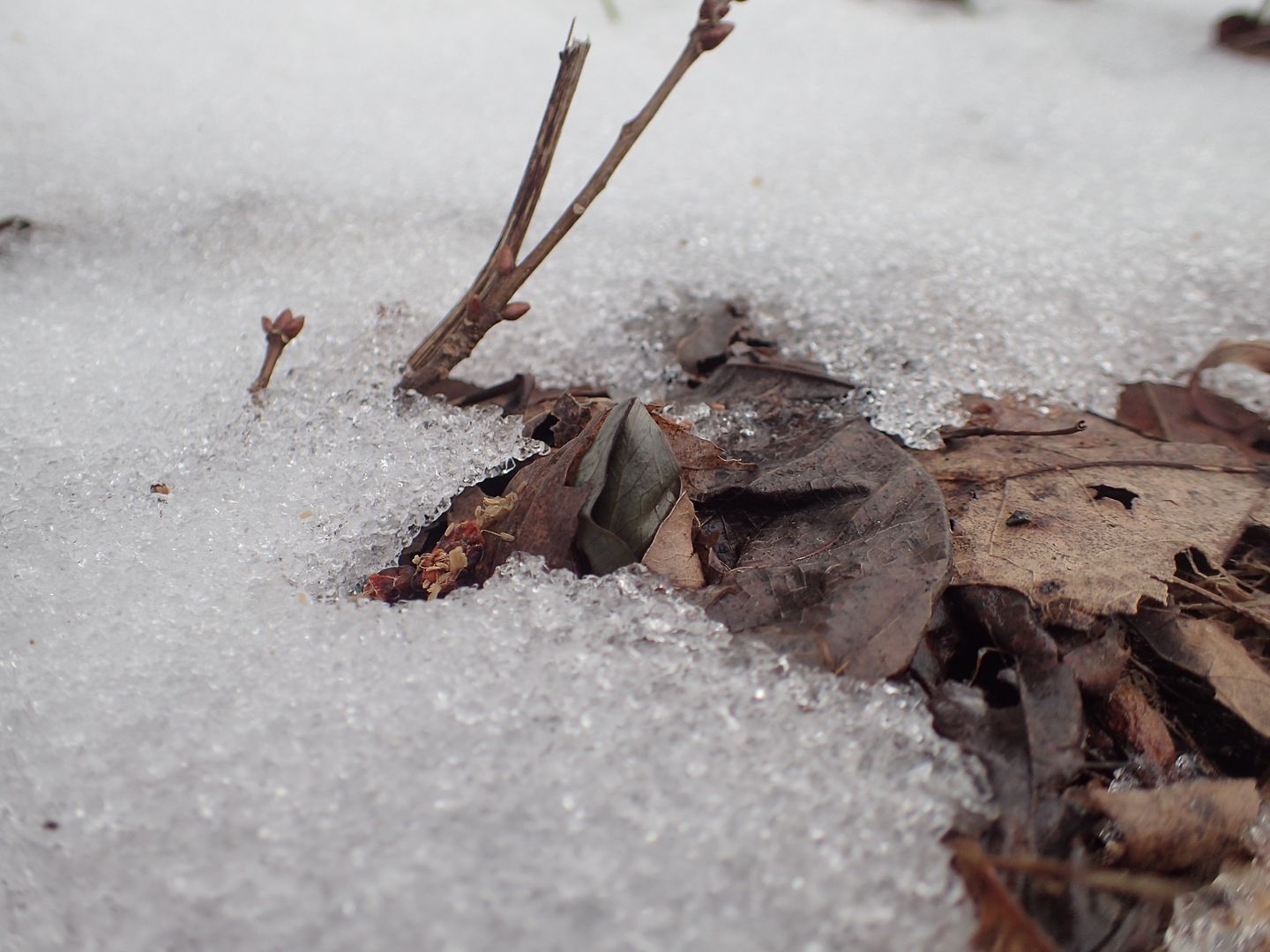
Another Trillium bravely poking its head out through the snow. They won't really be flowering until the first or second week of May here but just south of us at the Mt. Cuba Center in DE they'll be blooming around the last week of April.

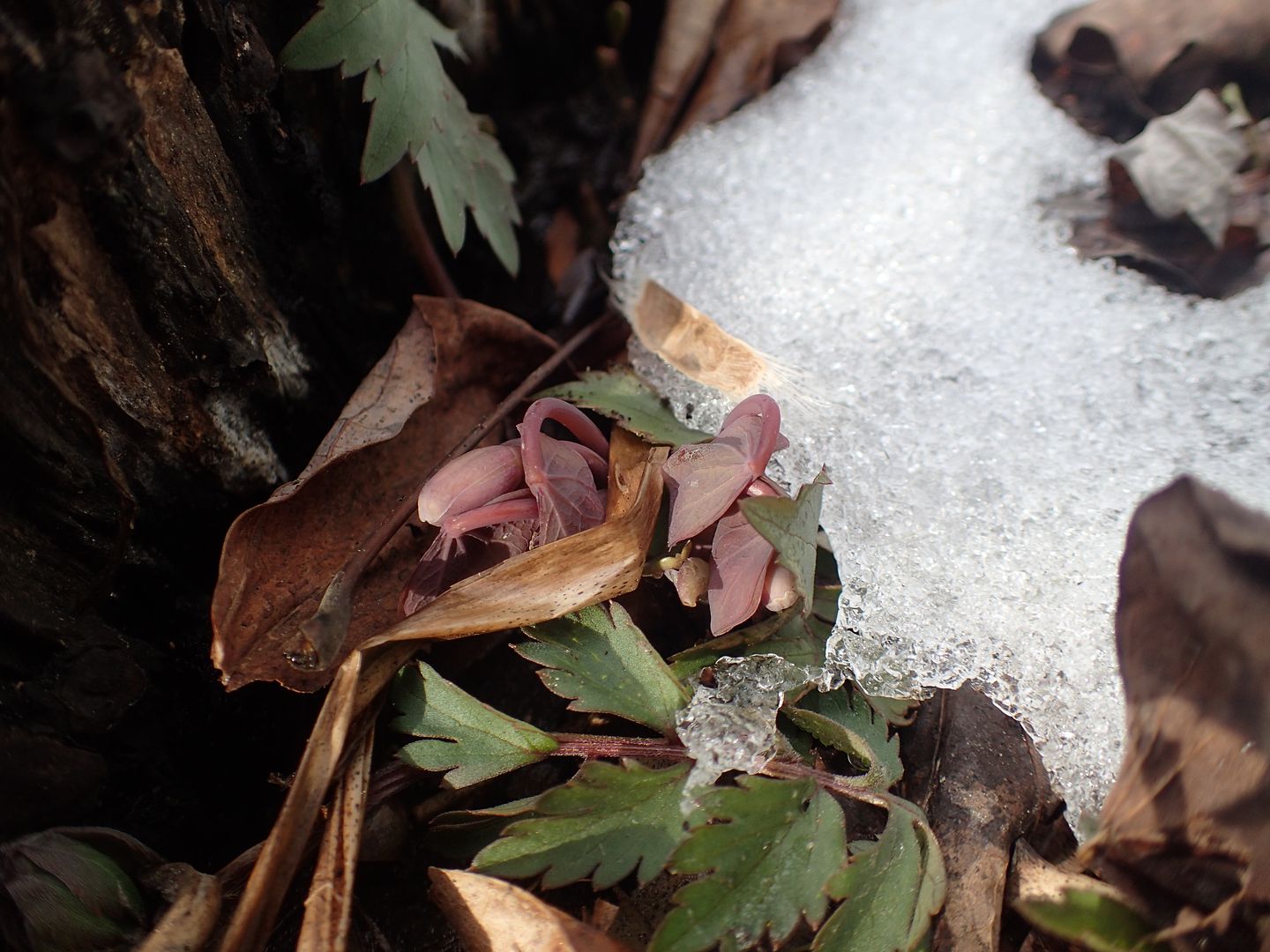
Another native that's an early bloomer is this Twinleaf, Jeffersonia diphylla. It's a short lived flower but a pretty one.
Sunday, March 15, 2015

2015 Waking Up

Alright that was a nice winter break. It's time to get back in the habit of updating my blog on a regular basis. 

We've just had our last couple of snowfalls for the year. Things are melting fast here in New Jersey. Friends in Florida are already sending me reports of Winter Ants, Prenolepis imparis, flying  and I'm sure they'll be doing that here in the next few weeks. My bee hive seems to have survived and are actively taking advantage of the early pollen sources nature provides. Willows, Swamp Cabbage, and patches of Crocuses are already in bloom here. Other plants have yet to wake up though and I'm looking forward to a bustling year of biodiversity in my garden.  

Northern Spicebush, Lindera benzoin, is going to put on a nice display of blooms for me this year. I planted two saplings which were 4 inch plugs a few years back. They did flower last year but it was nothing worth mentioning really. This year though I seen flowers all over the stems, and between the two plants I may have lucked out and gotten a male and female. The buds look different but I won't know for sure until they open.

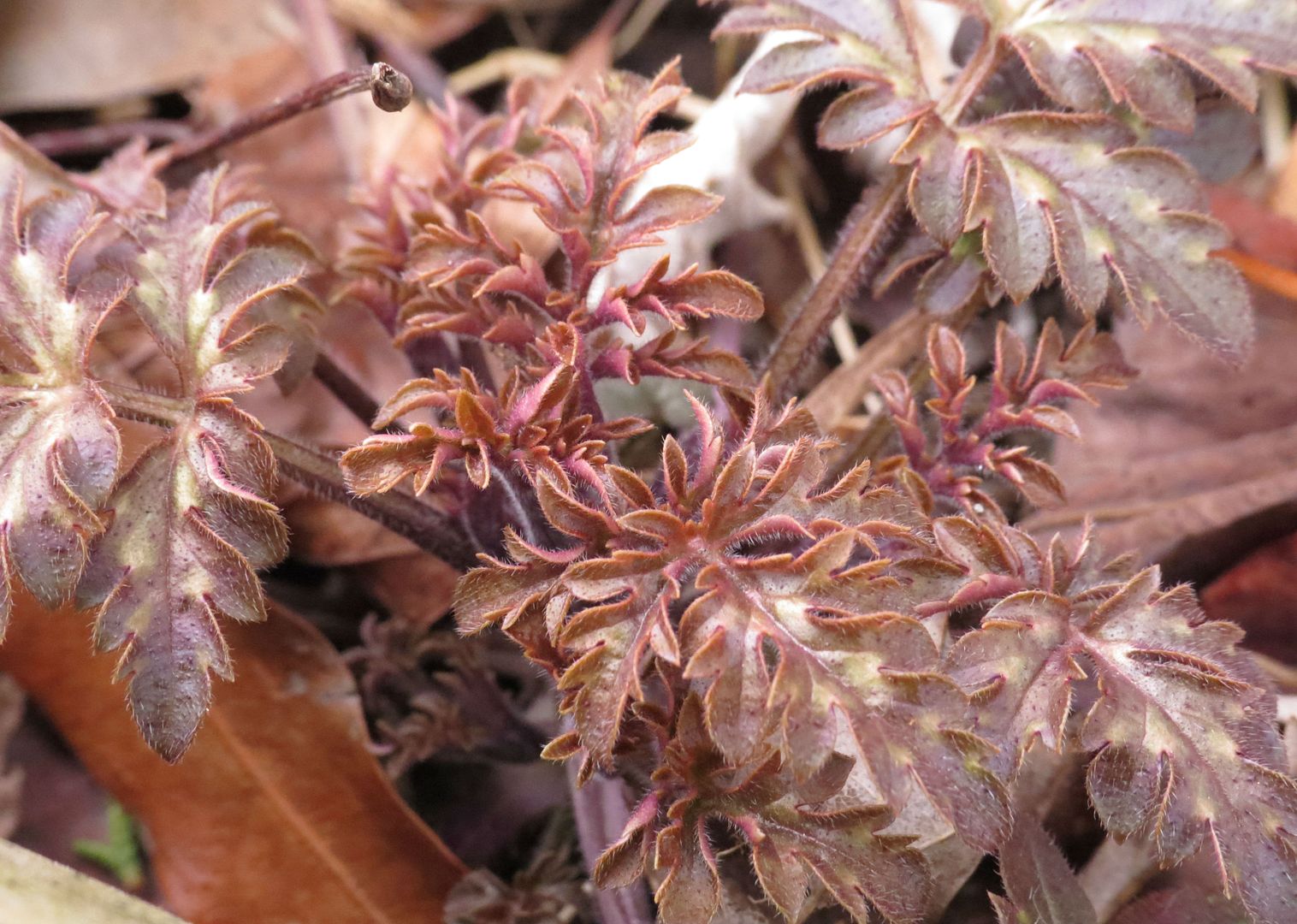
Virginia Waterleaf, Hydrophyllum virginianum, was another surprise. Firstly because of all the wildflowers I grow, this was the only one that had leaves roughly 8 inches long already. They're not green but that's an amazing amount of growth to push out this early. They still have the bleached water marks on them too which give the plant its name, water leaf, as if drops of water had gathered on the leaf. Someone had told me once this plant can be hard to grow but of the few plants I started with I can say they're reproducing at a nice rate. They're supposed to spread by rhizomes but I'm finding seedlings popping up all over the place, even in pots adjacent to the flowerbed they grew.

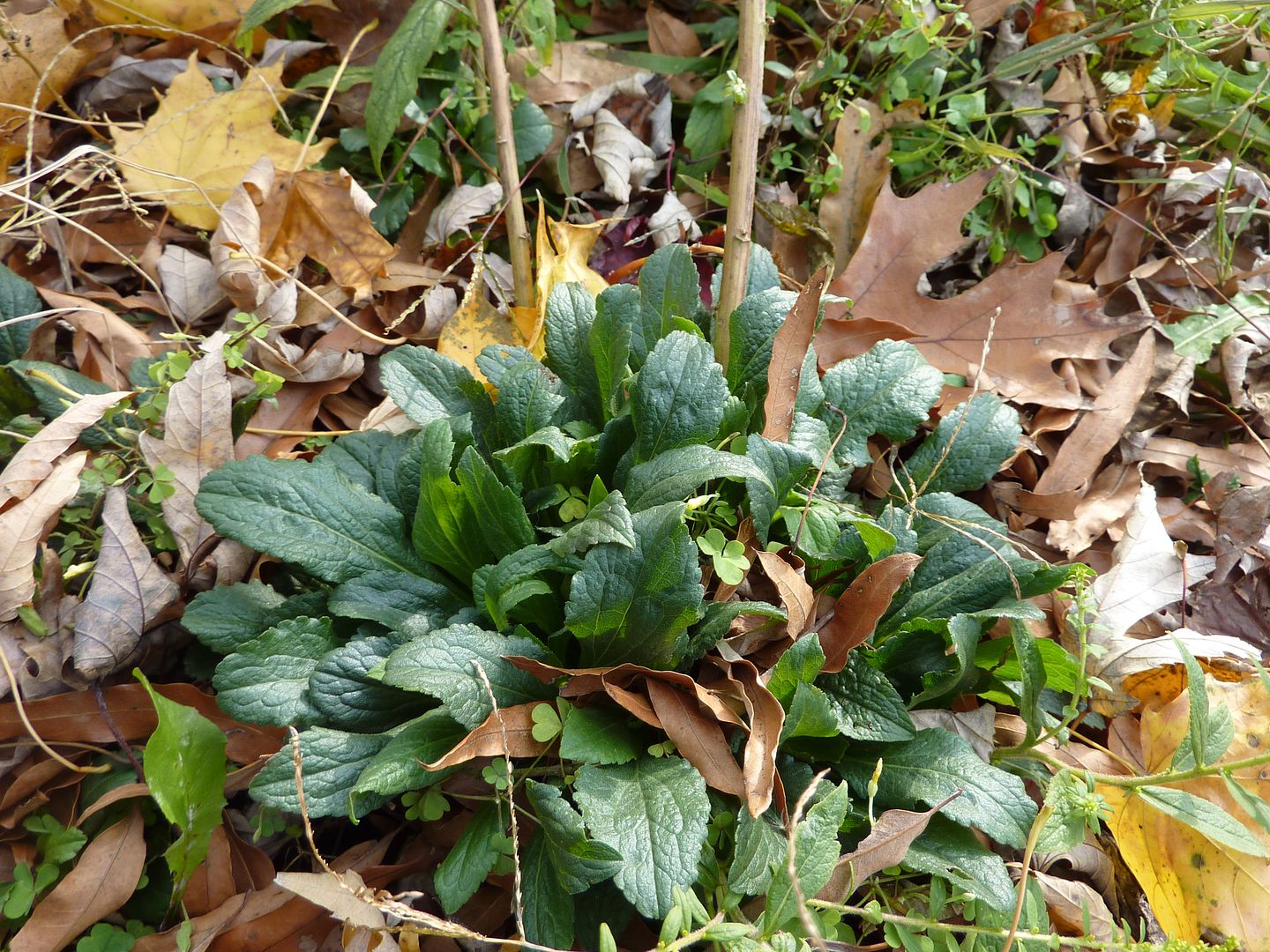
Also alive and well is Golden Ragwort which already has rosettes of green leaves. I've planted a second patch of these out in the meadow garden but I've yet to mow down last year's growth. Clearly I need to get on that.

Sunday, October 20, 2013

Planting Native Seeds

Seeds germinate best on bare ground and meadows that are overgrown with established plant life don't always see new individuals each year. This is why the first step in establishing a meadow is to destroy the previously existing plant life, often by smothering the area with plastic for a full year. (Chemicals work too but aren't for everyone.) If you're impatient like I was then just planting plugs or potted plants can help give your natives a fighting chance against the lawn and weeds that are established. This is the method I went with because my lawn has lots of switch grass and weeds that spread by underground corms on the roots. What's happened though is as my native plants die of old age they're replaced with this invasive grass instead of native seedlings. The only thing that does well in these patches are Spiderwort, and taller plants like False Indigo and Tall Coreopsis. The thing is False Indigo and Tall Coreopsis don't spread that fast and Spiderwort dies back to the ground by August. I'd like to see other things seed in like the Milkweed, Liatris, Asters and other Coreopsis species.

So I've come up with a simple method of getting these plants to hopefully establish better. Because seeds germinate best on bare soil, I'm creating some bare soil. This comes in the form of several 1 and 3 gallon pots I was using to grow pepper plants and tomatoes here and there wherever they'd fit. These food plants are annuals so the soil is just going to go to waste anyhow. So I collect seeds to whatever looks ready and massage them into the soil.

Last year I noticed one of my asters had a stem fall right into a potted plant. I also had a cutting from another Aster that had fallen into a hanging basket. In both cases I found new Aster plants germinate and grow the following spring. This reduces the need to have to over winter seeds in the fridge or basement room or grow them out in the green house and have to water them in the winter. So hopefully I get some success with this method. I'm even tempted to plant specific combinations that look nice in the same pots so I can plant them that way on the following year. Pink New England Asters go great with medium height Goldenrod species for example.

Wednesday, March 20, 2013

First Black Swallowtail of Spring Hatched


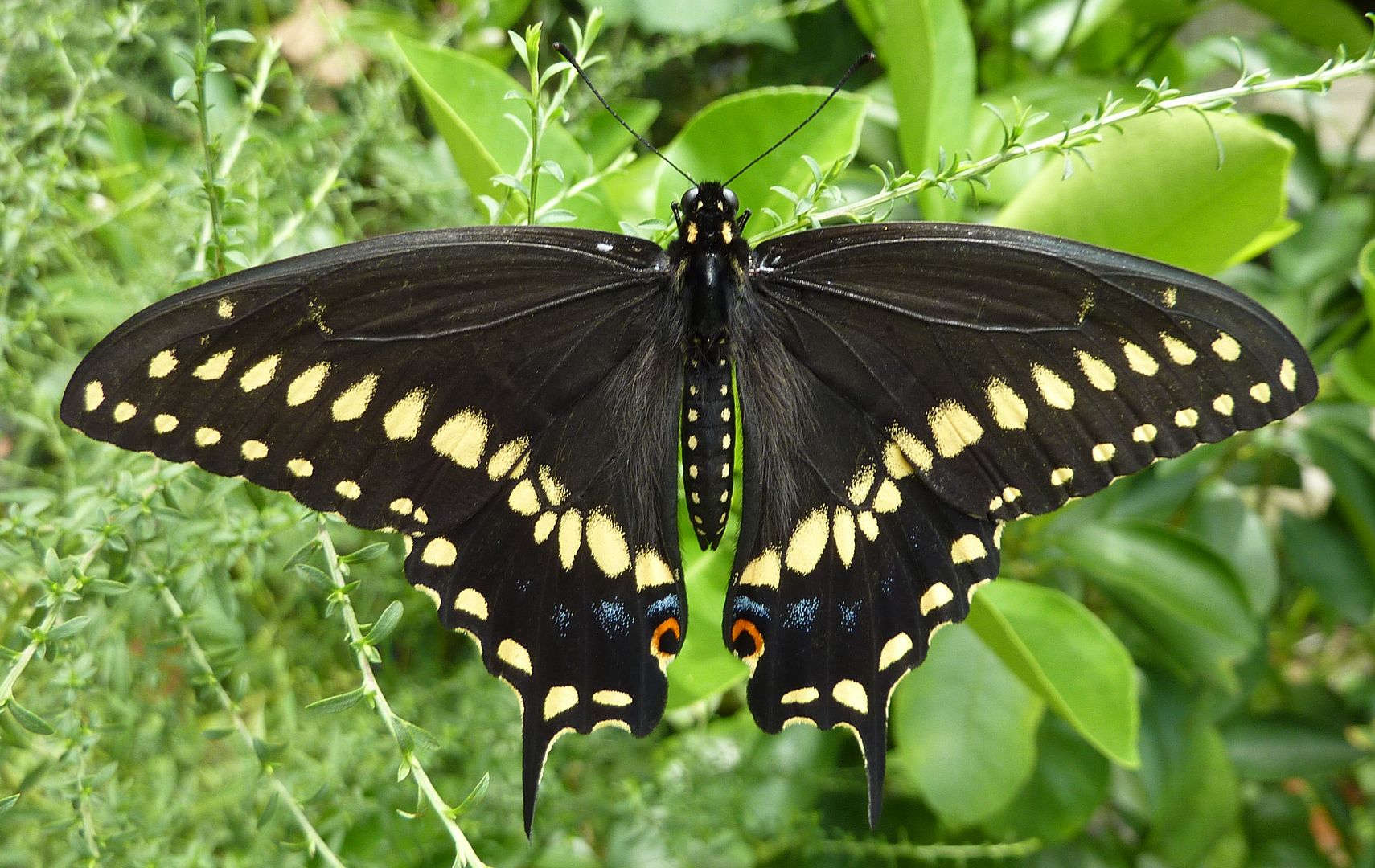
It's the first day of spring (03/20/2013) and appropriately enough the first of the Black Swallowtails has emerged from their chrysalis. The generation that over-winters tends to be smaller than usual, I suspect because more of the energy goes towards sustaining the adult through the winter. This one is a good inch or two smaller than they are typically over the summer, even for a male.

Black Swallowtail - Winter/Spring
Black Swallowtail - Summer

Now, once again we've relied on the weather forecasts of a clearly defective groundhog and it's abilities to predict when spring will happen. (I'm sure the groundhogs of Hawaii and Alaska aren't half as bad as Punxsutawney Phil, whose track record is worse than flipping a coin.)
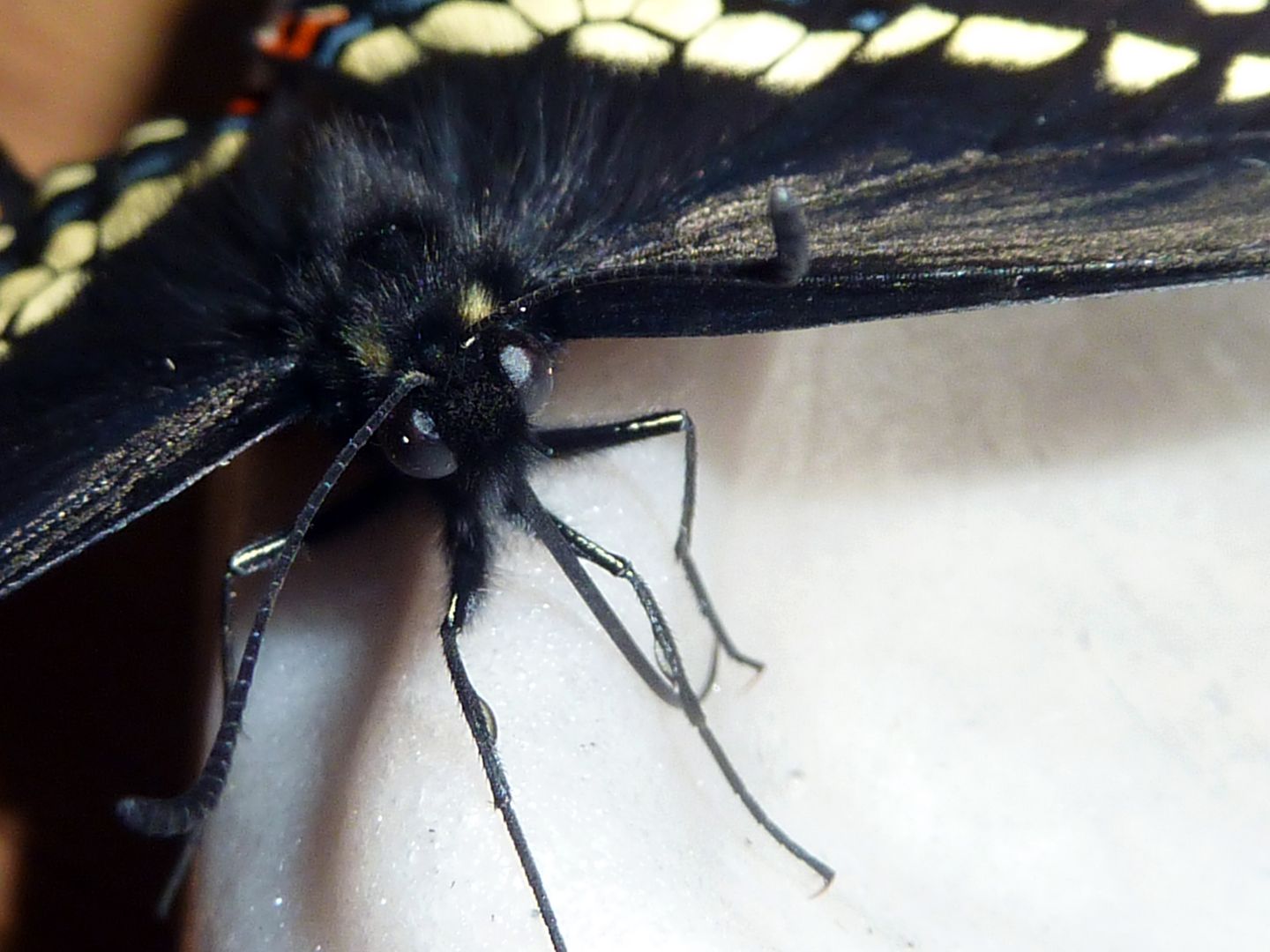
Needless to say it's still cold here and I'm keeping them inside. I'm told they can be sustained for about 6 weeks indoors when fed sugar water. My friend tells me she hears anywhere from 1:3 to 1:10 ratio sugar to water.... which isn't helpful so I'm trying 1:4 and will be providing them a source of salt in a day or so.

I haven't decided how yet. Everything I read tends to be writing about an open feeding yard setting. But how much does one butterfly need and is it safe to feed them raw salt? I guess I'll have to find out.

I have parsley growing now but perhaps most interesting of all is that they occasionally use Citrus as a host plant... and I just bought a Mayar Lemon and Key Lime tree in the basement. The parsley in the garden had green growth all winter, and the Golden Alexander has pushed out several inches of growth since January ended. So even with all the cold, I have plenty of options.

Saturday, March 2, 2013

Eastern Black Swallowtail Winter Update


This past year I was able to raise 9 Eastern Black Swallowtail caterpillars in a screened cage. They over winter as a chrysalis and hatch out sometime in late winter or early spring right in time to get another generation of butterflies going again. They're stored in our basement which is freezing cold, along with my mason bee nest blocks, which I should be cleaning off and treating for mites and such but ... oh well.

Thursday, February 7, 2013

False Potato Beetle

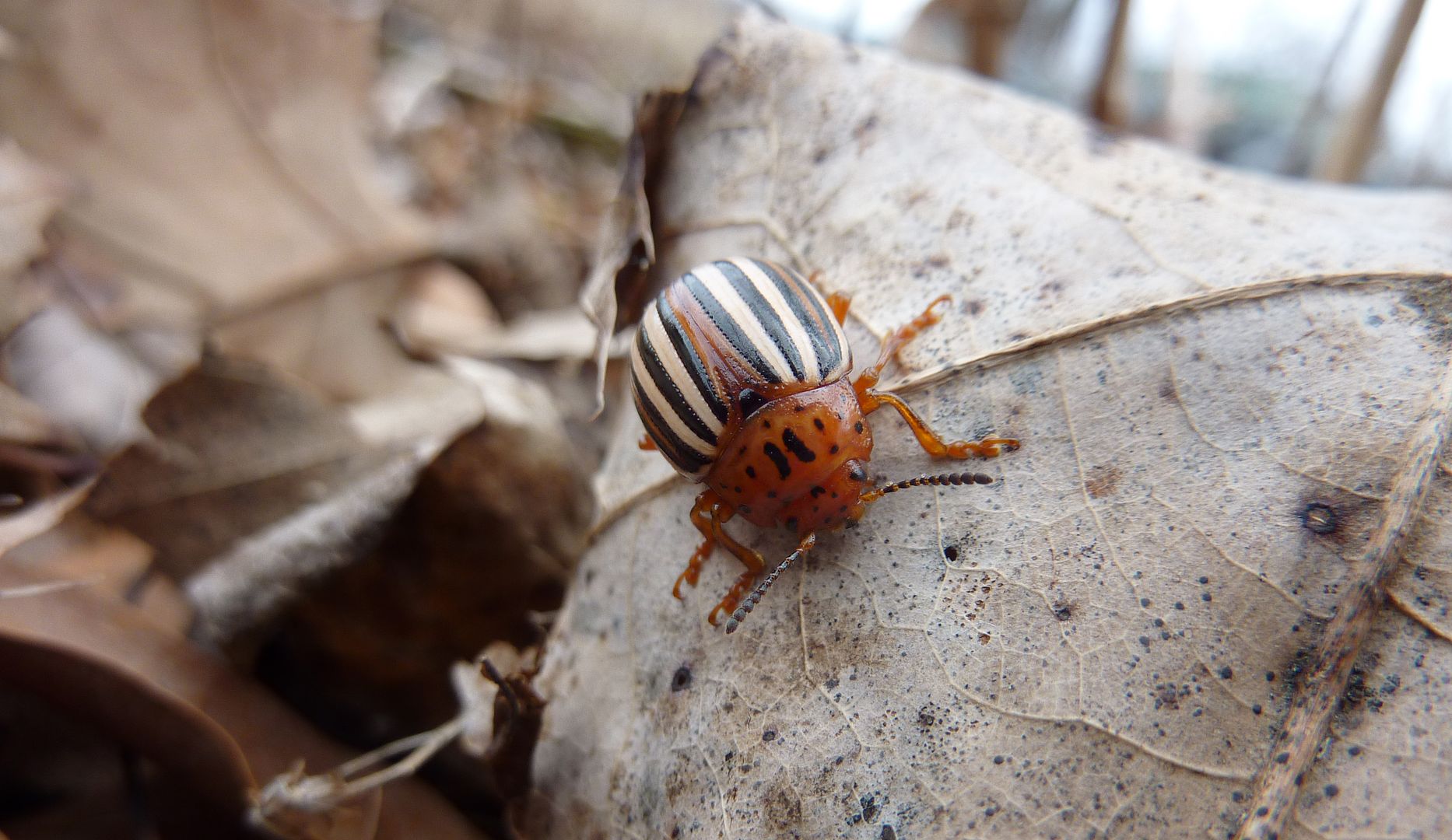
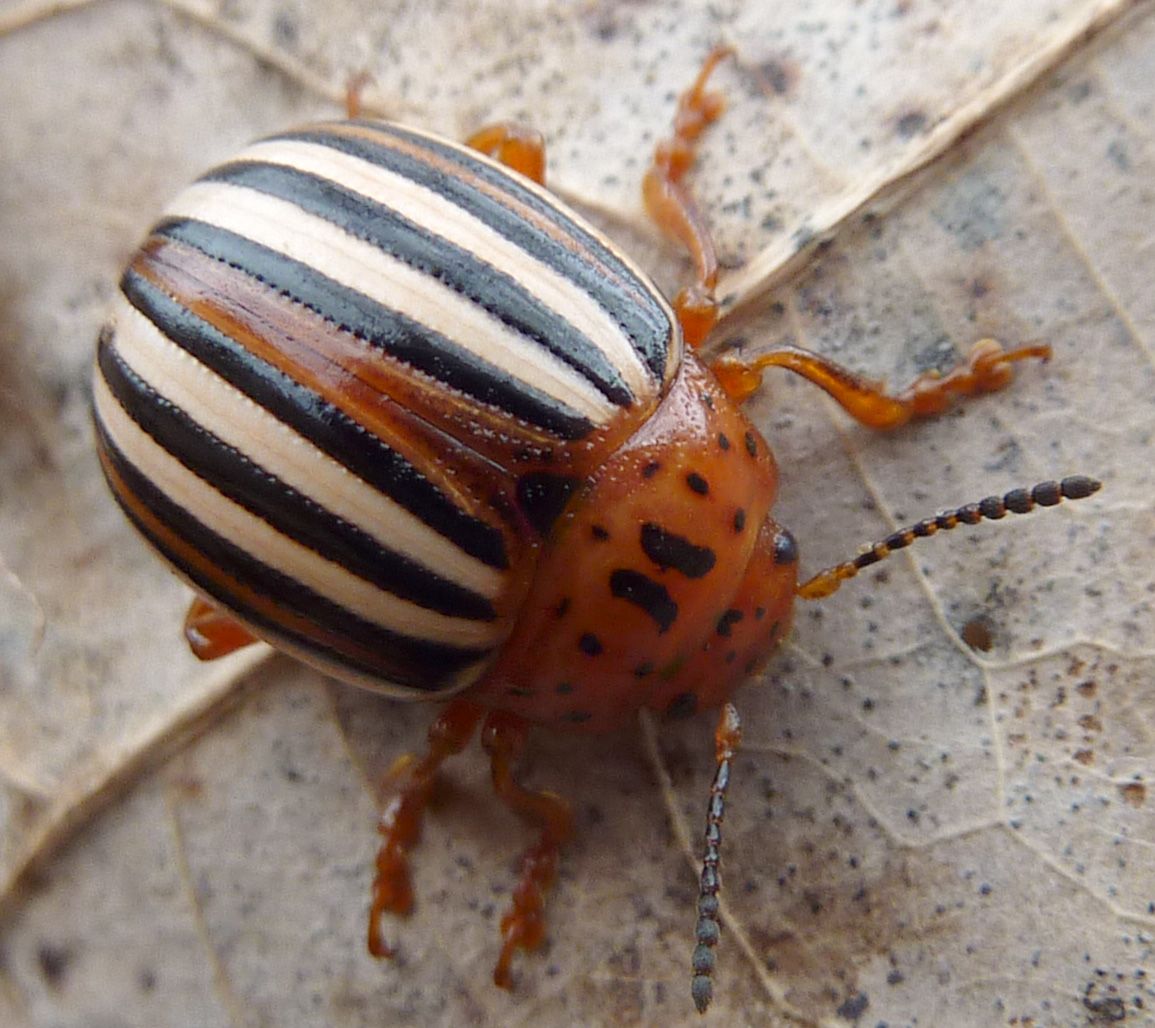
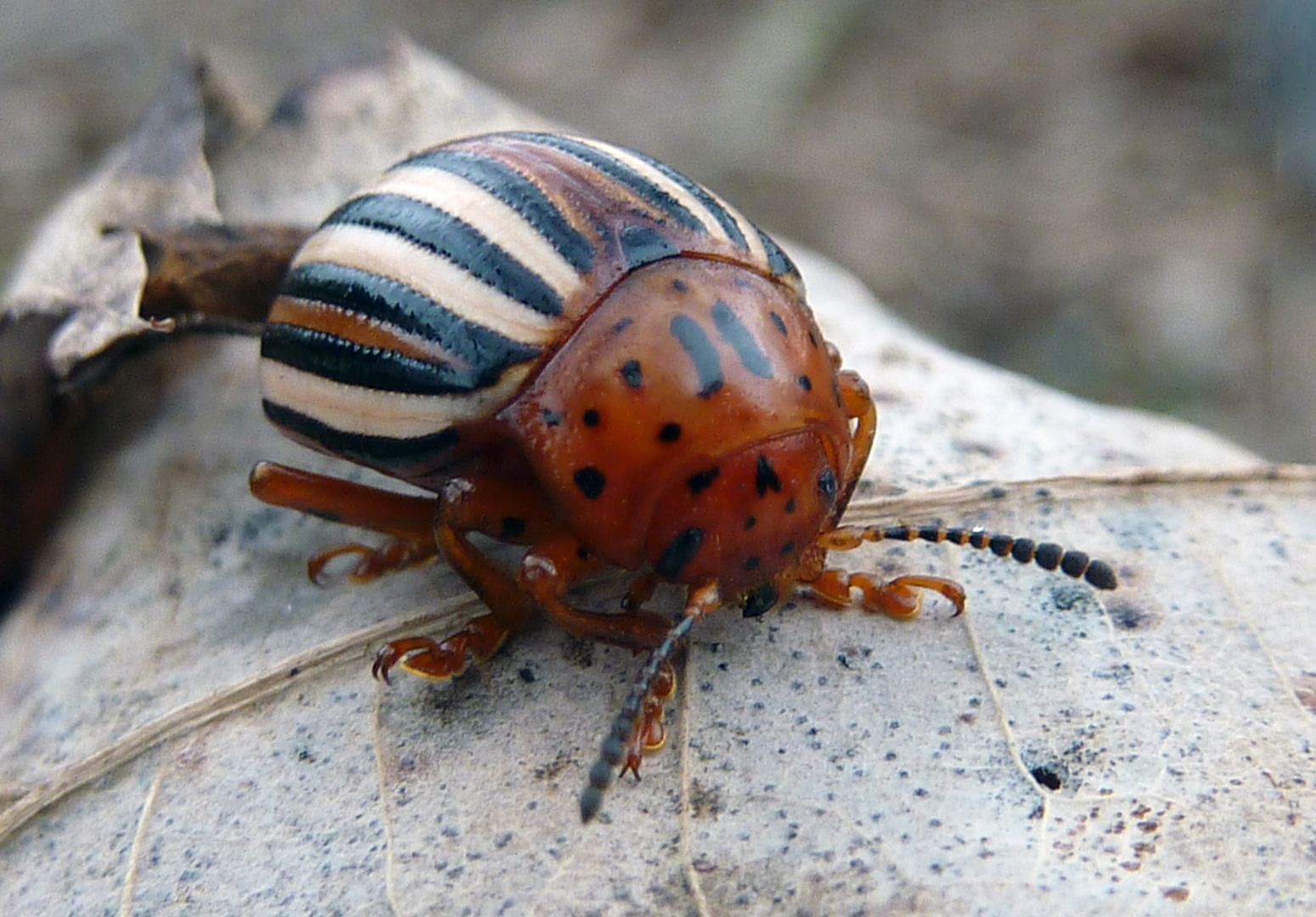
The False Potato Beetle, Leptinotarsa juncta, apparently overwinters as an adult, hiding among the leaf litter.

Note the chestnut-brown stripe down its back which is not found on the Colorado Potato Beetle.

The larva to this species is also white, whereas the Colorado Potato Beetle is brown or rosy colored.


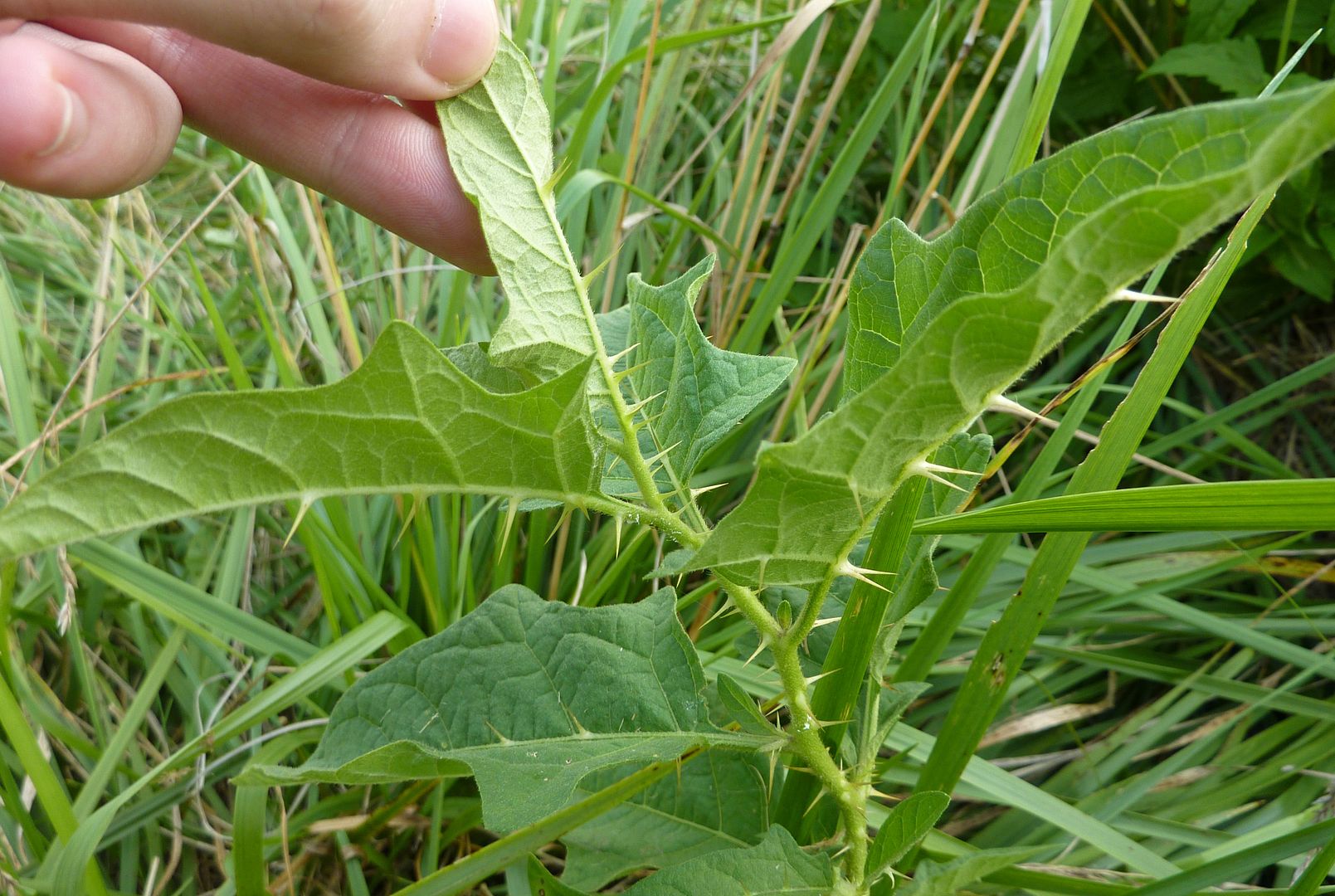
Host plants include Horse-Nettle which has mysteriously become a lawn weed with one of my neighbors. The flower to this plant is exactly like you see on a potato plant, but they only grow a foot or two long and are covered in some nasty thorns, that actually run along the central vane of the leaves too. 

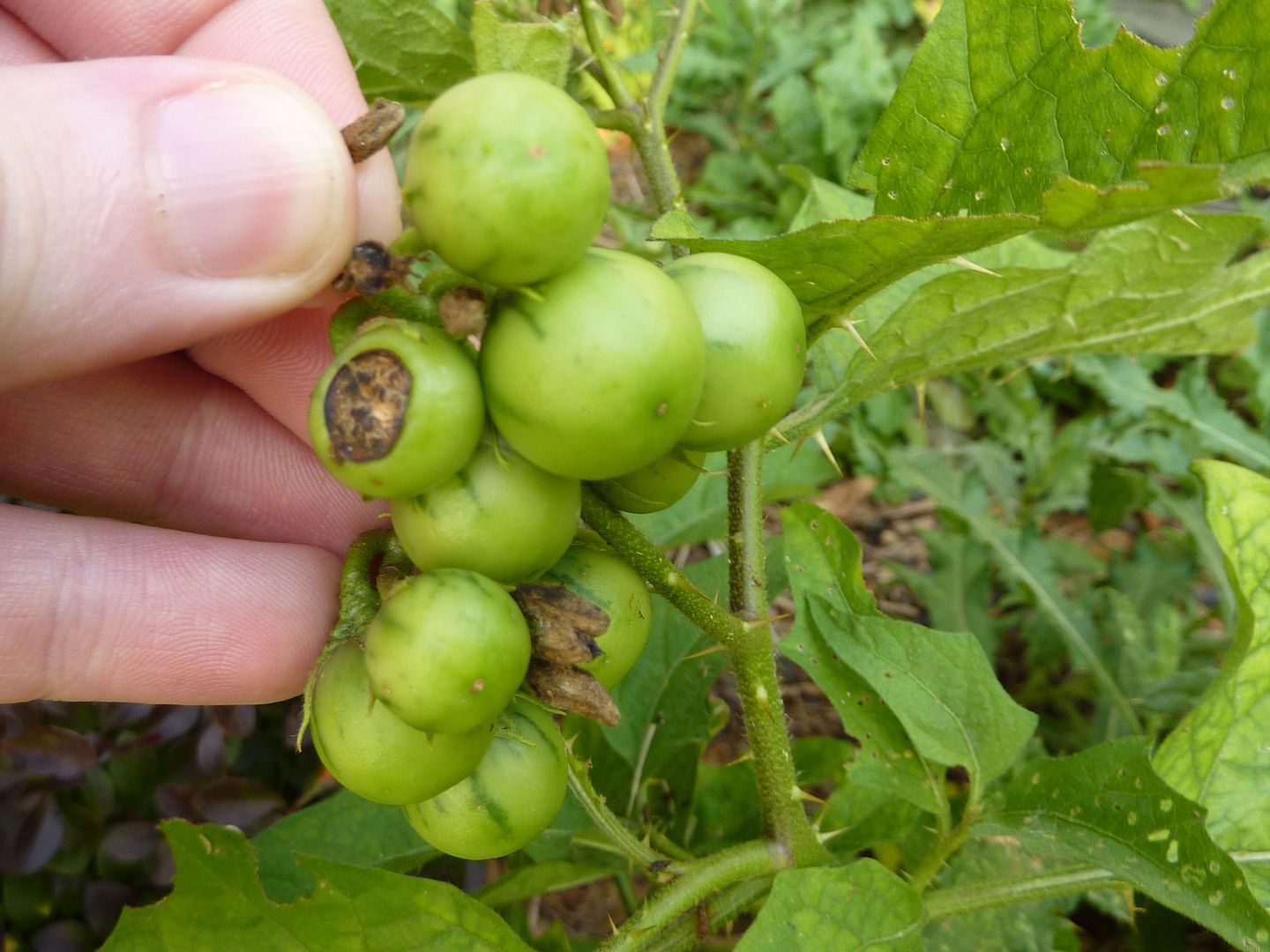
This plant is a relative of the Tomato and even produces small cherry tomato-like fruits. I don't believe they're edible to humans, and in facts are probably poisonous! I have no idea what caused this plant to suddenly show up in my neighborhood! I've lived here all my childhood, and only noticed how abundant it was in my neighbor's lawn in the past two years. Presumably he treated his lawn with grass seed that was contaminated with those of Horse-Nettle.

They also use Nightshade which does occur along our fence but isn't all that common.

Friday, March 16, 2012

Ant Chat 37: Flight of the Winter Ant


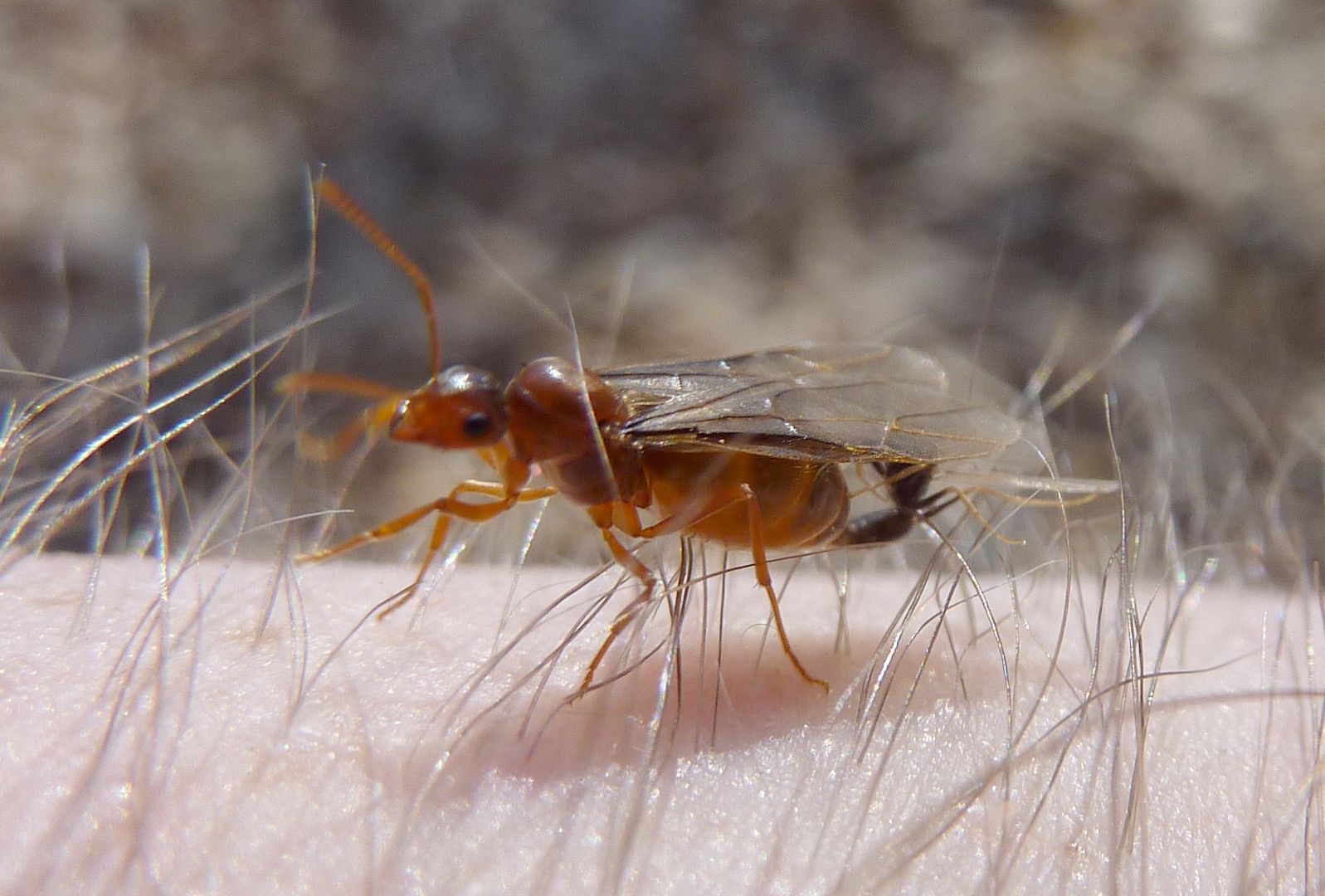
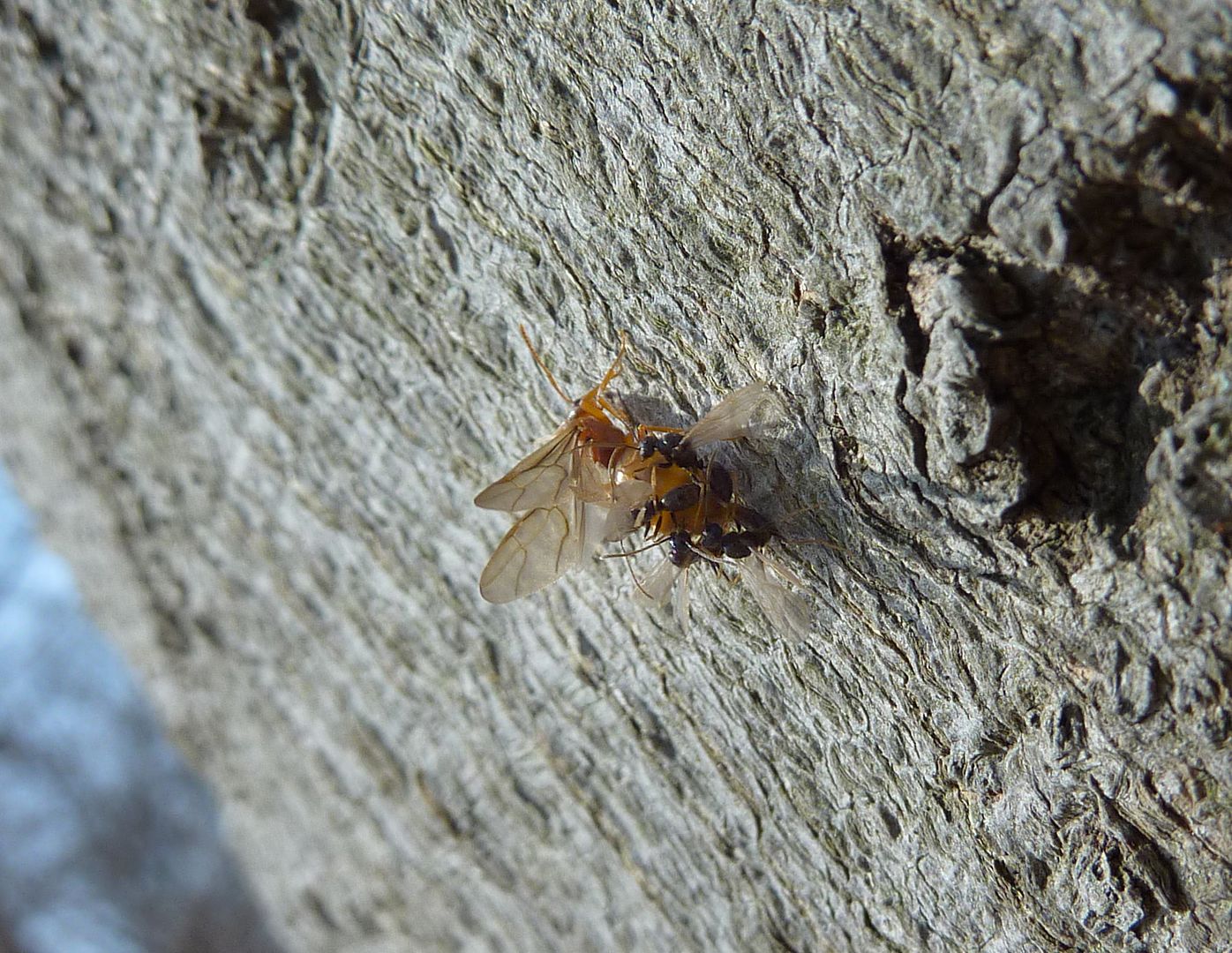
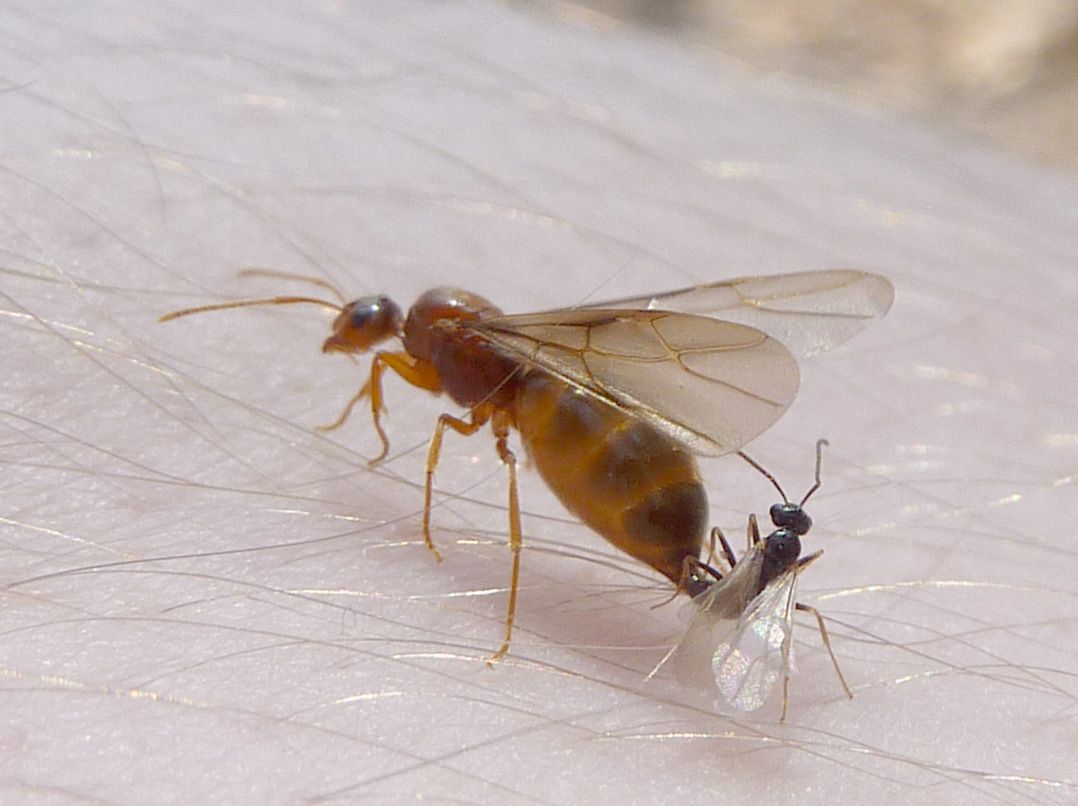
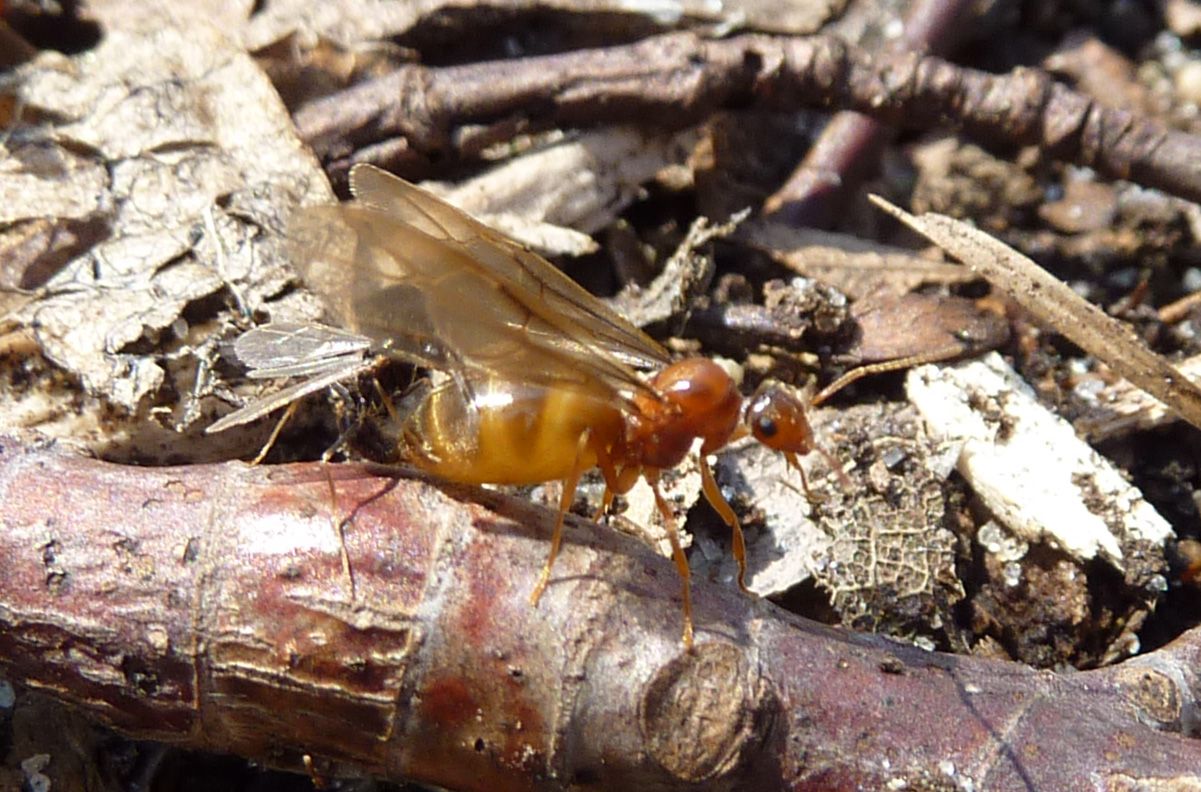
In summary, the earliest days of the year where it's 70F out are typically when this ant flies. They may be found flying as late as April but that tends to be the most northern part of their range, where as groups farther south can fly as early as February. Swarms gather around trees and shrubs, but aren't picky. The same day as this video I found males swarming around telephone poles and even specimen trees in my back yard. Forests tend to be abundant with swarming males which typically means more queens will show up. Queens are greatly out numbered and show up one at a time, every 5 minutes to a half hour.

 Males are quick to locate them as they arrive. Once the queen has, we'll call it "tagged in," she'll try to climb up high and fly away, often a male or two will still be with her. As the day progresses wingless queens can be found wondering around looking for places to make nests, though in my experience these are harder to find than queens are arriving to the swarm to mate.


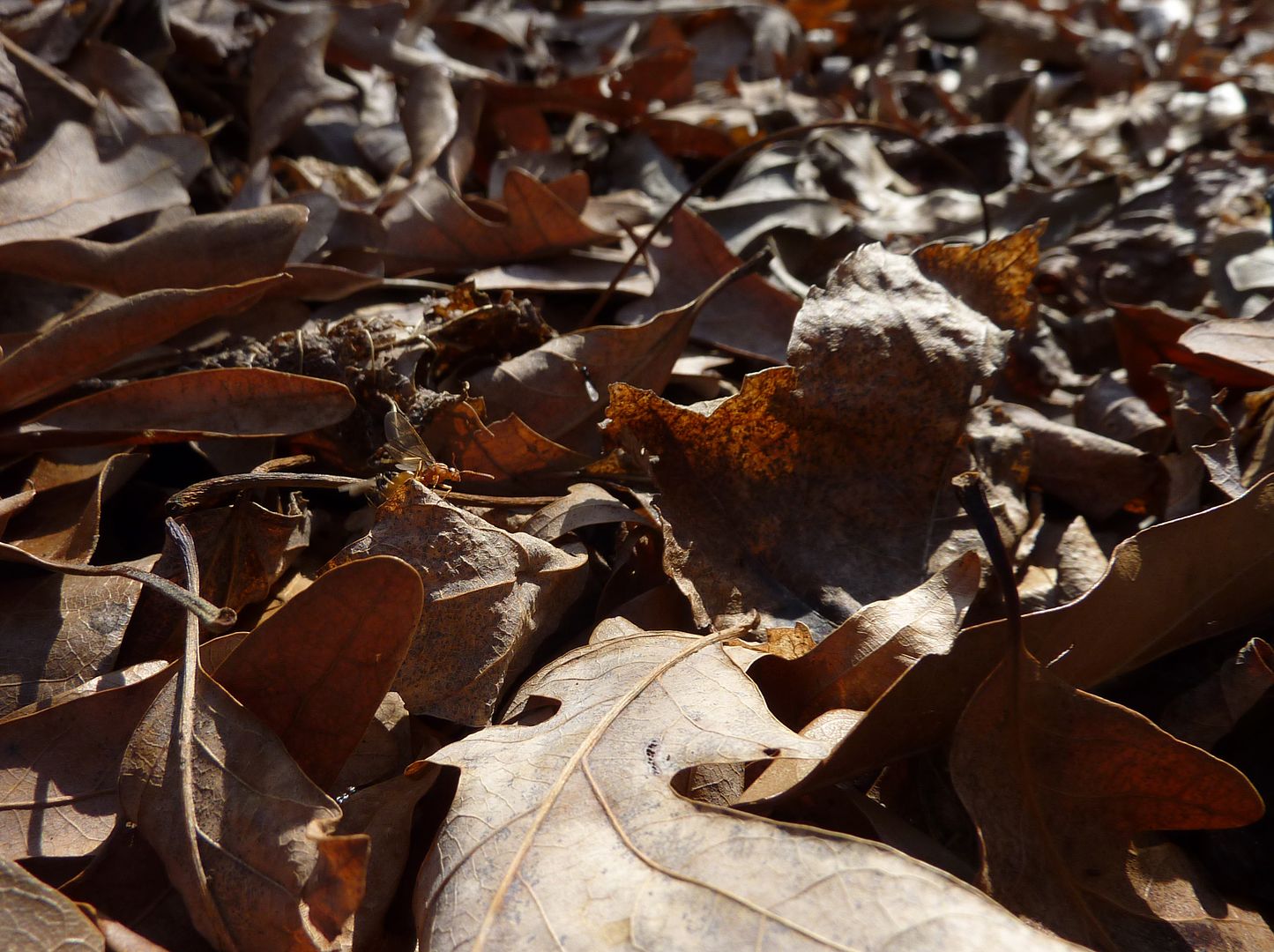
Can you find the queen ant? I think the bright oranges, blonds, and browns are intended as a sort of camouflage against birds. (At the same time though I believe males are drawn to her flashy colors. I recall in my youth finding a hot yellow toy shovel that was covered in male ants and I couldn't explain why. I didn't care about ants then as much as I do now. )

Colonies are easy to start in test tubes, however this is one of the more boring species to keep. Queens only lay eggs at one time of the year and if the batch fails that's it for the year. Even so they're a fun ant to come across and learn about.

Saturday, January 8, 2011

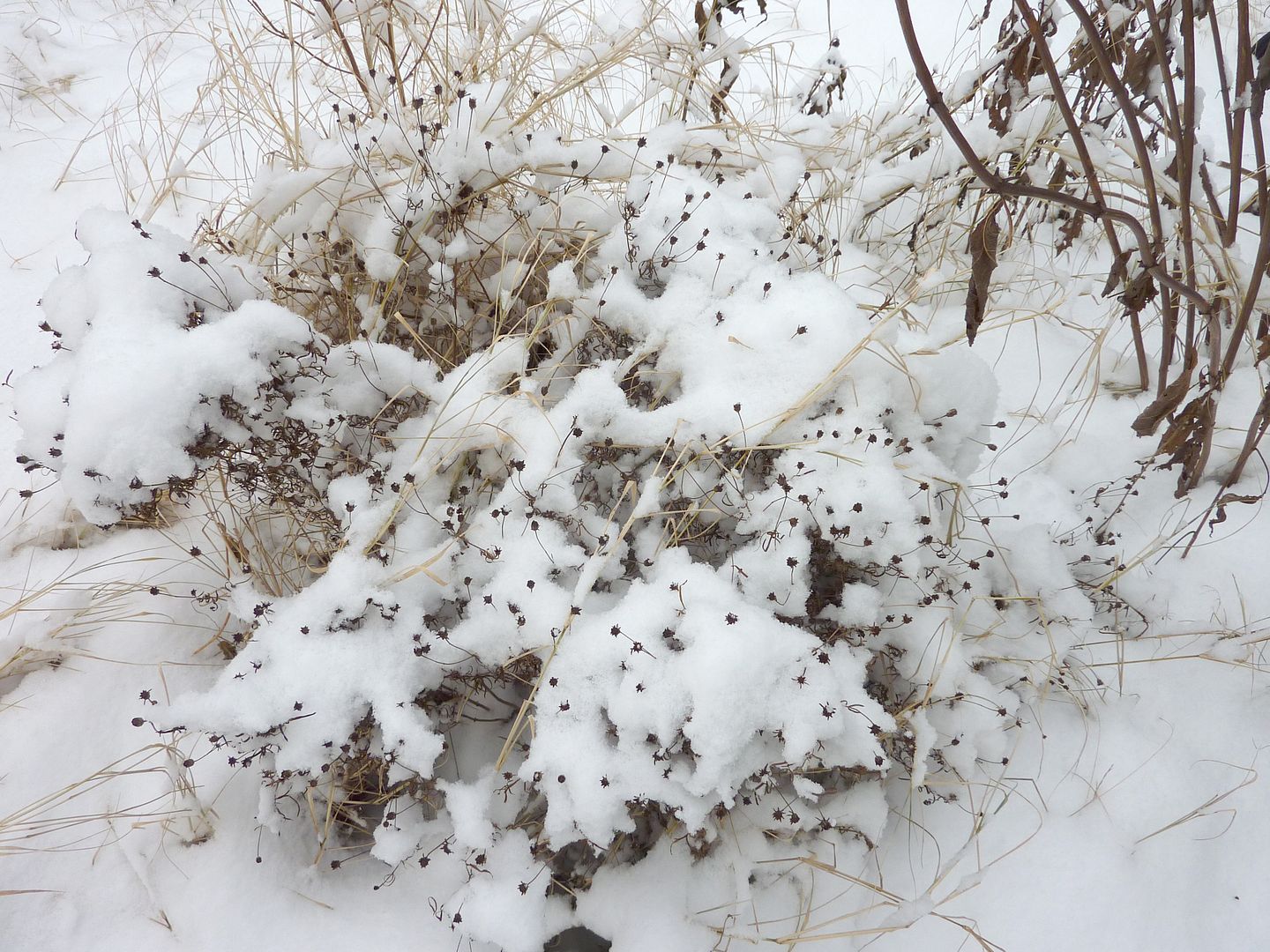
Winter Snow Scapes

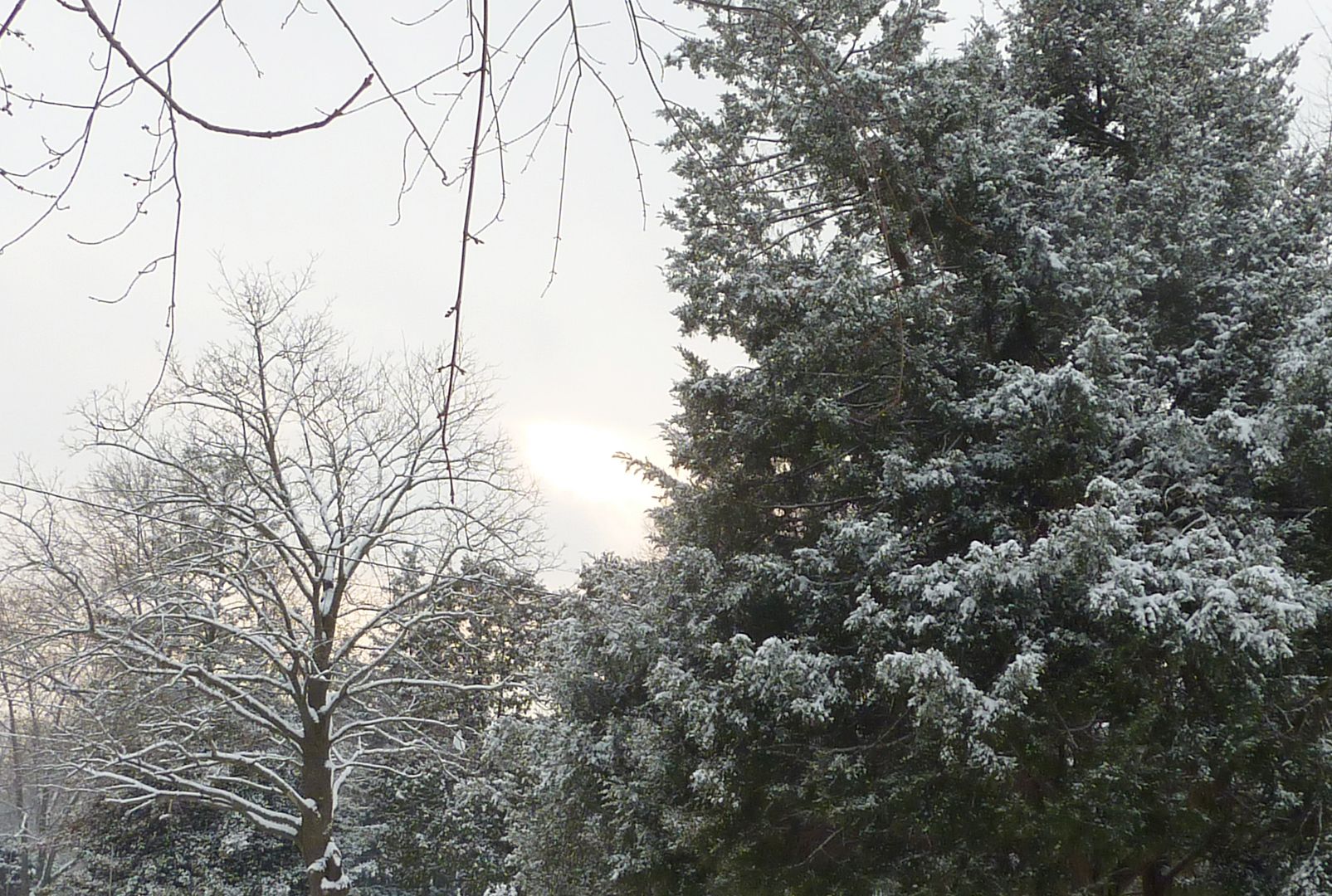
Well it's snowed here for the second time. We got more snow the first time but it was all thin and dust like in consistency. This latest batch though has more puff to it and lays on the limbs of trees nicely. The paler green here is a my neighbor's holly tree, while the darker ones are pines. I've edited and cropped the ever loving hell out of these to illustrate that pretty views are still possible in suburbia; one just has to edit out all the telephone polls.

Front yard too.

Squirrel highway closed due to icy conditions. A really long limb to one of our oaks I've been meaning to remove.

Solidago rugosa 'Fireworks'.

White Wood Aster, Eurybia divaricata.

Coreopsis sp.

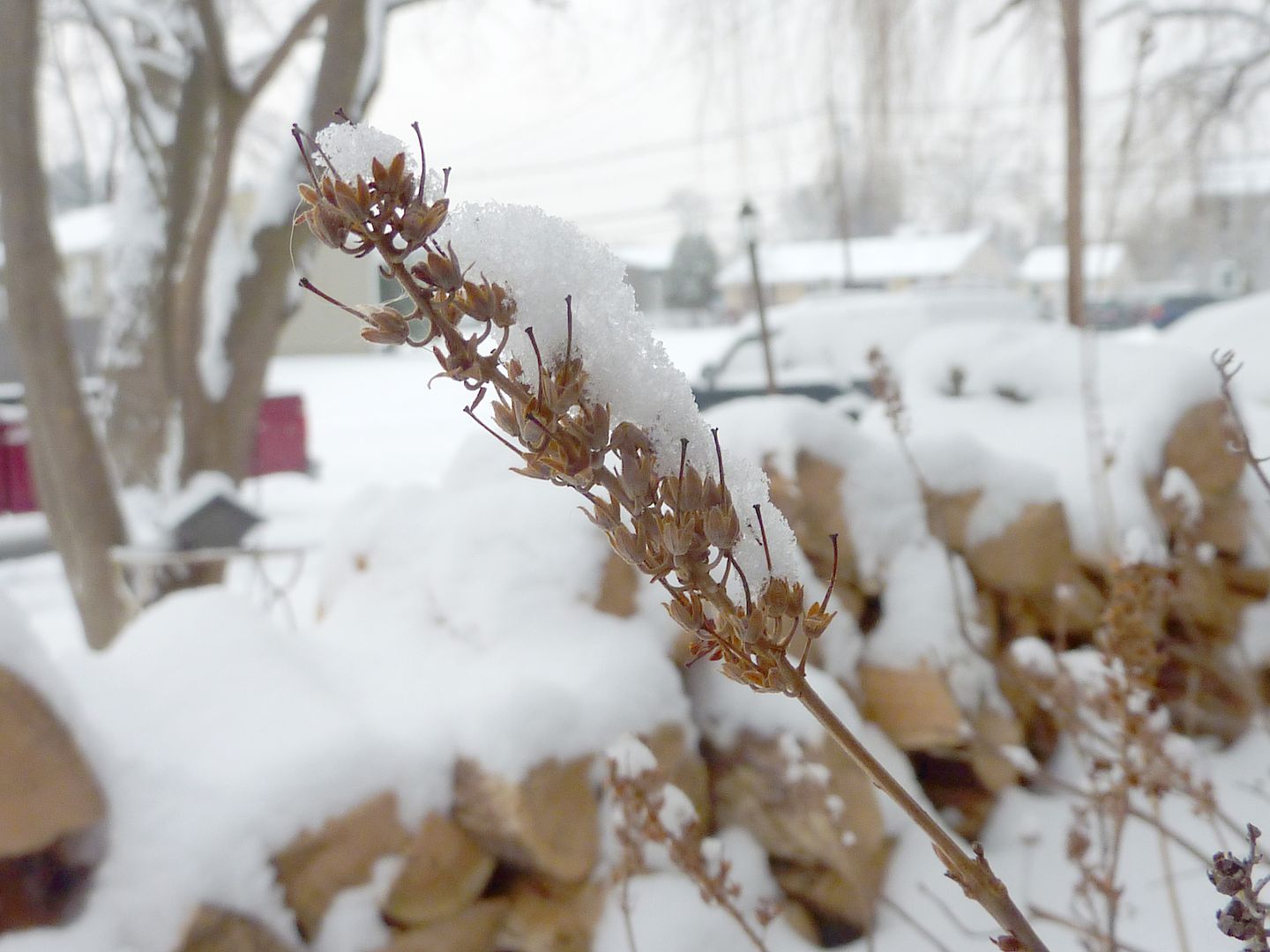
Clethra alnifolia seed heads.

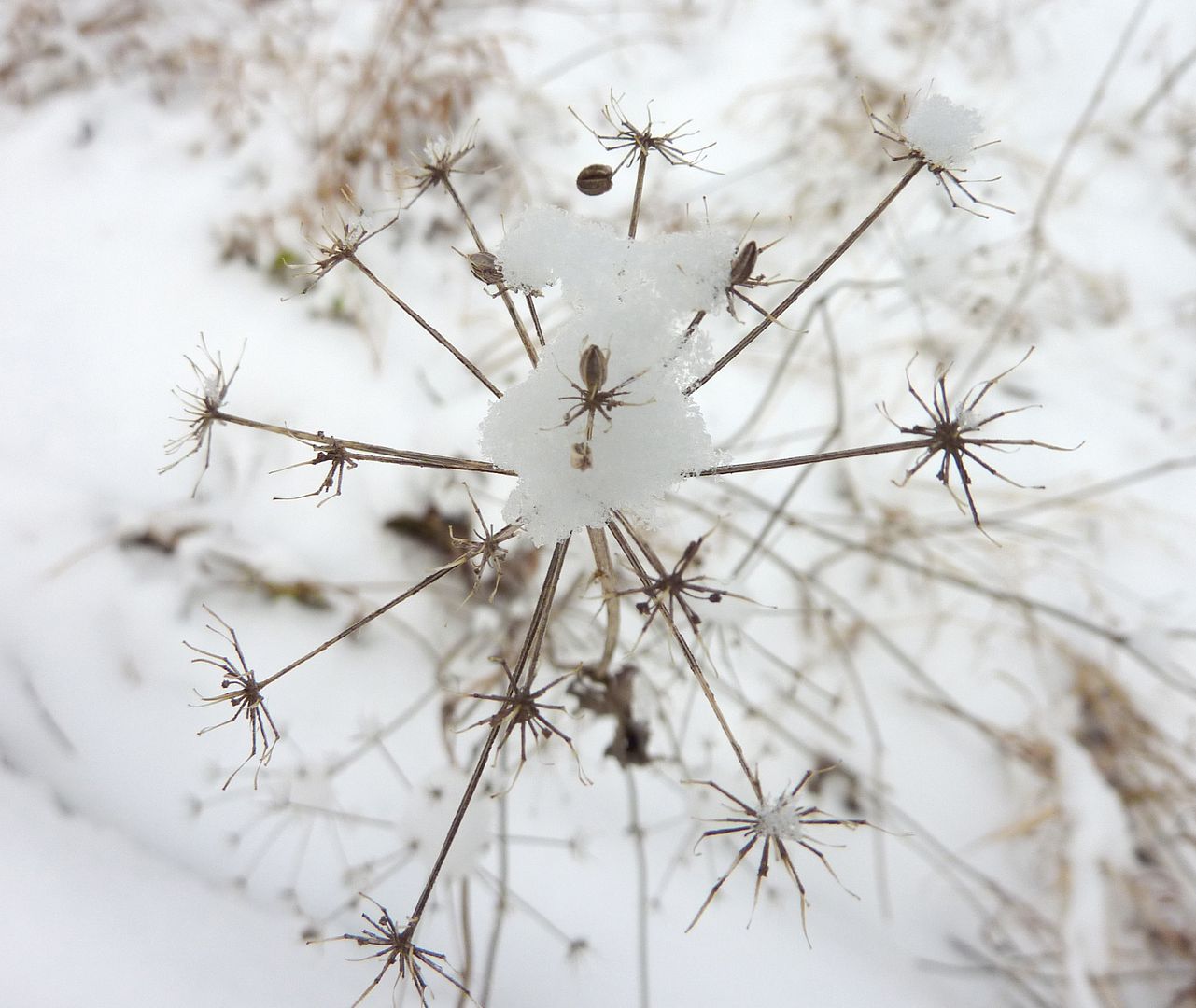
Golden Alexander, Zizia aurea.

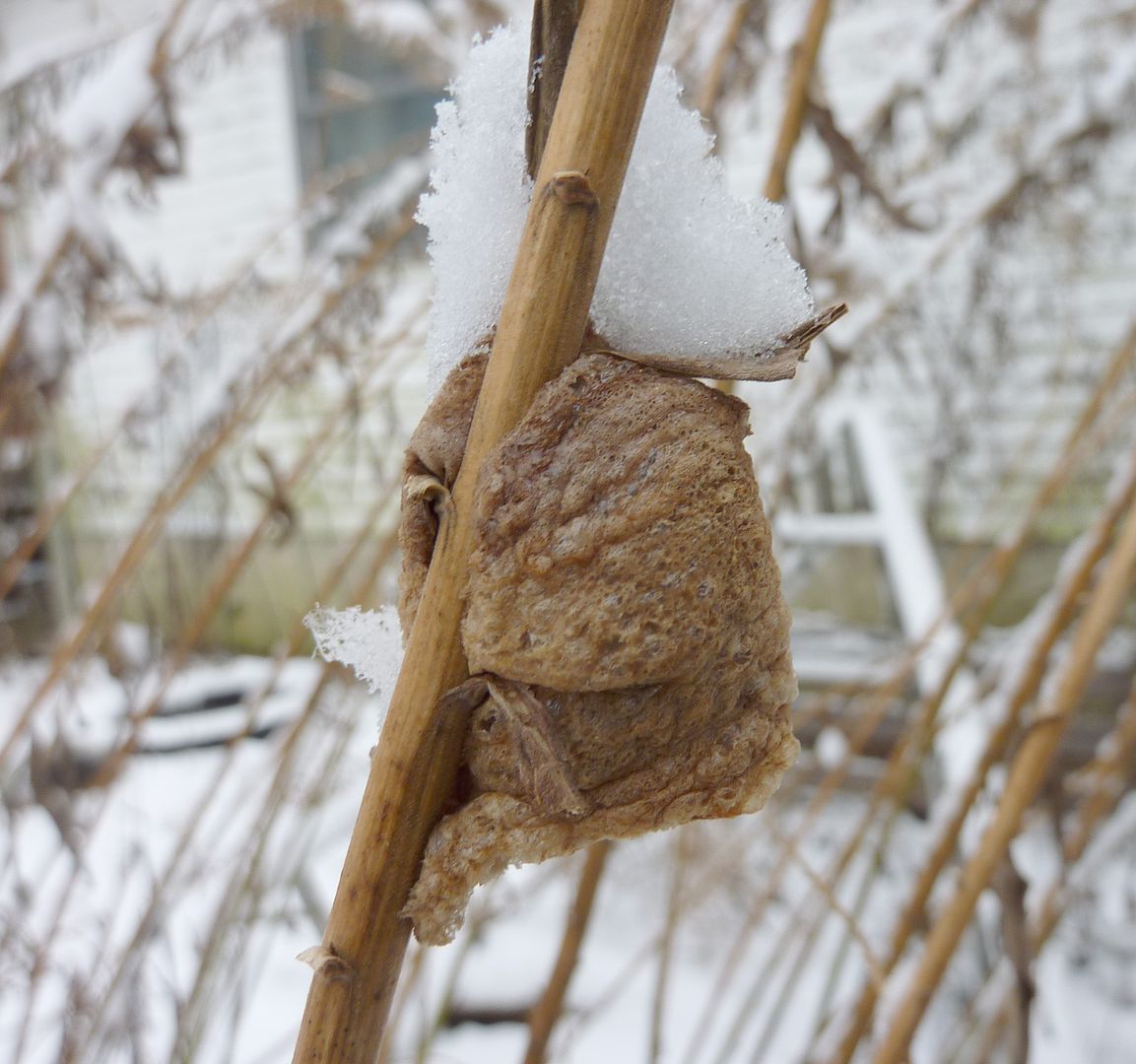
Praying mantis egg still hanging on.

Most surprisingly of all I found something still green outside! Not certain what this is. I think this is some left over growth from the Golden Alexander, Zizia aurea.

Saturday, November 20, 2010

Green Growth in the Autumn

Despite winter's eminent arrival, some forbs push out new growth close to ground level. The towering stems shooting out of this plant have served their purpose. Over the past year this Goldenrod has leafed out, flowered, and is now setting seed. Despite this though, next year's growth has already begun.

This can be a good time to catch root suckering plants. If they're spreading in an undesired direction, transplanting or cutting the root at that point could be called for. Waiting until next spring will also work but it's best to catch it early. I'm leaving these here because it's a fairly young plant and I can stand it spreading a little.

This can also be a good time to point out seedlings. Many seeds will germinate the same year and produce a small amount of growth. Here is a young goldenrod plant sprouting through the leaf litter. The contrasting fallen leaf color can help make them easy to spot. To the side of my house I've spotted a lot of thistle plants coming up from when I let it go to seed. I don't mind a thistle or two but there are dozens of plants coming up that I'll deal with next year.  

Some plants only produce the leaves to get extra energy. For many species the leaves are only temporary. Cold temperatures will damage a lot of the leaves and new ones will have to be put on next year when it's warmer.

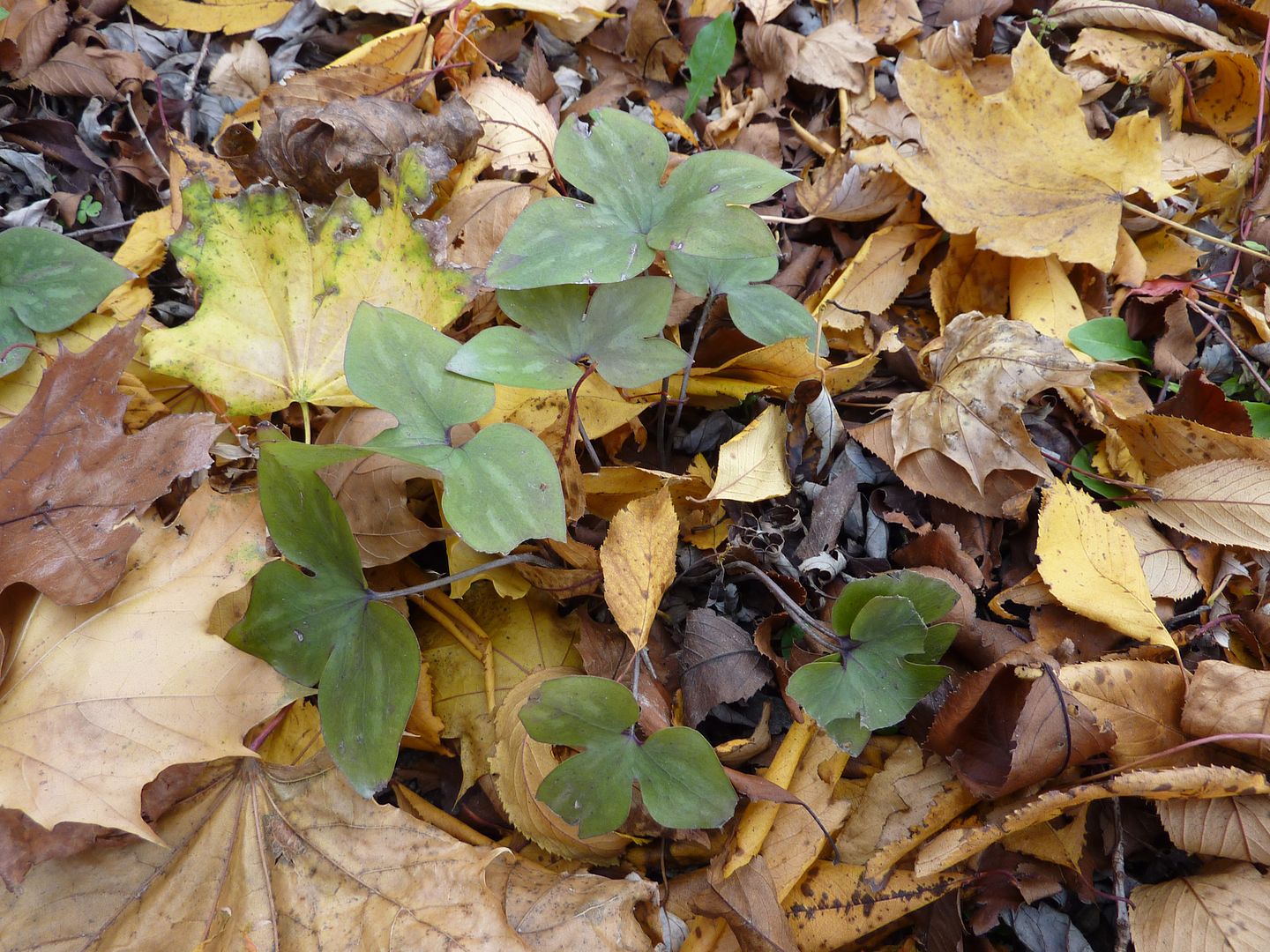
Here a Hepatica plant still has the leaves it's held onto all year. This plant is a semi-evergreen which means these leaves will last most of the winter but die off just before flowering next year. This is a nice plant to have around spring time wildflowers just because the growth helps mark where they're planted. Most spring wildflowers die back to the ground by the end of summer. 

Friday, November 20, 2009

Overwintering Caterpillars


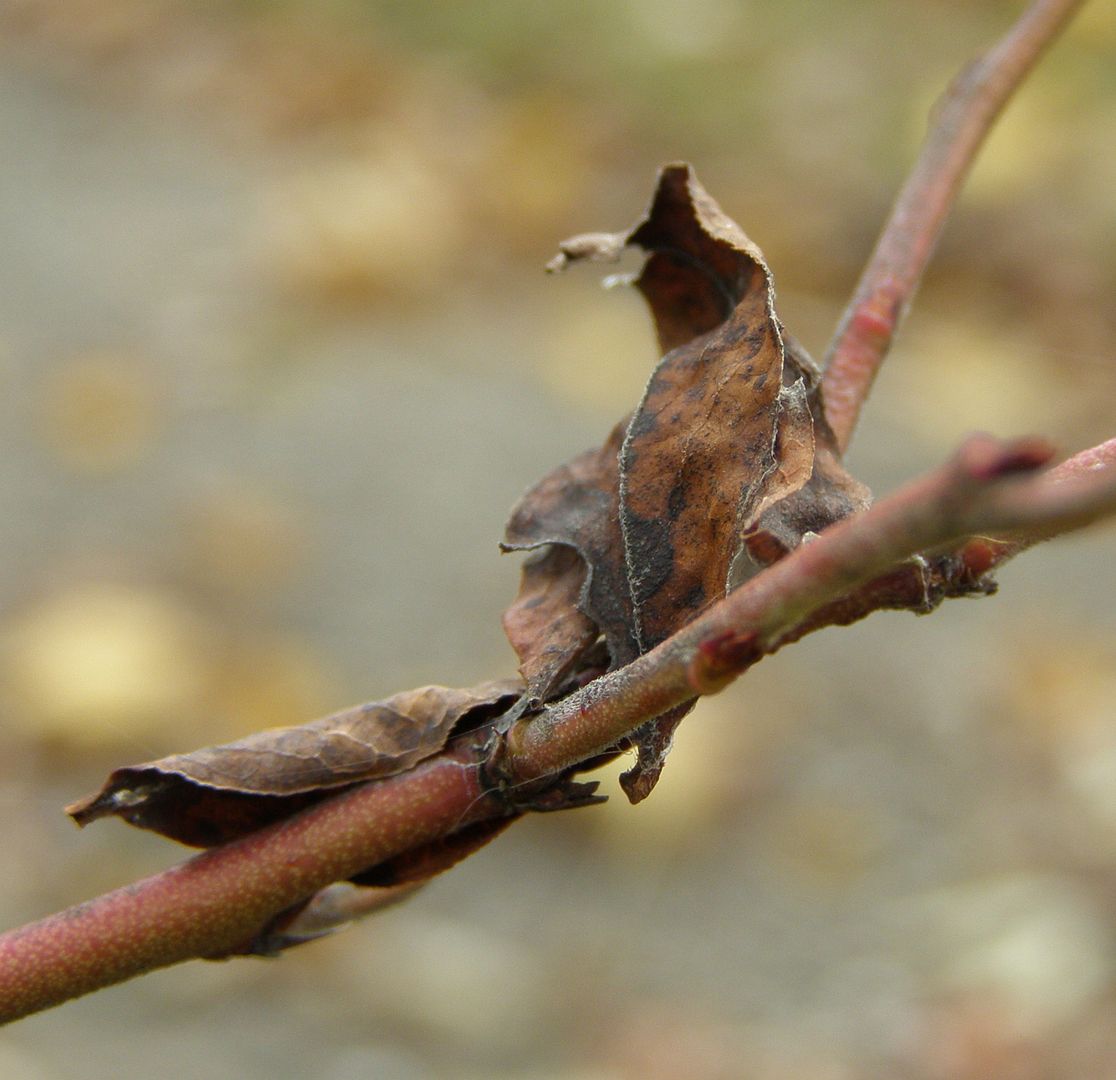
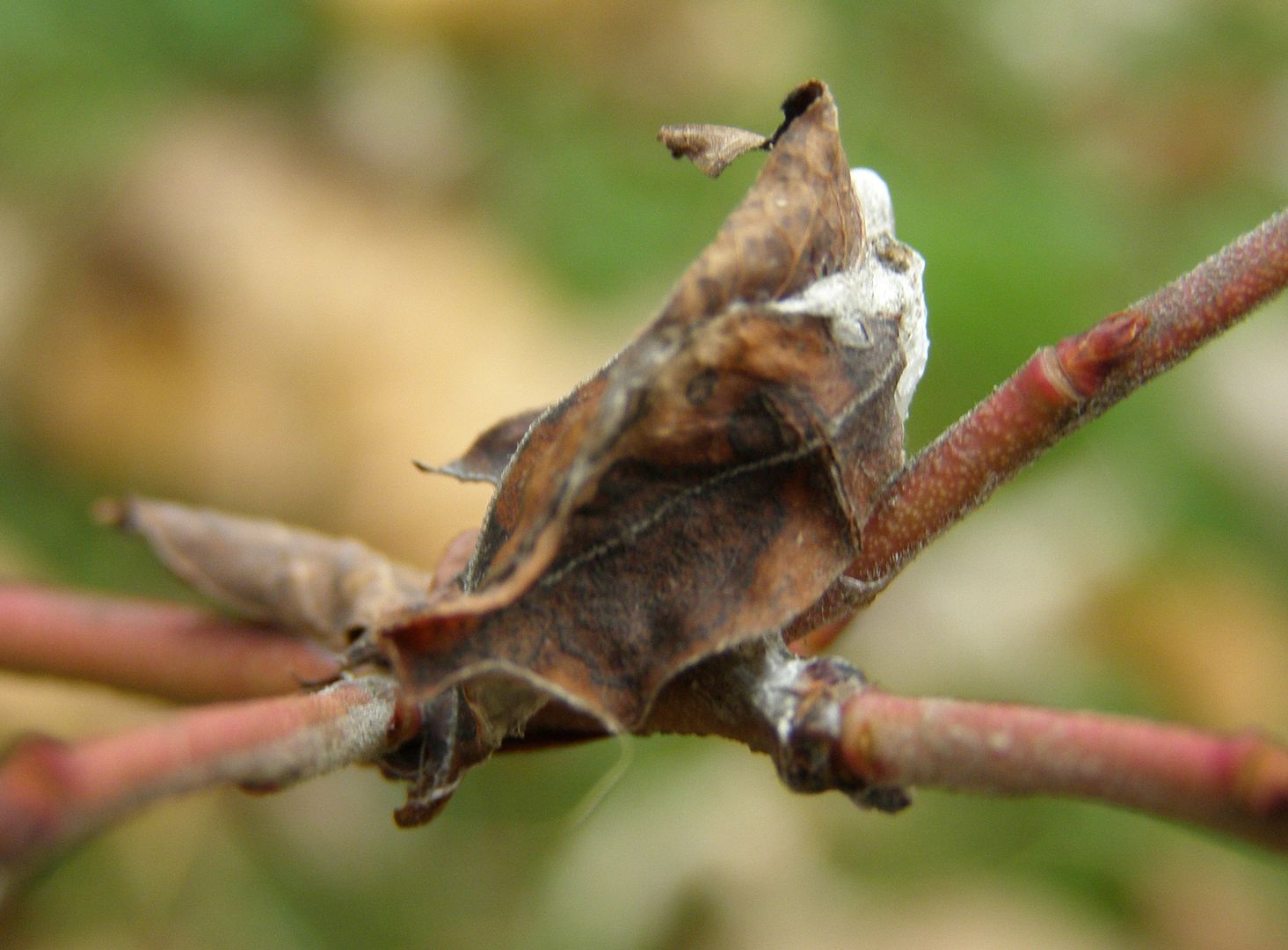
Seeds are one thing to find in winter but caterpillars are quite another. Even though they're still developing it's still possible to find them. I doubt they're worth eating at this time though. On our blueberry bushes all of the leaves have fallen off ... with the exception of these two or three.


From another angle the silk is more easily seen. Within this cluster of leaves is a caterpillar of some overwintering species. Mostly likely a moth of some kind. They'll remain attached to the plant until the spring time when it will hatch and start the cycle all over again.


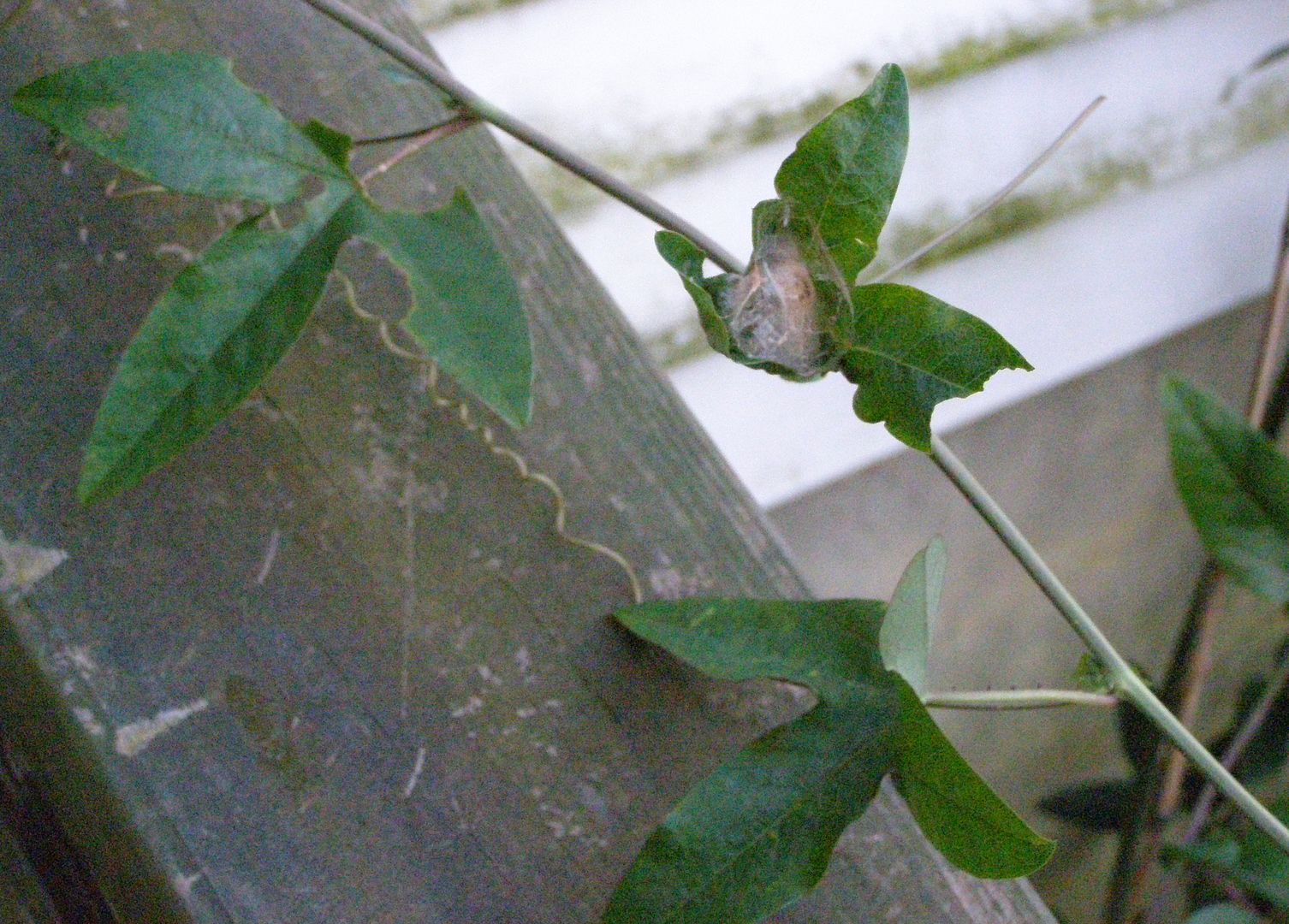
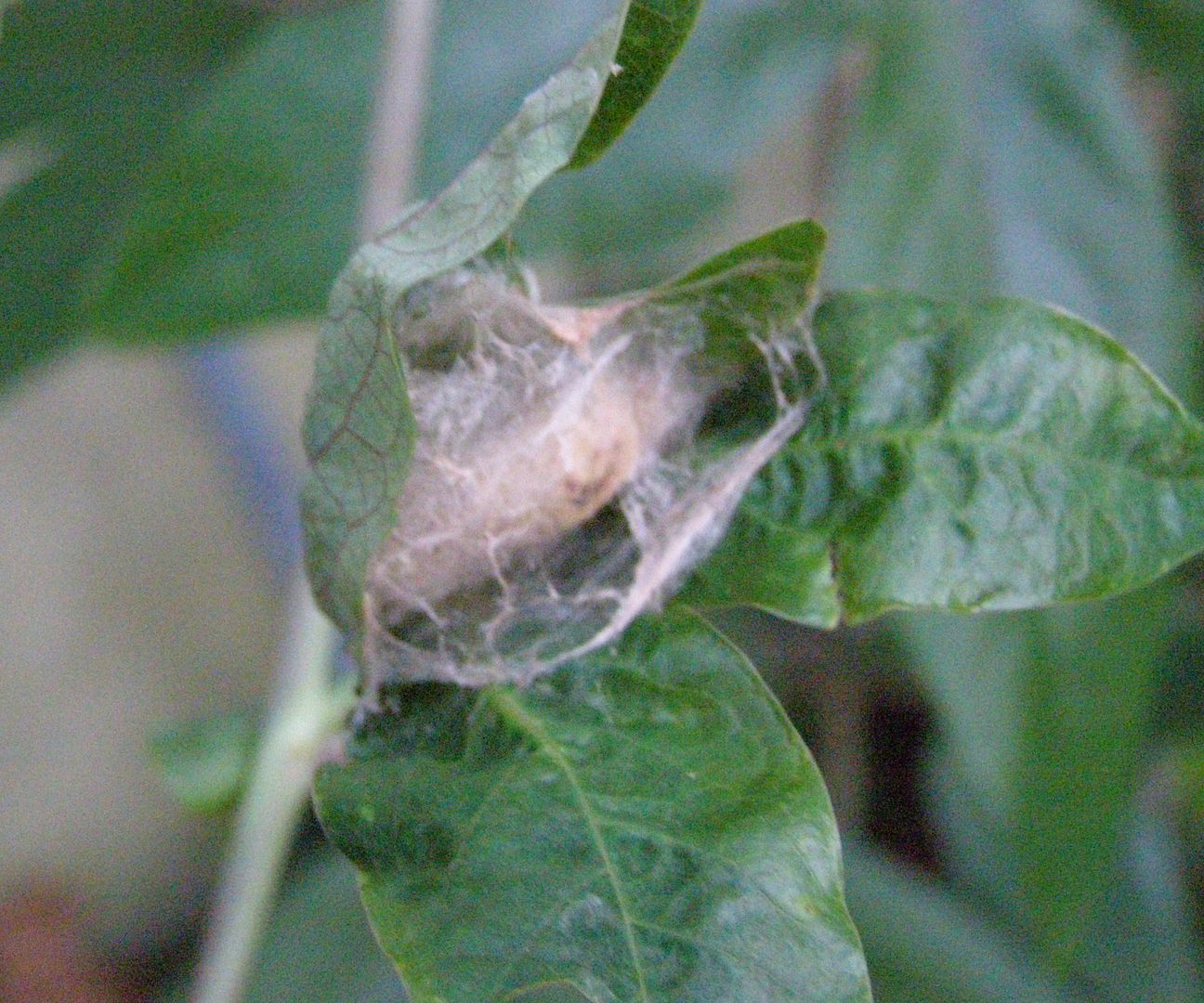
Our Passion Fruit Vine also houses a caterpillar. Passiflora incarnata is surprisingly native considering how exotic looking it's flower is. This is the first year I've had this plant and it hasn't flowered yet. So for flower pictures I turn to Google Search. The fruit is supposidly edible too. However I'm told this is considered a noxious weed. Not only does it spread by seed but it sends up suckers up to 15 feet from the parent plant. Thankfully I'm at the norther most part of this plant's range so hopefully it will play nice.


Considering how pretty the butterflies are it might be worth having such a plant around. Agraulis species are among the prettiest North America has to offer. The only other butterflys that have the intense orange colors I can really think of are all Milkweed Butterflies like the Monarch. Here's hoping for some bright colors next spring.