Showing posts with label Queen. Show all posts

Wednesday, September 3, 2014

Arizona: Meeting Ray Mendez


An incredible highlight of the Ants of the Southwest course was a visit to Ray Mendez's house.

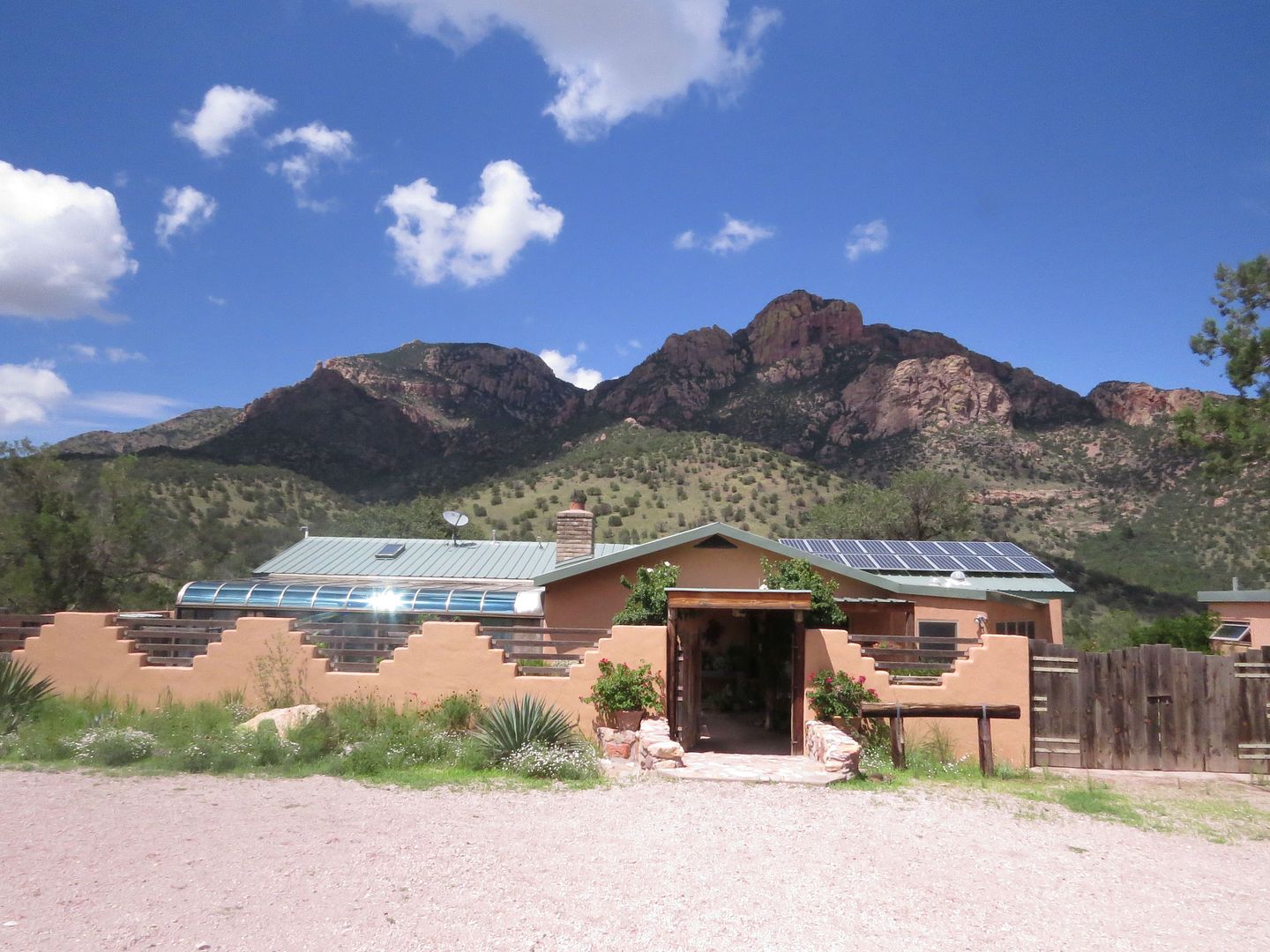
Here is his house, and that's the view he gets to wake up to every morning.

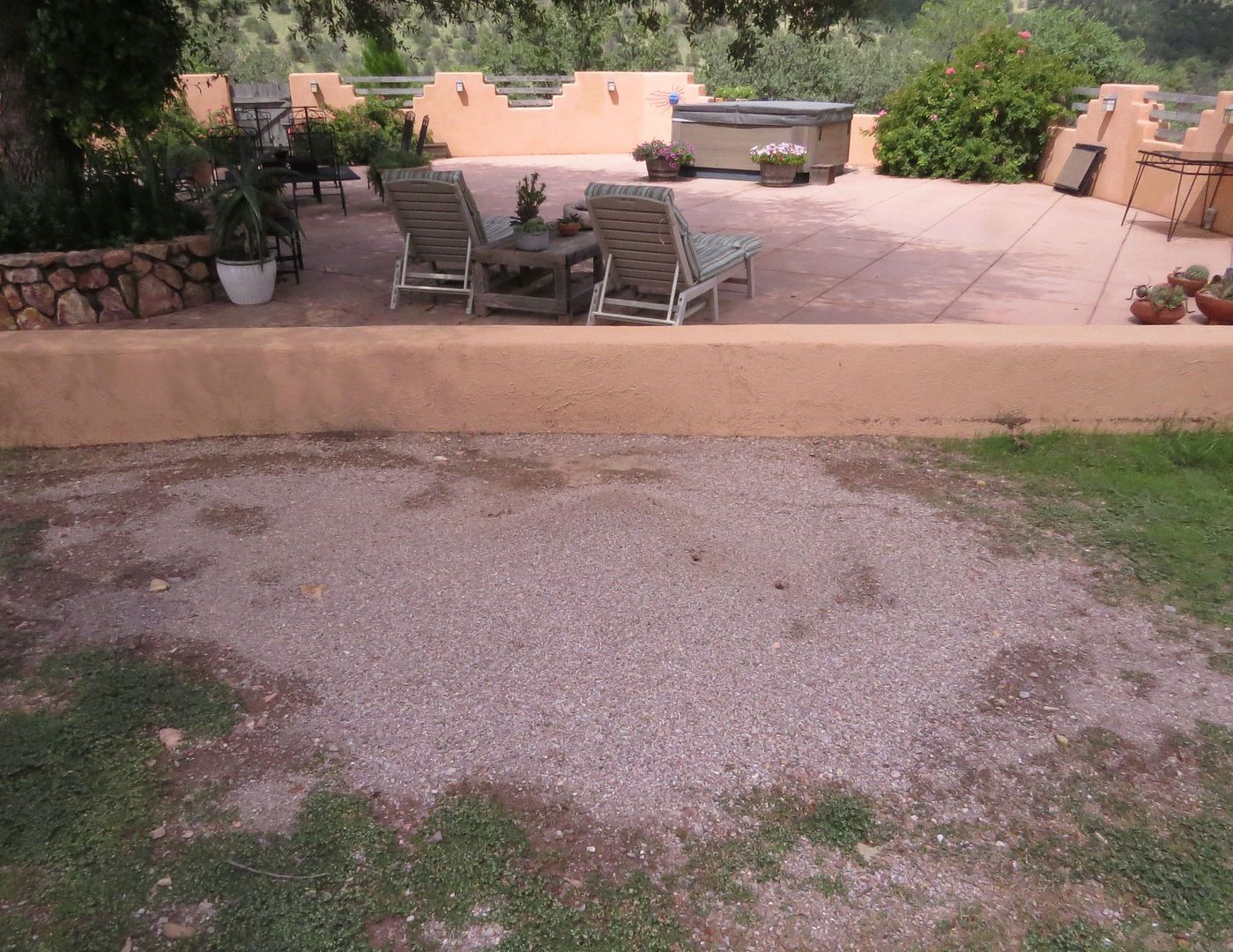
It's Pogonomyrmex adjacent.

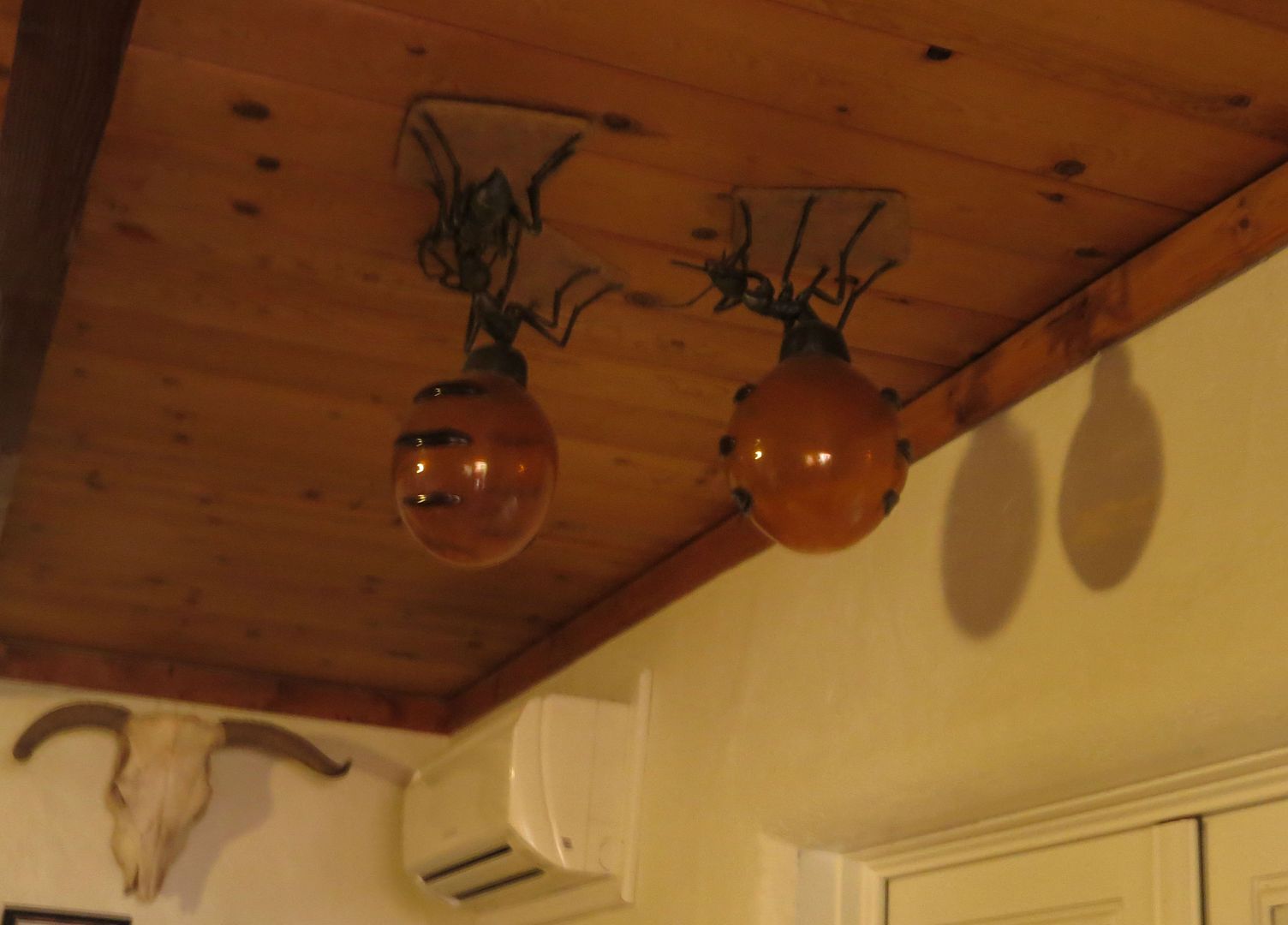
Inside he has some interesting artwork hanging from the ceiling. But you might be asking, what makes Ray so special?

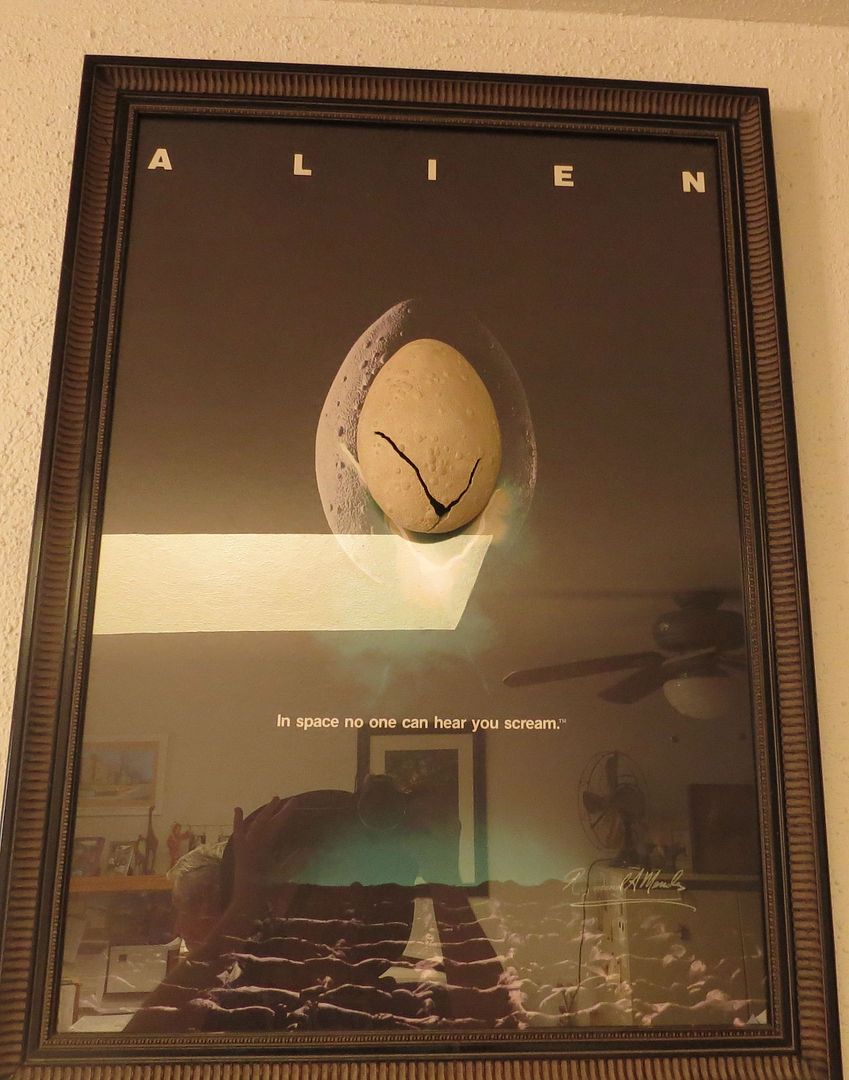
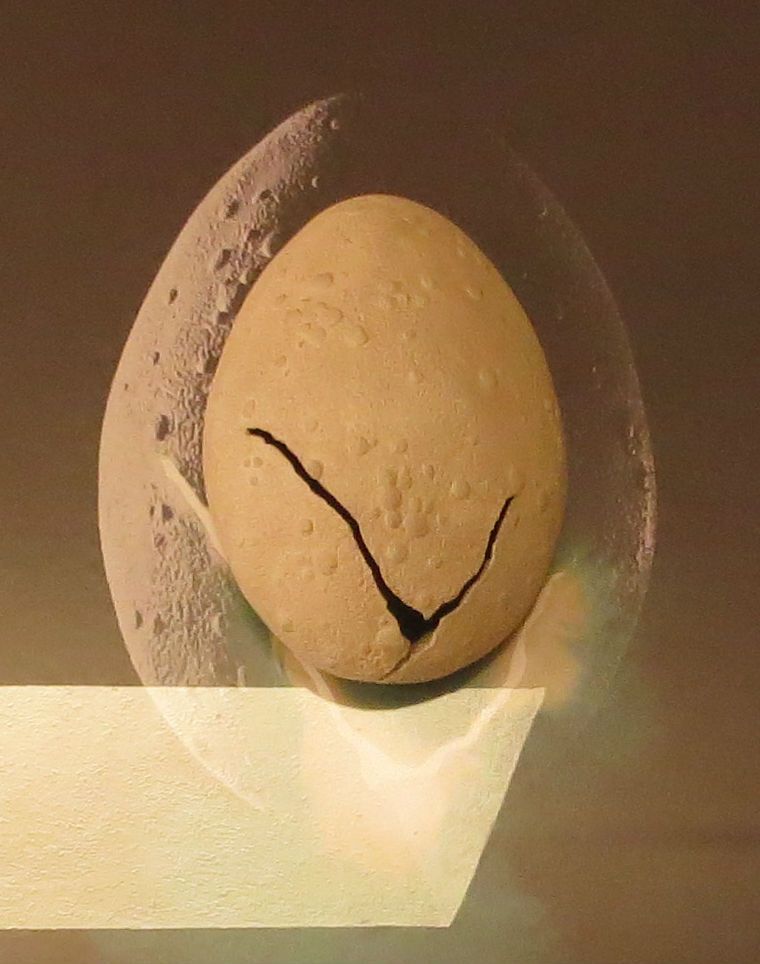
He made the alien egg and worked on some of the effects for the movie "Alien." He also helped inspired what has to be the greatest tagline for a horror movie in cinema history. "In space no one can hear you scream."


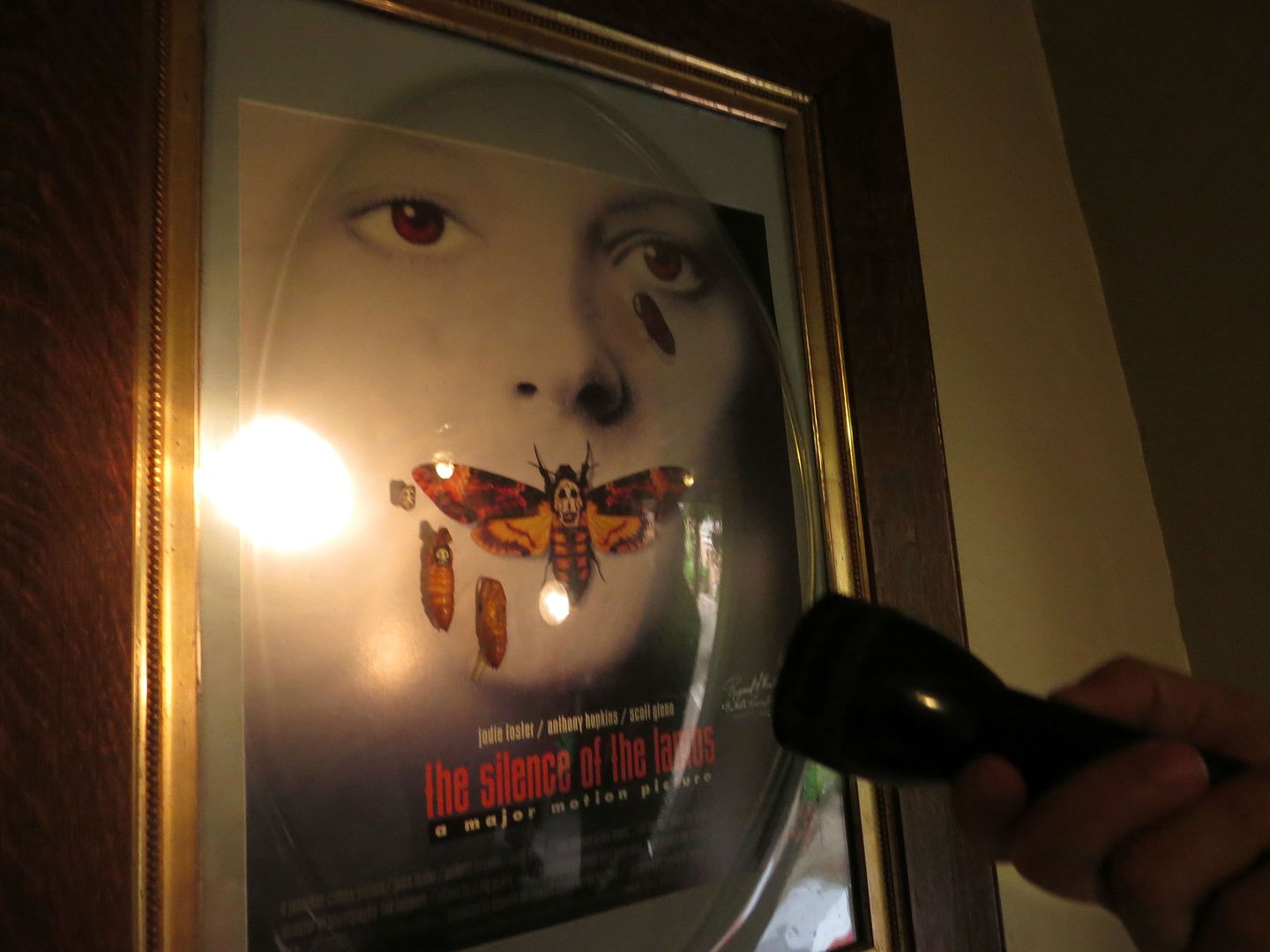
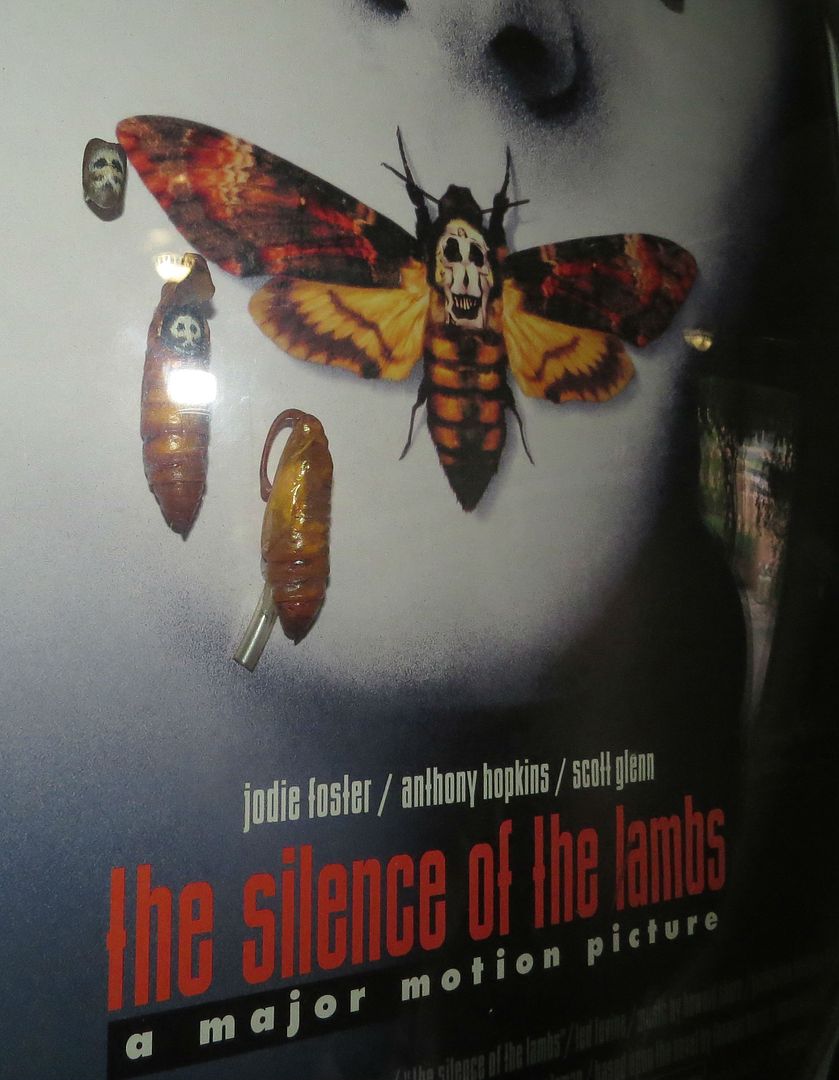
He did the bug work for the film, "Silence of the Lambs."

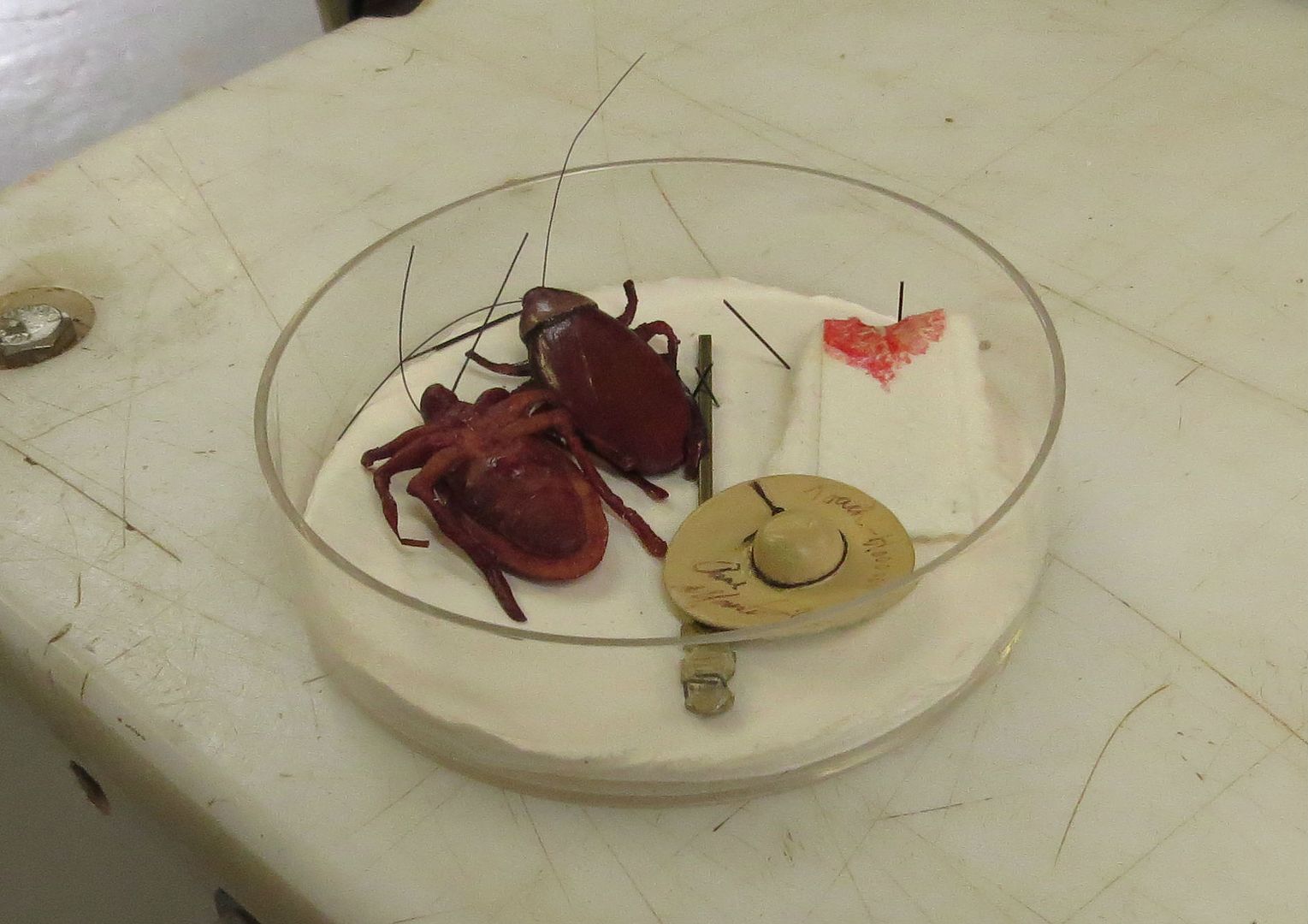
It's actually a cockroach done up to be a moth.

He was the roach wrangler to the film "Joe's Apartment," which is admittedly a bad movie but the stories he has to tell about making it sound like they had an awesome time filming. (They got to pump a few thousand roaches up a girl's dress.)

His portfolio includes a smattering of advertising campaigns.

Here Ray bestows his wisdom to the Ants of the Southwest class in his workshop.

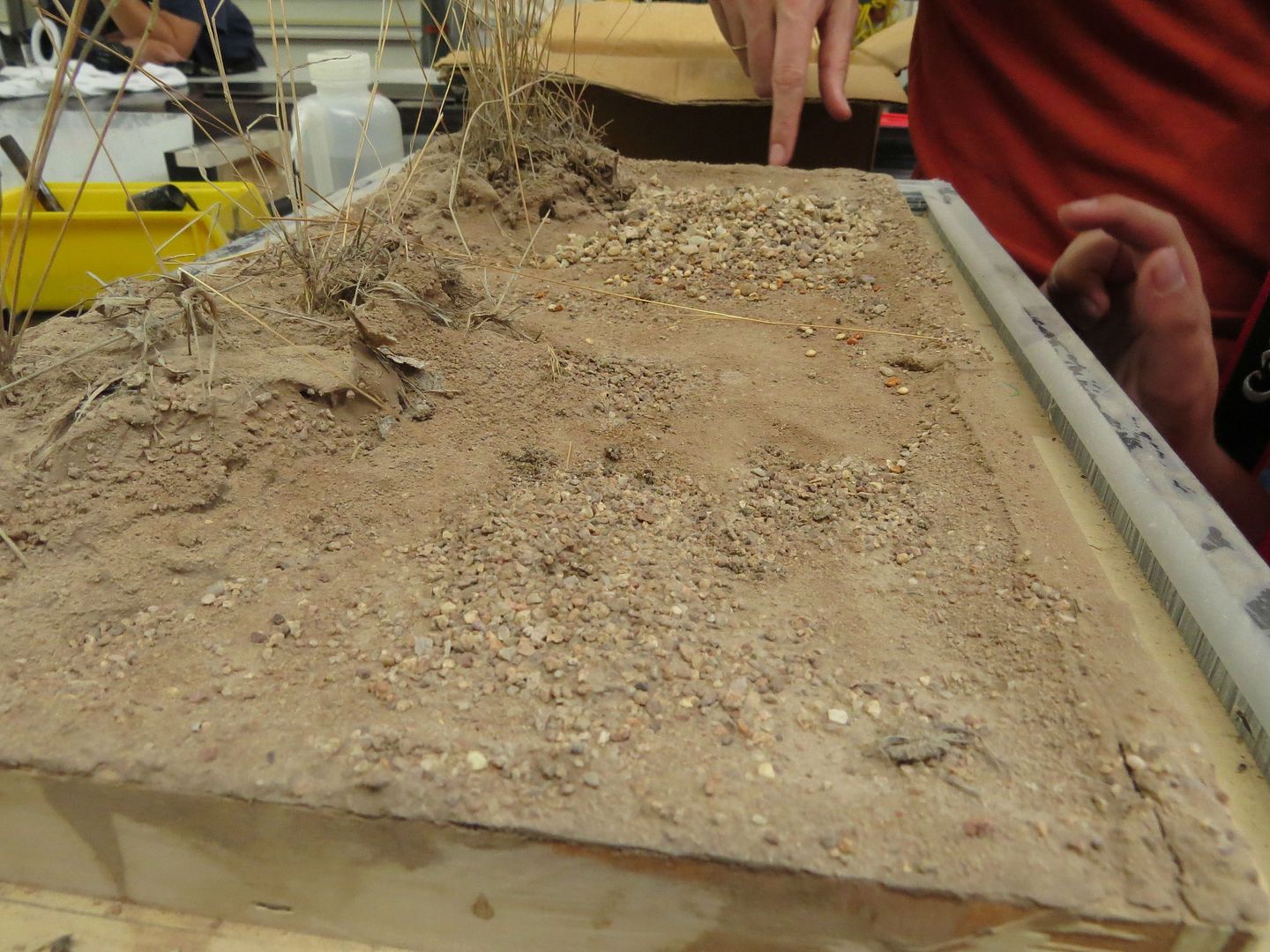
He also builds professional grade setups for museum exhibits and sets used for documentations to film. Pictured above is an above ground scene used in "Empire of the Desert Ants" a few years ago. It's hard to see but there are two openings leading down beneath the setup. Two different colonies can be hooked up here and their interactions filmed. For the documentary they filmed both the demise of the main colony, as well as the main colony conquering anther nest all at the same time. Because the ants of both colonies look identical you don't know that you're looking at two separate colonies.

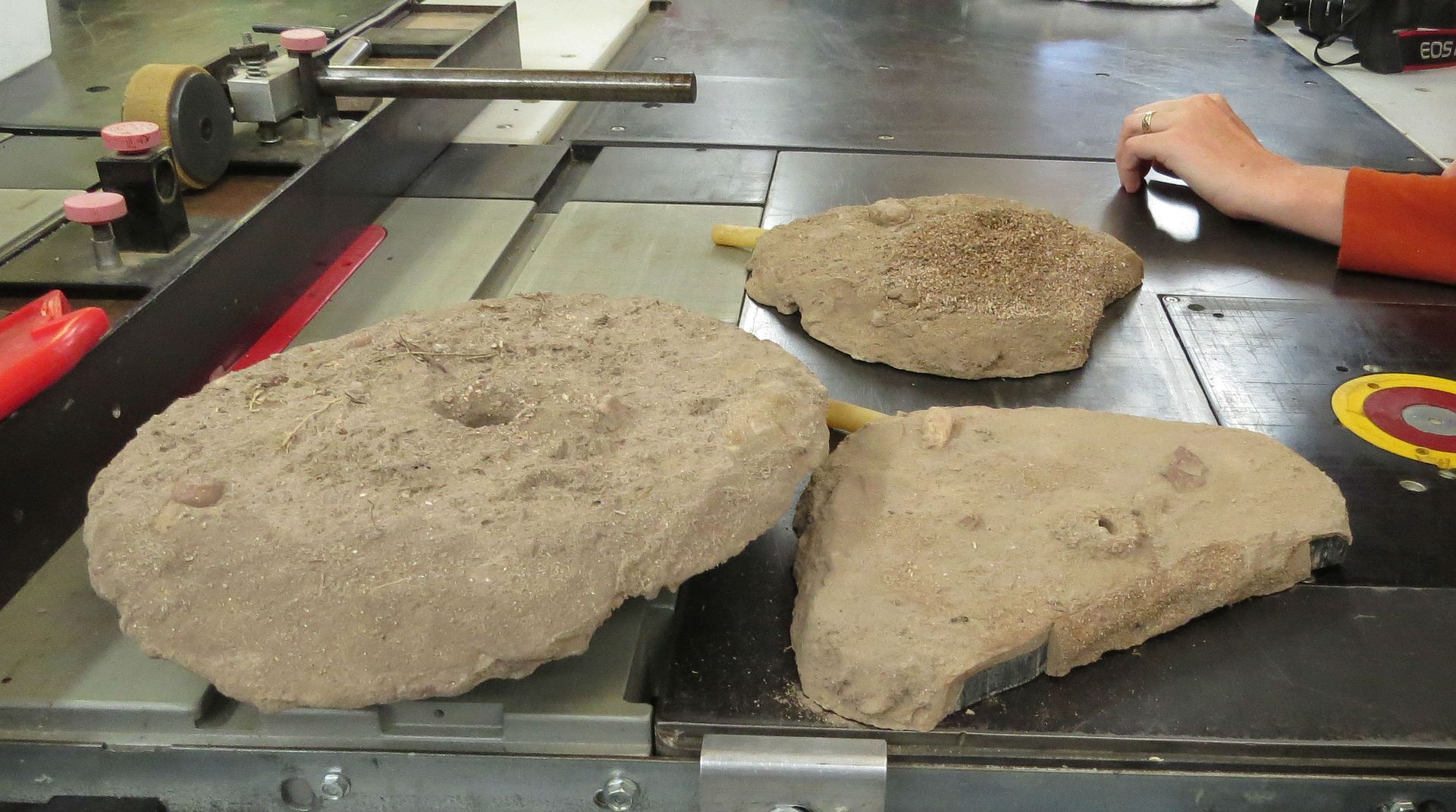
For these setups, whole nests can be attached underneath. This allows camera men to film the workers right as they emerge from the hole. The whole setup as well as the disk can also be buried in the ground and blended in with the surrounding soil. This way filmmakers can have an ant nest in an ideal location for both lighting, background, and ambiance.

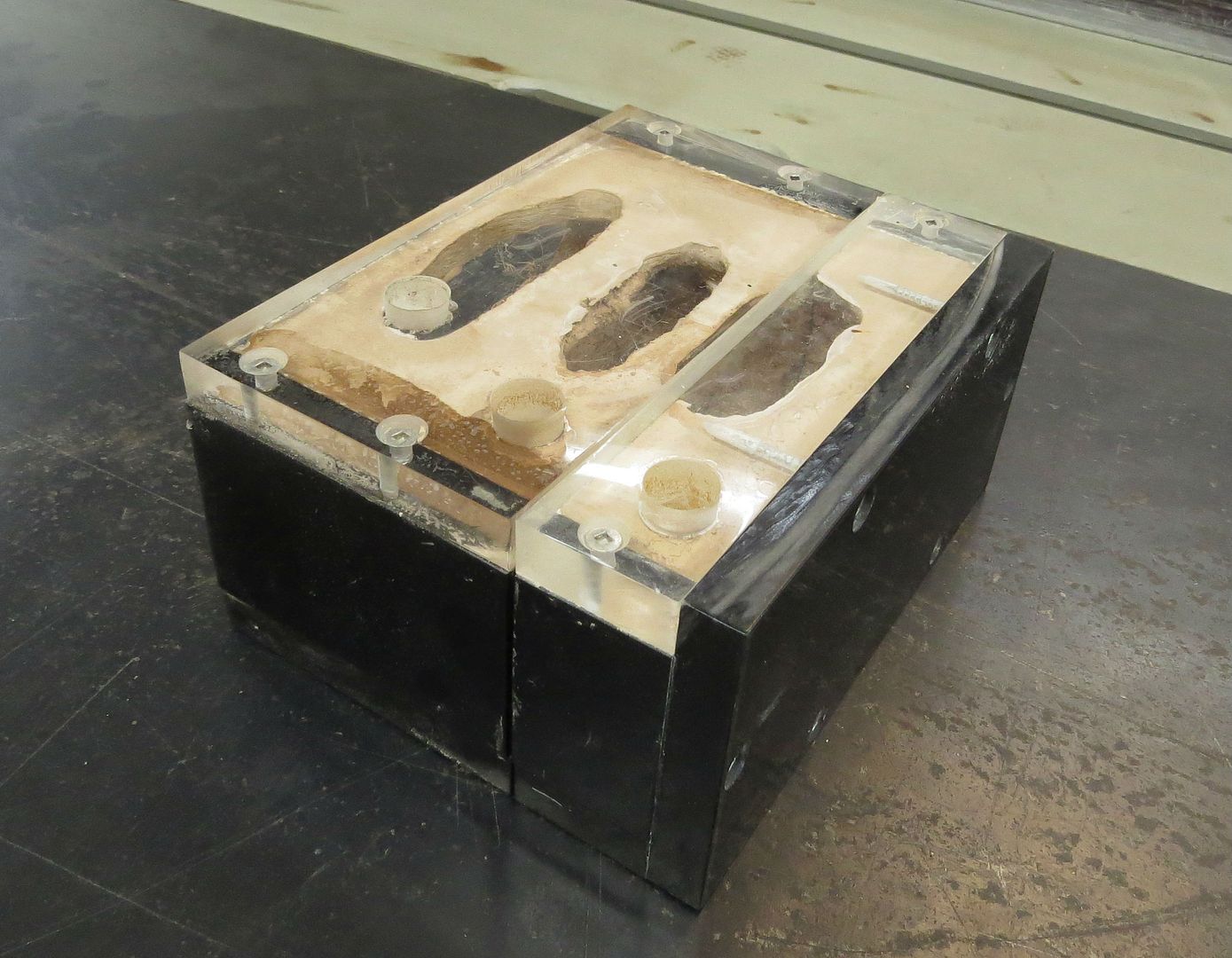
Here are two nest setups placed side to side. Each one is its own chamber to help with a movie trick. Also note the openings in the hydrostone/plaster against the plexiglass along the top.

Though empty now, ants can be added as needed. Because the front setup has windows on both sides, you can look all the way through into the second setup. Should a scene call for a wall of honeypot ants hanging in the background, to show the colony is doing well, they just slide that setup in back. But should the scene call for the colony having to rough it, they can either remove the ants or change the background nest entirely. This is a trick I'd like to incorporate into future setup designs someday.
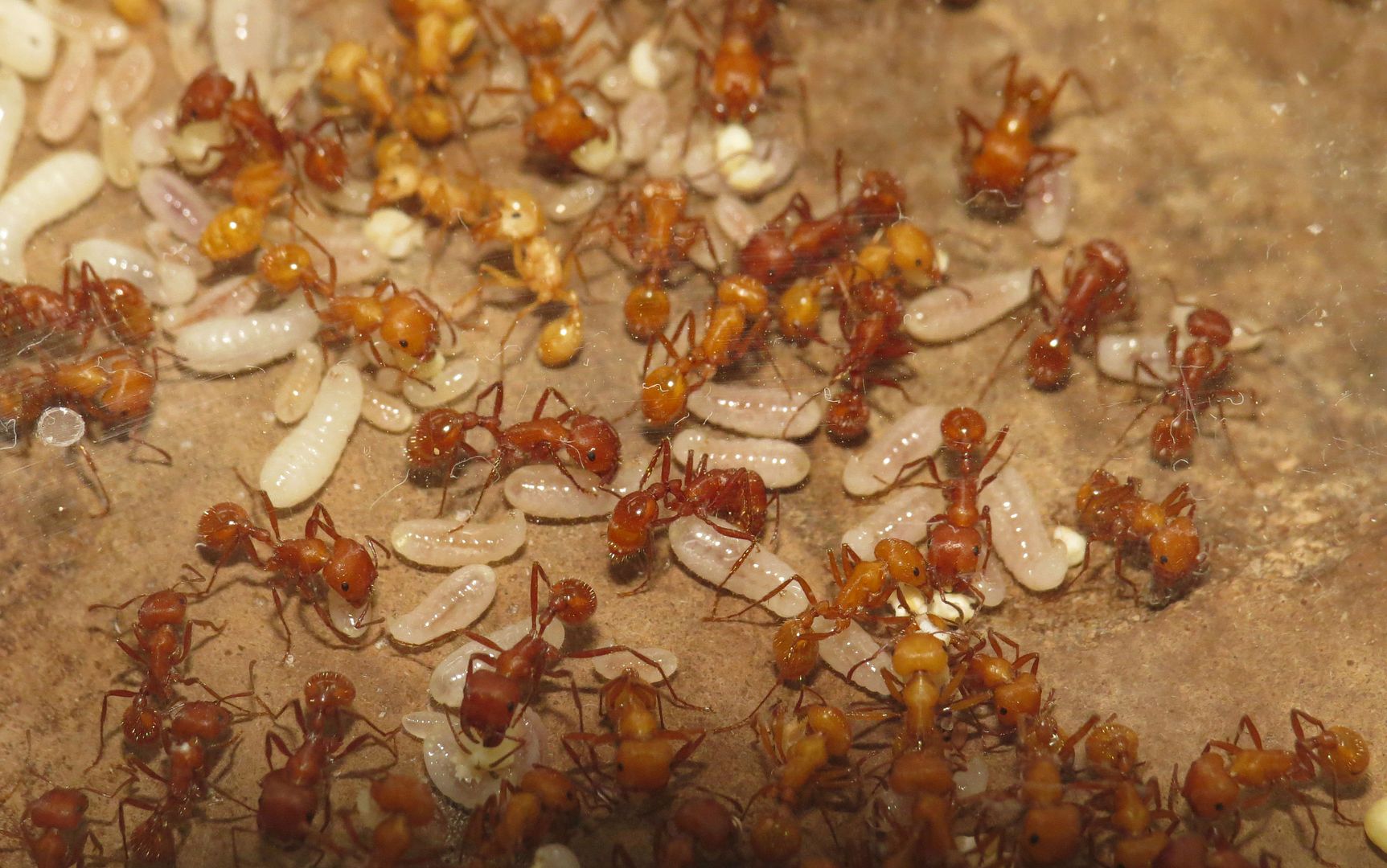
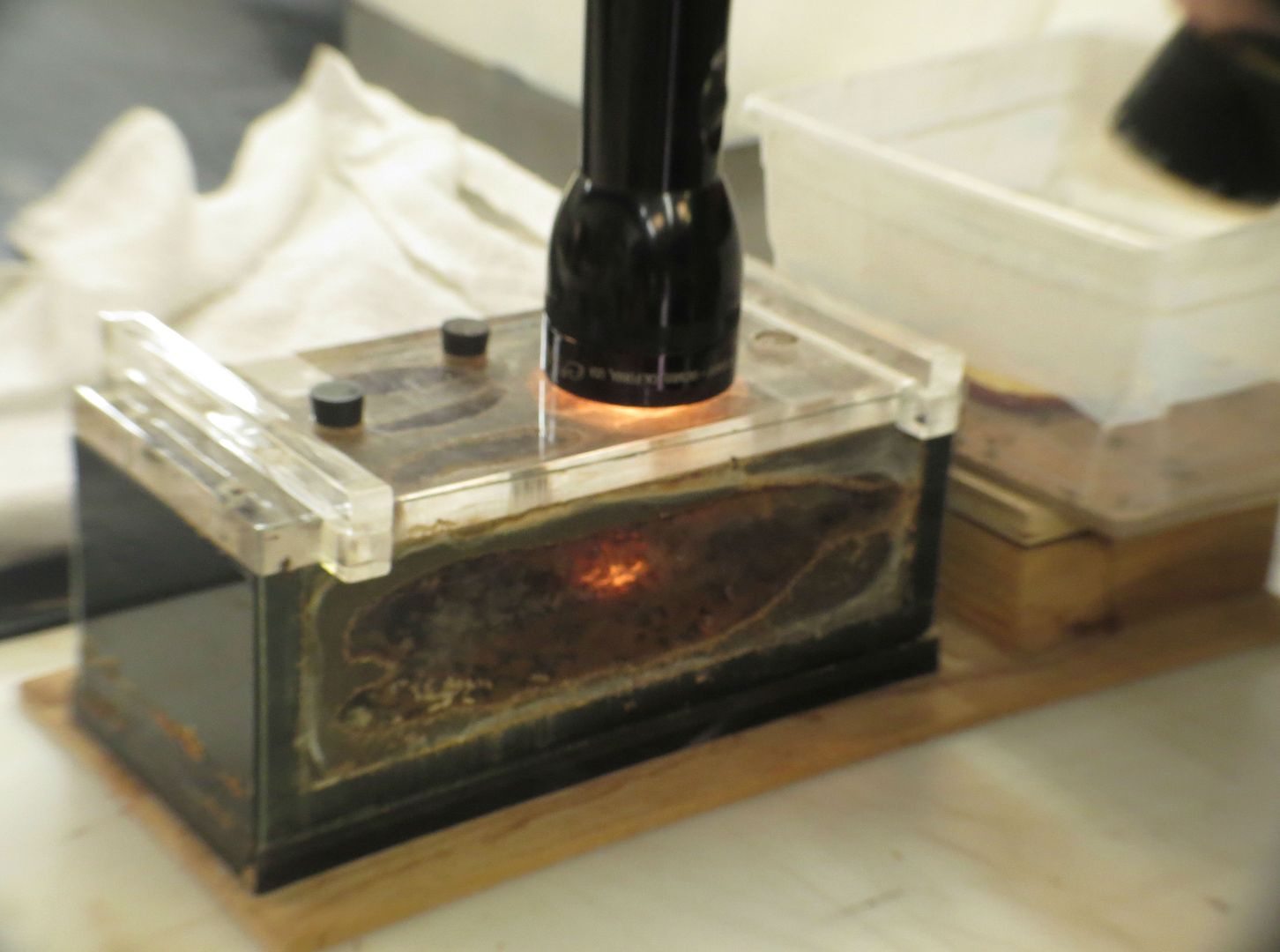
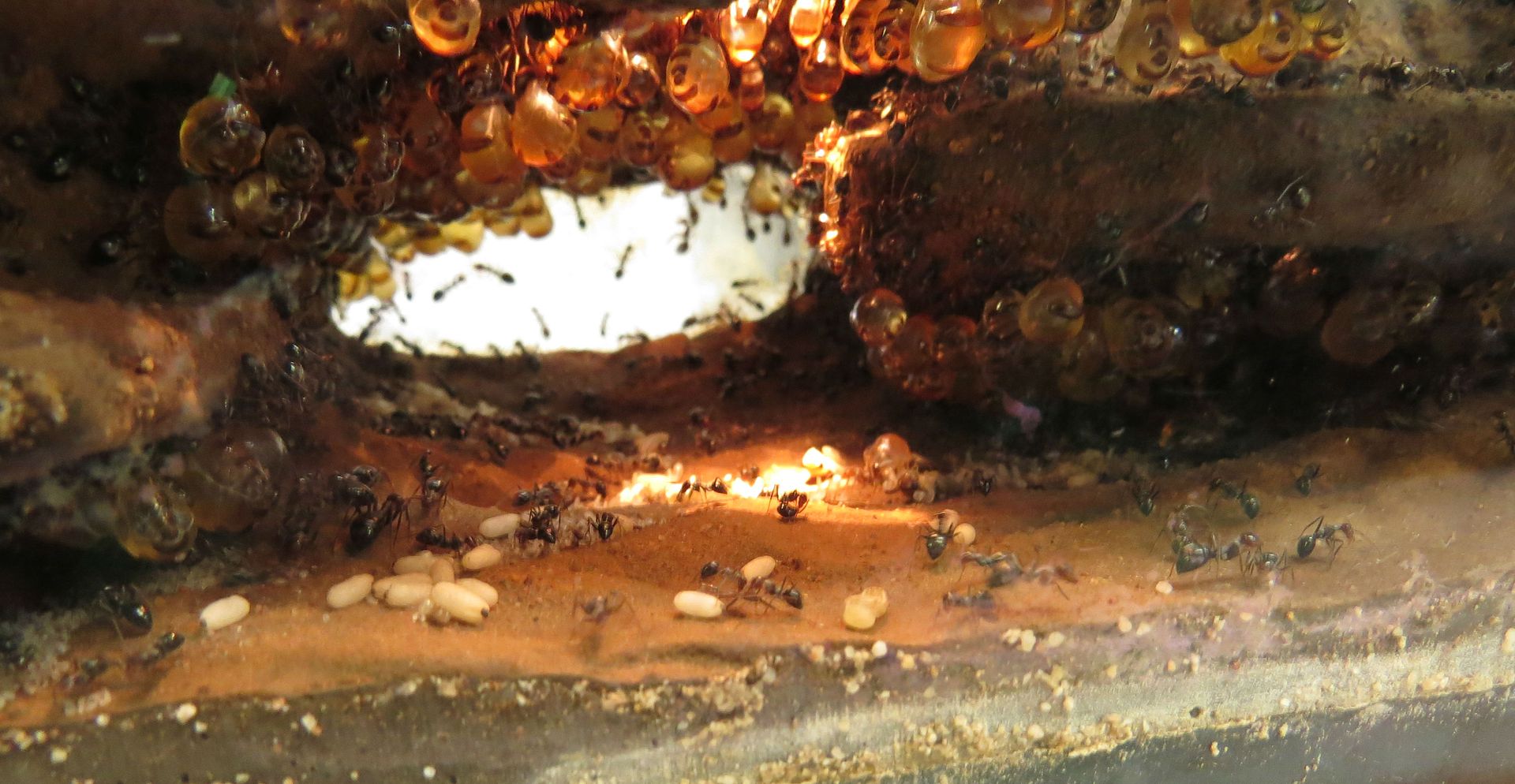
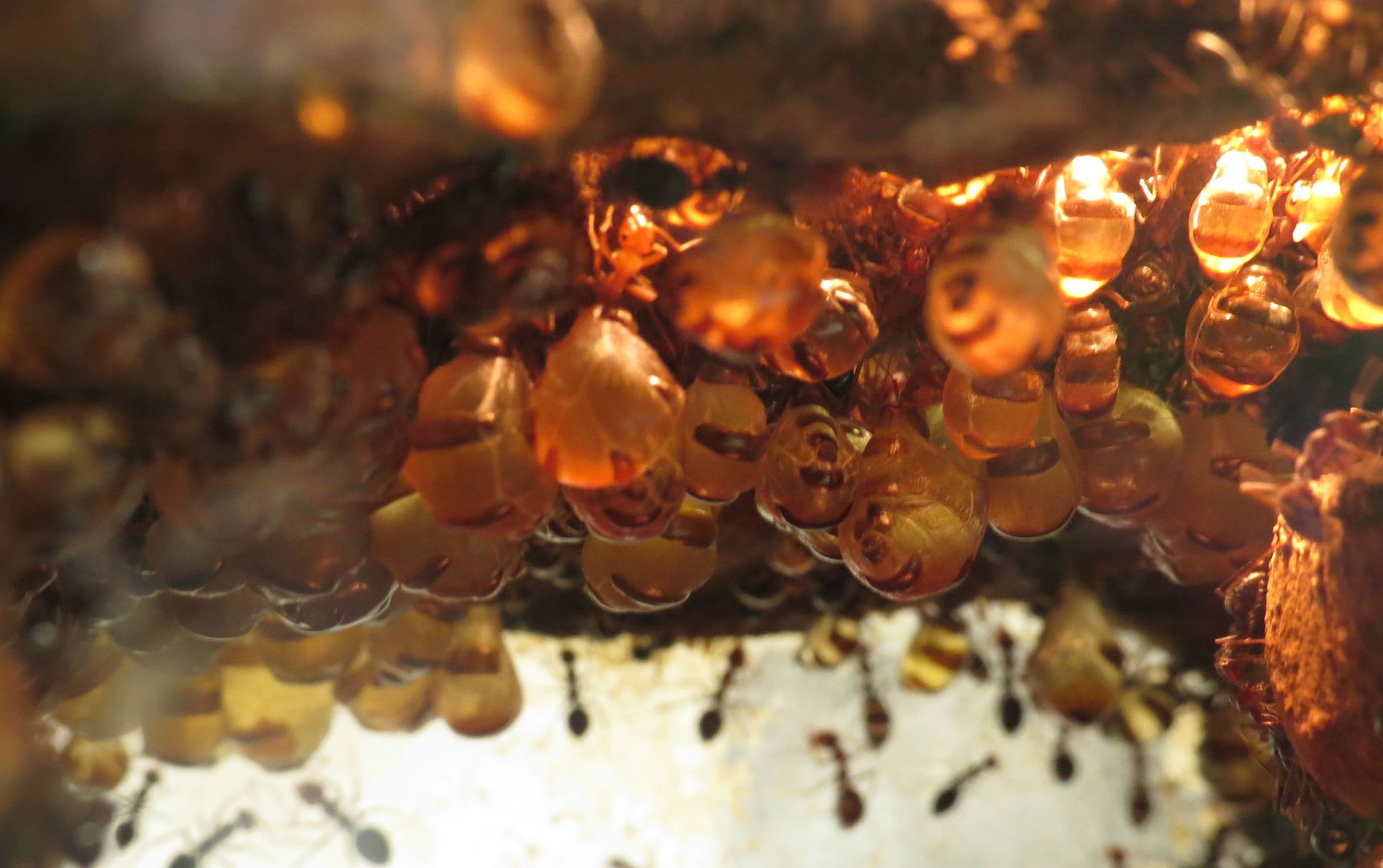
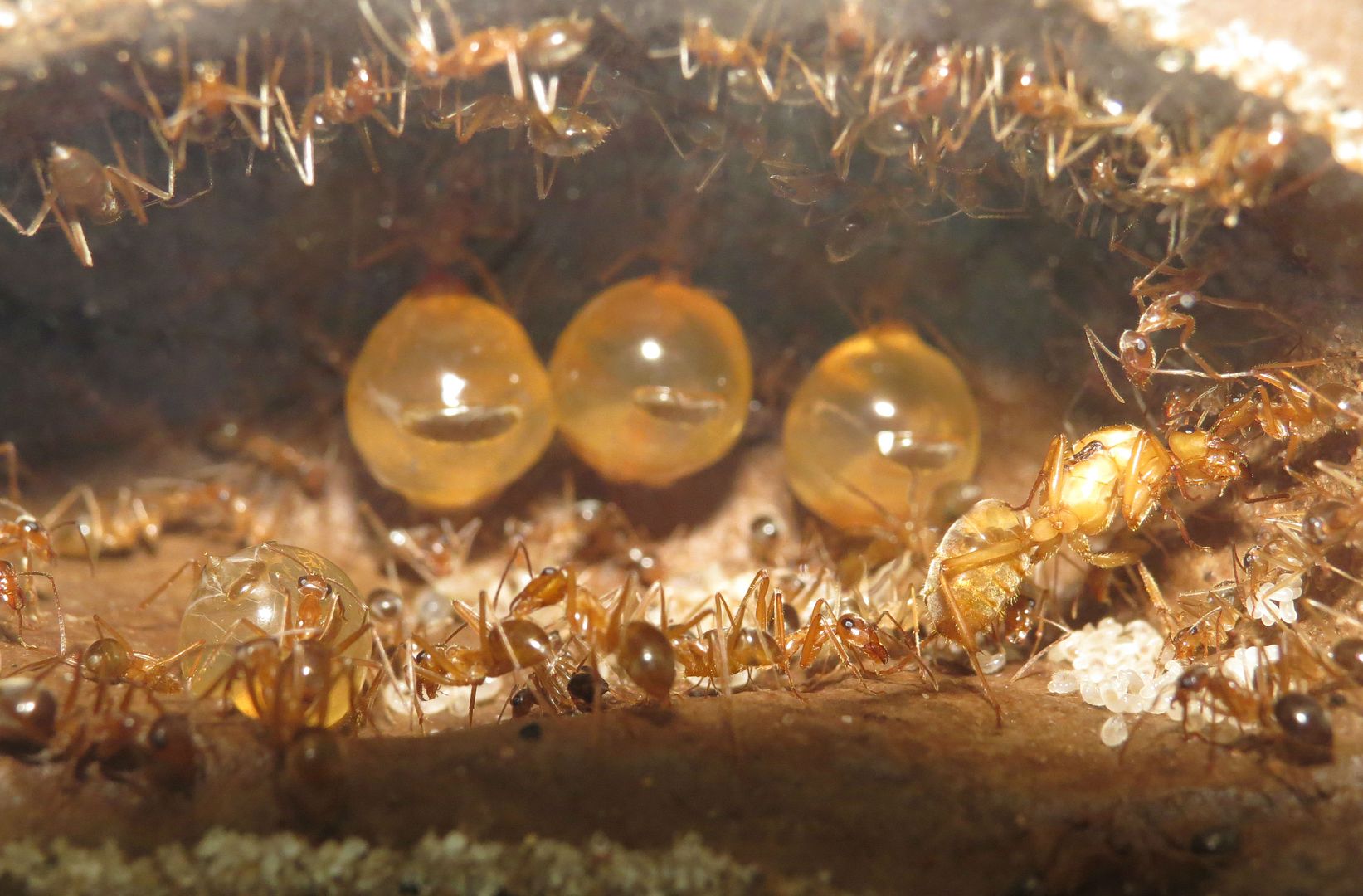
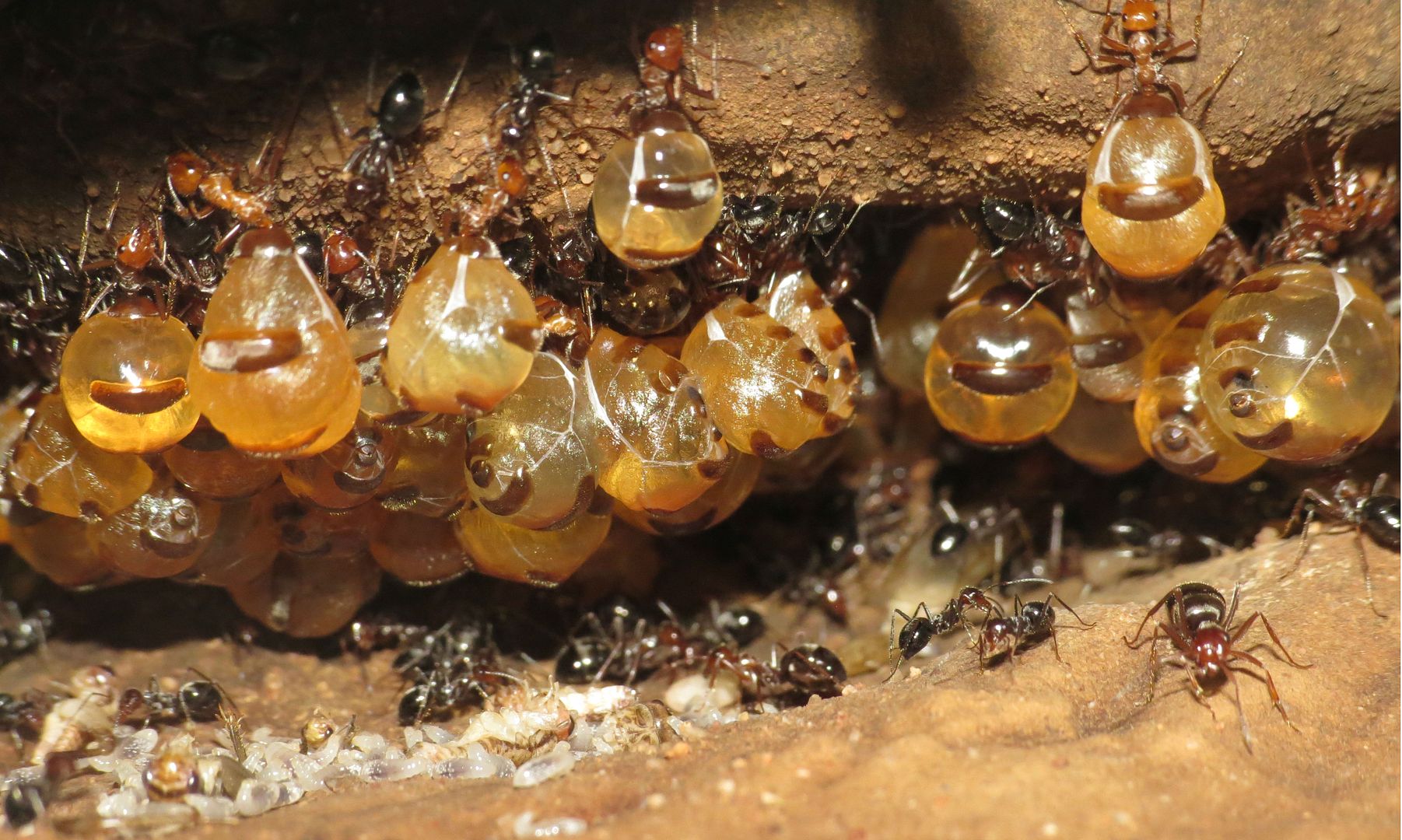
When filming honeypot ants it's always nice being able to make the honeypots glow. This is achieved by shining a flash light down through the openings in the hydrostone/plaster.

As seen here.

And here.

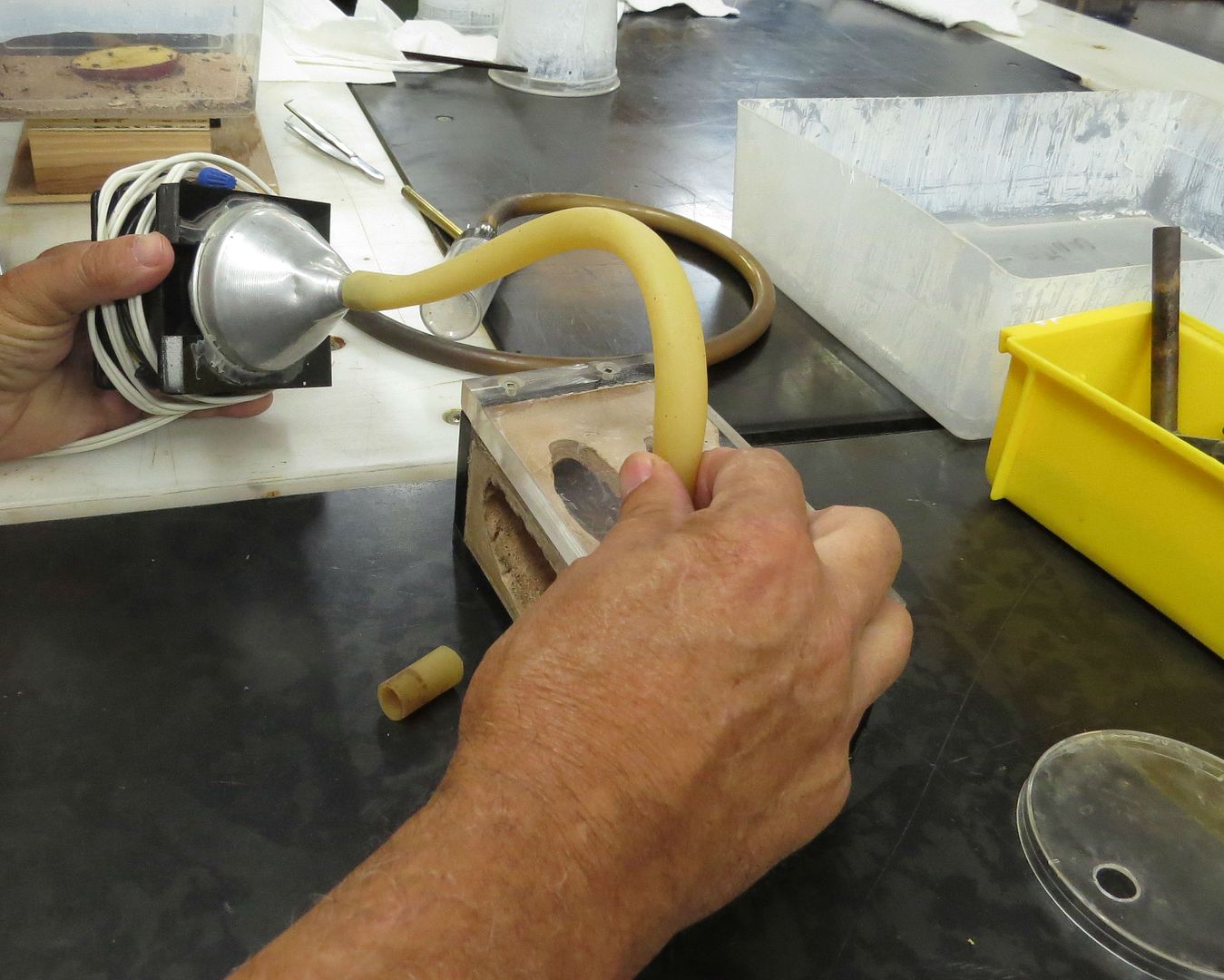
Condensation can be an issue at times. Ray uses a fan, on low, to blow through a tube, sending a light breeze through the nest. It's important to leave a gap between the fan and the tube, otherwise it will create a wind tunnel and can blow the ants right out of the setup or dry it out too quickly. Typically ants don't go through tunnels that have wind blowing through them, but the use of metal mesh might be required.

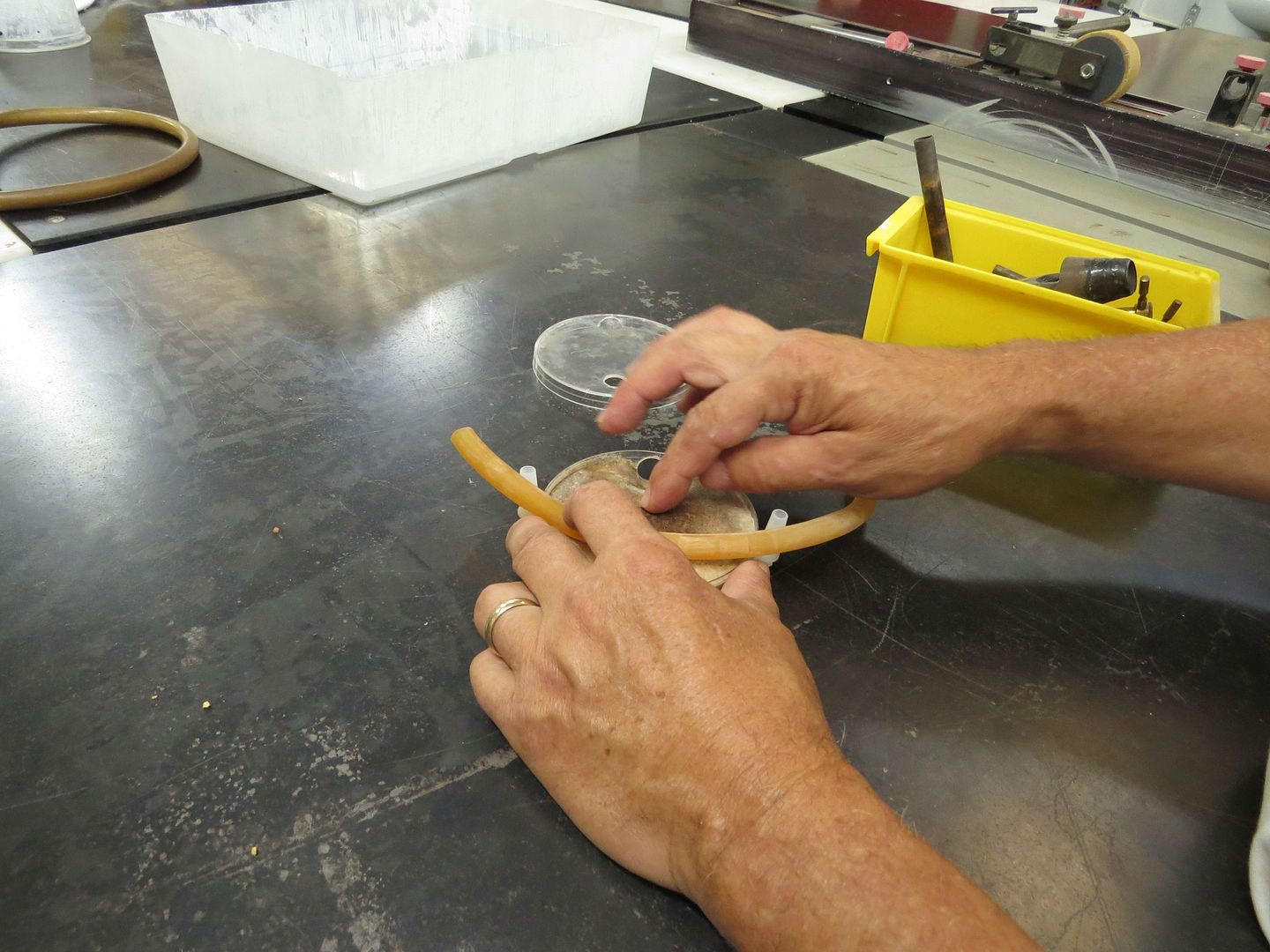
Watering is done by placing a tube through the bottom of the setup when casting.

Once it's dry the tube can be removed and the ends replaced by nozzles. This way water can be added beneath the ants nesting area and allowed to absorb into the rest of the setup.

Setups for his personal colonies are surprisingly simple and yet ingenious. 

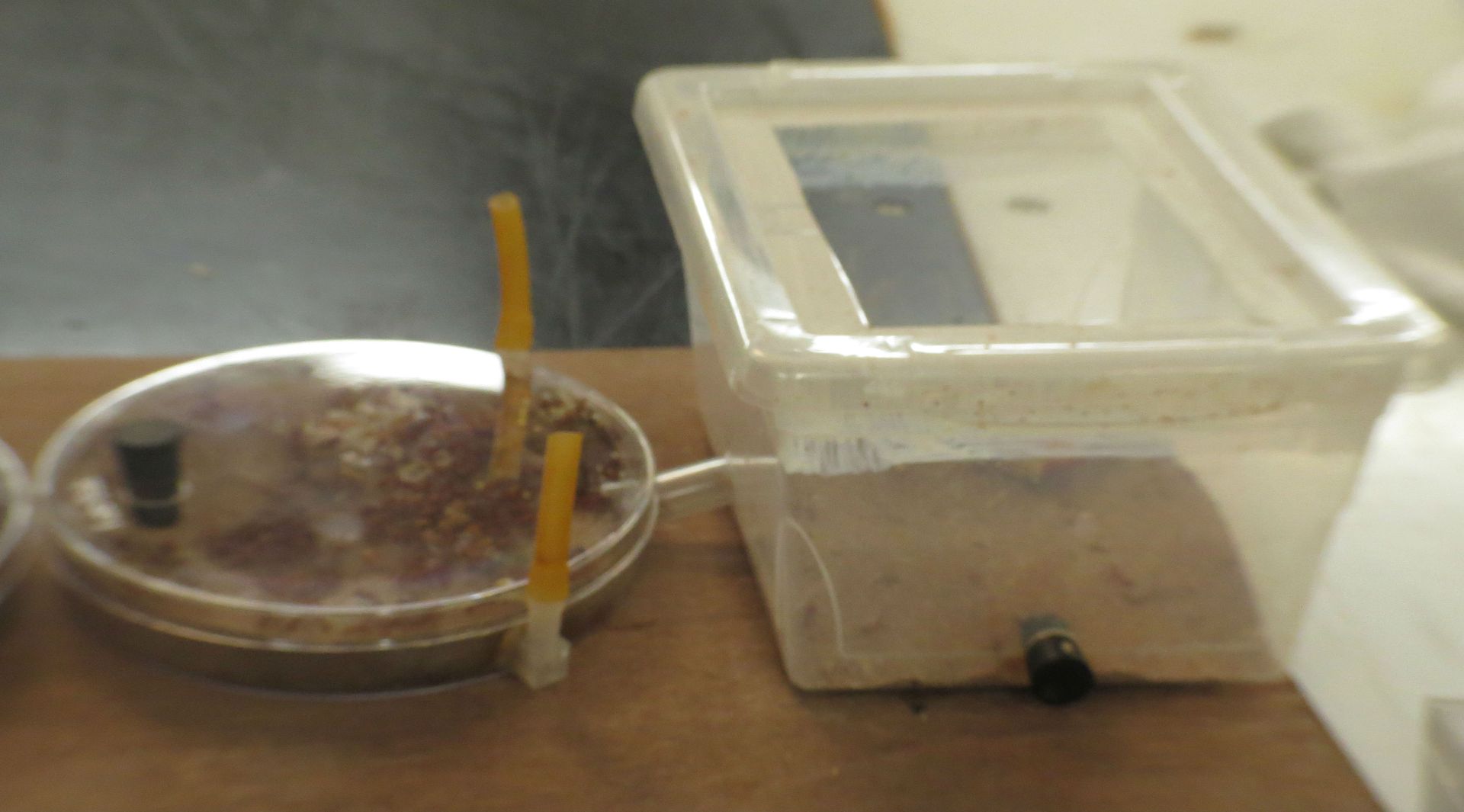
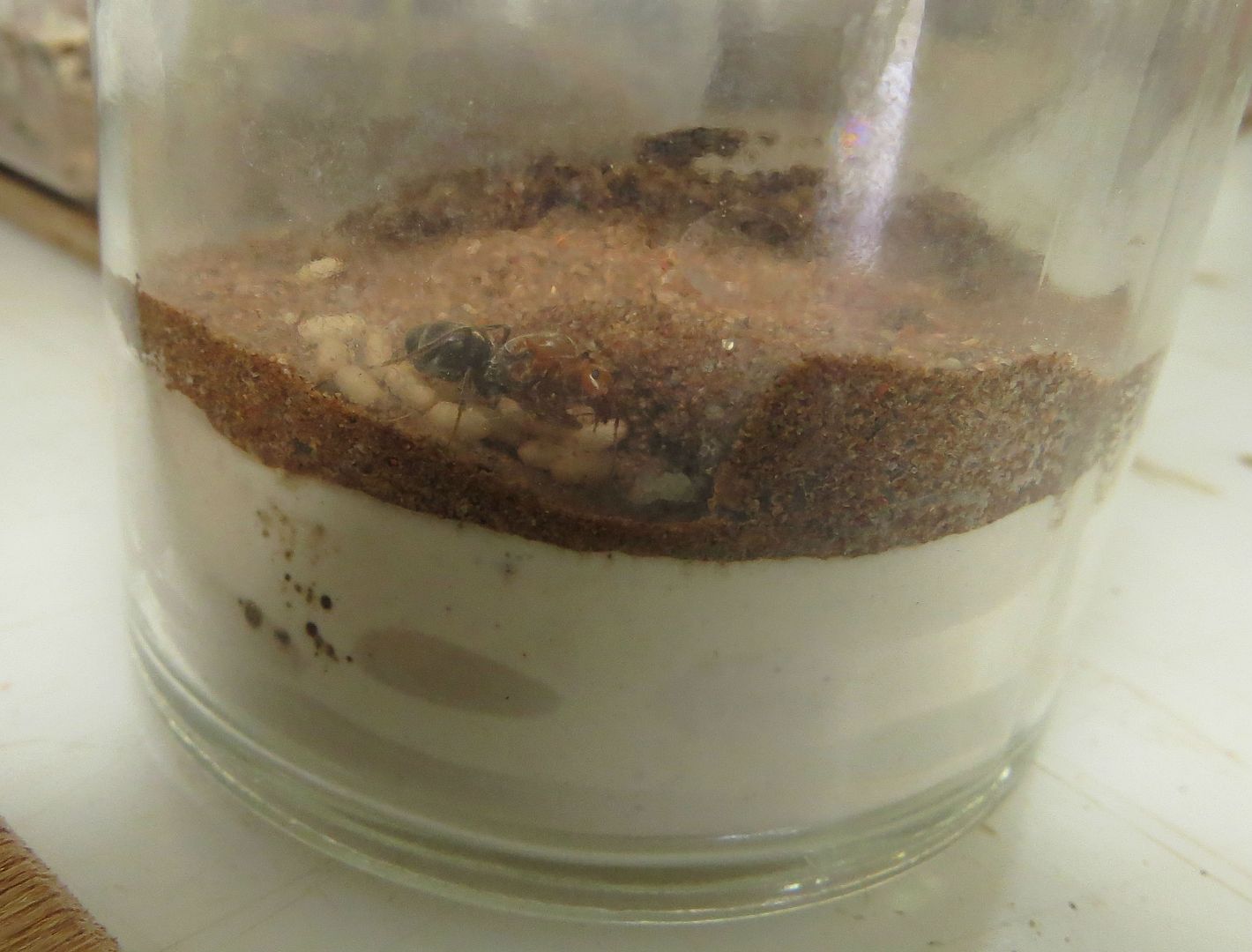
New queens are started in clusteral setups. Plaster lining the bottoms of vented containers. And a VERY THIN LAYER of soil media is added. I emphasis very little because Ray doesn't want the queen digging down into it, or building walls that will only collapse when watered. Also it was nice knowing that even he suffered from the problem "Collect 50 queens and maybe 10 of them are successful."

Queens that rear their first workers are moved into slightly larger setups. In this case a Myrmecocystus species, Honeypot ants.

Upon getting their first few repletes, he upgrades their nesting accommodation as needed.


We all got to eat a replete too. There's a trick to it because they're in a subfamily known for Formic Acid. You rupture them first to let the volatile chemicals disperse a sec, and then eat the mess left in your hand. Eating them whole also works but there's an immediate displeasing taste from the formic acid.

All his repletes had a taste of apples because he always keeps a slice of apple in the foraging area. The ants nibble at the apple over time, and then place their waste upon it, making clean up nice and easy. All you need to do is replace the apple slice.  

Colonies of Pogonomyrmex, harvester ants, are notorious for stuffing crud and frass right up against the glass. To get around this, he places them in horizontal setups so the ants can be viewed from above.

He does this with Aphaenogaster too but but I'm not sure if there was any specific reason for it.

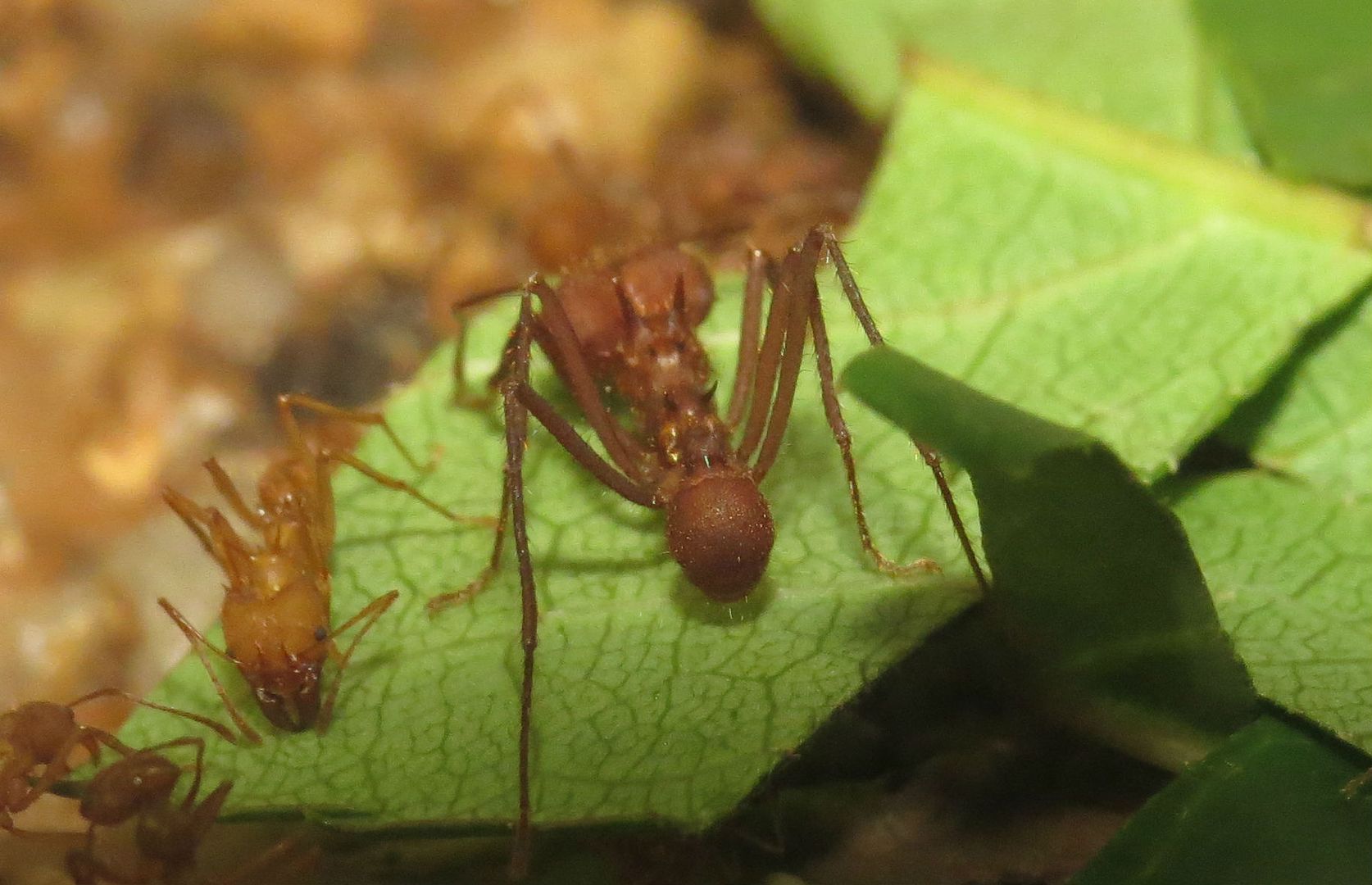
He has a colony of Atta, Leaf-cutter Ants!

Leaf-cutter Ants cut up leaves to bring home and feed to their fungus gardens.

Here you can see the media workers placing little bits of leaves among the fungi.

Near the top of the main garden lies the queen. Atta queens are the largest ants in the United States at ~25mm long. The next closest comparison are some of our Carpenter ant queens that can be as large as ~20mm long. 

The only real tip he had about keeping fungus ants was to never let them grow their fungus on the ground. New queens just starting out sort of have to make do, but established colonies, even ones with basketball sized fungus gardens don't let their fungus sit on the ground. Often the fungus will grow amongst the roots of plants or on top of stones.

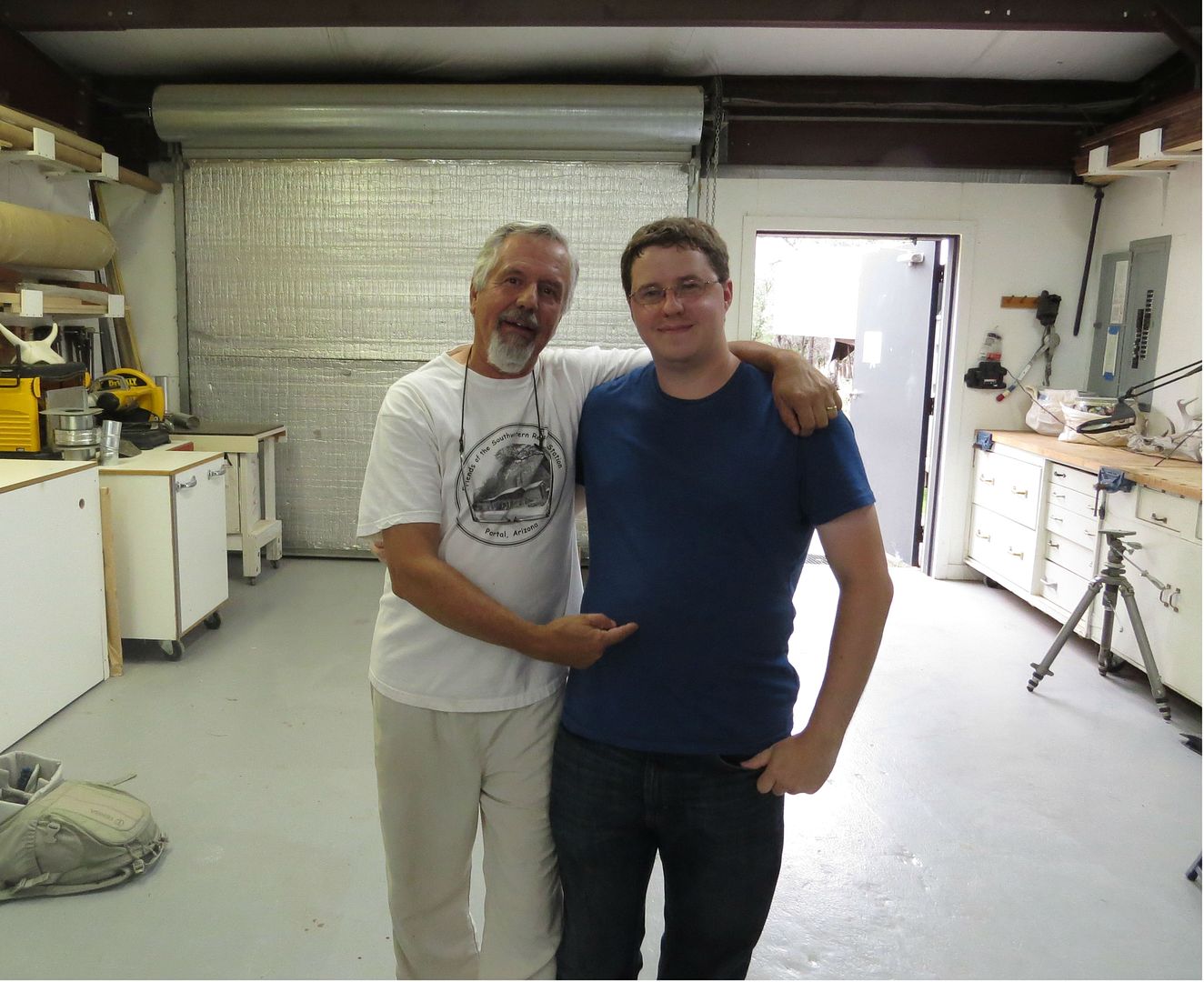
I learned an awful lot from Ray and can't wait to put this knowledge to good use. I'm thrilled to have met him and even asked for his autograph.

Thursday, June 13, 2013

Ants Swarming in My Green House


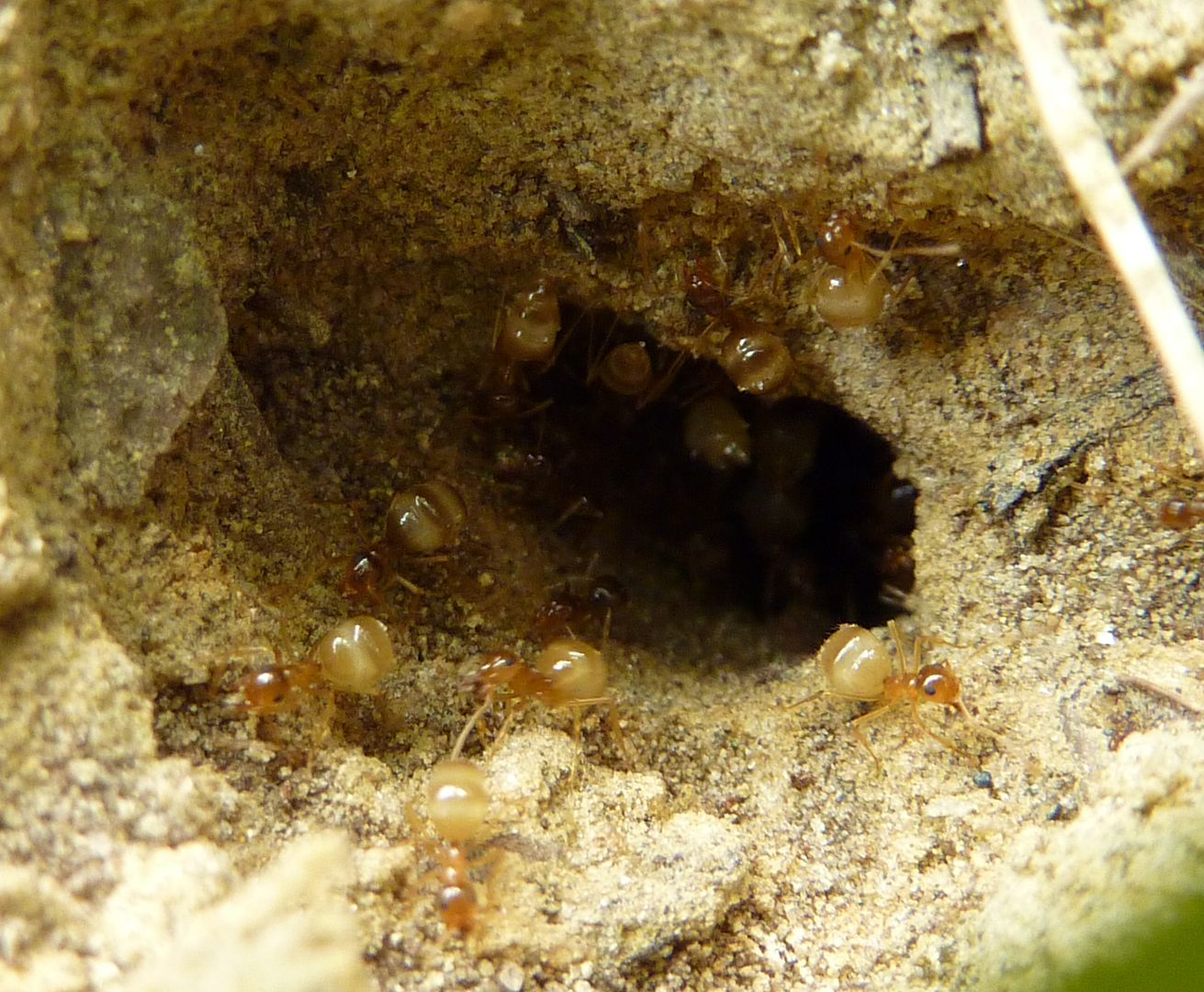
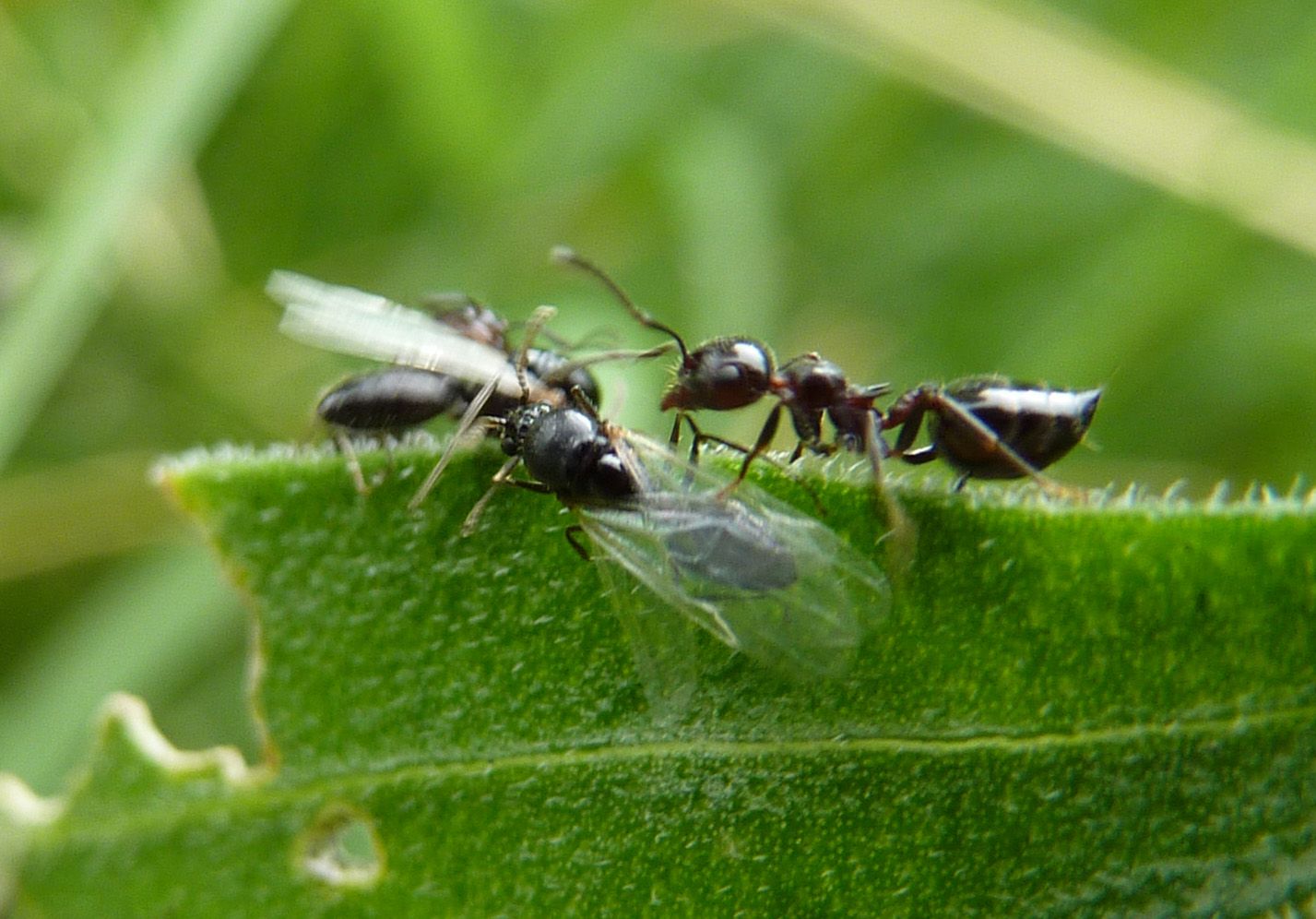
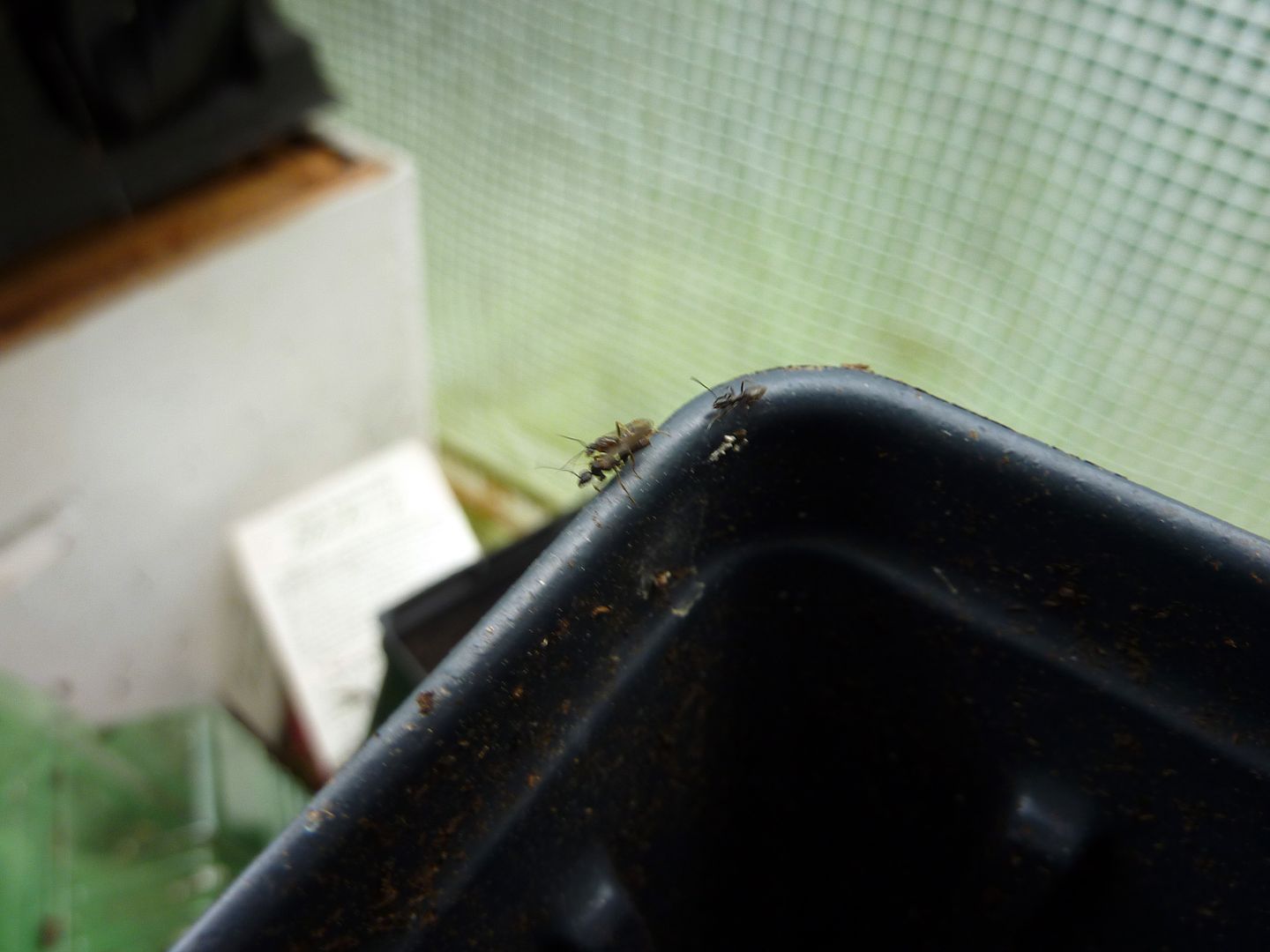
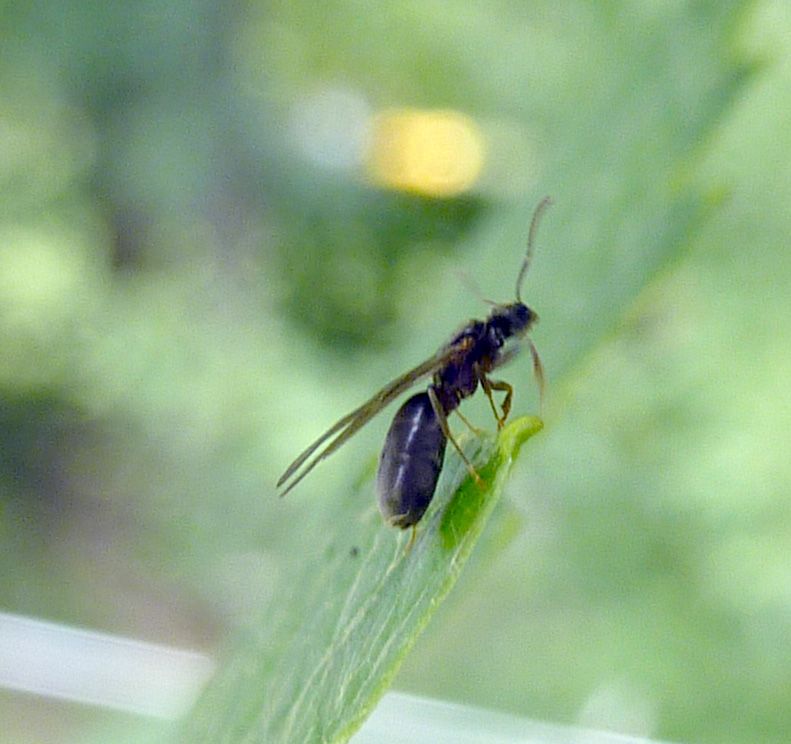
After all this rain we've been getting, I went out to the green house to find a nuptial flight of Odorous House Ants, Tapinoma sessile, trying to take off.

Queens are only a hair bigger than the workers. This ant is a minor annoyance in homes, despite being a native species. Colonies often have multiple queens, and divide as needed. It's been noted that colonies are enormous in urban settings, sometimes taking up several city blocks, while suburban and rural settings yield much smaller colonies, often only a few thousand ants.

Despite their name, Odorous House Ant, they are only odorous if squished, and can be discouraged out of homes simply by sealing up holes they happen to be coming in through. This is sometimes easier said than done. They're opportunistic nesting and find the hollow space behind a loose kitchen back splash very appealing. Resorting to baits might be called for if they're out staying their welcome. 

Out in the green house they nest right the flats to my plants as well as the loose space inside of pots along the outer edge of the soil. I'm certain I've divided this colony a few times simply by planting seedlings out in the garden.

I've also been noticing termite alates flying out and about in the yard. The Robins in particular are enjoying them.

Friday, September 28, 2012

Lasius neoniger Nuptial Flight


My friend out in Indiana found a Lasius neoniger nuptial flight happening. They're called the Labor Day Ant because their mating season normally takes place around the same time. This video was taken two days ago so they're still finishing up. This is a common grassland ant found all over North America.


Queens in this genus will sometimes band together during the founding stage to better ensure a successful colony. Workers however, will only tolerate one queen in the nest so after 4 weeks or so they'll slowly start killing off the submissive ones. The advantage to a single queened colony is order. Workers will be better able to fatten up the reproductives produced from one queen as opposed to a multi queen nest which won't be able to feed their reproductives anywhere as well.

Thursday, July 12, 2012

Enter the Termite Nest

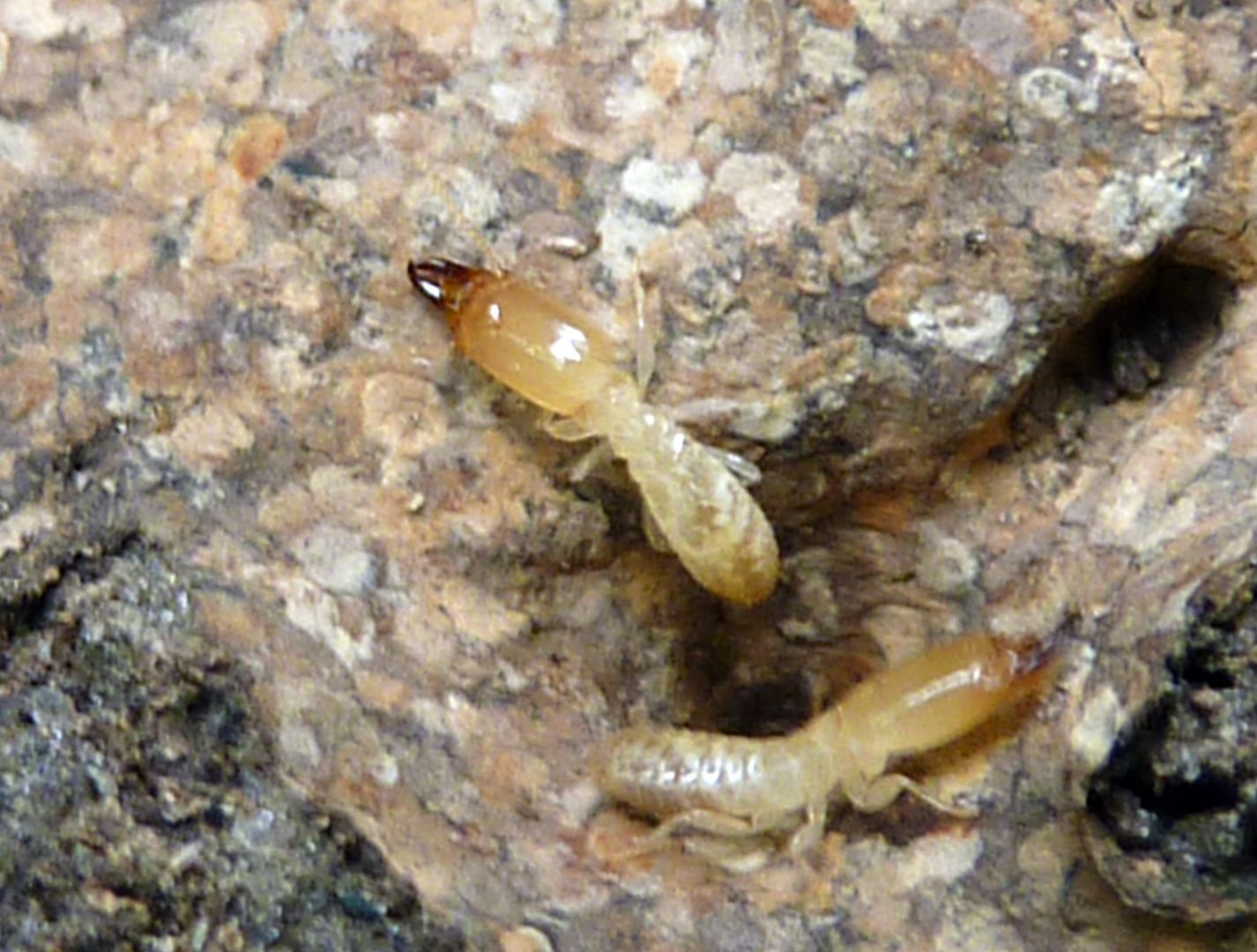
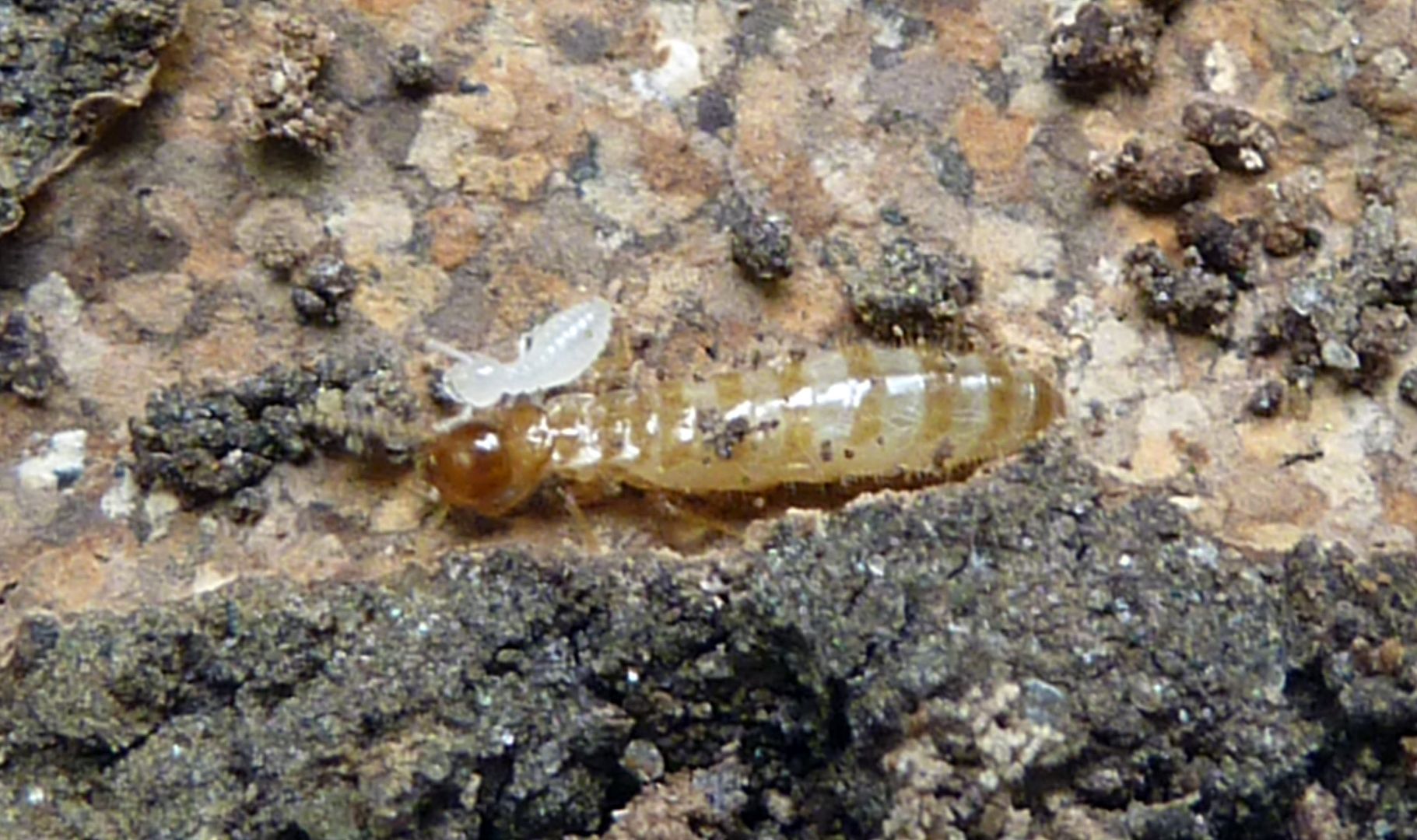
I have no idea what species this but while lifting logs in the yard I found a termite colony. Here you can see a queen next to a developing nymph. Termites go through what's called "incomplete metamorphoses" meaning they lack a larval stage. From an egg a developing nymph emerges and it's caste can be influenced by what and how much it eats. This colony actually had multiple queens in it. I've read colonies often start out with a single founding queen and king, however they only live for 2 to 5 years or otherwise eventually die. Normally this would be the death of the colony but some species of termites have developed a method to get around this by making more queens that breed inside the nest. 

You may assume having 100 queens is better than just 1 but even this system has its disadvantages. The one healthy queen they started with was receiving the full attention of the colony. That attention now has to be split among 100 others who will probably never live up to their founding mother's glory.

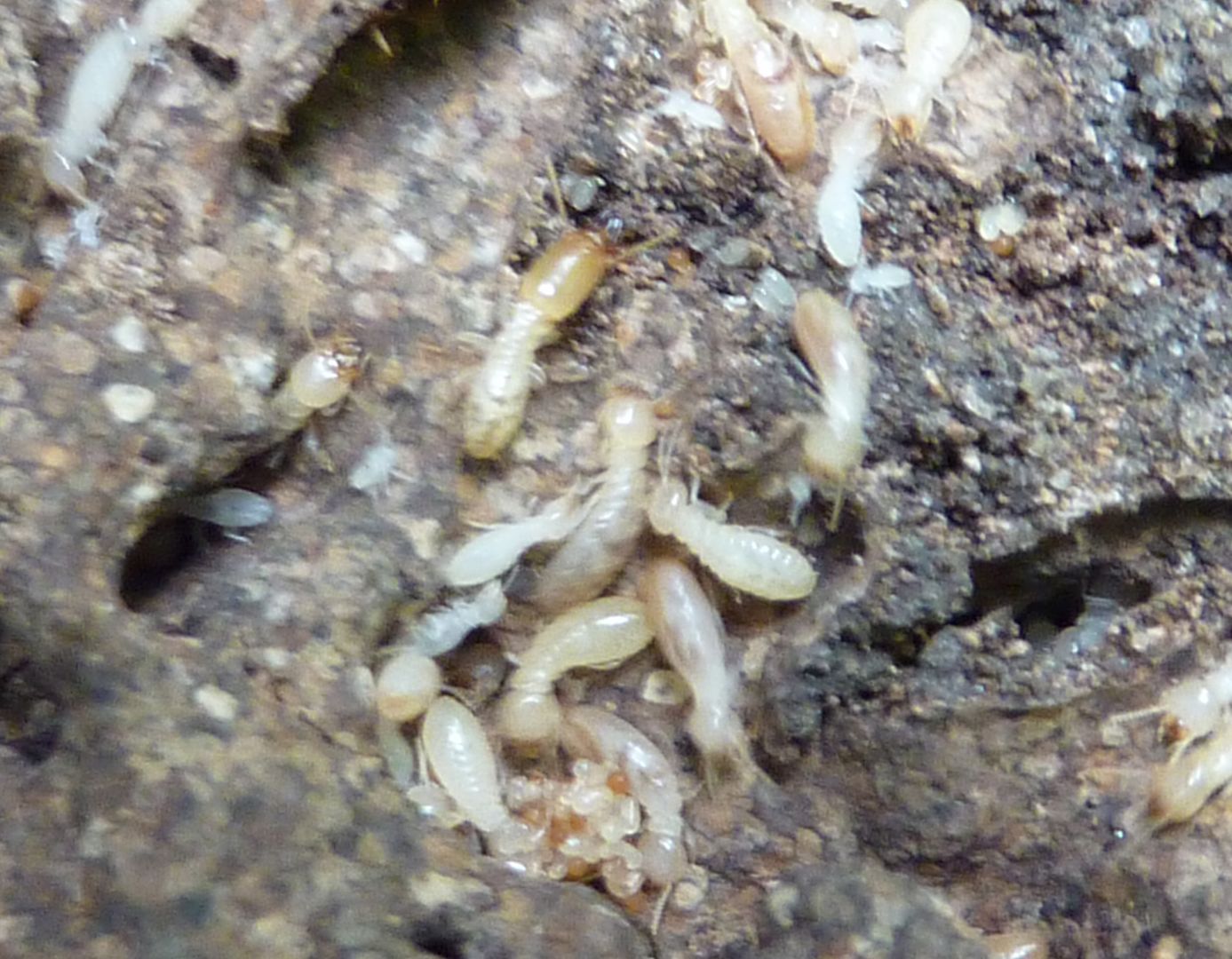
Here are some solders roaming about. Notice how the nest texture is similar to cork board instead of the earth that surrounds it. The nest was a mix of subterranean and damp rotting wood.

In the lower middle you can see some eggs among other things. The brown spheres are a sort of fungus that the termites don't eat. It purposely shapes itself like the termite's eggs. Alex Wild has better photos of this.

Wednesday, April 4, 2012

Pollinating the Plum Tree

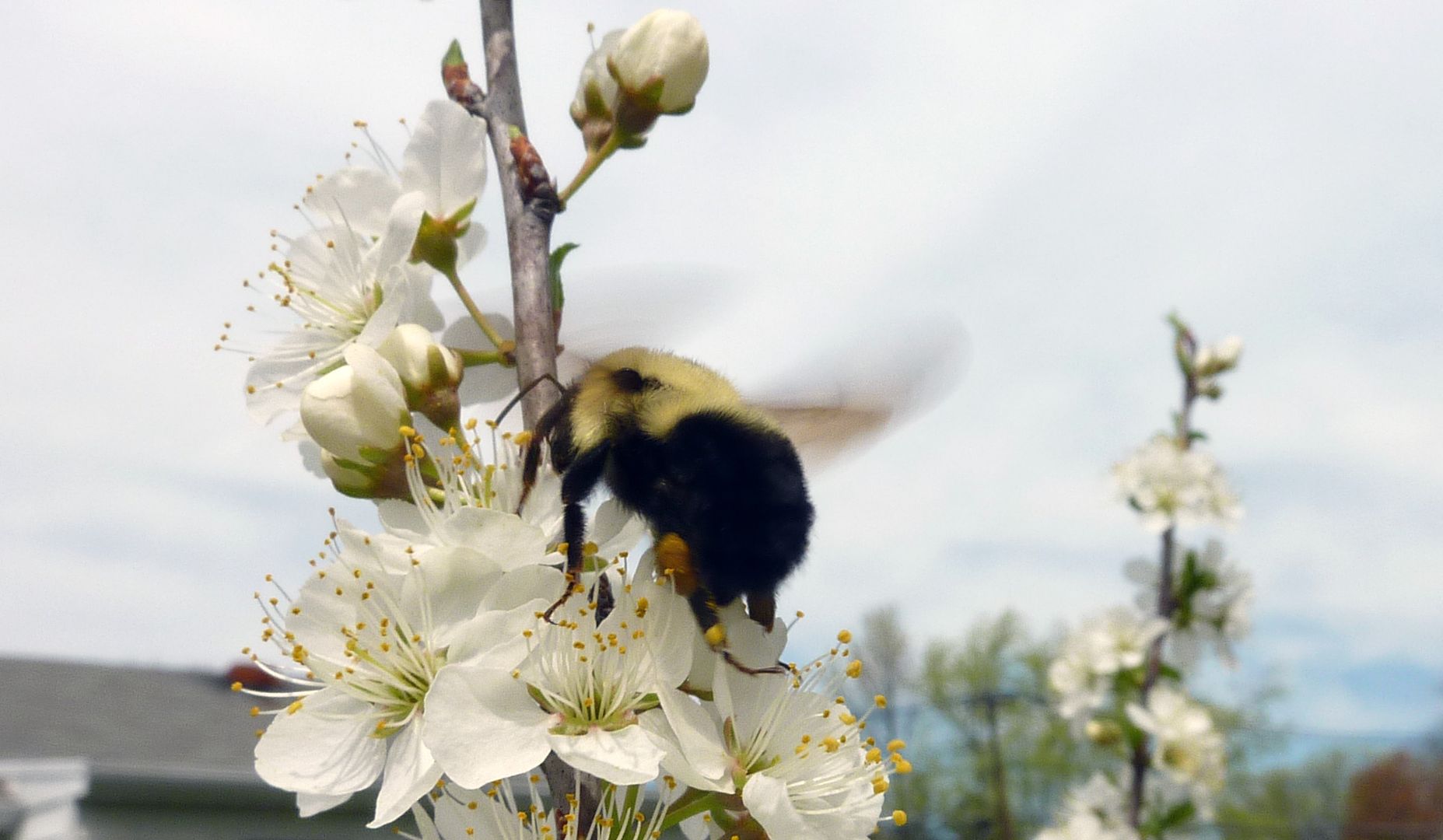
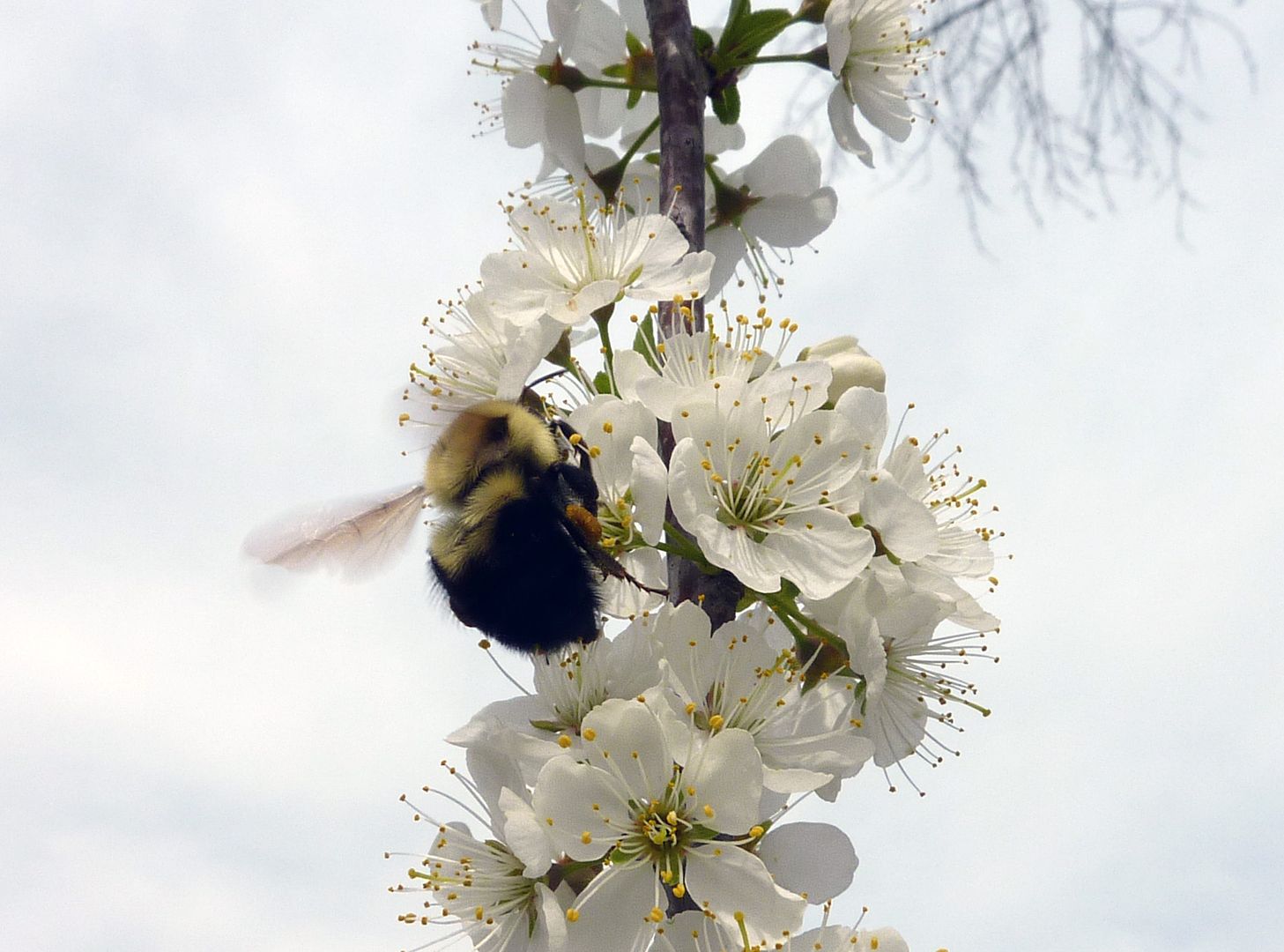
A bumblebee queen found the plum tree.

She was having a pollinate-a-thon running rings around each column of flowers.

Normally I'd try catching them but we're so late in the season already. The fact that she's carrying pollen means she's already committed to a nest site.

Tuesday, December 6, 2011

Best of Ants 2011

It's that time of year again where I recap the best my photography skills had to offer for the year.

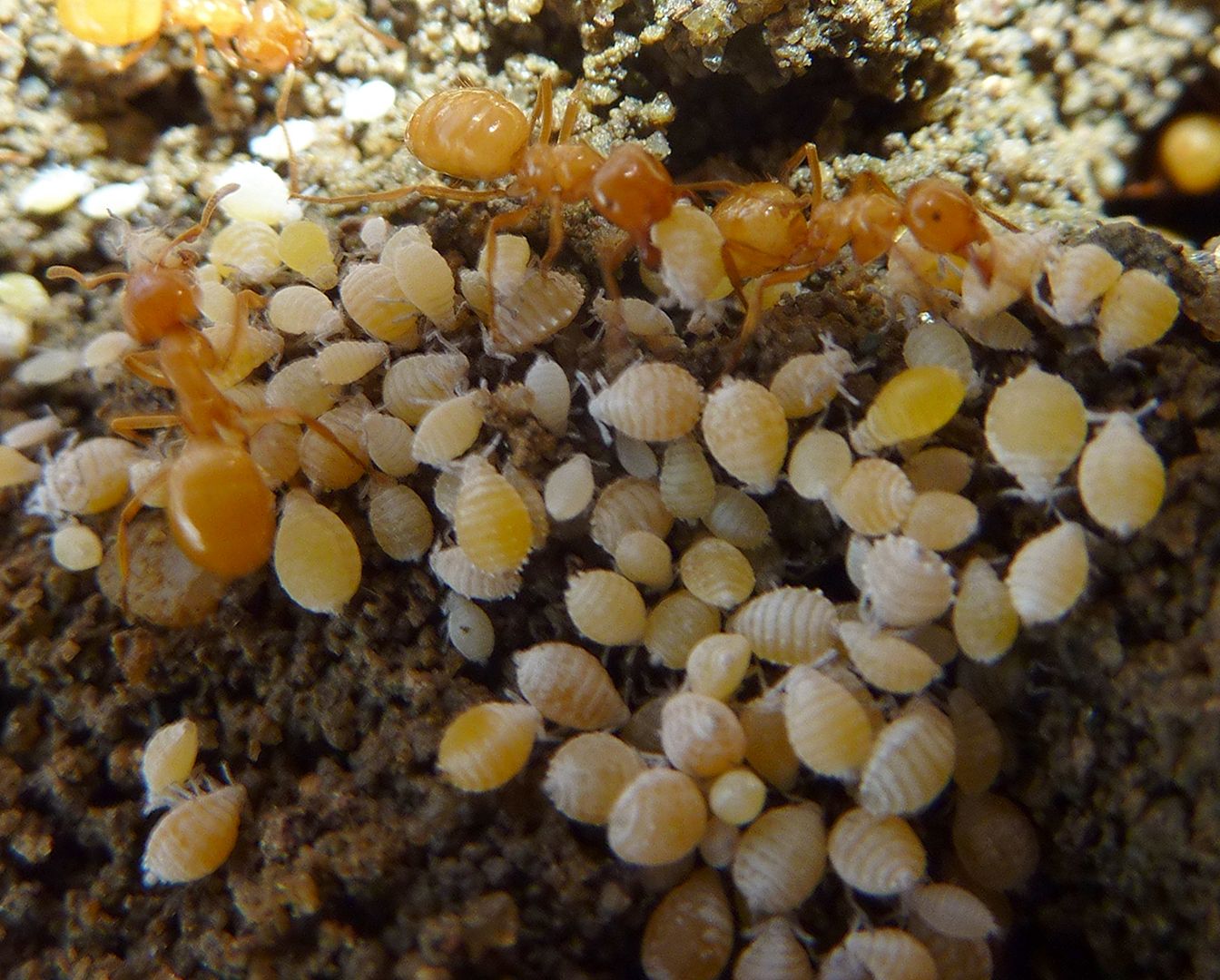
Some Lasius interjectus workers retrieving their root aphid stock which over wintered as eggs from the previous autumn. These herds of insects will nourish the colony in the coming year.

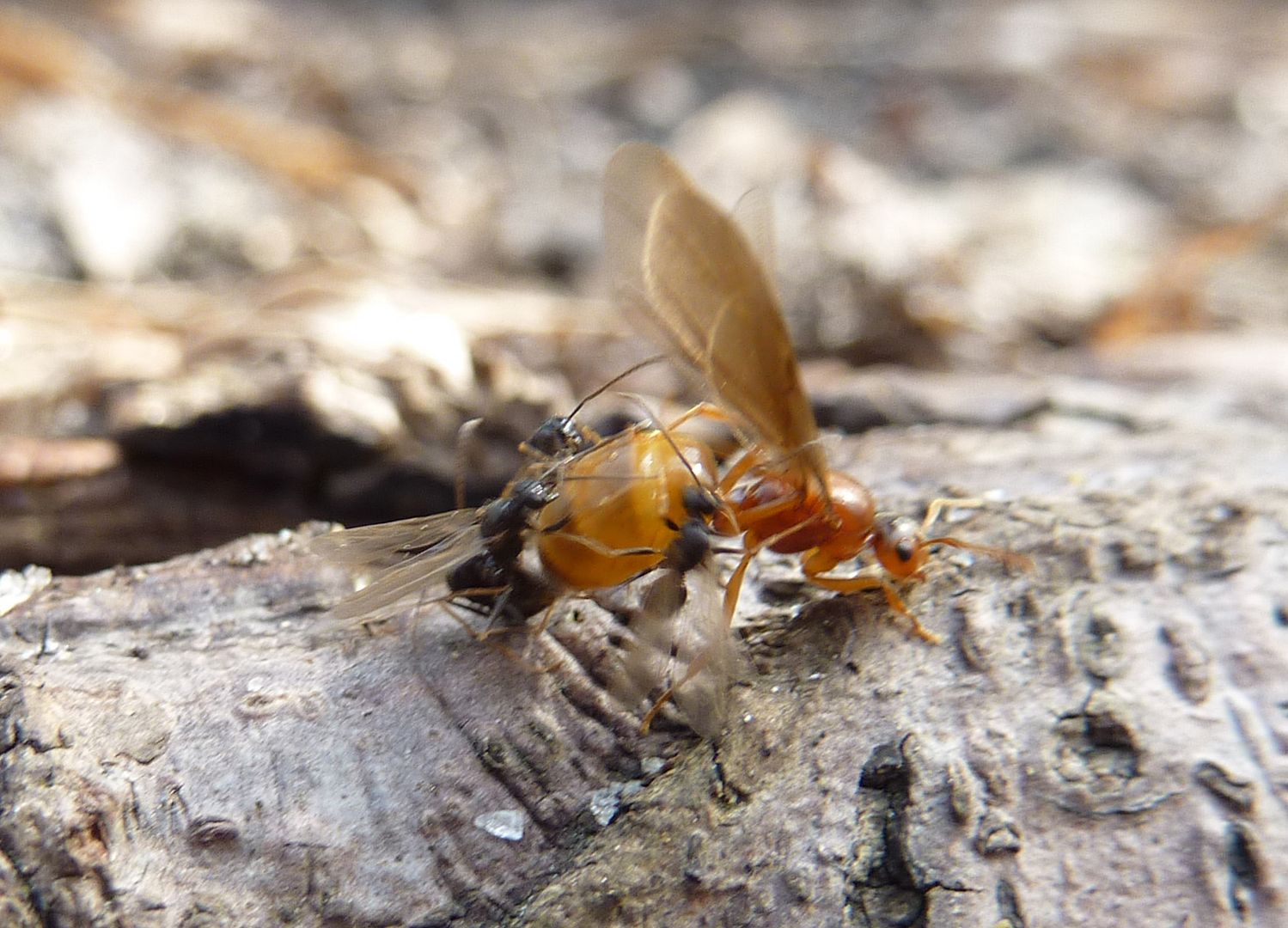
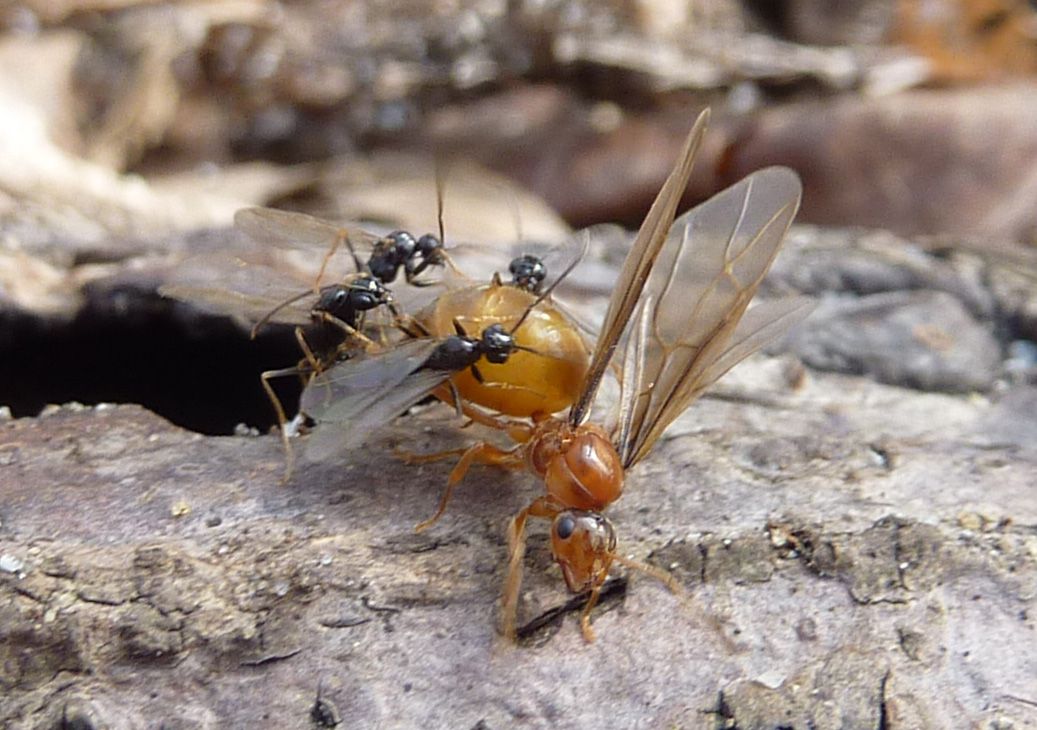
A Prenolepis imparis, Winter Ant, queen and male escorts. Nuptial flights to this species are fairly predictable taking place on the first few warm days (~70F) of the year. Queens take flight in the afternoon and are out numbered by males roughly 200 to 1. Mating happens in swarms low to the ground or otherwise at eye level.

I've always loved how queens are such a robust color. Male ants universally are almost always black for species the world over. Very few deviate away from this standard.

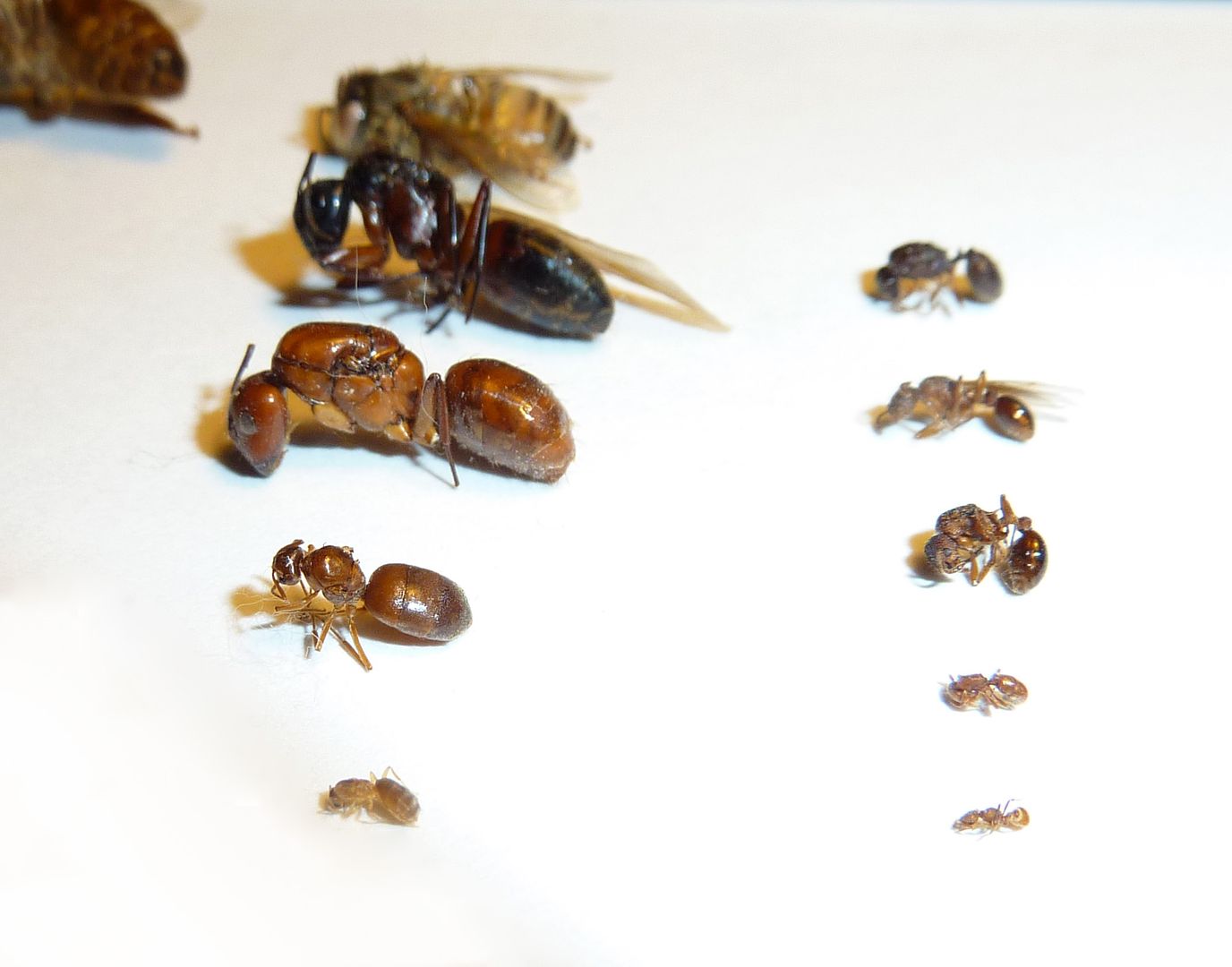
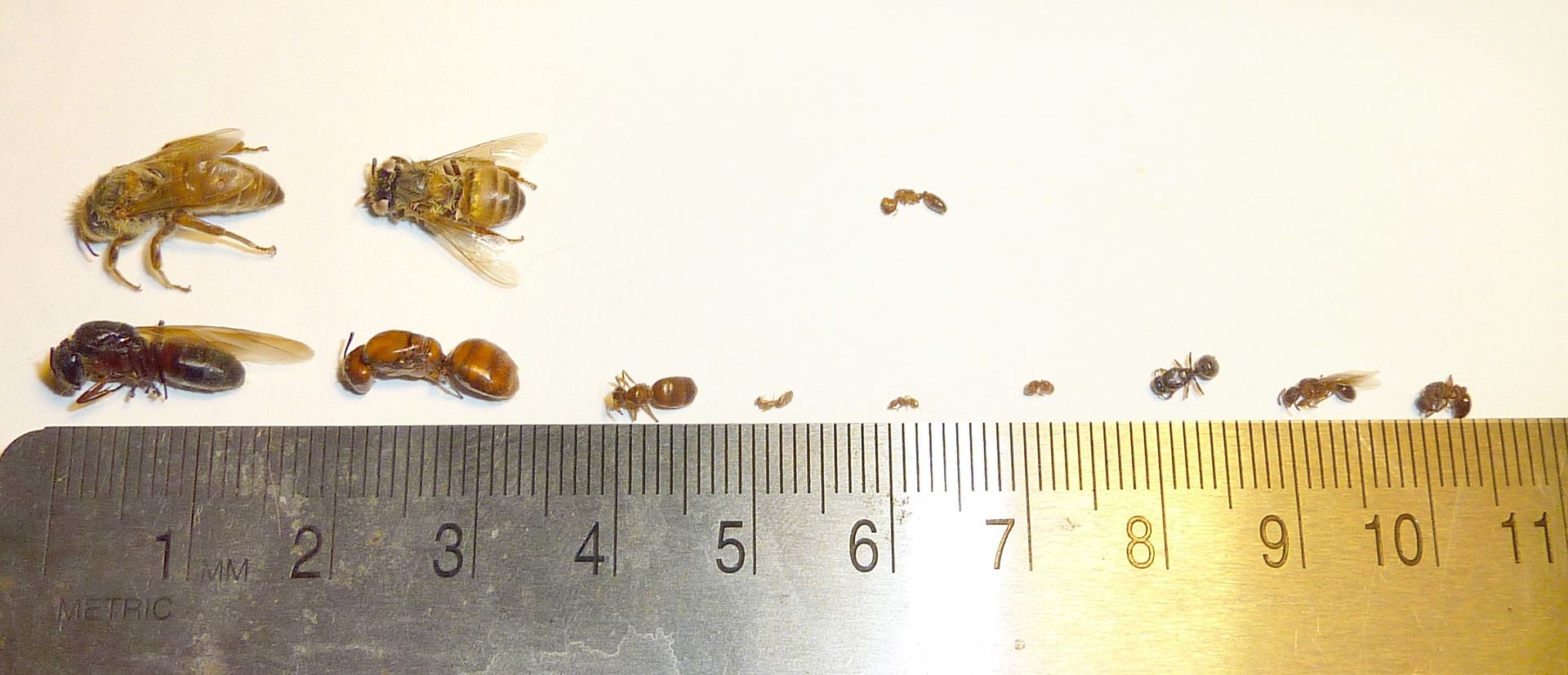
A collection of ant queen from various species. (There is also a worker and half a queen honeybee in the very top left side.)

This isn't a particularly great photo. I just love that I finally got around to taking pictures of my Pyramica specimen. This is a genus comprised of subterranean hunters that specalize in small arthropods and collembolans. Because they're subterranean one has to more or less chance upon them or sift through the right material. Around the world this genus gets quite colorful. Check them out on Ant Web.

The same is true for my Proceratium specimen. These use a different method of hunting. The tip of their abdomen is unusual looking because the tip naturally curls around to point forward. This makes stinging pray items easier while hunting in tight enclosed spaces.

Lasius interjectus workers scrambling to protect the larva after a photographer disturbs the nest. 

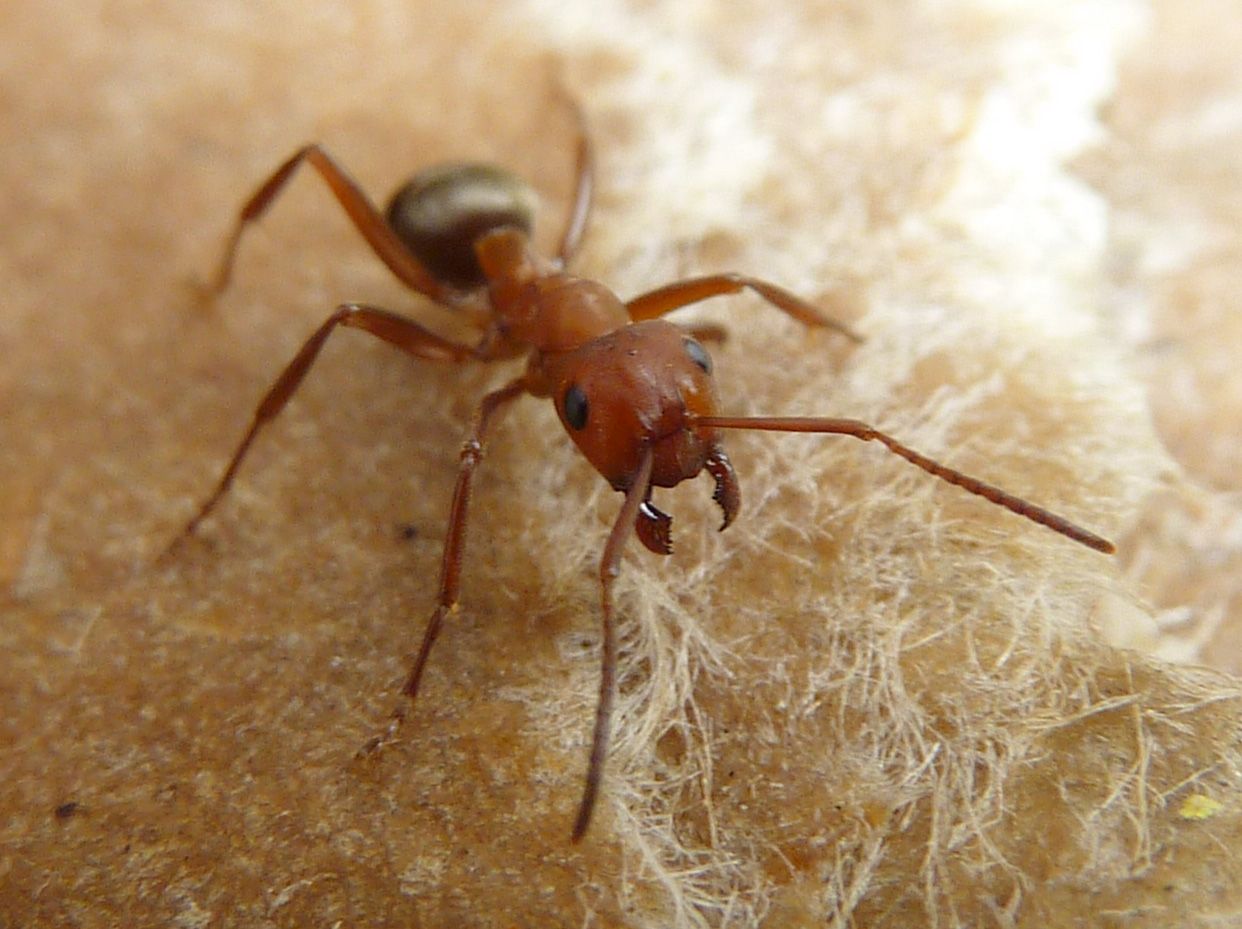
The perfect shot of the clypeal notch (between the mandibles) to a Formica pergandei worker. Formica is one of the largest genera of ants in North America, though not the world. From your back yard, to the peaks of the Rocky Mountains, there is a species to fit every notch except the arid south. To confuse matters even more it's a genus filled with social parasites and slave makers of other Formica. That notch in the middle of the clypeus means this species is in the Sanguinea subgroup, making identification a choice between 11 species instead of 100.

Another Formica worker. This time Formica subsericea which is the most common and widely distributed of the darker members of the Fusca group. The Fusca species in Formica are the most industrious of the host groups. Their colonies tend aphids and other sap producing insects from multiple trees at a time during the day. 

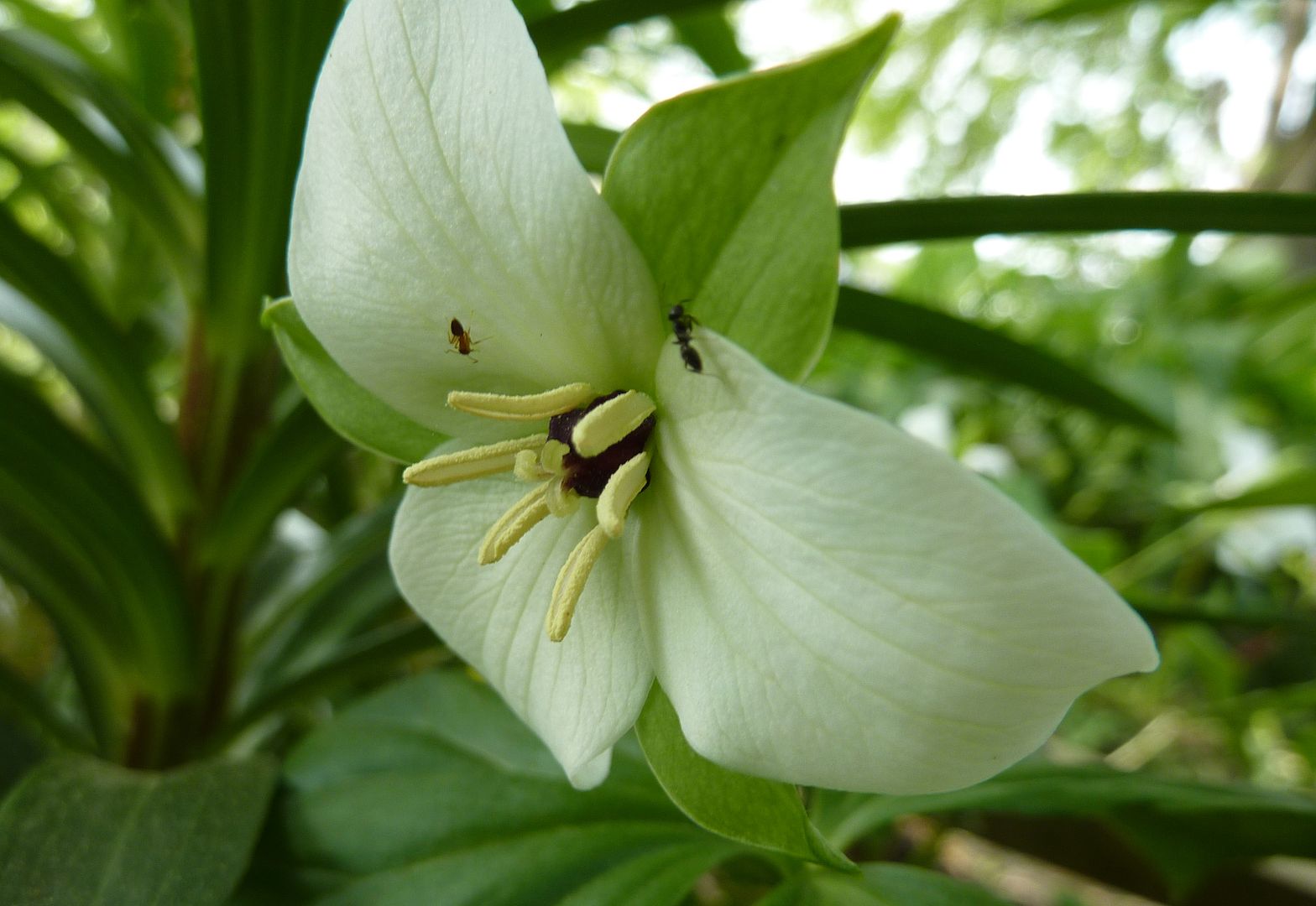
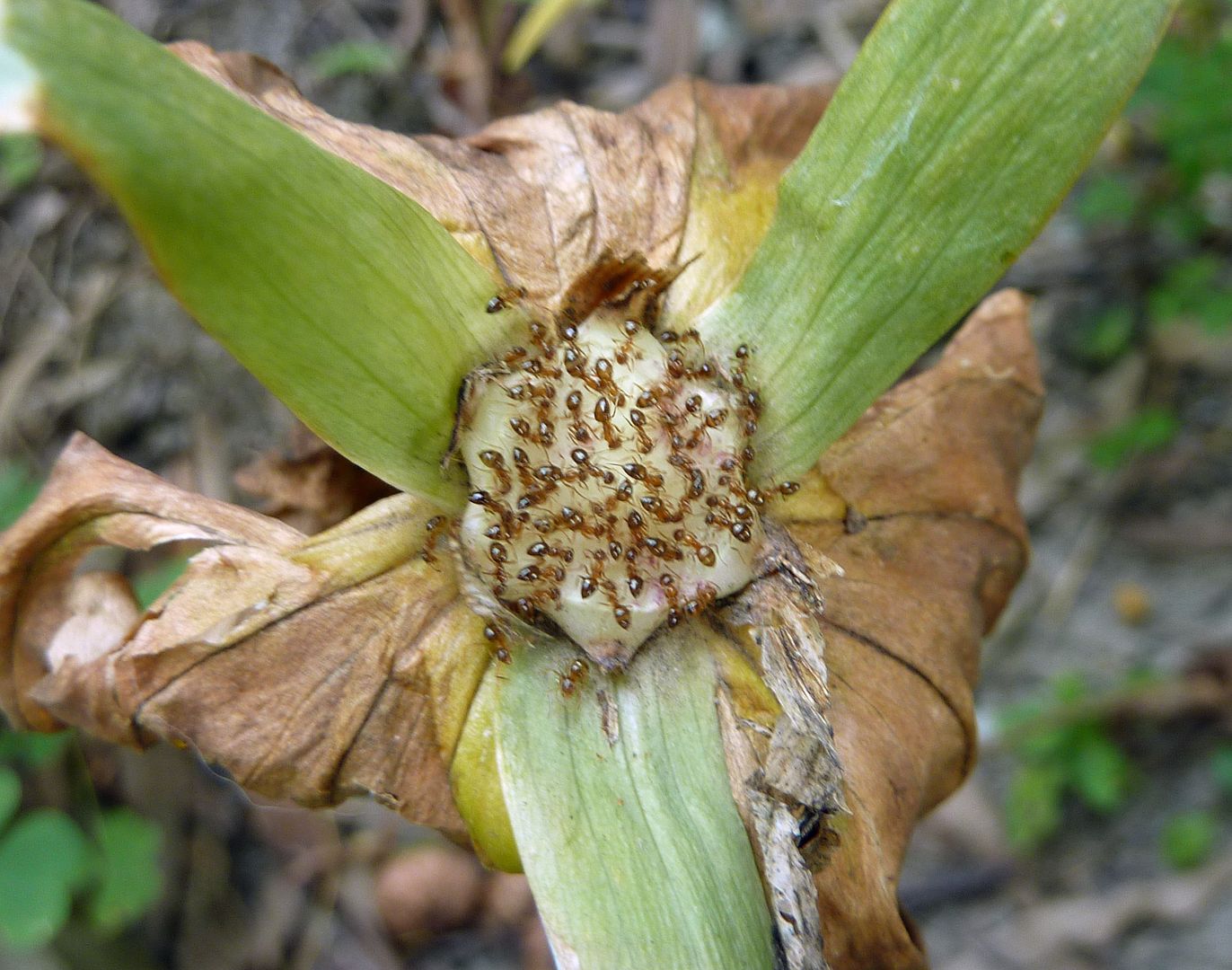
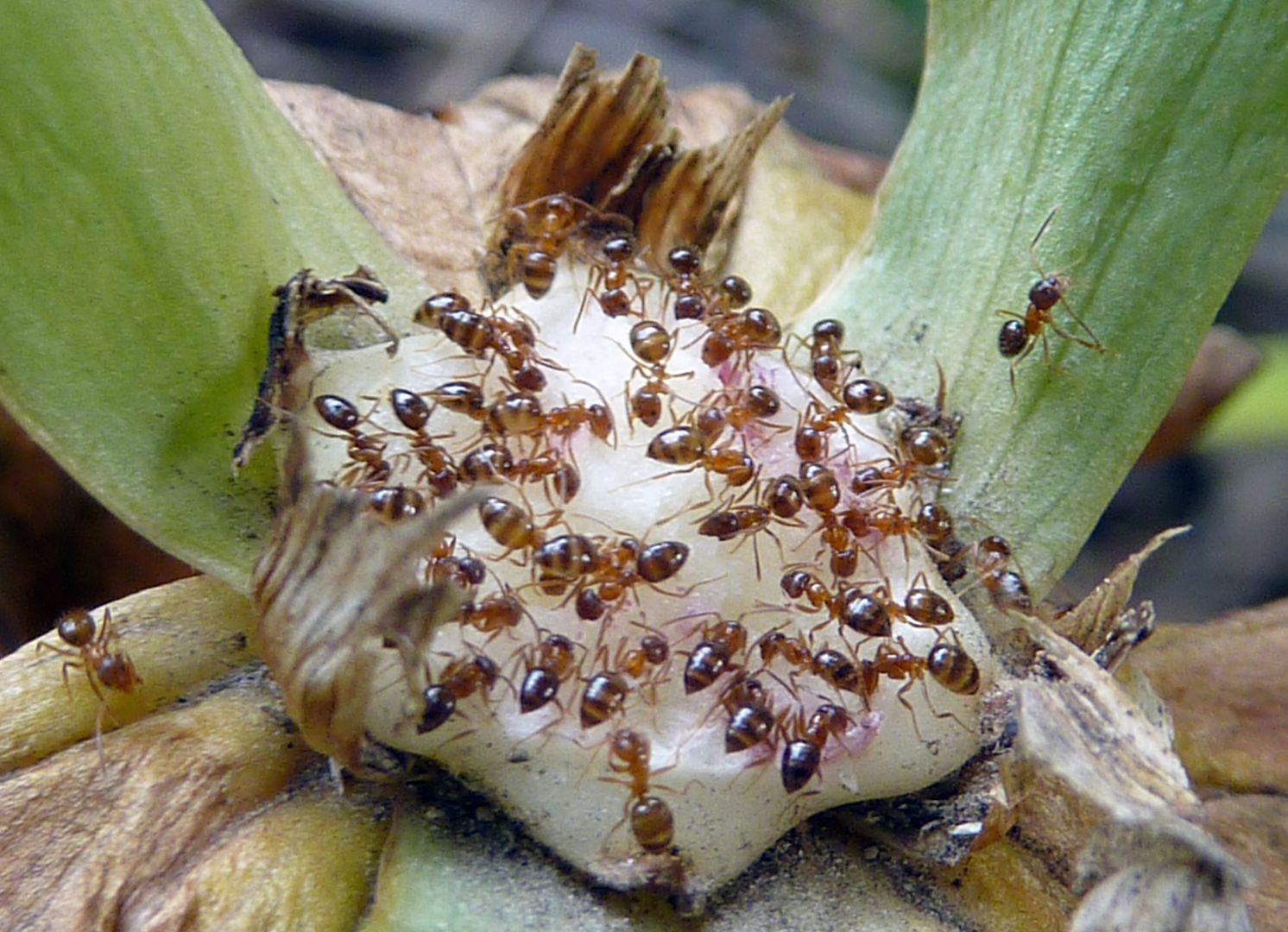
Mixing two of my favorite things, ants and Trilliums. Trillium simile is one of my favorites because the petals come to form a triangle. When grown in a group they have an architectural effect I like, though you'll get that from masses of any Trillium species. The ants are Tapinoma sessile (black) and Nylanderia flavipes (dark orange) which I have found to be notorious for stealing nectar and at the same time eager for seeds to develop.

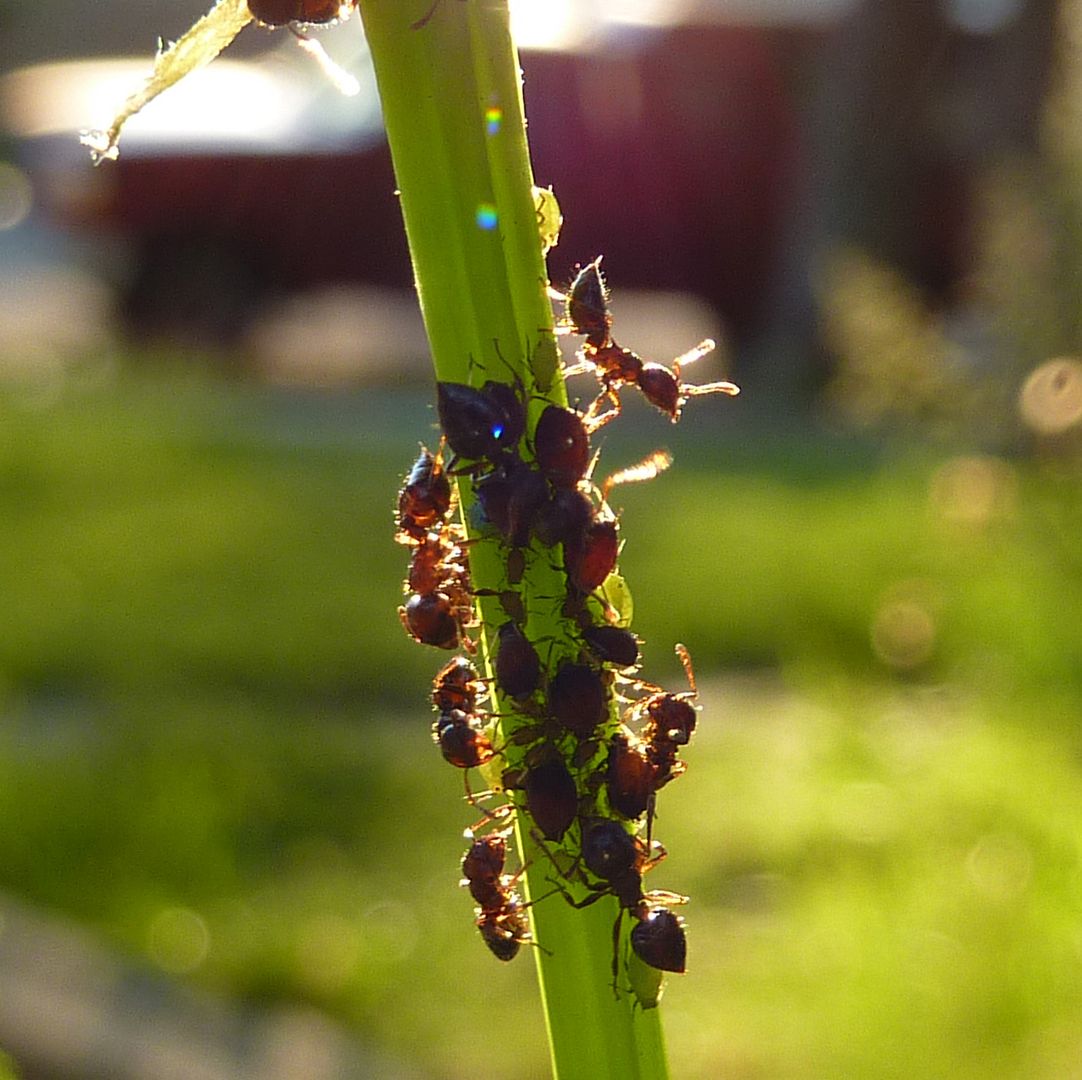
 Crematogaster cerasi workers tending aphids in the sunset.

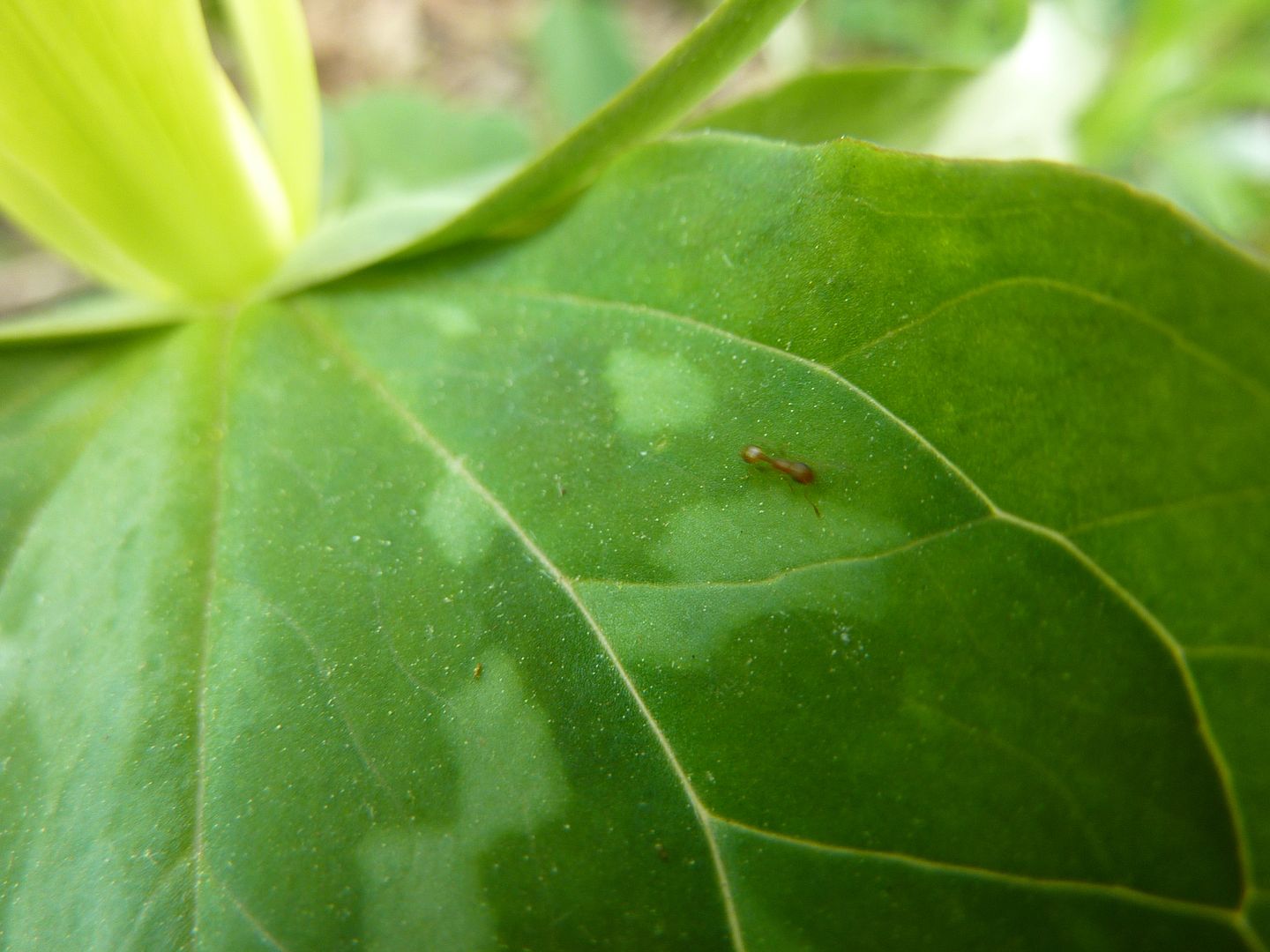
An insignificant little ant, possibility Temnothorax, roams a Trillium leaf in search for food.

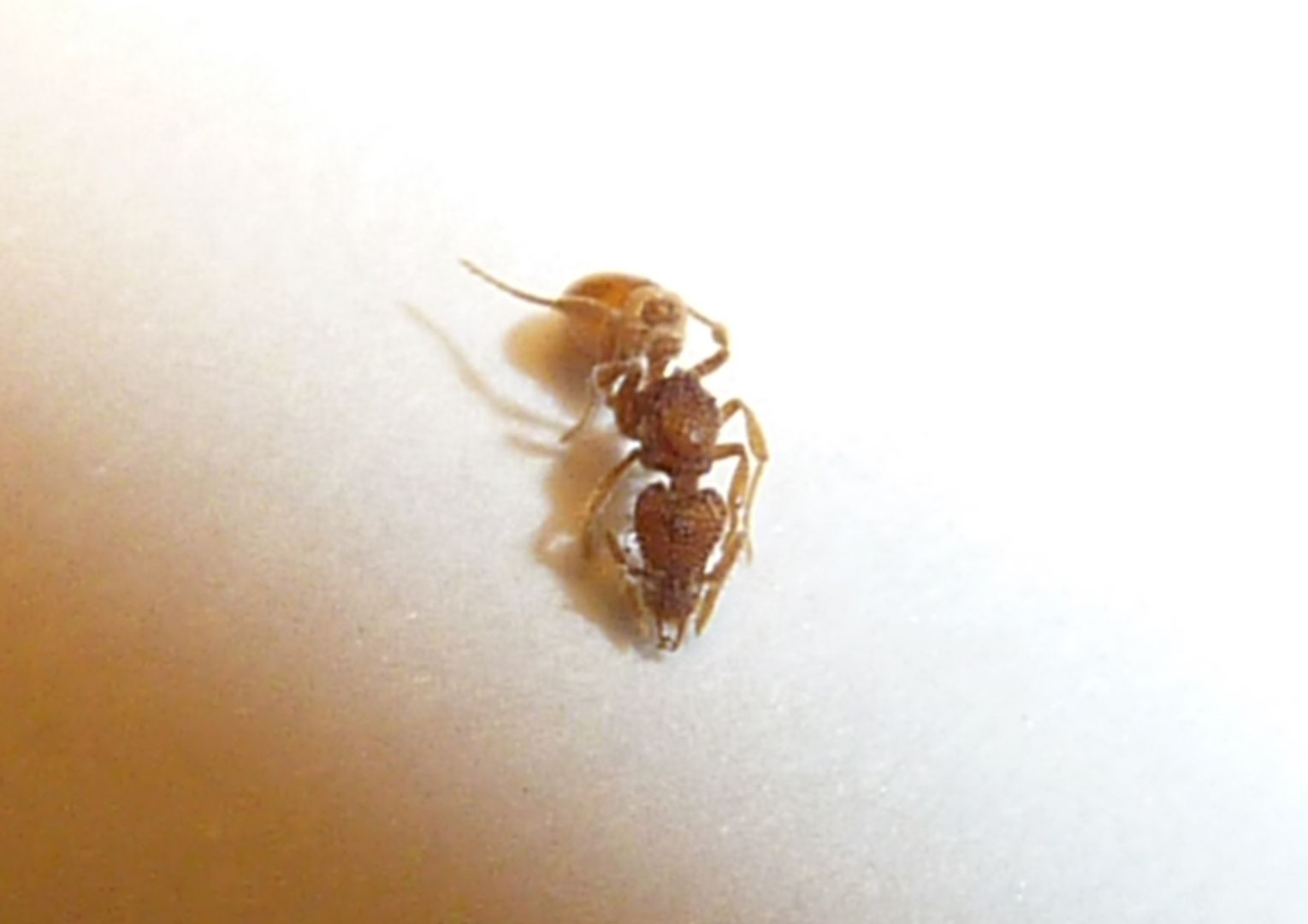
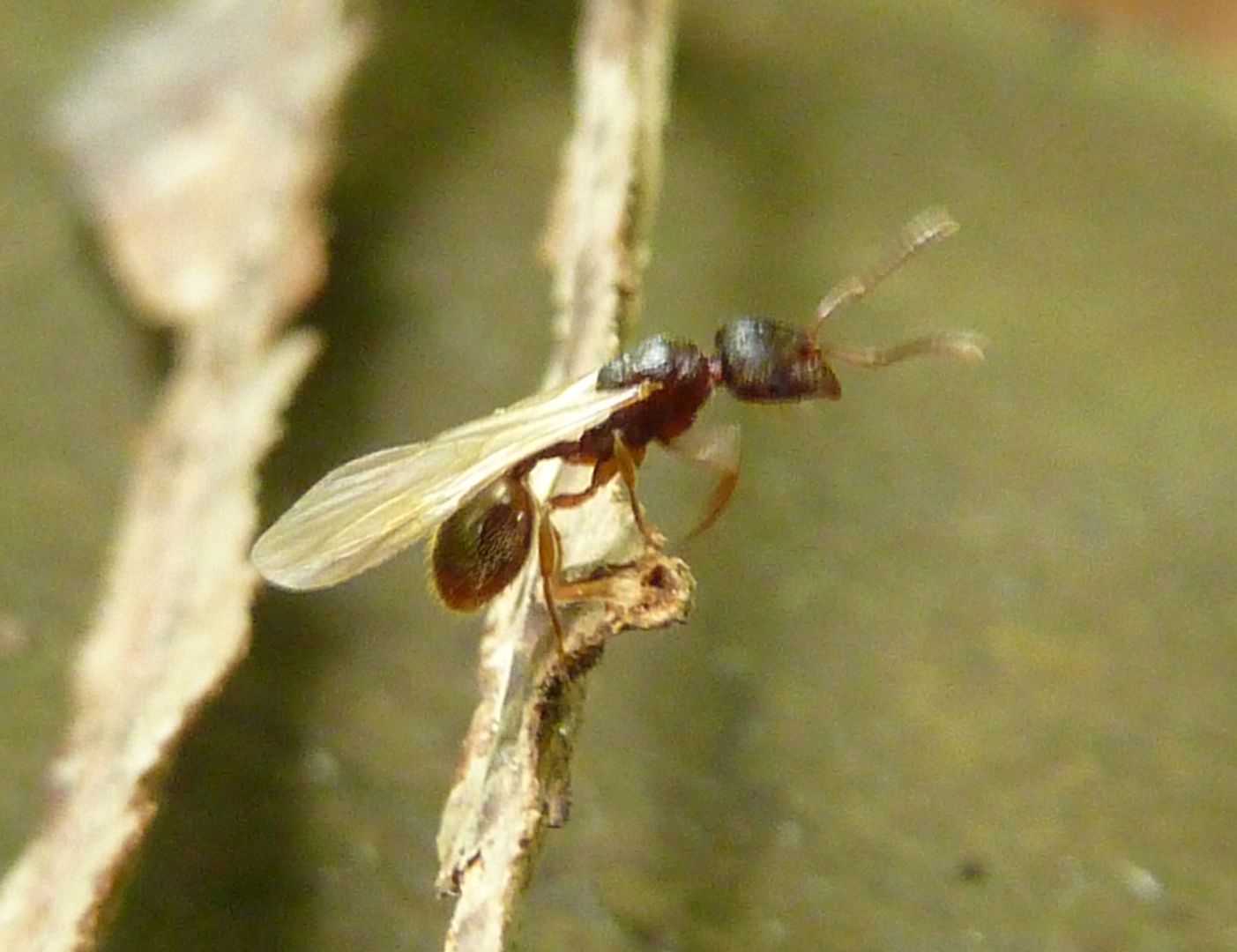
A rather small queen ant in the genus Stenamma. I didn't even know this genus existed in New Jersey let alone my backyard but here it is. Seeing her brings into question all of my identifications of the smaller ants like the Temnothorax above.

A Camponotus castaneus queen I caught earlier this year. I love this species because it's the only solid orange ant around here in that genus.

Prenolepis imparis colonies slowdown once summer hits. Their workers inflate with food and are put to work digging tunnels to make the nest deeper. They'll retreat to the damper parts over the summer and move back towards the surface as the rains come back again. Before winter hits they'll eventually be the only species out foraging long after other species have gone into hibernation. They're not called the winter ant for nothing.


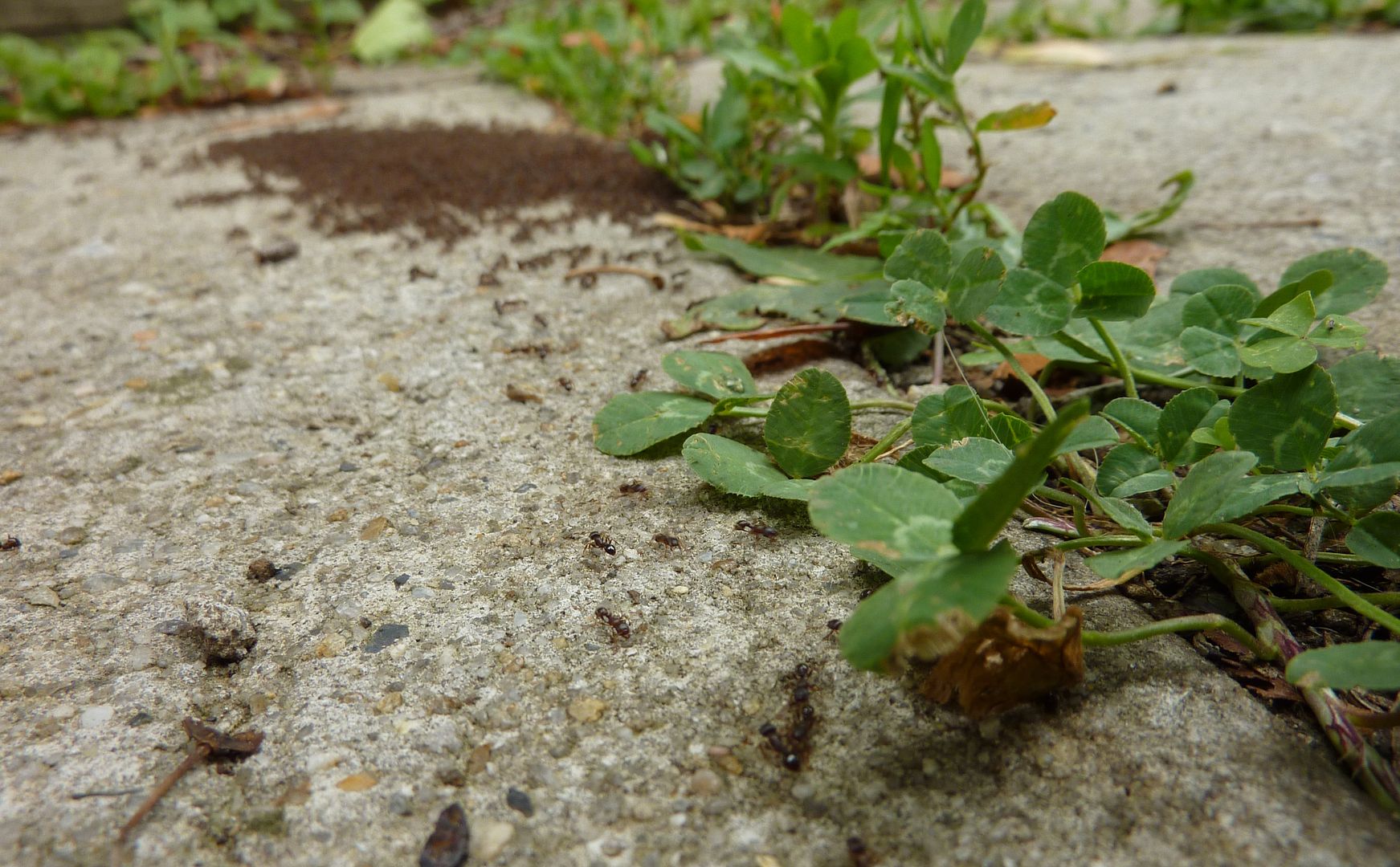
An ominous black stain in the late spring/summer time is more than likely a battle between two colonies of pavement ant, Tetramorium species E. (The E is thanks to their taxonomic limbo at the moment... I wish they'd made it stand for something at least like erecta


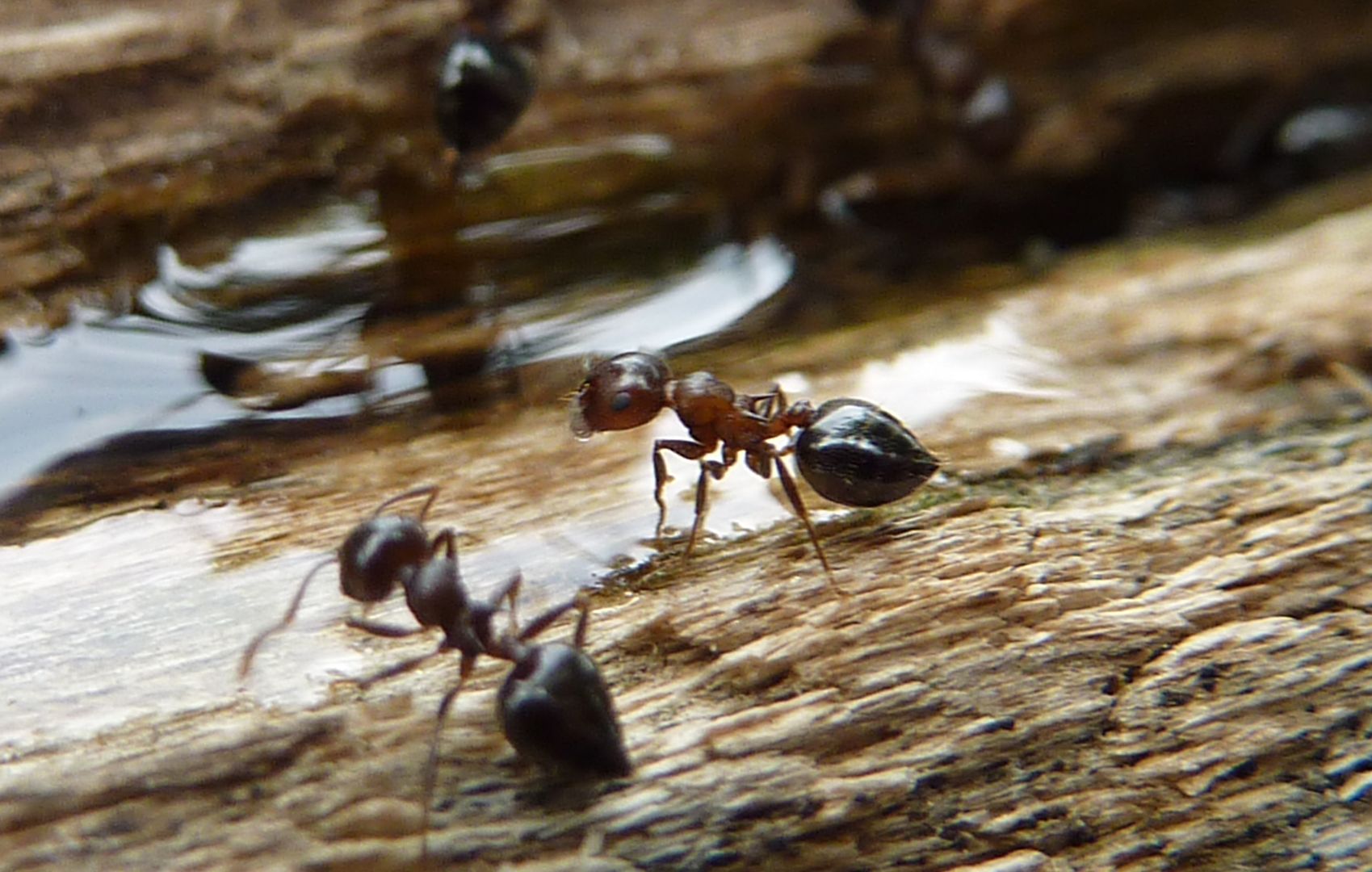
Alex Wild who is a very well respected insect photographer featured this image on his blog. Though he color corrected it to make a better image. This species is normally black in color but a few colonies around here tend towards being dark brown or slightly bicolored.

While baiting the yard with honey here and there it's easy for anyone to check the ant diversity hanging about. Here some Crematogaster cerasi workers sip at a small pool of honey.

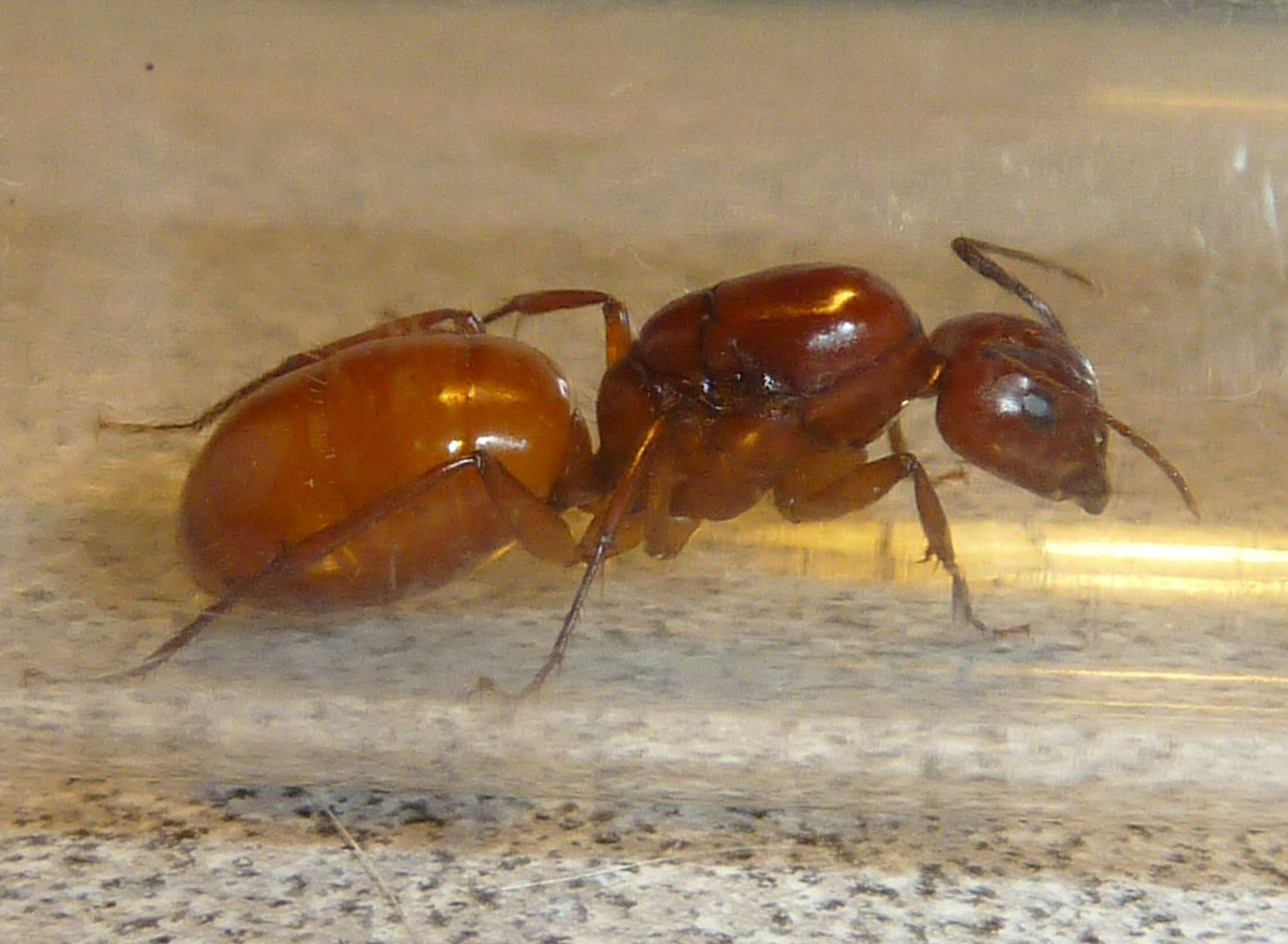
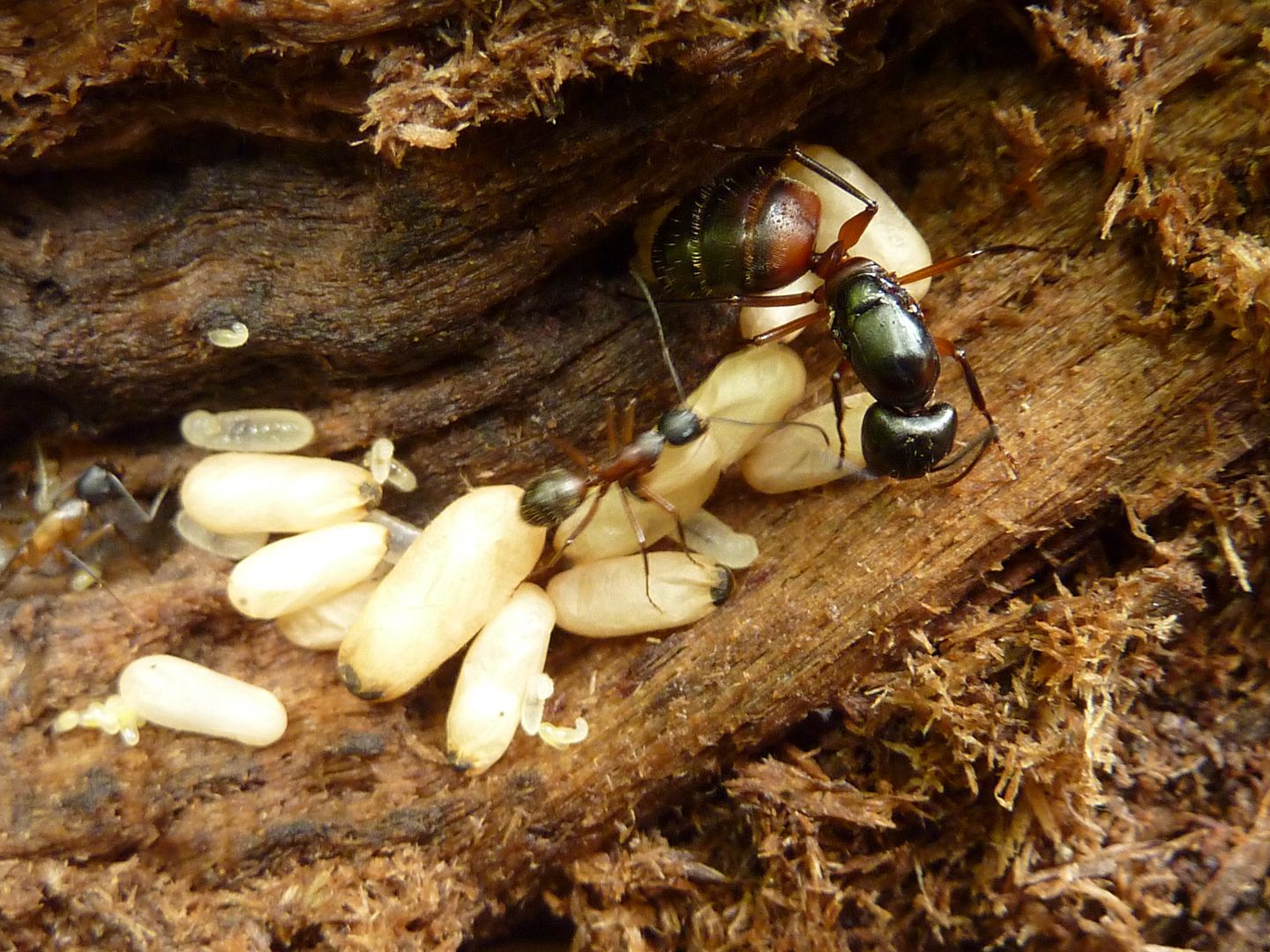
While having a friend over one day I mentioned I have random workers to a species that seems to be starting up in my yard. As luck would have it we moved an old log in the garden to look under, but it broke open in the process and revealed the nest chamber and queen to the ants I'd just mentioned to him. Camponotus chromaiodes is very common in the Pine Barrens and I'm thrilled they've decided to nest here. They differ from Camponotus novaeboracinsis in the amount of hair on the gaster/abdomen and the amount of red on the mesosoma. C. chromaiodes always has black shoulders while C. novaeboracinsis is solid red. These traits vary somewhat within the colony but are the standards among the largest workers in the colony.The color patterns of queens is another matter. C. chromaiodes is as seen above, with a little bit of red under the mesosoma and somewhat on the gaster. C. nobaeboracinsis queens tend to have more red on the mesosoma and less on the gaster.

A Crematogaster cerasi workers and male posed on a leaf.

A successful experiment I did where I documented and allowed 4 colonies of Prenolepis imparis to combine. The colony is still together to this day.
An Aphaenogaster rudis workers walking among the Trillium seeds.

Yellow Jackets stealing Trillium seeds and potentially planting or dispersing them perhaps?

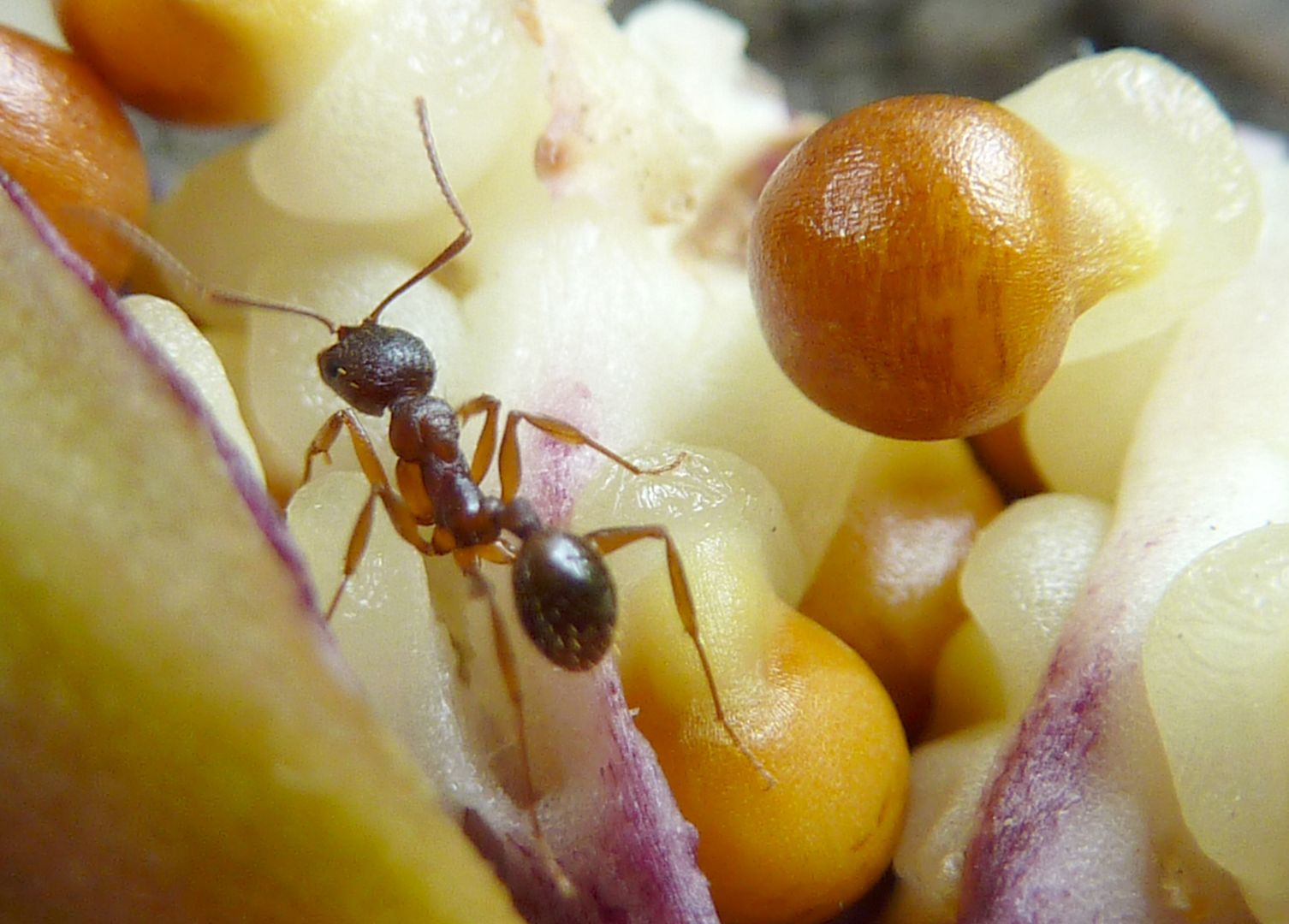
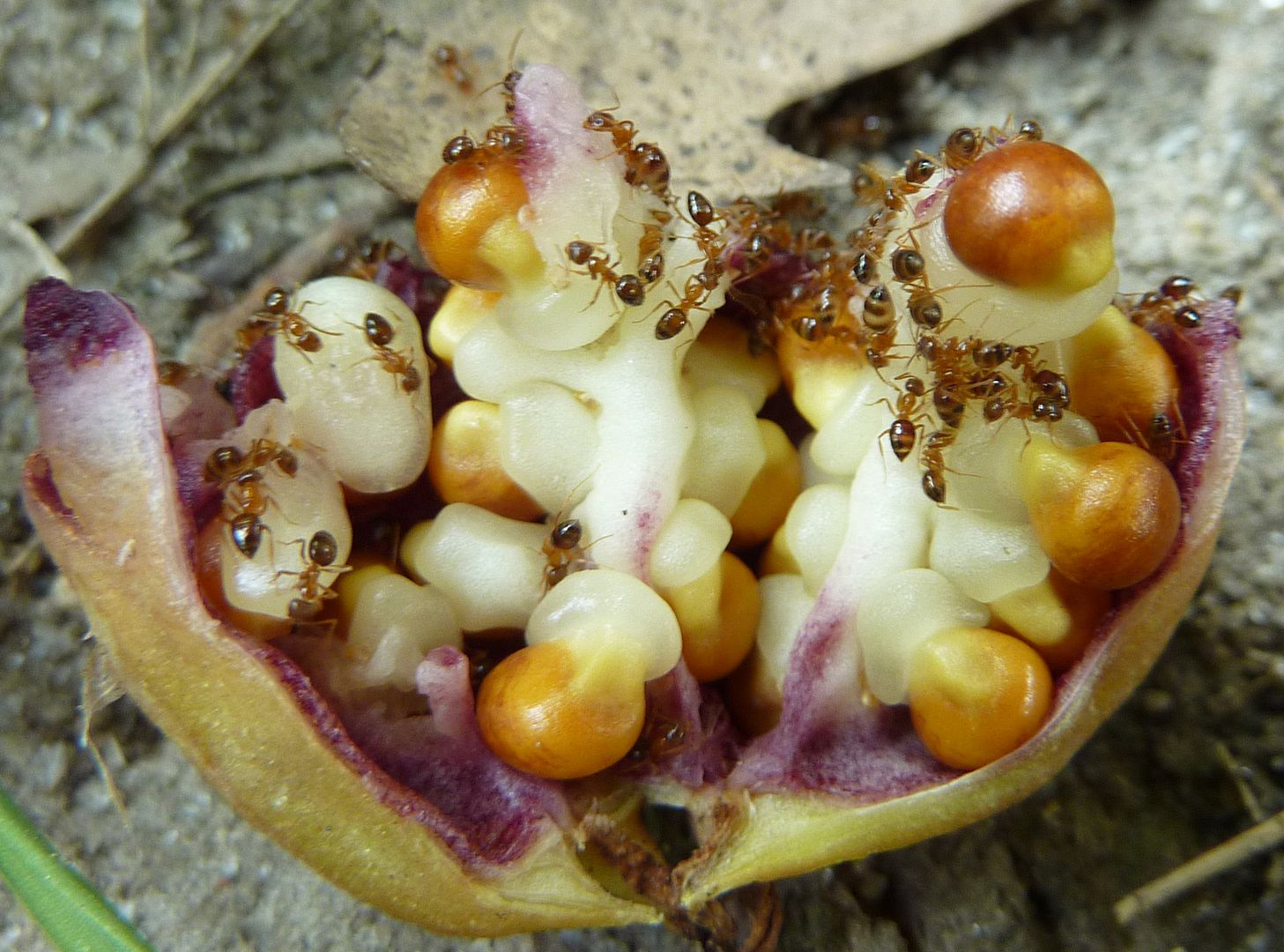
Hordes of Nylanderia flavipes eating the elaiosome off of the Trillium seeds. Because these ants are too small to carry the seeds they simply remove the ant food in place. Sadly this negates the purpose of the elaiosome which is intended to get the ants to carry the seed into their underground nest, effectively planting the seed.

Nylanderia flavipes polishing off the fleshy material where the Trillium seed pod once stood.

This just says it all about what scavengers ants are; they're finding nourishment in what amounts to connective tissue on the plant.

A massive Camponotus castaneus worker has no trouble carrying a Trillium seed home single handed. It's one of the few species that are both willing to carry the seeds away from the plant and are bigger than the seed itself.

Of course if the thing had a handle it might be easier to carry.
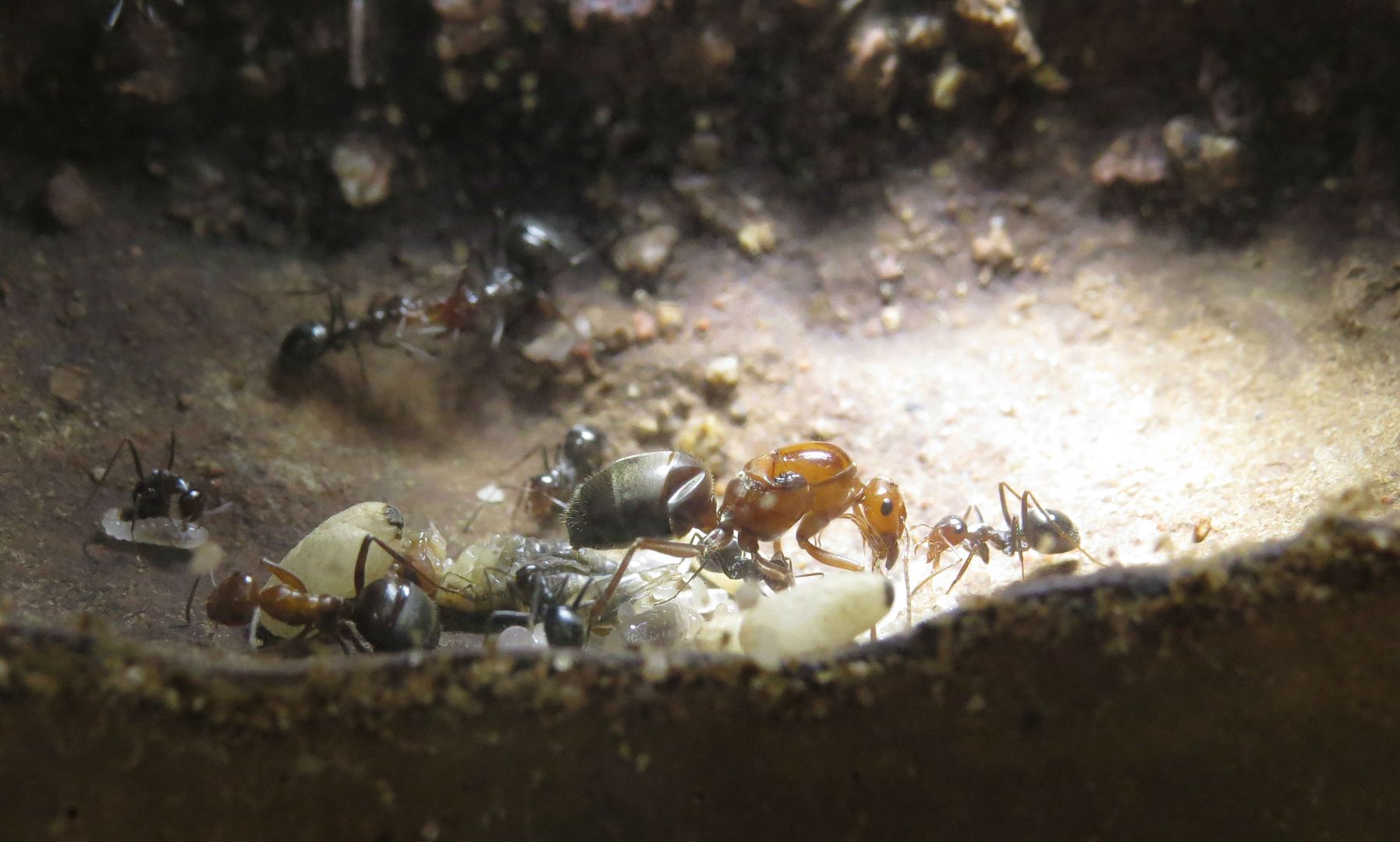
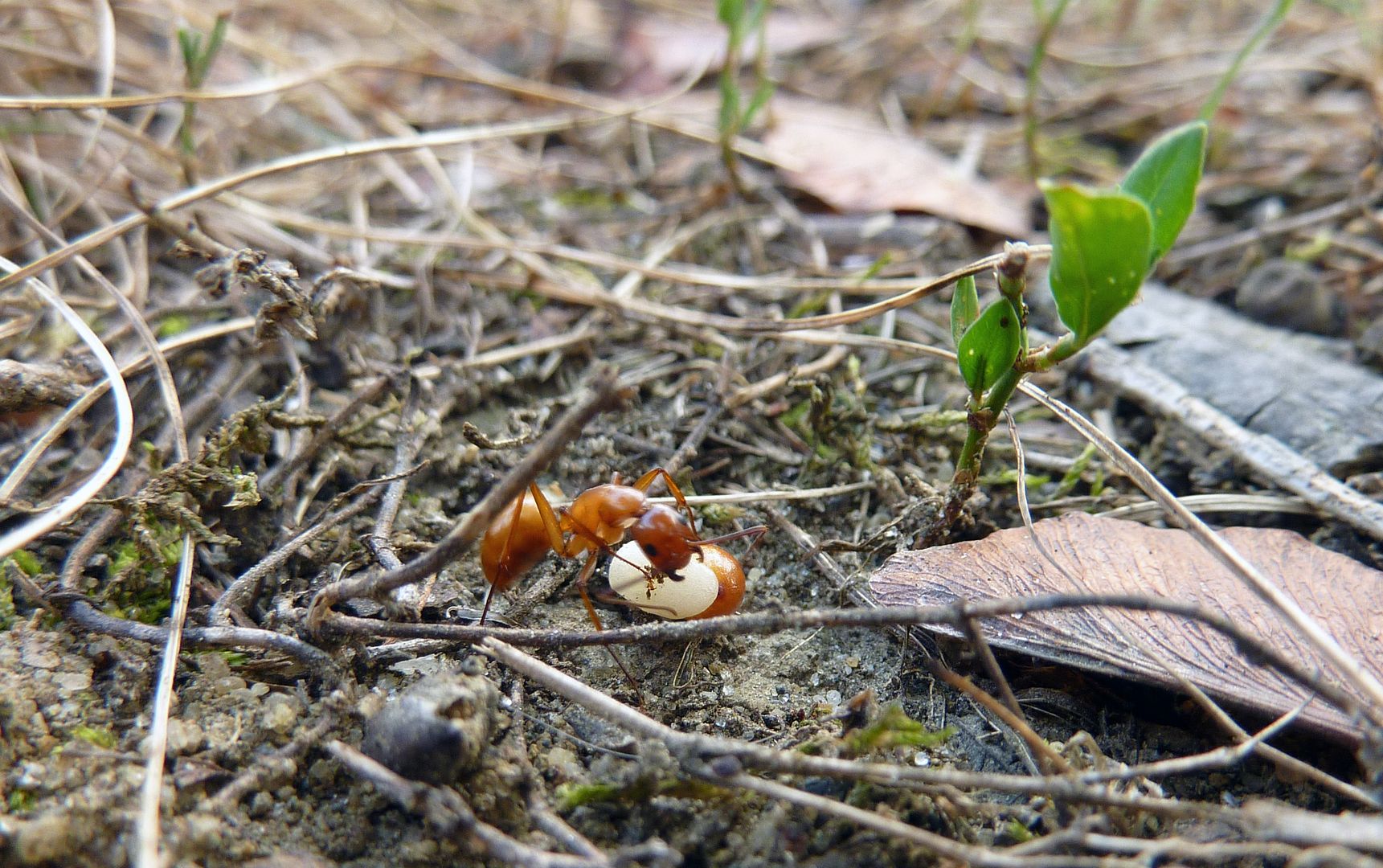
Lastly we have my colony of Formica pergandei and their host Formica pallidefulva and F. incerta workers. F. pergandei colonies can not maintain themselves using their own workforce. They have specialized in stealing cocoons from other Formica species which are then raised as workers of their own nest. There is some evidence though these devoted slave makers weren't always this way. Note the tiny worker in the middle left. Callow castes are often the first ants new queens produce; they are cheaper to make and smaller than the average worker of an adult colony. Their job is to help the queen produce the next generation of workers. Eventually callows are never produced again in favor of larger more standardized workers. True slave makers would never have any use for such a caste and yet here it is. At the very least they seem to help the colony transition into devoted slave makers, though I would be surprised if they were produced beyond the first few broods by the queen.
Hopefully I can keep this colony alive and report more on them in later posts. I may even try to setup a fragment colony of host workers and brood so I can document them raiding it someday.