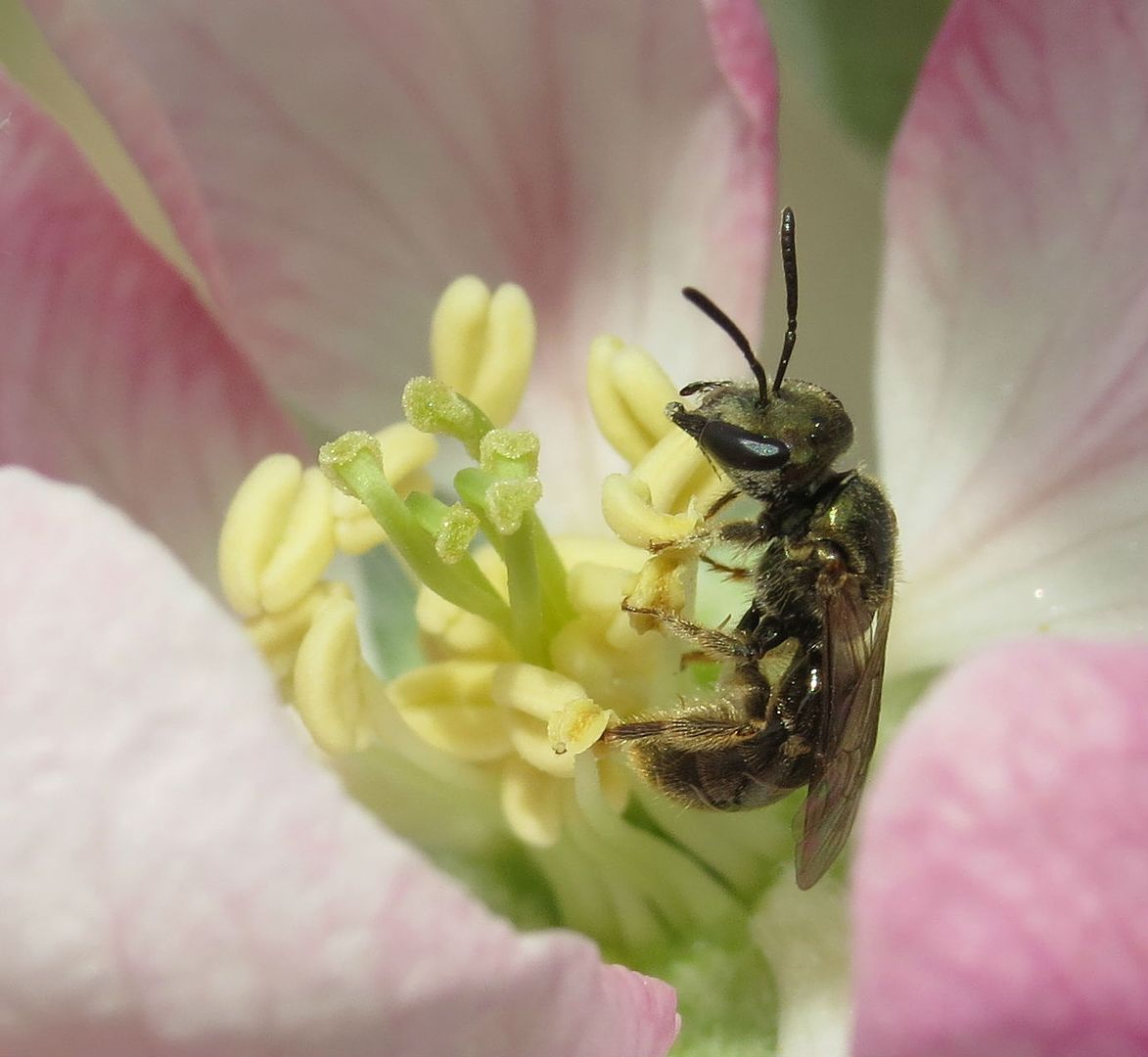
Although it was a breezy cool day in the 60's, I managed to have some fun with my camera today. Here is a sweat bee taking refuge from the chilly air in the flower to an apple tree. They were collecting pollen but a few, (males?) that were hanging out in the flowers. Apples aren't quite at their peak here.
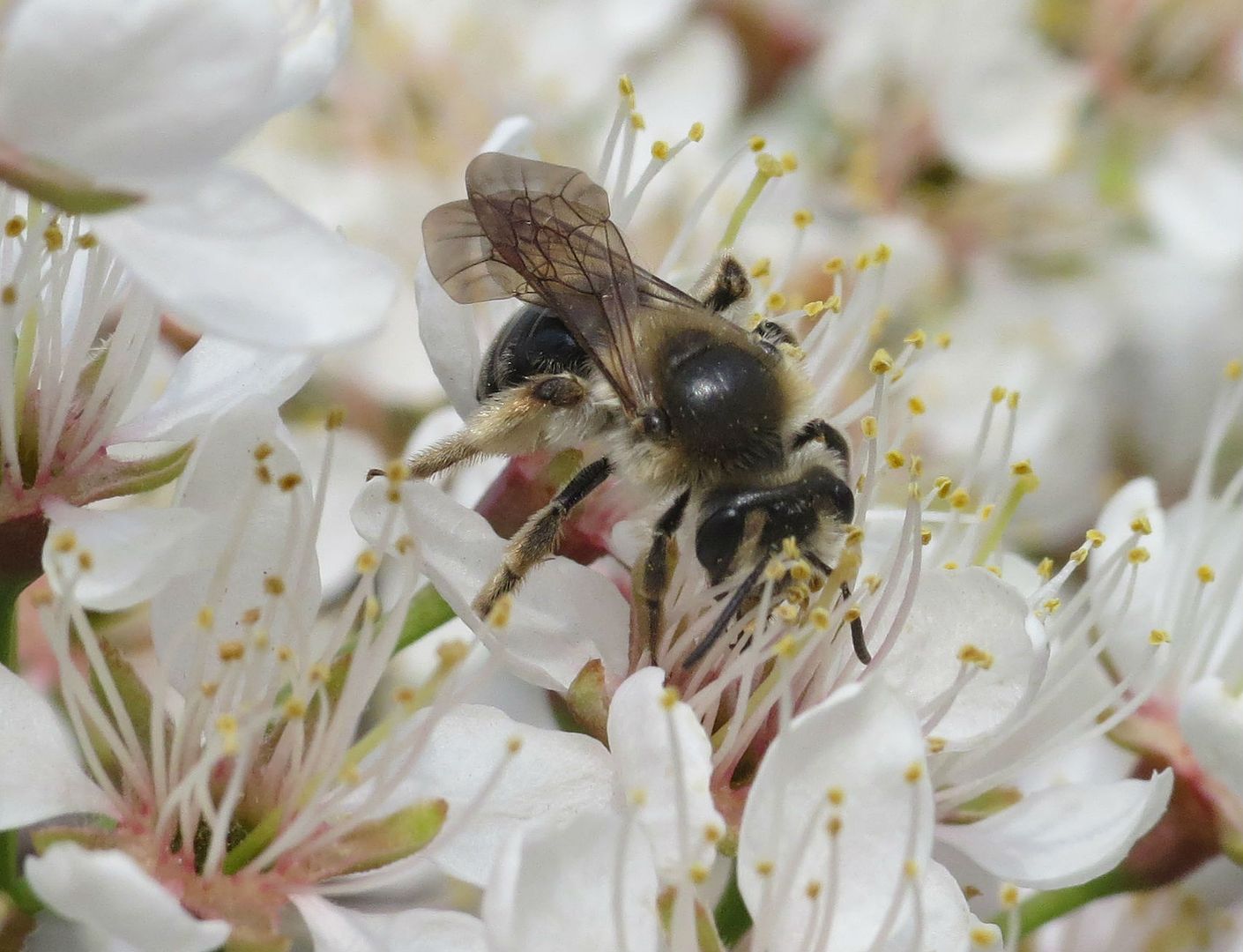
Here is what I believe is a mining bee working the native plum trees. There are tons of flowers on the trees this year so I should get another bumper crop like I did two years ago. I was pulling 800+ plums off of each tree, though native plums are small and bite sized. Still though, it was quite a lot of fruit for a first year's flowering.
These types of bees like to burrow in sandy hillsides usually clear of tall foliage; often in full sun, though the early species/generations work do full shade just fine because the trees haven't filled in yet. I'm not sure how successful these shaded burrows turn out though compared to ones in full sun. But of course tall grasses and forbs may grow more abundantly on sunny locations.
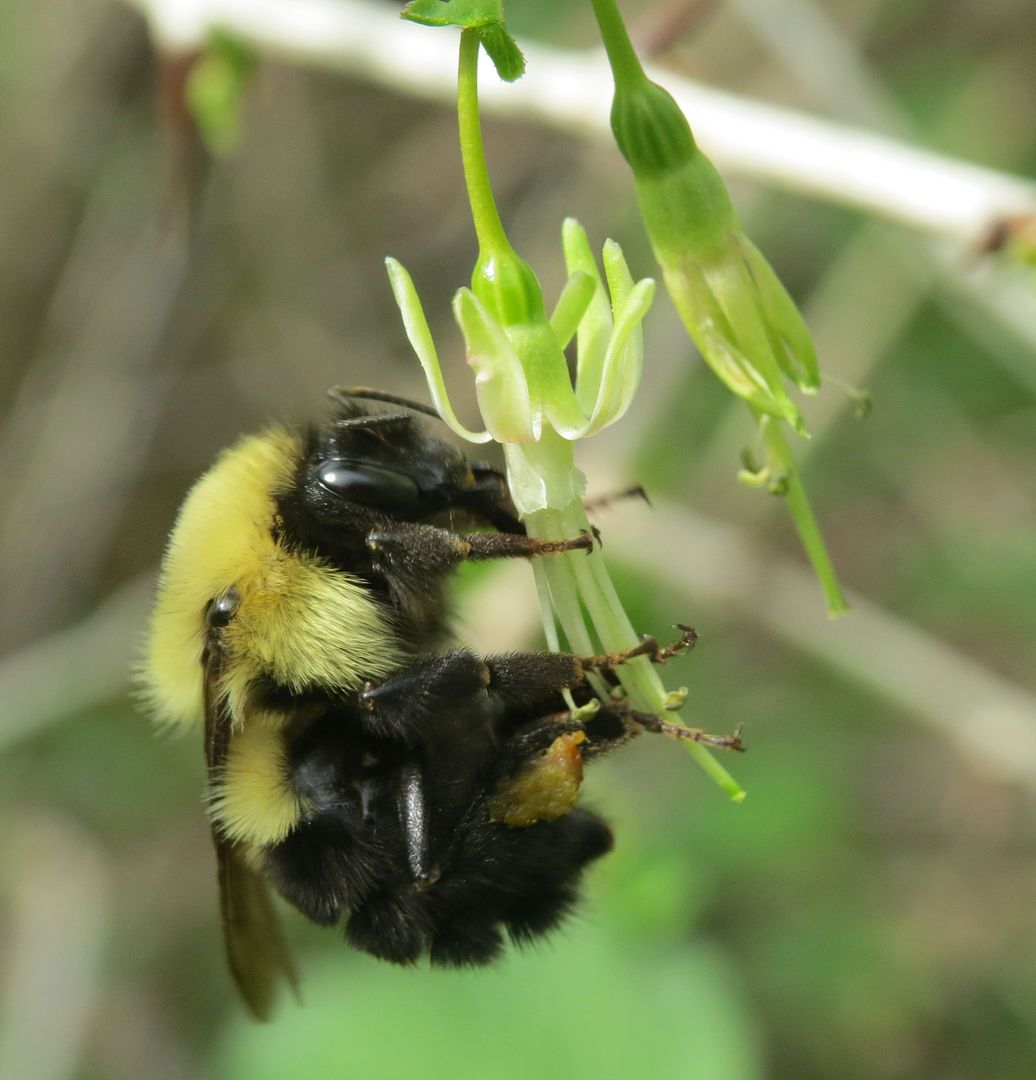
Last week I saw all the queen bumblebees flying about looking for nest locations. And now I see they've all settled in it seems. Bumblebee queens that are collecting pollen are committed to starting a nest. Pollen if fed to developing brood while the nectar of the flower feeds the adults. Some nectar is turned into honey too and also fed to the brood but bumblebee honey is runny and contains high amounts of pollen anyway.
Here I watched a queen visit the flowers to our gooseberry/currant. It was neat watching her work these small, inconspicuous flowers, when the native plum, apple, and peach trees are all right beside them. She was devoted to visiting each and every flower on this shrub, ignoring ones she already visited. I did see her fly to the plum tree once, but that was very clearly an accident on her part, as she virtually walked right over the flowers in search of the gooseberry she'd been working. Bees are often devoted to the pollen of the type of plant they work because the nutritional value can vary greatly from plant to plant. It's best to raise brood on one type of pollen to perhaps judge the results, or maybe it's detrimental to mix and match pollen types? Whatever the case, this devotion to one type of plant is what makes them excellent pollinators.
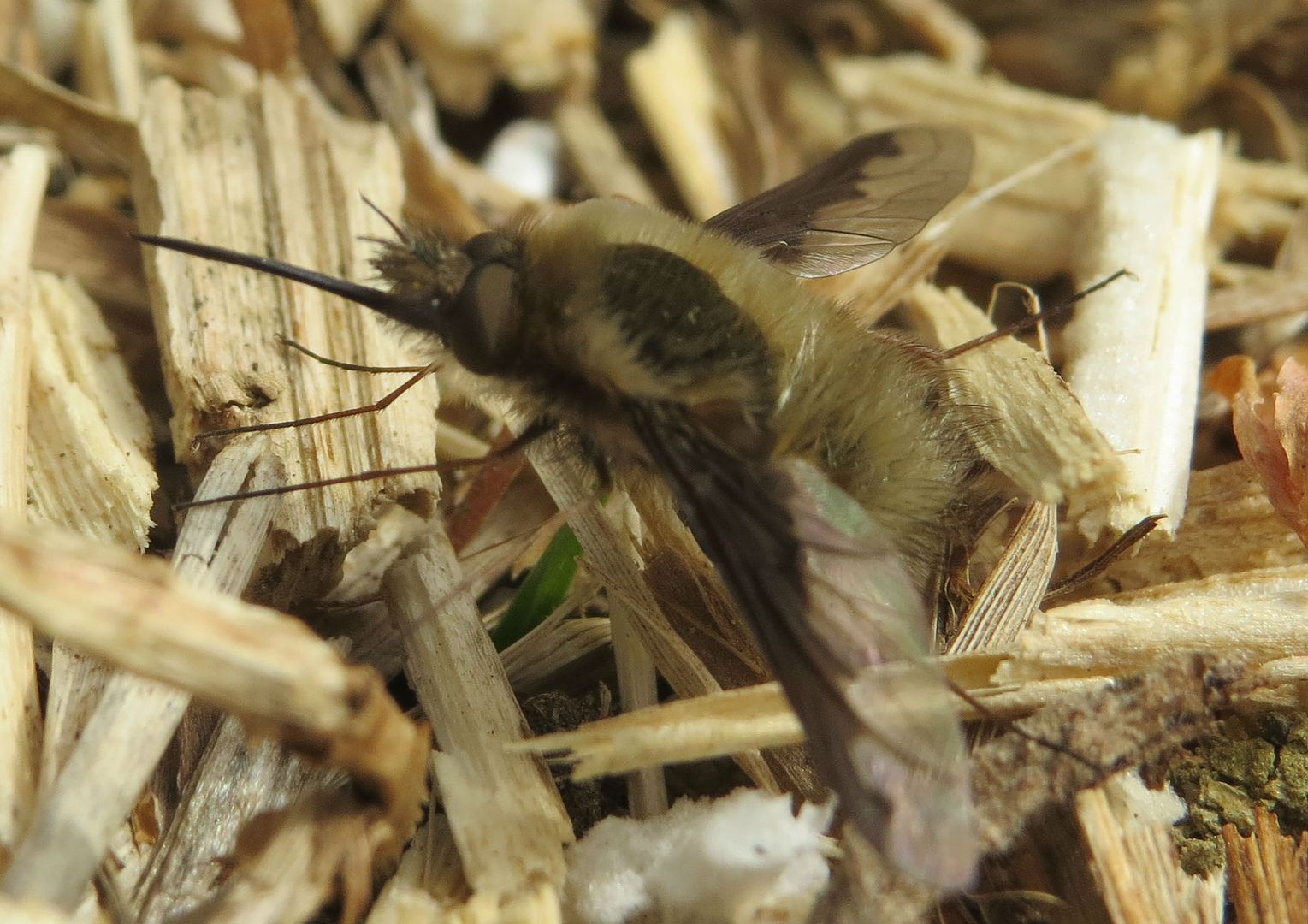
Also buzzing about were the beeflies. These do visit flowers, though the ones I saw seemed to be more interested in sunny themselves on the mulch. These mimic bumblebees to gain entry into the nest and lay their eggs in the hive. I don't believe all beeflies do this, others simply lay their eggs adjacent to the nest and the resulting maggots crawl inside, or have some other host/parasite relationship worked out with other things. I don't see them that often honestly.
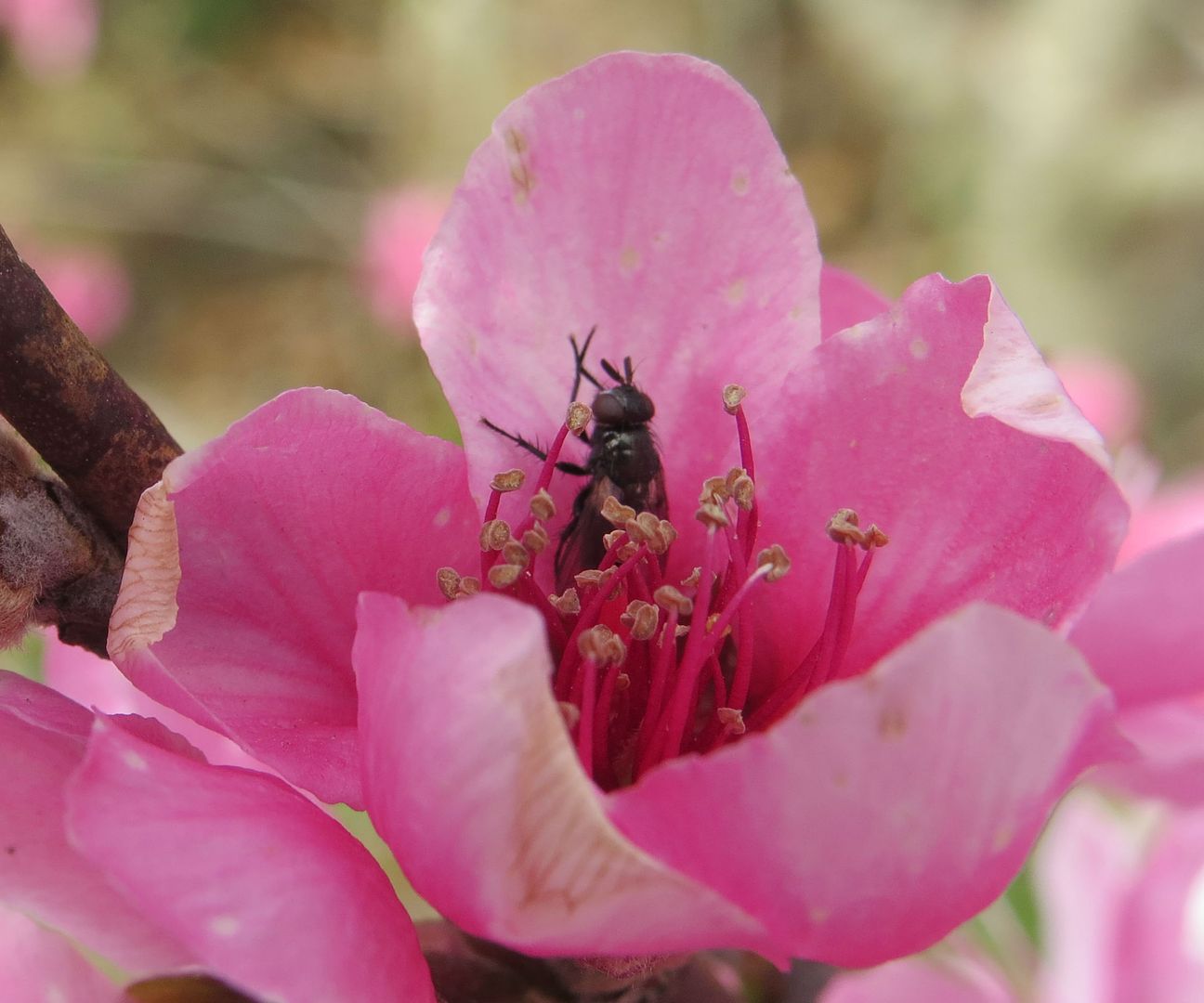
And lastly I thought it was interesting to see some actual flies doing some pollinating. This was on our peach tree, which the honeybees were also working in favor of the plum and apple. However, it was just cold enough that the honeybees weren't out in abundance for me to photograph. Flies though seem better weathered about the cold and were flying from flower to flower. This one was sipping at the nectar in the flowers it visited before turning around and darting off. To be honestly though it reminds me of a parasitic fly, so perhaps they were laying eggs or something as they visited the flowers.
Showing posts with label Sweat Bees. Show all posts
Friday, April 25, 2014
Sunday, January 5, 2014
2013 Best of Bees
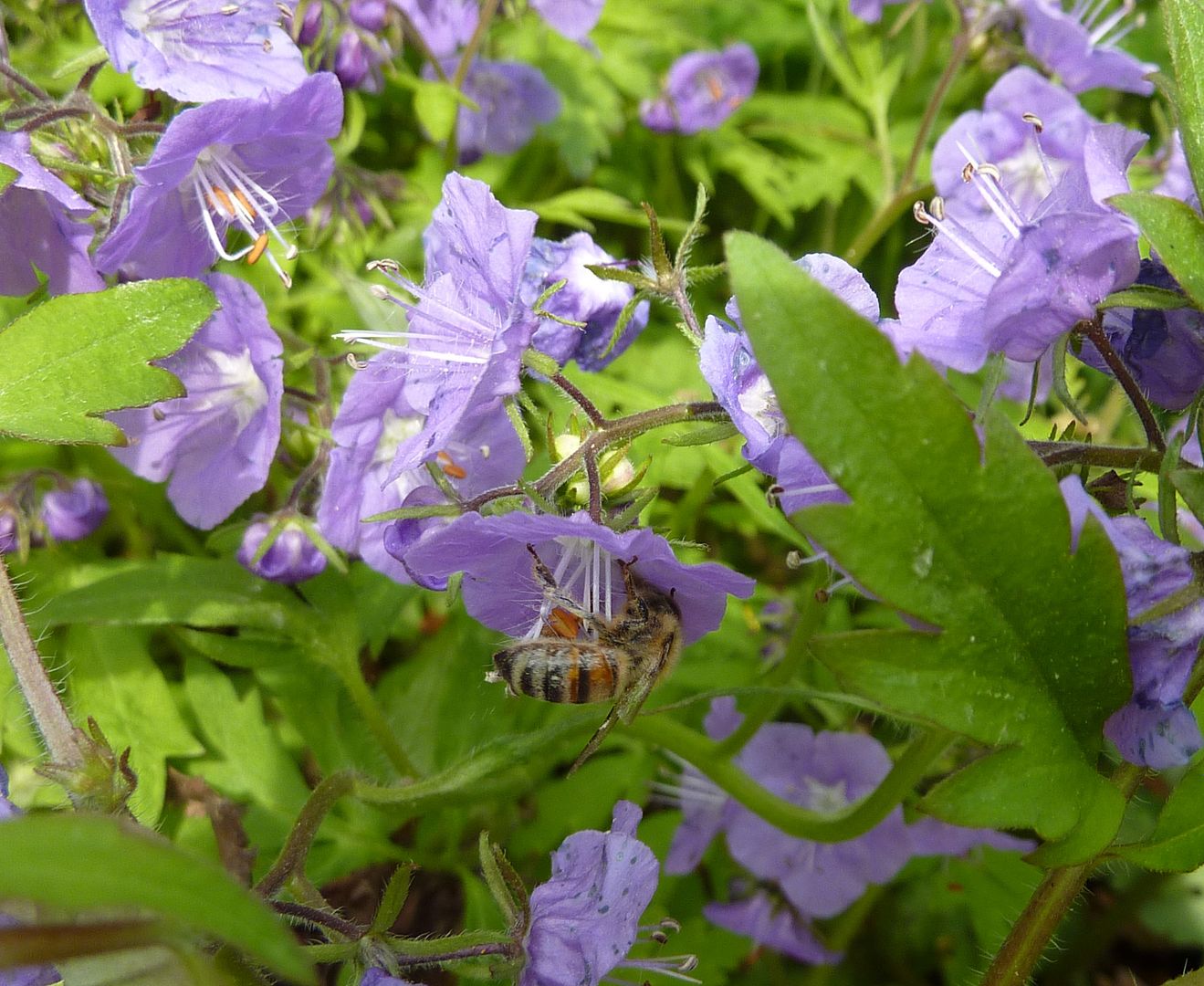
For bees I was thrilled to find Honeybees working Fern Leaf Phacelia this year. Beekeepers are always gushing over the Phacelia flowers for their bees but always had to rely on the western native annuals. Phacelia bipinnatifida, is an aggressive biannual that grows abundantly in woodlands, going as far as carpeting the forest floor with puffy clouds of purple flowers. This shot was at the Mt. Cuba Center and I picked up a few plants to hopefully establish in my yard but I'm not entirely confident it's going to work. Here's hoping I can get a population going.
I noticed a queen bumblebee earlier in the year. Honestly I can't remember where this image was taken or what she's even on. On a positive note though this was a stellar year for bumblebees. They were easily the most abundant pollinator in my garden this year.
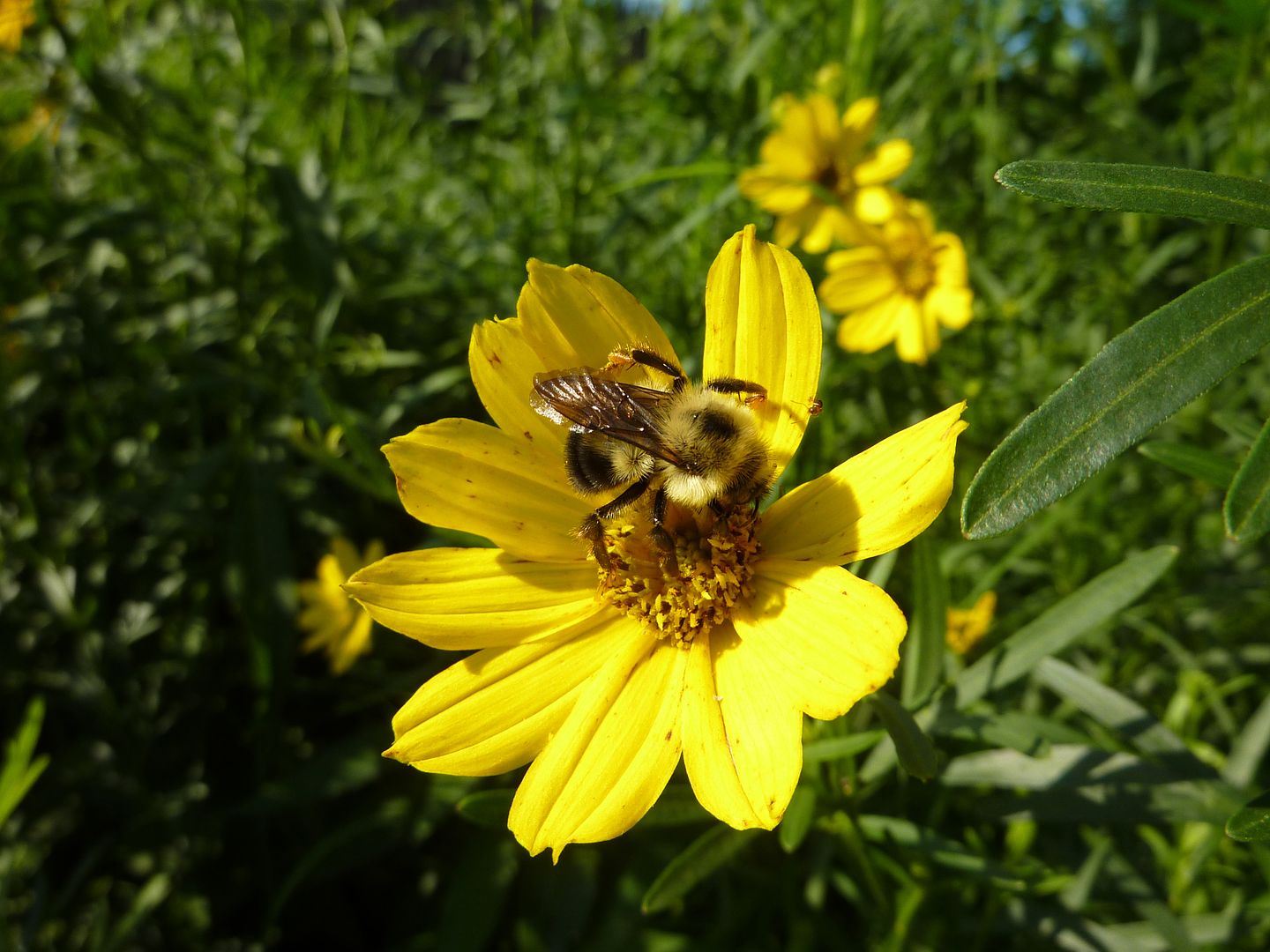
Stiff Coreopsis put on a huge display. This is a slightly aggressive species which spreads by root suckers out in all directions, though they invasion is slow going. They really just push out 3 to 6 inches. They're not as floriferous as I would like them to be, other species of Coreopsis can be covered in flowers where as these seem to space it out.
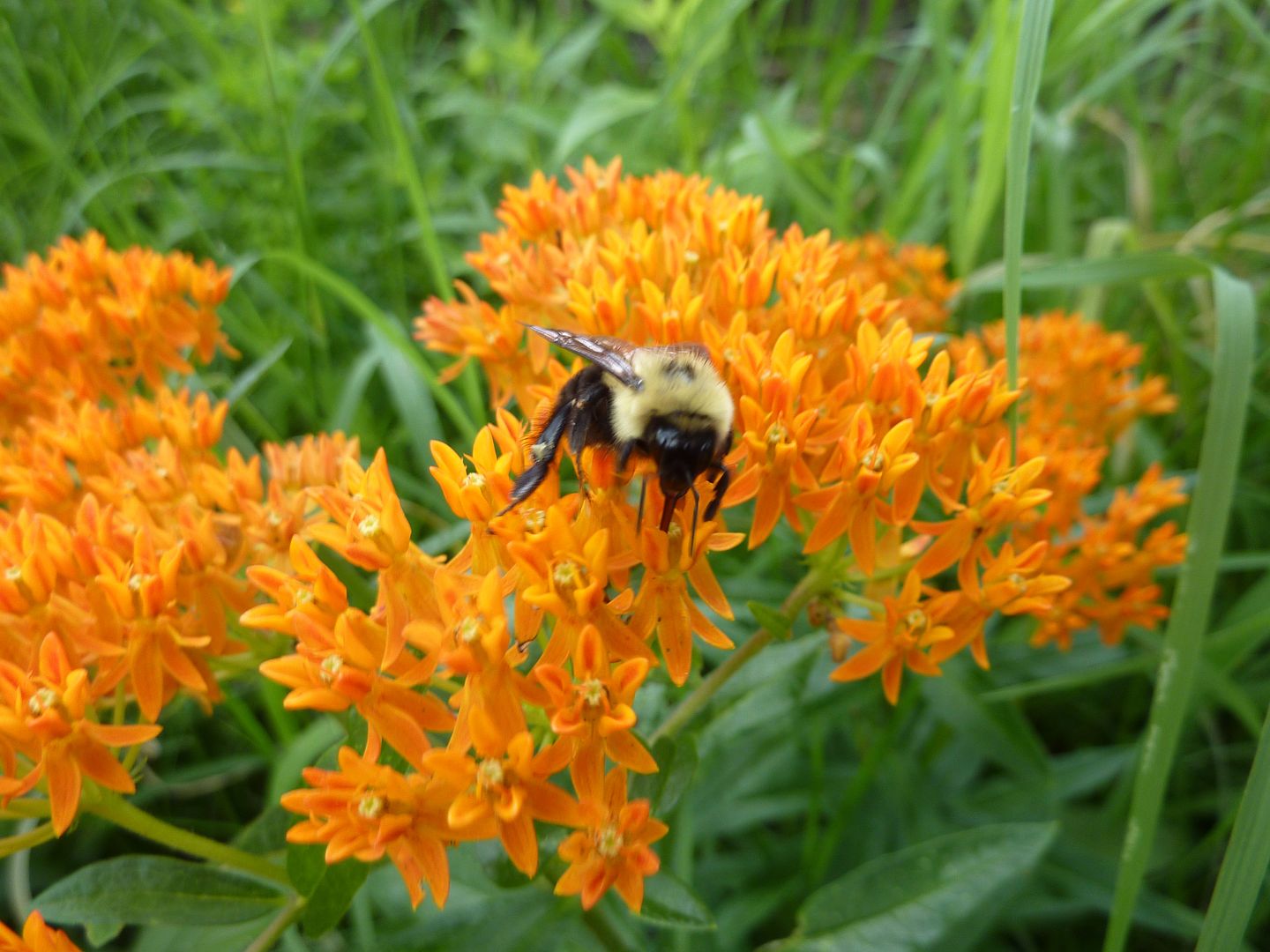
Another queen out on Butterfly Weed, Asclepias tuberosa. Eventually they stop foraging all together but this year I was seeing them well into the end of June and mid July.
This is the yellow variety of Butterfly Weed. It seems to be a bigger hit with pollinators.
Honeybees go to the yellow ones more it seems. I have seen patches of orange Butterfly Weed that were covered in honeybees but none of my plants seem to have any luck.
A sweat bee on Stiff Coreopsis.
Here another species of Bumblebee is working one of my rare plants, Asclepias rubra. This is called Red Milkweed but annoyingly enough I believe Prairie Moon Nursery has started calling Swamp Milkweed Red Milkweed. This demonstrates how unreliable common names are.
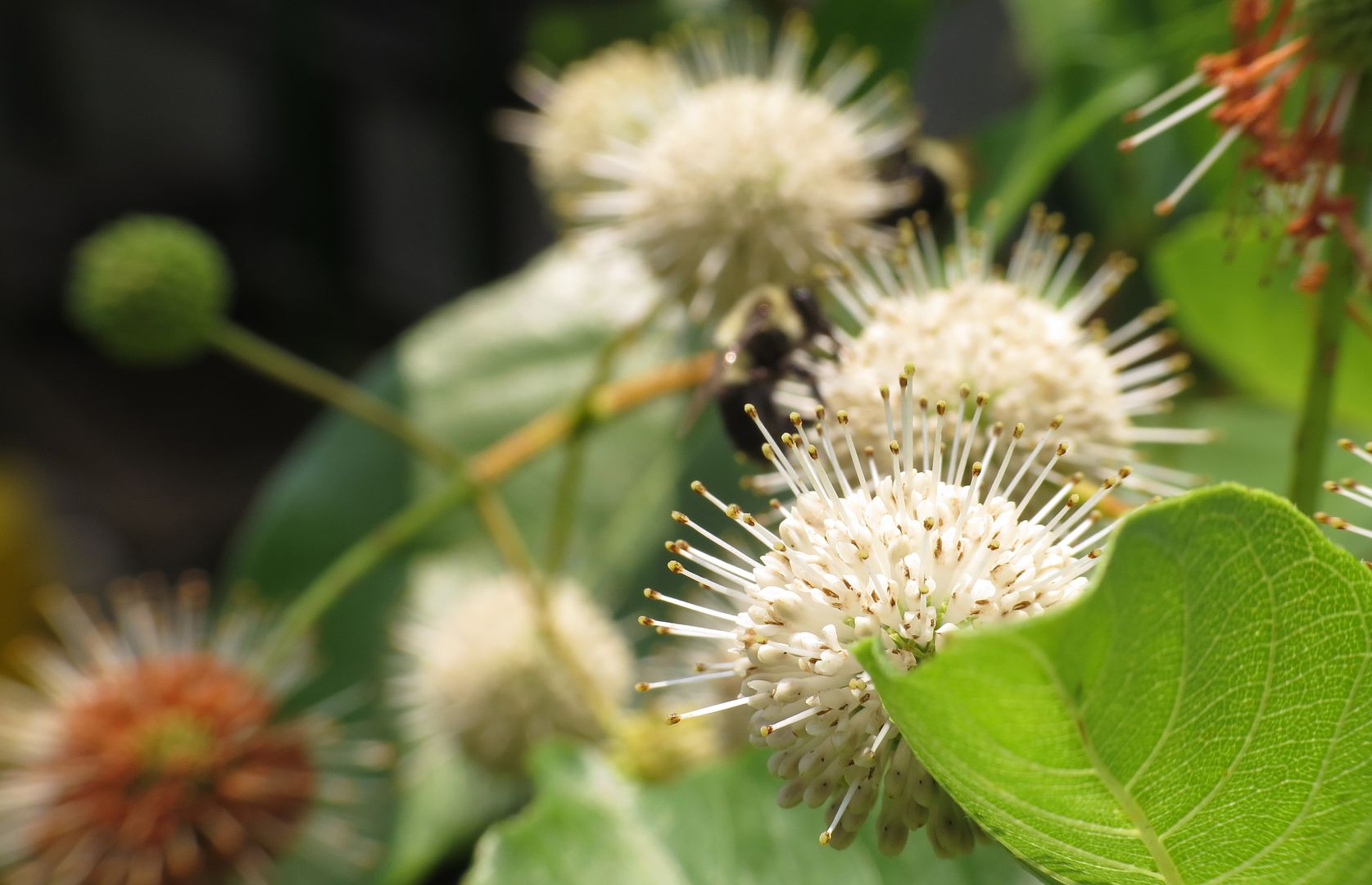
Bumblebees bustling around the Buttonbush.
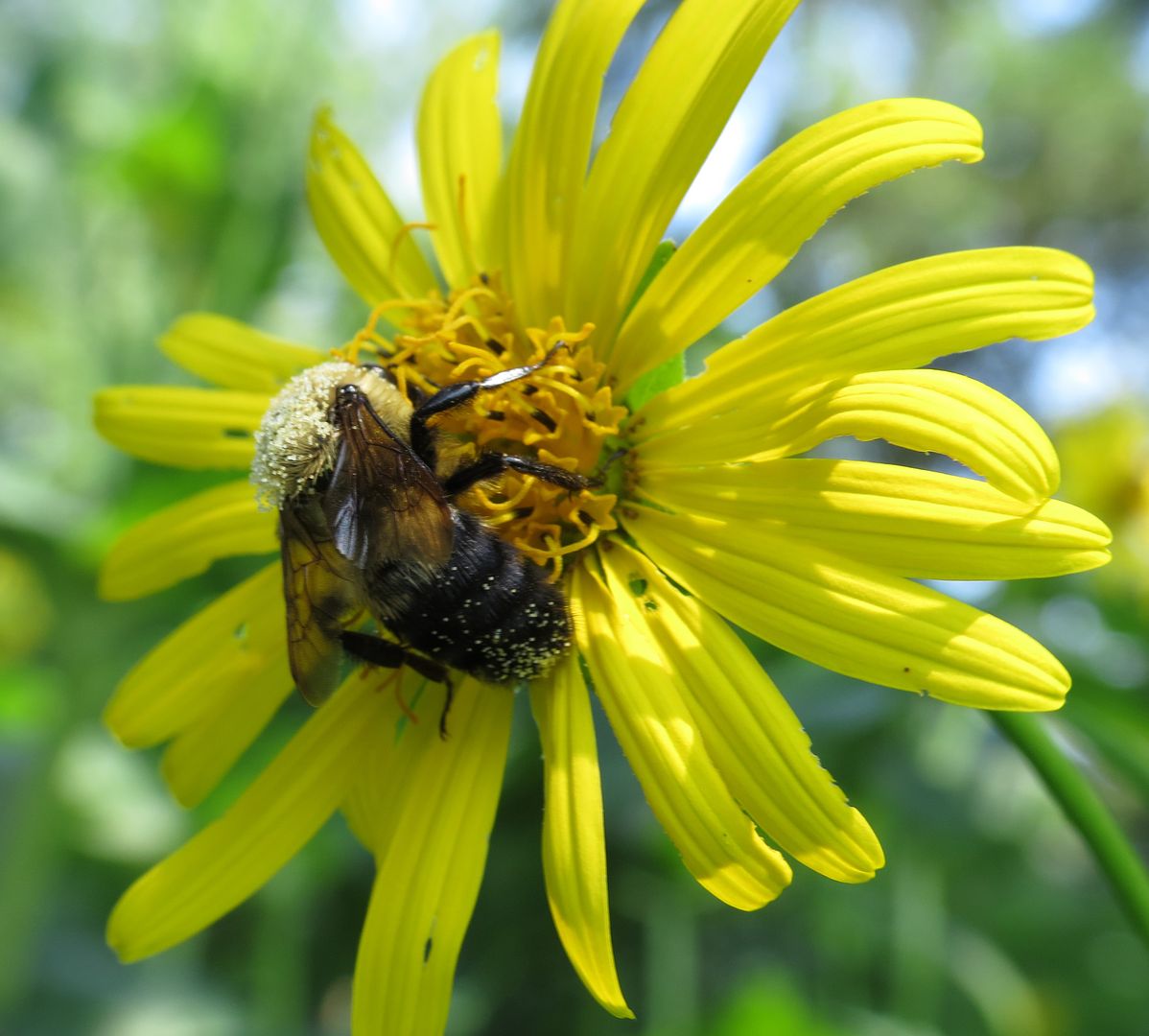
Cup Plant. This is when I got my new camera. Notice how much clearer the subject is and how much more blurry the background appears.
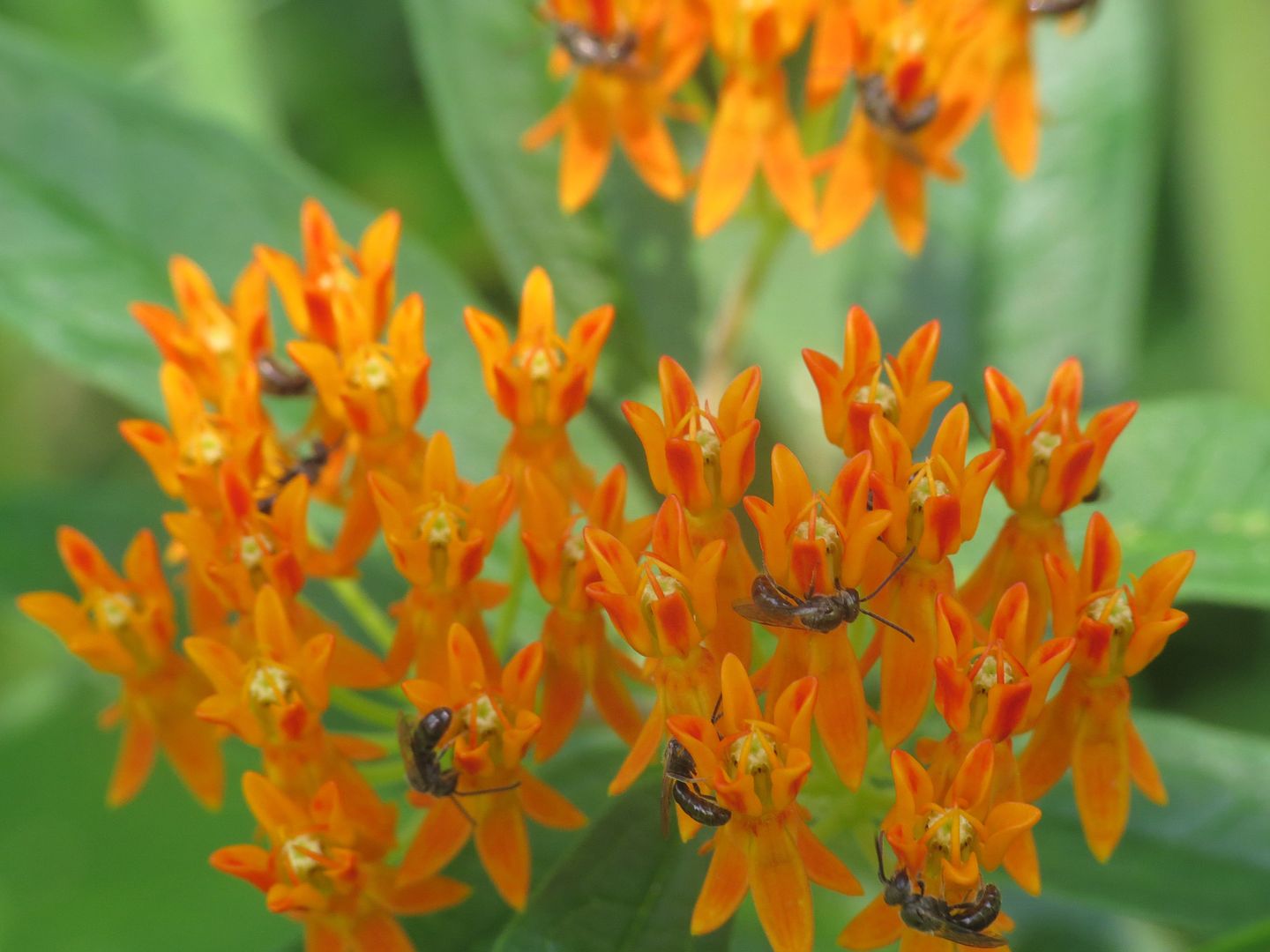
A group of sweat bees socially foraging on Butterfly Weed.
Joe Pye Weed.
Another Oh HA! moment when my new camera became worth every penny. Now if only the darn bee were facing the camera.
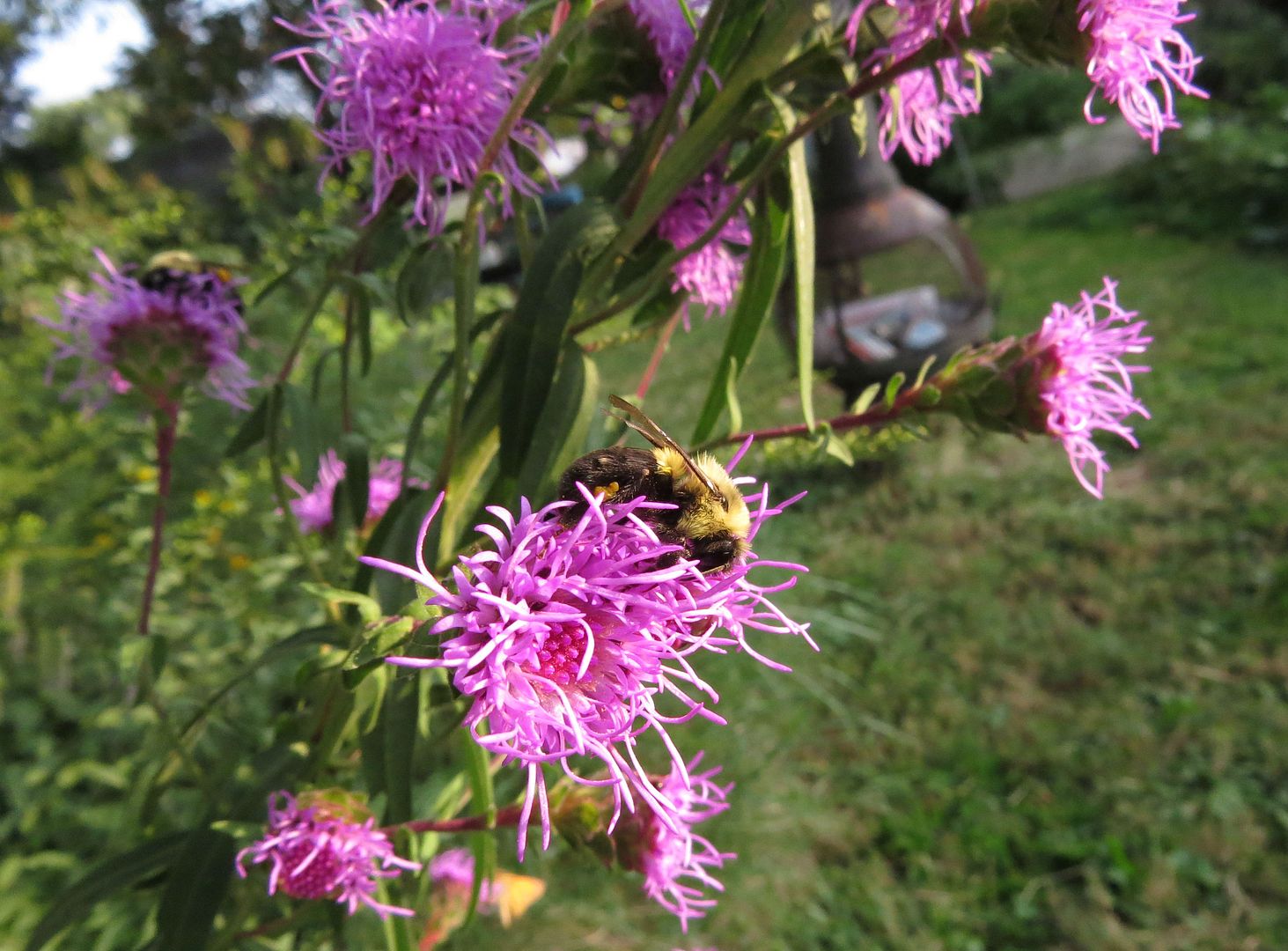
Here a few bumblebees work a species that I think might have been mislabeled. It's supposed to be Northern Blazing Star but I'm not so sure anymore. It's supposed to only reach 3' but this one shot up to 5'.
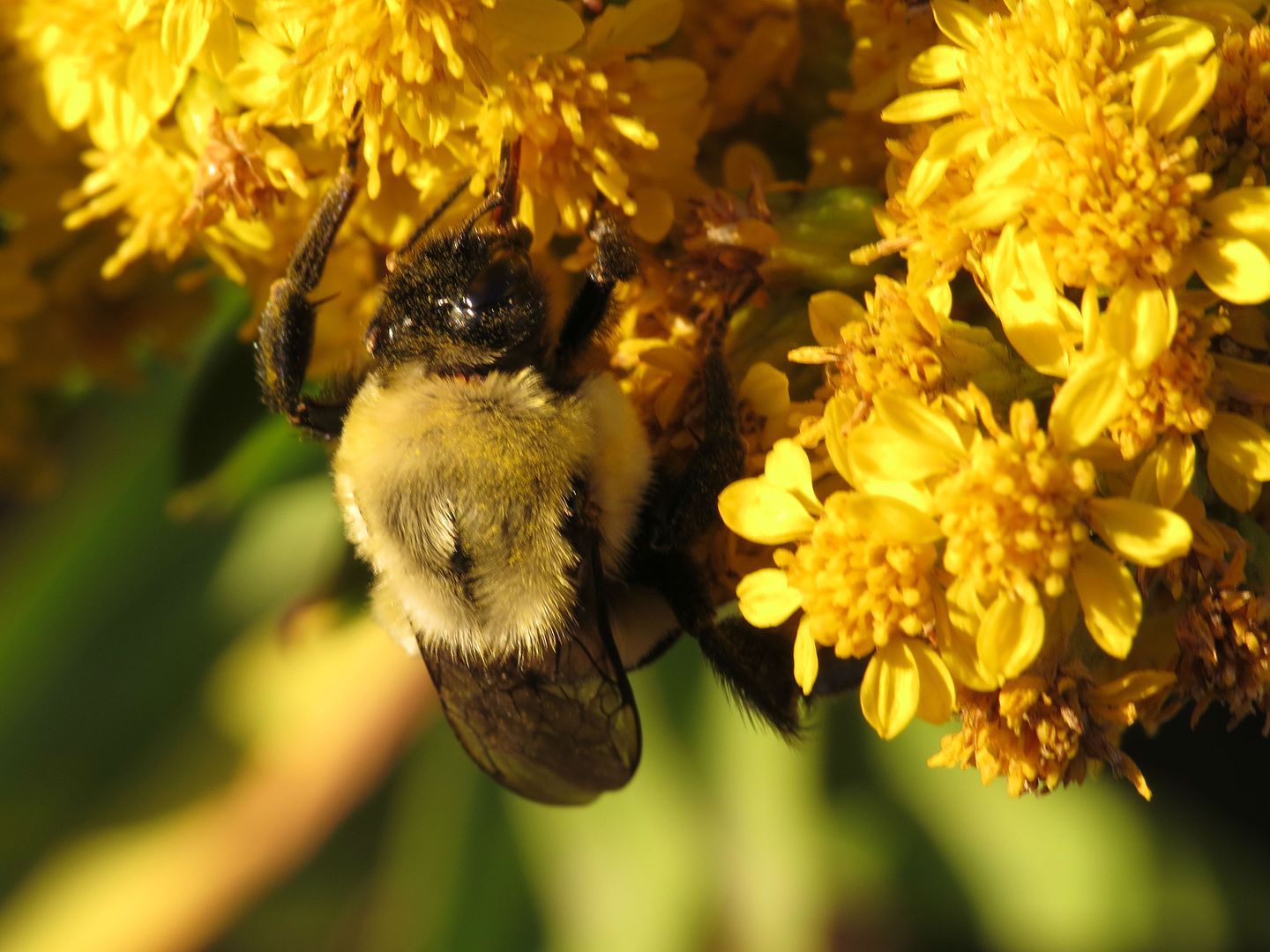
And lastly I was down at the shore later in the year where stands of Seaside Goldenrod provided food for migrating Monarchs and next year's generation of queen bumblebees.
I noticed a queen bumblebee earlier in the year. Honestly I can't remember where this image was taken or what she's even on. On a positive note though this was a stellar year for bumblebees. They were easily the most abundant pollinator in my garden this year.
Stiff Coreopsis put on a huge display. This is a slightly aggressive species which spreads by root suckers out in all directions, though they invasion is slow going. They really just push out 3 to 6 inches. They're not as floriferous as I would like them to be, other species of Coreopsis can be covered in flowers where as these seem to space it out.
Another queen out on Butterfly Weed, Asclepias tuberosa. Eventually they stop foraging all together but this year I was seeing them well into the end of June and mid July.
This is the yellow variety of Butterfly Weed. It seems to be a bigger hit with pollinators.
Honeybees go to the yellow ones more it seems. I have seen patches of orange Butterfly Weed that were covered in honeybees but none of my plants seem to have any luck.
A sweat bee on Stiff Coreopsis.
Here another species of Bumblebee is working one of my rare plants, Asclepias rubra. This is called Red Milkweed but annoyingly enough I believe Prairie Moon Nursery has started calling Swamp Milkweed Red Milkweed. This demonstrates how unreliable common names are.
Bumblebees bustling around the Buttonbush.
Cup Plant. This is when I got my new camera. Notice how much clearer the subject is and how much more blurry the background appears.
A group of sweat bees socially foraging on Butterfly Weed.
Joe Pye Weed.
Another Oh HA! moment when my new camera became worth every penny. Now if only the darn bee were facing the camera.
Here a few bumblebees work a species that I think might have been mislabeled. It's supposed to be Northern Blazing Star but I'm not so sure anymore. It's supposed to only reach 3' but this one shot up to 5'.
And lastly I was down at the shore later in the year where stands of Seaside Goldenrod provided food for migrating Monarchs and next year's generation of queen bumblebees.
Subscribe to:
Posts (Atom)