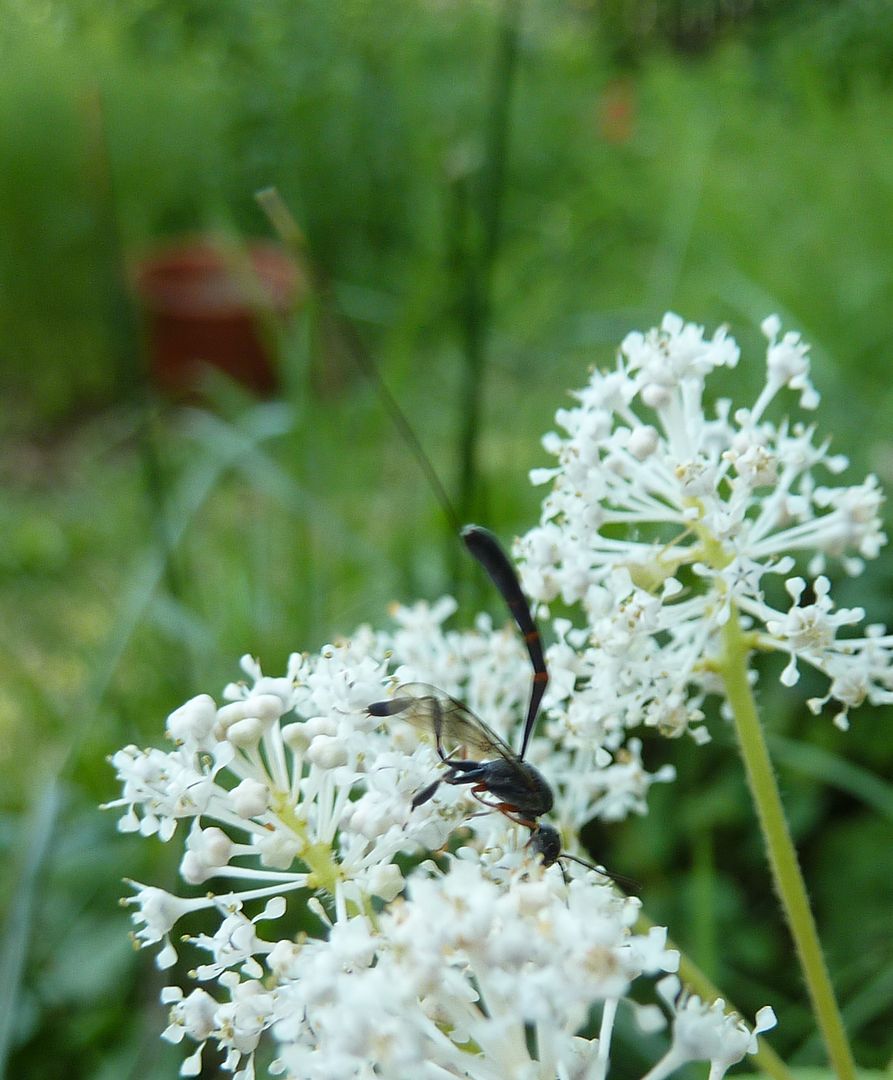
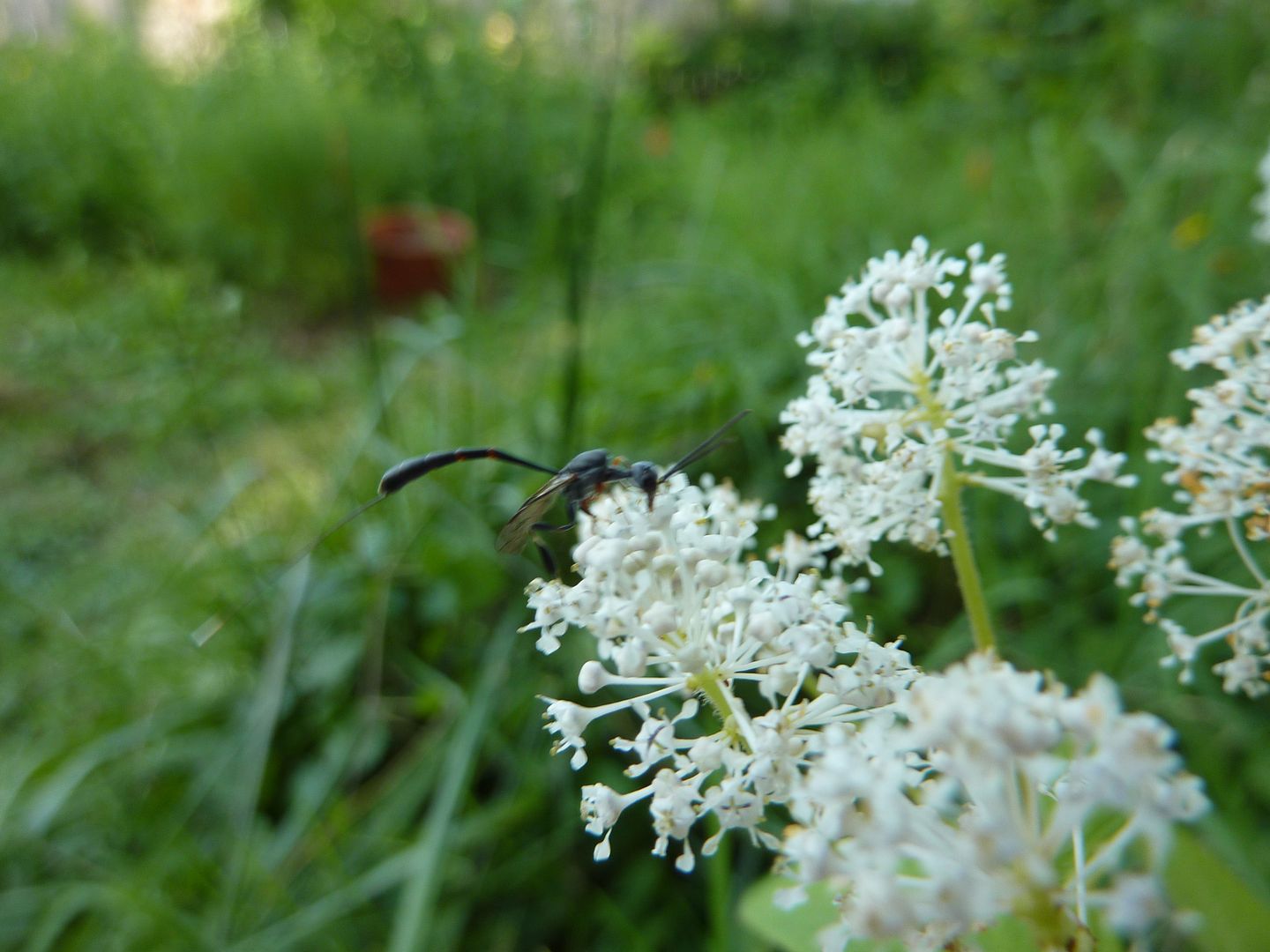
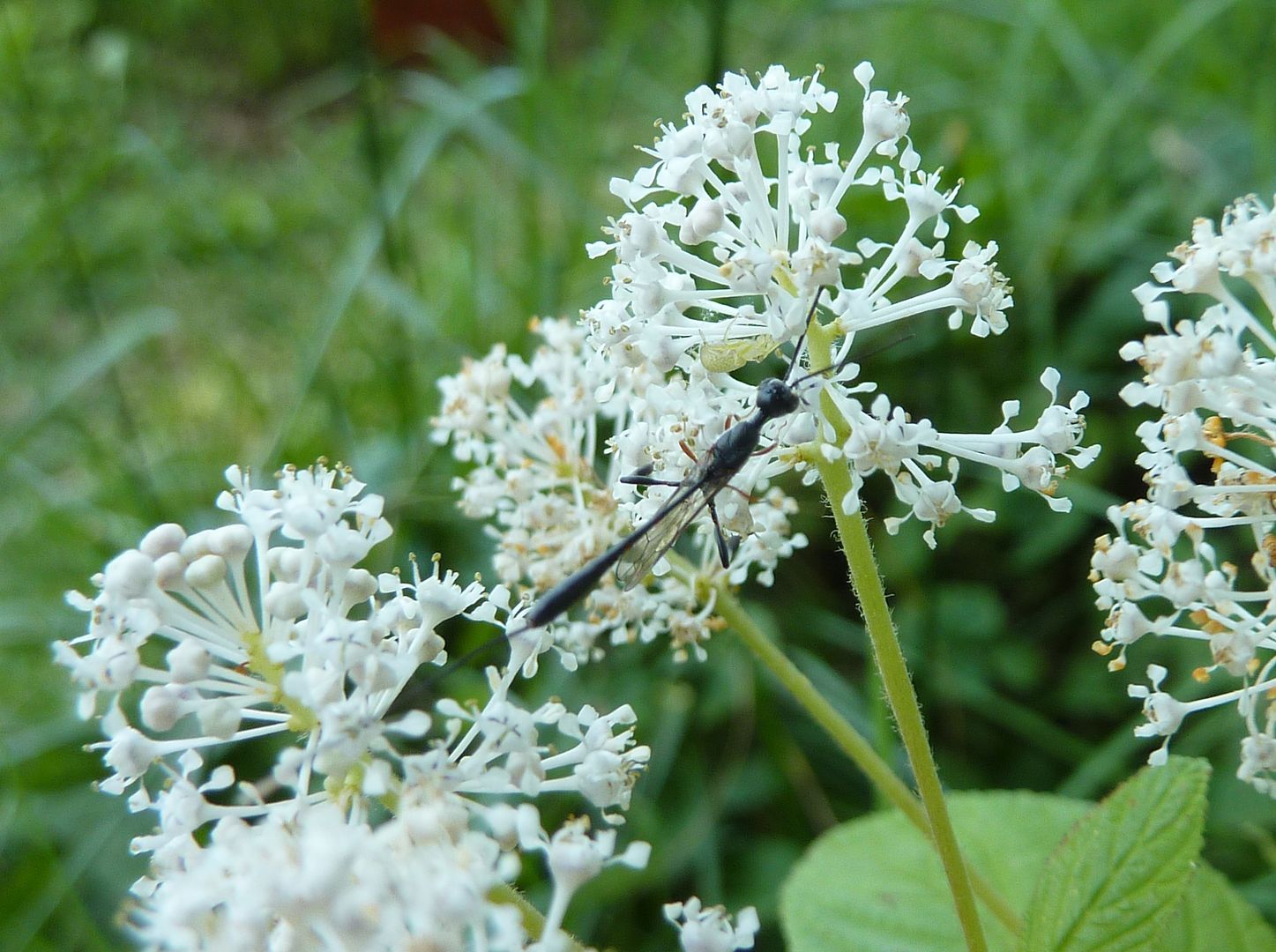
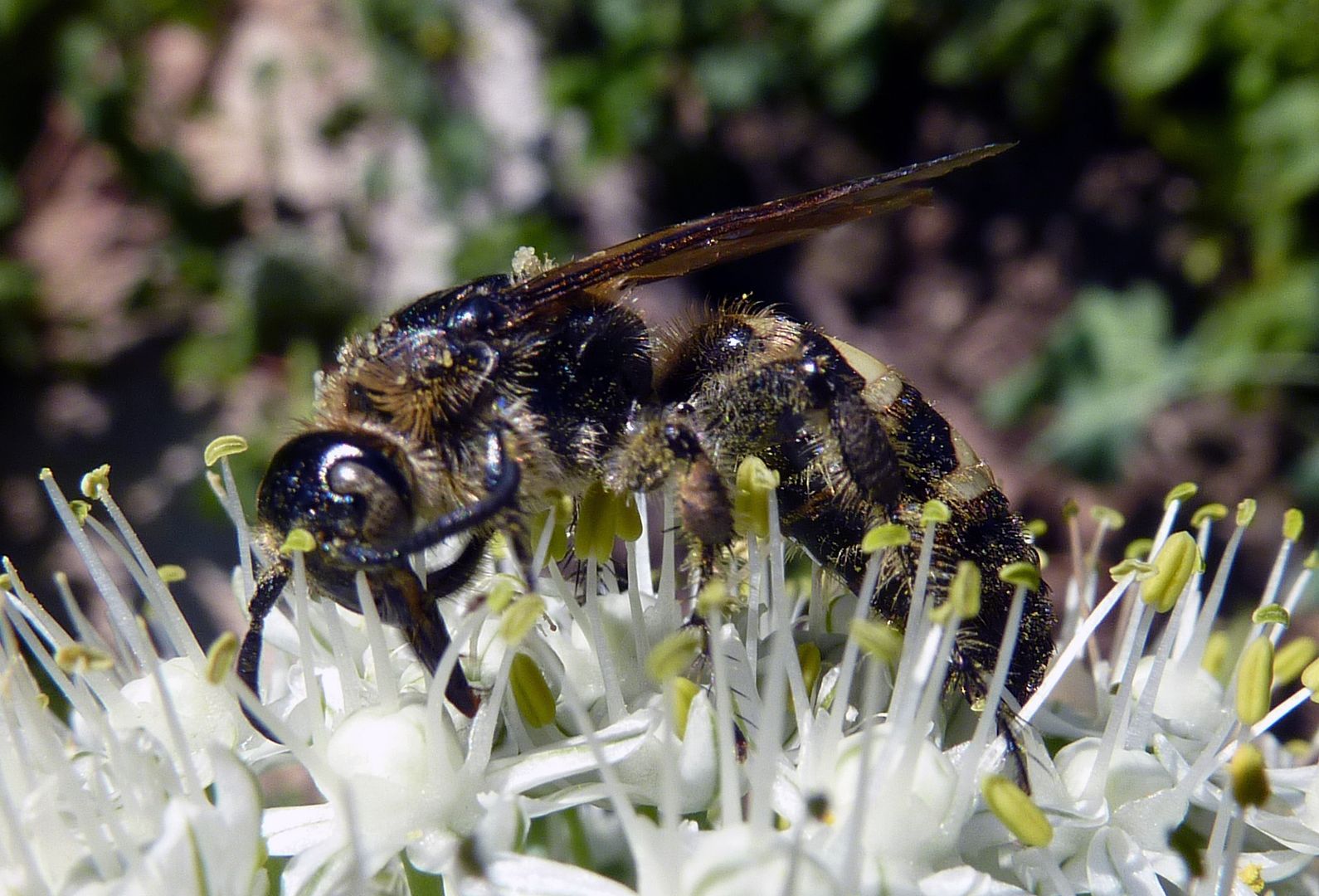
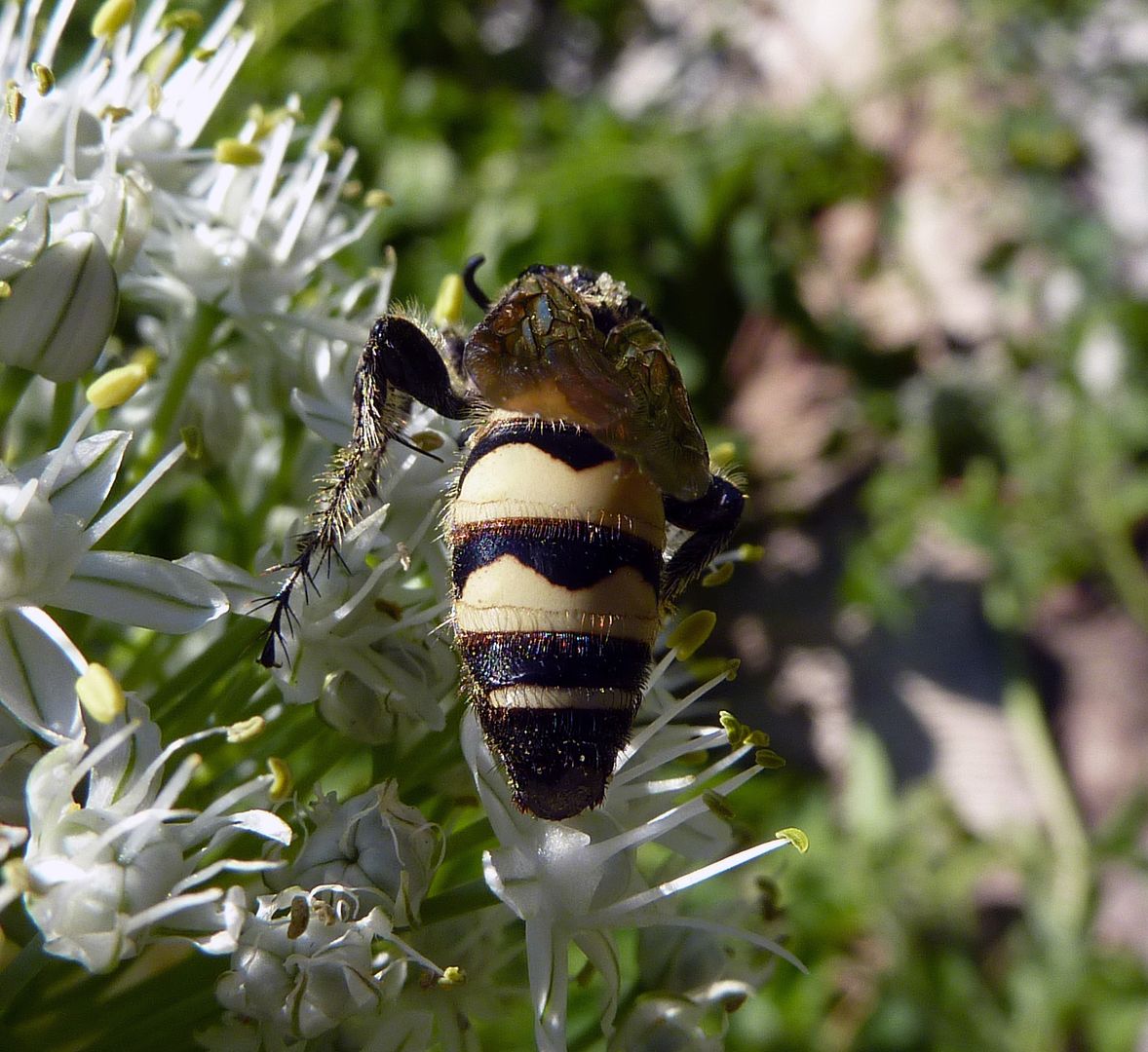
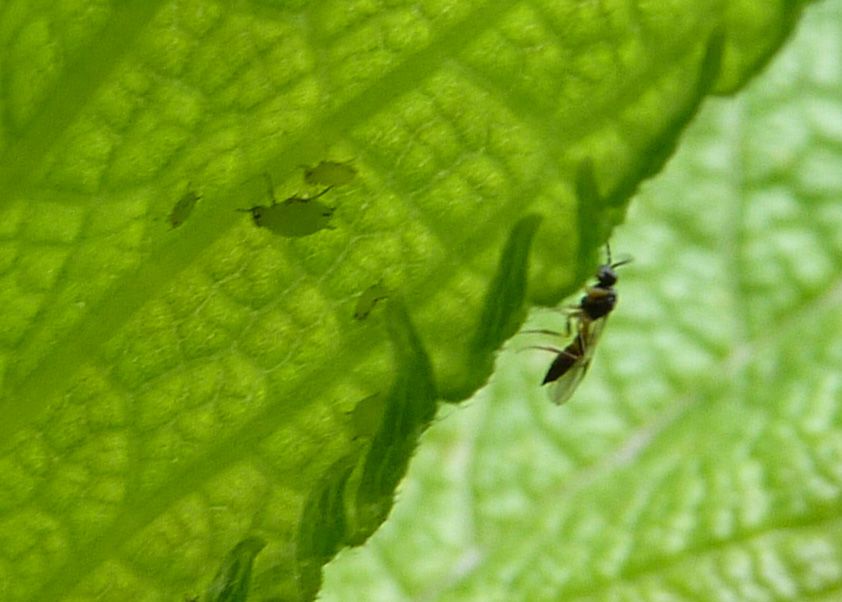
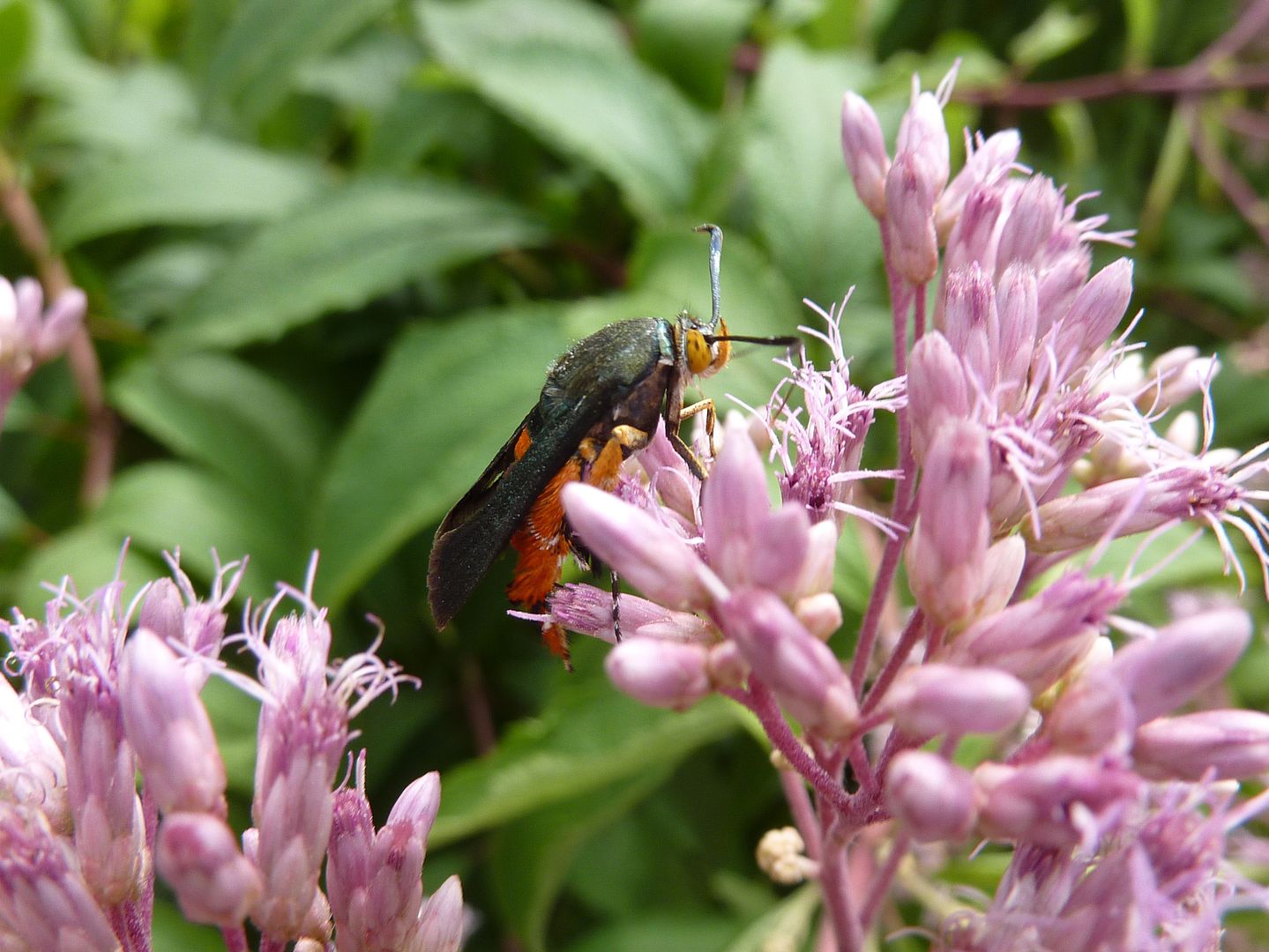
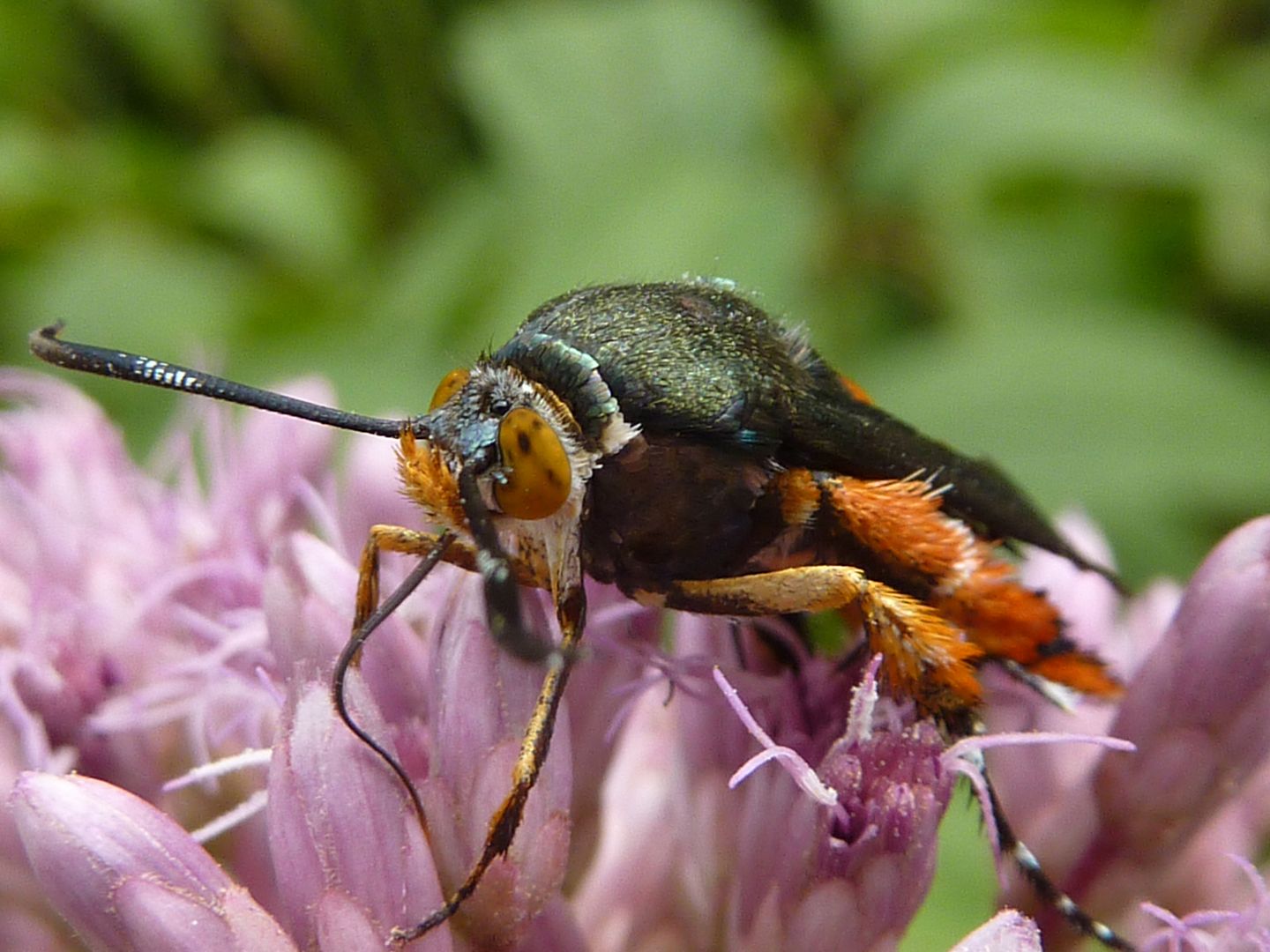
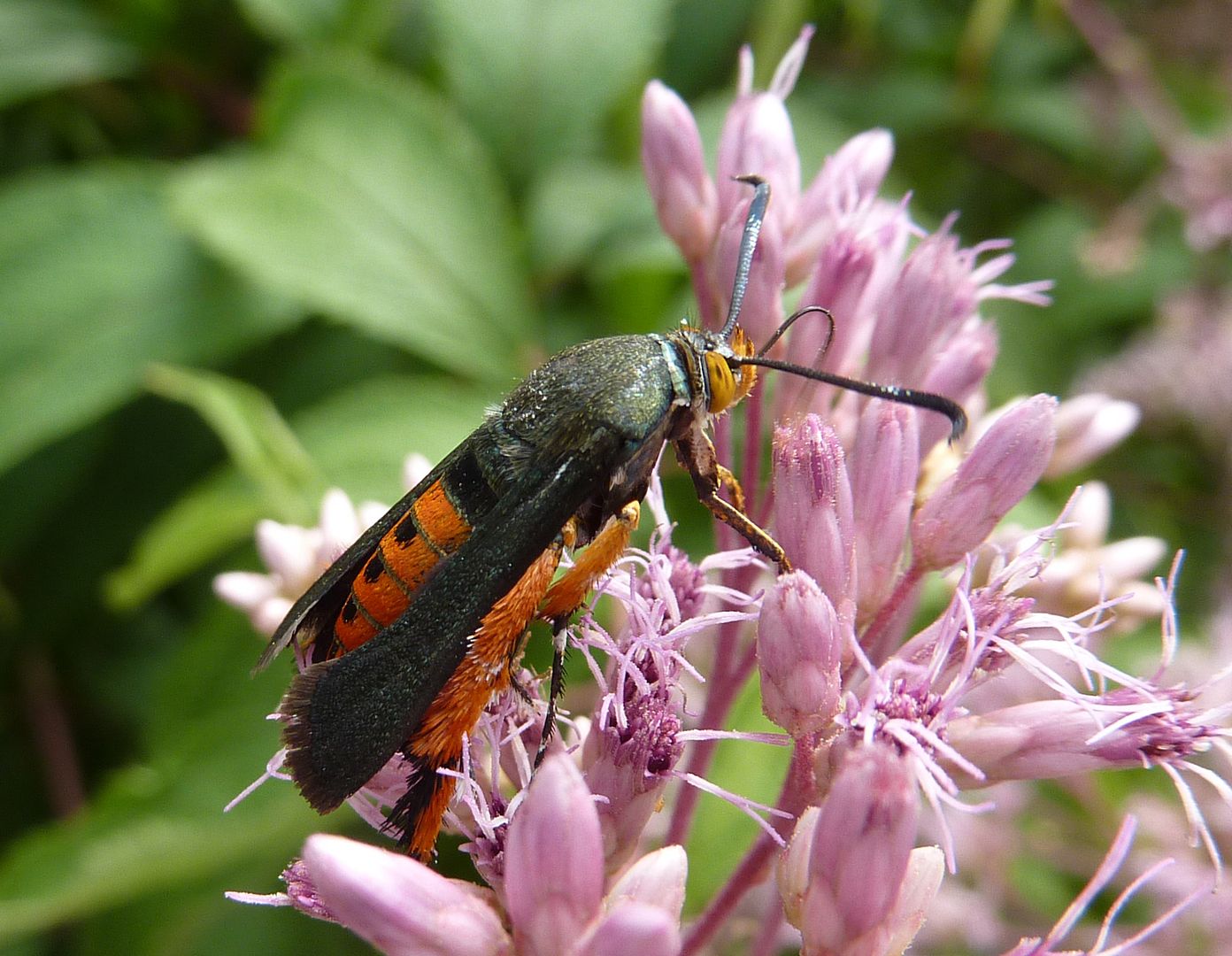
Wasps in the genus Gasteruption are social parasites other Hymenoptera. In this case that means Mason Bees. They inject their egg into the mason bee tunnel where larva of the host species are developing. Next year, instead of hatching as a mason bee, a parasitic wasp will emerge.
The fact that I'm seeing these in the garden should probably be a red flag to bring the mason bee nest blocks inside or at least screen them in somehow. My mason bees are an invasive species though, Osmia taurus, so I'm not really inclined to do that. In the interest of diversity I think I'll let nature takes its course, assuming they are the host that is.
I'm amazed at how pencil thin they are. They even look tiny among the blooms of New Jersey Tea, Ceanothus americanus.
Scratching sound...
Mom "Oh that's the dog knocking. I'll go let her in."
Me "Okay."
A moment later...
To the sound of our dog, Mandy, trampling through the house.
Mom "Oh My God! NO NOOOO!"
Me "What's wrong?"
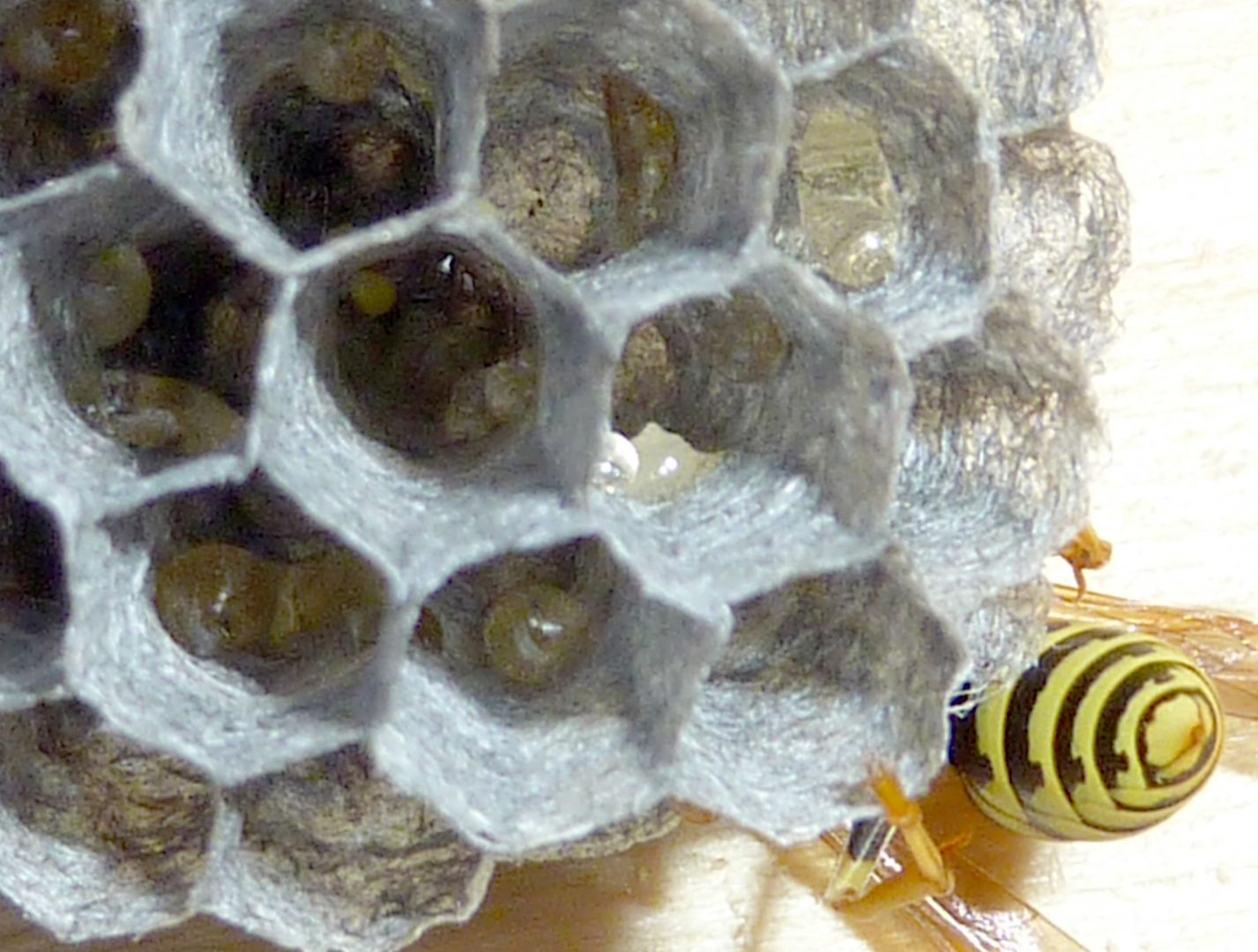
Mandy found the remains of a wasp nest from last year and through it was a Frisbee. After calming mom down I assured her all the wasps would be dead at this time of year. And also that I saw it way up in a tree over the winter so there's no way anyone hit it with pesticide. Never the less we weren't about to let her eat the thing so we took it away from her pretty quick.
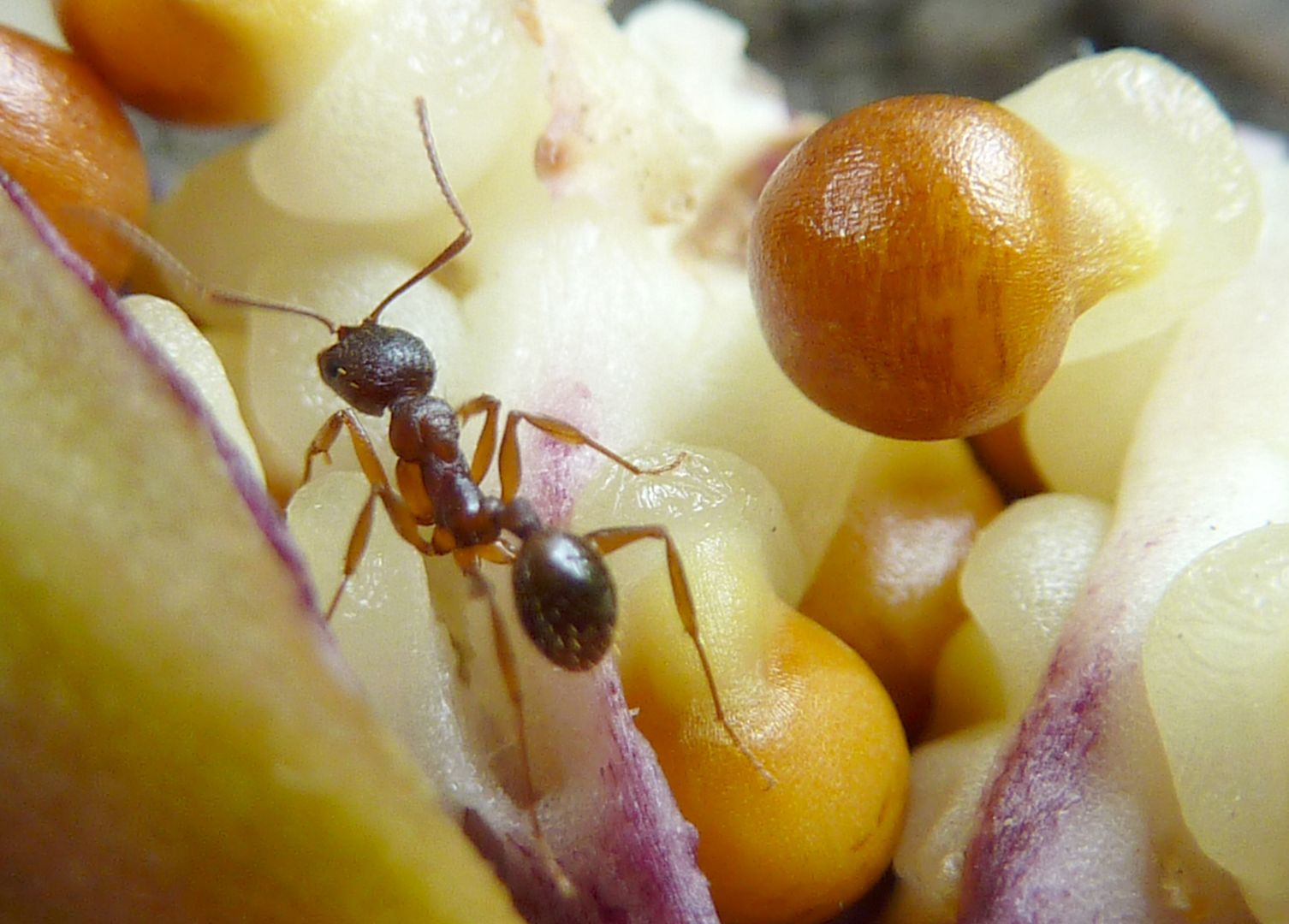
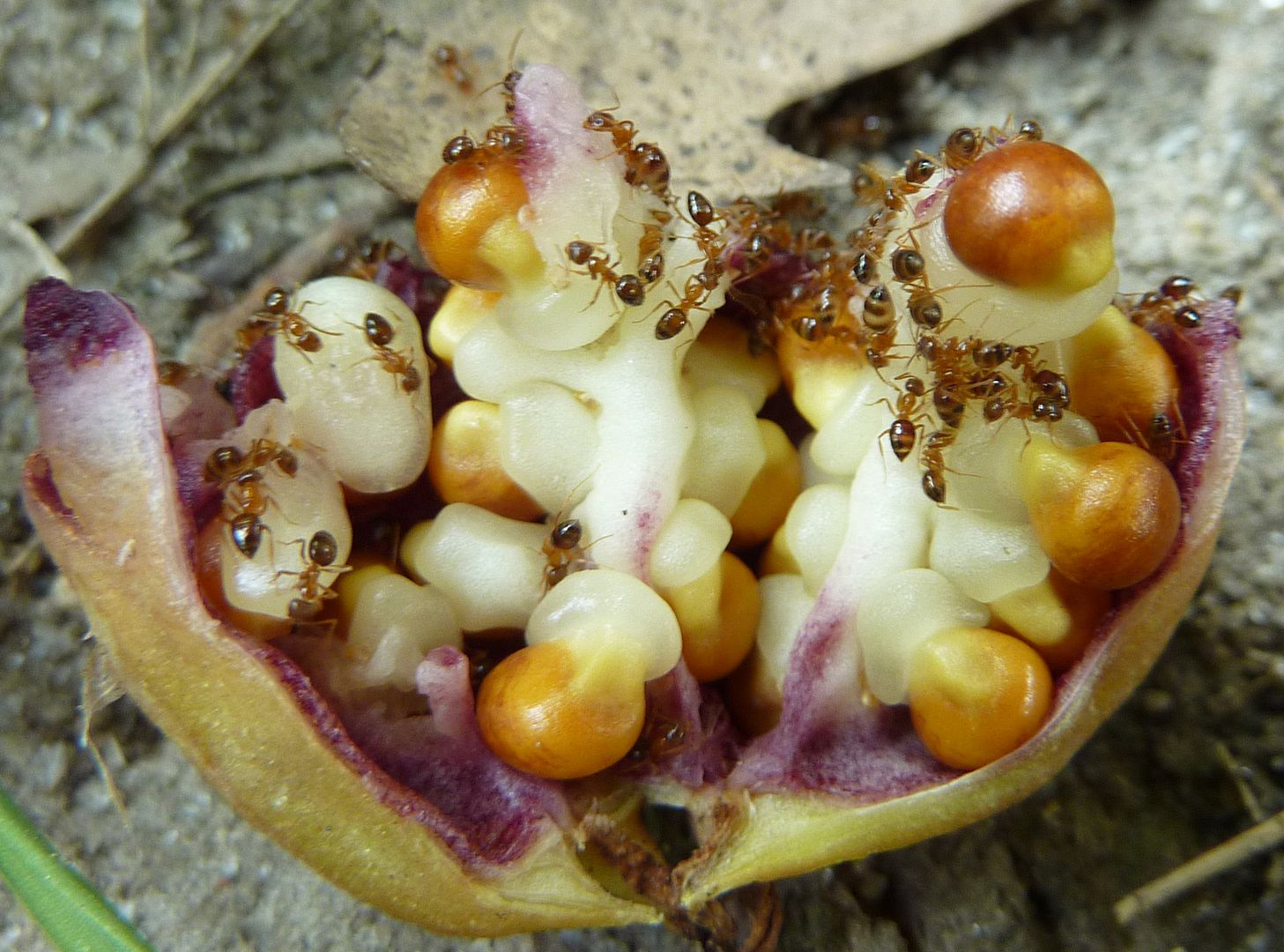
I've already done a short show about Myrmecochory which you can see by clicking here. It was such a popular show, at least on youtube, that I decided to do another one but this time with different ants. I will hopefully do this as an annual event each year but I hope to mix it up with other plants that have elaiosome on their seeds. Unfortunately Trilliums are the only plants that I seem to have any success with as far as seed distribution goes. The Hepatica I grew this year for whatever reason didn't get any ant attention.
Fun Fact: To my knowledge there wasn't a word for seed dispersal by wasps before this episode was made. I asked James C. Trager what that might be called and he suggested the word Sphecochory. Now I'm not sure if planting in tales the seed being successfully making it to a spot where it can grow. Yellow Jackets do nest underground but I've also seen paper wasps raiding the pods for seeds and the flesh within too. Successful planting probably happens rarely but the seed is still at least being taken away from the parent plant and making it into the ground. So maybe Sphecochory will make it's way into the dictionary someday.
A Trillium seed pod turned inside out.
An Aphaenogaster rudis walking through the Trillium seeds.
Nylanderia flavipes stealing the elaiosome from Trillium seeds.
An unexpected thief terrorizes the ants away, and begins chewing off one of the seeds.
Sphecochory - Seed distribution by wasps. Why not.
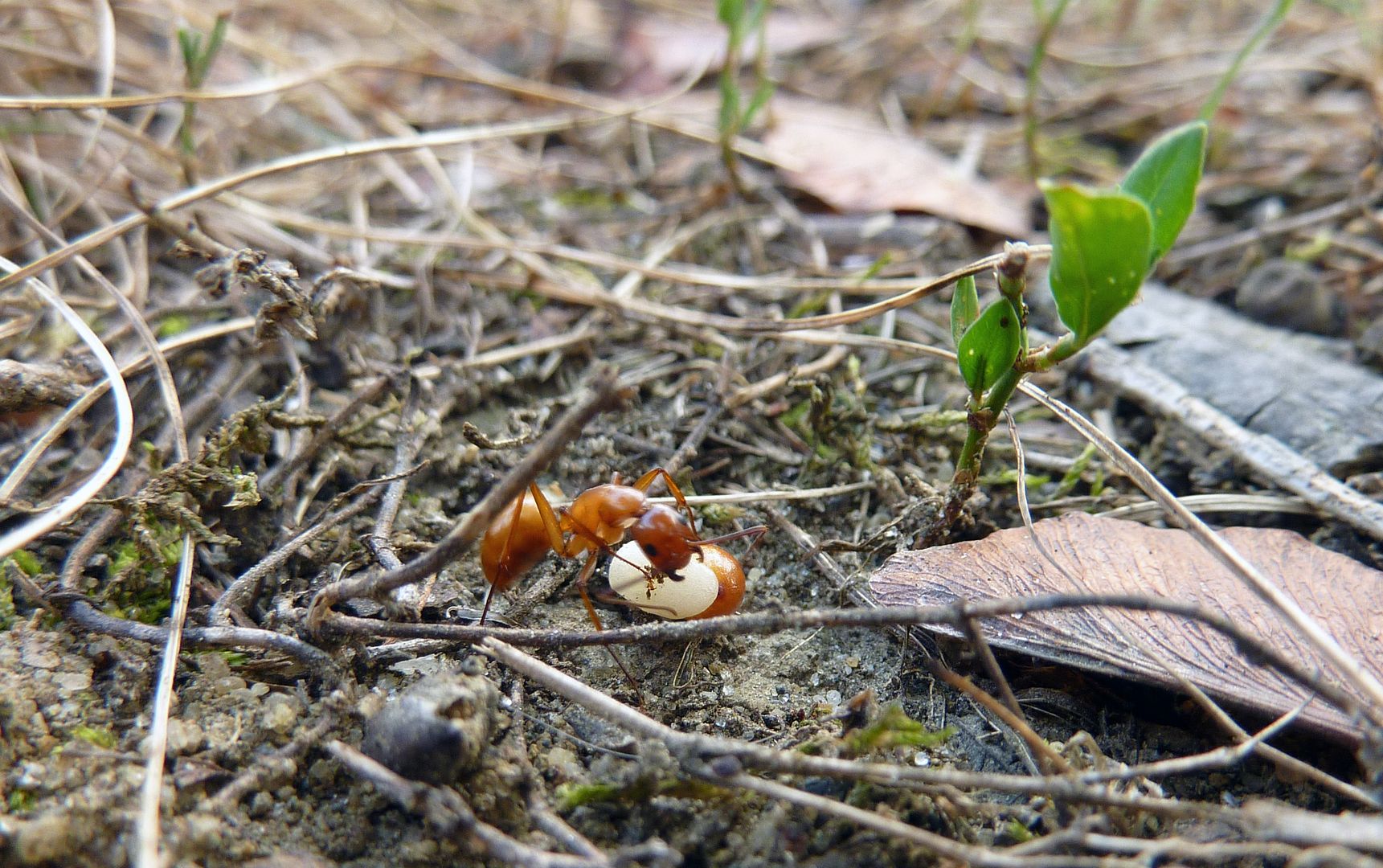
A Camponotus castaneus locating a Trillium seed.
A Camponotus castaneus hauling a Trillium seed home.
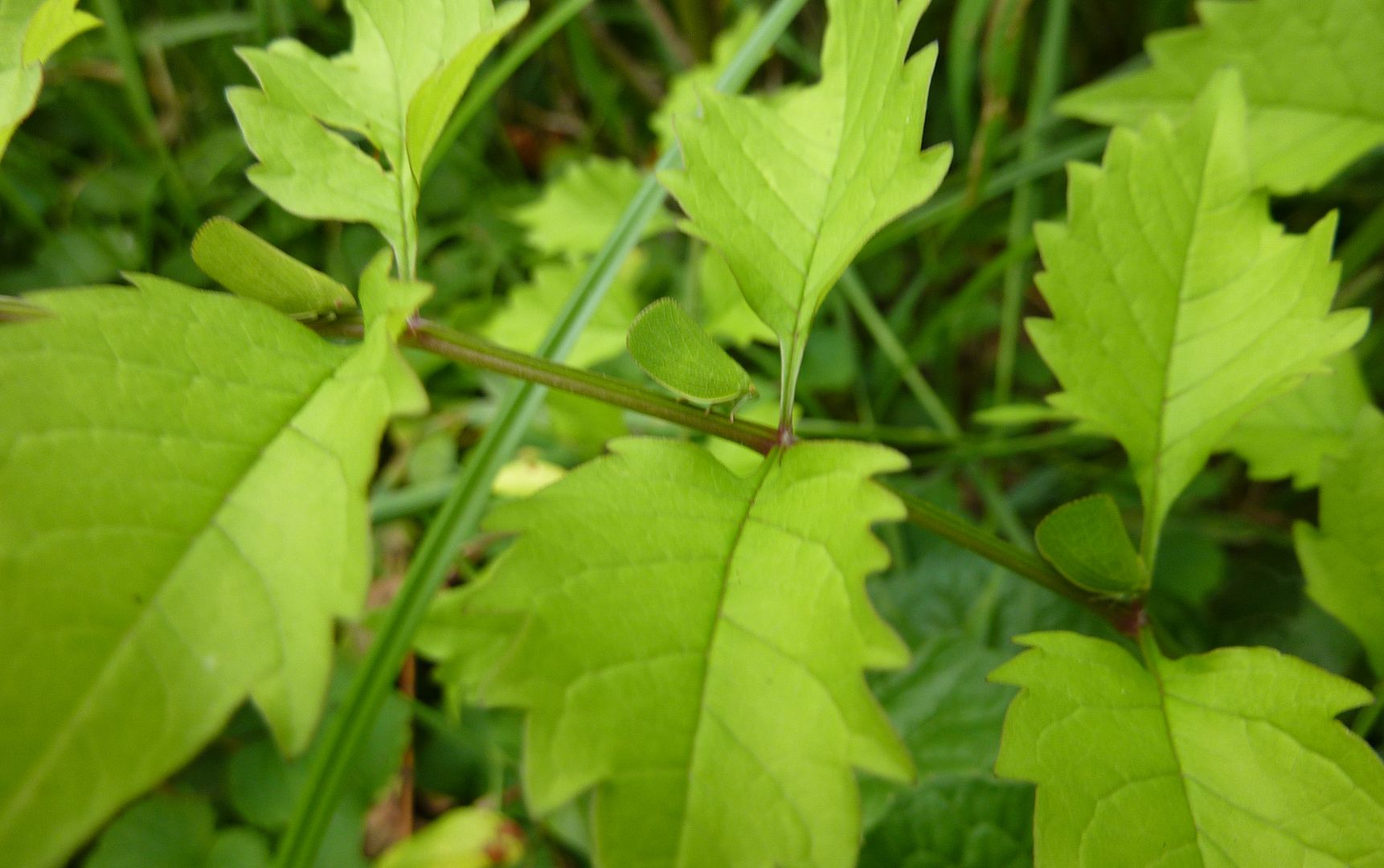
Leaf Hoppers, Acanalonia sp, have started becoming common out in the garden. They mimic the leaves or seed pods to assorted plants, often they'll arrange themselves with the leaves as seen above. To avoid predation they have this wonderful habit of side stepping left or right so they are out of view of the predator. This habit can be exploited nicely to get them to line up nicely for a photo, but I didn't have to use that here.
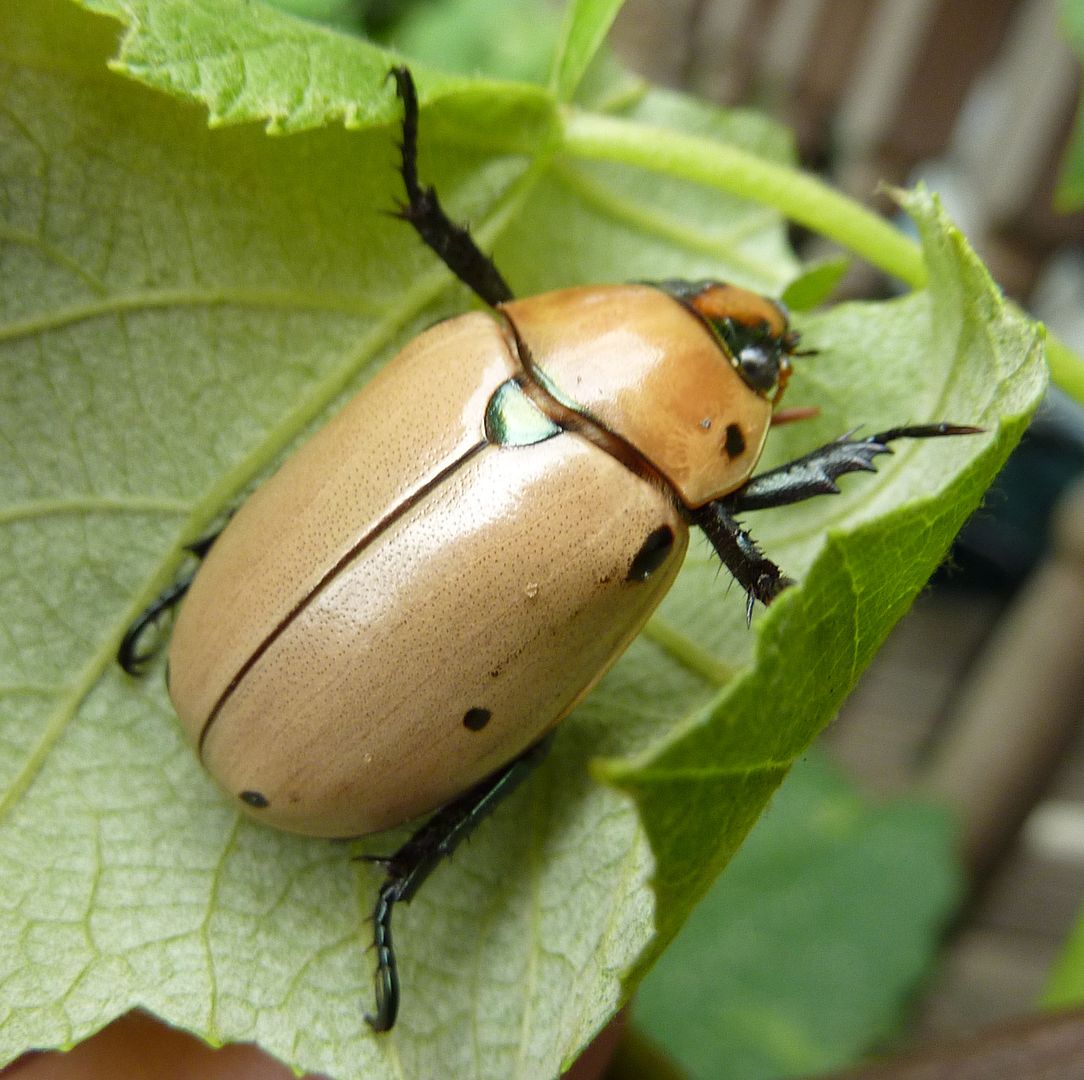
The Grape Vine Beetle, Pelidnota punctata, is also out at this time of year. Though less common than the leaf hopper, be sure to look for them on any grape vine. I've only ever found this beetle once each year, they eat a leaf or two off the grape vine and then they seem to wonder off, not what I'd call a pest that needs worrying about. They are nice sized beetles and also go by the name Spotted June Beetle/Bug. The grubs feed on dead wood and are beneficial in the decaying process.
Another one to look out for are the Scoliid Wasps. In this case Campsomeris plumipes. These and other Scoliid wasps tend to be more colorful or with uncommon stripe patterns than the usual yellow jackets, hornets, and paper wasps. Along with being proficient pollinators, they typically hunt beetle grubs that are otherwise causing damage to your lawn. The issue here though is this massive wasp has to burrow into the ground just to find their pray item. This is discouraging to home owners despite their benefit.
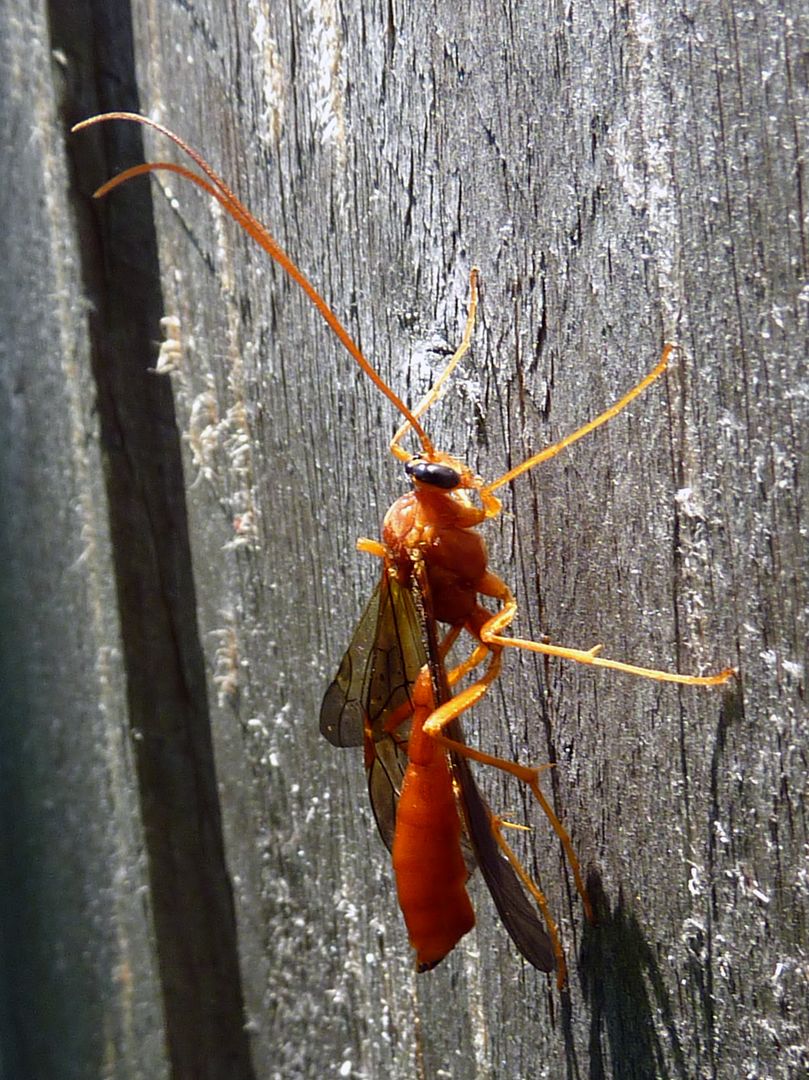
Ichneumon wasps are more to the point, and go about injecting pray items or paralyzing spiders far more cleanly. Within this group there is a lot of variety and some truly showy colored individuals. They can get quite big as well but most species are small. Each species is very select in what they consider a host though.
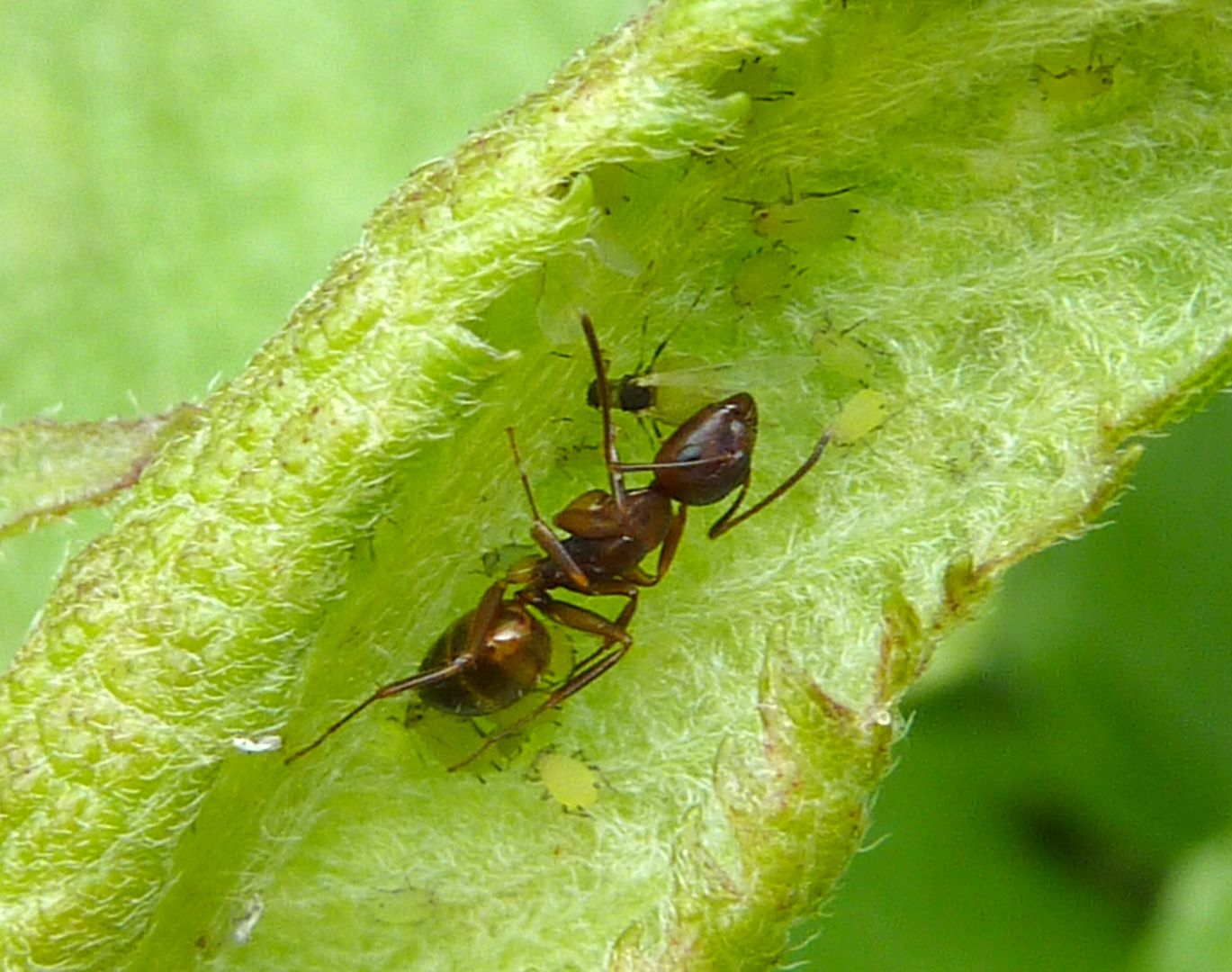
So ants protect aphids can be good for the plant, but only when the population stays under control. Something to note though is that their success is often dependent on the ants being around them and that doesn't always happen. One of the most common genera to be doing this is that of Formica but these are all diurnal foragers. Come night fall they're pretty much replaced by Camponotus (pictured above) which are more nocturnal. An issue with Camponotus though they rarely nest away from trees and are not often found in open fields. An exception to this might be in the case of a tall grass prairie with lots of dead wood or hollow stem plants about, but even then it would be one of the smaller species, and demands the field wasn't burned that spring. I'm not sure what protects aphids at night in fields.
Also, something I noticed last year was that most aphid species in my yard seemed to finish their life cycle before summer really began. These were replaced by other aphids but found on different plants, red ones on Rudbeckia, orange ones on Milkweed etc... With the absence of aphids that also means the absence of hover fly larva, (pictured above) which feed on the aphids without the ants realizing it.
Parasitic wasps are another threat without ants around. I watched this one inject her eggs into several aphids but never got a good picture of it. Always she targeted the groups that didn't have ants guarding them.
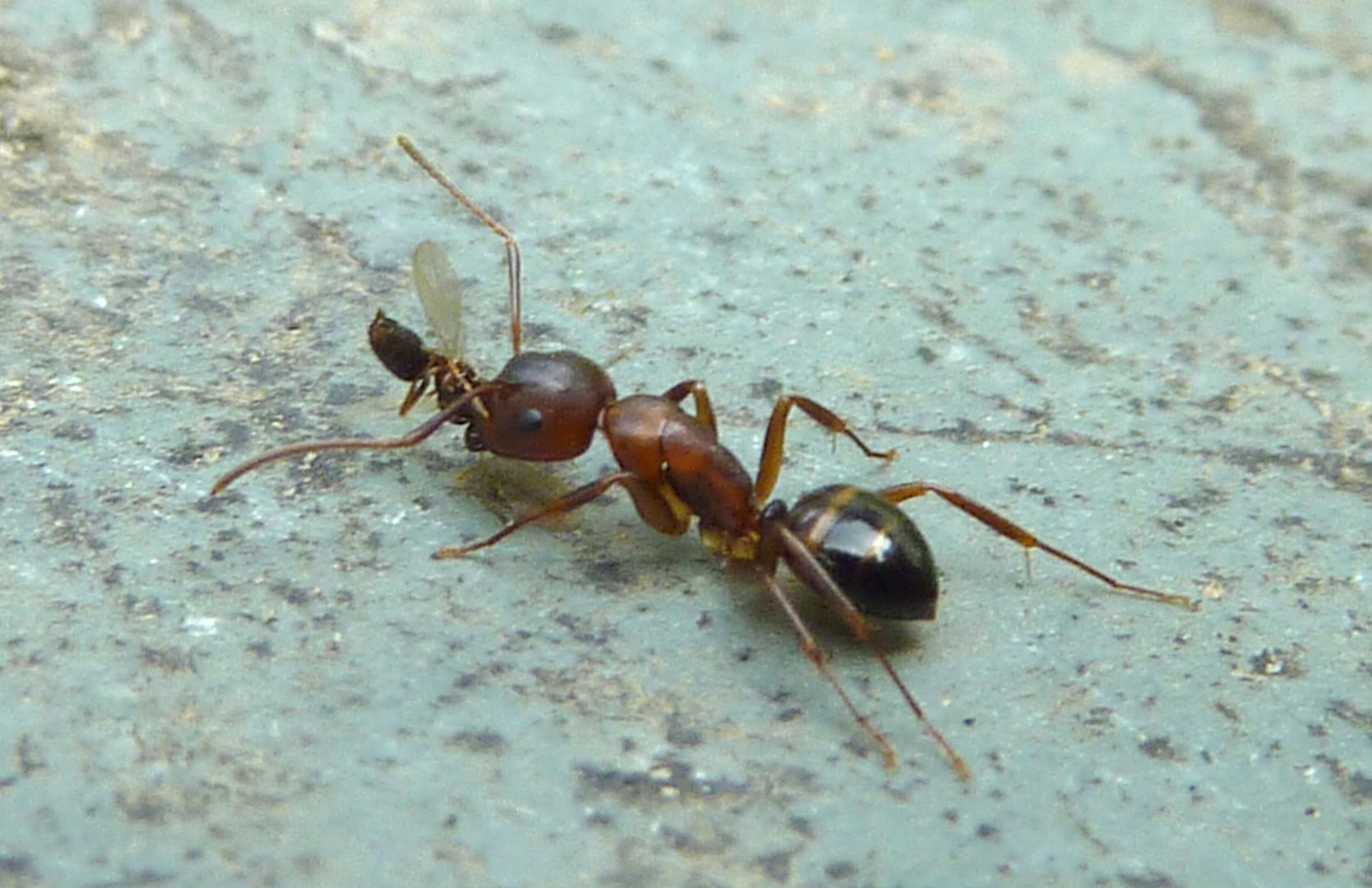
Camponotus subbarbatus grasping a male Nylanderia flavipes.
Another threat to the aphids might be to much of a good thing. Ant colonies need to have a balanced diet and store up on foods to get through parts of the year. Colonies are stealing nectar and tending aphids now as it will become rare over the summer. Once the stores are full up they have no farther need of the aphids and may send fewer workers to maintaining herds. The colony diet turns more towards foods rich in protein (insects) and starches (seeds). These foods don't store as long as carbohydrates (nectar and honeydew) but are needed for producing more ants and especially reproductive castes.
Come autumn nectar stores will be low once again. The colony diet will focus more towards sugars and the ants will be clambering for aphids and nectar once again.
I'm rolling my eyes at the little pop up window advertising some stupid shop at home alert or something. As if someone with a computer doesn't already know how to shop on the internet. I do apologize for those ads.
I see the All Asian one is becoming slightly more English I guess that's an improvement.
So I stepped outside a few days ago and was greeted by this charming insect. My next question of course was, What is it?
Clearly it's mimicking a wasp... though I've never seen the wasp it's mimicking hmmm. It has the mouth parts of a moth or butterfly, but I've never herd of them to mimic anything. Naturally I wasted time looking through pictures of hundreds of flies over at Bug Guide.
Finally I caught a break with the aid of Alex Wild and Gordon Snelling (I don't think he blogs). Though entomologists, neither knew the exact species but were kind enough to take time out of their busy schedule say it was in fact a Lepidoptera, though among the strangest moth or butterfly that I'd ever seen. Alex had a bit of a head start and was able to tell me a Sesiidae family of some sort, a.k.a. Clearwing Moths.
From here I was able to discover this is the adult form of the Squash Borer, who's host plants ranges from assorted cucumber, pumpkin, gourd, squash etc... Sure enough I found more of these pollinators hanging out on those plants right in the garden.
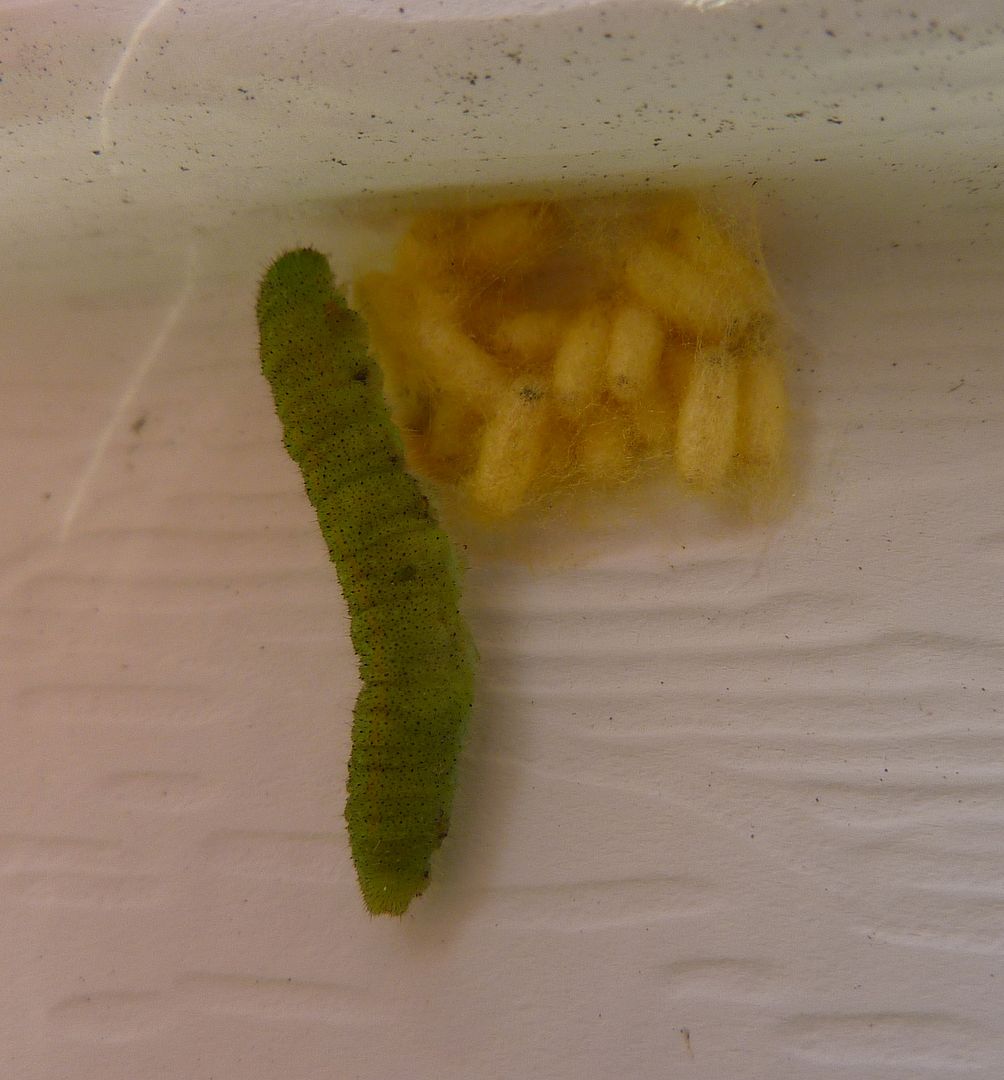
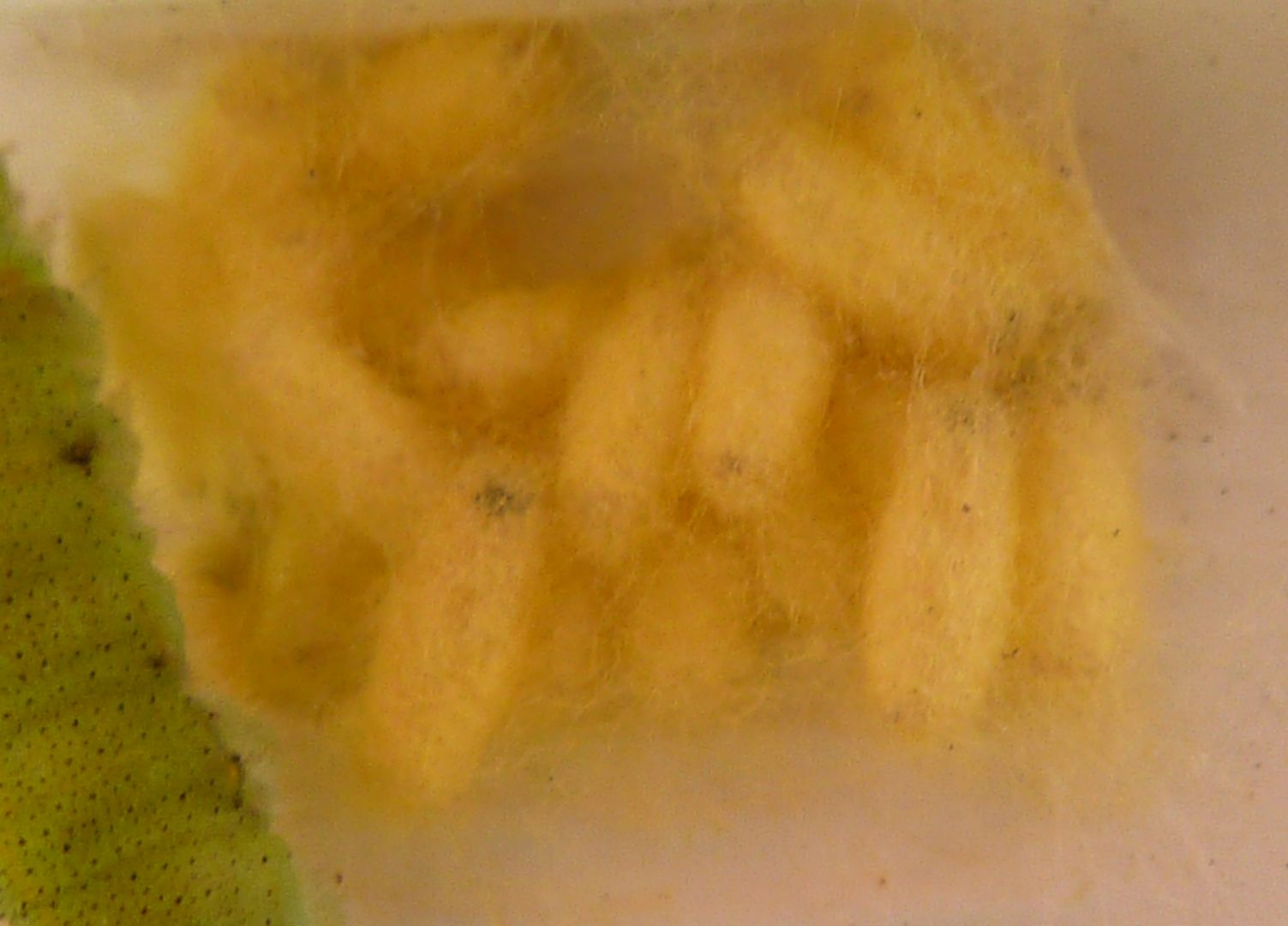
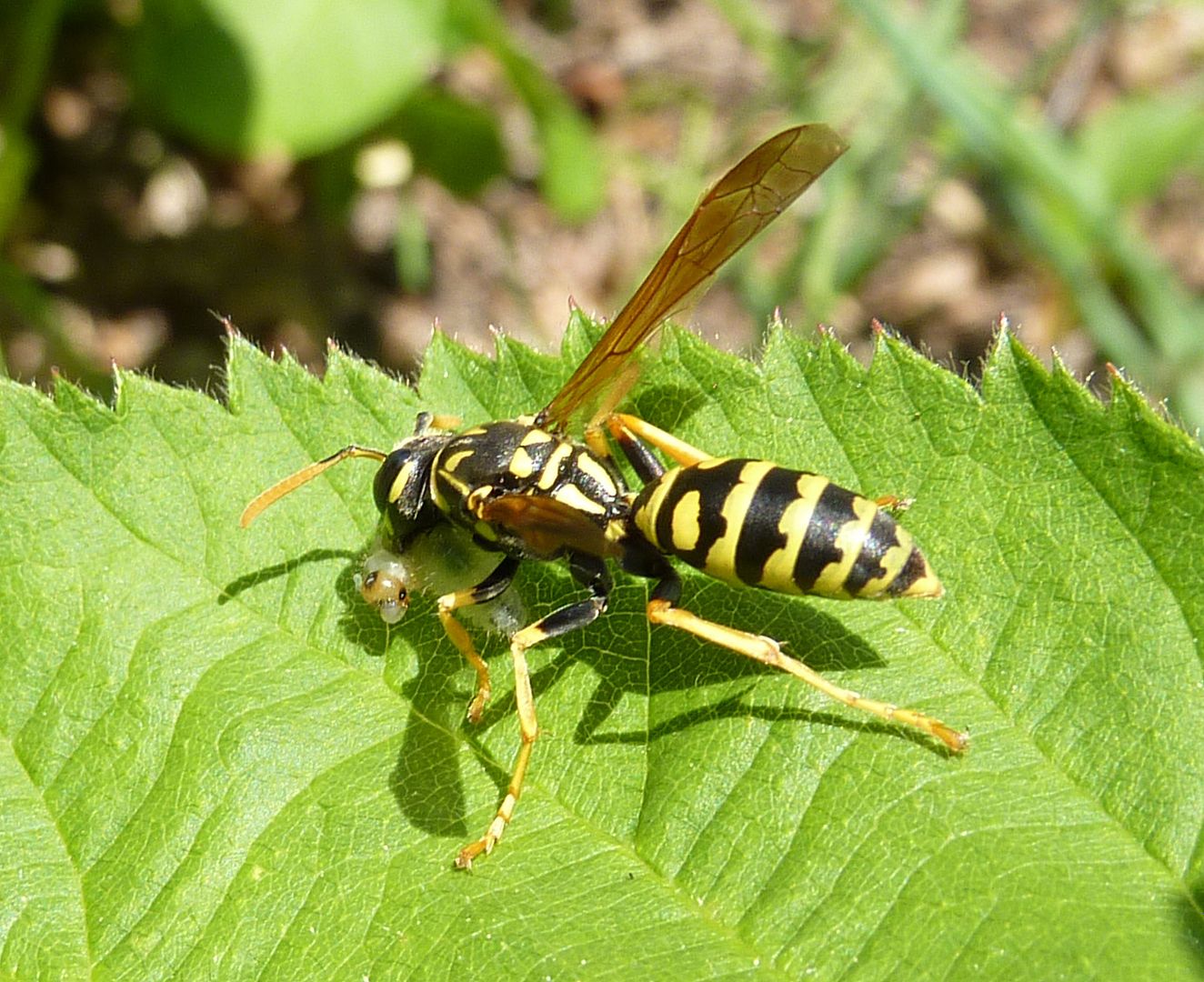
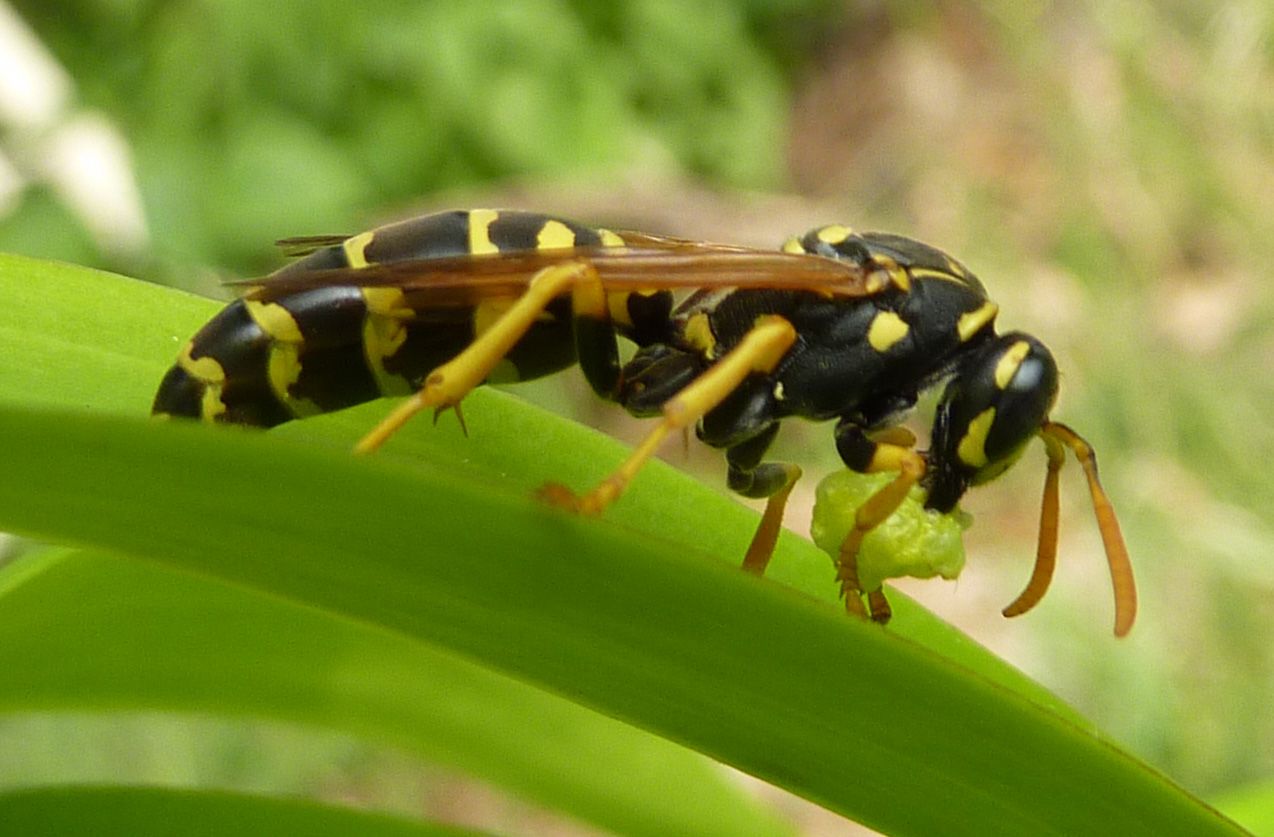
For the past few weeks I've been noticing an ever increasing number of wasps hovering through the garden. Mostly they're going after small caterpillars that have been nibbling on the Violets. Here it's hard to make out but this wasp is chewing up it's catch into a squishy ball of mush to make it easier to carry.
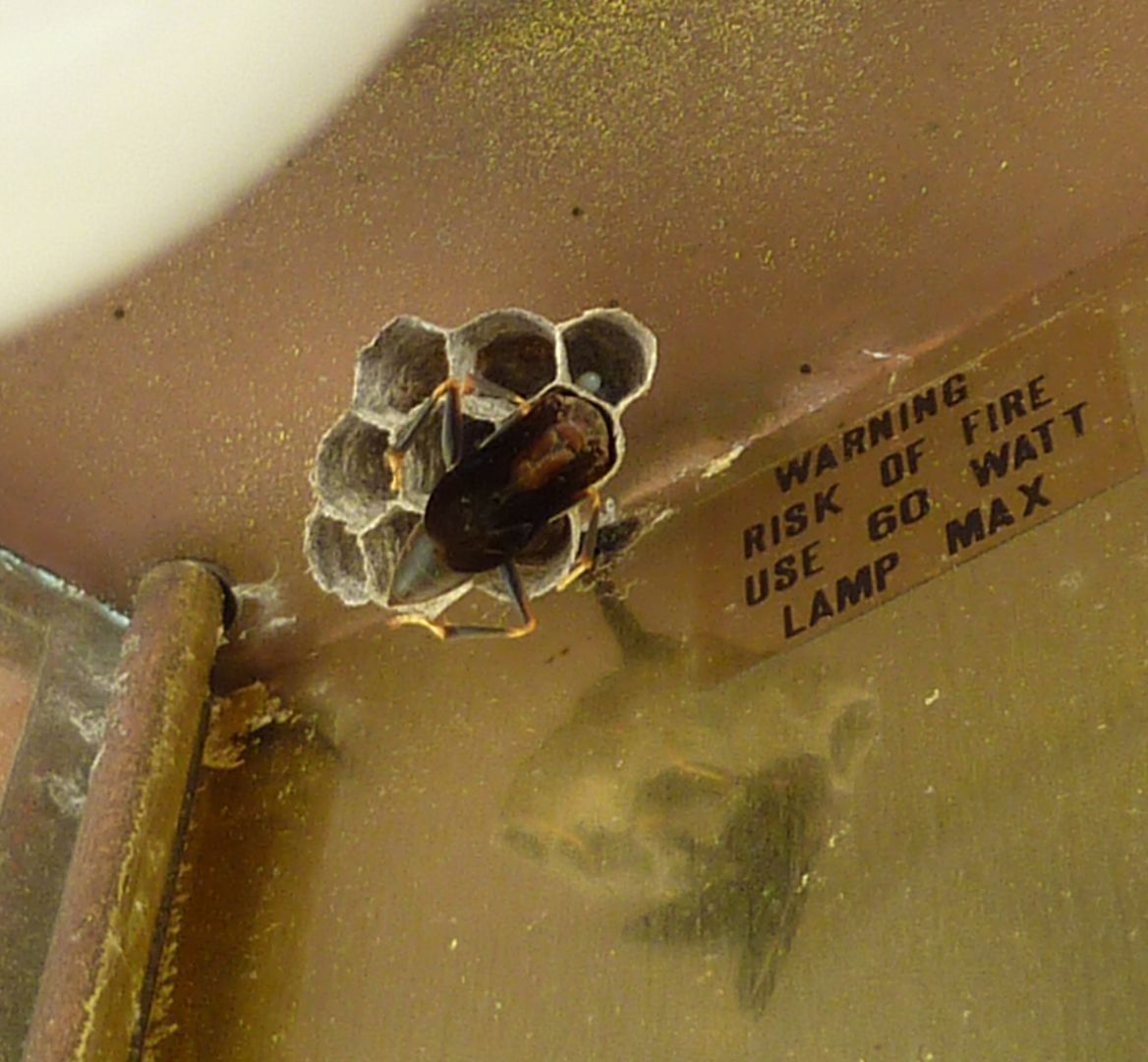
The general rule about wasp nests is if they're not bothering you, leave them there. Tolerate them for as long as you can, and they'll remove almost all of the pests in your gardens. This is bad for a butterfly garden but great for every other type.
Wasps and Hornets are mostly predatory. Chewed up pest insects they catch are fed right to the larva.
They don't alway make their nests in the right spot though. If you can catch it early on it's simple enough to dislodge a young queen's nest before she gets to far along. Usually she'll hang around it for a few hours before giving up and moving on to another nesting spot. This should be done as quickly as possible.
If they do become a problem though I can say small nests of paper wasps (the ones that don't get big and are only 40 wasps at most,) are easy to take care of. Larger hives such as yellow jackets, and bald faced hornets should be handled with care. Call a pest control agent if you don't feel up to it. Most sprays like Raid are great at firing the poison at such speeds that most of the wasps are completely blown away and taken out by the poison before they're able to fly. Again thought, this is a last resort.
Growing Fruit is harder than it sounds especially as we leave the realm of non-heirloom tomatoes. Pictured above is the current status of my Nectarine Tree. The larger of the two fruits has potential to become a nice juicy nectarine. The smaller one just above it will probably fall right off the tree come June as all small fruits tend to during what's called the June Drop. The leaf somewhat out of focus but front and center I believe has been afflicted by Gall Wasps.
Here is an example of what Gall Wasps do though the ones on my tree's leaves don't get anywhere near as big.
Edit: Having looked at something called Peach Leaf Curl, a fungal disease, I think that's more likely what is afflicting my Nectarine tree. Seems I can't do much about it until the fall or spring though.
The other issue my Nectarine tree has is the fruit eventually starts to develop clear crystallized sap. I have no idea what that is, it's probably a disease of some sort, but we'll see how it does this year.
Of two apple trees, I might actually get an apple off the thing this year. They're both fairly young tree. One is a Snowdrift Crabapple tree that has biannual blooming unfortunately. This is bad because apple have to be pollinated by other apples that are not their closest relatives. So my Gala Apple can't be pollinated by another Gala Apple. That's why we bought the crabapple which looks beautiful in the winter time with all it's red berry-like crabapples on it. The other issue is the biannual blooming. When apples produce flowers they produce a chemical that says don't flower. So having to many flowers one year results in no flowers the next year. This is solved by removing half the flowers... something I'll have to do in two years.
The Gala Apple tree has fruit on it this year thanks to the other tree flowering. But apples are among the hardest things to grow. Touring any super market in the US would leave you to believe otherwise though. All thanks to farmers spraying their trees every 2 weeks with chemicals. I don't intend to do that but we'll see what happens.
Something I might get fruit off of is the Fruit Cocktail Tree. Yet another crazy investment on my part. What I love about this gimmicky tree is there are absolutely no pictures on the internet of one. I'm starting to see why. Though my tree is loaded with fruit (a bit small for what they should be) I notice all of them have hair. Supposedly the tree has on it Nectarines, Peaches, Plums, and Apricots. Well Nectarines don't have hair on them so they're not growing. Plums usually don't have hair on them either as far as I know. So that leaves Peaches and Apricots. Assuming their picture represents the fruit varieties I'd say I'm getting 3 types of fruit at most.
I have a pear tree but it's afflicted with blight and had to cut off lots of the branches. Pears are developing on it but not many.
The native fruit trees aren't at a flowering age yet. They include 2 Paw Paw trees, Persimmon, and 4 Native Plums. The Paw Paws might flower at a young age and hopefully will do so next year, and the Native Plums might be flowering by next year. I hope to taste something at some point that tastes reasonably good.