Showing posts with label Ants. Show all posts

Wednesday, February 28, 2024

Fire Ants Invade Italy

This is old news at this point but The Red Imported Fire Ant, Solenopsis invicta has invaded Italy. Being on a few Ant Discords and Facebook Groups word on the street is a kid thought it would be great to send a colony to his friend in Italy. But his friend had no effing clue what to do with them and just dumped them in their yard. Oh unintentional Echo Terrorism, the CIA would be proud. 

Thanks to iNatrualist we can monitor their spread. Or at least monitor where people who use this app/website to ID and report ants in that area. 


Something that jumps out at me is this gap in the dots. When Fire Ants first invaded the US they spread at a rate of 5 miles per year. Assuming that holds true in Italy there should be a dot somewhere in this area I've drawn a circle around. Either that or they've already established a colony in nursery plant or farming media and been shipped around which might help explain this sort of coastal distribution.


There are likely dozens of colonies around each of these dots that haven't been reported. 

Anyway we'll check back in with this invasion from time to time.
 

Tuesday, August 29, 2017

This Week in Anting 08/28/2017


Finally got around to visiting Turkey Swamp Park this year and a few other locations around that county. 

Formica integra, were still there with foraging "trunk" trails. These are well maintained trails made by ants that tend to be in the same place every year. The ground around them is actually compacted down, not from the weight of the ants but because they're so good at clearing everything else away it's on the compacted parts that stay. The trail also ventures underground every few feet.

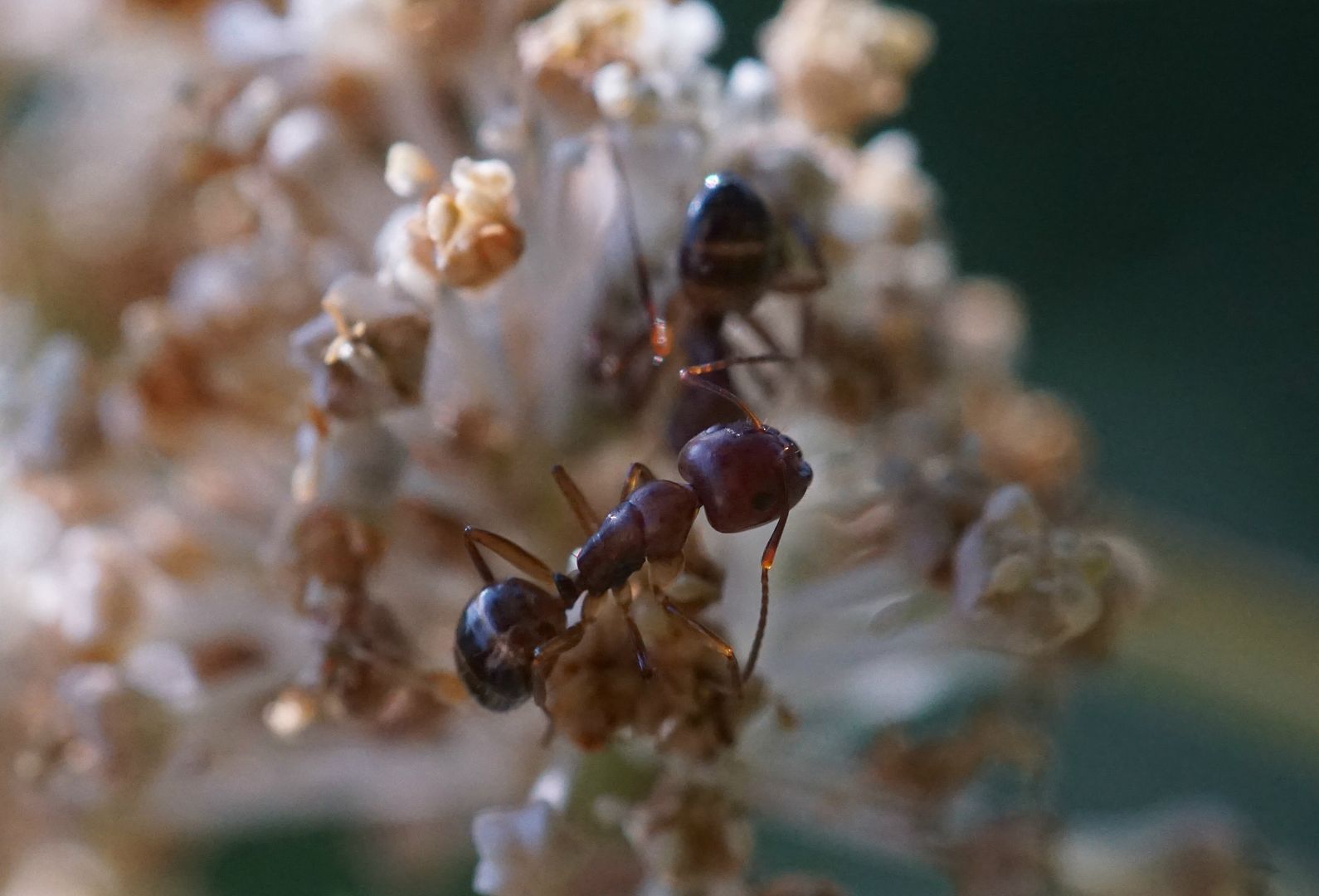
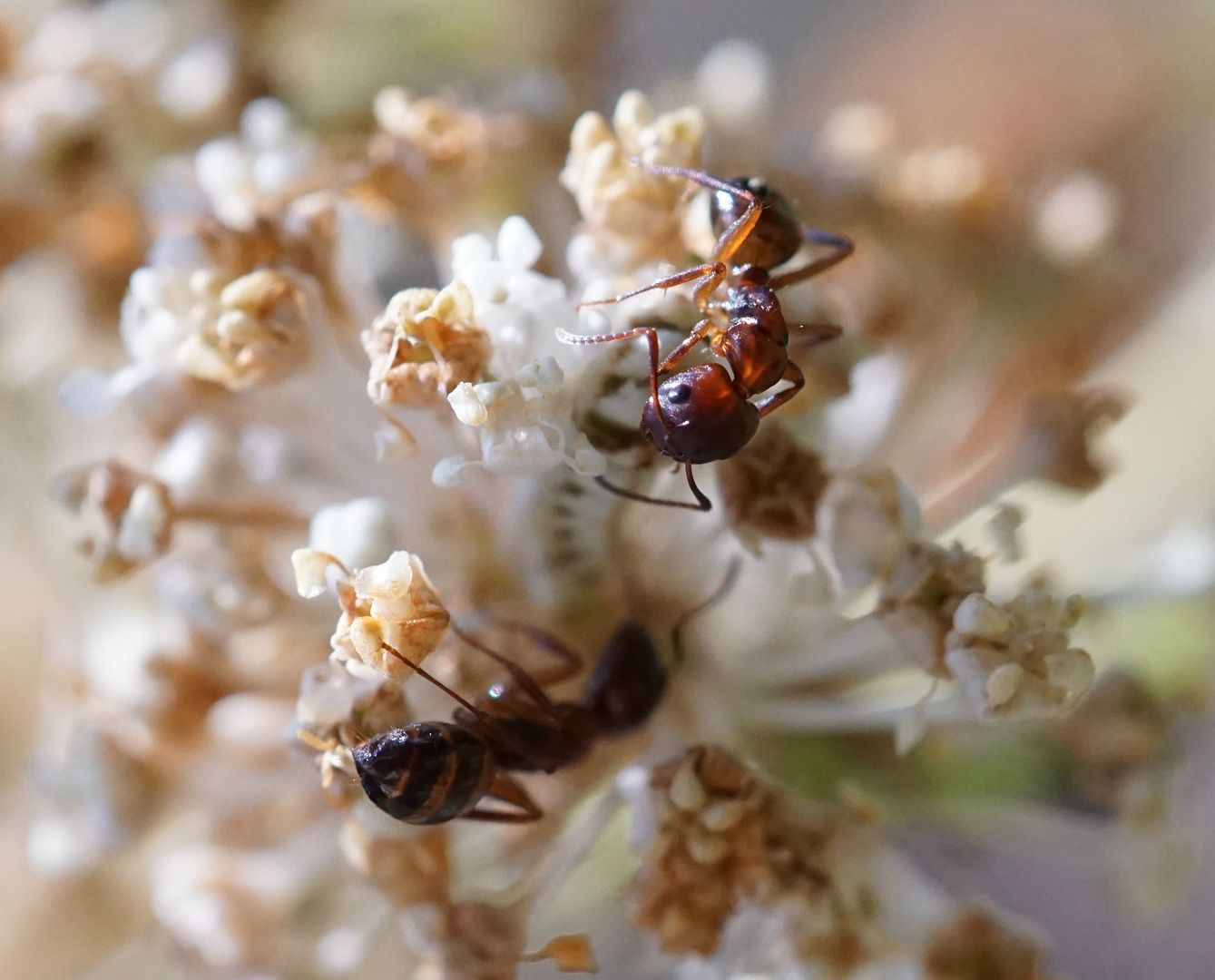
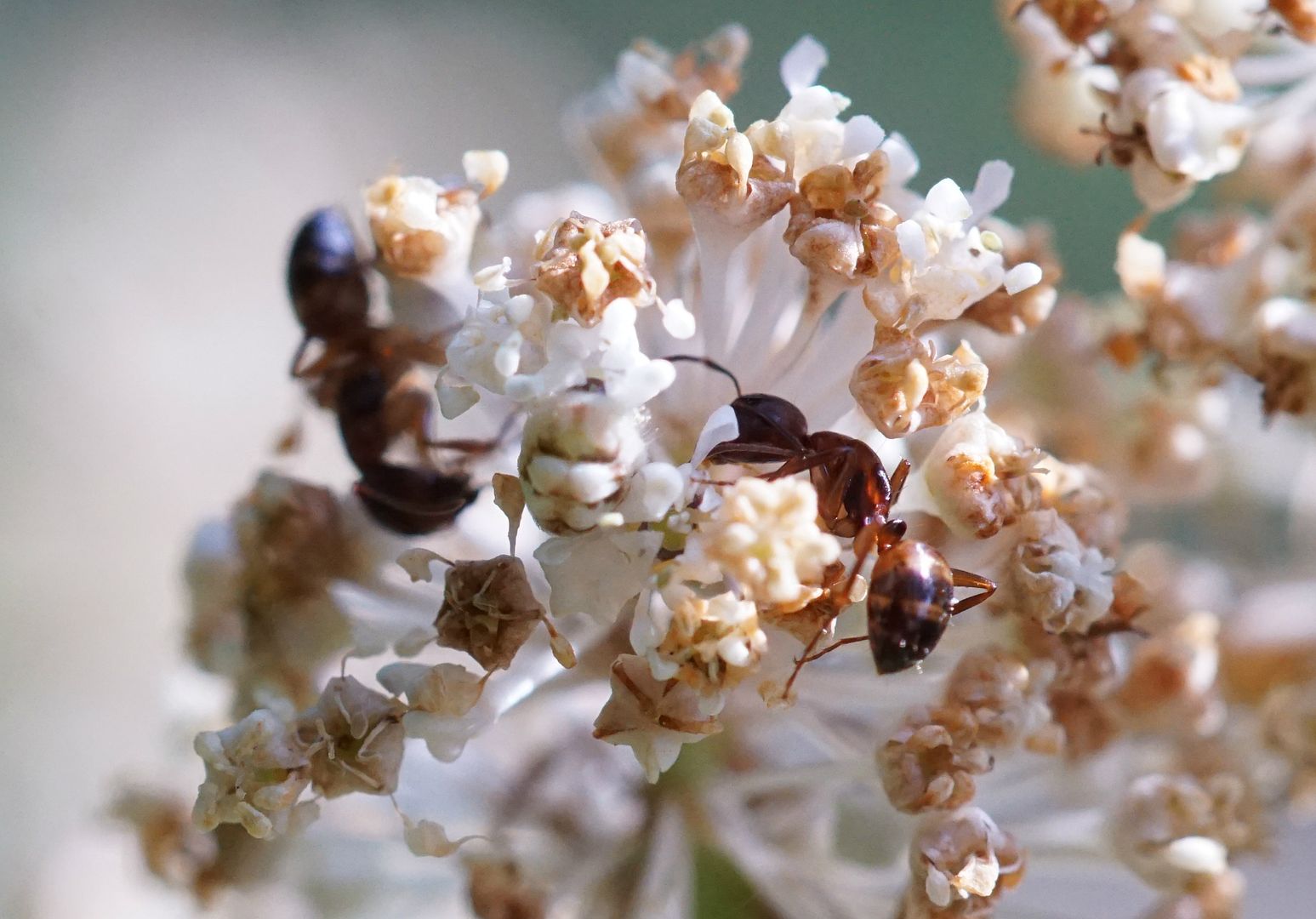
Dolichoderus plagiatus, are a species I've been calling "cone ants" but that almost as generic as calling them "black ants." The cone though refers to a hump-like structure on their mesosoma. This isn't visible in the photo above but online images of them show it more clearly, see here. Of the four Dolichoderus species in the US this is certainly one of the most colorful. They have bright orange spots that are sometimes full stripes on the gaster which goes well with the rest of the body which ranges from red/brown to black.

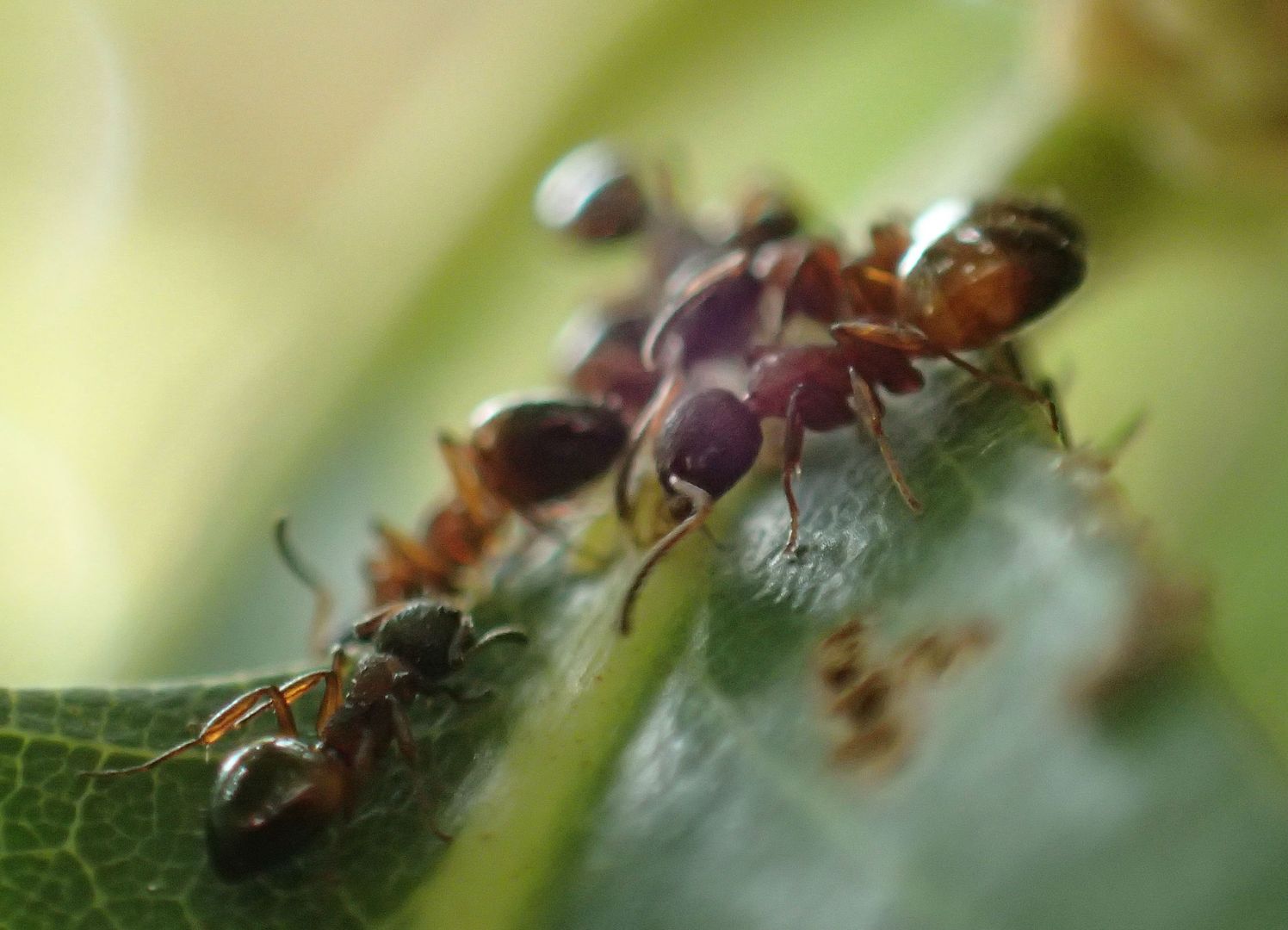
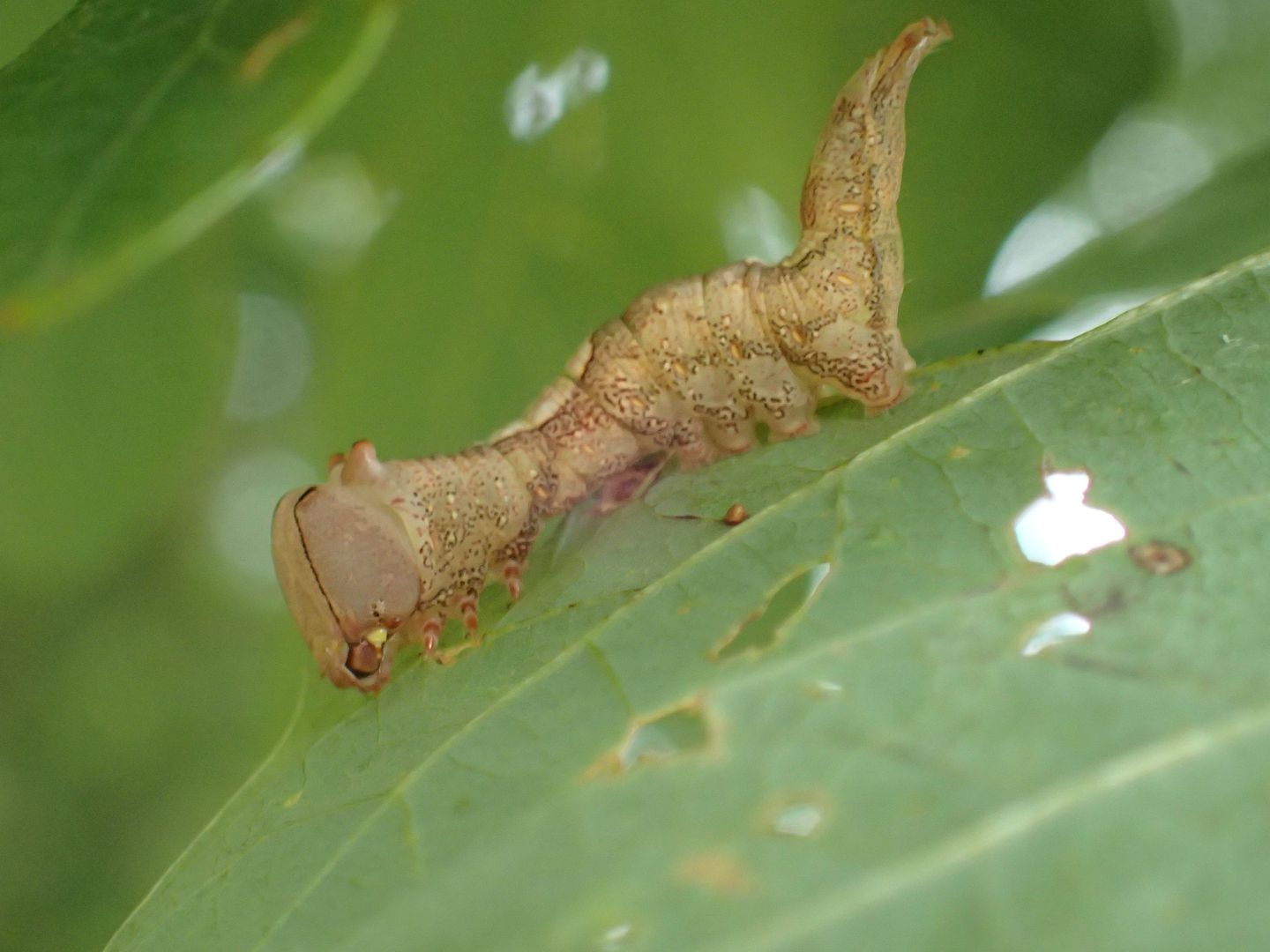
Oak Trees were full of life. White Oak in particular was bustling with caterpillars and aphids being tended by ants.


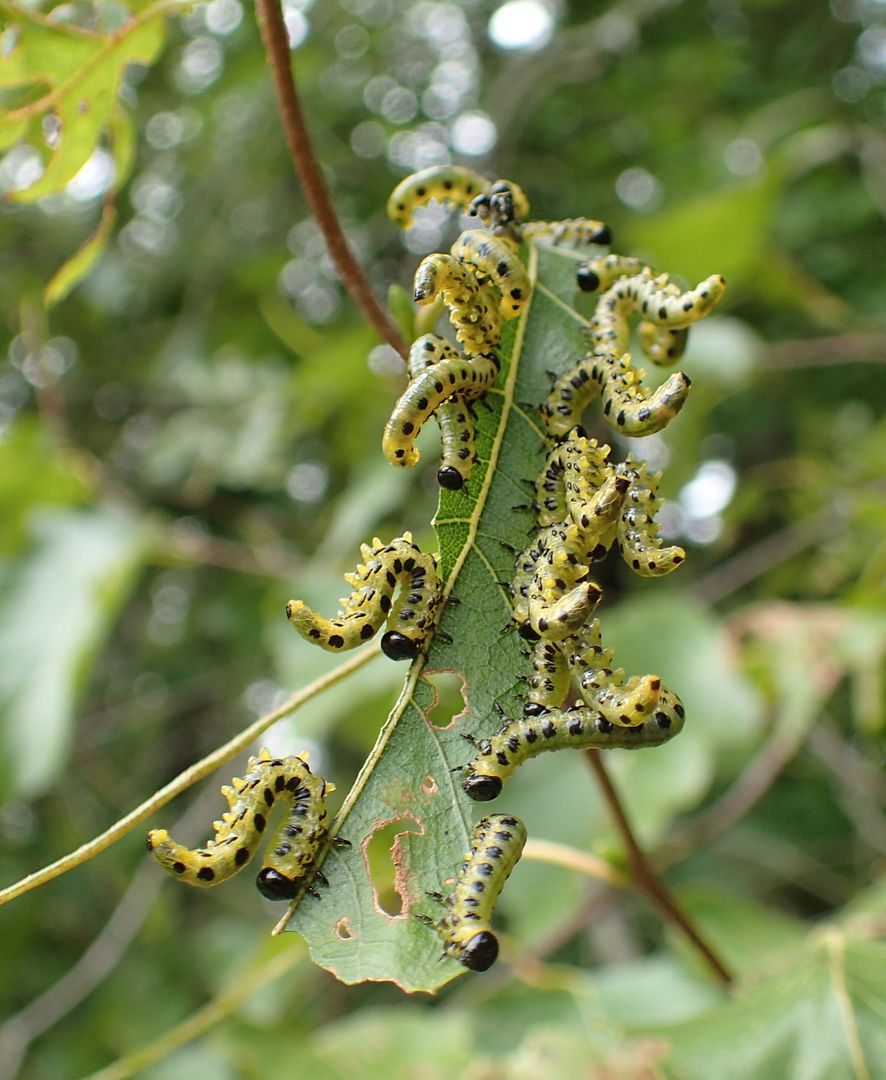
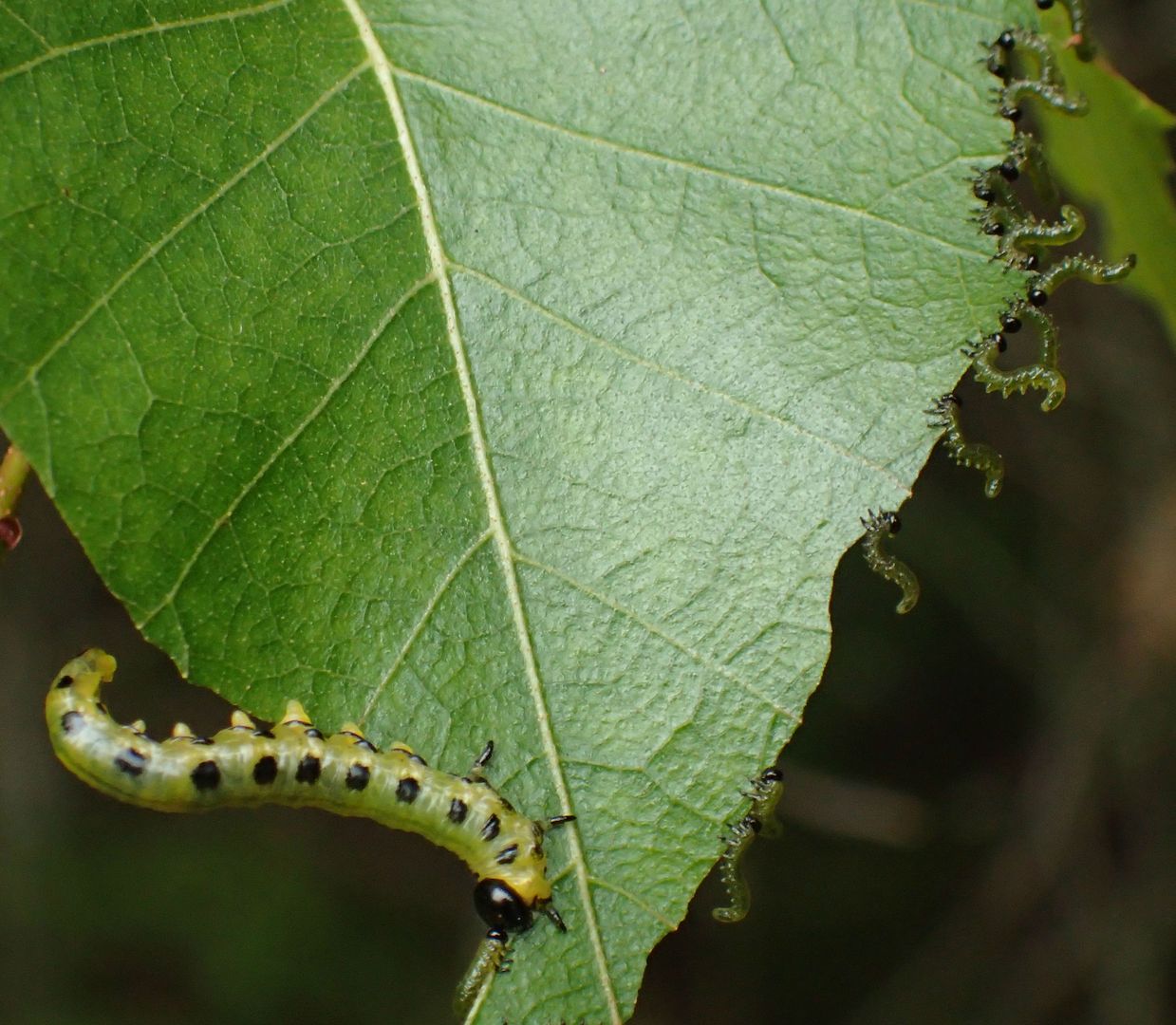
Another tree I couldn't identify was loaded with sawfly larva.
 
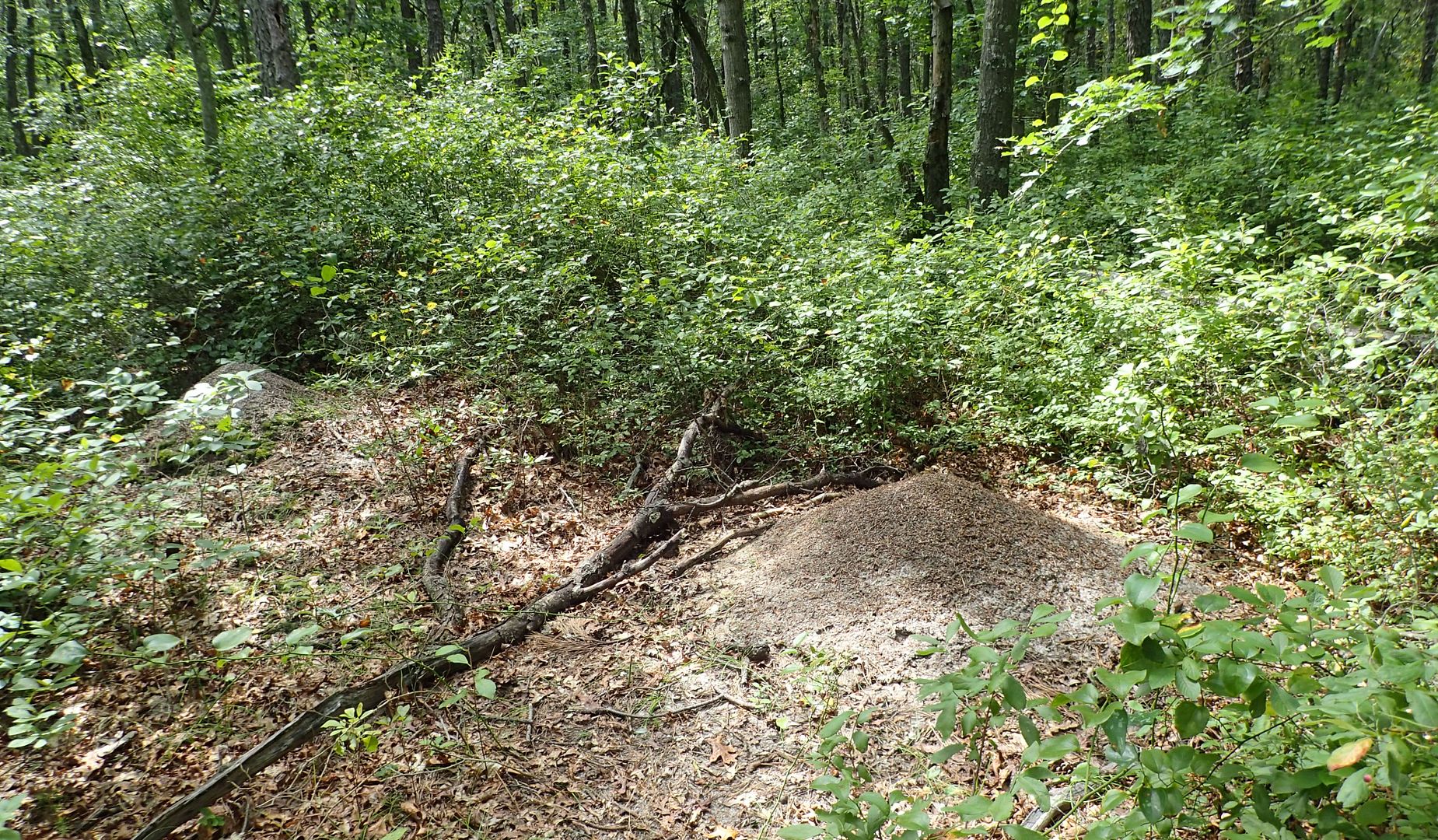
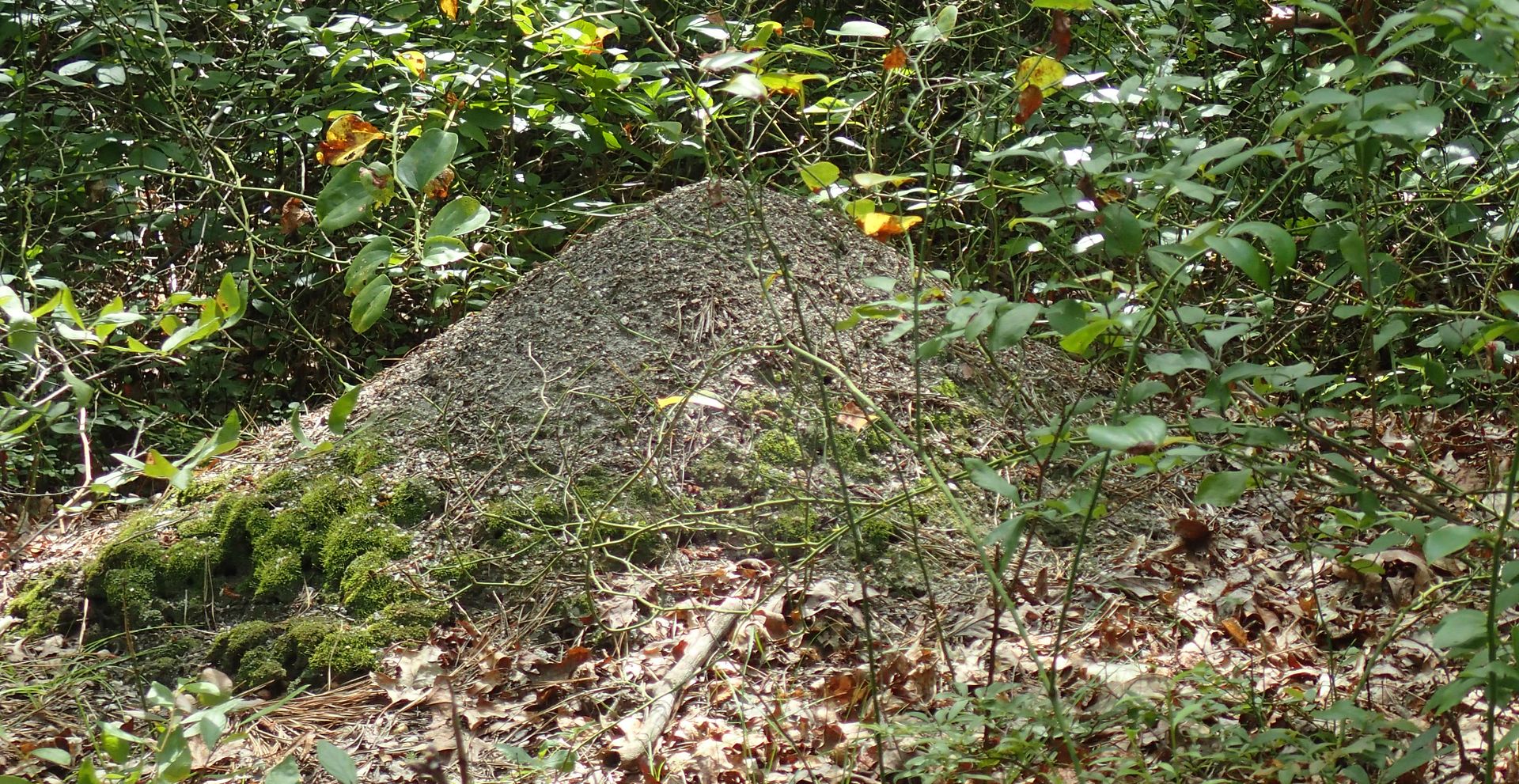
The Formica exsectoides mounds are still there. They weren't that active though. We went on too nice of a day it seems because for once you couldn't hear the leaves rustling from millions of ants crawling around. (I want my money back!)


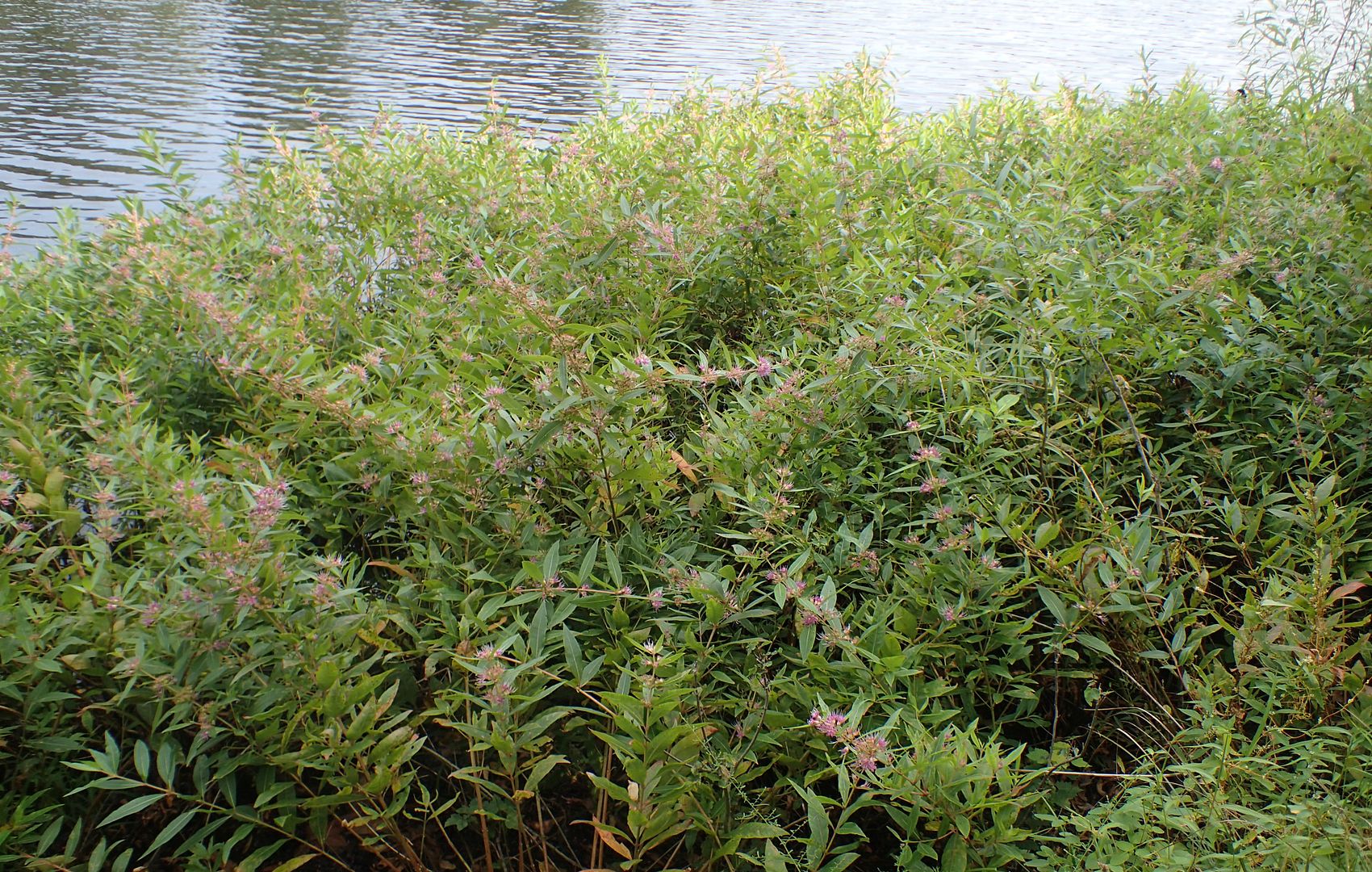
Plant wise, I found a stand of Swamp Loosestrife, Decodon verticillatus, which is an uncommon aquatic wildflower. It has a wide distribution across most of the eastern US and Canada. It was bustling with bees and several butterflies.

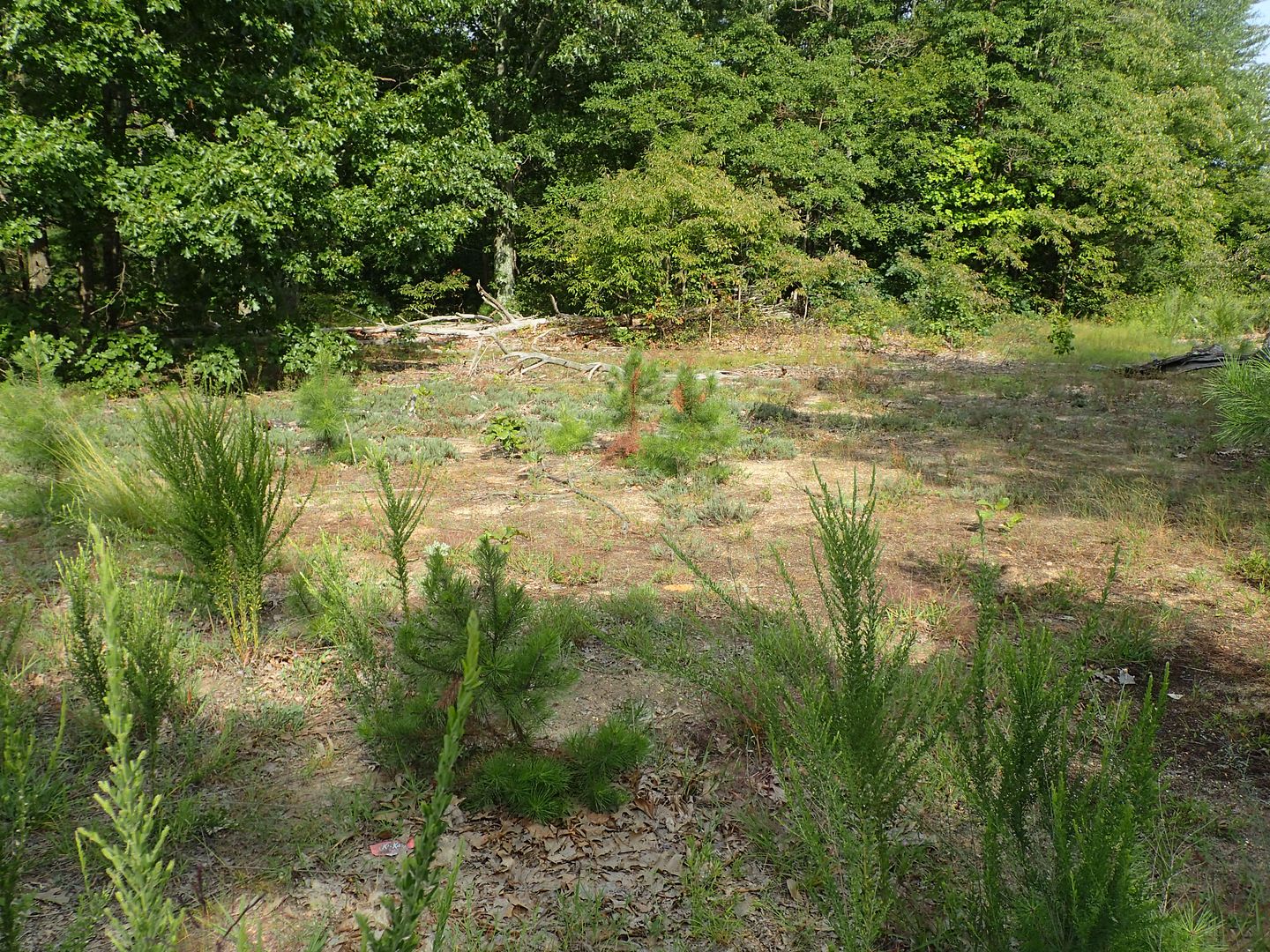
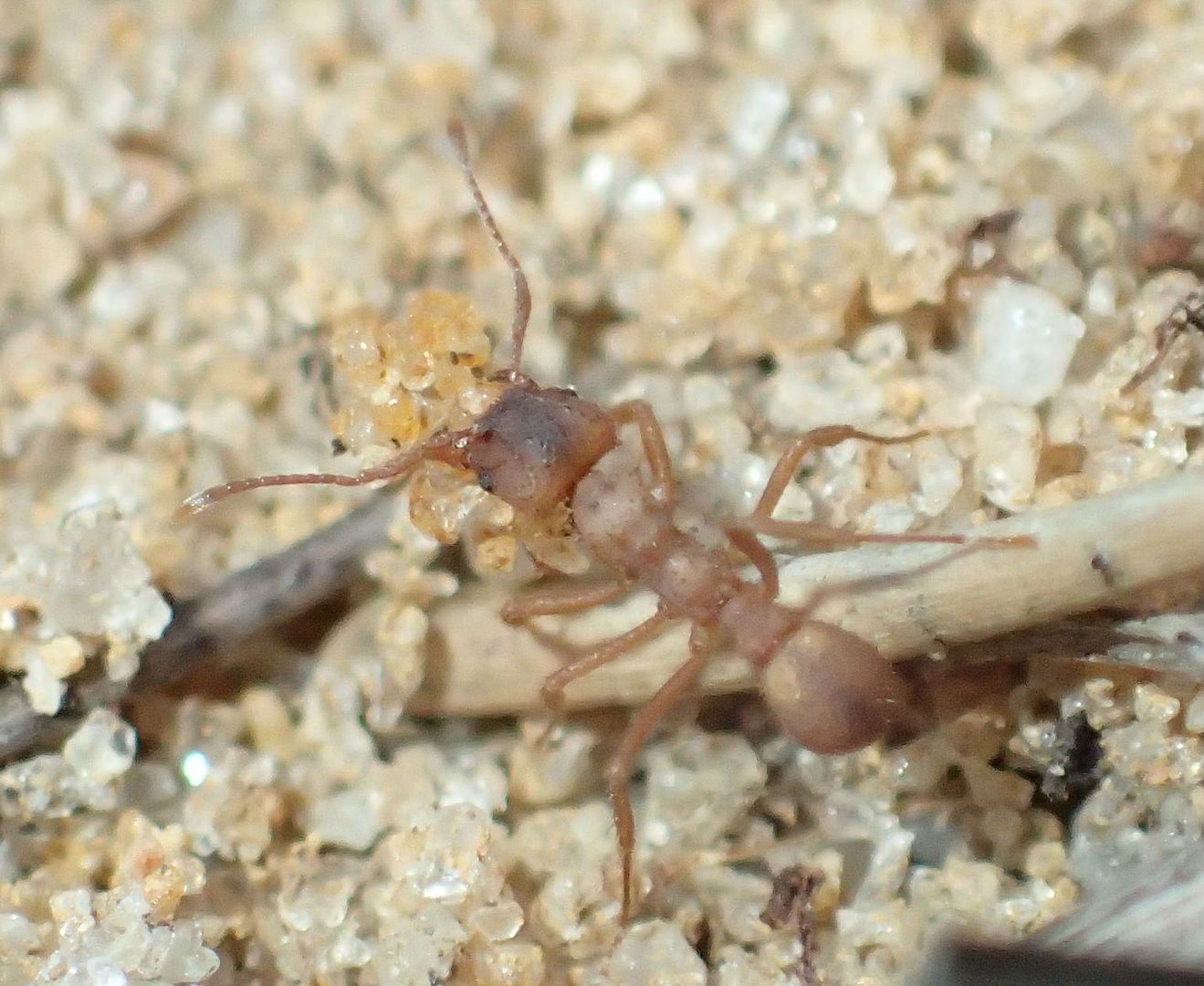
Trachymyrmex septentrionalis, the Northern Fungus Farming Ant, likes to nest in sandy soil along odd types of scrub land where strange plants tend to grow. Prickly Pear is the only one I could really identify but there were lots of odd plants that might be mosses or are low growing conifers that barely push out of the ground and have compound leaves.

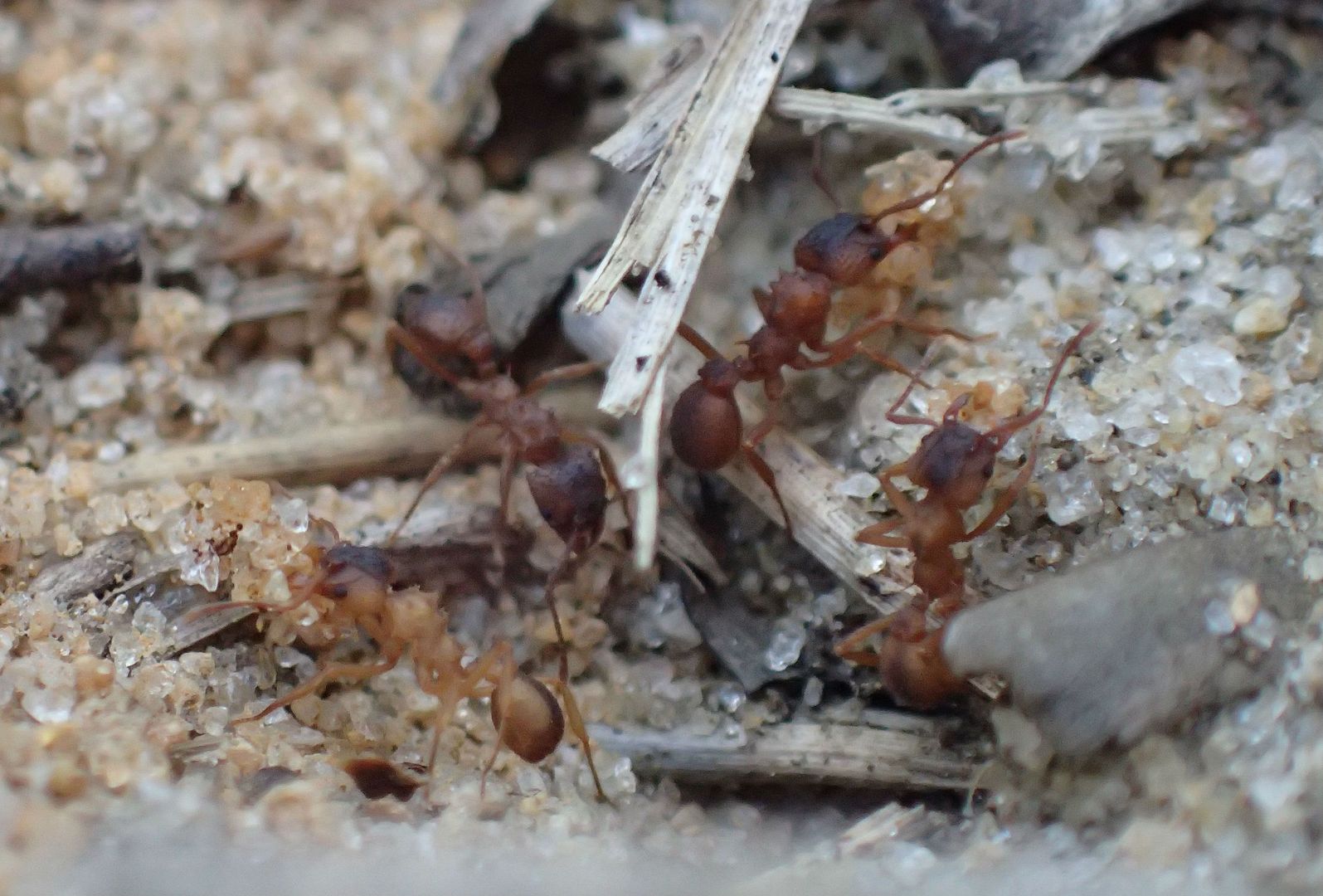
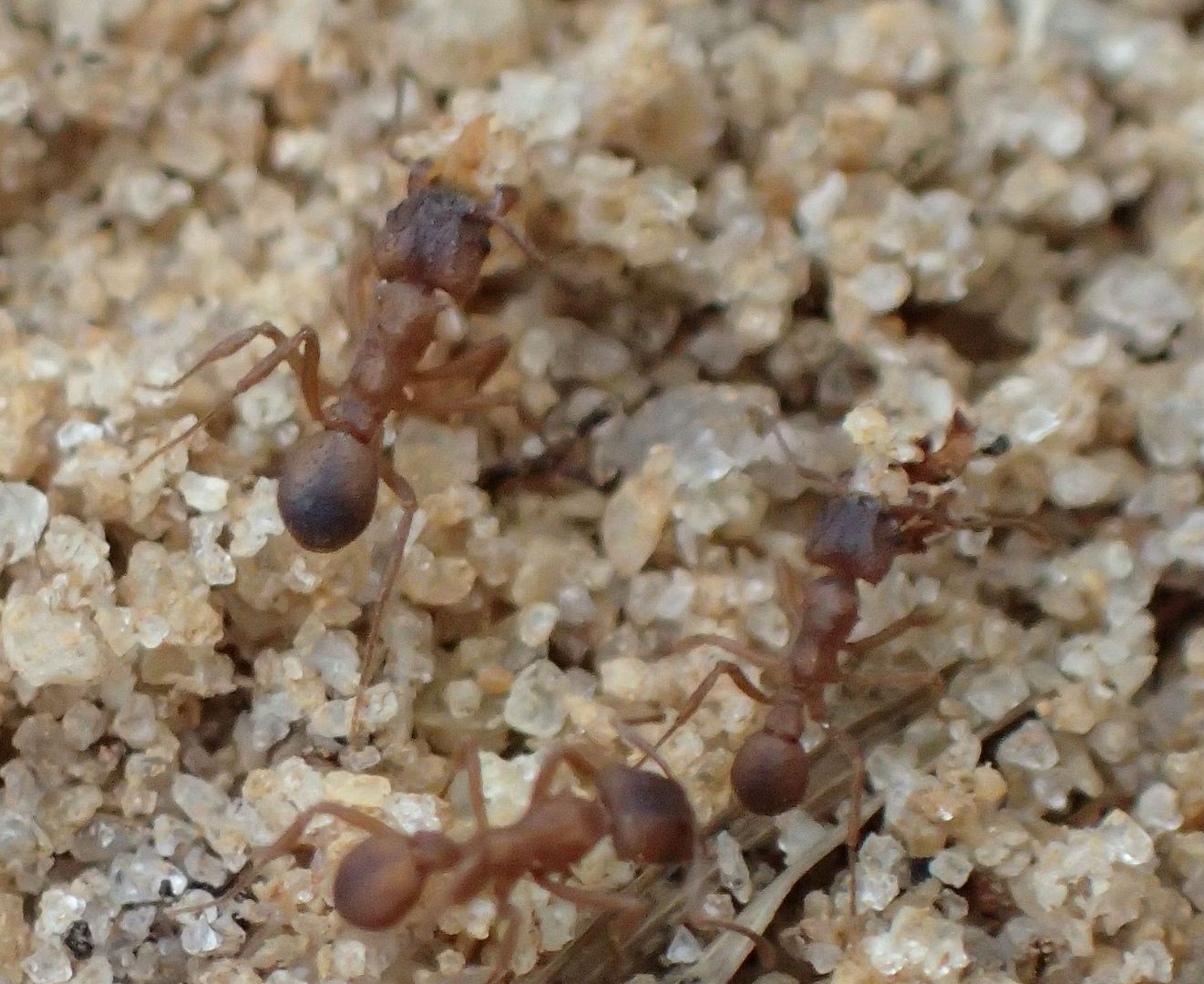
We also found a few colonies in an adjacent field where a patchy not so lush lawn was grown... I'm not sure if it's patchy because no one's water and maintaining it, or because the tiny leaf cutter ants are slowly stripping it. Whatever the case, these are ants of dry sandy settings in full sun where resources might be limited. They thrive here because they focus on other types of food, namely a kind of fungus they maintain by fertilizing with flower petals, bits of foliage, and the frass of caterpillars and grasshoppers.

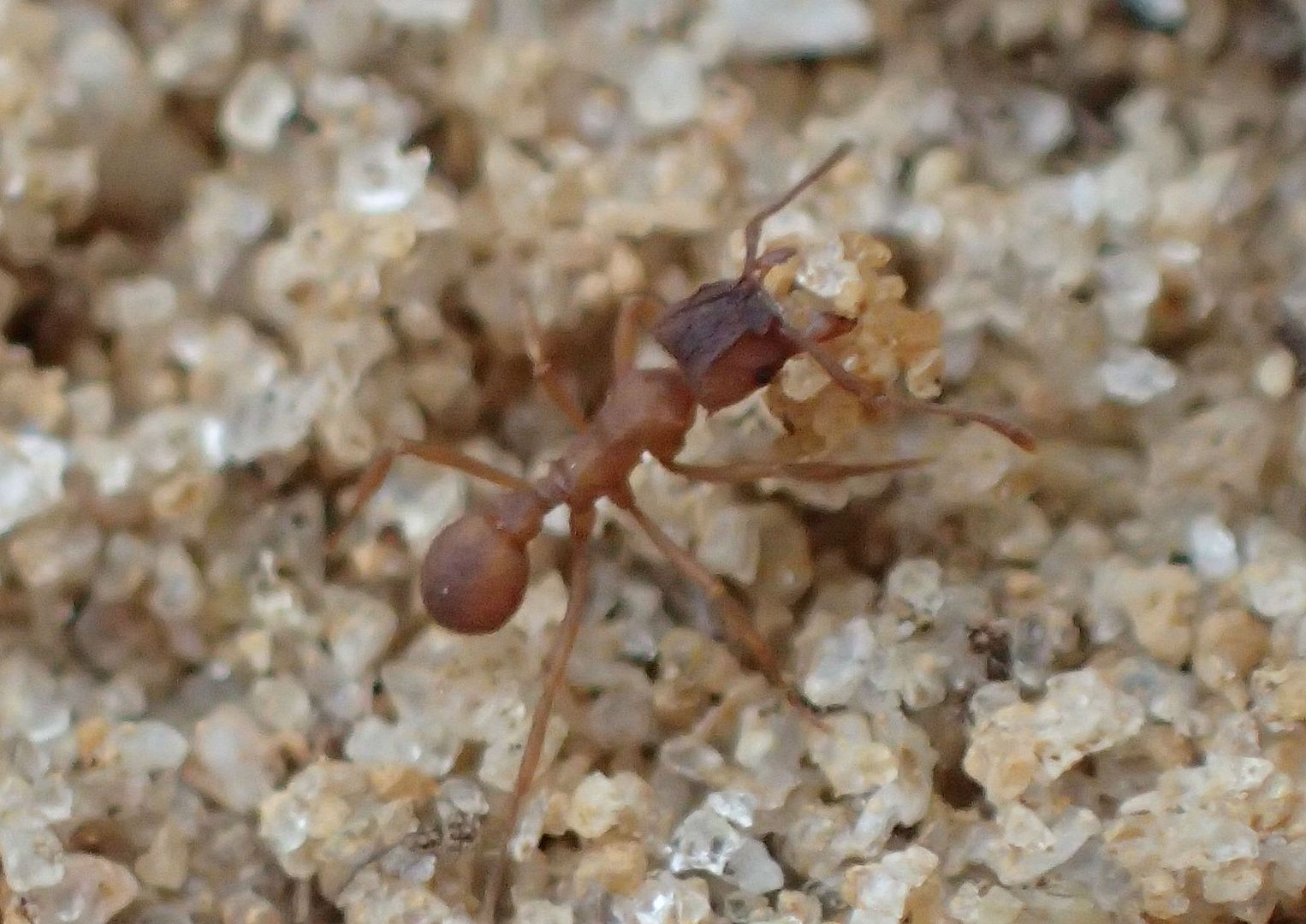
These are small ants verging on 3 to 4 mm long. And even within that the workers vary somewhat within the same colony.

As far as ants in the North East go they're easy to identify. Their heads have spines on them, and their mesosoma has several small sets too. Their color is a unique orange/brown tone and parts that verge on being purple.

 Also when they dig they also gather up the dirt in clumps, making their mounds somewhat unique.

 We also found lots of mushrooms.

Wednesday, June 21, 2017

Spring/Summer Azure Caterpillars on New Jersey Tea

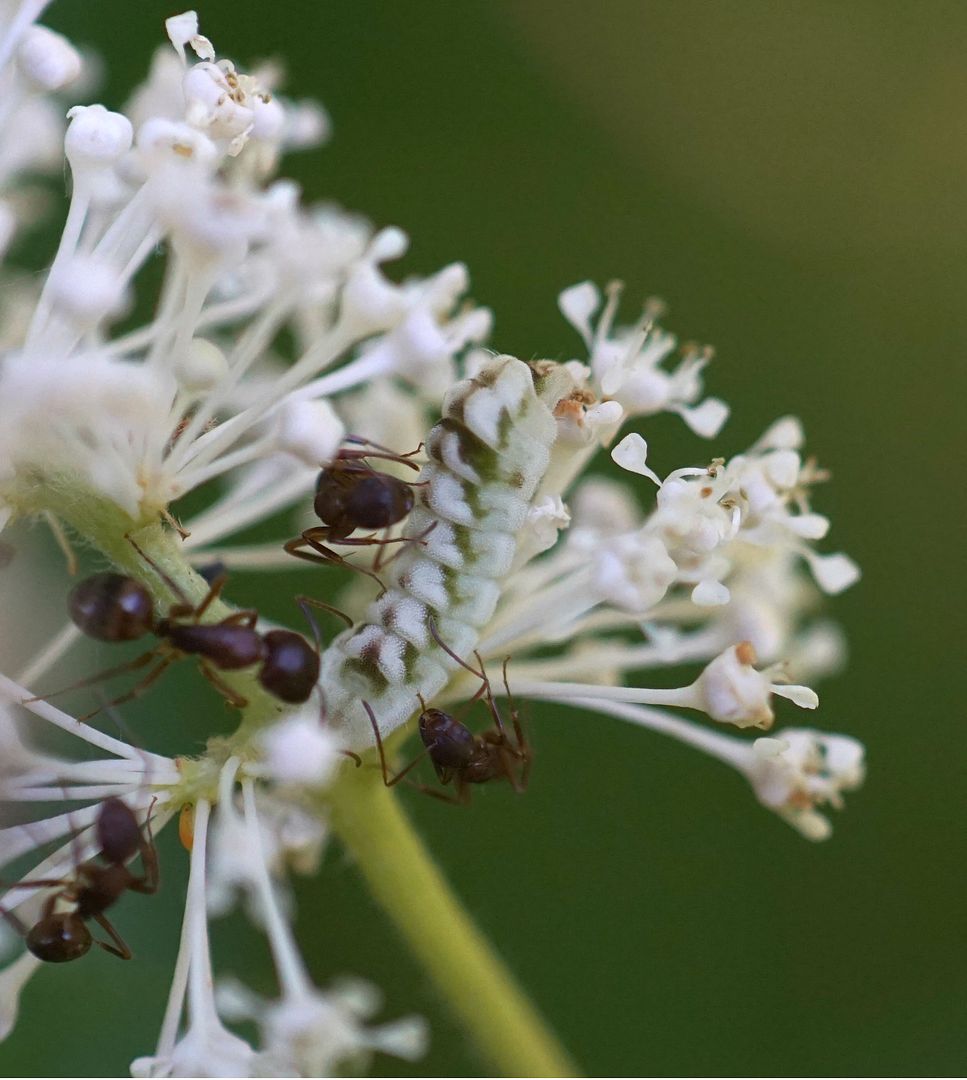
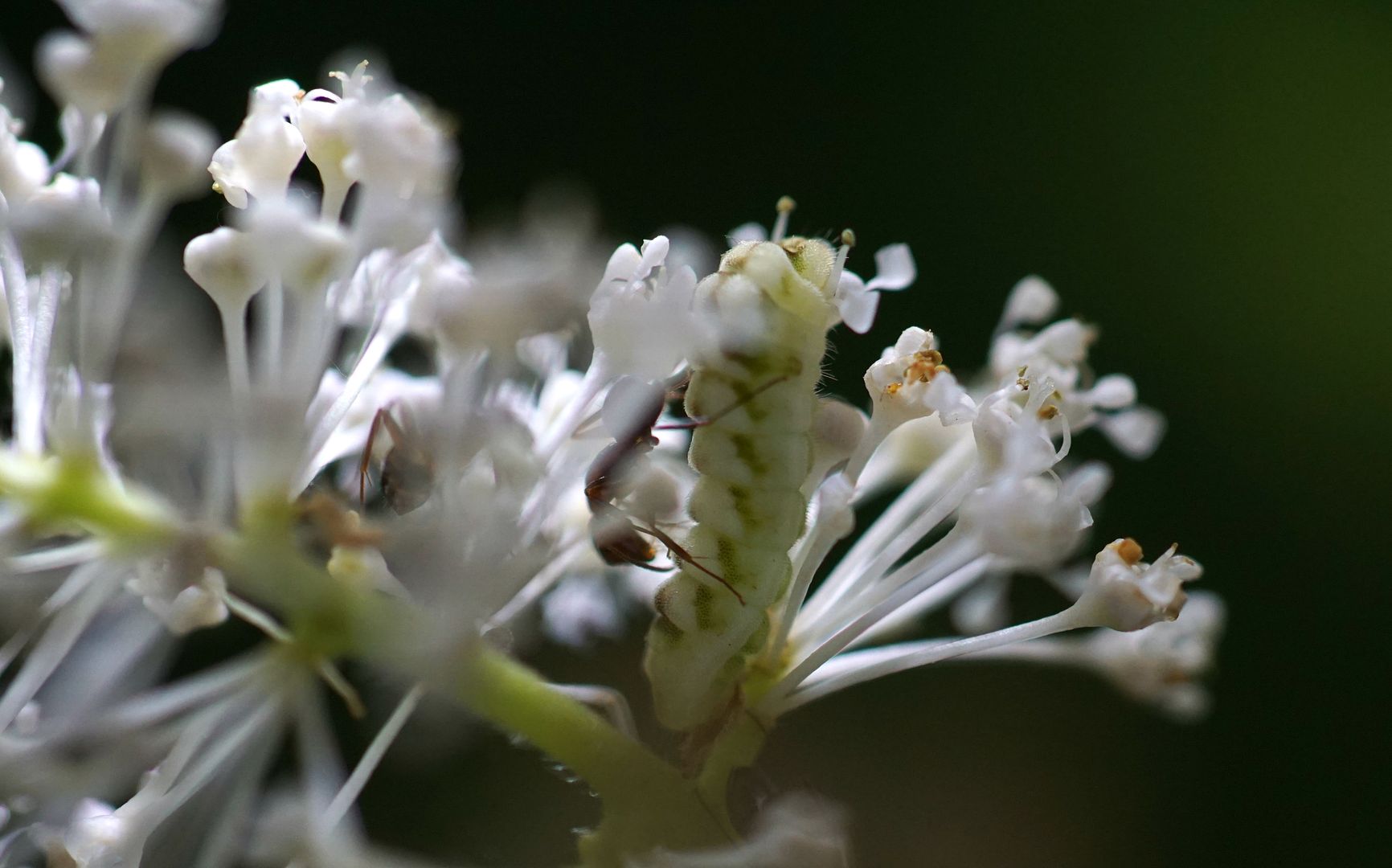
My New Jersey Tea plant, Ceanothus americanus, is full of Spring/Summer Azure caterpillars. Their strategy to not get eaten is to produce honeydew to entice ants into protecting them. In this case the ants are Camponotus subbarbatus (a.k.a. "The Slightly Bearded Carpenter Ant" a common name referring to the slightly hard to see small hairs on their cheeks that lots of other ants also have... and not the more obvious yellow bands very easily seen on queens and larger workers that's almost never seen on other ant species in their range.)

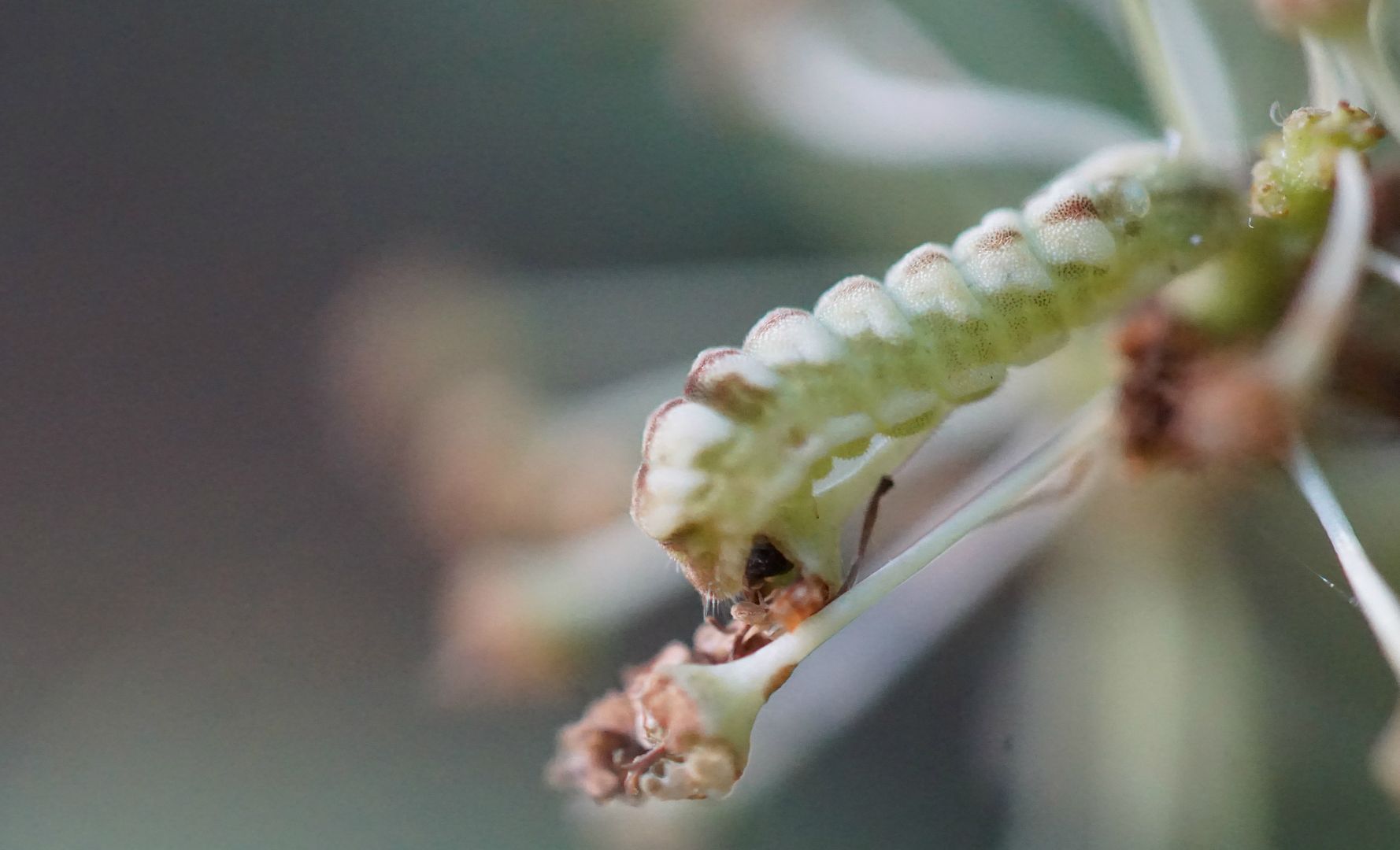
The caterpillars gain the pigment and to some extent the texture of whatever they happen to be eating. In this case it's the flowers. Doing this helps them blend in with the plant, however the gangs of ants constantly hanging around them gives them away.

The butterflies are common where they occur and fairly wide spread across the north east, but the need for ants along with host plants can make some members of this genus uncommon.

The Karner Blue Butterfly is likely endangered because not only do they require wild lupins as a host plant. They also need ants to protect them and bring them back into the nest. Once inside they turn carnivorous and begin consuming the ant's brood for food, all the while still producing sweet honeydew for the ants to feed on. This isn't that bad though as ants often consume their own eggs or feed larva to one another, and the caterpillar itself isn't much bigger than two or three adult ants.

Spring and Summer Azures aren't as finicky. They can be found on a wider array of plants and don't need to be brought into an ant nest at all. (During the winter, they may survive better underground inside of an ant's nest where they form a chrysalis but I'm not sure they do this.) 

Host plants include the New Jersey Tea, as seen above, some Dogwoods, Collinsia sp, and Spiraea salicifolia. I've also found them consuming the flowers to Sourwood trees. They always start on the flowers to these plants which tend to be soft and tender (and likely lack any defensive chemicals the plant might be producing in its leaves) before moving onto consuming the leaves themselves if they need to. They take on the color of the flowers they consume so they're usually pink on Spiraea salicifolia, and can be sort of purple on Collinsia sp. and then turn green when they start eating the leaves.


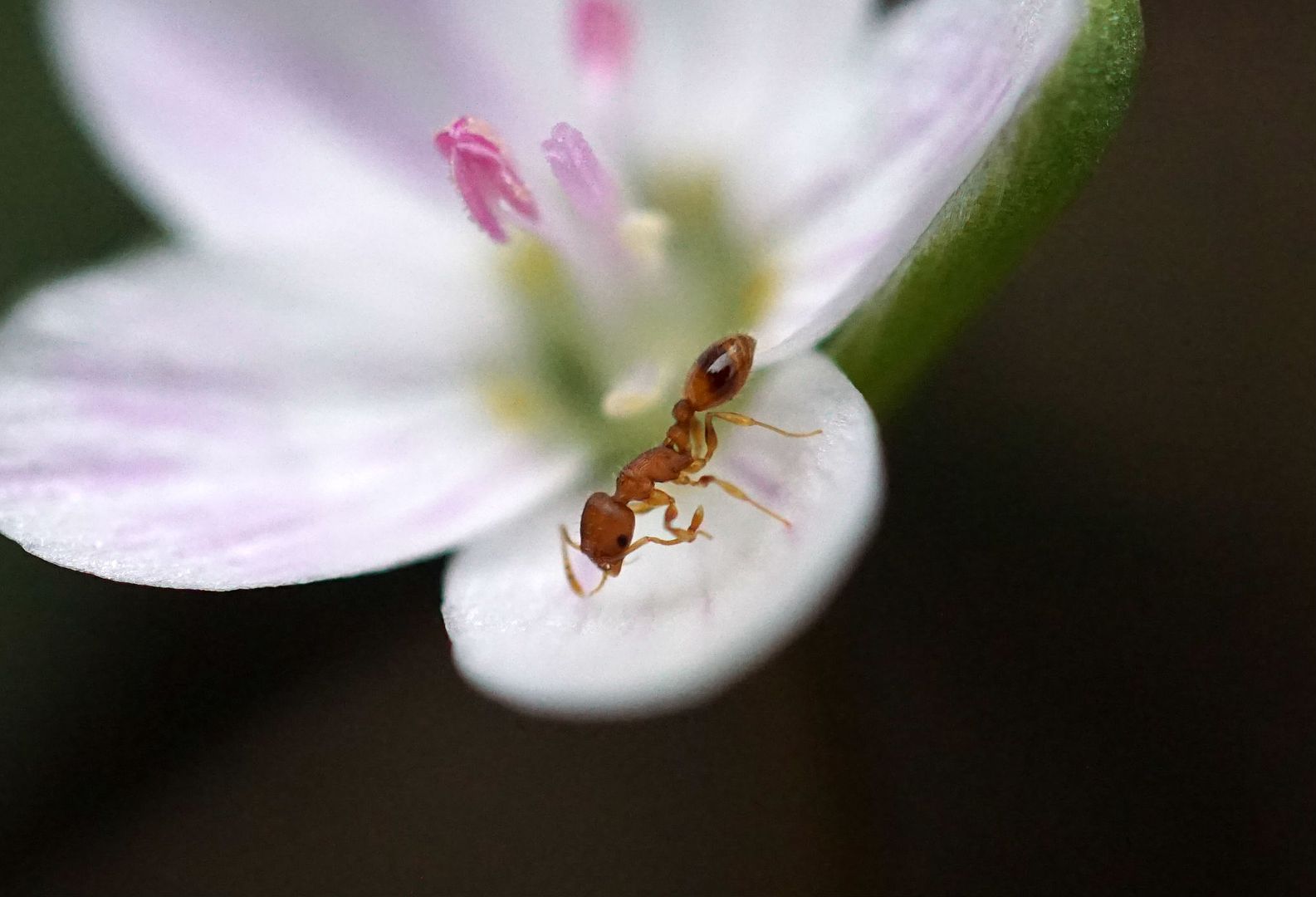
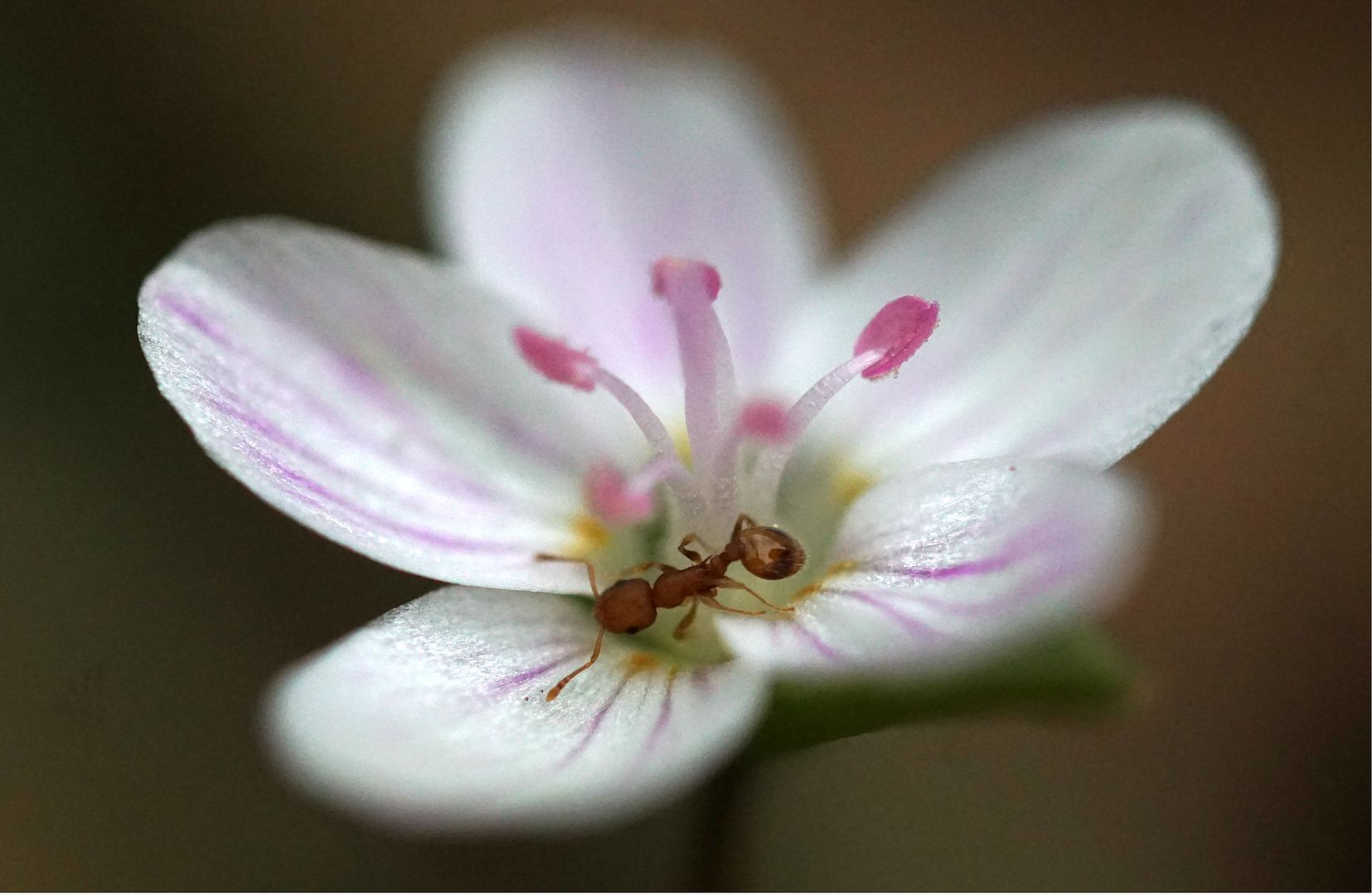
Flowers are a good place to start because there's often ants stealing nectar from them already. Oddly enough once the ants find the caterpillar and taste the honeydew they produce, they will stop stealing nectar from the flowers and focus entirely on tending them. The caterpillars will also produce noises like a queen ant would make. 

Another benefit of having ants around is they protect against parasitic wasps that try to jam eggs in them. Ones that get parasitized will hatch out as wasps instead of butterflies after the chrysalis phase.

The New Jersey Tea shrubs I own are now finished flowering and most of their blooms are falling fast. The caterpillars are now moving on to consuming the leaves. 

I'll be rearing a few indoors to ensure they survive. I'm curious to see if any wasps emerge.

Their chrysalis's are extremely tiny and can be made on something as small as a blade of grass. Rearing them myself will help ensure I don't run them over with the mower.

Monday, June 19, 2017

This Week in Anting: Exploring the Mt. Cuba Center


This week I got to explore the ants at the Mt. Cuba Center, a former DuPont estate located in Delaware. Today it's a ~600 acre native plant preserve of which about 45 have been turned walkable gardens.
PLEASE NOTE: this is not a place you would ever bring a shovel to dig for ants. It is an actual garden, you need to stay on the paths, there's no flipping logs or rocks or ripping the bark off of trees as is typically done when looking for ants, and of course this survey was done with permission. 

Samples collected are going to be shipped off to AntWeb.org, run out of the California Academy of Science, and School of Ants, a citizen science project based in Florida.

Most Common Species Found: Formica subsericea, Aphaenogaster rudis, Lasius alienus, Temnothorax curvipinosus, Solenopsis molesta, Camponotus chromaiodes, Camponotus pennsylvanicus, Camponotus americanus, Nylanderia flavipes, Tetramorium caespiteum

Unidentified species: Monomorium sp., Formica cf. pallidefulva, Nylanderia sp., Lasius cf. neoniger, (Might have collected Tapinoma sessile and a Myrmica sp. but unsure as of now.)

Ants Seen From Past Trips but not Collected: Prenolepis imparis, Dorymyrmex sp.

Observations: (1) With hundreds of colonies of Formica subsericea in their meadow one slave making species or Polyergus colony could seriously change the power dynamic of their meadow garden. The invasive Tetramorium caespitum had surprisingly uncommon.

(2) Digging into the soil and flipping logs especially in the wild woodland areas would likely yield additional species such as Lasius clavigar, Lasius interjectus, and Lasius umbratus. All three are subterranean aphid farmers that rarely come to the surface for food. Further diligence would likely produce species of Strumigenys and Proceratium as well.

(3) It's odd no Crematogaster species were found. Likewise none of the smaller Camponotus species were observed. Tapinoma sessile should have been more common too given the amount of leaf litter and dead wood used in the gardens, I'm not even certain it was collected or that I even saw it there. All three are notorious nectar thieves of flowers so it's strange to have not seen any of these.

Thursday, March 23, 2017

This Week in Anting 03/23/2017


Ants in Order of Appearance: Formica pallidefulva, Tetramorium caespitum (species e.), Ponera pennsylvanica, Lasius interjectus.

Focusing on the Lasius interjectus a bit. I was surprised to see these under the stone because other species like Aphaenogaster rudis and Camponotus castaneus were no where to be found under the rocks and logs I usually find them on. Apparently L. interjectus is a bit more cold hardy than I gave them credit far though it's not surprising as the related L. claviger has queens which spend the winter wondering out of the nest.

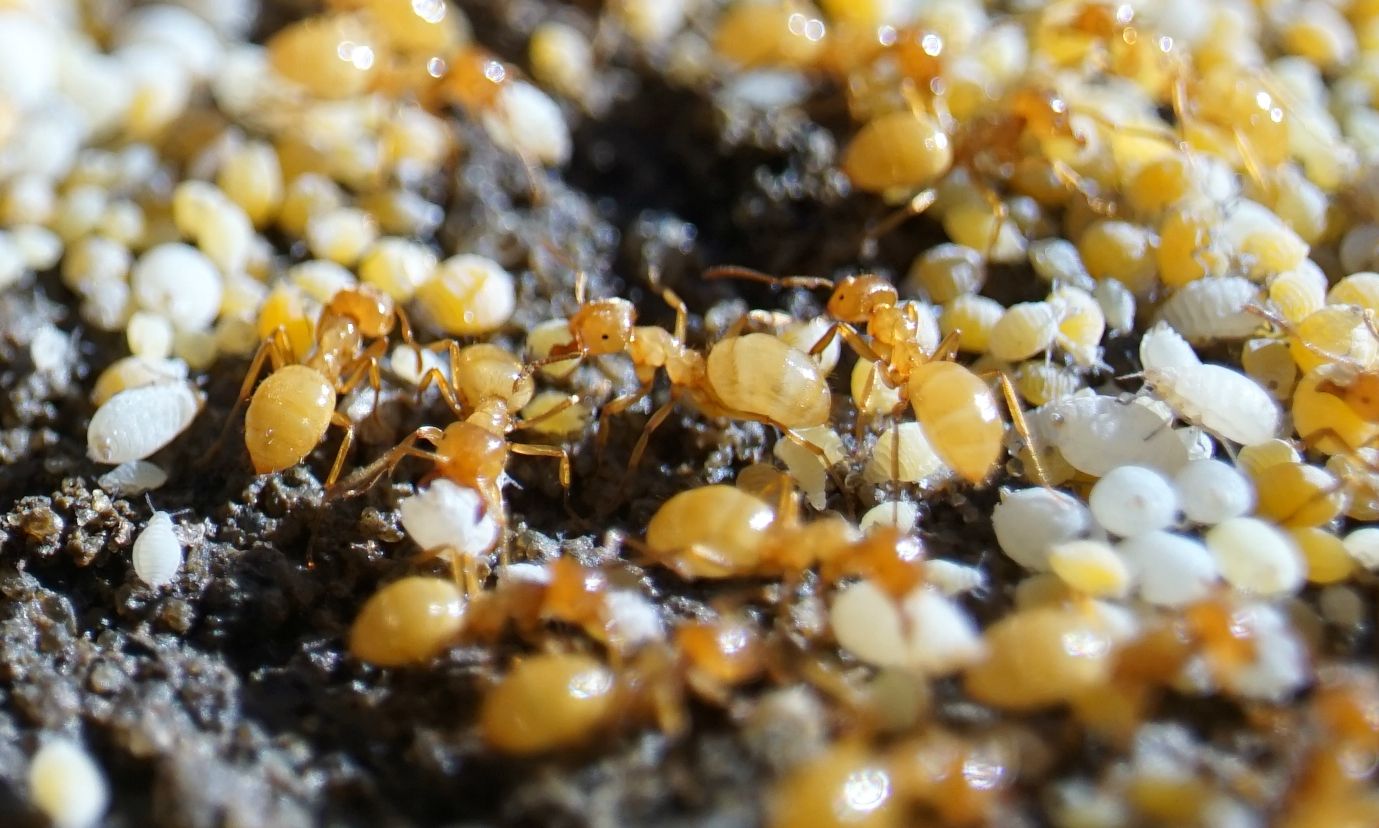
You can sort of make out her one of their root aphids producing dew. (This was directly in the middle of the stone they were under so I don't think I squished it.)

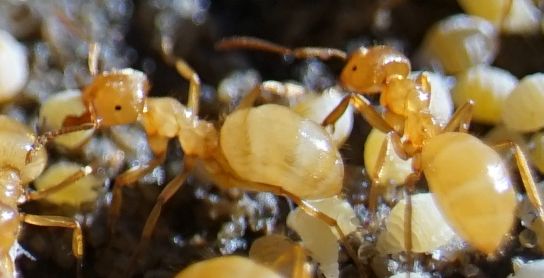
I chanced upon a worker with a curious gaster (abdomen) which has a large white patch in it. As you can see in all my other photos, this is not the norm.

Most likely it's just full of honeydew and the crop (social stomach) is positioned oddly inside the ant. Though other possibilities include a parasitic nematode, the worker was born with ovaries and is readying to produce eggs, or maybe I'm just seeing things.

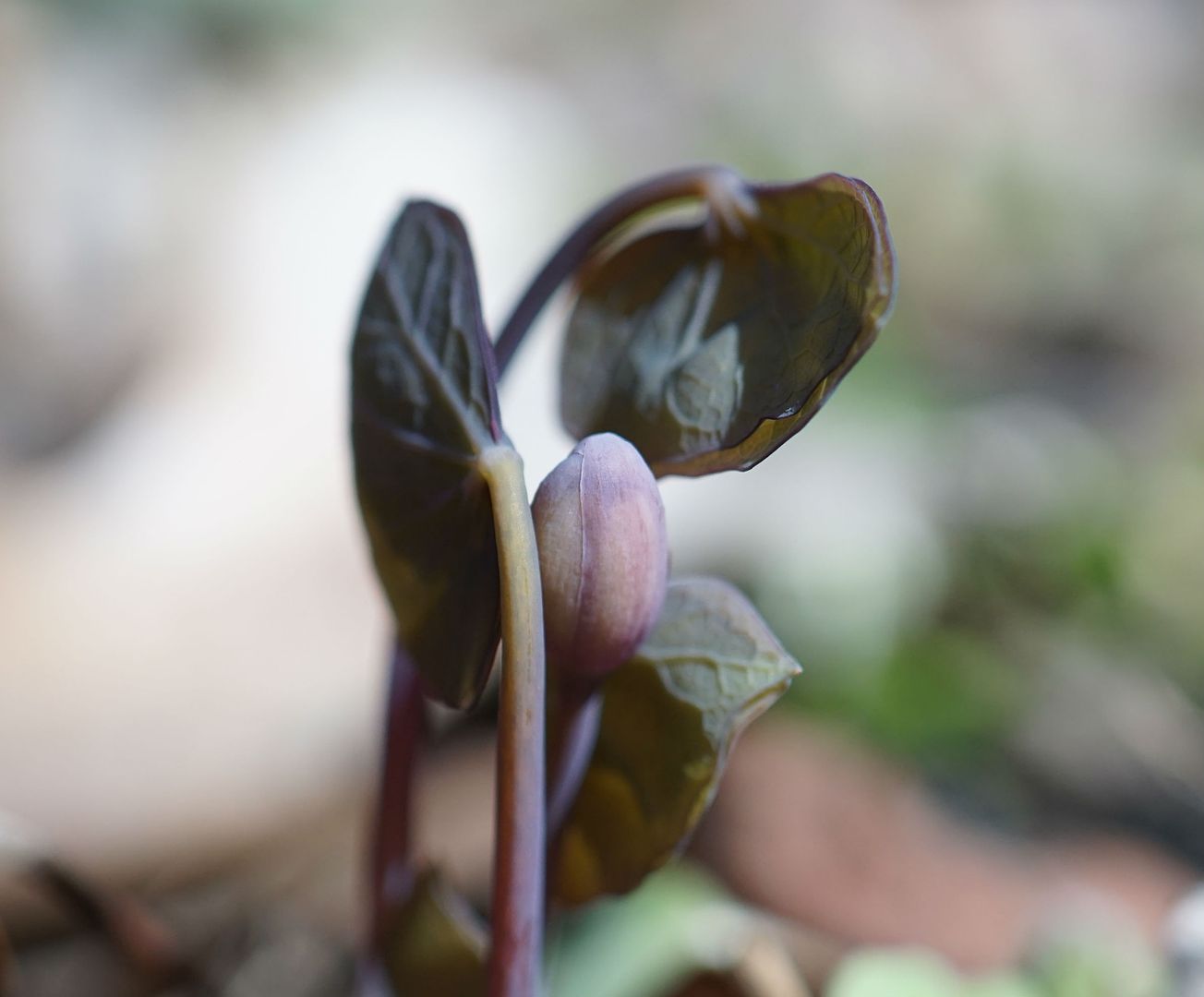
The Twinleaf plant featured in the video a few days ago, Jeffersonia diphylla. I'll be sure to take pictures when it opens.

Sunday, March 19, 2017

Camponotus chromaiodes colony 03/19/2017


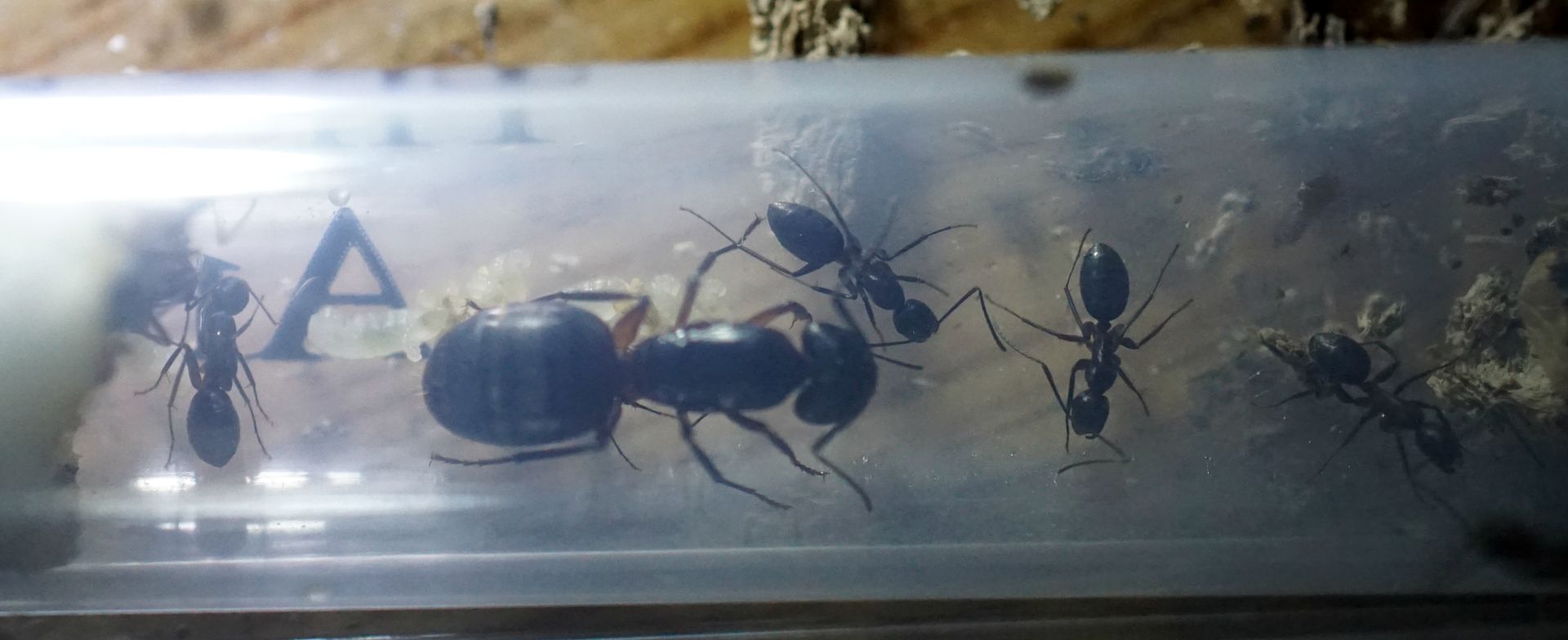
A colony of Camponotus chromaiodes which I obtained last August has started to wake up. The workers have started foraging and exploring their setup, which is nothing impressive. I'll be moving them to a new setup in a few weeks.

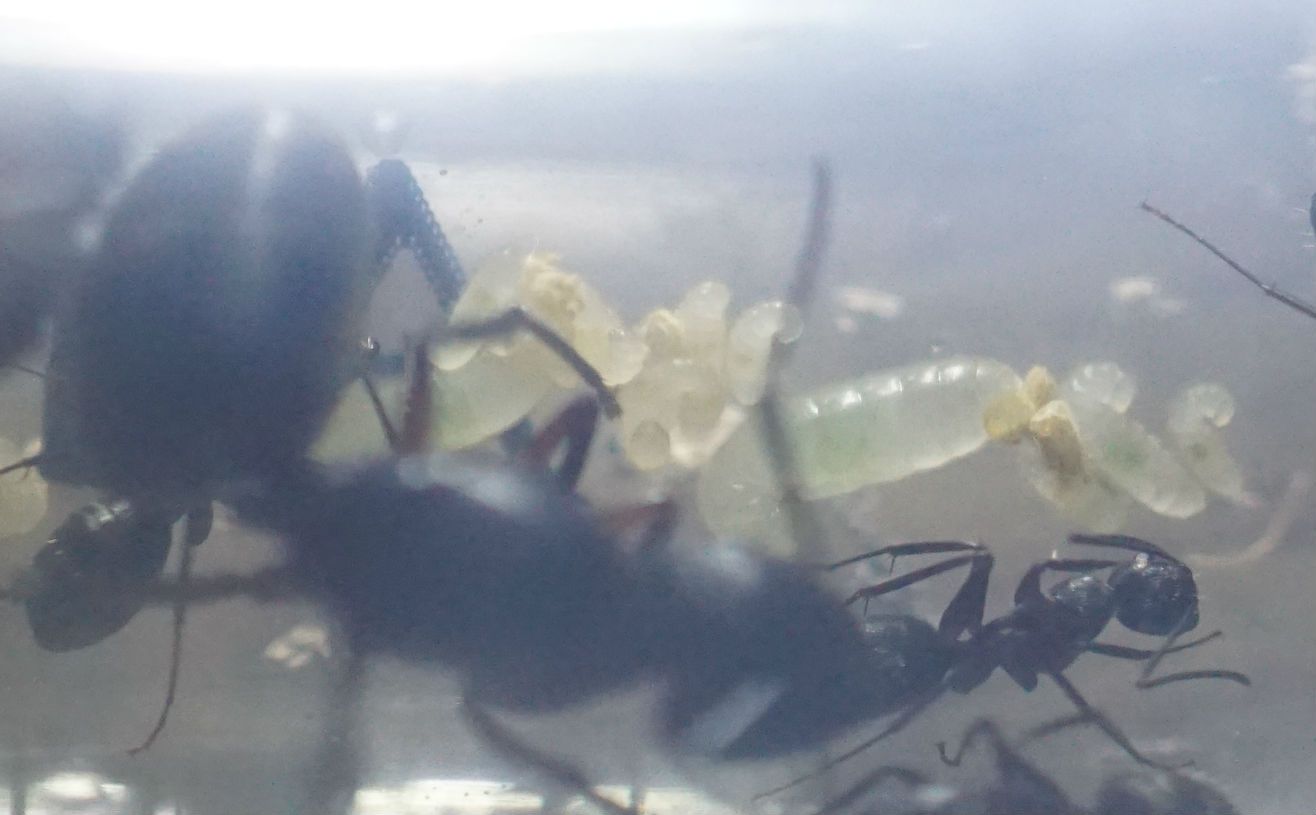
Also their brood has started developing again. Lots of ants have different strategies to survive the winter. For Camponotus their larva simply stop developing, remaining in the size as the two on the right. As food becomes available to them though they begin to develop.

Saturday, March 11, 2017

Wednesday, July 20, 2016

Myrmecochory: Ant Plant Seed Dispersal

It's that time of the year again. This is probably my favorite part about native plant gardening because it combines so many of our loved spring ephemerals with ants.

Ants are largely overlooked by gardeners despite being the most common insect (by number). Part of the reason gardeners don't appreciate ants is likely because they are generalist foragers. So it doesn't matter a whole lot what plants are growing in a garden, native or non; if you have soil and dead wood,  chances are ants live in your yard. 

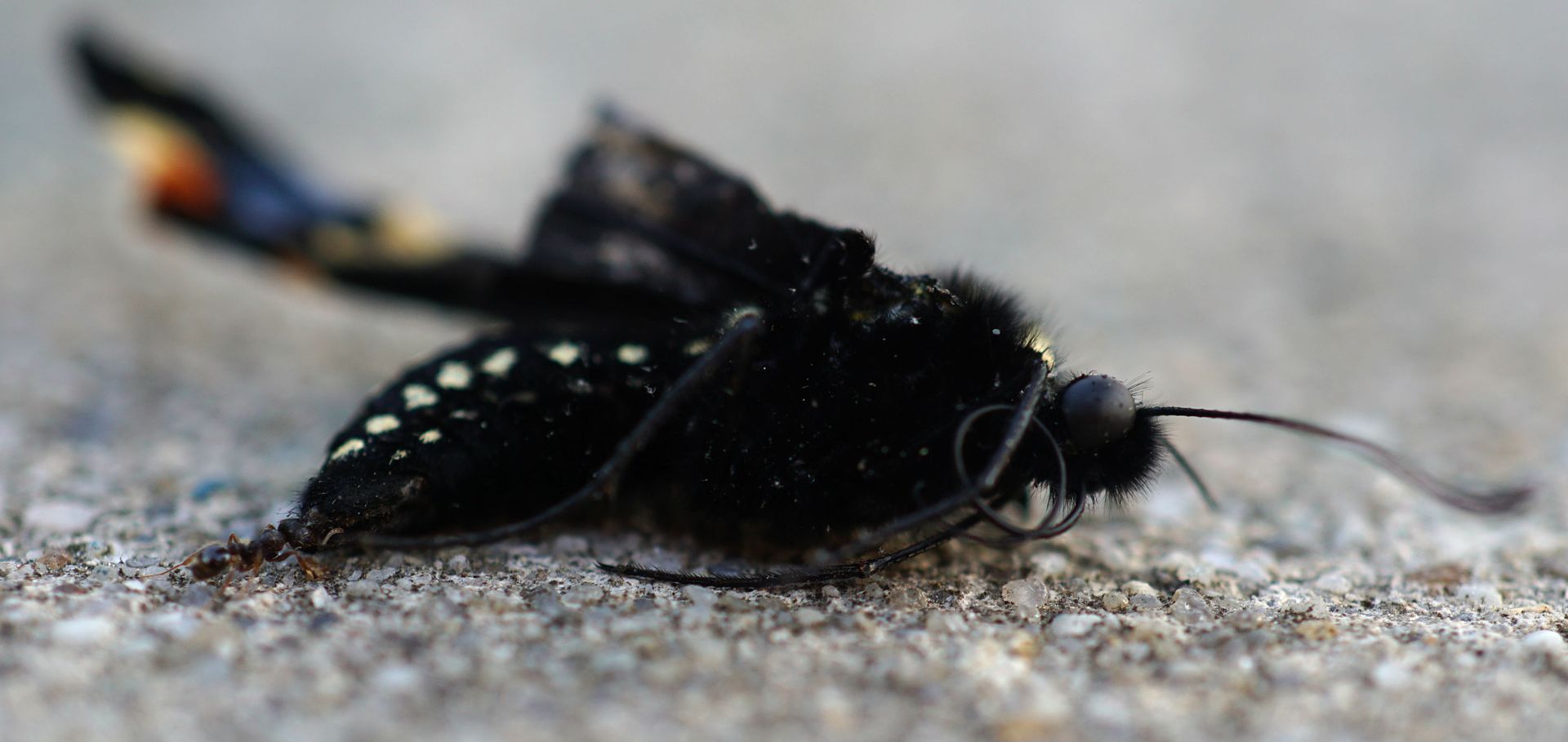
They play a vital role in removing dead insects. So after those big pretty swallowtail butterflies are done laying their eggs and visiting the flowers in your garden, ants are more than happy to collect, dissect, and consume their expired carcass. Though on the other hand, ants are also happy to remove butterfly eggs from host plants and often kill early instars to a lot of species. Ants don't forage equally on certain plants though, so it can depend on what's nesting near the tree/plant. Many caterpillars have defenses against ants too, but they're not always effective.

I have a Hackberry sapling that's about as tall as me right now. My dream is to someday see some Hackberry Emperors using it as a host plant. Every year though I got out there and find ants (Lasius alienus, Camponotus pennsylvanicus, C. chromaiodes, C. nearcticus, C. subarbatus, Temnothorax curvispinosus and Nylanderia faisonensis) foraging on the tree. They're mostly doing what's called nectar scraping where they wonder the plant licking and scraping the surface of the leaves to collect the small amounts of sweet sap that bleeds out of the leaves with the changing temperature of the day. The foraging power of 1 ant colony is enough to put a dent in the number of Lepidoptera eggs on a sapling; this one has 7 different species and likely multiple colonies of each constantly foraging on it, so I won't likely be seeing any Hackberry Emperors for several years.   

To a lesser degree, ants also think pollinators are delicious. They're mostly an issue with solitary bees, usually ground nesting or mason bee nests when discovered by ants. Ants typically don't dig into structures in search of food though, so as long as the burrows or tubes are properly secured with mud the developing bee larva should be safe.

My favorite thing ants do in the garden is called Myrmecochory, or ant plant seed dispersal. Even here though ants can be considered annoying. Let's say you paid $20 for a rare Trillium species, looking to start a clump of them over the next decade, which is how long many Trilliums take to flower from seed. Often though Trillium seeds have the annoying habit of walking away from the plant thanks to packets of "Elaiosome," a lipid rich substance on the seed, attracting ants to come and carry them home. 

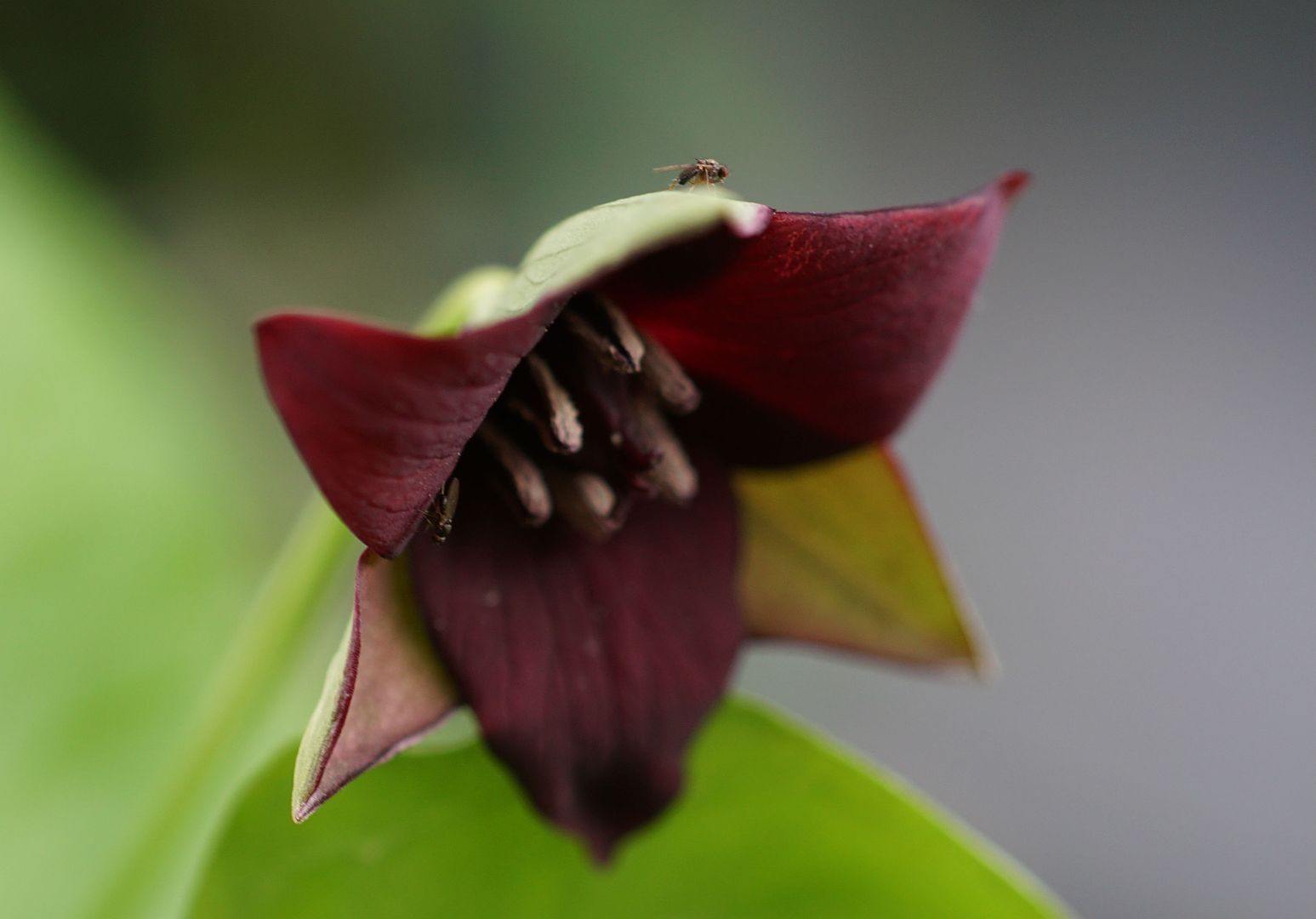
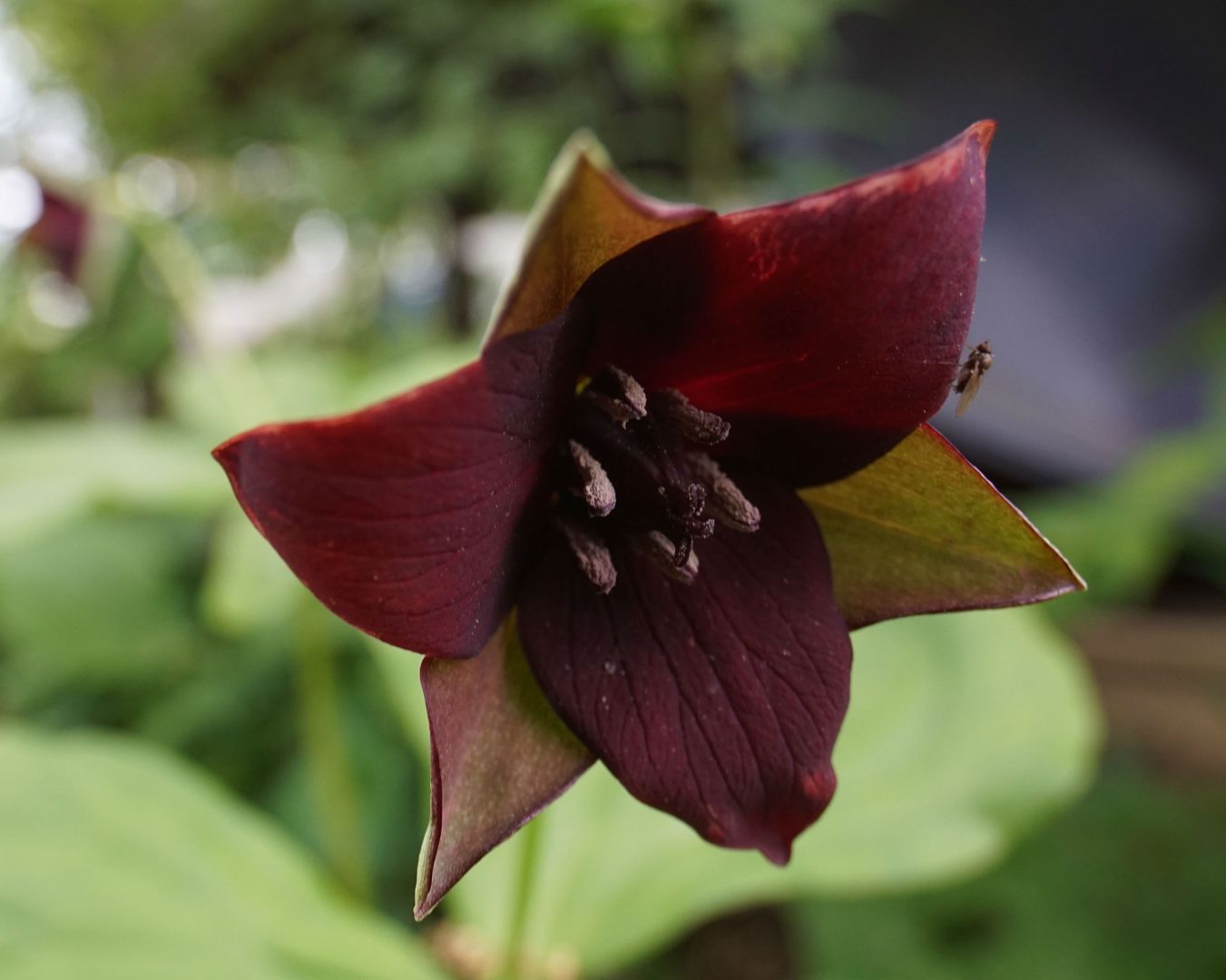
This is Trillium vaseyi, (I believe), which is pollinated by Vinegar Flies and other sorts of carrion insects. Note Vinegar Flies are sold in pet stores as "Fruit Flies" because that sounds better than Vinegar Flies. True Fruit Flies consume fresh fruit and tune delicious apples and berries into balls of maggots. Vinegar Flies target foods that have already spoiled, drawn in by the fermenting smell of yest, cider and dead fish, which is what this flower smell like.  

Lots of Trilliums are either pollinated by carrion insects or bees. In my garden this particular Trillium species isn't quite ready to produce seeds yet, though they flower every year. A rabbit or some other critter trampled through the Trillium garden and snapped the stems to the two plants of this species so I've yet to get photograph them. Fortunately I have 8 other Trillium species in my garden!

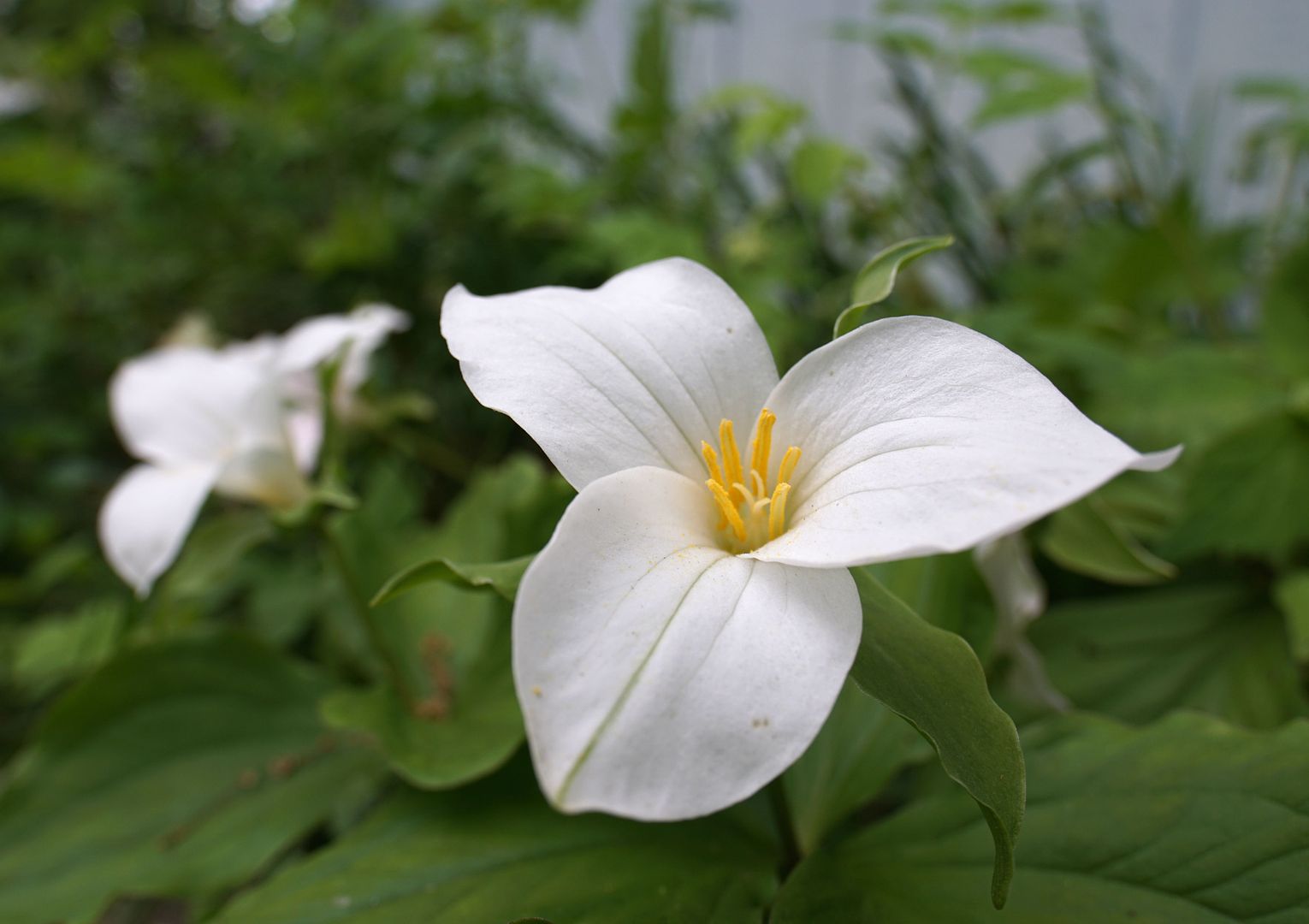
Trillium grandiflorum! This is by far the most common and easily recognized Trillium species. It's pollinated by bees and while I never witnessed any bees visiting my flowers I have seen honeybees visiting them in other gardens when planted in sufficient numbers. I'm certain Bumblebees and others must visit them on occasion too. Currently I have a clump of about 9 plants of flowering age. Each of which has a few off shoots underneath that will reach flowering age in years to come. I may even need to divide a few in a year or two. 

Admittedly things like Twinleaf, Violets, Blood Root, Hepatica, Woodland Poppy, and Bleeding Hearts have already dropped their seeds for ants to disperse. Trilliums are latest ephemeral plant in North America to drop their seeds as many of the ones I've mentioned are already dormant.

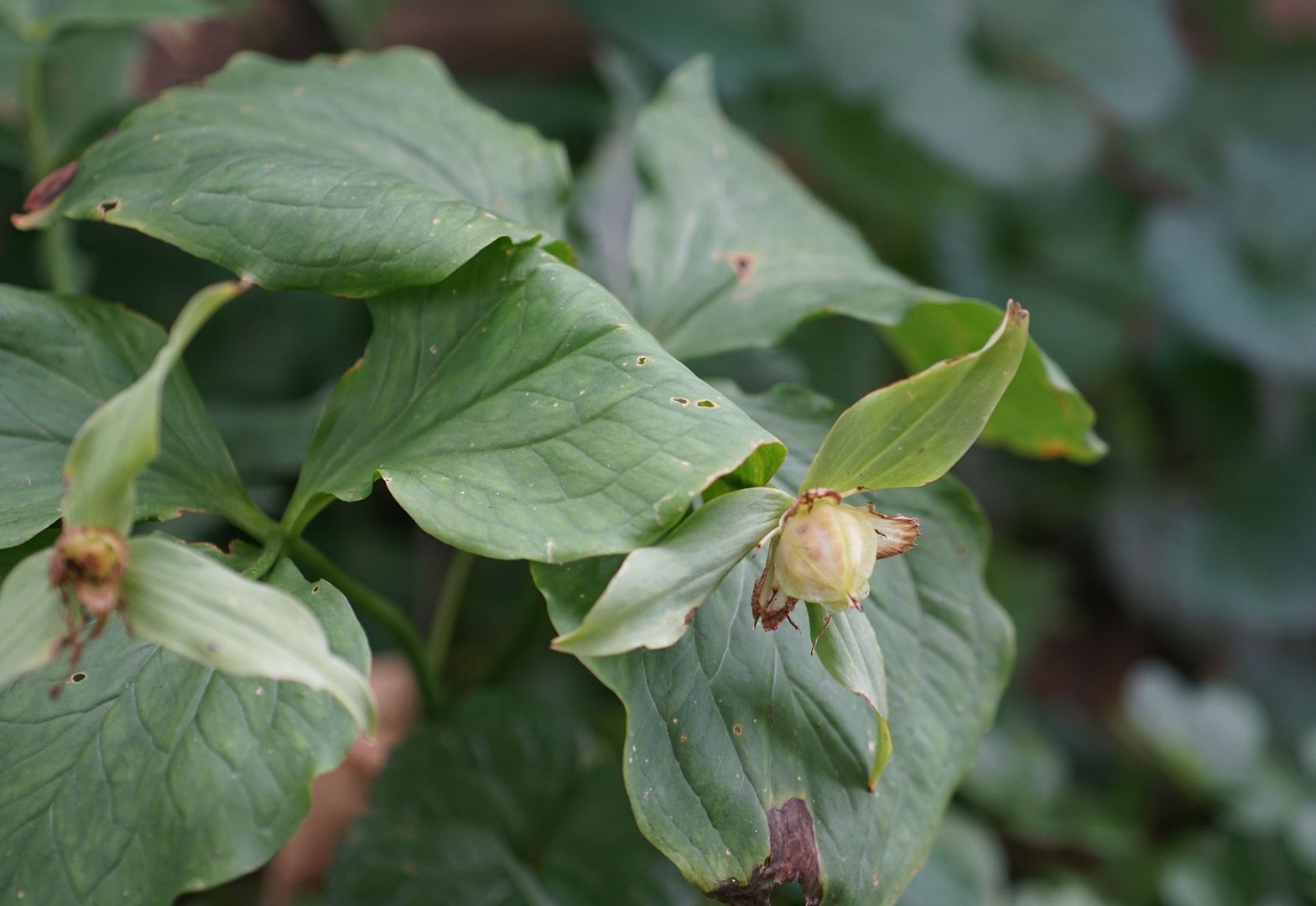
Note how the leaves to the plants photoed above are singed at the tips. If you don't water your plants, they will fry right up and abort the seedpod entirely. You can plant Trilliums in full sun and they'll grow happily but probably won't produce seeds because of how much sun they get. You can compensate for this by adding water but there's only so much watering can do. It's best to plant them in the shade with a small amount of mulch and a low ground cover growing underneath such as Hepatica or Stone Crop. I like to water the roots to mine basically every time I walk past with the hose, or once every other day. Just put the water to the stem and count to 10 for each plant. Even doing this though won't guarantee success. Note the plant to the left didn't bother producing a seedpod at all. Of 9 plants only 2 didn't make seedpods, lack of pollination is likely the issue. Some that did make seedpods made smaller than average ones.   

You can tell a Trillium pod is ripe when you can see the seeds right through the pod. Another thing to look for is a change in color. Some go from green to purple, others go from purple to green, some ends up as bright red, depending on the species. Seeing these changes, and especially seeing the seeds within, mean you're within 2 weeks of the seeds being ripe. Seeds should be hard, like unpopped popcorn. The longer you wait the more likely the pod will become damaged, where ants, wasps, birds, and rodents will make off with the seeds. I've found seedpods completely hollow inside thanks to a small puncture hole allowing ants to gain entry.
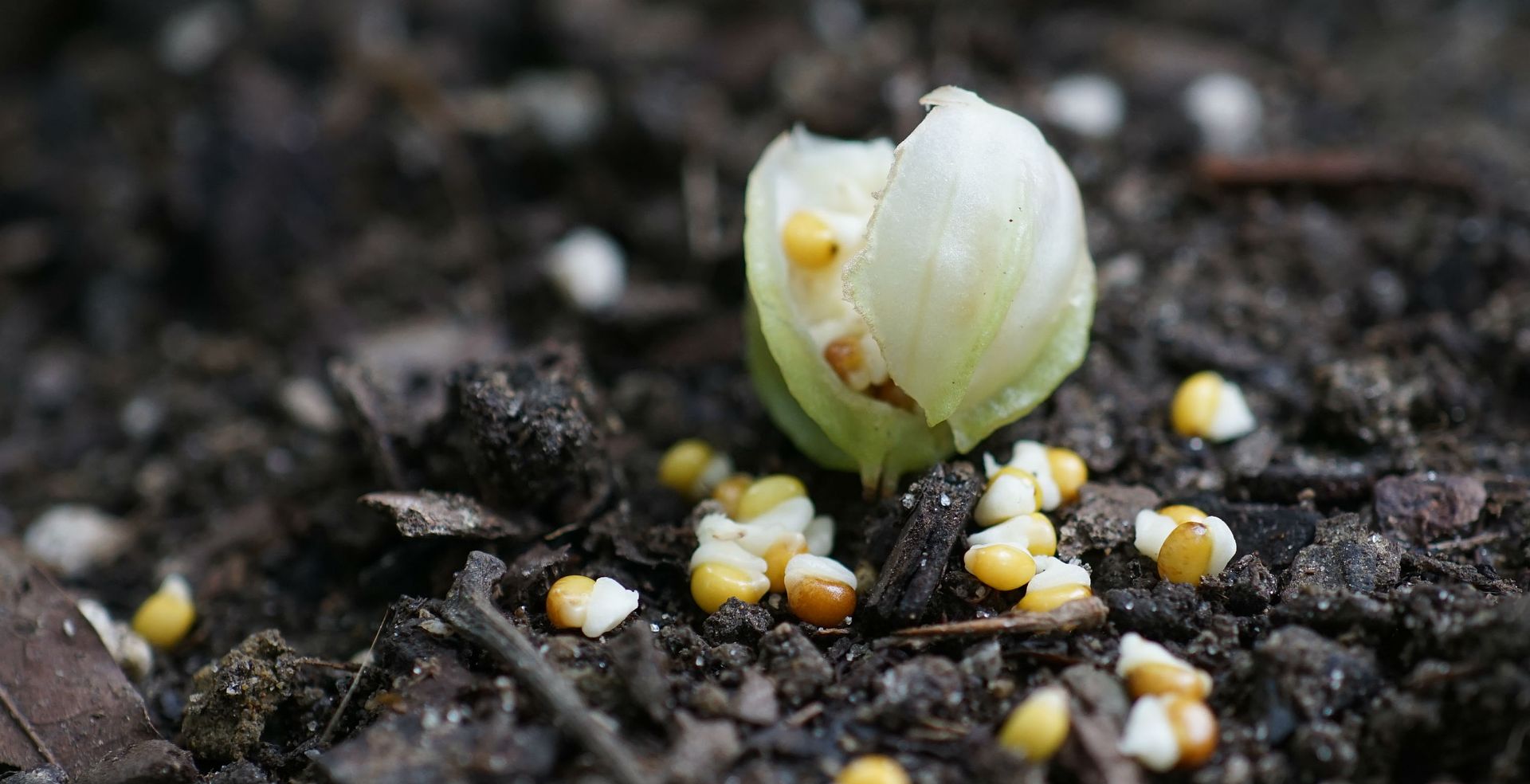
Ants planting the seeds is not necessary for germination! This is just how the plants disperse their seeds in the wild. For gardeners looking to start a bed of these, I'd say go ahead and crack open a pod or two and just dump the seeds out in a shallow ditch and plant them yourself. Ideally the elaiosome should be removed before doing this, however that stuff is really effing on there!!! You can't just cut it off or take your finger nail to it. The risk is sometimes a kind of mold or fungus grows on the elaiosome and may kill the seed... I've never seen this happen to an extreme degree though. Maybe let the seeds dry out for two hours before planting. 

Personally I like letting the ants carry the seeds off. The consequence here is that I get Trillium seedlings coming up in the lawn and in unwanted places. These are easy enough to transplant when I notice them, but determining what species they are can't be done for many more years!

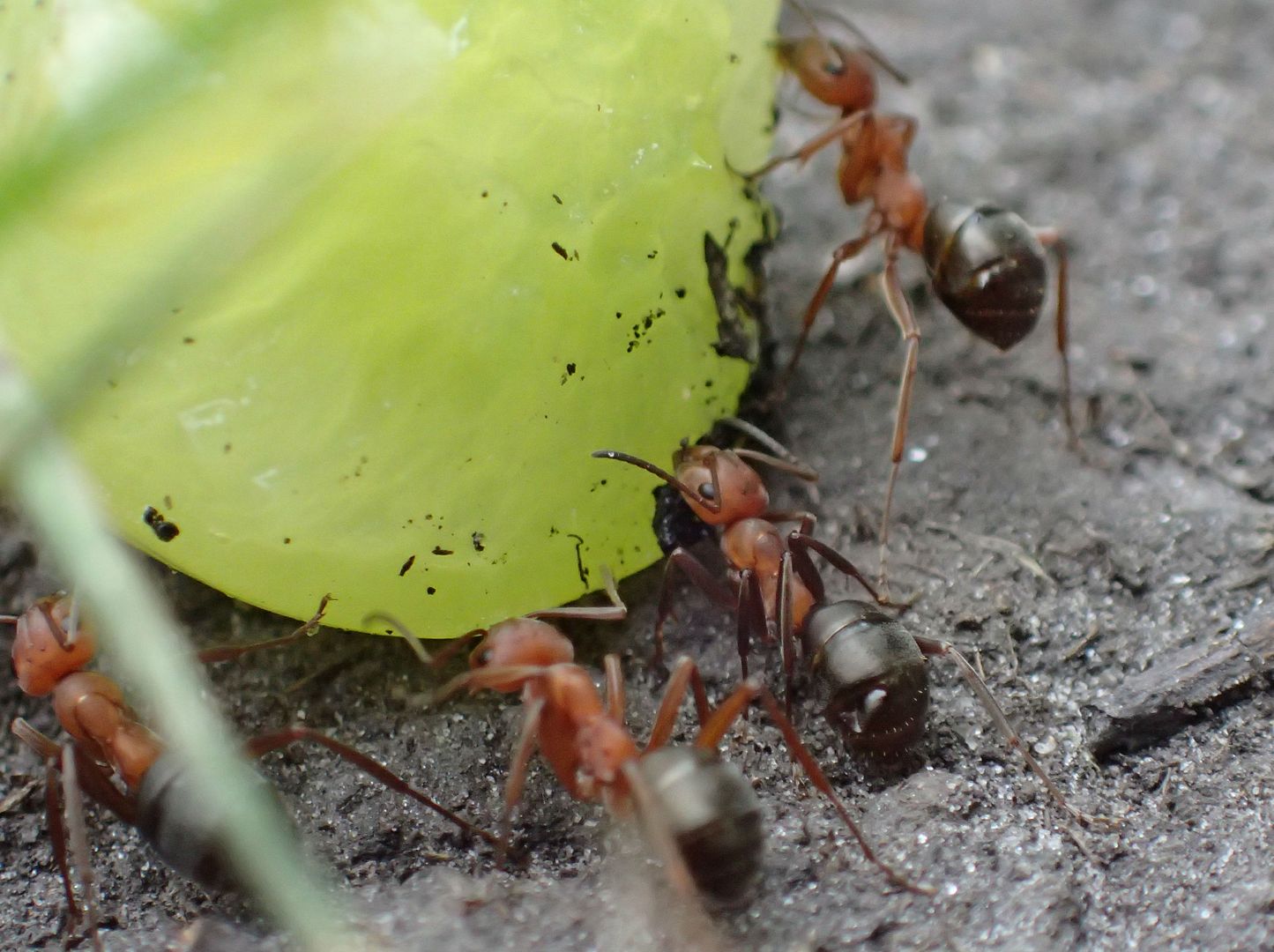
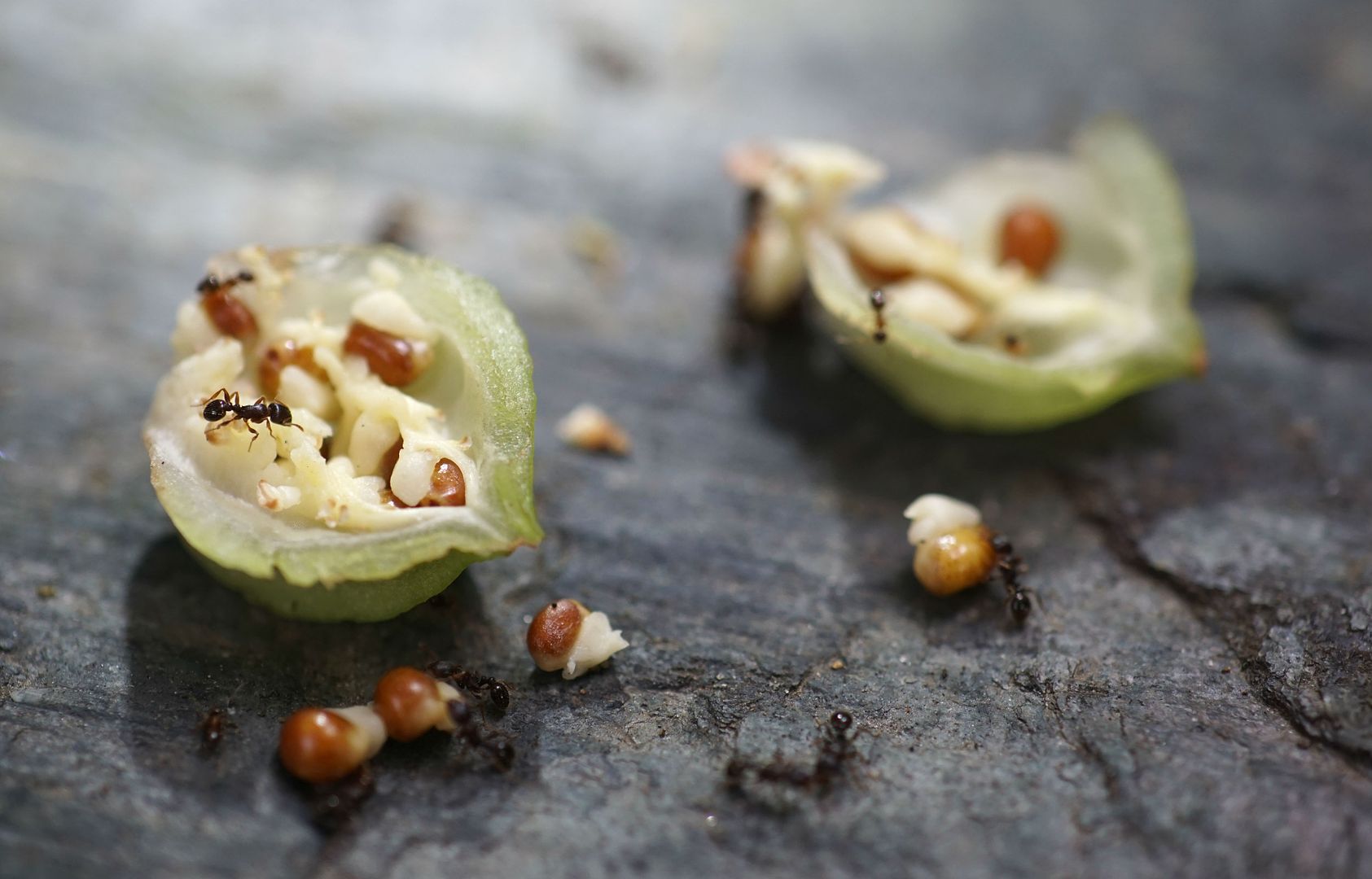
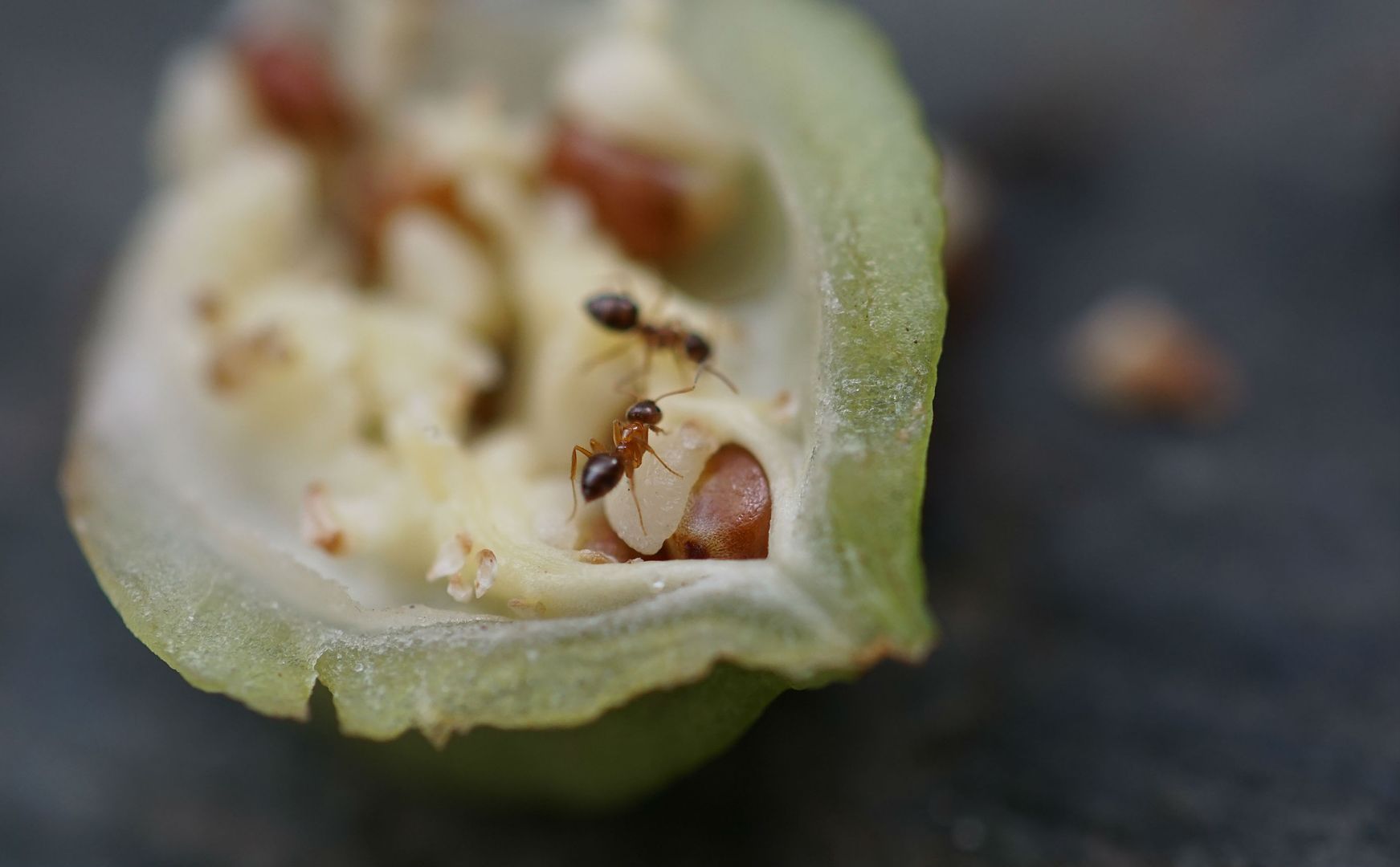
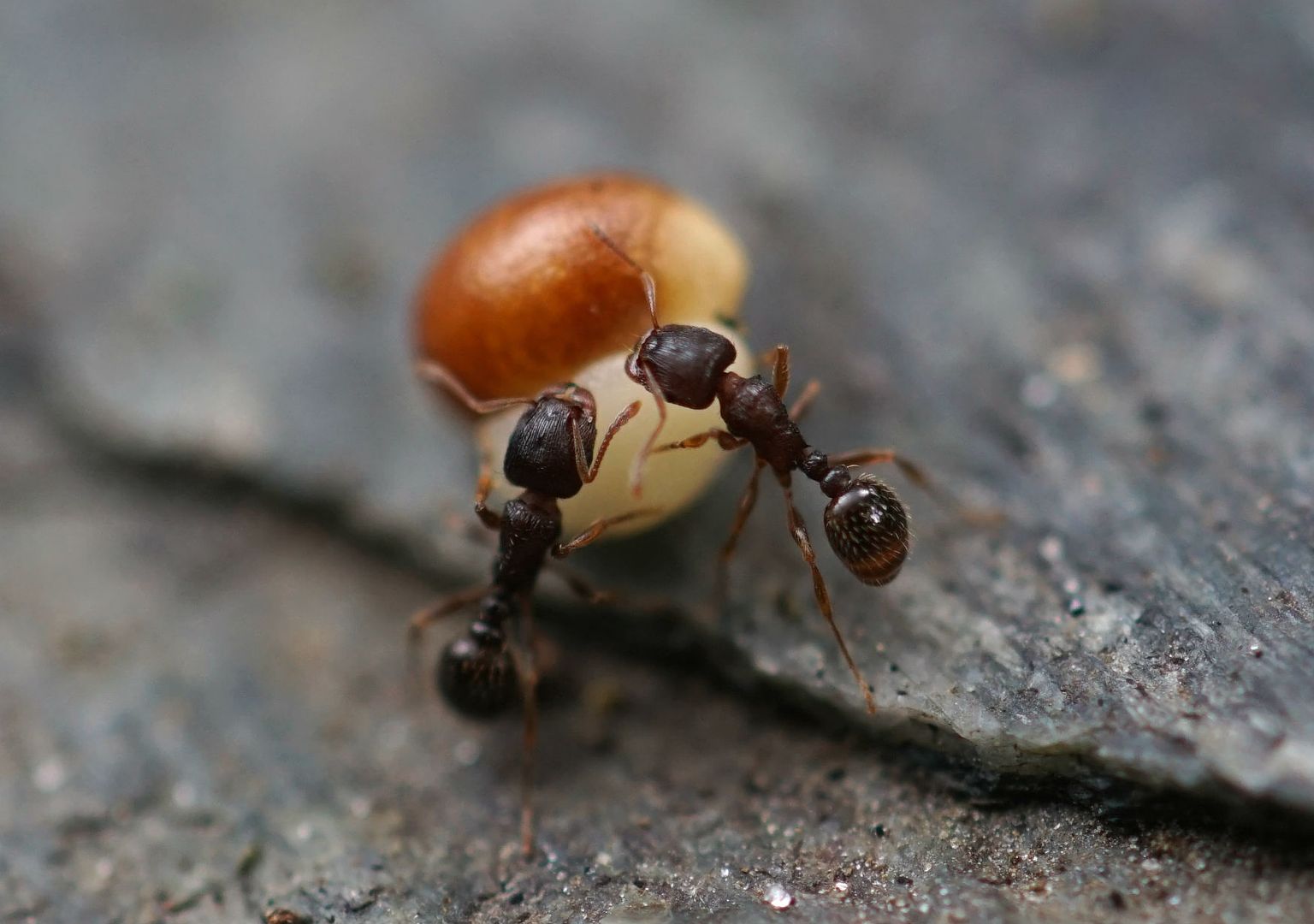
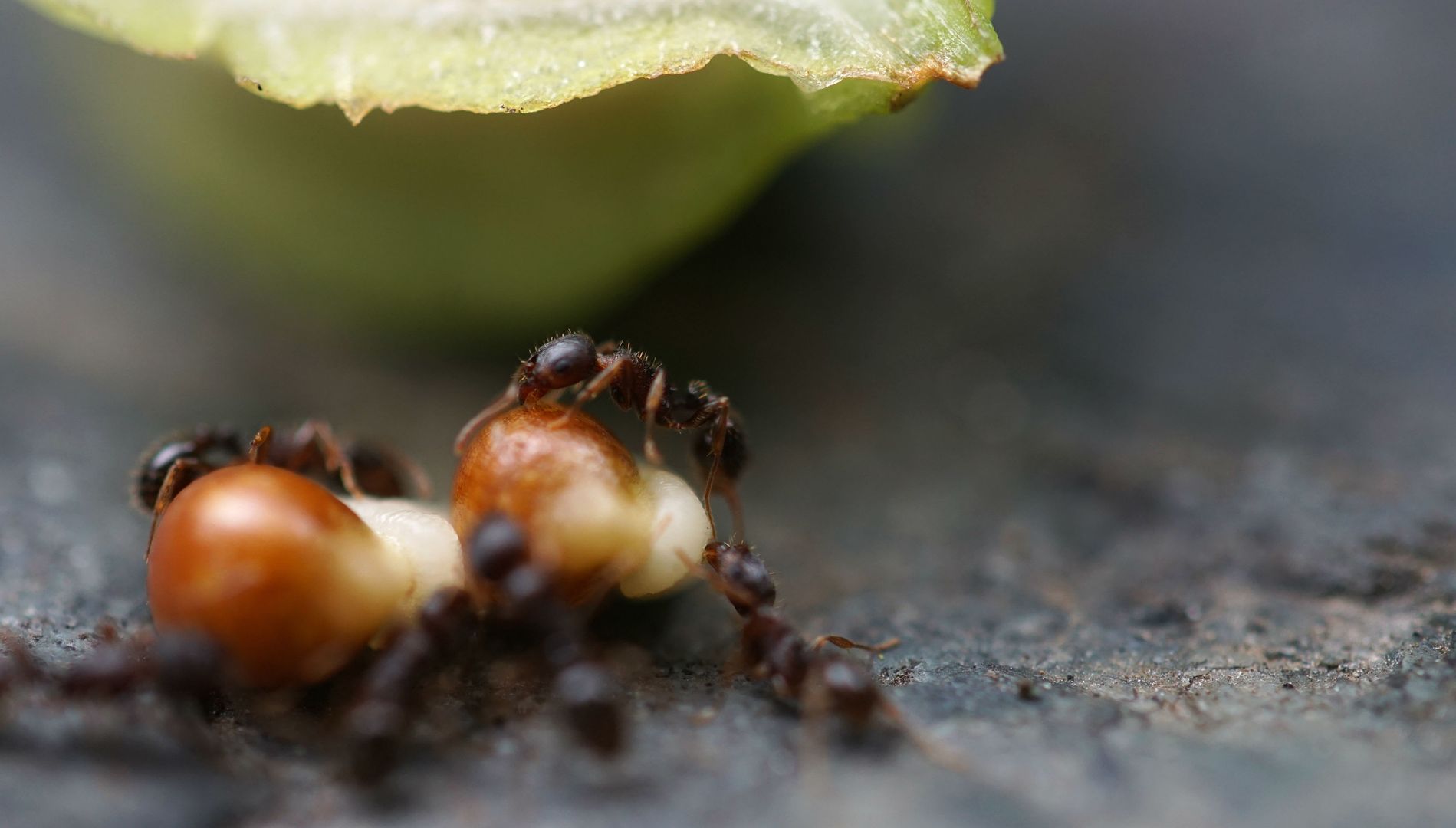
Shortly after a pod has become damaged, ants will more than likely find the seeds. Here a pavement ant, Tetramorium caespitum, has chanced upon the mother load.

Because dirt doesn't make for a thrilling background, I took the liberty of placing a seedpod on one of the stepping stones of my garden.

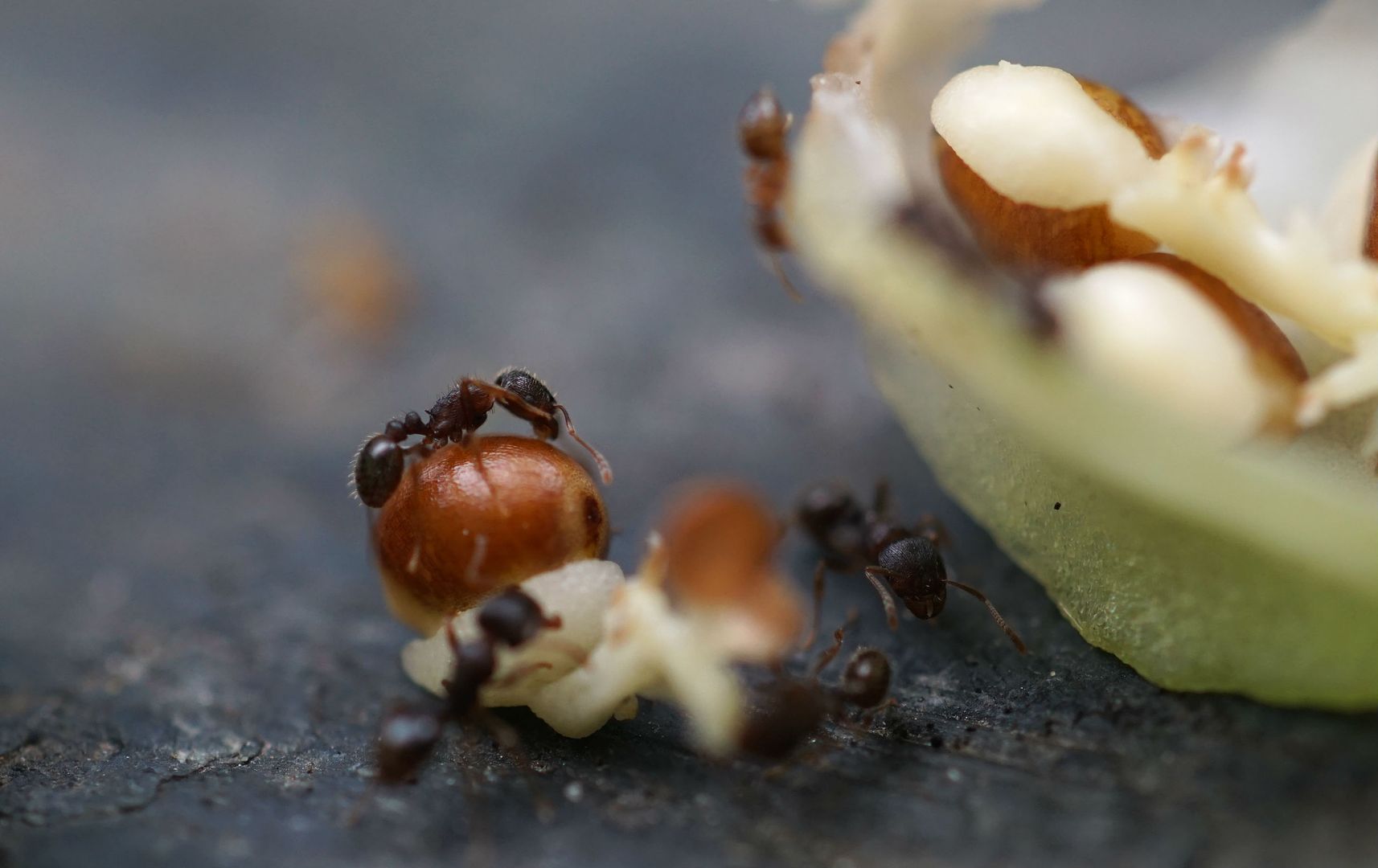
Nylanderia faisonensis is a nonnative woodland species that's slowly been invading areas rich in leaf litter. Nylanderia is a genus of tramp ants which are accidentally imported all over the world. Not all ants are ideal at planting seeds, and this is one of them. The ants are too small to carry the seeds anywhere, so instead of dispersing them as the plant wanted, the ants simply feed on the elaiosome where they found the seed. 


Tetramorium caespitum, Pavement Ants, do a better job but also are not native. Studies have been coming out finding that Nonnative Ants tend to favor the seeds to Nonnative Plants. In this case the Tetramorium were more than happy to disperse these seeds for me. (My yard also lacks any nonnative plant that has elaiosome on the seeds.)
Another risk facing Trillium seeds is the ants eating the seed along with the elaiosome. Trillium seeds tend to be rock hard for the first two years then soften up as they go to germinate. They are said to produce a fowl smell which is probably meant to encourage ants to move their nest elsewhere!

The ideal ant genus to be doing this seems to be Aphaenogaster which form abundant colonies of ~2000 ants throughout woodland settings. They're also very much in the habit of changing their nest location, so as the colonies move around they leave seed banks behind where plants like Trilliums tend to grow. There used to be a colony of Aphaenogaster rudis under this stepping stone which is why I picked it, sadly it seems the colony has moved on.

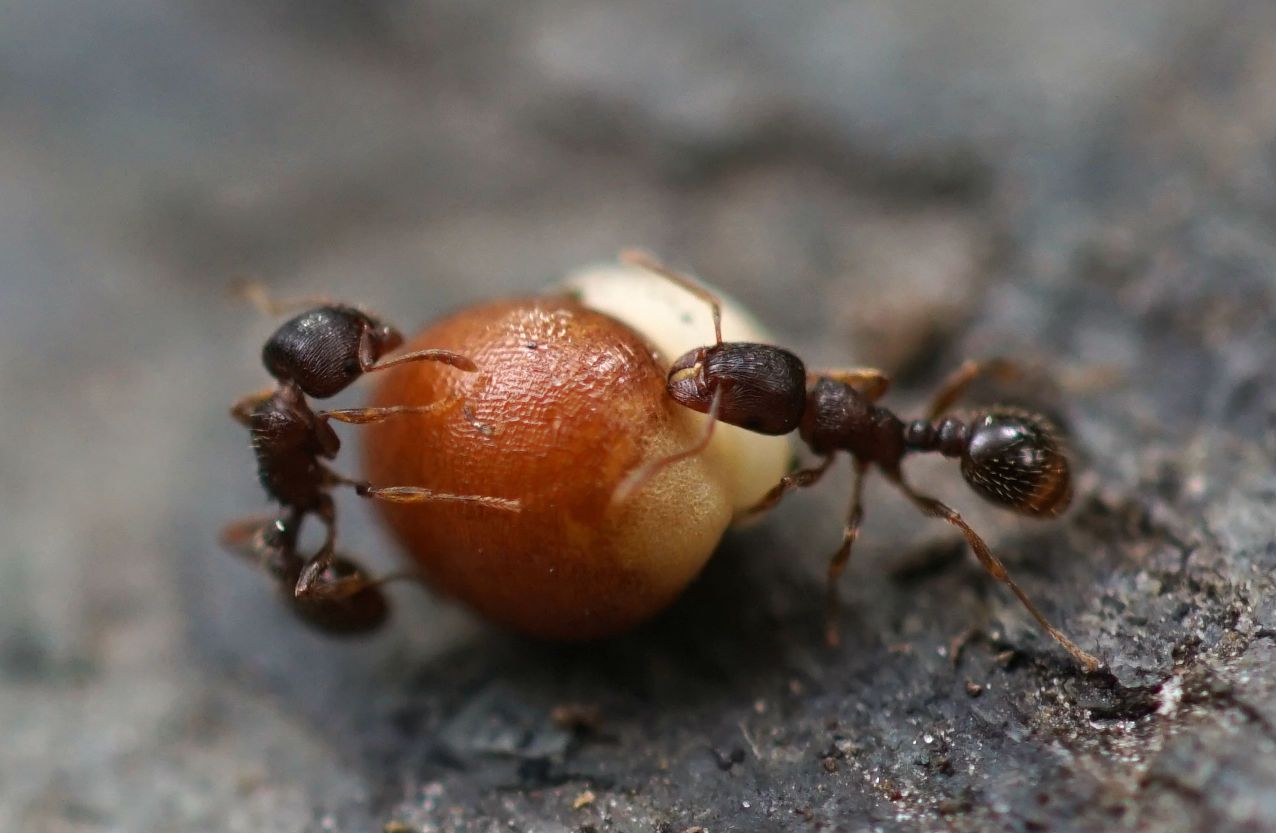
Two Pavement Ants trying to carry a Trillium seed home.

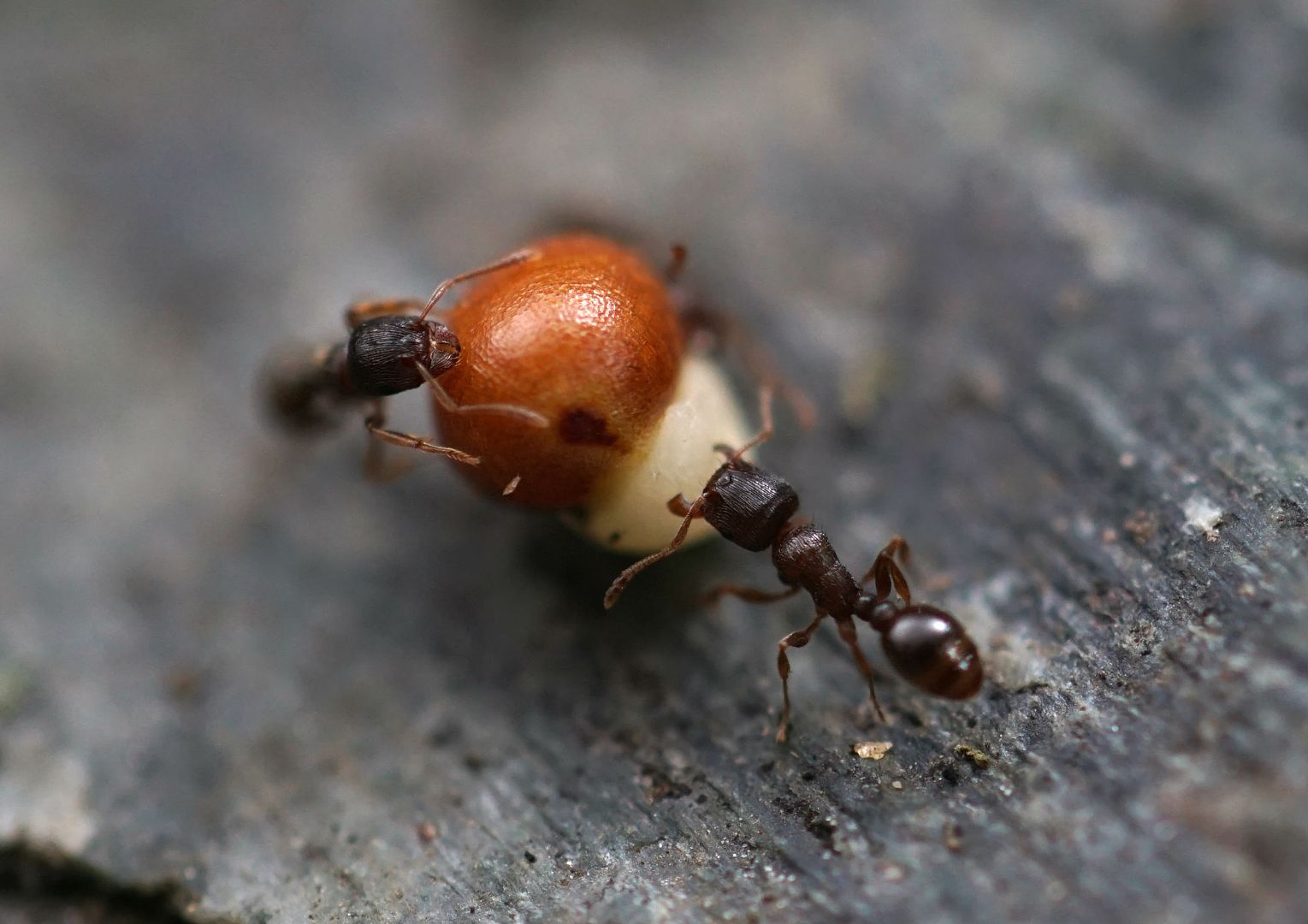
These ants are just big enough to handle the seed, though it still takes two of them to move it. Sometimes ants will actually give up after carrying the seeds a few feet. The seed is still dispersed from the parent plant but slightly at risk of being eaten by a rodent. Trilliums naturally grow best where there is plenty of leaf litter decomposing, and it's likely in these kinds of settings such discarded seeds are still successful. 

I love this shot.

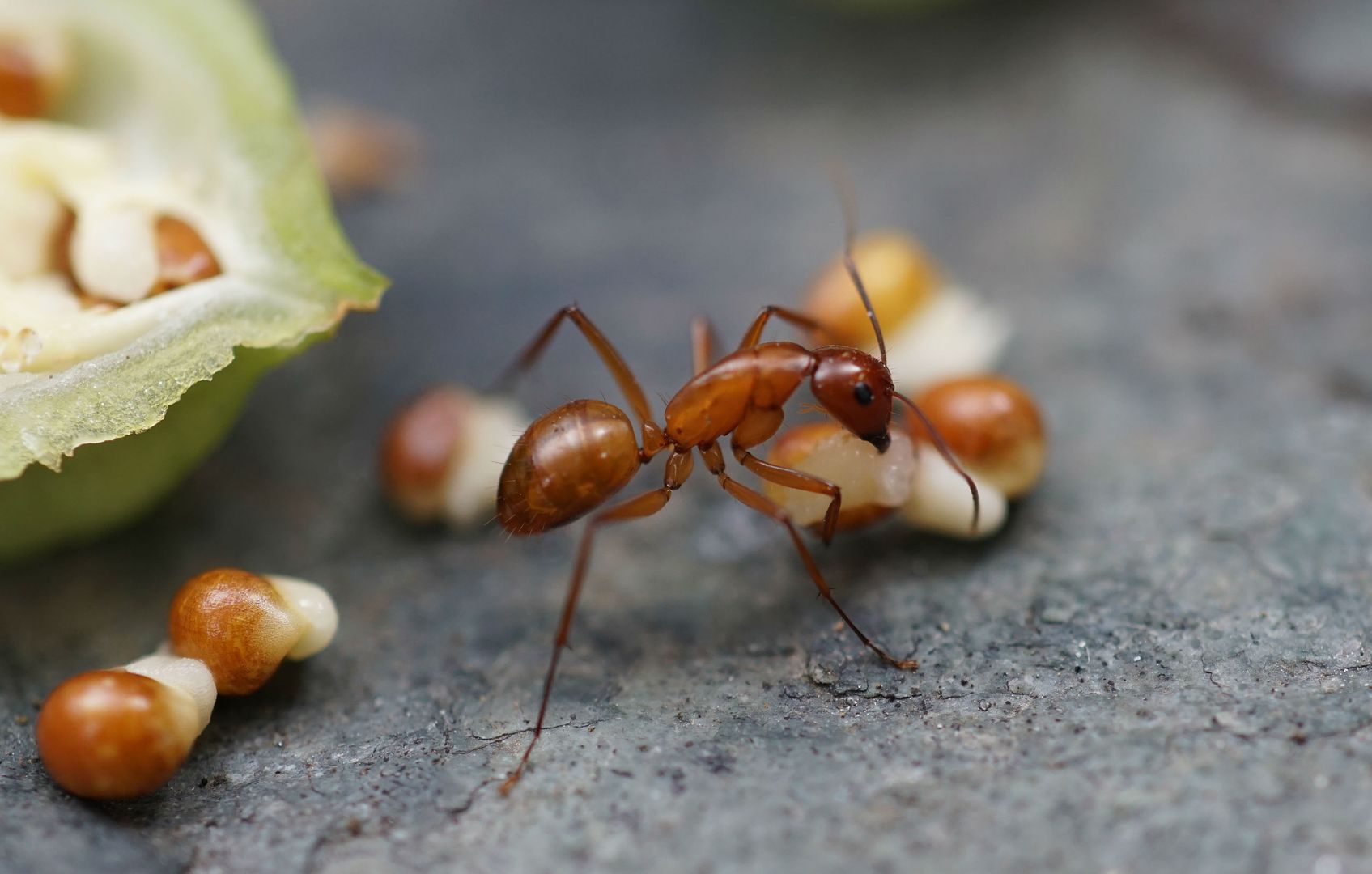
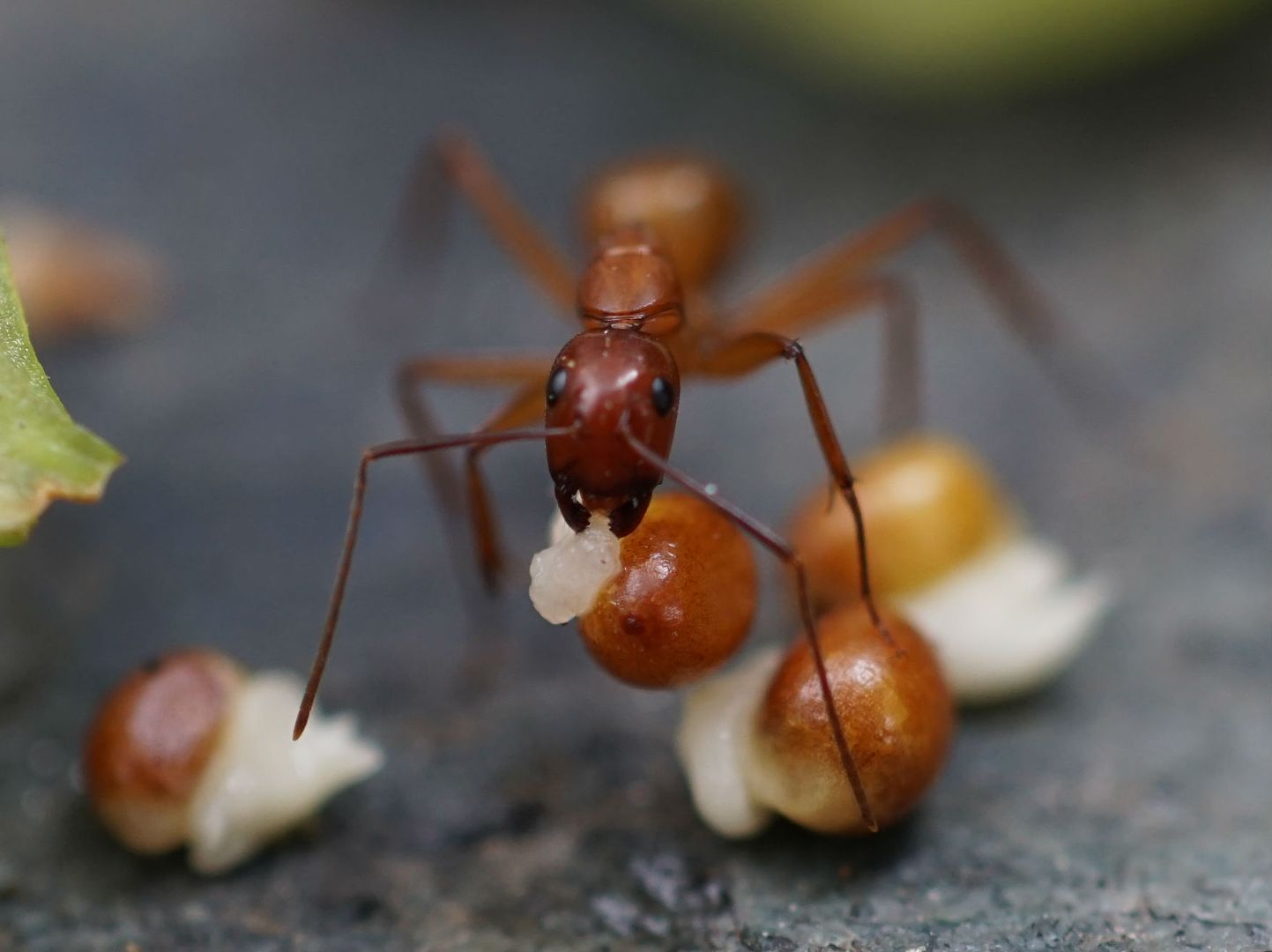
The larger, ground nesting, Camponotus castaneus does a great job of dispersing seeds too. In the past I had assumed the seeds might get lost 4' underground where these ants like to nest. As it turns out though after bringing the seeds home, they're discarded a short while later, once the elaiosome has dried up typically. While the seeds may not be planted, they are dispersed and left in the colony midden pile (trash heap) which is still better than nothing.

These are one of the most elegant ants in my opinion and I love their chestnut brown and orange color tone.