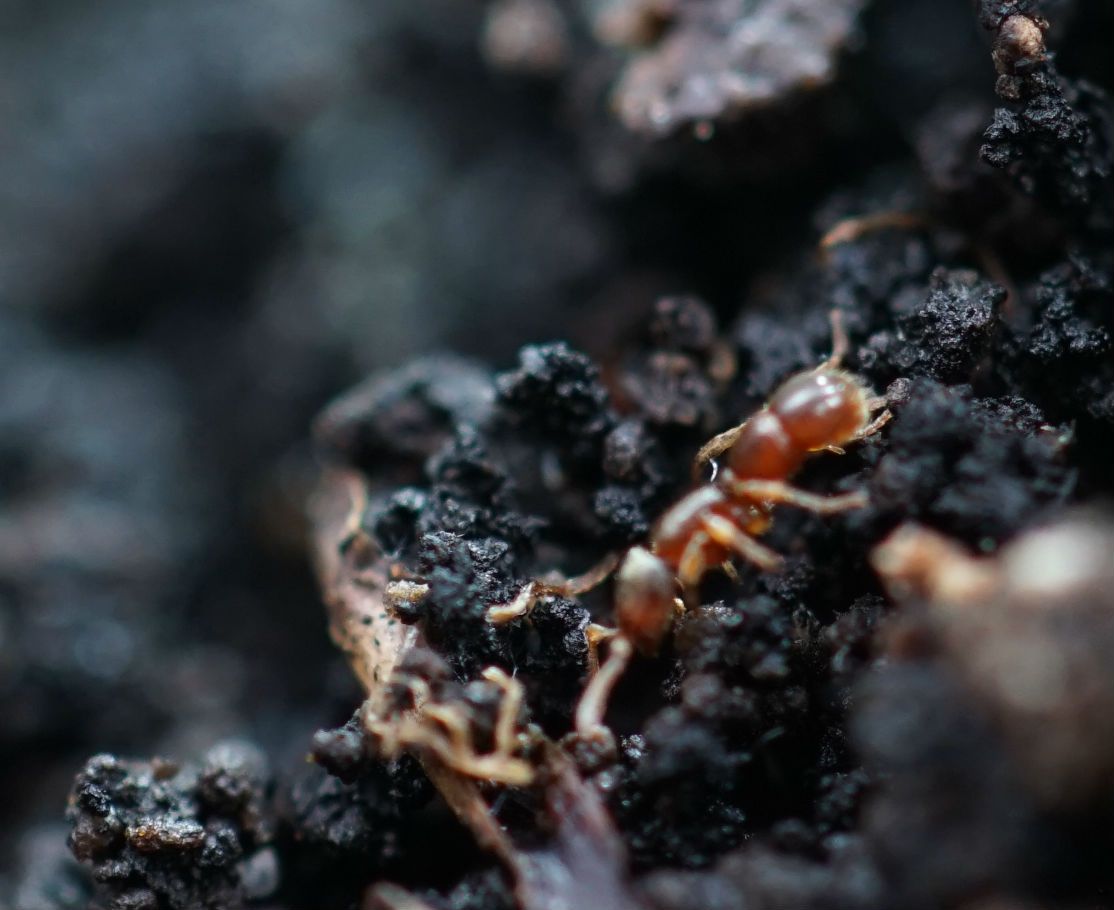
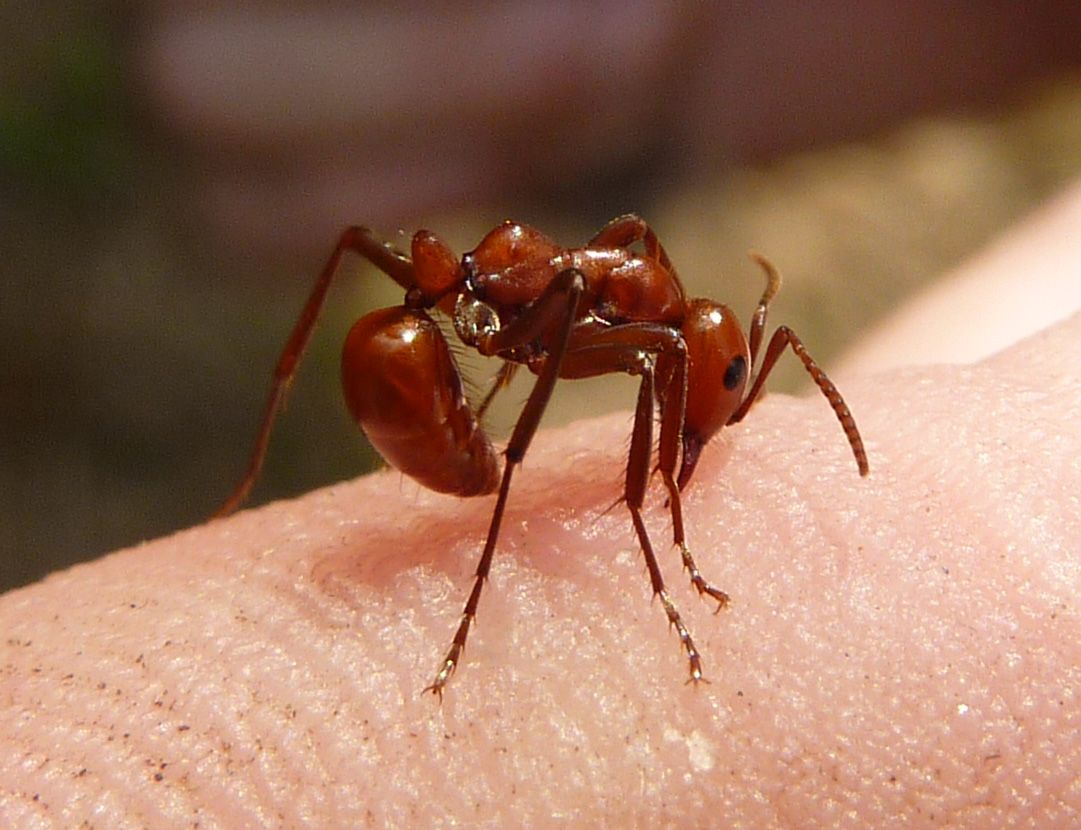
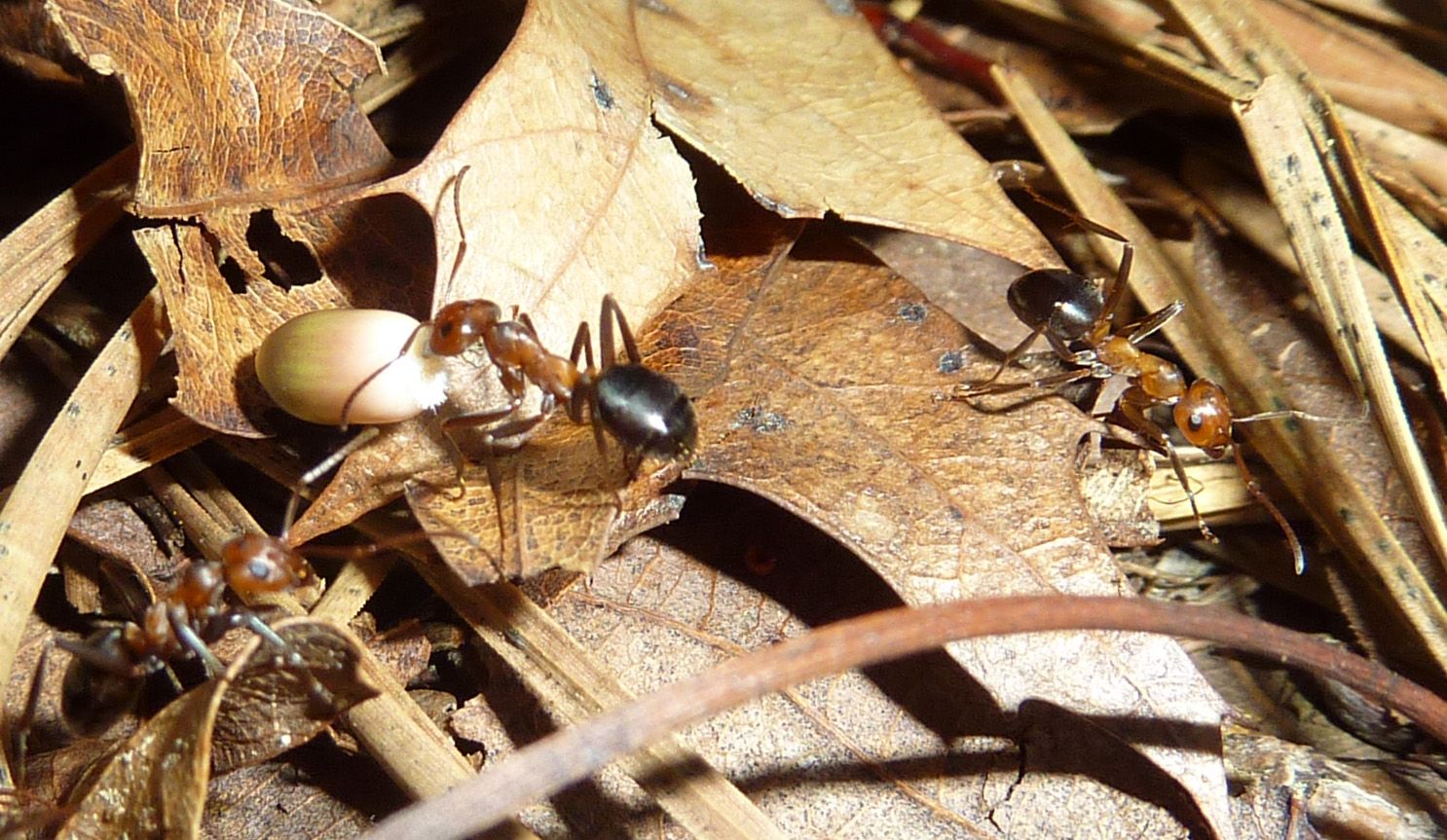
While trying to photograph Aphaenogaster dispersing Trillium seeds I chanced upon a few unexpected surprises. The only colony I was able to find actively foraging happened to be in an old stump, a former Norway Maple we had had cut down many years ago. To set the scene properly this was in the shade of an Eastern Redbud Tree and the stump is now used as a perch for a Mason Bee box as well as a stone dish we use as a bird's bath. Naturally we flush out the water every day or so to keep the mosquito larva down and the stump has been getting soaked for many years. The result seems to be idea for a surprising amount of ant diversity.
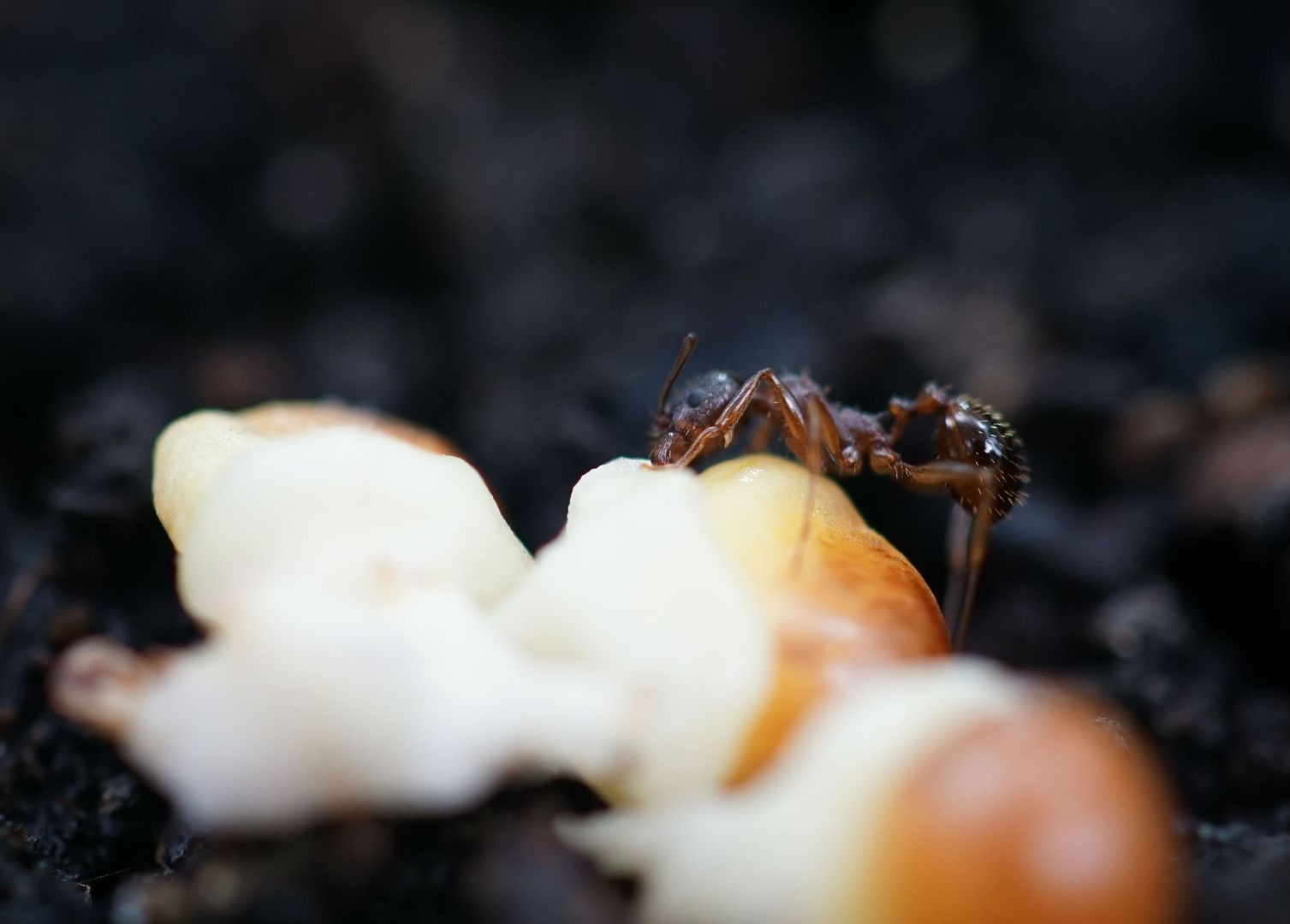
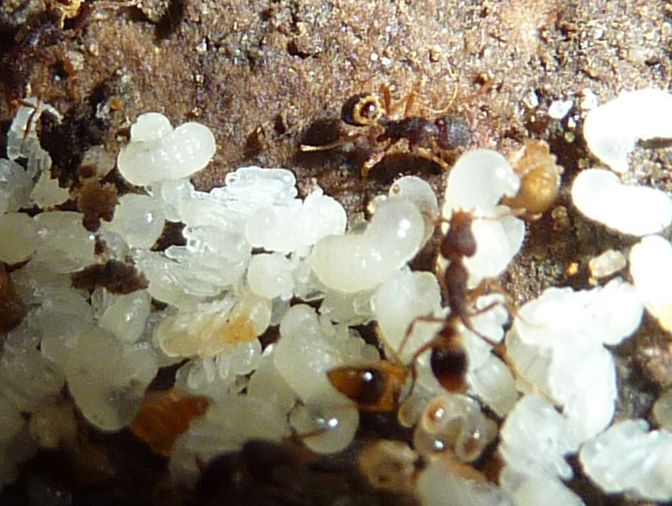
The stump is absolutely teaming with decomposing arthropods. Here an Acorn Ant, Temnothorax curvispinosus, has found one. Small soft bodied creatures such as this, especially ones smaller than the ants themselves make excellent ant food. It's likely several colonies of Acorn Ants are also nesting within the log.
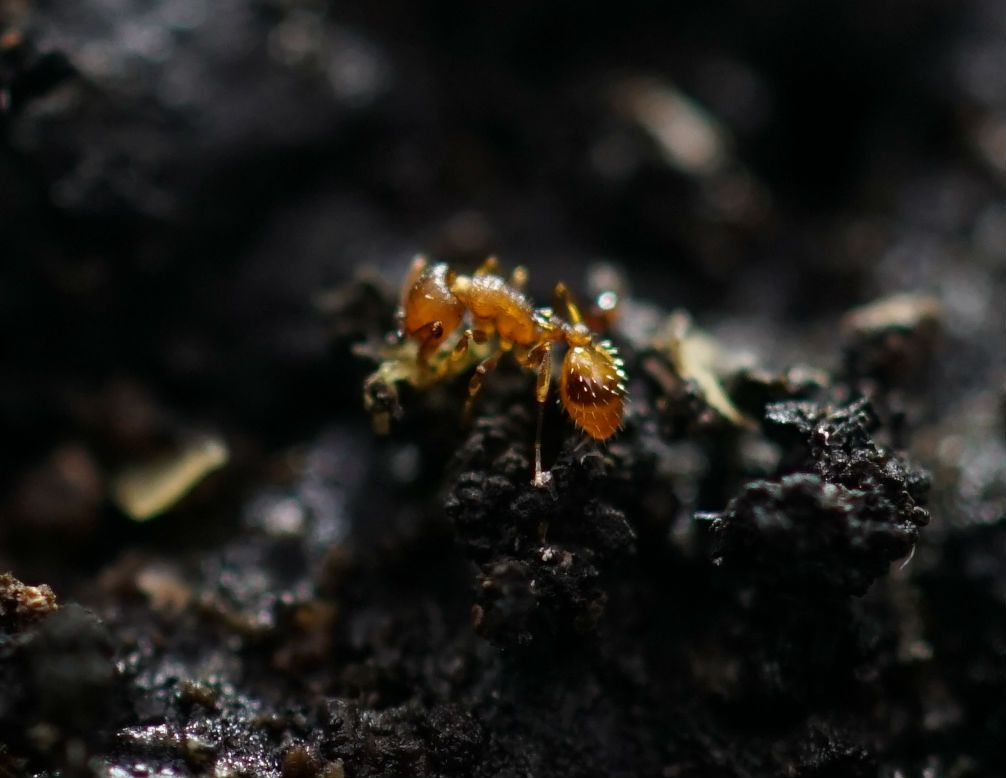
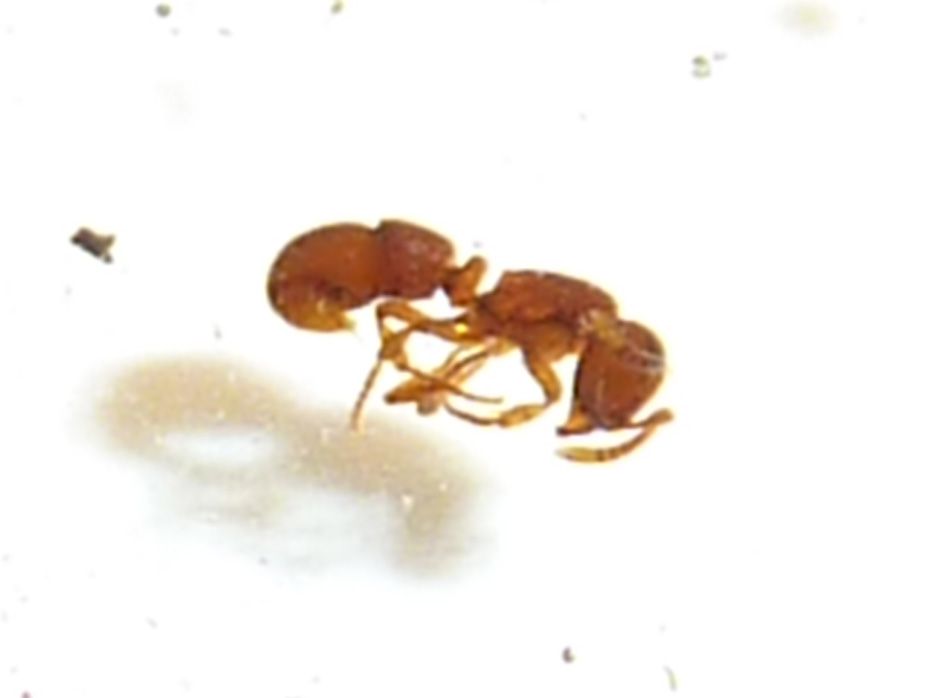
Here a Strumigenys pergandei has also caught something, I believe it's a spring tail. These ants are rarely seen because the only nest in shaded places that are "cold and damp." Cold refers to when they nest in soil, usually under a rotting log. Generally the soil will be cool to the touch, even in summer. They hunt and forage in rotting wood and leaf litter, often where decomposing insects and arthropods are abundant enough to have turned much of the dead plant matter into soil. Supposedly the yellowish structure on their waist segments, as well as the petal-like structures on their head and body are to help camouflage them from prey items.
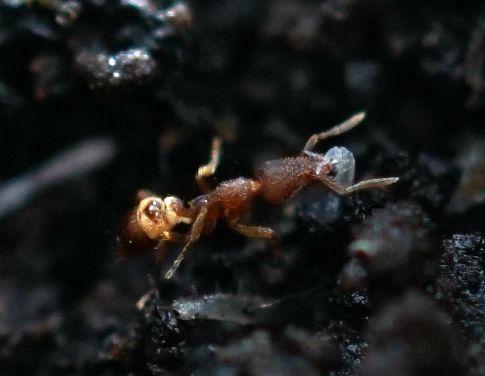
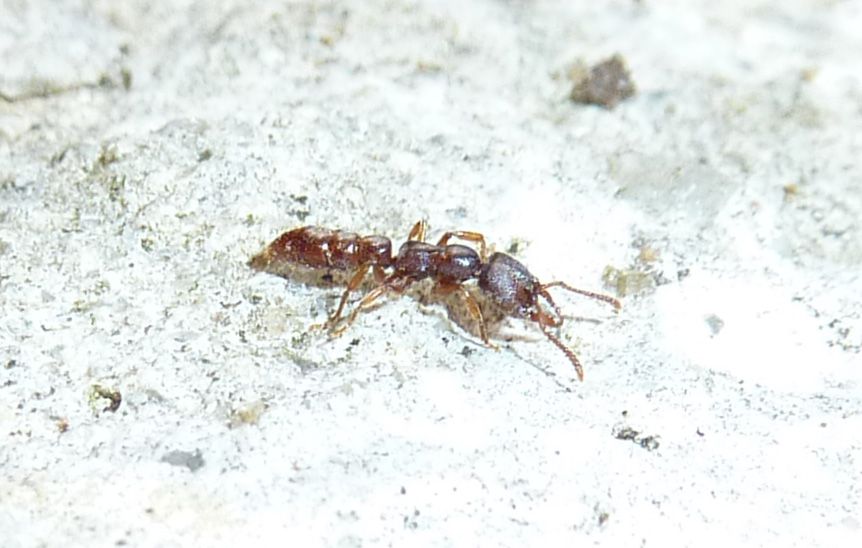
This is an awful shot of a Proceratiumsilaceum but they were there too. Even more cryptic than Pyramica, they have a front facing stinger on the end of their gaster (abdomen) so they can sting prey that's in front of them, in tight closed spaces, as opposed to having to turn around. They're worth a google image search to get the idea.
It's nice knowing these uncommon ants can still be found in my yard, because this is the first time in several years that I've seen either in my yard. Now I know where to look!
We spent most of the day at Rancocas where we found a lot of the usual suspects among ants. Camponotus chromaiodes, C. pennsylvanicus, assorted Aphaenogaster, Formica and Lasius species. Most of these are ants you can find in your own backyard or local park provided there are trees around, dread wood present, or rocks to look under.
Some of the rarer ants though included a Pyramica colony, which are specialized predators of springtails and only found in leaf litter and rotting wood.
The Pyramica colony we found in better detail thanks to Matt.
Proceratium is another such specialized predator. The end of the gaster in its normal state curves around to point forward. This allows the ant to sting pray items in the tightest of spaces. This is not an ant one typically finds without sifting through leaf litter and dead wood.
Stigmatomma pallipes, (formerly Amblyoponera) is a specialized predator of centipedes. After taking down a pray item they haul it back to the nest for their larva to devour. In normal ant societies the larva would then regurgitate the digested food for the workers, however these ants don't do that. Their common name Dracula Ants because the workers will puncture their own larva in nonlethal ways to feed on the hemolymph (insects blood) within. A pretty cool find if I do say so myself.
Polyergus lucidus was another cool find, and somewhat more common. They're parasitic ants that raid Formica colonies for developing cocoons. Brought back to the nest the young Formica workers are born into the Polyergus colony and go about their normal tasks of foraging and maintaining the nest. Polyergus are sometimes called slave raiding ants because of this but the term isn't all that accurate. The Formica workers are doing what they would do naturally had they been born into their own Formica colony.
Formica exsectoides by far was the most impressive ant I've seen to date. Their mounds are massive, they forage a good 60 to 90 yards away, they setup sub colonies pretty much wherever there is sun, and you can hear them rustling through the leaves of the forest floor. They spray acid to fend off bear attacks on their mounds! These ants are awesome!
Overall this was a successful ant trip, and I hope to do this again next year.