Showing posts with label Spiders. Show all posts

Saturday, September 16, 2017

This Week in Anting 09/16/2017


 This week I got to try PawPaws for the first time ever and Lasius neoniger flew! 

Asimina triloba is the northern most member of the custard apple family which is largely tropical. This is the only species native to the United States and one of the few host plants to the Zebra Swallowtail Butterfly. The flowers are pollinated by small vinegar flies and are supposed to require a second cultivar or genetically different tree of the same species in order to produce fruit.... but this is the only tree in my yard and probably the only tree in the whole county. It would seem this cultivar is semi-self fertile. The tree is roughly 12' tall and produced 12 sizable fruits though not on every branch that flowered. Presumably had there been a genetically different tree nearby it would have made even more fruit. (It's either 'Sunflower' or 'Pennsylvania Gold')

The smell is amazing when ripe or slightly damaged. The fruits perfume the air with a fragrance that leaves one assuming some sort of Banana and Orange factory has exploded somewhere. It's very potent and alerts the homeowners, hikers, and wildlife that the fruit is ready. 

The inside texture is somewhat gooey verging on vanilla pudding except for the fairly large and flat seeds with are like skipping stones or pebbles. The taste of a slightly unripe one is that of bananas with hints of cantaloupe (or musk melon as it's known in most of the world). A fully ripe one tastes more like a really sweet banana with a candy-like quality to them. It's a shame this fruit has such a short shelf life of about a day and a half because that's been the main reason it hasn't become main stream. (When they are for sale they can sometimes go for $15 a pound!)
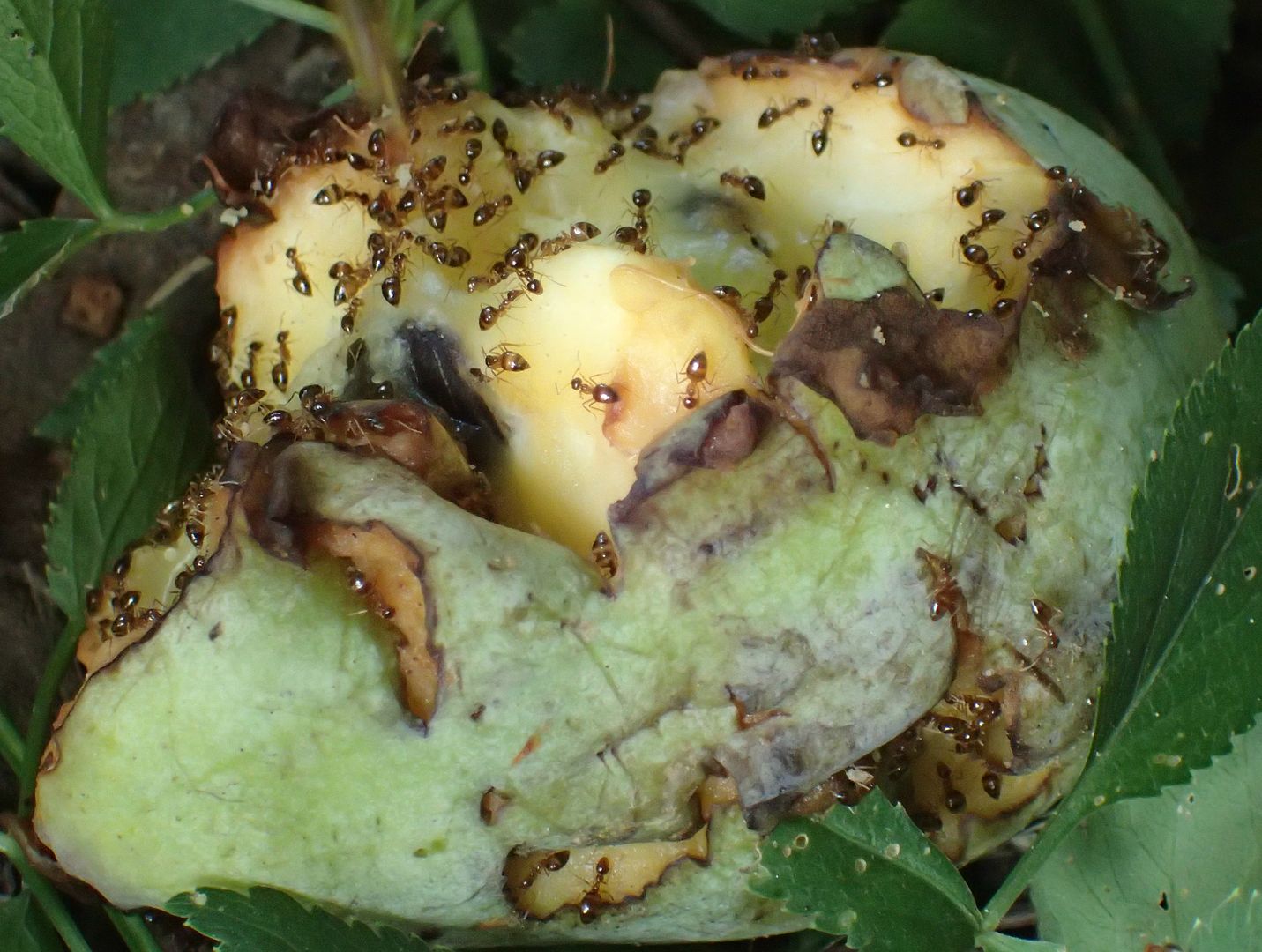
 Fruit such as this is intended to be eaten by animals and carried away from the tree in the wild. If it just falls to the ground though it falls on other creatures to then remove the fruit and free the seeds within. Fungus and mold will do the job otherwise but may also destroy the seeds within.

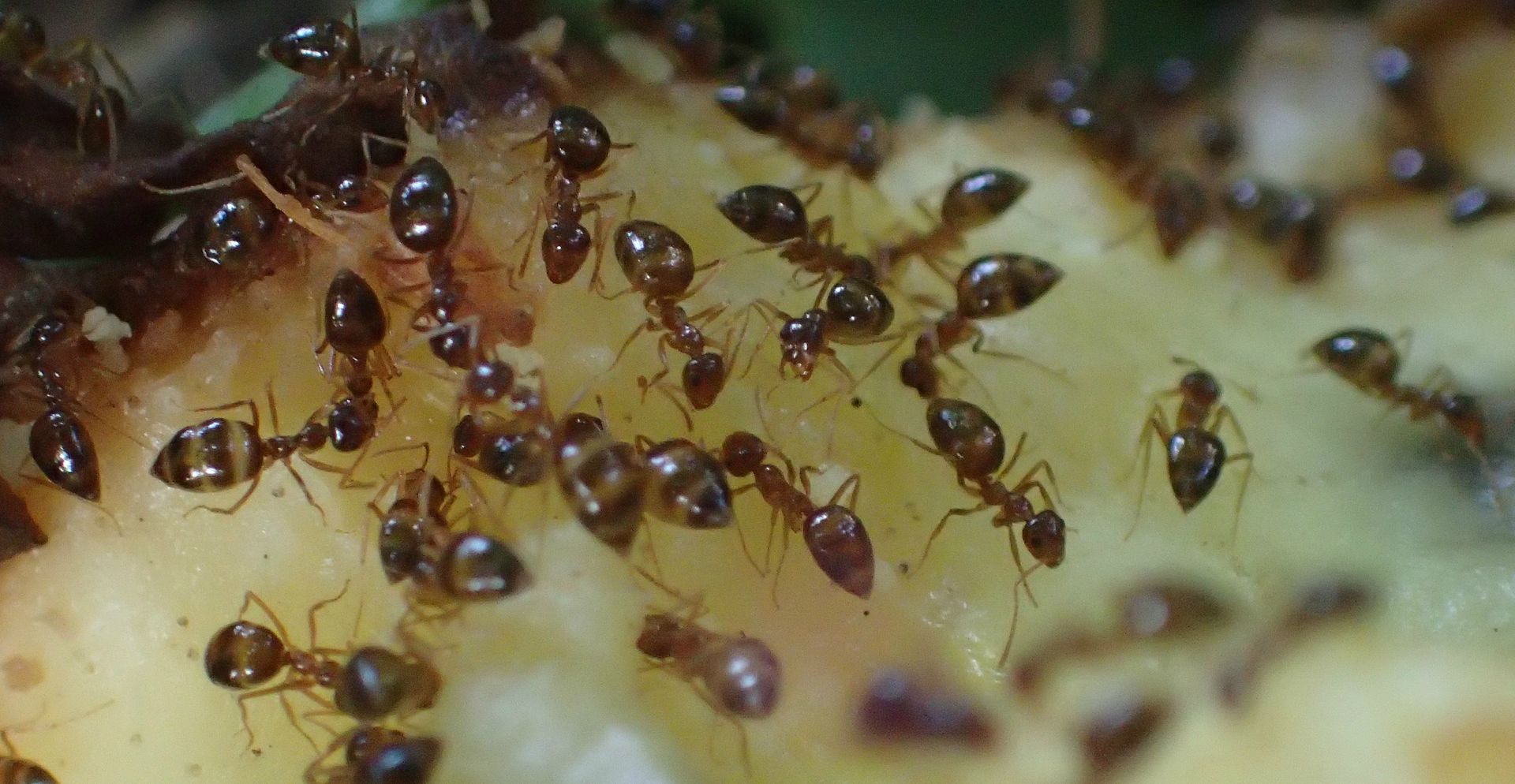
 Members of what must be a very happy Prenolepis imparis colony spent the day cutting up the fruit and hauling it home after most of the workers had engorged themselves on it.


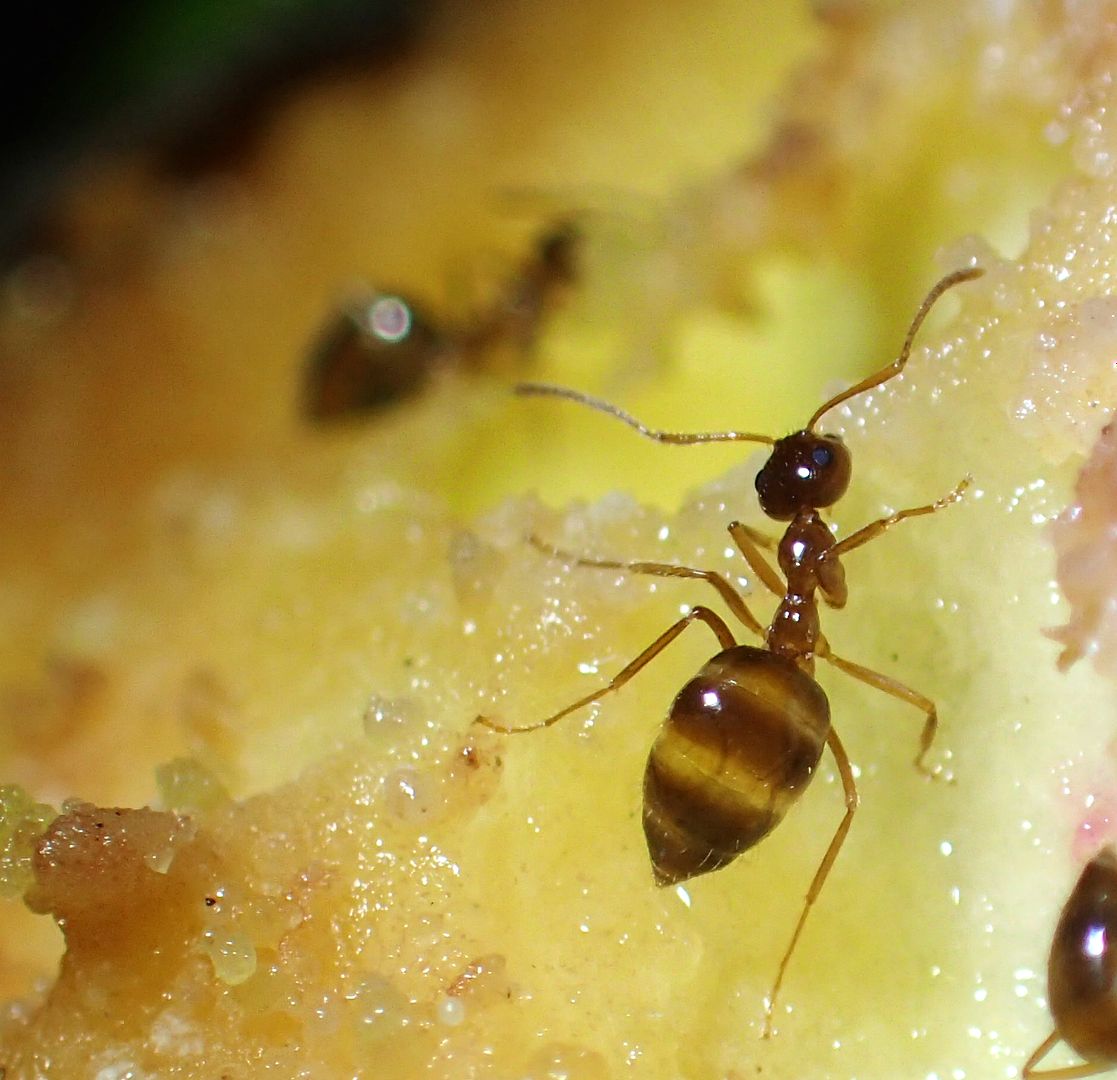
 A fairly decent anatomy pic showing off the acidopore, a slightly tuft of hairs at the tip of the gaster/abdomen. This is a key trait when identifying ants in the subfamily Formicinae and a conclusive way to tell them apart from members of Dolichoderinae.
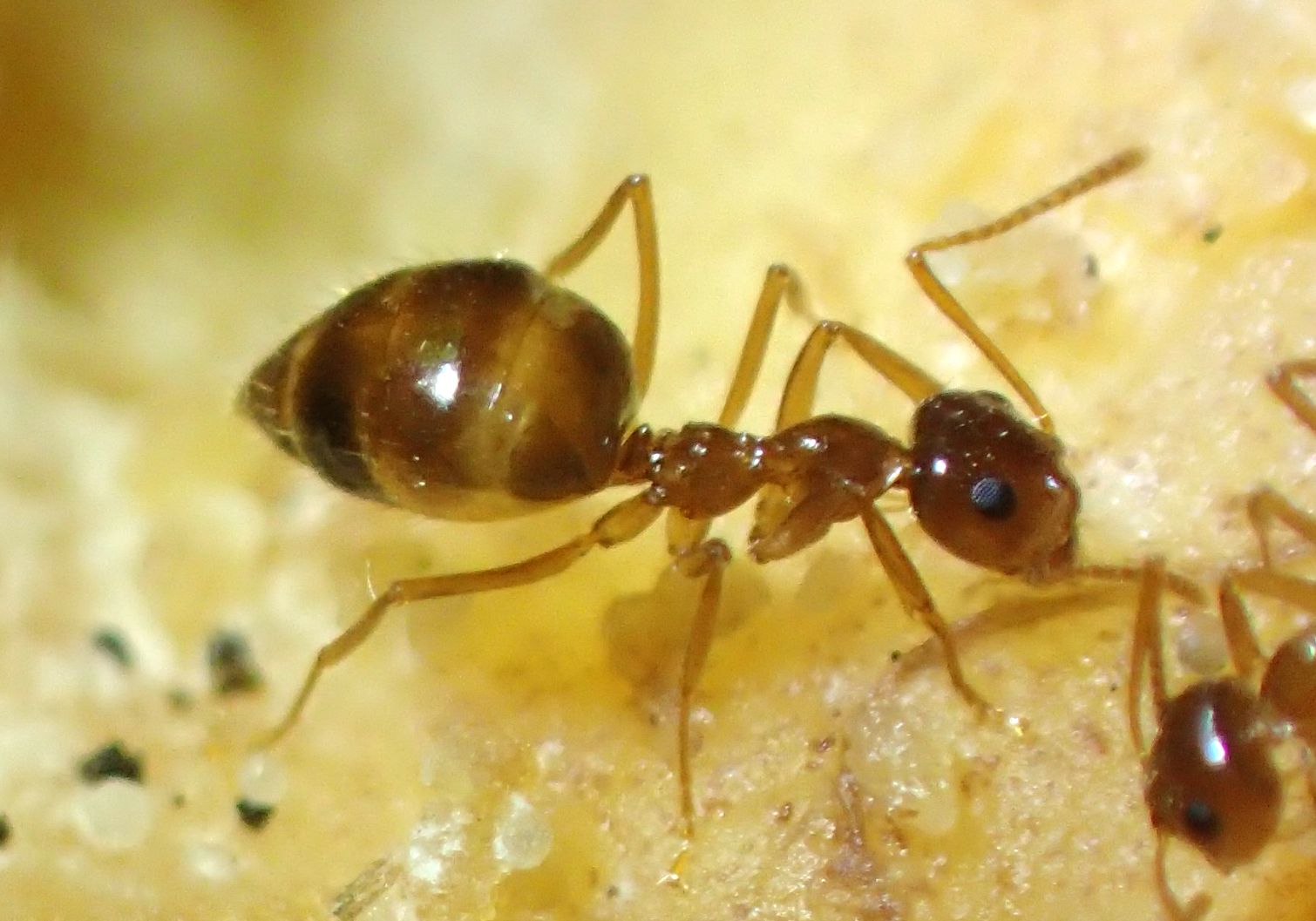
 Another good anatomy shot. Here the tiny waist segment is clearly visible separating the gaster from the mesosoma.
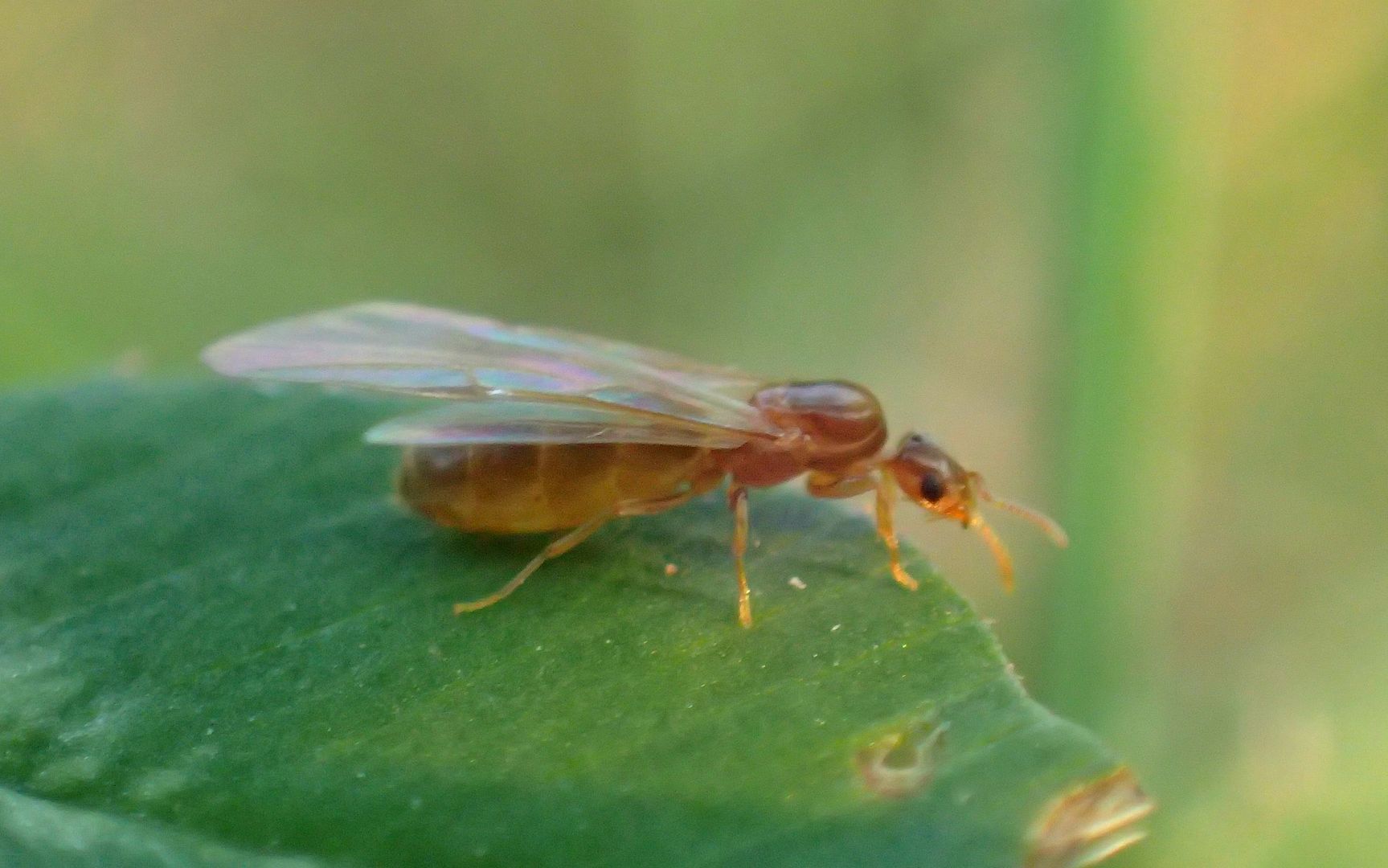
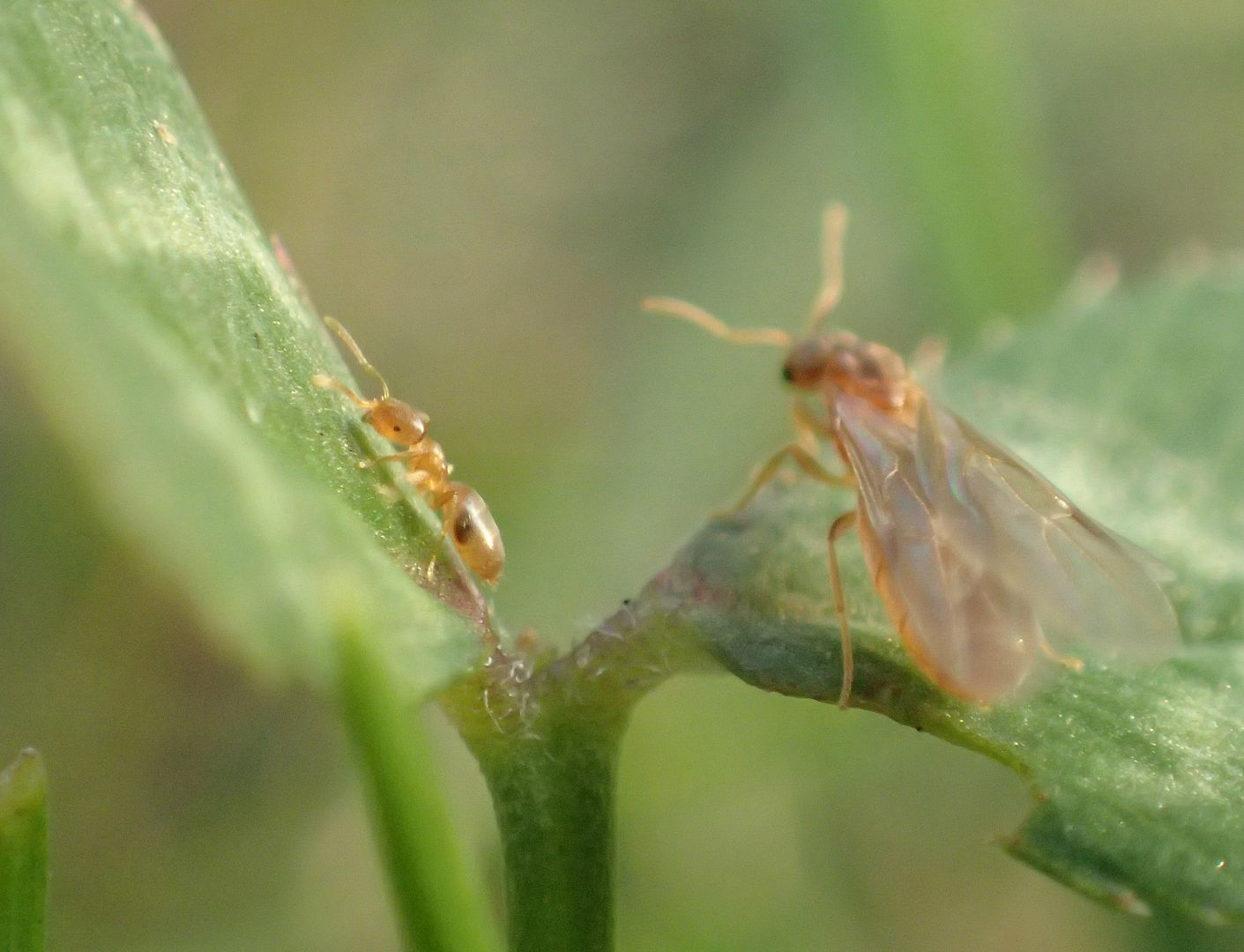
 Brachymyrmex dipilis was also flying that day. This is one of the smallest ants in the U.S.

Thursday, June 27, 2013

Butterfly Weed Relations

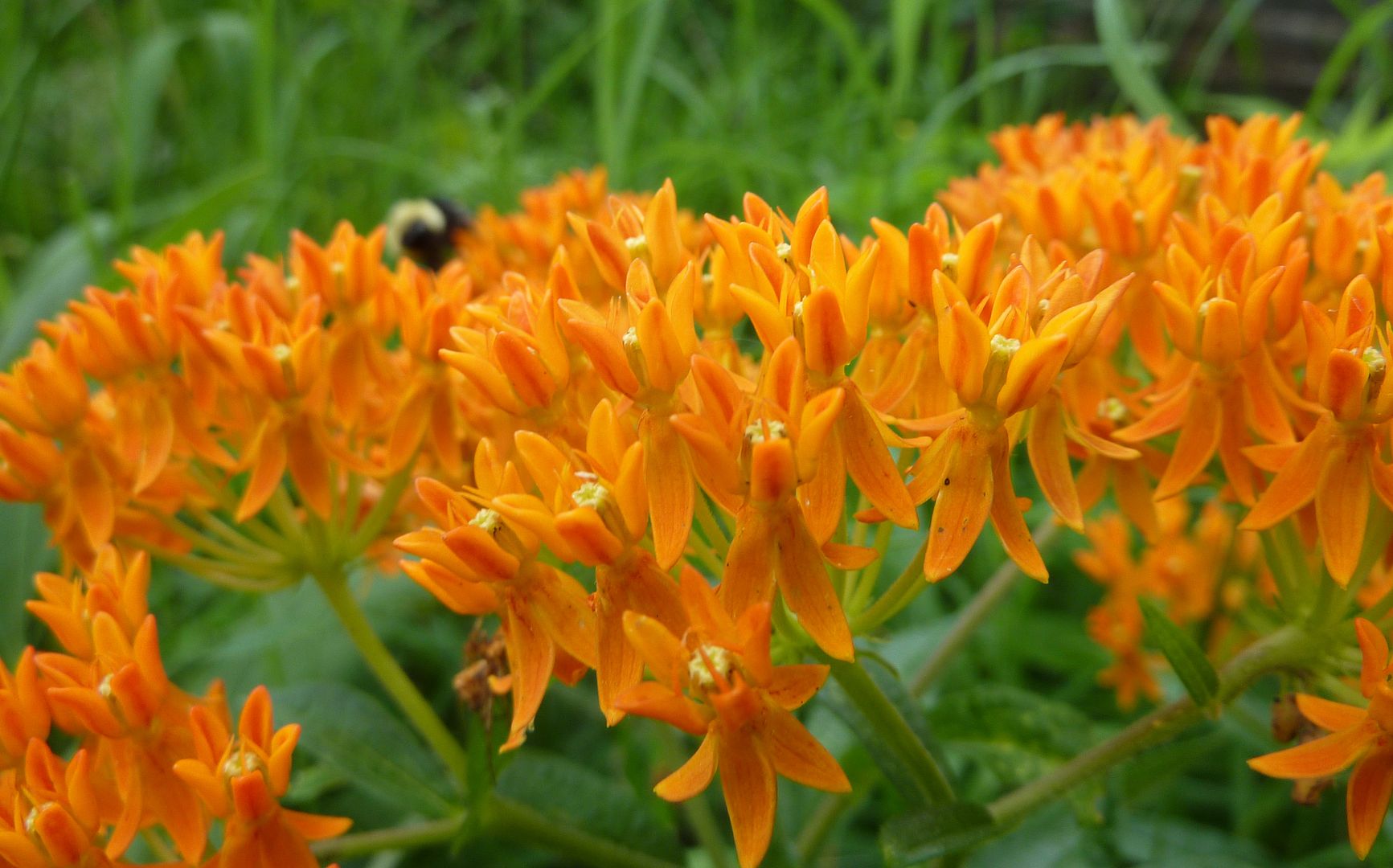
Asclepias tuberosa, Butterfly Weed, has been at the height of blooming for a week now. Here you can see the red stripes I talked a little about earlier. I may try to start a lot of this by seed this year and try to get some that has deeper red flowers. At any rate I plan on doing a lot of seed propagating this autumn to see what I can really get established.

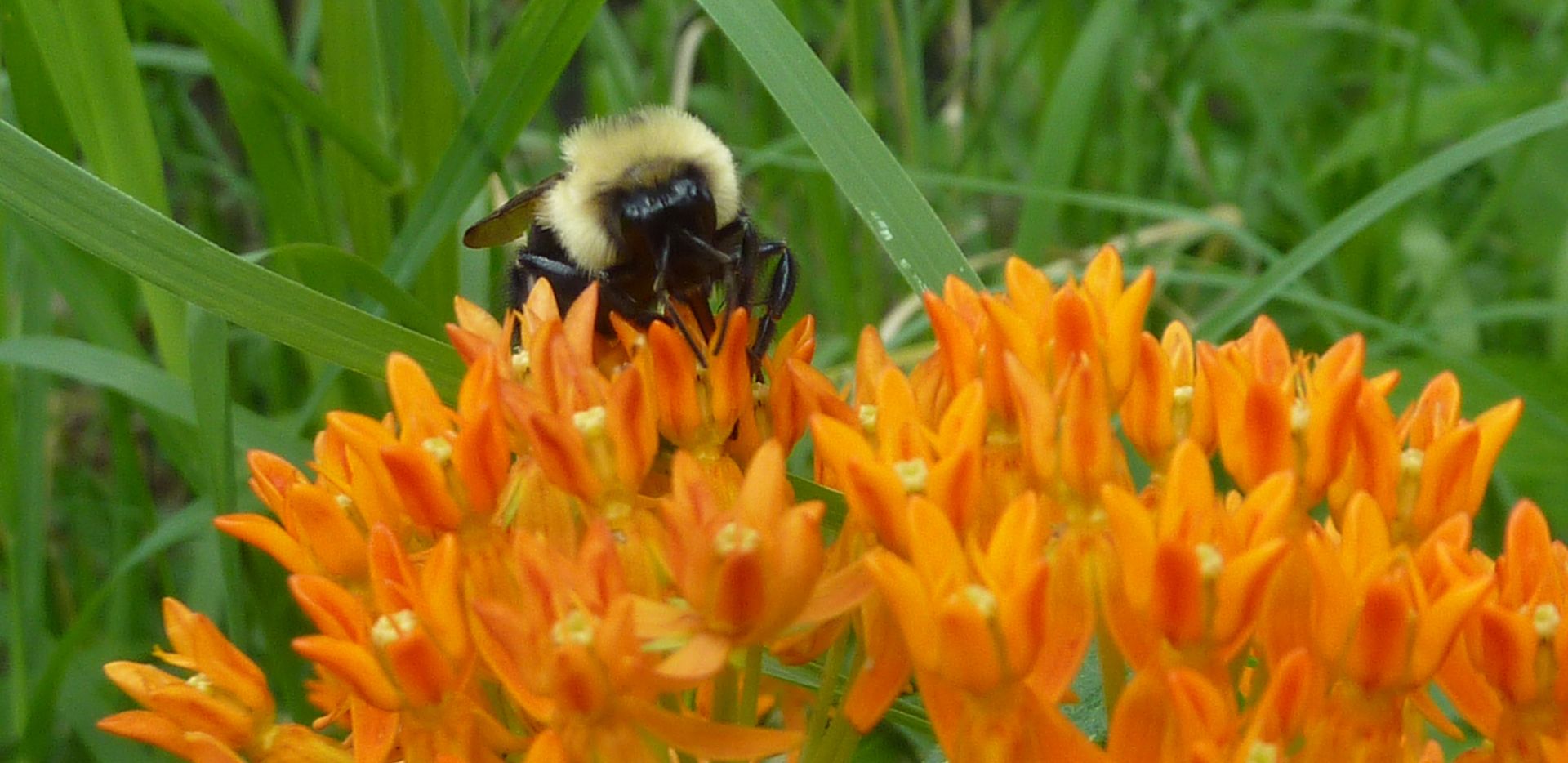
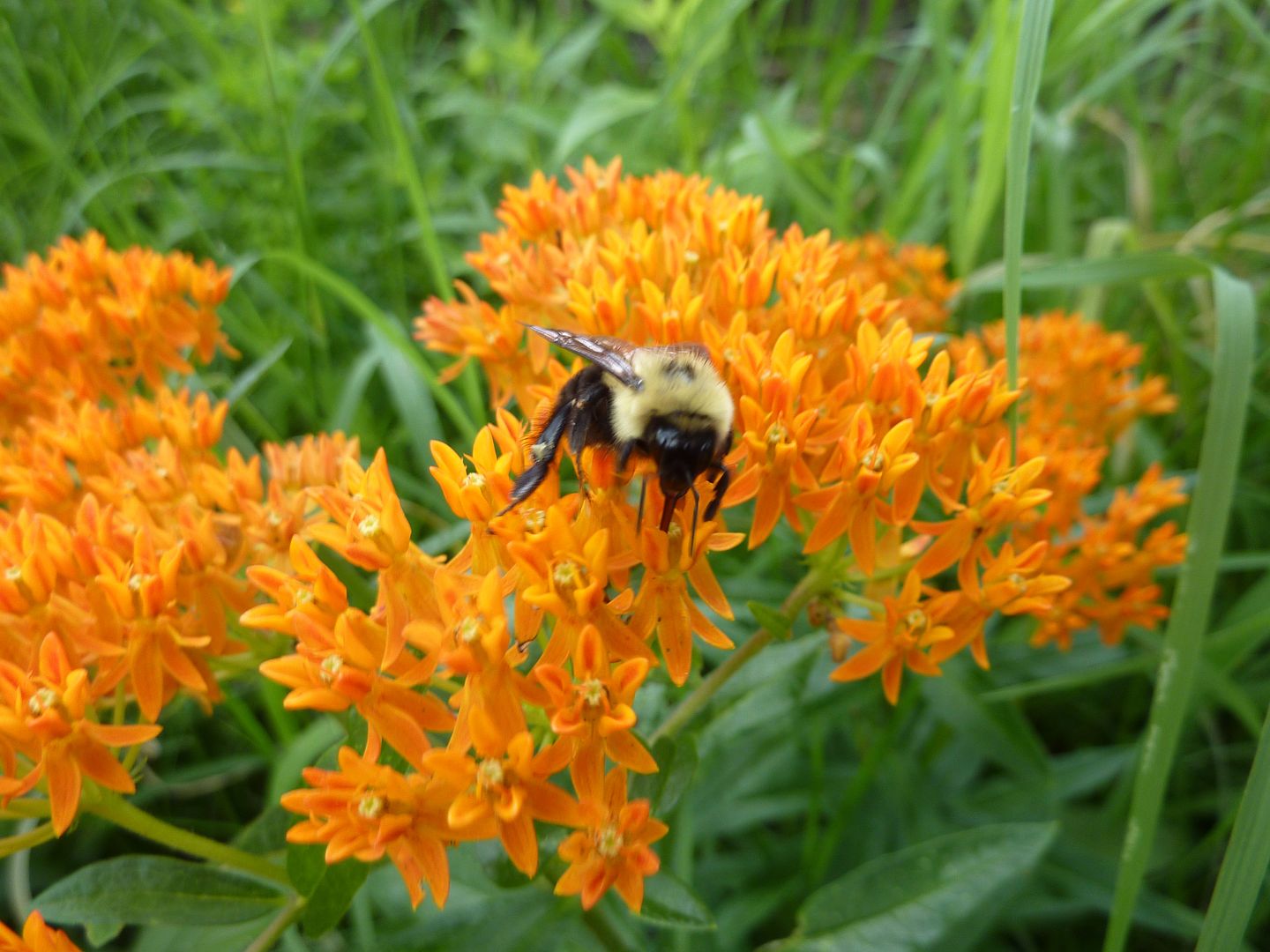
Bumblebees have been the main pollinator of the flowers so there's little to worry about. This species is self compatable too so they'll generate viable seed even if they don't visit other plants.

Milkweed gets pollinated in an odd sort of way. Basically the pollen anthers themselves break off and attach to the foot of the pollinator, then then have to get stuck in one of the 5 grooves on another bloom.

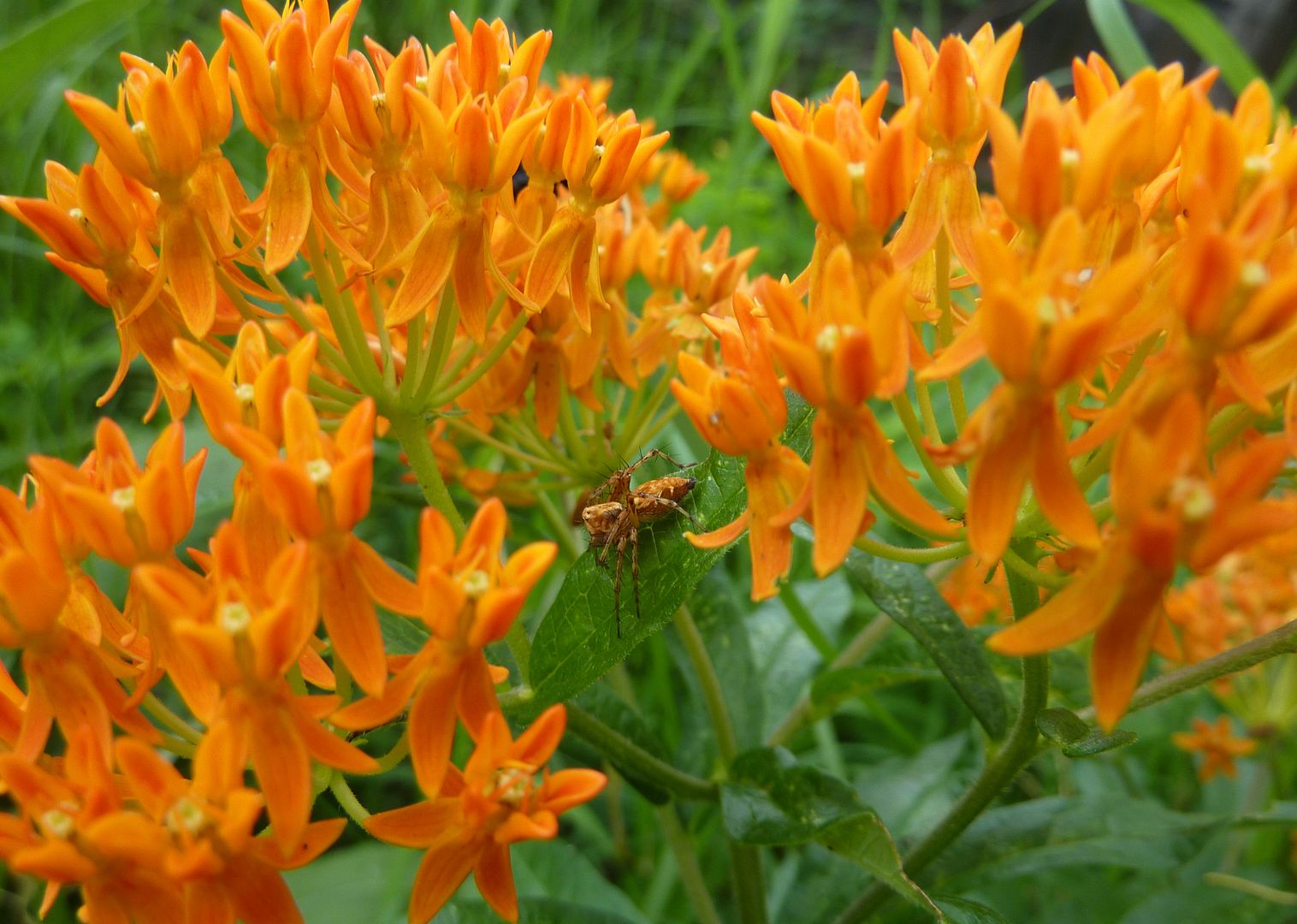
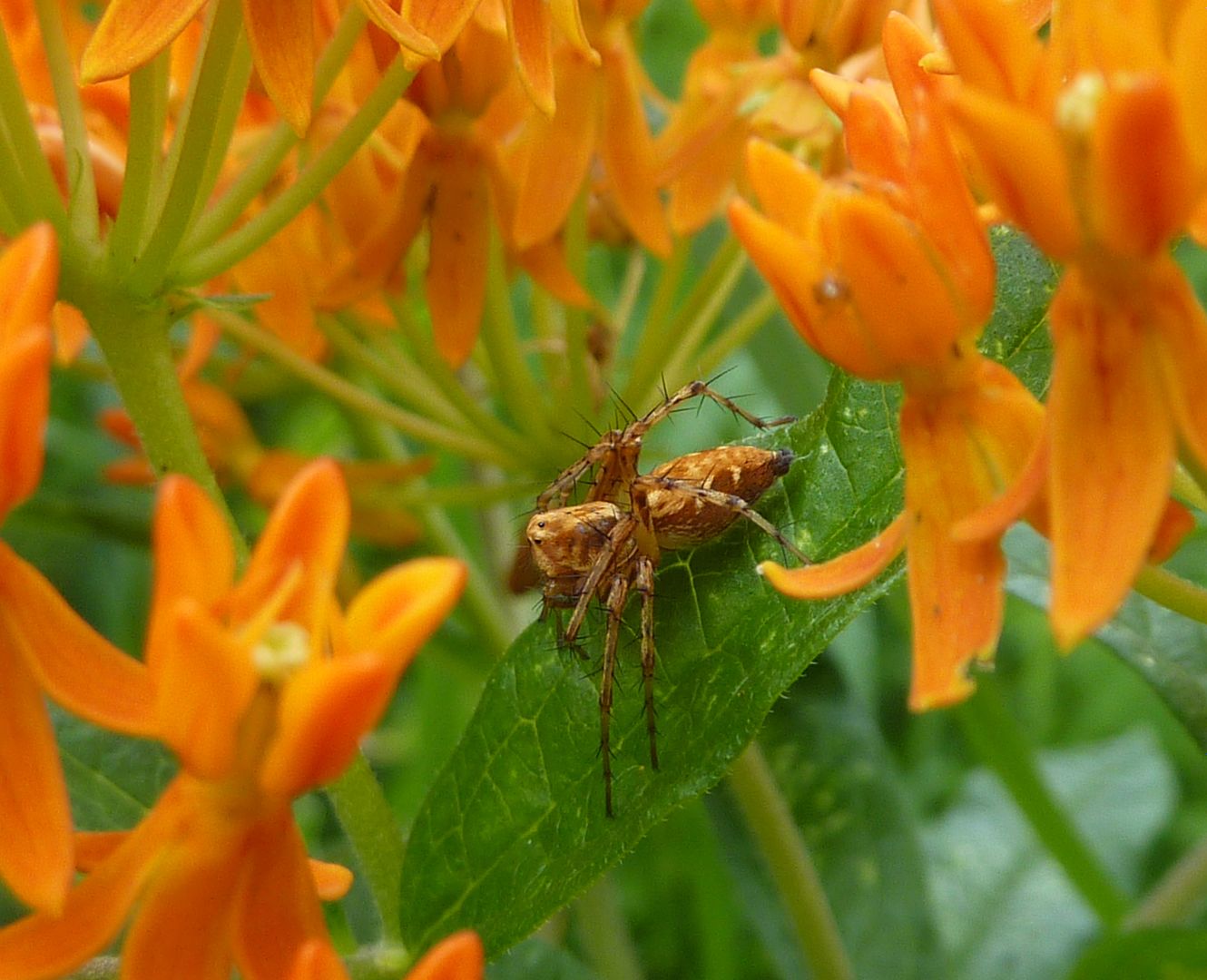
Hidden among the flowers was a wolf lynx spider (thanks Sara) which I saw had recently shed its skin.

Normally they're a gray color. What struck me about this one though was how it was almost mimicking the color of the milkweed flowers while its exoskeleton hardened up. I found several other spider skins attached to leaves under other plants.

My little meadow garden has been a good source of ant food for my Pheidole colony. The closest to a common name they have is Big-Headed Ants and while the major caste does have a large head it's not something the average person would notice. The ants are only 3mm long.

Friday, June 3, 2011

Some Beneficial Predators

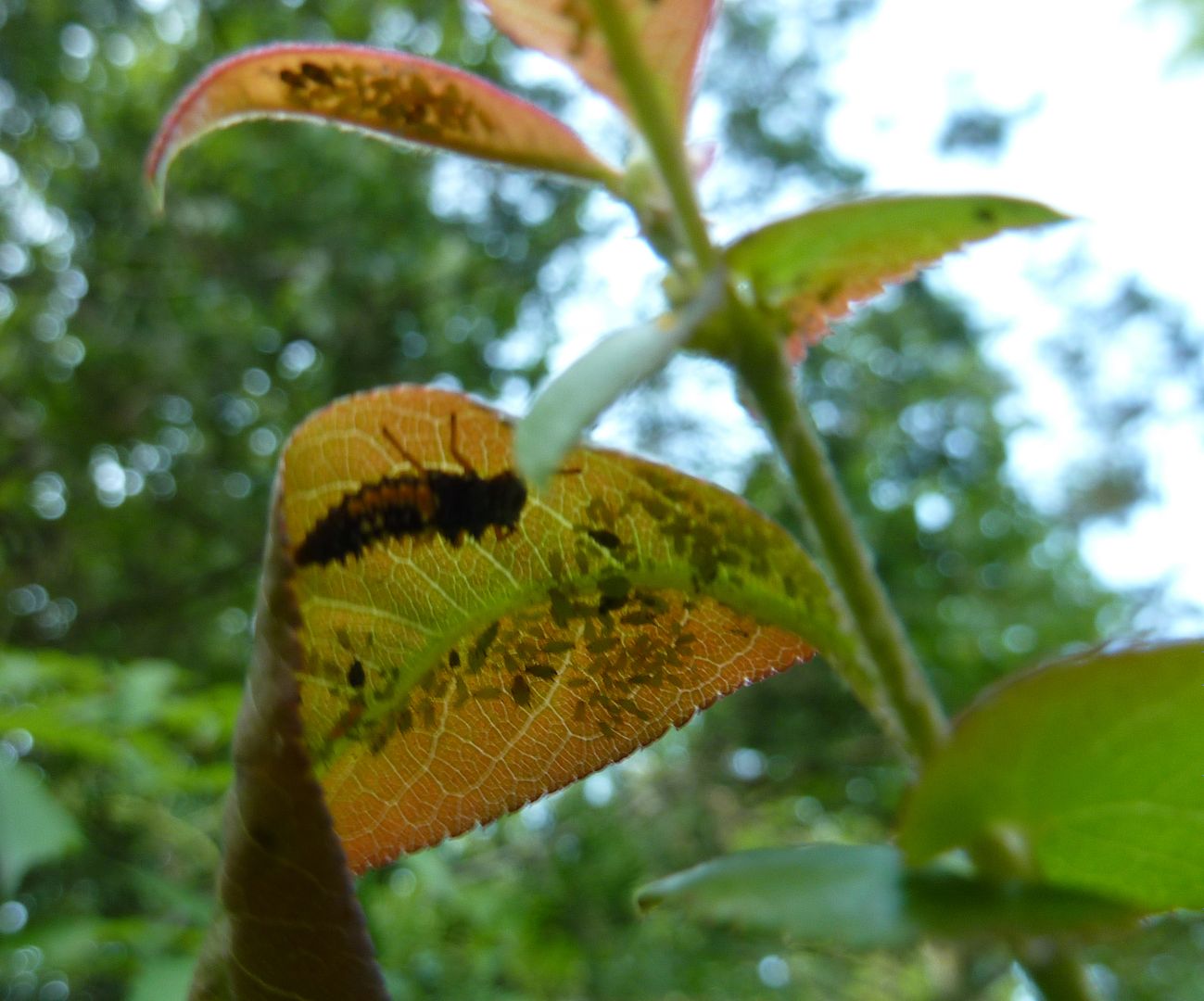
Predatory insects are out and about taking advantage of the scavenger and herbaceous pray. Here a ladybug larva feasts upon a plentiful supply of aphids. This is well needed too as the main tree with the aphid problem has so much honeydew dripping on it's leaves that portions of the lower growth, and other plants around it, have started turning black. This should go away soon, but when this tree gets a little taller such aphid problems might cause bad things to the fruit (native plums). Honey dew rain is also disgusting to sit under.


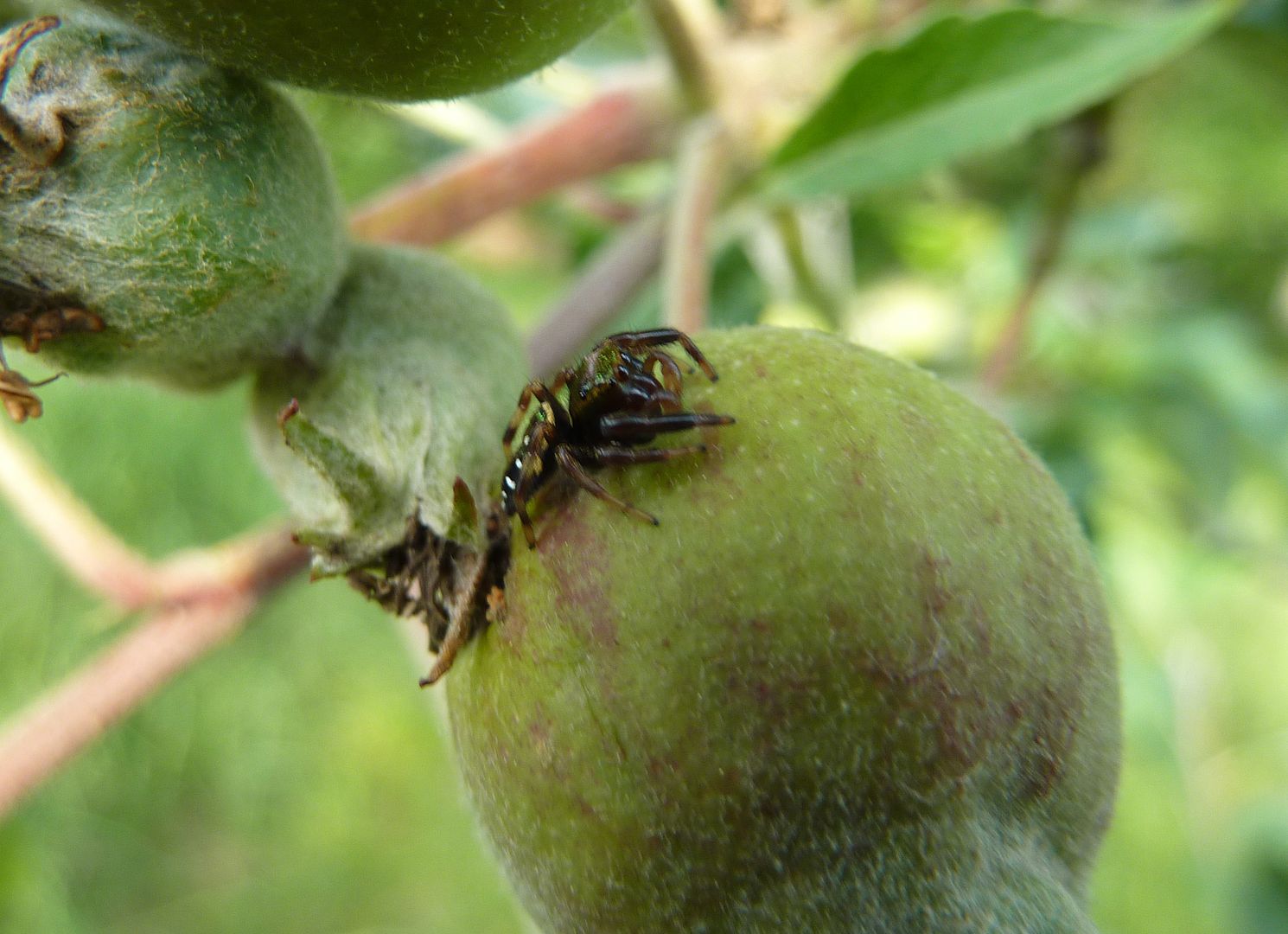
Here some type of spider guards an apple. I've always called these jumping spiders, perhaps someone else knows a better name? Apple Trees are a good place to hunt for insects. Contrary to what supermarkets lead you to believe, Apples are not easy to grow, at least perfect ones that is. These trees get used by an assortment of common moths, diseases run rampant, and all to often you'll find a large worm crawling around inside the fruit. Weekly spraying is the only way to really ensure a good harvest but isn't always necessary. A few apples are typically untouched by all the insect pandemonium. 

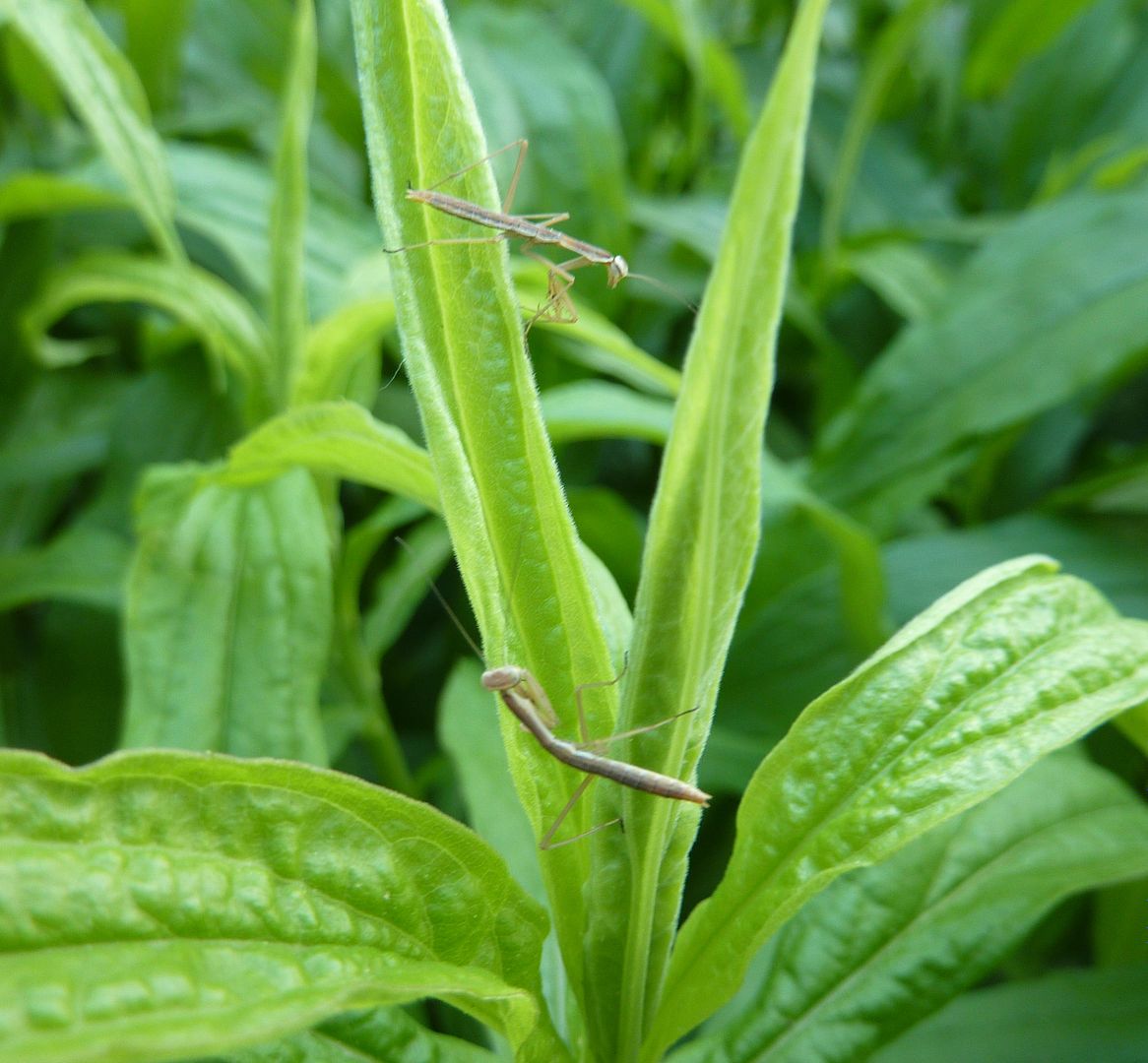
I'm still seeing droves of Praying Mantises wondering about. They haven't ventured very far from the eggs but I'm sure they're slowly dispersing around the garden. What's neat is how some of them are developing. Some have larger heads now, while others seem to get bigger four-arms. I'll try and get pictures of this later on.

Thursday, November 4, 2010

Spider and the Fly

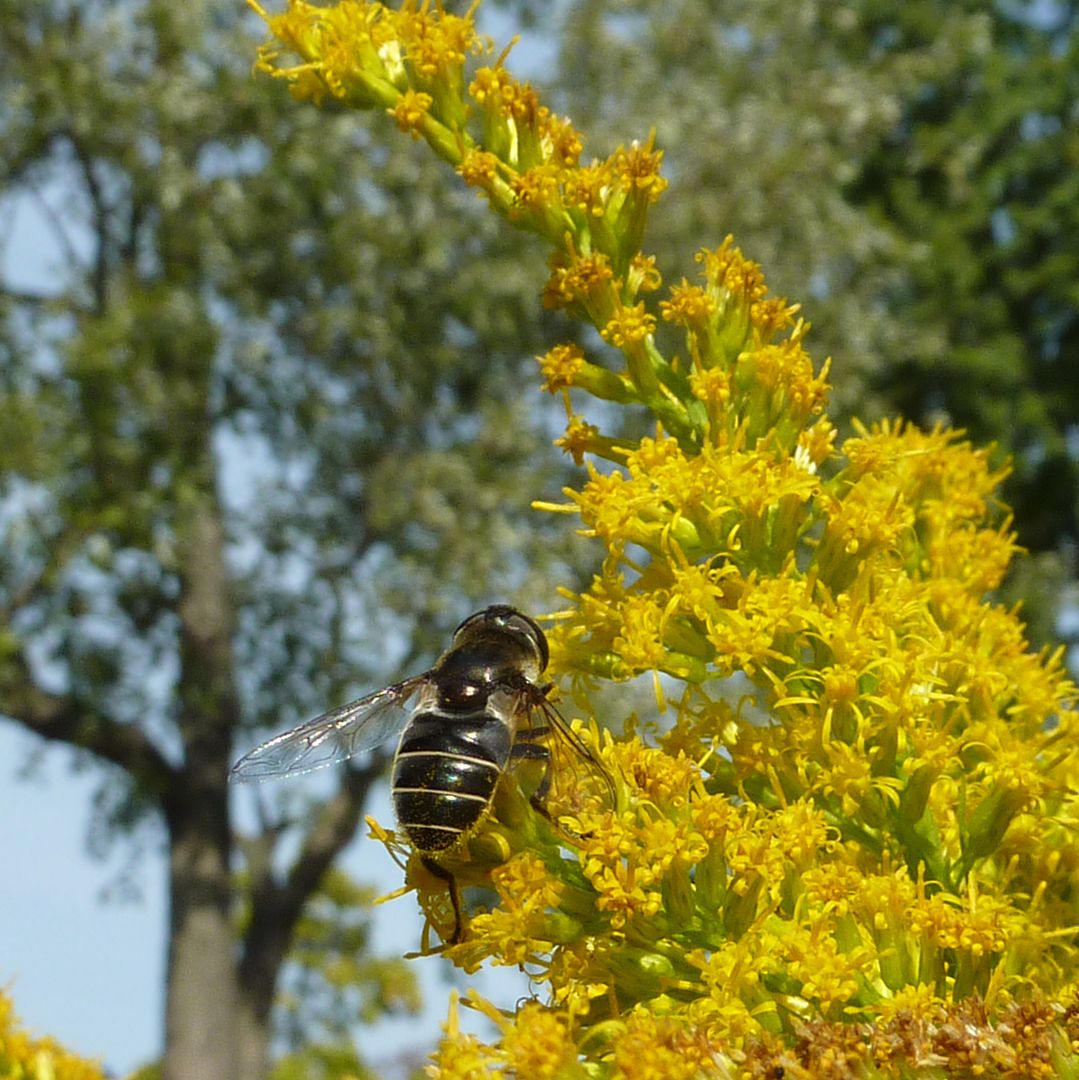
Here is a Syrphid fly Eristalis dimidiata. This was just one of the many pollinators that visited the tall goldenrod this year. Adults feed on nectar while maggots to this species are aquatic. I don't know what the maggots feed on specifically but they're common in eutrophic water, that is pools rich in organic matter. There aren't many photographs of the maggot form but they get the name rat tailed maggot from the tube they use to breath from while under water.

Upon observing the last leaf on my native plum tree I discovered it's being held on by spider silk. The spider is delicately camouflaged with the leaf. Each night she spins a huge web around the tree to catch the last of the night flying insects. I don't believe the adults of this species make it through the winter.  

Wednesday, May 26, 2010

Some Bugs

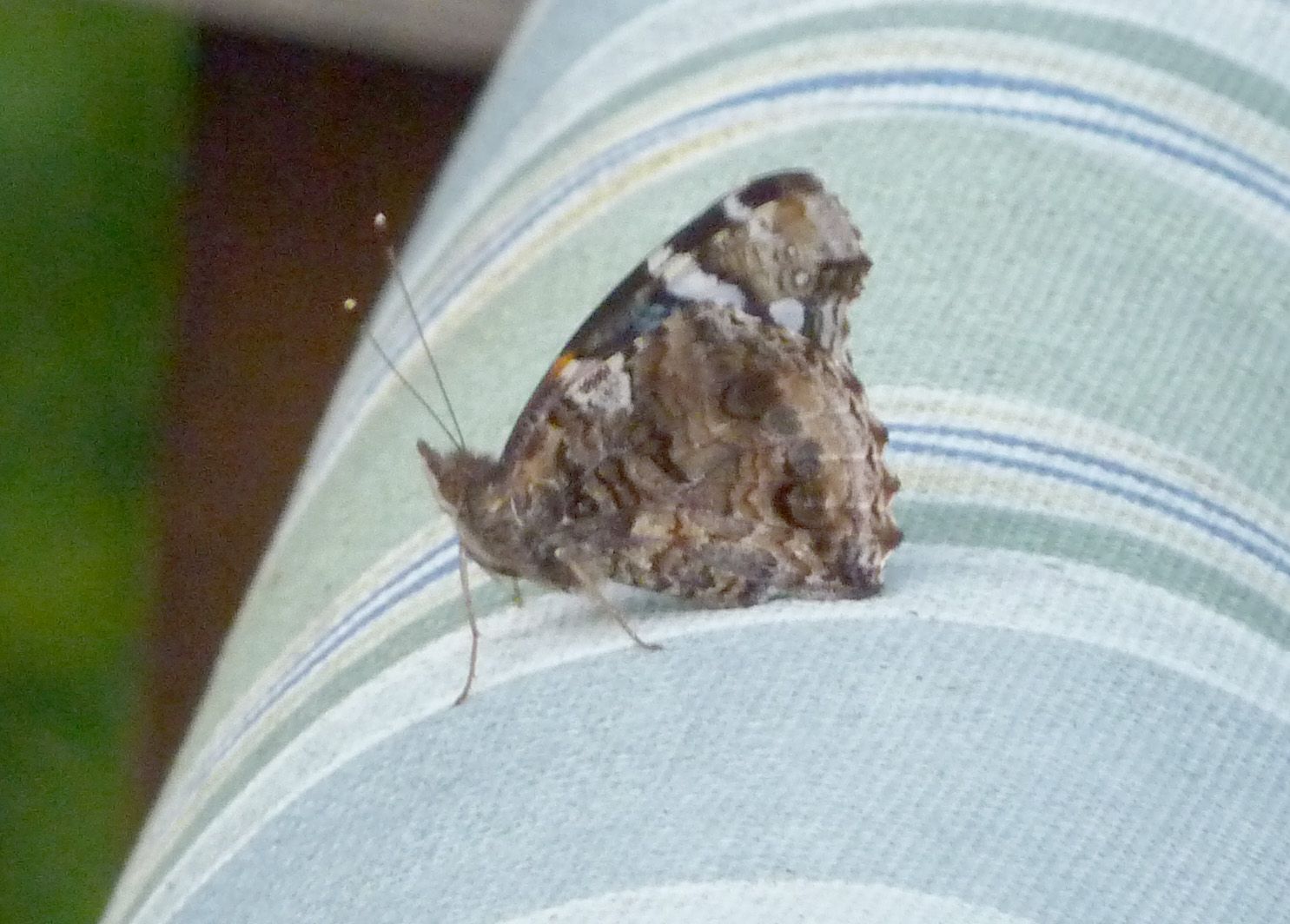
This is the best I could do with the Red Admiral migration. It's a shame it wouldn't open it's wings for me as they are very pretty.

Got about 100 pictures of this. At least the butterfly is in this one.

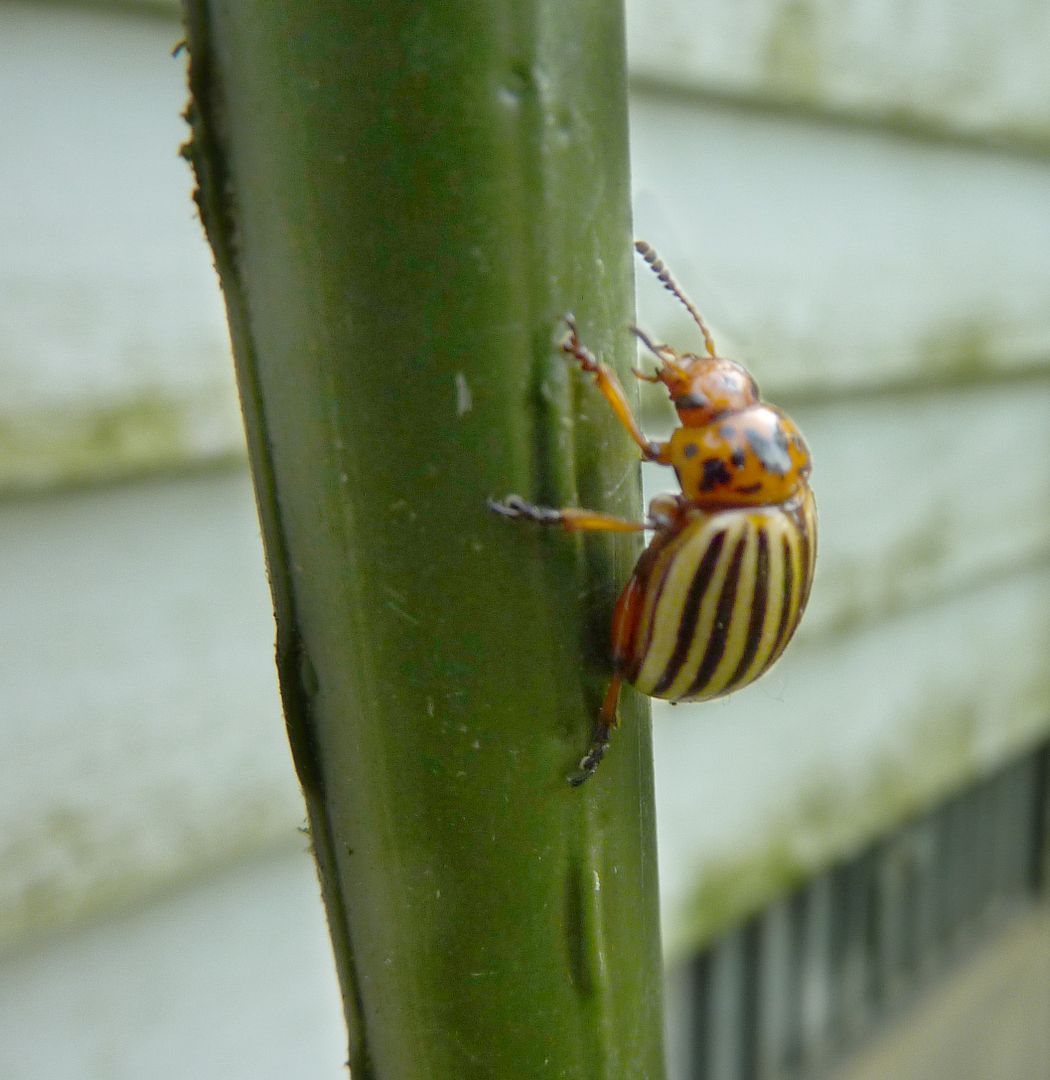
Started seeing Colorado Potato Beetles too. They eat potato plants. There is also the False Potato Beetle laying around which looks almost the exact same with an orange stripe down the middle.

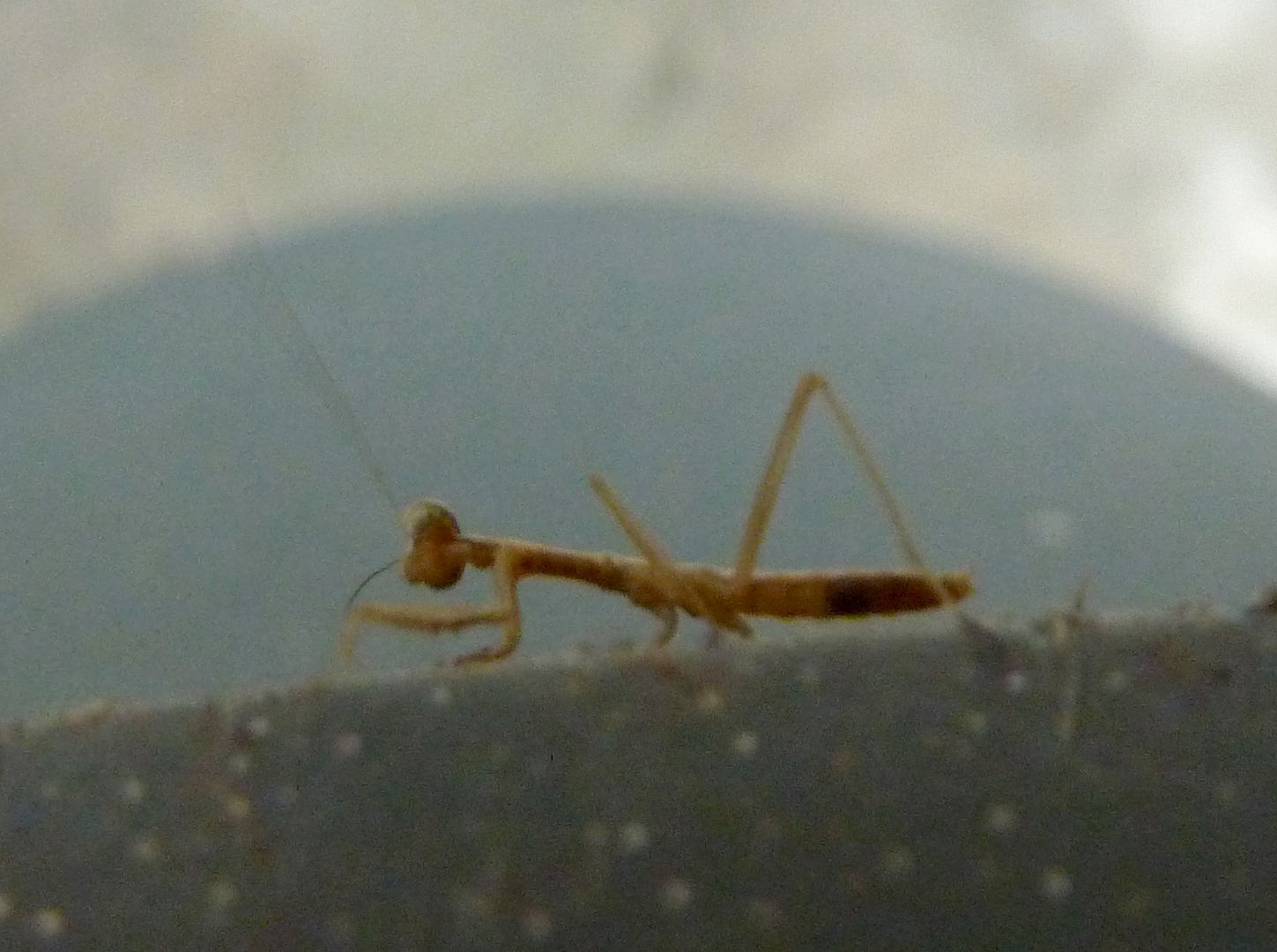
The highlight really is that Mantises have hatched. Predators of good and bad bugs. The trouble is they're in the same boat as lady bugs are. Most of the eggs sold in stores are not a native species. Regardless though they have the benefit of arriving later in the year, grow with age while they slowly reduce in number. 

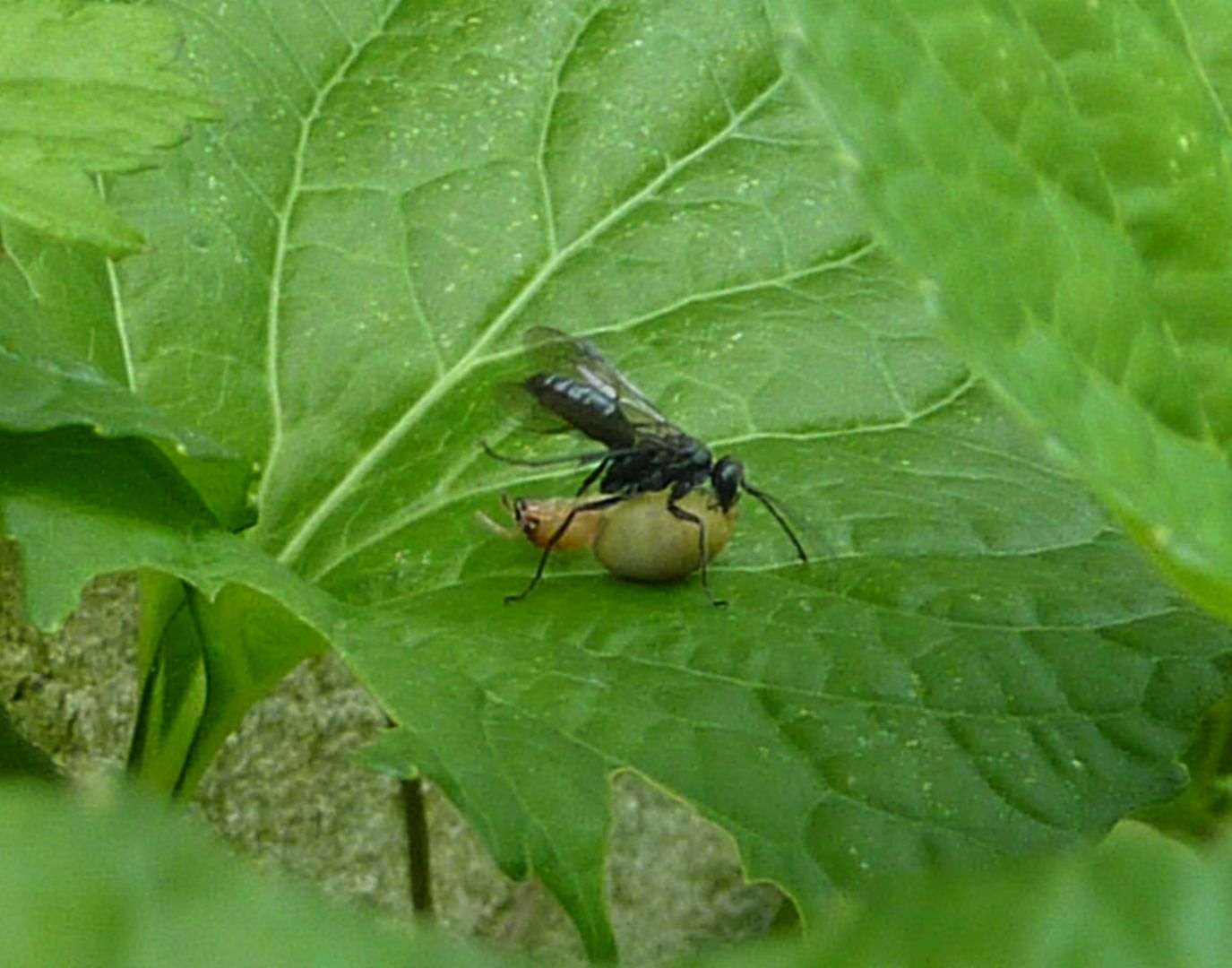
Spider Wasps are about doing their thing. Paralyzing specific types of spiders to lay their eggs in and bury in their burrows.