Showing posts with label Camponotus castaneus. Show all posts

Wednesday, June 19, 2019

Ants and Azure Caterpillars.

 
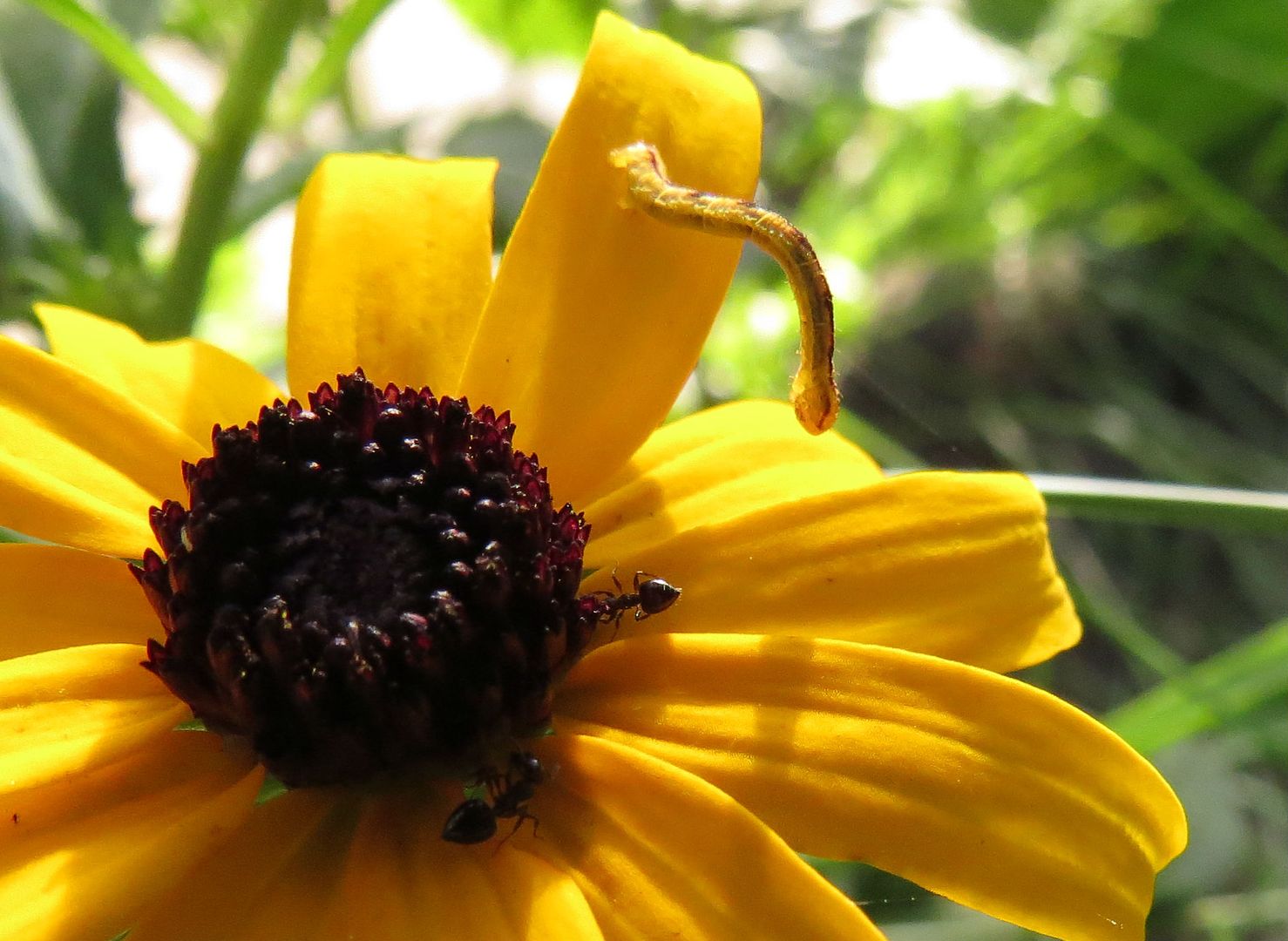
 A couple of weeks ago (about three) the Spring/Summer Azure butterflies were out and I managed to find one laying some eggs on the New Jersey Tea, Ceanothus americanus. I'm calling it a Spring/Summer Azure because my understanding is that both Spring and Summer Azure butterflies are species complexes, meaning several nearly identical-looking species that scientists have been taking for granted as being the one or fewer species.

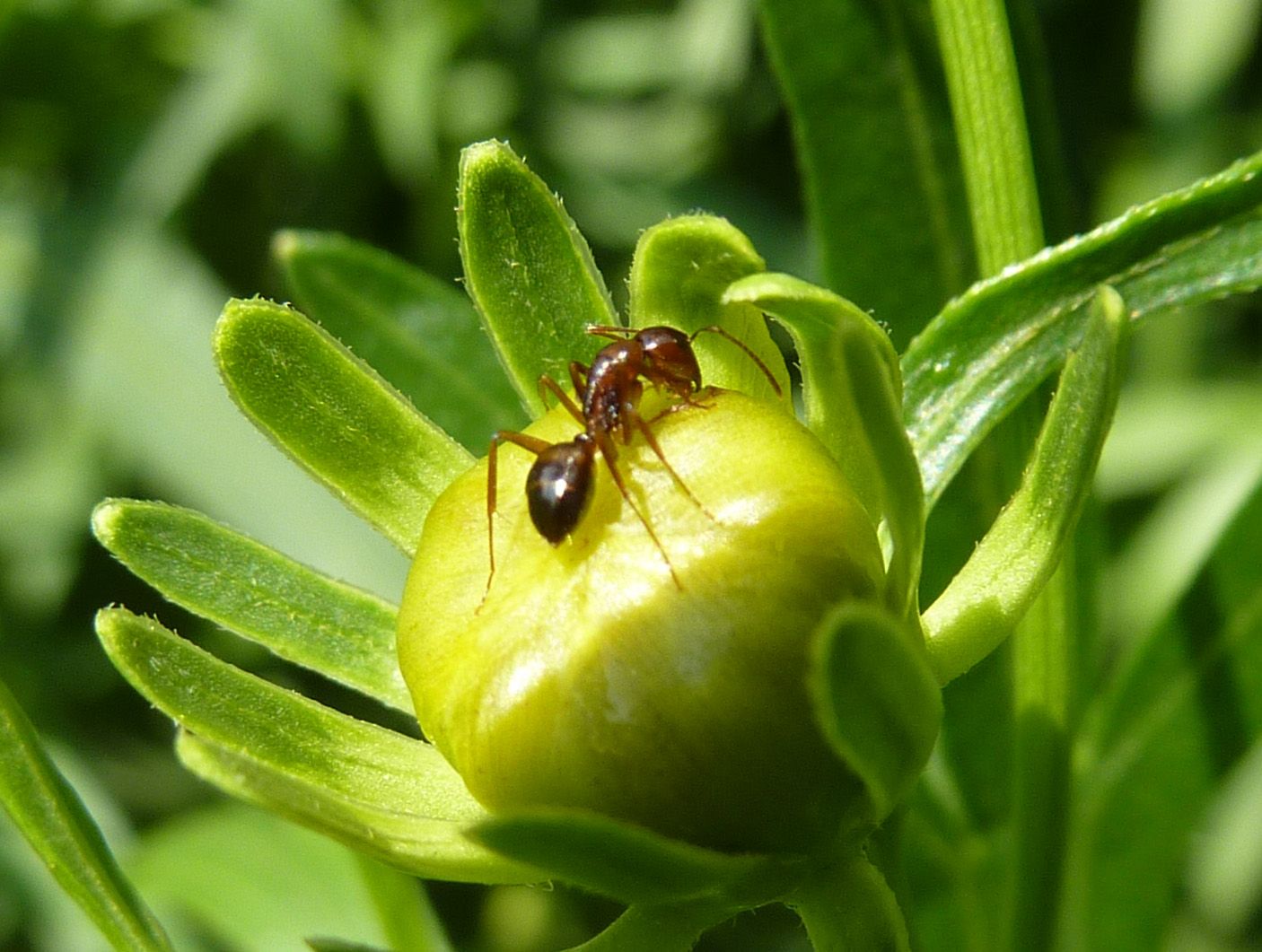
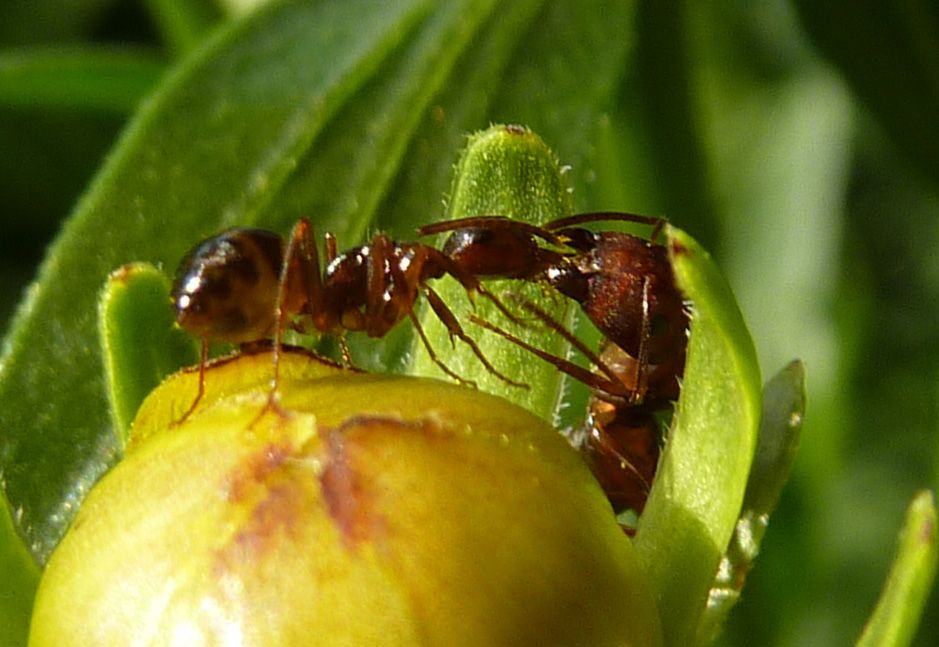
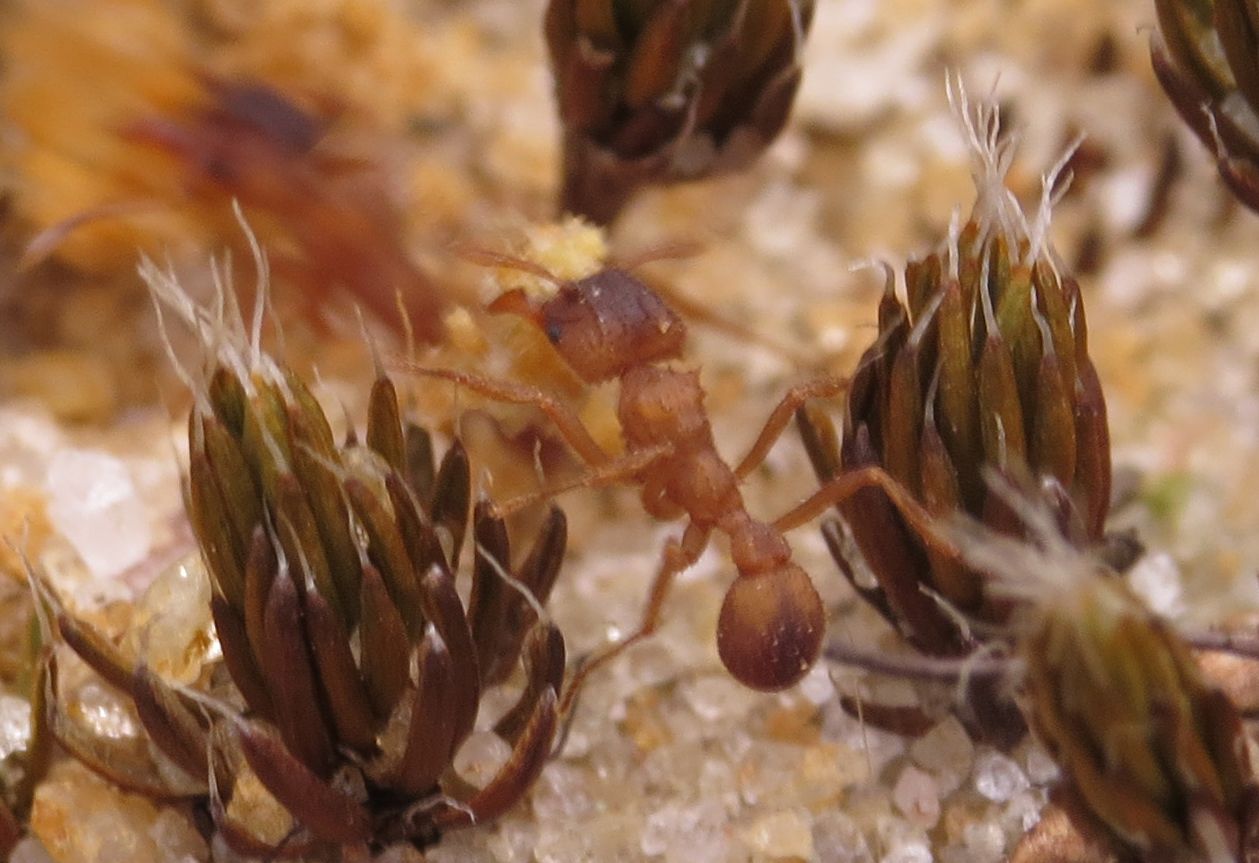
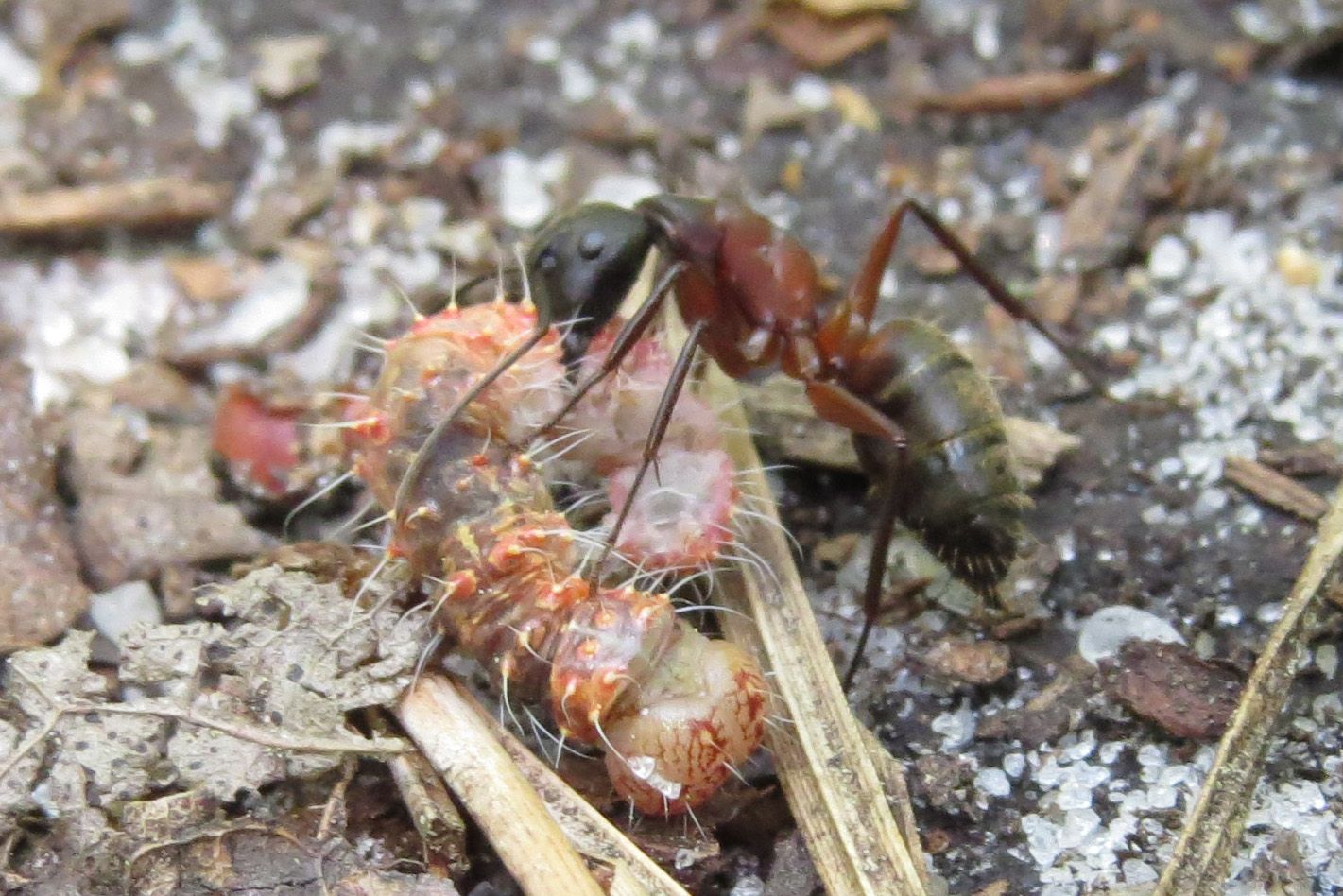
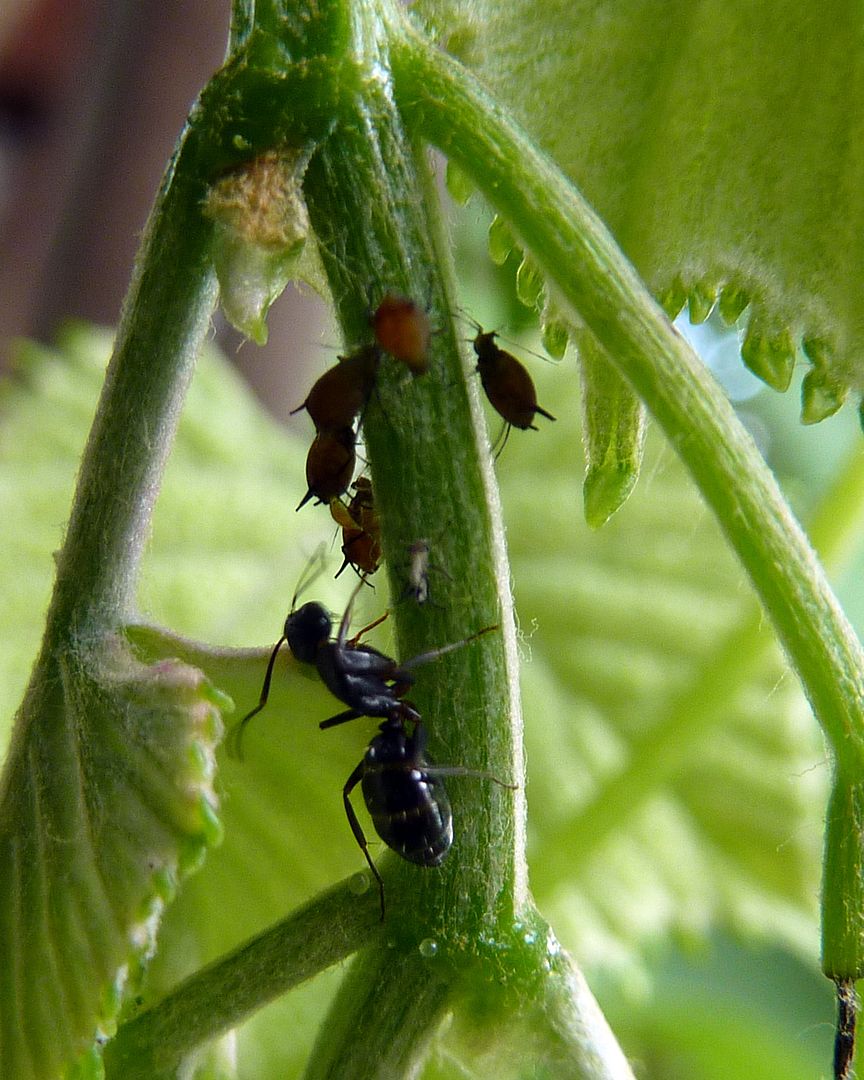
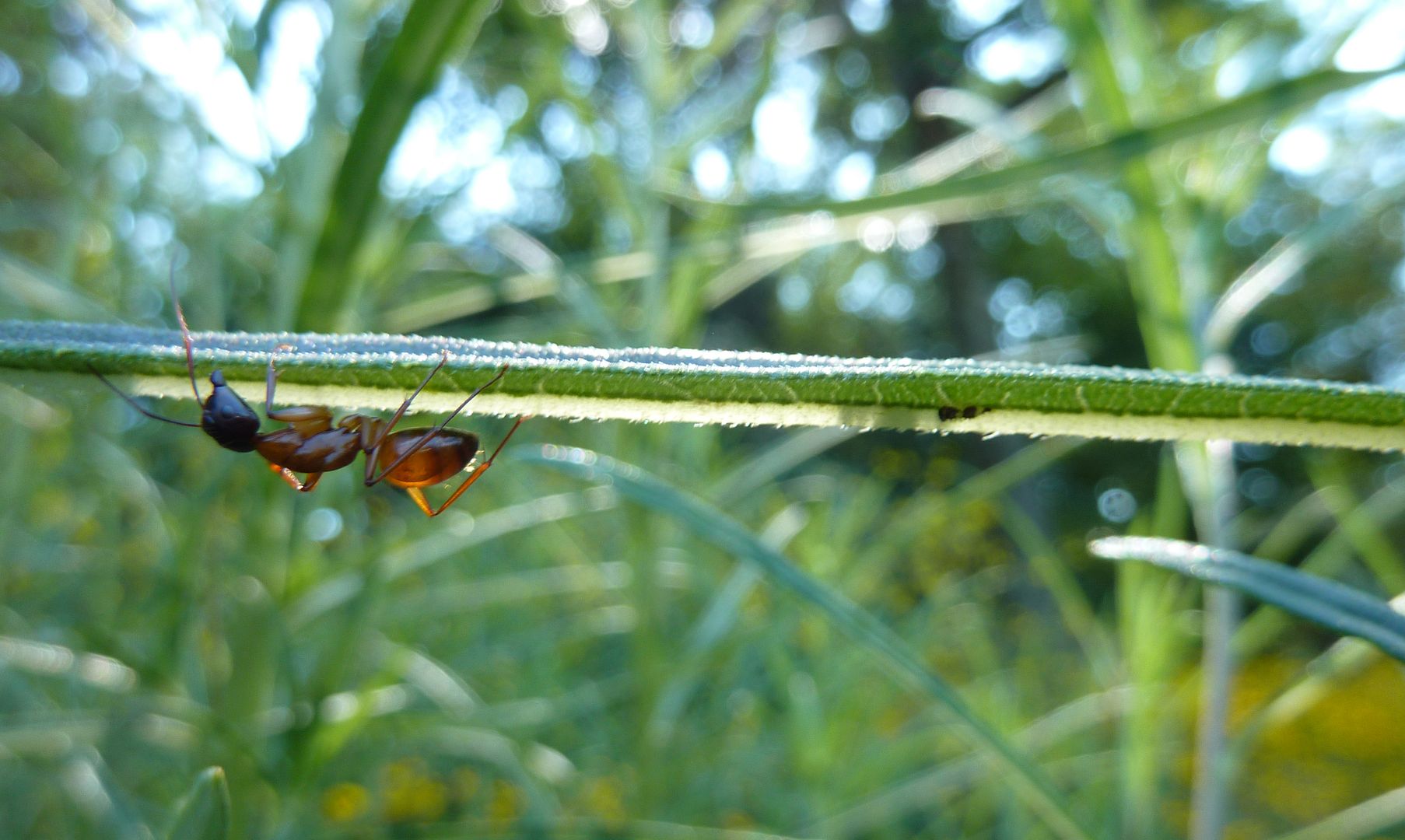
 The resulting caterpillars mostly hatched and chewed on the flowers. They take on a white coloration and blend in with the petals near perfectly. This would be the perfect camouflage were it not for the huge orange ant tending it. 


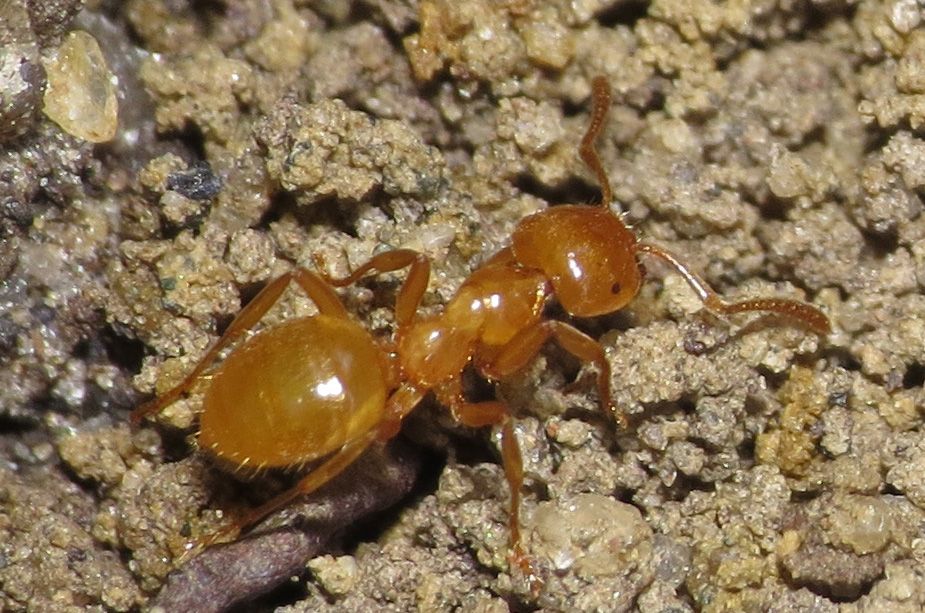
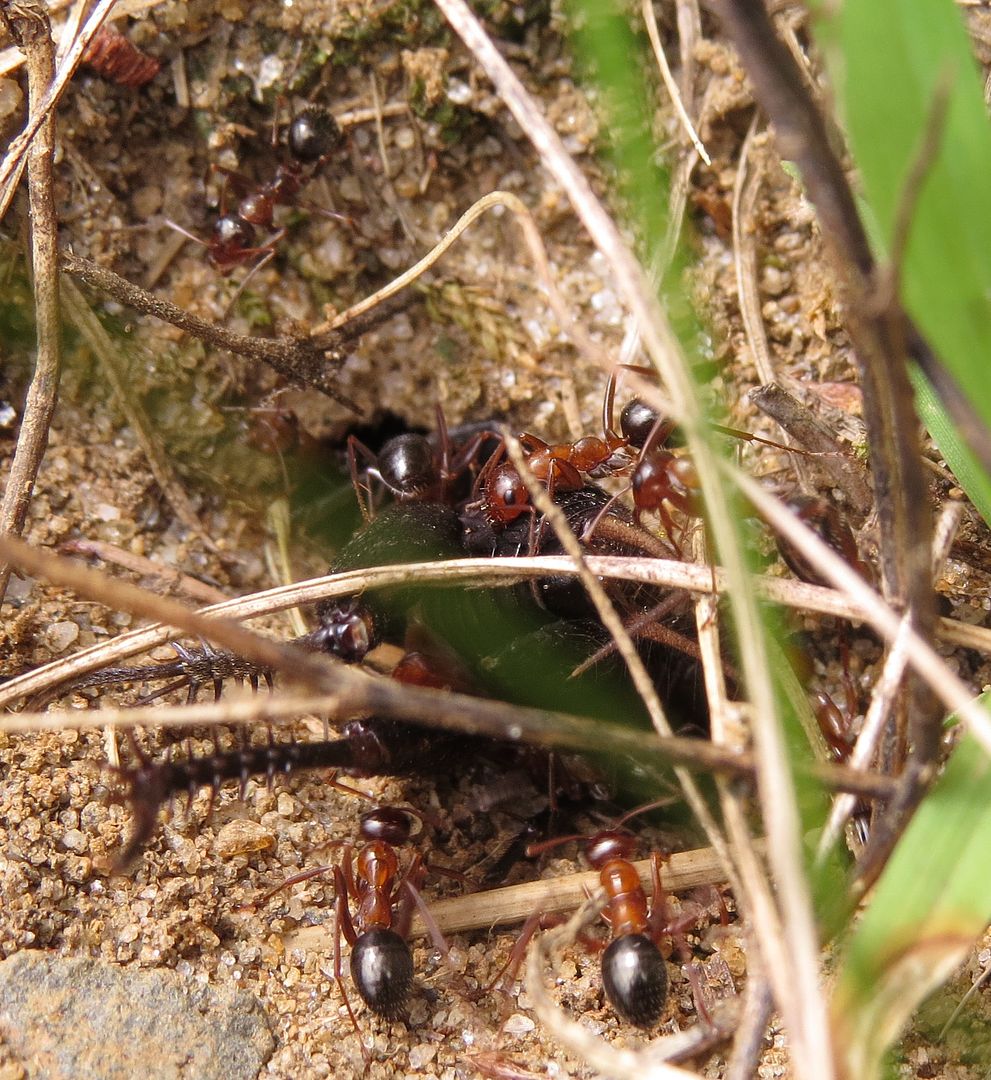
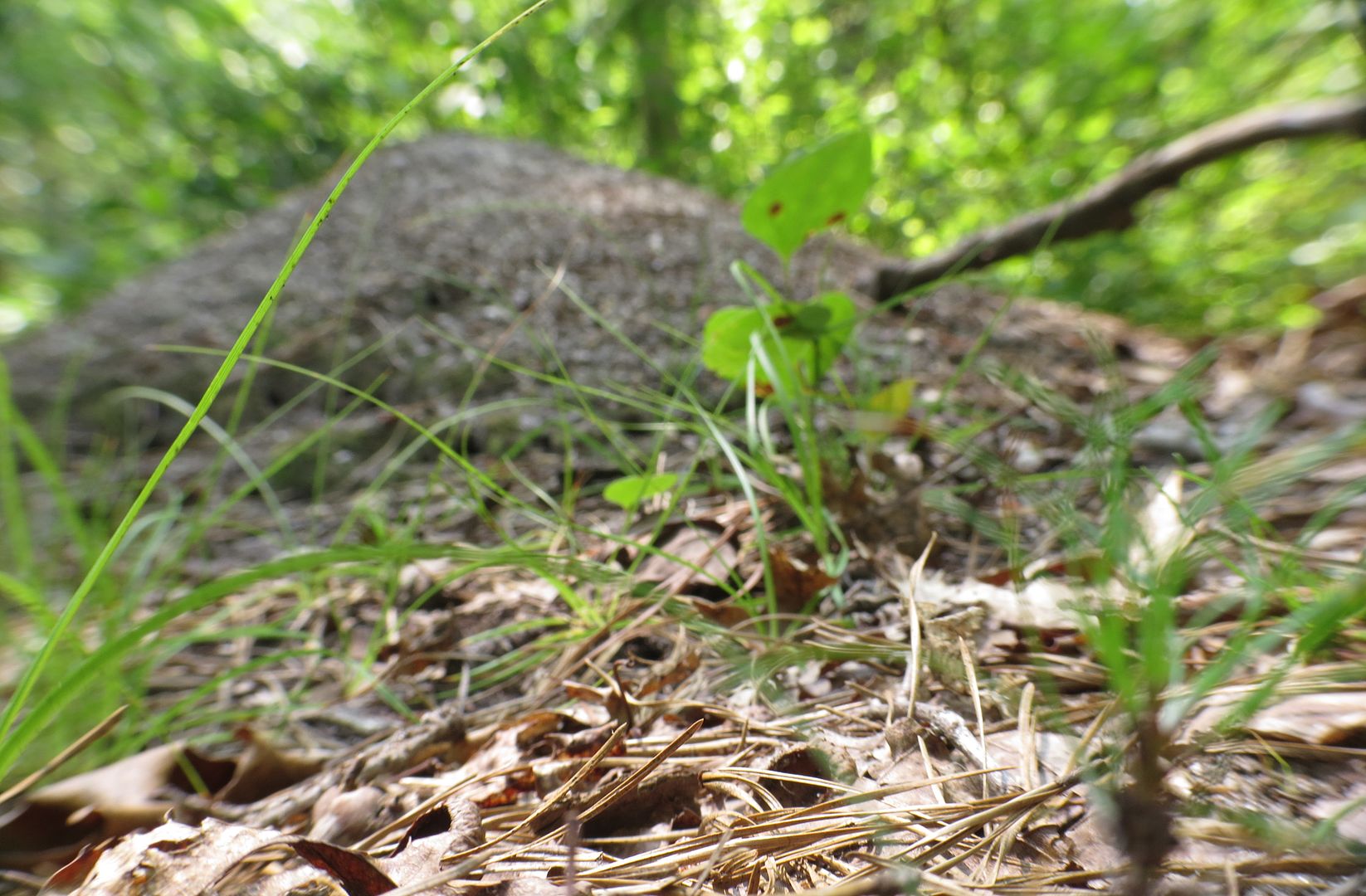
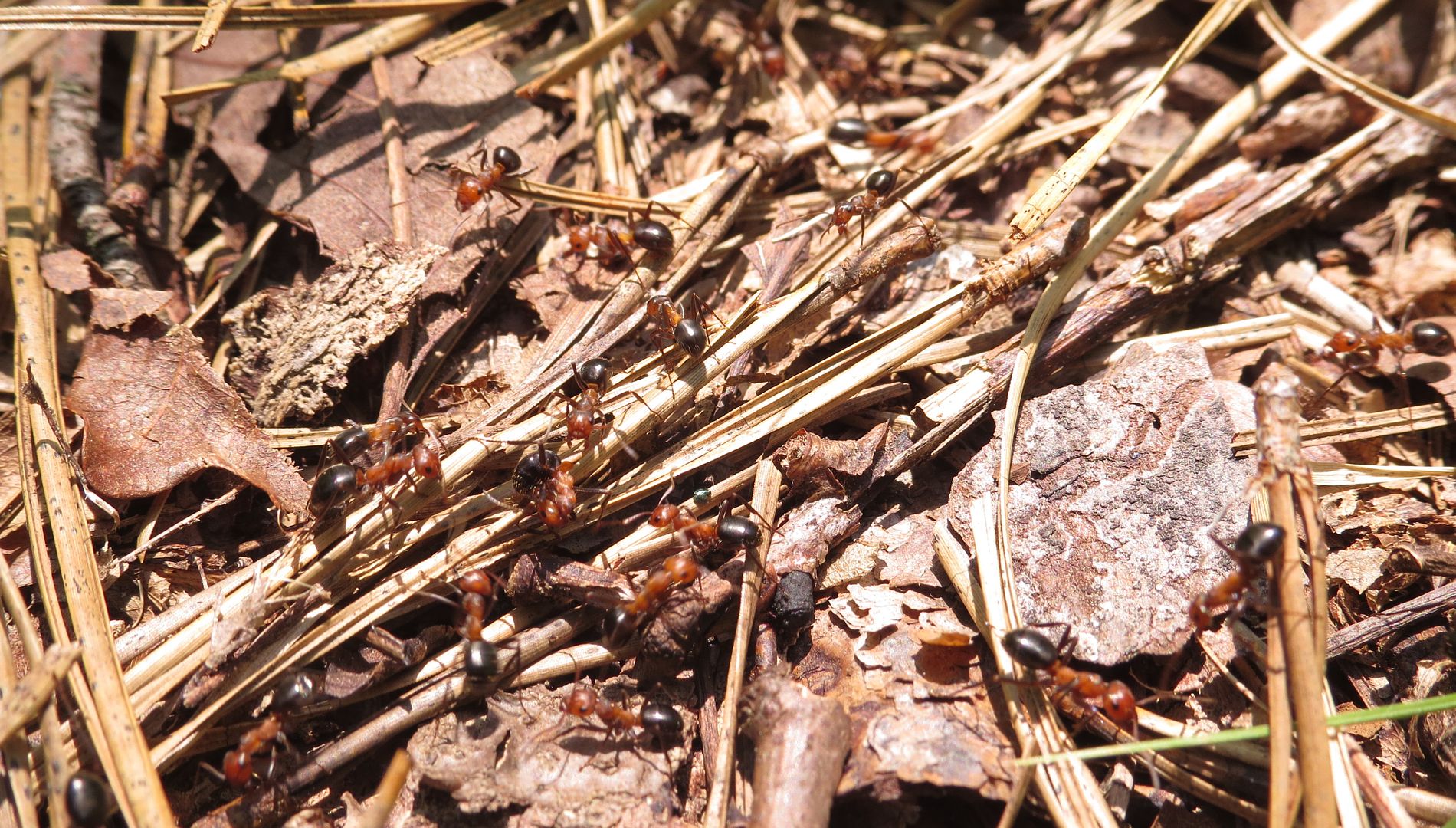
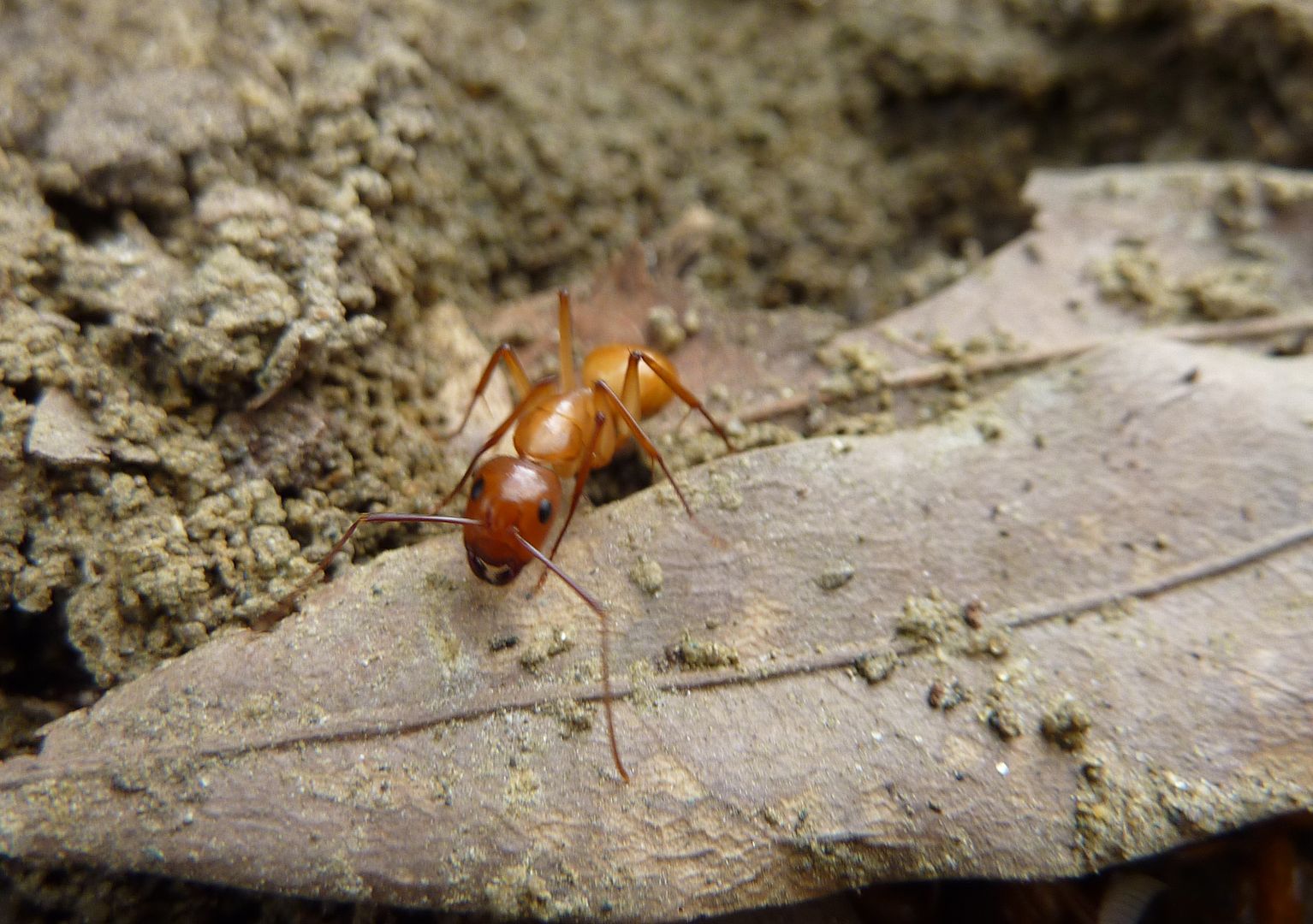
This is a Camponotus castaneus worker. It's a ground nesting species we have in the eastern United States and Canada. Normally they only come out and forage at night but I'm guessing these caterpillars are producing a noise similar to a queen ant or larva when they require tending to.

I'm not certain on the noise aspect for this species though but some members of this family do. They require a special microphone to hear also and are really just a series of muffled clicks and chirping sounds.

What I am certain of is the caterpillar produces nectar on occasion which the ant is sipping at. This can actually change the ant's behavior making them guard the caterpillar instead of steal nectar from the flowers. Ants do steal nectar from Ceanothus flowers but not all of them will the caterpillars oddly enough and I don't know why this is. 


In years past I've seen Lasius americanus, Camponotus subbarbatus, and Tapinoma sessile tending the caterpillars. But on the same plants I find Temnothroax curvipinosus workers nectar scraping, stealing nectar from flowers, and generally foraging on the plant. Oddly enough I've never found them tending an Azure caterpillar. This might just be because the other species mentioned would easily conquer them for supremacy over the right to occasionally drum their antenna on the caterpillar. Clearly this is an experiment I should preform but I don't think I'm equipped I test out any of the findings beyond saying "Yeah they will tend them in the absence of other ants," or "no they don't bother with them."

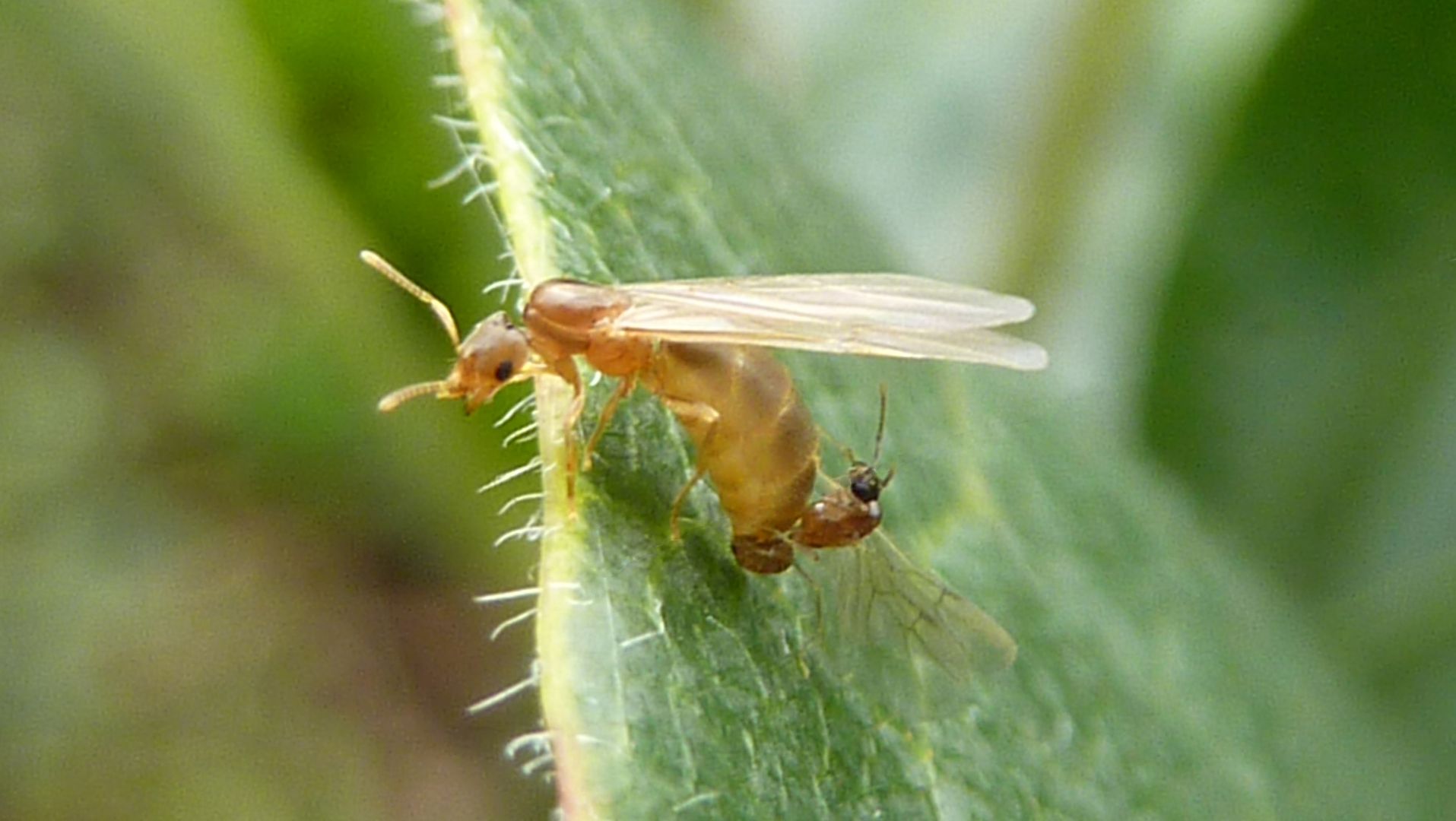
Also on the topic of Caponotus castaneus, they've been fly the past week and I managed to find a queen under a rock in the yard.

Wednesday, July 20, 2016

Myrmecochory: Ant Plant Seed Dispersal

It's that time of the year again. This is probably my favorite part about native plant gardening because it combines so many of our loved spring ephemerals with ants.

Ants are largely overlooked by gardeners despite being the most common insect (by number). Part of the reason gardeners don't appreciate ants is likely because they are generalist foragers. So it doesn't matter a whole lot what plants are growing in a garden, native or non; if you have soil and dead wood,  chances are ants live in your yard. 

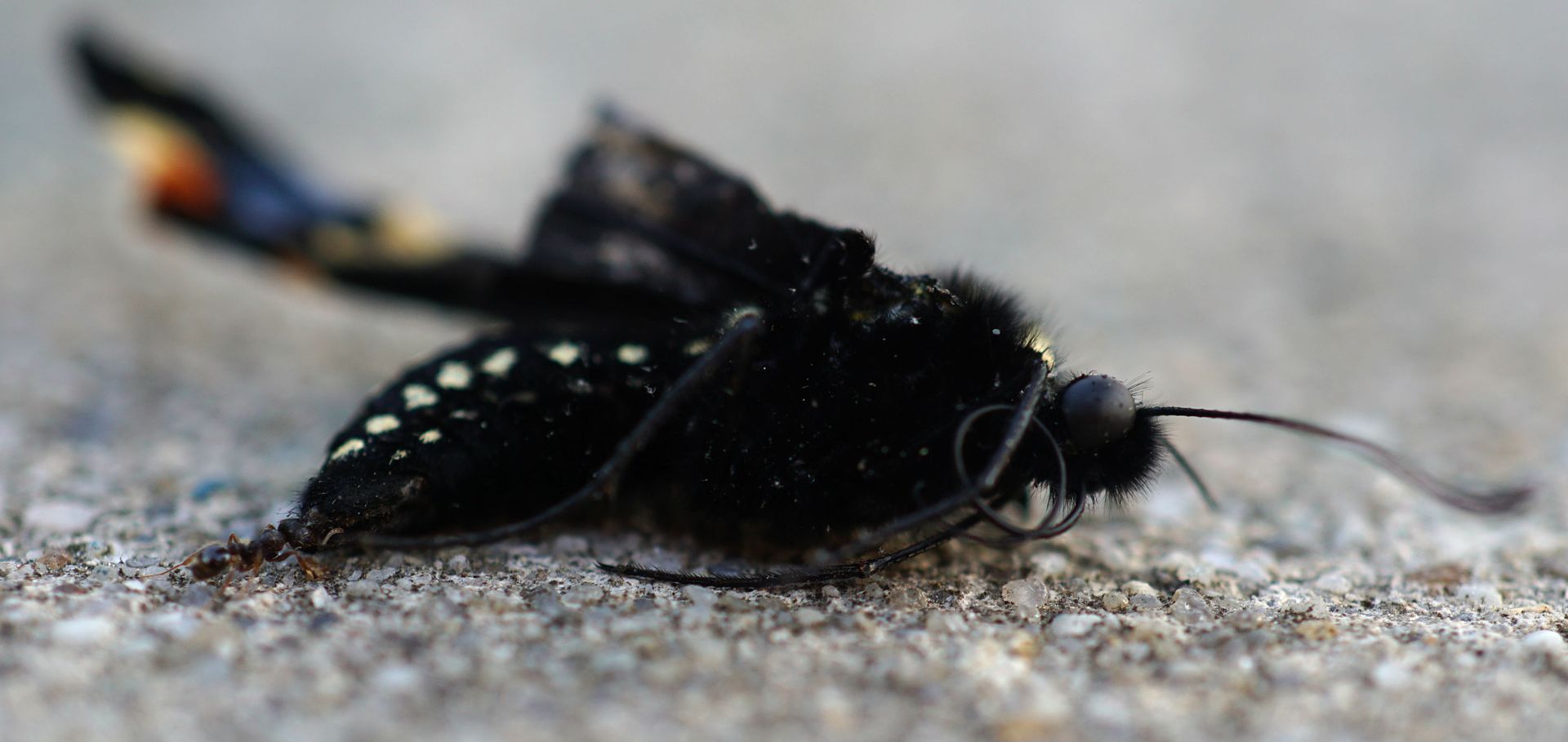
They play a vital role in removing dead insects. So after those big pretty swallowtail butterflies are done laying their eggs and visiting the flowers in your garden, ants are more than happy to collect, dissect, and consume their expired carcass. Though on the other hand, ants are also happy to remove butterfly eggs from host plants and often kill early instars to a lot of species. Ants don't forage equally on certain plants though, so it can depend on what's nesting near the tree/plant. Many caterpillars have defenses against ants too, but they're not always effective.

I have a Hackberry sapling that's about as tall as me right now. My dream is to someday see some Hackberry Emperors using it as a host plant. Every year though I got out there and find ants (Lasius alienus, Camponotus pennsylvanicus, C. chromaiodes, C. nearcticus, C. subarbatus, Temnothorax curvispinosus and Nylanderia faisonensis) foraging on the tree. They're mostly doing what's called nectar scraping where they wonder the plant licking and scraping the surface of the leaves to collect the small amounts of sweet sap that bleeds out of the leaves with the changing temperature of the day. The foraging power of 1 ant colony is enough to put a dent in the number of Lepidoptera eggs on a sapling; this one has 7 different species and likely multiple colonies of each constantly foraging on it, so I won't likely be seeing any Hackberry Emperors for several years.   

To a lesser degree, ants also think pollinators are delicious. They're mostly an issue with solitary bees, usually ground nesting or mason bee nests when discovered by ants. Ants typically don't dig into structures in search of food though, so as long as the burrows or tubes are properly secured with mud the developing bee larva should be safe.

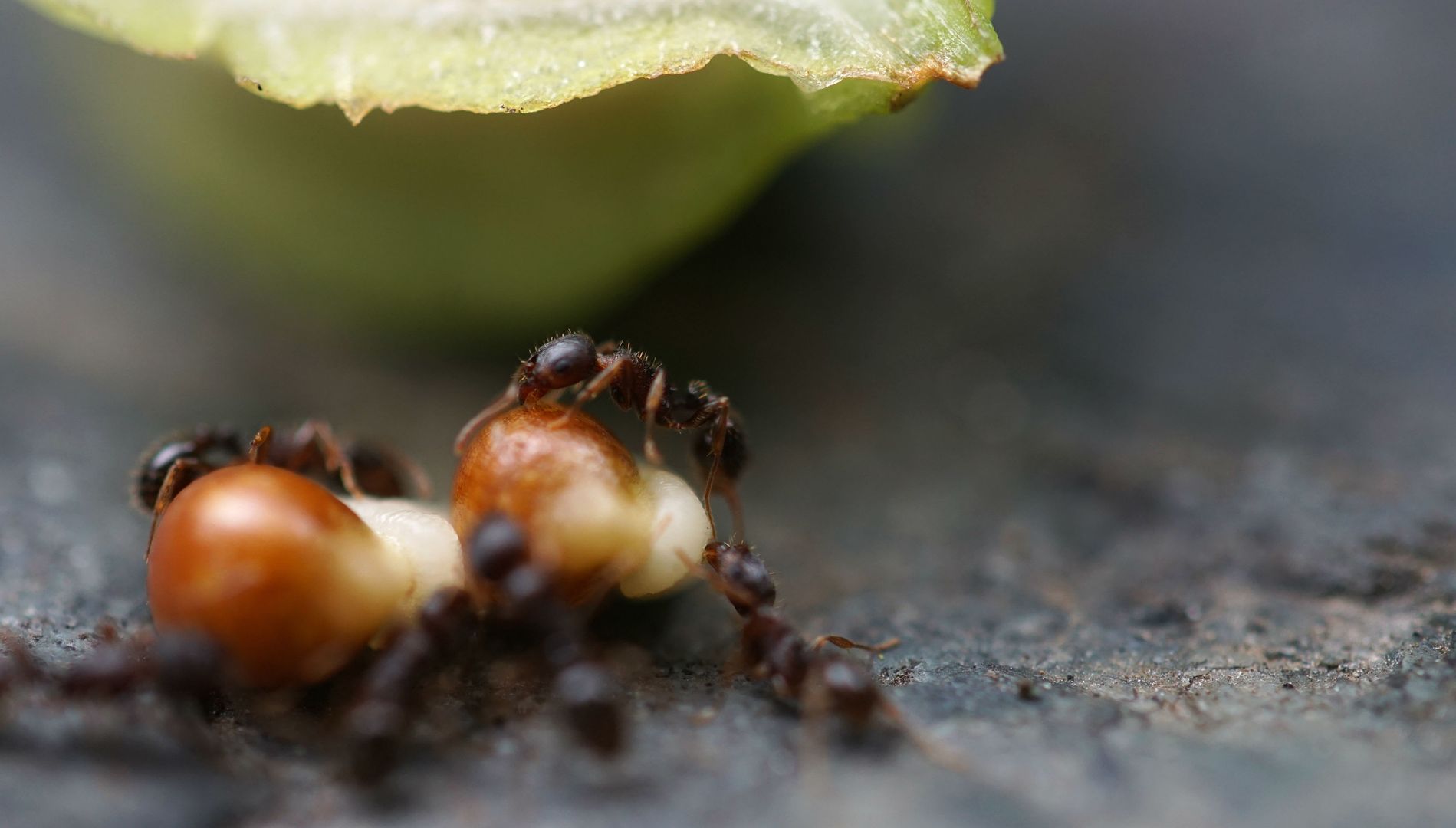
My favorite thing ants do in the garden is called Myrmecochory, or ant plant seed dispersal. Even here though ants can be considered annoying. Let's say you paid $20 for a rare Trillium species, looking to start a clump of them over the next decade, which is how long many Trilliums take to flower from seed. Often though Trillium seeds have the annoying habit of walking away from the plant thanks to packets of "Elaiosome," a lipid rich substance on the seed, attracting ants to come and carry them home. 

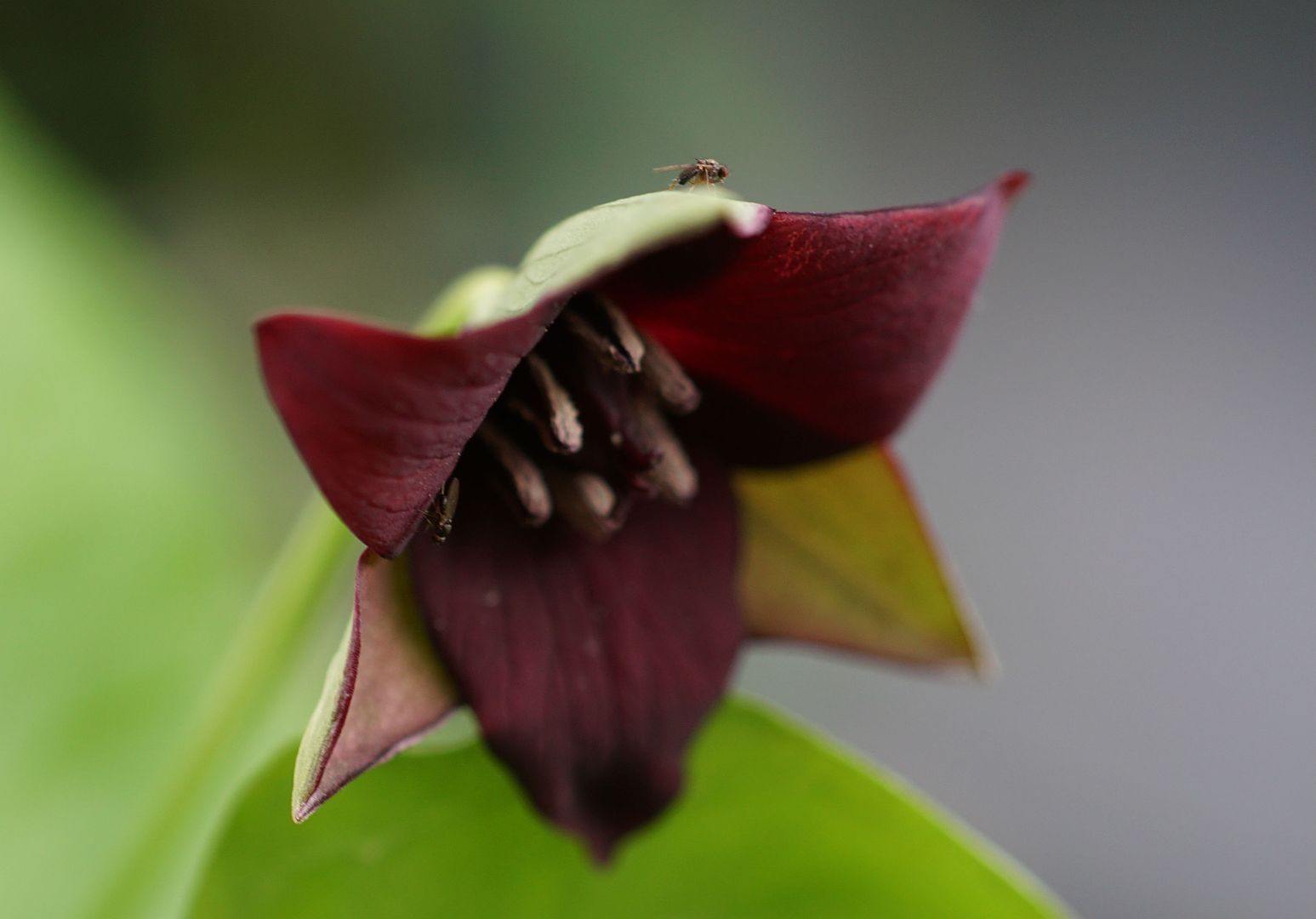
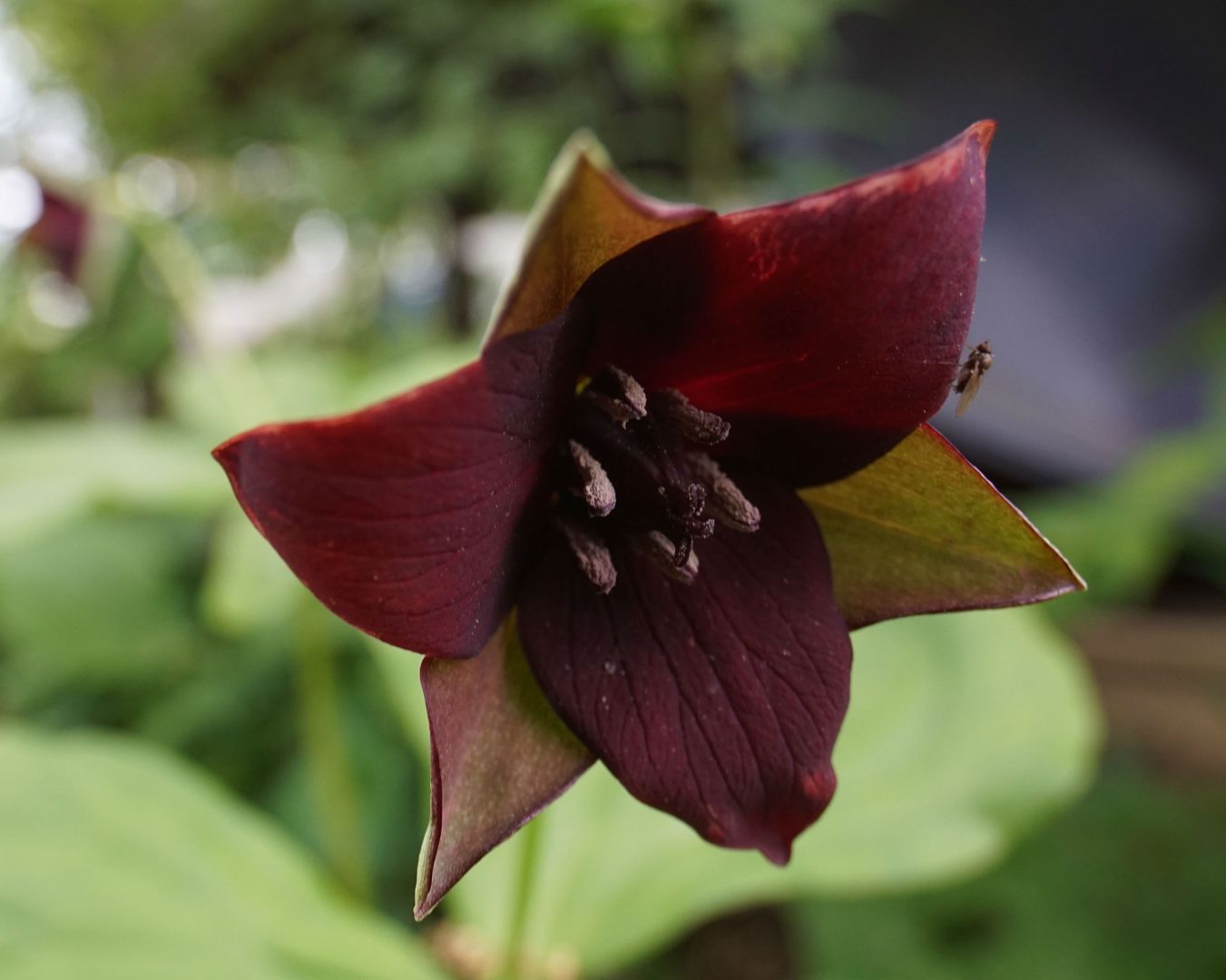
This is Trillium vaseyi, (I believe), which is pollinated by Vinegar Flies and other sorts of carrion insects. Note Vinegar Flies are sold in pet stores as "Fruit Flies" because that sounds better than Vinegar Flies. True Fruit Flies consume fresh fruit and tune delicious apples and berries into balls of maggots. Vinegar Flies target foods that have already spoiled, drawn in by the fermenting smell of yest, cider and dead fish, which is what this flower smell like.  

Lots of Trilliums are either pollinated by carrion insects or bees. In my garden this particular Trillium species isn't quite ready to produce seeds yet, though they flower every year. A rabbit or some other critter trampled through the Trillium garden and snapped the stems to the two plants of this species so I've yet to get photograph them. Fortunately I have 8 other Trillium species in my garden!

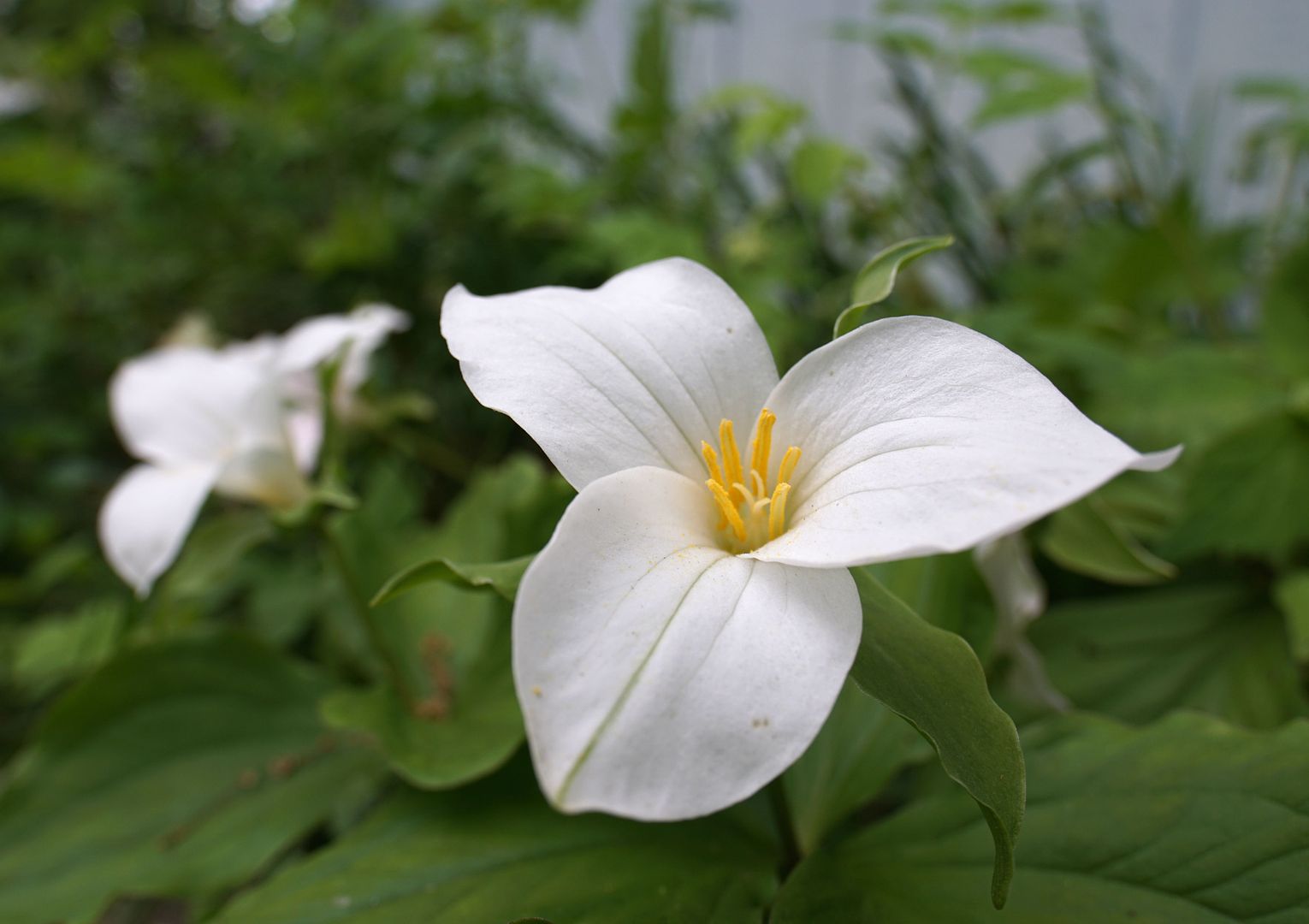
Trillium grandiflorum! This is by far the most common and easily recognized Trillium species. It's pollinated by bees and while I never witnessed any bees visiting my flowers I have seen honeybees visiting them in other gardens when planted in sufficient numbers. I'm certain Bumblebees and others must visit them on occasion too. Currently I have a clump of about 9 plants of flowering age. Each of which has a few off shoots underneath that will reach flowering age in years to come. I may even need to divide a few in a year or two. 

Admittedly things like Twinleaf, Violets, Blood Root, Hepatica, Woodland Poppy, and Bleeding Hearts have already dropped their seeds for ants to disperse. Trilliums are latest ephemeral plant in North America to drop their seeds as many of the ones I've mentioned are already dormant.

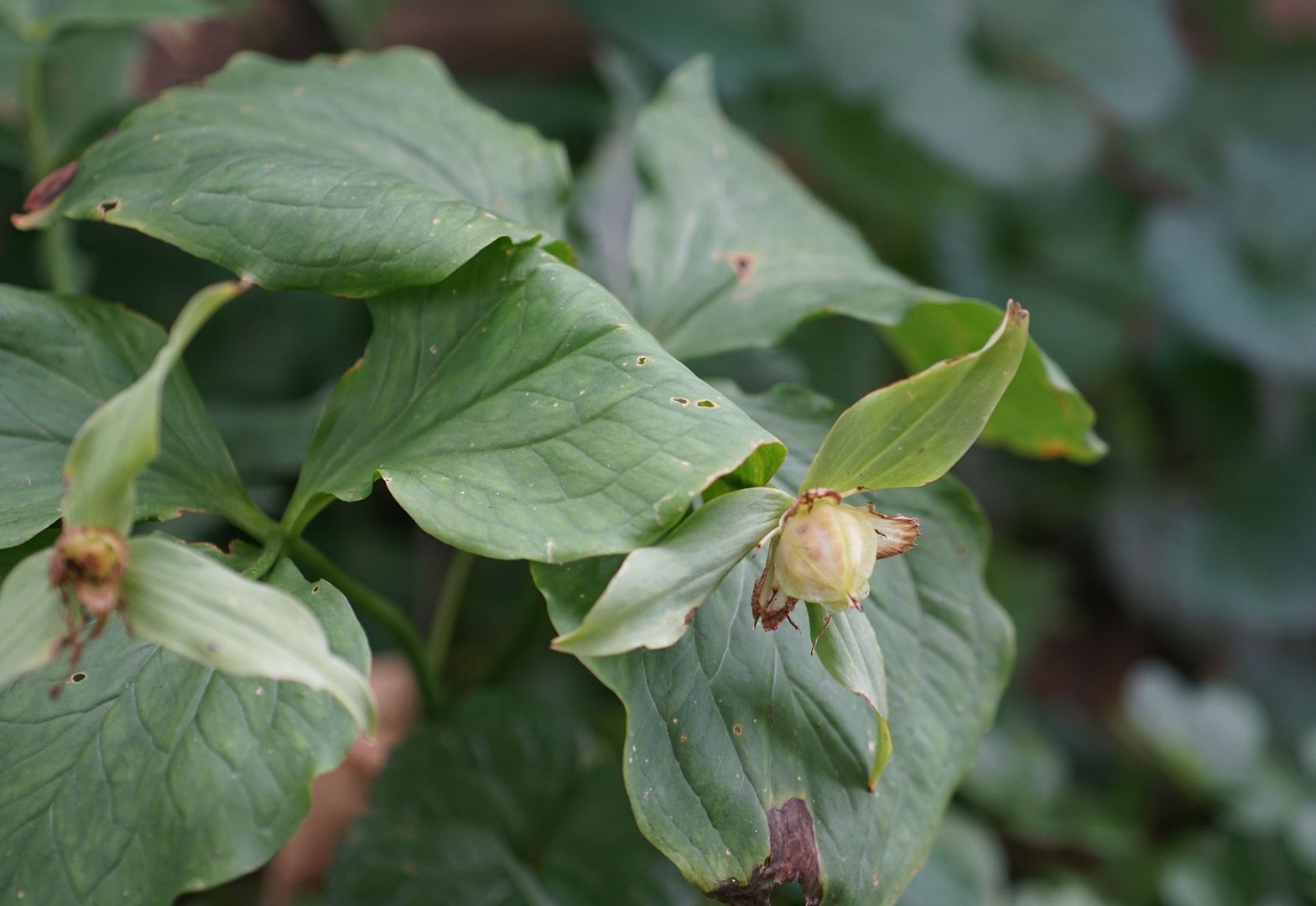
Note how the leaves to the plants photoed above are singed at the tips. If you don't water your plants, they will fry right up and abort the seedpod entirely. You can plant Trilliums in full sun and they'll grow happily but probably won't produce seeds because of how much sun they get. You can compensate for this by adding water but there's only so much watering can do. It's best to plant them in the shade with a small amount of mulch and a low ground cover growing underneath such as Hepatica or Stone Crop. I like to water the roots to mine basically every time I walk past with the hose, or once every other day. Just put the water to the stem and count to 10 for each plant. Even doing this though won't guarantee success. Note the plant to the left didn't bother producing a seedpod at all. Of 9 plants only 2 didn't make seedpods, lack of pollination is likely the issue. Some that did make seedpods made smaller than average ones.   

You can tell a Trillium pod is ripe when you can see the seeds right through the pod. Another thing to look for is a change in color. Some go from green to purple, others go from purple to green, some ends up as bright red, depending on the species. Seeing these changes, and especially seeing the seeds within, mean you're within 2 weeks of the seeds being ripe. Seeds should be hard, like unpopped popcorn. The longer you wait the more likely the pod will become damaged, where ants, wasps, birds, and rodents will make off with the seeds. I've found seedpods completely hollow inside thanks to a small puncture hole allowing ants to gain entry.
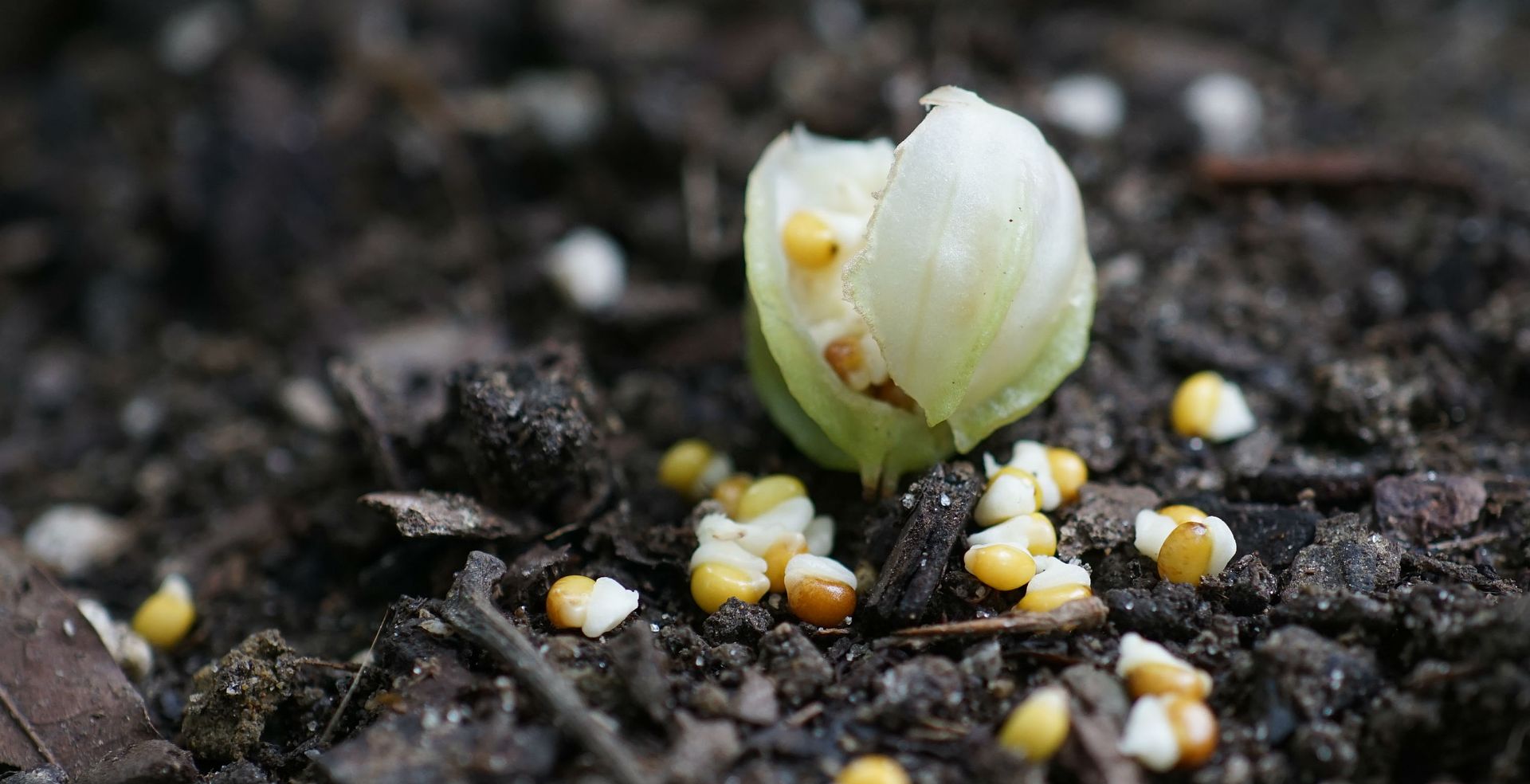
Ants planting the seeds is not necessary for germination! This is just how the plants disperse their seeds in the wild. For gardeners looking to start a bed of these, I'd say go ahead and crack open a pod or two and just dump the seeds out in a shallow ditch and plant them yourself. Ideally the elaiosome should be removed before doing this, however that stuff is really effing on there!!! You can't just cut it off or take your finger nail to it. The risk is sometimes a kind of mold or fungus grows on the elaiosome and may kill the seed... I've never seen this happen to an extreme degree though. Maybe let the seeds dry out for two hours before planting. 

Personally I like letting the ants carry the seeds off. The consequence here is that I get Trillium seedlings coming up in the lawn and in unwanted places. These are easy enough to transplant when I notice them, but determining what species they are can't be done for many more years!

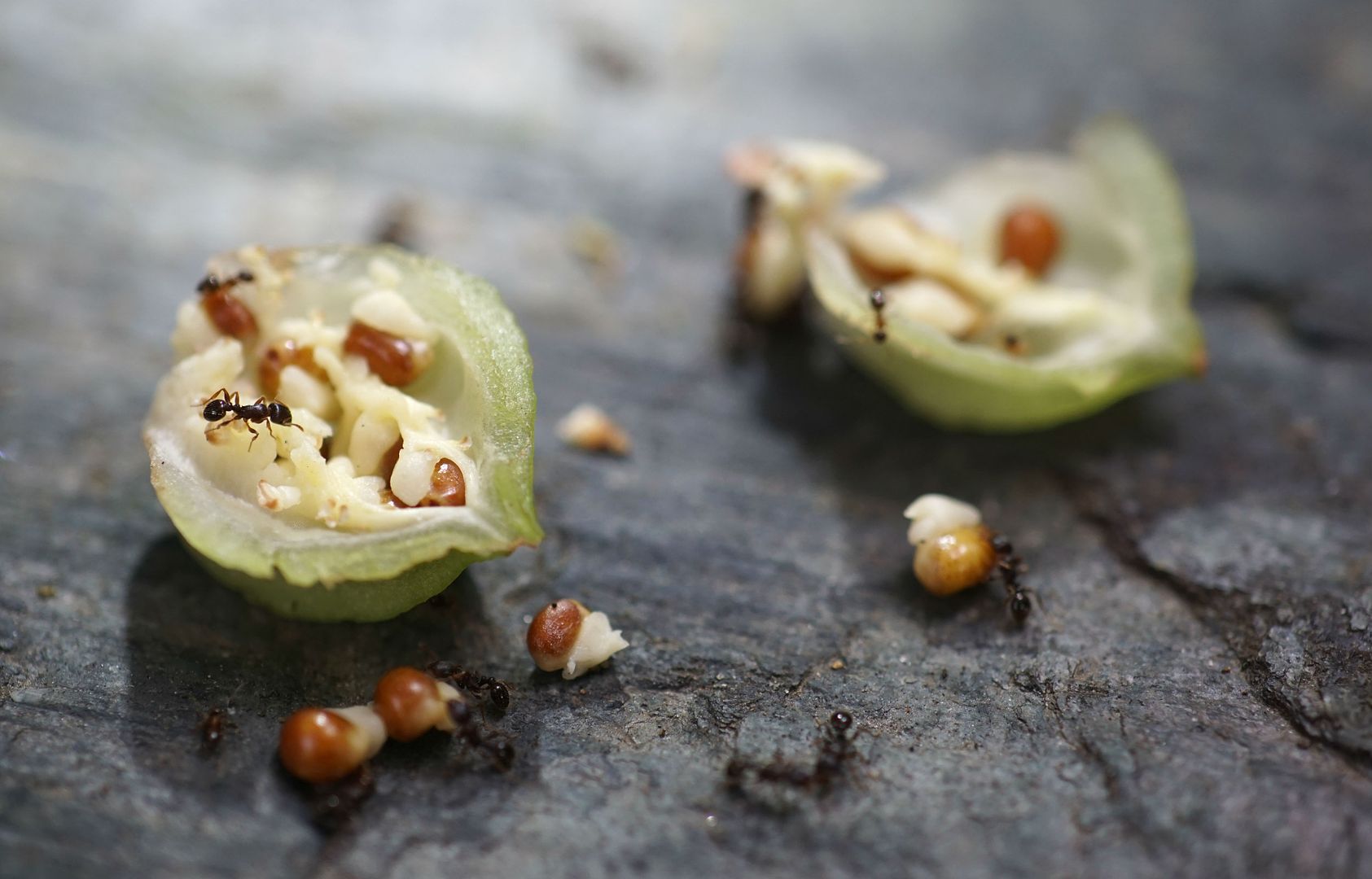
Shortly after a pod has become damaged, ants will more than likely find the seeds. Here a pavement ant, Tetramorium caespitum, has chanced upon the mother load.

Because dirt doesn't make for a thrilling background, I took the liberty of placing a seedpod on one of the stepping stones of my garden.

Nylanderia faisonensis is a nonnative woodland species that's slowly been invading areas rich in leaf litter. Nylanderia is a genus of tramp ants which are accidentally imported all over the world. Not all ants are ideal at planting seeds, and this is one of them. The ants are too small to carry the seeds anywhere, so instead of dispersing them as the plant wanted, the ants simply feed on the elaiosome where they found the seed. 


Tetramorium caespitum, Pavement Ants, do a better job but also are not native. Studies have been coming out finding that Nonnative Ants tend to favor the seeds to Nonnative Plants. In this case the Tetramorium were more than happy to disperse these seeds for me. (My yard also lacks any nonnative plant that has elaiosome on the seeds.)

Another risk facing Trillium seeds is the ants eating the seed along with the elaiosome. Trillium seeds tend to be rock hard for the first two years then soften up as they go to germinate. They are said to produce a fowl smell which is probably meant to encourage ants to move their nest elsewhere!

The ideal ant genus to be doing this seems to be Aphaenogaster which form abundant colonies of ~2000 ants throughout woodland settings. They're also very much in the habit of changing their nest location, so as the colonies move around they leave seed banks behind where plants like Trilliums tend to grow. There used to be a colony of Aphaenogaster rudis under this stepping stone which is why I picked it, sadly it seems the colony has moved on.

Two Pavement Ants trying to carry a Trillium seed home.

These ants are just big enough to handle the seed, though it still takes two of them to move it. Sometimes ants will actually give up after carrying the seeds a few feet. The seed is still dispersed from the parent plant but slightly at risk of being eaten by a rodent. Trilliums naturally grow best where there is plenty of leaf litter decomposing, and it's likely in these kinds of settings such discarded seeds are still successful. 

I love this shot.

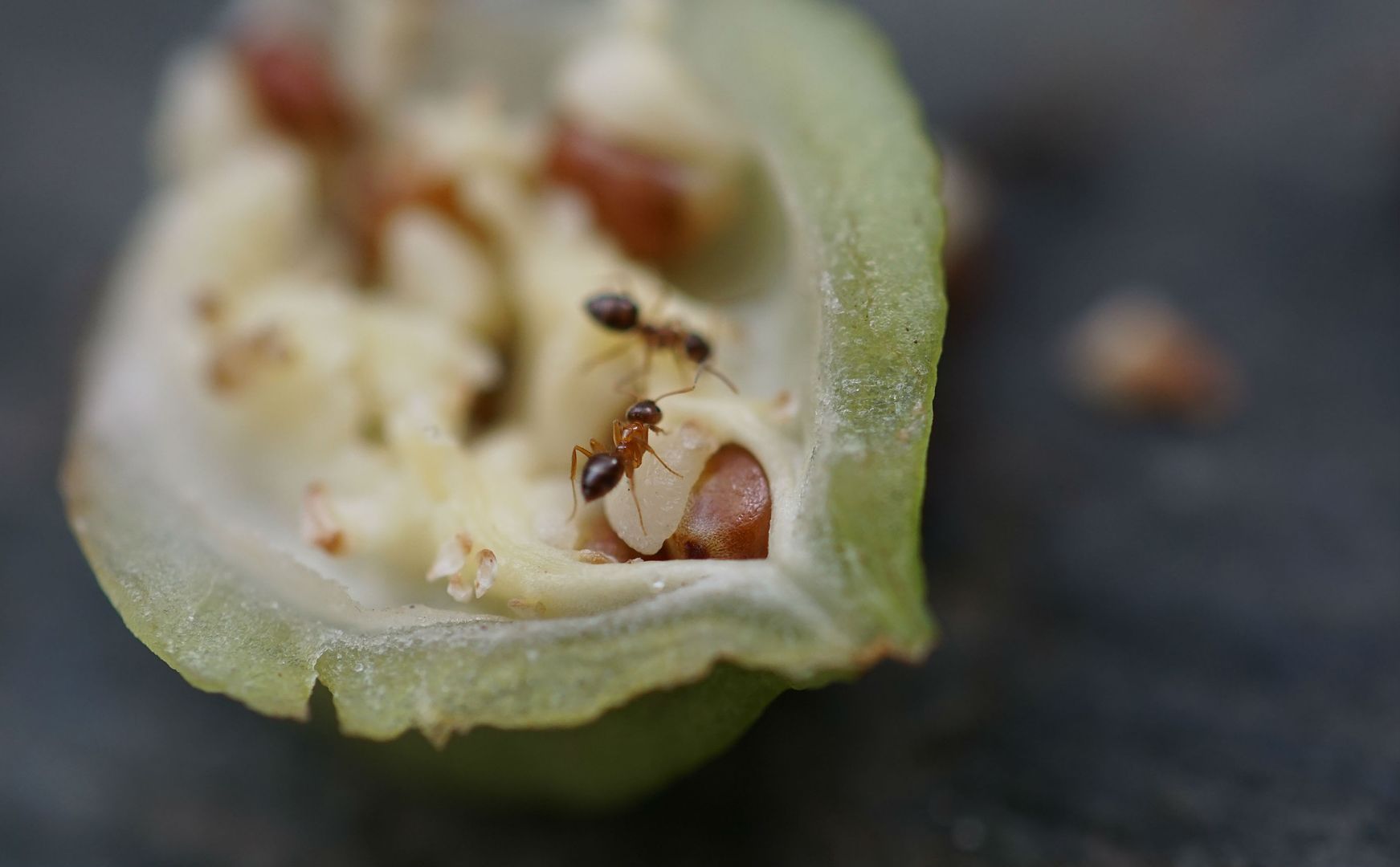
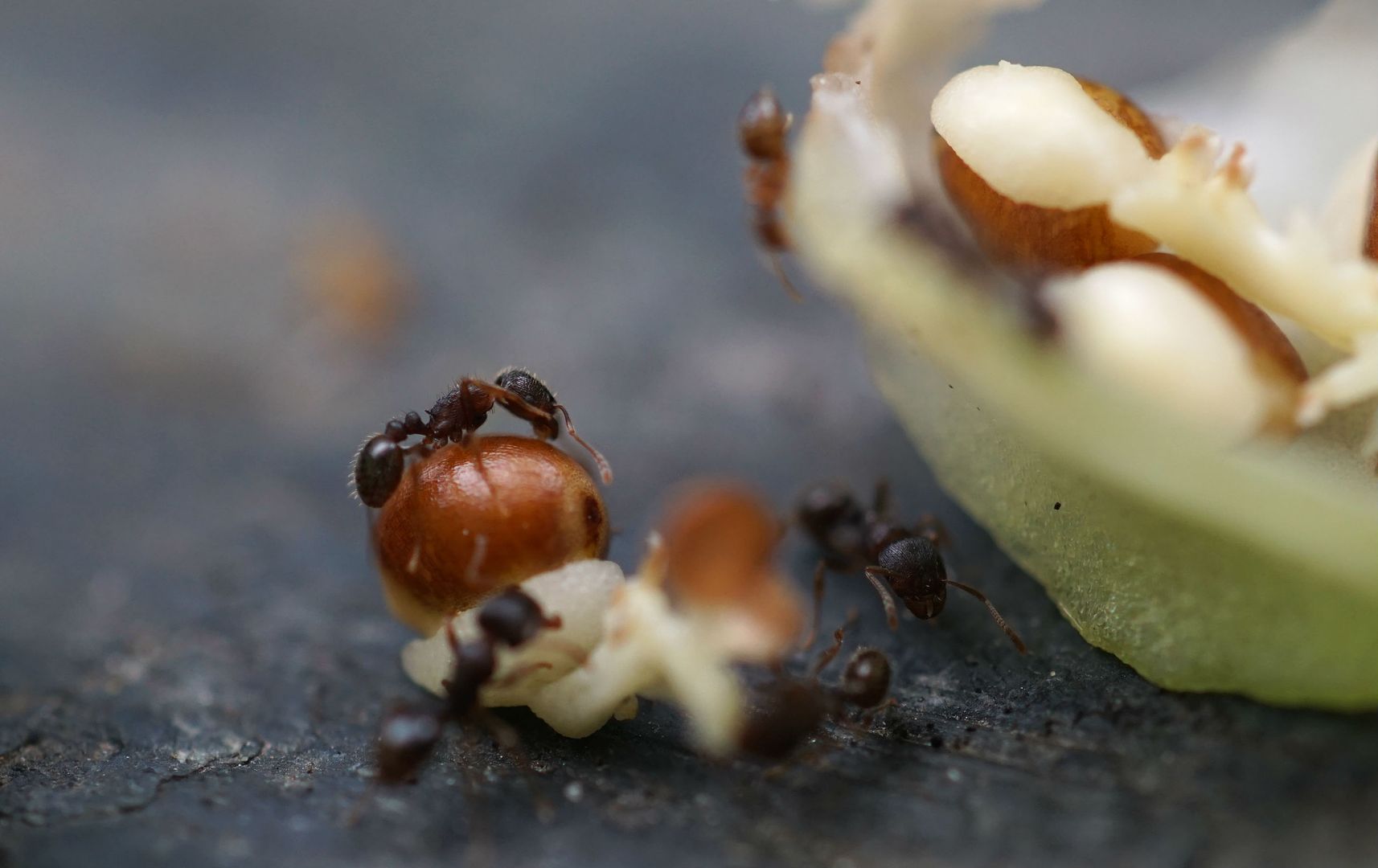
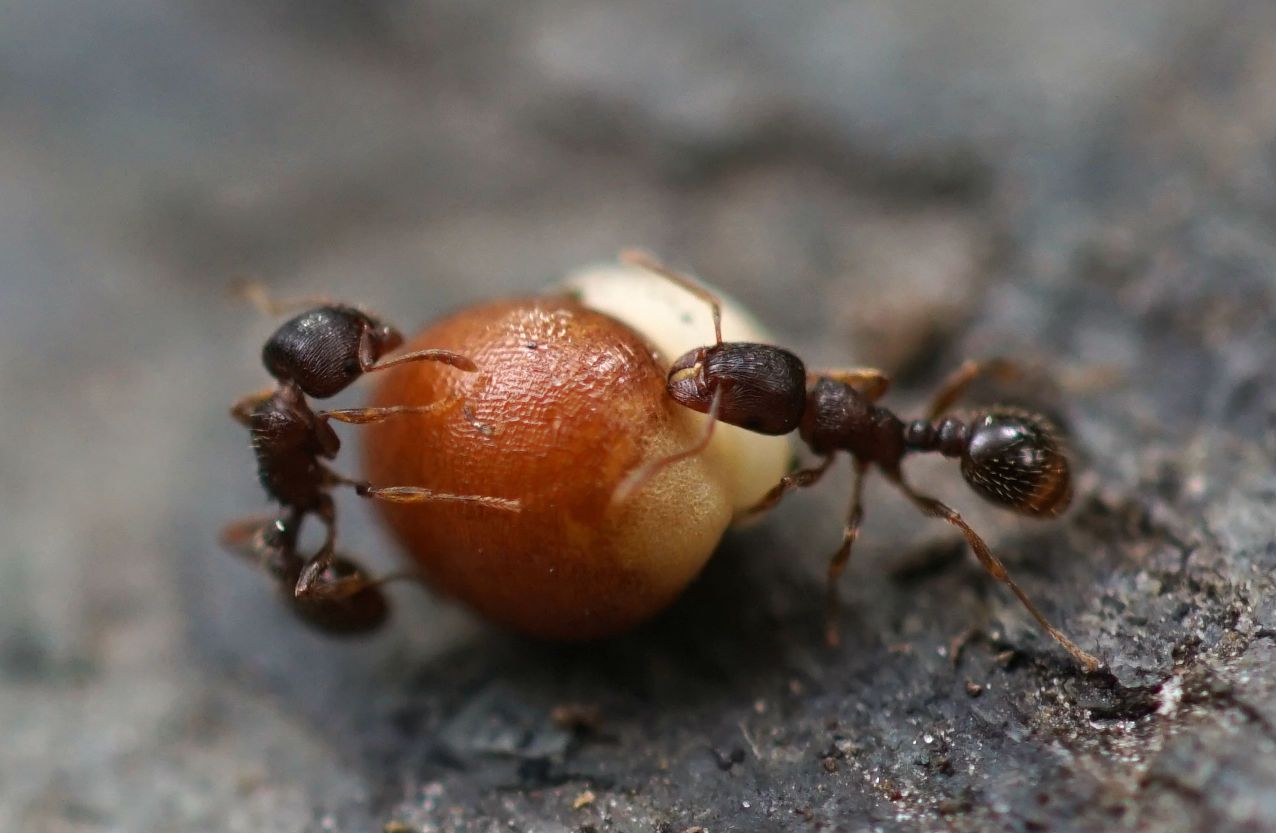
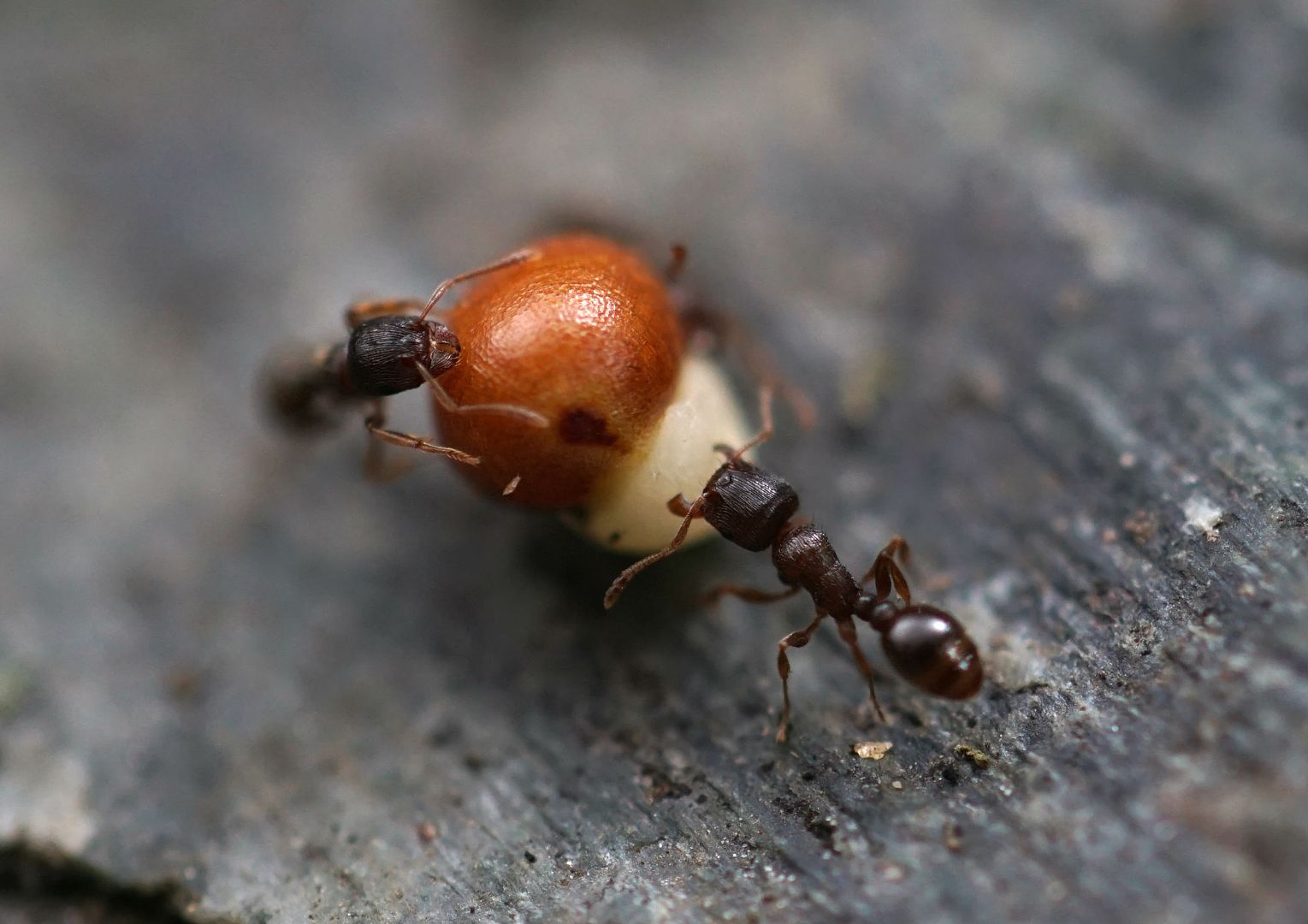
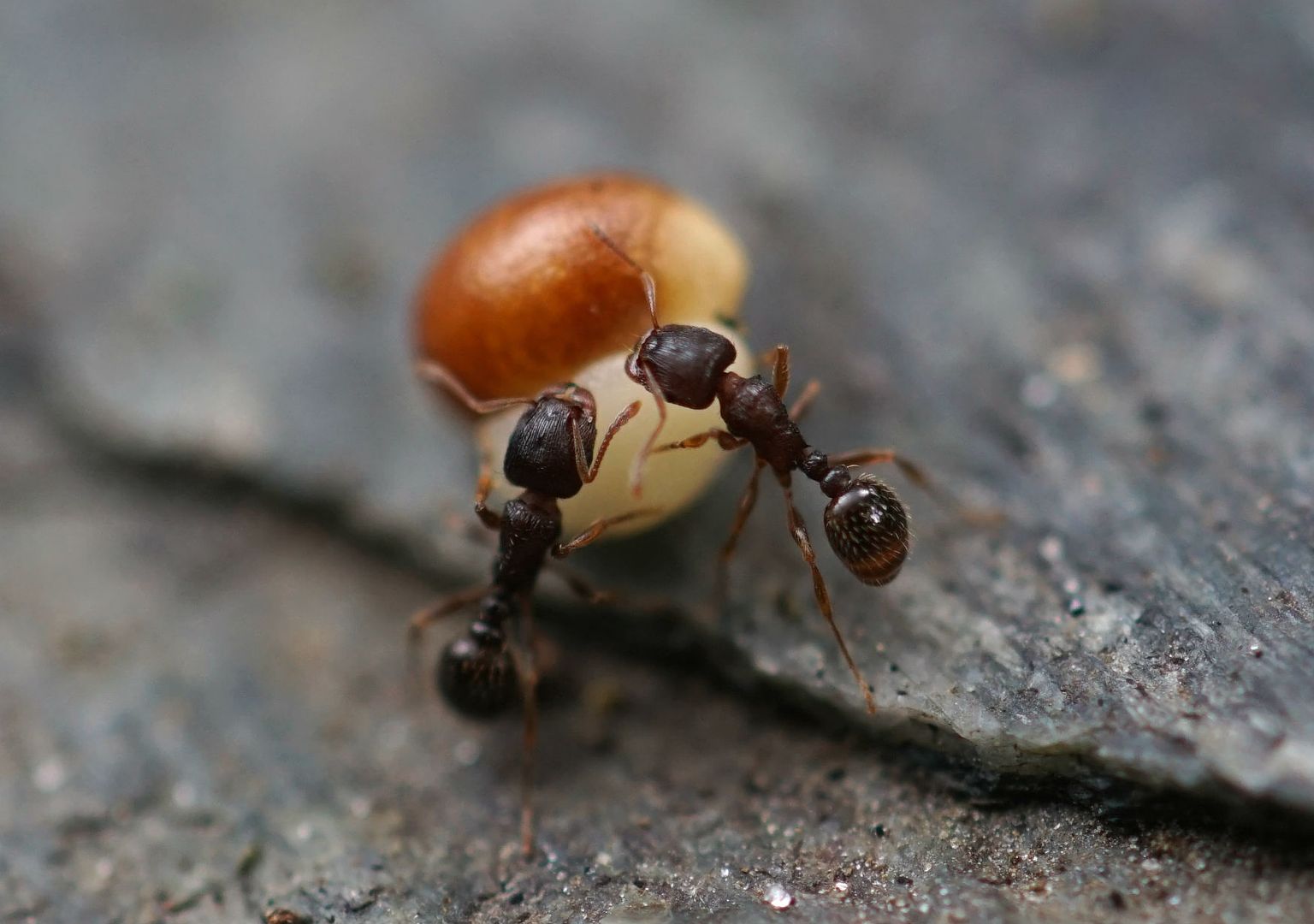
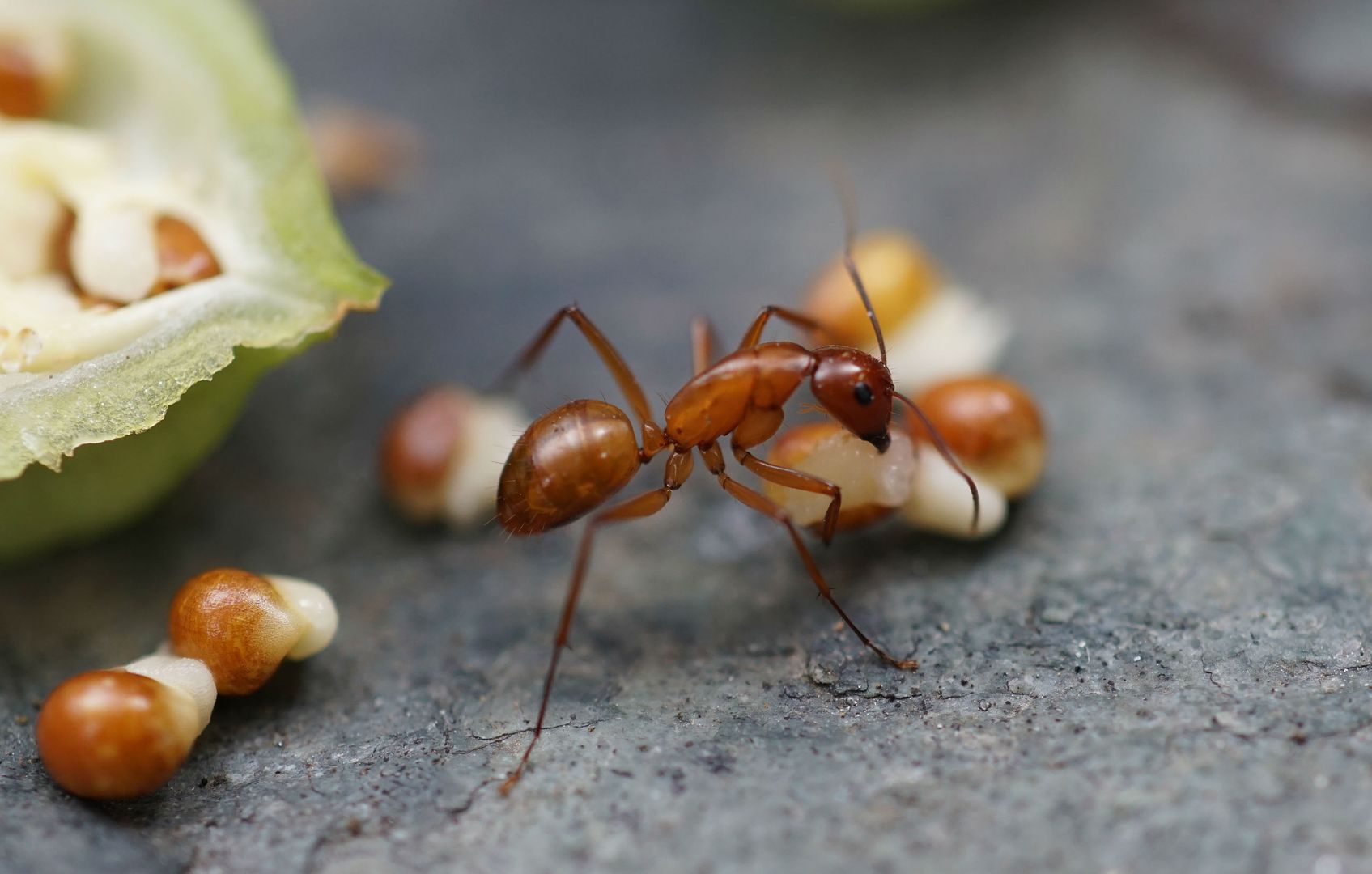
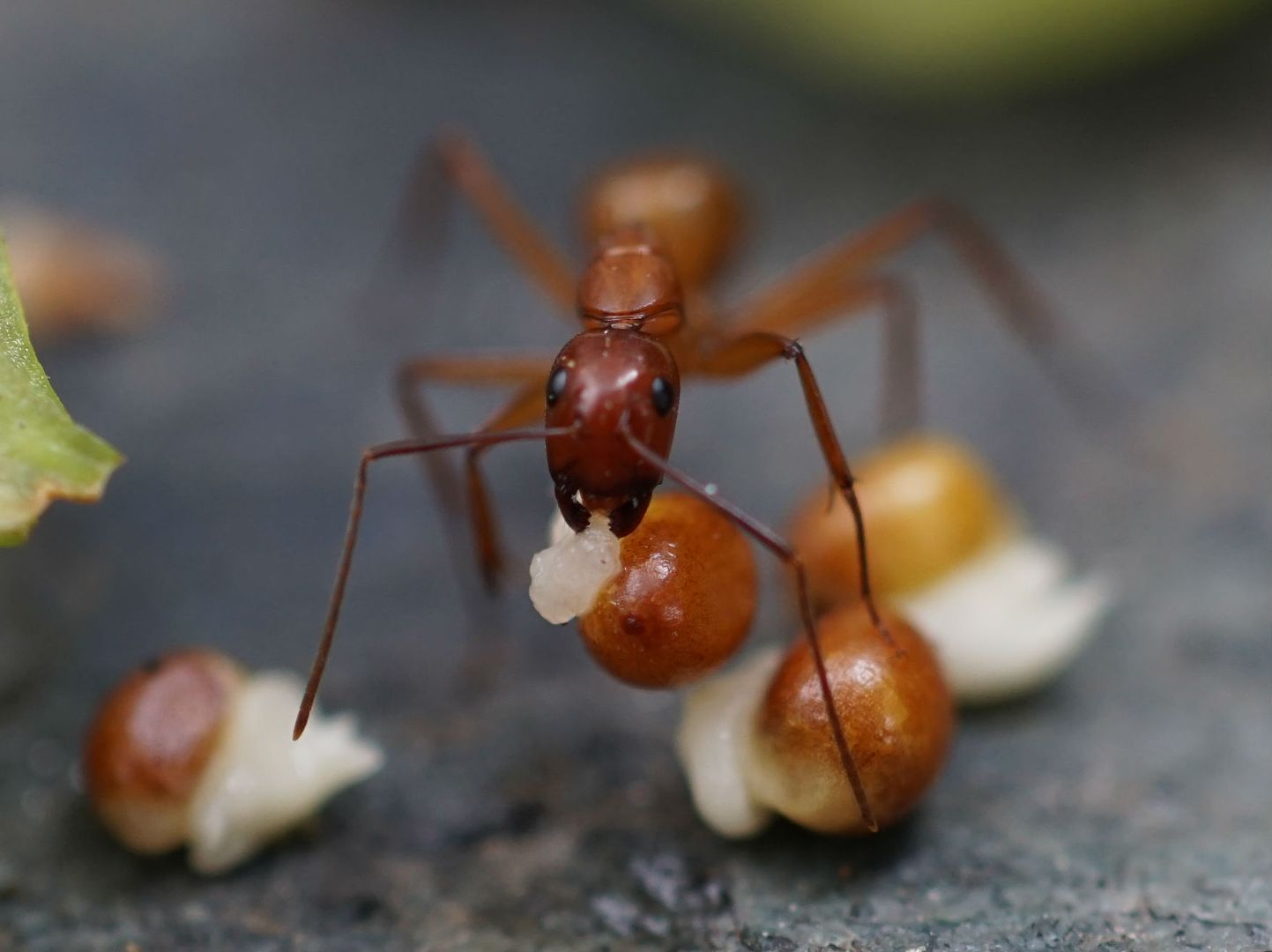
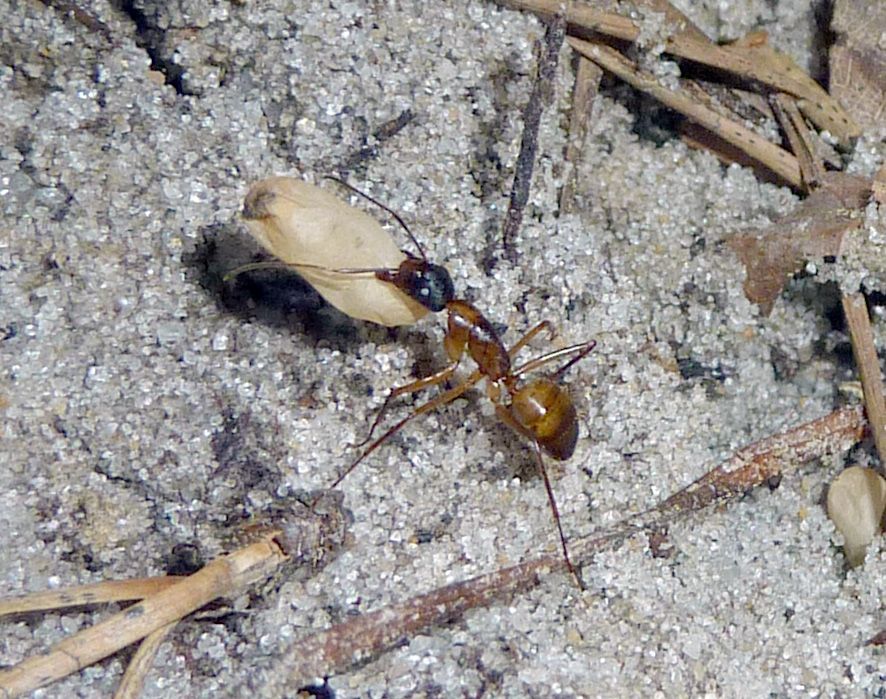
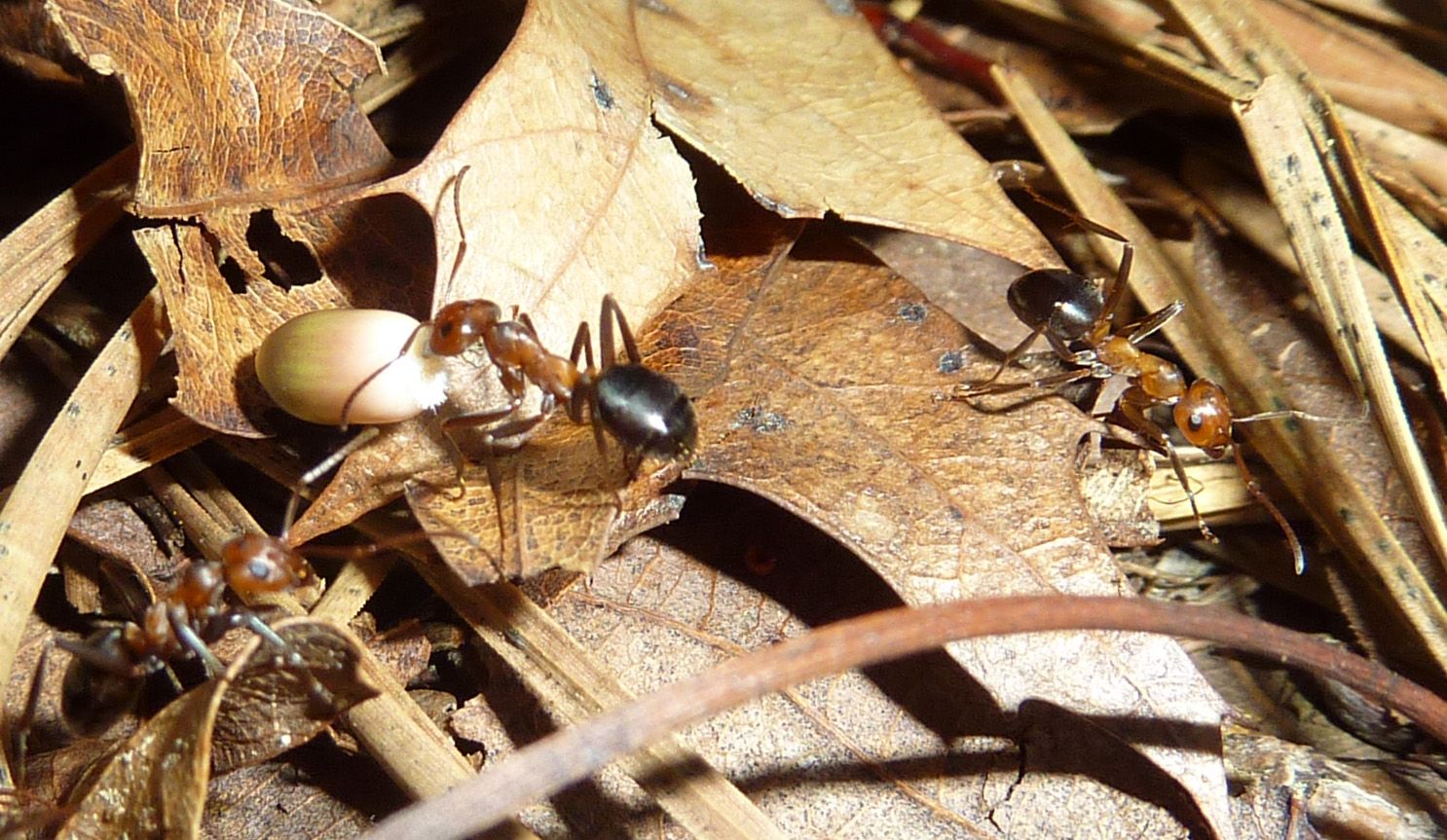
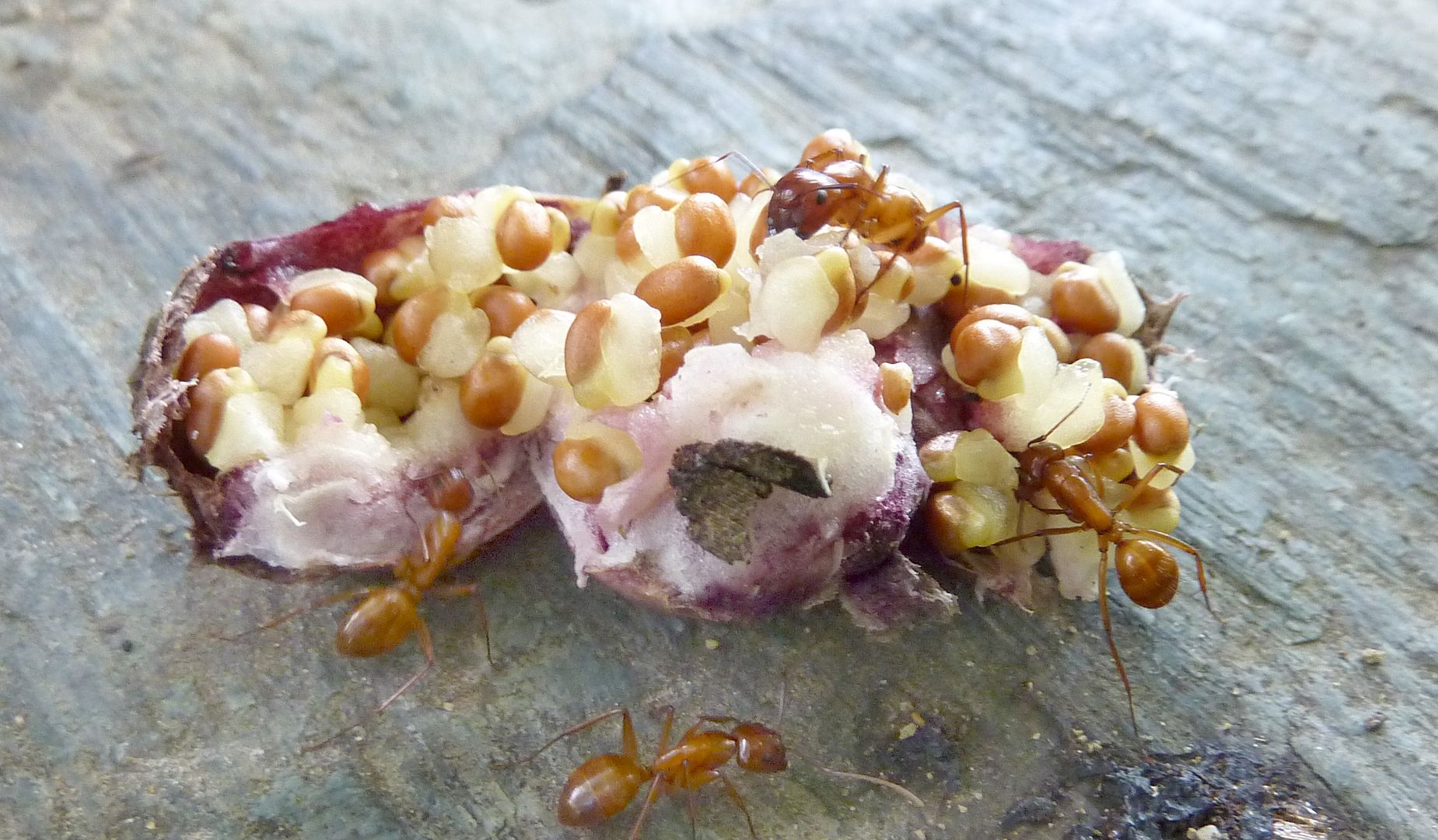
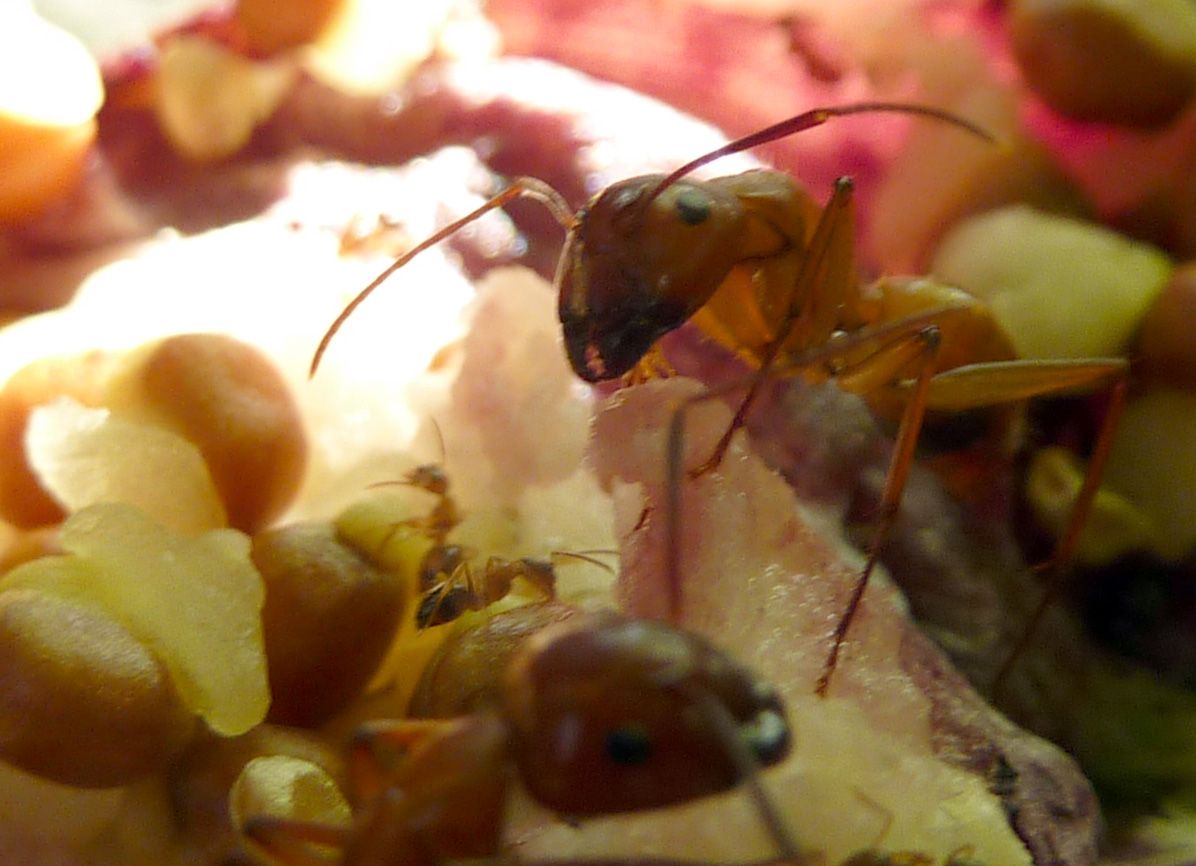
The larger, ground nesting, Camponotus castaneus does a great job of dispersing seeds too. In the past I had assumed the seeds might get lost 4' underground where these ants like to nest. As it turns out though after bringing the seeds home, they're discarded a short while later, once the elaiosome has dried up typically. While the seeds may not be planted, they are dispersed and left in the colony midden pile (trash heap) which is still better than nothing.

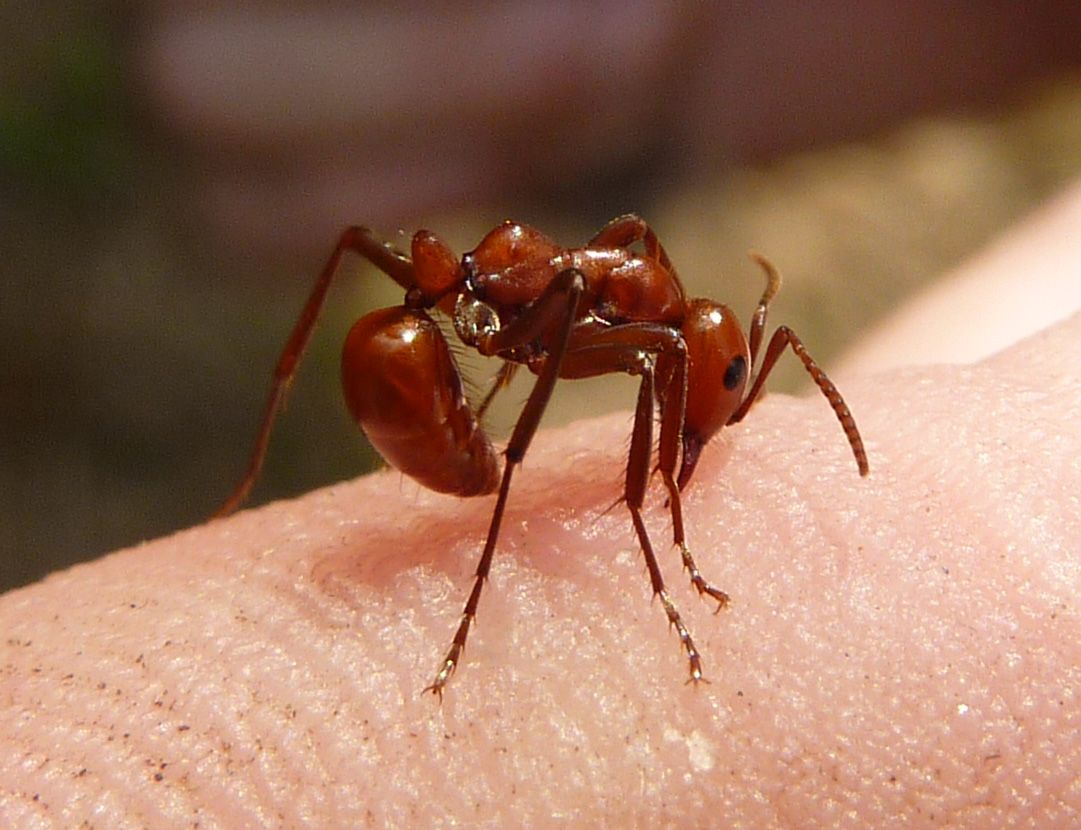
These are one of the most elegant ants in my opinion and I love their chestnut brown and orange color tone. 


Saturday, January 4, 2014

2013 Best of Ants

Well it has been a bustling year this one. I've just realized I took a tone of photos this year, perhaps even more than on previous years. Part of the reason was that I went to three major events where I took lots of photos, and partly because I bought a new camera with a cool new snap on lens.

My anting year started with an unusually early war between two Tetramorium colonies. We had a warm spring and wet year so the ant activity was good this year.

Here is a colony of Camponotus castaneus which seems to have moved on to a new location. I'm not sure where or why but one day they were there and the next they vanished. They didn't reappear at all later in the year either so that's a shame. I really like this species.

The flowers in my meadow garden were the best they've been yet, and many of the species I've chosen secrete extra floral nectar. Here a Camponotus subbarbatus worker is nectar scraping. Basically they just run their mandibles along the surface of the bud to squeeze out what has to be only a surface thick layer of carbohydrates.

You have to wonder if the nectar is worth the effort but apparently after a few hours of doing this they've collected enough to fill their social stomach. Eventually one of the major workers of the colony would check in on them and trophallaxis ensued. Major workers can hold more food so they're used mostly as storage ants.

One of my rare plants, Purple Milkweed, Asclepias purpurascens, finally flowered this year... only to have it's nectar robbed by Odorous House Ants, Tapinoma sessile. This ant is hands down the most notorious nectar thief because this particular milkweed is covered in hairs along the stem which are supposed to secrete a sticky goo to stop ants dead in their tracks. No one told this species that because they robbed out all the flowers.

Testing out my new camera I got an image of what I think is Lasius claviger. The hairs on the gaster are randomly spaced out and not in rows the way they are with Lasius interjectus

 On the NJ Ant Together this year we found a few colonies of Northern Fungus Growing Ants, Trachymyrmex septentrionalis.

They weren't very active so next year I'll try and hit the location sooner. There were a few out digging though.

This was a test for me to realize just how varied one species can be. This is Formica pallidefulva which I have in my yard, but didn't recognize it here. I'm so used to them being a coppery brass color that it never occurred to me that there could be populations with such an abrupt color difference. I'm told they get even darker the farther north you go.

Their cousins live in considerably larger nests. Formic exsectoides for small super colonies in relatively well preserved woodland areas. I think the only thing preventing them from distributing farther is their appetite. In the short while we were there we watched them haul in caterpillars, cicadas, and wasps. 

Anywhere that you stepped on the ground, because our shoes disturbed the colony scent on the ground, the ants quickly swarmed the location. It didn't help that there were so many running along the ground that we couldn't help but step on them, thus releasing alarm pheromone.

Outside of their range there were a few foragers of Camponotus chromaiodes. Note the pubescence on the gaster as well as the dark shoulders (which is only consistent on the larger members of the colony). Formica forage during the day and the Camponotus take over at night.

Crematogaster cerasi tending some sort of aphid which had a liking to this Rudbeckia flower. This was the first year I'd ever noticed aphids on Rudbeckia that weren't bright red and on the stems. These were actually green and some seemed to latch onto the seeds or various nodes where they were being developed. The caterpillar here is some sort of inchworm or possibly a looper. These normally feed on the flowers to these plants but was cautious about approaching this flower.

The last thing of anting for the year was observing another one of my rare plants Gentiana catesbaei. Other members of this genus keep the flower tightly closed and it's only through bumblebees forcing their way inside that they get pollinated. This species oddly keeps the flower open and invites everything on in. This also includes the ants. In this case it's the tiny Nylanderia faisonensis though they didn't seem all that interested in it really.

Thursday, May 2, 2013

Feeding the Ants

I have a few Oak trees out in the yard, which tend to be prolific with caterpillars. Most of which are fairly bland looking and the one above is no exception. Caterpillars that don't have exotic colors to them or aren't covered in hairs, tendrils, or thorns, have to be cautious as they tend to be the easiest for birds to eat. We have several sparrows and robins nests about the yard so naturally their chances of survival are almost zero. So what these caterpillars have to do to escape being a meal is either hide or jump ship. I see droves of these lowering down from the tree each time a bird lands to inspect the tree. Ideally the caterpillar would lower onto another branch, but there's only so much tree to be had.

Once they're on the forest floor (or in this case my yard) they need to locate another host plant, typically a sapling or risk starvation. Some can survive by eating last years leaves that haven't decomposed but this isn't as nutritious for them.

Directly under the Oak Tree in question is a rather health colony of Camponotus castaneus. They tend to forage at night though, so until then other forest ant colonies have a chance to collect up some food. Located in the same area were colonies of Aphaenogaster rudis, Nylanderia faisonensis, Prenolepis imparis, and Tetramorium species E. (formerly T. caespitum), as well as a few young colonies Formica pallidefulva, and Formica incerta. All underneath one oak tree.

(There's also colonies of Lasius interjectus, and Ponera pennsylvanica too but I don't think they eat caterpillars too often. The Lasius colonies farm root aphids like there's no tomorrow, and the Ponera I expect to be predatory towards small mites and spring tails and such.)

So I fed this little caterpillar to my colony of Pheidole bicarinata, which is a rather tiny ant, commonly found in sandy areas. Pheidole is one of the most species rich genera in the world but here in NJ we're approaching their northern limits. They're far more prolific in tropical areas. They occur wherever there's lots of sandy soil and full sun to partial shade conditions. Colonies can get reasonably big, but for now this one fits nicely in a test tube. You can sort of make out the queen but she's out of focus and in the back towards the brood pile. The caterpillar tried to hide under their test tube but the ants soon found it and swarmed it.


Pheidole is a genus with a polymorphic worker caste. The smaller workers do most of the work while the larger ones are there mostly for food storage, milling seeds, and tearing open food items for the smaller workers to more easily get at. They can also block tunnel entrances with their heads when the colony is attacked.

Thursday, April 18, 2013

Camponotus castaneus Waking Up

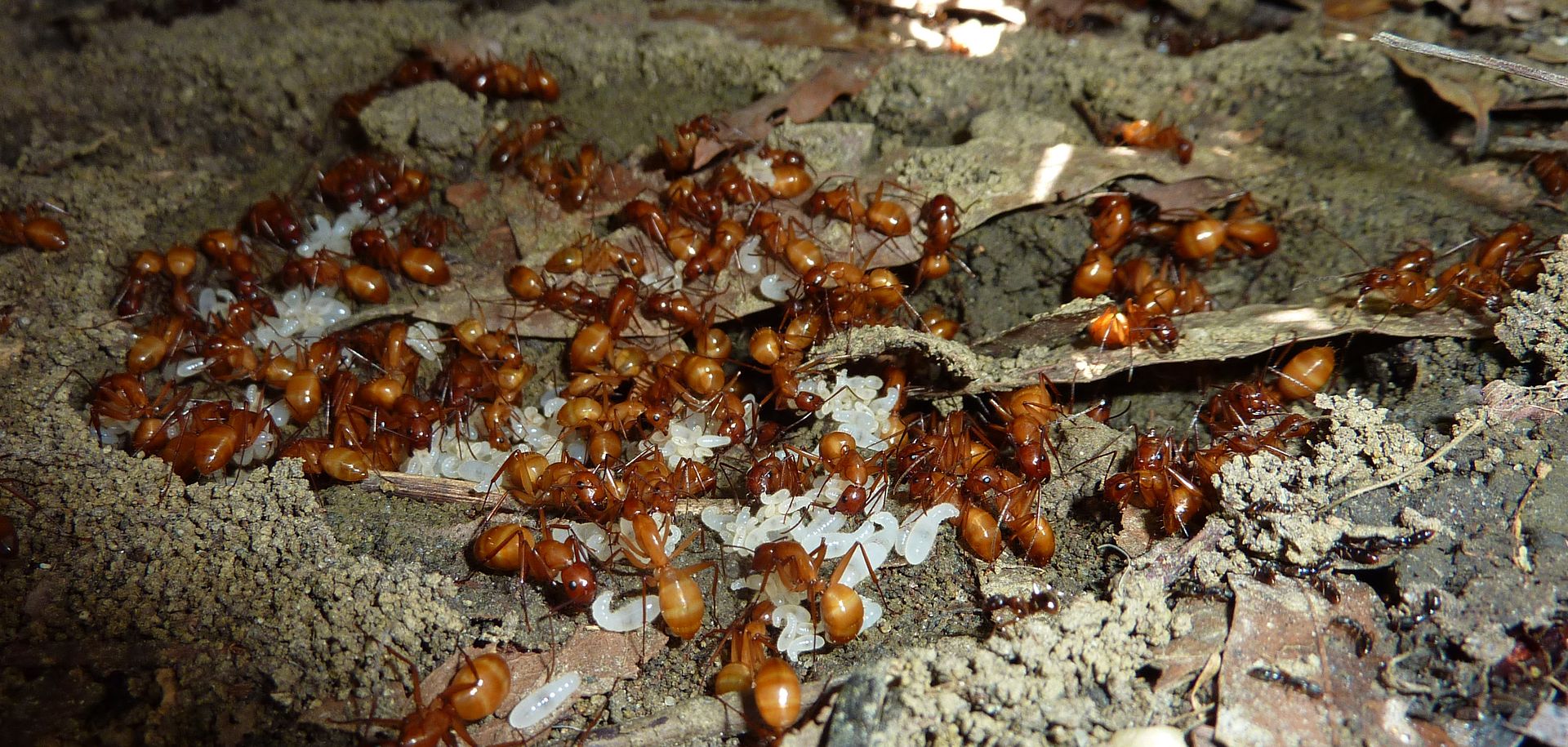
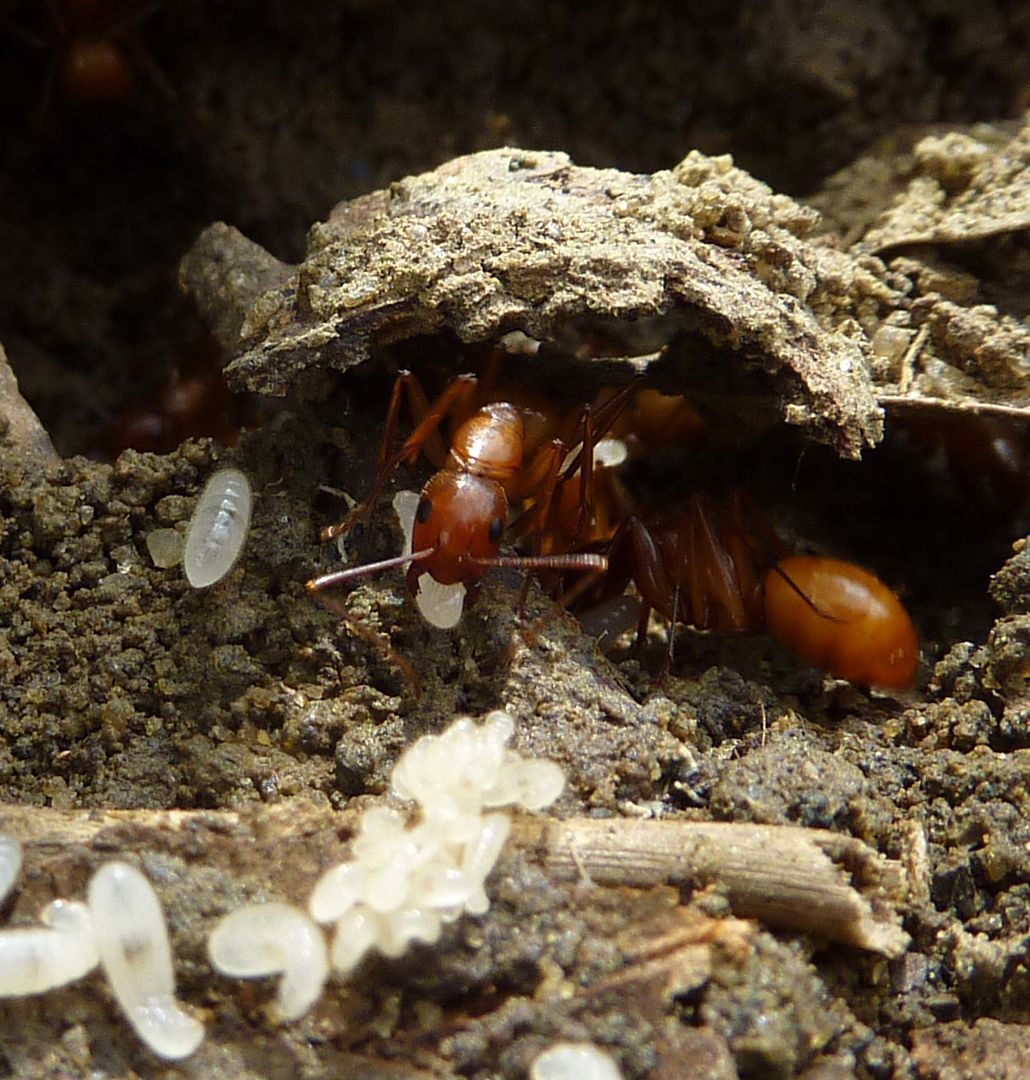
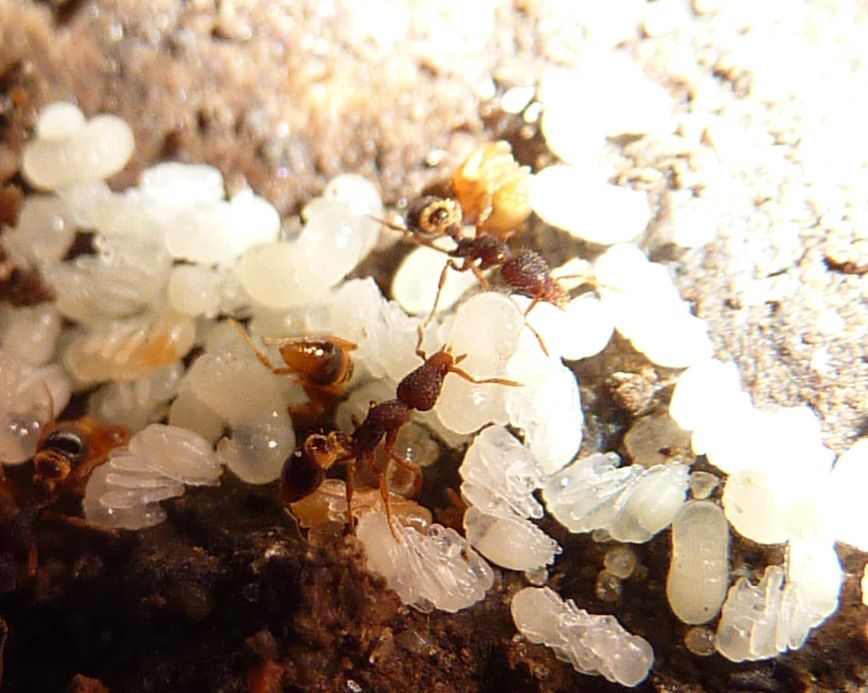
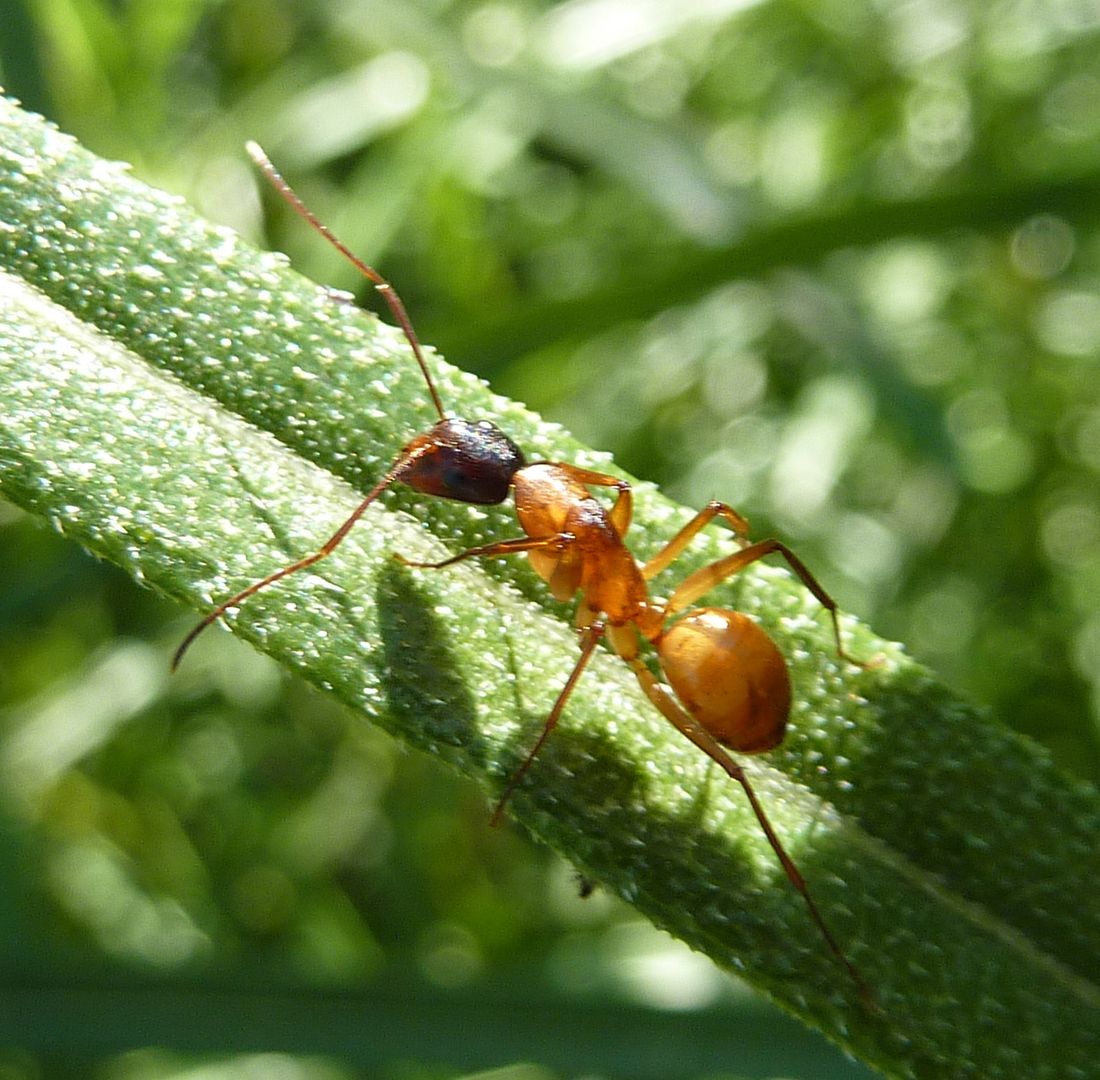
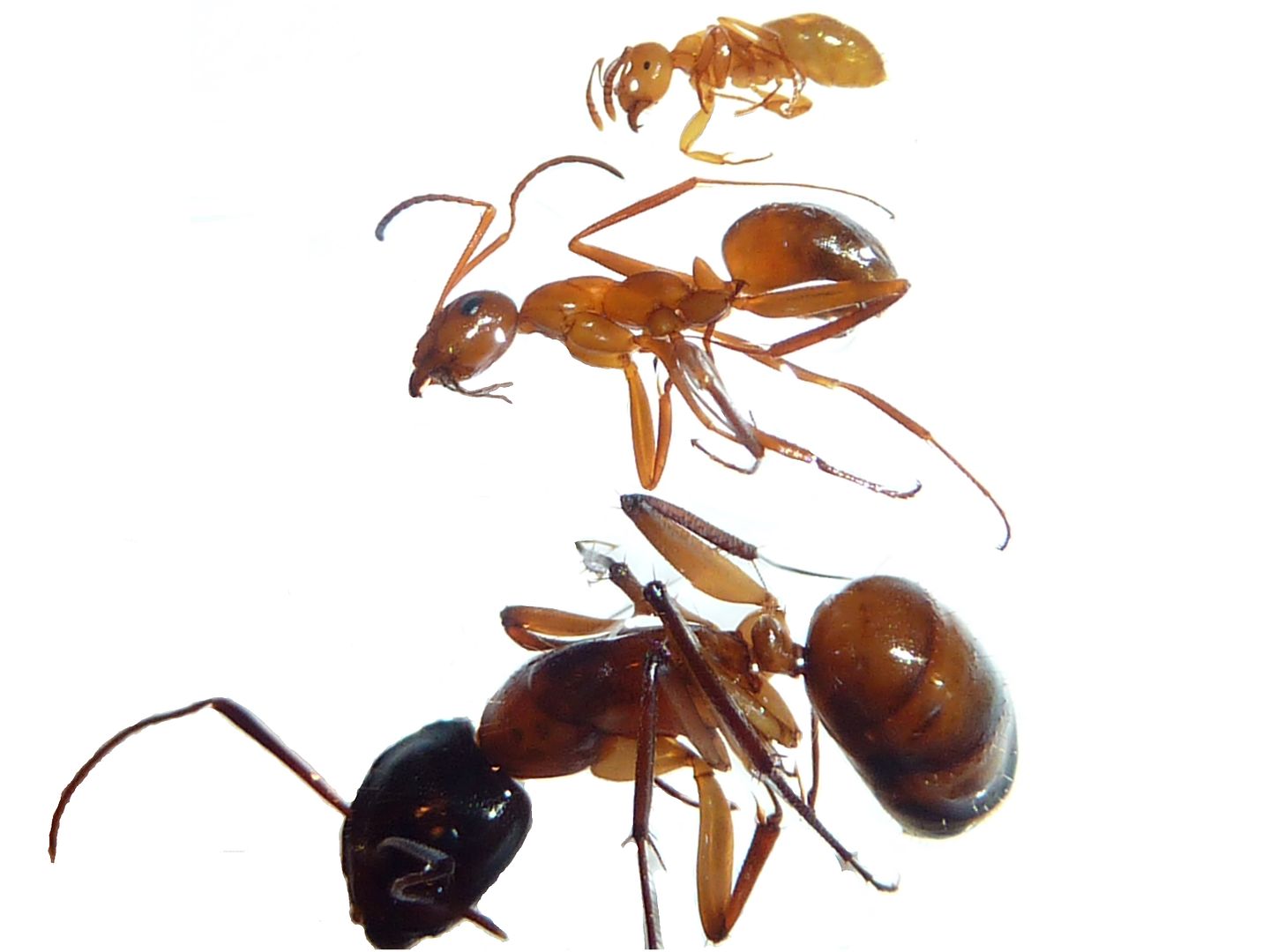
Camponotus castaneus has started laying their brood for the year it seems. I feel that this is one of those treasured species among ant keepers because of their brilliant orange color, and size 7mm to ~17mm long with queens up to ~17mm. They're among the largest ants in North America as with other true Camponotus species in the genus. It's a diverse genus among the largest in the world and also includes several smaller species who's workers are around 4mm to 7mm long and queens around 12mm give or take.

Along with having only one waist segment (note the ant in the lower left) Camponotus also have a domed mesosoma (thorax or middle section) with the three segments almost forming a smooth curve. This is the only color they come in too, the head is typically darker than the rest of the body but never black the way it is in C. americanus which also tends to have black all over it's body around joints especially.

Technically C. castaneus isn't a true Camponotus species, they fall in a subgroup within the genus known as Tanaemyrmex. Such species are supposidly identified in the genus as being large just like the true Camponotus, but also having elongated looking heads. The trouble I find with this rule is that the trait is only seen in established colonies, hard to see in the smallest workers, doesn't seem to apply to the major caste (the soldiers) and I really only see it in the in between workers. So you need to be looking at a well established colony that's past their first year just to find this trait.

It's one of those scientific facts that's good to know but frankly not practical enough to be useful, especially with a species you can identify at a glance if you're in the eastern U.S. and Canada.

A Field Guide to the Ants of New England lists their common name as "The Chestnut Carpenter Ant"

Friday, December 7, 2012

Best of Ants 2012

Alright I do this every year. I go through the albums I made over the year on Ants, Bees, Butterflies, and Nature.

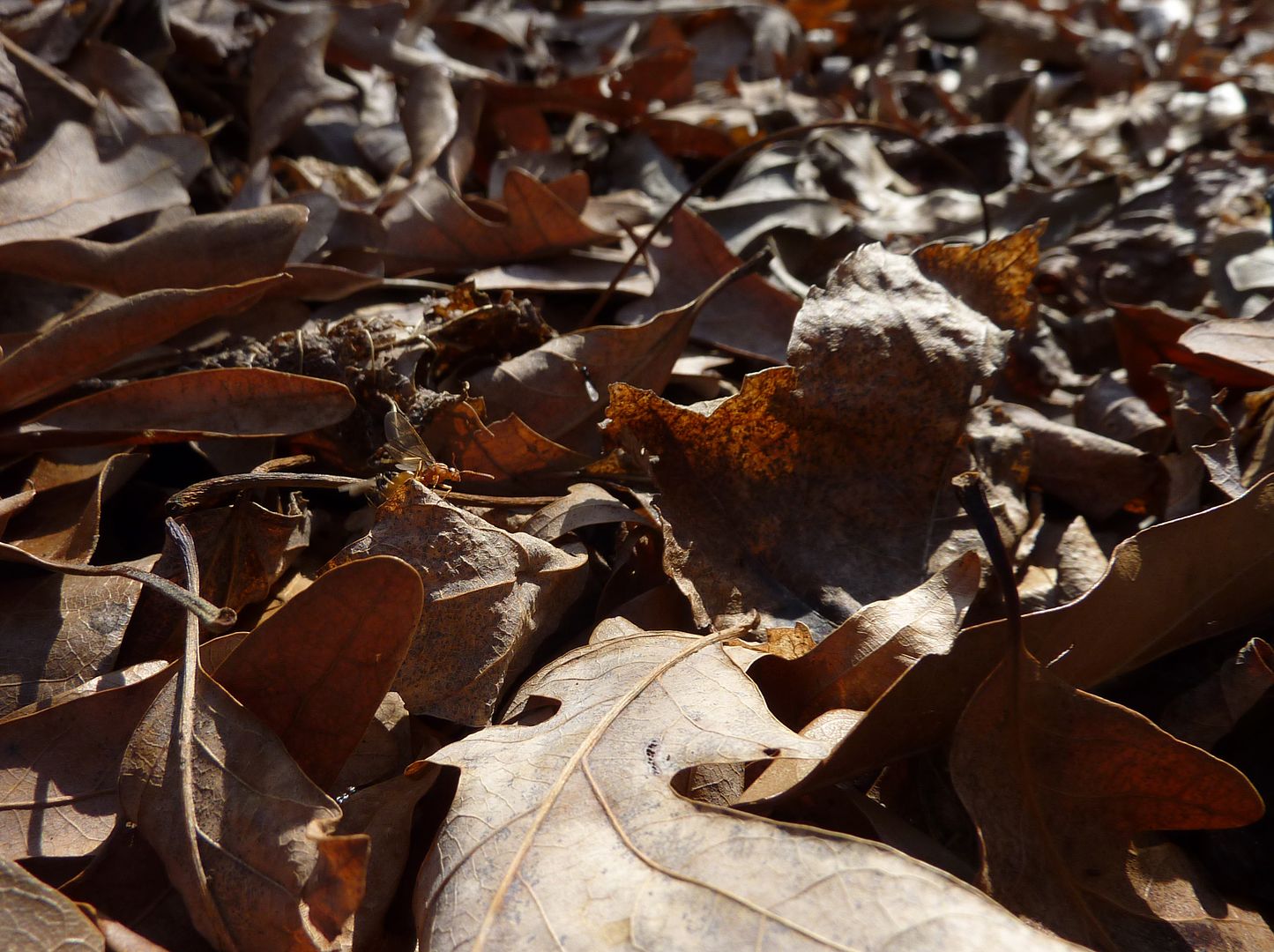
We start with an awful image of the forest floor I took back in March. Up in the trees the Winter Ants, Prenolepis imparis, were swarming. Normally they fly on the first warm day of the year above 70F, but this year they held off for some reason. Hidden among the leaf litter is a P. imparis queen and a few males. This sums up what a pain it is to find ants among leaves (and tall grass).

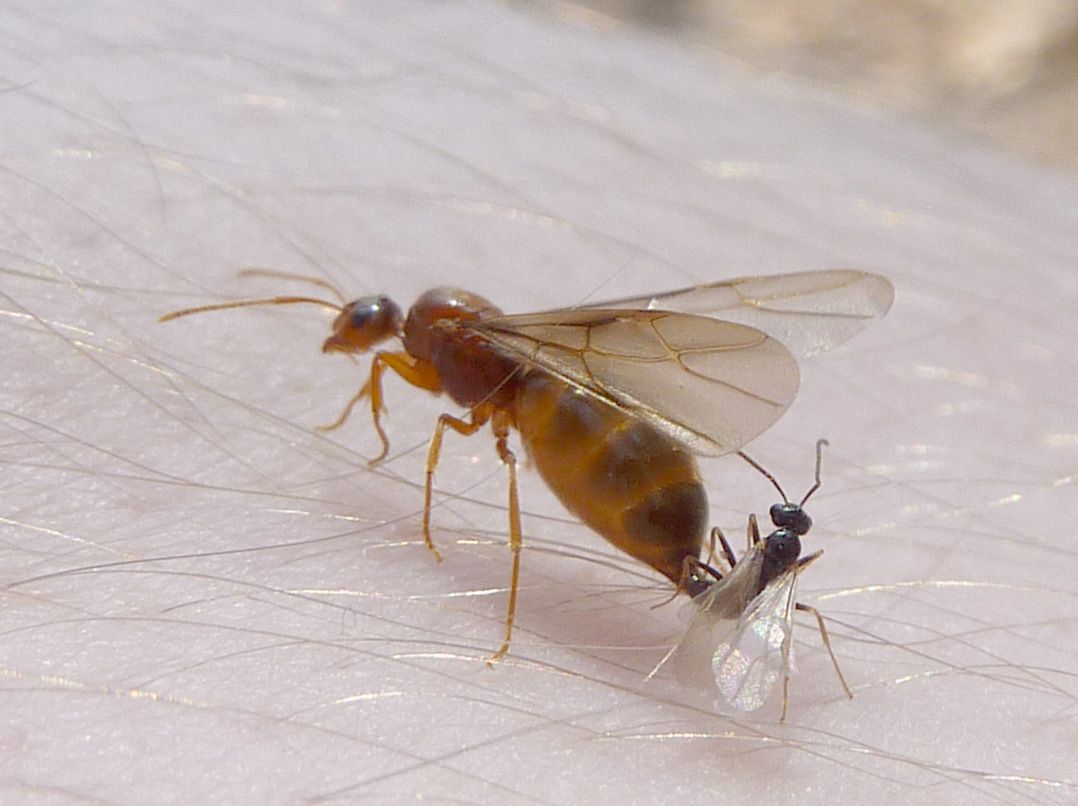
They're so much easier to photograph when they land on your arm.

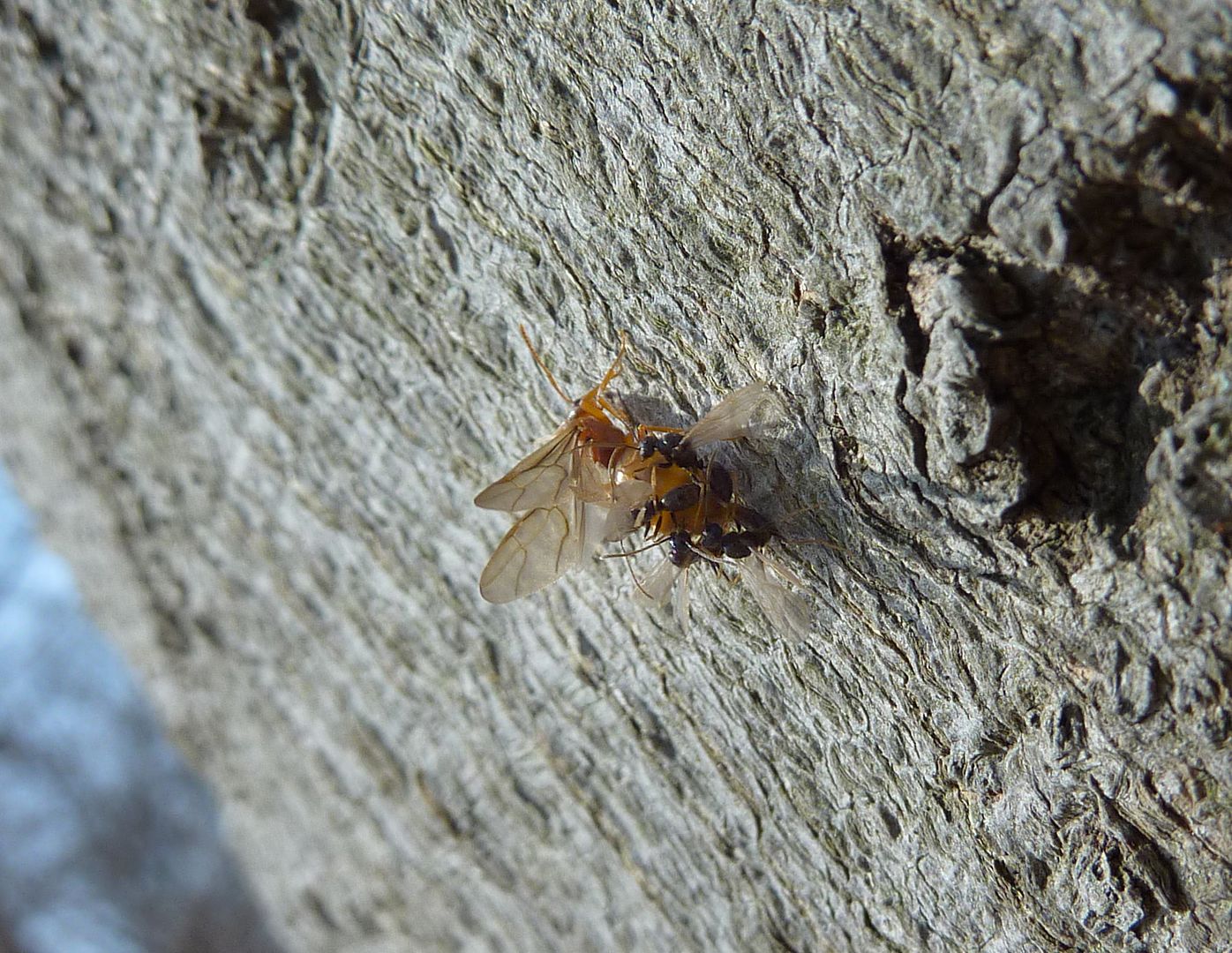
The males swarm around trees and wait for new queens to arrive. I like this because she actually made it up the tree to a considerable height. The swarms go all the way up the tree and usually queens get tackled by so many males they don't make it past 6' up.

 
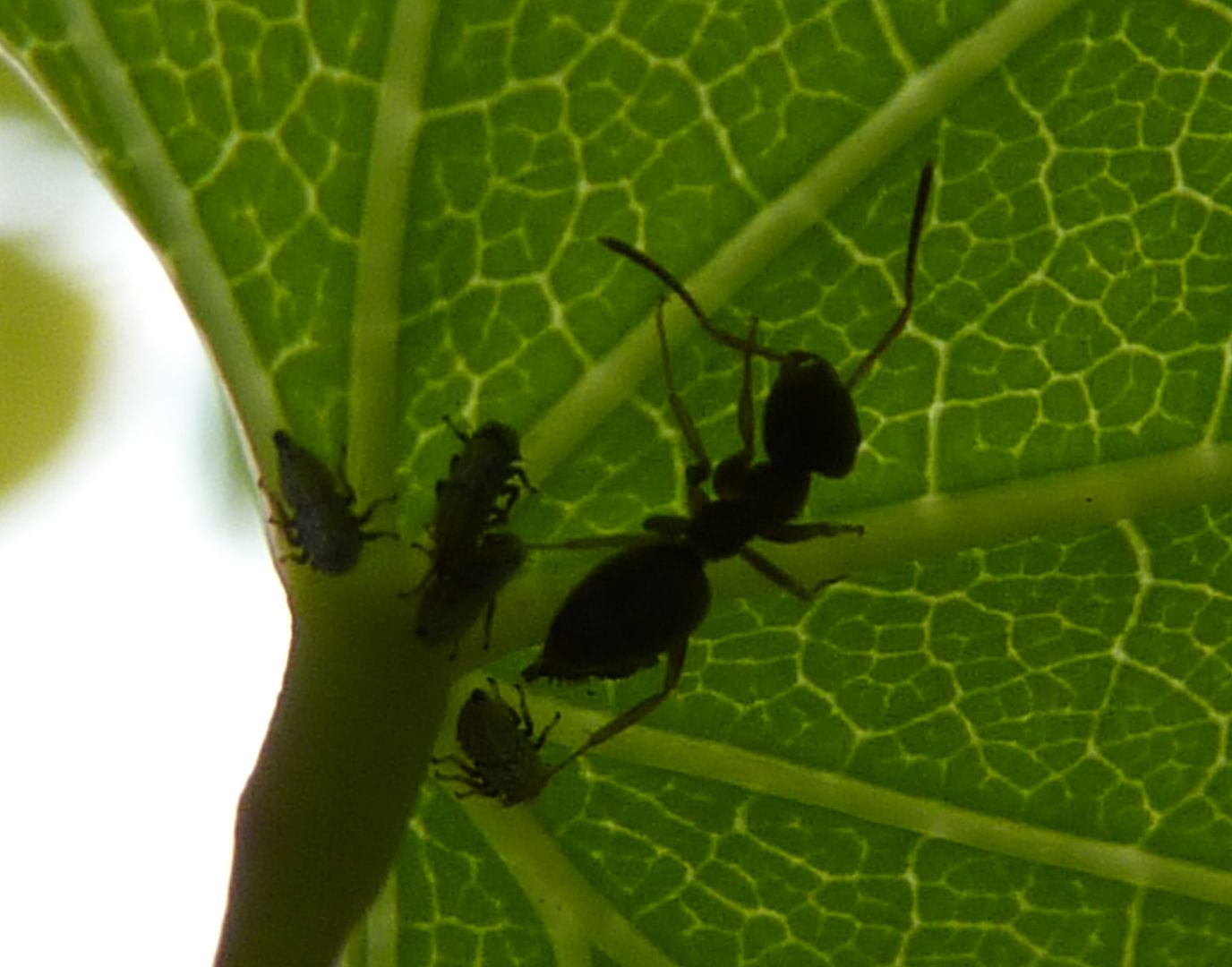
As plants leaf out, aphids, leaf hoppers, and scales become active and provide food for ants. In this case a Lasius alienus worker. This is on a redbud tree and I notice aphids seem to only take hold right at the node where the leaf attaches to the stem.

Stealing nectar from flowers is the other option. In this case it's the Odorous House Ant, Tapinoma sessile, which I've found to be notorious for stealing nectar. I find them in more flowers than any other species, even in those with noted defenses that evolved to prevent ants from stealing from their flowers.  

Aphids make ants so much easier to photograph. Any food really that has the ants holding still. Here a Camponotus sp. tends some on our grape vine.

This year also marked the first time I Hosted/Attended the First Annual New Jersey Ant Together. We came across a Camponotus americanus colony which I don't encounter as much as the brighter colored Camponotus castaneus. So that was nice.

The Formica exsectoides mounds we encountered were awesome! The largest were two mounds next to each other that had to be 3' worth of mounded soil. Their mounds lined a pathway of considerable length all they way down at the Turkey Swamp Park here in NJ.

There were so many F. exsectoides workers pouring in and out of these mounds that you could actually hear the leaves rustling from them all rushing about.

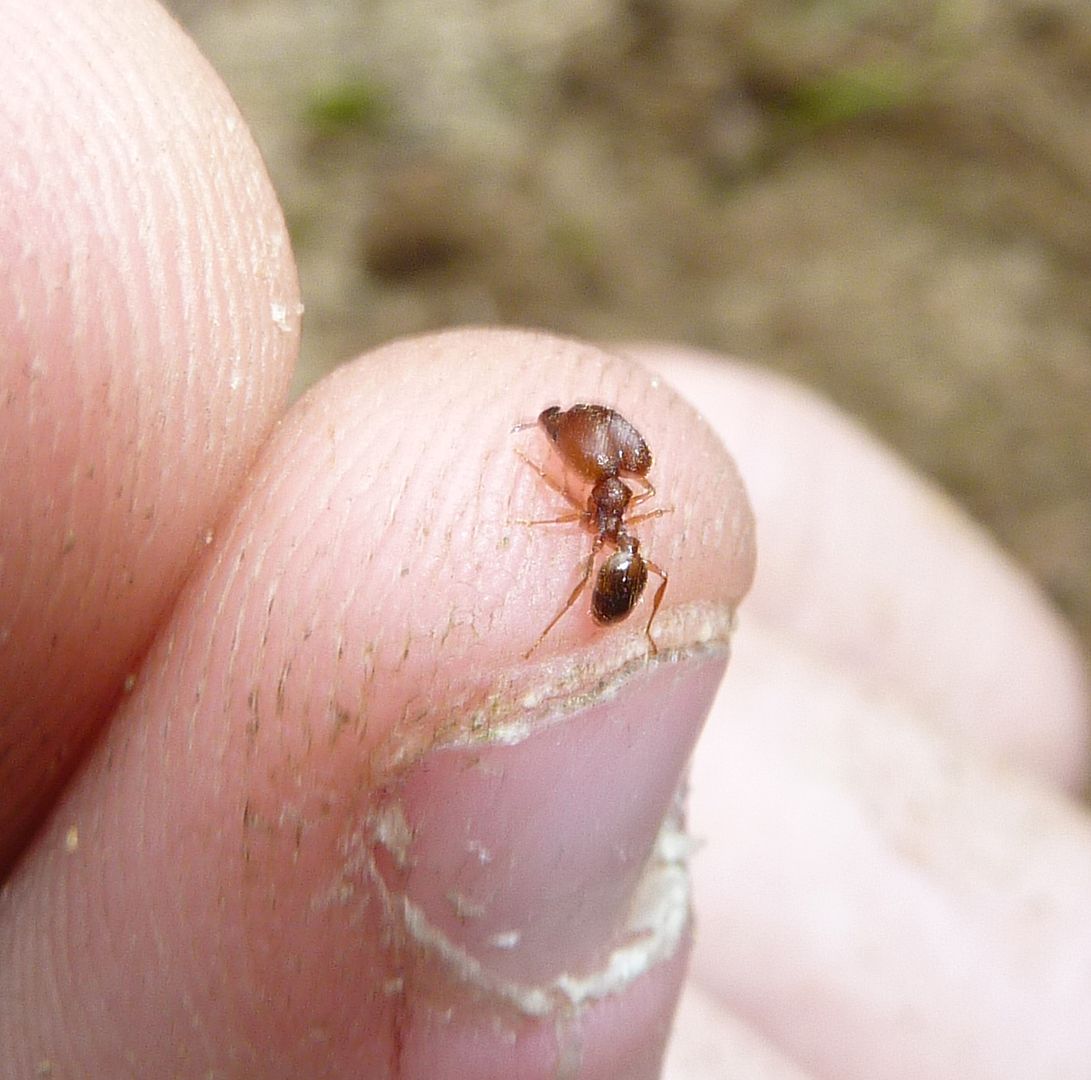
Pheidole have always been a small mystery to me. Small ants in general always are. We have three species in New Jersey and they are all really tiny. This is a Pheidole bicarinata major worker. They're about three times as large as the workers which make them easier to identify of the three.

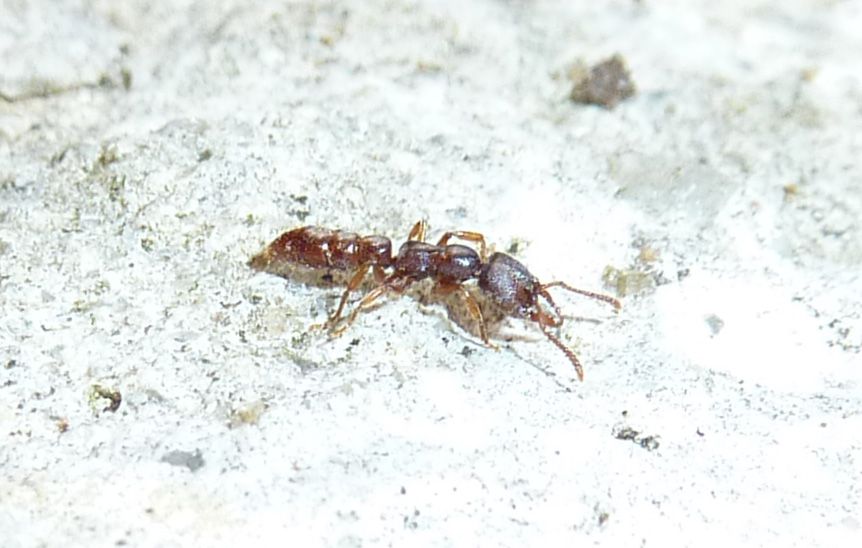
Pyramica is another rare ant almost never encountered. Seriously if you're not covered in chiggers, ticks, and poison ivy by the end then you're not looking hard enough typically. We found this colony under a rotten log that was near a creek and in a shady area. Apparently a problem with this species is they over heat easily in sunny spots so even dappled shade could be an issue for them. They're also predators of springtails so rotting plant matter is a must. I didn't expect to find an ant this cool after just 3 hours but there they were. I have occasionally found these in my yard.

Polyergus is another fun find. They're not "uncommon" but you don't find them everywhere. They're slave making ants of Formica species, which happen to make them very common all over the US and Canada. This was a first time encounter for me.

Amblyopone pallipes was another cool find, and a first for me. They're called Dracula Ants because they puncture their own developing brood in nonlethal ways to feed. Not a great photo at all compared to what's on the internet, but we held this thing for like 30 seconds before it crawled off and got lost in the pine brush.

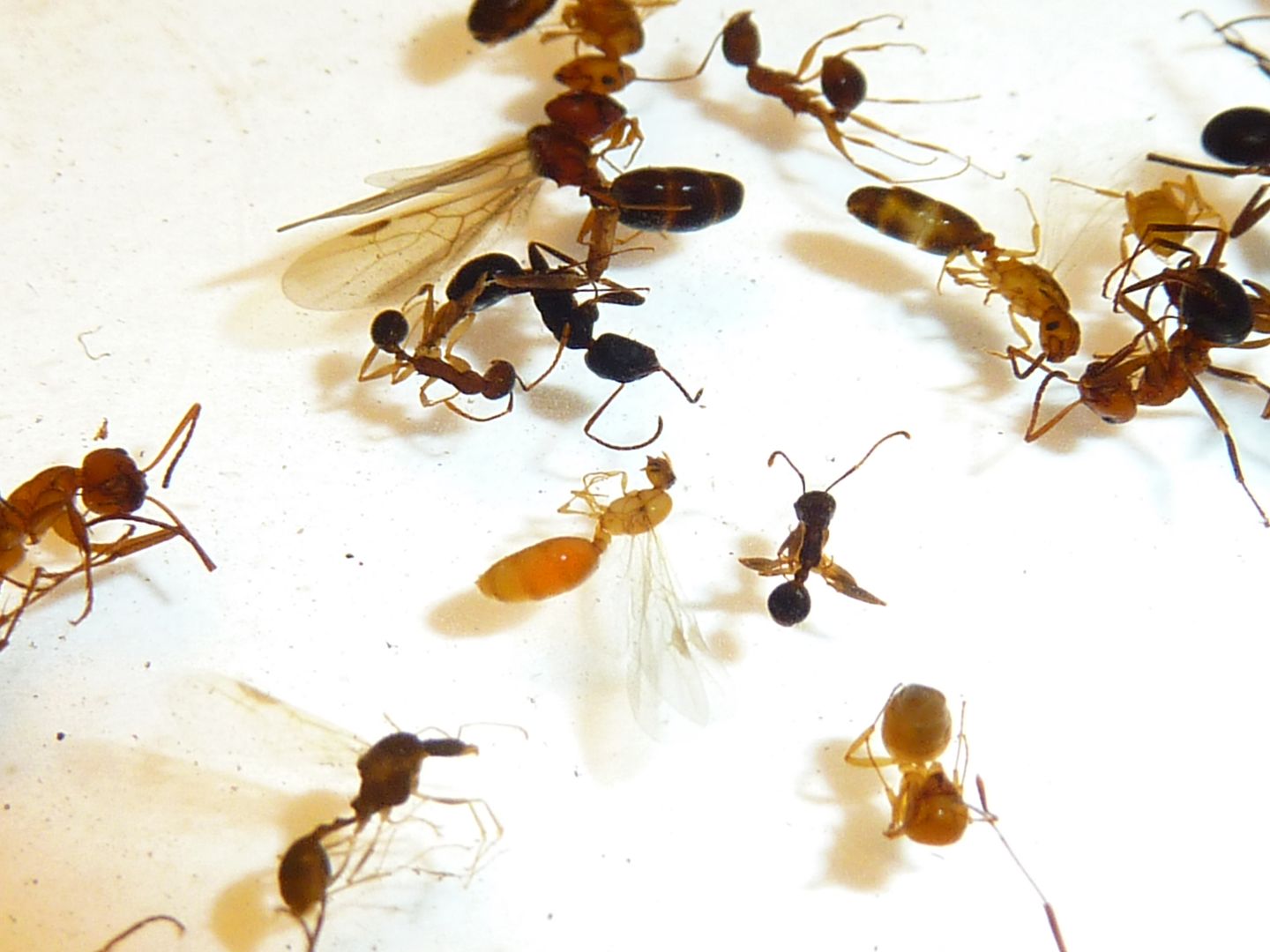
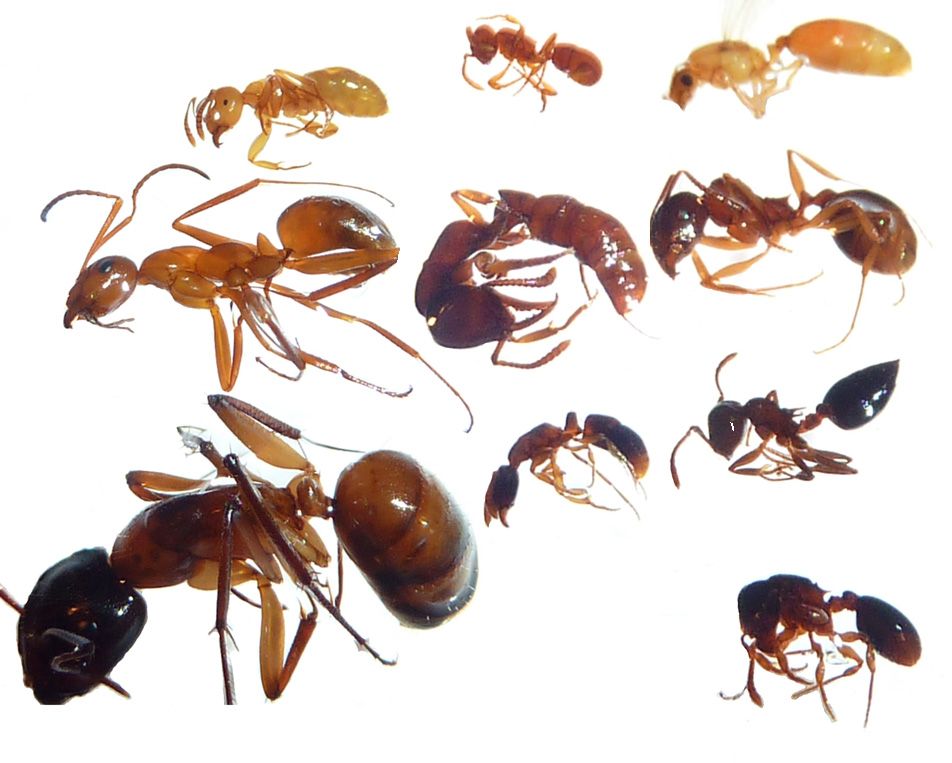
This is a distorted angle but these are some of the specimens we collected while on the trip. 

The droughts of summer always limit ant activity but one thing I've always looked forward to is harvesting my Trillium seeds and presenting them to the ants. This year I got a lot more Camponotus castaneus workers at them than ever before. Nylanderia flavipes workers also showed up as they always do. You can really see the drastic difference in size between the two species.


I started work making my own key but never got around to finishing it. The project was going to be an interactive video on youtube where I'd have arrows and Annotation Boxes you could click on to take you elsewhere in the video. It's quite an undertaking and I'm not up to finishing it this year. Hopefully in the future something will come of it.


A Camponotus americanus worker on a Narrow Leaf Sunflower. Two of my most favorite things.

They were actually working tiny aphids but these weren't all that common on the plant. Despite the narrow leaves the aphids did a good job of hiding.

And the last ant photo I took this year that I'm really happy with is this Brachymyrmex queen and male, namely because of how tiny these ants are and how well this came out.