Being a member of the New Jersey Native Plant Society came with an unexpected perk this year. They held a fund raiser where we got to tour New Moon Nursery. They're a wholesale nursery native plant nursery, family run, started back in 2003. They do dabble in a few nonnatives but only under contract.
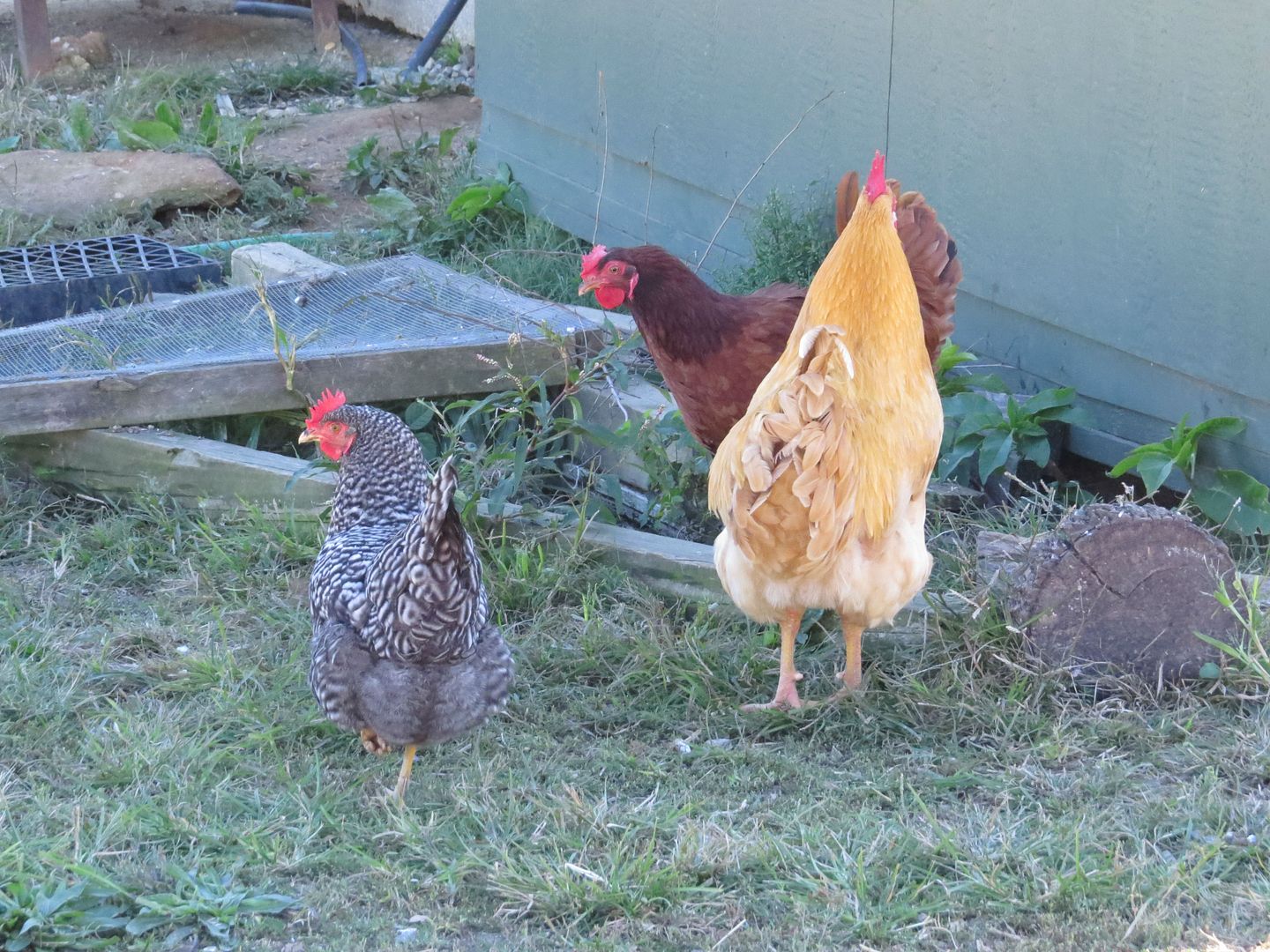
Before then the property used to be a chicken farm, and you can sort of see it in some of the buildings. Also they keep a couple dozen chickens around.
This is their shipping department, which was I believe they said were originally chicken cages from floor to ceiling. Basically one day a week, they go out and collect the flats to plants customers have ordered. They then take empty trays and assemble the orders from these flats and load them up into trucks or set them aside for customers to arrive and pick up.
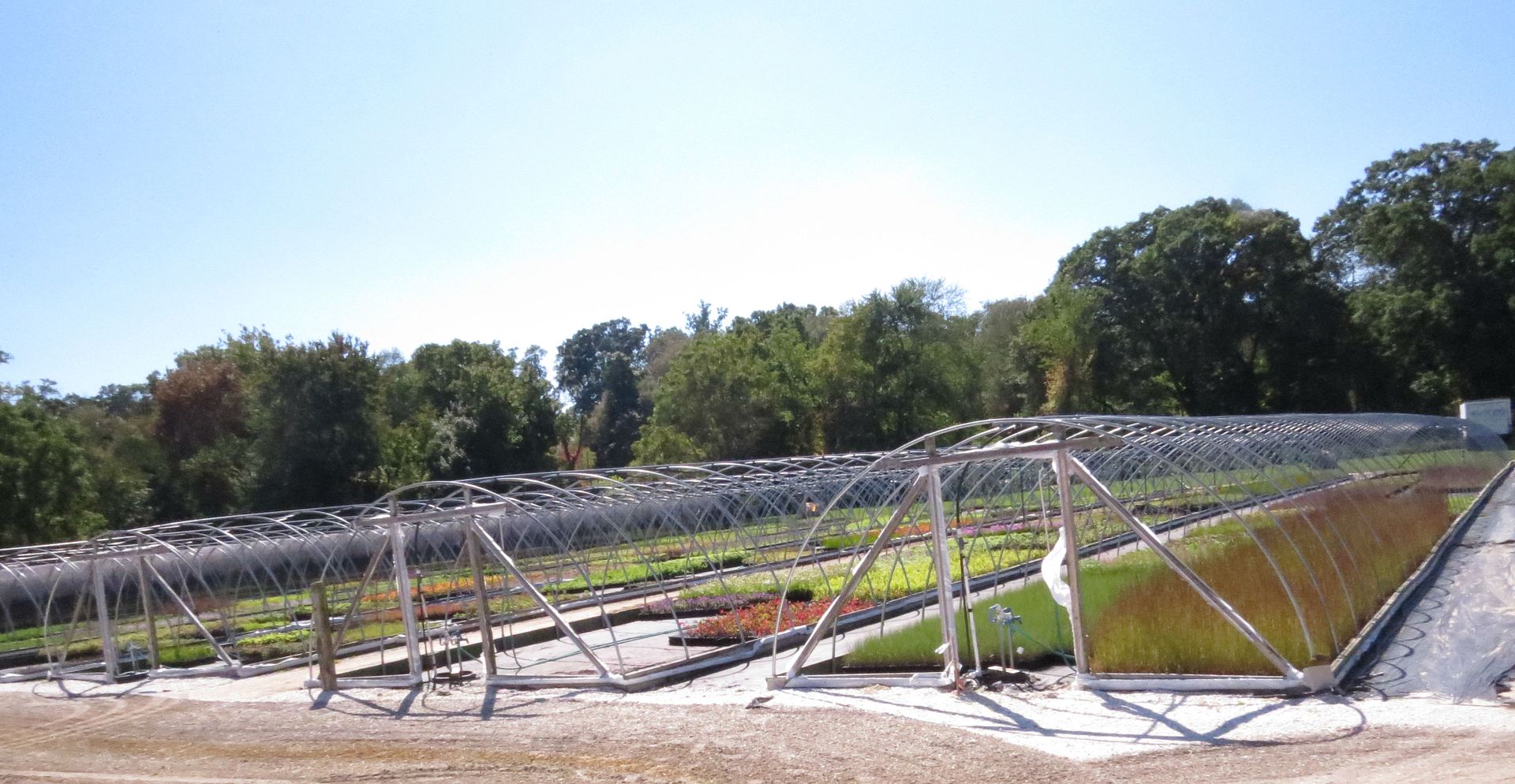
It's at this point in the tour that we were given our free reign to fill up a flat of our own with with up to 50 plants, including a few things they had listed as limited supply and not available! The only real restriction was they had to be plug sized. This was a gift for just a $100 donation to the NJ Native Plant Society made well in advance. The nursery has 5 heated greenhouses, 10 row cover house, and a few outside areas filled with several hundred species of plants. Basically everything was up for grabs!
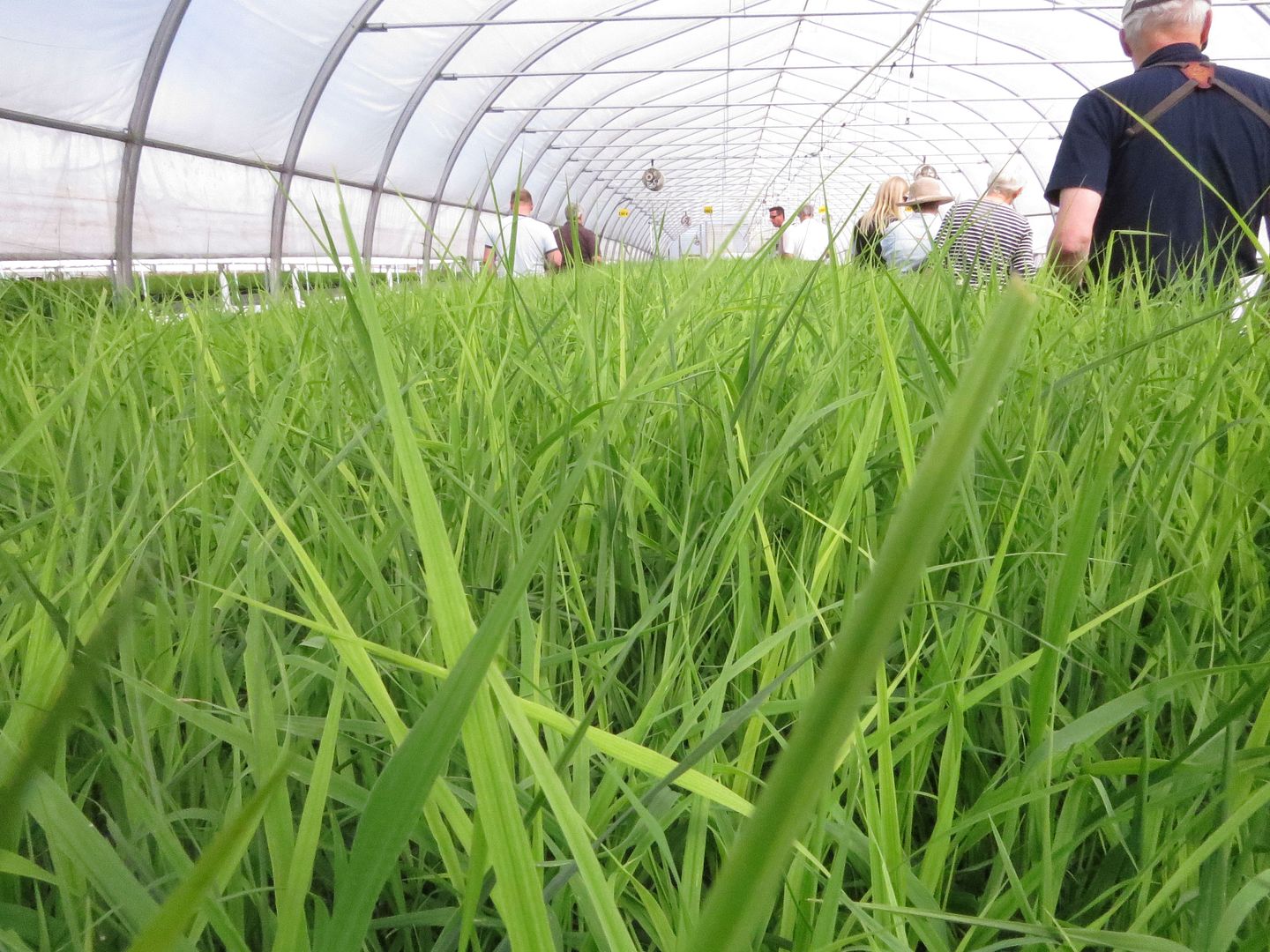
The tour continued into the greenhouses where they showed us how they start up seedlings in trays. I found it neat to learn they then take small cuttings of the seedlings after they germinate and root them to double plant production. The end product still maintains genetic diversity and they're able to mass produce cultivars that way.
Seedlings were a small part of the overall products they had. Pretty much everywhere else had hundreds of trays of plugs that we were free to take. It was actually fun just walking around the greenhouses, letting your hands glide across warm season grasses, rushes, Amsonia, and other perennials.
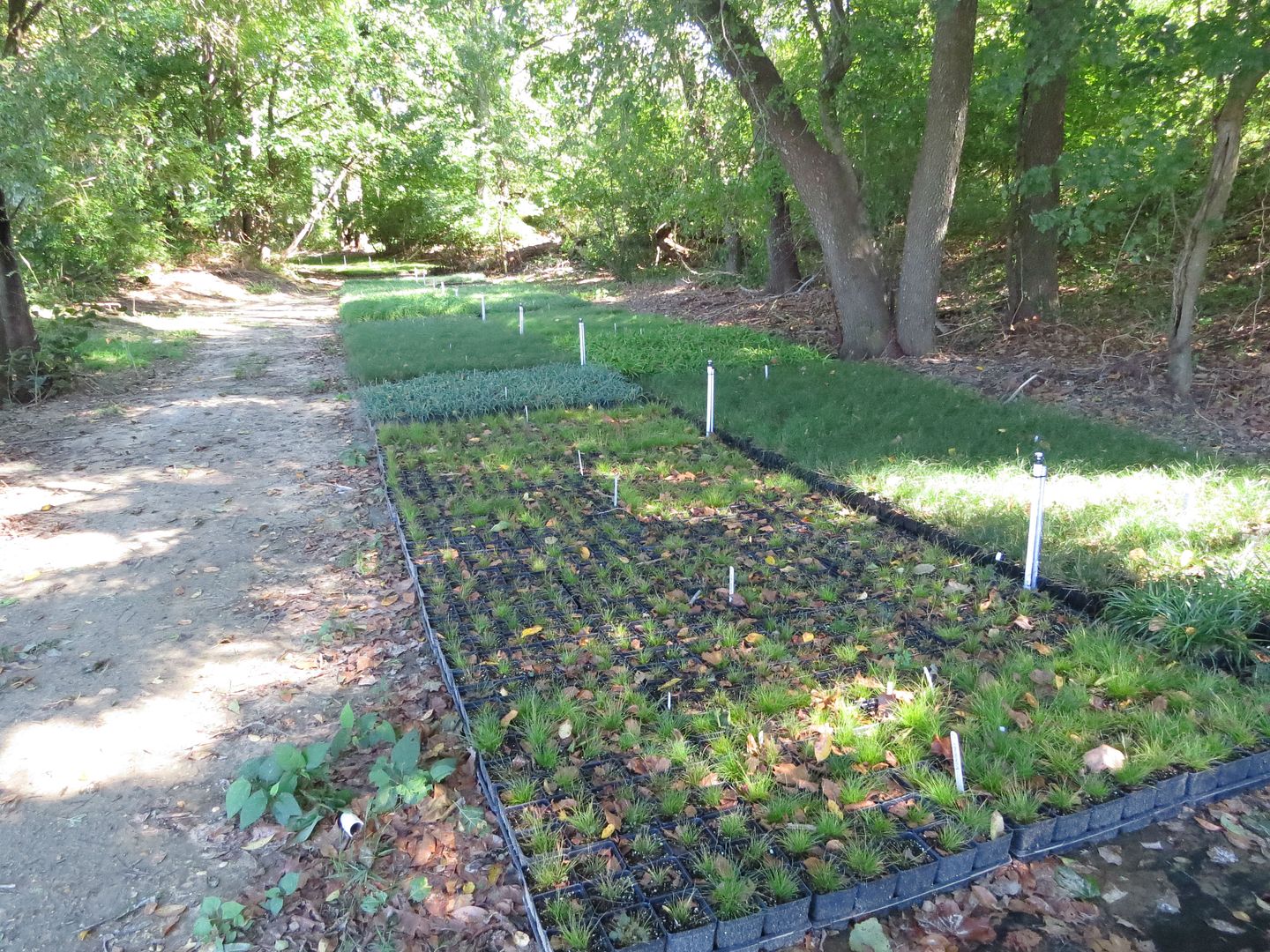
Around back they had an area setup for shade plants. These were mostly sedges which are more cold and shade tolerant than most grasses. They are also larger than plug size and thus not up for grabs, though each species was represented in the greenhouses where we were free to take them.
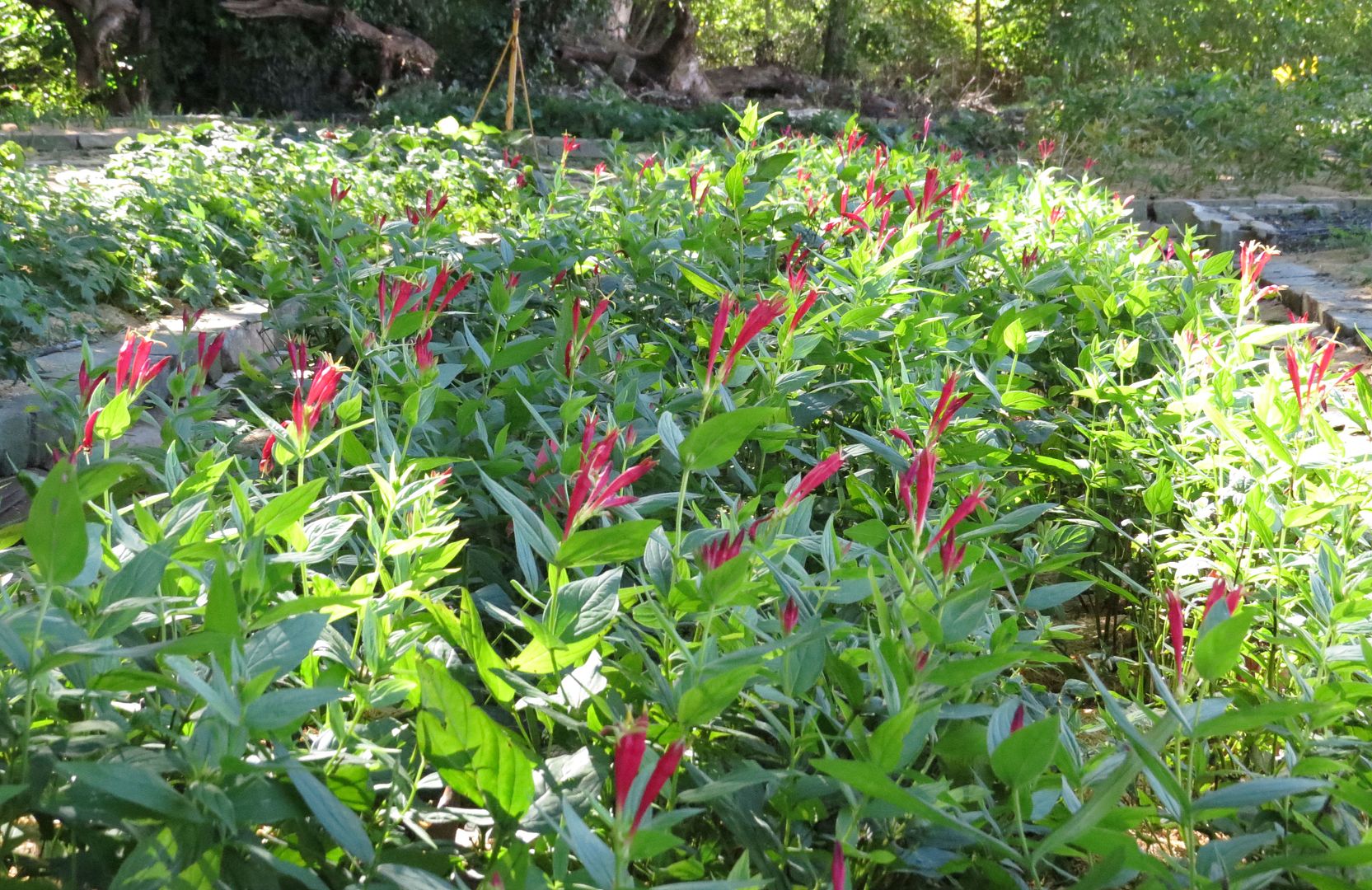
There was a small garden area back here where one native plant stole the show.
Spigelia marilandica, Indian Pink, is a shade plant with a brilliant red and yellow flower. Despite the slight warning "It will spread on you," this perennial remains one of the more expensive and in high demand native plants around. This is something of a contradiction that I don't know the answer to. (Probably should have asked while I was there, whoops.) I think the demand is created by the fact that so few growers grow the plant.
Around the front was the Pièce de résistance. This is where most of their plants are kept that are ready for sale. At this point the tour basically fell apart as everyone went and started filling up their trays.
Naturally I'm drawn to what brings in the pollinators, and this time it was a surprising number of cultivars.
I had to just marvel at the number of Scoliid Wasps on their goldenrod they had. There must have been a thousand of them on this one patch.
Two Hours Later, here's what I brought home:
5 Helianthus angustifolius, my favorite Swamp Sunflower.
5 Spigelia marilandica, Indian Pink.
5 Senecio aureus, Golden Ragwort, which I'm trying out in the meadow garden.
5 Sedum ternatum, Stonecrop, which I'm giving a try for the first time.
5 Symphyotrichum laevis 'Bluebird', which I've seen in action among black eyed susans and they look great together.
5 Symphyotrichum oblongifolius 'October Skies' which I have blooming now in nice fluffy domes of flowers out in the meadow.
5 Symphyotrichum noave-angliae 'Purple Dome'. This New England Aster is a compact cultivar, similar to S. oblongifolius. I was going to alternate this with 'October Skies' to make a boarder.
5 Caltha palustris, Marsh Marigold, I've been trying to establish for years now and think I have a spot it might like to grow.
5 Sisyrinchium angustifolium, Blue-eyed Grass.
2 Eurybia spectabilis, Showy Aster, was a last second decision. The flowers are larger than most Asters and certainly are showy, but I recall the overall plant not being that impressive.
3 Chrysogonum virginianum 'Superstar'. This is a selection of Green and Gold which is another first for my yard. It's a shade loving ground cover that blooms from April into June.
All and all I'd say it was a great trip.
Also Photographed:
In the cardboard are plants from Bluestone Perennials.
3 Solidago 'Fireworks'
3 New England Aster 'September Ruby'
I bought these two because they flower together and I love the combination of red and yellow.
(Also not photographed are a few dozen Tulipa clusiana 'Lady Jane' bulbs which I'm giving a try next year. I'm curious to see if species tulips are better at attracting pollinators.)
And a native Pitcher Plant which had some Sundews flowering in the moss. This came as a free gift from Aquascapes Unlimited.
Showing posts with label Grass. Show all posts
Saturday, September 27, 2014
Friday, October 18, 2013
The Wildlife Gardener's Meetup (Part 3)
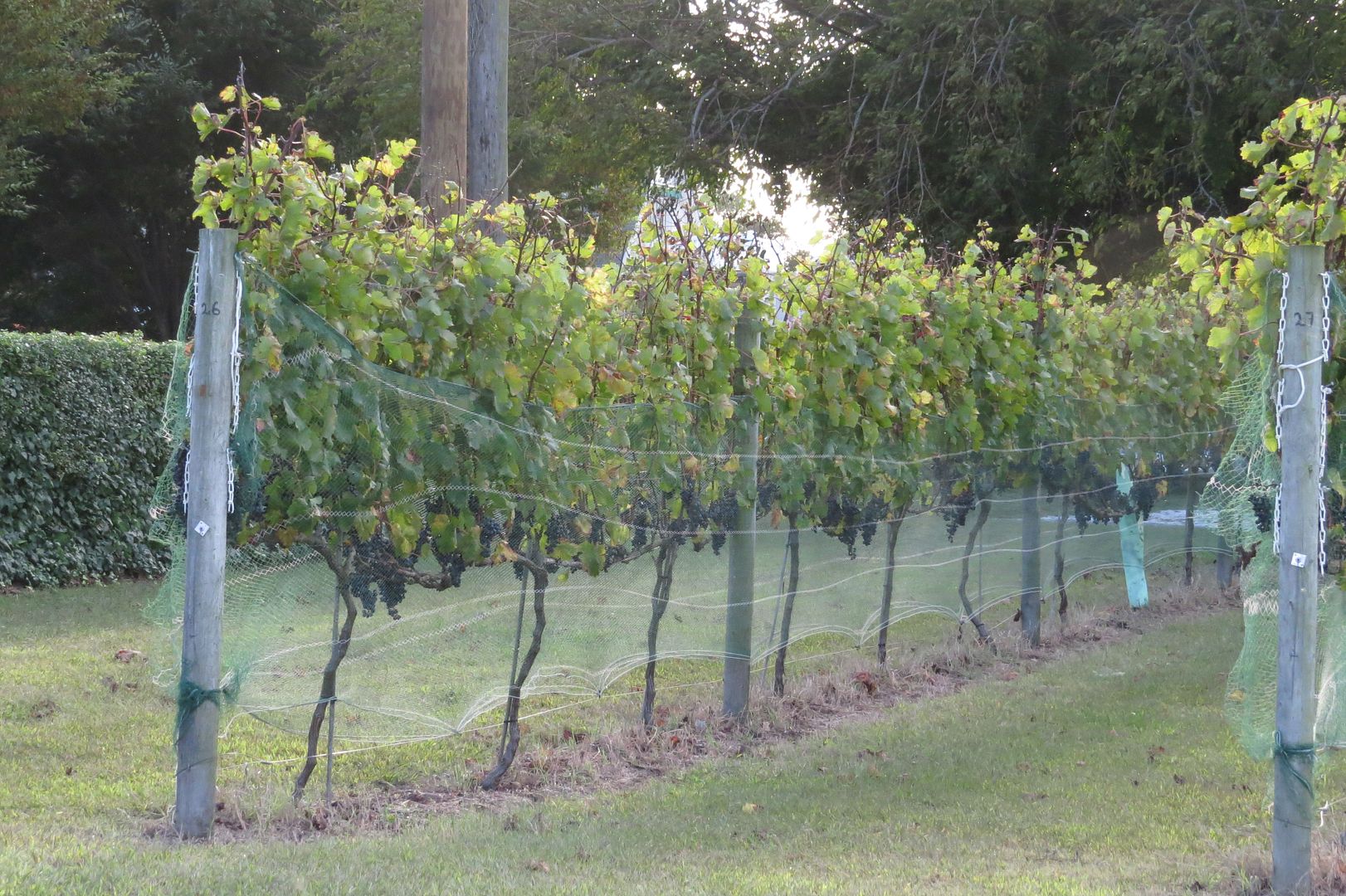
On the last day of the Wildlife Gardener's Forum meetup, we went to Cape May, NJ. I had never been there before but always heard good things. On the way there we came across a grape farm (vineyard?) which still had grapes growing. It was neat to see how they protect the fruit with lines of cloth. I'll have to mimic this method myself somehow.
Also before we got there, there was a group of photographers all standing in the road, cameras focused on a tidy little garden they have down there. These people were blocking the road and all anxiously awaiting for something to happen. Apparently some west coast hummingbird species had been spotted there the previous night and everyone was standing there waiting for it to show again... we stopped a moment to think if that would be worth our time but decided it was not. While leaving we asked if it had shown and it hadn't.
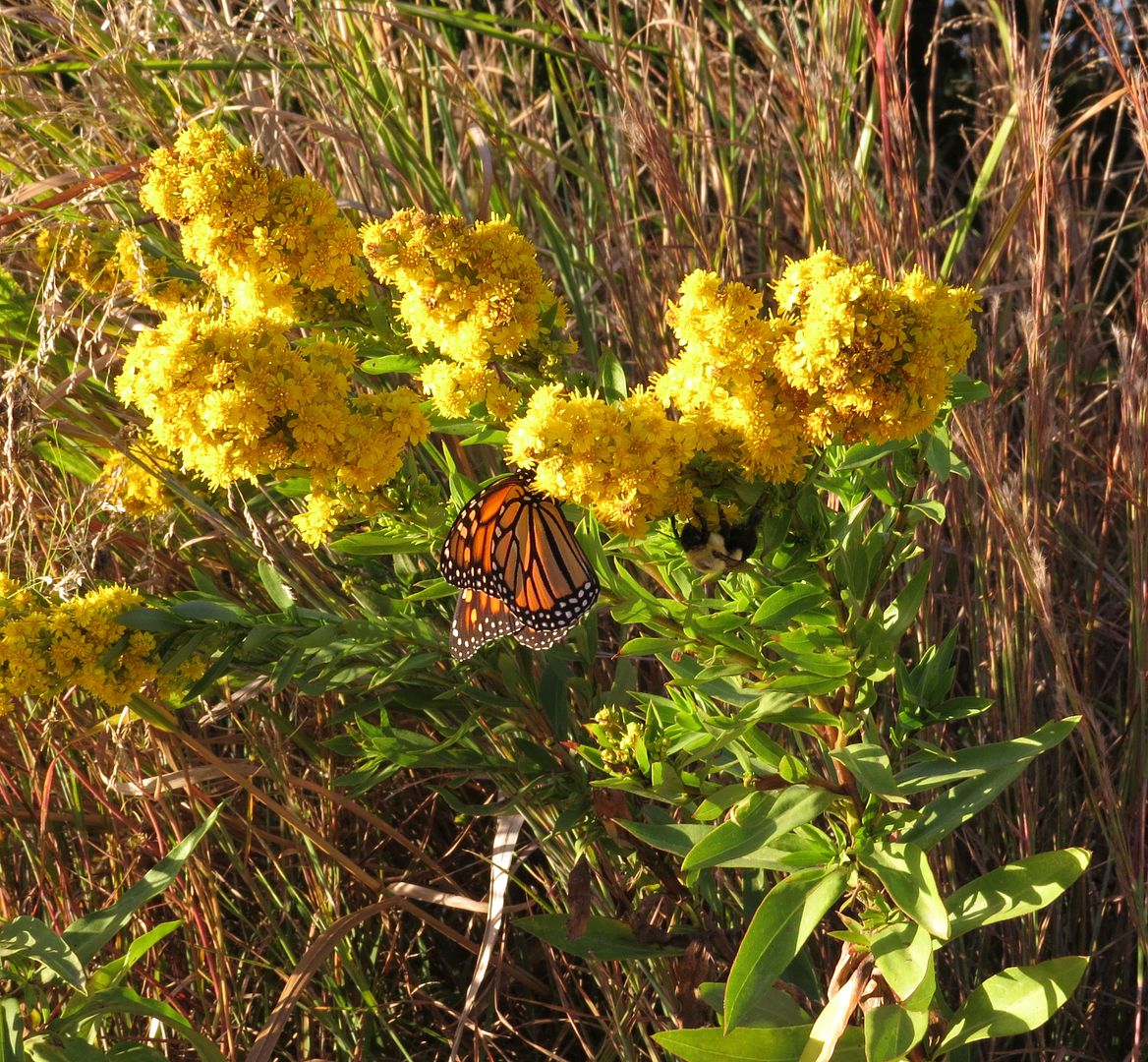
Cape May is the southern most point of New Jersey which also bottle necks into a peninsula, making it ideal for viewing most things that migrate at this time of year. It was a little late though so we caught the tail end of the Monarch Migration and little else.
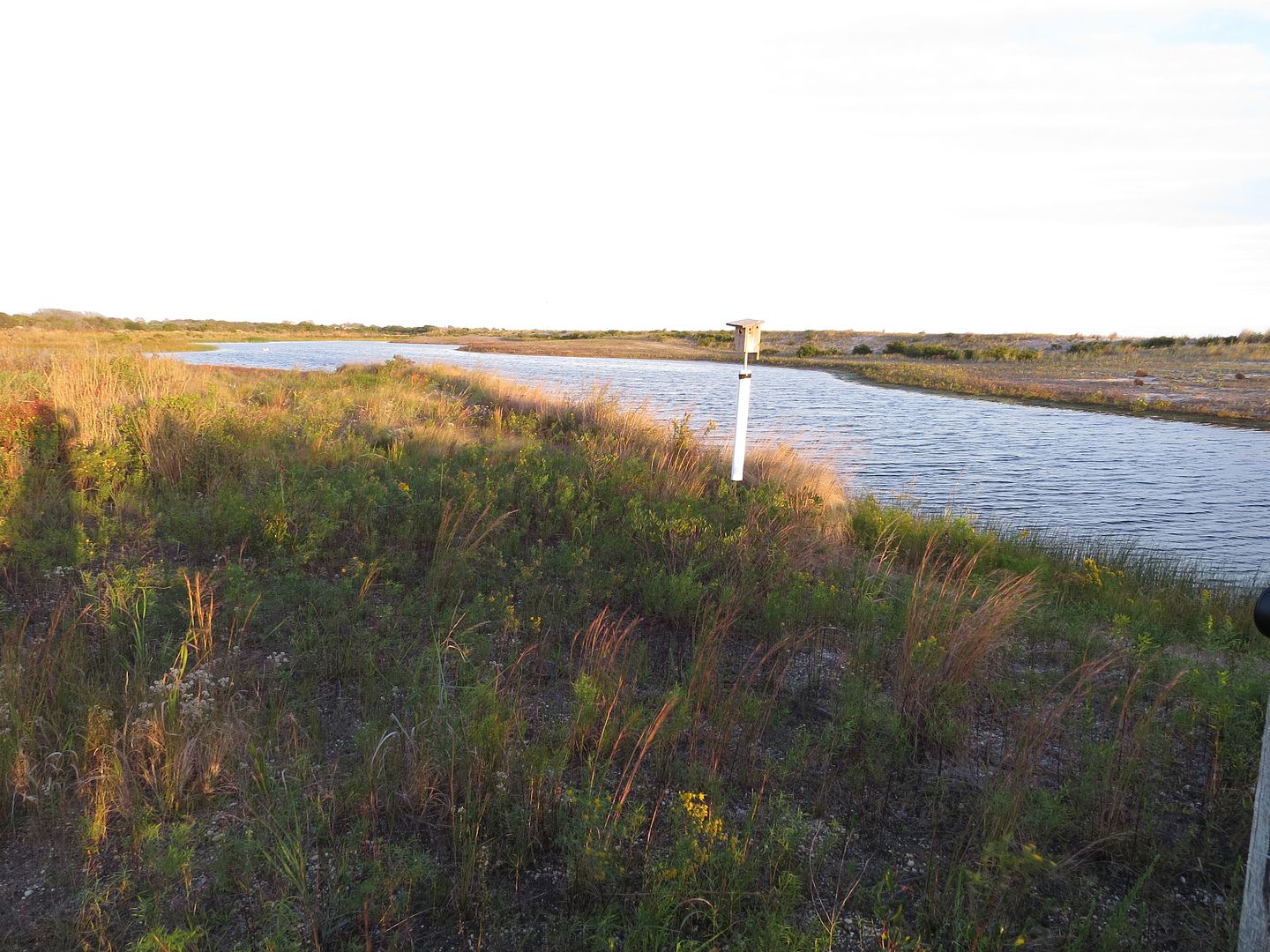
The park was a nice wetland area with trails leading all up and down the bays and beaches there.
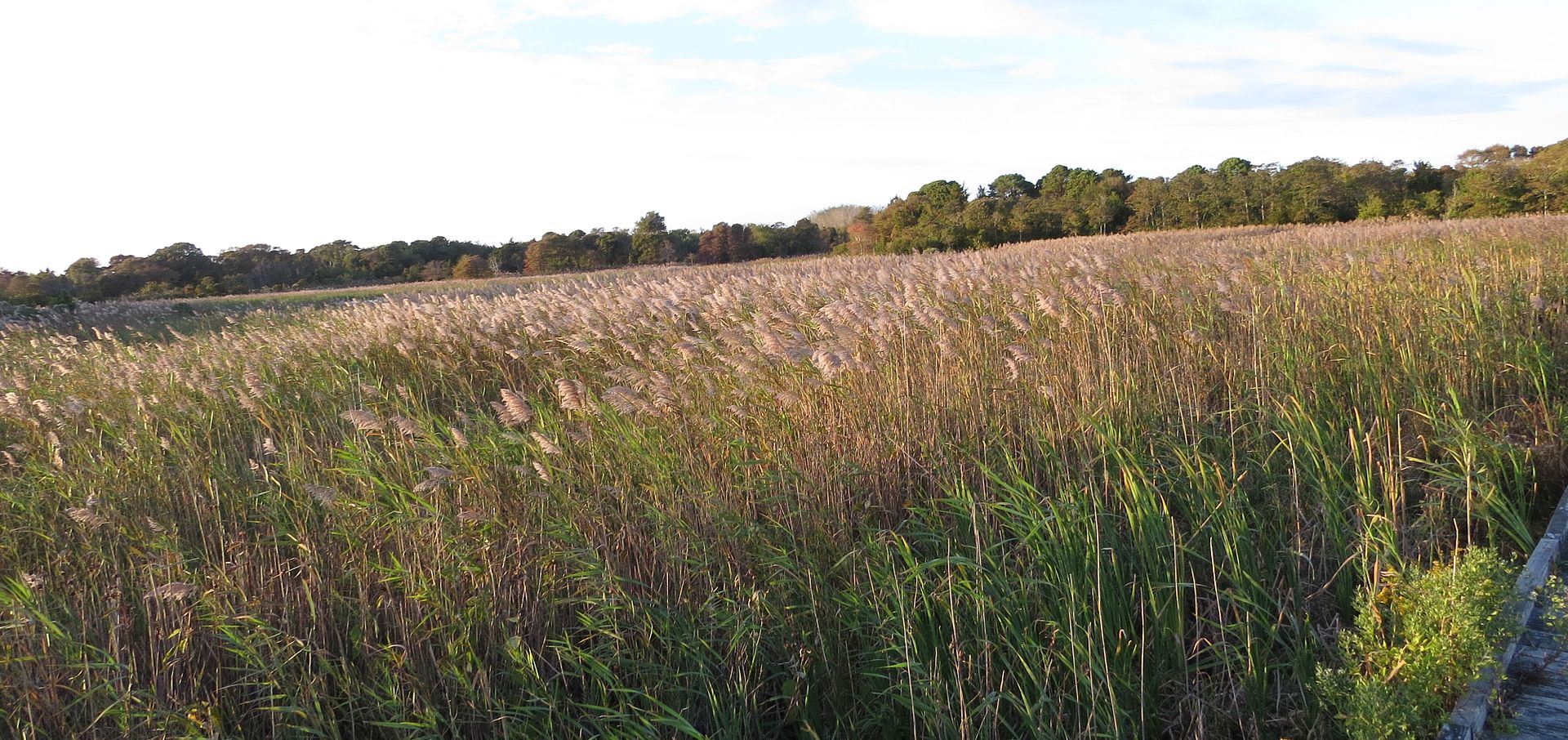
The least interesting parts were those overrun with the invasive Common Reed Grass, Phagmites australis. This grass can be drown as a method of control, and though it likes growing in wetlands it's very growing habit slowly generates new land. They push up so much top growth every year that it doesn't decompose until several years more, thus the ground is slowly raised. Seeds are air born, and once established they will send out runners several feet away, making them quick to colonize.
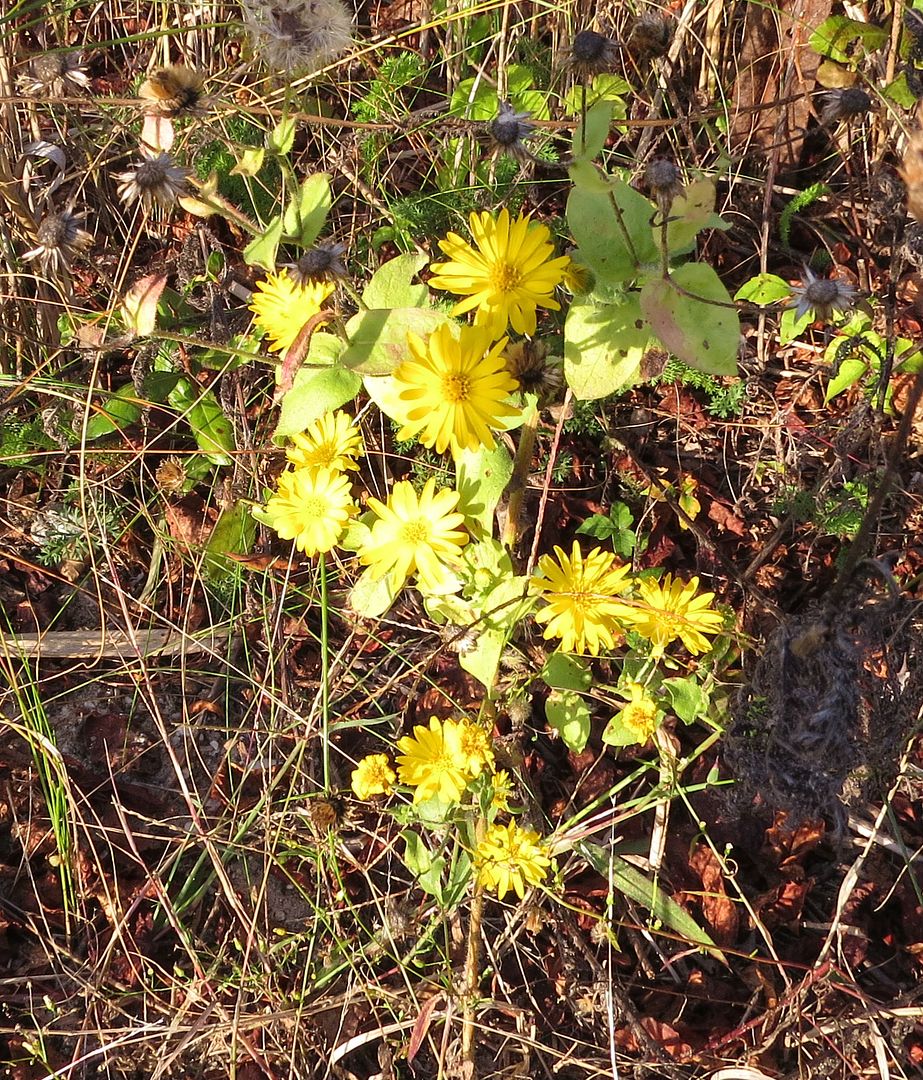
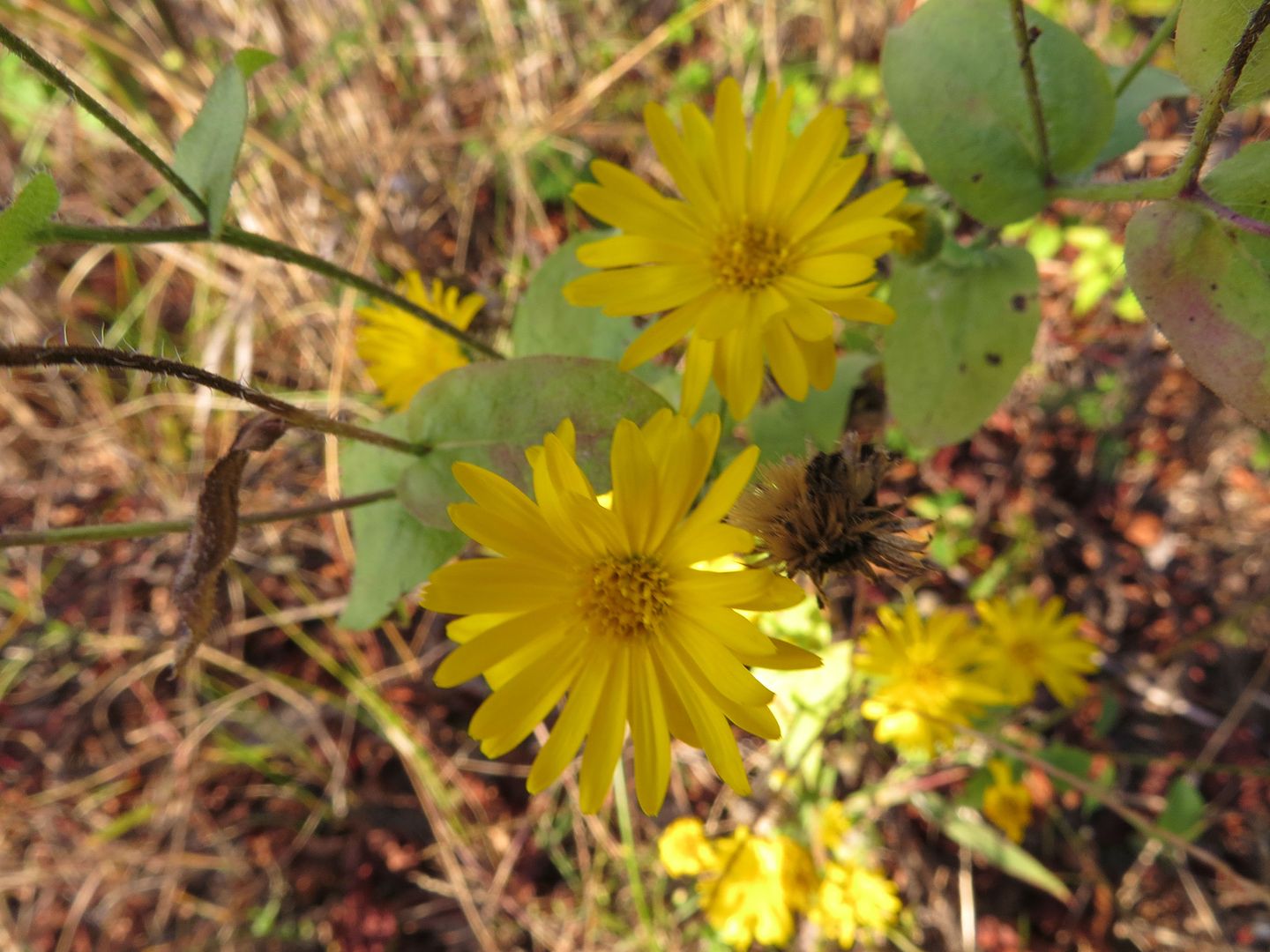
The occasional Golden Aster, Heterotheca and Chrysopsis sp. grew in places. Overall it was a rare plant but still a nice one to see.
I don't think it's Maryland Golden Aster, but certainly something in that genus, (or the other one).
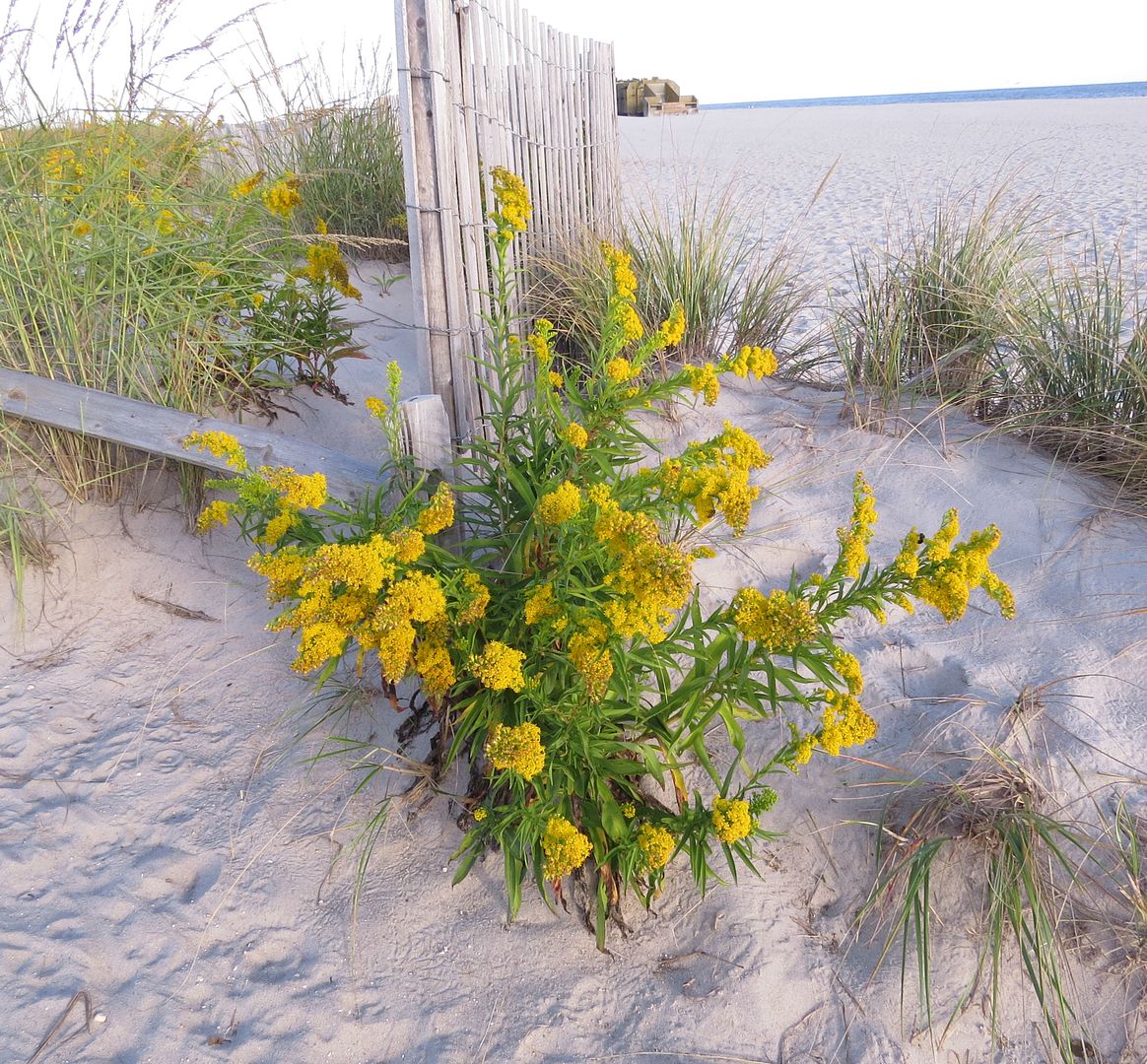
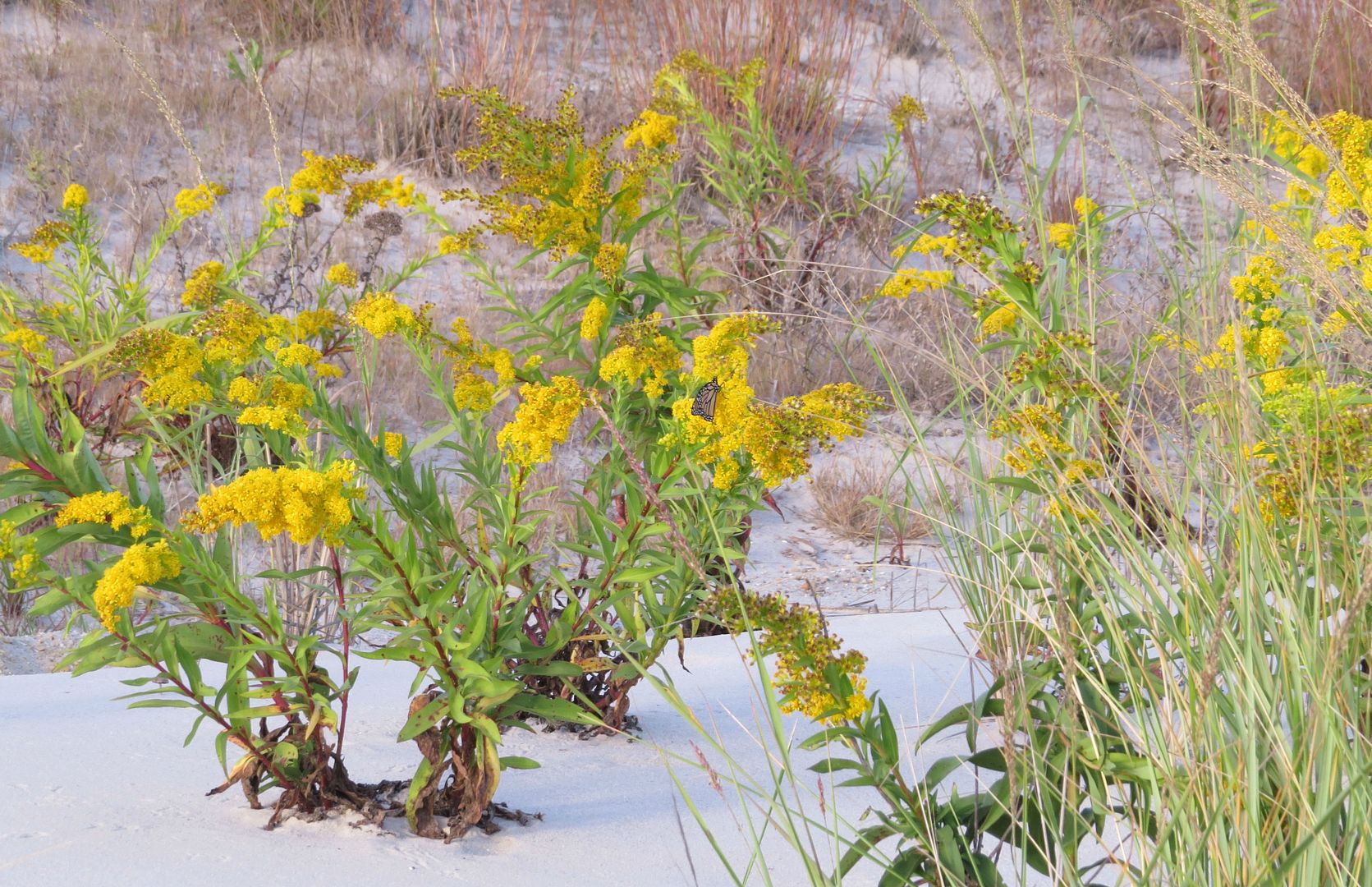
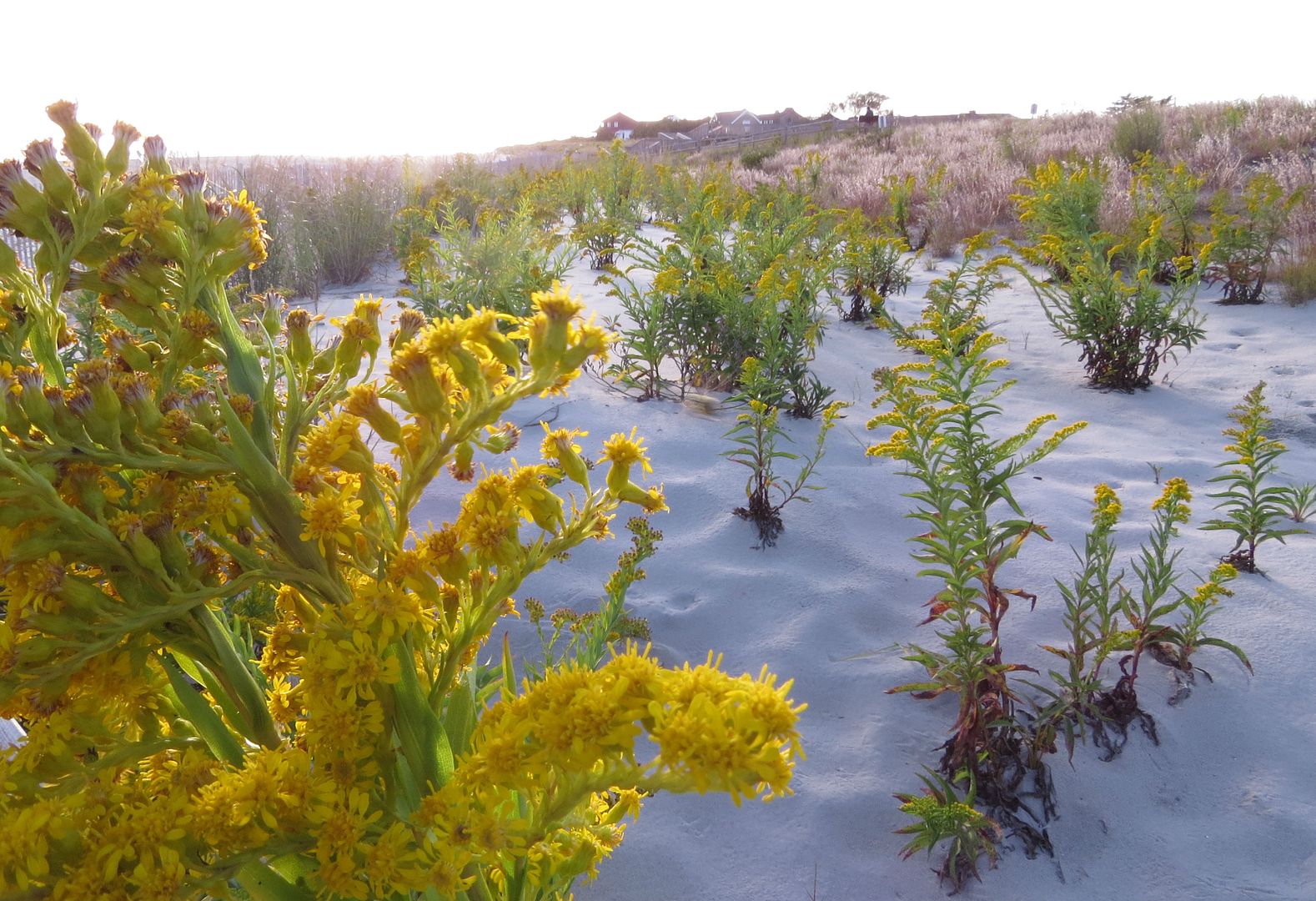
Along the beach there seemed to be some sort of restoration project. There had to be a few thousand plants of Seaside Goldenrod, Solidago sempervirens, and what might be Little Blue Stem, or it's sand and salt water tolerant counterpart.
This is a fantastic goldenrod species. If I had a dune of 100% sand in my yard I'd certainly be trying to grow it! The plant is a good size, they don't seem all that aggressive, and the flowers are as nice and showy as Showy Goldenrod.
Monarch Butterflies swooped about from plant to plant. Most of them seemed to be having difficulty staying with the plant from the force of the wind though. As I mentioned earlier this was the tail end of their migration so we really only saw a few dozen. But that's a lot more than I had in my yard this year or had seen flying around.
Beautiful Plant.
They were less common inland where the soil turned more rocky than sandy, but Monarchs found them all the same.
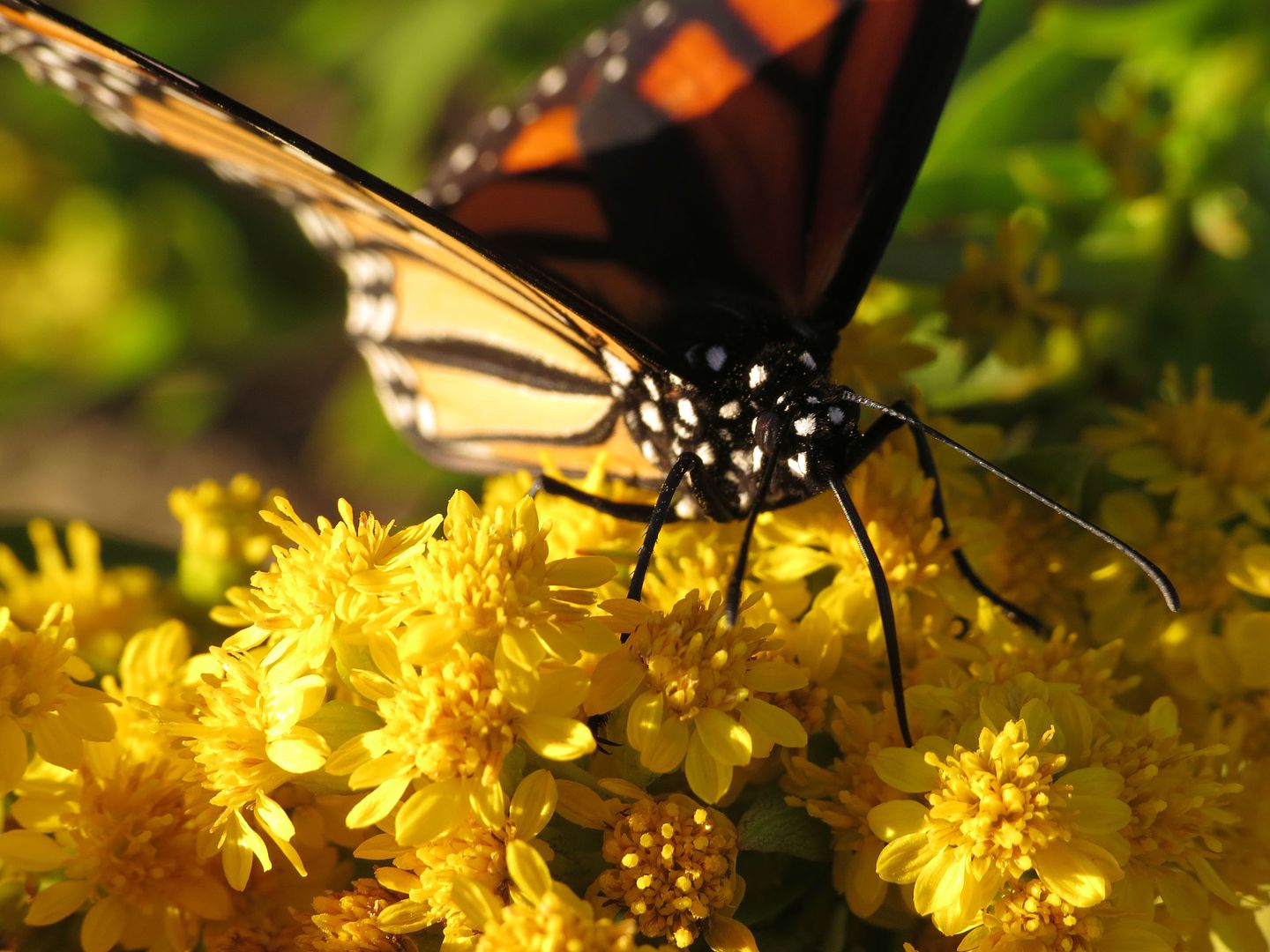
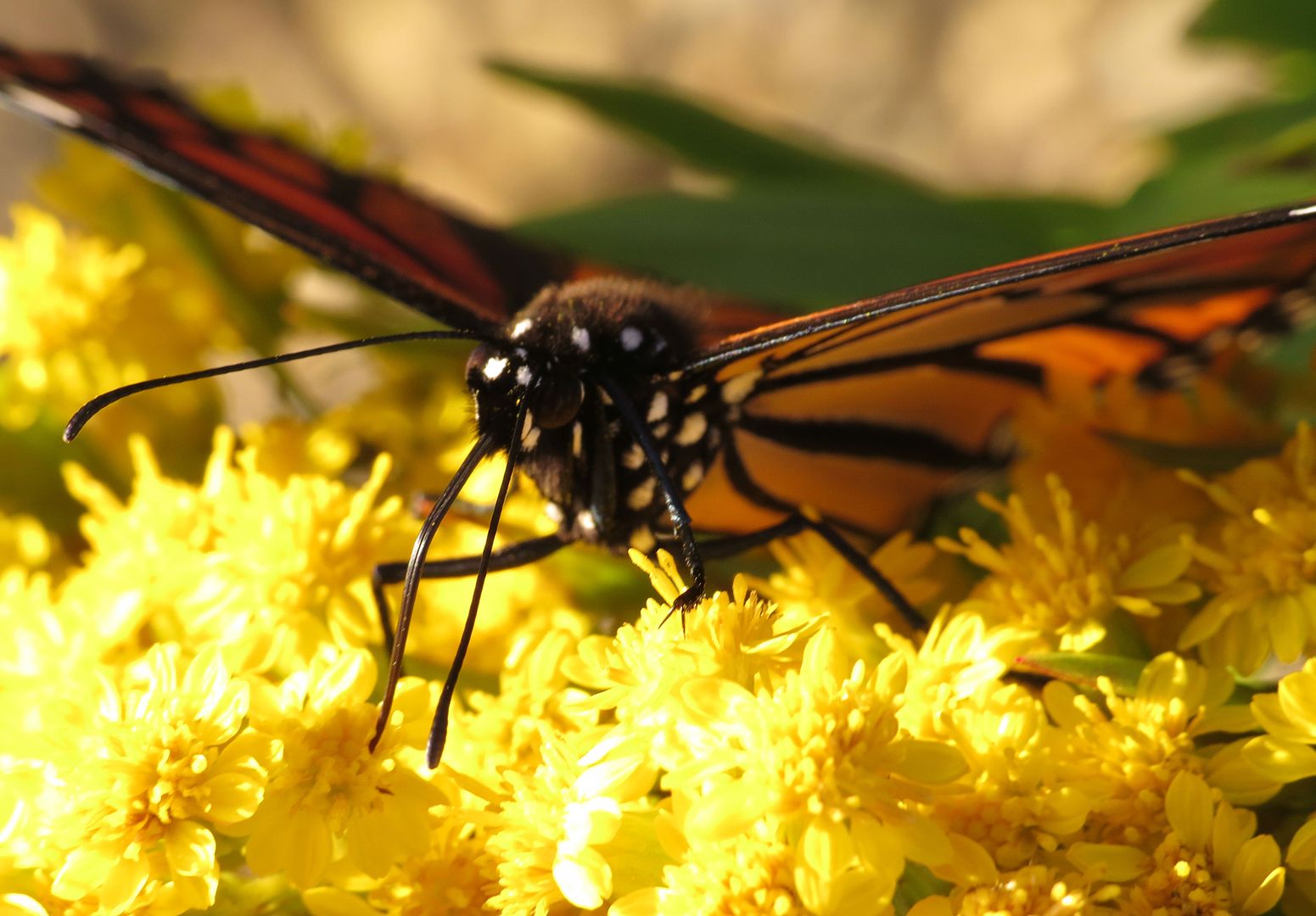
I got to test out my new Raynox DCR-250 Super Macro Snap-On Lens with some Monarchs and in such beautiful lighting! This little snap on works with just about any camera that has a clip on lens cap, and is well worth the money.
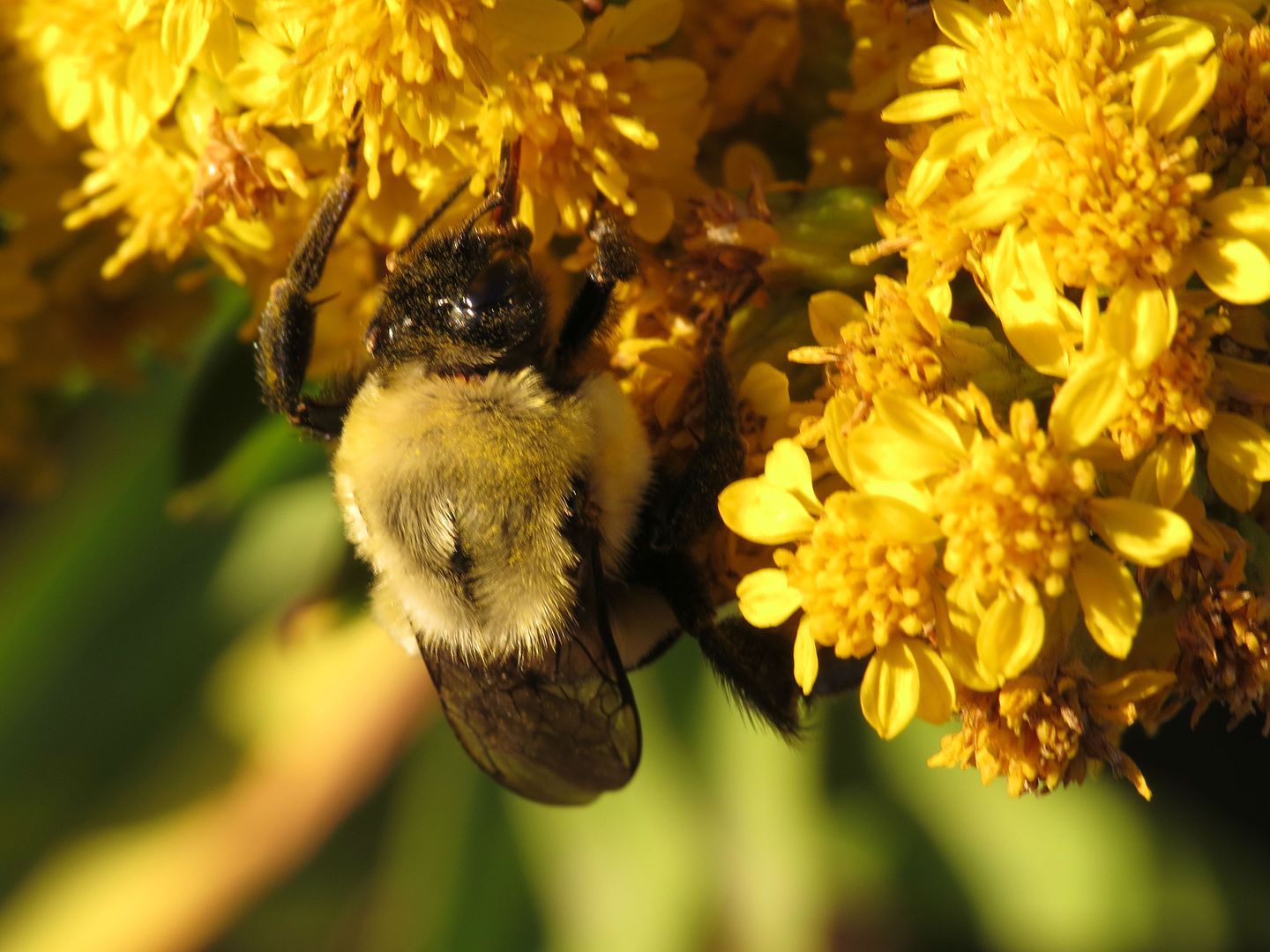
A queen bumblebee. She won't start a nest until next year but in the mean time they fuel up on nectar.
This one fooled me a bit because the bee that it was mimicking were on other plants.
This is a bee mimicking flower fly. They do this to be left alone, and sometimes to sneak into bumblebee nests to lay their eggs upon the decomposing parts of the nest. I don't think they're a pest to bumblebees (though I might be wrong) but this camo also means fewer predators will mess with them.
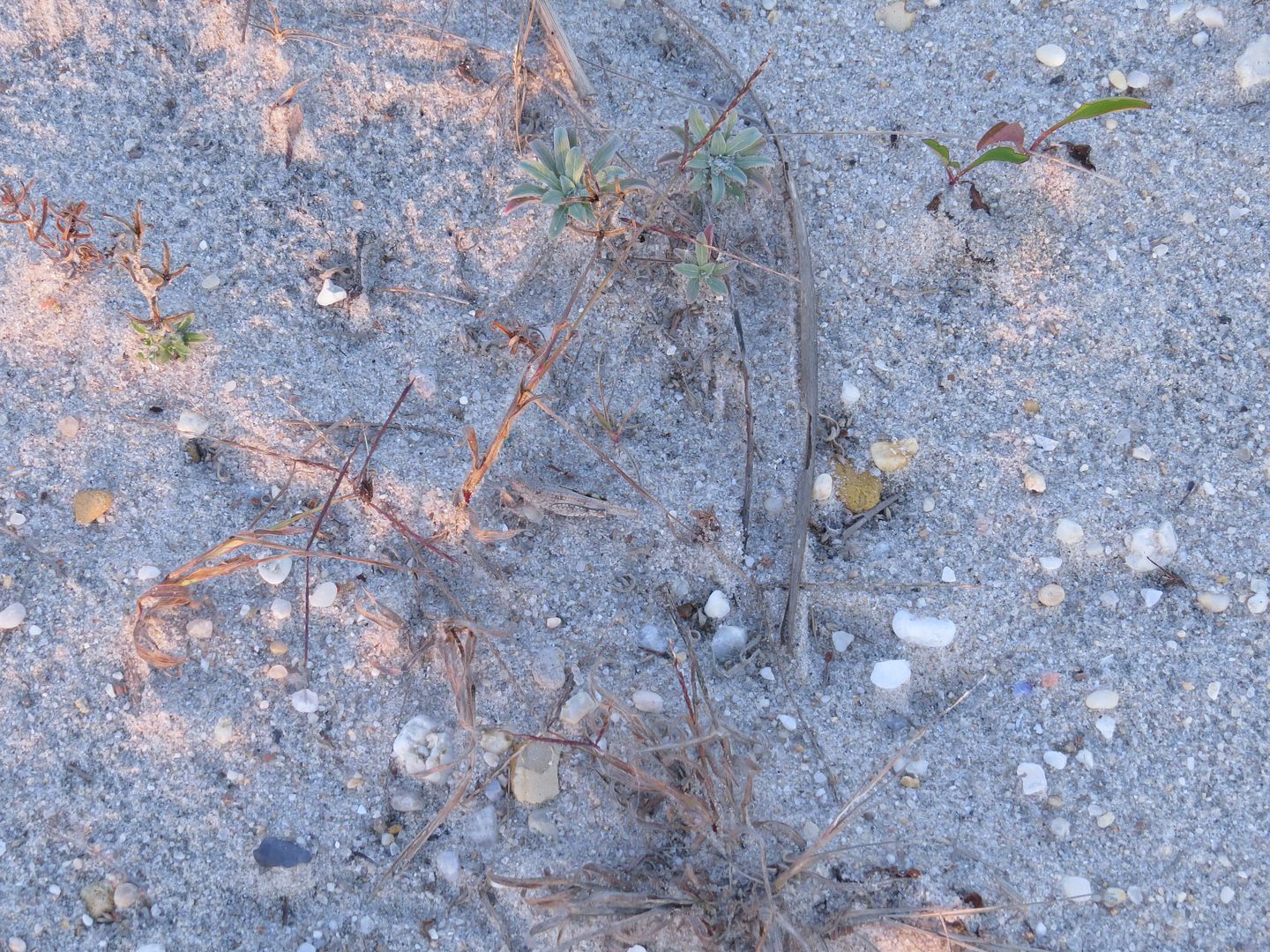
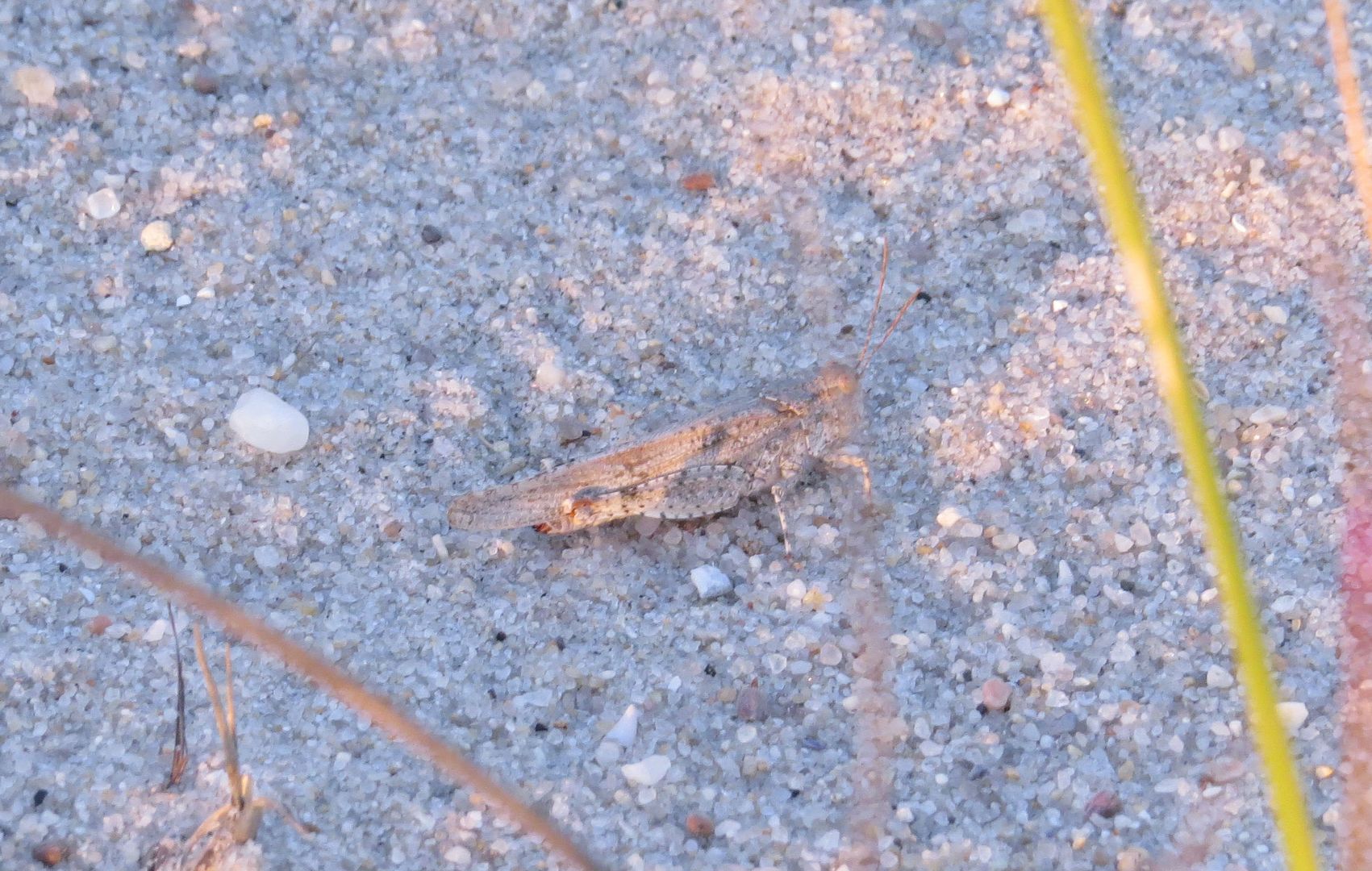
Back at the beach there were other critters in camo. Can you see it?
This grass hopper is perfectly colored to blend in with the beach.
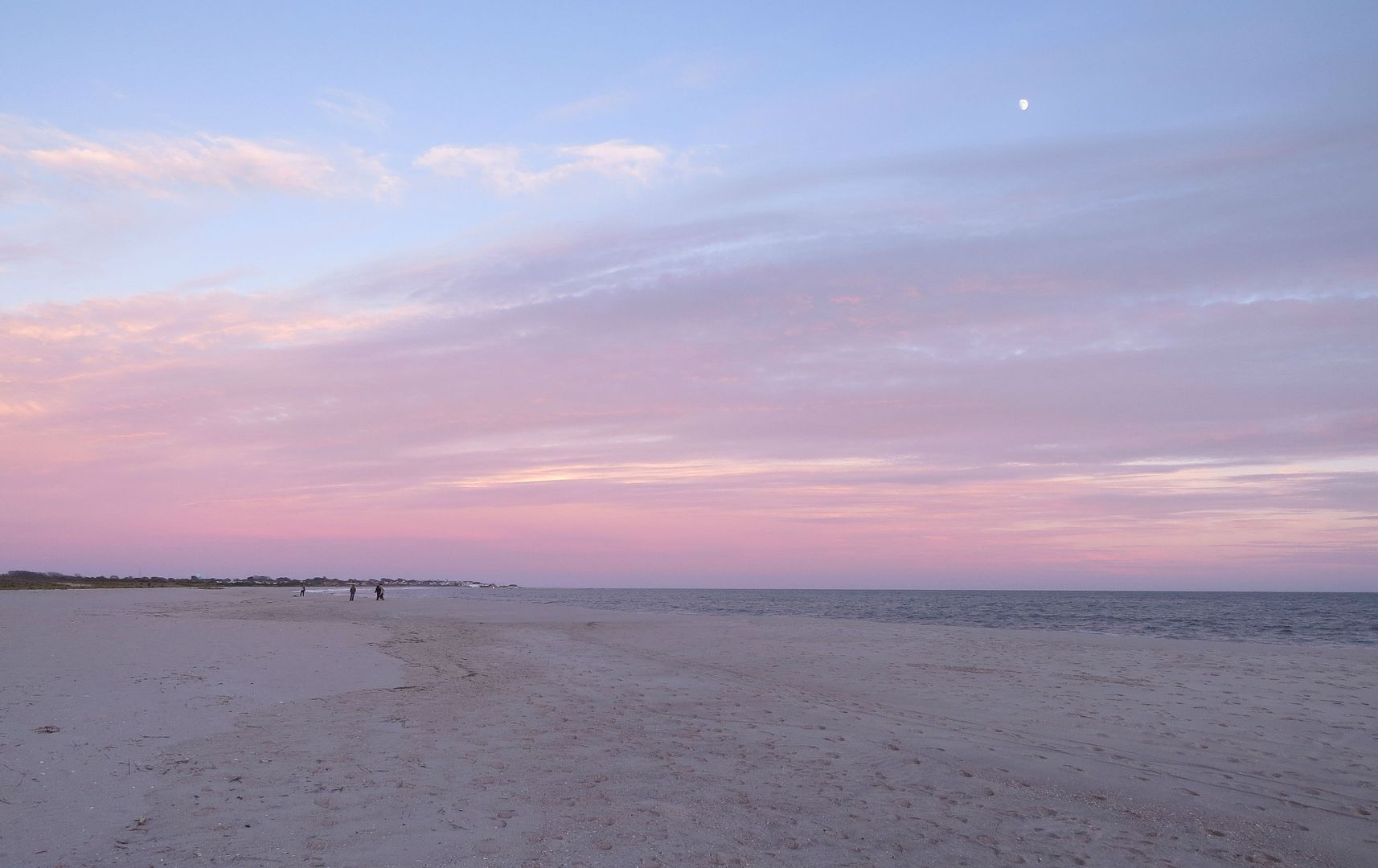
The sky away as we looked away from the sun.
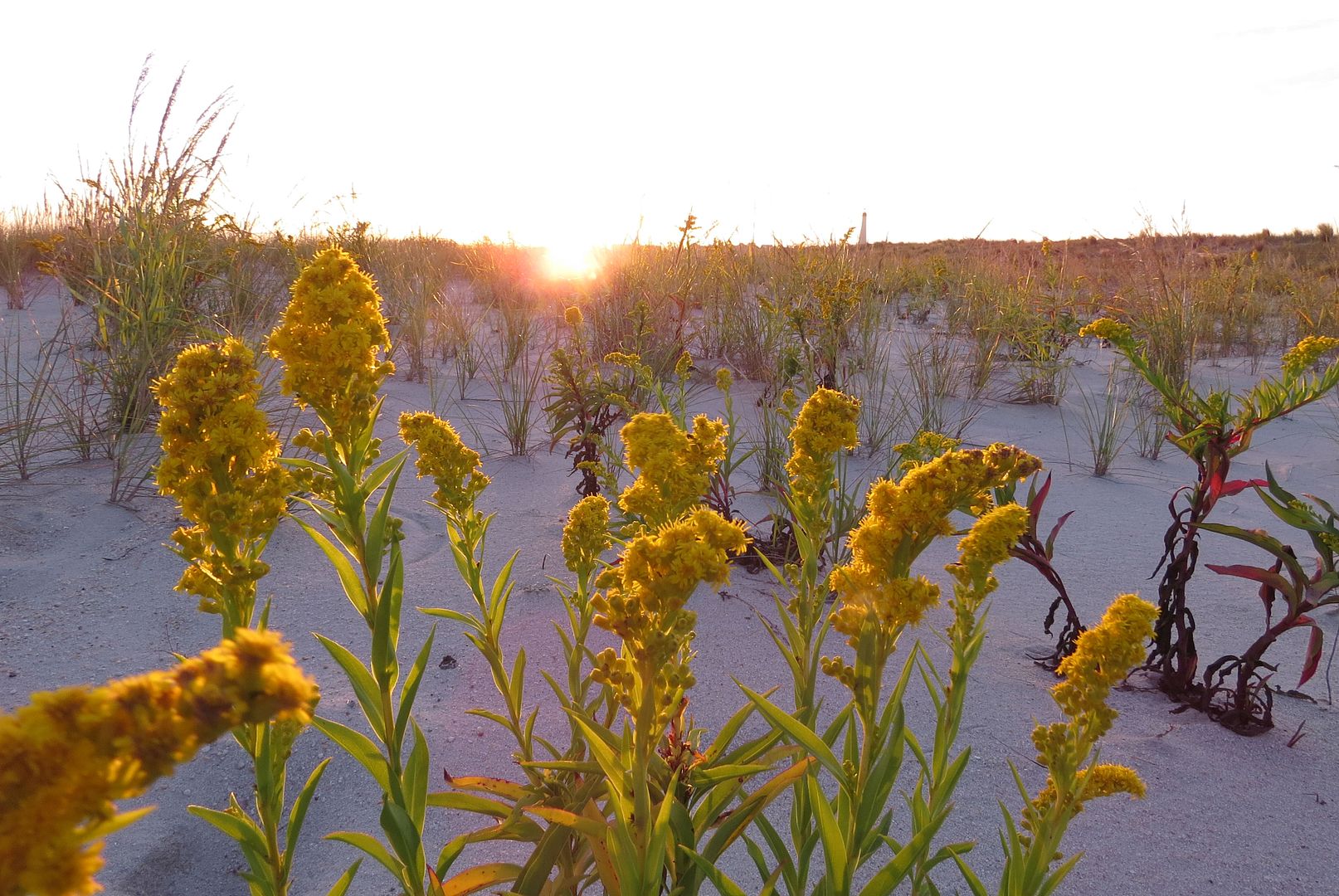
Goldenrod as we looked toward the sun.
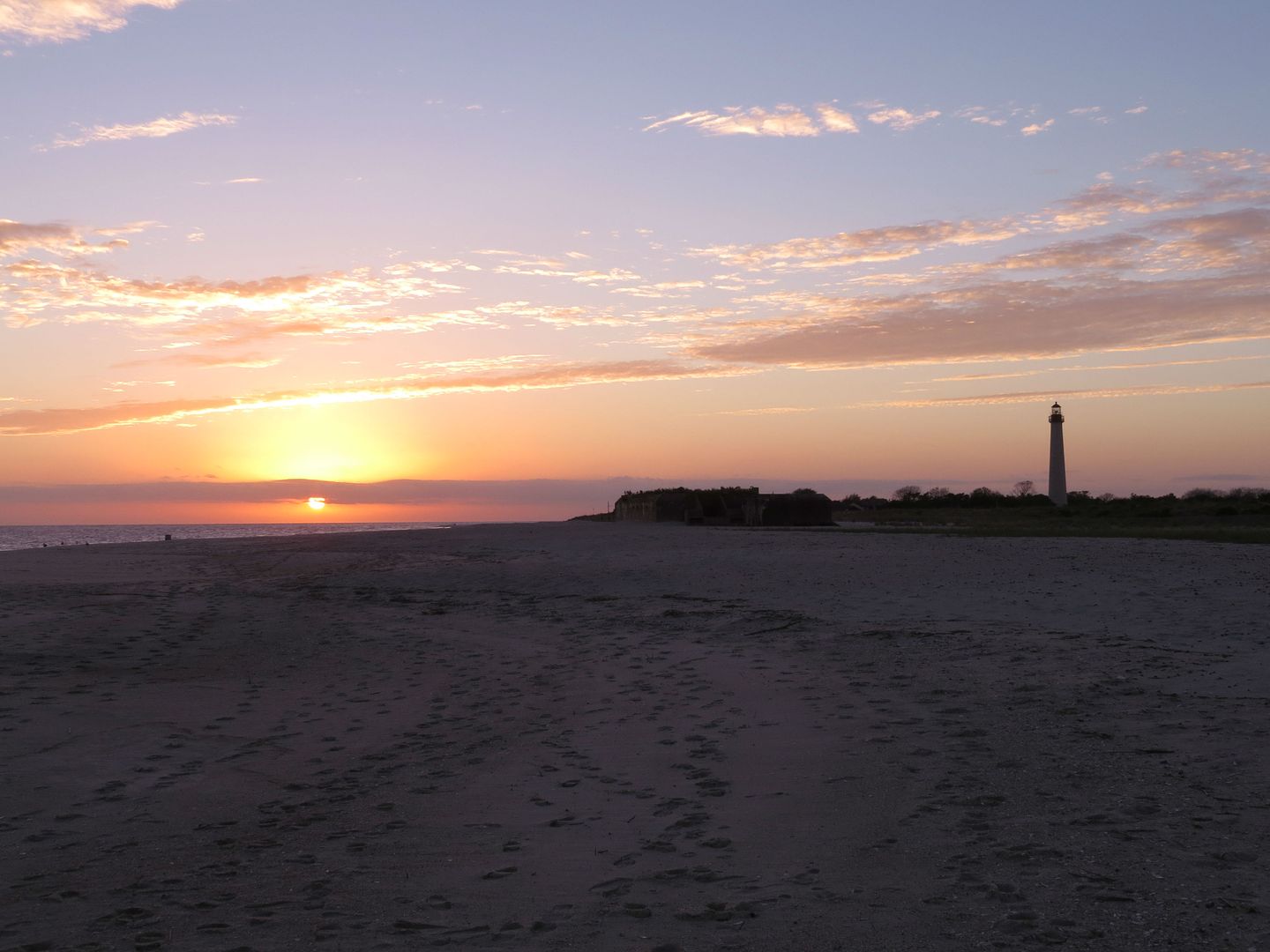
... we were parked over by the light house.
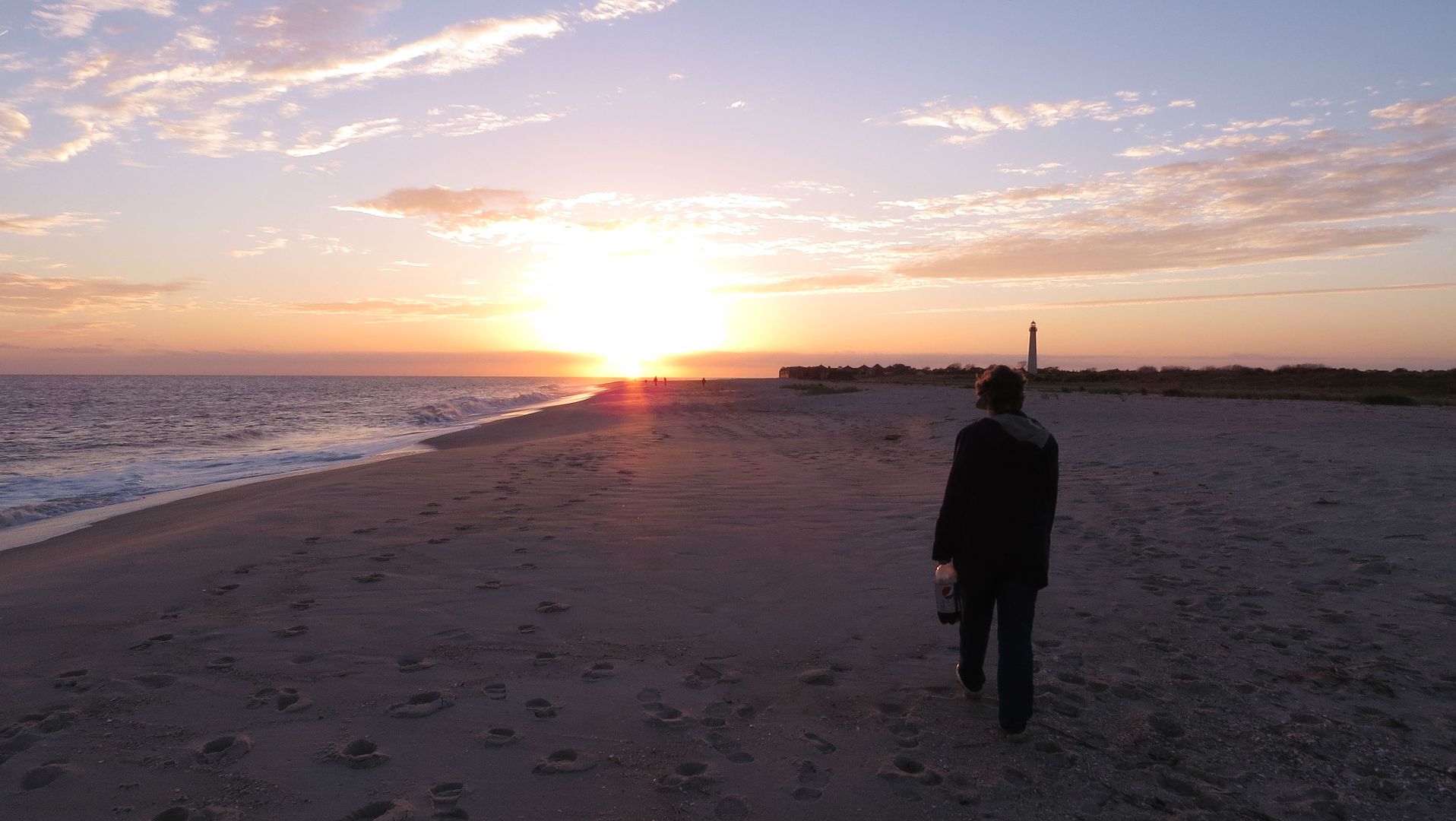
Walking back to the car proved to be one of the prettiest moments of the whole day. I'll have to do this again next year.
Also before we got there, there was a group of photographers all standing in the road, cameras focused on a tidy little garden they have down there. These people were blocking the road and all anxiously awaiting for something to happen. Apparently some west coast hummingbird species had been spotted there the previous night and everyone was standing there waiting for it to show again... we stopped a moment to think if that would be worth our time but decided it was not. While leaving we asked if it had shown and it hadn't.
Cape May is the southern most point of New Jersey which also bottle necks into a peninsula, making it ideal for viewing most things that migrate at this time of year. It was a little late though so we caught the tail end of the Monarch Migration and little else.
The park was a nice wetland area with trails leading all up and down the bays and beaches there.
The least interesting parts were those overrun with the invasive Common Reed Grass, Phagmites australis. This grass can be drown as a method of control, and though it likes growing in wetlands it's very growing habit slowly generates new land. They push up so much top growth every year that it doesn't decompose until several years more, thus the ground is slowly raised. Seeds are air born, and once established they will send out runners several feet away, making them quick to colonize.
The occasional Golden Aster, Heterotheca and Chrysopsis sp. grew in places. Overall it was a rare plant but still a nice one to see.
I don't think it's Maryland Golden Aster, but certainly something in that genus, (or the other one).
Along the beach there seemed to be some sort of restoration project. There had to be a few thousand plants of Seaside Goldenrod, Solidago sempervirens, and what might be Little Blue Stem, or it's sand and salt water tolerant counterpart.
This is a fantastic goldenrod species. If I had a dune of 100% sand in my yard I'd certainly be trying to grow it! The plant is a good size, they don't seem all that aggressive, and the flowers are as nice and showy as Showy Goldenrod.
Monarch Butterflies swooped about from plant to plant. Most of them seemed to be having difficulty staying with the plant from the force of the wind though. As I mentioned earlier this was the tail end of their migration so we really only saw a few dozen. But that's a lot more than I had in my yard this year or had seen flying around.
Beautiful Plant.
They were less common inland where the soil turned more rocky than sandy, but Monarchs found them all the same.
I got to test out my new Raynox DCR-250 Super Macro Snap-On Lens with some Monarchs and in such beautiful lighting! This little snap on works with just about any camera that has a clip on lens cap, and is well worth the money.
A queen bumblebee. She won't start a nest until next year but in the mean time they fuel up on nectar.
This one fooled me a bit because the bee that it was mimicking were on other plants.
This is a bee mimicking flower fly. They do this to be left alone, and sometimes to sneak into bumblebee nests to lay their eggs upon the decomposing parts of the nest. I don't think they're a pest to bumblebees (though I might be wrong) but this camo also means fewer predators will mess with them.
Back at the beach there were other critters in camo. Can you see it?
This grass hopper is perfectly colored to blend in with the beach.
The sky away as we looked away from the sun.
Goldenrod as we looked toward the sun.
... we were parked over by the light house.
Walking back to the car proved to be one of the prettiest moments of the whole day. I'll have to do this again next year.
Labels:
Beach,
Bumblebees,
Coastal,
Colors,
Fly,
Golden Aster,
Goldenrod,
Grapes,
Grass,
Lighthouse,
Monarch
Wednesday, September 4, 2013
Sachem Skippers
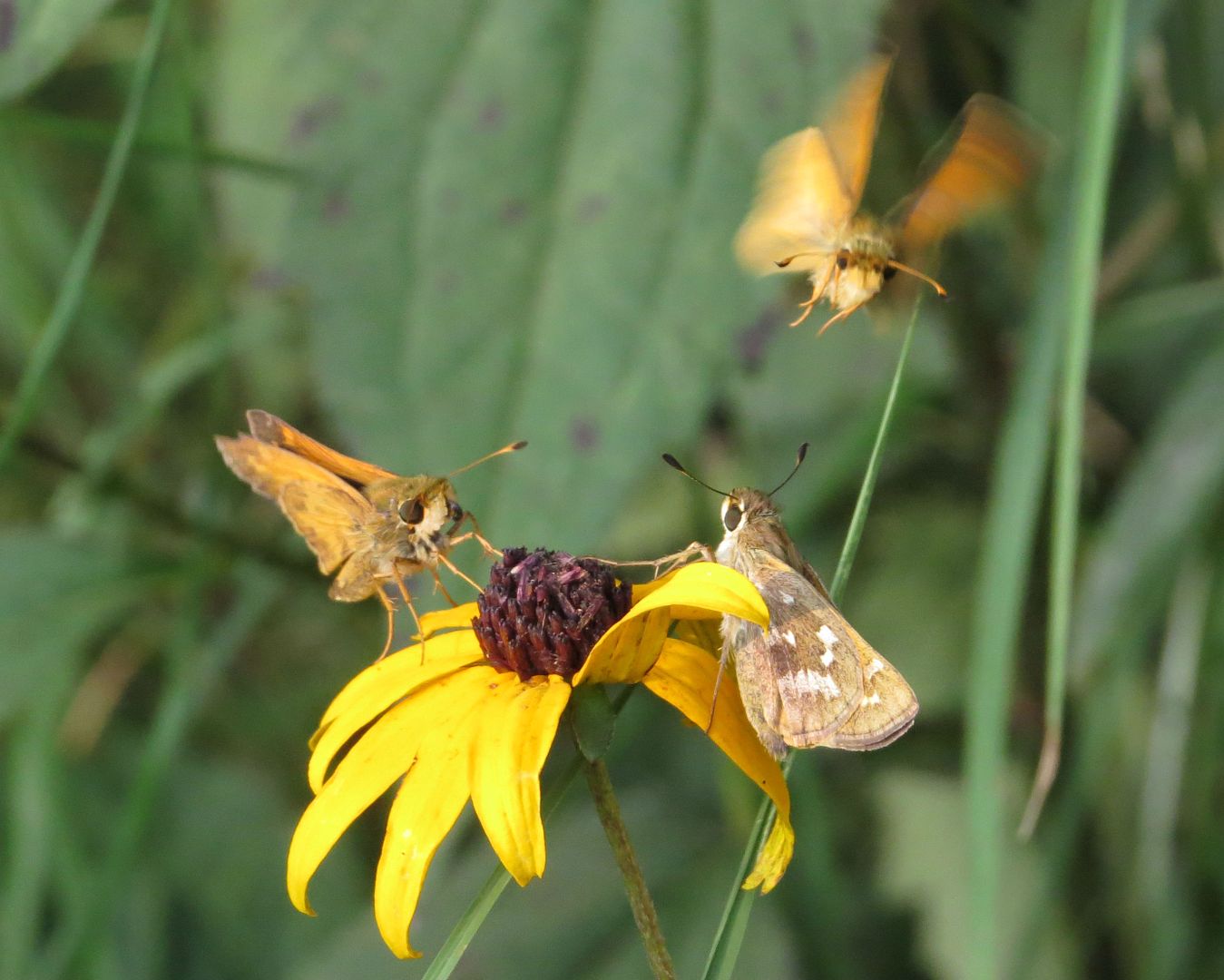
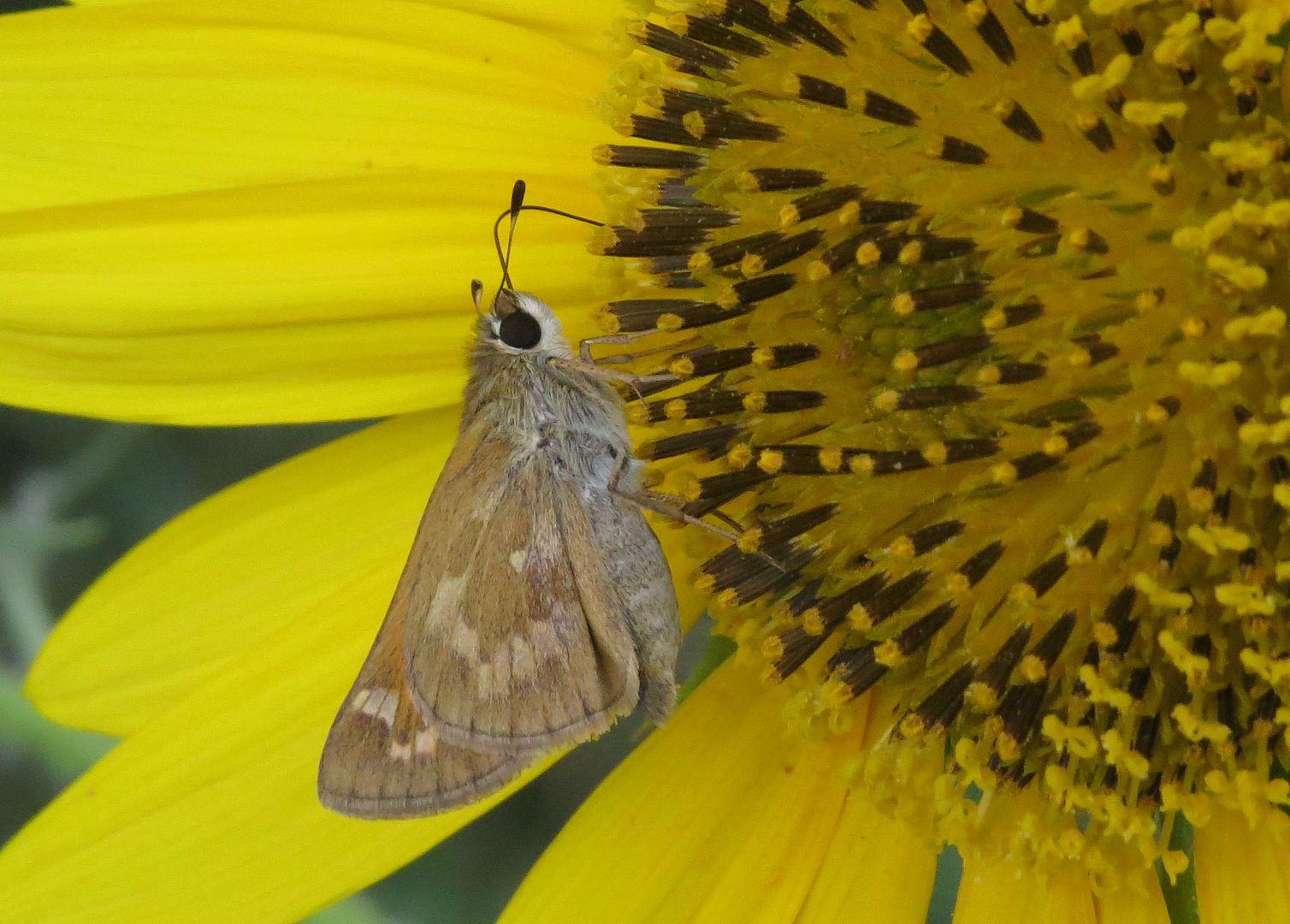
Sachem Skippers, Atalopedes campestris, have started invading my garden in great numbers. Their populations always seem to peak towards the end of summer. Here a female (the grayish slightly larger of the two) is courted by two males (which are more orange-looking). In truth she had about seven males to choose from. One would always be close to her, and bat away other males as they swooped in to be with her. Occasionally one would take place as the guarding male or sometimes two males would tolerate one another on the same flower with her.
I'm seeing more and more skippers every day and all without growing any of their host plants... intentionally that is. When we look at a list of what they use it seems most of the grasses that comprise my lawn and weedy areas in the garden are what's attracting them.
Cynodon dactylon, Bermuda grass
Stenotaphrum secundatum, St. Augustine grass
Eleusine, goosegrass
Digitaria, Crabgrass
These are all common lawn grasses throughout North America. What's neat is despite how common they are, their caterpillars are very rarely seen. Go to BugGuide.net a second Here, and click on Adults, and then click on Caterpillars. There are 9 full pages of images of adults and yet only two shots of the caterpillars. I believe this suggests the caterpillars feed at night or around dusk, or only stick to host plants that are of high quality.
I'm seeing more and more skippers every day and all without growing any of their host plants... intentionally that is. When we look at a list of what they use it seems most of the grasses that comprise my lawn and weedy areas in the garden are what's attracting them.
Cynodon dactylon, Bermuda grass
Stenotaphrum secundatum, St. Augustine grass
Eleusine, goosegrass
Digitaria, Crabgrass
These are all common lawn grasses throughout North America. What's neat is despite how common they are, their caterpillars are very rarely seen. Go to BugGuide.net a second Here, and click on Adults, and then click on Caterpillars. There are 9 full pages of images of adults and yet only two shots of the caterpillars. I believe this suggests the caterpillars feed at night or around dusk, or only stick to host plants that are of high quality.
Labels:
Butterflies,
Grass,
Skippers
Thursday, May 16, 2013
Grass Seed Dispersal by Ants
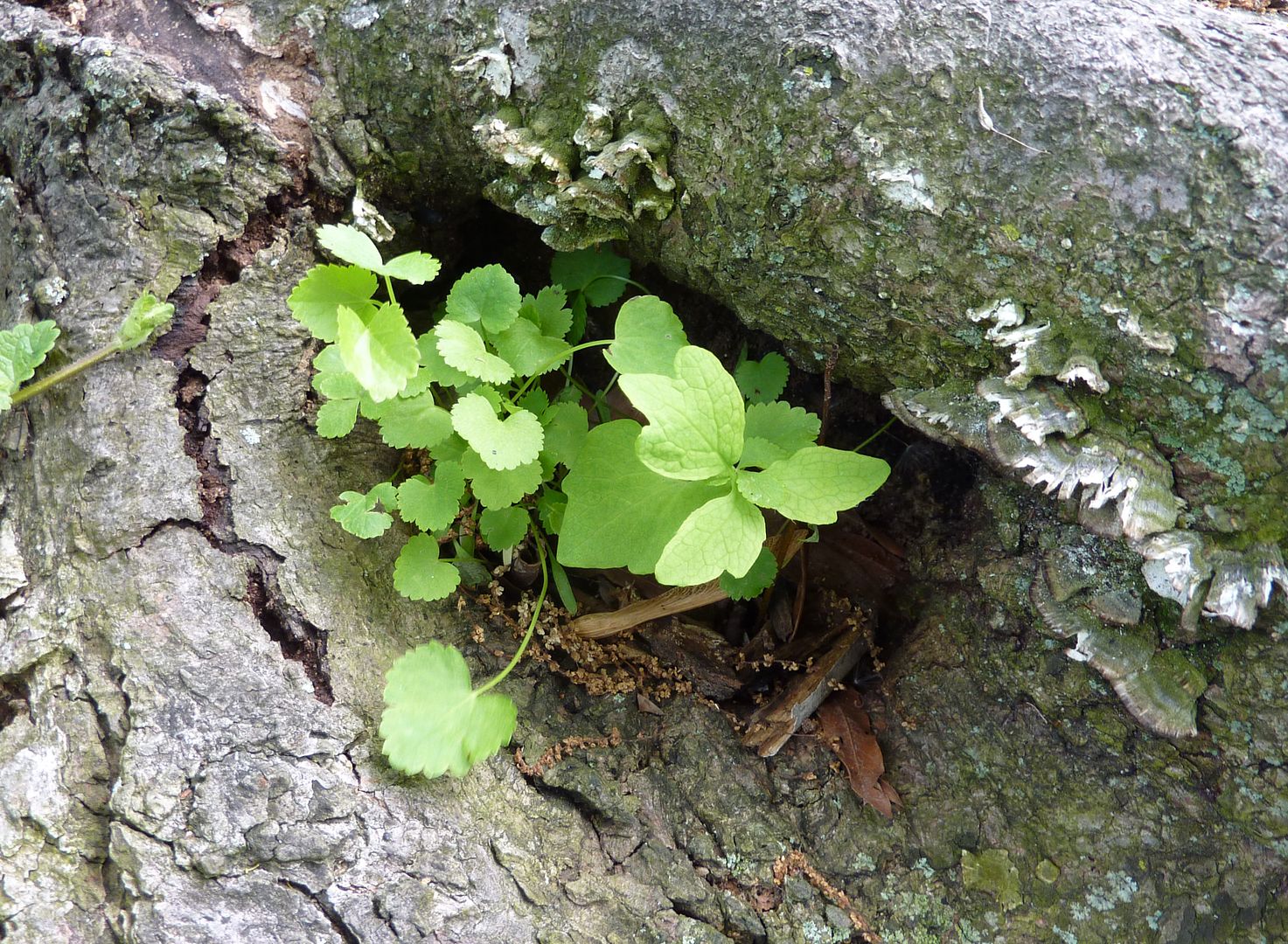
Upon inspecting the yard I realized some seedlings had germinated in the knot of a rotting log. The leafy green to the right is our native Woodland Poppy, Stylophorum diphyllum, the other is all Creeping Charlie, which were likely dropped in there from a plant that grew over the hole (note the stalk to the left climbing up the side).
Woodland Poppy seeds have elaiosome on them and are thus dispersed by ants, but even seeds that don't have this substance on them can still be dispersed.
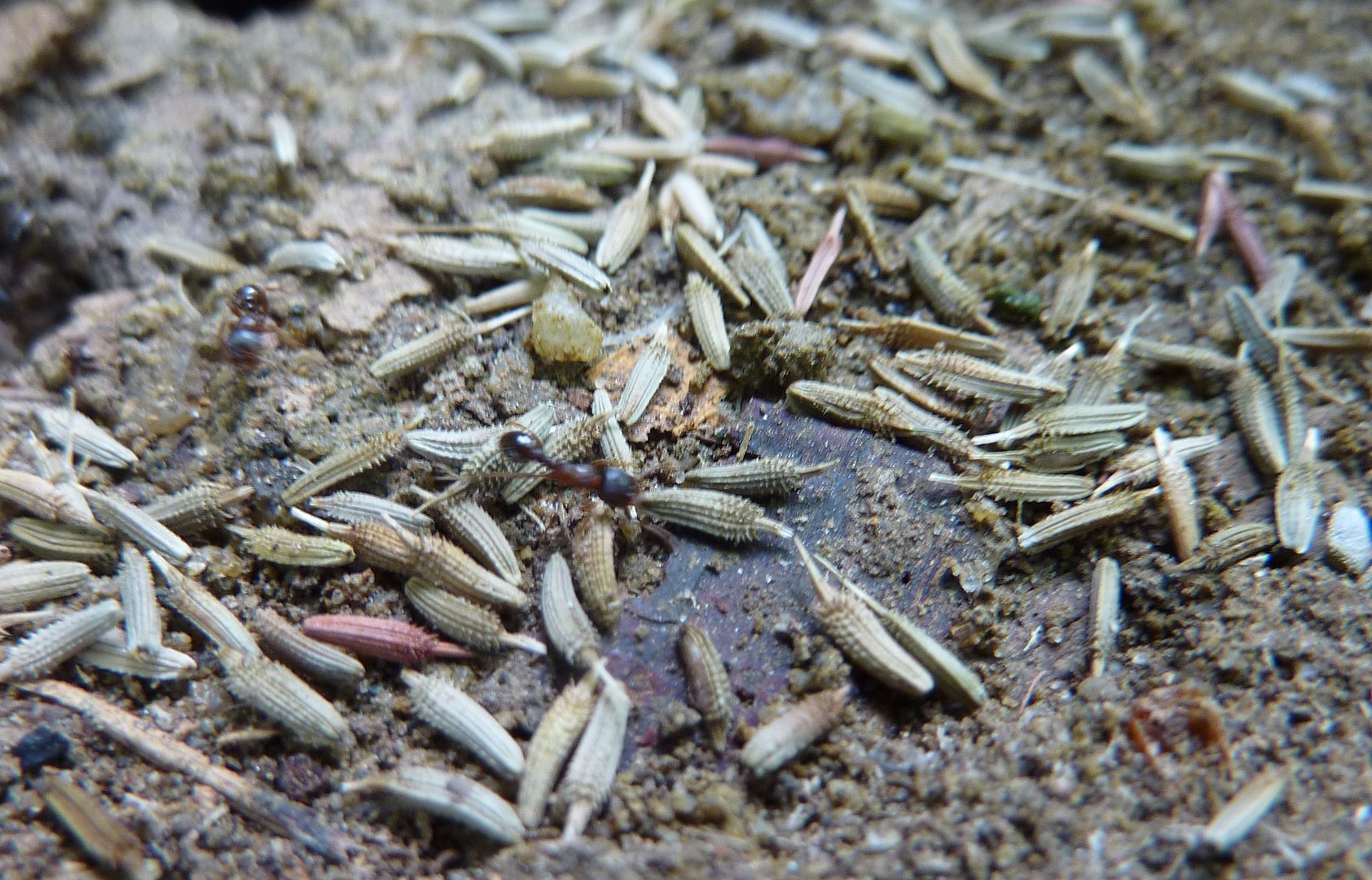
The granary of the common pavement ant, Tetramorium species E. are full of seeds to some sort of grass. While these seeds are eventually ground up to be eaten, the ants collect too many of them and they end up germinating before they're eaten.
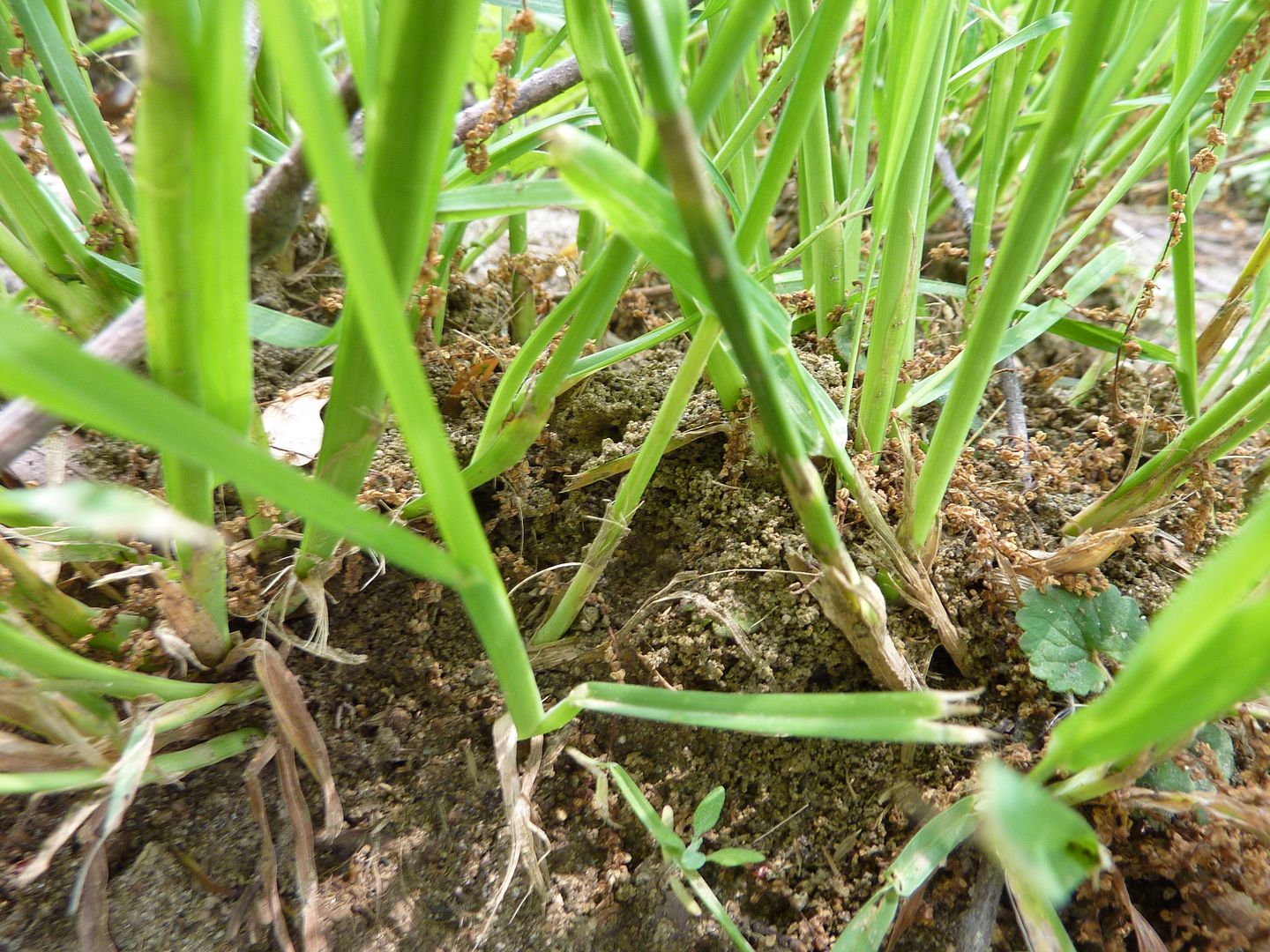
At the stands to a number of grasses you can often find ant hill from species that likely planted them.
Woodland Poppy seeds have elaiosome on them and are thus dispersed by ants, but even seeds that don't have this substance on them can still be dispersed.
The granary of the common pavement ant, Tetramorium species E. are full of seeds to some sort of grass. While these seeds are eventually ground up to be eaten, the ants collect too many of them and they end up germinating before they're eaten.
At the stands to a number of grasses you can often find ant hill from species that likely planted them.
Labels:
Ants,
Grass,
Myrmecochory,
Seeds,
Tetramorium,
Woodland Poppy
Sunday, September 2, 2012
Crabgrass Caterpillar
So this god awful crab grass makes up the majority of our backyard, and my one regret to gardening is the fact I didn't flood out the patches with the most toxic forms of Round Up known to man before starting my restoration. So imagine my horror to find this awful plant is host to some caterpillar! They're near impossible to see too.
Labels:
Caterpillar,
Grass,
Lepidoptera
Friday, January 27, 2012
Keep Off the Certified Wildlife Habitat
How am I supposed to do both?
Okay I guess you could use stepping stones to get around but a lot of the chemicals used to keep grass looking golf course green year round aren't very environmentally friendly. Which is why it comes as something of a shock to find out the National Wildlife Federation has partnered with Scott/Monsanto.
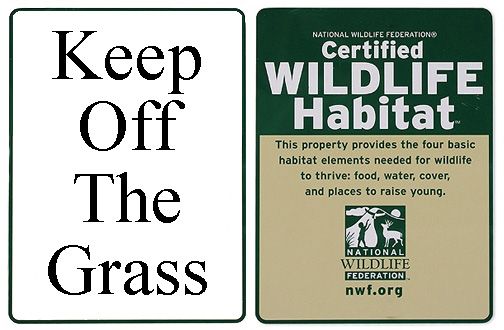
For whatever reason most of the Wildlife Gardening community seems to be outraged. Normally these two signs above would be featured on two different lawns. Typically both are used to explain the madness in landscaping aesthetic. The Wildlife Habitat sign is ideal for explaining why there's a tall-grass meadow in the front yard, and the Keep Off Grass sign is ideal for explaining why the home owner's water bill is so high. Now we can have both!
To be honest though, I think some of the best landscapes are when these two elements work best together. Lawns look nice, they typically hold up to foot traffic, we're getting Eco friendly no mow varieties now, and the green tends to look better than bare ground. Prairies and small Meadow plantings are ideal garden plants whether they're in a wild densely planted patch, or each plant is spread out to have its own individual space around it. The "sins" of applying chemicals, mowing, and over watering lawns are on the home owner, not the Scott/Monsanto.
To talk about the National Wildlife Federation now, I've never been a huge fan of them. Just looking through their website and catalogs clearly their ideal customer is a female over the age of 35, who likes to wear nature sweaters, collects plush toys, and probably shops at the Hallmark once a month. They could really stand to widen their audience a little with the products they sell. Does anyone honestly want to Adopt a Moose or buy a Horseshoe Crab Plush Toy?
There was even a TV show at one point where they'd landscape a home to make it a Certified Wildlife Habitat. My memory of the show was them doing the bare minimum to satisfy their criteria. I get they were trying to show how easy it is, but at the same time I got the feeling they were just trying to sell signs. Planting butterfly weed, including a bird's bath, and making a pile of stones is hardly saving anything. In the episode they devoted around 5 minutes about the 1 butterfly weed plant they put in the garden and kept emphasizing "ALL THOSE BUTTERFLIES THAT ARE GOING TO GO NUTS FOR THIS!" which comes off being really stupid, and even more so that I can't recall there being any butterflies in the episode. Do these people know what they're doing at all? Imagen if the show was all like "Move That Bus!" and there was just one milkweed plant there. I feel like there was more effort put into hanging the Certified Wildlife Habitat sign than actually building the habitat itself. Canceling this show was the right thing to do becuase it sure wasn't doing them any favors.
Okay I guess you could use stepping stones to get around but a lot of the chemicals used to keep grass looking golf course green year round aren't very environmentally friendly. Which is why it comes as something of a shock to find out the National Wildlife Federation has partnered with Scott/Monsanto.
For whatever reason most of the Wildlife Gardening community seems to be outraged. Normally these two signs above would be featured on two different lawns. Typically both are used to explain the madness in landscaping aesthetic. The Wildlife Habitat sign is ideal for explaining why there's a tall-grass meadow in the front yard, and the Keep Off Grass sign is ideal for explaining why the home owner's water bill is so high. Now we can have both!
To be honest though, I think some of the best landscapes are when these two elements work best together. Lawns look nice, they typically hold up to foot traffic, we're getting Eco friendly no mow varieties now, and the green tends to look better than bare ground. Prairies and small Meadow plantings are ideal garden plants whether they're in a wild densely planted patch, or each plant is spread out to have its own individual space around it. The "sins" of applying chemicals, mowing, and over watering lawns are on the home owner, not the Scott/Monsanto.
To talk about the National Wildlife Federation now, I've never been a huge fan of them. Just looking through their website and catalogs clearly their ideal customer is a female over the age of 35, who likes to wear nature sweaters, collects plush toys, and probably shops at the Hallmark once a month. They could really stand to widen their audience a little with the products they sell. Does anyone honestly want to Adopt a Moose or buy a Horseshoe Crab Plush Toy?
There was even a TV show at one point where they'd landscape a home to make it a Certified Wildlife Habitat. My memory of the show was them doing the bare minimum to satisfy their criteria. I get they were trying to show how easy it is, but at the same time I got the feeling they were just trying to sell signs. Planting butterfly weed, including a bird's bath, and making a pile of stones is hardly saving anything. In the episode they devoted around 5 minutes about the 1 butterfly weed plant they put in the garden and kept emphasizing "ALL THOSE BUTTERFLIES THAT ARE GOING TO GO NUTS FOR THIS!" which comes off being really stupid, and even more so that I can't recall there being any butterflies in the episode. Do these people know what they're doing at all? Imagen if the show was all like "Move That Bus!" and there was just one milkweed plant there. I feel like there was more effort put into hanging the Certified Wildlife Habitat sign than actually building the habitat itself. Canceling this show was the right thing to do becuase it sure wasn't doing them any favors.
Labels:
environment,
Grass,
News
Sunday, November 6, 2011
Fall Color Around the Prairie
I happened to be off last Saturday which happened to be the last day the Mt. Cuba Center was offering the Meadow Studies class for the year. I figured I wasn't doing anything so why not drive an hour to Delaware (after registering online of course).
They offer Meadow Studies as a one day course 5 times a year. I went to the first two, missed the next two, so this is my third. Overall I'm happy with them but they weren't what I had expected. Emphasis is more on how they maintain it each year and what plants are showy at the particular time of year. The second half of the class is a nice tour mostly of the meadow itself but also other plants they have elsewhere on the property that might fit the theme of a meadow setting.
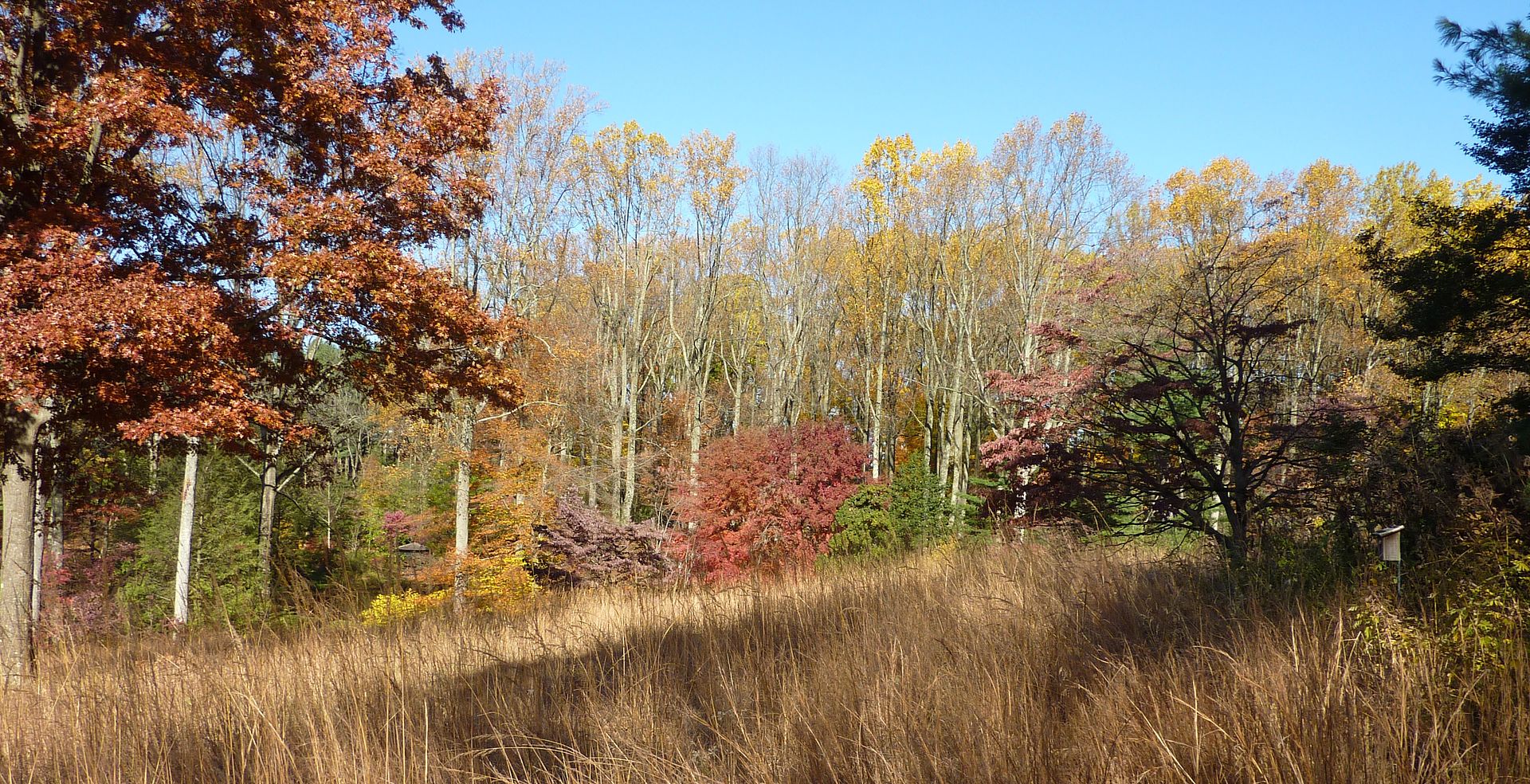
The autumn is easily the peak of a grassland meadow's grandeur. The fall colors are setting in, the seed heads glinting in the sun, and gusts of wind create visible waves of movement. It's not the largest prairie in the world, but it's still impressive in it's own right.
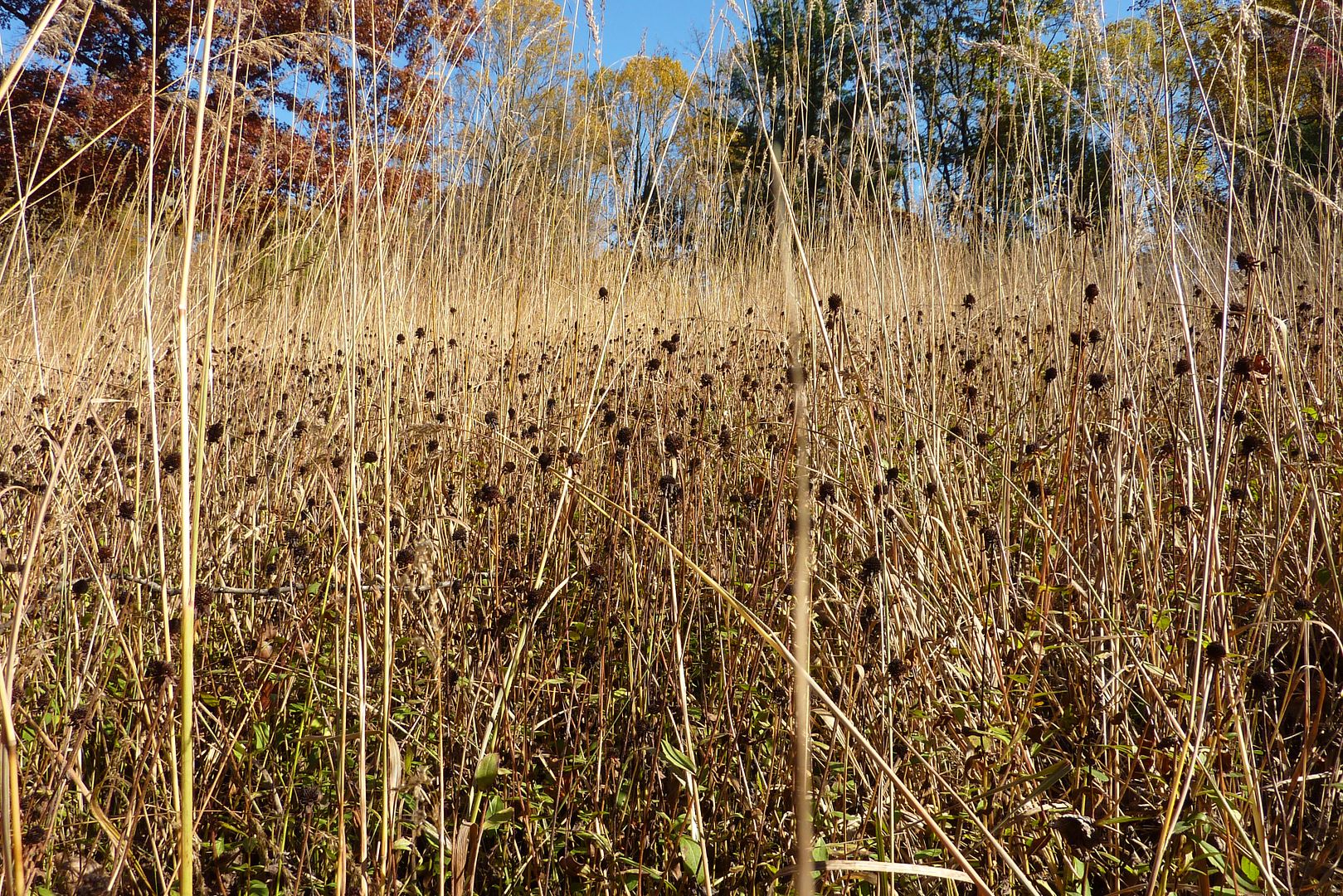
Their meadow is mostly composed of Little Bluestem, Big Bluestem, and Yellow Indian Grass. Before the tour began we were give the option to collect seeds in a paper bag. I thought this was a great idea, but if only the course were focused more on installing a meadow. This would have been a great starting point.
Hair Awn Murhly, Muhlenbergia capillaris, features fluffy pink stalks which seem to float over the plant.
Prairie Dropseed, Sporobolus heterolepis, slowly transitions into it's fall color. It ends up being a brighter yellow than most other grasses, but in the mean time it puts on an almost tie-dyed effect.
Most of the wildflowers have finished their show for the year and take a back seat to the grasses which now tower over most of them.
Rose Hips to one of our native roses are hidden in clumps of grass. Birds will likely eat them over the winter.
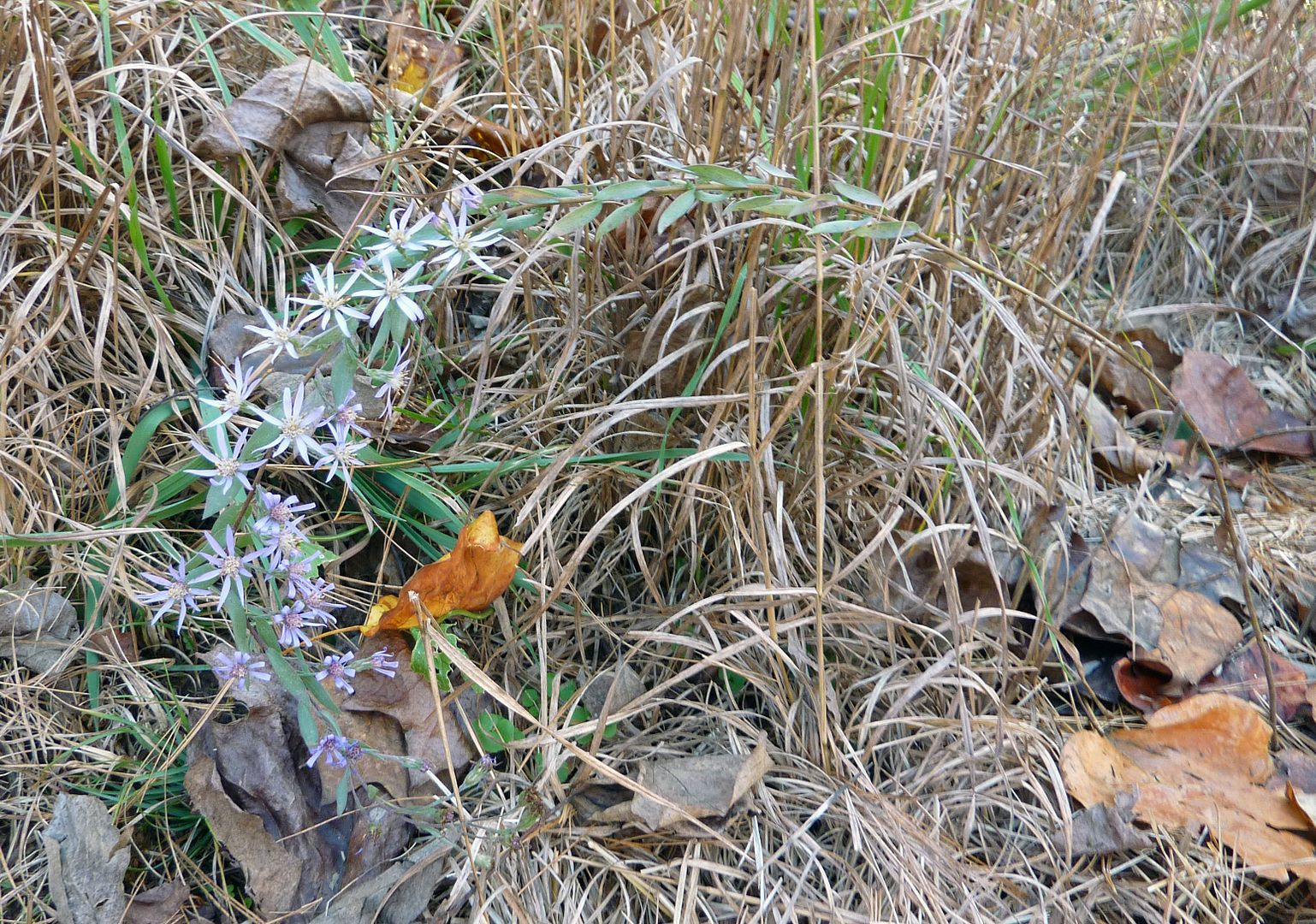
A few years back, the Mt. Cuba Center did a study on Asters species and cultivars to see which were garden appropriate, disease resistant, had nice form, long bloom period and such. The eastern Silver Aster, Symphyotrichum concolor, was one they tried out. I don't think it's one they recommend thought. I could be wrong but it certainly wasn't doing much for me. Generally anything flowering at this time of year is a plus but the plant is a little unimpressive.
I noticed how Liatris-like it is with all it's flowering coming out so close to the stem. The full plant was actually several stalks, just like a clump of Liatris, all coming out of the ground. It was very neat but I was mostly disappointed nothing was pollinating it.
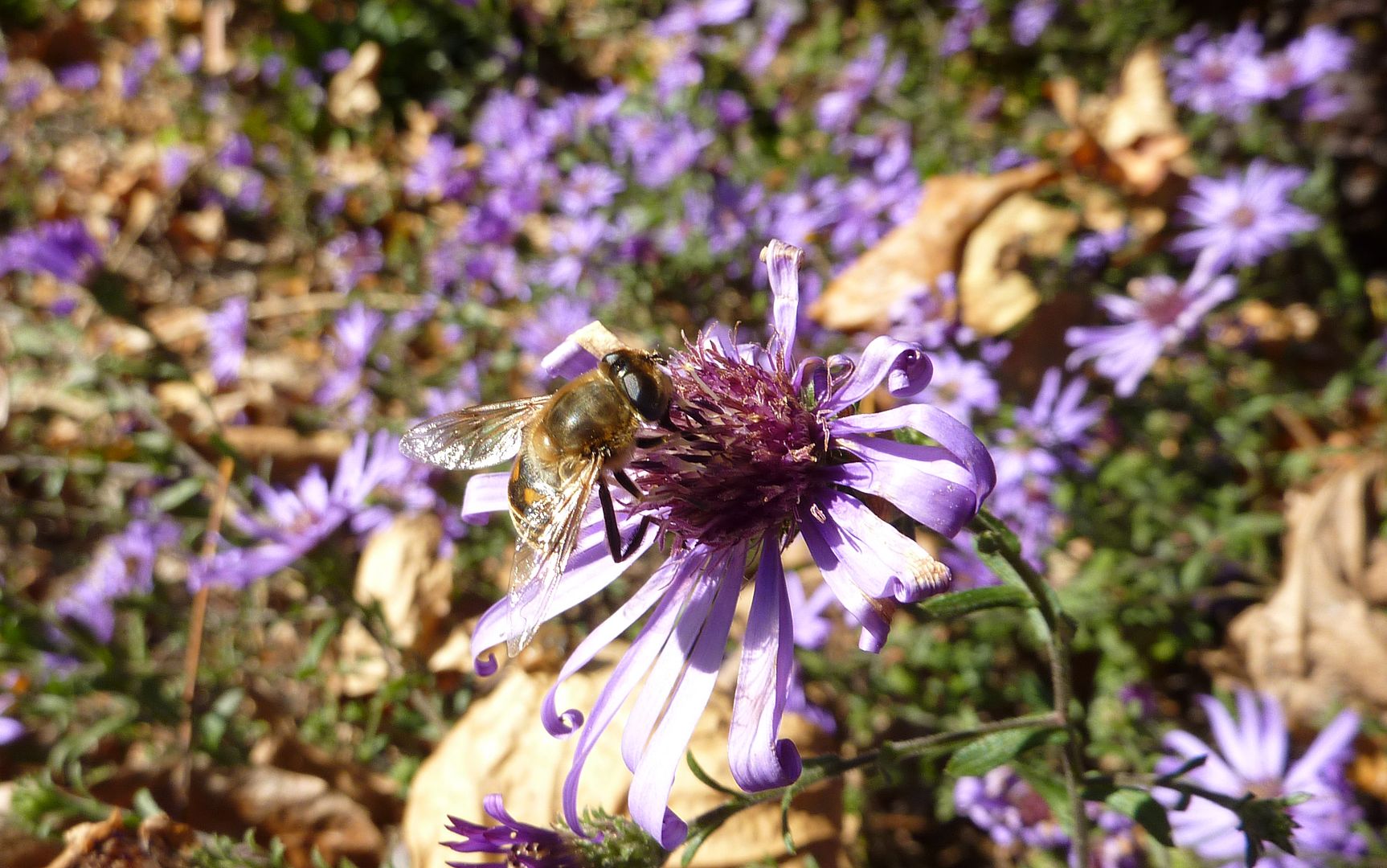
The Georgia Aster, Symphyotrichum georgianmum, was another one blooming now, though clearly a few days past it's peak on most plants. I'm sure this is closer to being a species they'd recommend. Though I don't think it's native to Delaware it's surprisingly hardy.
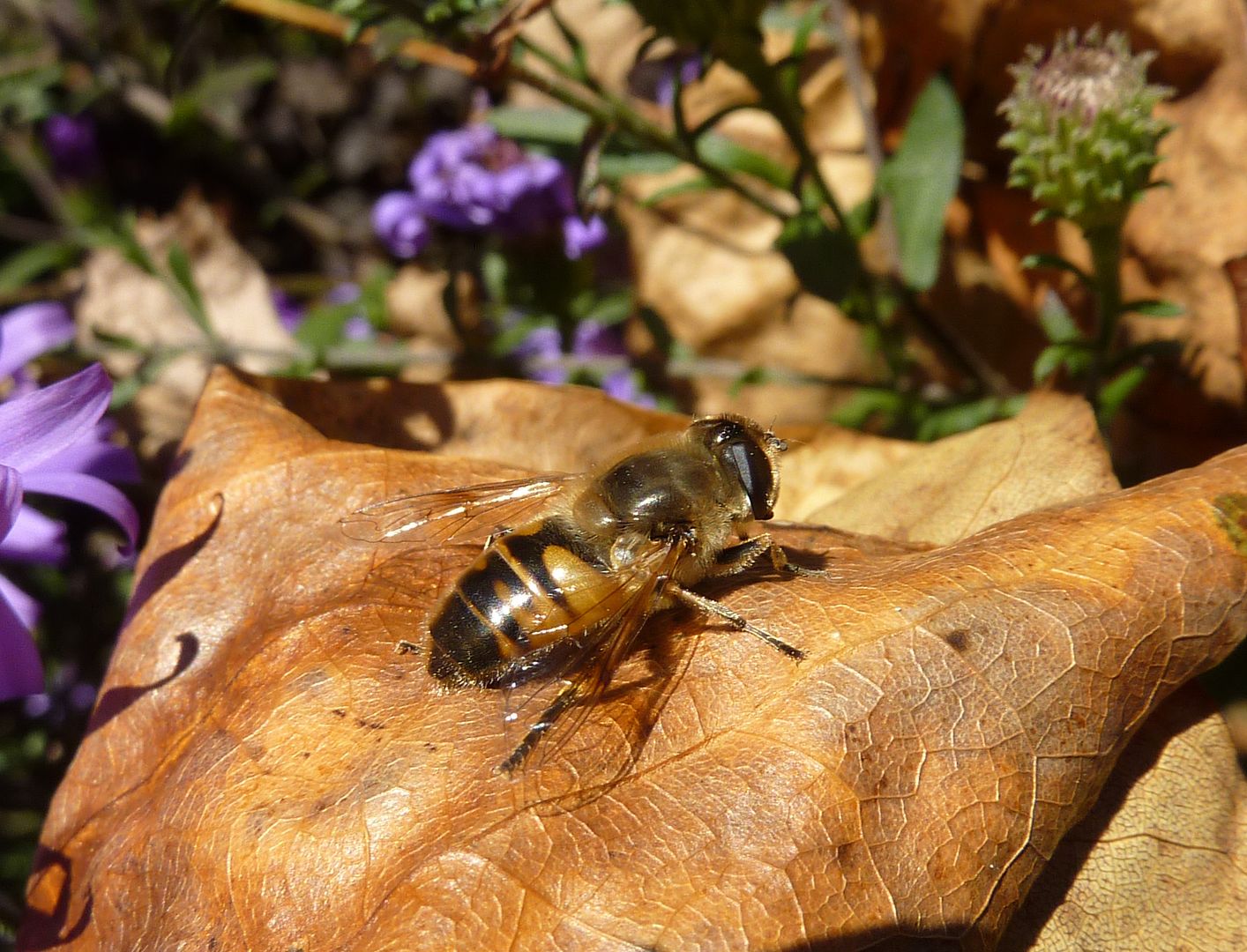
Georgia Asters that were growing in full sun were absolutely loaded with bees and flower flies (seen above) which mimic bees. The one above is doing a great job.
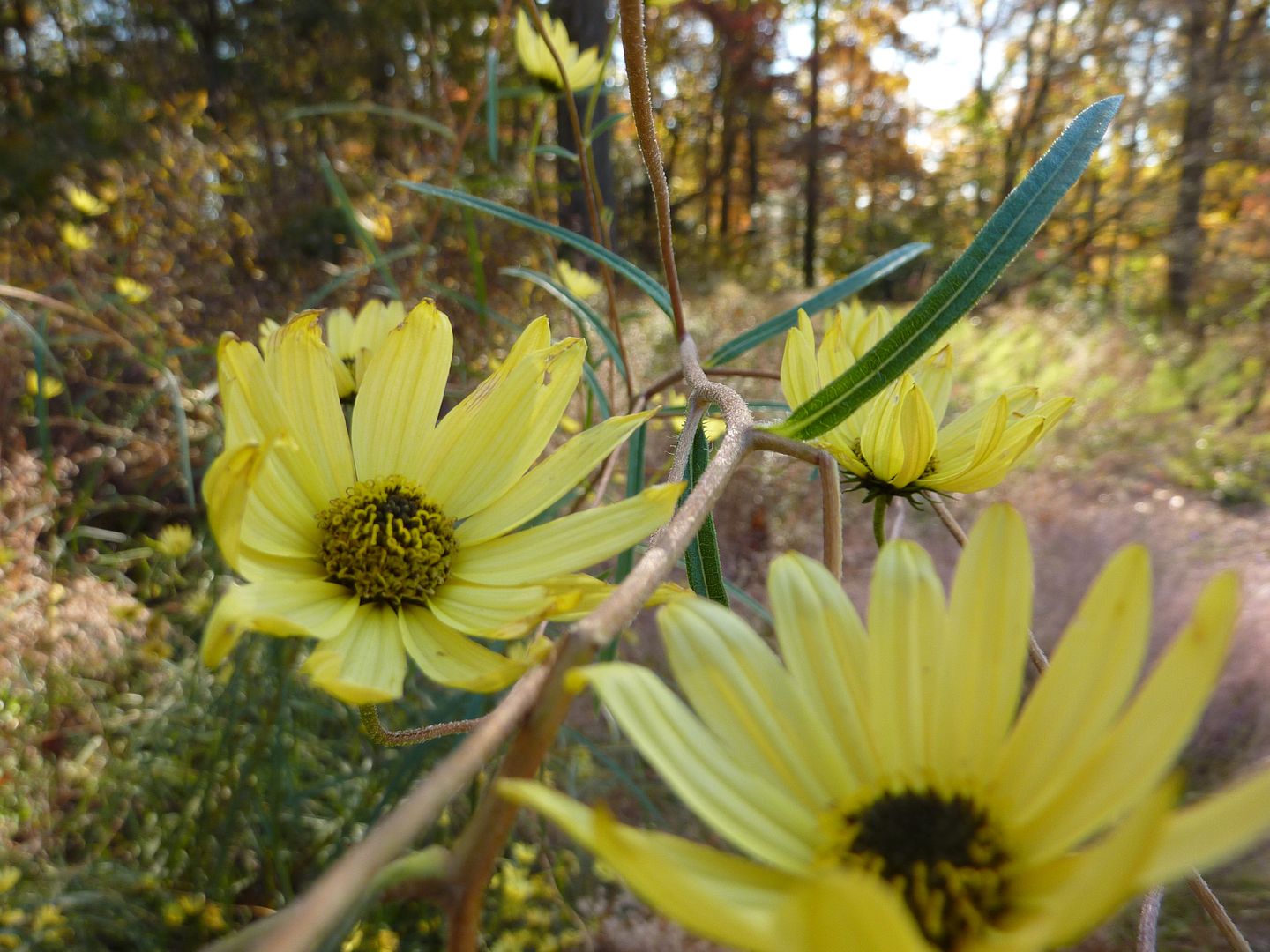
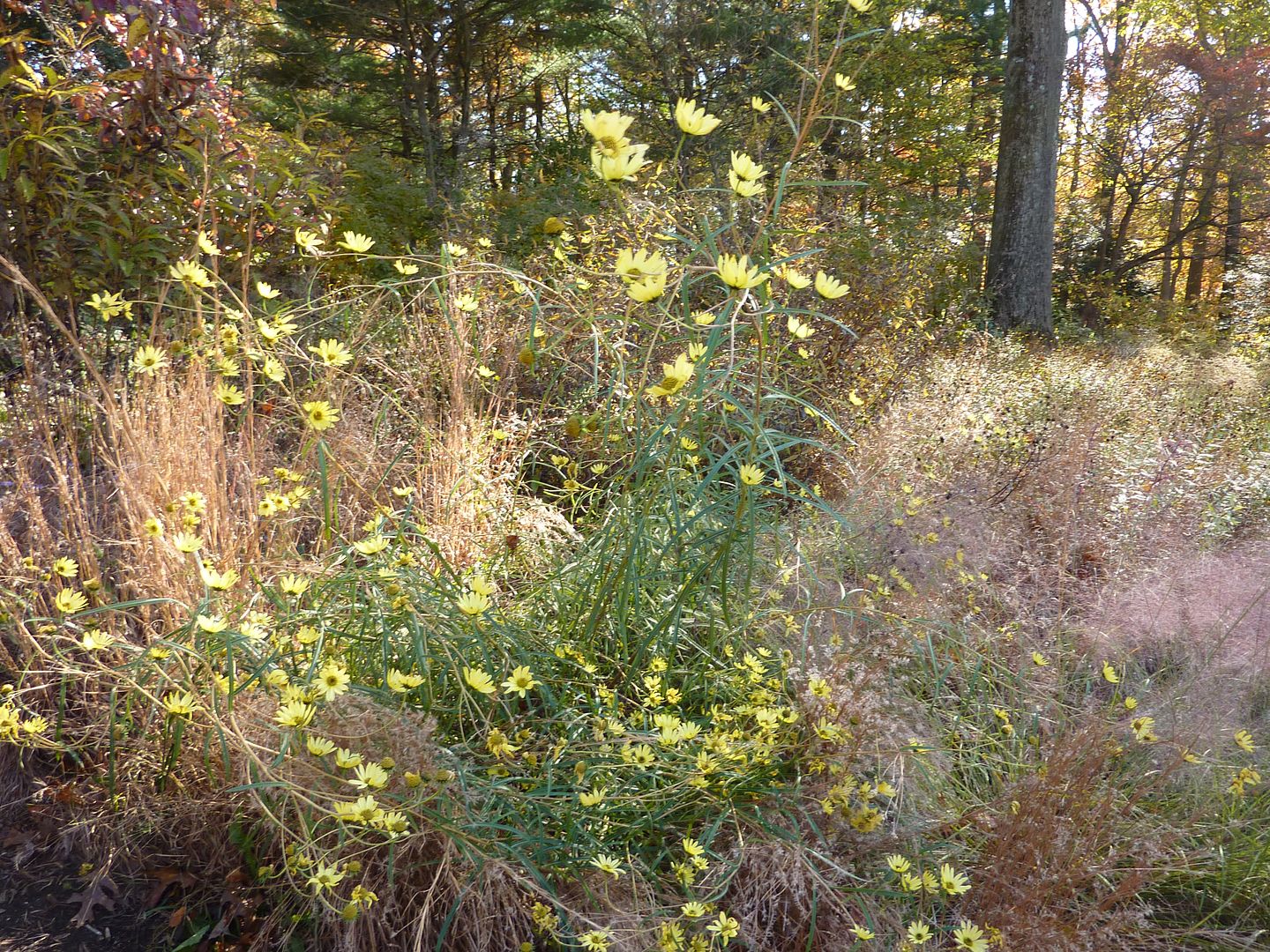
Narrowleaf Sunflower, sometimes called Swamp Sunflower, or Helianthus angustifolius, was also flowering. They favored the narrowleaf common name because it grows fine in non swampy conditions along side several species of Joe Pye Weed, Wild Senna, Prairie Onion, and so on. The leaves have a very rough feel to them.
This is actually the cultivar 'Mellow Yellow' which has paler yellow flowers. The true species is as bright as the sun and impossible to miss from across a field.
The plant has a slightly messy look to it, but I've found that's the case with most perennial sunflowers. Lord only knows how the annual varieties keep from falling down. I guess when you only have one year to live it pays to get it right the first time.
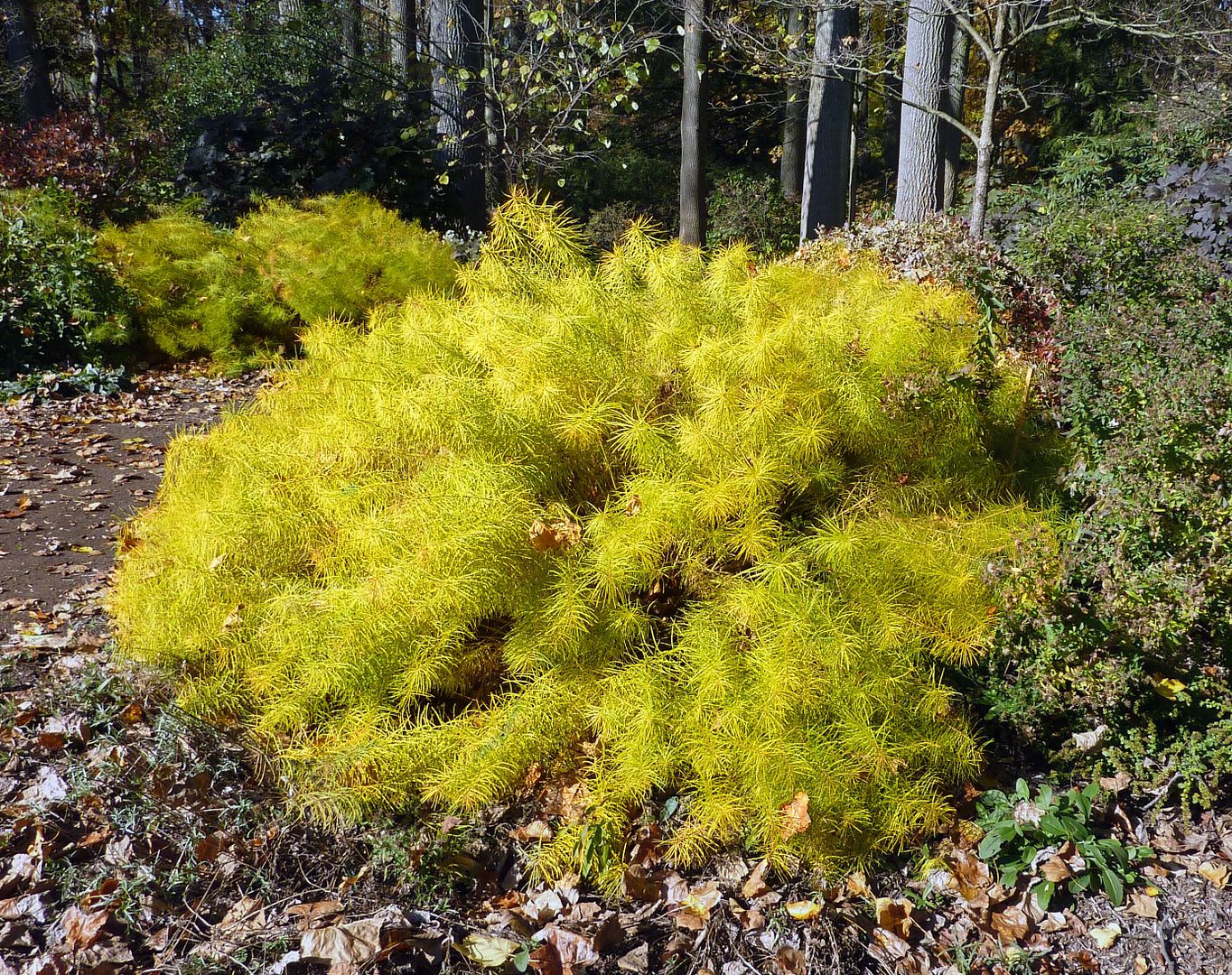
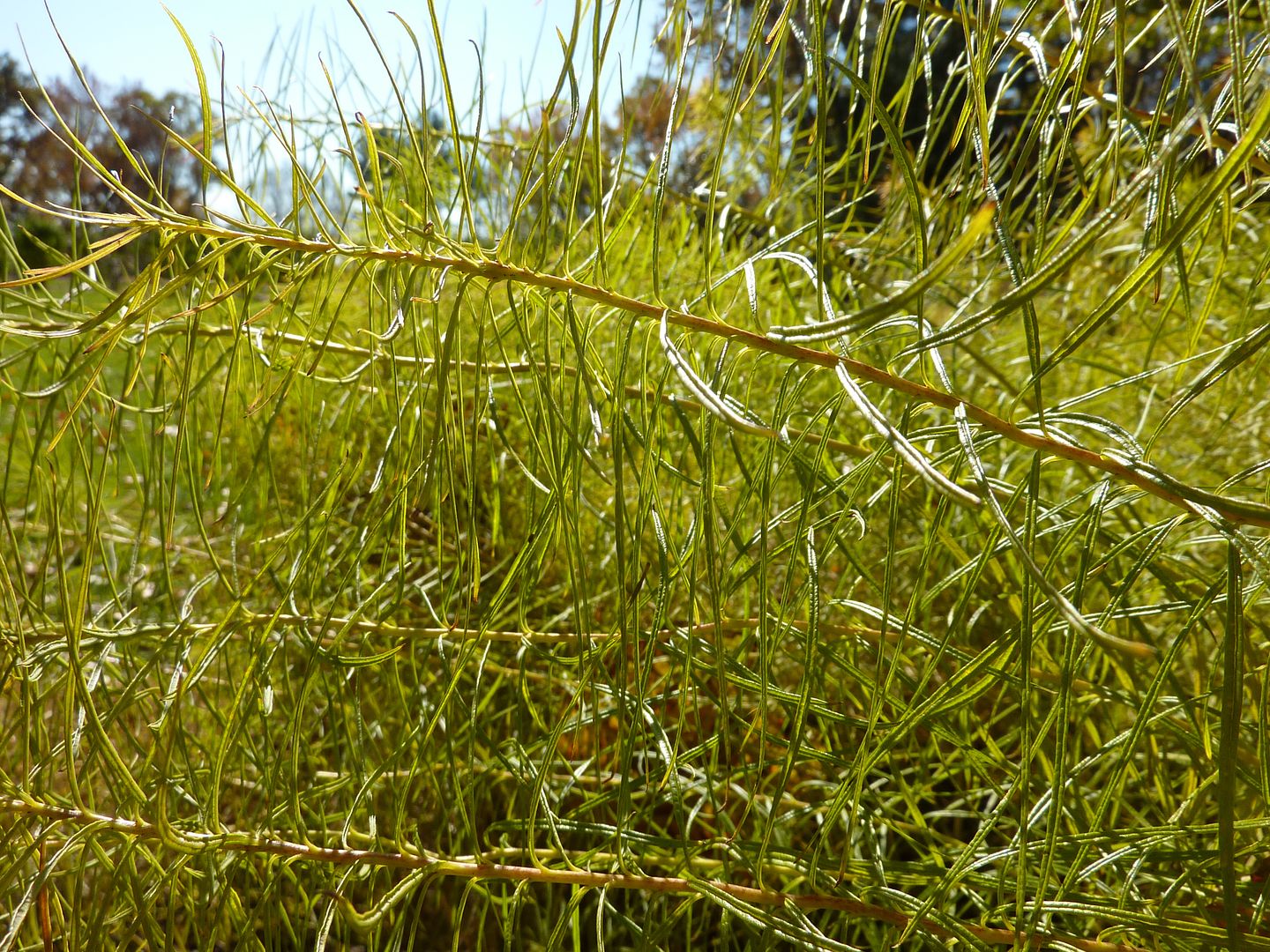
Lastly they had multiple specimens of Arkansas Blue Star, Amsonia hubrichtii, showing off their fall color.
This particular species has very thin Pine-like leaves. Common Blue Star, Amsonia tabernaemontana, has more normal looking leaves but the same fall color. I think people prefer Arkansas Blue Star more because they look puffy and cloud-like. While I don't recommend sleeping on one, maybe plant something prone to falling over right next to it.
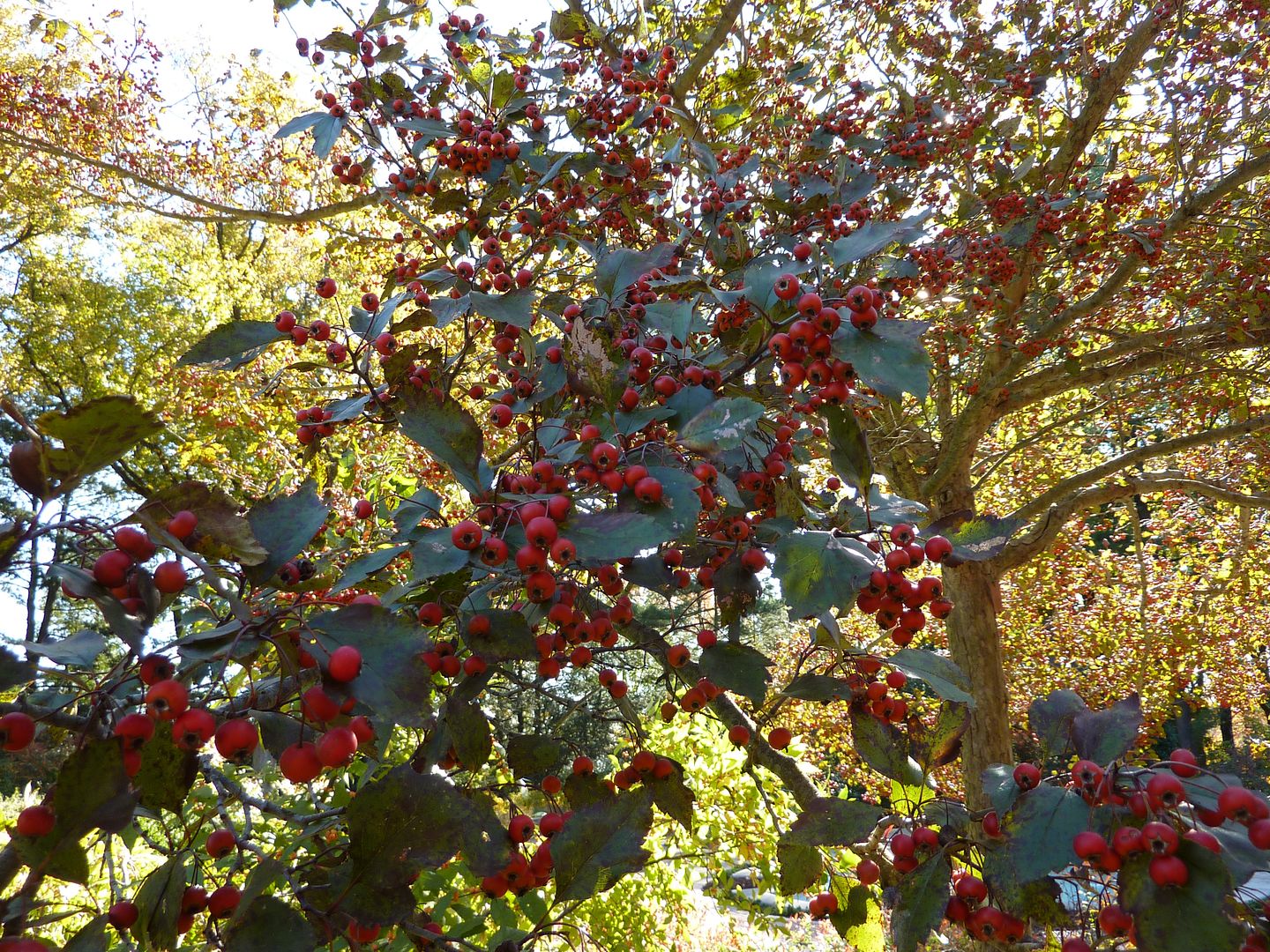
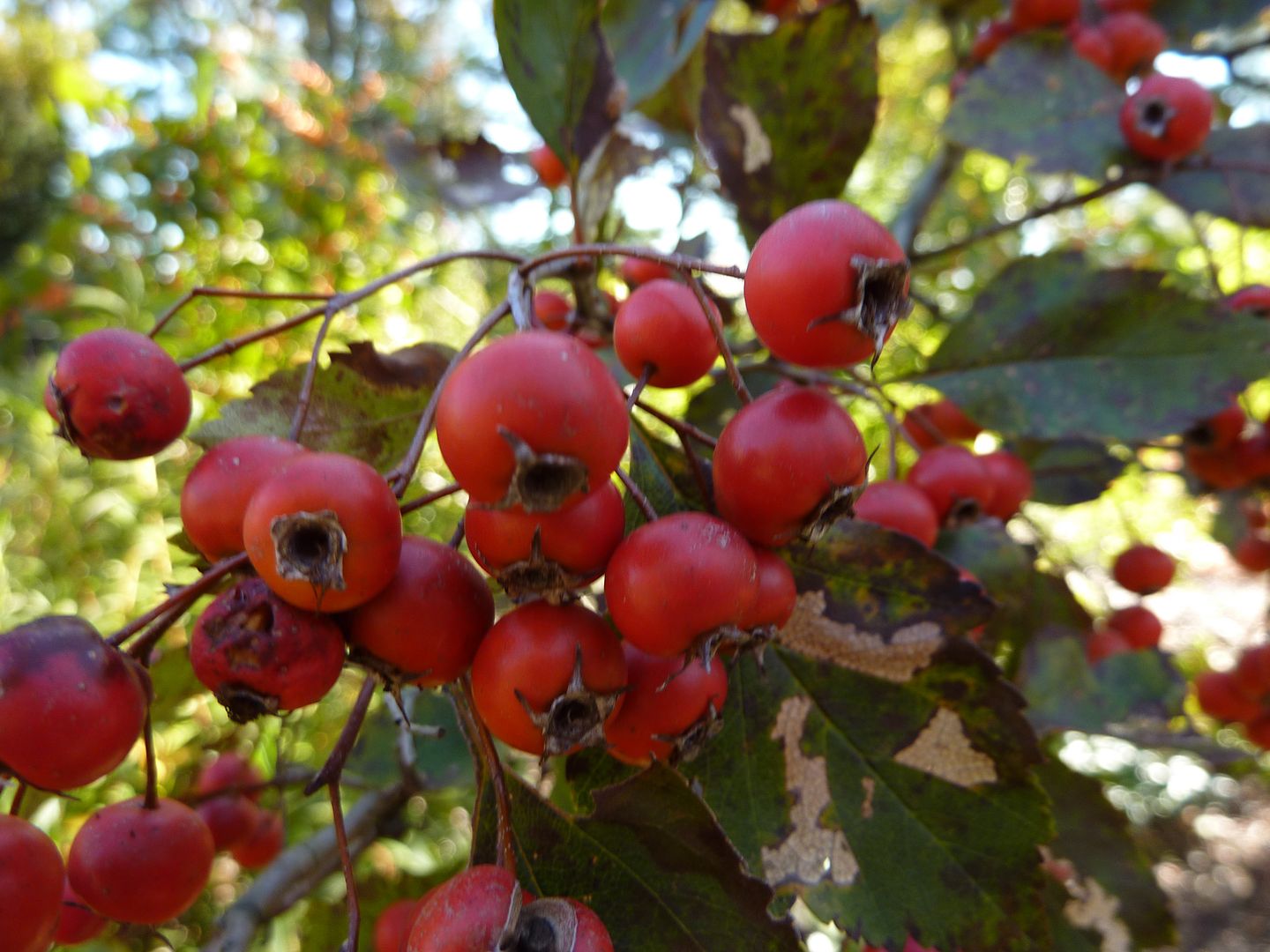
While walking back up to the house I noticed a Hawthorn Tree that probably had more berries than leaves on it. The birds will be well fed this year.
Before leaving everyone was given a plant of Tufted Hair Grass, Deschampsia cespitosa, which is a nice cold season grass that can be planted at this time of year. Warm season grasses do all of their growing over the summer and aren't very successful when planted after soil temperatures get below 60F. So I understand why they gave us a cold season species.
One Saturday well spent.
They offer Meadow Studies as a one day course 5 times a year. I went to the first two, missed the next two, so this is my third. Overall I'm happy with them but they weren't what I had expected. Emphasis is more on how they maintain it each year and what plants are showy at the particular time of year. The second half of the class is a nice tour mostly of the meadow itself but also other plants they have elsewhere on the property that might fit the theme of a meadow setting.
The autumn is easily the peak of a grassland meadow's grandeur. The fall colors are setting in, the seed heads glinting in the sun, and gusts of wind create visible waves of movement. It's not the largest prairie in the world, but it's still impressive in it's own right.
Their meadow is mostly composed of Little Bluestem, Big Bluestem, and Yellow Indian Grass. Before the tour began we were give the option to collect seeds in a paper bag. I thought this was a great idea, but if only the course were focused more on installing a meadow. This would have been a great starting point.
Hair Awn Murhly, Muhlenbergia capillaris, features fluffy pink stalks which seem to float over the plant.
Prairie Dropseed, Sporobolus heterolepis, slowly transitions into it's fall color. It ends up being a brighter yellow than most other grasses, but in the mean time it puts on an almost tie-dyed effect.
Most of the wildflowers have finished their show for the year and take a back seat to the grasses which now tower over most of them.
Rose Hips to one of our native roses are hidden in clumps of grass. Birds will likely eat them over the winter.
A few years back, the Mt. Cuba Center did a study on Asters species and cultivars to see which were garden appropriate, disease resistant, had nice form, long bloom period and such. The eastern Silver Aster, Symphyotrichum concolor, was one they tried out. I don't think it's one they recommend thought. I could be wrong but it certainly wasn't doing much for me. Generally anything flowering at this time of year is a plus but the plant is a little unimpressive.
I noticed how Liatris-like it is with all it's flowering coming out so close to the stem. The full plant was actually several stalks, just like a clump of Liatris, all coming out of the ground. It was very neat but I was mostly disappointed nothing was pollinating it.
The Georgia Aster, Symphyotrichum georgianmum, was another one blooming now, though clearly a few days past it's peak on most plants. I'm sure this is closer to being a species they'd recommend. Though I don't think it's native to Delaware it's surprisingly hardy.
Georgia Asters that were growing in full sun were absolutely loaded with bees and flower flies (seen above) which mimic bees. The one above is doing a great job.
Narrowleaf Sunflower, sometimes called Swamp Sunflower, or Helianthus angustifolius, was also flowering. They favored the narrowleaf common name because it grows fine in non swampy conditions along side several species of Joe Pye Weed, Wild Senna, Prairie Onion, and so on. The leaves have a very rough feel to them.
This is actually the cultivar 'Mellow Yellow' which has paler yellow flowers. The true species is as bright as the sun and impossible to miss from across a field.
The plant has a slightly messy look to it, but I've found that's the case with most perennial sunflowers. Lord only knows how the annual varieties keep from falling down. I guess when you only have one year to live it pays to get it right the first time.
Lastly they had multiple specimens of Arkansas Blue Star, Amsonia hubrichtii, showing off their fall color.
This particular species has very thin Pine-like leaves. Common Blue Star, Amsonia tabernaemontana, has more normal looking leaves but the same fall color. I think people prefer Arkansas Blue Star more because they look puffy and cloud-like. While I don't recommend sleeping on one, maybe plant something prone to falling over right next to it.
While walking back up to the house I noticed a Hawthorn Tree that probably had more berries than leaves on it. The birds will be well fed this year.
Before leaving everyone was given a plant of Tufted Hair Grass, Deschampsia cespitosa, which is a nice cold season grass that can be planted at this time of year. Warm season grasses do all of their growing over the summer and aren't very successful when planted after soil temperatures get below 60F. So I understand why they gave us a cold season species.
One Saturday well spent.
Labels:
Amsonia,
Aster,
Autumn,
Berries,
Color,
fall color,
Flower flies,
Grass,
Rose,
Seeds,
Sunflowers,
Trees,
Wildflowers
Subscribe to:
Posts (Atom)