Showing posts with label Giant Silk Moth. Show all posts

Thursday, October 17, 2013

The Wildlife Gardener's Meetup (Part 2)

Wildlife Gardener's Forum,

On the second location we were in a park somewhere in Maplewood, NJ. I'd describe it as a Piedmont area which is not quite mountainous but rocky enough to not be considered coastal. There were tons of large boulders and rocks all over the place. It was clear that in some places the park designers had just given up trying to remove them and simply placed pick nick tables in the middle of the most uneven and treacherous terrine imaginable. It would not surprise me in the least to learn we'd walked over the breeding tunnels to countless snakes and other critters that crawled from Pandora's box.

The forest here seemed to be in good health. I can't say we noticed any major invasive at all. I recall a few of the highways on the drive up there even had wildlife corridors built as over passes over the road. 

Ferns grew almost everywhere that had view of the water.


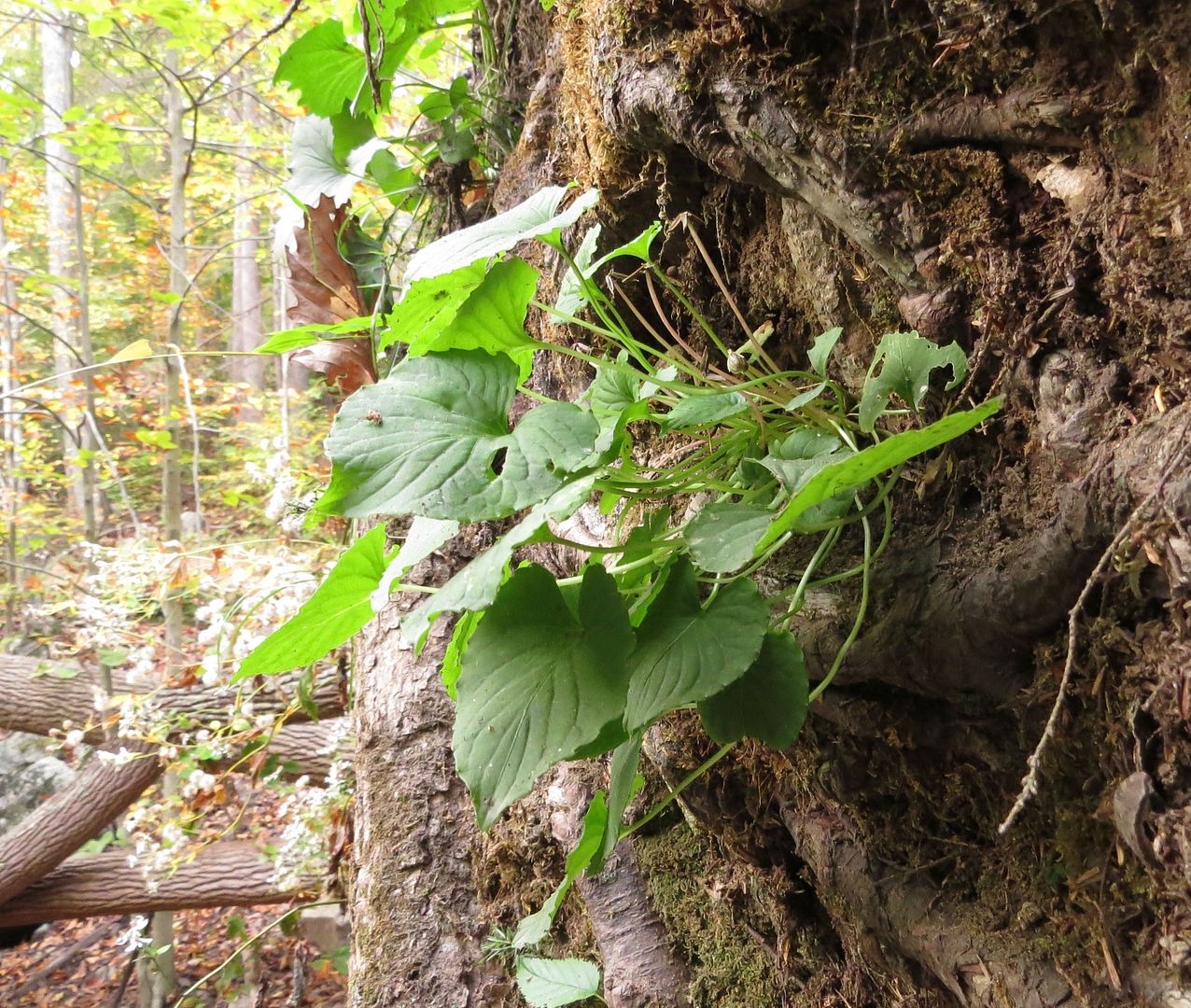
Violets were here and there too and were even sprouting up among the roots of fallen trees.

Hepatica was growing wildly there too. This is a wonderful spring ephemeral that blooms around March and April that few travelers get to see. It's often still too cold out to really venture into the wilderness. The leaves are semi-evergreen which is uncommon for an ephemeral.

There were a few Asters about too but they were all mostly small plants that each had only a few flowers. They were certainly nothing like the New England Asters I have in my garden.


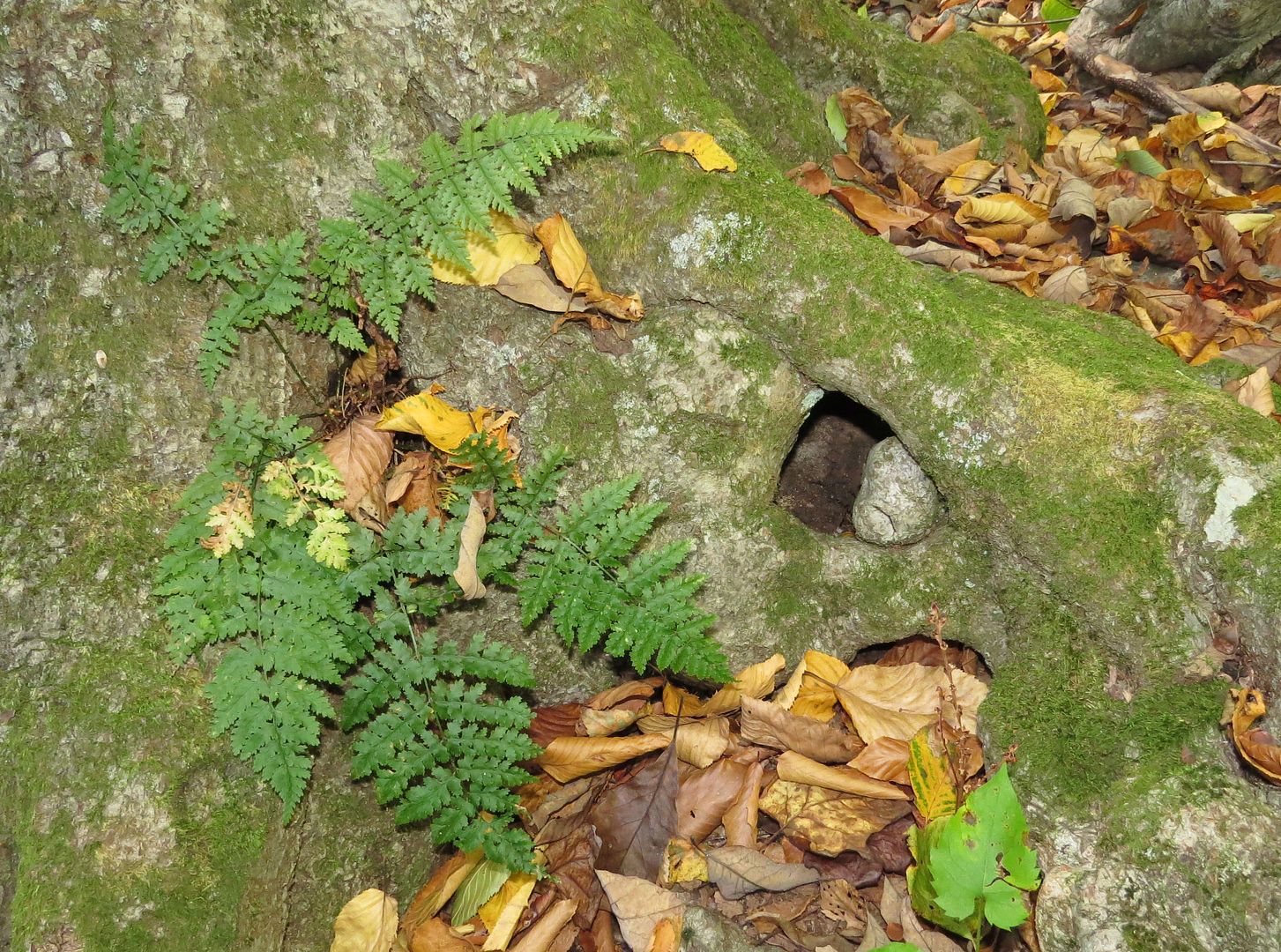
This is where the troll lives. Actually believe it or not this is a pathway. You have to scale the rocks and climb your way through this slope. Some of the trails there are not for the faint of heart and certainly not handicap assessable.

Waterfalls were the real highlight of this place. A few streams come through it and the main trails lead you right along them.

It's better to walk a trail that takes you all the way to the end of the park, one not near the river; so this way you walk up stream facing all the waterfalls, as opposed to having to turn around always to look at them.

The river never seemed to be all that deep, but it did widen up a bit here and there. I can't imagine anyone kayaking down it for very long. The picture above aside, there are too many rocks everywhere and you'd likely bust your head open going down some of the falls.


There were several benches setup, sometimes in odd places, but often highlighting a particular view or vista.

Looking forward.

Looking back.


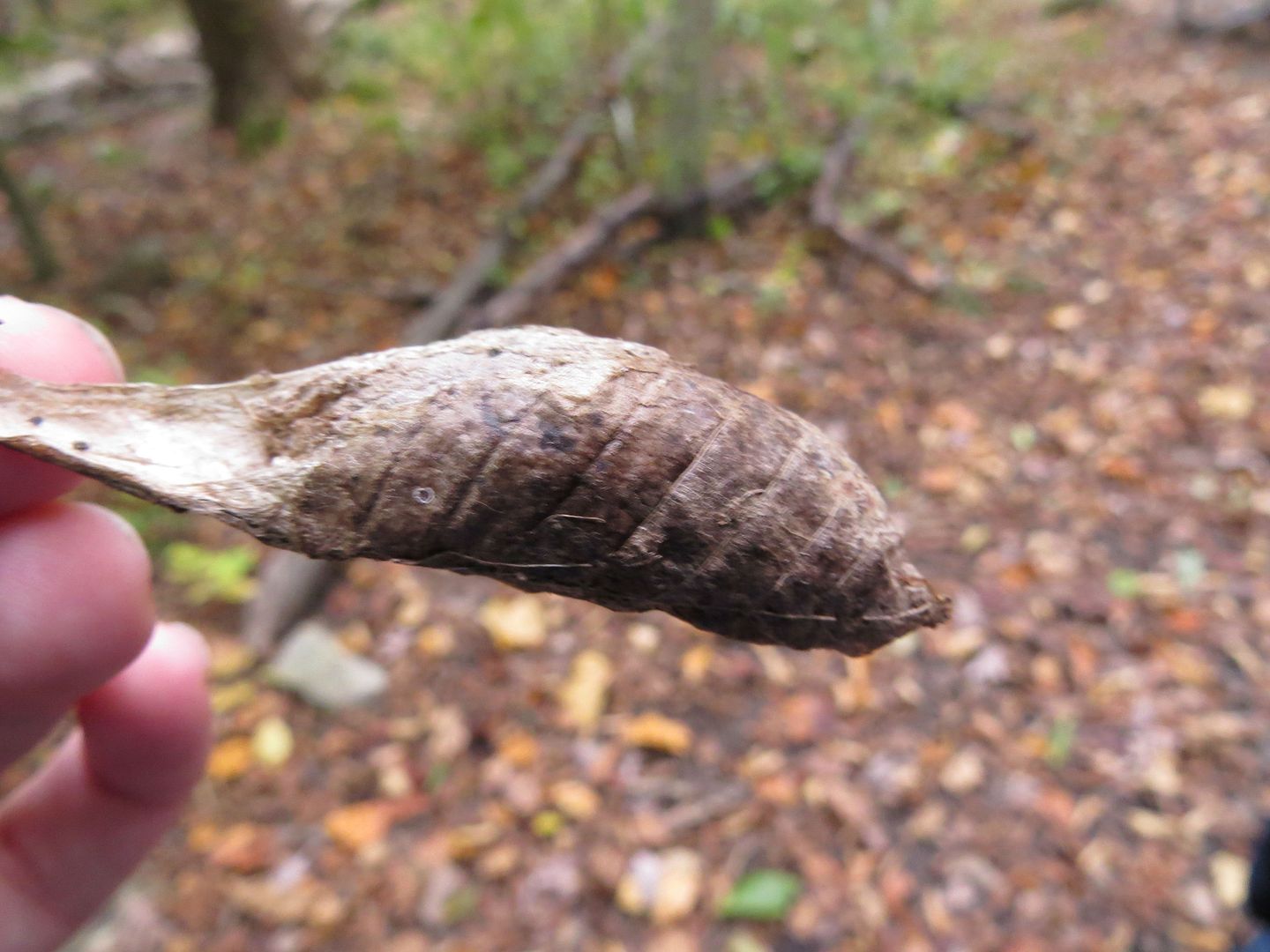
On the way out, I spotted what I think is a Cecropia moth cocoon all bundled up within a leaf.

Wednesday, April 24, 2013

A Must See Butterfly Video

This is a butterfly raising video I think everyone needs to see. This was uploaded (and presumably filmed and or edited by) Youtube user Blgreensource.

Friday, February 3, 2012

Dr. Art Evens on Cocoons

Egg Case in Winter

He talks about Polyphemus Moth cocoons and Praying Mantis Eggs. He's also on Facebook.

Without doing to much exploring of the yard this year I've already managed to find two egg cases of Praying Mantises. One year I found a hatched Polypheumus Cocoon on the ground, so I know they're out there. I know other giant silk moths certainly make cocoons such as the Cecropia silkmoth, Hyalophora cecropia.

Other species such as the Imperial Moth, Eacles imperialis, burrow in the ground before forming a chrysalis. I had a friend call me over the summer because she kept finding these "things" emerging from the ground. When they first emerge their wings are as limp as a silk swatch used to clean eye glasses, so they don't look much like a moth at all. Thankfully she sent me some pictures and I told her not to kill them. They turn into something quite pretty.

So the cocoons and eggs are out there. Time to start looking. Should you find a giant silk moth cocoon, perhaps a sheltered cage placed just outside the window or inside a shed, or unheated garage would work best. Praying mantis eggs are fairly common along forest edges and among tall grasses in sunny locations. 

Monday, July 25, 2011

Catching and Release Giant Silk Moths

After two attempts trying at catch and release with Eacles imperialis, Imperial Moth, I have no eggs to show for it. The idea with catch and release is as you can imagine. Catch and store in a dark place where they can spend the night. Sheltered outside in a birdcage or screened terrarium will work. There's no way to tell if they're mated with from looks alone but if they're mated they should start laying eggs in the darkness (leaves to a host plant are optional). If they're not mated with then there's the potential to attract a male right up to the cage and it's a simple matter of sticking him inside with her. They're quite easy to handle.

Telling the two genders apart as I recently learned from a friend isn't as you might read in books. Typically males are darker and have more brown/purple color, while females tend more towards the yellow. I'm told this is inconsistent, and it's "easier" to judge gender based on the antenna. Males have fluffier antenna, while the female is thinner, and more strand-like.

If there's no eggs in the morning, then it's best to release them later that night, or at least leave the lid off the cage while outside just before dark. The life cycle to these moths is something like 2 weeks in the adult stage. Weather pending that's not a lot of time to get stuff done.  

I'm not sure how successful this method is with other moths. Polyphemus moths are the only one I'm confident enough to say, "they will lay eggs in the dark, even in the absence of a host plant." I would assume other giant silk moths would do the same, especially because they all seem to be generalist foragers using most tree genera in the average forest as host plants. Females are commonly mated with just after they've come out of their cocoon, or crystals, during the late afternoon hours. As darkness rolls in she almost doesn't need to care where she deposits her eggs in a forest full of host plants. This makes sense in my mind at least. Other moths who have more specific host plants or lay eggs at different times of the day might not be as receptive to this method.

Upon success: young caterpillars should be divided into small groups (10 at most) in containers they can't escape from. They should be fed their host plant into adulthood, and perhaps bred in captivity before releasing into the wild again. This can be harder than it sounds, especially when a single female to one of these species can lay some 400 eggs over night. If that's to much to handle, consider sharing the wealth with others, or releasing the young caterpillars on host plants as they're born.

I had success getting a Polyphemus moth to lay eggs last year, and she deposited ~200 eggs. I released her into the yard afterward and found she'd laid eggs in our oak tree where I discovered a cocoon to at least one successful individual. The mistake I made with that generation was keeping all the caterpillars together in the same cage, and eventually moving them to a setup where they started escaping. Sadly not one of them made it past the second or third instar. They kept wondering off away from their host plant leaves, I think attempting to disperse, and the AC did them in shortly after. Once they get beyond this wondering stage I'm told they settle down and play nice.

This year I'm going to try keeping them all inside on a heating pad in small groups. Once they're old enough I have a larger setup outside on our covered deck. A friend mailed me eggs to two species and hopefully I'll be able to update you all on their progress.

Sunday, July 17, 2011

Imperial Moth

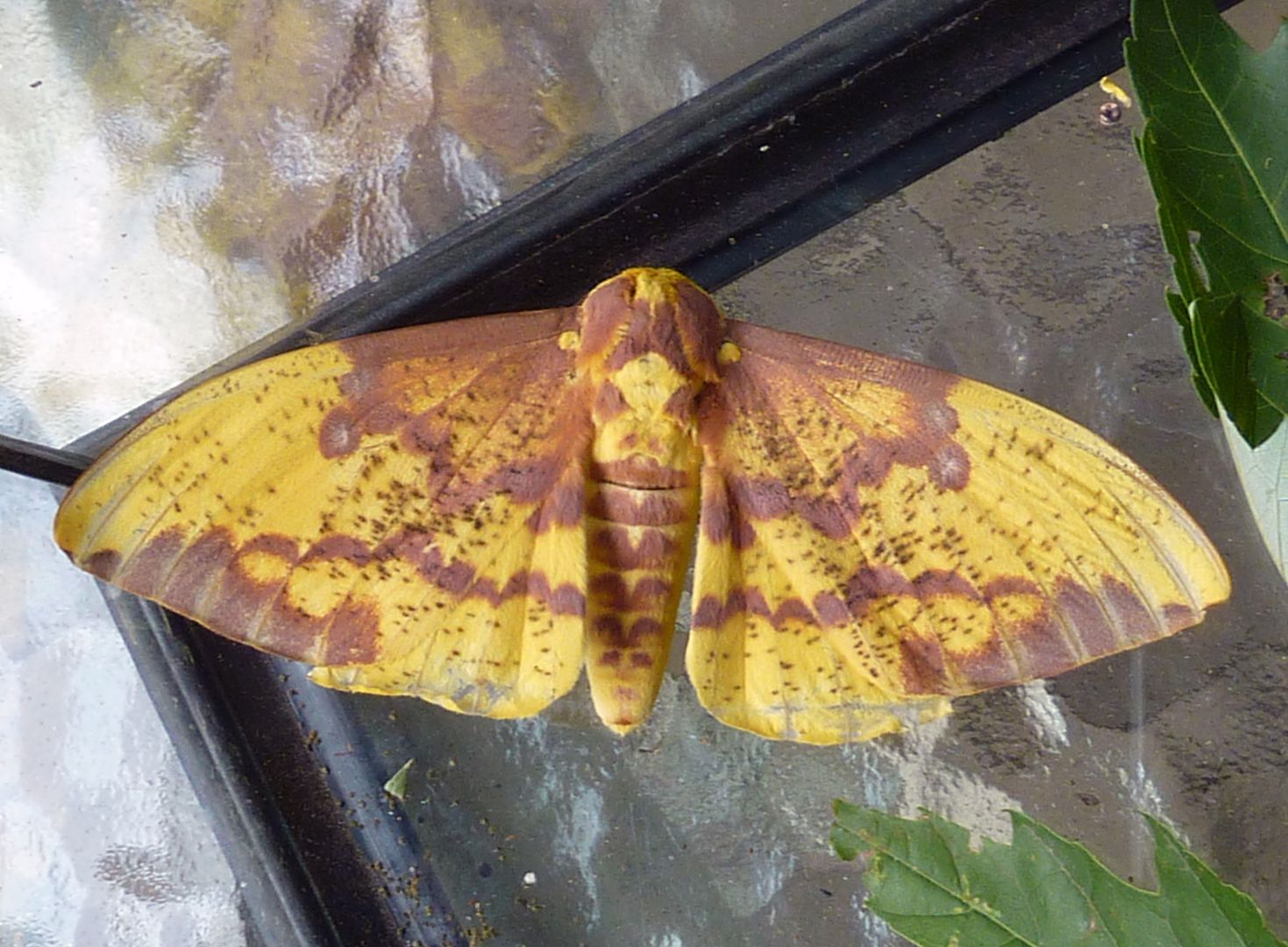
Imperial Moths are emerging, Eacles imperalis. In the northern part of North America they only have one generation, adults only live for 2 weeks, and from the earliest ones emerging to the last ones hatching out, they're only around for 3 to 4 weeks of the year. They're one of the few (the only?) giant silk moths who's caterpillar stage burrows underground to spin a cocoon. The result, (come July!) is the adult moth emerging from the burrow, a shallow one I believe and scurrying along the ground looking for something to climb. Once elevated they inflate their wings to take flights. Males are the first to emerge I believe and typically have more purple/brown in their color scheme. Pictured above is a male I believe, though they typically come darker. Females are almost completely yellow but maintain the longer stripe of purple/brown along the wings.

In the off chance this was a female (which I still might be wrong about) I decided to keep it over night in a dark place. In the morning there were no eggs so I decided to let it go. Assuming it was a female though there's a tactic you can use to get them to lay in captivity. Unmated females don't usually lay eggs, but if you put them in a bird cage they might attract a male right to the cage. You can stick him in with her, assuming love can't take place through the bars, and afterwards you can set the male go, and let her lay some eggs before releasing.

Host plants include:Pine, Basswood, Birch, Cedar, Elm, Sycamore, Walnut, Oak, Box Elder, Maple, Sweet Gum, Sassafras, and other woody species. There is a subspecies called pini which feeds only on Conifers, and has paler males than usual. Caterpillars come in a range of colors depending on what host plant they're on, see some of them Here. Remember though to complete their life cycle they'll need some sort of medium to burrow around inside. If you feel unable to accommodate them over the winter then consider releasing them into some leaf litter.

CORRECTION: I'm told by a reliable source that the wing patterns aren't accurate for determining male and female. Males tend to have bigger "fluffier" antenna while the female is more strand-like. 

Friday, August 13, 2010

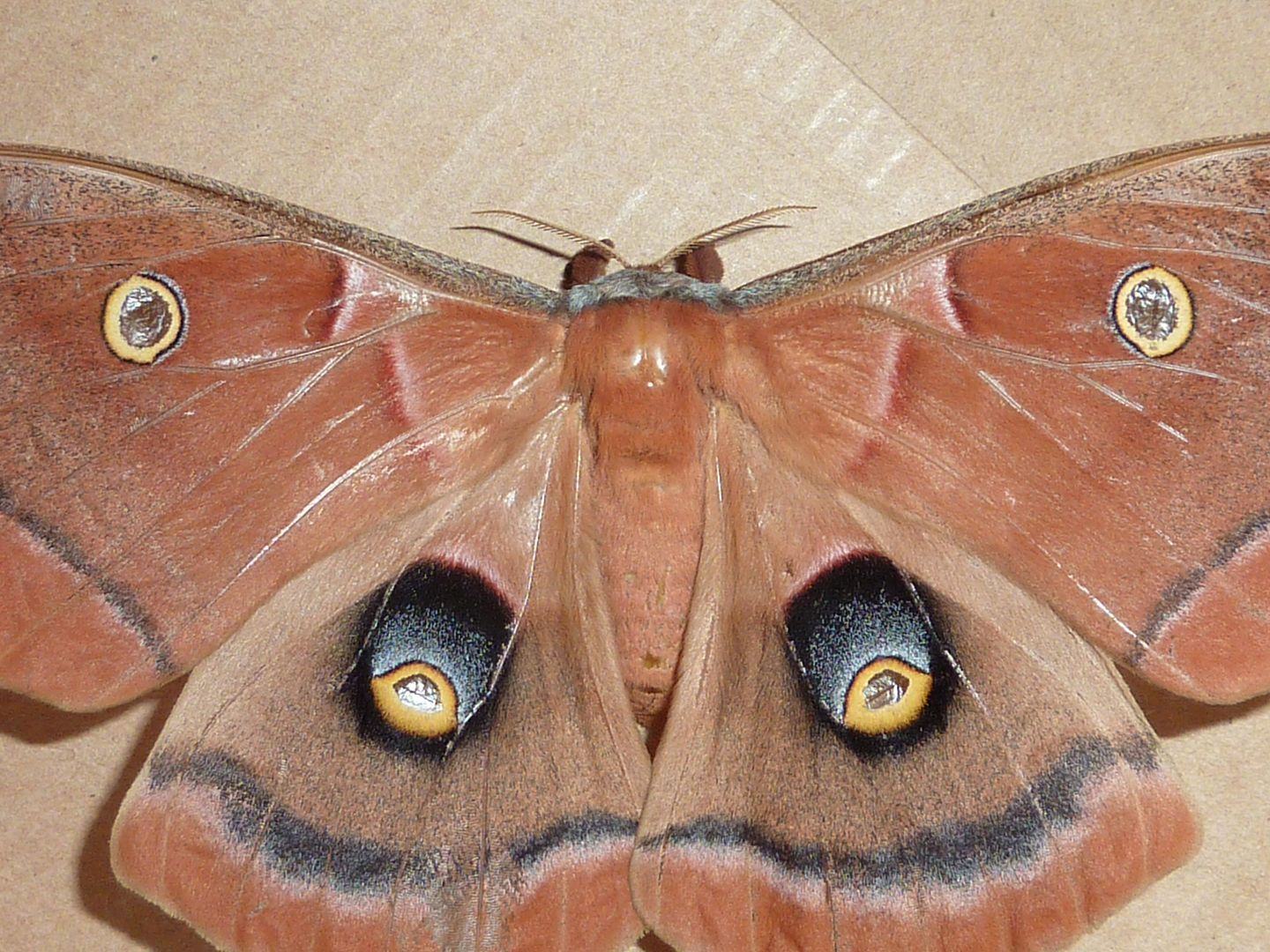
Found a Polyphemus Moth

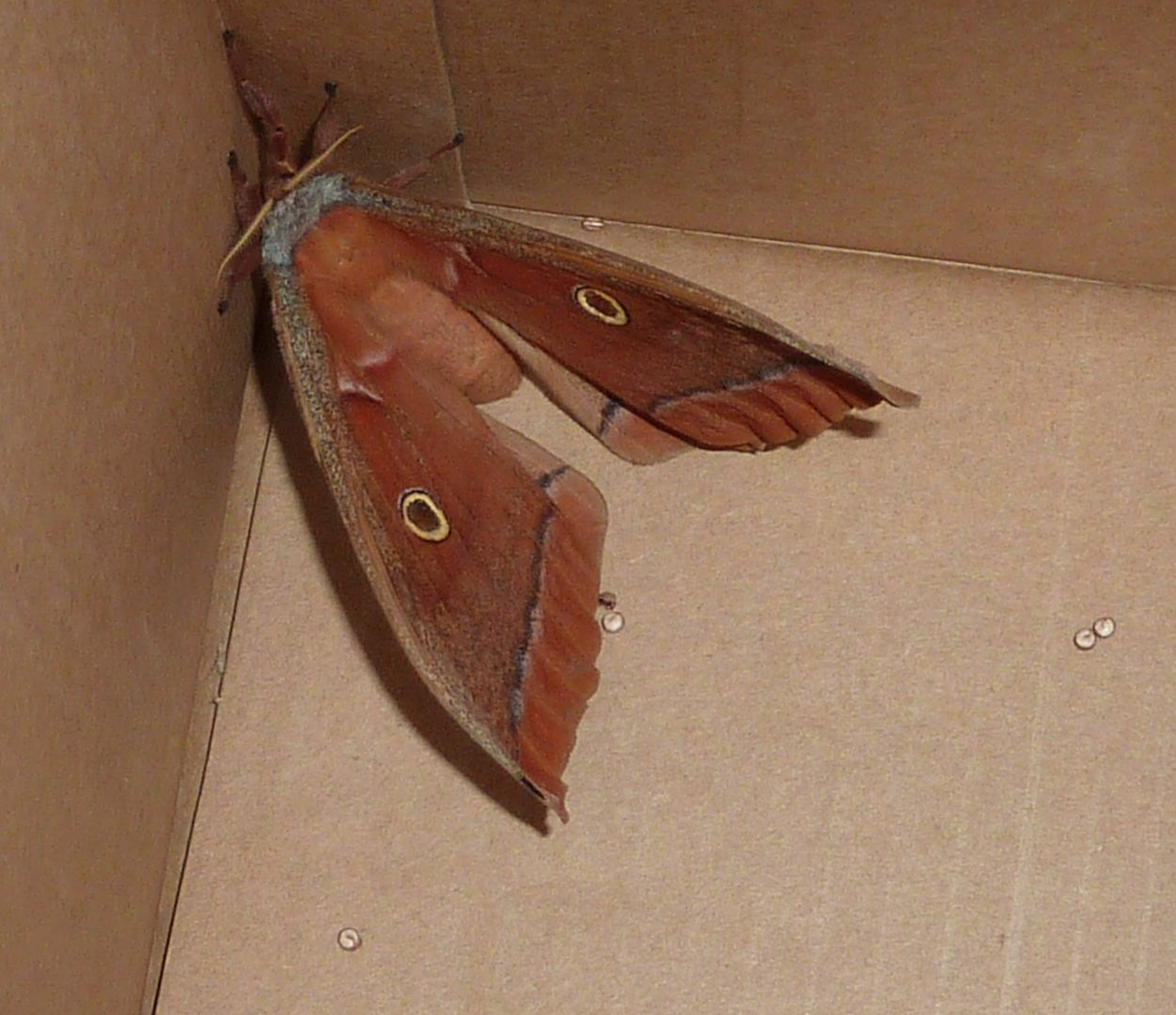
Last night while leaving work I discovered a Polyphemus Moth. Actually I discovered two but the other one was scurrying away up the wall. It was the kind of situation I feel where had I been a half hour earlier I probably would have discovered the two mating.

Acting on impulse, I once again put a giant silk moth in the car as I drove home to take pictures. The last time I did this it was with a Luna Moth and the damn thing flew up on my nose while driving! Had I been in an accident I'd have smashed the thing to my face against the air bag leaving paramedics to wonder why I was wearing a cabaret mask.

Thankfully the Polyphemus moth was more cooperative. And what's more, upon getting home I reached down between the driver's side door and driver seat. Apparently Big Moth-e wants Out-e. I discovered she had started laying eggs!

I have read that if you put them in a "paper bag" over night they'll deposit some eggs. Well apparently it's not so much the texture of the bag as the moth naturally reacting to complete darkness! So I put her in a box for the night and sure enough she laid eggs.


I'll be letting her go later tonight just as it gets dark. My yard is after all full of host plants for her though I do wish I had some Birch trees. Apple, Maple, Ash, and according to Doug Tallamy, Button Bush are all used as host plants. Now that I have a few dozen eggs to toy around with I'm thinking I'll try and rear some caterpillars if they hatch. I do have the leaves for this after all. I'm just not sure what to do about winter. hmmm.