Showing posts with label Winter Ant. Show all posts

Thursday, April 9, 2020

Winter Ant Queen on Trillium

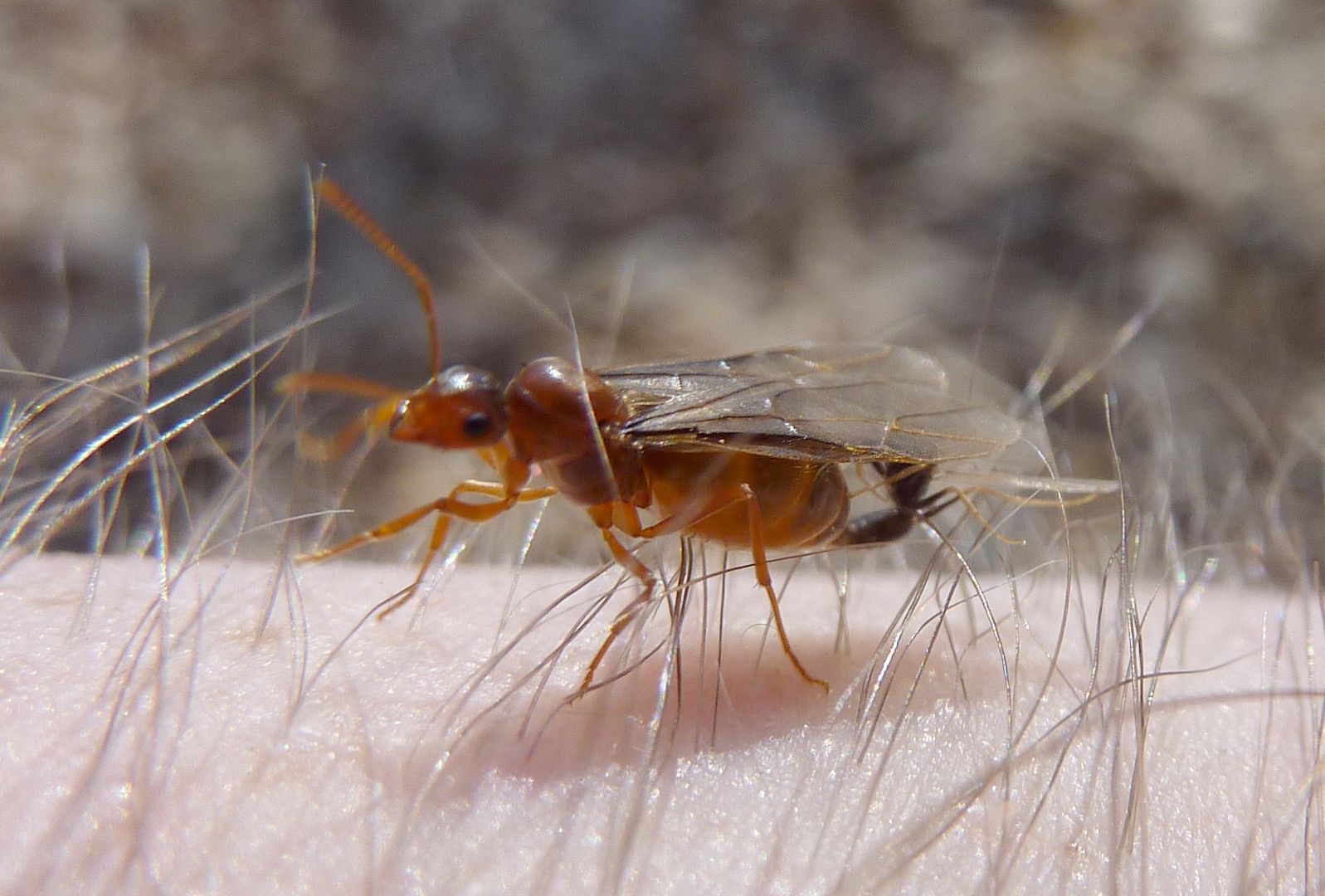
 One of my favorite ant species to photograph are Prenolepis imparis, the Winter Ant. Their queens are beautifully colored, they fly early in the year along side a lot of our earliest native wildflower and sometimes the two "blooms" line up. That's not the case here, but I'm glad to say I didn't have to stage this photo; I walked out in my garden one day and saw it happening.

This is a patch of Trilliums in the garden that mostly divided this year. It's fairly shady and just under our deck. And it was fairly cold in that spot as opposed to locations in the sun.


One of the main factors I look for when going out to spot P. imparis queens is a day with temperatures above 68 degrees Fahrenheit. That is the bare minimum temperature queens of this species need in order to leave the nest. One degree lower and they won't take off, though you may see one or two who have been warmed by the sun taking flight.

I'm at a point in my obsessive plant habit where I have Trilliums now dividing into large clumps and spreading a lot by seed. Lots of other plants too are filling in in places around the garden so chances like this are becoming more common without me having to stage them.

And because it's in my yard I don't have to venture far to find it... though this image isn't a good example of that. She's just moved onto a stick that pushed up one of the Trillium leaves.

While it's great that this happened by chance, it wasn't the best location to have happened. The low lighting meant I should have been using a different camera with a flash on it. I took about 70 photos and only the 7 here were really worth showing. They're nice photos but not the best I've taken of the species.

Here's a shot from last year for example, in a different location with better natural lighting and with the same camera.

The queen was sort of cooperating because it was too cold for her to take off. The whole time I'm taking images though I was thinking, 'Man wouldn't this be better if she was on a flower that was open.'

I did soon after took her to a Trillium sessile that was blooming (and smelled amazing!) but the added sunlight was enough to warm her and she took off shortly after this photo was taken.

Thursday, March 26, 2020

Ant Chat: 2020 Winter Ant Flight


Prenolepis imparis, The Winter Ant, was flying here last week. This was the first main flight for the species in my area. This wasn't as nice a video as it could have been partly because I'm getting over Bronchitis and with the current COVID-19 pandemic going on it's not a good thing to be sick in general. Thankfully the ants were good enough to hold a flight in my yard so I didn't need to venture off to a park to find them.

In General, you're looking for a warm day. Queens don't fly unless it's 68F or above out and days when it just hits 68 really aren't good enough. You'll find colonies sending queens up but very few of them are taking off. Days well into the 70's are much much better because as soon as the wind blows or the queens fly off they're not immediately getting chilled.

The next thing to look for are trees, or large wooden structures. The days when this species flies tend to be windy and they need to forage on aphids and scale insects that feed on trees so plants are kind of important with this species. Swarms of males will gather around the trunks of large trees and tall shrubs which is easily seen when looking up towards the sun. Their wings glitter and reflect the sun's rays. I say "wooden structures" because friends in Philadelphia, PA. once reported finding a swarm along a tall wooden fence near one of the many parks they have there in the city. So even in an urban setting you can find this ant.  

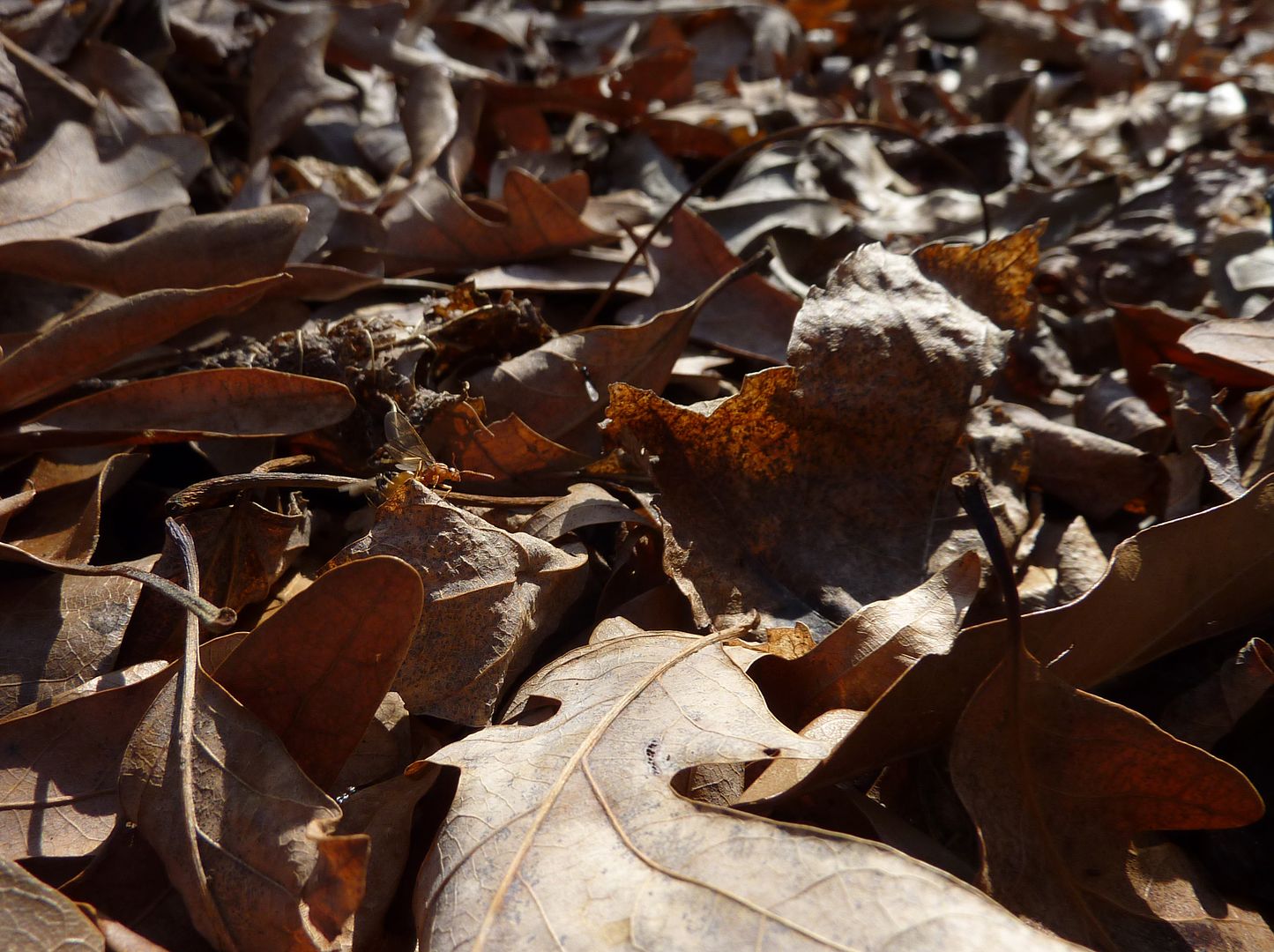
Once a swarm has been located you want to hang out a few minutes. Males greatly out number the queens of this species a good 200 to 1 or so. Often there will be several trees near one another so spend a few moment casually walking around the trunk to each and repeat. If there's leaf litter by the trees you may want to kick it away as the queens tend to blend in with it almost perfectly. 

Lastly this is somewhat anecdotal. I've long suspected that males were attracted to the color of the queens along with the pheromones. While recording video and taking pictures I noticed several males land on the monitor to my camera. Further anecdotal evidence, when I was a very young child (not even 10 years old) I had a bright yellow plastic shovel meant for moving sand at the beach. I assume I had used it outside in the winter to play with the snow. And sometime that winter I went out and found it full of male ants. I was too young to say what species it was but I'm pretty sure in guessing they were P. imparis males. It's just one of those things I've been meaning to experiment with. 

Monday, April 13, 2015

Insects Take Flight

I went to the local woods last week.

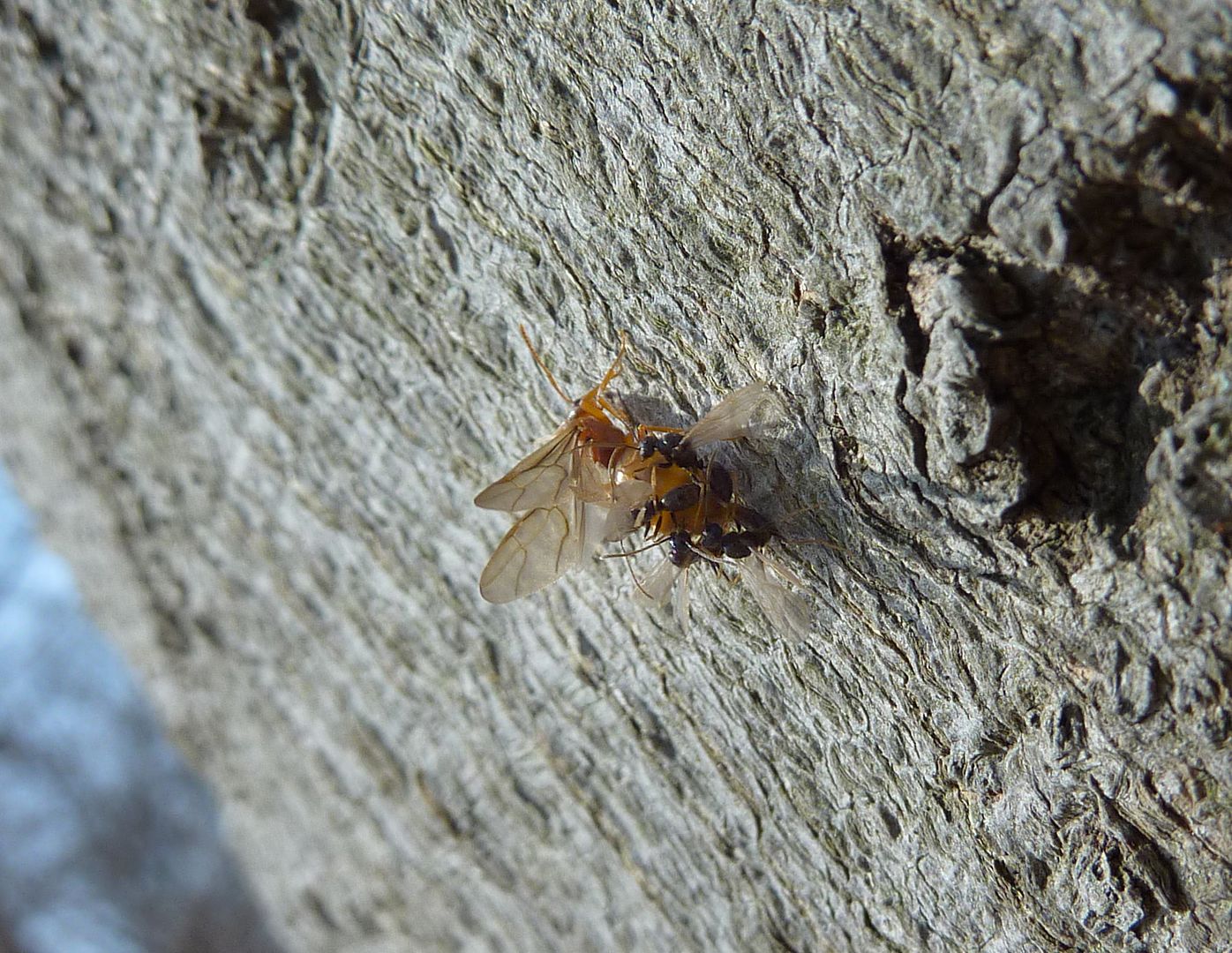
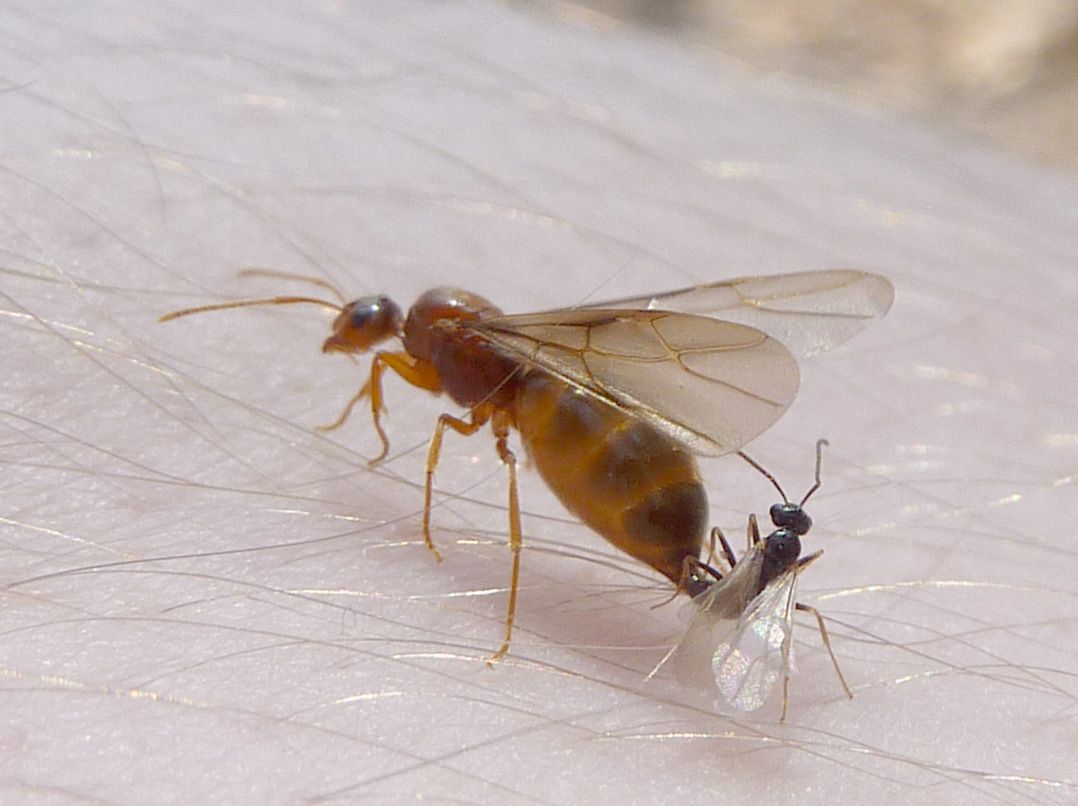
Winters Ants were flying though I didn't notice any queens. It was nothing but males (pictured here caught in a spider web). The species is Prenolepis imparis and in general they produce around 200 males for every new queen. In years past I was able to find them in abundance but not so much this year. Queens arrive and are quickly taken by a few dozen males. It's unclear if more than one gets to mate with her but they certainly try.

Workers to established colonies were also out foraging. Whole lines of these ants were streaming up and down trees, collecting the earliest bits of sap pushed out by newly forming buds.

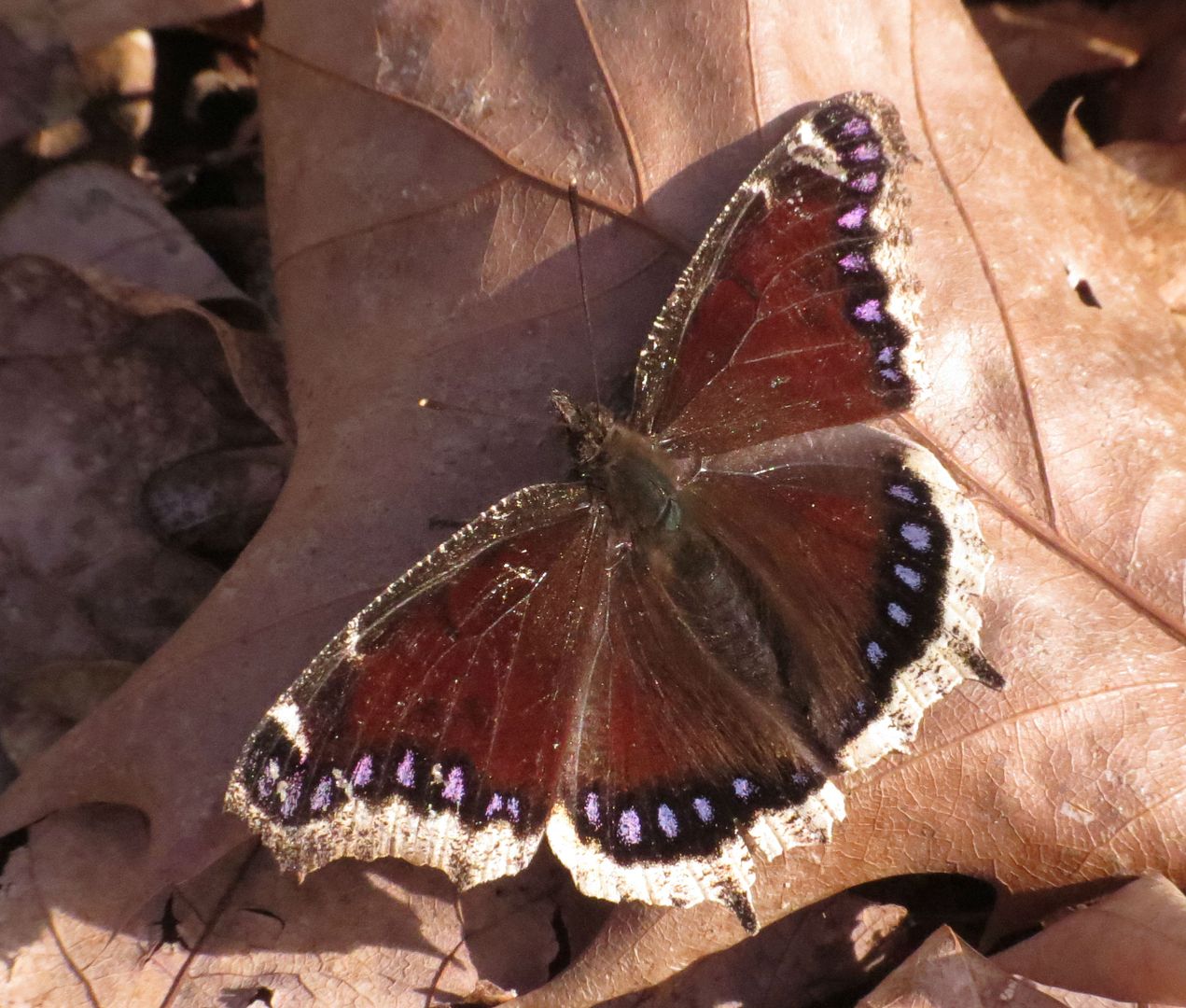
The Mourning Cloaks were also fluttering about occasionally landing to sunbath. I believe they over winter in the adult stage and mate around this time of year, just before their host plants push out the first flush of flowers and leaves. They host on Willows, Birch, Elm, Cottonwood, a few others too; generally trees you find in a mature forest.

Despite their color here, they turn almost invisible when laying among the leaves. The rich rosy copper tone seen here is more like a black when viewed from afar. The spots along the edge of the wing change from blue, to white, to pink depending on the angle they're viewed. Often the wings are closed up when resting, making them blend in with the leaves perfectly. 

This one was sun bathing and didn't seem to mind me getting up close. It did flutter away when I blocked the sun though.

Friday, March 16, 2012

Ant Chat 37: Flight of the Winter Ant


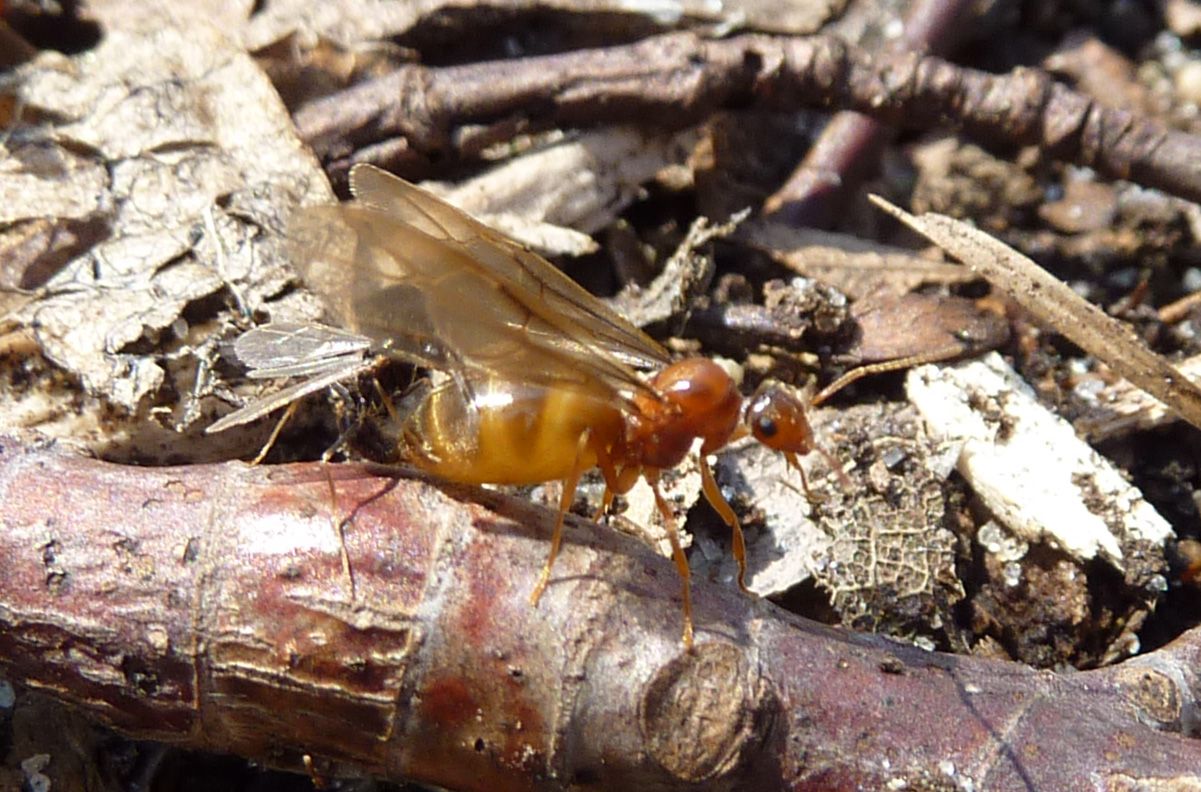
In summary, the earliest days of the year where it's 70F out are typically when this ant flies. They may be found flying as late as April but that tends to be the most northern part of their range, where as groups farther south can fly as early as February. Swarms gather around trees and shrubs, but aren't picky. The same day as this video I found males swarming around telephone poles and even specimen trees in my back yard. Forests tend to be abundant with swarming males which typically means more queens will show up. Queens are greatly out numbered and show up one at a time, every 5 minutes to a half hour.

 Males are quick to locate them as they arrive. Once the queen has, we'll call it "tagged in," she'll try to climb up high and fly away, often a male or two will still be with her. As the day progresses wingless queens can be found wondering around looking for places to make nests, though in my experience these are harder to find than queens are arriving to the swarm to mate.


Can you find the queen ant? I think the bright oranges, blonds, and browns are intended as a sort of camouflage against birds. (At the same time though I believe males are drawn to her flashy colors. I recall in my youth finding a hot yellow toy shovel that was covered in male ants and I couldn't explain why. I didn't care about ants then as much as I do now. )

Colonies are easy to start in test tubes, however this is one of the more boring species to keep. Queens only lay eggs at one time of the year and if the batch fails that's it for the year. Even so they're a fun ant to come across and learn about.

Tuesday, July 5, 2011

Combining Winter Ant Colonies

This is an experiment that I did with my colonies of Prenolpis imparis I was able to rear this year. (See here, but be warned there's some suggestive language towards the end.) In North America there are 10 accepted varieties of this one species, and it's hard to believe some of them don't deserve species status. I'm not here to set the record straight though so that's just something to bare in mind should you try this with your own colonies of Prenolepis imparis.

In years past, locally, I have noticed Prenolepis imparis queens come in at least 2 sizes, and workers have at least 3 or 4 color patterns. I have tried this in years past with a slightly larger variety (the true species?) and it did not end well at all. On contact workers started fighting and killing one another, they stole the brood and out right murdered the queen to the weaker colony.

This is a bad reaction in captivity because it lowers the number of queens and colonies. Out in the wild though it's successful because it allows one colony to take over a nice patch of land where they don't need to fear much competition from their own species unless a larger colony already has claim to the territory.

Abstract
Nuptial flights usually result in queens scattering areas looking for potential nesting sites. Occasionally ideal sites are limited and more than one queen may start a nest there. When workers emerge these become delicate situations. Populations are low and every worker is important to a young colony. How species handle this situation is key to the colonies' survival. Here I decided to recreate what happens with this species, at least one variety, in captivity.

Experiment
Of 5 queens caught in March, only 4 successfully reared workers. (The last one died) Given how young the colonies are it is hard to say which variety I have, but given the options I'd say the closest variety they fit in with is the rare Prenolepis imparis var. minuta which is colored the same as the true species but overall smaller by about 2mm. I did not take this into consideration at the time of this experiment, if I had, I would have done this in two groups. Life is full of regrets.

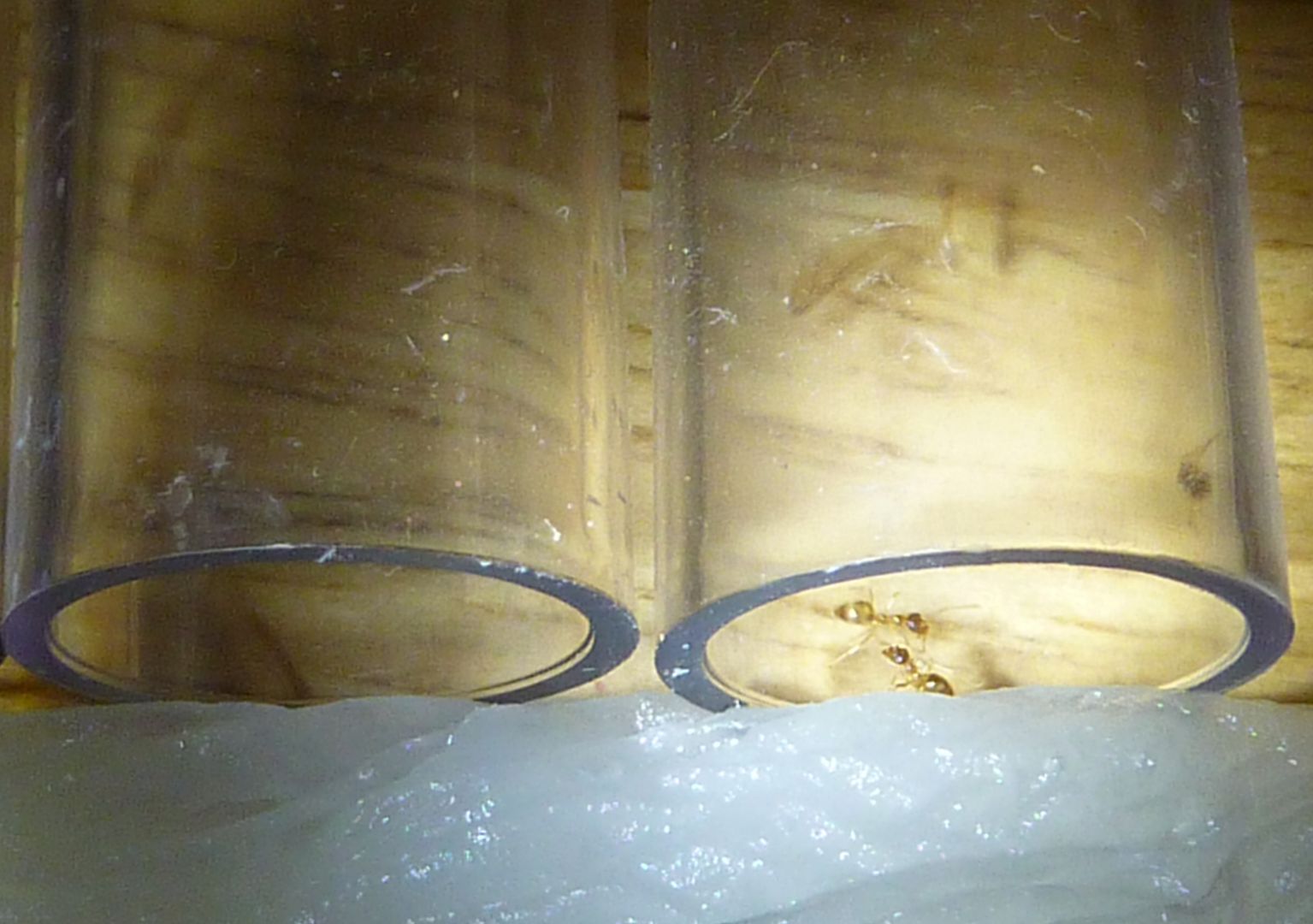
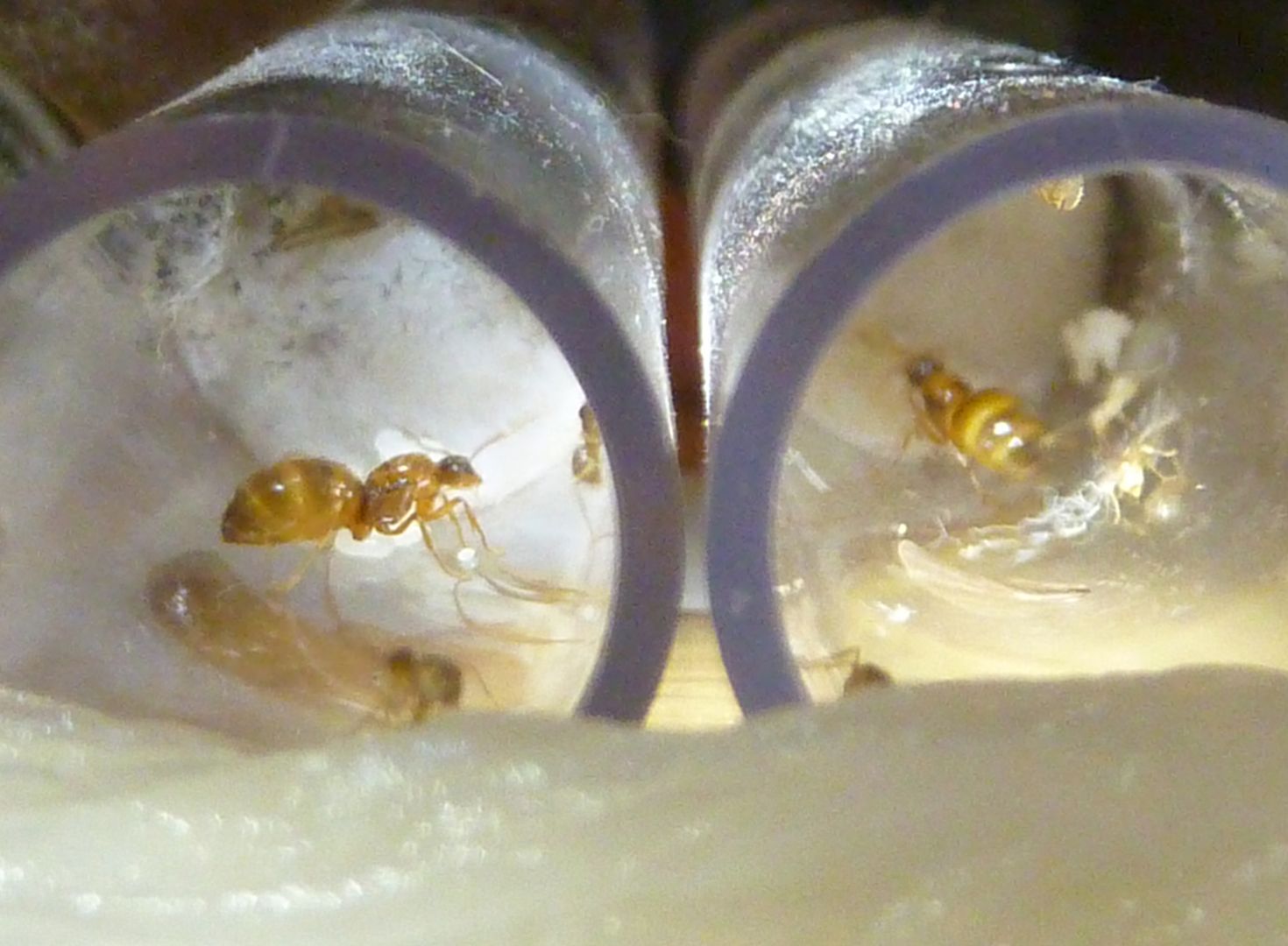
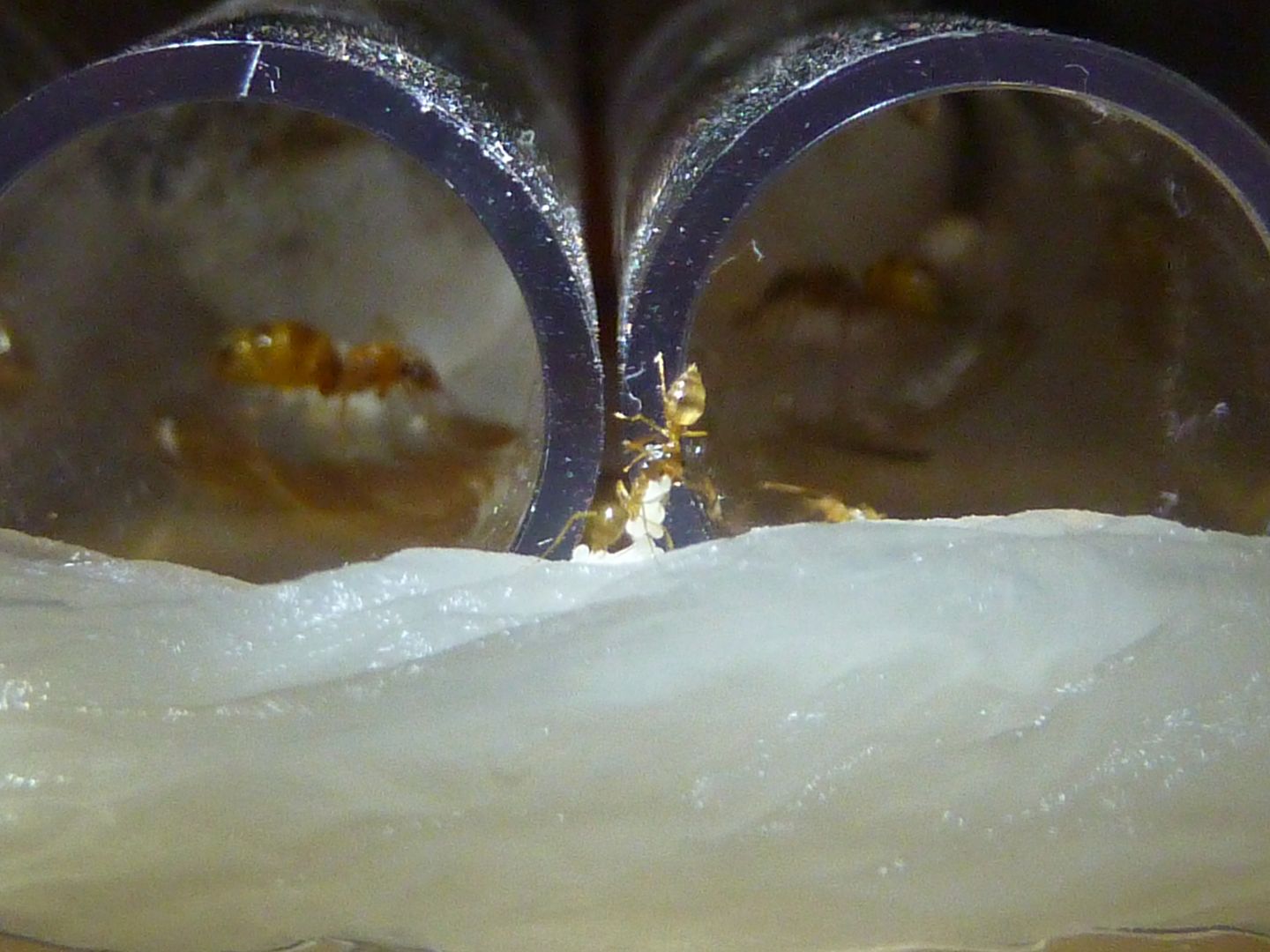
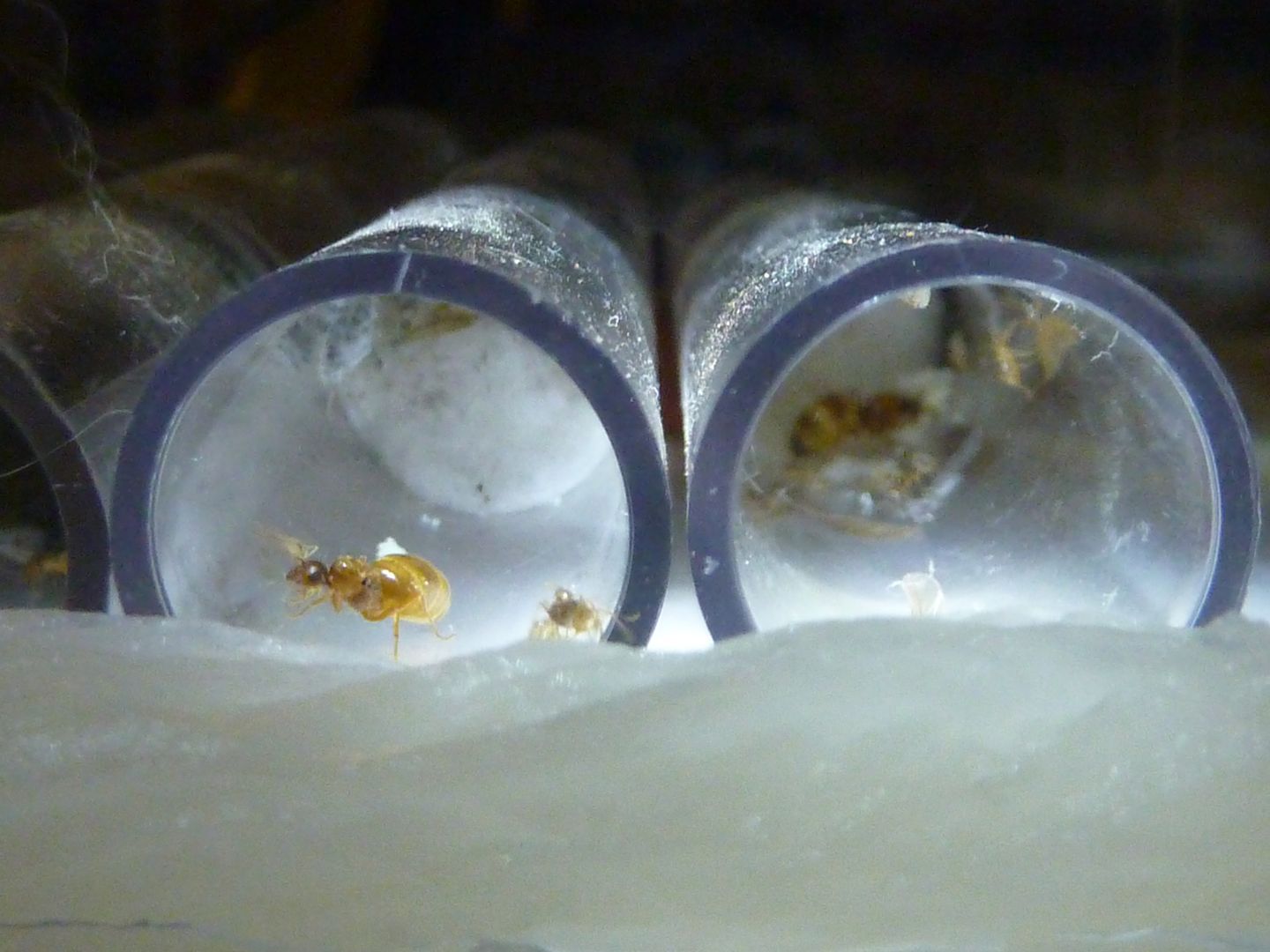
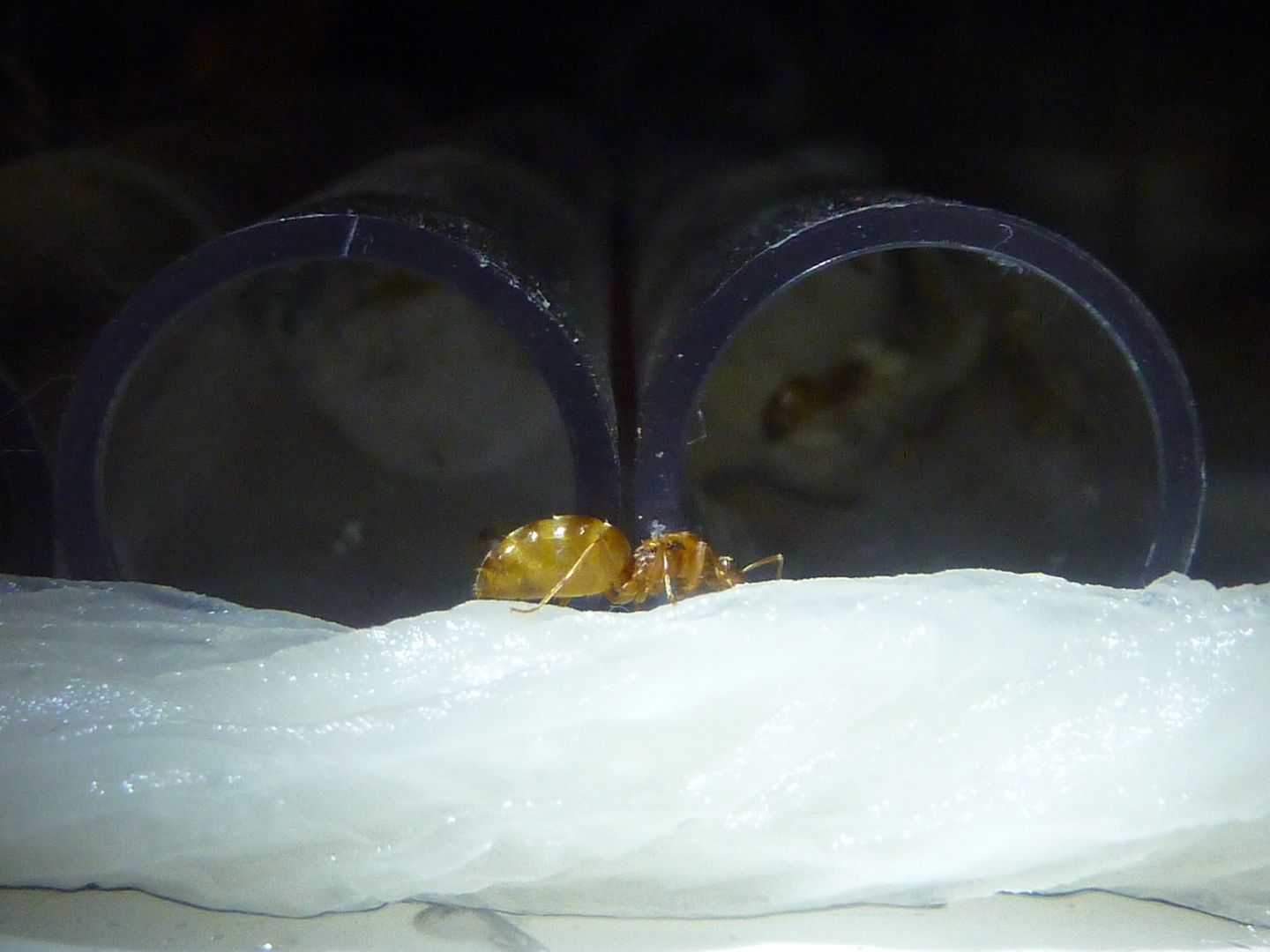
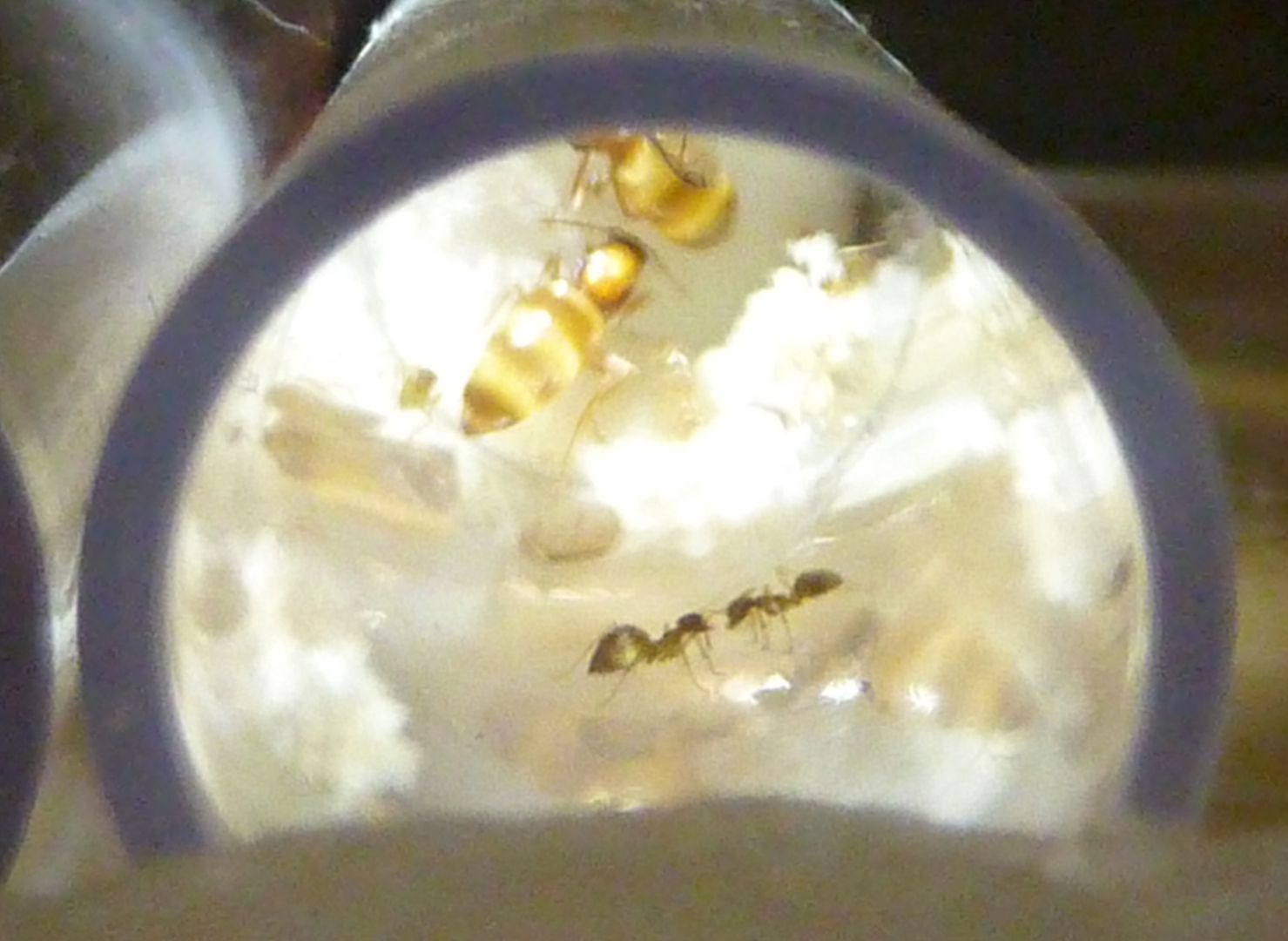
Anyhow, considering I did this last year with poor results I decided that feeding them might help the colonies merge. Pictured above are 2 of 4 colonies (all four were laid out next to each other inside a container,) where the open ends touch a rolled up tissue sliver soaked in 1:1 sugar water. Workers quickly found the sugar water and began bringing it back to the nest. Exploring soon followed with interesting results.


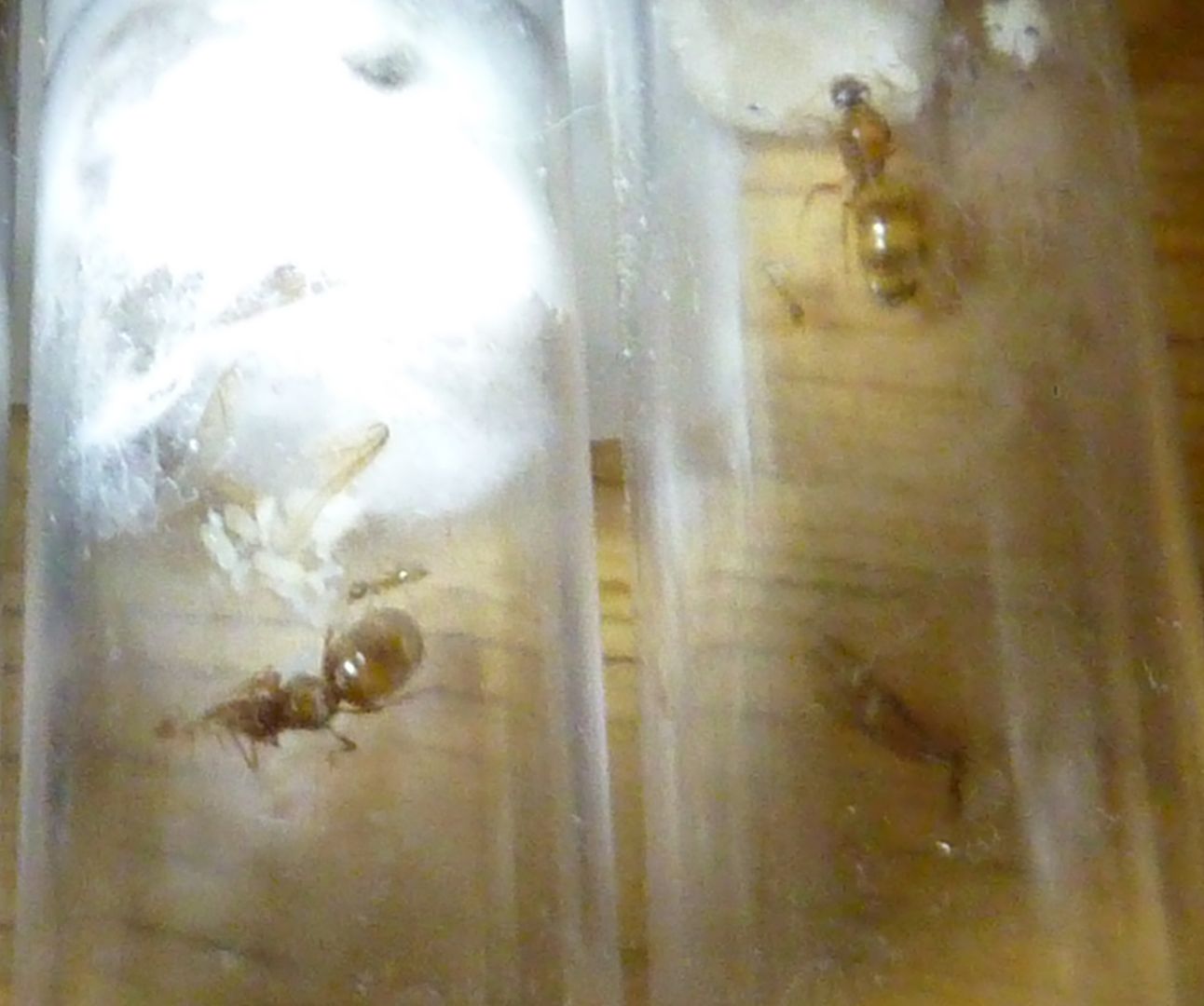
It's hard to tell here but both workers are from different colonies. I didn't get good pictures of it but generally one worker would assume an aggressive stance, mandibles open and gaster turned ready to fire off some chemical. Rather than return the aggression, the threatened worker started feeding the other. The aggressor would lower their guard. The two workers eventually went their separate ways.

Here on the lower left a worker from the colony on the right has located the other's queen. The worker preformed the aggressive stance like before only to have the queen start feeding it to lower it's guard. After this is done the worker continues to wonder around freely in the other colony, eventually wondering back home.

This is either a series of muggings or from the other view, some kind of weaponized liposuction. I don't know how else to describe it. As with Honey Bees that swarm many of the individuals are to fat with honey to sting. Could the same be true for Prenolepis imparis repletes? Could making the other ant to fat to attack be the key to peace? 

Workers between both colonies slowly become more and more indistinguishable as they roam freely between each colony. Mugging for food eventually stops all together. Of the two colonies that started doing this first, the one pictured on the right had more adult workers (those that had gained their full color).

Eventually the dominant colony, or at least the one with more adult workers, started transporting brood from the other colony to their own.

The queen to the colony on the left was curious where all her workers had gone and started roaming about. Upon finding brood scattered in her tube this left her wandering in confusion for a bit.

Eventually she got the idea and followed the thin trail of workers moving all her eggs into the other tube.

The two queens met one another without incident. The brood pile doubled in size thanks to the two colonies combining.

Over night this process was repeated with the other colonies in this setup and the result was one colony with four queens.

If I could do this experiment again I would repeat the same as above with 2 colonies. But with the other 2 I would try not feeding them at all. I'm curious to know weather or not exchanging food is important for a peaceful colony merging. What's more I'm curious to know if this is important with other P. imparis varieties as well other species. When the colonies are starving is it possible for two colonies to still find piece and not look at one another as food items?

Thursday, October 1, 2009

The Winter Ant

As Winter sets in plant life slowly dies back and focuses it's energy into growing roots rather then green growth. (I'm not sure what evergreens do but it can't be much.) As this food source dries up all the herbaceous insects go dormant. Butterflies and caterpillars all die back. Aphids lay eggs that over winter while the entire adult generation dies off. Protein foods don't store well over the winter so Ants are forced to focus more on carbohydrates.


The Winter Ant, Prenolepis imparis, has the advantage when it comes to foraging in the Fall, Winter and Spring. Any day where it's above freezing out these ants are able to forage carefree. They can do this because every enzyme in their body is built to work in cold temperatures.


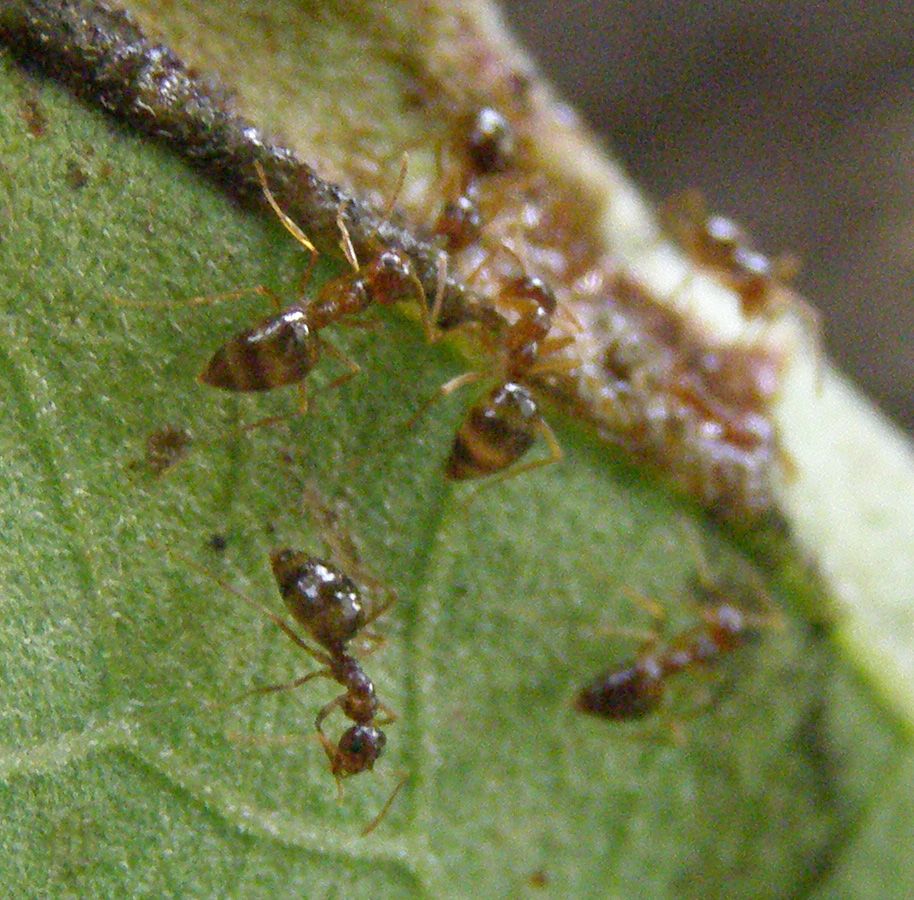
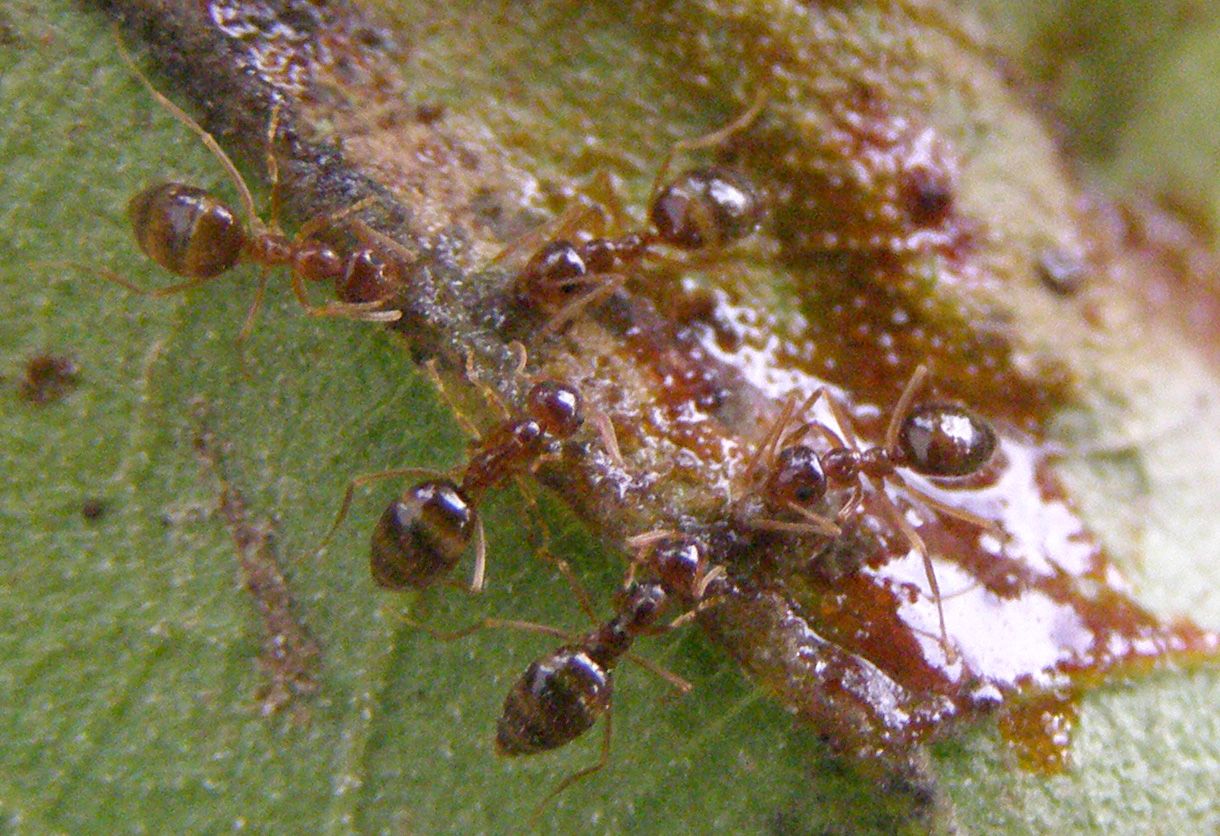
The food source at this time is usually tree sap. In this case damaged sunflowers. Colonies don't get horrible huge, maybe 12,000 ants. But their colonies can be abundant. Their ability to forage during the warmer parts of winter puts them on a whole different level. They go dormant over the summer when there's more competition for food. But during the winter they're likely the only species foraging.


The Pest Control industry has deemed them The Small Honey Ant or False Honey Ant. Treating colonies is easily done. But frankly why would you want to? They're not an indoor pest as far as I know. I have colonies all over my yard and have never seen so much as a worker wonder inside (that wasn't from a colony I had in captivity,) and they're don't do property damage. They can make a mound but it's not above the grass line. I could understand if your lawn was nothing but moss or a putting green but you really have to hate ants.

Look for their brightly colored queens on the first warm day or two of March and April in the late afternoon. (I've seen flights as early as February 11th but March is more common.)