Around this time each year I start to form a plant list. I don't bother with a whole lot of seeds except for annuals like Sunflowers and filler annuals I like more for sentimental reasons and color. The focus is more on plugs and bare roots, often things that will flower in late summer and autumn.
Phlox 'jeana'
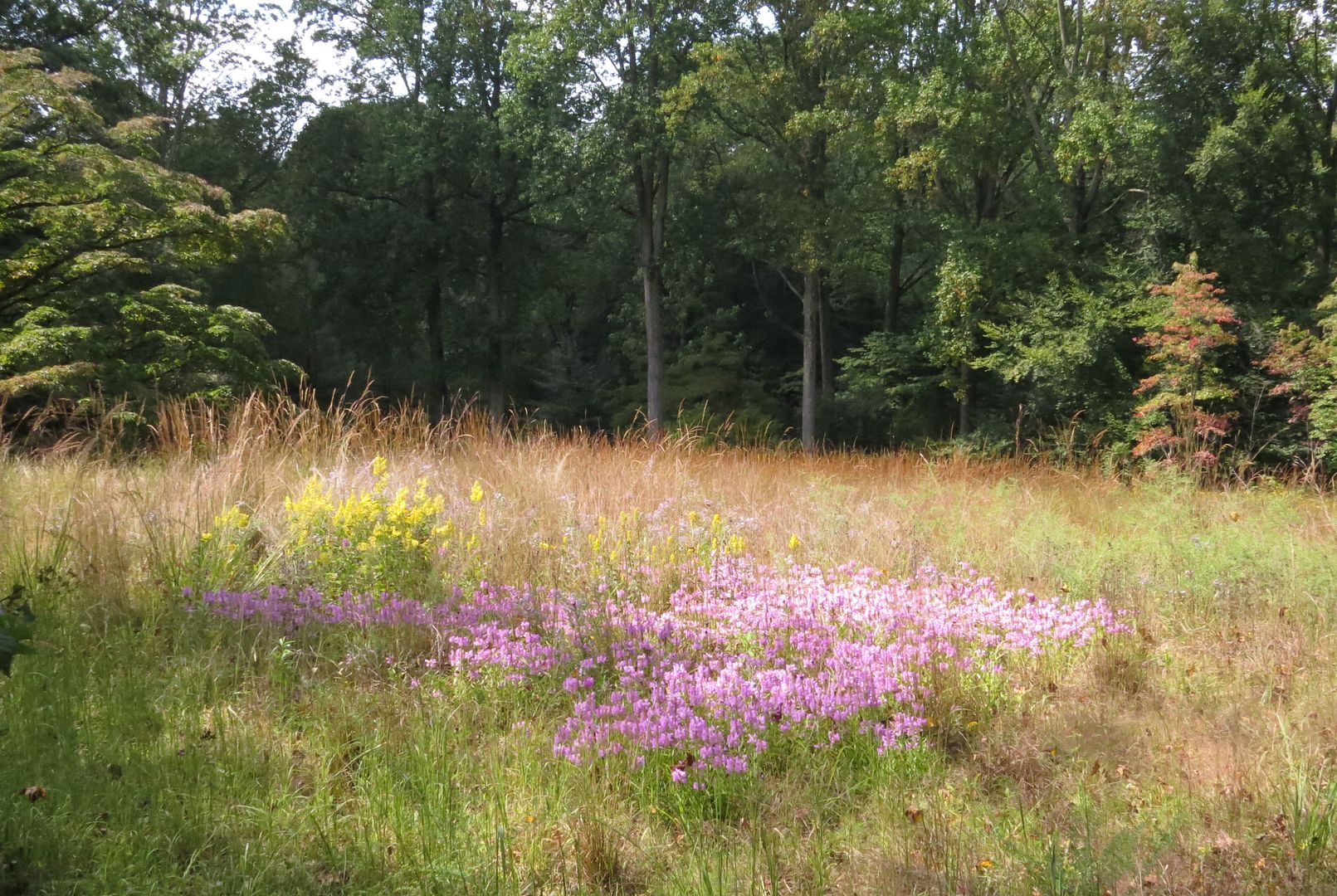
I don't have actual photos of this cultivar, but I was at the Mt. Cuba Center in the fall where they're currently doing a trial run of basically all the true species and cultivars on the market today. They said of all of the verities available this one had twice as many butterflies on it compared to all the rest. They noted the flowers were smaller than most other Phlox which likely makes it easier for the butterflies to work, but other factors like nectar quality and fragrance probably also play a roll. A failing might be that it's otherwise fairly average besides. Flowering wise I'm told other verities did better at offering blooms later int he year so it's still good to diversify. I'm looking forward to their complete trial when it's released in the next year or two.
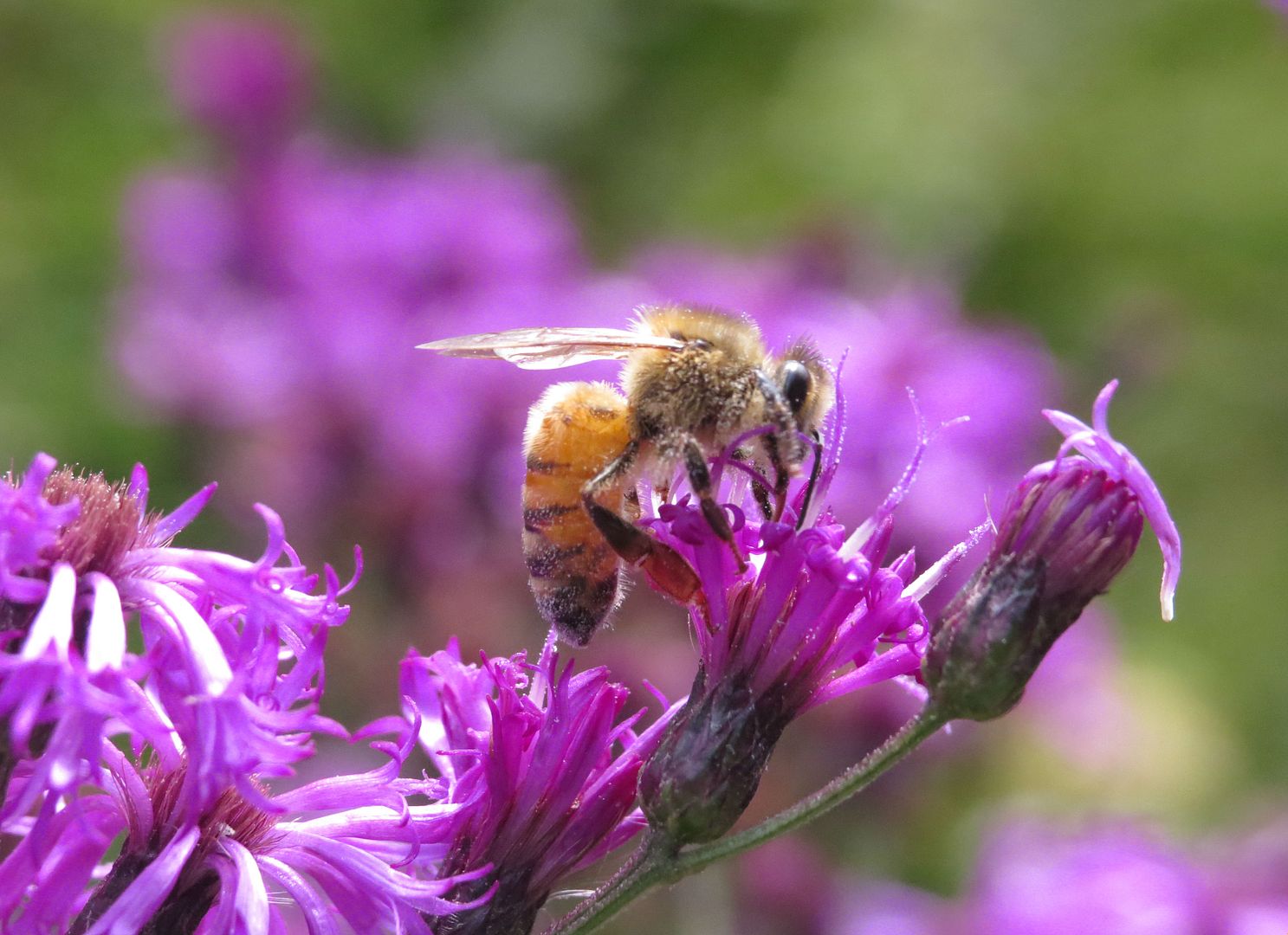
Ironweed, Vernonia angustifolia 'Plum Peachy'
This perennial turns into a bush of purple flowers in late summer.
I tried planting it in the autumn once but it failed to survive the winter. I think if I plant it in the spring it will have a better chance of establishing.
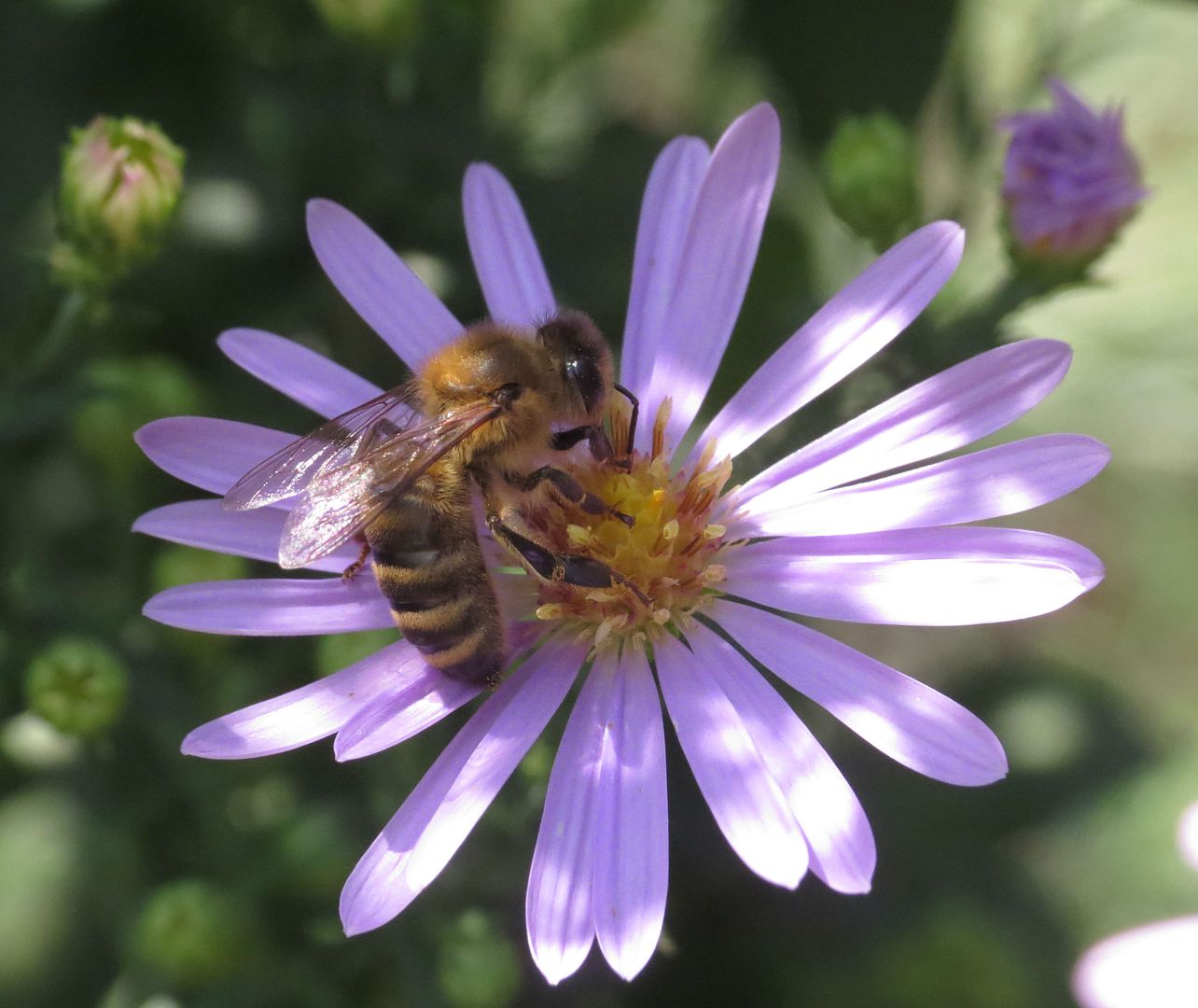
Aster leavis, 'Bluebird' (actually this is Symphyotrichum leavis but no one seems to care.)
My picture really doesn't do this plant any justice. I have a few planted and love them all, sadly they're not in the most photogenic of places. The one I have nest to a tree with a bird feeder next to it so the squirrels are always snapping the stems off the thing. Even with several dozen stems snapped though it still manages to impress me with tall pyramids of flowers. The perfect compliment to Showy Goldenrod.
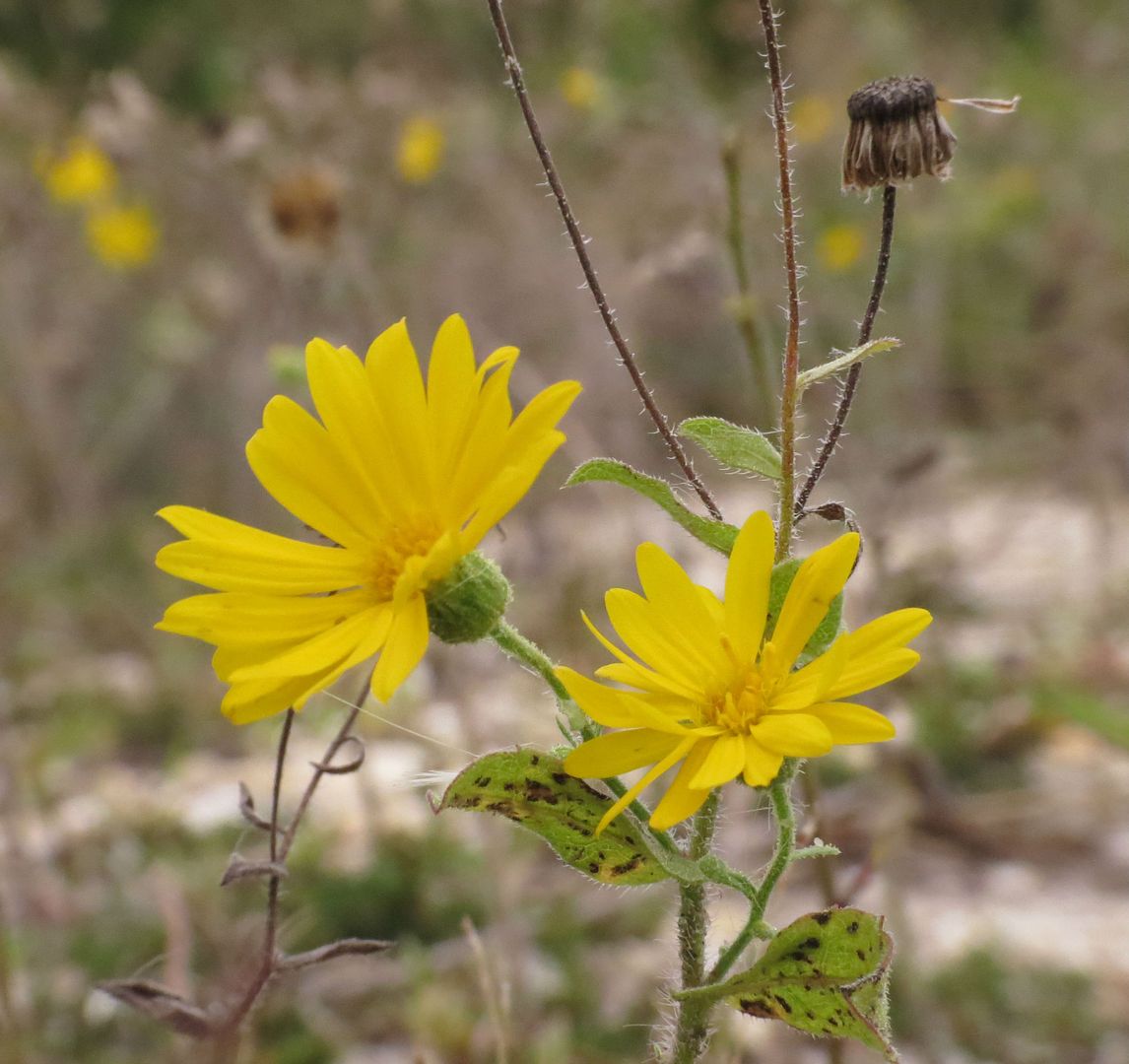
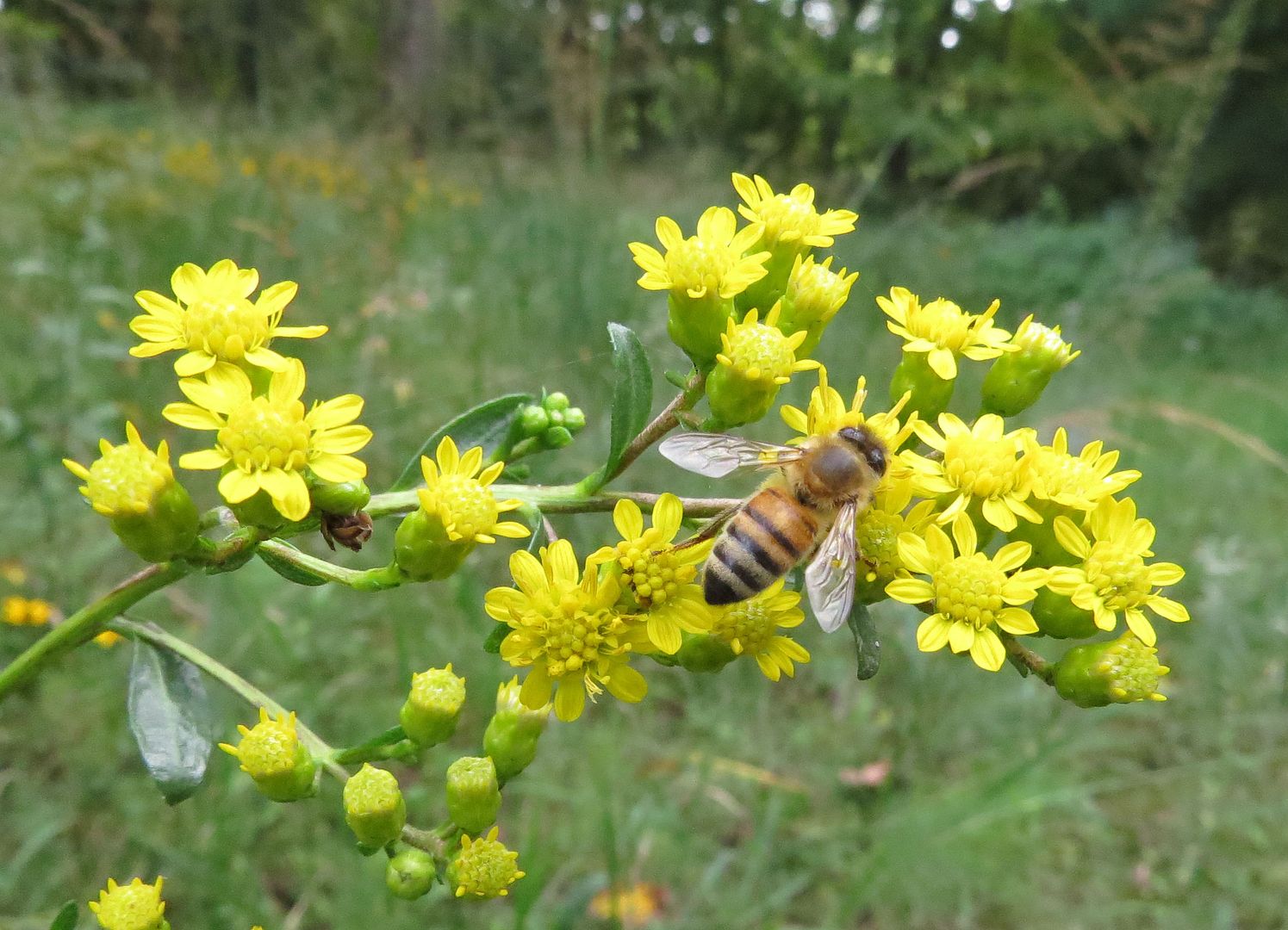
Cliff Goldenrod, Solidago drummondii
I bought this plant from some random nursery online and didn't expect much of it. Now that it's established I'm surprised it's not more popular. A failing, if you can call it that, is it forms a rosette of leaves with a couple dozen stems arching out in all directions. The stems tend to get a little long and arch all the way to the ground. I think it's because of the soil I'm growing it in though, too rich. In nature I believe this is meant to be a rock garden plant (hence the name) where the soils tend to be nutrient deprived.
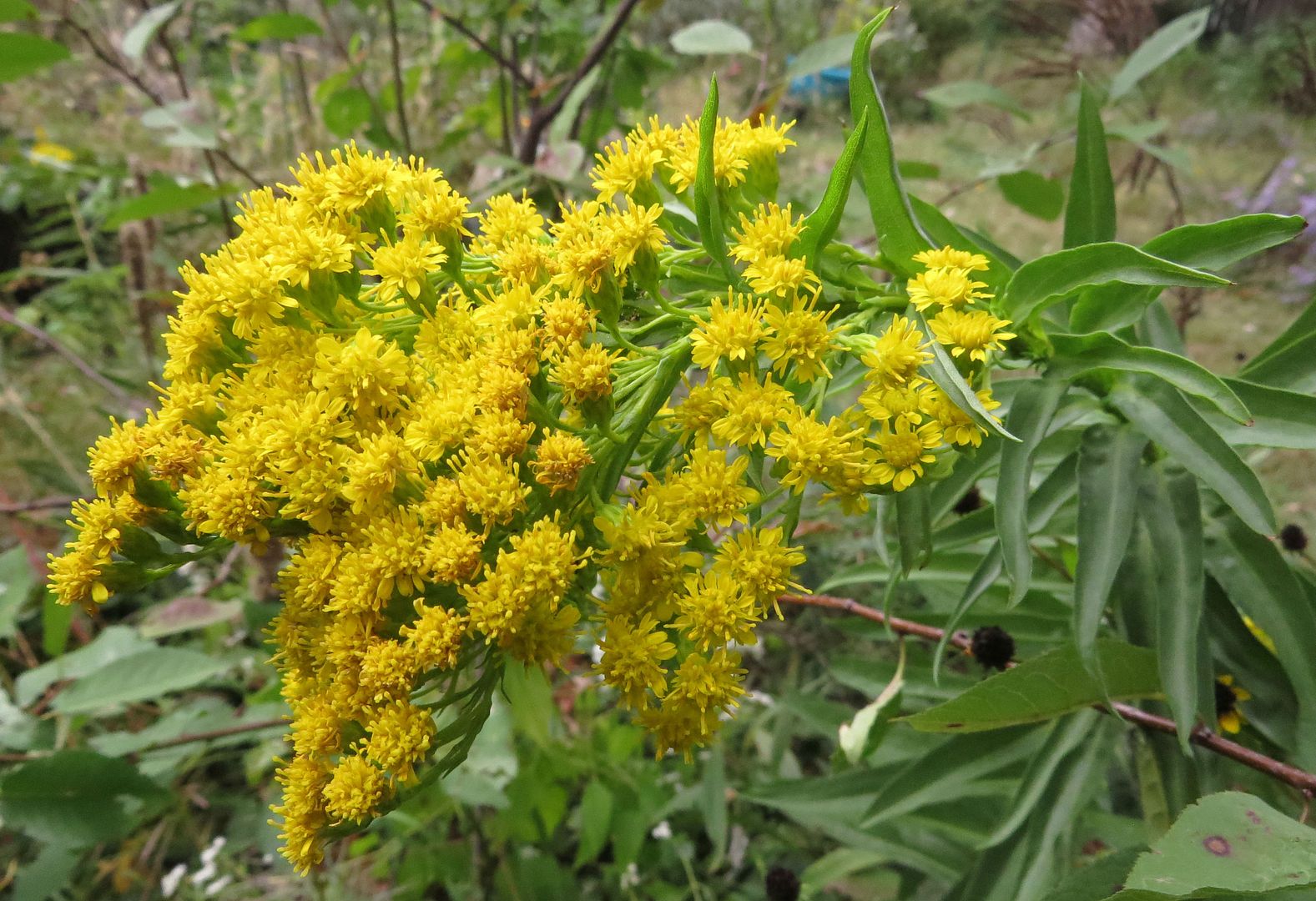
Stiff Goldenrod, Solidago rigida, Actually what's pictured above is Seaside Goldenrod but the two species look similar. They still have broad leaves at the bottom, but Stiff Goldenrod has more flat top flower heads.
Showy Goldenrod, Solidago speciosa
This plant lives up to its name very well.... when it grows right. I bought it because I needed plants for my meadow garden which is dry clay but after flowering great for two years the plants slowly petered out. It's either a short lived perennial or benefits from slightly wetter conditions. Whatever the case I'm willing to give it another chance, perhaps in a more formal setting.
Meadow Blazing Star, Liatris ligulistylis
Same issue as the Showy Goldenrod. I plant these in the Meadow Garden and they do great for two years (being a biannual) but don't reseed on their own. I do have one that has lasted the test of time but it's planted next to our pond. So I'm thinking if I plant more of them in slightly wetter locations, they'll do better.
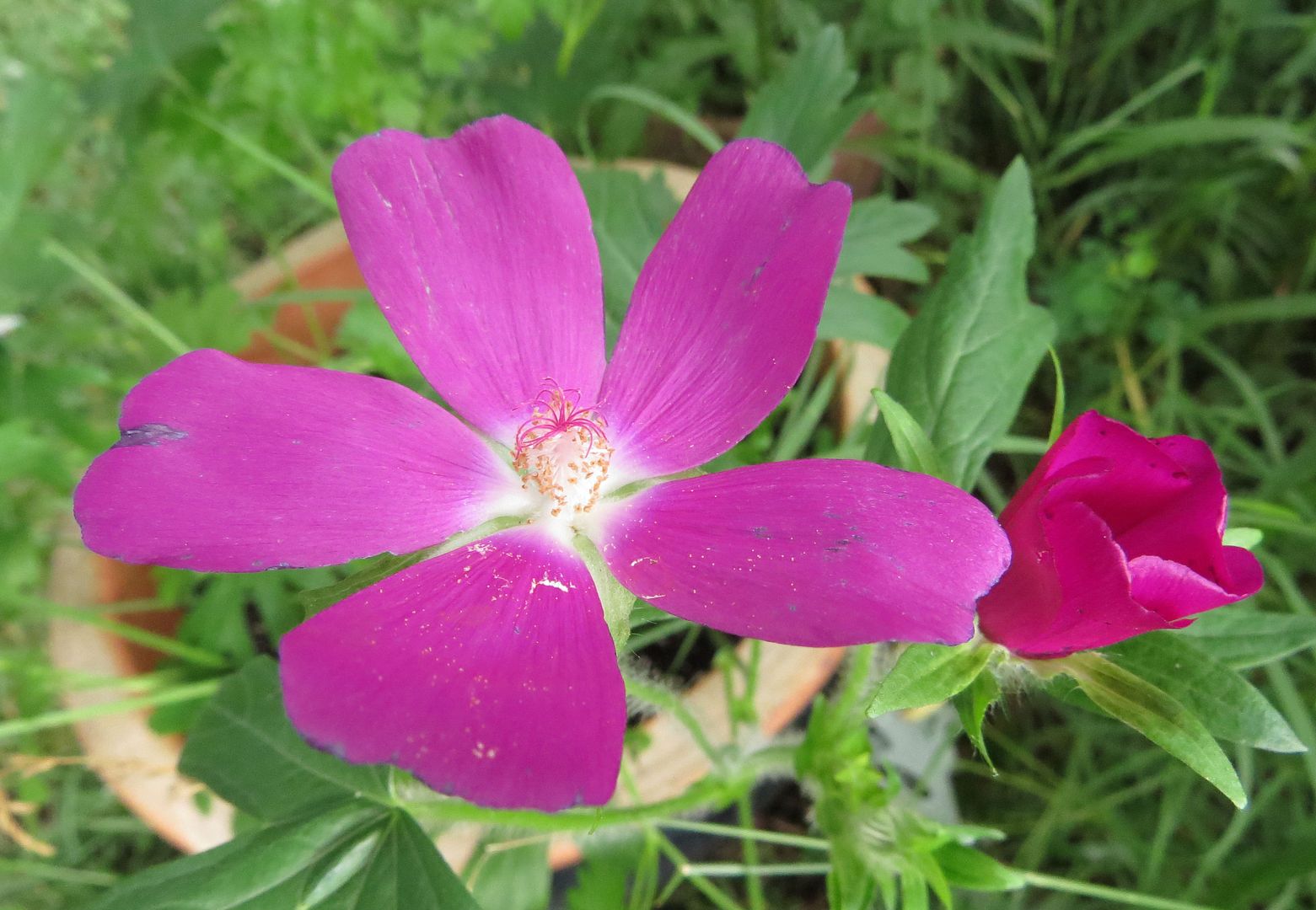
Bush's Poppy Mallow, Callirhoe bushii
This is a fantastic burst of color. Originally I was against planting these because it's not really a true meadow plant, at least not a plant everyone instantly thinks of when they think of a short grass prairie. Their distribution threw out the US is somewhat limited as well (to the point of being threatened in the wild). Something I noticed about the plant though is that they do well in dry conditions.... making it the perfect candidate for my meadow garden where few other natives seem to be able to establish.
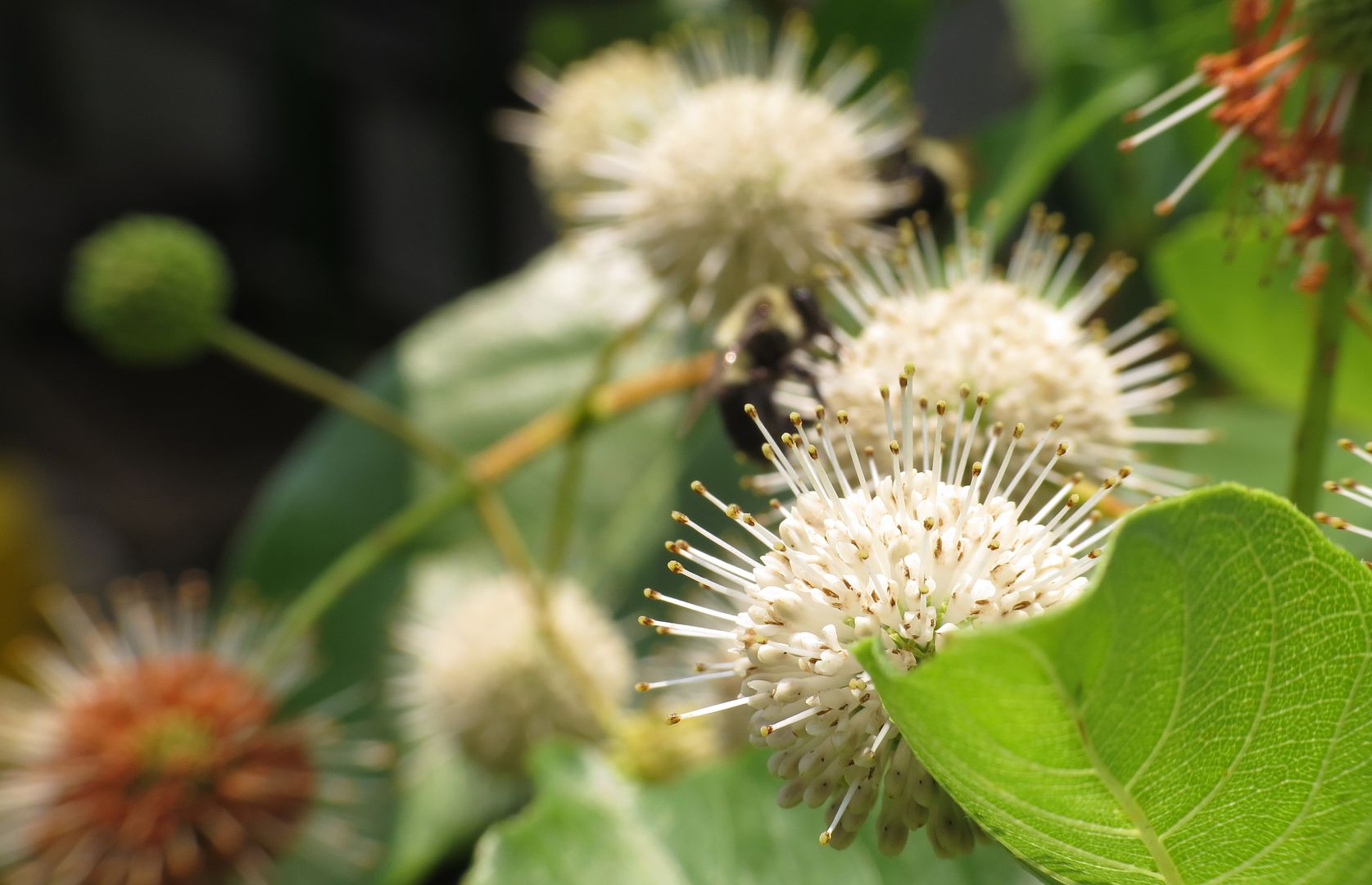
I'm also tempted to buy a second Button Bush. The one I currently have is doing okay, but has a dead limb or two I need to cut out. Also I saw it advertised for in an actual garden brochure I got in the mail. This species is rarely sold and I'd like to support that. I would liken it to Butterfly Bush in terms of attention but it has a far more limited bloom time.
Showing posts with label Goldenrod. Show all posts
Sunday, January 22, 2017
Friday, October 23, 2015
Some Goldenrods
I got a picture of a honeybee having an awkward moment. Without explanation this bee clearly looks poisoned or diseased, but really though it was perfectly fine and I watched it working droves of flowers in my patch of Tall Goldenrod, Solidago altissima. It was a cool day though and in the shade I just so happen to get the perfect shot as she decided to roll off of the flower instead of make a perfect take off as she'd done hundreds of times before.
I actually moved the patch of Solidago altissima to a dryer part of my yard. It's actually much better behaved there, spreading slowly instead of each cane producing seven more the following year, and growing only 5' tall instead of 13'. I'll still need to thin it out but probably only once every five years instead of every other.
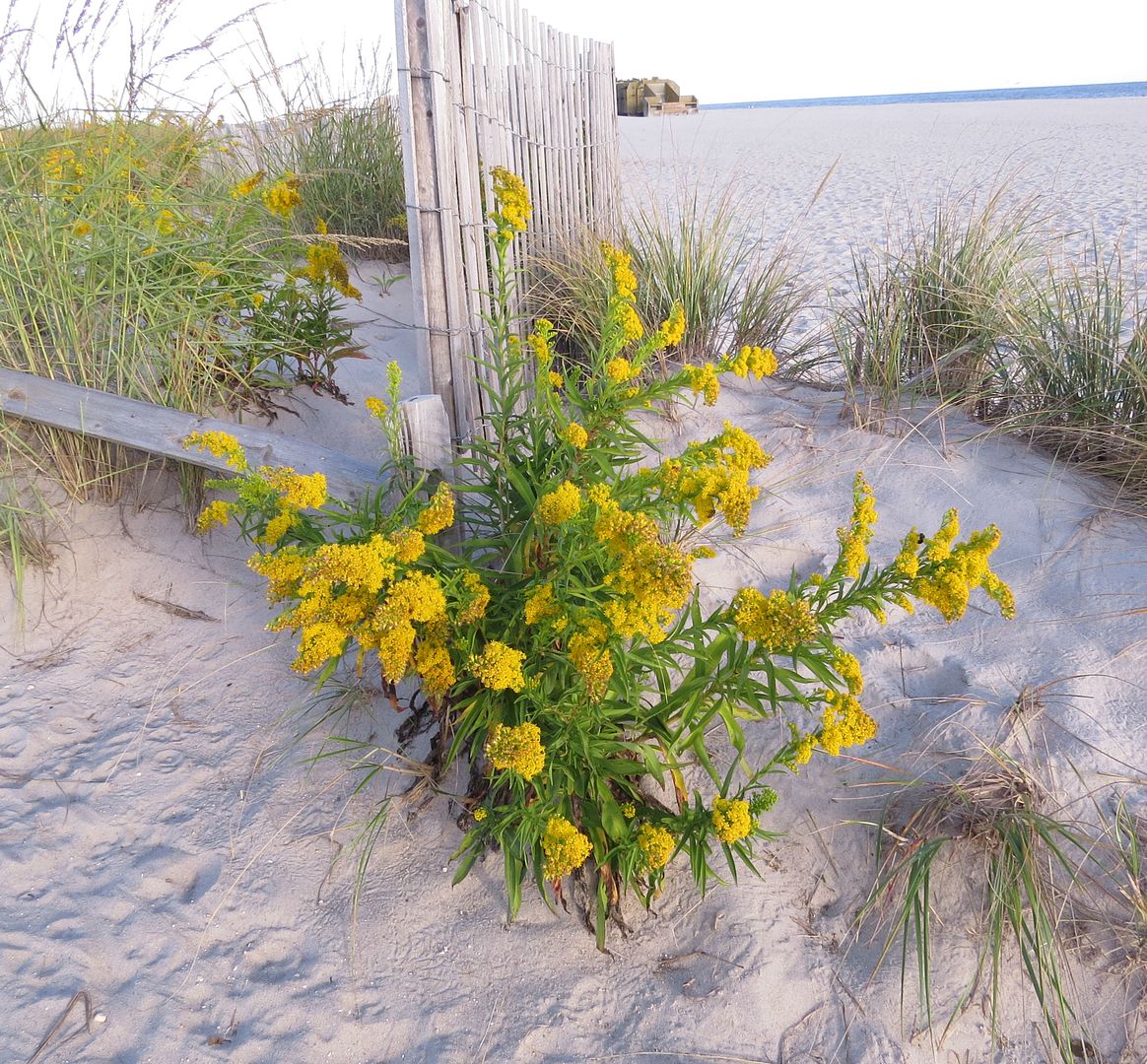
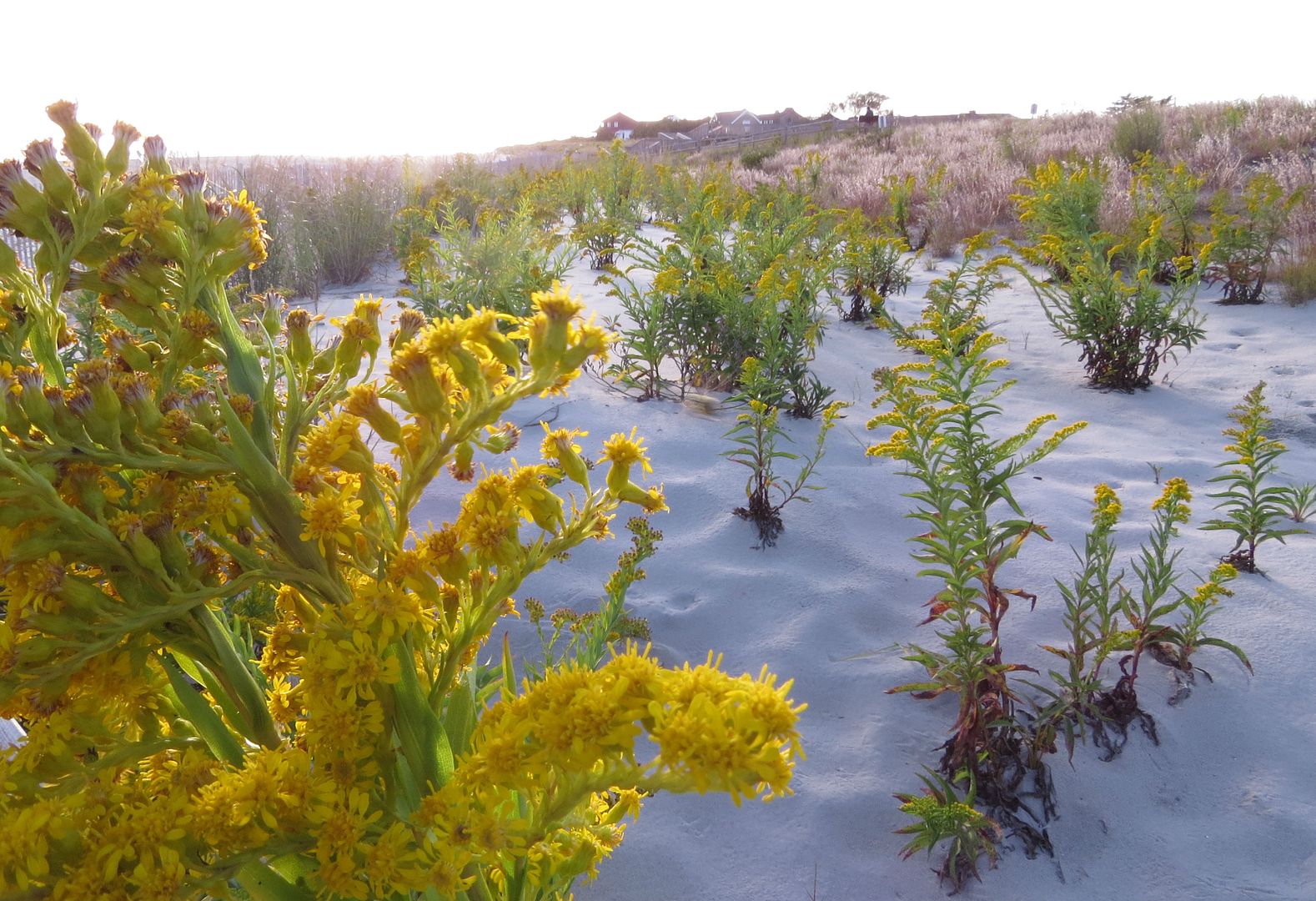
Seaside Goldenrod, Solidago sempervirens, is also flowering. And I realized what it is that I love about this species. It has petals! And you can clearly see them, whereas the common Goldenrod species all have small petals that are so scraggly they almost blend in with the anthers. Pictured above it's a day or two past its prime but you can still make out what I mean with the most recently opened blooms at the top. They remind me of Golden Ragwort, and in fact if you google this species you'll see a picture of Golden Ragwort actually comes up.
One thing I don't like about the plant is their habit of falling over. Each plant produces a series of stems that all grow too long and flop over under the weight of their own flower buds. You can see the one above arching over a branch to one of my Beach Plums.
Seaside Goldenrod is a new species to my yard. I have a few of them planted in the sand patch I made, along with the Beach Plum. Hopefully they survive the winter. Where I live in New Jersey I'm closer to Pennsylvania than the Jersey Shore or Pine Barrens, so I'm well inland on a plot that's almost entirely clay. This species grows happily in 100% sand at the beach and does not occur naturally anywhere away from the coast or adjacent bays. Beach Plum also occurs here and did survive in my yard from last winter so hopefully these plants will too. I have one planted in the meadow garden where the soil is almost entirely clay. Actually it's neat digging in the meadow now because I see the 7 or so years of decomposing organic matter there is slowly turning the soil more loose and loamy.
I actually moved the patch of Solidago altissima to a dryer part of my yard. It's actually much better behaved there, spreading slowly instead of each cane producing seven more the following year, and growing only 5' tall instead of 13'. I'll still need to thin it out but probably only once every five years instead of every other.
Seaside Goldenrod, Solidago sempervirens, is also flowering. And I realized what it is that I love about this species. It has petals! And you can clearly see them, whereas the common Goldenrod species all have small petals that are so scraggly they almost blend in with the anthers. Pictured above it's a day or two past its prime but you can still make out what I mean with the most recently opened blooms at the top. They remind me of Golden Ragwort, and in fact if you google this species you'll see a picture of Golden Ragwort actually comes up.
One thing I don't like about the plant is their habit of falling over. Each plant produces a series of stems that all grow too long and flop over under the weight of their own flower buds. You can see the one above arching over a branch to one of my Beach Plums.
Seaside Goldenrod is a new species to my yard. I have a few of them planted in the sand patch I made, along with the Beach Plum. Hopefully they survive the winter. Where I live in New Jersey I'm closer to Pennsylvania than the Jersey Shore or Pine Barrens, so I'm well inland on a plot that's almost entirely clay. This species grows happily in 100% sand at the beach and does not occur naturally anywhere away from the coast or adjacent bays. Beach Plum also occurs here and did survive in my yard from last winter so hopefully these plants will too. I have one planted in the meadow garden where the soil is almost entirely clay. Actually it's neat digging in the meadow now because I see the 7 or so years of decomposing organic matter there is slowly turning the soil more loose and loamy.
Labels:
Goldenrod
Sunday, September 27, 2015
Cape May Gold
Also flower in Cape May were the wonderful Maryland Golden Asters, Chrysopsis mariana. They grow in nutrient depleted, salt rich, sand, which not many other plants can tolerate.
They grow all year long as a green, simple looking sort of weed, until finally they seem to push all their energy into the flowers which continue to bloom and seed well after the rest of the plant looks to be dead or dying. There's a patch of these at the Mt. Cuba Center, which is much larger now than what's pictured their website, still looks to be green and growing when in flower. I'm not sure if they did something special to the soil but they looked to be healthier when grown in rich meadow soil. Though I know for some plants they will add sand so it's better able to survive the winter. I don't believe this is where Maryland Golden Aster would naturally be found in nature. They would likely get out competed by other plants.
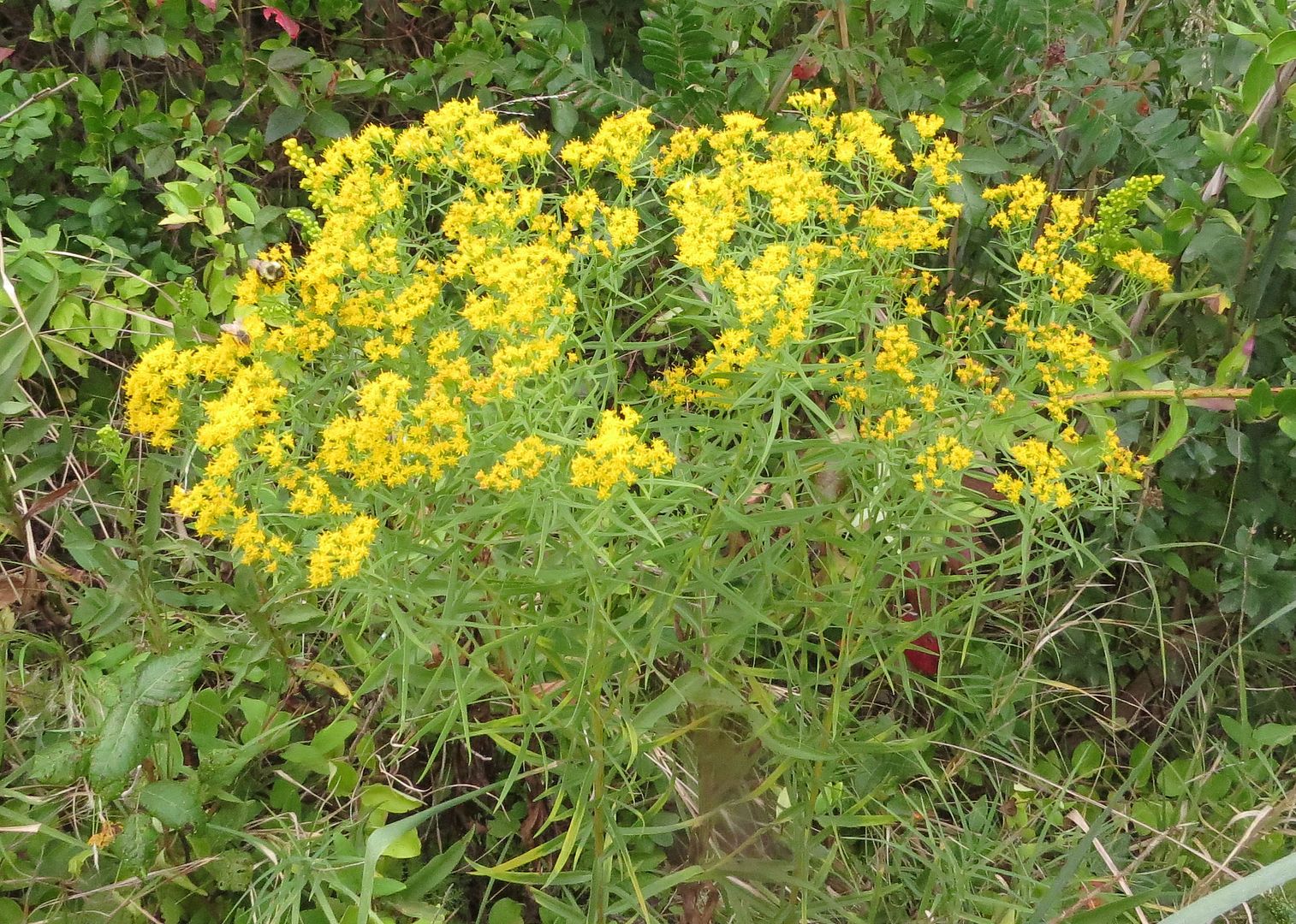
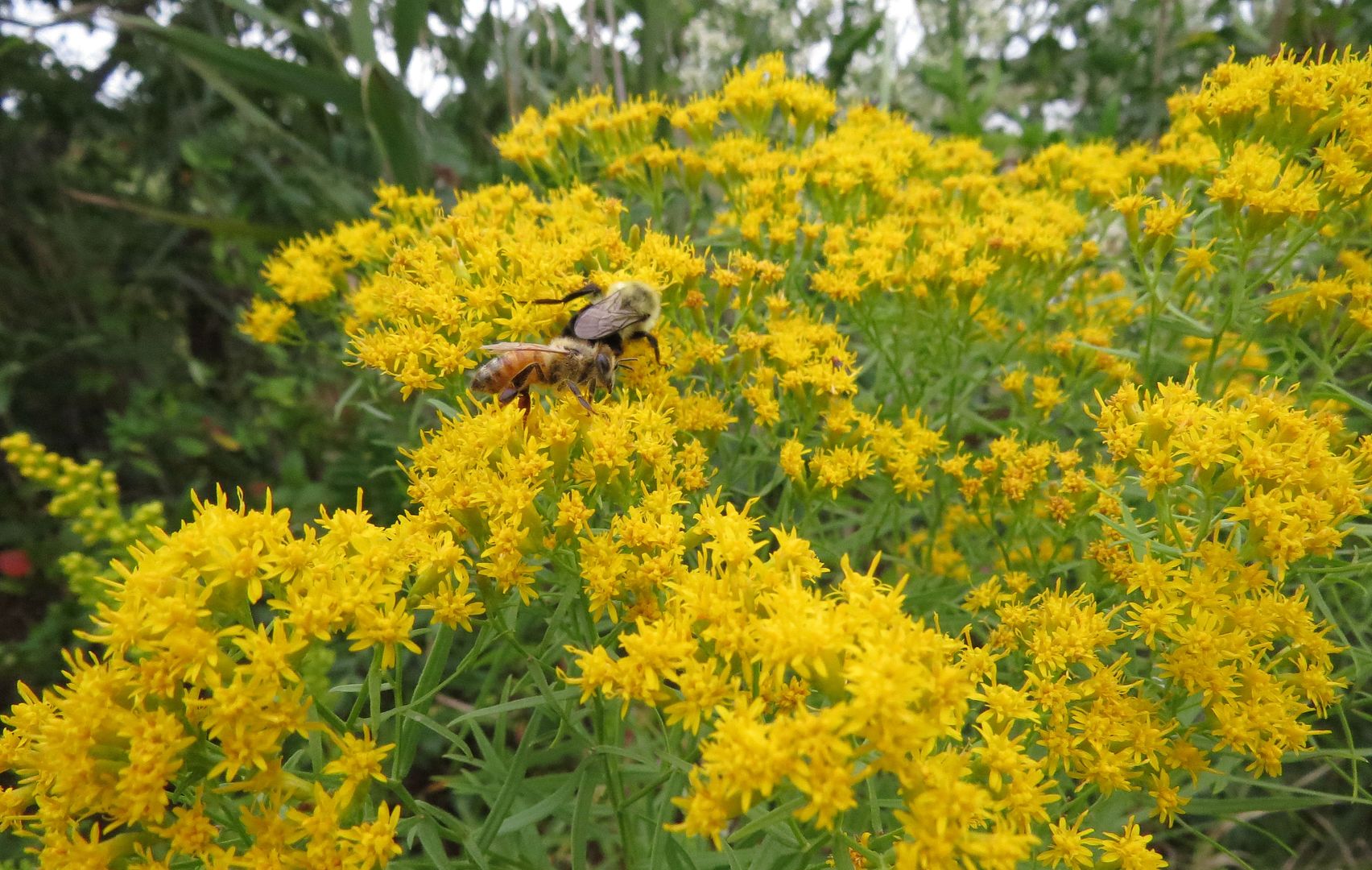
Also flowering were several different types of Goldenrod. Seaside Goldenrod is usually the showiest but the leaves on this one caught my eye this year. I'm at a loss to say what species this is, either Solidago tenuifolia or Solidago graminifolia, leaning toward the former. Growing in the bog where the soil is rich with sand and salt, however these conditions might make them look different than specamins growing in clay and without the added salinity.
Naturally the Bees enjoy this plant.
They grow all year long as a green, simple looking sort of weed, until finally they seem to push all their energy into the flowers which continue to bloom and seed well after the rest of the plant looks to be dead or dying. There's a patch of these at the Mt. Cuba Center, which is much larger now than what's pictured their website, still looks to be green and growing when in flower. I'm not sure if they did something special to the soil but they looked to be healthier when grown in rich meadow soil. Though I know for some plants they will add sand so it's better able to survive the winter. I don't believe this is where Maryland Golden Aster would naturally be found in nature. They would likely get out competed by other plants.
Also flowering were several different types of Goldenrod. Seaside Goldenrod is usually the showiest but the leaves on this one caught my eye this year. I'm at a loss to say what species this is, either Solidago tenuifolia or Solidago graminifolia, leaning toward the former. Growing in the bog where the soil is rich with sand and salt, however these conditions might make them look different than specamins growing in clay and without the added salinity.
Naturally the Bees enjoy this plant.
Tuesday, September 22, 2015
Honeybees on Fall Flowers
While visiting the Mt. Cuba Center this past weekend I was treated to a variety of fall wildflowers with fall colors right around the corner.
The gardeners there do such an amazing job, and they've introduced a number of cultivars over the years that I find well worth the effort in tracking down.
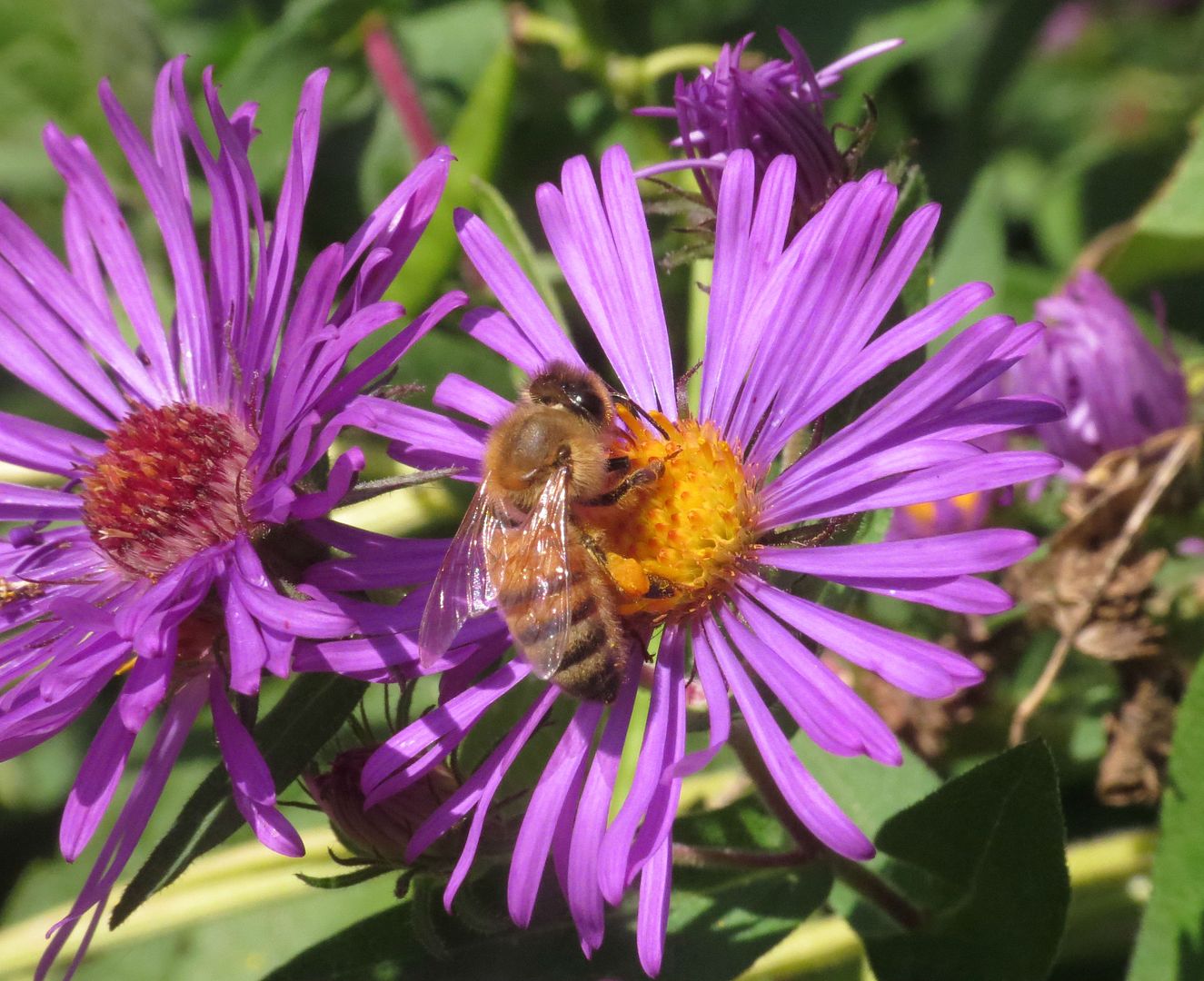
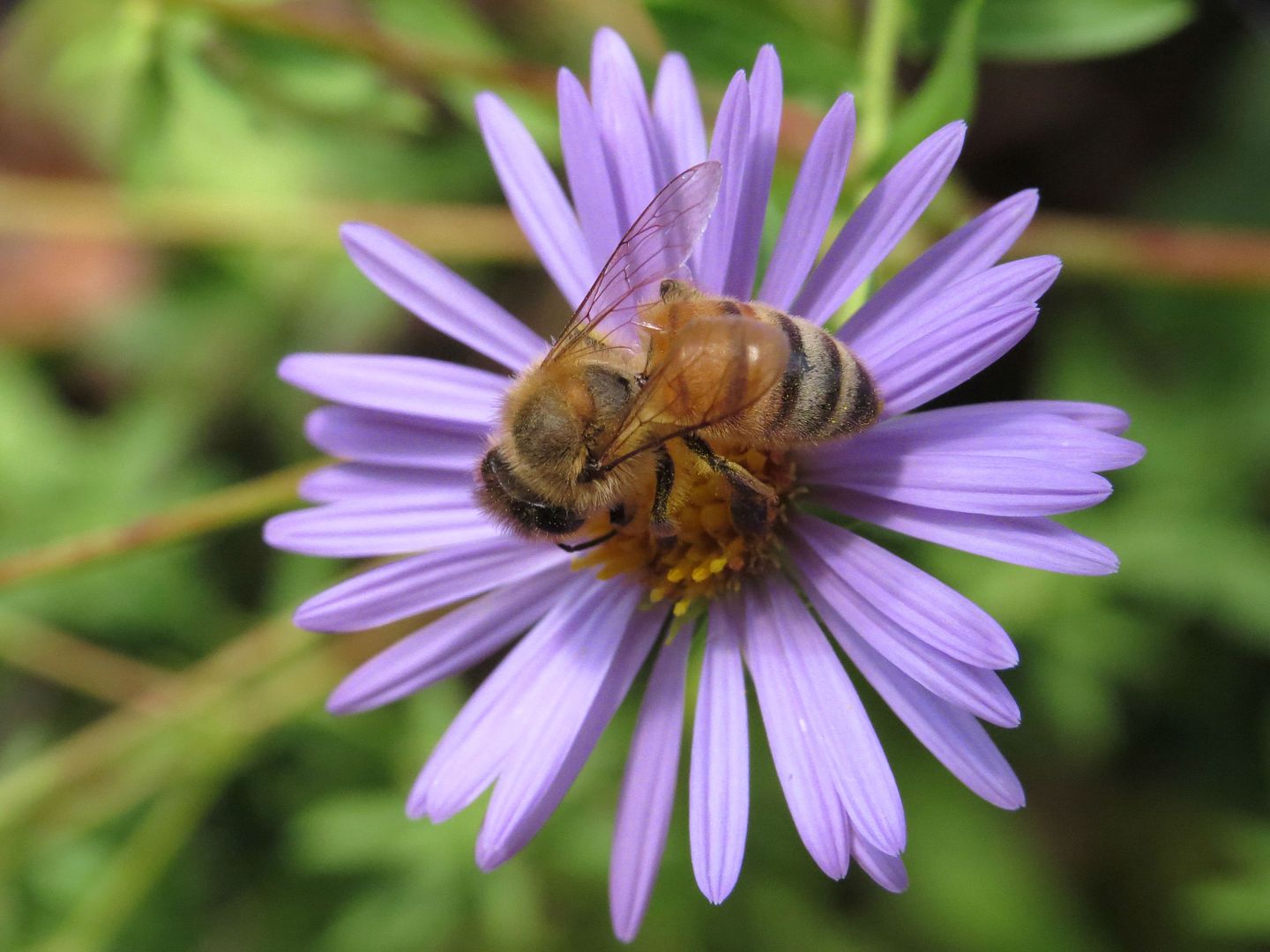
And of course now that they have a few honeybee hives on the property it's become far more apparent what native plants the bees really love. Now that Mountain Mint has finished blooming, I believe the winner of most perennial beds will be the common New England Aster, Symphyotrichum novae-angliae.
New England Asters come in a variety of colors but I've found the purple to be the most common. Pink, brilliant shades of Red, White and everything in between are also possible. Lost of cultivars are available on the market today and they're pretty easy grow by division or spreading seeds in pots of dirt outside over the winter. They can be slightly weedy but sometimes it's worth it to let them flower before pulling. A friend of mine had New England Asters take over his meadow garden but now he has every color in the rainbow.
Symphyotrichum laeve 'Bluebird' is an up right perennial that grows more flowers than the true species. This is because it's actually a hybrid with another species, though I don't know the particulars on that. They look great if you can grow them. I've tried in the past and believe they benefit from regular watering, and or mulch, as opposed to testing out their drought tolerance. I don't believe this cultivar is prolific by seed, but they are pretty when grown beside other asters or goldenrod of similar height.
Aromatic Aster 'October Skies' is wonderful in mass plantings. A cultivar of Symphyotrichum olongifolium, this is a low growing aster which lays on the ground forming thick cloud-like pillows of flowers. Perfect at the edge of a flower bed or scattered among a meadow/garden of low plants.
White Woodland Aster... actually I'm a little unclear what species this one in particular is. It's one of the lower growing species with masses of white blooms. Oddly enough I have a species or two of these that come up wild in my yard and I only rarely see honeybees take a liking to them. At Mt. Cuba the clumps they had growing in the sparse woodland were getting a decent amount of attention. Not as much as any of the other asters but certainly more than anything else flowering in the woods.
Vernonia angustifolia 'Plum Peachy' is a form of Narrow-leaf Ironweed with darker foliage and is more compact than the wild species. I believe it may also have flowers more evenly spread around it as opposed to just at the tips of stems but I could be confusing that with another the Mt. Cuba Center has/is working on.
I didn't think to take photos of the foliage at the time but it has nice narrow leaves and looked similar to other cultivars of ironweed I'd seen in local nurseries. It was getting a decent amount of attention, slightly more so than the goldenrods growing around it but I know honeybees don't go nuts for goldenrod until after the peak Aster blooms. I'm planting three of these this fall and putting them right in next to my narrow-leaf Amsonia to see if they grow well at all.
Stiff Goldenrod, Solidago rigida, was blooming well. This was the first time I've ever seen this species and I was taken by how big and fat the flower petals are which you usually don't even notice on Goldenrods. They had a patch of 50 or so plants, or at least that's about how many flowering stems there were.
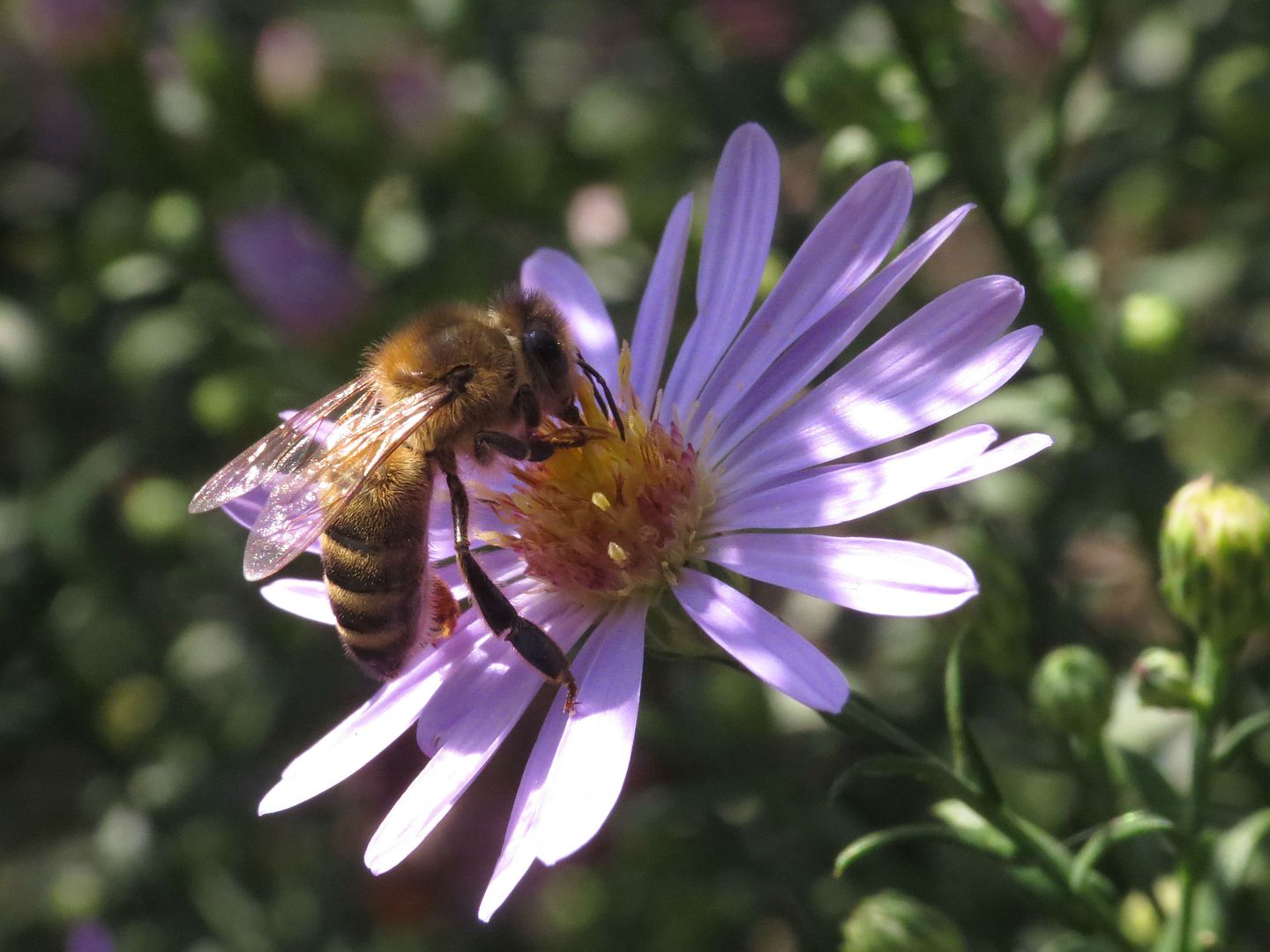
Just thought this was a good shot. Had the bee been posed a little better I'd go as far to say excellent.
Noticed some spittle bugs on the stem. They produce a foam or "spit" to hide within while they feed on the plant much like an aphid.
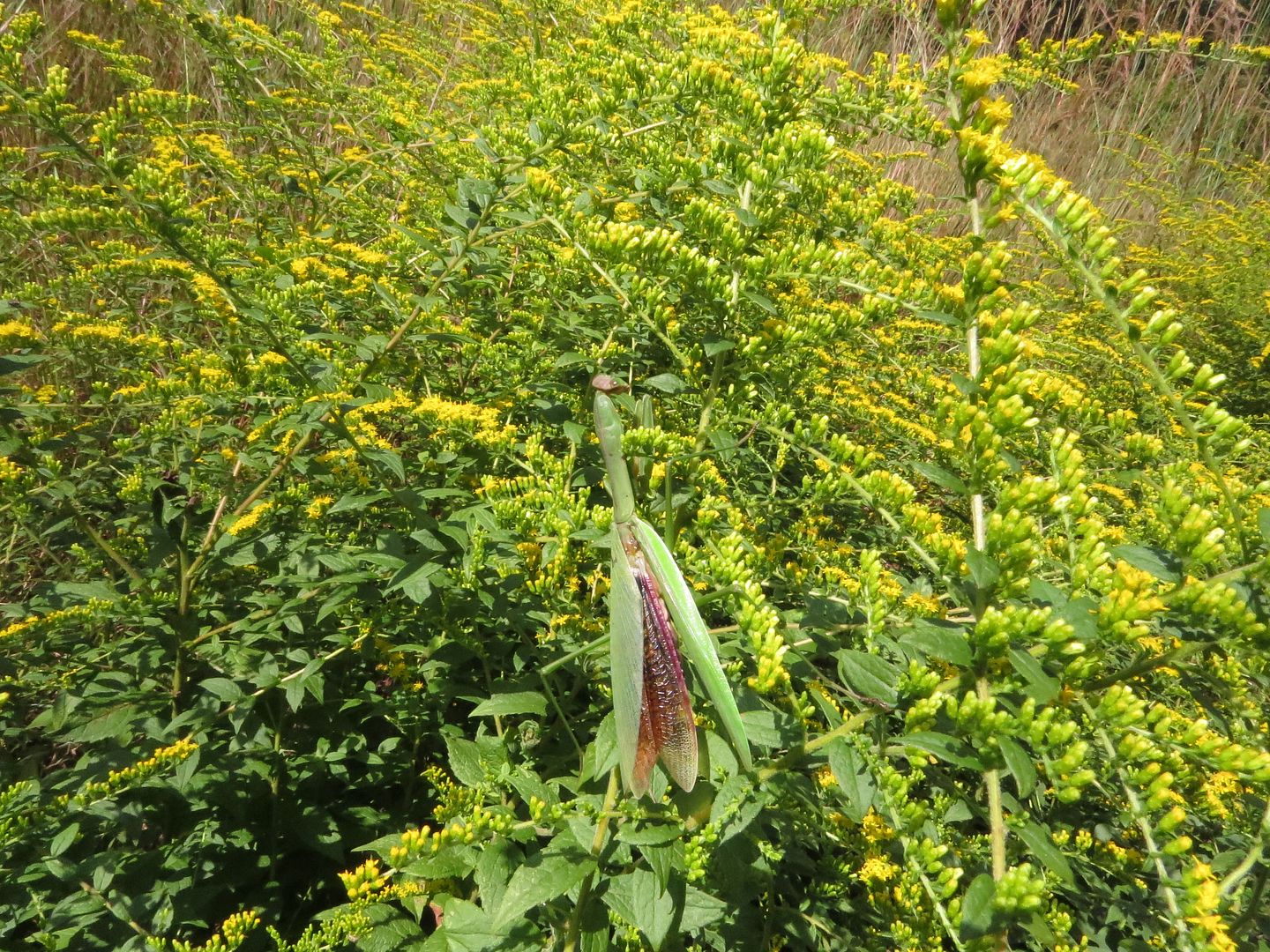
Solidago 'Fireworks' was also flowering, though not getting as much attention as I've seen it get in the past. (The huge hungry mantis about to lay an egg casing might have something to do with that.) It's also not quite at its peak bloom yet and that's really when honeybees tend to take over such nectar sources.
Obedient Plant is typically swarming with pollinators but I didn't find that to be the case that day. At least it wasn't for the patch that was next to the path. They also have it planted out in the meadow itself for a lovely pink effect but I didn't notice much flying around.
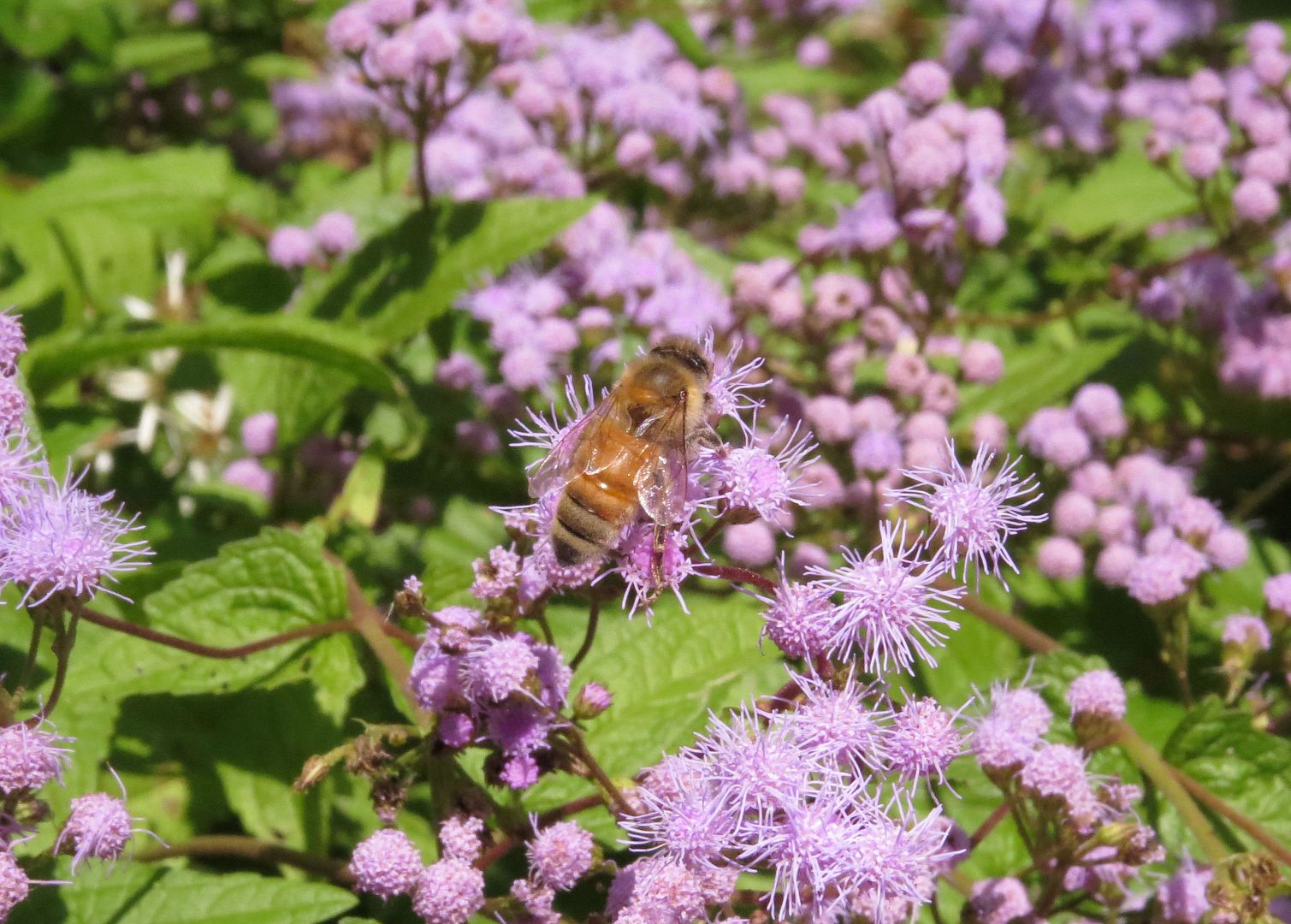
Mistflower, Conoclinum coelestinum. I was slightly surprised to see honeybees on this one. First off I've never been able to get this species to grow in my yard. They have water requirements that are somewhat finicky; too wet and they don't survive the winter, too dry and they won't reproduce. I read they're ideally a shade plant and the more sunlight they receive the more moisture they require. The Mt. Cuba Center had them in full sun, at the bottom of a slope.
Honeybees use other plants that were formerly in the Eupatorium genus. Pretty much all of Joe Pye Weeds are a hit with them, but only some of the Boneset species.
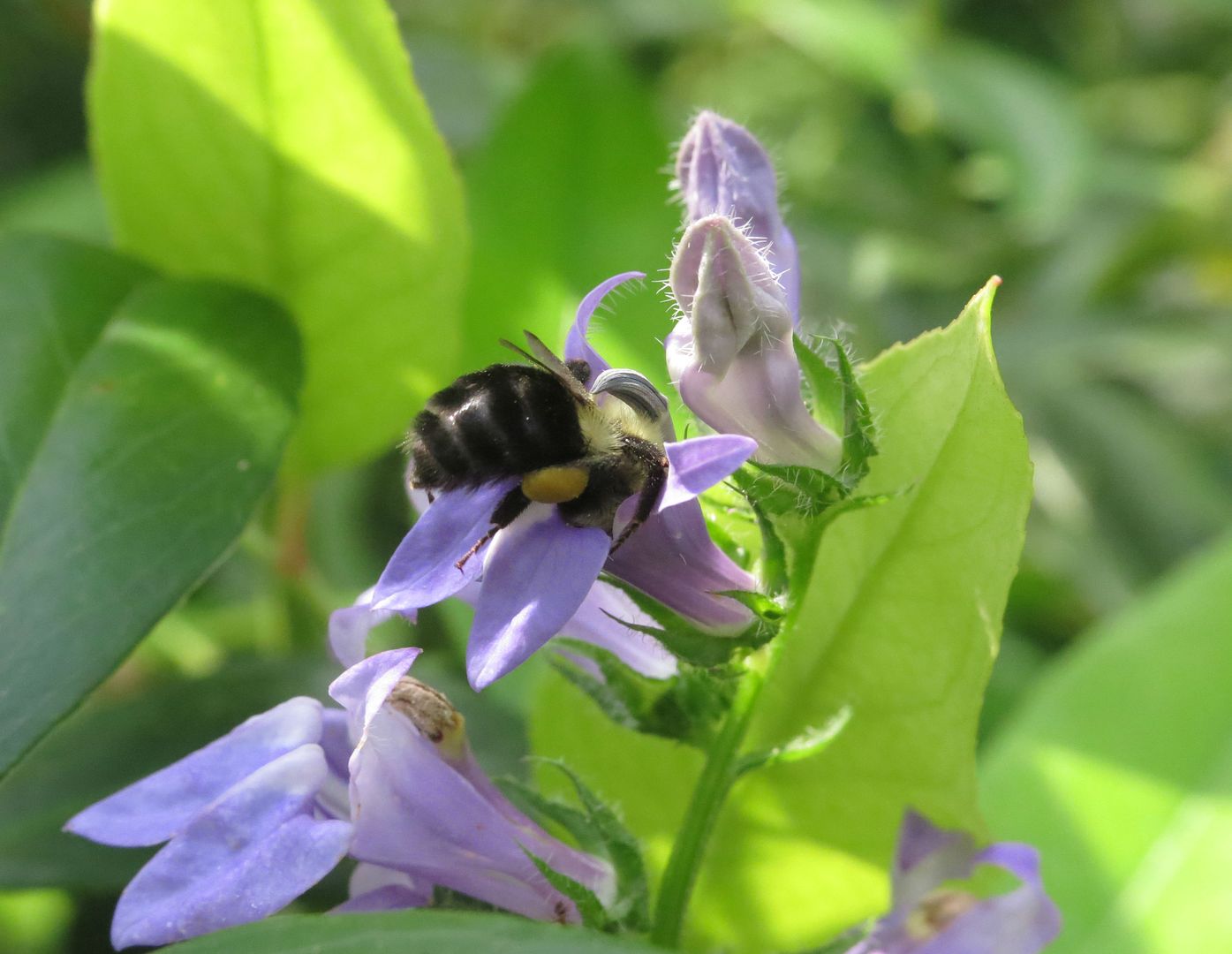
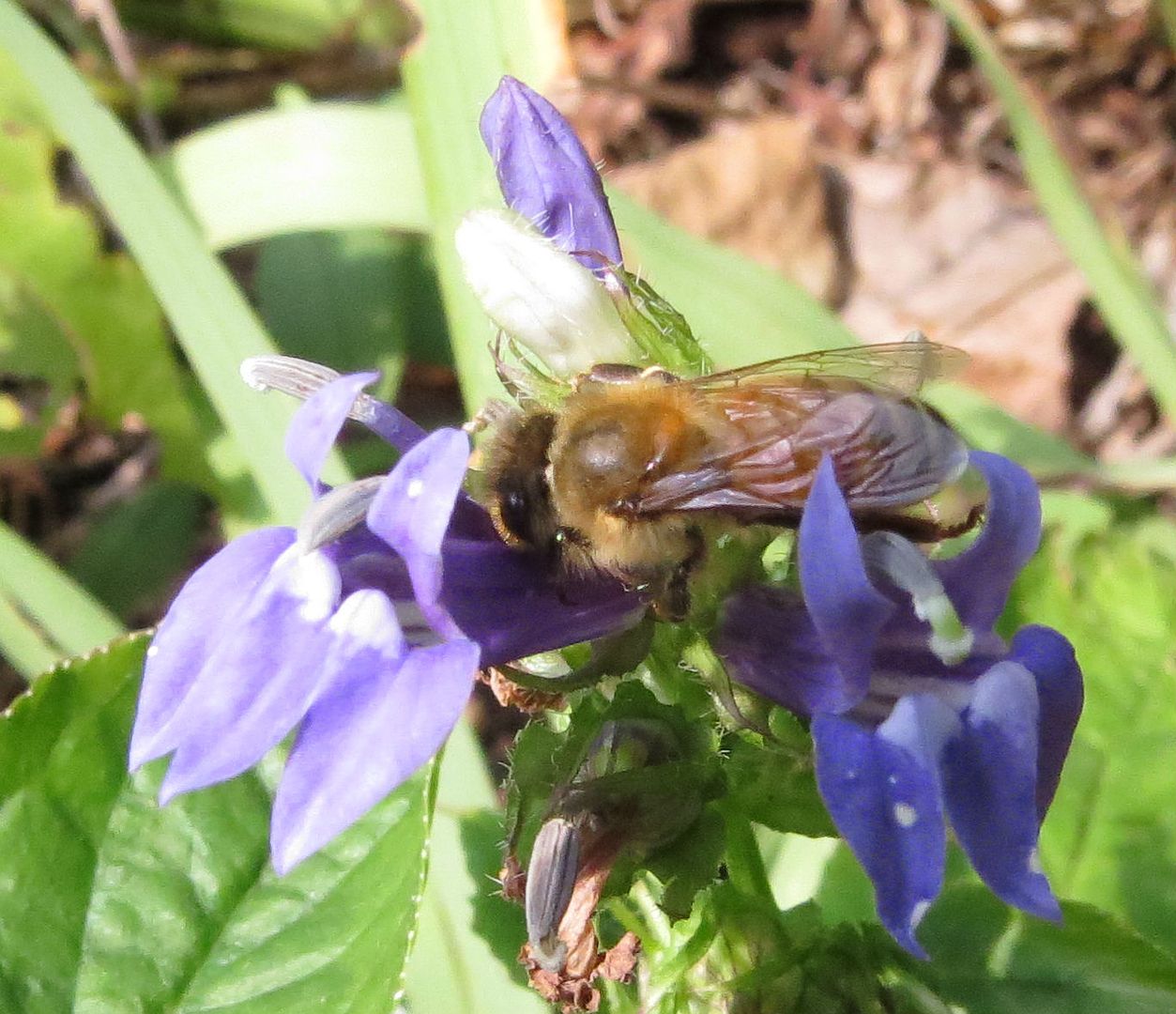
Our native Blue Lobelia, Lobelia siphilitica, is an upright, sometimes hard to establish and other times weedy perennial, with tube shaped pale blue flowers. I observe that while this is a wetland species, specamins growing closest to the water are among the shortest at around 2' at most while those growing farther away could reach up to 5' though 3 and a half certainly seemed more the norm.
Honeybees are perfectly capable of working the flowers but I noticed none of them were bothering to do so. The only flowers they visited were ones which carpenter bees had already chewed holes in.
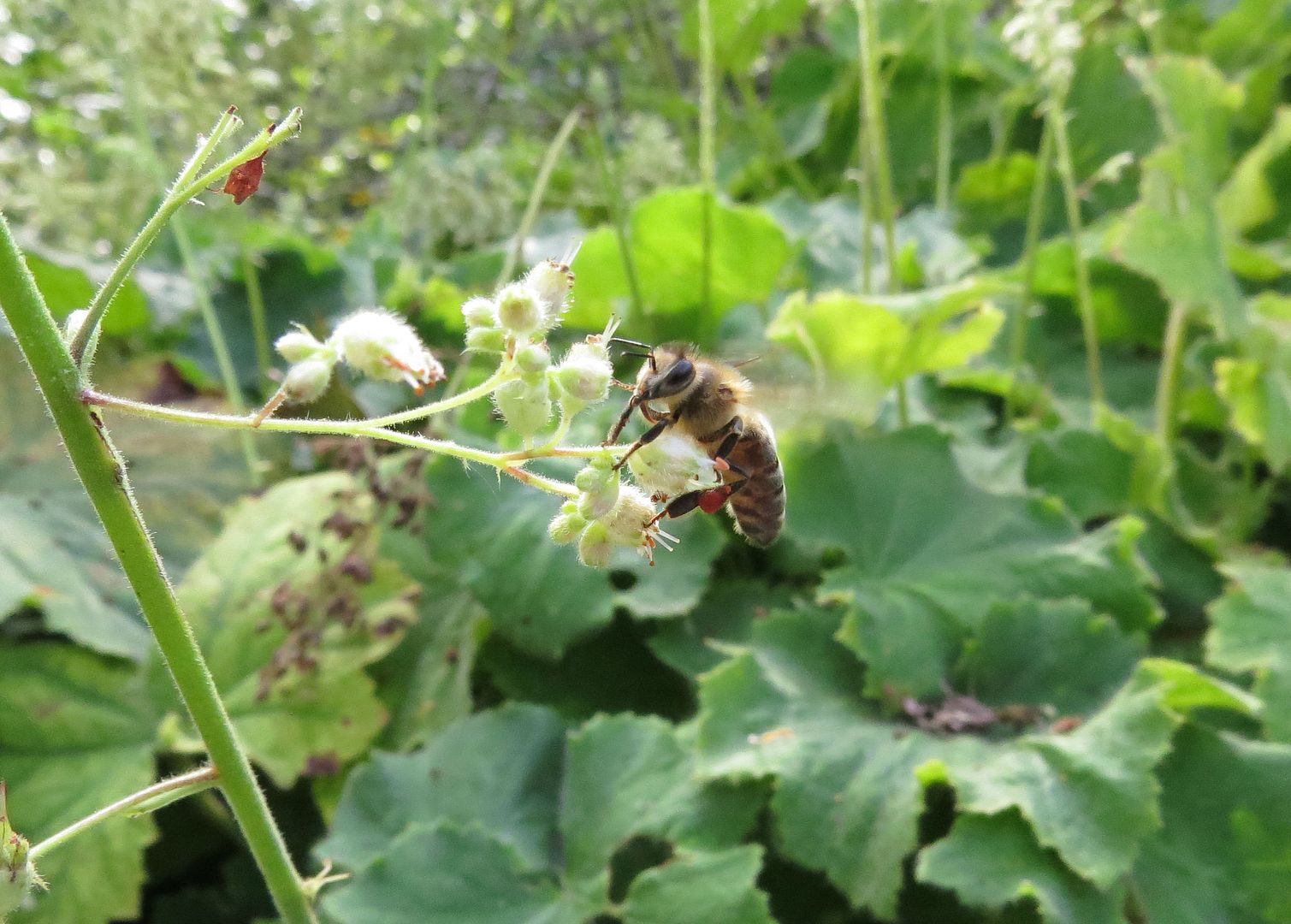
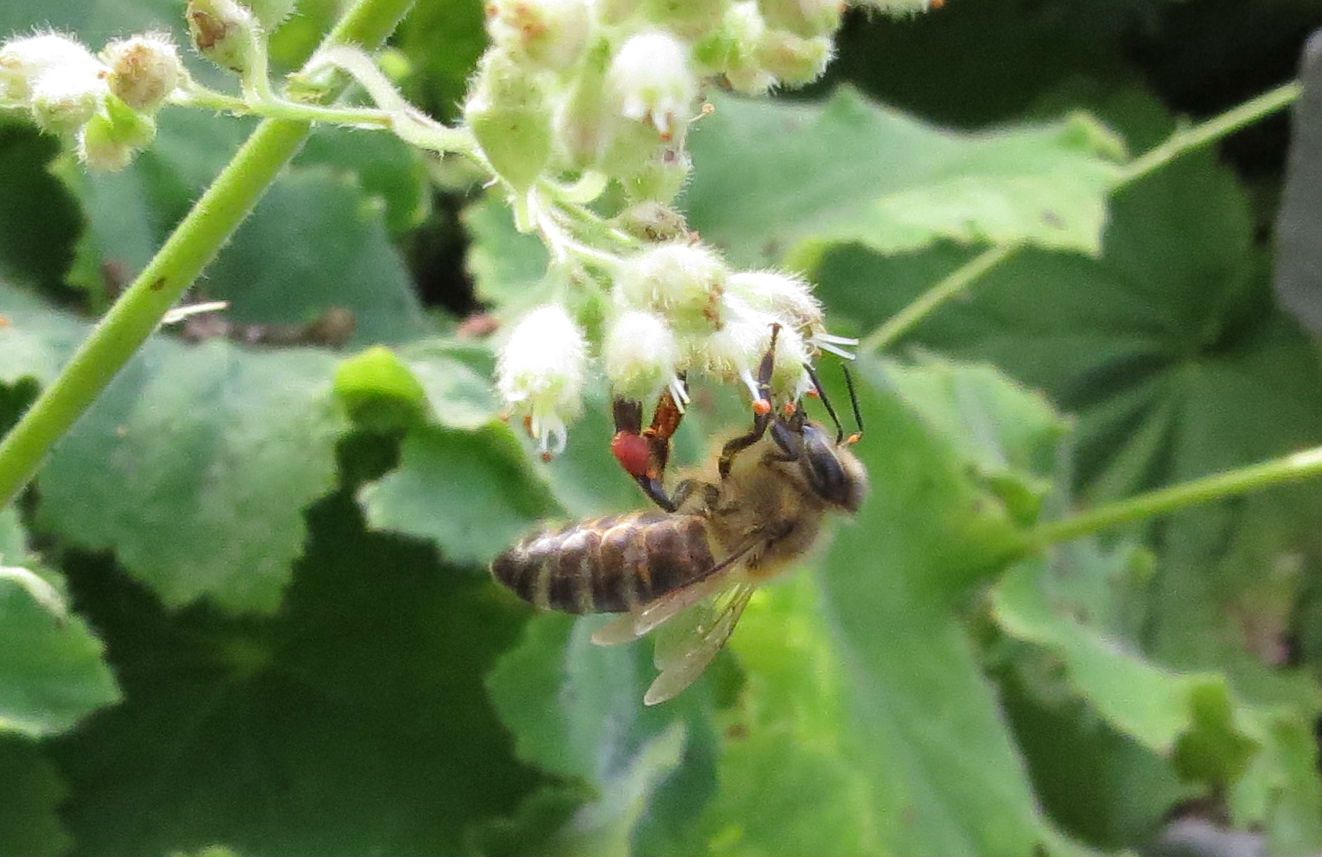
And lastly, I noticed honeybees working one of the Heucheras. This is a genus of plants with hundreds of cultivars that offer every color imaginable. They're mostly pollinated by flies but a certain few, typically ones with larger (for the genus) white flowers are visited by bees.
This particular species was mass planted near the Round Garden and the bees were gathering up nectar, and just look at that wonderful deep red pollen.
The gardeners there do such an amazing job, and they've introduced a number of cultivars over the years that I find well worth the effort in tracking down.
And of course now that they have a few honeybee hives on the property it's become far more apparent what native plants the bees really love. Now that Mountain Mint has finished blooming, I believe the winner of most perennial beds will be the common New England Aster, Symphyotrichum novae-angliae.
New England Asters come in a variety of colors but I've found the purple to be the most common. Pink, brilliant shades of Red, White and everything in between are also possible. Lost of cultivars are available on the market today and they're pretty easy grow by division or spreading seeds in pots of dirt outside over the winter. They can be slightly weedy but sometimes it's worth it to let them flower before pulling. A friend of mine had New England Asters take over his meadow garden but now he has every color in the rainbow.
Symphyotrichum laeve 'Bluebird' is an up right perennial that grows more flowers than the true species. This is because it's actually a hybrid with another species, though I don't know the particulars on that. They look great if you can grow them. I've tried in the past and believe they benefit from regular watering, and or mulch, as opposed to testing out their drought tolerance. I don't believe this cultivar is prolific by seed, but they are pretty when grown beside other asters or goldenrod of similar height.
Aromatic Aster 'October Skies' is wonderful in mass plantings. A cultivar of Symphyotrichum olongifolium, this is a low growing aster which lays on the ground forming thick cloud-like pillows of flowers. Perfect at the edge of a flower bed or scattered among a meadow/garden of low plants.
White Woodland Aster... actually I'm a little unclear what species this one in particular is. It's one of the lower growing species with masses of white blooms. Oddly enough I have a species or two of these that come up wild in my yard and I only rarely see honeybees take a liking to them. At Mt. Cuba the clumps they had growing in the sparse woodland were getting a decent amount of attention. Not as much as any of the other asters but certainly more than anything else flowering in the woods.
Vernonia angustifolia 'Plum Peachy' is a form of Narrow-leaf Ironweed with darker foliage and is more compact than the wild species. I believe it may also have flowers more evenly spread around it as opposed to just at the tips of stems but I could be confusing that with another the Mt. Cuba Center has/is working on.
I didn't think to take photos of the foliage at the time but it has nice narrow leaves and looked similar to other cultivars of ironweed I'd seen in local nurseries. It was getting a decent amount of attention, slightly more so than the goldenrods growing around it but I know honeybees don't go nuts for goldenrod until after the peak Aster blooms. I'm planting three of these this fall and putting them right in next to my narrow-leaf Amsonia to see if they grow well at all.
Stiff Goldenrod, Solidago rigida, was blooming well. This was the first time I've ever seen this species and I was taken by how big and fat the flower petals are which you usually don't even notice on Goldenrods. They had a patch of 50 or so plants, or at least that's about how many flowering stems there were.
Just thought this was a good shot. Had the bee been posed a little better I'd go as far to say excellent.
Noticed some spittle bugs on the stem. They produce a foam or "spit" to hide within while they feed on the plant much like an aphid.
Solidago 'Fireworks' was also flowering, though not getting as much attention as I've seen it get in the past. (The huge hungry mantis about to lay an egg casing might have something to do with that.) It's also not quite at its peak bloom yet and that's really when honeybees tend to take over such nectar sources.
Obedient Plant is typically swarming with pollinators but I didn't find that to be the case that day. At least it wasn't for the patch that was next to the path. They also have it planted out in the meadow itself for a lovely pink effect but I didn't notice much flying around.
Mistflower, Conoclinum coelestinum. I was slightly surprised to see honeybees on this one. First off I've never been able to get this species to grow in my yard. They have water requirements that are somewhat finicky; too wet and they don't survive the winter, too dry and they won't reproduce. I read they're ideally a shade plant and the more sunlight they receive the more moisture they require. The Mt. Cuba Center had them in full sun, at the bottom of a slope.
Honeybees use other plants that were formerly in the Eupatorium genus. Pretty much all of Joe Pye Weeds are a hit with them, but only some of the Boneset species.
Our native Blue Lobelia, Lobelia siphilitica, is an upright, sometimes hard to establish and other times weedy perennial, with tube shaped pale blue flowers. I observe that while this is a wetland species, specamins growing closest to the water are among the shortest at around 2' at most while those growing farther away could reach up to 5' though 3 and a half certainly seemed more the norm.
And lastly, I noticed honeybees working one of the Heucheras. This is a genus of plants with hundreds of cultivars that offer every color imaginable. They're mostly pollinated by flies but a certain few, typically ones with larger (for the genus) white flowers are visited by bees.
This particular species was mass planted near the Round Garden and the bees were gathering up nectar, and just look at that wonderful deep red pollen.
Saturday, May 16, 2015
A Tour of Pinelands Nursery
As a birthday gift to myself, I signed up for a free tour of Pinelands Nursery and Supply as part of the Native Plant Society of New Jersey. They're a wholesale nursery who's doors are closed to the public except for the occasional gardening club and horticulture related events.
While on the tour though I was thrilled to learn that the owner's son is starting up a branch for smaller orders meant for the general public. It's called Pinelands Direct and I can happily say I'll be ordering from them in the future. Their website could use a little work and they don't have as big a selection as the main Pinelands Nursery, but they are selling some hard to find plants such as Seaside Goldenrod, along with more typical native plant nursery plants.
Regardless of which nursery you're buying from, though, you'll be getting plants grown from local seed stock native to New Jersey, PA, NY, DE, and generally a 250 mile radios around their nursery. Some native plant gardeners and conservationists find that important. Personally I don't, I'm not that picky but it is nice growing something that tends to be better adapted for the local area.
Speaking from experience, I buy from a lot of online nurseries and sometimes when I order from a nursery based in Florida the plants don't always survive the winters. So growing from local genotypes has its benefits. When you do find success though it's sometimes fun to mix and match genotypes to extend the bloom or encourage fall color at different times of year. The Black Eyed Susans grown at the Mt. Cuba Center in DE bloom right alongside Symphyotrichum laeve 'Bluebird' (click more photos), whereas back at my house in NJ, they've finished flowering long before most asters have even flowered. However I do happen to have two genotypes of New England Aster. The local one found here in NJ blooms a solid month after the one I ordered from a Massachusetts nursery. Their bloom is so far off that one is setting seed while the other is flowering.
After the tour, there was a native plant sale. We didn't get full reign over the place like we did at the New Moon Nursery but I got my Seaside Goldenrod (and 8 other plants) so I was happy. The quality can't be beat for the price we paid. The plants are in a 4 inch square pot (I believe it's a quart) and they all had thick solid stems, they were very huge and overall healthy for the price paid. Some of the plants I got were a little root bound but frankly I get that from every nursery that sells anything larger than a plug size, and it's a simply fix too, just cut off the offending roots and loosen up the sides so I don't fault them for that. I'm very happy with the plants I got! (And added a link to their site on the side bar.)
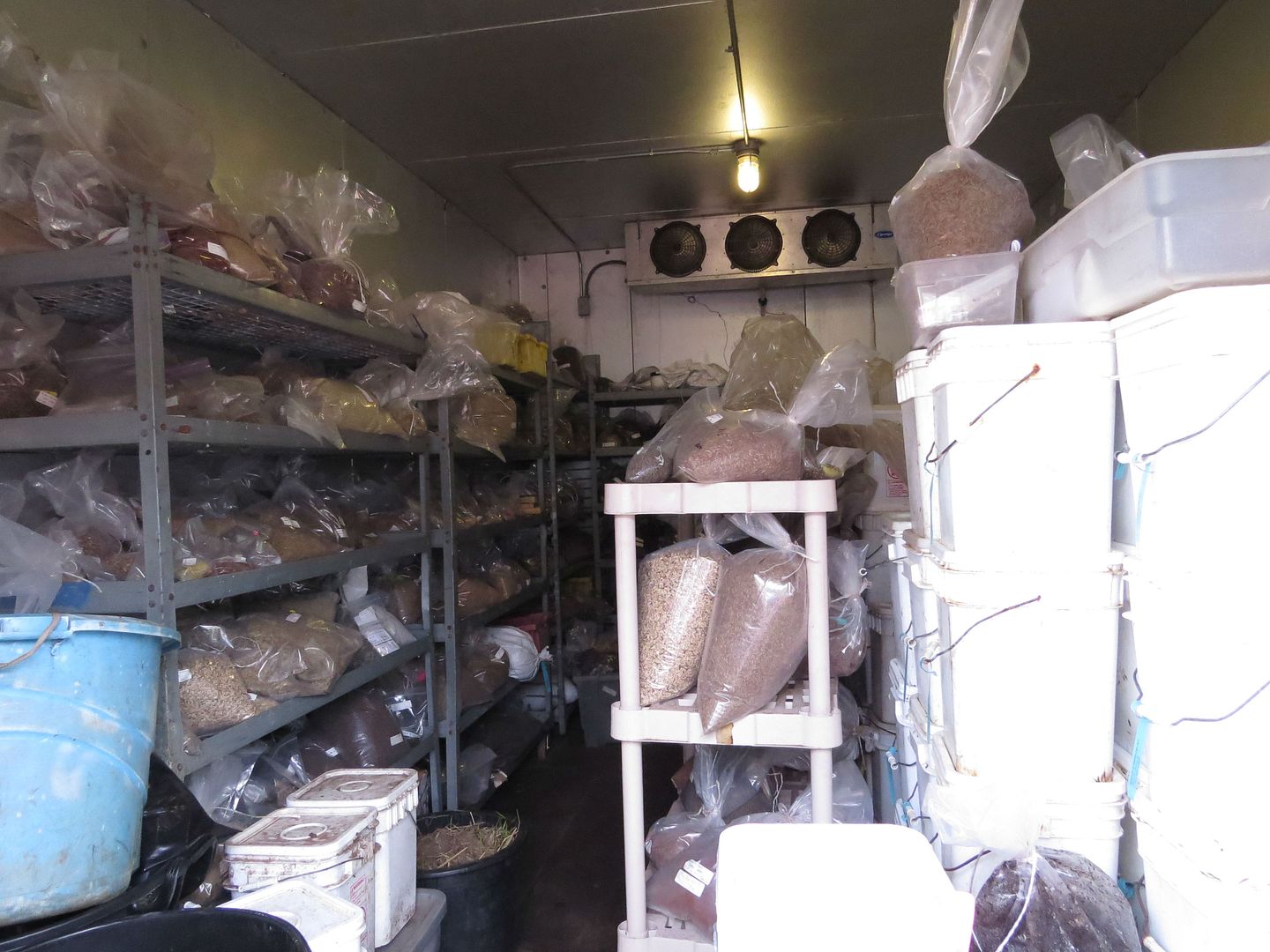
It was implied they take field trips and go well out of their way to collect seeds. Sometimes they're in boats. Each of the white drums (right) he said probably held a 1 to 3 thousand dollars worth of seeds depending on the species inside and how dense they packed it.
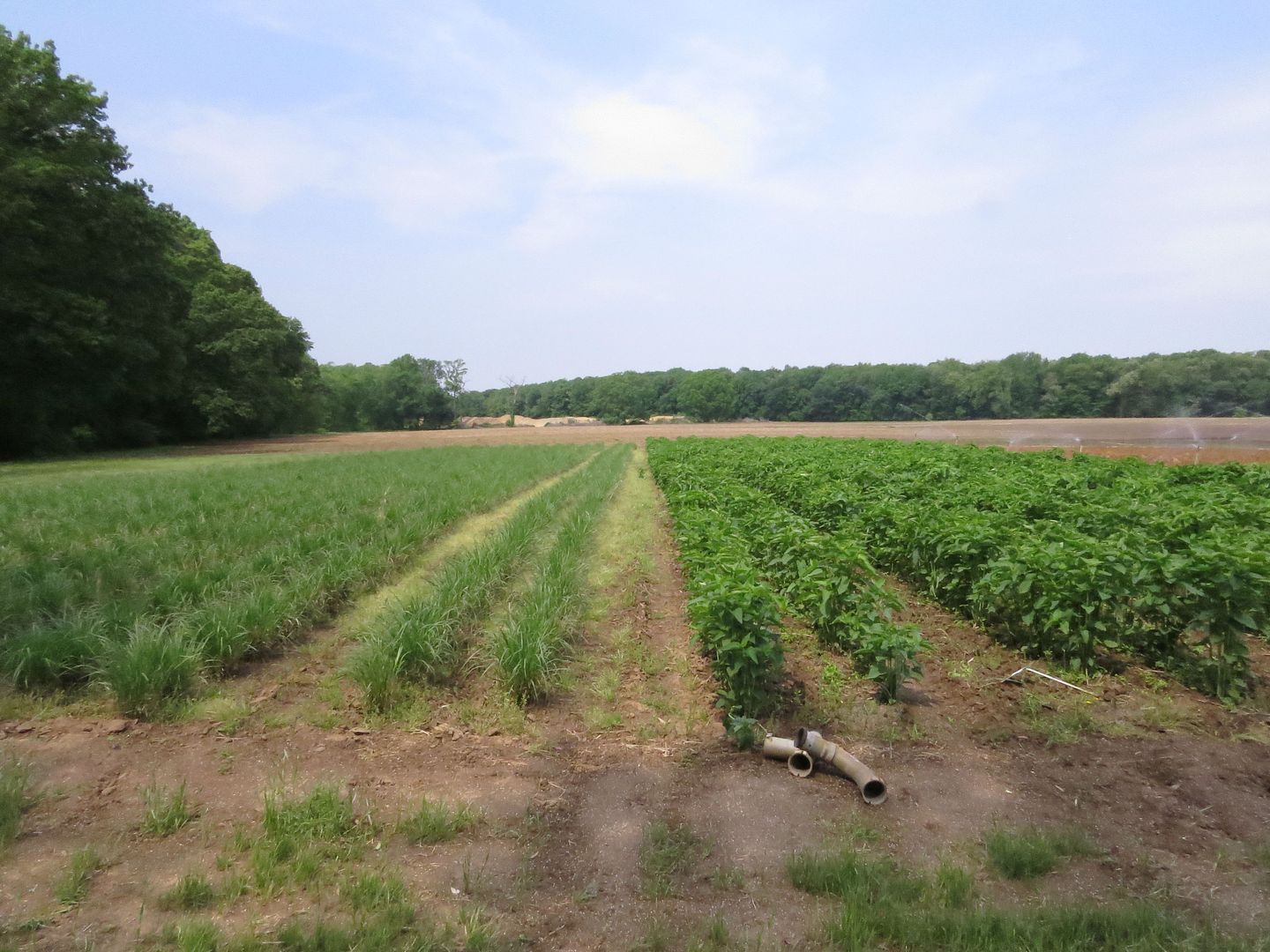
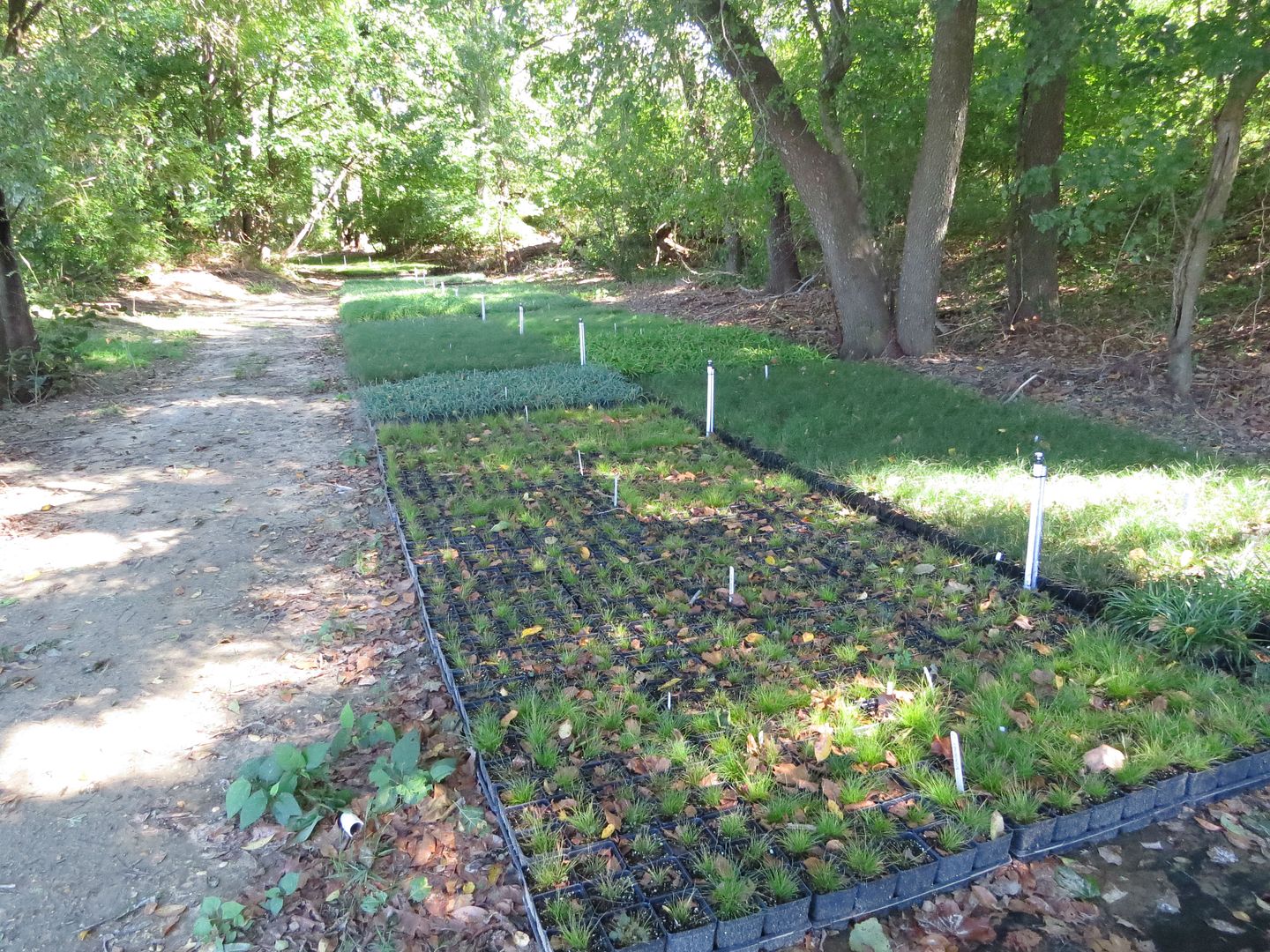
Several of the species they offer, they grow in fields to make seed collecting easier. He owns several farms for that purpose across multiple states. The deer are a problem for some of their sites but not this particular location. Apparently hunting is allowed in the forest pictured in the background.
One crop of some sort of grass looked to be dead and they were watering the hell out of it. I assume it's a warm season crop but the fact they were watering worried the owner quite a bit. It hasn't rained in NJ for a month now and he joked during the tour that if the skies suddenly opened and a torrential down pour happened he wouldn't exactly have been mad at the situation.
A mixture of sand, ground up coconut chips, wood bark, and maybe two or three other things I'm forgetting, go into the pots and plugs they use there. This is the "Pinelands" nursery after all so Sand is very important. Along with offering good drainage though it's also the heaviest medium to put in a pot, which I really hadn't though about. He also commented on how you'll see plants in nurseries, how the medium seems to have settled or sunken in a good inch or three. That's mostly because the medium they used decomposed which he viewed as not being good, though I'm note convinced it really matters.
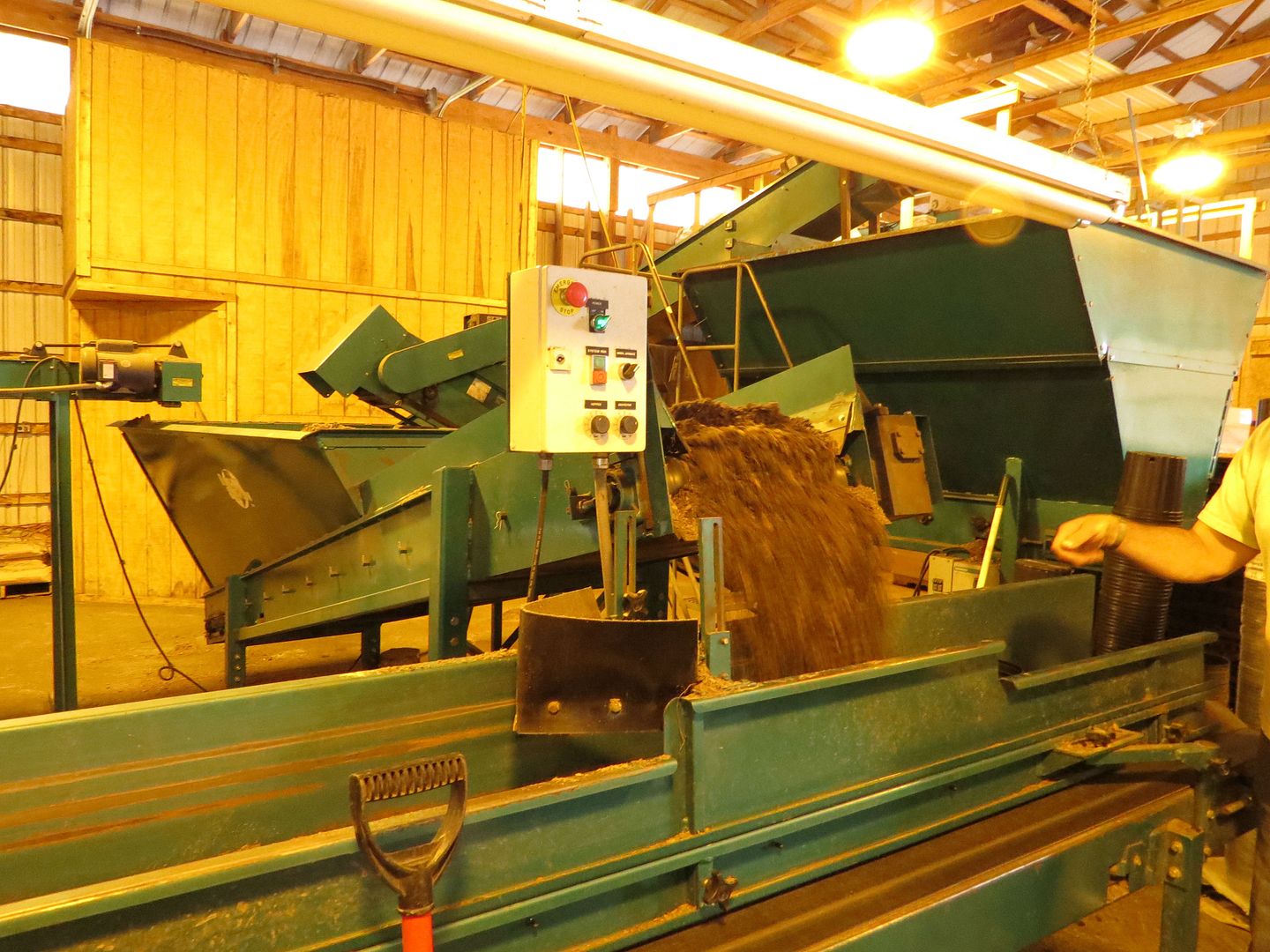
Depending on the size of the pot or flats they're filling the media gets mixed up and loaded into one of two machines. And he emphasized that they fill their pots up to the brim. This machine in particular is meant for size 1 or 2 pots... I say size 1 or 2 because apparently you can get sued for calling them 1, 2, or 3 "gallon" pots because they technically don't hold 1, 2, or 3 gallons of liquid. (Also a 5 dollar foot long may in fact not be a foot long.) So the wood in the back is a boxed in area where they mix the soil up. A conveyor belt takes it to the green bin (right) which then dumps it into the second bin as needed (middle) and that travels up another conveyor belt dumping down through a grate that the empty pots move under. The excess soil is scraped off the top and yet another conveyor belt collects it and sends it back up into the middle bin (left).
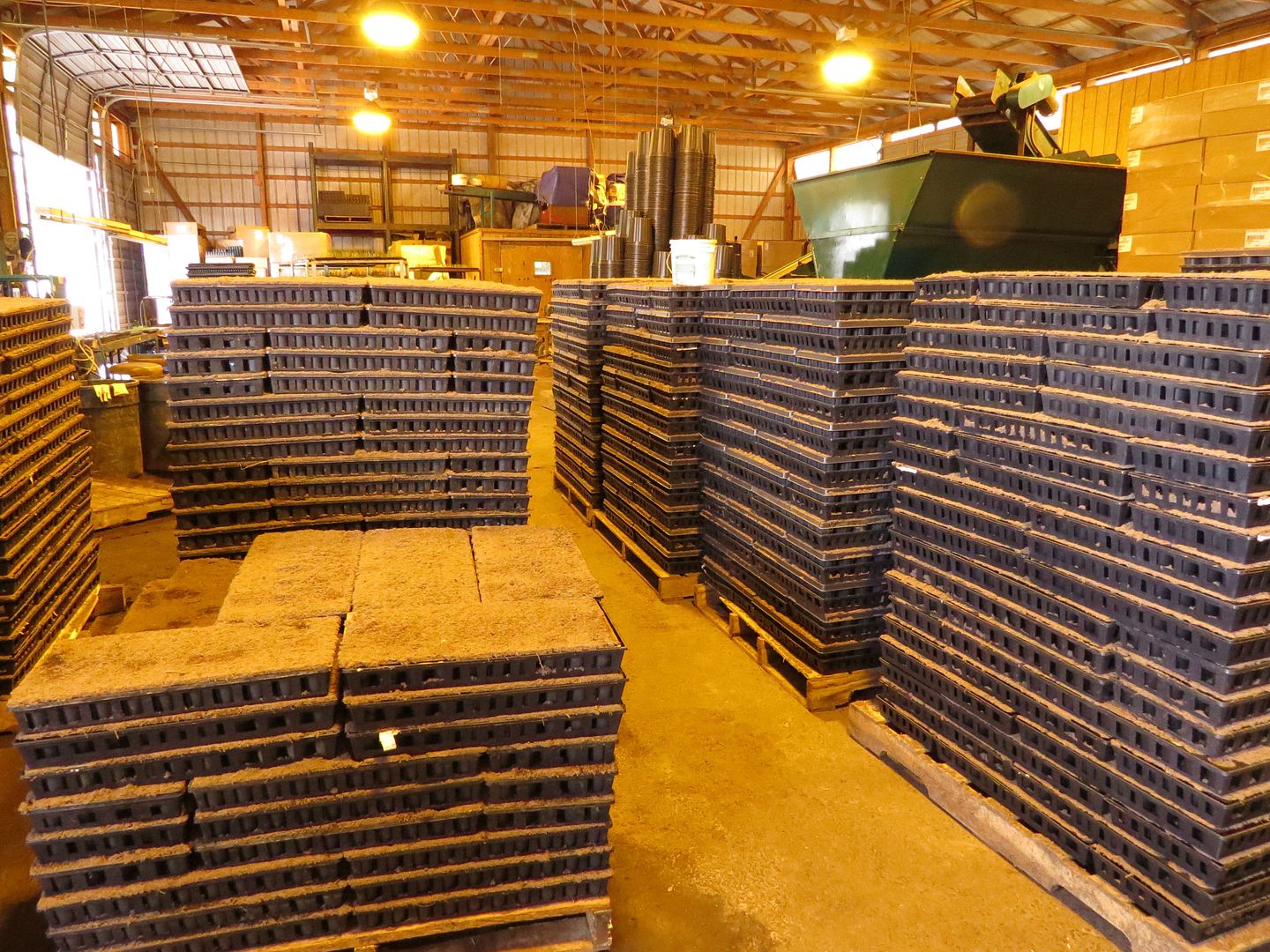
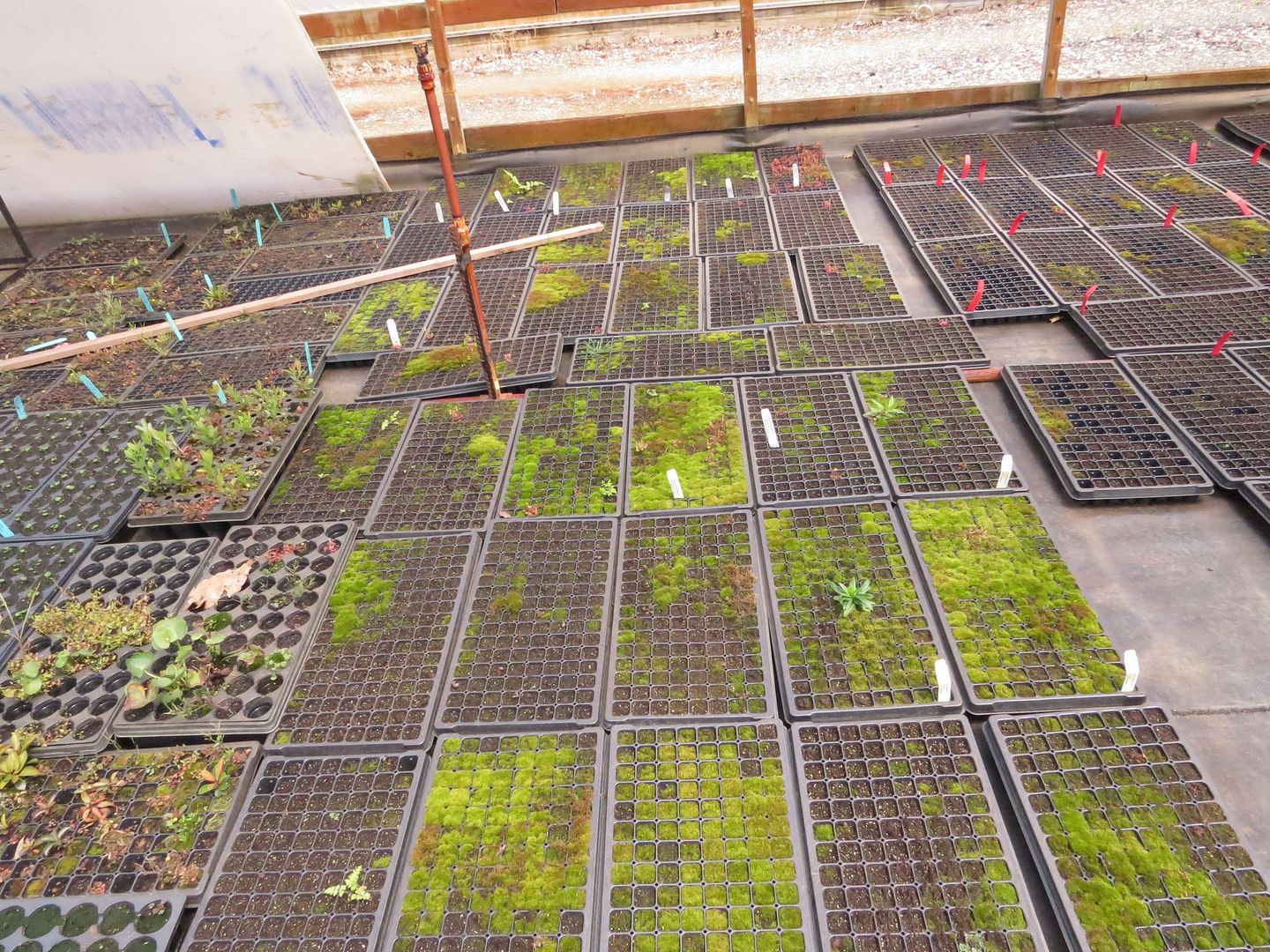
Here you can see the result of their machine that fills the flats up with dirt. For some species of plants they'll actually mix the seeds in with the soil and load it up into the flats (one assumes smaller flats than the ones pictured above).
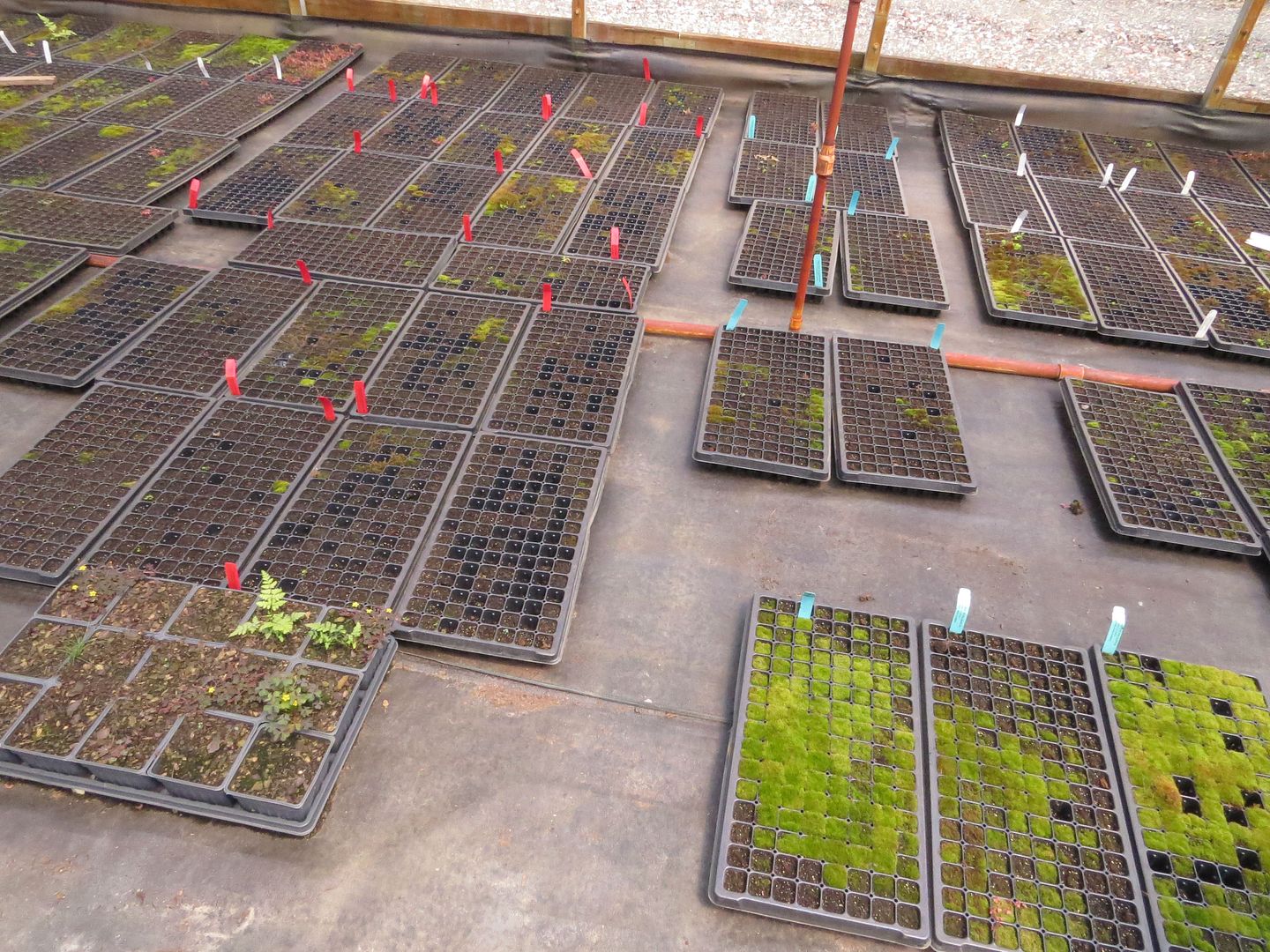
Here they were trying different methods to get Ferns to grow. Ferns reproduce by spores which have to develop into different types of microscopic organisms before what we would consider to be an adult plant forms. I'm not big on ferns and I don't particularly understand it but it sounded similar to getting Orchids to grow. This particular method involved collecting spores, sending them to a lab to be grown into tissue samples, putting them into a blender and then soaking the contents in a sponge material and then hope something grows. He's had a moderate amount of success with this method but believes he needs to get the price down somehow.
Flats of this that were placed outside in the greenhouses show some success, but it was unclear if these were from that method or something different. He did have greenhouses that were just filled with ferns as far as you could see so clearly something is working.
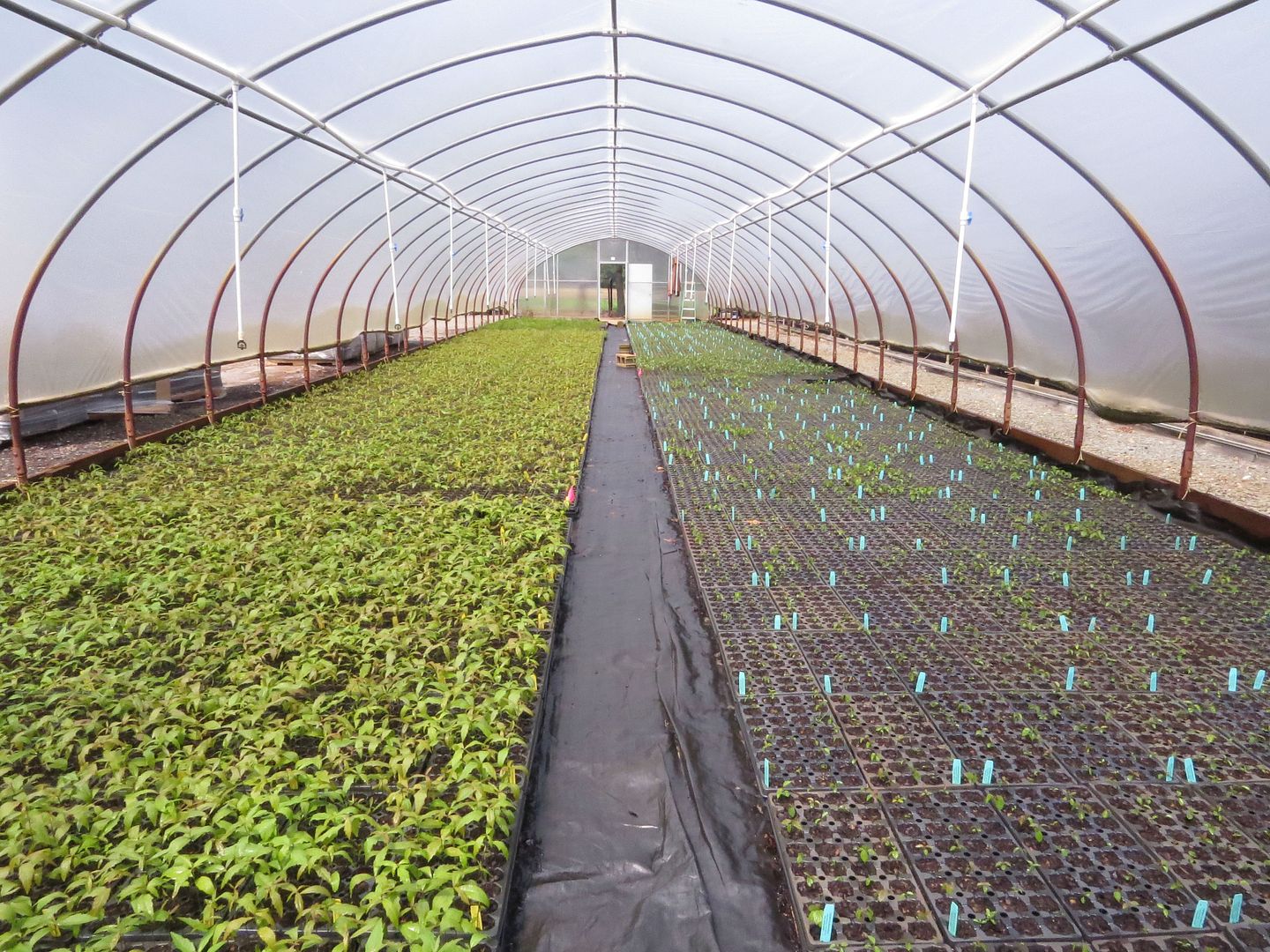
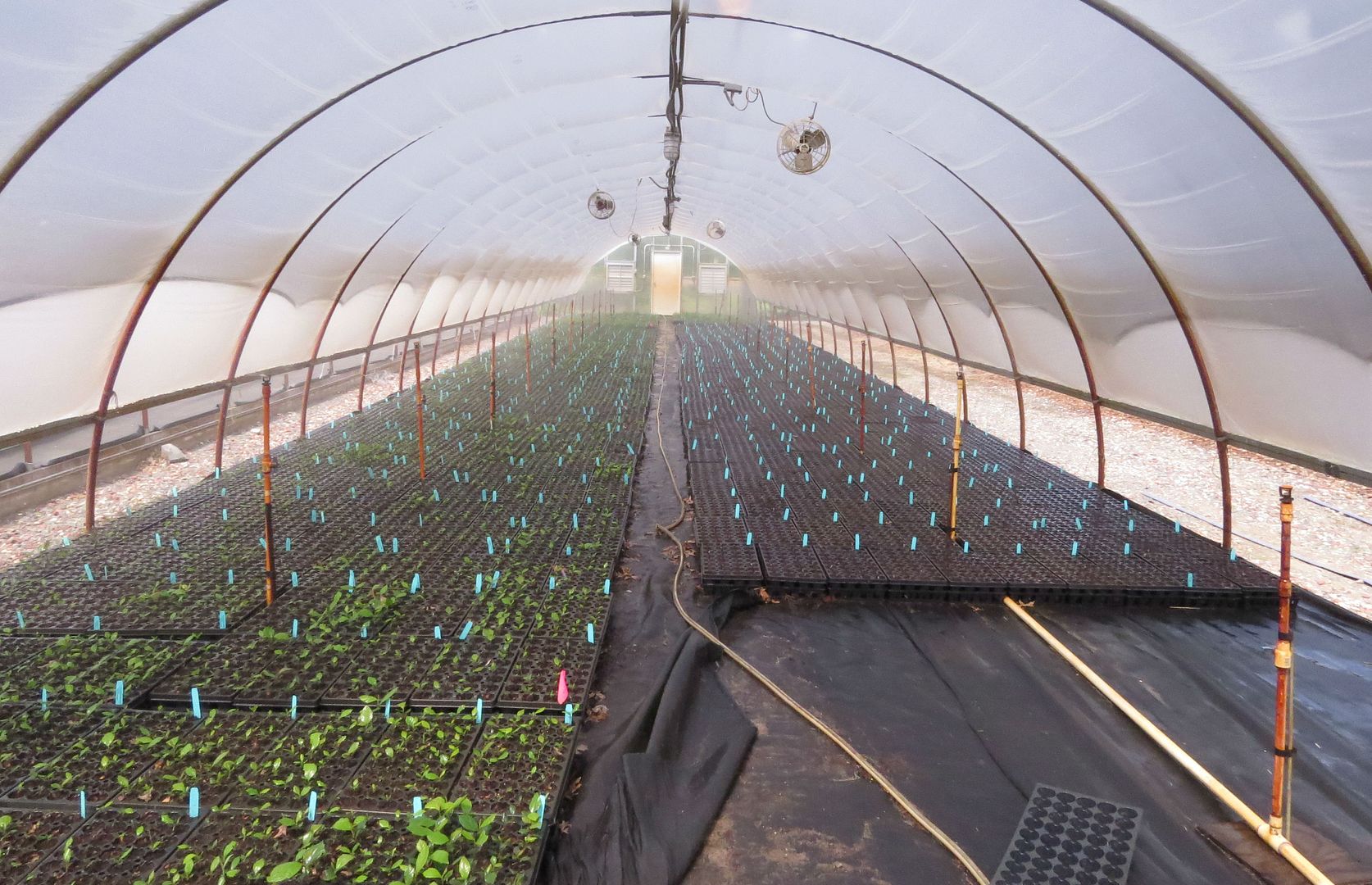
Of course all plants, whether seed or spore, get planted in a flat and taken out to one of the greenhouses.
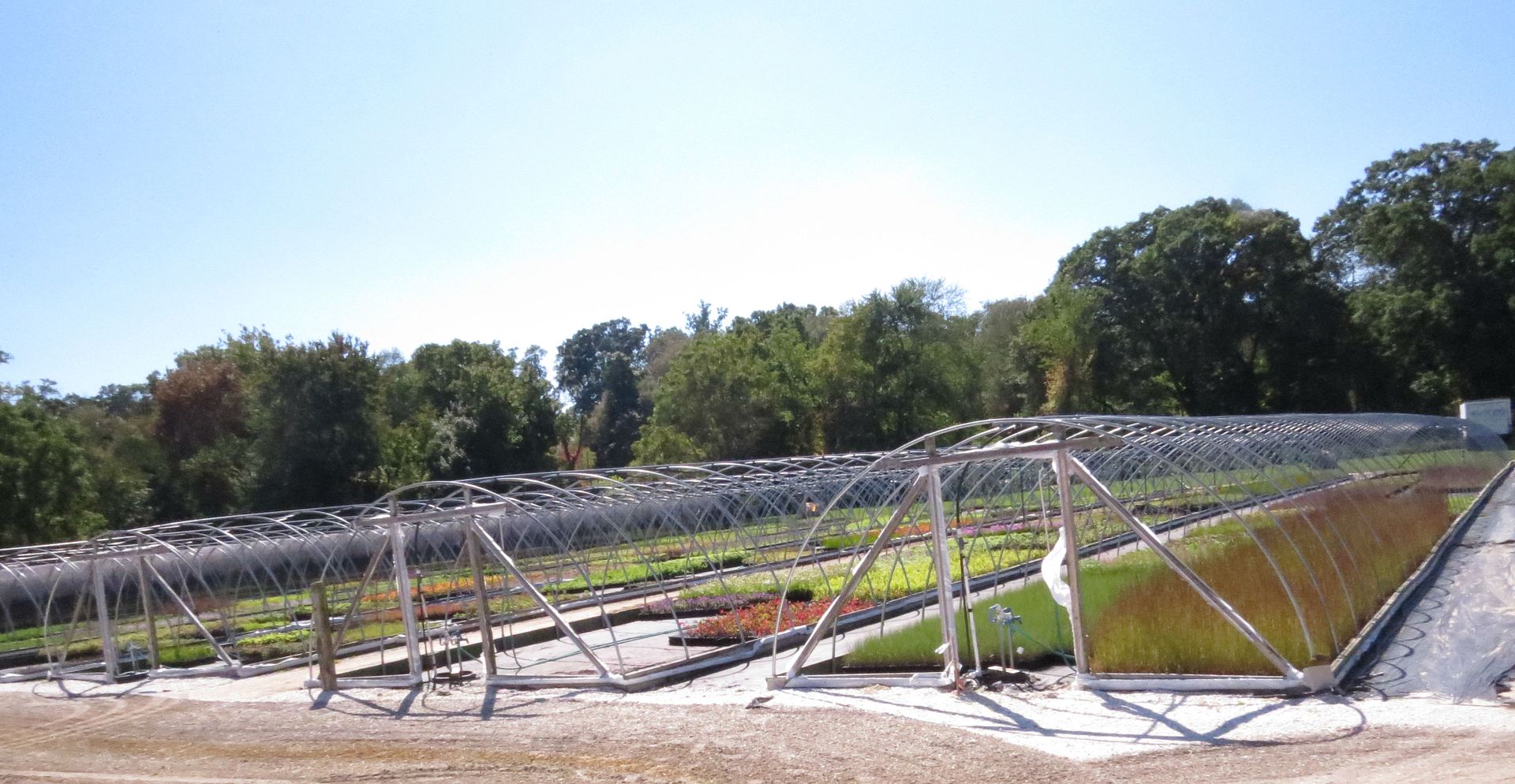
It was neat seeing them being watered, and he actually runs heating coils underground. Other nurseries I've been to use gas boilers to pump in the heat manually. His watering method seemed more costly though but really I'm not sure. Some places I've been to had their own water towers setup and just use gravity to create water pressure.
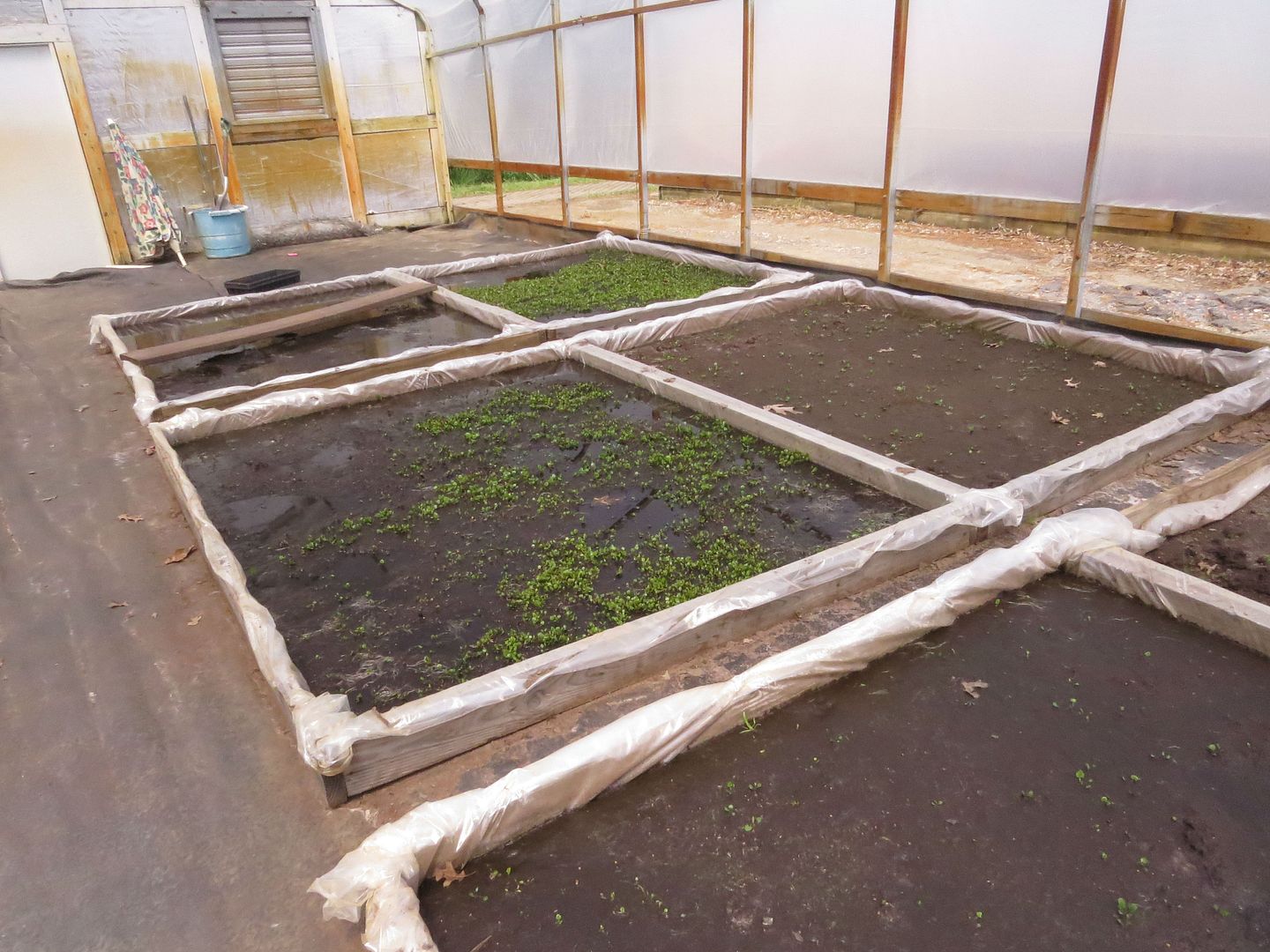
He grows aquatic plants too, mainly used for restoration projects. Their seed has to be submerged in water to germinate. Also I'm not sure what it is about the mud in these beds but they smelled awful but not unlike bogs I've been to in nature.
He talked a little about why he's not more open to selling to the public. The benefit of wholesale is how automated he can be. They collect seeds by the millions and germinate them all at once. He gets huge orders of plants. The minimum order is $1,000, and it's not uncommon for people or order plants 1,000,000 at a time. Taking the phone call for that order takes up about the same amount of time as it does for someone only ordering just 10 so it's REALLY not worth his time.
It was great seeing his son stepping up to the plate and running the retail side of things though. I wish his selection was as good as his the wholesale... actually I'm not sure why it isn't, (maybe those are the only plants they keep in stock year round?) whatever the case, I think they're the only nursery that really sells Seaside Goldenrod over the internet.
For those of you who don't know about Seaside Goldenrod, Solidago sempervirens, this is the last nectar plant Monarch butterflies get before leaving New Jersey and crossing the Delaware river in their migration south. That's the ocean in the background of this photo. This species grows in 100% sand, is extremely salt tolerant, and grows right along the beach.
Thousands of these plants were planted along the coastline of Cape May, NJ, as a restoration effort to help safe the Monarch. It's thanks to the tireless efforts of nurseries like Pinelands Nursery that thousands of these plants can be planted for that purpose, and thanks to Pinelands Direct I can finally plant this at my home. And it makes it extra special that I can do this with a local genotype too... although I don't live at the beach so now the fun becomes seeing how well this plant can tolerate clay soil and seeing if I need to add sand. (I dug a hole and filled it with play sand which other sand loving species seem to be doing alright in.)
While on the tour though I was thrilled to learn that the owner's son is starting up a branch for smaller orders meant for the general public. It's called Pinelands Direct and I can happily say I'll be ordering from them in the future. Their website could use a little work and they don't have as big a selection as the main Pinelands Nursery, but they are selling some hard to find plants such as Seaside Goldenrod, along with more typical native plant nursery plants.
Regardless of which nursery you're buying from, though, you'll be getting plants grown from local seed stock native to New Jersey, PA, NY, DE, and generally a 250 mile radios around their nursery. Some native plant gardeners and conservationists find that important. Personally I don't, I'm not that picky but it is nice growing something that tends to be better adapted for the local area.
Speaking from experience, I buy from a lot of online nurseries and sometimes when I order from a nursery based in Florida the plants don't always survive the winters. So growing from local genotypes has its benefits. When you do find success though it's sometimes fun to mix and match genotypes to extend the bloom or encourage fall color at different times of year. The Black Eyed Susans grown at the Mt. Cuba Center in DE bloom right alongside Symphyotrichum laeve 'Bluebird' (click more photos), whereas back at my house in NJ, they've finished flowering long before most asters have even flowered. However I do happen to have two genotypes of New England Aster. The local one found here in NJ blooms a solid month after the one I ordered from a Massachusetts nursery. Their bloom is so far off that one is setting seed while the other is flowering.
After the tour, there was a native plant sale. We didn't get full reign over the place like we did at the New Moon Nursery but I got my Seaside Goldenrod (and 8 other plants) so I was happy. The quality can't be beat for the price we paid. The plants are in a 4 inch square pot (I believe it's a quart) and they all had thick solid stems, they were very huge and overall healthy for the price paid. Some of the plants I got were a little root bound but frankly I get that from every nursery that sells anything larger than a plug size, and it's a simply fix too, just cut off the offending roots and loosen up the sides so I don't fault them for that. I'm very happy with the plants I got! (And added a link to their site on the side bar.)
It was implied they take field trips and go well out of their way to collect seeds. Sometimes they're in boats. Each of the white drums (right) he said probably held a 1 to 3 thousand dollars worth of seeds depending on the species inside and how dense they packed it.
Several of the species they offer, they grow in fields to make seed collecting easier. He owns several farms for that purpose across multiple states. The deer are a problem for some of their sites but not this particular location. Apparently hunting is allowed in the forest pictured in the background.
One crop of some sort of grass looked to be dead and they were watering the hell out of it. I assume it's a warm season crop but the fact they were watering worried the owner quite a bit. It hasn't rained in NJ for a month now and he joked during the tour that if the skies suddenly opened and a torrential down pour happened he wouldn't exactly have been mad at the situation.
A mixture of sand, ground up coconut chips, wood bark, and maybe two or three other things I'm forgetting, go into the pots and plugs they use there. This is the "Pinelands" nursery after all so Sand is very important. Along with offering good drainage though it's also the heaviest medium to put in a pot, which I really hadn't though about. He also commented on how you'll see plants in nurseries, how the medium seems to have settled or sunken in a good inch or three. That's mostly because the medium they used decomposed which he viewed as not being good, though I'm note convinced it really matters.
Depending on the size of the pot or flats they're filling the media gets mixed up and loaded into one of two machines. And he emphasized that they fill their pots up to the brim. This machine in particular is meant for size 1 or 2 pots... I say size 1 or 2 because apparently you can get sued for calling them 1, 2, or 3 "gallon" pots because they technically don't hold 1, 2, or 3 gallons of liquid. (Also a 5 dollar foot long may in fact not be a foot long.) So the wood in the back is a boxed in area where they mix the soil up. A conveyor belt takes it to the green bin (right) which then dumps it into the second bin as needed (middle) and that travels up another conveyor belt dumping down through a grate that the empty pots move under. The excess soil is scraped off the top and yet another conveyor belt collects it and sends it back up into the middle bin (left).
Here you can see the result of their machine that fills the flats up with dirt. For some species of plants they'll actually mix the seeds in with the soil and load it up into the flats (one assumes smaller flats than the ones pictured above).
Here they were trying different methods to get Ferns to grow. Ferns reproduce by spores which have to develop into different types of microscopic organisms before what we would consider to be an adult plant forms. I'm not big on ferns and I don't particularly understand it but it sounded similar to getting Orchids to grow. This particular method involved collecting spores, sending them to a lab to be grown into tissue samples, putting them into a blender and then soaking the contents in a sponge material and then hope something grows. He's had a moderate amount of success with this method but believes he needs to get the price down somehow.
Flats of this that were placed outside in the greenhouses show some success, but it was unclear if these were from that method or something different. He did have greenhouses that were just filled with ferns as far as you could see so clearly something is working.
Of course all plants, whether seed or spore, get planted in a flat and taken out to one of the greenhouses.
It was neat seeing them being watered, and he actually runs heating coils underground. Other nurseries I've been to use gas boilers to pump in the heat manually. His watering method seemed more costly though but really I'm not sure. Some places I've been to had their own water towers setup and just use gravity to create water pressure.
He grows aquatic plants too, mainly used for restoration projects. Their seed has to be submerged in water to germinate. Also I'm not sure what it is about the mud in these beds but they smelled awful but not unlike bogs I've been to in nature.
He talked a little about why he's not more open to selling to the public. The benefit of wholesale is how automated he can be. They collect seeds by the millions and germinate them all at once. He gets huge orders of plants. The minimum order is $1,000, and it's not uncommon for people or order plants 1,000,000 at a time. Taking the phone call for that order takes up about the same amount of time as it does for someone only ordering just 10 so it's REALLY not worth his time.
It was great seeing his son stepping up to the plate and running the retail side of things though. I wish his selection was as good as his the wholesale... actually I'm not sure why it isn't, (maybe those are the only plants they keep in stock year round?) whatever the case, I think they're the only nursery that really sells Seaside Goldenrod over the internet.
For those of you who don't know about Seaside Goldenrod, Solidago sempervirens, this is the last nectar plant Monarch butterflies get before leaving New Jersey and crossing the Delaware river in their migration south. That's the ocean in the background of this photo. This species grows in 100% sand, is extremely salt tolerant, and grows right along the beach.
Thousands of these plants were planted along the coastline of Cape May, NJ, as a restoration effort to help safe the Monarch. It's thanks to the tireless efforts of nurseries like Pinelands Nursery that thousands of these plants can be planted for that purpose, and thanks to Pinelands Direct I can finally plant this at my home. And it makes it extra special that I can do this with a local genotype too... although I don't live at the beach so now the fun becomes seeing how well this plant can tolerate clay soil and seeing if I need to add sand. (I dug a hole and filled it with play sand which other sand loving species seem to be doing alright in.)
Wednesday, October 1, 2014
Scoliid Wasps on Goldenrod
While touring New Moon Nursery I couldn't help but notice the alarming amount of Scoliid Wasps on their Goldenrod. I believe this is the cultivar 'Fireworks' but these are only plugs so they're not really representative of the adult plants. But even in flats, you can see a lot of these plants still try to flower.
Scoliid Wasps are parasites of beetle larva, including the nonnative Japanese Beetle. The adult form though is a pollinator that's fond of generalist composites and mint. Goldenrod, Aster, Mints and a few others are all good at attracting them to your yard. And because the larval stage consumes beetle larva they're beneficial to lawn health too.
Saturday, September 27, 2014
A Tour of New Moon Nursery
Being a member of the New Jersey Native Plant Society came with an unexpected perk this year. They held a fund raiser where we got to tour New Moon Nursery. They're a wholesale nursery native plant nursery, family run, started back in 2003. They do dabble in a few nonnatives but only under contract.
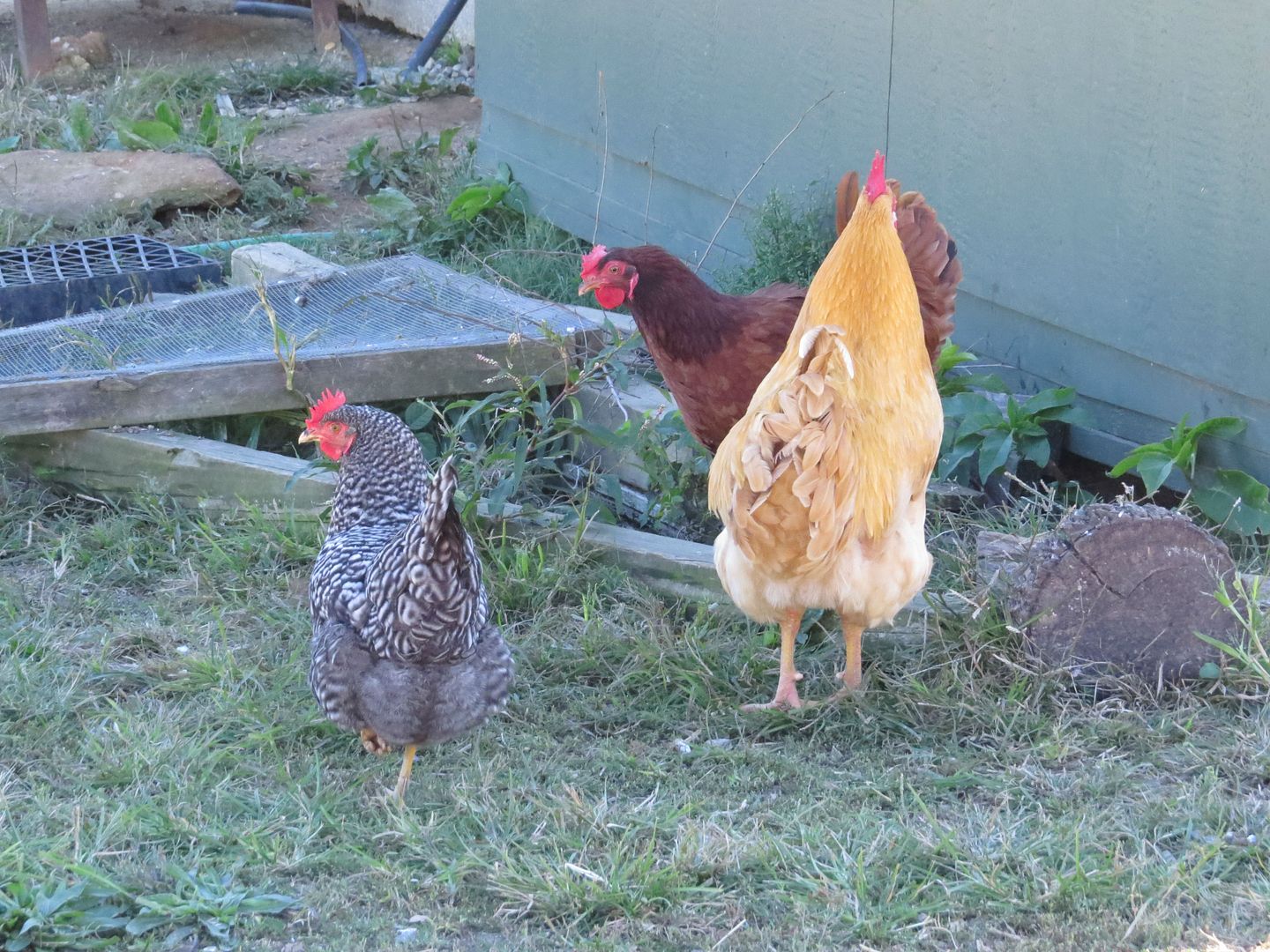
Before then the property used to be a chicken farm, and you can sort of see it in some of the buildings. Also they keep a couple dozen chickens around.
This is their shipping department, which was I believe they said were originally chicken cages from floor to ceiling. Basically one day a week, they go out and collect the flats to plants customers have ordered. They then take empty trays and assemble the orders from these flats and load them up into trucks or set them aside for customers to arrive and pick up.
It's at this point in the tour that we were given our free reign to fill up a flat of our own with with up to 50 plants, including a few things they had listed as limited supply and not available! The only real restriction was they had to be plug sized. This was a gift for just a $100 donation to the NJ Native Plant Society made well in advance. The nursery has 5 heated greenhouses, 10 row cover house, and a few outside areas filled with several hundred species of plants. Basically everything was up for grabs!
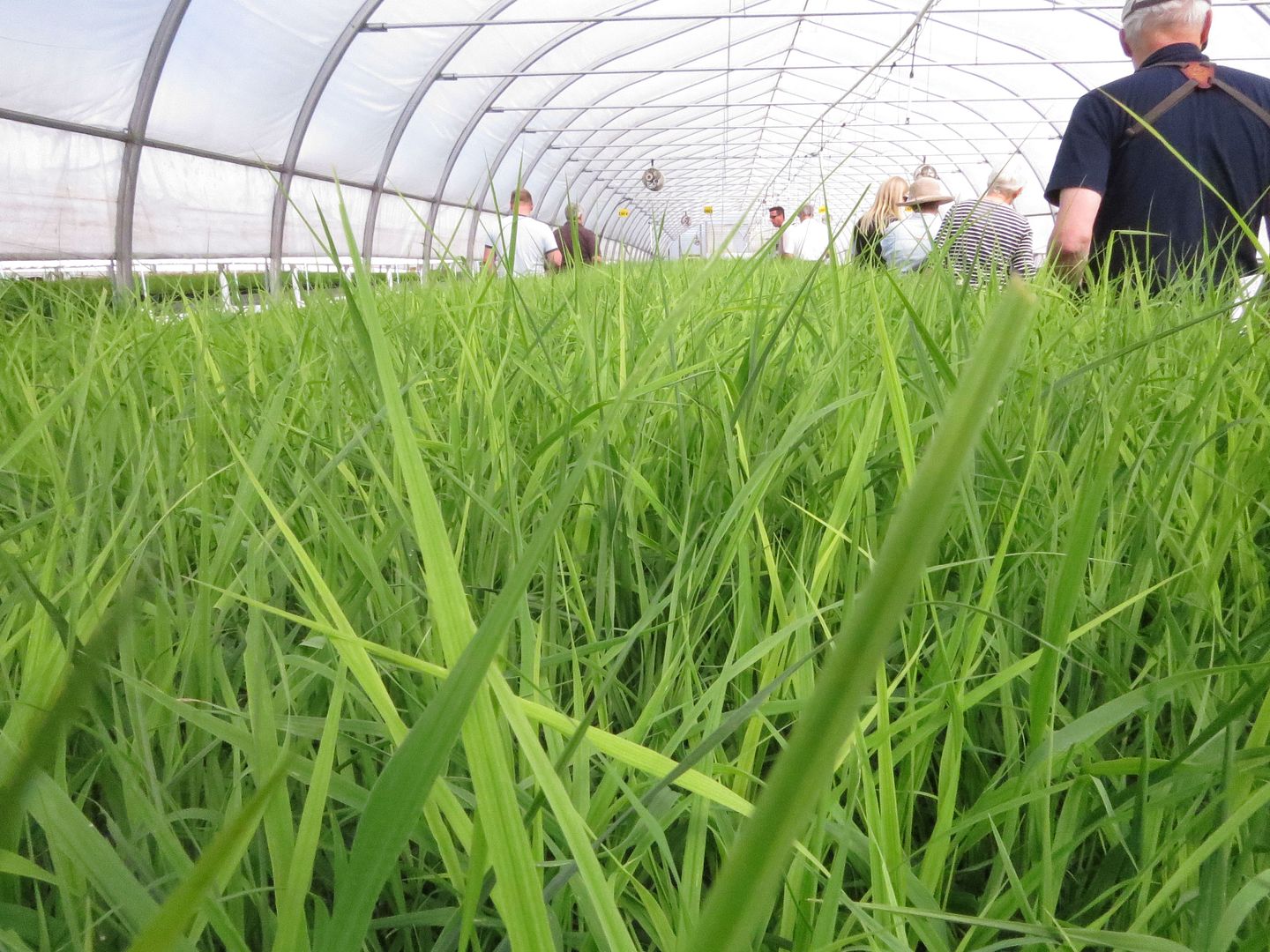
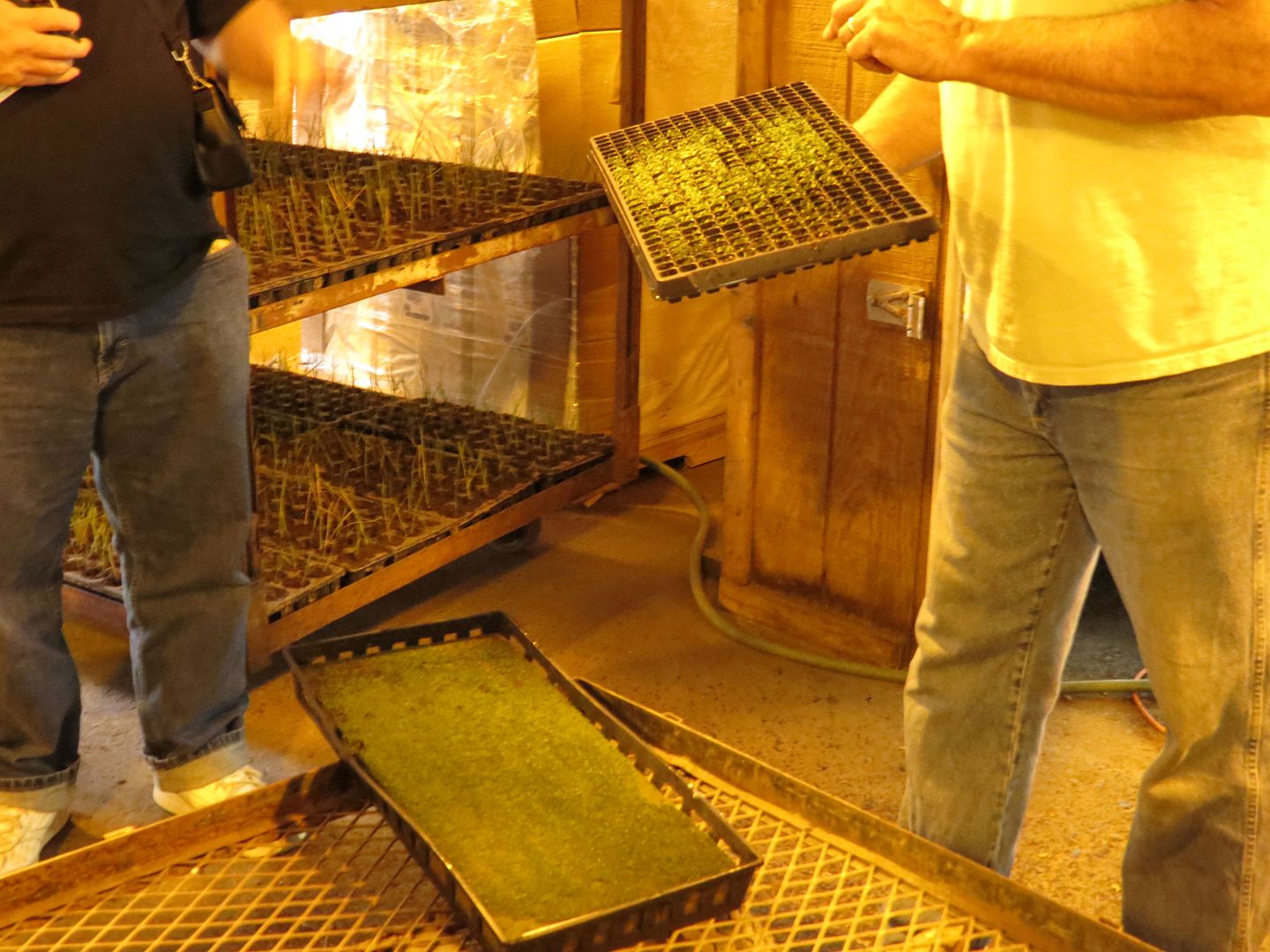
The tour continued into the greenhouses where they showed us how they start up seedlings in trays. I found it neat to learn they then take small cuttings of the seedlings after they germinate and root them to double plant production. The end product still maintains genetic diversity and they're able to mass produce cultivars that way.
Seedlings were a small part of the overall products they had. Pretty much everywhere else had hundreds of trays of plugs that we were free to take. It was actually fun just walking around the greenhouses, letting your hands glide across warm season grasses, rushes, Amsonia, and other perennials.
Around back they had an area setup for shade plants. These were mostly sedges which are more cold and shade tolerant than most grasses. They are also larger than plug size and thus not up for grabs, though each species was represented in the greenhouses where we were free to take them.
There was a small garden area back here where one native plant stole the show.
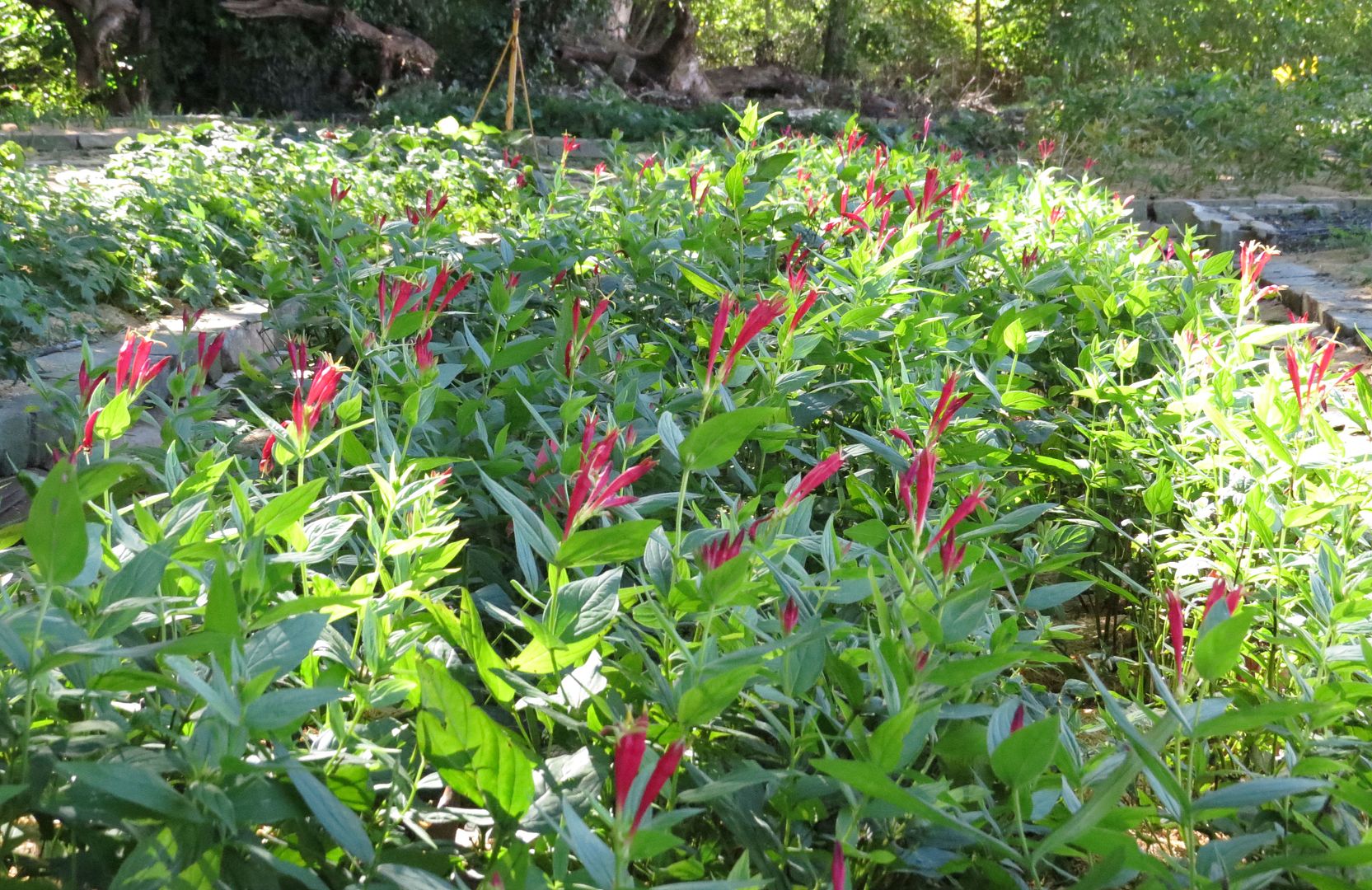
Spigelia marilandica, Indian Pink, is a shade plant with a brilliant red and yellow flower. Despite the slight warning "It will spread on you," this perennial remains one of the more expensive and in high demand native plants around. This is something of a contradiction that I don't know the answer to. (Probably should have asked while I was there, whoops.) I think the demand is created by the fact that so few growers grow the plant.
Around the front was the Pièce de résistance. This is where most of their plants are kept that are ready for sale. At this point the tour basically fell apart as everyone went and started filling up their trays.
Naturally I'm drawn to what brings in the pollinators, and this time it was a surprising number of cultivars.
I had to just marvel at the number of Scoliid Wasps on their goldenrod they had. There must have been a thousand of them on this one patch.
Two Hours Later, here's what I brought home:
5 Helianthus angustifolius, my favorite Swamp Sunflower.
5 Spigelia marilandica, Indian Pink.
5 Senecio aureus, Golden Ragwort, which I'm trying out in the meadow garden.
5 Sedum ternatum, Stonecrop, which I'm giving a try for the first time.
5 Symphyotrichum laevis 'Bluebird', which I've seen in action among black eyed susans and they look great together.
5 Symphyotrichum oblongifolius 'October Skies' which I have blooming now in nice fluffy domes of flowers out in the meadow.
5 Symphyotrichum noave-angliae 'Purple Dome'. This New England Aster is a compact cultivar, similar to S. oblongifolius. I was going to alternate this with 'October Skies' to make a boarder.
5 Caltha palustris, Marsh Marigold, I've been trying to establish for years now and think I have a spot it might like to grow.
5 Sisyrinchium angustifolium, Blue-eyed Grass.
2 Eurybia spectabilis, Showy Aster, was a last second decision. The flowers are larger than most Asters and certainly are showy, but I recall the overall plant not being that impressive.
3 Chrysogonum virginianum 'Superstar'. This is a selection of Green and Gold which is another first for my yard. It's a shade loving ground cover that blooms from April into June.
All and all I'd say it was a great trip.
Also Photographed:
In the cardboard are plants from Bluestone Perennials.
3 Solidago 'Fireworks'
3 New England Aster 'September Ruby'
I bought these two because they flower together and I love the combination of red and yellow.
(Also not photographed are a few dozen Tulipa clusiana 'Lady Jane' bulbs which I'm giving a try next year. I'm curious to see if species tulips are better at attracting pollinators.)
And a native Pitcher Plant which had some Sundews flowering in the moss. This came as a free gift from Aquascapes Unlimited.
Before then the property used to be a chicken farm, and you can sort of see it in some of the buildings. Also they keep a couple dozen chickens around.
This is their shipping department, which was I believe they said were originally chicken cages from floor to ceiling. Basically one day a week, they go out and collect the flats to plants customers have ordered. They then take empty trays and assemble the orders from these flats and load them up into trucks or set them aside for customers to arrive and pick up.
It's at this point in the tour that we were given our free reign to fill up a flat of our own with with up to 50 plants, including a few things they had listed as limited supply and not available! The only real restriction was they had to be plug sized. This was a gift for just a $100 donation to the NJ Native Plant Society made well in advance. The nursery has 5 heated greenhouses, 10 row cover house, and a few outside areas filled with several hundred species of plants. Basically everything was up for grabs!
The tour continued into the greenhouses where they showed us how they start up seedlings in trays. I found it neat to learn they then take small cuttings of the seedlings after they germinate and root them to double plant production. The end product still maintains genetic diversity and they're able to mass produce cultivars that way.
Seedlings were a small part of the overall products they had. Pretty much everywhere else had hundreds of trays of plugs that we were free to take. It was actually fun just walking around the greenhouses, letting your hands glide across warm season grasses, rushes, Amsonia, and other perennials.
Around back they had an area setup for shade plants. These were mostly sedges which are more cold and shade tolerant than most grasses. They are also larger than plug size and thus not up for grabs, though each species was represented in the greenhouses where we were free to take them.
There was a small garden area back here where one native plant stole the show.
Spigelia marilandica, Indian Pink, is a shade plant with a brilliant red and yellow flower. Despite the slight warning "It will spread on you," this perennial remains one of the more expensive and in high demand native plants around. This is something of a contradiction that I don't know the answer to. (Probably should have asked while I was there, whoops.) I think the demand is created by the fact that so few growers grow the plant.
Around the front was the Pièce de résistance. This is where most of their plants are kept that are ready for sale. At this point the tour basically fell apart as everyone went and started filling up their trays.
Naturally I'm drawn to what brings in the pollinators, and this time it was a surprising number of cultivars.
I had to just marvel at the number of Scoliid Wasps on their goldenrod they had. There must have been a thousand of them on this one patch.
Two Hours Later, here's what I brought home:
5 Helianthus angustifolius, my favorite Swamp Sunflower.
5 Spigelia marilandica, Indian Pink.
5 Senecio aureus, Golden Ragwort, which I'm trying out in the meadow garden.
5 Sedum ternatum, Stonecrop, which I'm giving a try for the first time.
5 Symphyotrichum laevis 'Bluebird', which I've seen in action among black eyed susans and they look great together.
5 Symphyotrichum oblongifolius 'October Skies' which I have blooming now in nice fluffy domes of flowers out in the meadow.
5 Symphyotrichum noave-angliae 'Purple Dome'. This New England Aster is a compact cultivar, similar to S. oblongifolius. I was going to alternate this with 'October Skies' to make a boarder.
5 Caltha palustris, Marsh Marigold, I've been trying to establish for years now and think I have a spot it might like to grow.
5 Sisyrinchium angustifolium, Blue-eyed Grass.
2 Eurybia spectabilis, Showy Aster, was a last second decision. The flowers are larger than most Asters and certainly are showy, but I recall the overall plant not being that impressive.
3 Chrysogonum virginianum 'Superstar'. This is a selection of Green and Gold which is another first for my yard. It's a shade loving ground cover that blooms from April into June.
All and all I'd say it was a great trip.
Also Photographed:
In the cardboard are plants from Bluestone Perennials.
3 Solidago 'Fireworks'
3 New England Aster 'September Ruby'
I bought these two because they flower together and I love the combination of red and yellow.
(Also not photographed are a few dozen Tulipa clusiana 'Lady Jane' bulbs which I'm giving a try next year. I'm curious to see if species tulips are better at attracting pollinators.)
And a native Pitcher Plant which had some Sundews flowering in the moss. This came as a free gift from Aquascapes Unlimited.
Subscribe to:
Posts (Atom)