Showing posts with label hover flies. Show all posts

Tuesday, May 21, 2013

Life in the Meadow Garden

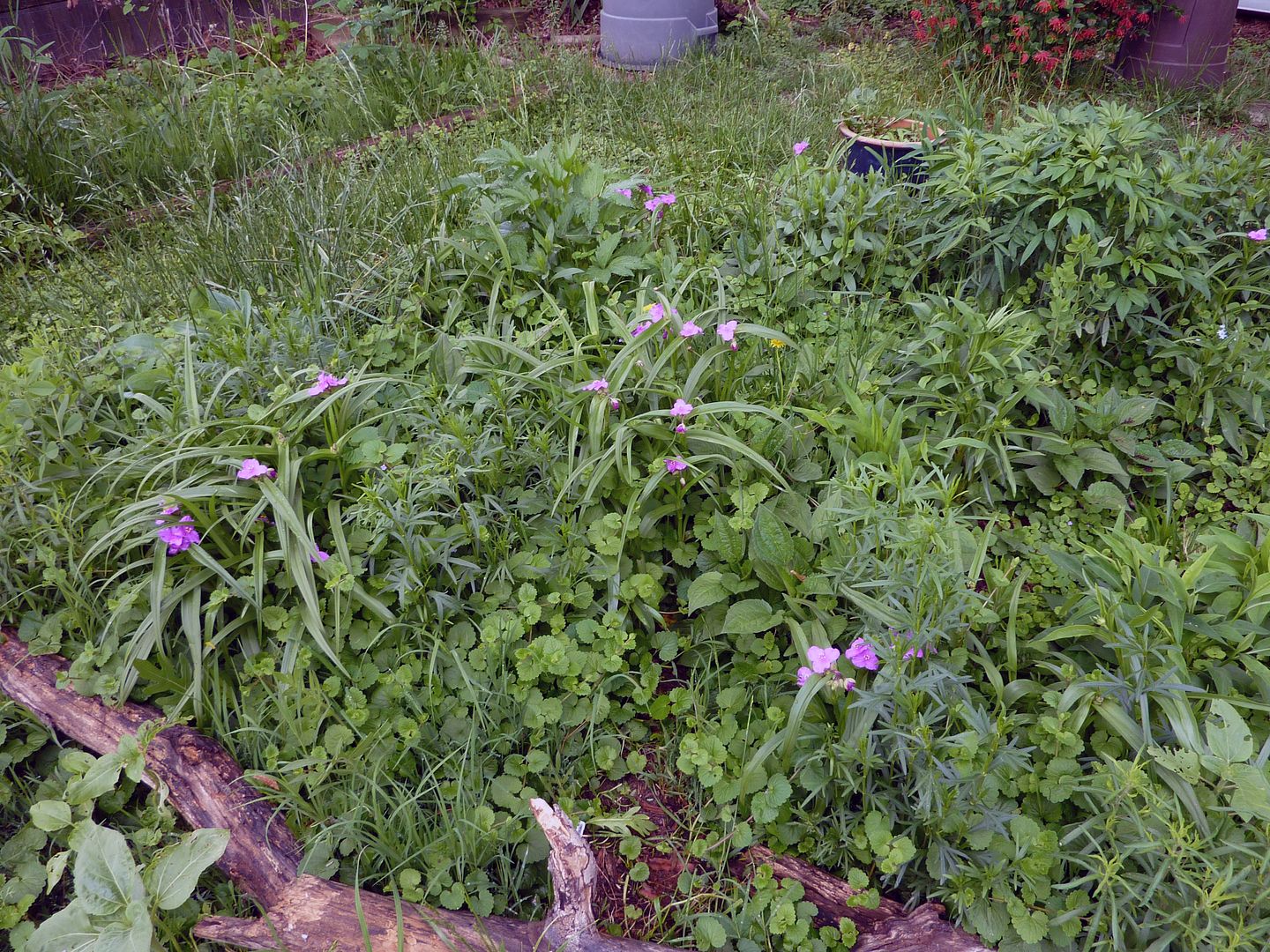
My little meadow garden is much farther along this year than it was this time last year. Mostly this is due to plants spreading both by seed and underground rhizomes, bulbs, and other such root divisions. I need to weed out some of the Creeping Charlie becuase it's climbing all over everything. But otherwise it's fairly weed free. Rudbeckias are coming up all over the place and should form a nice carpet of yellow later in the year, but for now I have the bright pink blooms of Western Spiderwort, Tradescantia occidentalis, to enjoy.

The earliest bumblebee workers as well as an assortment of hover flies have been pollinating them. I love how soft looking the pollen anthers look; as if they were made out of foam or something.


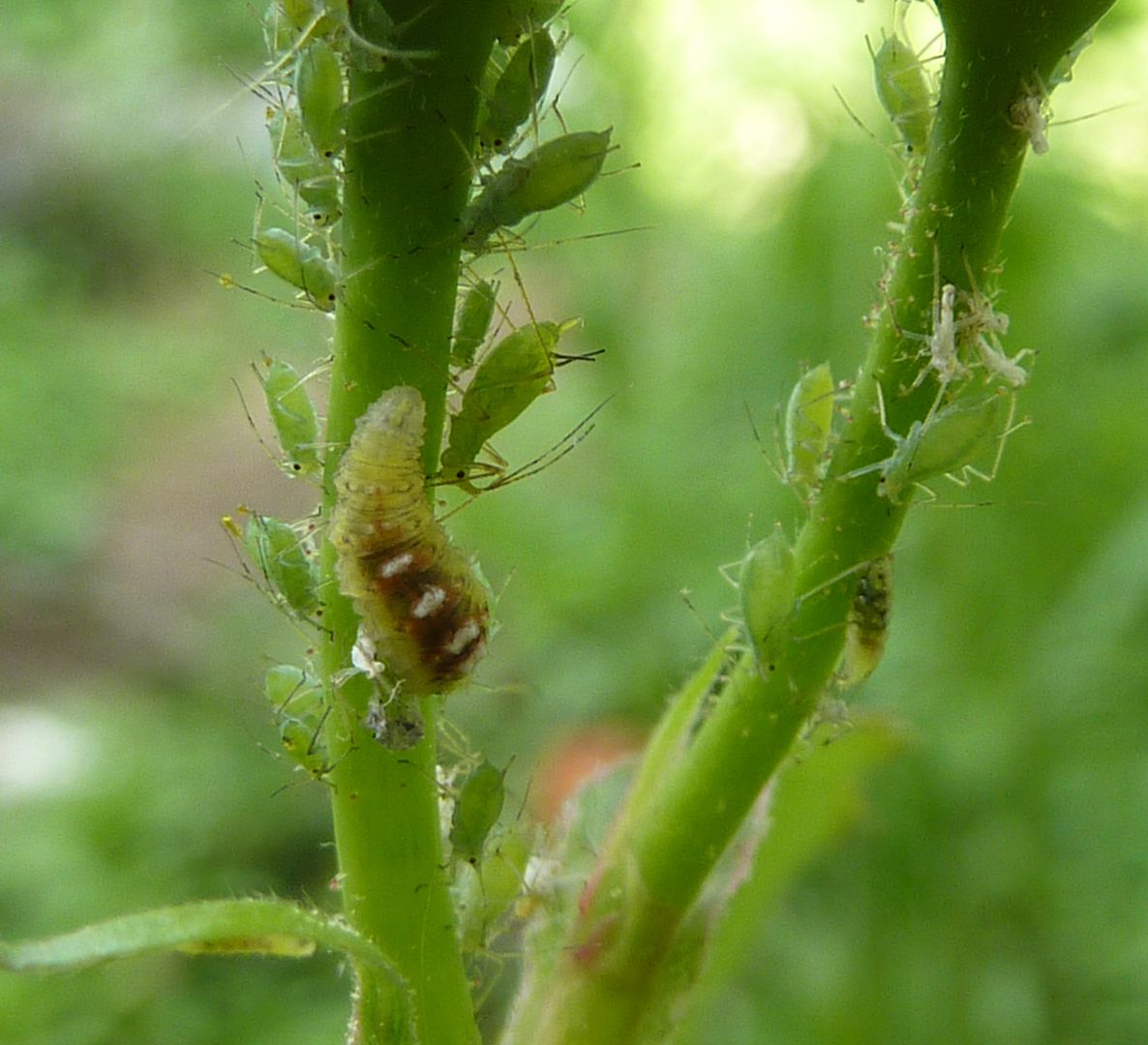
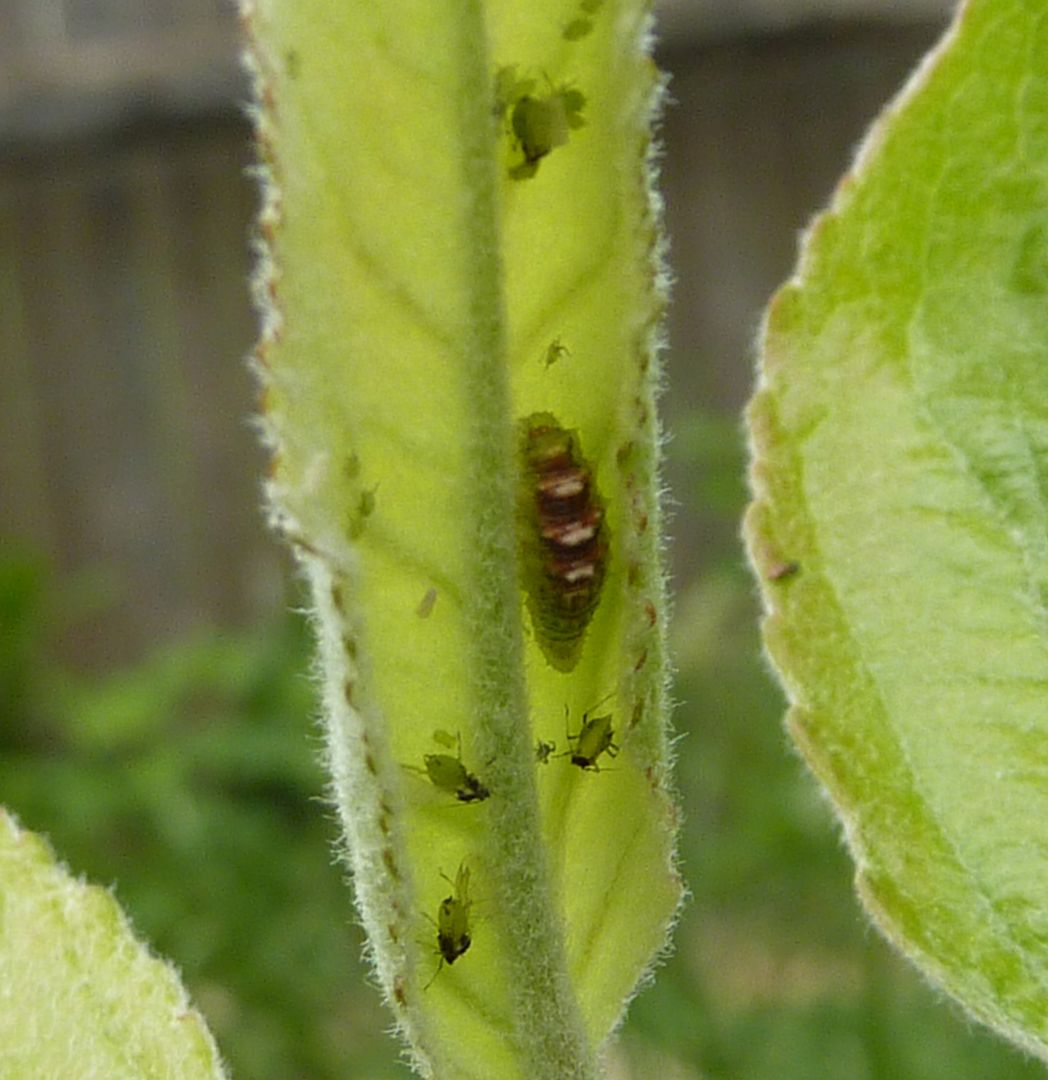
Elsewhere in the garden hover fly larva feed on aphids, and somehow go unnoticed by ants or even other aphids.

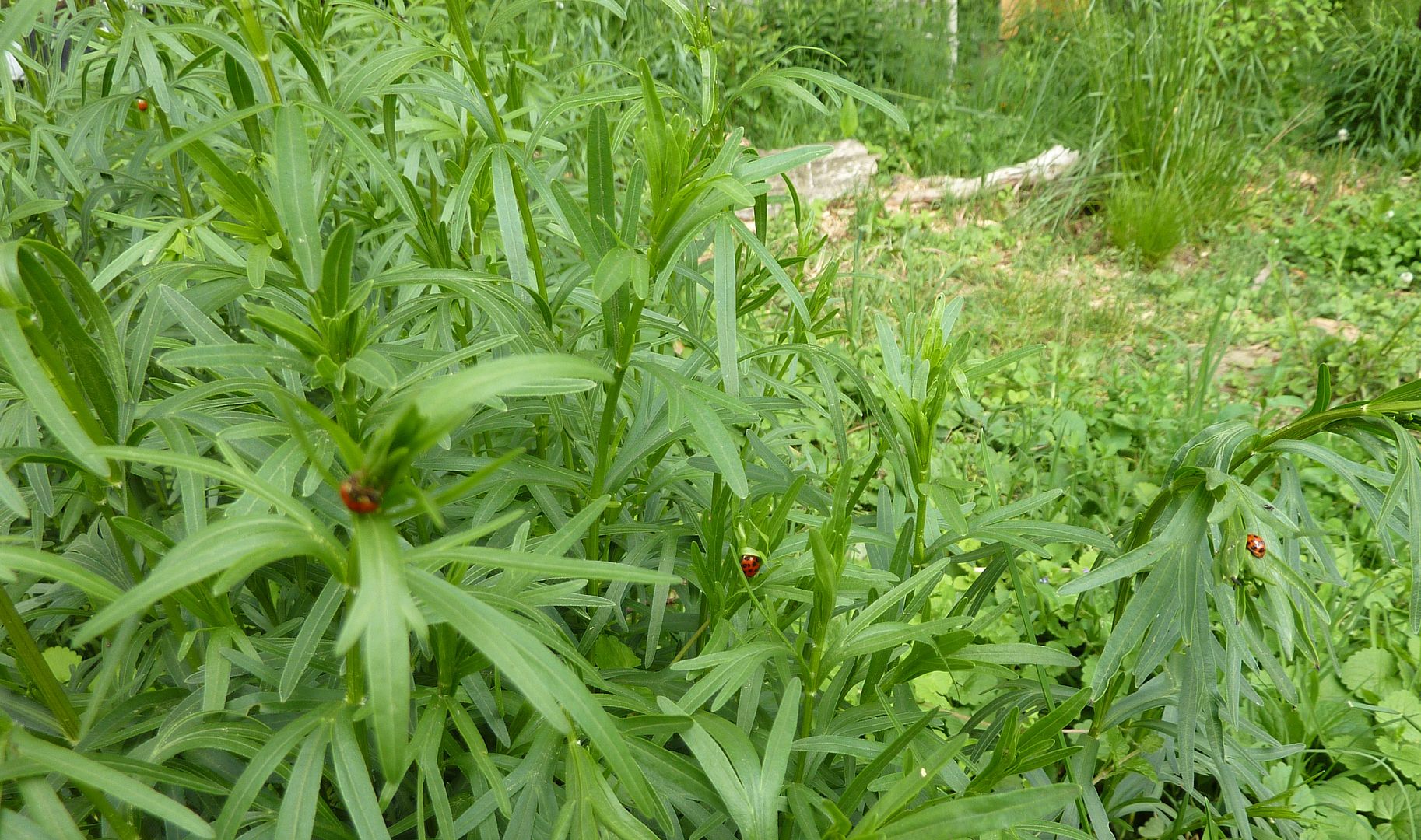
Along the Coreopsis tips a plethora of lady beetles have landed (free of charge) and help to control the aphid numbers. There are four of them in this picture alone.

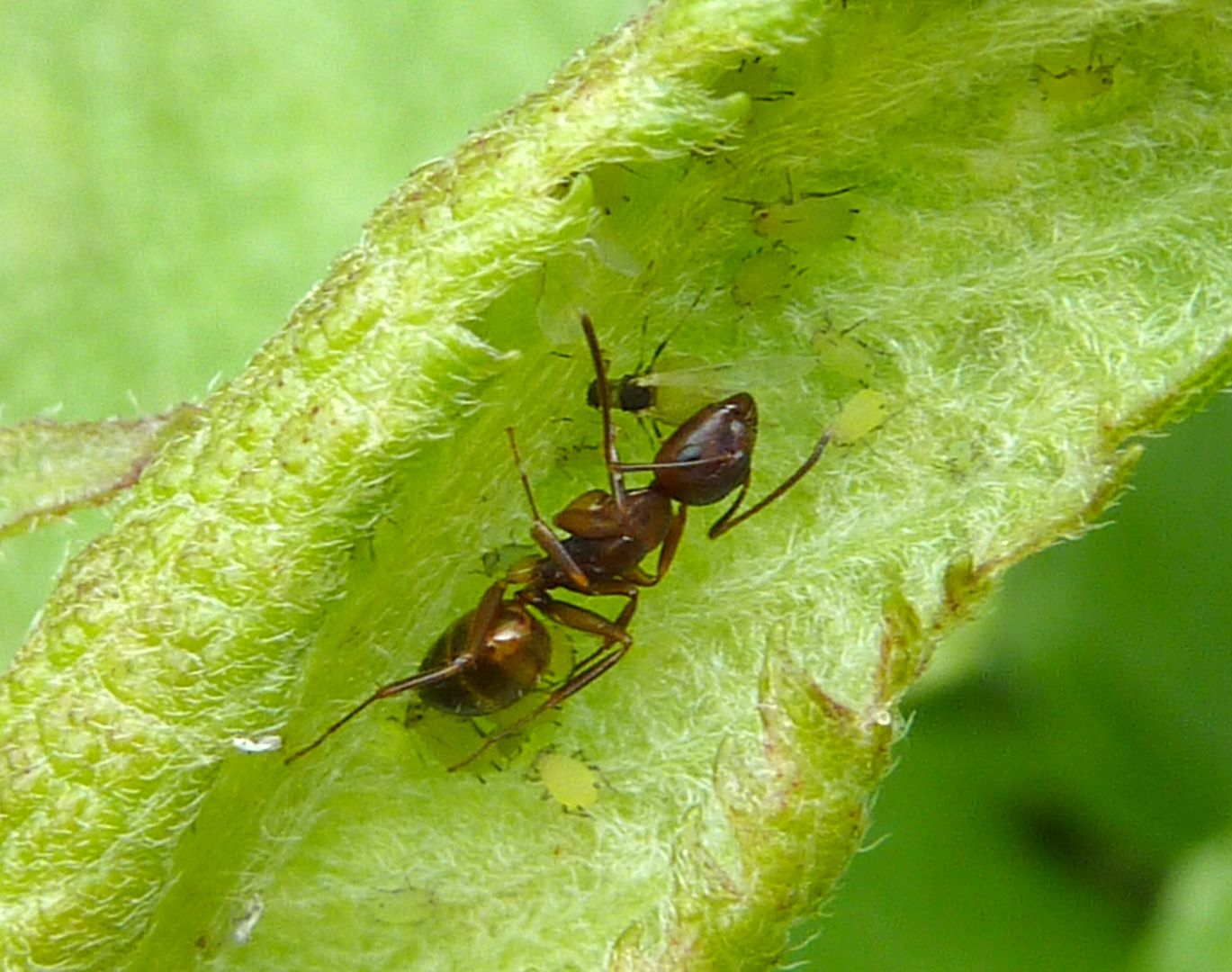
Pavement Ants, Tetramorium species E. have taken to tending some of the aphid herds. This is somewhat unusual becuase pavement ants don't usually climb plant life to obtain a meal, at least it seems less in their nature as seen in other ant species.


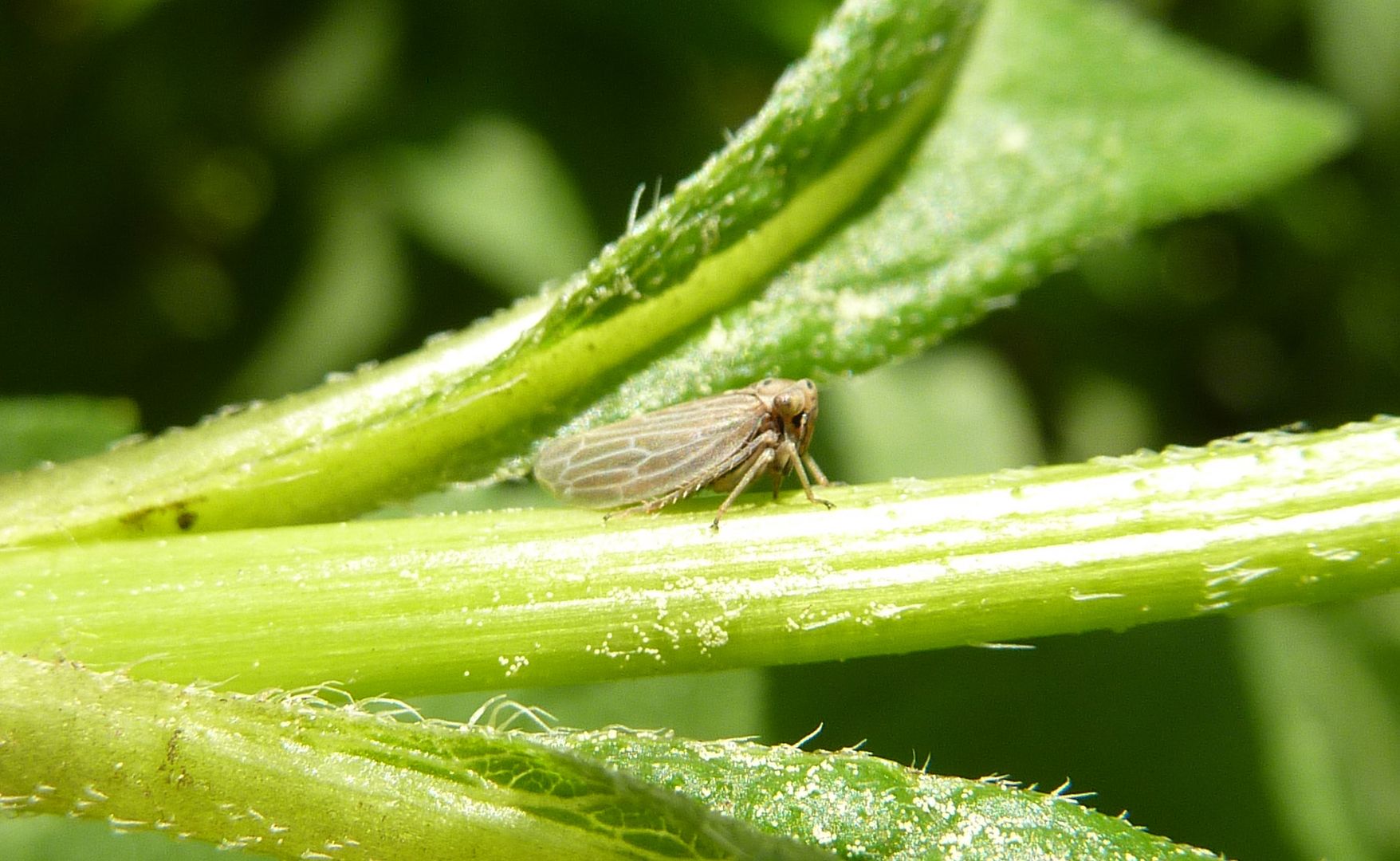
Leaf Hoppers are a distant cousin to the aphid, but they've opted for mobility and don't have as many associations with ants.

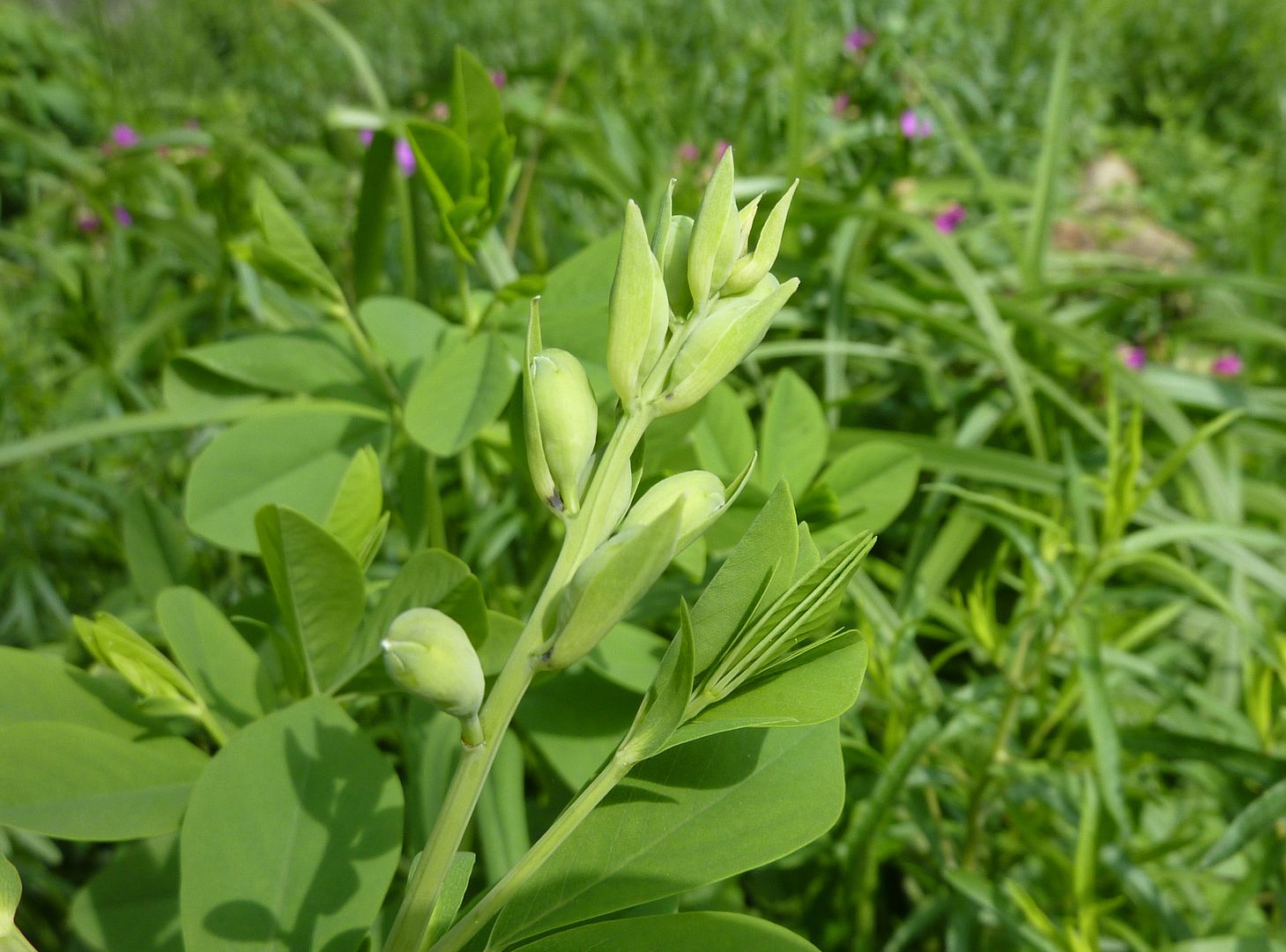
Young Baptisia alba, plants I'd started as plugs when I first planted the meadow garden three years ago are finally going to flower. I'm not sure if the addition of this plant was a good idea or bad. Because they produce their own fertilizer, they're nitrogen fixing, and encourage certain types of plants to grow better than others.

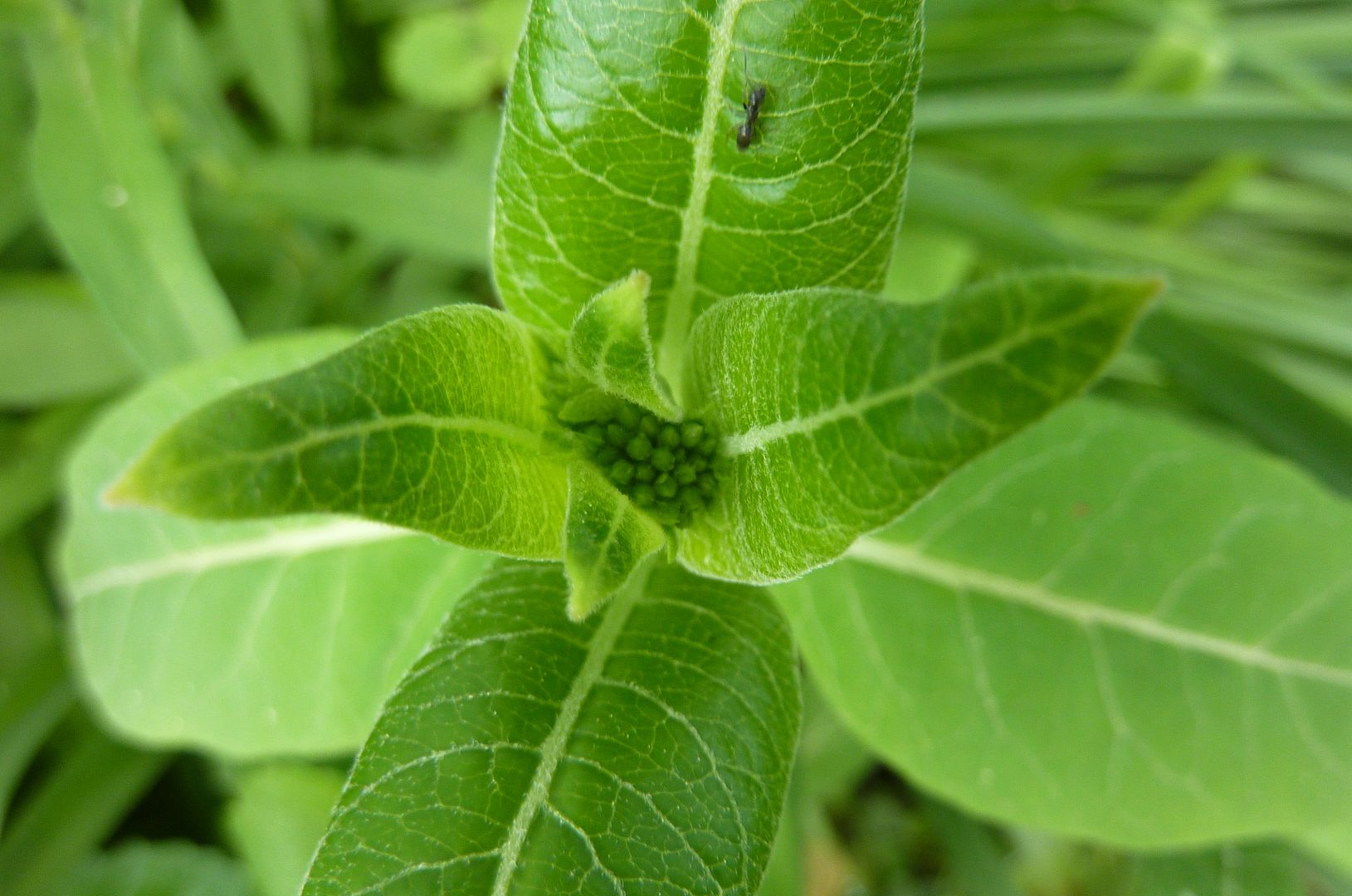
Also flowering for the first time this year is Purple Milkweed, Asclepias purpurascens.

Friday, May 17, 2013

Bees and Apple Trees

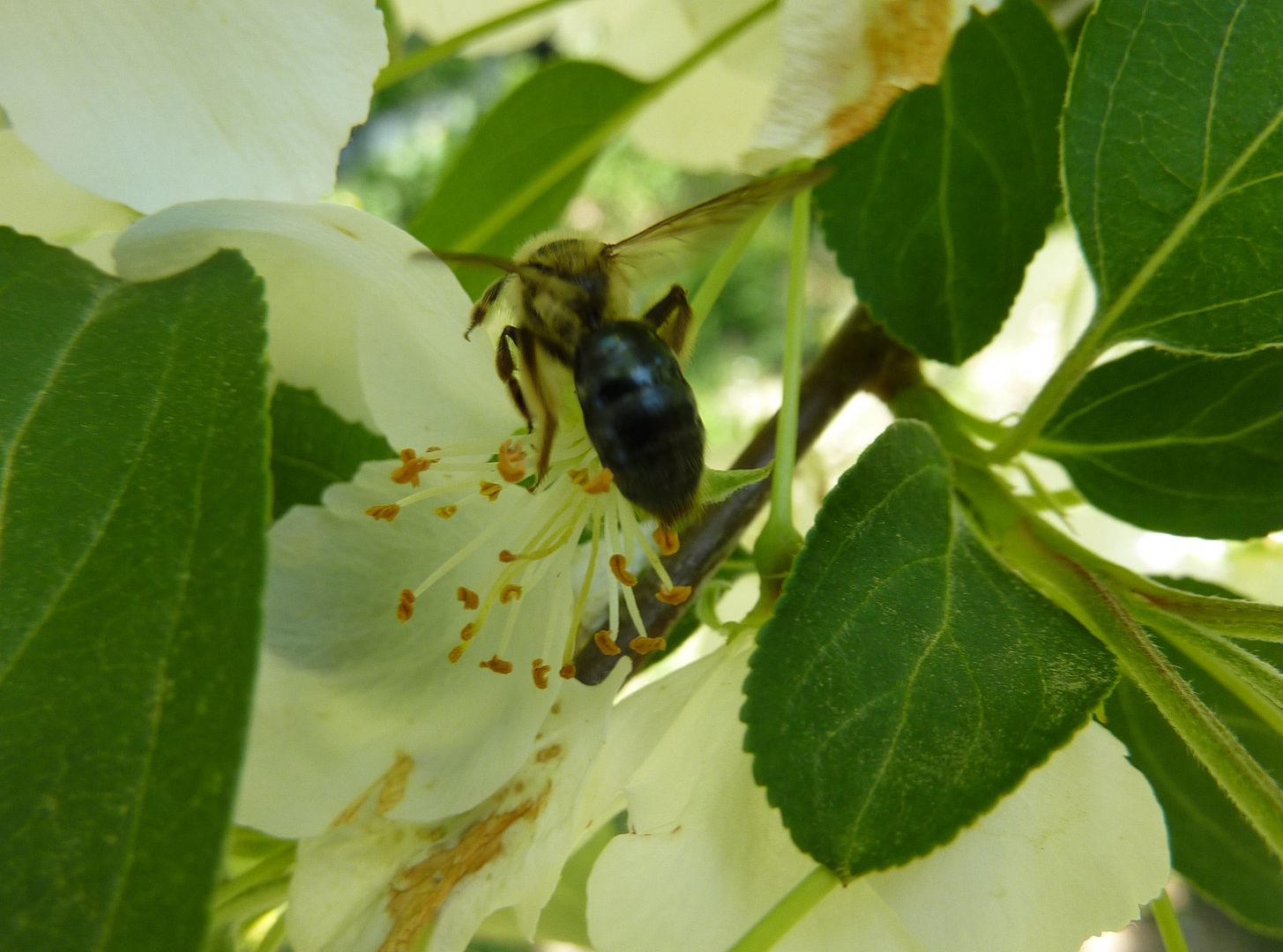
The apple trees have finished flowering but while they bloomed I was happy to find a diversity of bees about pollinating them.

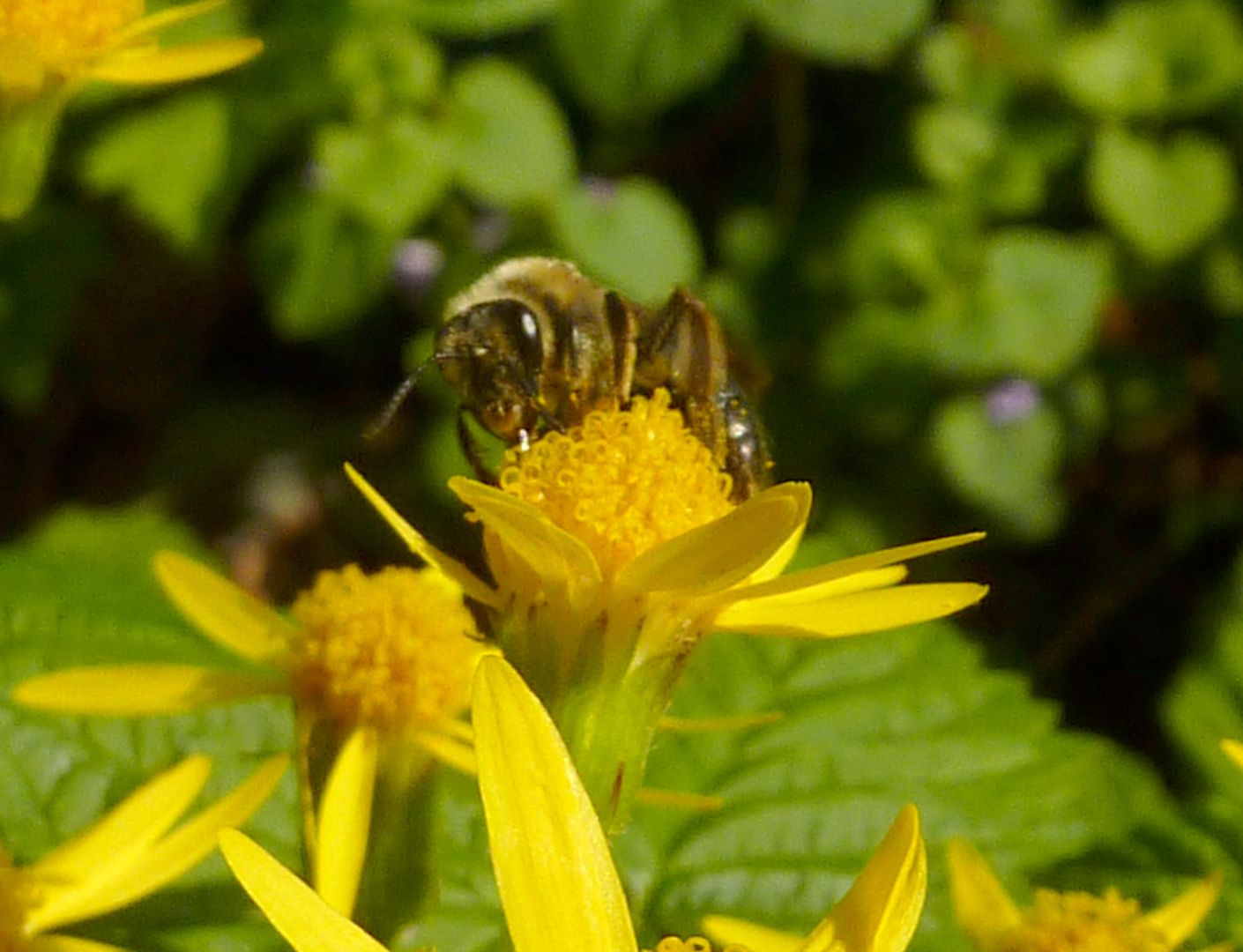
Mostly these little digger and mason bees buzz about from bloom to bloom.

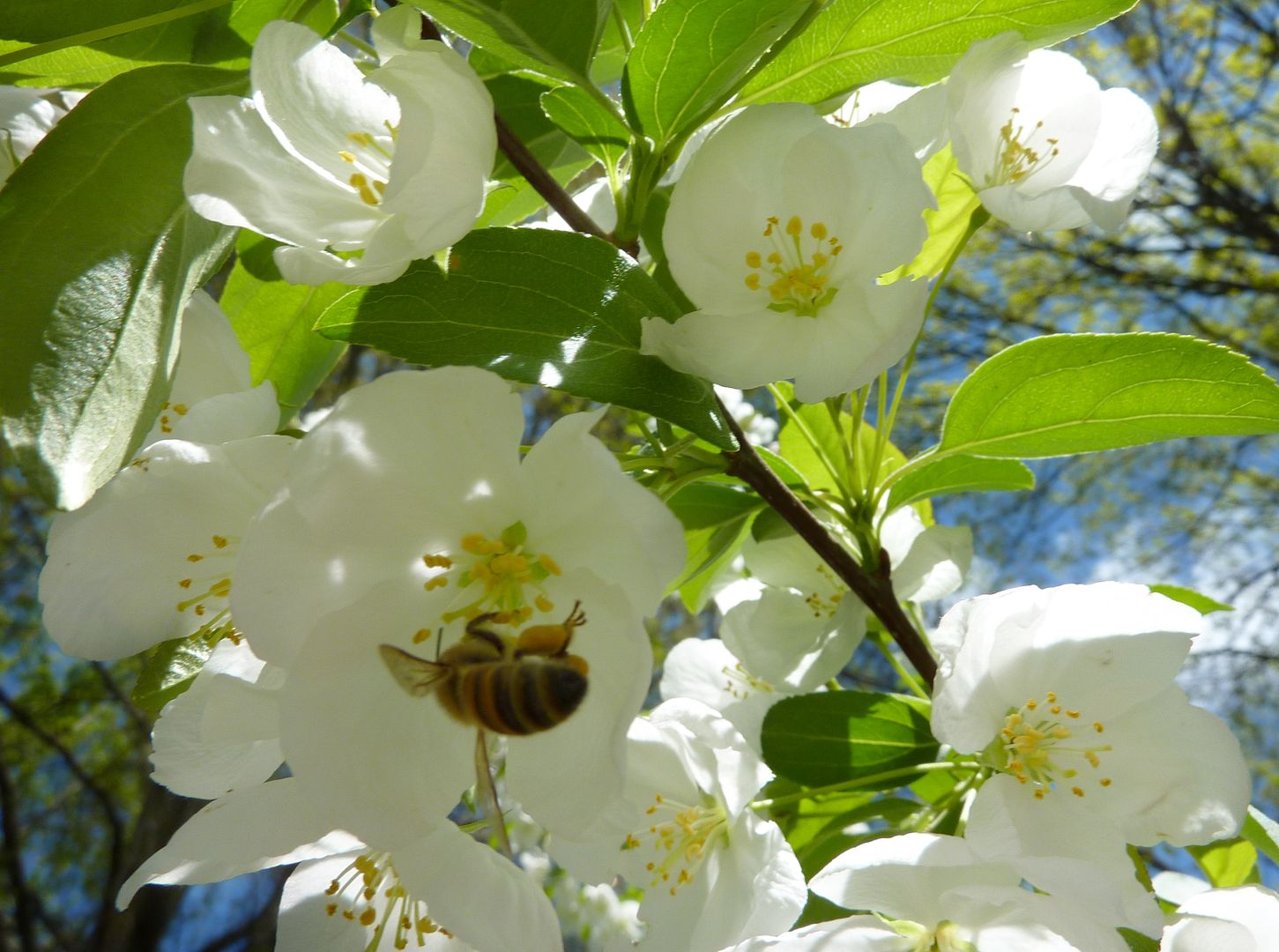
Among the mix this year I was delighted to finally see some of my honeybees joining in.

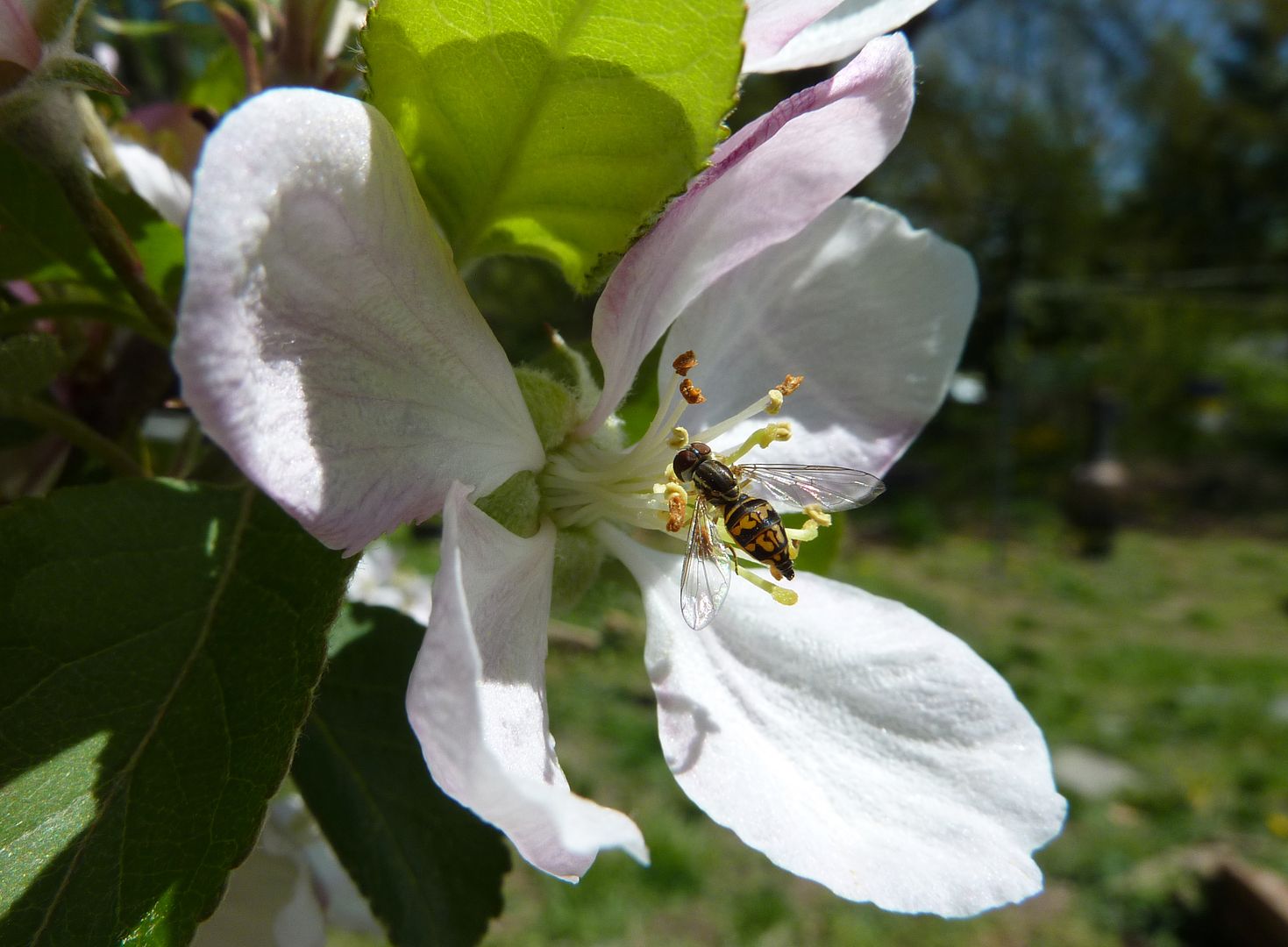
A Hover Fly was also dabbling about. Along with minor pollinator their larva are predators of aphids.

Tuesday, May 17, 2011

Balancing Ants and Aphids

Camponotus subbarbatus tending aphids.
So ants protect aphids can be good for the plant, but only when the population stays under control. Something to note though is that their success is often dependent on the ants being around them and that doesn't always happen. One of the most common genera to be doing this is that of Formica but these are all diurnal foragers. Come night fall they're pretty much replaced by Camponotus (pictured above) which are more nocturnal. An issue with Camponotus though they rarely nest away from trees and are not often found in open fields. An exception to this might be in the case of a tall grass prairie with lots of dead wood or hollow stem plants about, but even then it would be one of the smaller species, and demands the field wasn't burned that spring. I'm not sure what protects aphids at night in fields.

Also, something I noticed last year was that most aphid species in my yard seemed to finish their life cycle before summer really began. These were replaced by other aphids but found on different plants, red ones on Rudbeckia, orange ones on Milkweed etc... With the absence of aphids that also means the absence of hover fly larva, (pictured above) which feed on the aphids without the ants realizing it.

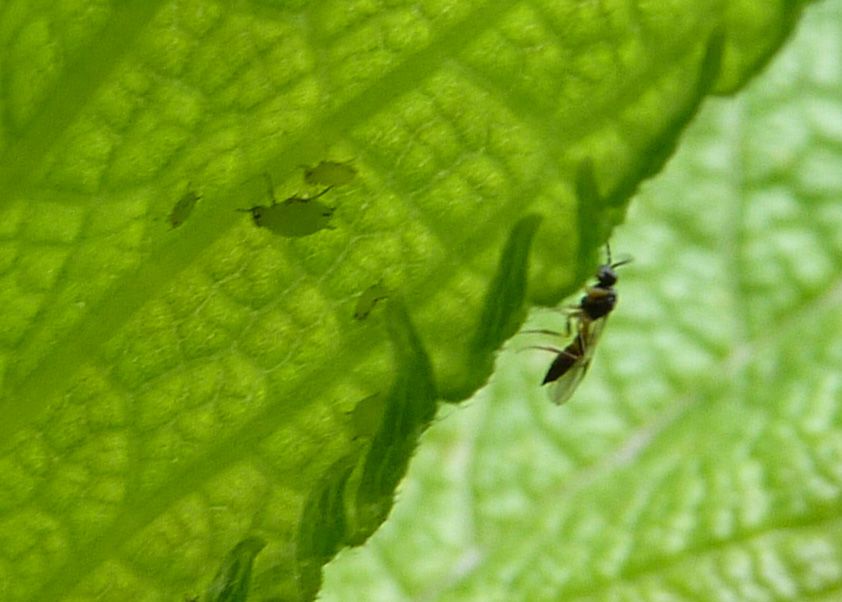
Parasitic wasps are another threat without ants around. I watched this one inject her eggs into several aphids but never got a good picture of it. Always she targeted the groups that didn't have ants guarding them.

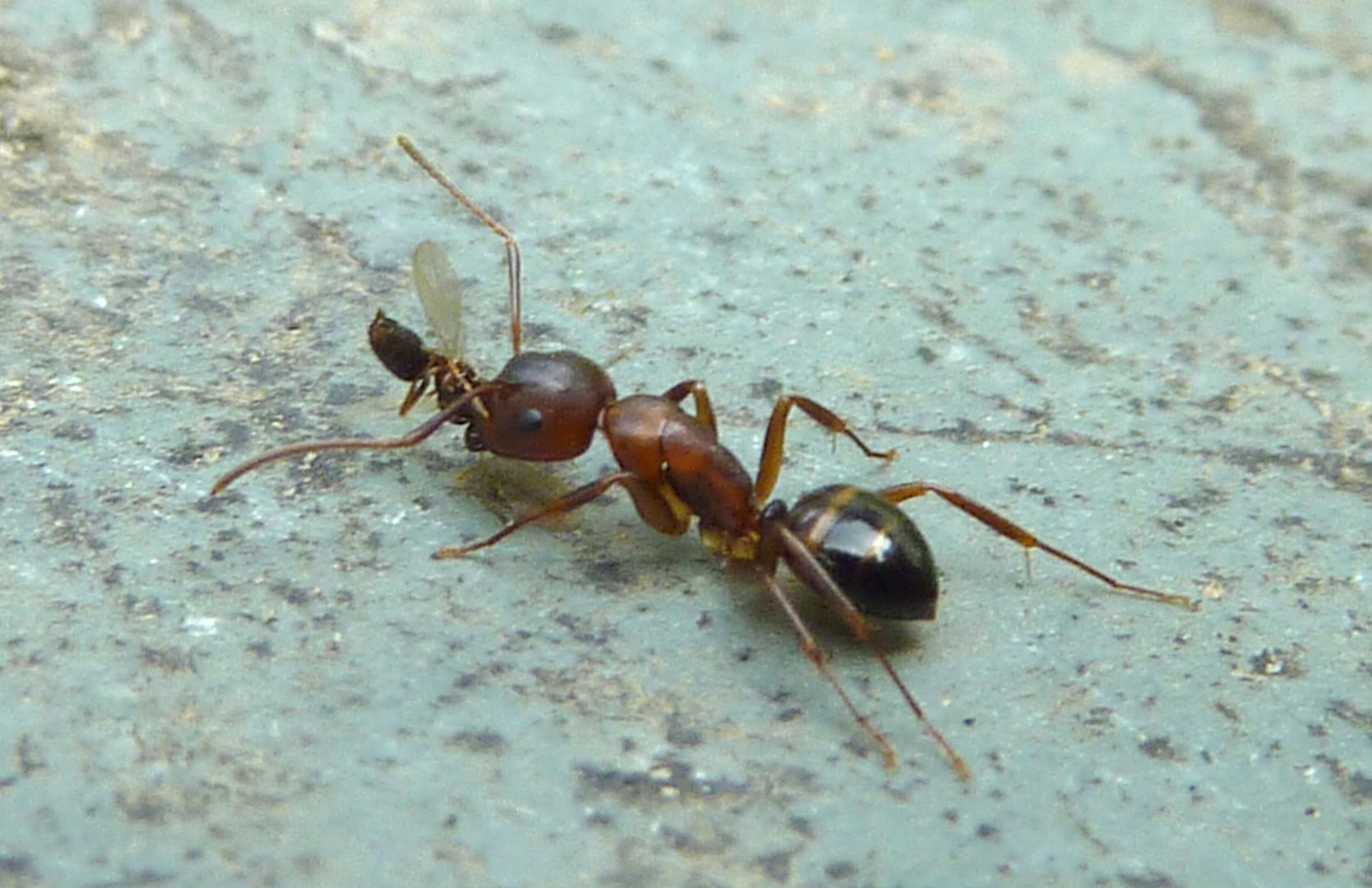
Camponotus subbarbatus grasping a male Nylanderia flavipes.
Another threat to the aphids might be to much of a good thing. Ant colonies need to have a balanced diet and store up on foods to get through parts of the year. Colonies are stealing nectar and tending aphids now as it will become rare over the summer. Once the stores are full up they have no farther need of the aphids and may send fewer workers to maintaining herds. The colony diet turns more towards foods rich in protein (insects) and starches (seeds). These foods don't store as long as carbohydrates (nectar and honeydew) but are needed for producing more ants and especially reproductive castes.

Come autumn nectar stores will be low once again. The colony diet will focus more towards sugars and the ants will be clambering for aphids and nectar once again.

Wednesday, May 19, 2010

What about Aphids?

So yesterday I talked about things going wrong with my fruit trees. And these things are going to be problems as long as I don't spray insecticides and fungicides. So where are all the good guys in all this?

So here is a patch of aphids under the protection of Tapinoma sessile. Yes the aphids are slowly draining the apple tree of it's energy. But that's just something gardeners say and usually over react to. These aphids are only on the new growth of the tree and one study pointed out at most they inhibit 15% of the tree's growth. I can live with that.

The added benefit of having ants treating the tree as one giant food source is many of them are predators of caterpillars. Especially small ones that they can manage. Mostly though they have a harassing nature to other bugs and ants, especially if the other bug is to big for them to handle. Even so, a healthy colony can over take or limit where the pest insects are able to go on the tree. And at their best the ants are killing the insects or forcing them to jump ship and find another host plant.

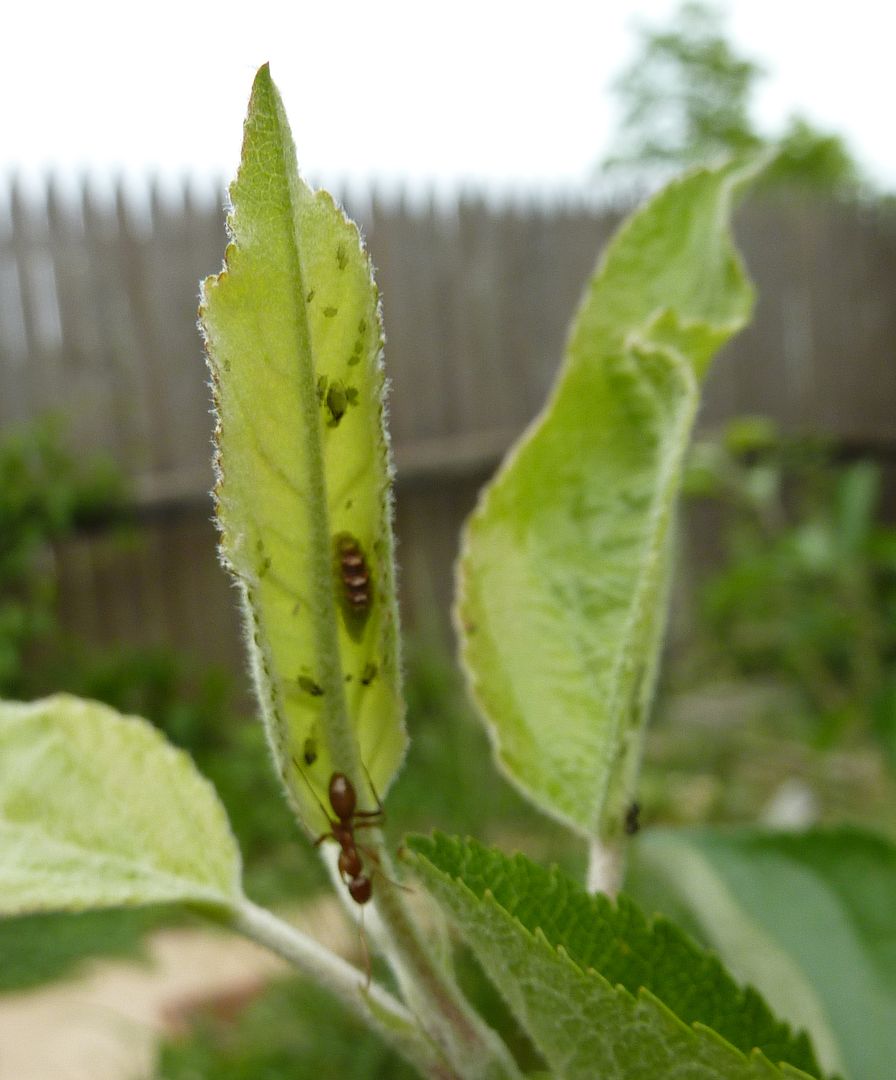
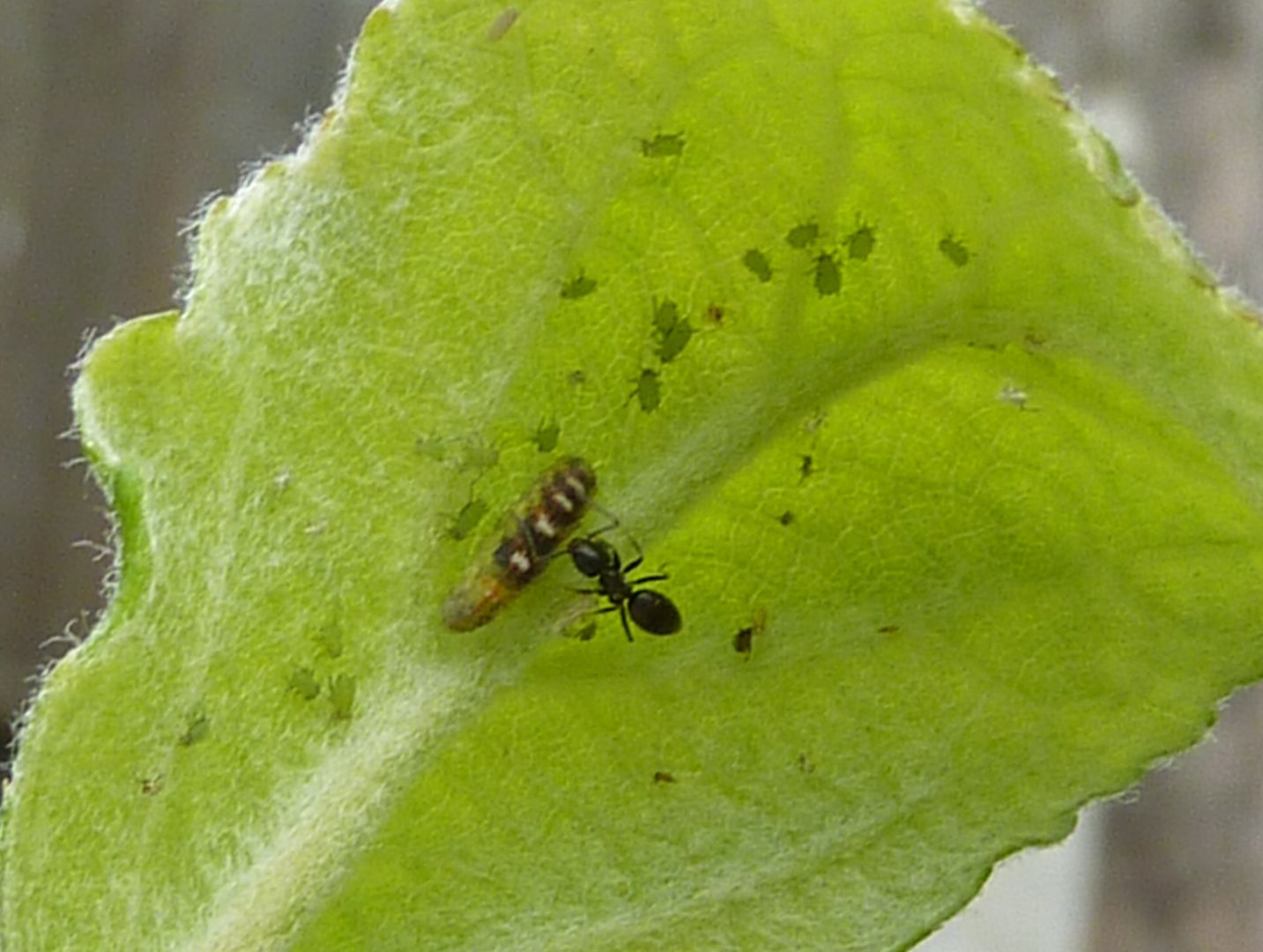
Even with ant protection though there are still predators that keep their populations in check. Here is a Hover Fly larva.

They move thought the aphid herds nibbling on the aphids one by one for their season. (I find most of the aphids on the trees in my yard aren't present for more than a few months.) These grubs are overlooked by ant patrols that come to inspect and harvest the aphid dew.

Even when they are discovered they're licked and cleaned as though they were an aphid or some odd growth on the tree. I've even seen ants inspecting the Hover Fly larva while in the act of eating an aphid. The ant didn't seem to care.

When gardeners see aphids they like to believe they're being "organic" by turning to store bought lady bugs instead of chemicals.

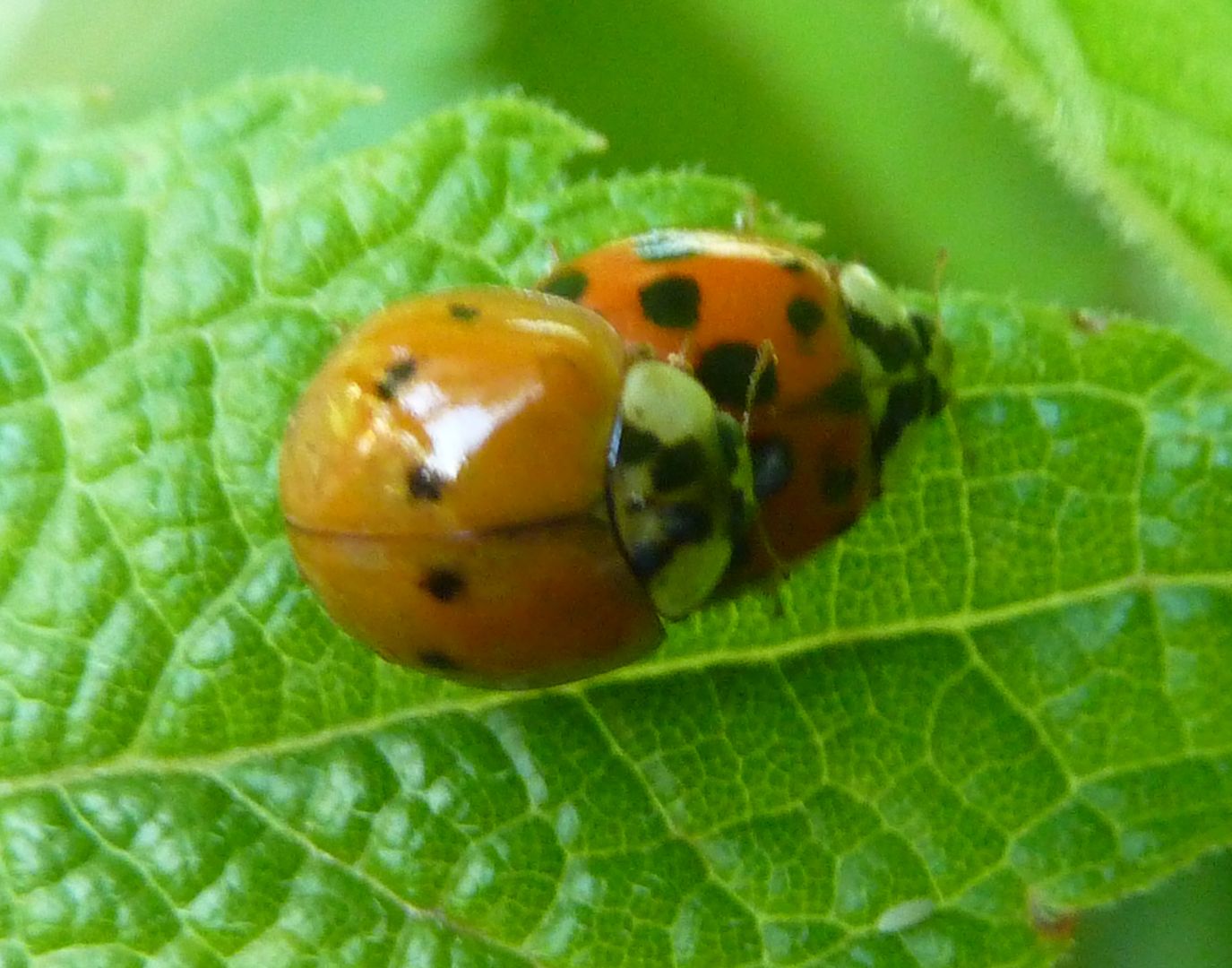
Harmonia axyridis has plaid one of the greatest tricks on the unknowing gardener's eyes. Pictured above are two ladybugs that are the same species, and currently in the act of mating. One is a dull orange color with very few spots. The other is a warmer orange red color with lots of dark spots. 

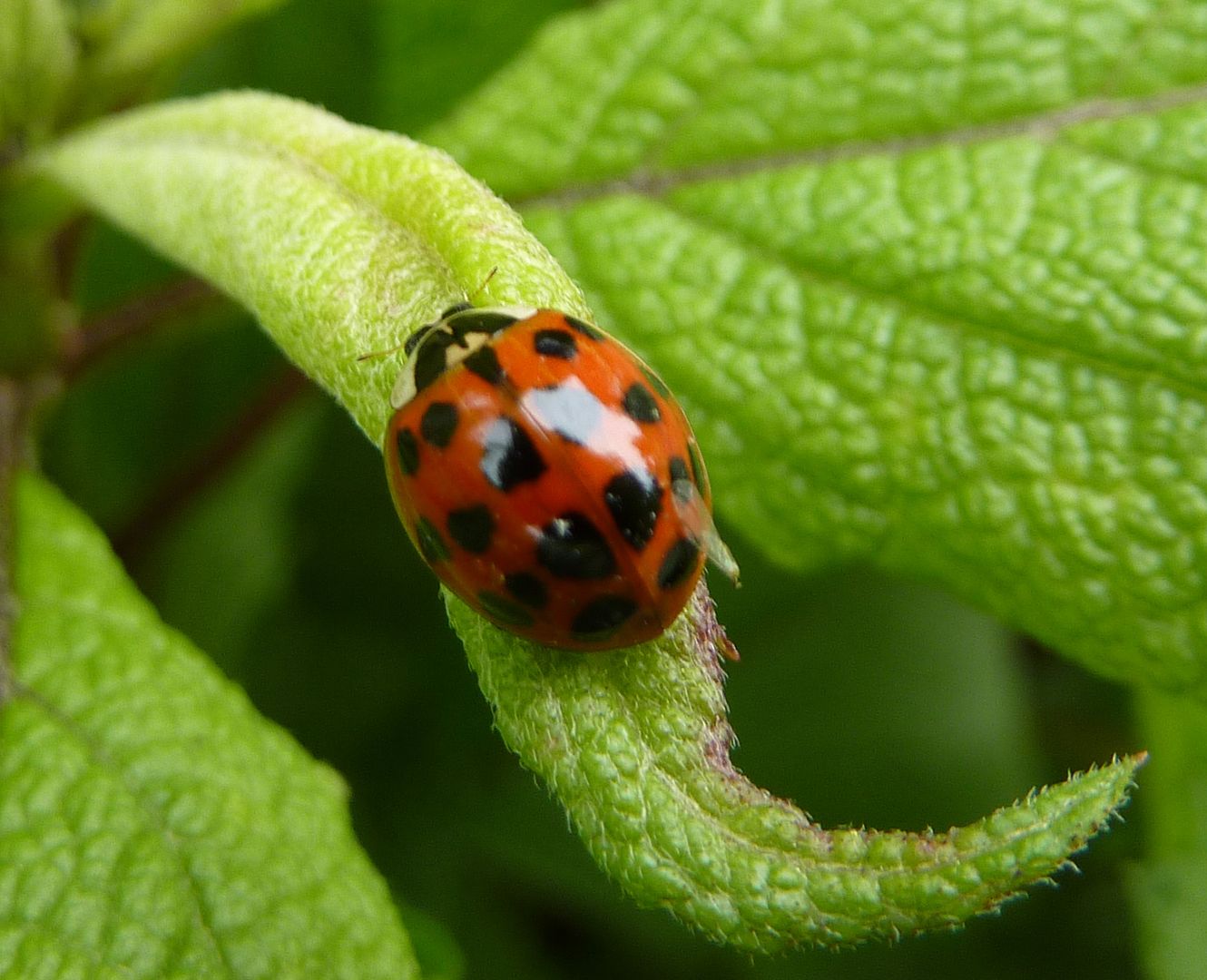
It's called the Asian Multicolored Ladybug. As you can see it comes in many colors. Note the thorax (the white part) and patterns of the spots. With few exceptions the spots are bigger on the darker forms. But the diversity of this one nonnative species has replaced 400 or so native species of lady bugs. Image Source.

For images of ladybugs see BugGuide.net.

Before buying an invasive species of lady bugs, consider seeing if the aphids are a problem in the first place. If it's something you can just take a wet rag to and remove yourself why use the money? The lady bug they're selling in stores is invasive and bound to show up on it's own anyhow. Bottom line, if you have aphids you should try and encourage beneficial insects to keep them under control. 
Saturday, April 24, 2010

Mason Bees and Flower Flies

The mason bees have been making some real progress. Each capped tube is full and contains upwards of 10 bees give or take for next year. I started with about 100 of the little guys, though I suspect most were males or found nesting elsewhere. There's almost always a bee or two flying in or out filling the tubes. They'll only be around for another few weeks and I'll start taking the full tubes inside. Over the summer parasitic wasps lay their eggs inside the first chamber or two of brood and I don't want that.

Having these bees around is a great way to ensure pollination of fruit trees and blueberry bushes (heath family in general). But pollination is but one issue to getting a good crop. Aphids are already waking up and breeding on some of the trees here. Usually they aren't a problem but every little bit helps make a good harvest.

Thankfully the mason bees also help pollinate spring wildflowers like Roundleaf Ragwort, Packera obovata. I never understood where the name ragwort came from. Golden Flower would be just as good for this plant. It's a round leaved ground cover that moves like a carpet through the forest and in early spring they produce thousands of yellow and gold flowers above them.

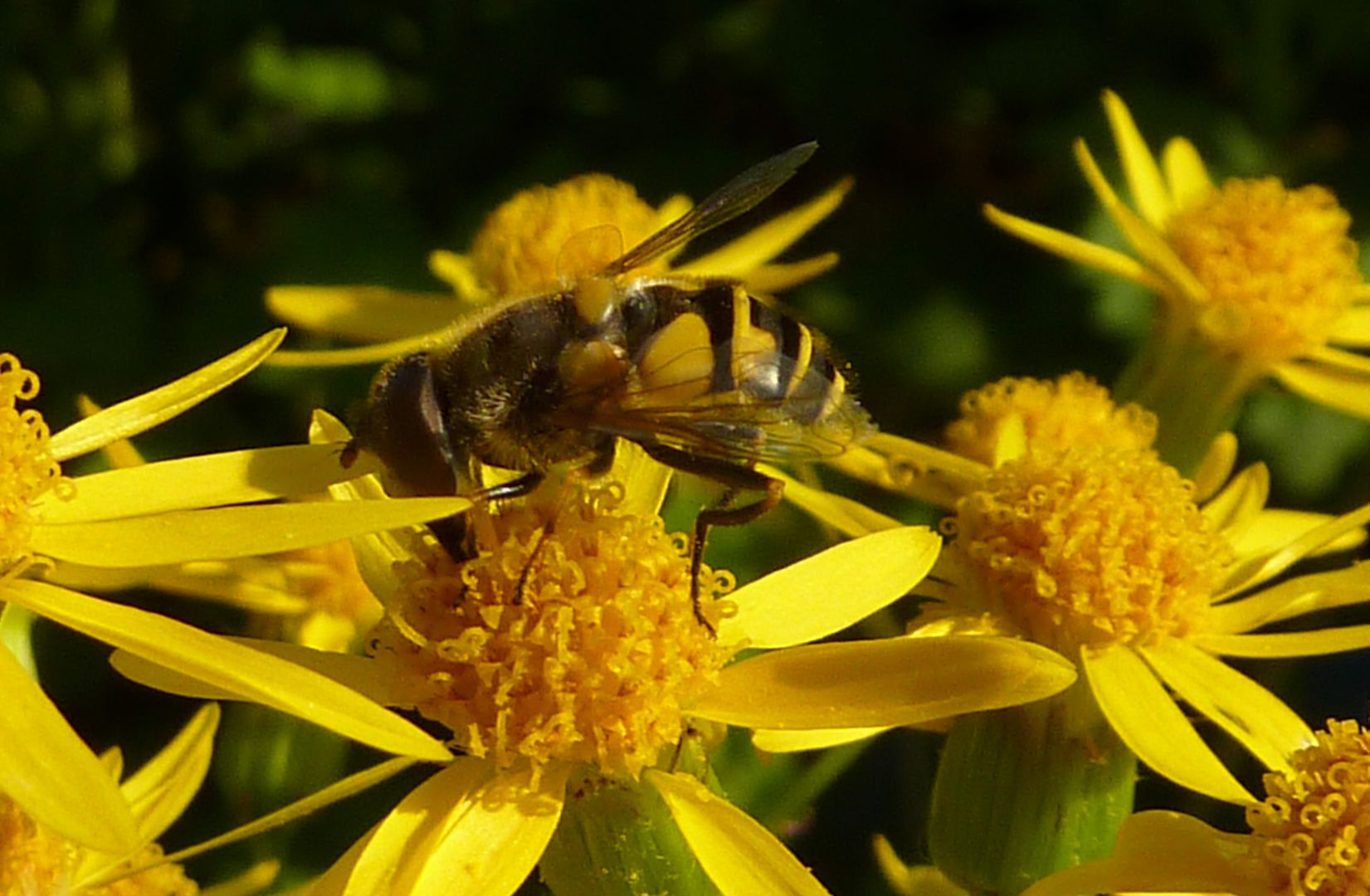
Ragwort is one of the few plants also pollinated by Flower Flies. They're also called Hover Flies for their flying habits. Members of the Syrphini tribe, these beneficial insects are colorful flies that lay eggs in patches of aphids. The resulting grubs (maggots) take care of your aphid problem and aren't bothered by ants that may be guarding them.

They are a much better solution to the aphid problem than lady bugs in my opinion. Lady bugs stand out in a crowd and ants are quick to harass them away. Meanwhile flower fly grubs munch away on the aphid herd. A benefit for sure.

When the ragwort stops blooming they turn to Yarrow but we're not there yet in the year. Small flowers seems to be the key to attracting Syrphini to your yard. There are a few exceptions of course but they're pollinators all the same.

Friday, October 30, 2009

Goldenrod


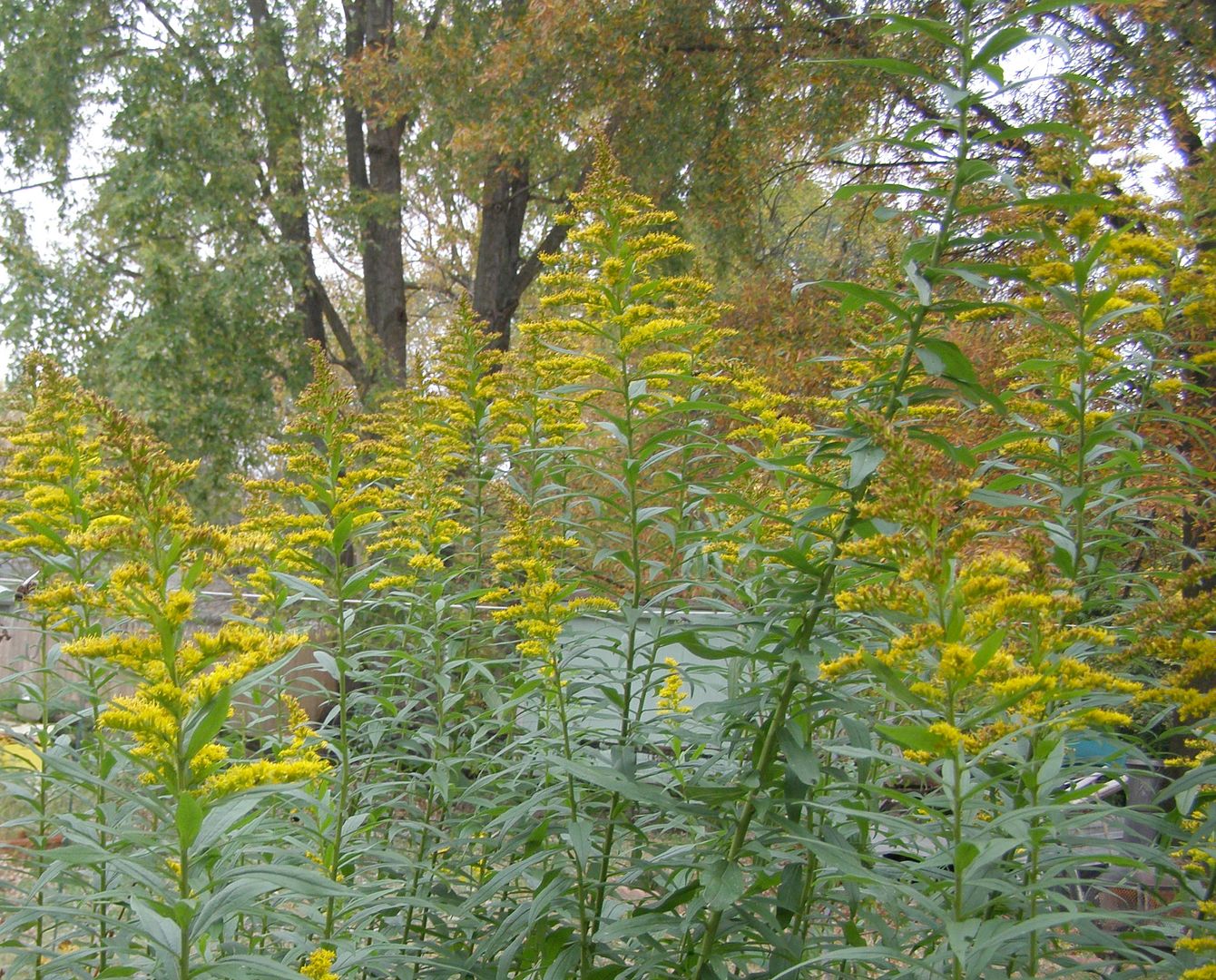
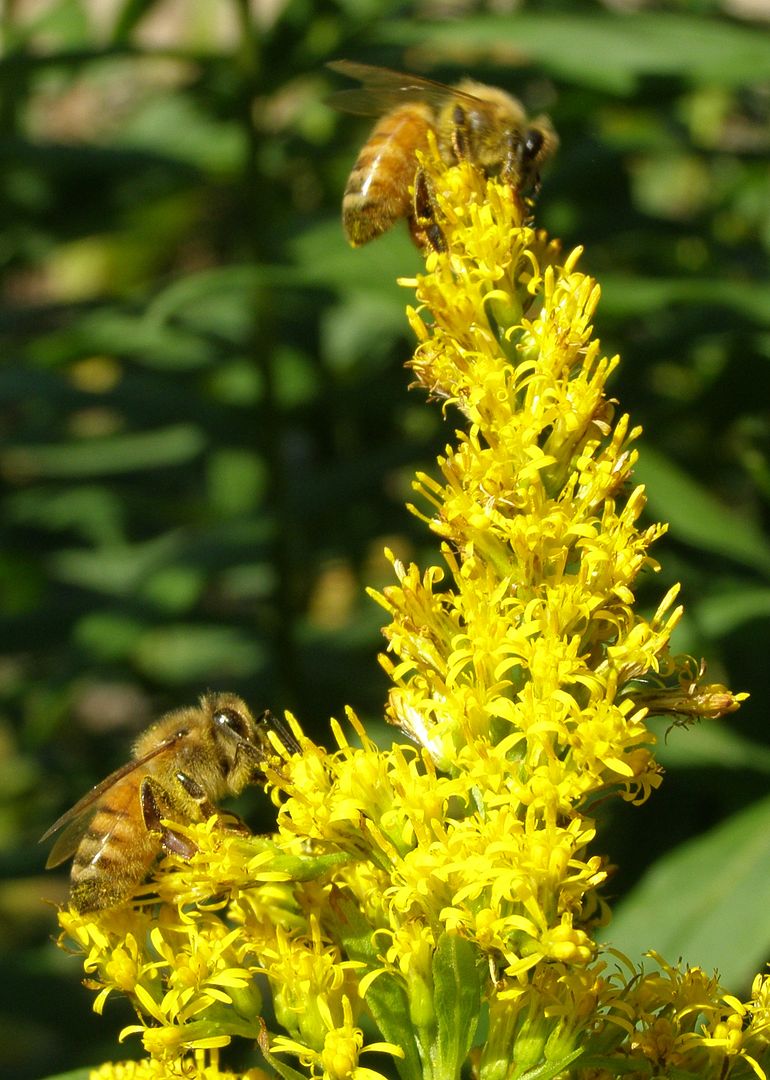
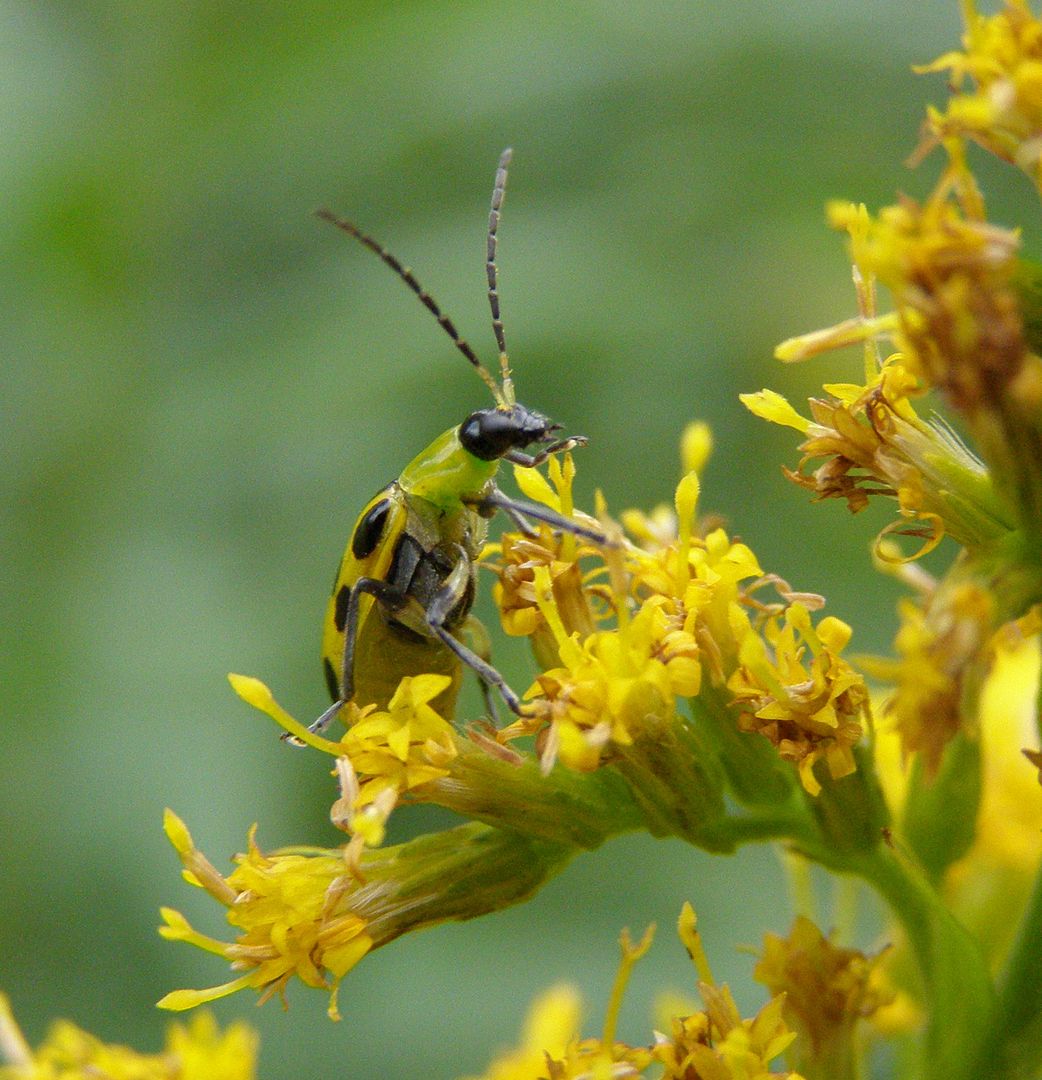
What is very likely Late Goldenrod, Solidago gigantea, has been blooming out in the yard for a few weeks now. Solidago species support the highest number of Lepidoptera species of any perennial, (note that most native trees support a lot more,) and sure enough they have gotten a fair amount of activity.


Because it's at the height of flowering in October-November it's just about the only decent source of nectar for pollinating insects. Few Asters last this late in the season.


What I believe is Diabrotica undecimpunctata, The Eastern Spotted Cucumber Beetle spent it's time sipping at the flowers, but probably also nibbled some of the leaves. They can be a major pest for assorted field crops (Corn, Cucumber, Potatoes, etc...) but I'm not worried.

For those of you who hate this bug, note that they over winter in the adult stage and killing them is an option. But I have to say making your yard more bird friendly can work even better.


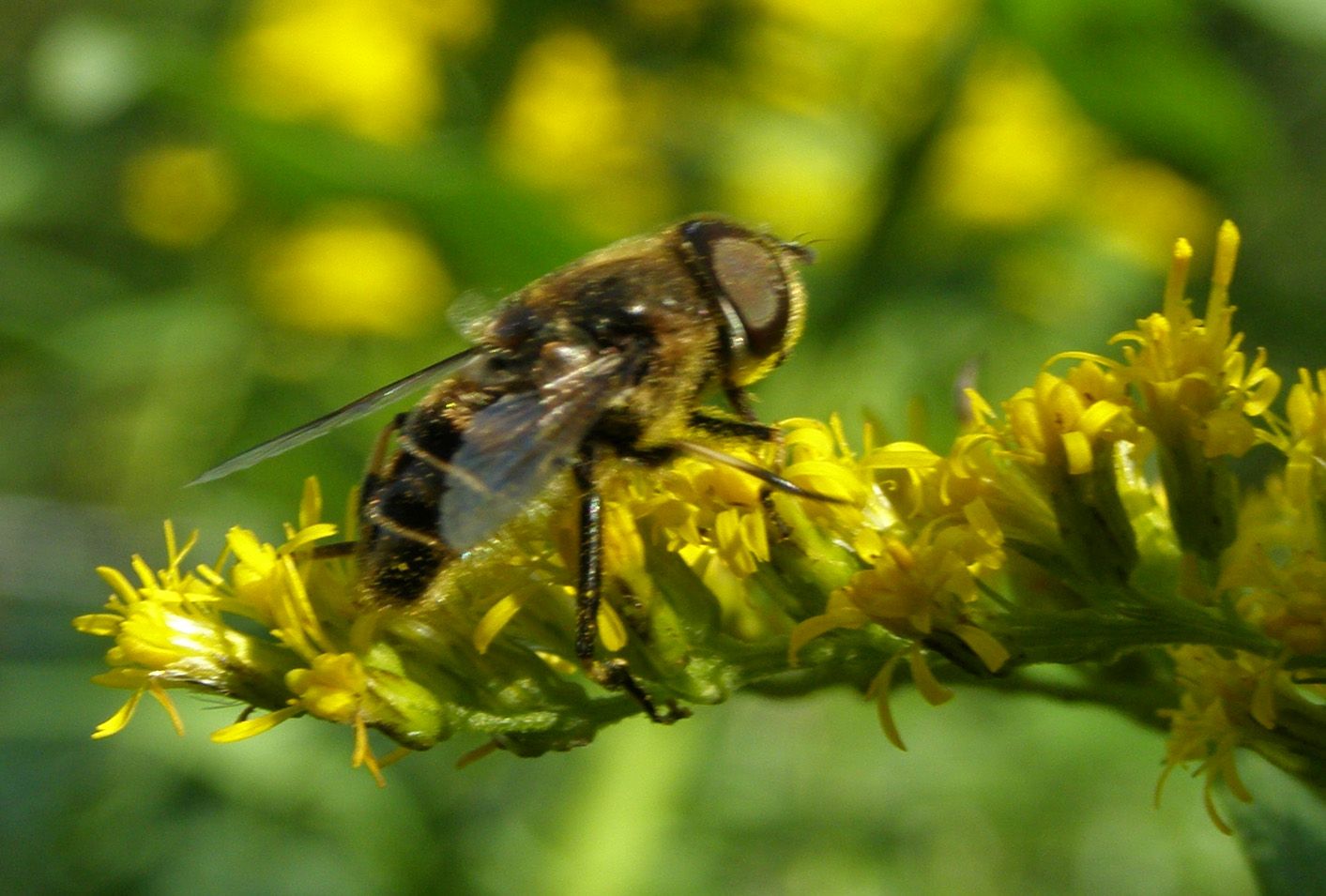
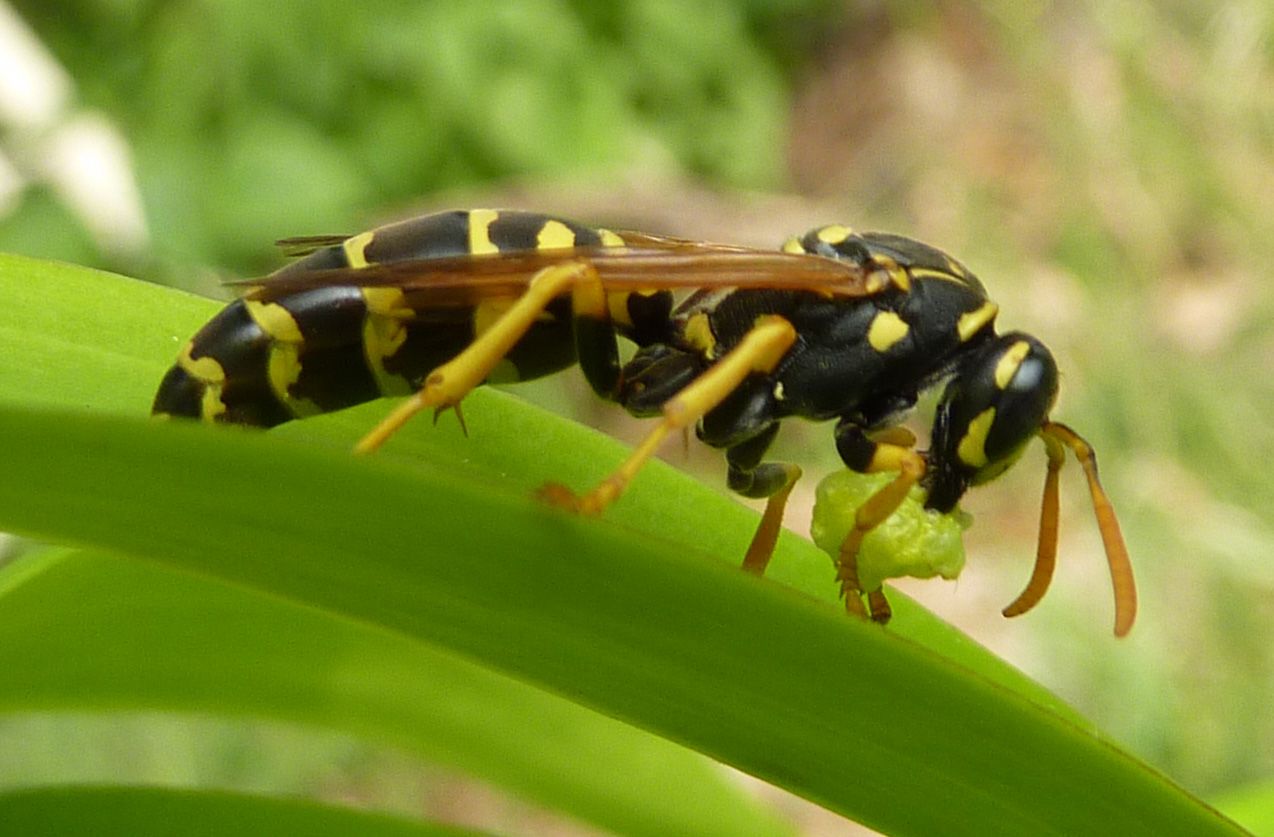
Flower flies mimic bees to avoid being eaten by birds. This one is doing a fairly bad job though but I have seen some that were nearly spot on.


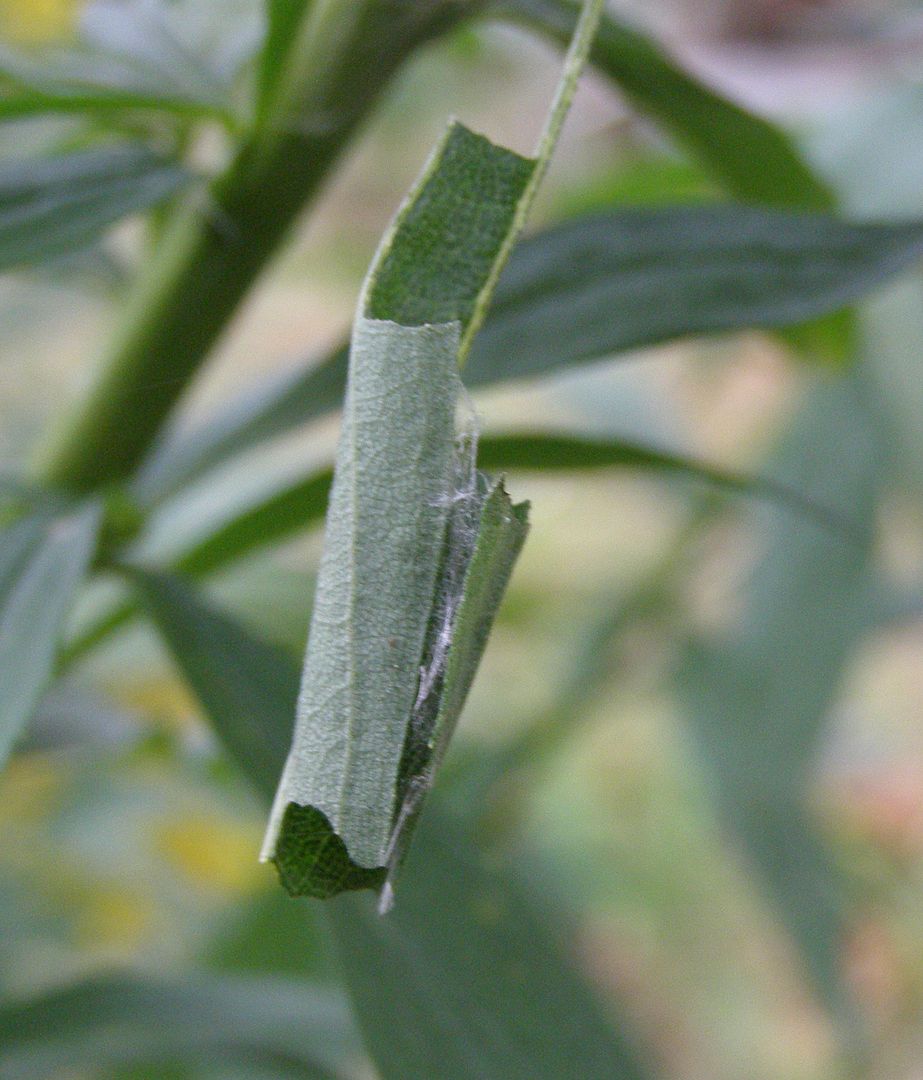
Some of the leaves have been coiled up in to "caterpillar sheds" which protect the caterpillar during the day. These don't last very long though as the caterpillar eventually eats the leaf to an unusable state.


Inside you can sort of make out the caterpillar.


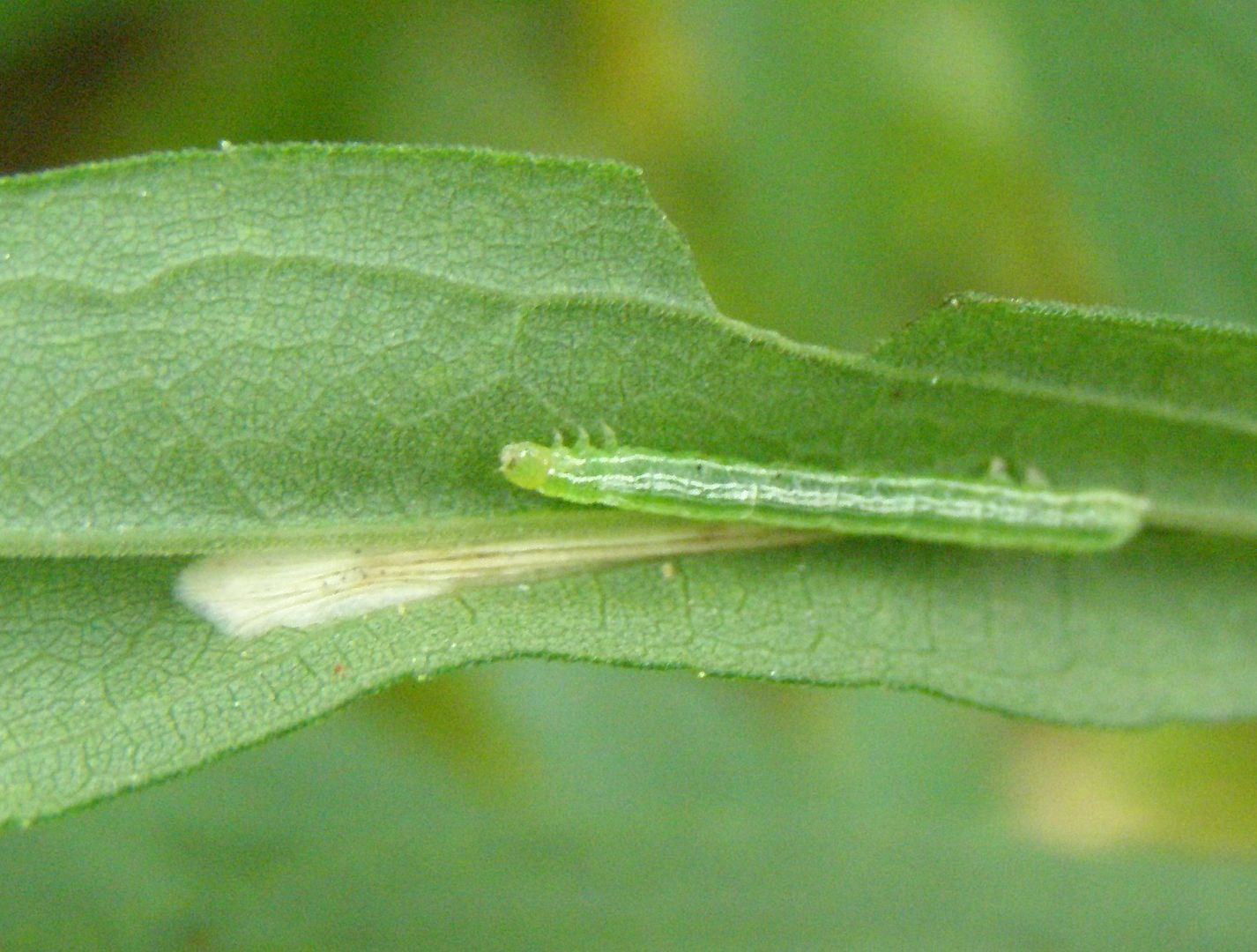
On a nearby plant a different species of caterpillar employs a similar strategy. This one was on the Rudbeckia, (basically a Black Eyed Susan without a common name,) and had the leaf kinked so it was hard to spot from under the leaf. I had to unfold it some for the photo.

Wednesday, June 24, 2009

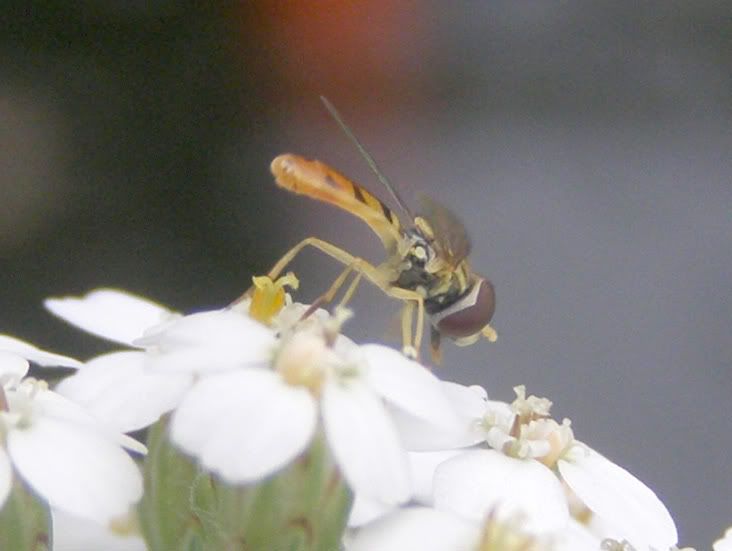
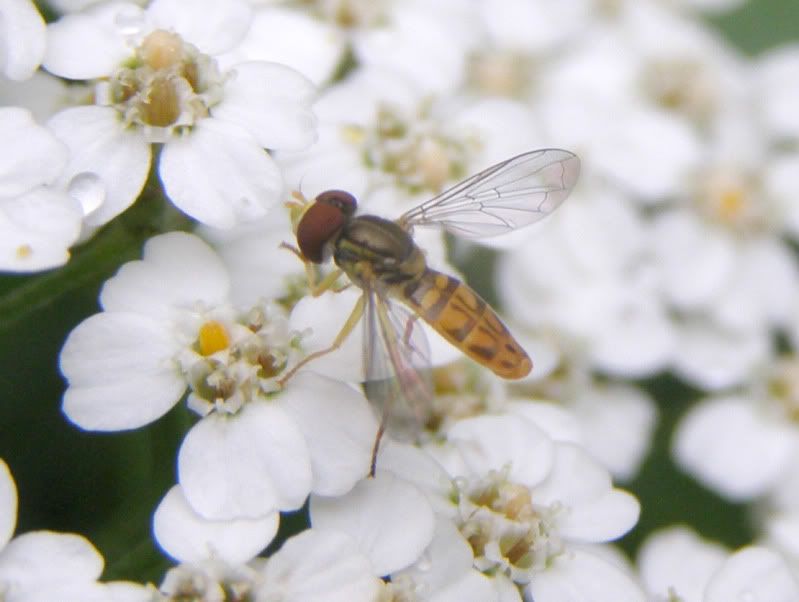
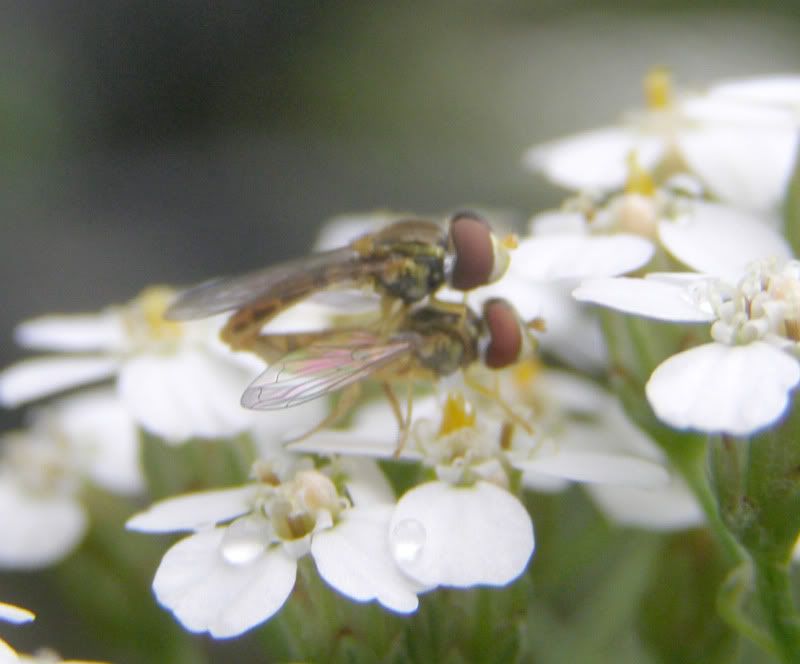
Hover Flies on the Yarrow


Somewhere down the line what I think is a native yarrow came up like a weed. It had such a neat leaf structure, similar to a fern but smaller, so I let it grow some. It also had the added benefit of being somewhere that a plant like this should be. Last year it flowered and I was more or less okay with. I'm not a huge fan of the flowers, it keeps falling over, and overall it kind of annoyed me.


But then it flowered this year and though I still have the same feelings about the plant. It has attracted swarms of hover flies. Just droves and droves of them. What's more I see them wondering all over the garden and onto other plants. The majority of them though tend to congregate around this one yarrow plant.


I suppose this is what marketing means when plants are labeled with "Attracts Beneficial Insects and Pollinators." The larval stage to most Hover Flies is actually a predator of aphids. I'm thinking some of these flies are the result of my allowing 14 new trees in the yard to become absolutely infested with aphids. As an update to the aphid "problem" they all up and vanished mysteriously one day. I never learned why but now I have tons of hover flies lightly buzzing around the yard.