Showing posts with label Chrysalis. Show all posts

Monday, September 3, 2018

Raised some Monarchs

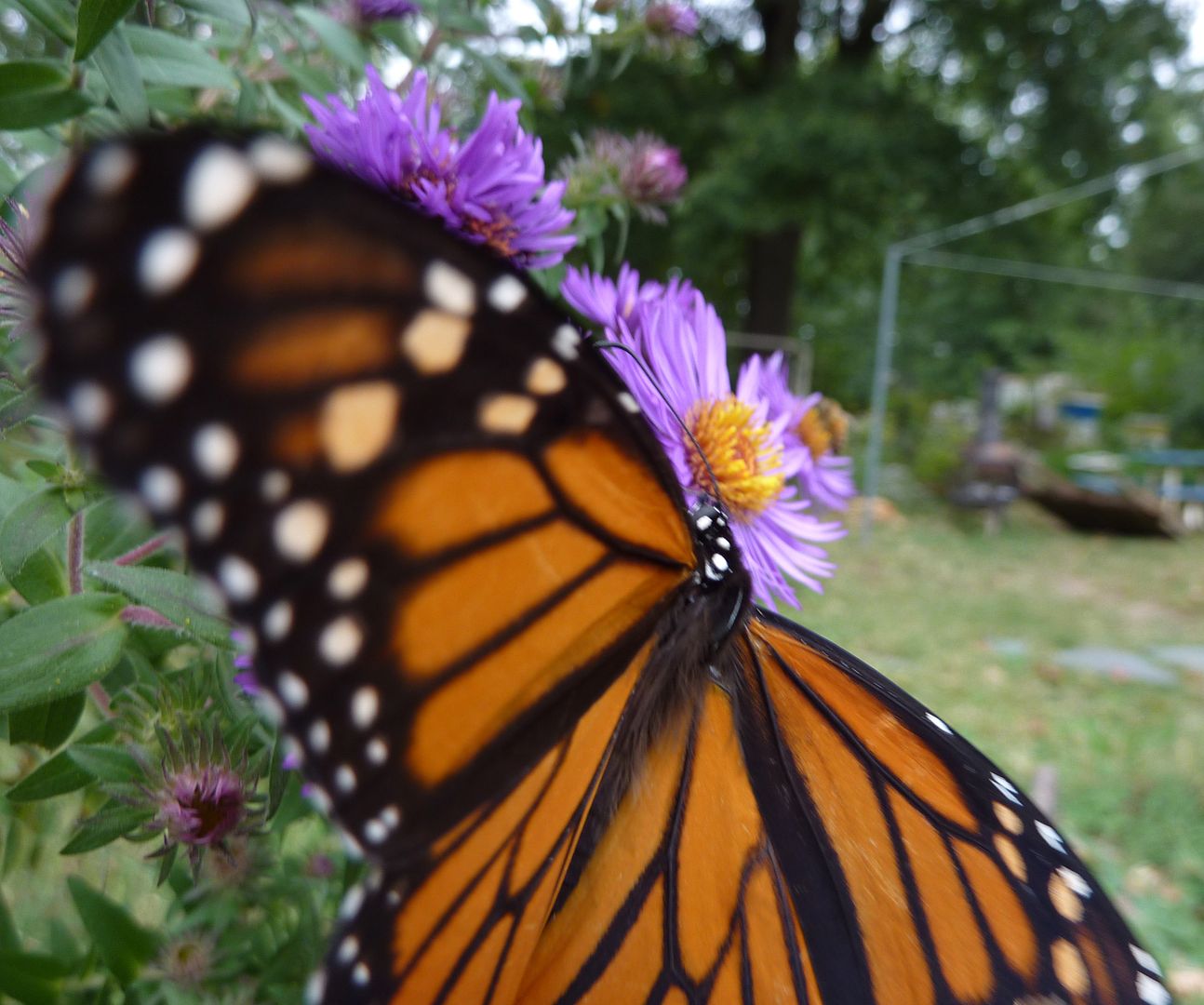
I'm finally getting a bumper crop of Monarchs this year. Despite growing several species of milkweed they don't always seem to find my garden every year. When I speak with friends out in Missouri and Illinois they're surprised that I don't really see Monarchs here in New Jersey until August. On some years if I drive out and about I do see the occasional Monarch in June but usually not in my county. It's as if the females don't want to waste their time with anything less than a huge field of common milkweed.

Geographically speaking I also feel they don't fly through my area until they're migrating south again. I live in Camden County, New Jersey which is on the Delaware River side of the state, but we're somewhat inland. I suspect as they're flying north they're reluctant to cross the river and on the occasion that they do, they're more inclined to visit open fields as opposed to suburban gardens.

As the summer presses on the populations that were established extend outward as patches of milkweed are devoured. Then heading as they all start heading south a wave of Monarchs in the New England area all follow the coast line. Cape May, NJ. is a fantastic spot to see them passing through. A few years back I was there and saw they'd planted a huge stand of Sea Side Goldenrod, Solidago sempervirens, which was in spectacular bloom when I visited but is likely now all died out.

Sea Side Goldenrod is a fantastic plant that can take a beating. It's able to grow in 100% sand at the beach! I don't think it survives the tide coming in but it can take high levels of salt. Thing is, it also grows a lot better in clay soil and garden soil too. And I find it's that way with a lot of plants that are supposedly tough to kill, hardy, drought tolerant.

 
One key plant I feel that helps draw in the Monarchs is Meadow Liatris, Liatris ligulistylus. Tragically this is a biannual that doesn't reseed well in my garden. I have several of these though in a pot that came back from last year so maybe that's the key. They were part of a flat of 50 plants and all the ones I placed into the ground died!

This is easily their favorite nectar plant until it finally stops blooming. There's always at least one or two out there fighting over it. 


Joe Pye Weed is another native though certainly not high on the list. At last not in my garden. The plants at the Mt. Cuba Center got more attention than mine but they don't have any Meadow Liatris around.

Buttonbush, Cephalanthus occidentalis, might as well be marketed as White Butterfly Bush. For years I've thought this was one of the best nectarine plants North America had to offer. There really isn't a kind of bee or butterfly I haven't seen on it. And for years I thought what a shame it only blooms for a week or two... but this year something neat happened with one of my plants. Mysteriously it leafed out in an odd pattern with the lower branches becoming fully green before the ones higher up and then also produced newer branches up at the top. The result was that these locations all produced flower buds a week apart from one another and then bloomed first on the old growth and worked it way up to the new. So this year I got about three weeks of flowering out of it. Apparently older shrubs do this, which makes me glad I planted 2 more around the house.
 
Besides the Liatris I'd say the Mexican Sunflowers is the Monarch's second favorite nectar plant. And once the Liatris finished flowering they were all over these in my yard, favoring them over the Joe Pye Weed, Buttonbush, Phlox and Ironweed. They still visited all of these plants but I could always guarantee to find a Monarch on the Mexican Sunflowers whereas sometimes I'd walk my garden and rarely see them on any of the others.

Common Milkweed was the host plant of choice. I grow Swamp Milkweed, Butterfly Weed, Purple Milkweed, and Sullivan's Milkweed too and haven't found a Monarch on any of them.

Actually I worry about the Butterfly Weed I bought from Home Depot. I found eggs on the leaves but not one caterpillar!!! When I bring in sprigs of this plant to feed to caterpillars I have in small plastic cages they refuse to eat it. I don't know if it's just because it's a different kind of milkweed than they're used to eating or because they're spraying them with a systemic pesticide and the caterpillars are somehow picking up on that. Either way I'd love to know just to put my mind at ease, cause it's an awful shame if Home Depot was selling whole racks of tables full of 3 gallon sized pots of beautiful orange Butterfly Weed that was coated in poison.

Any who, all the eggs and small caterpillars I've been finding on Common Milkweed I've been bring inside and letting them develop that way. The plants outside have holes in the leaves indicating that young caterpillars had tried to eat the leaves but were nowhere to be found. Naturally as ant friendly as my yard is the plants are crawling with them which are likely responsible for these missing caterpillars. 

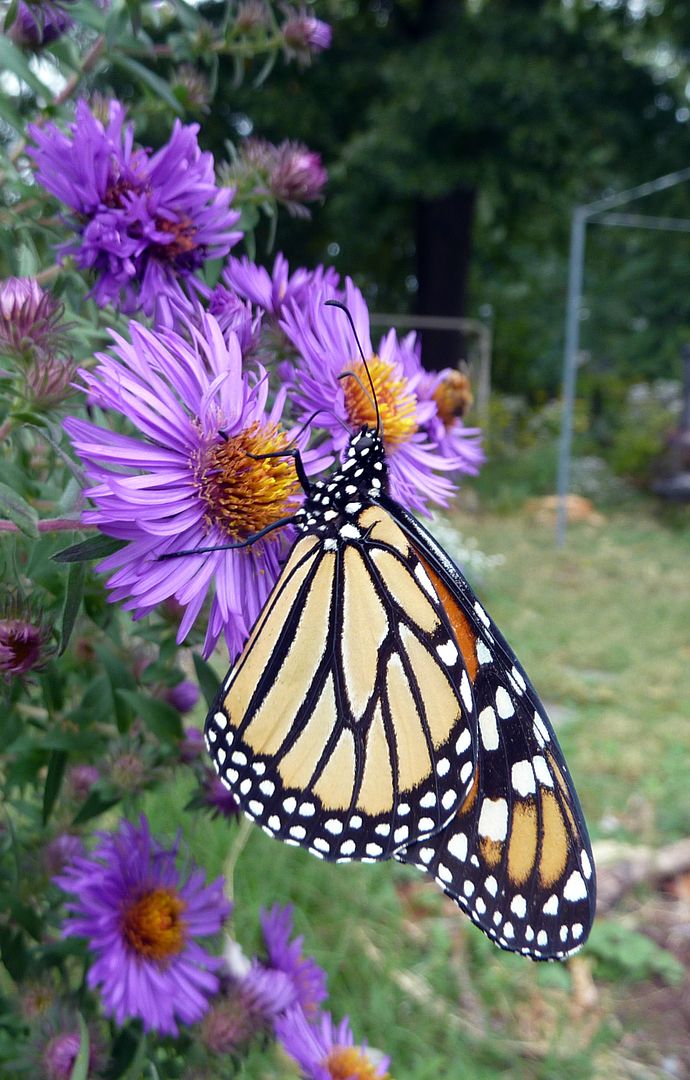
 ~9 to 14 days later a batch of Monarchs are born. Everywhere online says 10 to 14 days, but I think this is 10 days starting from when they hang upside down and make a J shape as seen 3 photos up.

 And from here I let them go.

As a bit of controversy I posted these images on facebook and a friend on there commented. "Wouldn’t think you’d be into this." Which I mistook to mean he thought it was odd a grown man would be into raising butterflies. I replied that I was a native plant gardener so why wouldn't I be into this? And then he made his point clear. 

Basically he thought it was unnatural of me to bring the caterpillars inside and nurture them into adulthood. In his view I should have left them outside on the plants to be eaten by birds, ants, and spiders so that nature can take its course. Which I admit he has a point but he also implied that because I had helped a few caterpillars along I was actually doing a disservice to them. Somehow in his view because I had increased the population of the Monarch Butterfly by 5 I had in fact decreased it.... 

This argument bewildered me as it's the first time I've ever heard it. In fact the internet is filled with hundreds of How To Raise Monarch Butterfly websites. The only thing close to what this person is saying on any of them is to keep an eye out for certain diseases, though all the ones that I know of for Monarch Butterflies either terminate them in development or leave their wings so deformed that euthanizing them is really the only option. 

I could make further arguments toward this person as it's sort of similar to the anti-vaccination movement that's bringing back diseases long thought rare and uncommon. Shouldn't we let nature take it's course? 

I didn't make this exact argument to the person as it's the kind of thing that would have made me unfriend them. I did put it another way. Basically I asked shouldn't I have not gone out of my way to plant Milkweed in the first place? Shouldn't I have just let whatever weeds decide to show up there grow be thankful nature took its course. 

Oddly enough this individual changed his line of thinking when it came to plants. He told me plants are different... and then he said something about meadows and gardens that didn't really make senses. This annoyed me because, plants are not different, they pollinate, and reproduce, and if one were to help the seeds along by putting them in the ground, watering and feeding them, how is that any different from me bringing in some milkweed leaves with eggs on them, putting them in containers and letting the resulting caterpillars develop into adulthood?  

Has anyone else come across the Let Nature Be types out there?  

UPDATE: Apparently there are people who raise 100+ Monarchs (and likely other butterflies) indoors all year.... I'm not doing that!

Thursday, October 29, 2015

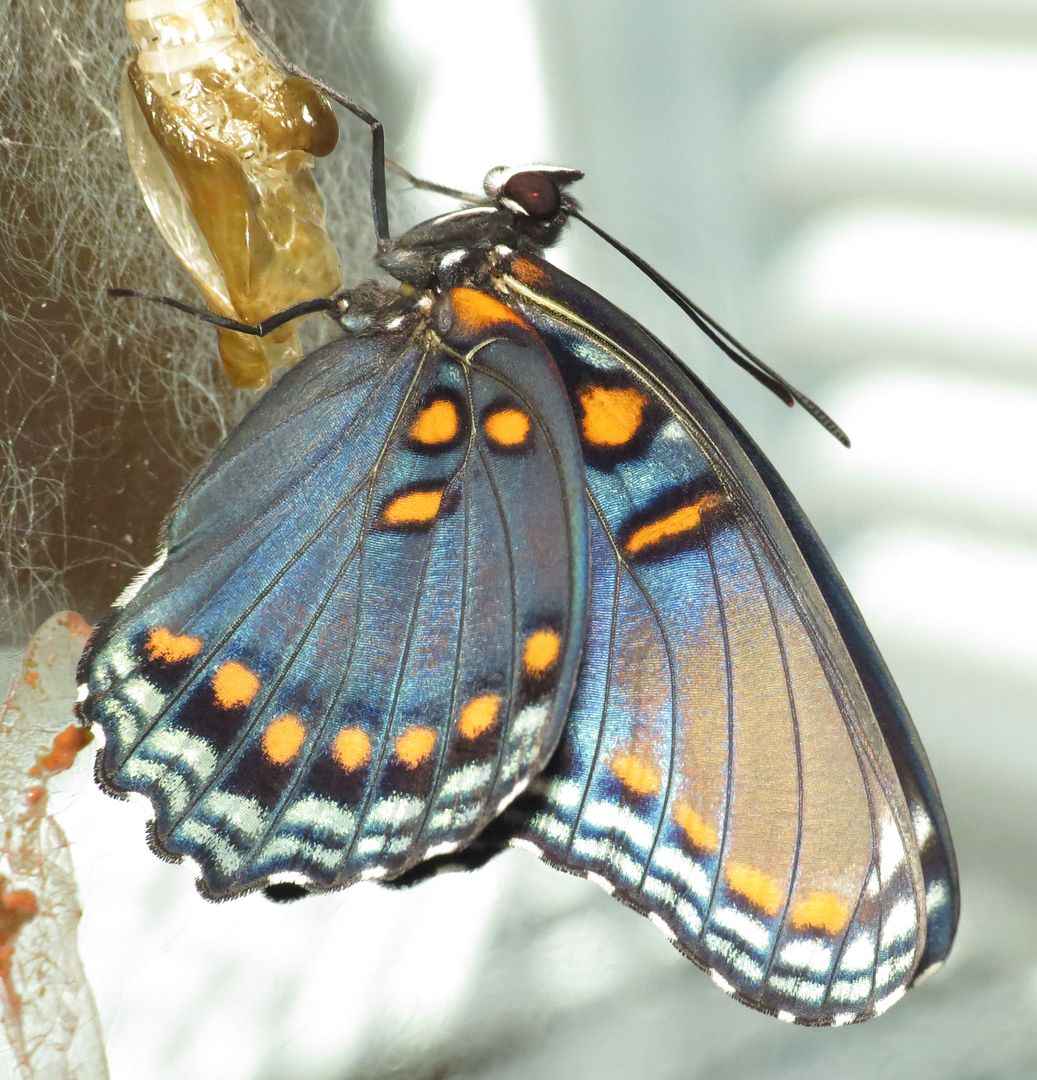
Red Spotted Purple Emerges

Well the Red Spotted Purple emerged, Limenitis arthemis. And it's bizarrely small, maybe 3 inches wide at most. I've heard of small generations of other Lepidoptera being born but it was always attributed to poor leaf quality, occasionally species having to eat leaves that had already fallen off of trees. I don't think that's what happened here. In the last two instars I was picking leaves fresh off the tree in groups of four to seven and the caterpillar consumed them all in one sitting. My only thought on this is either it's somehow beneficial to be smaller than typical during the winter months (when these dwarf versions tend to occur) and must be somehow triggered by either chemicals in the tree leaves it consumed and/or hours in the day. 

I did notice the White Snowdrift Crabapple retained its leaves, and still has them on the tree even now, where as the native American Plum, Beach Plum and Black Cherry have all already dropped their leaves. It also had ripening fruit on it, so maybe it's just a result of hosting on Apples instead of Plums at this time of year. (They can use both).

I'm going to try and keep this one in captivity. We're well past the time to let them go for the year, and outside the only thing blooming is Goldenrod and Georgia Asters. The species does not migrate south and they do not over winter as adults, so there's zero chance of it surviving beyond a week. My intent is to keep this one as a specimen. 

Friday, April 19, 2013

Swallowtail Number Three Emerges

Good Morning! 

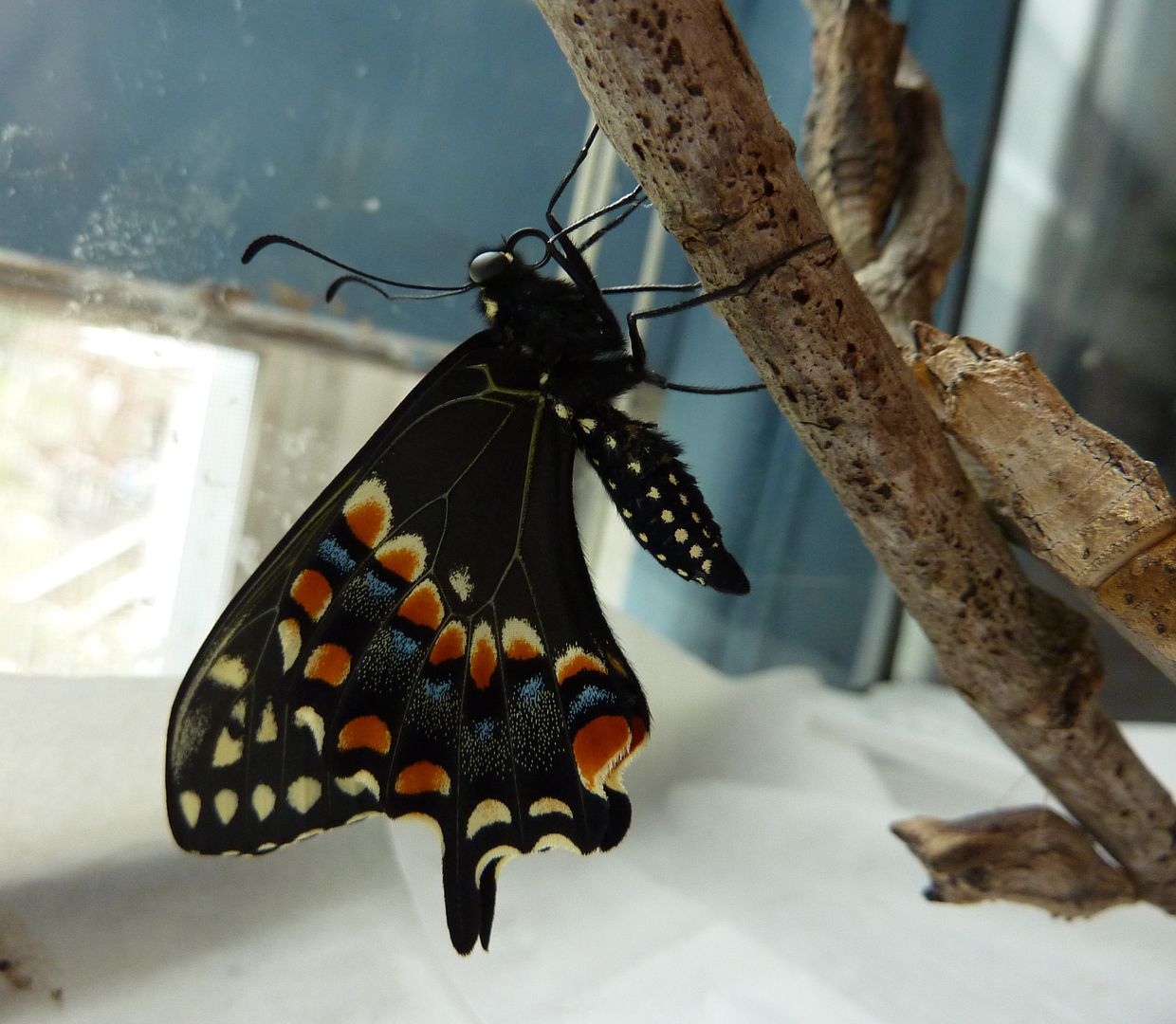
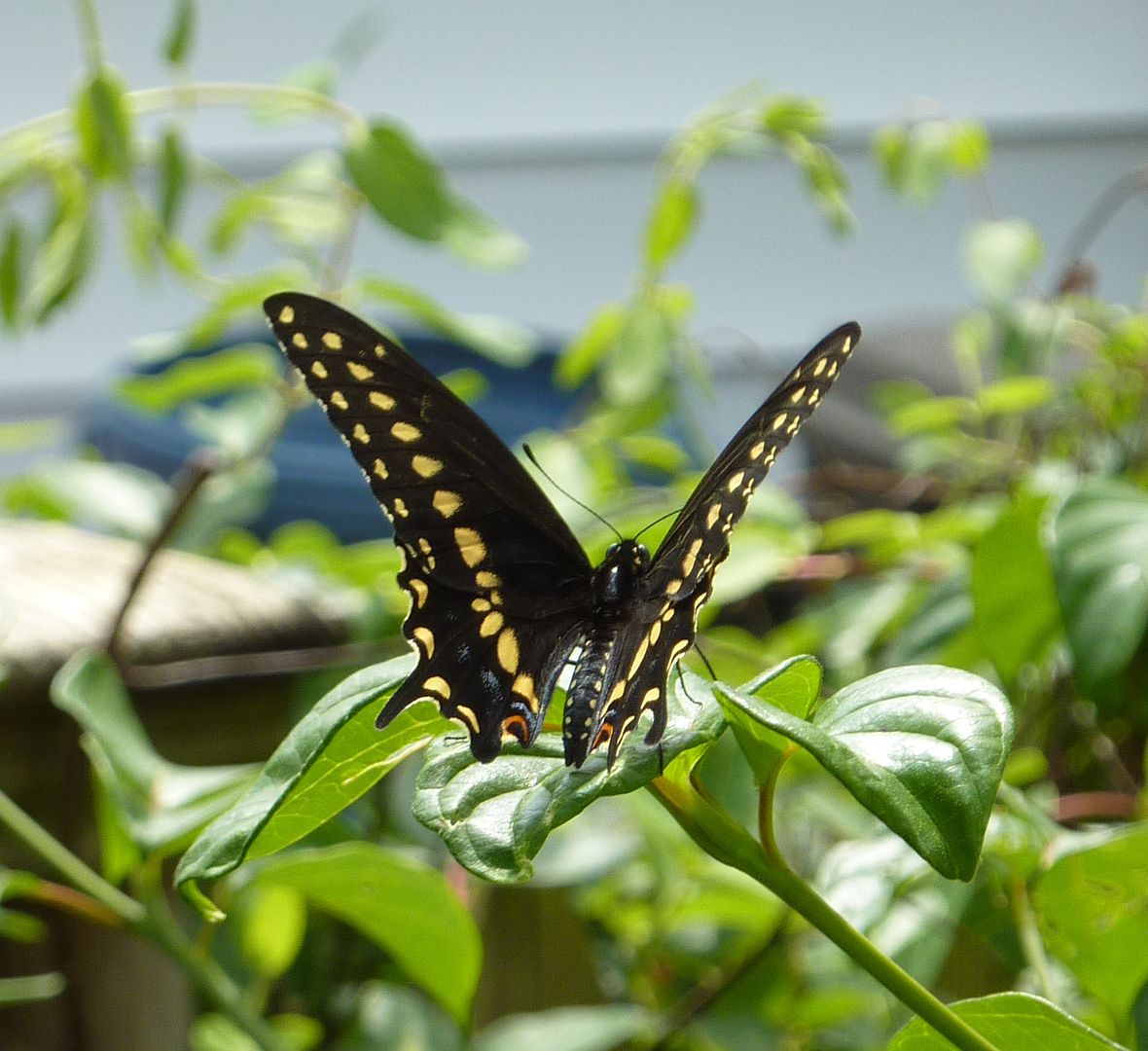
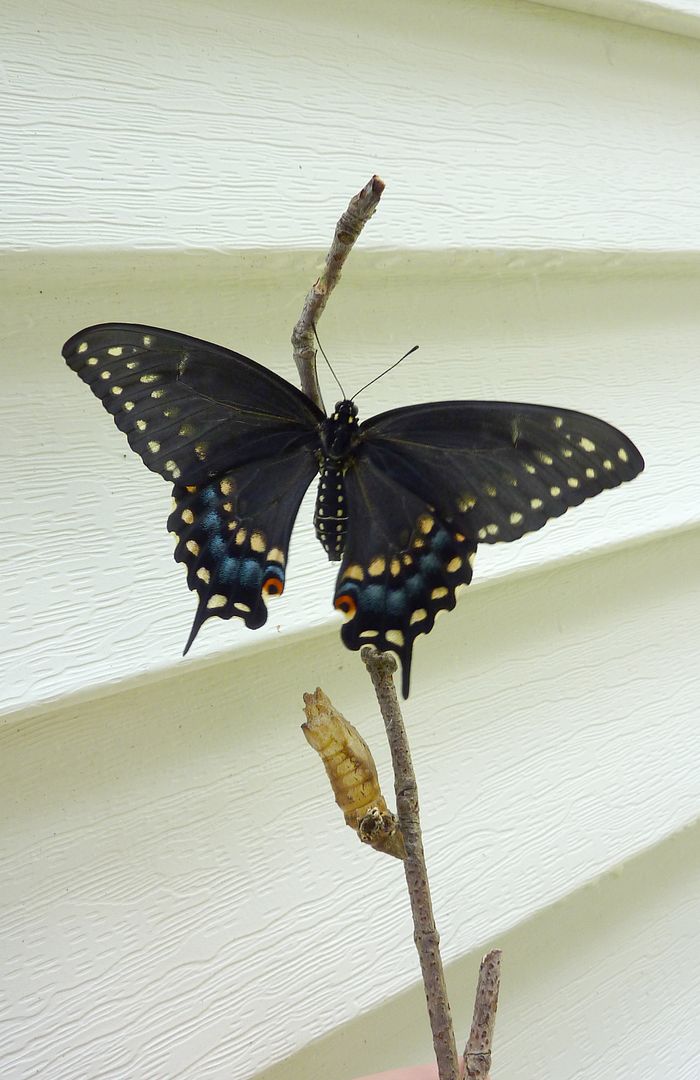
The third Eastern Black Swallowtail emerged today. And unlike the second, his wings are perfect. I've since lined the bottom of the tank with tissue paper. While it felt clean to me, the second one's wings were apparently delicate enough to still get stuck on the trace amounts of stickiness. His wings were so messed up that he wouldn't stop trying to flap them and tragically he ran out of energy by the second morning.

I'll be feeding him room temperature Gatorade, once it gets to be room temperature that is. And hopefully this one will live long enough for me to release him into the wild. It's going to storm here later today and possibly tomorrow morning so hopefully he doesn't mind being cooped up a day or two.

Saturday, March 2, 2013

Eastern Black Swallowtail Winter Update


This past year I was able to raise 9 Eastern Black Swallowtail caterpillars in a screened cage. They over winter as a chrysalis and hatch out sometime in late winter or early spring right in time to get another generation of butterflies going again. They're stored in our basement which is freezing cold, along with my mason bee nest blocks, which I should be cleaning off and treating for mites and such but ... oh well.

Saturday, December 15, 2012

Best of Butterflies 2012


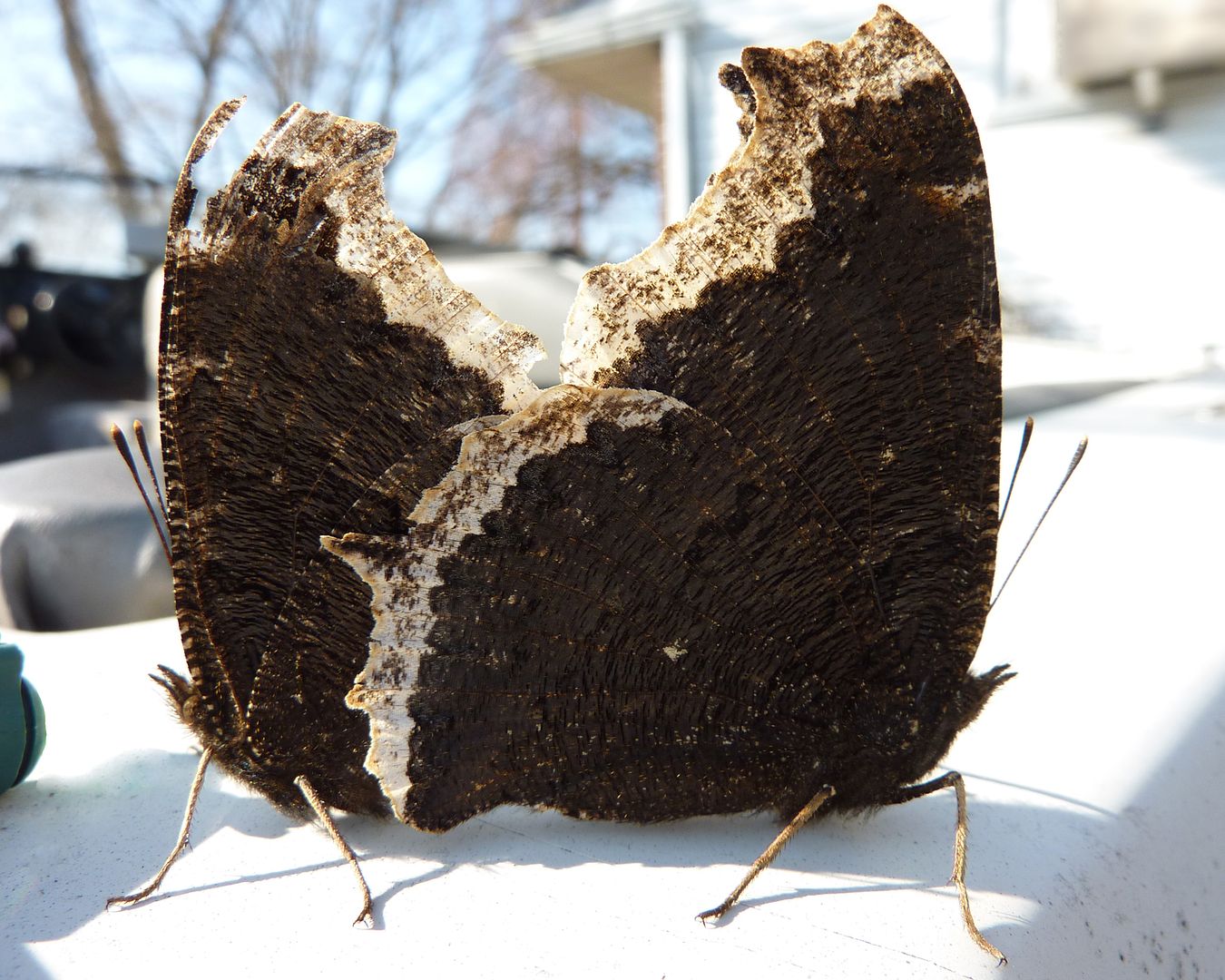
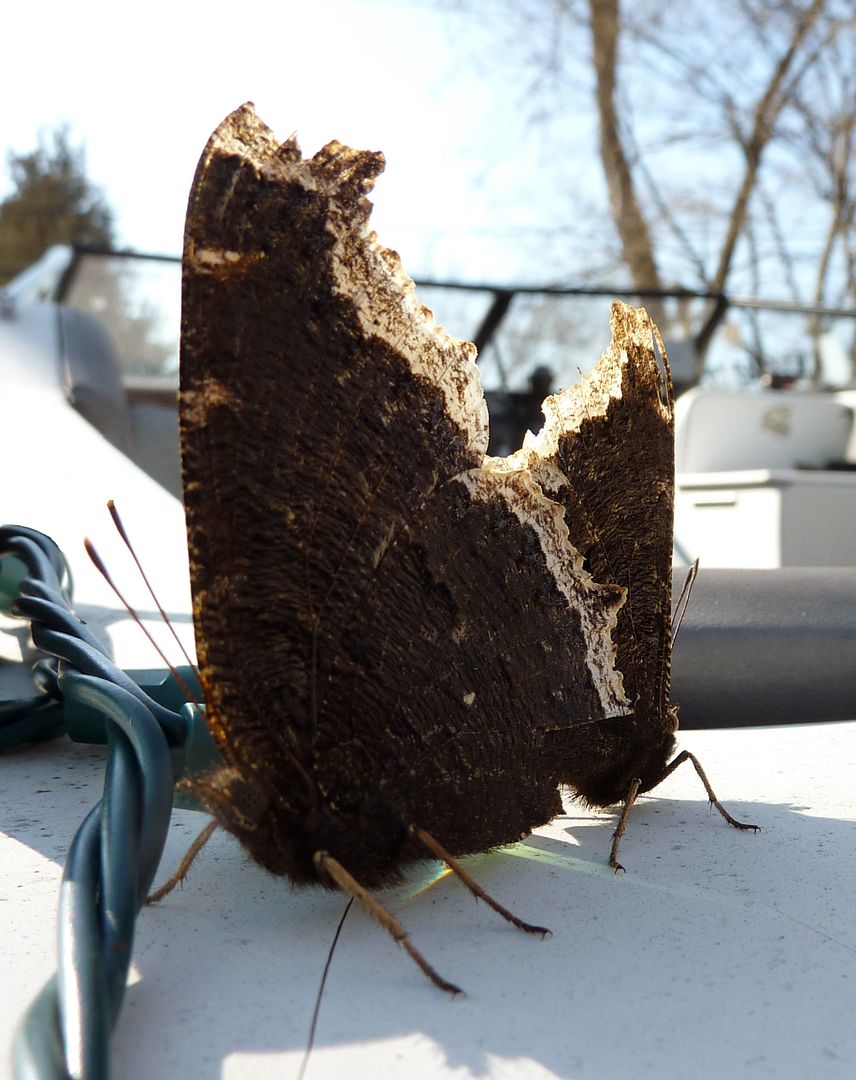
The first butterflies I encountered this year was a mating pair of Mourning Cloaks. Apparently this is the way to take pictures of them because all my prior attempts caused them to zip into the air at speeds thought to be impossible by most butterfly standards. The two were happy to move onto my finger and I was able to position them around as I liked. It's always nice to find nature being cooperative.

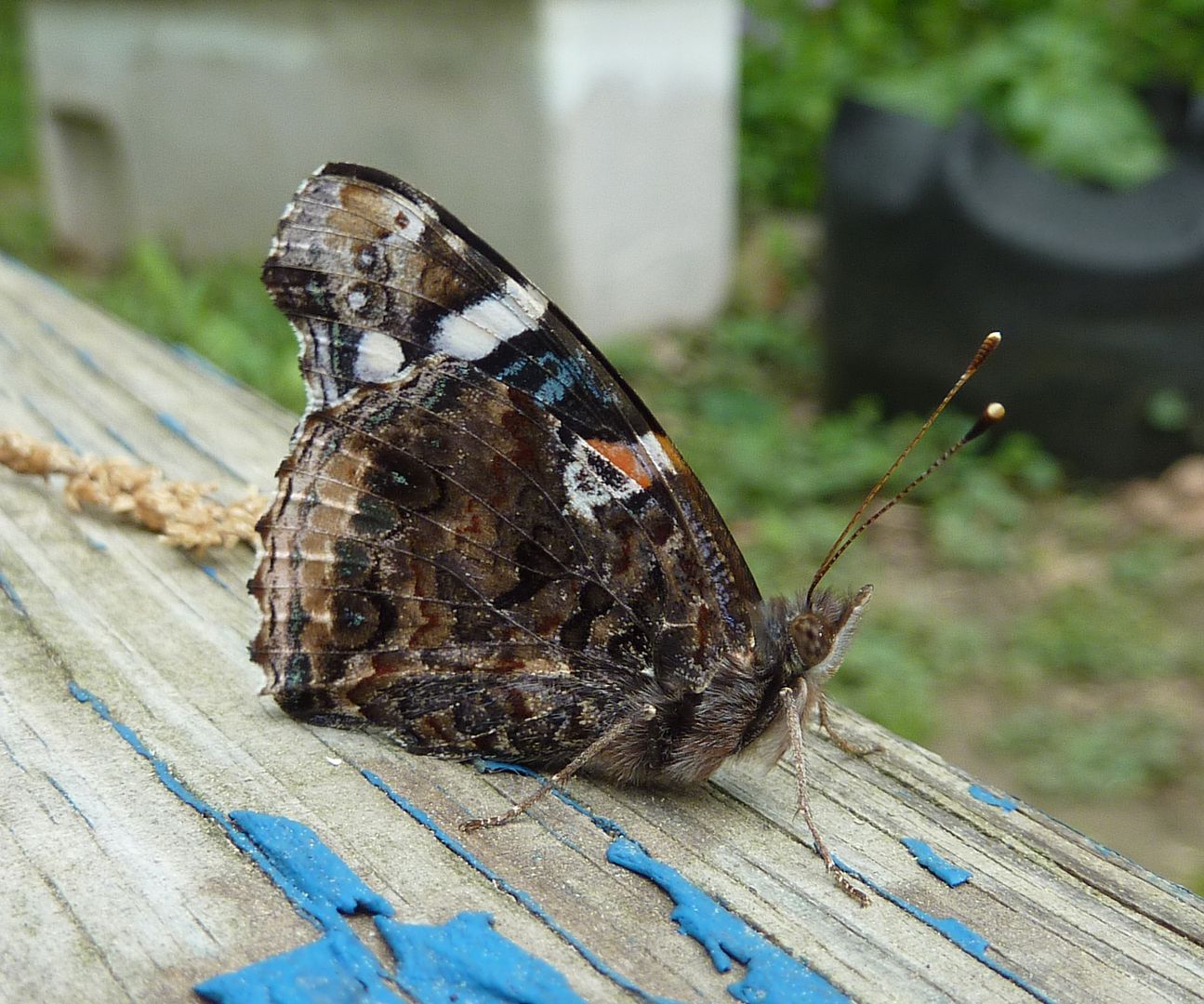
Red Admirals are another butterfly I'd struggled to photograph and I've yet to get one with their wings open.

Nothing butterfly related really happened again until the summer when I noticed some unusual chewing on the grape vine. Eight-Spotted Foresters turned out to be the culprit. They're tricky to find because disturbing the host plant in any way causes them to abruptly drop via silk lasso where they're quickly lost in the grass below.

There was an Abbot Sphinx on there too but unfortunately it vanished a few days afterward. That's a shame because they eventually get coloration to mimic a snake with one-eye.

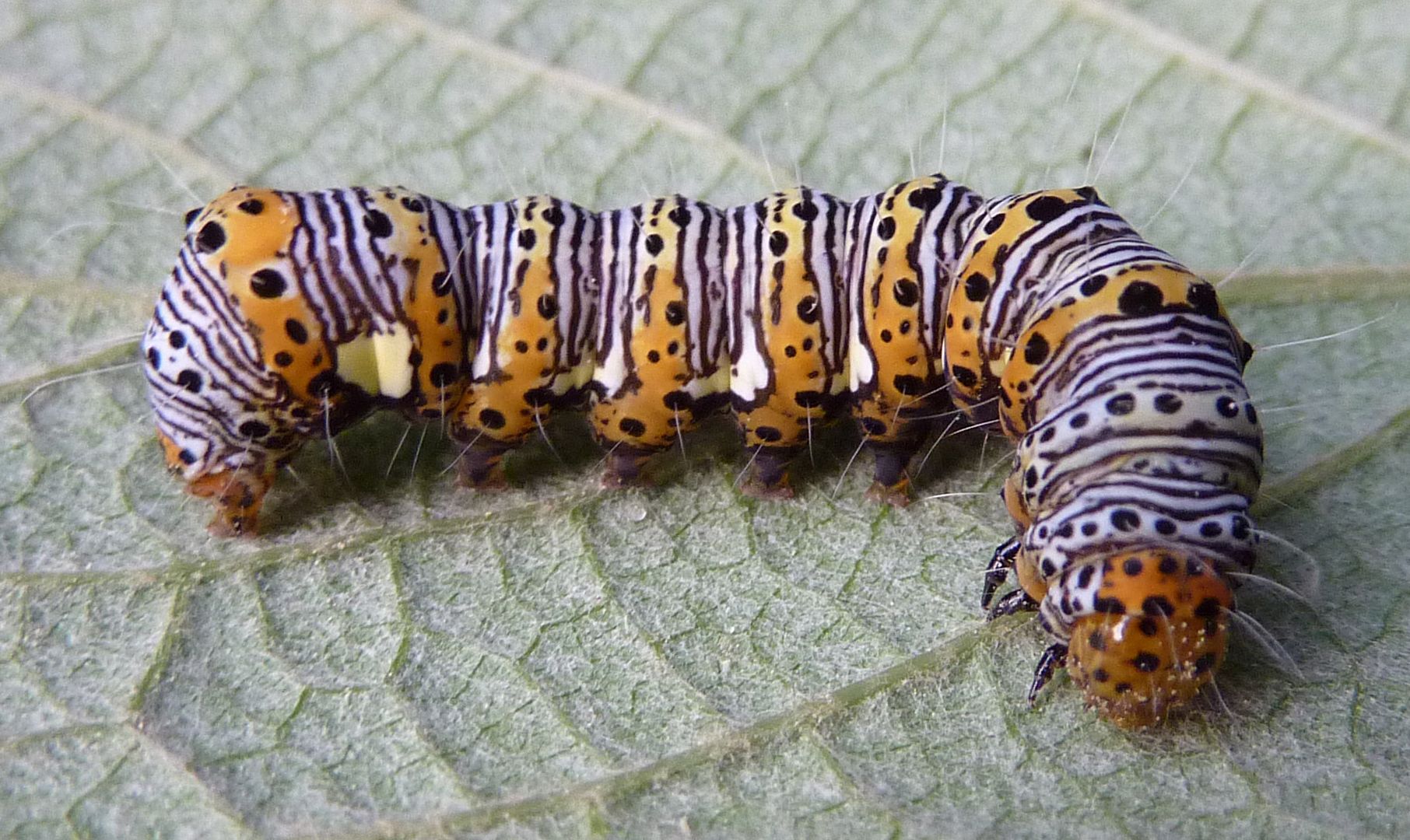
Never got this one ID'd but it was eating the asparagus. I believe it's some sort of Owlet which narrows it down to a few hundred candidates.

Probably the most faded Red Admiral I've ever seen. They're normally black and orange. (This is a Red Admiral right?) I'm not counting this as getting one with the wings open just from what an awful condition its in.

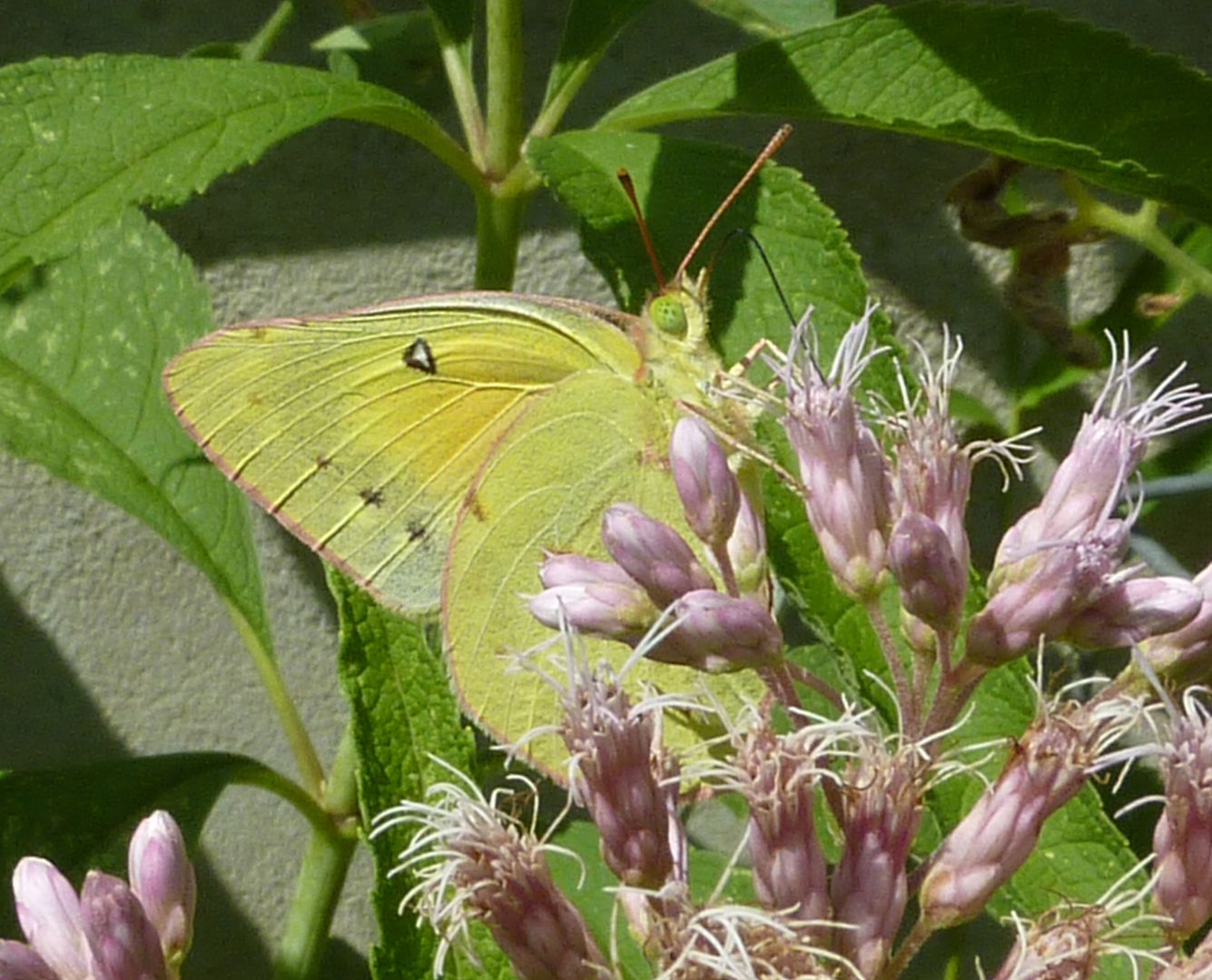
Sulphurs are one butterfly I've been trying to attract more of, namely by planting Wild Senna, but I've found these plants need more moisture than most of my yard can offer. False Indigos are far easier to grow but they're not as often used by this butterfly. I did throw out some Wild Senna seeds but none of them germinated this year. Hopefully they'll do so this spring. 

Black Swallowtails were the more recent visitor of the garden.

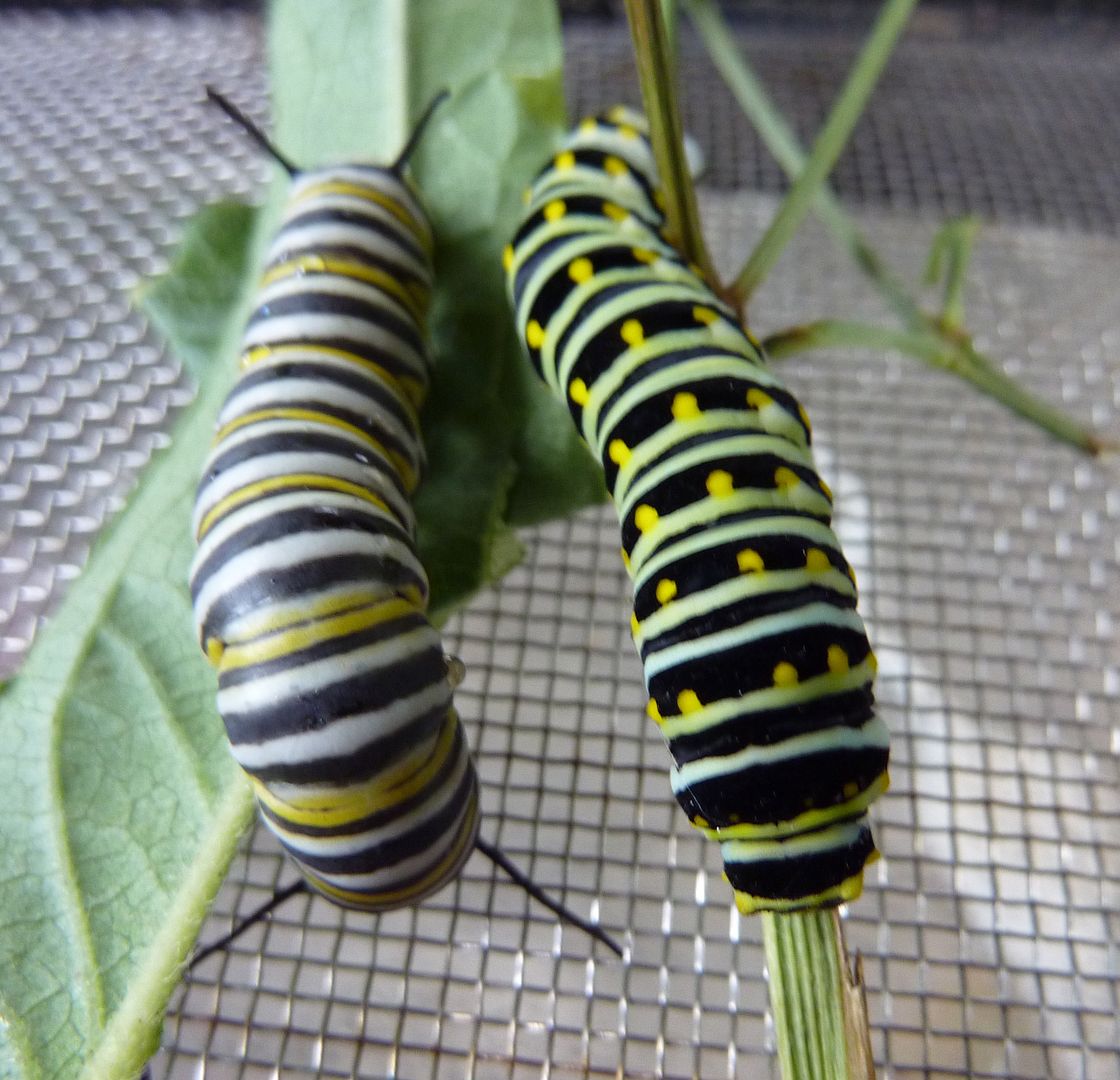
Parsley was the host plant of choice, but I did find a few on the Golden Alexander as well. A couple things about this species: the first instar caterpillars are so amazingly tiny I shell never be able to eat fresh parsley again without examining it thoroughly with the largest magnifying glass I own. They're tiny black leach-like creatures that are fast moving and unrecognizable as caterpillars unless magnified. Secondly, I was surprised how little each caterpillar eats in a day. A single spring can sustain a caterpillar until it's 2/3rds grown. The last instar on the other hands seems to eat two whole springs a day.

I was so successful with Black Swallowtails that I was able to photograph everything about their life cycle except for them over wintering. Though I hope to fix that next year.  

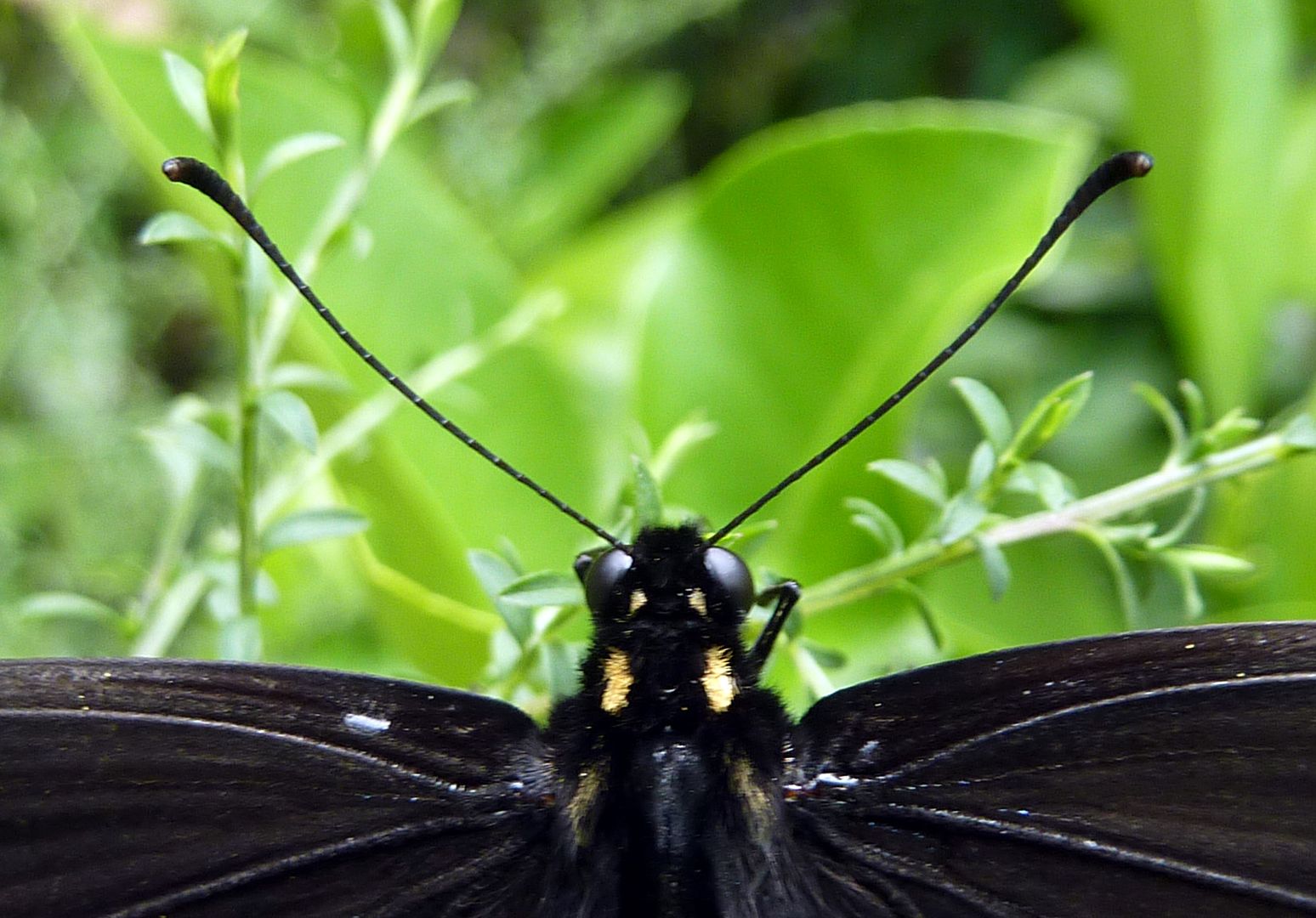
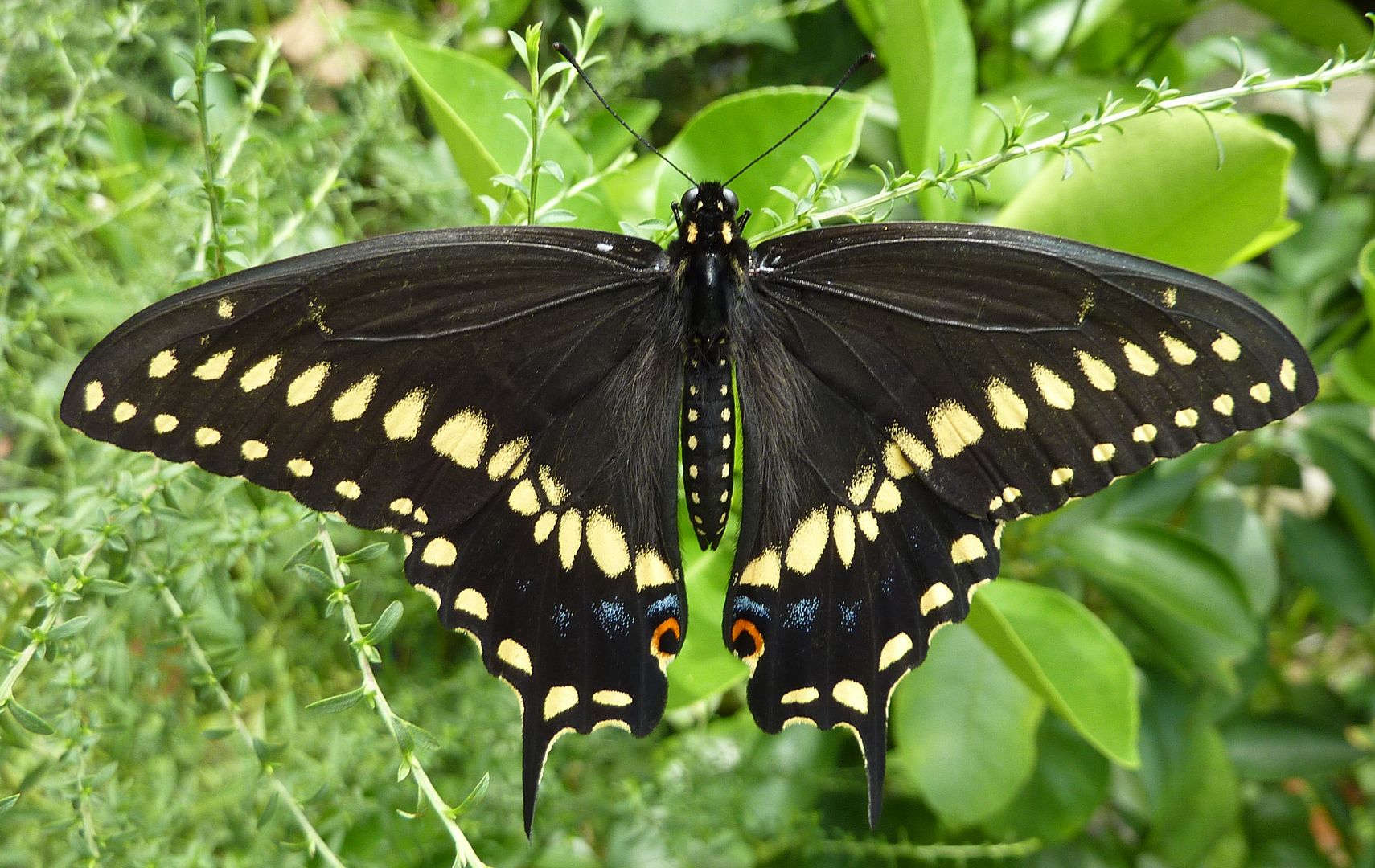
Females have more blue and less yellow, where as males have bolder looking yellow spots and almost no blue at all. 

Monarchs seems to be avoiding my yard this year. I was seeing them everywhere else in NJ but not my yard, which is a shame becuase I had lots of milkweed that went uneaten. A girl I work with apparently, her neighbor also lives in my town and she got caterpillars on her milkweed so I'm jealous.

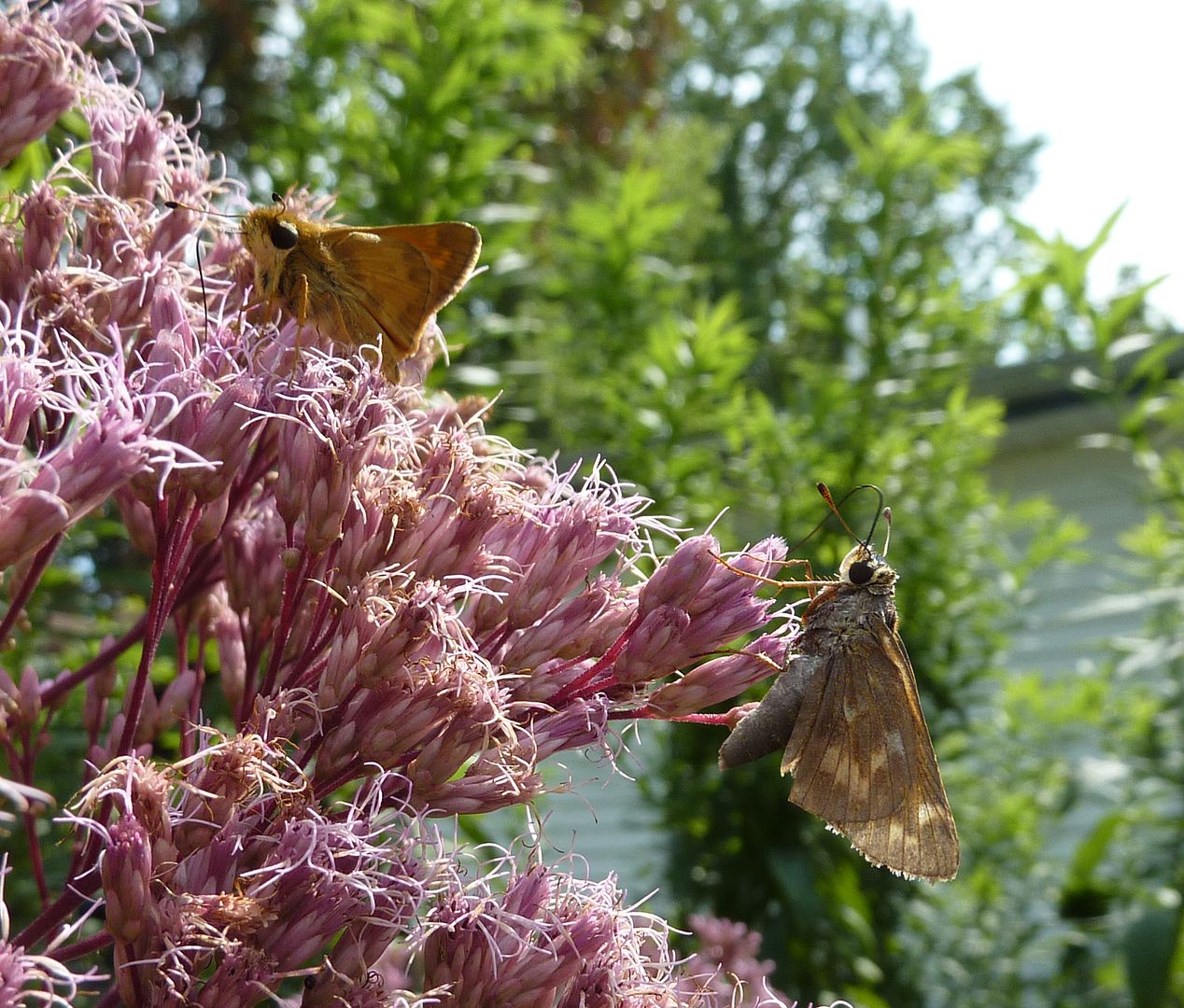
Sachem Skippers, male on the left, female on the right. I had no idea I'd photographed a set of the same species until my friend on facebook helped me ID them. I always get dozens of skippers at the end of the year and never pay any attention to them. I'm sort of tempted to fix that but I've never been a fan of their host plant, grasses.   

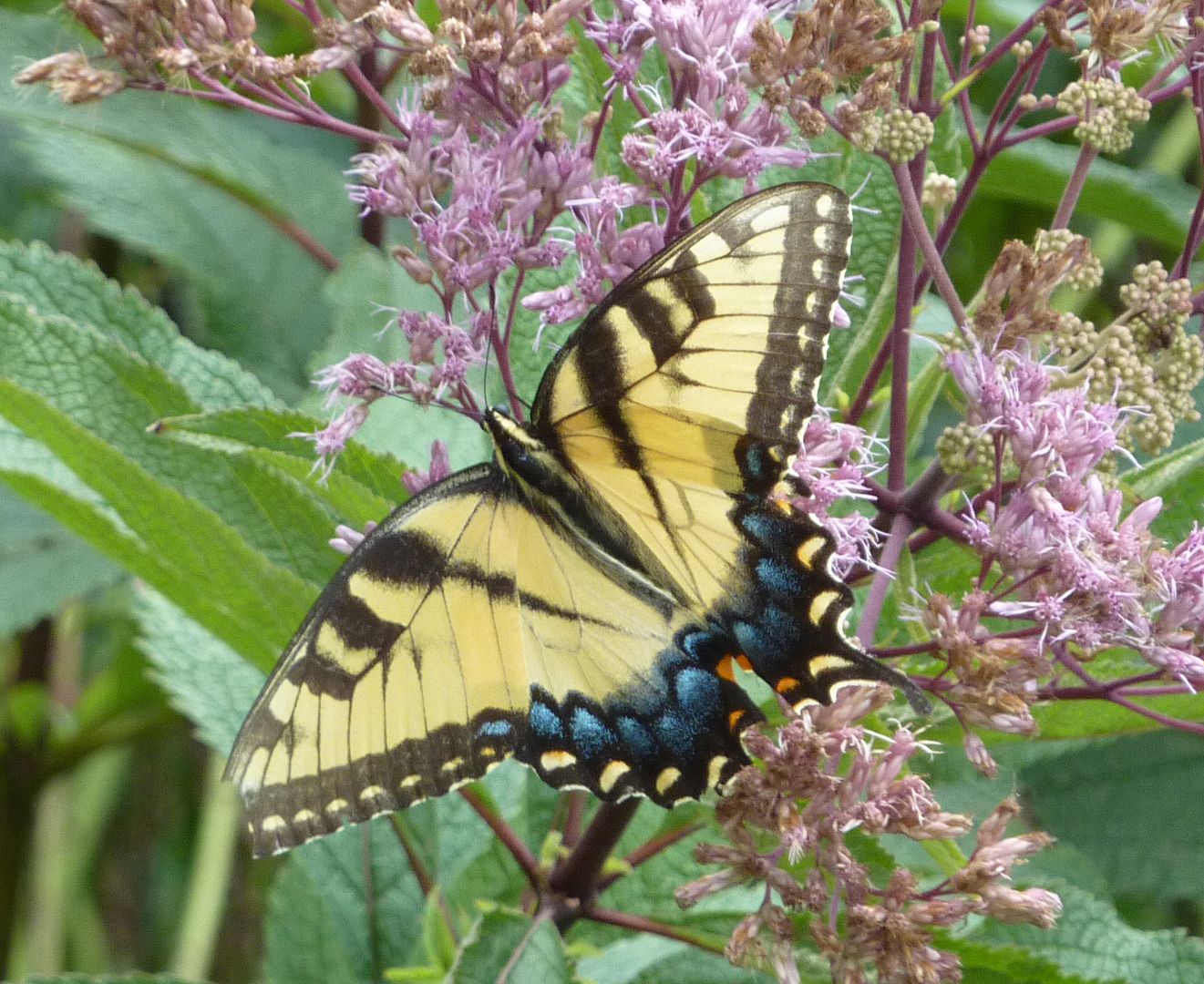
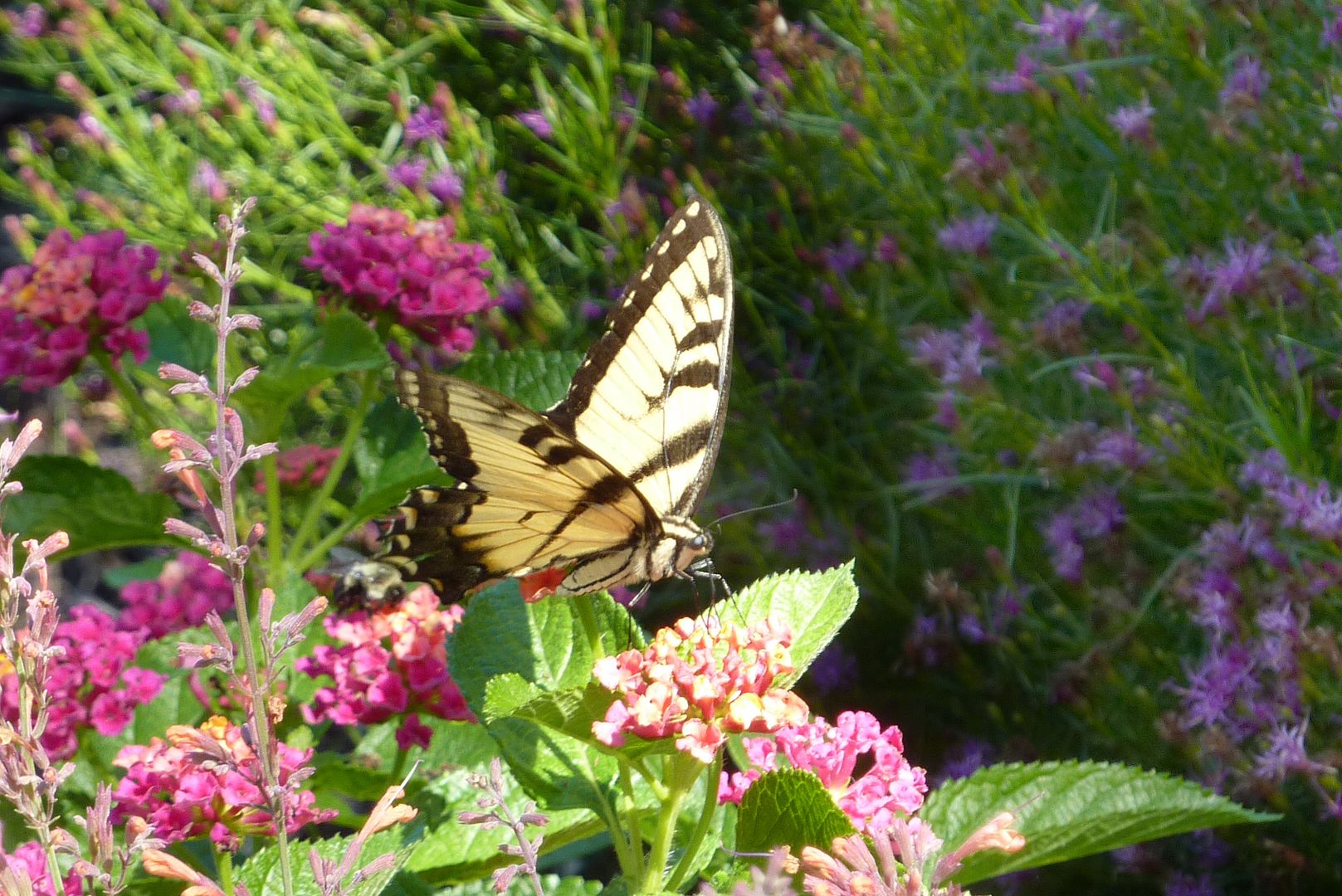
Eastern Tiger Swallowtail.

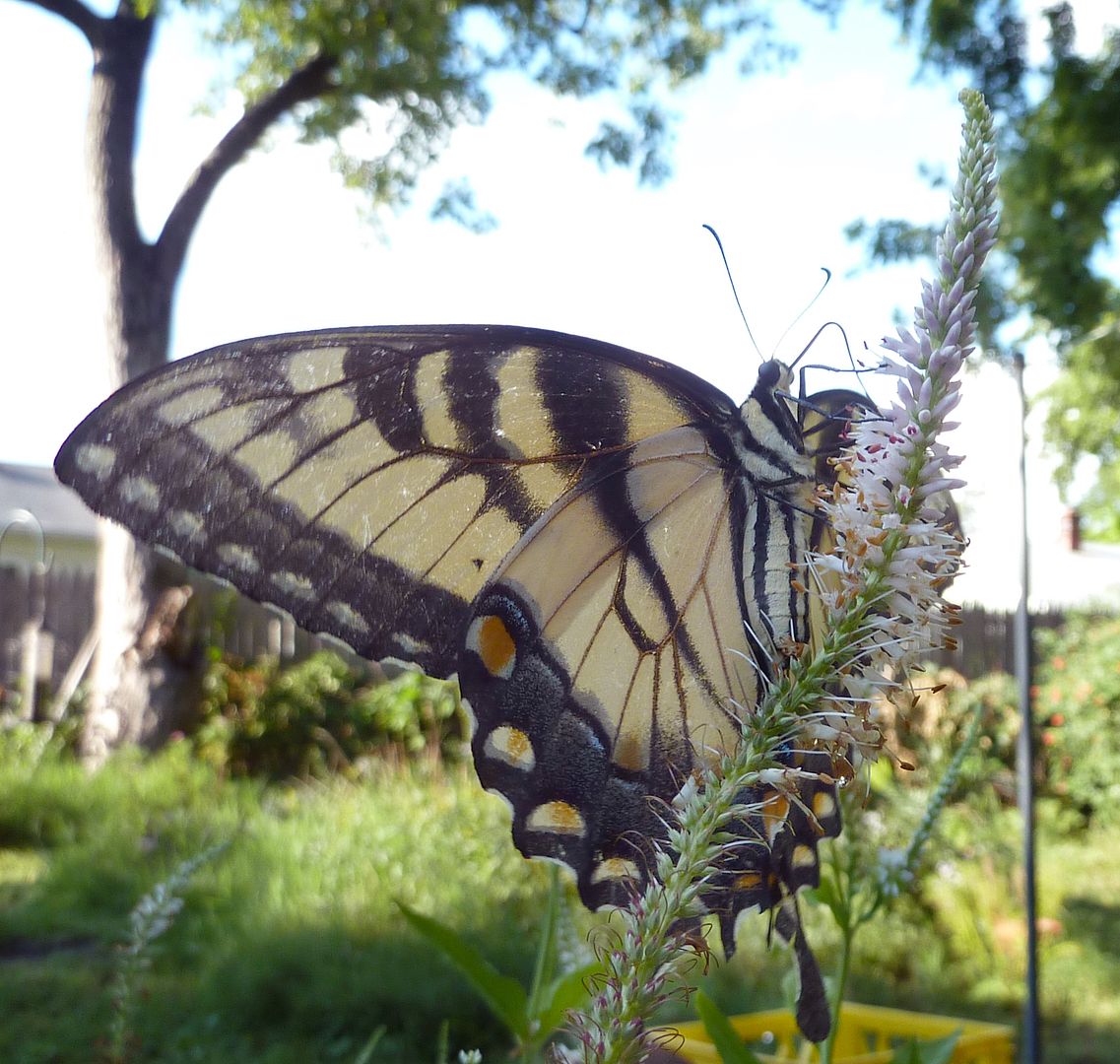
Eastern Tiger Swallowtail. I believe this is a female because the blue is stronger where as males have either less blue or it's absent entirely. 

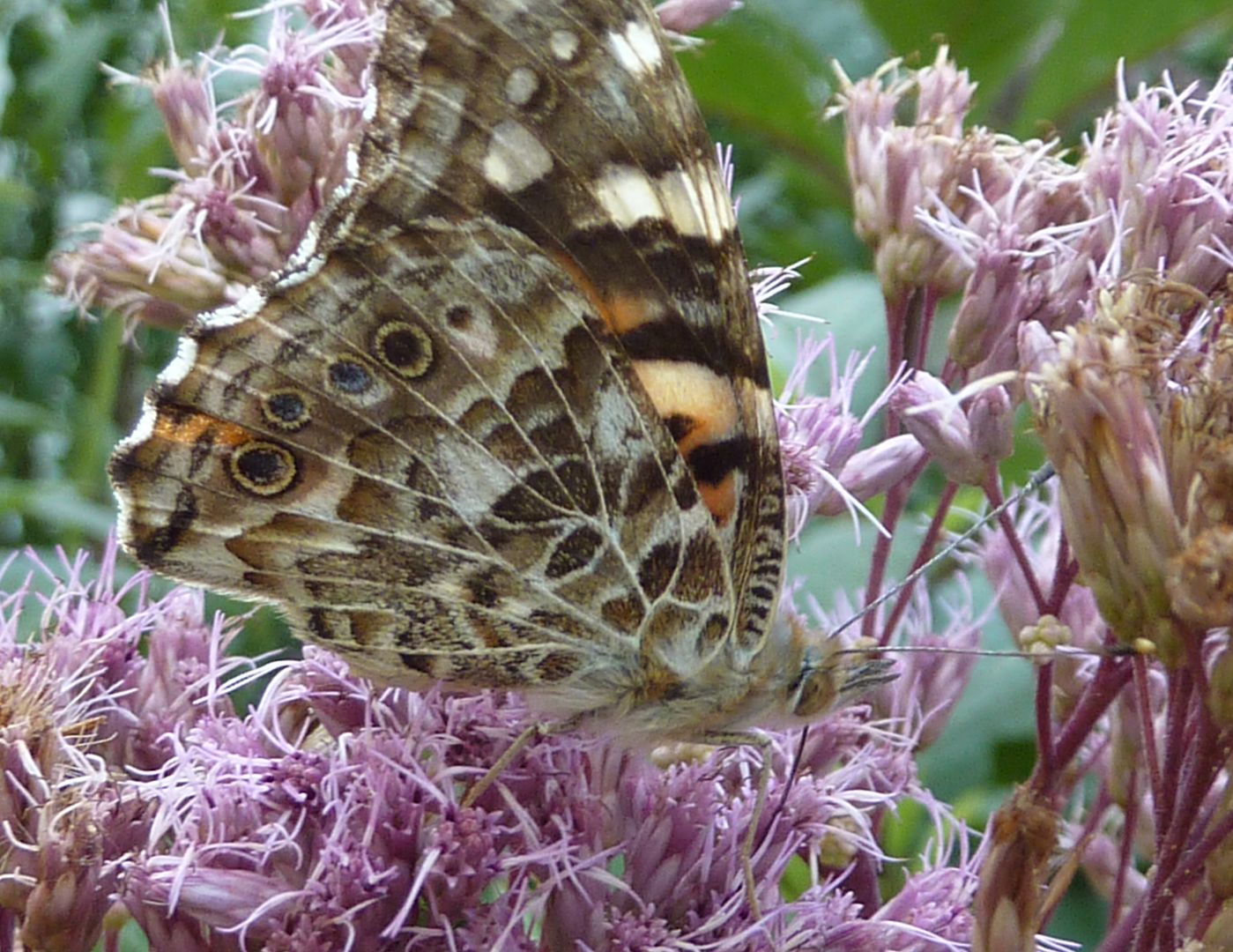
I didn't realize how big and beautiful Painted Ladies were until I spotted one on the Joe Pye Weed. They're about the same size as Monarchs are so I might try and get more host plants for them to partake of. 

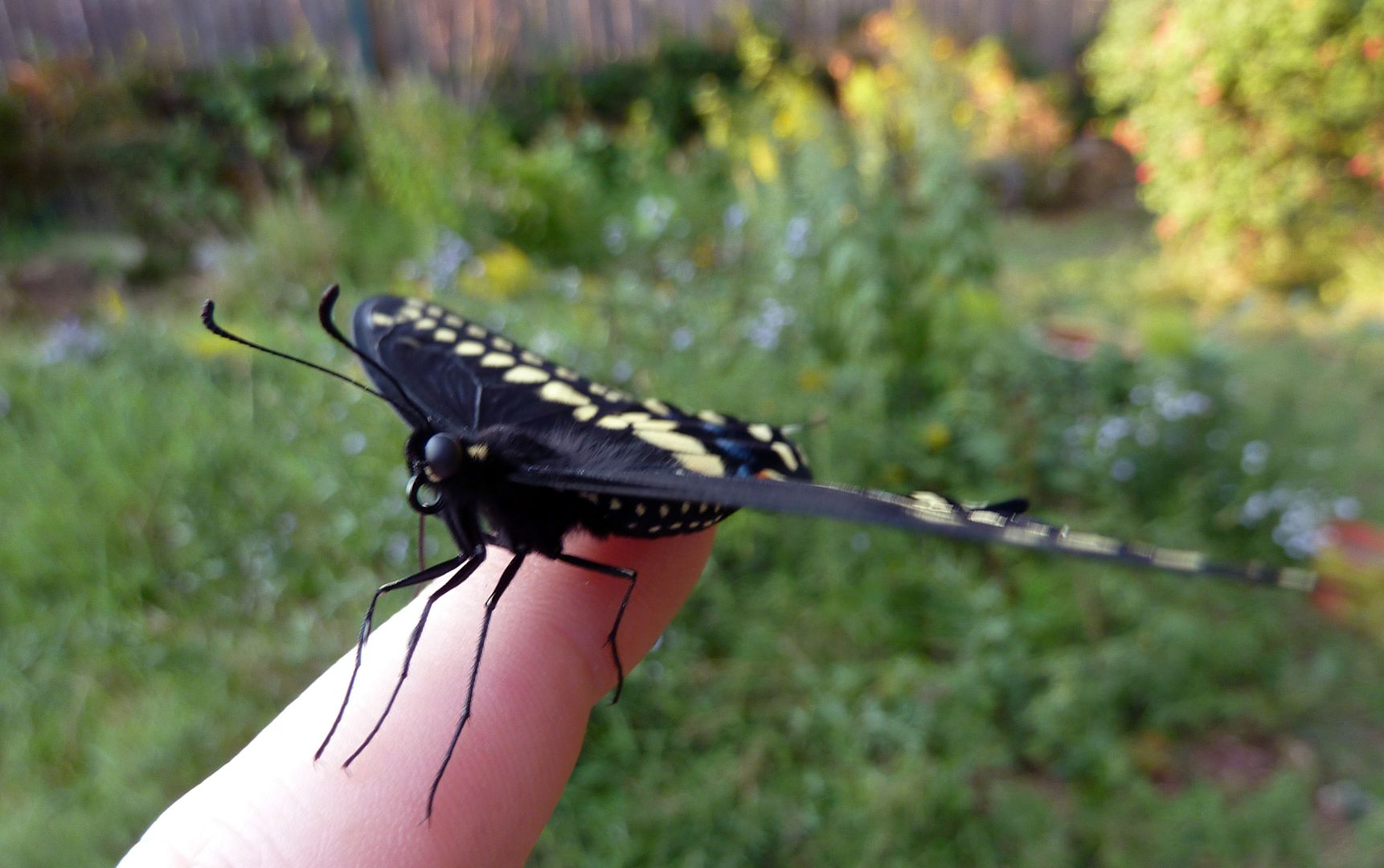
One of the first Black Swallowtails I raised. He was nice enough to let me show him my little meadow garden, but darted off after the wind started blowing.

I have about 6 or 7 of these over wintering now. Hopefully I can pay attention to them enough next spring in time to release them all. Parsley seems to grow better when it's cold out so it will likely happen early in the year. Most of them seem to be males as females make larger chrysalises. 

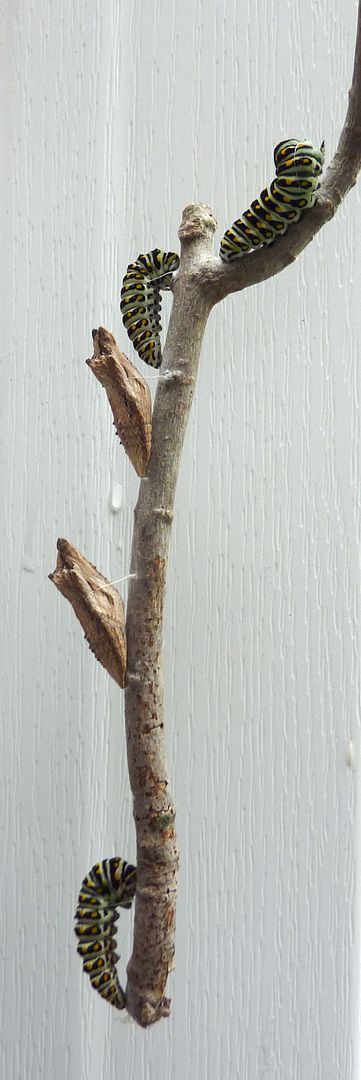
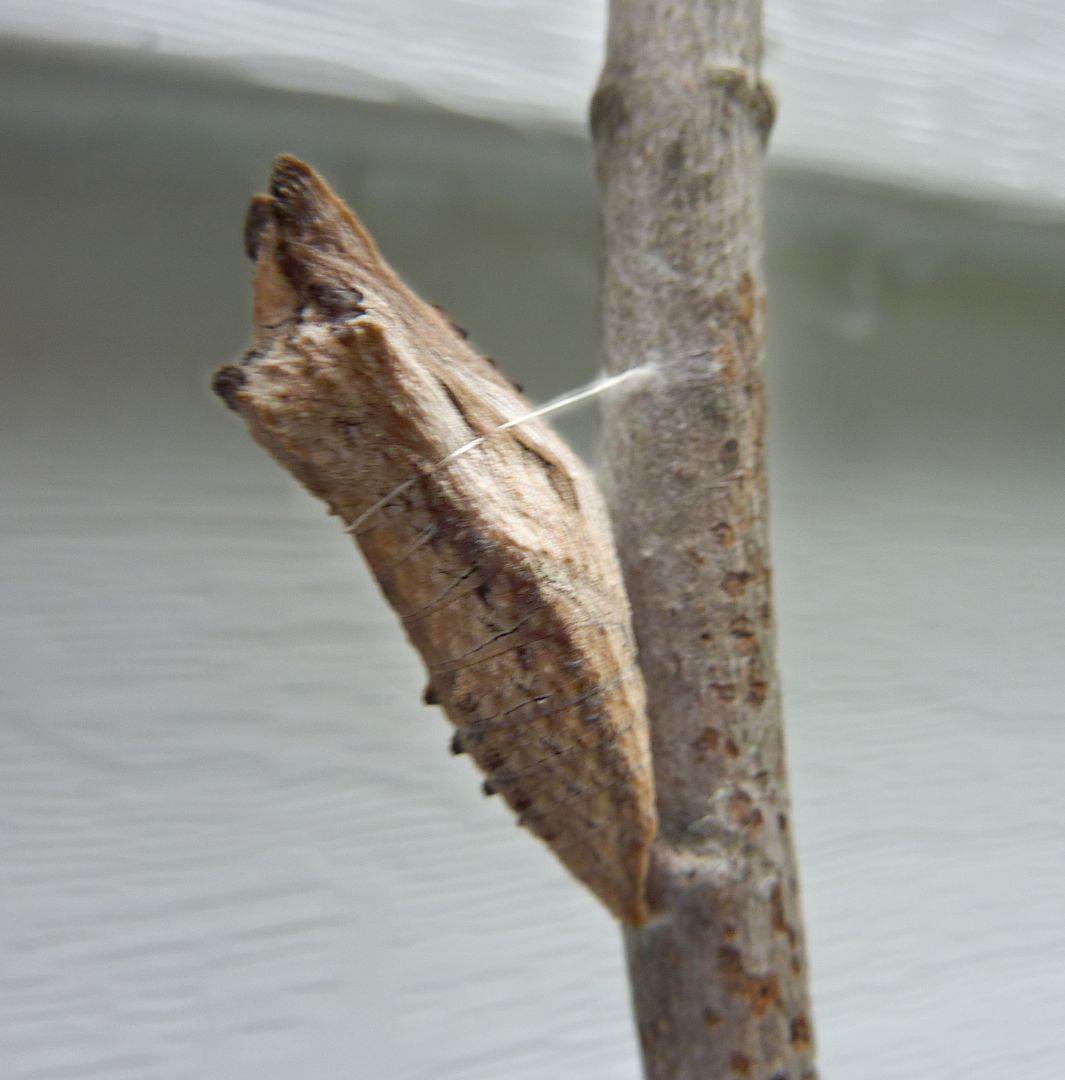
I like how they look like plant stems. Some actually start out green and fade to brown in a few days while others just skip ahead to being brown from the start.

Cabbage Whites are another one I don't pay attention to much. I feel like seeing them is somehow a mark of a bad gardener. Not that I've ever prided myself on growing cabbage.

At the Mt. Cuba Center butterflies were flying in formations in their round garden. Most of the trees there are host plants to something or other and their gardens are almost always swarming with something bright and showy.

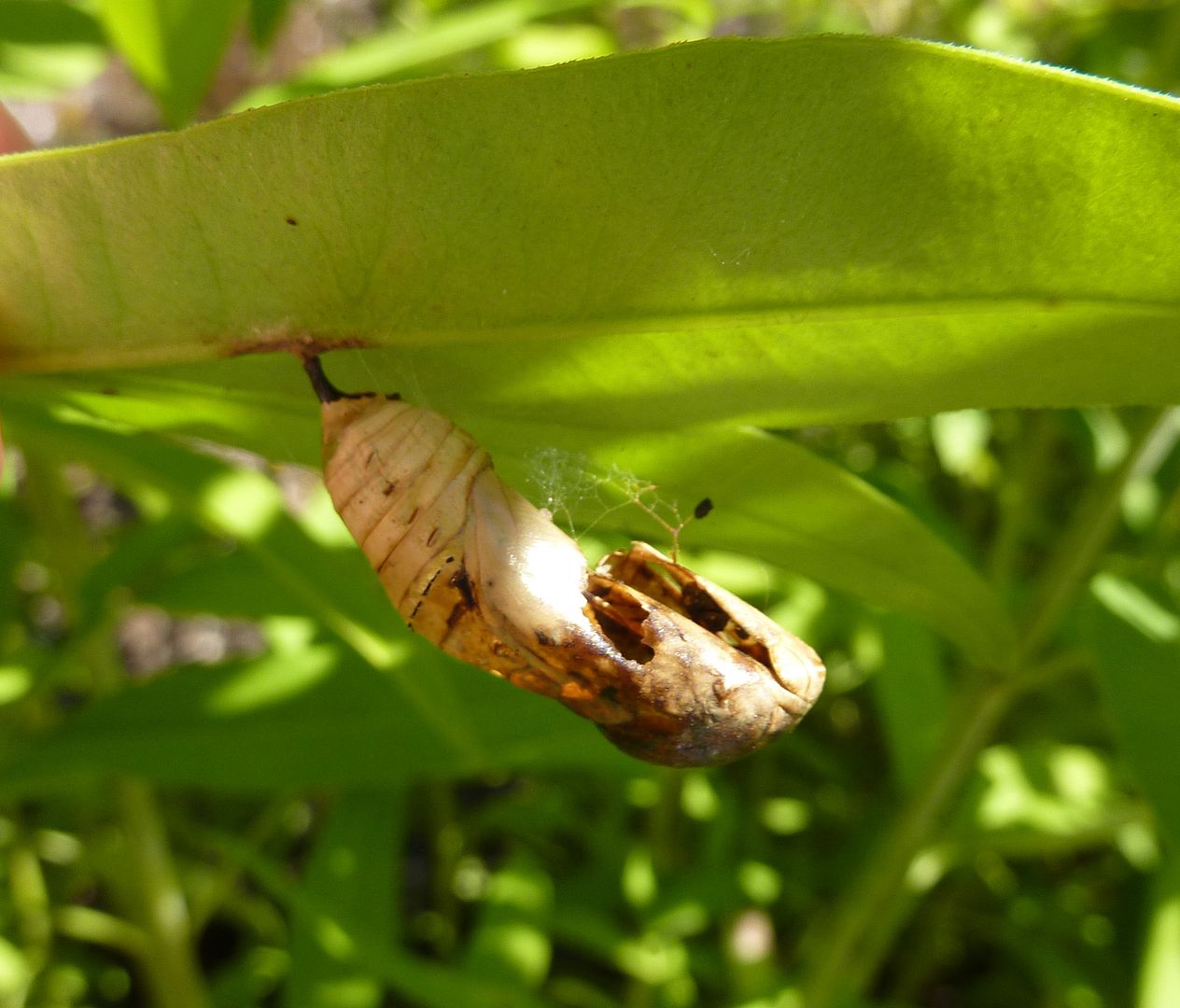
Under a Tall Coreopsis leaf I came across a chrysalis to what might be a Fritillary.

Monarchs finally started arriving after the milkweed was past its prime.

Not a good angle but an interesting one.

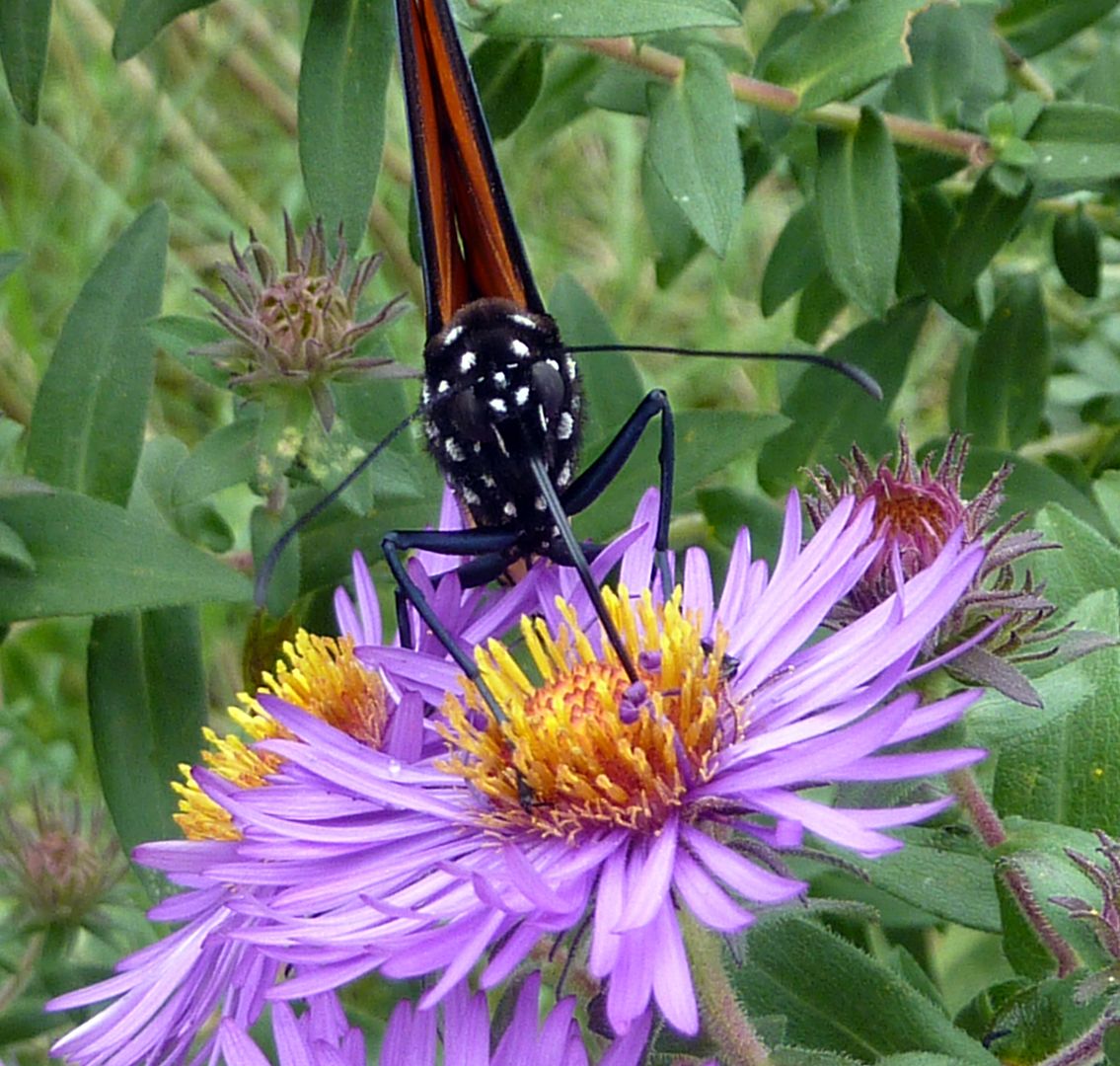
They started showing up on the New England Asters two at a time. I couldn't get a group photo as I'd like it to be so that's why I'm not posting the pair of them here. Hopefully I'll see more of them next year.

Monday, August 27, 2012

Black Swallowtail Hatched

It's a girl! The Black Swallowtail, Papilio polyxenes, chrysalis I had hatched today. The male and female to the species look very similar but I'm siding with it being a female from the lack of more yellow. This should make that male who's been soaring around the garden happy. Unfortunately shortly after she flew off, it started down pouring here. I hope she's alright. 

Tuesday, August 21, 2012

Black Swallowtail Chrysalis


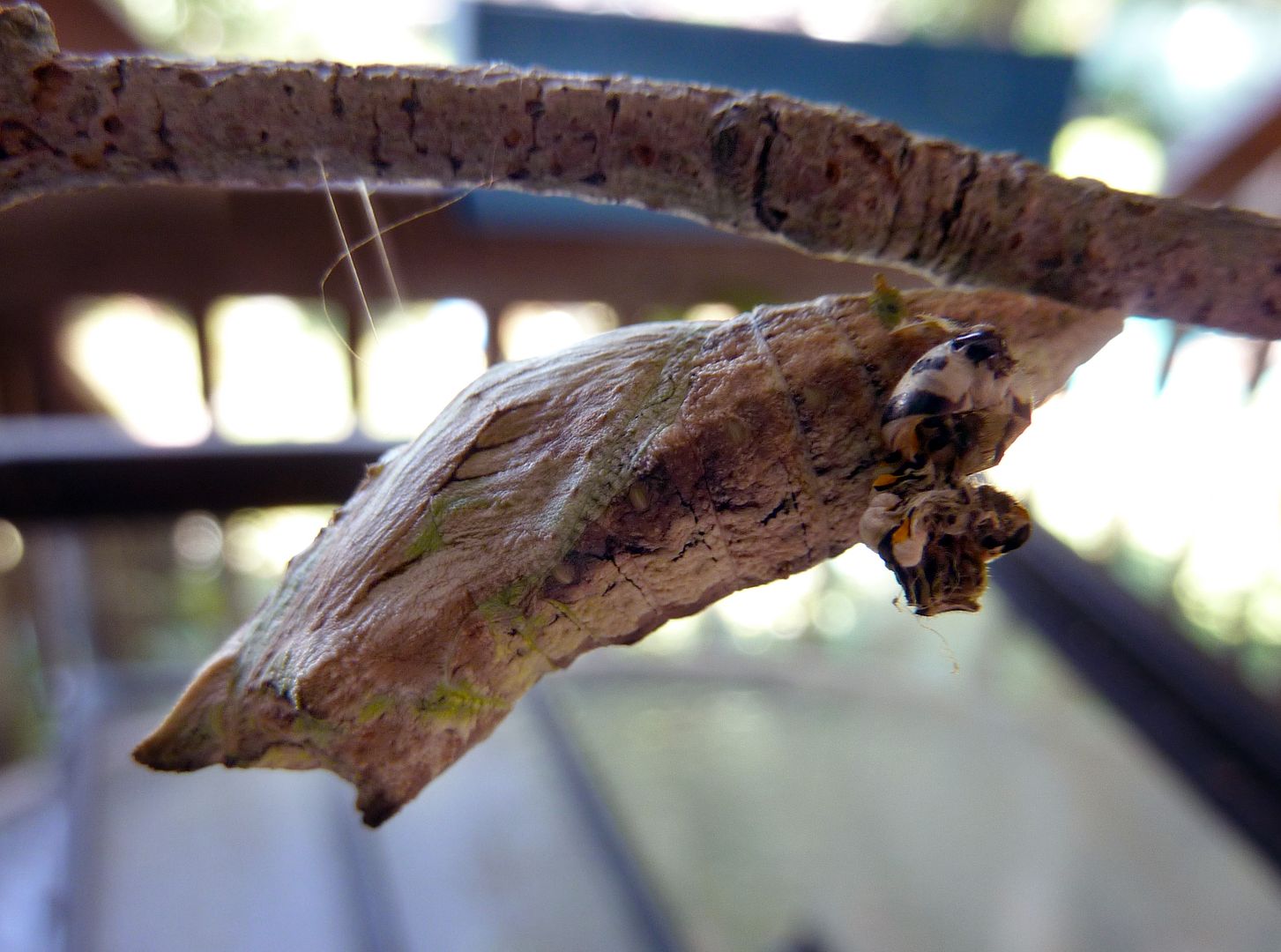
Black Swallowtail Chrysalis. Before forming this harder outer skin the caterpillar spins a safety line (top left) to hold it in place. They then shed off their outer layer of skin which you can still see here (middle right) somewhat still attached. Their skin then goes into a transformation taking on a wood-like texture to mimic a plant stem.

Black Swallowtails overwinter in the chrysalis stage and its around this time of the year that it becomes uncertain which chrysalises will hatch in a few days and which will wait until 6 to 8 months and hatch next spring.