Showing posts with label Birds. Show all posts

Monday, January 25, 2016

Gardening Goals and Achievements

 
When I first started gardening my initial goal was to provide nectar sources for my honeybees. Early attempts were an abysmal failure as I relied upon plants that simply looked pretty from a local nursery. The issue of course being that most nurseries sell cultivars with looking pretty in mind, instead of plants that are pretty useful. They do sell some useful plants but not as many as they should.

Realizing I would have to do some research, I started to set goals of what I wanted to get out of the garden. Along the way my focus changed from simply providing nectar fro my bees towards seeing what ecological effects my garden could have. I wanted to see how much biodiversity I could fit into one acre of land. Nothing was measured scientifically (I'd likely need at least 30 yards to make any conclusions,) but my achievements are as follows.

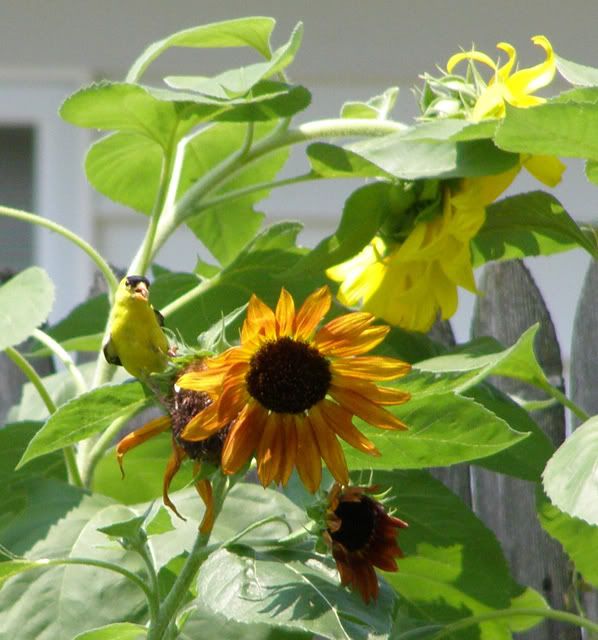
Probably the simplest achievement with gardening came in the form of a simple pack of sunflower seeds. They're the favorite food of the Eastern Goldfinch (The state bird of NJ) and their beaks are actually the ideal size and shape to dislodge a sunflower seed from the flower disk. Planting $5 worth of seeds not only brings in the pollinators but also a very attractive bird as well.

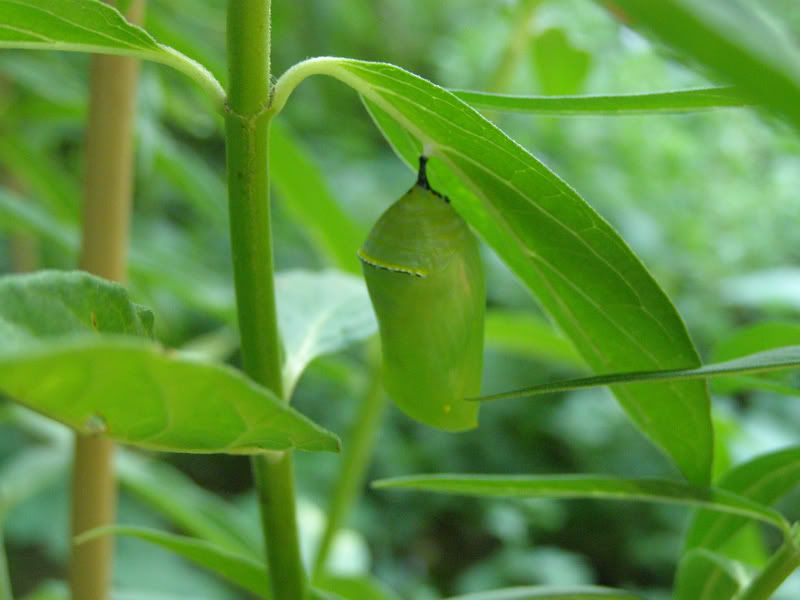
The next major milestone for my garden really had all the stars aligning perfectly. I met a fellow beekeeper who was really into native plant gardening but also advocated nonnatives like Catmint and Salvia. One of the plants that really caught my eye was his clump of Butterfly Weed which he grew along side an impressive clump of Lavender. I wanted to copy his garden as much as I could but chose a different species, Asclepias incarnata, Swamp Milkweed, or Fragrant Milkweed as I like to call it. I had no idea at the time, but Monarchs favor laying their eggs on the plant. The leaves are less tough than Common and Butterfly Weed, and because it tends to grow in moist soil the humidity in the air is more favorable to insects in flight. What's more the first chrysalis I found was on the host plant, which is uncommon. Normally the caterpillars abandon the host plant to get out of the way of the next generation. And again 10 days to the hour I first found the chrysalis I watched as it hatched into a beautiful butterfly.

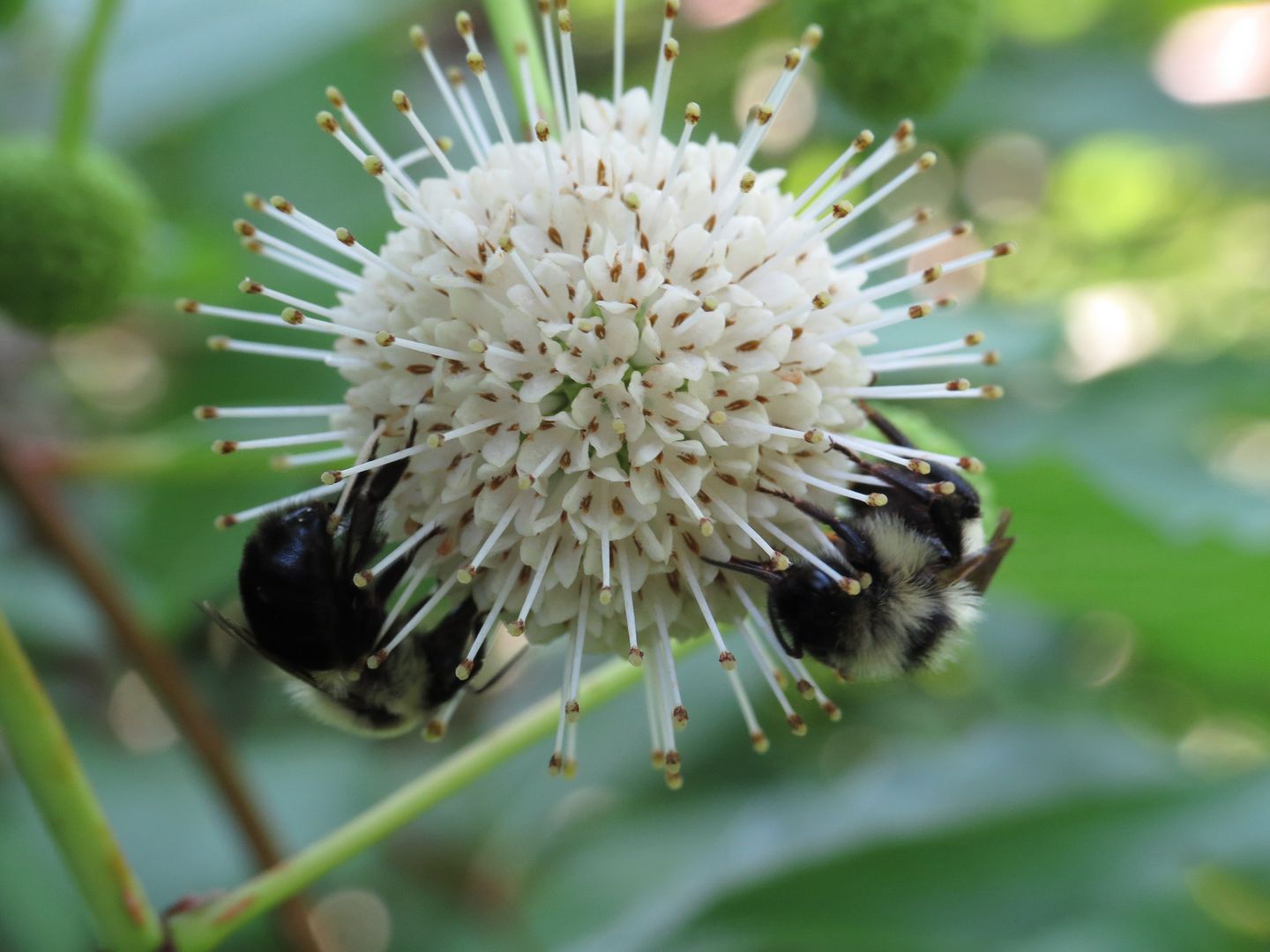
Over the past several years now I've started to go after some of the more obscure natives that not a lot of people grow. For example, I'm the only person I know who has a Button Bush, and I'd love to grow more of them but I just don't have the space.

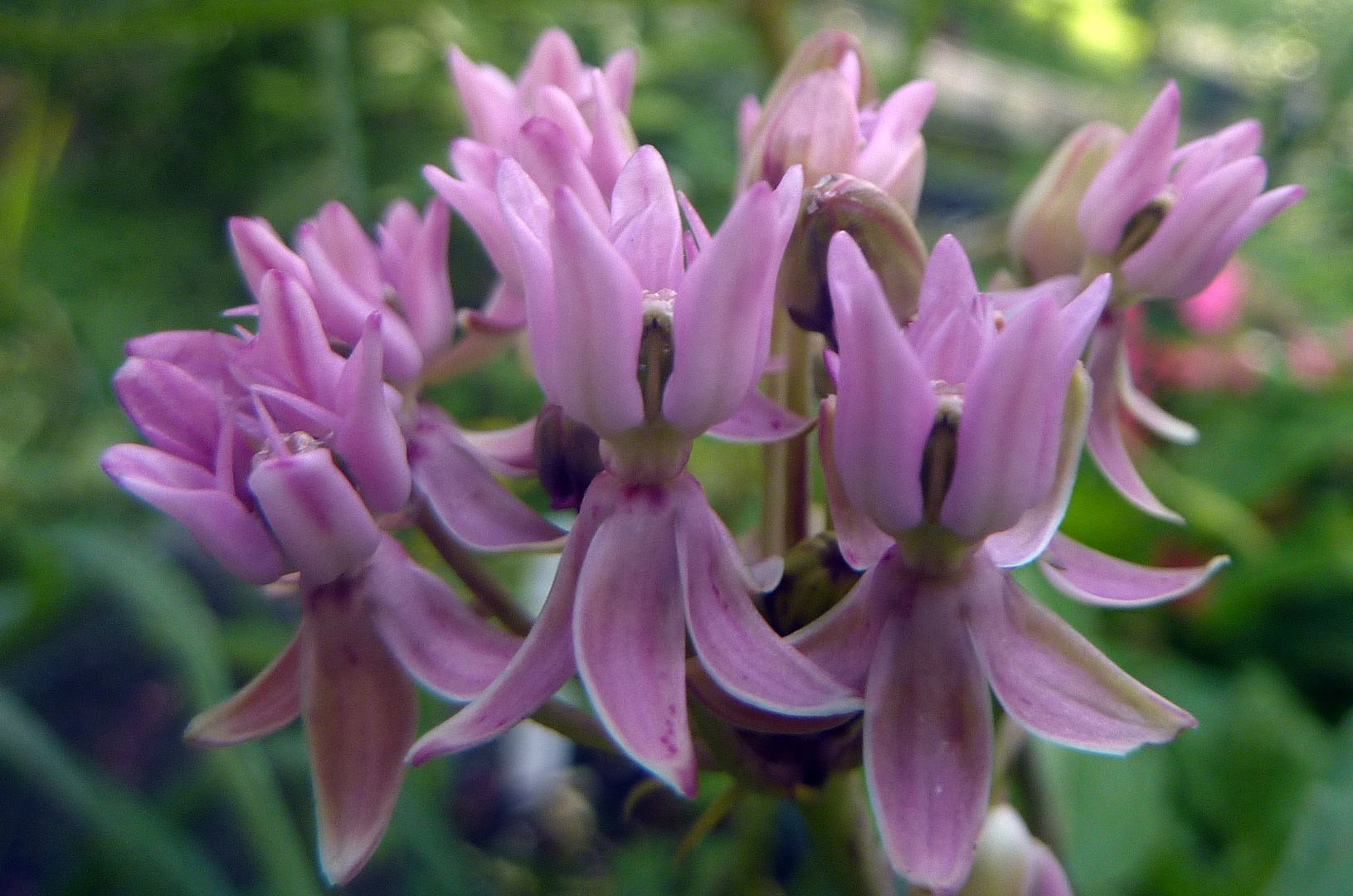
Purple Milkweed, while commercially available, doesn't seem to be grown by a lot of people. As I've discovered though, that's probably a good thing. Unlike Butterfly Weed, Swamp Milkweed, and Common Milkweed, this species requires cross pollination in order to produce viable seed. Individual plants don't produce as many flowers as other species. And tragically, the wildlife people grow milkweeds to attract target the flowers and seed heads first! You basically need to remove Monarch caterpillars, Milkweed Beetles, Milkweed Seed Bugs, Four-eyed Beetles, and keep the stems completely free of Oleander Aphids for this plant to do well! Of course it doesn't help that when it does successfully flower ants come and steal the nectar!

Purple Milkweed still grows in my yard but I've not been able to get it to flower again because pests keep eating it!

Rarer Still, I tried growing the true Red Milkweed, Asclepias rubra. I call it the true Red Milkweed because one of the major mail order nurseries has started calling Asclepias incarnata, Red Milkweed. They're wrong of course as is whoever came up with the common name for this species. The flowers are clearly a shade of pink! The plants I bought (and suspect were dug out of the wild) grew well the first year and flowered but have yet to emerge again. The roots are still in the soil, still slightly green or white if you cut into them, still fleshy like an ordinary rhizome but for some reason they don't produce any shoots or green growth of any kind. Very odd. If I locate them again I'll move them to an even wetter spot of the garden. I'm pretty sure they're a bog species.

This is an achievement for me in that I got to photograph it flowering. I have no plans of trying to grow it again as all the sources for plants at this time I suspect might be from plant poachers.

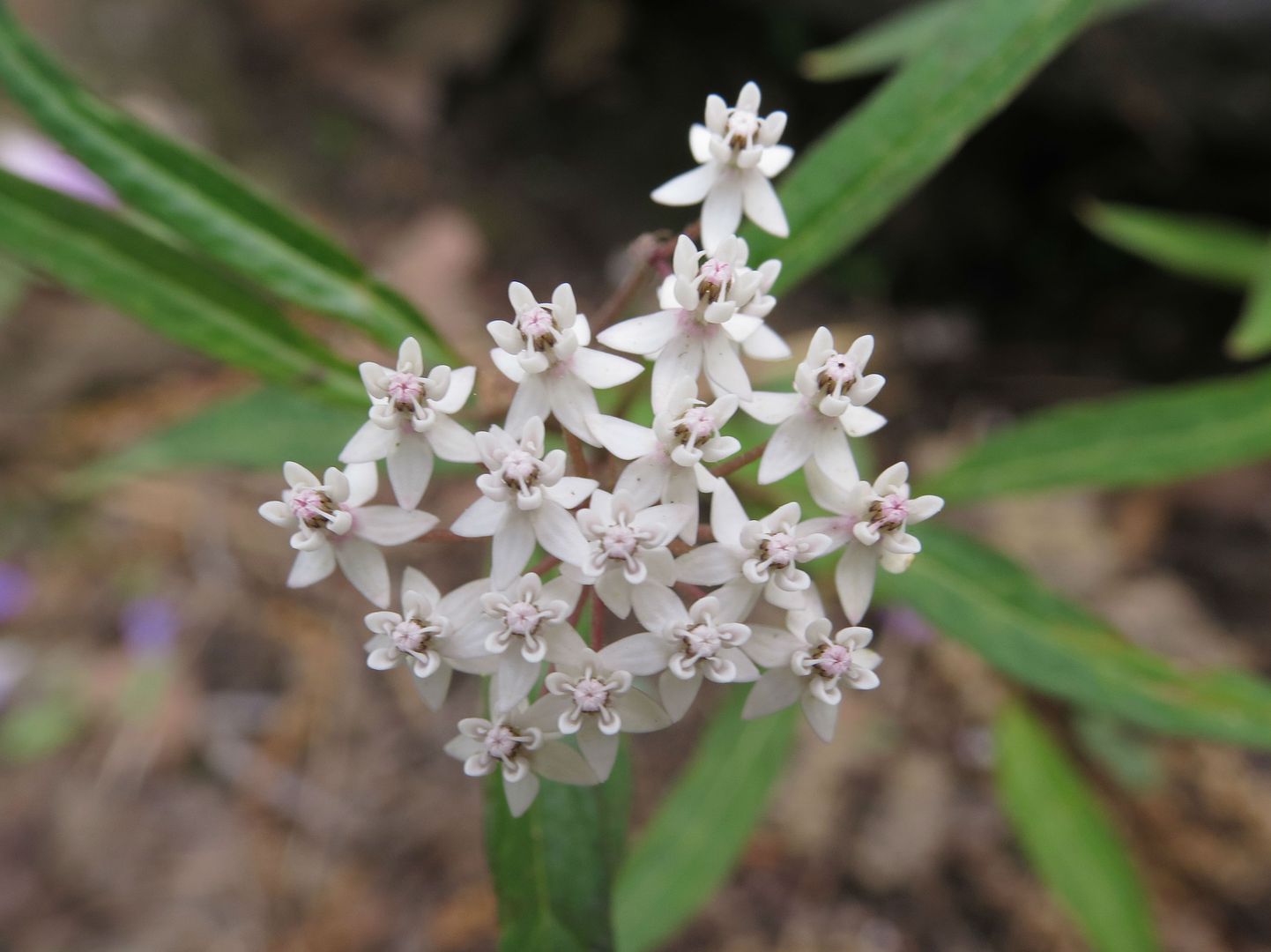
Aquatic Milkweed, Asclepias perennis. This is you can buy on the internet easy enough but it didn't do well in my yard because all the wet bog-like places are already have lots of weeds and plants growing in them. It's a small species with some of the smallest flowers in the genus too. I was hopeful that it would be successful in my garden but it wasn't. I may try planting more of this again in a true bog garden some day, but for right now, I'm just glad I was able to photograph it flowering.

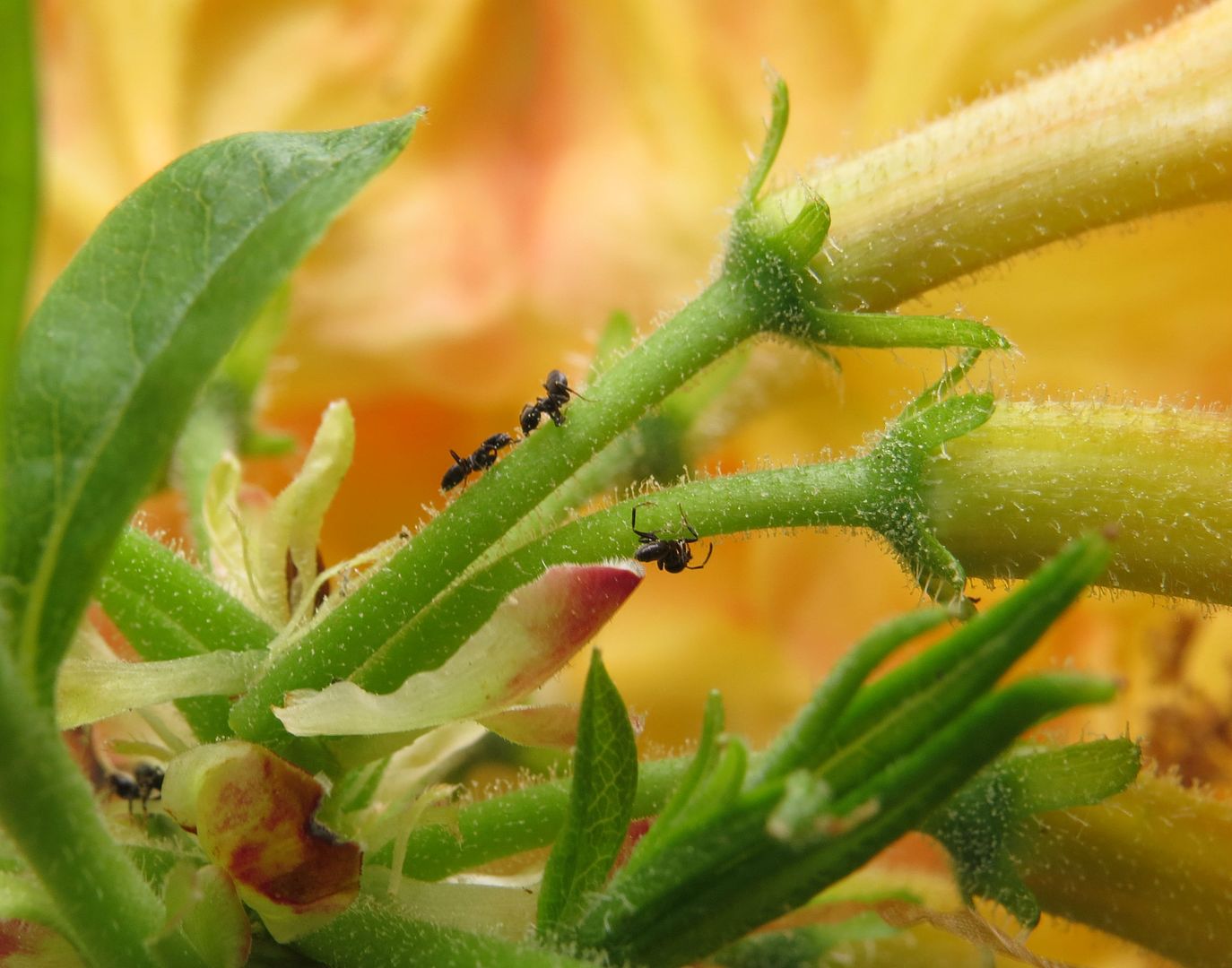
Discovered Flame Azaleas are semi-carnivorous. Actually they're not carnivorous at all but to protect their flowers from nectar thieves, their stems have hairs on them that dispense a type of glue to stop ants dead in their tracks. Now when the hummingbirds come to feed at the flowers they can find an added tasty treat clinging to the stem.

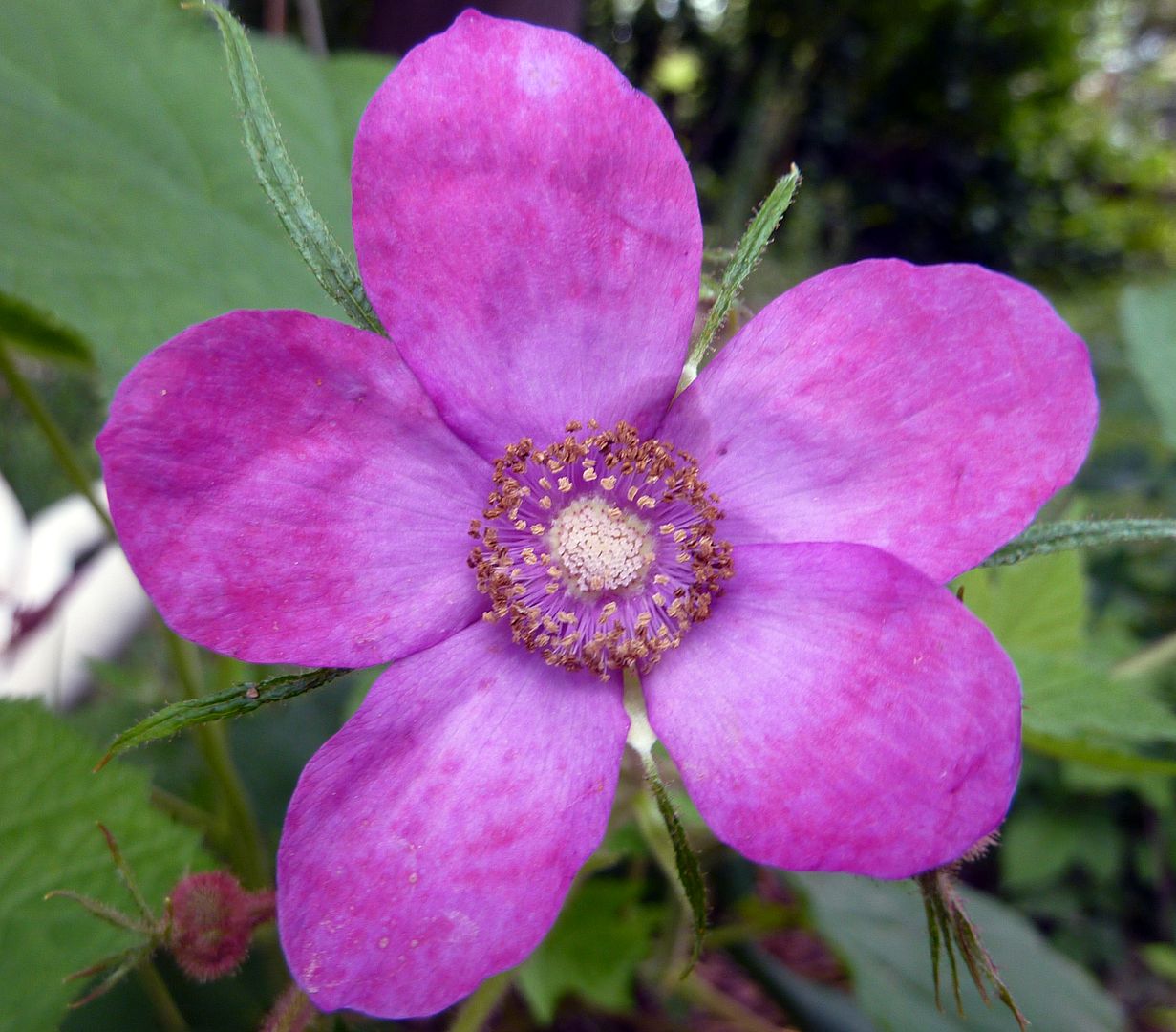
Red Flowering Raspberry. This plant was a huge surprise. The flowers are as pretty as our native roses, though they're also a poor replacement for a rose. You can't really use them for a cut flower, and they're short lived. The stems lack any prickers and instead have a sticky feel to them. They have yet to produce fruit but I believe that's a cross pollination issue I'm hopefully fixing in the coming year. I've planted three more specimens that should flower. If they don't produce fruit then I'll likely move them some place else so I can plant things that are more productive. But man, look how pretty that flower is!

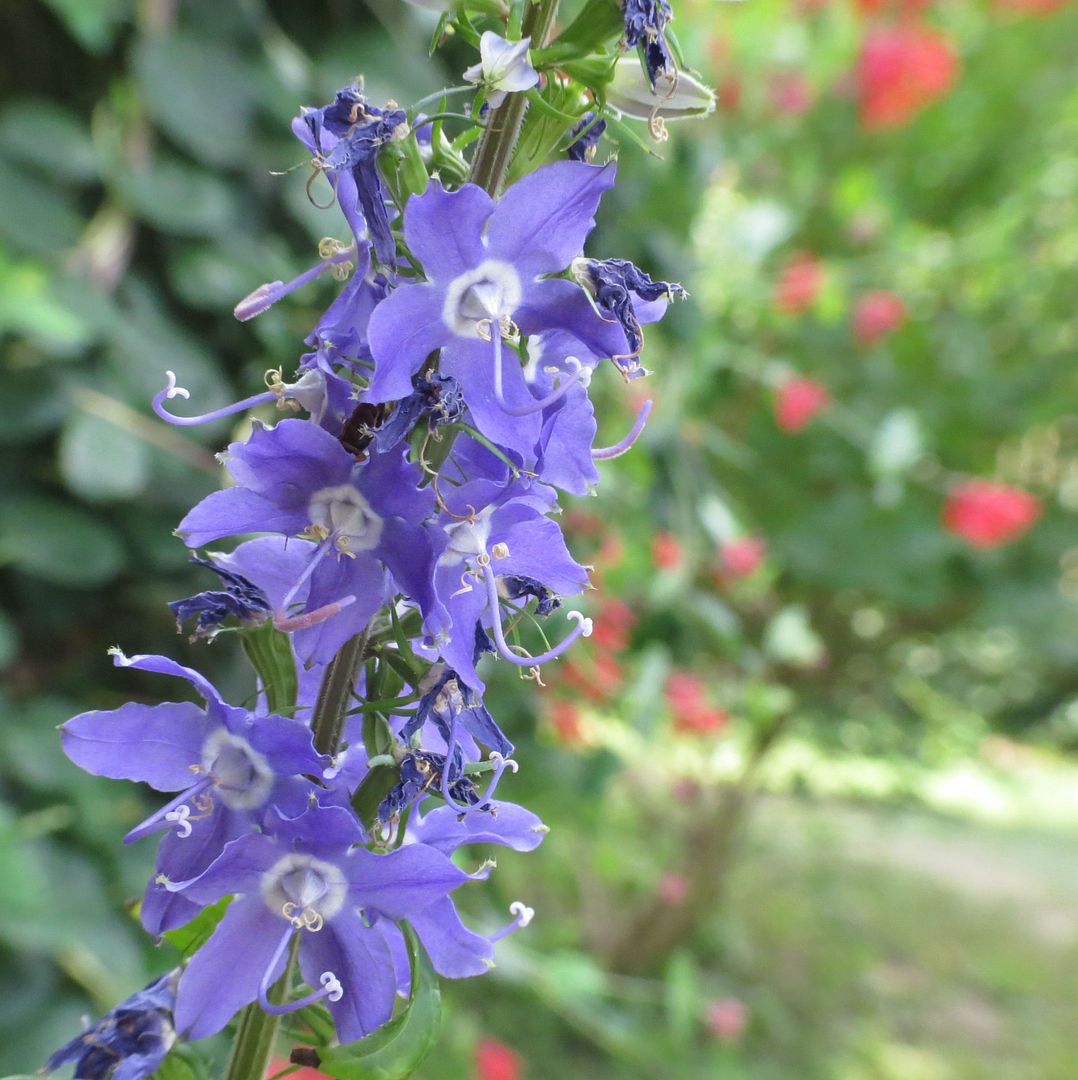
Companula americana. This is a biannual I decided to try one year and it's easily my new favorite plant for dry shade. It grows in bone dry soil, in full shade conditions! The first one I got growing grew 7' tall and flowered robustly from June to frost. It got to the point where it was making bloom and buds on existing seed pods because the stem had become so overcrowded with flowers. I've never seen anything like it. The following year's plants weren't as great, but they're biannuals so they take an added year. Then on the year past we had new windows installed, and one of the workers took a rake to the garden and got rid of all my plants while cleaning up! Good to know they're easy to control if they get out of hand but I was hoping for a whole backdrop in the garden of 5 to 7' tall spires of blue flowers. Hopefully I'll get to see that happen this year because I emptied a pound of seed or two in the spot.
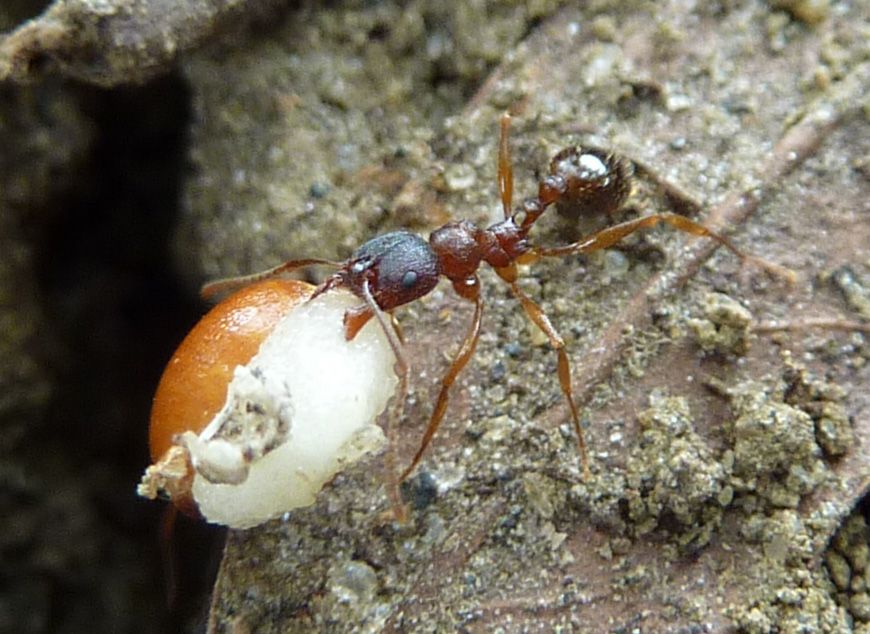
A lot of the ephemeral plants I grow disperse their seeds with the aid of ants. I'm overjoyed that I was able to not only grow a few species of Trilliums and other plants that have elaiosome on their seeds but also able to witness the behavior in my own backyard. And I've also realized I'm probably the only person in North America who's bothering to photograph this behavior!

Very recently I was approached by a museum about using one of my photos for an exhibit. Unfortunately I'm not a professional photographer (Yet!) and don't normally save images in as high a resolution as their project required. Still, to have been asked was an honor!

Roughly 40% of our native ephemeral wildflowers disperse their seeds this way and most gardening books treat the topic like a cliff note... There isn't a whole lot to tell, but I've found certain species of ants favor certain plant species and some are better about dispersing them a greater distance than other.  

Getting Wildflower to reproduce, and ephemerals at that! This is huge because some of these plants I buy cost $25 each, and they're not always successful! Knowing that the plant is happy enough to do what it would normally be doing in nature, in my yard, it the best compliment a plant can give you. (Or the worst if it's invasive.) Now if my rare Trilliums would just stop reseeding in the lawn I'd be in business.

Getting my Paw Paw tree to flower. For years I'd been planting saplings of this species all over my yard and for one reason or another they just couldn't survive the winter. It's annoying! Finally I found a spot where they get enough water in the summer and don't burn up in the heat, and are sheltered in the winter enough to survive. And I immediately planted a second one right next to it. So one tree is of a flowering age, now I just need the second one so they can cross pollinate and maybe I'll get some fruit.

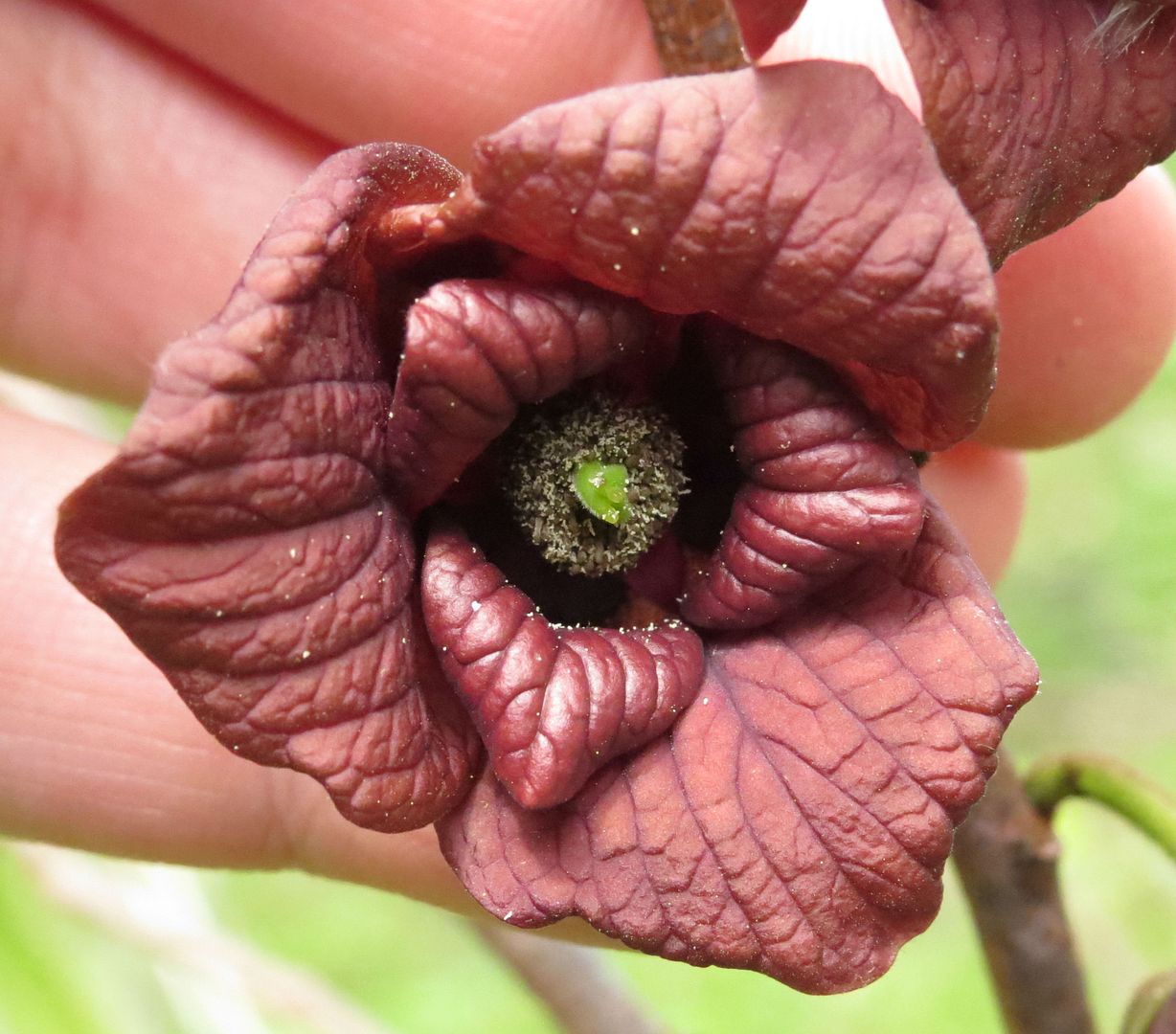
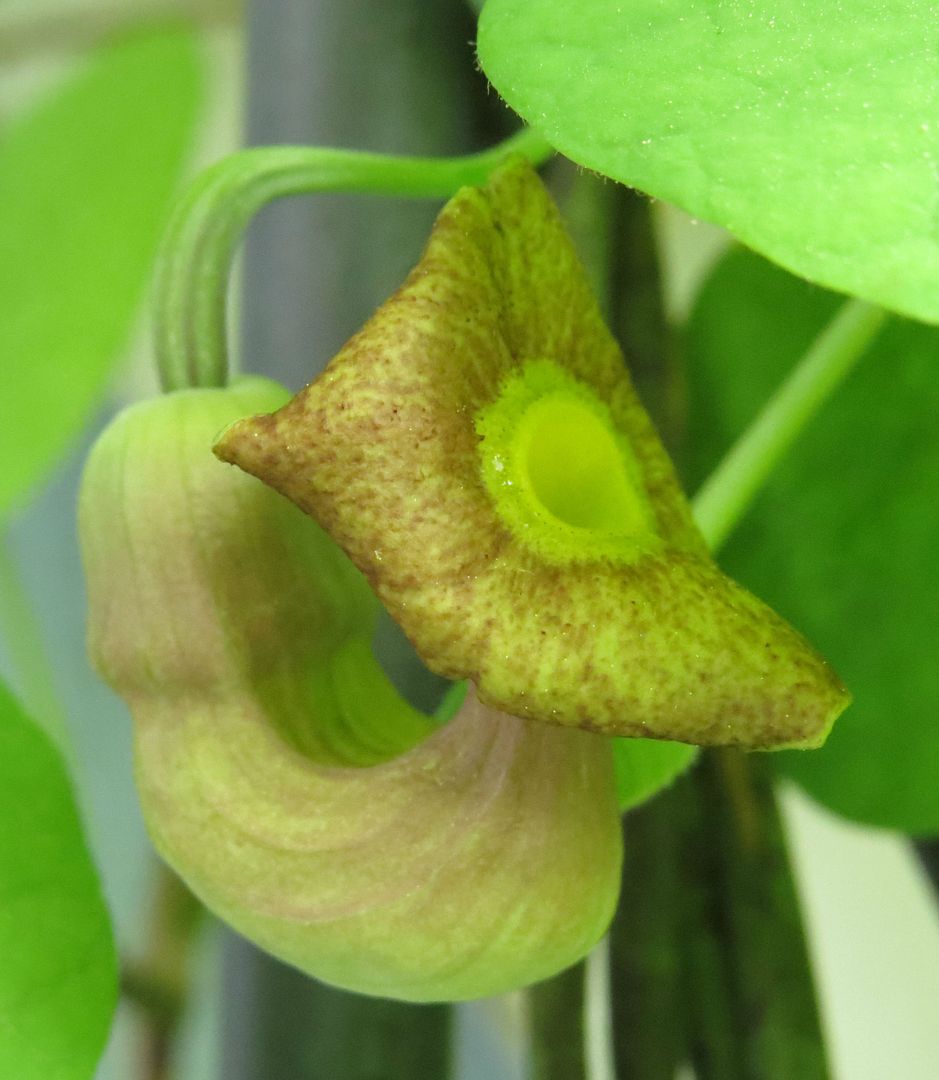
Dutchmen's Pipe. I've had this vine growing for a good 7 years at least and it finally decided to start flowering... Not the prettiest things but I had a theory that the seeds to this plant have elaiosome on the seeds so I'm eager to see if that's true. Unfortunately they seem to require cross pollination, so I won't know that until several years later when the vine's counterpart I planted finally reaches of age.

I planted this as a host plant for the Pipe Vine Swallowtail and I'm still waiting for them to find it. :( though this seems a common problem among butterfly gardeners.

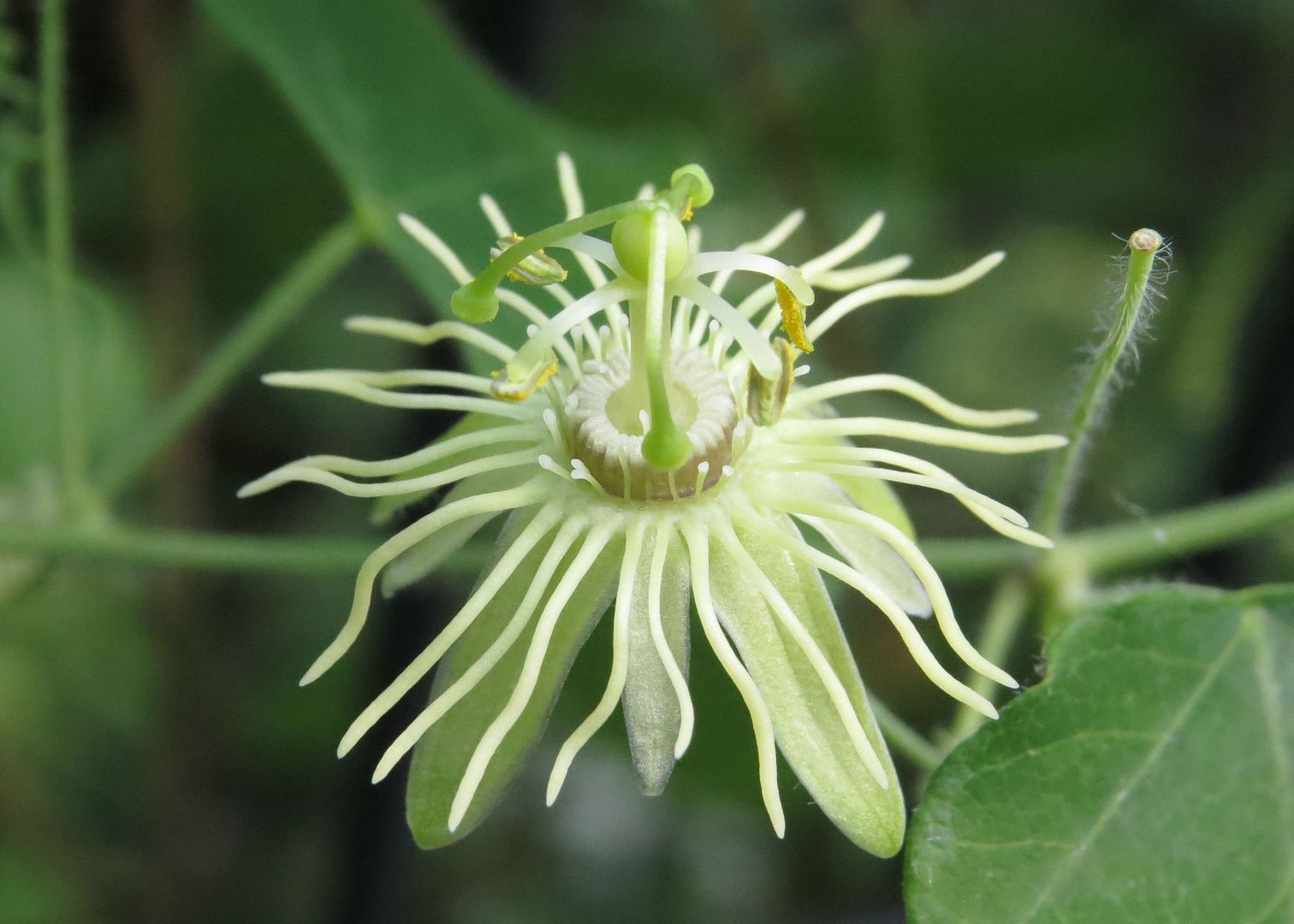
Yellow Passionflower, Passiflora lutea, is another species I'm proud to say I grow. Unfortunately it seems I don't grow enough of it. This is a plant they tell you to grow in the shade and let it grow up the stems and branches of another plant. There's nothing wrong with that, but the absolutely charming leaves, flowers, and fruit get completely lost in the foliage. I have a vine of this in my garden still, I think. But now that I've seen it growing at the Mt. Cuba Center, clearly I'm growing it wrong. It still gets lost, but they have it growing right on a fence in full sun where it thickly covers the fence almost like an ivy. It's a great little vine that doesn't get out of hand, and I'm curious to see if Fritillary Butterflies use it as a host.
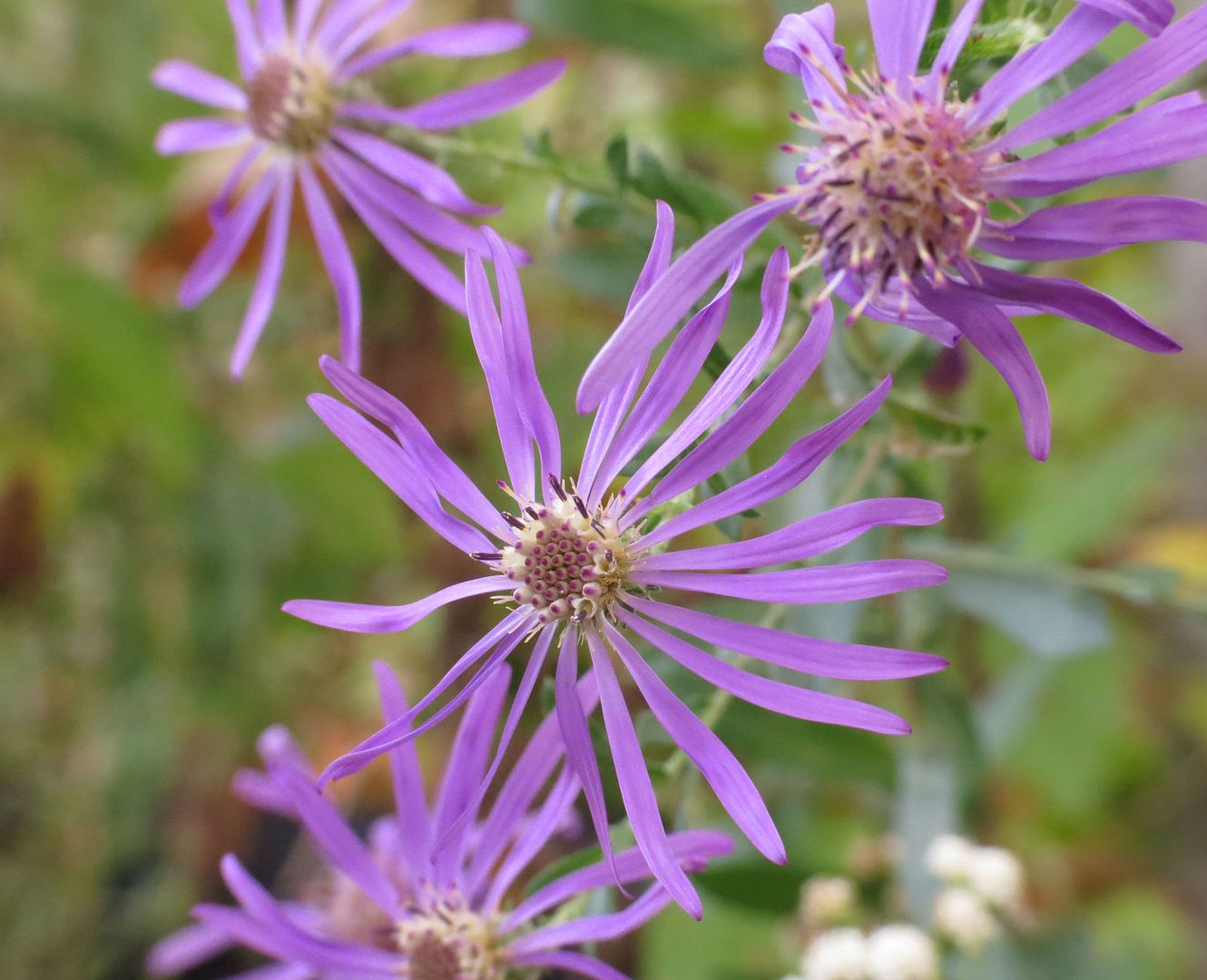
Georgia Aster, probably the last plant in temperate North America to stat blooming aside from Witch Hazel and Heathers. This is a plant I look forward to every year now. I've only been growing it for three years, it's flowered the past two. This year I collected seeds and hopefully I'll get a lot more of it to grow. The flowers are nice and large, and the purple is a great contrast of the leaves from fallen trees, which are shades of yellow, red, or brown.  

Discovering that Black Swallowtails do use Golden Alexander as a host plant was sort of a happy accident. I planted these as a host plant but later learned they rarely use it! Seems they heavily favor Parsley. But I've noticed that Golden Alexander has more foliage to offer early in the year before Parsley really gets going, so it's likely used as one of the earliest hosts then they switch over to Parsley with subsequent generations.

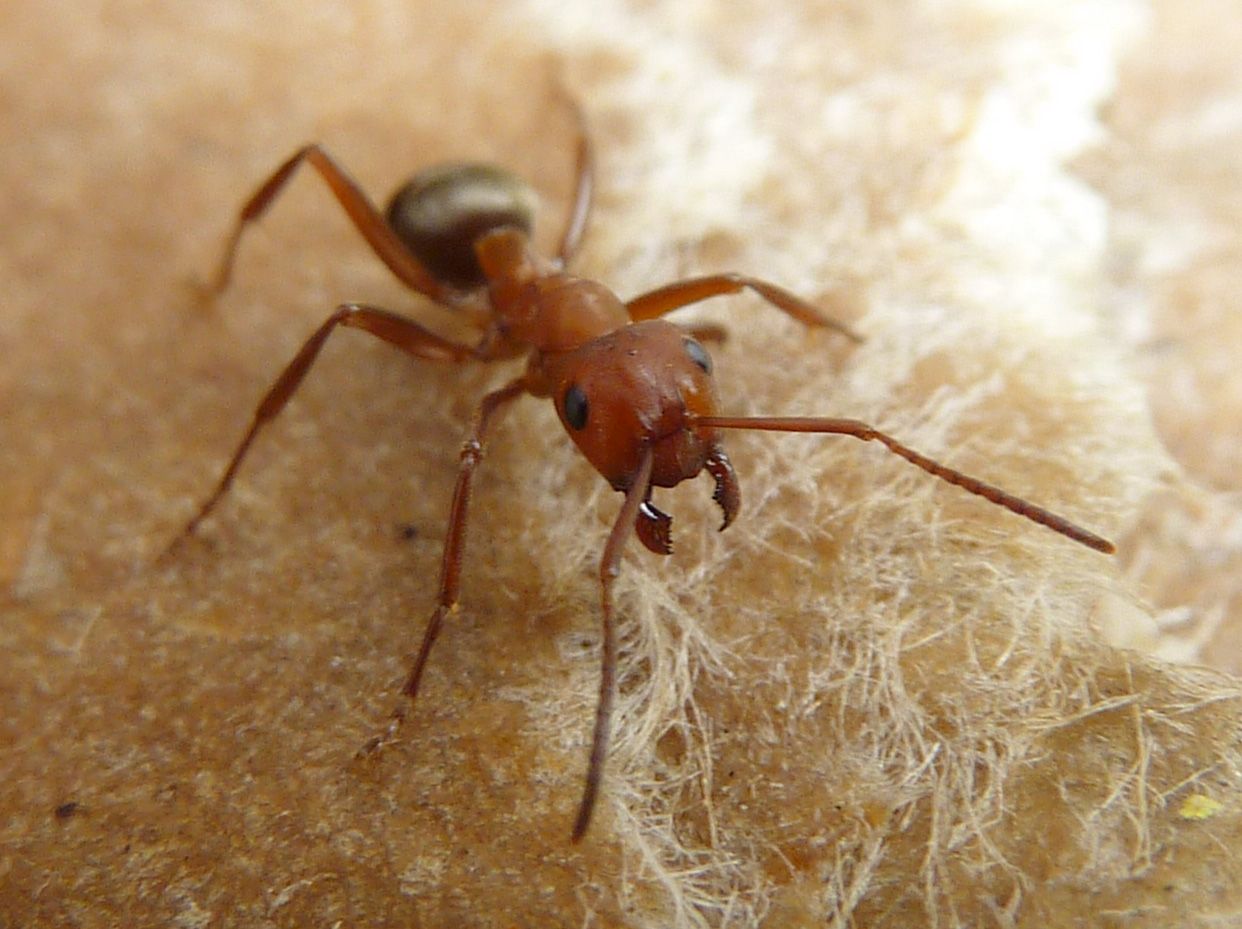
Adding all these native plants of course had an effect on the insect life. More herbivore insects means more sources of nectar, protein, and seeds. The increase in resources caused the colonies of Formica incerta and Formica pallidefulva to expand and get even larger than before. That got the attention of a slave making member of the genus, Formica pergandei. Seen above a colony of F. pergandei (bicolored) has invaded a colony of F. pallidefulva (copper tone).

Formica pergandei, is one of many slave making and parasitic species in the Formica genus, the largest ant genus in North America. They are completely devoted to maintaining their Formica hosts to maintain their own colony. F. pergandei workers don't forage at all. They spend their time raiding other colonies of Formica for brood and often do a complete invasion where the whole F. pergandei colony moves in and kills the host queen(s) and reproductives. They take over the current work force, and all the new workers born into their nest become part of their colony. The host species do all the foraging and nest building but eventually die off, so the F. pergandei workers are always looking to invade the next nest.

It's hard to say that F. pergandei wouldn't have found the colonies in my yard eventually. But in all the years I've lived here never noticed the species. They may have eventually come and moved on, as they did, but I believe the increase in resources made the F. pallidefulva and F. incerta colonies a bigger target. 

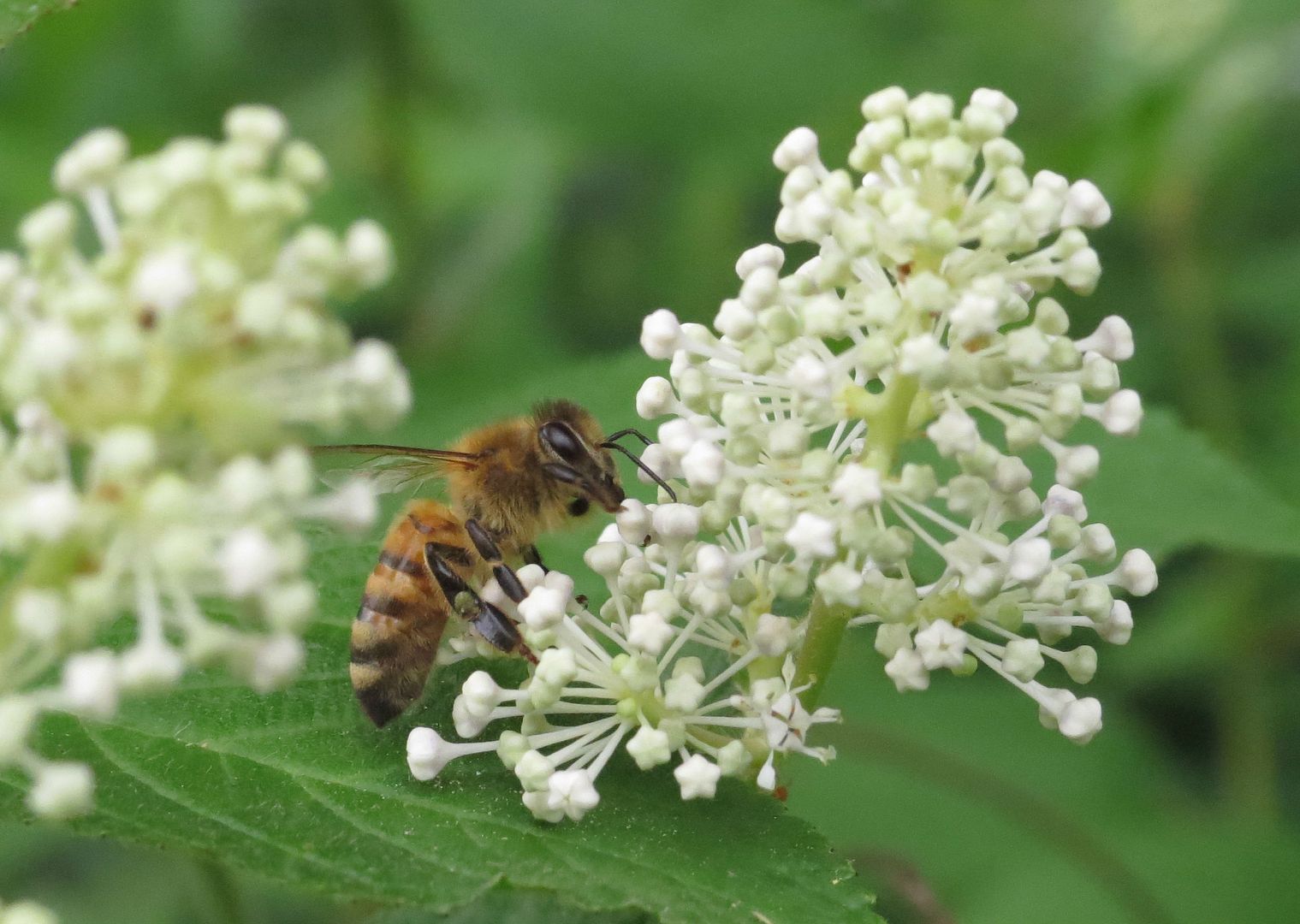
New Jersey Tea. This is one of those plants they're always touting for all its benefits but no one ever grows. Part of the problem is it seems to only ever be sold in plugs.... Why? It's a shrub. It should be a large or medium sized pot at least. I planted dozens of these over the years and ran over all but one of them with the lawn mower. Well I'm happy to say that after several years, it's now flowering robust enough to get honeybee attention.

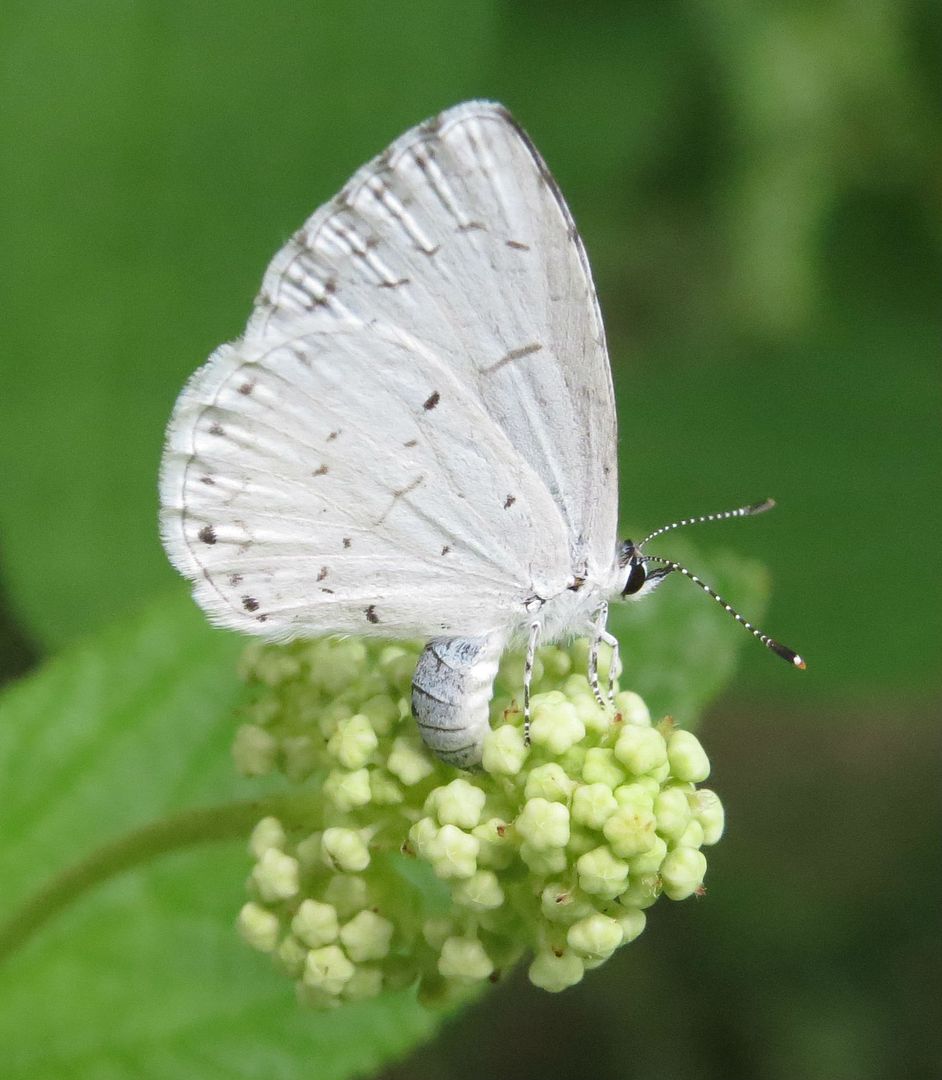
As an added bonus it's a host plant to Spring and Summer Azures. And.....

I found that Sourwood trees are also a great honeybee plant. Which....

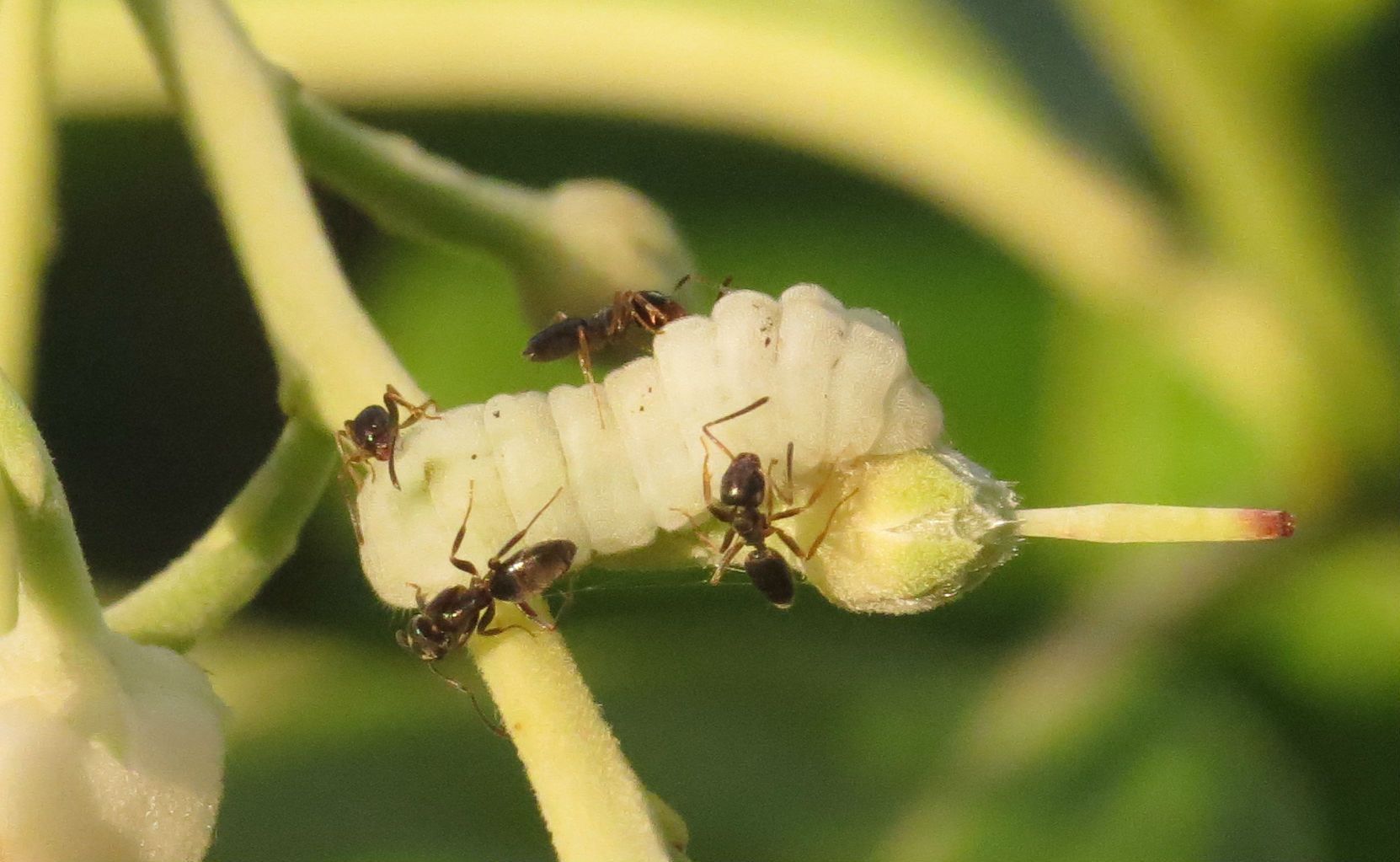
Is also a host plant for Spring and Summer Azures. And the caterpillars to this group of Butterflies are tended by ants for protection.

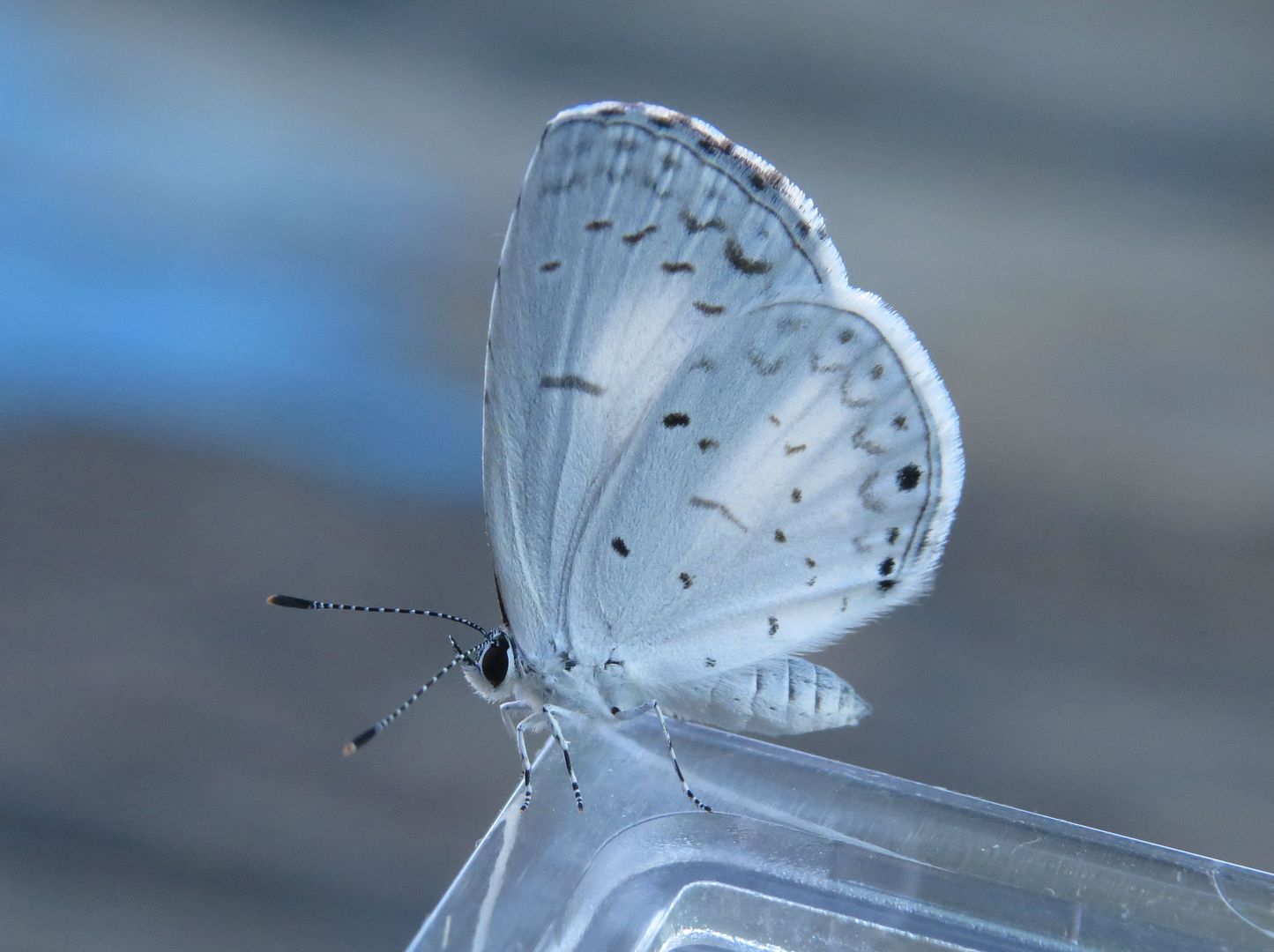
And I raised the caterpillar in captivity to see what it would become. Sure enough it's an Azure.

Early on in gardening I had dreams of sweeping meadows full of Lupins to see this behavior of ants, plants, and butterflies. I'm happy I already have plants doing this for me. As I've found out Lupins require full sun and basically want to grow in 80% sand.

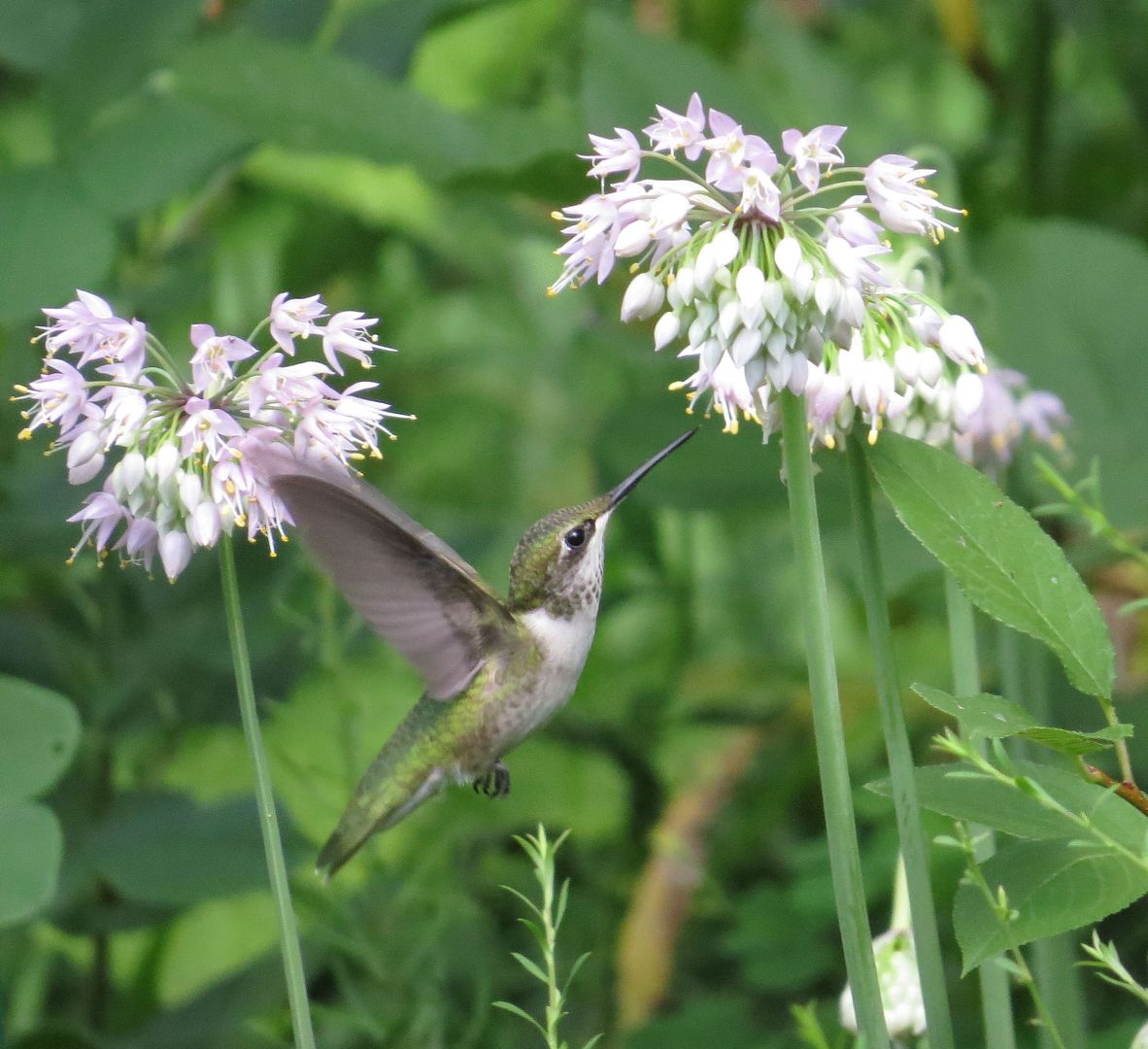
Lastly, my yard is becoming something of a hummingbird hot spot. Not year round though, we usually get one or two of them flying about intermittently over the summer, and then several of them consistently for a full week... presumably fledgling birds following their parents around.

Monday, April 27, 2015

Mt. Cuba Center Wildflower Celebration 2015

Once again I visited the Mt. Cuba Center for their yearly Wildflower Celebration. This is a yearly event I always try to partake of. It's always neat seeing how far along things are compared to my garden back in New Jersey. This year though they were actually a week or two behind, but I've come to realize the cold winters seem to only effect certain plants. For example Trilliums were way behind from where they were last year, and they actually had a clump of twinleaf still flowering which is one of the earliest wildflowers to bloom.     

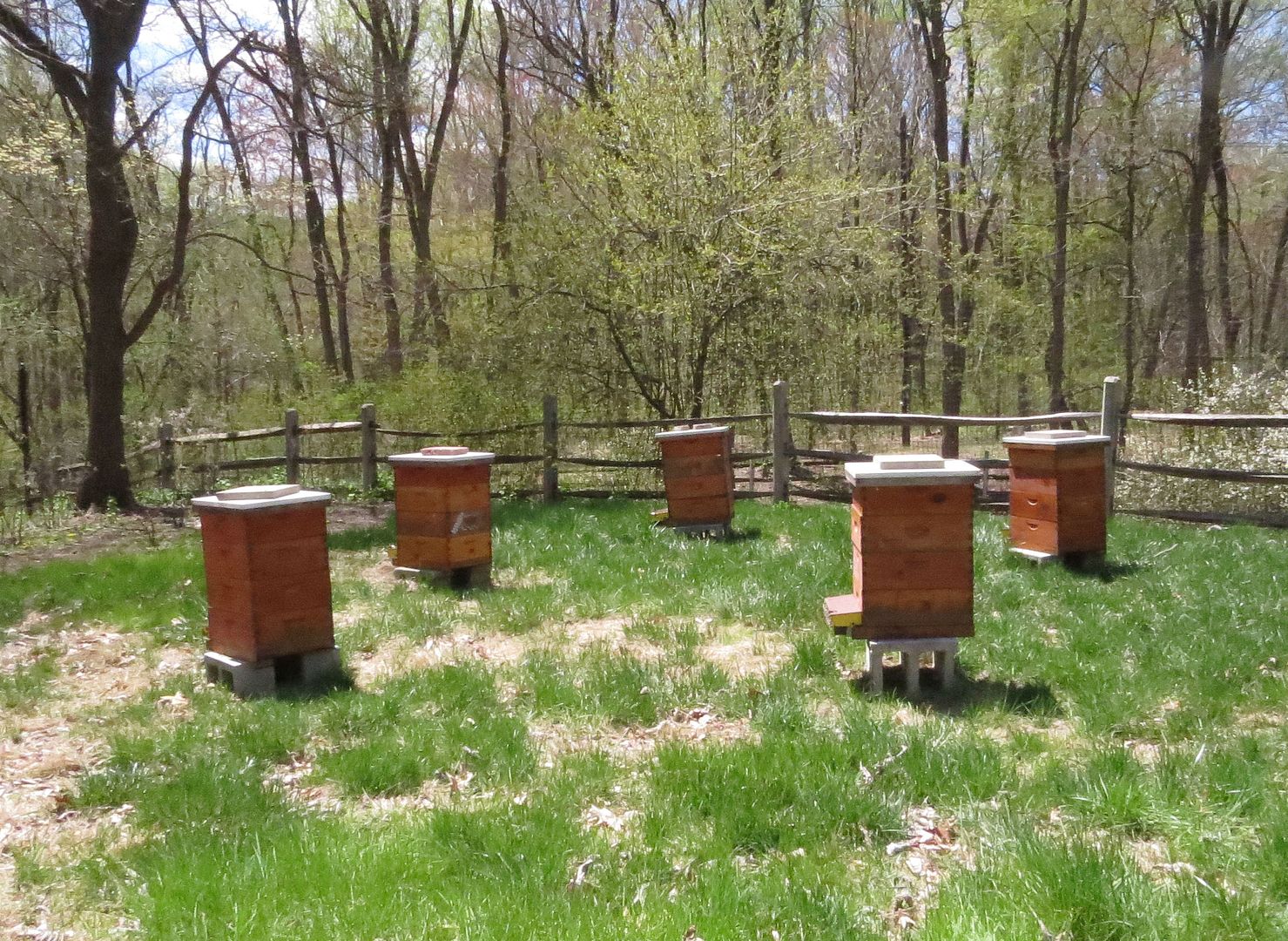
Most interesting of all for me was the fact they have honeybee hives setup with pollen traps to see what plants the bees are working. Now I didn't meet with the head person behind the project and I hope to change that in future. The person I ended up asking about this actually thought they were bumblebee hives.... which they are not. So my info might not be accurate.

I was told the purpose is to analyze the pollen and see what the honeybees are working. Naturally this peaked my interest because I wrote a book titled "Native Plants for Honeybees." It's geared a little more for an Eastern US audience, and could probably be summarized simply by saying plant enough of something and honeybees will work it. But certain plants are favored compared to others depending on what the hive is foraging for. Some plants only take a few individuals while others require a field of it to be planted to get honeybee attention. Many plants aren't even bee pollinated, and the ones that are, don't necessarily produce enough nectar to really warrant swarms of foragers, but are worked just for their pollen instead. I'll be asking more about this project and hope they present their findings at some later date as I'm eager to learn what plants they really took to at the Mt. Cuba Center.

I'm expecting it to mostly be trees and shrubs at first, then a swift turn towards wildflowers as the year goes on. Right now there's probably few if any ephemerals being worked but I did notice the bees working a few there.  

Pollen traps are used in the beekeeping hobby/industry to collect the pollen sacks off the bees legs' as they return to the hive. You can see one here on the front of this hive, painted in yellow. The bees enter, walk over a grate, and have to squeeze in through some tiny holes to get in the hive boxes. Bee Pollen is sold in stores, usually along side herbal remedies and supplements. People put it in their tea and the folk lore is that it helps with allergies.... instead of just taking the leading cold and allergy medicine. Put under a microscope though and you can match up the pollen to a specific genus, species, or plant family.

Honeybees hate pollen traps because pollen is fed to the developing larva. Thus forcing the bees to pass through a pollen trap is taking literally taking food from the young bees mouths'. I don't use them personally but if I recall right, you can actually have a hive population crash from over using them. I think three weeks is the maximum they can be on safely but honestly with five hives, they could just as well rotate which hives have the traps on them each week. Unless the idea is to see if all five hives are working the same plants? So hopefully they're taking them off every other week or so.


Alright on with the flowers. So seeing the honeybee hives was "great" because I'm interested to learn what natives they're working. Actually honeybees working native plants is not viewed as a good thing among conservationists, especially in the south western US. We have lots of native bees that specialize in pollinating specific species or genera of plants and they only work those plants; but when you throw in a hive of honeybees, they're actually stealing food from our native bees who's life cycle sinks up with the blooming of those plant species. Often the specialist pollinator brood doesn't get the nutrition it needs from different sources of pollen so its important they work those specific plants and not something else.

In my book I argue another factor effecting native bee populations is habitat loss. If we had more native plants, or even just flowers in general we have more food for the bees. Natives are better because they support more native bees and have the added benefit of other native insects and are better for the environment as a while. Meanwhile, honeybees pollinate a lot of the invasive plant species that contribute to habitat loss. Find a stand of purple loosestrife in bloom and watch the honeybees go to town. They're not totally to blame though, they're a generalist pollinator and you'll see our native bumblebees working them just as hard.

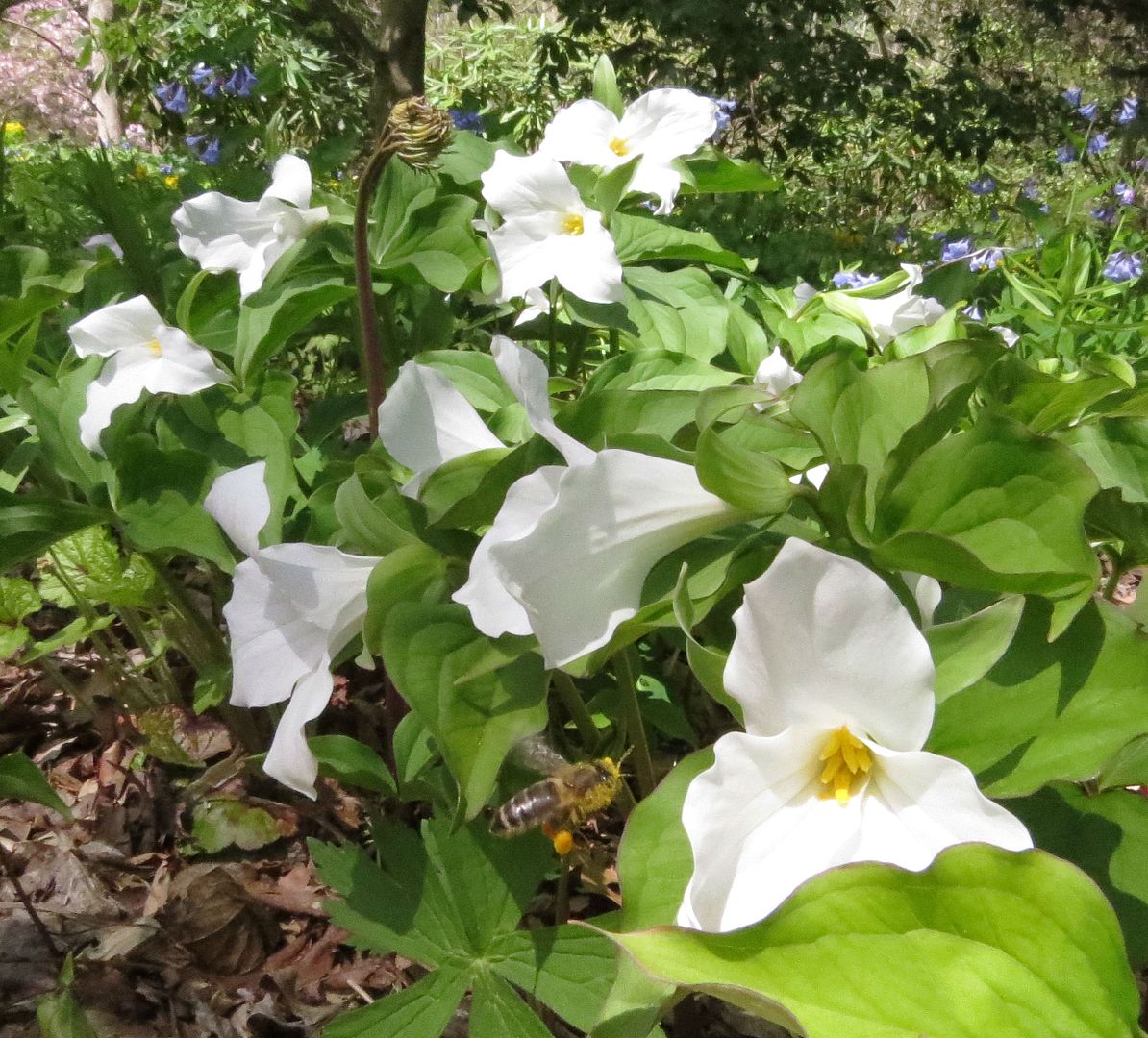
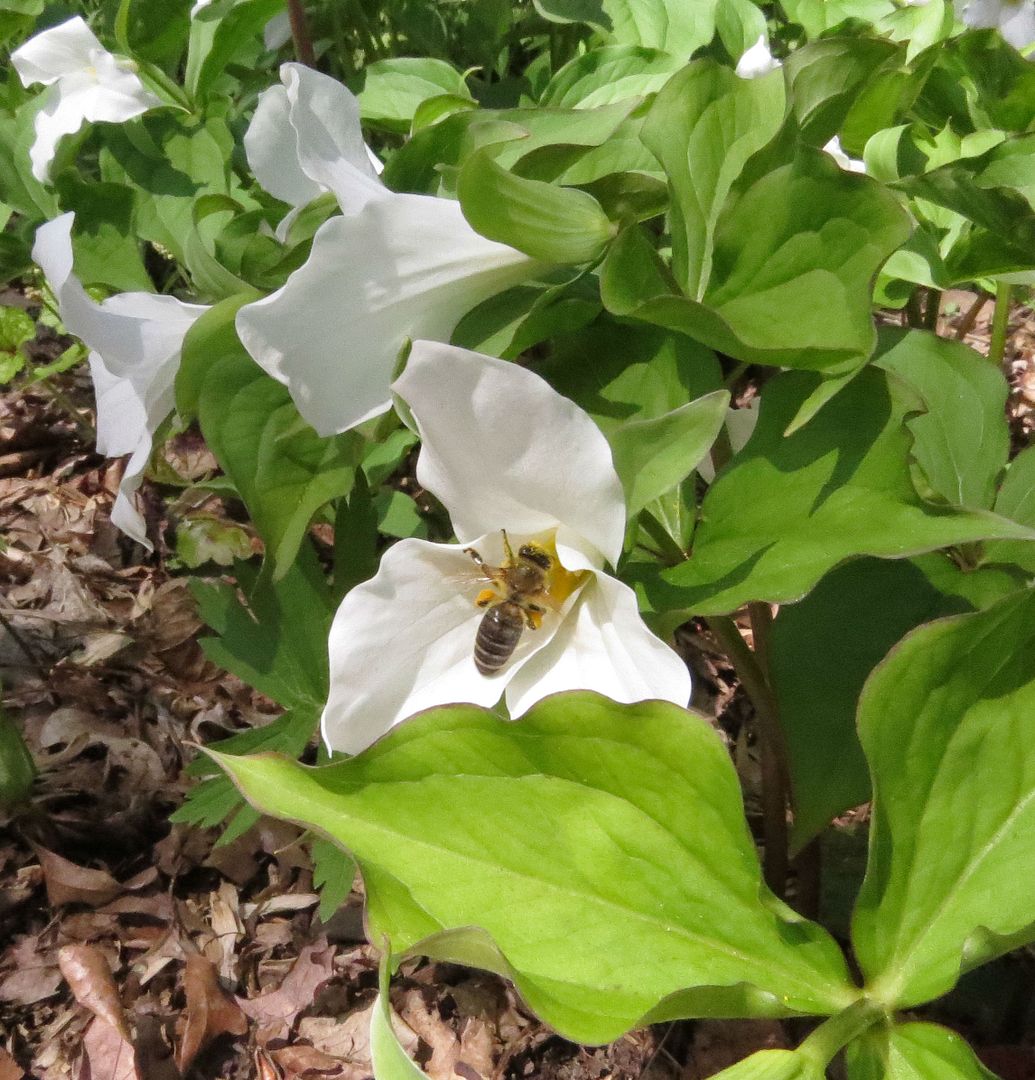
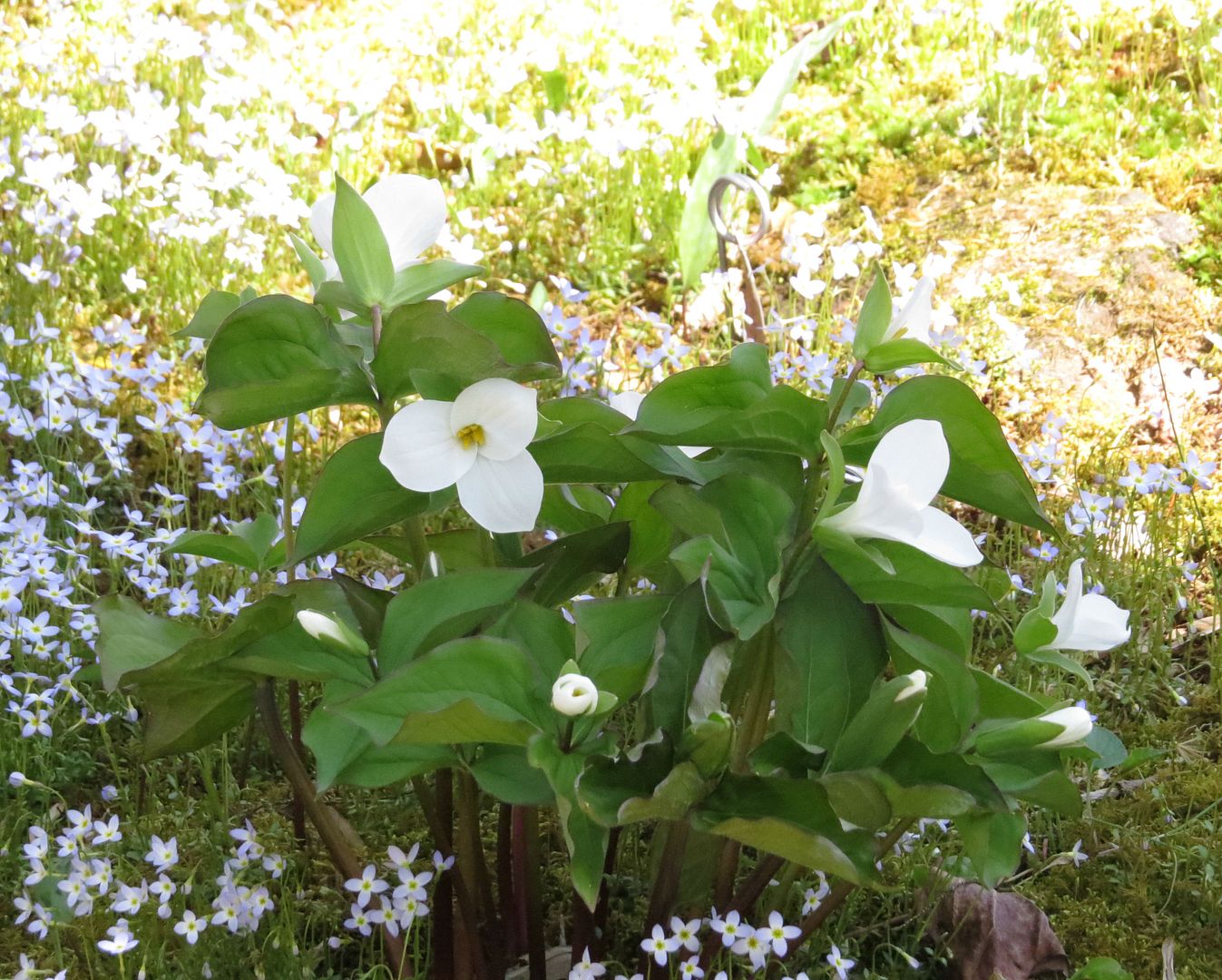
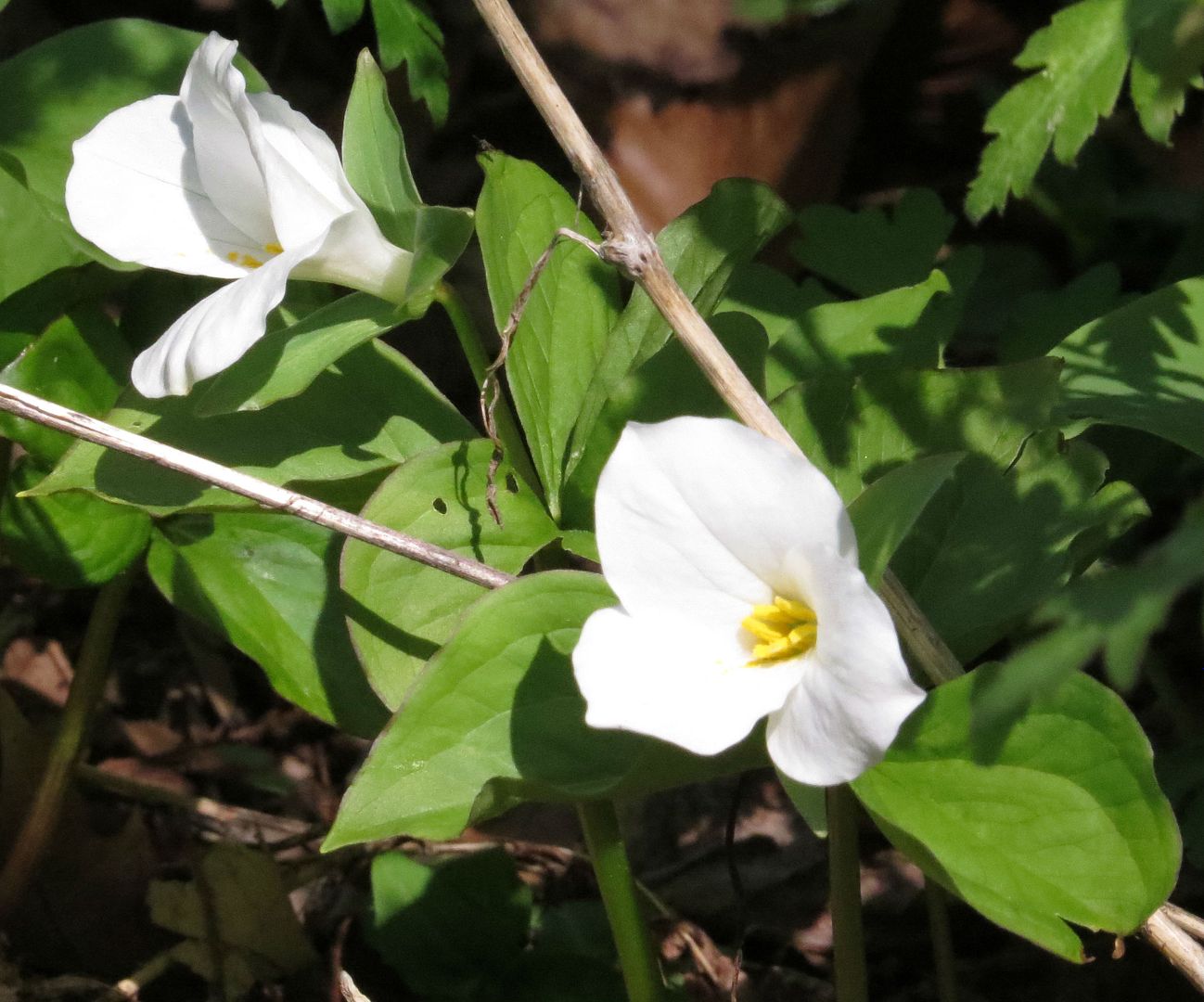
So one of the plants I had mentioned in my book was Trillium grandiflorum. This is not at the top of my list of native plants for honeybees but it is something they work. Trilliums are mono-floral, they take the better half of a decade to flower, and it takes even longer than that to get a clump or population of them large enough to get the attention of honeybees.  


They're in the lily family, they have a fair amount of pollen to offer, and there's even a little bit of nectar in the bottom of the flower. Now judging by the fact that no one has ever sold Lily Honey before, let alone Trillium Honey, it's probably just enough nectar to get the bee interested and not something a hive could stock pile. So this is really just a pollen source on par with our native roses. Willow trees are probably a far more superior option for this time of year, but if you happen to have a large forested area, or maybe an existing population of Trilliums on your land, it's worth it to keep them around. They don't work all Trillium species but they're still great plants to have around.
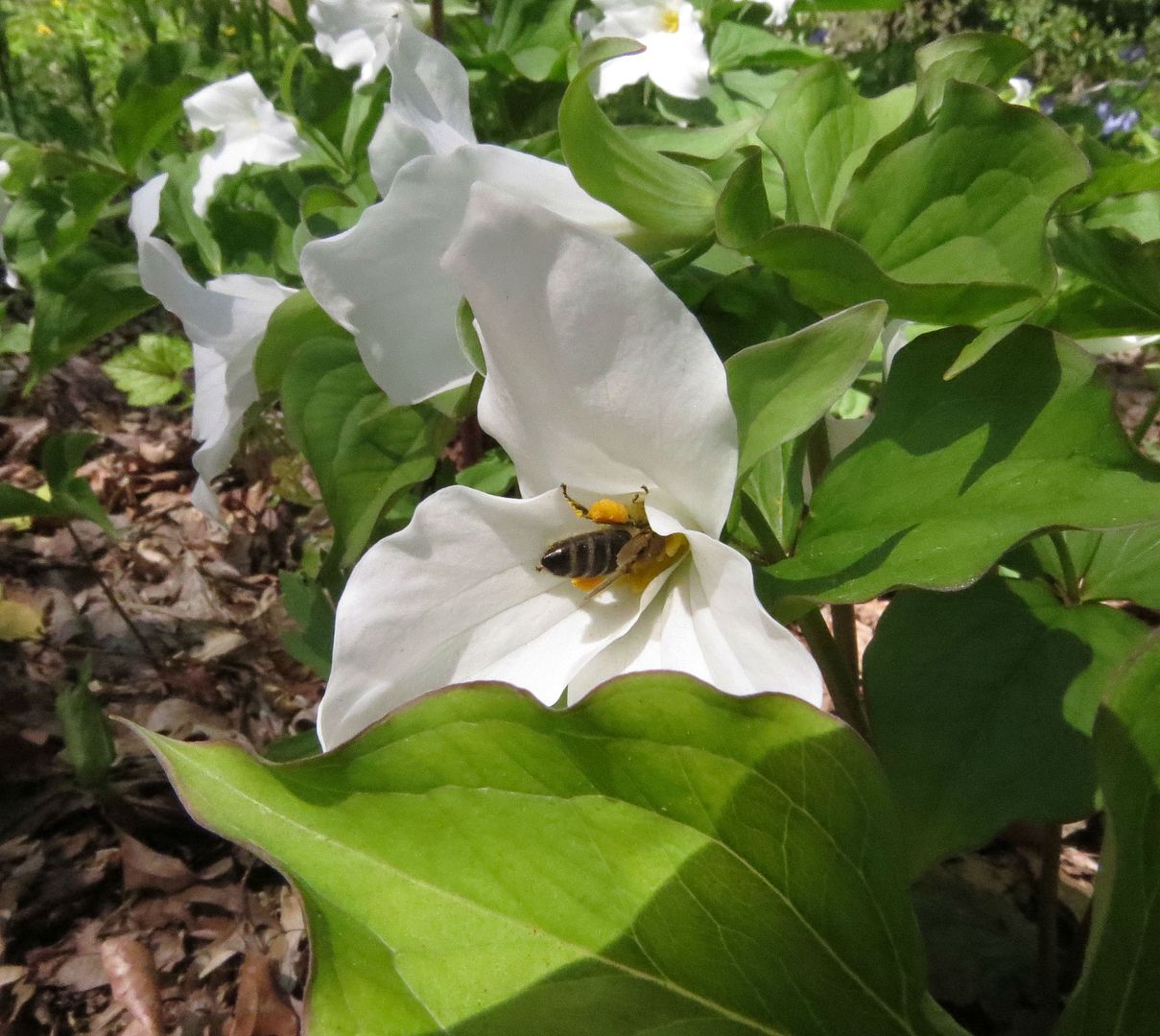
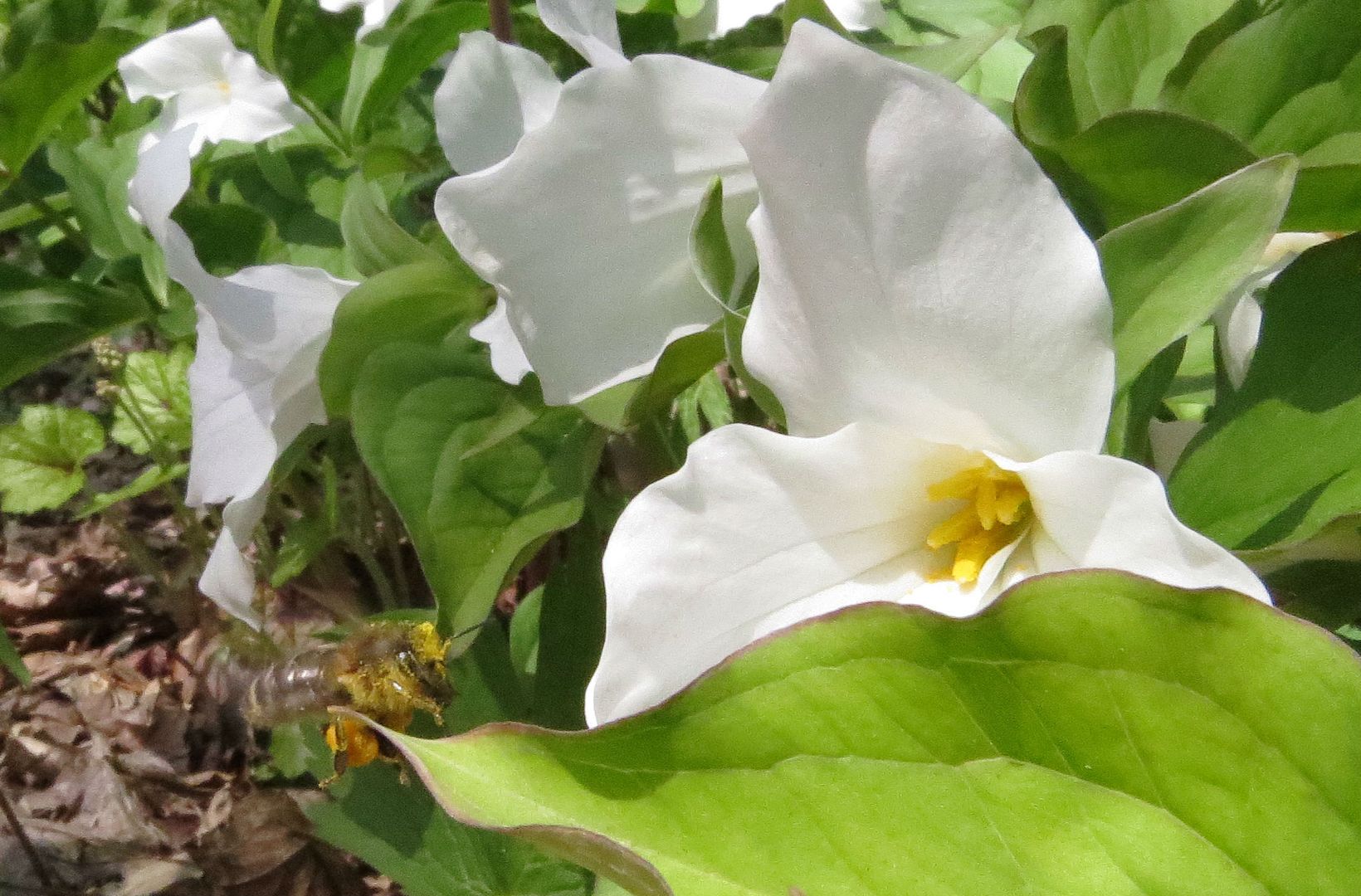
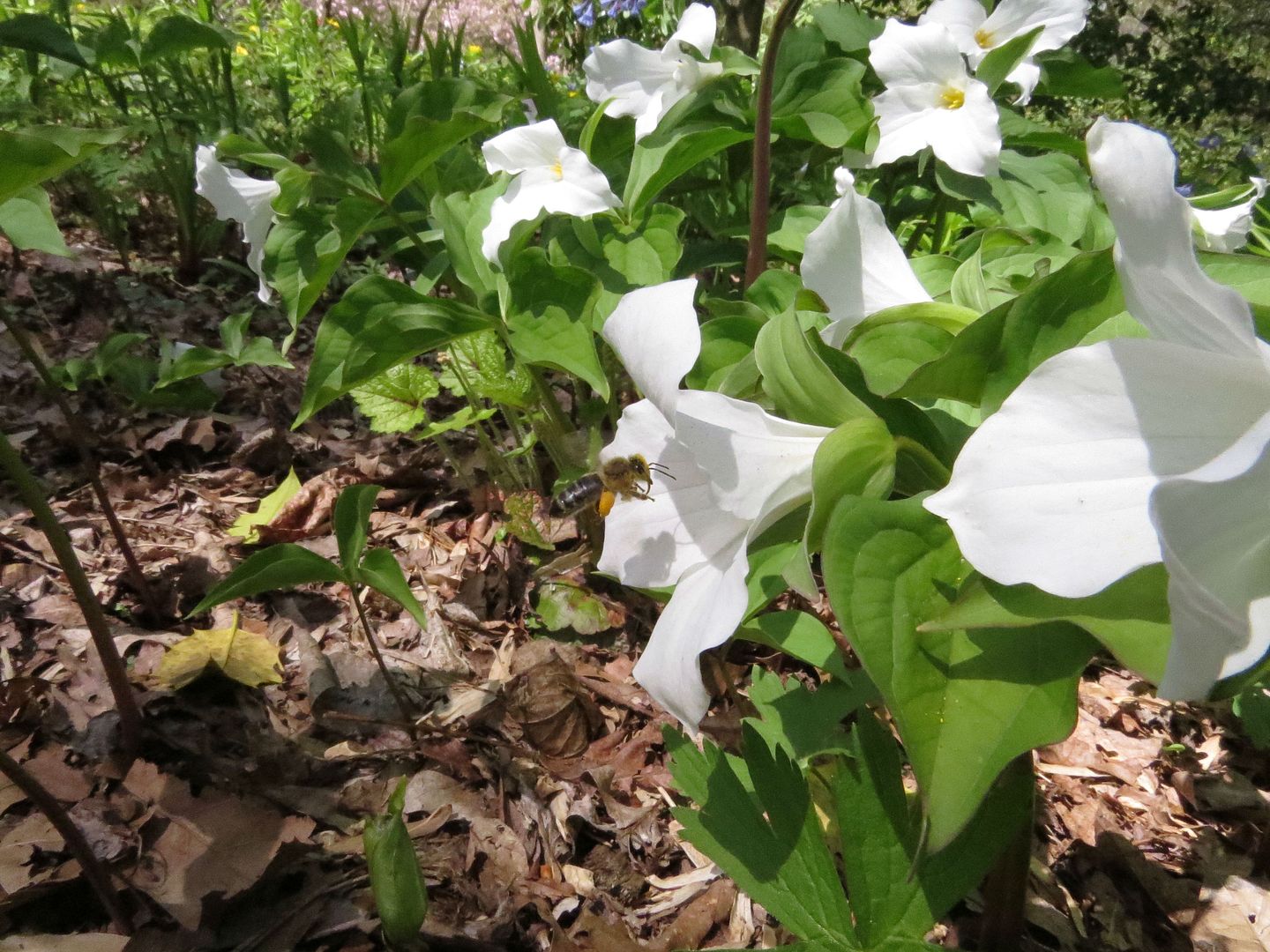
This particular honeybee I had to do a double take, the way I typically do when I see a bee mimic or one of the similar looking digger bees that are easily mistaken for honeybees at a glance. But no, this is a honeybee! It was unusually small though. I suspect a result of poor diet, or maybe they're using small cell frames to cut down on Varroa mites. (They might be leaving the pollen traps on the hives a bit too long.)

But look at the pollen. It's uncommon to see a honeybee covered in pollen all over it's face and body. I see this usually when they work Willows, Magnolias, and Prickly Pear Cactus which are bursting with pollen. I've seen them work day lilies before but day lilies have their anthers well out from the flowers. Here the Trillium's anthers are all scrunched up among the petals and it forces the bee to take a pollen bath.

Those pollen sacks on the legs are going to be scraped off when she reenters the hive through the pollen trap.


Roughly a year or two after they reach a flowering age, the rhizome should be able to spread apart in a few directions and send up more shoots. I've noticed this specimen in their moss and bluet patch for a few years now and it used to only send up three flowering stems each year. Now maybe five or six years later, I'm seeing it send up about 10. The clump I saw the honeybee working had about 30 flowers. They don't spread as fast in all types of soil but once they get spreading they're usually good about multiplying every year. And by then, the earliest seedlings the plant produced may have started to grow elsewhere.

Ideally these plants should be covering the forest floor in huge numbers but sadly the deep population, logging, development, and plant poachers have really taken a toll on our native ephemerals. 

Occasionally insect and frost damage occur. Here a T. grandiflorum's petals have become fused to the anthers creating a mess of a flower.

This year's bloom cycle is so far behind that I was able to see the elusive Snow Trillium, Trillium nivale, in bloom. They are in every way similar to T. grandiflorum... 


But only 3 inches tall! Seen here flowering at the bottom of the photo next to a knee high Virginia Bluebell which towers above them.

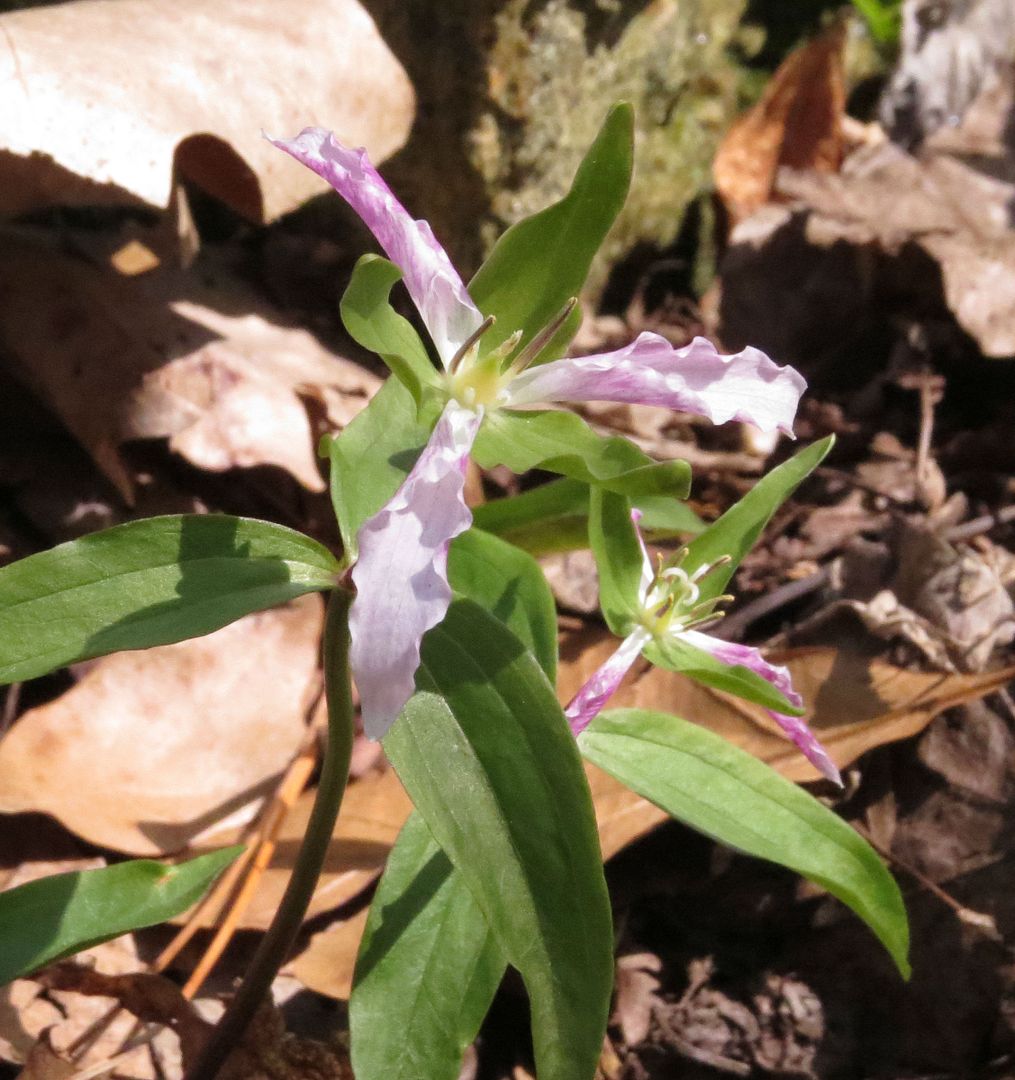
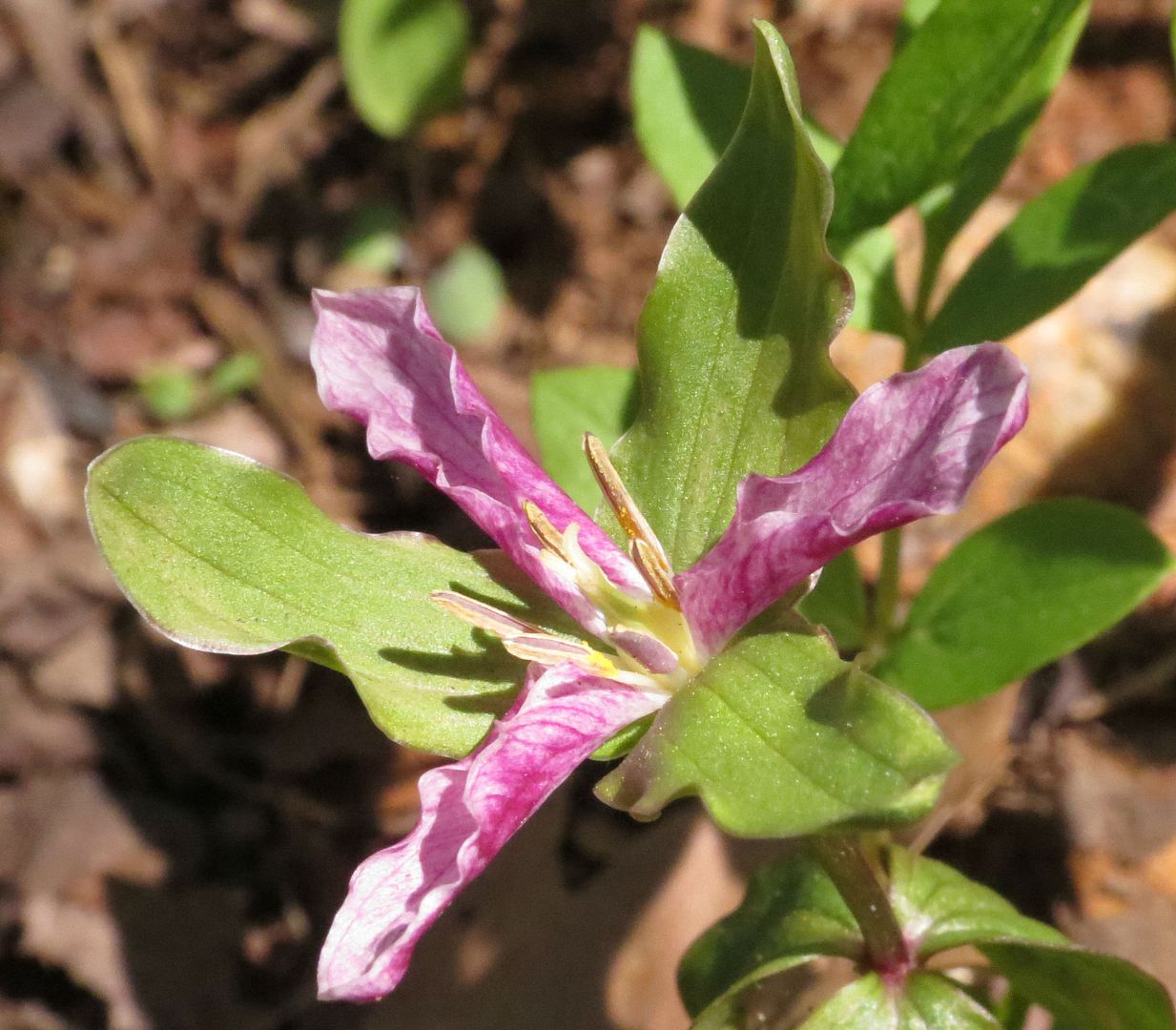
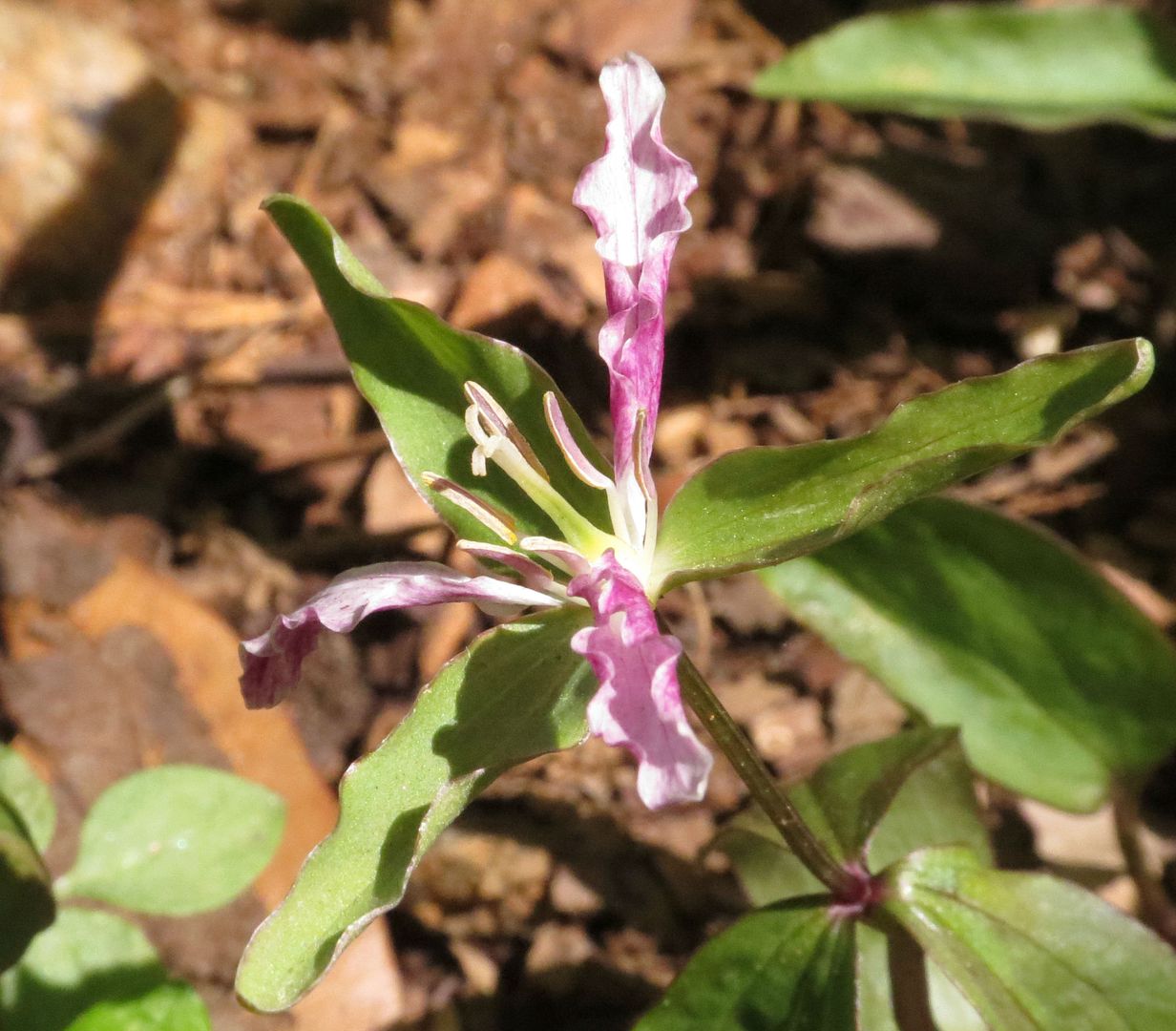
Sadly I was not early enough to see Trillium pusillum flowering at its peak though. They actually do look very pretty when they first open. Give them a week though and the petals are quick to shrivel up and turn magenta. Even with the added color, they're surprisingly easy to miss, and their small size doesn't help.


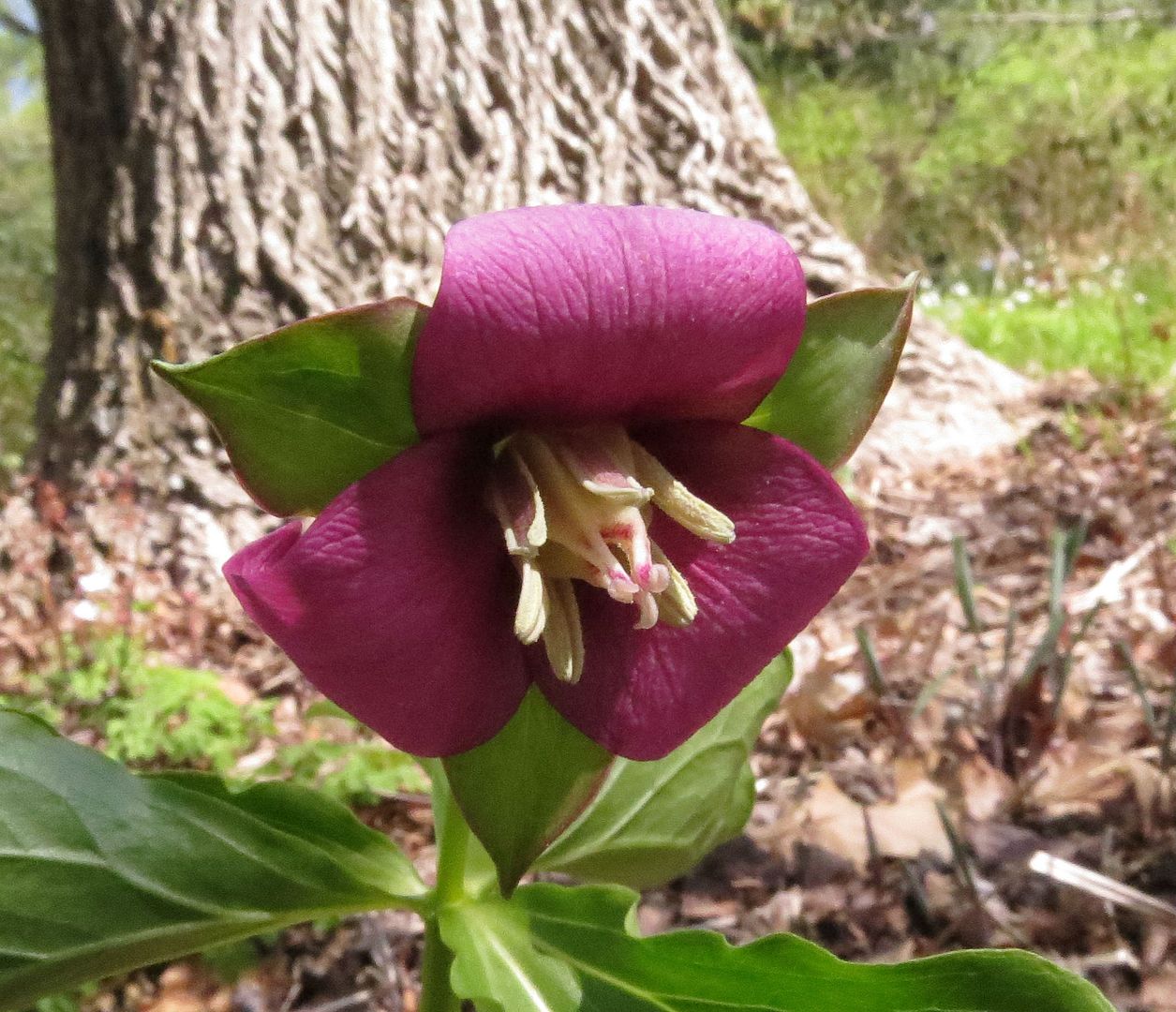
The Mt. Cuba Center has a number of Trillium hybrids on display, only one of which was flowering on that day. Trillium flexipes x erectrum. Due to their slow rate of reproduction, populations of different species have become isolated from one another. When grown together though, perhaps in a garden setting, it seems some species are better able to hybridize with one another. This specimen isn't the robust red of T. erectum, and it has the cream white stigma of T. flexipes, which should otherwise be completely red!

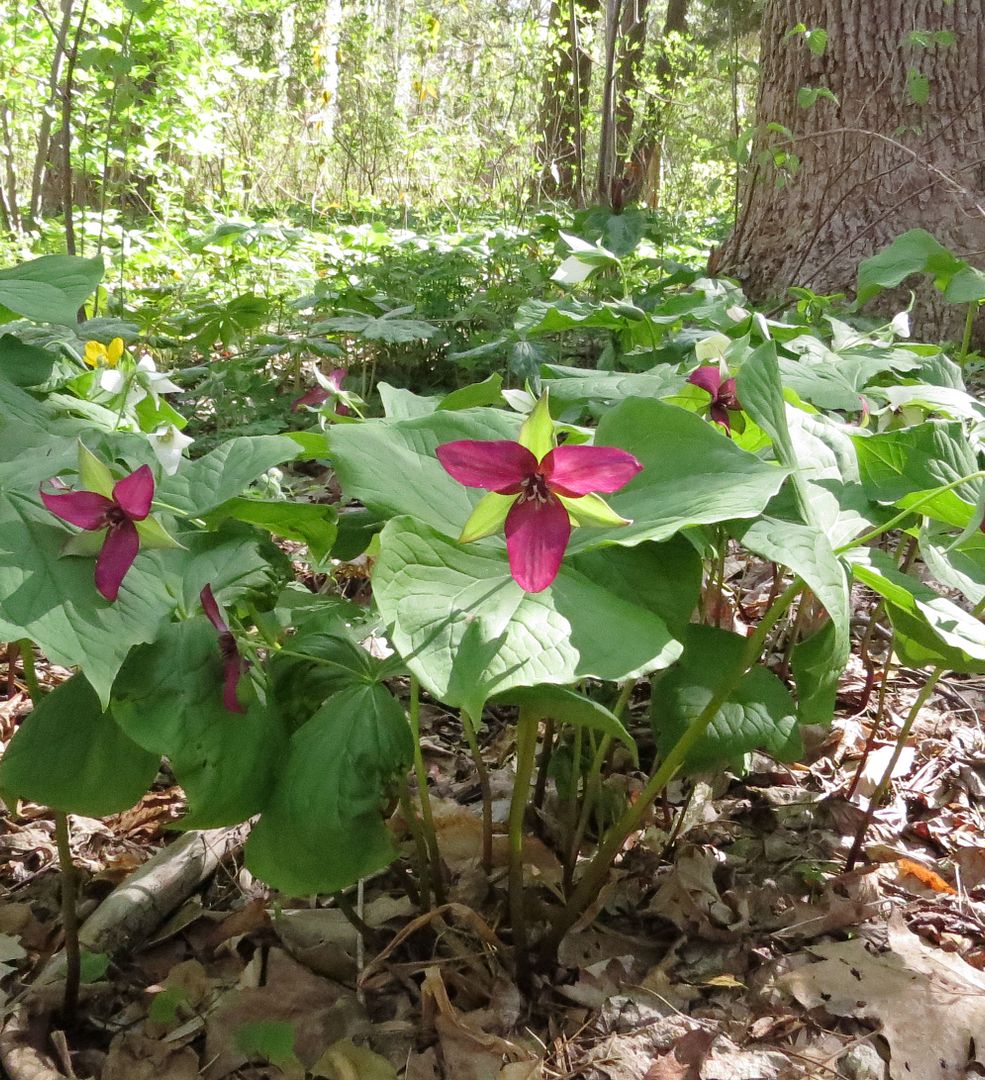
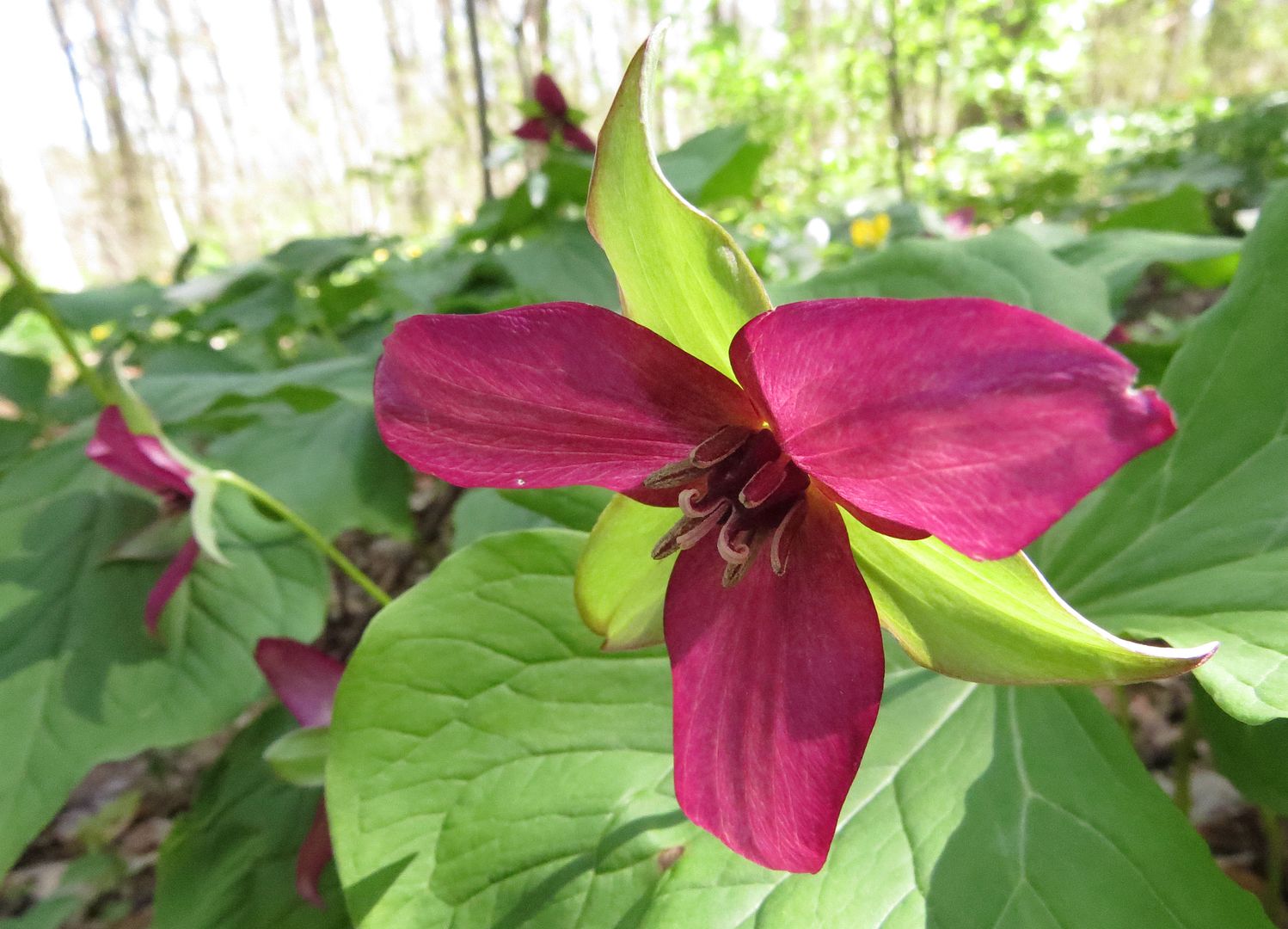
The true species of Trillium erecturm is a robust red color (though this one is hinting a little magenta) and has a solid red stigma. The flower also wreaks of rotting fish; thankfully one has to practically stick their nose inside the flower to observe this fact.

They're pollinated by carrion beetles and flies. 

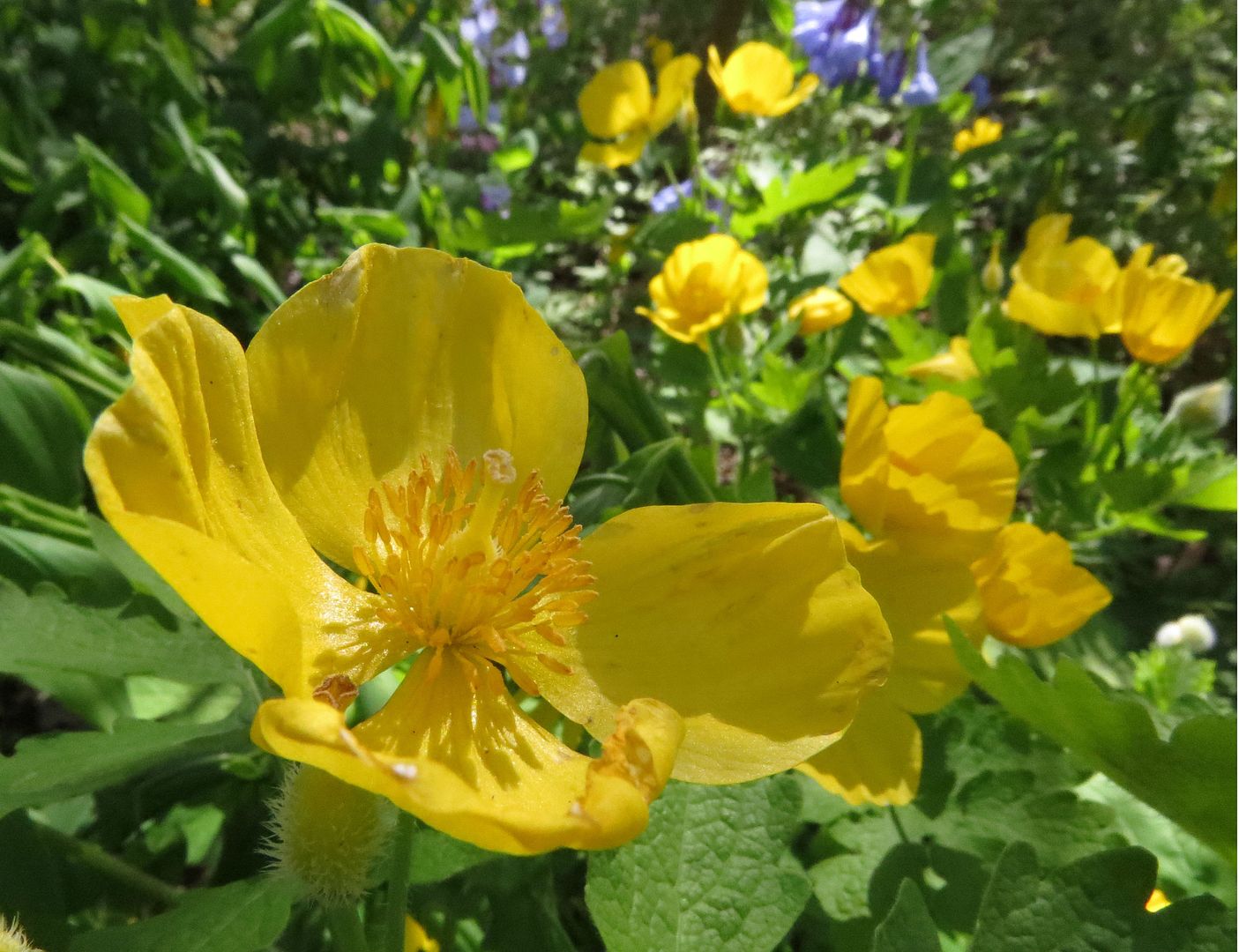
Woodland Poppy, Stylophorum diphyllum, is another of our native ephemerals who's seeds are spread by ants. Unlike Trilliums and Trout Lily, and pretty much all the others that spread their seeds this way, this is perhaps the easiest one to grow and spread by seed. Unfortunately, being a member of the poppy family, the flowers only produce pollen and nectar is too insignificant for honeybees to bother with. But it's another easy plant to cheer up the forest floor each spring. 

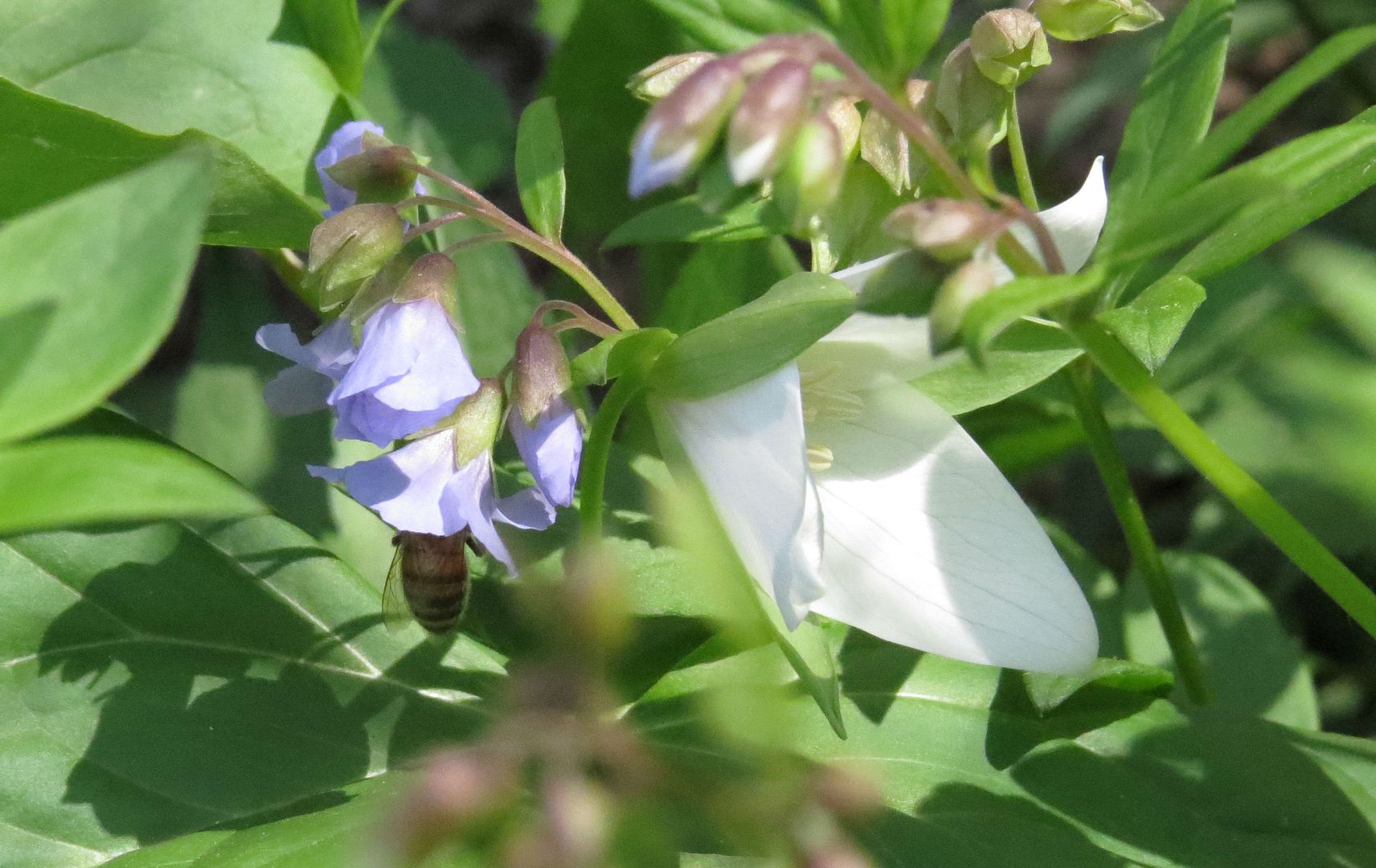
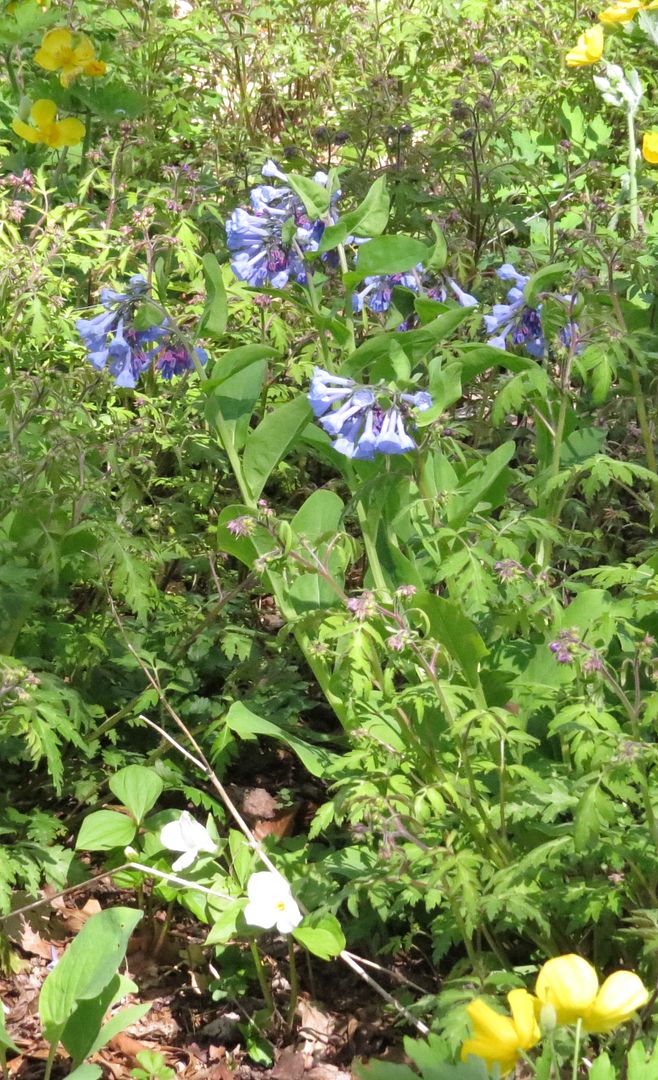
Jacob's ladder, Polemonium caeruleum, now this is another ephemeral I noticed honeybees taking an interest in. Honestly I'm not sure about the nectar to pollen ratio. Plants that produce large quantities of nectar (that are easy to get at) are always favored by honeybees which is why they love the mint family so much. This is in the Jacob's Ladder/Phlox family though so I'm not sure where it falls. Honeybees don't seem to work Phlox so this was a neat find. Also note the cream white Trillium flexipes in the photo.


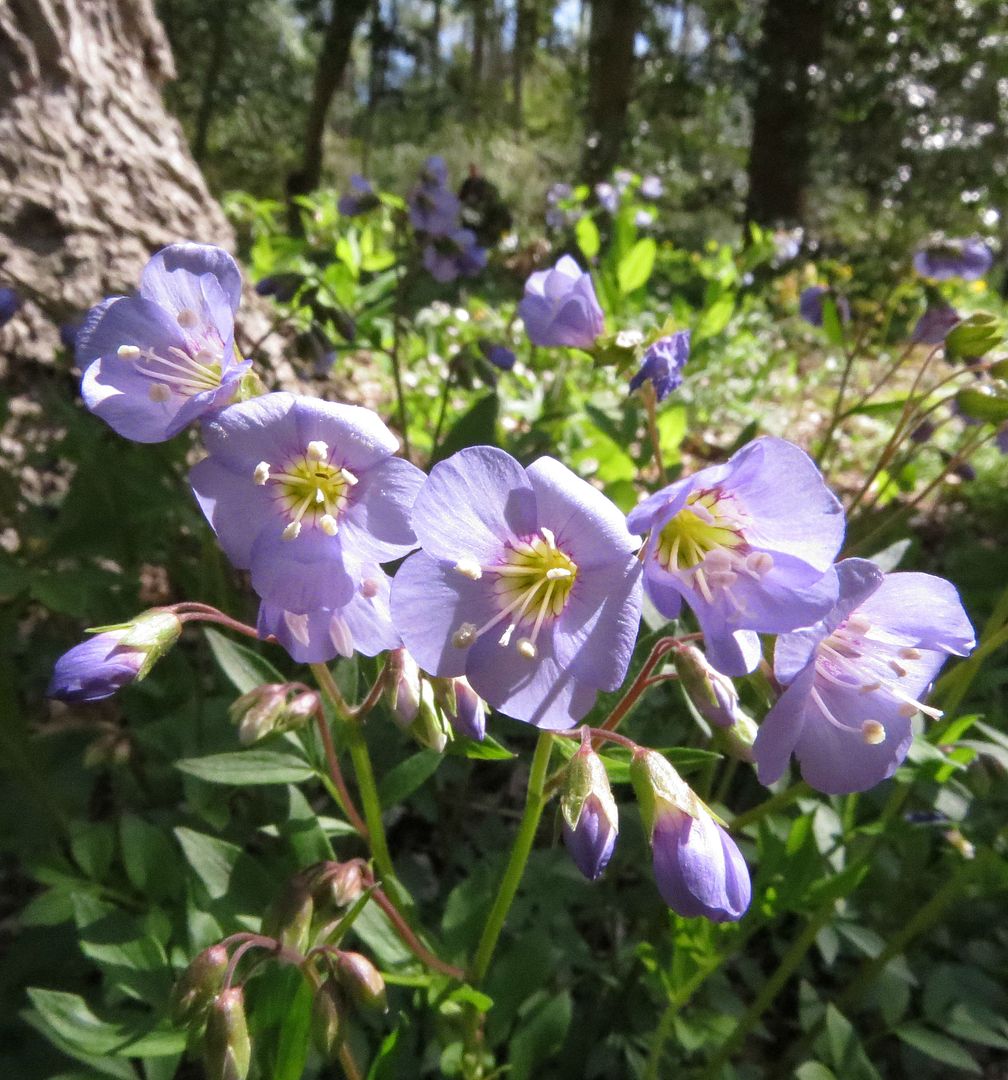
Jacob's ladder, Polemonium caeruleum. Occasionally flowers hue more towards purple than blue.

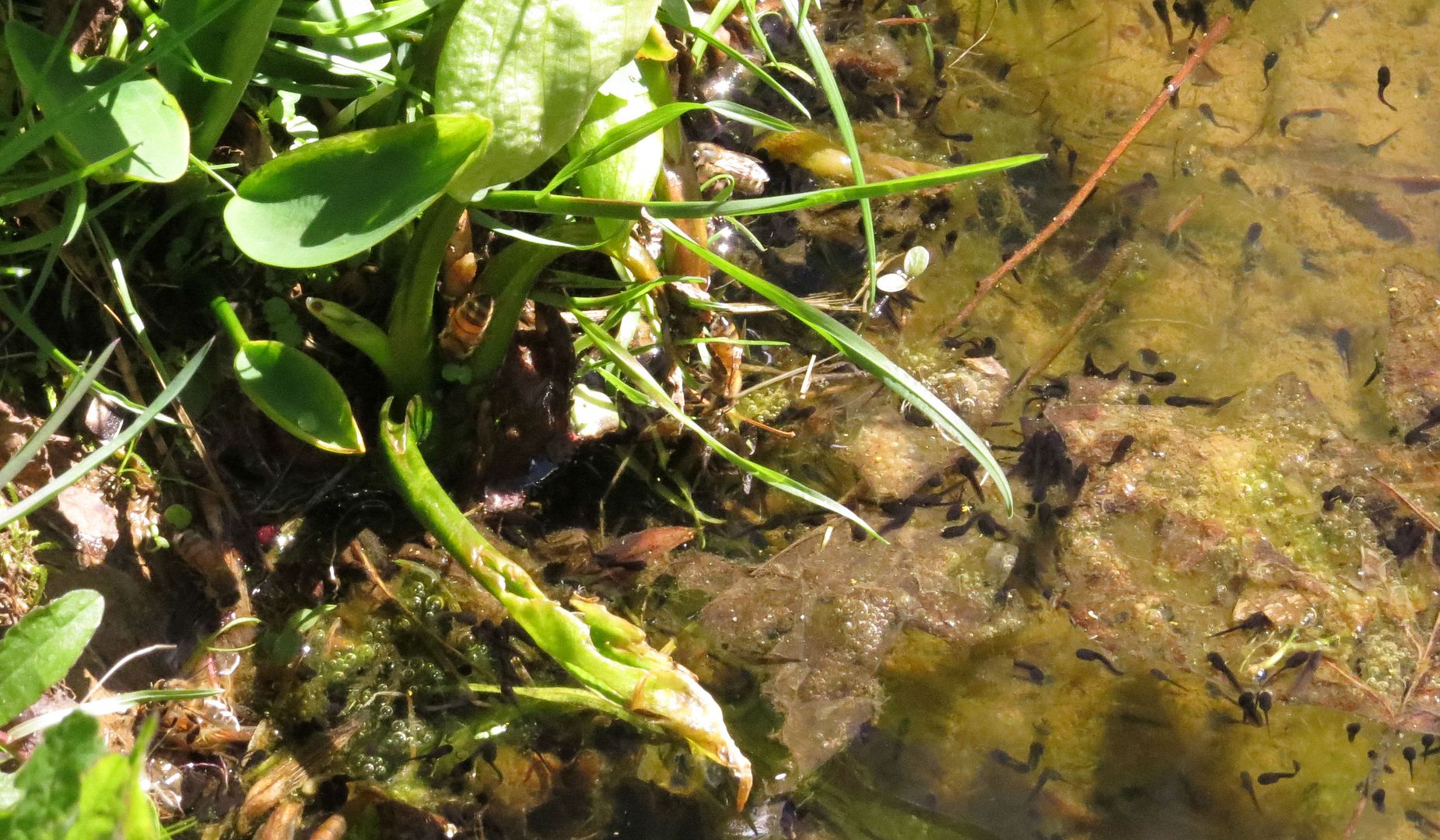
The honeybees were making good use of the pond at the Mt. Cuba Center, as were the frogs. Thousands of tiny tadpoles were wriggling about along the edges. 

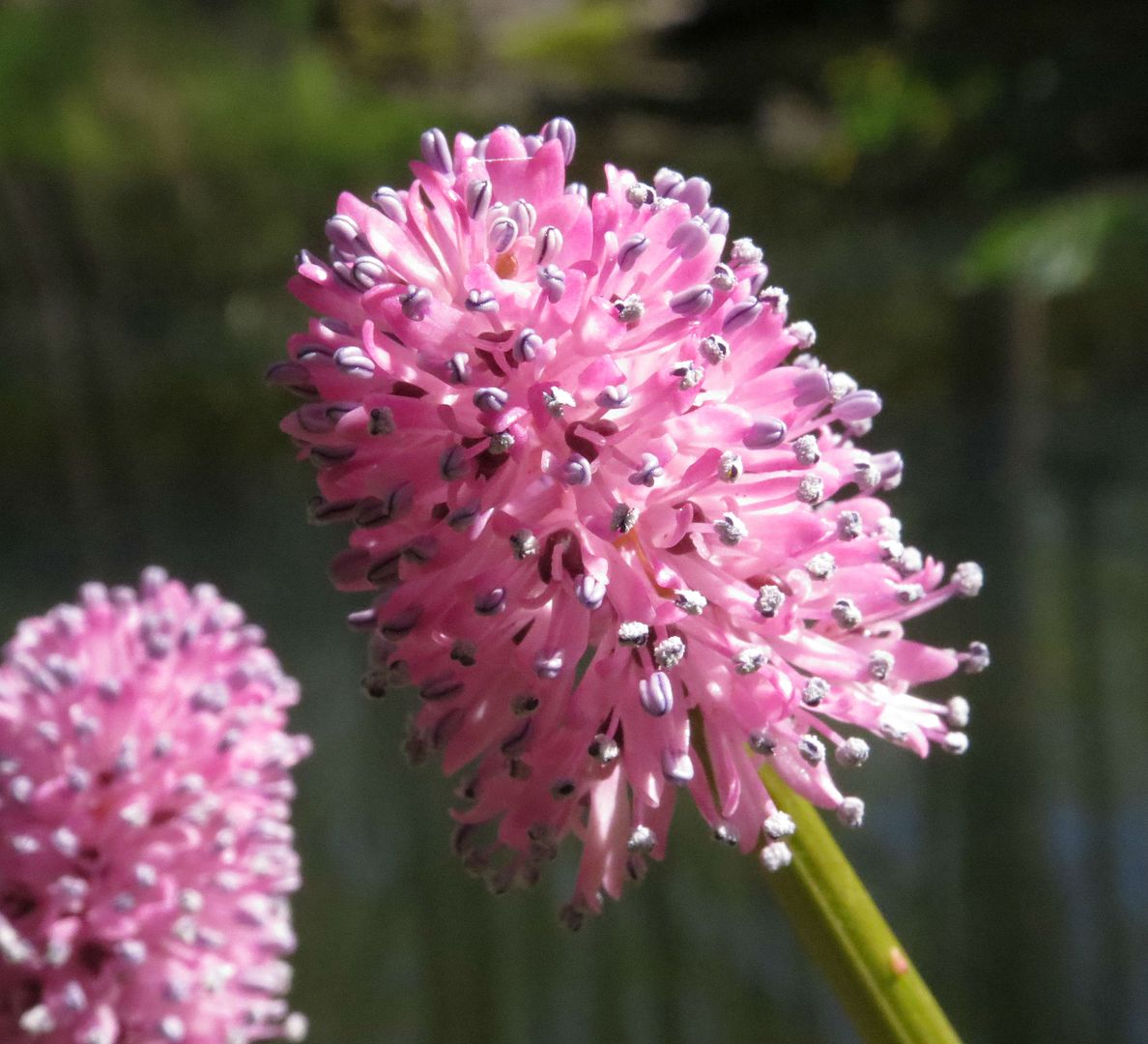
I got to see Swamp Pink, Helonias bullata, flowering. This is a rare and threatened species native to the bogs of New Jersey and a few other locations along the east coast. The deer treat these flowers like cotton candy.

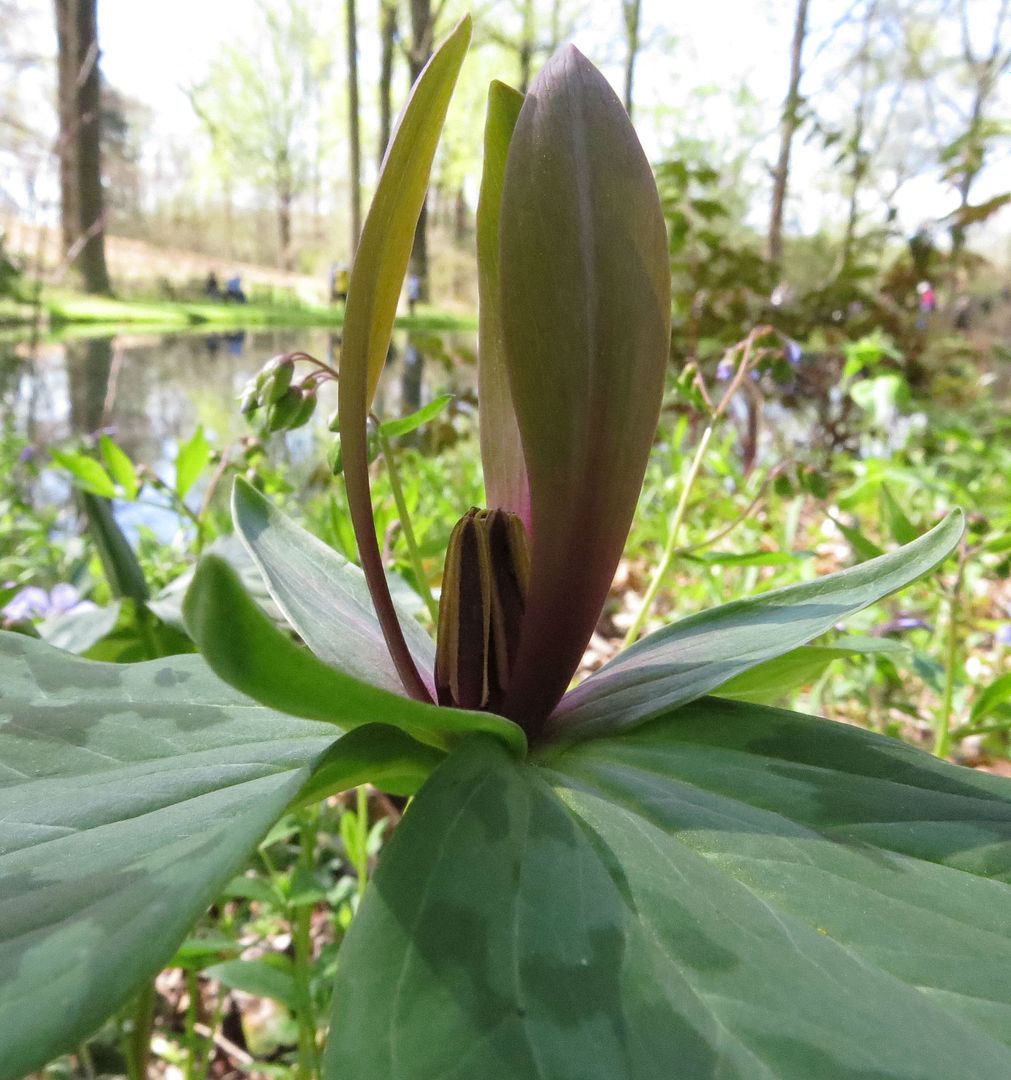
Ozark Green Trillium, Trillium viridescens, is easily identified by its bicolored petals which are rarely all purple. Often the tips are green and they transition into a darker maroon-purple farther down, sometimes abruptly so, but also as a soft transition as seen here.

This species is pollinated by vinegar flies (called fruit flies by pet stores). As the sun starts to go down, the flower produces smell somewhere between cyder and rotting apples and this draws the flies right to the flower. Their simple walking around causes them to tread over the pollen anthers and as they fly from flower to flower they pollinate the plant.

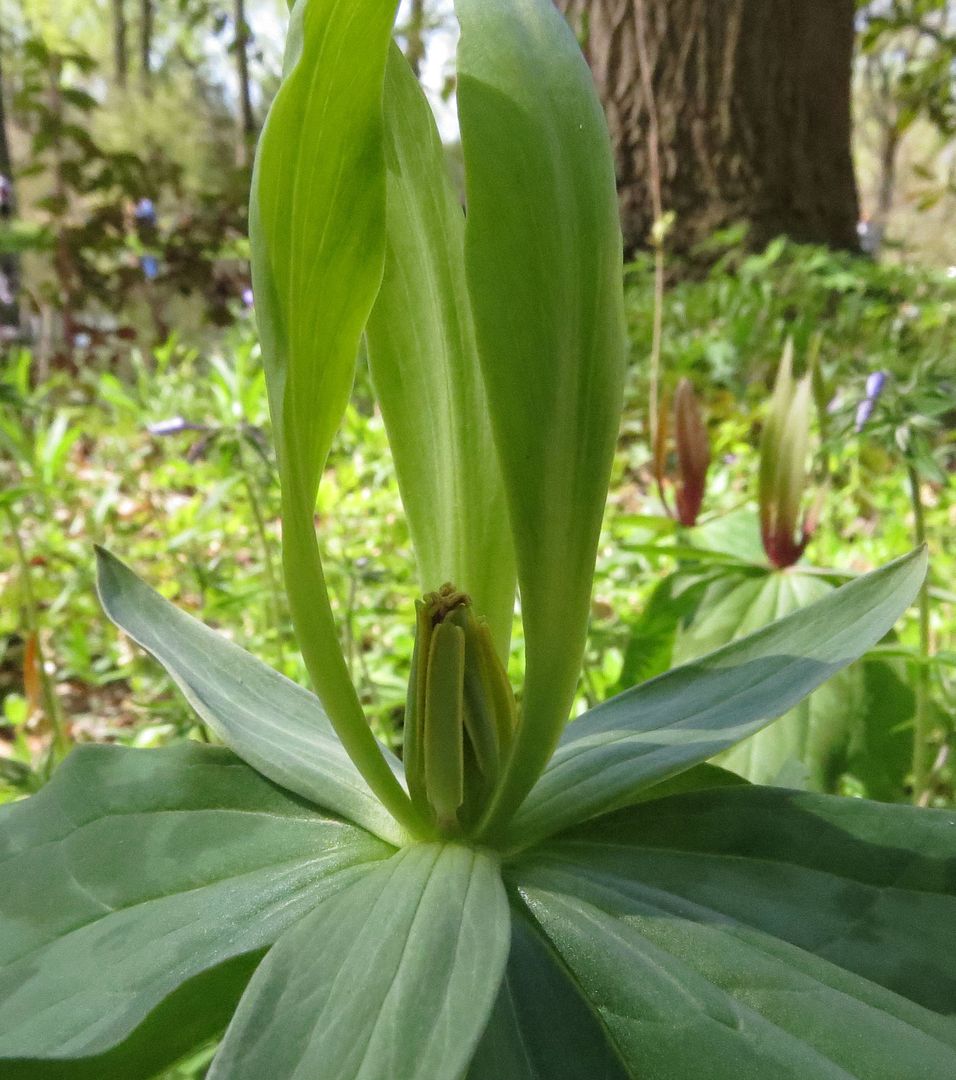
Yellow Trillium, Trillium luteum, have green petals when they first open. They slowly turn yellow over the course of two weeks, and unlike Trillium viridescens (seen in the background) they produce a pleasant lemony scent. To be honest, I'm not certain what pollinates this species but I'm sure the fragrance has to be produced for a purpose.

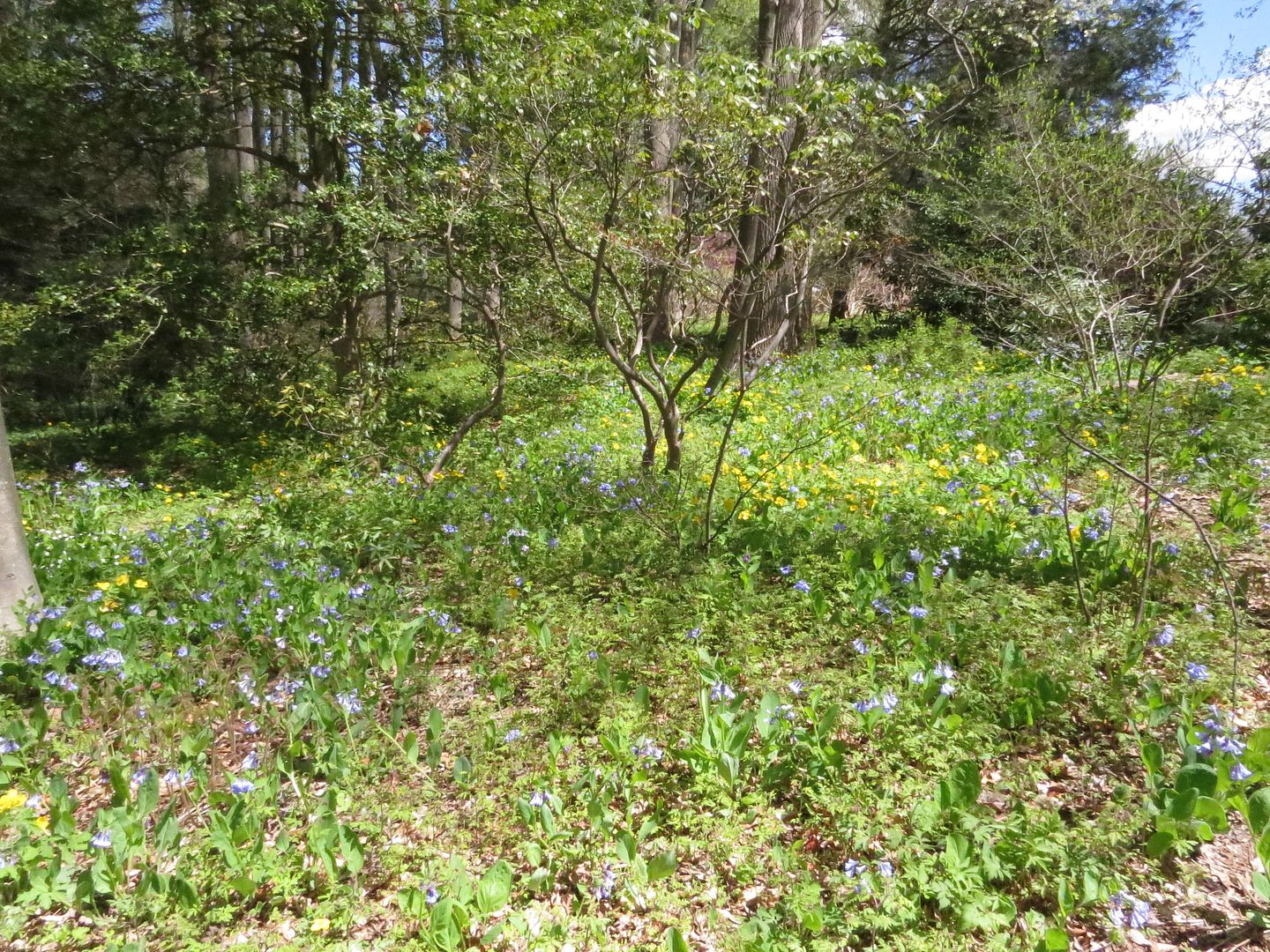
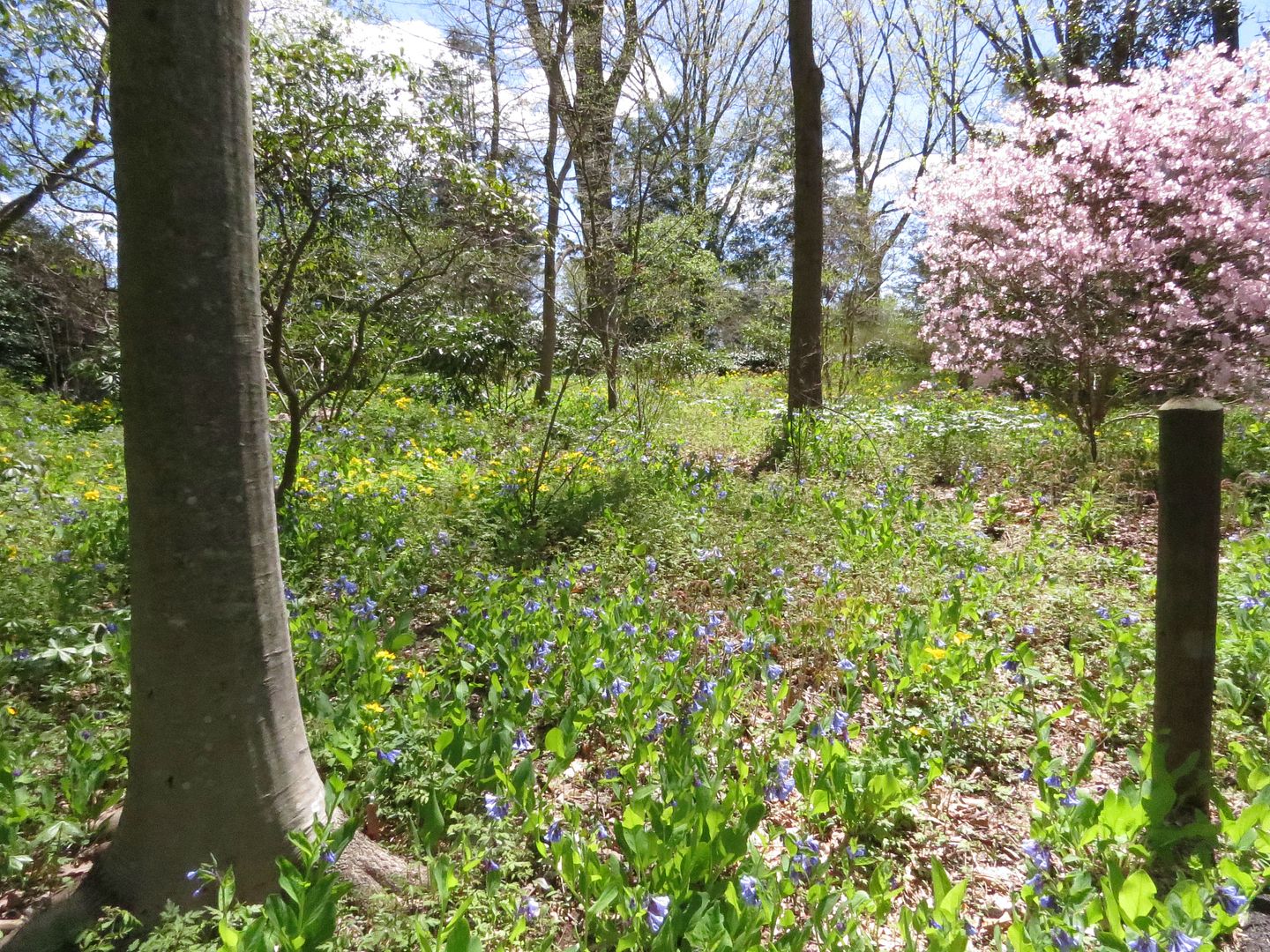
The forest floor at the Mt. Cuba Center is coated in a default of Virginia Bluebells, Woodland Poppy, Fernleaf Phacelia, and occasional patches of Woodland Phlox, Jacob's Ladder, Bellwort, and Foam Flower. There's a scattering of Ferns and Heucheras and populations of native Iris, Bloodroot and Trout Lily. Trilliums and other specialty plants act as accents as they're harder to reproduce in good numbers among the shrubs and trees. Someday I hope to grow enough of these plants to make my own seed mix.

What's crazy is this isn't even at its peak bloom. The Fernleaf Phacelia really fills in the gaps with vast carpets of purple flowers. I hope to revisit them in a week and hopefully they'll be flowering.

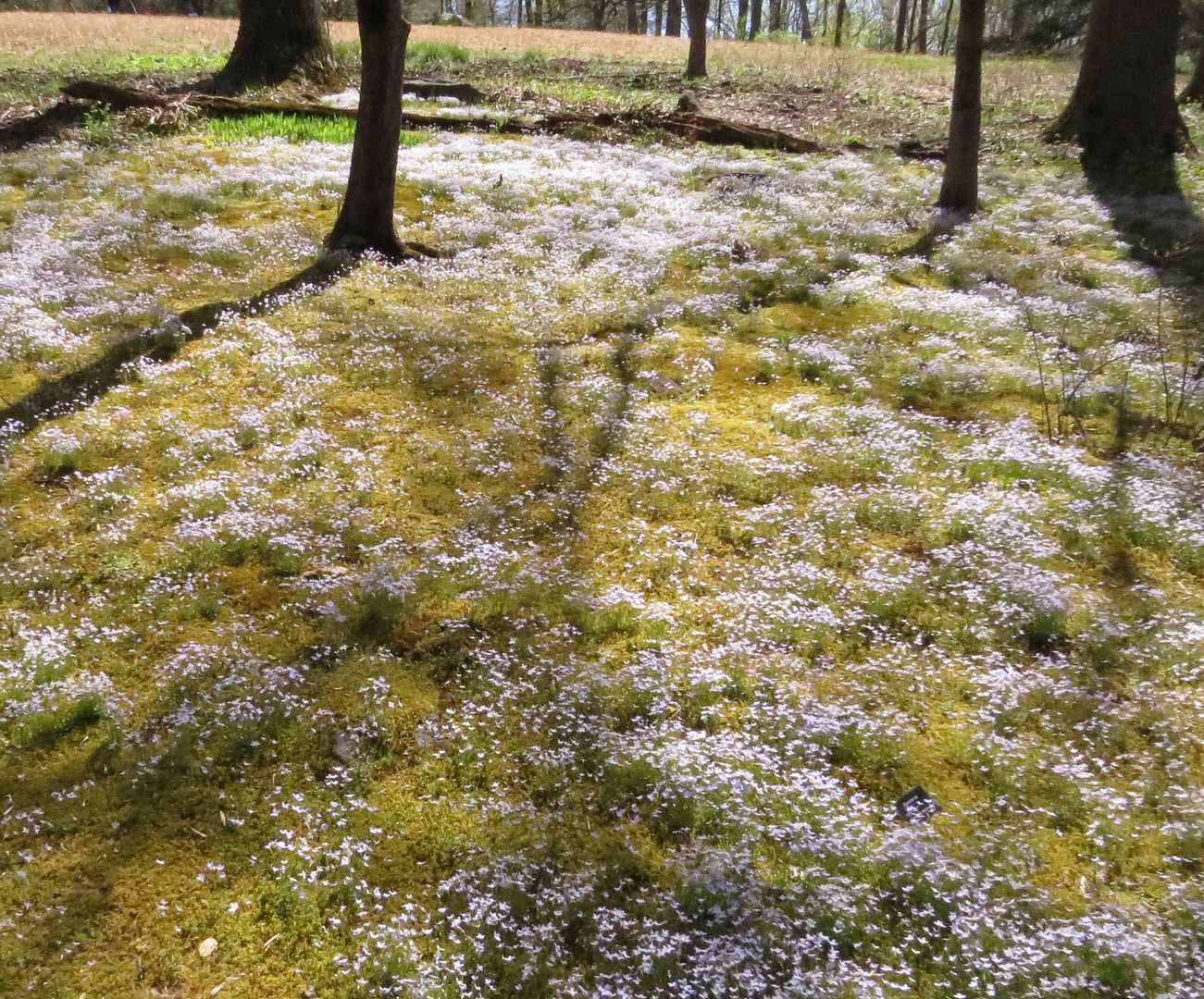
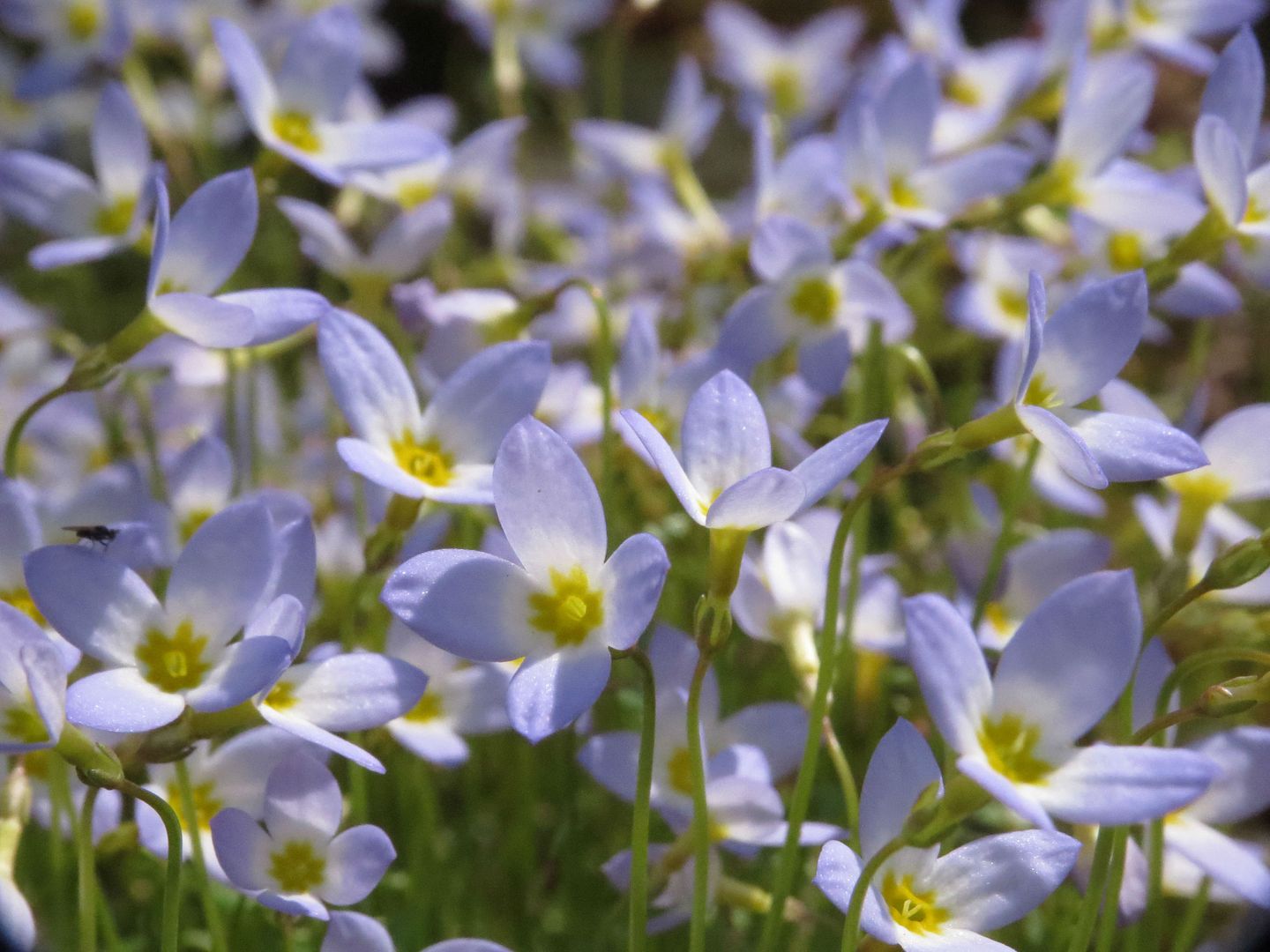
Also forming a carpet of cloud-like flowers are Quaker Lady Bluets, Houstonia caerulea. When grown in mass and seen from afar almost create the illusion of a recent snowfall.

In years past, I had noticed the population had petered out. I believe they transplanted loads of them to other locations in the garden where they've since started to spread. This is pretty close to where it was the first year I saw it.

Bluets always amaze me because they're such a tiny plant. Really they're just a rosette of leaves you could fit on a quarter. Each one goes on to produce twenty or forty flowers though that run the risk of shading themselves out.

They're pollinated by tiny flies and beeflies (which you sometimes see working butterfly bush).

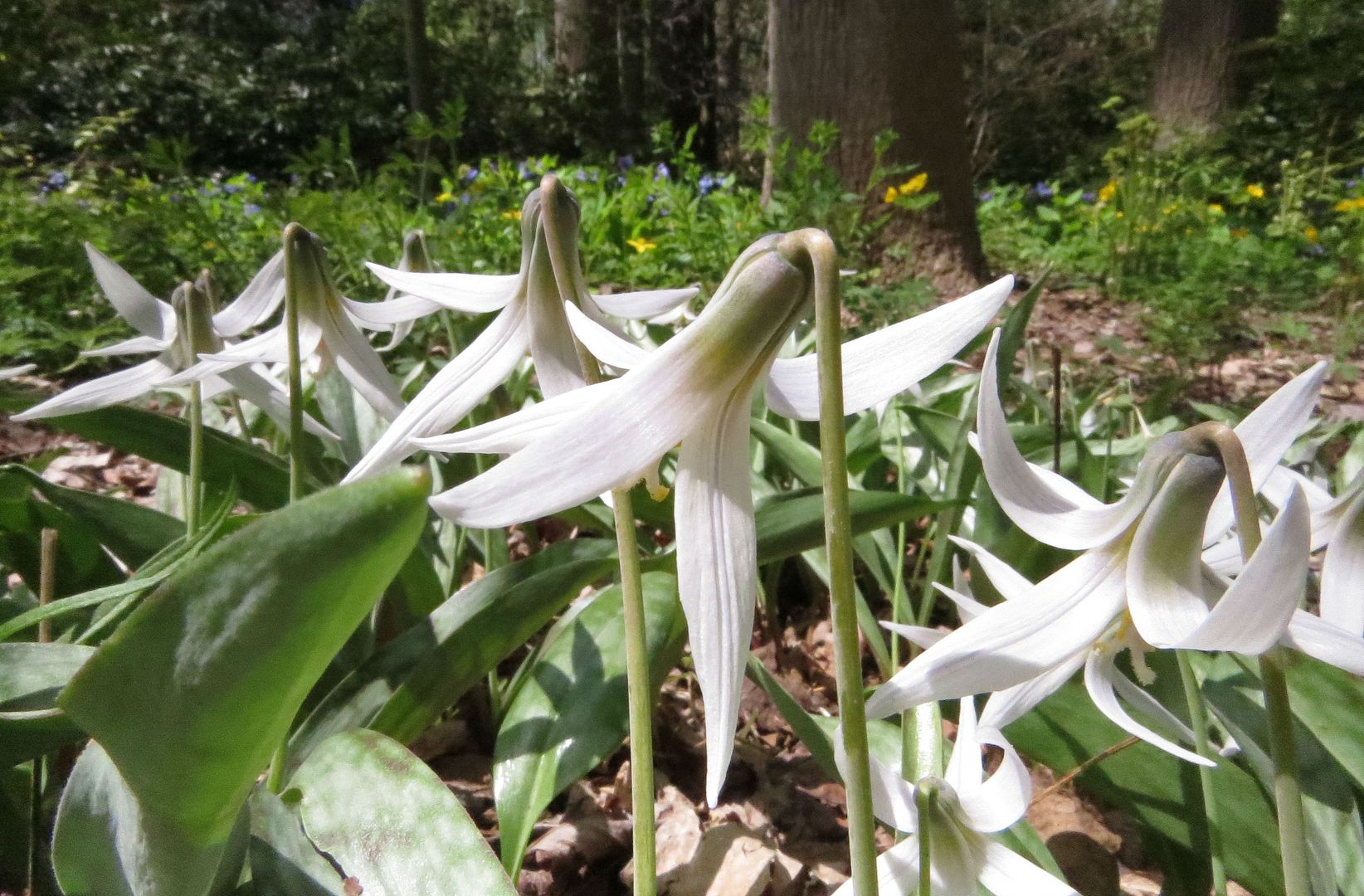
Typically the Trout Lilies are done flowering by the time the Wildflower Celebration is held. This year they were at peak bloom. White Trout Lily, Erythronium albidum, has a beautiful star shaped flower... when it's open. Flowers only open up when in full sun and are quick to close up on cloudy days or night fall.

This is a wildflower probably best seen in the wild. Garden plants rarely produce flowers because they're a little finicky. I've been told it's best to plant them on top of rocky soil, or buried stones, because the ones that flower in nature are the oldest members of the population. Populations favor reproduction by division and only produce a single leaf each year. It's only when a plant has made a massive tap root that they bother to flower. Growing them in containers might also work too, but I've never tried this myself.

This Trout Lily isn't getting enough sun so it's starting to close its flower for the day.

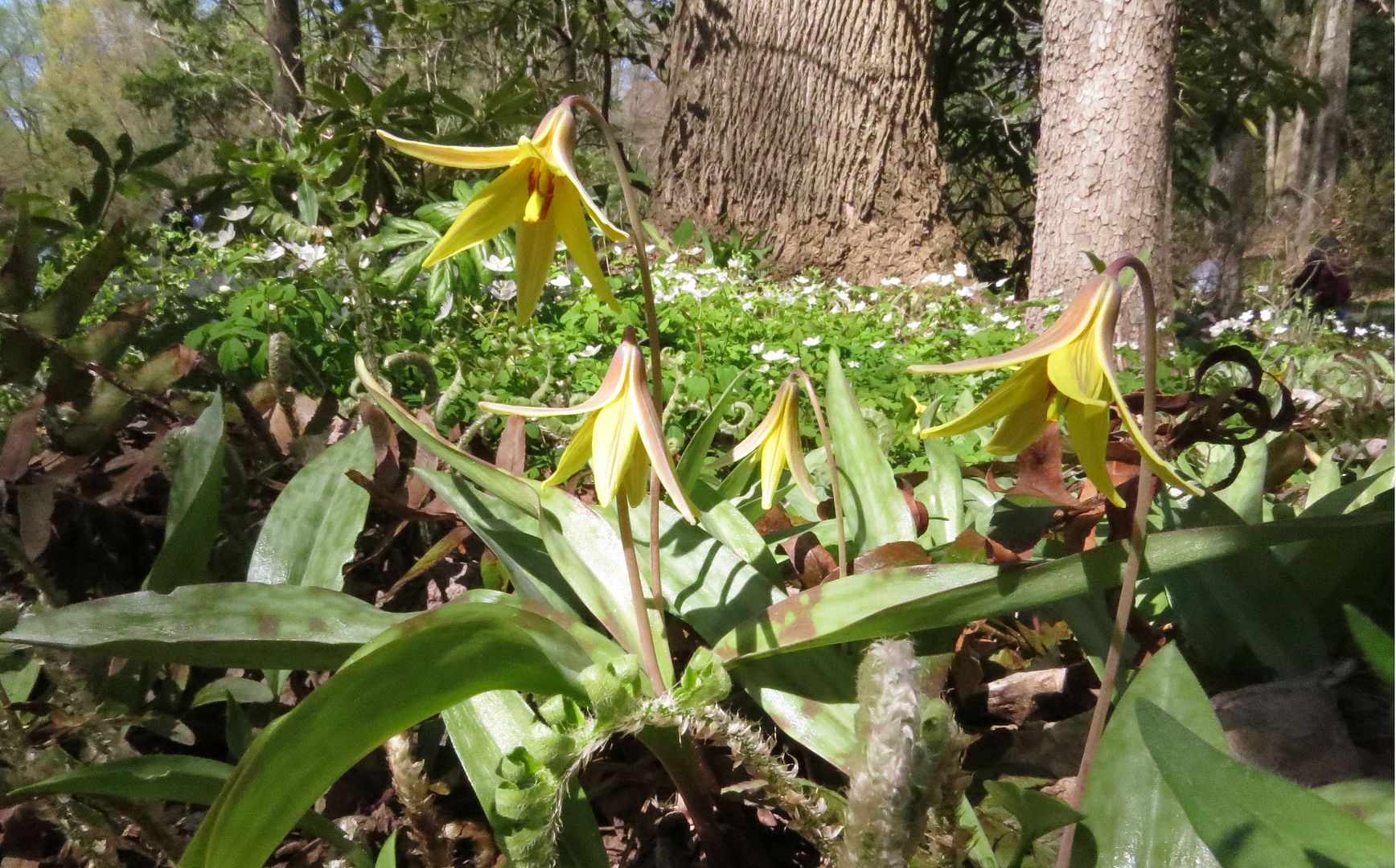
Yellow Trout Lily, Erythronium americanum. This is another ephemeral honeybees will work, but I didn't see any taking any interest to them on that day.

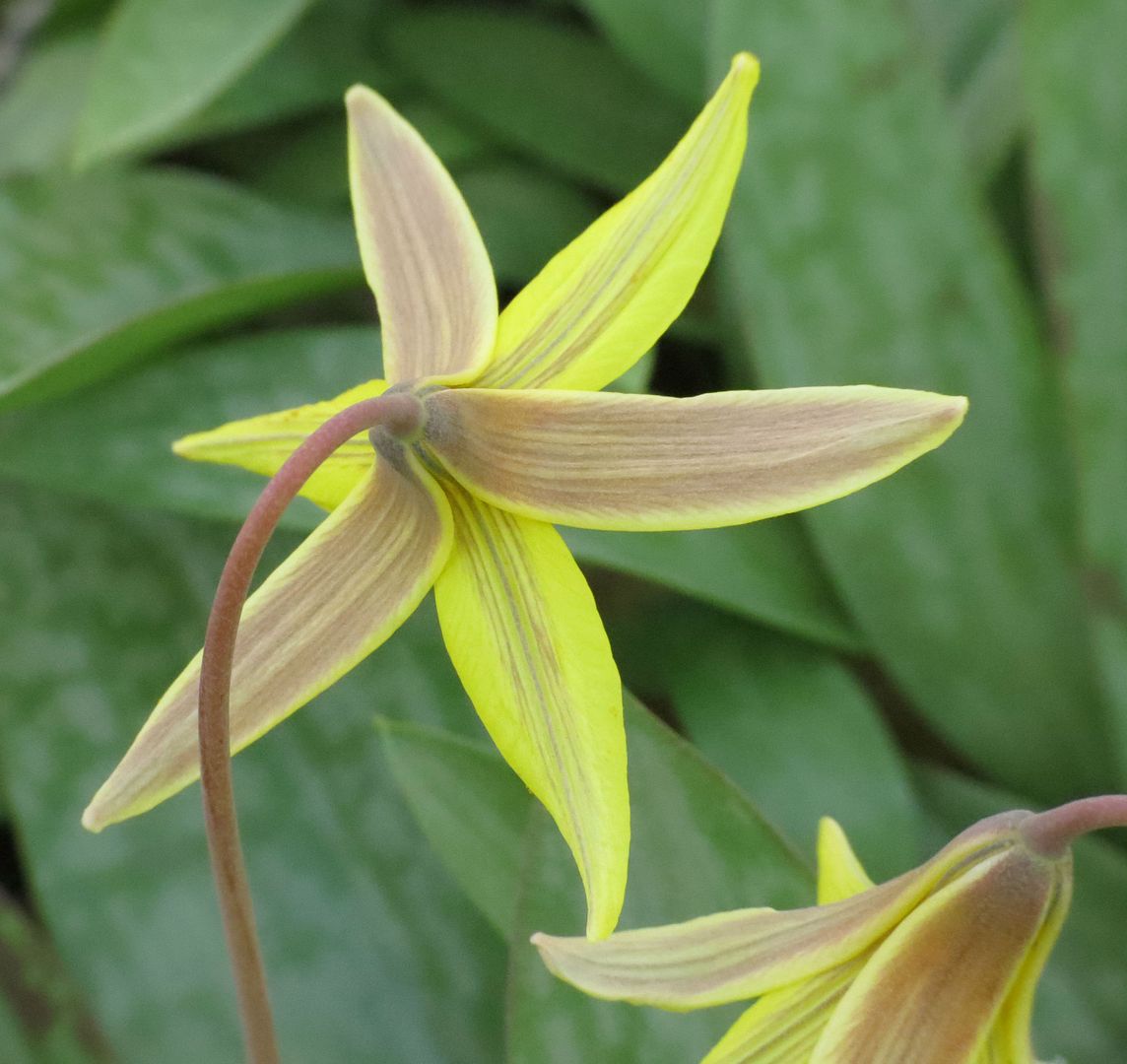
When viewed from below, it's easy to see why this is considered a lily. The bright flower is to entice insects in to pollinate the flower. Later in the year, a seed pod will form at the end of the stem and slowly lay on the ground. Seeds are coated in elaiosome which entice ants to take them back to the nest where they're planted in the soil.
Despite aiming their flowers towards the ground, they can be pretty to look at from behind as well.

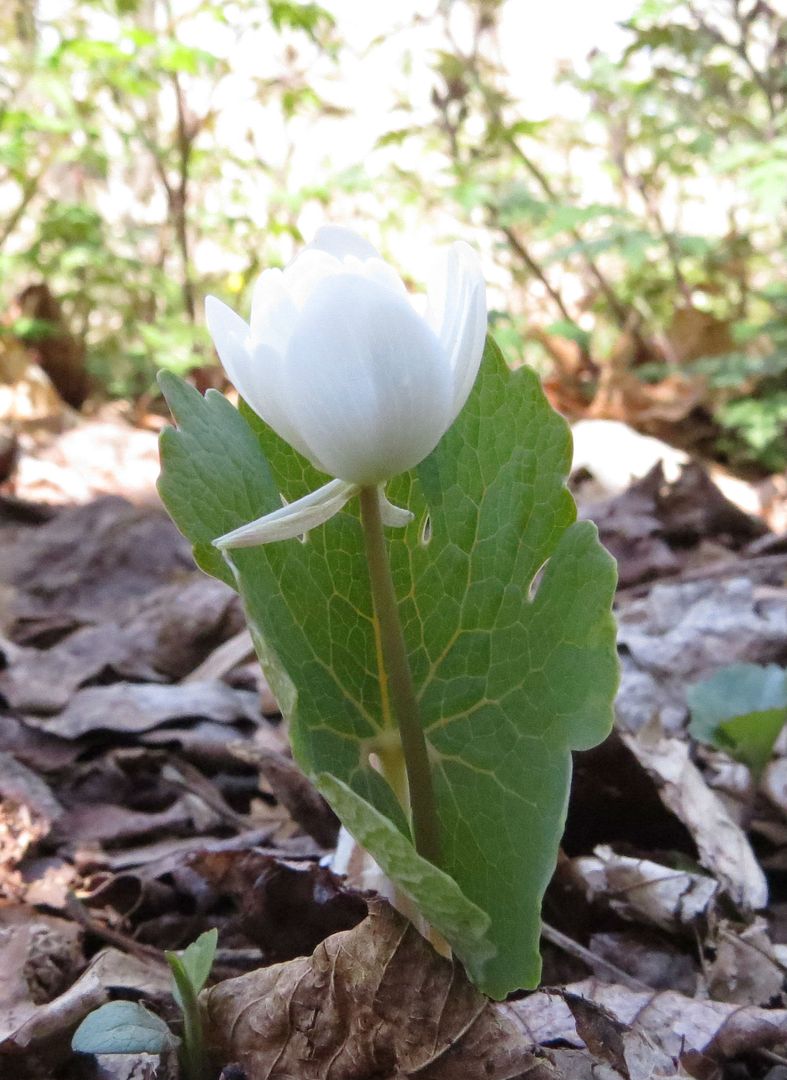
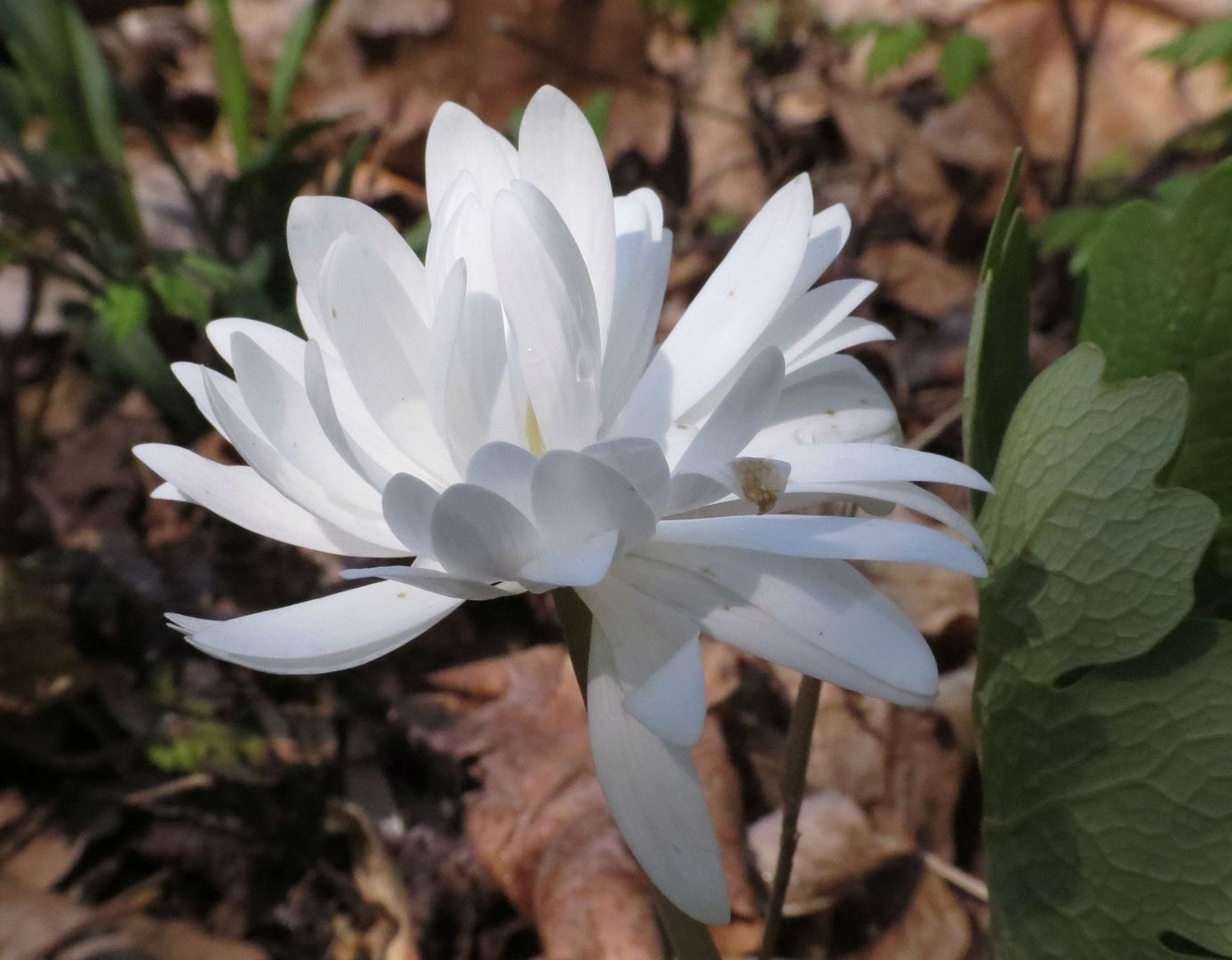
Blood Root, Sanguinaria canadensis. This native poppy pushes up its flower with the leaf clasping the stem before unfolding. Flowers are a tad quick to shed their petals however, which is why double flowering varieties can be popular among growers. Pictured here is the single flowering true species.

This is a double flowering variety. This plant has produced more flower petals than typical in place of reproductive parts, usually the pollen anthers. Typically double flowering plants produce fewer seeds.

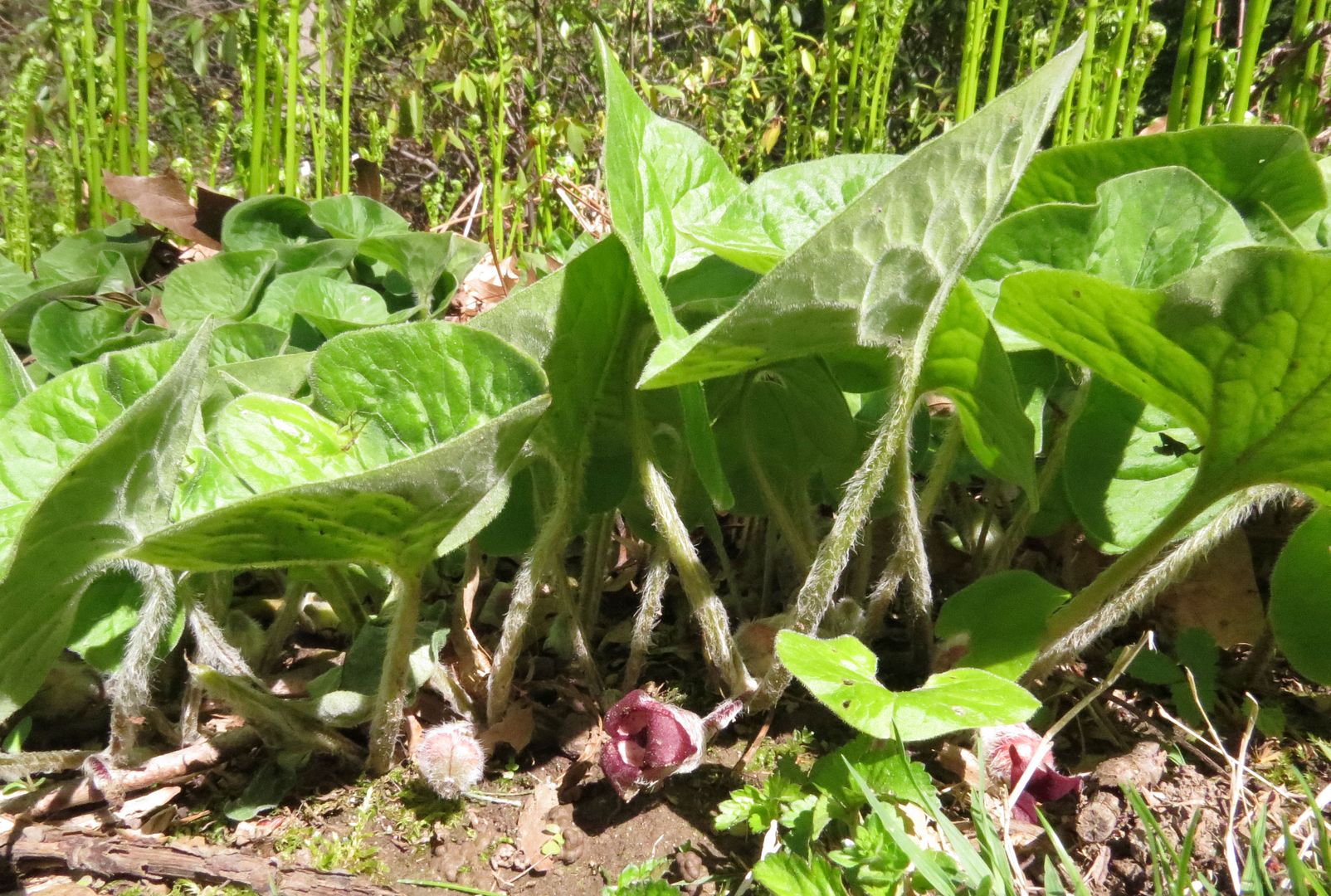
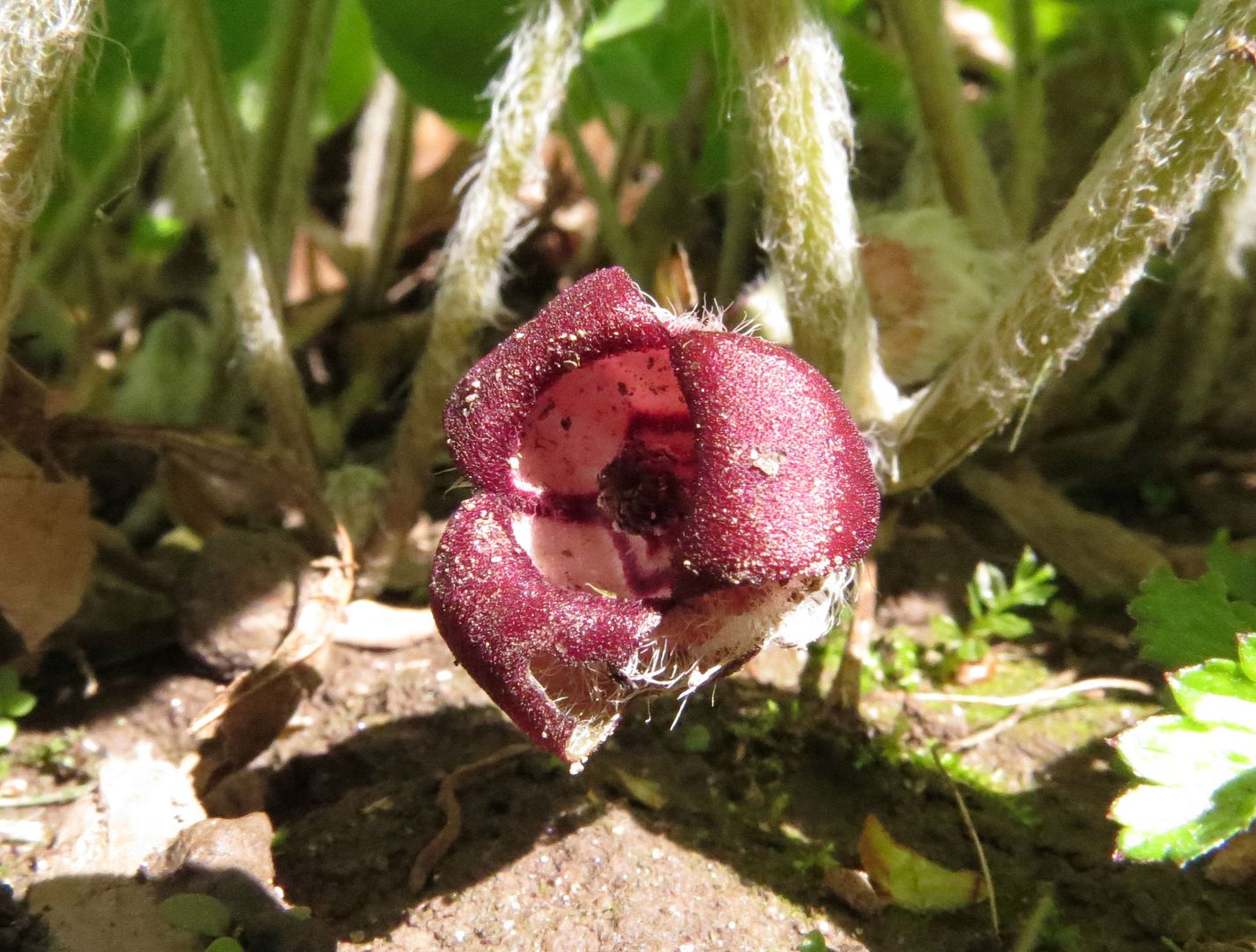
Wild Ginger, Asarum canadense, grows to form a thick ground cover of leaves. Look beyond this dense of mat in the early spring though and you'll likely find the flowers each plant produces. They're pollinated by flies and carrion beetles, thus the flowers are not showy and simply lay on the ground. Later on seed pods form and split open so ants can take the seeds back to the nest and plant. This can be an aggressive spreading plant though, and often seedlings don't require the aid of being planted by ants to germinate.


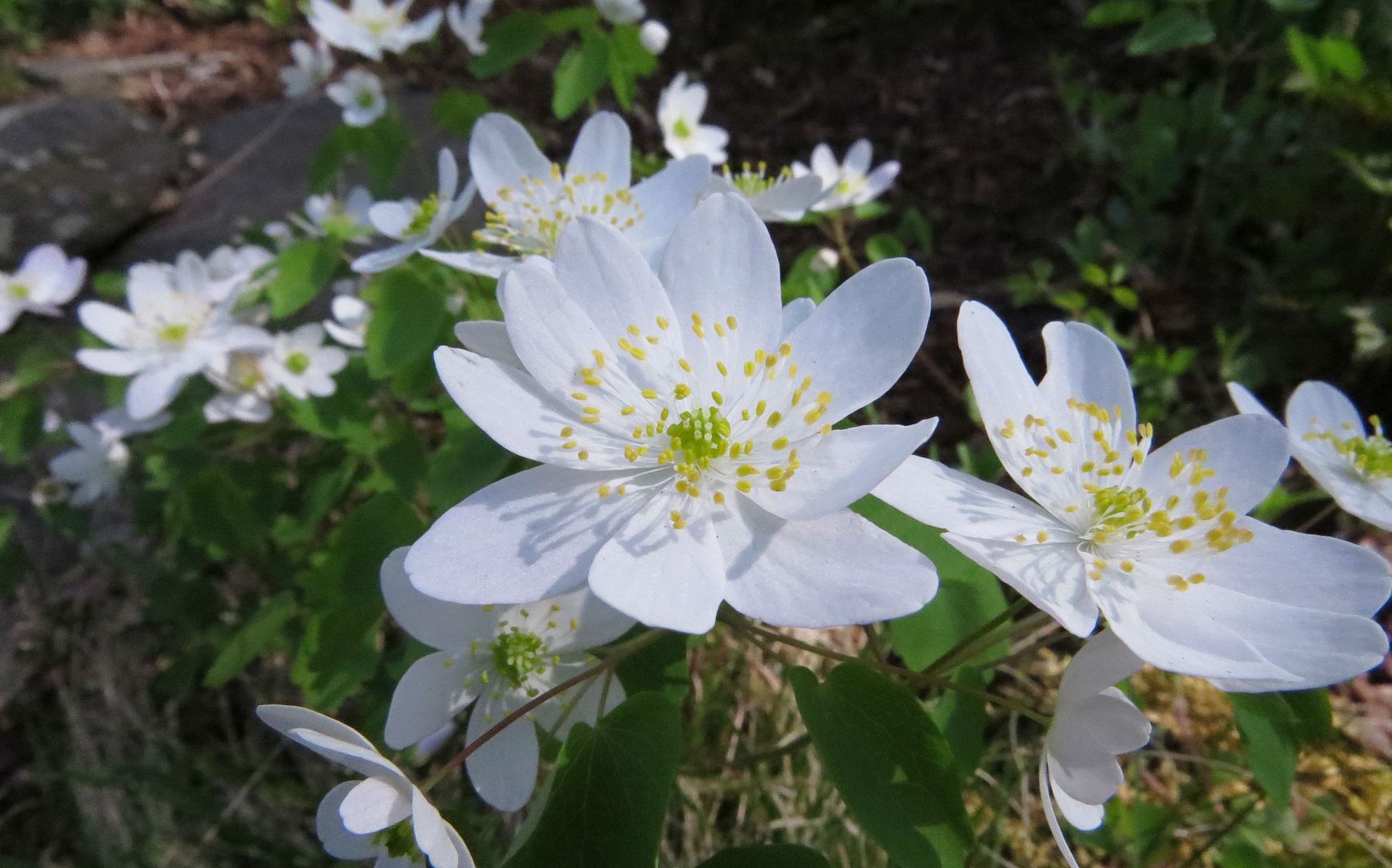
Rue Anemone, Thalictrum thalictroides. These only produce pollen, and while honeybees can work them, they're not always at the top of the list. Honeybees work hard and they'd rather put their efforts toward a plant that at least gives them a little bit of nectar.

And of course their has been the great addition of the raptor bird demonstration that I look forward to every year. Here a Turkey Vulture was sunning itself on a Do Not Enter sign... I did not enter. 

Actually this was a brief moment I managed to capture. All the birds are rescues that would otherwise be put down due to injuries (some mental and some physical). Some of the birds were hit by cars and unable to fly, others were illegally raised as chicks found by people who didn't think to call someone about it. The majority of the birds there didn't fly and were simply shown for educational purposes, which is more enjoyable than it sounds.

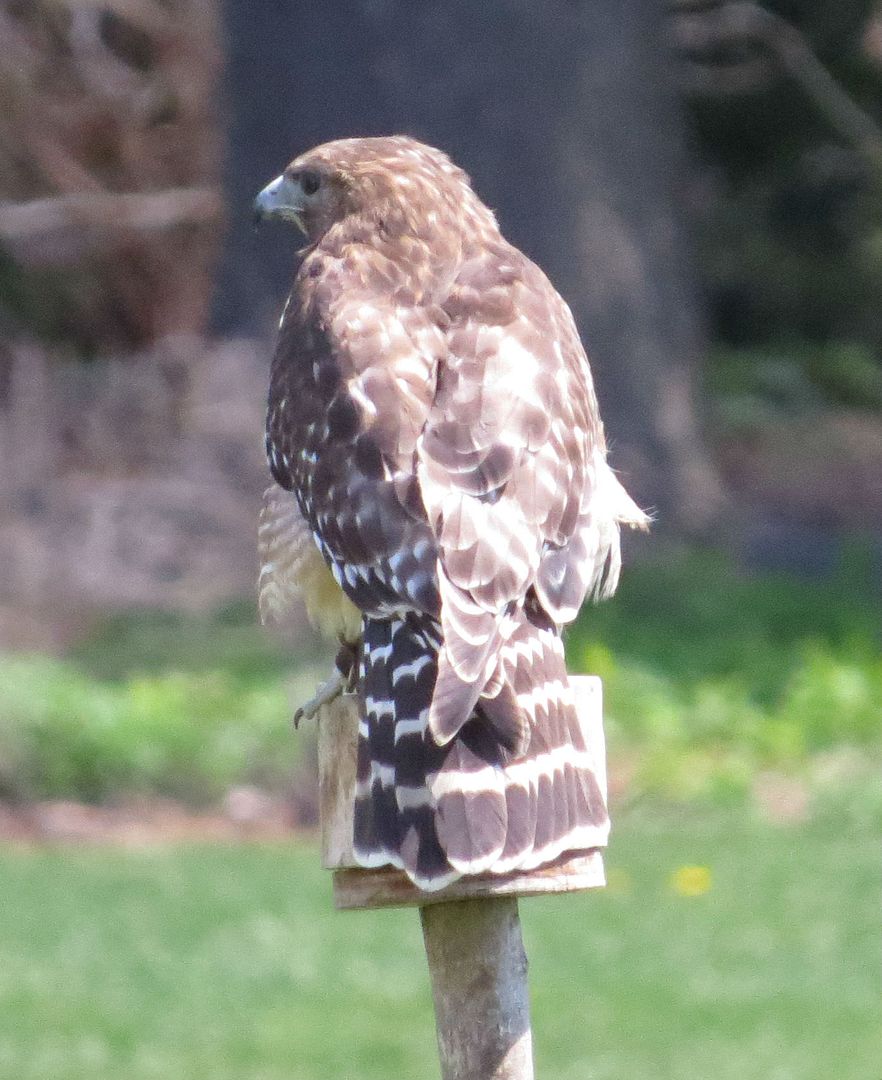
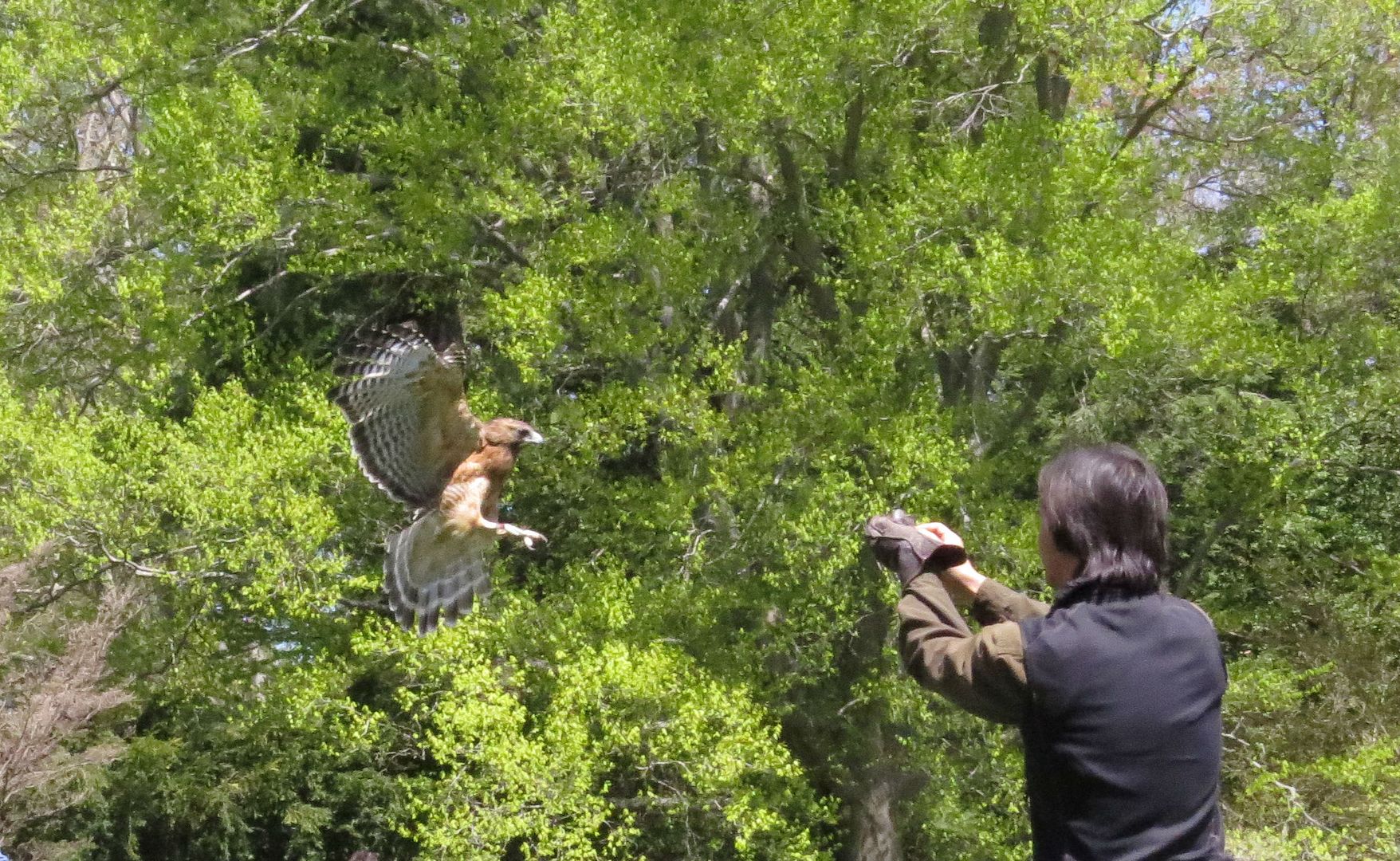
Unfortunately I'm not a bird person and they had like three different types of hawks there. I know this isn't a Red-Tailed but it was one they allowed to fly around.
This was one of the few birds they let fly around. And it did a good job swooping from tree to tree and returning to its handler. At one point he threw up a piece of food in the air and the hawk was able to swoop up and catch it.
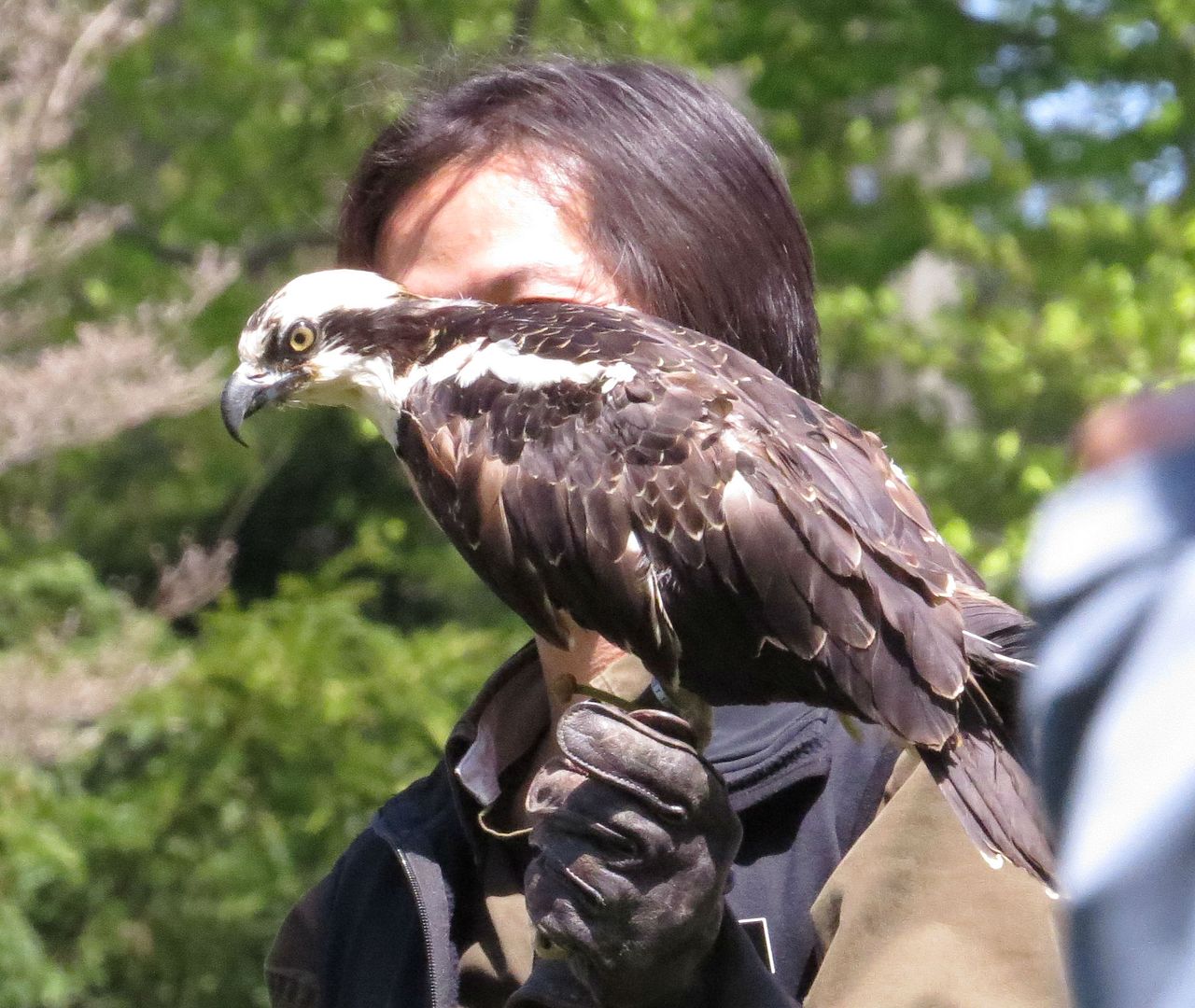
This is an Osprey which feeds exclusively on fish. Thus you only find them along rivers, bays and coastal areas.

This was a Screech Owl. He was adorable.

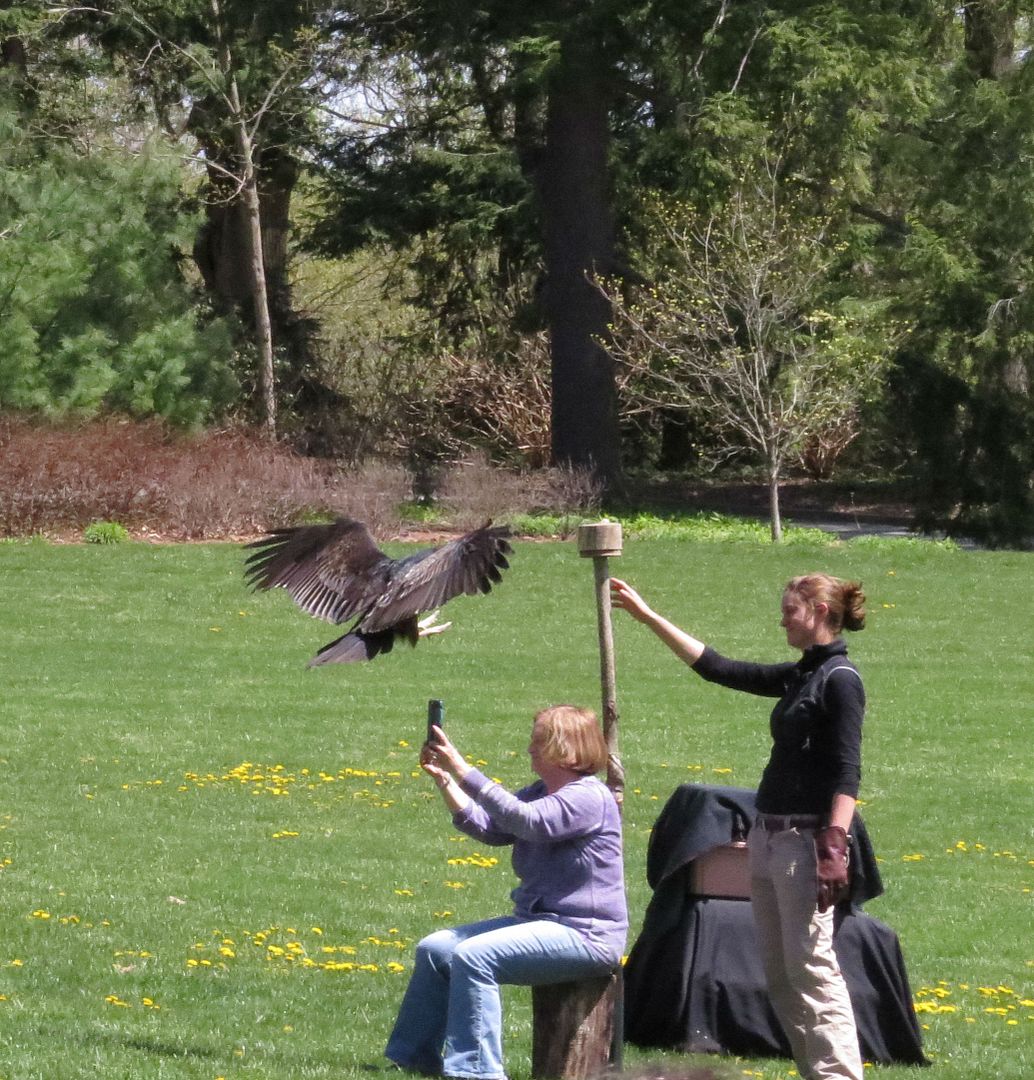
One lucky audience member was offered the best seat in the house. The Turkey Vulture glides extremely low to the ground. They allowed it to glide over the audience which was loads of fun. People kept ducking down but that just made him glide that much lower to them. So this woman got to sit right in front of the perch the bird was called to and she probably got an amazing shot too.
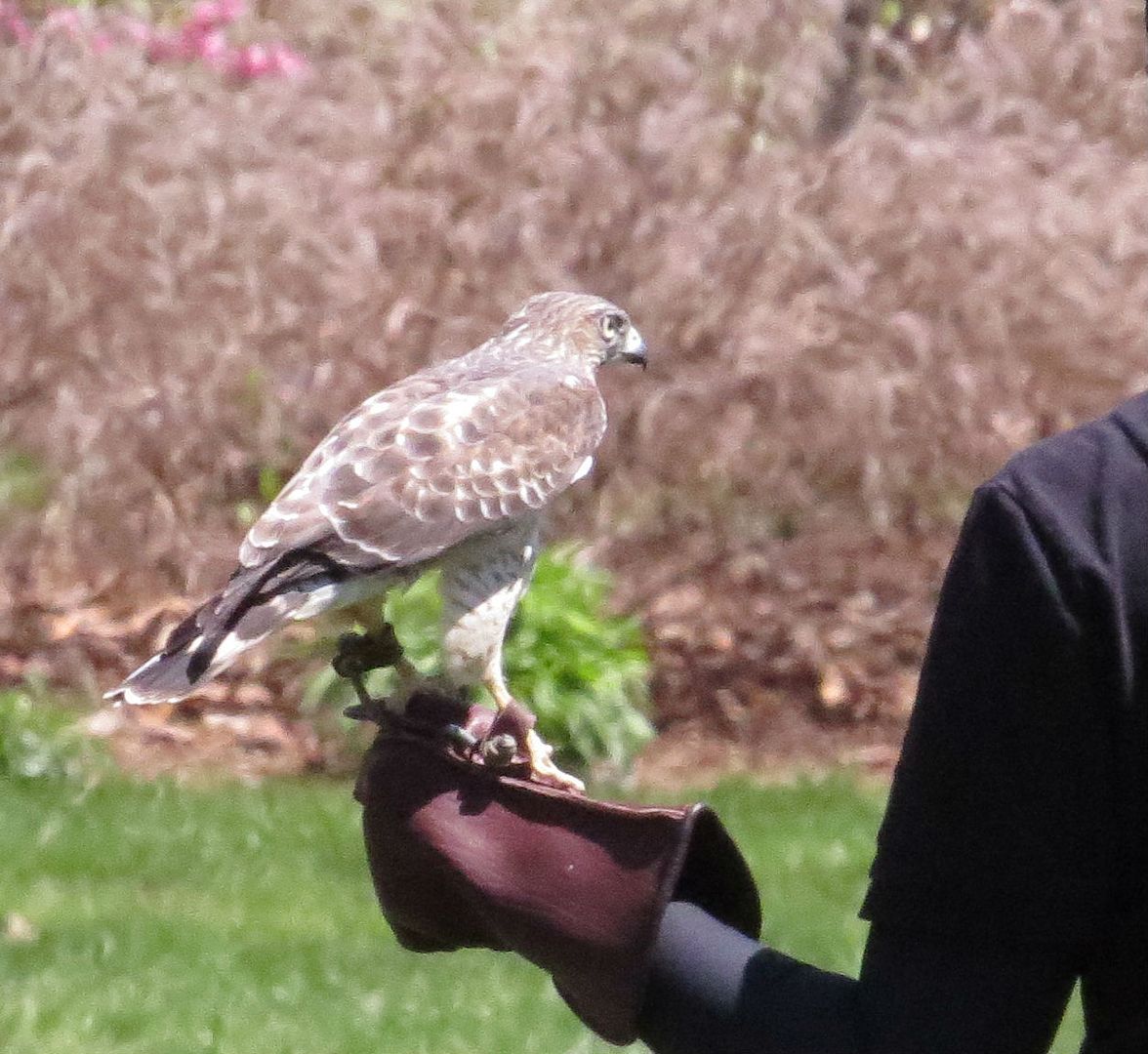
And then there's this guy. I forget what type of bird this is. Now for the majority of the time they had it out to talk, this is how he was, nice and calm on the trainers glove.

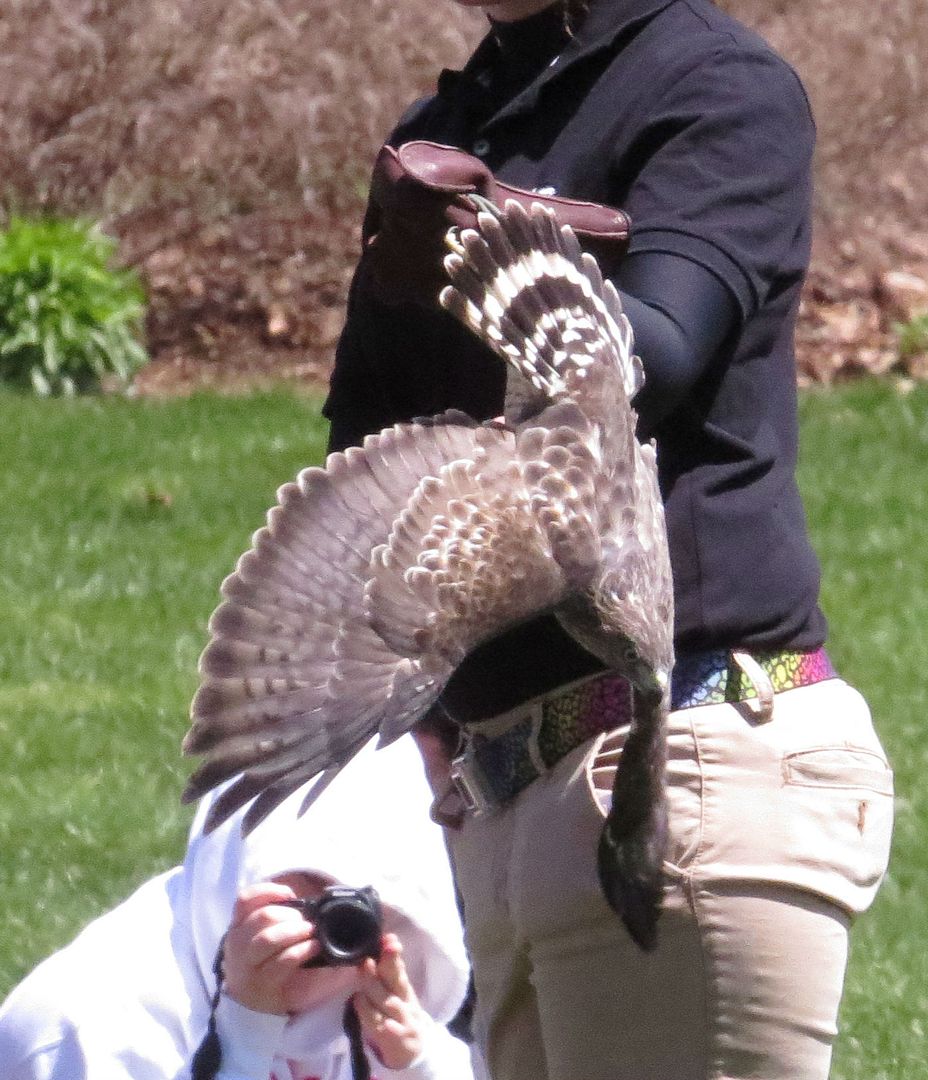
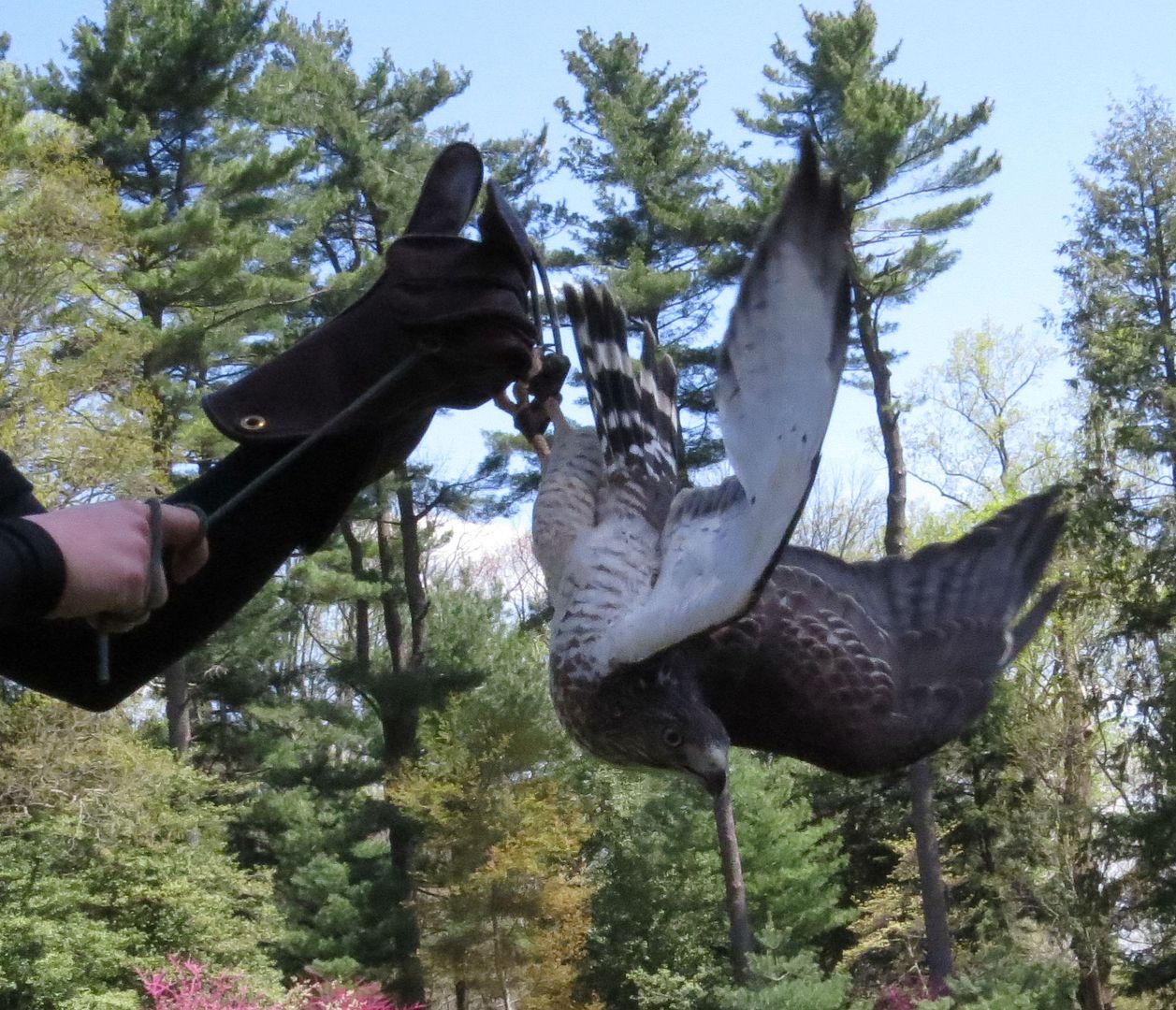
But then I guess he wasn't comfortable with the crowd, and this may have been the first time he'd been in a crowd of this size, he just started to freak out and began trying his hardest to nose dive into the ground.


He was actively flapping his wings to fly straight down at the earth.

After the first spell of doing this he did right himself up again. But as they took him away from the people he began to act up again.

And that's when he suddenly grew 50' tall, consuming a poor woman and her camera before being called off to once again save Middle-Earth and peck out the flesh of Prometheus for giving mankind the gift of fire.

All and all I had a wonderful time.