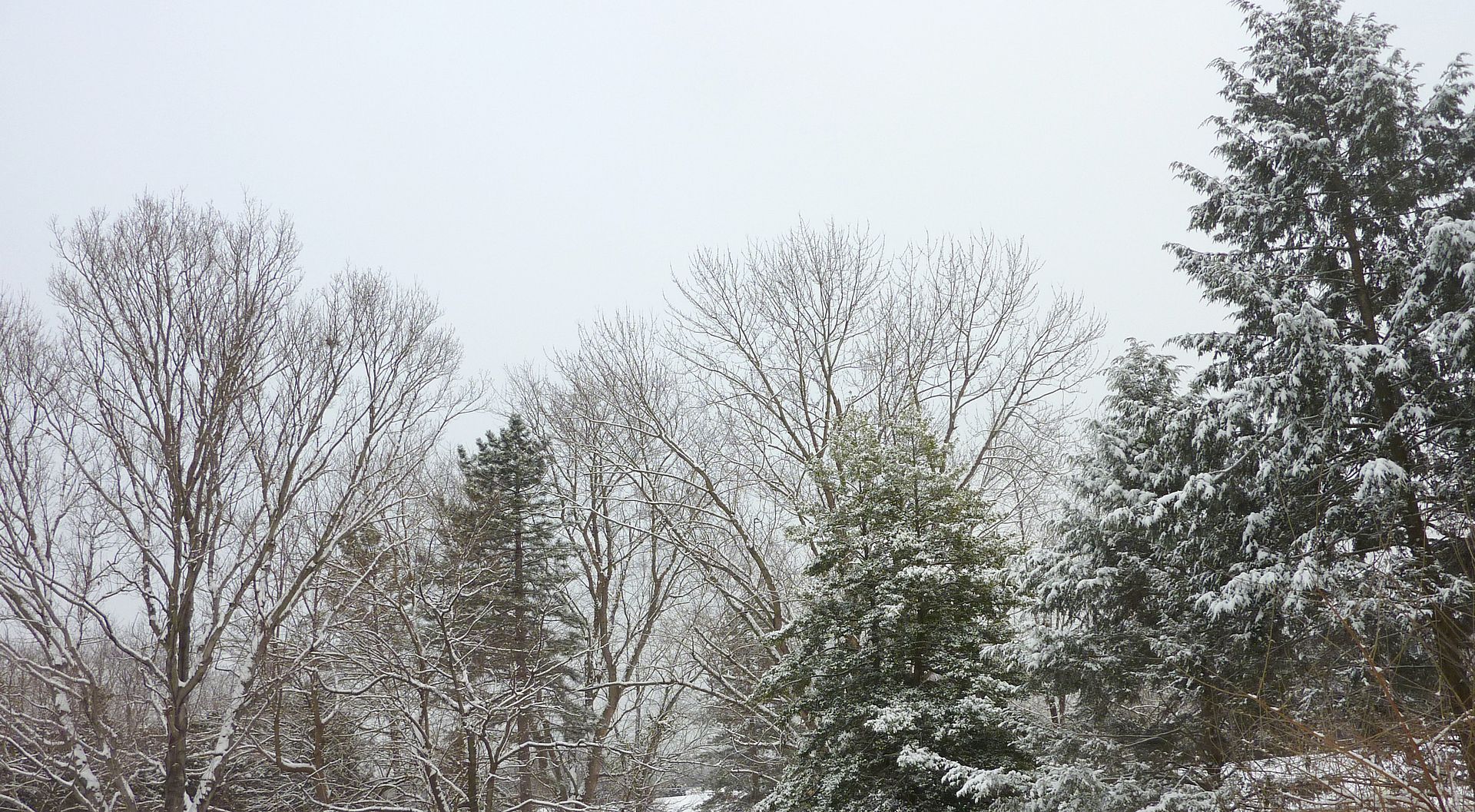
A week ago the weatherman announced "Winter is coming... again!" and we got a nor'easter that brought up to 18 inches in some places. Between my home in Somerdale, NJ and where I work in Cinnaminson we got between 4' and 12'. What makes the storm odd though is because we're so late into March, the next three days had a high above 50 degrees Fahrenheit. So this was something of a freak, late season storm. In spite of this though not much was damaged.
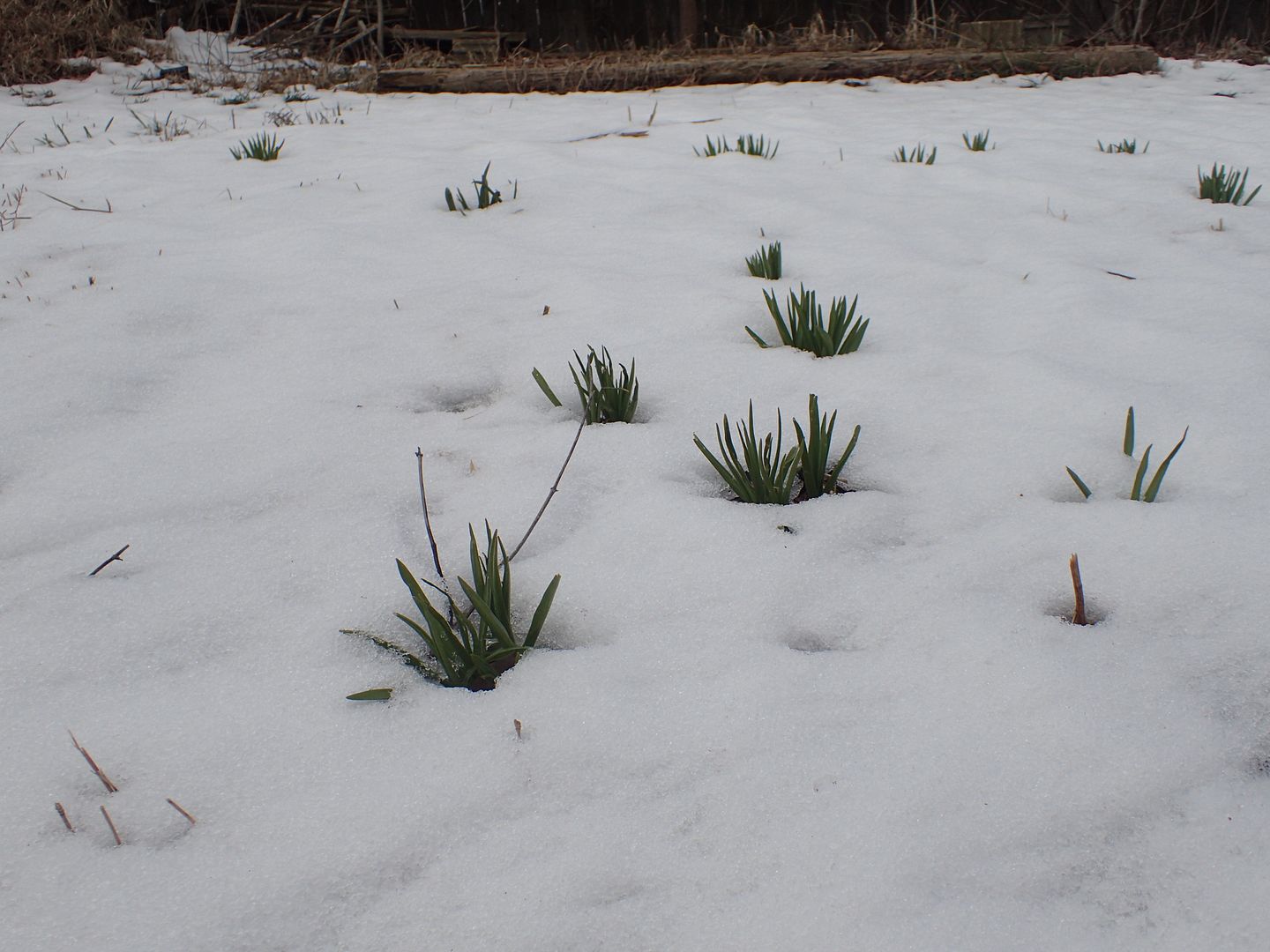
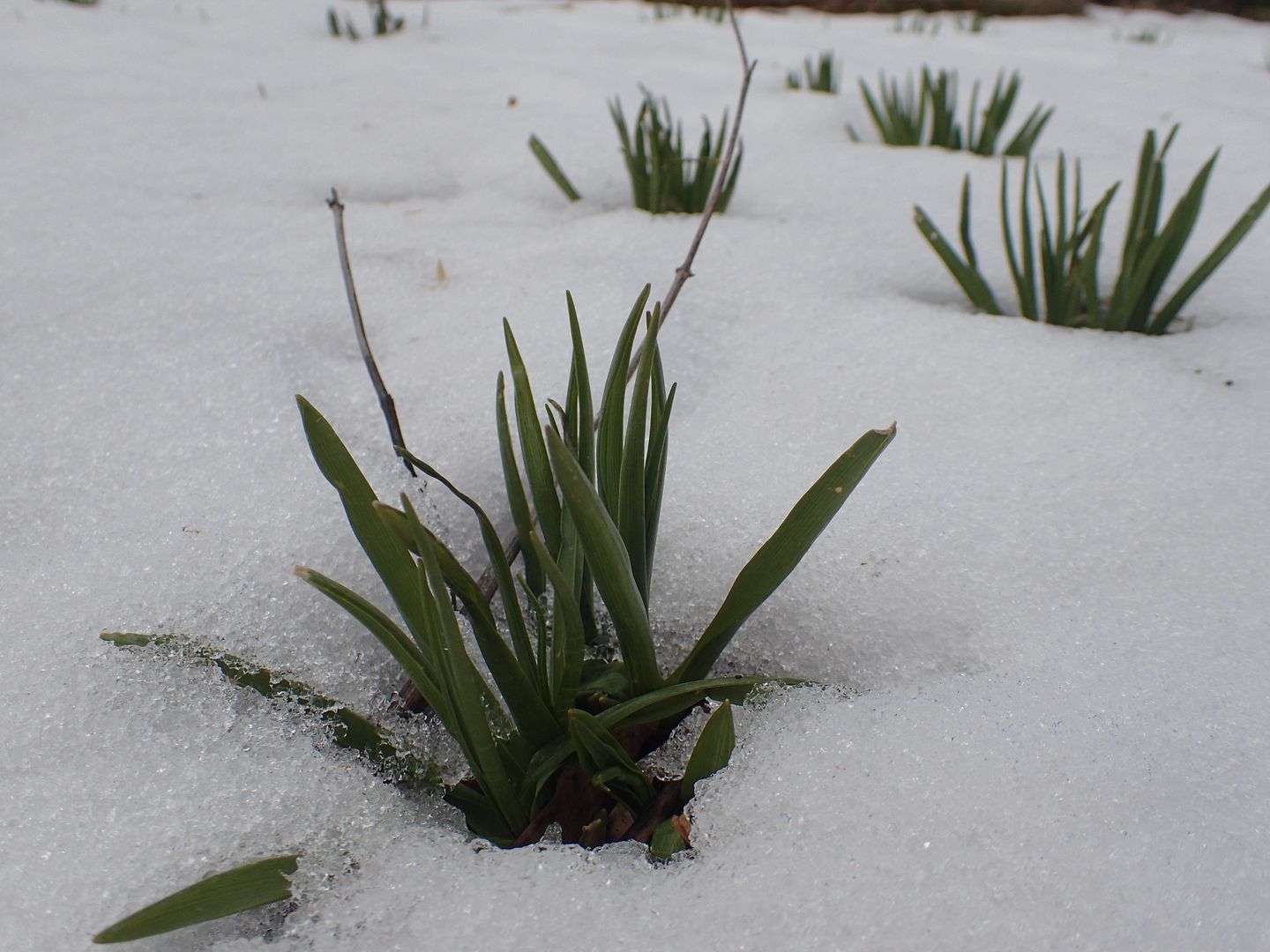
Out in the meadow garden the Camassia, Wild Hyacinth, have been giving off their own heat and melting the snow around them.
Once the ground is exposed around them the snow will melt more quickly as the ground warms up.
Virginia Bluebells, Mertensia virginica, doesn't do this as well but also doesn't seem that effected by the snow.
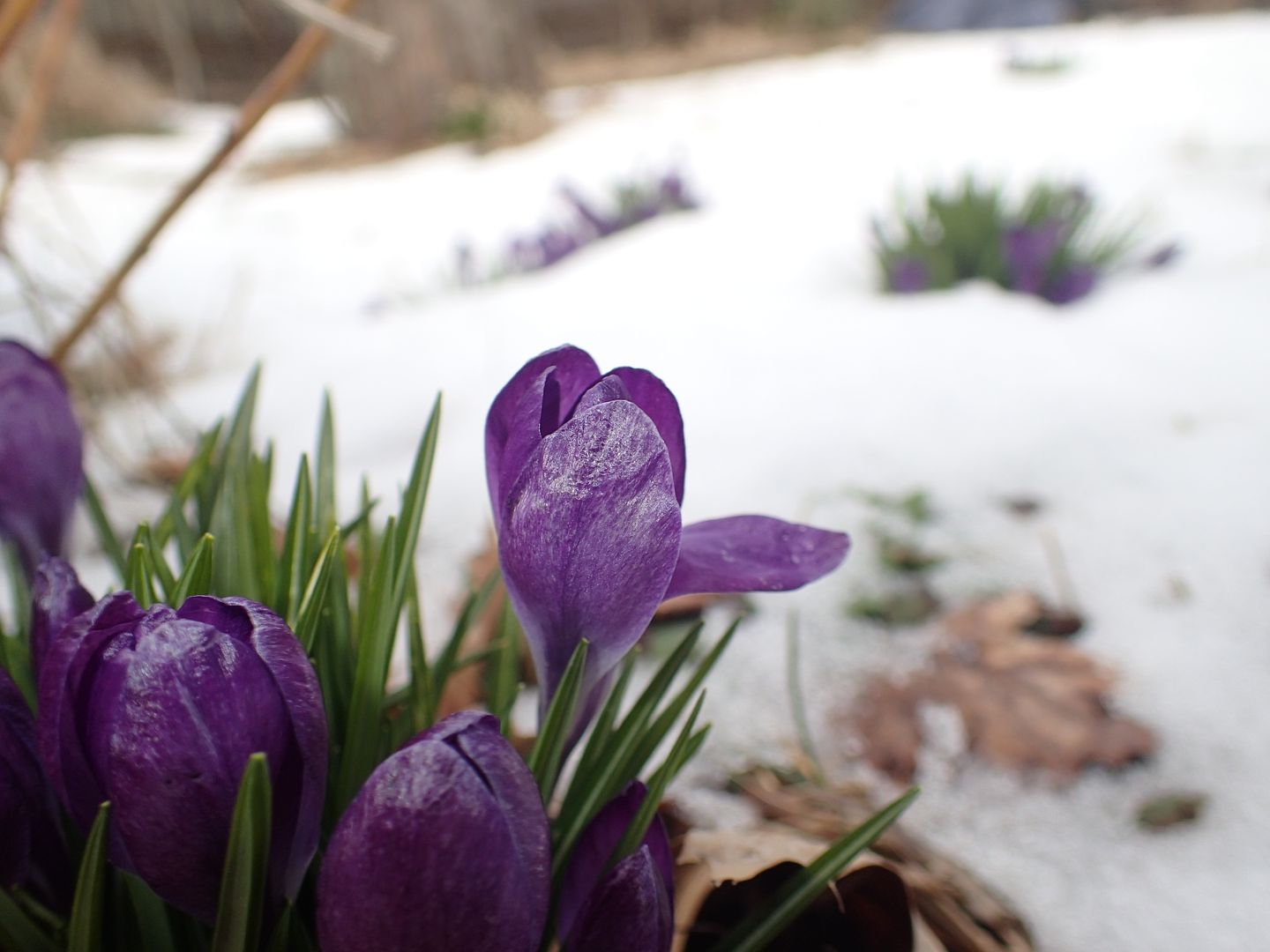
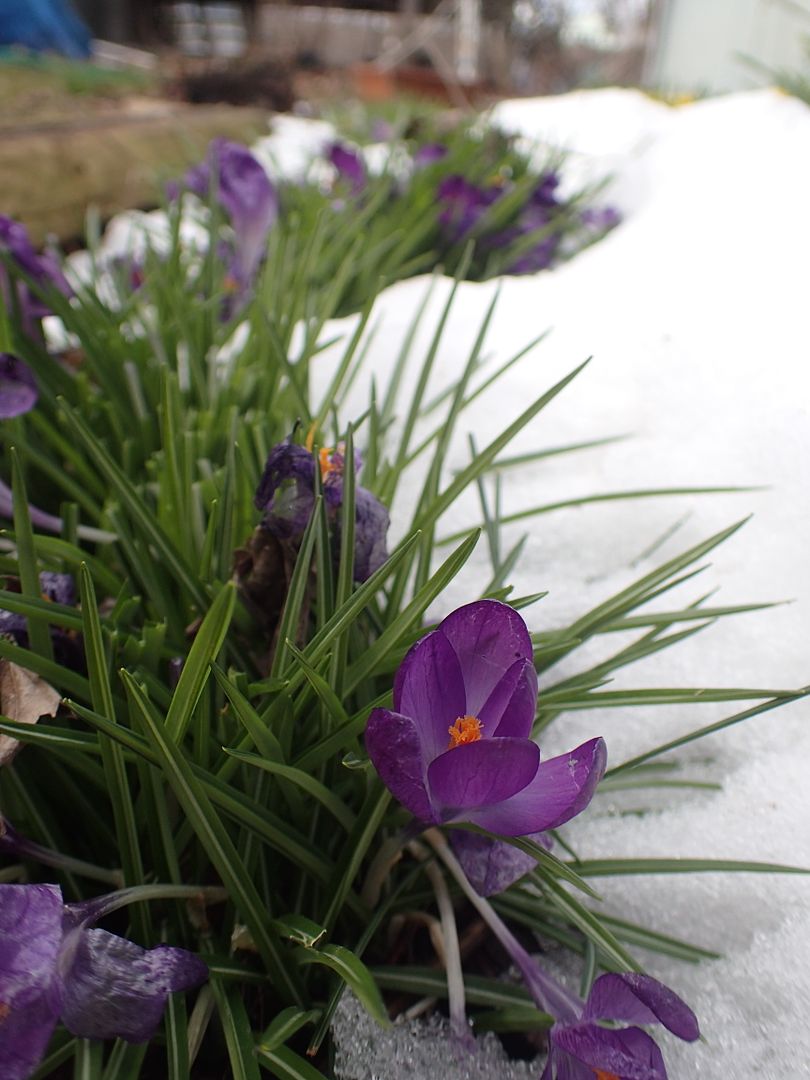
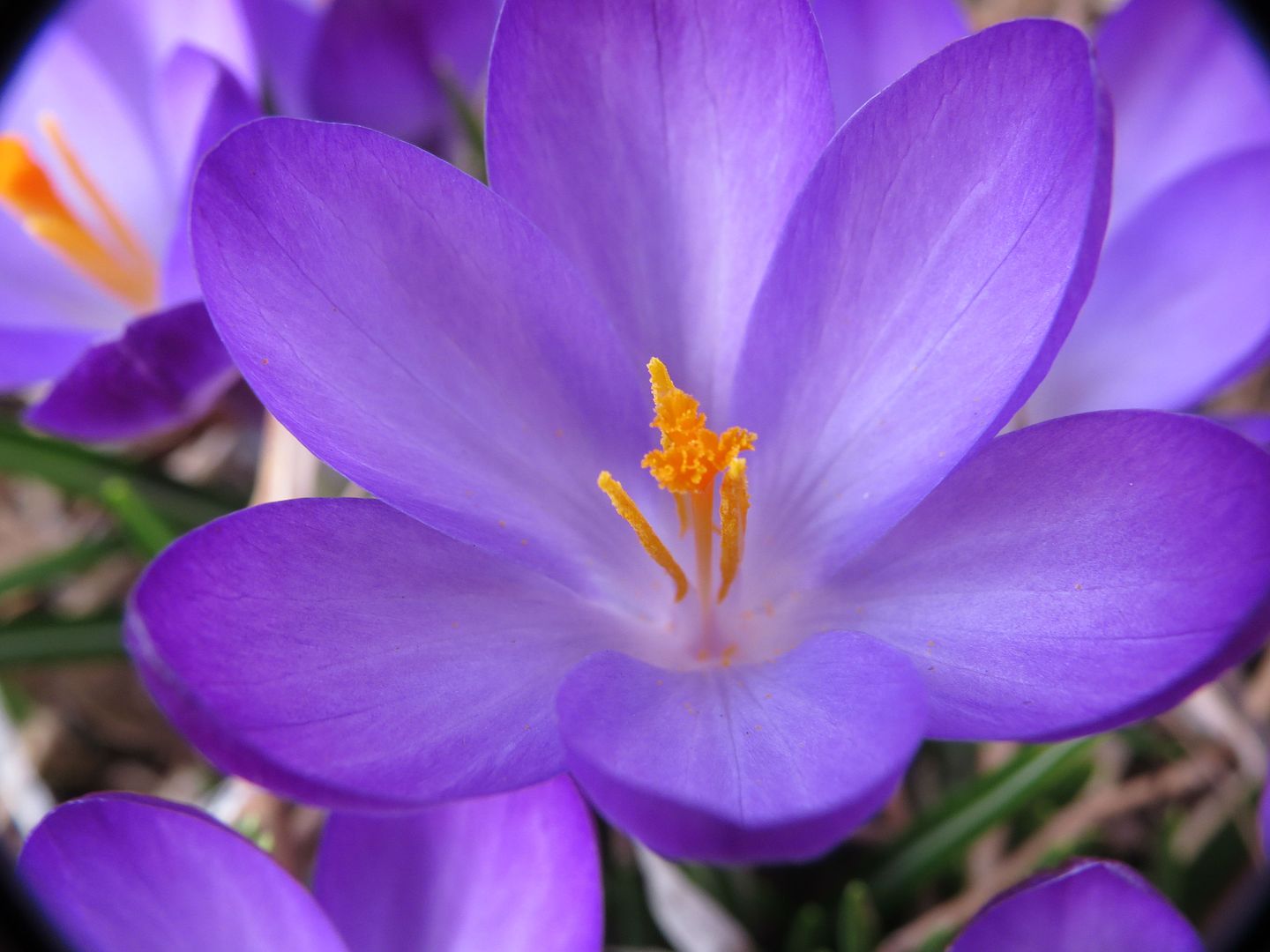
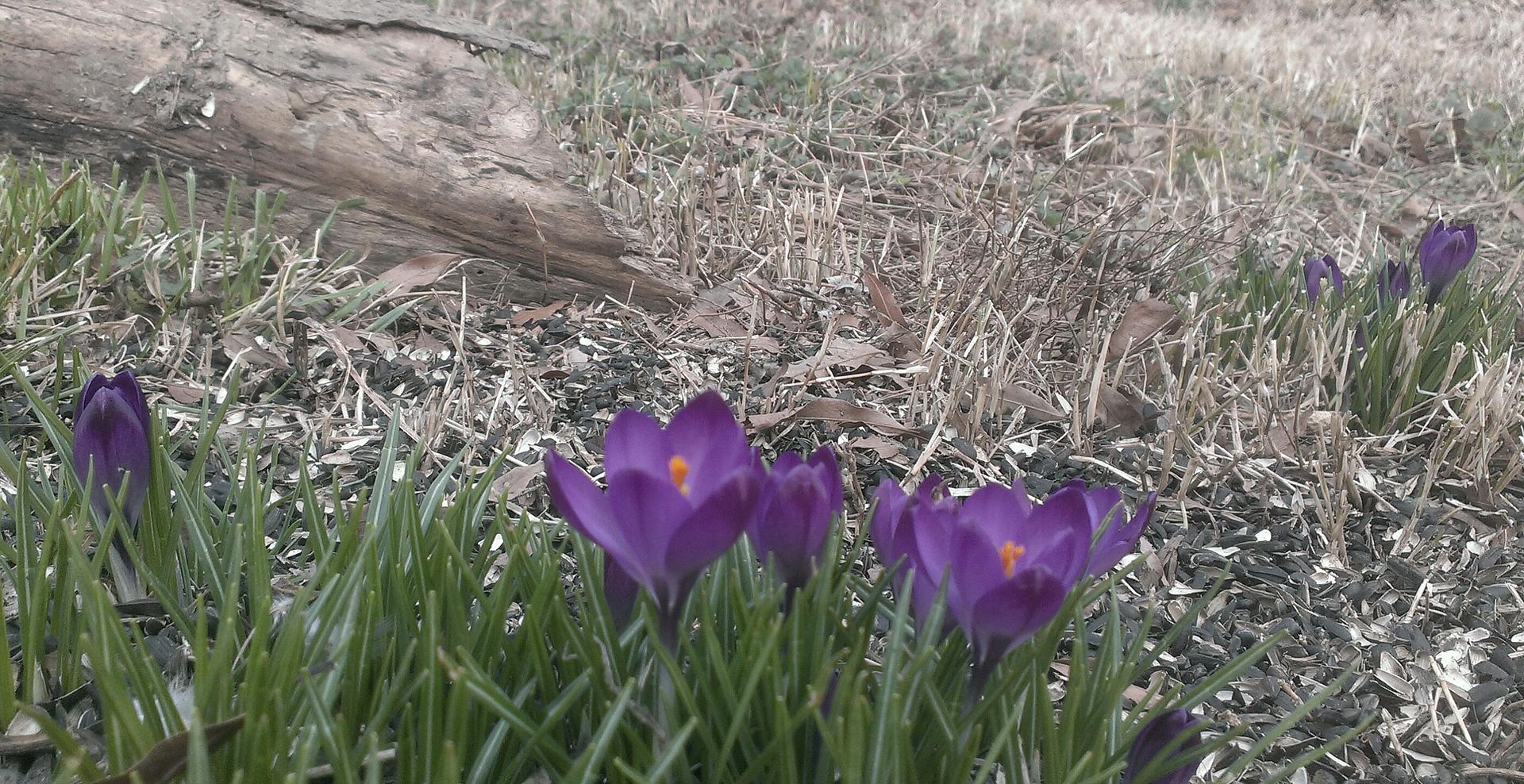
Crocuses have been flowering in force and were in full bloom when the snow started to fall. Most of the flowers were damaged to some degree as they had to remain closed up until the snow melted around them.
They're not native to North America but do well here in both lawns and gardens. They're indigenous to the mountains of northern Europe and are often seen flowering when early in the season when weather conditions force other plants to stay below ground.
Though pretty, at some point I intend to move them all out of the garden and into the lawn. After flowering their grass-like foliage blends right in with the other grasses. And they hold up to mowing for a time as well. Eventually they do go dormant over the summer but in the spring time the foliage gets in the way of other plants I'd like to be growing and need to find space for.
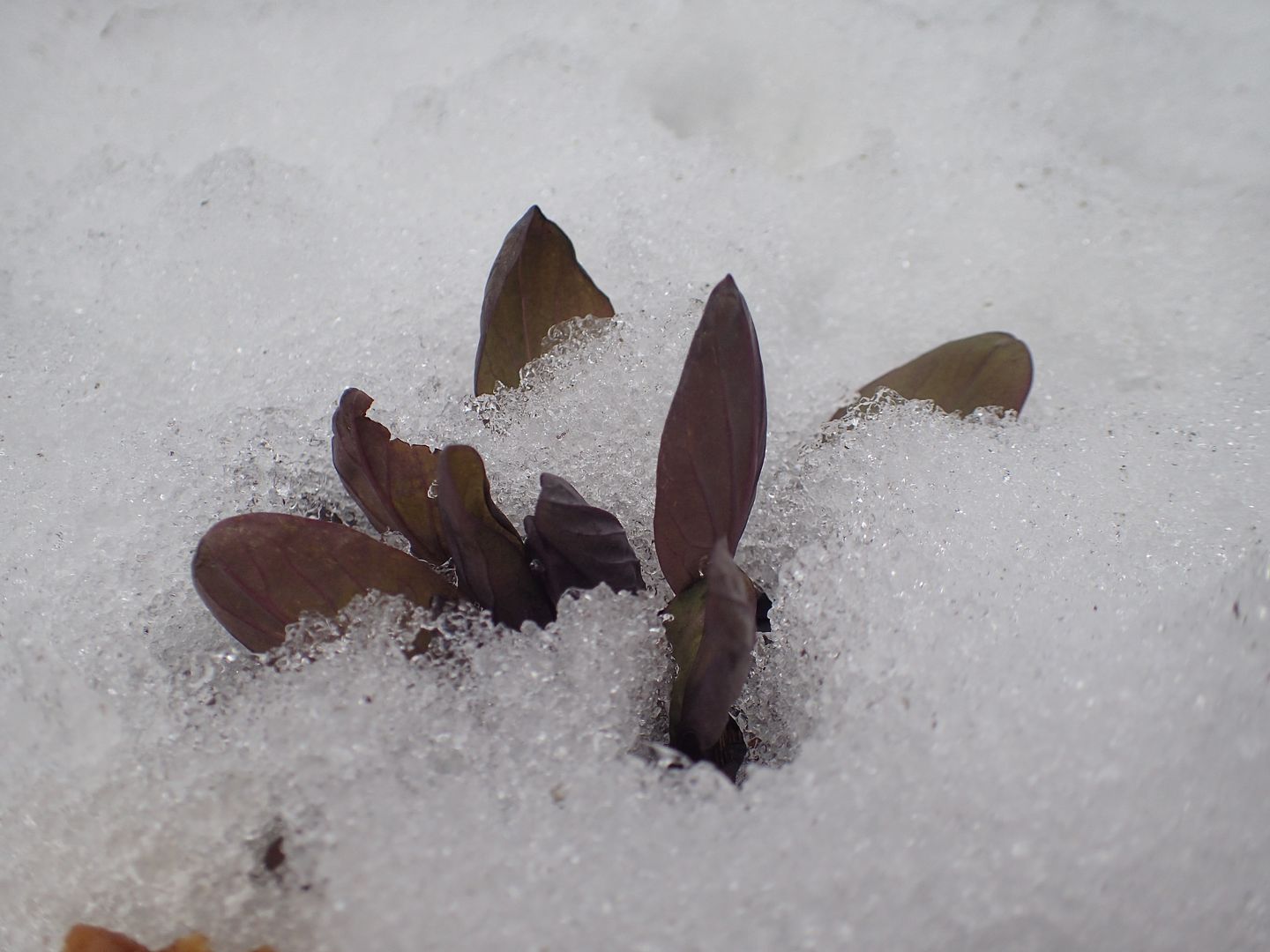
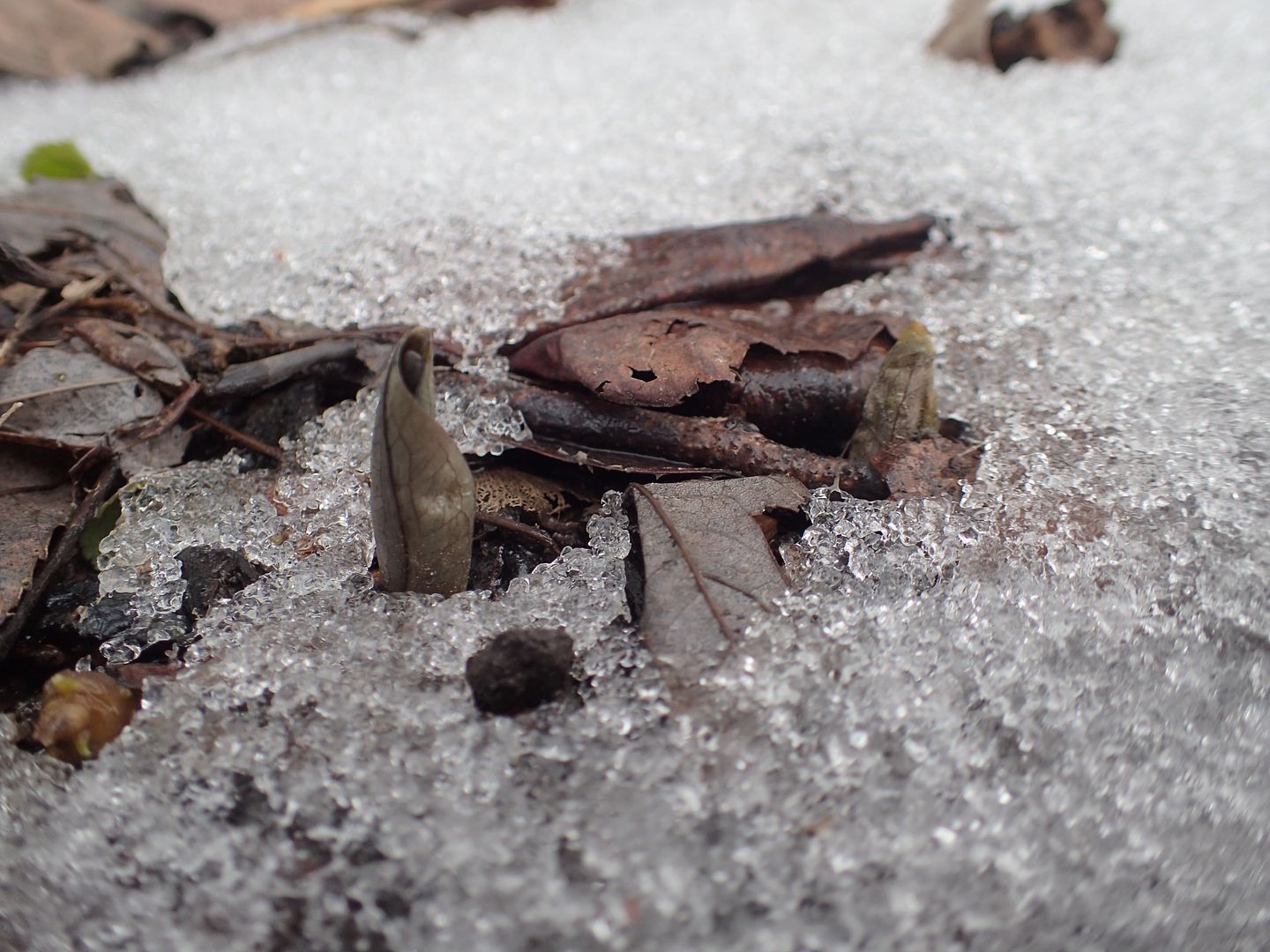
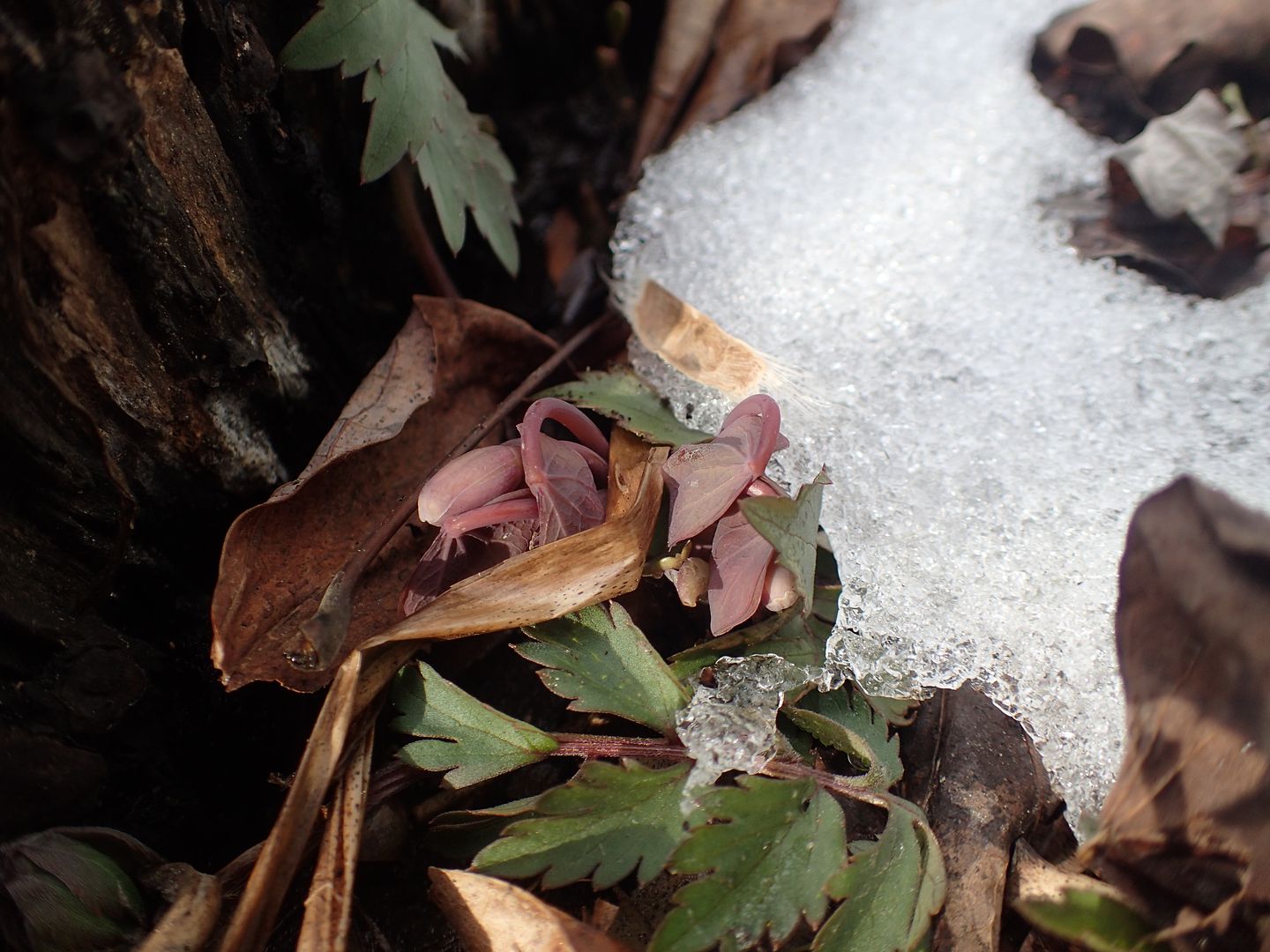
Trilliums are one such plant I think are more worthy of the garden and have been coming up through the snow just as well. The three leaves to each plant remain tightly coiled around the precious flower bud within. They're mono-floral, meaning one flower per plant, per year so it's protection is of the upmost importance.
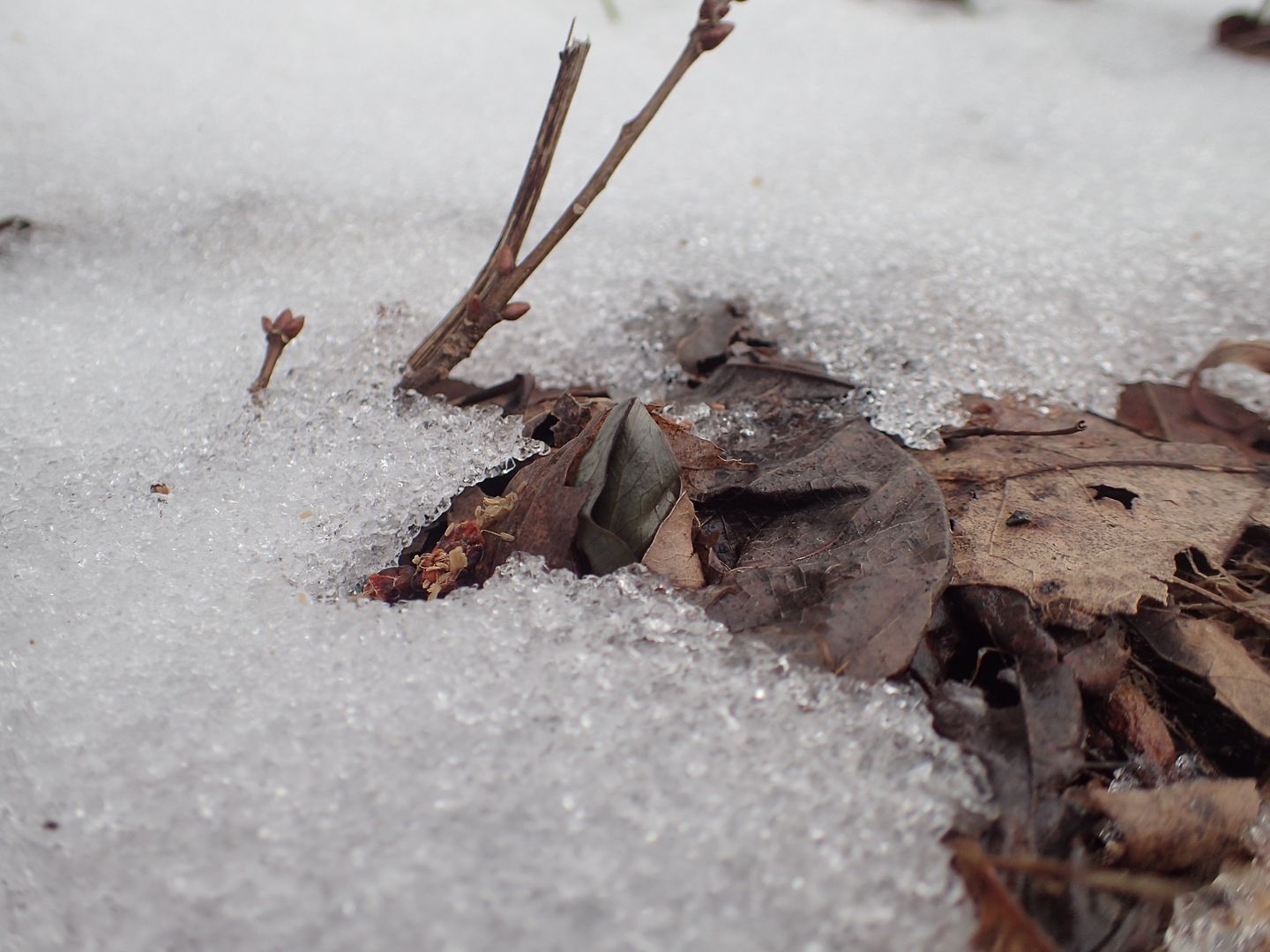
Another Trillium bravely poking its head out through the snow. They won't really be flowering until the first or second week of May here but just south of us at the Mt. Cuba Center in DE they'll be blooming around the last week of April.
Another native that's an early bloomer is this Twinleaf, Jeffersonia diphylla. It's a short lived flower but a pretty one.
I saw a "meme" the other day... Basically it's a single picture usually with a sentence or caption to convey a quick thought. This one showed a whole bunch of different types of flowers and most of them had an X over them because they weren't native. This was intended to tell people to plant native plants for pollinators over nonnatives. But there was no rhyme or reason to what they'd crossed out. The only two they hadn't crossed out was the New England Aster and Sunflowers, and while these were the only two natives on the list, they hardly feed pollinators adequately through the year. I'd say the earliest either of them would flower was in July.
One of the plants crossed on was the Crocus. This is a nonnative bulb native to the mountains in northern Europe and Asia. To be perfectly honest, I don't know why they crossed it off. It's good to be a purest about natives and all but if your goal is pollinator diversity then surely planting anything that's pollinator friendly would work. What they should have done was listed a bunch of invasive plants with natives or even mixed flowers from around the world that aren't invasive and crossed out the bad ones.
Crocuses on their own are not invasive, barely reproduce by seed, and take forever to form a clump. What's more they're easier to grow and flower earlier than most of our native ephemeral. They're a bright source of pollen for honeybees on the warmer days of later winter into spring, and don't crowd out other plants. They can actually be planted right in your lawn and allowed to spread modestly. After flowering they form a low clump of grass that later dies back in the summer.
Natives blooming at this time are few and far between. Symplocarpus foetidus, Skunk Cabbage, is flowering out in the wetter parts of forests now but flies visit their foul smelling flowers more often than bees.
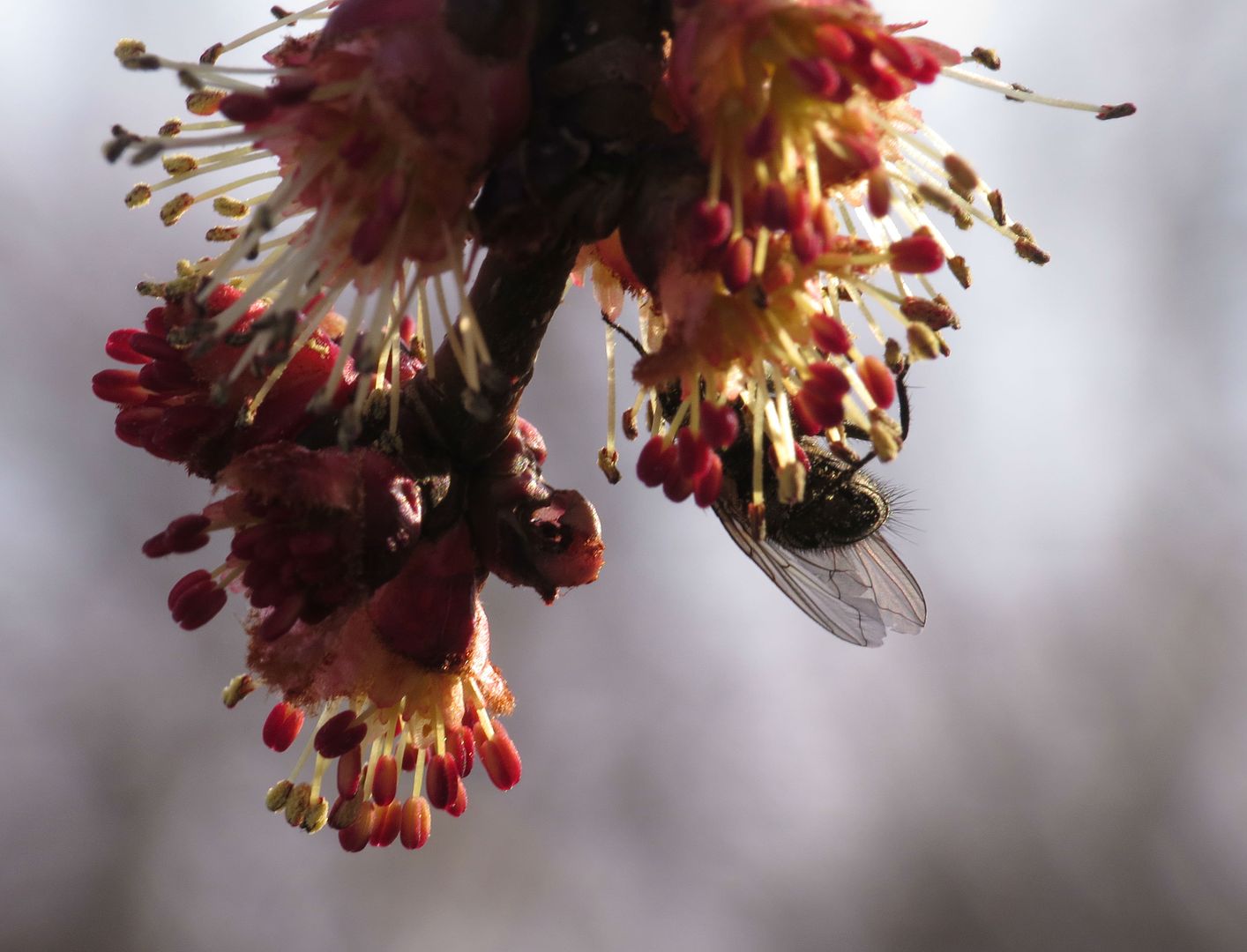
The earliest Maples, Acer sp, have also started flowering and will become the main source of early nectar in the coming weeks. Here I managed to find a common house fly pollinating the blooms on a low branch. There were a few bees about too but their images came out even worse than this one. Willows, Salix sp, have also been flowering for a few weeks now but are only a source of pollen. Most shrubs in the genus are wind pollinated but insects can't help but collect it anyway. So when it comes to pollinators we shouldn't be crossing plants off the list just because they're not native. The only ones that should be avoided are ones that are invasive, or perhaps double flowering and cultivated into sterility. Native alternatives to Crocuses would be either Pasque flower (native to the mid-west) or Hepatica, but neither are flowering at this time as far as I know.
My hives seems to have survived the winter, and they were bringing in all sorts of pollen. Despite off and on snow storms (with some more on the way even!) crocuses and some willow trees have started to flower. Snowdrops are also in bloom here but not as abundant as the others. I see maple tree buds are starting to swell so it's good to see spring is coming.
Also: I normally do a yearly post on the Philadelphia International Flower Show. While I did go this year I have to say I've never found flowers to be so sedating. A lot of the displays were over designed, using plants more as a material to display color and texture, than anything practical in a garden. Here was a chance to make the Mona Lisa with flowers and instead they plucked the peddles and leaves off of the plants and glued them to the wall.
Balls?
Knitting needles with doughnuts?
Some of them came off as craft projects there didn't seem practical as works of art nor as flowering displays.
The most successful designs I felt were ones that were made to be glorified vases, that played with light and color to great effect.
The theme was "Articulture" which combine the thrill of art with the boredom of wandering an art museum. But it lacked the history and signatures of the great minds that helped create. Art museums tend to be laid out in a specific way, grouping like-pieces together from parts of the world or periods in history. It's interesting to see in the older pieces how subdued and orange-like the reds are because no one knew how to make the ruby red lipstick shades we have today. It was somehow more practical to use real gold instead of yellow at the time too. No one knew how to draw three dimensional spaces yet and portraits were generalized, almost caricature-like. Eventually we see more colors coming into play, and portraits start to look more and more like people. Sadly there wasn't a whole lot of that going on except for one area in the back.
This was my favorite display there. It's a shame the rest of the art show wasn't more like this. It pays tribute to the artiest in different styles but could have done more to incorporate the flower theme a little better.
I actually liked this display for its design but unfortunately I can't help shaking his feeling that I've seen it before at the Philadelphia Flower Show on past years.
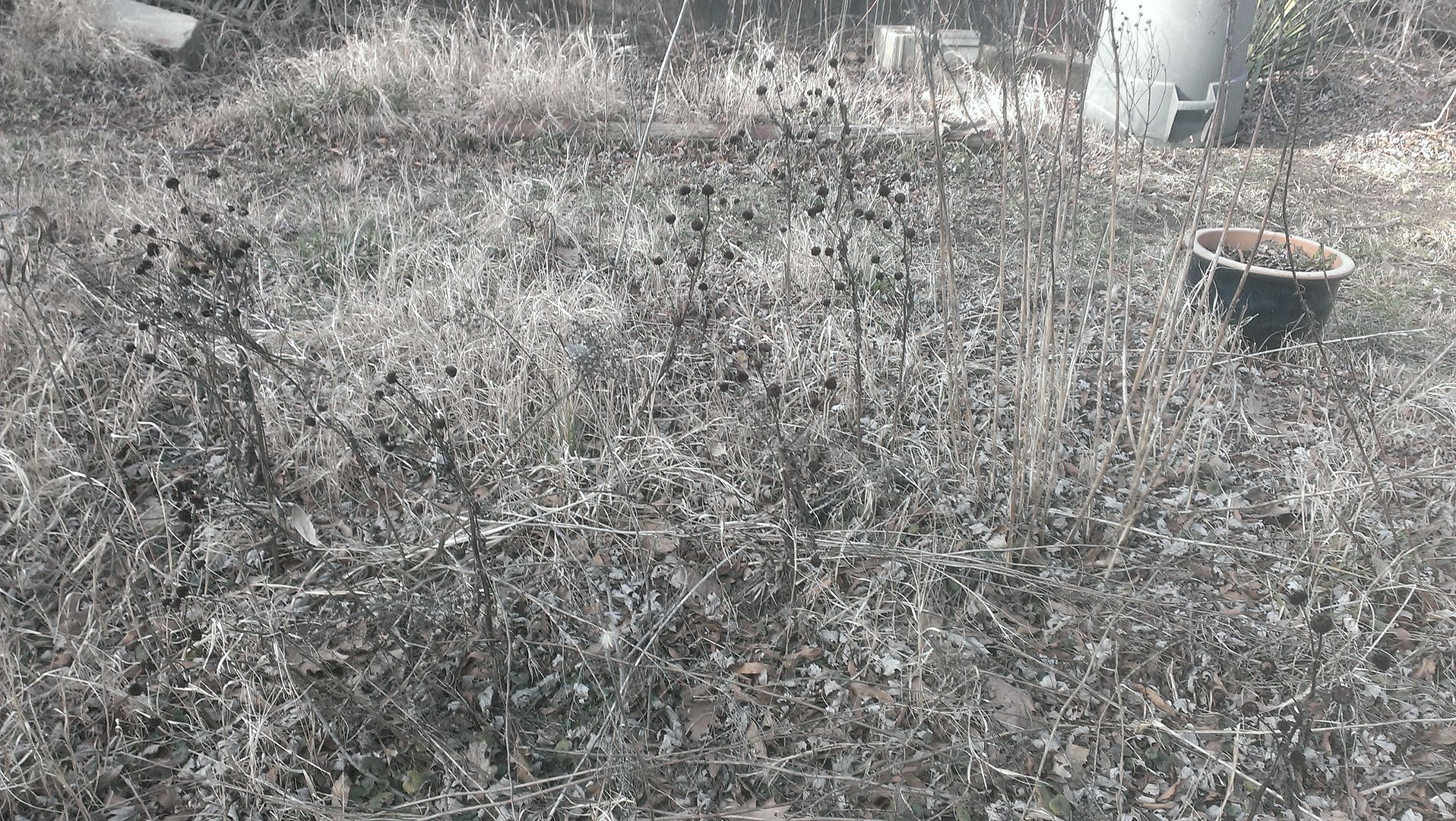
There was a painting to go along with this display. Basically the painting was the blueprint for the design here which was mostly brown with a blue pool and half circle in it. It's a good representation and I like that they used ... it looked like almost all native meadow plants in winter. It suggests that the painting could appear in different colors at other times of the year.
I actually hated this design because of how impractical it would be to plant. It's a nice collection of evergreens in a nice display but you might as well have planted a topiary garden because most of these trees want to grow 25' tall.
Show me Dutch Wave, Cottage Style Garden, Naturalistic Style and turn that into a painting so it doesn't just look like another landscape.
It was an okay theme this year, just not fully envisioned to its potential or perhaps taken in more by the idea of modern art. Paintings as a commodity, a speculative bubble waiting to burst just as the Tulip craze did so many years ago.
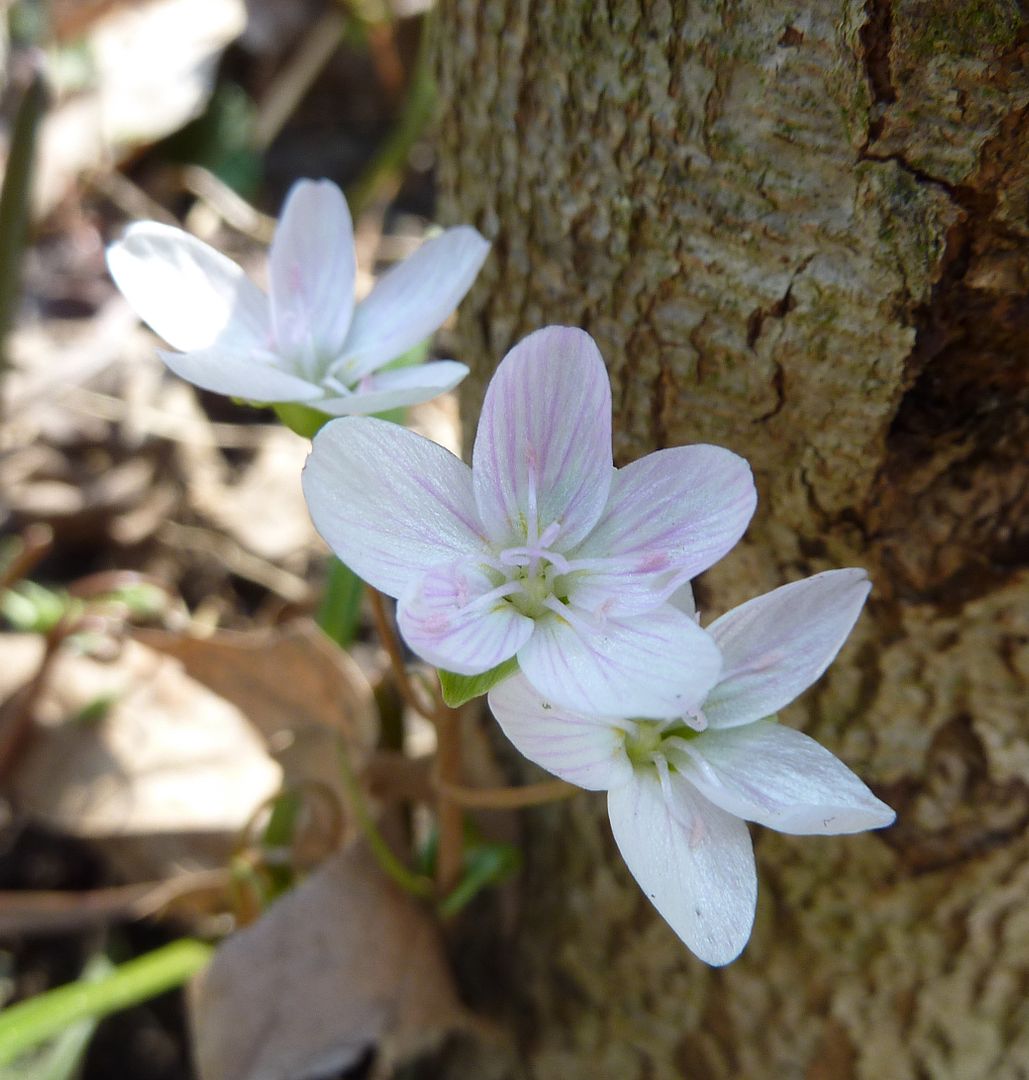
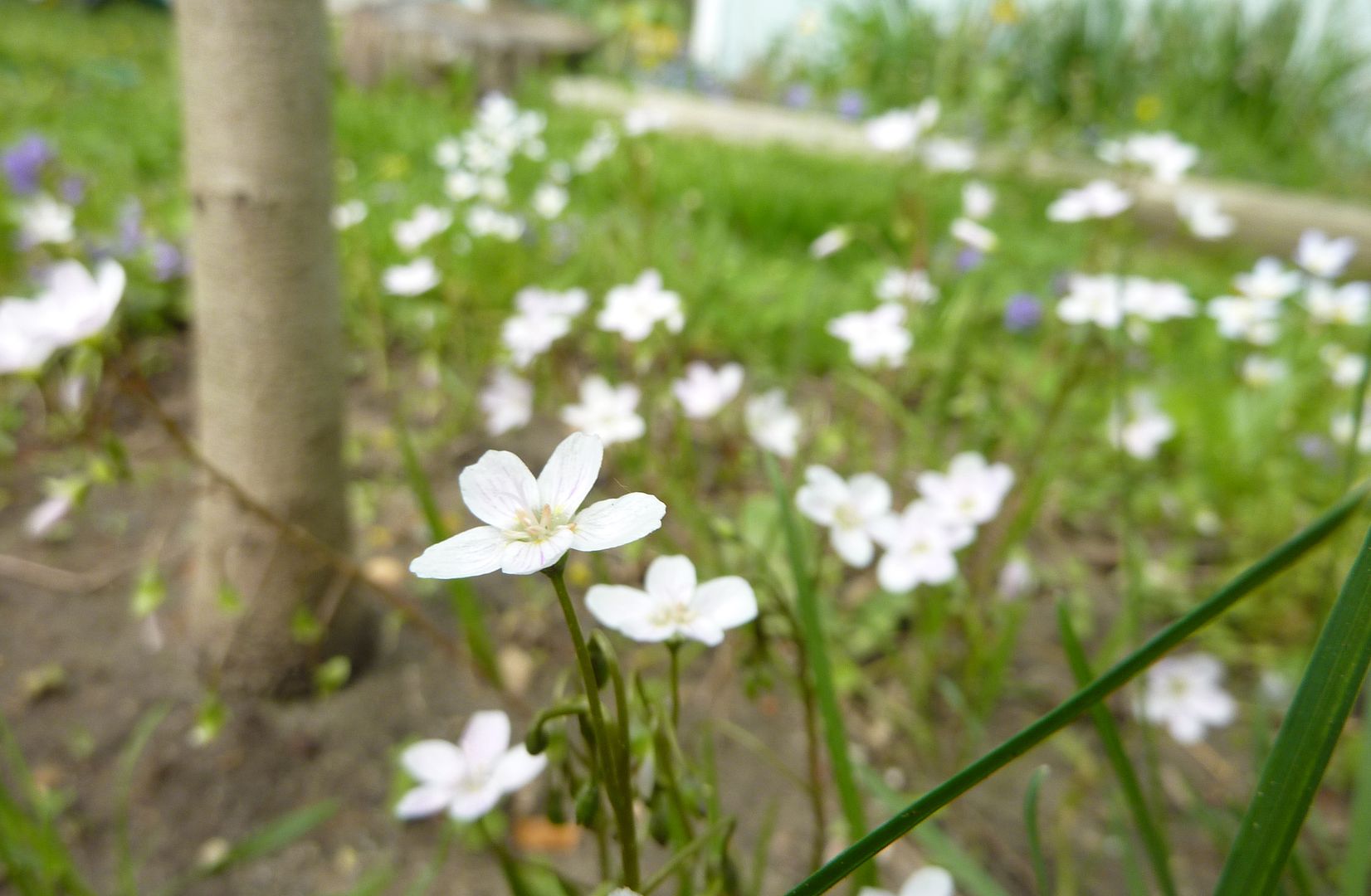
Some Spring Beauty, Claytonia virginica, which is about to
bloom in a week or two. While they don't seem to be spreading by seed at all I'm actually very impressed with their ability to divide. I'm seeing more and more stems emerging with even more flower buds every year.
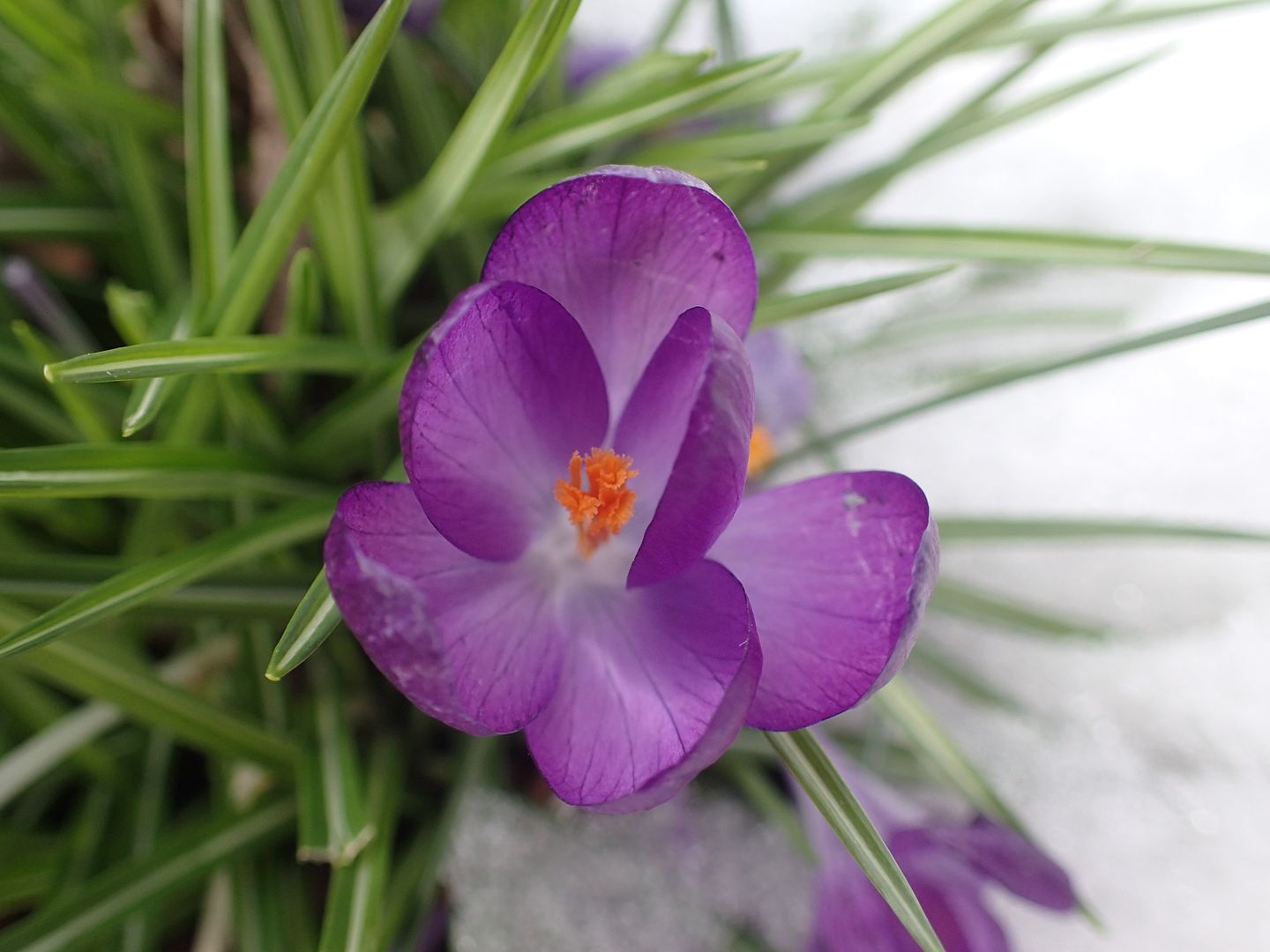
A close up of a Crocus.
Camponotus castaneus, a ground nesting Carpenter Ant. I can also take images of smaller Lasius species which look similar (but are clearly different just by size).
Once again it's time to mow the meadow. Actually I could have done it several weeks ago or even last December but there are things to consider as to when mowing should be done. Do it too early and you might kill some animals such as turtles and birds. Do it in January and you shred up the seeds (and rose hips) that birds like to eat over the winter. I wait for the Maple trees to start blooming because it shows that insects are around once again. They're mostly bees, gnats, flies, and a few butterflies that over winter as adults. Some Lepidoptera (moths and butterflies) are in the chrysalis stage now and there's always the fear of mowing them down some butterfly. I don't think anyone has an answer to this other than to say only mow half the meadow, but then what do people who burn their meadows do? I know large meadows often have patches that don't burn but generally the whole field will go up in flames. It's not something I worry about becuase my little meadow garden is only 10' by 15' or so, and there are other native garden patches that I don't mow at all.
Even in this small space it filled our lawn mower twice. Really there's not need to collect it other than to compost or mulch something. Most of the seeds that are going to germinate or grow, likely fell out of the plants last year. Rudbeckia seems to always grow this way. However, it's likely something may grow, and the same effect is why they tell you to use Straw instead of Hay when mulching. The process of haying a field happens during the growing season, and is when the farmer cuts everything to a certain height, and the resulting hay bales are almost always guaranteed to have weed seeds mixed in them.
I mowed just in the nick of time though. All our crocuses are starting to open and my beehives are starting to forage again. I'm currently harvesting honey from the hive that passed away. It's a thick and rich, dark brown honey one gets from autumn flowering plants such as goldenrods and asters. Unfortunately the winter chill has sucks a lot of the moisture right out of it and it's flowing at a snails pace.
So some of the spring wildflowers are blooming here in New Jersey, a good month or so earlier than usual I think. While I have lots of Daffodils, and Hyacinths blooming I feel devoting time to photograph them is a waste of time. Go ahead and google search them yourself or go look at your own garden or neighbors. Chances are someone around you has them.
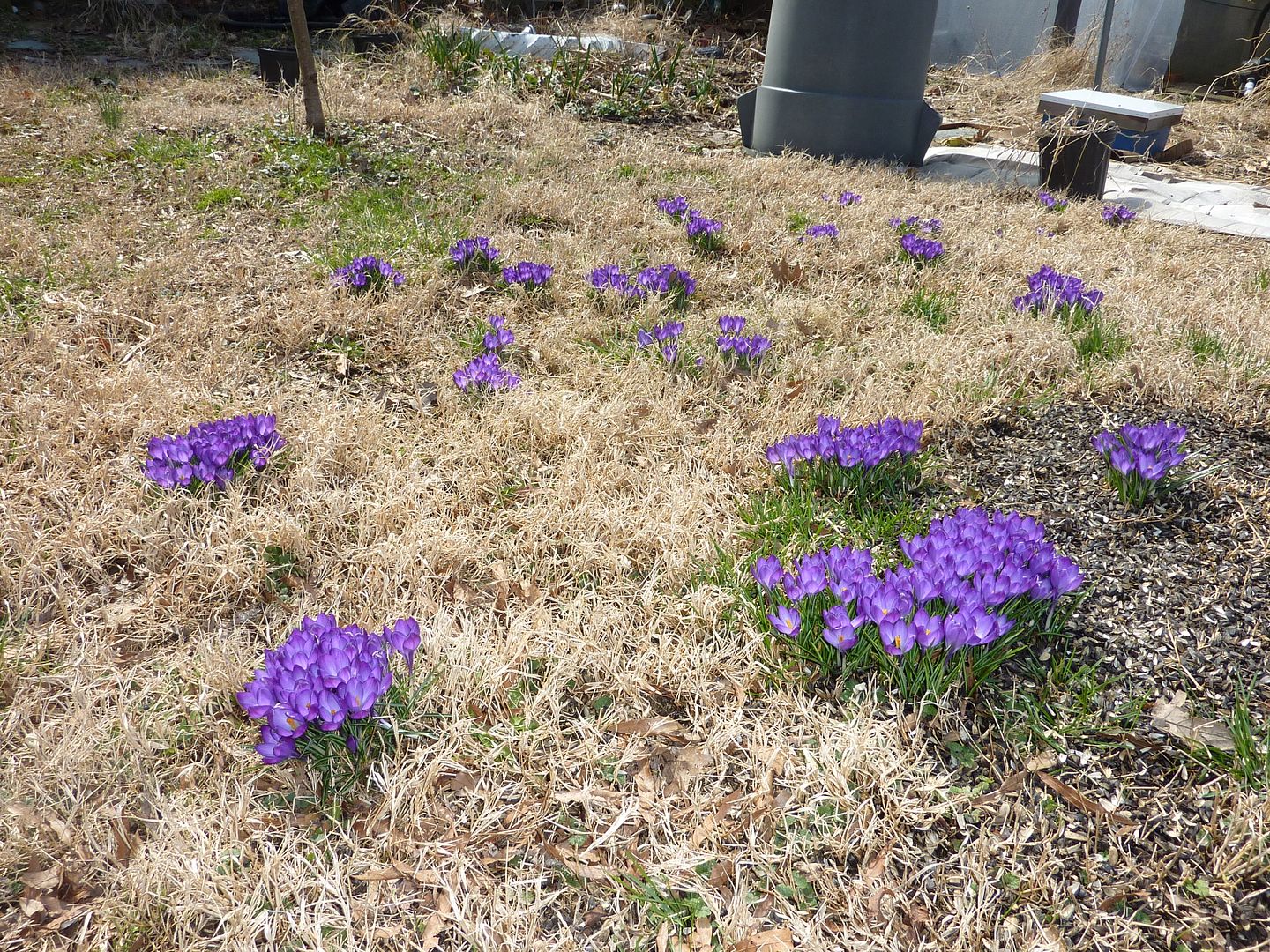
Crocuses are the only bulb that I feel are worth photographing just from the effect they create when blooming and from the fact that bees occasionally work them. I'm eventually going to transplant them all into a circle around the bird feeder. This started as a mixed pack of 50 bulbs, and here we are four years later. The purple ones dominated, and have since multiplied themselves a dozen times over. I love the way the purple contrasts the almost yellow tone of the dormant grasses. It's very eye catching for most of the day.
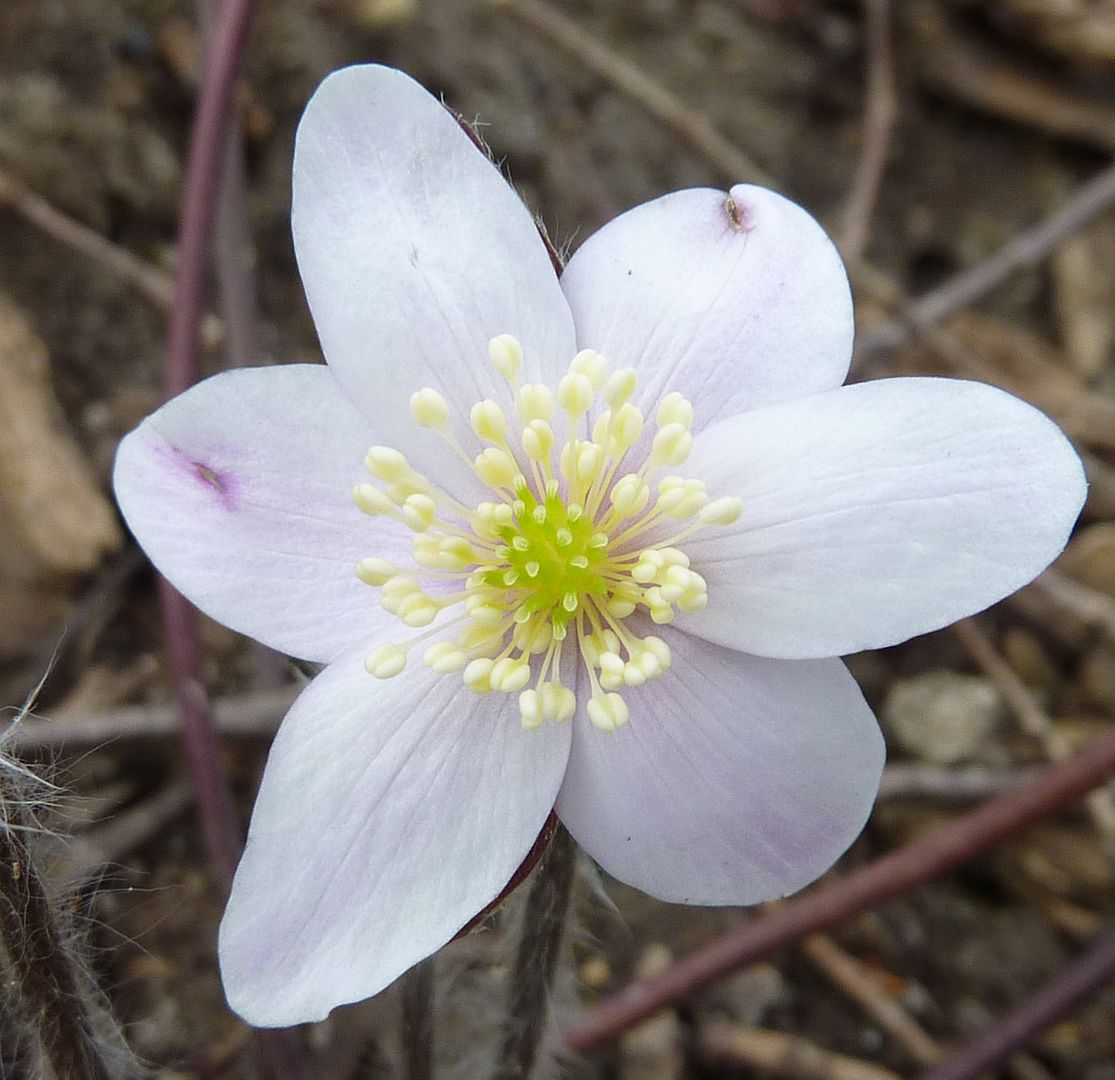
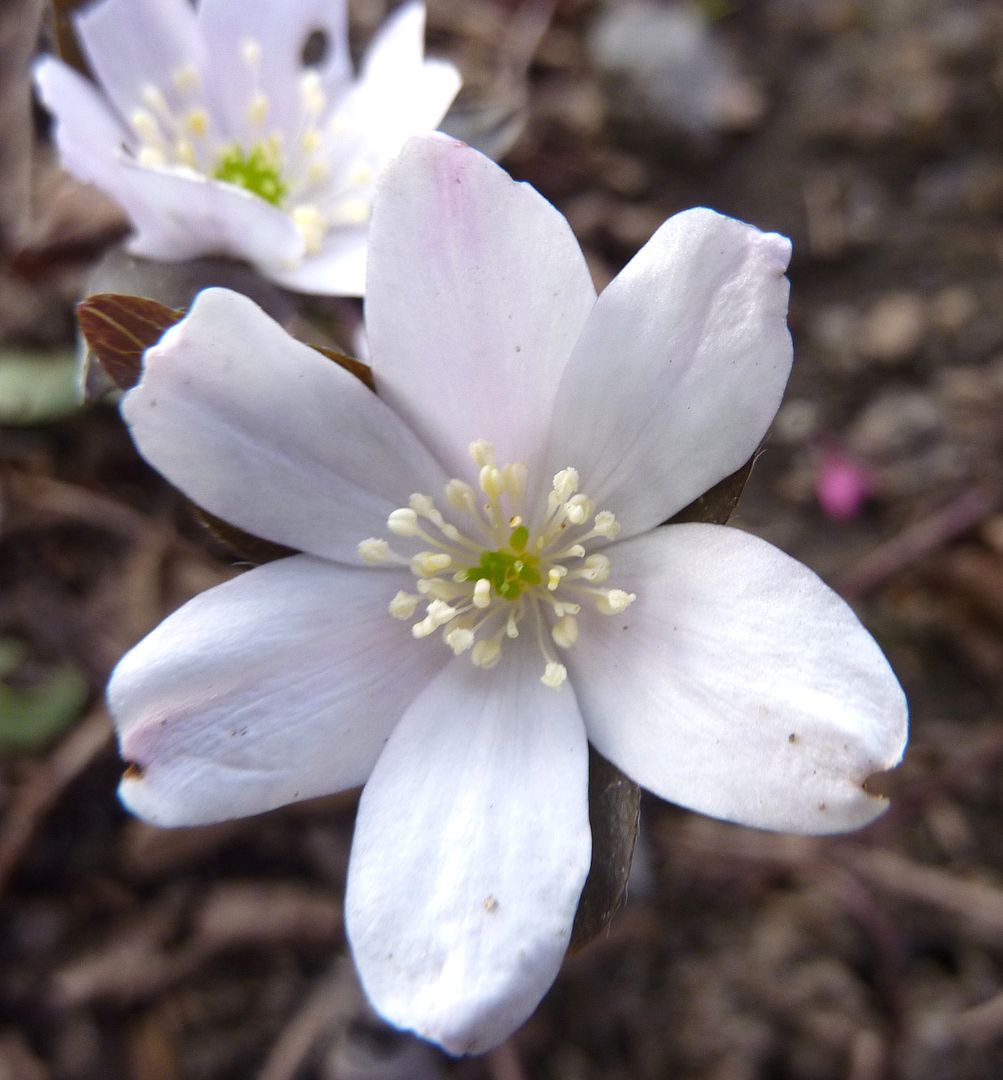
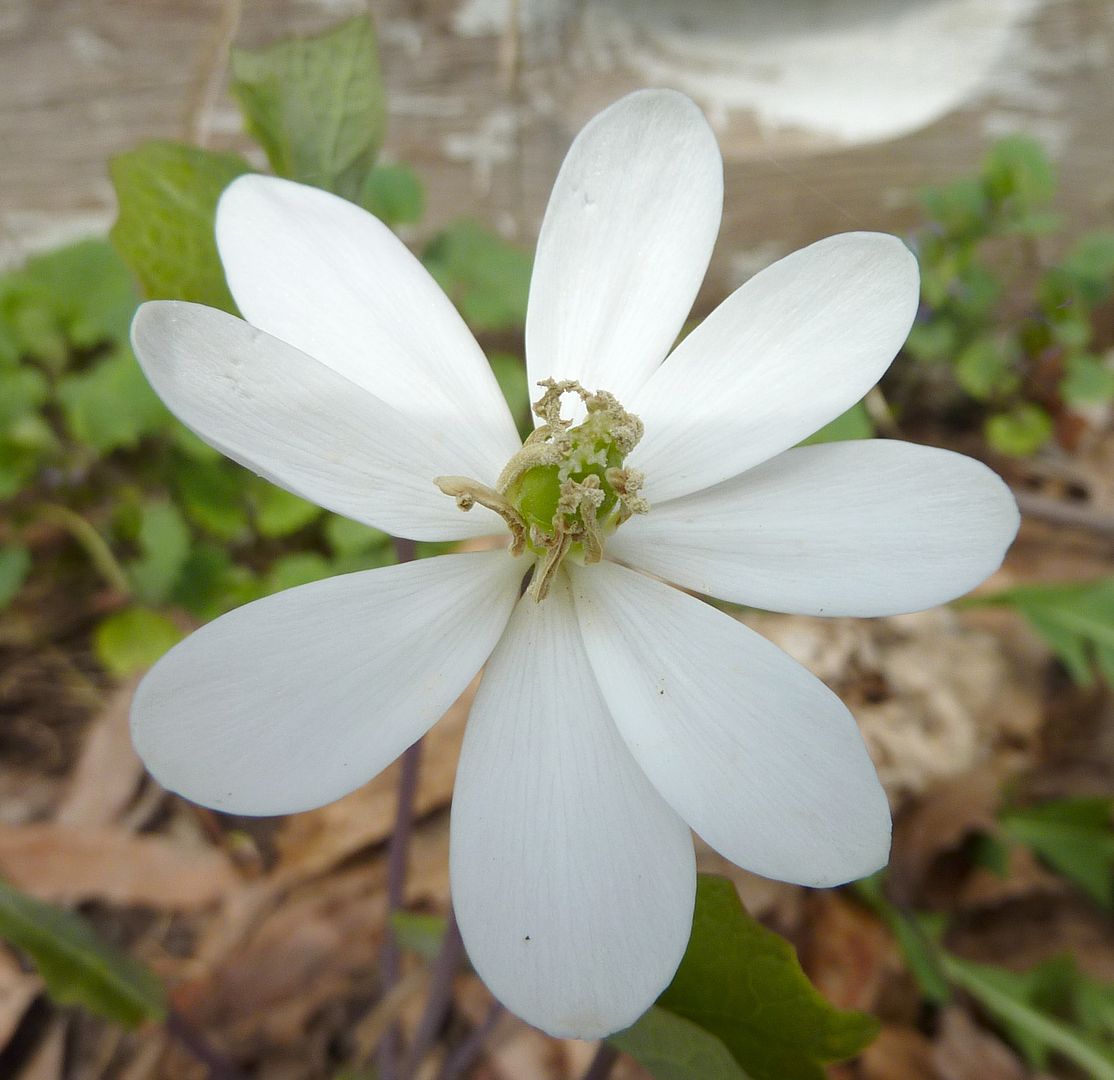
Sadly the same proliferation isn't happening with all of my natives. Here is a Hepatica and it's the only one to flower this year. I started with three plants and this year they're not doing so well. Of the three, only 2 of them flowered last year, and now only the one is flowering. Very odd.
I love this close up I got.
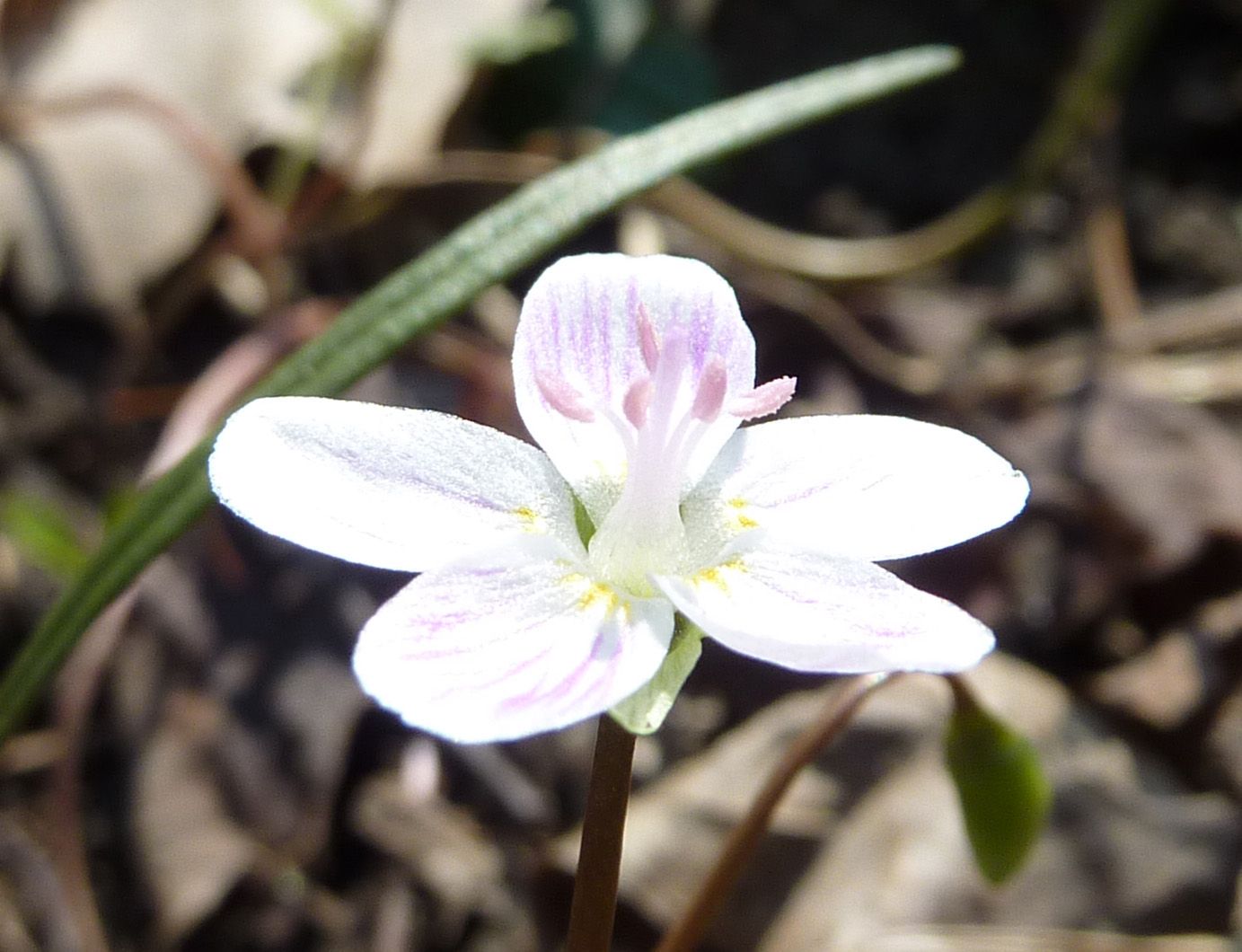
Spring Beauty, Claytonia virginica, on the other hand is doing better than last year. I forget how many I initially planted but it had to be a dozen or 15 or so. This year each seems to have more flower buds, and I want to say some have even divided underground.
I have the Spring Beauty planted under the Eastern Redbud which is also going to flower this year. The idea was to have various shades of pink all happening at the same time.
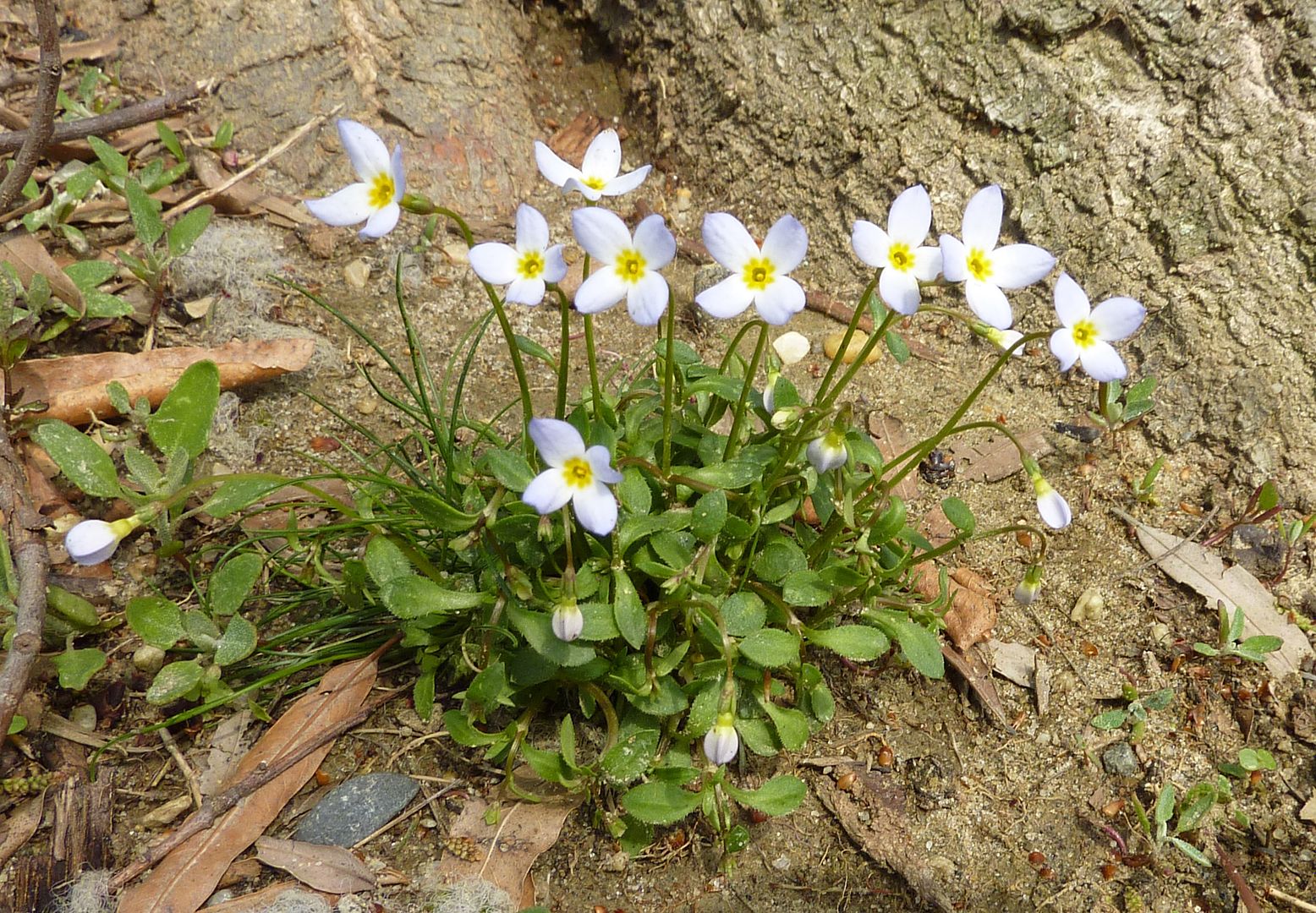
Bluets. Photo from 2011
Mixed in with the Spring Beauties, (and in a few other places,) were Bluets, Hedyotis caerulea. Unfortunately I'm not sure if they made it through the winter, which would be odd because I planted them the fall of 2010 and they survived that winter to flower in 2011, however the foliage went dormant over the summer. I'm starting to see little leaves come up that "might" be them but frankly they look like newly germinating plants even at adulthood so it's hard to tell. Hopefully they come back! I would love for natives like these to just take over my lawn.
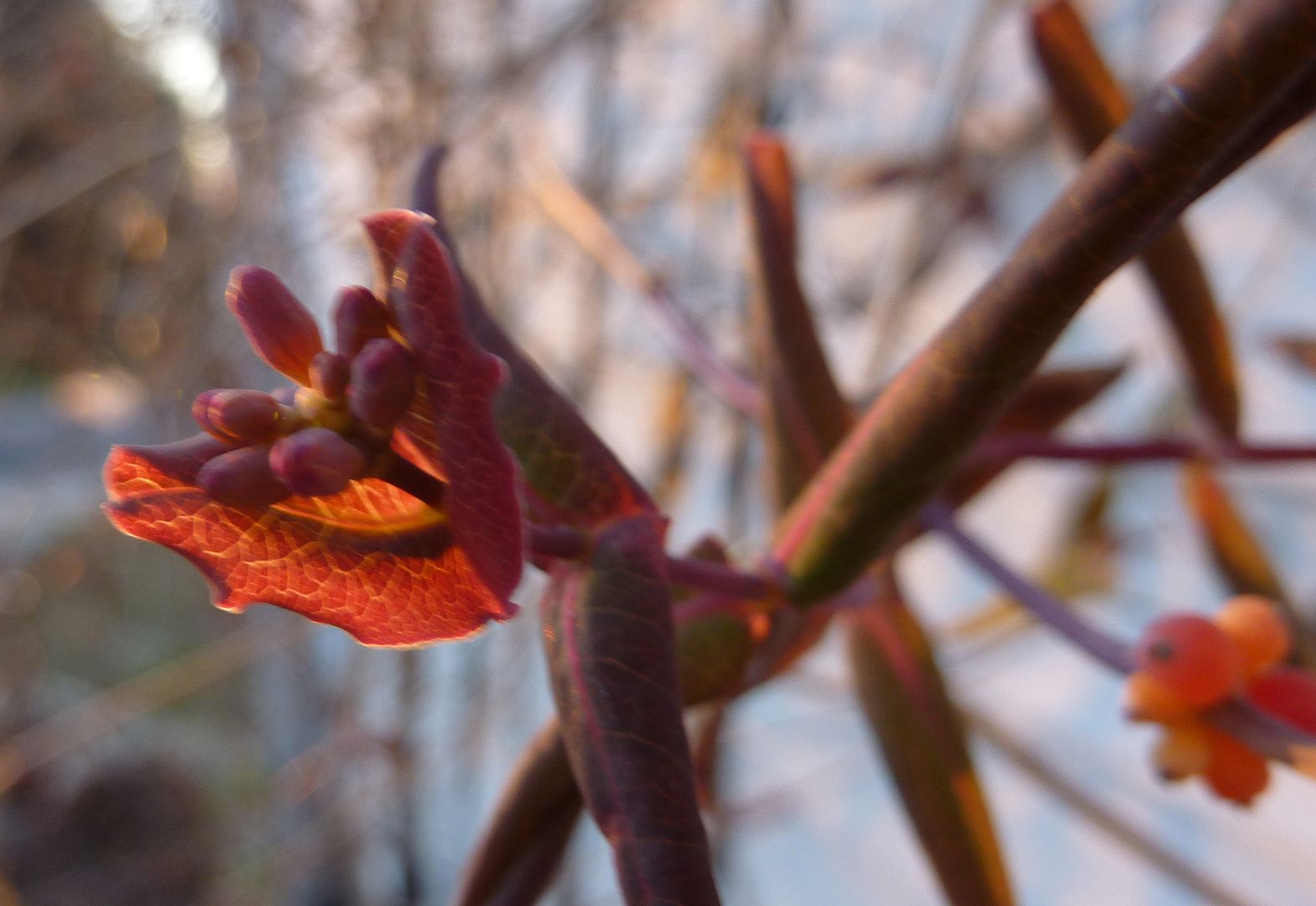
That's this year's flower buds next to last year's berries. Lonicera sempervirens is a native honeysuckle that blooms with the early migration of the hummingbirds, though this year I think it's going to flower even earlier then that. At this rate it might even beat the Daffodils.
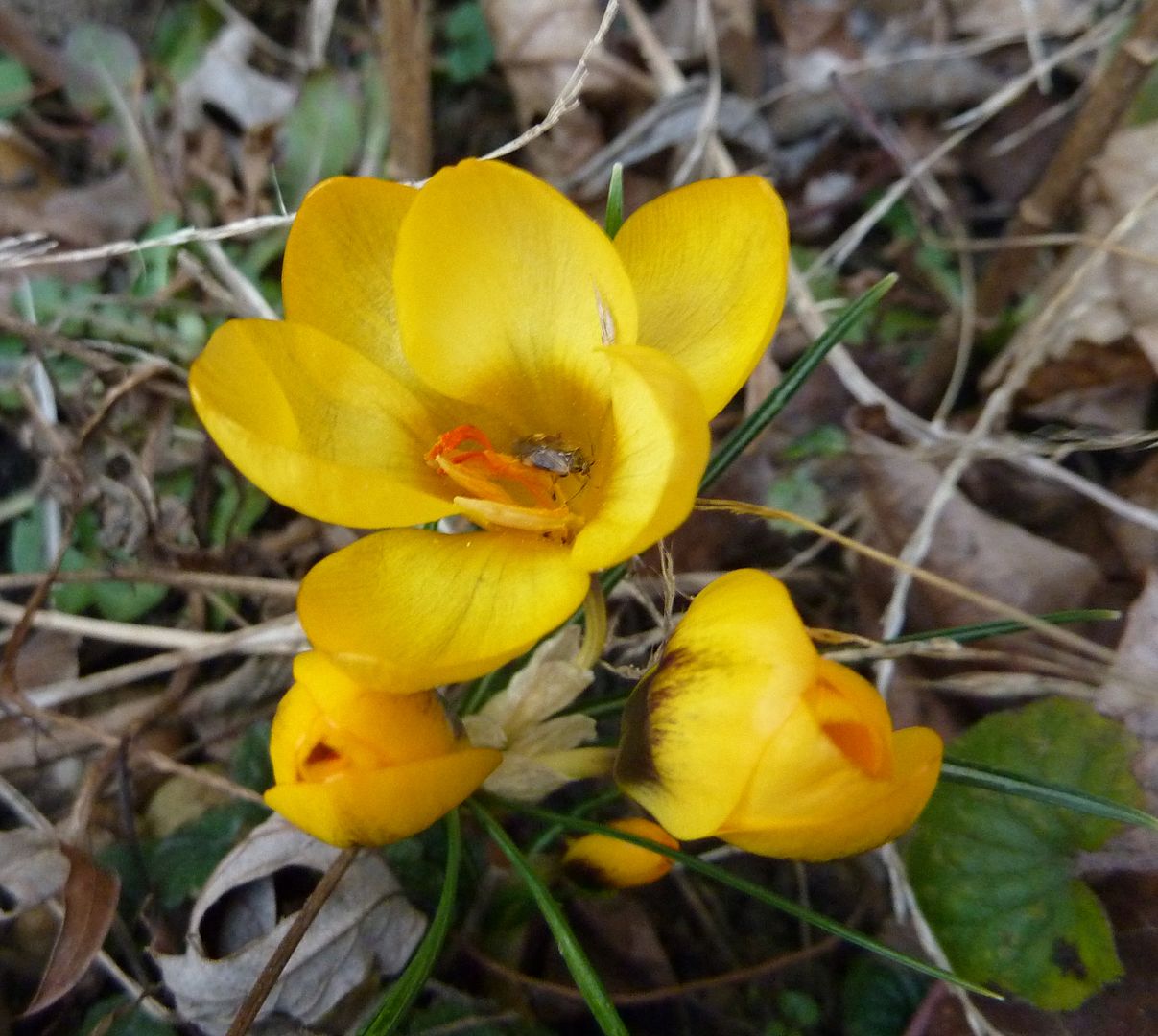
Something that is blooming is the yellow crocuses. Note the stink bug (dead or dormant I think) trying to stay warm inside the flower.
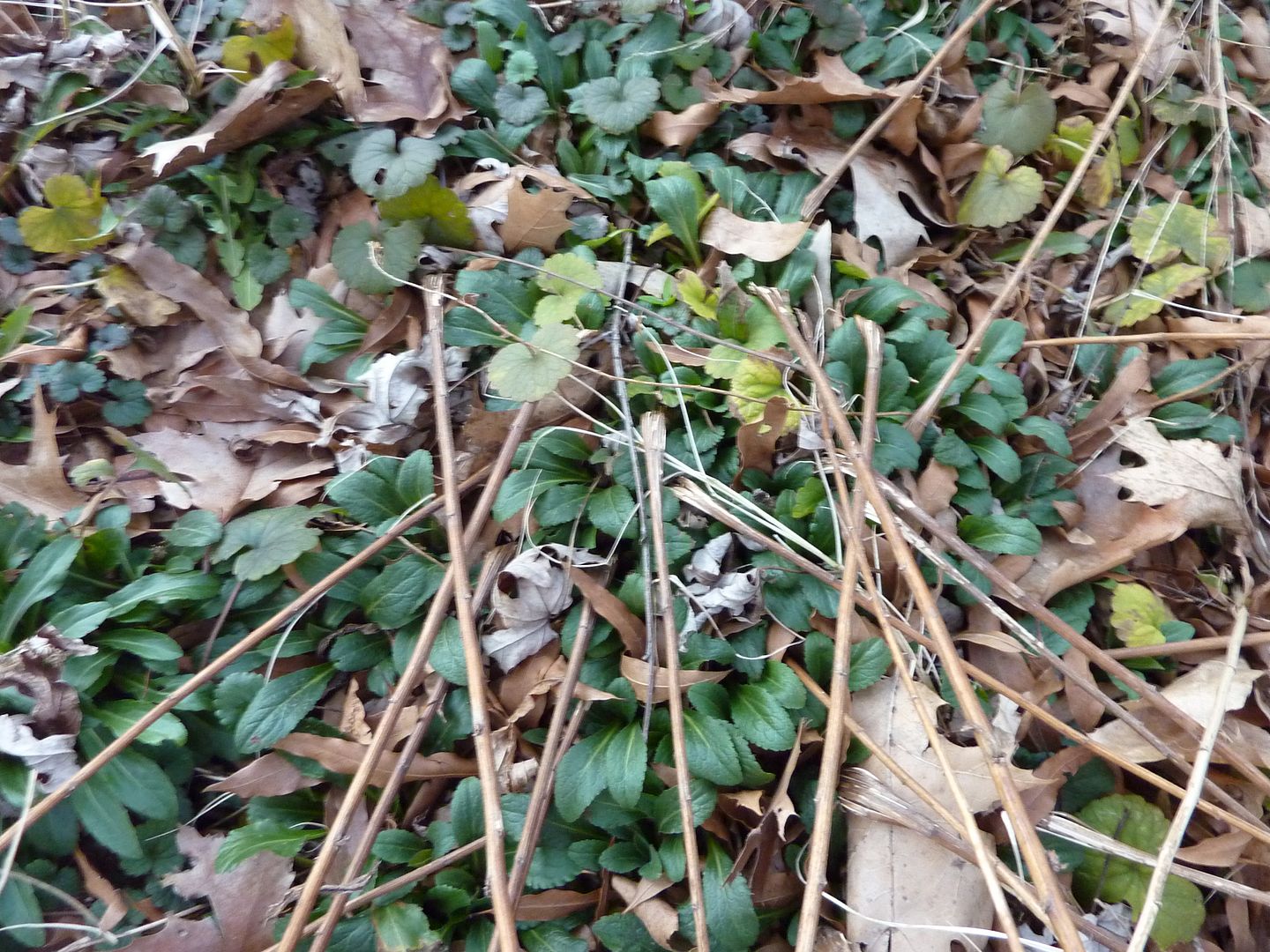
So all these early blooms got me wondering what else is pushing out new growth this early.
This years crop of Tall Goldenrod, Solidago altissima, is getting a head start on the invasion this year. I think it's time I finally ripped a few dozen of these out of the garden.
Solidago rugosa 'Fireworks' is also spreading nicely.
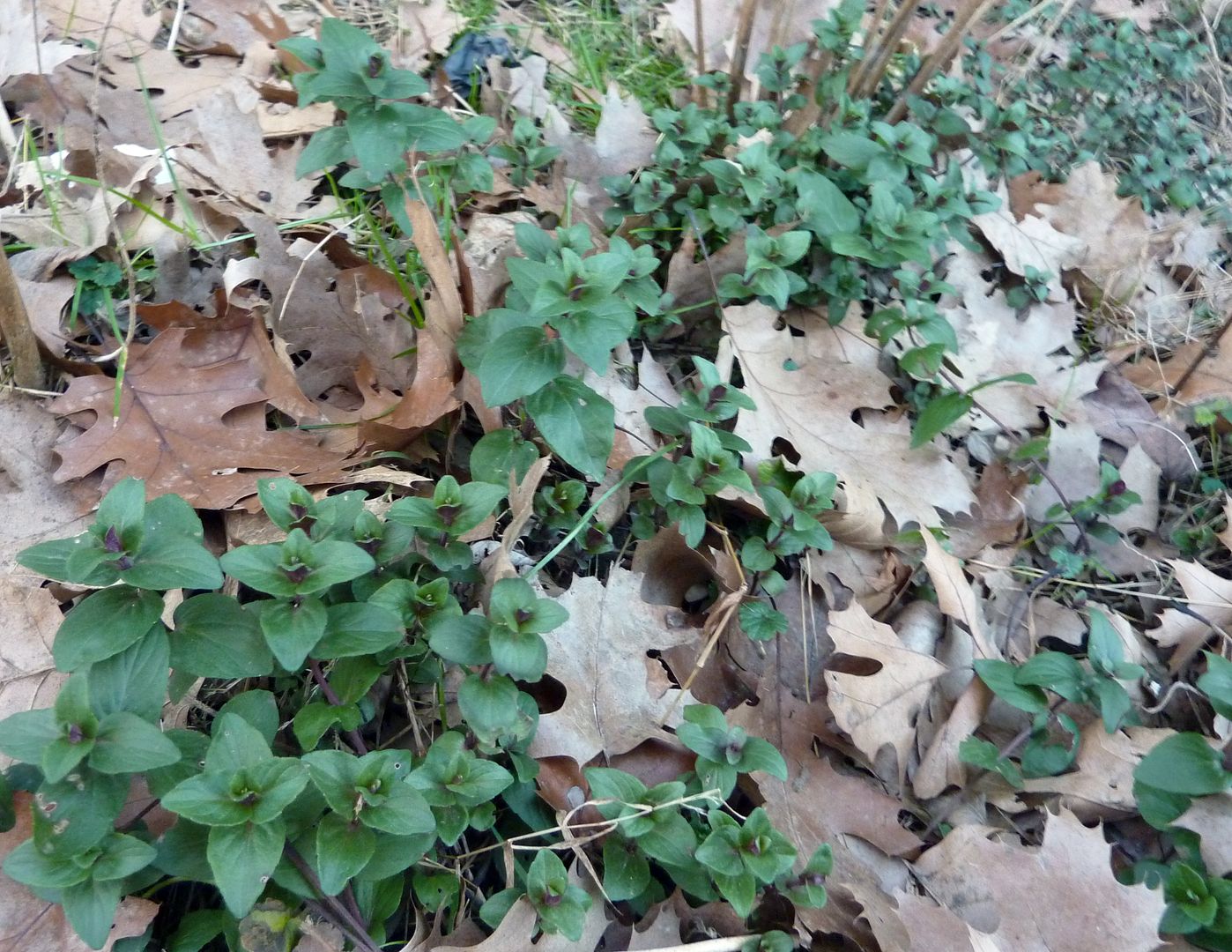
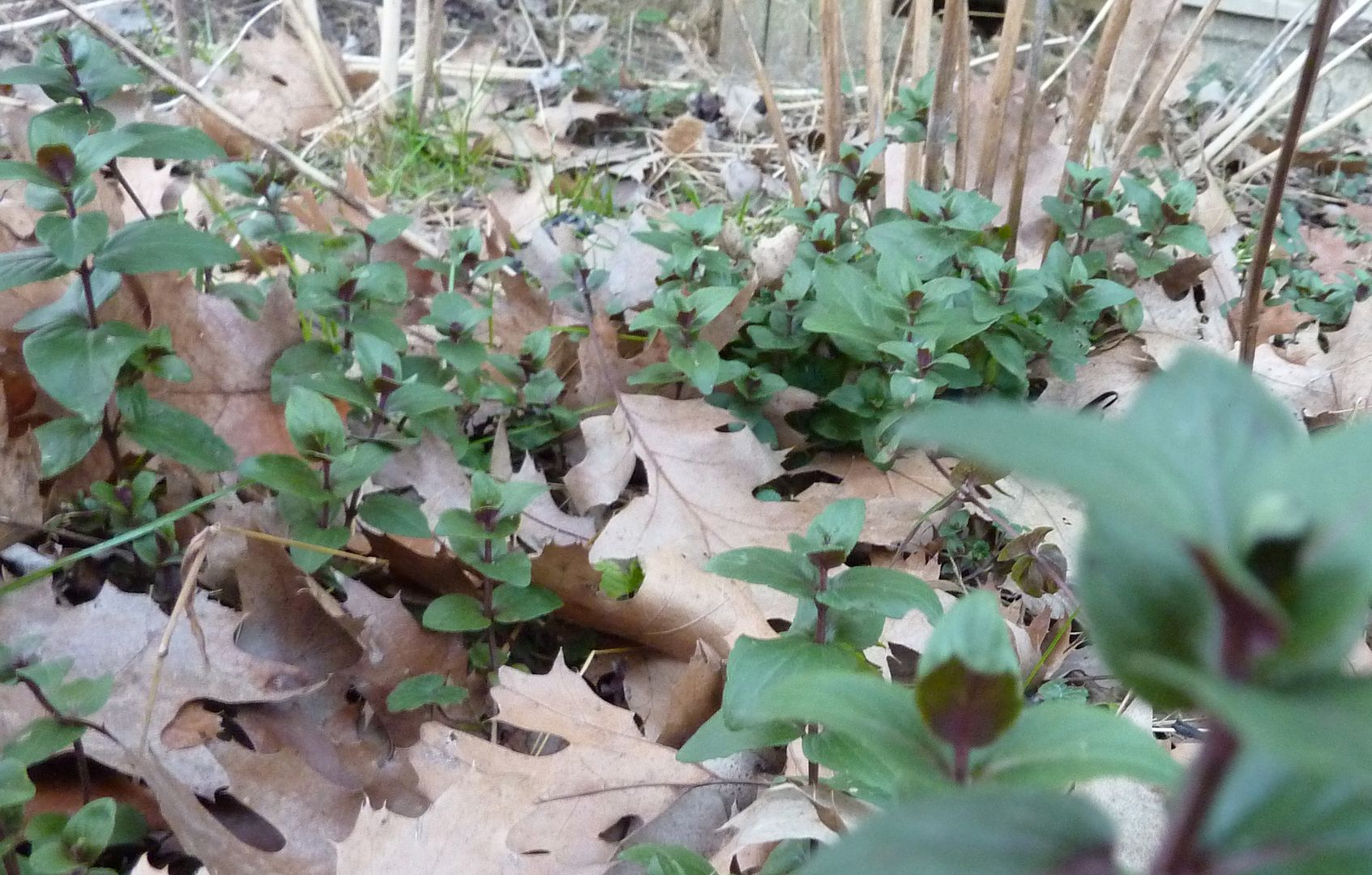
The Mountain Mint, Pycnanthemum sp., is conquering the milkweed patch nicely. I'll be ripping this out liberally.
The stuff smells great and minty too.
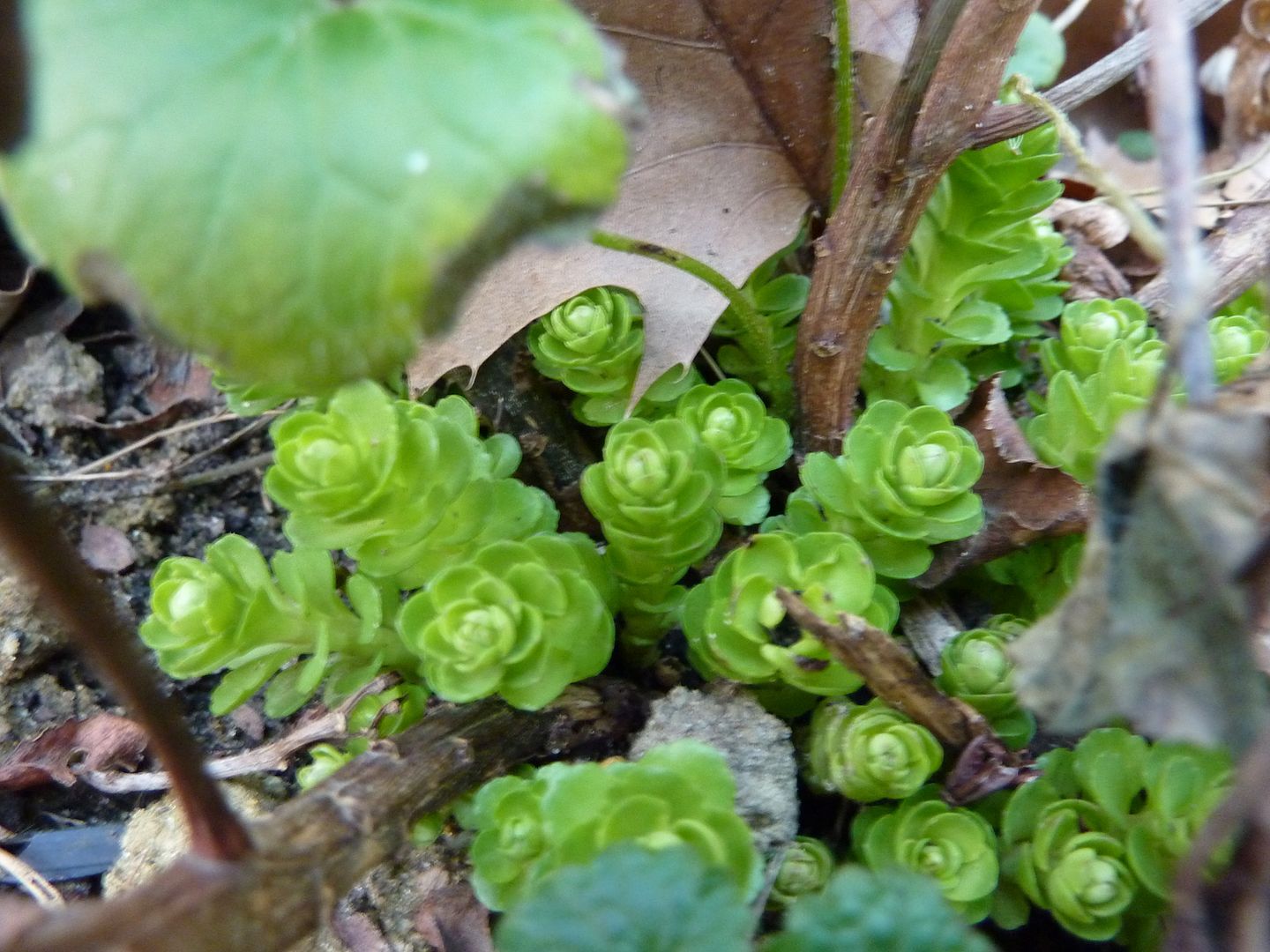
The Sedums are bursting back.
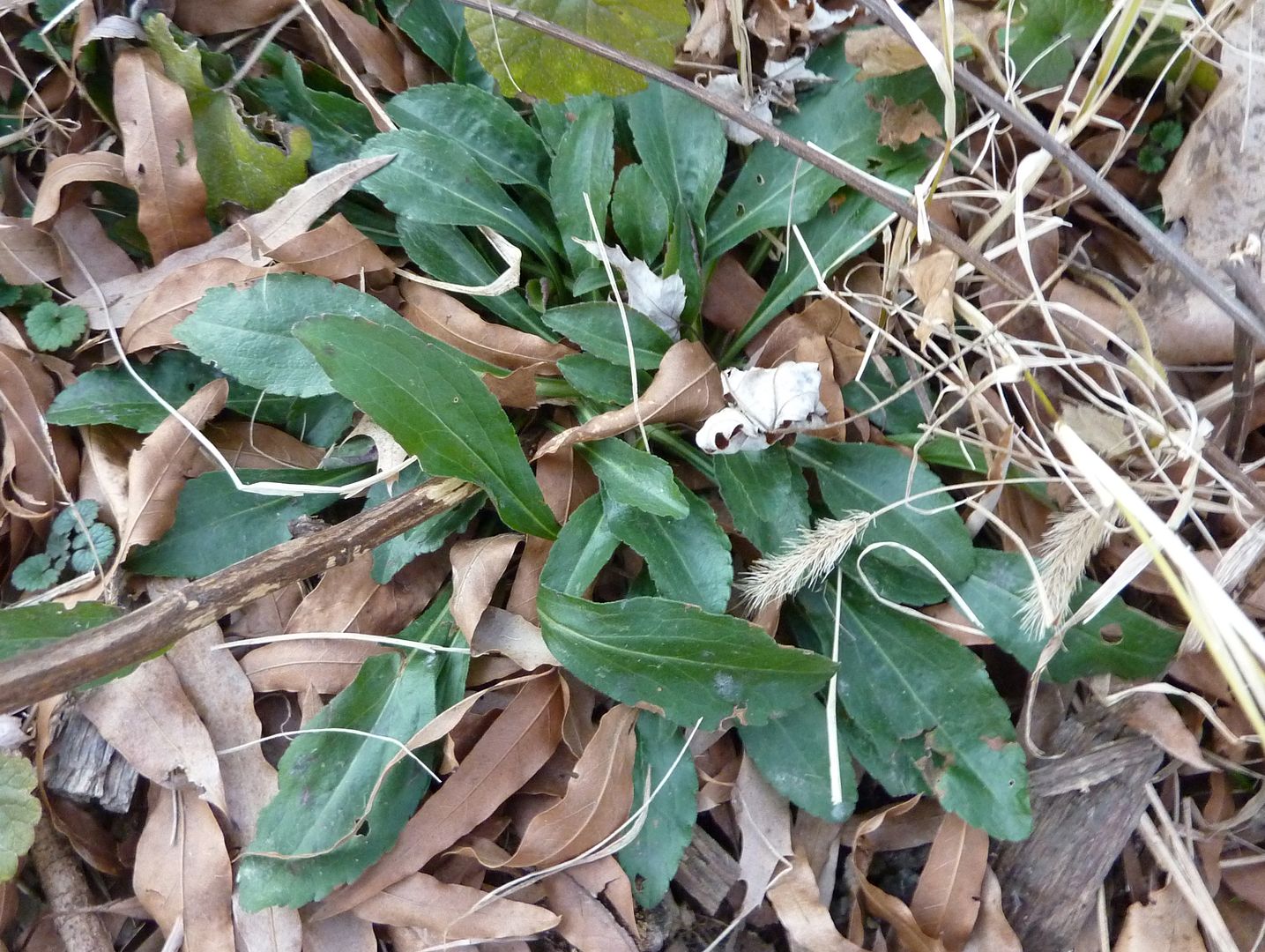
Ironweed.
Roundleaf Ragwort, Packera obovata, is also spreading some. It's doing so in nice, garden friendly, tight clumps though. Despite it's seeds being transported by the wind it seems to be growing as a well behaved ground cover. I like this plant so much I'm thinking about spreading it around the yard everywhere. Note the flower buds starting to appear.
And then there's Golden Alexander, Zizia aurea. What this is doing with flower buds on it this early is a mystery to me. This is just one plant of the 4 doing it. Perhaps this is a seedling that's got its wires crossed somewhere.
This catagory is generally reserved for plants and animals that don't fit in the other areas. This past year was a big one for this group as I decided to install a small prairie and visited the Mt. Cuba Center far more often.
The trees in winter. This is just behind my house.
Crocuses in our lawn provide an early splash of color. They do best in the driest parts that are otherwise bone dry over the summer. They're not native to North America and I'm at a loss to name anything flowering when they do that would work well in a lawn setting.
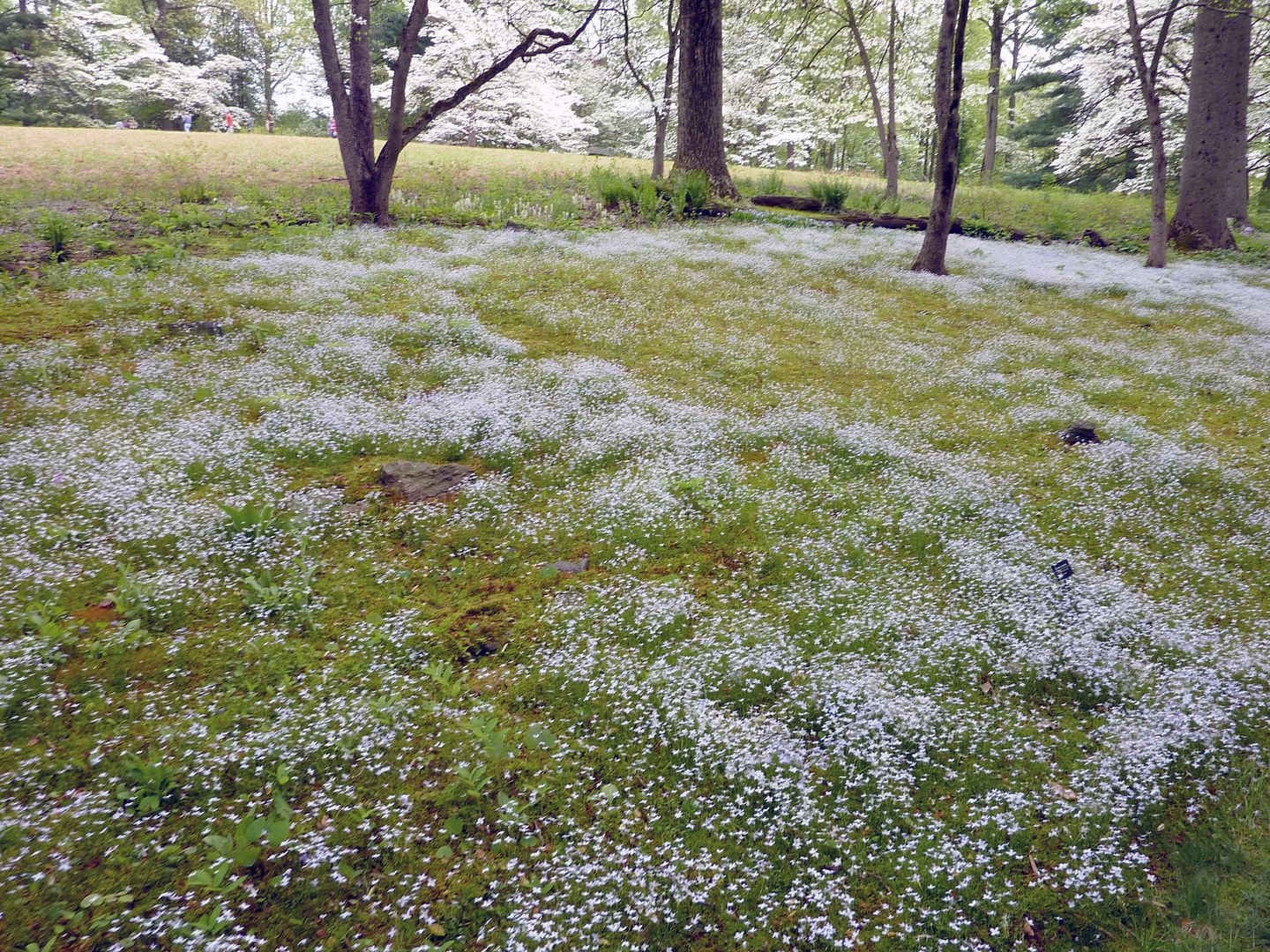
Bluets, Hedyotis caerulea, would be a nice choice but this is my first year with them. What they need to grow seems to be questionable. Pictured above is the patch at the Mt. Cuba Center which seem to grow great in partial to full shade among the moss. Other sources tell me they need to be bone dry and in full sun. Regardless, they actually don't do that well in areas where grasses will out compete them. I actually don't know what pollinates them.
Hepatica is quickly becoming one of my favorite spring blooms. They're kind of like bluets but the flower is larger. They have semi-evergreen foliage too, where new leaves are produced every spring to replace older ones.
Twinleaf, Jeffersonia diphylla. If I were rich, I'd plant more of these. Of three plants only one flowers, and that flower only lasts 8 hours at most. Online pictures show that multiple plants will all flower on the same day so I'd be curious to find out if different patches of these plants would bloom on different days. That is to what degree do they synchronize their bloom? It's pretty for a day but not something I'd recommend starting out. They're really more of a collector's item.
Spring Beauty, Claytonia virginica, flowering among some bluets. They're not as pink as I expected them to be.
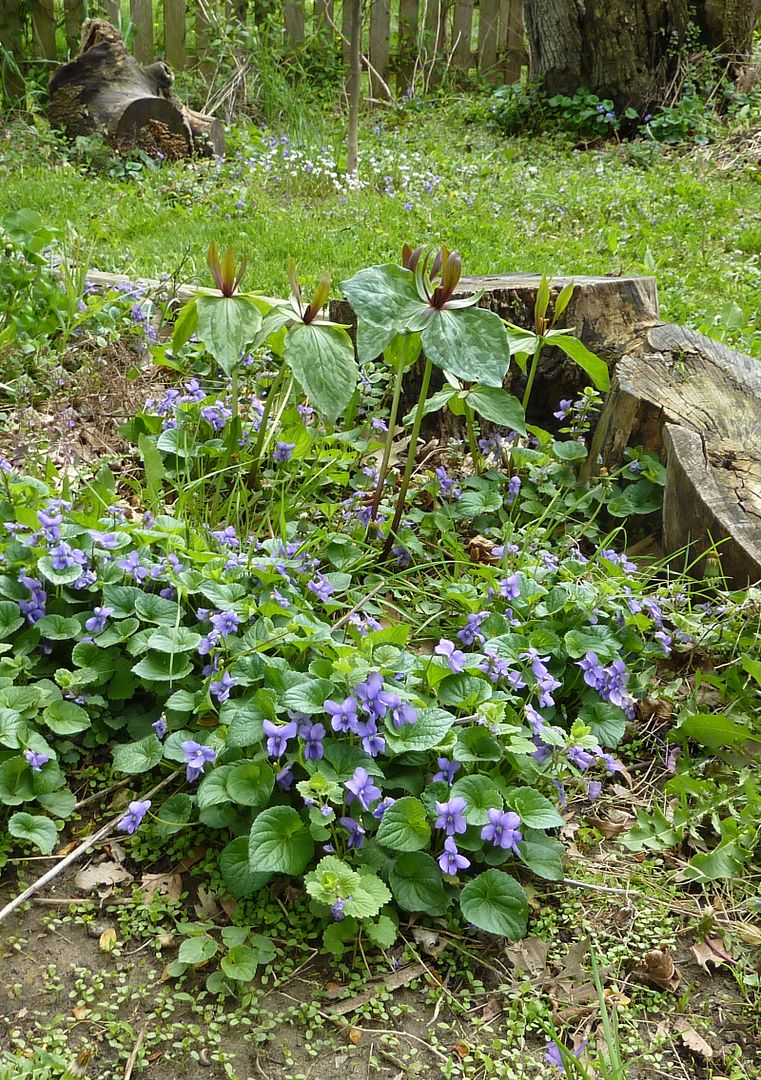
Violets and Trilliums. Violets are supposed to have ants carry their seeds off... clearly the ants aren't doing a good job. All of the small green sprouts in the lower portion of the pictures are violets. Trilliums on the other hand take 5 years before they really get as big. I've found the two can grow well together as most Trilliums are taller than the clumps of violets growing below.
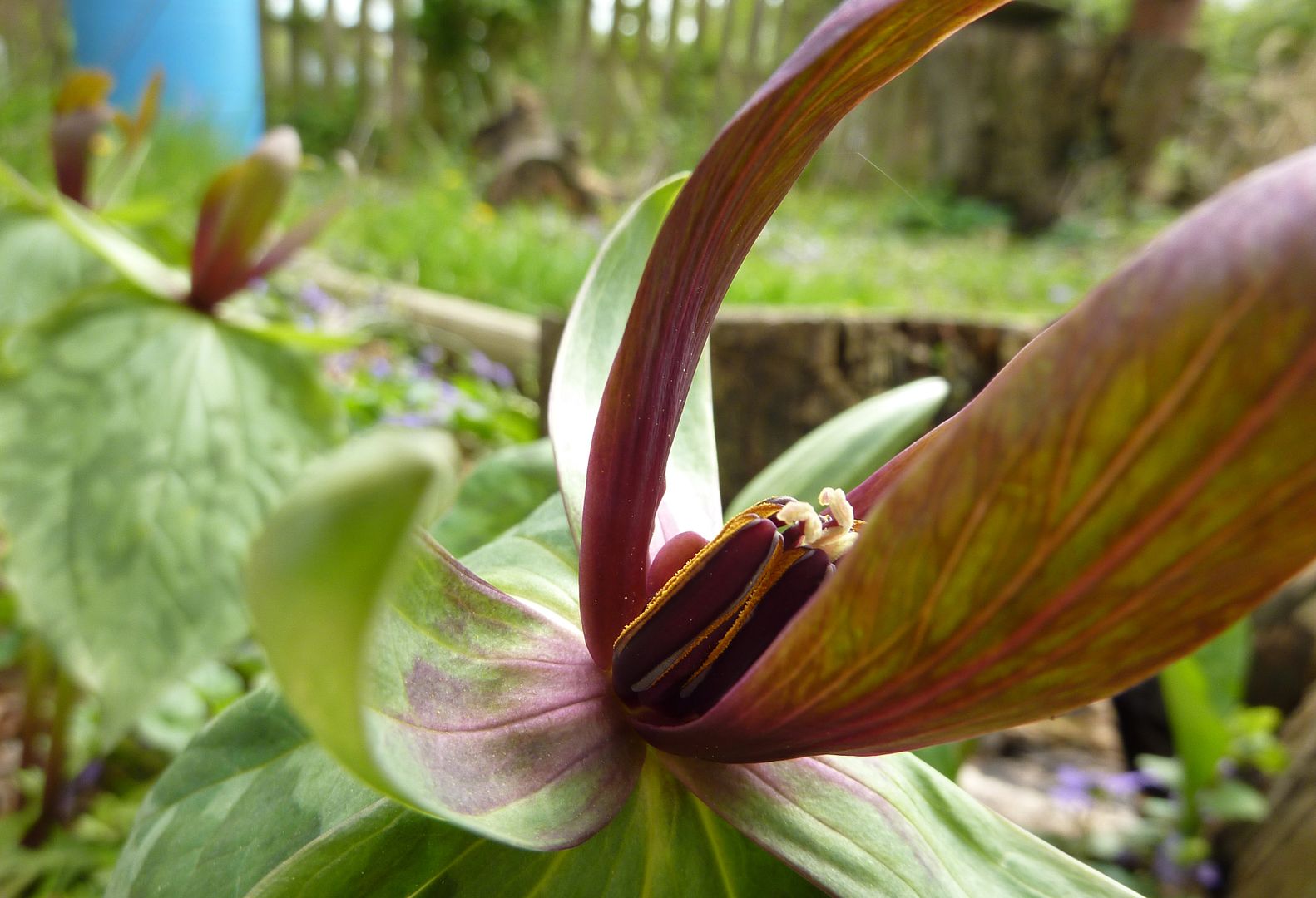
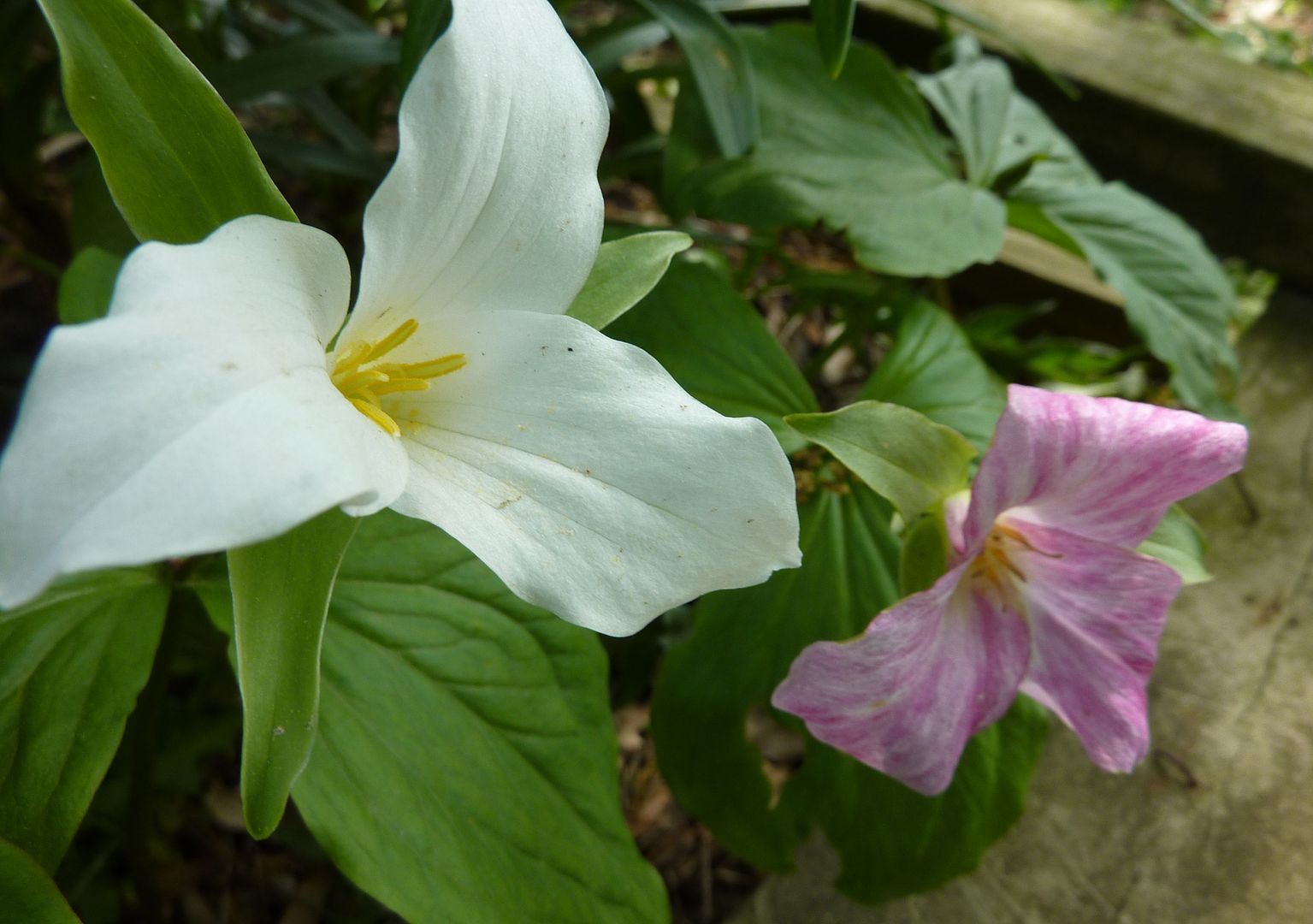
Playing with angles and the Trillium flowers.
Trillium grandiflorum is an excellent spring ephemeral. For the first week of flowering they are all white. Slowly over the second week, depending on age and pollination, the flowers fade pink and magenta.
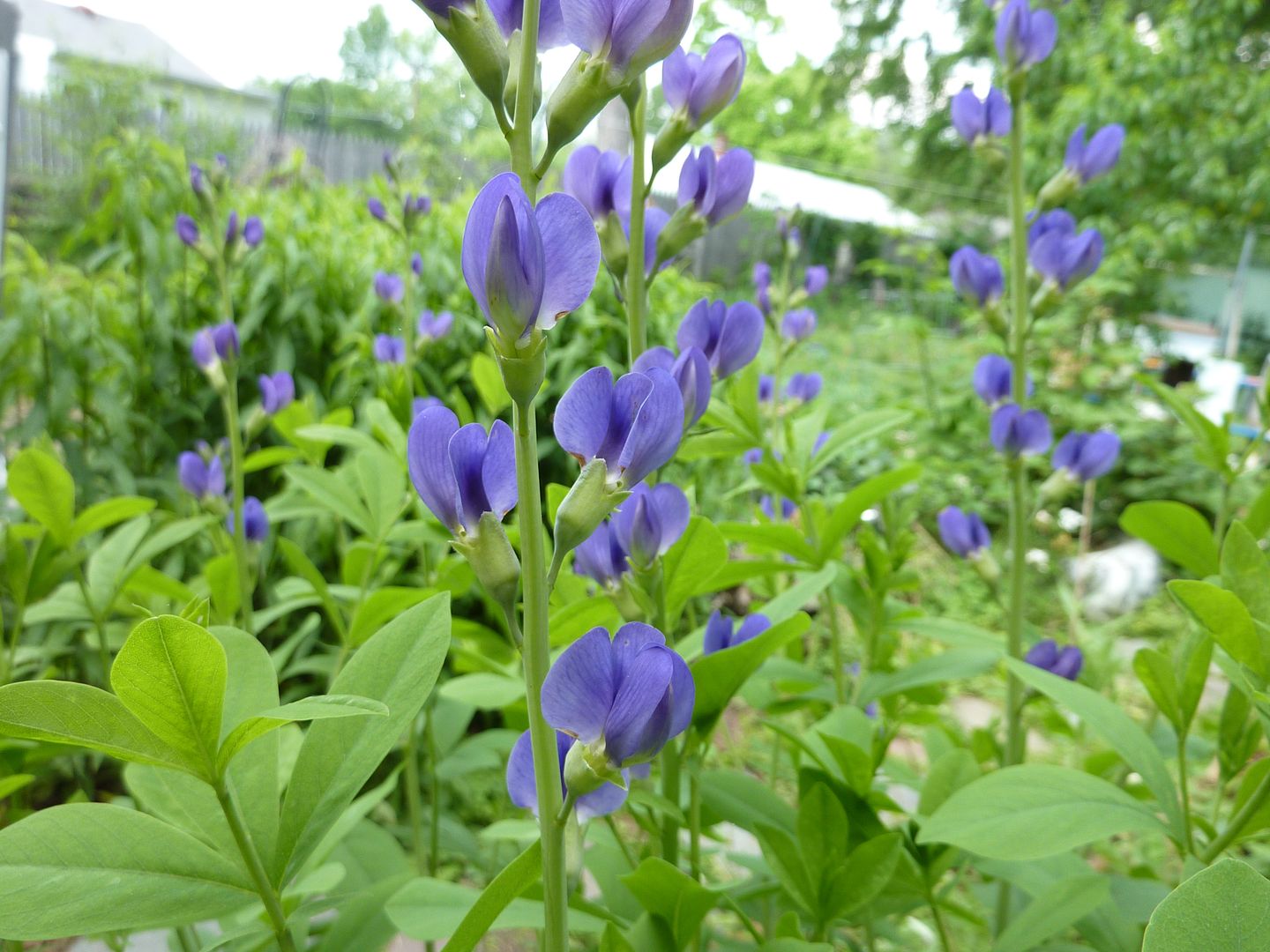
Blue False Indigo, Baptisia australis. This flowered much sooner than I expected it to. The flowers are almost exclusively pollinated by bumblebees. Despite this though they are a very stately plant, good as a hedge, a clump of 3 or more, or specimen.
New Jersey Tea, Ceanothus americanus. I have 4 of these small shrubs which are all nowhere near their full size, but I'm happy to see say all of them are flowering this year. This shrub is in something of a nation wide decline and the range to the dozen or so Lepidoptera that depend on it have been suffering for it. Some of these are endangered species. I encourage anyone willing to give this shrub a try. The flower clusters are small but supposidly buzz with insect activity when in abundance. None of my plants are old enough for that activity yet but hopefully I'll get to see it in years to come.
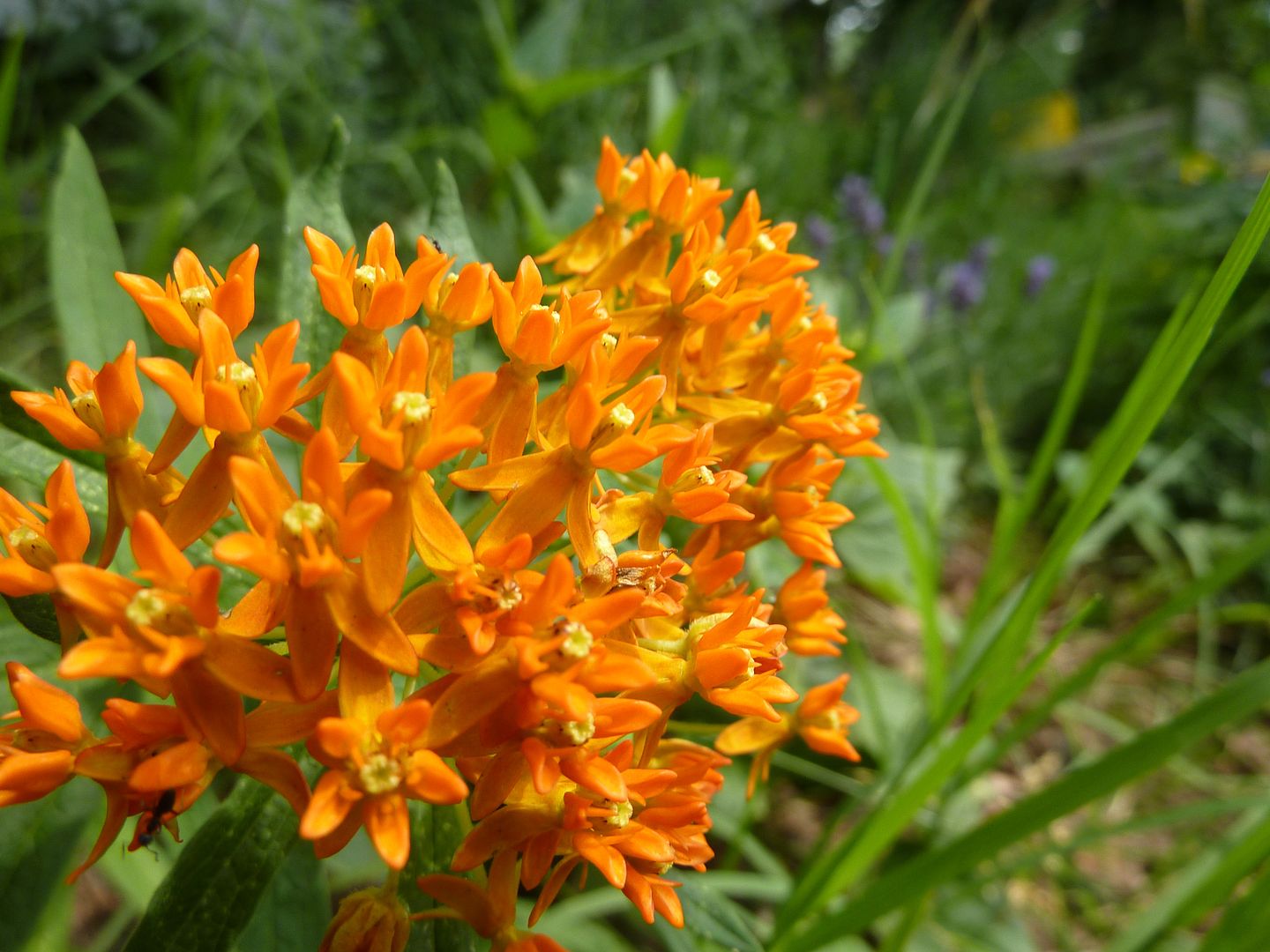
If nothing else, let it be known that this was the year I went nuts with milkweed. I bought a couple dozen plants from either Prairie Moon Nursery or Prairie Nursery. I forget exactly which one provided these plants. (I have an awful habit of spending ~$500 every year on plants.)
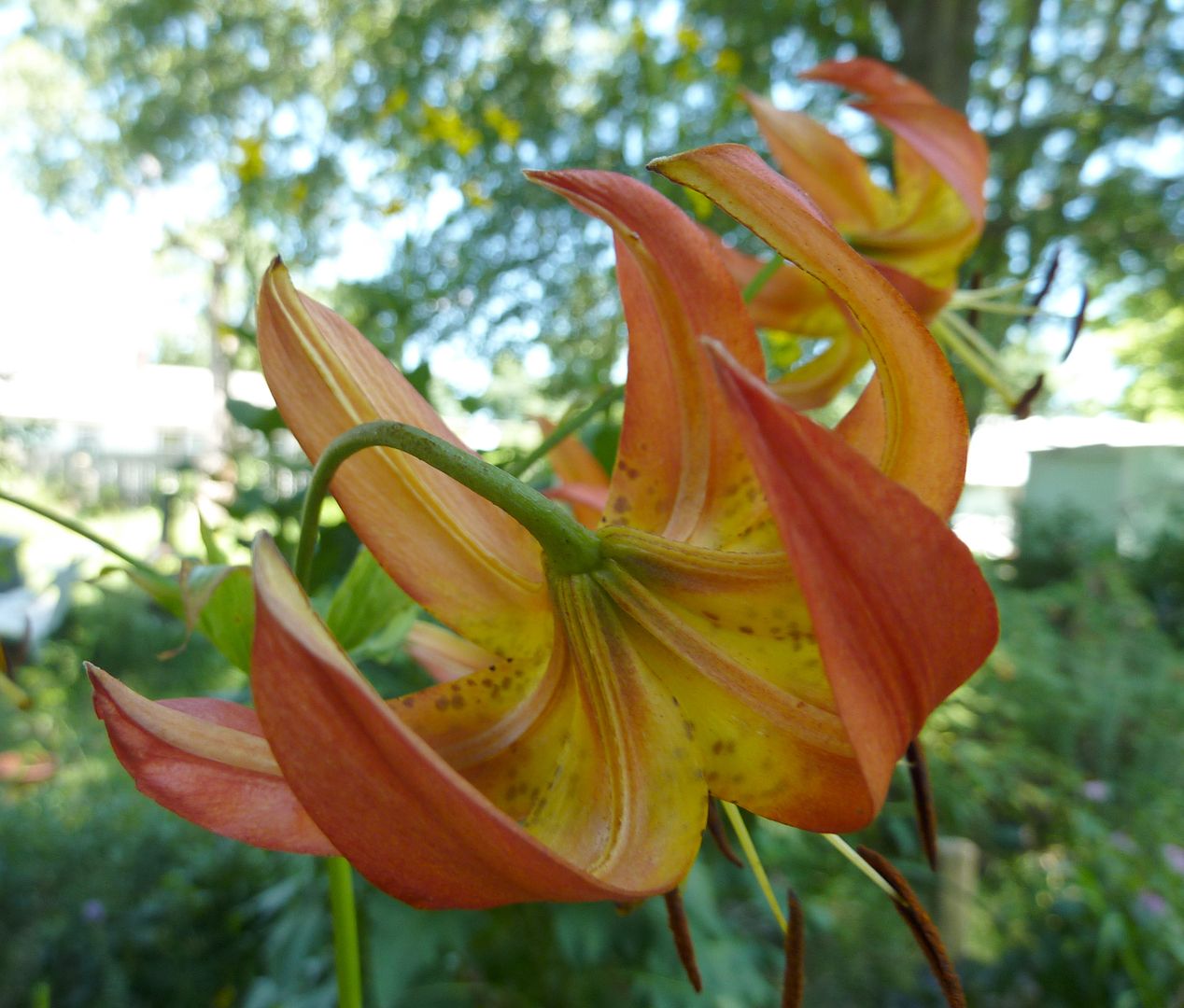
Turk's Cap Lily, Lilium superbum. I'm thrilled to see not only are my plants producing more flowers but they also seem to be reproducing a little. Lilies are one of those weird flowers that require a swallowtail butterfly to hang upside down from them in order to pollinate it. This isn't a common sight so having more flowers increases the chances of it happening while I'm around.
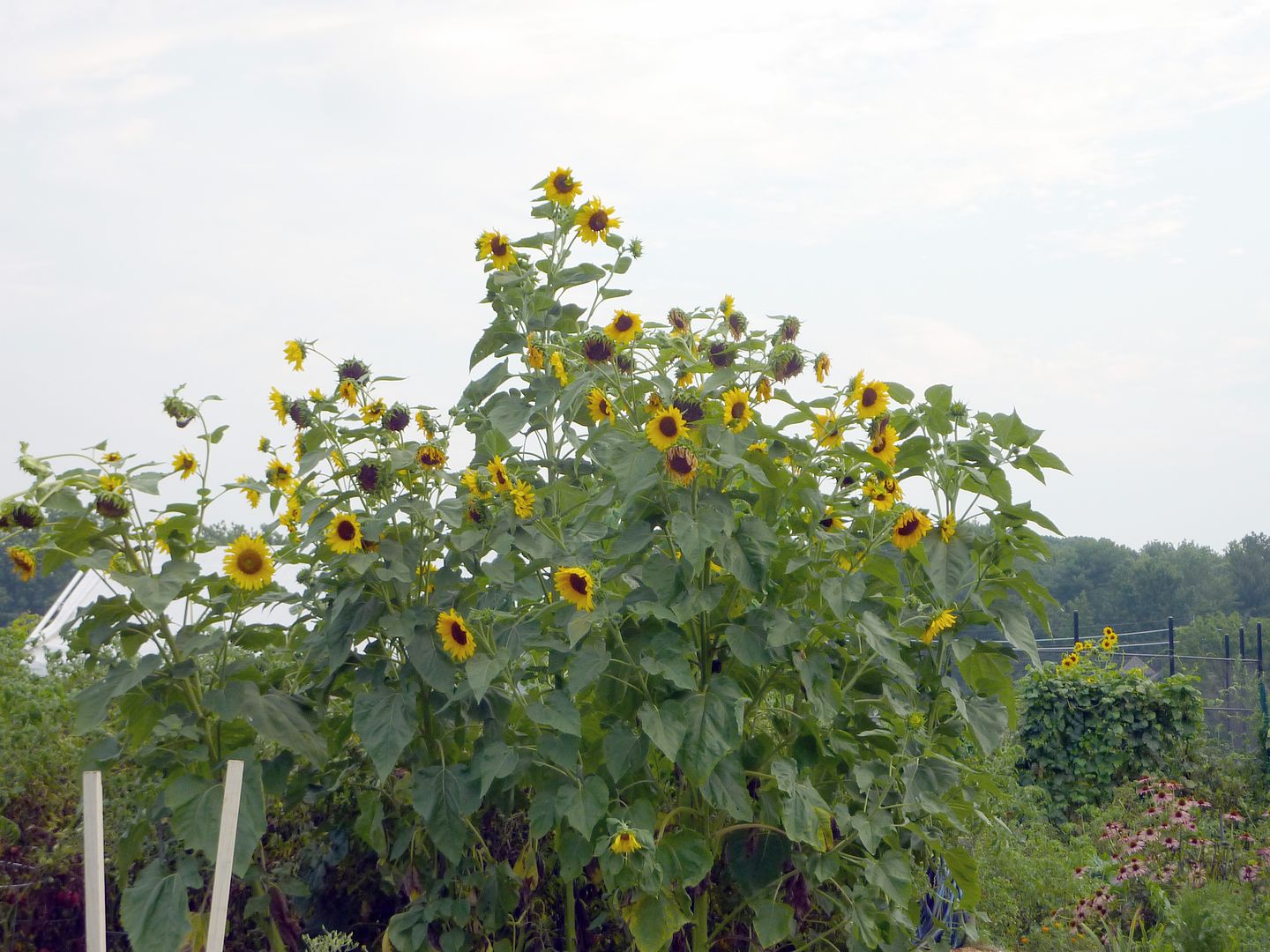
I wasn't very successful with sunflowers this year but at the local community garden they've mastered growing them. Most of these flowers are coming off of 3 or 4 plants. Some of them there had 50 flowers open at a time. The structure looked more like a Christmas tree than your typical annual sunflower.
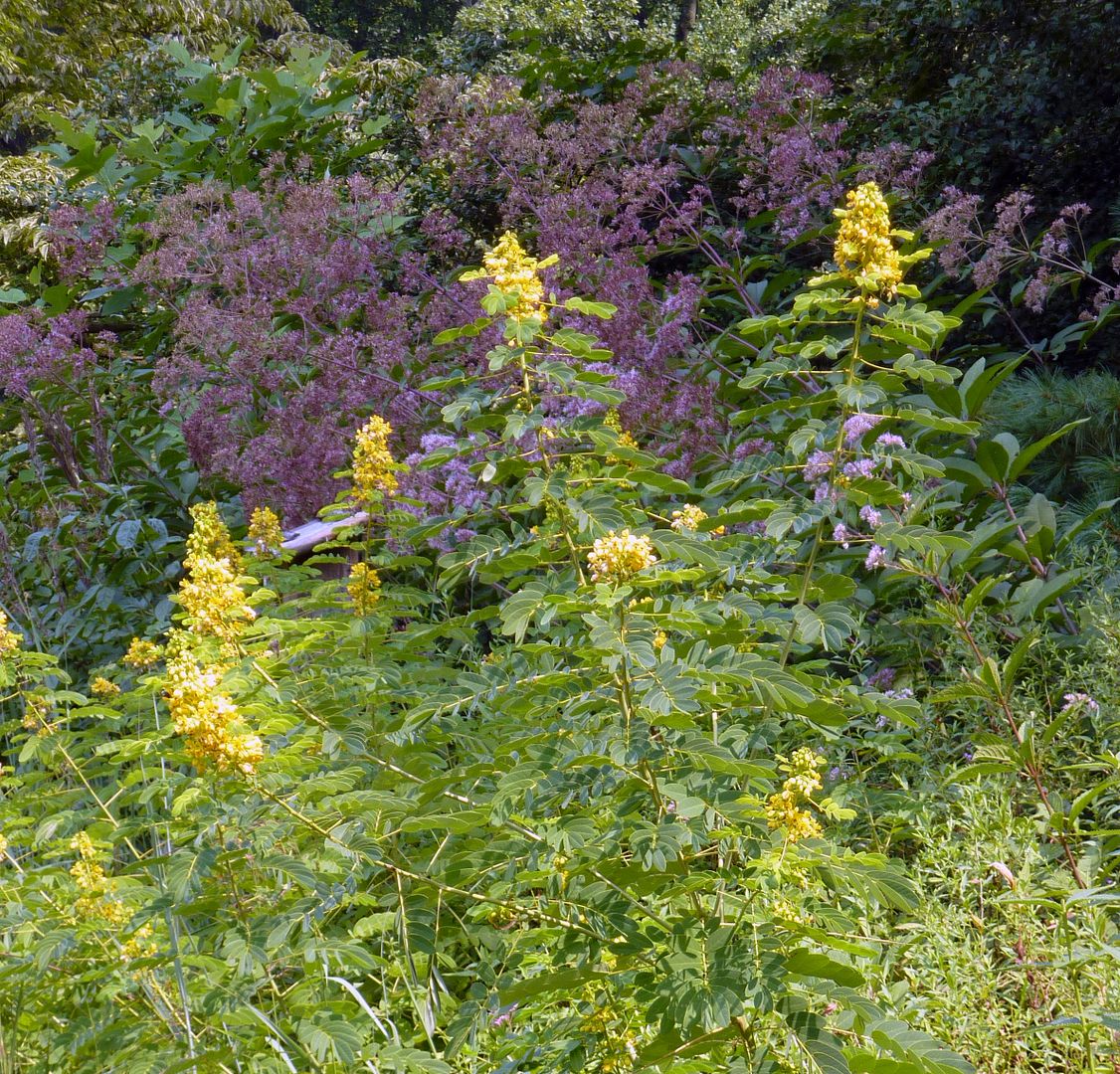
Wild Senna, Senna hebecarpa, growing in front of Joe Pye Weed, which are now in the genus Eutrochium.
Nymph Milkweed Bugs, Oncopeltus fasciatus, huddling together on their host plant. None of my plants seem to get swarmed the way I see some do. I've seen plants that were overrun with these bugs. It got to the point where they were spilling off onto other plants.
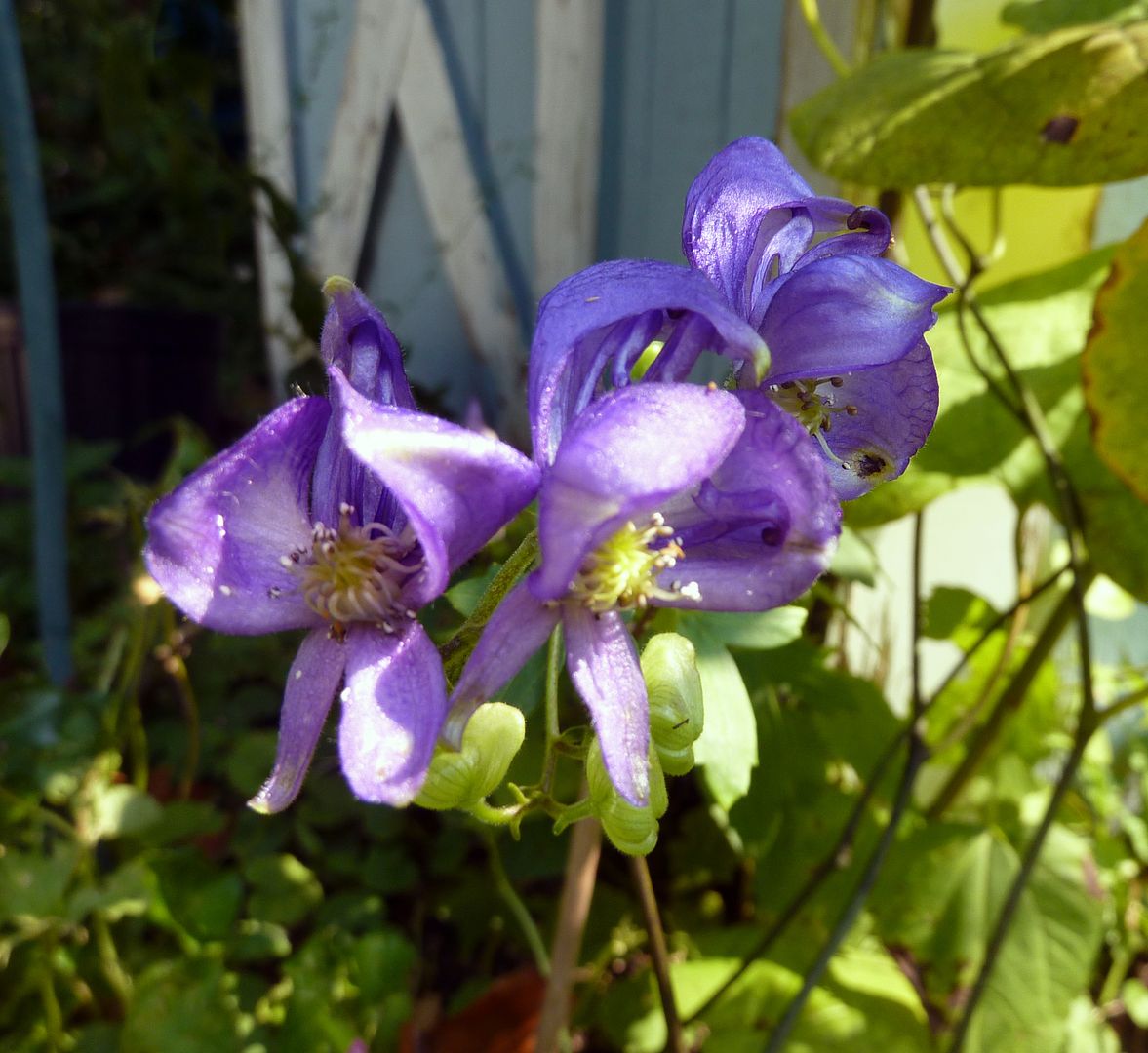
Blue Monkshood, Aconitum uncinatum. When people think of monkshood usually they think of an upright perennial. North America has a species or two of it's own though. This species in particular grows as a vine that only reaches 5' tall. They die back to the ground each year so they stay in check. In the absence of anything to climb on they'll grow along the ground. They don't set down roots as they like but the rhizome will send up more and more shoots each year as an expanding clump. For most of the year they're nothing special. When they flower in late summer though they have loads of flowers all over.
Something I noticed with the Mt. Cuba Center, They seem to be going a little nuts with these plants, along with Bugbanes, Cimicifuga species. There aren't a whole lot of flowering perennials for full shade in the summer months so they are almost stock piling these plants in their wooded area. Personally I'd love to include more of both in my garden.
Full sun areas over the summer show a different story. Flowering plants are abundant and in assorted colors.
This was a great year for Monarchs as well as Hummingbirds. Both took to the plants I started growing this year nicely.
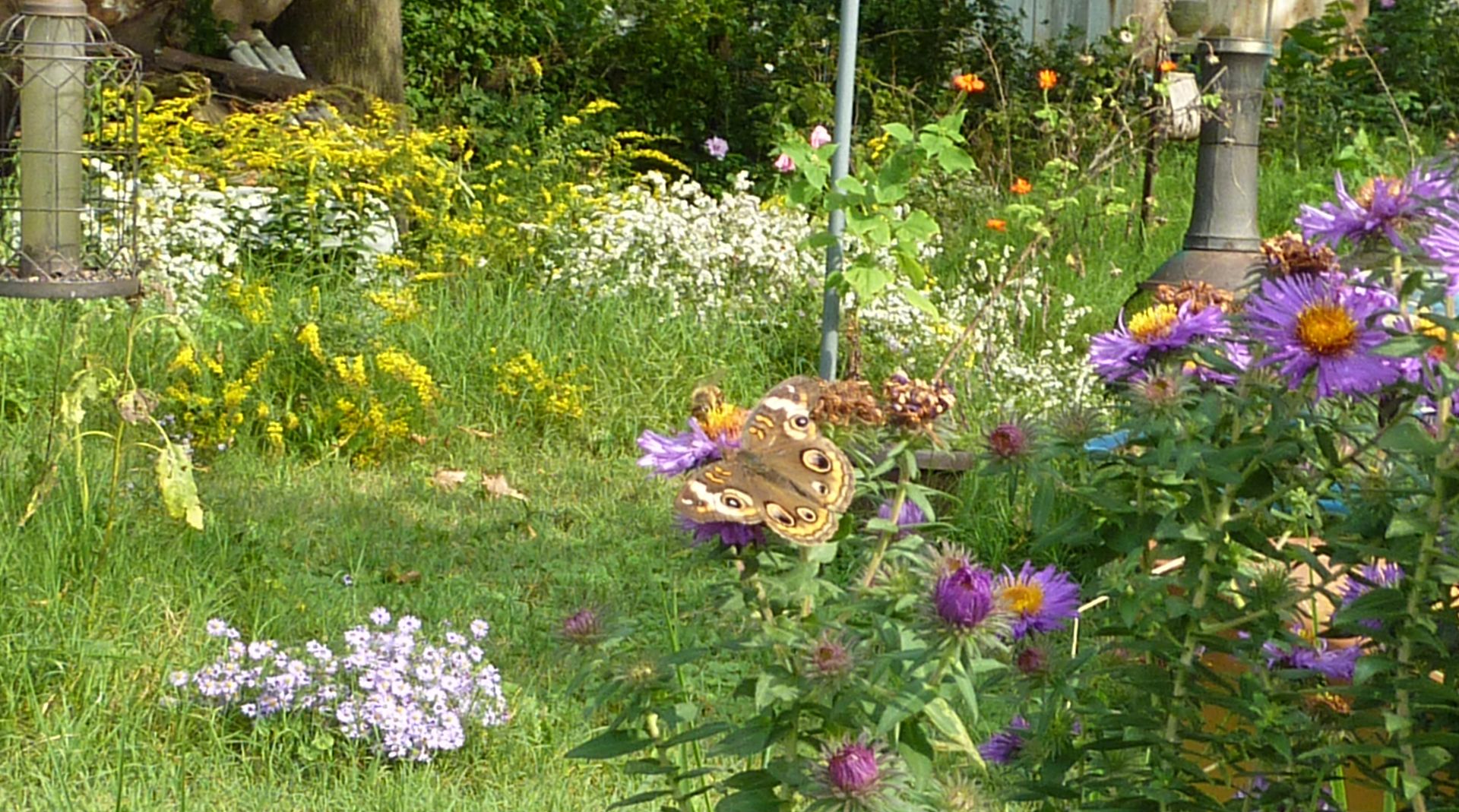
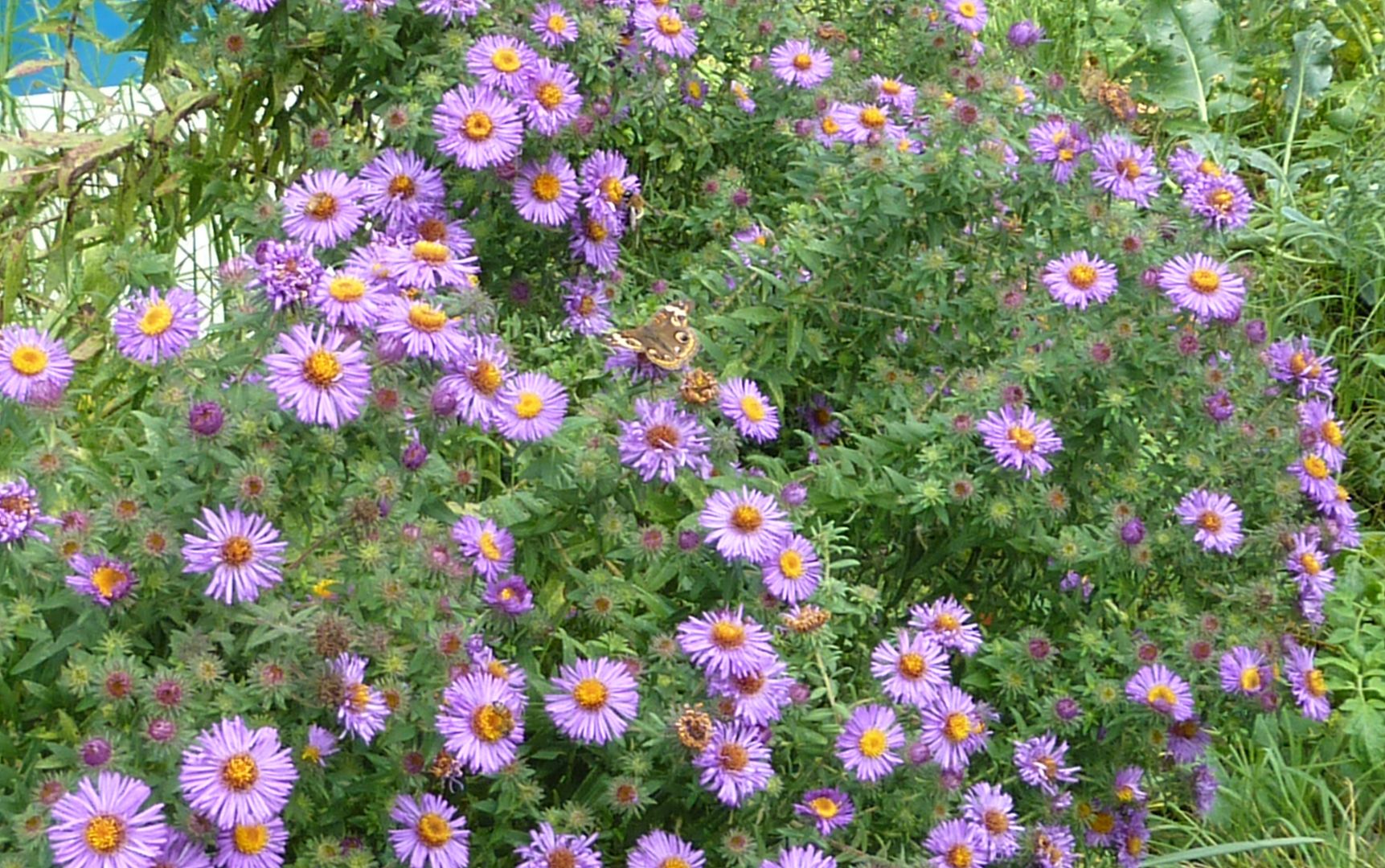
As autumn rolls in the asters bloom out. New England Asters, Symphyotrichum novae-angliae, are among the best at getting pollinator activity.
And so is the goldenrod. This is the first year I've ever seen a Monarch on my Tall Goldenrod, Solidago altissima. Normally it blooms to late in the year, just after most of the Monarchs have passed through my part of New Jersey.
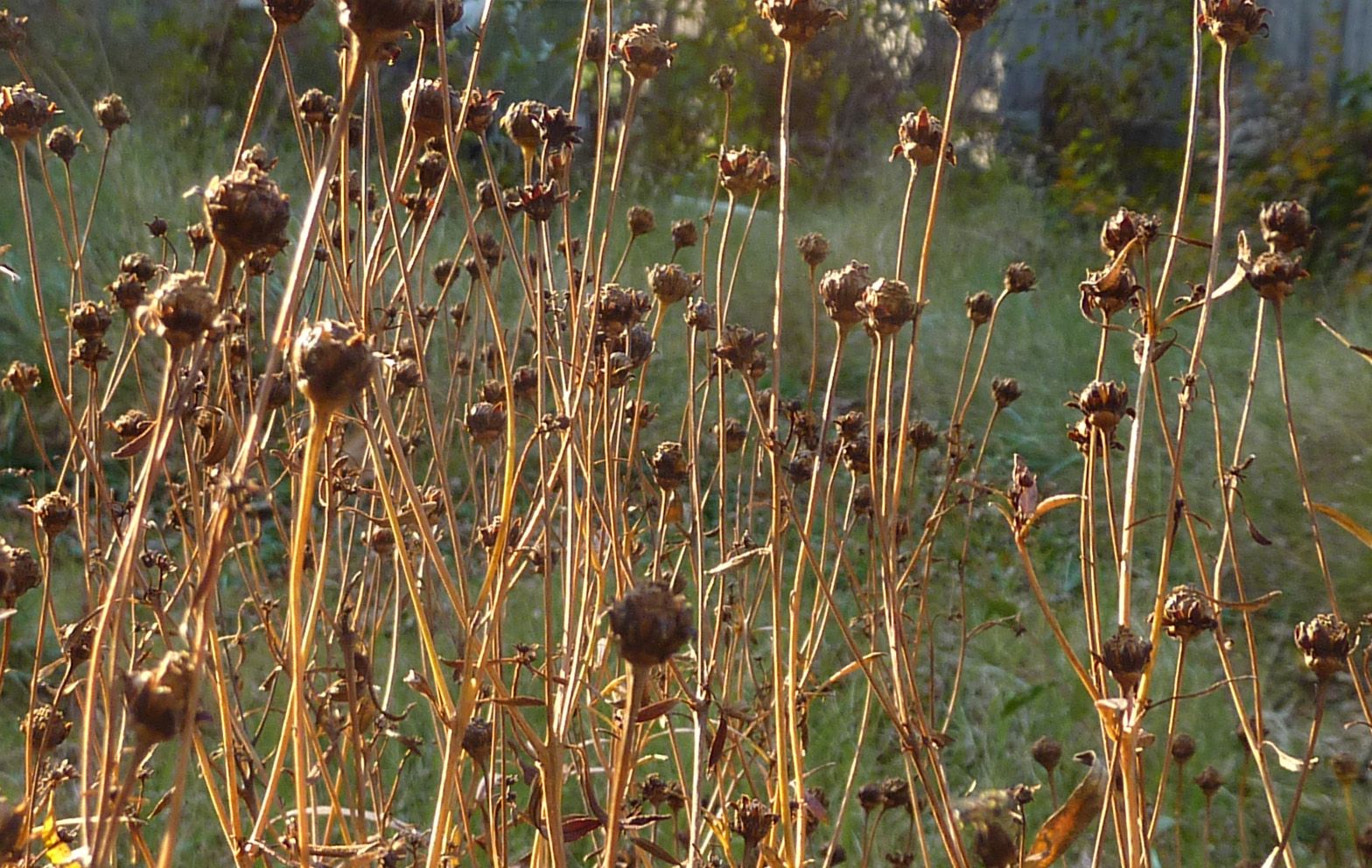
The seed heads to Tall Coreopsis, Coreopsis tripteris.