I was also sent some Polyphemus Moth eggs so hopefully I'll be able to update on those too.
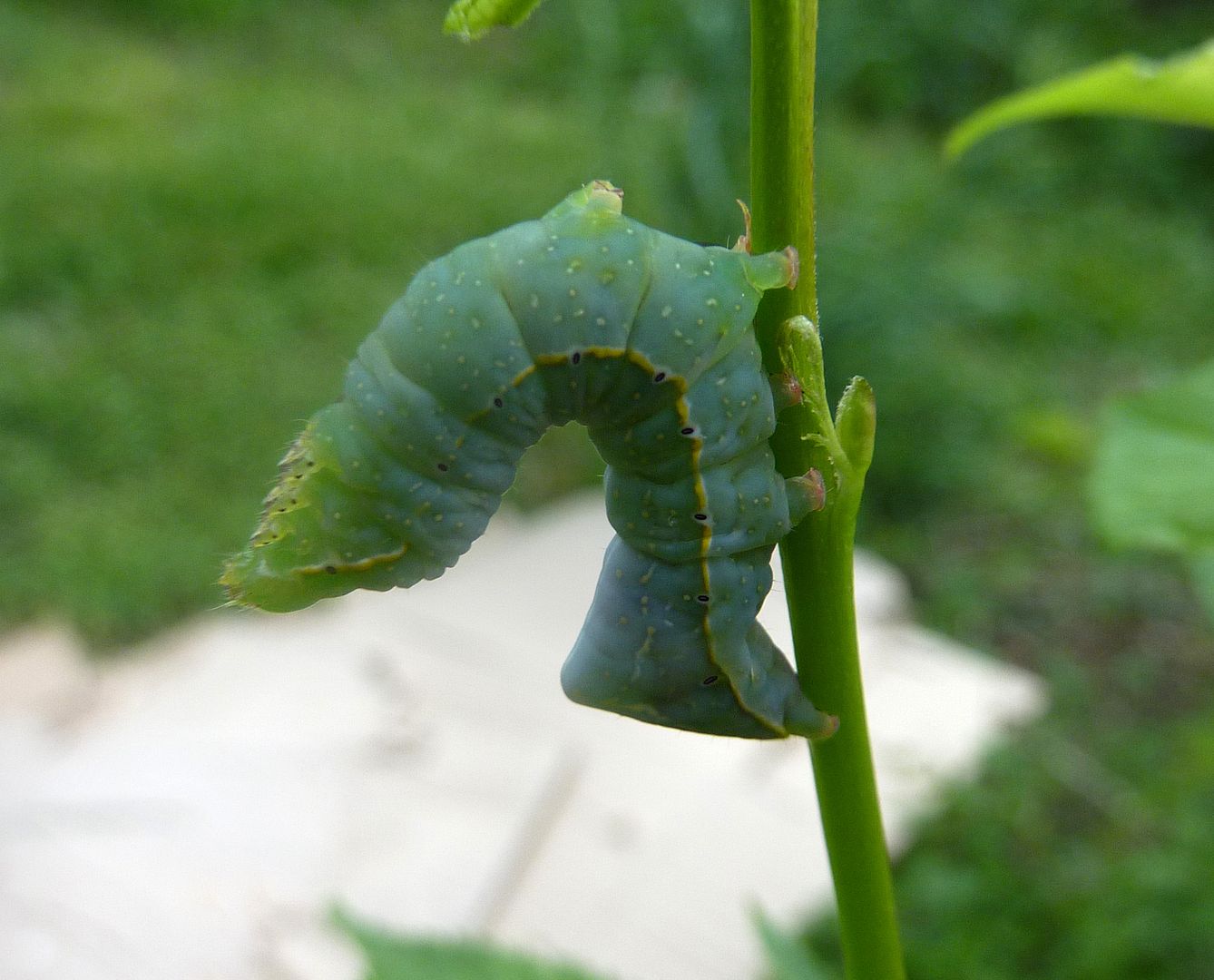 |
| The caterpillar to the Copper Underwing Moth, Amphipyra pyramidea. The moth is plane looking and brown; it's fairly bland looking too except for the rear wings with are an orange copper color. These are normally hidden from view though. The caterpillar though, later instars develop this neat blue green color. This one nibbled the leaves to our Native Plum tree and vanished. |
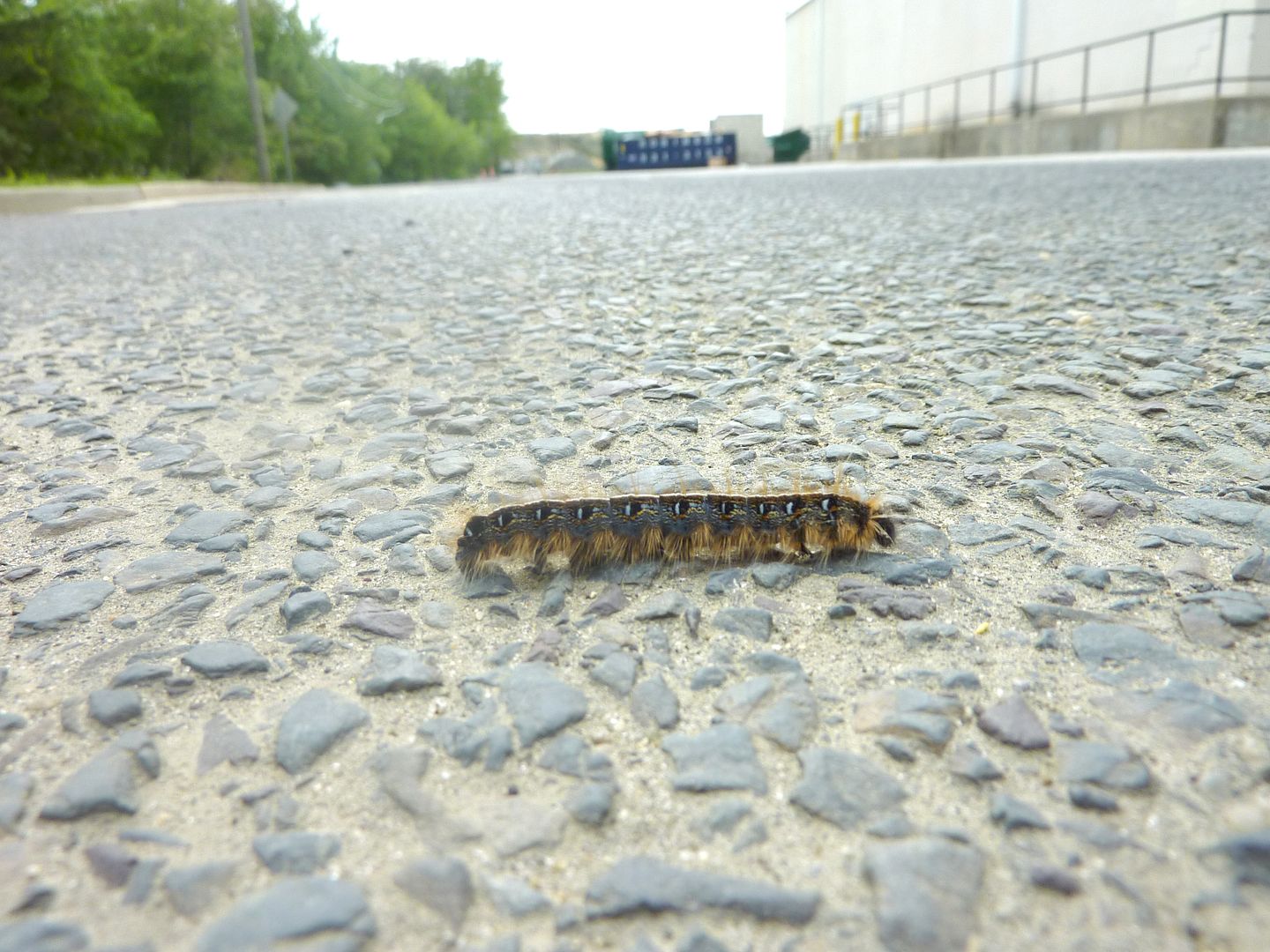 |
| Defoliating trees is a busy job. Here our native Eastern Tent Moth, Malacosoma americanum wonders from the forest to make a cocoon. Besides forming a massive web-like tent in trees this species isn't that damaging. |
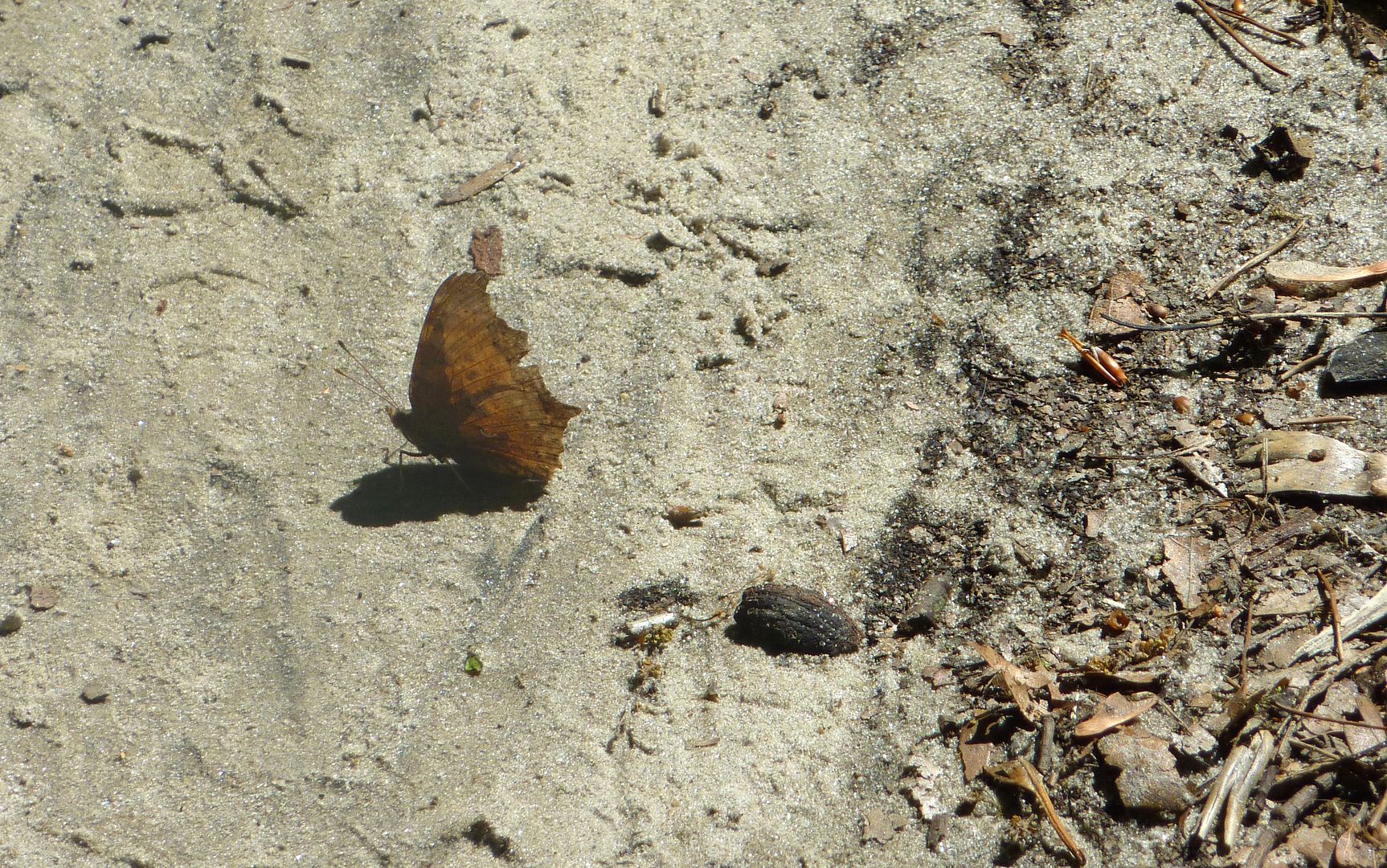 |
| Eastern Comma, Polygonia comma, sipping up minerals along a sandy trail. Salt I think is the most uncommon mineral considering their food source (nectar and rotten fruit), so licking it up is the only option. |
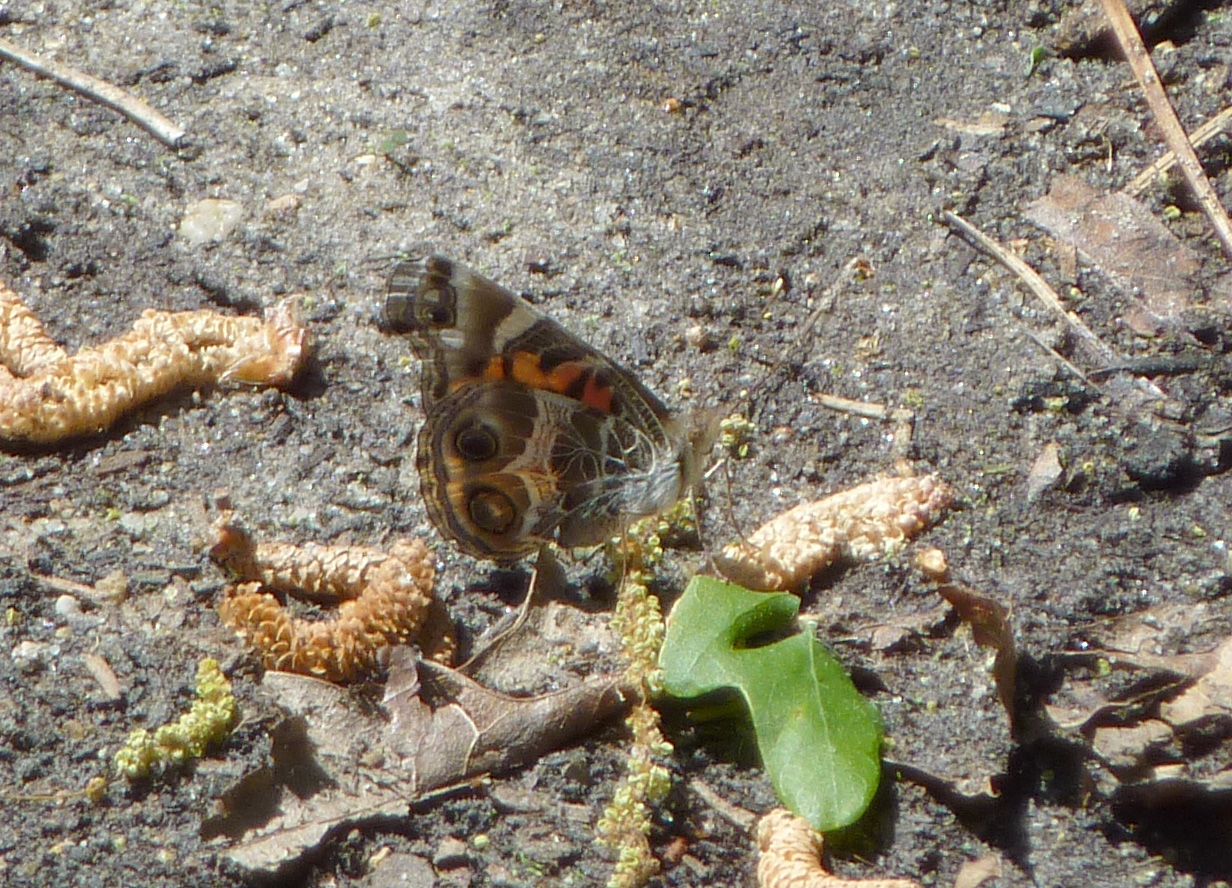 |
| (Corrected ID) American Lady, Vanessa virginiensis. |
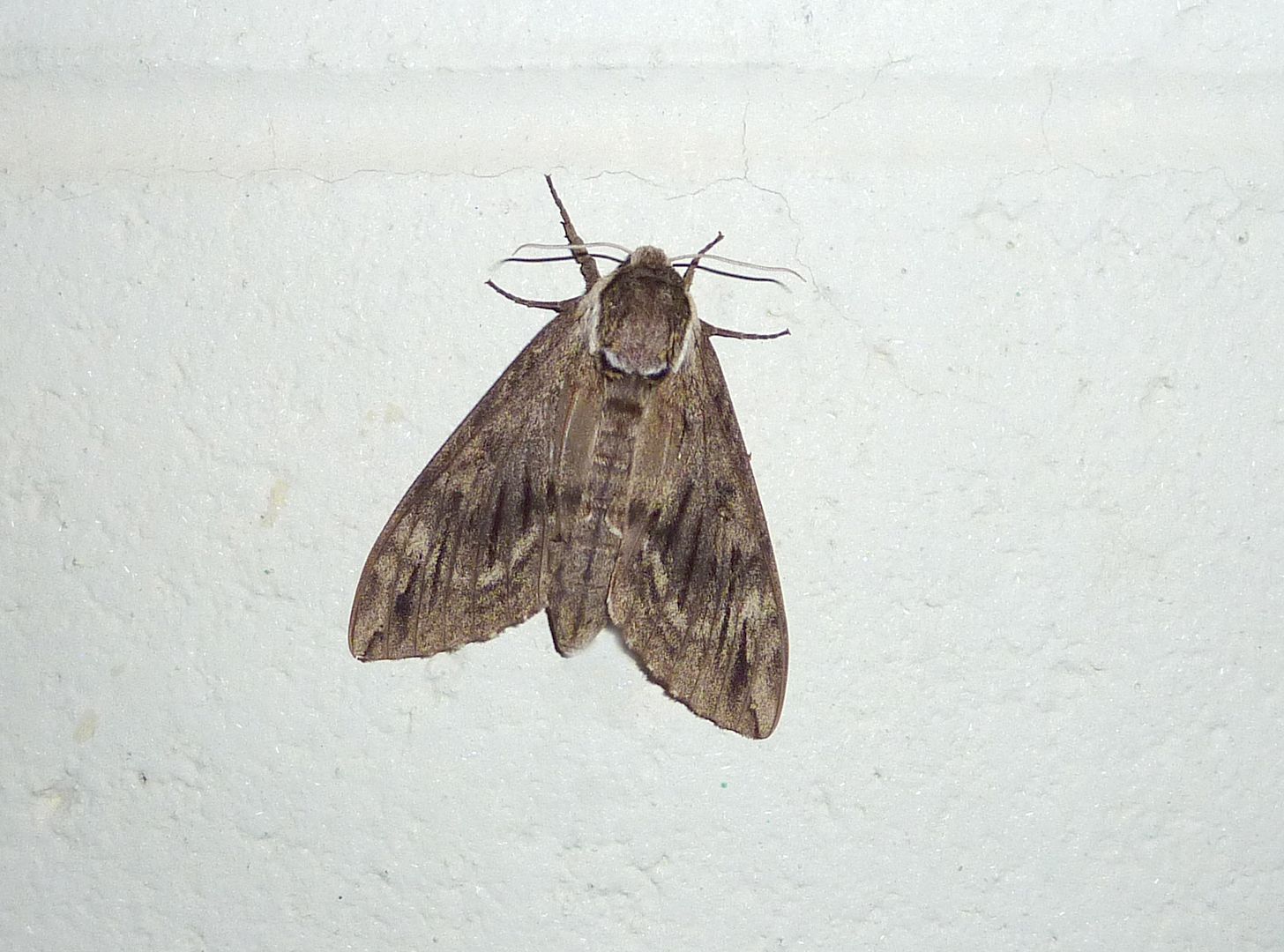 |
| Hawk Moth. |
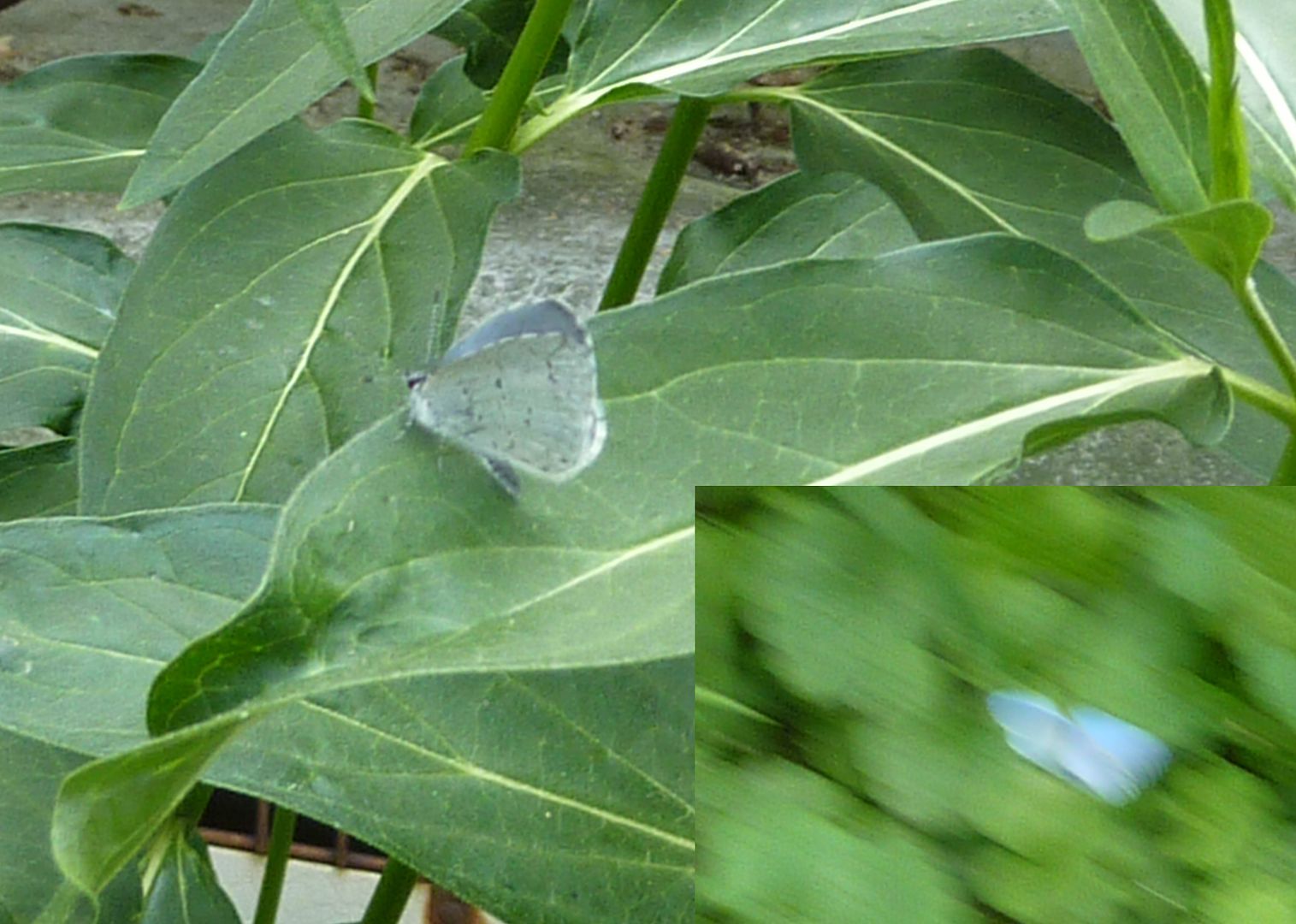 |
| Azures Butterfly. This little jewel doesn't do itself justice when sitting nicely. Upon flying and flapping it's wings the shimmering baby blue color really shines. |
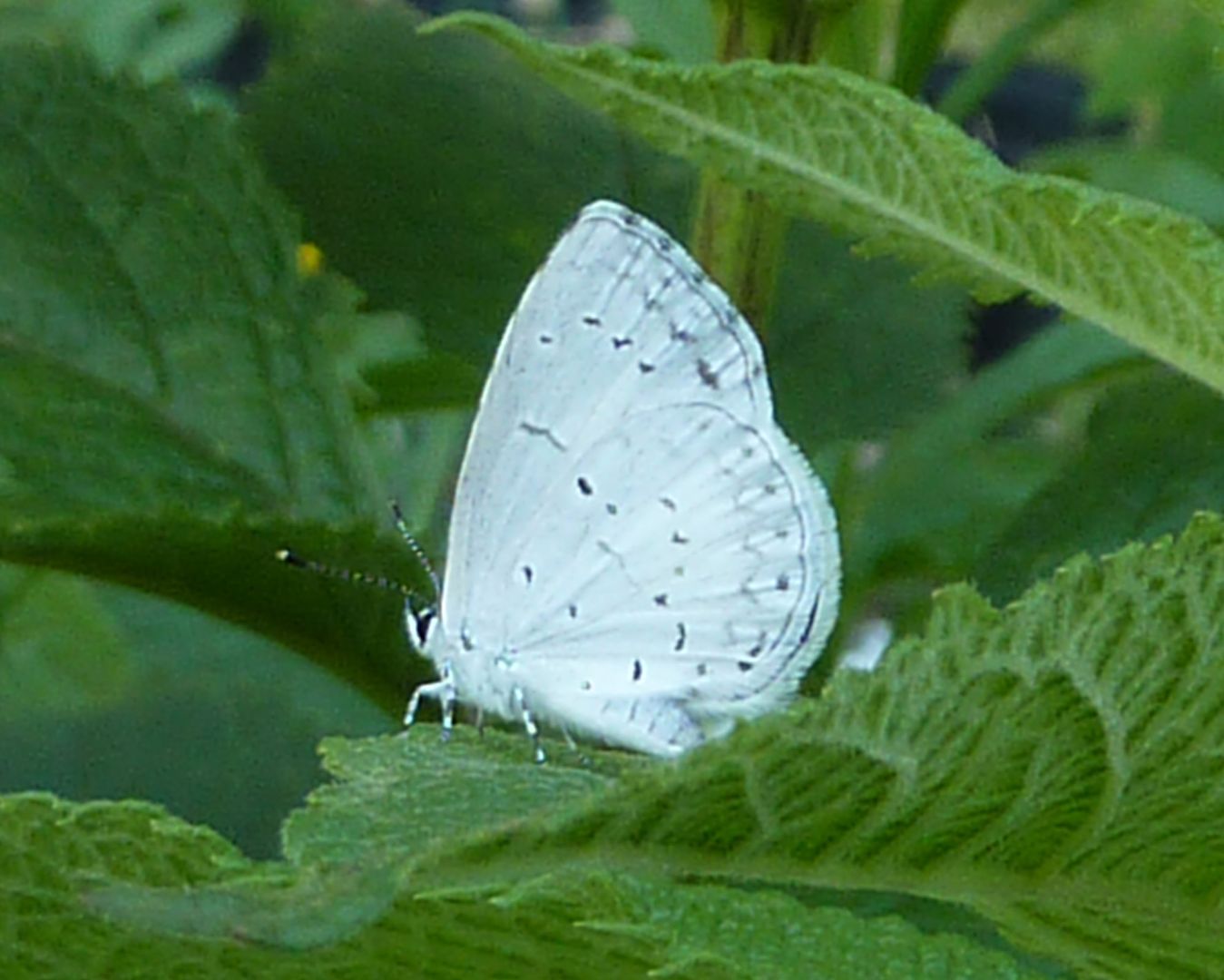 |
| A White Azures Butterfly. Related to the above. |
 |
| Red Spotted Purple. |
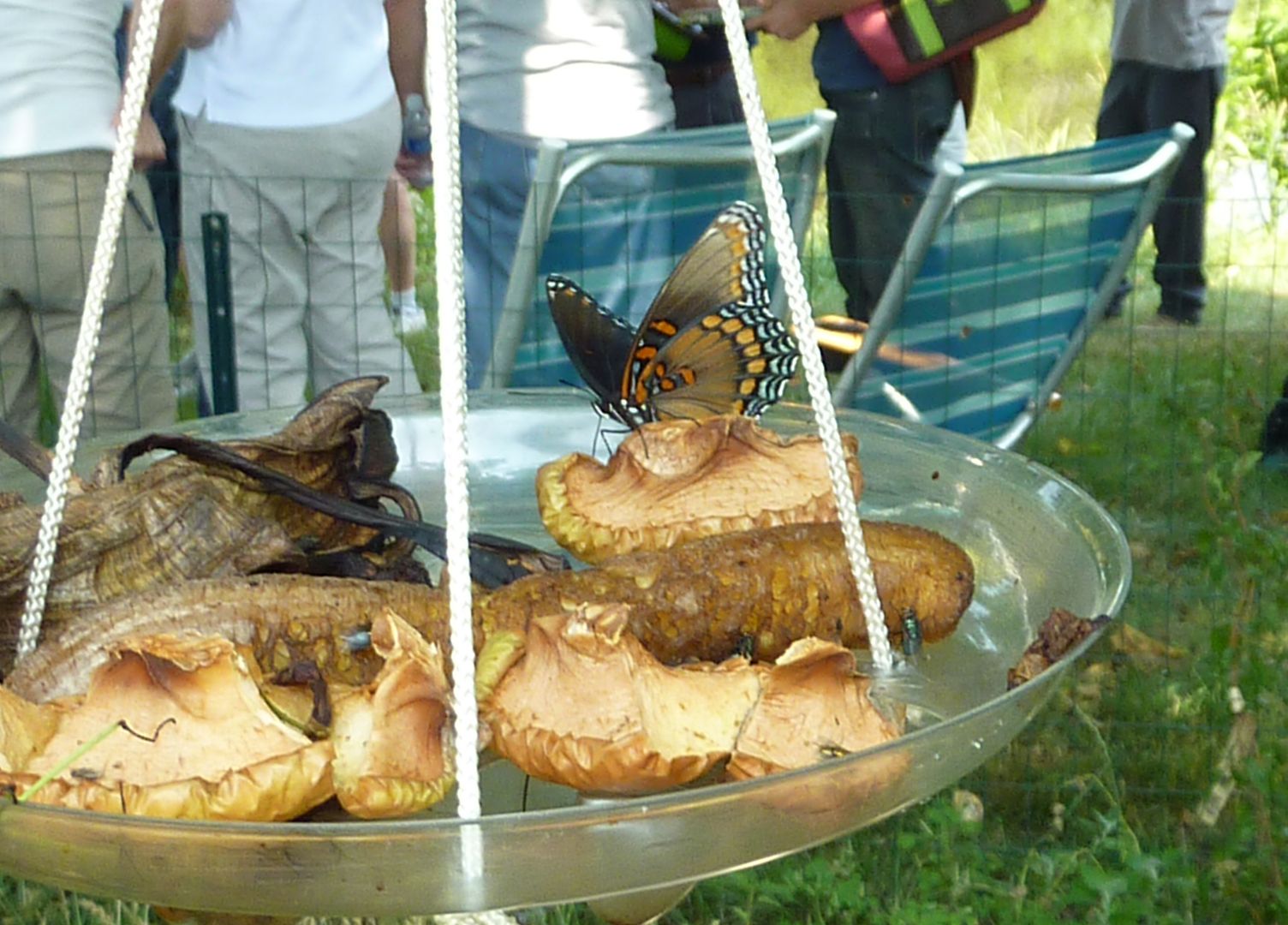 |
| Red Spotted Purple feeding on rotten fruit. |
 |
| Eastern Comma, Polygonia comma, wings open. |
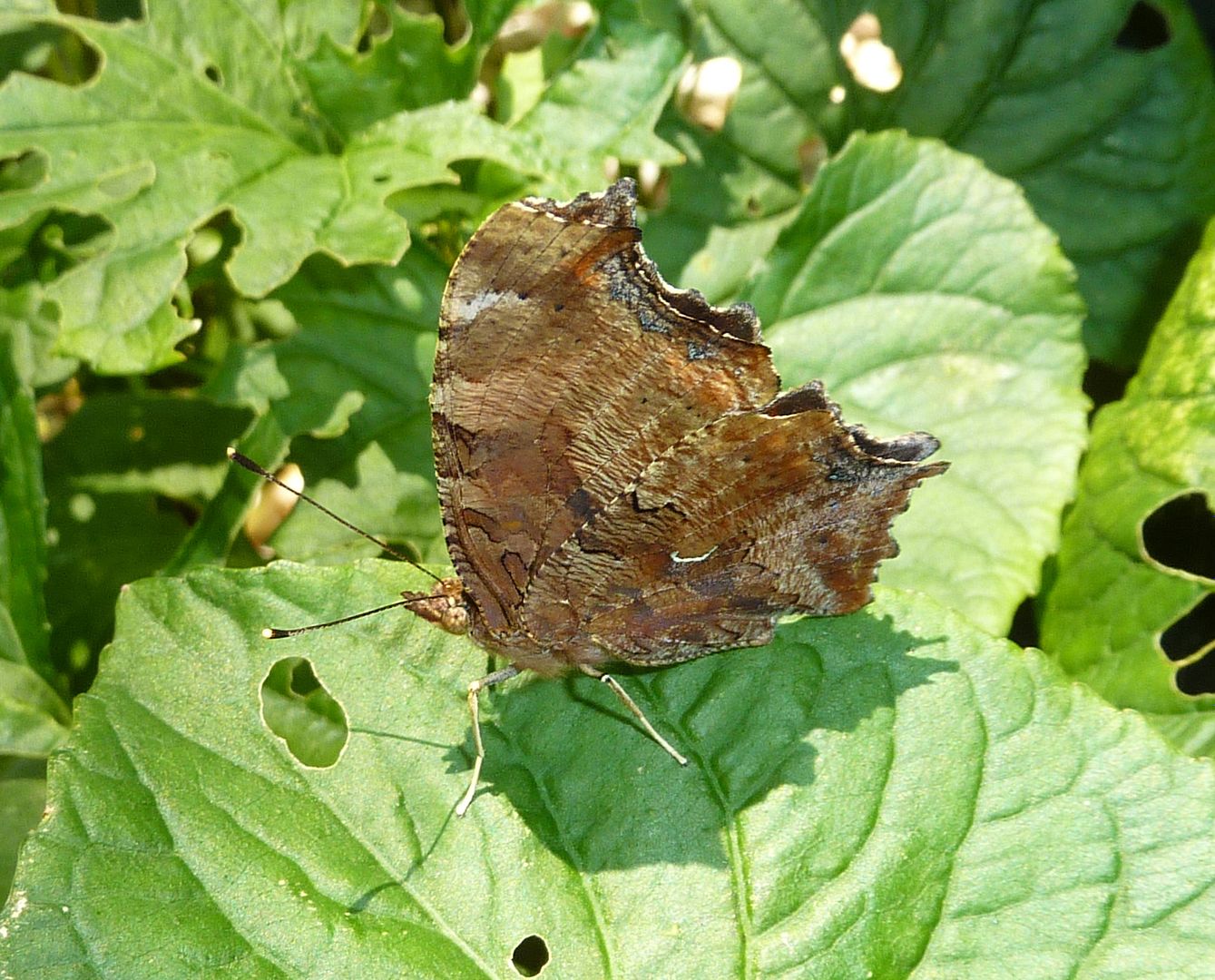 |
| Eastern Comma, Polygonia comma, with the wings closed. |
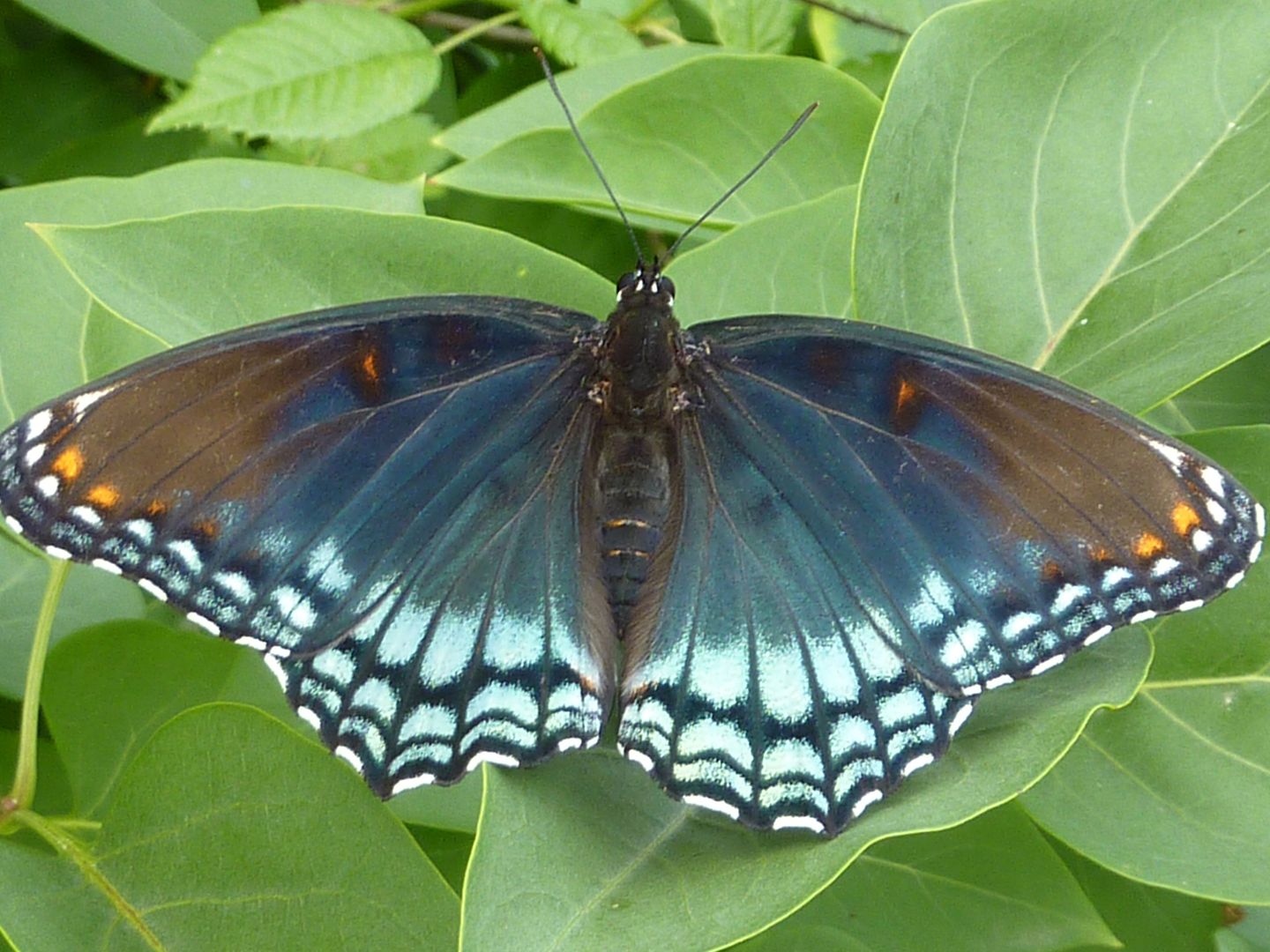 |
| Red Spotted Purple, Limenitis arthemis. This is one of those black swallowtails that are easy to get confused with other species like the Pipevine, Spice Bush, and Black Swallowtails. To confound the matter worse this species has a white stripped called the White Admiral. The Eastern Tiger Swallowtail female can also have a black form. |
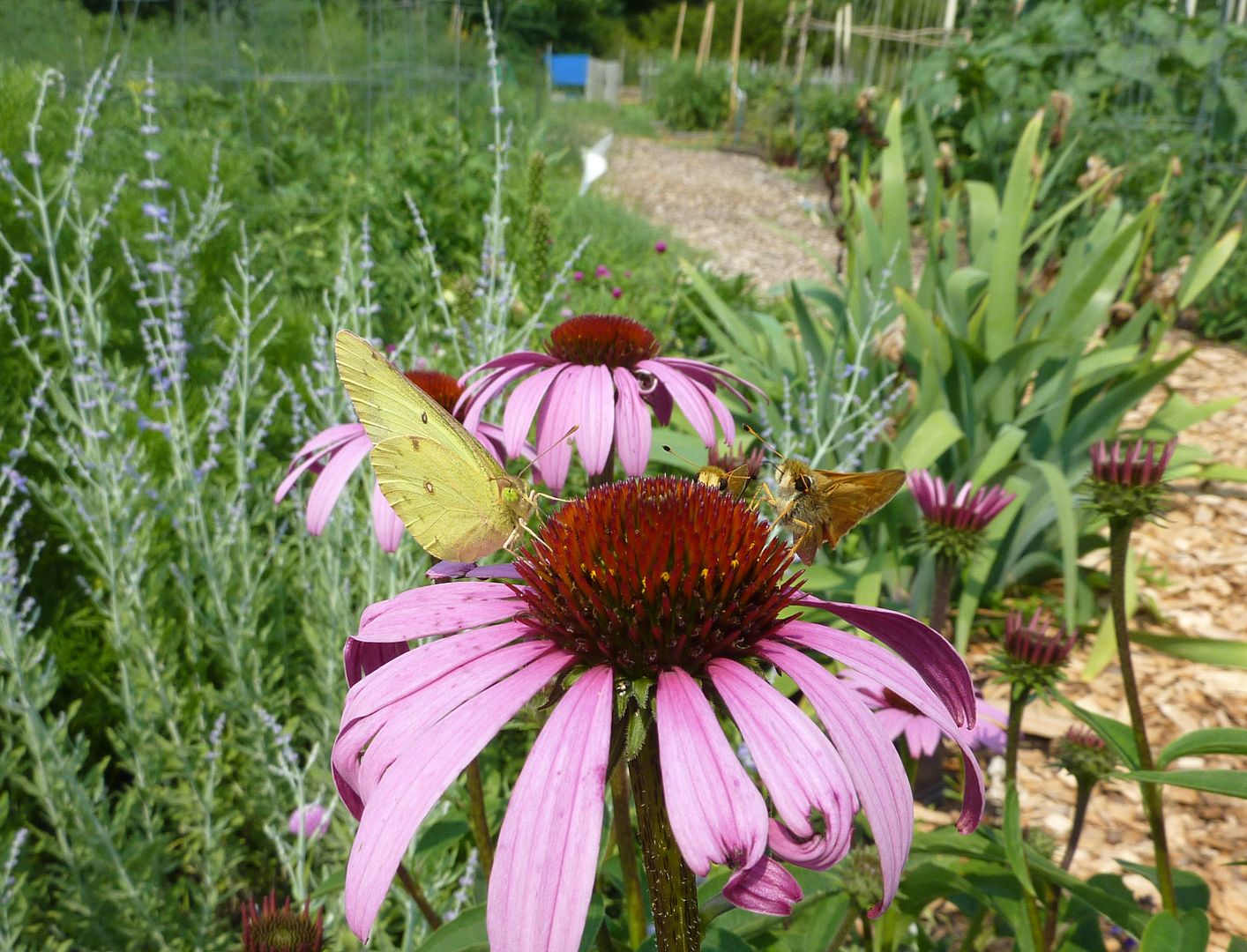 |
| Cloudless Sulphur, (I think) Phoebis sennae. Or maybe the Clouded Sulphur, Colias philodice. Anyhow a Sulphur butterfly on a purple coneflower. |
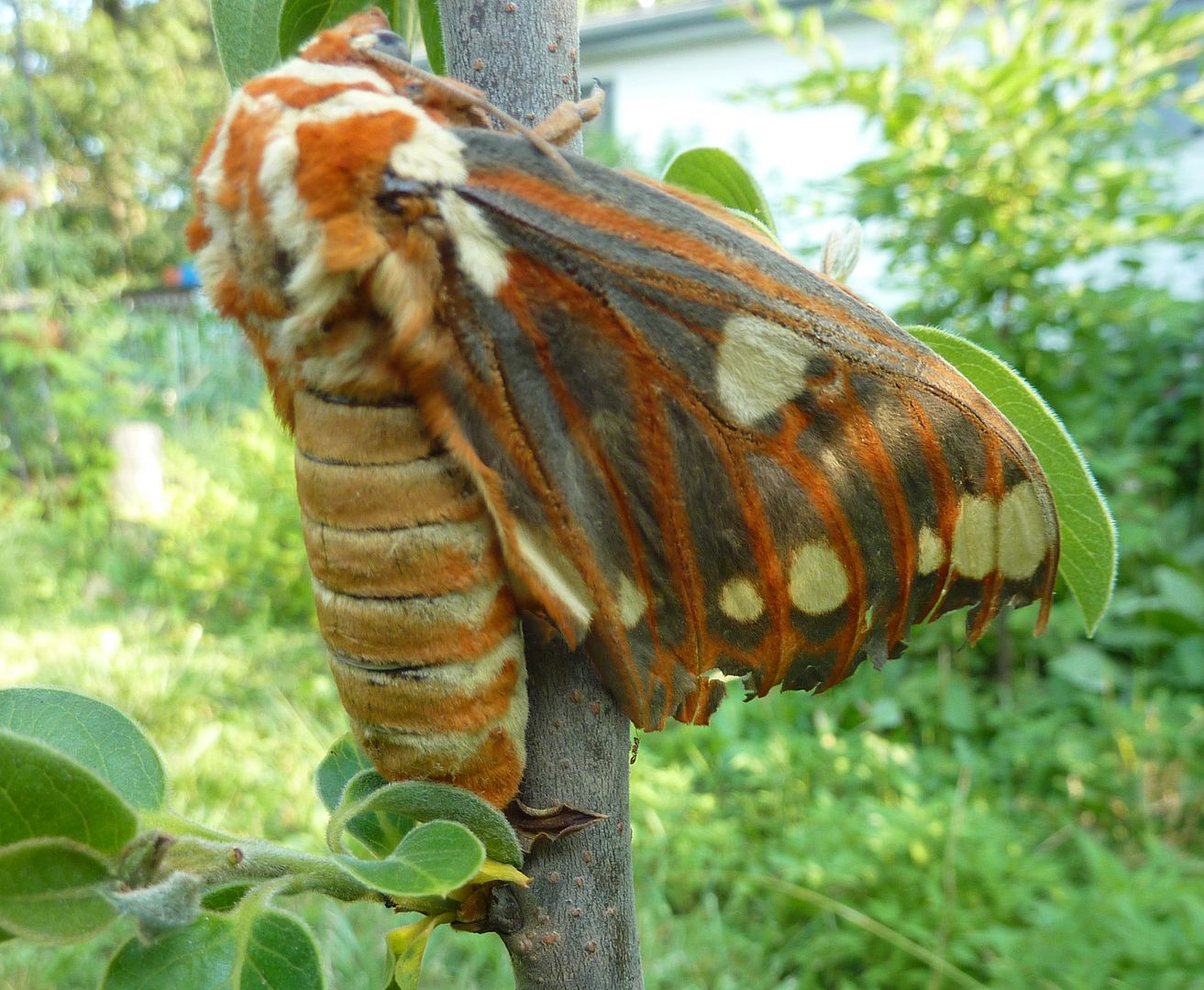 |
| Regal Moth, Citheronia regalis. The caterpillar also has a common name as the Hickory Horned Devil for it's enormous size (up to 7 inches!) and long bright red claw-like horns protruding just behind the head. Also note the incredibly small Acorn Ant just below the wing on the branch. |
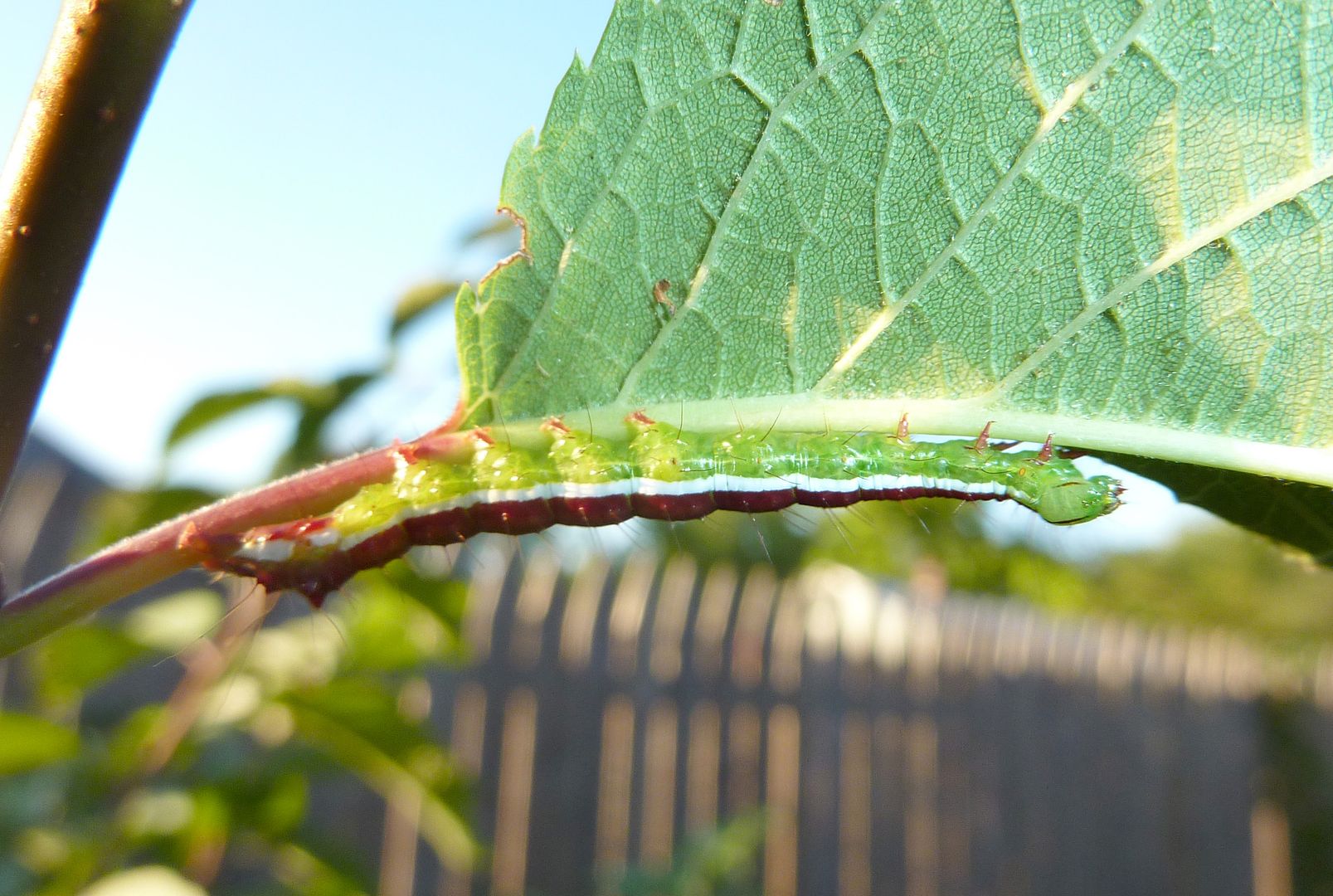 |
| I've no idea what this is but it's another caterpillar on my native plum tree. |
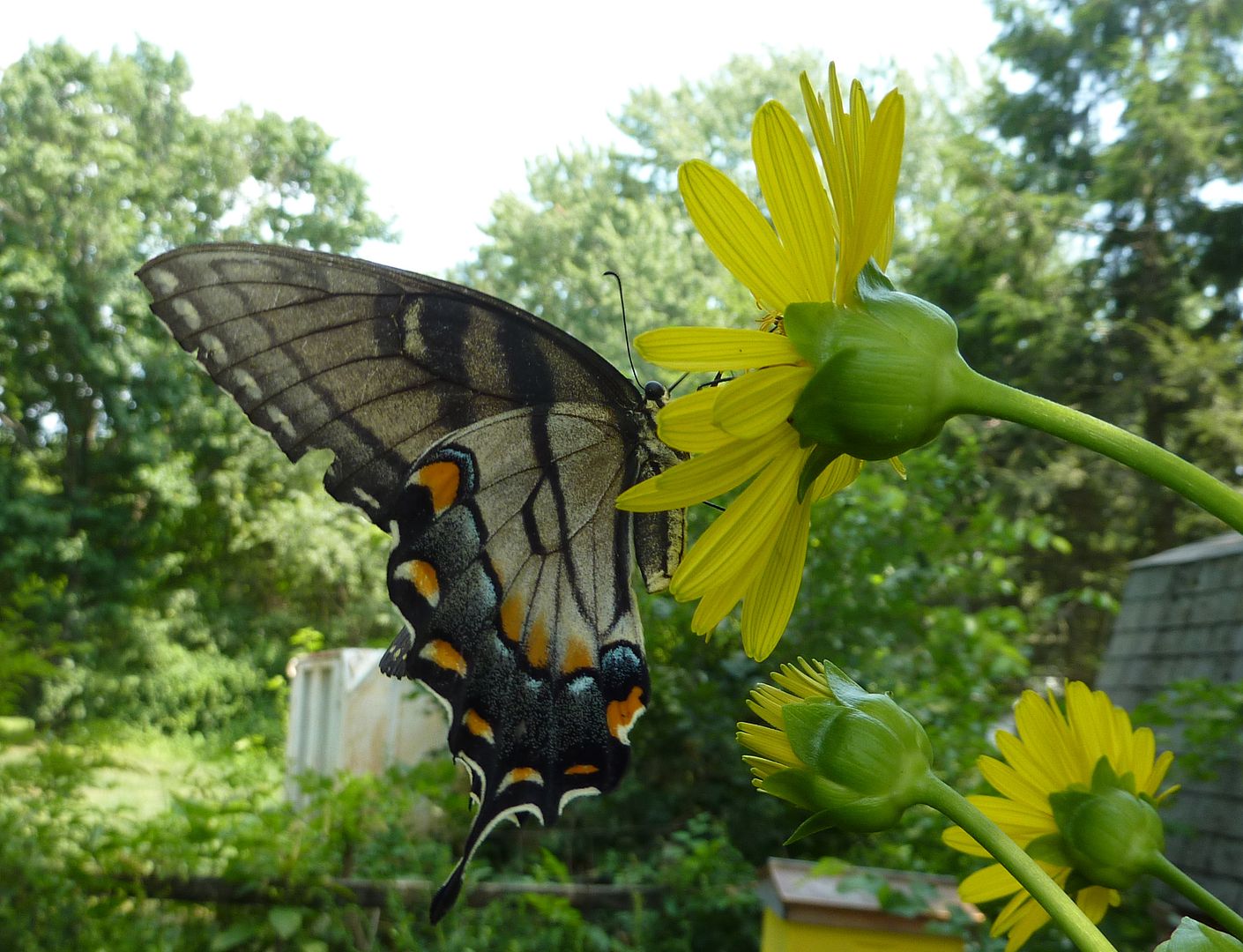 |
| Tiger Swallowtail, Papilio glaucus. |
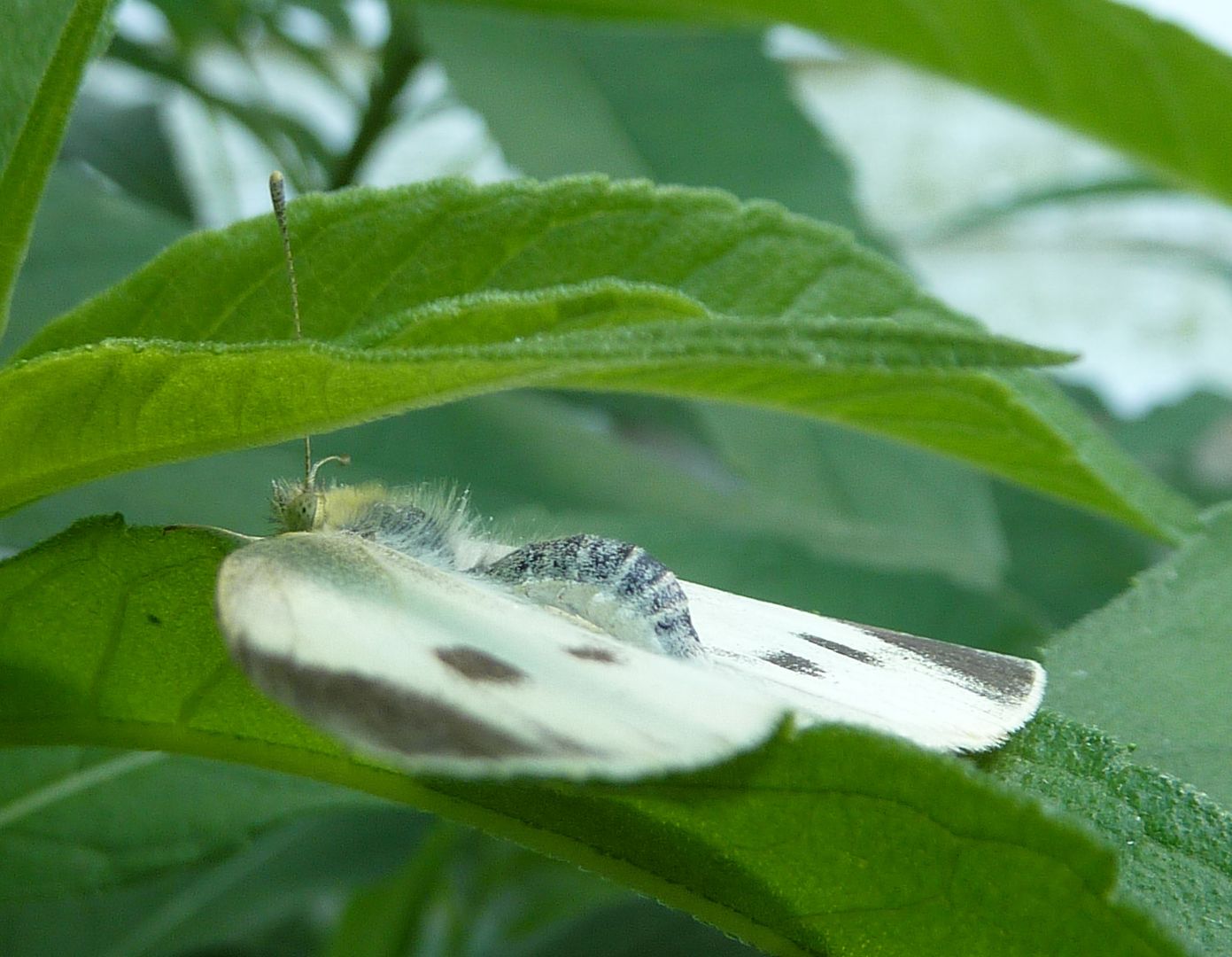 |
| Cabbage butterfly, Pieris rapae. I've herd this common butterfly called an invasive import. While I'm not certain on the invasive part, I am certain on the imported part. It's hard to call something invasive when it's host plant (Brassica sp.) isn't native to this continuant. |
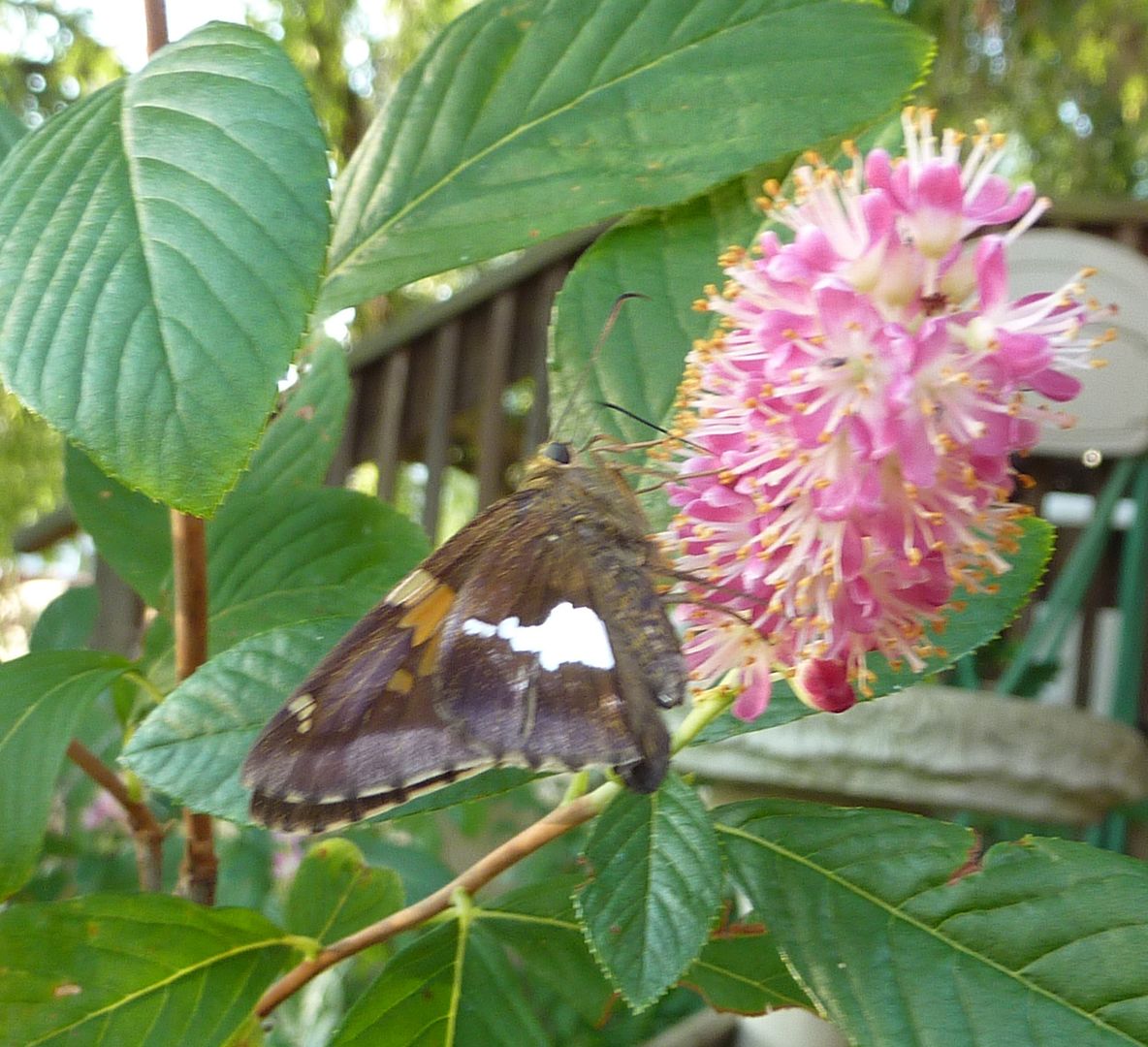 |
| This is the Silver Spotted Sipper, Epargyreus clarus. I'm highlighting this one because I find skippers to be boring. The dominant species(s) here are all plane brown little things. While I don't find them annoying I think the absence of bright colors makes them bland. The Silver Spotted one though is much larger and actually has color. I'd admit though I've seen orange and yellowish skippers, but they're not common here. The Silver Spot at least makes this species easy to recognize. |
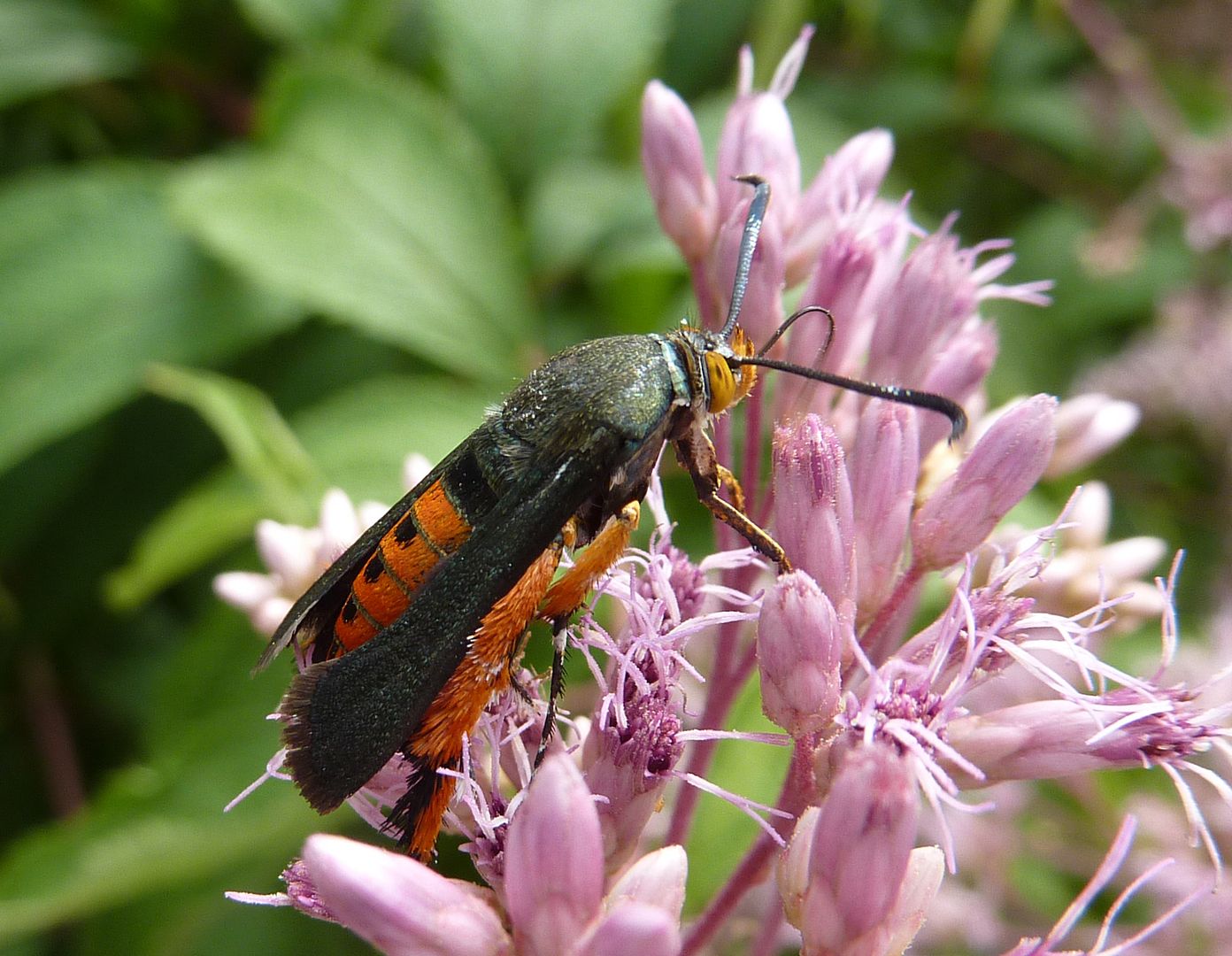 |
| The Squash Borer Moth, Melittia cucurbitae. This is a wasp mimicking moth that flies during the day time. The host plant is anything in the squash family, namely pumpkin, cucumber, zucchini, musk melon (cantaloupe in America) gourds and so on. |
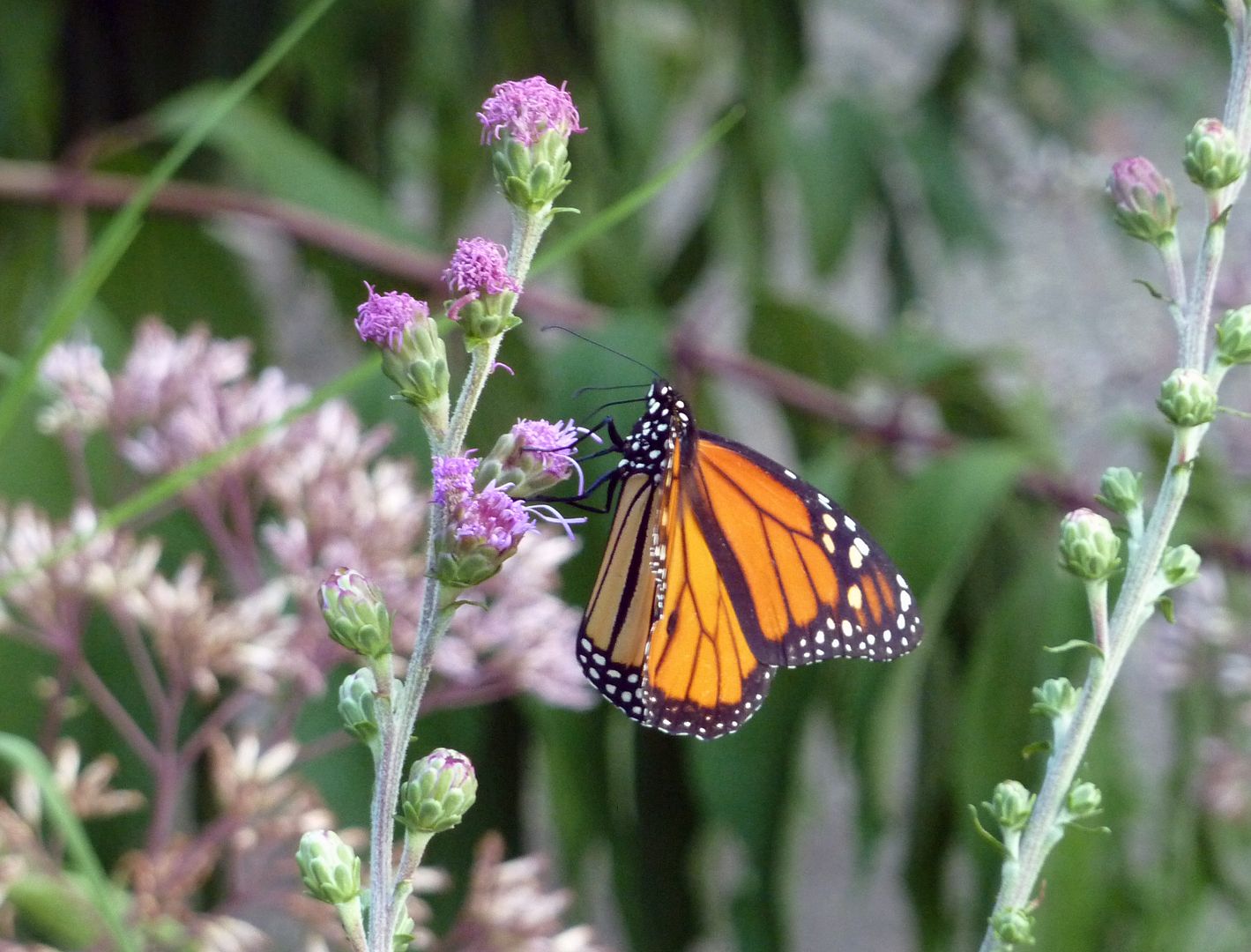 |
| Monarch Butterfly, Danaus plexippus. |
 |
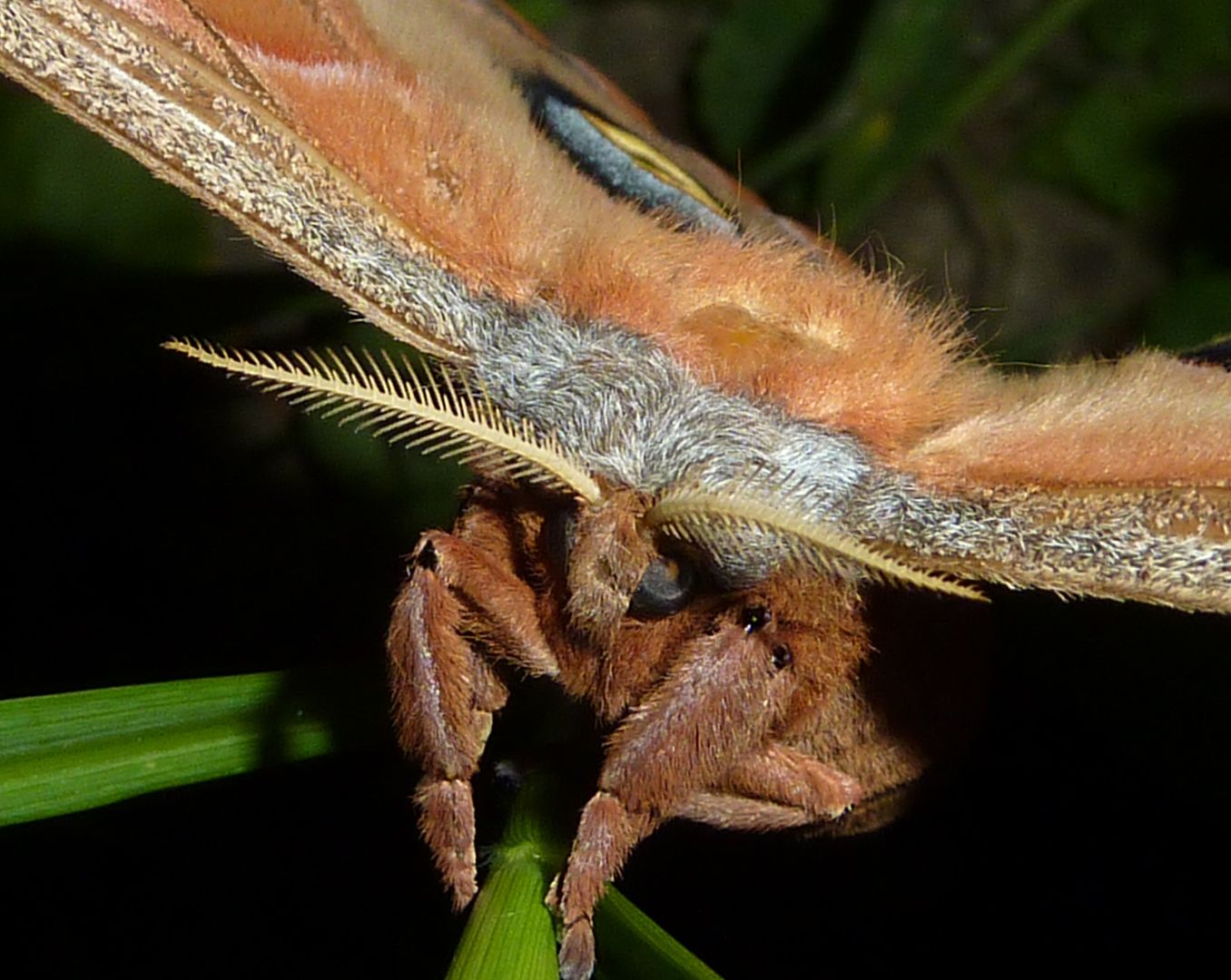
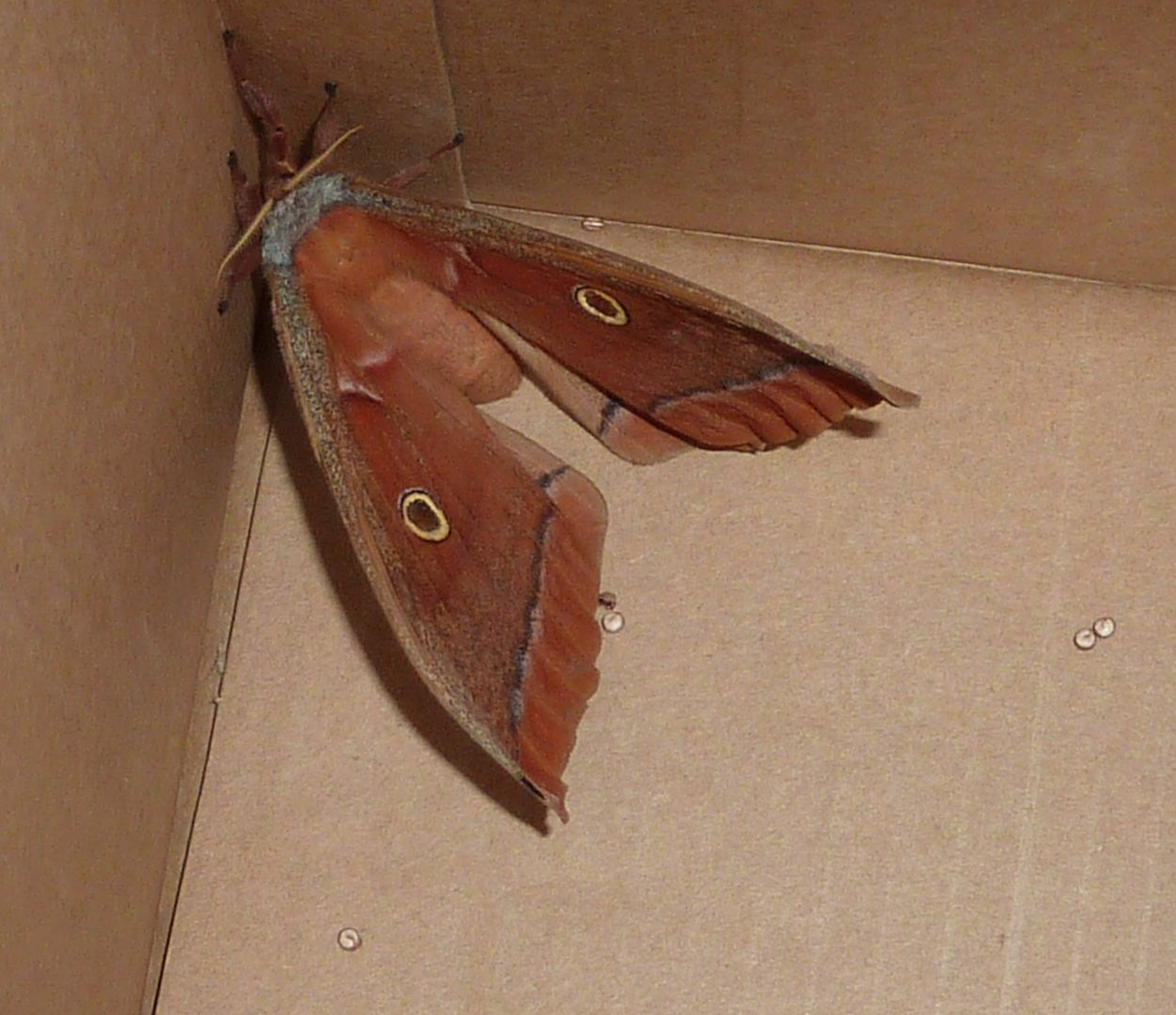
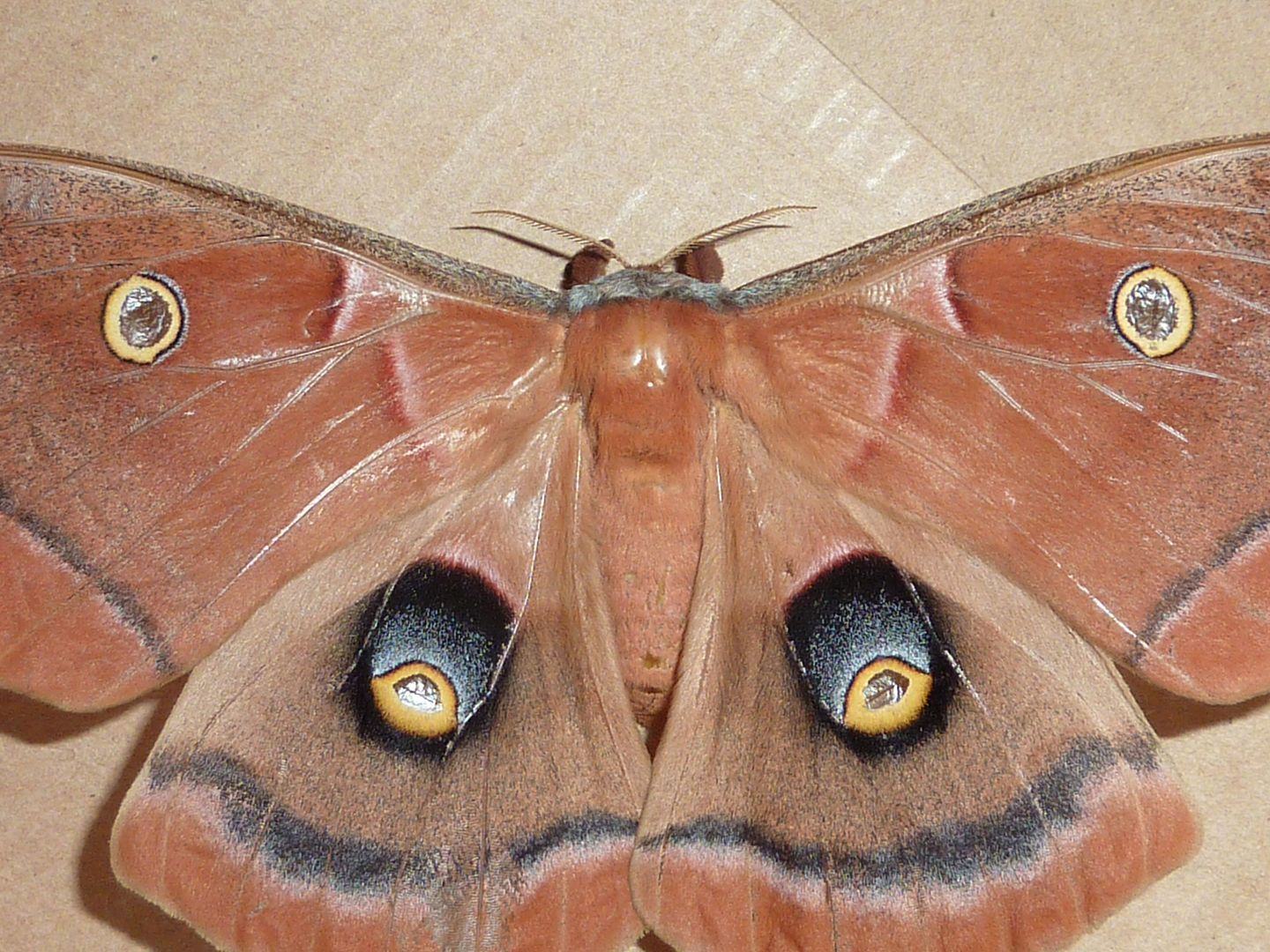
| Polyphemus Moth, Antheraea polyphemus. I found this female just moments after she'd finished mating behind work. What I believe was the male was scurrying up a building, flapping his wings to help clime to his exit. I collected the female by simply her in my car thinking, as I'd read in books, I could later put her in a paper bag and she'd lay some eggs. Well what books don't tell you is the laying of eggs has nothing to do with the paper bag, it's a response to being in darkness. She started laying eggs the moment she found the space between the driver's seat and the car door. |
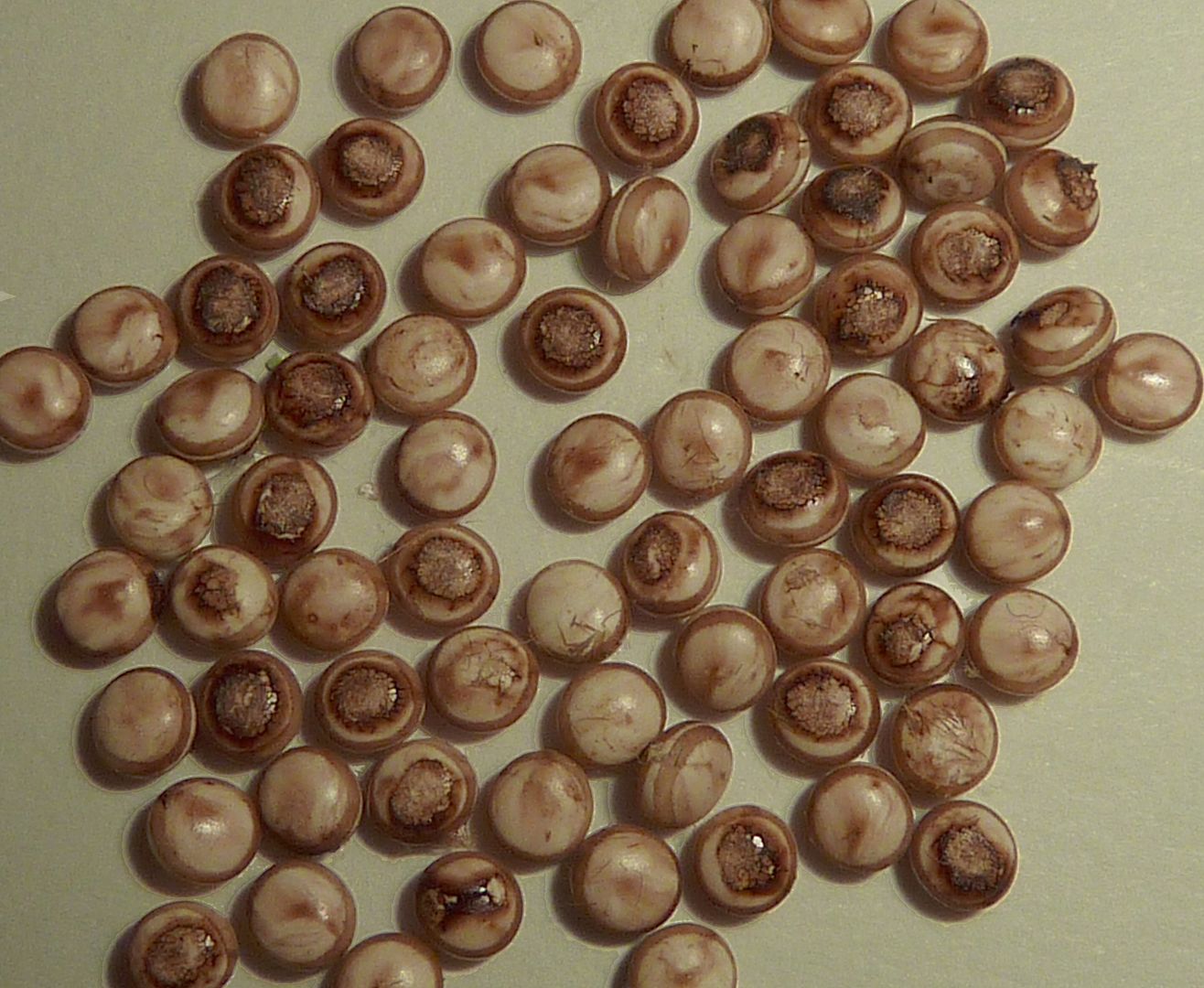 |
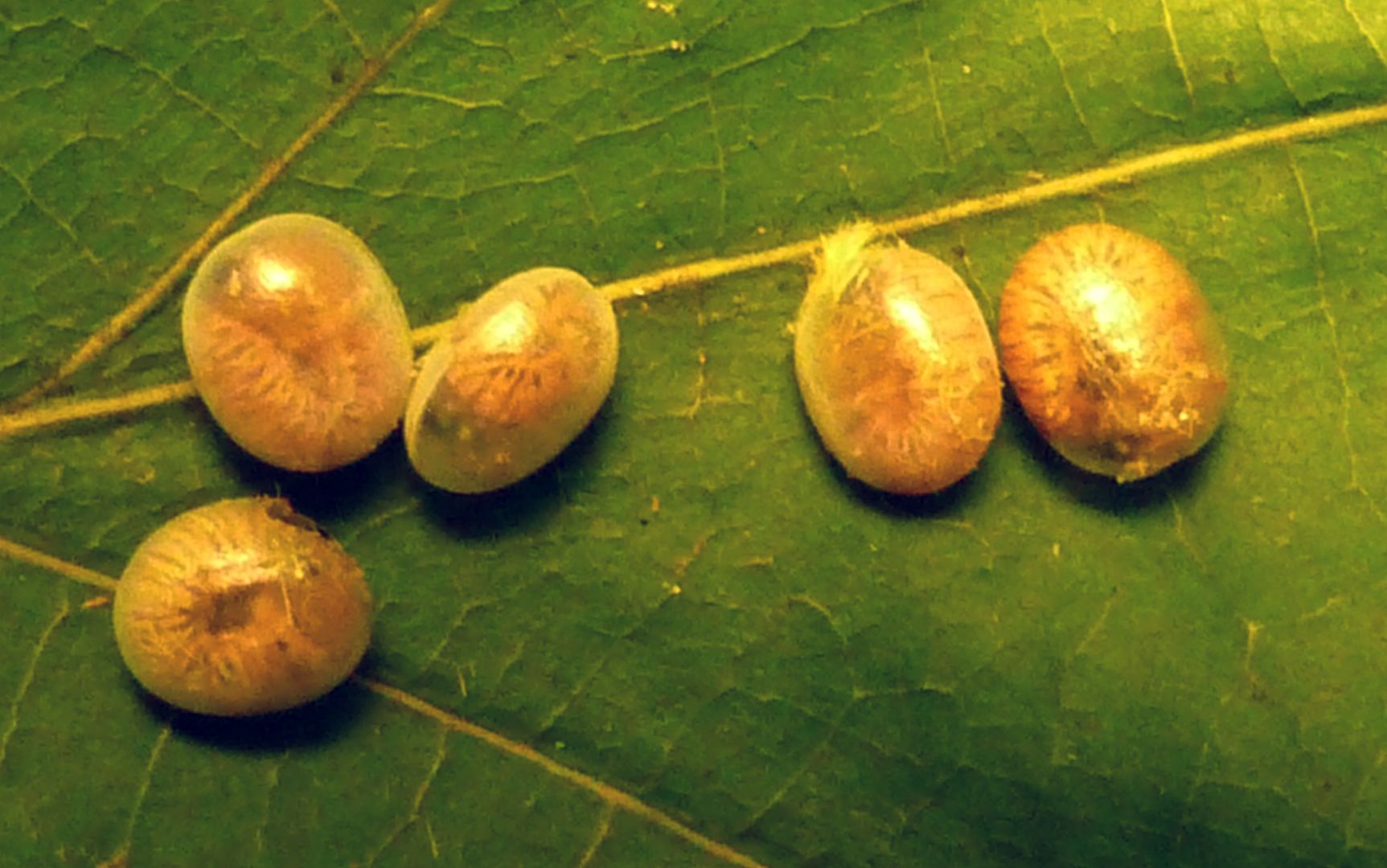
| Beautiful shell like Polyphemus eggs. |
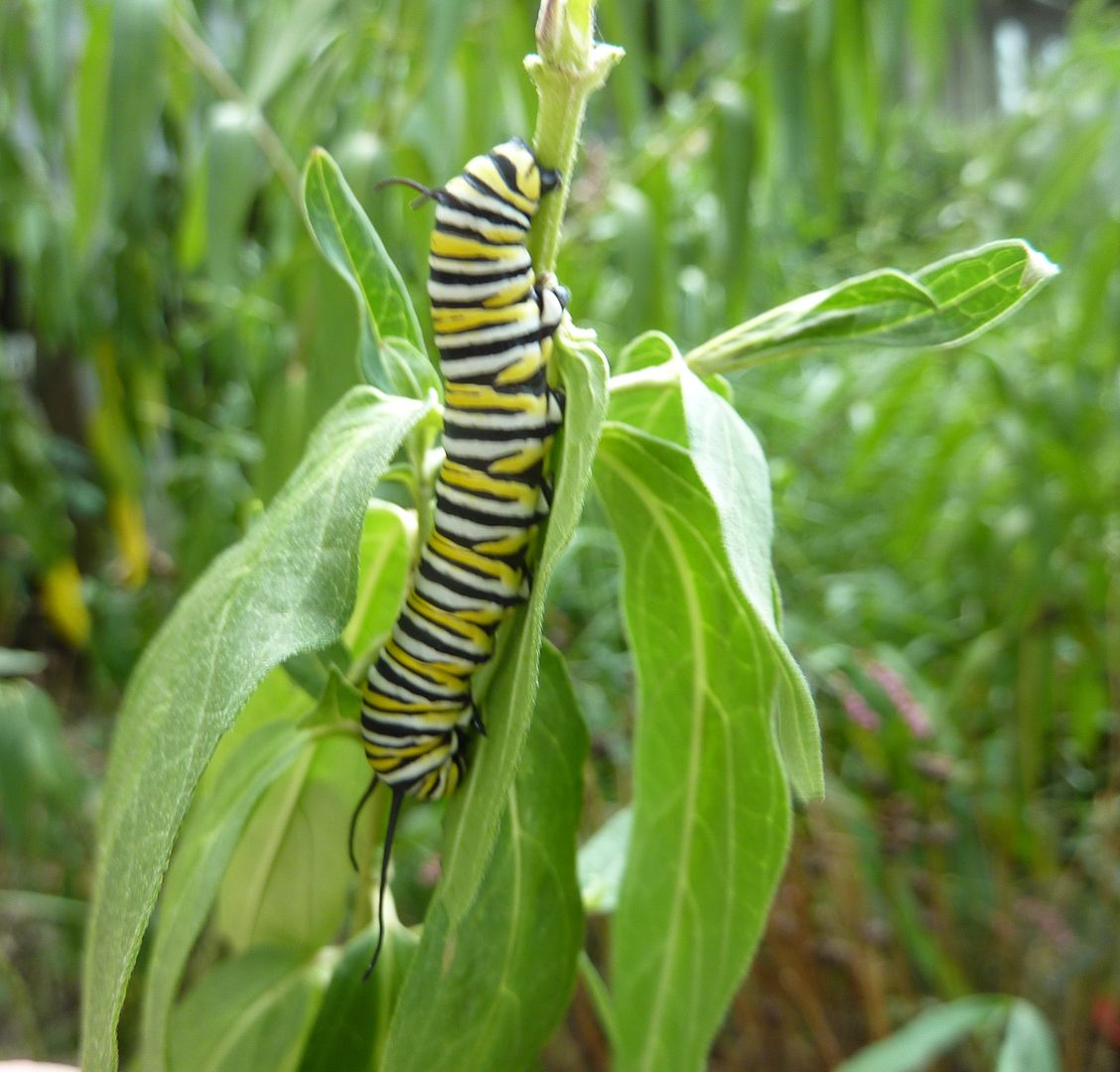 |
| Monarch Caterpillar nibbling on some Milkweed. |
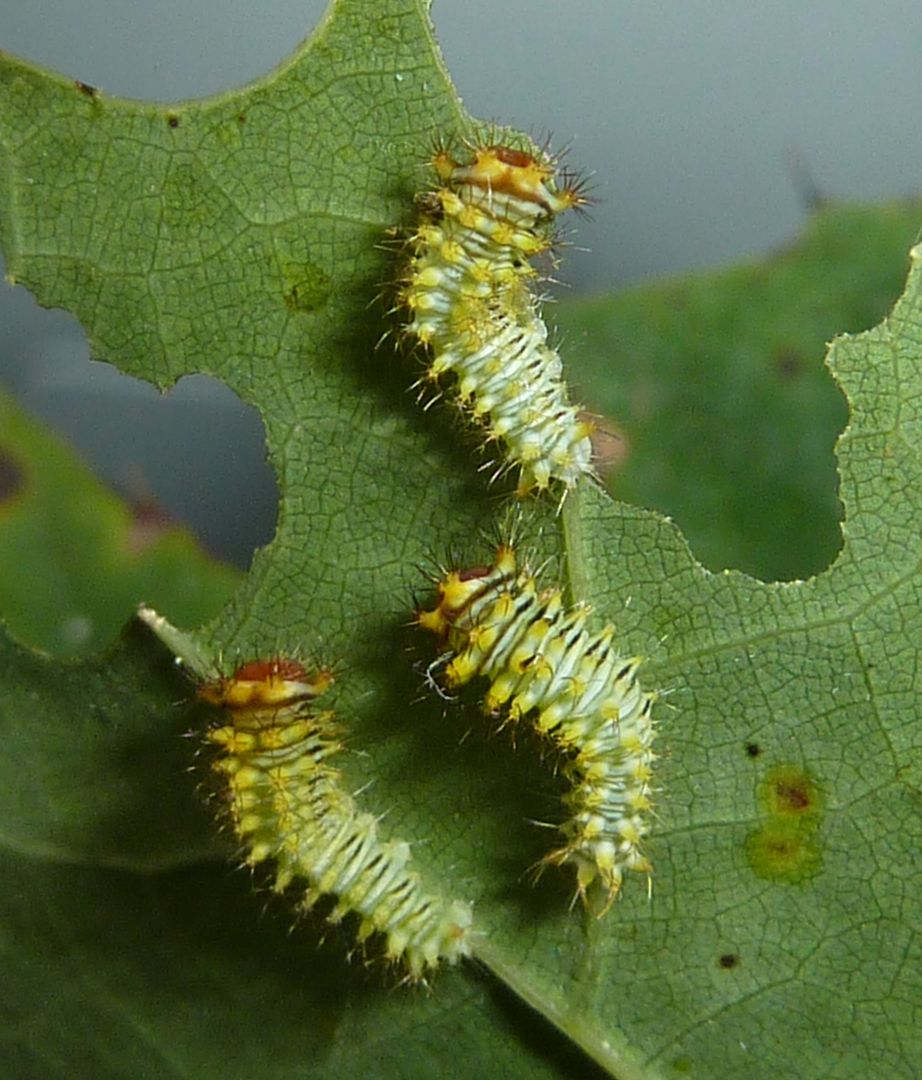 |
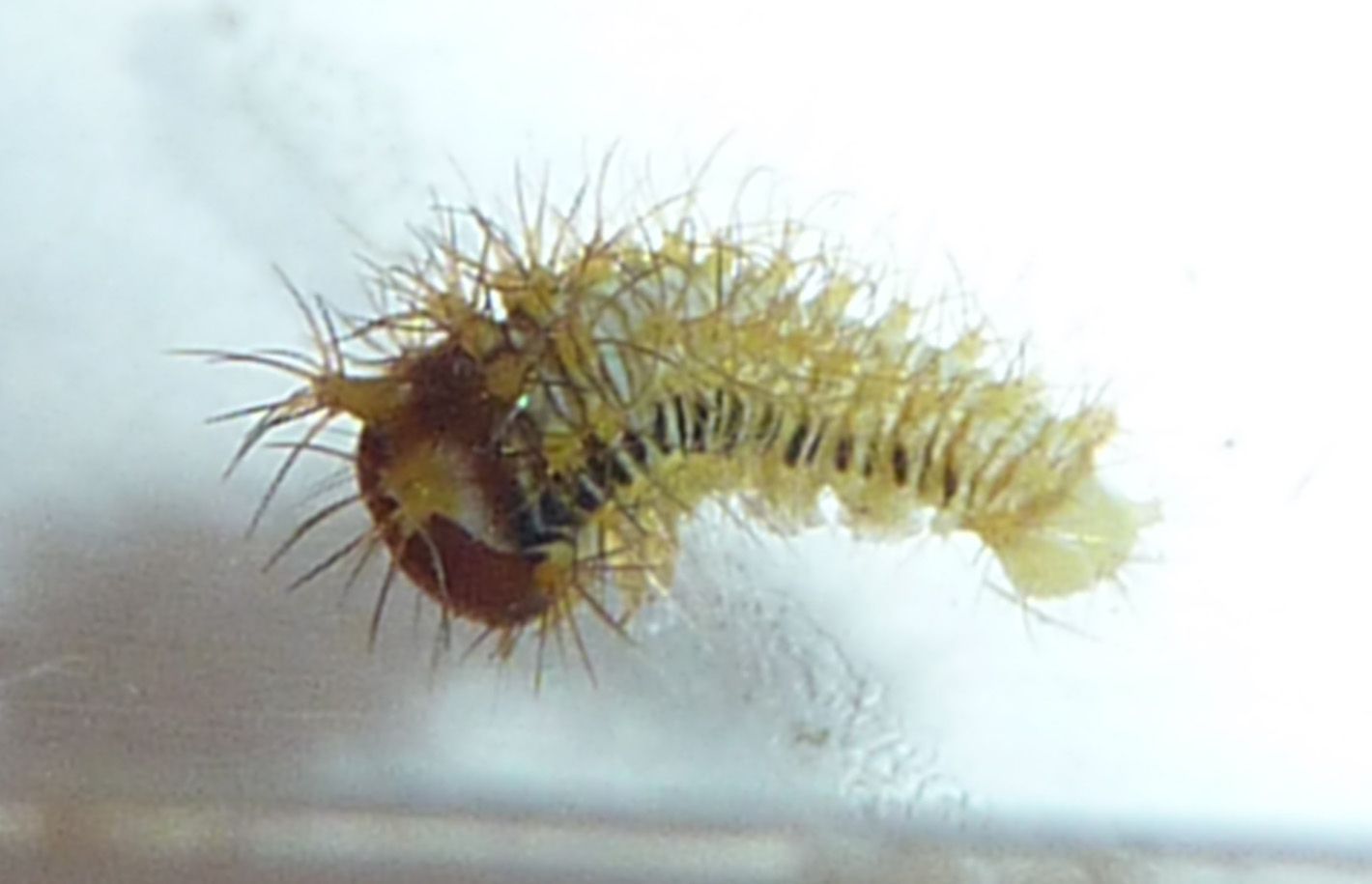
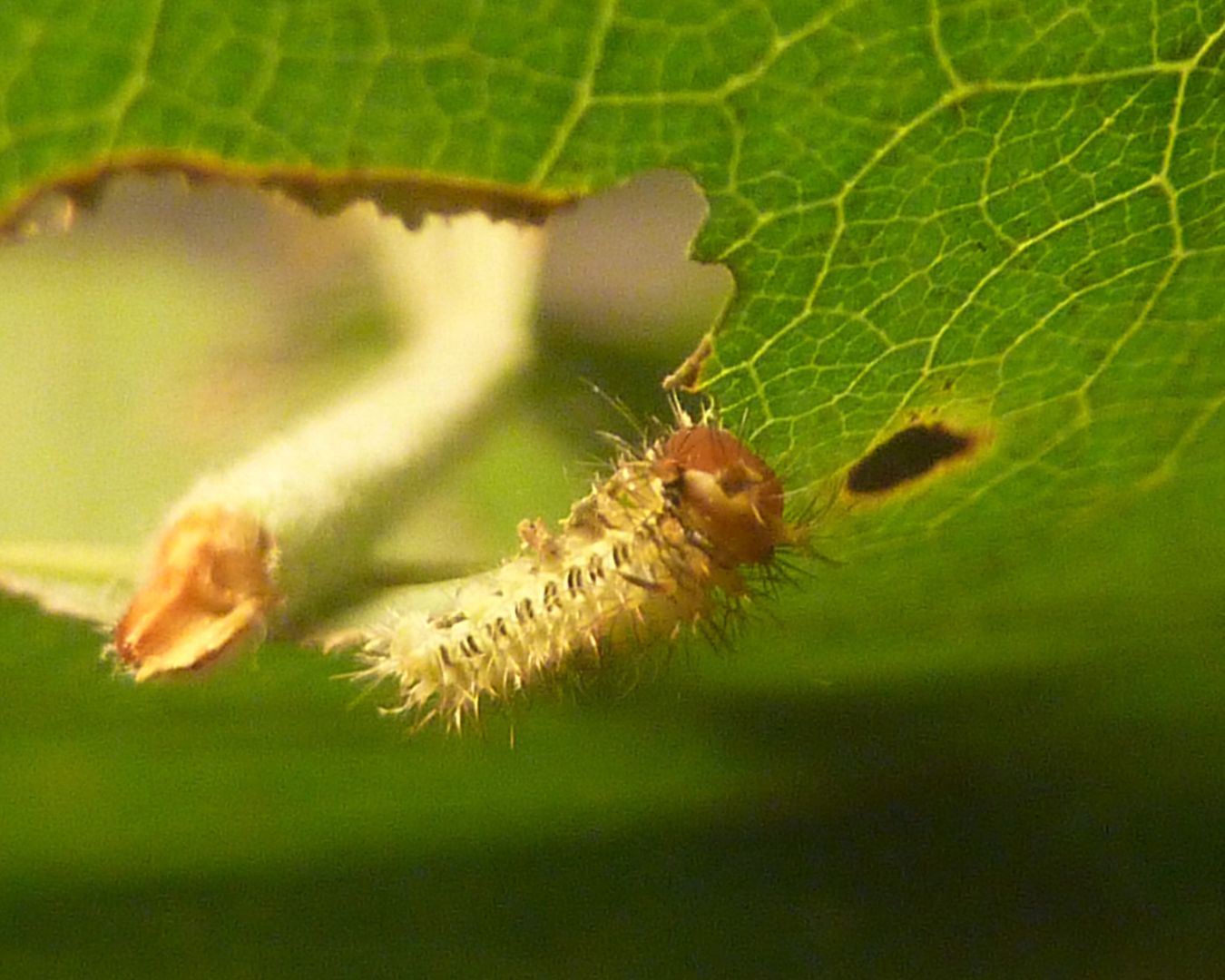
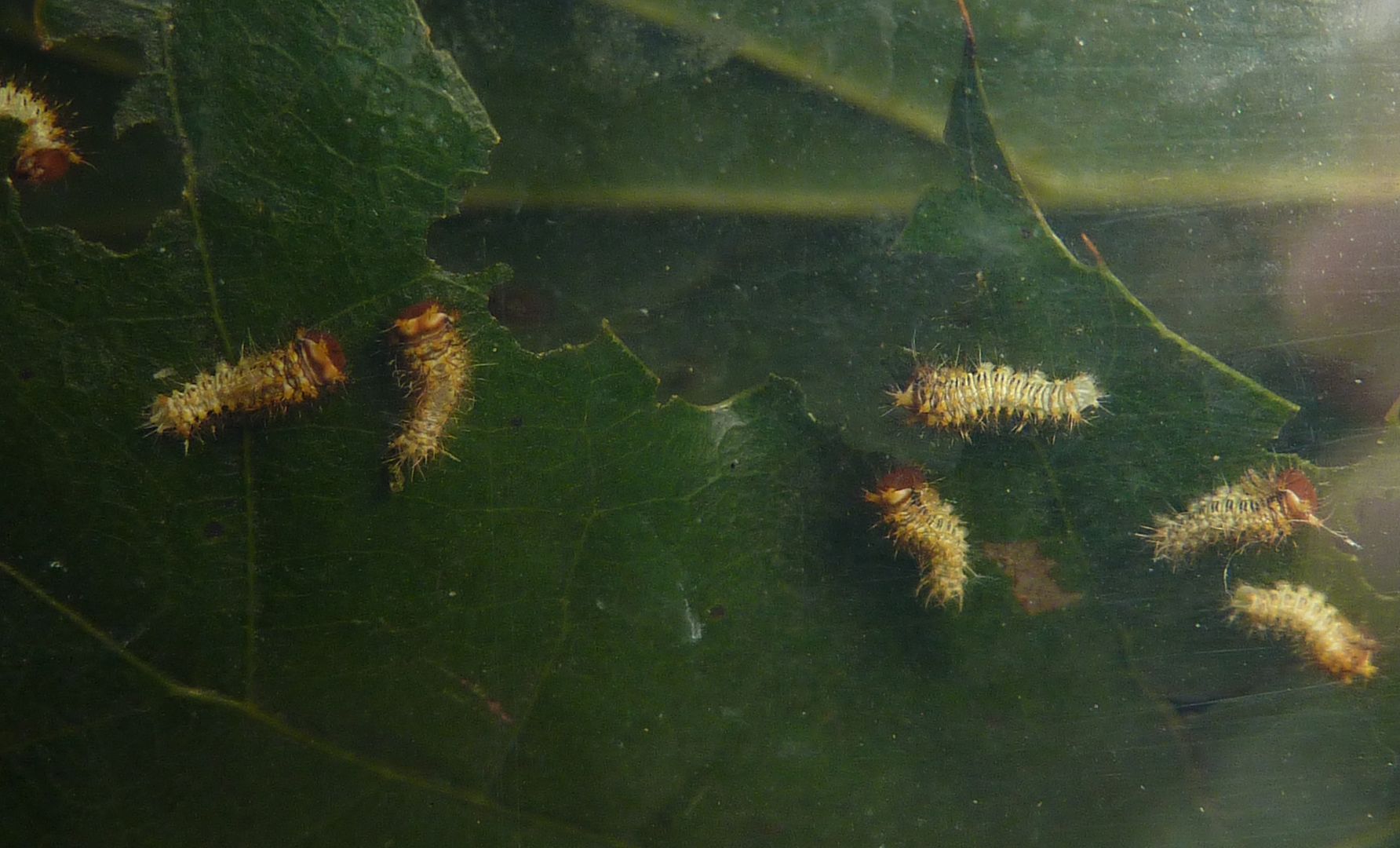
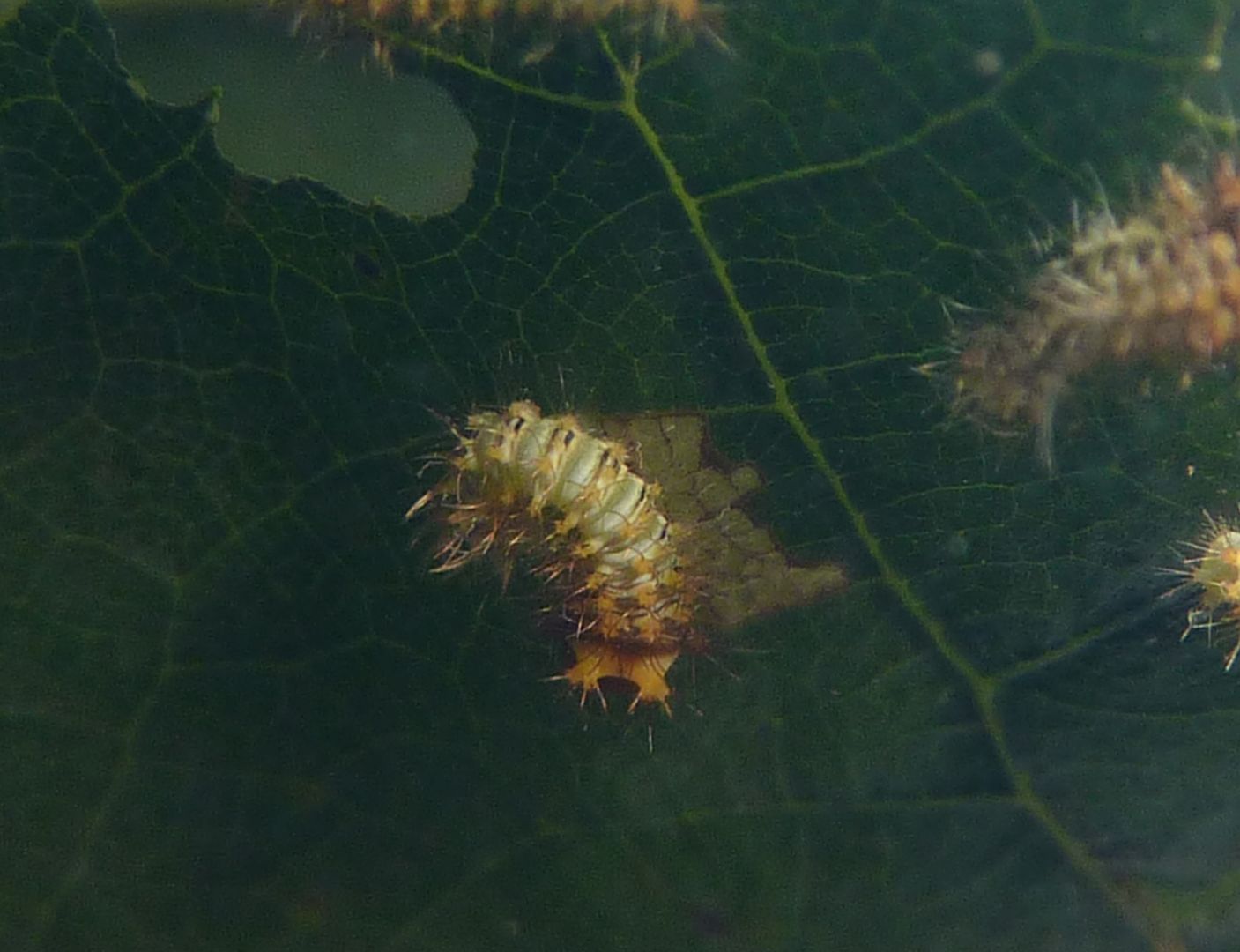
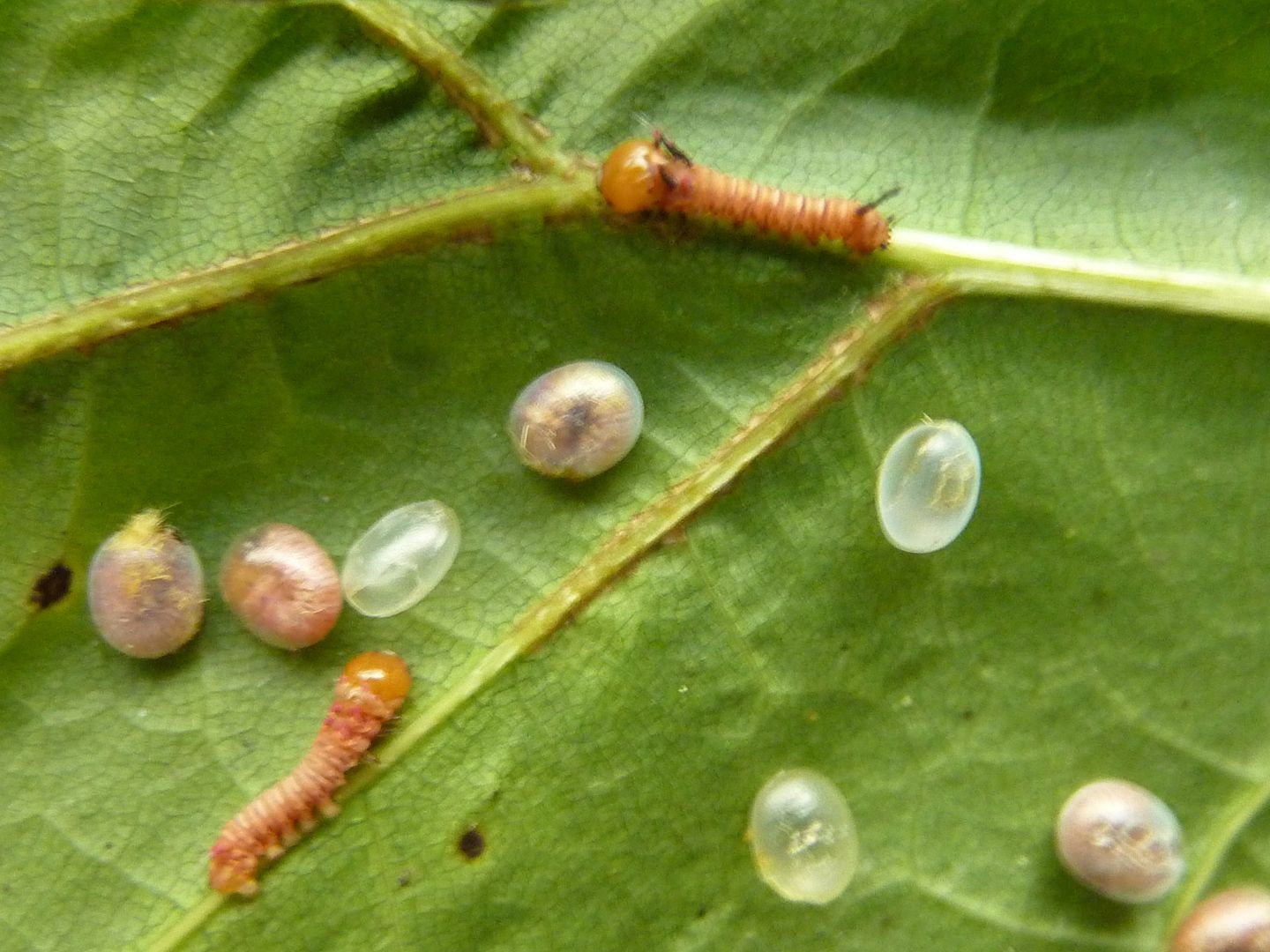
| Polyphemus caterpillars. I tried rearing them in captivity. Sadly that didn't work out. It seems young caterpillars like to wonder and quickly escaped the enlarged enclosure I put them in. If I get another chance to rear them I'll have to separate them into smaller groups first and work up that way. |
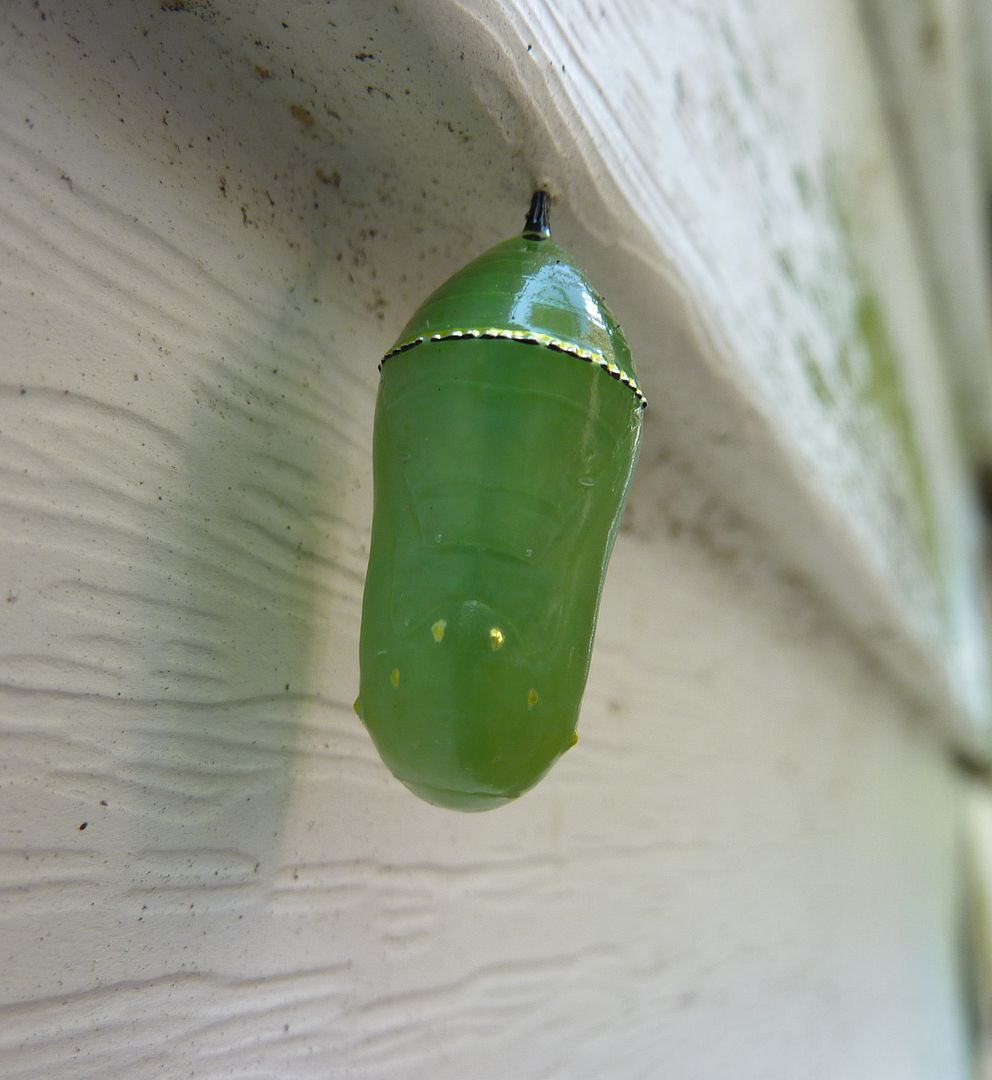 |
| Monarch Crystals |
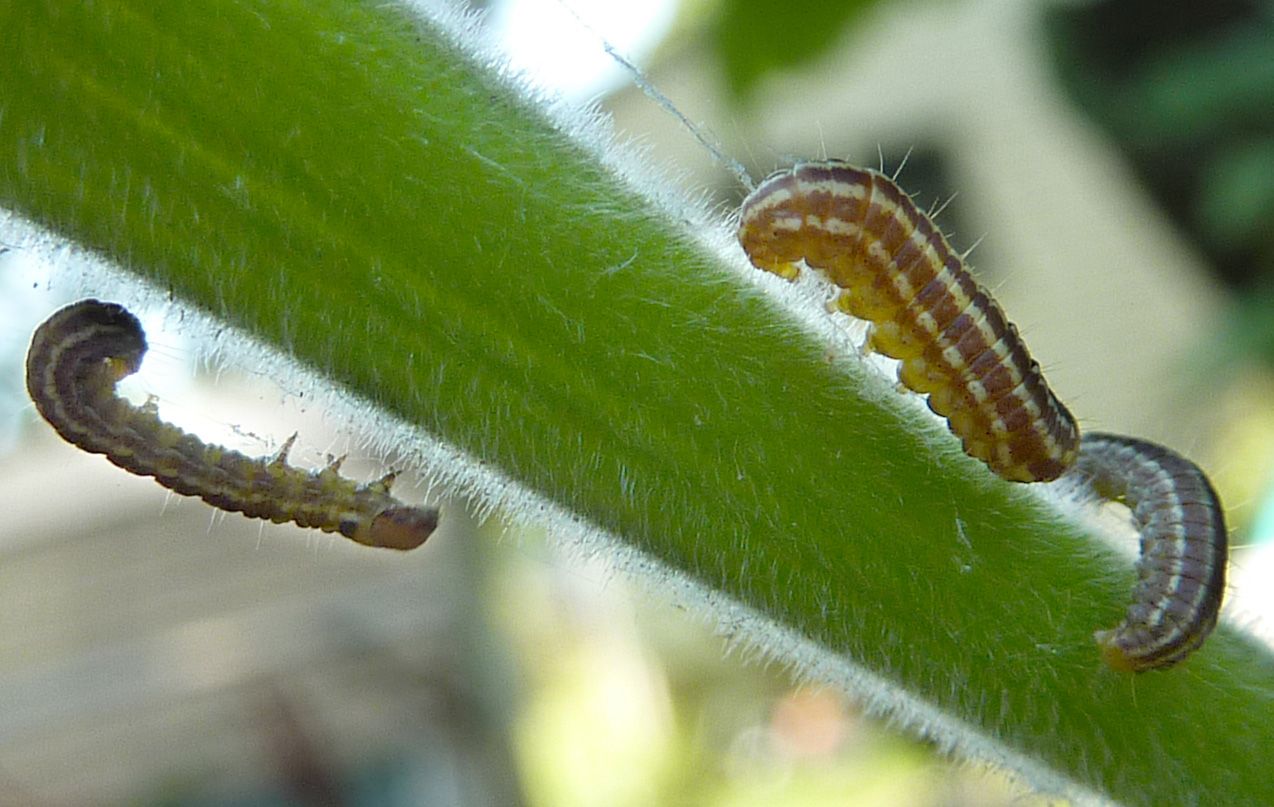 |
| Some type of caterpillar crawling out of a sunflower. |
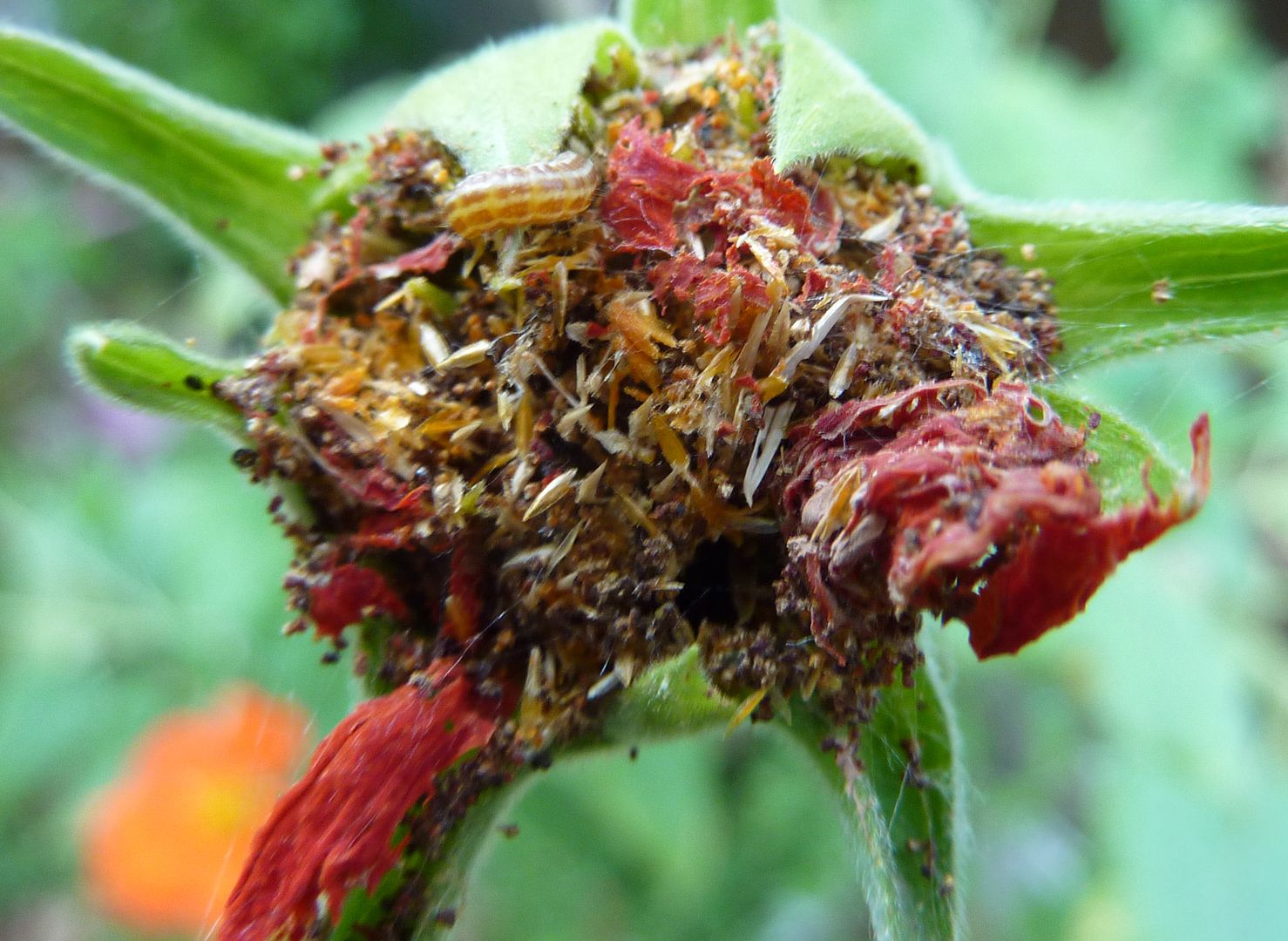 |
| Some type of caterpillar (same as above?) nibbling on a Mexican Sunflower head. What's neat is Mexican Sunflowers aren't native to most of the U.S. And yet they are the host plant to something. |
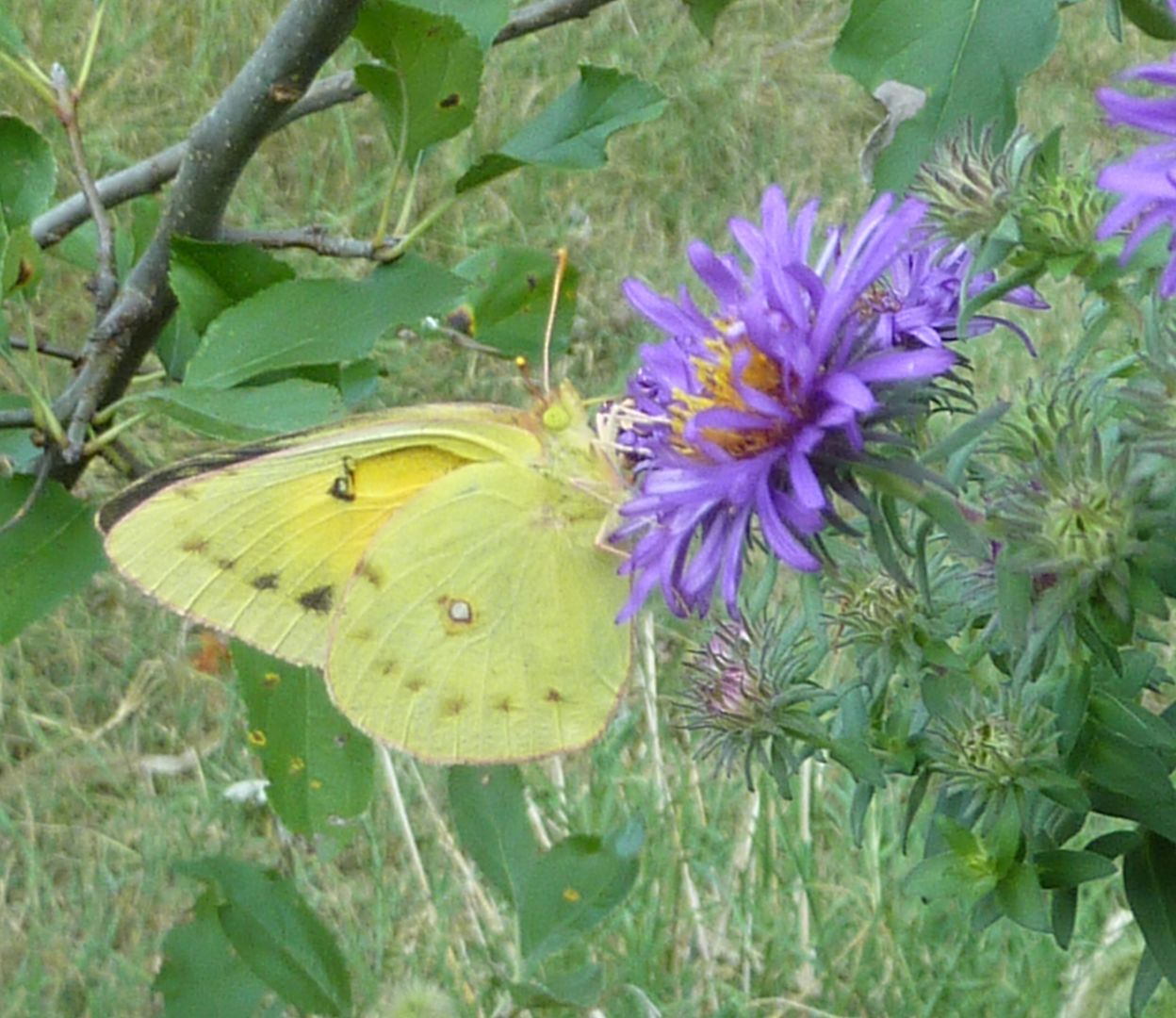 |
| Now I think this is a Clouded Sulphur, Colias philodice. |
 |
| Common Buckeye, Junonia coenia. This is amazingly pretty with all the fake eyes. Normally the eyes on the wings are to scare off birds... but this one seems to be mimicking a monster only found in the nightmares of birds the world over. |
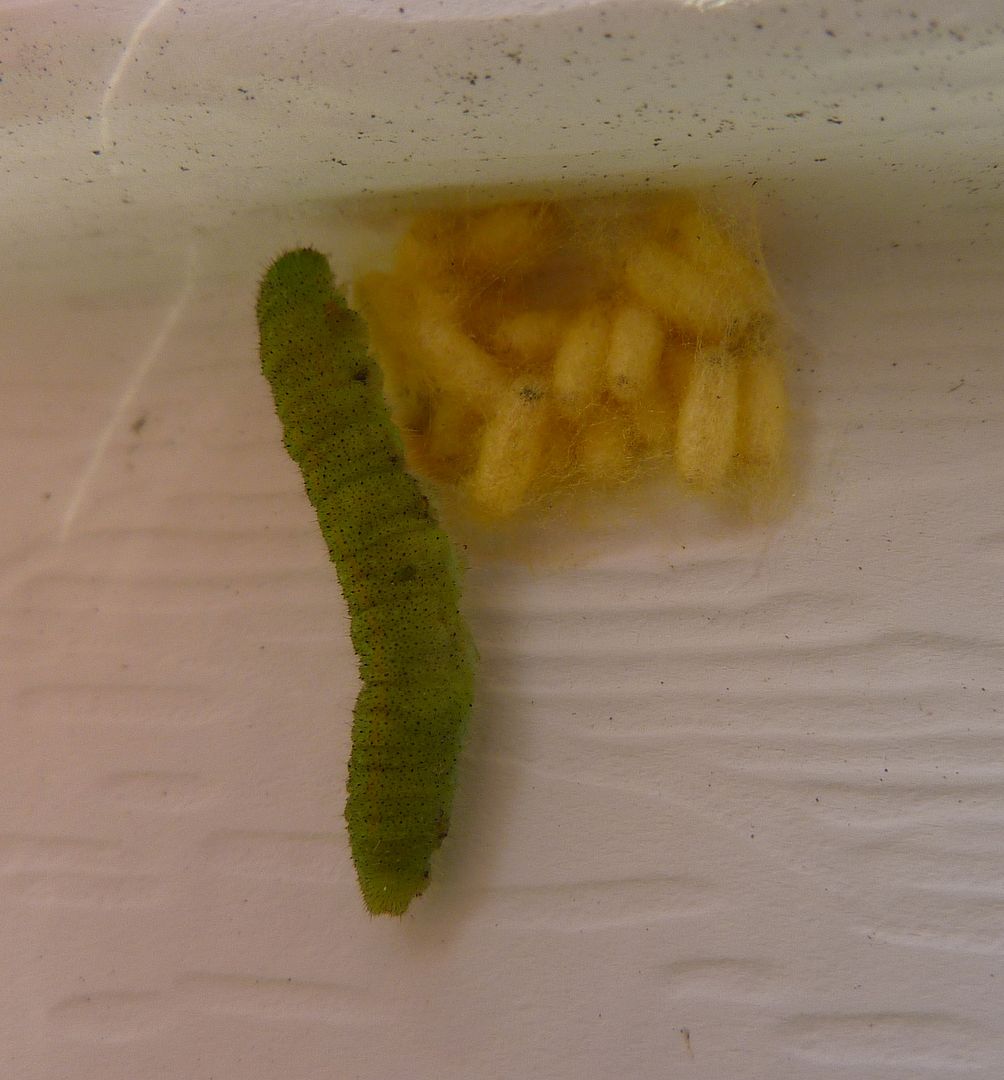 |
| Parasitized caterpillar. The inhabitants of these cocoons chewed their way out of the caterpillar's body. |
 |
| Bicolored Sallow, Sunira bicolorago. I think. |
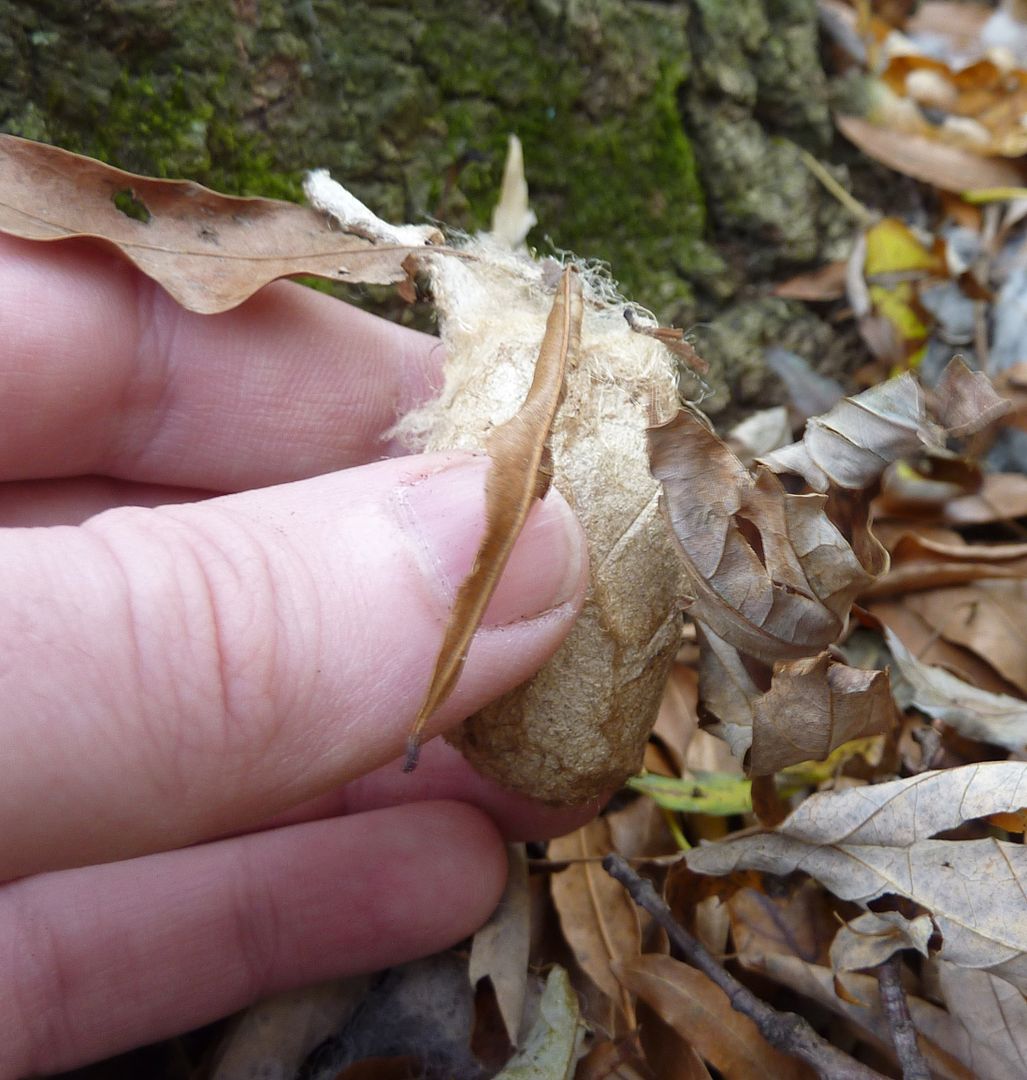 |
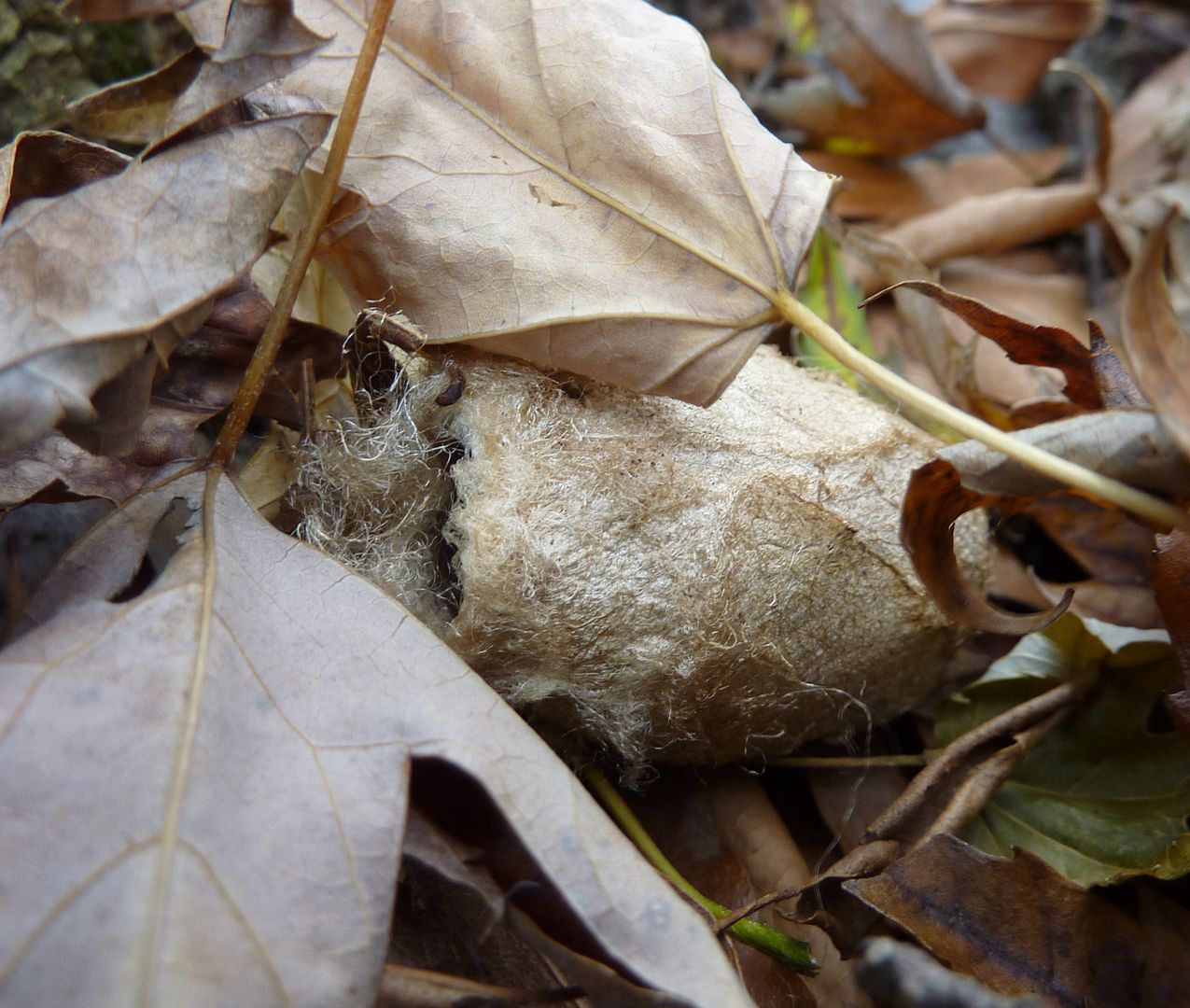
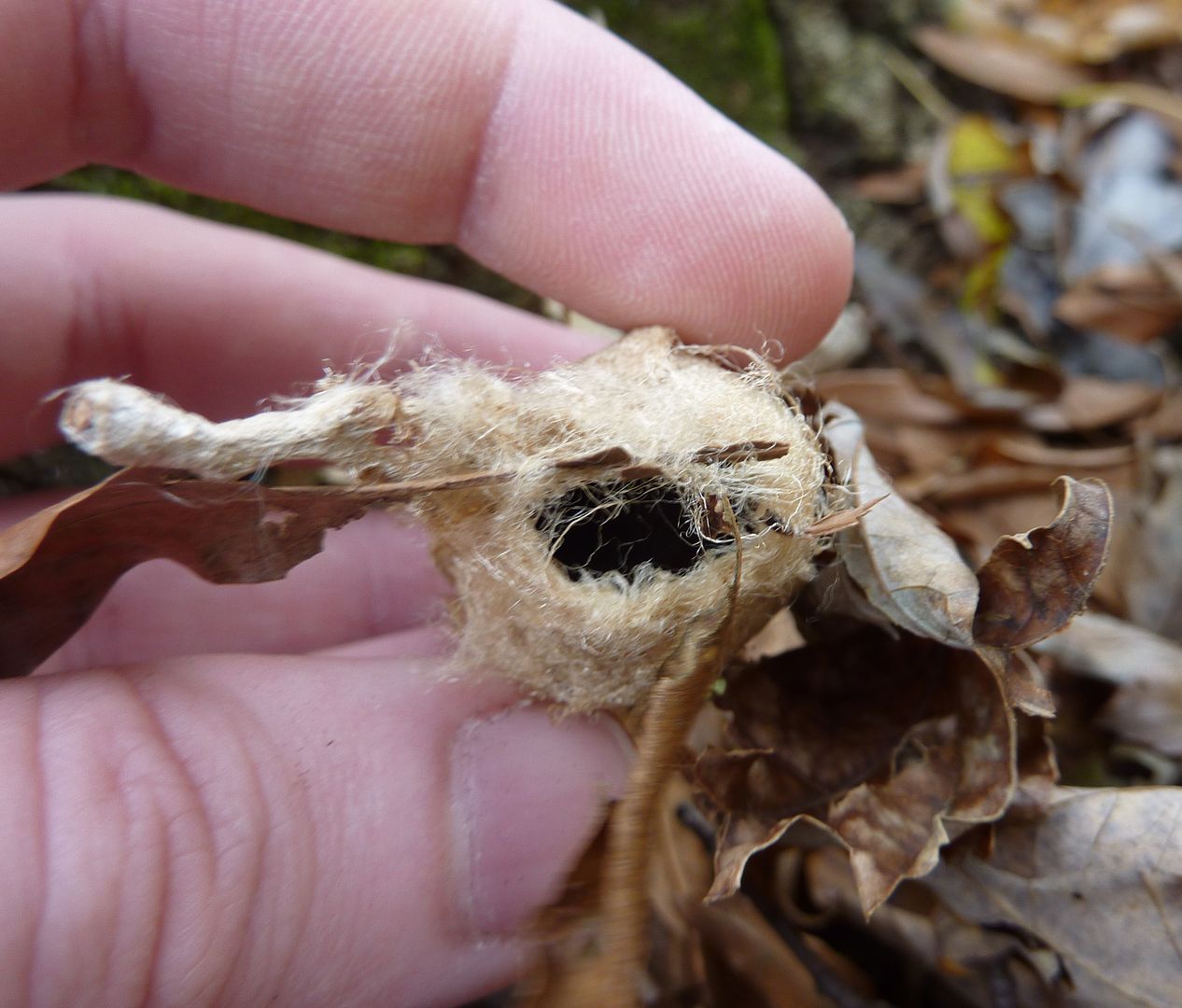
| Cocoon to a Polyphemus Moth. This egg shaped cocoon is as hard as a rock and really hard to see among the leaf litter to their host plants. |