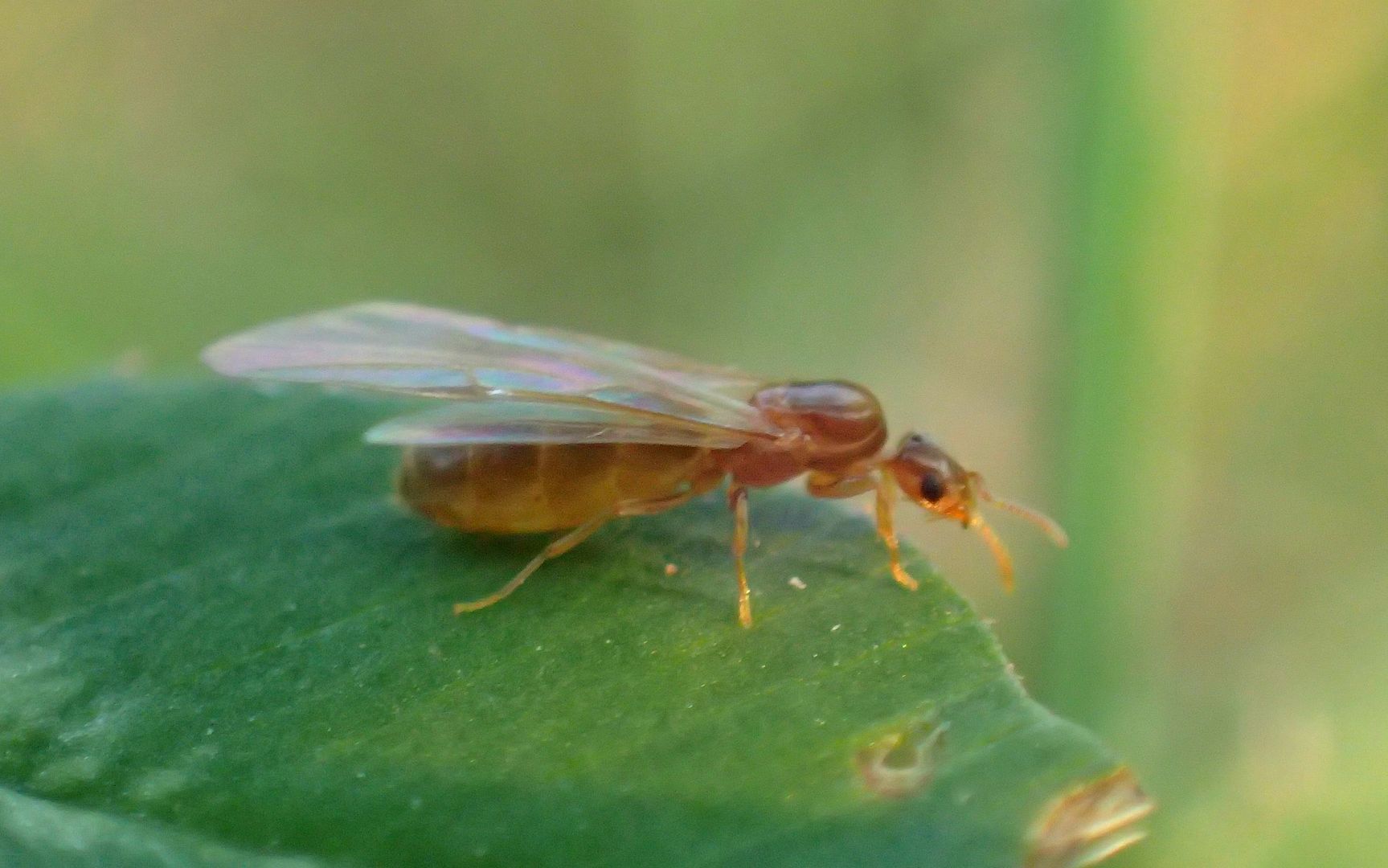
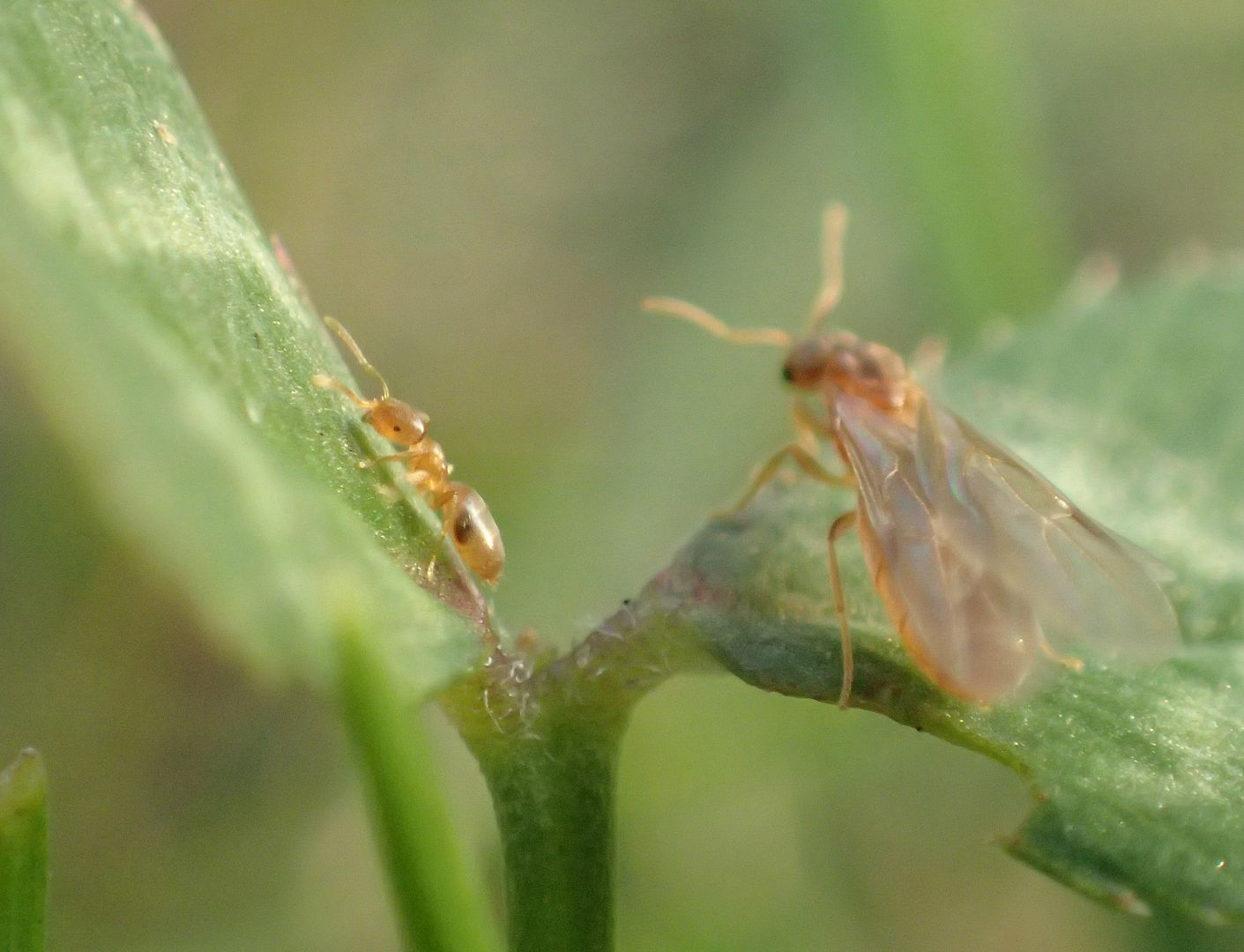
Lasius is such a diverse genus of ants. These are small/medium sized ants about 3mm to 6mm. "Ants of North America," lists 33 species in back of the book. Species in this genus have been divided into 4 groups, niger, flavus, umbratus, and claviger. The niger group (pronounced nyjer!) boasts big healthy looking queens that have enough stored food to start colonies on their own. In the ant world this isn't saying much, queens in assorted ant genera do it all the time. But in the
Lasius group it's worth pointing out.
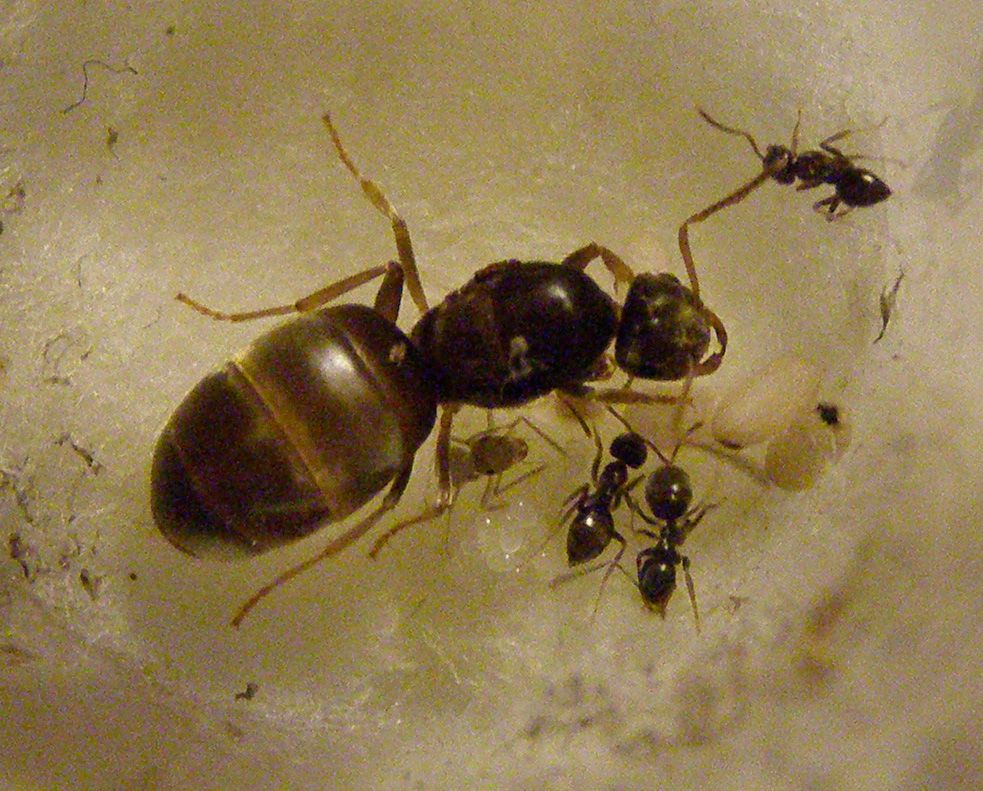
Here is a
Lasius (niger)
neoniger queen with two darkly colored workers. Queens in the flavus group are also capable of starting colonies on their own. Species in the flavus group tend to be smaller and more orange/brown in color. Workers in the flavus group also tend to be orange in color.
In order to talk about the umbratus and claviger groups one has to learn how colonies are founded first. Overpopulation and limited nesting space has driven queen ants to sometimes band together and tolerate one another's presence until the first workers are born. This saves the queen ant the trouble of killing the other 40 or so queen ants who've all decided to start a colony under the same rock. The result is a massive colony that suddenly appears some weeks later.
But there is an issue here. With so many queen ants in the colony, the next generation of reproductives won't have enough food to start colonies of their own. So after the first workers are born an internal power struggle occurs. Workers will slowly kill off queen ants in the colony. As they begin foraging other small colonies might be discovered. These are either killed immediately or integrated into the new colony. Eventually though all but one queen is left the new colony and she becomes the primary egg layer. (Occasionally the last queen standing may die of her injuries too.)
This system has lead to a number of evolutions. Firstly queens that band together tend to be more successful becuase they produce more workers then the starting colonies around them and are better able to deal with stronger colonies that have been around longer. There are two flaws though.
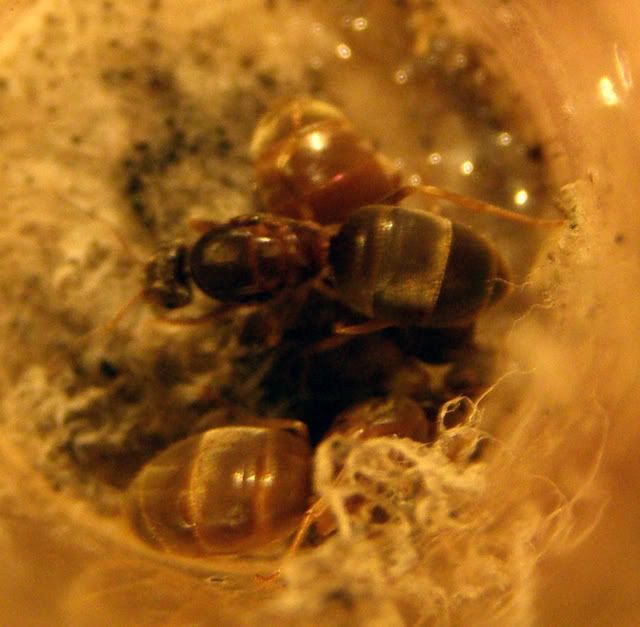
1) Queens aren't picky about what species of
Lasius queen they start a nest with. Pictured above are two queens of
Lasius neoniger and one queen of
Lasius alienus stating a colony. The
L. neoniger queens tend to be much better parents and care for the eggs when disturbed.
2) The first workers of the colony don't always choose the strongest queen to be the primary egg layer. Simply saving your energy and appearing to be the best queen is more important than actually being the best choice. It's this that umbratus and claviger species take advantage of.
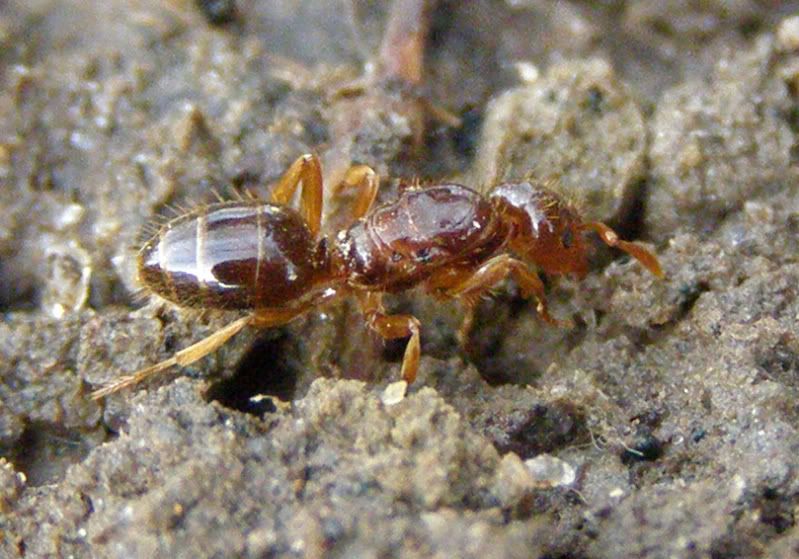
Both claviger and umbratus queens tend to be slimmer, they don't have as much stored food in their abdomen, and they require an existing colony of Lasius to start a nest. Queens in the claviger and umbratus groups are social parasites of species in the niger group.
Having to successfully sneak into a colony and replace it's queen without the workers getting wise is a tricky business. Over millions of years these social parasites have learned a number of tricks. Playing dead to be brought in the nest as food, sneaking in the nest before the workers have started favoring and killing queens, spraying citronella odors to confuse workers, and out right badging in the colony entrance are just a few methods observed over the years. Even with such a variety of methods to employ success is still very low.
Ants rarely give up though and social parasites also employ the oldest trick in the ant book, overwhelming numbers. Social Parasitic species of
Lasius out number their hosts 10 to 1. Their nuptial flights are 10 times bigger. Every year a colony of Lasius claviger completely covers my front steps in flying ants.
Easily a couple thousand queens pour out of each colony and continue to do so for day. Queens land after mating and begin their task of taking over a colony. Once completed, the host workers will take care of the parasitic queen's brood and slowly the colony changes it's colors.
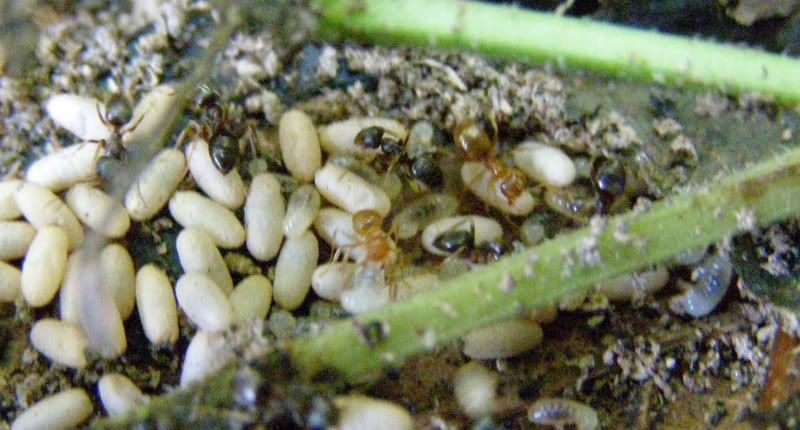
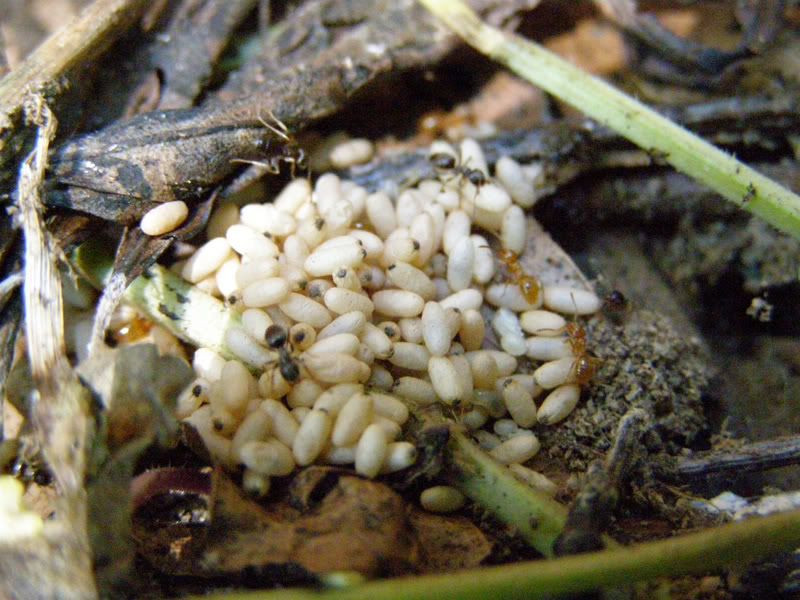
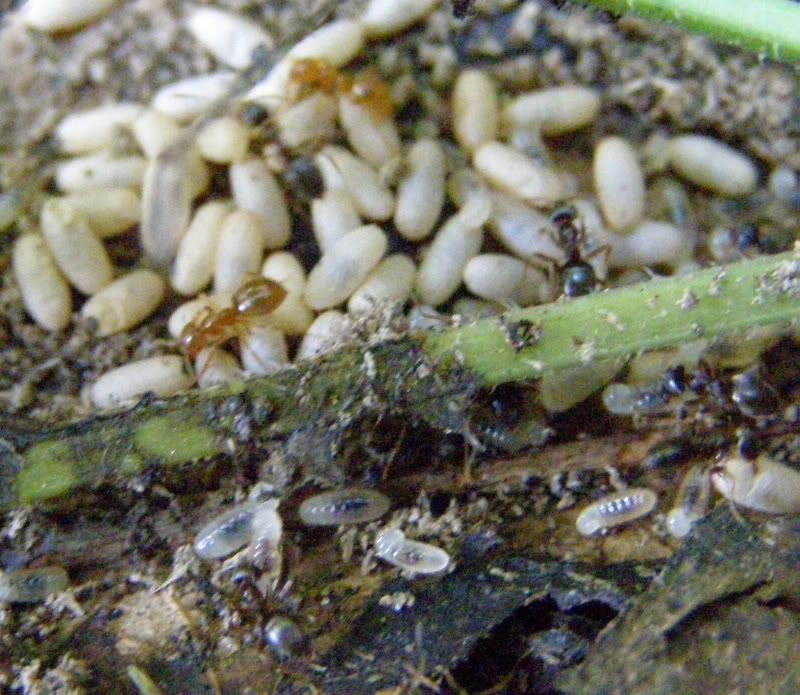
In a matter of 12 or so weeks the entire workforce is now that of parasitic species.
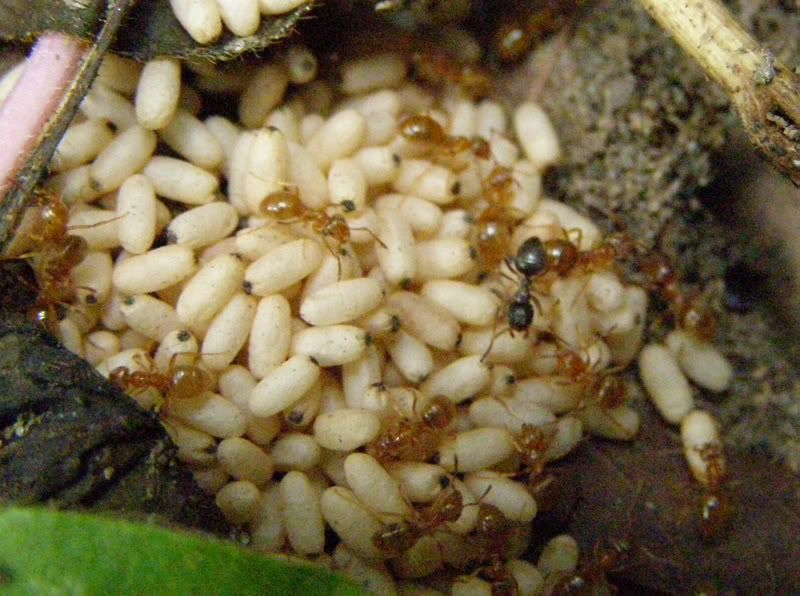
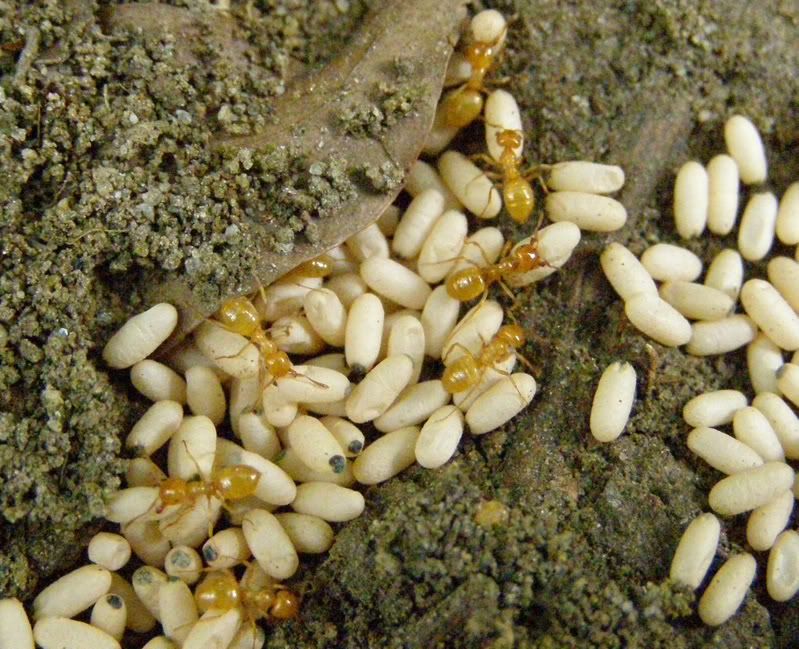
The host species simply dies out. Though the queens need assistance to start a colony, her workers are more then capable of taking it from here.
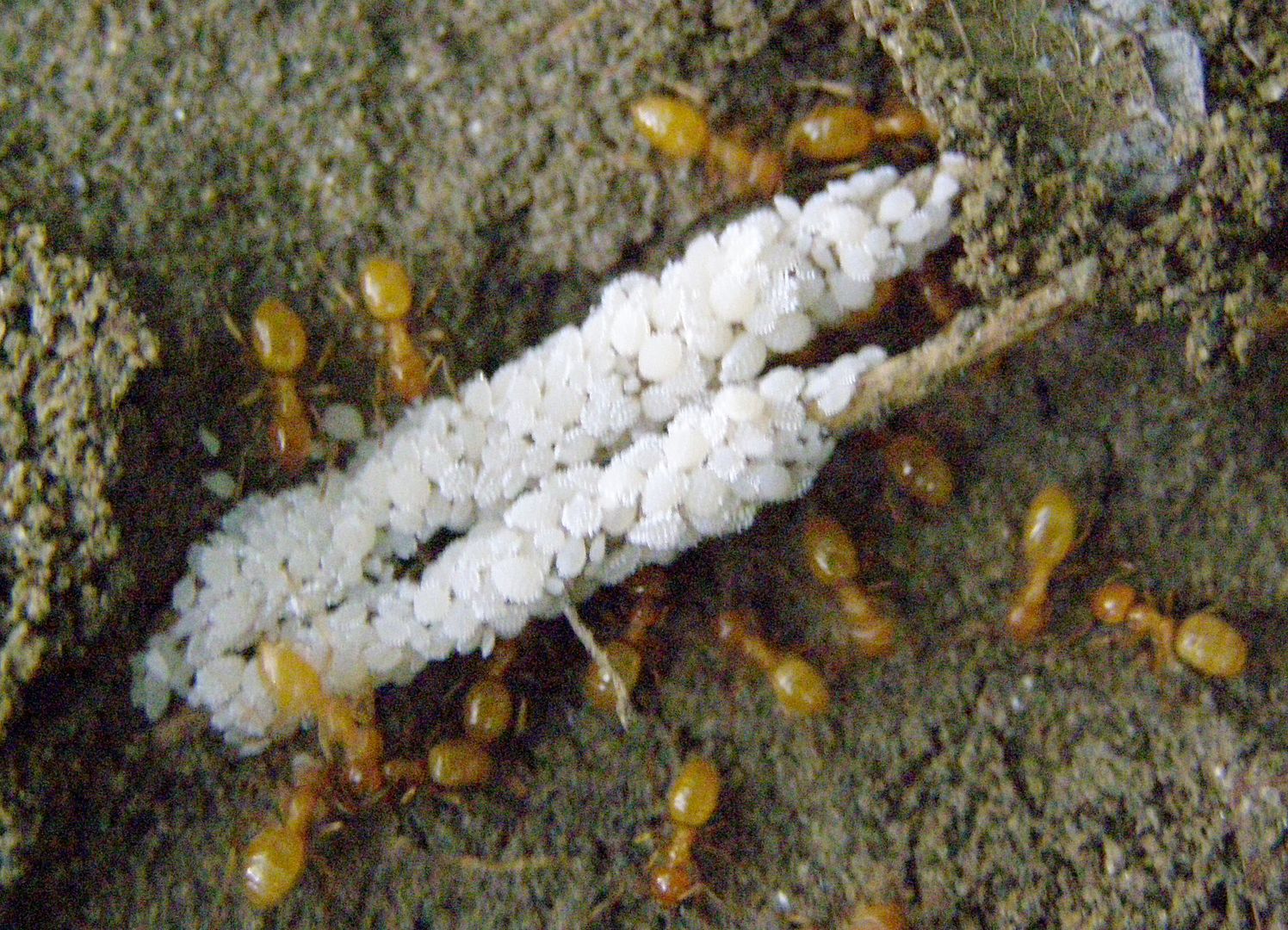
Underground root aphids prevent the need for foraging on the surface. Umbratus, claviger (and I want to say flavus but I'm not certain,) forage almost exclusively underground. They emerge above ground only during their mating season.
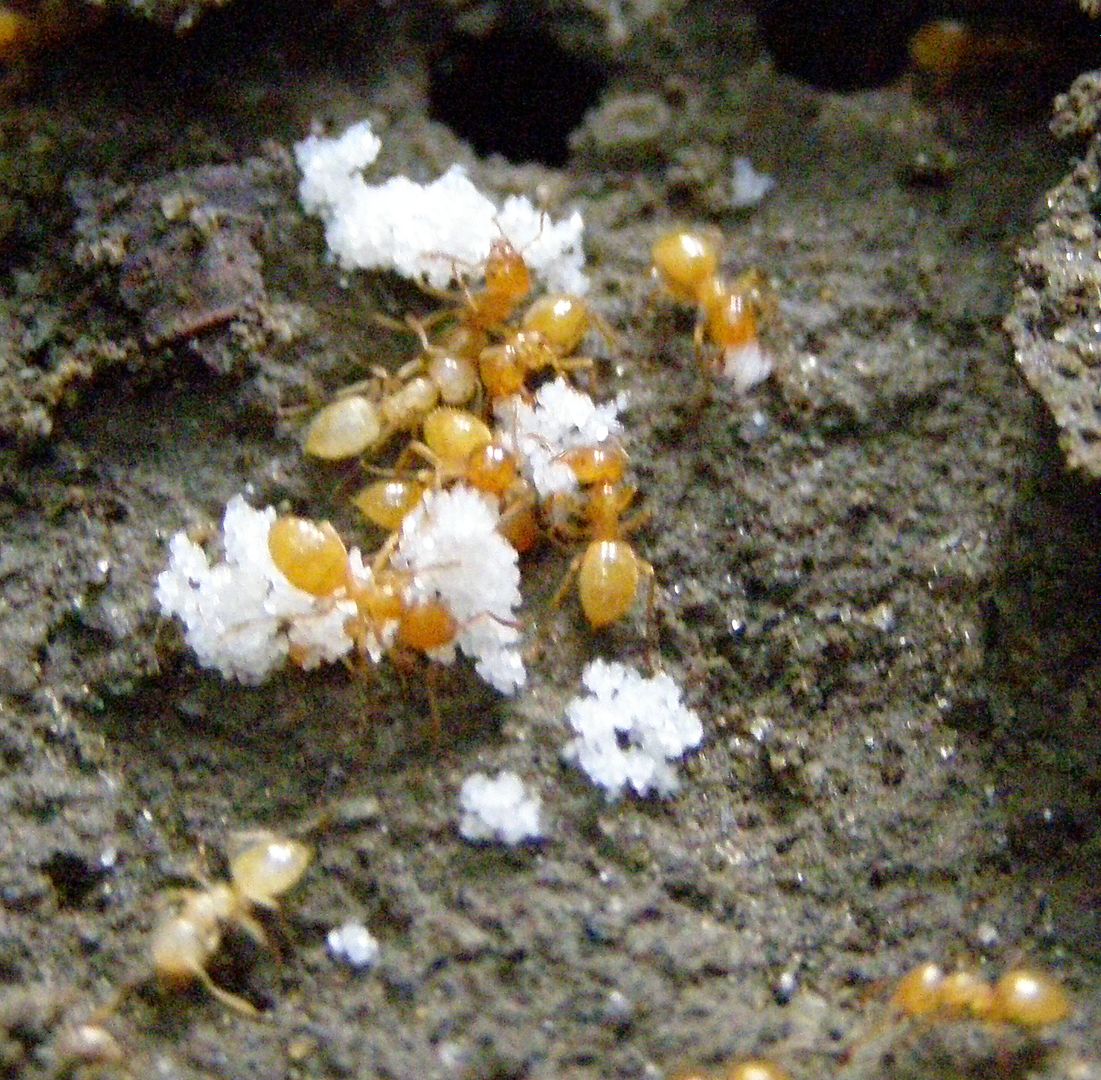
The honeydew from the aphids is nutritious enough to feed the whole colony. The occasional dead worm also makes it's way into the mix though.

Cocoons are incubated near the surface under stones or logs.
The only real difference between umbratus and claviger group species is that claviger is known for producing the citronella odor. Gardeners are probably most familiar with it. Accidentally digging up part of a colony fills the air with a sweet lemony scent.