Showing posts with label Arizona. Show all posts

Saturday, December 12, 2015

Ants of the Southwest Now Accepting Applications

Ants of the Southwest is now accepting applications for their 10 day course over the summer of 2016!

I attended this course in 2013 and had a blast. It's all the fun parts of the anting hobby in the most biologically diverse part of the US! Pheidole rhea (Big-headed ants with super majors), Trachymyrmex (leaf cutter ants), Neivamyrmex (army ants), Crematogaster smithi, Acropyga, Odontomachus (Trap-jaw ants), Myrmecocystus (Honey-pot ants), and Cerapachys to name a few of the awesome ants I got to see that year.

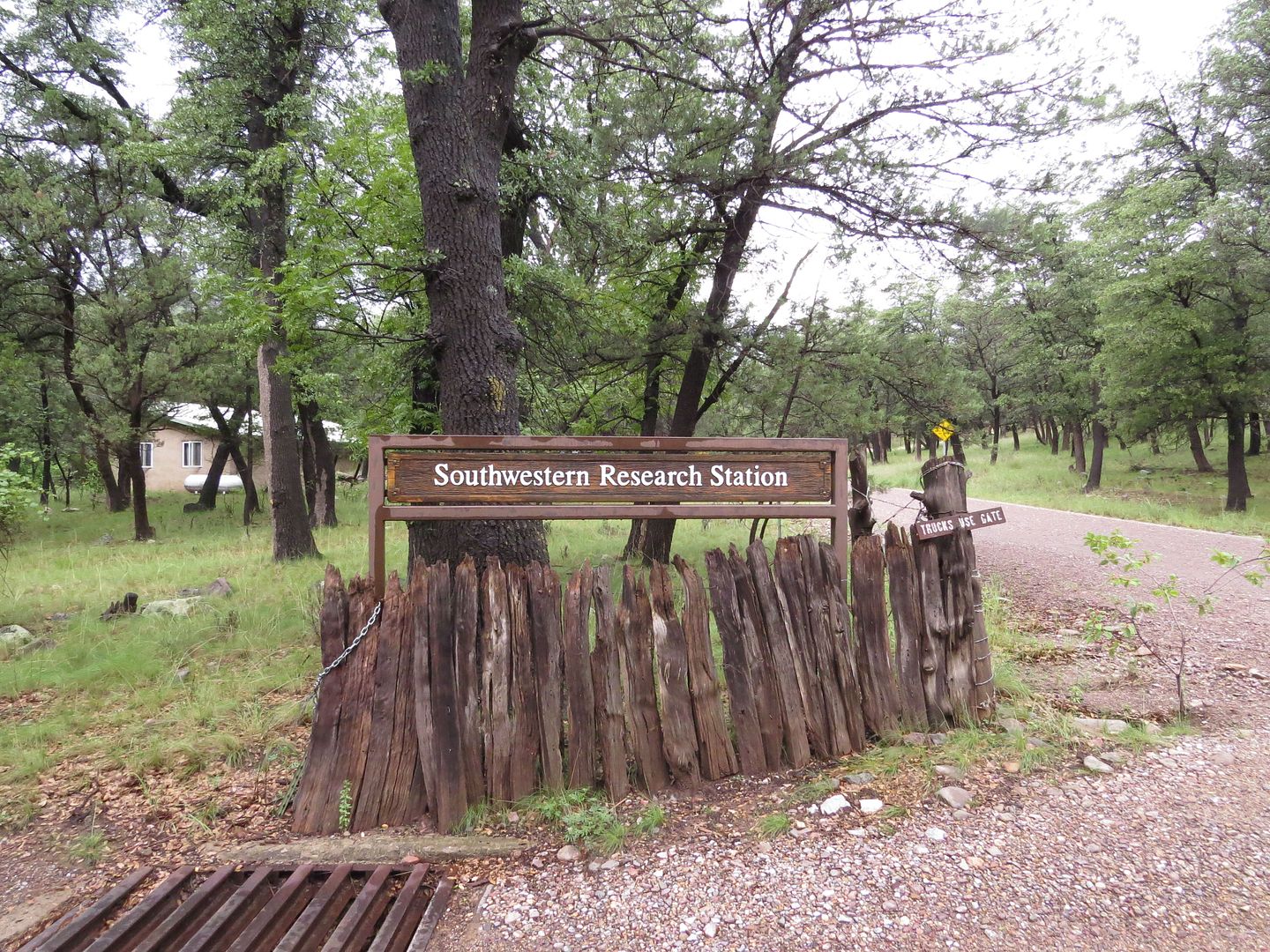
The Southwestern Research Station does "Science Tourism" very well. I wish more places existed like it in the world. First off you're in the middle of nowhere but also you're not roughing it that bad. The only two issues I really had with the place are as follows. One, it's a little hard to find. This wouldn't usually be an issue but it's in a place where the "roads" are just graded dirt and rain can wash boulders onto the path pretty easily and it's never comfortable fording a small river in a rental car (and not recommended!). Also a wrong turn can put you a half hour in the wrong direction, even though your GPS says it's a five minute drive... the "roads" around the place are that bad. Drive there during the day time! And Two, you need to bring your own supply of drinking water. They sell it at a shop in the station but it's only open 4 days of the week. There's another shop at a road stop down the road from the station but it's not always well stocked with so many folks using it as a resource.

Beyond that, you'll likely be staying in a very reasonably sized dorm. You have access to full showers. The meals are great and a salad and dessert is almost always available if you don't like what they're serving. The place has an in ground pool on site. The view from your room and looking around in general is often fantastic to behold. Because they're part way up in the mountain the average temp is only in the high 70's (at least from when I was there.) For being in the middle of nowhere you could do a lot worse! 

When I went two years ago I was shocked at how few students there were. I think in total there were 11 of us, 3 of whom were instructors. I gathered that there would have been more instructors had there been more students. But as it was, there were only 8 and 3 of those were hobbyists. Take a moment to compare that to Ant Course which has a four year waiting list to get in and focuses more on the lab work side if studying and identifying ants. Ants of the Southwest is all the fun parts of the hobby; field work, specimen gathering, pinning ants, collecting data, I don't understand why Ants of the Southwest is the less popular of the two. If anything I found it a lot easier to get accepted into as a hobbyist.

$1300 for tuition
Coming from NJ it cost me about $500 for a plane ticket (return trip included.)
$150 for course supplies (not all of which are needed.)
and maybe $200 to rent a car. (your price will vary)

In total that's about $2,150 which sounds like a lot. But it's really easy to budget that. Get a credit card that has 0% APR for the first year or so. Even if it's one of the ones that charges you 25% interest you don't get charged that until the term is up. So every week you can just put $100 or so towards paying it off and you're good. At that rate it will take you 5 to 6 months and you can then apply for a better card that has a better interest rate.

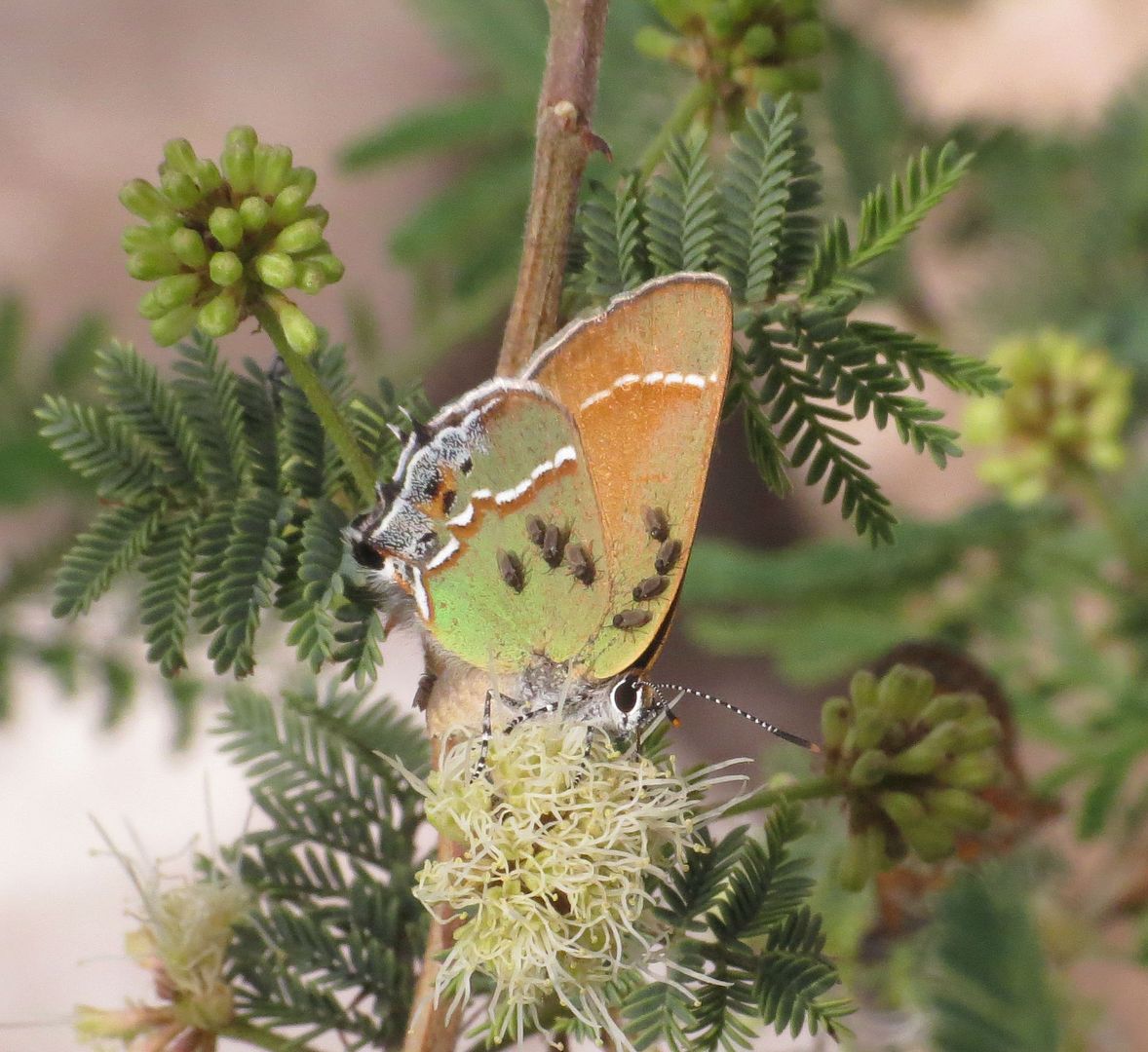
Another great reason to go is you never know what you'll find. At the time that I took this photograph I thought it was just a butterfly with black spots on the wings. As it turns out they're actually midges, which are small parasitic flies that feed on the blood or haemolymph of animals or insects. They're considered one of the "no-sees" of the insect world. Meaning they're absurdly abundant but really you don't ever notice them unless they're already attached to something else. There are thousands of different species, many of which look identical, but mostly specialize on one or two groups of hosts. In this particular case, I believe I'm the first person to ever photograph them feeding on a butterflies wings, and not just one or two but at least 8 all at once following the vanes in the wings!   

So there are plenty of reasons to go to this course, and I say if the grad students aren't going to fill those places, then let the hobbyists fill it up! 

Friday, August 29, 2014

Arizona: Dorymyrmex Study

Dorymyrmex, despite being a common genus, remains something of a mystery in North America. The trouble is that no one's really studied them well enough to get the genus right. Eastern species are fairly well known, but out west.... the genus is in pure chaos. Basically if it's black it keys out to Dorymyrmex insanus, and studies that look into the matter simply describe new species with a sentence or two.


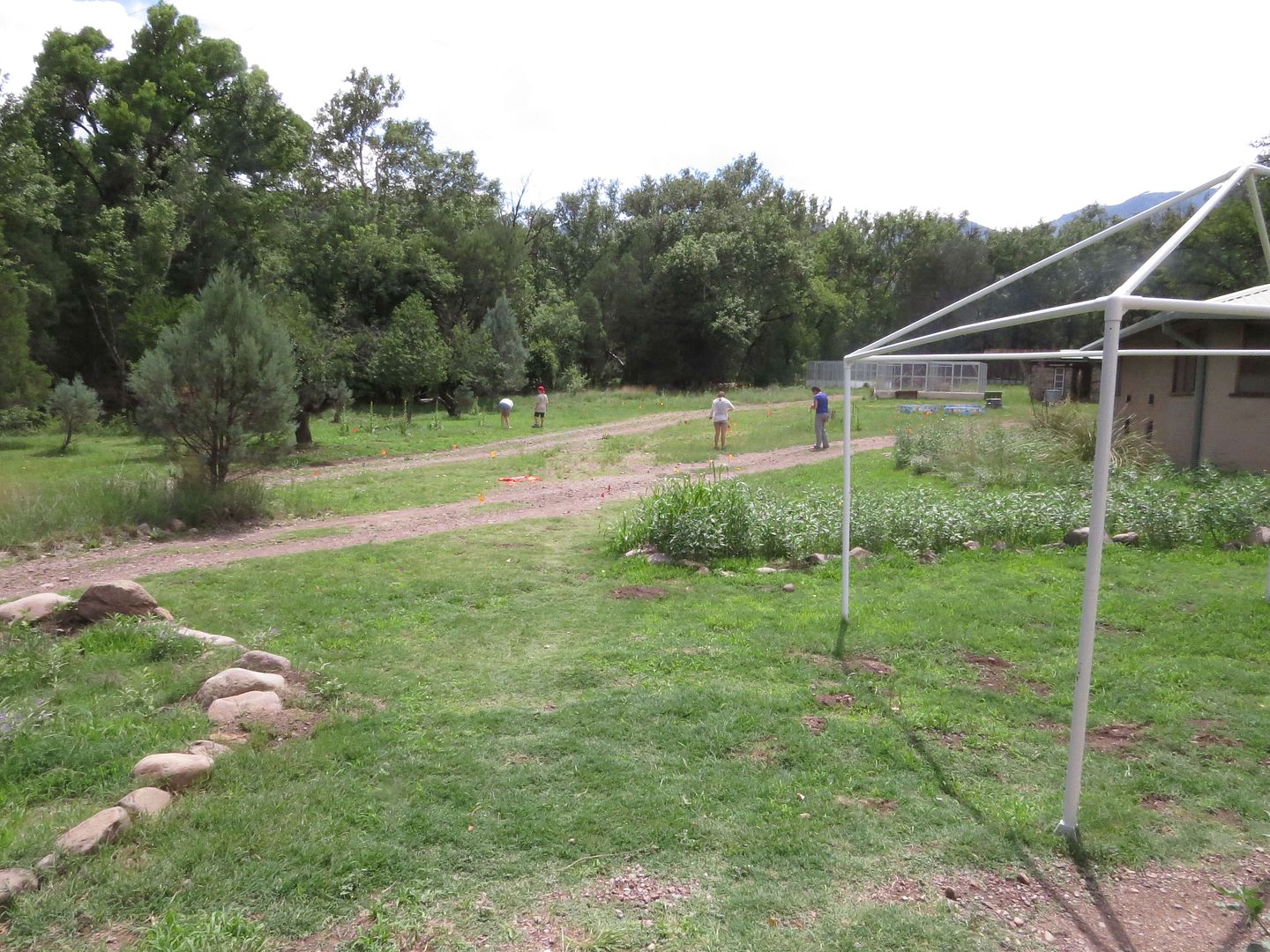
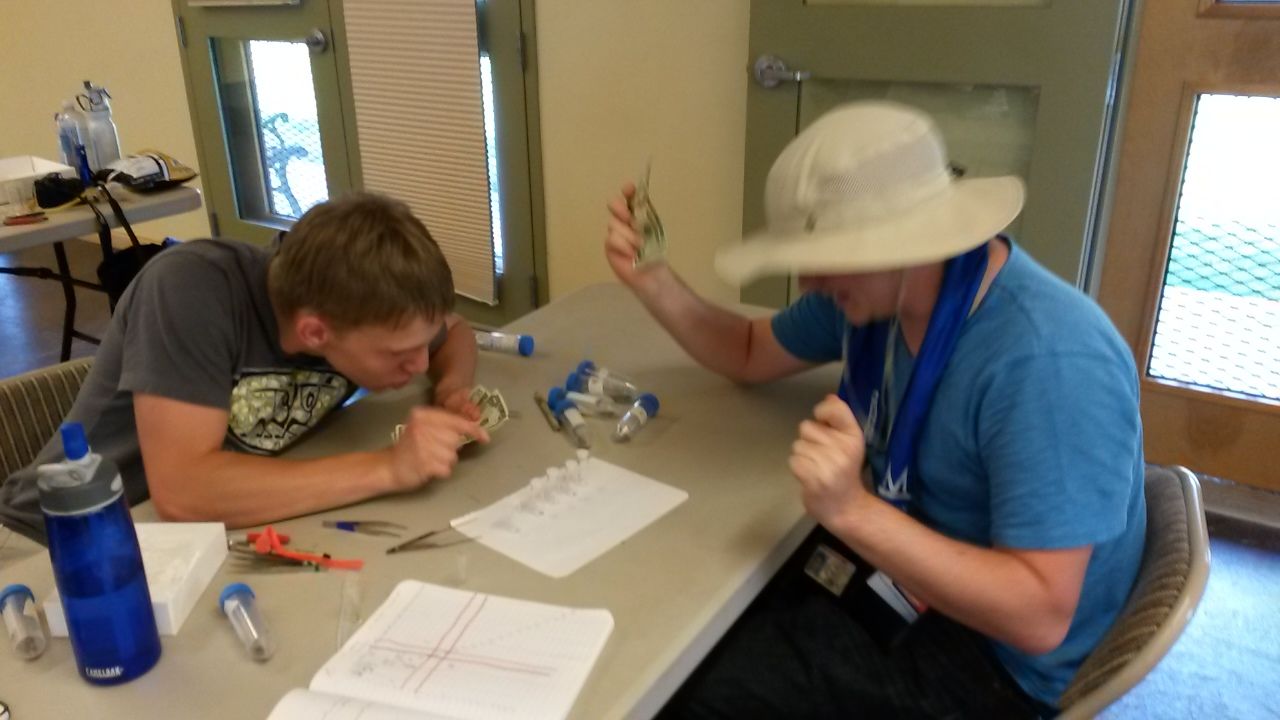
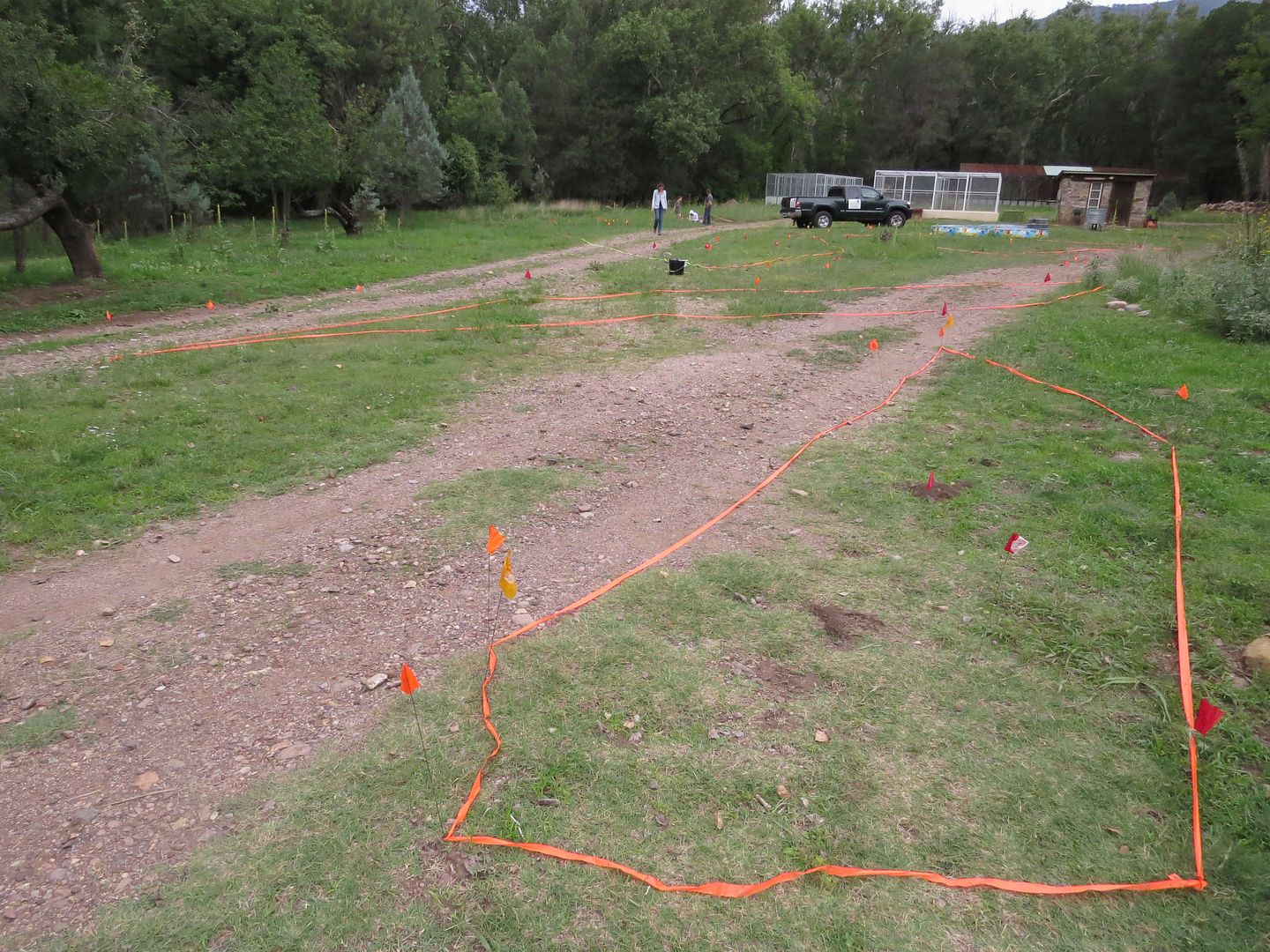
The station we stayed at had loads of colonies of them on the property. We spent a day flagging each of them, and then putting sets of workers together to see if they got along or not.

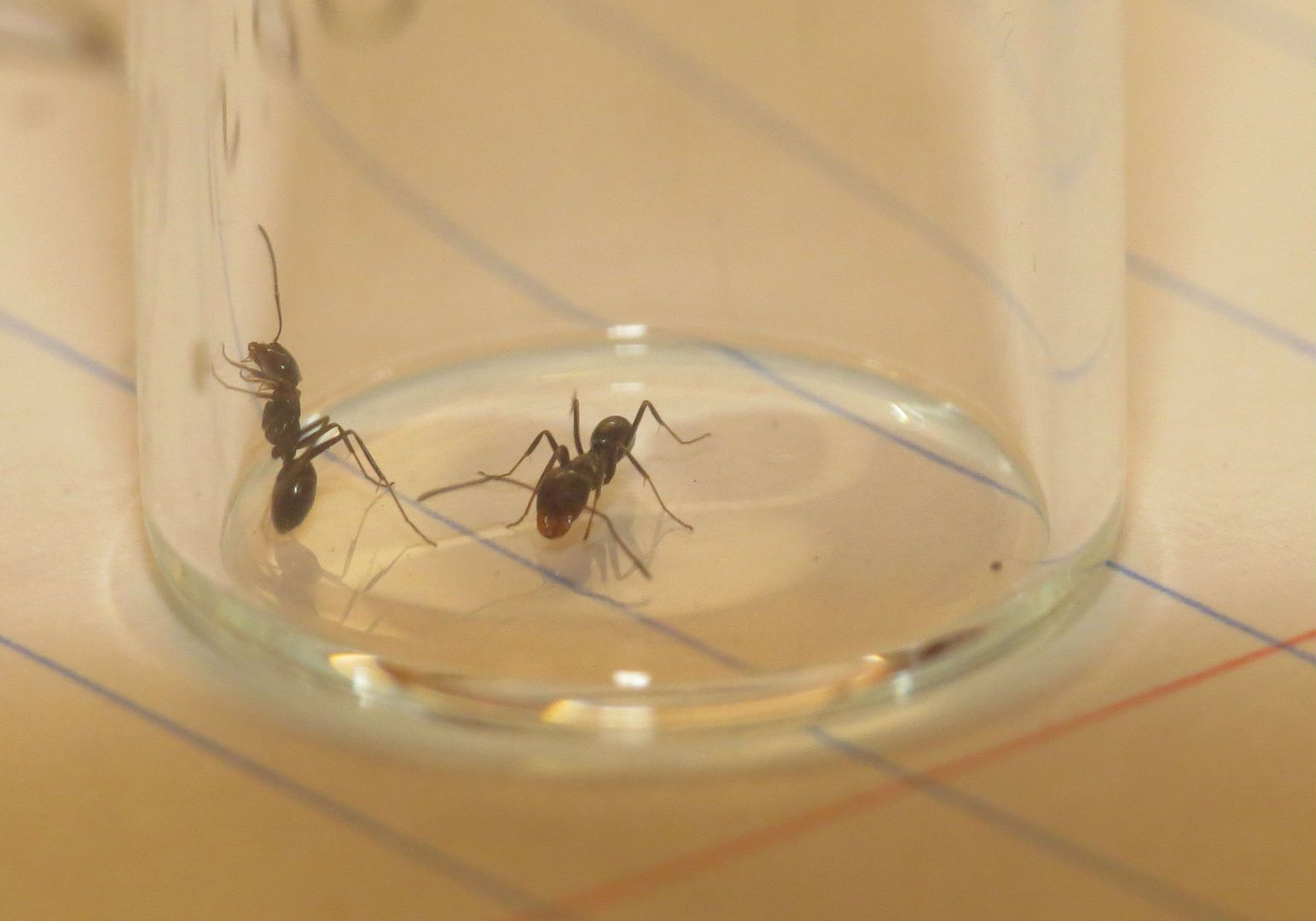
Workers from the same colony got along, those from different one almost murdered on another on sight.

Though time consuming, it's fun work.

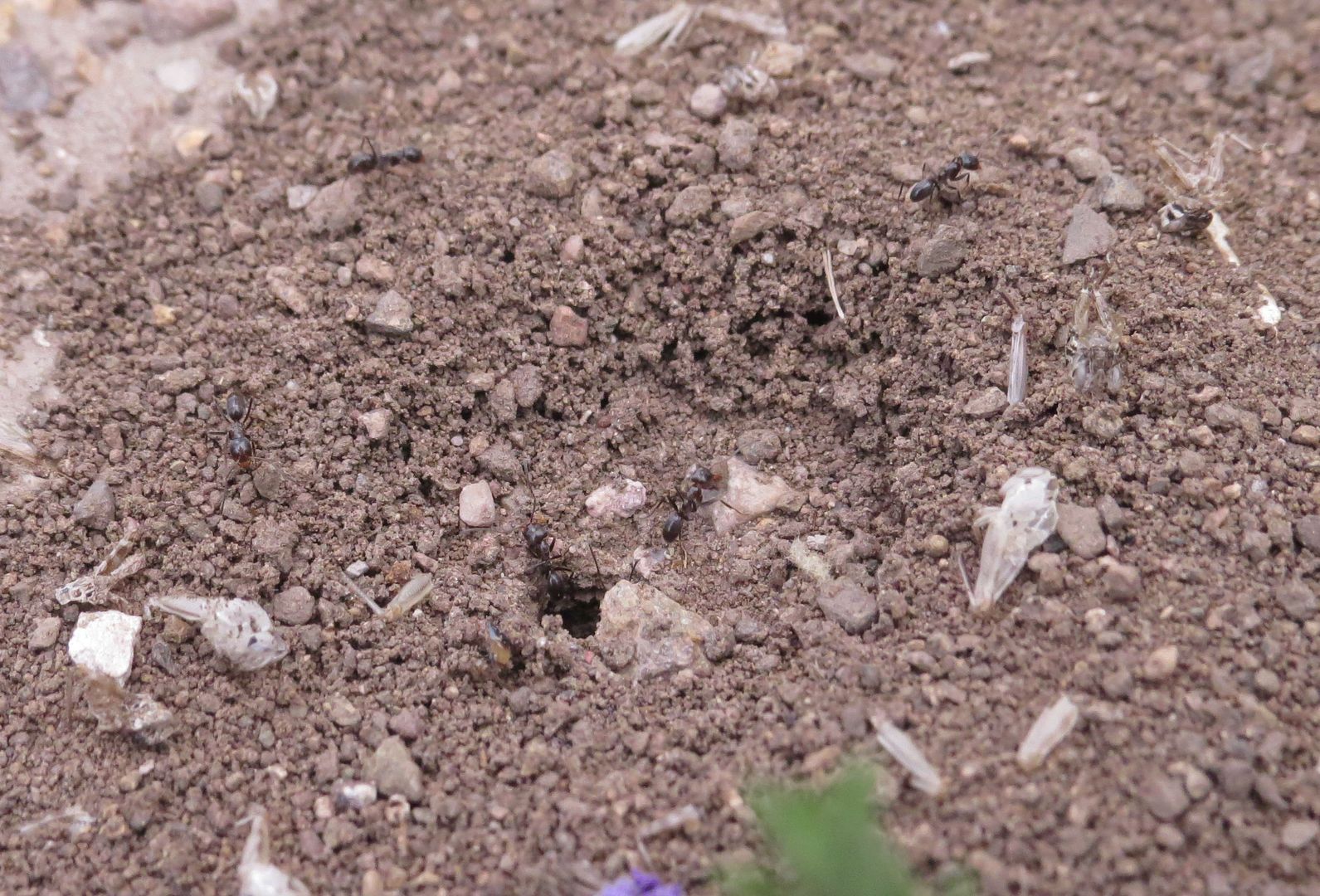
We found that the colonies had changed boundaries from the previous year, as well one of them had become massive in size (not in photo). Pictured above is a typical nest comprised of maybe 6 to 12 holes. The large colony crossed one of the trails here and was comprised of 26 holes.

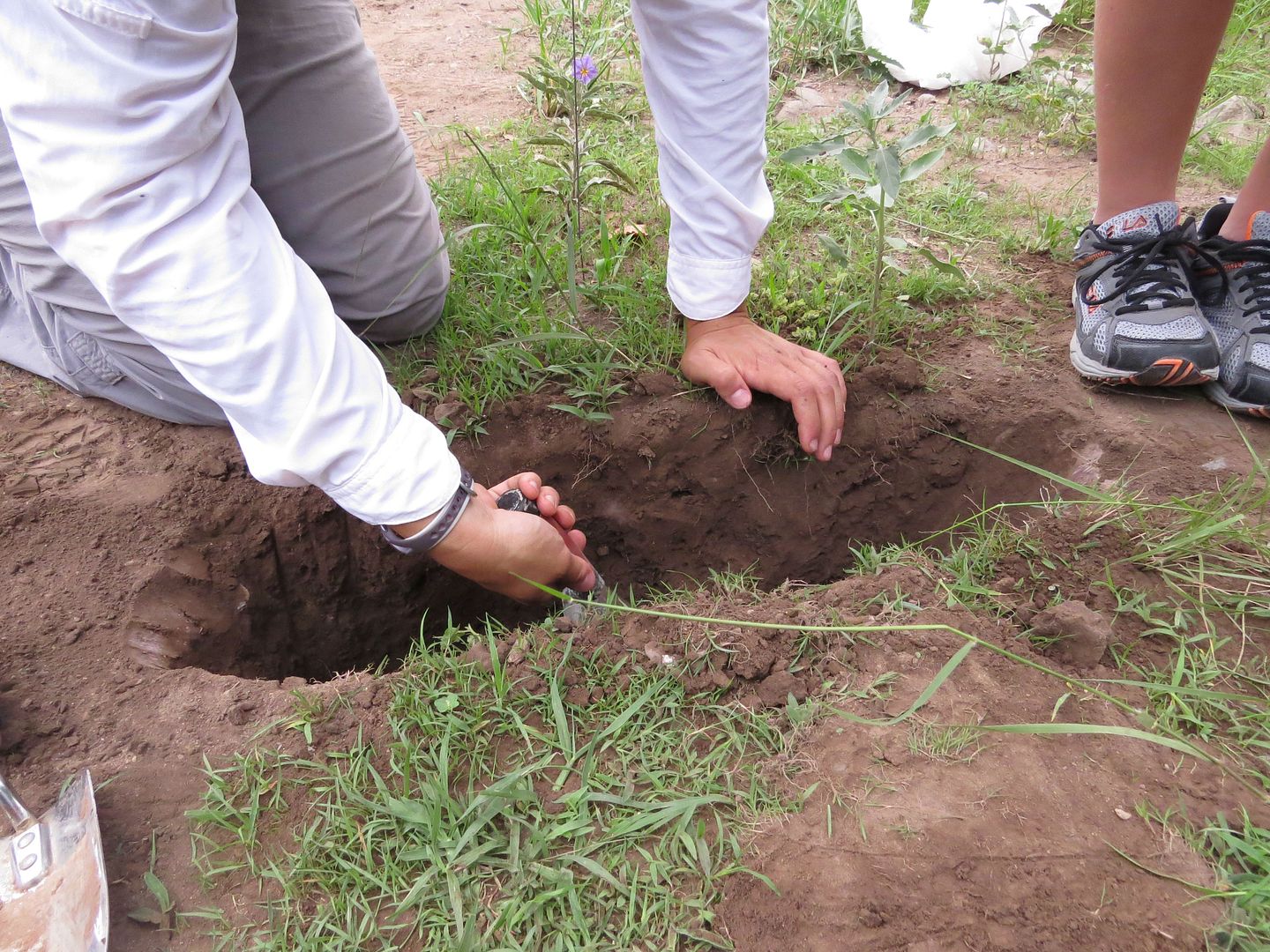
We dug up one nest and found the general structure of one of their nests is simply one narrow tunnel leading down at a slight angle, leading through several galleries.

For time reasons we didn't get down below 3'. And it likely extends much deeper than that. Most of the ant nests in the area seem to go down 12' or so. How many queens they have, or if the ant hills are connected somehow underground are unknown. It's likely that these nests are not connected and there might be only one queen per hole, but also likely that in the winter the nests combine down into fewer holes. Perhaps queen number and or age help determine the number of satellite holes. 

That was the extent of our study. Future courses may continue the work.

Thursday, August 28, 2014

Arizona: Army Ants

Neivamyrmex is the most abundant and diverse genus of army ants in North America.

There's a lot of assumptions when the public thinks of army ants, a lot of which are wrong. Army Ants have nomadic colonies, with one parent queen, and occasionally a few daughter queens. Colonies divide, unlike most ant species which send out thousands or millions of new queens to start up colonies on their won. They are specialized predators of other ant colonies which makes their hunting habits mostly subterranean or roaming through leaf litter where they're hardly seen.

Most Documentaries like to show the genera Eciton from South America, or Dorylus from Madagascar. And odd ball species of their respected genera at that. Cameramen like to focus on the specific species that raid for other insects more so than ant colonies, which is not the norm compared to other species in their genera. This surface raiding makes for good TV, but leads one to believe it to be the norm.

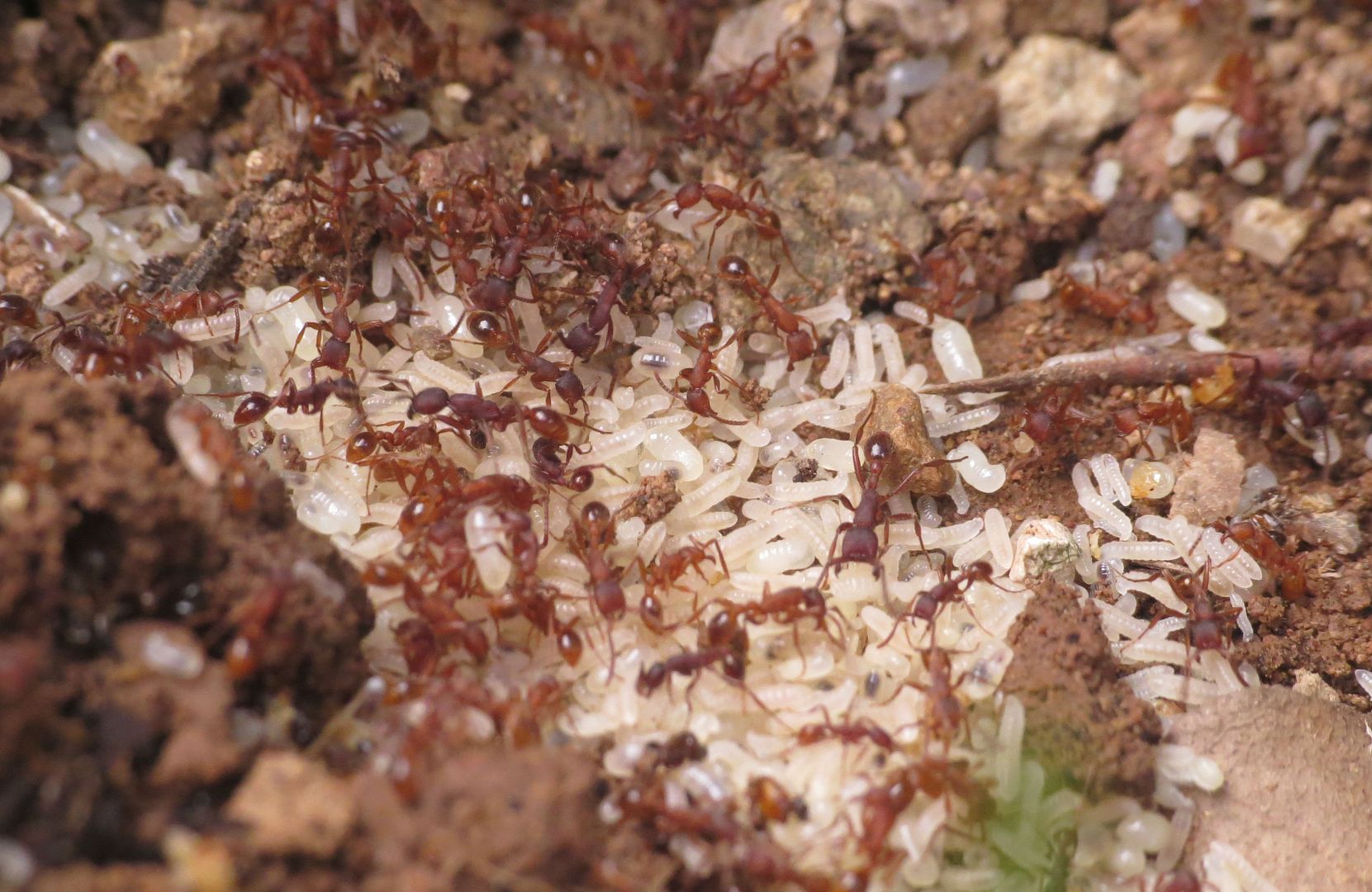
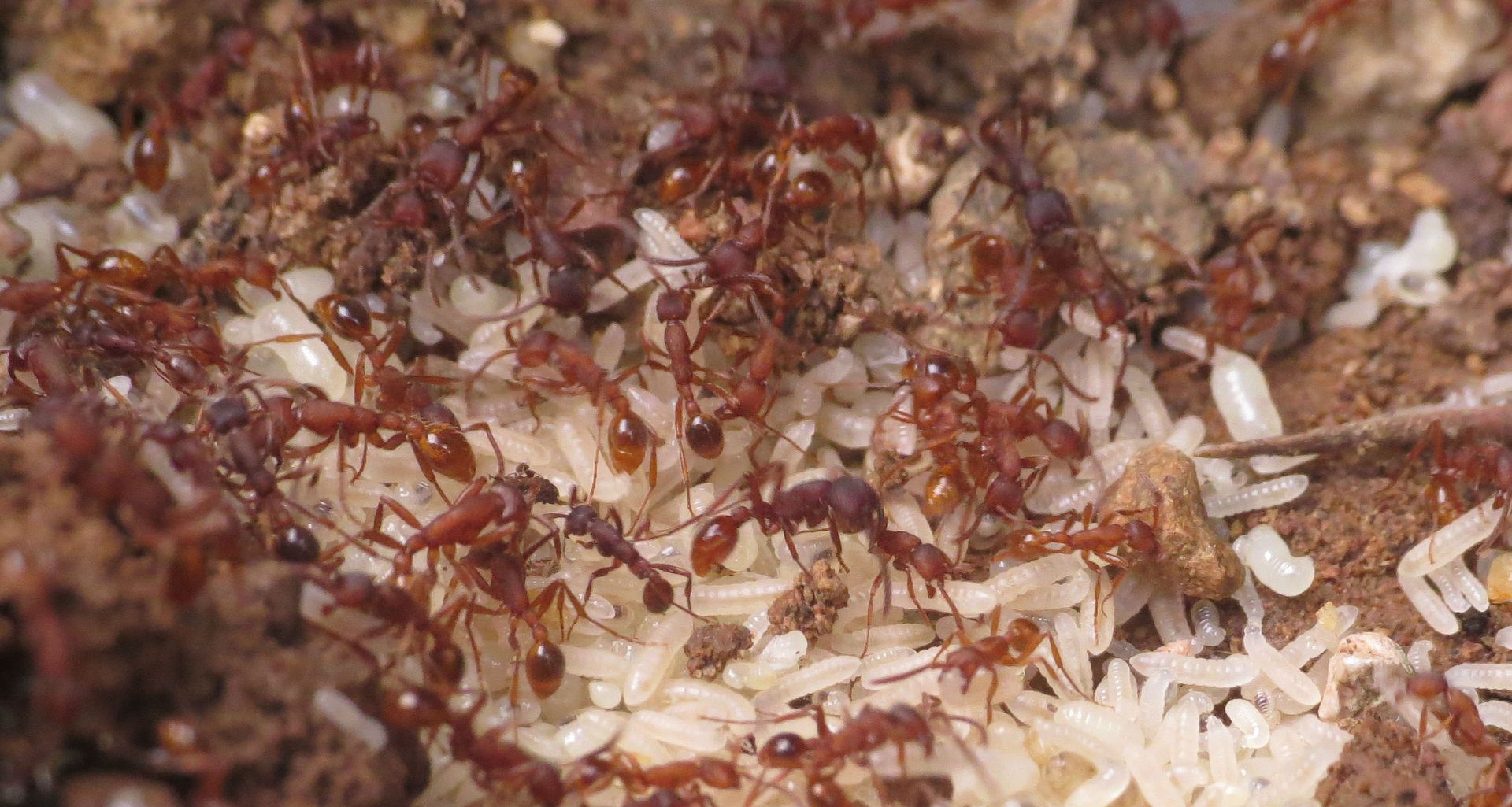
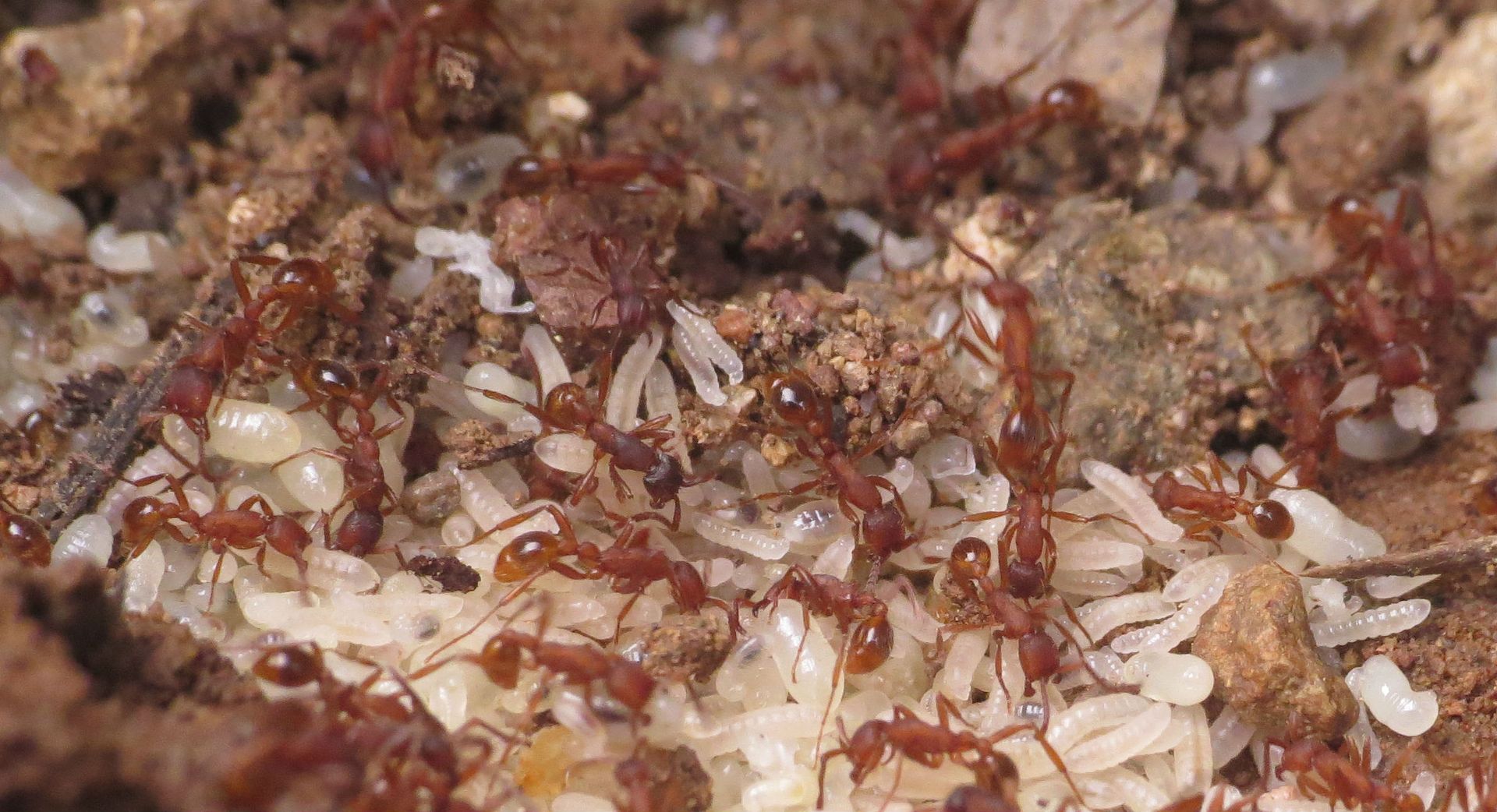
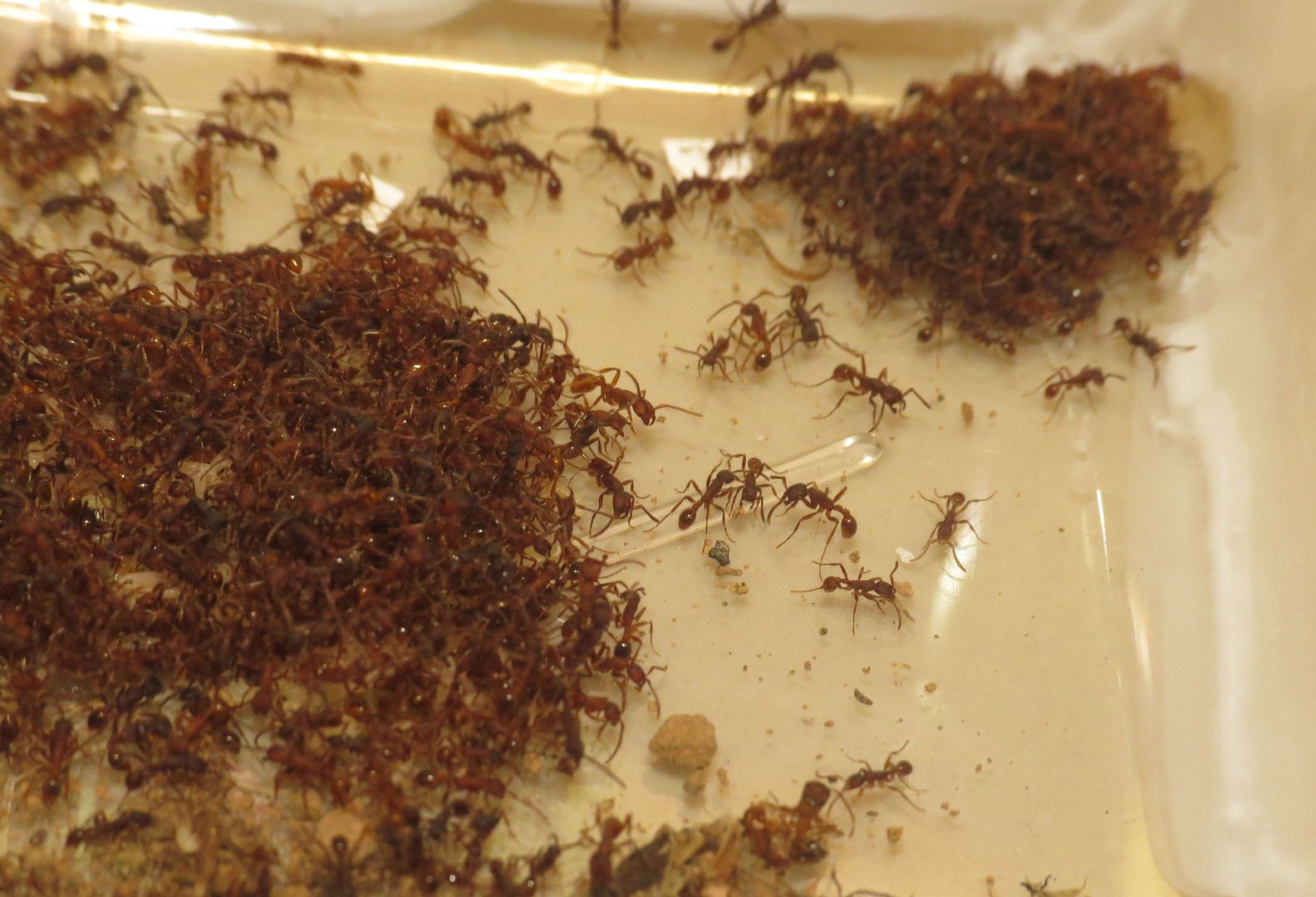
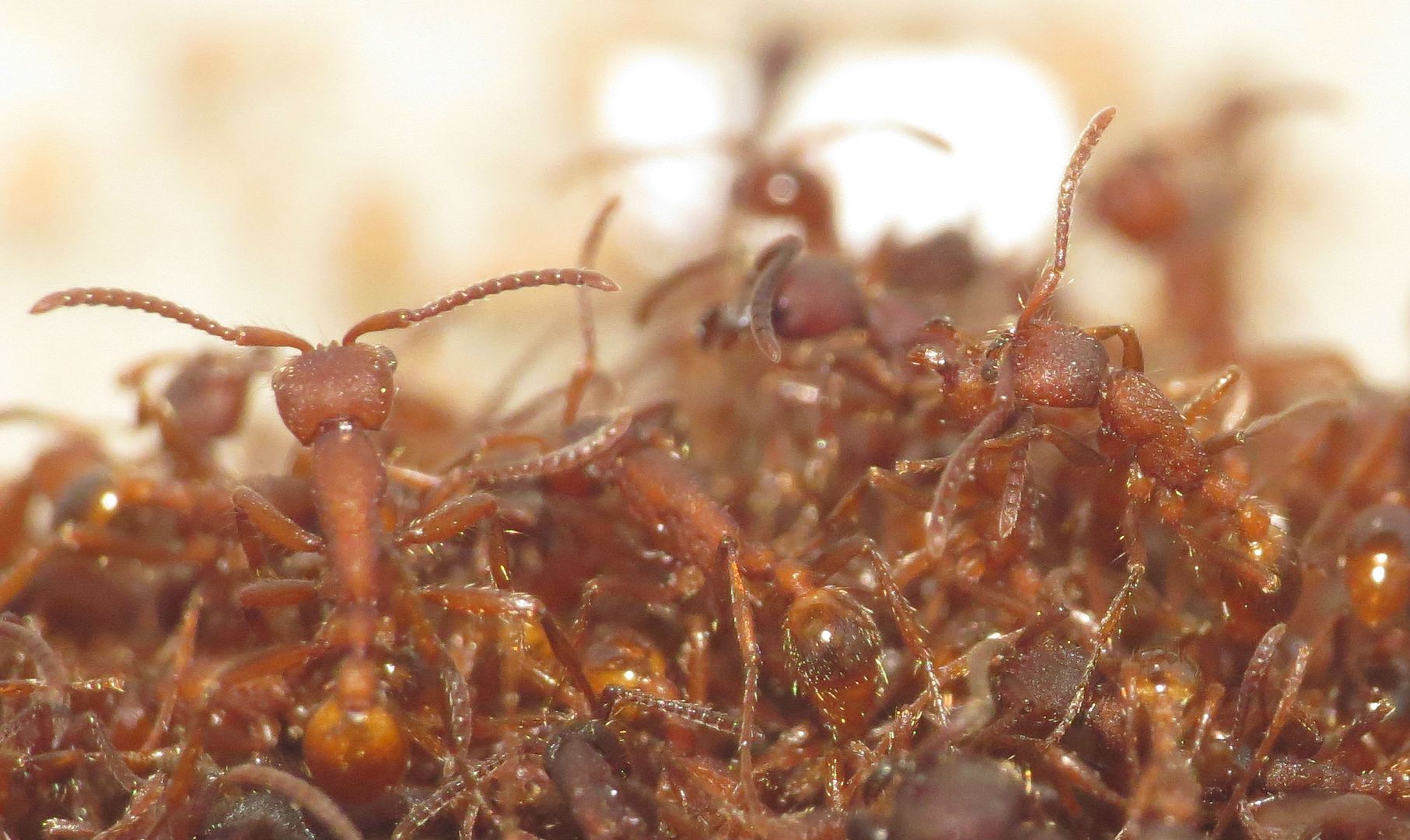
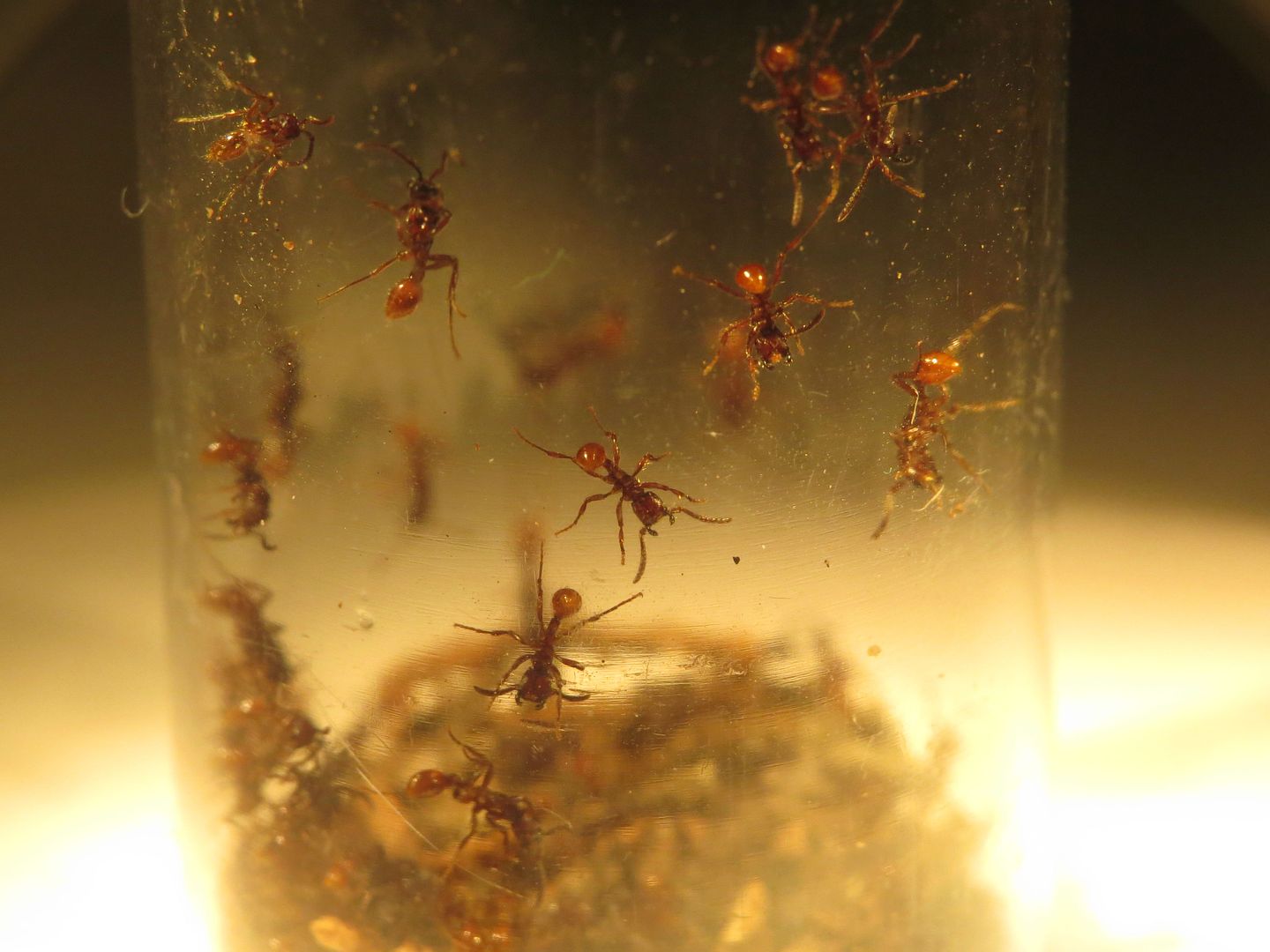
The nomadic lifestyle means they make nests virtually anywhere they can fit. Here a colony took up at least 25 rocks lining a hillside, and they had excavated tunnels deep into the adjacent soil media. Their own brood was spread out all over and there was a single raiding line leaving to raid ant nests as food.

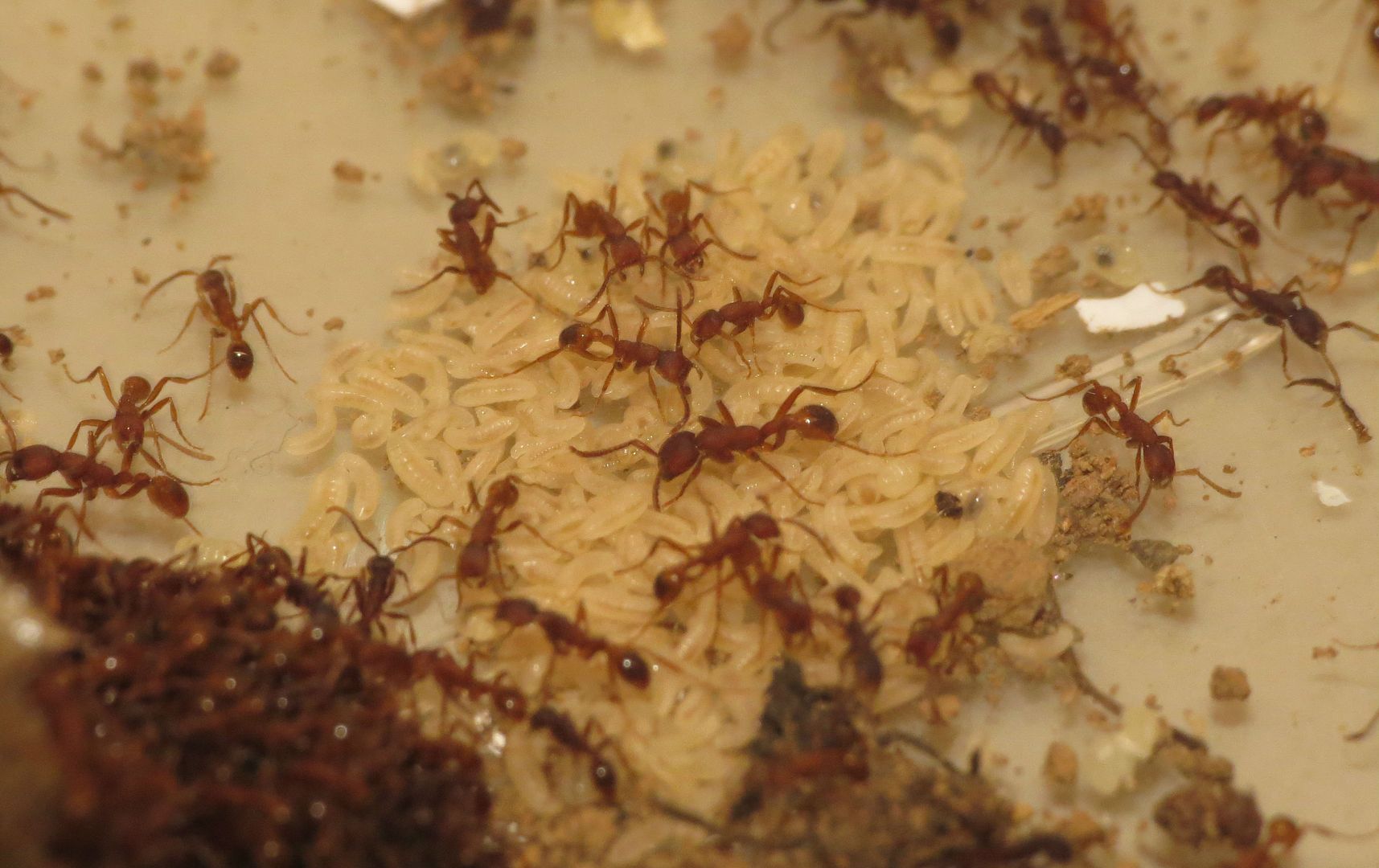
We collected several hundred of the workers and brood for a laboratory setup. A simple plastic container lined with Fluon, a substance which ants can't climb up.

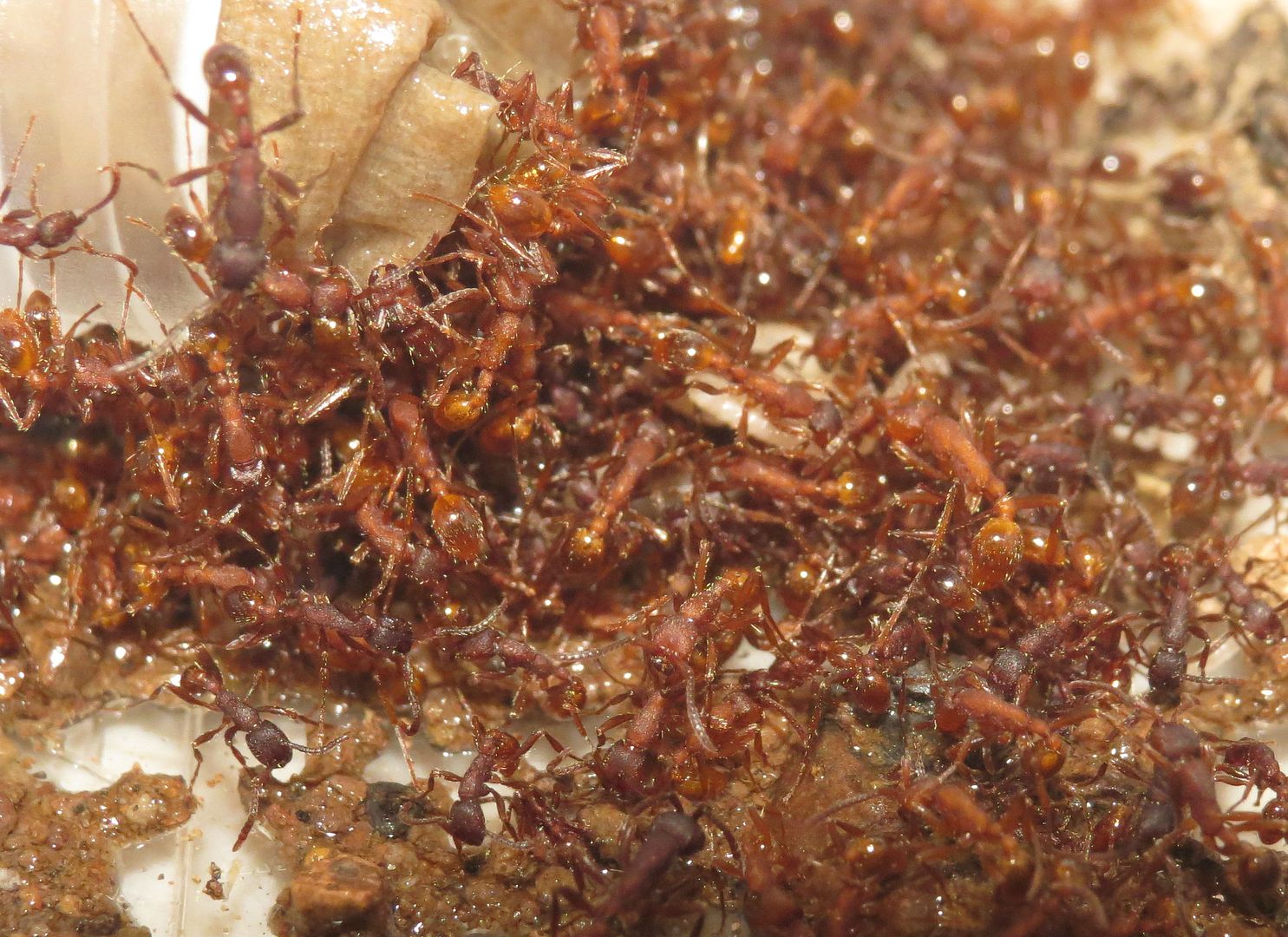
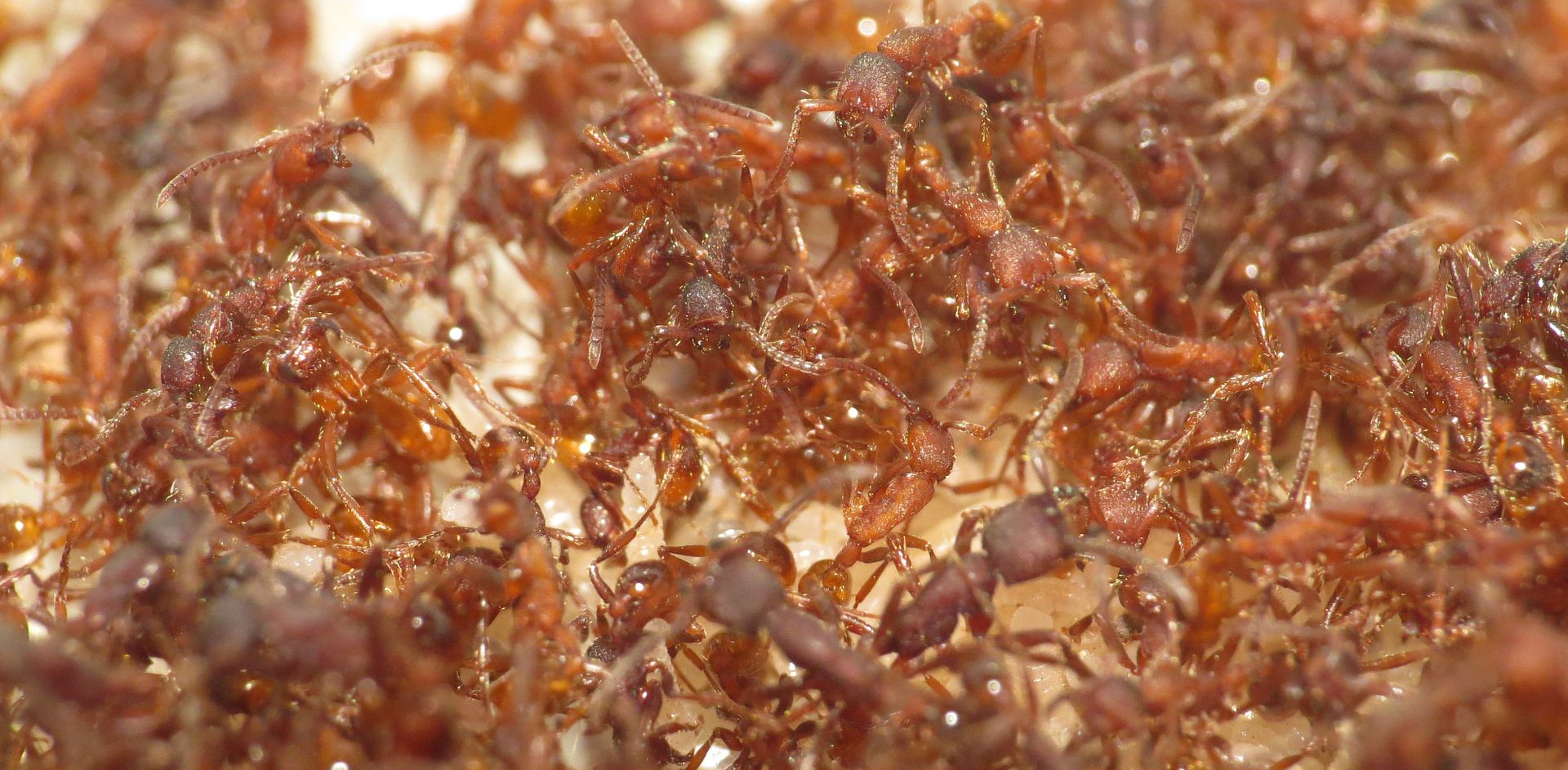
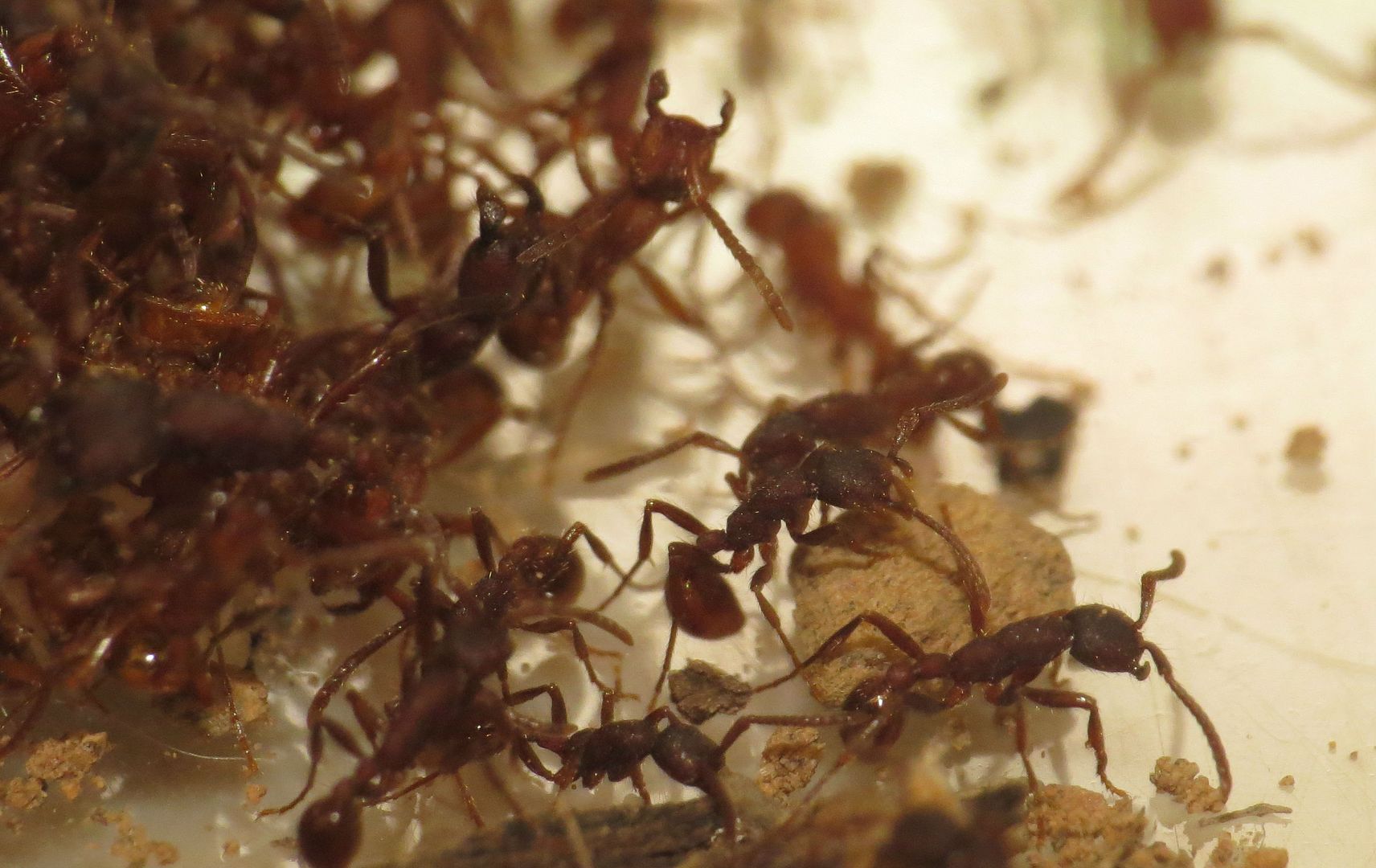
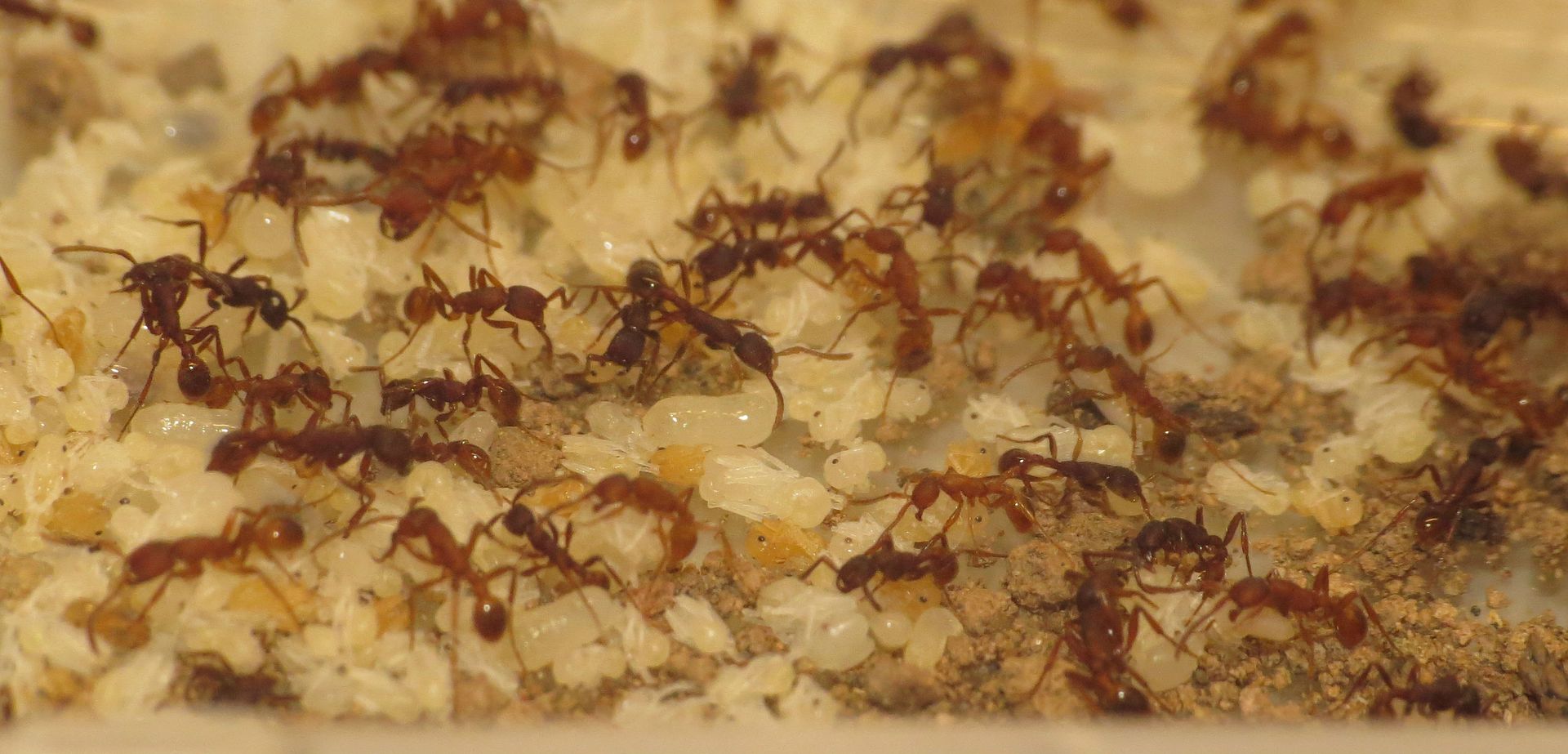
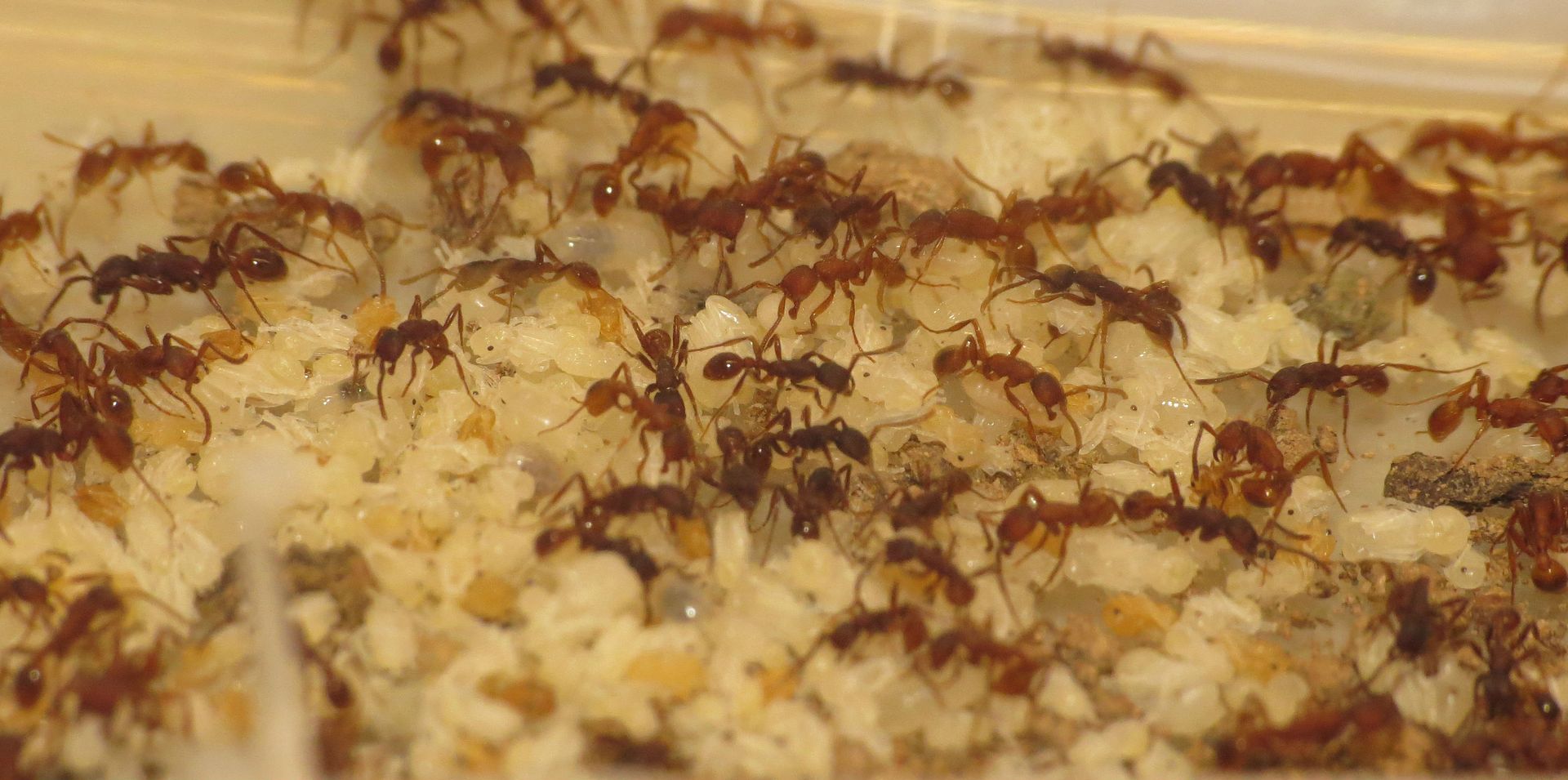
They quickly brought all the brood into the bivouacs, nests formed of the ants themselves. There was on central one that had about 80% of the ants and brood, with smaller ones in each corner of the setup. What was neat was in the morning and afternoon they formed raiding lines to connect each bivouac together and these smaller ones were dissolved as needed. Feeding them the brood from other ant colonies put more ants to work and the corner gatherings vanished completely while they gathered up the brood.

The brood was mostly kept in the dark, protected by the ants themselves. The main bivouac was around a small tube of water.

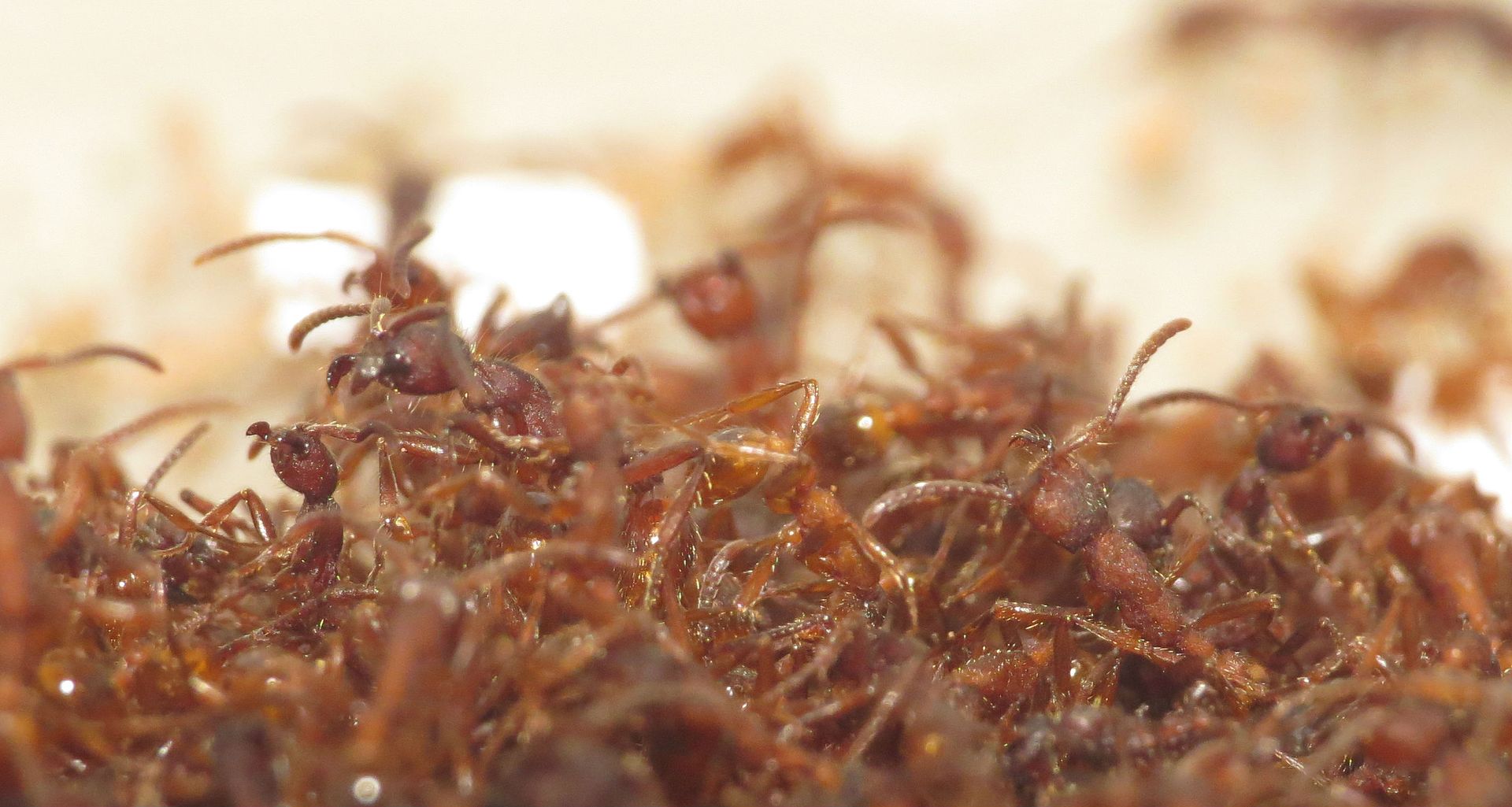
It was neat staring into the mass of ants. Blowing on them would result in a flurry of activity.

While they ran about the container, the brood became visible.

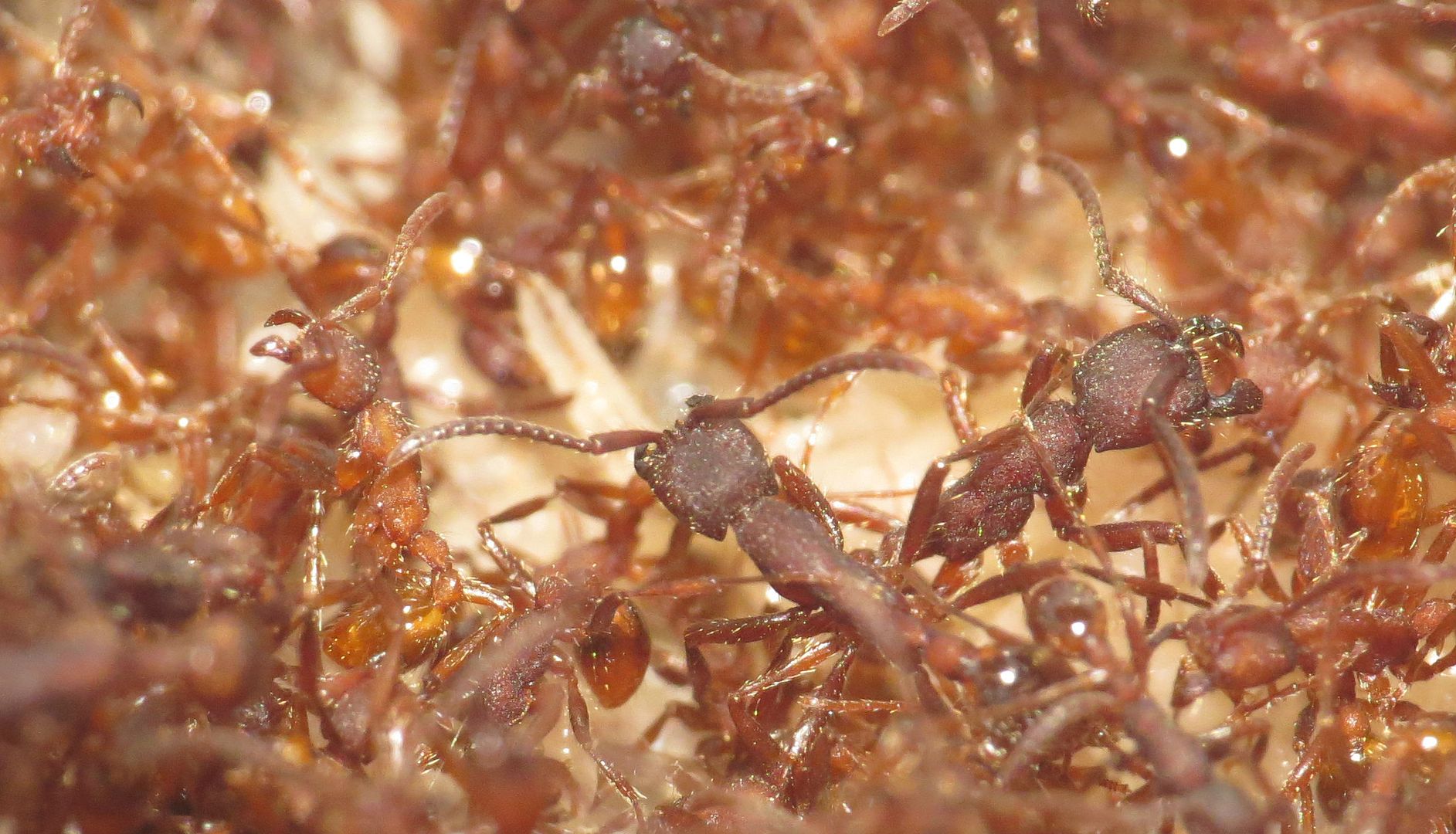
Army Ants are mostly blind. This species in particular, Neivamyrmex nigrescens, has only one eye facet. Meaning they can pretty much tell when it's light and dark out but little else. Their antennae are constantly probing the air for odors that don't belong.


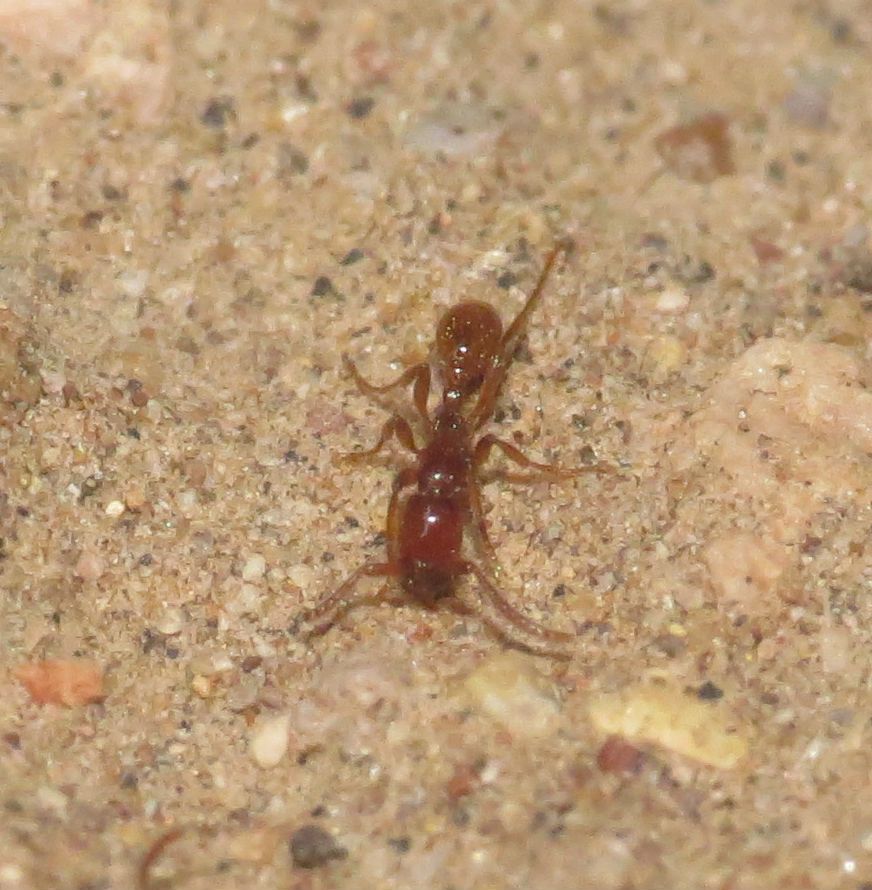
Surprisingly we found Army Ants out in the desert too. It's likely the nest was that of an existing ant colony they had raided.

This species was much much smaller than the ones we had found by the station and up in the mountains some.

A lot of Army Ant identification hinges on whether one particular grove between the mesonotum and pronotum (on the thorax, in front of the front legs) wraps around the sides and top of the ant completely, or whether it dissolves or smooths out somewhat along the way. It's not a great feature, I know because Gordon Snelling came up with the key, and was standing next to me when he said he wasn't happy with that one particular question in his key. But this is one of those features that separates a few species from several others. Perhaps it's more pronounced in certain worker castes?
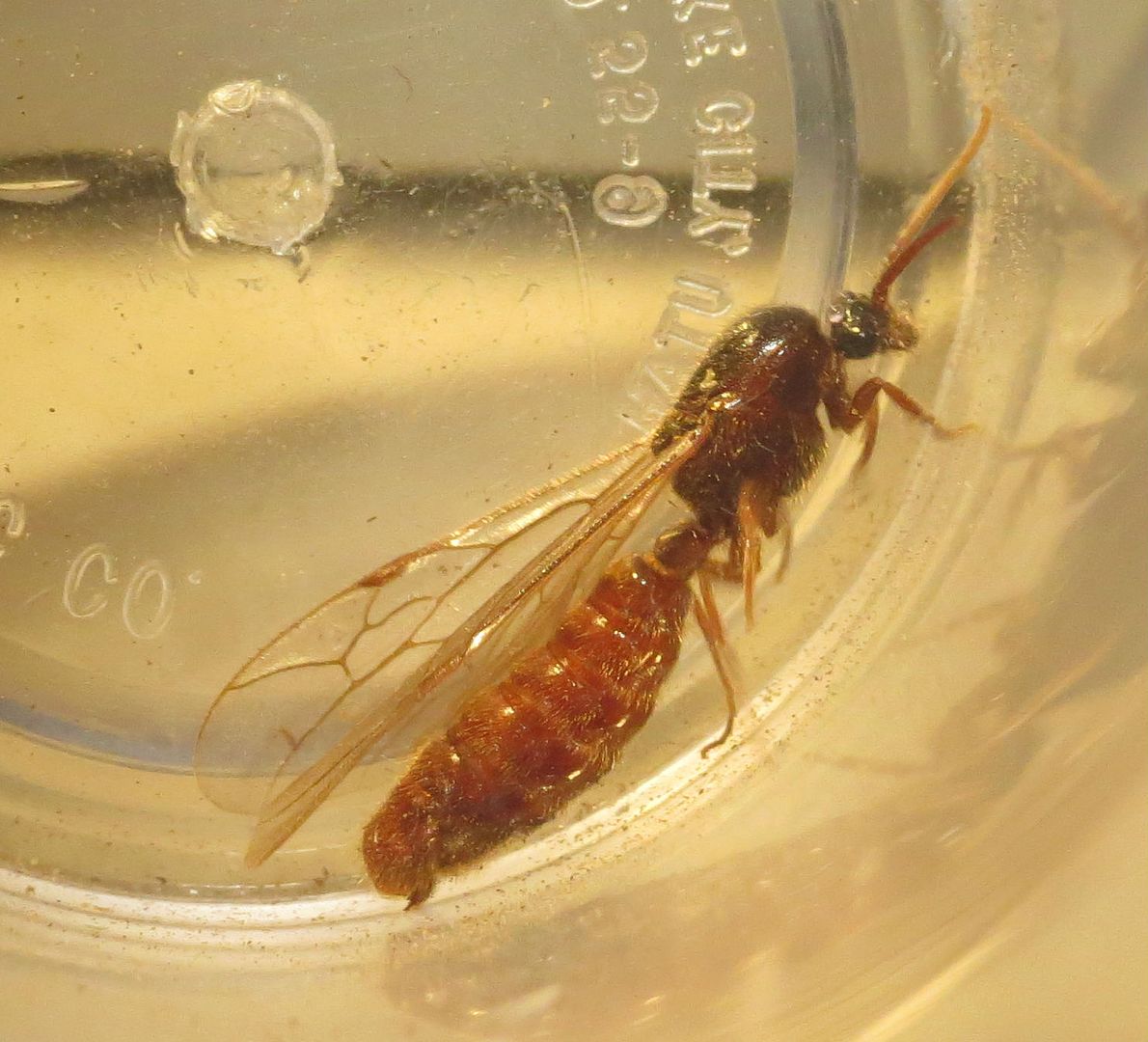
A lot of species of Army Ants are known to exists by their males. Male Army Ants fly off from the colonies at certain times of the year with the intention of being captured by anther Army Ant colony of their own species. Assuming the colony has virgin queens that need mating with, they collect him into the nest where he inseminates one of them. The problem is, these male ants were known only by showing up at lights at night and many of them look identical. 

Male ants in general are difficult to identify. Because they're a breeding caste that colonies produce only at a certain time of year for that purpose. Evolution hasn't been kind to them either, especially compared to the worker and queen castes.

Army Ant males are identified mostly by dissecting the abdomen and observing the shape of their genitals. So scientists knew several species from the males they were collecting at lights but hadn't been able to match them up to what workers they belong to. This is something Gordon Snelling and his father helped clear up.

We dumped a few of them onto a colony of Myrmecocystus (honeypot ants) hoping to see a specific reaction. In response to Army Ants raiding a colony, many ant species out right abandon their nests queen and all in the hopes to regroup elsewhere. It didn't work, perhaps because Myrmecocystus have a lot to lose from abandoning their repletes (honeypots).

Army Ants are unusual in that the adults can consume solid food. Most ants can't do this.

We fed the lab colony the brood to a while colony when we saw, sadly, they had started cannibalizing their own brood.
Thursday, August 14, 2014

Ants of the Southwest

Late last month I set out on a journey to attend Ants of the Southwest, a wonderful entomological course that is extremely underrated in comparison to Ant Course.

For those not in the know, Ant Course is geared towards Grad Students with a focus on Ant Taxonomy (identifying and classifying ants). Ant Course moves each year, (two years outside the US, one year in Arizona) so foreign students that might have trouble getting into the US can attend.

Ants of the Southwest is a toned down version of Ant Course with a more flexible schedule. There's more emphasis on ecology and finding ants in an array of different environments.

This was the first time I'd ever flown anywhere. Which was an adventure enough on its own. Being an overachiever I made the mistake of trying to arrive a day early. Also I didn't know that air line tickets are printed in the local time. So I assumed I'd land at 5:00pm instead of 8:00 as it was printed on my ticket. And then there's the two hour drive from the Tucson Air Port. So I was driving through the middle of nowhere in complete darkness instead of just getting a hotel and driving there the next morning like I should have.


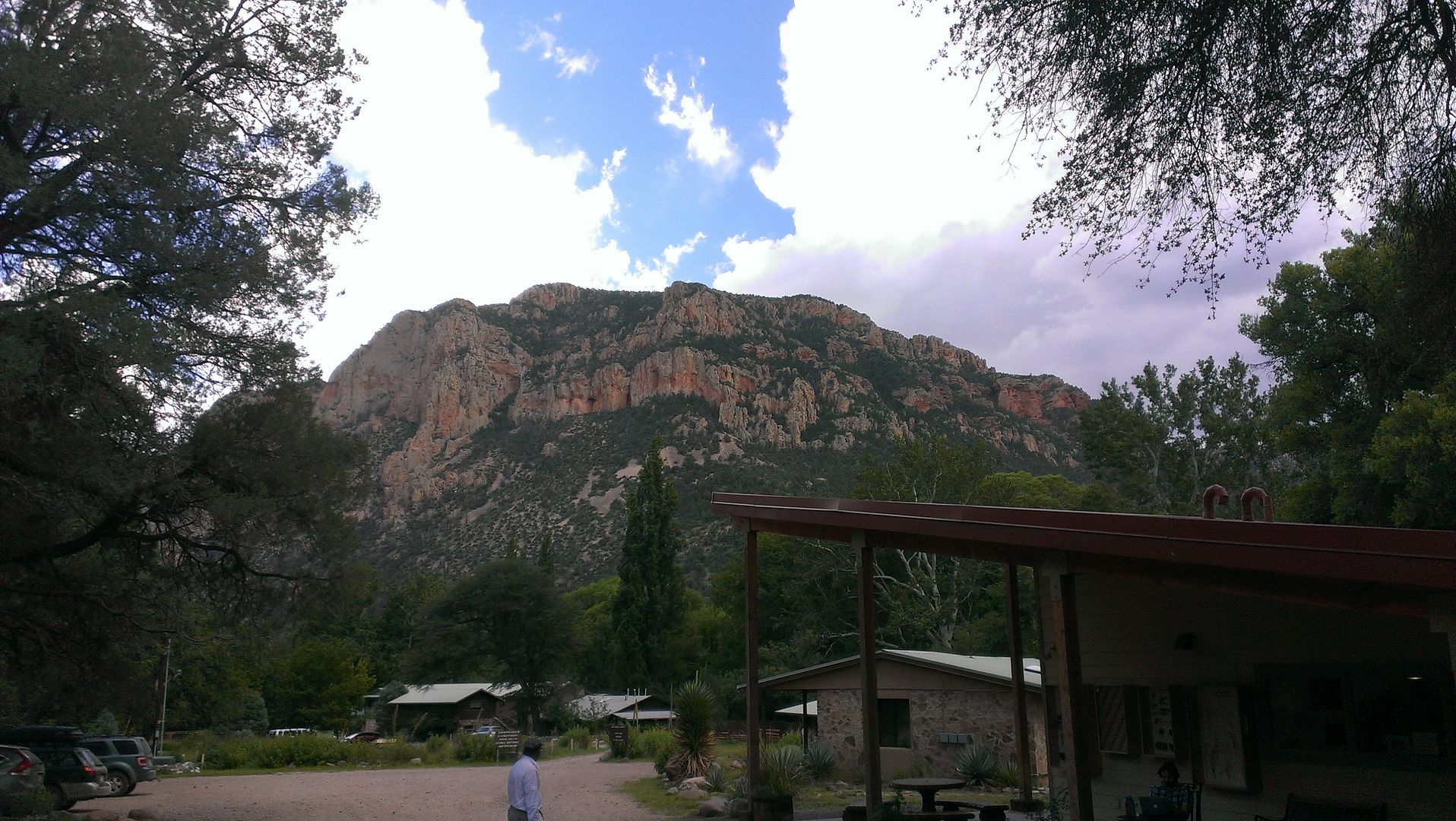
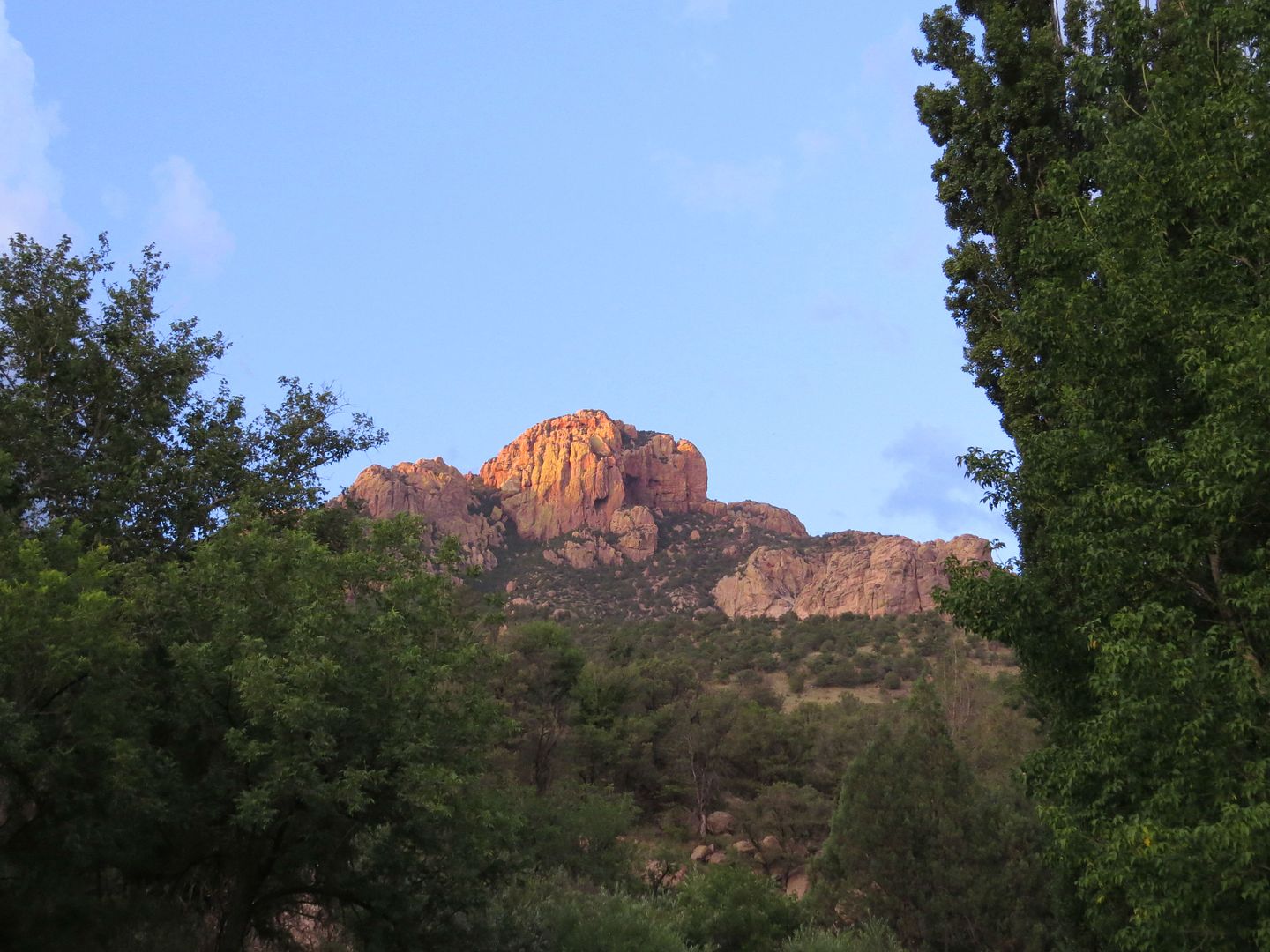
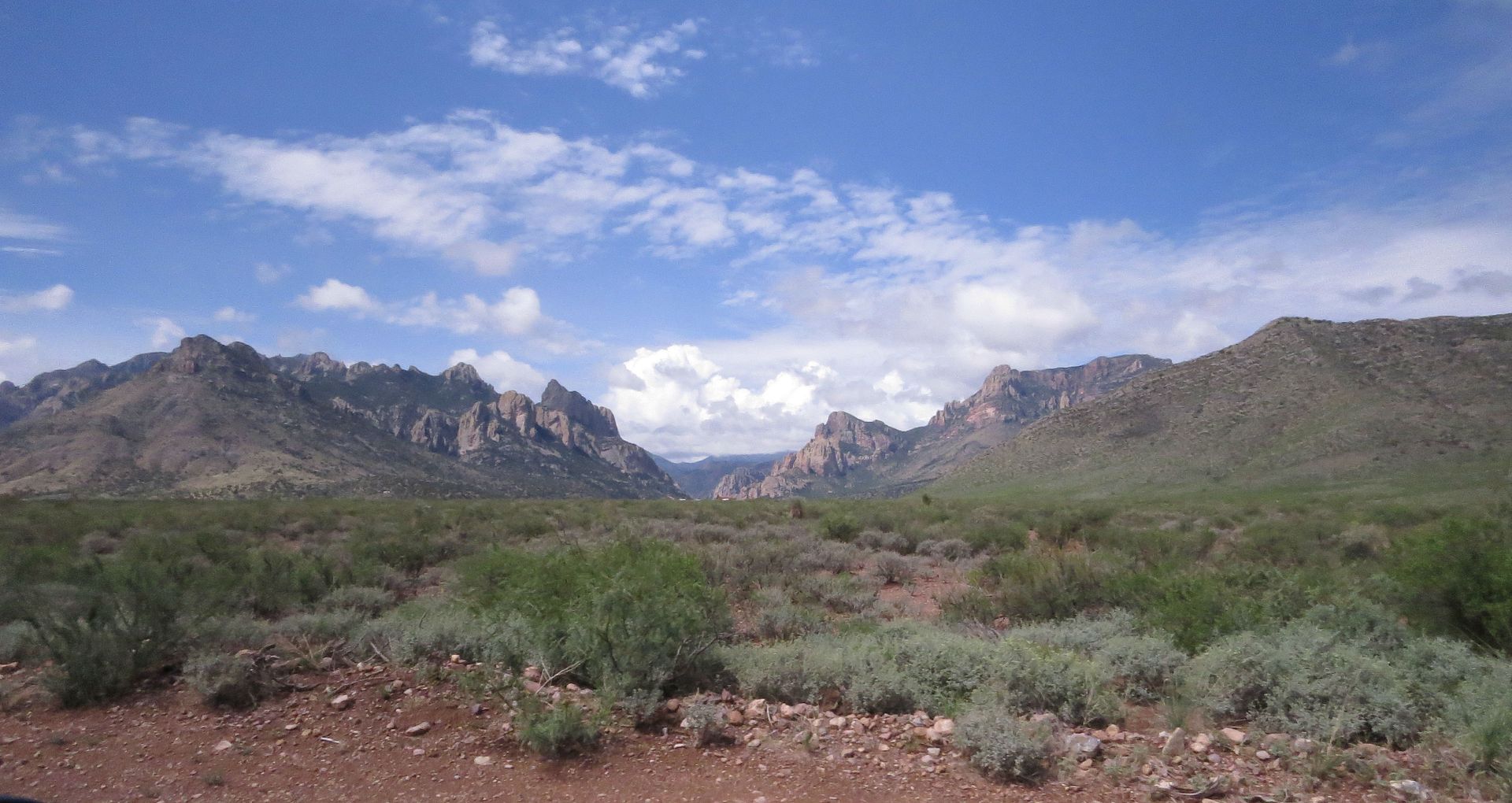
Do yourself a favor and just plan to arrive the morning of. Otherwise you'll be missing this! Lush desert vistas and mountains as far as the eye can see. Don't be swayed in by the idea of "Seeing the night sky without any light pollution." All photos that show the Milky Way and millions of stars in the night sky are the result of over exposure. Sure you will see a lot more stars than normal, I even saw a shooting star, but the experience doesn't live up to the photos.

So why hold this thing out in the middle of nowhere? Because it's an ideal location. The Chihuahuan Desert (as seen above) meets with the Sonoran Desert (which is full of more cacti). There's an abundance of mountains in the area, so there's a lot of different elevations and micro-climates. Storms are constantly passing through at that time of year, and you can actually which hills in the desert have received more or less rainfall from how green or brown they look. It's the northern most point that a lot of tropical species make, as well the southern most point that temperate species travel to or migrate through. So there's a lot of overlap here that all attributes to species richness.

On the topic of "monsoons" I have to say I wasn't really impressed with them. I come from New Jersey and we have four seasons in a year, but down there, because it's tropical, they have the wet season and the dry season. Maybe monsoons are worse in wetter areas but a tropical desert isn't very wet. Actually there was only one day I was there where we got 2 inches of rain, 1/4th of what they had gotten that year all in one night. Dirt roads, and dry "washes" in the desert, would suddenly become raging rivers. 


There is a paved road that takes you right up to just before the South Western Research Station. Sadly it does turn into a dirt road for the last five minutes and if it's rained it can be an issue pulling into the station, due to a creek that normally runs completely dry suddenly rushing with water.


There is a sign or two, but they don't face both ways. This is another reason to find the place during the day.

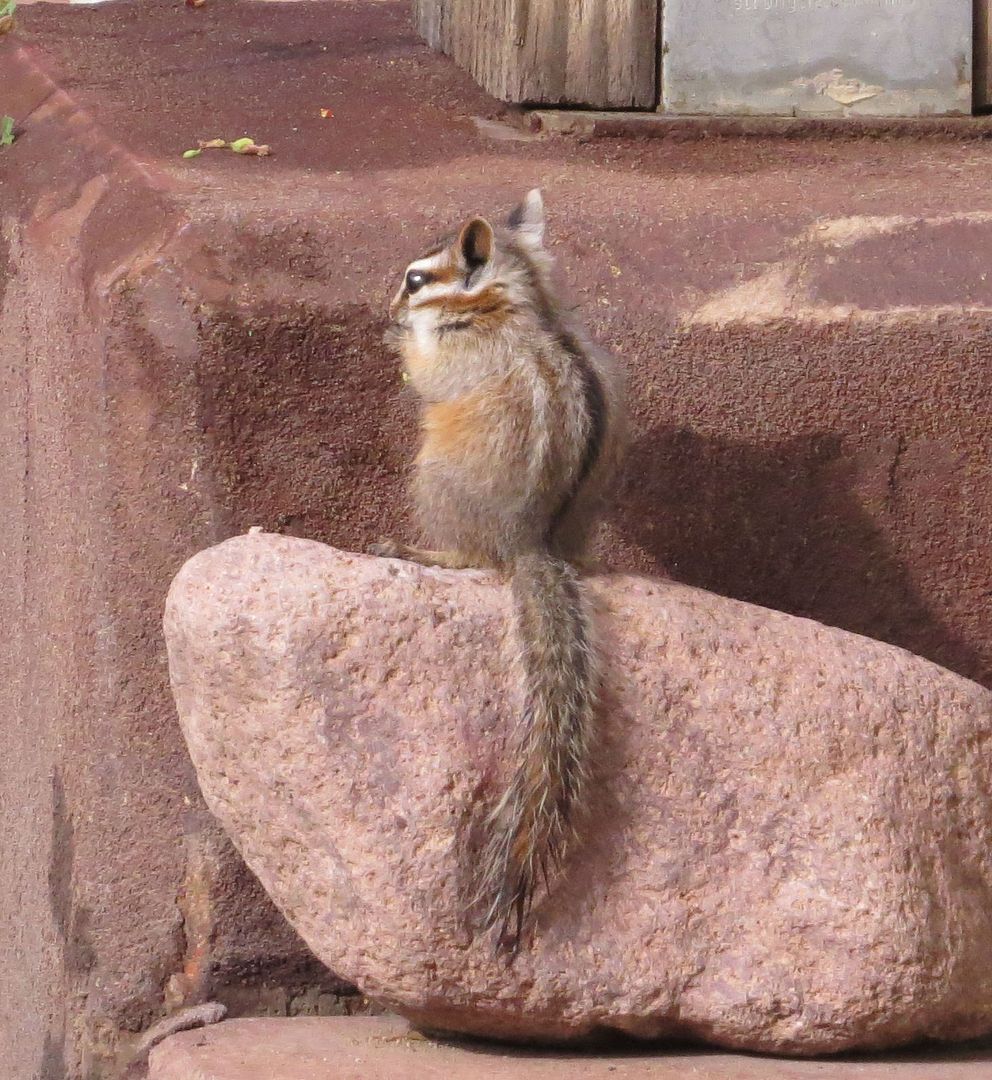
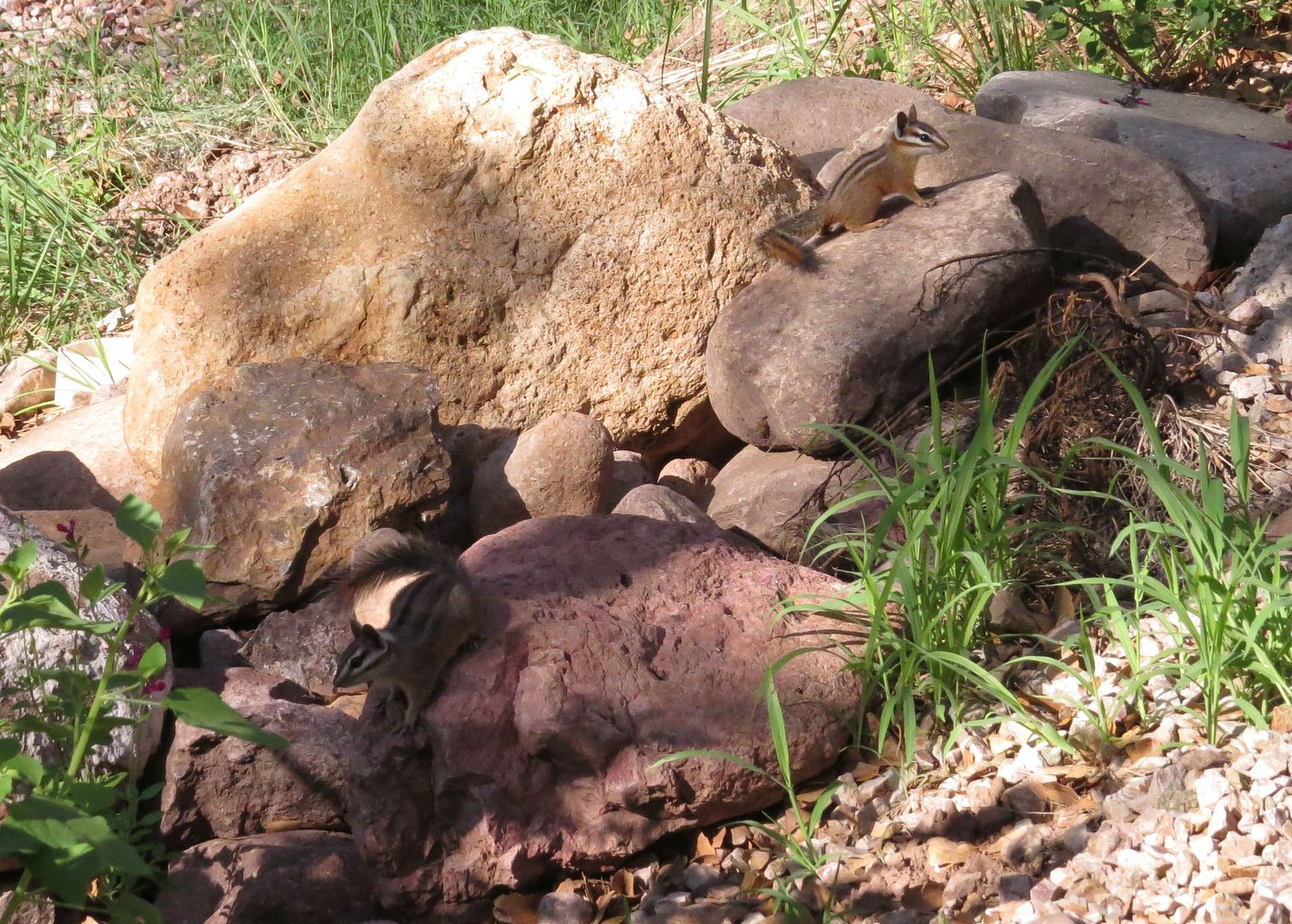
Upon arrival, it's very apparent that there's a lot more animal life here than in New Jersey.

Varmints run around the station like they own the place. 

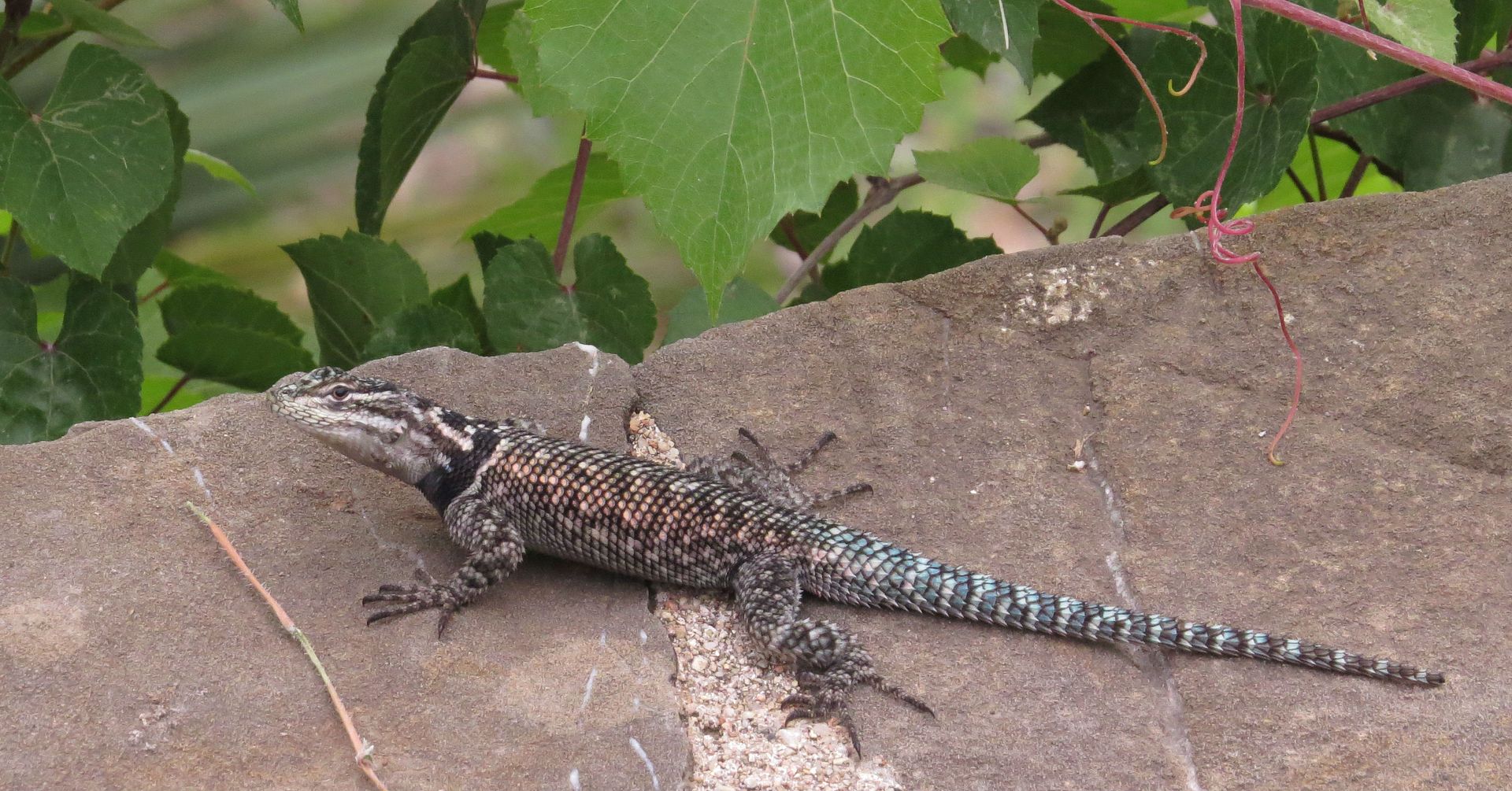
An assortment of lizards too.

There are droves and droves of them running around the place.


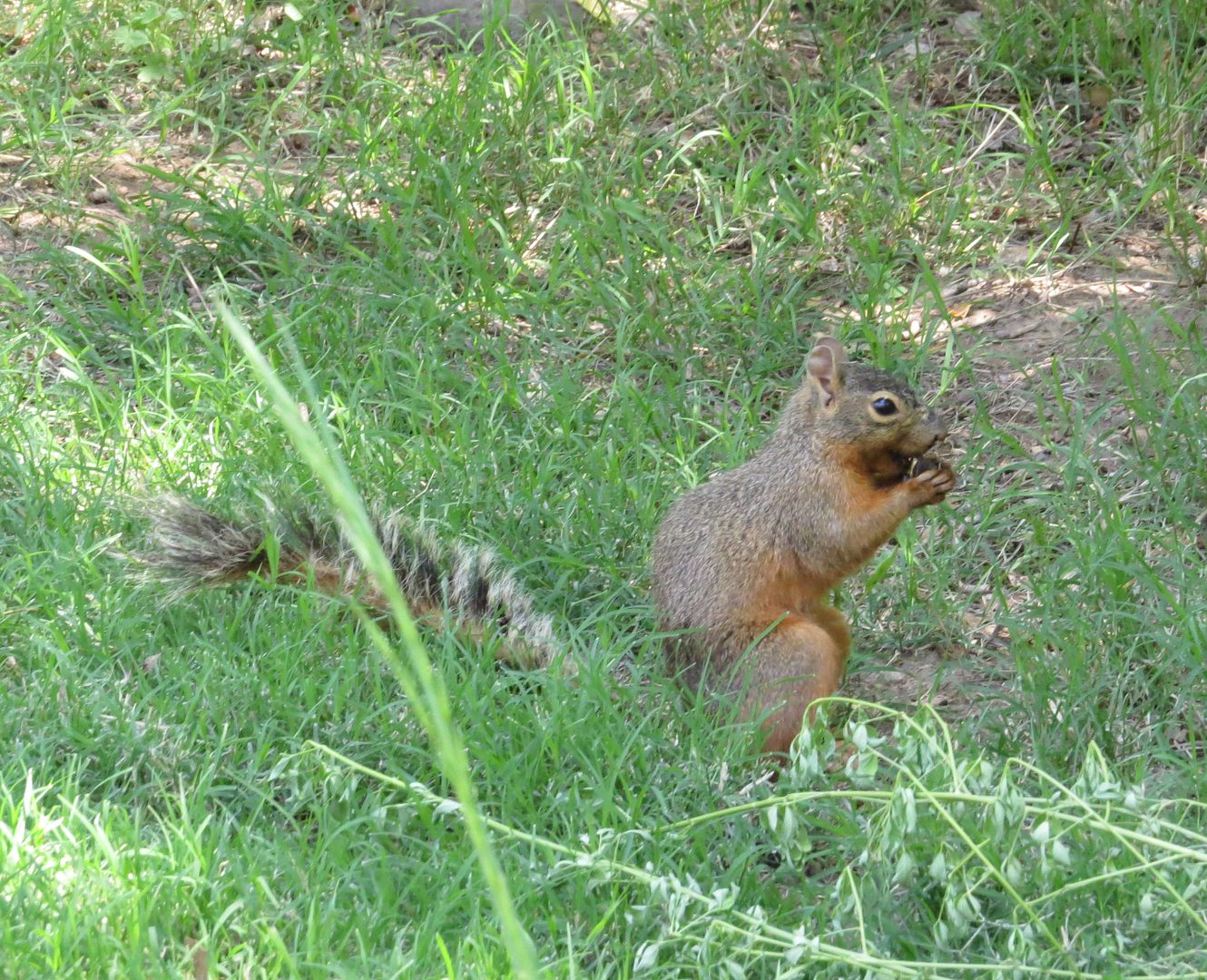
Even the squirrels down there are different. Their tails are shaggier, they're slightly bigger, and one started thudding its tail at me when I got too close. 

So in the weeks to come, I'll be posting about my trip to Arizona.