Showing posts with label Moths. Show all posts
Showing posts with label Moths. Show all posts
Wednesday, July 10, 2013
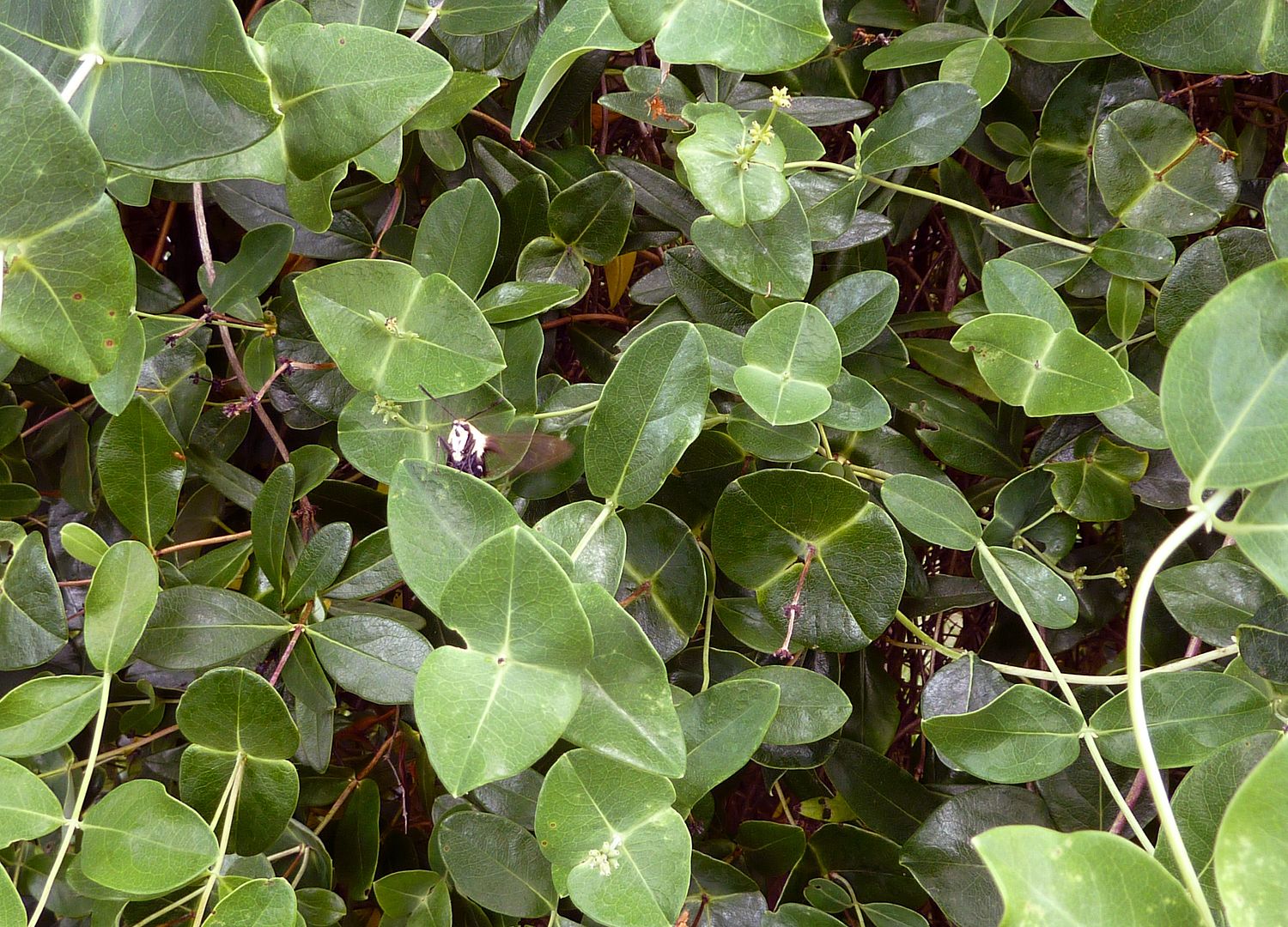
Snowberry Clearwing Moth
Wednesday, April 24, 2013
A Must See Butterfly Video
This is a butterfly raising video I think everyone needs to see. This was uploaded (and presumably filmed and or edited by) Youtube user Blgreensource.
Sunday, December 11, 2011
Best of Butterflies 2011
I've been noticing a trend with the Lepidoptera (Moths and Butterflies) in my area. As the flowers all come out each spring we get an assortment of small tent caterpillars. Their mother moth had attached the eggs to the tree the previous autumn. Once they hatch the caterpillars begin nibbling away at the tender new flower petals to mostly fruit trees. At the same time migrations like the Red Admiral, Painted Lady, and American Lady start up, all of whom fly lightning fast and are easy to miss if you're not looking. Eastern Commas and Mourning Cloaks come out of hibernation and flutter about with the newly emerged Swallowtails, of which there are incredibly few at the start of the year.
After this initial boom we enter something of a drought with butterflies. This all changes come June, July, and August, as things have gotten into full swing. Generally any butterfly worth its salt will be flying around at this time of year. During the heart of summer they almost completely disappear during the hottest part of the day. Come 4:00pm though they'll be back out in full swing. The Monarch for the most part hasn't had its population explosion yet, so this is really the time when Swallowtails steal the show. Giant Silk and Royal Moths can be found around lights at night.
Once we hit August we're overtaken by orange and black. The Monarch population is approaching its peak for the year and their migration south begins. A few others migrate at this time but they're not as well known by the general public.
I often feel that the Monarch gets too much attention in butterfly gardens. It really is the only species the general public seems comfortable enough discussing. This is on par with the Honeybee hogging all the spotlight in the "Save the Bees" movement. Monarchs are almost too easy! You plant milkweed and you're almost assured to get some caterpillars. And not just any caterpillars, ones that are fearless out in the open nibbling away on host plants in the middle of the day. They're a big middle finger to anything trying to eat them, though I guess the 1 in 25 survival rate makes up for it.
By comparison the lengths swallowtail caterpillars go to not get eaten seem extreme. Early on most species are disguised as bird dung, wet bird dung! During the day most of them are not out eating, though a few species are more fearless than others. The cowards are tucked away under leaves or among the bark. After nibbling on a leaf, they will cut that leaf off at the stem to hide evidence of caterpillar nibbling! The spicebush swallowtail is mimicking a snake and even it hides during the day! (Here is a video of this in action where. Those tube like structures on the head along with releasing an odor will rub right into the bird's eyes.)
An excellent second species to go for besides the Monarch would be the Pipevine Swallowtail. Because they're poisonous to eat, just like the Monarch, their caterpillars can afford to be out eating during day light hours. Here is a video demonstrating that.
Anyhow here's how I did this year.
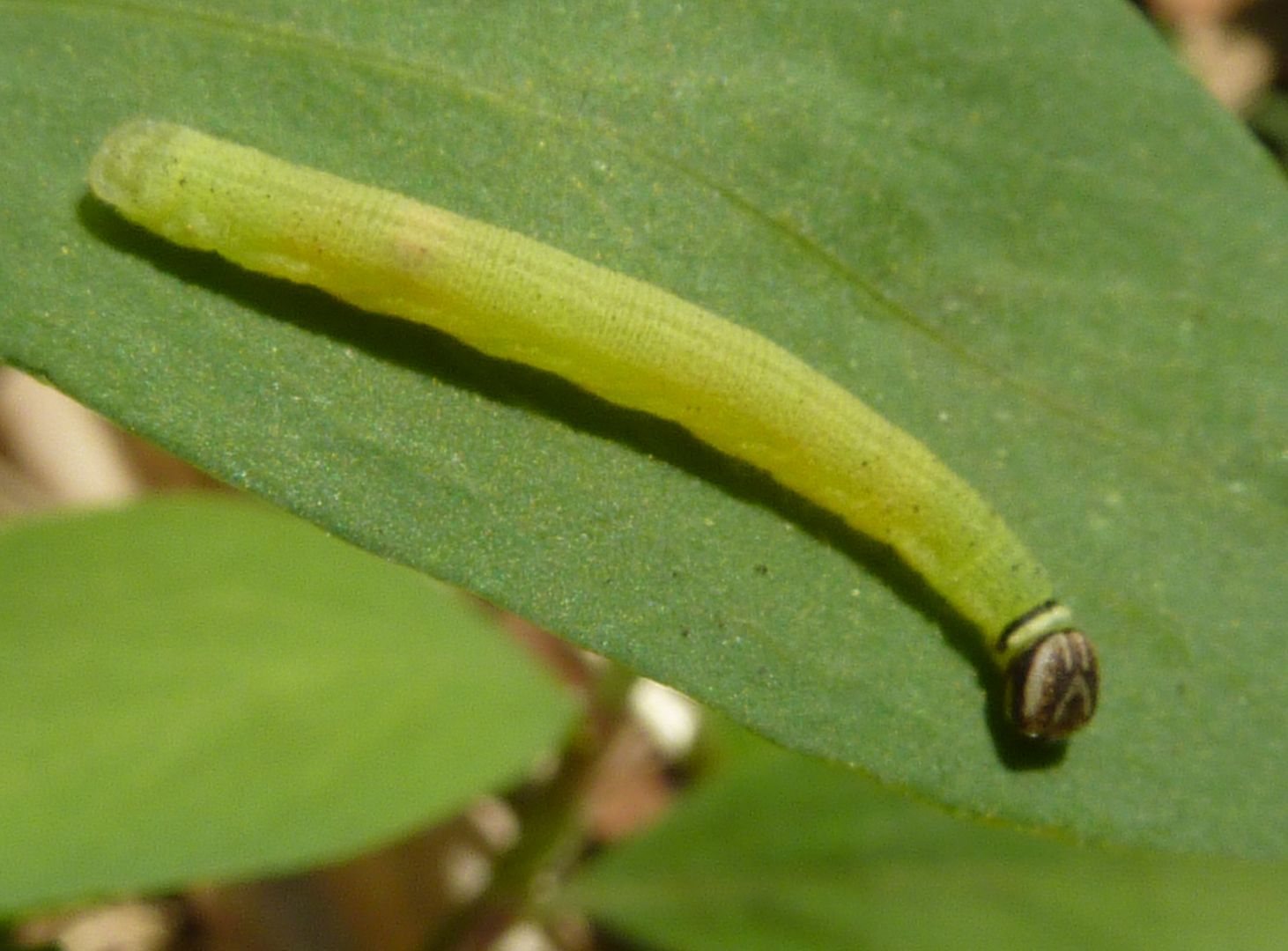 The caterpillar to some kind of Lepidoptera. It might be to a Duskewing skipper or something else. I honestly don't know. I found it nibbling on some type of small weed that I frankly have never paid any attention to until I found this caterpillar on it.
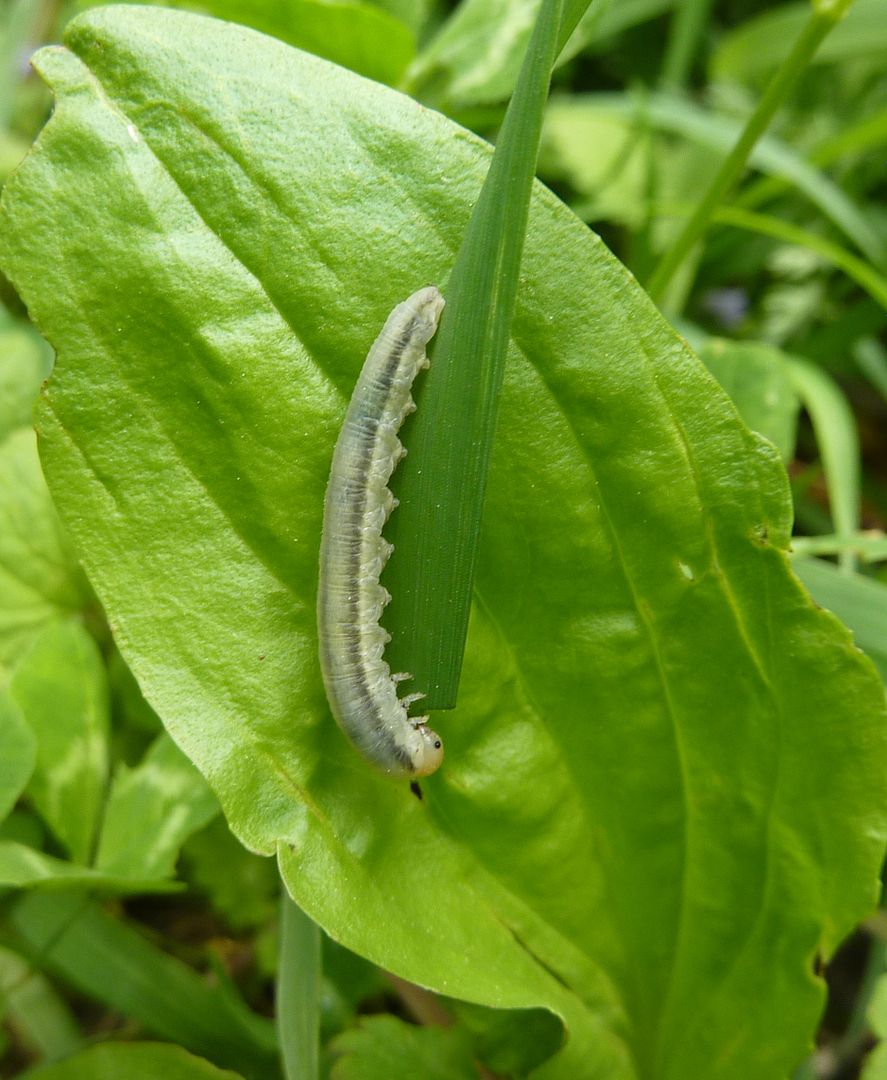 This might be some kind of sawfly larvae or a caterpillar to some moth I've never paid any attention to. What's neat is I learned they all come out at dusk to nibble on a type of grass we have growing all over. And I was a little surprised to find my yard had lots of them munching away.
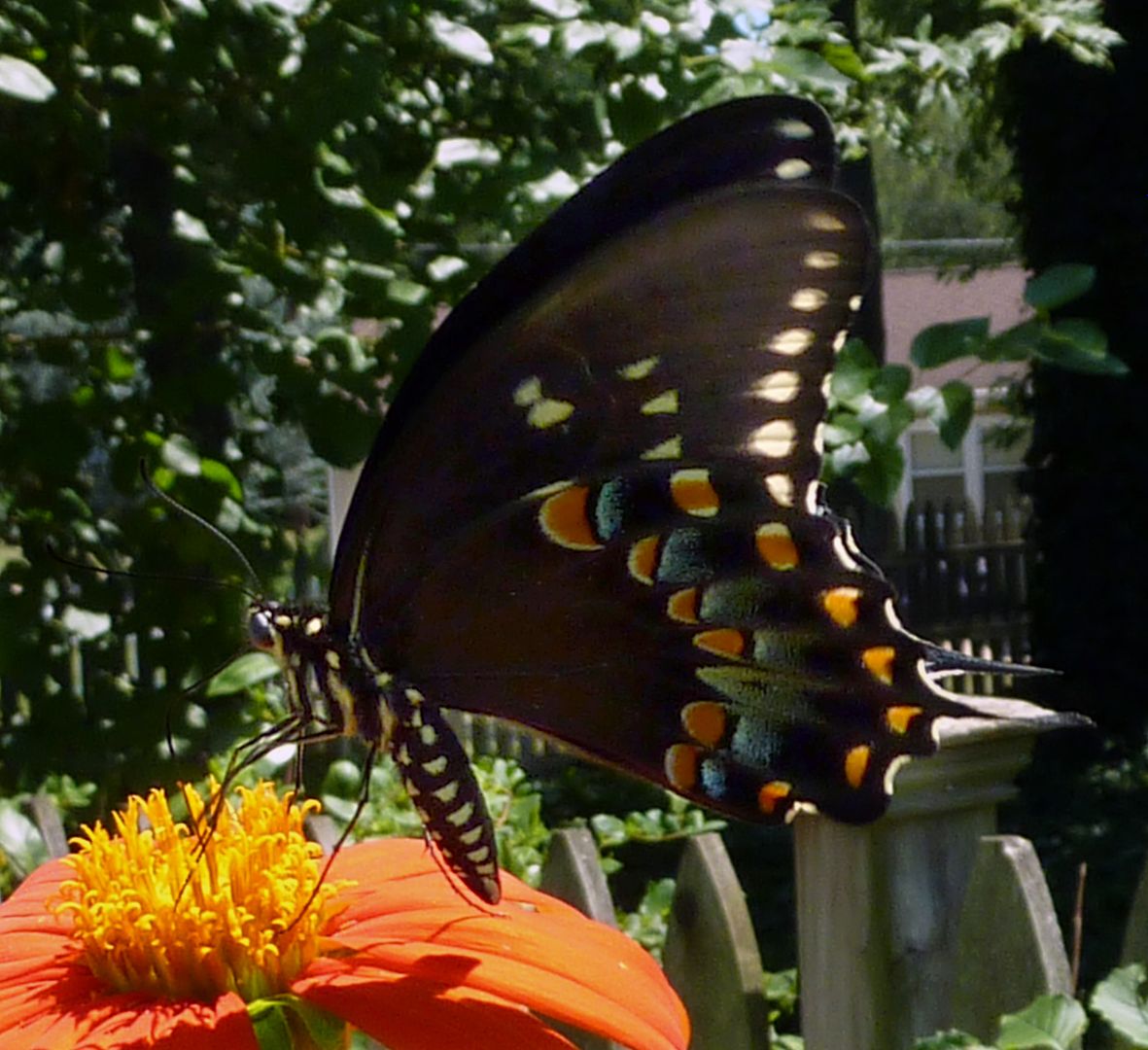 I finally figured out how to tell the Spicebush Swallowtail, Papilio troilus, apart from other Swallowtails. Note the line of large orange spots under the wing. One of the spots is missing and replaced by a blue streak.
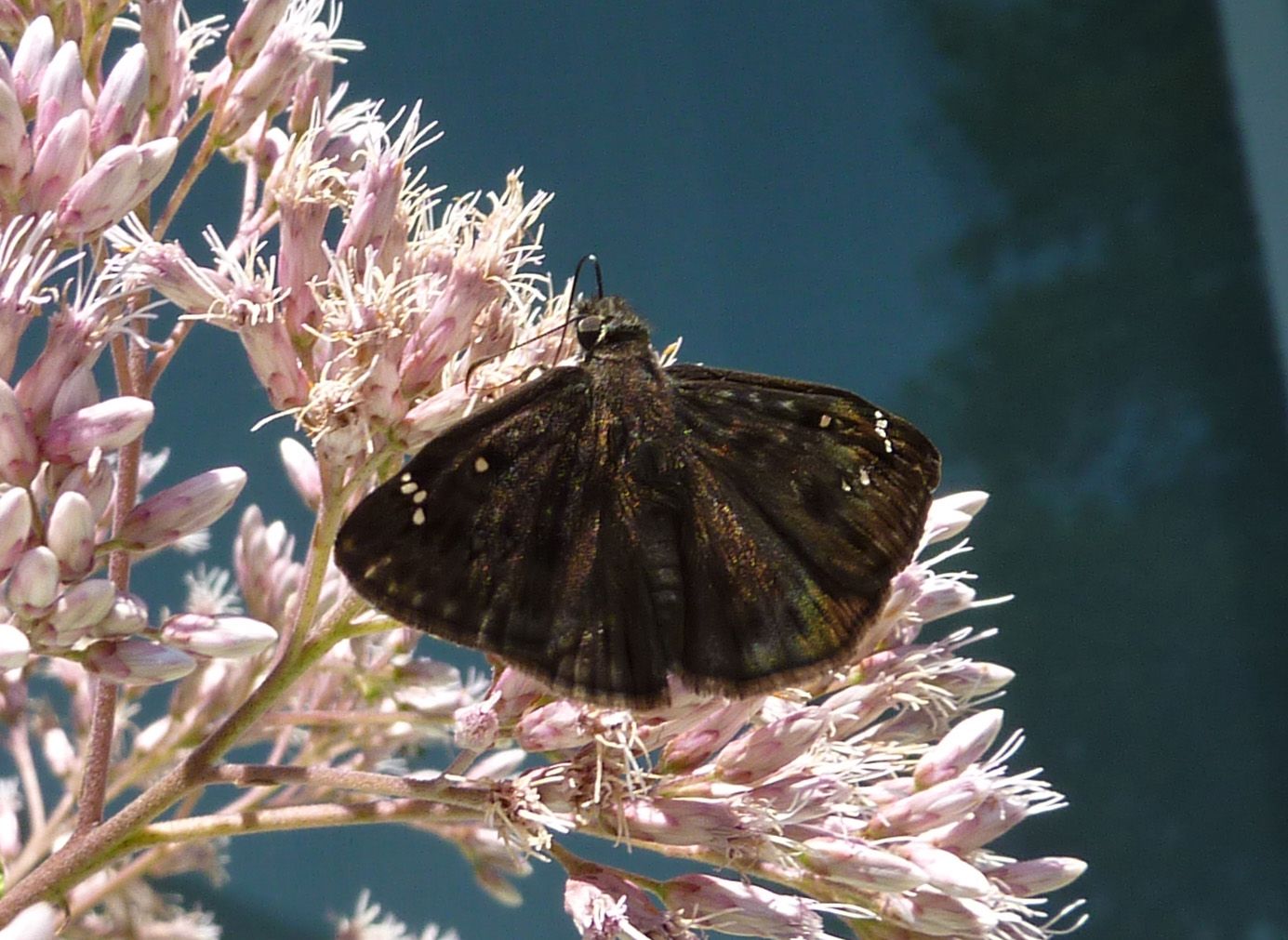 A Duskywing Skipper of some kind.
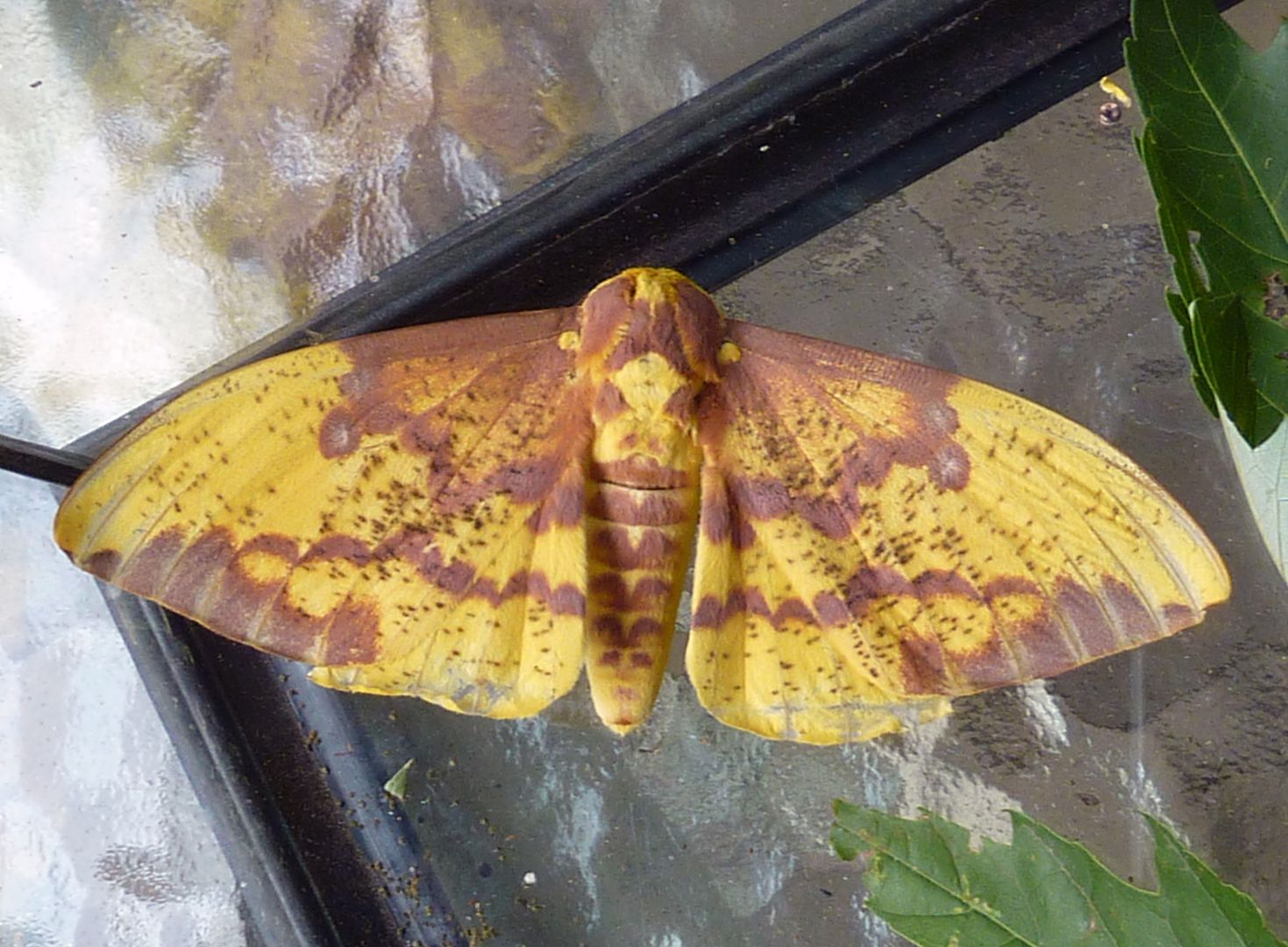 Imperial Moth, Eacles imperial, is I caught several of these this year. I always keep over night then release them immediately. I know how time sensitive their life cycle is. These giant silk and royal moths are about the size of my hand.
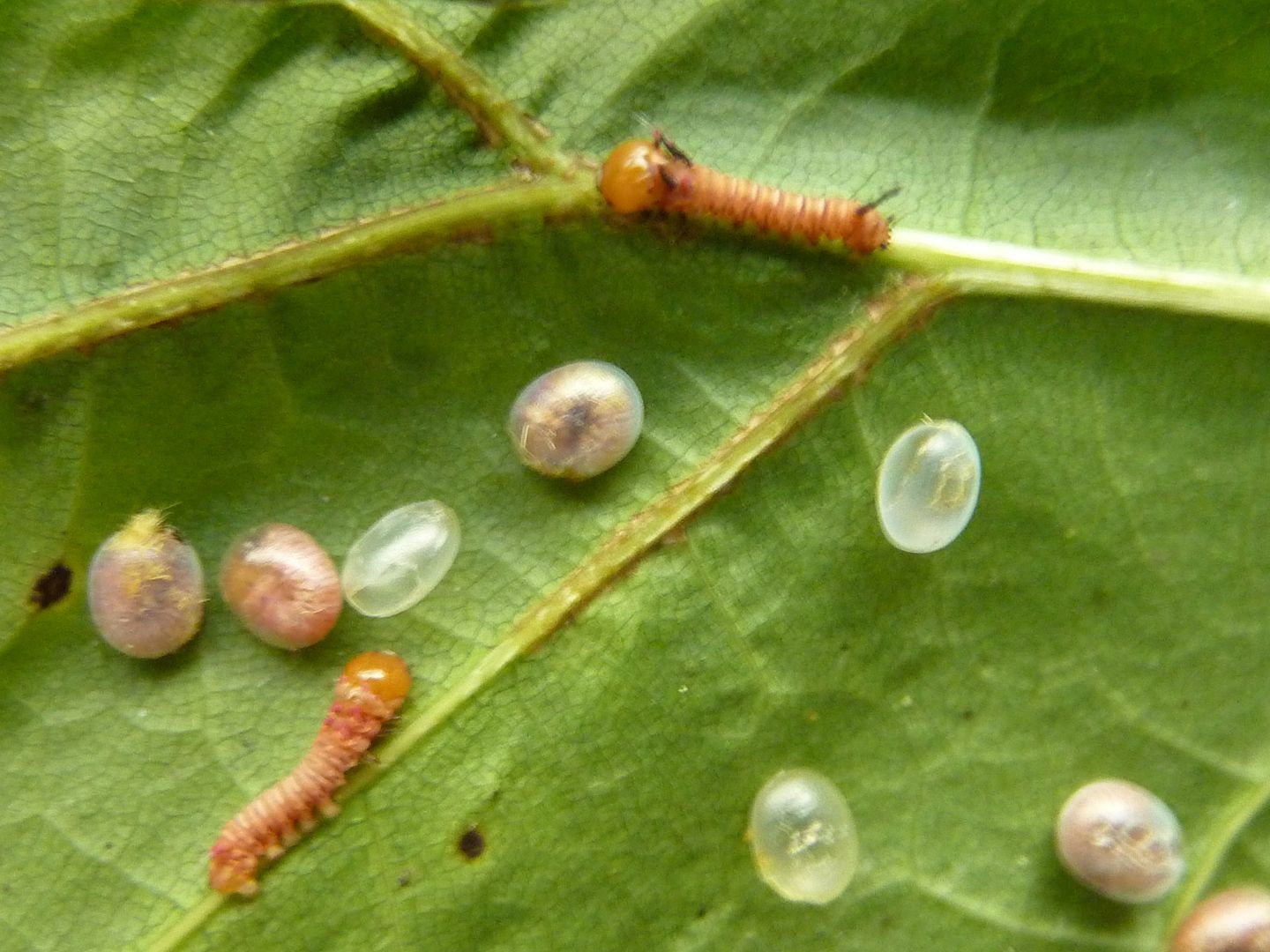 I even tried rearing them in captivity. Sadly my ability to do this successful is lacking and I've yet to raise one to adults.
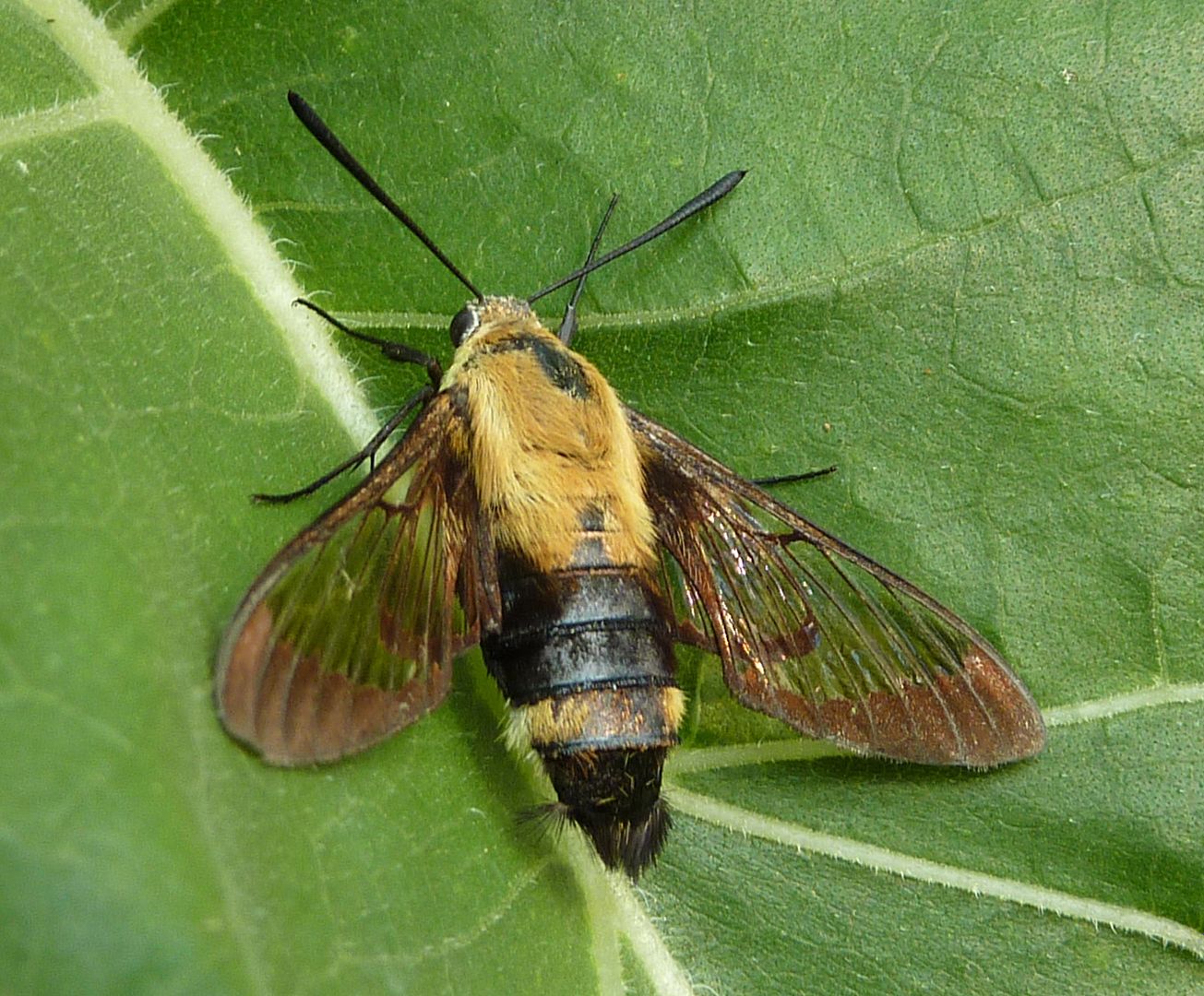 I finally got a Snowberry Clearwing Moth, Hemaris diffinis, to hold still. Our honeysuckle plants were teaming with these.
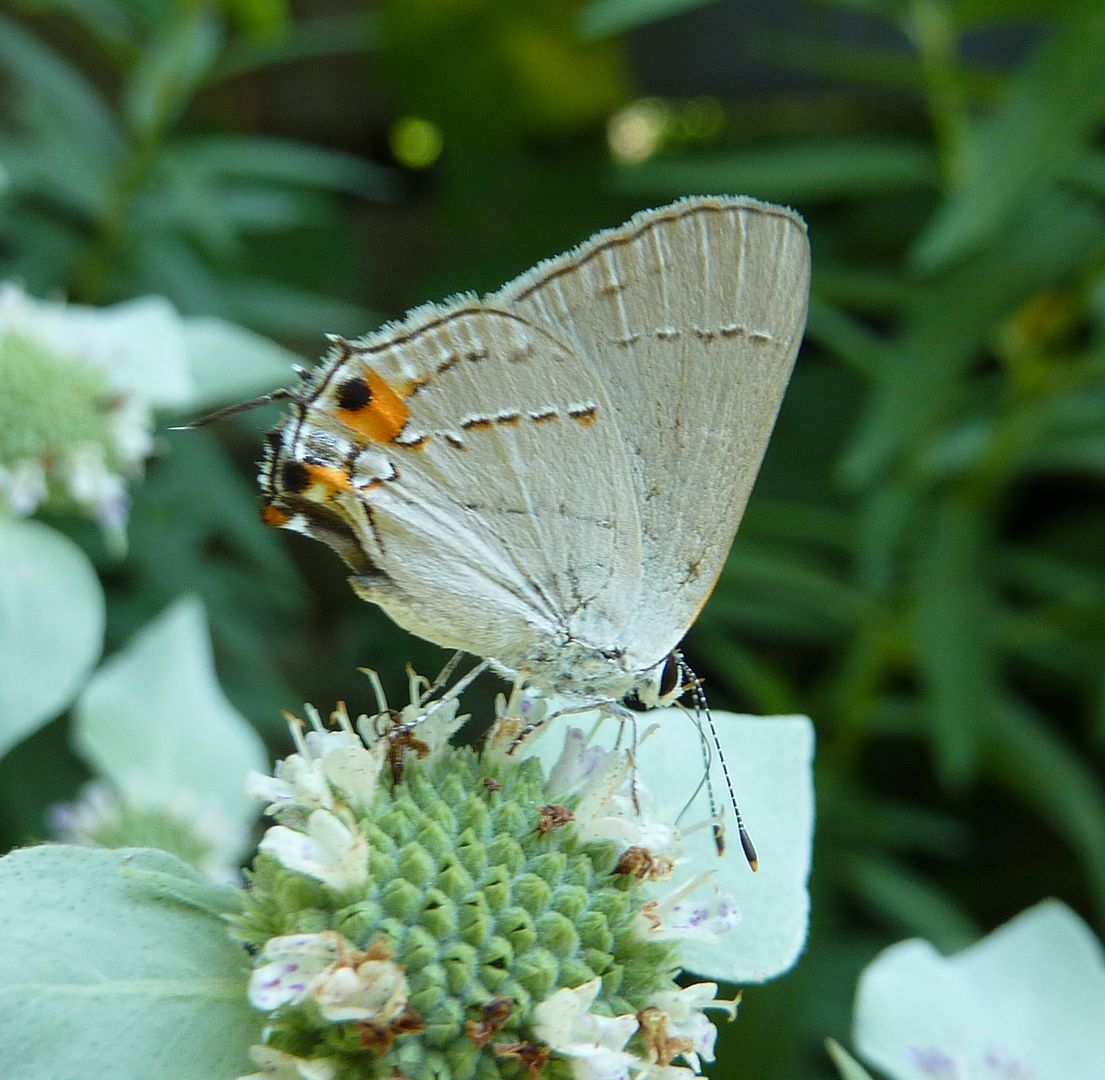 Some type Elf or Blue or something. This group of Lepidoptera I'm not very familiar with.
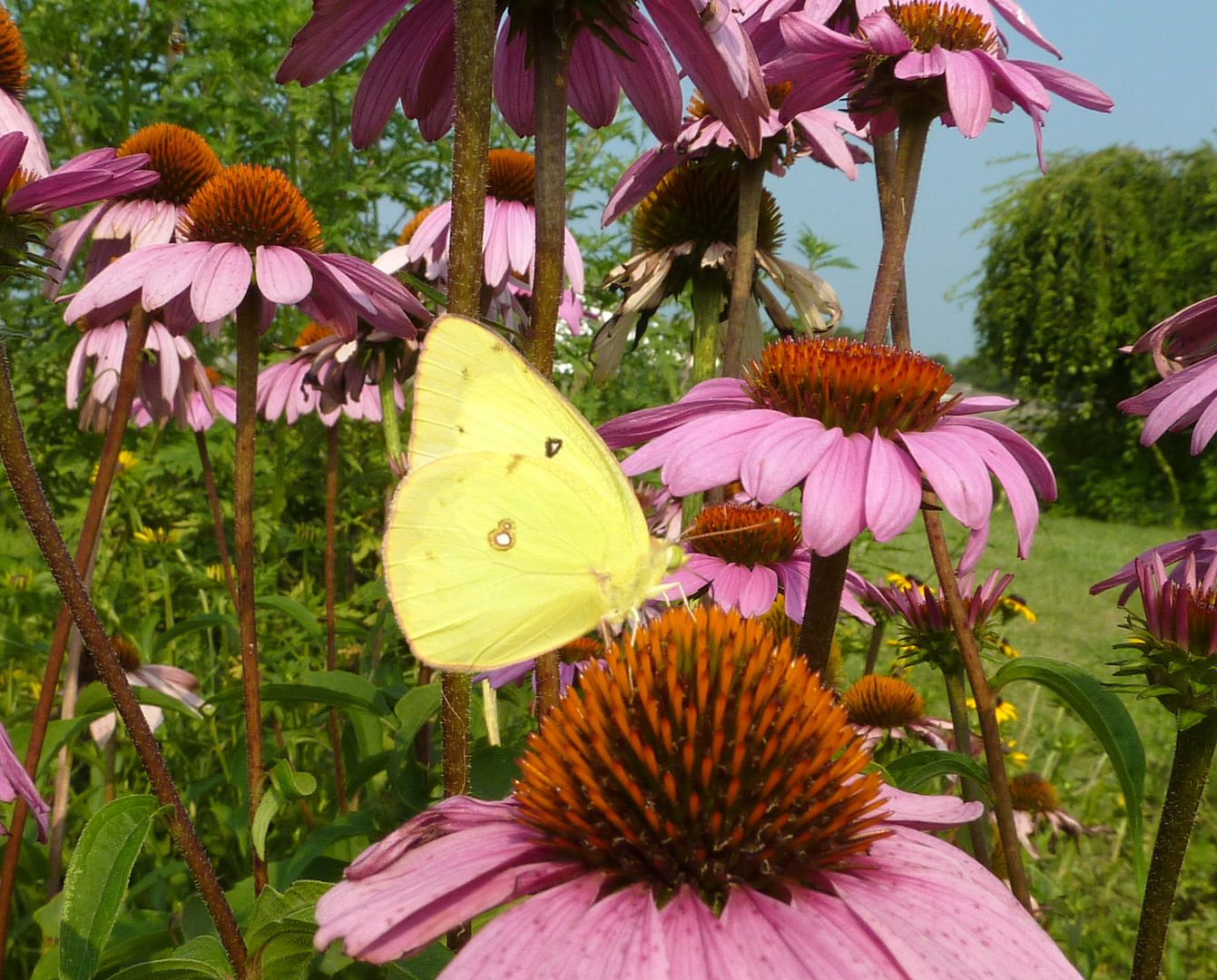 A Cloudless Sulphur, Phoebis sennae. I've been trying my best to make these more common in my yard. There's also a relationship between this species, their host plant, and some ants I hope to someday document.
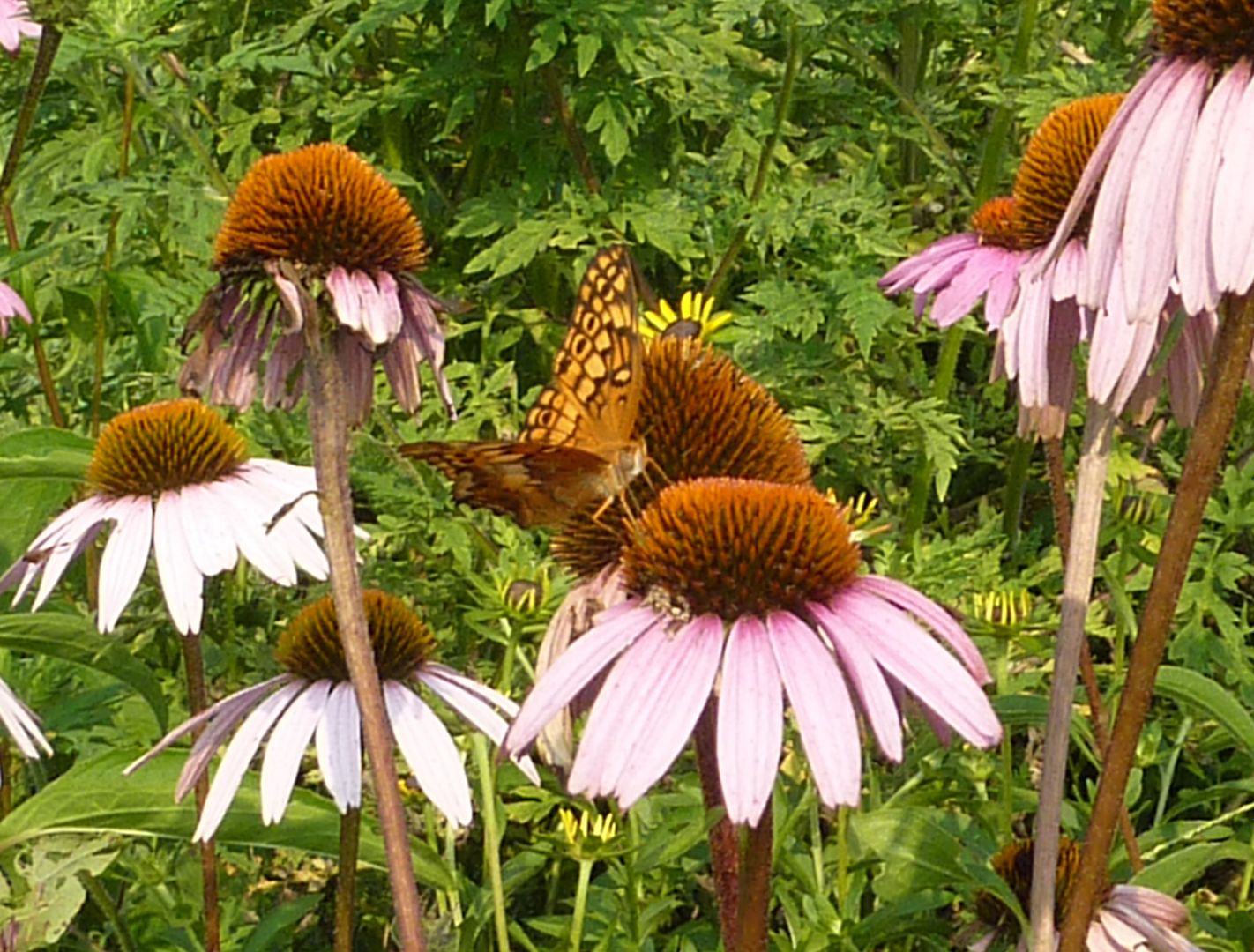 Fritillaries are another group of Butterfly that I'm just starting to learn about. From what I can gather they don't travel that much at all. People with these in their gardens should feel honored as many species are restricted to only a few fields and are often considered a mark of quality.
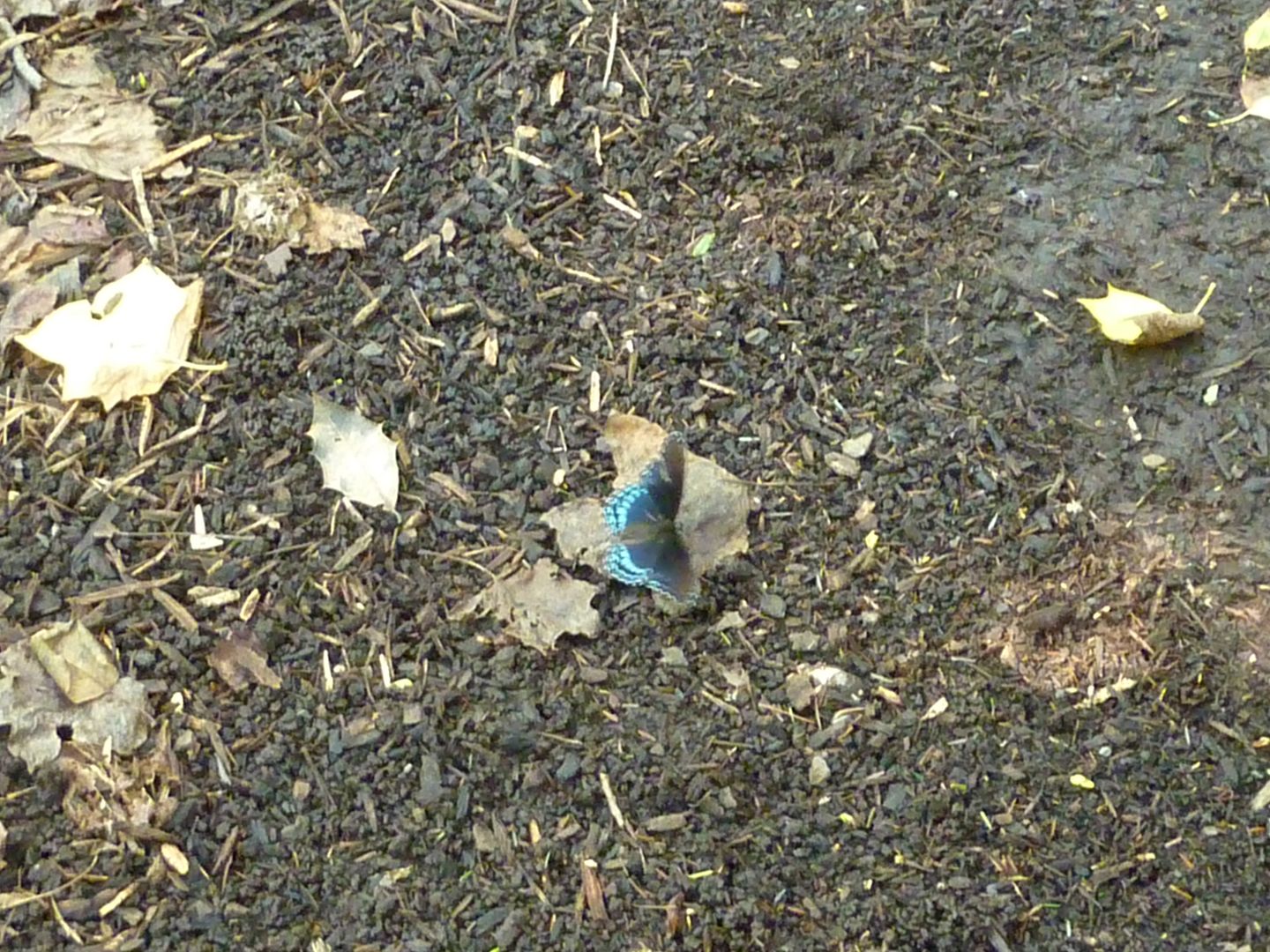
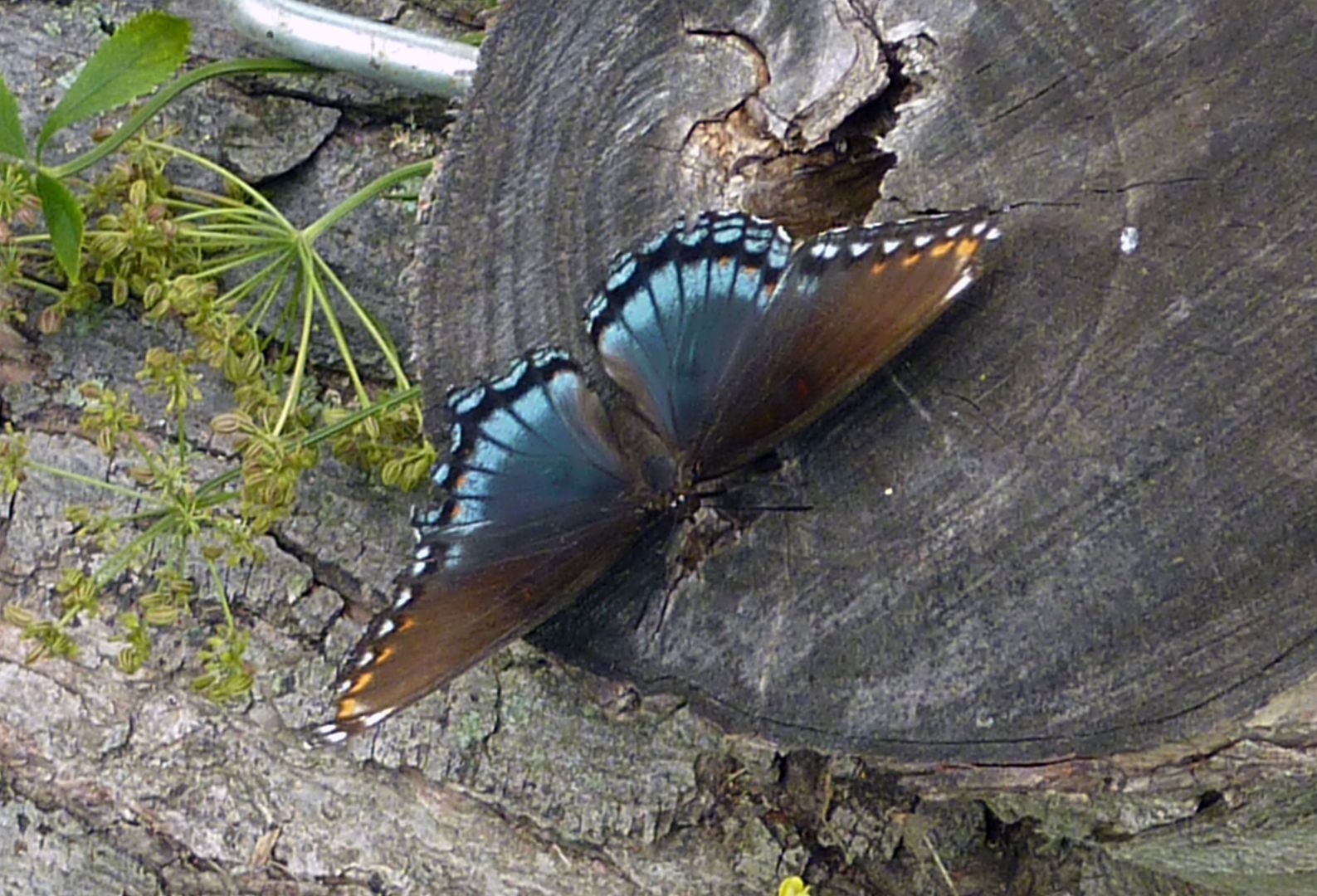 A little upside down, but, this is a Red Spotted Purple, Limenitis arthem. And you can see from the smooth curve on the rear wings that it is not swallowtail. It is mimicking a swallowtail as are many other swallowtails, who all strive to look like the Pipevine Swallowtail, Battus philenor.
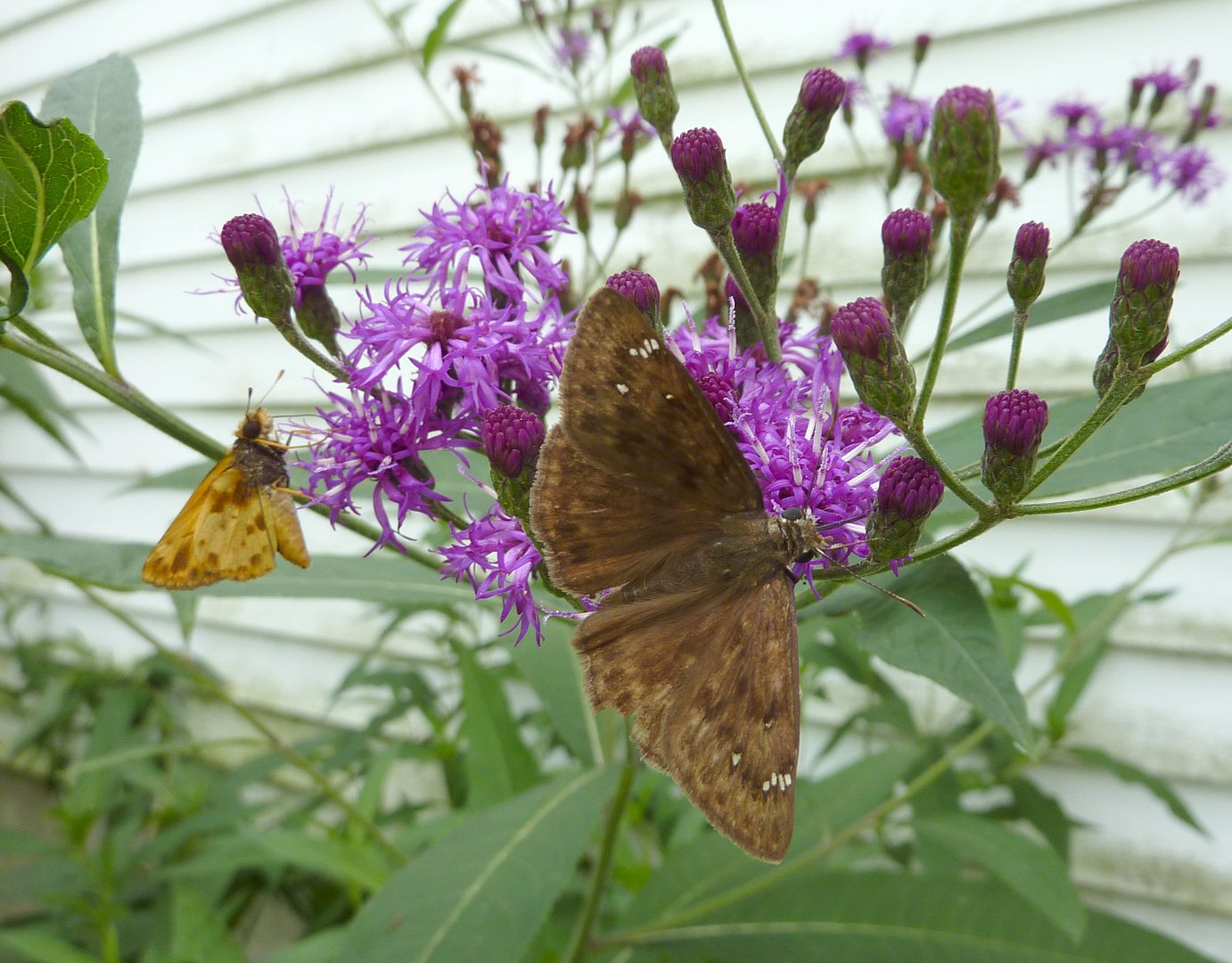 A skipper in back, and a duskywing in front on some Ironweed.
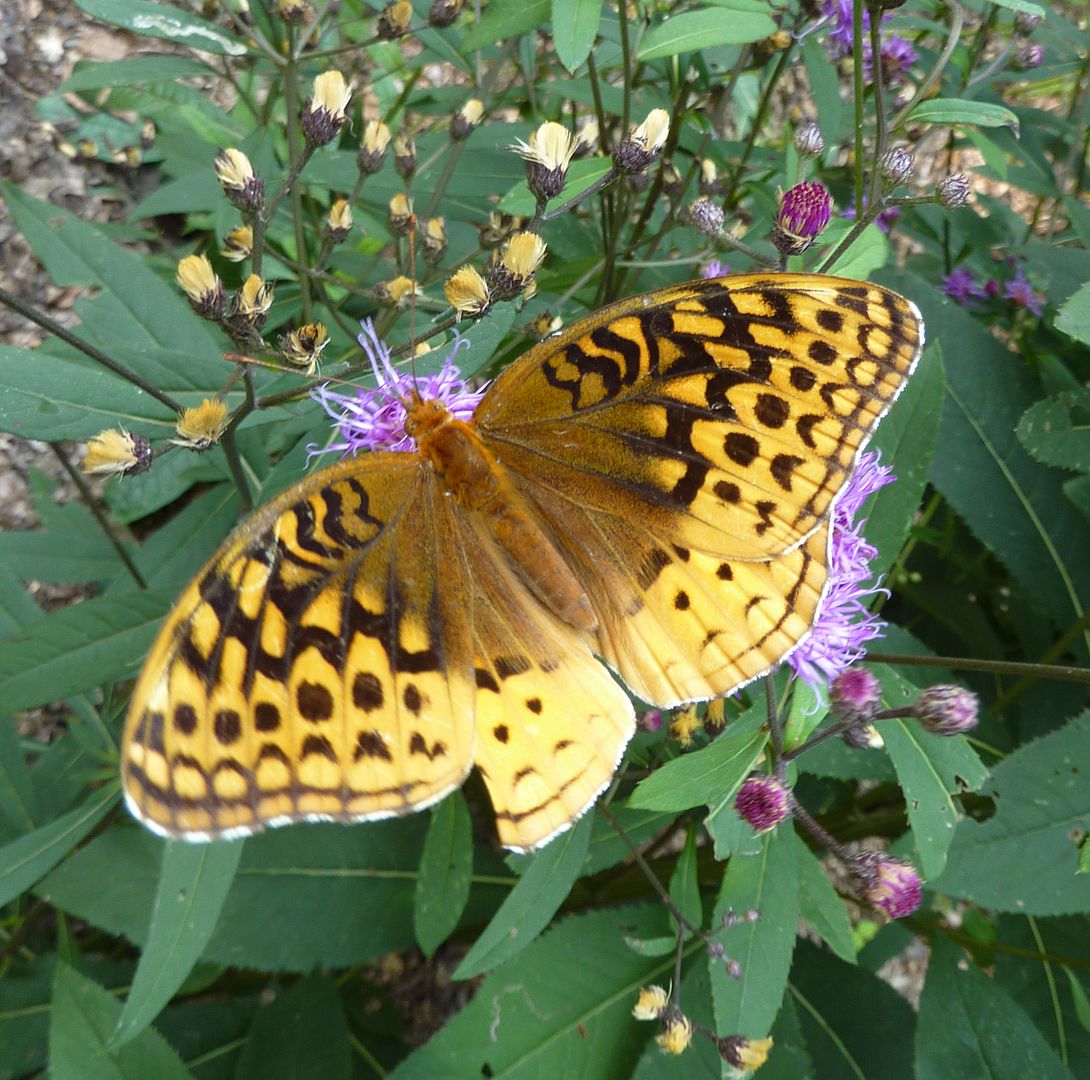 The Great Spangled Fritillary Butterfly, Speyeria cybele, is slightly larger than a Monarch Butterfly. As with other Fritillaries I read that females haphazardly lay eggs each autumn without any real regard for host plants. The resulting caterpillars are born and over winter without eating for ~7 months. Their host plants are Violets, which can be very common thankfully. Caterpillars that are successful at staying alive will develop quite an appetite and eat two whole plants everyday.
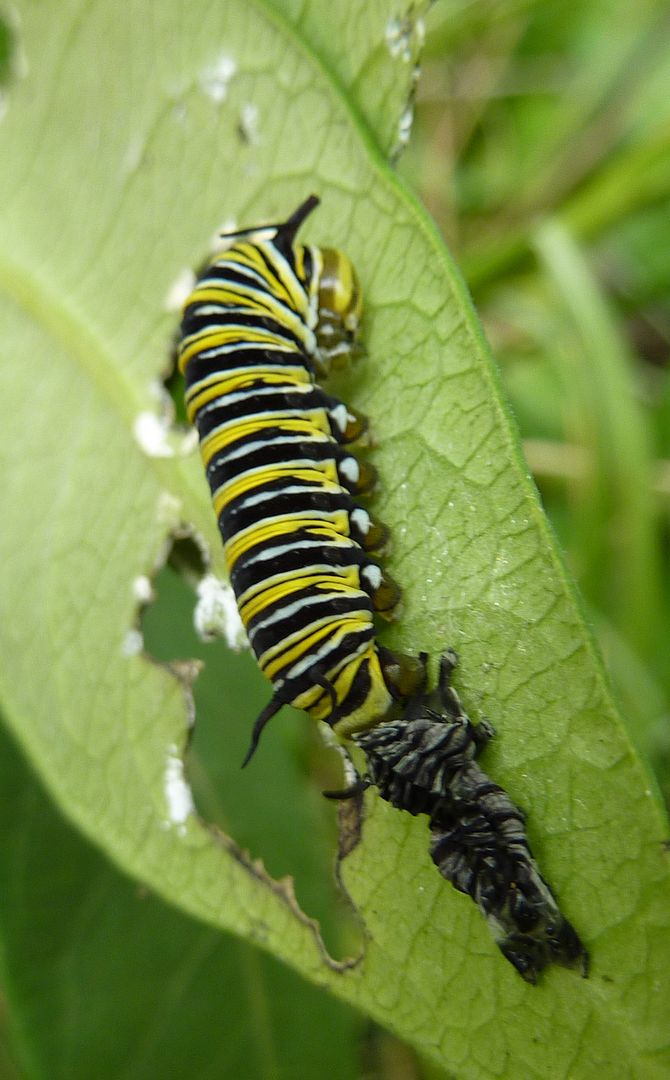 Butterfly season comes to its close here in August as the Monarchs start their migration south. Danaus plexippus.
This year I raised several caterpillars in captivity and made a video of the process.
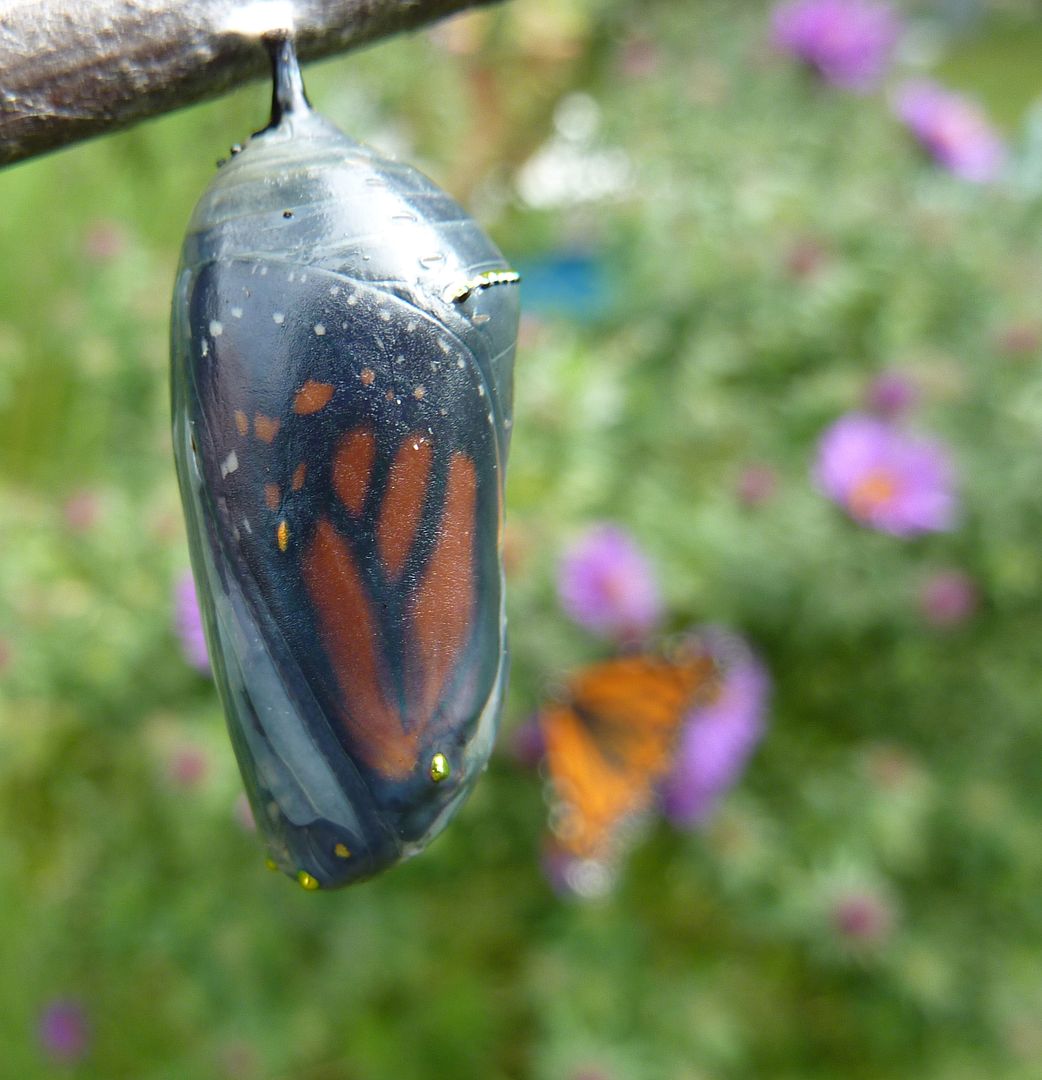 You may look but don't eat.
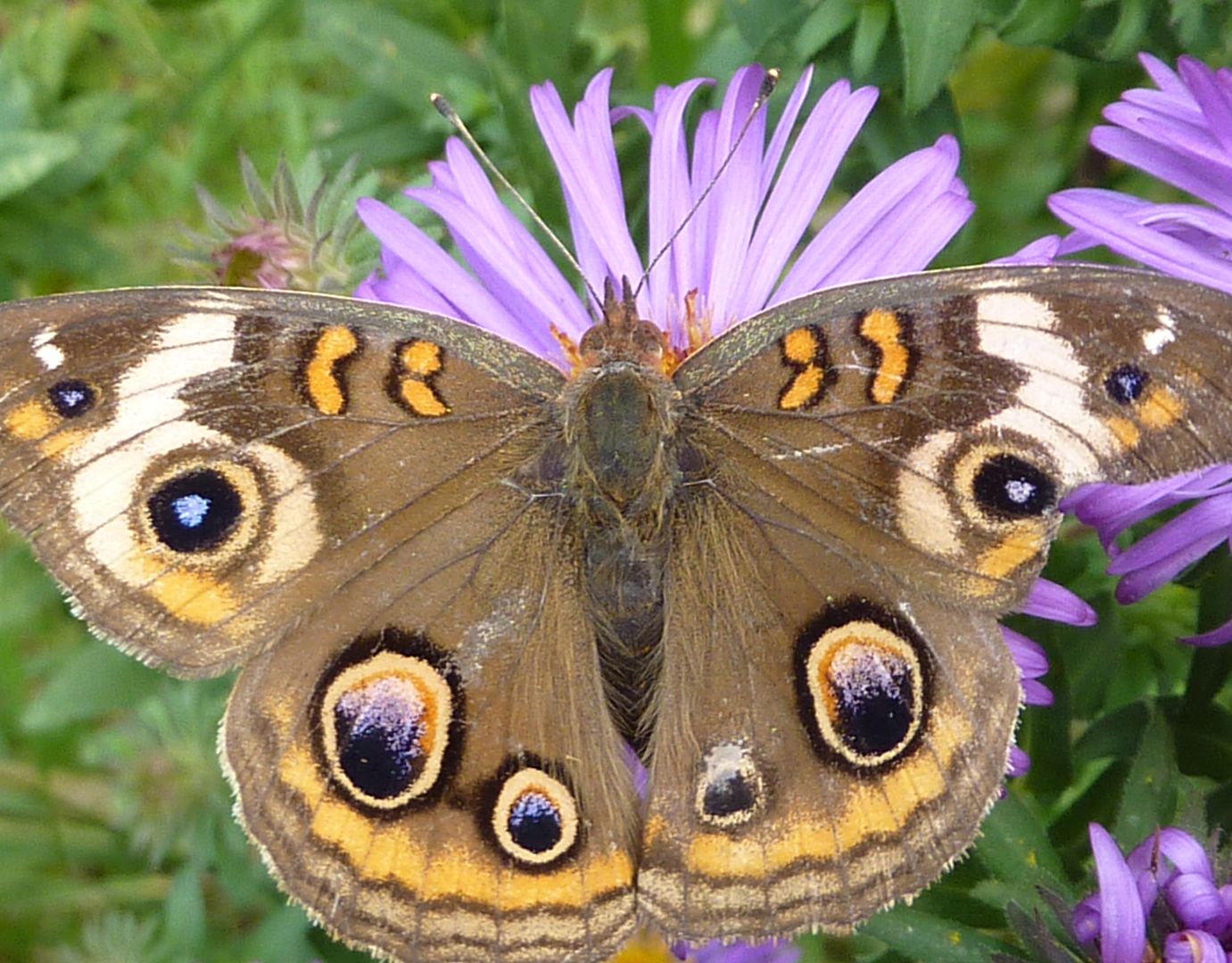
Another migration happening at the same time is that of the Common Buckeye, Junonia coenia.
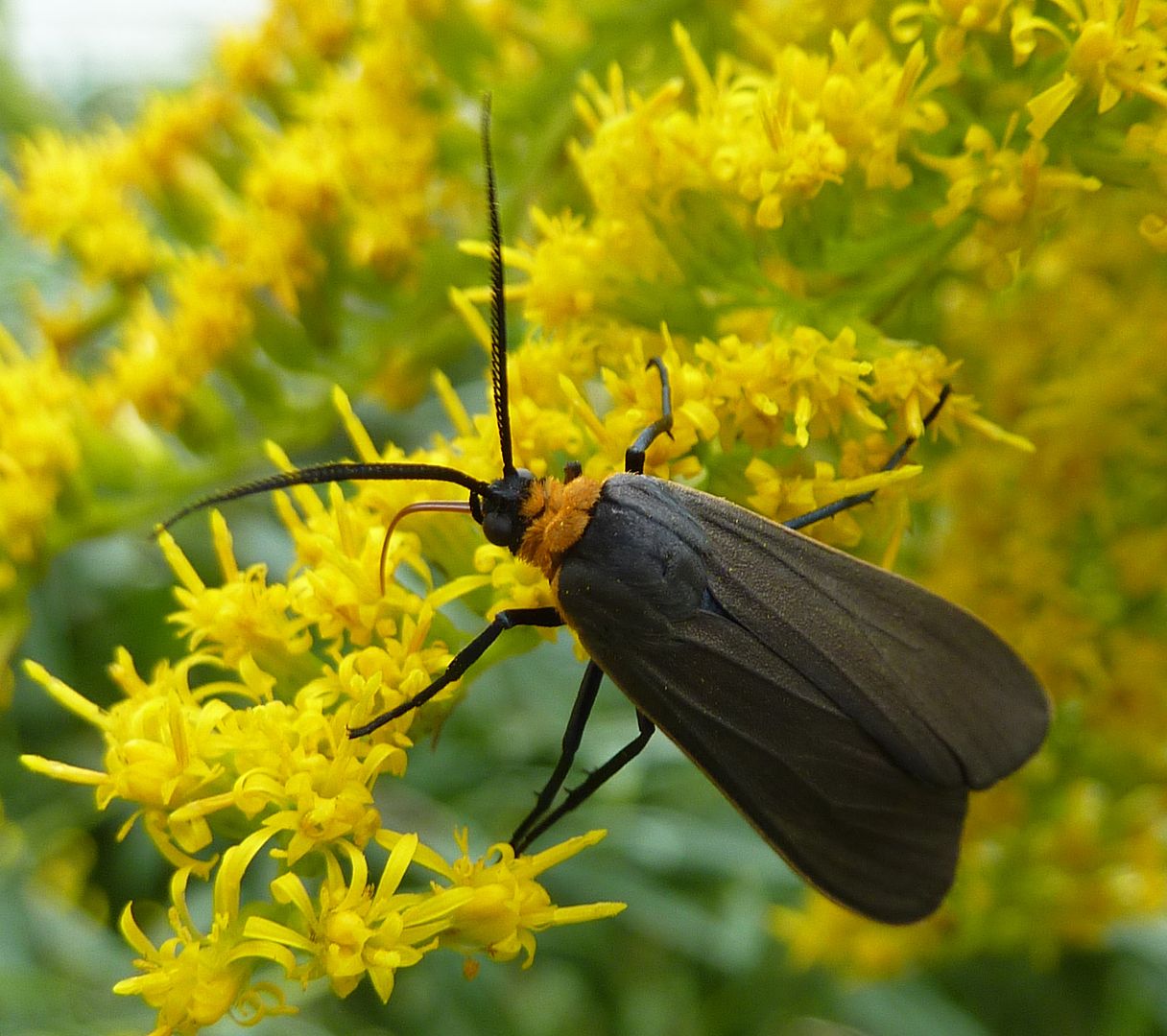 The last of the Lepidoptera for the year was this Yellow-Collared Scape Moth, Cisseps fulvicollis.
Not a bad way to end the year at all.
After this initial boom we enter something of a drought with butterflies. This all changes come June, July, and August, as things have gotten into full swing. Generally any butterfly worth its salt will be flying around at this time of year. During the heart of summer they almost completely disappear during the hottest part of the day. Come 4:00pm though they'll be back out in full swing. The Monarch for the most part hasn't had its population explosion yet, so this is really the time when Swallowtails steal the show. Giant Silk and Royal Moths can be found around lights at night.
Once we hit August we're overtaken by orange and black. The Monarch population is approaching its peak for the year and their migration south begins. A few others migrate at this time but they're not as well known by the general public.
I often feel that the Monarch gets too much attention in butterfly gardens. It really is the only species the general public seems comfortable enough discussing. This is on par with the Honeybee hogging all the spotlight in the "Save the Bees" movement. Monarchs are almost too easy! You plant milkweed and you're almost assured to get some caterpillars. And not just any caterpillars, ones that are fearless out in the open nibbling away on host plants in the middle of the day. They're a big middle finger to anything trying to eat them, though I guess the 1 in 25 survival rate makes up for it.
By comparison the lengths swallowtail caterpillars go to not get eaten seem extreme. Early on most species are disguised as bird dung, wet bird dung! During the day most of them are not out eating, though a few species are more fearless than others. The cowards are tucked away under leaves or among the bark. After nibbling on a leaf, they will cut that leaf off at the stem to hide evidence of caterpillar nibbling! The spicebush swallowtail is mimicking a snake and even it hides during the day! (Here is a video of this in action where. Those tube like structures on the head along with releasing an odor will rub right into the bird's eyes.)
An excellent second species to go for besides the Monarch would be the Pipevine Swallowtail. Because they're poisonous to eat, just like the Monarch, their caterpillars can afford to be out eating during day light hours. Here is a video demonstrating that.
Anyhow here's how I did this year.
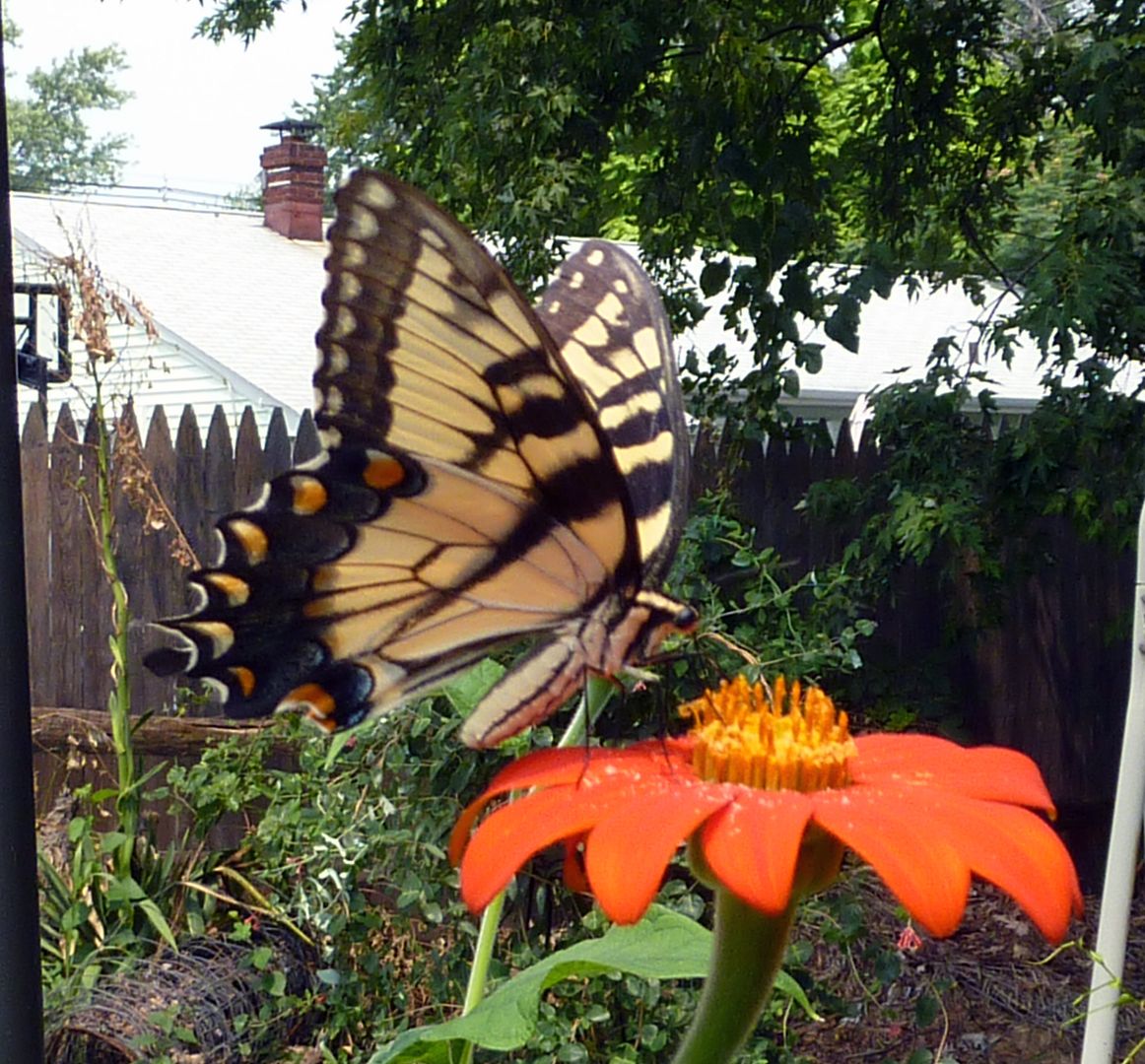
The Eastern Tiger Swallowtail, Papilio glaucus, (and maybe a few others) don't really try to mimic their Pipevine cousin at all. Only 1/3 females are born black, though when the Pipevine Swallowtail is prescient in the area that number can jump much higher. Males for whatever reason are always yellow and seem to proudly patrol from host plant to host plant, typically tall trees in the Cherry, Ash, Tulip and other genera. I'm not sure how they get away with being so showy and not poisonous. Perhaps their size allows them to break this rule, or perhaps the stripes remind birds of cats?
This year I raised several caterpillars in captivity and made a video of the process.
Another migration happening at the same time is that of the Common Buckeye, Junonia coenia.
Not a bad way to end the year at all.
Tuesday, October 18, 2011
The Amazing Goldenrod
Well the Solidago altissima, Tall Goldenrod, is back in bloom. It doesn't quite make it to our first frost but it's late enough that ... frankly I don't think anything else that's native is flowering! We have a white flowering Chrysanthemum that blooms a little later but I've never seen any bees on that plant.
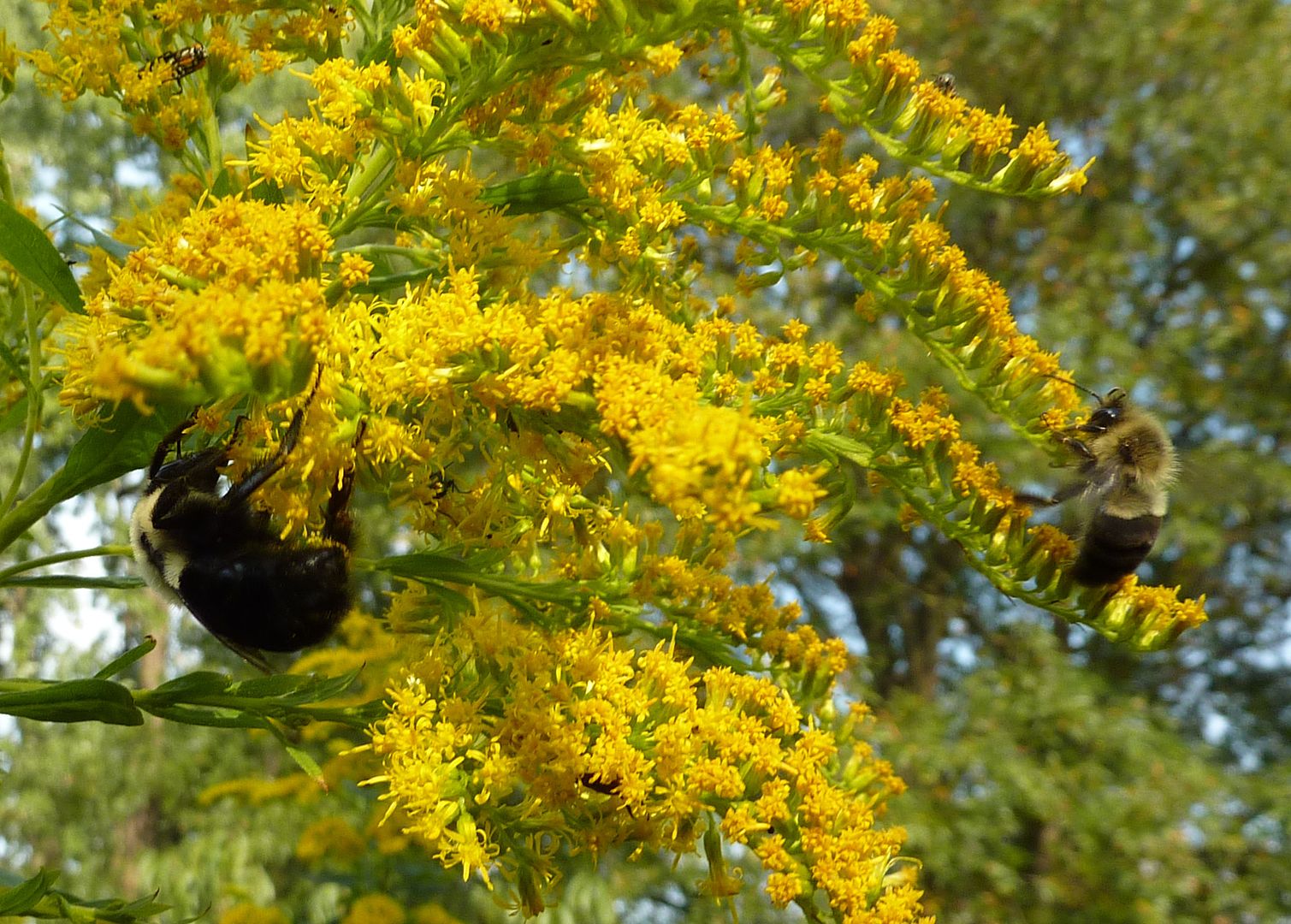
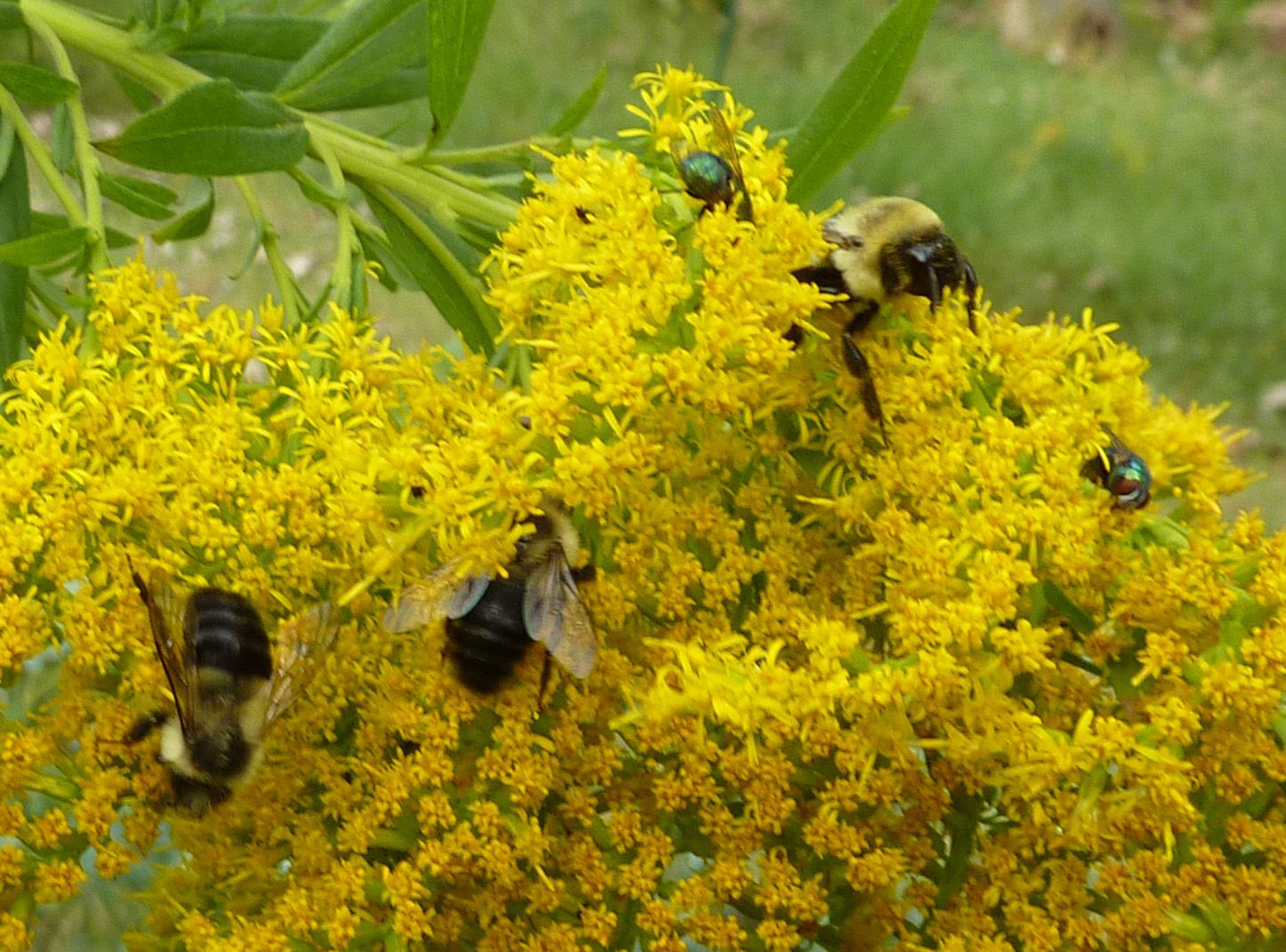

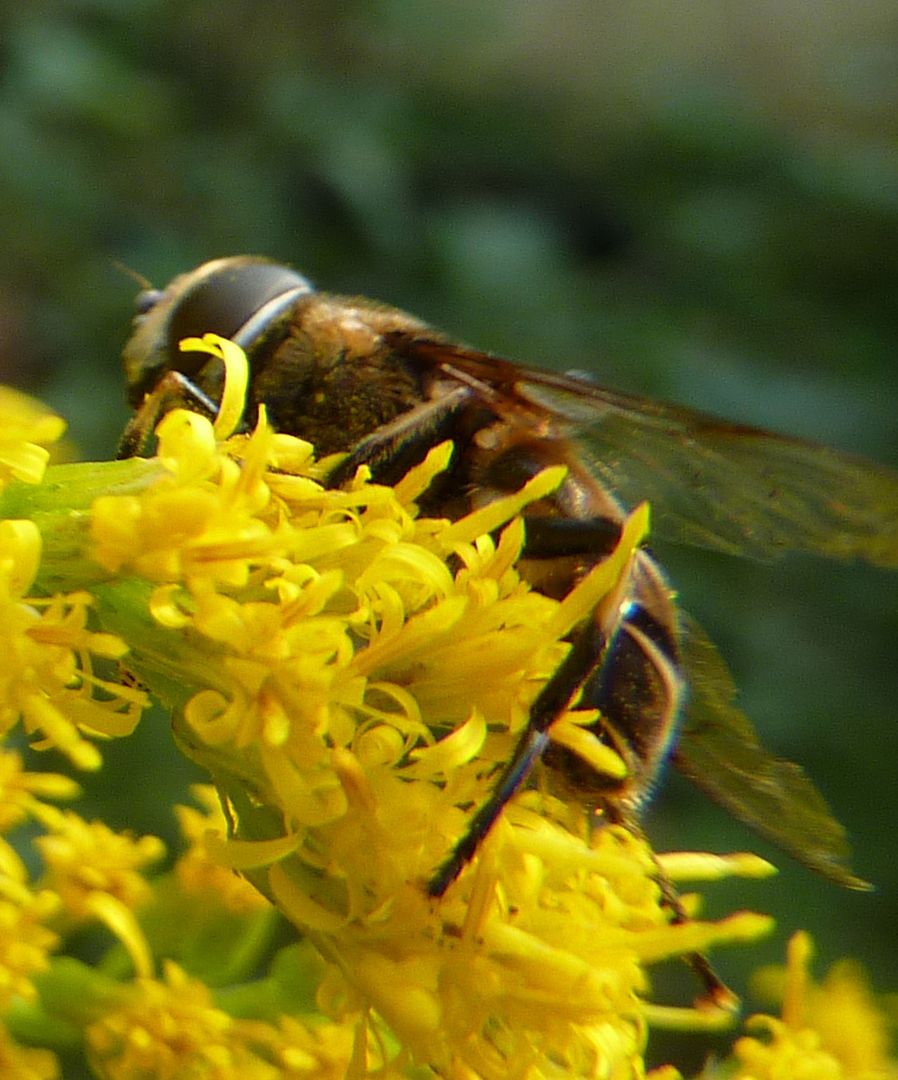
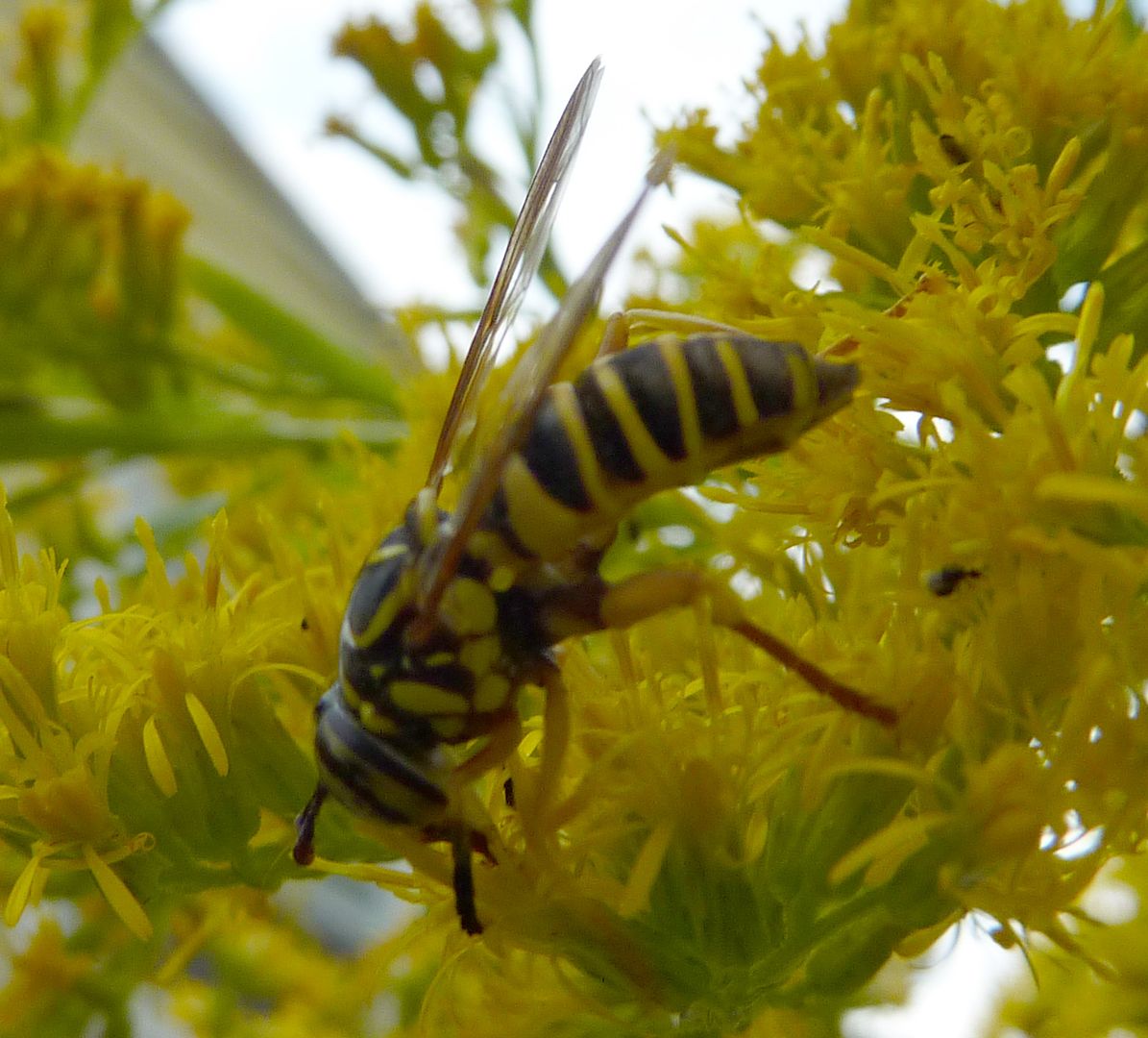
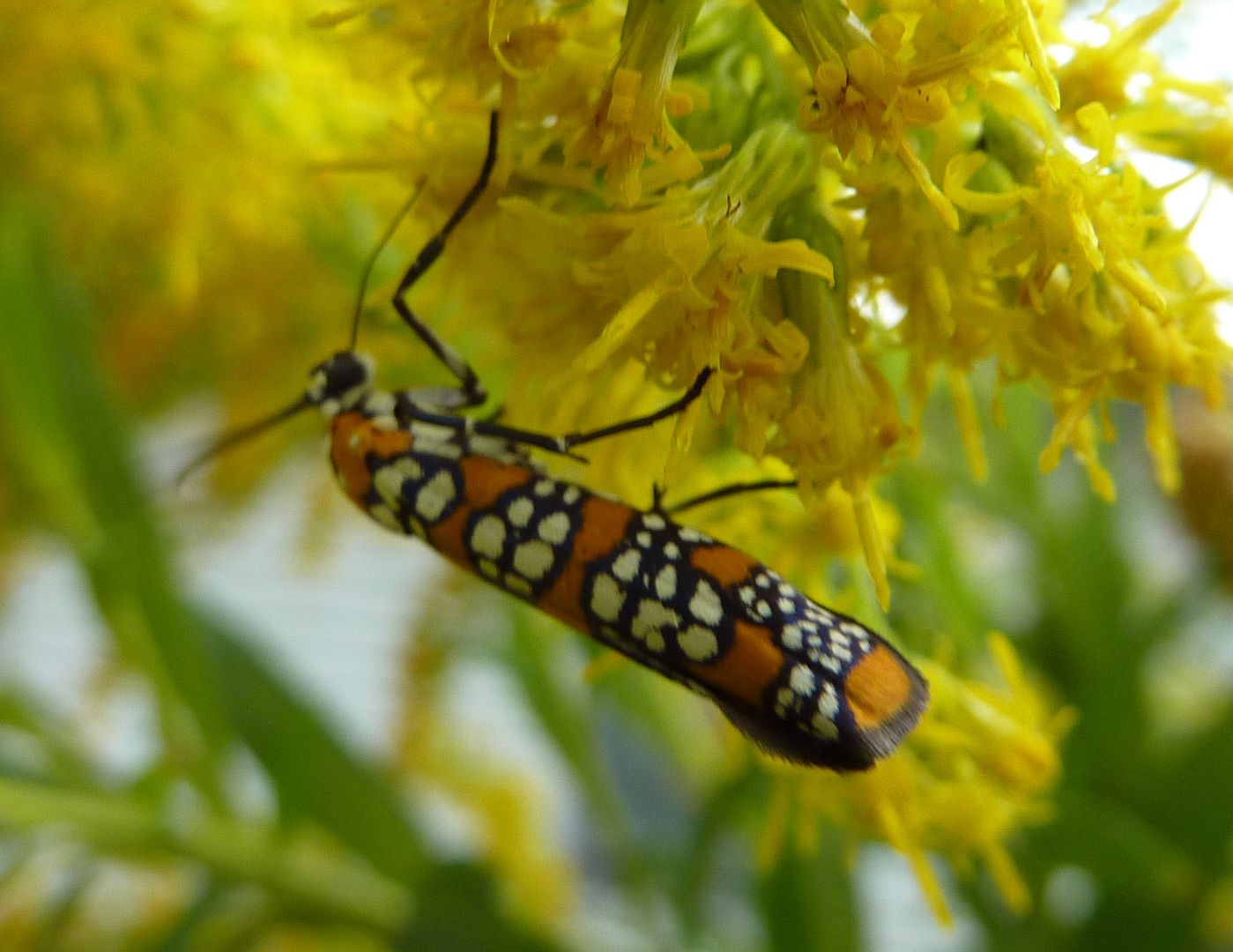

Shortly after I'd recorded the video way above, a Monarch came fluttering bye. It didn't land very long and was quick to take off. Much like honeybees I find Monarchs seem to prefer Asters when given the choice.
Saturday, August 20, 2011
Butterflies at Mt. Cube.
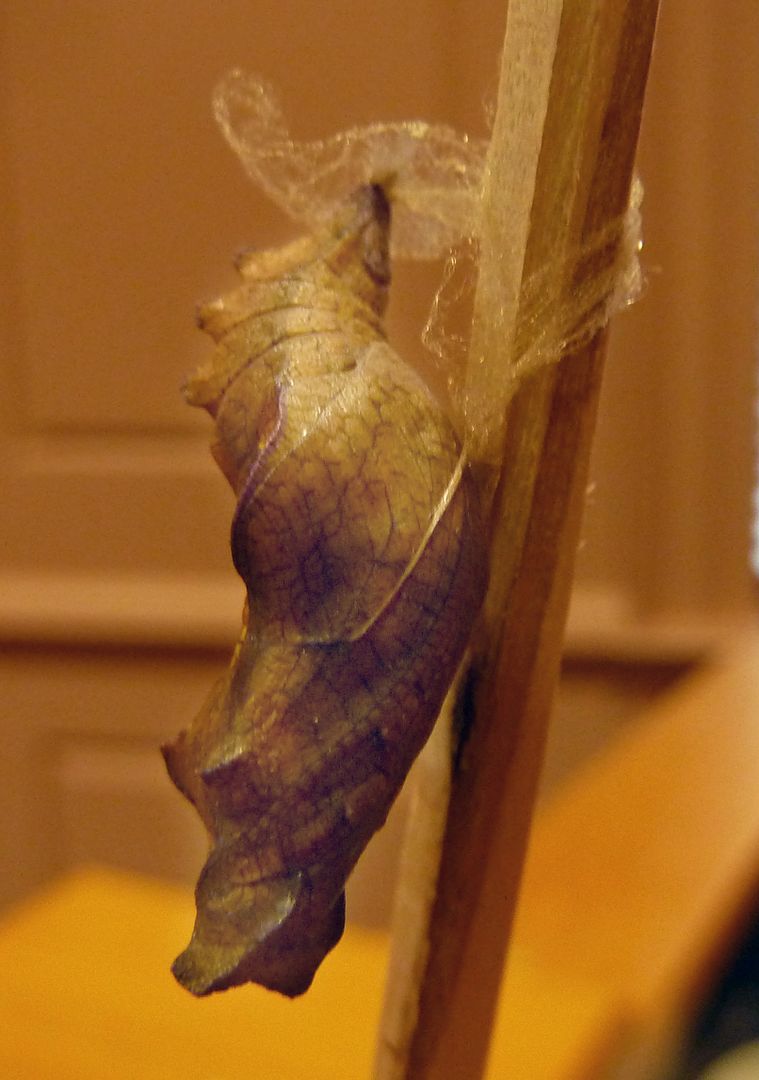 |
| A chrysalis to the Pipevine Swallowtail. |
I had another exciting class at the Mt. Cuba Center today. This time the class was on Butterflies in Your Garden, which focused on the most common and showiest Lepidoptera you can see flying in the daylight hours. The lecture was well constructed but had a few omissions like Hummingbird Moths, Mourning Cloak, and Skippers as a whole. They were brought up and talked about as we chanced upon them during the tour though so that's fine. It's hard planning around nature.
The tour started with a bang as we went to the Round Garden. It's a circular pavilion with a rather nice pool in the middle
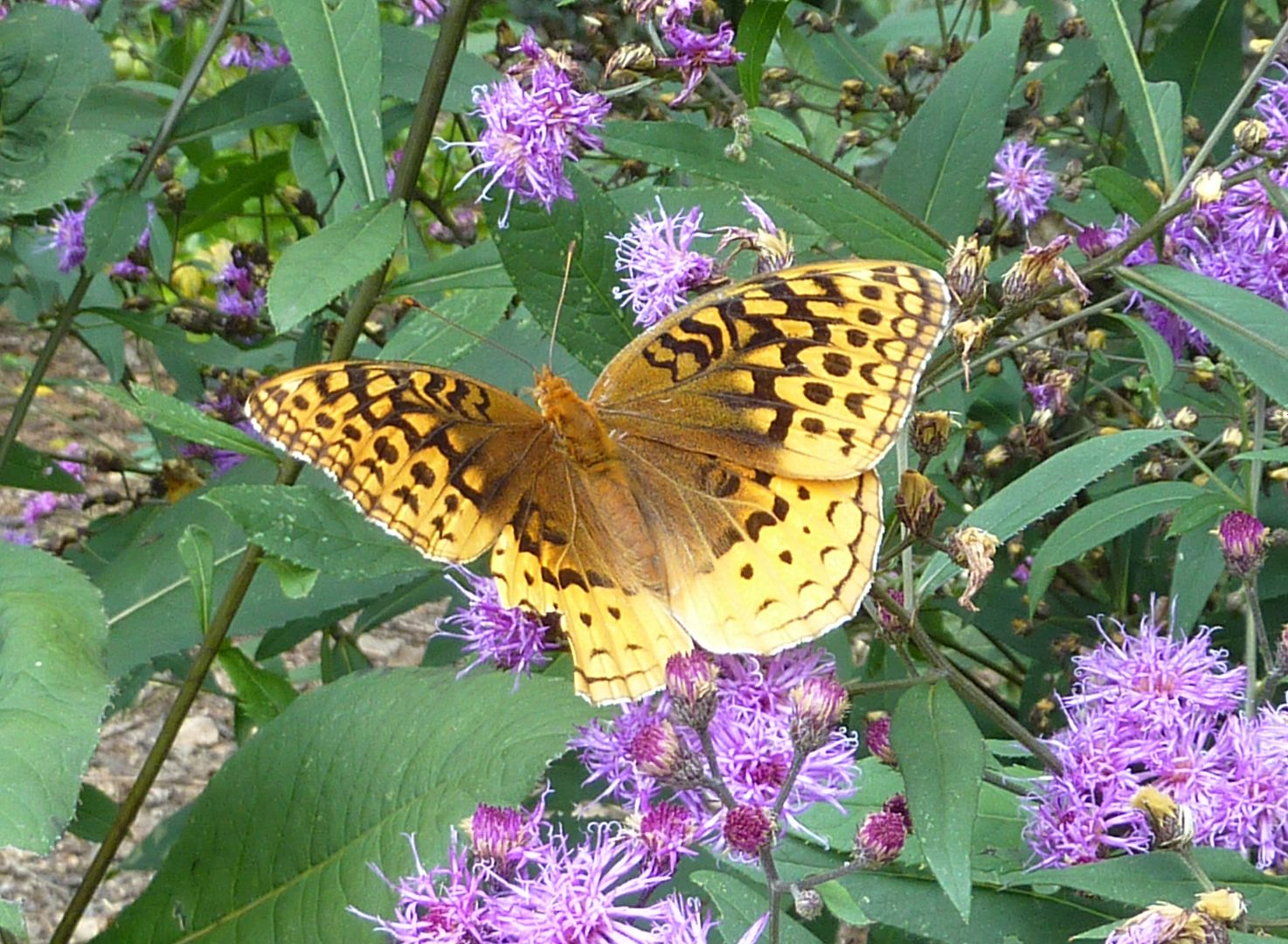
So to sustain a population of these it sounds like lots of violets spread around the garden are needed. I read in Caterpillars of Eastern North America: A Guide to Identification and Natural History (Princeton Field Guides)
 that caterpillars are nocturnal feeders with this species, and are usually found under logs and stones during the day. Be careful, as they're covered in thorns. They're said to be sizable creatures in the last instars and able to eat two whole violets in a day.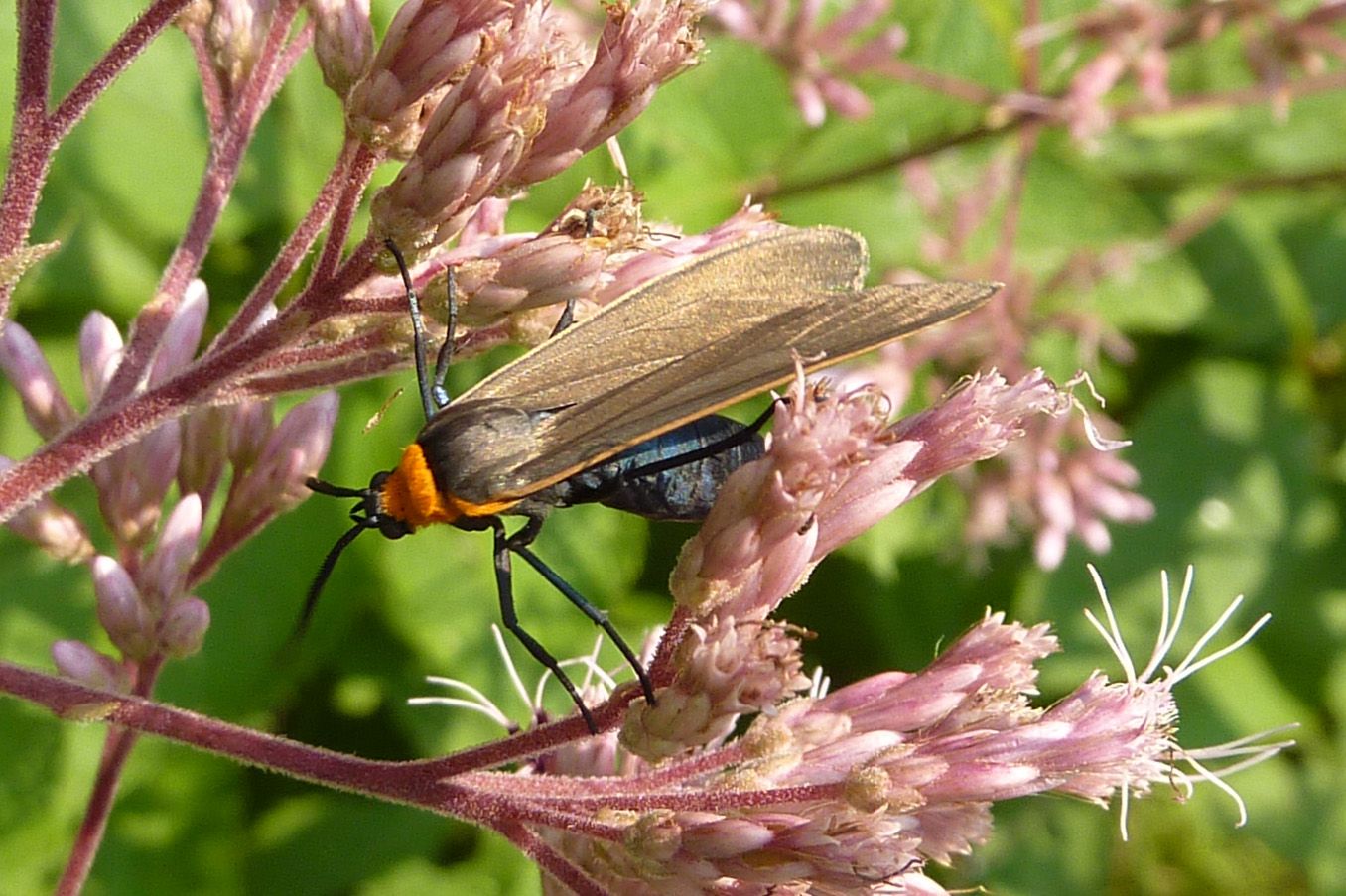

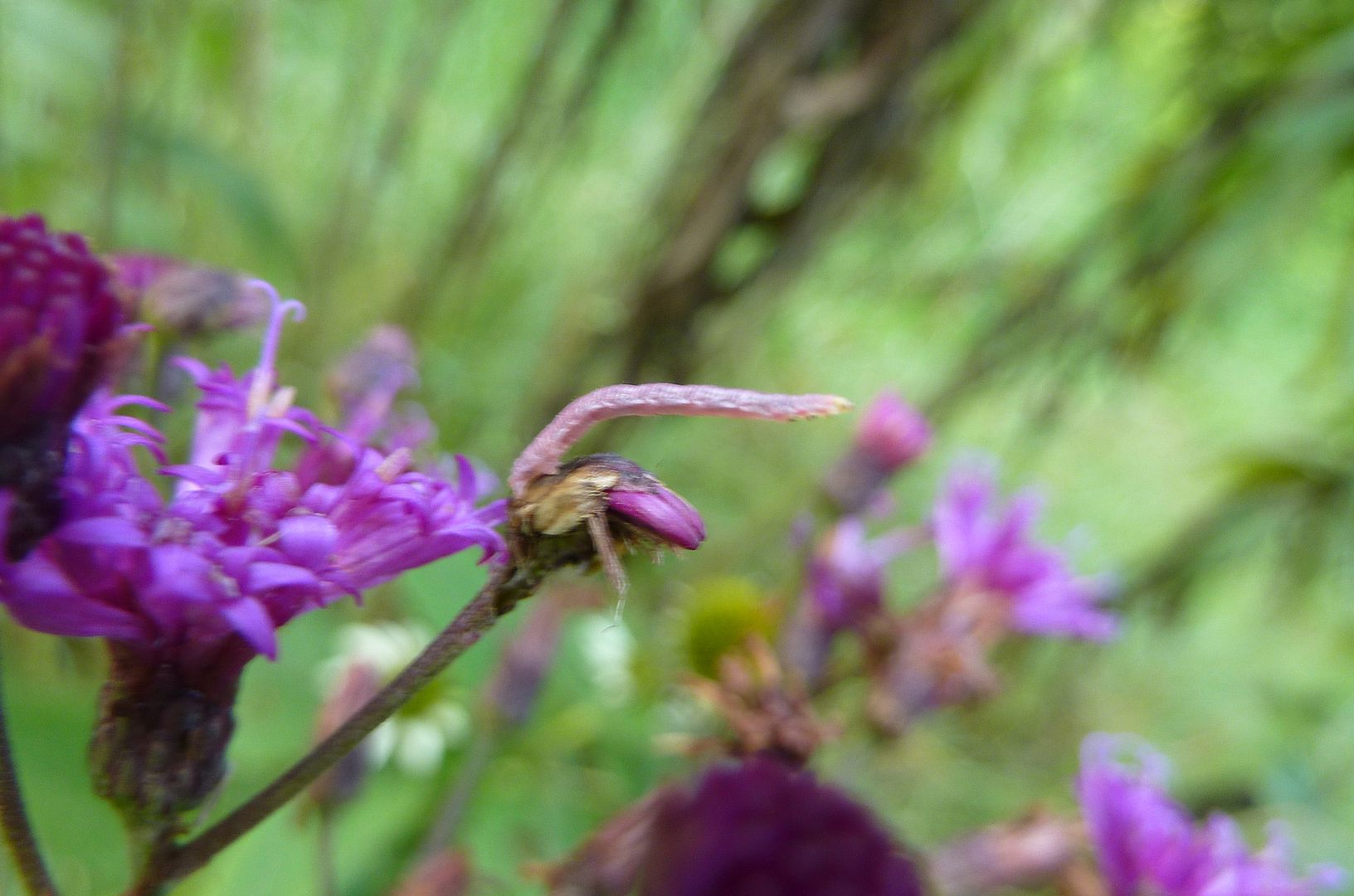
So that was my visit. :)
Saturday, May 14, 2011
Joe MacGrown has a YouTube Channel
So I just learned that Joe MacGown of the Mississippi Entomological Museum has a YouTube channel. I was showing a friend the most recent Ant Chat episode and they mentioned the species of Nylanderia, N. sp. near pubens. I didn't even know they gave it a name and upon seeing pictures of it I wondered if my ID for the local Nylanderia flavipus was correct. After watching the video I was assured what I have on my raspberries wasn't them. N. flavipus doesn't run insanely fast like that.
Now let's learn how to dissect a moth's genitals.
He's also quite the artiest.
Now let's learn how to dissect a moth's genitals.
He's also quite the artiest.
Sunday, March 13, 2011
Beneficial Herbacious Plants for mid-Atlantic Lepidoptera
Doug Tallamy's Bringing Nature Home: How You Can Sustain Wildlife with Native Plants, Updated and Expanded just keeps getting better and better. While I'm not sure about his most recent edition of his book, arguably the bible of our age, but his website now offers a key to herbaceous plants.
Here is an excerpt.
So it's sounding like I'm doing things right.
There is also a list for Woody Plants as well.
just keeps getting better and better. While I'm not sure about his most recent edition of his book, arguably the bible of our age, but his website now offers a key to herbaceous plants. Here is an excerpt.
This coming year I'll officially have 5 different species of Solidago, hopefully 5 Aster, 2 Sunflower, and 3 Eupatorium. Ipomoea is a neat idea, but really only 5 or so are native to the North East. I'll have to look into adding a few of those. Certainly I. lacunosa or I. hederifolia might make it into my garden. Carex isn't my favorite but it seems I'll have to look into them too. Frankly though I'd rather establish a patch of Irises though. Lupinus I've tried before, but I believe my soil is just to clay like for them to establish. The Violets here were a weed well before I started gardening. Geraniums will be on the list next year for sure, maybe even a fall planting. Rudbeckia I'm taking care of in Spring for sure.
Common Name Plant Genus Butterfly/moth species supported Goldenrod Solidago 115 Asters Aster 112 Sunflower Helianthus 73 Joe pye, Boneset Eupatorium 42 Morning glory Ipomoea 39 Sedges Carex 36 Honeysuckle Lonicera 36 Lupine Lupinus 33 Violets Viola 29 Geraniums Geranium 23 Black-eyed susan Rudbeckia 17 Iris Iris 17 Evening primrose Oenothera 16 Milkweed Asclepias 12 Verbena Verbena 11 Beardtongue Penstemon 8 Phlox Phlox 8 Bee balm Monarda 7 Veronica Veronica 6 Little bluestem Schizachyrium 6 Cardinal flower Lobelia 4
Learn more about the study from which these numbers were derived or download the complete list of data from this study (an Excel spreadsheet).
So it's sounding like I'm doing things right.
There is also a list for Woody Plants as well.
Subscribe to:
Posts (Atom)