Showing posts with label Caterpillar. Show all posts

Monday, January 6, 2014

2013 Best of Butterflies

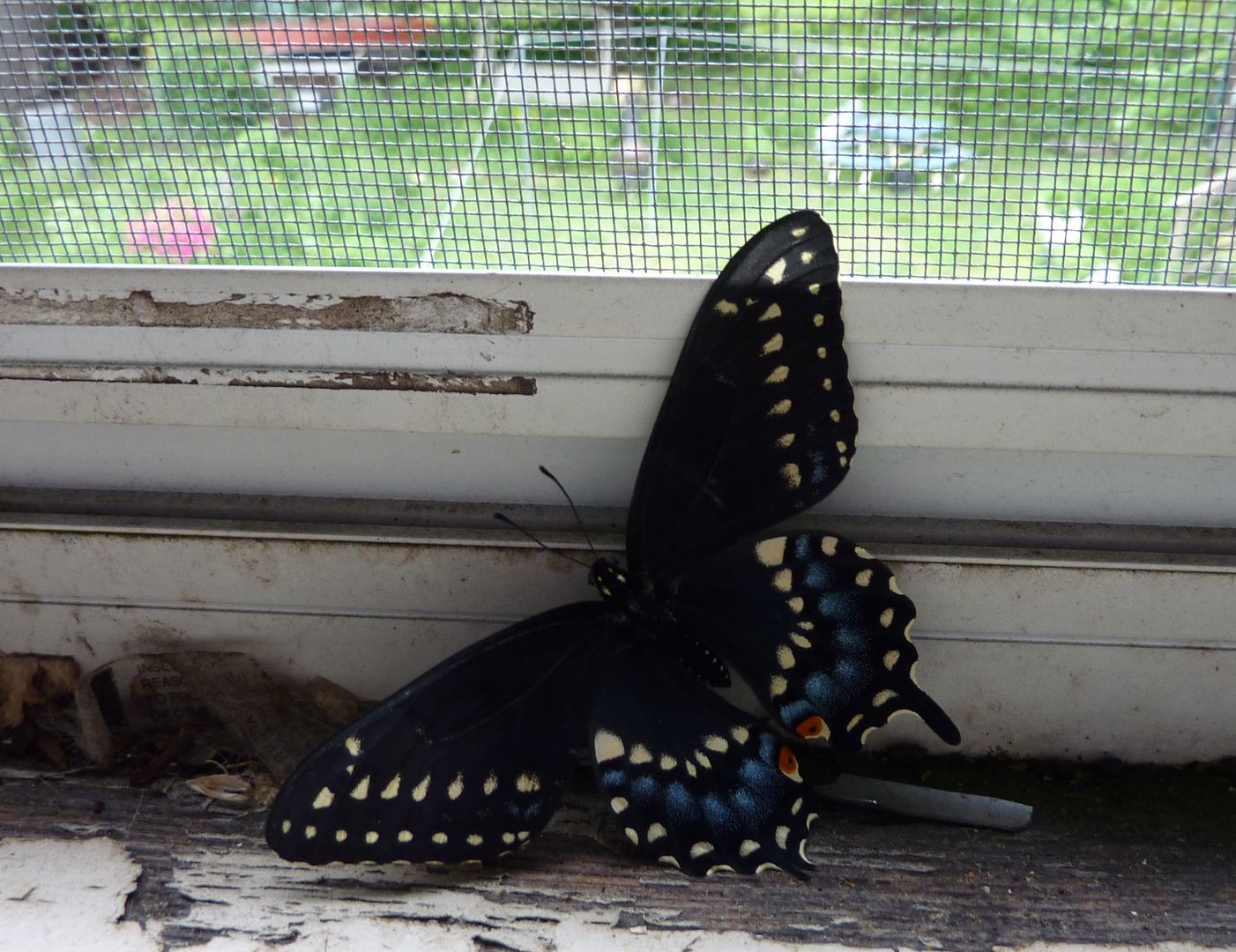
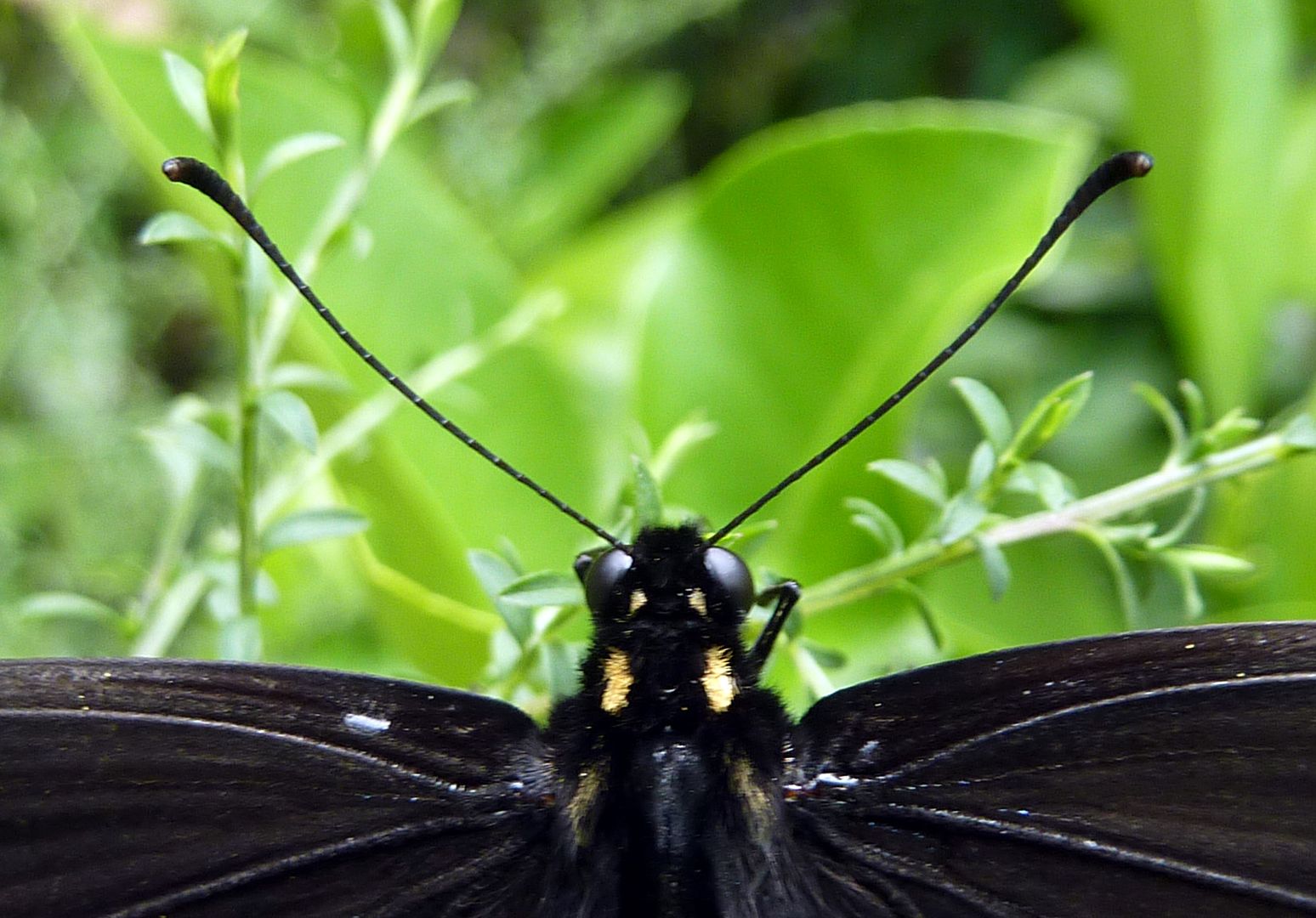
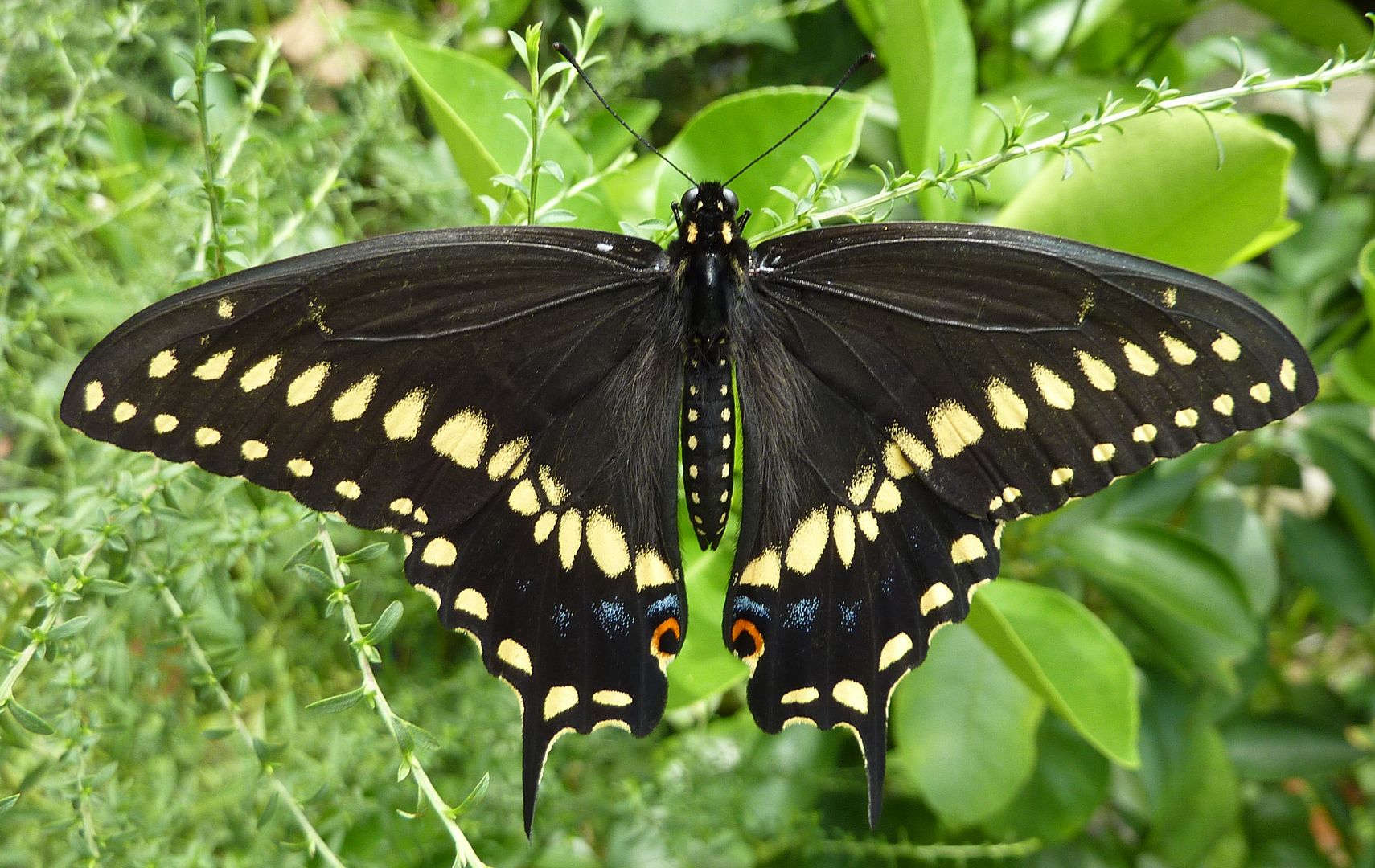
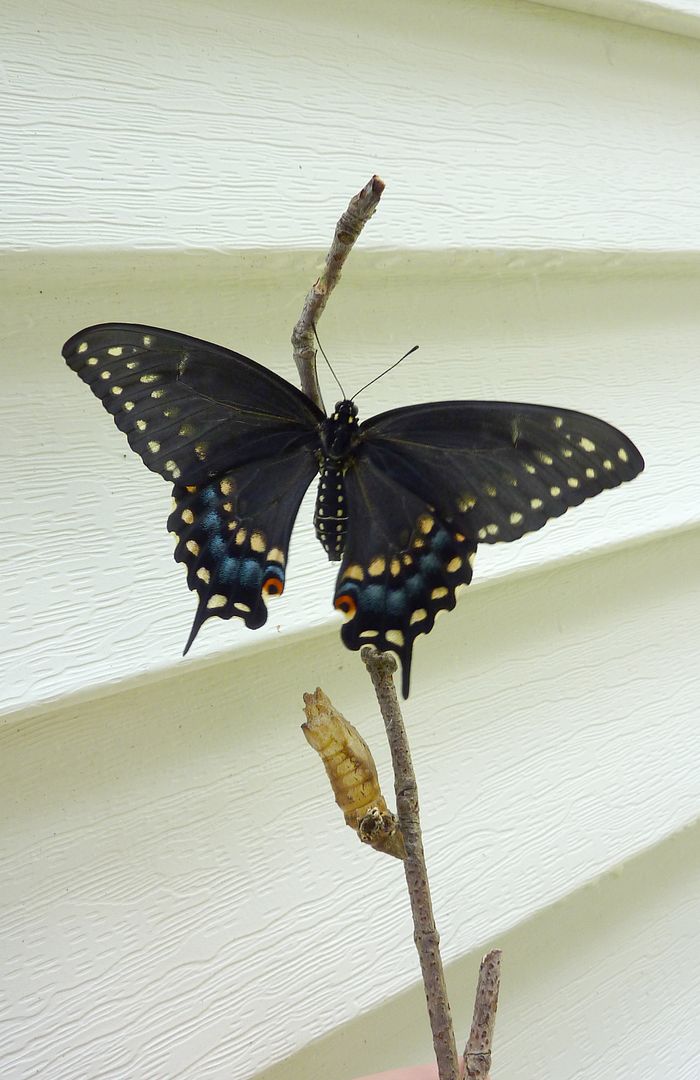
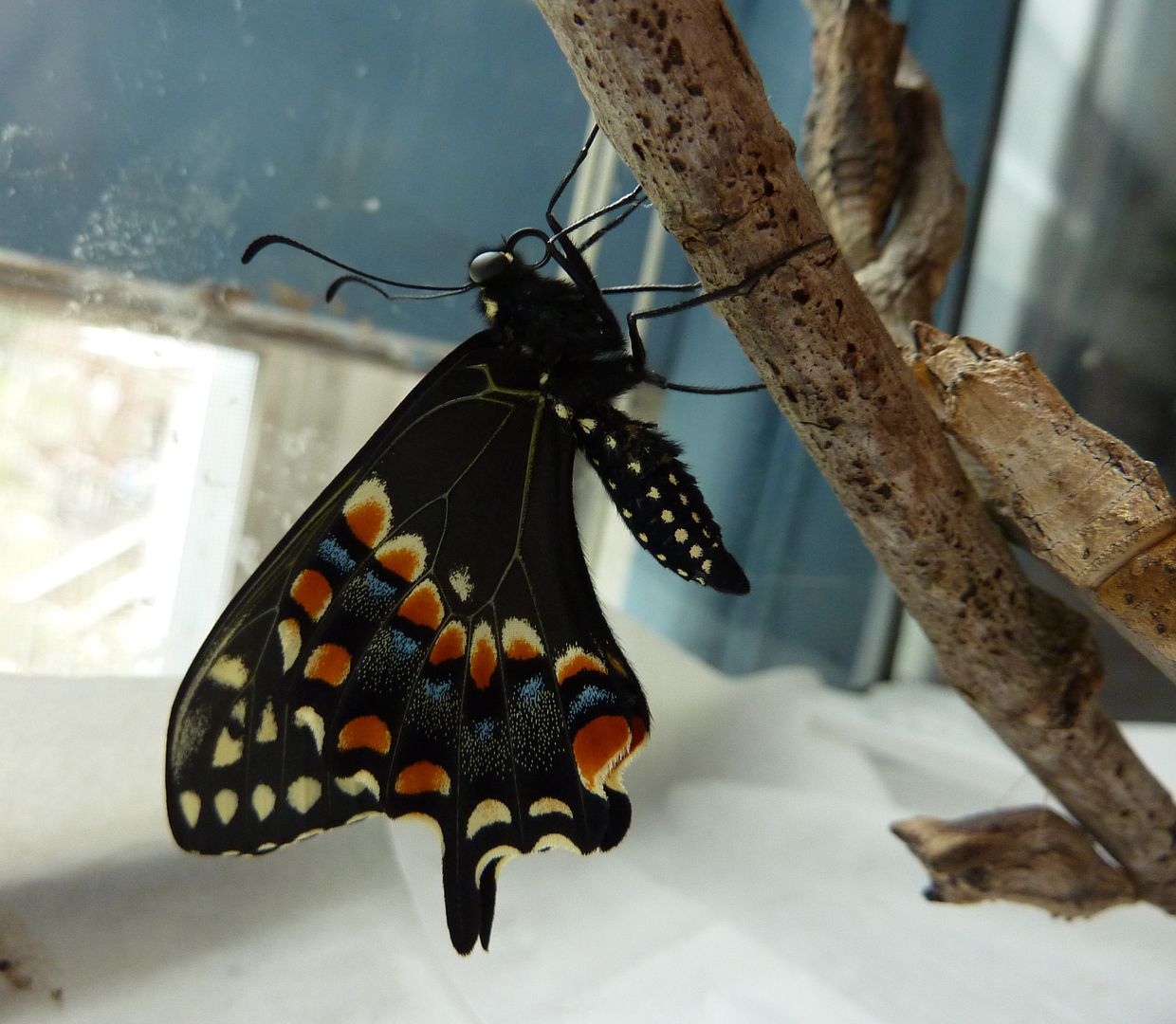
From the previous year, my butterfly season started with a series of Black Swallowtail Chrysalises over wintering in a cage I kept down in my basement. Well one emerged prematurely which lead to this shot.

And then about 8 more which eventually lead to shit shot. I tried to care for them as best I could but found they weren't drinking or really doing much of anything. Some even died sadly.

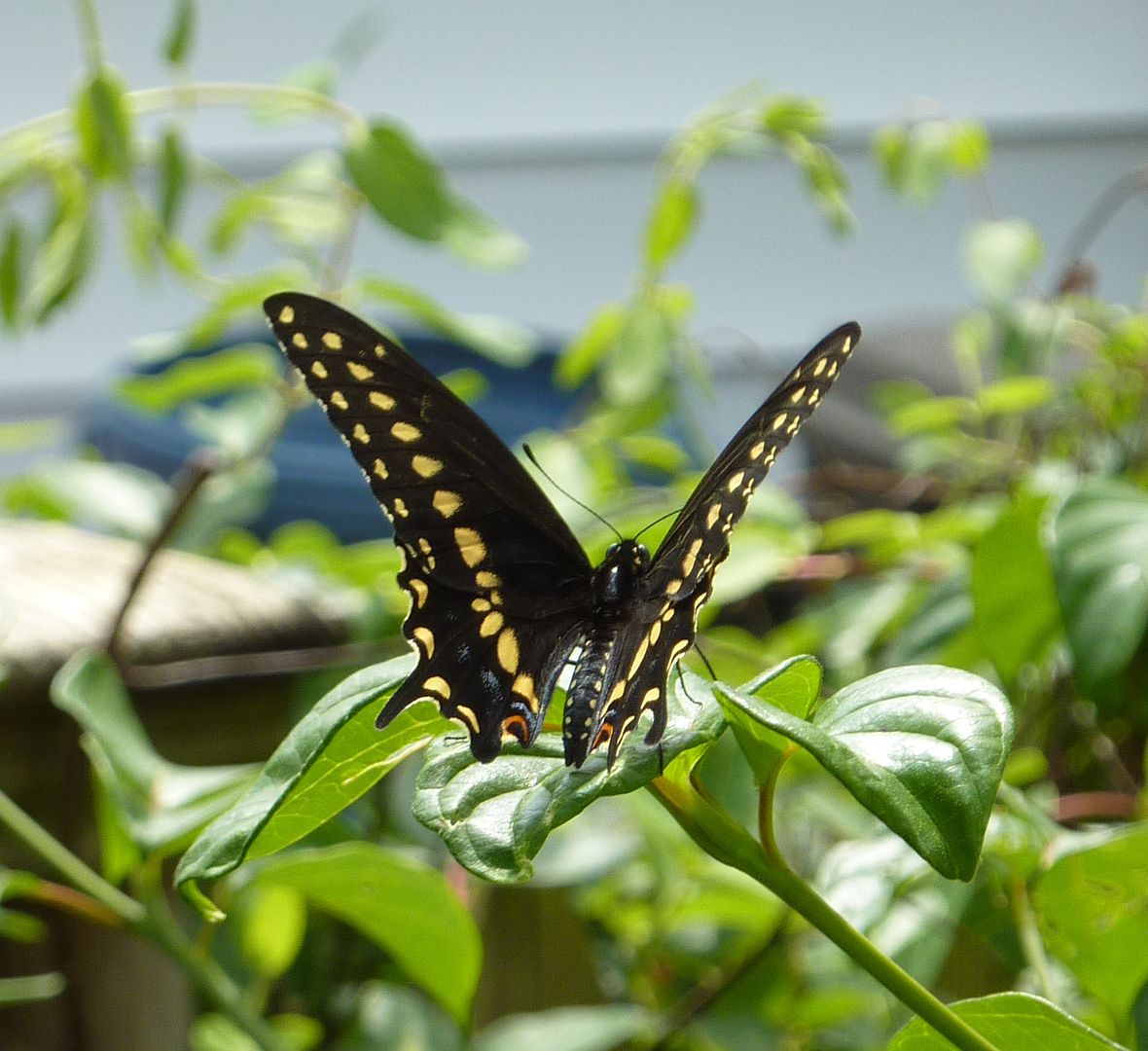
Over the next three months as they hatched out, I did start letting them go. Despite this though I am sad to report that ended my experience with Black Swallowtails for the year. While I'm sure some of them survived, none of them returned to my garden to lay eggs or even pay me a visit.

Now I don't think I did anything particularly bad. Even around carrot farms this species is not considered a pest. For whatever reason they just don't spread dramatically in huge numbers.

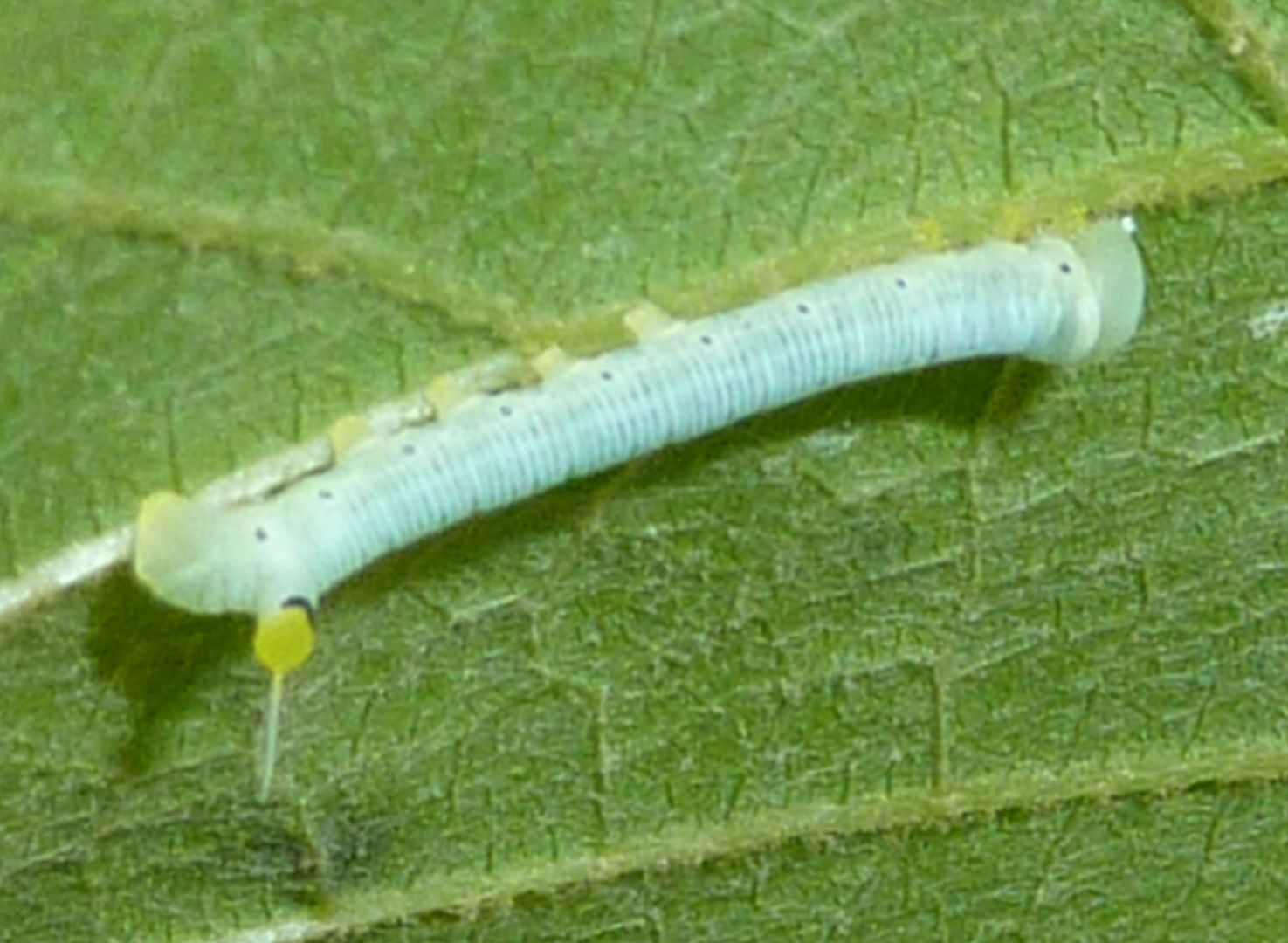
I found this Silver Spotted Skipper Caterpillar nestled on my False Indigo tree. It's a new plant I'm trying out, which will hopefully flower this year. Sadly I think a bird ate this little guy.


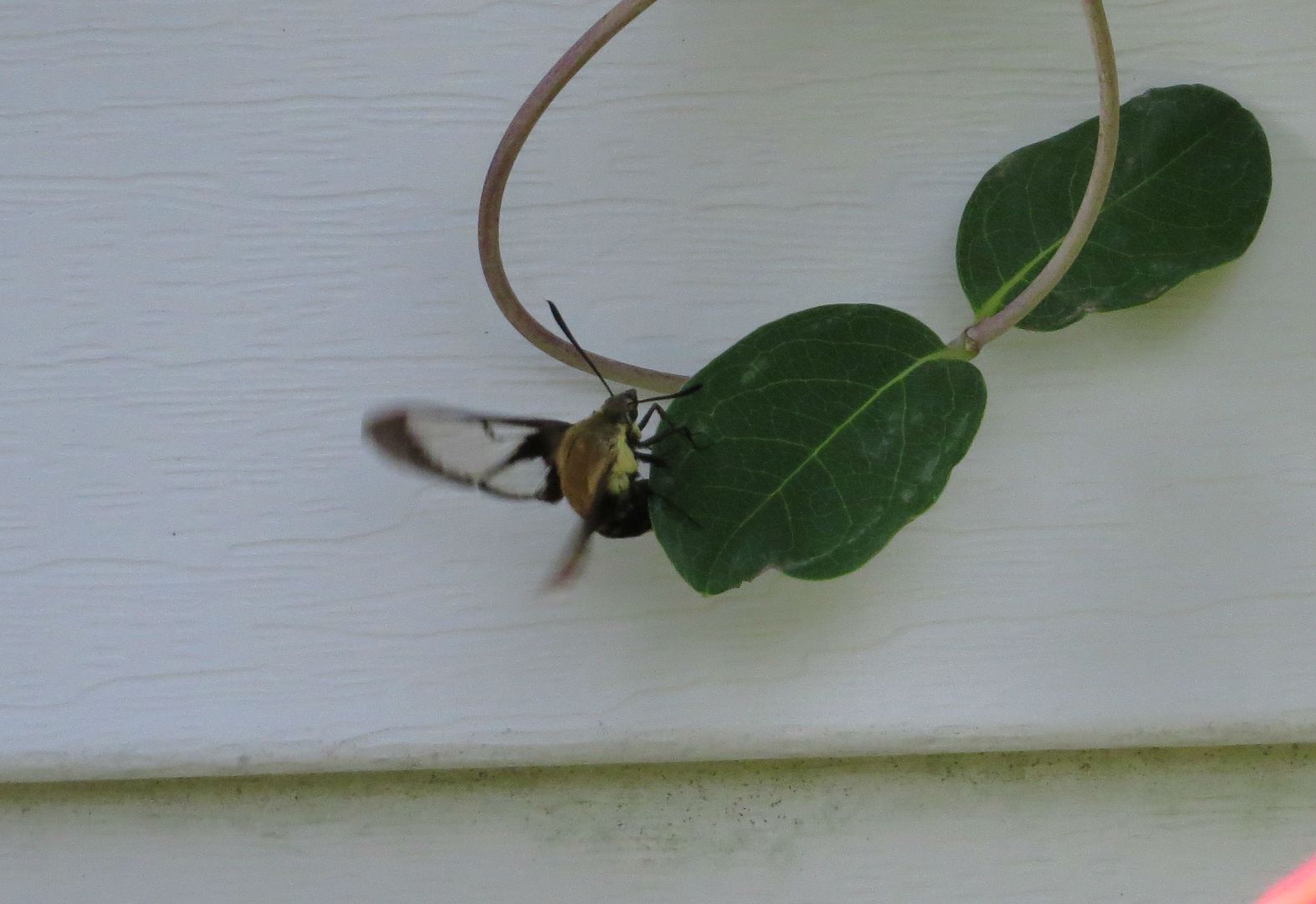
Hummingbird Moth laying eggs on my Coral Honeysuckle.

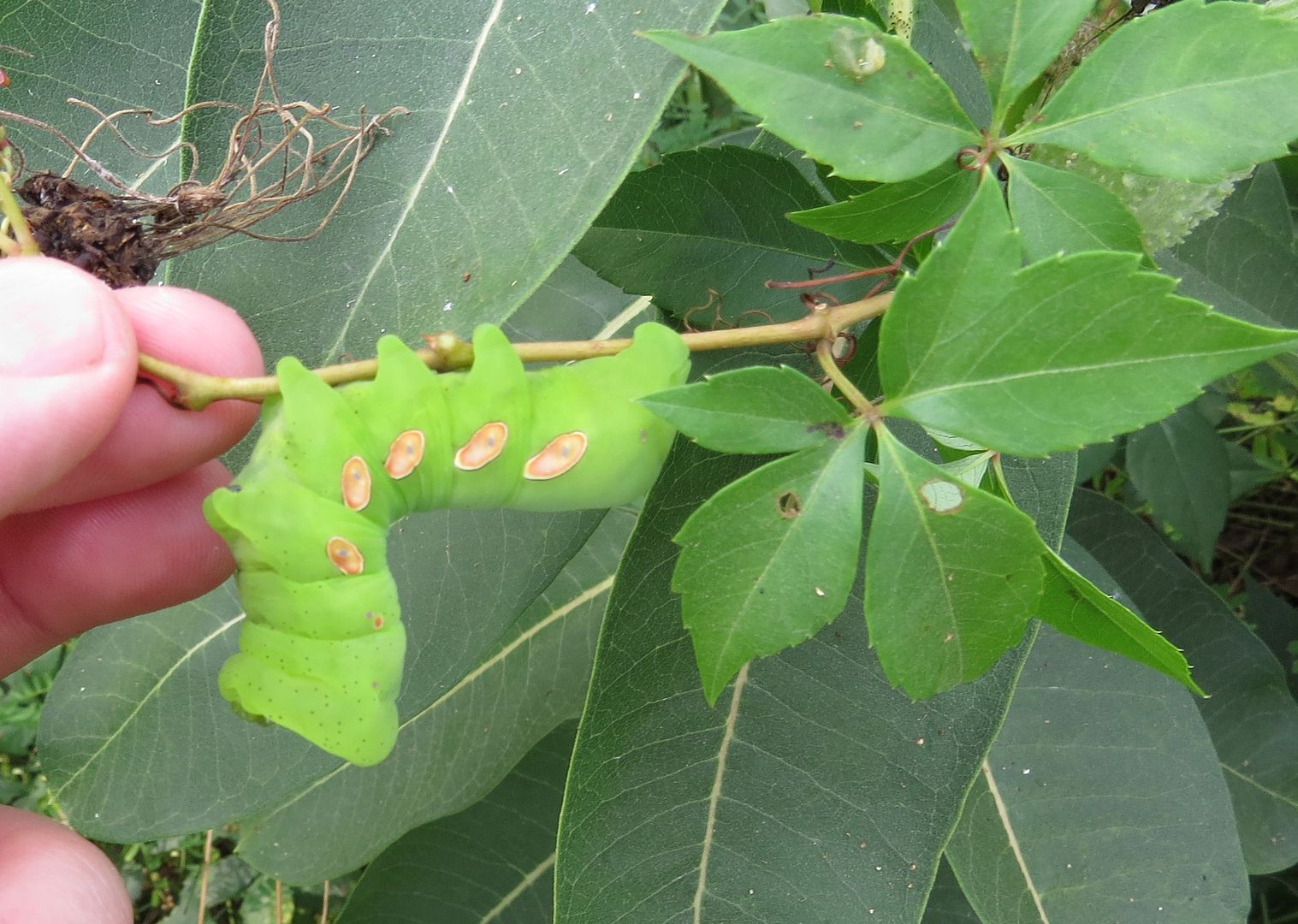
A Pandorus Sphinx nibbling on Virginia Creeper. I had no idea these caterpillars were this enormous.

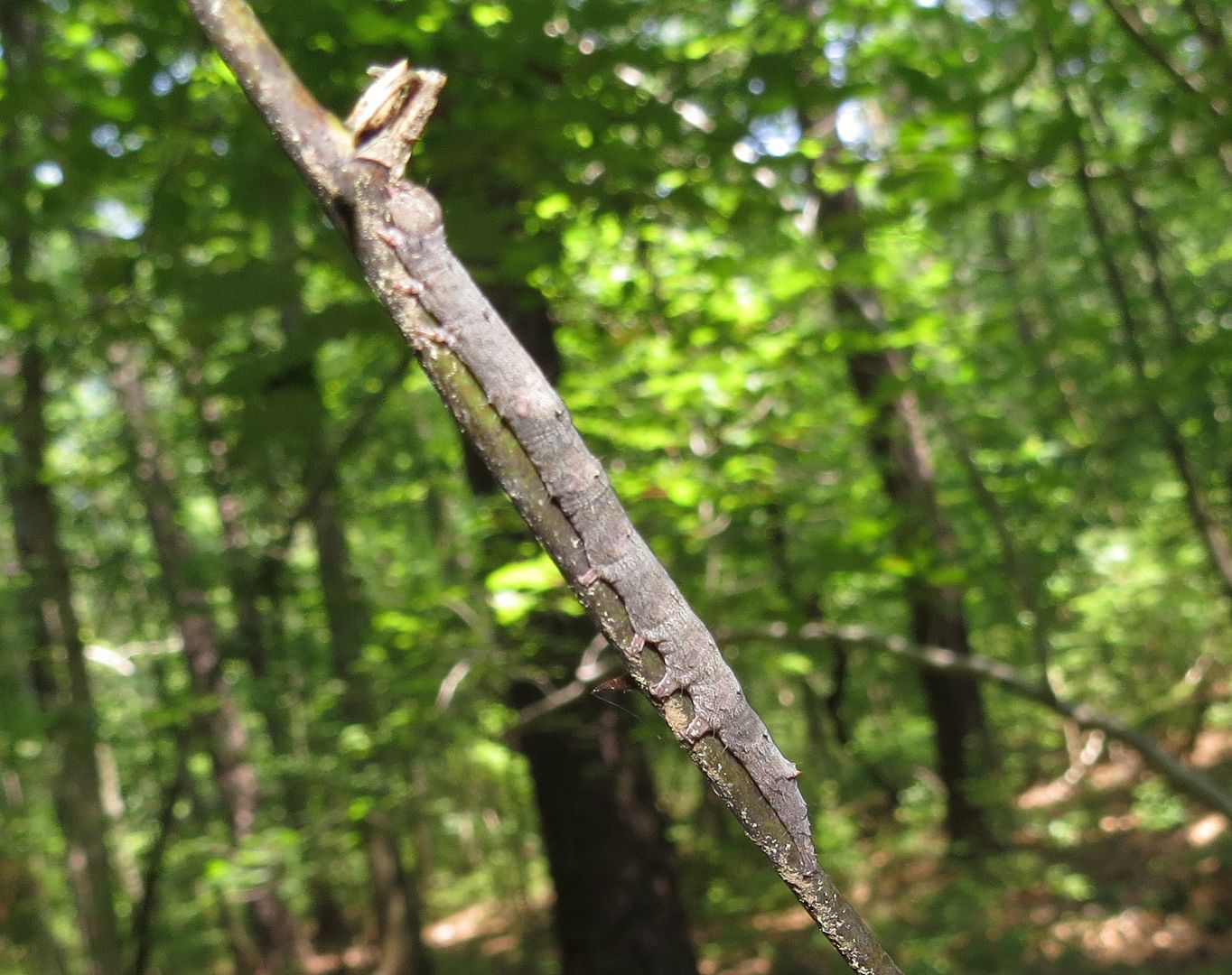
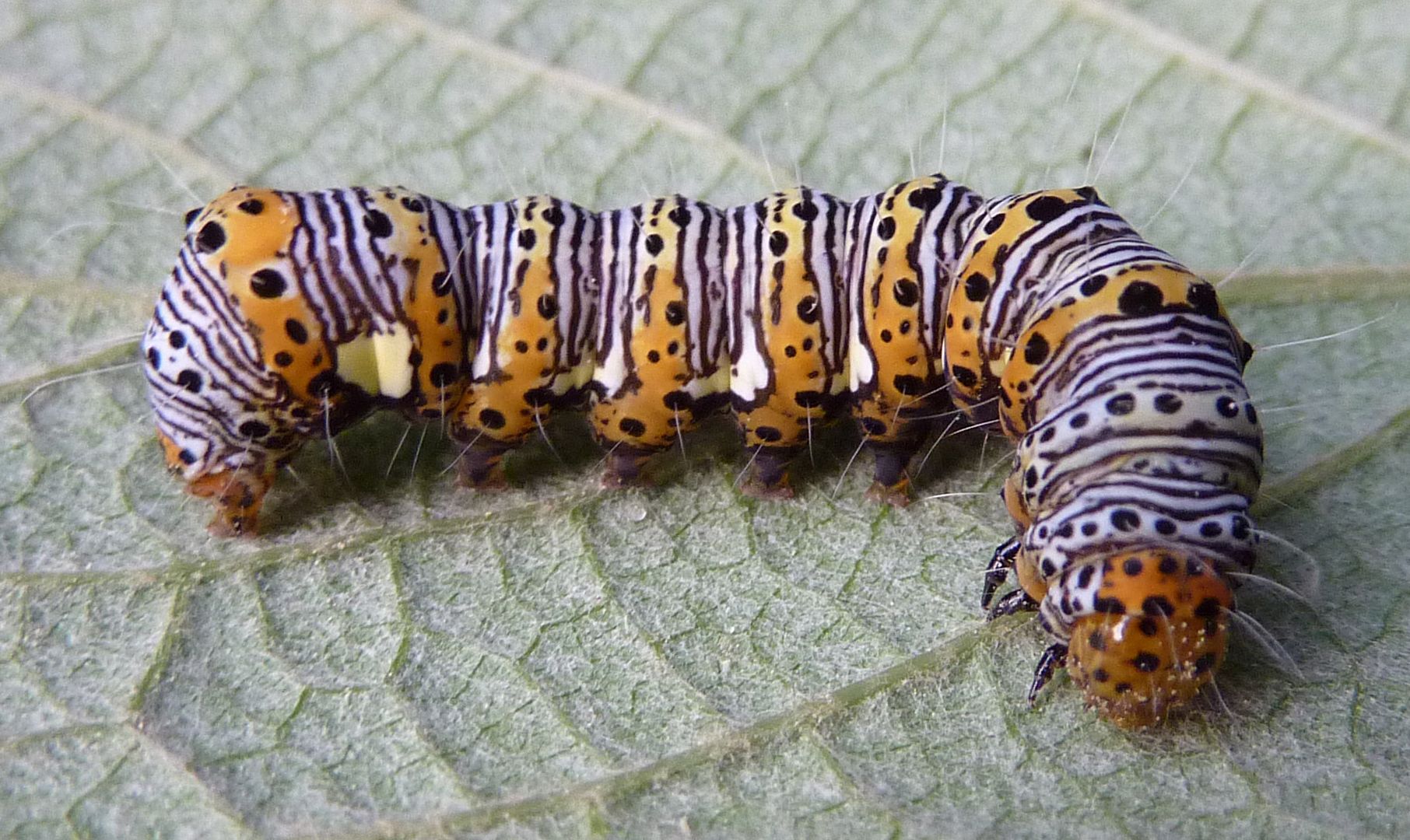
I don't know the name of this one but if I recall right they can spray acid if you disturb them.

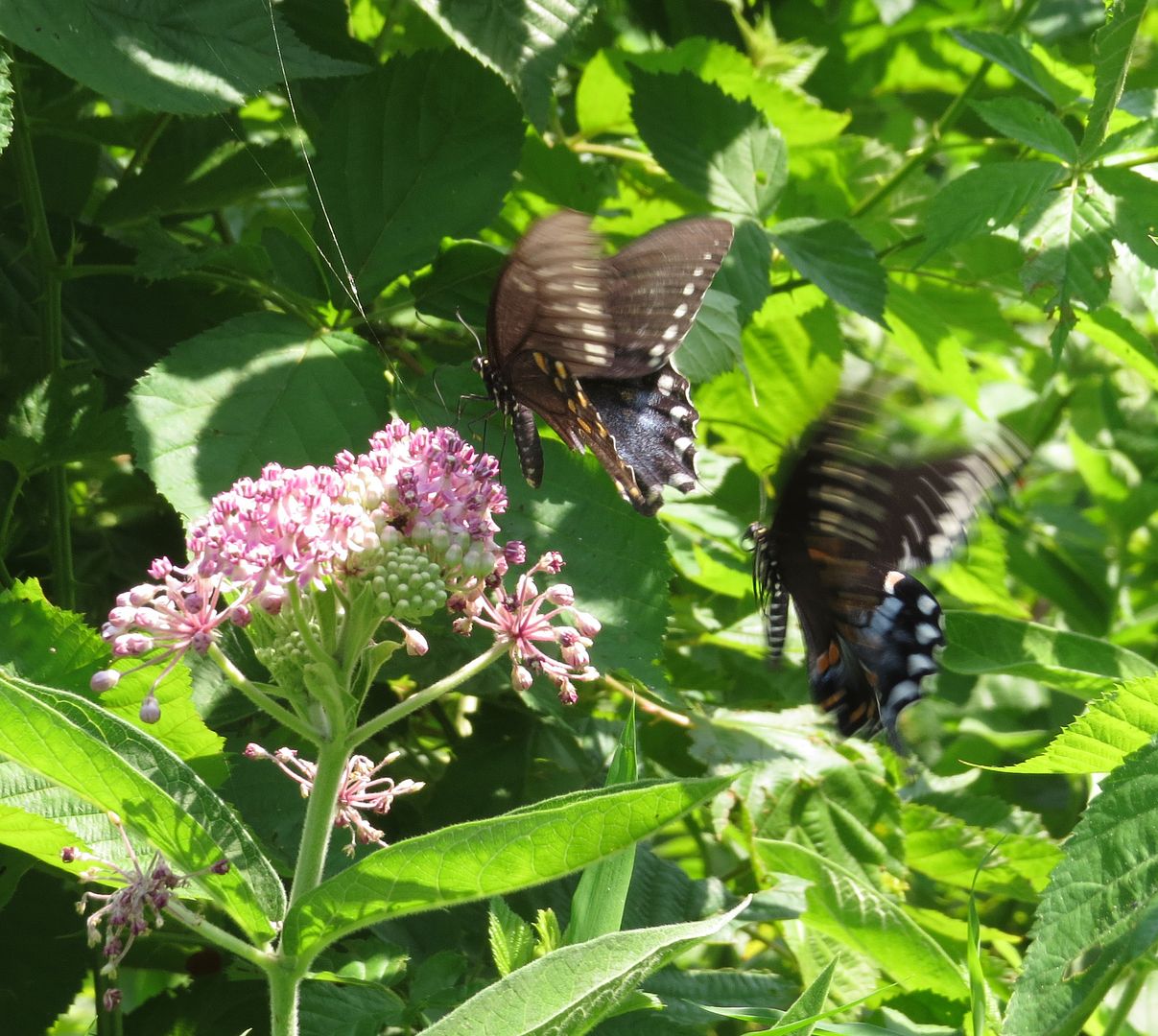
A Spicebush Swallowtail sipping at some Hairy Swamp Milkweed. Note the missing orange spot under the wing, how it's replaced with just the blue smear. This species mimics the Pipevine Swallowtail which is poisonous for birds to eat. Despite this ability, it seems the Pipevine Swallowtail doesn't need to be around to have decent Spicebush Swallowtail populations. I'm told though when the Pipevine Swallowtail is around that it benefits all the other species of black butterflies that mimic them.

There were about six of them zooming around this milkweed patch.

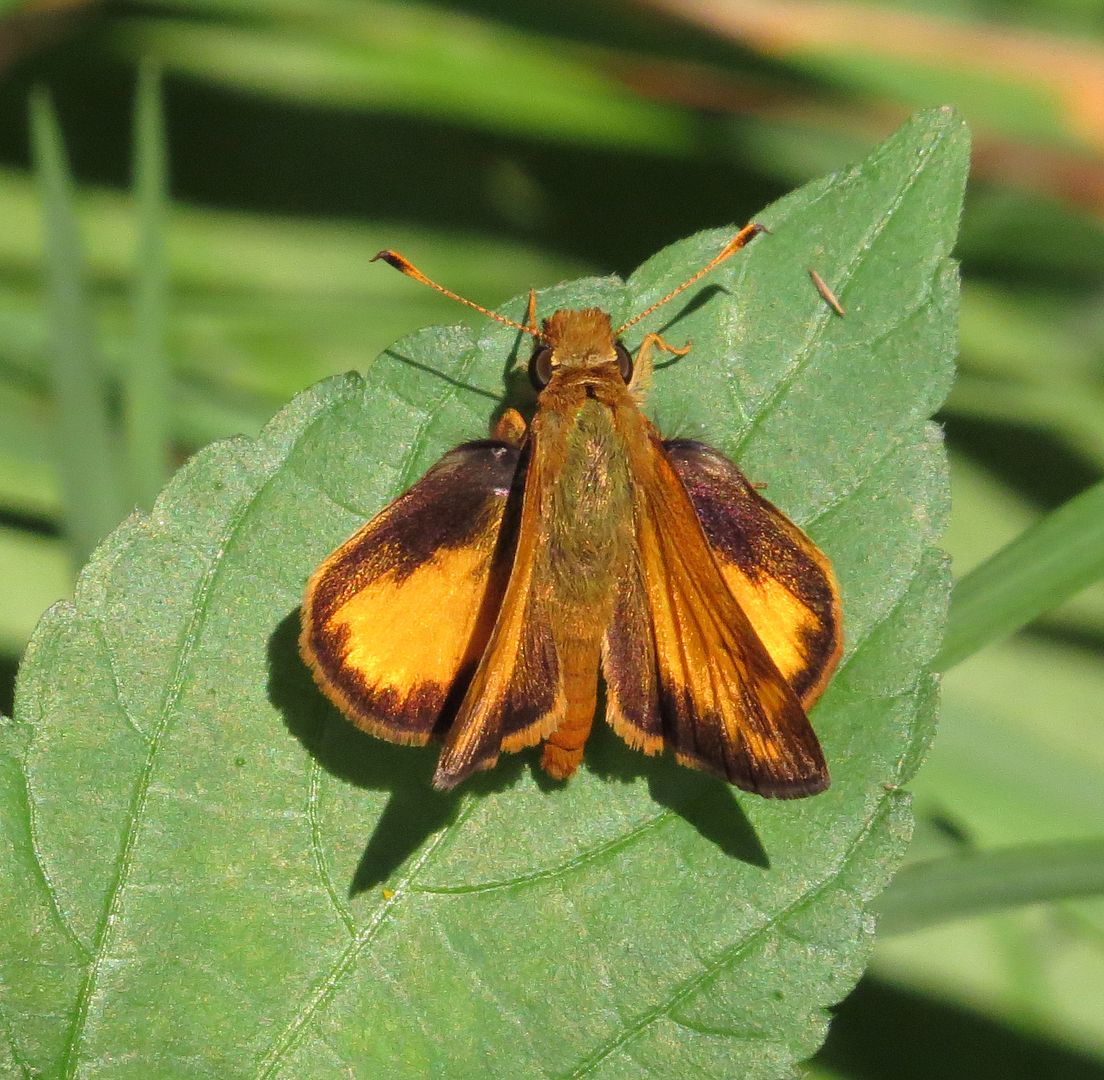
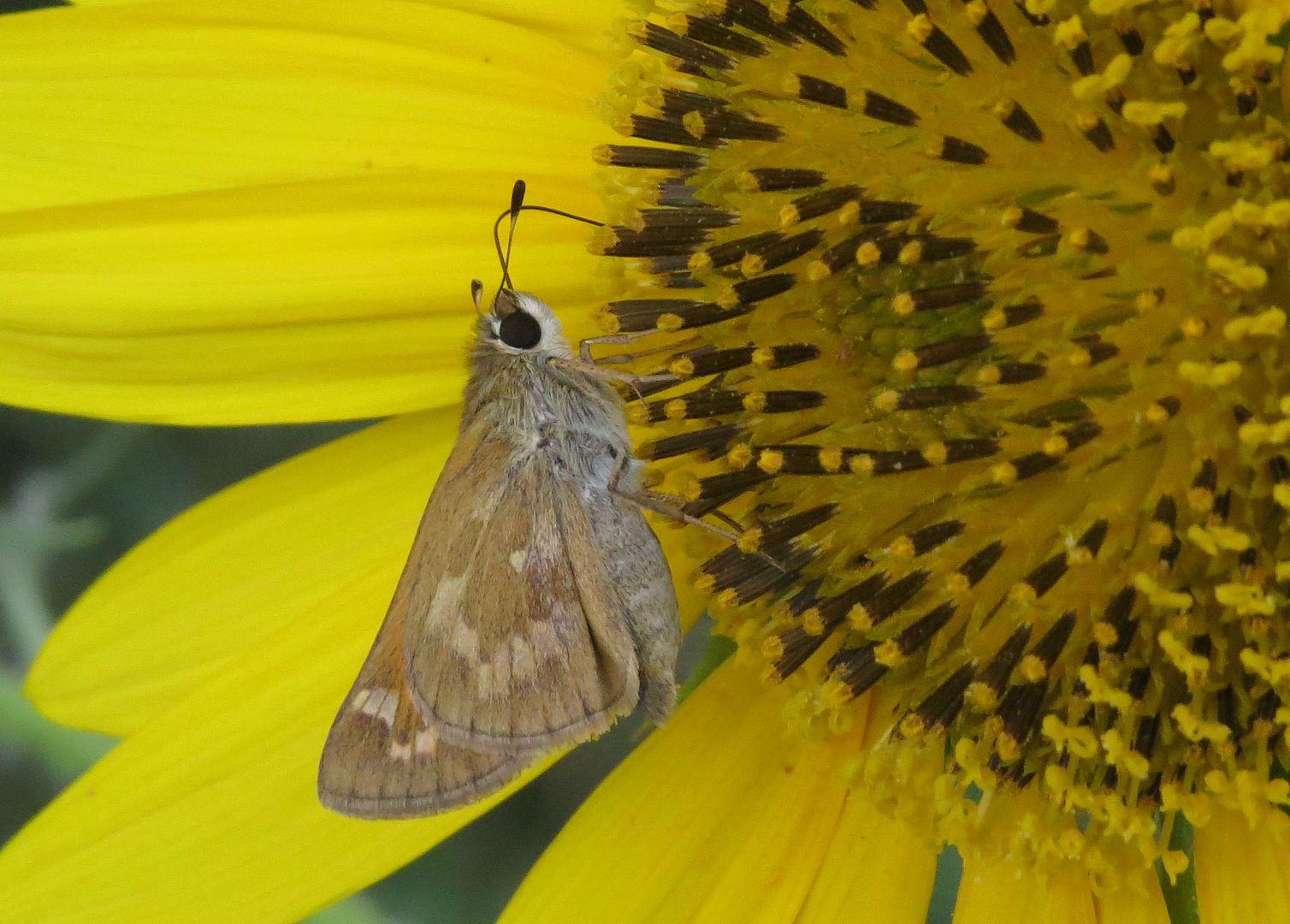
One of these days I need to figure out which of the random grasses in my yard is supporting the skipper population.

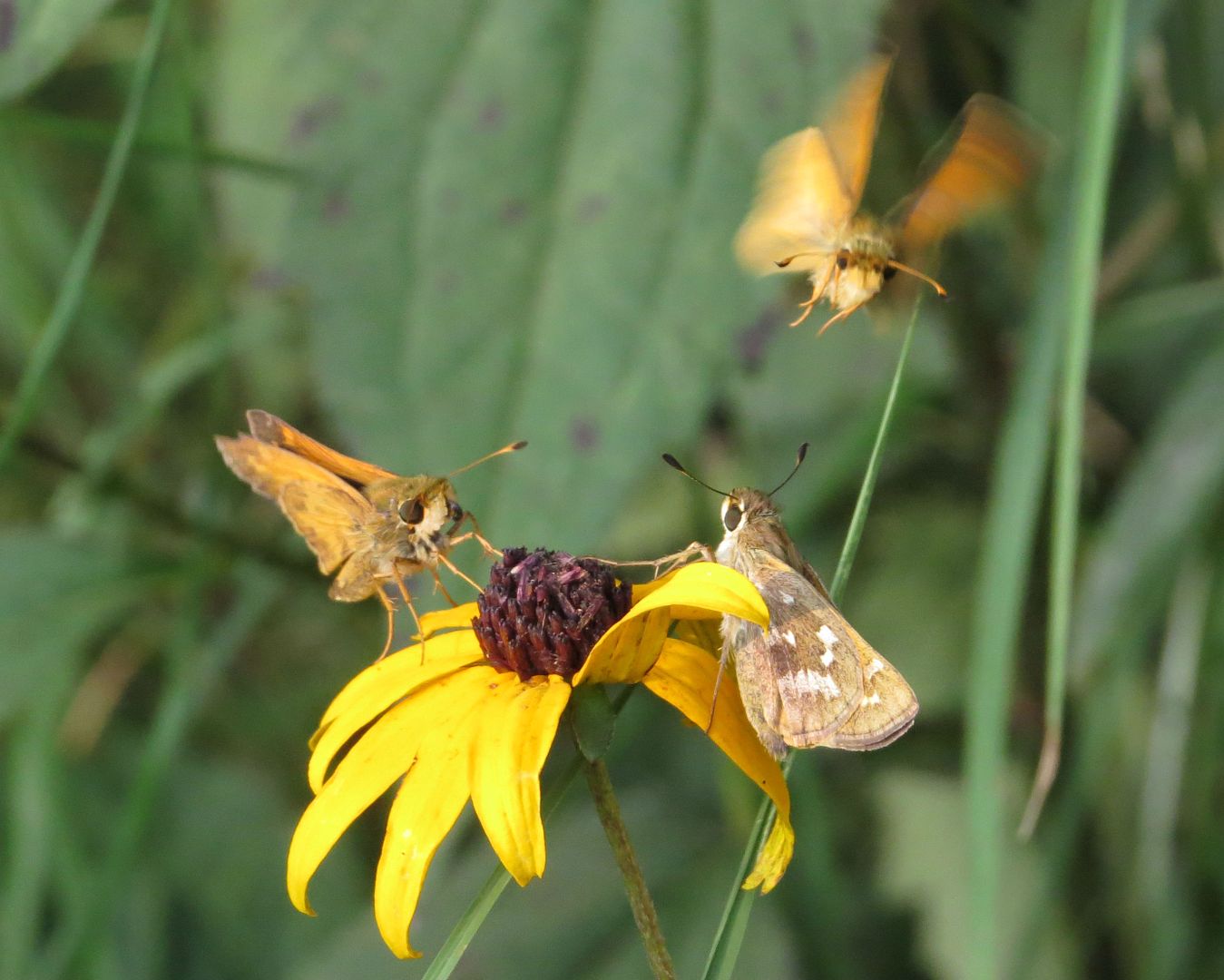
Every autumn, I'm suddenly blessed with droves and droves of skippers.

And they absolutely loved the Rudbeckia of all things!

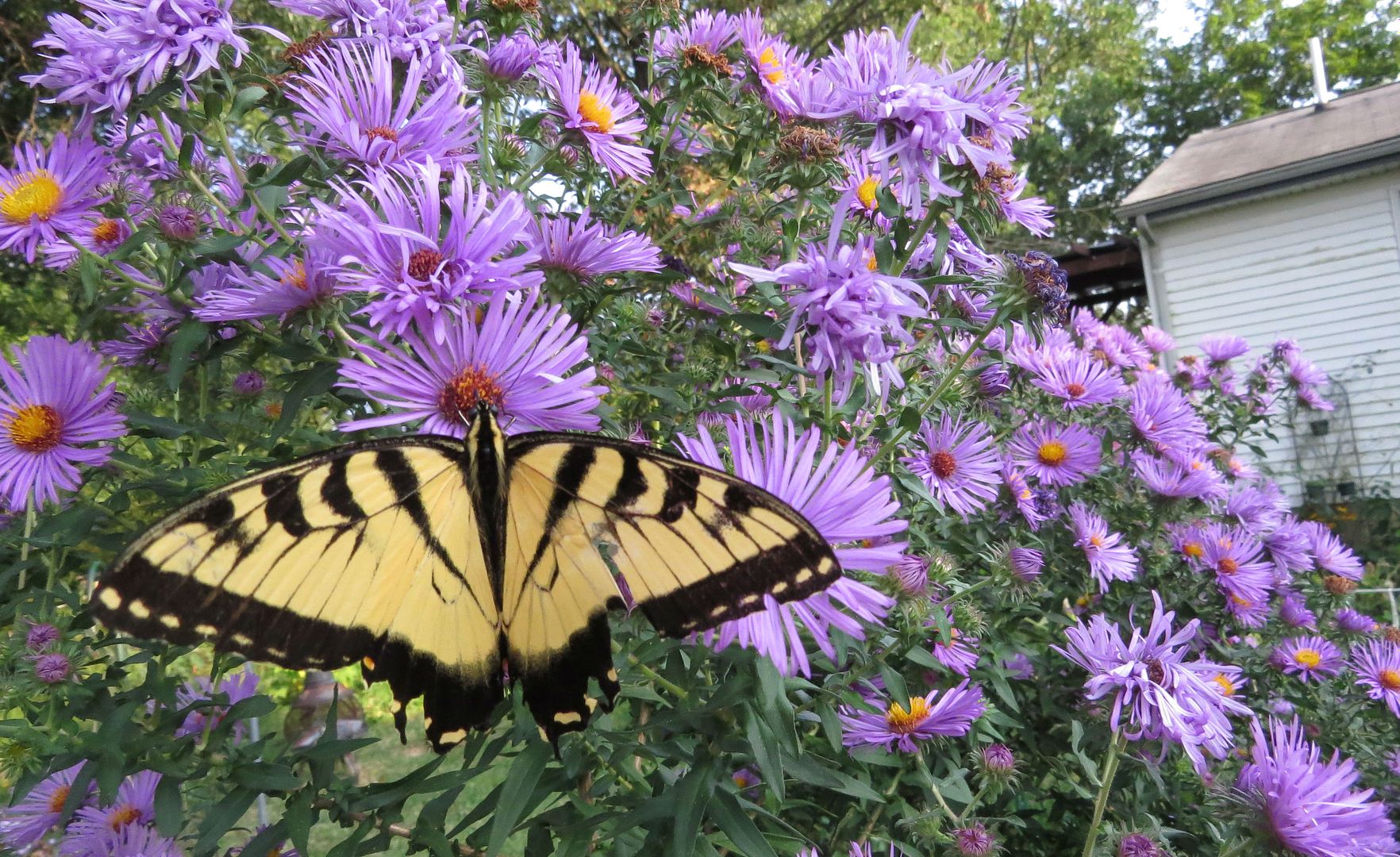
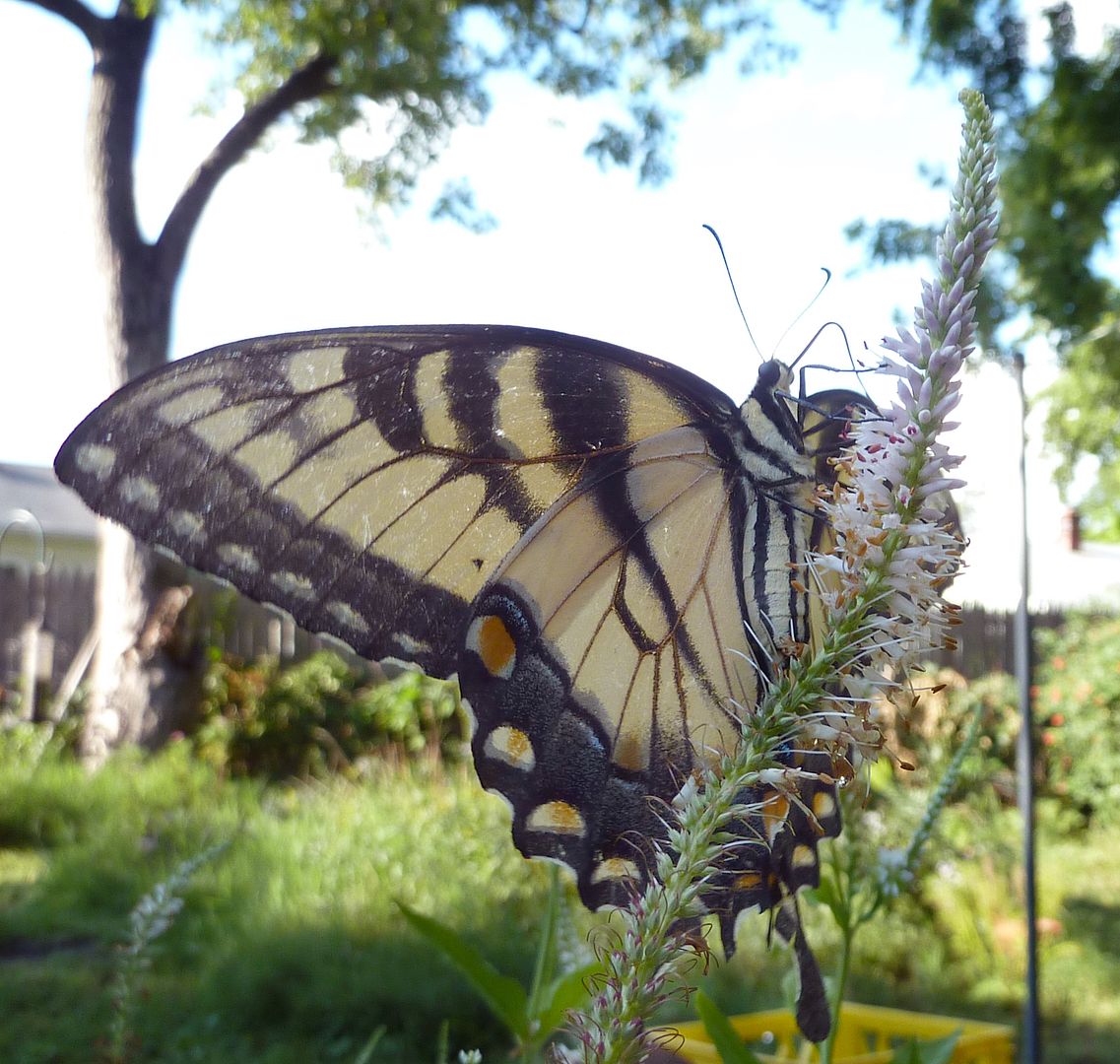
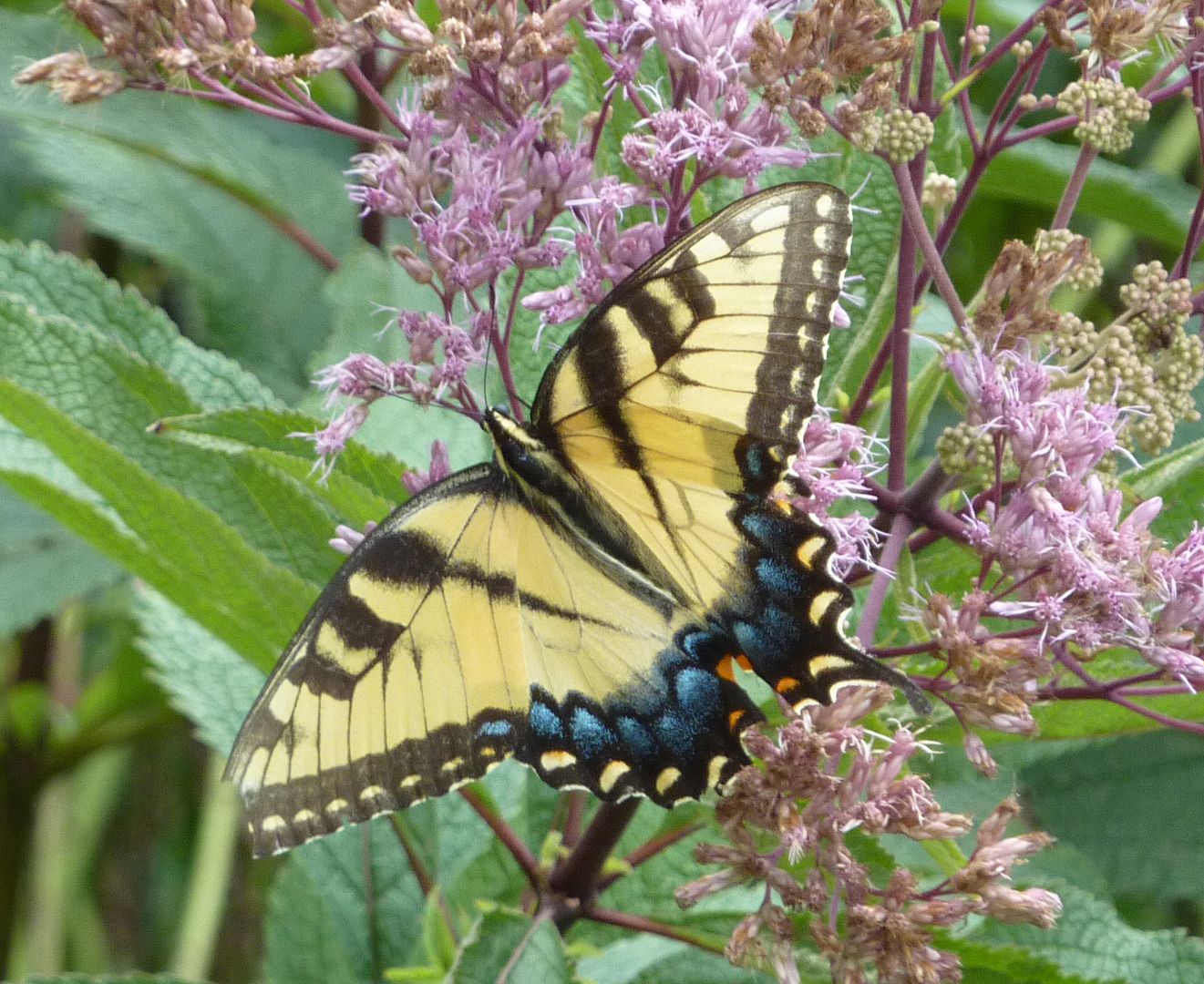
New England Asters I'd have expected to be the bigger hit, as it was with everything else. But not the skippers, they worked the Rudbeckia until it stopped blooming. Very strange. Any who this is a Tiger Swallowtail, male judging from the lack of blue along what I call the tramp stamp.

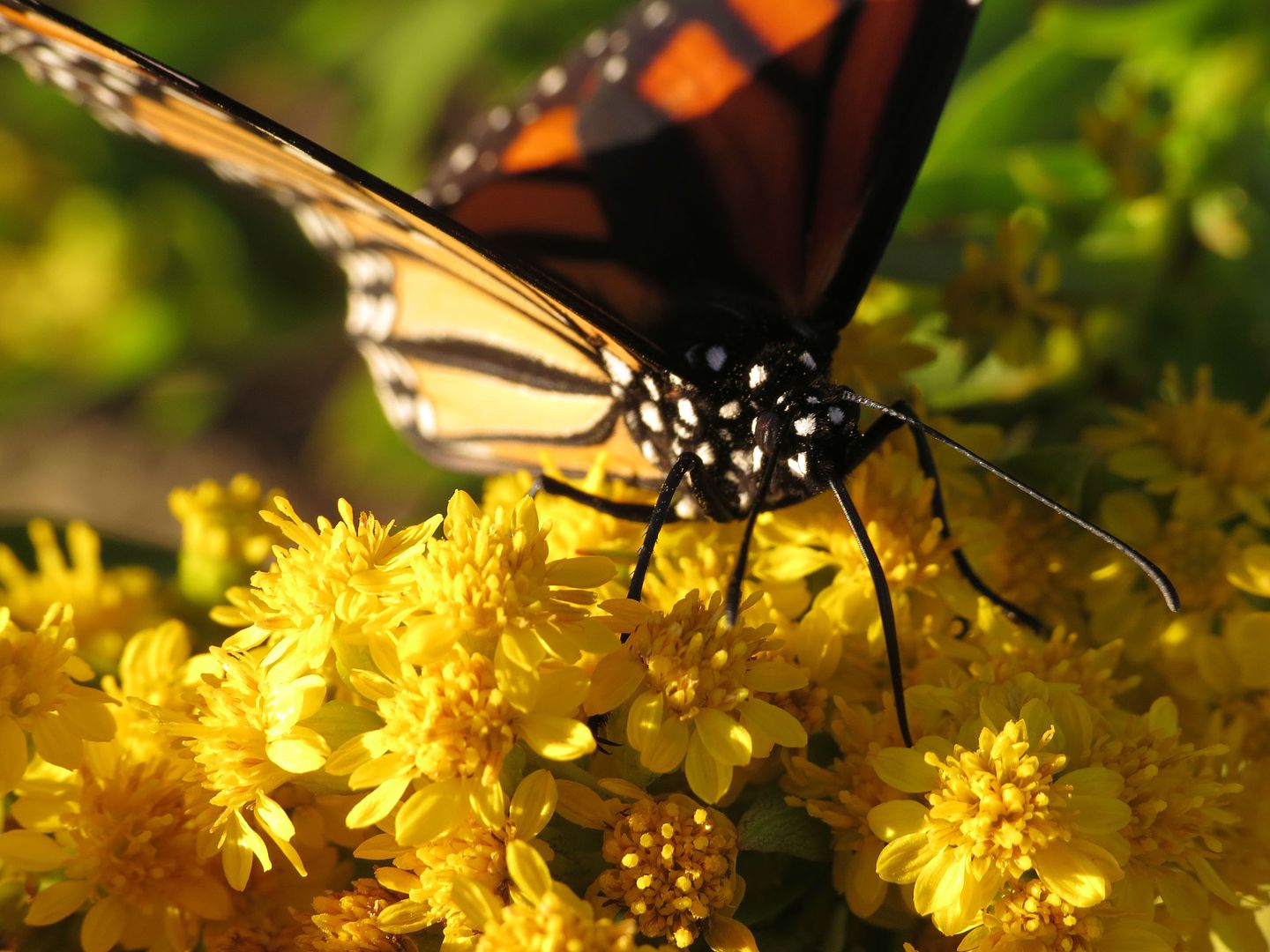
Monarchs! This was an awful year for them. Years ago when I started doing this (back in 2008 maybe?) I planted Swamp Milkweed and with in a few weeks there were Monarchs, not only having sex on the lawn but laying eggs all over the milkweed patch. I had caterpillars all summer long, and witnessed one emerging from its chrysalis. It's actually that moment that brought me tears that I was really hooked on this whole native plant thing. But this year tragically I didn't see a single one in my garden.

It wasn't until I took a trip to Cape May with a few friends that I really saw them this year. There were stands of Seaside Goldenrod planted all along the beach specifically to help the Monarch migration. While I saw a few dozen flying around it really wasn't enough to give me any sort of hope that their population was doing well at all.

I know that they're by no means endangered. It's simply that the population that migrates through the eastern half of North America will be lost. They're doing okay out in California, apparently there's a population that migrates through South America as well, but what a shame it would be to never see the butterfly that inspired me to garden to ever flutter through my yard again.

Wednesday, July 3, 2013

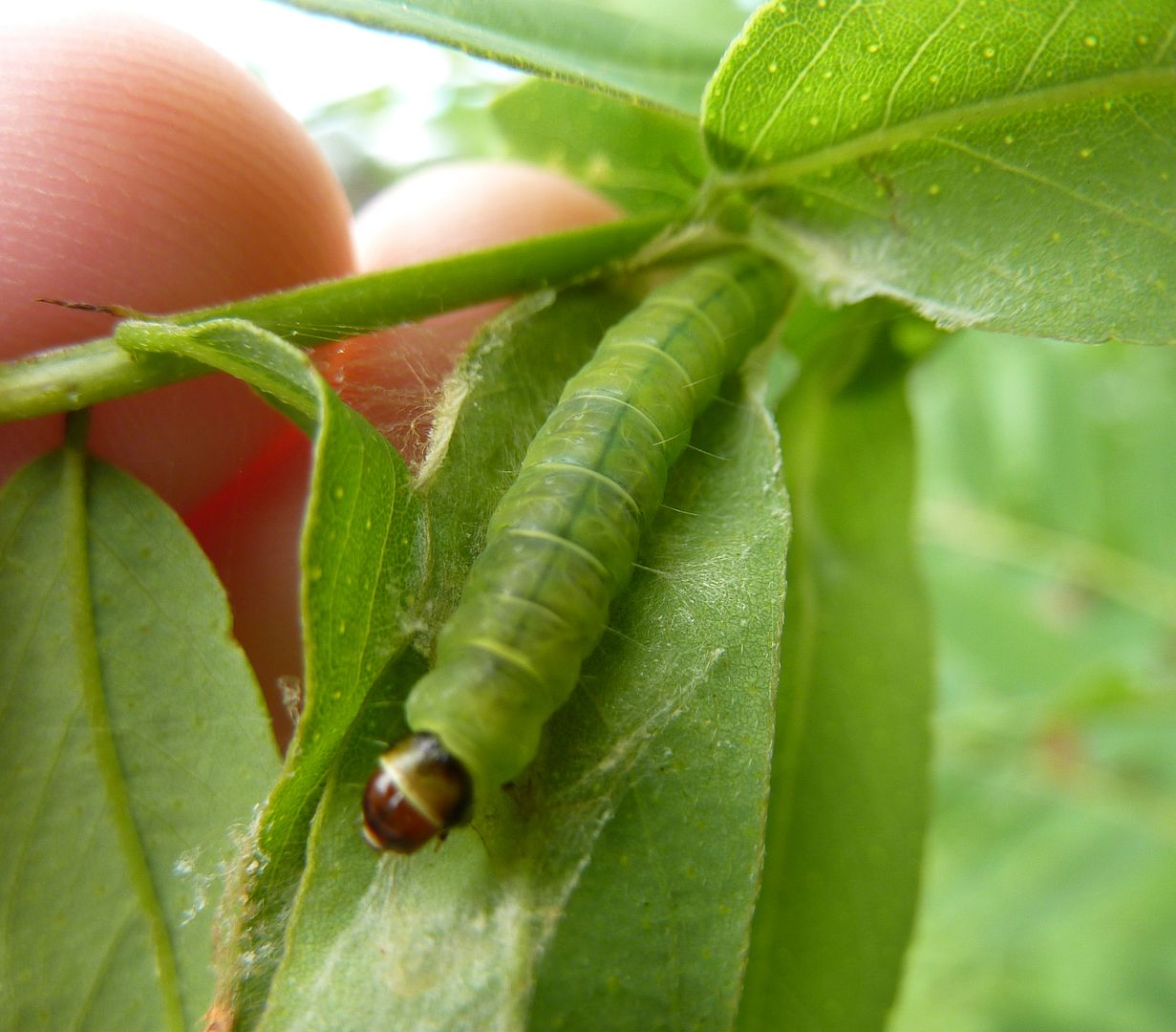
Silver-spotted Skipper Caterpillar on False Indigo Bush


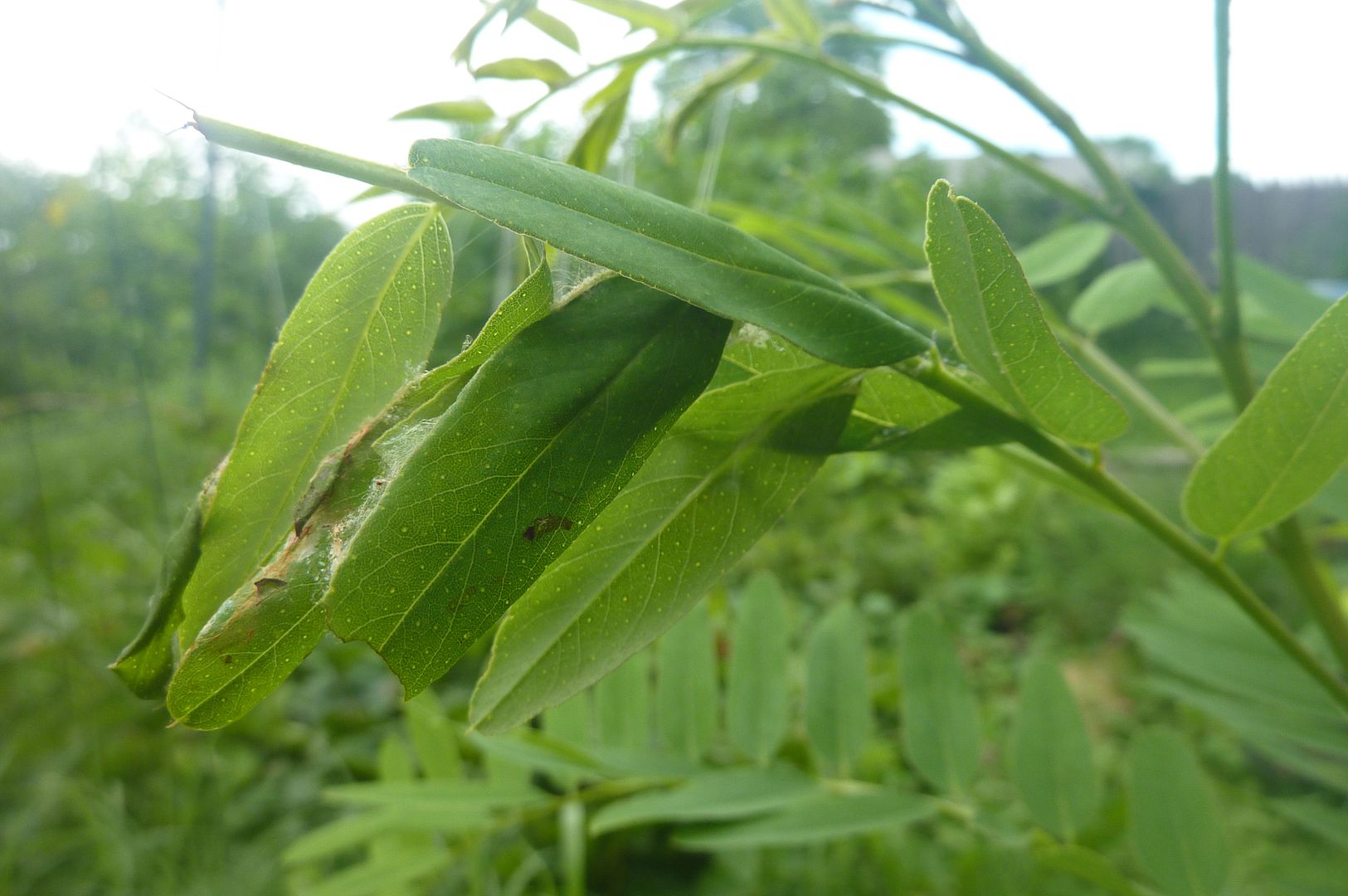
I found the tent to a Silver-spotted Skipper, Epargyreus clarus, on the False Indigo Bush, Amorpha fruticosa, today. I'd planted the sapling last fall as a nitrogen-fixing shrub/small tree right next to the vegetable garden. Their leaves decompose as a natural fertilizer and their roots enrich the soil somewhat. Though spraying Miracle Grow is certainly more effective.


Inside the little tent (or shed as it's called for reasons that escape me) I found the little caterpillar tucked away. They hang out here and feed at night so they're less likely to be eaten by birds.


Unfortunately when I tore it open initially I'd expected to find a spider. Oops. So the little guy jumped ship after I left. I tried putting the leaves back over it but he didn't repair it at all. 

So this had me thinking I should inspect some of my other plants for caterpillars, such as Wild Senna, which they also might use. Sadly I didn't find anything else but this one caterpillar. It's great that this sapling got me success on the first years though. I'm still debating if I should prune it into a shrub or a small tree.

Thursday, May 2, 2013

Feeding the Ants

I have a few Oak trees out in the yard, which tend to be prolific with caterpillars. Most of which are fairly bland looking and the one above is no exception. Caterpillars that don't have exotic colors to them or aren't covered in hairs, tendrils, or thorns, have to be cautious as they tend to be the easiest for birds to eat. We have several sparrows and robins nests about the yard so naturally their chances of survival are almost zero. So what these caterpillars have to do to escape being a meal is either hide or jump ship. I see droves of these lowering down from the tree each time a bird lands to inspect the tree. Ideally the caterpillar would lower onto another branch, but there's only so much tree to be had.

Once they're on the forest floor (or in this case my yard) they need to locate another host plant, typically a sapling or risk starvation. Some can survive by eating last years leaves that haven't decomposed but this isn't as nutritious for them.

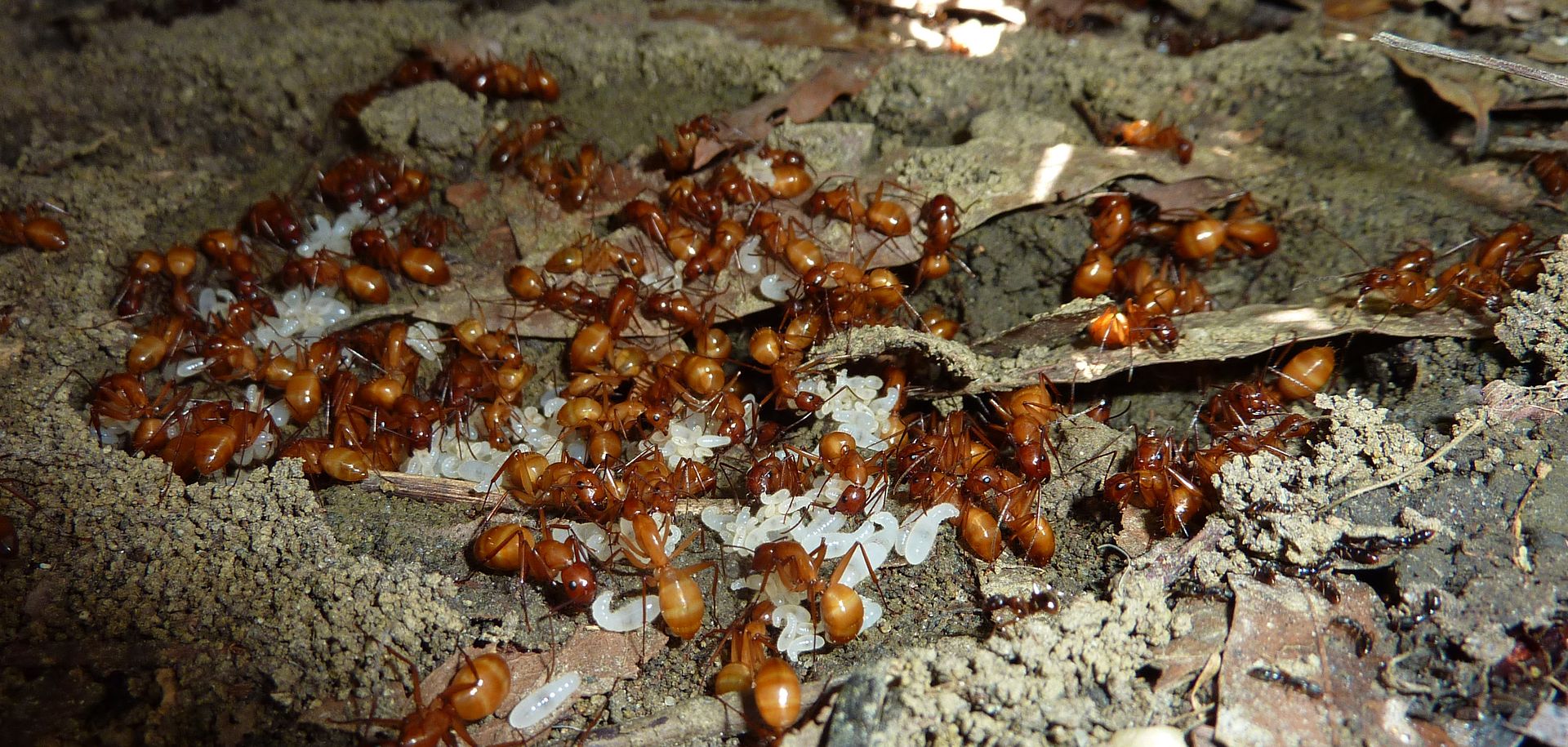
Directly under the Oak Tree in question is a rather health colony of Camponotus castaneus. They tend to forage at night though, so until then other forest ant colonies have a chance to collect up some food. Located in the same area were colonies of Aphaenogaster rudis, Nylanderia faisonensis, Prenolepis imparis, and Tetramorium species E. (formerly T. caespitum), as well as a few young colonies Formica pallidefulva, and Formica incerta. All underneath one oak tree.

(There's also colonies of Lasius interjectus, and Ponera pennsylvanica too but I don't think they eat caterpillars too often. The Lasius colonies farm root aphids like there's no tomorrow, and the Ponera I expect to be predatory towards small mites and spring tails and such.)

So I fed this little caterpillar to my colony of Pheidole bicarinata, which is a rather tiny ant, commonly found in sandy areas. Pheidole is one of the most species rich genera in the world but here in NJ we're approaching their northern limits. They're far more prolific in tropical areas. They occur wherever there's lots of sandy soil and full sun to partial shade conditions. Colonies can get reasonably big, but for now this one fits nicely in a test tube. You can sort of make out the queen but she's out of focus and in the back towards the brood pile. The caterpillar tried to hide under their test tube but the ants soon found it and swarmed it.


Pheidole is a genus with a polymorphic worker caste. The smaller workers do most of the work while the larger ones are there mostly for food storage, milling seeds, and tearing open food items for the smaller workers to more easily get at. They can also block tunnel entrances with their heads when the colony is attacked.

Saturday, December 15, 2012

Best of Butterflies 2012


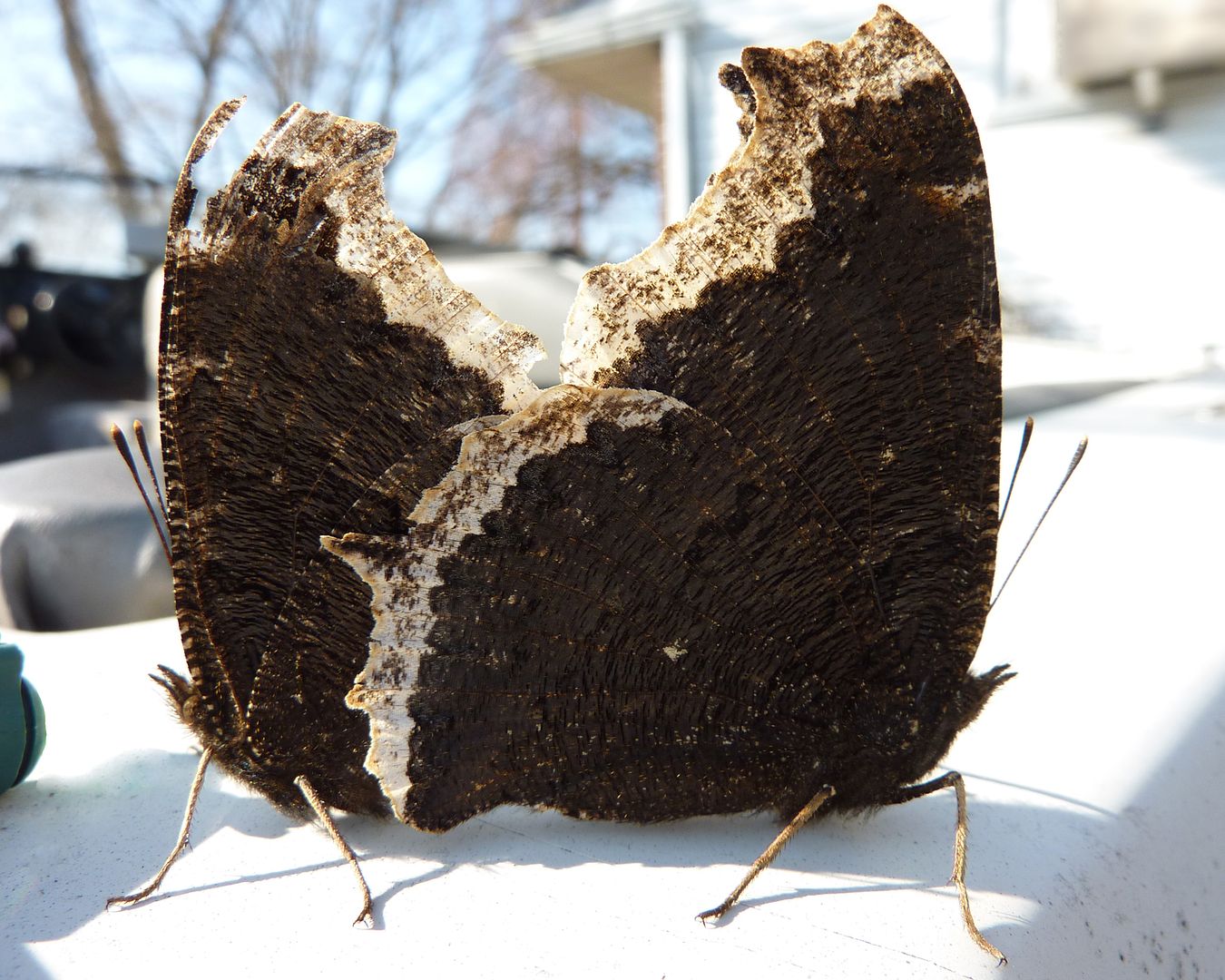
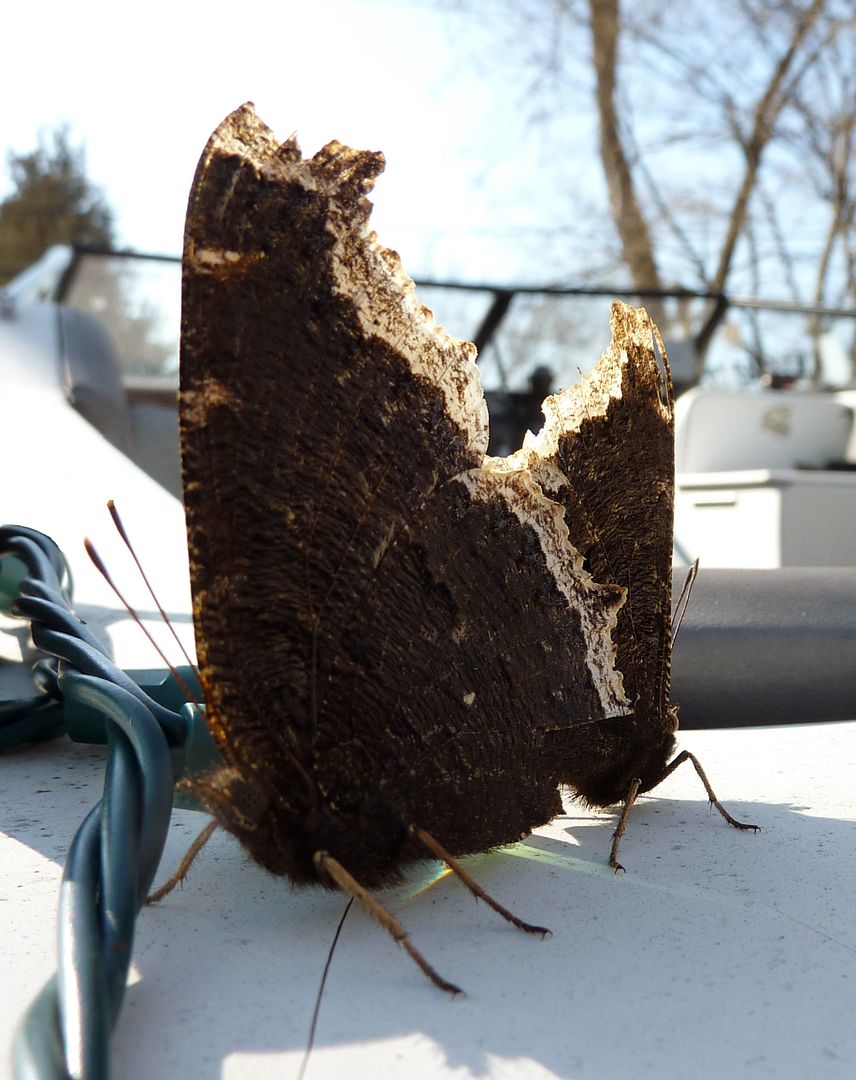
The first butterflies I encountered this year was a mating pair of Mourning Cloaks. Apparently this is the way to take pictures of them because all my prior attempts caused them to zip into the air at speeds thought to be impossible by most butterfly standards. The two were happy to move onto my finger and I was able to position them around as I liked. It's always nice to find nature being cooperative.

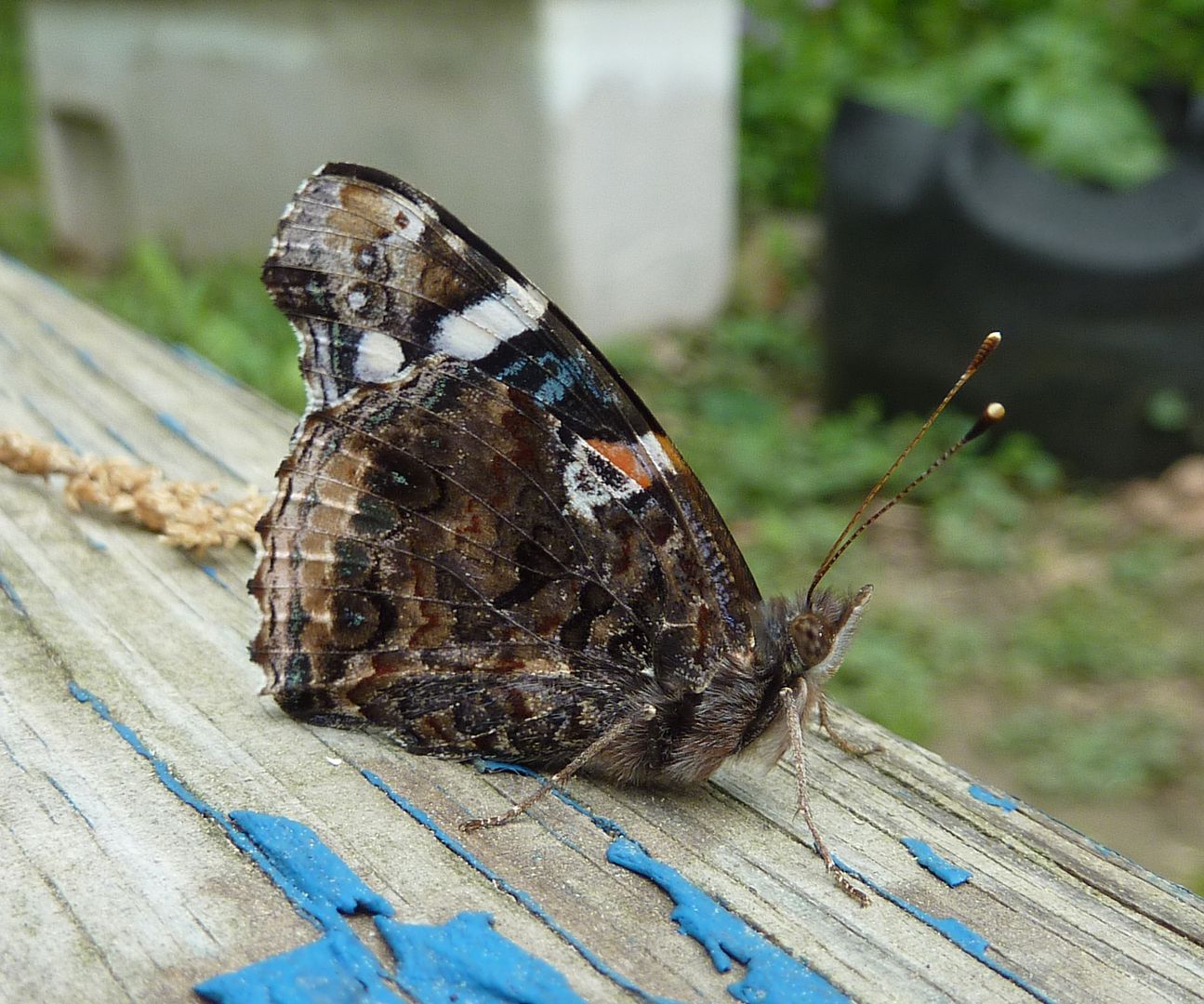
Red Admirals are another butterfly I'd struggled to photograph and I've yet to get one with their wings open.

Nothing butterfly related really happened again until the summer when I noticed some unusual chewing on the grape vine. Eight-Spotted Foresters turned out to be the culprit. They're tricky to find because disturbing the host plant in any way causes them to abruptly drop via silk lasso where they're quickly lost in the grass below.

There was an Abbot Sphinx on there too but unfortunately it vanished a few days afterward. That's a shame because they eventually get coloration to mimic a snake with one-eye.

Never got this one ID'd but it was eating the asparagus. I believe it's some sort of Owlet which narrows it down to a few hundred candidates.

Probably the most faded Red Admiral I've ever seen. They're normally black and orange. (This is a Red Admiral right?) I'm not counting this as getting one with the wings open just from what an awful condition its in.

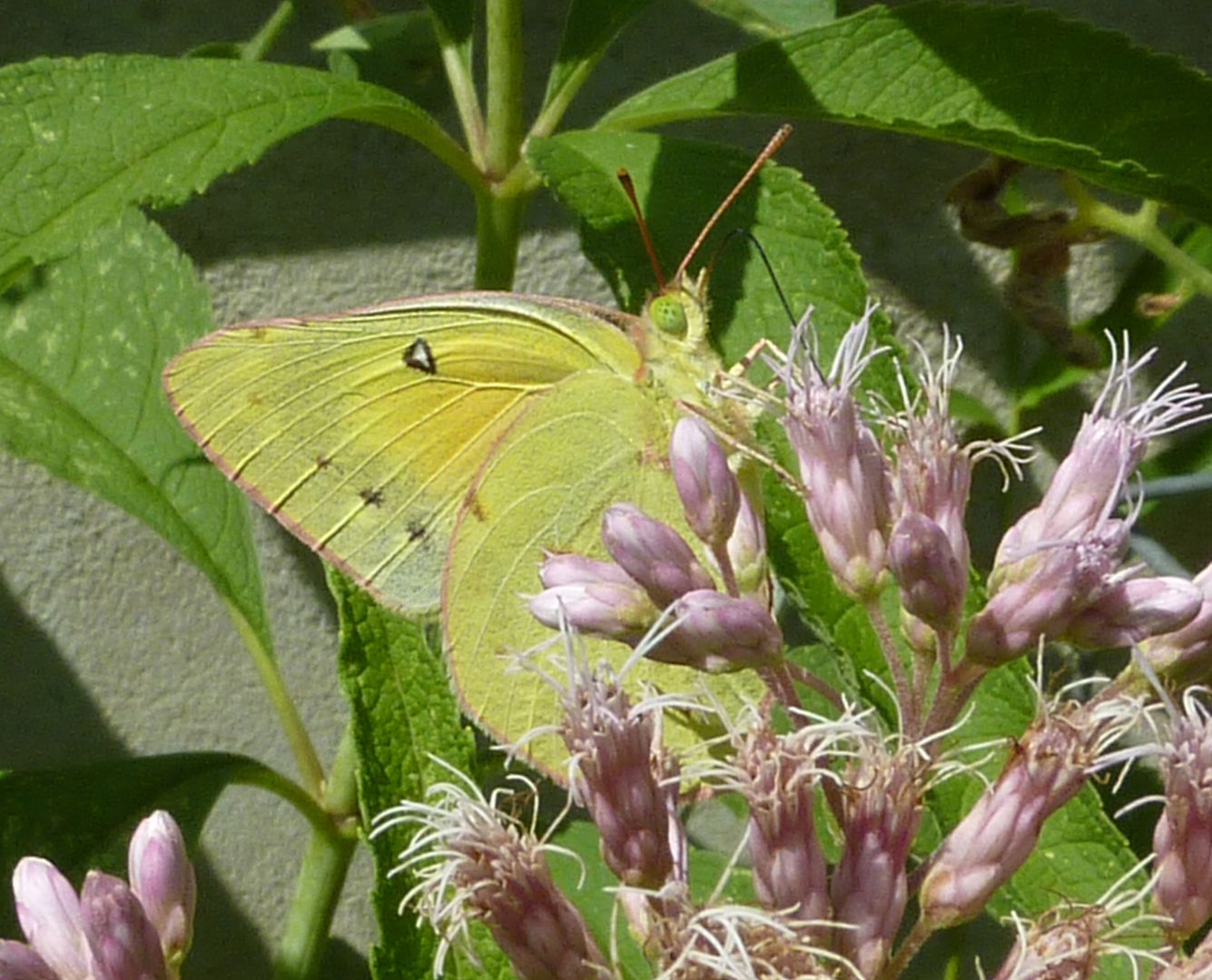
Sulphurs are one butterfly I've been trying to attract more of, namely by planting Wild Senna, but I've found these plants need more moisture than most of my yard can offer. False Indigos are far easier to grow but they're not as often used by this butterfly. I did throw out some Wild Senna seeds but none of them germinated this year. Hopefully they'll do so this spring. 

Black Swallowtails were the more recent visitor of the garden.

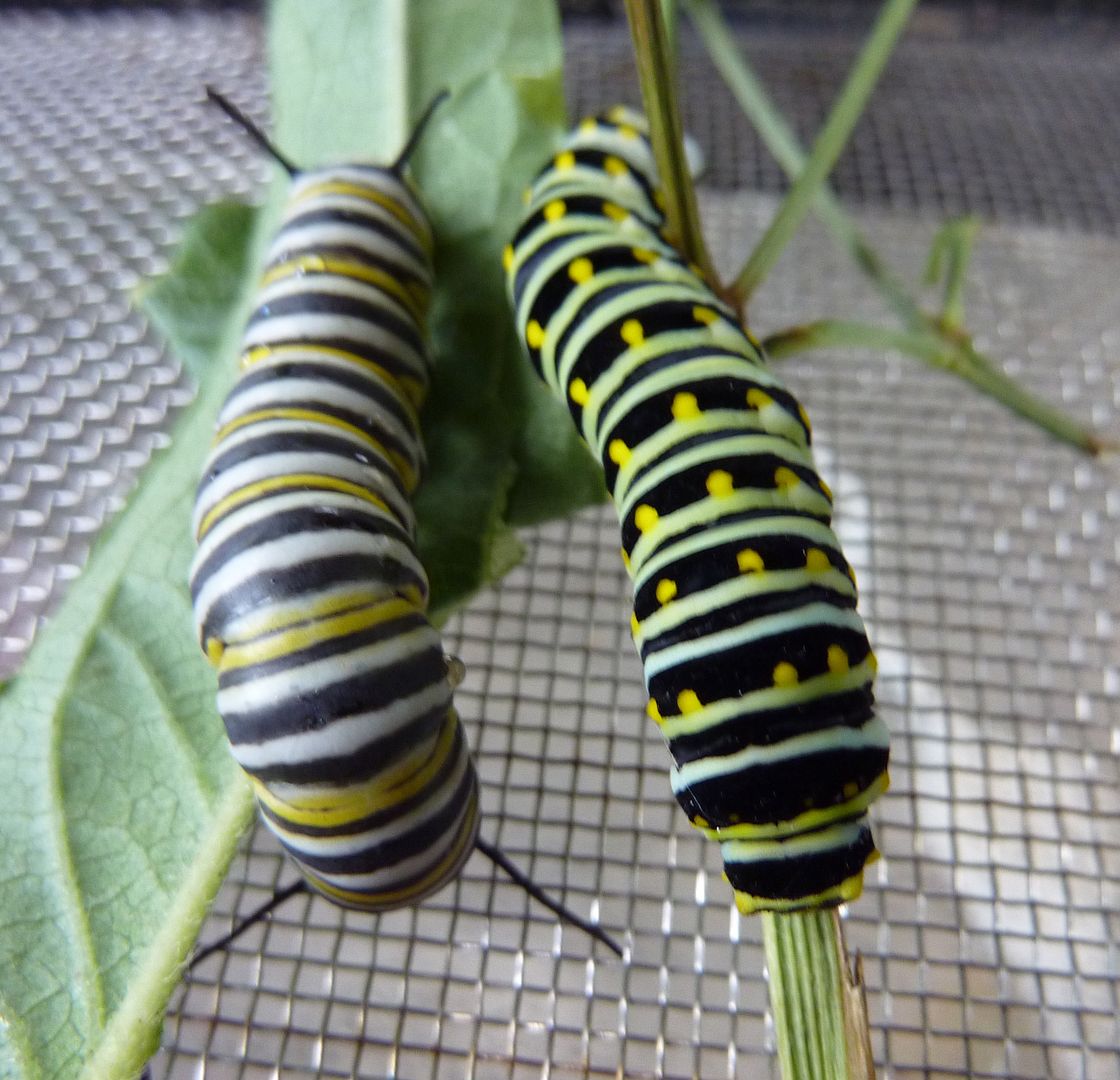
Parsley was the host plant of choice, but I did find a few on the Golden Alexander as well. A couple things about this species: the first instar caterpillars are so amazingly tiny I shell never be able to eat fresh parsley again without examining it thoroughly with the largest magnifying glass I own. They're tiny black leach-like creatures that are fast moving and unrecognizable as caterpillars unless magnified. Secondly, I was surprised how little each caterpillar eats in a day. A single spring can sustain a caterpillar until it's 2/3rds grown. The last instar on the other hands seems to eat two whole springs a day.

I was so successful with Black Swallowtails that I was able to photograph everything about their life cycle except for them over wintering. Though I hope to fix that next year.  

Females have more blue and less yellow, where as males have bolder looking yellow spots and almost no blue at all. 

Monarchs seems to be avoiding my yard this year. I was seeing them everywhere else in NJ but not my yard, which is a shame becuase I had lots of milkweed that went uneaten. A girl I work with apparently, her neighbor also lives in my town and she got caterpillars on her milkweed so I'm jealous.

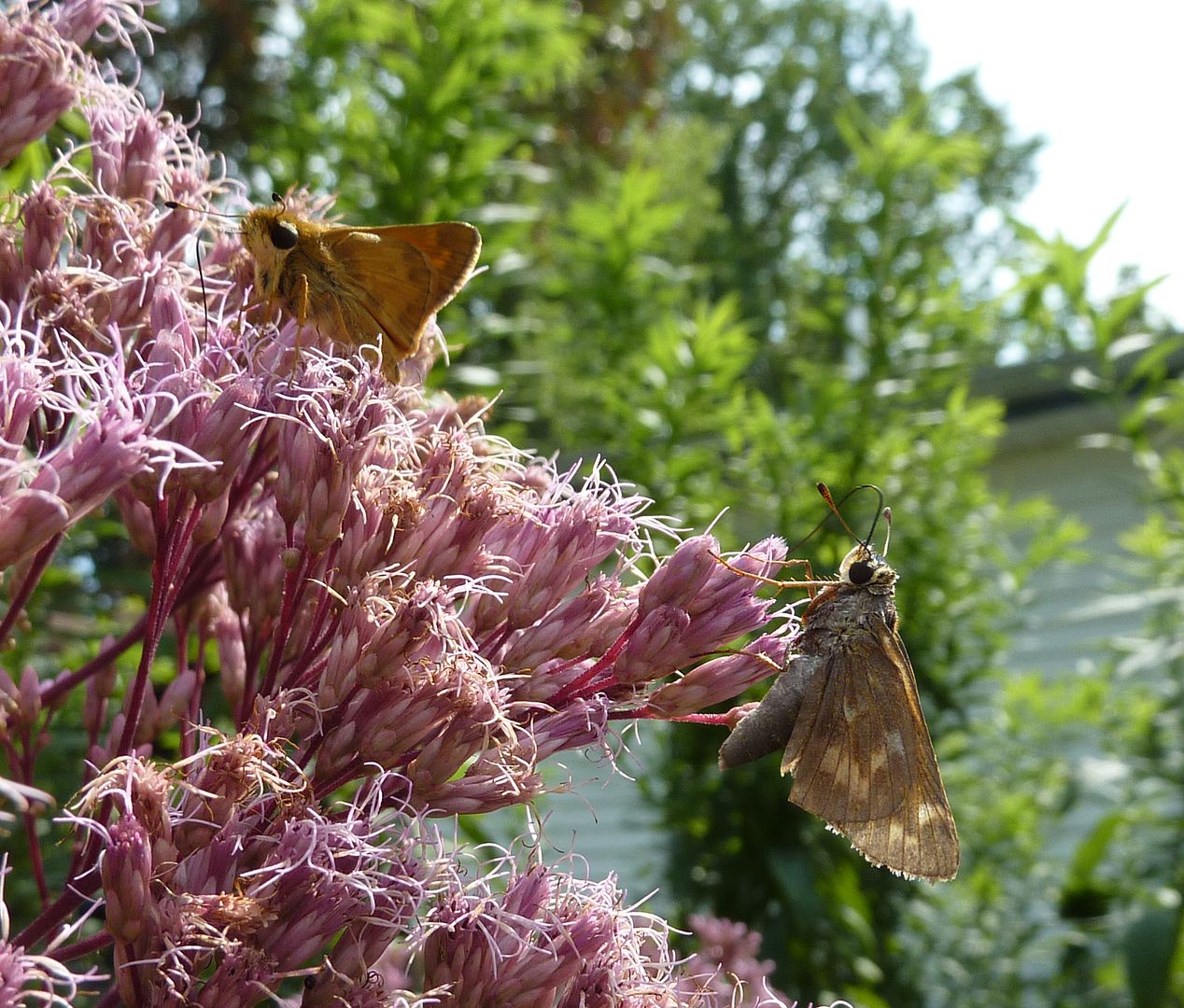
Sachem Skippers, male on the left, female on the right. I had no idea I'd photographed a set of the same species until my friend on facebook helped me ID them. I always get dozens of skippers at the end of the year and never pay any attention to them. I'm sort of tempted to fix that but I've never been a fan of their host plant, grasses.   

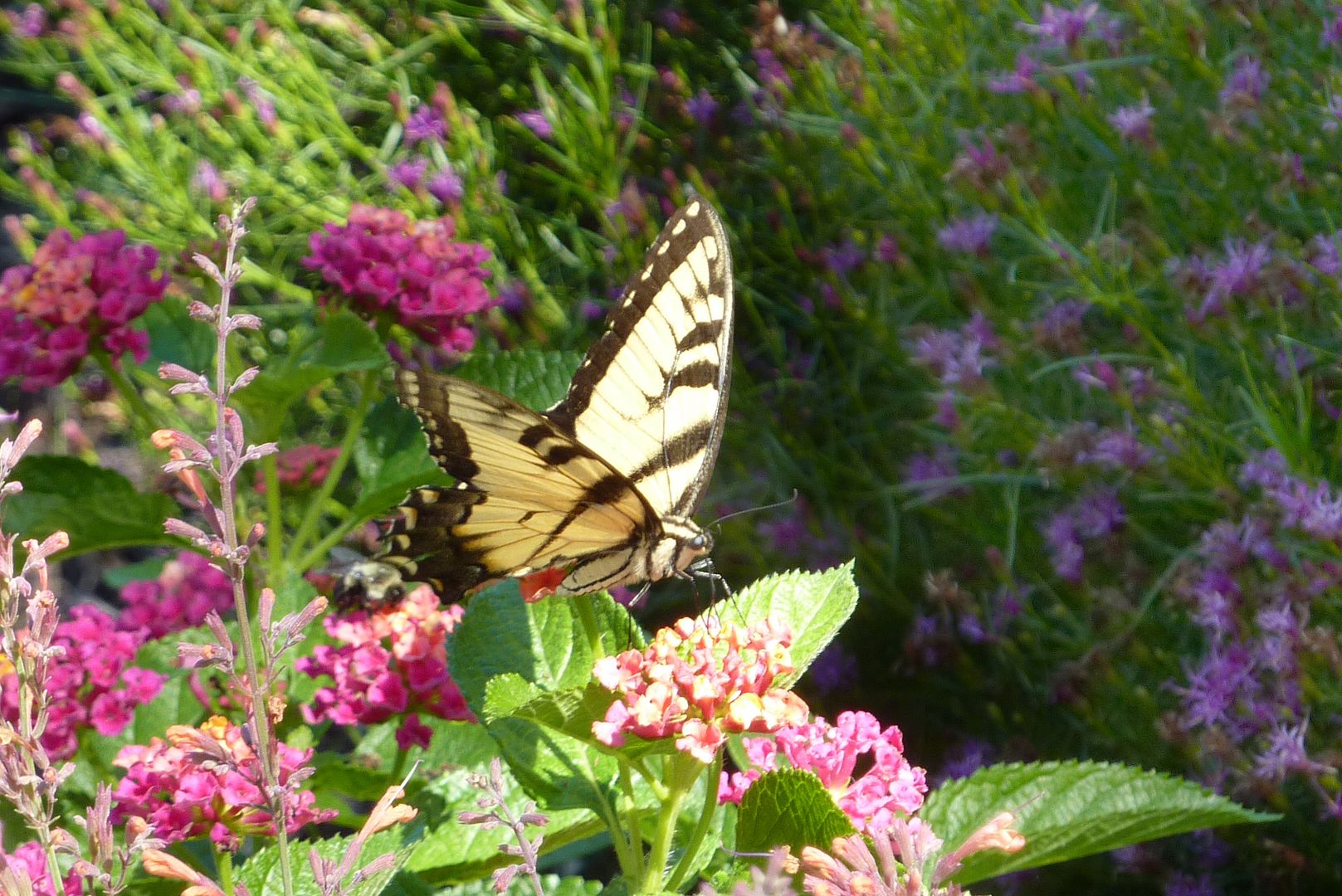
Eastern Tiger Swallowtail.

Eastern Tiger Swallowtail. I believe this is a female because the blue is stronger where as males have either less blue or it's absent entirely. 

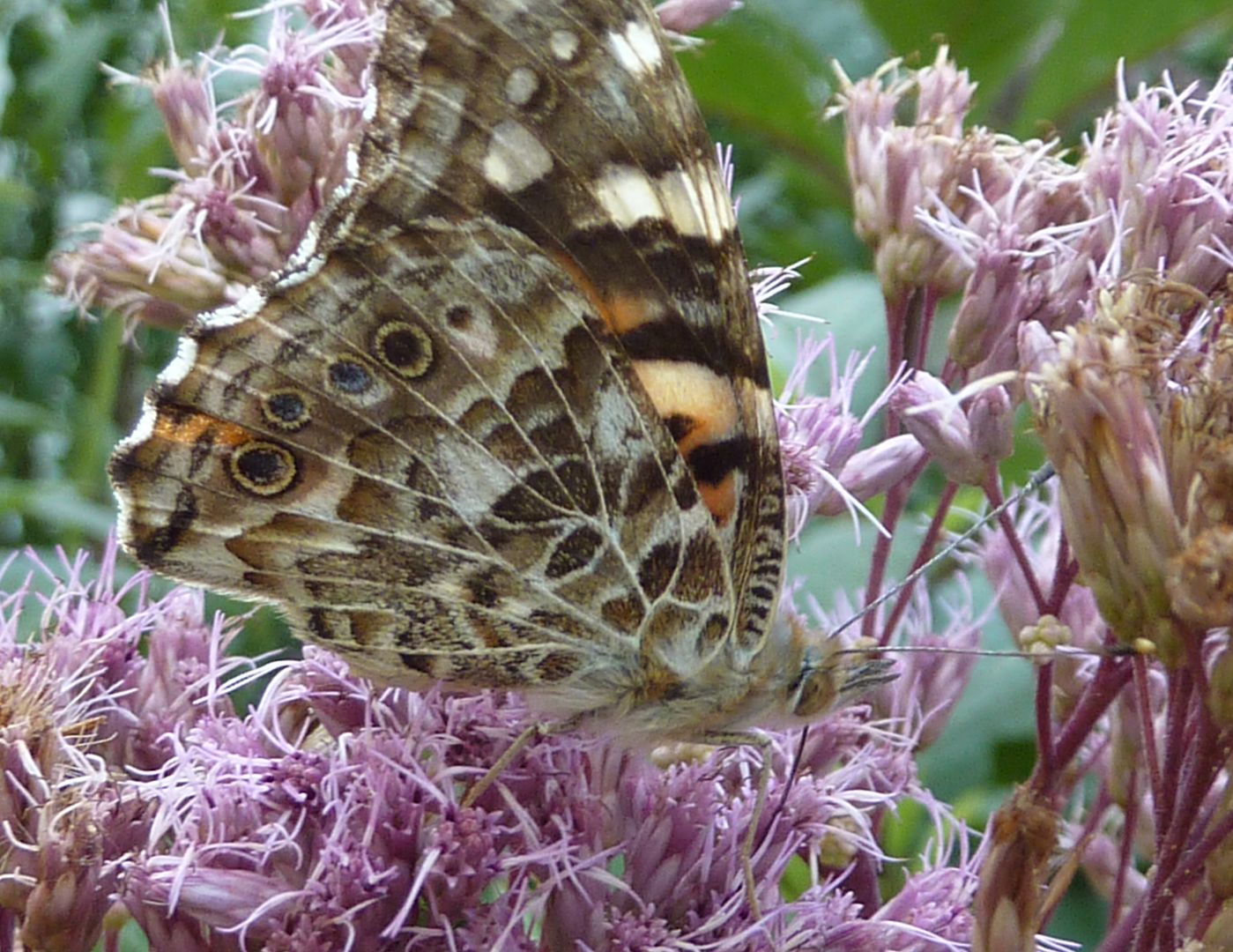
I didn't realize how big and beautiful Painted Ladies were until I spotted one on the Joe Pye Weed. They're about the same size as Monarchs are so I might try and get more host plants for them to partake of. 

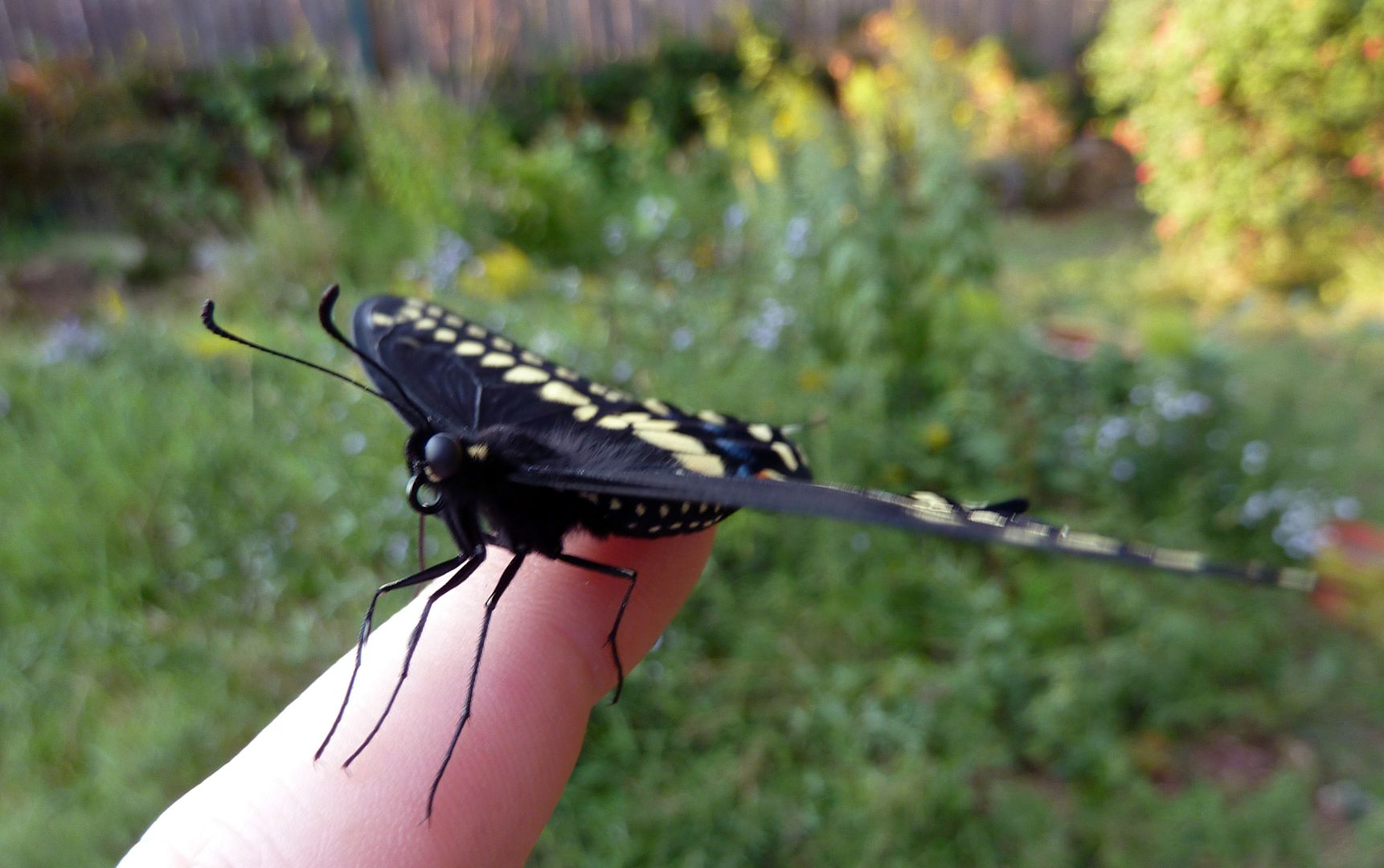
One of the first Black Swallowtails I raised. He was nice enough to let me show him my little meadow garden, but darted off after the wind started blowing.

I have about 6 or 7 of these over wintering now. Hopefully I can pay attention to them enough next spring in time to release them all. Parsley seems to grow better when it's cold out so it will likely happen early in the year. Most of them seem to be males as females make larger chrysalises. 

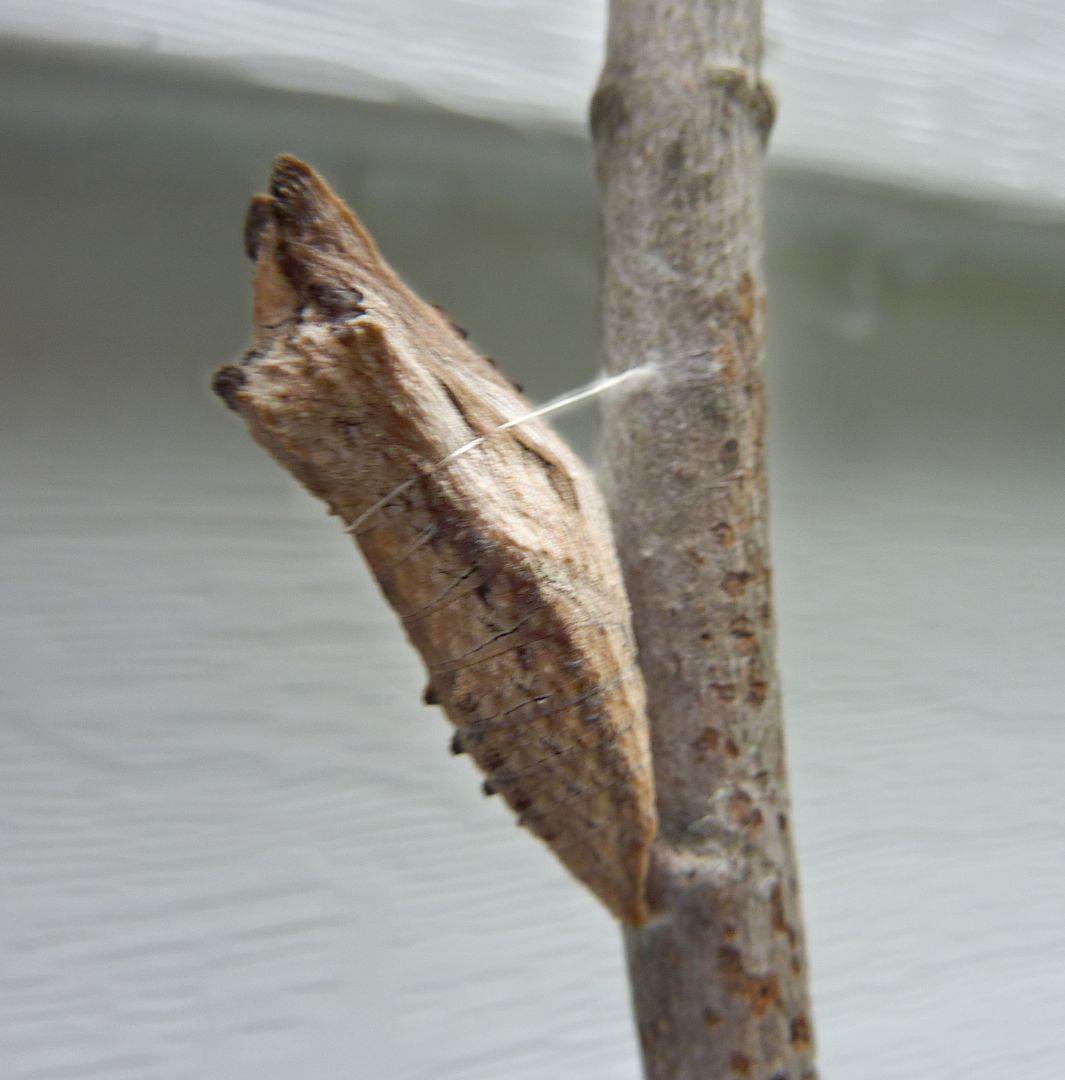
I like how they look like plant stems. Some actually start out green and fade to brown in a few days while others just skip ahead to being brown from the start.

Cabbage Whites are another one I don't pay attention to much. I feel like seeing them is somehow a mark of a bad gardener. Not that I've ever prided myself on growing cabbage.

At the Mt. Cuba Center butterflies were flying in formations in their round garden. Most of the trees there are host plants to something or other and their gardens are almost always swarming with something bright and showy.

Under a Tall Coreopsis leaf I came across a chrysalis to what might be a Fritillary.

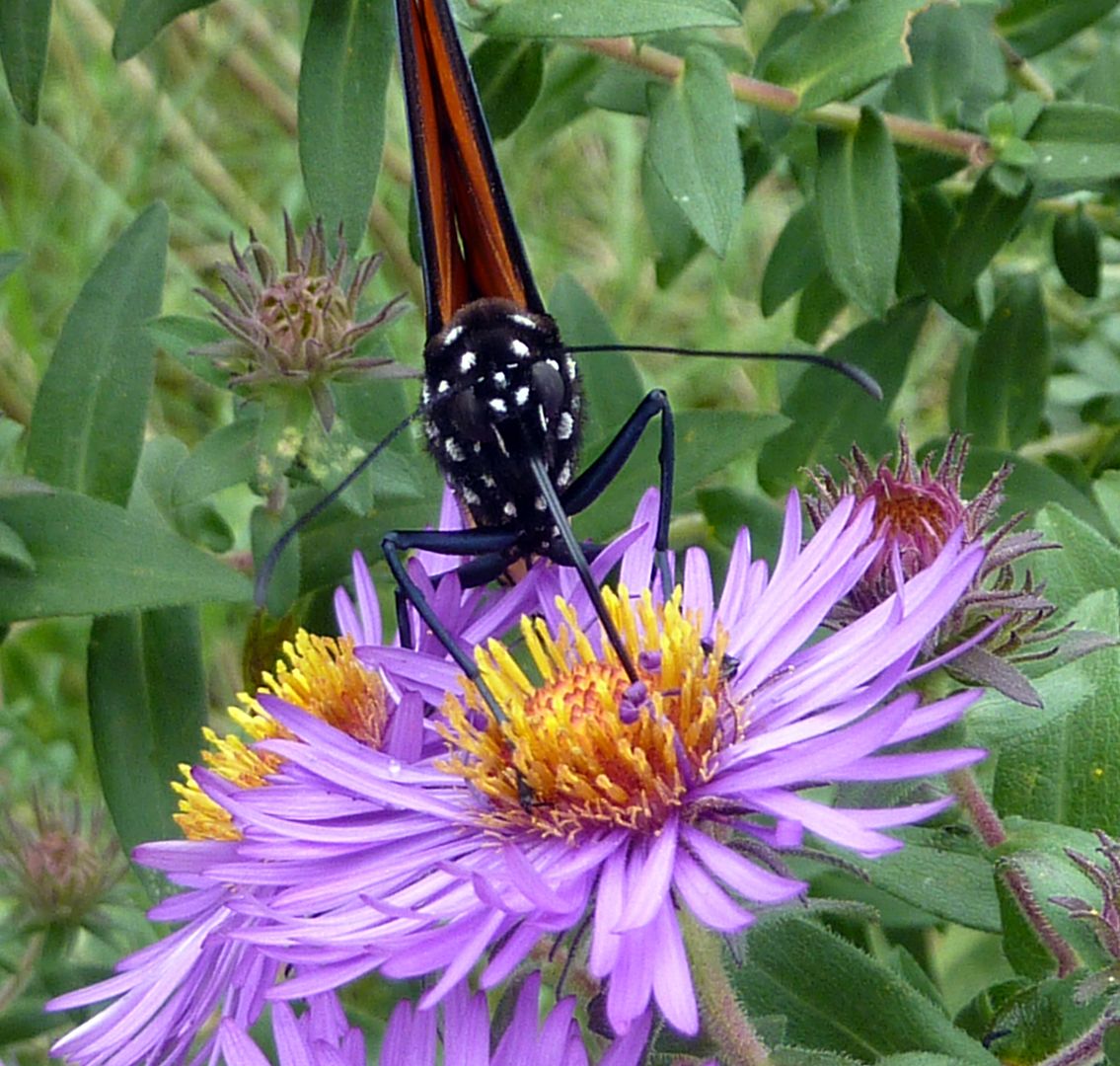
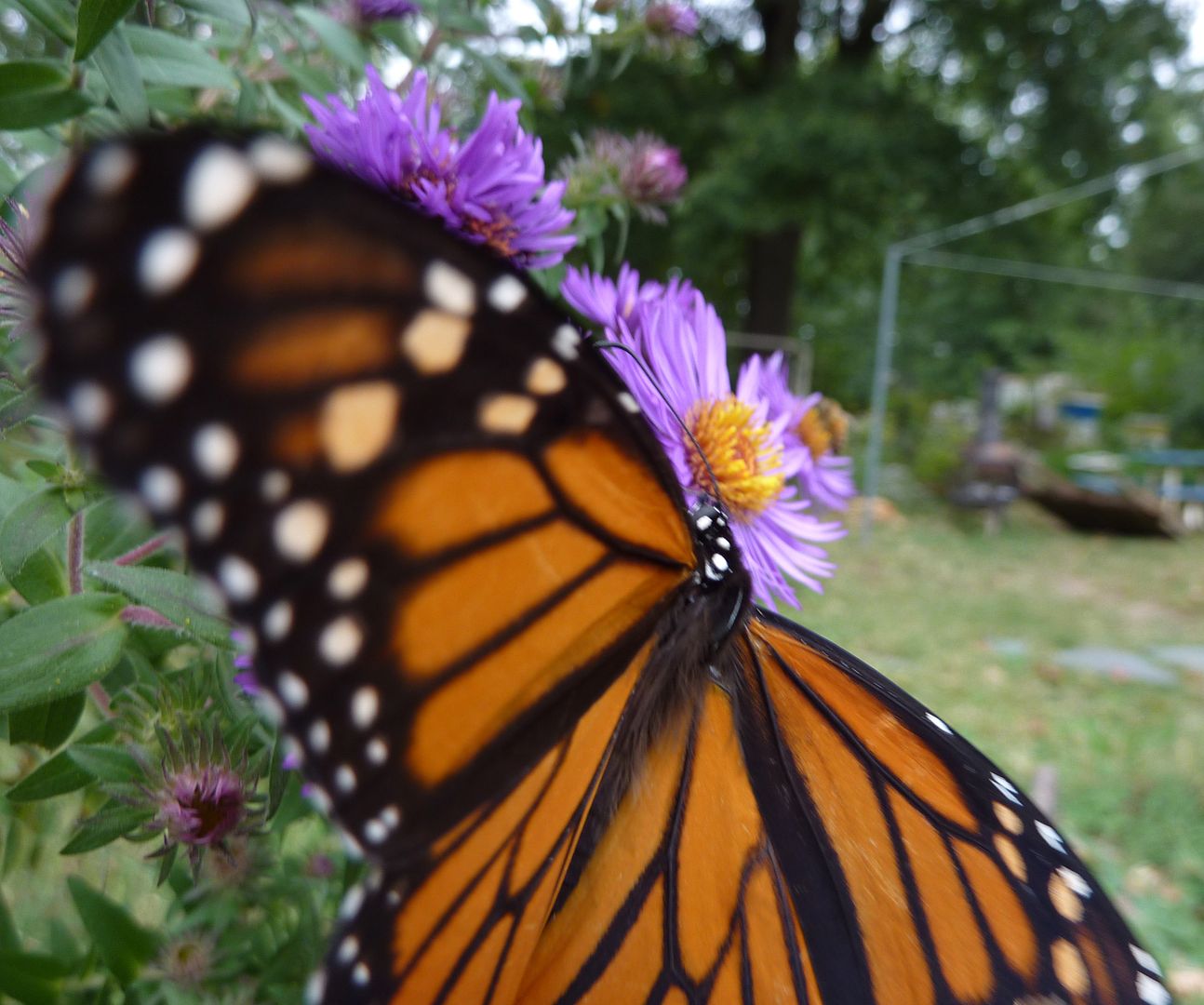
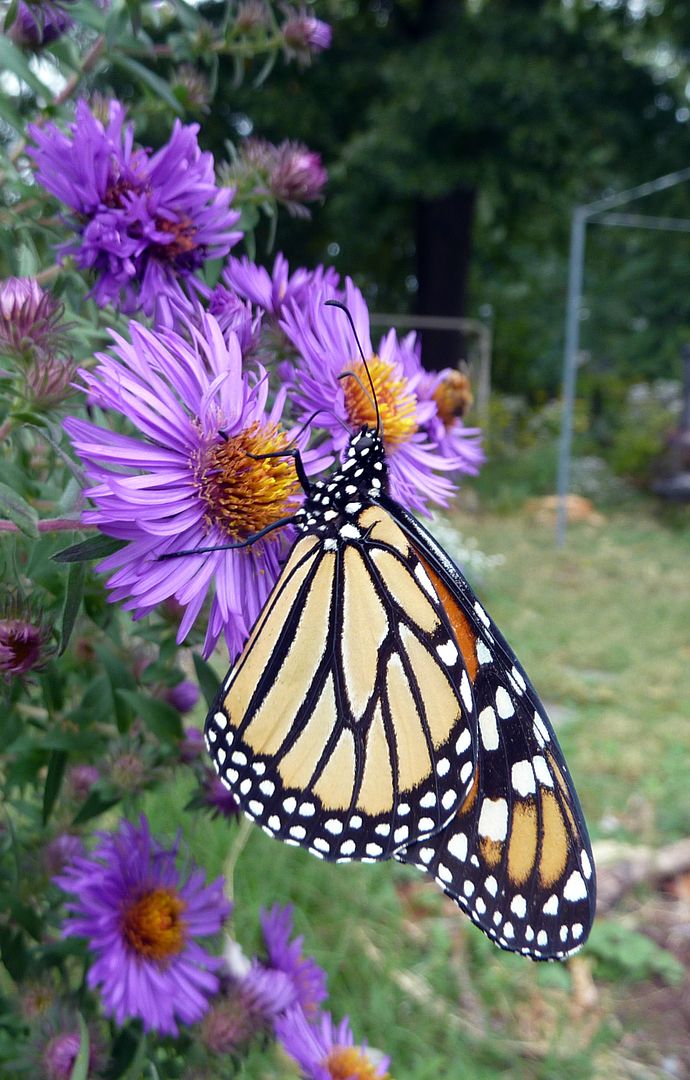
Monarchs finally started arriving after the milkweed was past its prime.

Not a good angle but an interesting one.

They started showing up on the New England Asters two at a time. I couldn't get a group photo as I'd like it to be so that's why I'm not posting the pair of them here. Hopefully I'll see more of them next year.

Thursday, September 6, 2012

Black Swallowtails Overwintering


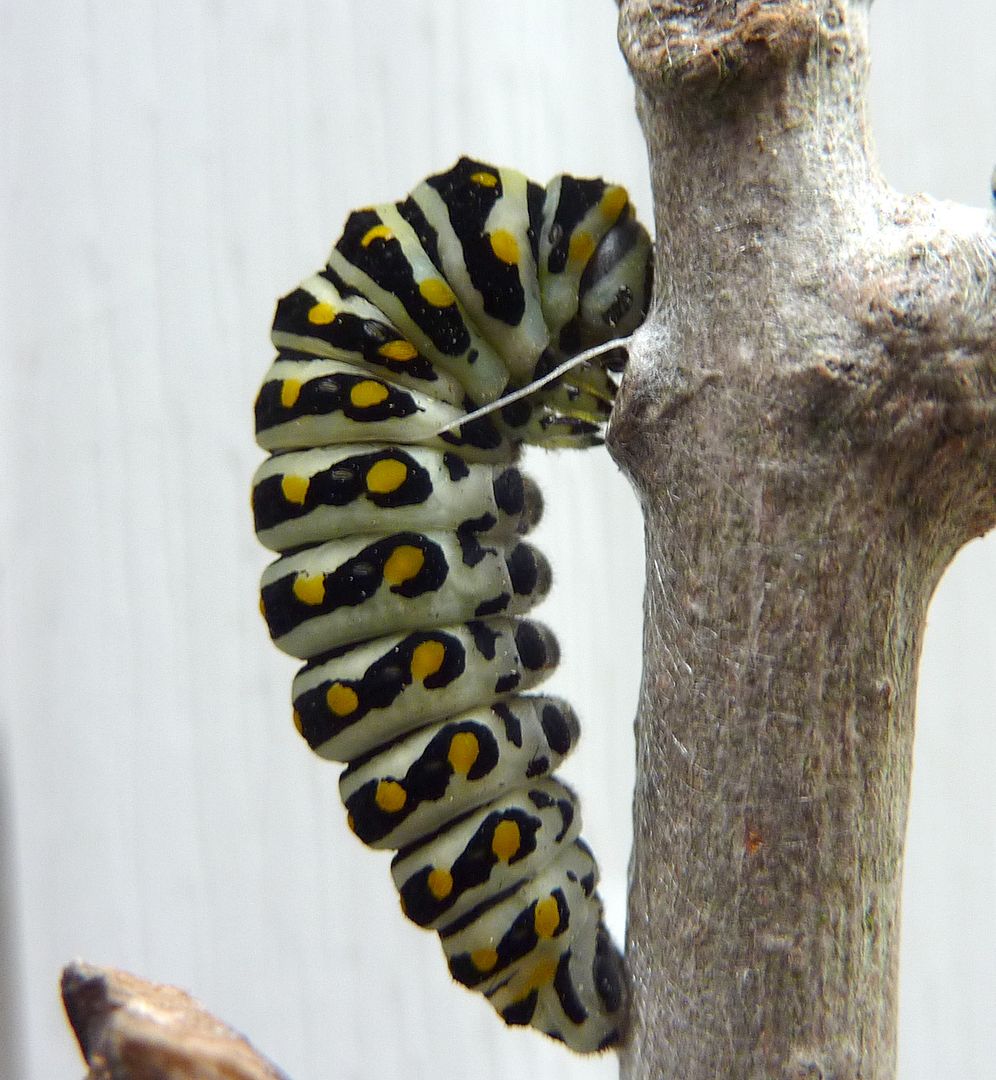
A Black Swallowtail Caterpillar, Papilio polyxenes, spinning a safety line to hold itself up before forming a chrysalis.
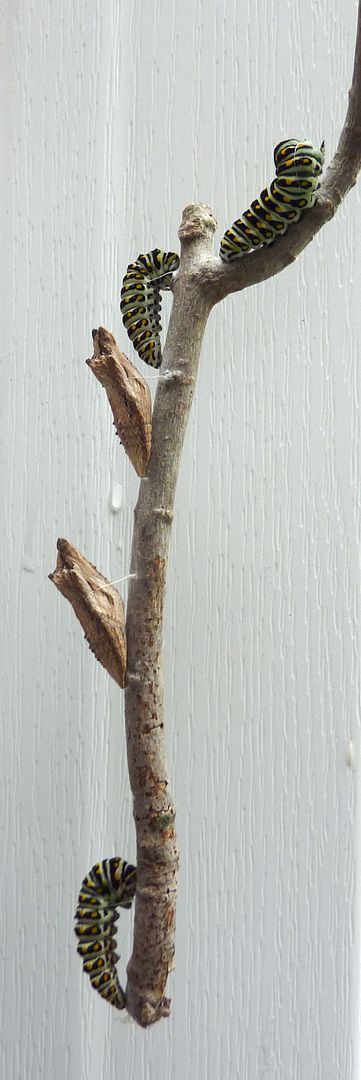
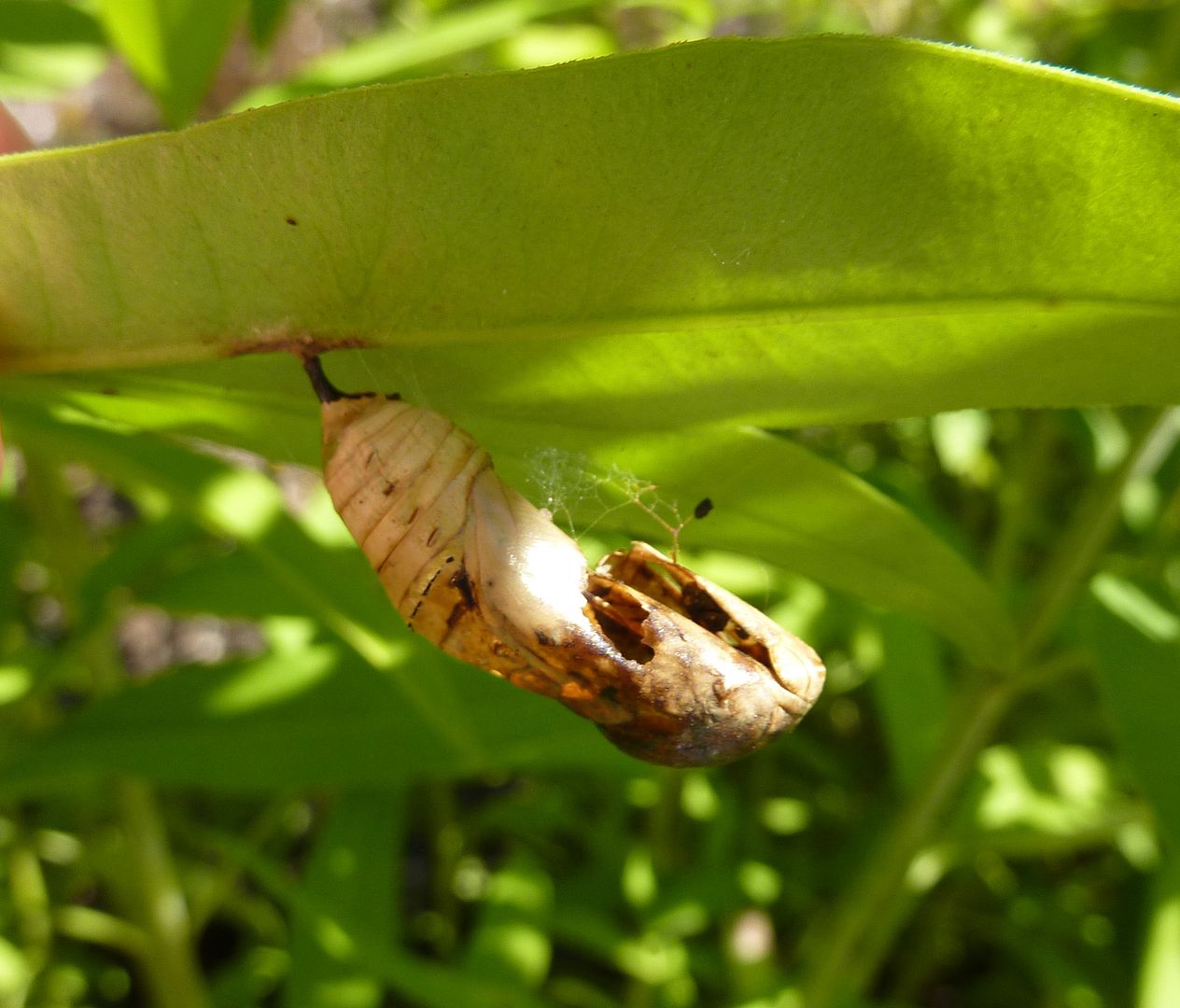
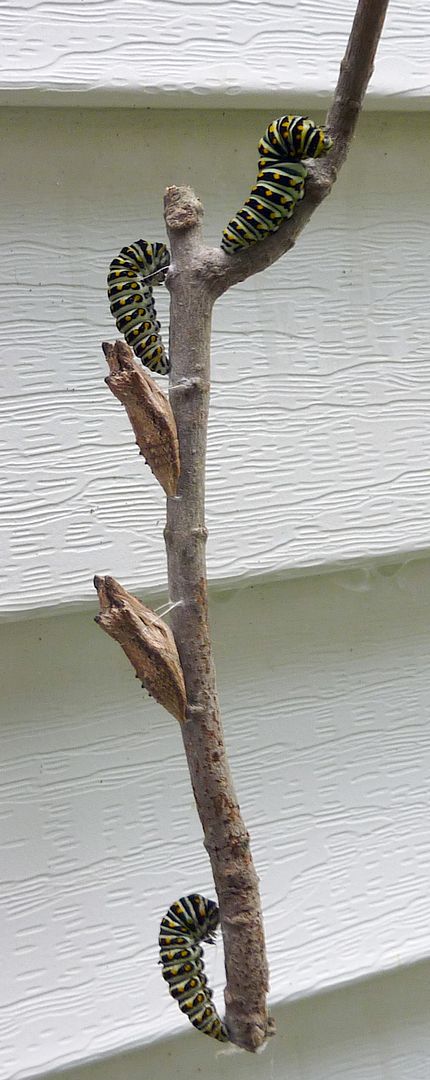
The chrysalis looks like a plant stem though it's larger than any bud that I've ever seen.


This one has been in there for more than 10 to 14 days that it normally takes to hatch. Black Swallowtails go through the winter this way and don't hatch until 6 to 8 months later! 


I couldn't decide which of these two was the better photo. I don't know if they seek each other out to add to the plant stem illusion or if that was just the best stick in the terrarium I grew them in. Most likely none of them are going to hatch until next year.