Showing posts with label Trees. Show all posts

Monday, July 13, 2015

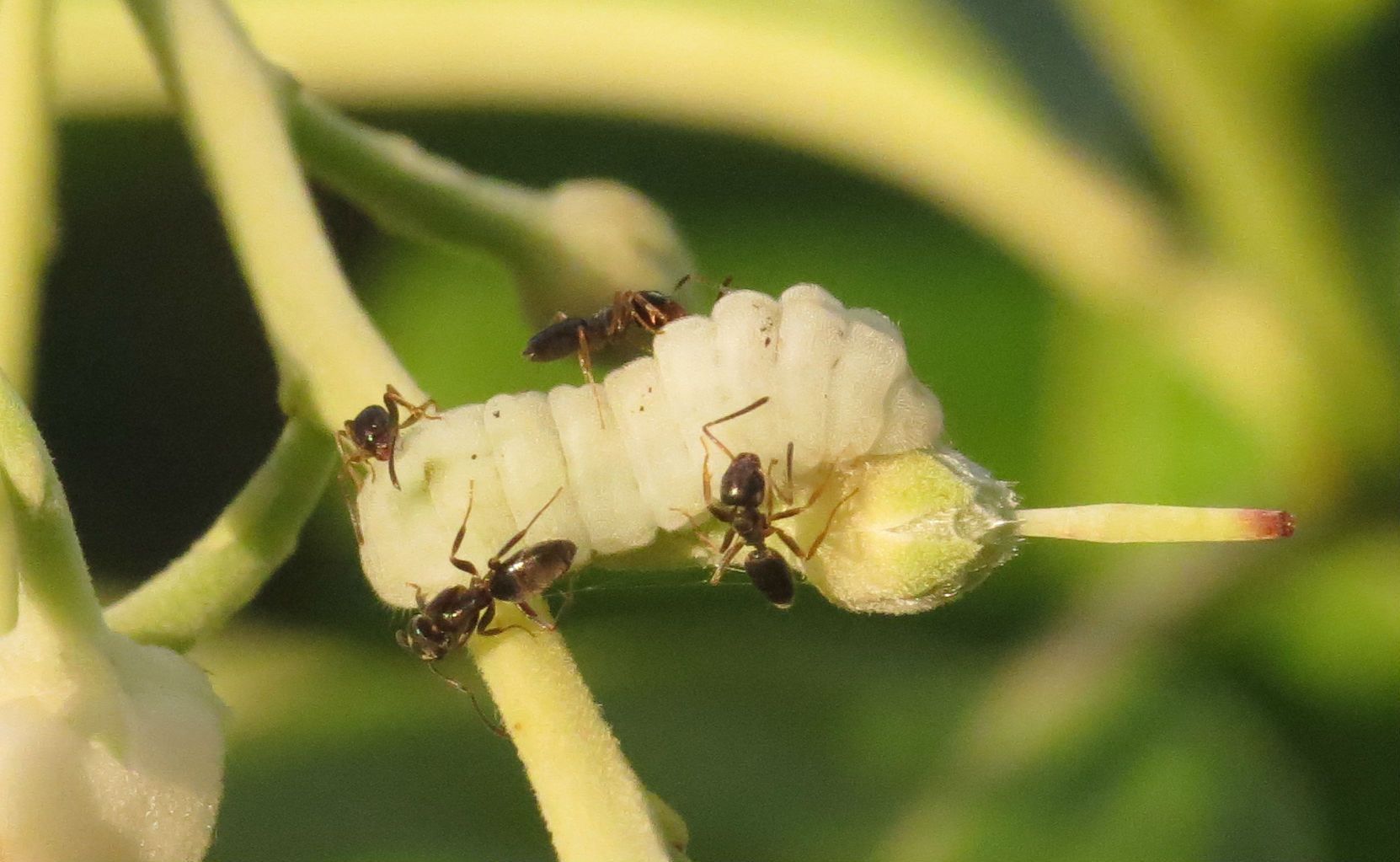
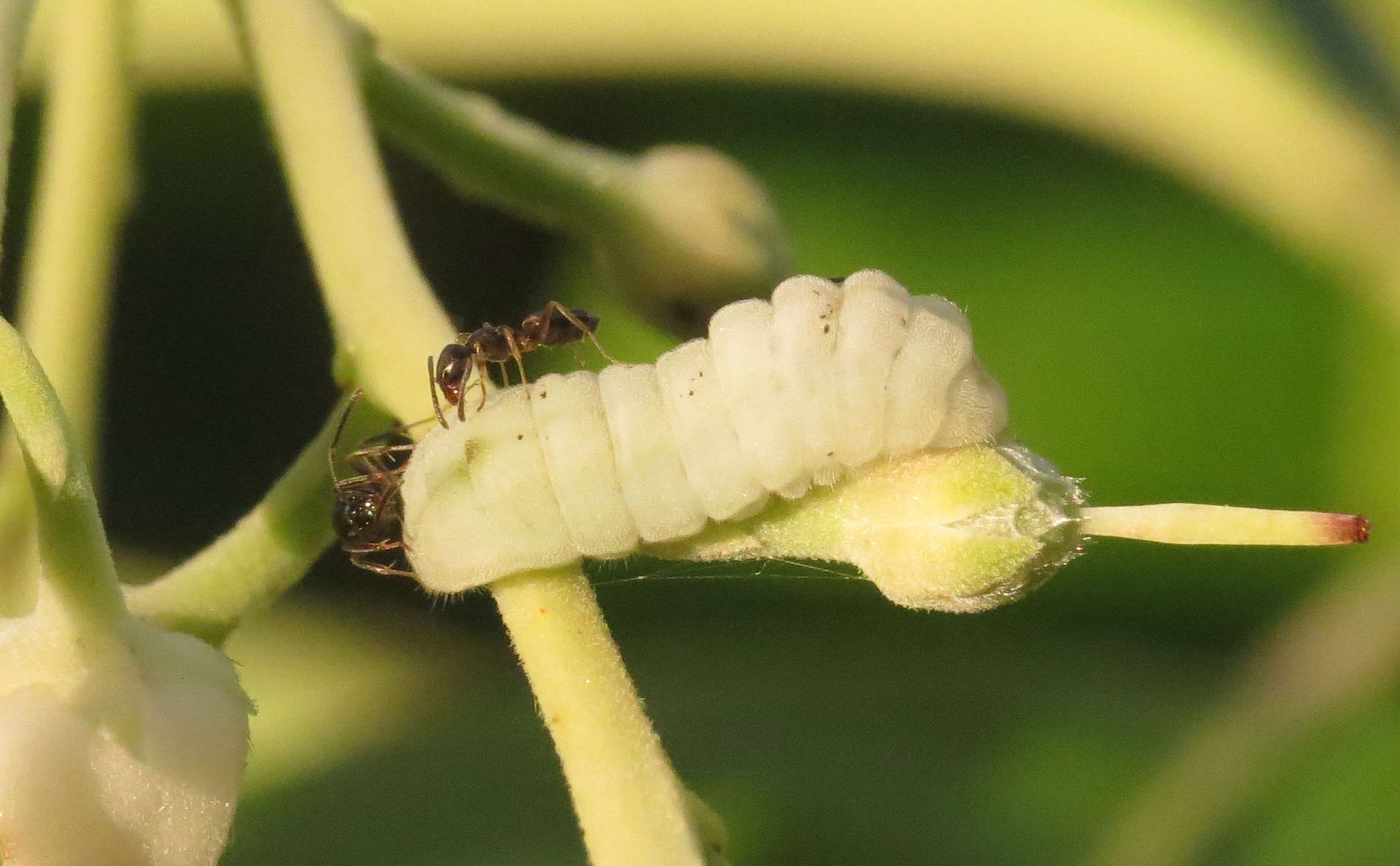
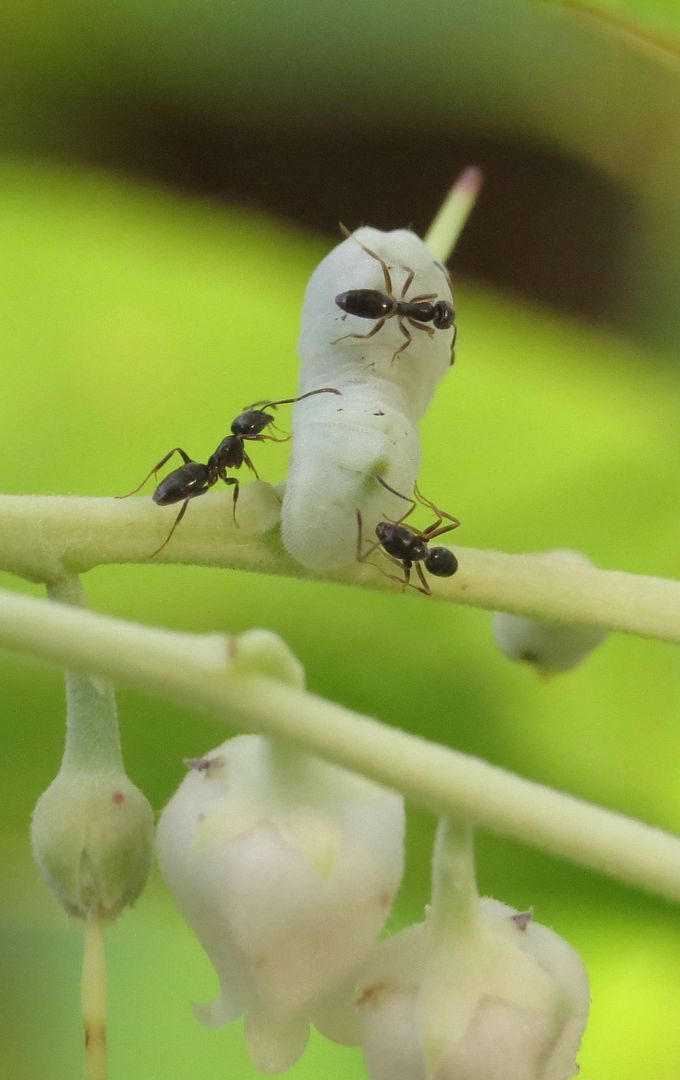
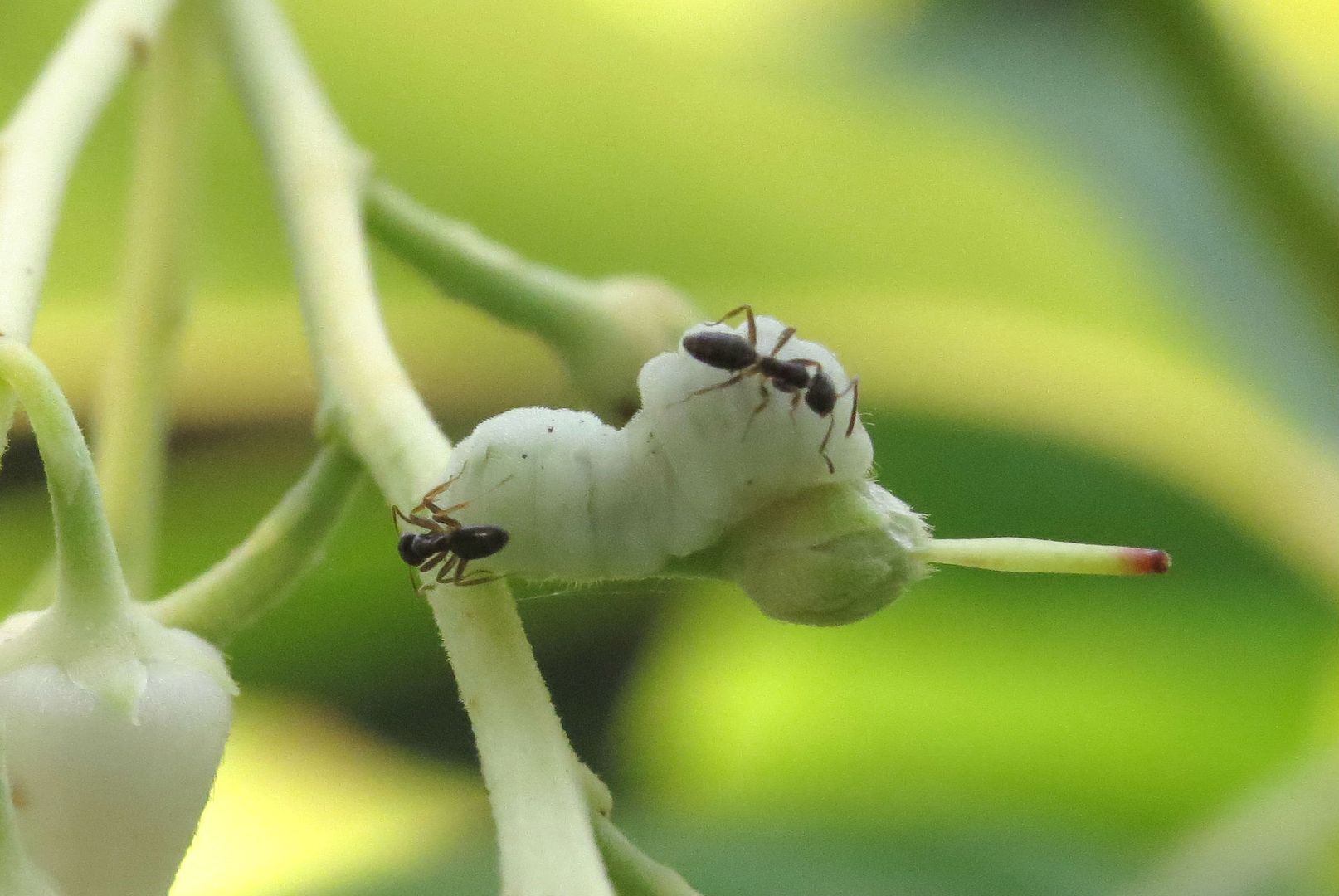
Caterpillar on Sourwood Tree with Ants

It's always exciting when Ants, Bees, Butterflies, and Nature can all come together. This is the former long winded title of this blog, which I've since changed to Biodiverse Gardens. 

So two years ago I planted a Sourwood tree as a nectar plant for my Honeybees. They've yet to find it this year but really it's still just a sapling barely 6' tall. This is one of the prized nectar flows among beekeepers because it produced great tasting honey. Unfortunately it's a rather uncommon landscaping tree in my area and doesn't occur in wild forests here, so for the most part my planting this tree is like adding a drop in the bucket to my overall honey harvest. Still though I'd rather plant a world class honey tree over the more commonly sold plants offered at local garden centers.  


Earlier today I discovered what looks like one of the Blues or Azure Caterpillars feeding on the flowers. This is odd for a few reasons: I live in New Jersey and Sourwoods don't grow here wildly, so it's unlikely to see this kind of relationship so far outside of the tree's native range.

I have heard of Zebra Swallowtails finding groves of Paw Paws here in NJ so maybe something similar has happened, but more likely one of the species that was already here has made the jump to a new host plant, or is using one that they would normally use when they occur farther south.

Also odd, is that no one seems to have ever reported this type of caterpillar on Sourwoods before. Or maybe I'm just not looking hard enough but all the listings for Sourwood in "Caterpillars of Eastern North America" don't look correct for this species.

Another bit of intrigue, prior to the caterpillars showing up, the ants, Tapinoma sessile, were stealing the nectar from the flowers. But now that the caterpillars (there's just 2 of them that I counted,)  have shown up and started eating the flowers, the ants have changed their behavior. Now instead of stealing from the flowers they're tending the caterpillars which are eating the flowers. 

This probably doesn't benefit the tree at all. Flowers that have been nectar robbed can still produce seed, whereas flowers that have been eaten won't develop into anything. The only benefit as far as I can tell is that the ants have stopped nectar robbing the whole tree and are now just going to the section where the caterpillars are found. So sacrificing a few flowers might benefit the tree overall.

When I started my native plant garden, this was one of the behaviors I'd hoped to attract into my yard. Ideally I pictured it happening in a field of Wild Lupins saving an endangered species of Blue but this also works. What eventually happens is the caterpillar drops to the ground and is taken into an ant nest where it then pupates... some species change their diet to eating the ant brood before pupating but the ants don't care at that point. These sorts of caterpillars, along with producing nectar and being treated like cattle, also make noises that mimic the sounds a queen ant makes when she wants to be tended. Ants themselves are also more than happy to eat their own eggs or feed their eggs to developing brood more worthy of the nutrients so this isn't unant-like behavior. They're safe in the nest until the following spring, when they must emerge a butterfly and quickly get out of the next to spread their wings.

Thursday, October 17, 2013

The Wildlife Gardener's Meetup (Part 2)

Wildlife Gardener's Forum,

On the second location we were in a park somewhere in Maplewood, NJ. I'd describe it as a Piedmont area which is not quite mountainous but rocky enough to not be considered coastal. There were tons of large boulders and rocks all over the place. It was clear that in some places the park designers had just given up trying to remove them and simply placed pick nick tables in the middle of the most uneven and treacherous terrine imaginable. It would not surprise me in the least to learn we'd walked over the breeding tunnels to countless snakes and other critters that crawled from Pandora's box.

The forest here seemed to be in good health. I can't say we noticed any major invasive at all. I recall a few of the highways on the drive up there even had wildlife corridors built as over passes over the road. 

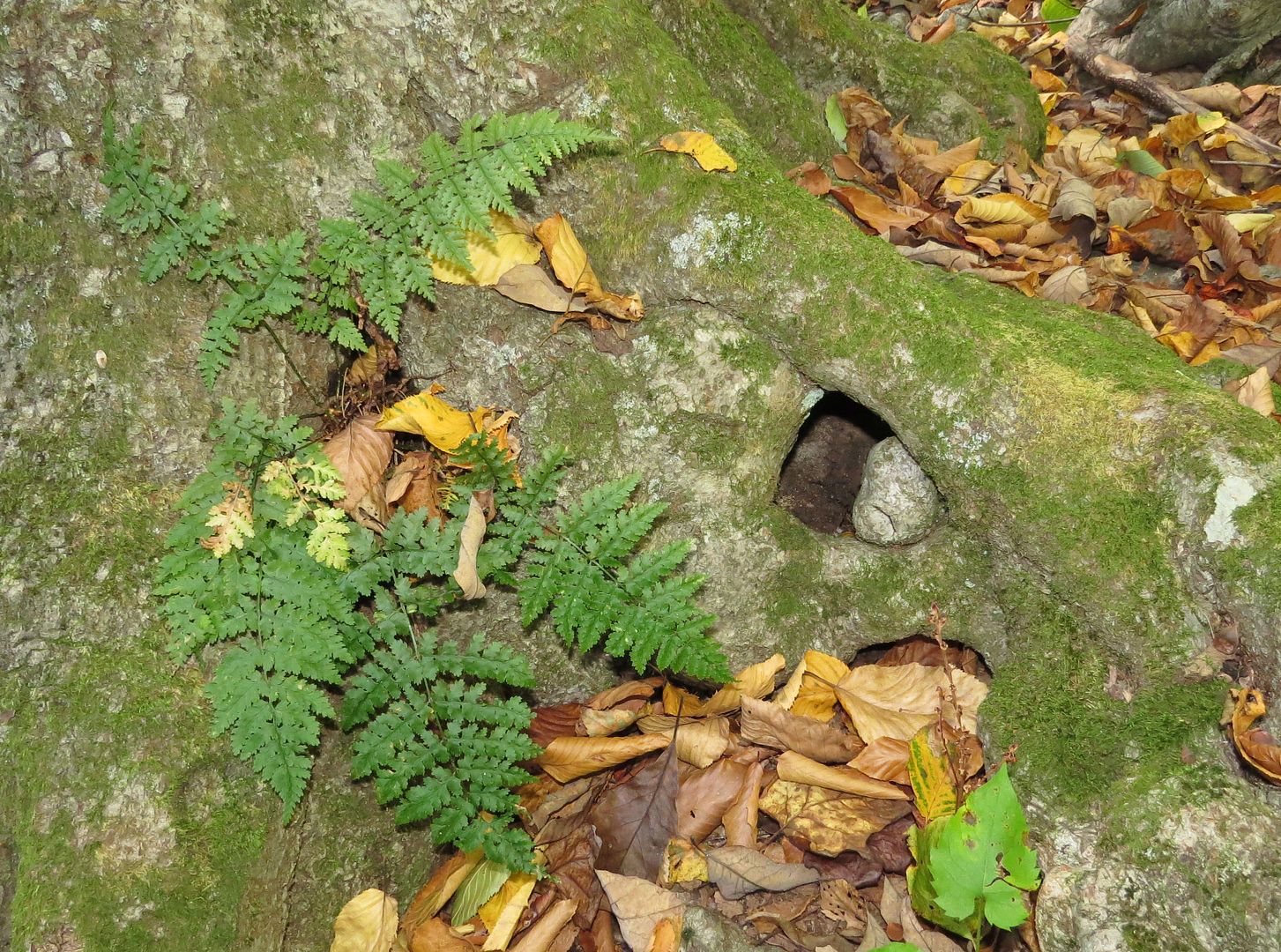
Ferns grew almost everywhere that had view of the water.


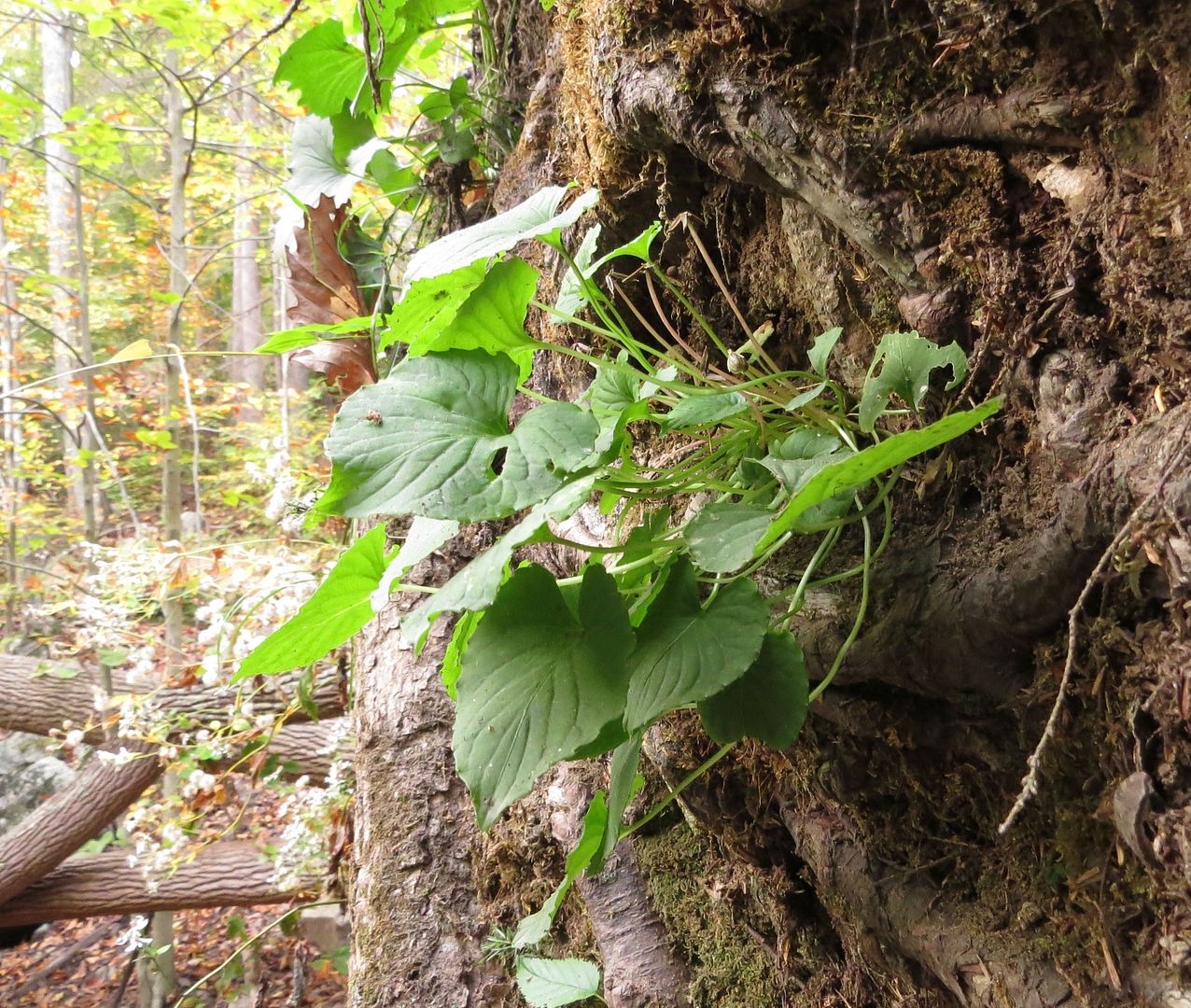
Violets were here and there too and were even sprouting up among the roots of fallen trees.

Hepatica was growing wildly there too. This is a wonderful spring ephemeral that blooms around March and April that few travelers get to see. It's often still too cold out to really venture into the wilderness. The leaves are semi-evergreen which is uncommon for an ephemeral.

There were a few Asters about too but they were all mostly small plants that each had only a few flowers. They were certainly nothing like the New England Asters I have in my garden.


This is where the troll lives. Actually believe it or not this is a pathway. You have to scale the rocks and climb your way through this slope. Some of the trails there are not for the faint of heart and certainly not handicap assessable.

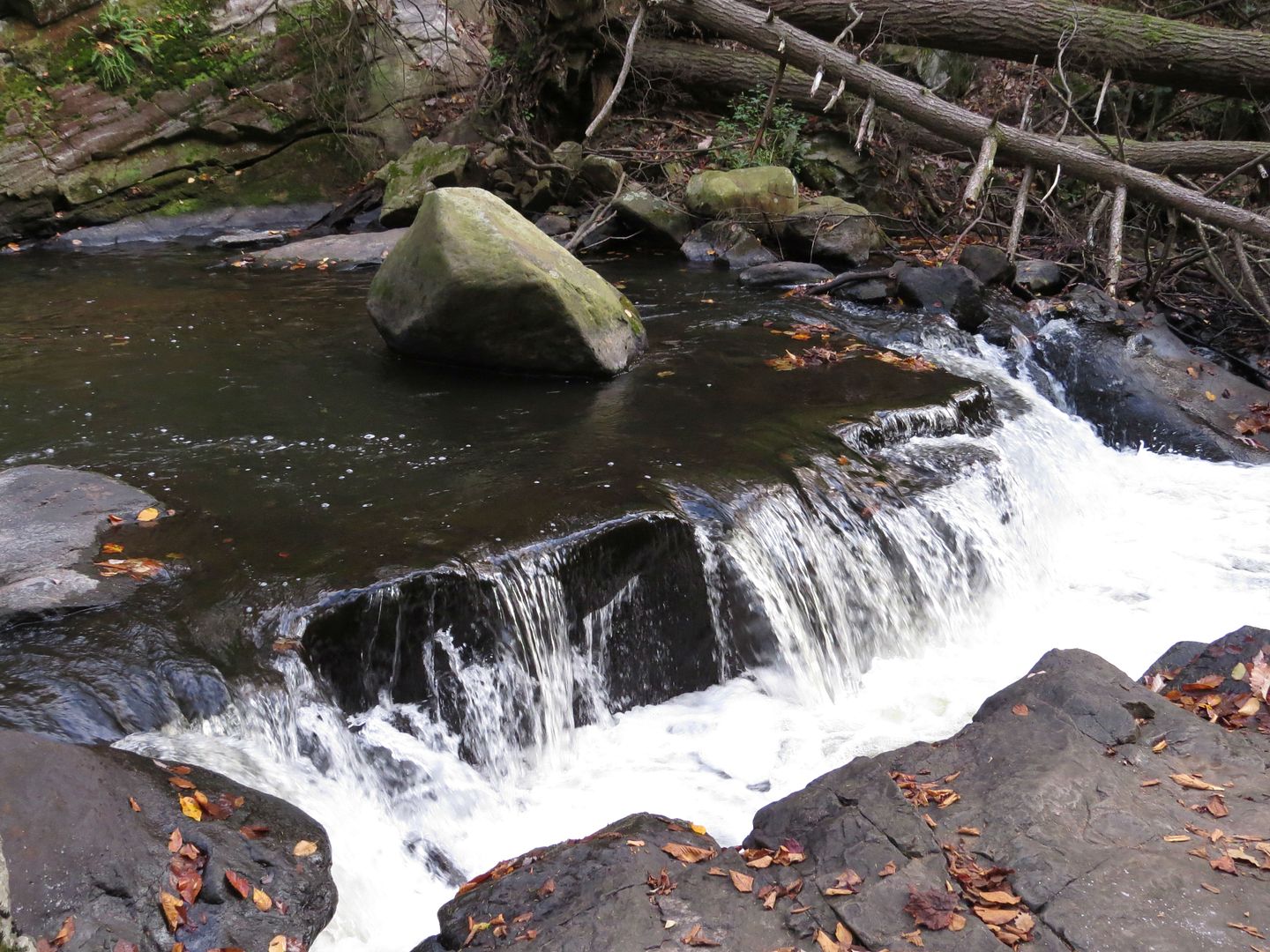
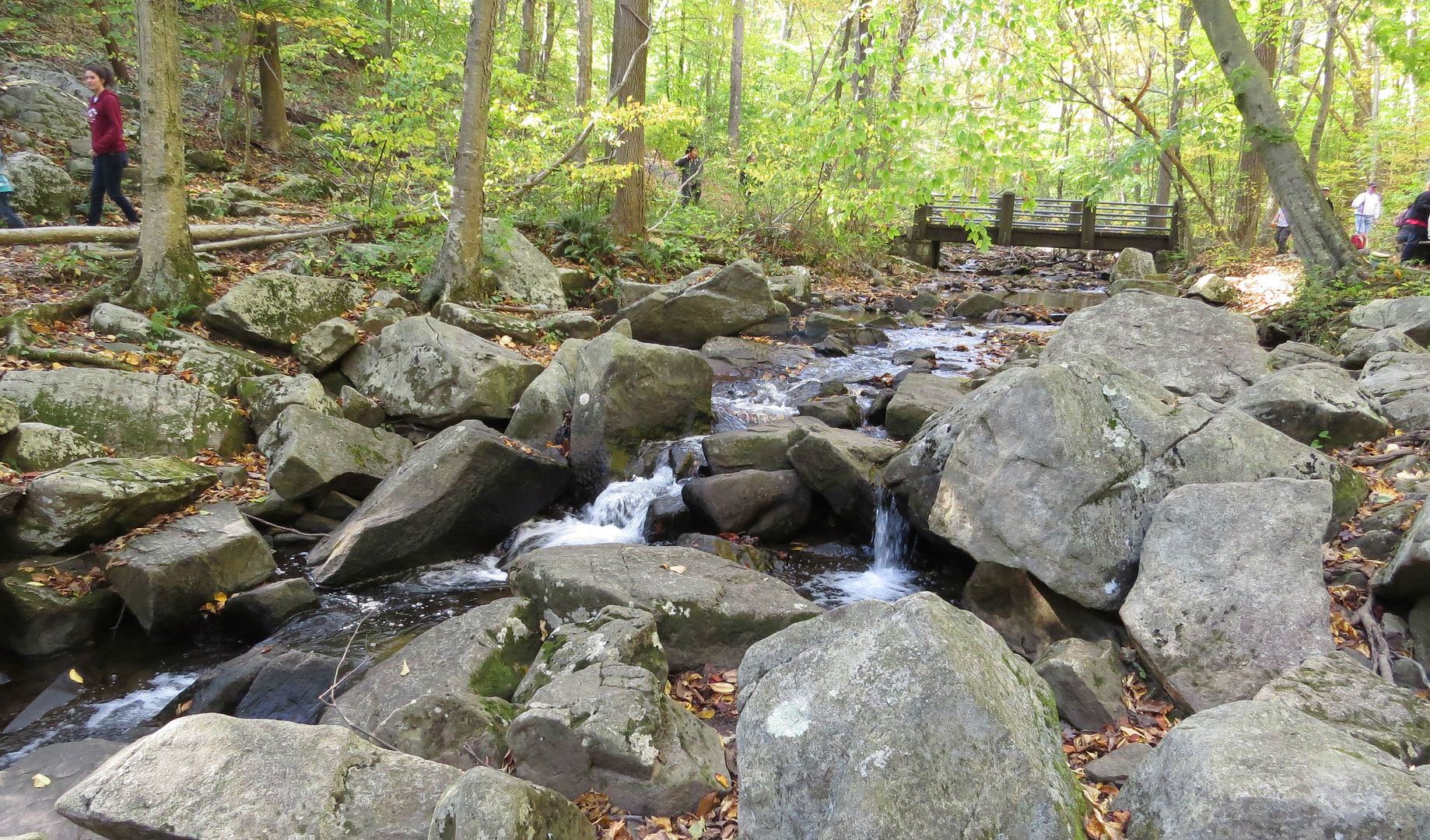
Waterfalls were the real highlight of this place. A few streams come through it and the main trails lead you right along them.

It's better to walk a trail that takes you all the way to the end of the park, one not near the river; so this way you walk up stream facing all the waterfalls, as opposed to having to turn around always to look at them.

The river never seemed to be all that deep, but it did widen up a bit here and there. I can't imagine anyone kayaking down it for very long. The picture above aside, there are too many rocks everywhere and you'd likely bust your head open going down some of the falls.


There were several benches setup, sometimes in odd places, but often highlighting a particular view or vista.

Looking forward.

Looking back.


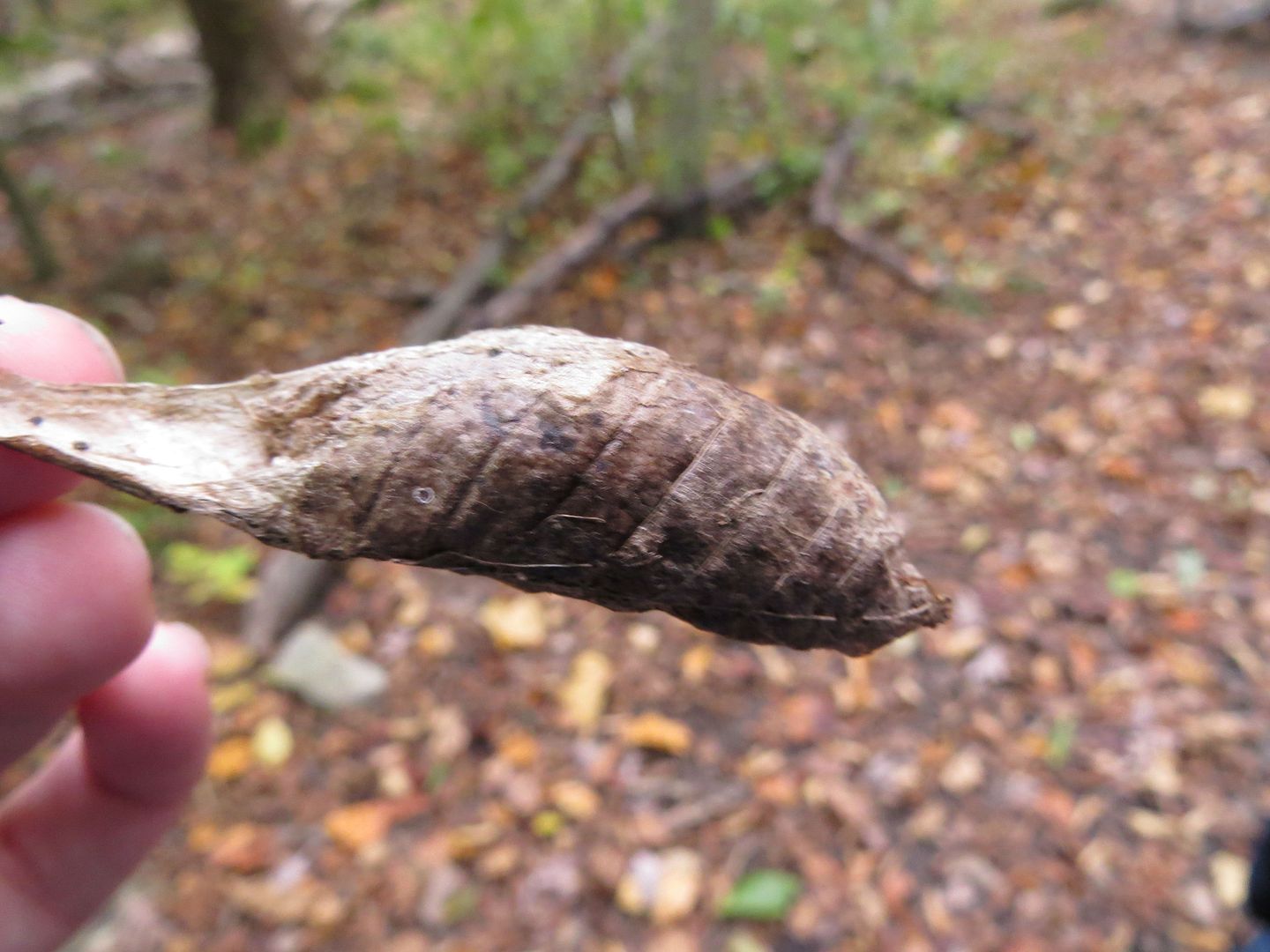
On the way out, I spotted what I think is a Cecropia moth cocoon all bundled up within a leaf.

Tuesday, October 15, 2013

The Wildlife Gardener's Meetup (Part 1)

So I'm a member of the Wildlife Gardener's Forum, and I think for the past two or three years now a few of the members have arrange a yearly meetup or road trip or combination there of to get various forum members involved. This year I decided to participate in a few of the trips which happened to be here in my home state of New Jersey. I wasn't expecting much though because of the time of year. We're not really at the peak of the "leafing" season and most of the wildflowers have finished flowering.

I can't quite remember the name of the first place we visited but it had a bustling dog park and multiple trails leading through woodlands and what may eventually become nice meadow. As I said though most of the wildflowers weren't flowering so it was hard to judge. Almost all of the goldenrod was finished for the year up there so we're pretty much at the end of the flowering season. One thing I noticed was that they had almost too much goldenrod up there. It's a mid to late stage meadow plant which will usually push out milkweed species. (This doesn't always happen, and there are old fields where goldenrod mysteriously never takes over but it tends to be the norm.) There were a lot of trees and even a few nonnative plants about. There's almost too much work there to be done for what they have, but most of the problems seemed to be in the meadow and forest edge areas which accounted for maybe 1/4th the park that we saw. They just need to come up with a treatment strategy to hopefully get things under control. I recommended having it mowed once a year to get rid of the woody tree species but they were afraid of killing butterfly chrysalises. A valid concern, but removing tree seedlings manually will eventually become an impossible task, so maybe only mow half the meadow each year, and alternate from there. Even haying the field (cutting it to knee high) can be beneficial. 

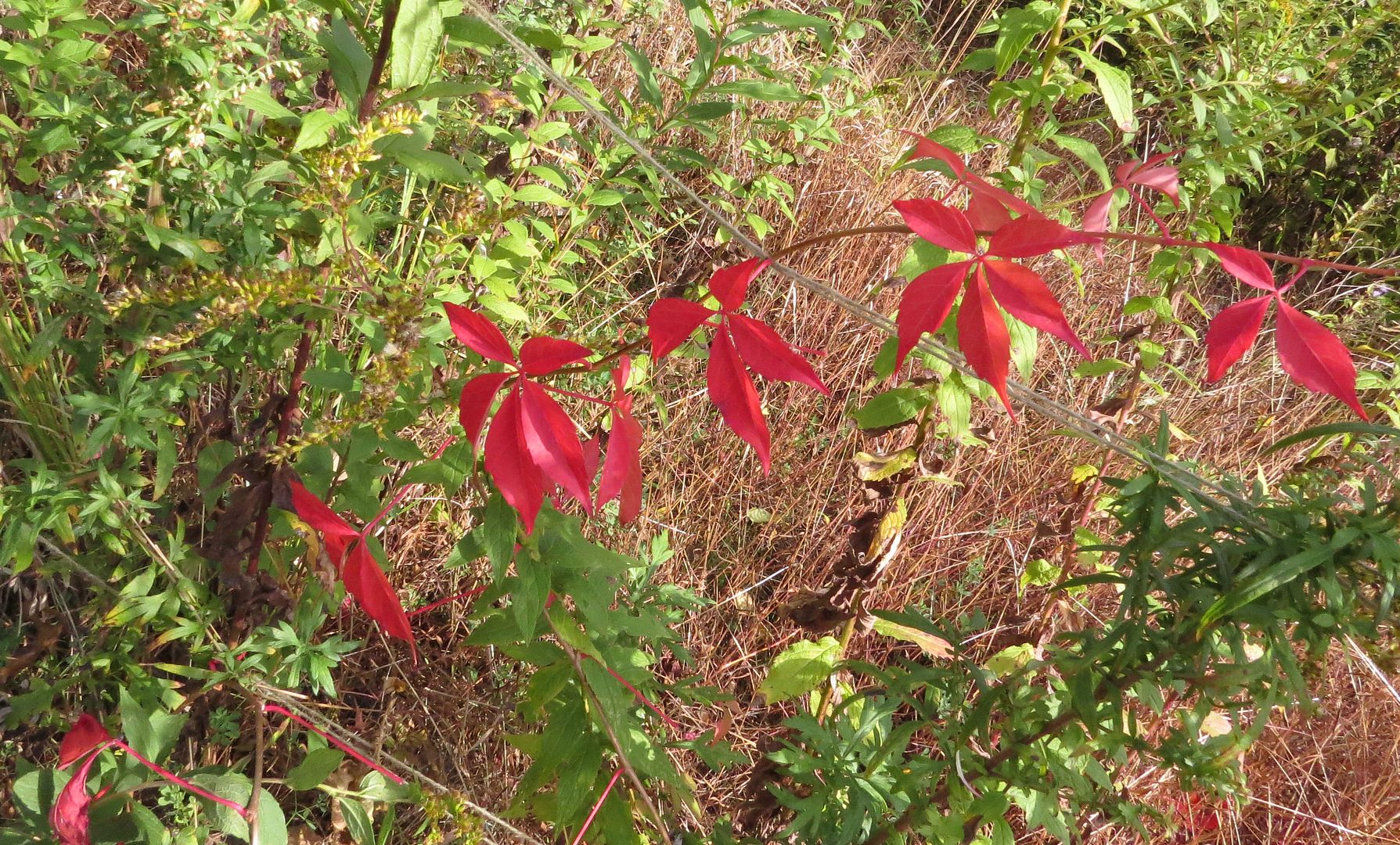
Virginia Creeper, Parthenocissus quinquefolia, was showing off its fall color in a brilliant shade of red.


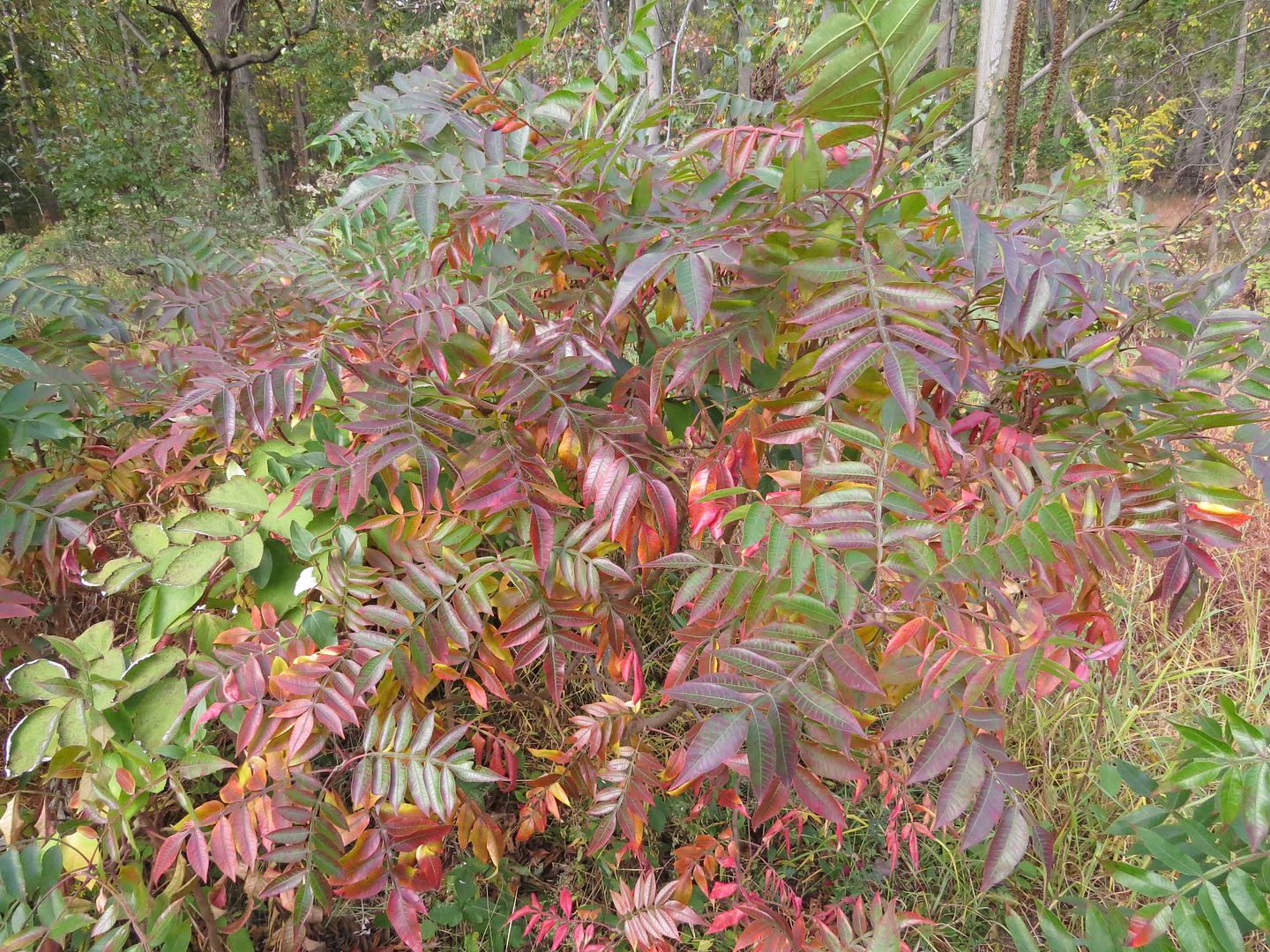
Winged Sumac, Rhus copallina, eventually also turns this brilliant shade of red. A failing though is that this species spreads by root suckers to form it's own grove. Mowing is just about the only way to keep these suckers under control.


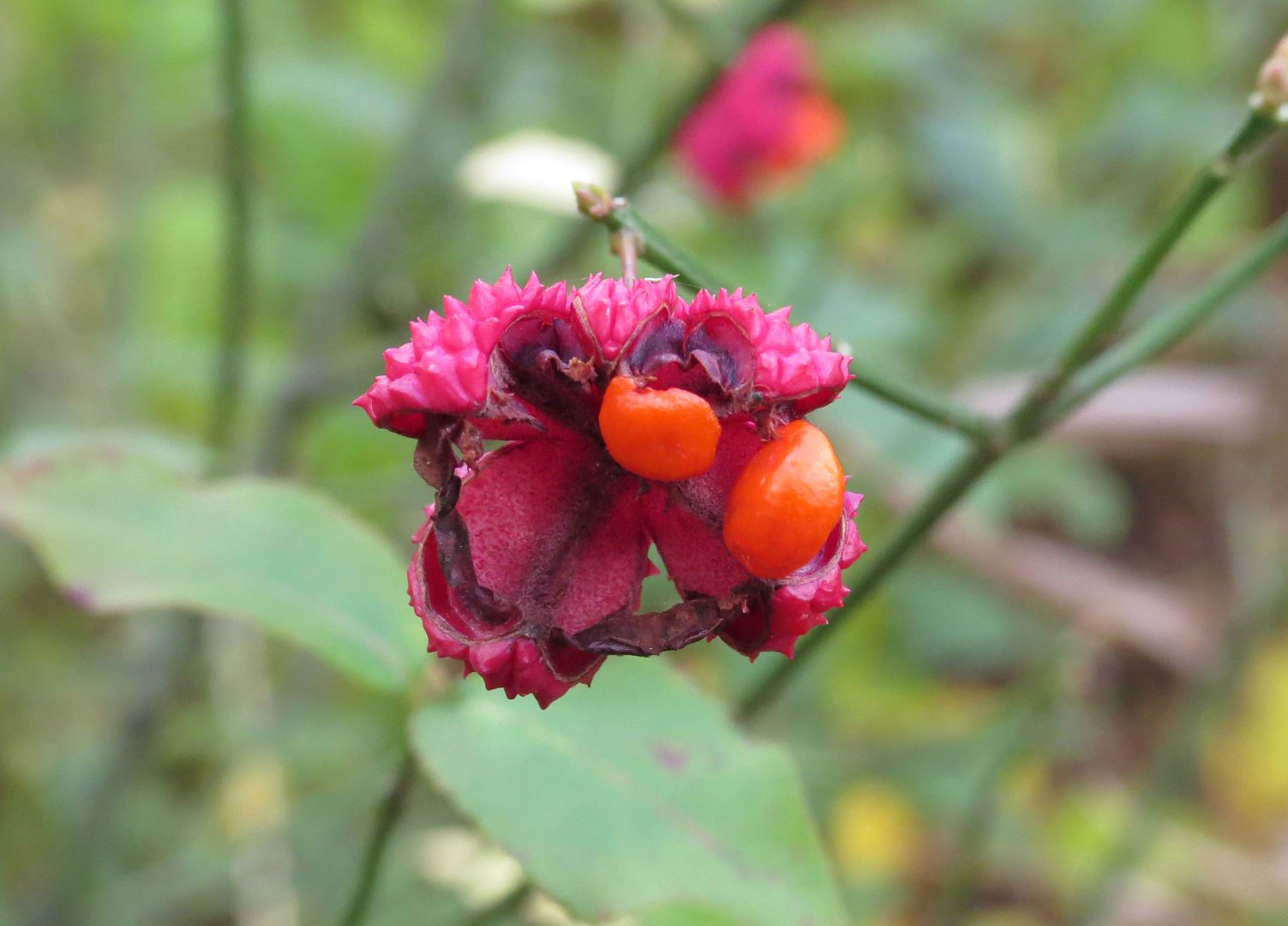
Strawberry Bush, Euonymus americanus, was something of a highlight because almost none of us had ever seen it before. The common name is misleading because it has nothing to do with the edible runner vine people are so fond of. I believe the name comes from the seed pod resembling a strawberry before it opens to reveal the nut-like fruit (as seen above).

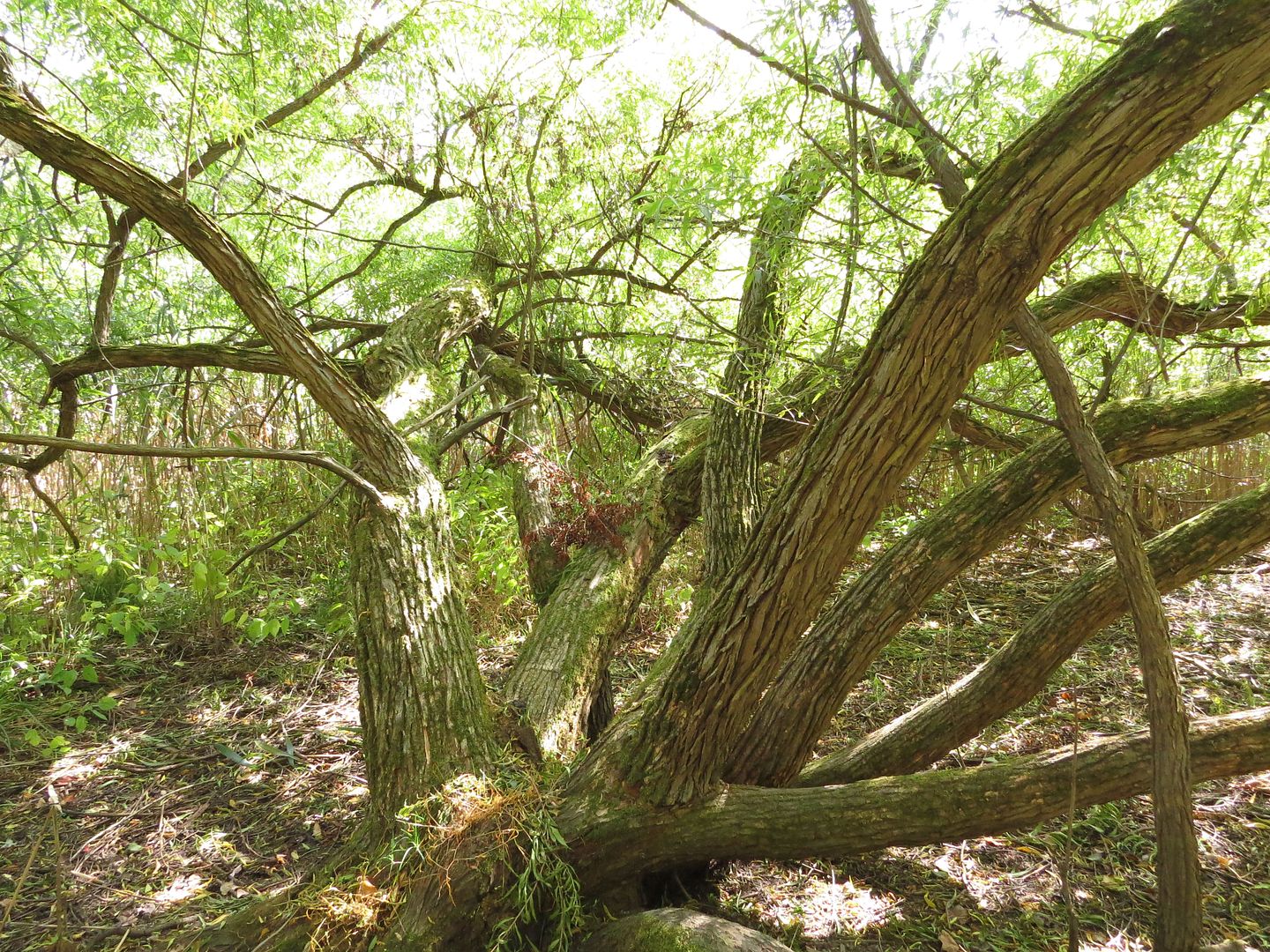
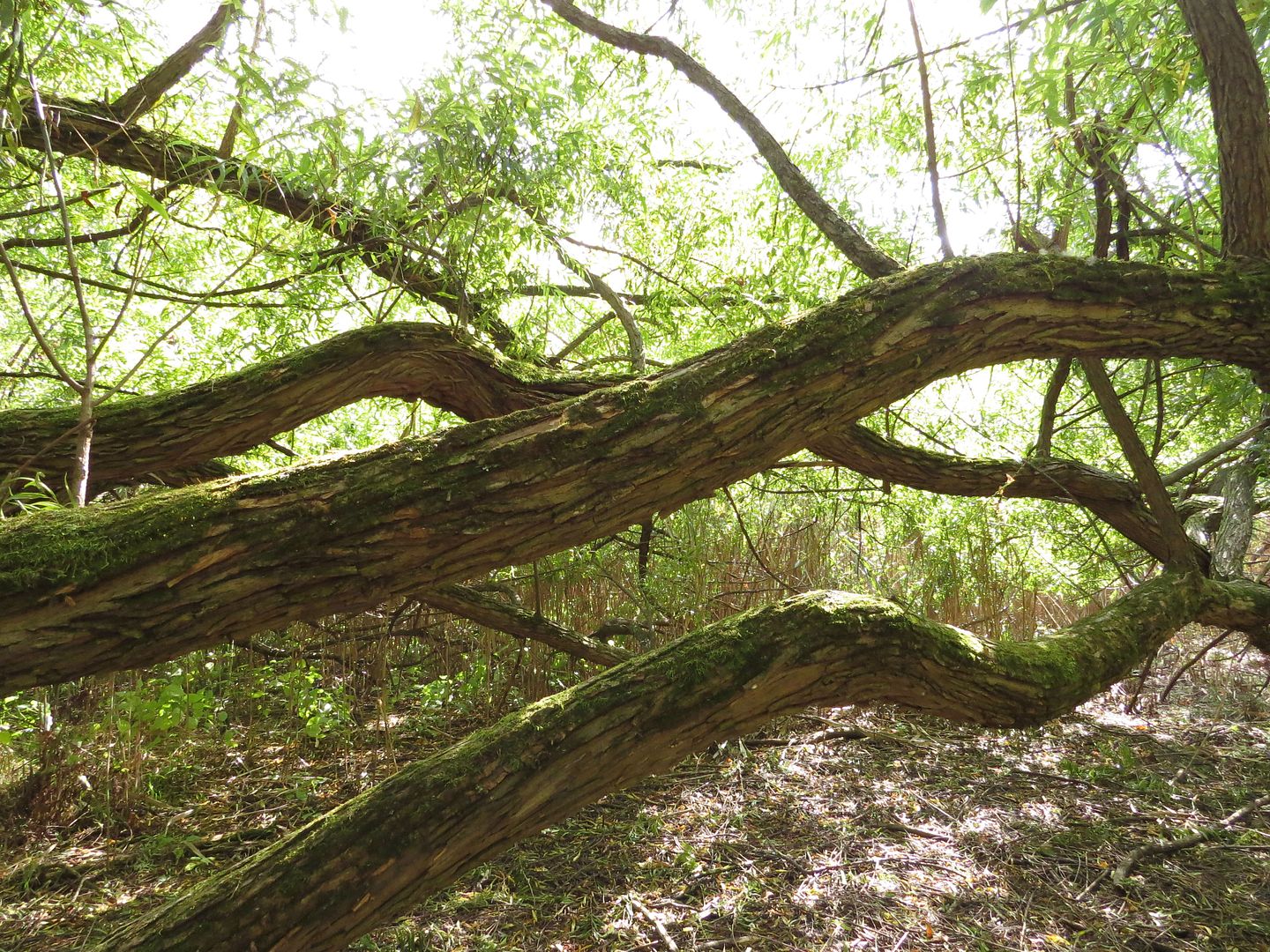
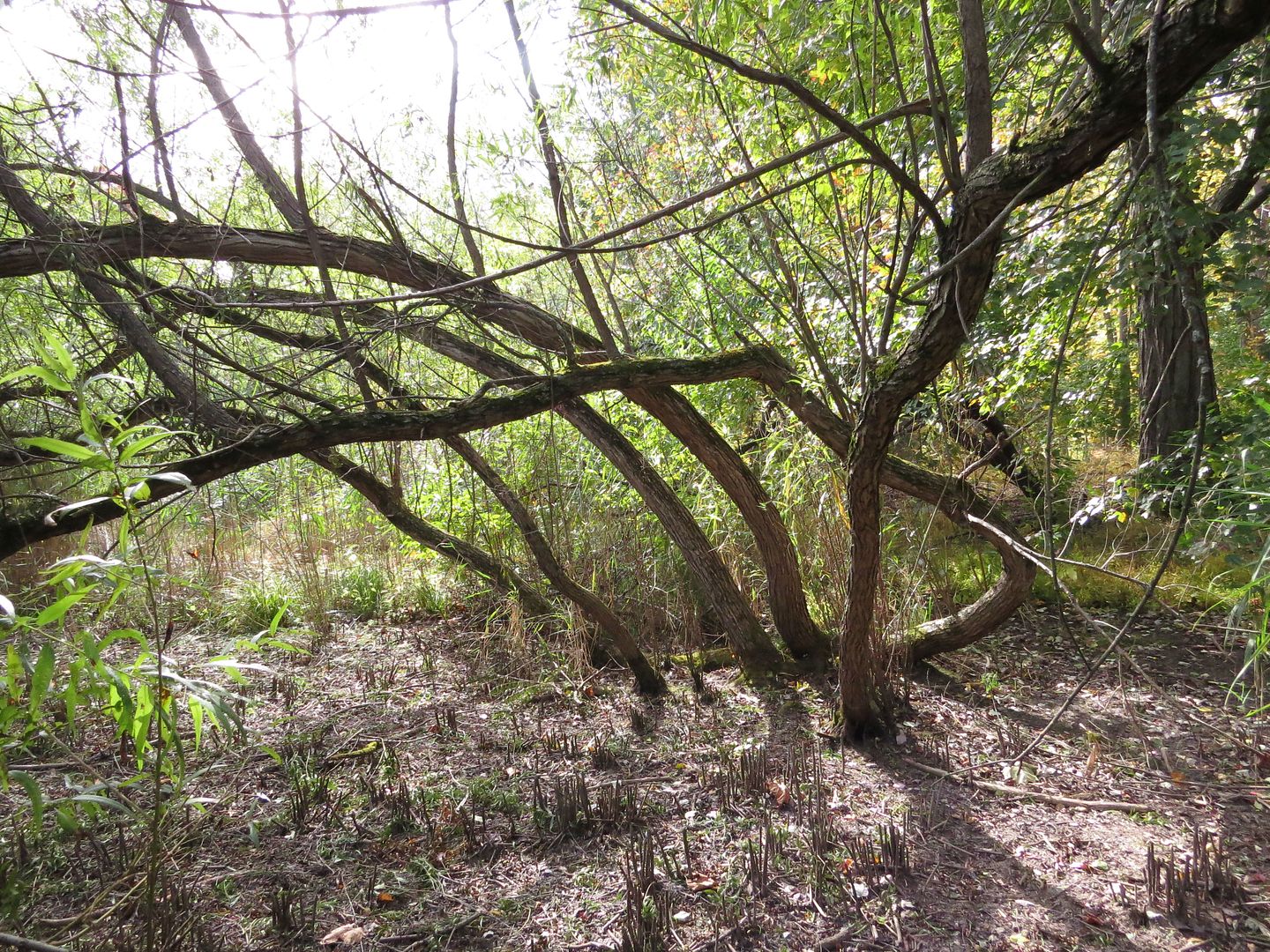
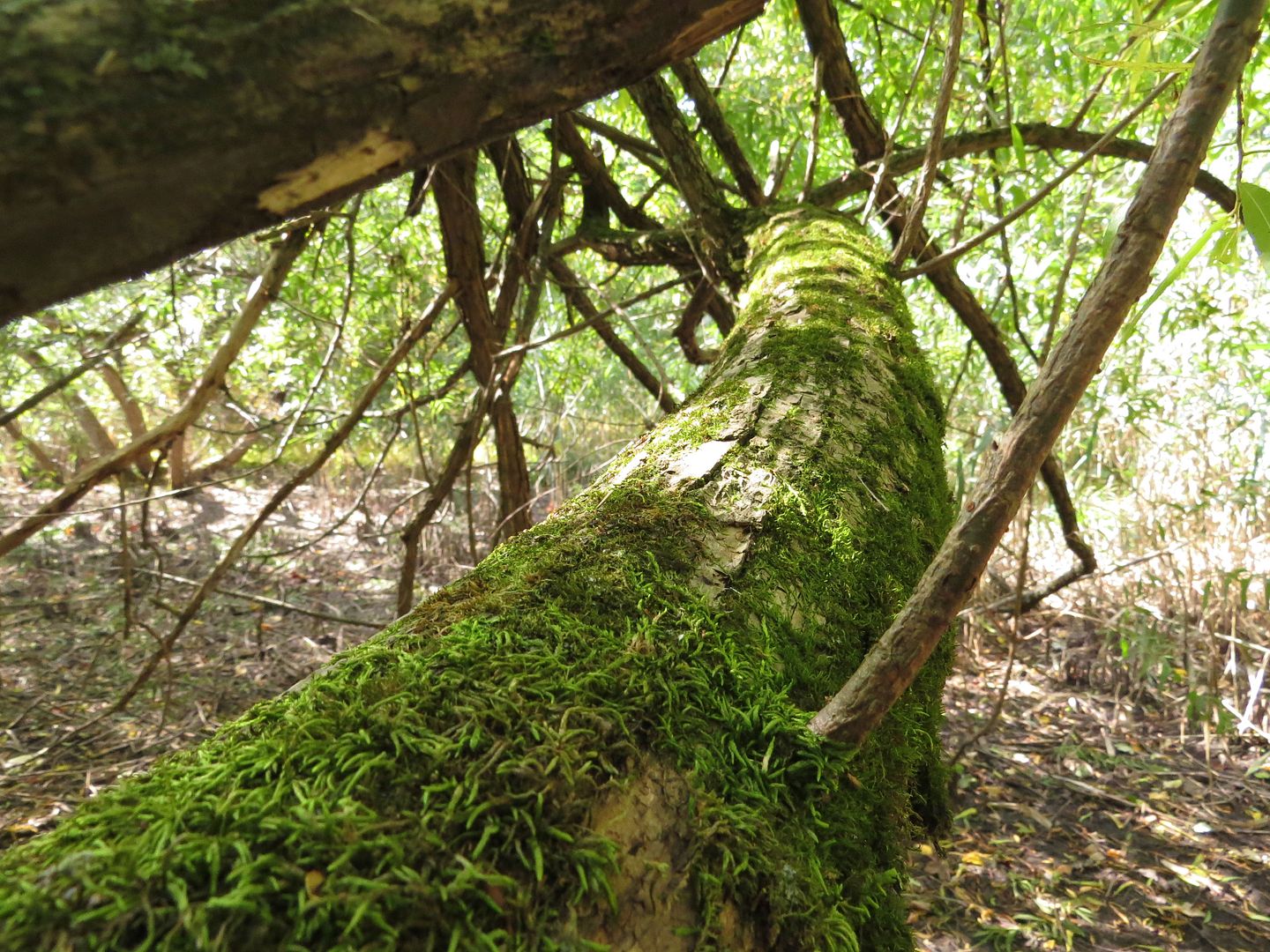
Venturing into the woods the real highlight of this place were a few Black Willow, Salix nigra, trees they had growing there. My camera really doesn't do them justice though. 


The dappled shade underneath and the low winding branches make you feel like a kid again, getting tangled up in shrubs and makeshift club houses designed by nature.

They're growing in an area that clearly flood when it rains which prevents most types of plants from growing there. But this particular species is well suited to the location. The ground was mostly stable enough to walk in too and not muddy at all, though I'm sure just after a storm that could be a problem. 

Moss was growing all up and down the trunk and branches. They seemed to be in very good health. This is probably the closest thing have to Mangroves which grow down in the tropics, of course the two are in no way related. 

Thursday, June 6, 2013

American Persimmon Take Two

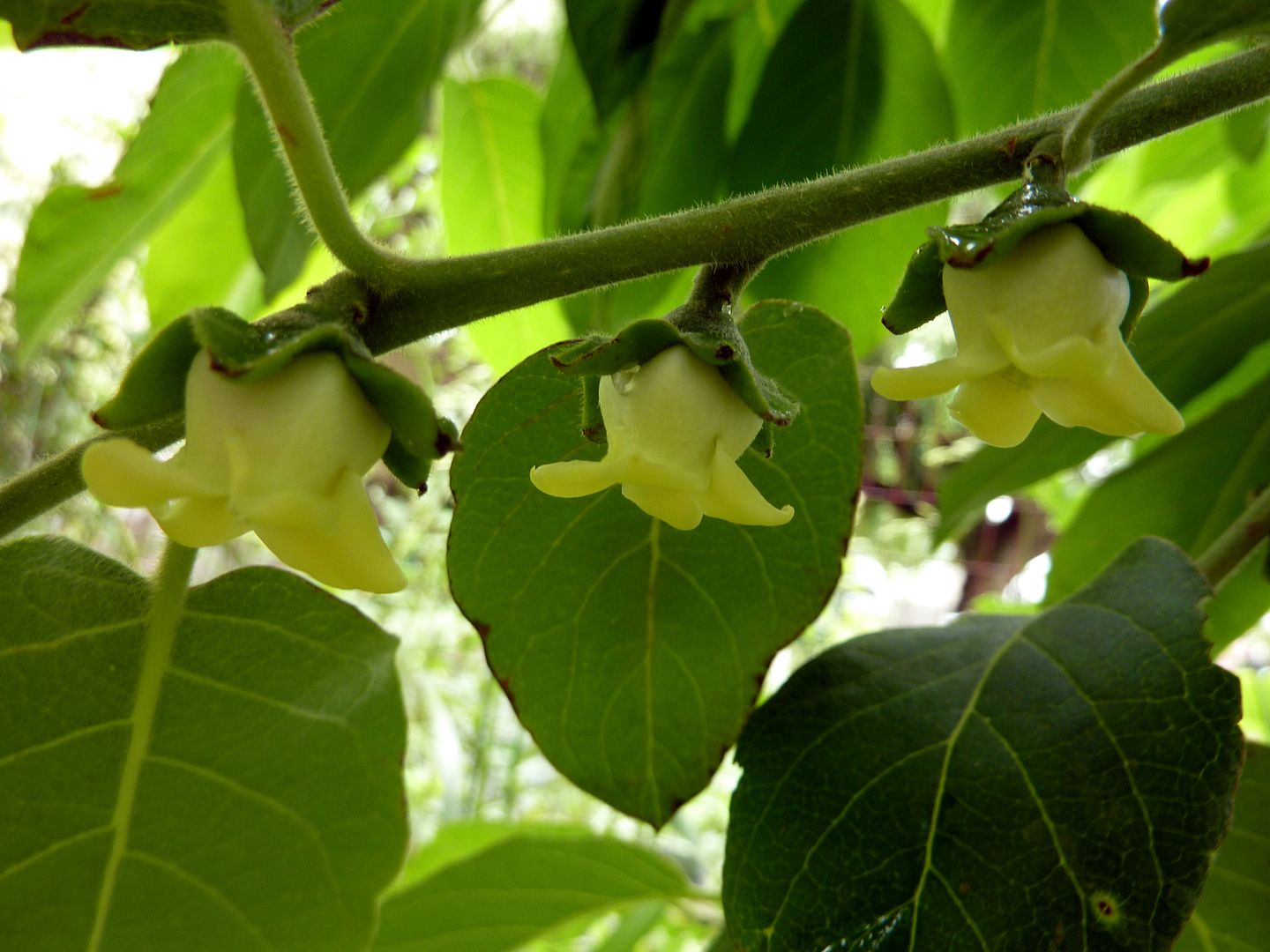
So this is the second year my wild persimmon tree has flowered. Diospyros virginiana is our native species which normally requires two trees for pollination but I have a cultivar called 'Meader' which can self pollinate. This is a desirable trait becuase our native persimmon can turn into a 60' tall tree, though I rarely see them that big. Last year it did produce fruit but unfortunately hurricane Sandy had other plans and there was not a fruit to be had on the tree. (All things considered we were lucky.)

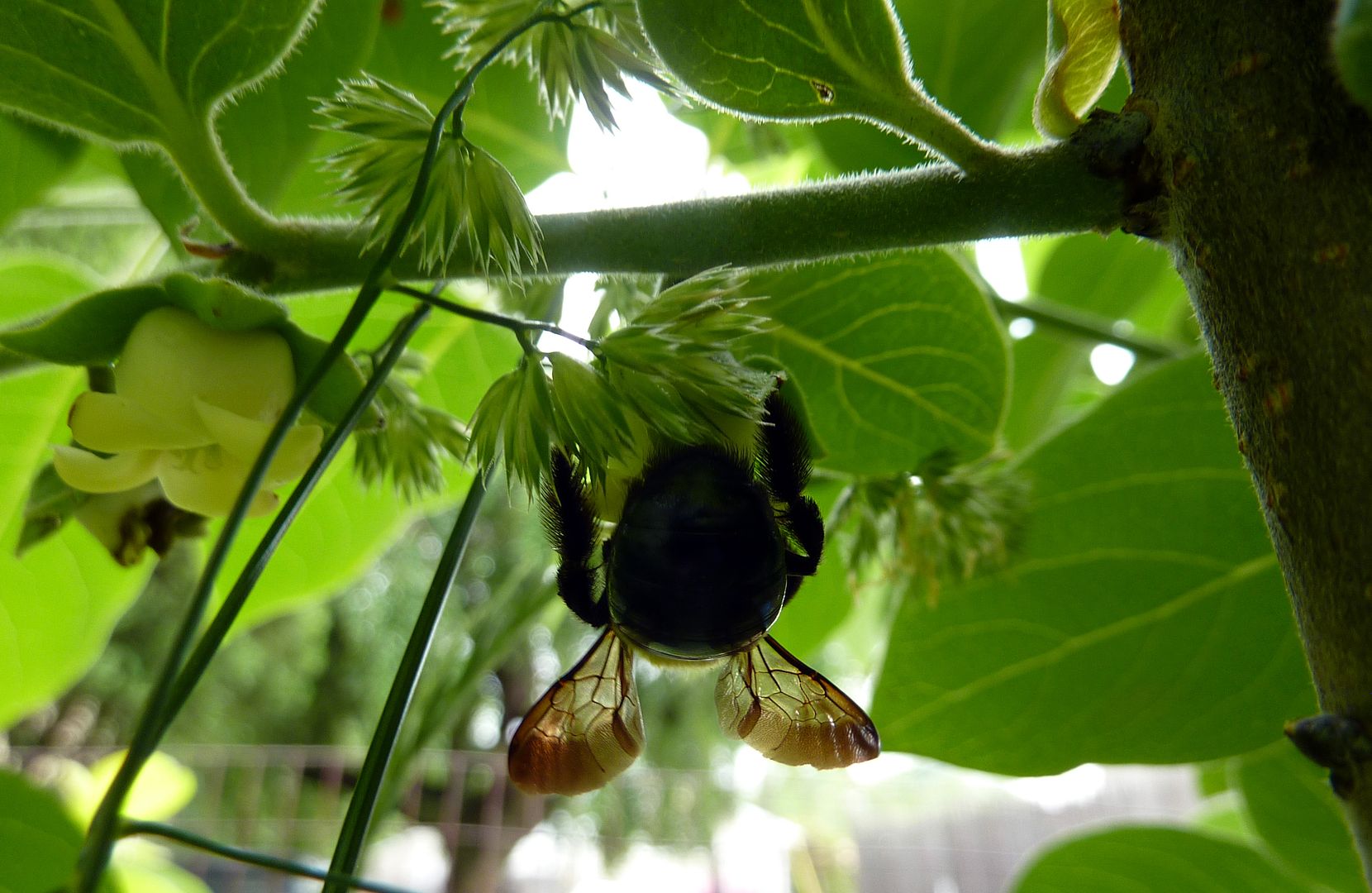
I've found our native Carpenter Bees like to pollinate them. Unfortunately some grass is blocking the picture but this demonstrates how they like to flower on semi-old wood. All the new stems pushing out this year don't have any flowers on them.

Persimmons are a very odd fruit, shaped like tomatoes, orange like pumpkins, and they taste sort of like cantaloupe (musk melon) once you get past the astringent aspects. Storing them in the freezer for a day removes the unpleasant taste. What's neat is that the fruit usually clings to the tree even after the leaves have fallen off in the autumn.

Now if only my Paw Paws would get their act together.

Monday, April 29, 2013

Mt. Cuba Center's 9th Annual Wildflower Celebration (1 of 3)

Yesterday the Mt. Cuba Center held their 9th Annual Wildflower Celebration. I've always loved the Mt. Cuba Center for it's wonderful classes, it's beautiful gardens, and the best part is, it's almost entirely comprised of native plants that are laid out in a naturalistic setting. One of the glorious things about this type of garden is that there's always something different flowering each time you go.

Plants tend to bloom at certain times of the year but depending on what type of winter, how warm the soil is, and how much rainfall we get, that bloom time can change dramatically from 4 sooner or later. And every plant reacts differently to these factors so there's always bound to be something different happening each time you go. For example, last year I saw loads of milkweed already pushing through the soil, there were loads of Amsonia in flower along side Wild Hyacinth, and loads of Foam Flower lining the walk ways. This year, Milkweeds had only just poked out of the ground, Amsonia was present but not flowering yet, Wild Hyacinths were unnoticeable, and the Foam Flowers had just opened their first blossom.


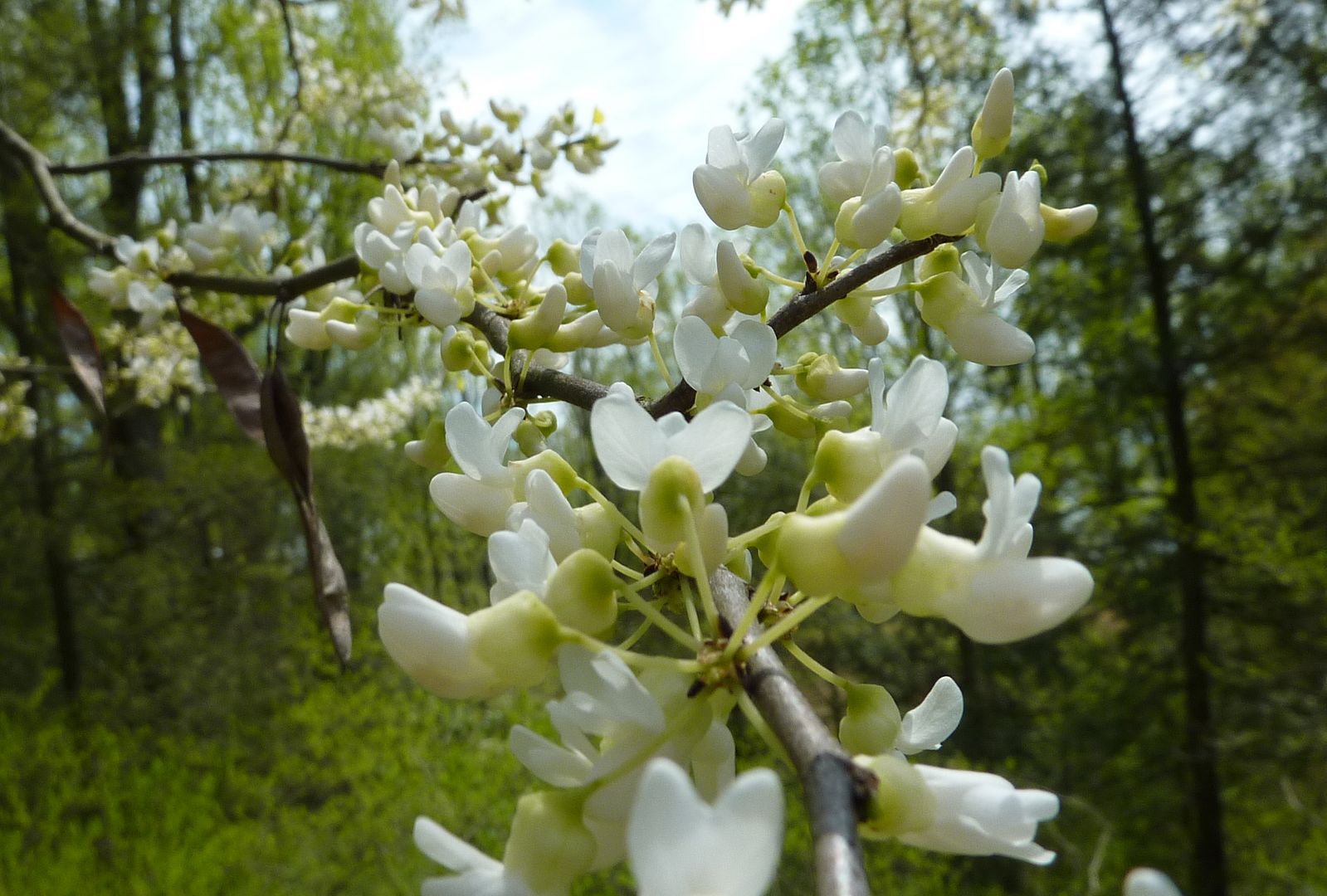
Their white flowering Eastern Redbud, Cercis canadensis var. alba, greeted visitors as they came in.

Normally this species is pink but this variety lacks those pigments. What I found more surprising was they had an assortment of this species that was actually had red flowers! Really they were a bright magenta but it was still stunning to see. The white flowering type I think worked best where there was a lot of black in the background, as either a very shaded forest, or dark trunks to trees.

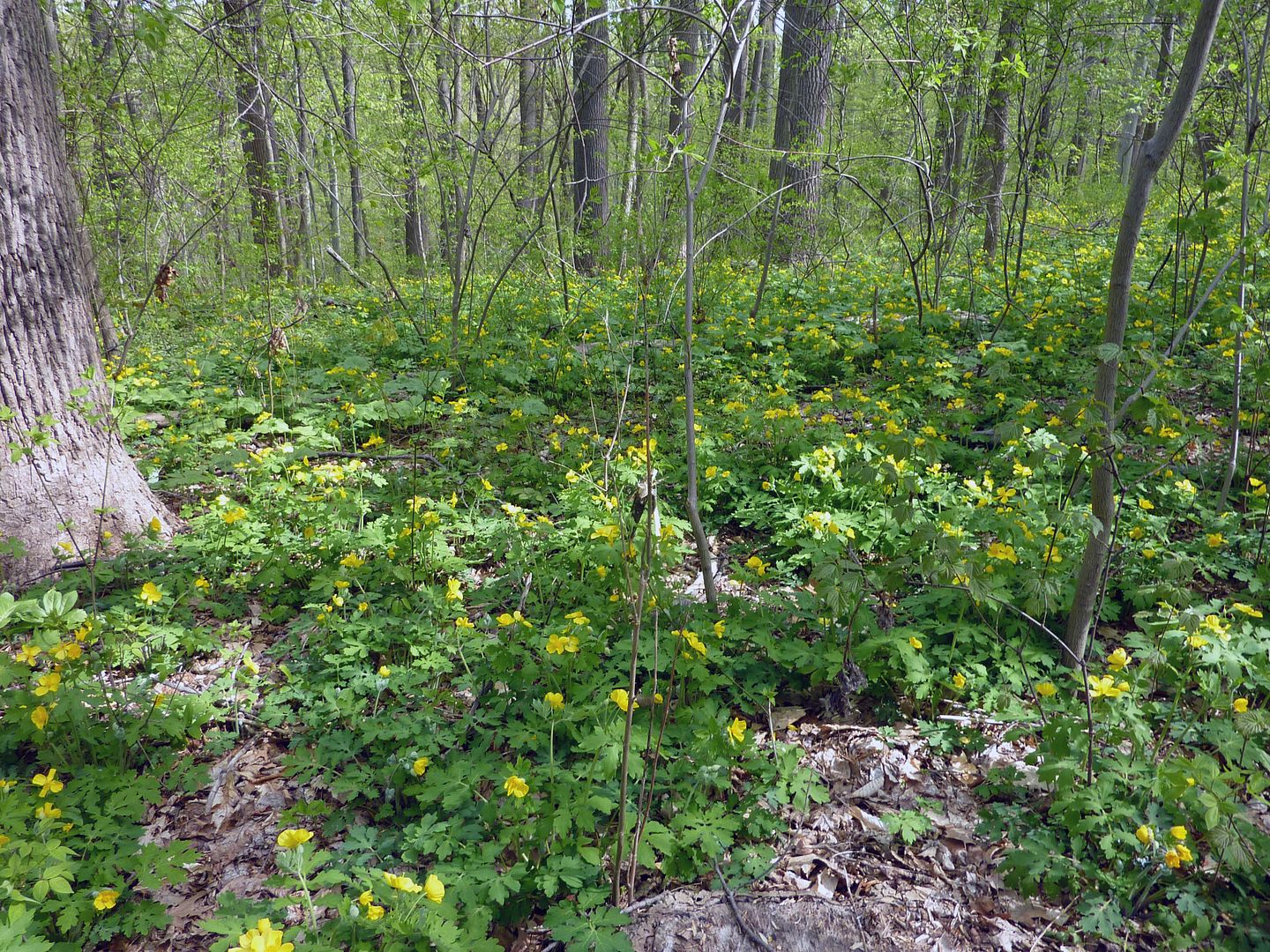
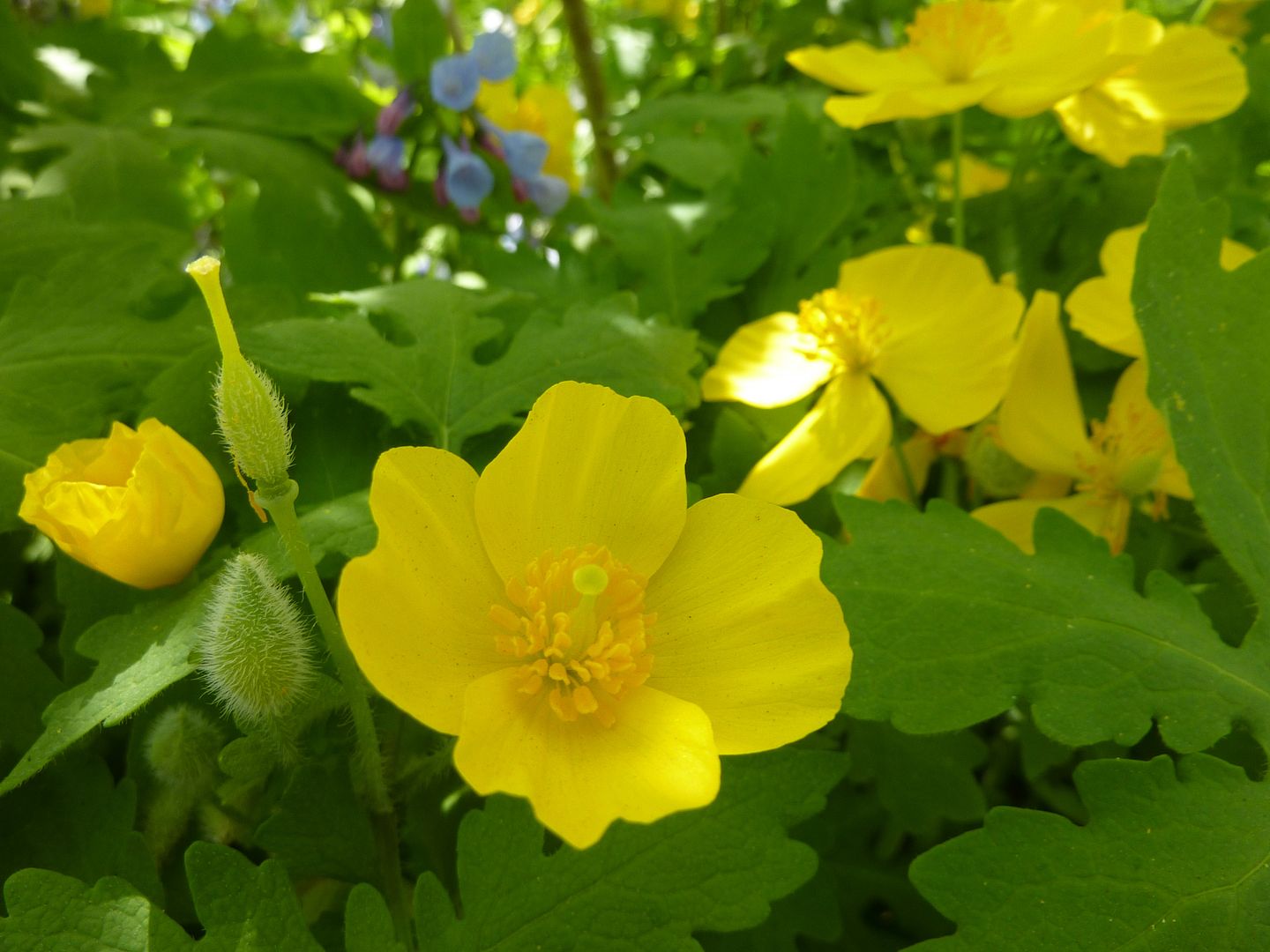
Woodland Poppies, Stylophorum diphyllum, were the first wildflowers to abundantly line the paths.

Droves of May Apple, Podophyllum peltatum, used to overwhelm this plot of land and I can see they've either been thinned out or are just a few weeks behind schedule. None of the May Apples were flowering yet.

But that's all to the benefit of the woodland poppy, a plant who's seeds are dispersed by ants thanks to the elaiosome coating their sees. They're a lot easier to grow than Trilliums and get my recommendation whole heartedly.

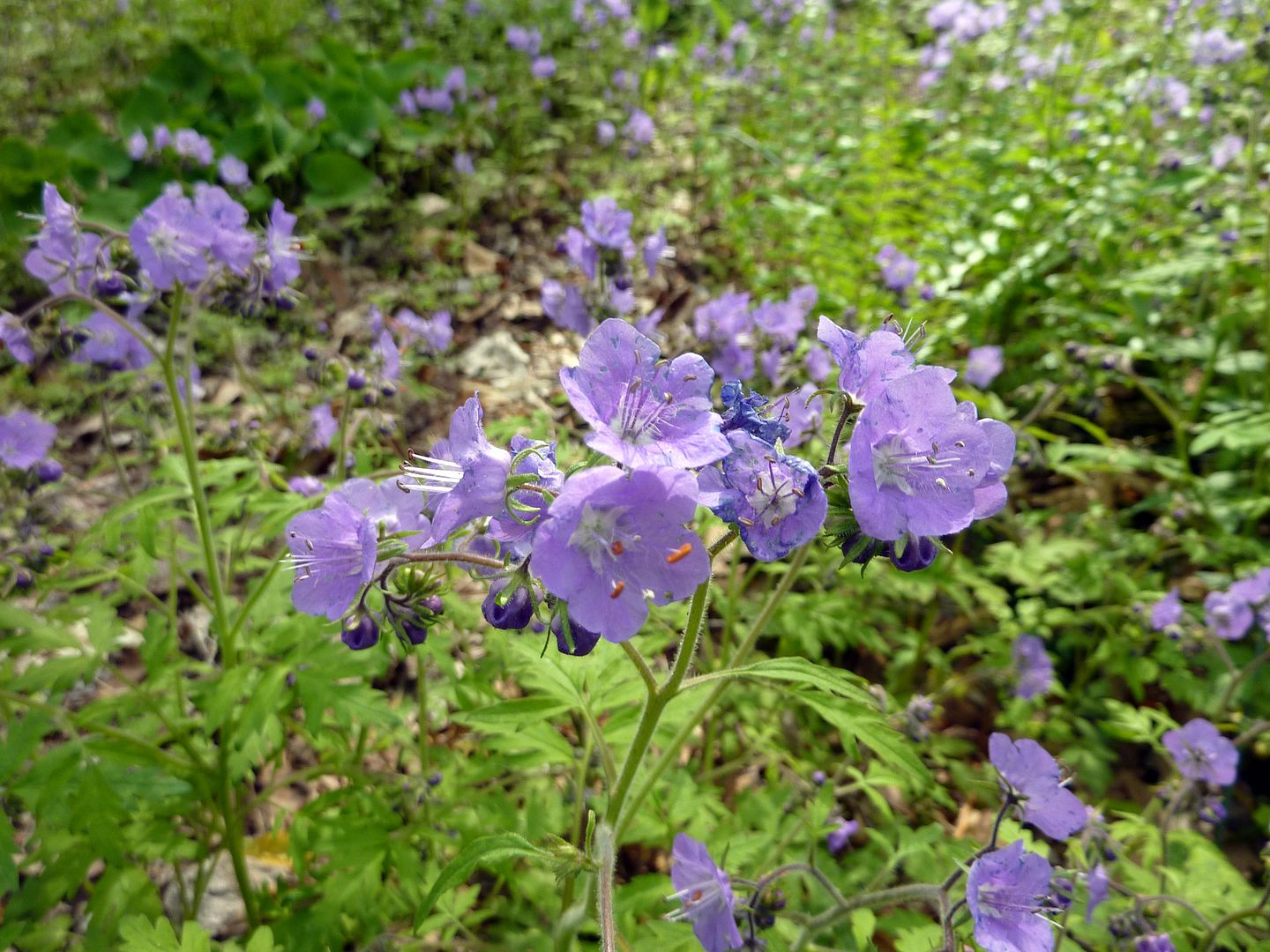
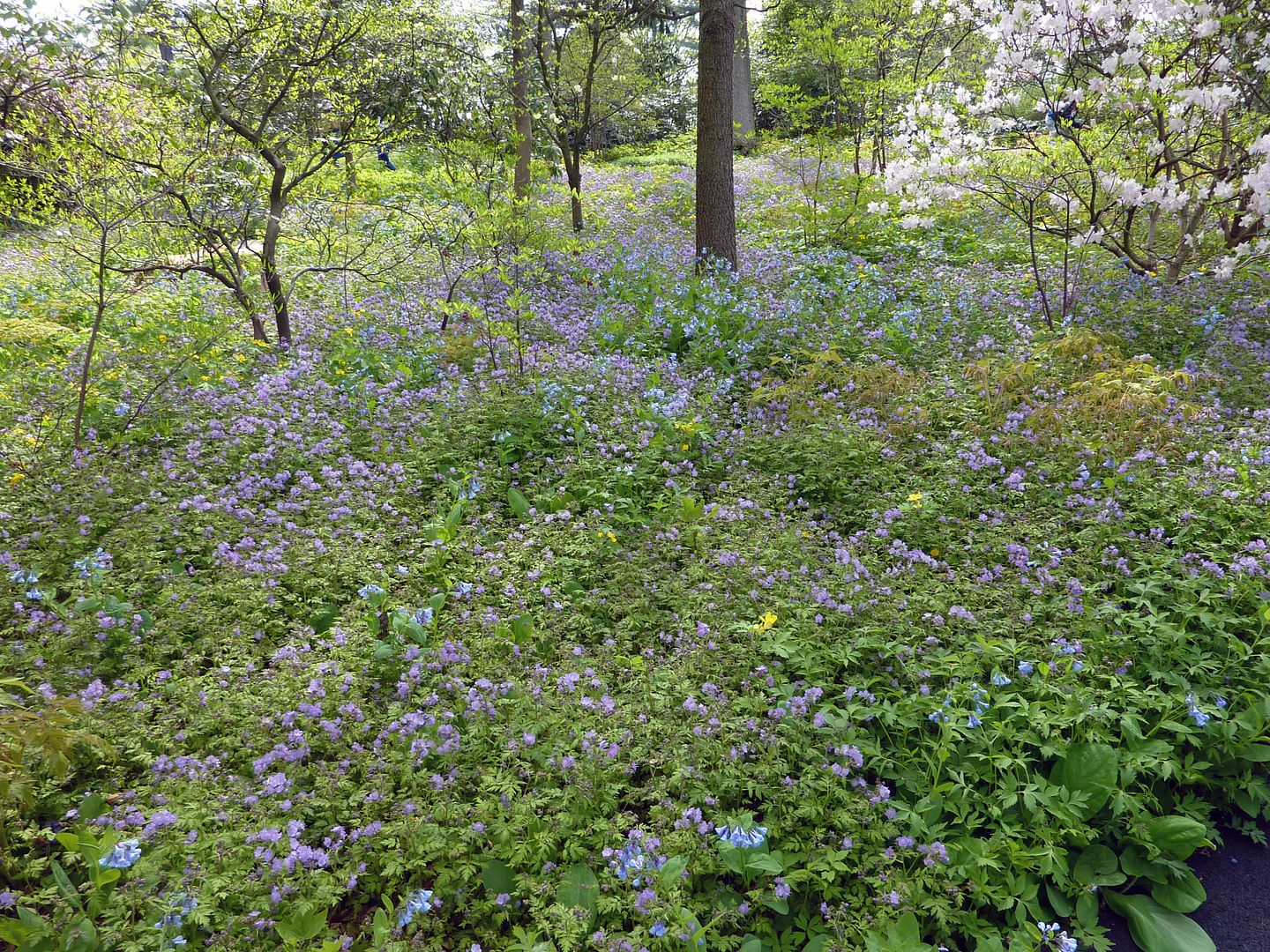
Fernleaf Phacelia, Phacelia bipinnatifida, quickly joined up the trail. This is a wildflower that almost no one seems to sell, either as seeds, or bare roots. It's one I've been after because I know honeybees love it, as well as other Phacelia species.


They're biannual and grow in "damp woodland" areas. Though I've found anywhere that has leaf litter tends to have some dampness to it whether it's near the river or up the hill.
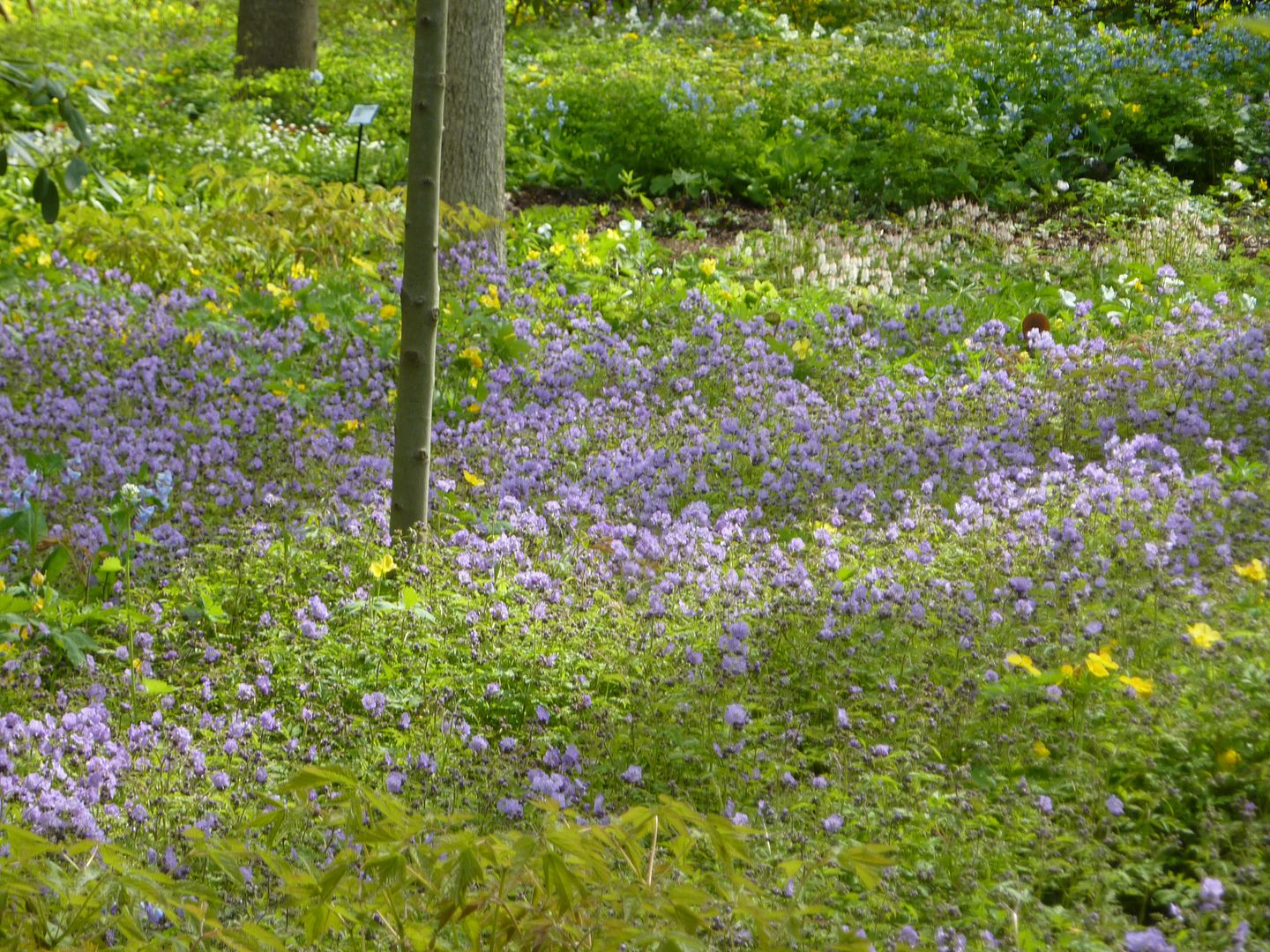
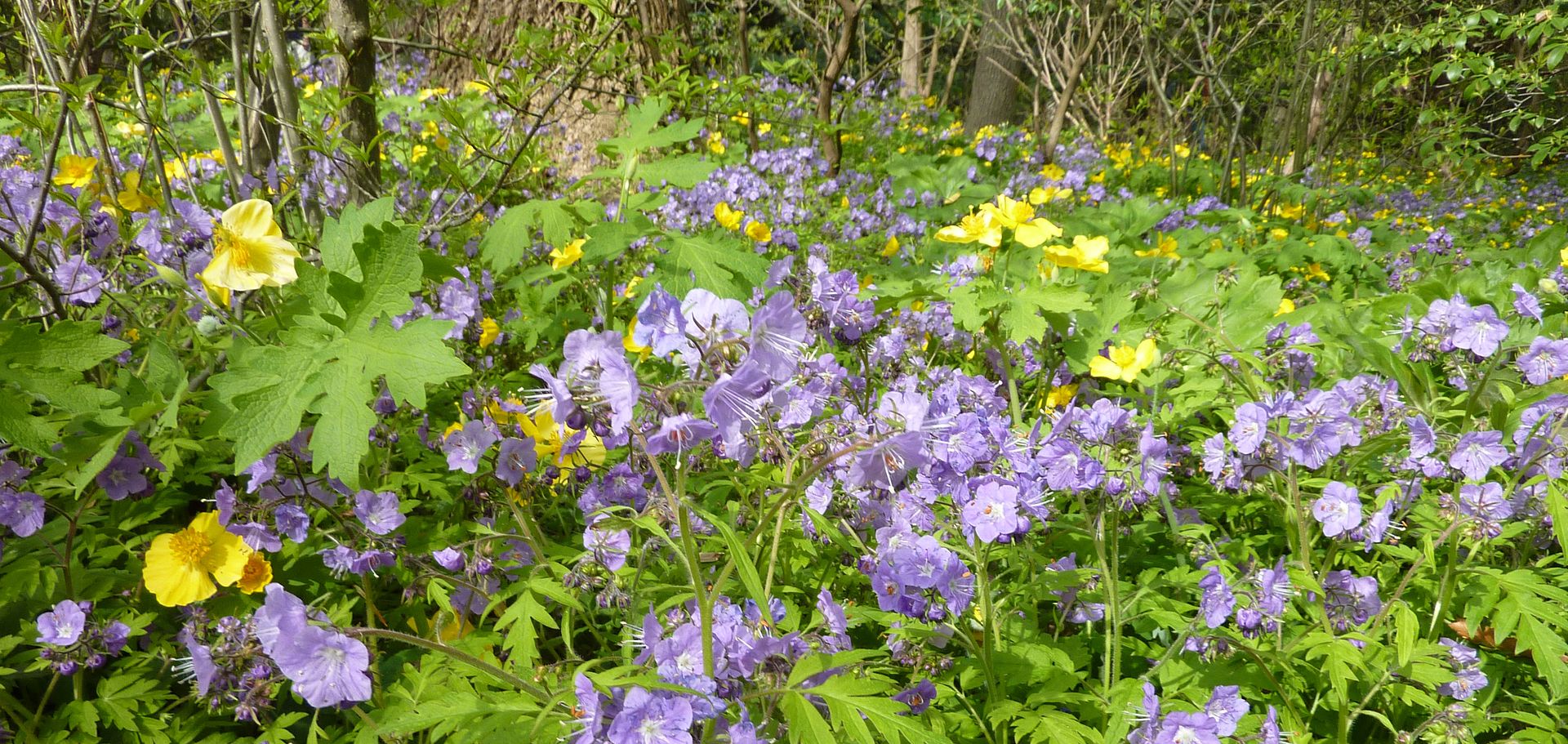
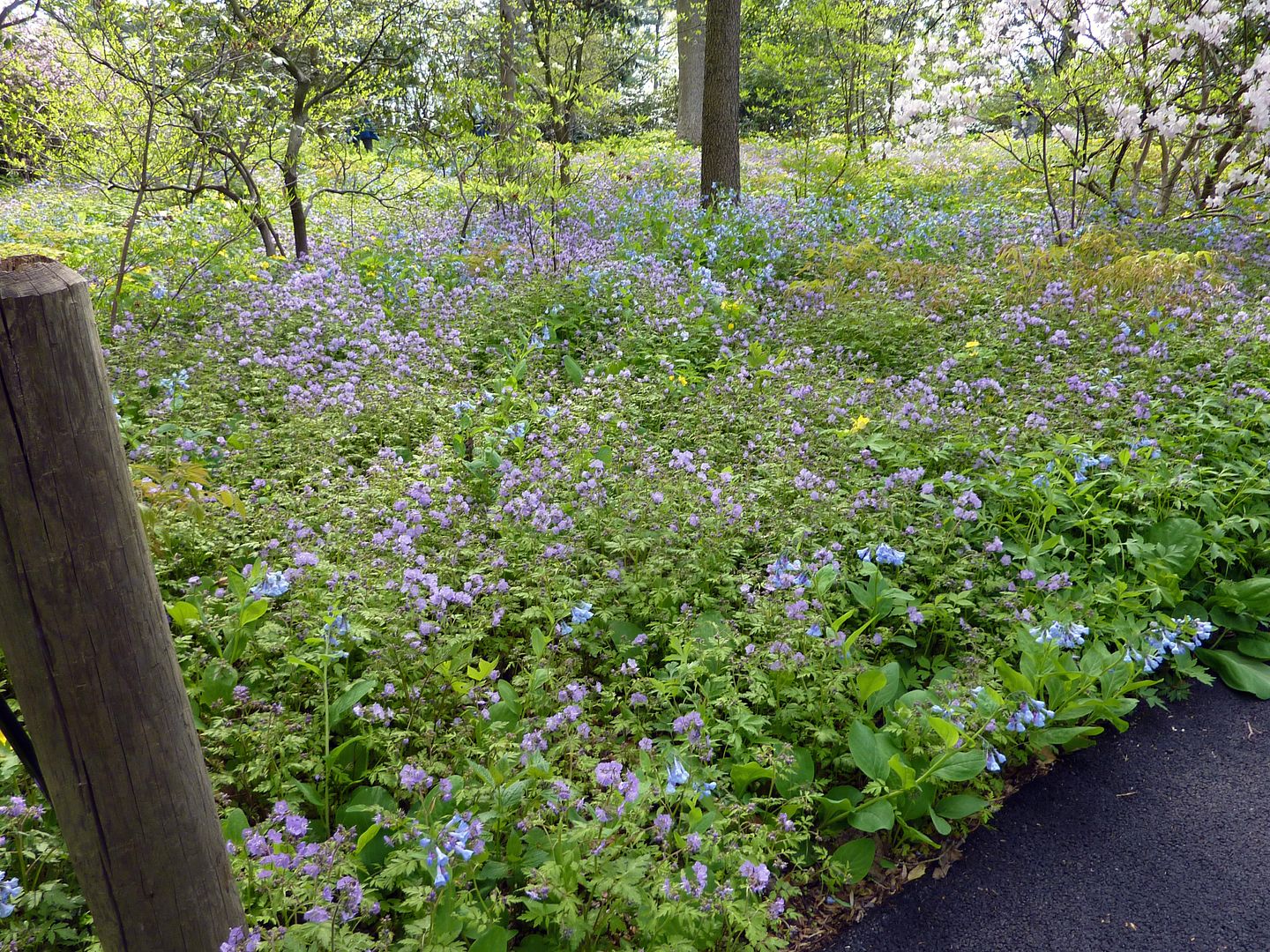
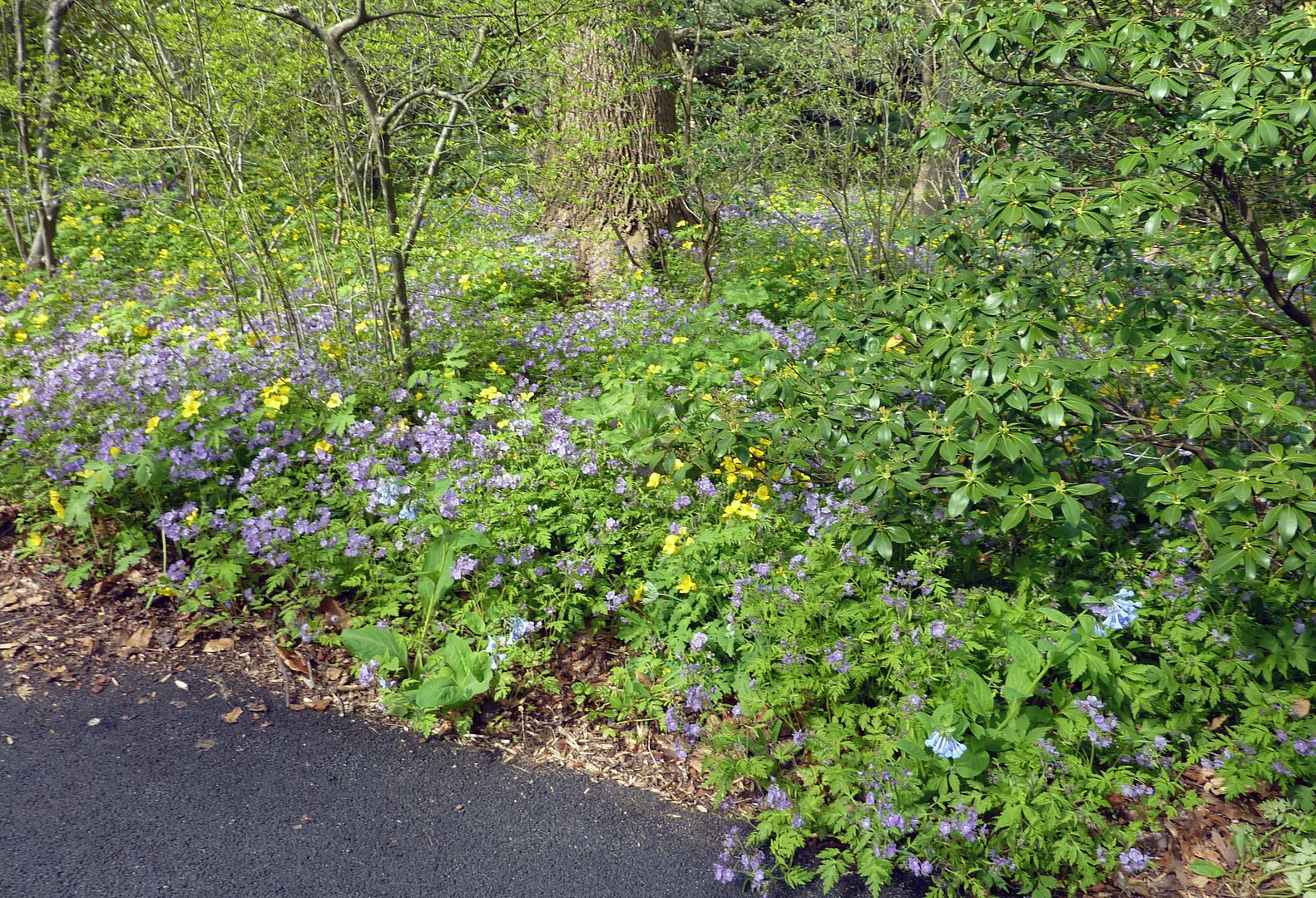
The two species started to blend well with one another, the yellow playing off the purple.

Woodland Poppy is actually a perennial but they seem to hold their own against the Phacelia, and it's likely the gardeners at Mt. Cuba help thin these out when they grow too abundantly. I recall years ago that Virginia Bluebells used to overwhelmingly conquer this part of the garden.

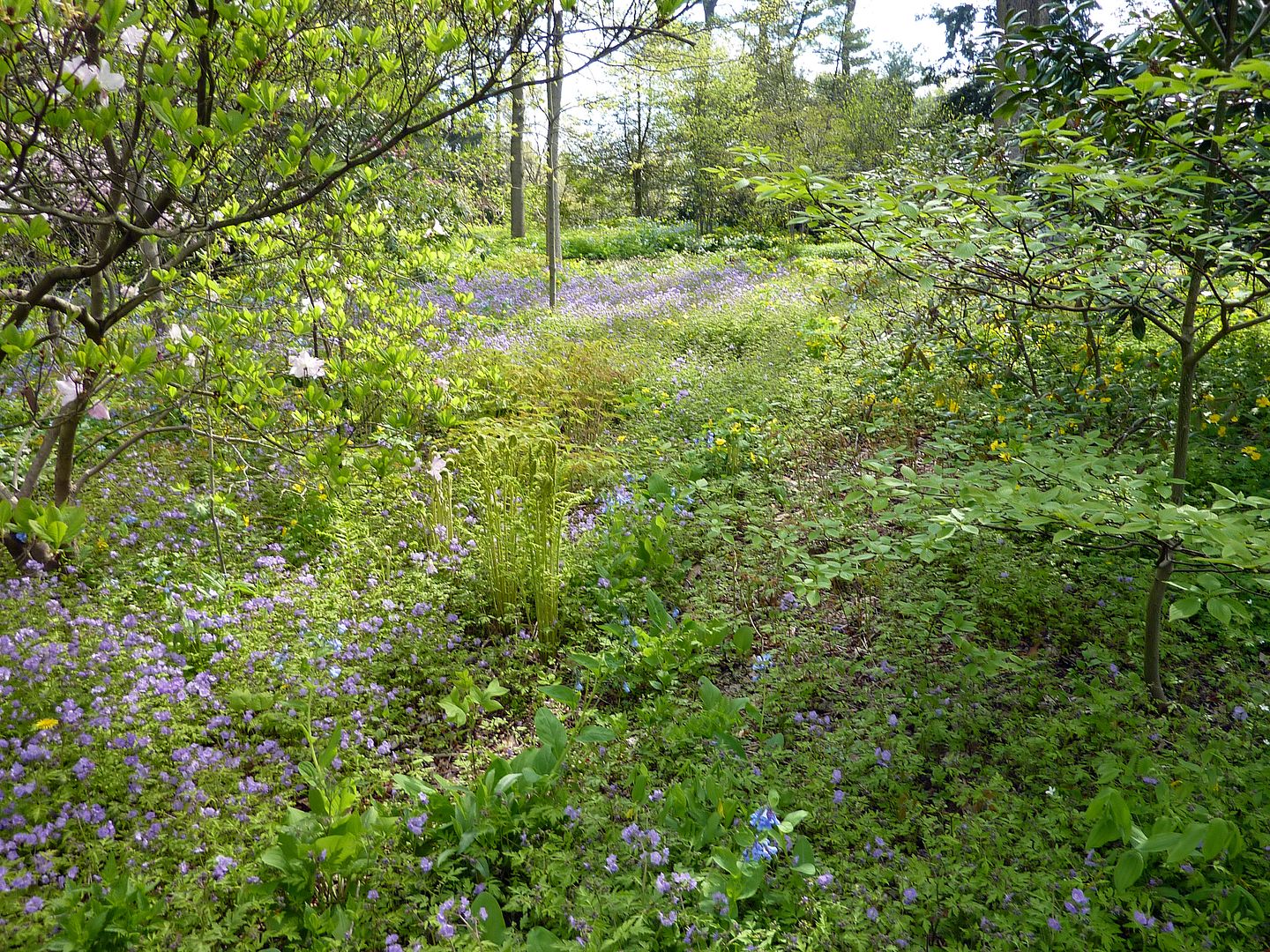
Here's one of the few parts of the garden where one can see through to another path, normally they have shrubs planted to block this from happening.

Virginia Bluebells, Mertensia virginica, joined in shortly after, but not in the vast sweeps I remember it. They can be aggressive plants, spreading both by seed and dividing underground in all directions. I'm told their roots run deep too, making them difficult to weed but even if one were to weaken the plant it would still be enough to add more things around them.
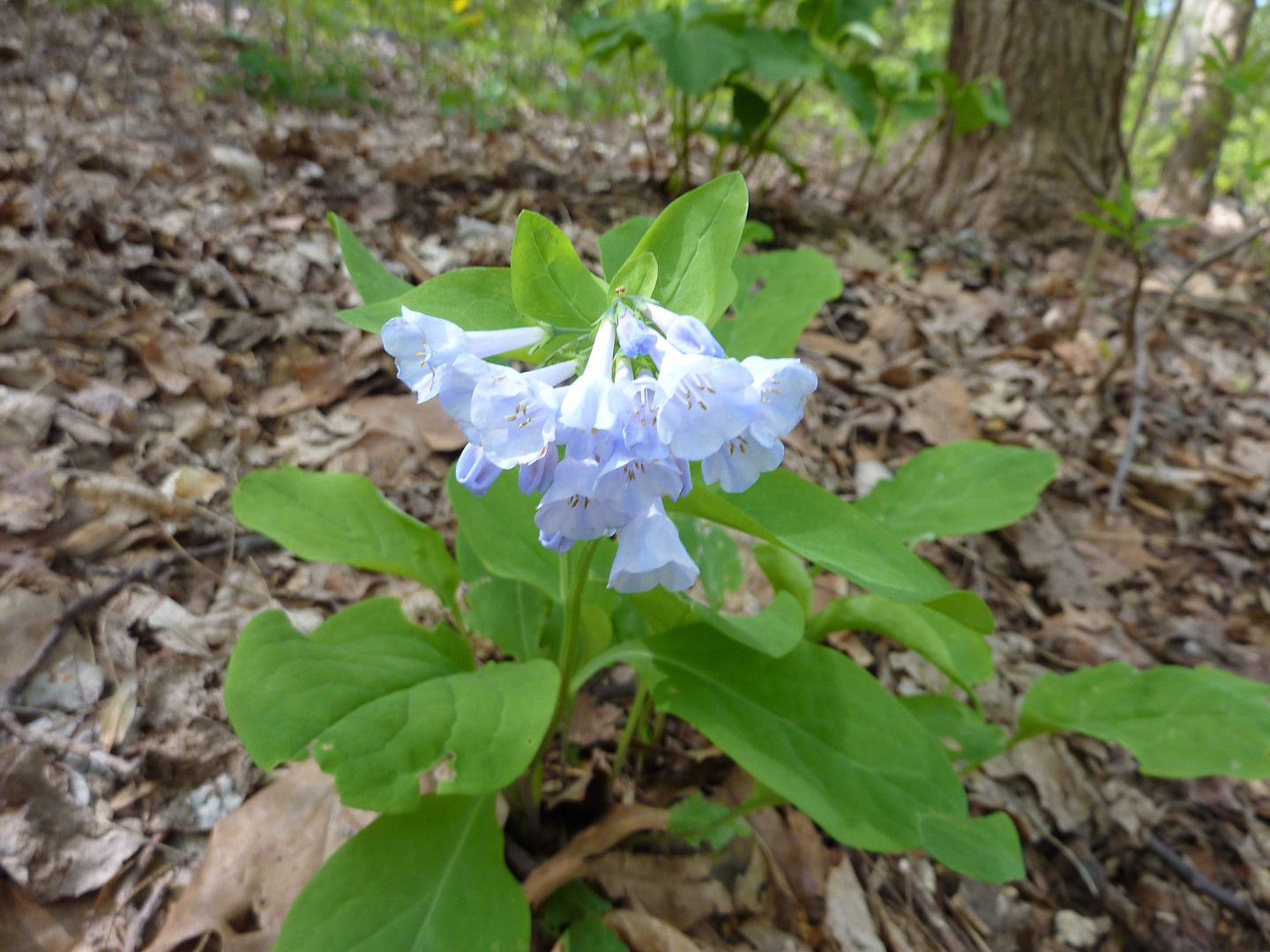
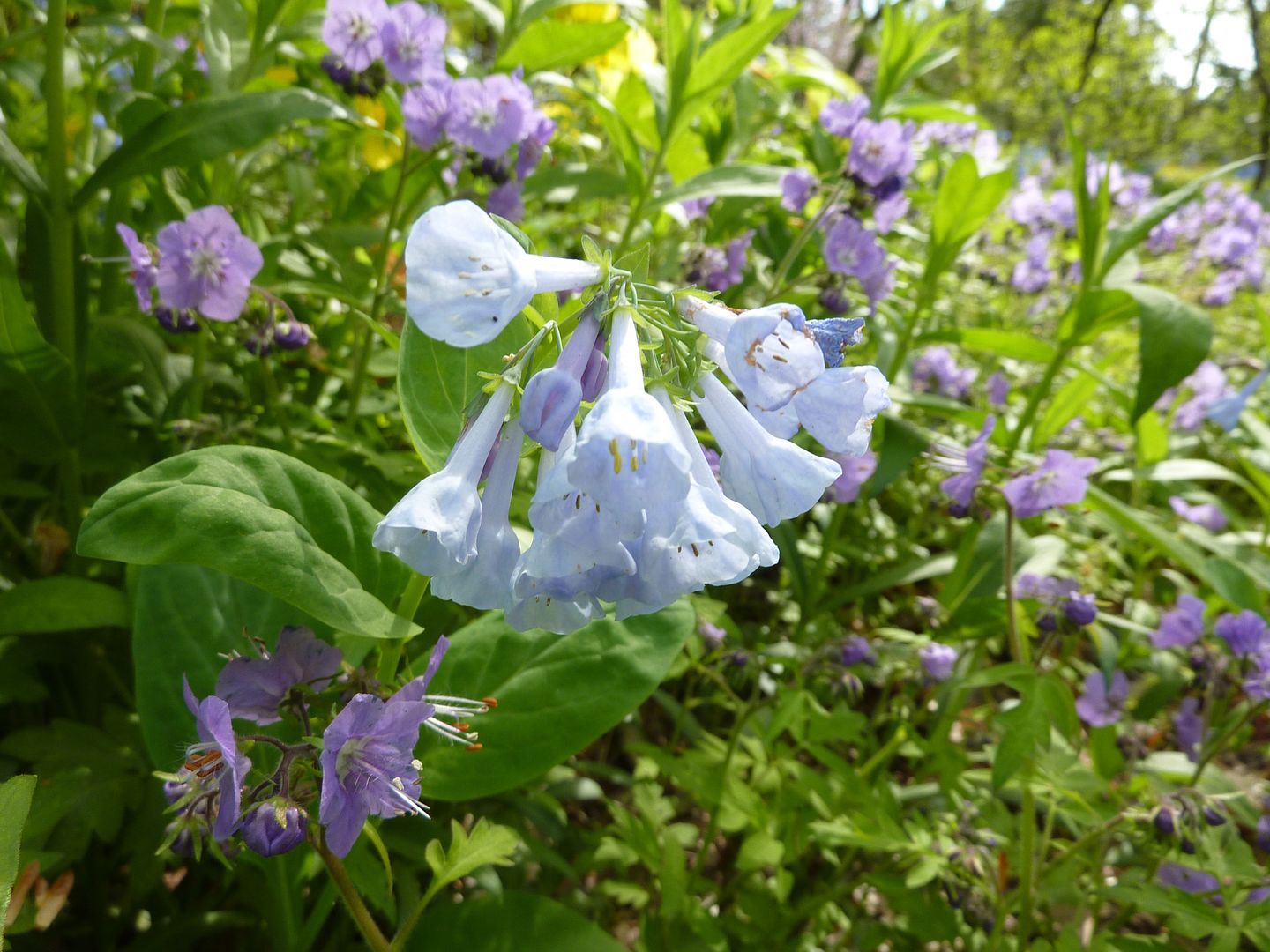
They became the blue mixing with the purple...

...mixing with the yellow...

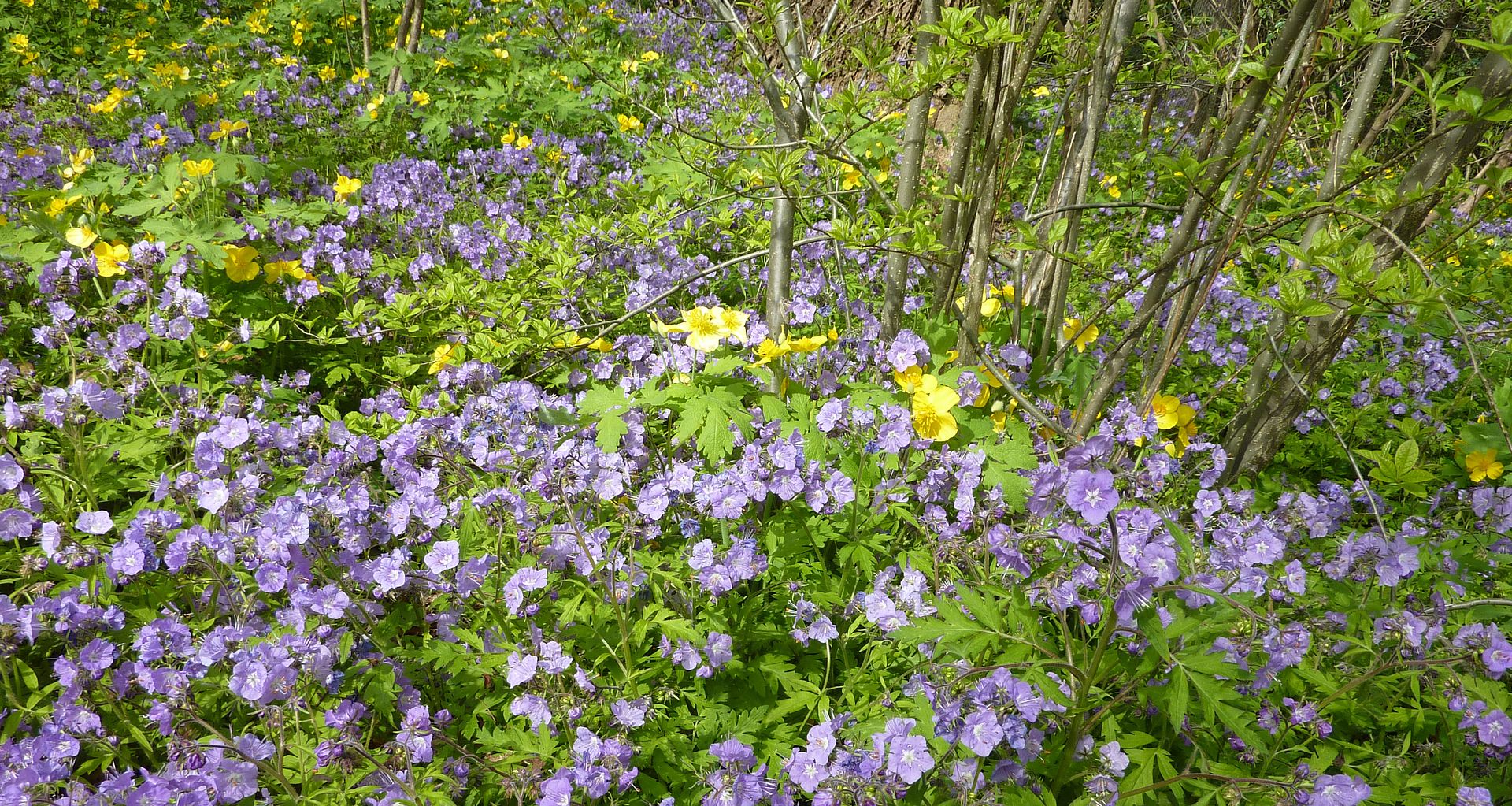
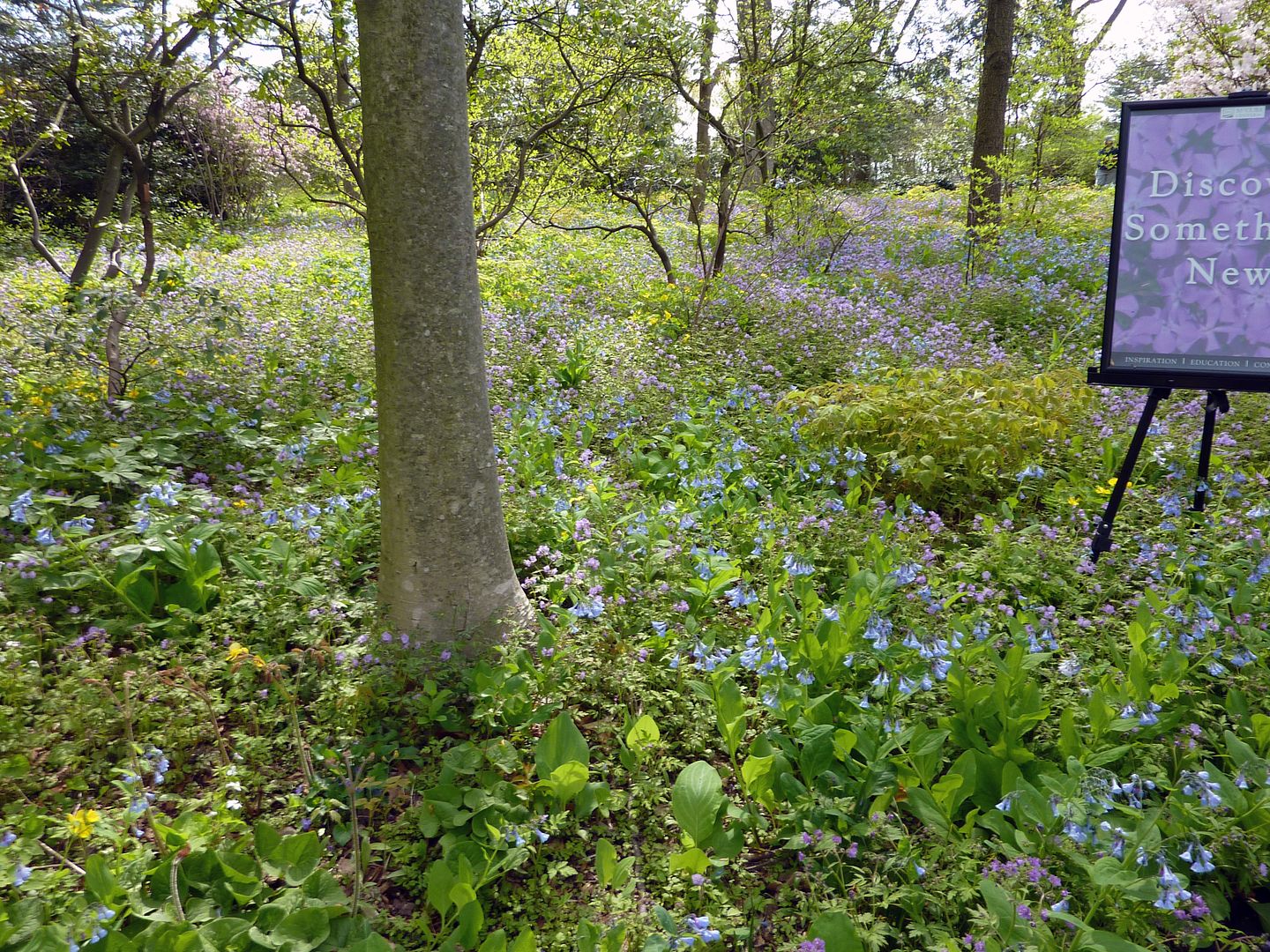
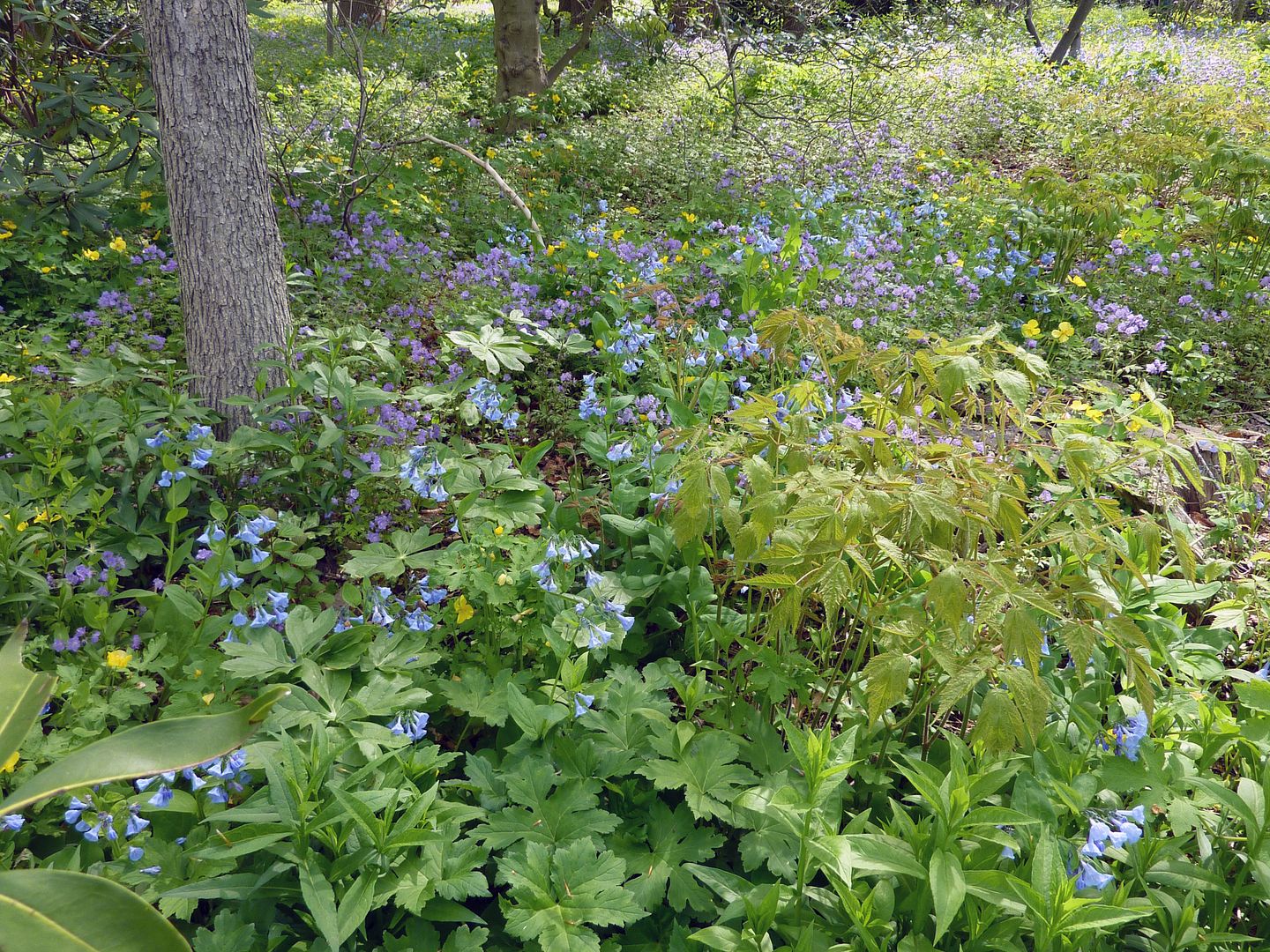
and this made an amazing effect. I would love to get these three plants as a seed mix with maybe a dash of a few other species to dot here and there. These three formed the bulk of an amazing carpet of flowers. 

And they work so well together. 

They were growing under Rhododendrons and shrubs I couldn't identify. 

In reality they were only this abundant along one or two of the paths and then turned into smaller specimen plantings elsewhere.

But what a wonderful filler plant these are for all those places just off the beat and path.

This is how I want my shade gardens to look.

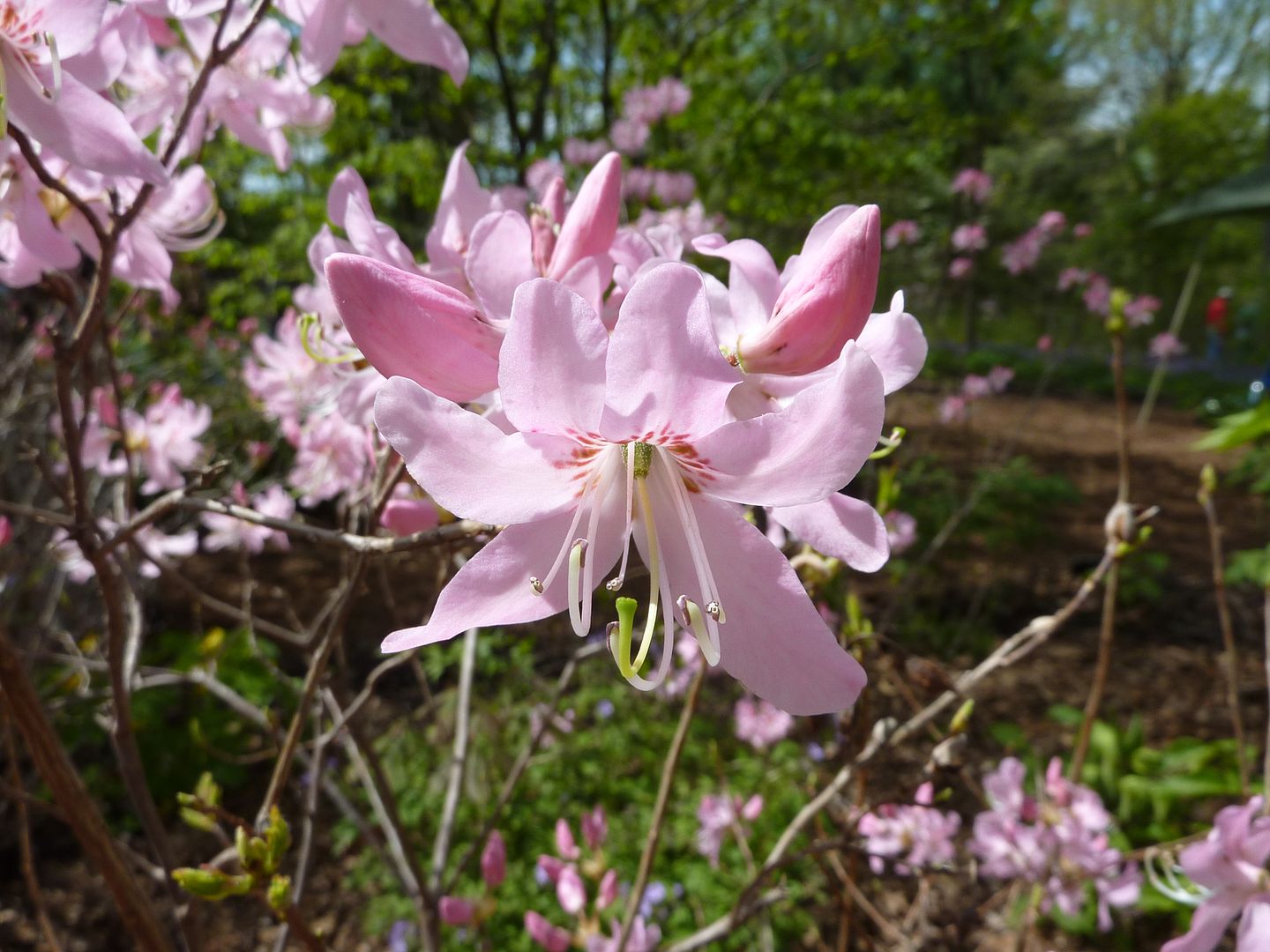
This was one of their Rhododendrons that was flowering and looked very pretty. They have a lot of different species (including one that flowers later on in July or August!) but most weren't blooming yet. 

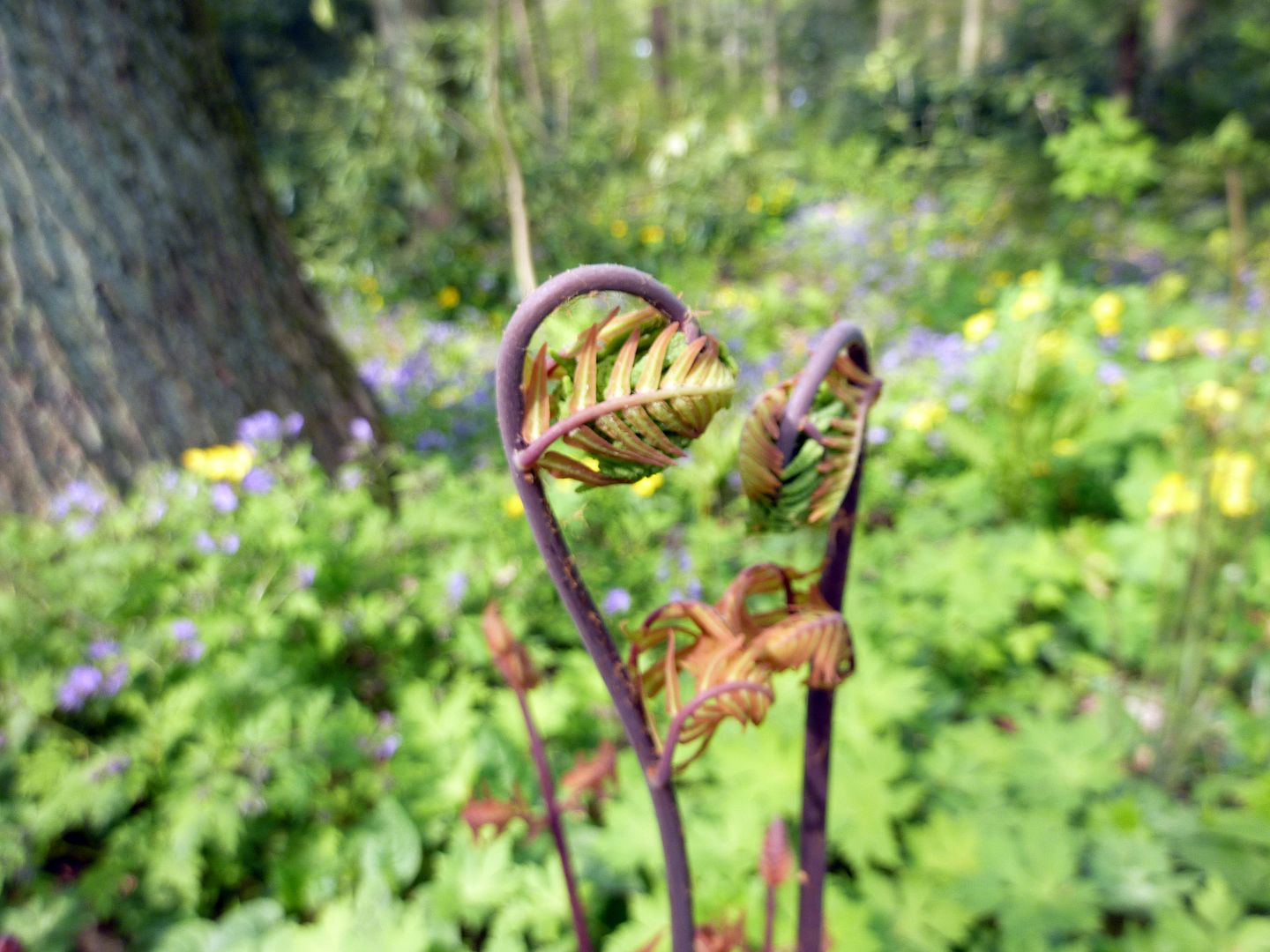
An assortment of ferns were mixed in all over among the gardens that were poking up with their golden fiddleheads, waiting to take center stage.


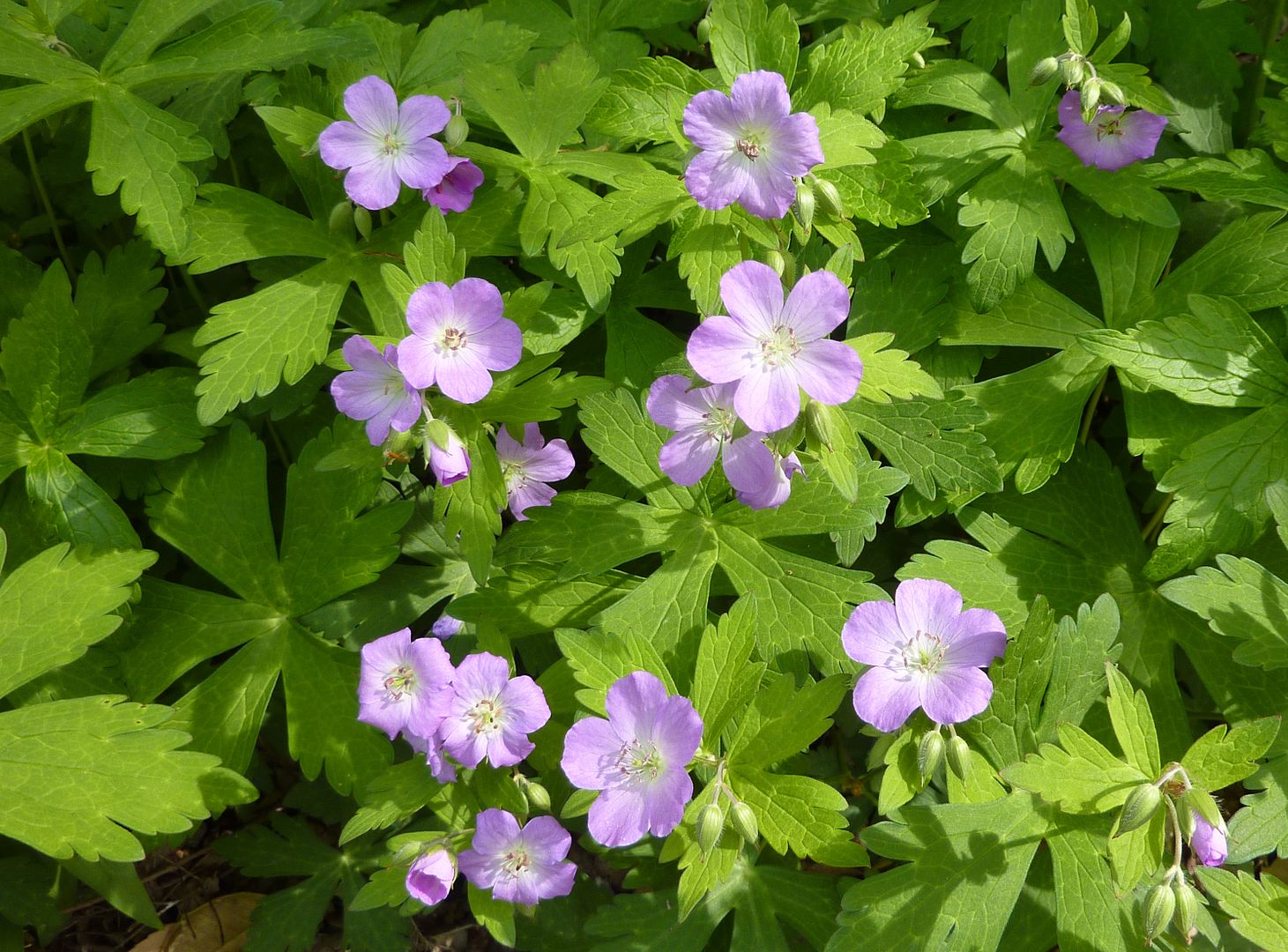
Wild Geranium, Geranium maculatum, was used more heavily in slightly more formal settings. Presumably because it doesn't spread as prolifically as the others. 

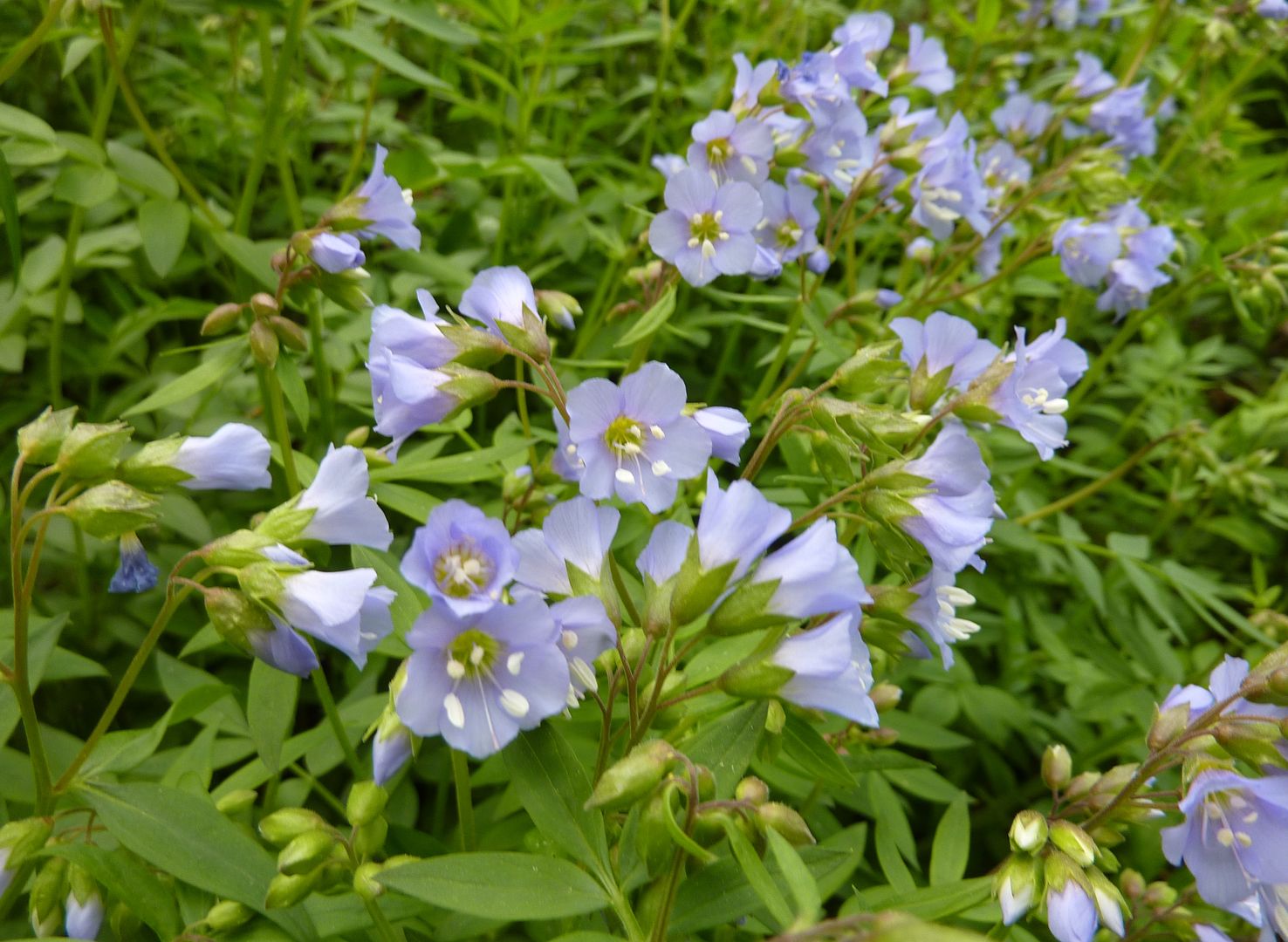
Jacob's Ladder, Polemonium caeruleum, was also used to make up some of the blue in the forest floor, but not as extensively as the Virginia Bluebells.

Jacob's Ladder is another plant honeybees love, though I rarely get the chance to see enough of it growing together to get their attention. Bumblebees and mason bees were all over everything though.

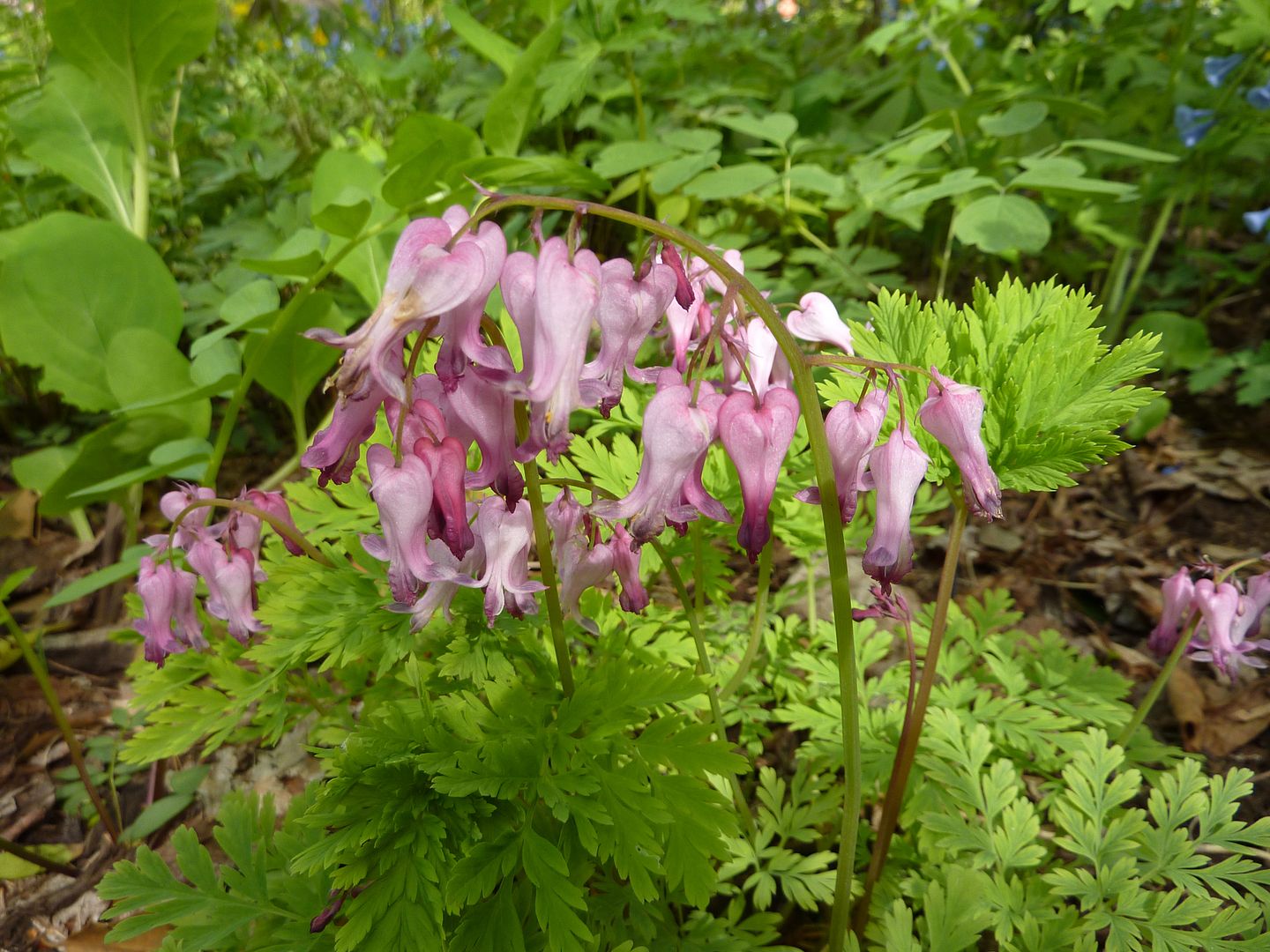
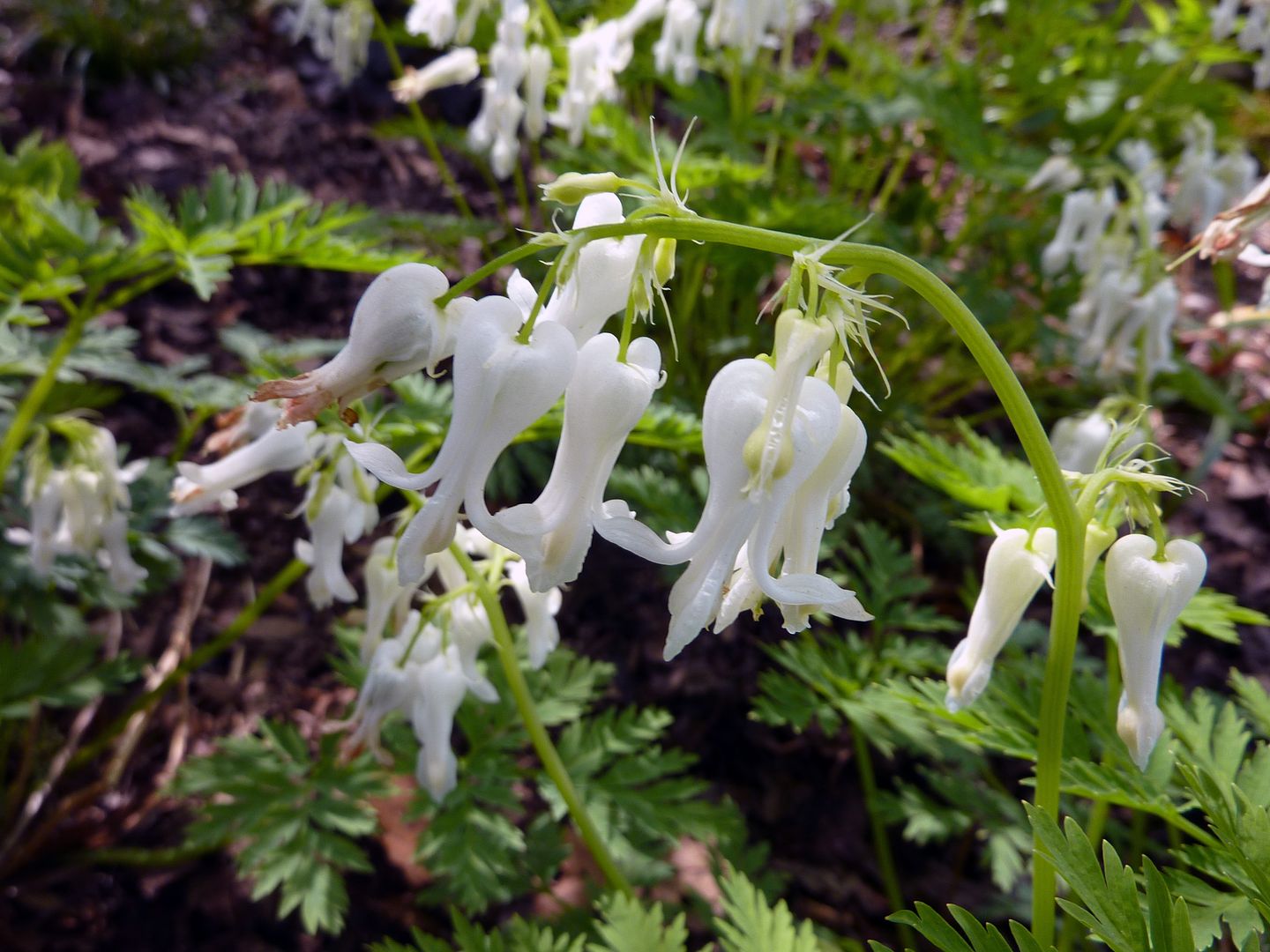
Fernleaf Bleeding Heart, Dicentra eximia, were also used here and there.

I even found the white form along a pathway.

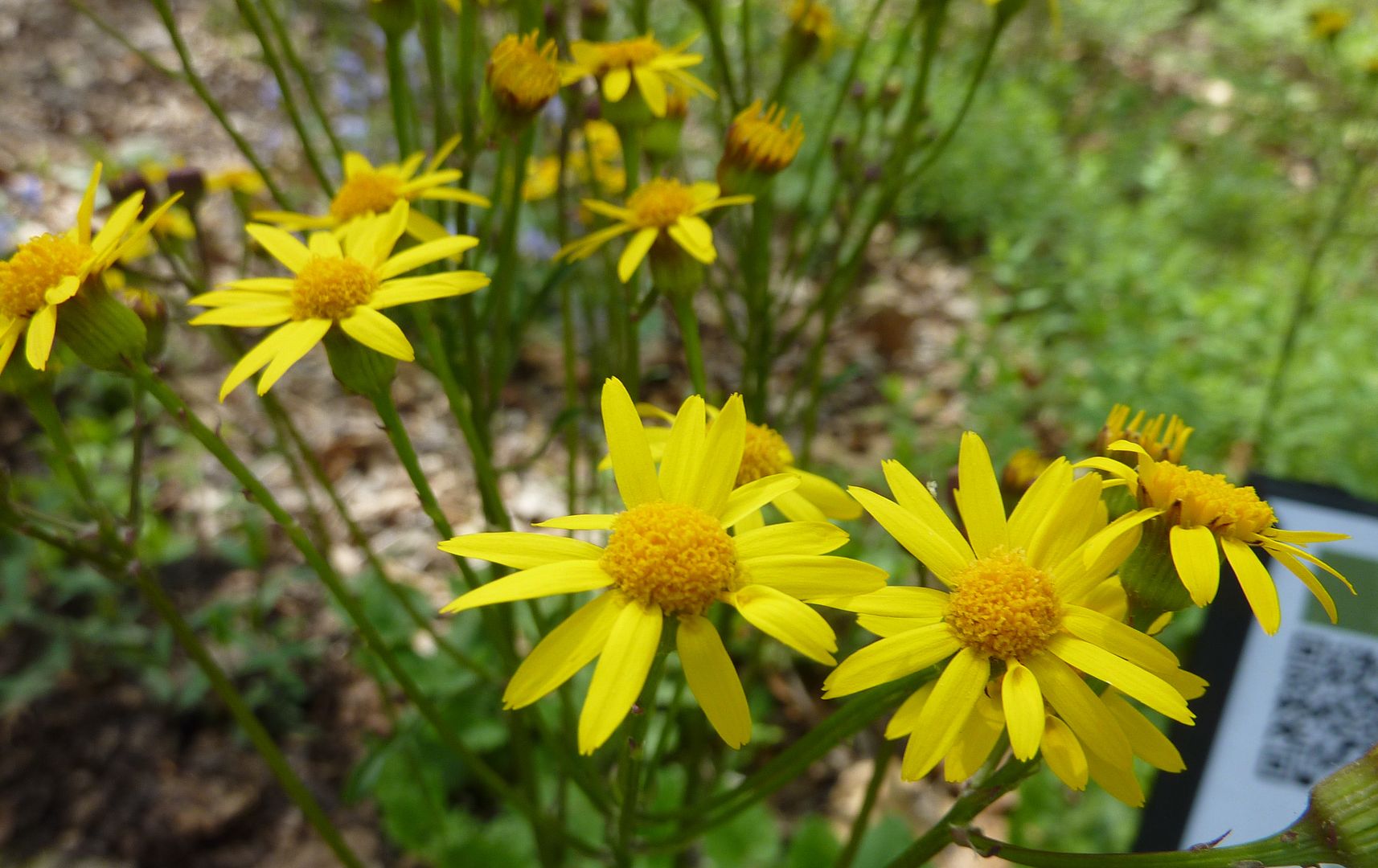
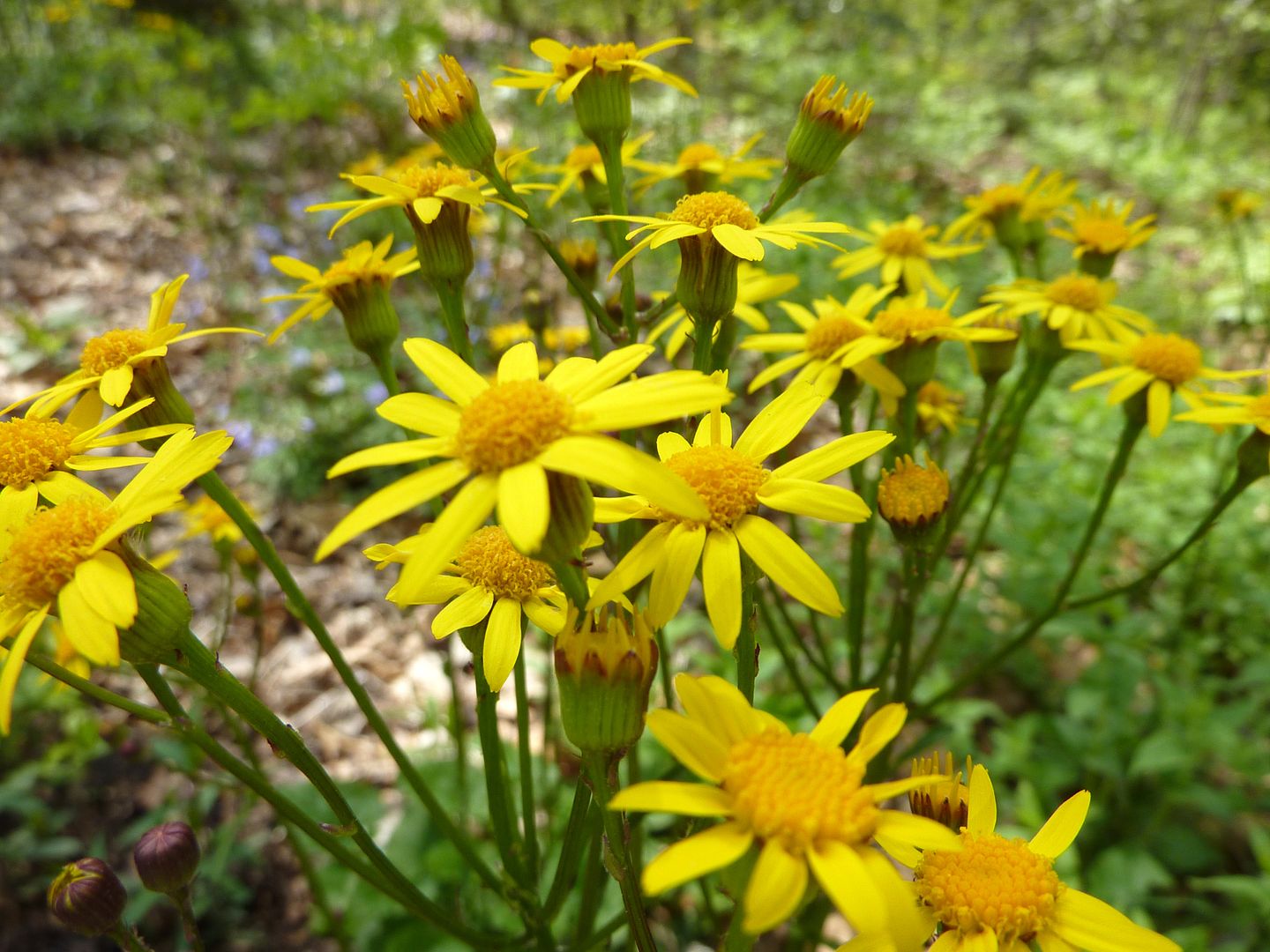
Golden Ragwort, Senecio aureus, lit up some of the particularly dark places in the garden. This is a wonderful plant that's easy to grow. They spread by seed and underground rhizomes, and I've even noticed their seeds are sought after by certain types of birds including goldfinches. Also in the photo are codes you could take a picture of with your phone, and the directs you to their web page with all the growing instructions on it.

The first 500 people to visit that day got to take home a free plant, and this year Golden Ragwort was it.

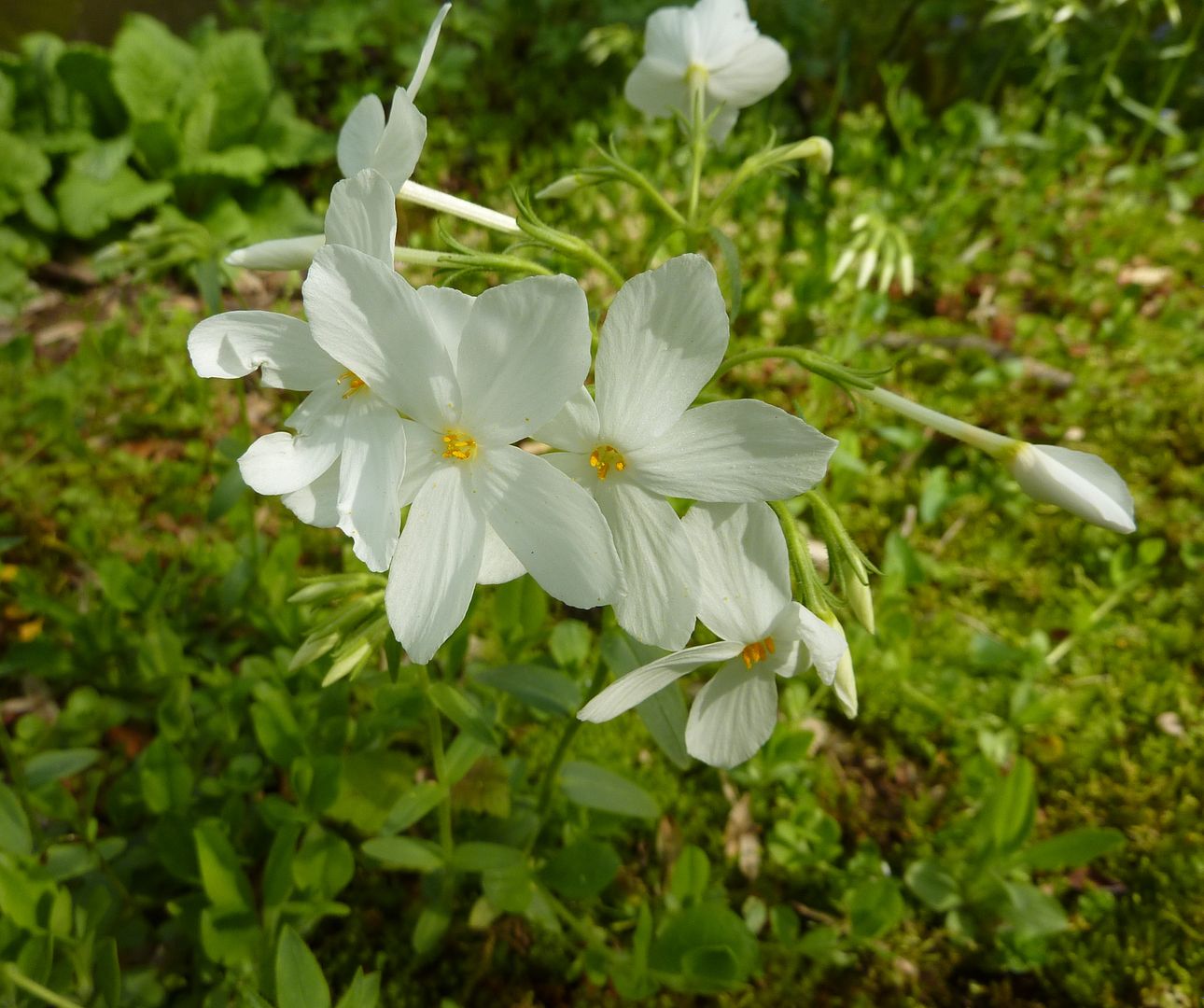
This was a rather short Phlox of some sort. White flowering obviously. There wasn't much of it but I thought it was neat. Phlox is surprisingly easy to start by seed which is what got me interested in this little plant.


Woodland Phlox, Phlox divaricata, was used more formally along a few paths. In previous years it had mixed with Foam Flower but those weren't really blooming yet.


Violet Wood Sorrel, Oxalis violace, actually opens up a brilliant hot pink/magenta color but quickly fades down to a pale pink color. The leaves to this genus looks almost identical to those common sorts of Clover.


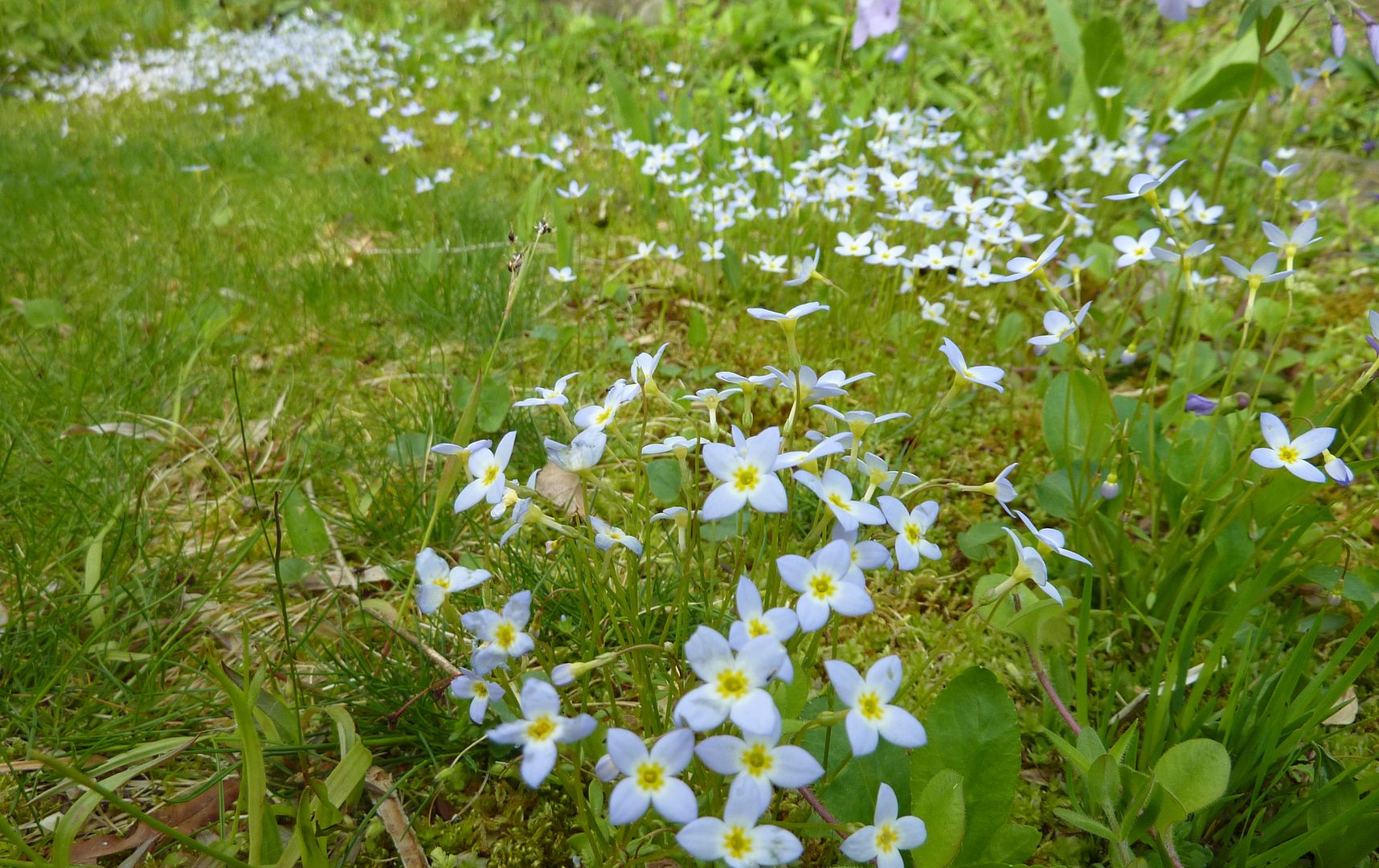
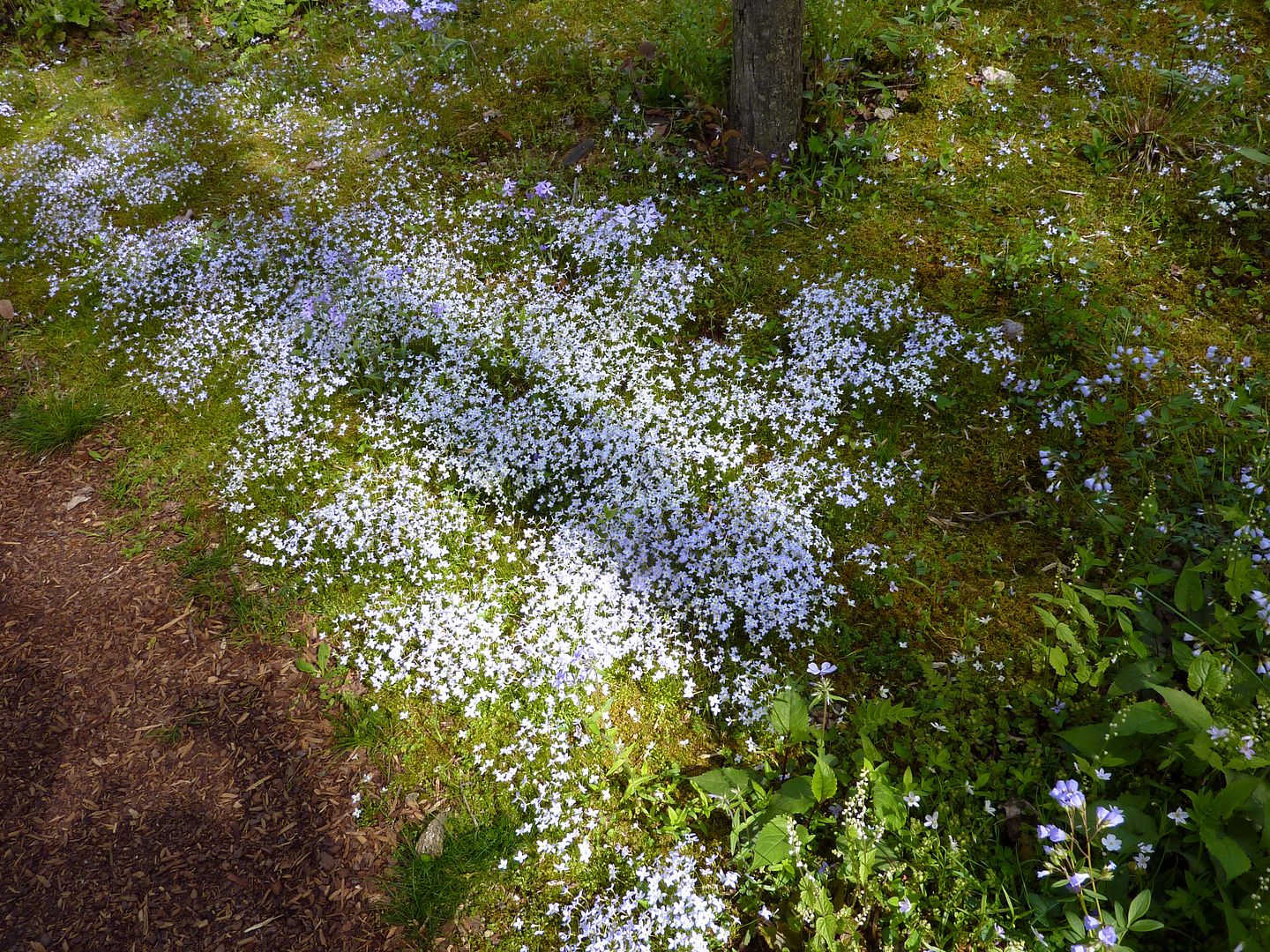
Bluets, Houstonia caerulea, seem to have changed their position in the garden over the last few years.

They're a very delicate (biannual I think) plant that needs just the right conditions to grow. Moss and slightly dampness over the summer months seems to be critical but also there can't be any other large plants around that would out compete them.

When successful they grow to form a great big patch.


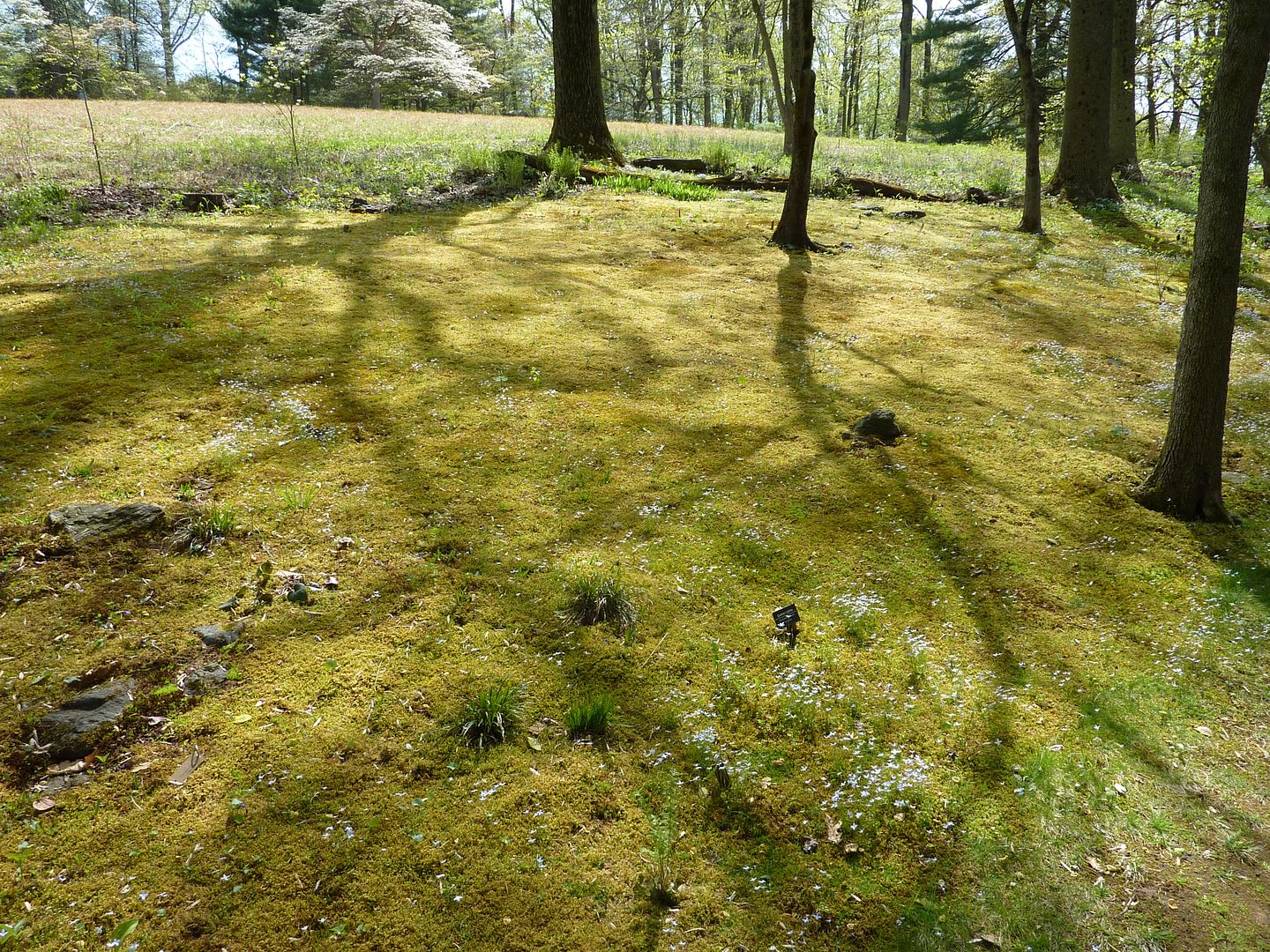
Up the hill is where they were previously in the gardens for many years. I remember seeing this at it's peak and there were so many Bluets flowering that I honestly mistook it for snow. Now though it's mostly just a patch of moss, and almost all the Bluets have either been transplanted elsewhere or died out mysteriously. I didn't get a chance to ask the gardeners what the case was but I feel it's a little shame there aren't as many here as there once was.