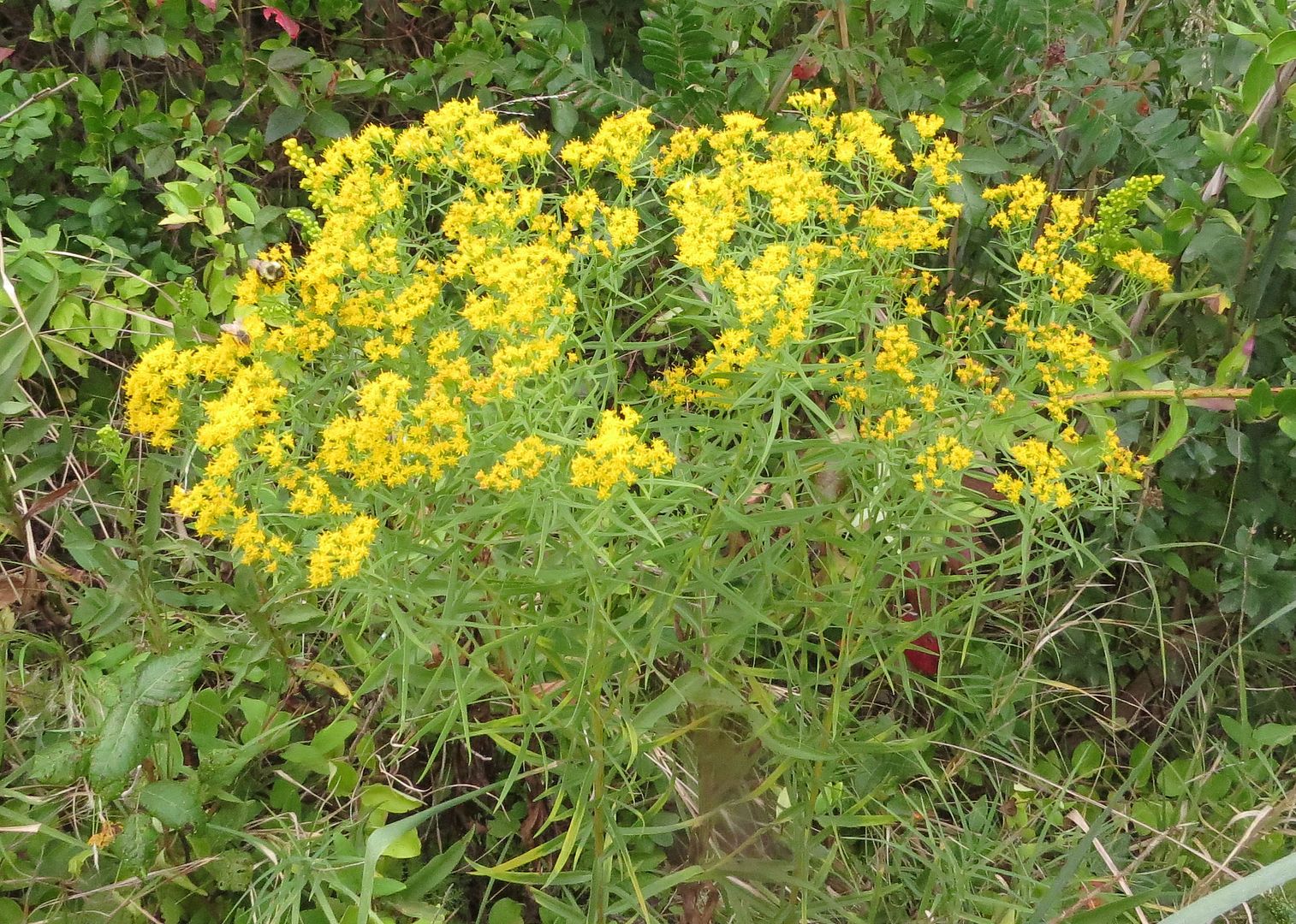
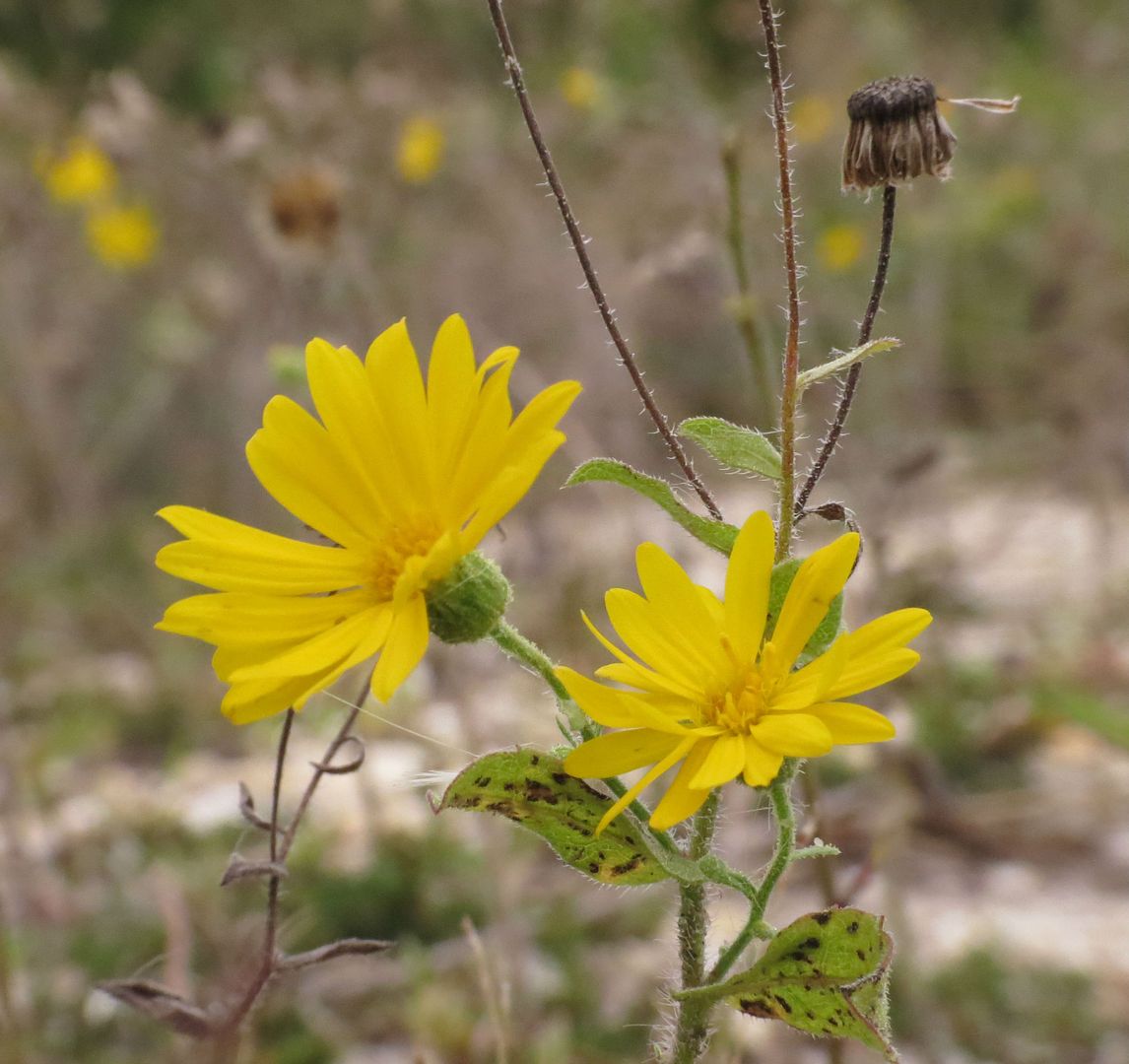
Also flower in Cape May were the wonderful Maryland Golden Asters, Chrysopsis mariana. They grow in nutrient depleted, salt rich, sand, which not many other plants can tolerate.
They grow all year long as a green, simple looking sort of weed, until finally they seem to push all their energy into the flowers which continue to bloom and seed well after the rest of the plant looks to be dead or dying. There's a patch of these at the Mt. Cuba Center, which is much larger now than what's pictured their website, still looks to be green and growing when in flower. I'm not sure if they did something special to the soil but they looked to be healthier when grown in rich meadow soil. Though I know for some plants they will add sand so it's better able to survive the winter. I don't believe this is where Maryland Golden Aster would naturally be found in nature. They would likely get out competed by other plants.
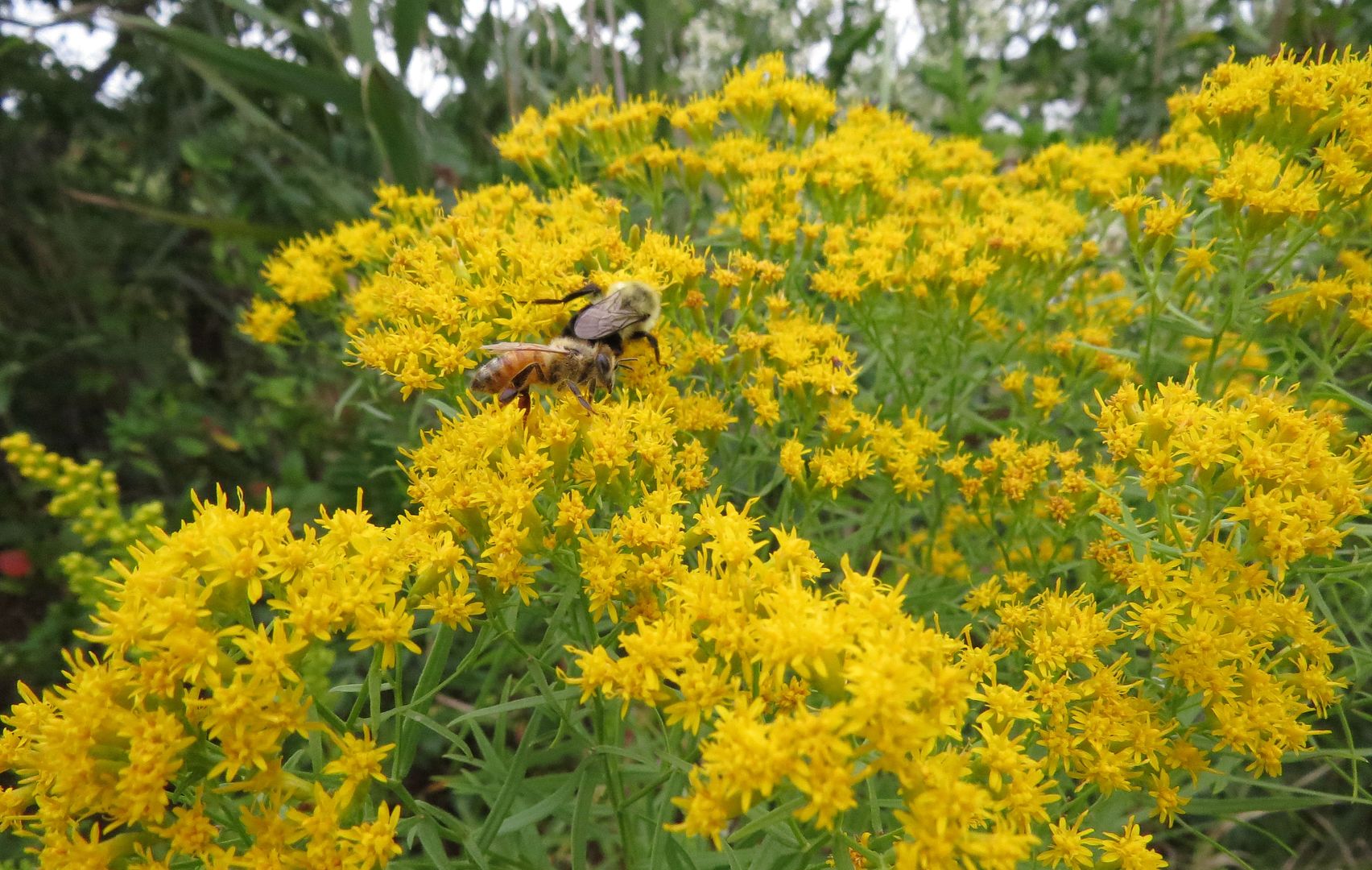
Also flowering were several different types of Goldenrod. Seaside Goldenrod is usually the showiest but the leaves on this one caught my eye this year. I'm at a loss to say what species this is, either Solidago tenuifolia or Solidago graminifolia, leaning toward the former. Growing in the bog where the soil is rich with sand and salt, however these conditions might make them look different than specamins growing in clay and without the added salinity.
Naturally the Bees enjoy this plant.
Showing posts with label Cape May. Show all posts
Sunday, September 27, 2015
A Visit to Cape May, NJ
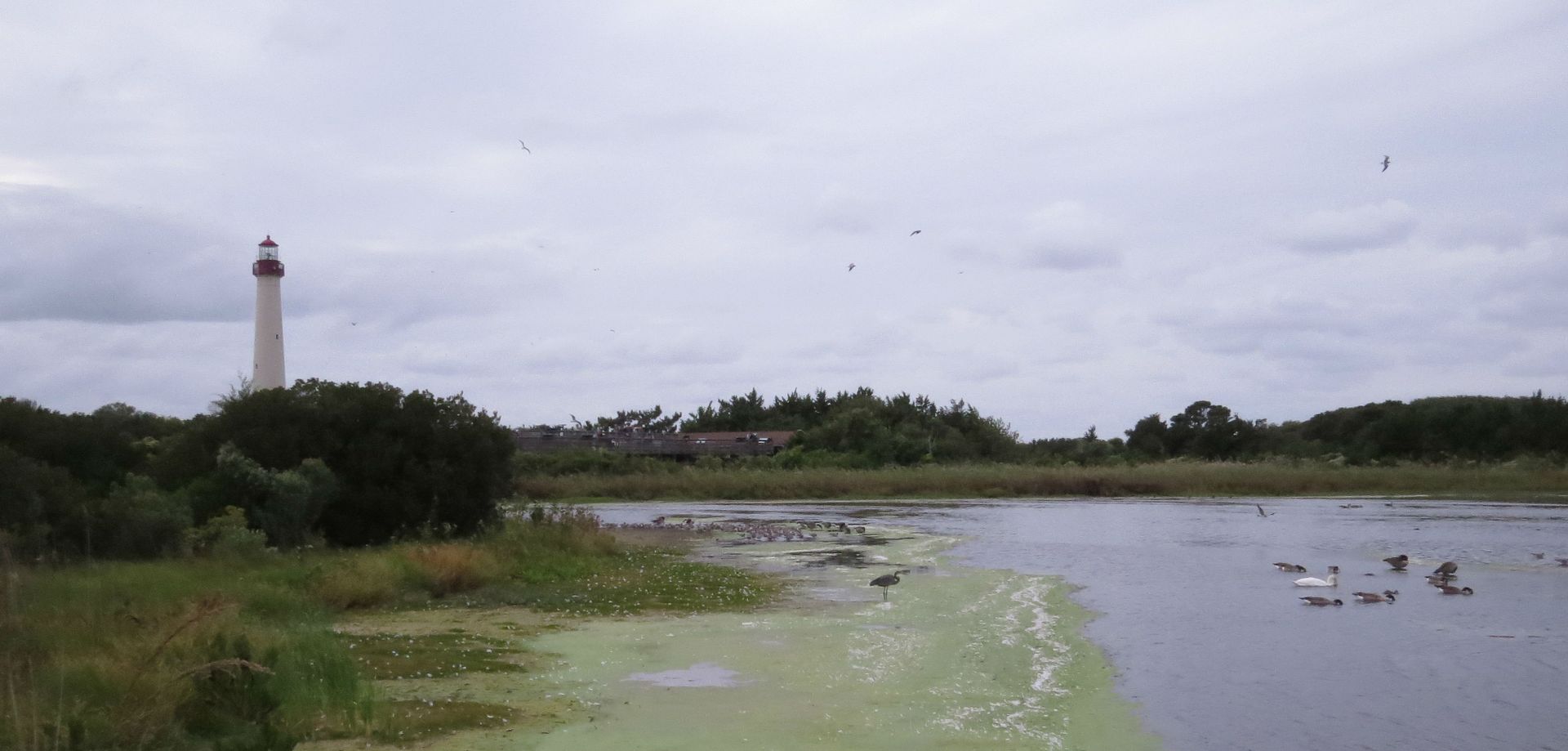
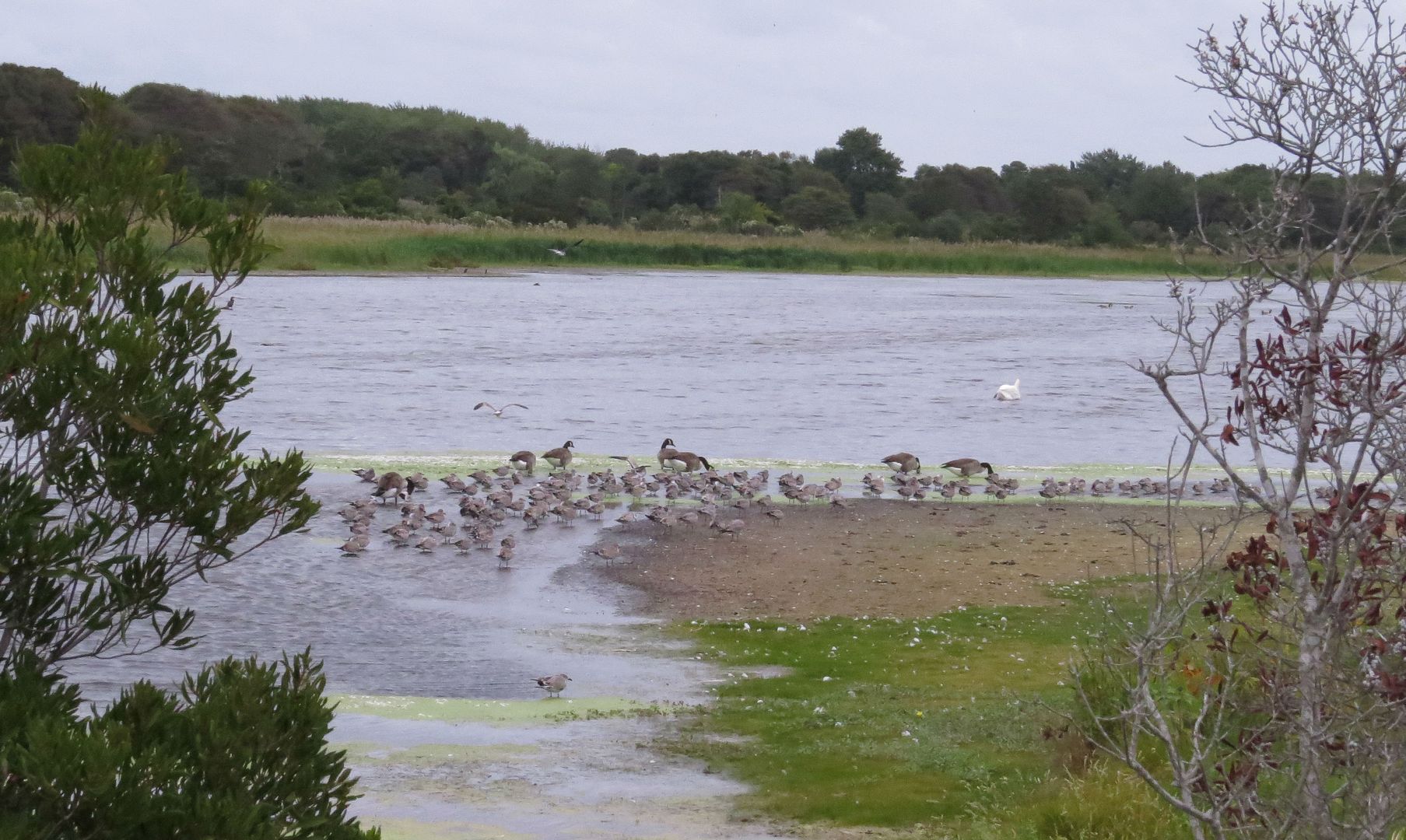
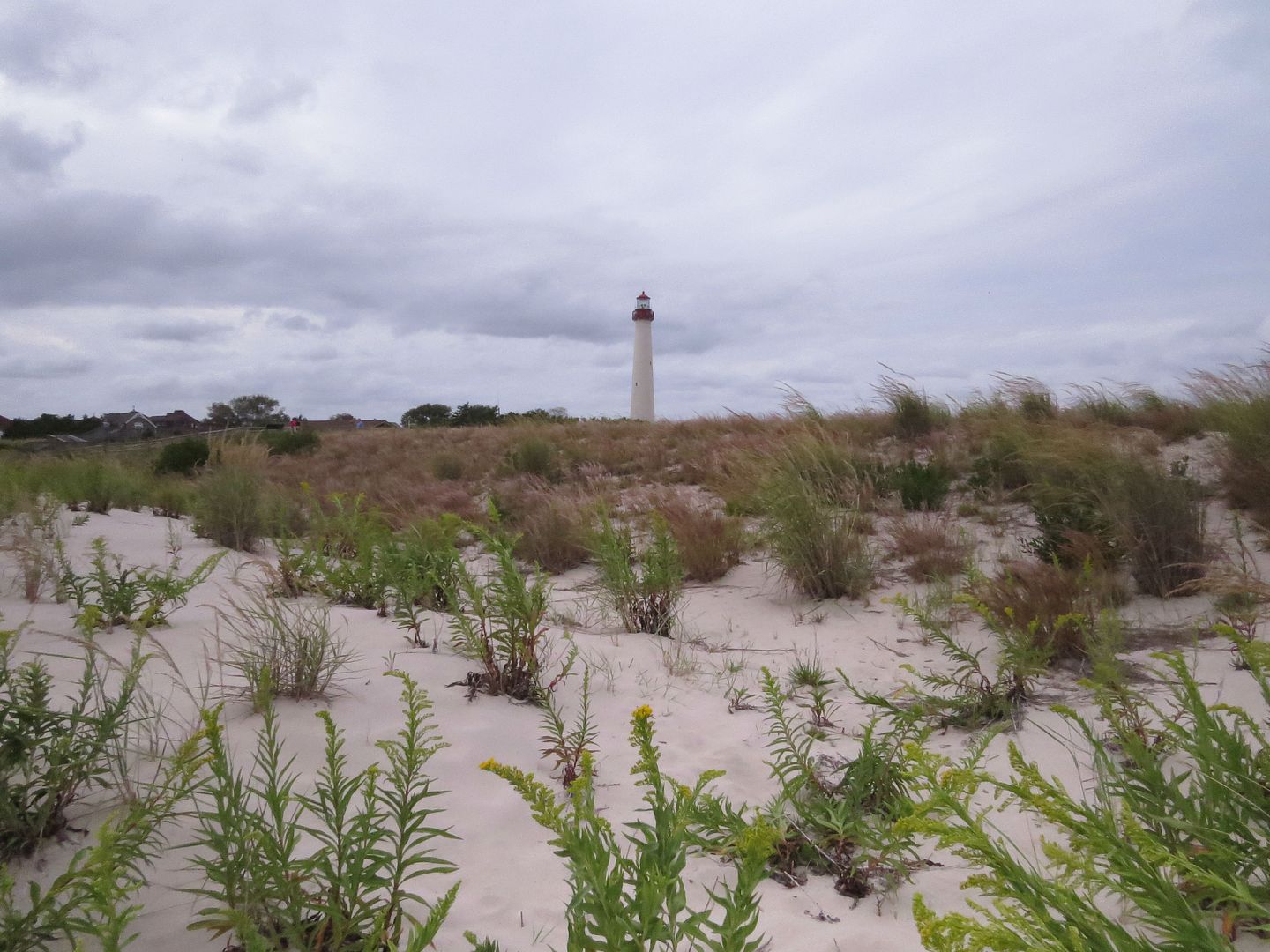
I drove down to Cape May yesterday. This is only an hour and a half from where I live in New Jersey. On one side of the dunes is a sprawling bird sanctuary, ponds, and platforms and docks which bird watchers can use to photograph the various sorts of birds that migrate through.
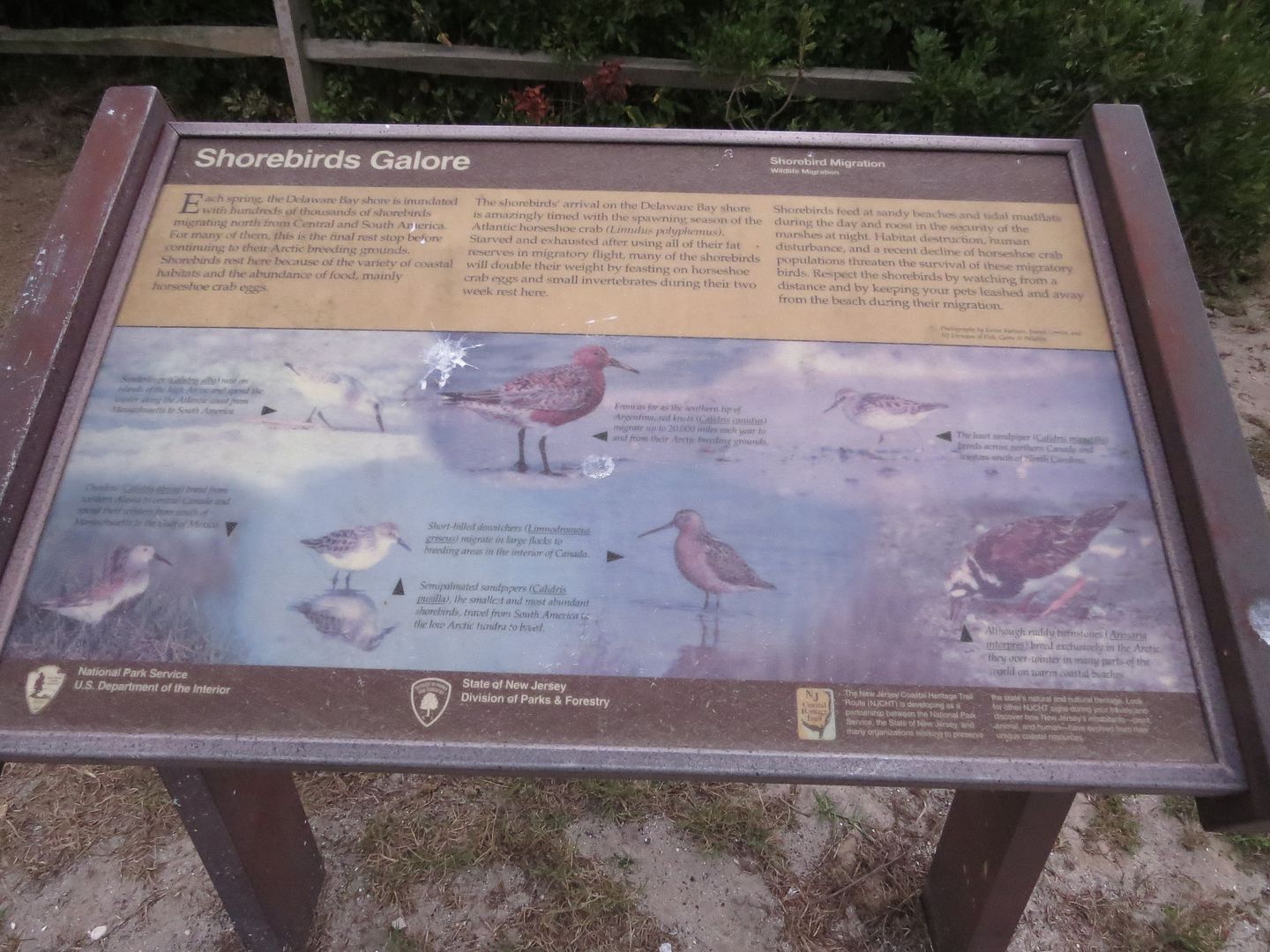
It's something of a birding hot spot in the country. I passed more than one tour in progress with lecturers discussing the different sorts of swans and herrings they were looking at. There's an informative sign that talks about the more exotic birds on the list, which the birds had shat on, along with my car.
I'm sure I got a picture of something exciting here, but birds really aren't my thing.
Just on the other side of the dunes there is a sandy beach with droves of seaside goldenrod planted for the Monarch migration. That's the reason I went down there but the day proved too cold and windy for butterflies to fly.
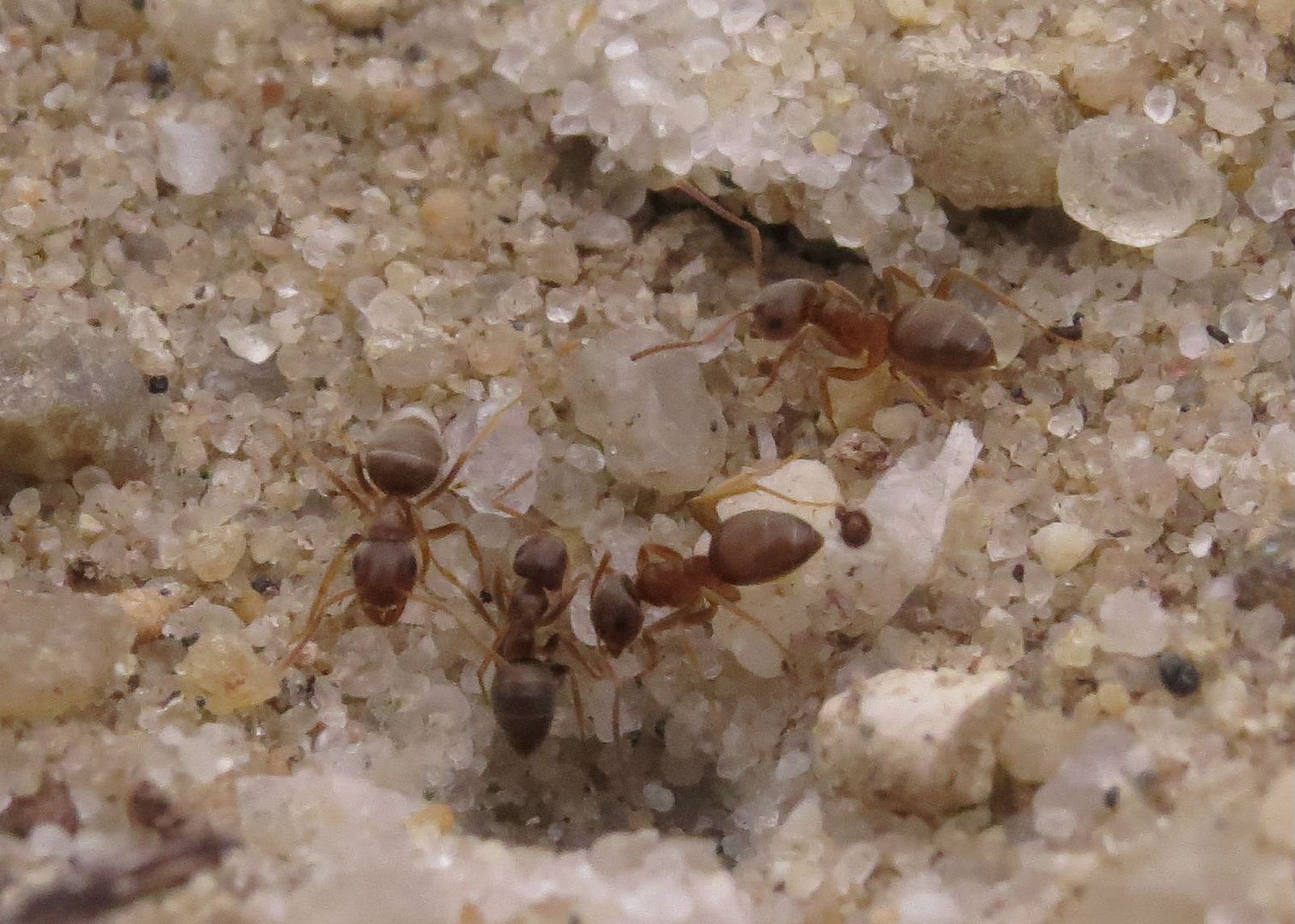
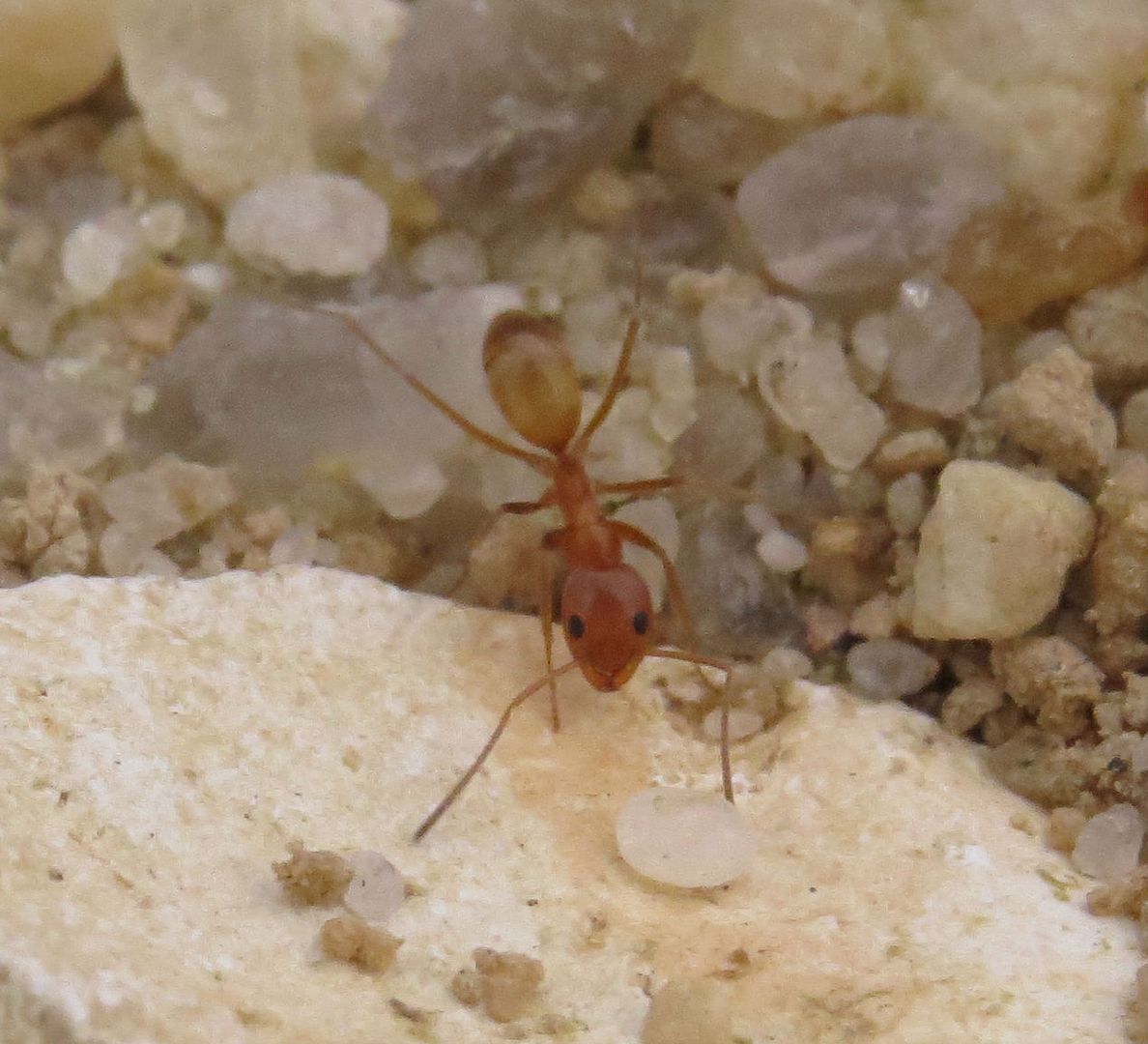
The day wasn't a total bust, as I found a few ants to photograph. This is the common Lasius neoniger, or Labor Day Ant, who's nuptial flights typically happen around Labor Day and in the afternoon no less, sometimes ruining BBQ's and the sport of golf across the US. They're otherwise a rather plane and common sort of ant that make small mounds wherever the soil tends to have some amount of sand to it and in full sun locations.
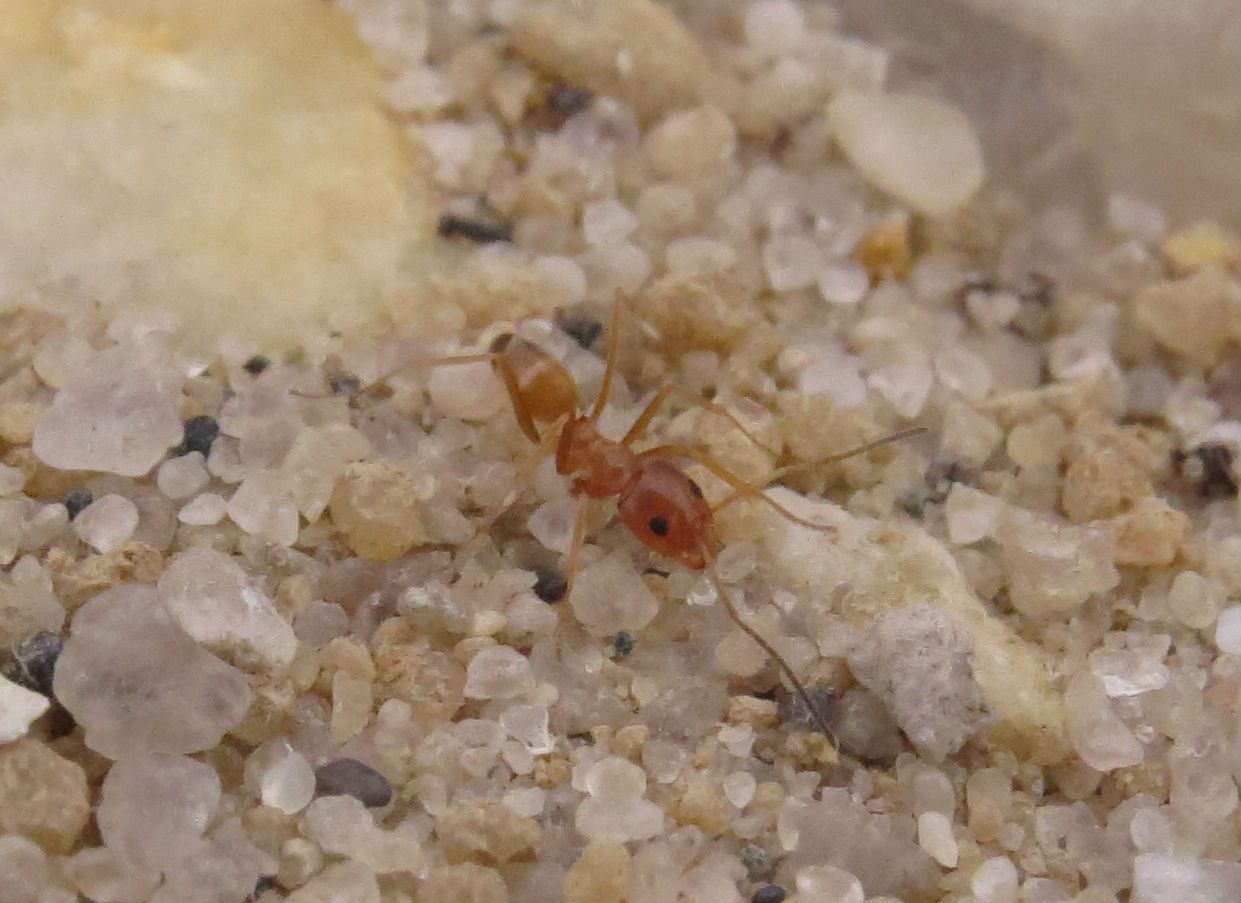
Also found, and slightly more interesting, was the population of Dorymyrmex bureni. This is a species at home to the state of Florida and South Carolina, but in recent years, it's worked its way up the coast and can now be found in New Jersey!
I believe it was first noticed by someone back in 2011 according to Bug Guide. Curiously the Citizen Science website School of Ants doesn't have a dot there yet, though I may have to fix that. Now that it's 2015 I can say the population there seems to be thriving as I found dozens of nests which outnumbered the indigenous Lasius neoniger. In past years though I've never known the beach line of Cape May to be abundant with ant colonies so this probably isn't an issue to worry about. Simply climate change allowing a species to push its range north.
It's something of a birding hot spot in the country. I passed more than one tour in progress with lecturers discussing the different sorts of swans and herrings they were looking at. There's an informative sign that talks about the more exotic birds on the list, which the birds had shat on, along with my car.
I'm sure I got a picture of something exciting here, but birds really aren't my thing.
Just on the other side of the dunes there is a sandy beach with droves of seaside goldenrod planted for the Monarch migration. That's the reason I went down there but the day proved too cold and windy for butterflies to fly.
The day wasn't a total bust, as I found a few ants to photograph. This is the common Lasius neoniger, or Labor Day Ant, who's nuptial flights typically happen around Labor Day and in the afternoon no less, sometimes ruining BBQ's and the sport of golf across the US. They're otherwise a rather plane and common sort of ant that make small mounds wherever the soil tends to have some amount of sand to it and in full sun locations.
Also found, and slightly more interesting, was the population of Dorymyrmex bureni. This is a species at home to the state of Florida and South Carolina, but in recent years, it's worked its way up the coast and can now be found in New Jersey!
I believe it was first noticed by someone back in 2011 according to Bug Guide. Curiously the Citizen Science website School of Ants doesn't have a dot there yet, though I may have to fix that. Now that it's 2015 I can say the population there seems to be thriving as I found dozens of nests which outnumbered the indigenous Lasius neoniger. In past years though I've never known the beach line of Cape May to be abundant with ant colonies so this probably isn't an issue to worry about. Simply climate change allowing a species to push its range north.
Labels:
Cape May,
Dorymyrmex,
Lasius,
Lighthouse
Subscribe to:
Posts (Atom)