Being a member of the New Jersey Native Plant Society came with an unexpected perk this year. They held a fund raiser where we got to tour New Moon Nursery. They're a wholesale nursery native plant nursery, family run, started back in 2003. They do dabble in a few nonnatives but only under contract.
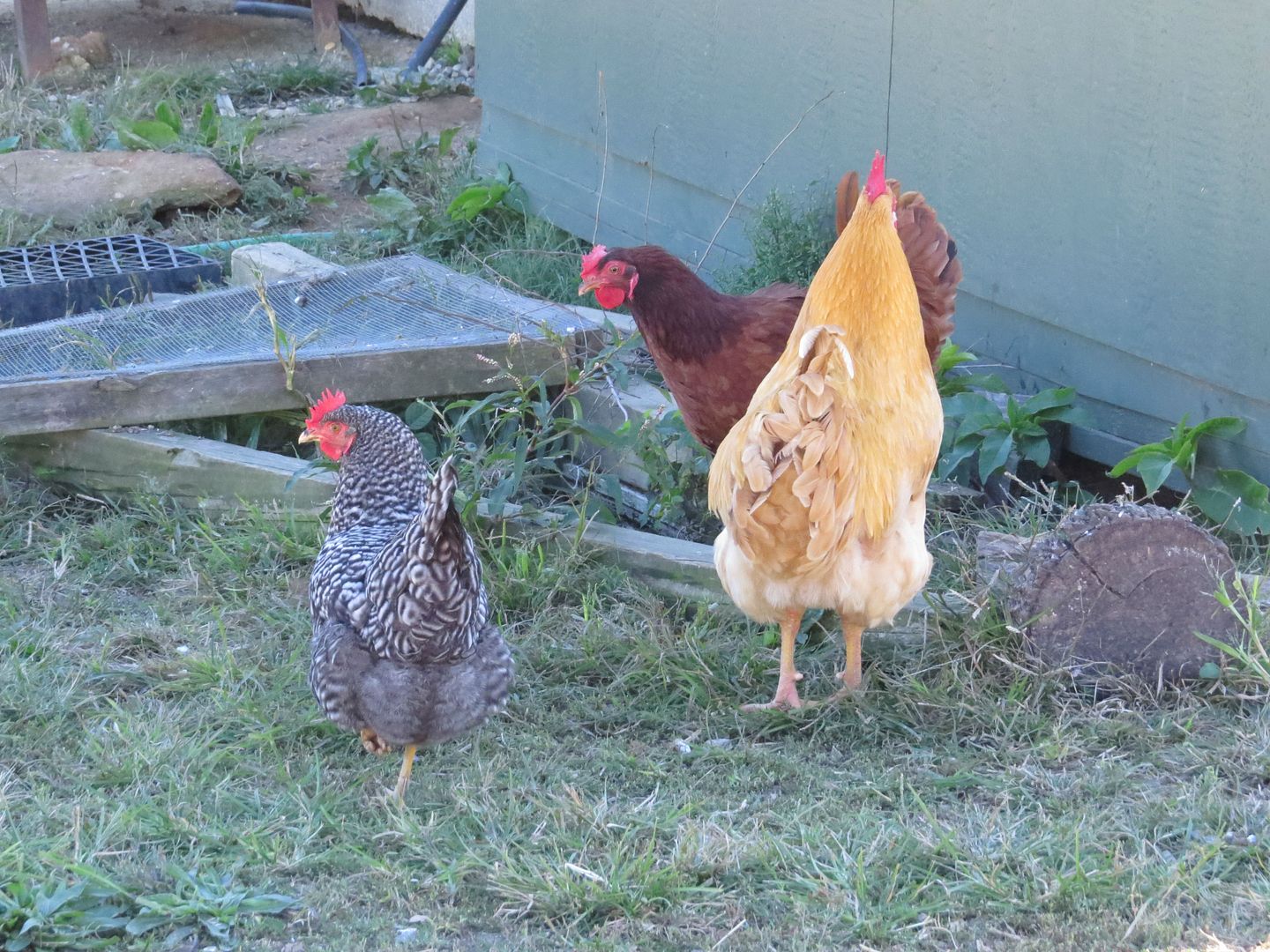
Before then the property used to be a chicken farm, and you can sort of see it in some of the buildings. Also they keep a couple dozen chickens around.
This is their shipping department, which was I believe they said were originally chicken cages from floor to ceiling. Basically one day a week, they go out and collect the flats to plants customers have ordered. They then take empty trays and assemble the orders from these flats and load them up into trucks or set them aside for customers to arrive and pick up.
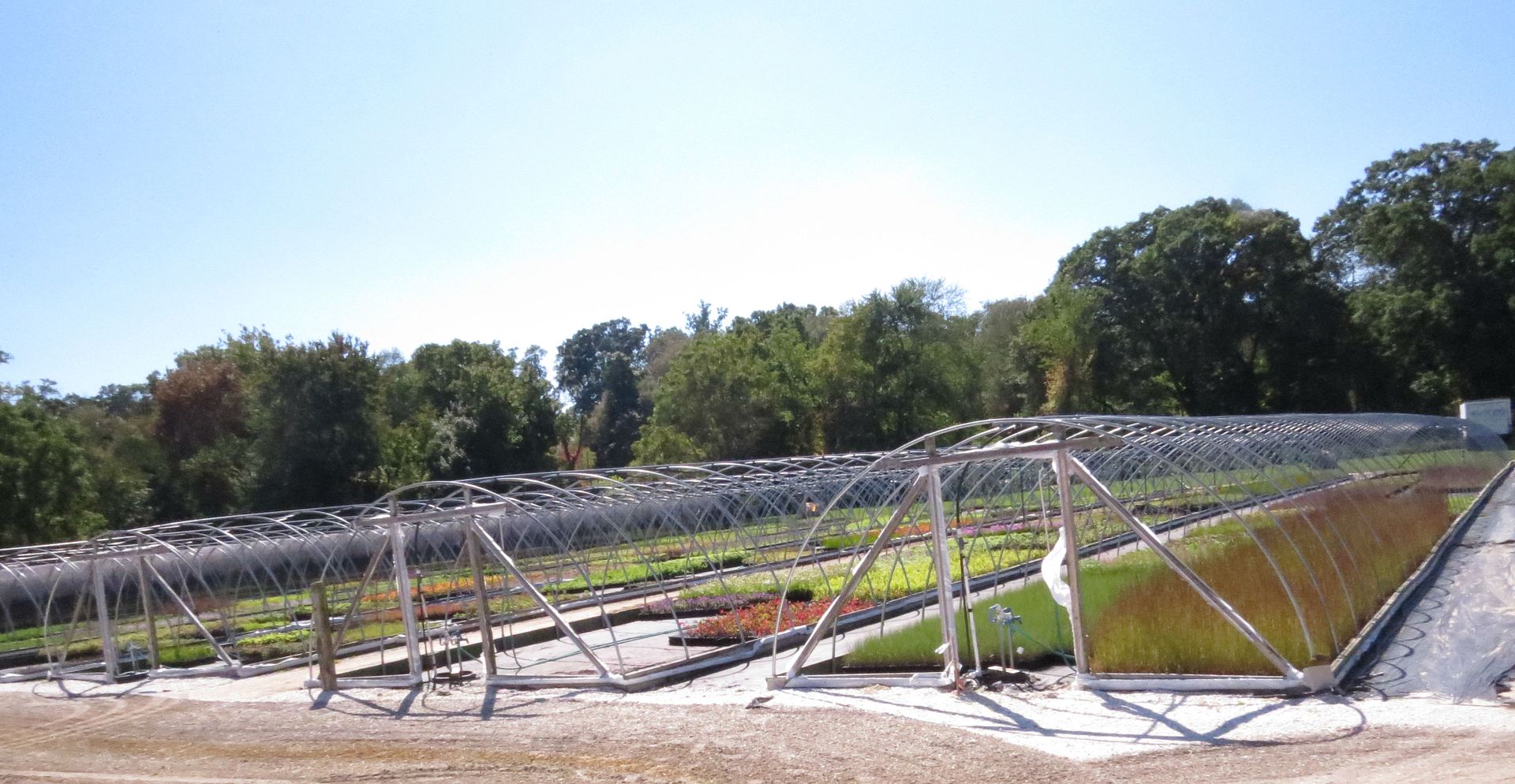
It's at this point in the tour that we were given our free reign to fill up a flat of our own with with up to 50 plants, including a few things they had listed as limited supply and not available! The only real restriction was they had to be plug sized. This was a gift for just a $100 donation to the NJ Native Plant Society made well in advance. The nursery has 5 heated greenhouses, 10 row cover house, and a few outside areas filled with several hundred species of plants. Basically everything was up for grabs!
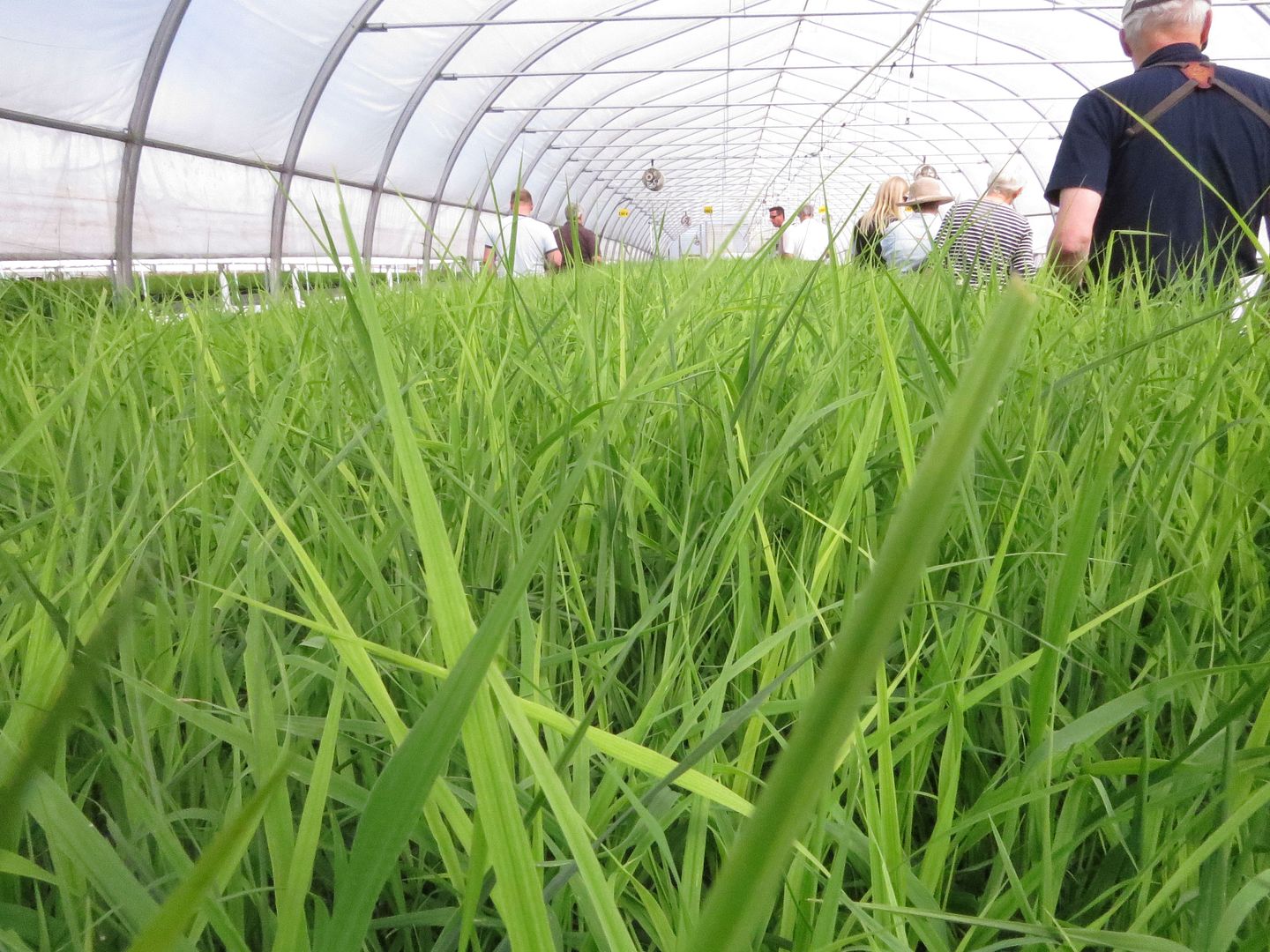
The tour continued into the greenhouses where they showed us how they start up seedlings in trays. I found it neat to learn they then take small cuttings of the seedlings after they germinate and root them to double plant production. The end product still maintains genetic diversity and they're able to mass produce cultivars that way.
Seedlings were a small part of the overall products they had. Pretty much everywhere else had hundreds of trays of plugs that we were free to take. It was actually fun just walking around the greenhouses, letting your hands glide across warm season grasses, rushes, Amsonia, and other perennials.
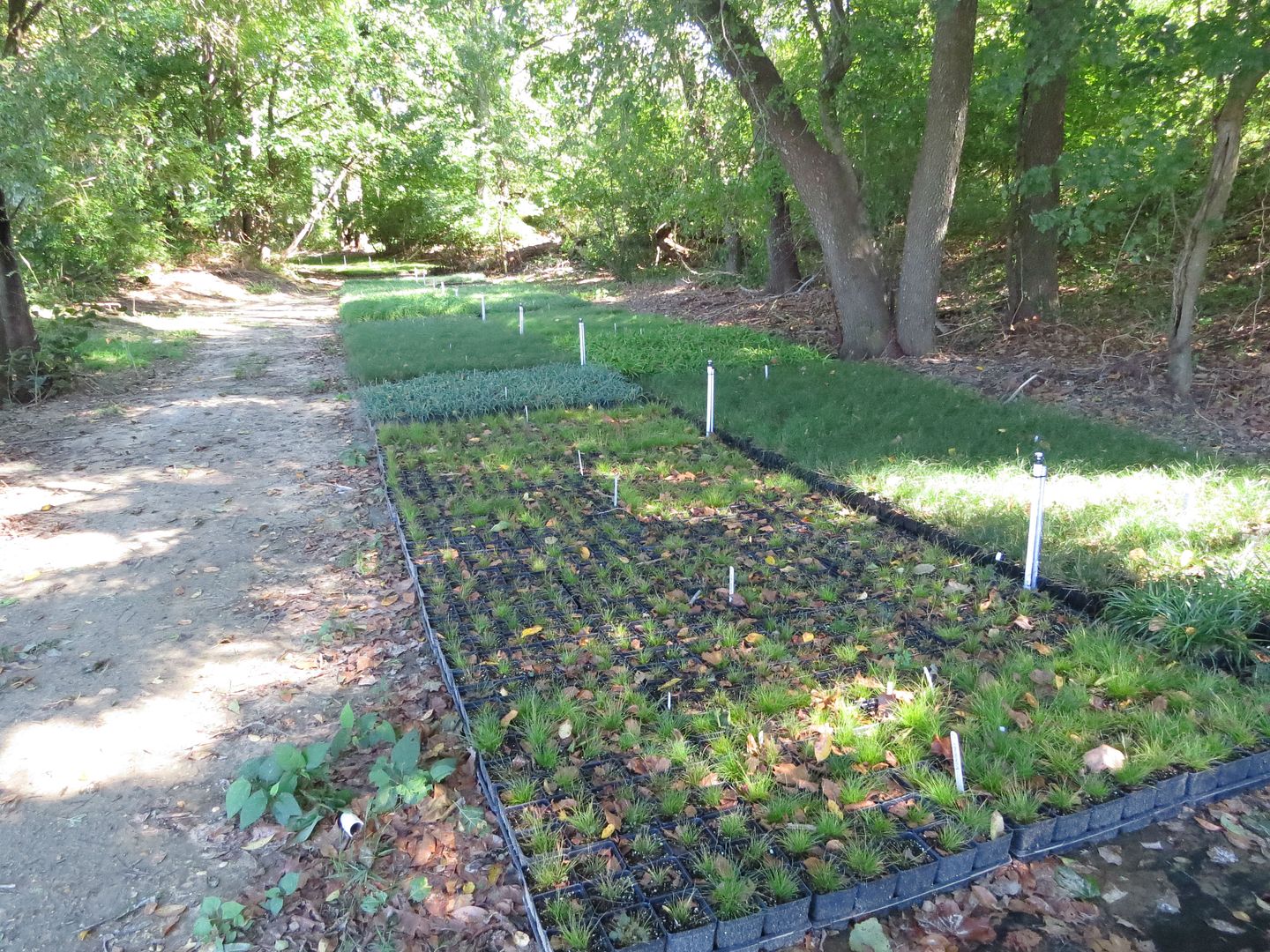
Around back they had an area setup for shade plants. These were mostly sedges which are more cold and shade tolerant than most grasses. They are also larger than plug size and thus not up for grabs, though each species was represented in the greenhouses where we were free to take them.
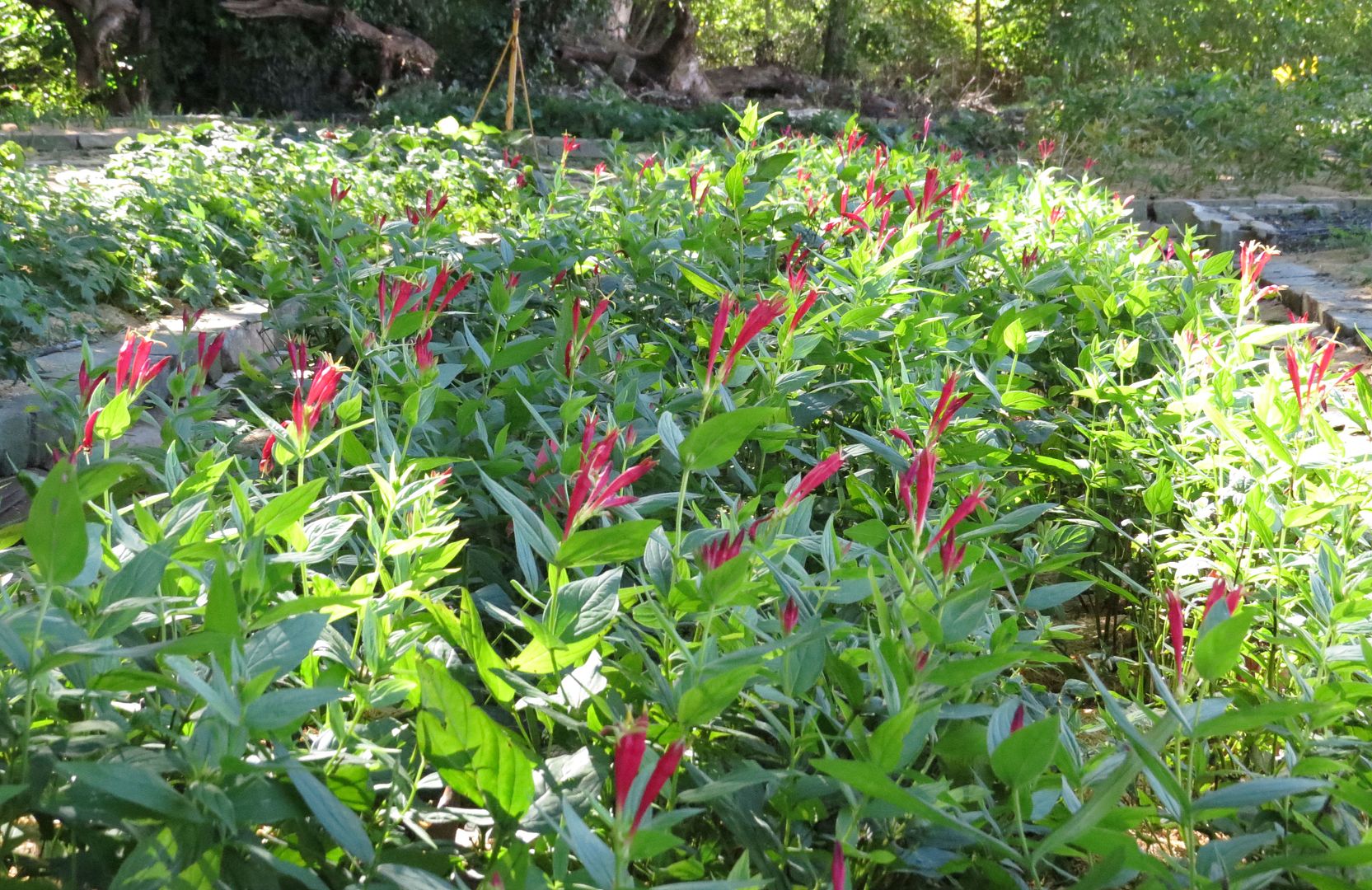
There was a small garden area back here where one native plant stole the show.
Spigelia marilandica, Indian Pink, is a shade plant with a brilliant red and yellow flower. Despite the slight warning "It will spread on you," this perennial remains one of the more expensive and in high demand native plants around. This is something of a contradiction that I don't know the answer to. (Probably should have asked while I was there, whoops.) I think the demand is created by the fact that so few growers grow the plant.
Around the front was the Pièce de résistance. This is where most of their plants are kept that are ready for sale. At this point the tour basically fell apart as everyone went and started filling up their trays.
Naturally I'm drawn to what brings in the pollinators, and this time it was a surprising number of cultivars.
I had to just marvel at the number of Scoliid Wasps on their goldenrod they had. There must have been a thousand of them on this one patch.
Two Hours Later, here's what I brought home:
5 Helianthus angustifolius, my favorite Swamp Sunflower.
5 Spigelia marilandica, Indian Pink.
5 Senecio aureus, Golden Ragwort, which I'm trying out in the meadow garden.
5 Sedum ternatum, Stonecrop, which I'm giving a try for the first time.
5 Symphyotrichum laevis 'Bluebird', which I've seen in action among black eyed susans and they look great together.
5 Symphyotrichum oblongifolius 'October Skies' which I have blooming now in nice fluffy domes of flowers out in the meadow.
5 Symphyotrichum noave-angliae 'Purple Dome'. This New England Aster is a compact cultivar, similar to S. oblongifolius. I was going to alternate this with 'October Skies' to make a boarder.
5 Caltha palustris, Marsh Marigold, I've been trying to establish for years now and think I have a spot it might like to grow.
5 Sisyrinchium angustifolium, Blue-eyed Grass.
2 Eurybia spectabilis, Showy Aster, was a last second decision. The flowers are larger than most Asters and certainly are showy, but I recall the overall plant not being that impressive.
3 Chrysogonum virginianum 'Superstar'. This is a selection of Green and Gold which is another first for my yard. It's a shade loving ground cover that blooms from April into June.
All and all I'd say it was a great trip.
Also Photographed:
In the cardboard are plants from Bluestone Perennials.
3 Solidago 'Fireworks'
3 New England Aster 'September Ruby'
I bought these two because they flower together and I love the combination of red and yellow.
(Also not photographed are a few dozen Tulipa clusiana 'Lady Jane' bulbs which I'm giving a try next year. I'm curious to see if species tulips are better at attracting pollinators.)
And a native Pitcher Plant which had some Sundews flowering in the moss. This came as a free gift from Aquascapes Unlimited.
Showing posts with label Solidago. Show all posts
Saturday, September 27, 2014
Sunday, February 10, 2013
Thinning the Tall Goldenrod, Solidago altissma
Tall Goldenrod, Solidago altissma, started in my garden as just one cane. Actually I had a butterfly bush there and noticed one of the stems looked different. When I got rid of the butterfly bush I kept the stem and it turned out to be goldenrod.
The following year that one stem turned into 7, then 12, then 40, then ~100 and I've stopped counting ever since. I've kept them confined to an area that's only 3' by 6'. But they'd grow to be so much taller, 8' to 13' and often they'd fall over into the surrounding pathways. While I have thinned them in the past, this year I decided to pull as much as I could. I'm still going to have plants growing there, but hopefully I won't need to thin them for another few years.
Tuesday, October 18, 2011
The Amazing Goldenrod
Well the Solidago altissima, Tall Goldenrod, is back in bloom. It doesn't quite make it to our first frost but it's late enough that ... frankly I don't think anything else that's native is flowering! We have a white flowering Chrysanthemum that blooms a little later but I've never seen any bees on that plant.
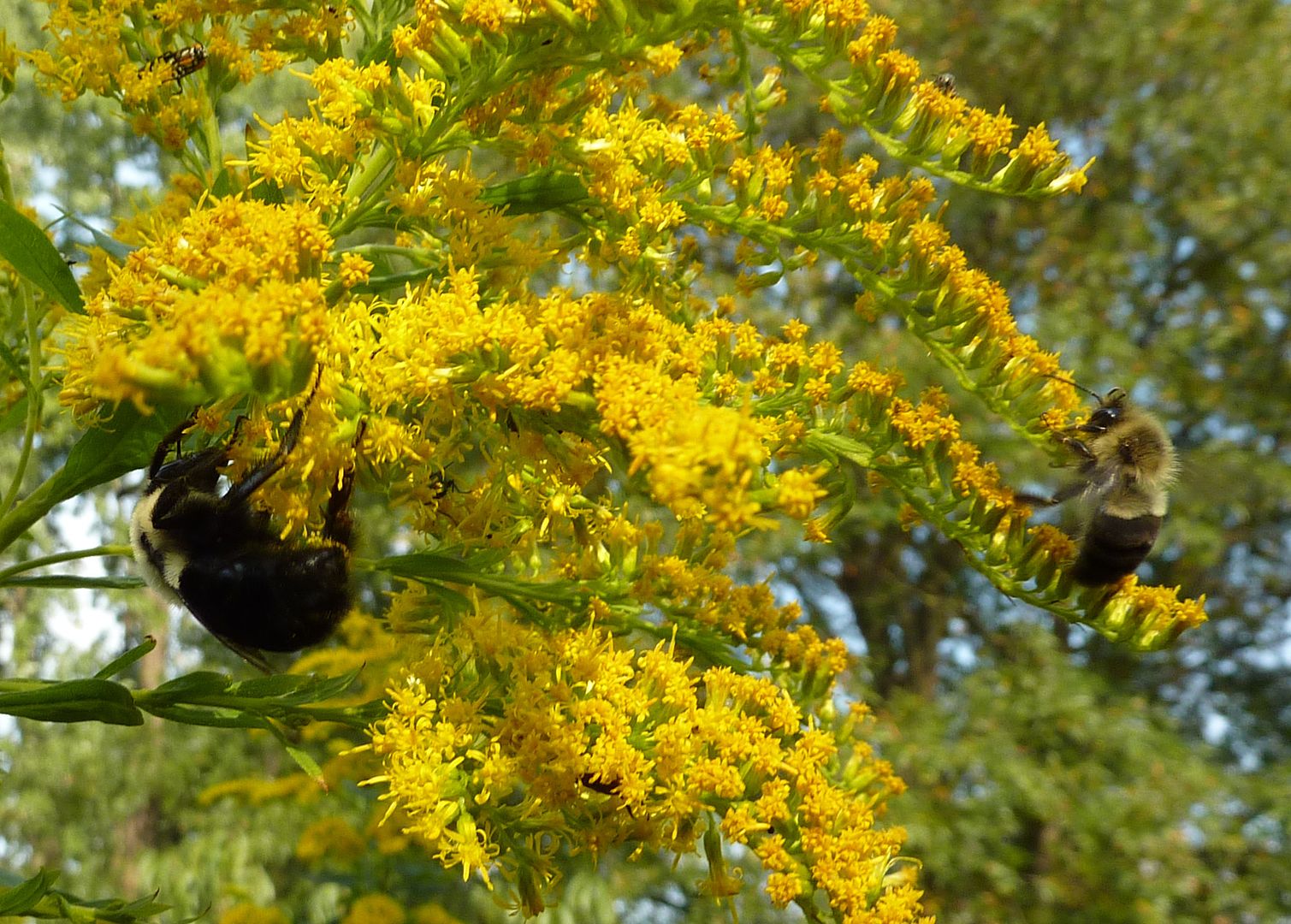
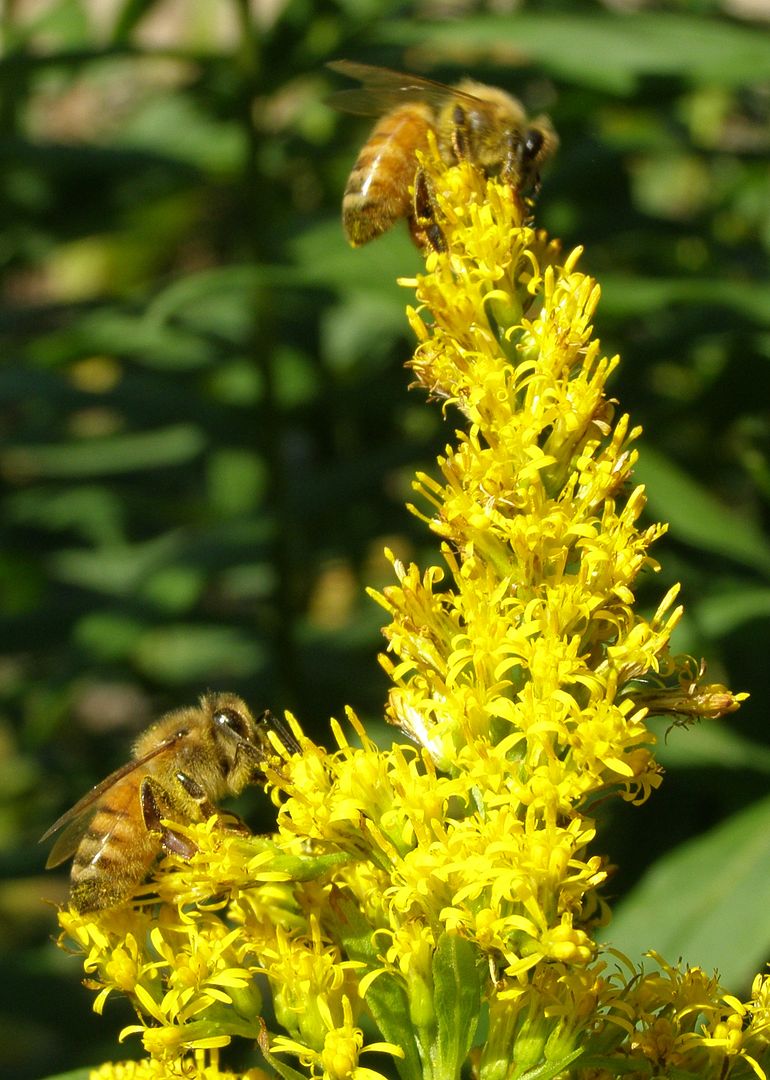
The canes are once again reaching 13' tall and Bumblebee queens (left) are showing up slowly as they did last year. Workers and possibly males (right) are also showing up and more diligently working the flowers.
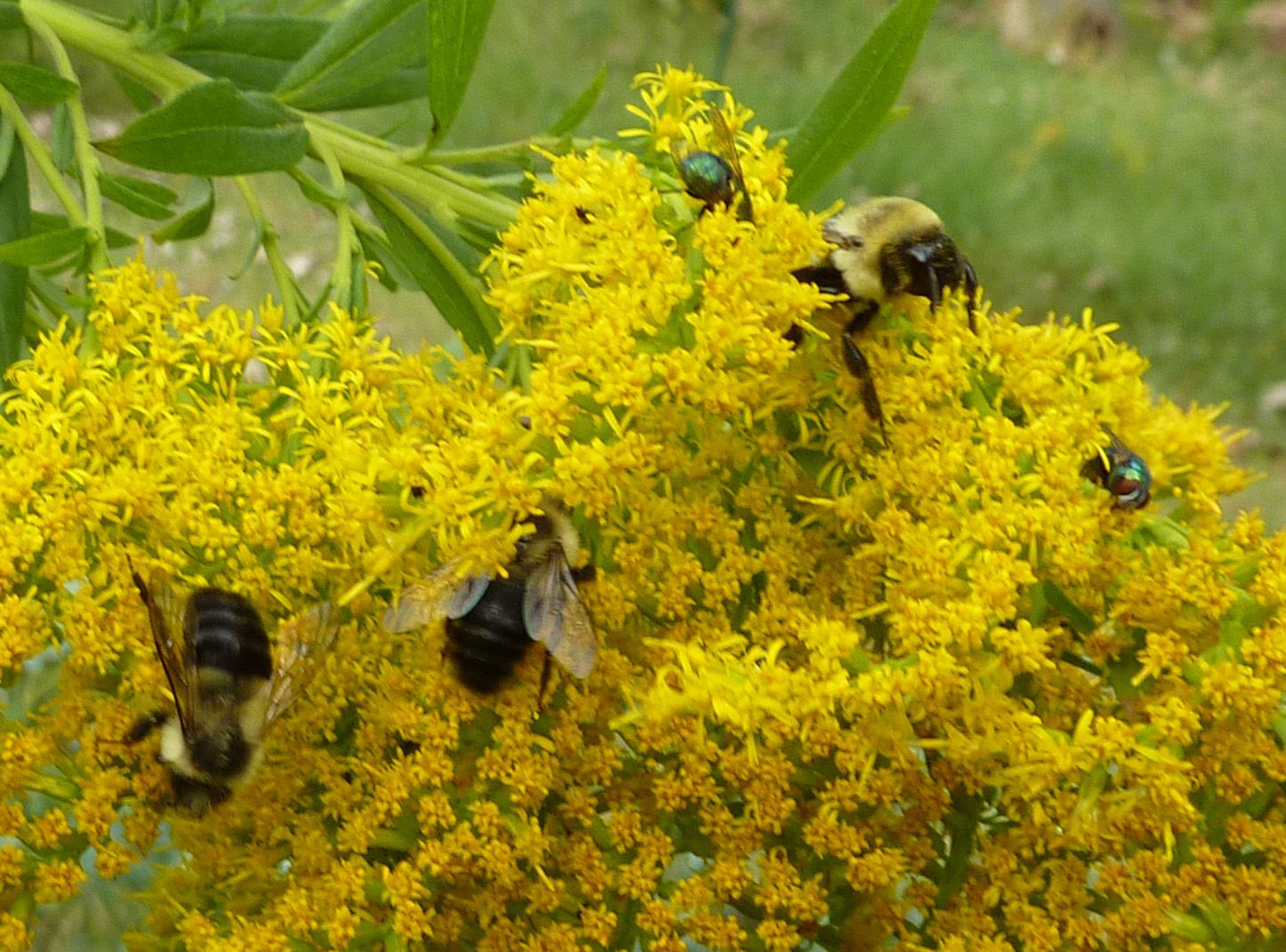
All manner of pollinator seem to be swarming over this plant. There are even swarms of tiny sweat bees who all seem to work flowers next to one another.
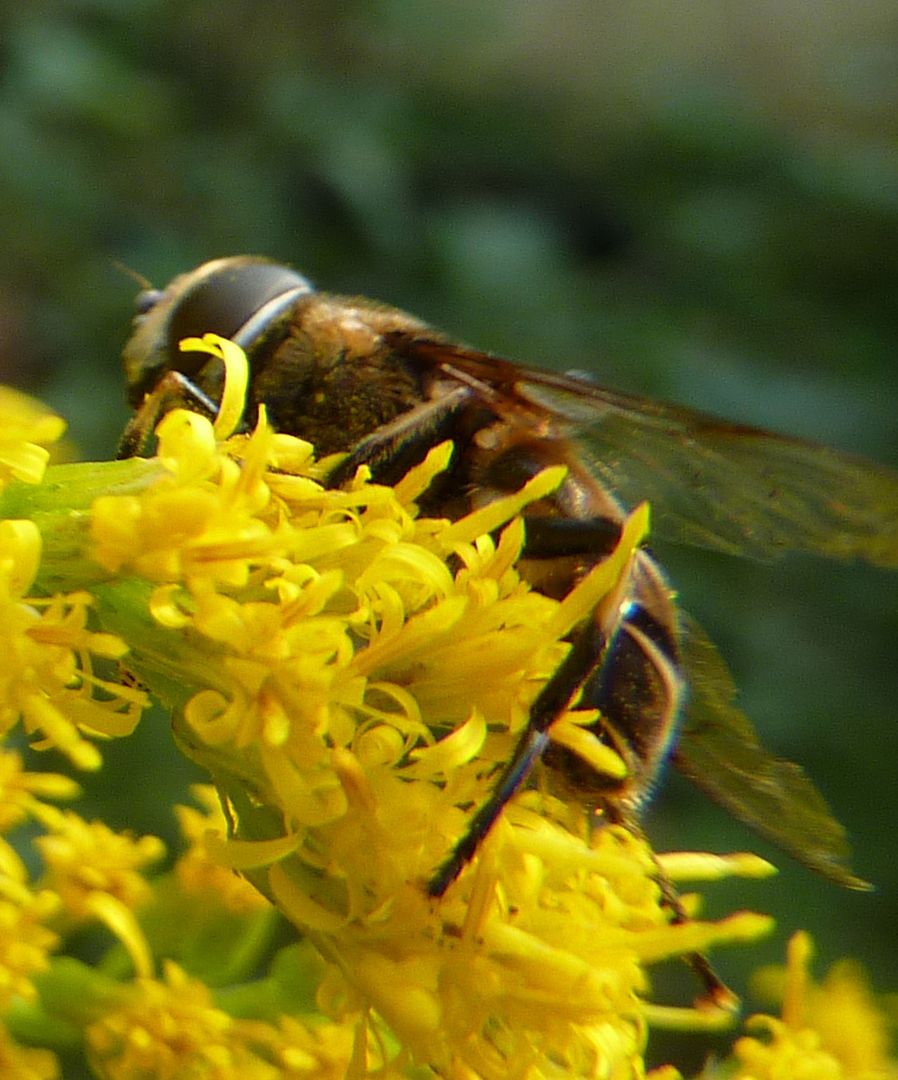
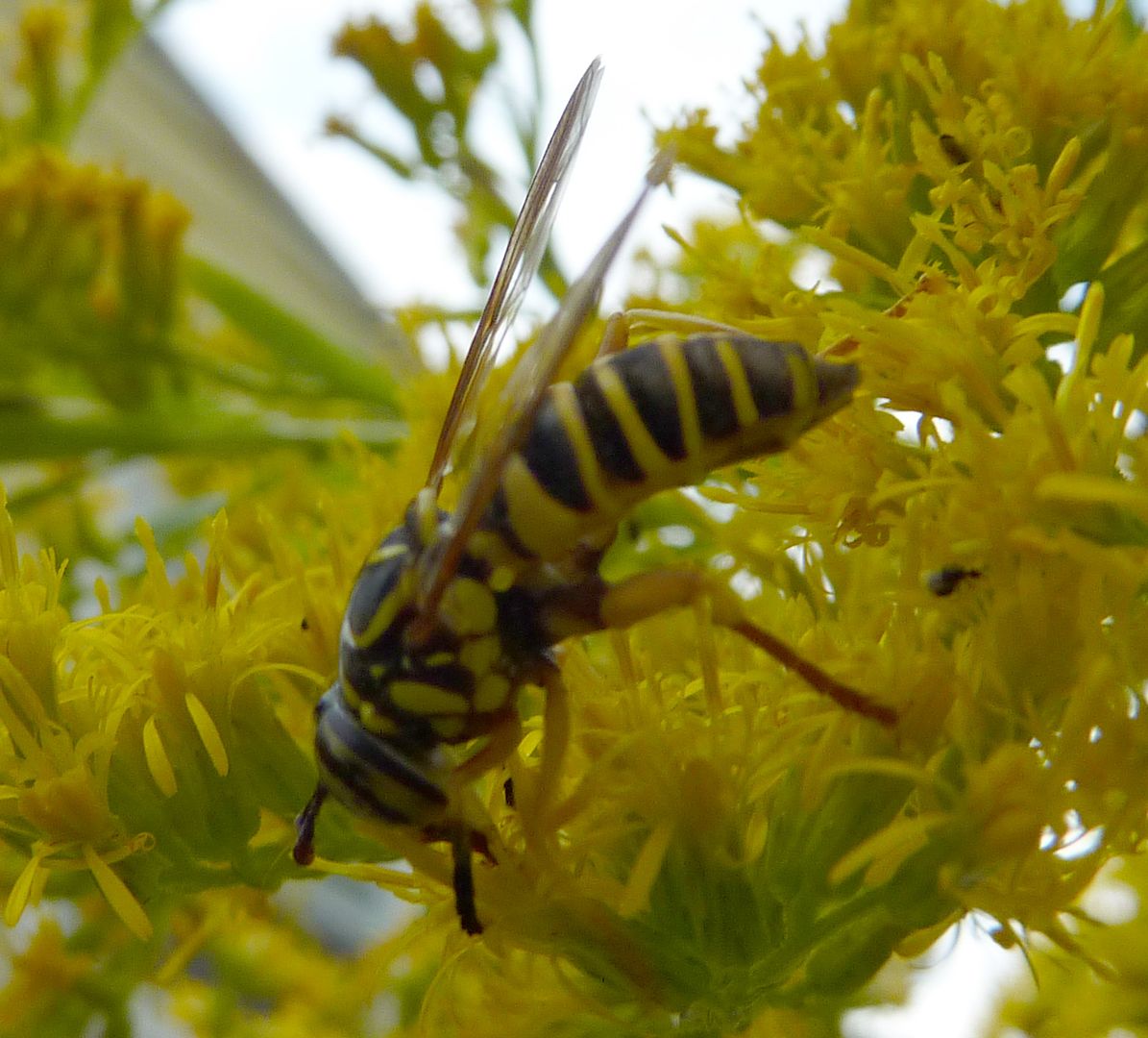
Droves of Flower Flies which mimic both bumblebees and wasps are all over this plant.
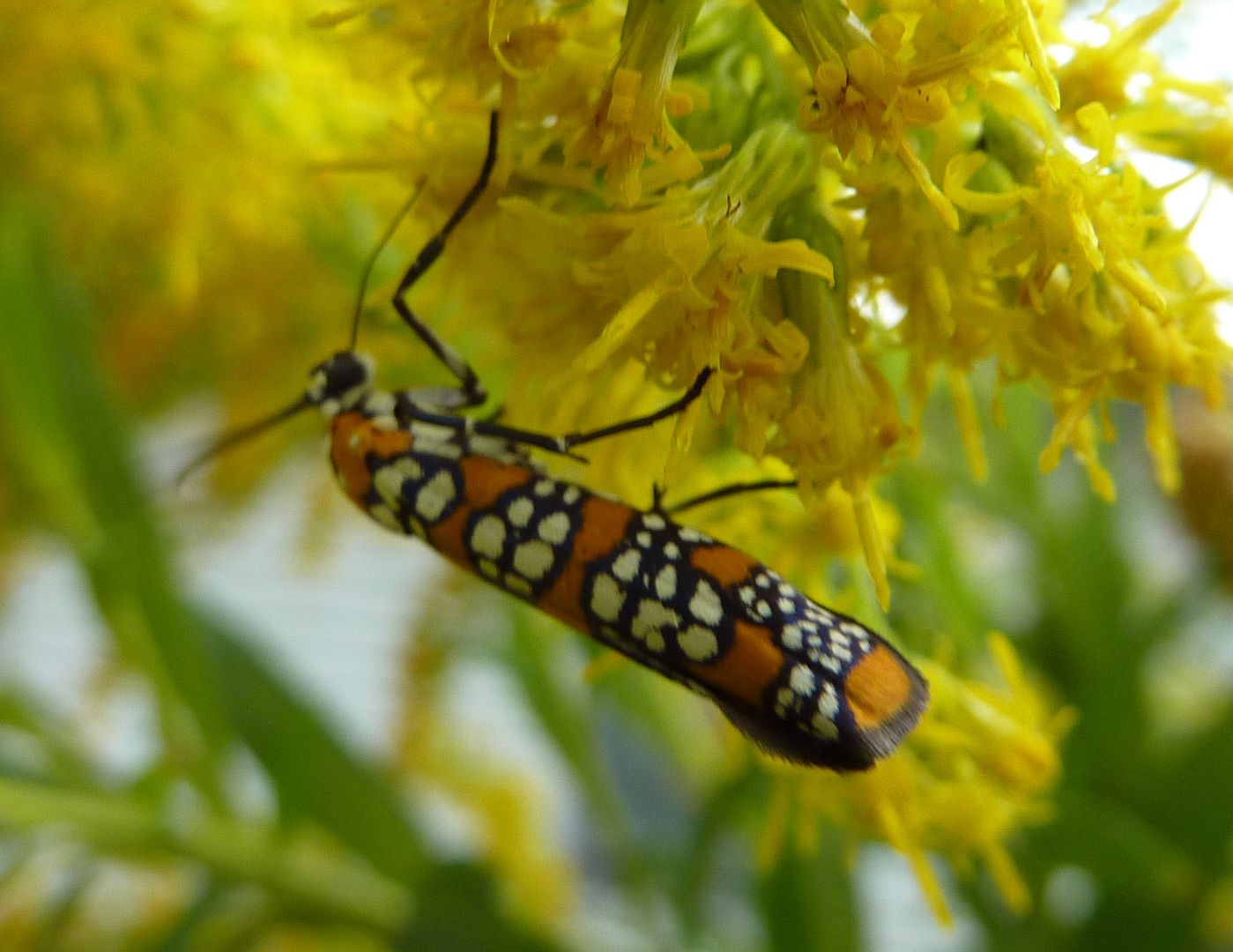
Atteva aurea, The Ailanthus Webworm, is an attractive little moth that's easily identified as it's the only member of the genus in North America. The common name refers to the host plant's genus, The Tree of Heaven, a fast growing invasive tree.
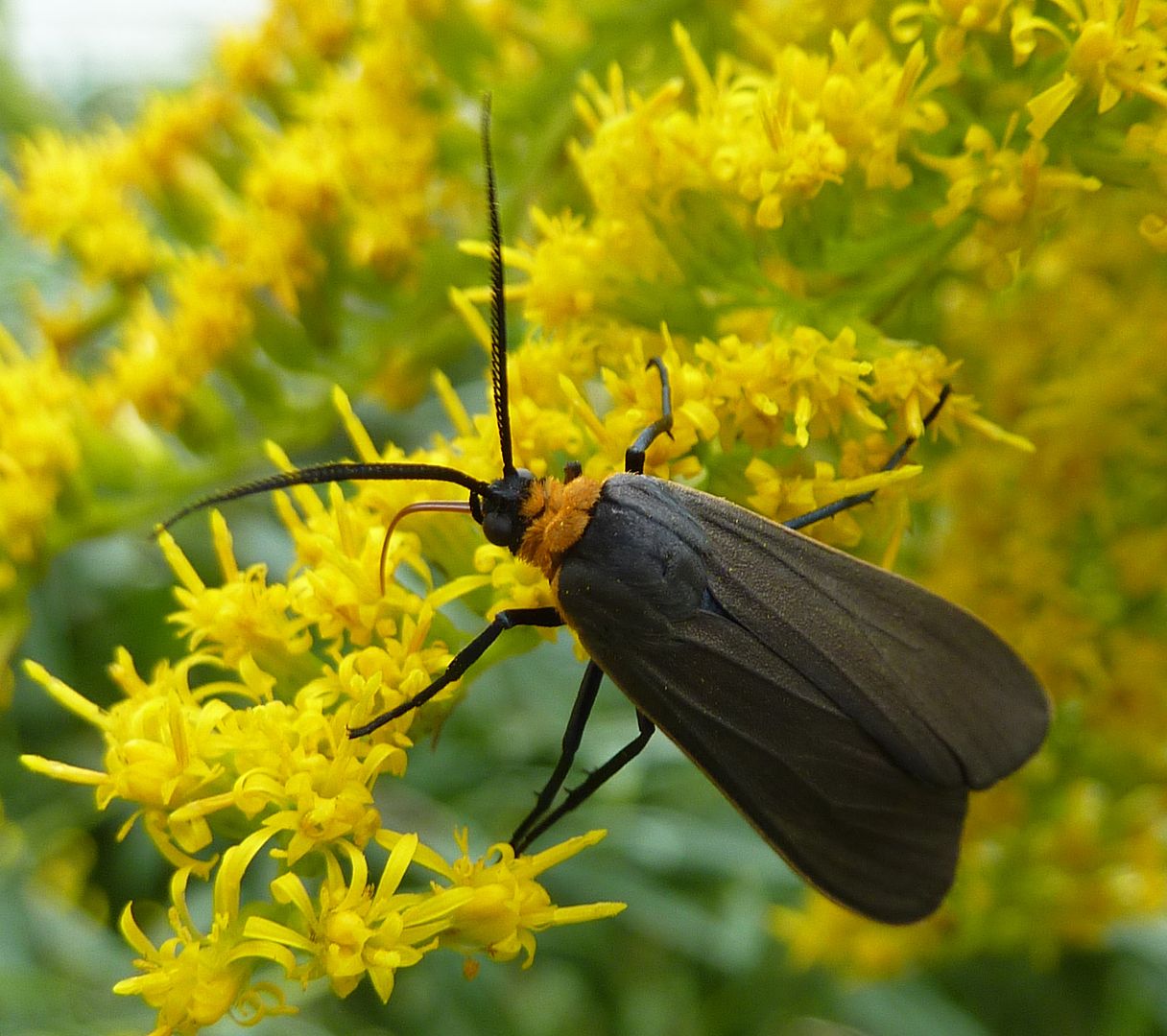
Ctenucha fulvicollis, Yellow-Collared Scape Moth, are commonly seen on Goldenrods throughout the autumn.
Shortly after I'd recorded the video way above, a Monarch came fluttering bye. It didn't land very long and was quick to take off. Much like honeybees I find Monarchs seem to prefer Asters when given the choice.
Monday, October 18, 2010
Tall Goldenrod Pollinators
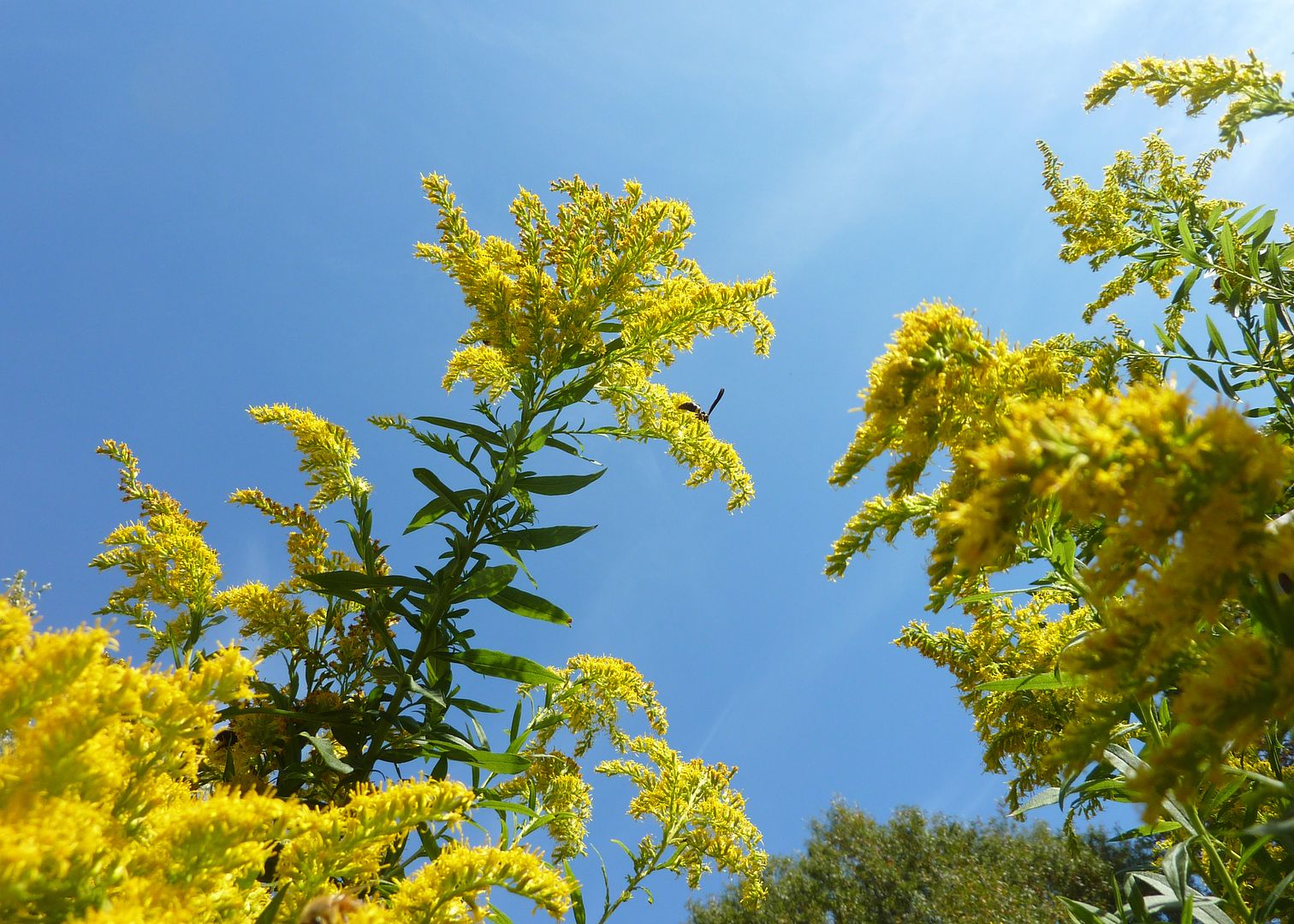
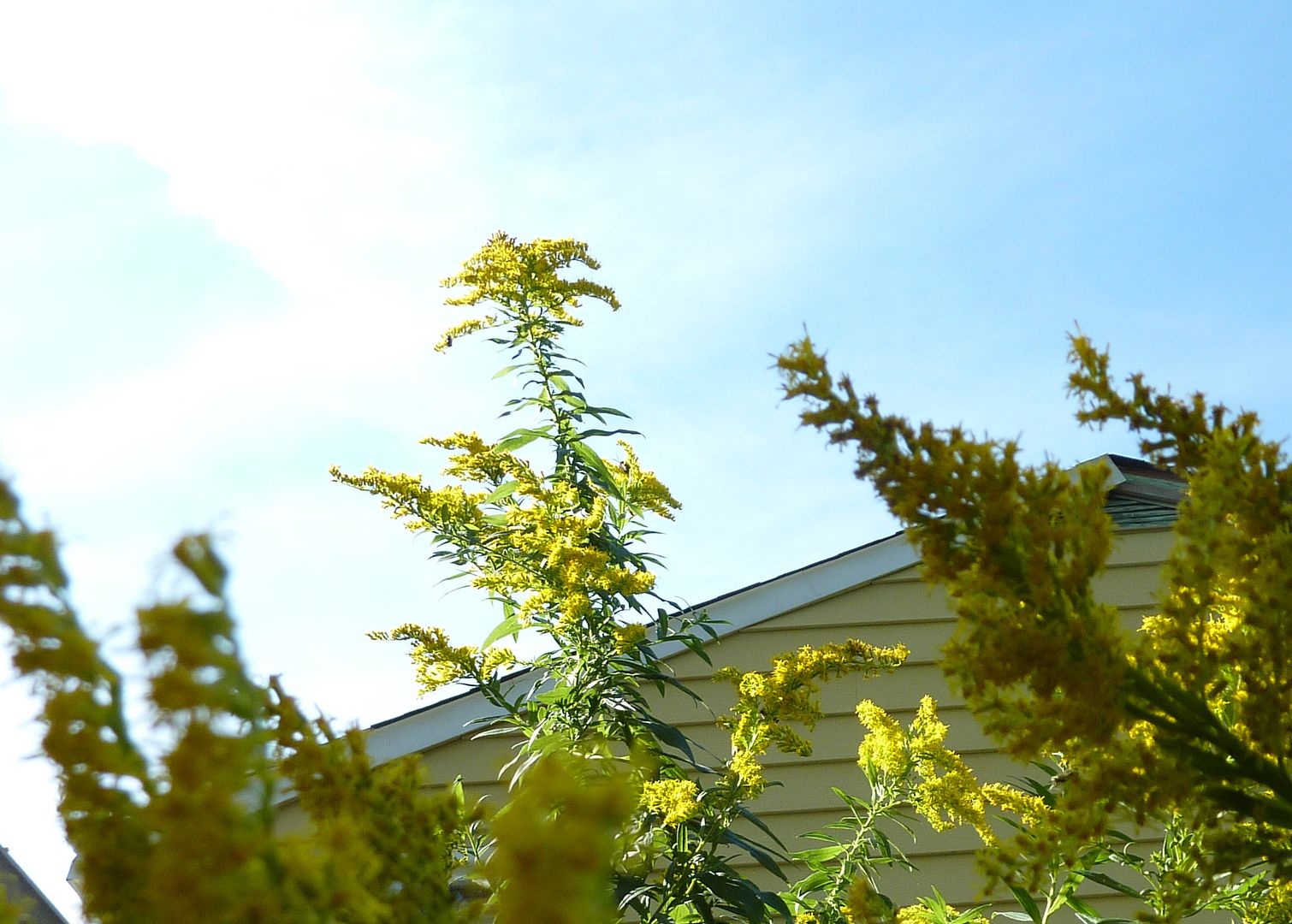
So this is the Goldenrod monster that lives in my backyard. Solidago altissima, Tall Goldenrod is identified as growing 5' tall, though this plant is a noted exception at 10' tall.
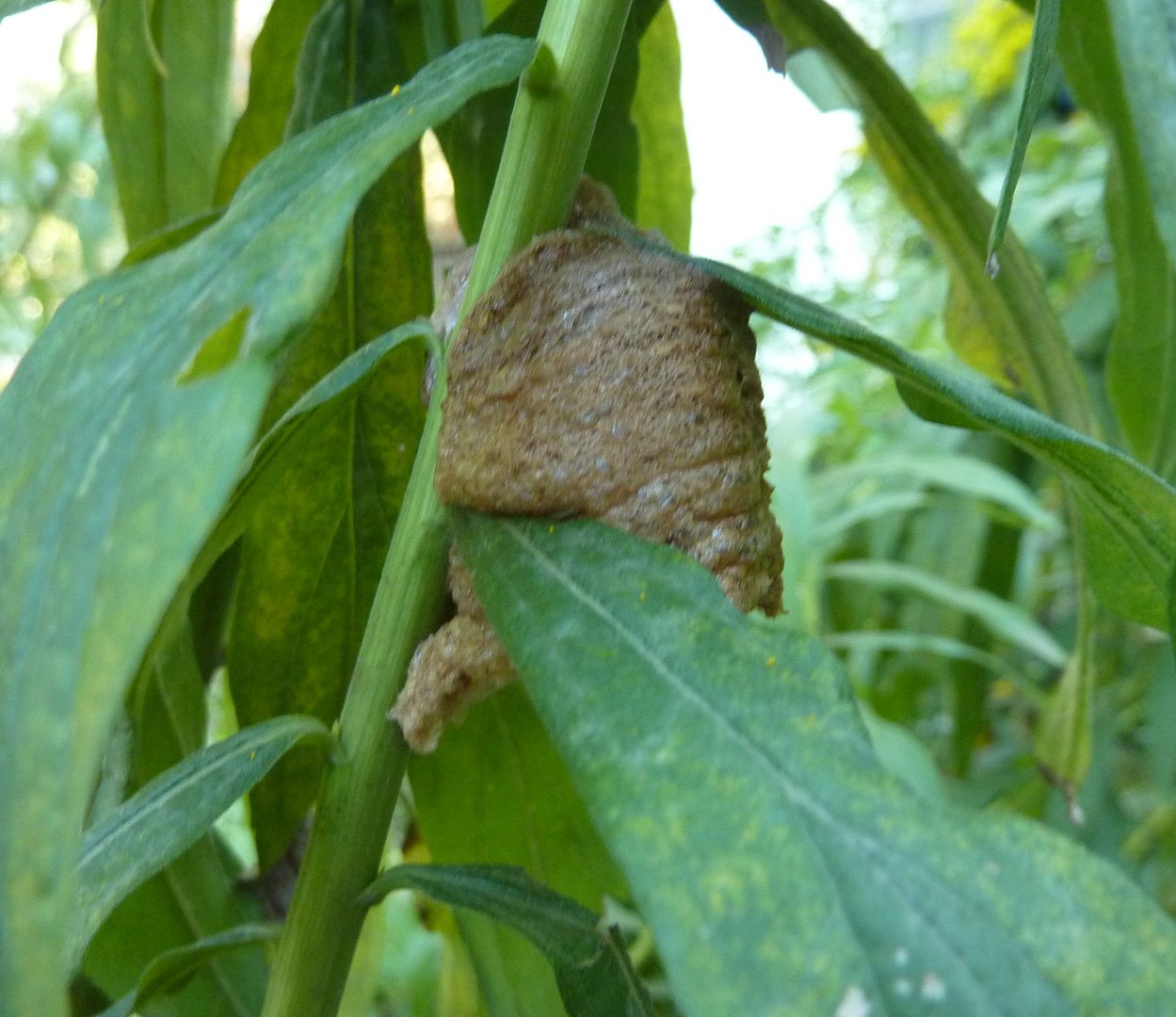
The leaves are narrow, long, and few if any teeth on them, and when present they're not long or clearly noticeable. They're more like small points than teeth. (presence of a mantis egg is optional.)
For those gardeners who love having really tall perennials this is a must have. My only complain is this year the storms were harsh enough that it fell over. Thankfully though this plant flowers late enough in the year that it doesn't matter to much. Considering most other perennials are dying back for fall, somehow a 10' tall plant shading them out isn't so bad.
Although this year I've resorted to using two ladders to prop these plants up, on other years they stand tall and flower beautifully. A diversity of insects use this plant as one last taste of pollen and nectar before winter sets in.
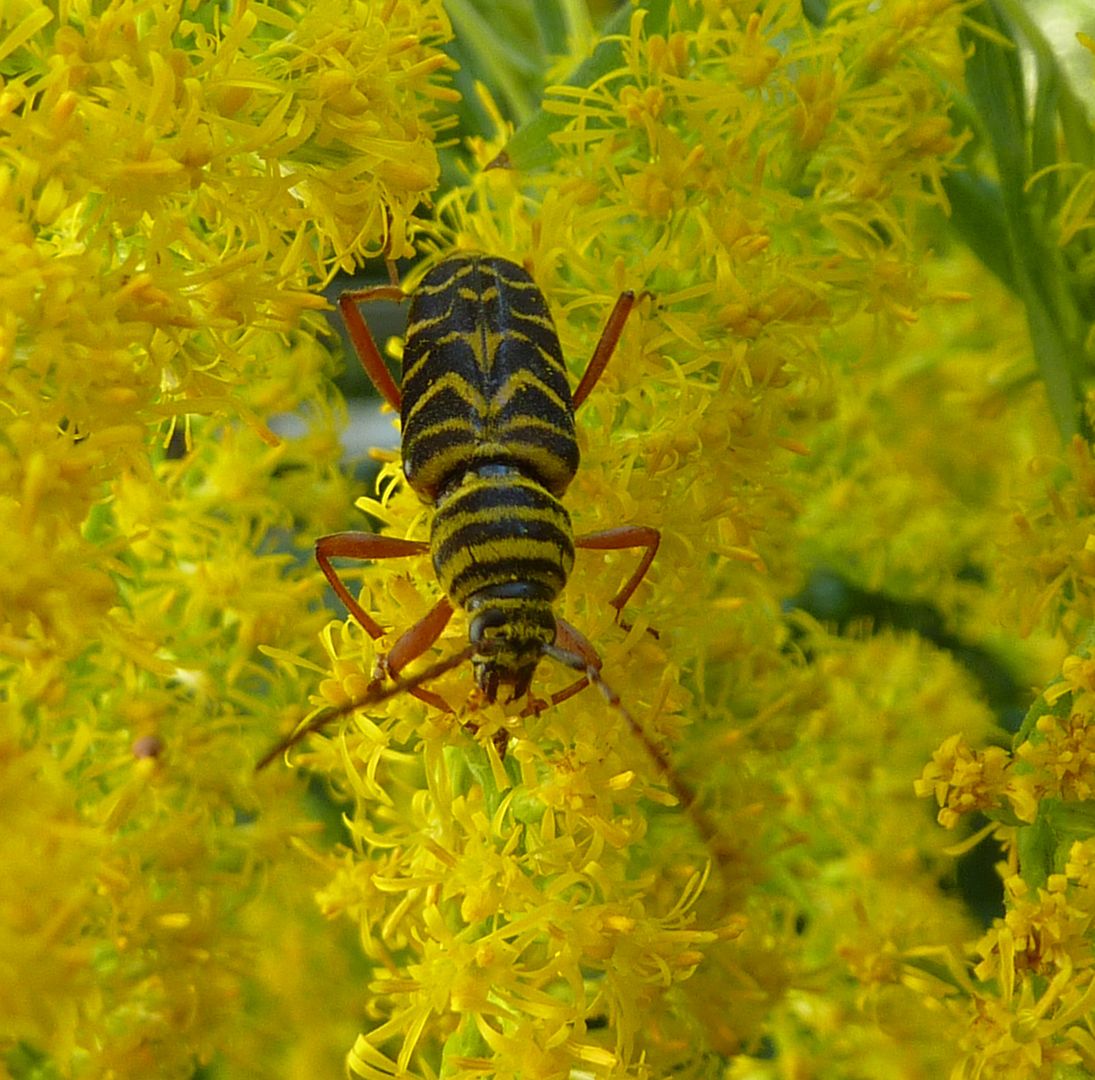
Megacyllne robiniae, The Locust Borer. Goldenrod is a common food source for this beetle. Though considered a pest it's a native species that feeds on a native tree, Robinia pseudoacacia, Black Locust Trees. It makes sense that they're around here as all the beekeepers look forward to the Locust bloom as a major boost in honey flow. The larva feed on the tree wood itself boring tunnels through the trunk. This makes them susceptible to wind storms and breaking and that can lead to disease setting in and shortening the life of the tree. Thankfully there's also the Honey Locust Tree, Gleditsia triacanthos, which is not effected by this beetle.
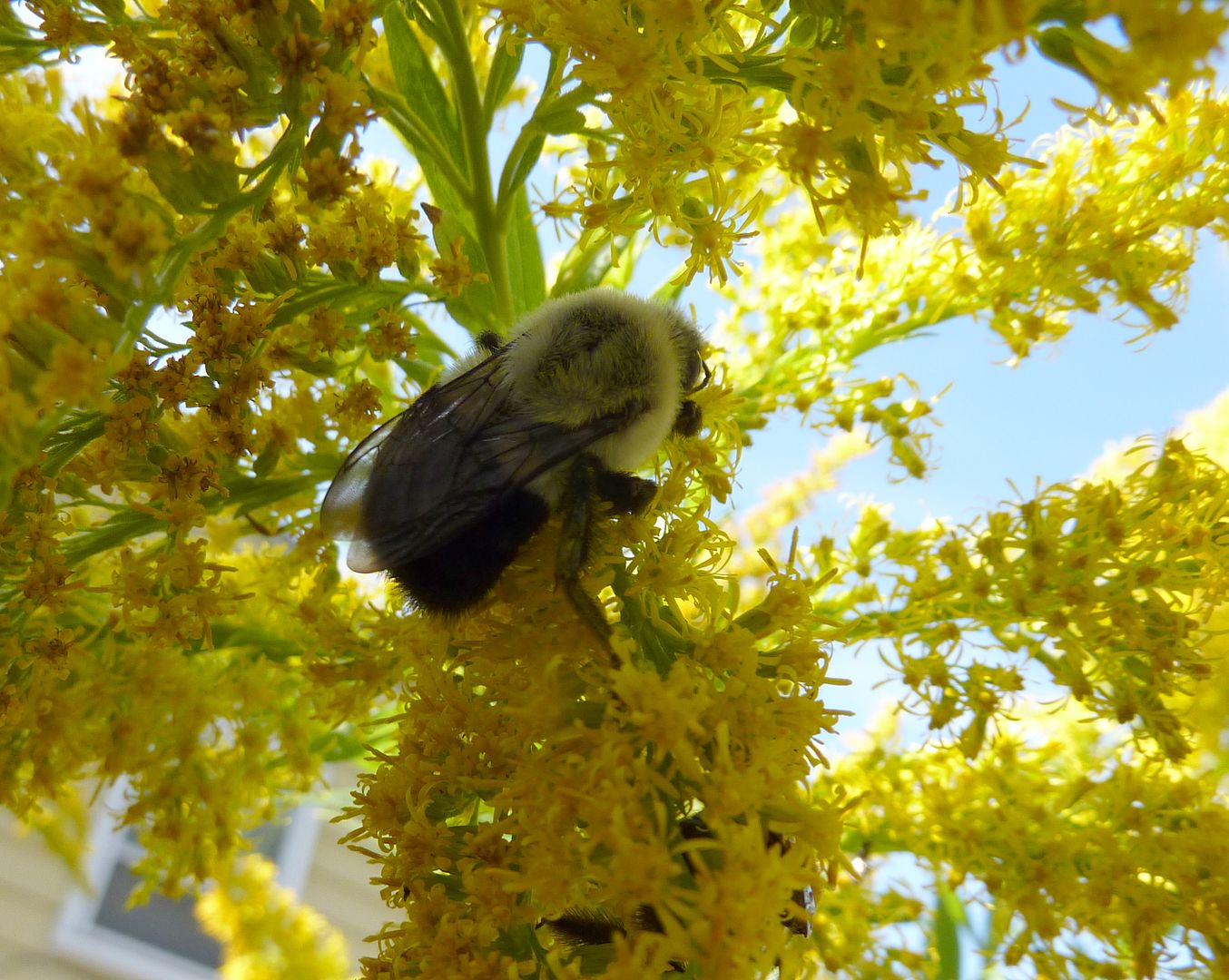
Buzzing around is what's likely one of next years Bumblebee queens. I think the species is Bombus impatiens.
Here they get one last taste of nectar before having to hibernate over the winter and trying to found a new hive next spring.
The leaves are narrow, long, and few if any teeth on them, and when present they're not long or clearly noticeable. They're more like small points than teeth. (presence of a mantis egg is optional.)
For those gardeners who love having really tall perennials this is a must have. My only complain is this year the storms were harsh enough that it fell over. Thankfully though this plant flowers late enough in the year that it doesn't matter to much. Considering most other perennials are dying back for fall, somehow a 10' tall plant shading them out isn't so bad.
Although this year I've resorted to using two ladders to prop these plants up, on other years they stand tall and flower beautifully. A diversity of insects use this plant as one last taste of pollen and nectar before winter sets in.
Megacyllne robiniae, The Locust Borer. Goldenrod is a common food source for this beetle. Though considered a pest it's a native species that feeds on a native tree, Robinia pseudoacacia, Black Locust Trees. It makes sense that they're around here as all the beekeepers look forward to the Locust bloom as a major boost in honey flow. The larva feed on the tree wood itself boring tunnels through the trunk. This makes them susceptible to wind storms and breaking and that can lead to disease setting in and shortening the life of the tree. Thankfully there's also the Honey Locust Tree, Gleditsia triacanthos, which is not effected by this beetle.
Buzzing around is what's likely one of next years Bumblebee queens. I think the species is Bombus impatiens.
Here they get one last taste of nectar before having to hibernate over the winter and trying to found a new hive next spring.
Sunday, October 17, 2010
Tall Goldenrod, Solidago altissima
This is what I believe to be Solidago altissima, Tall Goldenrod. However, I actually wasn't able to find any source mentioning any goldenrod growing to be more than 8' tall and the tallest cane here was over 10'. I must have some good poorly drained, compacted clay soil or something.
Here is what I believe is a queen bumblebee storing up food for next spring. There were a few buzzing about on the plant. Bumblebees shouldn't be confused with the Giant Resin Bee, or Giant Carpenter Bees.
Friday, October 15, 2010
Ants on the Aster Family
It's fall time and the last of the ant nuptial flights have been underway for a few weeks now. It's only appropriate that this happens with the last of the blooms too.
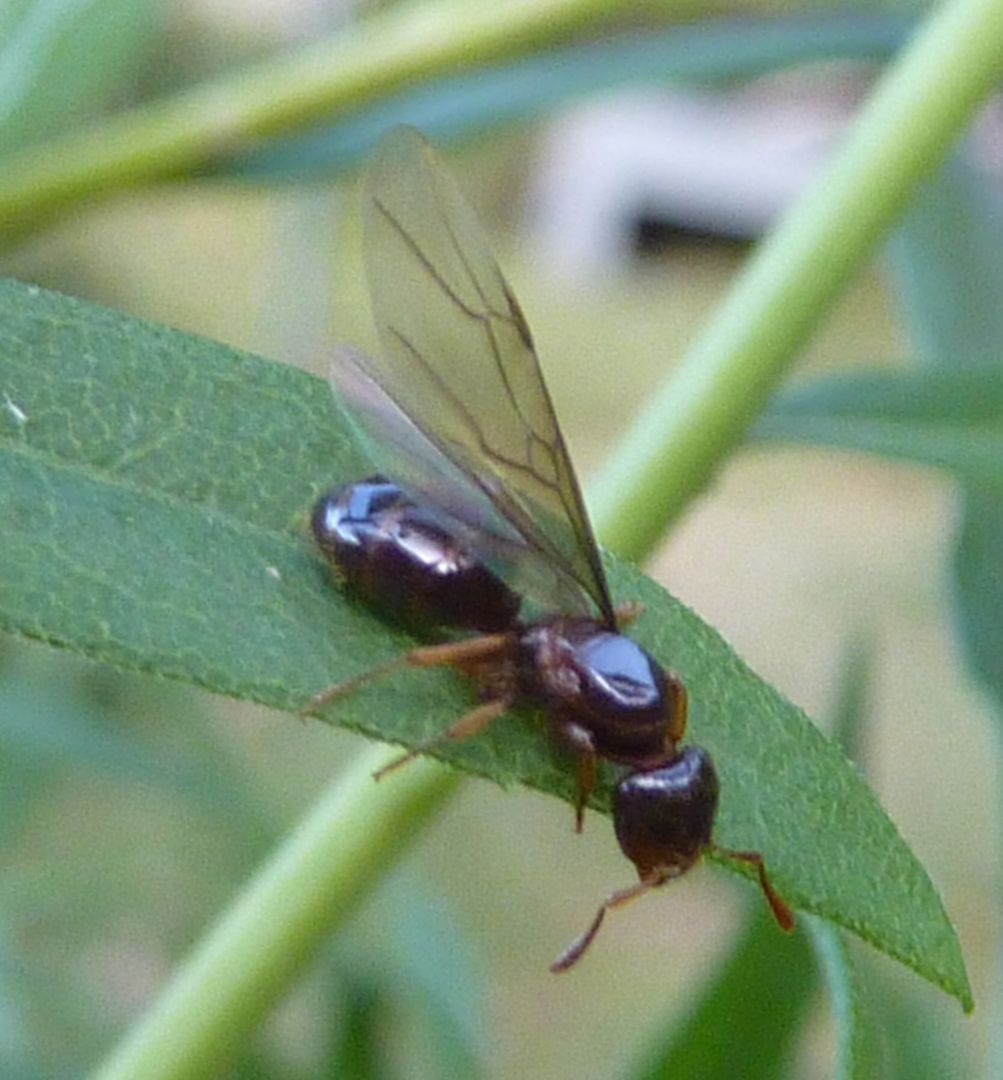
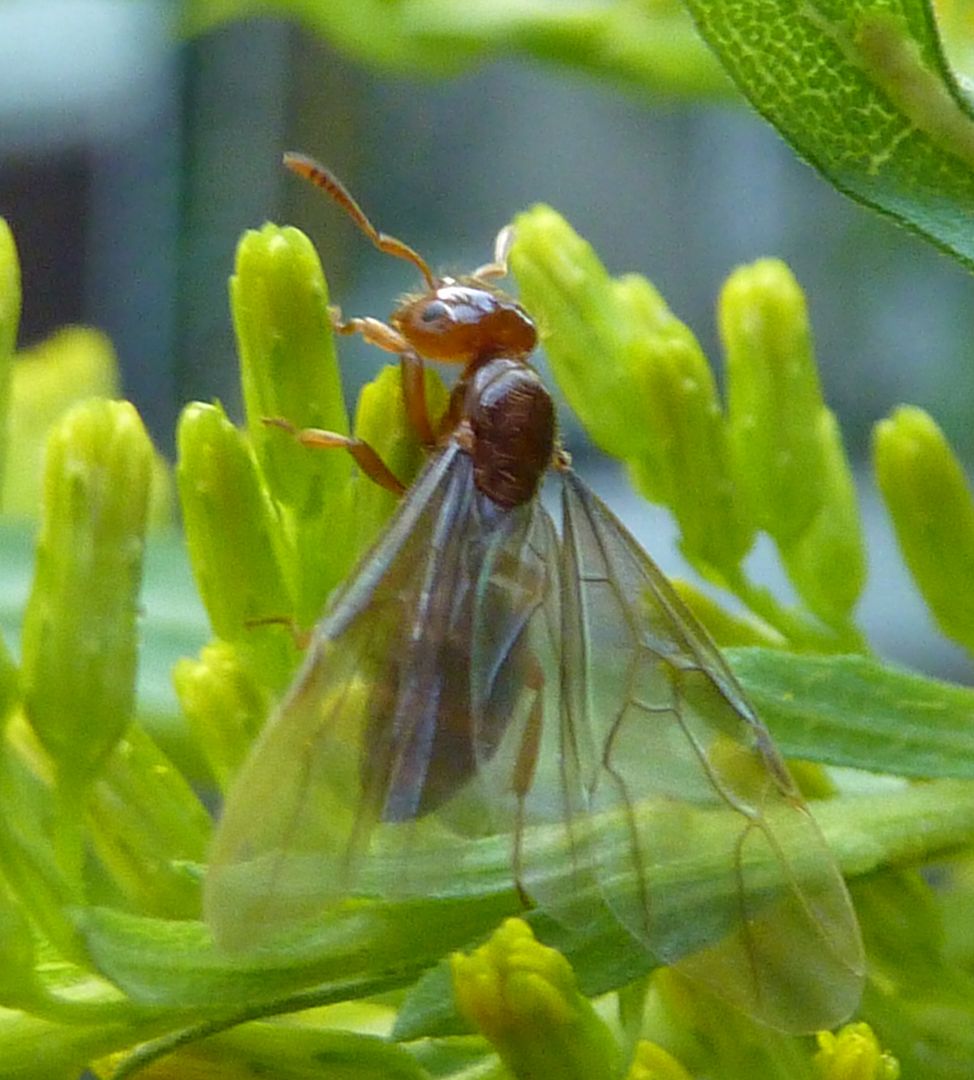
Lasius claviger and Lasius umbratus queens emerge from nests during the afternoon hours.
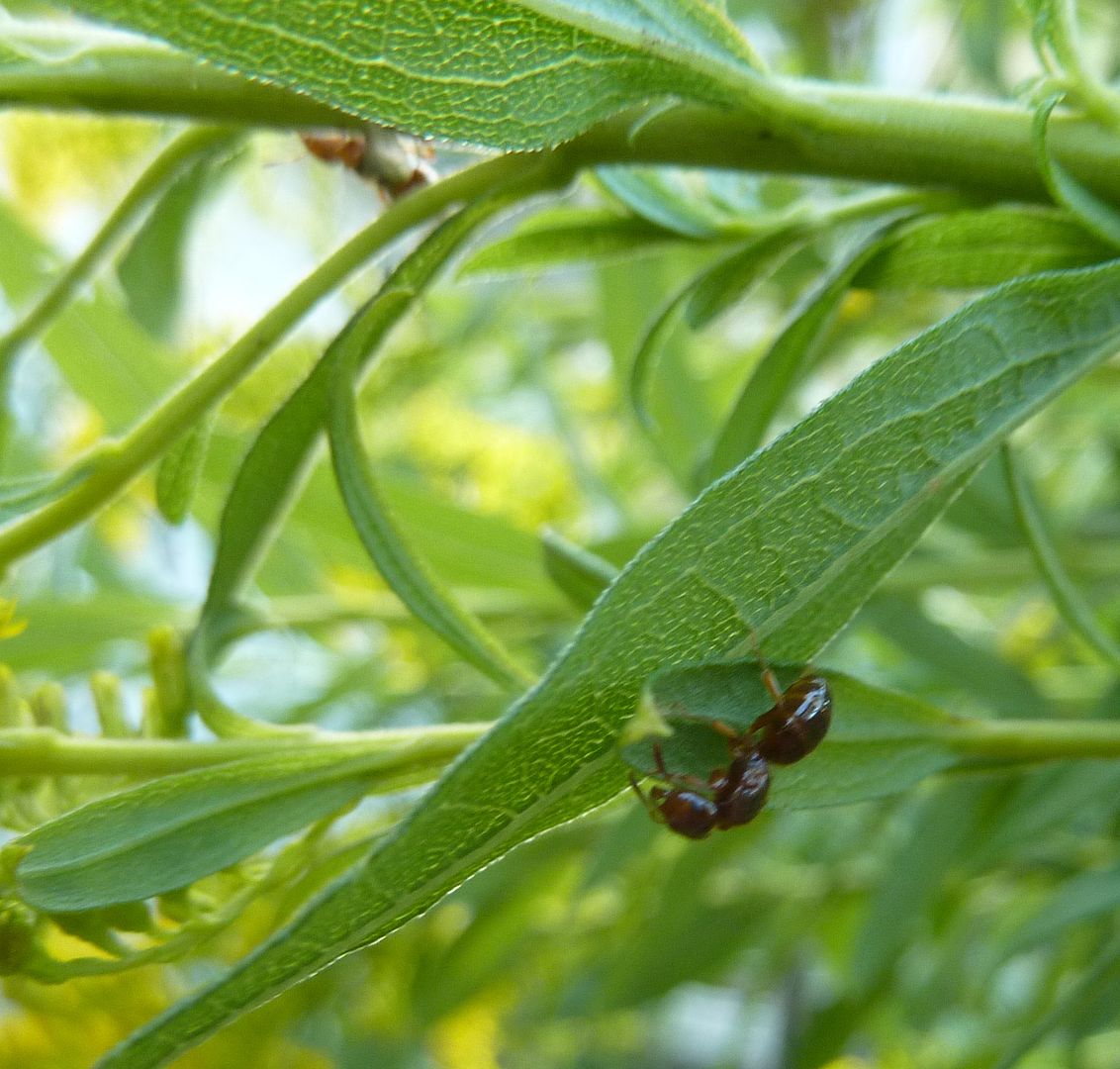
For some reason I find lots of them hanging out in goldenrod plants that are still in bloom, but only during the hours of the nuptial flight itself. Come darkness they disband and take to the ground looking for a host colonies.
I'm not sure what it is about goldenrod that attracts them so. This isn't the result of a colony under the plant and the queens simply trying to climb up high to take off. Many of the queens are stationary on the plant and have shed their wings.
The only thing I can come up with is they're attracted to the light scent the flowers give off. In case you're wondering this plant is Solidago gigantea. It's one of the tallest goldenrods in North America. Online sources say it gets up to 8' but I've seen it surpass 10' on some years.
So this got me thinking, maybe they're not attracted to just Goldenrods but perhaps other plants in the composite family.
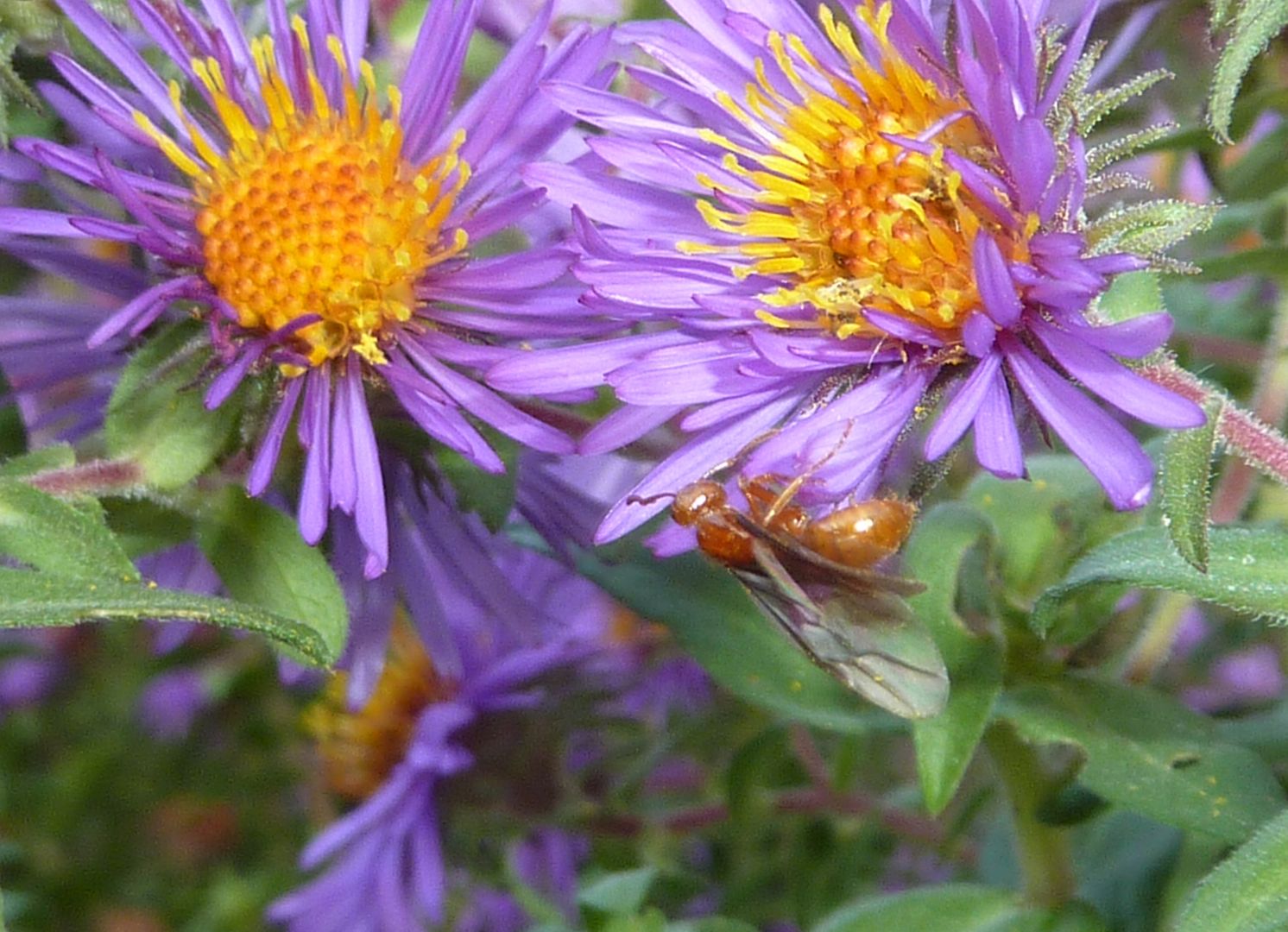
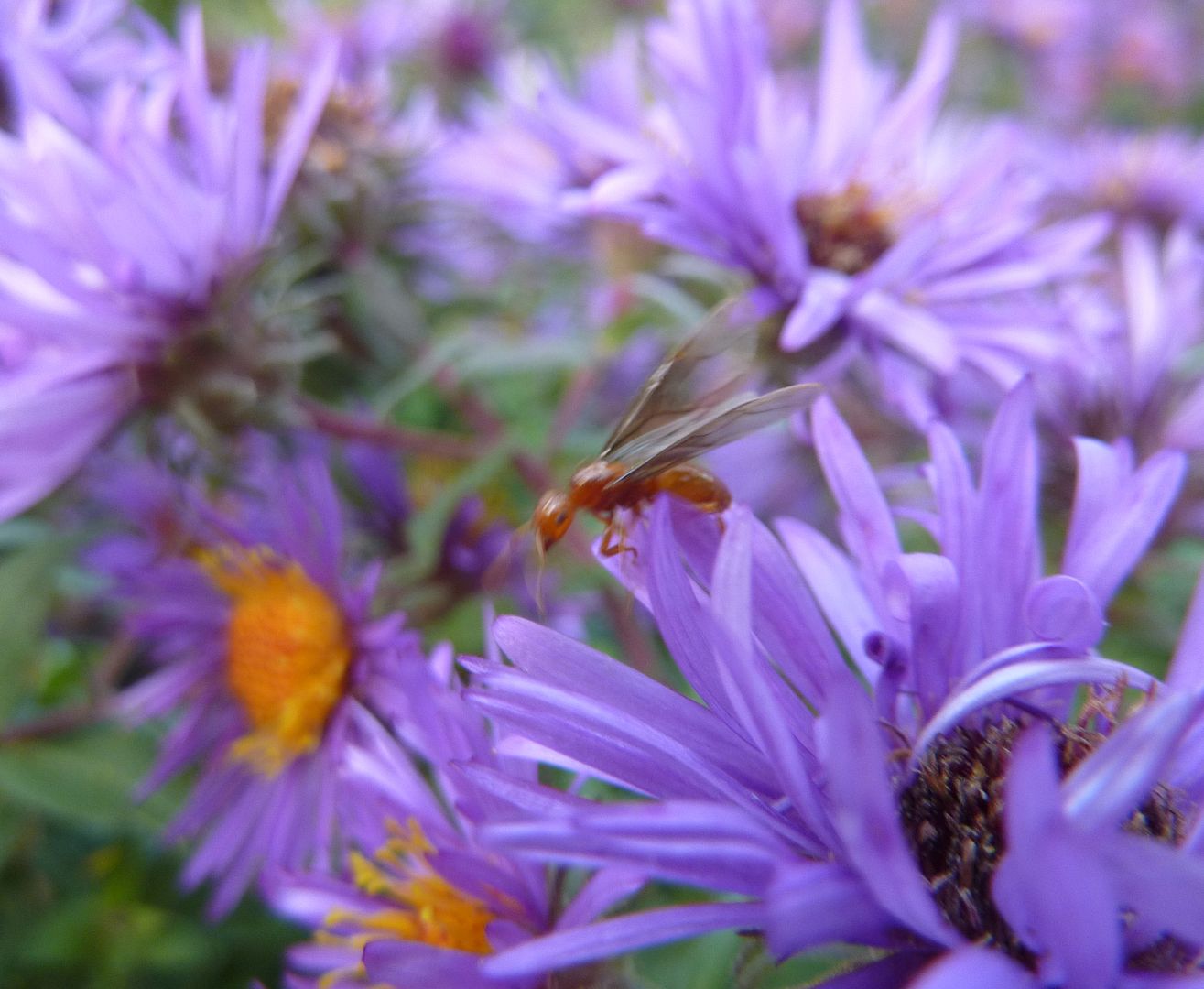
Sure enough upon inspecting my New England Aster I found a queen or two on the plant. However, I was only able to find two total.
And these were trying to take off. They were not being relatively stationary on the plant. So it's looking like they're only attracted to Goldenrods that are in bloom. I checked other plants as well and couldn't find them on anything else.
Lasius claviger and Lasius umbratus queens emerge from nests during the afternoon hours.
For some reason I find lots of them hanging out in goldenrod plants that are still in bloom, but only during the hours of the nuptial flight itself. Come darkness they disband and take to the ground looking for a host colonies.
I'm not sure what it is about goldenrod that attracts them so. This isn't the result of a colony under the plant and the queens simply trying to climb up high to take off. Many of the queens are stationary on the plant and have shed their wings.
The only thing I can come up with is they're attracted to the light scent the flowers give off. In case you're wondering this plant is Solidago gigantea. It's one of the tallest goldenrods in North America. Online sources say it gets up to 8' but I've seen it surpass 10' on some years.
So this got me thinking, maybe they're not attracted to just Goldenrods but perhaps other plants in the composite family.
Sure enough upon inspecting my New England Aster I found a queen or two on the plant. However, I was only able to find two total.
And these were trying to take off. They were not being relatively stationary on the plant. So it's looking like they're only attracted to Goldenrods that are in bloom. I checked other plants as well and couldn't find them on anything else.
Friday, October 30, 2009
Goldenrod

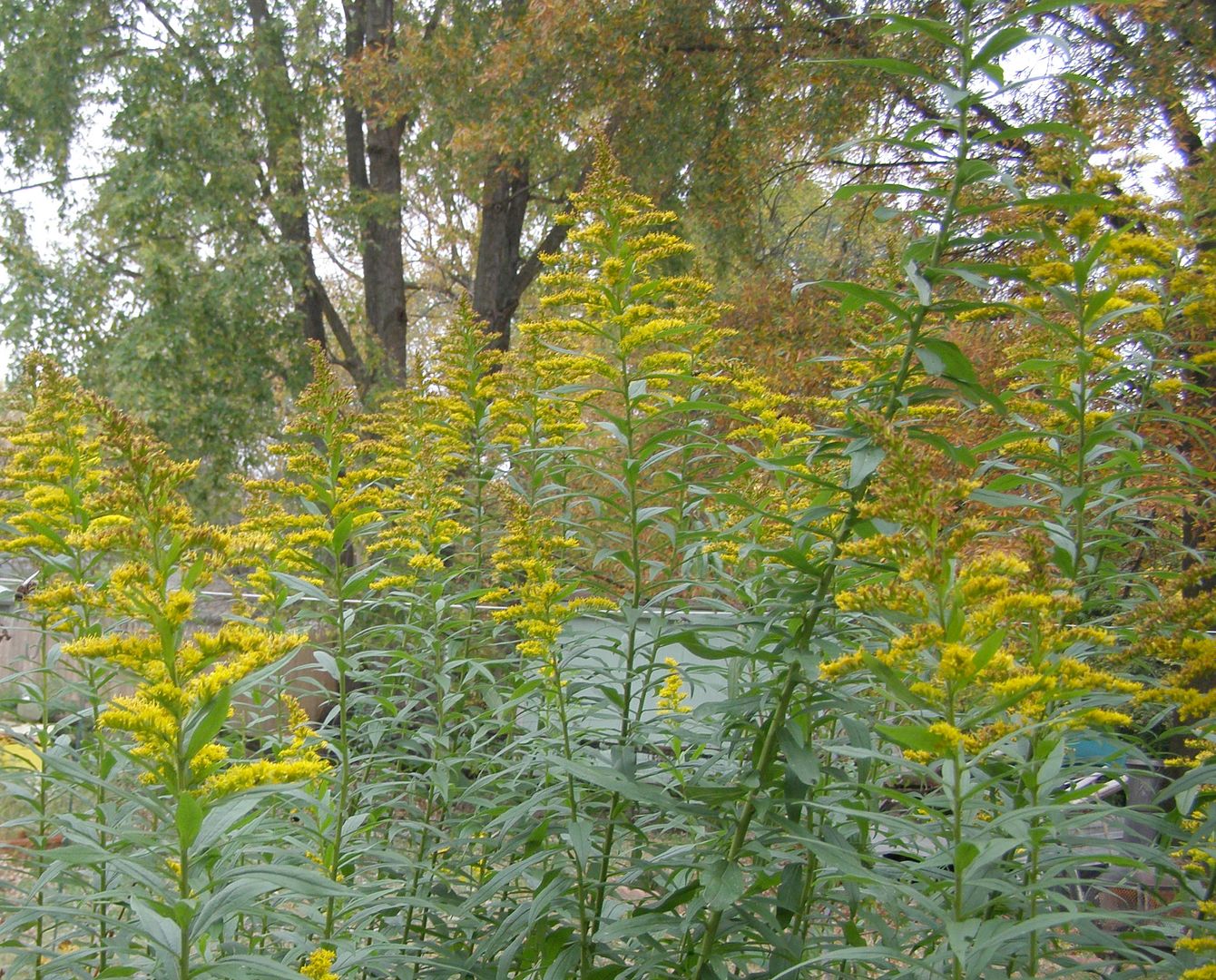
What is very likely Late Goldenrod, Solidago gigantea, has been blooming out in the yard for a few weeks now. Solidago species support the highest number of Lepidoptera species of any perennial, (note that most native trees support a lot more,) and sure enough they have gotten a fair amount of activity.

Because it's at the height of flowering in October-November it's just about the only decent source of nectar for pollinating insects. Few Asters last this late in the season.

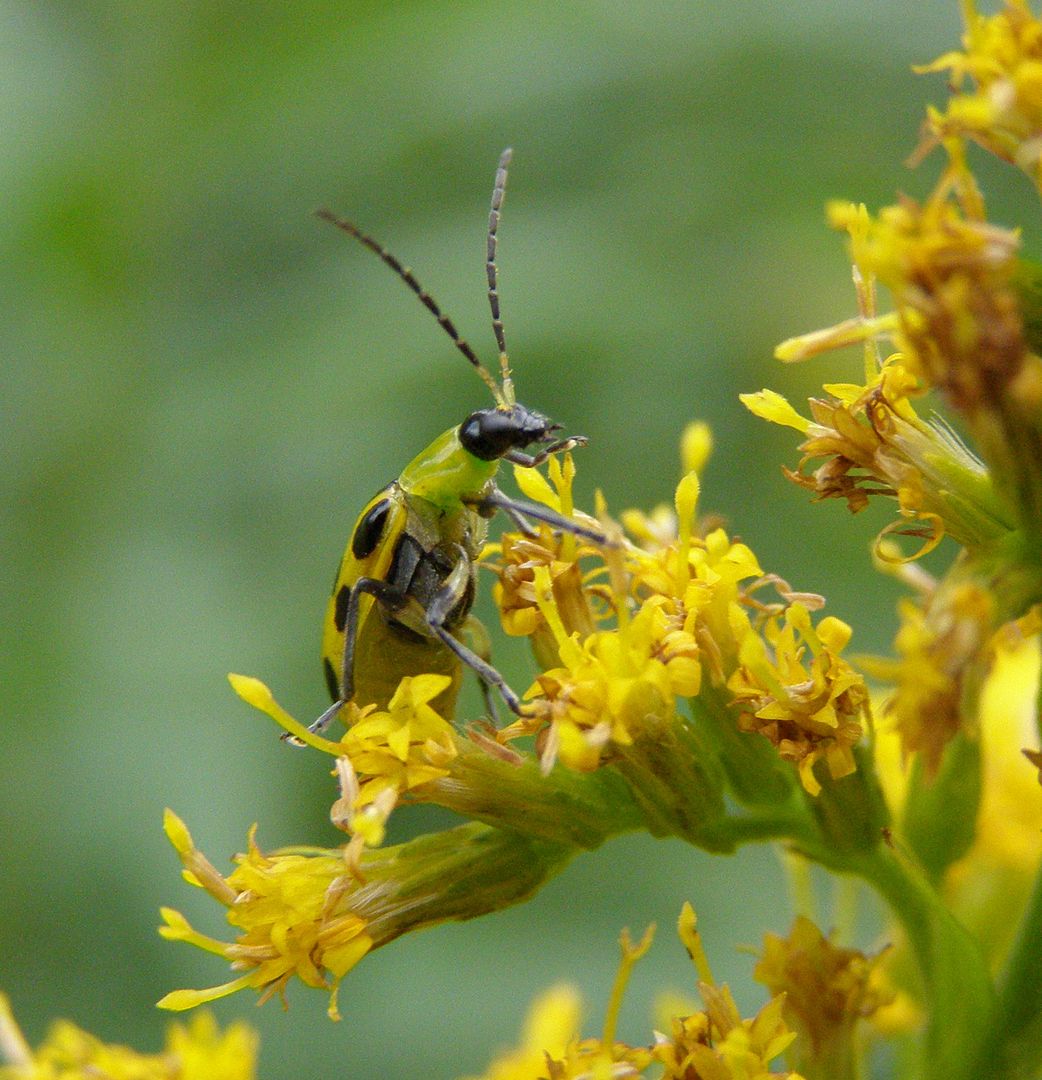
What I believe is Diabrotica undecimpunctata, The Eastern Spotted Cucumber Beetle spent it's time sipping at the flowers, but probably also nibbled some of the leaves. They can be a major pest for assorted field crops (Corn, Cucumber, Potatoes, etc...) but I'm not worried.
For those of you who hate this bug, note that they over winter in the adult stage and killing them is an option. But I have to say making your yard more bird friendly can work even better.
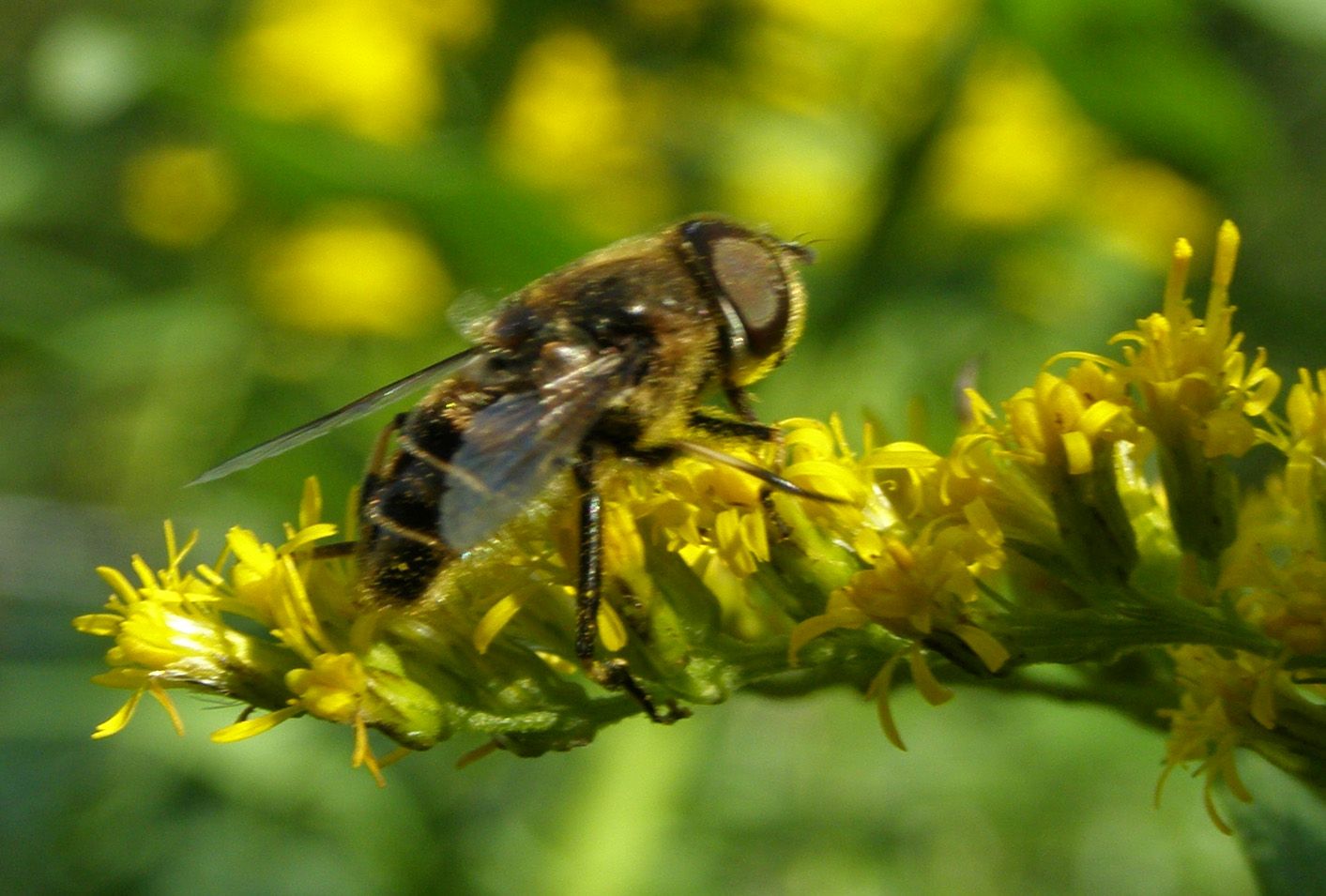
Flower flies mimic bees to avoid being eaten by birds. This one is doing a fairly bad job though but I have seen some that were nearly spot on.

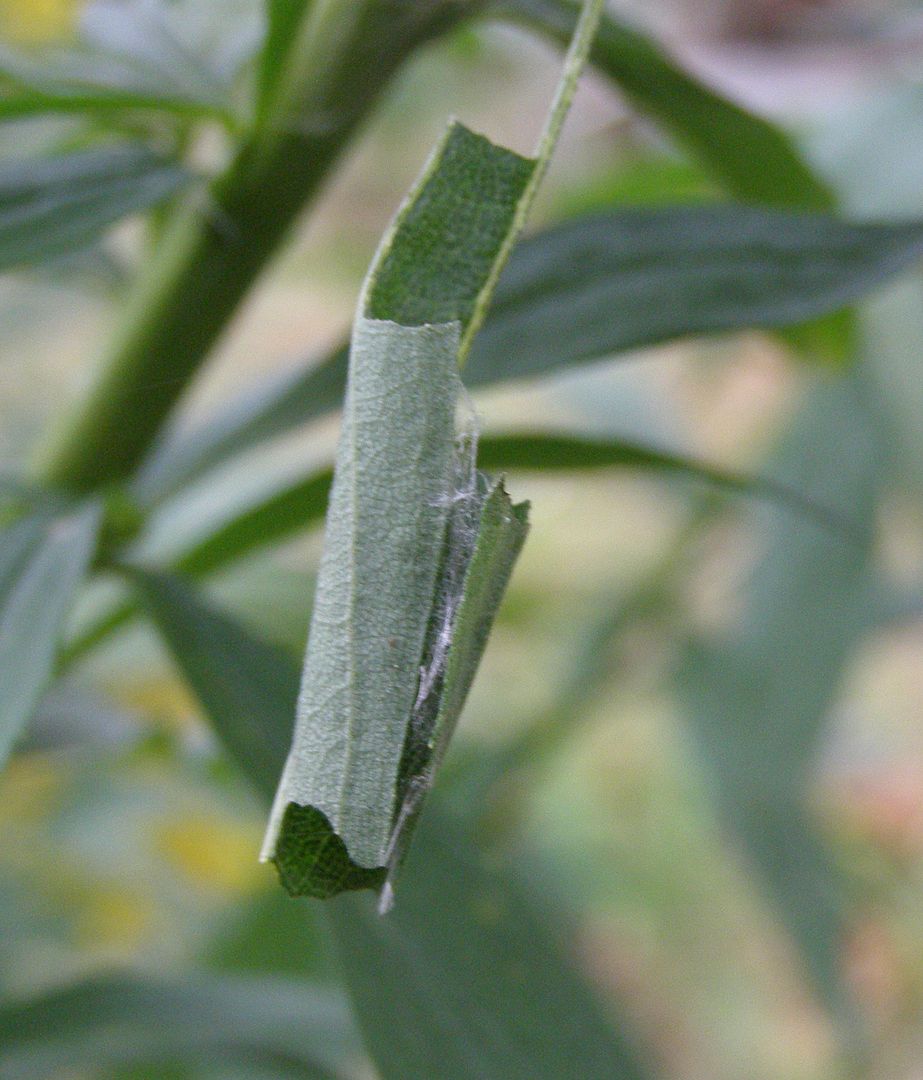
Some of the leaves have been coiled up in to "caterpillar sheds" which protect the caterpillar during the day. These don't last very long though as the caterpillar eventually eats the leaf to an unusable state.

Inside you can sort of make out the caterpillar.

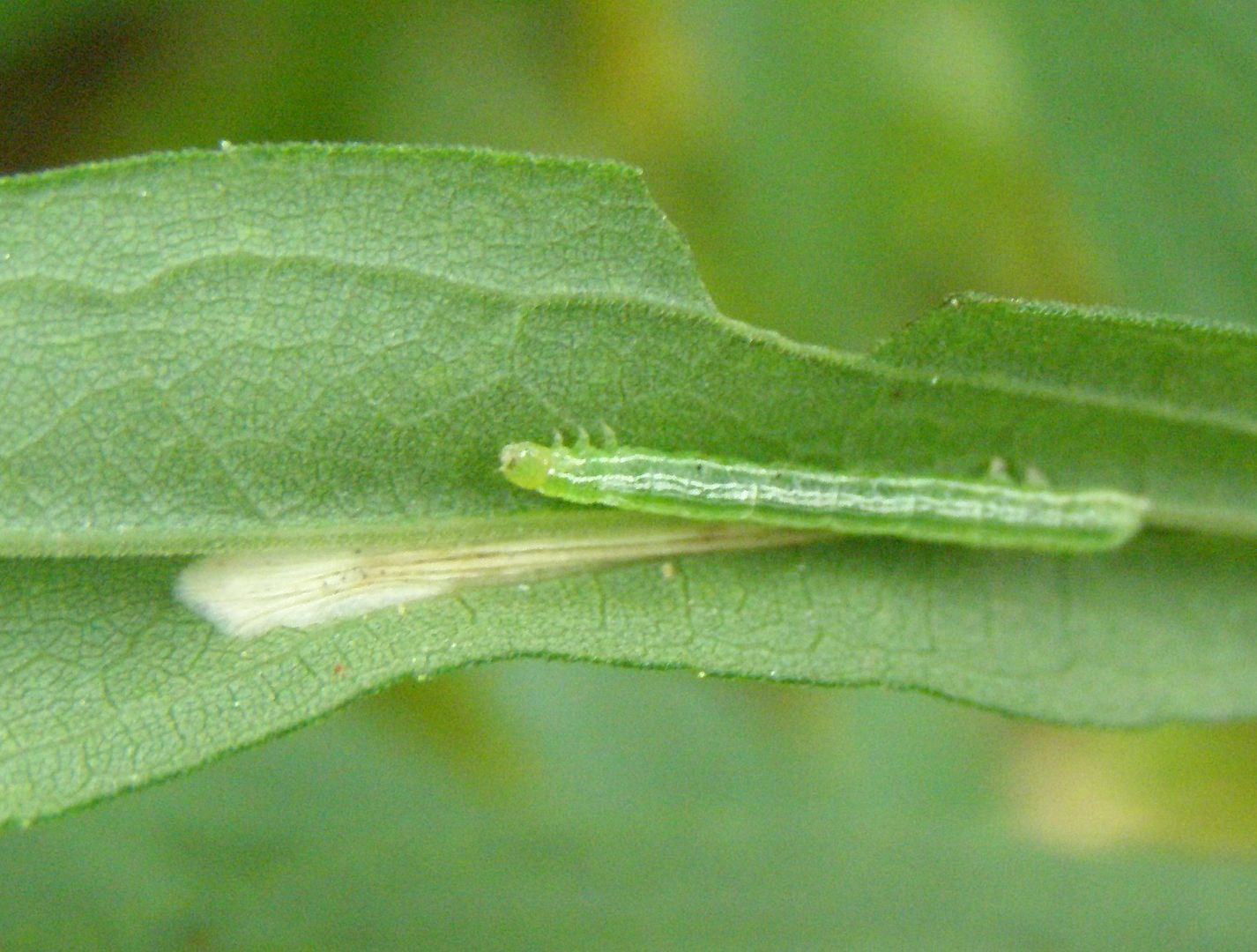
On a nearby plant a different species of caterpillar employs a similar strategy. This one was on the Rudbeckia, (basically a Black Eyed Susan without a common name,) and had the leaf kinked so it was hard to spot from under the leaf. I had to unfold it some for the photo.
Labels:
Bees,
beetles,
Caterpillar,
Goldenrod,
hover flies,
Solidago
Subscribe to:
Posts (Atom)