Canon PowerShot SX50 HS 12MP Digital Camera with 2.8-Inch LCD (Black)
Which I bought because it topped the list of a few macro point and shoot though really it seemed to be a narrow margin between that and the next four below it. Sadly it doesn't have any port to plug in a portable flash, (at least not that I've found).
Also it does NOT come with the USB cord required to get images off of the camera and onto the computer! Thankfully my first camera years ago was a Canon and I still had a cord laying around.
Raynox DCR-250 Super Macro Snap-On Lens
I also bought this which might have been the better buy because it's almost universally able to attach to any point and shoot camera.
All of which came at the recommendation by Alex Wild, a professional photographer in the scientific world who teaches classes around the world with emphasis on photographing insects. (Though he's more so a professor at one of the Universities I believe.)
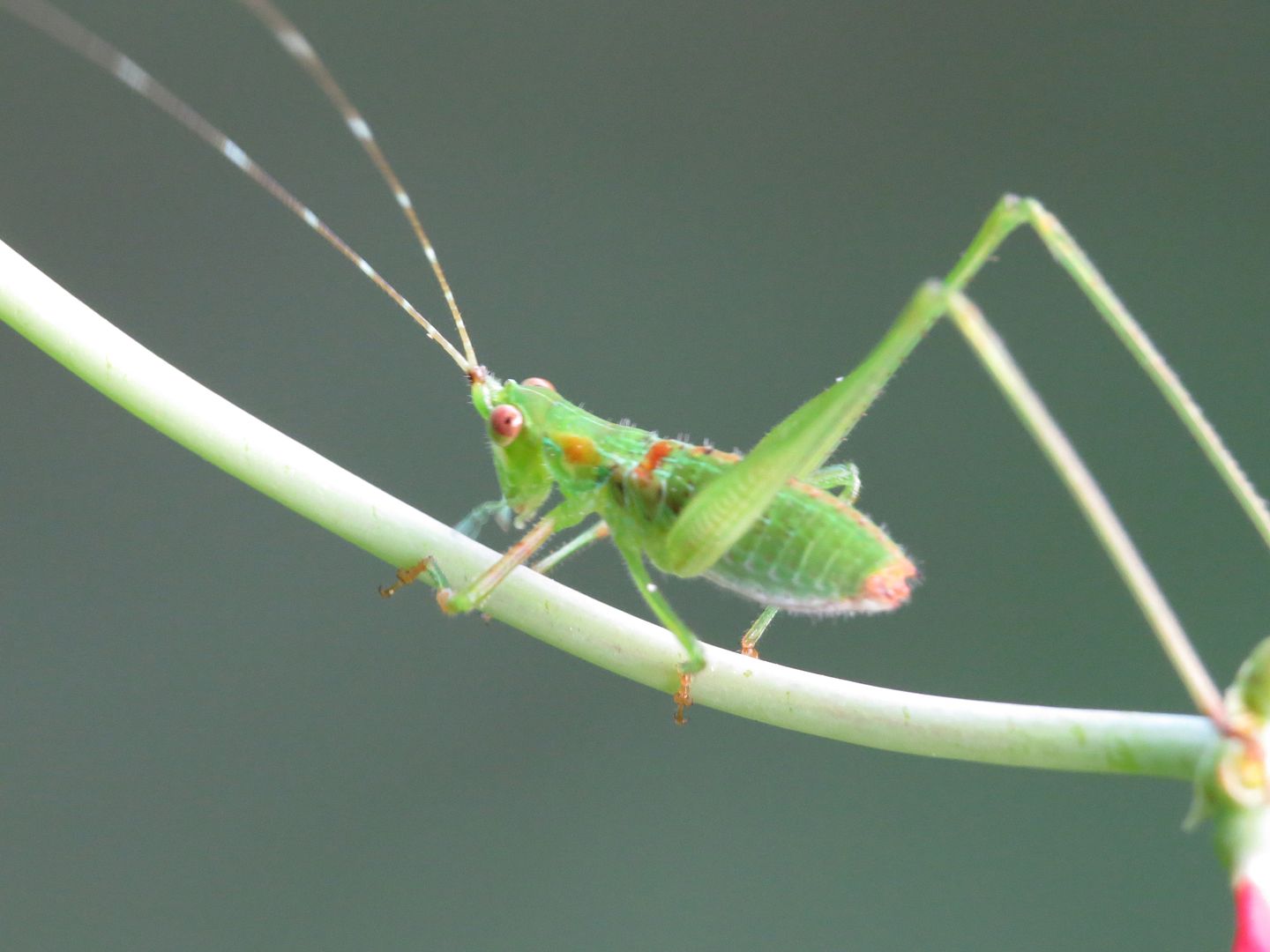
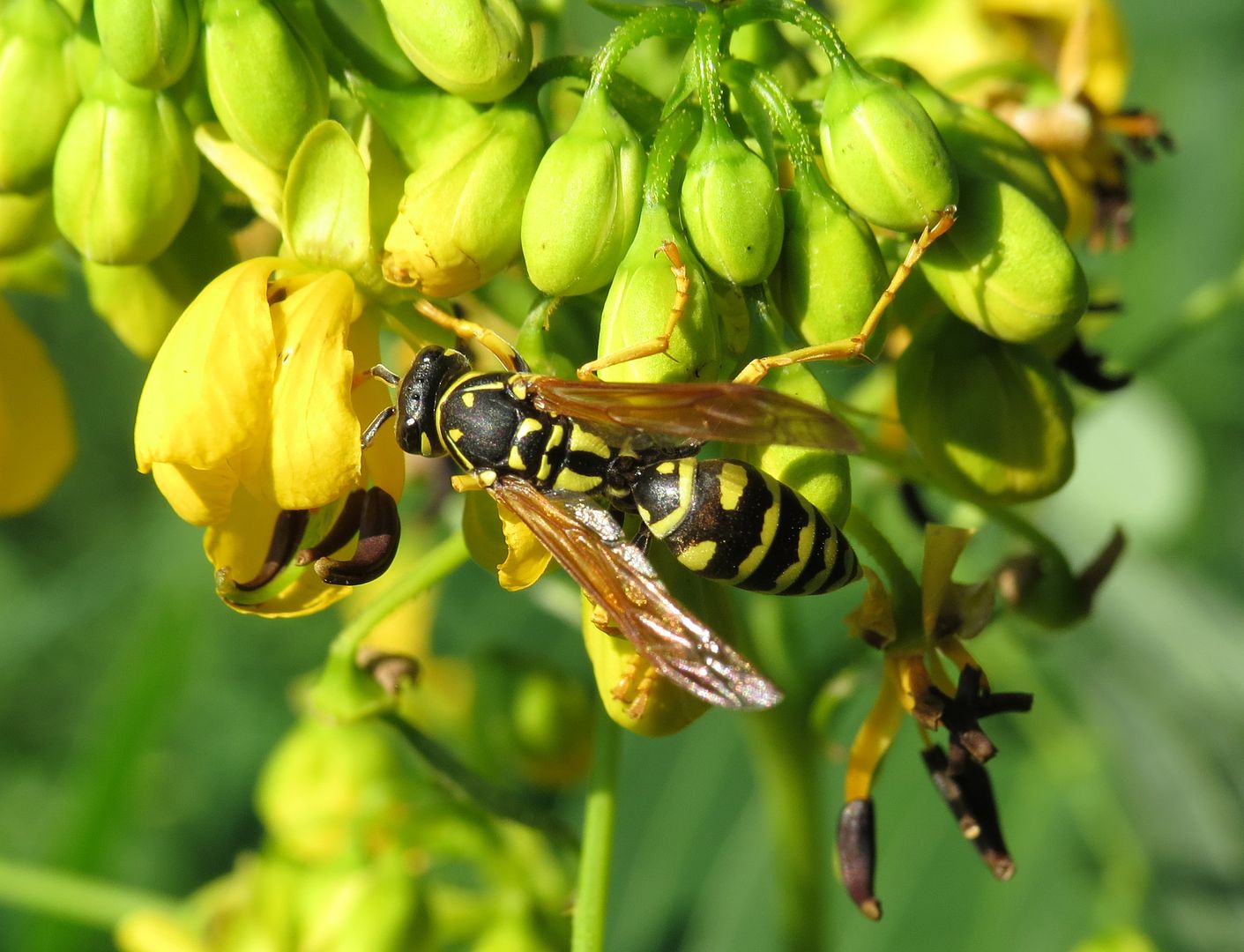
So after a day of shooting here's some of what I came up with.
Showing posts with label Camera. Show all posts
Wednesday, July 17, 2013
Sunday, June 13, 2010
Some Camera Work
I attended a quick meeting at the beekeepers association yesterday... our president of the club called and said "Good news. Instead of showing up at 1pm like everyone else, you've been selected to get special training at 8am with 5 or so other people." Personally I'm an 11am kind of guy but this was good. The emphases was on insect photography, and I got a quick crash course from someone who trains scientists and field workers at the USDA.
The camera I'm using (featured left) has excellent macro and is probably the best thing you can buy without upgrading to a real camera you have to worry about lenses with. I was kind of the black sheep though as I was the only person who had one. Everyone else was using an expensive Nikon SLR with a fancy macro lens.
Search Amazon.com for nikon slr digital camera
Basically with an SLR you can stand 1 to 2 feet away from the subject. With my camera I'm usually 1 to 2 inches, depending on the size of the subject. Focus on SLR's can be set manually. Auto focus is awful with macro images. More often than not it focuses on the background and turns the ant or whatever into a blurry image in the foreground. Putting your hand infront or just behind the subject and letting it focus on that is a way to get around this but not ideal for most subjects. Shifting toward or away from the subject can then be done.
The Instructor is a huge fan of Flash. Before today I typically hated flash. I'd only use it at night and or when lighting conditions are not ideal. It seemed like using a flash with macro, especially when you have to stand 1 inch from the subject, was overkill lighting. She showed me a trick though with my camera. Simply placing paper over the flash (but not the sensor) to diffuse it makes all the difference.
So after the crash course was over it was time to hit the field and start taking pictures. As much as I wanted to use one of the Nikons I stuck with my camera because I wanted to take the photos home with me. Afterward we went over the pictures we took, and while I was clearly the only one having focus issues she was impressed with the pictures I took. She even said I have "The Eye" for this sort of thing. So here are some images I was able to take in the 2 hours we had.
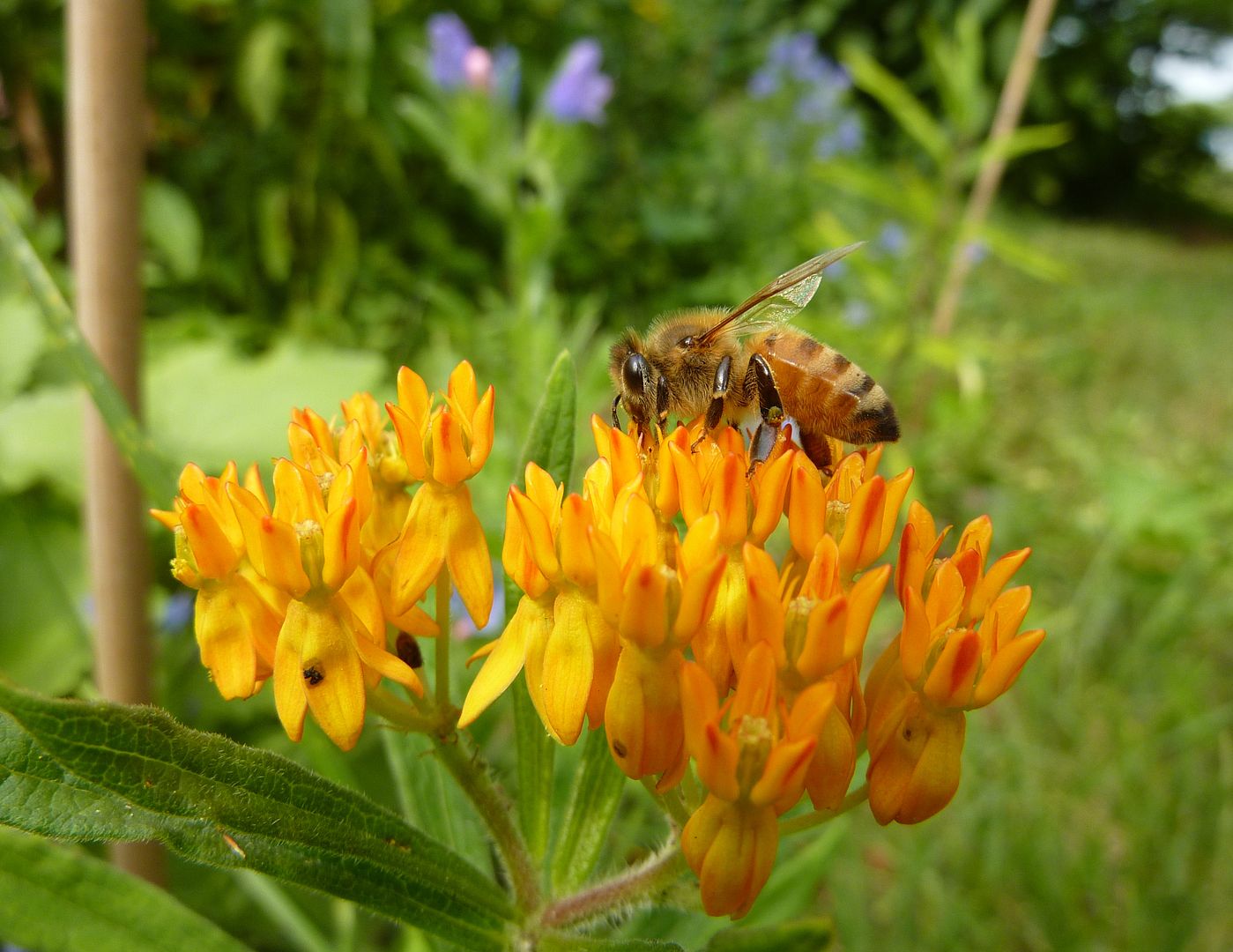
You can barely tell I used a flash but it's there. I didn't color correct anything to this image in photoshop. The most I did was crop it down some. Had I not used the flash basically the right half of the flower and bee would have been much darker, but here (partly thanks to the intensity of the flower color) it's almost glowing.
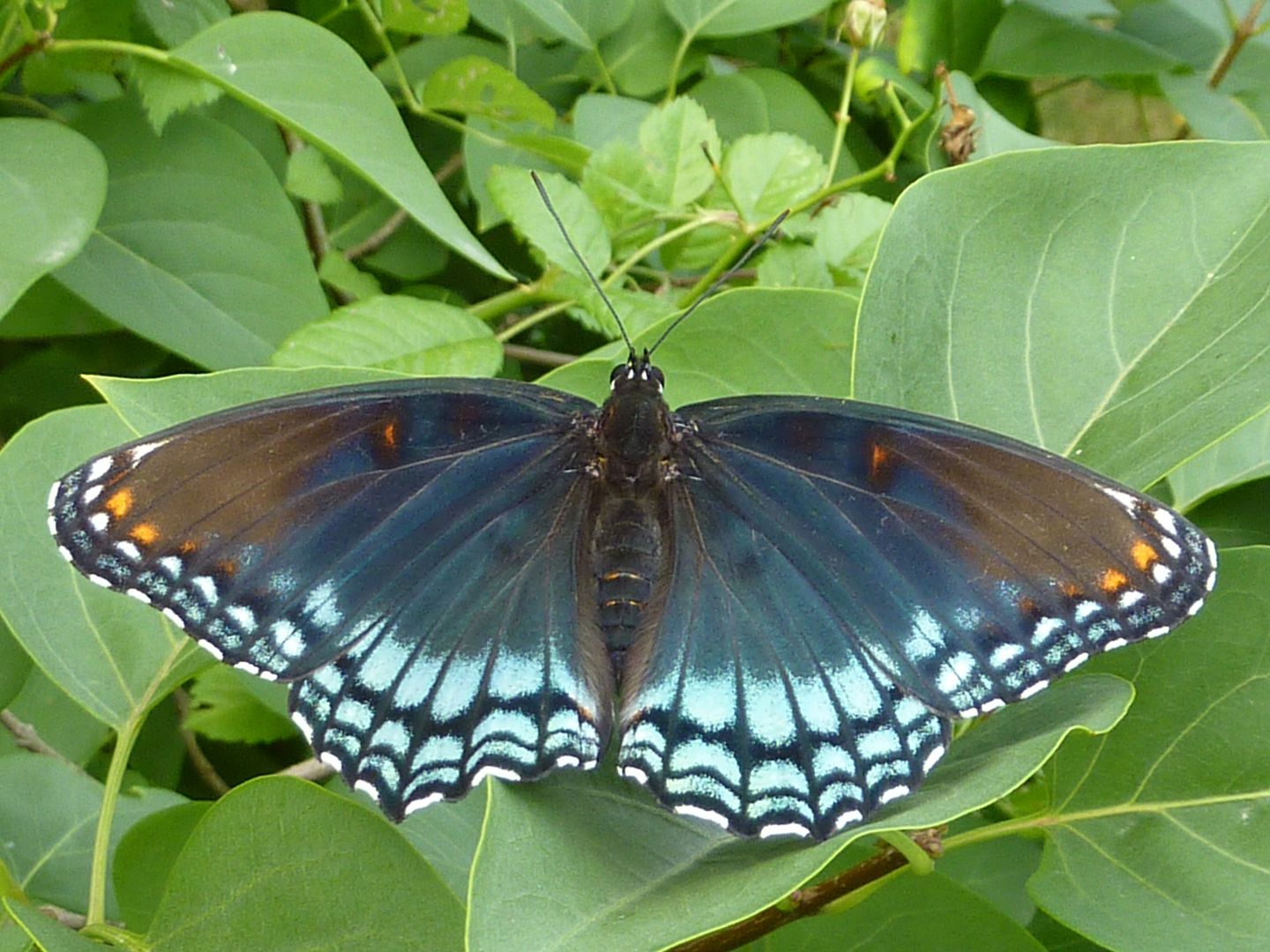
The colorful wings to a Red-Spotted Purple, Limenitis arthemis, are illustrated beautify. The spots in the middle of the wings don't always come out in photos. The turquoise hue can also appear quite black from what I've seen. But here there's just enough flash that all the pigments show up beautify. I've been looking at images around the web, such as BugGuide and I'd say I did well for myself... at least with the color form of this butterfly. One color form is called the White Admiral for it's white stripes, and with others the turquoise isn't as pronounced up the wing, some lack the orange spots entirely. Had I not diffused the flash the leaves would have become very glossy and the effect on the wings would likely have been lost.
(As a side note this butterfly was being unusually cooperative. I suspect it was freshly hatched.)
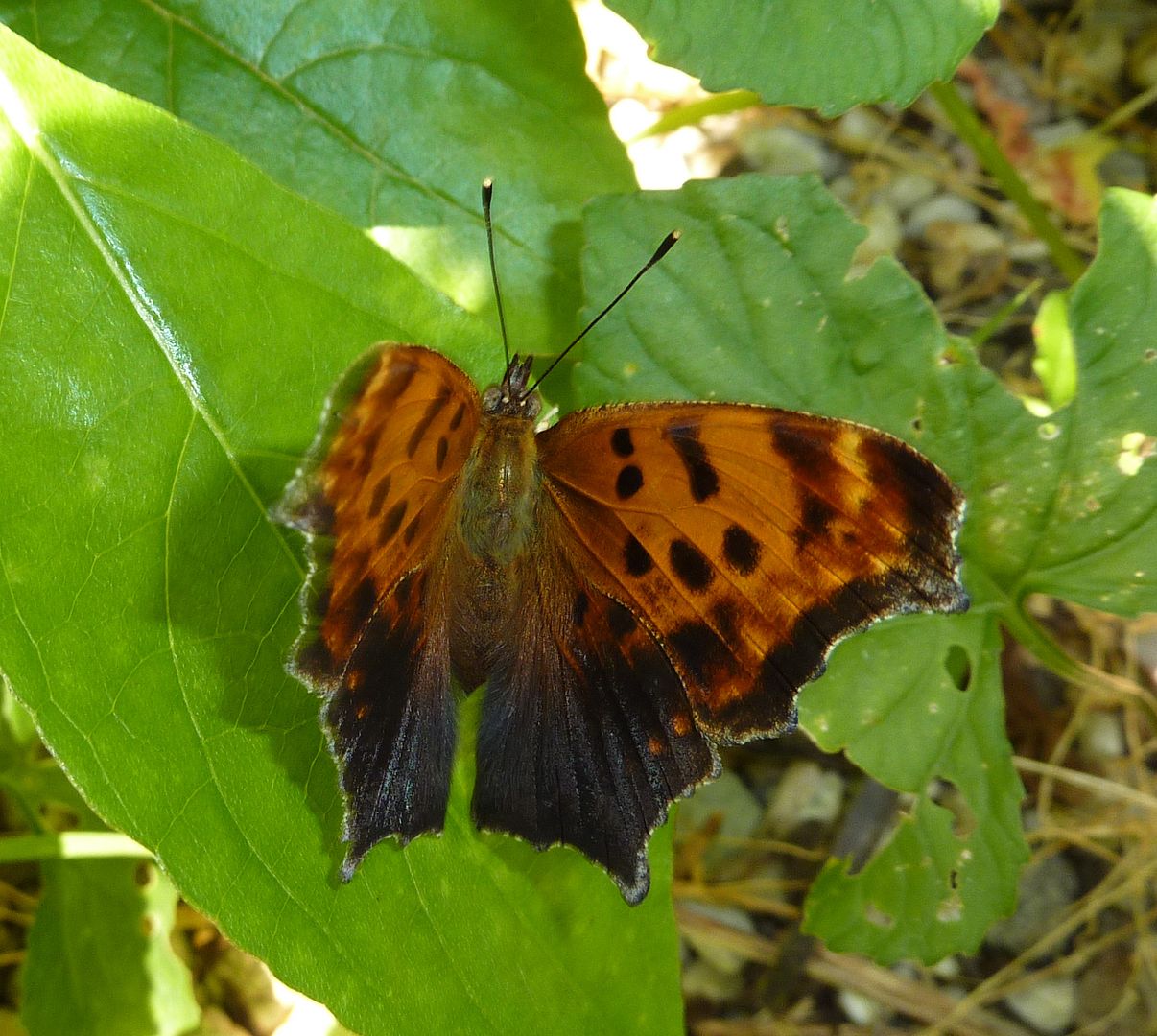
What I believe to be a Question Mark, Polygonia interrogationis was sunbathing in her flower bed. I still don't understand the common name. The instructor was amazed at this. Not because it's a good photo but because she had no idea such pretty things were in her garden.
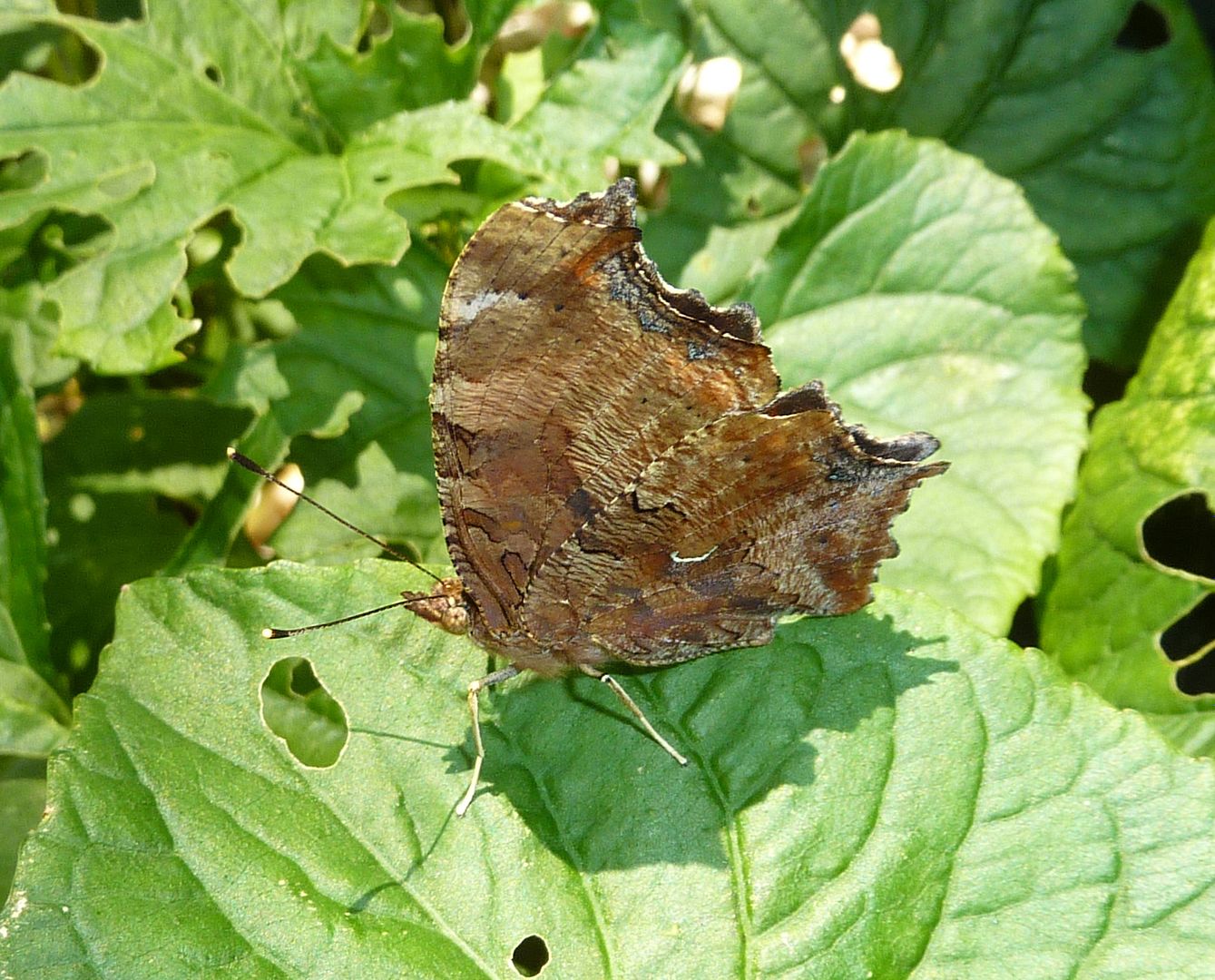
Here is the same Question Mark on a Violet leaf. I didn't cover the flash this time so the butterfly seems unnaturally illuminated. The leaf is also shining to much to seem right. The afternoon sun also created a bit of a shadow underneath. I kept the picture though to show off what the butterfly looks like when it's wings are closed. It goes from a jewel in the sky to a ratty looking leaf in an instant.
Here is the same butterfly in more natural lighting, without a flash. The vibrant colors aren't brought out, I can barely make out the white rim of the wings, and texture to the dark parts are lost. It's still the afternoon but the harsh sun is being filtered by leaves to the plant above.
A lot of these issues can be cleared up in photoshop. But frankly I looked at everyone else's pictures and I think mine were in the most desperate need of touch up work. I can only dream of the day when I upload 200 images from my camera and don't have to spend at least a half hour deleting the bad ones and working on the good ones. There have been days when I've spent hours just working on a dozen images. The best images I've taken though are the ones I don't need to touch at all.
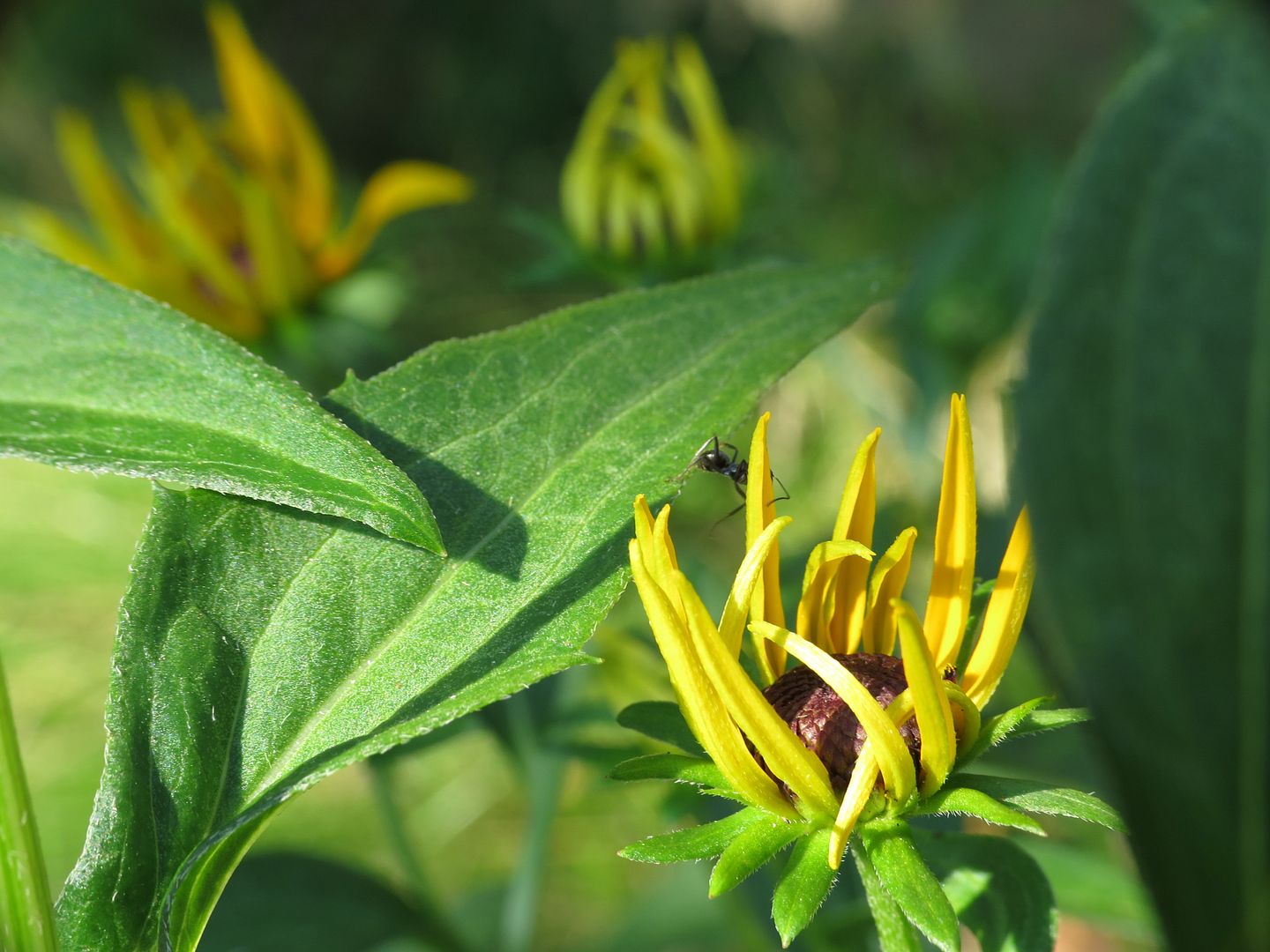
The camera I'm using (featured left) has excellent macro and is probably the best thing you can buy without upgrading to a real camera you have to worry about lenses with. I was kind of the black sheep though as I was the only person who had one. Everyone else was using an expensive Nikon SLR with a fancy macro lens.
Search Amazon.com for nikon slr digital camera
Basically with an SLR you can stand 1 to 2 feet away from the subject. With my camera I'm usually 1 to 2 inches, depending on the size of the subject. Focus on SLR's can be set manually. Auto focus is awful with macro images. More often than not it focuses on the background and turns the ant or whatever into a blurry image in the foreground. Putting your hand infront or just behind the subject and letting it focus on that is a way to get around this but not ideal for most subjects. Shifting toward or away from the subject can then be done.
The Instructor is a huge fan of Flash. Before today I typically hated flash. I'd only use it at night and or when lighting conditions are not ideal. It seemed like using a flash with macro, especially when you have to stand 1 inch from the subject, was overkill lighting. She showed me a trick though with my camera. Simply placing paper over the flash (but not the sensor) to diffuse it makes all the difference.
So after the crash course was over it was time to hit the field and start taking pictures. As much as I wanted to use one of the Nikons I stuck with my camera because I wanted to take the photos home with me. Afterward we went over the pictures we took, and while I was clearly the only one having focus issues she was impressed with the pictures I took. She even said I have "The Eye" for this sort of thing. So here are some images I was able to take in the 2 hours we had.
You can barely tell I used a flash but it's there. I didn't color correct anything to this image in photoshop. The most I did was crop it down some. Had I not used the flash basically the right half of the flower and bee would have been much darker, but here (partly thanks to the intensity of the flower color) it's almost glowing.
The colorful wings to a Red-Spotted Purple, Limenitis arthemis, are illustrated beautify. The spots in the middle of the wings don't always come out in photos. The turquoise hue can also appear quite black from what I've seen. But here there's just enough flash that all the pigments show up beautify. I've been looking at images around the web, such as BugGuide and I'd say I did well for myself... at least with the color form of this butterfly. One color form is called the White Admiral for it's white stripes, and with others the turquoise isn't as pronounced up the wing, some lack the orange spots entirely. Had I not diffused the flash the leaves would have become very glossy and the effect on the wings would likely have been lost.
(As a side note this butterfly was being unusually cooperative. I suspect it was freshly hatched.)
What I believe to be a Question Mark, Polygonia interrogationis was sunbathing in her flower bed. I still don't understand the common name. The instructor was amazed at this. Not because it's a good photo but because she had no idea such pretty things were in her garden.
Here is the same Question Mark on a Violet leaf. I didn't cover the flash this time so the butterfly seems unnaturally illuminated. The leaf is also shining to much to seem right. The afternoon sun also created a bit of a shadow underneath. I kept the picture though to show off what the butterfly looks like when it's wings are closed. It goes from a jewel in the sky to a ratty looking leaf in an instant.
Here is the same butterfly in more natural lighting, without a flash. The vibrant colors aren't brought out, I can barely make out the white rim of the wings, and texture to the dark parts are lost. It's still the afternoon but the harsh sun is being filtered by leaves to the plant above.
A lot of these issues can be cleared up in photoshop. But frankly I looked at everyone else's pictures and I think mine were in the most desperate need of touch up work. I can only dream of the day when I upload 200 images from my camera and don't have to spend at least a half hour deleting the bad ones and working on the good ones. There have been days when I've spent hours just working on a dozen images. The best images I've taken though are the ones I don't need to touch at all.
Labels:
Bees,
Butterflies,
Camera,
flowers,
How To
Thursday, April 1, 2010
Wow That's a Tiny Ant
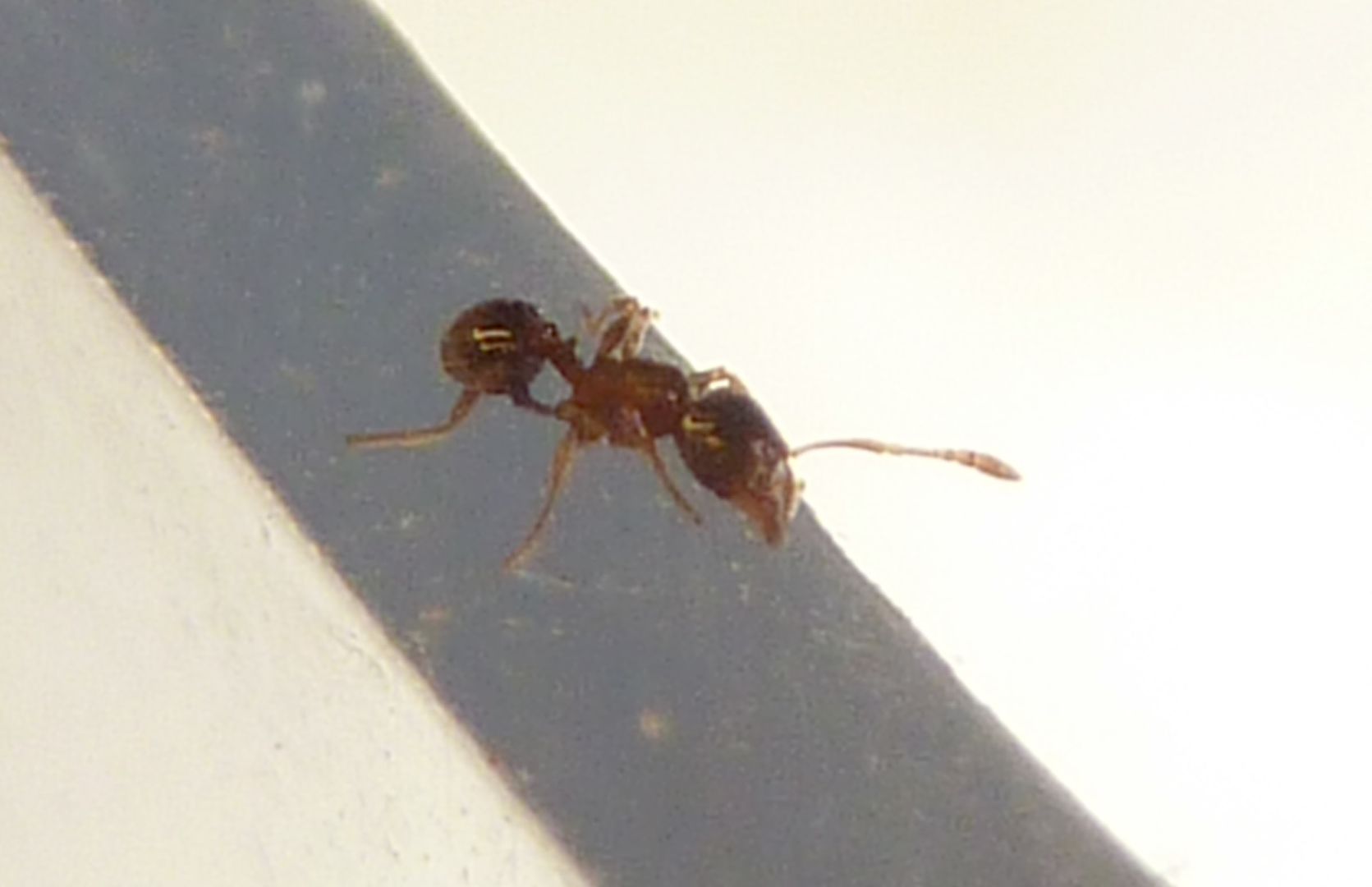
Holy Cow! I know this picture looks a little fake. The Plaster of Paris inside the container caught most of the flash and looks glowing white. The rim of the container, which the ant is on measures 2mm wide. This is a worker to a very small ant species I have, which I think is Pheidole pilifera. Still not good enough magnification to properly identify the species but still a great example of the Panasonic Lumix can focus on. I'm still mad I can't do anything with video files but I love everything else this camera can do.
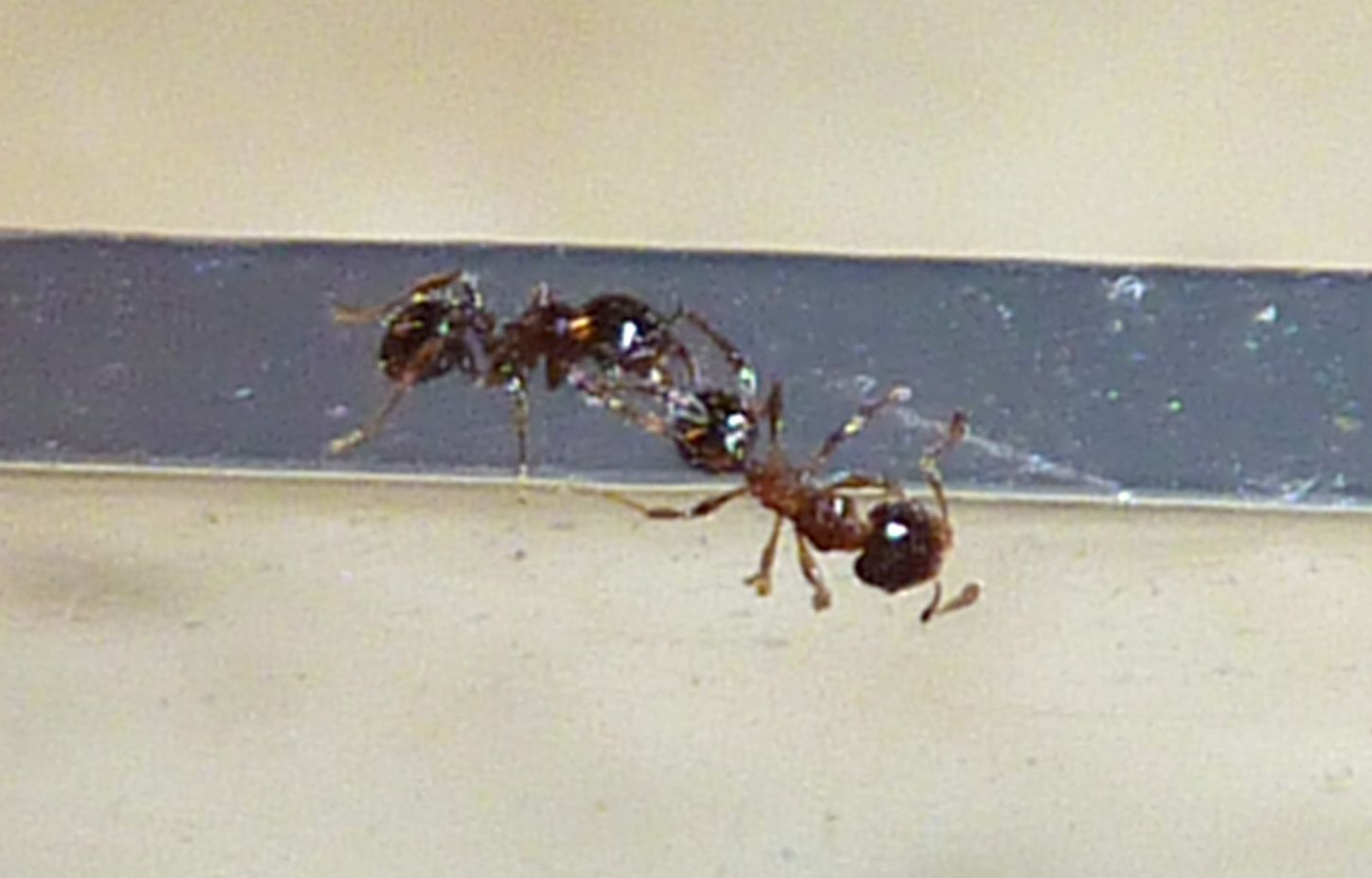
In this picture the lighting is a little to harsh so it's not what a professional photographer should be using for excellent pictures. But it's great for the casual buyer. Here one worker leads the other by tandem running. That's where the lead ant move a little and waits for physical contact from the ant behind before moving on. In this way young ants learn to forage, where to look, and can even steak out new nest sites. The setup sits in a foraging dish so I'm not worried about that.
Thursday, March 25, 2010
Digger Bees and Ants
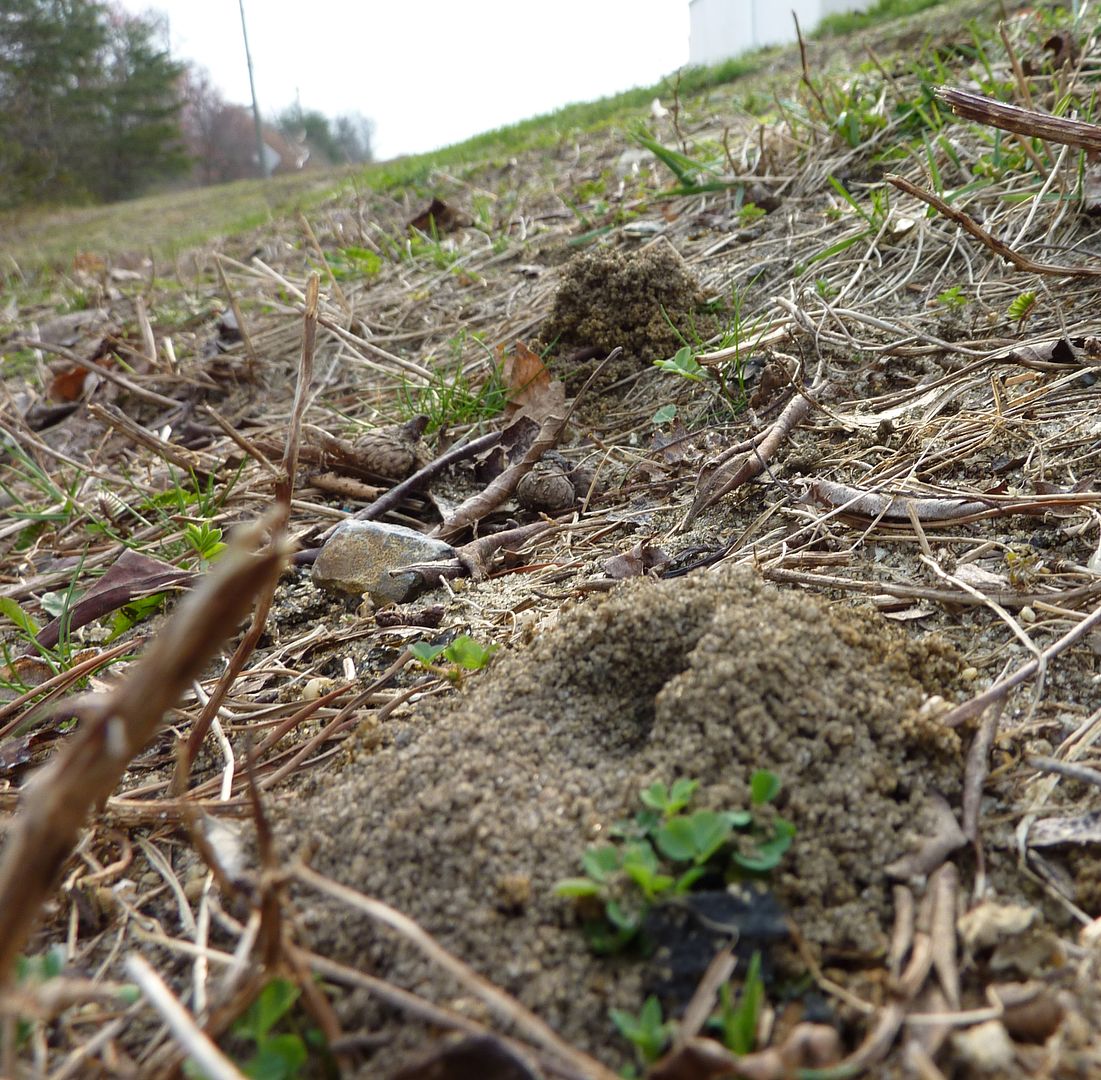
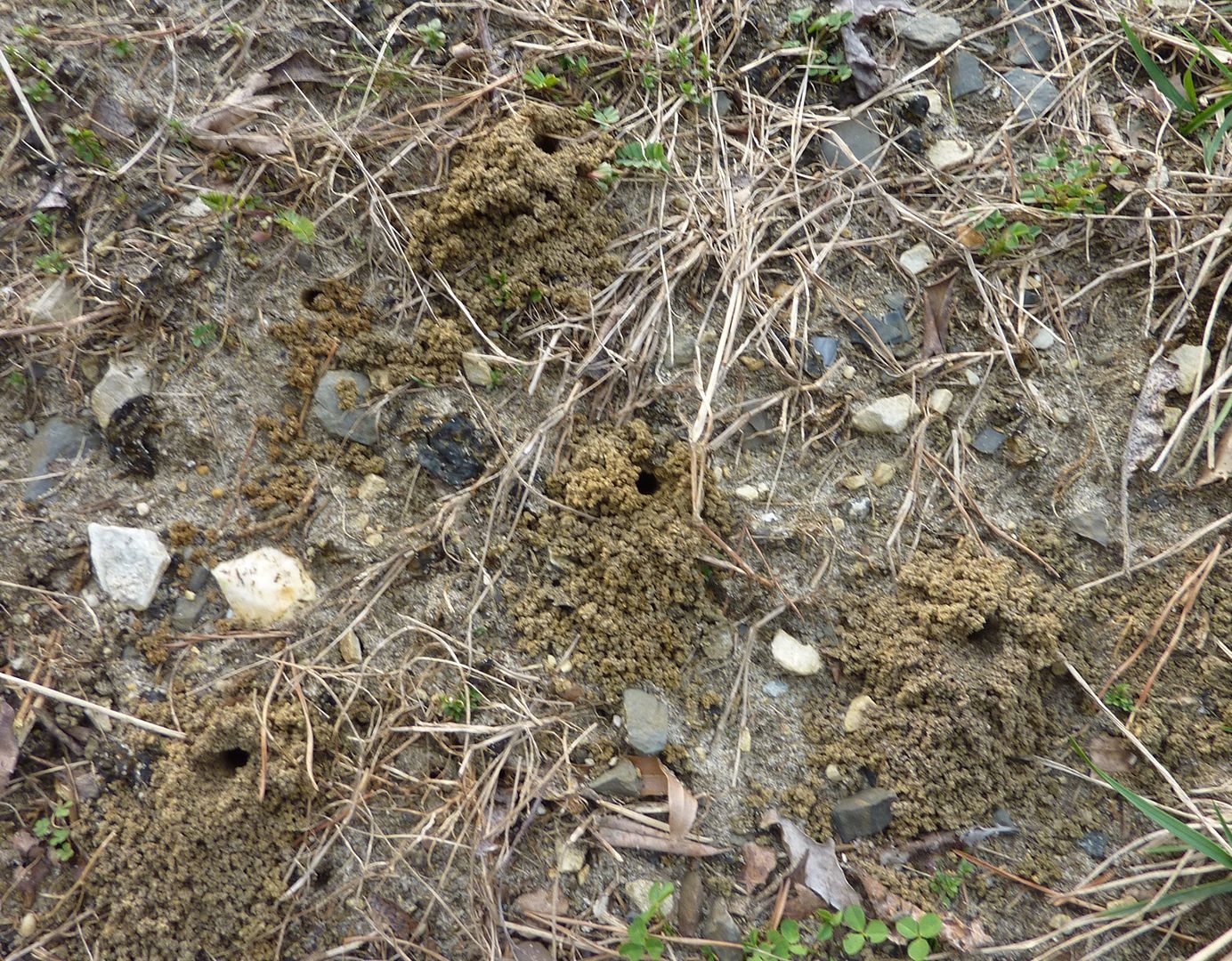
Now that it's spring it seems some of our native bees are once again becoming active. Walk along a sandy hill side and you'll likely find the mounds of digger bees. These are also called mining bees, and they're a good sign of sandy, semi-sandy or loam soil. They usually don't nest in clay or gravel.
It's still a little cold for them to really be out. This hill side wasn't very active. I suspect these are the holes to last year's bees and thus filled with emerging juveniles that have yet to mate. Each female after mating digs a one or two burrows over her life time. And can create upwards of 40 balls of pollen. Each ball is given a single egg to become next year's generation.

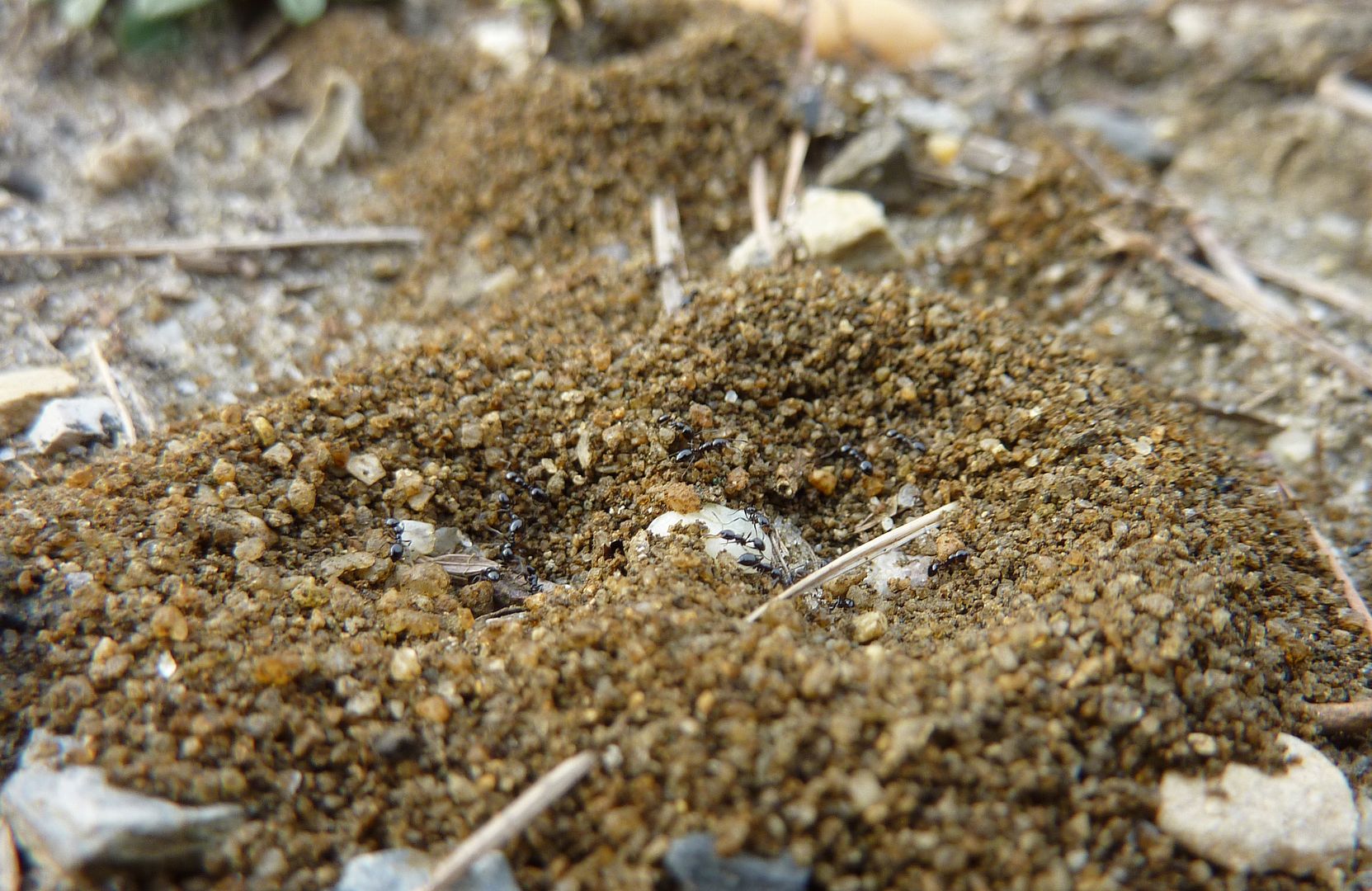
Here is a mound of Pavement ants, Tetramorium species E, for lack of a better species name. You can clearly see from the size of the grains and nest entrance it wasn't constructed by bees. This species is invasive and more than likely in your front lawn, so I didn't bother with a close up this time.
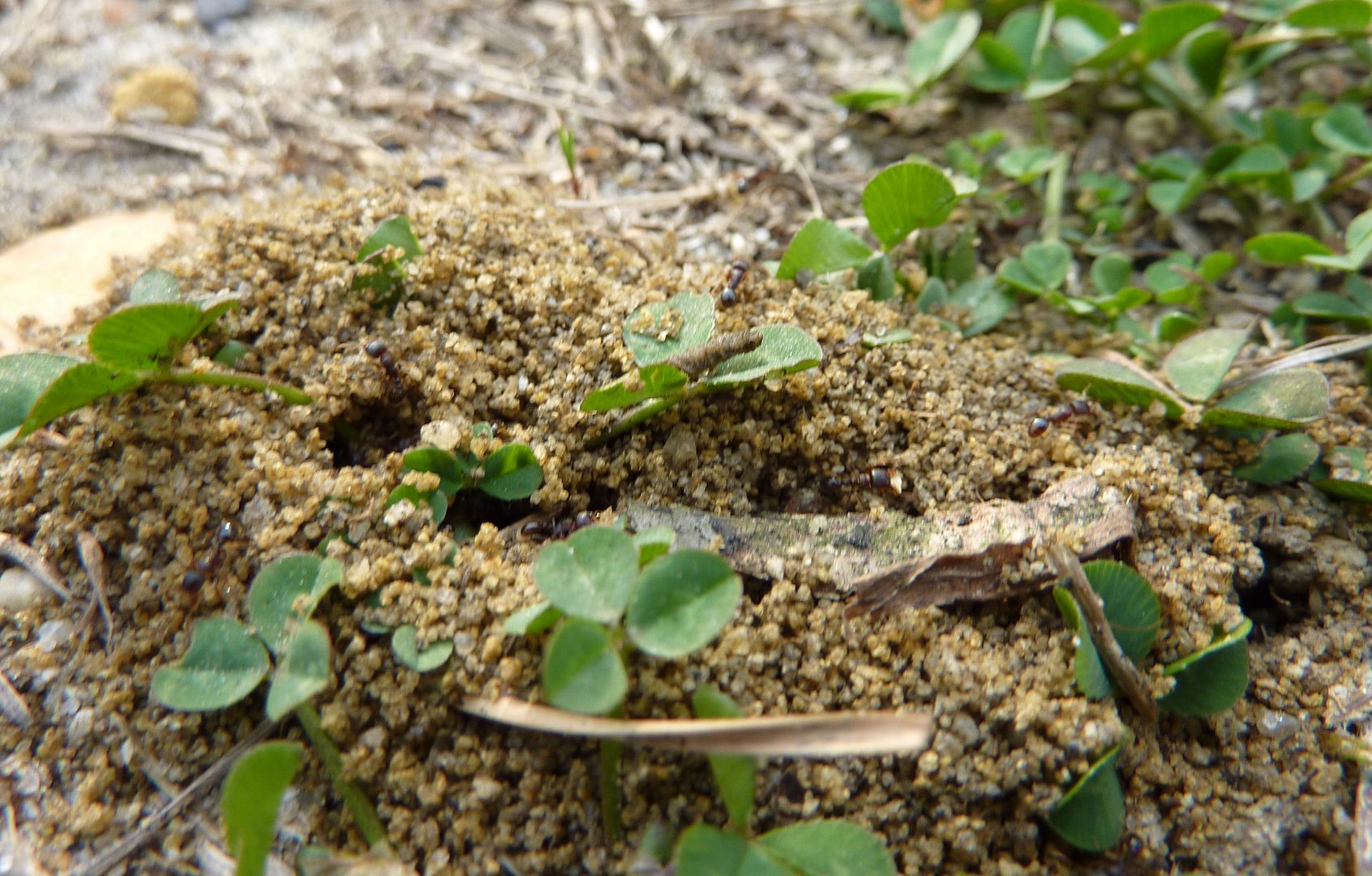
Here we have the smaller mounds to a much smaller ant, Monomorium minimum. Their common name is Little Black Ant. They're about 2mm long or 1/8th an inch. With a smaller ant comes a finer grained mound. I notice they clear away plant matter from their mounts too. They make multiple nest entrances too but it's all comprised in a small patch.
Small enough to test out the capabilities of my new camera. Panasonic Lumix DMC-ZS3 10.1 MP Digital Camera with 12x Wide Angle MEGA Optical Image Stabilized Zoom and 3 inch LCD (Black)
I had a hard time finding this camera after I herd about it from Alex Wild. Target, Best Buy, and Walmart didn't have it! I ended up having to go to a specialty camera and technology store. The sales person was very good at talking me into buying all sorts of stuff for it. I'd say all you need is the camera, memory card, and a second battery. The only downfall so far is it saves Video as an MTS file. Can't just open that with quicktime. But it does comes with software for to upload those to youtube and such. It's a little confusing to use. But the macro is excellent for a camera that doesn't need special lenses.
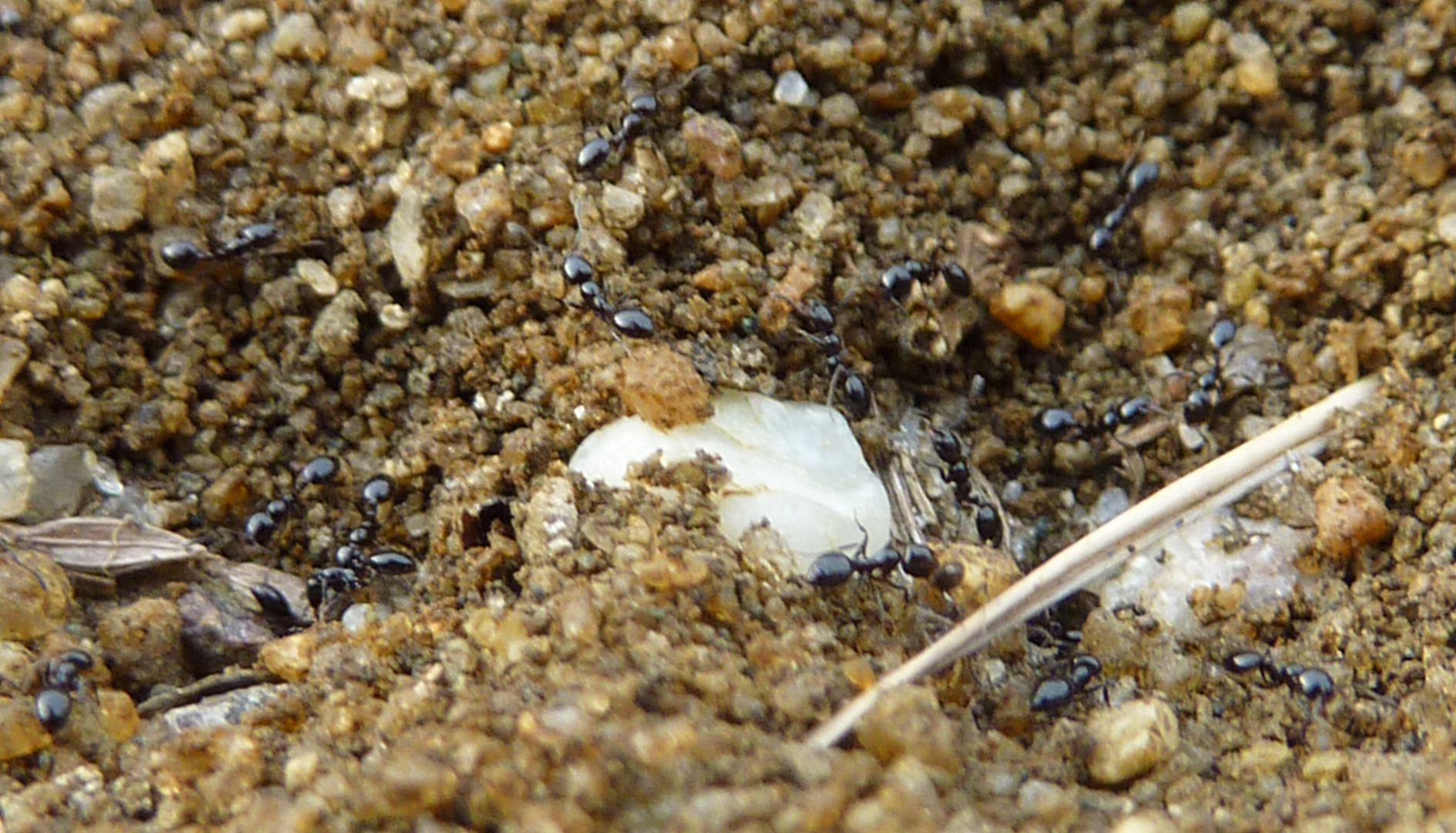
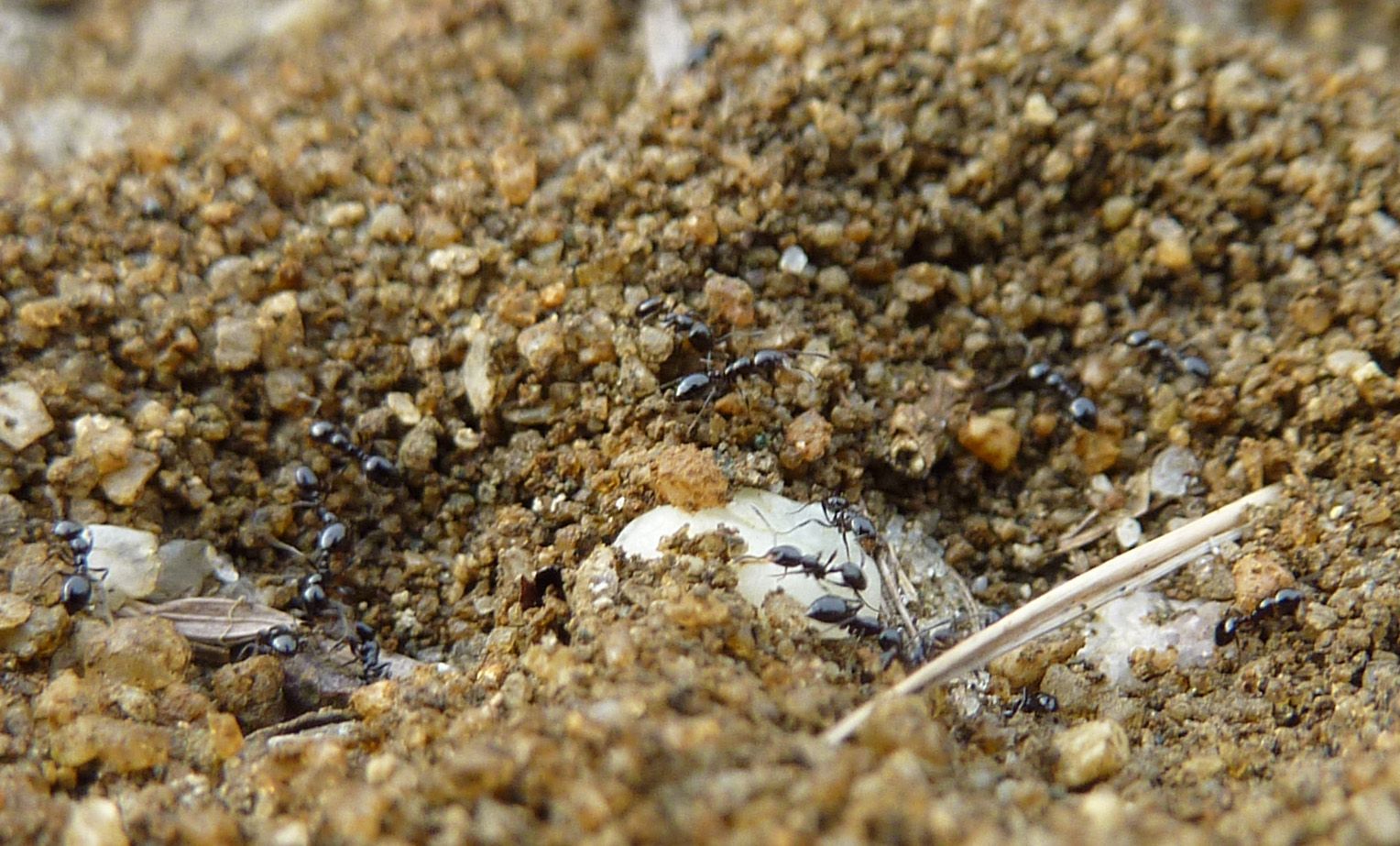
Monomorium minimum is fairly common. They mostly nest in sandy soil but can still be found along sidewalks and driveways. They're probably nesting in the decomposed granite laid under neath. These are considered a harvester ant too and likely go for grass seeds. They're a neat ant but I've never had much luck with them in captivity.
It's still a little cold for them to really be out. This hill side wasn't very active. I suspect these are the holes to last year's bees and thus filled with emerging juveniles that have yet to mate. Each female after mating digs a one or two burrows over her life time. And can create upwards of 40 balls of pollen. Each ball is given a single egg to become next year's generation.
They are fairly easy to tell apart from ant hills. The soil has clearly been pushed out in neat, and, assuming it hasn't rained, appears lose and flaky. The entrance is usually perfectly round depending on the size of the bee. They're also very likely found around one another in close proximity where as ant hills are not so much. Usually a diverse array of ants will inhabit such a hill side, each with their own sized entrance hole and mound configuration. Some eliminate the grass around the entrance while others leave it there for example. Also when it's an ant hill it's usually quite obvious from the ant traffic going in and out.

Here is a mound of Pavement ants, Tetramorium species E, for lack of a better species name. You can clearly see from the size of the grains and nest entrance it wasn't constructed by bees. This species is invasive and more than likely in your front lawn, so I didn't bother with a close up this time.
Here we have the smaller mounds to a much smaller ant, Monomorium minimum. Their common name is Little Black Ant. They're about 2mm long or 1/8th an inch. With a smaller ant comes a finer grained mound. I notice they clear away plant matter from their mounts too. They make multiple nest entrances too but it's all comprised in a small patch.
Small enough to test out the capabilities of my new camera. Panasonic Lumix DMC-ZS3 10.1 MP Digital Camera with 12x Wide Angle MEGA Optical Image Stabilized Zoom and 3 inch LCD (Black)
Monomorium minimum is fairly common. They mostly nest in sandy soil but can still be found along sidewalks and driveways. They're probably nesting in the decomposed granite laid under neath. These are considered a harvester ant too and likely go for grass seeds. They're a neat ant but I've never had much luck with them in captivity.
Subscribe to:
Posts (Atom)