Showing posts with label Caterpillars. Show all posts

Tuesday, February 27, 2024

Last Year's Pipevine Swallowtails!!!

 So, I have been growing Woolly Pipevine for at least 14 years. I went with Aristolochia macrophylla over A. tomentosa because it's less aggressive.... or at least, it's easier to control. A. tomentosa sends up new stems from everywhere its roots spread out, so just one plant can take over a whole garden bed with new stems poking up and climbing all over the plants that grow there. A. macrophylla doesn't do this. It's just the one main trunk and lots of stems that come off of that and climb all over whatever. Put another way, the roots stay where you planted them. 

I initially planted this as a host plant for the Pipevine Swallowtail Butterfly. But this isn't a species very common to my area. They are found in New Jersey and have been sighted in my county, but there aren't any large populations nearby. The reason for this is there aren't many host plants around. Black Swallowtail are abundant because they're a generalist on the carrot family, so every field that's been invaded by Queen Anna's Lace, or home gardener growing Parsley, Carrots, Fennel, Dill and so on are helping this species thrive. Tiger Swallowtails are even more common thanks to Tulip Trees, Black Cherry, and what remains of the Ash population being staples in the patchwork of our local forest lands. 

The nearest sighting of the Pipevine Swallowtail to me is about a 30 minute drive from my house. So for 14 years the vine pretty much went unused aside for the occasional Robin's nest, and Ant which used it to get from our shed to the Redbud it's latched onto. 
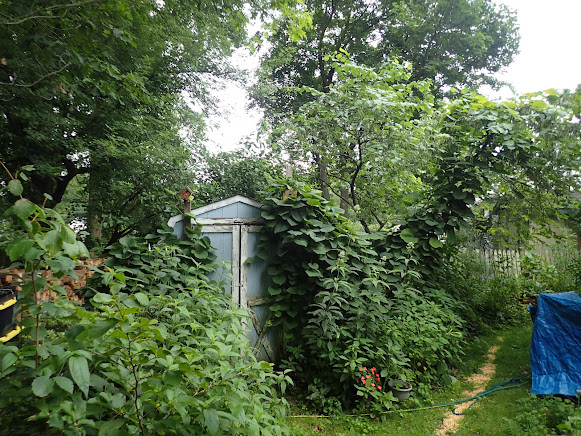
Ohh yes, the shed. The vine is slowly consuming it on both sides, though hasn't quite taken over the roof yet. The shingles still get too hot for its stems to lay but each year I see it adding another layer as the leaves it makes up there grow larger and larger and shade out enough for new stems to safely sit without getting baked off. 

I'd been thinking about pruning it back but then one day last July I went out there and noticed these clusters of little orange eggs. "OH MY FUCKING GOD!!!" I shouted.

A female Pipevine Swallowtail had found our vine and graced it with four clusters of eggs. Sadly one of them was on a vine that stuck out into the path and I was going to prune off. Raising butterflies in captivity is normally frowned upon but I decided to make an exception here, and this would let me better document their life cycle. And for the record, the majority of the egg clusters I left outside. It was just a cluster of 9 eggs that I brought in and raised in a butterfly cage. Also a few days later I discovered additional egg clusters that seem to have been laid after the first four clusters, so I guess she came back or a second female flew by. 


Outside I noticed all of the egg clusters were laid on the newest growth. This is likely because the toxin in the leaves will be at the lowest here and the caterpillars will be better able to handle it.


After a few days, they entered the "Forbidden Gummy Worm" phase of development. Seriously though don't eat these. The toxin pipevine plants make, and caterpillars eventually store in their bodies, is an actual carcinogen. This is likely why the plant fell out of favor among gardeners. 

I was making a mistake with raising the ones indoors. You're not supposed to bring them inside it seems as this throws off their natural rhythm. Should I do this in the future I'll be sure to keep the butterfly cage outside. 

It was neat having them inside though. Their constant chewing is loud and with nine of them going at it there was an ambient Yule Log effect going on. I wish I had recorded it.

Being Swallowtails, this meant their caterpillars have "horns" this yellow/orange tongue-like appendage that comes out of their head and sprays a kind of formic acid or foul smelling chemical out. The idea is should a bird try and pick one up, BAM!!! Awful Perfume Sample right in the eyes! The caterpillar will likely die soon after this happens but rest assured, that bird certainly won't be picking one of these up to feed to their kids. 

All that being said, I had to poke this thing with a pencil for a good ten minutes or so just to get him angry. 

Large black worms with orange dots all over them don't exactly blend in. It's almost like they're asking to be eaten. And as it turns out, this is exactly what they're doing. This is the same/similar strategy the Monarch Butterfly uses. Monarch caterpillars are black, white and yellow, and they actively feed in the day in full view of predators. They taste nasty though and have bad chemicals in them that might kill a baby bird. Eventually through repeated predator, the birds learn not to feed these caterpillars to their babies. The trouble with this strategy is there's always a new generation of birds to teach but eventually the local population learns to leave them alone and the caterpillars thrive.

 
It's around now that I noticed none of the outdoor caterpillars have survived past the second or third instar. This makes me glad I at least brought a few indoors. Maybe I'm greedy but I didn't want to wait another 14 years to photograph them. Also as far as caterpillars go, they look really cool.

 Chrysalis Day!

 One by one, they all shed their last layer of skin off and formed a chrysalis. 

10 to 14 days later, they started to emerge. 

BTW I have no idea how you tell the gender in this species. Some people say the females are this navy blue color while males are more of a green... but uhhh.

This is the same butterfly as the navy blue one pictured just above. I don't think the color thing is accurate. Either that or I somehow managed to hatch 8 girls. (1 did not emerge from its chrysalis at all. I'm assuming it's going to hatch out sometime this Spring.)

I released all 8 of them once their wings were expanded and they were able to fly. Sometimes they would hang out on the flowers I put them on but not for long. Within the hour they were fueled up and flew out into the world. 

A few days releasing them all though, I was delighted to come home and find one in my garden. This wasn't staged at all. I had to pull out my phone and quickly snap a picture. 

Hopefully they'll find my garden again this year. And hopefully more people will give Pipevine a try so this butterfly becomes a more common sight every year.

Tuesday, August 29, 2017

This Week in Anting 08/28/2017


Finally got around to visiting Turkey Swamp Park this year and a few other locations around that county. 

Formica integra, were still there with foraging "trunk" trails. These are well maintained trails made by ants that tend to be in the same place every year. The ground around them is actually compacted down, not from the weight of the ants but because they're so good at clearing everything else away it's on the compacted parts that stay. The trail also ventures underground every few feet.

Dolichoderus plagiatus, are a species I've been calling "cone ants" but that almost as generic as calling them "black ants." The cone though refers to a hump-like structure on their mesosoma. This isn't visible in the photo above but online images of them show it more clearly, see here. Of the four Dolichoderus species in the US this is certainly one of the most colorful. They have bright orange spots that are sometimes full stripes on the gaster which goes well with the rest of the body which ranges from red/brown to black.

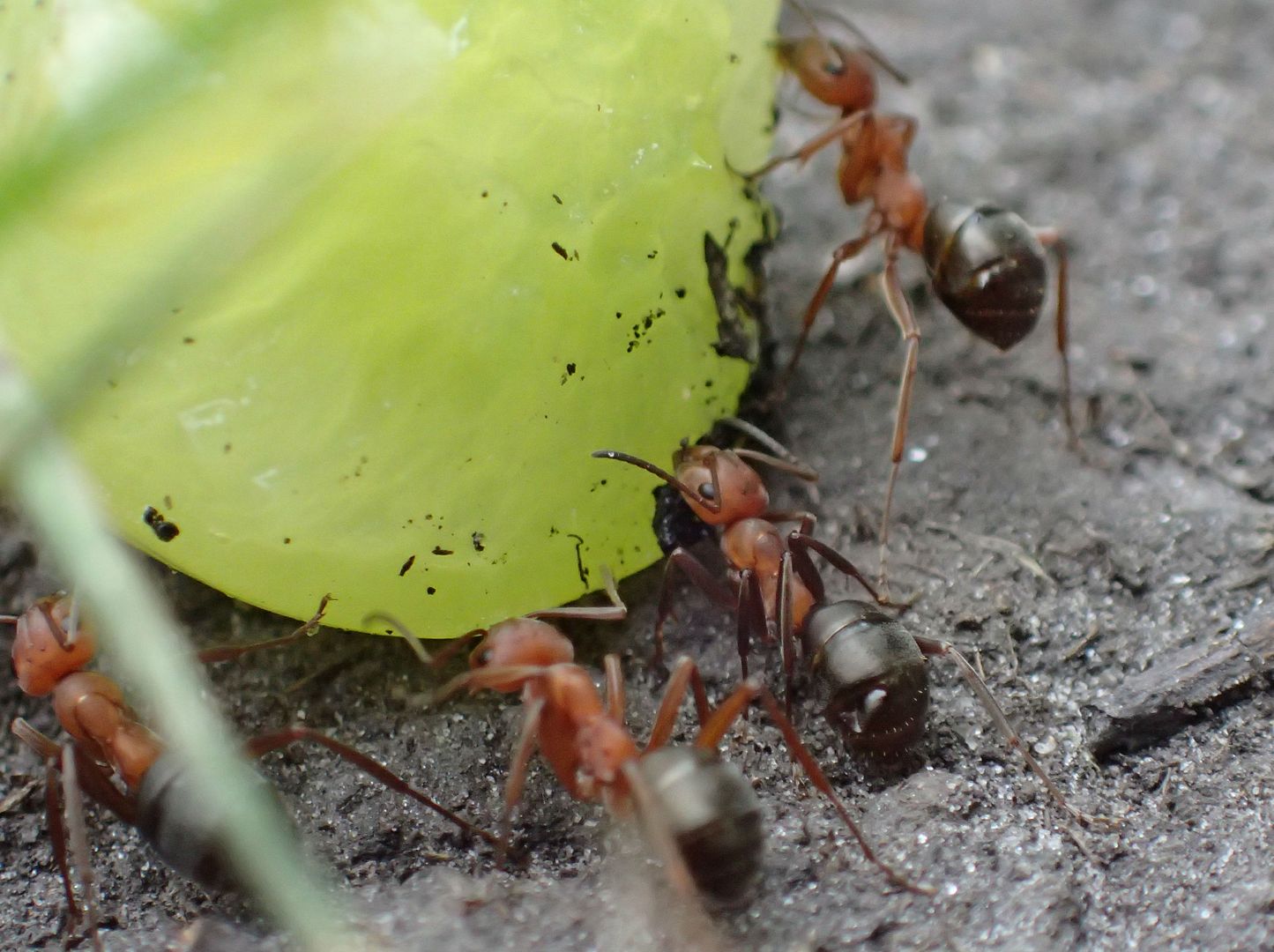
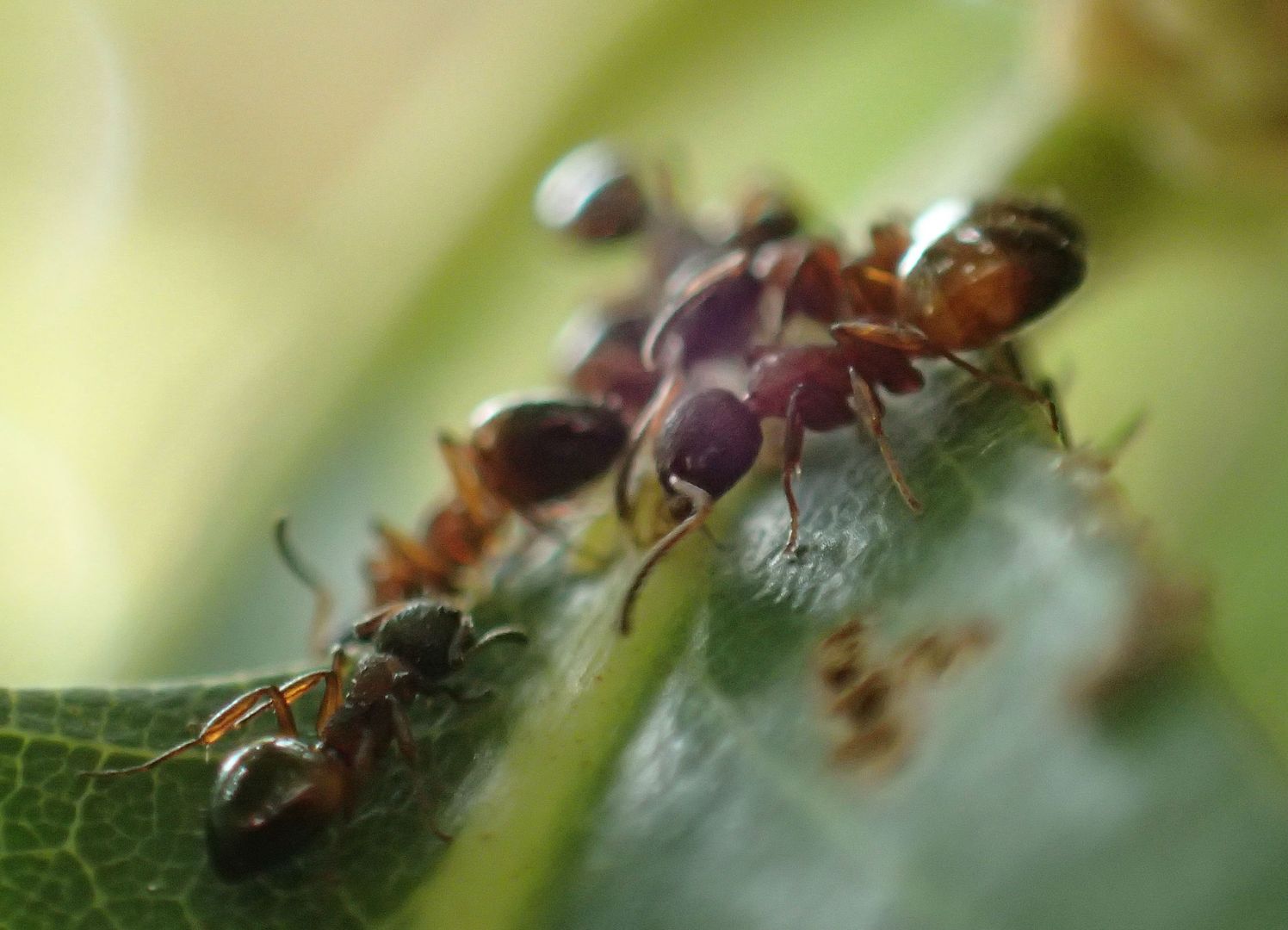
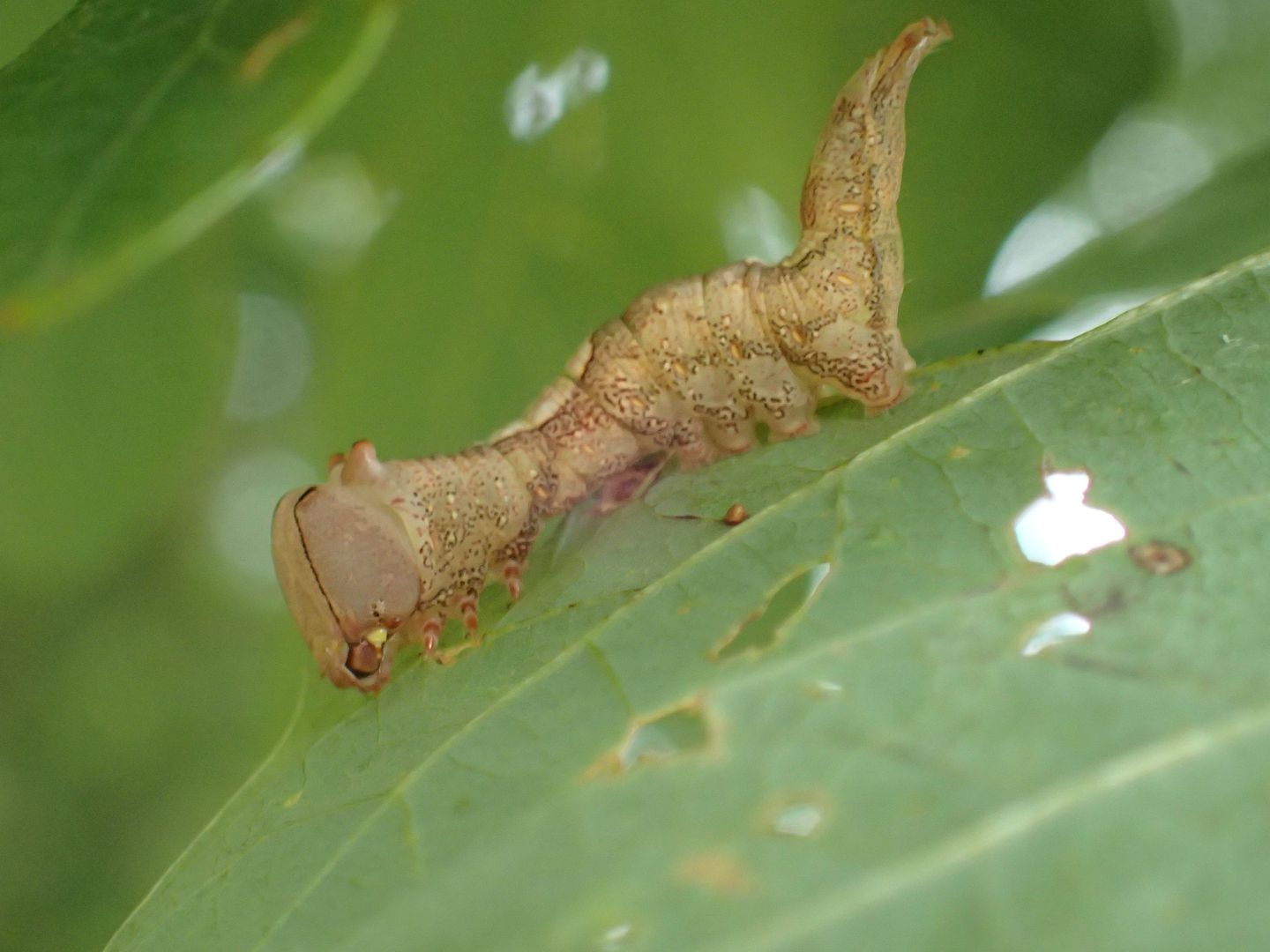
Oak Trees were full of life. White Oak in particular was bustling with caterpillars and aphids being tended by ants.


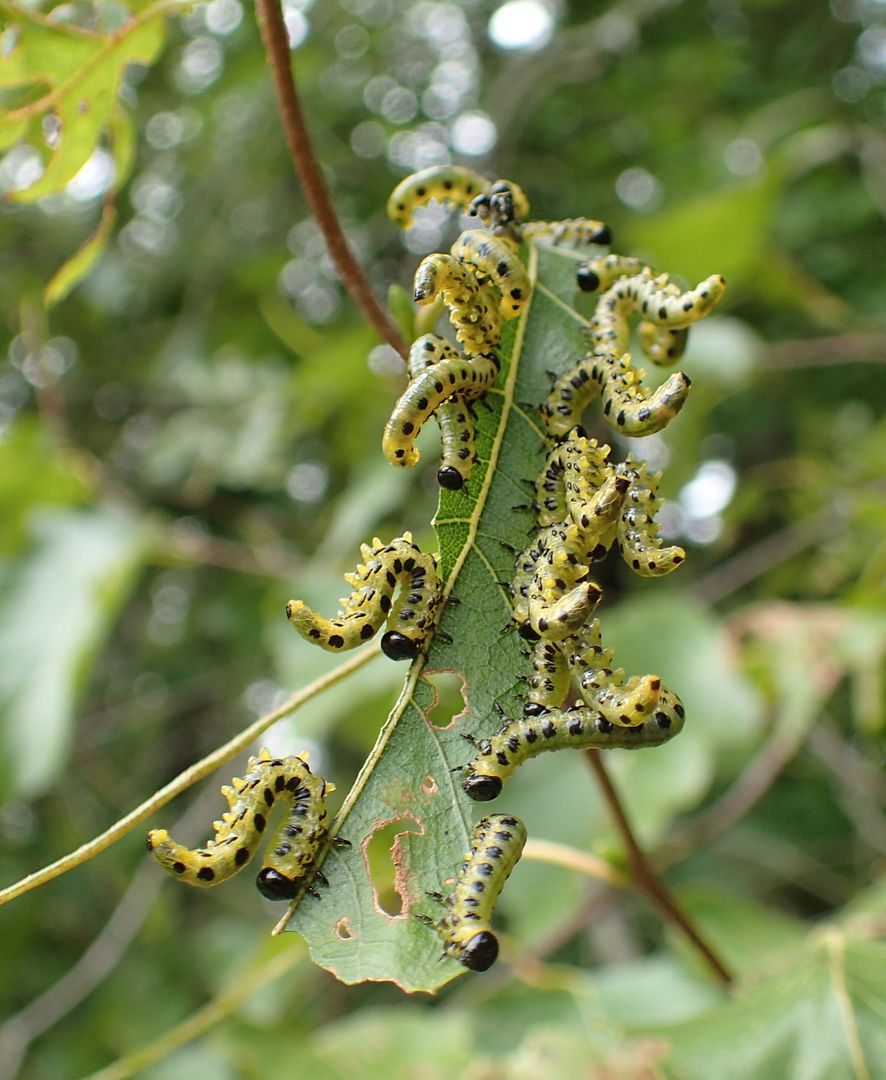
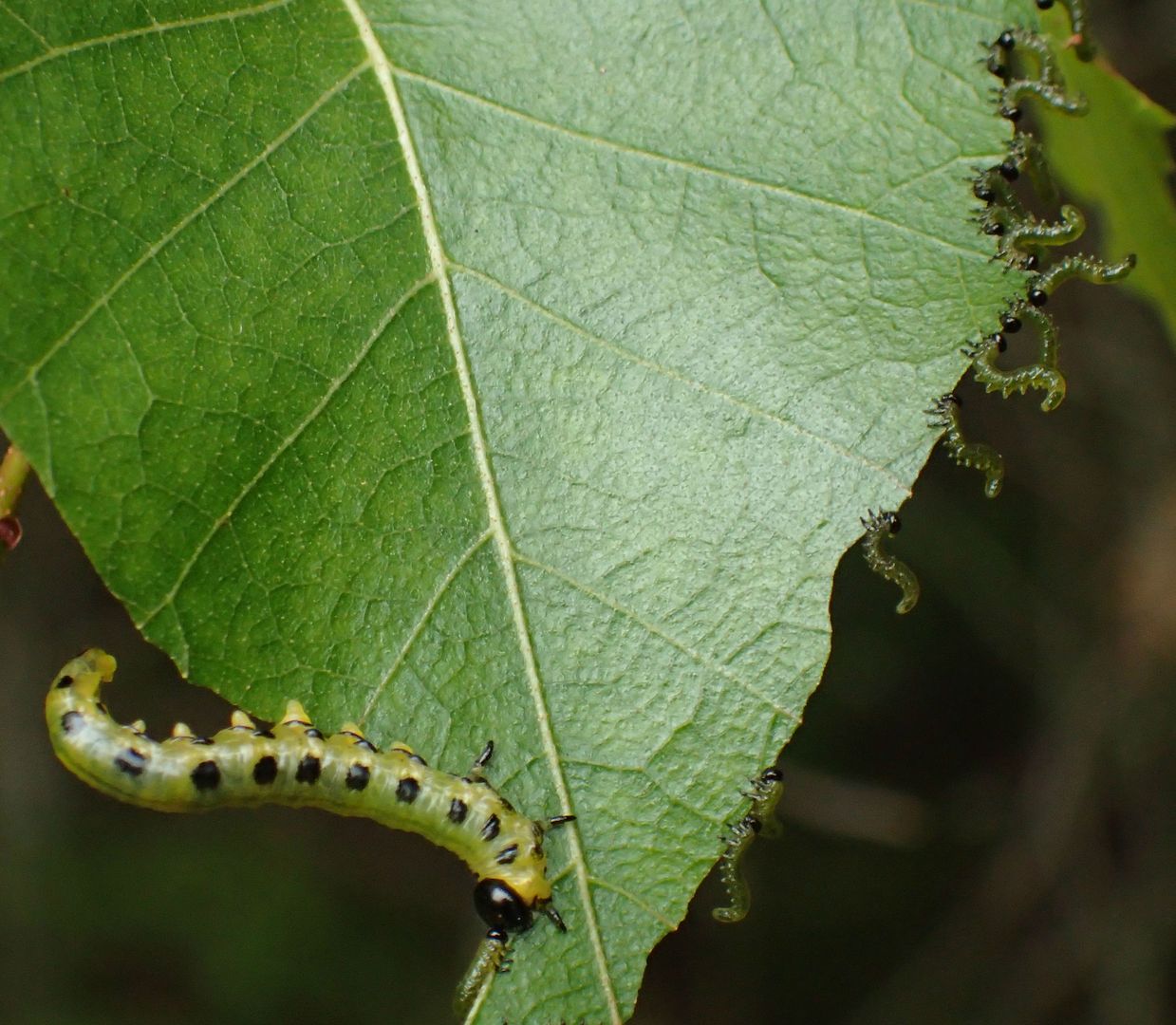
Another tree I couldn't identify was loaded with sawfly larva.
 
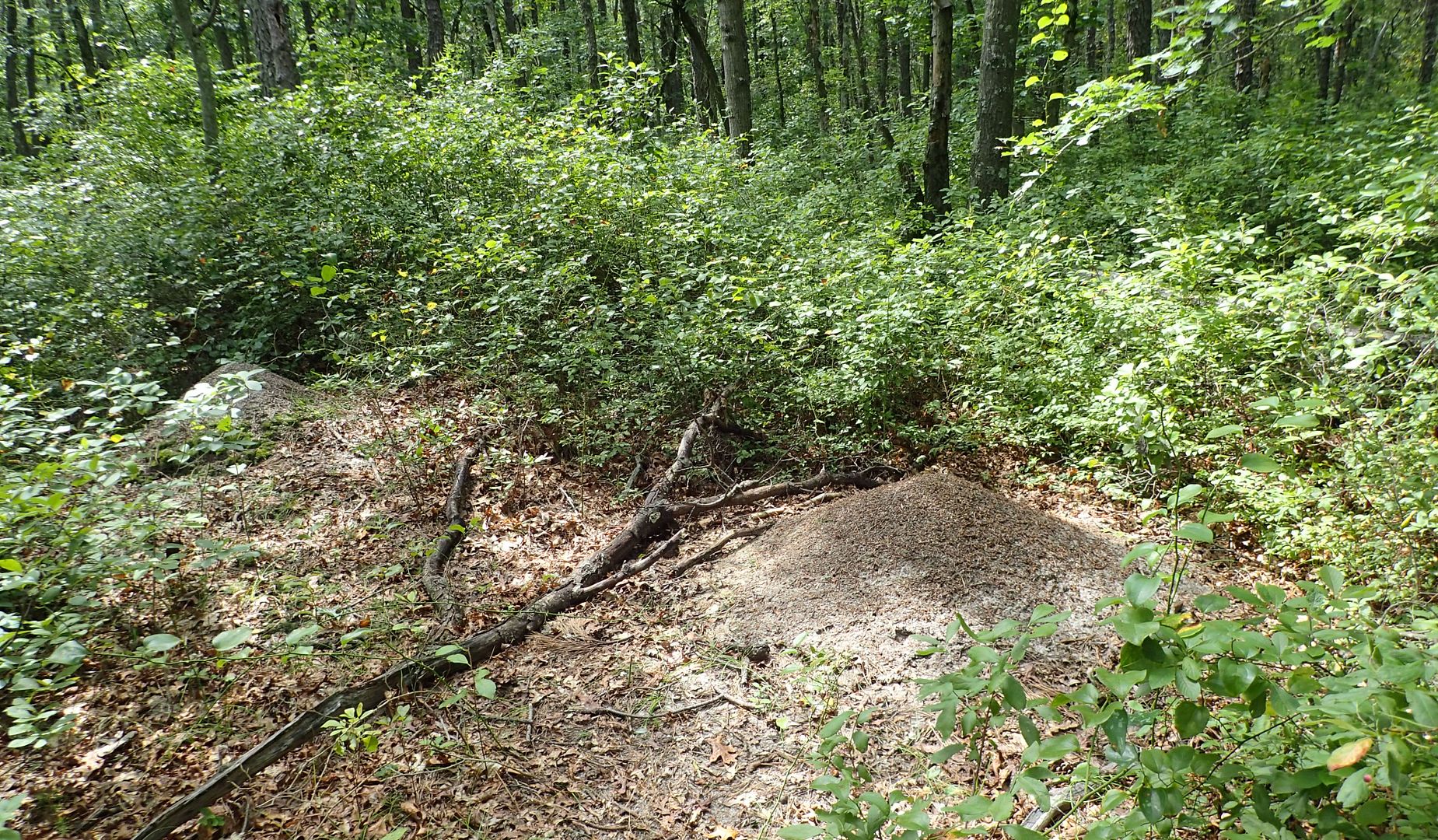
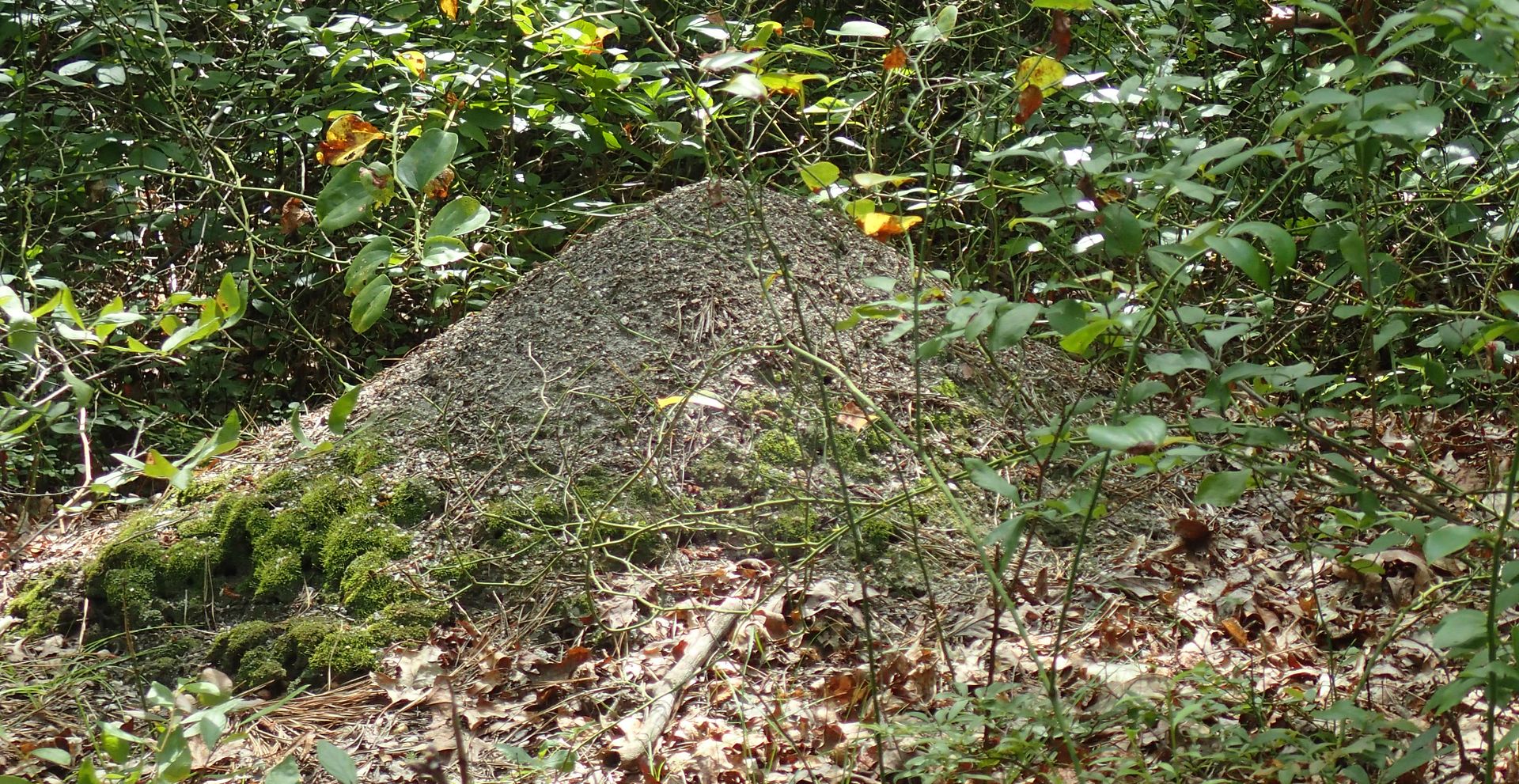
The Formica exsectoides mounds are still there. They weren't that active though. We went on too nice of a day it seems because for once you couldn't hear the leaves rustling from millions of ants crawling around. (I want my money back!)


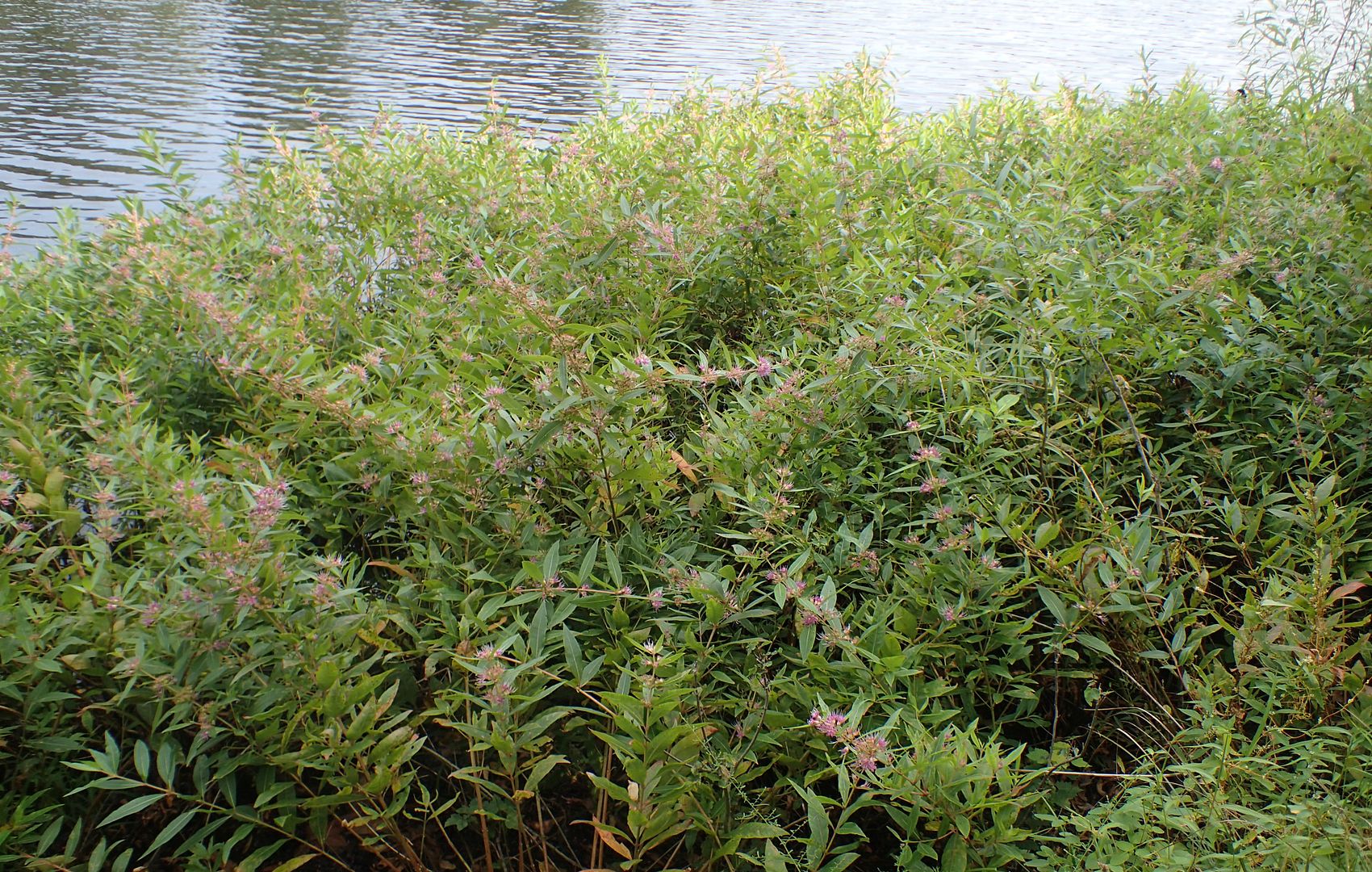
Plant wise, I found a stand of Swamp Loosestrife, Decodon verticillatus, which is an uncommon aquatic wildflower. It has a wide distribution across most of the eastern US and Canada. It was bustling with bees and several butterflies.

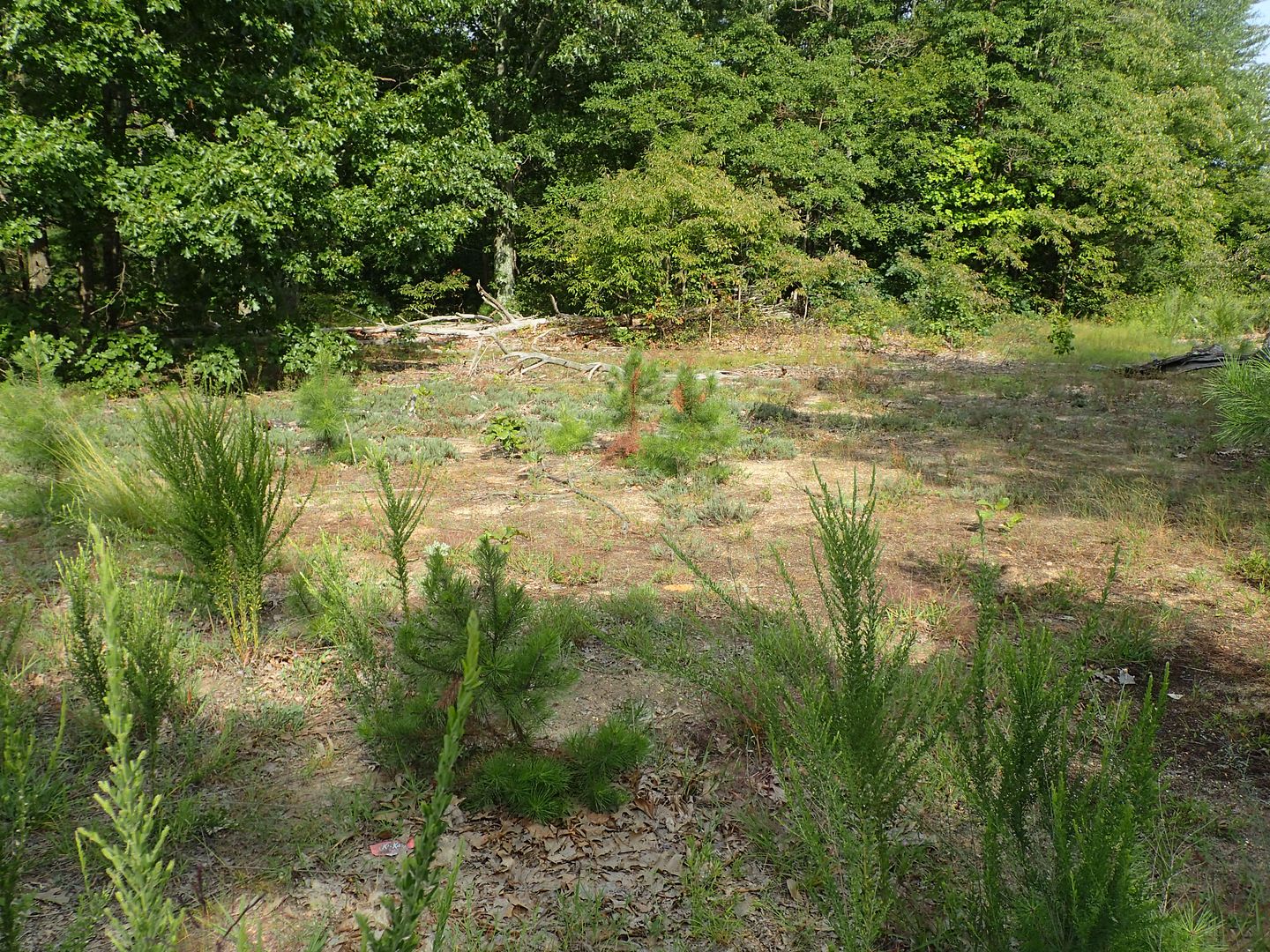
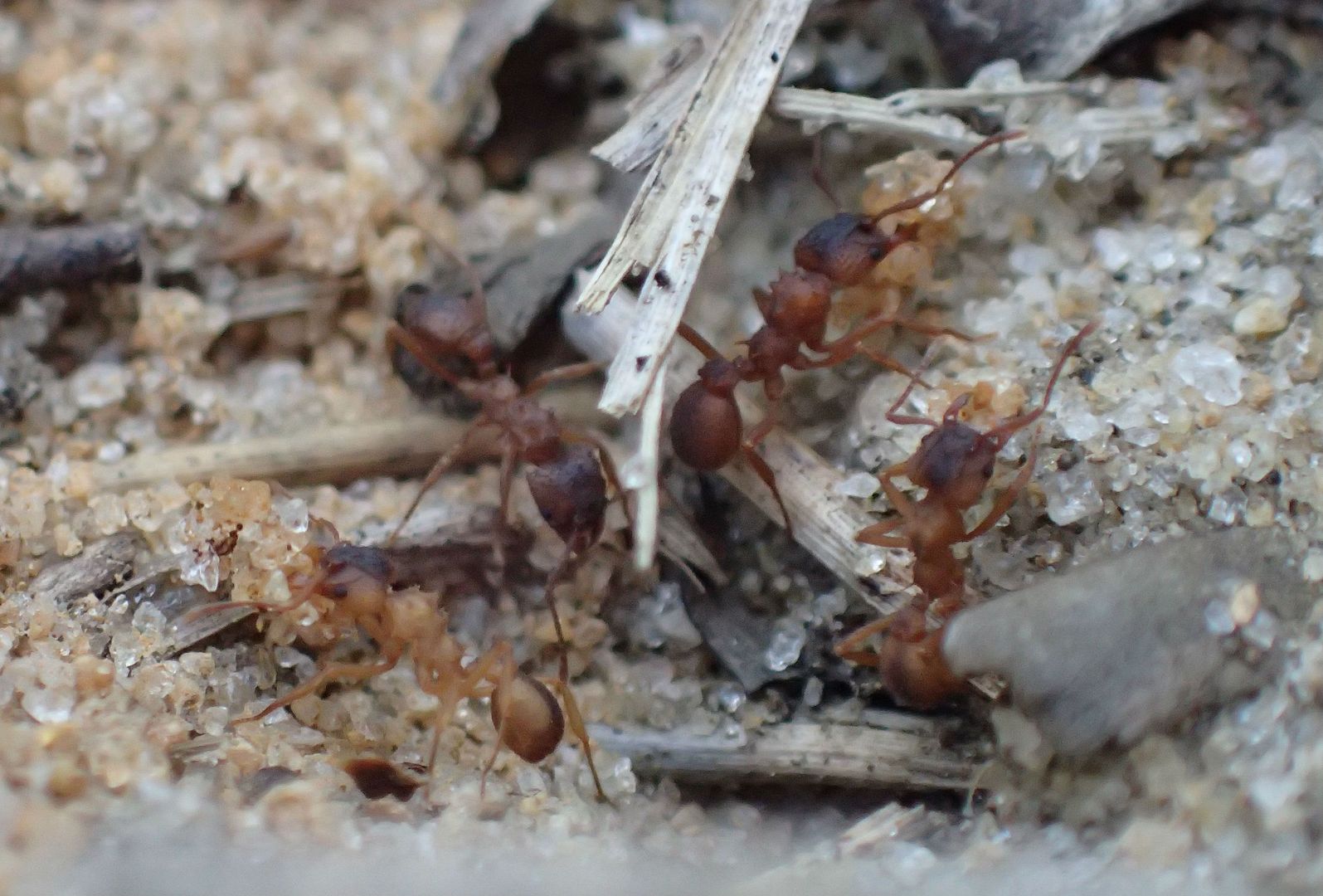
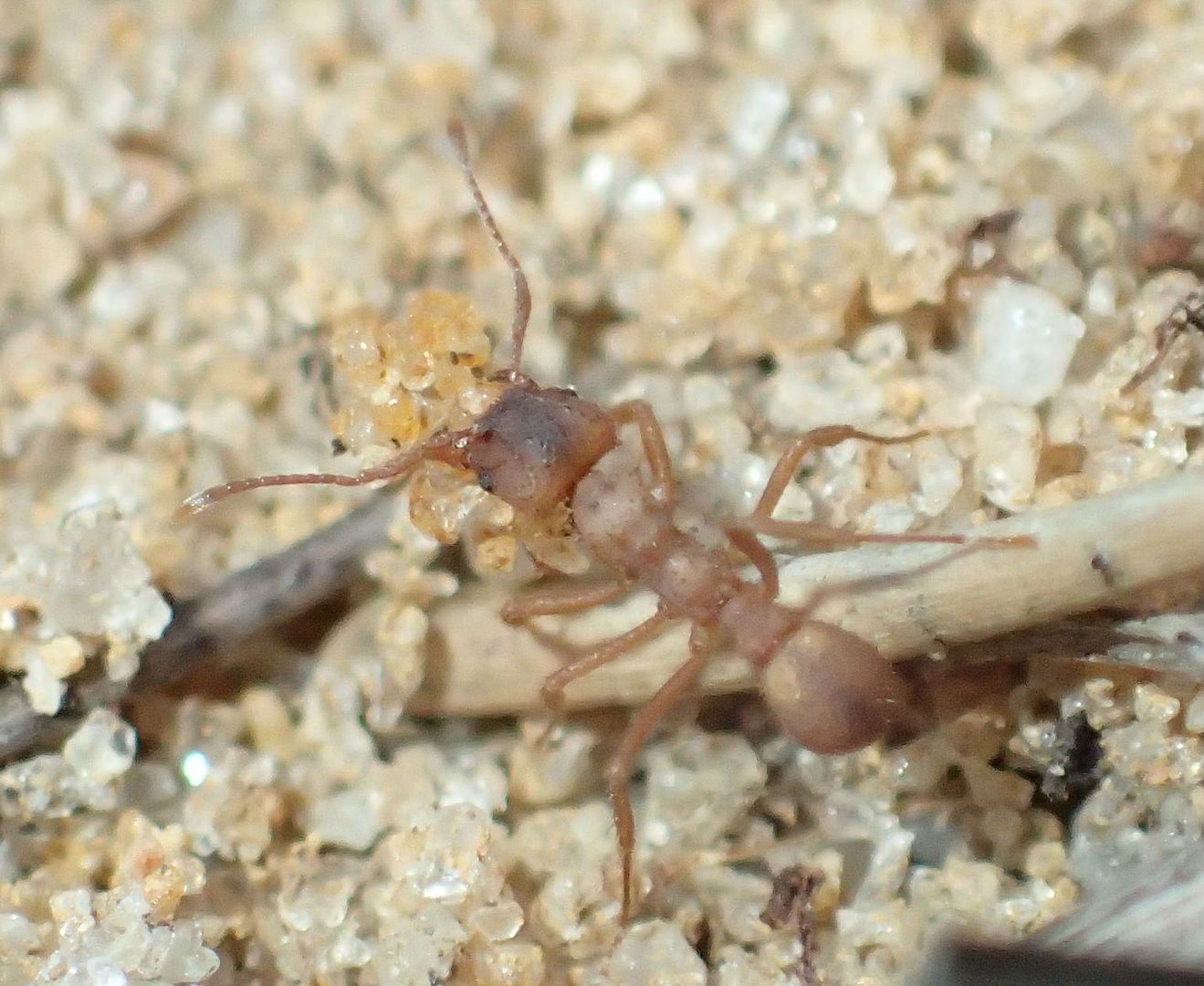
Trachymyrmex septentrionalis, the Northern Fungus Farming Ant, likes to nest in sandy soil along odd types of scrub land where strange plants tend to grow. Prickly Pear is the only one I could really identify but there were lots of odd plants that might be mosses or are low growing conifers that barely push out of the ground and have compound leaves.

We also found a few colonies in an adjacent field where a patchy not so lush lawn was grown... I'm not sure if it's patchy because no one's water and maintaining it, or because the tiny leaf cutter ants are slowly stripping it. Whatever the case, these are ants of dry sandy settings in full sun where resources might be limited. They thrive here because they focus on other types of food, namely a kind of fungus they maintain by fertilizing with flower petals, bits of foliage, and the frass of caterpillars and grasshoppers.

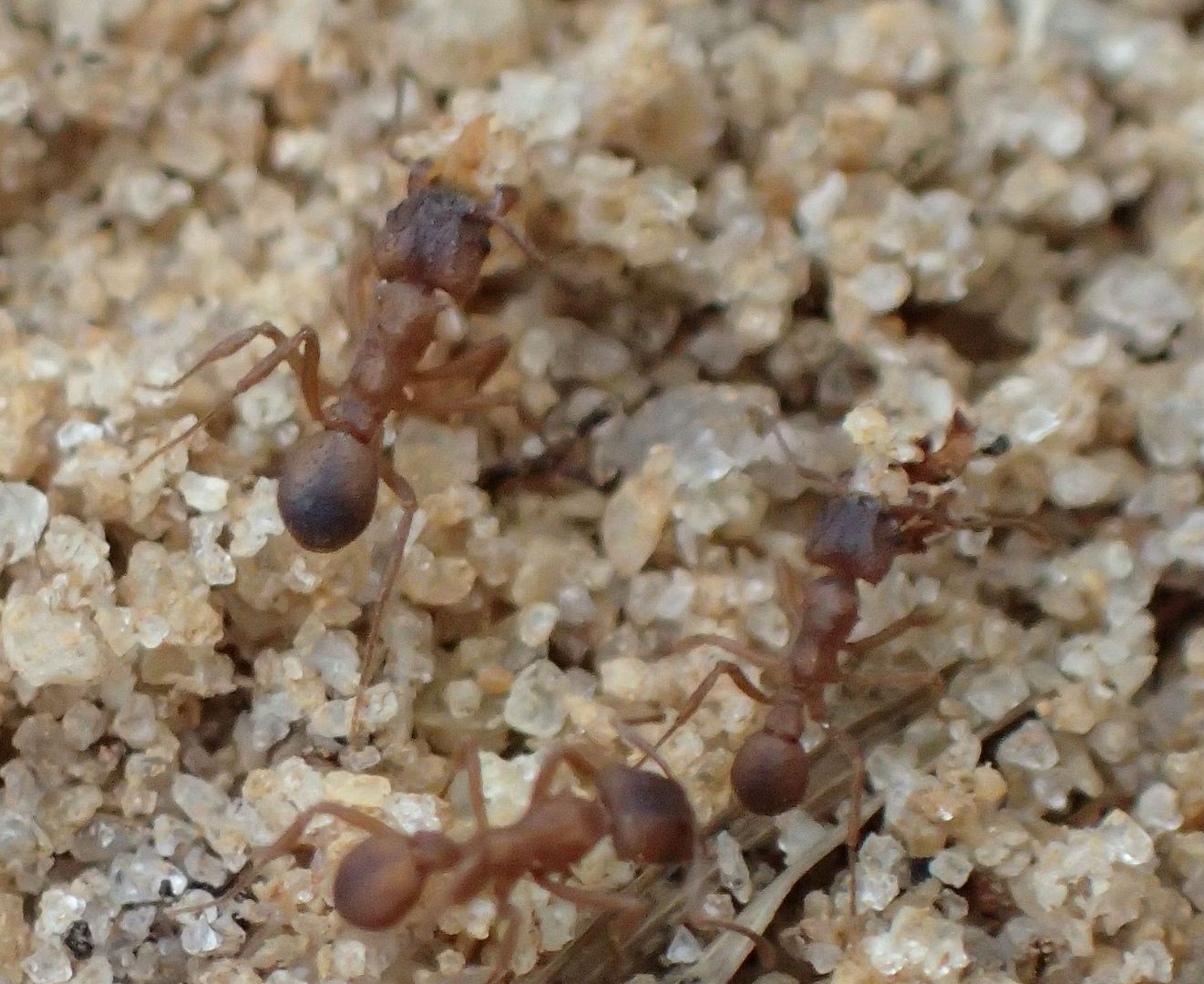
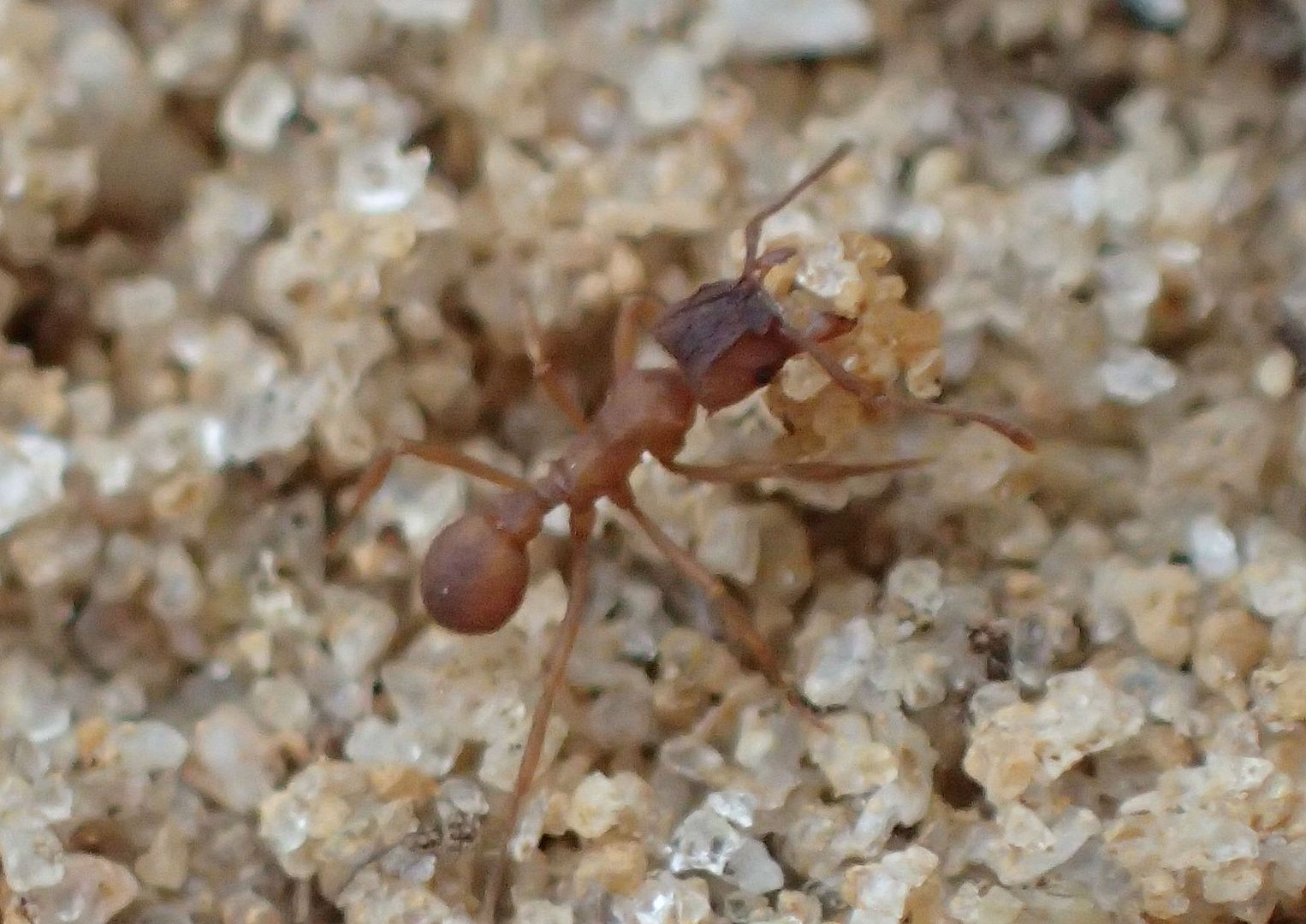
These are small ants verging on 3 to 4 mm long. And even within that the workers vary somewhat within the same colony.

As far as ants in the North East go they're easy to identify. Their heads have spines on them, and their mesosoma has several small sets too. Their color is a unique orange/brown tone and parts that verge on being purple.

 Also when they dig they also gather up the dirt in clumps, making their mounds somewhat unique.

 We also found lots of mushrooms.

Wednesday, June 21, 2017

Spring/Summer Azure Caterpillars on New Jersey Tea

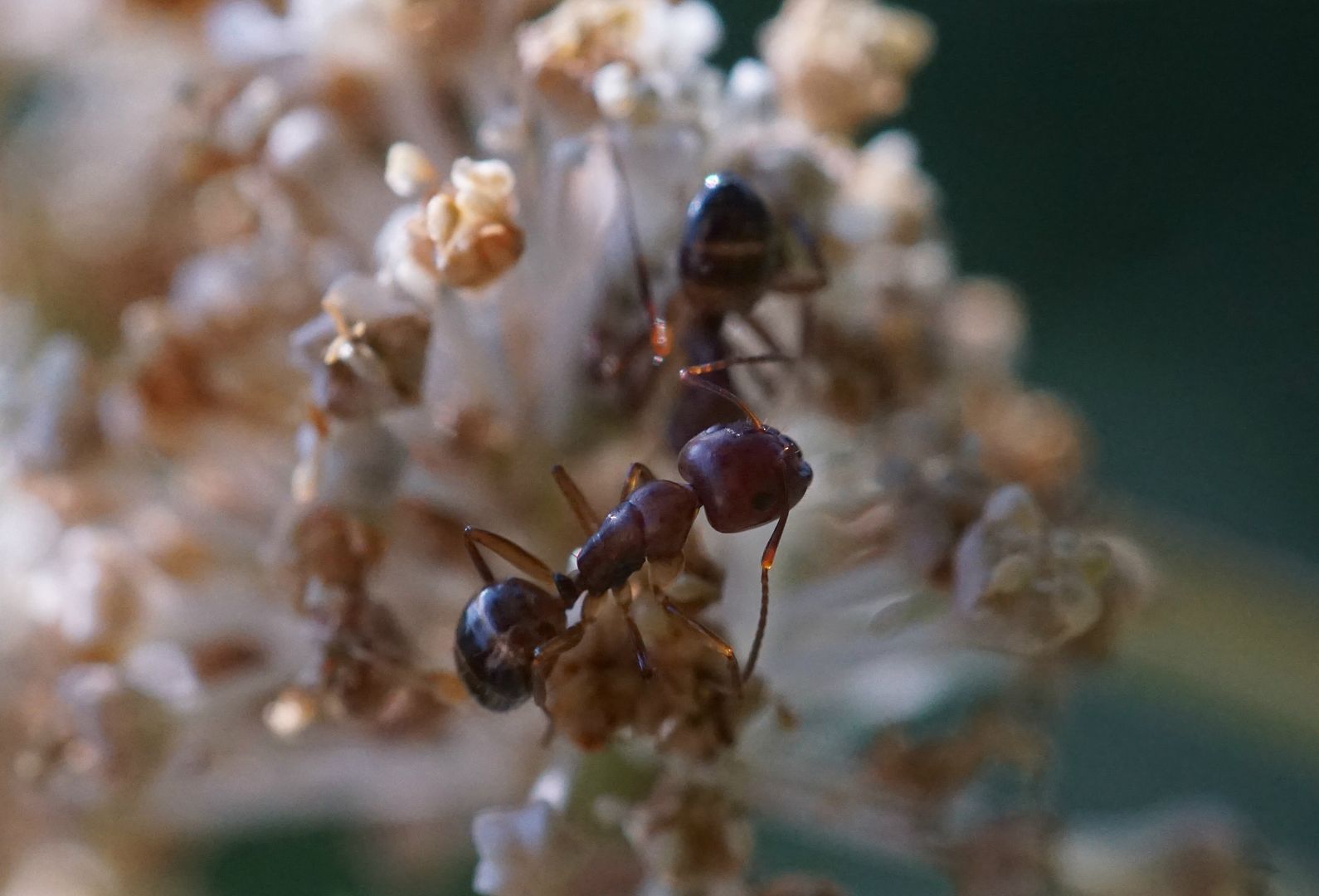
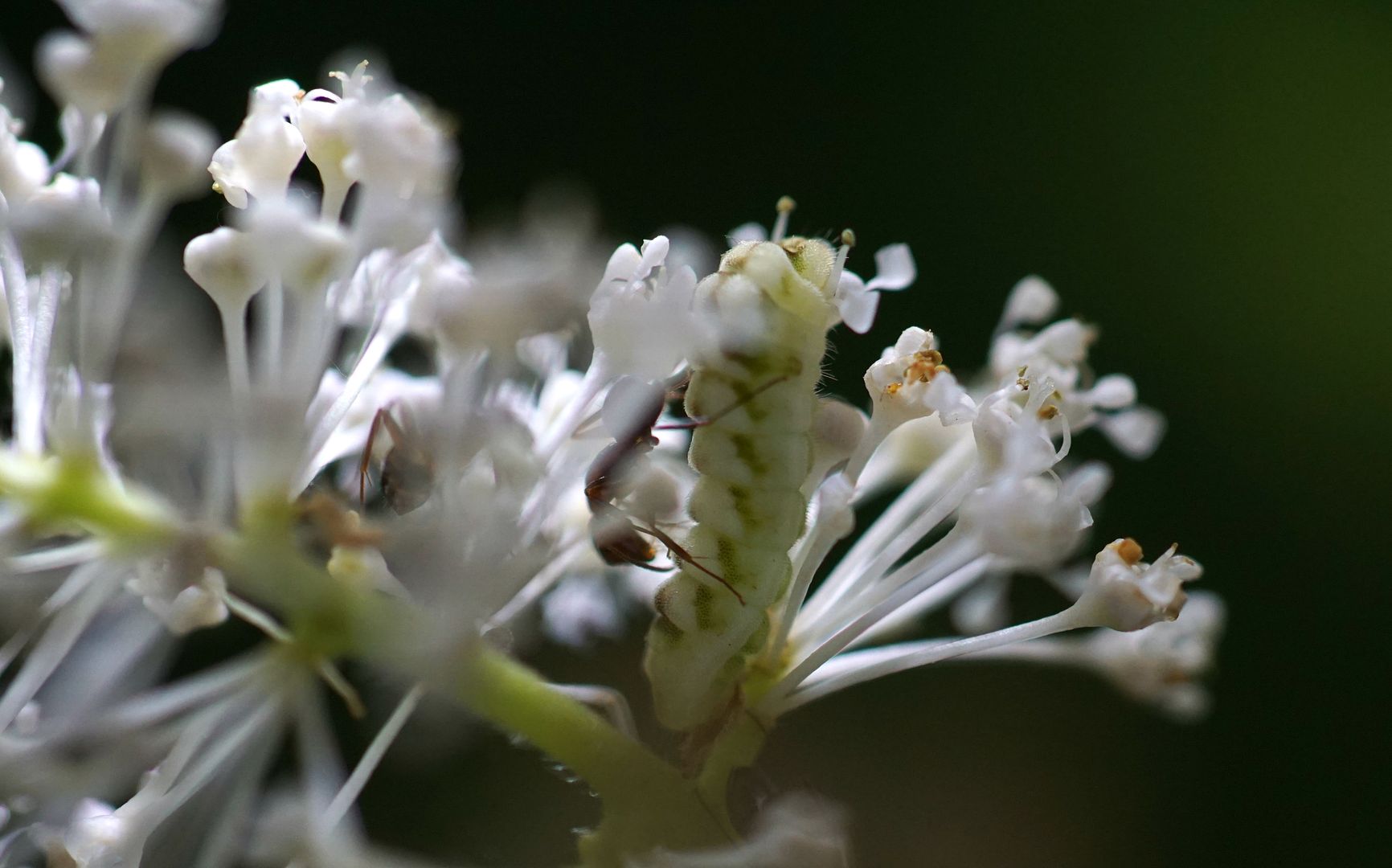
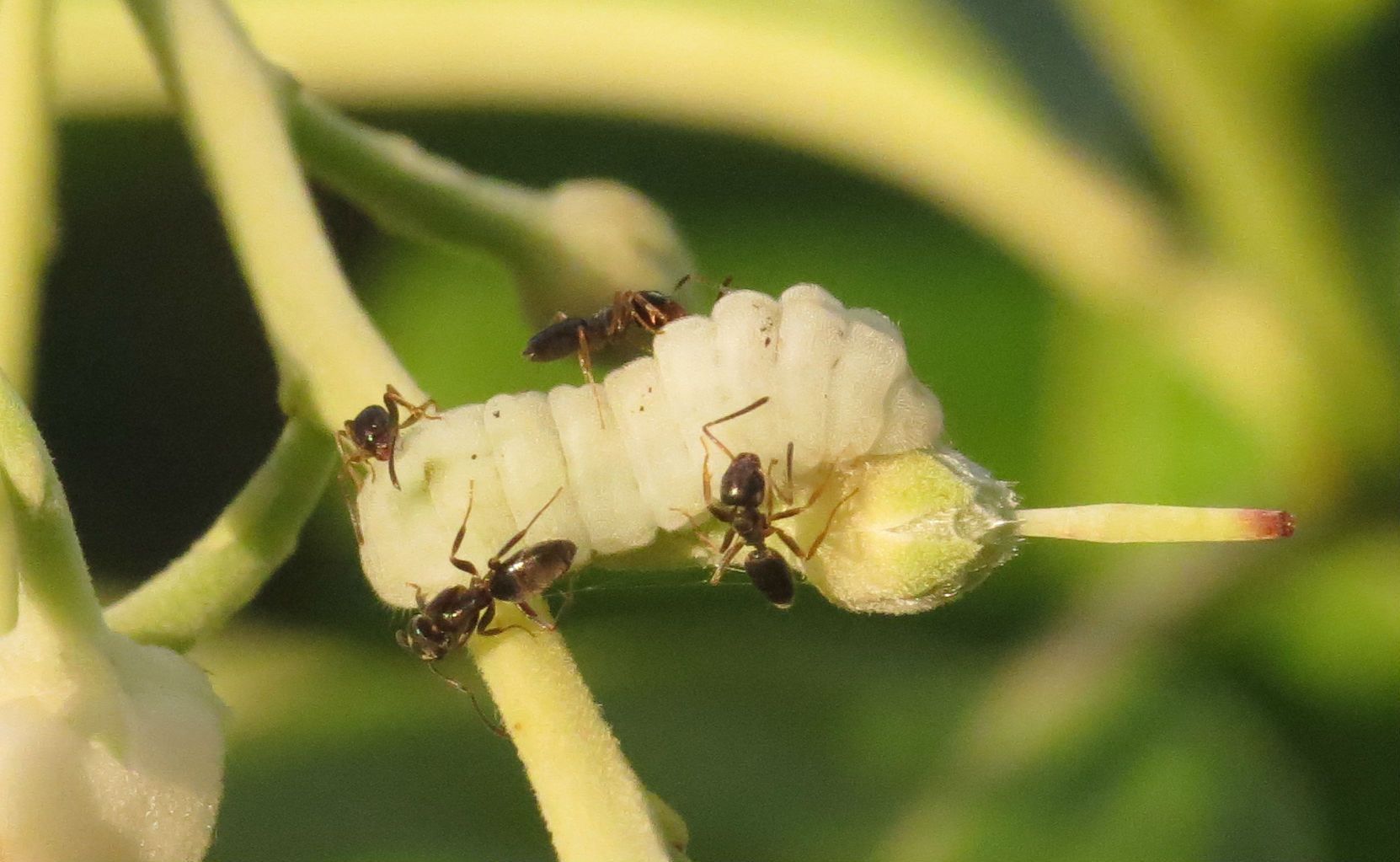
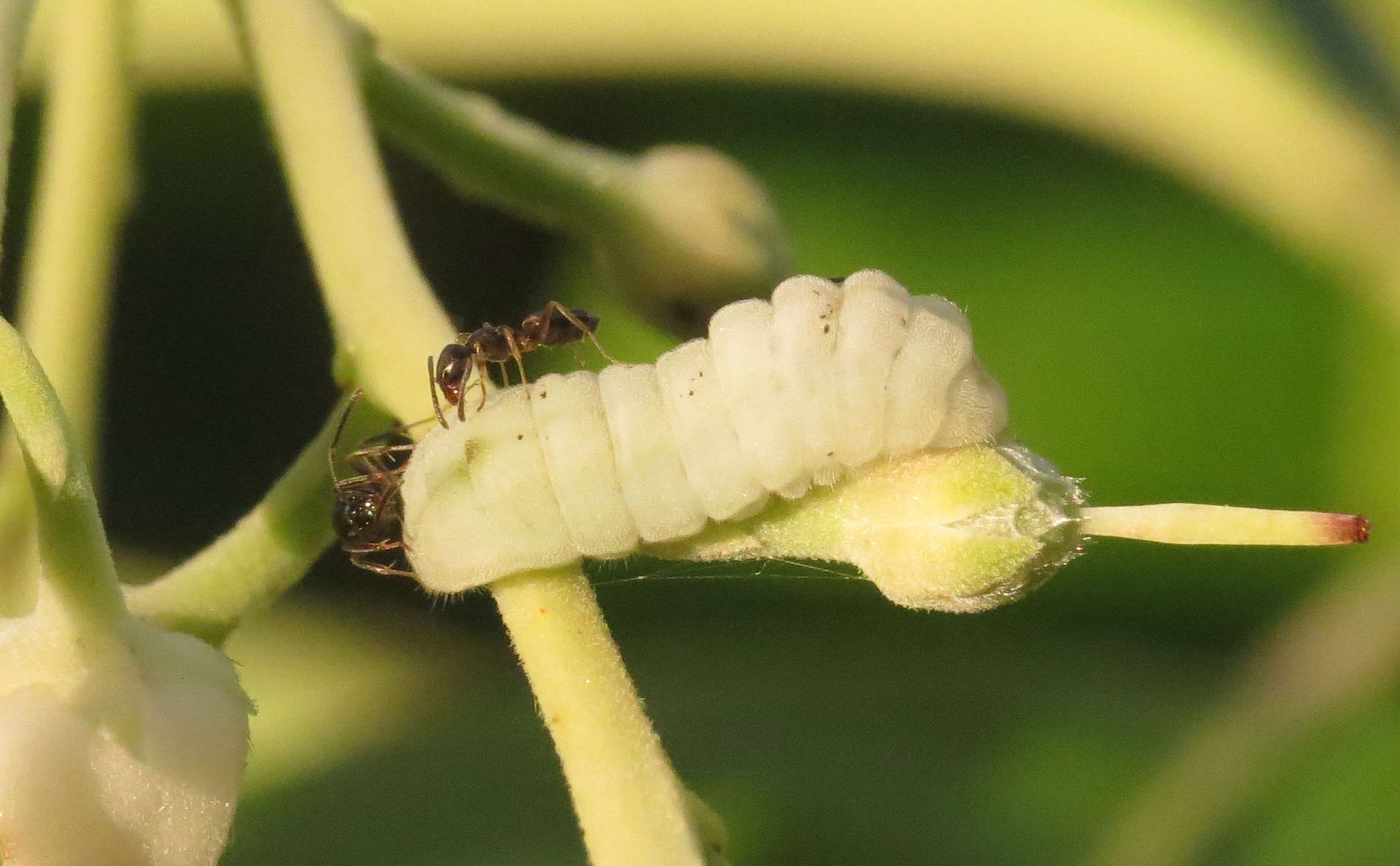
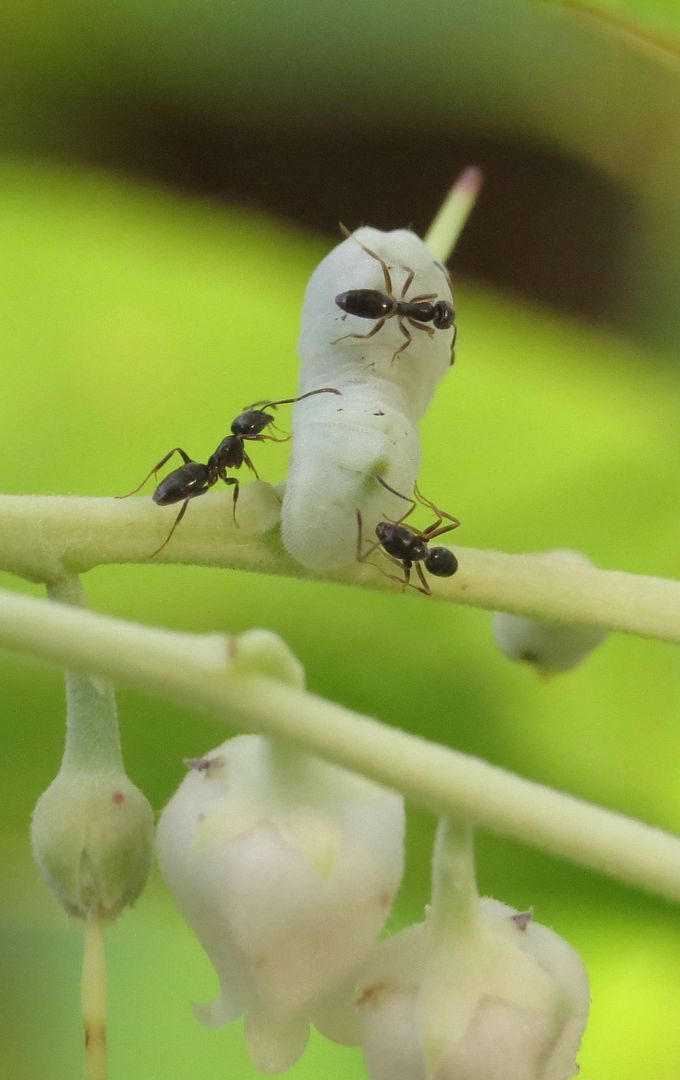
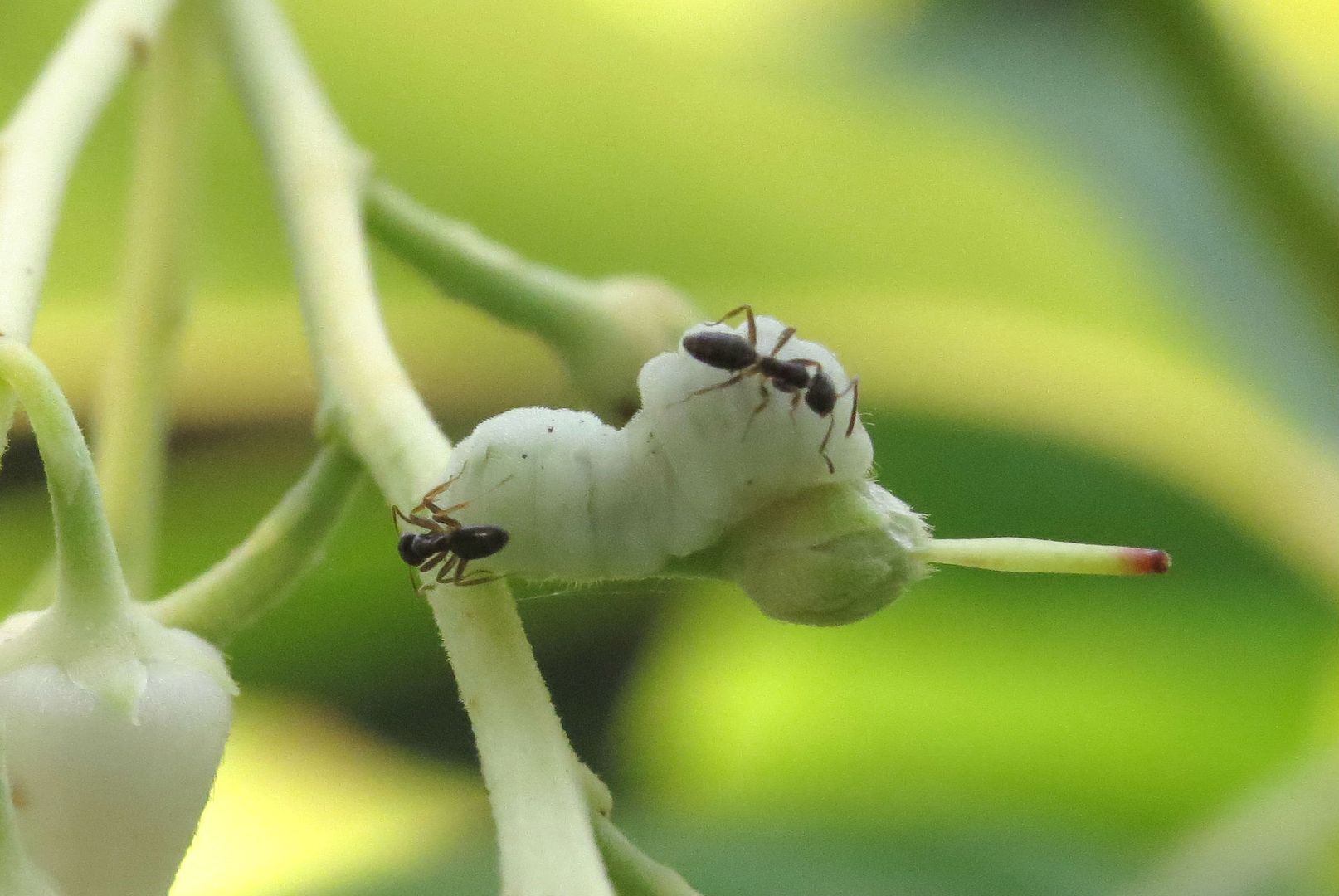
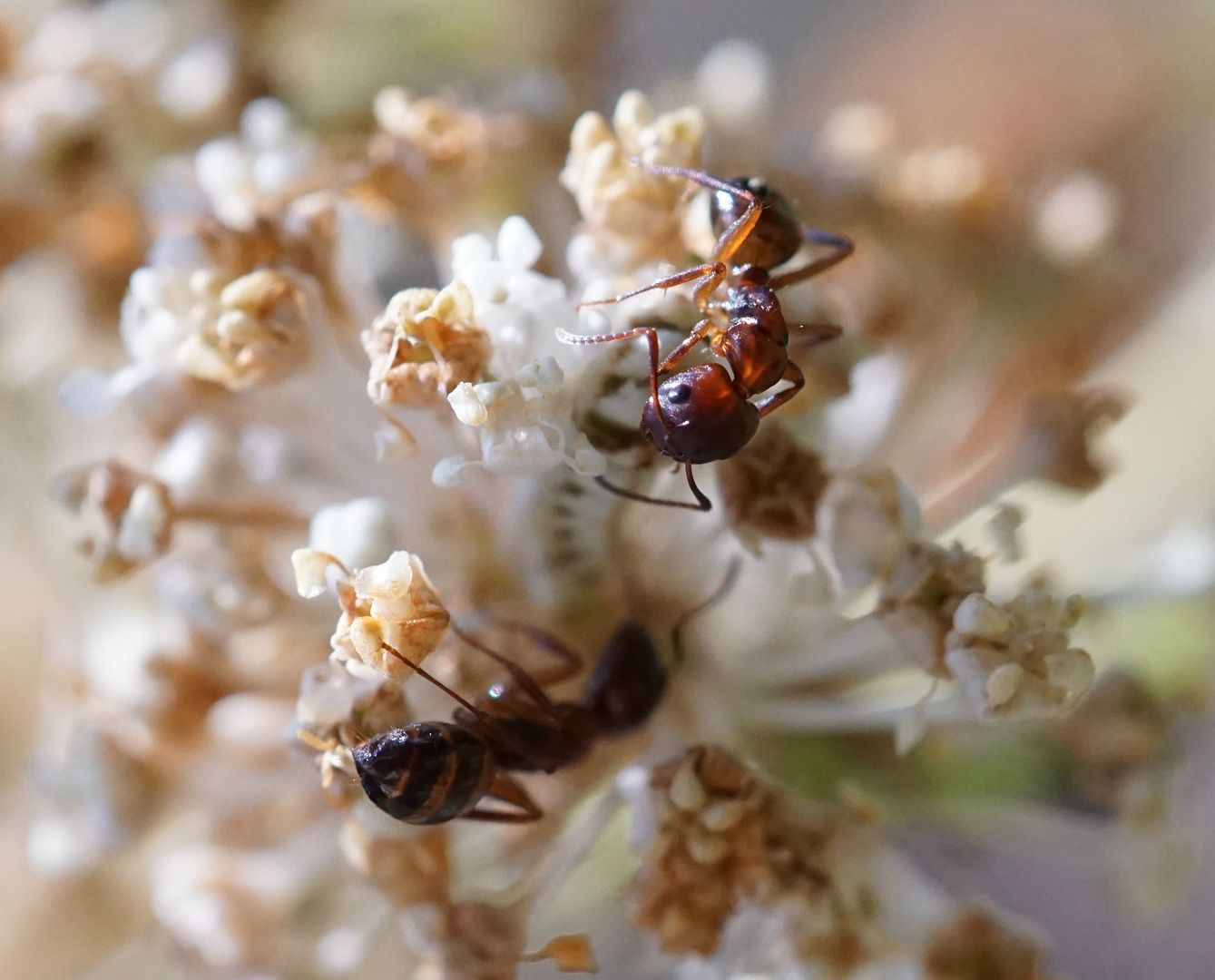
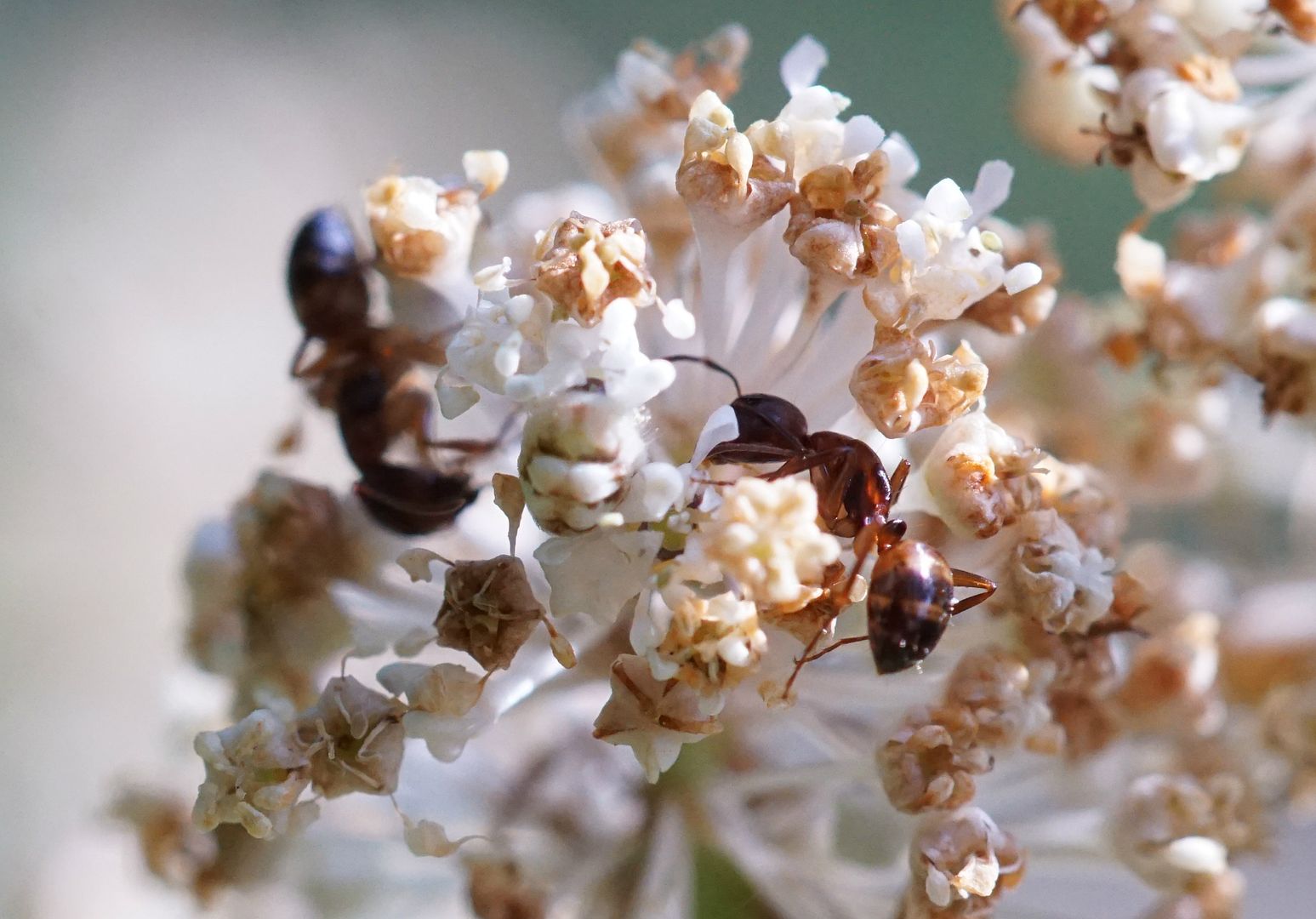
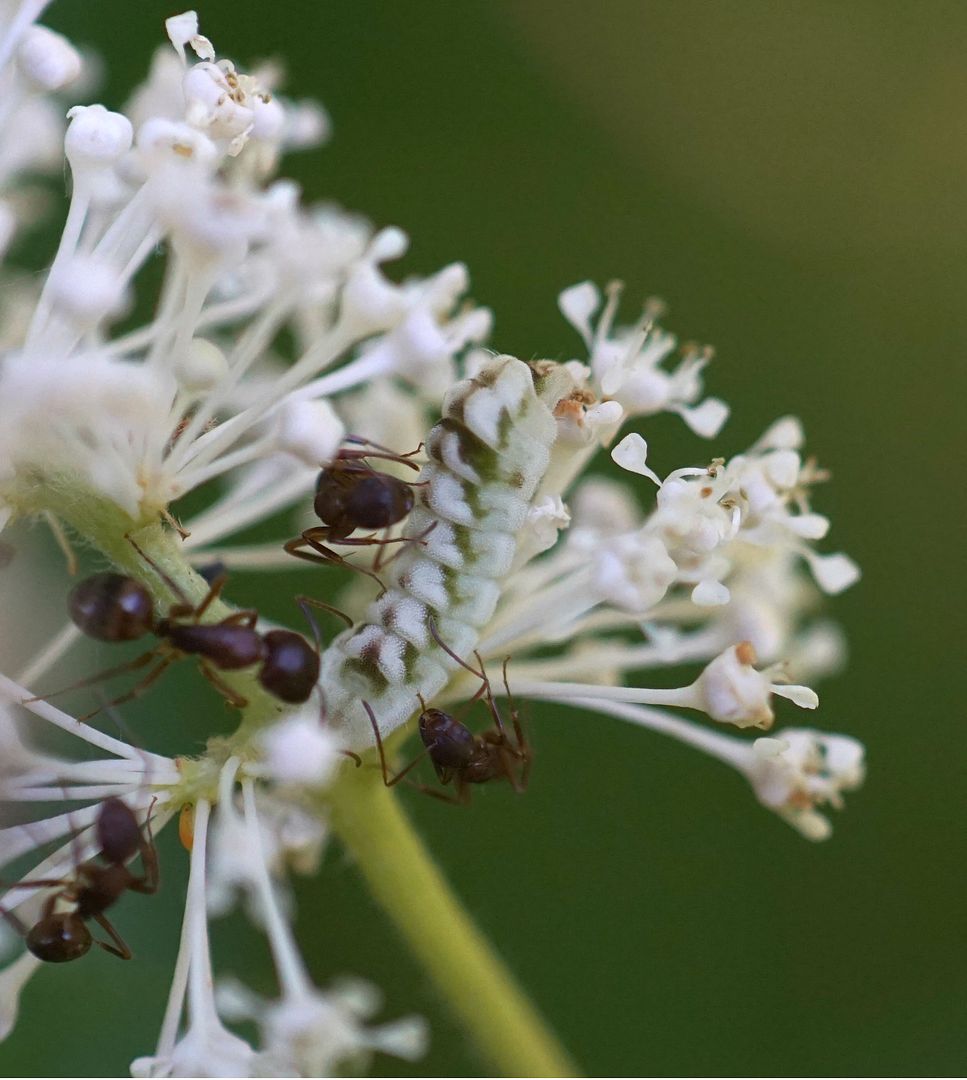
My New Jersey Tea plant, Ceanothus americanus, is full of Spring/Summer Azure caterpillars. Their strategy to not get eaten is to produce honeydew to entice ants into protecting them. In this case the ants are Camponotus subbarbatus (a.k.a. "The Slightly Bearded Carpenter Ant" a common name referring to the slightly hard to see small hairs on their cheeks that lots of other ants also have... and not the more obvious yellow bands very easily seen on queens and larger workers that's almost never seen on other ant species in their range.)

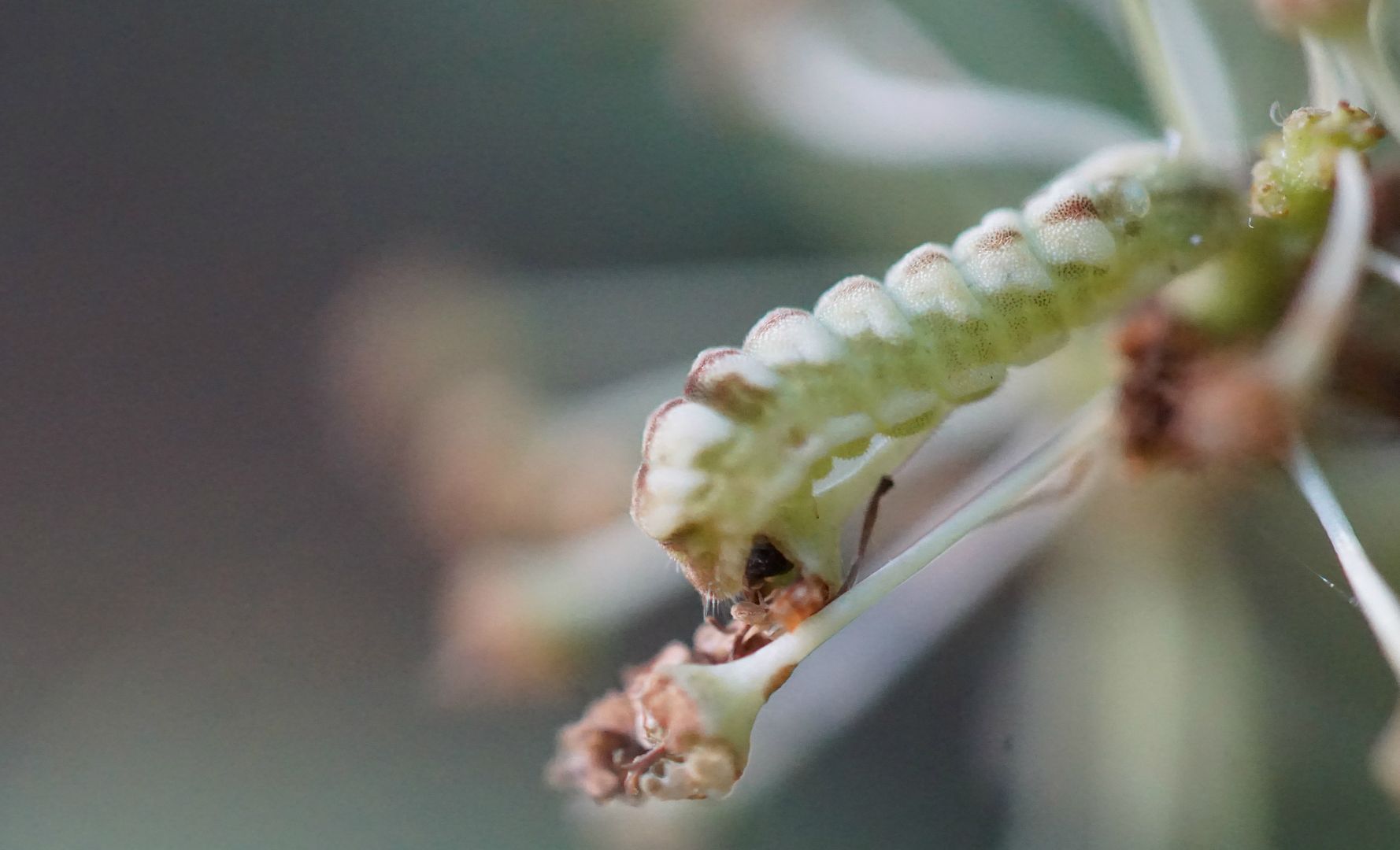
The caterpillars gain the pigment and to some extent the texture of whatever they happen to be eating. In this case it's the flowers. Doing this helps them blend in with the plant, however the gangs of ants constantly hanging around them gives them away.

The butterflies are common where they occur and fairly wide spread across the north east, but the need for ants along with host plants can make some members of this genus uncommon.

The Karner Blue Butterfly is likely endangered because not only do they require wild lupins as a host plant. They also need ants to protect them and bring them back into the nest. Once inside they turn carnivorous and begin consuming the ant's brood for food, all the while still producing sweet honeydew for the ants to feed on. This isn't that bad though as ants often consume their own eggs or feed larva to one another, and the caterpillar itself isn't much bigger than two or three adult ants.

Spring and Summer Azures aren't as finicky. They can be found on a wider array of plants and don't need to be brought into an ant nest at all. (During the winter, they may survive better underground inside of an ant's nest where they form a chrysalis but I'm not sure they do this.) 

Host plants include the New Jersey Tea, as seen above, some Dogwoods, Collinsia sp, and Spiraea salicifolia. I've also found them consuming the flowers to Sourwood trees. They always start on the flowers to these plants which tend to be soft and tender (and likely lack any defensive chemicals the plant might be producing in its leaves) before moving onto consuming the leaves themselves if they need to. They take on the color of the flowers they consume so they're usually pink on Spiraea salicifolia, and can be sort of purple on Collinsia sp. and then turn green when they start eating the leaves.


Flowers are a good place to start because there's often ants stealing nectar from them already. Oddly enough once the ants find the caterpillar and taste the honeydew they produce, they will stop stealing nectar from the flowers and focus entirely on tending them. The caterpillars will also produce noises like a queen ant would make. 

Another benefit of having ants around is they protect against parasitic wasps that try to jam eggs in them. Ones that get parasitized will hatch out as wasps instead of butterflies after the chrysalis phase.

The New Jersey Tea shrubs I own are now finished flowering and most of their blooms are falling fast. The caterpillars are now moving on to consuming the leaves. 

I'll be rearing a few indoors to ensure they survive. I'm curious to see if any wasps emerge.

Their chrysalis's are extremely tiny and can be made on something as small as a blade of grass. Rearing them myself will help ensure I don't run them over with the mower.

Saturday, October 17, 2015

I Goofed, Red Spotted Purple Update

So I noticed the caterpillar seemed to make an abrupt jump in its development. I made an assumption that as long as the apple tree I found it on had leaves, then this caterpillar would happily eat them. What I forgot though was the average temperature and amount of day light were also factors.

Posing the question of when I should put this one in the fridge to over winter, I learned I should have done that a week ago when it was in the third instar. Apparently that is the instar that they go into hibernation. Unlike species who spend winter in the chrysalis stage, the number of hours in the day when the sun is shining as well as the temperature determine whether or not they should hibernate or move on to further instars and adulthood.

Tragically my caterpillar is well into its 5th instar and I'm told nothing will stop it now from developing into a chrysalis and emerge into an adult 7 to 10 days later. This species does not migrate and by then it will be late October or early November, when it is too cold to release, and the host tree (a White Snowdrift Crabapple) will likely have lost all its leaves. I suppose I will have to let it happen and keep the butterfly captive until it expires. I'll try and keep it alive by offering it pieces of rotting fruit, and eventually pin it I guess.

Speaking to its host plant for a moment. The little crabapples have turned orange and the birds are already eagerly pecking away at them. Lots of the leaves are now covered in damaged fruits as well a surprising amount of bird droppings. I wonder if actually having real bird crap around makes the disguise this caterpillar produces more or less convincing.

There are likely two or tree more Red Spotted Purple caterpillars on the tree, but as they're likely just in their third instar, I'll have to wait until the leaves fall off of the tree to look for them. My understanding is the "shed" they make by rolling a leaf around them with silk does not fall off of the host plant. If I find a few, I'll be sure to collect and store in my fridge until the tree leafs out and flowers the next year.

Sunday, October 4, 2015

Red Spotted Purple Growing Up

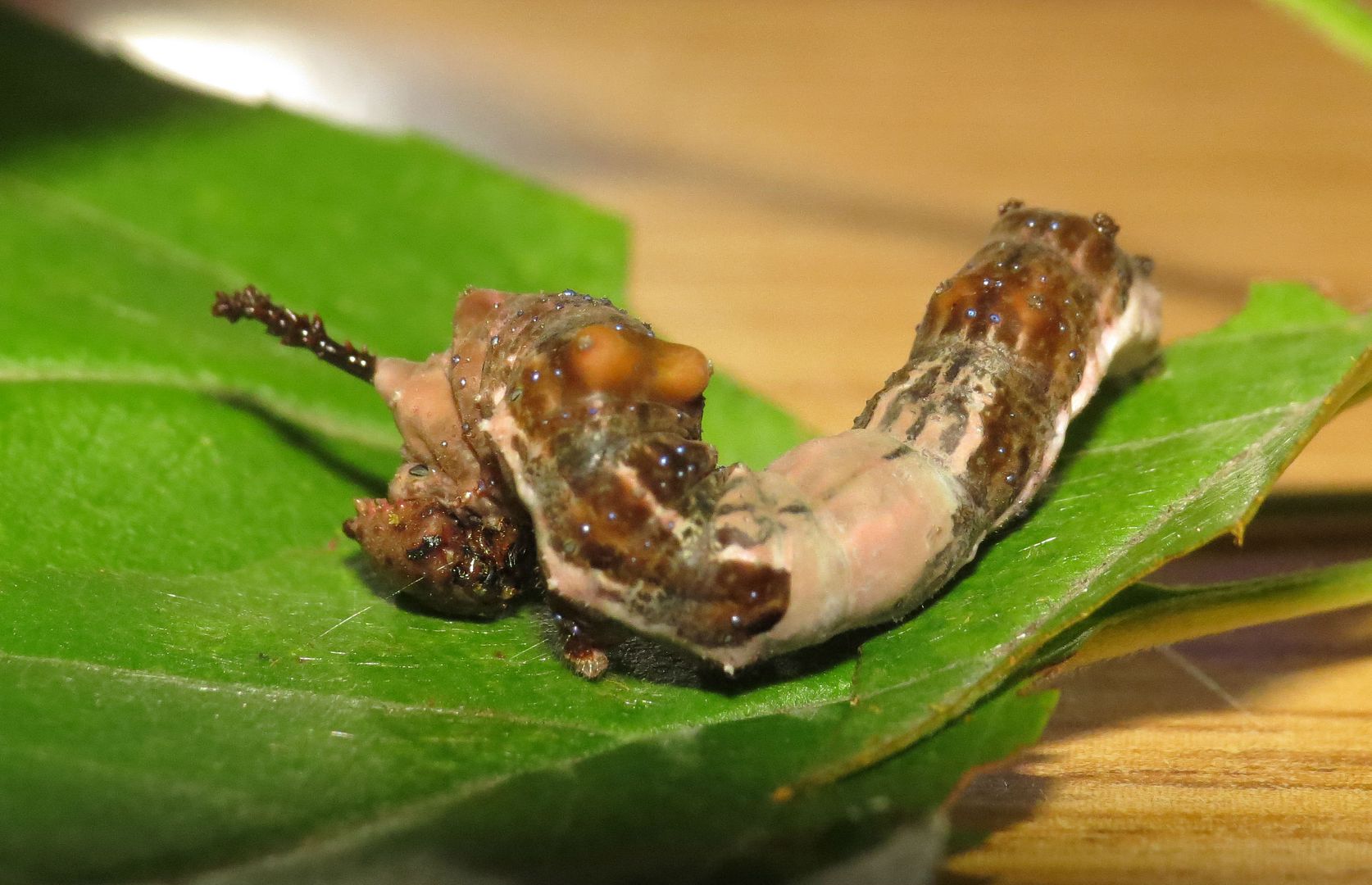
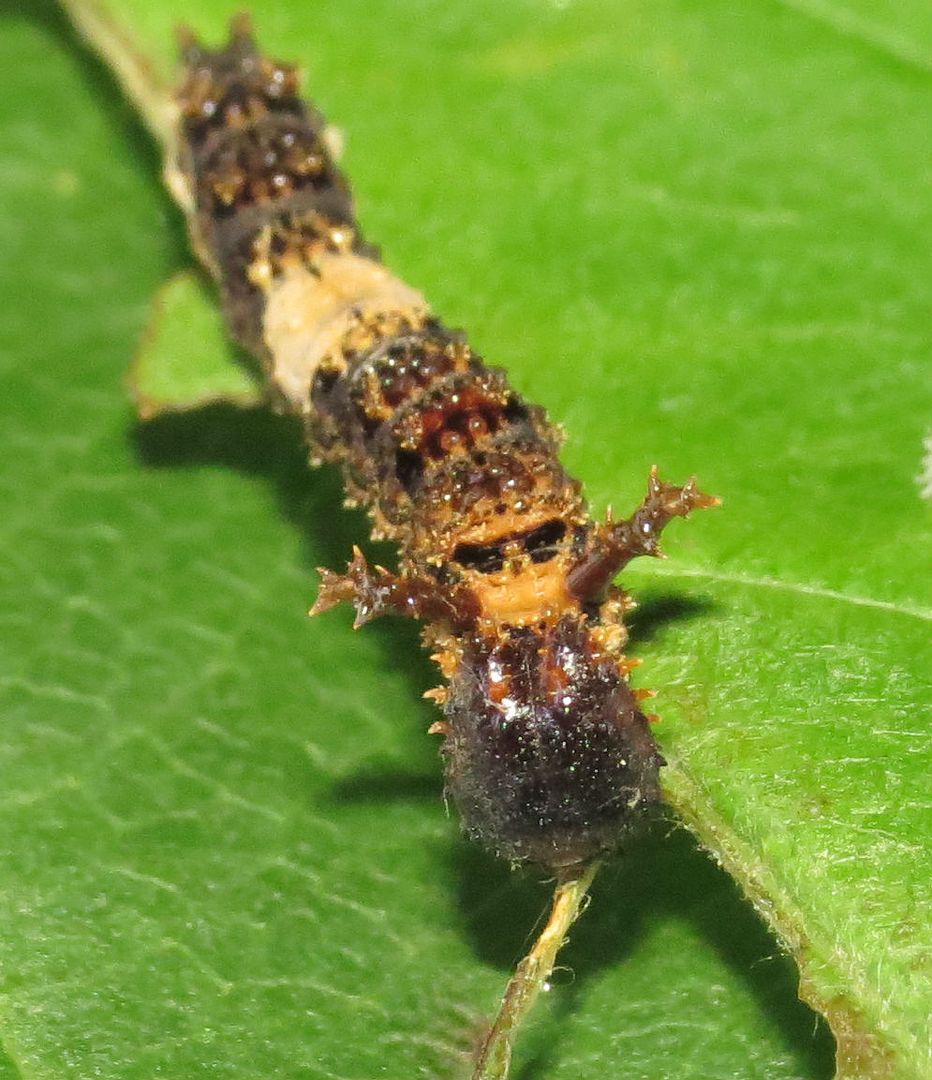
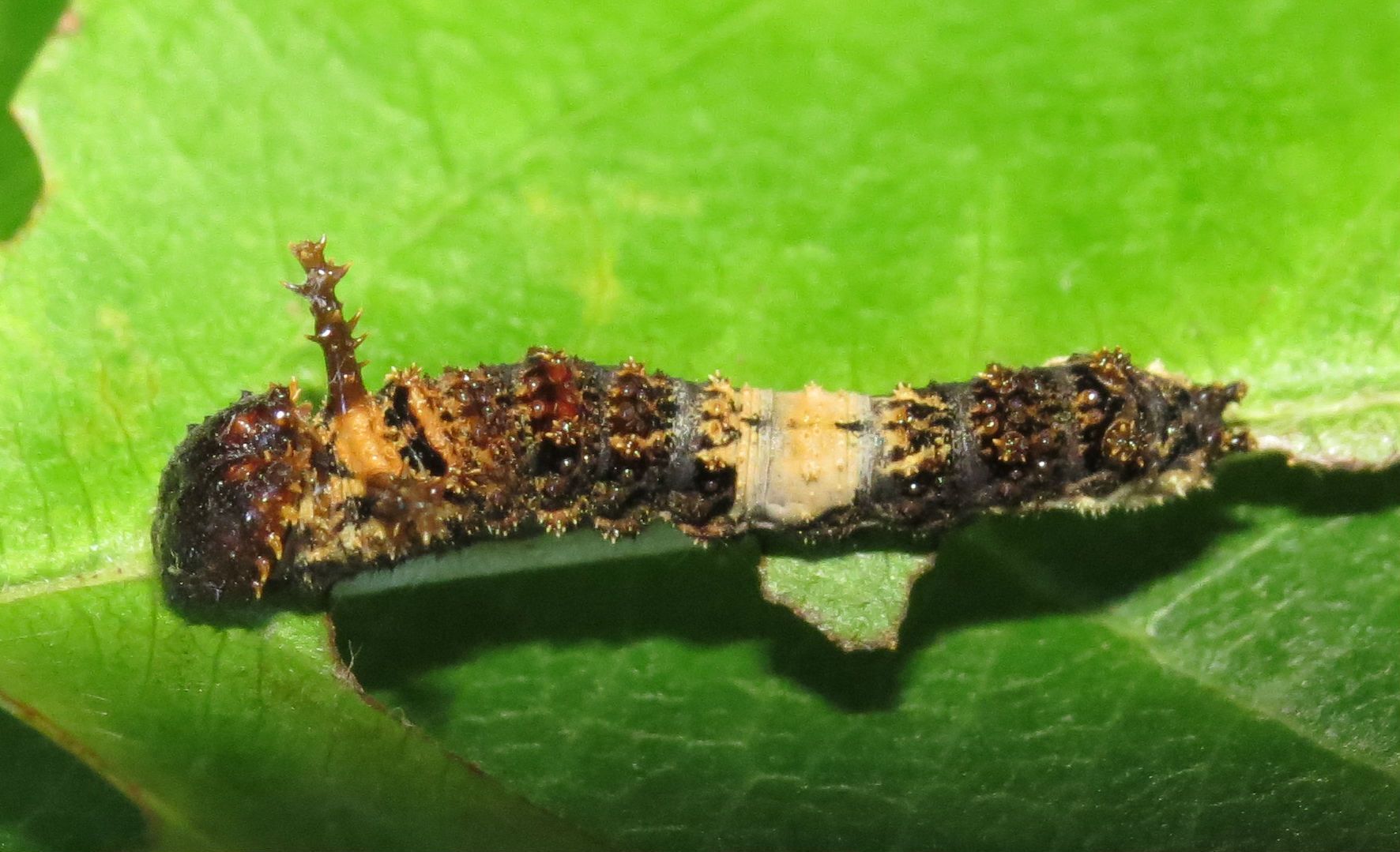
The Red Spotted Purple, Limenitis arthemis, that I have in captivity has grown a bit since I last bothered to look at its container. It's been nibbling the same leaf in there for quite a few days now. I add a free leaf off the crab-apple tree its egg was laid upon ever few days. I also put a wadded up tissue that's soaking wet with water in the container so it doesn't dry out, though I'm not sure how necessary this is. I know ants are in danger of drying out so perhaps caterpillars have the same risk?

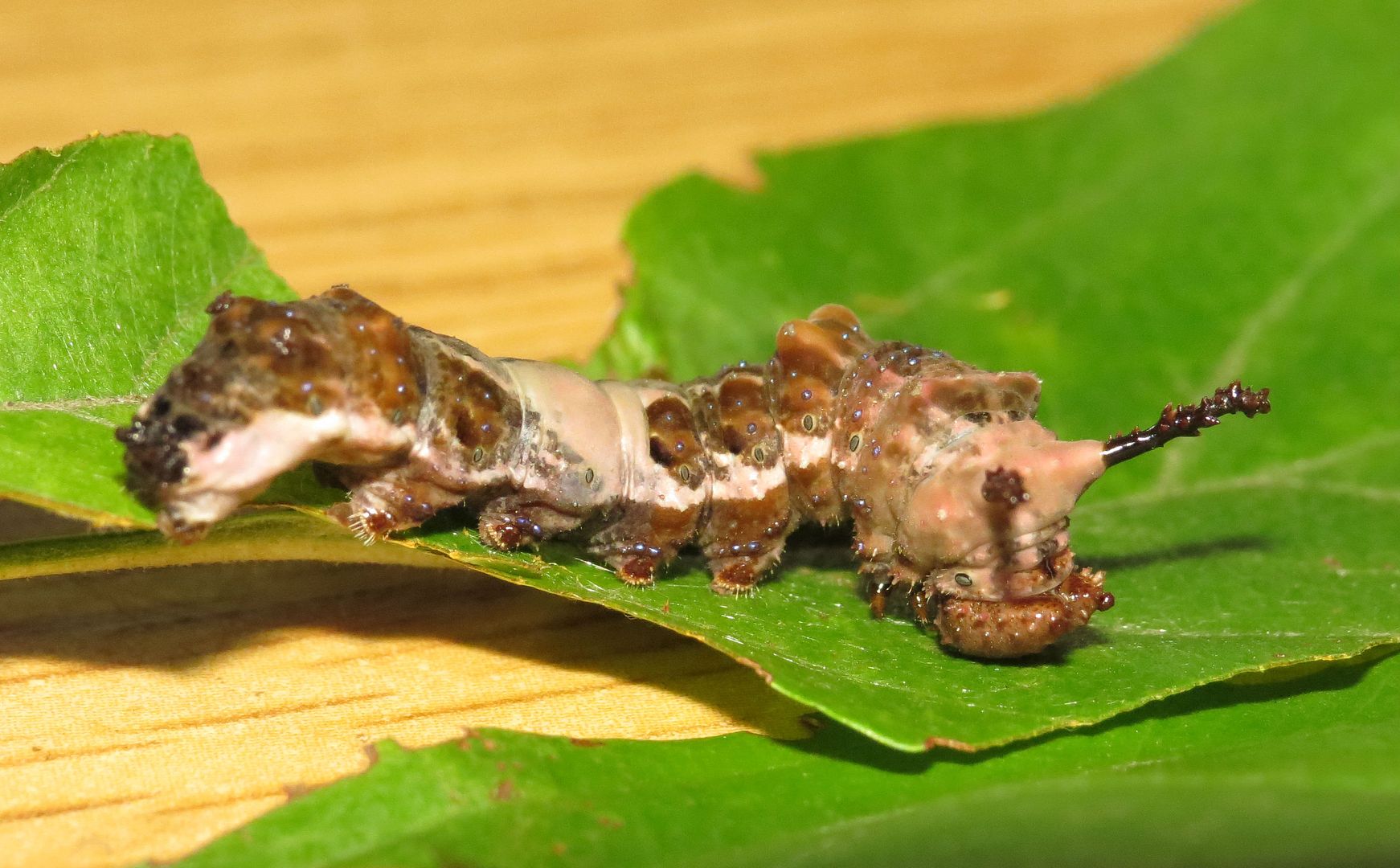
We're now in what I believe to be the third instar. It's no longer making a stick out of frass to hide on, which the younger instars do to escape ants. Instead more natural defenses are starting to develop. I suspect from here on, birds would be the primary predator over ants. Their coloration is starting to mimic that of bird droppings. So they've gone from hanging out on a poop stick, to looking like one! 
And of course it's now sporting a lovely set of jagged horns. My understanding is the horns are hollow and intended to break apart in the bird's throat to, ideally, puncture a hole in the crop or wind pipe killing the bird dead. This probably doesn't happen when they're this small, but I can easily see some damage being done when they're bigger. Birds don't have teeth to chew them up first.
Remember adult birds rarely eat insects as their own food sources. Seeds and berries are the fuel of most adults while protein rich insects are important for baby birds. Would you feed something covered in thorns and looked like poop to your children? (Granted they're eating it half digested as you vomit it from into their mouth, but still someone has to do the initial eating!) 

Monday, July 13, 2015

Caterpillar on Sourwood Tree with Ants

It's always exciting when Ants, Bees, Butterflies, and Nature can all come together. This is the former long winded title of this blog, which I've since changed to Biodiverse Gardens. 

So two years ago I planted a Sourwood tree as a nectar plant for my Honeybees. They've yet to find it this year but really it's still just a sapling barely 6' tall. This is one of the prized nectar flows among beekeepers because it produced great tasting honey. Unfortunately it's a rather uncommon landscaping tree in my area and doesn't occur in wild forests here, so for the most part my planting this tree is like adding a drop in the bucket to my overall honey harvest. Still though I'd rather plant a world class honey tree over the more commonly sold plants offered at local garden centers.  


Earlier today I discovered what looks like one of the Blues or Azure Caterpillars feeding on the flowers. This is odd for a few reasons: I live in New Jersey and Sourwoods don't grow here wildly, so it's unlikely to see this kind of relationship so far outside of the tree's native range.

I have heard of Zebra Swallowtails finding groves of Paw Paws here in NJ so maybe something similar has happened, but more likely one of the species that was already here has made the jump to a new host plant, or is using one that they would normally use when they occur farther south.

Also odd, is that no one seems to have ever reported this type of caterpillar on Sourwoods before. Or maybe I'm just not looking hard enough but all the listings for Sourwood in "Caterpillars of Eastern North America" don't look correct for this species.

Another bit of intrigue, prior to the caterpillars showing up, the ants, Tapinoma sessile, were stealing the nectar from the flowers. But now that the caterpillars (there's just 2 of them that I counted,)  have shown up and started eating the flowers, the ants have changed their behavior. Now instead of stealing from the flowers they're tending the caterpillars which are eating the flowers. 

This probably doesn't benefit the tree at all. Flowers that have been nectar robbed can still produce seed, whereas flowers that have been eaten won't develop into anything. The only benefit as far as I can tell is that the ants have stopped nectar robbing the whole tree and are now just going to the section where the caterpillars are found. So sacrificing a few flowers might benefit the tree overall.

When I started my native plant garden, this was one of the behaviors I'd hoped to attract into my yard. Ideally I pictured it happening in a field of Wild Lupins saving an endangered species of Blue but this also works. What eventually happens is the caterpillar drops to the ground and is taken into an ant nest where it then pupates... some species change their diet to eating the ant brood before pupating but the ants don't care at that point. These sorts of caterpillars, along with producing nectar and being treated like cattle, also make noises that mimic the sounds a queen ant makes when she wants to be tended. Ants themselves are also more than happy to eat their own eggs or feed their eggs to developing brood more worthy of the nutrients so this isn't unant-like behavior. They're safe in the nest until the following spring, when they must emerge a butterfly and quickly get out of the next to spread their wings.