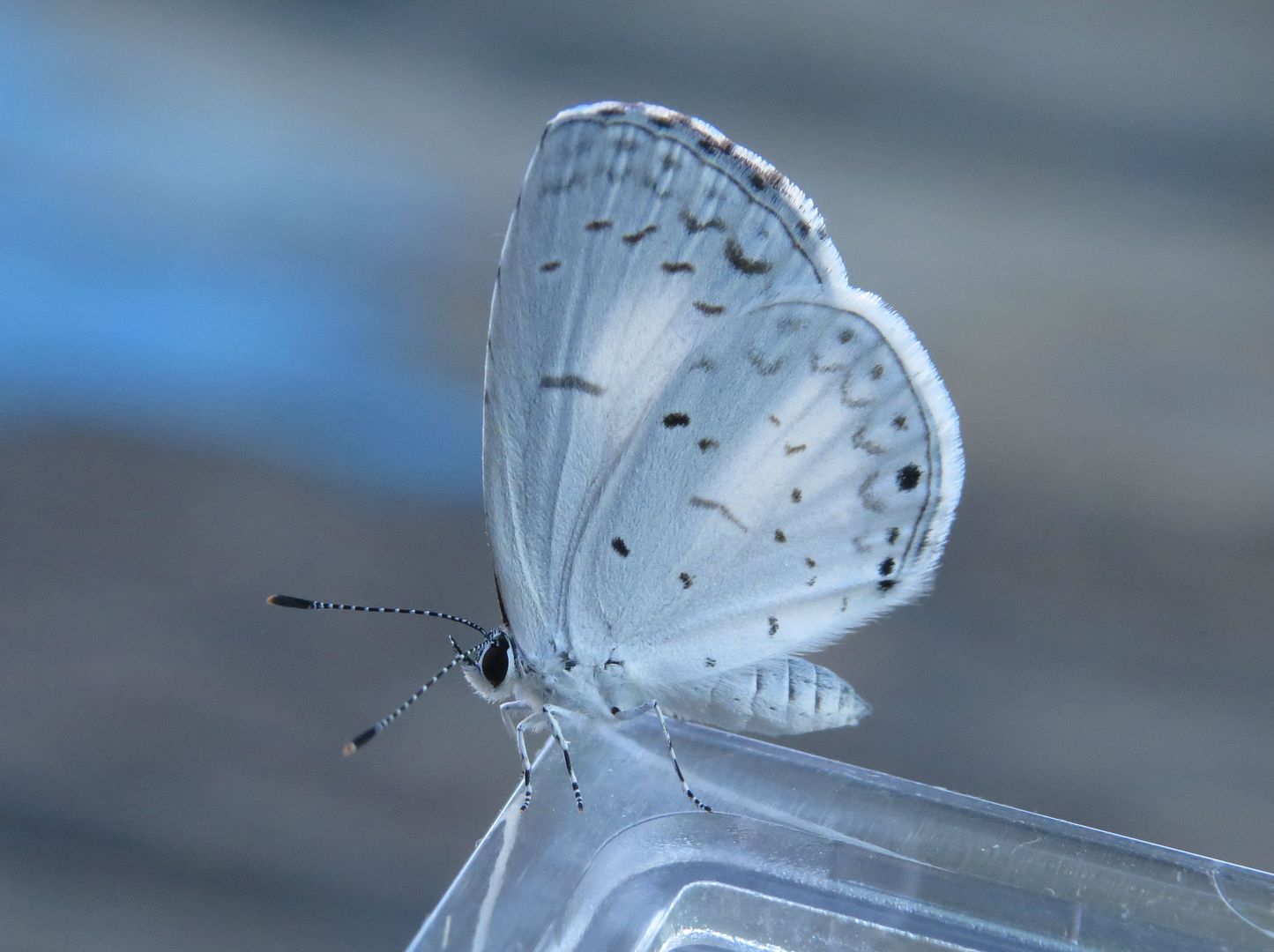
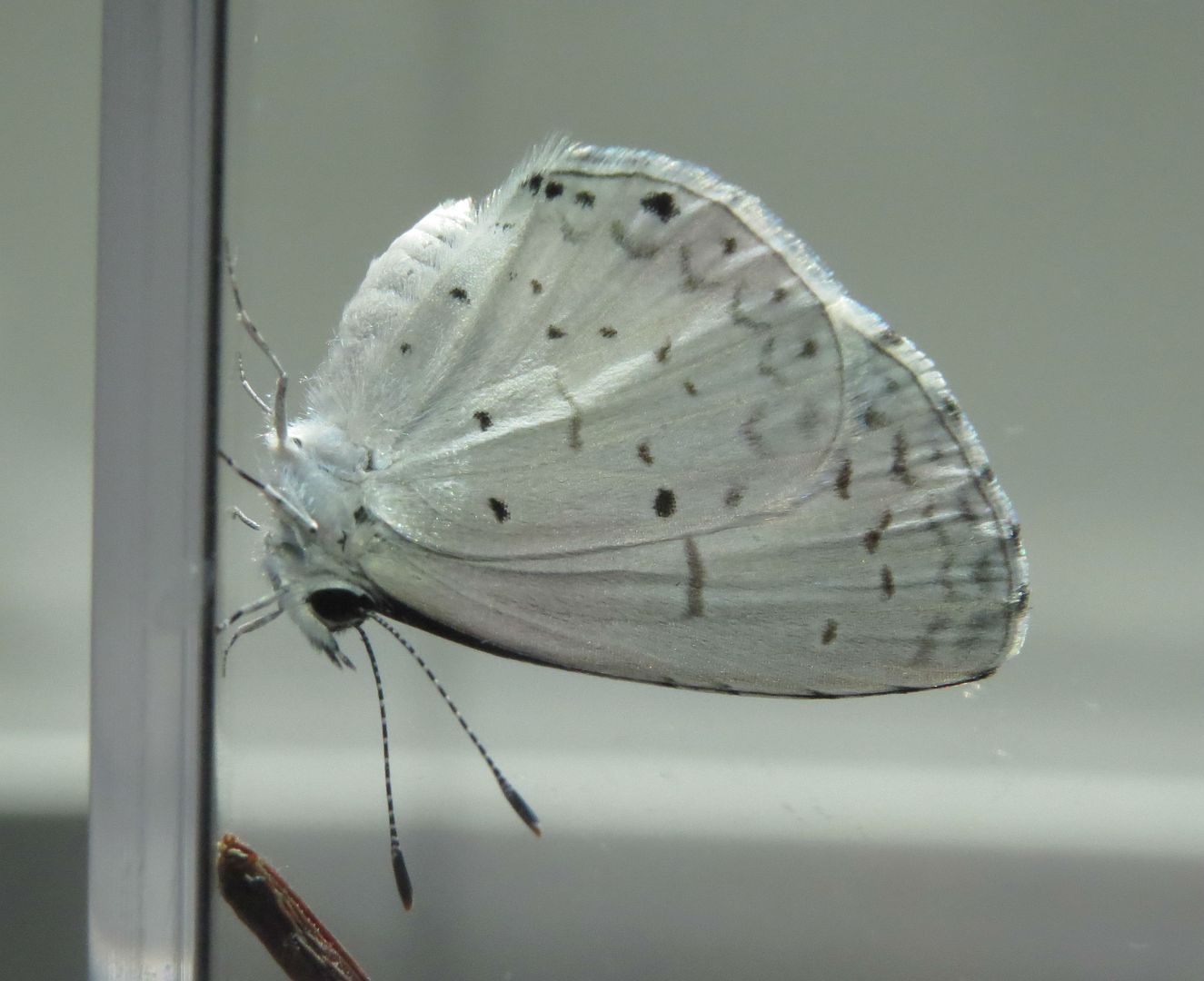
On a recent post, I talked about how I discovered caterpillars consuming the flowers to my Sourwood tree. I was determined to find out what they were so I collected one and put it in a jar on my desk. A few days passed and the caterpillar formed a chrysalis, the smallest chrysalis I've ever seen! And roughly ten days later, it has emerged, no surrogate ant colony needed.
Spring Azure it is! Something in the Celastrina ladon complex. Basically there's like 4 or 5 butterflies that all look seemingly identical to one another and have a huge variety of host plants. What makes them a complex is that it's unclear how many species are involved, which ones use what host plants, and how each host plant alters the appearance of the caterpillar and the adult form. Overall this butterfly uses the flower buds Dogwoods, New Jersey Tea, and a few others but some host plants such as the Sourwood are unknown, which might suggest there are more species out there than the initial 4 or 5 believed to be in existence.
It's always exciting when Ants, Bees, Butterflies, and Nature can all come together. This is the former long winded title of this blog, which I've since changed to Biodiverse Gardens.
So two years ago I planted a Sourwood tree as a nectar plant for my Honeybees. They've yet to find it this year but really it's still just a sapling barely 6' tall. This is one of the prized nectar flows among beekeepers because it produced great tasting honey. Unfortunately it's a rather uncommon landscaping tree in my area and doesn't occur in wild forests here, so for the most part my planting this tree is like adding a drop in the bucket to my overall honey harvest. Still though I'd rather plant a world class honey tree over the more commonly sold plants offered at local garden centers.
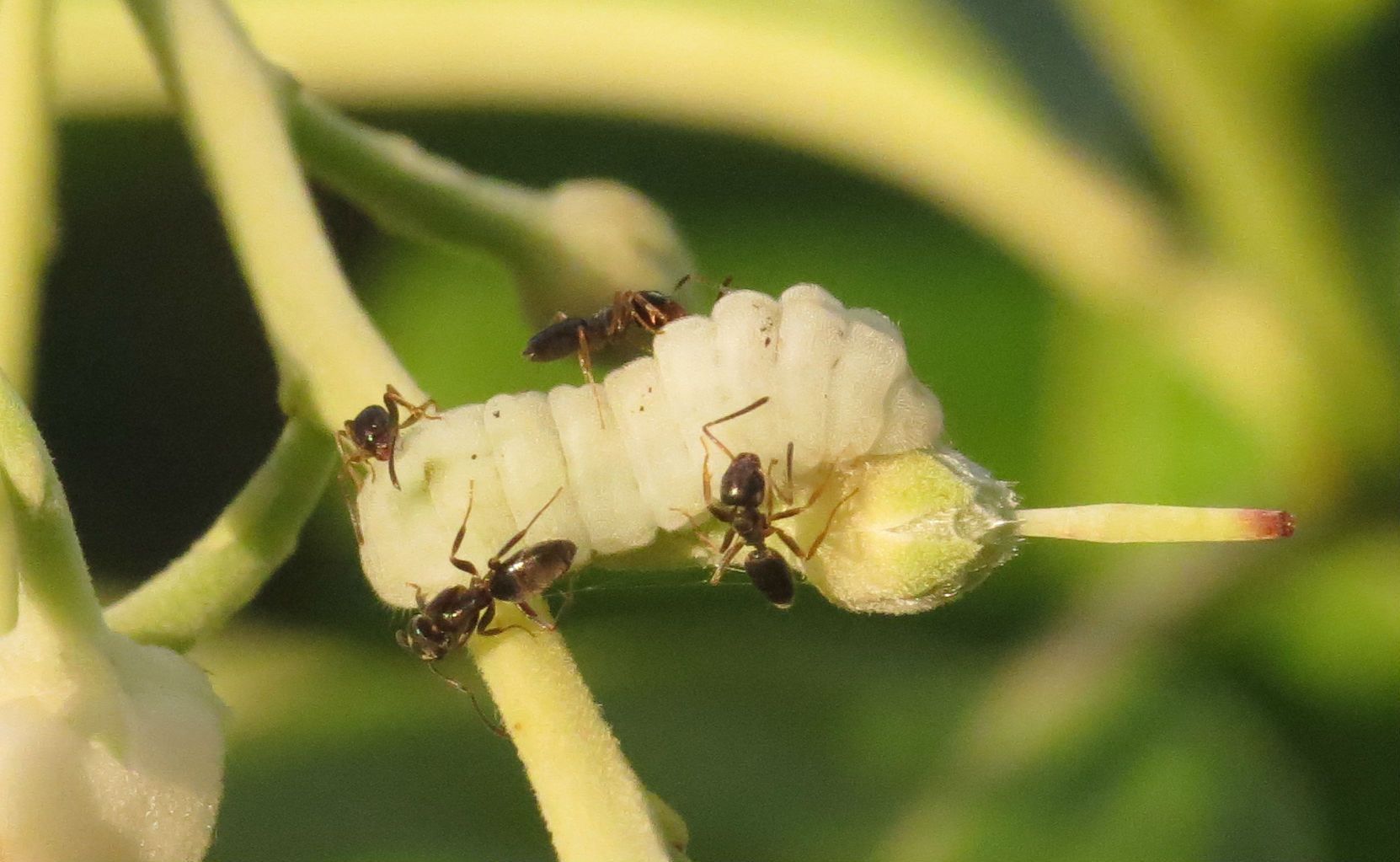
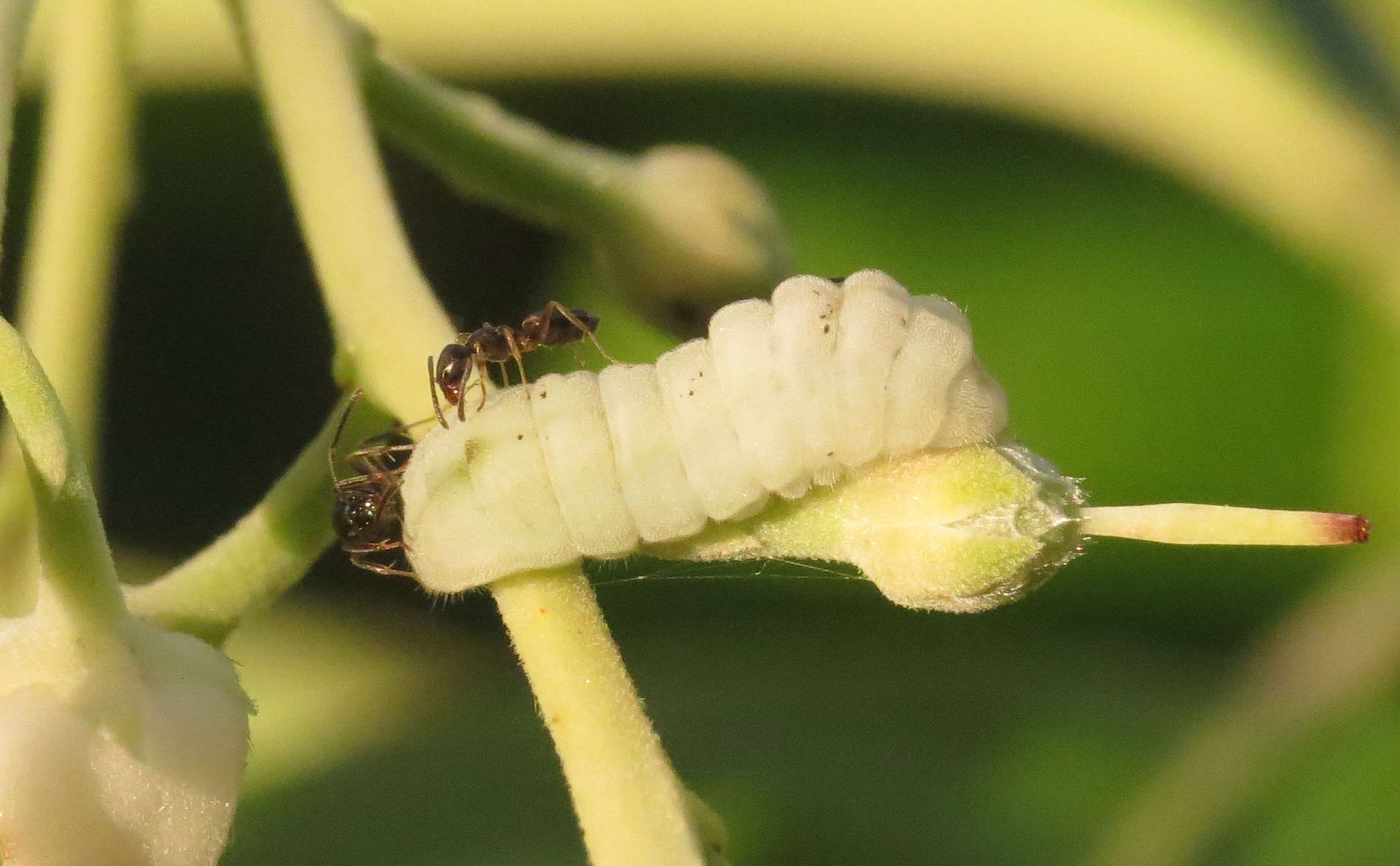
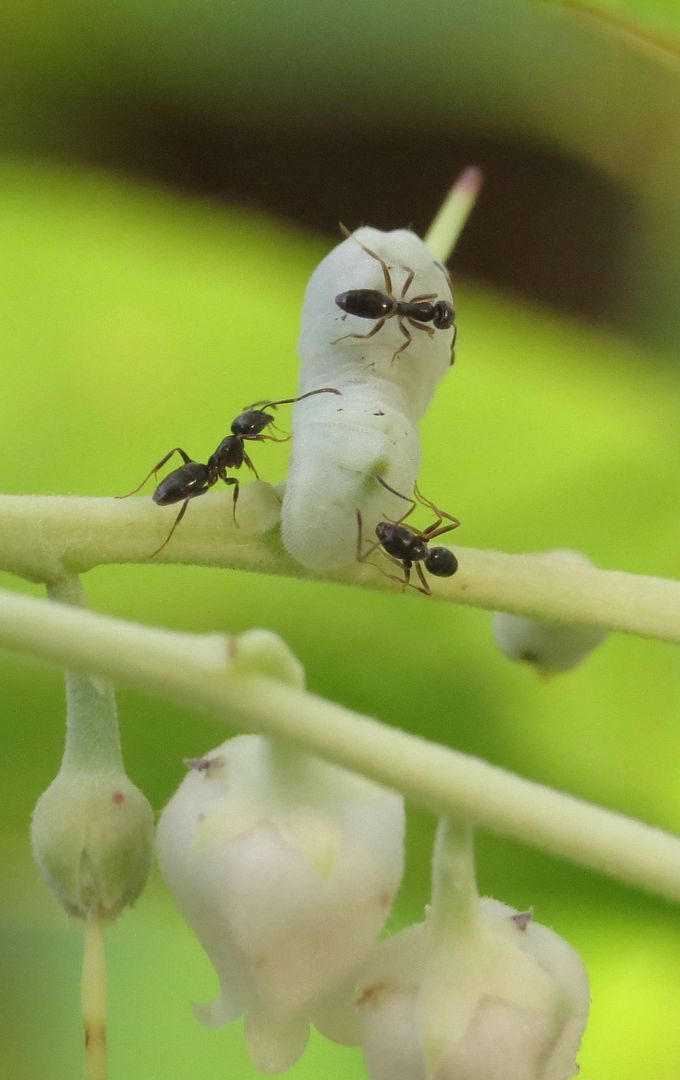
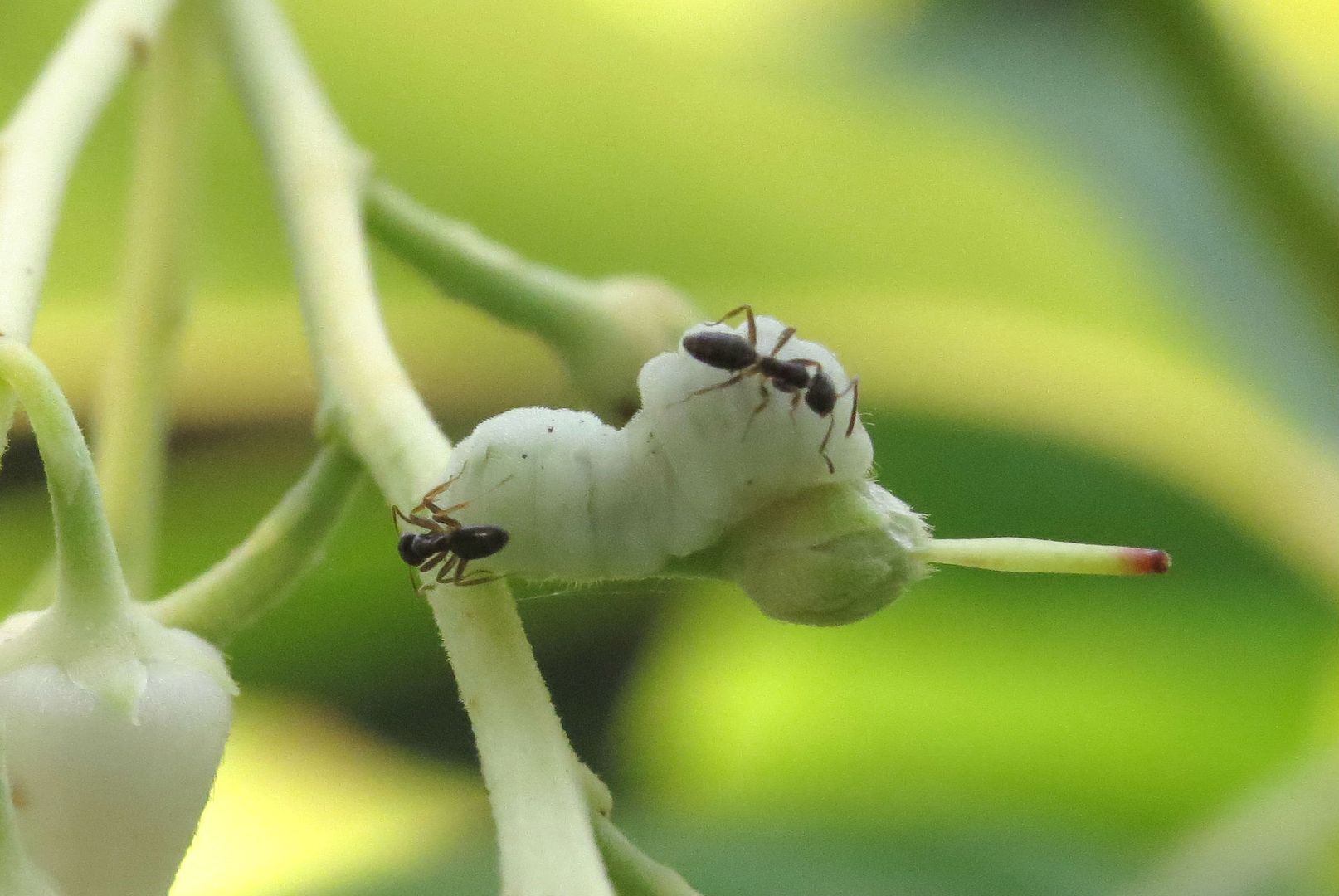
Earlier today I discovered what looks like one of the Blues or Azure Caterpillars feeding on the flowers. This is odd for a few reasons: I live in New Jersey and Sourwoods don't grow here wildly, so it's unlikely to see this kind of relationship so far outside of the tree's native range.
I have heard of Zebra Swallowtails finding groves of Paw Paws here in NJ so maybe something similar has happened, but more likely one of the species that was already here has made the jump to a new host plant, or is using one that they would normally use when they occur farther south.
Also odd, is that no one seems to have ever reported this type of caterpillar on Sourwoods before. Or maybe I'm just not looking hard enough but all the listings for Sourwood in "Caterpillars of Eastern North America" don't look correct for this species.
Another bit of intrigue, prior to the caterpillars showing up, the ants, Tapinoma sessile, were stealing the nectar from the flowers. But now that the caterpillars (there's just 2 of them that I counted,) have shown up and started eating the flowers, the ants have changed their behavior. Now instead of stealing from the flowers they're tending the caterpillars which are eating the flowers.
This probably doesn't benefit the tree at all. Flowers that have been nectar robbed can still produce seed, whereas flowers that have been eaten won't develop into anything. The only benefit as far as I can tell is that the ants have stopped nectar robbing the whole tree and are now just going to the section where the caterpillars are found. So sacrificing a few flowers might benefit the tree overall.
When I started my native plant garden, this was one of the behaviors I'd hoped to attract into my yard. Ideally I pictured it happening in a field of Wild Lupins saving an endangered species of Blue but this also works. What eventually happens is the caterpillar drops to the ground and is taken into an ant nest where it then pupates... some species change their diet to eating the ant brood before pupating but the ants don't care at that point. These sorts of caterpillars, along with producing nectar and being treated like cattle, also make noises that mimic the sounds a queen ant makes when she wants to be tended. Ants themselves are also more than happy to eat their own eggs or feed their eggs to developing brood more worthy of the nutrients so this isn't unant-like behavior. They're safe in the nest until the following spring, when they must emerge a butterfly and quickly get out of the next to spread their wings.
I don't really celebrate Earth Day by doing anything special. In my mind I think I celebrate the earth every day that I'm able to walk around and enjoy the outdoors. As a compulsive gardener though I can say one again I've splurged or didn't know when to stop and gone ahead and bought $800 worth of plants from almost a dozen nurseries that sell native plants.
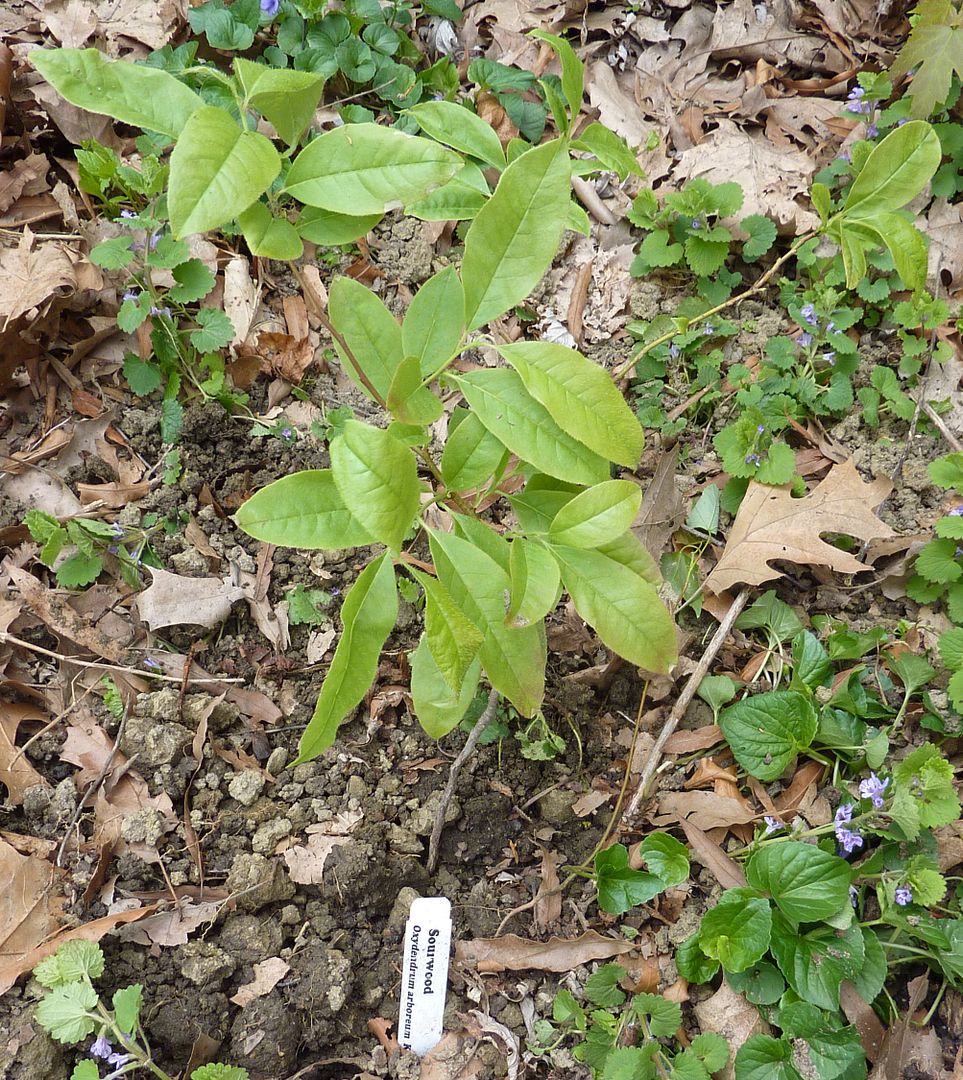
Sourwood, Oxydendrum arboreum, is probably going to end up being the prettiest tree I'll have planted. They produce bell shaped flowers that aren't entirely showy but they're arranged like exploding fireworks scattered throughout the tree. In the autumn time these seed pods occur in the same locations and the red foliate makes them pop out even more.
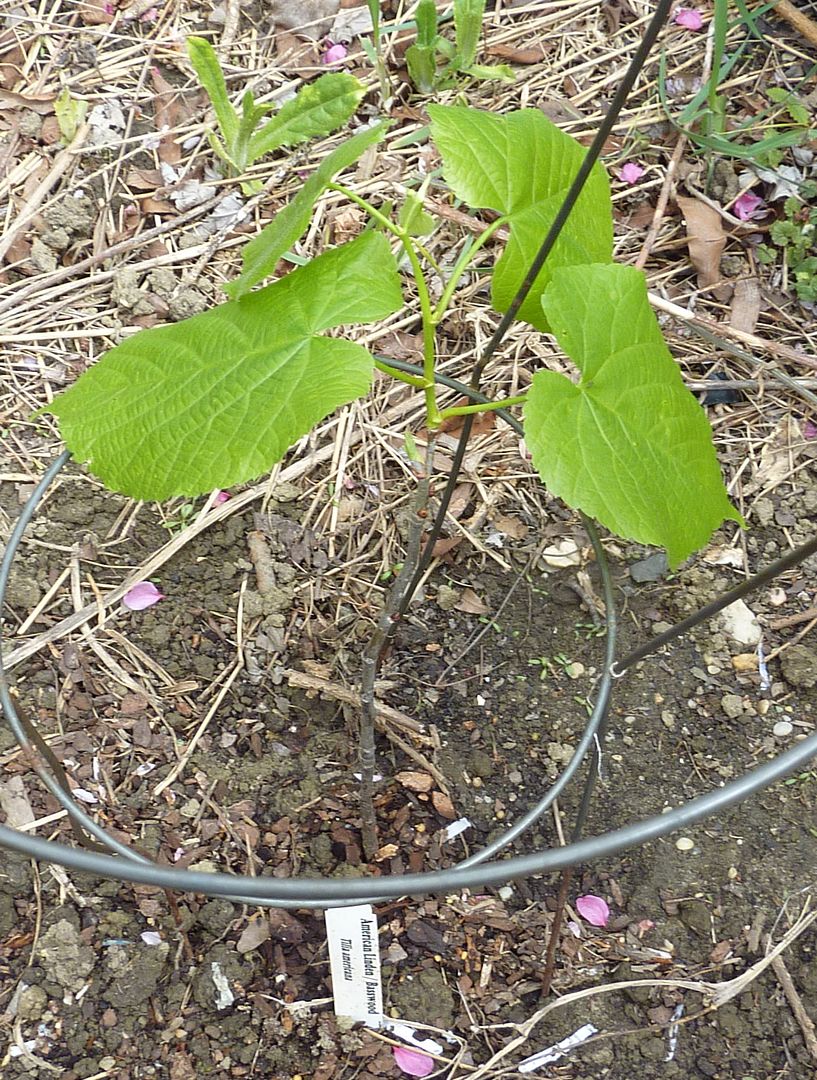
American Linden (aka Basswood), Tilia americana, also has red foliage in the fall time, which is pretty but they lack the seed pods of the Sourwood. Their flowers are slightly noticeable as a pale yellow or blond color. Bees really love them.
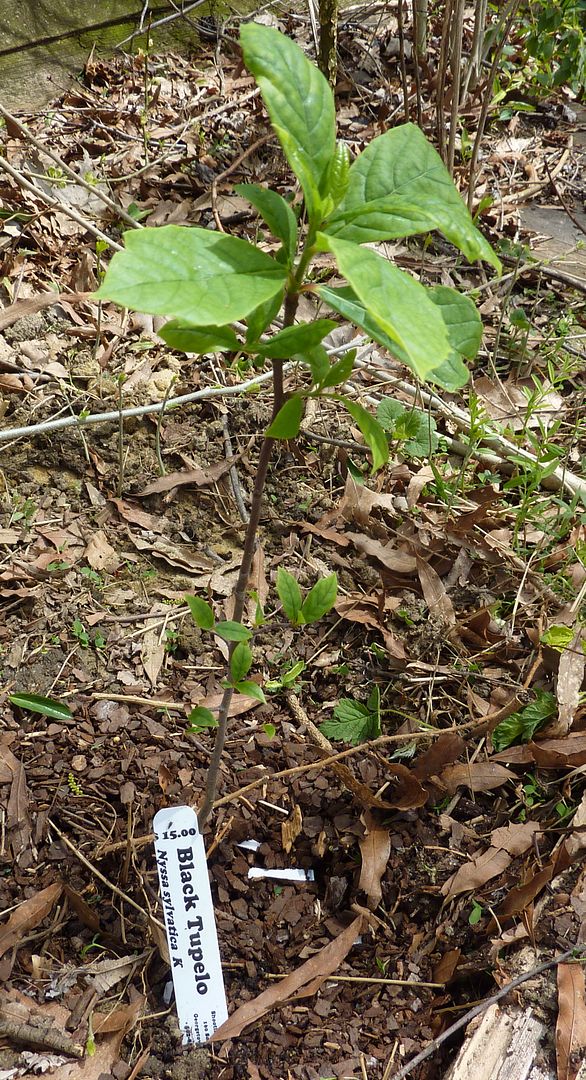
Black Tupelo (aka Black Gum), Nyssa sylvatica, is another red leaf tree in the Autumn. The flowers aren't showy in that they're green balls of blooms, but bees absolutely love them and they go on to produce tiny blue berries that birds love.
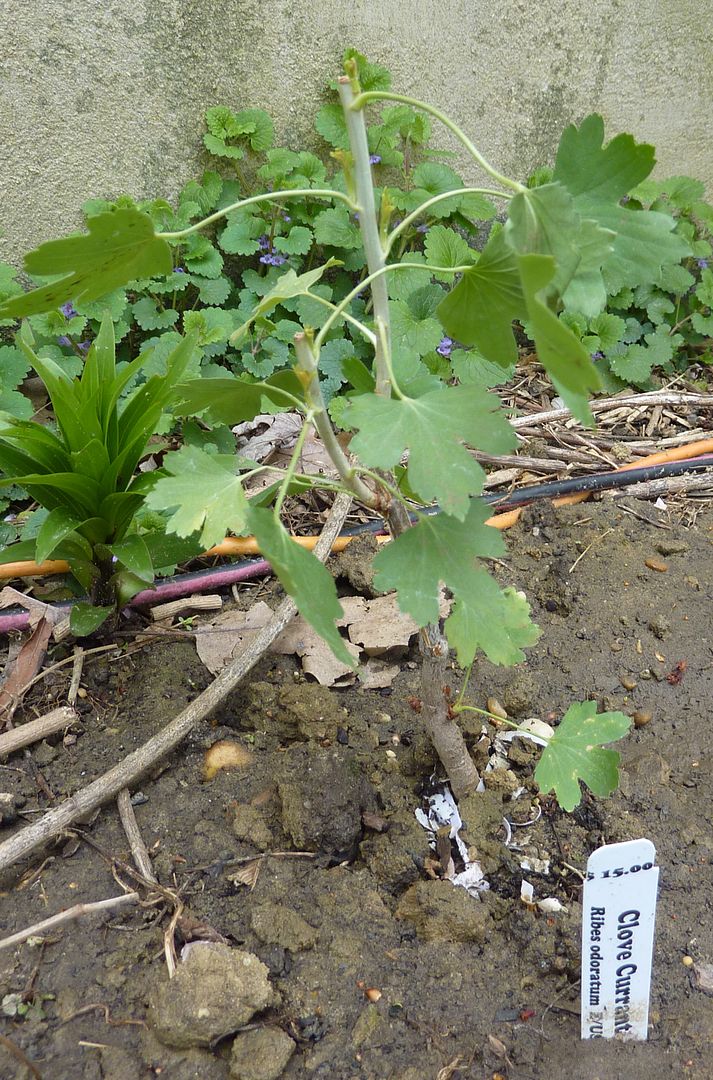
Clove Currant, turns into a shrub up to 10' tall and around.
Helianthus salicifolius 'First Light' is a more floriferous cultivar to the true species. Online images show them absolutely covered in flowers.
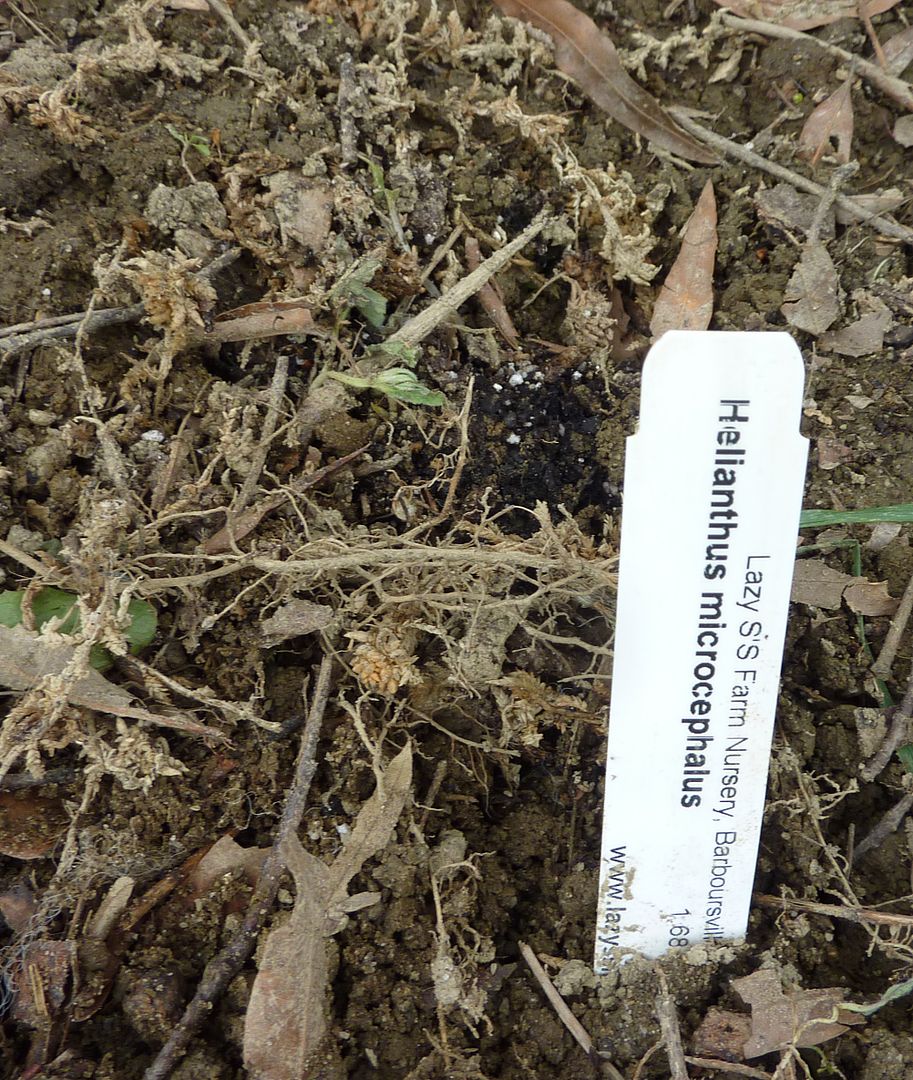
Helianthus microcephalus, is a small headed sunflower. Yesterday when I planted it, it was green and growing up a storm, but it seems a squirrel decided to eat off the stems, Bastards. I do wish to eventually find some plant that would kill the squirrels someday as they do stand in the way of a lot of my gardening exploits.
Liatris mucronata, which produce a sort of thick and tuffy looking stem with flowers in the late summer and autumn months.
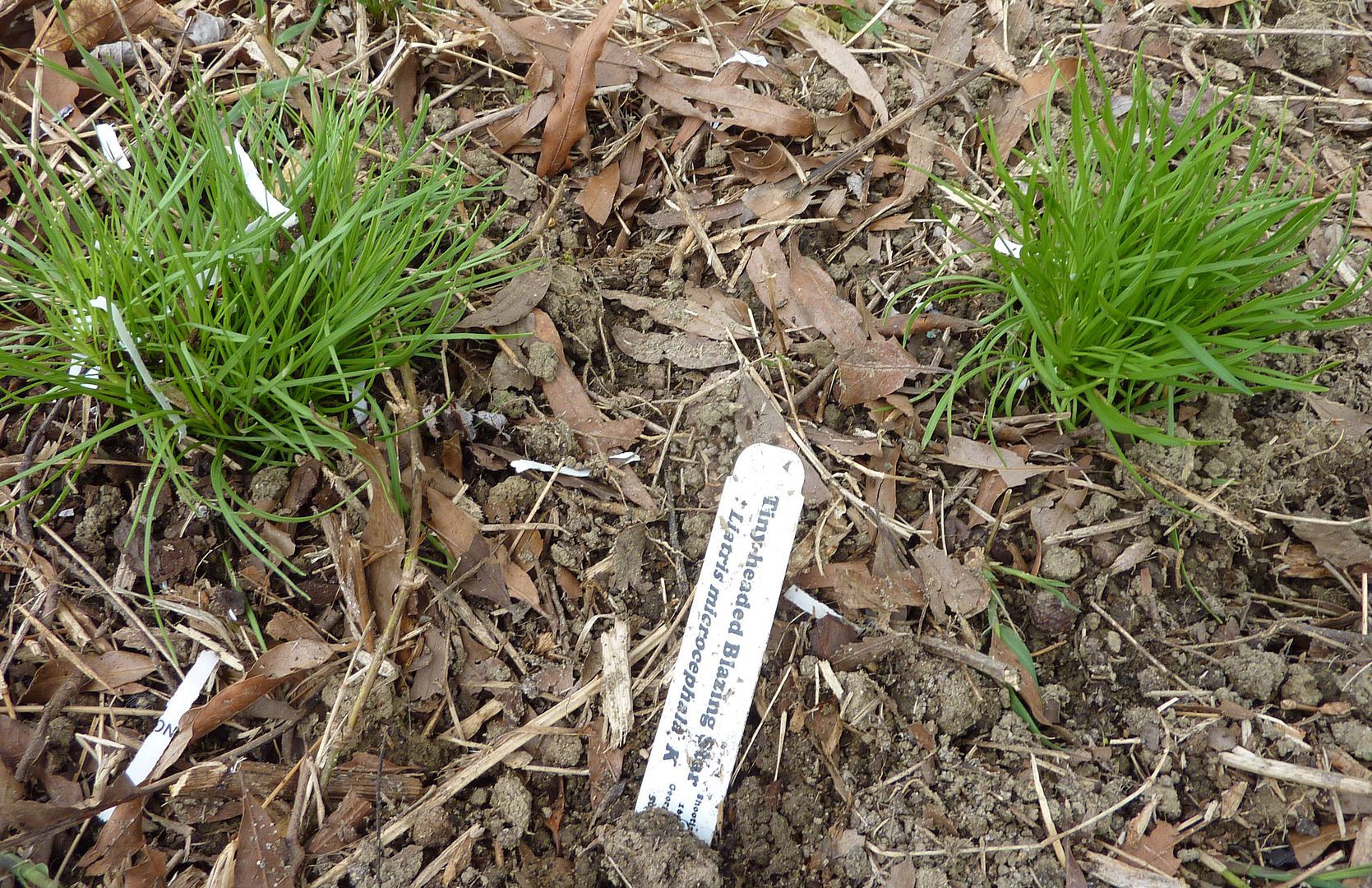
Liatris microcephala, which seem to make really tiny corms or at least send up dozens of stems out of one big one. These grow out very tight and grassy looking until they flower in the late summer and autumn months.